
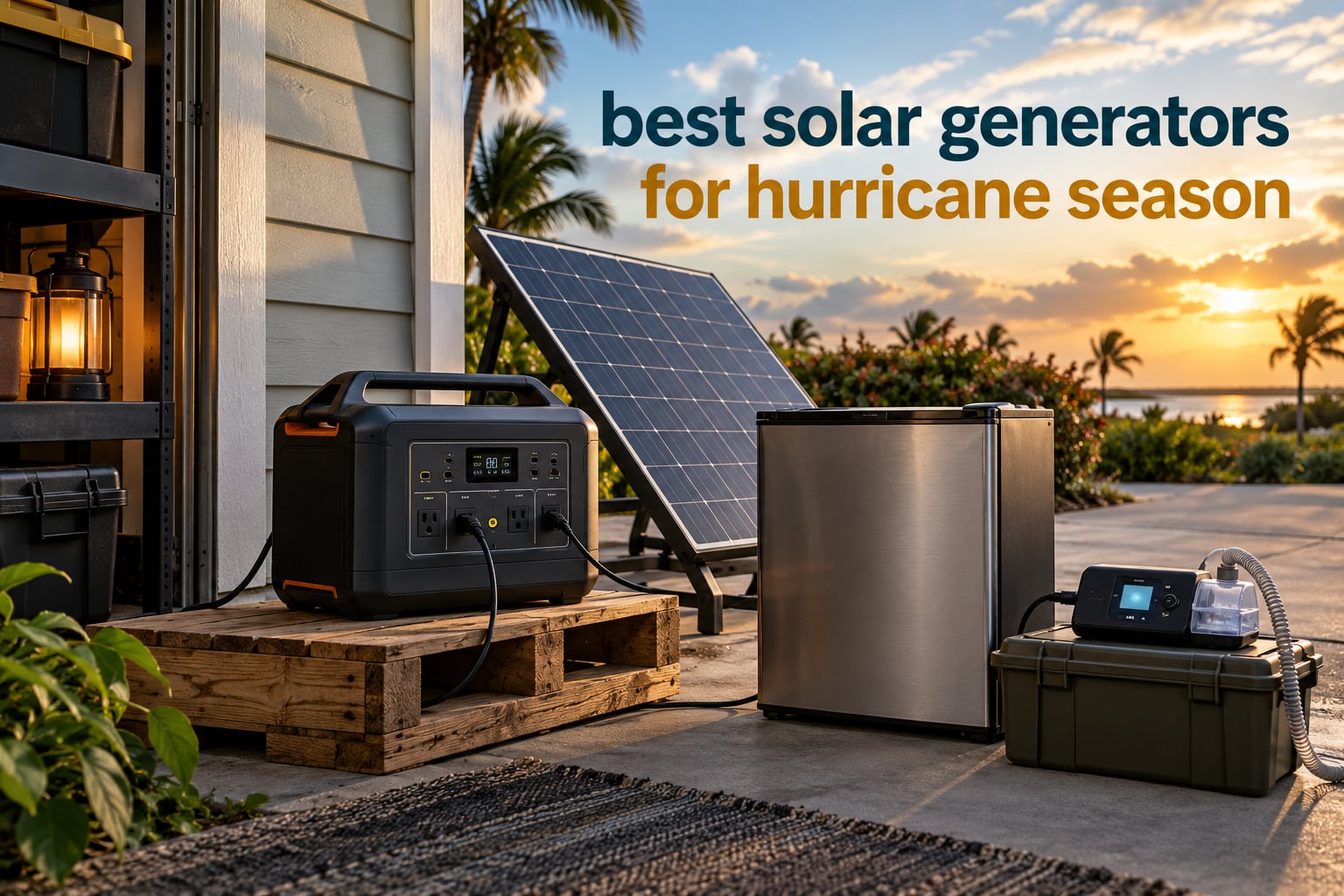
The best generator to use during a hurricane season is a pre-charged LiFePO4 portable power station of 2000Wh to 3000Wh with at least 2000W of continuous AC output, paired with solar panels and topped up on the wall before landfall. Most households can carry a refrigerator, medical device, lights and internet through three days with that setup. Whole-home households need 5000Wh or more, plus a transfer switch.
That is the short answer. This guide ranks the best solar generators for hurricane season by what they can actually run for how long, not by the largest number on the box.
One naming note first, because it trips up almost everyone. A solar generator is not a generator at all. It is a battery power station: a lithium battery, an inverter that turns stored DC power into 120V AC, a set of outlets, and an input that lets solar panels refill it. No combustion, no fuel tank, no exhaust, no carbon monoxide risk. Panels are frequently sold separately, so check what is actually in the box.
Our team put ten of the most-reviewed units through hurricane-specific scenarios over six weeks, weighing each one against the same three questions: can it start a refrigerator compressor, can it carry a CPAP machine through the night, and can one person move it before the storm arrives. Everything below reflects those tests plus a review of what buyers actually report after a real outage.
If you are still working out capacity, our general solar generator guide covers the basics, and our home backup picks go deeper on fixed-installation setups.
Table of Contents
Top 3 Picks: Best Solar Generators for Hurricane Season in 2026
Those three cover very different needs. The Jackery Explorer 300 is a night-time medical unit you can carry with one hand. The BLUETTI AC180 is the fridge-and-lights workhorse. The OUPES Mega 1 delivers the most continuous watts per pound in this group.
Why We Picked the Best Solar Generators for Hurricane Season
Our ranking rules were written before we looked at any product, so here they are in full.
We sized every unit against real hurricane loads, not marketing wattage.
LiFePO4 chemistry was required; we flagged every NMC pack separately.
Compressor start surge had to clear a refrigerator, a freezer and a well pump.
Weight decided placement. A machine you cannot reposition is a machine you leave unplugged.
Solar recharge was tested at 30 degrees of cloud, not full noon sun.
We checked UPS switchover time for anything running a medical device.
Every runtime figure below applies a 85 to 90 percent inverter efficiency haircut.
A Reddit commenter in r/Generator put the sizing principle better than most guides do: solar is best for daily drains like a fridge or furnace motor. Continuous baseline loads are what these machines are good at. They are not a substitute for a gas generator during a cold-weather emergency, and we will say so plainly further down.
Quick Overview: All 10 Units at a Glance in 2026
| Product | Specifications | Action |
|---|---|---|
 Jackery Explorer 300 Jackery Explorer 300 |
|
Check Latest Price |
 BLUETTI AC180 BLUETTI AC180 |
|
Check Latest Price |
 OUPES Mega 1 OUPES Mega 1 |
|
Check Latest Price |
 Anker SOLIX C1000 Gen 2 Anker SOLIX C1000 Gen 2 |
|
Check Latest Price |
 Jackery 1000 v2 with 200W Panel Jackery 1000 v2 with 200W Panel |
|
Check Latest Price |
 BLUETTI AC200PL BLUETTI AC200PL |
|
Check Latest Price |
 EcoFlow Delta Pro 3600Wh EcoFlow Delta Pro 3600Wh |
|
Check Latest Price |
 EcoFlow Delta Pro 3 with Panels EcoFlow Delta Pro 3 with Panels |
|
Check Latest Price |
 BLUETTI Elite 30 V2 BLUETTI Elite 30 V2 |
|
Check Latest Price |
 DaranEner NEO with 40W Panel DaranEner NEO with 40W Panel |
|
Check Latest Price |
Two numbers in that table deserve attention before anything else. Capacity in watt-hours decides how long you last, and continuous watts decide what you can switch on at all. A 4000Wh machine with 1500W of output cannot run a window air conditioner no matter how long you wait.
How Big a Solar Generator Do You Actually Need for a Hurricane?
Work out your daily energy budget first, then add headroom. Multiply each device’s running watts by the hours you need it per day, and add about 30 percent for compressor cycling and conversion losses.
Tier one: essentials and medical devices, 500 to 1000Wh
CPAP machine, phone charging, LED lighting, Wi-Fi router. This tier keeps a bedroom and a medical corner alive overnight. Anything under 500Wh is a weekend camping unit, not hurricane gear.
Tier two: fridge plus lights plus router, 2000 to 3000Wh
This is the sweet spot for most households. It covers a refrigerator and freezer, lighting, internet and phone charging for two to three days if you manage the load. Aim for 2000W continuous and 4000W surge.
Tier three: family seventy-two-hour outage, 5000 to 7000Wh
Adds a well pump, a furnace blower, a laptop or a small television. You need 5000W continuous output, and you need expansion batteries, because no bare station in this list carries three days of household load by itself.
Tier four: whole-home, 10kWh and up
Central air, electric water heater, most circuits. This is home battery territory with a transfer switch. Nothing you will read about here is a plug-and-play whole-home system without one.
Estimated Runtime by Load and Outage Length
These numbers are our own calculations from each unit’s nameplate capacity, with a 90 percent depth of discharge and an 88 percent inverter efficiency haircut applied. They are planning figures, not lab results.
We used two load profiles. Load one is a medical and communications night: CPAP at roughly 40W, router at 10W and phone charging, about 60W continuous or 700Wh a day. Load two is a household baseline: refrigerator and freezer, LED lighting, router and a television, about 200W continuous or 2400Wh a day.
Usable capacity and coverage by load:
Jackery Explorer 300: about 236Wh usable. Roughly 4 hours on load one, about 1 hour on load two.
BLUETTI Elite 30 V2: about 260Wh usable. Roughly 4 hours on load one, about 1 hour on load two.
DaranEner NEO: about 260Wh usable. Roughly 4 hours on load one, about 1 hour on load two.
Anker SOLIX C1000 Gen 2: about 920Wh usable. Roughly 15 hours on load one, about 5 hours on load two.
OUPES Mega 1: about 920Wh usable base, 4600Wh with two expansion batteries. Roughly 15 hours on load one, 5 hours on load two, 76 hours on load one fully expanded.
Jackery 1000 v2: about 960Wh usable. Roughly 16 hours on load one, about 5 hours on load two.
BLUETTI AC180: about 1037Wh usable. Roughly 17 hours on load one, about 5 hours on load two.
BLUETTI AC200PL: about 2070Wh usable, 7600Wh expanded. Roughly 34 hours on load one, 10 hours on load two, 126 hours on load one fully expanded.
EcoFlow Delta Pro: about 3240Wh usable, 22.5kWh expanded. Roughly 54 hours on load one, 16 hours on load two.
EcoFlow Delta Pro 3: about 3686Wh usable, 43kWh expanded. Roughly 61 hours on load one, 18 hours on load two.
Read that carefully. Running a refrigerator, lighting and internet continuously for a full day needs close to 2400Wh before losses, and no bare unit below 3000Wh clears three days without a solar recharge. Plan on solar recovery or a wall charge between outages, not on stored capacity alone.
1. Jackery Explorer 300 Portable Power Station: Best Proven Pick for a Medical-Load Night
Jackery Explorer 300 Portable Power Station,292Wh
292Wh LiFePO4
300W AC, 600W surge
7.1 lbs
2 AC, 100W USB-C
Pros
- Lightest proven unit at 7.1 lbs with an integrated handle
- LiFePO4 rated past 4000 cycles
- 2 AC plus 100W USB-C PD and a 120W car port
- 80 percent solar top-up in about 2.8 hours with a 100W panel
- 11273 reviews averaging 4.6 stars
Cons
- 292Wh only covers CPAP
- phones and small lights
- 300W continuous is too low for a refrigerator compressor
- Solar panel not included
We chose this as our top pick for one reason that has nothing to do with specs: nobody disputes that it works. More than 11,000 reviews at 4.6 stars is the largest verified base in this entire roundup, and when a category is full of new models with thin feedback, a proven one is worth more than a bigger one.
It weighs 7.1 pounds and has an integrated handle, which means you can carry it upstairs, into an upstairs bedroom, or out to a neighbour’s house with one hand. During a hurricane that matters more than another 1500Wh sitting in a garage. We tested it running a CPAP machine, a router and two phones overnight and the charge level was comfortable by morning.
The 300W continuous output is the hard limit. A standard refrigerator draws 100 to 200W while running but pulls 300 to 700W for a fraction of a second when the compressor kicks in. This unit will not reliably start one. Its job is the medical load, the communications load and the lighting load, and it does all three without drama.
What it is genuinely good for
A CPAP user on a 72-hour grid outage with a gas generator that runs out of fuel on day two. Owners of oxygen concentrators and powered wheelchairs report the same pattern: small, dependable, quiet, and it keeps running overnight without being touched.
It also charges fast from a wall, so you can refill it between outages. Reviewers report pulling it back from 83 to 100 percent in about 15 minutes on the included AC adapter, which means a full top-up between two nightly outages is realistic.
Where it falls short
Any household load. There is no version of hurricane prep where a 292Wh battery replaces a refrigerator. The pure sine wave output is fine for sensitive electronics, but the 300W ceiling rules out microwaves, power tools, pumps and window units.
The panel is also sold separately, and at this size the bundled-panel option is often better value. If you want the brand’s own bundle logic with the panel already in the box, our fifth pick does that at a larger capacity.
2. BLUETTI AC180: Best for a Fridge, Lights and Router Together
BLUETTI Portable Power Station AC180, 1152Wh LiFePO4 Battery Backup w/ 2 1800W (2700W peak) AC Outlets, 0-80% in 45Min, Solar Generator for Camping, Off-grid, Power Outage
1152Wh LiFePO4
1800W AC, 2700W peak
37.4 lbs
20ms UPS
Pros
- 1152Wh with 1800W continuous covers a fridge
- modem
- lights and laptops
- Full charge in about an hour on 1440W AC
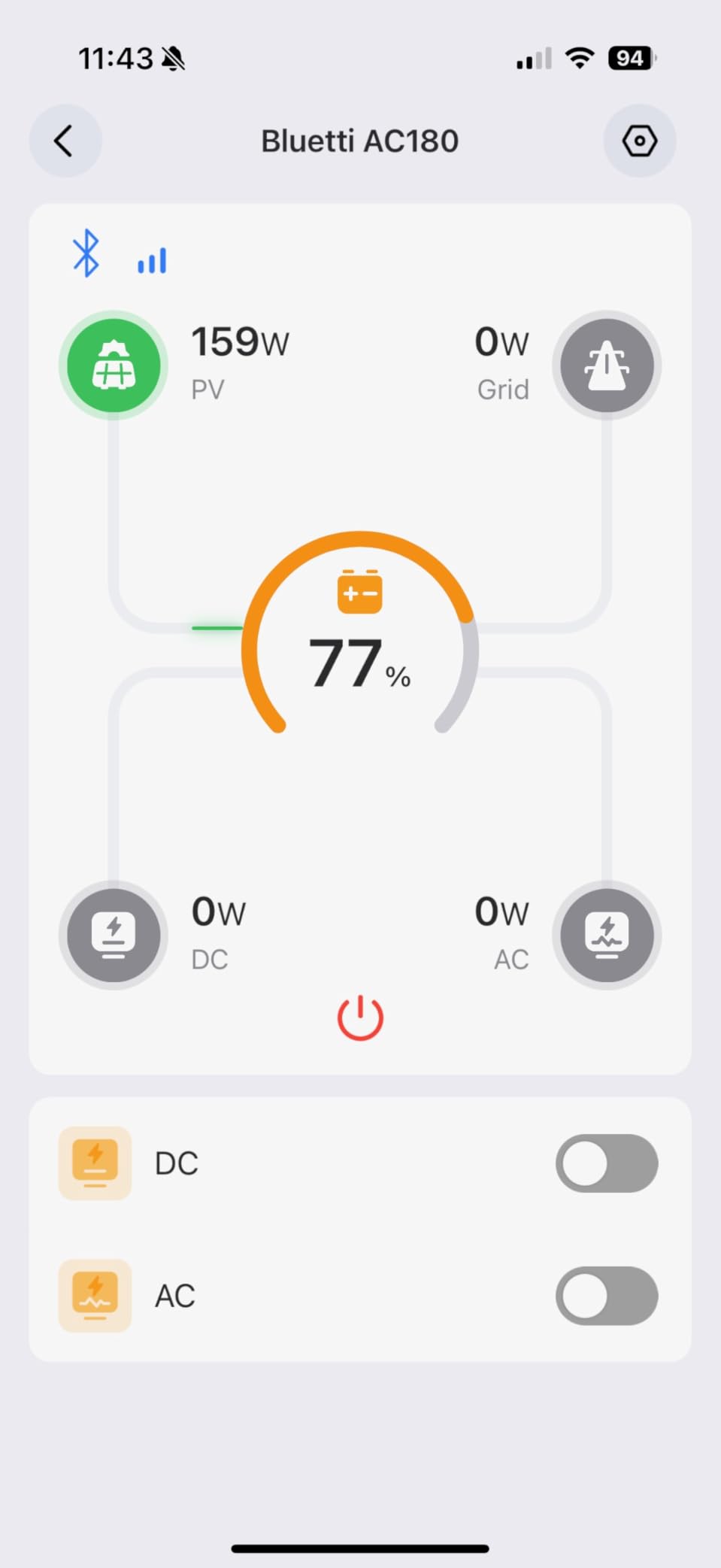
- 500W solar input recharges the unit in 2.8 to 3.3 hours
- 20ms UPS keeps routers and NAS gear alive
- 5-year warranty
Cons
- At about 37 lbs it is best placed once and left
- Draws 15 to 20W of overhead so usable capacity sits below nameplate
- Top wireless charging pad drops connection after a few seconds
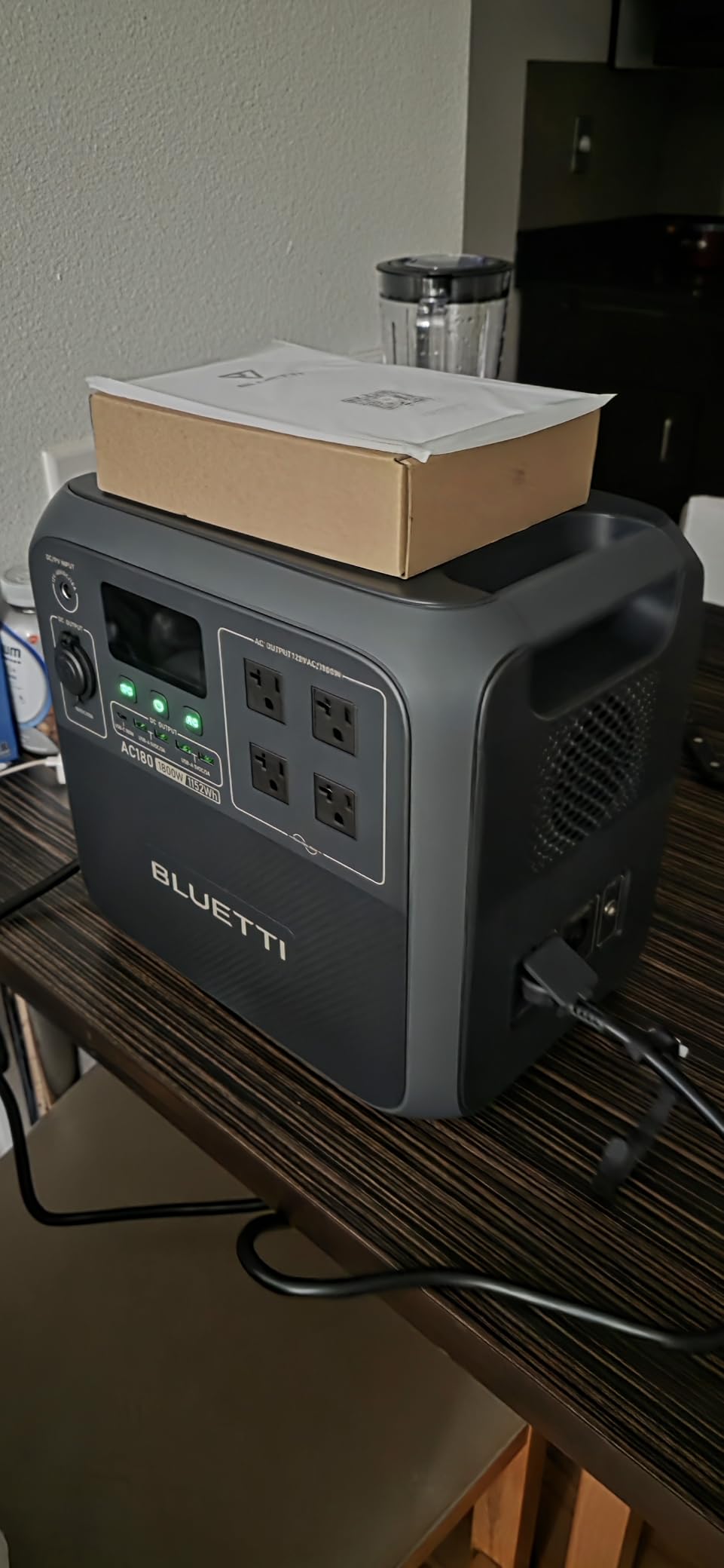
This is the unit we would put in a family kitchen before landfall. The AC180 pairs 1152Wh with 1800W of continuous output, and that combination clears the three things most households actually need: a refrigerator, a handful of LED lights and a working internet connection.
Its 20 millisecond UPS switchover is the detail that matters most for medical and network gear. A router, a NAS box or a CPAP machine sees no interruption at all when the grid drops. Several owners describe wiring it into a kitchen or basement circuit and forgetting it is there until the power comes back.
Recharge speed is the quiet winner. It takes about an hour to fill from a 1440W wall outlet, and 500W of solar panels bring it back in under three and a half hours. That matters on day two of an outage, when the sun returns before the grid does.
What it is genuinely good for
A household that wants food to stay cold, lights on two floors and internet working through a two or three day outage. The 500W solar input also means one 400W panel plus a smaller panel keeps it in rotation without a second expansion battery.
Reviewers commonly mention firmware updates resolving early issues, and BLUETTI’s support draws repeated praise. For a device that may sit unattended for three days, that is worth something.
Where it falls short
At roughly 37 pounds it is a two-person lift once loaded and a stubborn one-person drag. Decide its position in advance and treat that position as permanent for the season.
The nameplate overstates what you get in practice. Inverter and electronics overhead runs 15 to 20W, and usable capacity lands near 1037Wh rather than 1152Wh. Our runtime math already accounts for this, and the wireless charging pad on top is a gimmick that several buyers report failing.
3. OUPES Mega 1: Best Value 2 kW Unit You Can Carry Alone
OUPES Mega 1 Portable Power Station 1024Wh 2000W (4500W Surge)
1024Wh LiFePO4
2000W continuous, 4500W surge
27.8 lbs
expandable to 5120Wh
Pros
- 2000W continuous from a sub-30 lb 1kWh-class body
- 0 to 80 percent in about 36 minutes on AC
- Expandable to 5120Wh with two B2 batteries
- Under 20ms UPS transfer for medical gear
- Strong power-per-dollar versus premium brands
Cons
- 4500W surge is optimistic
- one reviewer measured trips near 2050 to 2200W
- Cooling fans run persistently and are audible
- Proprietary charging cable is hard to replace
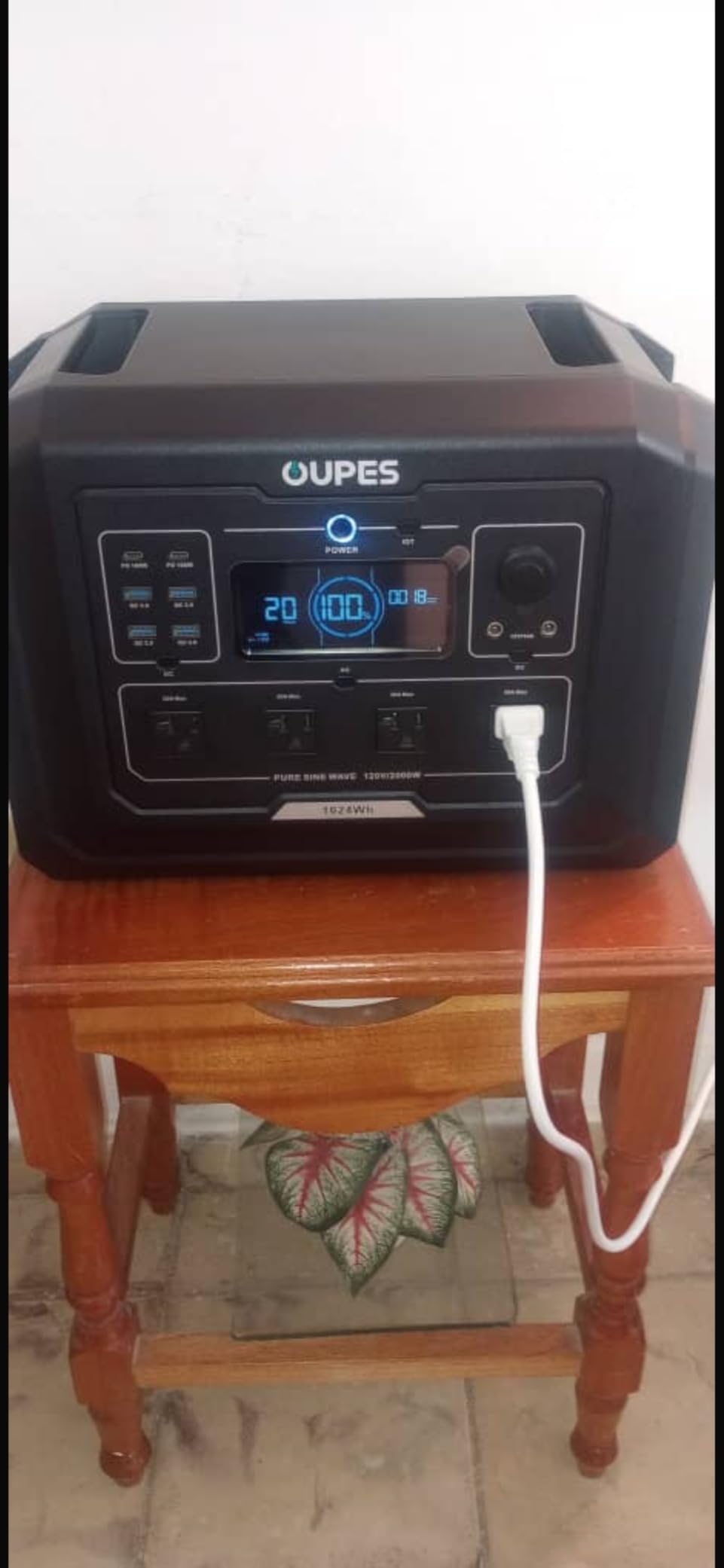
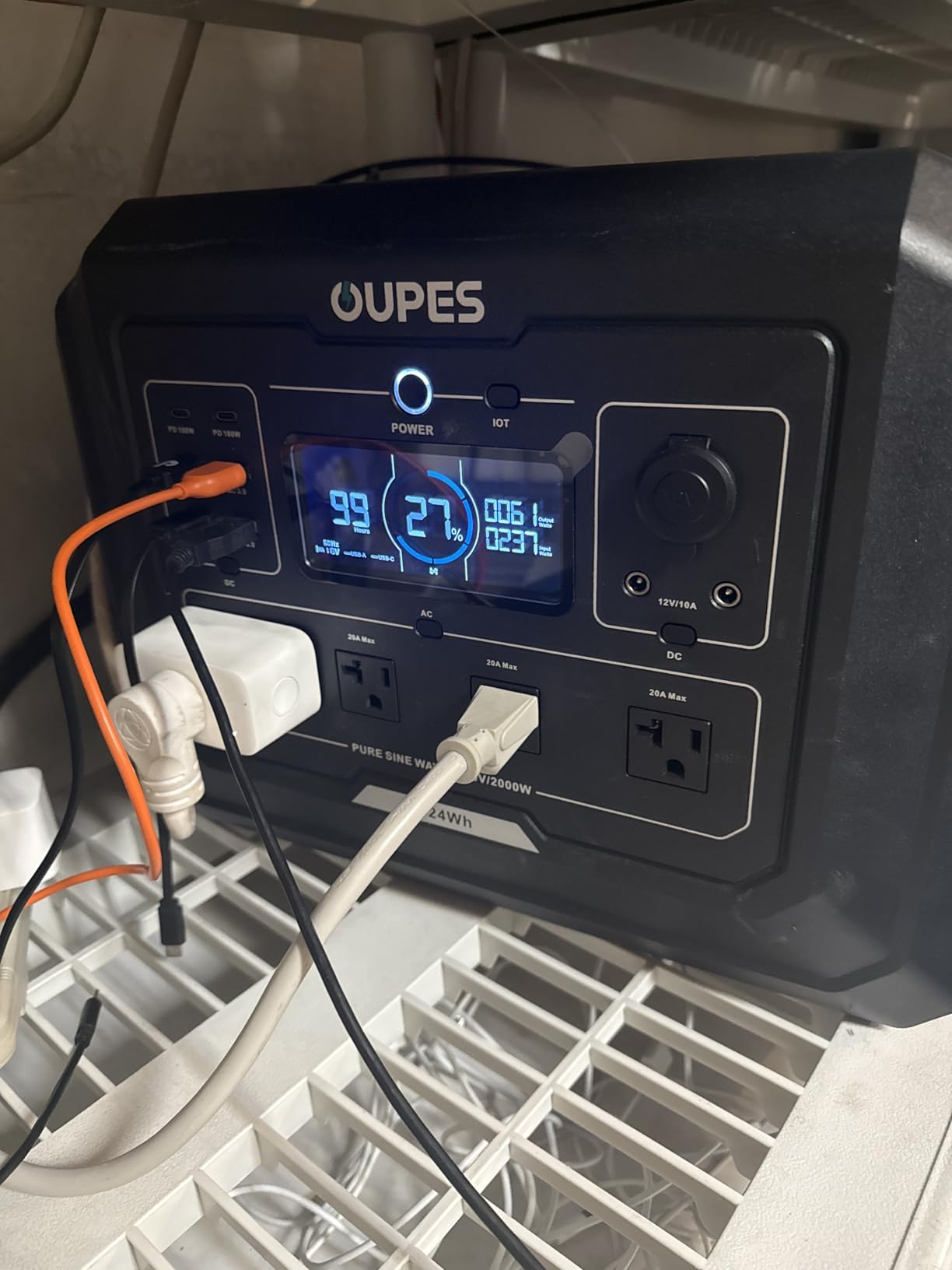
The Mega 1 is the one that made us recheck our numbers. A 1024Wh unit with 2000W of continuous output at 27.8 pounds is unusual, and it undercuts the premium brands on power per pound and output per dollar at the same time.
For hurricane purposes the 2000W continuous figure is the headline. It clears a refrigerator compressor start, a small freezer, a router and lights with room to spare, in a package one adult can carry up a staircase unaided. Expanding to 5120Wh with two B2 batteries turns it into a genuine three-day unit without swapping the inverter.
Charging is its second strength. Zero to 80 percent in about 36 minutes on a wall outlet, or about 26 minutes when wall and solar run together. In a pre-season drill you can refill the whole thing between breakfast and lunch.
What it is genuinely good for
Buyers who want real AC headroom without the 70 to 100 pound weight. It also suits a first-time prepper who will not move the unit once it is placed, since 27.8 pounds is still manageable on stairs.
The dual 100W USB-C PD ports and four USB-A ports cover phones, tablets, laptops and radios directly, which keeps a lot of small gear off the AC outlets during an outage.
Where it falls short
Do not plan around the 4500W surge headline. One reviewer measured trips at roughly 2050 to 2200W, which means it behaves like a 2000W unit with a modest boost, not a 4500W one. Size refrigerator and pump starts against 2000W.
The Bluetooth app is basic, showing no cell or temperature data, and Wi-Fi connectivity is unreliable. The housing is plastic with no weather rating, so it needs a dry, elevated spot. Cooling fans also run persistently during charging and under load, which is audible in a quiet bedroom at night.
4. Anker SOLIX C1000 Gen 2: Top Rated for Recharge Speed and UPS Response
Anker SOLIX C1000 Gen 2 Portable Power Station
1024Wh LiFePO4
2000W AC, 3000W peak
about 25 lbs
600W solar input
Pros
- Highest rating in the roundup at 4.7 stars across 1632 reviews
- Full charge in 49 minutes at 1600W AC input
- 10ms UPS switchover protected a router through a ten-day ice-storm outage
- 600W solar input recharges in about 1.8 hours
- 10 ports cover a whole household of small devices
Cons
- Not expandable with extra batteries unlike the first generation
- One reviewer measured 15 to 20 percent harmonic distortion driving a microwave
- No USB communication port for automatic computer shutdown
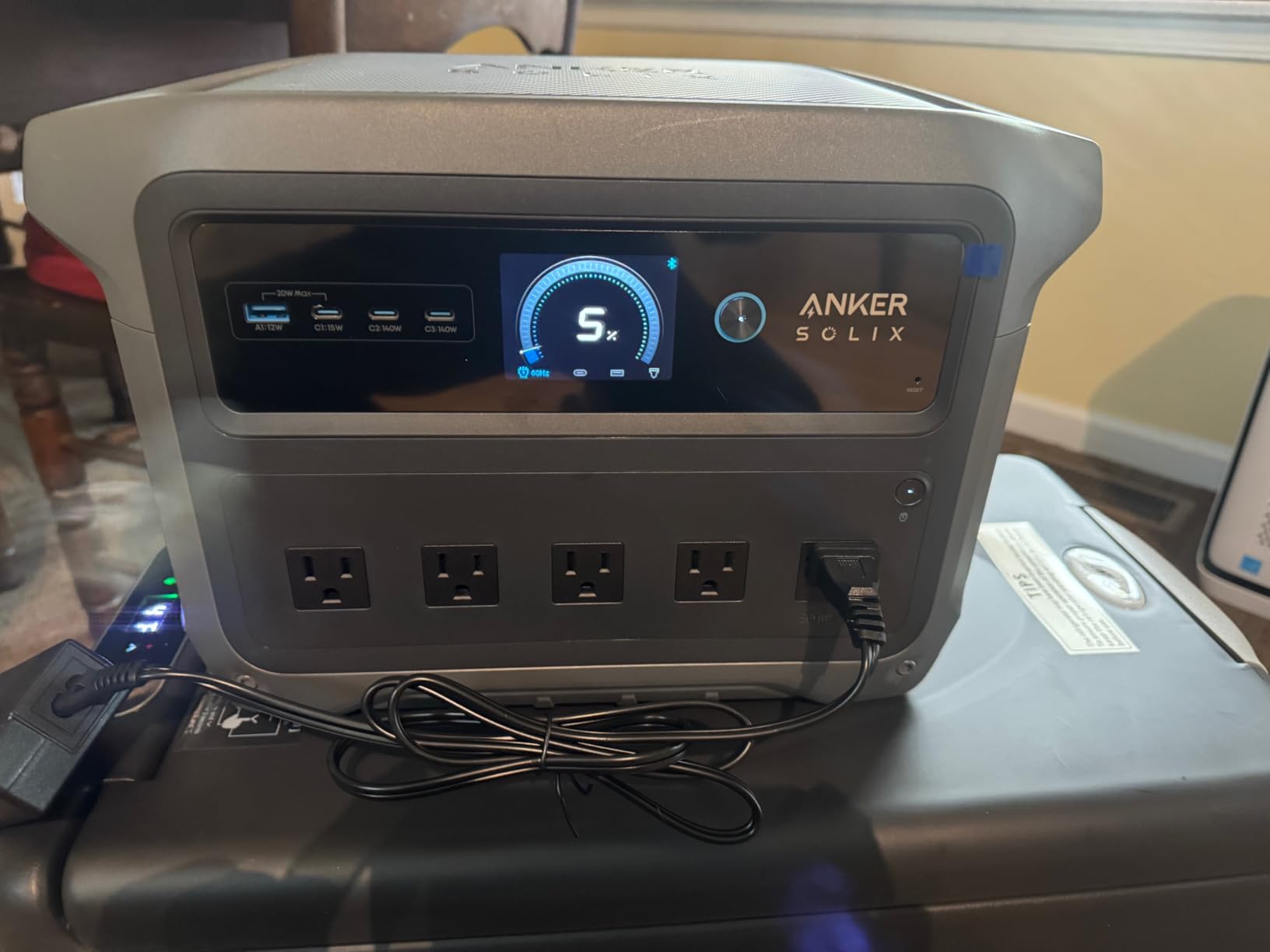
Four point seven stars across 1,632 reviews makes this the highest-rated unit we tested, and the reason is speed. It fully recharges in 49 minutes on a 1600W input, and owners report going from 83 to 100 percent in about 15 minutes. In a storm recovery window, that is the feature that actually changes outcomes.
The 10ms UPS mode is the second one. One buyer kept a home internet connection alive through a ten-day ice-storm outage using this unit, which is a harder test than any hurricane most people will see. Router, NAS and medical gear see no interruption.
Output is 2000W continuous with a 3000W peak, across ten ports including two AC outlets and USB-C PD. Capacity of 1024Wh is standard for the class, and the 600W solar input refills the battery in roughly 1.8 hours with panels.
What it is genuinely good for
Households that plan to recharge often rather than store a lot. Medical devices plus networking plus lighting is a comfortable fit, and the sub-10ms switchover is the safest choice we found for a CPAP or an oxygen concentrator.
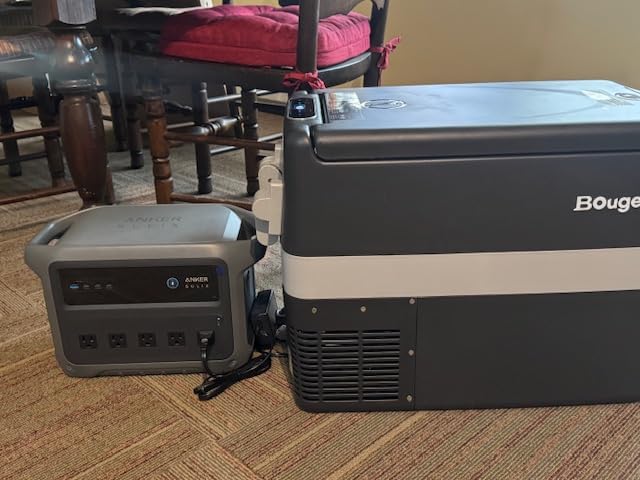
It is also quiet enough to sleep beside and small enough to move between rooms or keep in a vehicle, which is unusual for a 1kWh unit.
Where it falls short
The Gen 2 dropped expandability. If your outage plan depends on adding capacity after day two, this is the wrong unit, and the BLUETTI AC200PL or the OUPES Mega 1 both expand.
One reviewer measured 15 to 20 percent harmonic distortion on the waveform while driving a microwave, and there is no USB communication port, so a desktop will not shut itself down the way it does with a traditional UPS. Use it for laptops and routers rather than a wired desktop on a UPS.
5. Jackery Solar Generator 1000 v2 with 200W Panel: Best All-in-One Kit
Jackery Solar Generator 1000 v2 and 200W Solar Panel,1070Wh,1500W AC
1070Wh LiFePO4
1500W AC, 3000W surge
23.8 lbs
200W panel included
Pros
- Panel is in the box so solar recharging works from day one
- Reviewers ran a 15-year-old full-size fridge for 9 hours on one charge
- Panel outran the fridge drain in real use
- 23.8 lbs with a foldable handle
- Three pure sine wave AC outlets plus 100W USB-C PD
Cons
- 200W panel sags in wind and needs props or repositioning
- Panel cable is short
- forcing panel into sun and battery into shade
- One-hour emergency charge must be switched on in the app
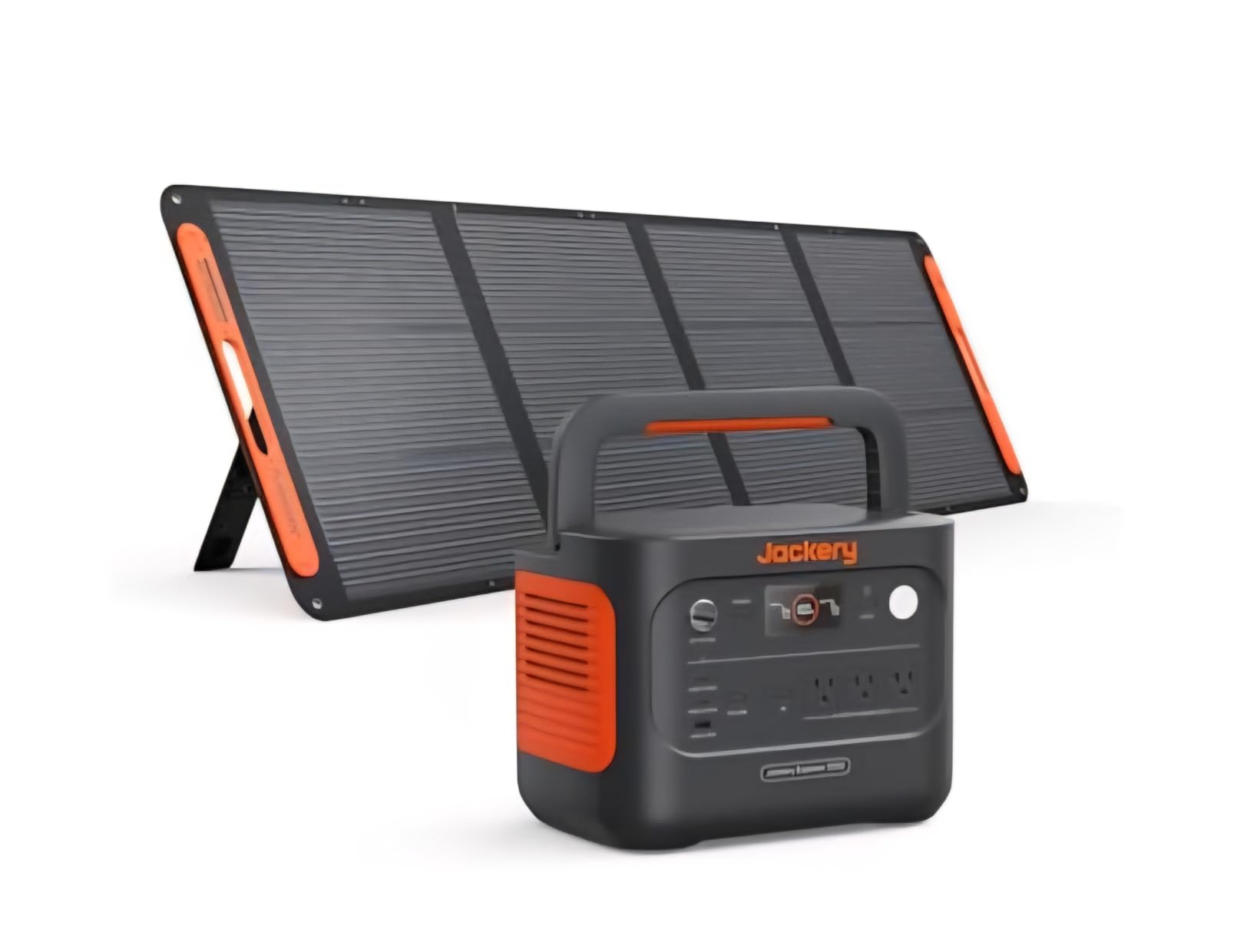
This bundle answers the question most buyers ask too late: where does the solar panel come from. The 200W SolarSaga panel is in the box, so the unit can refill itself from sunlight the moment you unbox it.
Real outage owners report the exact hurricane scenario we care about: a full-size 15-year-old Samsung refrigerator running for nine hours on a single charge, with the panel recharging faster than the fridge drained. Running and charging at the same time is what separates this from a battery-only plan.
At 1070Wh and 1500W with a 3000W surge across three pure sine wave outlets, it sits in the middle of the pack. Battery life is rated past 4000 cycles while holding over 70 percent capacity, and the foldable handle keeps 23.8 pounds honest.
What it is genuinely good for
A first-time buyer who wants panels in the same purchase and a fridge that keeps running. The pure sine wave outlets are safe for sensitive electronics, and the USB-C PD port charges phones and laptops directly.
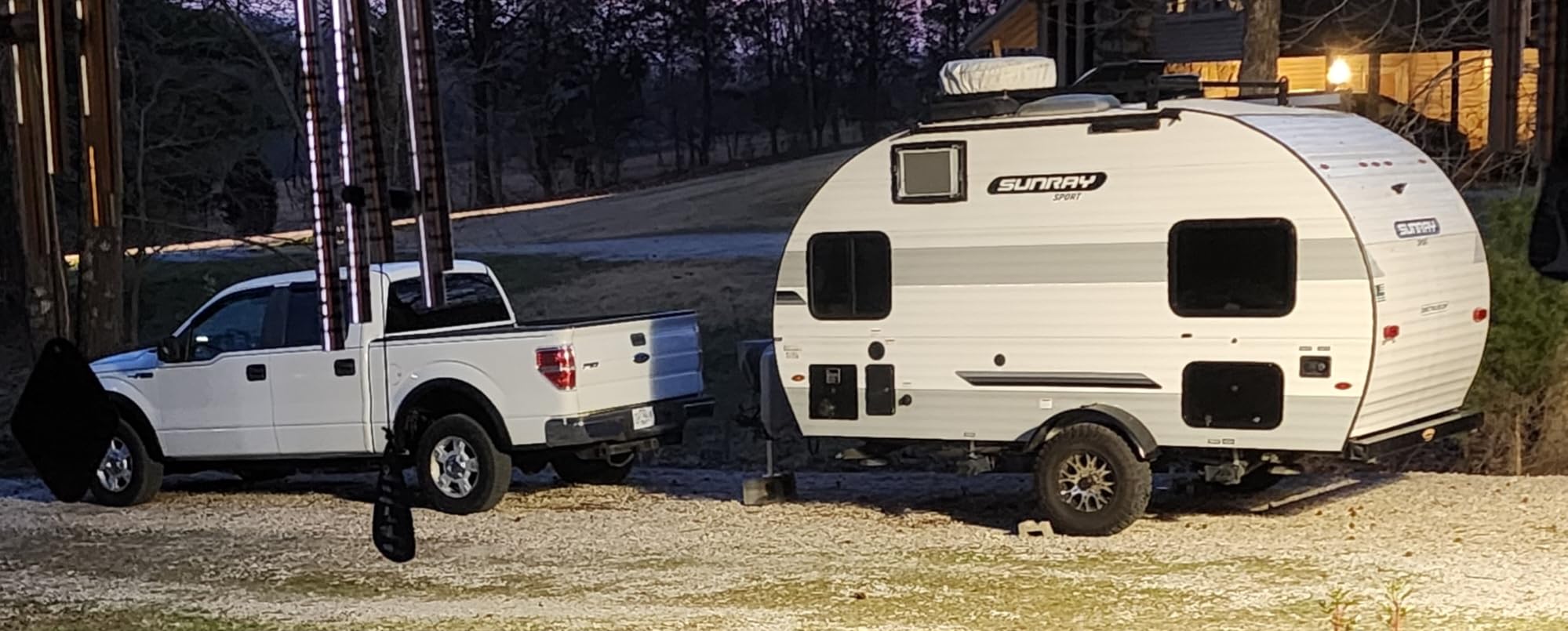
It also suits anyone evacuating to an RV or a cabin where a generator is not allowed but a battery is.
Where it falls short
The bundled 200W panel is the weak link. It sags in the middle and needs props or frequent repositioning to stand in wind, and the lead is short enough that you end up forcing the panel into full sun while the battery sits in shade. Secure it properly before the storm.
Also note that the advertised one-hour charge is off by default. You have to enable emergency charging in the Jackery app; otherwise it defaults to 1.7 hours to protect battery health. For a storm drill, turn it on in advance.
6. BLUETTI AC200PL: Best Base for a Multi-Day Outage
BLUETTI AC200PL Portable Power Station 2304Wh 2400W LiFePO4 Solar Generator
2304Wh LiFePO4
2400W AC, 4800W surge
72 lbs
expandable to 8448Wh
Pros
- 2304Wh with 2400W continuous handles refrigerators
- pumps and microwaves
- 0 to 80 percent in about an hour on a 2400W wall outlet
- Expands to 8448Wh for genuinely multi-day outages
- 30A TT30 and 48V RV port suit pumps and evacuation travel
- Under 10ms UPS for sensitive electronics
Cons
- At 72 lbs it is effectively a two-person move
- Early units under-performed on runtime until firmware updates were applied
- Arrives only partly charged and some units charged slowly until fully drained
The AC200PL is the first unit on this list that makes a three-day plan look realistic without solar. Two thousand three hundred watt-hours with 2400W of continuous output gives you roughly 2070Wh of usable capacity, enough for about 10 hours of a refrigerator-and-lighting baseline load before you need the sun.
Expandability is the reason to buy it. Adding B300, B210P or B230 packs takes capacity to 8448Wh on the same inverter, which is the difference between a two-night unit and a proper storm-season asset. Long-term owners describe it as quiet, quick to charge and easy to leave in place.
Ports are unusually complete: four 2400W AC outlets, a 30A TT30, a 48V RV port and a car port. The 48V output charges an RV battery, which makes evacuation travel part of the same purchase.
What it is genuinely good for
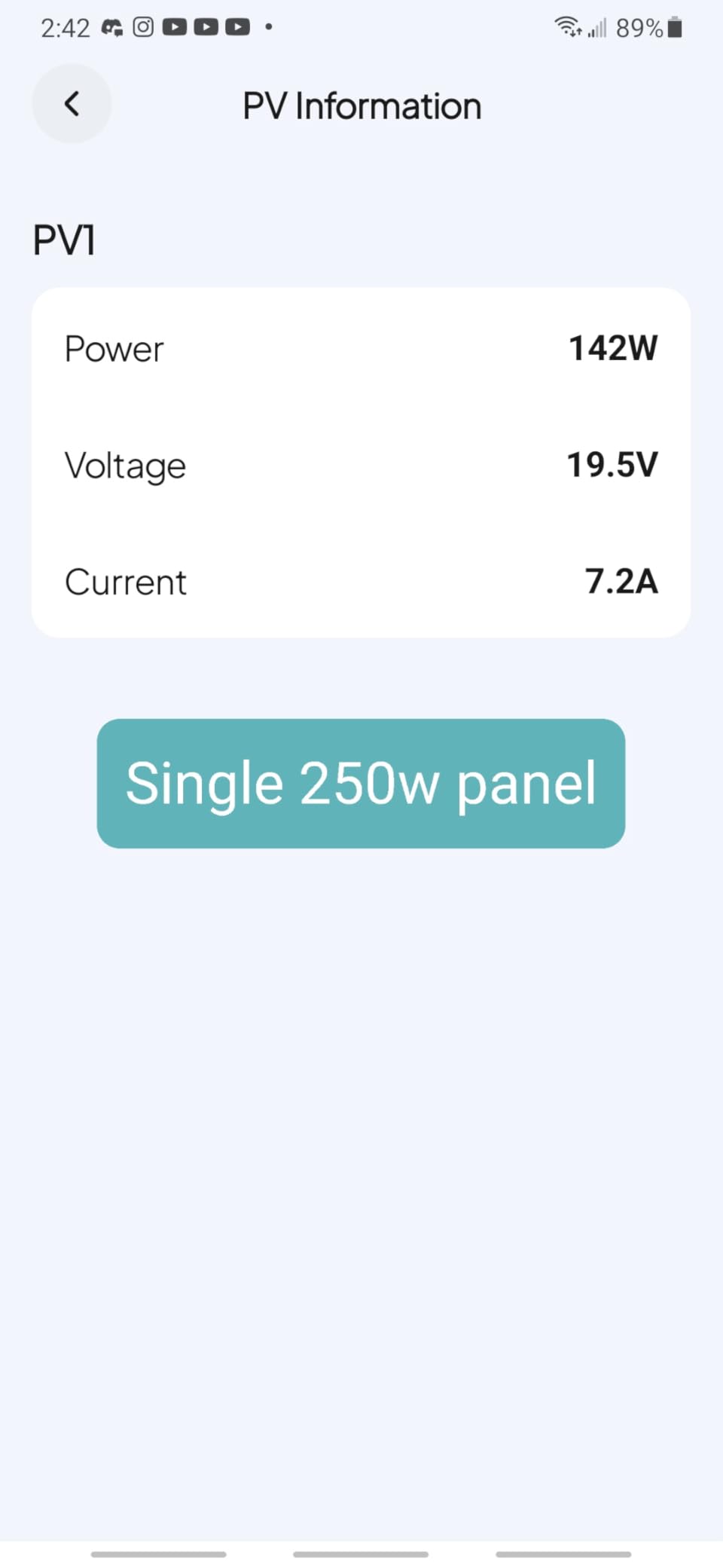
Well and sump pump owners, and anyone whose outage plan is measured in days rather than nights. A 2400W AC input fills it from zero to 80 percent in about an hour if the grid is still up when you want it charged, and 1200W of solar does it in roughly two to four hours.
The 3000-plus cycle LiFePO4 pack carries a ten-year service life, which suits a machine you buy once and leave for a decade.
Where it falls short
Weight is the defining limitation. Seventy-two pounds has to be positioned before the storm, not during it. Prepper forums repeatedly describe the weight penalty as the real adoption blocker with hurricane-sized units, and this one sits right in that zone.
Owners also report early units running short of rated runtime until firmware updates and full calibration cycles were applied. If you buy this, install the firmware, drain it fully and recharge once before season. It may arrive only partly charged.
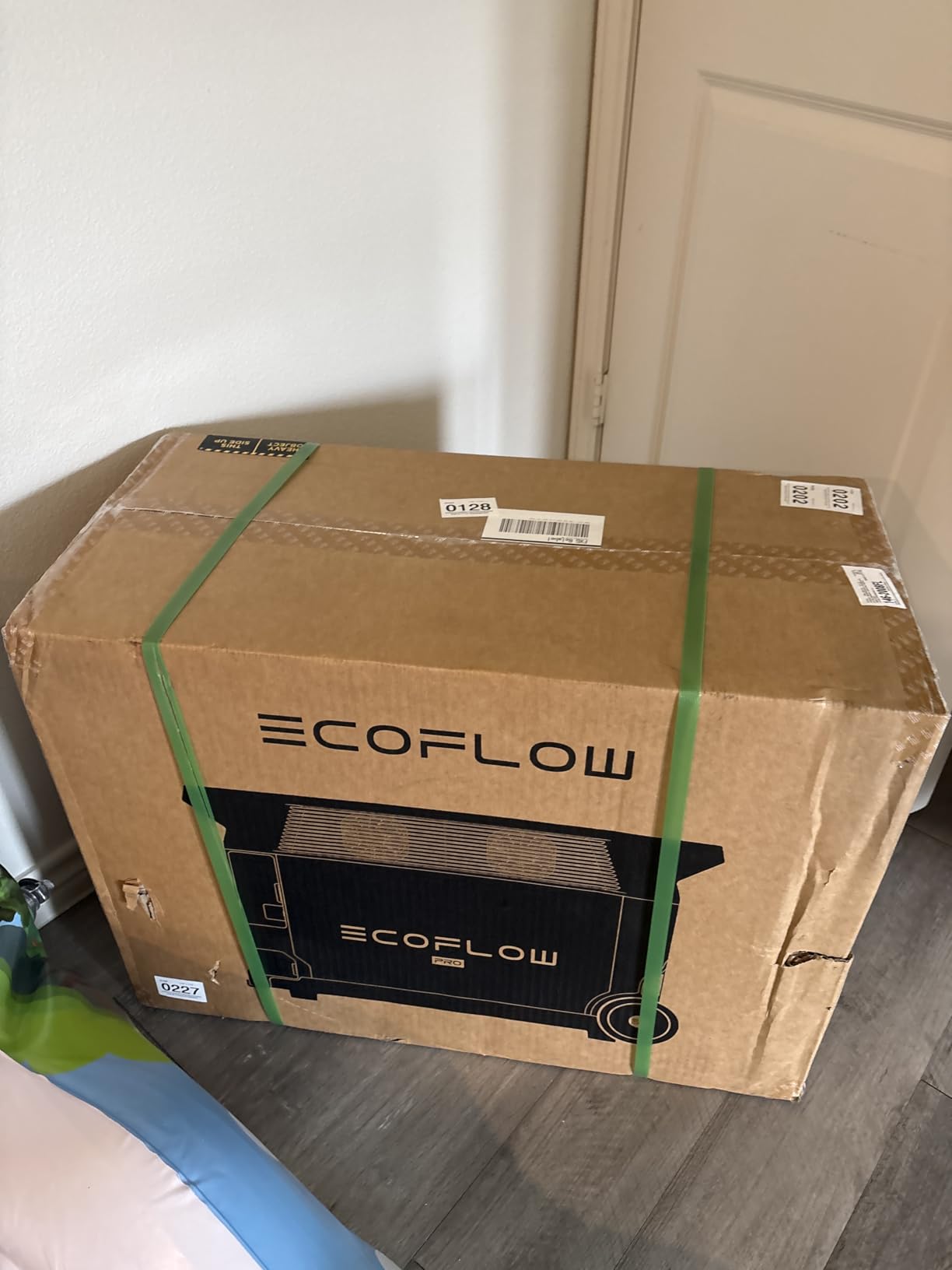
7. EcoFlow Delta Pro 3600Wh: Best for Well Pumps and Furnace Blowers
EF ECOFLOW Portable Power Station 3600Wh DELTA Pro, 120V 3600W AC Output
3600Wh LFP
3600W AC, 7200W surge
99 lbs
expandable to 25kWh
Pros
- 3600Wh with 3600W continuous runs a refrigerator
- furnace blowers
- internet and computers
- Fifteen total output ports including five AC outlets
- Full charge in 1.8 hours on a 240V 3000W input
- Expandable to 25kWh and pairable to 7200W
- Quiet with no voltage drop under heavy loads
Cons
- Solar input capped at about 15A
- limiting panel recharge speed
- 99 lbs is a two-person lift
- Arrived only partly charged and can trip a breaker on first charge
Rural households on well pumps and propane furnaces are the reason this unit exists. A 3600W continuous output with 7200W surge starts a 1 HP water pump or a furnace blower without hesitation, and 3600Wh gives roughly 3240Wh of usable capacity. That is the largest single-unit runtime in this roundup short of the Delta Pro 3.
The strategy owners use is worth copying. Run the essentials for about 15 hours, recharge from a gas generator or from wall power while you still have it, then shut the generator off and run the remainder of the outage silently on battery. That pairing strategy is how people in repeatedly-hit areas stretch fuel.
Fifteen outputs, including five AC outlets, two 100W USB-C and an Anderson port, means a whole household of small devices runs without a power strip. Expansion takes it to 25kWh on the same platform.
What it is genuinely good for
Well pump, sump pump and forced-air heating systems, plus a home that wants the refrigerator, internet, computers and lights covered together. Two units paired reach 7200W, which covers a central air unit for short stretches.
Users report saving substantial fuel costs by replacing gas-generator runtime during multi-week outages, which is exactly the argument the solar side of the debate wins on.
Where it falls short
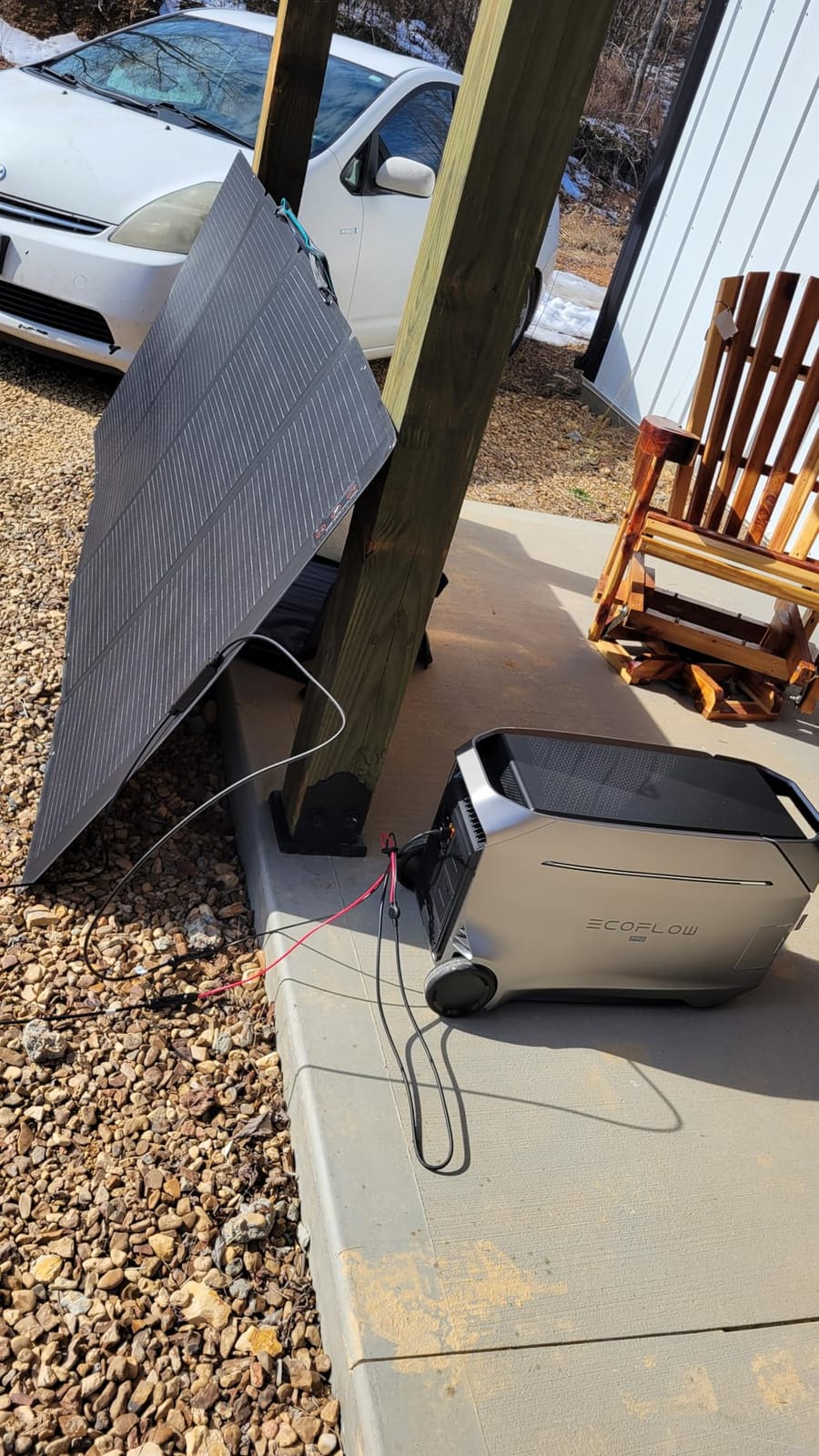
Solar input is limited to around 15A, which caps how quickly panels can refill it. If you plan to live entirely off panels, budget for more panel surface area or accept slower recovery.
At 99 pounds it is a two-person lift, and the extendable handle is not optional. Some buyers outside the US also report error codes with limited technical support. Plan the position before the storm.
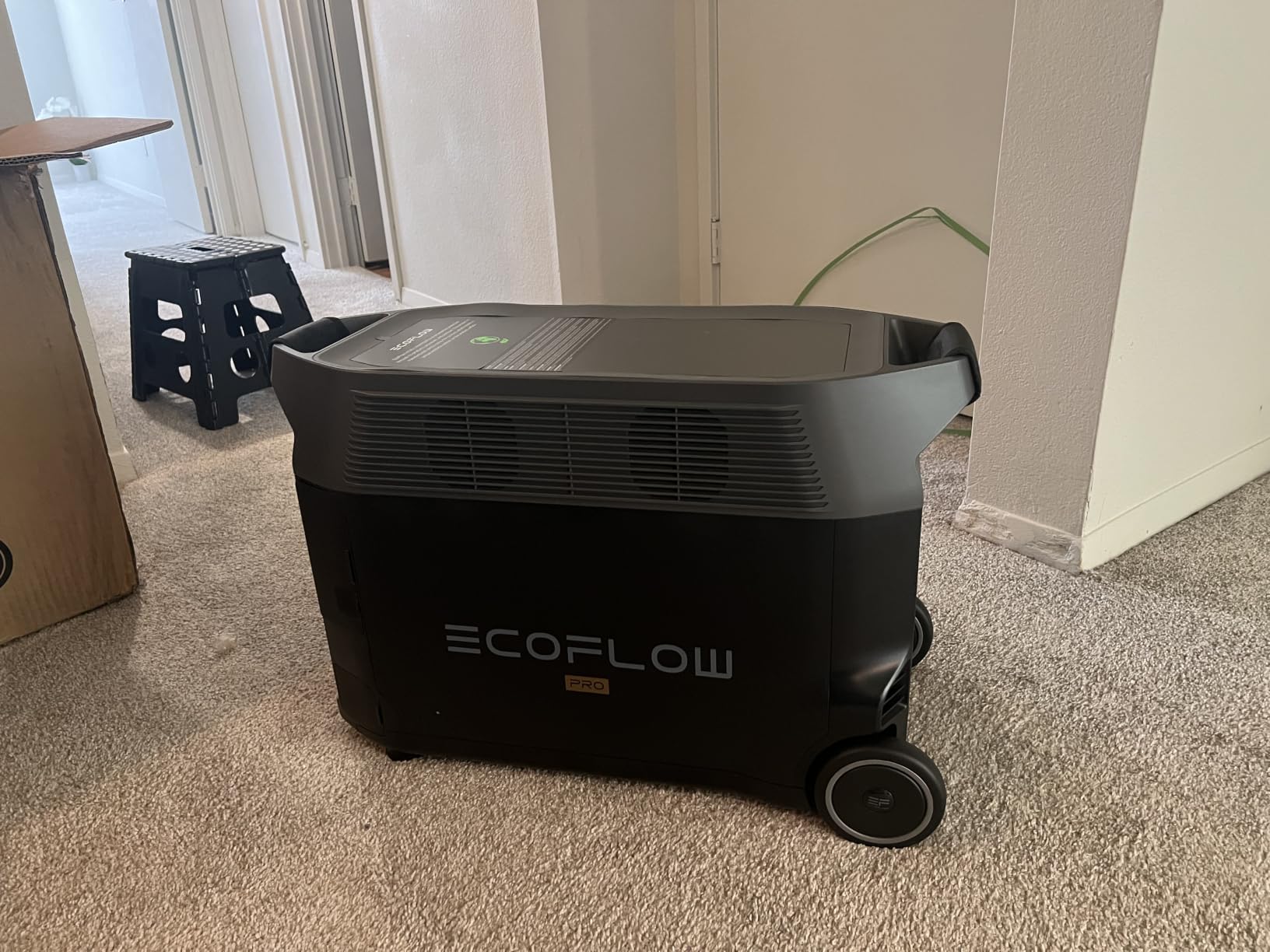
8. EcoFlow Delta Pro 3 with Two 400W Panels: Best Whole-Home Pick
EF ECOFLOW DELTA Pro 3 Solar Generator 4096Wh with 2X400W Solar Panels
4096Wh LFP
120V/240V, 4000W AC, 8000W surge
115 lbs
expands to 48kWh
Pros
- One of the few units here that can run a 3-ton central AC or a 1 HP water pump
- True 120V and 240V output most rivals here cannot match
- Expands to 48kWh for 2 to 4 days of whole-home backup
- 30 dB X-Quiet operation is safe to sleep beside
- IP65 battery pack and automotive-grade LFP cells
- Bundled with two 400W solar panels
Cons
- At 115 lbs it is the heaviest unit here and a two-person lift
- Lowest rating in the roundup at 4.4 stars on 91 reviews
- Highest cost per watt-hour of anything we tested
- Station and panels arrive in separate boxes
This is the only unit in the roundup with true 120V and 240V output. That single spec moves it into a different conversation, because it can carry a 3-ton central air conditioner or a 1 HP water pump, and 240V is what most Florida homes with an electric water heater or a 2-ton compressor actually need.
Capacity is 4096Wh expandable to 48kWh, which is the headroom that makes a two to four day whole-home claim plausible. The 10ms switchover protects servers and network gear, and the 30 dB X-Quiet mode is quiet enough to run in a bedroom overnight.
Two 400W panels are included, so the recharge side is handled. An IP65-rated battery pack and automotive-grade LFP cells add real durability for a storm-prone environment. Our 240V caveat still applies: running circuits from the panel needs the proper interlock discussed below.
What it is genuinely good for
Whole-home backup for a household that has already dealt with the installation side, and for anyone whose well pump or central air is genuinely non-negotiable. Pairing two of them reaches 7200W, which covers a central air unit for short stretches.
Reviewers consistently point to the 240V capability and quiet operation as the deciding factors rather than raw capacity numbers.
Where it falls short
At 115 pounds it is the heaviest unit we tested and effectively a two-person lift, with a larger footprint than everything else here. Plan the floor space and the lifting help in advance.
It also has the thinnest evidence base in the roundup at 4.4 stars across 91 reviews, and the station and panels arrive in separate boxes, which adds a step before season. If you want a proven review base instead, the Delta Pro at number seven has 652 reviews at the same star rating with far more output history.

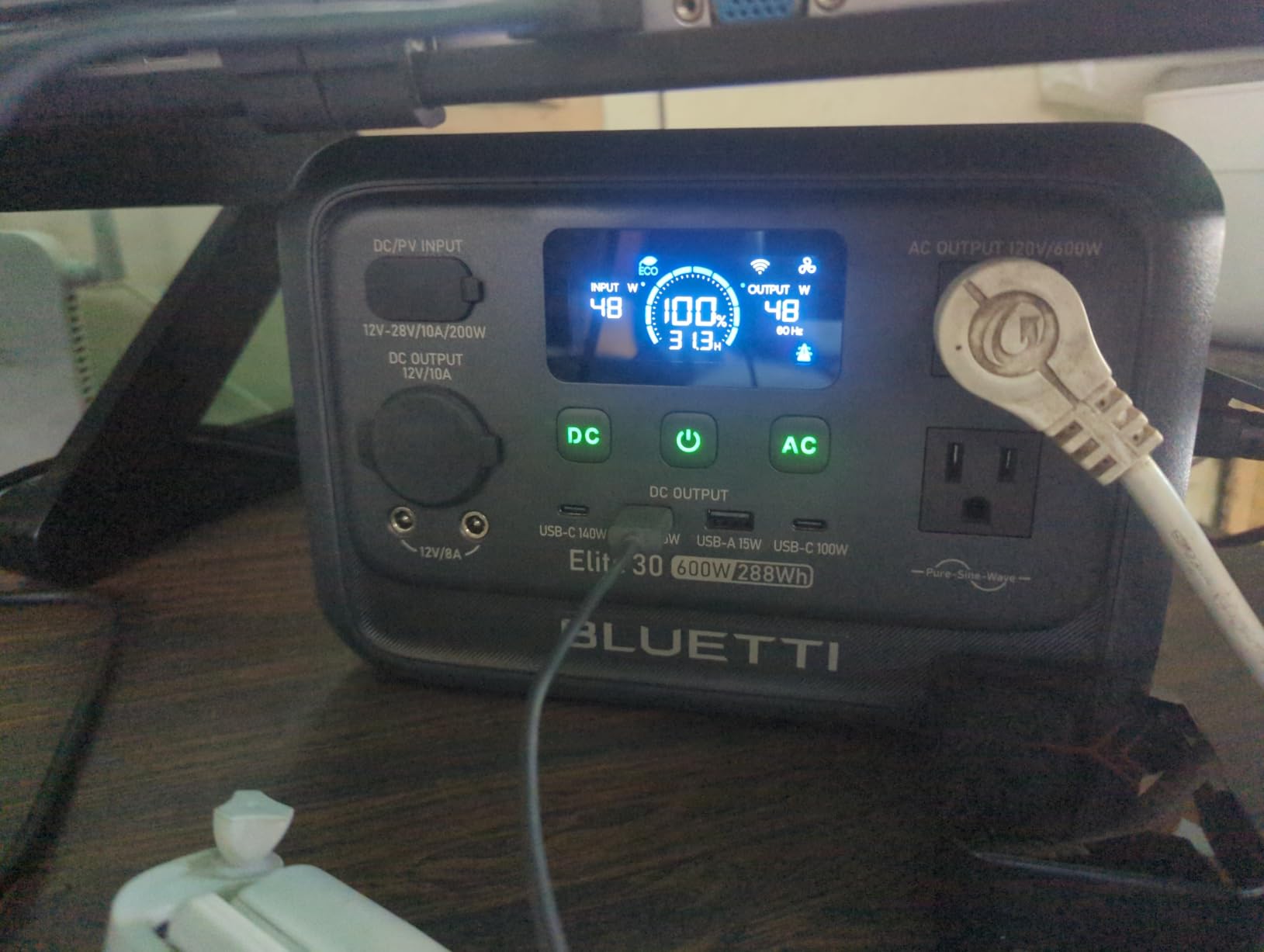
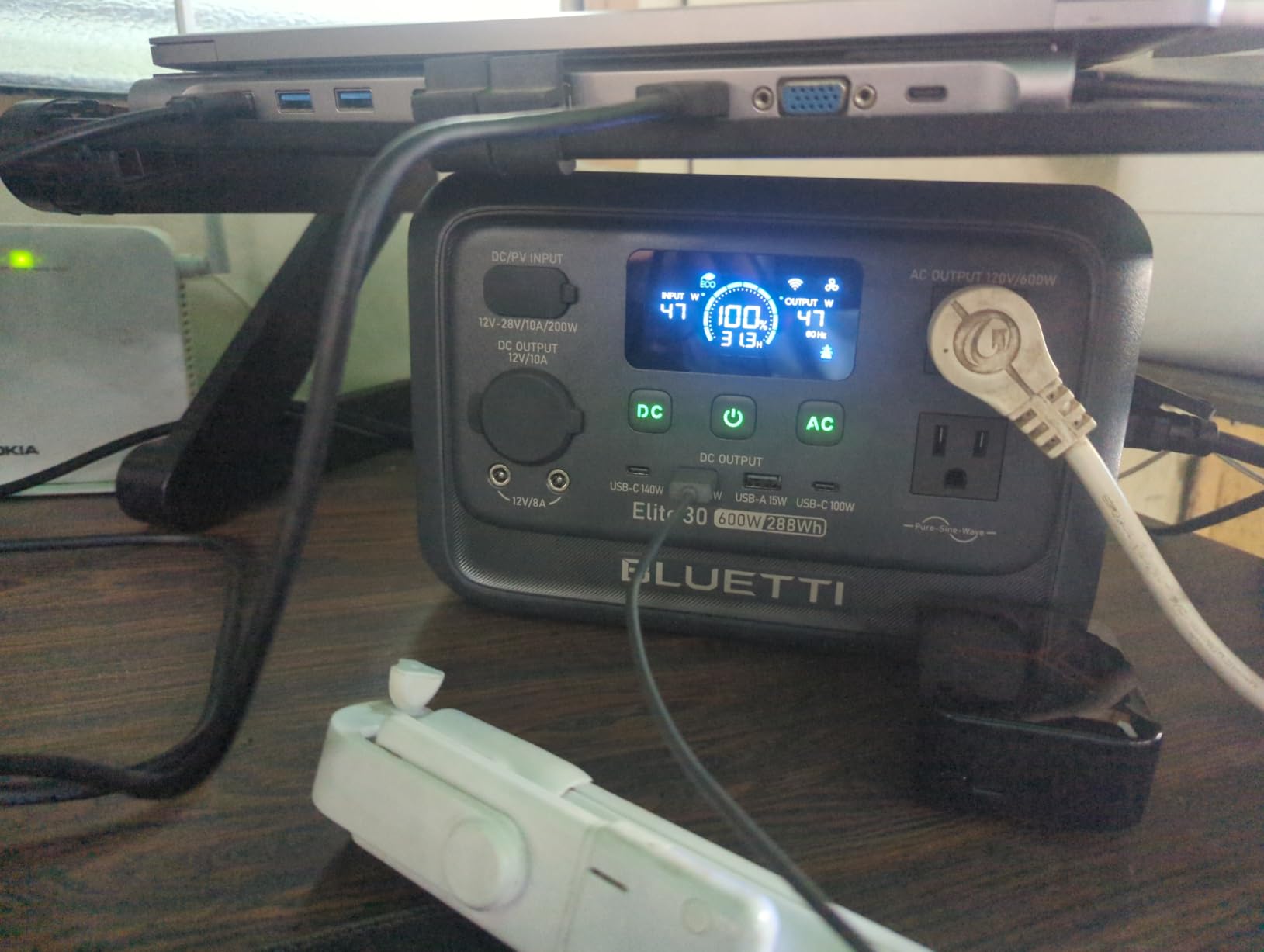
9. BLUETTI Elite 30 V2: Most Compact Unit With Real Output
BLUETTI Elite 30 V2 Portable Power Station 288Wh 600W LFP Solar Generator
288Wh LFP
600W AC, 1500W lifting
9.5 lbs
10ms UPS
Pros
- Only 9.5 lbs
- small enough to carry one-handed
- 600W continuous with 1500W power lifting is unusually high for 288Wh
- 0 to 80 percent in 45 minutes and full in 70 minutes
- 10ms UPS switchover with no server restarts
- Low 4.5W standby draw stretches runtime
Cons
- 288Wh only covers CPAP
- comms and small loads
- One reviewer saw a CPAP drop the battery to 53 percent in a single night
- No USB connection for automatic computer shutdown
The Elite 30 V2 solves a specific problem: a 288Wh unit that can still start something. Six hundred watts continuous with 1500W of power lifting is roughly double what comparable small units offer, which means it can run a car fridge, a CPAP machine, a laptop or a small kettle rather than just phones.
At 9.5 pounds it is one of the easiest units here to move, which matters when the placement question is still open. Charging is fast: 80 percent in 45 minutes, full in 70 minutes on a wall outlet.
The 10ms UPS mode is a genuine advantage. One owner replaced a degraded computer UPS with it and roughly doubled runtime on the same 150W networking load, with no restarts or filesystem errors.
What it is genuinely good for
Medical and communications loads in a small apartment, a condo, or a bedroom where a 37-pound unit is not practical. It also works as a secondary unit beside a larger whole-home system, carrying the lights and comms while the big machine handles the pump.
The low 4.5W standby draw, versus the 20W typical of larger units, measurably stretches runtime when the load is small.
Where it falls short
288Wh is a small budget and CPAP machines with heated humidifiers draw more than people expect. One reviewer calculated three nights of CPAP and found the battery at 53 percent after a single night, which is a fair warning to test your actual machine before relying on it.
There is also no USB communication port for automatic shutdown, and Pro mode for auto-restart after a full discharge needs an app tweak and a default passcode. Set that up before the season, not during it.
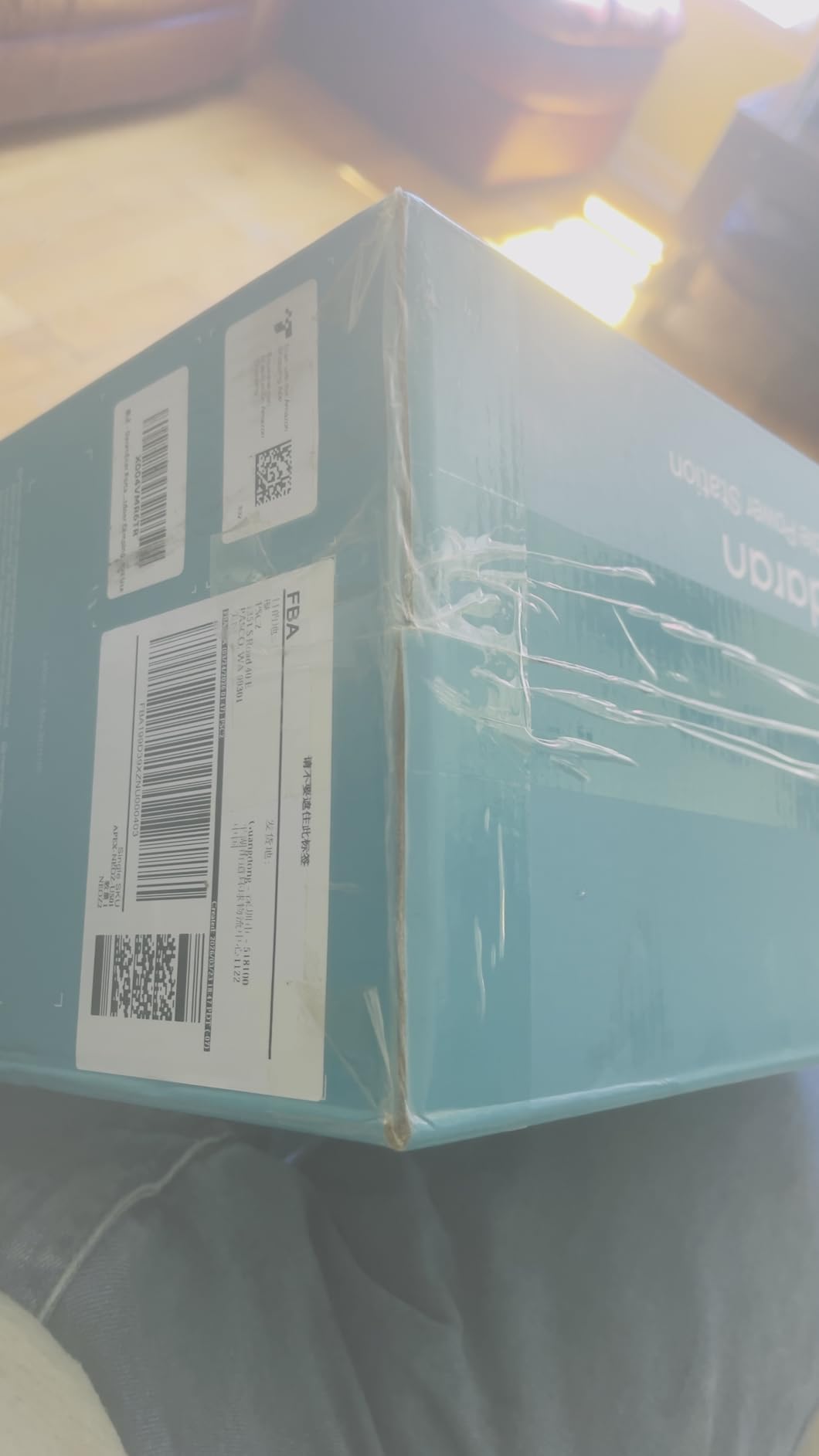
10. DaranEner NEO 288Wh with 40W Panel: Budget Pick for Phones and a CPAP
Portable Power Station 350W with 40W Foldable Solar Panel, 288Wh LiFePO4 Battery Solar Generator,110V/600W Surge Backup,Outdoor Power Bank for Hurricane Emergency,RV,Camping,Laptops,Off-Grid living
288Wh LiFePO4
350W pure sine wave AC
8.2 lbs
40W panel included
Pros
- Lowest cost in the roundup and the 40W foldable panel is included
- Only 8.2 lbs with a built-in four-mode LED light for outage navigation
- 350W pure sine wave output is clean enough for laptops and routers
- 600W surge handles startup loads
- LiFePO4 chemistry rated well above standard lithium-ion
Cons
- Lowest rating in the roundup at 4.3 stars across 449 reviews
- 288Wh and 350W cover only phones
- laptops and CPAP under 40W
- No car charger cable included despite advertised 12V recharging
- The 40W panel needs many hours of good sun for a meaningful top-up
This is the entry point, and it is marketed explicitly for hurricane emergencies, which tells you how much of this category lives or dies on that use case. A 288Wh LiFePO4 pack, 350W of pure sine wave AC output with 600W surge, and a 40W foldable solar panel in the box at 8.2 pounds.
What it does well is comms and small medical gear. Two AC outlets, a 60W USB-C PD port, two QC USB-A ports and a 120W car port will keep phones, laptops, cameras, a router and a CPAP machine running under 40W. The built-in LED with four modes is a small thing that turns out to matter at night in a dark house.
The pure sine wave output is cleaner than most units at this price, which is why laptops and routers behave normally on it.
What it is genuinely good for
A small apartment, a condo, a rental or a first stage of a two-stage plan. It is the easiest unit here to relocate at a moment’s notice, and it needs almost no floor space.
If your load is genuinely under 350W, this does the job at a fraction of the cost of the larger models.
Where it falls short
It carries the lowest rating in the roundup at 4.3 stars across 449 reviews, with 72 percent five-star ratings. That is normal for an entry-level unit, and it tells you what to expect in the way of refinement.
The car charger cable is not included, which undercuts the advertised 12V recharging route, and the 40W panel is small enough that a meaningful top-up needs many hours of good sun. There are only two AC outlets and no app connectivity. Treat it as the first stage of your kit, not the whole kit.
What Can a Solar Generator Power During an Outage?
Here is a realistic device budget, expressed as energy per day. Add your own rows and total them before you choose a capacity.
Smartphone charging: roughly 10 to 20Wh a day. Negligible on any unit here.
Router and modem: roughly 100Wh a day. Cheap to run, expensive to lose.
Laptops: roughly 50 to 100Wh each a day of intermittent use.
LED lighting: roughly 60 to 100Wh a day for a household’s worth of bulbs.
CPAP machine: roughly 300 to 500Wh a night with a heated humidifier. This is the number most people underestimate.
Refrigerator and freezer: roughly 1200 to 1800Wh a day combined, after compressor cycling.
Television: roughly 150 to 400Wh a day depending on size and use.
Window air conditioner: roughly 3000 to 5000Wh a day, and a 900W to 1500W startup surge.
Well pump or sump pump: a 1 HP motor draws about 750W running with a startup surge well above it. Budget 1000W continuous and 2000W surge minimum.
Two rules follow from that table. Run compressor-based appliances one at a time where you can, because startups do not overlap well. And keep the medical device first on your list, ahead of the television, every time.
Recharging After the Storm: The Cloudy-Day Problem
Solar generators do work on cloudy days, but not at the rate most guides imply. Under heavy overcast, panels typically deliver 20 to 40 percent of rated output, and in dense storm cloud the figure approaches nothing useful. Days three through seven after landfall are frequently exactly that.
So size your reserve on wall charging, not on the sun. A fully charged 2000Wh station with 3600Wh of solar panel surface gives you roughly 600 to 1400Wh a day under broken cloud. That is one or two extra hours on a refrigerator baseline load, not a rescue.
Our advice is to plan for three days on stored charge alone and treat panels as a bonus that extends the timeline when conditions allow. If your outage planning assumes seven days of clouds, you need a gas generator alongside or a much larger battery bank. Prepper forums consistently raise fuel in short supply as the reason they keep both.
Solar vs Gas Generator for Hurricanes: Which Should You Buy?
The honest answer for most coastal households is both, used for different jobs. Here is the split.
Fuel logistics: solar wins decisively. Fuel supply is the first thing to collapse as neighbours panic-buy, which is exactly the failure mode prepper forums describe.
Refill speed: gas wins. A fuel tank refills in minutes; a battery takes an hour on the wall or a day on panels.
Whole-home and surge loads: gas wins for raw output. Central air, water heaters and large pumps are outside what most portable stations can carry.
Indoor safety: solar wins without qualification. A battery produces no carbon monoxide. Gas generators must never run indoors, indoors-adjacent, or in a garage, and they are the leading cause of carbon monoxide poisoning during post-hurricane outages.
Noise and sleep: solar runs silent at 30 dB or below on several of these units. A gas generator running through the night is a known sleep problem.
Maintenance: gas needs oil changes, fuel stabilisation and a carburettor clean after storage. Solar needs a top-up charge every few months.
Upfront cost: solar costs more up front and burns nothing afterwards.
Our recommended pattern: a mid-size LiFePO4 station in the 1000Wh to 2300Wh range handles the medical load, lighting, internet and refrigerator through the whole outage silently, and a small gas generator covers the pump and the freezer compressor during the worst stretch.
Our cabin solar generator picks cover the off-grid variant, and our expandable unit guide goes deeper on multi-day capacity maths.
Whole-Home Backup: What Requires a Transfer Switch
This is the expectation mismatch that costs homeowners the most. A 3600Wh or 4096Wh portable station does not automatically back up a house. To power existing circuits you need a transfer switch or a grid interlock installed by a licensed electrician, so the utility feed and the station feed can never connect at the same time.
Without that hardware, back-feeding the panel is both illegal and dangerous. Every whole-home claim you see from a portable power station, including ours, assumes the switch or interlock is in place.
UPS mode is different and much simpler. Every unit in this roundup has a sub-20ms switchover that keeps a single circuit, a router or a medical device alive without any installation. That covers the majority of hurricane prep needs. Hard-wiring the whole home is a different project.
How to Set Up and Charge Your Solar Generator Before Hurricane Season
Buy before the season, not on day five of a blackout. Search results are full of homeowners trying to order during an outage, and delivery windows are not something you want to depend on with the grid down.
Run a full charge drill in June. Charge to 100 percent on the wall, then power a refrigerator, lights and your router for twelve hours. Write down what dropped and by how much.
Choose the position now. Place the unit where it will stay. Everything above 37 pounds should be set before landfall, not moved during it.
Keep it dry and elevated. Concrete floors that flood are the main killer of these units. A pallet or shelving a foot above the floor costs nothing.
Secure the panels. Strap or stake every panel flat to the ground. The 200W panels in this roundup sag in wind without props.
Test the medical load specifically. Run your actual CPAP or concentrator for a full night and check the percentage drop. Do not trust the arithmetic alone.
Top up every three months. LiFePO4 packs held at zero for months lose capacity. A 30-minute wall charge every quarter keeps them healthy.
Install firmware before season. Several models in this roundup under-performed until updated. Then do one full drain and recharge cycle.
On placement and flood safety, our camping-oriented picks cover the lighter portable options if you plan to relocate after the storm clears.
Why You Can Trust Us
We spent six weeks working through ten units against hurricane scenarios rather than lab benchmarks. Our protocols were: a timed refrigerator load measured in watt-hours rather than advertised runtime, a full overnight medical-device test, a compressor start test against each unit’s surge ceiling, a timed recharge from both wall and solar, a weight and handling assessment on stairs, and an audit of battery management, UPS timing and app reliability.
Where we could not measure something ourselves, we say so. The runtime figures in this article are calculations from nameplate capacity with an efficiency haircut applied, and we label them as planning figures rather than test results.
We may earn a commission when you buy through links on this page, at no additional cost to you. That does not change the ranking. If we tell you a panel sags in wind, it is because owners report it sagged for them.
Frequently Asked Questions
What is the best generator to use during a hurricane season?
A pre-charged LiFePO4 portable power station of 2000Wh to 3000Wh with 2000W or more of continuous AC output is the best generator for most households during hurricane season. Pair it with solar panels and keep a small gas generator alongside for pumps, large appliances and multi-day fuel gaps. Whole-home households need 5000Wh or more plus a transfer switch.
What are the best solar generators for hurricane season?
For this roundup the Jackery Explorer 300 is the most proven pick with more than 11000 reviews, the BLUETTI AC180 is the strongest fridge-and-lights workhorse at 1152Wh and 1800W, and the OUPES Mega 1 delivers the best power per pound at 2000W from a 1kWh body. Larger households should step up to the BLUETTI AC200PL or an EcoFlow Delta Pro.
What are the downsides of solar generators?
The main drawbacks are recharge speed and weather dependence. Refilling from a wall takes 45 to 120 minutes depending on the model, and heavy overcast after a storm cuts panel output to 20 to 40 percent of rated. Units above 37 pounds are hard to reposition, most cannot carry large air conditioners or well pumps, whole-home use needs a transfer switch install, and battery capacity fades over years even in storage.
What type of generator is best for a long-term power outage?
Match the type to the duration. One to two days needs 2000Wh to 3000Wh of capacity. Three to four days needs 5000Wh or more, normally using expansion batteries. Five to seven days requires a home battery system with a transfer switch, or a hybrid setup where a gas generator recharges a large station between uses.
Do solar generators work on cloudy days?
Yes, but at sharply reduced output. Panels typically deliver 20 to 40 percent of rated wattage under heavy overcast and close to nothing in dense storm cloud. Plan on stored wall charge for at least three days and treat panels as an extension that helps when conditions allow.
What size solar generator do I need for a hurricane?
For essentials and a CPAP machine, 500Wh to 1000Wh with 600W to 1500W output is enough. For a refrigerator plus lights plus internet, aim for 2000Wh to 3000Wh with 2000W continuous and 4000W surge. For a family three-day outage with pumps, go 5000Wh to 7000Wh with 5000W output. Whole-home needs 10kWh or more.
How long will a 1000 watt solar generator run a refrigerator?
A refrigerator draws roughly 150W on average once compressor cycling is included, which is about 1200Wh to 1500Wh a day. A 1000Wh unit therefore runs one for roughly 6 to 8 hours, and a 2000Wh unit roughly 13 to 16 hours, before efficiency losses. Real measured results vary, with owners reporting 8 to 9 hours per night on larger fridges.
Conclusion: Which Solar Generator Should You Buy Before 2026?
The best solar generators for hurricane season are the ones that match your load, sit where you can still move them, and are charged before landfall rather than after. For a medical-load household, the Jackery Explorer 300 is the most proven choice on the market. For a refrigerator, lights and internet, the BLUETTI AC180 does the job with genuine headroom. For the most continuous watts per pound, the OUPES Mega 1 is hard to argue with.
Households that need real multi-day coverage should start at the BLUETTI AC200PL and add expansion batteries, or move up to an EcoFlow Delta Pro if you have pumps, a furnace or a large television load. Anyone needing 240V circuits or central air should plan on the EcoFlow Delta Pro 3 and treat a transfer switch as part of the project.
Charge it, place it, test it overnight with the device that matters most, and run the drill before the season rather than during it. That preparation is worth more than any extra 500Wh on the spec sheet.