
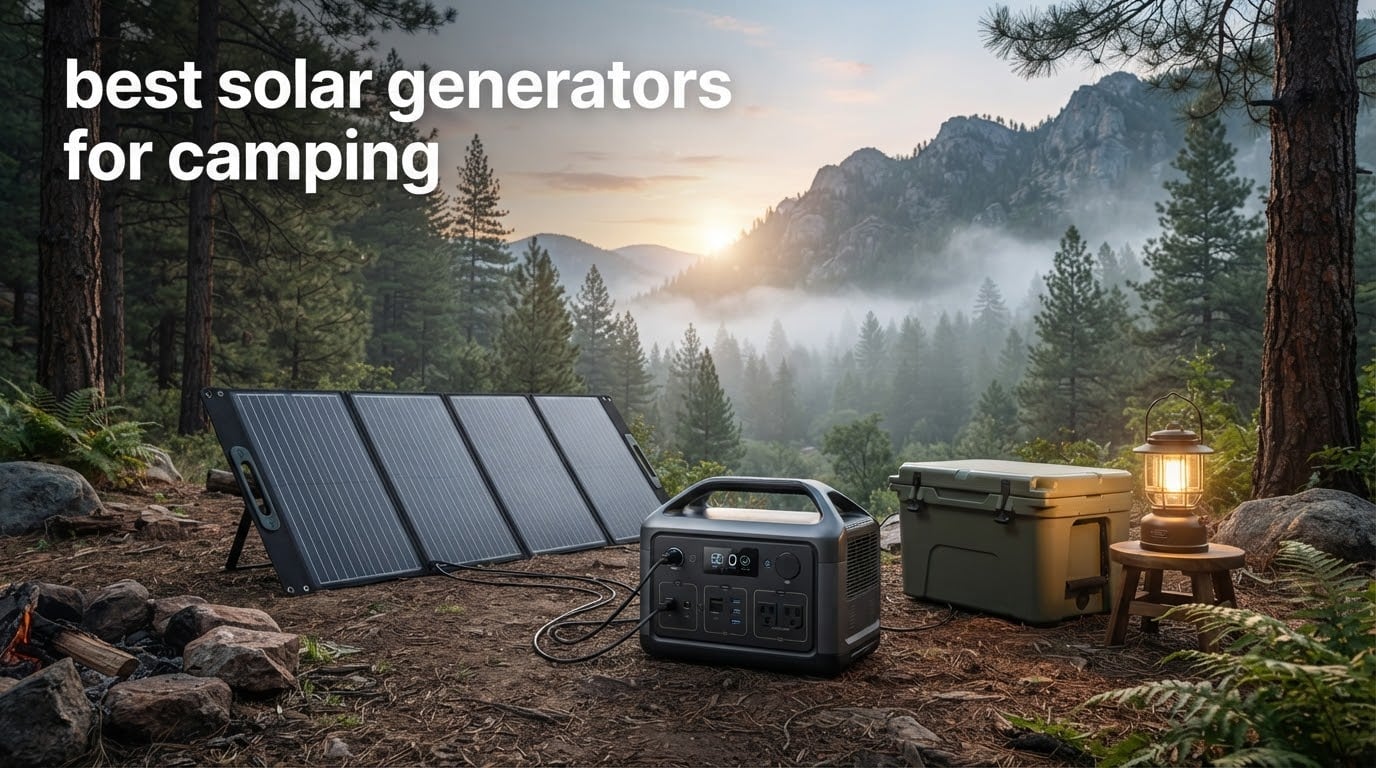
Gas generators have always been the awkward choice at a campsite. They are loud enough to earn you a conversation with a neighbor, they produce carbon monoxide, and every trip needs a plan for fuel. A solar generator, which is really a portable power station with a battery and an inverter, replaces all of that with silence and daylight.
That is the short answer to the best solar generators for camping question in 2026. We put twelve of them through the same filter: real capacity, real continuous output, weight you can actually lift from the trunk, battery chemistry that survives a decade, and the panel pairing that goes with them. The list runs from a 237Wh bundle with a folding panel in the box to a 2,304Wh unit built for base camp and RV loads.
If you are still working out whether you need one at all, our broader guide to the best solar generators covers larger home backup units. If the problem is noise, our picks for the best inverter generators are the quiet gas alternative. Everything below is sized for camp use.
Table of Contents
Top 3 Picks: Best Solar Generators for Camping (October 2026)
The three units below cover most camping trips between them. The Jackery Explorer 300 wins on weight and review depth, the Explorer 1000 v2 is the strongest all-round station, and the BLUETTI AC180 delivers the most continuous power per purchase.

Jackery Explorer 300
- 292Wh at 7.1 lbs
- 300W AC and 600W surge
- LiFePO4 rated 4000+ cycles
- MPPT solar input

Jackery Explorer 1000 v2
- 1070Wh with 1500W AC output
- 3000W surge for fridges and pots
- 4000-cycle LFP pack
- 100W USB-C PD

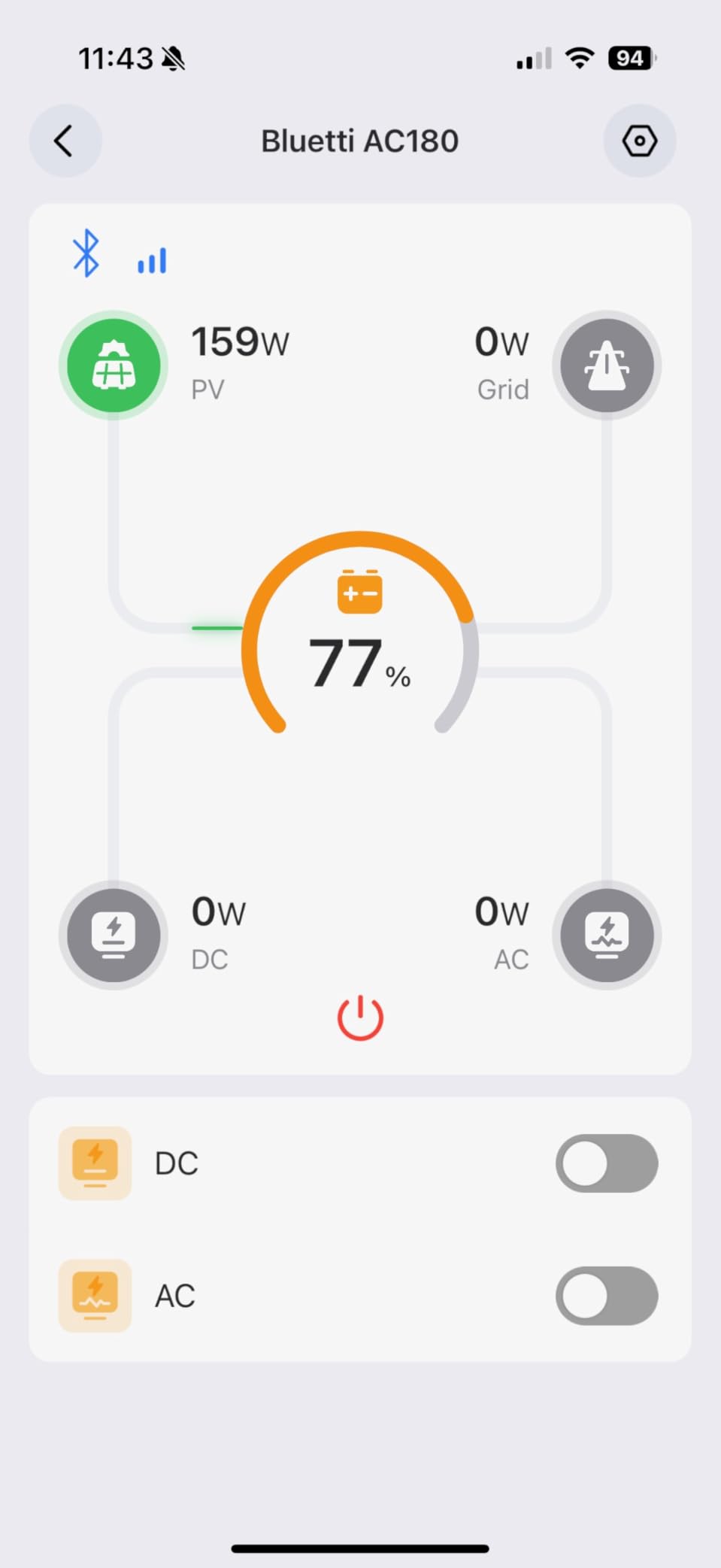
BLUETTI AC180
- 1152Wh LiFePO4 pack
- 1800W continuous with 2700W boost
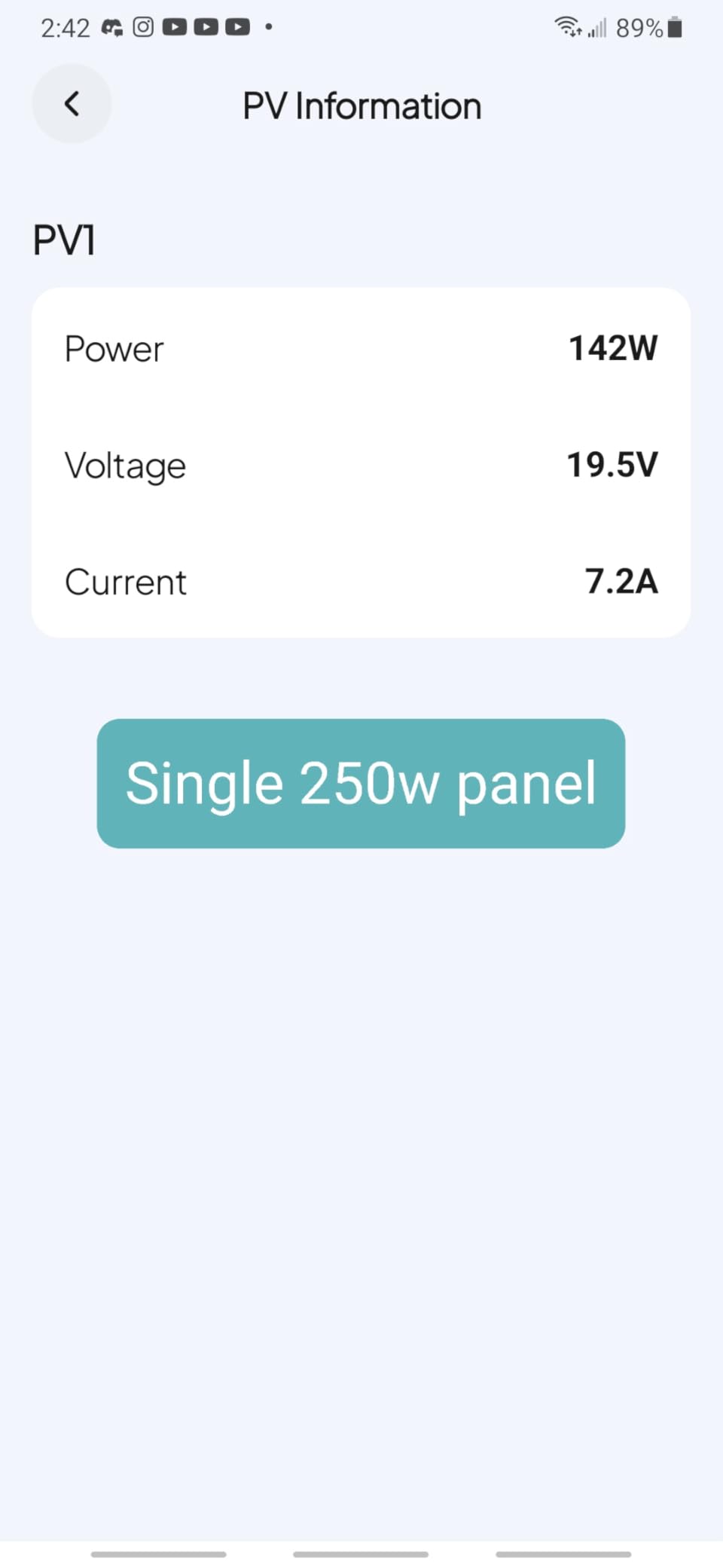
- 500W solar input
- 20 ms UPS
All 12 Solar Generators at a Glance
This is the full lineup in one place, with the specs that decide each purchase. Use it to narrow the field before reading the individual reviews.
| Product | Specifications | Action |
|---|---|---|
| Jackery Explorer 300 |
|
Check Latest Price |
 MARBERO 237Wh plus 60W panel MARBERO 237Wh plus 60W panel |
|
Check Latest Price |
 EcoFlow RIVER 2 EcoFlow RIVER 2 |
|
Check Latest Price |
| Jackery Explorer 1000 v2 |
|
Check Latest Price |
| BLUETTI AC180 |
|
Check Latest Price |
 BLUETTI AC200PL BLUETTI AC200PL |
|
Check Latest Price |
 Anker SOLIX C300 Anker SOLIX C300 |
|
Check Latest Price |
 EcoFlow RIVER 2 Pro bundle EcoFlow RIVER 2 Pro bundle |
|
Check Latest Price |
 Anker SOLIX C1000 Gen 2 Anker SOLIX C1000 Gen 2 |
|
Check Latest Price |
 EcoFlow RIVER 2 Max bundle EcoFlow RIVER 2 Max bundle |
|
Check Latest Price |
 ALLWEI 300W 256Wh ALLWEI 300W 256Wh |
|
Check Latest Price |
 BLUETTI Elite 30 V2 BLUETTI Elite 30 V2 |
|
Check Latest Price |
What a Solar Generator Actually Is
A solar generator is a portable power station. It has no engine. Four parts do the work: a lithium battery that stores energy in watt-hours, a charge controller that regulates incoming current, an inverter that converts stored DC into the AC your devices expect, and a set of ports that deliver the power.
Solar panels feed the charge controller. The controller optimises the current, usually through an MPPT tracker, and pushes it into the battery. When you plug in a phone, the inverter reverses the flow and hands back standard wall power. The whole unit runs silently the entire time.
Two numbers get confused constantly. Watts describe how fast power comes out, which decides whether a kettle or a fridge will run at all. Watt-hours describe how much energy is stored, which decides how long it lasts. A 300W output on a 292Wh battery is a short, sharp tool. A 1,800W output on a 1,152Wh battery is a short, sharp tool with more headroom.
One more correction matters more than any other. Nameplate capacity overstates what you get. Apply about 90% depth of discharge and 85% inverter efficiency and a 1,000Wh station yields roughly 765Wh of real energy. Several brands in this roundup advertise a 90% usable figure, and BLUETTI states that limit plainly on the AC180.
1. Jackery Explorer 300 Portable Power Station – The Best Overall Pick for Weight
Jackery Explorer 300 Portable Power Station,292Wh
292Wh battery
300W AC with 600W surge
7.1 lbs
LiFePO4 rated 4000+ cycles
Pros
- Only 7.1 lbs so one person can carry it from car to site
- Pure sine wave AC that reviewers say protects sensitive electronics
- MPPT controller refills quickly from a 100W panel
- Pass-through charging lets you use it while it recharges
Cons
- 300W ceiling rules out fridges and most appliances
- USB-C PD port is output only with no charging input
- 12V car socket rated just 10A
The Explorer 300 is the unit we kept reaching for. At 7.1 lbs it is the kind of weight you can carry with one hand while holding a cooler in the other, which is the difference between a power station you own and a power station you leave in the trunk.
Owners overwhelmingly use it for the same job: phones, laptops, a small light and a fan while camping, plus short outages at home. Several long-term owners report hundreds of hours of CPAP use, which tells you the pure sine wave output and the battery management are doing their job.
The 300W inverter covers two AC receptacles, 100W USB-C PD, two USB-A ports and a 12V car socket. Solar charging to 80% takes about 2.8 hours with a 100W Jackery panel, and the panel is not included.
It is a 4.6-star unit across more than 11,000 reviews, and that depth of ownership history is the reason it leads this list. We have covered panel pairings in our guide to the best solar panels for camping if you need one.
What the 292Wh class actually covers
Roughly 220Wh of usable energy after depth of discharge and inverter losses. That is a weekend of phone charging, a laptop or two, camp lights for several nights, and a fan.
It is not enough for a portable fridge, a kettle or a coffee maker. Any compressor appliance will hit the 300W inverter ceiling and trip it.
When to skip it
Skip this model if a camping fridge is part of your setup, or if you plan to run anything with a heating element. Those buyers should look at the Jackery Explorer 1000 v2 or the BLUETTI AC180 instead.
The 10A car socket also rules out some heavy tire inflators, and the USB-C port will not accept a charge, so budget for a separate cable if your phone tops up from the station.
2. MARBERO 237Wh Solar Generator with 60W Panel – The Best All-in-One Bundle
MARBERO 237Wh Solar Generator with Solar Panel Included Portable Power Station 300W Pure Sine Wave with Foldable Solar Panel 60W Set for Camping Outdoor Hiking Fishing Emergency
237Wh with 60W panel included
300W pure sine wave
9 lbs combined
12-month warranty
Pros
- The only set in this roundup that ships with a 60W folding panel in the box
- Pure sine wave AC outlets at an entry-level capacity
- LED flashlight with flashlight strobe and SOS modes
- USB-C PD plus multiple USB-A ports
Cons
- 237Wh is the smallest capacity in this roundup
- 300W ceiling can be stressed by high-draw heating appliances
- Only a 12-month warranty
Everything else on this list expects you to buy a panel separately. This bundle does not, and for a first-time camper that changes the whole experience. You unbox one box and you have a working solar setup.
The 60W folding panel is quoted at 21.5% to 23.5% conversion with a device-recognition chip, which is a reasonable number for a portable array. The station carries 237Wh and drives 300W through two pure sine wave outlets.
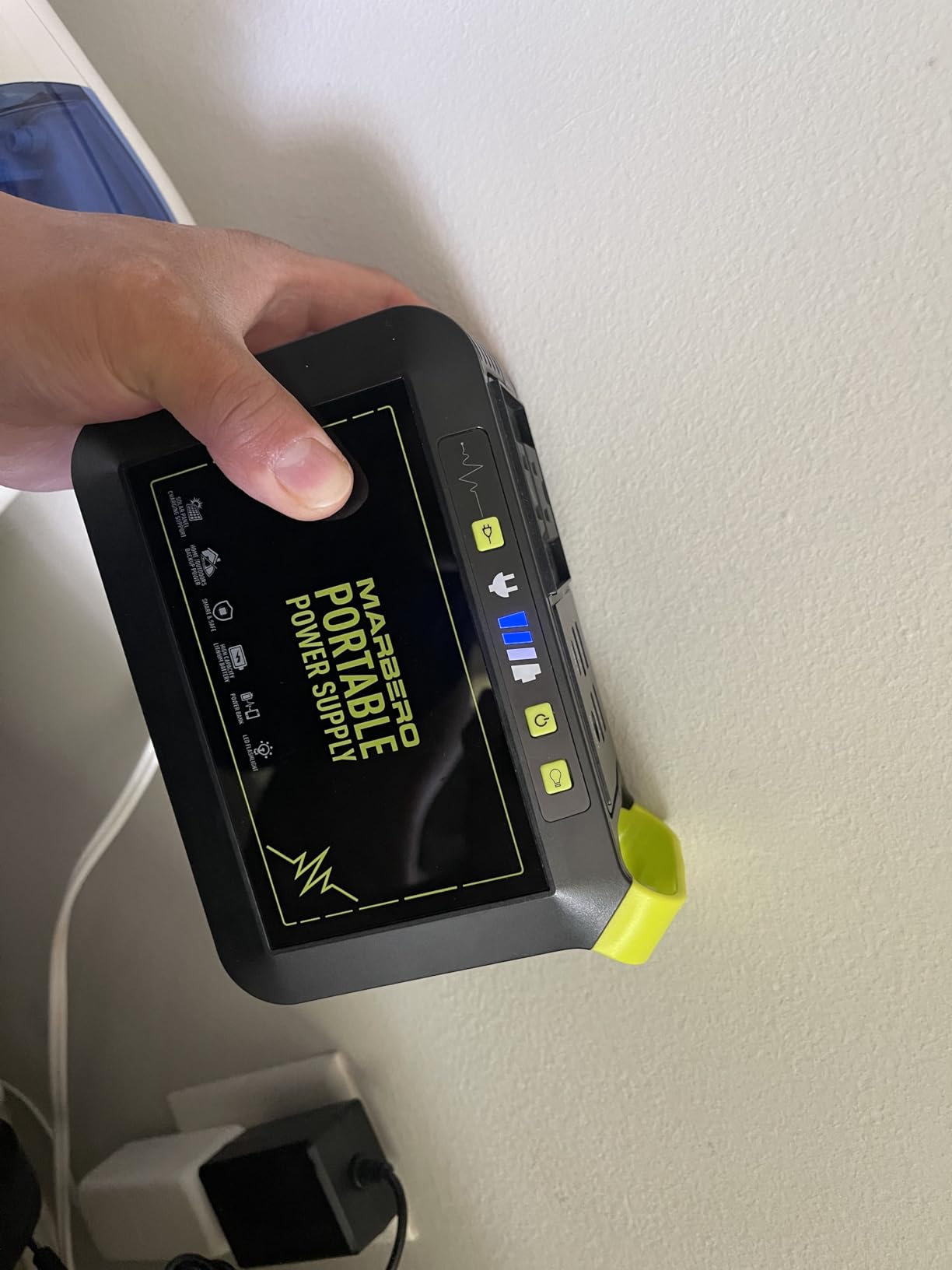
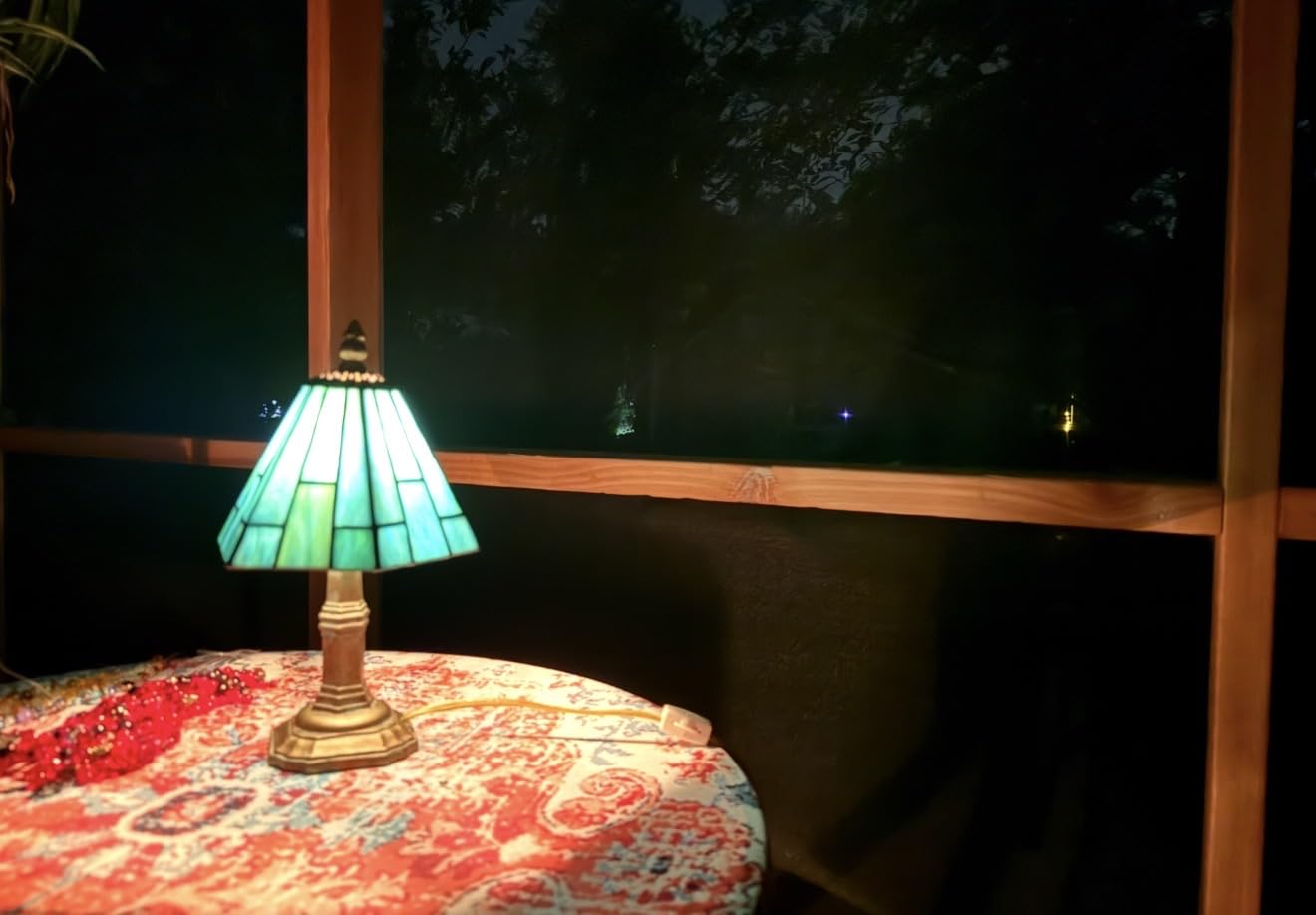
Port selection is better than most units in this size class: two USB-A QC3.0, two further USB-A, one USB-C PD at 18W and a DC output. The integrated LED flashlight has strobe and SOS modes, which matters more than it sounds when you are finding a tent at midnight.
Reviewers buy this for the convenience and the included panel rather than for raw power, and the 4.1 rating reflects that. The one-star share sits at 12%, the highest in this roundup, mostly from buyers who expected more capacity.
Why the included panel changes the maths
Because the array is in the box, your refill time is predictable from day one. A 60W panel on a good day delivers a meaningful slice of a 237Wh pack rather than a token top-up.
For anything above 300W of load, this is the wrong tool. High-draw heating devices can damage the unit.
Who should buy it and who should not
Buy it if this is your first solar generator, your trip is phones, tablets, small laptops and lights, and you refuse to shop for a separate panel.
Pass on it if the 12-month warranty gives you pause, or if you already own panels. Weight is 9 lbs for the set, which is heavier than the bare stations at this capacity.
3. EF ECOFLOW RIVER 2 – Best for Refilling in an Hour
EF ECOFLOW Portable Power Station RIVER 2, 256Wh 300W
256Wh battery
600W output with X-Boost
7.7 lbs
1-hour AC recharge
Pros
- Full AC recharge in about one hour using X-Stream technology
- 7.7 lbs with a flat top you can stack gear on
- LiFePO4 cells rated 3000+ cycles to 80%
- Solar input up to 110W refills in as little as 2.3 hours
- App shows clear live input output and state of charge
Cons
- Only one USB-C port so a laptop and headphones compete
- Inverter overhead cuts usable 120V capacity noticeably
- Fan is audible during maximum-speed AC charging
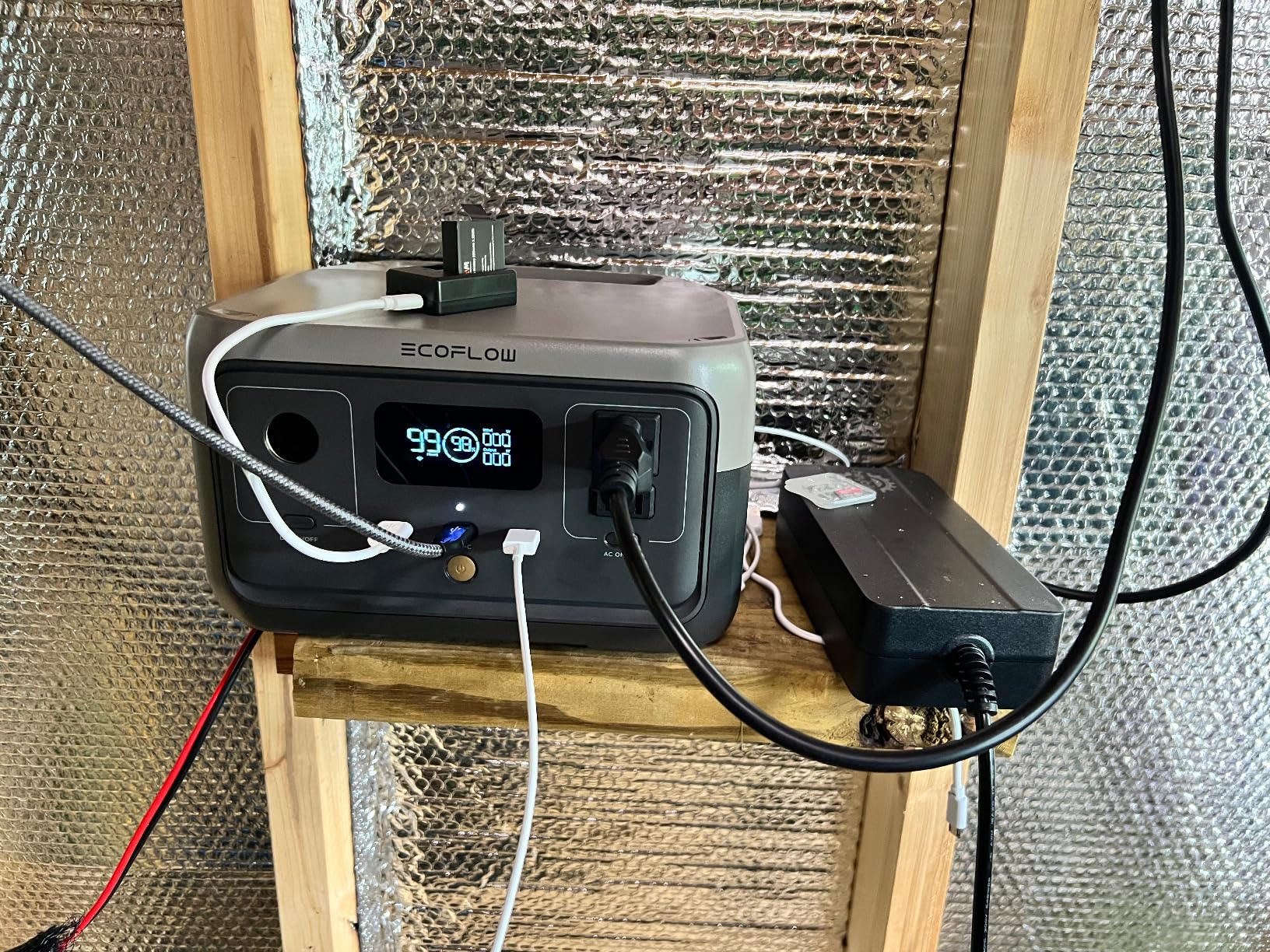
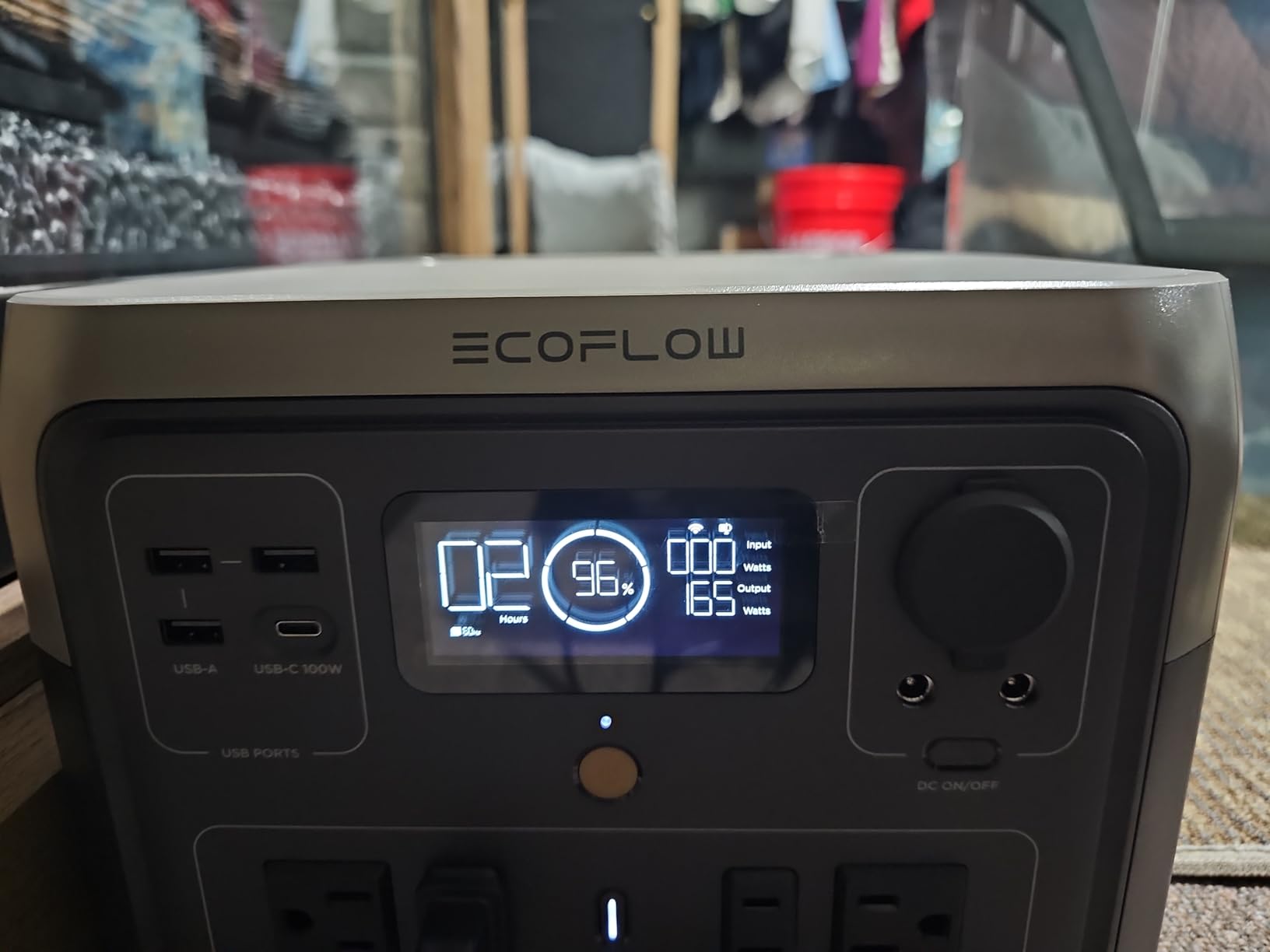
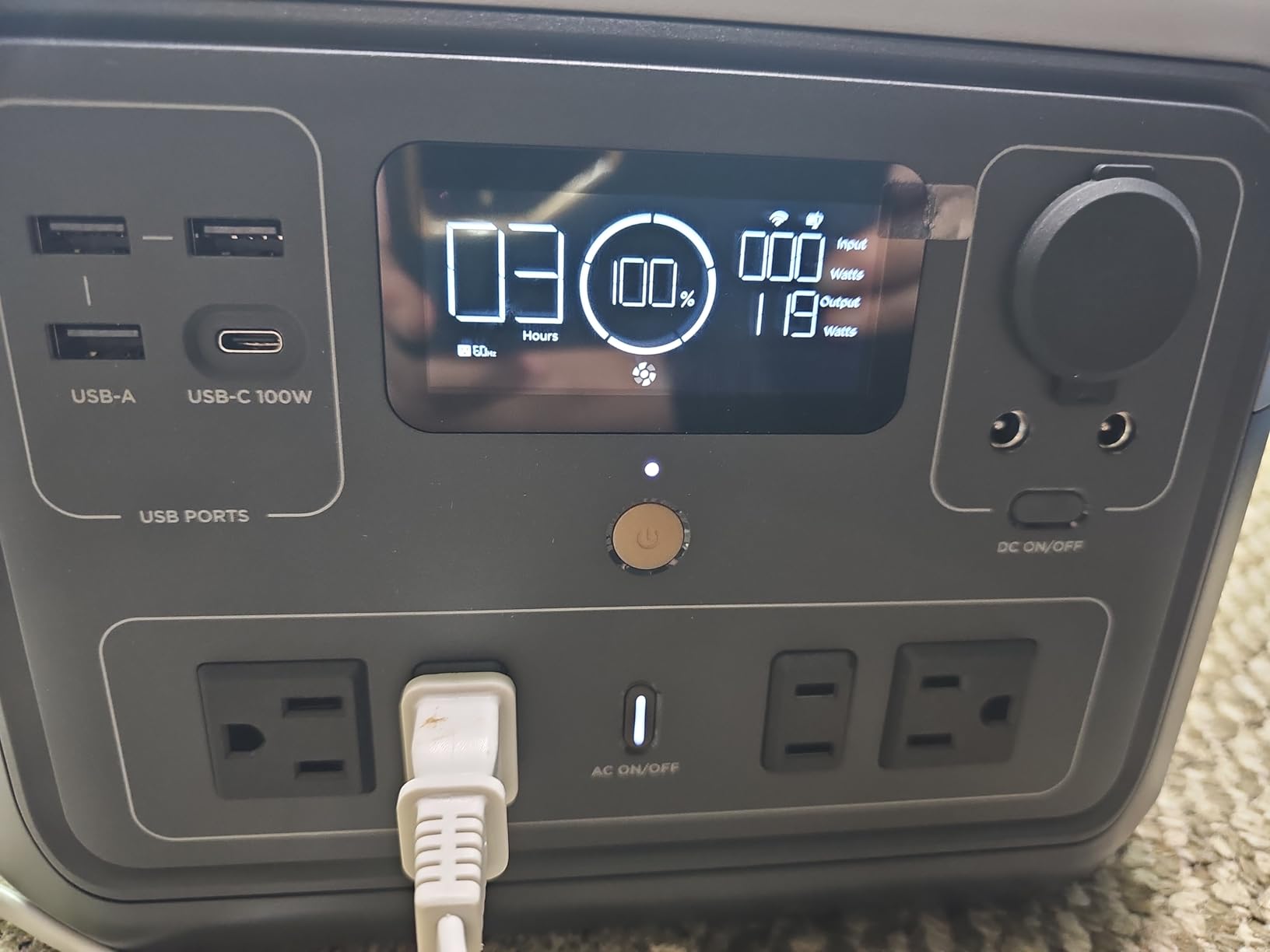
The RIVER 2 is defined by recharge speed. Wall to full in about an hour means you can top it up at a restaurant stop and have a full station before you reach the trailhead, which removes the most common complaint we heard about smaller setups.
At 7.7 lbs with a built-in carry handle, it moves easily. The flat top is a small design choice that matters more than it sounds, because you end up setting a lantern or a folding chair on it.
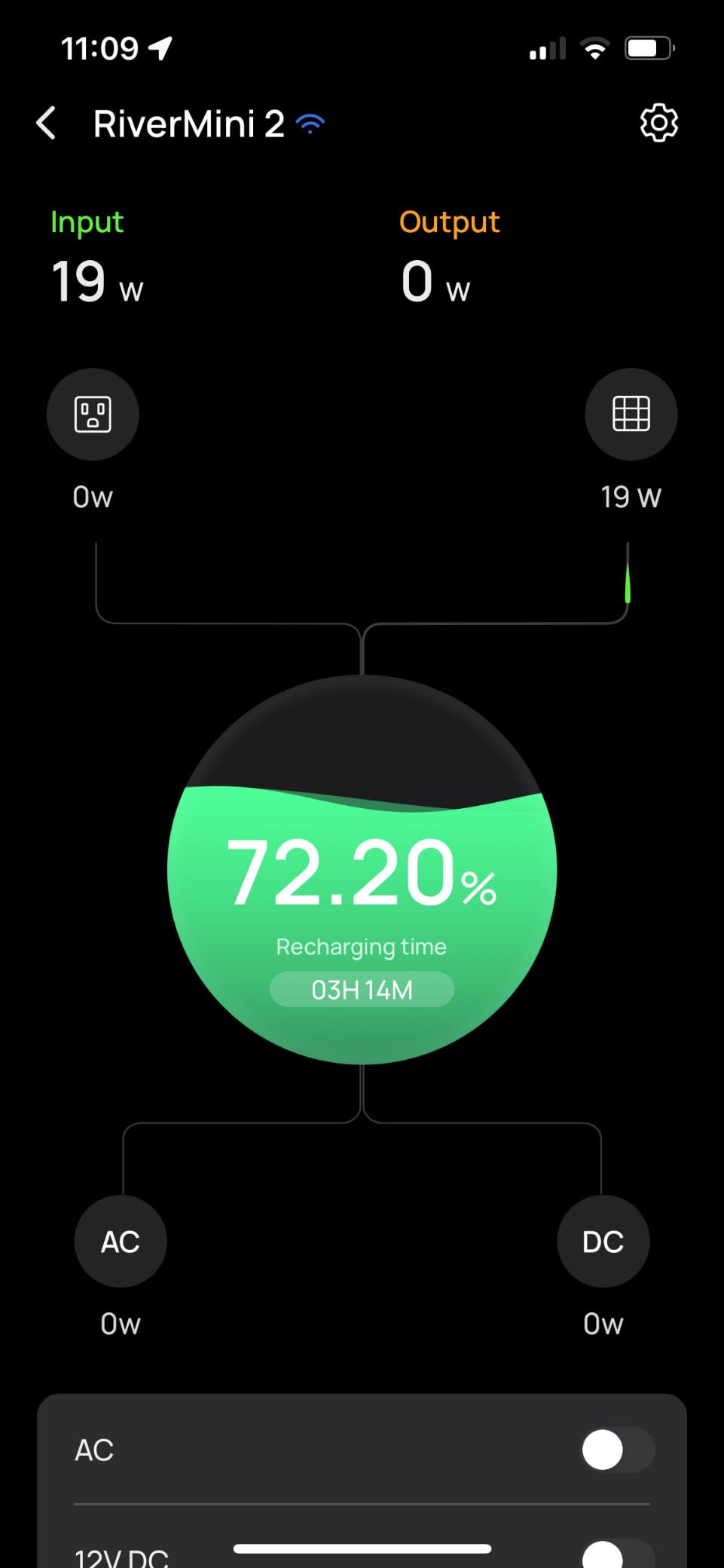
X-Boost mode lifts output from 300W to 600W, and the sub-30ms EPS switchover makes it a real UPS for a router or a NAS. Solar input accepts up to 110W.
The honest weakness is port scarcity. There is exactly one USB-C port, so a laptop and a set of headphones cannot both charge at full speed. Owners also report battery percentage drift and self-discharge on units left idle for long stretches, and warranty friction on a minority of those cases.
Where the X-Boost mode earns its keep
Boost mode is a software trick that fits a resistive load onto a smaller inverter. It works well for hair dryers, kettles and coffee makers at low draw, and it is not a substitute for real continuous headroom.
If you plan to run those appliances often, spend the extra on a unit rated for them continuously.
Before you buy
Count your USB-C devices first. Two or more and the single port becomes a daily annoyance rather than a minor quibble.
Long-term storage is the other consideration. If your unit sits between trips, check in on it every few months and top it up.
4. Jackery Explorer 1000 v2 – Best All-Round Station for Car Campers
Jackery Explorer 1000 v2 Portable Power Station,1070Wh,1500W
1070Wh battery
1500W AC and 3000W surge
23.8 lbs
4000-cycle LFP pack
Pros
- 1500W continuous with 3000W surge covers AC units
- fridges and electric pots
- App-enabled emergency charge goes 0 to 100% in one hour
- LFP battery retains over 70% capacity after 4000 cycles
- Two USB-C ports including 100W PD plus three pure sine wave AC outlets
Cons
- Solar charging is restricted to Jackery-branded panels
- 23.8 lbs is a two-person lift for many campers
- Emergency fast charge must be enabled in the app each time
If you camp from a car and want one station that covers a fridge, a kettle, a projector and a laptop full, this is the unit. It is the highest-rated product in this roundup at 4.7 stars and the one we recommend to most people buying their first serious system.
1,070Wh gives roughly 800Wh of usable energy, which is a long weekend of a compressor fridge plus lights plus charging. The 1,500W inverter handles compressor startup without dropping the whole output, and 3,000W surge covers the worst inrush we are likely to see.
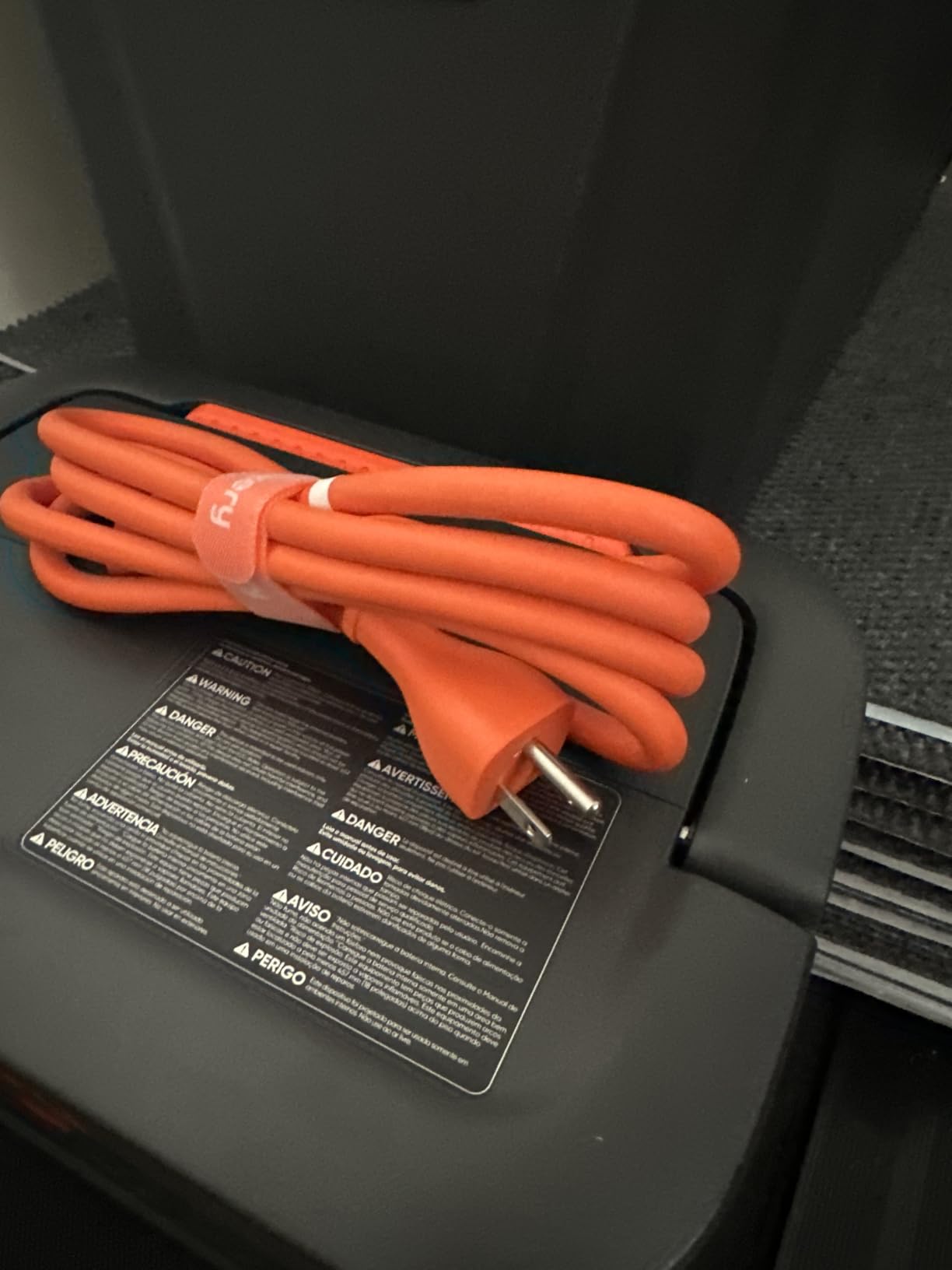
Battery life is the standout. The LFP pack still holds over 70% of its capacity after 4,000 cycles, which reviewers consistently translate into a ten-year service life. The app adds a 30 dB quiet mode for overnight charging and an energy efficiency mode.
Two reservations carry real weight. Solar input is restricted to Jackery panels, so a non-Jackery folding panel will not do the job. And 23.8 lbs is beyond a comfortable single-person carry, so this is a car-camping unit rather than a hiking one.
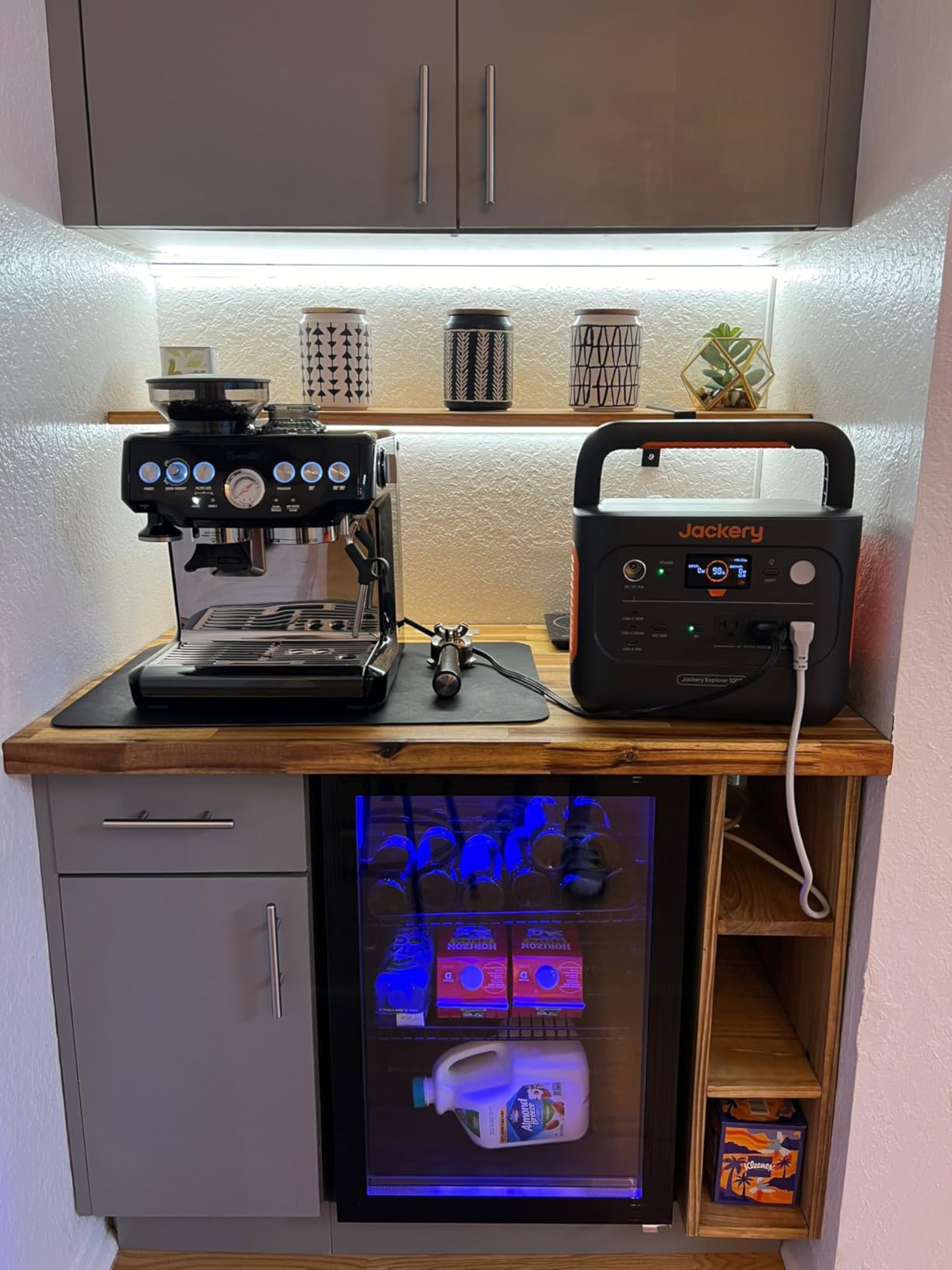
Why 1,070Wh is the sweet spot
This capacity class sits at the point where a 45L compressor fridge, camp lights, phone charging and a laptop coexist for two or three nights without a mid-trip recharge.
Below 600Wh you are choosing which single appliance gets powered. Above 2,000Wh you are adding weight most campers will not carry and paying for capacity you will not use.
Deciding between this and the AC180
Choose the Explorer 1000 v2 if weight and cycle life drive your decision. It is 13 lbs lighter and its battery is rated for 4,000 cycles against 3,000.
Choose the BLUETTI AC180 if you need 1,800W continuous, a 500W solar input and a 20 ms UPS for networking gear.
5. BLUETTI AC180 – Best High Output for Appliances
BLUETTI AC180 Portable Power Station 1152Wh 1800W LiFePO4 Solar Generator
1152Wh LiFePO4 pack
1800W continuous with 2700W boost
37.4 lbs
500W solar input
Pros
- Charges 0-80% in 45 minutes and fully in about an hour at 1440W AC input
- 1800W output across 8 outlets boostable to 2700W from the app
- 500W solar input brings it up in roughly 2.8 to 3.3 hours
- 20 ms UPS switchover keeps routers and lights running through outages
Cons
- About 37 lbs
- heavy for anything requiring frequent carry
- AC inverter idles at roughly 20W which eats usable capacity
- Only 90% of rated capacity is usable by design
The AC180 is the most capable station in this roundup per dollar spent, and it treats the spec sheet honestly in a way most competitors do not. BLUETTI states that only 90% of the 1,152Wh rating is usable, and that 20W of the inverter is consumed at idle.
That honesty matters when you plan the maths. 1,152Wh times 0.9 gives about 1,037Wh, and 90% of that again after inverter losses puts a realistic figure near 870Wh before idle draw.
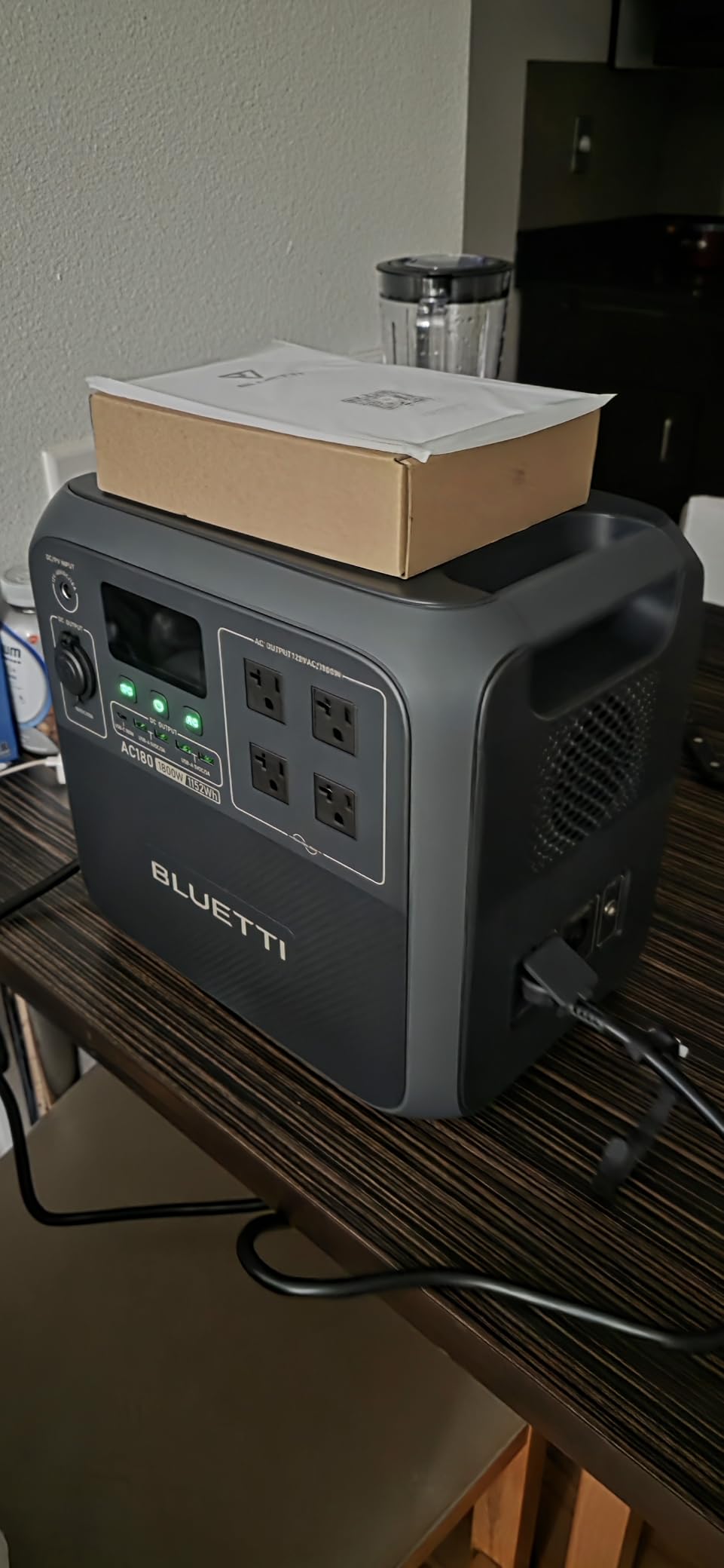
Output is where it separates itself. 1,800W continuous across 8 outlets, boostable to 2,700W from the app, and a 500W solar input that refills the unit in under four hours of good sun. A 20 ms UPS keeps a fridge, a TV or a router alive through an outage without a flicker.
At 37.4 lbs, this is not a hiking unit. Owners treat it as a piece of campsite infrastructure that stays put. BLUETTI customer service draws repeated praise for firmware updates and exchange resolutions, and the standard advice from owners is to install updates and run one full discharge cycle on arrival to calibrate the battery.
How to live with the 20W idle draw
On a 1,152Wh pack, 20W of idle consumption is noticeable across a long weekend. It is manageable if you switch the unit off between uses rather than leaving it plugged in.
The wireless charging pad on top is reported unreliable by multiple owners, so treat it as a bonus feature and plan on using the wired ports.
Who should look elsewhere
If your site is a short walk from the car, the Explorer 1000 v2 gives you similar capability at 23.8 lbs and a 4,000-cycle pack.
Skip the AC180 if you need to carry the unit more than about fifty yards, or if you want a third AC outlet configuration. It has one USB-C port and no expansion options in this configuration.
6. BLUETTI AC200PL – Best for Base Camp and Full-Time RV Power
BLUETTI AC200PL Portable Power Station 2304Wh 2400W LiFePO4 Solar Generator
2304Wh LiFePO4 pack
2400W continuous
72 lbs
expands to 8448Wh
Pros
- 2304Wh with 2400W output handles full RV and off-grid loads
- 0-80% AC recharge in 60 minutes at up to 2400W input
- Up to 1200W solar input for a full charge in 1.9 to 3.8 hours
- 48V RV port charges a camper battery directly
- Expands to 8448Wh with B300
- B210P or B230 packs
Cons
- 72 lbs is car-camping-unfriendly and effectively a two-person lift
- Expansion batteries add substantial cost on top of an already high price
- Not suited to sites where the unit must be moved often
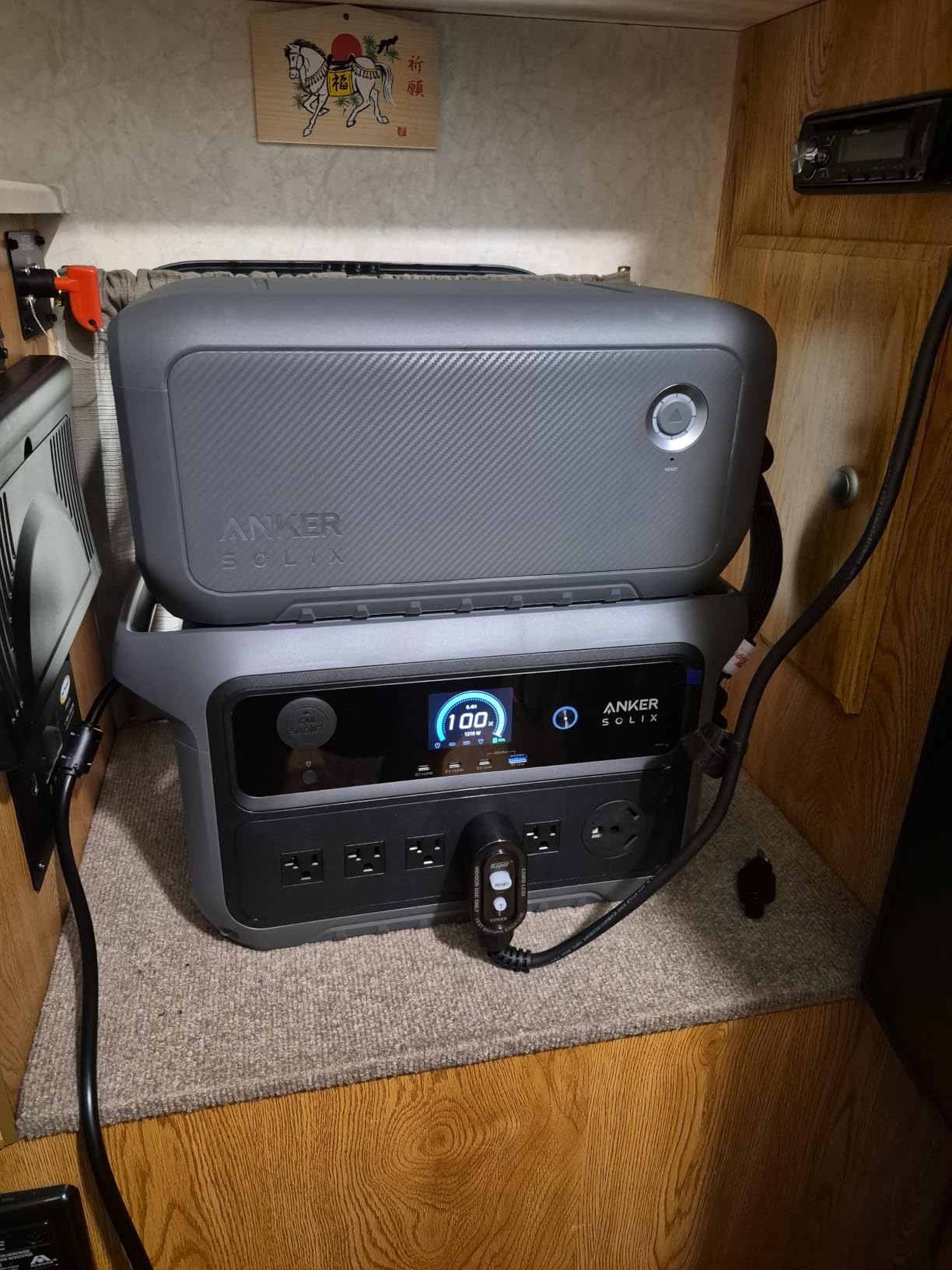
The AC200PL is the only unit here that behaves like a small off-grid system. At 2,304Wh and 2,400W continuous, it powers a 30A TT30 connection, a 48V RV lead and standard household outlets from a single box.
That 48V RV port is the feature RV and van-life buyers care most about. Instead of running an inverter to a low-voltage lead battery, you charge the camper battery directly.
Recharge speed is genuinely fast. AC input accepts up to 2,400W for 0 to 80% in an hour, and solar input up to 1,200W for a full charge in as little as 1.9 hours. UPS switchover is 10 ms or less.
Port count is 11 across four AC outlets, TT30, 48V DC, a car socket and USB-A and USB-C PD. The whole system expands to 8,448Wh with expansion packs, so a family base camp can start at 2,304Wh and add capacity without replacing the unit.
The honest problem is 72 lbs. Nothing about this product is designed for carrying, and reviews are unanimous on that point. Everything else about it is built to stay in one place.
When expansion makes sense
Adding a B300-class pack roughly triples capacity. For a family running a fridge, a projector and a coffee maker daily for two weeks, that is the difference between a nightly top-up and a comfortable reserve.
For a weekend trip the expansion is dead weight and cost. Buy the 2,304Wh base unit and skip the pack.
RV versus base camp
RV owners with a 30A plug get the most from this unit because the output rating covers what the shore connection would have given them.
Base campers get the most from the expansion path, since more than one family group can share a single hub. Truck-bed and tailgate users should still check clearance before committing, because the dimensions are 16.5 by 11 by 14.4 inches.
7. Anker SOLIX C300 – Best for Quiet Tent Camping
Anker SOLIX C300 Portable Power Station, 288Wh Solar Generator for Camping
288Wh battery
300W output with 600W surge
25dB operation
LiFePO4 rated 3000 cycles
Pros
- Charges from 3% to 100% in under an hour from a wall outlet
- Two 140W two-way USB-C ports for laptop and phone charging
- Built-in three-level LED light bar with SOS mode
- Very quiet at 25dB with no audible fan under normal load
- Vertical design with a side-mounted AC input leaves front ports clear
Cons
- 288Wh is the smallest capacity here so laptops run only about 4 to 5 hours
- USB-A output is limited to 12W
- Shoulder strap sold separately
Quiet operation is the reason to pick this one. At 25dB from 3.3 feet with no fan under normal load, it is the unit we would put inside a tent without hesitation. The three-level forward-facing LED bar with SOS strobe doubles as the light source.
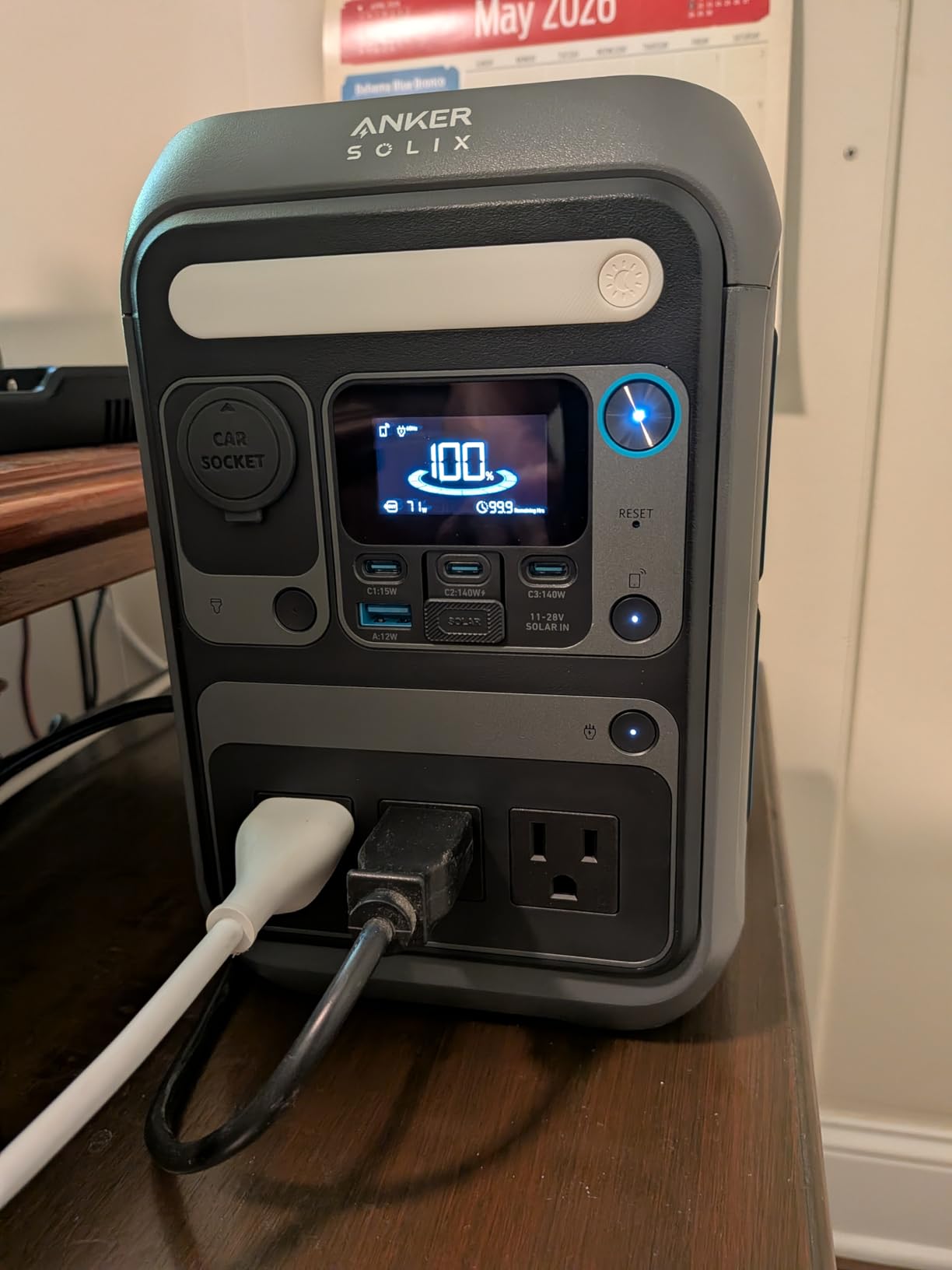
Recharge speed is the other argument. From 3% to full in under an hour on a wall outlet is faster than anything else in this size class, and the two 140W two-way USB-C ports charge a laptop and a phone at the same time.
Owners use it for cameras, drones, tablets and small lights. Measured runtime of roughly 4 to 5 hours on a 65W laptop and about 10 hours on a light networking load is commonly cited.
Two things to know. The 288Wh pack is small, so a laptop is a 4-to-5-hour proposition rather than an all-day one. And the shoulder strap is sold separately, which is an odd omission for something marketed at portable use.
Why two-way USB-C matters more than the number
A two-way port accepts charge as well as output, so the same cable that runs your laptop can top the station up from a wall outlet or a smaller power bank.
With three AC outlets, a 120W car socket, two 140W USB-C ports, one further USB-C and one USB-A, you have more connections than most small units at this capacity.
Compatibility note before you buy panels
This unit is not compatible with Anker SOLIX PS30, PS200 or PS400 panels. It does accept a 100W panel on the standard solar input.
If you already own Anker SOLIX panels, check compatibility before ordering, or budget for a standard folding panel instead.
8. EcoFlow RIVER 2 Pro with 220W Bifacial Panel – Best Solar-Ready Bundle
EF ECOFLOW Solar Generator RIVER 2 Pro & 220W Portable Solar Panel, 768Wh
768Wh LFP pack
800W AC with 1600W X-Boost
17.2 lb station
220W panel included
Pros
- Bundled 220W bifacial panel generates up to 25% more than a single pane and recharges in 4.3 hours
- Panel is IP68 rated with tempered glass construction
- 11 outlets covering AC
- USB-C
- USB-A
- car and DC
- Station itself is 17.2 lbs with a flat top for gear
Cons
- Listed 39 lbs reflects the station plus panel together
- A minority of users find wall charging is the only fast option
- Slow car and solar input compared with wall charging
The RIVER 2 Pro bundle is the most complete solar package on this list. You get a 768Wh station, 800W of AC output, 1,600W in X-Boost mode, and a 220W bifacial panel that refills the unit in 4.3 hours.
Bifacial panels collect sunlight from the rear face as well as the front, which is why the manufacturer quotes up to 25% more output than a single-pane array of the same rating. The panel carries an IP68 rating and tempered glass, so rain and grit are less of a worry than with cheaper fabric arrays.
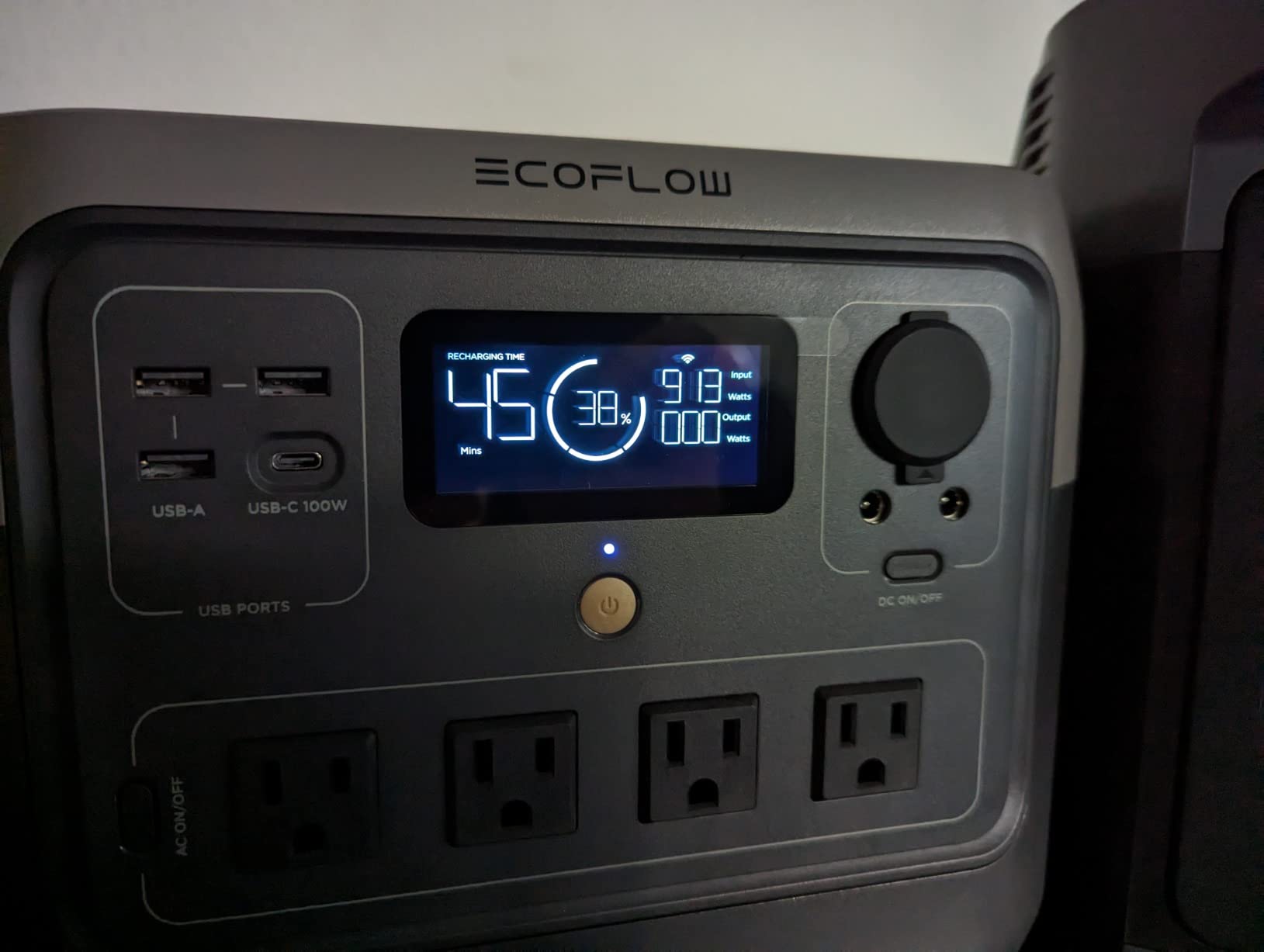
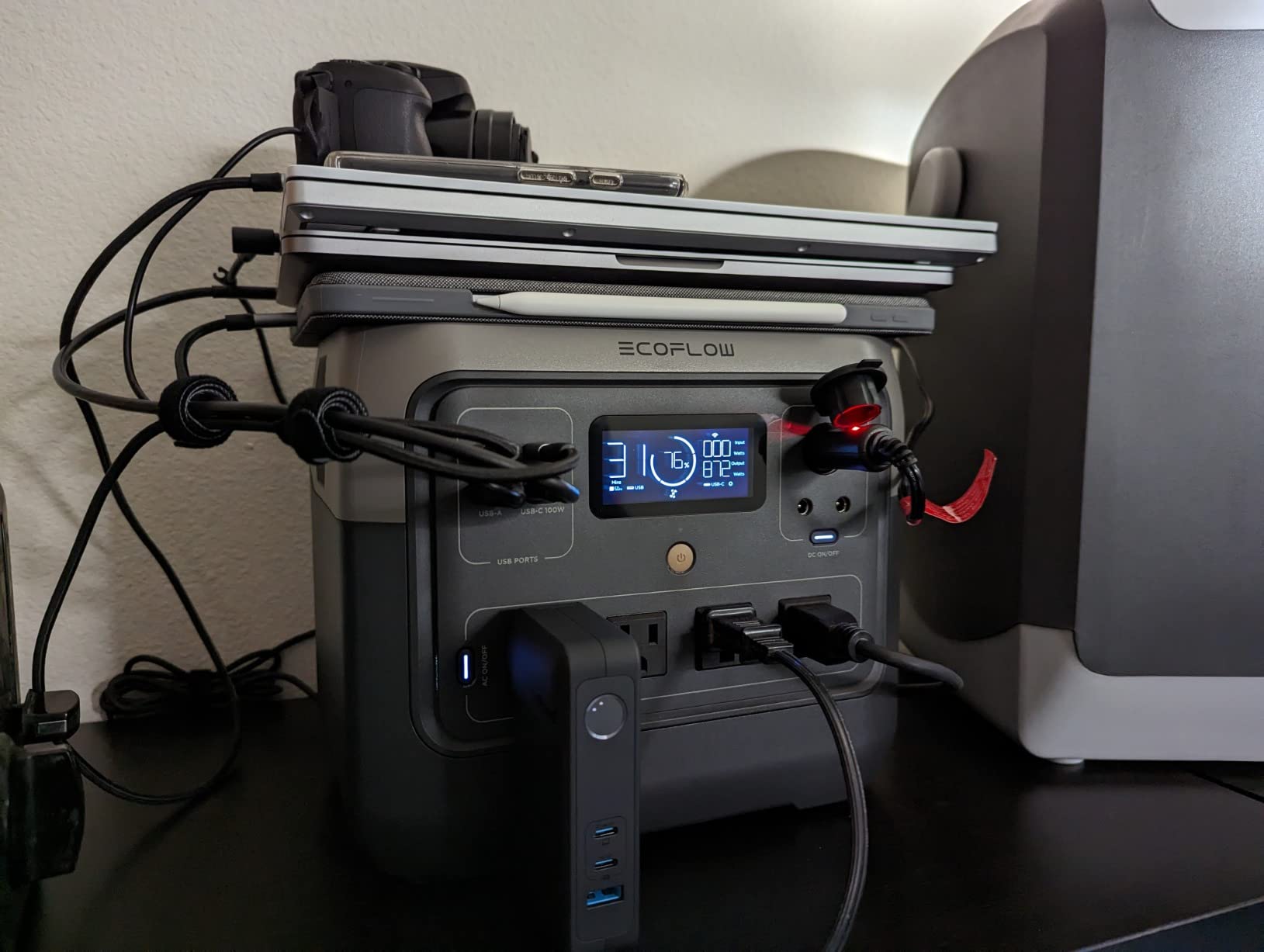
Owners run genuinely heavy loads on it. Verified reports include coffee makers, toasters, vacuums, pellet stove blowers, a third-horsepower sump pump and a live music rig that ran 25 to 30 hours.
The catch is weight and the listed total. The station is 17.2 lbs and the panel is 16.4 lbs, so the 39 lbs on the listing is both together. A small but vocal group also finds the unit slow to refill away from mains power, and the separate AC and DC on and off switches are easy to miss at first.
Bifacial versus single-pane panels
A bifacial panel harvests from both faces, but it only performs that way with light reaching the rear. On a folding panel in open sun, the gain is real. Partially shaded, the advantage shrinks.
The IP68 rating matters more in practice. Fabric and laminate arrays fail at connectors first, and a week of dew is what finds them.
Verdict for three-night trips
At 768Wh you get roughly 585Wh usable, which covers a fridge, lights and charging for a long weekend before a solar top-up.
If you already own panels, buy the station alone from the EcoFlow range and save the double purchase. This bundle only makes sense if you are starting from nothing.
9. Anker SOLIX C1000 Gen 2 – Best for CPAP Use and Long Service Life
Anker SOLIX C1000 Gen 2 Portable Power Station
1024Wh LiFePO4 pack
2000W output with 3000W peak
49-minute recharge
under 10ms UPS
Pros
- Full recharge in 49 minutes at 1600W with app-enabled HyperFlash
- 1024Wh with 2000W output and 3000W peak across 10 ports
- Recharges from 600W solar in about 1.8 hours
- Under 10ms UPS switchover keeps CPAP machines and laptops running
- Retains at least 80% capacity after 4000 cycles
Cons
- Gen 2 removed the expansion battery option available on Gen 1
- Not a fully pure sine wave under microwave loads
- No cable or accessory storage case included
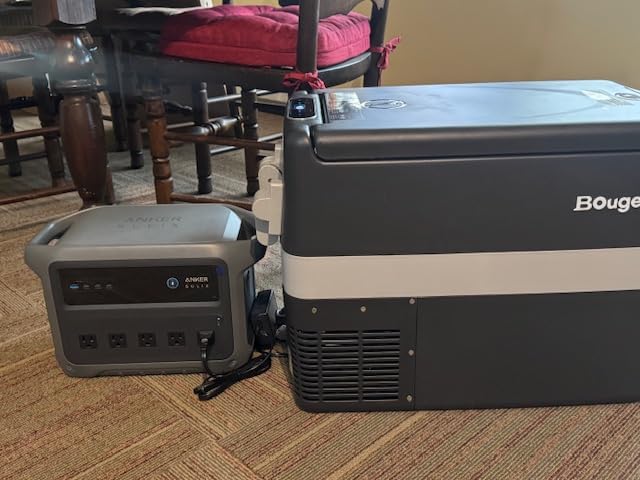
The C1000 Gen 2 is the highest-rated unit in this roundup at 4.7 stars, and the ownership reports read like field logs. Owners describe powering a CPAP for three nights, running a fridge for 5 to 12 hours, and covering a ten-day ice storm outage.
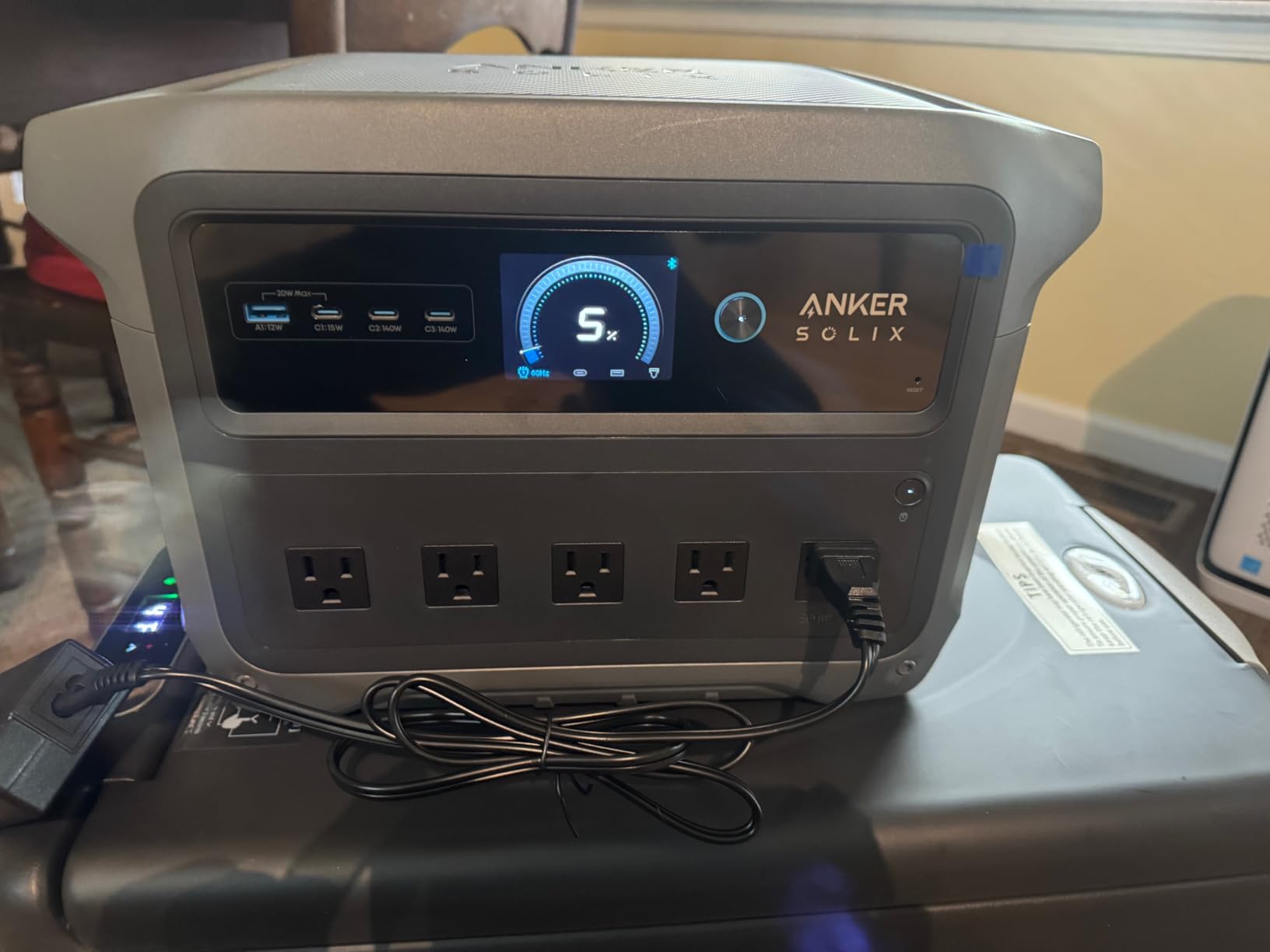
Recharge is the hero feature. Forty-nine minutes at 1,600W through the app-enabled HyperFlash mode puts it ahead of everything else here on AC refill time, and 600W solar input brings it up in about 1.8 hours.
The 1,024Wh pack retains at least 80% of capacity after 4,000 cycles, and the sub-10ms UPS switchover is short enough to keep sensitive medical gear running through a dropout without a restart.
Two things give us pause. Gen 2 removed the expansion battery option that existed on Gen 1, so 1,024Wh is the ceiling. And one engineer measured 15% to 20% harmonic distortion under microwave loads, which is not enough to stop us recommending it for camping, but worth knowing if you run a microwave regularly.
Why the UPS rating matters for CPAP users
Switchover time is the whole story for medical devices. Under 10ms is short enough that a CPAP does not see an interruption at all.
That single feature moves this unit to the top of the list for anyone who relies on an overnight machine, and it is worth planning the battery around.
What you give up
Losing expandability caps your ceiling. If you think you will need more than 1,024Wh in two years, buy a unit that can grow instead.
The harmonic distortion finding is limited to microwave-class loads. Laptops, lights, fridges and USB-C devices run cleanly in owner reports.
10. EcoFlow RIVER 2 Max with 160W Panel – Best for a Balanced Weekend Setup
EF ECOFLOW Portable Power Station River 2 Max 500 2 & 160W Solar Panel
499Wh LiFePO4 pack
1000W output
160W panel included
60-minute recharge
Pros
- 499Wh LFP battery running up to 11 devices at once
- 100% charged in 60 minutes from an AC outlet
- Bundled 160W folding panel with kickstand case rated IP68
- Solar recharge in about 4 hours with a high conversion rate
- Four refill paths including AC
- solar
- 12V car and USB-C
Cons
- 1000W output is modest next to units at similar weight
- 499Wh capacity runs a fridge for only a few hours
- Panel plus station bulk makes it less packable than a bare station
The RIVER 2 Max bundle sits in the middle of this list and solves the middle camping problem. A 499Wh pack with 1,000W of output, 11 outlets, and a self-supporting 160W folding panel in the case.
The panel is the differentiator. Its kickstand case props it at an angle without a separate stand, and the IP68 rating means dew and rain do not end the trip. Owners like that it refills the unit in about four hours of sun.
Sixty-minute wall recharge means it is ready to go after a lunch stop. Quiet operation and a 13 kg combined weight keep it friendly to family trips where the car is a short walk away.
Where it stretches, the output is. 1,000W is modest beside 1,500W and 2,400W units at similar or lower weight, and 499Wh runs a fridge for a few hours rather than a weekend.
Best use of the 499Wh class
Charging is where this size wins. Phones, tablets, camera batteries, drone batteries, a laptop and lights for a couple of nights all fit comfortably.
Fridges and cooking appliances are where it runs out. If a portable fridge is part of the plan, move up a class.
When to buy the bundle and when not to
Buy the bundle if you have no panel and want one box that works. The kickstand case is the detail that makes the difference outdoors.
Buy the station alone if you already own a 160W folding array, or if pack volume matters more than refill speed. Panel plus station is bulkier than any bare unit at this capacity.
11. ALLWEI 300W 256Wh – Budget Pick With a 5-Year Warranty
ALLWEI Portable Power Station 300W, 256Wh Solar Generator LiFePO4 Battery
256Wh LiFePO4 pack
300W continuous and 600W peak
6.4 lbs
5-year warranty
Pros
- LiFePO4 battery rated for 3000+ cycles at a very low entry cost
- USB-C PD 60W plus USB-A 18W fast charging
- Four recharge paths including dual AC and solar in 2 to 2.5 hours
- 6.4 lbs with a built-in handle and pure sine wave output
- 5-year warranty with around-the-clock customer service
Cons
- Some users report the battery stops holding charge after 8 to 12 months
- Fan can be loud during high-draw operation
- Solar input limited to 120W maximum
The ALLWEI 300W is the specification surprise of this roundup. For the money, nothing else listed here gives you a LiFePO4 pack, 3,000+ rated cycles, pure sine wave output, MPPT charging and a 5-year warranty.
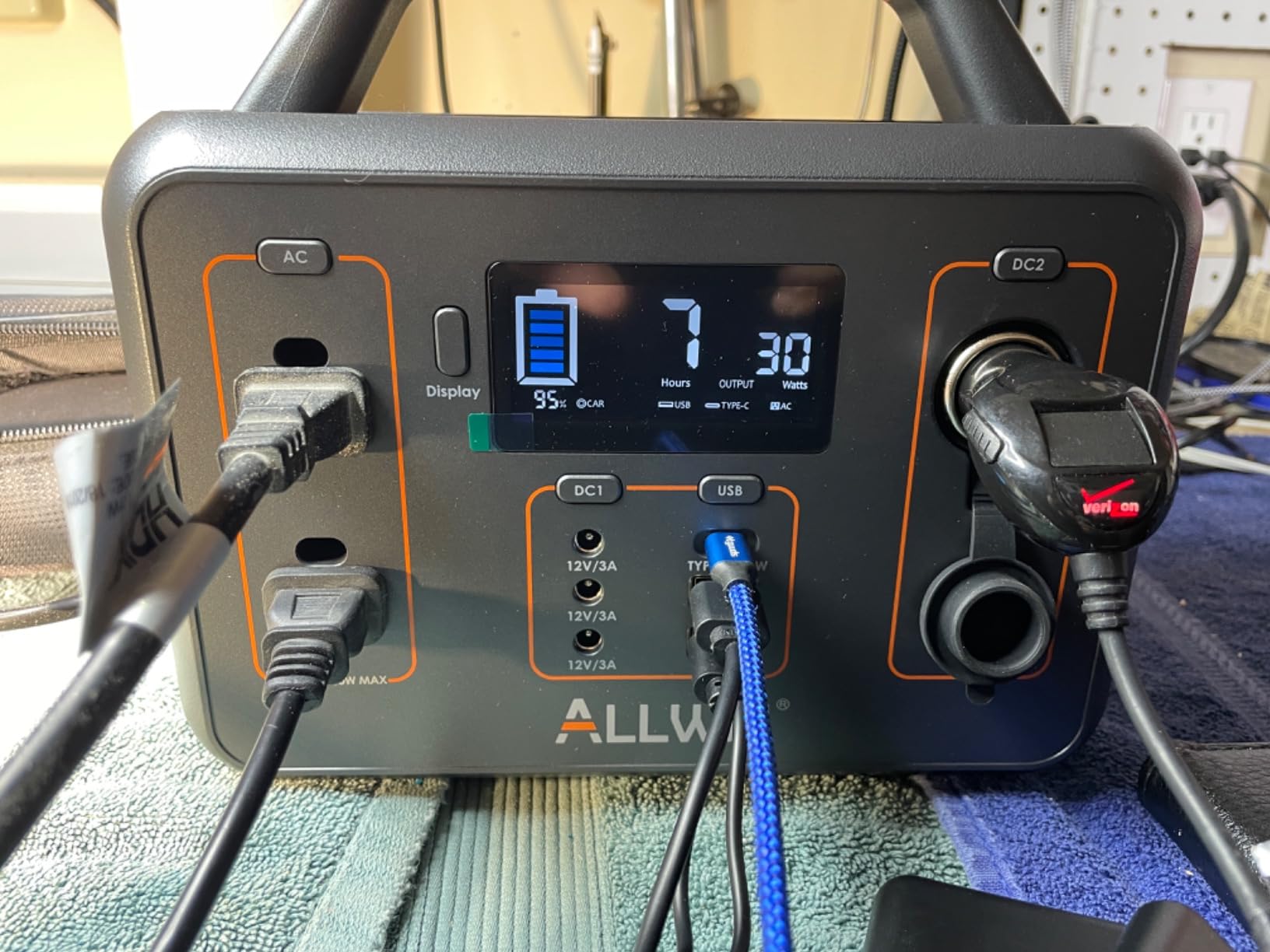
Port selection is genuinely good for the size: one AC outlet, two DC barrel ports, a 12V car socket, an 18W USB-A and a 60W USB-C PD port. The 60W USB-C is enough to charge most laptops directly, which is rare at 256Wh.
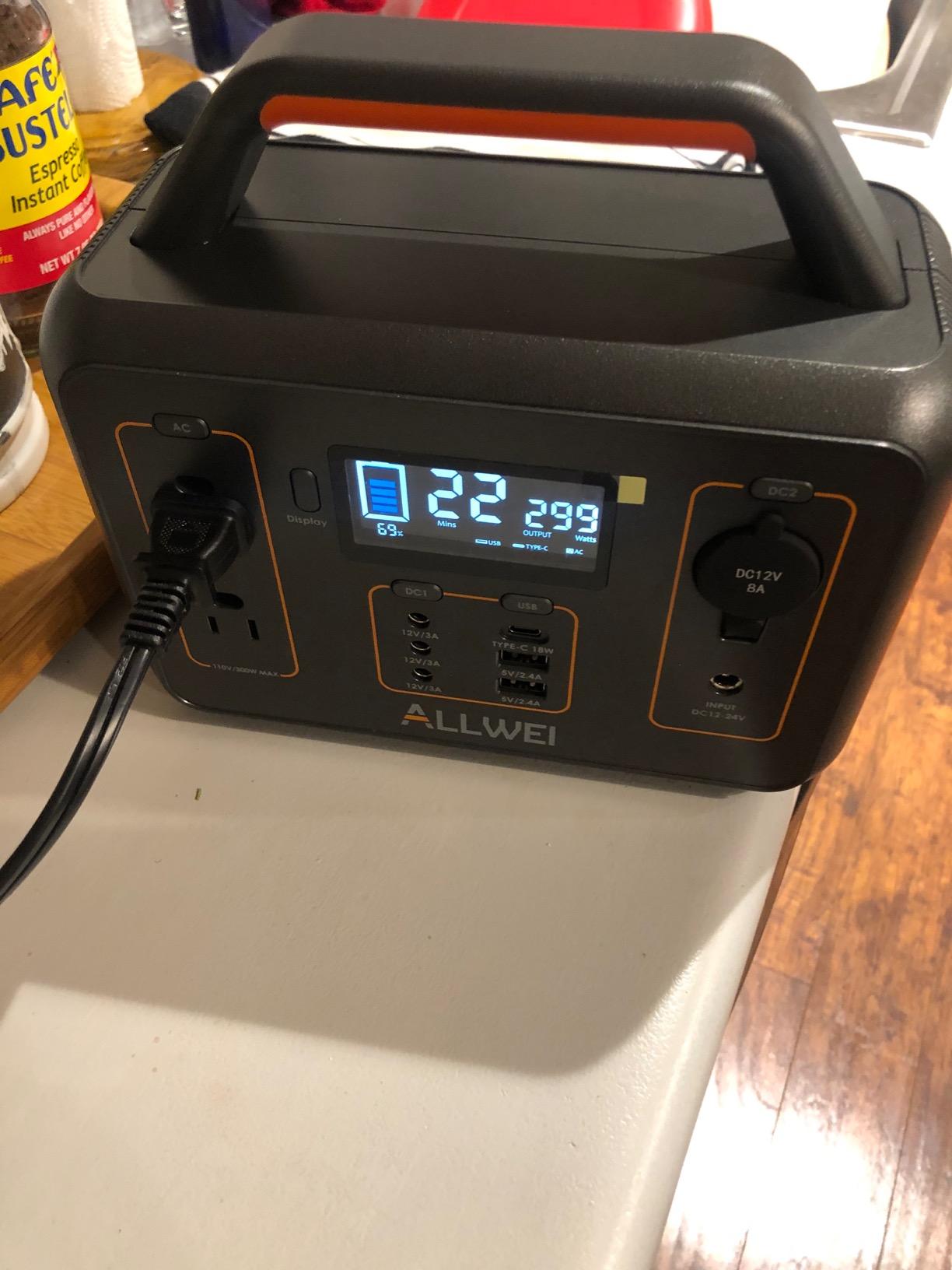
Four recharge paths are available, including dual AC and solar together in 2 to 2.5 hours. The display shows estimated time remaining as well as percentage, and owners single that out as a standout detail.
The weak spots are real. A minority of users report the battery stops holding charge after 8 to 12 months, the fan gets loud on high draws, and solar input caps at 120W. The rating distribution is strong, with 73% five-star and 8% one-star.
What 256Wh buys in practice
After losses you have roughly 195Wh of usable energy. That covers phone and laptop charging, lights and a fan for a couple of nights.
A small 12V fridge will run for a few hours on it. Do not plan a weekend of compressor loads on this class.
Who this suits and who it does not
It suits first-time buyers who want battery chemistry and warranty terms that match premium brands without paying a premium for them.
It does not suit buyers who cannot accept brand uncertainty on battery longevity, given the reported degradation after a year. A 5-year warranty covers part of that risk, but check the terms before you rely on it.
12. BLUETTI Elite 30 V2 – Best Compact Unit for UPS Backup
BLUETTI Elite 30 V2 Portable Power Station 288Wh 600W LFP Solar Generator
288Wh LiFePO4 pack
600W continuous and 1500W lift
9.5 lbs
0-80% in 45 minutes
Pros
- 600W continuous output with 1500W Power Lifting Mode surge
- 0-80% in 45 minutes and 0-100% in 70 minutes from a 380W wall outlet
- 9 output ports including 140W USB-C PD
- Industry-standard solar connector rather than a proprietary one
- Under 10ms UPS switchover for critical devices
Cons
- UPS mode needs app configuration rather than plug and play
- Some users report faster-than-expected battery drain under load
- Pro mode passcode is required for auto-restart after full discharge
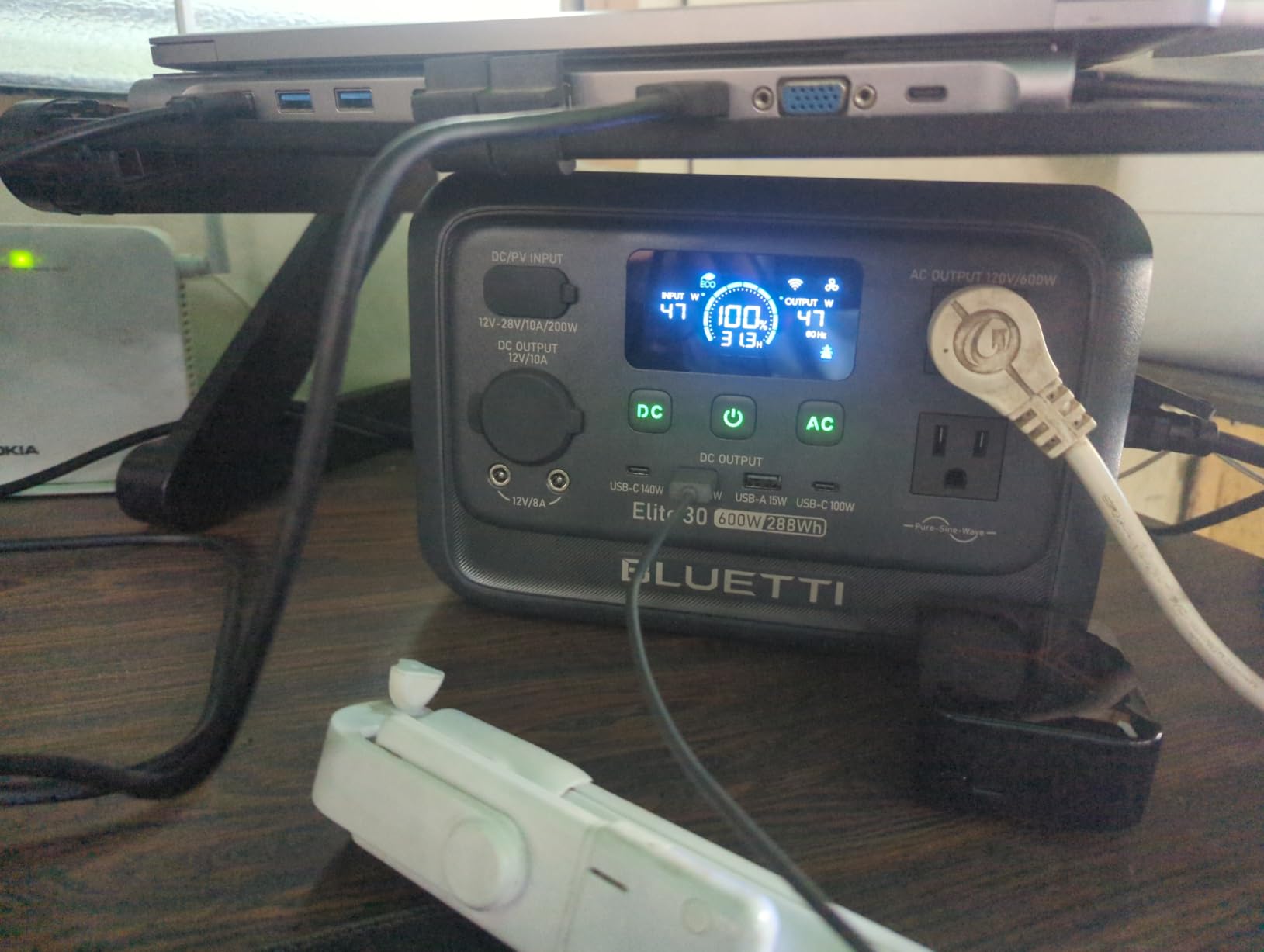
The Elite 30 V2 does something none of the other sub-300Wh units do: it delivers 600W of continuous output. That is double what the Explorer 300, the C300 or the RIVER 2 offer, from a 288Wh pack at 9.5 lbs.
Charging is fast for the class. Zero to 80% in 45 minutes and full in 70 from a 380W wall connection, and the company claims its cell technology cuts consumption by 50% for longer runtime.
Nine output ports include a 140W USB-C PD port, and the solar input uses an industry-standard connector rather than a proprietary one, which means your panel choice stays open. Eight charging modes cover AC, solar, car, lead-acid and generator input.
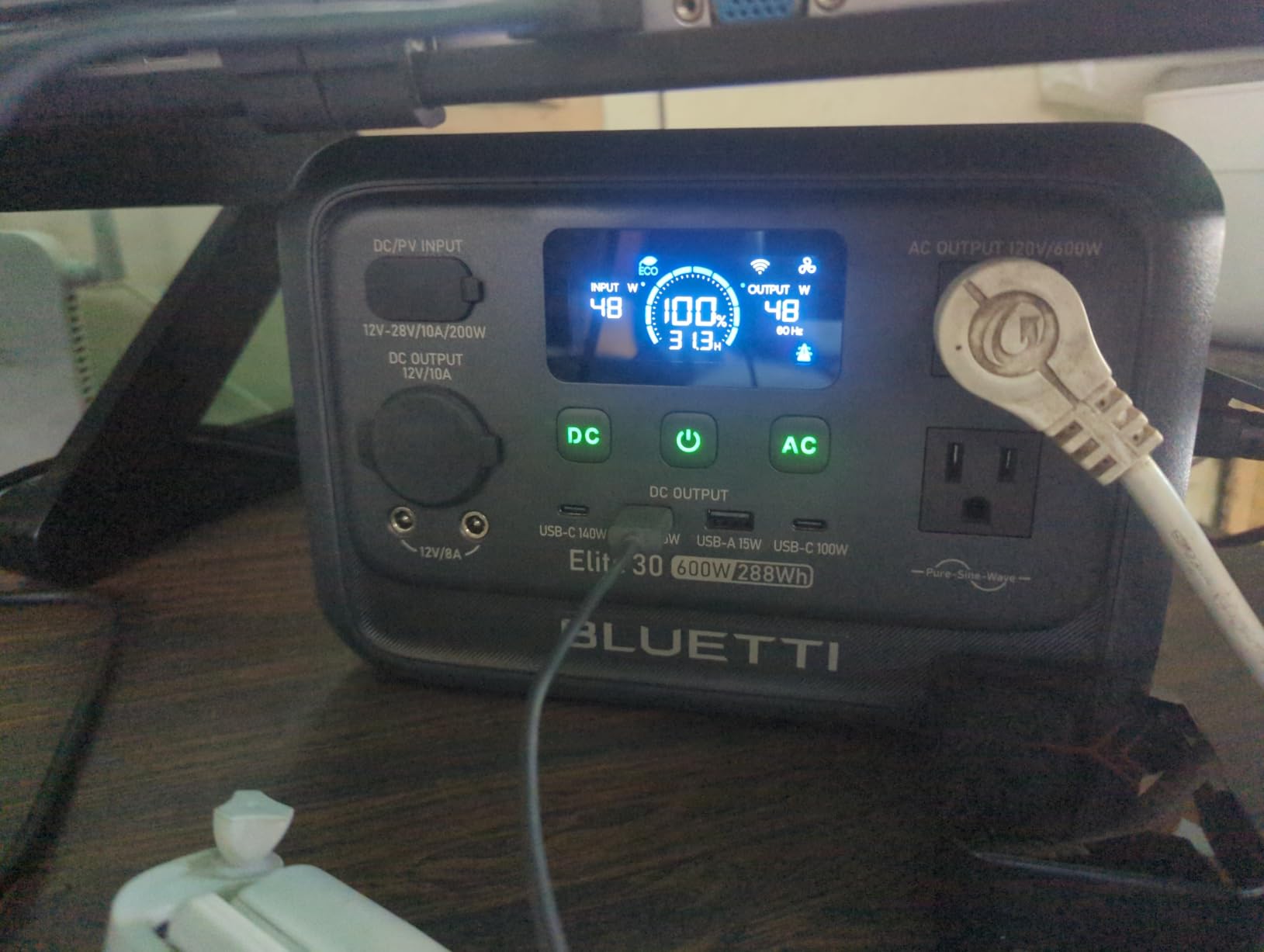
The configuration step is the friction point. UPS mode has to be set up in the Bluetooth or WiFi app rather than switched on at the wall, and the app settings are not intuitive for a first-time owner. Pro mode also requires a passcode before auto-restart works after a full discharge.
What Power Lifting Mode actually does
It fits higher-draw resistive appliances onto the inverter by briefly cutting voltage. Useful for a kettle or coffee maker at low draw, and not a substitute for a larger inverter.
Treat the 600W continuous figure as the real number and the 1,500W lift as a short burst allowance.
Where it fits in a camping kit
At 288Wh it is a weekend companion unit: laptops, phones, cameras, drone batteries, lights and a small fan, with a fridge for a few hours.
For heavy loads or multi-night trips, move up to the AC180 or the Anker C1000 Gen 2. For a stationary backup role at home, the under-10ms switchover is the reason to buy it.
How Big a Solar Generator Do You Need for Camping?
Most powered camps run about 800 watt-hours per day, which makes roughly 1,000Wh of nameplate capacity the practical answer for a fridge, lights and phone charging over a weekend. Add 20% to 30% for inverter losses and cold-weather derating, and you are at the capacity you should actually buy.
Start by adding your loads in watt-hours. A portable fridge drawing about 150W while running for 24 hours consumes roughly 430Wh a day once you account for duty cycling. A CPAP at about 40W running eight hours is 320Wh. Camp lights at 5W for five hours is 25Wh. A laptop at 65W for four hours is 260Wh.
Those three together come to roughly 1,015Wh a day, which is where the 800Wh figure comes from once you are realistic about which appliances you actually switch on. Your numbers will differ, and running heavy loads in daylight rather than after dark is the single biggest lever you have.
Below is the sizing shortcut. Find the camp style that matches yours, then buy the capacity in the right-hand column.
Tent camping, phones and lights only: 250Wh to 300Wh. A weekend, no fridge.
Car camping with a 45L fridge: 1,000Wh to 1,200Wh. Two to three nights before a top-up.
Car camping with a fridge, a laptop and a projector: 1,500Wh to 2,000Wh. This is base camp territory.
Family base camp, or full-time RV use: 2,000Wh to 2,300Wh with an expansion path.
Whichever figure you land on, check the continuous wattage against your largest appliance. A 1,000Wh station with a 300W inverter cannot run a fridge and a coffee maker at the same time, no matter how much energy it stores.
How Many Solar Panels Do You Need?
Divide your daily watt-hours by peak sun hours, then divide by 0.75. That 0.75 accounts for the real-world shortfall between a panel’s rated wattage and what it actually produces, and it is the discount most buyers fail to apply before buying.
Worked example: 800Wh a day divided by 5 peak sun hours is 160, and 160 divided by 0.75 is about 214W of panel. In practice that means a 200W folding array keeps pace with a typical camp, and a 400W array gives you headroom for cloudy stretches.
On refill time, a 200W array typically refills a 1,000Wh station in about 6.5 to 7 hours of good sun. The bundled panels in this roundup land in the same territory: the EcoFlow 220W panel refills the RIVER 2 Pro in 4.3 hours, and the 160W panel refills the RIVER 2 Max in about 4.
Two field realities matter more than the formula. Partial shade on a folding panel can halve output, so re-angle panels through the day rather than leaving one orientation. And cloudy stretches stretch recharge time by 50% or more, which is why leaving home fully charged matters.
Check connector type before you buy. The BLUETTI Elite 30 V2 uses an industry-standard solar connector, while the Jackery Explorer 1000 v2 restricts solar charging to Jackery-branded panels. Our solar panel guide covers the matching options.
EcoFlow vs Jackery vs BLUETTI
These three brands dominate the category, and the honest answer is that each wins on a different axis. Jackery leads on rated cycle life and weight, EcoFlow leads on recharge speed and software, and BLUETTI leads on honest capacity disclosure and port breadth.
Jackery’s advantage in this roundup is the LFP pack on the Explorer 1000 v2, rated at 4,000 cycles while retaining over 70% of capacity. EcoFlow’s is X-Stream charging, which refills the RIVER 2 in about an hour. BLUETTI’s is transparency: the AC180 publishes that only 90% of its rating is usable, which makes sizing far more predictable.
On solar input, BLUETTI takes the lead with 500W on the AC180 and up to 1,200W on the AC200PL. EcoFlow’s RIVER 2 accepts 110W. Jackery is the most restrictive, limiting solar charging to its own panels on the Explorer 1000 v2.
If the question is which to buy for camping, pick by trip type rather than by brand. A weekend tent camper takes the light Jackery or Anker option. A car camper with a fridge takes the Jackery Explorer 1000 v2. A base camp or RV setup takes BLUETTI.
Cold Weather, Rain and Safety
Never charge a lithium battery below freezing. This is the one hard rule in this article. Charging a LiFePO4 pack in sub-freezing conditions can permanently damage the cells, and most users do not discover it until the capacity is already gone.
Shoulder-season campers should carry the station inside the tent or vehicle overnight and only connect panels once temperatures rise. If a unit has low-temperature charging protection, it will refuse to charge rather than damage itself, and several models here include that protection.
Rain exposure is a lesser concern than most buyers assume. Stations are sealed enclosures designed for outdoor use, and the solar panels in this roundup carry IP68 ratings. The failure points are connectors and the fold seams on fabric panels, so keep those dry and dry off the unit before closing the case.
On placement, a solar generator inside a closed tent is safe from carbon monoxide because it produces none. It is still a battery in an enclosed space, so ventilate anyway and keep it away from bedding and fabric.
Look for UN38.3 and UL 2743 or UL 9540 certification when you shop. These cover cell transport safety and power station design, and they are the fastest way to tell a properly built unit from an anonymous one.
7 Field Tips for Getting More Runtime at Camp
Leave home at full. A station that arrives at 100% has a whole extra day of energy compared with one at 60%.
Top up on the drive. A 12V car socket brings a mid-size station most of the way up during a long transfer, and two of the bundles here support dual charging.
Use your fridge’s eco mode. A compressor fridge in eco mode cycles less and can stretch a weekend considerably.
Re-angle panels twice a day. Morning and midday repositioning is worth more than buying a second panel.
Run heavy loads in daylight. Kettles, coffee makers and power tools should never draw from the battery while the sun is down.
Switch the unit off between uses. Inverter idle draw, around 20W on the BLUETTI AC180, is a real cost across a weekend.
Store long-term at about 40%. That is the level that preserves pack health between trips.
If you decide a gas unit is the better fit for heavy loads, our picks for the best portable generators for camping cover the fuel side properly.
Frequently Asked Questions
Is Jackery or EcoFlow better?
Jackery leads on rated cycle life and weight, with the Explorer 1000 v2 rated for 4,000 cycles and weighing 23.8 lbs. EcoFlow leads on recharge speed, with the RIVER 2 reaching full in about an hour through X-Stream charging, and on app control. For most campers the Jackery is the better all-round station, and for anyone who refills overnight the EcoFlow is the better choice.
How big of a solar generator do I need for camping?
About 1,000Wh of nameplate capacity covers a portable fridge, camp lights and phone charging for a weekend, which is roughly 765Wh of usable energy after depth of discharge and inverter losses. Go to 2,000Wh or more for base camp or family trips, and stay at 250Wh to 300Wh if you only need phones and lights.
How long will a 2000 watt solar generator run a fridge?
A 45L compressor fridge draws about 150W while running and roughly 430Wh across a full day once duty cycling is counted. On a 1,000Wh station with about 765Wh usable, that is close to five hours of continuous running from a full charge. A 2,000Wh station roughly doubles that to around ten hours, and topping up with a 200W panel adds about 150Wh an hour in good sun.
What is the best solar powered generator for an RV?
The BLUETTI AC200PL is the strongest RV fit in this roundup, with 2,304Wh of capacity, 2,400W of continuous output, a 48V RV port that charges a camper battery directly, and a 30A TT30 outlet. It weighs 72 lbs, so it suits a base or a vehicle with a dedicated power bay rather than a setup you carry. For van life under about 30 lbs, the Jackery Explorer 1000 v2 covers most loads.
Do solar generators work on cloudy days?
Yes, but slower. Expect roughly 25% to 40% of rated panel output under heavy overcast, which stretches recharge time by 50% or more. Cloudy days are fine for running devices directly off the battery. They are not fine for relying on the panels to refill the station, so leave home fully charged and treat solar as a top-up rather than a primary supply.
Can a solar generator run a CPAP machine?
Yes, and several units in this roundup are used for exactly that. A CPAP draws about 40W, so a 500Wh station covers roughly 9 hours and a 1,000Wh station around 19 hours after losses. The Anker SOLIX C1000 Gen 2 has an under 10ms UPS switchover, and owners report running CPAP machines for three nights on a charge. Use pure sine wave output for sensitive electronics.
The Best Solar Generators for Camping, Final Word
After working through twelve units, the best solar generators for camping in 2026 come down to a clear split by trip type. The Jackery Explorer 300 leads on weight and review depth at 7.1 lbs. The Jackery Explorer 1000 v2 is the all-round answer at 1,070Wh and 1,500W. The BLUETTI AC180 delivers the most continuous power, and the BLUETTI AC200PL covers full base camp and RV loads.
Whatever you choose, size it to about 800 watt-hours a day of real loads, buy a panel you can actually carry, and never charge a lithium battery below freezing. Those three rules solve most of the disappointment we read about in owner reviews.