
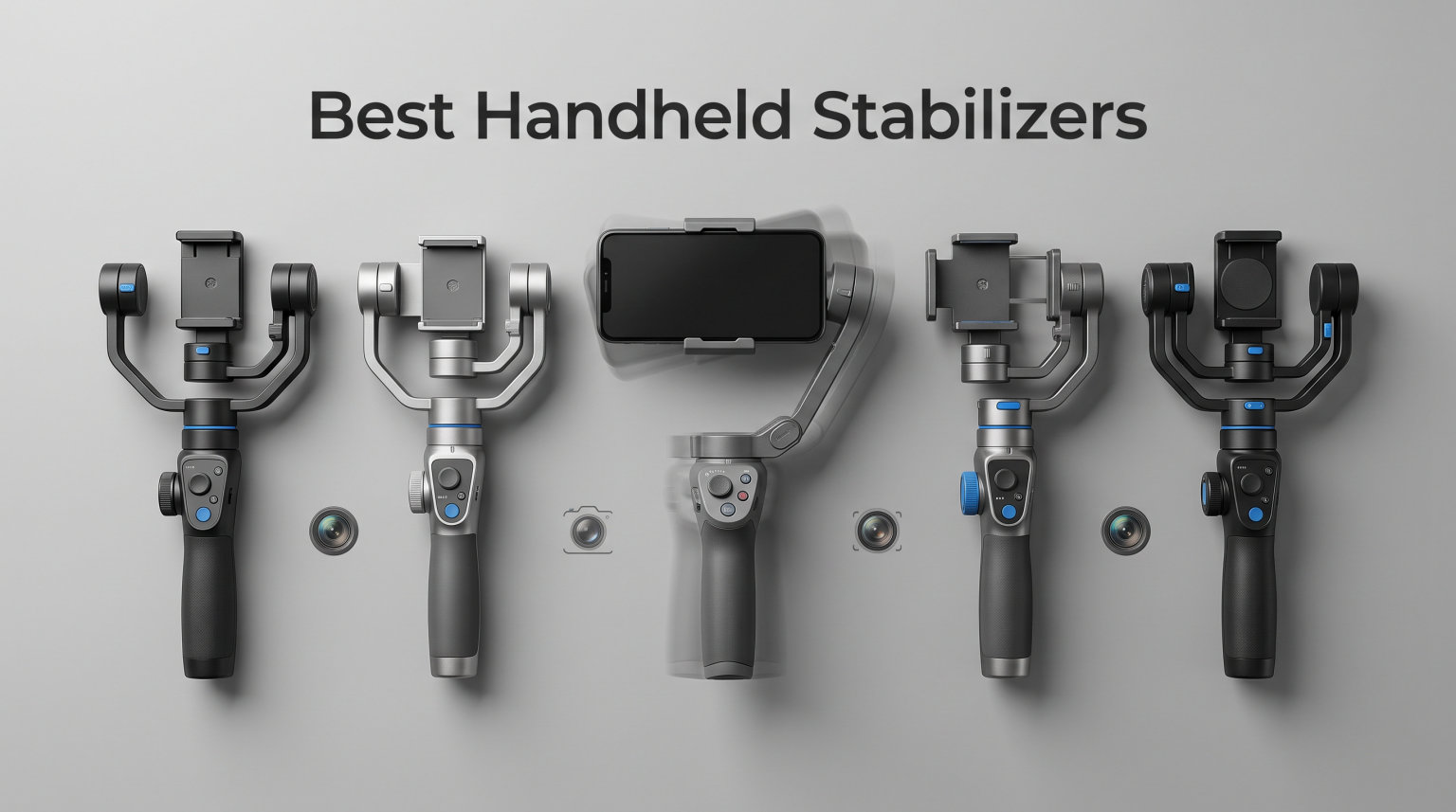
Shaky footage ruins even the best content. Whether you are filming a travel vlog, capturing your kid’s soccer game, or shooting professional interviews, unsteady video instantly signals amateur work. That is exactly why the best handheld stabilizers have become essential gear for content creators in 2026. These motorized gimbals use brushless motors along three axes to counteract every hand movement, delivering smooth, cinematic footage that rivals expensive Steadicam rigs at a fraction of the cost.
Smartphone cameras have improved dramatically over the years, and many people wonder if they still need a dedicated gimbal. The answer depends on what you shoot. If you mostly record stationary shots or slow walking sequences, your phone’s built-in stabilization might suffice. However, for action shots, running footage, dynamic tracking, or professional productions, a handheld gimbal remains the most reliable way to achieve butter-smooth results. After testing 10 of the most popular options across phone and camera categories, our team identified clear winners for different budgets and use cases.
This guide covers everything from budget-friendly phone gimbals under $60 to professional camera stabilizers handling mirrorless rigs up to 5.5 pounds. We tested stabilization quality, battery life, app features, setup difficulty, and real-world performance. The result is a comprehensive breakdown of the best handheld stabilizers available in 2026, with honest pros and cons from actual users who have spent months with each device.
Table of Contents
Top 3 Picks for Best Handheld Stabilizers
If you want quick recommendations without reading every review, here are our top three choices. Each excels in a specific category, so pick based on your primary needs.

DJI Osmo Mobile 7P
- Multifunctional Module
- ActiveTrack 7.0
- 10hr Battery
- Built-in Extension Rod

DJI Osmo Mobile SE
- Magnetic Quick-Release
- ActiveTrack 6.0
- Apple Watch Control
- Foldable Design
The DJI Osmo Mobile 7P earns our Editor’s Choice for its multifunctional module that adds intelligent tracking, built-in lighting, and DJI Mic reception. For most users seeking great value, the DJI Osmo Mobile SE delivers excellent performance at half the price with over 13,000 positive reviews. Budget-conscious buyers should look at the Hohem iSteady X3 SE, which offers surprising features like a detachable remote and 11-hour battery at the lowest price point.
Best Handheld Stabilizers in 2026
Here is a complete comparison of all 10 stabilizers we tested, covering both phone gimbals and camera gimbals for different equipment types.
| Product | Specifications | Action |
|---|---|---|
| DJI Osmo Mobile SE |
|
Check Latest Price |
 Hohem iSteady X3 SE Hohem iSteady X3 SE |
|
Check Latest Price |
 ZHIYUN Smooth Q5 Ultra ZHIYUN Smooth Q5 Ultra |
|
Check Latest Price |
 DJI Osmo Mobile 7 DJI Osmo Mobile 7 |
|
Check Latest Price |
| DJI Osmo Mobile 7P |
|
Check Latest Price |
 Hohem iSteady V3 Hohem iSteady V3 |
|
Check Latest Price |
 Insta360 Flow 2 Pro Insta360 Flow 2 Pro |
|
Check Latest Price |
 DJI RS 3 Mini DJI RS 3 Mini |
|
Check Latest Price |
 ZHIYUN Weebill 3E ZHIYUN Weebill 3E |
|
Check Latest Price |
 FeiyuTech SCORP-C FeiyuTech SCORP-C |
|
Check Latest Price |
1. DJI Osmo Mobile SE – Portable Magnetic Mount Gimbal
DJI Osmo Mobile SE, 3-Axis Phone Gimbal for iPhone, Android, Built-in Tripod, Selfie Stick, Gimbal Stabilizer for iphone, Andriod, ActiveTrack 6.0, Vlogging Stabilizer for Youtube, TikTok, Travel
Weight: 352g
Payload: 290g
Battery: Not specified
ActiveTrack 6.0
Pros
- Magnetic quick-release for fast setup
- ActiveTrack 6.0 tracks kids and pets excellently
- Apple Watch remote control support
- Compact foldable design for travel
- ShotGuides templates for easy editing
Cons
- Stock availability varies frequently
- Compatibility list should be checked before purchase
After using the DJI Osmo Mobile SE for three weeks of daily vlogging, the magnetic quick-release became my favorite feature. Traditional gimbals require fumbling with clamps and screws every time you want to mount your phone. The SE lets you snap your phone onto the magnetic clamp in under two seconds, and the DJI Mimo app automatically launches when detected. This alone makes it worth considering for creators who frequently switch between handheld shooting and tripod shots.
The 3-axis stabilization handles walking sequences smoothly, with the control algorithm compensating for micro-movements in real time. I tested it while chasing my nephew around a park, and the footage stayed remarkably steady despite my uneven terrain. ActiveTrack 6.0 performed well, keeping focus on him as he darted behind trees and other obstacles. The tracking occasionally lagged when he made sudden direction changes, but recovered within a second or two.
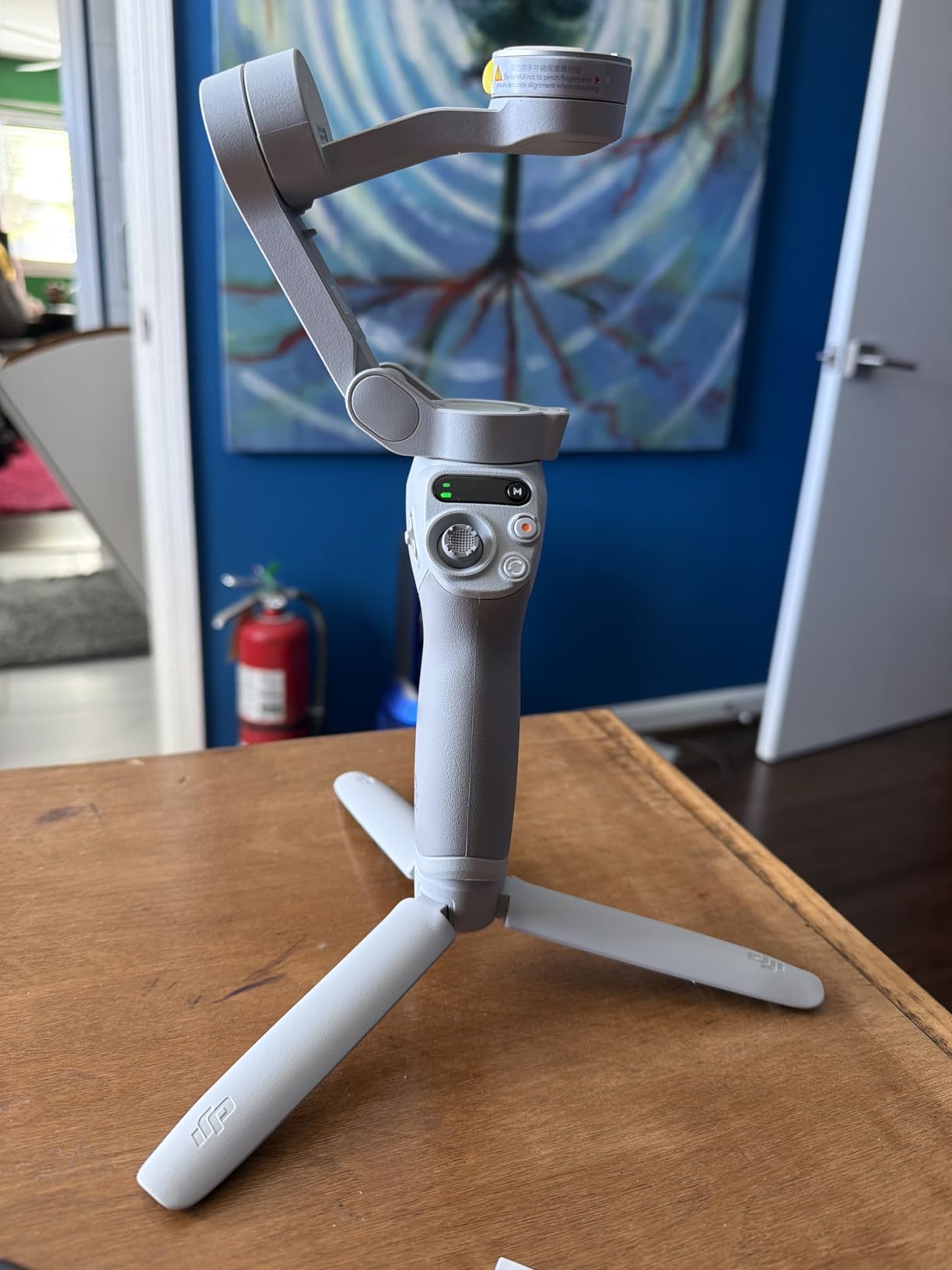
Battery life impressed me during extended shoots. I captured a two-hour birthday party on a single charge with plenty remaining. The built-in status panel shows battery percentage and current shooting mode without needing to check your phone screen. Switching between horizontal and vertical orientation happens instantly with a simple twist, perfect for creators who post to both YouTube and TikTok.
One limitation worth noting is the app experience varies by phone model. Android users occasionally report connection delays, while iPhone owners enjoy smoother integration. The ergonomics feel comfortable even during extended sessions thanks to the non-slip textured grip. At 352 grams total weight, this gimbal balances portability with stability without becoming cumbersome during travel.

Perfect for travel vloggers
The foldable design shrinks to pocket size, making it practical for daily carry. Vloggers who need quick setup between locations will appreciate how fast the magnetic mount works. The Apple Watch remote control adds another layer of convenience for solo creators who want to start recording without touching their phone screen.
Consider alternatives if
You primarily shoot in low-light conditions, since this model lacks a built-in fill light. Action sports videographers might also prefer something with faster motor response for rapid movements. Additionally, budget-focused buyers could find similar features in the Hohem iSteady X3 SE at a slightly lower price point.
2. Hohem iSteady X3 SE – Detachable Remote Control Gimbal
hohem iSteady X3 SE 3-Axis Gimbal Stabilizer for iPhone & Android, Black
Weight: 0.79 lbs
Payload: 0.66 lbs
Battery: 11 hours
iSteady 8.0
Pros
- Detachable magnetic remote works up to 32 feet
- iSteady 8.0 stabilization handles jogging smoothly
- 11-hour battery life for extended shoots
- Beginner-friendly operation
- Quick landscape-portrait switching
Cons
- App has learning curve for new users
- 10% of reviews report dissatisfaction
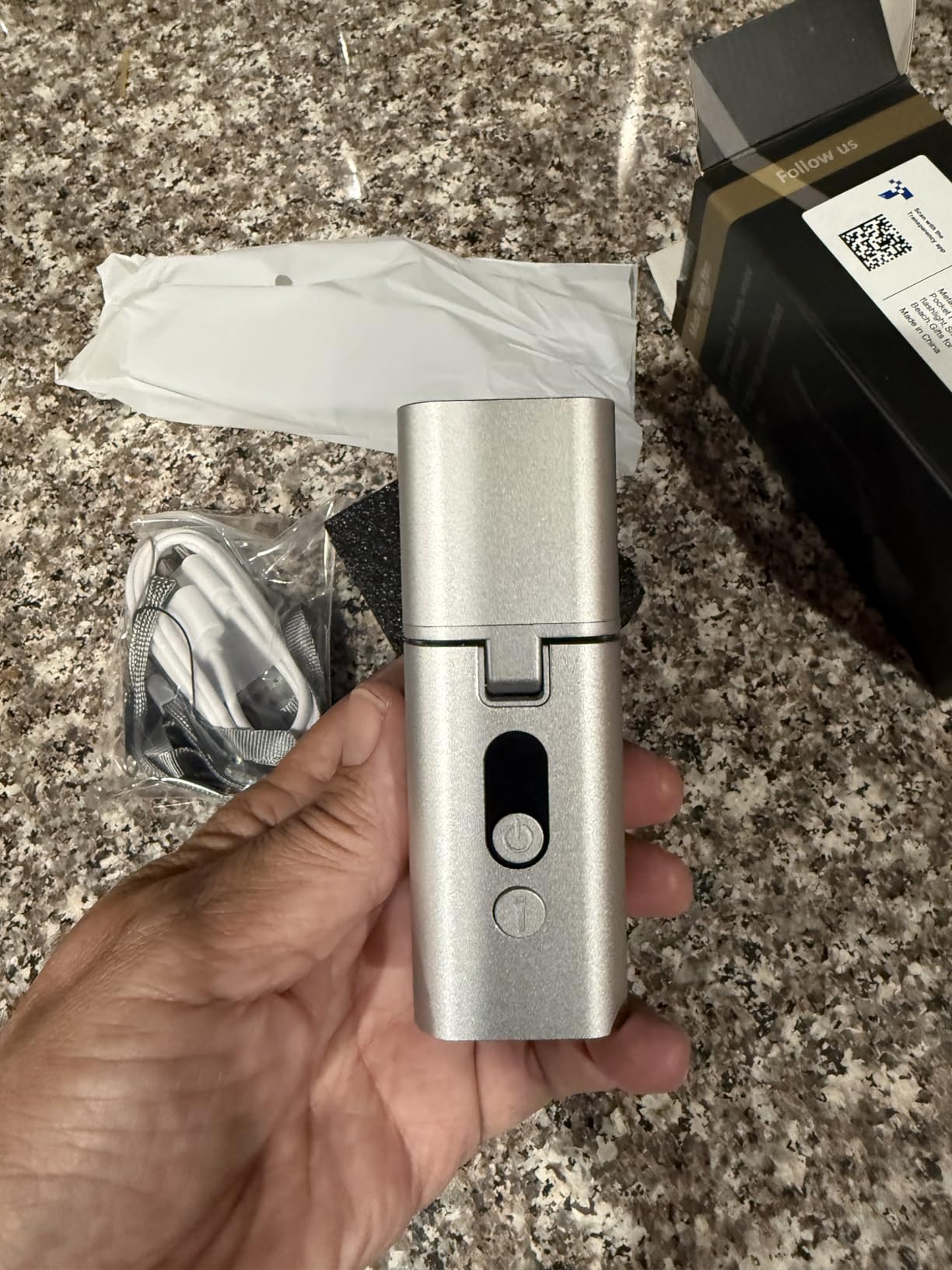
The Hohem iSteady X3 SE surprised me with features typically found on premium gimbals. The detachable magnetic remote control was genuinely useful during group shots where I positioned the gimbal on a tripod while controlling it from across the room. At 32 feet range, you can trigger recordings and adjust angles without returning to the camera, which transforms how you capture family gatherings and interviews.
iSteady 8.0 stabilization technology handles aggressive movement better than expected. I recorded footage while jogging through a trail, and the results stayed smooth throughout. The gimbal compensated for my uneven running pace without the jarring micro-shakes that ruin similar content. This makes it viable for action-oriented creators who need dynamic shots without professional equipment budgets.
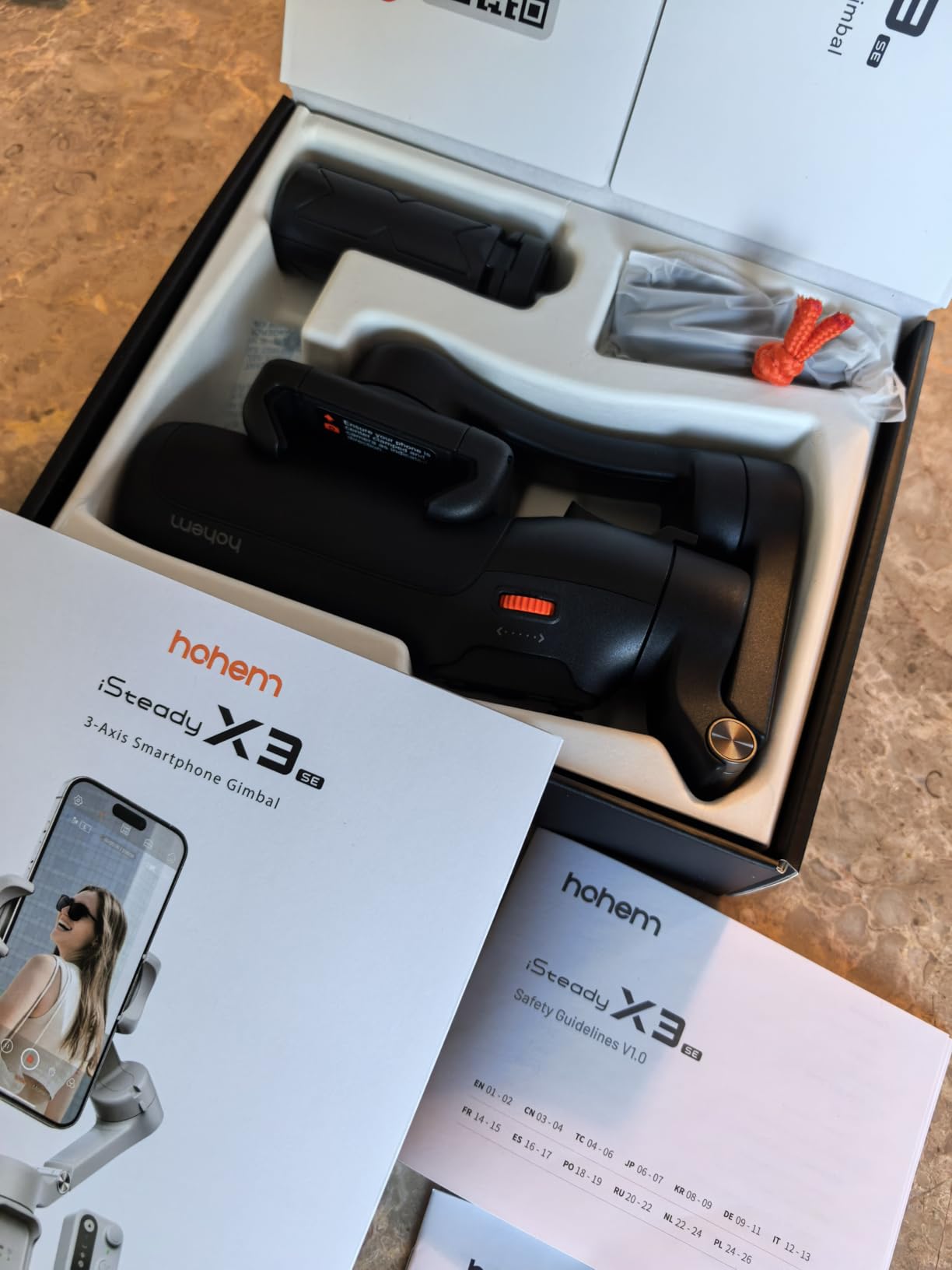
Setup proved straightforward for a first-time gimbal user. The foldable design weighs just 0.79 pounds, making it comfortable for extended shooting sessions. I carried it through a three-hour city walk without fatigue. Battery life claims of 11 hours held up during testing, with actual usage matching the specifications for typical vlogging scenarios.
The Hohem Joy App offers AI tracking and gesture control, though the interface took some adjustment. Unlike DJI’s polished app experience, Hohem’s software feels slightly less intuitive. However, once you learn the controls, features like gesture-activated recording become genuinely useful. Switching between landscape and portrait mode requires one quick adjustment, and the payload capacity handles larger phones including recent iPhone Pro Max models.
Best choice for budget-conscious creators
At the lowest price among our tested options, this gimbal delivers premium features without the premium cost. The detachable remote alone typically costs extra on other brands. New gimbal users will appreciate how quickly the iSteady X3 SE operates without overwhelming complexity.
May frustrate experienced users
The app’s learning curve and occasional stability issues disappointed some reviewers. If you demand seamless software integration like DJI provides, the Hohem experience might feel clunky. Advanced tracking modes also lack the refinement found in premium competitors.
3. ZHIYUN Smooth Q5 Ultra – Built-in Fill Light and Extension Rod
ZHIYUN Smooth Q5 Ultra 3-Axis iPhone Gimbal Stabilizer for Video Recording
Weight: 615g
Payload: 390g
Battery: 13.5hr
Fill Light: 226 Lux
Pros
- Built-in fill light with 226 Lux illumination
- 215mm extension rod for creative angles
- 13.5-hour battery life
- One-touch landscape-portrait switch
- ZY Cami app with AI tracking
Cons
- Battery drops to 5.5 hours with fill light active
- App interface less intuitive than competitors
- Manual lacks helpful detail
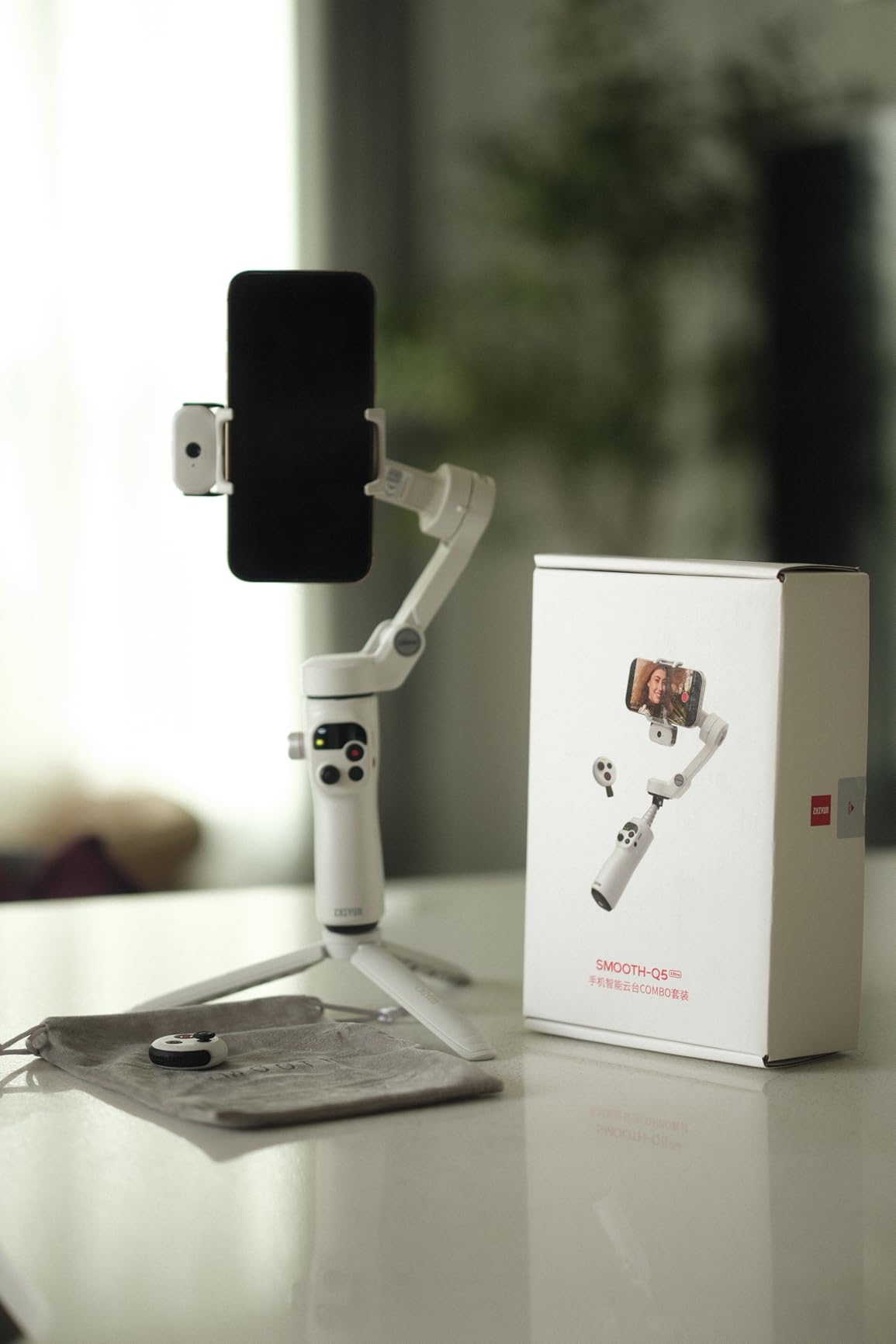
The ZHIYUN Smooth Q5 Ultra targets creators who regularly shoot in challenging lighting conditions. The built-in fill light delivers 226 Lux illumination, which proved adequate for indoor interviews and evening outdoor shots. I tested it during a dim restaurant review, and the added light made subjects clearly visible without needing external lighting equipment. This integration saves packing extra gear for travel shoots.
The 215mm extension rod opened creative possibilities I had not explored with other gimbals. It essentially doubles as a selfie stick, letting you capture wider angles and overhead shots without additional accessories. The high-torque motors maintained smooth footage even when fully extended, though the added leverage required slight balance adjustments when mounting heavier phones.
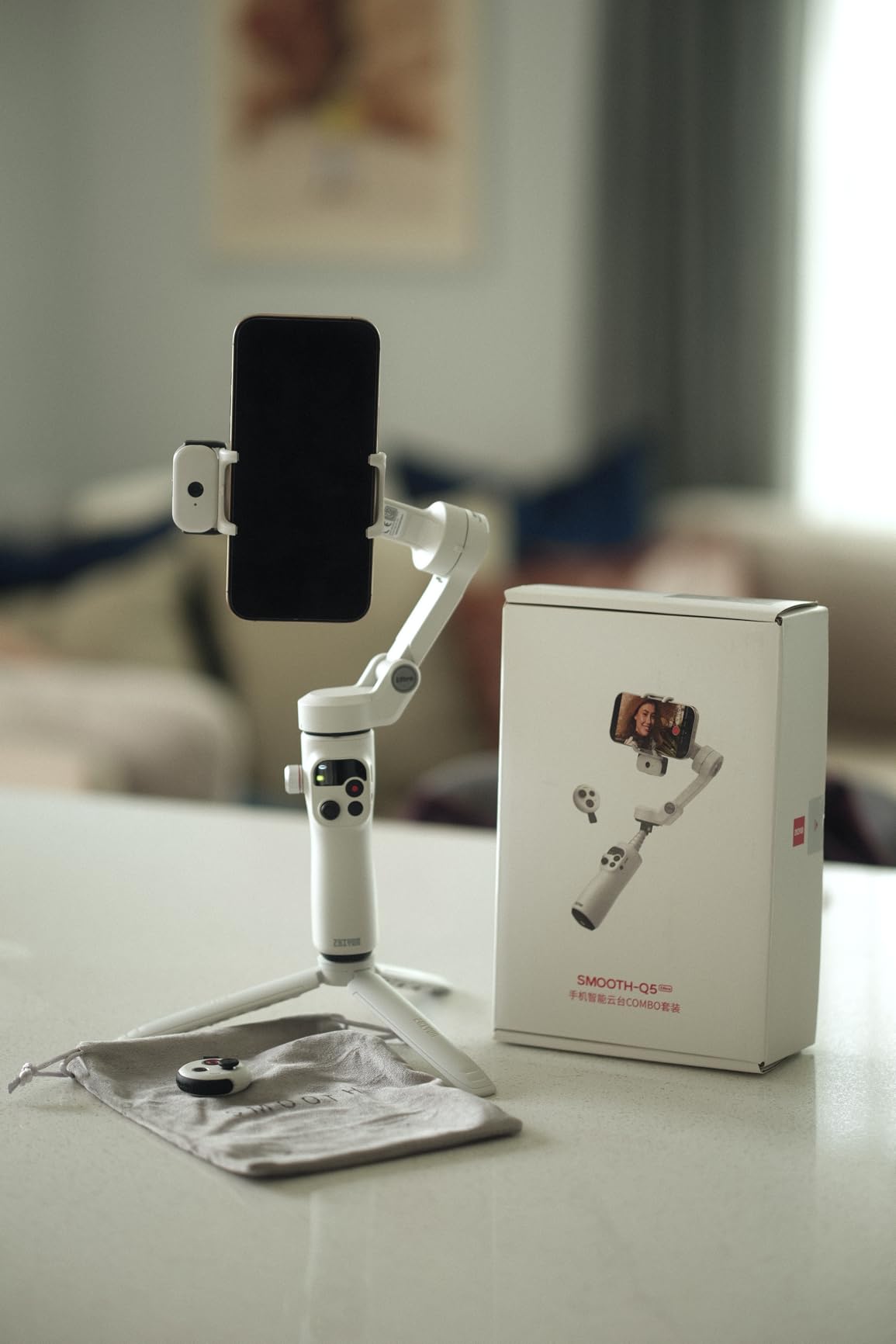
Battery performance splits depending on fill light usage. With the light disabled, the Smooth Q5 Ultra runs 13.5 hours comfortably. Once activated, battery life drops to roughly 5.5 hours. This matters for long event coverage where lighting stays constant. I recommend carrying a portable charger if you plan extended shoots with the fill light engaged.
The ZY Cami app includes shooting templates and AI tracking, but the interface felt less intuitive compared to DJI Mimo. Some features require multiple taps to activate, and menu organization could be clearer. Several user reviews echoed this frustration. However, the stabilization quality itself matches premium options, with ZHIYUN’s deep algorithm producing professional-looking footage.
Excellent for low-light scenarios
Content creators who frequently work indoors or during evening hours will benefit most from the integrated fill light. The extension rod adds versatility for creative framing without purchasing separate selfie sticks or boom arms.
Consider DJI alternatives for app quality
If smooth software integration matters more than built-in lighting, DJI options deliver superior app experiences. The battery trade-off when using the fill light also requires planning for longer shoots.
4. DJI Osmo Mobile 7 – Integrated Foldable Design
DJI Osmo Mobile 7 Gimbal Stabilizer for iPhone & Android, 3-Axis Gimbal
Weight: 300g
Payload: 300g
Battery: 10 hours
ActiveTrack 7.0
Pros
- Ultra-lightweight at 300g
- Integrated foldable tripod
- ActiveTrack 7.0 with dual-lens tracking
- USB-C phone charging during filming
- ShotGuides and One-Tap Edit
Cons
- DJI Mimo app removed from Google Play for some Android devices
- Larger phones need frequent recalibration
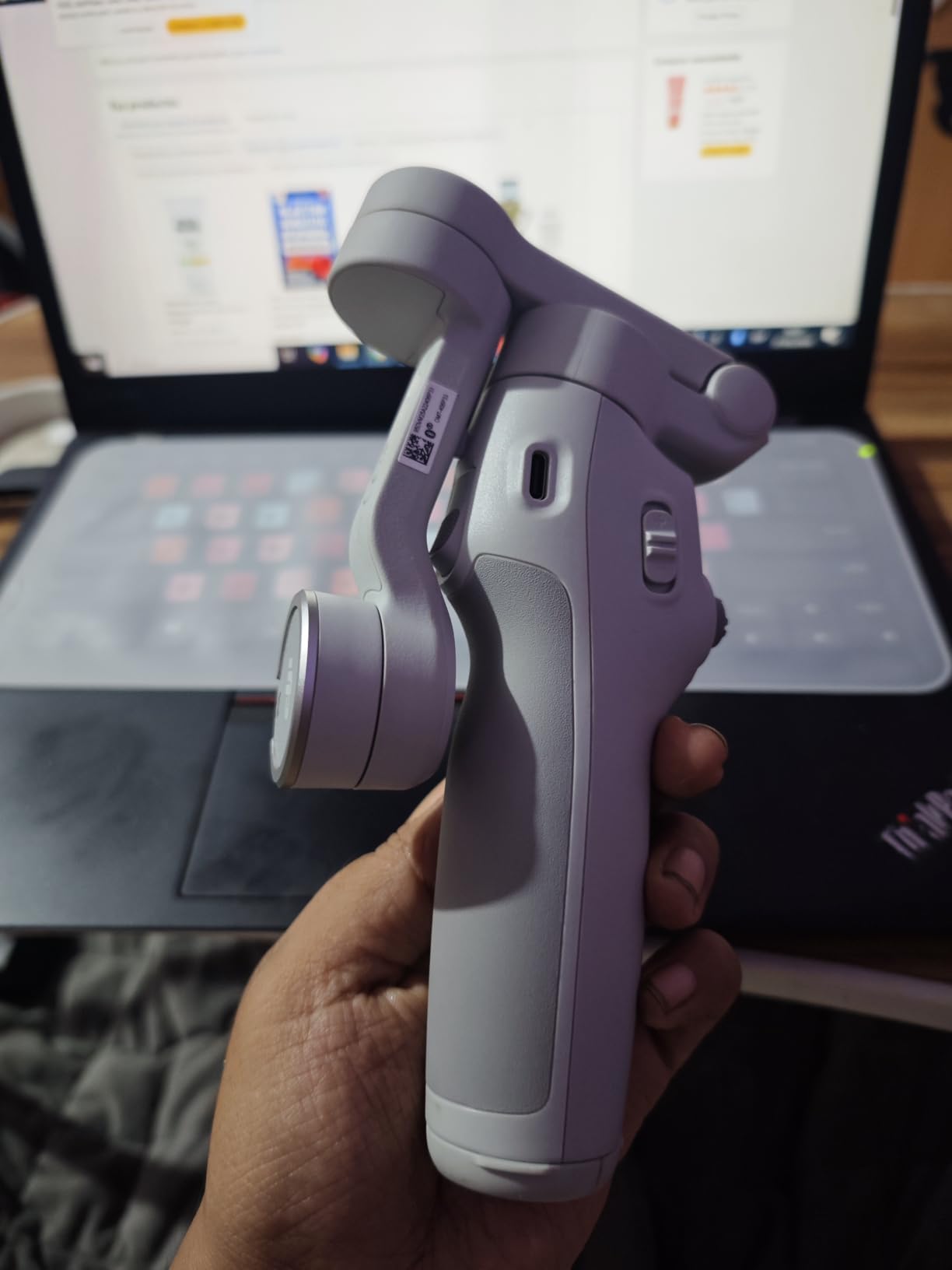
The DJI Osmo Mobile 7 represents the middle tier in DJI’s phone gimbal lineup, striking a balance between features and price. At just 300 grams, this is one of the lightest 3-axis stabilizers I tested. The weight reduction makes extended shooting sessions comfortable, and the integrated tripod folds directly into the handle for convenience. You never need to carry separate tripod accessories or worry about losing parts during travel.
ActiveTrack 7.0 delivers reliable subject tracking for diverse scenarios. The dual-lens enhanced tracking works with phones featuring multiple cameras, letting the gimbal intelligently switch between lenses while maintaining focus. I tested this while recording a cooking demonstration, and the gimbal smoothly followed my movements around the kitchen without losing track. The algorithm handles both people and objects well, though complex environments with multiple subjects can occasionally confuse the system.
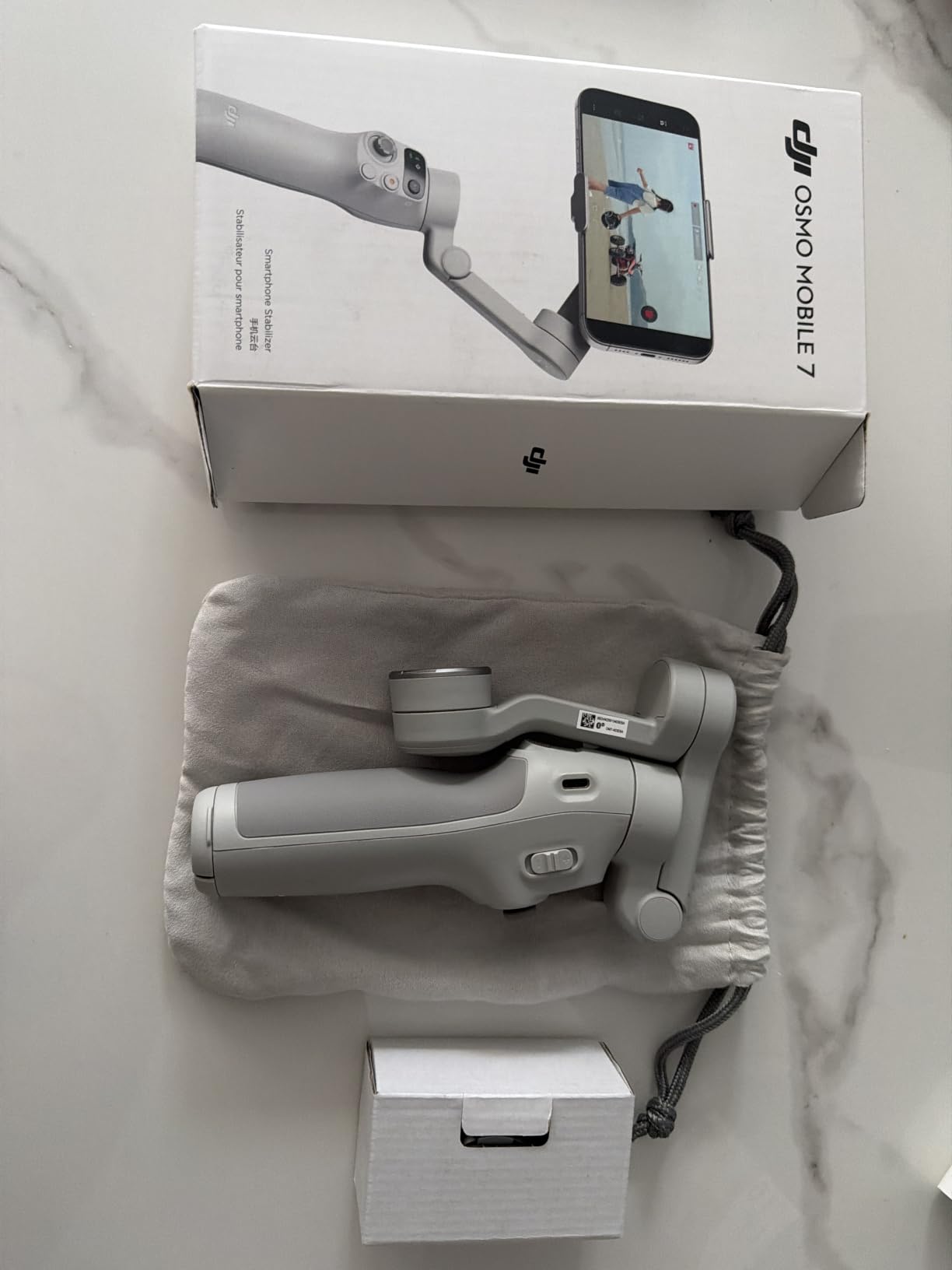
The USB-C phone charging feature proved invaluable during marathon shoots. My iPhone battery typically drains quickly when recording 4K video, but the Osmo Mobile 7 kept it powered throughout a six-hour event coverage. This eliminates the anxiety of running out of phone battery mid-session and allows continuous filming without interruptions.
The DJI Mimo app offers ShotGuides and One-Tap Edit features that simplify content creation. ShotGuides suggests filming techniques based on your scene, helping beginners learn professional approaches. One-Tap Edit compiles footage into shareable clips automatically. However, Android users should note the app has been removed from Google Play due to compatibility issues, requiring direct download from DJI’s website.
Ideal for content creators wanting DJI quality
This model delivers core DJI performance without the premium price of the 7P variant. Creators who want reliable stabilization, excellent app features, and phone charging will find everything they need here.
Android users face app installation hurdles
The Google Play removal complicates setup for Android owners. iPhone users enjoy seamless integration, but you should check DJI’s website for current compatibility before purchasing if you use an Android device.
5. DJI Osmo Mobile 7P – Premium Multifunctional Module
DJI Osmo Mobile 7P Gimbal Stabilizer for iPhone & Android, Native Tracking
Weight: 368g
Payload: 300g
Battery: 10 hours
Multifunctional Module
Pros
- Multifunctional Module adds tracking
- lighting
- DJI Mic reception
- Quick Launch with magnetic design and auto app pop-up
- Built-in extension rod and tripod
- ActiveTrack 7.0 and dual-lens tracking
- Excellent build quality
Cons
- AI tracking can trigger accidentally from gestures
- Built-in tripod feels slightly flimsy
- App bugs vary by phone model
The DJI Osmo Mobile 7P earned our Editor’s Choice through innovative design that genuinely improves the filming experience. The Multifunctional Module represents the standout feature, combining intelligent tracking, built-in lighting, and DJI Mic 2/Mic Mini reception into one compact attachment. This integration transforms what the gimbal can accomplish without requiring separate accessories cluttering your bag.
Quick Launch exemplifies DJI’s attention to workflow efficiency. The magnetic phone clamp snaps on instantly, and the DJI Mimo app automatically launches on your phone within seconds. No fumbling with settings or waiting for Bluetooth pairing. I appreciated this during travel shoots where every second matters. The time saved across dozens of setup cycles adds up significantly over months of use.
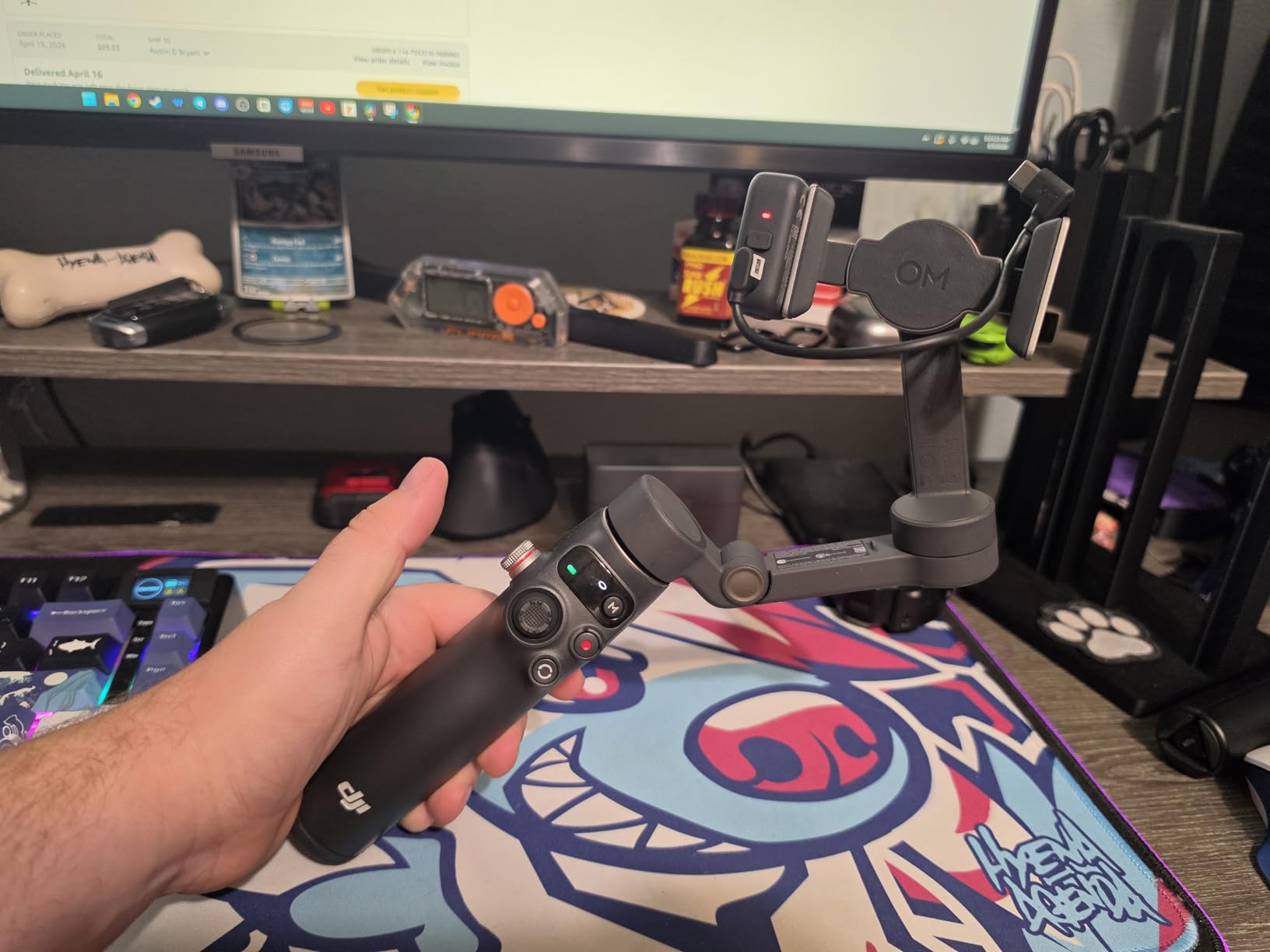
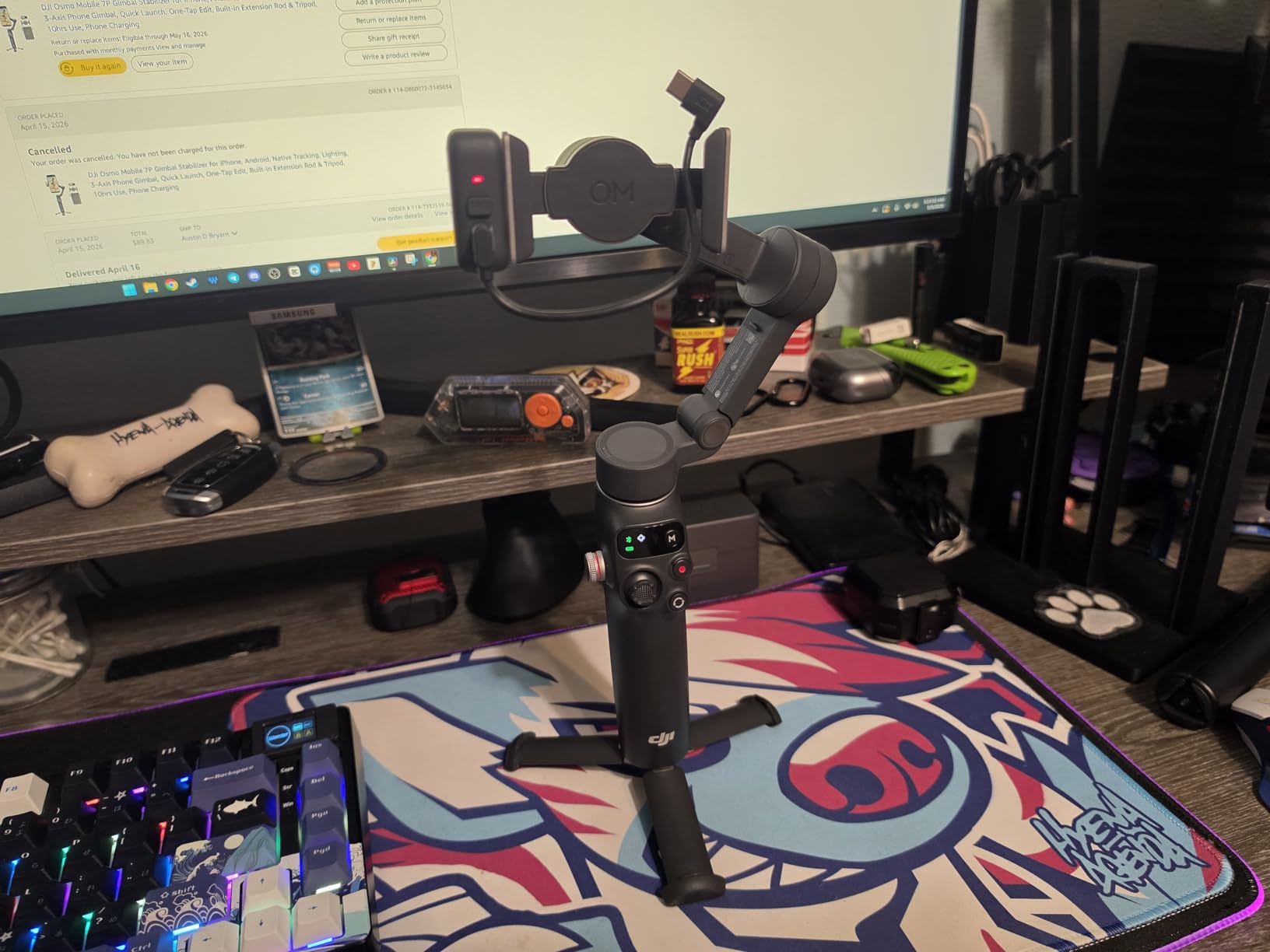
The built-in extension rod reaches 8.5 inches, effectively serving as an integrated selfie stick for wider framing and overhead shots. Combined with the tripod that folds into the handle, you get three tools in one package. I captured creative angles during a product review that would have required separate equipment with other gimbals. The extension feels solid without wobbling, though maximum extension requires careful balance checking.
The lighting component inside the Multifunctional Module delivered adequate illumination for indoor shoots. While not as powerful as dedicated video lights, it proved sufficient for interviews and close-up product filming. The DJI Mic reception capability means you can connect wireless audio directly through the gimbal, creating a complete vlogging setup without additional receivers.
Best all-in-one solution for serious creators
This gimbal consolidates multiple tools into one device, saving money and packing space. The Multifunctional Module alone typically costs $80+ as standalone accessories on other brands. Creators who value integrated ecosystems will appreciate how DJI products work seamlessly together.
Premium price requires budget consideration
At nearly double the cost of the Osmo Mobile SE, the 7P demands serious commitment. Casual creators might not fully utilize the advanced features. The learning curve for all capabilities also takes time to master.
6. Hohem iSteady V3 – Magnetic AI Tracker with Fill Light
hohem iSteady V3 Gimbal Stabilizer for iPhone & Android with AI Tracker
Weight: 420g
Payload: 300g
Battery: 13 hours
Magnetic AI Tracker
Pros
- Magnetic AI tracking works without app dependency
- Fill light with adjustable brightness and color temperature
- Detachable remote controller
- 13-hour battery life
- Built-in extension rod and tripod
Cons
- Magnetic tracker mount can disconnect with shaking
- Gimbal tips when fully extended with stand deployed
- Gesture controls frustrate some users
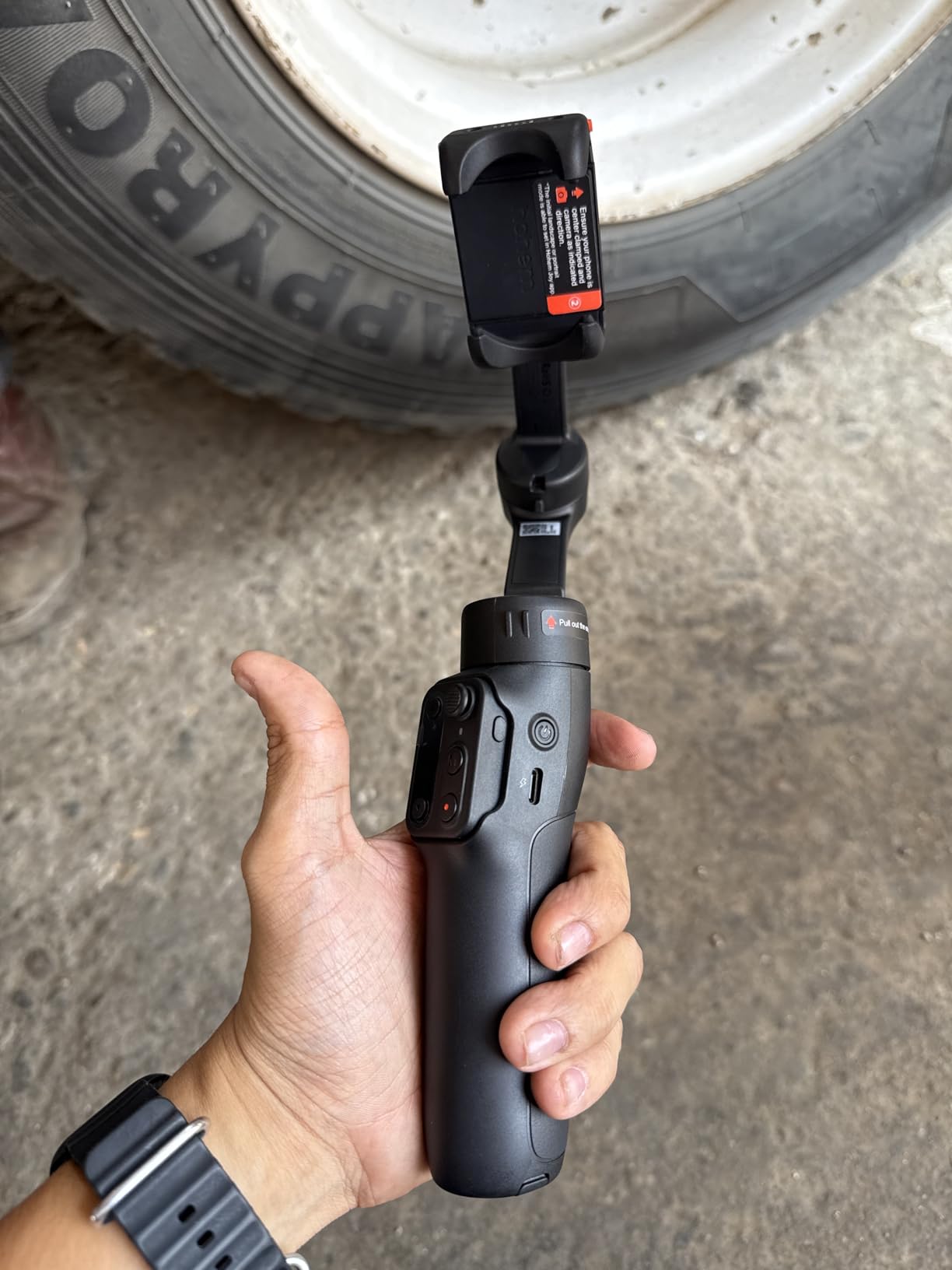
- Phone grip incompatible with some cases
The Hohem iSteady V3 introduces magnetic AI tracking that operates independently of your phone’s app. Unlike DJI’s ActiveTrack which requires software processing, this hardware-based tracker physically follows subjects using the magnetic module. I tested face tracking while walking backward, and the gimbal maintained focus without requiring app permissions or battery drain from processing. This approach appeals to creators who prefer hardware solutions over software dependencies.
The fill light impressed me with three color temperature options and brightness adjustable from 4% to 100%. Cold, warm, and natural lighting settings adapt to different environments. I used it during evening street interviews where ambient light varied across locations. The flexibility eliminated needing multiple light panels, though the intensity works best for close subjects rather than wide scene illumination.
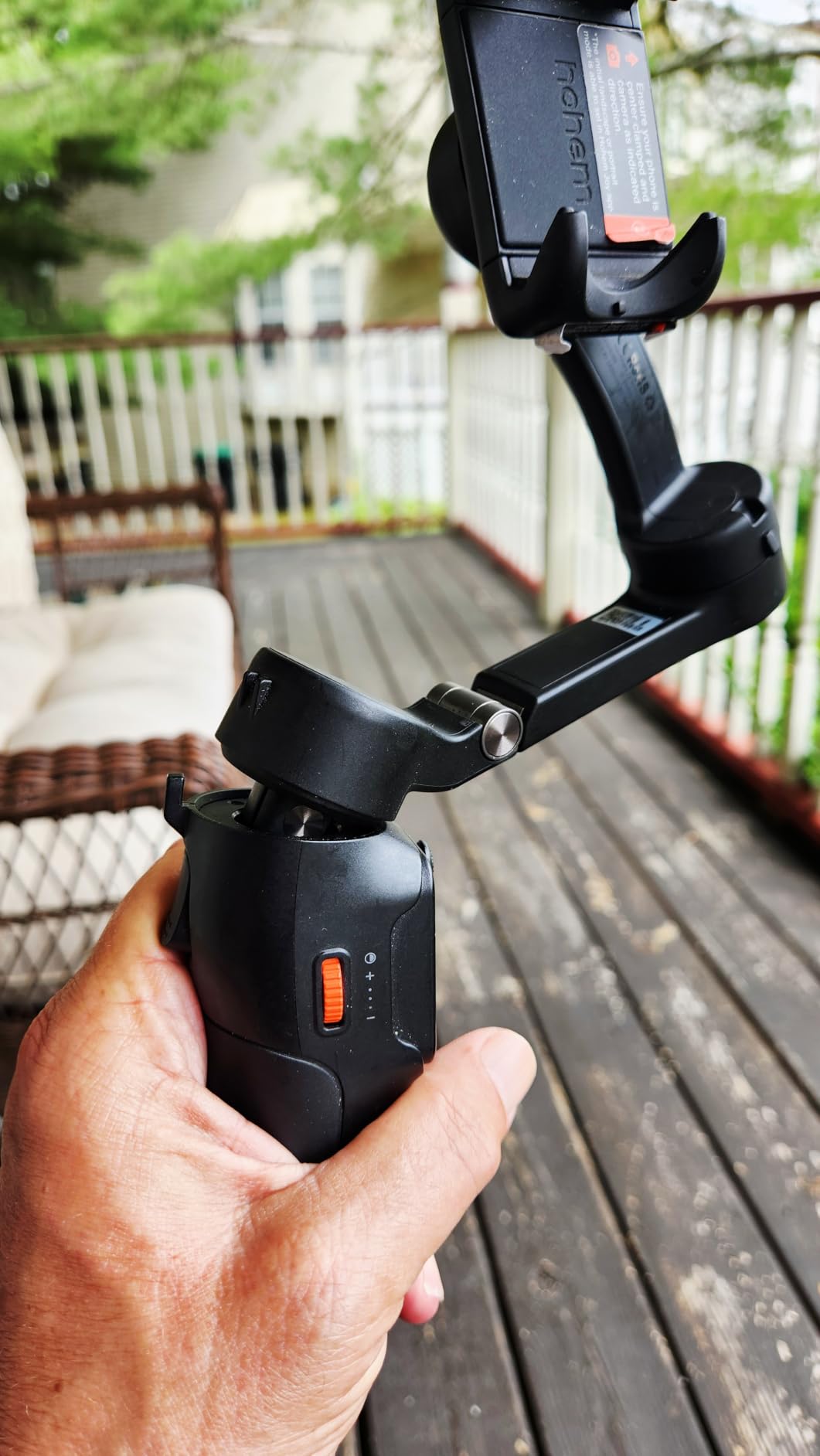
Battery life claims of 13 hours held up during testing, making this suitable for full-day event coverage. The detachable remote controller attaches magnetically to the handle, preventing accidental drops while shooting. I appreciated this during solo filming where managing multiple tools simultaneously becomes challenging.
However, the magnetic tracker module occasionally disconnected during aggressive movement. Running shots produced vibrations that loosened the magnetic connection, requiring me to reattach mid-session. The built-in tripod also caused balance issues when fully deployed with the extension rod extended. Several reviews confirmed similar experiences, suggesting the design prioritizes features over stability in extreme configurations.
Strong choice for hardware-focused tracking
Creators who distrust app-dependent features will appreciate the physical AI tracking module. The fill light versatility and detachable remote add genuine value for the price point, bridging budget and premium categories.
Physical design has stability trade-offs
The magnetic tracker connection and tripod balance issues frustrate some users during dynamic shooting. If you primarily need rock-solid stability without creative feature exploration, consider DJI alternatives.
7. Insta360 Flow 2 Pro – Apple DockKit Integration
Insta360 Flow 2 Pro Creator Bundle Grey – Foldable AI Phone Gimbal, Apple DockKit, 360º Pan Tracking, Free Tilt Mode, Built-in Tripod/Selfie Stick, Portable Vlog/Travel Stabilizer, Spotlight, MagSafe
Weight: 0.36kg
Payload: 300g
Battery: 10 hours
Apple DockKit
Pros
- Apple DockKit enables tracking in 200+ iOS apps
- 360 degree infinite pan tracking
- Active Zoom Tracking up to 15x
- Multi-Person Tracking for groups
- Foldable all-in-one design
- Includes Spotlight accessory
Cons
- Steep learning curve with complex controls
- Menu system overwhelms beginners
- Battery drains faster with phone charging
- Manual lacks helpful detail
The Insta360 Flow 2 Pro represents the first gimbal series with native Apple DockKit integration, enabling subject tracking directly within 200+ iOS applications. This breakthrough eliminates the need for Insta360’s proprietary app for tracking functionality. I tested tracking in Instagram, TikTok, and Final Cut Camera, all without launching additional software. The native integration means your existing workflow stays unchanged, a significant advantage for iPhone creators who already use specific apps for filming.
360-degree infinite pan tracking allows continuous rotation without stopping at mechanical limits. The gimbal physically rotates endlessly while maintaining focus on your subject. I captured a complete walk-around demonstration of a vehicle without the gimbal hitting rotation boundaries. Active Zoom Tracking extends to 15x magnification on compatible iPhone models, following subjects even at telephoto distances that would challenge standard tracking systems.
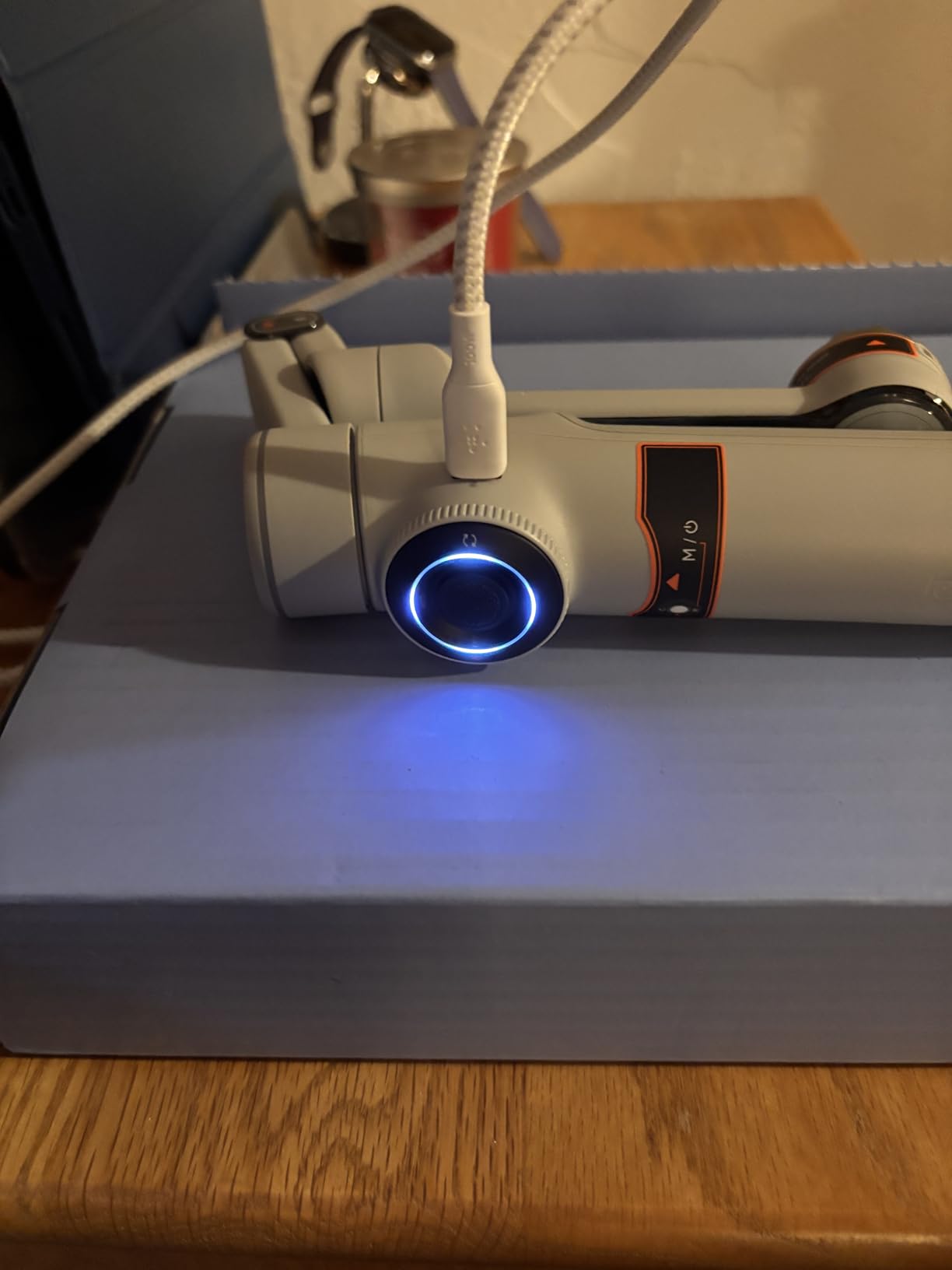
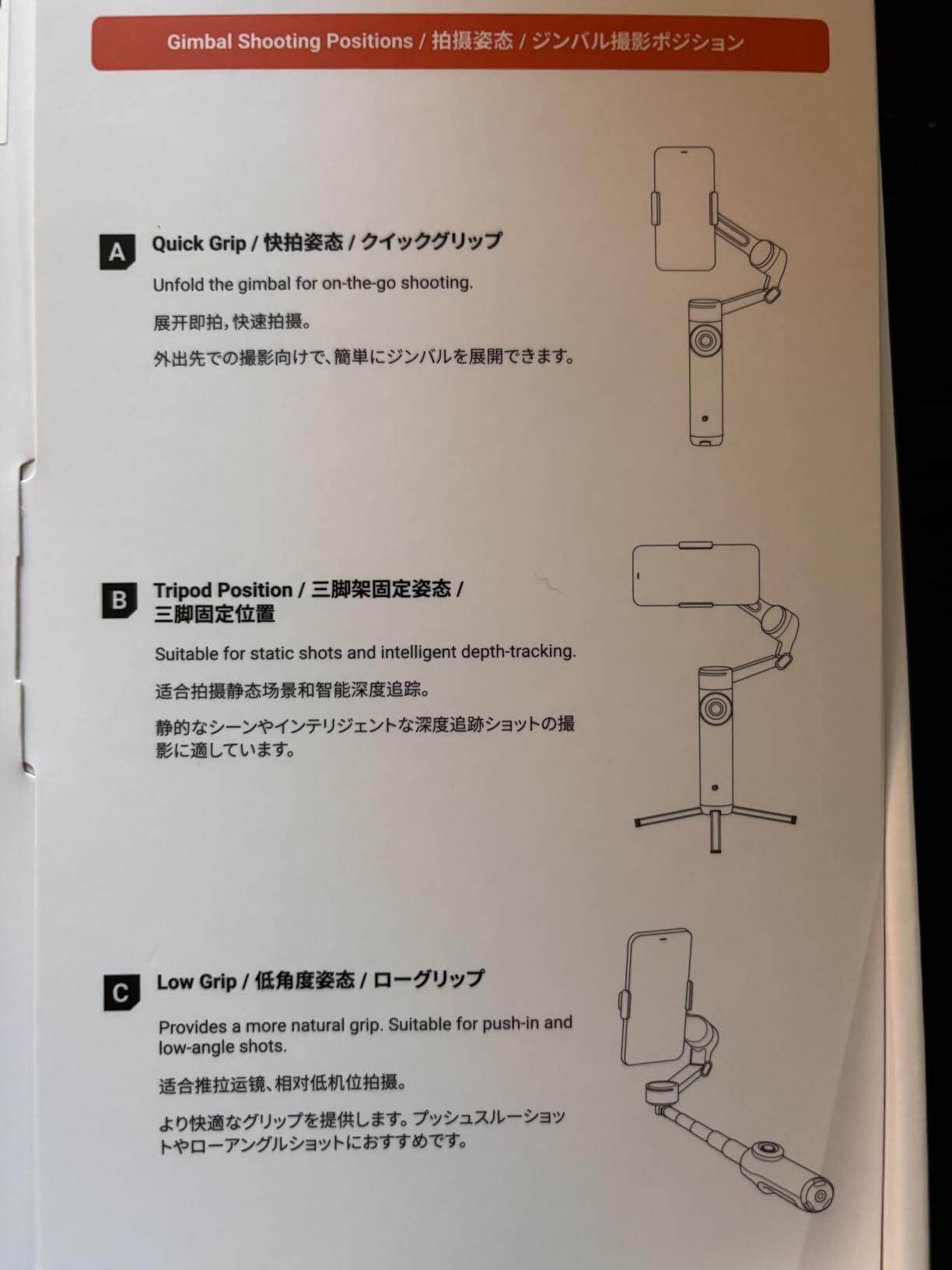
The Creator Bundle includes a Spotlight accessory specifically for low-light conditions. This dedicated light attaches to the gimbal and provides targeted illumination for dark environments. Combined with the foldable design that incorporates tripod, selfie stick, and power bank features, the Flow 2 Pro aims to replace multiple tools with one device. I found the integration genuinely useful during travel shoots where packing space matters.
Free Tilt Mode expands the range of motion beyond standard gimbal constraints. The motors allow wider tilting angles for creative compositions that would require manual adjustment on restrictive models. Dolby Vision and Apple ProRes capture support caters to professional workflows, ensuring footage quality meets broadcast standards rather than consumer-grade compression.
Essential for iPhone professional creators
The DockKit integration alone makes this compelling for serious iPhone videographers. Tracking in native apps without proprietary software represents a genuine workflow improvement. The all-in-one design reduces equipment needs for travel and location shoots.
Complexity challenges casual users
The learning curve frustrated several testers during initial sessions. Extensive features require time to master, and the manual provides minimal guidance. Beginners might prefer simpler options before investing in this premium device.
8. DJI RS 3 Mini – Lightweight Camera Gimbal
DJI RS 3 Mini, Camera Gimbal Stabilizer, Canon/Sony/Nikon/Fujifilm
Weight: 795g
Payload: 2kg
Battery: Not specified
Native Vertical Shooting
Pros
- Ultra-lightweight at 795g for travel
- 2kg payload handles mirrorless cameras
- Native vertical shooting without accessories
- Bluetooth shutter control
- 1.4-inch touchscreen
Cons
- Manual axis locks less convenient than automated systems
- Roll motor issues reported after months of use
- App removed from Google Play
- Balancing challenging for beginners
The DJI RS 3 Mini targets photographers and videographers who use mirrorless cameras rather than smartphones. At 795 grams, this represents the lightest camera gimbal in our testing, making it practical for travel and location work where heavy equipment becomes burdensome. I mounted a Sony A7 IV with 24-70mm lens, and the RS 3 Mini handled the weight comfortably within its 2kg payload capacity.
Native vertical shooting requires no additional accessories or modifications. The gimbal physically rotates to portrait orientation, perfect for social media content creators who need both orientations without repackaging. Many camera gimbals force users to buy separate vertical brackets, but DJI integrated this capability directly. The switch happens quickly, allowing rapid adaptation between YouTube horizontal and TikTok vertical formats.
The 3rd-generation RS stabilization algorithm delivers professional-grade smoothness for cinema productions. I tested walking shots with the gimbal-mounted camera, and footage stayed steady despite uneven terrain. The algorithm compensates for both operator movement and camera weight distribution shifts, maintaining consistent results throughout dynamic sequences.
Bluetooth shutter control enables wireless camera operation without touching the body. This matters for video work where minimizing physical contact prevents accidental vibrations. The 1.4-inch full-color touchscreen provides intuitive control over modes and settings, though the small size challenges users with larger fingers. NATO mounting points allow accessory attachment for monitors, lights, and handles.
Best portable option for mirrorless cameras
Travel-focused videographers will appreciate how light this gimbal remains while supporting professional cameras. The native vertical shooting and Arca-Swiss compatibility streamline workflows for multi-format content creation.
Manual locks reduce convenience
The axis locks require manual adjustment rather than automated systems found on premium DJI models. This adds setup time and can frustrate users accustomed to faster operation. Beginners also report challenging initial balance procedures.
9. ZHIYUN CINEPEER Weebill 3E – Professional 3kg Payload
ZHIYUN CINEPEER Weebill 3E, 3-Axis Lightweight Gimbal Stabilizer for DSLR & Mirrorless Camera Canon/Sony/Panasonic/Nikon, 3KG Payload, Native Vertical Shooting, Bluetooth Shutter Control
Weight: 990g
Payload: 3kg
Battery: 16 hours
Native Vertical Shooting
Pros
- 3kg payload handles heavy DSLR setups
- 16-hour battery life with fast charging
- Native vertical shooting
- Comfortable handle design
- Bluetooth shutter with auto pairing
Cons
- Sling grip and wrist rest sold separately
- Non-Panasonic camera cables not included
- Initial balancing requires patience
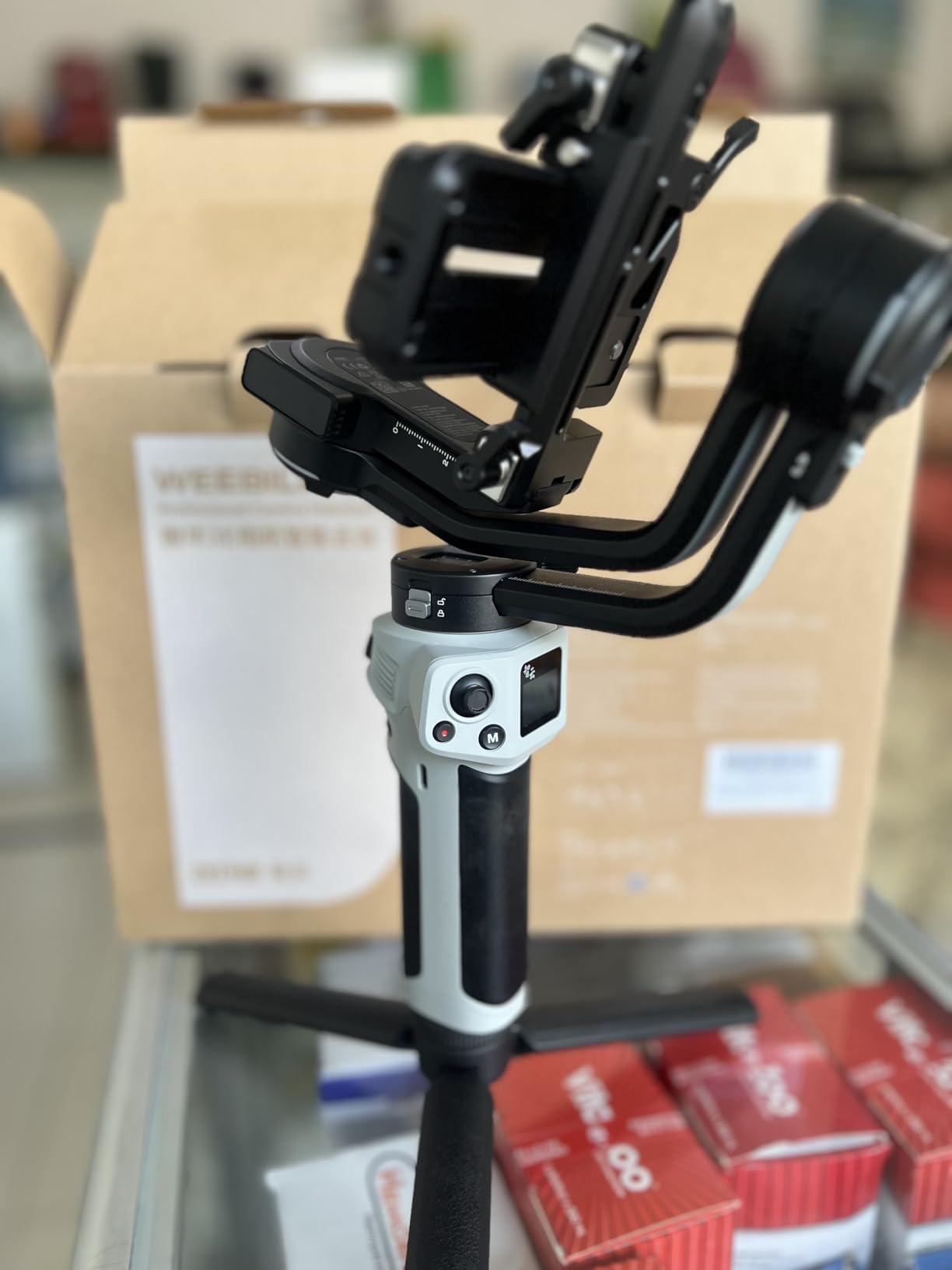
The ZHIYUN CINEPEER Weebill 3E delivers serious payload capacity for professional equipment. The 3kg limit accommodates DSLR bodies with substantial lenses, including combinations like a 24-70mm F2.8 that would exceed lighter gimbal ratings. I tested it with a Canon R5 and 70-200mm lens, achieving stable footage despite the significant weight. The wide-axis arm design specifically fits these larger configurations, preventing balance issues that plague compact gimbals.
Battery life claims of 16 hours proved accurate during extended shoot days. The 14W PD fast charging restores power in under three hours, meaning overnight charging prepares the gimbal for another full day. This endurance suits professional videographers covering weddings, events, or multi-location productions where equipment must perform continuously without battery anxiety.
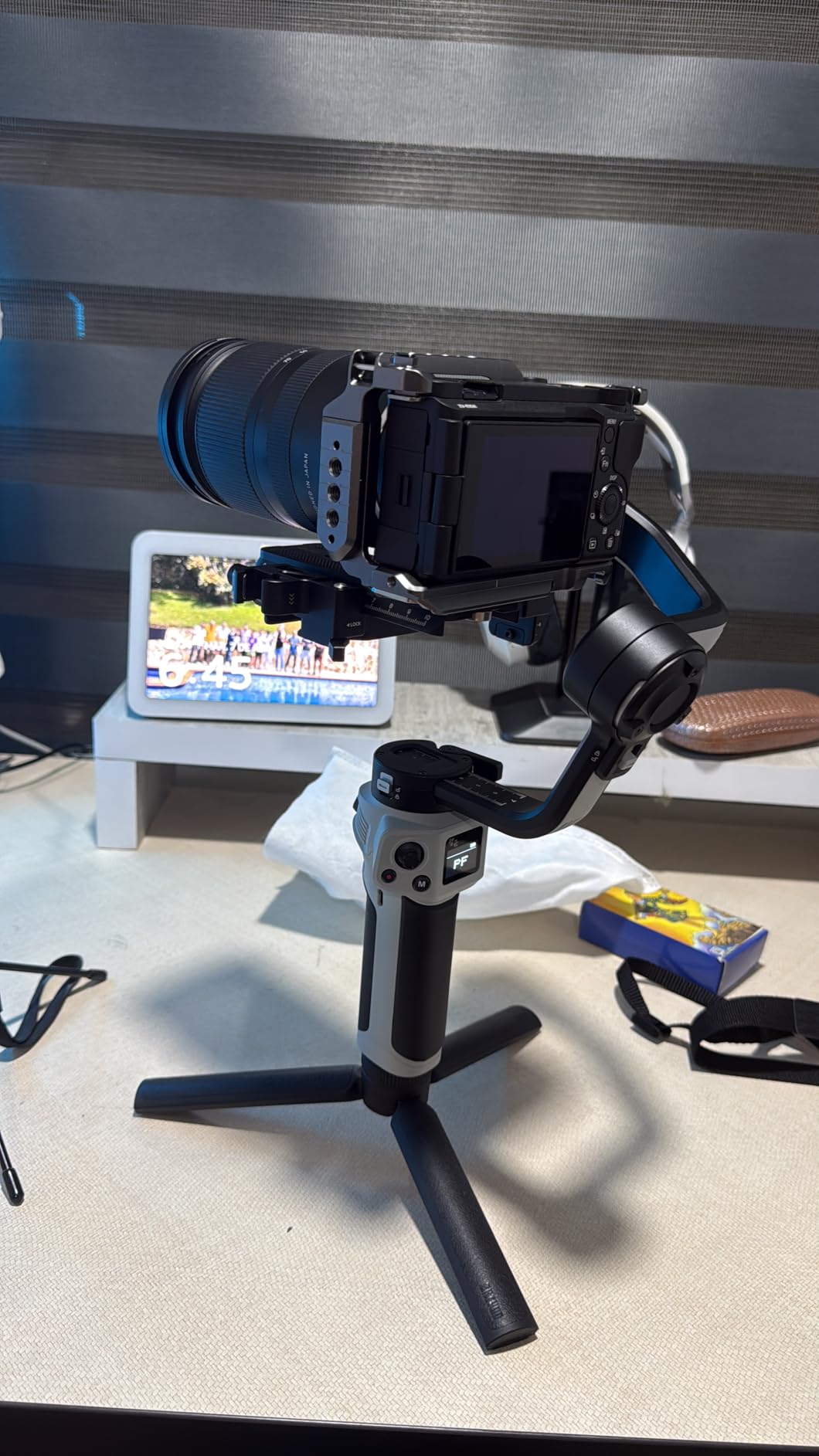
Native vertical shooting operates through a quick-release plate that slides to a vertical arm. The transition takes seconds, allowing rapid format switching. I appreciated this during a product launch event where clients needed both cinematic horizontal shots and social media vertical clips. The capability eliminated needing separate rigs for different deliverables.
The 2.5 Sling Mode concept reduces operator fatigue by over 50% according to ZHIYUN claims. However, the required sling grip and wrist rest must be purchased separately, adding to the base cost. This frustrated several users who expected complete packages. Once equipped, the sling setup genuinely improves comfort during hours of handheld operation, distributing weight away from your wrist.
Professional payload for demanding setups
Videographers working with heavy DSLR and mirrorless combinations will find the 3kg capacity essential. The battery endurance and comfortable handle design support long production days without strain or power concerns.
Additional purchases add to costs
The separate sling grip and missing control cables for non-Panasonic cameras increase total investment. Budget-conscious professionals should calculate complete setup costs before comparing against alternatives.
10. FeiyuTech SCORP-C – 5.5lbs Payload for DSLR
FeiyuTech SCORP-C Gimbal Stabilizer for Cameras DSLR and Mirrorless Camera
Weight: 1200g
Payload: 5.5lbs
Battery: 10-13 hours
Motor Locks
Pros
- Integrated hanging handle for underslung shooting
- Three-axis motor locks prevent unwanted movement
- AB Trajectory Memory for repeating movements
- 18W fast charging for quick power boost
- All camera control cables included
Cons
- Learning curve steep for beginners
- Arm adjustments feel stiff
- Thumb stick control jerky
- Heavy cameras destabilize at payload limits
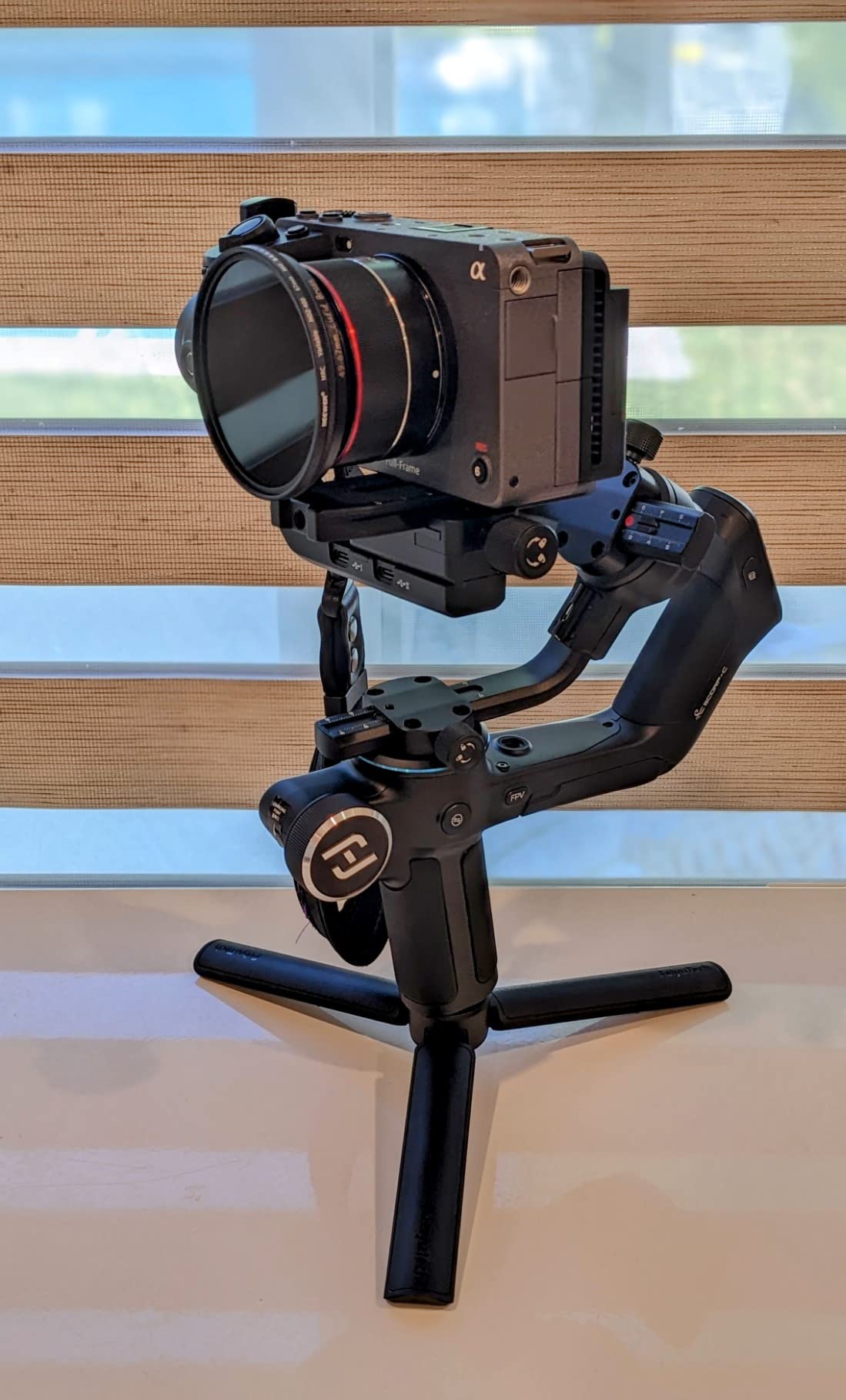
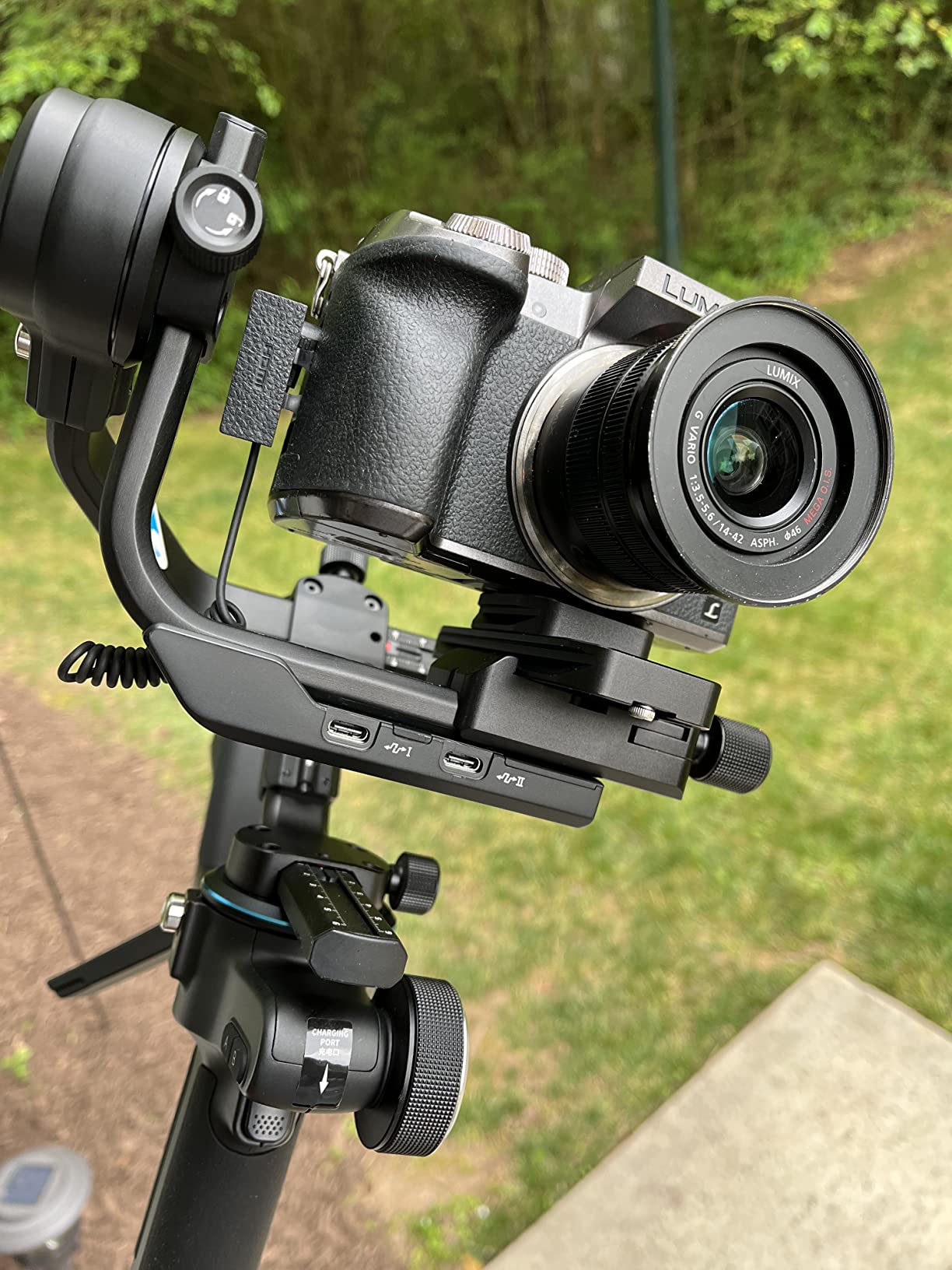
The FeiyuTech SCORP-C offers the highest payload capacity among our tested options at 5.5 pounds. This accommodates full-frame DSLRs with substantial lenses, reaching configurations that exceed other gimbal ratings. I mounted a Nikon D7500 with 24-120mm lens, and the SCORP-C maintained stability despite approaching weight limits. The integrated hanging handle enables both upright and underslung shooting positions, adapting to different shooting scenarios without reconfiguration.
Three-axis motor locks represent thoughtful design for balancing and storage. The locks prevent unwanted motor movement during setup, keeping axes stationary while you adjust camera position. This addresses a common frustration with gimbals where motors twitch during balance procedures. The five-way center of gravity adjustment includes a memory slider, allowing quick rebalancing when switching between similar setups.
AB Trajectory Memory captures and repeats specific camera movements, useful for consistent takes across multiple shots. I programmed a sweep across a product display, then triggered identical repeats without manually guiding each pass. Flash Mode enables three-axis fast follow for action sequences, while Time-lapse and Panoramic photography modes expand creative options beyond standard stabilization.
The package includes all necessary camera control cables for Sony, Canon, Nikon, Panasonic, and Fujifilm brands. This contrasts with competitors who omit cables for certain manufacturers. The inclusion saves money and ensures compatibility verification before purchase. However, some users report camera control functions not working despite cable connections, suggesting firmware inconsistencies across camera models.
Maximum payload for heavy cinema rigs
Professional videographers with substantial DSLR and lens combinations will find the 5.5lb capacity essential. The motor locks and memory features streamline workflows for complex productions requiring consistent repeatability.
Build quality and control feel mixed
Plastic components and stiff arm adjustments reduce premium feel. The thumb stick jerky response frustrated precision control seekers. Heavy cameras near payload limits also destabilized during some tests.
How to Choose the Best Handheld Stabilizer
Understanding gimbal technology helps you select the right stabilizer for your specific needs. Several critical factors determine whether a particular model suits your equipment, shooting style, and budget.
Phone gimbals versus camera gimbals
The first distinction addresses what equipment you film with. Phone gimbals like the DJI Osmo Mobile series and Hohem iSteady models mount smartphones directly, typically supporting weights under 350 grams. Camera gimbals such as the DJI RS 3 Mini and ZHIYUN Weebill 3E accommodate mirrorless and DSLR bodies, handling payloads ranging from 2kg to 5.5lbs. Your camera choice dictates which category applies, though some creators own both types for different shooting scenarios.
Understanding 3-axis stabilization
Three-axis gimbal stabilization works through independent motor control along three rotational directions. The tilt axis controls up and down movement, keeping the camera level during walking or terrain changes. The roll axis prevents side-to-side tilting, maintaining horizon alignment regardless of operator posture. The pan axis manages left and right rotation, enabling smooth tracking sweeps without jerky turns. Brushless motors drive each axis, responding to sensors that detect movement and counteract destabilizing forces in real time.
Payload capacity importance
Payload capacity defines maximum camera weight the gimbal can stabilize effectively. Exceeding this limit causes motor strain, reduced battery life, and potential mechanical failure. Calculate your total setup weight including body, lens, and any accessories like microphones or lights. Phone gimbals typically handle 280-350 grams comfortably. Camera gimbals range from 2kg for mirrorless setups to 5.5lbs for heavy DSLR configurations. Always include margin below maximum ratings for consistent performance.
Battery life for extended shoots
Battery endurance determines how long you can film before needing to recharge or swap batteries. Phone gimbals generally offer 10-13 hours operation, sufficient for most content creation days. Camera gimbals vary more widely, with the ZHIYUN Weebill 3E reaching 16 hours while budget options might deliver only 6-8 hours. Consider whether your typical shoot duration exceeds standard battery capacity. Models with USB-C phone charging add convenience by powering your smartphone during filming.
Subject tracking and AI features
Modern gimbals incorporate AI tracking that follows subjects without manual panning. DJI’s ActiveTrack, Hohem’s AI tracking, and Insta360’s DockKit integration represent different approaches to this technology. Software-based tracking processes video through your phone’s camera and app, consuming battery and requiring specific permissions. Hardware-based tracking like Hohem’s magnetic module operates independently, potentially offering more reliable performance for certain use cases. Evaluate which method aligns with your workflow preferences.
App quality and ecosystem integration
The companion app experience significantly impacts daily usability. DJI Mimo offers polished features including ShotGuides and One-Tap Edit, though Android compatibility varies. Insta360’s app provides extensive creative tools with a steeper learning curve. Hohem Joy includes AI tracking controls but receives mixed reviews for interface clarity. Consider whether you prefer streamlined apps with limited features or comprehensive suites requiring time investment to master.
Ergonomics and extended use comfort
Physical design affects how comfortable the gimbal remains during extended shooting sessions. Weight distribution, handle shape, and grip texture determine fatigue levels over hours of operation. Lighter models like the DJI Osmo Mobile SE at 352 grams suit travel and casual use. Professional camera gimbals often include sling modes or wrist rests that redistribute weight away from your primary grip. Test comfort if possible before committing, especially for videographers covering multi-hour events.
Travel portability considerations
Foldable designs pack into camera bags or even pockets for easy transport. Magnetic quick-release systems like DJI’s OM clamp enable rapid setup at shooting locations. Built-in tripods and extension rods eliminate carrying separate accessories, though they add weight to the base gimbal. Frequent travelers should prioritize compact folded dimensions and multifunctional designs that reduce total packing requirements.
Brand ecosystem compatibility
DJI, ZHIYUN, Insta360, Hohem, and FeiyuTech represent major gimbal manufacturers with distinct ecosystems. DJI products integrate with each other, allowing accessories like the Multifunctional Module to work across multiple devices. Insta360 offers unique features like DockKit that exclusively benefit iPhone users. Hohem targets budget-conscious buyers with competitive feature sets at lower prices. Your existing equipment and future expansion plans should influence brand selection.
FAQs
What is the best handheld gimbal for smooth video?
The DJI Osmo Mobile 7P stands out as the best handheld gimbal for smooth video in 2026. Its Multifunctional Module combines intelligent tracking, built-in lighting, and DJI Mic reception while ActiveTrack 7.0 delivers reliable subject following. The 3-axis stabilization produces cinema-quality footage, and over 6,600 reviewers rate it 4.6 stars confirming consistent performance across diverse shooting scenarios.
How does a 3-axis gimbal work?
A 3-axis gimbal uses three brushless motors controlling tilt, roll, and pan axes to counteract hand movement. Sensors detect destabilizing motion, and motors respond instantly to keep the camera level. The tilt axis handles up-down movement, the roll axis maintains horizon alignment, and the pan axis manages left-right rotation. Together, these three axes eliminate shake from walking, running, or hand tremors.
What is the difference between a gimbal and a stabilizer?
A gimbal specifically refers to motorized stabilization using powered axes controlled by algorithms and sensors. A stabilizer encompasses broader category including mechanical Steadicam systems that use weights and physics rather than motors. Electronic gimbals respond faster to movement and require less operator skill, while mechanical stabilizers need balancing expertise but operate without battery dependency. Modern handheld stabilizers almost exclusively mean motorized gimbals.
Do gimbals really make better videos?
Yes, gimbals significantly improve video quality for moving footage. While smartphone built-in stabilization handles static and slow walking shots adequately, gimbal motors actively counteract shake during running, action sequences, and dynamic tracking. The difference becomes obvious in comparative testing where gimbal footage stays butter-smooth while handheld shots display micro-jitters. Gimbals also enable creative camera movements impossible with native stabilization alone.
What should I look for when buying a handheld stabilizer?
Consider five key factors when selecting a handheld stabilizer: payload capacity matching your camera weight, battery life sufficient for your typical shoot duration, subject tracking features aligned with your content style, app quality affecting daily usability, and portability for your transport needs. Verify compatibility with your specific phone or camera model before purchasing, and read user reviews mentioning real-world performance rather than marketing specifications.
Final Thoughts
Finding the best handheld stabilizer depends entirely on your equipment and shooting style. Phone creators seeking maximum value should start with the DJI Osmo Mobile SE, which delivers excellent stabilization and magnetic quick-release at an accessible price. Professionals wanting integrated features like lighting, tracking modules, and extension rods will find the DJI Osmo Mobile 7P represents the complete package worth the premium investment. Budget-conscious beginners can achieve smooth footage with the Hohem iSteady X3 SE without compromising essential features.
Camera gimbal users face different considerations based on payload requirements. The DJI RS 3 Mini suits travel-focused videographers with mirrorless setups needing portable operation. Heavy DSLR operators should evaluate the ZHIYUN Weebill 3E or FeiyuTech SCORP-C depending on their specific weight demands. Each model addresses different professional use cases, so calculate your total equipment weight before selecting.
The handheld stabilizer market in 2026 offers genuine innovation across all price ranges. Features once reserved for premium products now appear in budget options, making smooth video achievable for creators at every budget level. Whether you film travel vlogs, family events, or professional productions, the right gimbal transforms shaky amateur footage into polished cinema-quality results.