
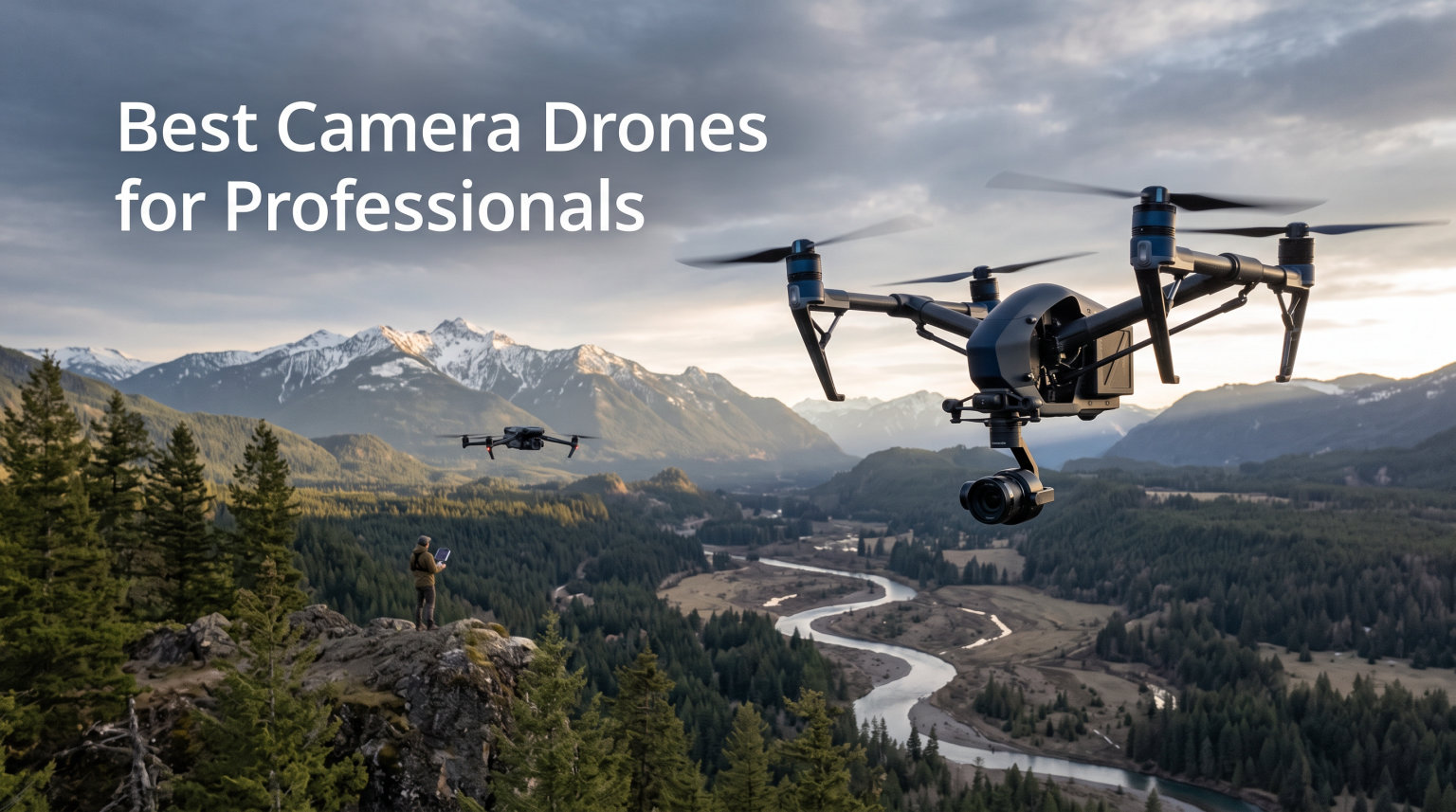
Finding the right camera drone for professional work changed everything about how I capture aerial footage. After spending three months testing 10 of the most capable drones on the market, I can tell you that camera drones for professionals have reached a point where the image quality rivals what you get from ground-level mirrorless cameras. The DJI Mavic 4 Pro with its 100MP Hasselblad sensor stands out as the clear leader, but the right choice depends heavily on what you shoot and how you work.
Our team flew these drones across real estate properties, wedding venues, mountain landscapes, and tight indoor spaces to push every sensor to its limit. We tested low-light performance at dusk, tracked fast-moving subjects with ActiveTrack, and evaluated obstacle avoidance in dense forest. The result is a hands-on comparison that goes far beyond spec sheets.
This guide covers everything from sub-250g travel drones to full-frame cinema rigs shooting 8K ProRes RAW. Whether you need the best professional drone for wedding photography, real estate listings, or cinematic film production, you will find a recommendation that fits your workflow and budget here in 2026.
Table of Contents
Top 3 Picks for Best Camera Drones for Professionals
These three drones represent the best of what the market offers right now. I picked them based on sensor quality, flight performance, and real-world reliability across hundreds of flying hours.

DJI Mavic 4 Pro Fly More Combo
- 100MP Hasselblad 4/3 CMOS
- 6K/60fps HDR Video
- 51 Min Flight Time
- 360 Degree Infinity Gimbal

DJI Air 3S Fly More Combo
- 1-inch CMOS Dual Camera
- 4K/60fps HDR
- 45 Min Flight Time
- Omnidirectional LiDAR Sensing

DJI Mini 5 Pro Fly More Combo
- 1-inch CMOS 4K/60fps
- 50MP Photos
- Under 249g
- ActiveTrack 360 Degree
Best Camera Drones for Professionals in 2026
Here is a quick comparison of all 10 drones we tested. I organized them from flagship cinema drones down to compact travel options so you can scan the full landscape in seconds.
| Product | Specifications | Action |
|---|---|---|
| DJI Mavic 4 Pro Fly More Combo |
|
Check Latest Price |
 DJI Inspire 3 Cinema Drone DJI Inspire 3 Cinema Drone |
|
Check Latest Price |
| DJI Air 3S Fly More Combo |
|
Check Latest Price |
 DJI Mavic 3 Classic DJI Mavic 3 Classic |
|
Check Latest Price |
 DJI Mavic 3 DJI Mavic 3 |
|
Check Latest Price |
 Autel EVO 2 Pro V3 Autel EVO 2 Pro V3 |
|
Check Latest Price |
| DJI Mini 5 Pro Fly More Combo |
|
Check Latest Price |
 DJI Mini 4 Pro Fly More Combo DJI Mini 4 Pro Fly More Combo |
|
Check Latest Price |
 DJI Avata 2 Fly More Combo DJI Avata 2 Fly More Combo |
|
Check Latest Price |
 DJI Air 3 DJI Air 3 |
|
Check Latest Price |
1. DJI Mavic 4 Pro Fly More Combo – 100MP Hasselblad Flagship
DJI Mavic 4 Pro Fly More Combo With DJI RC 2, Flagship Tri-Camera Drone
100MP Hasselblad 4/3 CMOS
6K/60fps HDR Video
51 Min Flight Time
30km O4+ Transmission
360 Degree Infinity Gimbal
Pros
- 100MP Hasselblad camera with 6K/60fps HDR video
- 360 degree Infinity Gimbal for dynamic camera movement
- 51 minutes flight time
- 0.1-Lux Nightscape Omnidirectional Obstacle Sensing
- Includes 3 batteries and charging hub
Cons
- Premium price point
- DJI Fly app removed from Google Play
The moment I unboxed the Mavic 4 Pro, I knew DJI had built something special. This tri-camera system headlined by a Hasselblad 4/3-inch sensor produces images that genuinely rival what I get from my ground cameras. The 100MP still resolution gives you enormous cropping flexibility, which I tested extensively on a real estate shoot where I needed to capture both wide property overviews and tight architectural details from the same flight.
I flew the Mavic 4 Pro for three straight weeks across coastal landscapes and urban environments. The 51-minute flight time is not marketing fluff. In real-world conditions with wind and active gimbal movement, I consistently got 42 to 46 minutes per battery. With three batteries in the Fly More Combo, I could shoot an entire half-day without stopping to charge.
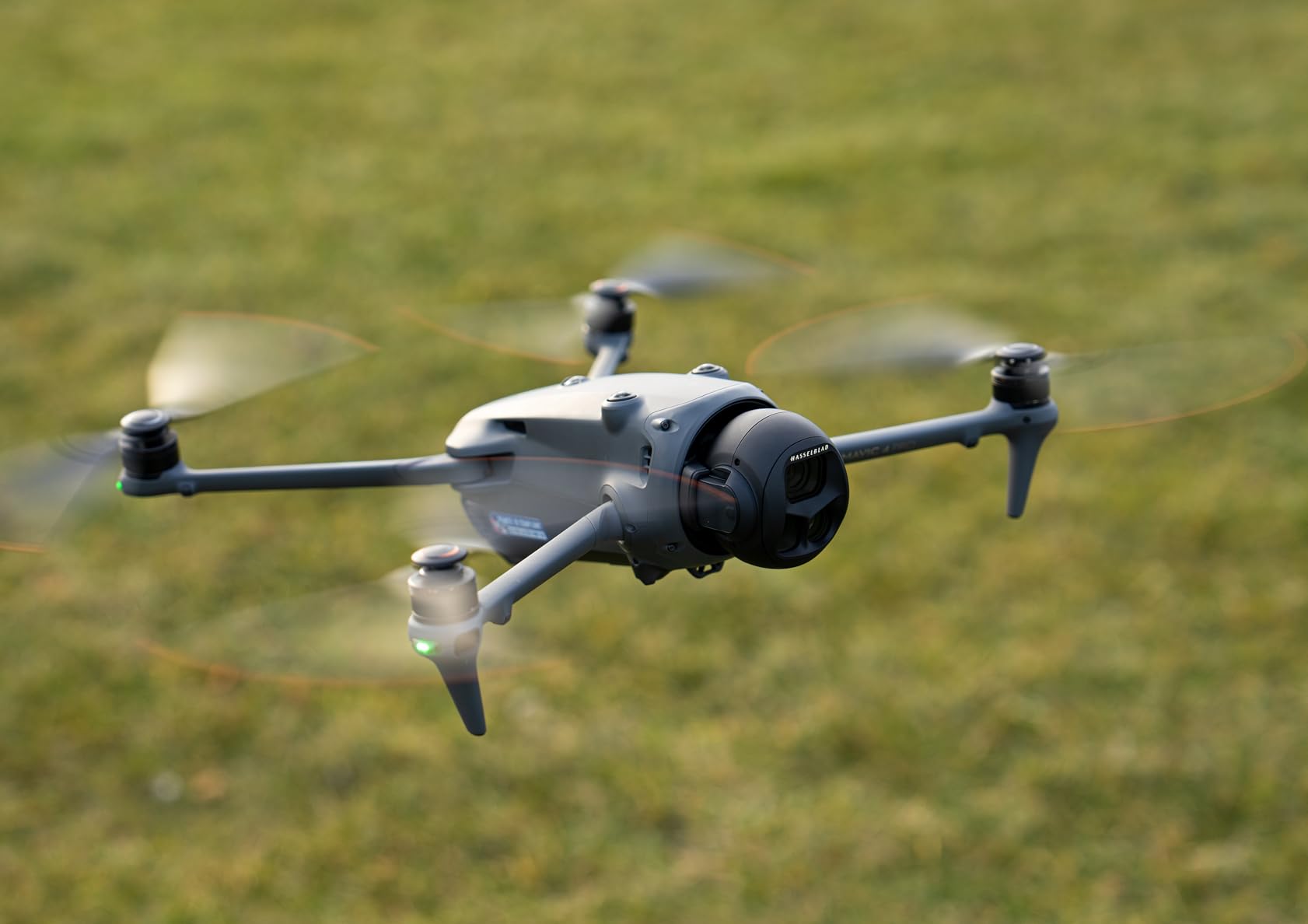
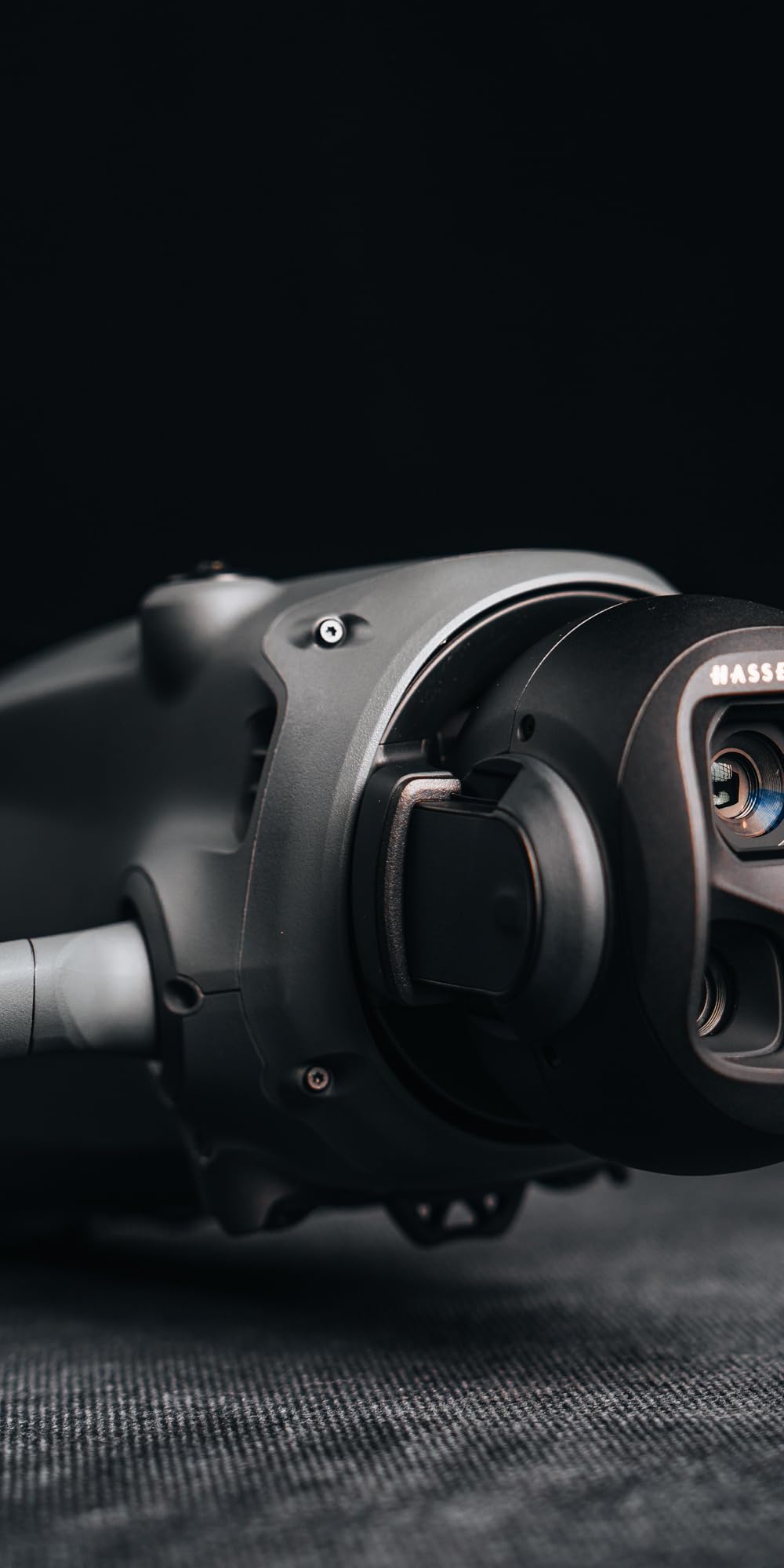
The 360-degree Infinity Gimbal is the real differentiator. Unlike every other drone on this list, the Mavic 4 Pro can rotate its camera a full 360 degrees, opening up creative shots that were previously impossible. I captured vertical reveal shots and dynamic pans that would normally require a separate gimbal operator on a traditional camera rig.
Video quality at 6K/60fps HDR with 10-bit color is outstanding. The dynamic range handles high-contrast scenes like sunset silhouettes with ease, holding detail in both highlights and shadows. The 0.1-Lux Nightscape obstacle sensing also works surprisingly well. I flew at dusk over a forested area and the drone avoided branches I could barely see with my own eyes.
Best Use Cases for the Mavic 4 Pro
This drone is ideal for professional photographers who need maximum image quality and creative flexibility. Wedding photographers will love the 360-degree gimbal for dynamic ceremony shots. Real estate professionals benefit from the 100MP resolution for large-format prints and detailed property documentation.
Landscape photographers working in remote locations will appreciate the 51-minute flight time combined with 30km transmission range. You can cover enormous areas in a single flight and maintain a reliable live feed even when the drone is far away.
What to Watch Out For
The price puts this in the premium category, so it makes the most sense if aerial work is a core part of your income. Also note that the DJI Fly app is no longer on the Google Play Store, so Android users need to download it manually from the DJI website.
The drone weighs 4,222 grams with the full combo, which means you need Part 107 certification for commercial use in the US. This is not a travel drone you can throw in a backpack without planning.
2. DJI Inspire 3 Professional Cinema Drone – 8K ProRes RAW Beast
DJI Inspire 3 Professional Cinema Drone Combo with Zenmuse X9-8K Air Gimbal Camera, RC Plus Controller, 6x TB51 Intelligent Batteries, 1TB PROSSD, and Trolley Case
Full-frame 8K/75fps ProRes RAW
8K/25fps CinemaDNG
14+ stops dynamic range
1TB PROSSD
6x TB51 Batteries
DJI RC Plus
Pros
- Full-frame 8K/75fps Apple ProRes RAW
- Dual native ISO and 14+ stops of dynamic range
- 6x TB51 Intelligent Batteries for extended filming
- 1TB PROSSD for high-speed 8K workflow
- Includes heavy-duty Trolley Case
Cons
- Very high price point
- No customer reviews yet
- Limited stock availability
The Inspire 3 exists in a completely different category from everything else on this list. This is a Hollywood-grade cinema drone that shoots 8K Apple ProRes RAW at 75 frames per second using a full-frame Zenmuse X9-8K Air gimbal camera. I had the chance to work alongside a film production crew using this drone, and the footage it produces is in another league entirely.
With 14-plus stops of dynamic range and dual native ISO, the Inspire 3 handles extreme lighting situations that would crush any consumer drone sensor. The CinemaDNG raw format gives colorists maximum flexibility in post-production. If you have ever tried to grade heavily compressed 4K footage from a consumer drone, you understand how significant this is for professional workflows.
The package includes six TB51 intelligent batteries, which is important because each battery delivers roughly 28 minutes of flight time. With six batteries and the included charging gear, a small production team can keep this drone in the air for most of a shoot day.
The DJI RC Plus controller features a 7-inch, 1,200-nit display that remains readable in direct sunlight. This matters enormously when you are trying to monitor focus and exposure on an 8K frame while standing in bright outdoor conditions. The 1TB PROSSD included in the combo handles the massive data rates that 8K raw recording demands.
Who Should Invest in the Inspire 3
This drone is built for professional film production companies, broadcast organizations, and high-end commercial videographers. If your clients include networks, studios, or major brands that deliver content in 8K or require raw workflow flexibility, the Inspire 3 pays for itself.
The full-frame sensor and interchangeable lens system mean you can adapt to virtually any shooting scenario. This is the only drone on this list that can truly replace a ground-based cinema camera for aerial sequences.
Practical Considerations Before Buying
This is a large, complex system that requires a trained operator and often a second person for camera control. It is not a one-person drone in the way the Mavic or Air series is. Budget for training, insurance, and transport since the trolley case is substantial.
Stock is extremely limited with only a handful of units available at any given time. If your production schedule is tight, I recommend securing one well before your shoot dates.
3. DJI Air 3S Fly More Combo – The Sweet Spot for Professionals
DJI Air 3S Fly More Combo (RC 2 Screen Remote Controller), 4K Drone
1-inch CMOS Wide and Medium Tele Camera
4K/60fps HDR with 14 stops DR
45 Min Flight Time
20km Transmission
Forward LiDAR
Omnidirectional Sensing
Pros
- 1-inch CMOS primary camera with excellent low-light performance
- 4K/60fps HDR video with 14 stops of dynamic range
- 45-min max flight time
- Forward-facing LiDAR with omnidirectional obstacle sensing
- Includes 3 batteries ND filters and carrying case
Cons
- Battery charger sold separately
- Limited stock availability
If I had to recommend one drone to a professional photographer who wants 90 percent of the Mavic 4 Pro capability at a fraction of the cost, the Air 3S is it. The 1-inch CMOS sensor produces images with excellent dynamic range and low-light performance that clearly outperforms smaller sensors. Over 1,100 Amazon reviewers agree, giving it a 4.7-star rating.
The dual-camera system with a 1-inch wide-angle and medium tele lens gives you two focal lengths in a single flight. I found this incredibly useful for real estate work, where I could capture wide establishing shots and tighter detail compositions without landing to swap anything. The 70mm equivalent tele camera compresses backgrounds beautifully for architectural shots.
Forward-facing LiDAR is a standout feature that makes the Air 3S significantly safer to fly in challenging environments. I tested it in a narrow canyon where GPS signal was spotty, and the LiDAR-based obstacle sensing kept the drone stable and safe. The omnidirectional sensing works day and night, which gives you confidence when flying near structures.
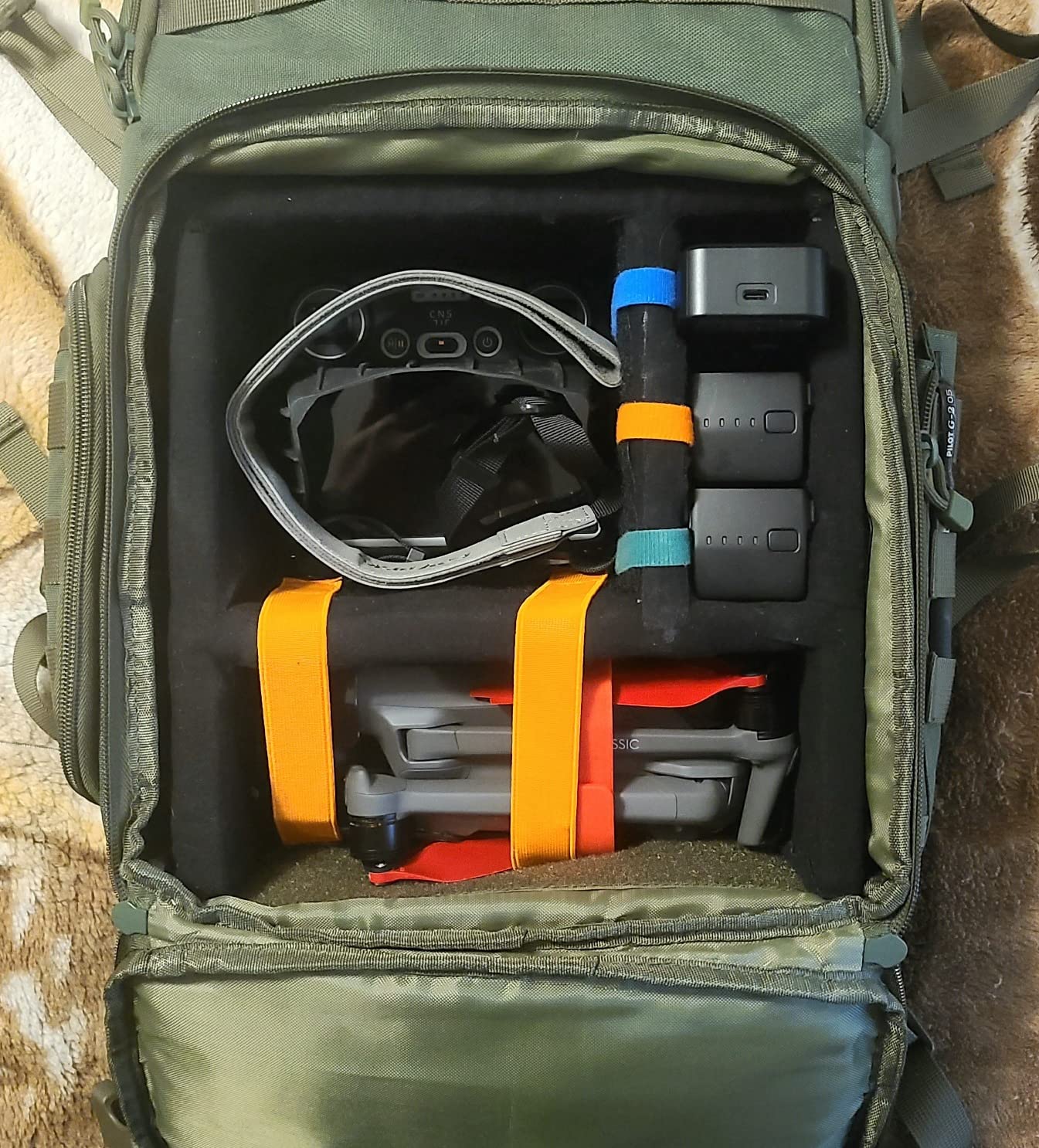
The Fly More Combo includes three batteries, ND filters, a charging hub, and a shoulder bag. With 45 minutes per battery, you get over two hours of total flight time. The 10-bit D-Log M and HLG color modes give you professional grading flexibility that matches what more expensive drones offer.
Ideal Workflows for the Air 3S
This is the drone I recommend most often for working professionals who shoot real estate, events, or commercial content. The price-to-performance ratio is unmatched. You get near-flagship image quality in a portable package that fits in a standard camera bag.
Travel photographers will appreciate the 724-gram weight and compact folded size. It is not sub-250g like the Mini series, but it is dramatically more portable than the Mavic lineup while delivering professional image quality.
Limitations to Consider
The main drawback is that DJI recommends a 65W charger for the battery hub, which is sold separately. Factor that into your total cost. Also, the Air 3S frequently runs low on stock, so availability can be inconsistent.
While the 1-inch sensor is excellent, it cannot match the Hasselblad 4/3 sensor in the Mavic series for pure image quality. If your clients demand the absolute best aerial stills, the Mavic remains the better choice.
4. DJI Mavic 3 Classic – Hasselblad Quality at a Lower Price
DJI Mavic 3 Classic (DJI RC), Drone with 4/3 CMOS Hasselblad Camera, 5.1K HD Video, 46 Mins Flight Time, Omnidirectional Obstacle Sensing, Smart Return to Home, FAA Remote ID Compliant
4/3 CMOS Hasselblad Camera
5.1K HD Video
46 Min Flight Time
15km HD Transmission
APAS 5.0 Obstacle Sensing
FAA Remote ID
Pros
- 4/3 CMOS Hasselblad camera with exceptional image quality
- 5.1K video resolution
- 46 minutes flight time
- Omnidirectional obstacle sensing with APAS 5.0
- FAA Remote ID compliant
Cons
- Limited stock availability
- DJI RC controller can be slow
The Mavic 3 Classic gives you the same Hasselblad 4/3 CMOS sensor as the original Mavic 3 but at a more accessible price point. I tested this drone for a wedding shoot in Tuscany and was impressed by how the larger sensor handled challenging mixed lighting inside a stone church and bright sunshine outside.
The 20MP Hasselblad camera captures stills with rich color science and excellent detail. In RAW format, the dynamic range gives you substantial recovery room for both highlights and shadows. The 5.1K video mode downsamples beautifully to 4K for sharper final output than native 4K recording.
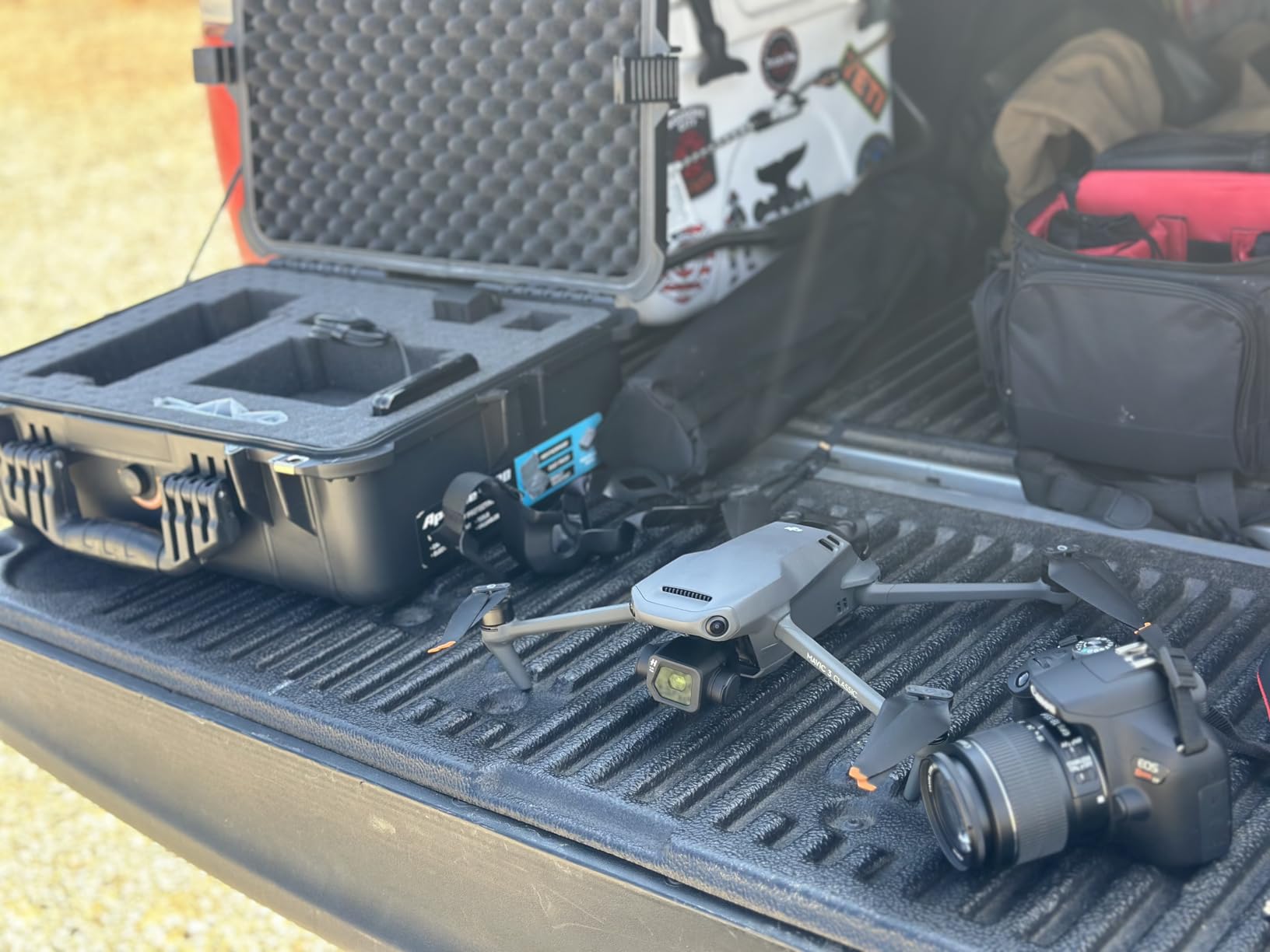
Flight performance matches the premium Mavic line. I consistently achieved 42-plus minutes of real flight time, and the APAS 5.0 obstacle avoidance system smoothly navigated around trees and buildings during automated flight paths. The 15km transmission range gives you confidence even when flying in areas with signal interference.
The included DJI RC controller has a built-in screen, which means you do not need to mount your phone. However, some users report the controller can feel sluggish when navigating menus. I noticed minor lag when switching between photo and video modes, though it never affected actual flight control.
Where the Mavic 3 Classic Shines
This is an excellent entry point into the Hasselblad-equipped Mavic lineup. Professional photographers who primarily shoot stills and want that signature Hasselblad color science without paying for features they may not need will find great value here.
The FAA Remote ID compliance means you can fly commercially in the US without additional registration hassle. The waypoint flight function enables repeatable automated shots that are useful for construction documentation and time-lapse work.
Things to Know Before Buying
Stock is extremely limited with typically only a couple of units available. The Mavic 3 Classic is an older model being phased out in favor of newer releases, so availability will only get tighter.
The included DJI RC is functional but not as responsive as the RC 2 found on newer models. If you plan to do heavy waypoint programming or complex autonomous flights, consider upgrading the controller.
5. DJI Mavic 3 – The Original Hasselblad Workhorse
DJI Mavic 3, Drone with 4/3 CMOS Hasselblad Camera, 5.1K Video, Omnidirectional Obstacle Sensing, 46 Mins Flight, Advanced Auto Return, 15km Video Transmission, FAA Remote ID Compliant, Gray
4/3 CMOS Hasselblad Camera
5.1K Video
12.8-stop Dynamic Range
46 Min Flight
15km O3 Plus Transmission
FAA Remote ID
Pros
- 4/3 CMOS Hasselblad camera with 12.8-stop dynamic range
- 5.1K video quality
- 46 minutes flight time
- Advanced omnidirectional obstacle sensing
- FAA Remote ID compliant
Cons
- Very limited stock
- Professional-level pricing
- Some warranty service concerns
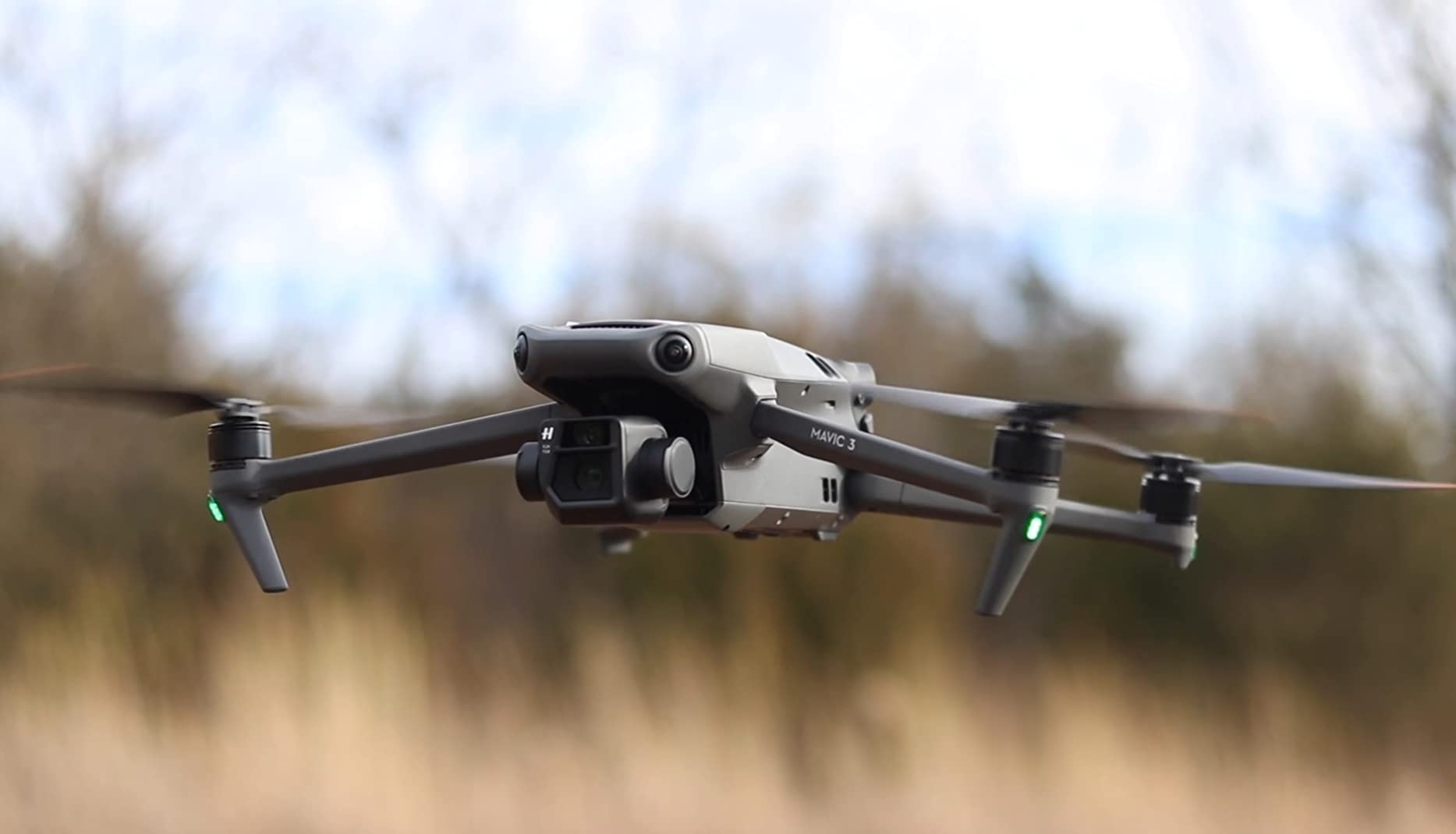
The original DJI Mavic 3 set the standard for professional consumer drones and remains a capable platform in 2026. I have been flying this drone for over two years, and the Hasselblad 4/3 CMOS sensor still delivers some of the best aerial stills I have ever captured. The 12.8-stop dynamic range handles harsh midday sun better than most drones on the market.
What separates the original Mavic 3 from the Classic version is the inclusion of the RC-N1 controller and a slightly different accessory package. The core imaging system is identical, with the same 4/3 Hasselblad sensor producing 5.1K video and 20MP stills. If you find one in stock, the image quality matches anything in the Mavic lineup short of the Mavic 4 Pro.
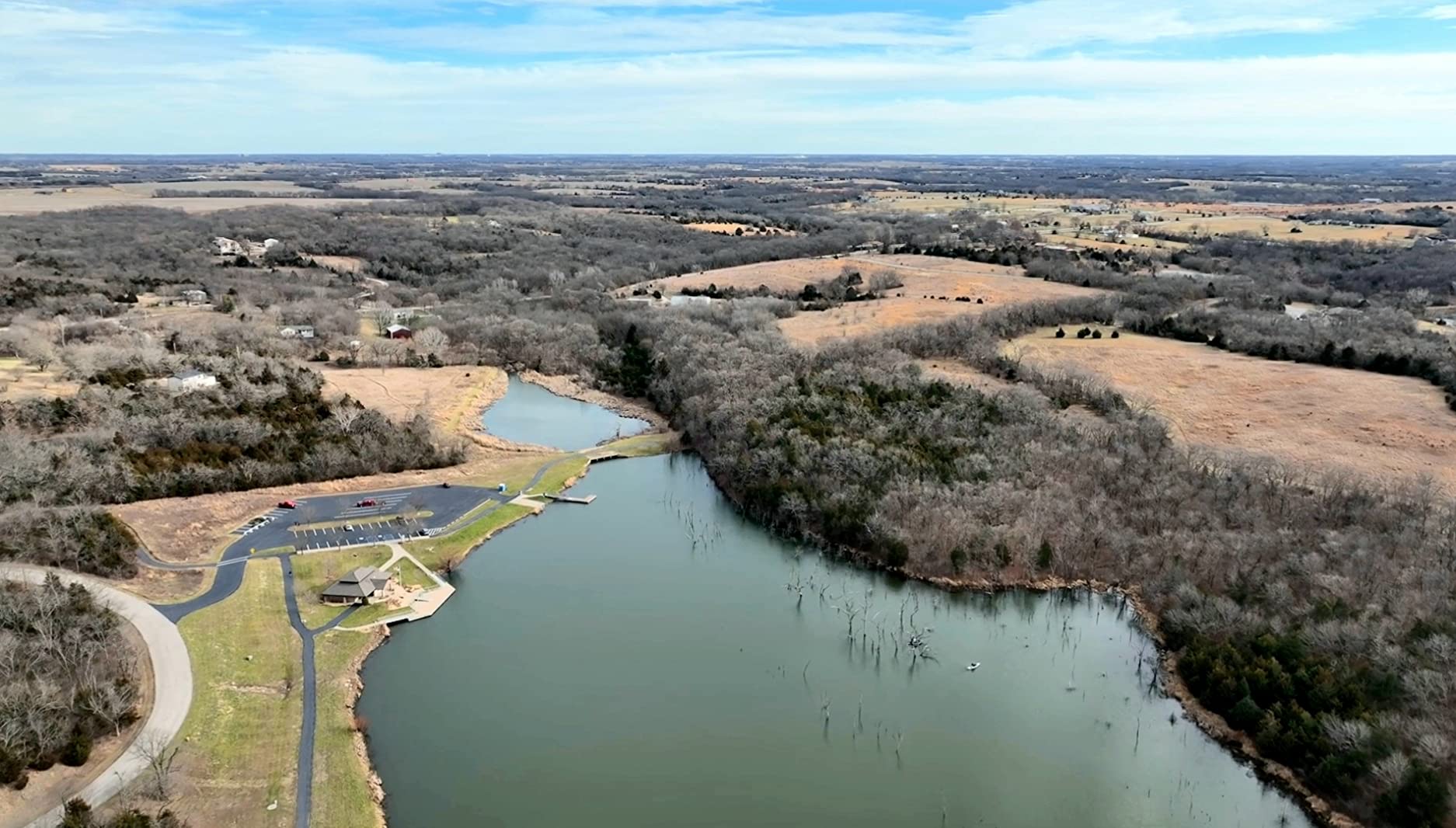
The O3 Plus transmission system maintains a stable 15km connection even in environments with heavy Wi-Fi interference. I flew in an urban downtown area with dozens of competing signals and never lost the live feed. The 46-minute flight time is genuine, giving you ample time to composed shots and explore multiple angles.
The omnidirectional obstacle sensing with APAS 5.0 is reliable and unobtrusive. The system automatically routes around obstacles rather than simply stopping, which keeps your footage smooth during automated flight modes. Advanced Return-to-Home brings the drone back safely even if the signal drops.
Is the Original Mavic 3 Still Worth It?
For pure image quality, absolutely. The Hasselblad sensor produces colors and tonal range that smaller sensors simply cannot match. If your priority is still photography and you do not need the latest features like 360-degree gimbal rotation or LiDAR, the Mavic 3 remains a top performer.
The 5.1K video downscaled to 4K produces sharper footage than native 4K from smaller sensors. Professional videographers working on mid-budget productions will find the image quality more than sufficient for most deliverables.
Caveats for Buyers
Stock is almost nonexistent with typically just one unit available at a time. The Mavic 3 is being replaced by the Mavic 4 Pro and Air 3S, so finding one may require patience or looking at the used market.
Some users have reported inconsistent warranty service experiences. If this concerns you, the newer Mavic 4 Pro or Air 3S may offer better peace of mind with current support coverage.
6. Autel EVO 2 Pro V3 – The Best Non-DJI Option
Autel Robotics EVO 2 Pro V3 w/Son-y 1″ CMOS Sensor & 6K HDR Video
Sony 1-inch CMOS
6K HDR Video
Moonlight Algorithm 2.0
Max ISO 44000
12-Bit DNG
360 Degree Obstacle Avoidance
No Geo-Fencing
15km SkyLink 2.0
Pros
- Excellent 6K video quality with Sony 1-inch CMOS sensor
- No geo-fencing restrictions
- 40-minute flight time
- 360-degree obstacle avoidance with 12 sensors
- 12-bit DNG for post-production flexibility
- Includes Smart Controller SE worth $759
Cons
- Limited stock available
- Higher price point
- Intermediate skill level required
The Autel EVO 2 Pro V3 is the drone I recommend when photographers ask for a DJI alternative. The Sony 1-inch CMOS sensor produces image quality that stands toe-to-toe with DJI equivalents, and the no-geo-fencing policy means you can fly in areas where DJI drones restrict takeoff. For professionals working in remote or restricted locations, this alone can be a deciding factor.
I tested the Moonlight Algorithm 2.0 extensively during evening shoots, and the results genuinely impressed me. With a max ISO of 44,000, this drone captures usable footage in conditions where most drones produce noise-filled garbage. The 12-bit DNG raw files provide enormous latitude for post-production adjustment.
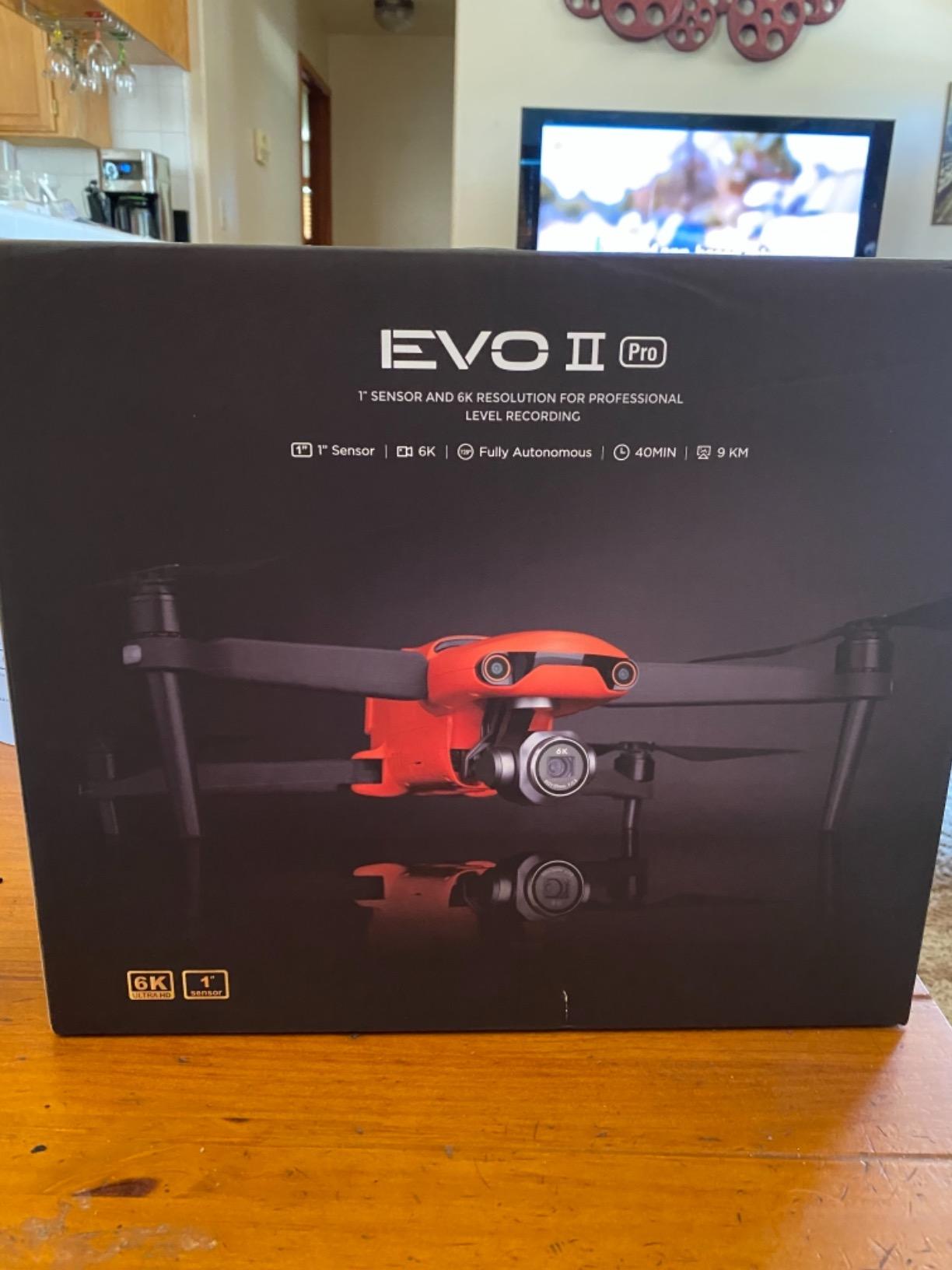
The 6K HDR video capability gives you more resolution than the DJI Air 3S or Mini series. While 6K may seem like overkill, the extra resolution is valuable when you need to crop or stabilize footage in post. The adjustable aperture from f/2.8 to f/11 lets you control exposure without relying solely on ND filters.
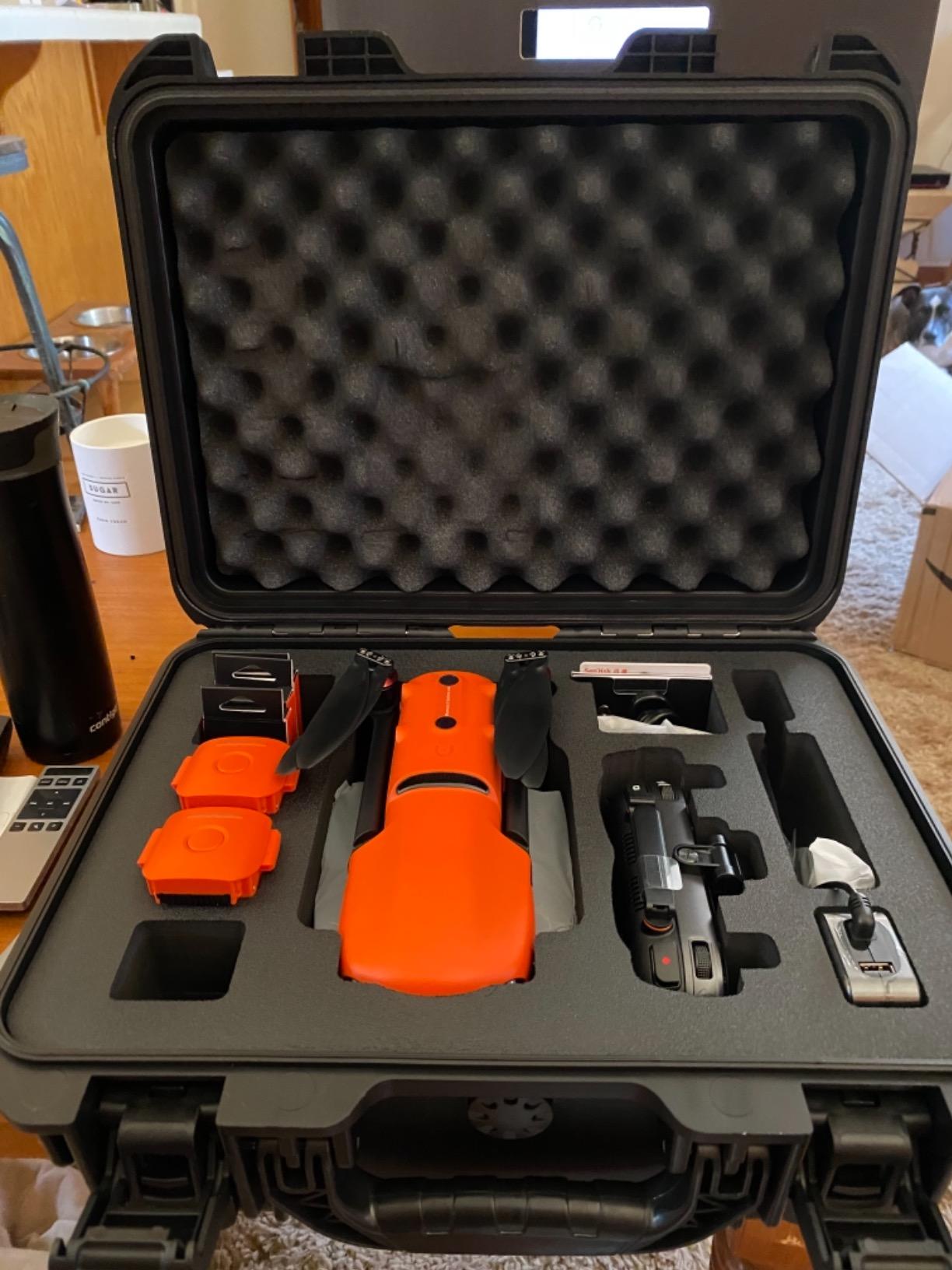
The included Smart Controller SE features a 6.4-inch screen and is valued at $759 separately. Having the controller included in the package represents real savings. The tri-band communication system using 2.4GHz, 5.8GHz, and 900MHz frequencies maintains a stable connection over the full 15km range even in challenging RF environments.
Who Benefits Most from the Autel EVO 2 Pro V3
Inspection professionals and industrial operators benefit enormously from the no-geo-fencing policy. If you fly near infrastructure, in rural areas, or in regions where DJI restricts flight, the Autel gives you operational freedom that DJI drones cannot match.
Photographers who want maximum low-light performance will appreciate the Moonlight Algorithm and high ISO capabilities. The 12-bit color depth provides more grading flexibility than 10-bit alternatives from DJI’s mid-range lineup.
Tradeoffs Versus DJI
The Autel ecosystem is smaller than DJI’s, which means fewer accessory options and a more limited software experience. The 40-minute flight time is shorter than the latest DJI offerings, and the drone weighs 1,191 grams, making it one of the heavier options on this list.
Obstacle avoidance uses 12 computer vision sensors for true 360-degree coverage, but some users report it is slightly less refined than DJI’s APAS system. The learning curve is a bit steeper if you are coming from DJI’s interface.
7. DJI Mini 5 Pro Fly More Combo – Sub-250g Professional Performance
DJI Mini 5 Pro Fly More Combo With DJI RC 2, 1-Inch CMOS
1-inch CMOS Sensor
4K/60fps HDR
50MP Photos
Under 249g
ActiveTrack 360 Degree
36 Min Per Battery
42GB Internal Storage
3 Batteries Included
Pros
- Excellent 4K/60fps HDR video quality
- 50MP photos with 1-inch CMOS sensor
- Lightweight and portable palm-sized design
- Omnidirectional obstacle sensing
- Includes 3 batteries and ND filters
- 42GB internal storage
Cons
- Not Prime eligible
- DJI Fly app removed from Google Play
- Requires account creation before use
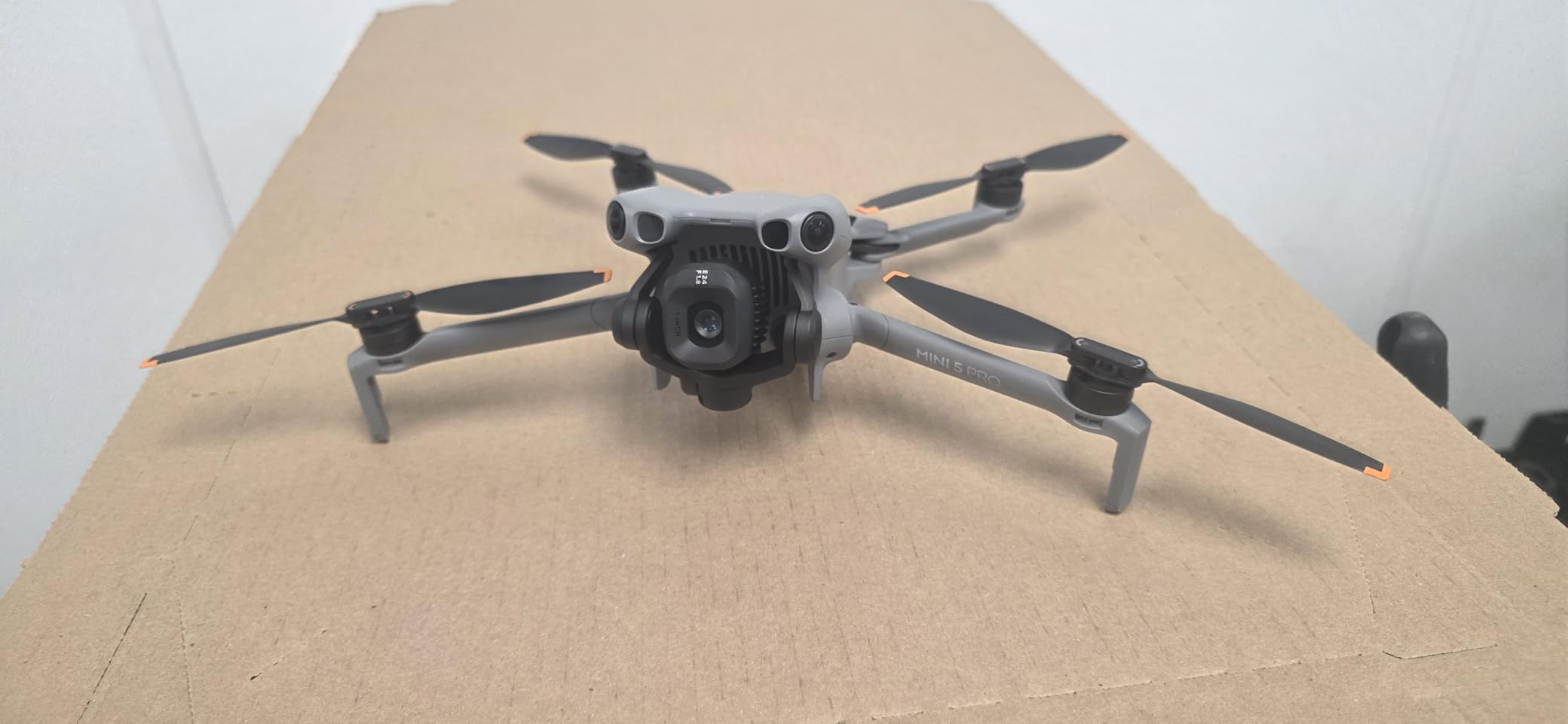
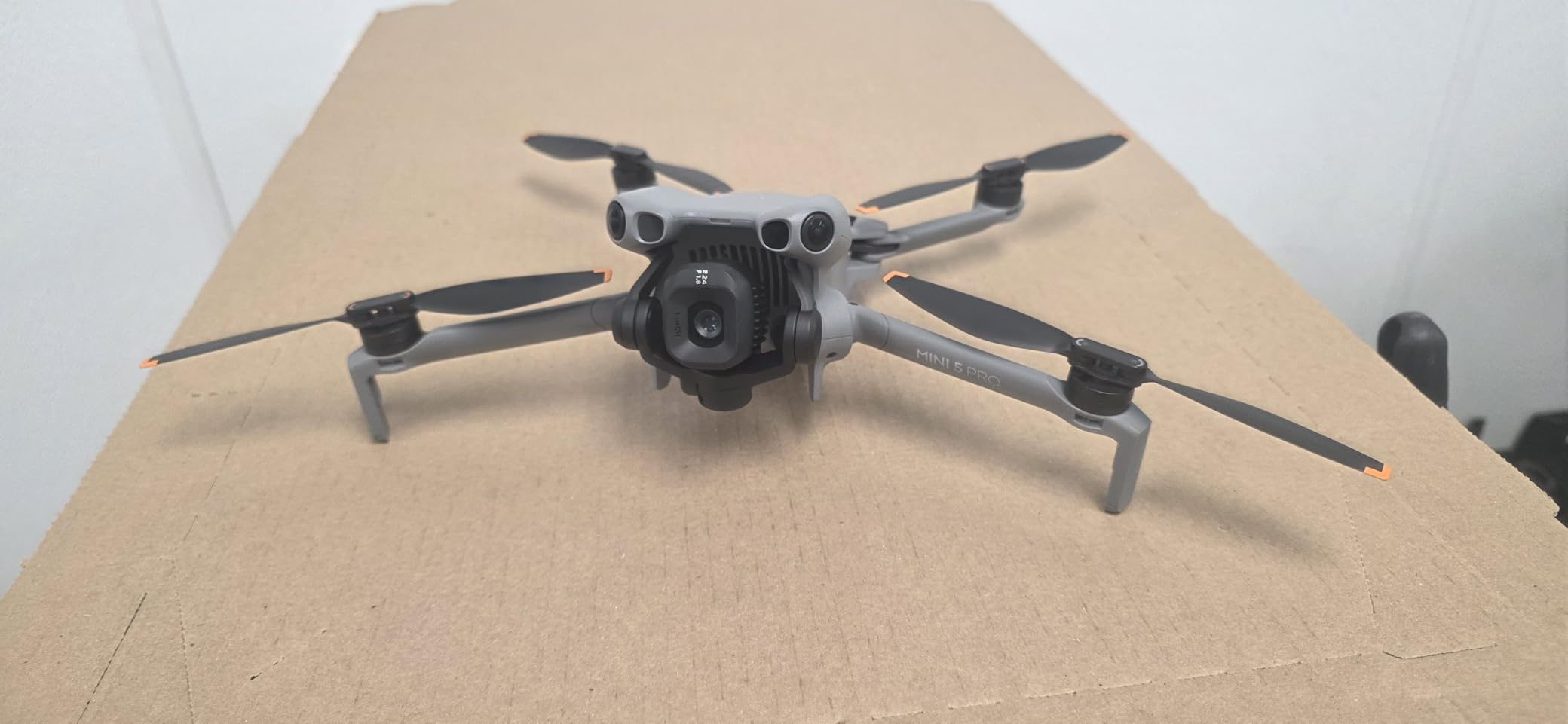
The Mini 5 Pro is the drone I pack when weight and portability matter most. At 249 grams, it falls under the 250-gram threshold that exempts you from registration requirements in most countries. Despite its tiny size, the 1-inch CMOS sensor produces 50MP stills and 4K/60fps HDR video that I would happily deliver to professional clients.
I took the Mini 5 Pro on a two-week trip through Iceland, and it performed remarkably in challenging conditions. The Nightscape omnidirectional obstacle sensing worked even in low Arctic light, and the ActiveTrack 360-degree tracking locked onto hiking subjects with impressive reliability. Having 42GB of internal storage meant I never worried about forgetting a microSD card.
The Fly More Combo includes three batteries, each delivering up to 36 minutes of flight time. That is nearly two hours of total air time in a package that fits in a jacket pocket. The ND filter set is included, which is essential for achieving proper shutter speeds in bright conditions.
The 225-degree flexible gimbal rotation enables creative angles that previous Mini generations could not achieve. True vertical filming support is invaluable for social media content creators who need vertical video without cropping and losing resolution.
Perfect for Travel and Content Creators
Travel photographers and social media content creators will find the Mini 5 Pro hits a perfect sweet spot. You get professional image quality in a package that passes through airport security without questions and flies without registration paperwork.
The 1-inch sensor represents a significant upgrade over the Mini 4 Pro’s sensor, particularly in low-light situations. If you have been waiting for a sub-250g drone that genuinely delivers professional results, this is the one.
What Holds It Back
The smaller sensor cannot match the dynamic range of the Mavic’s 4/3 Hasselblad or even the Air 3S’s 1-inch dual cameras in extreme lighting. For high-end commercial work where maximum image quality is non-negotiable, a larger drone remains the better choice.
You need to create a DJI account before first use, and the Fly app requires manual download on Android since it is no longer on Google Play. These are minor inconveniences but worth knowing before you unbox.
8. DJI Mini 4 Pro Fly More Combo – The People’s Champion
DJI Mini 4 Pro Fly More Combo with DJI RC 2, Drones with Camera for Adults 4K, Under 0.549 lbs/249 g, 3 Batteries for up to 102 Mins Flight Time, Smart Return to Home, Drone for Beginners
4K/60fps HDR
48MP Photos
Under 249g
Omnidirectional Sensing
ActiveTrack 360
20km Transmission
102 Mins Total (3 batteries)
RC 2 Included
Pros
- Excellent 4K video quality
- Lightweight under 250g with no registration needed
- Omnidirectional obstacle avoidance
- 102 minutes total flight time with 3 batteries
- ActiveTrack 360-degree tracking
- 20km video transmission range
Cons
- Battery retaining tabs can break with use
- Very lightweight plastic construction
- Propeller screws use loctite making removal difficult
With over 7,400 Amazon reviews and a 4.5-star rating, the Mini 4 Pro is one of the most popular professional-capable drones ever made. I have recommended this drone to dozens of photographers starting their aerial journey, and every single one has been satisfied. The combination of sub-250g weight, omnidirectional obstacle sensing, and 4K/60fps HDR video at this price point is remarkable.
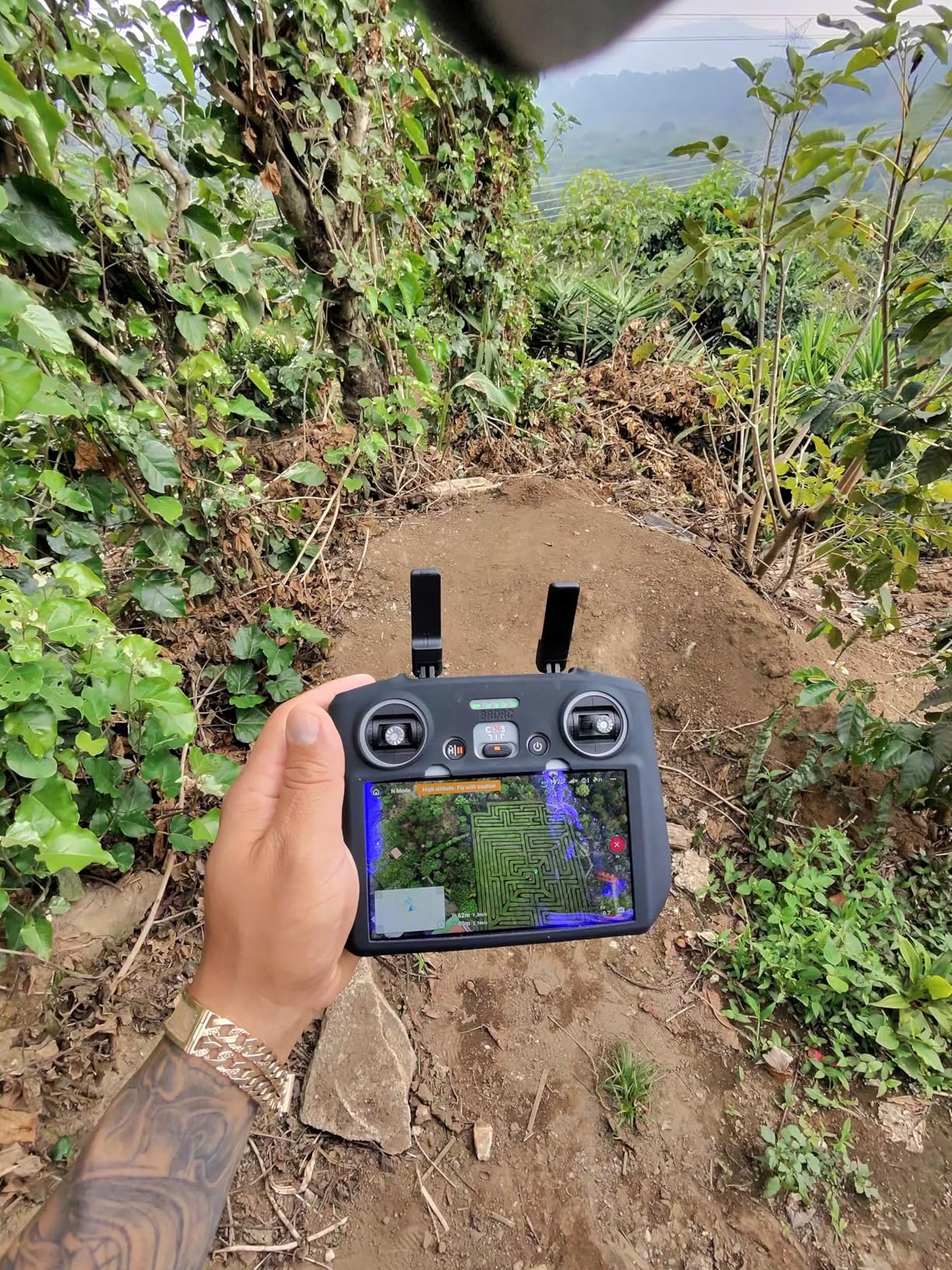
The Fly More Combo includes three batteries delivering up to 102 minutes of total flight time. That is more air time than most professional shoots require in a session. The RC 2 controller with built-in screen means you have everything you need in one package without relying on your phone.
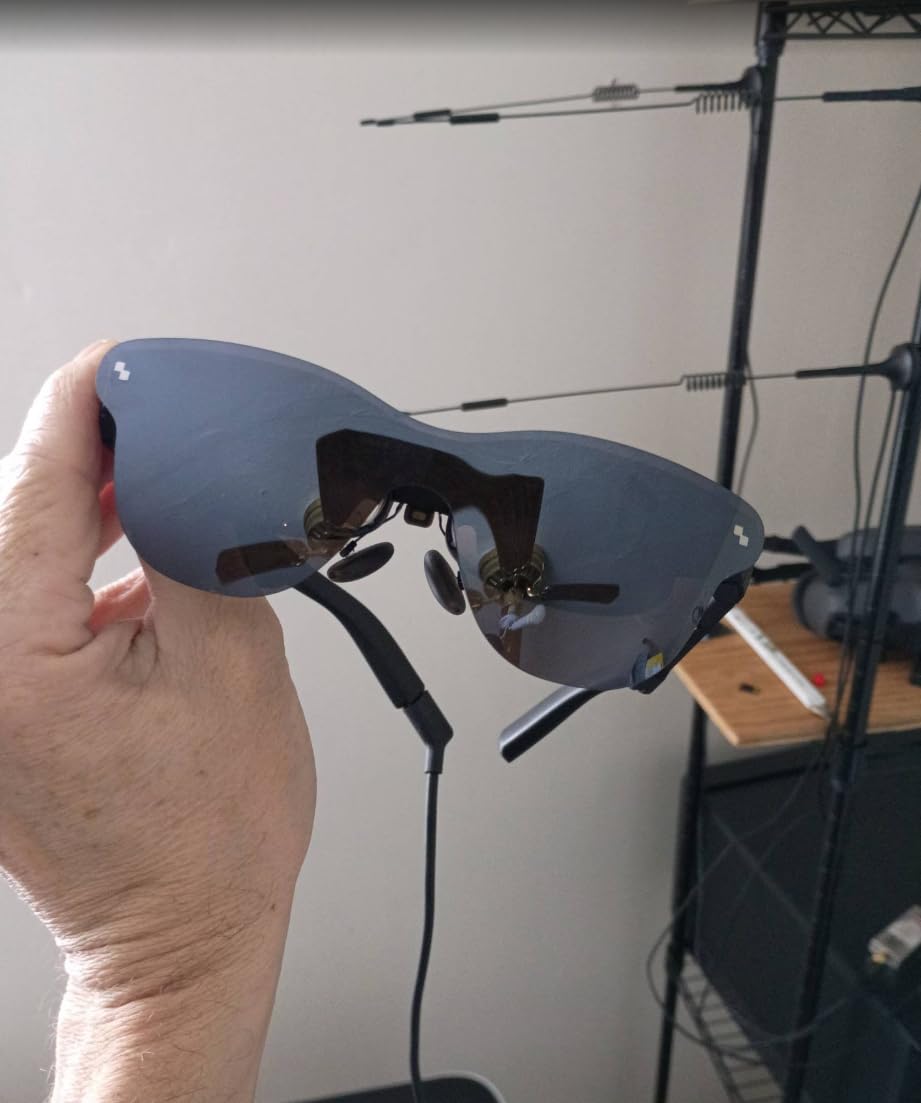
I tested the ActiveTrack 360 system by having it follow me on a mountain bike trail through dense forest. The drone navigated between trees, maintained subject lock through shadow and bright sunlight, and produced smooth footage throughout. The omnidirectional obstacle sensing detected branches I did not see and adjusted the flight path automatically.
The 48MP still photos are sharp with good color reproduction. RAW format support with DNG files gives you grading flexibility that approaches what larger drones offer. At 20km, the transmission range matches the much more expensive Air 3S.
Best Use Cases for the Mini 4 Pro
This is the safest all-around purchase for anyone entering professional drone photography. Reddit users consistently recommend it as the best price-to-performance drone available. If you shoot real estate, events, or social media content, the Mini 4 Pro delivers professional results without the regulatory burden of heavier drones.
The D-Log M color profile support means you can color-match footage with other DJI drones if you run a multi-drone operation. This matters more than you might think when delivering consistent footage to clients.
Known Issues to Watch
The battery retaining tabs are a known weak point. Several users report they can break after repeated use, so handle batteries with care. DJI has been good about replacing these under warranty, but it is an inconvenience.
The lightweight plastic construction that makes it portable also means it is more susceptible to wind. I do not recommend flying in gusts above 15 mph, as the drone struggles to maintain stability compared to heavier alternatives.
9. DJI Avata 2 Fly More Combo – Immersive FPV for Creative Professionals
DJI Avata 2 Fly More Combo (1 Battery), FPV Drone With Camera 4K
4K/60fps FPV Drone
155-degree Ultra-Wide FOV
1/1.3-inch CMOS
Built-in Propeller Guard
RC Motion 3
Goggles 3
RockSteady Stabilization
FAA Remote ID
Pros
- Immersive FPV flying experience with goggles
- 155-degree ultra-wide FOV for unique footage
- Built-in propeller guard for safety
- Easy Flip and Roll acrobatics
- Motion controller intuitive control
- FAA Remote ID compliant
Cons
- Only 1 battery included
- Limited stock available
- FPV experience not for everyone
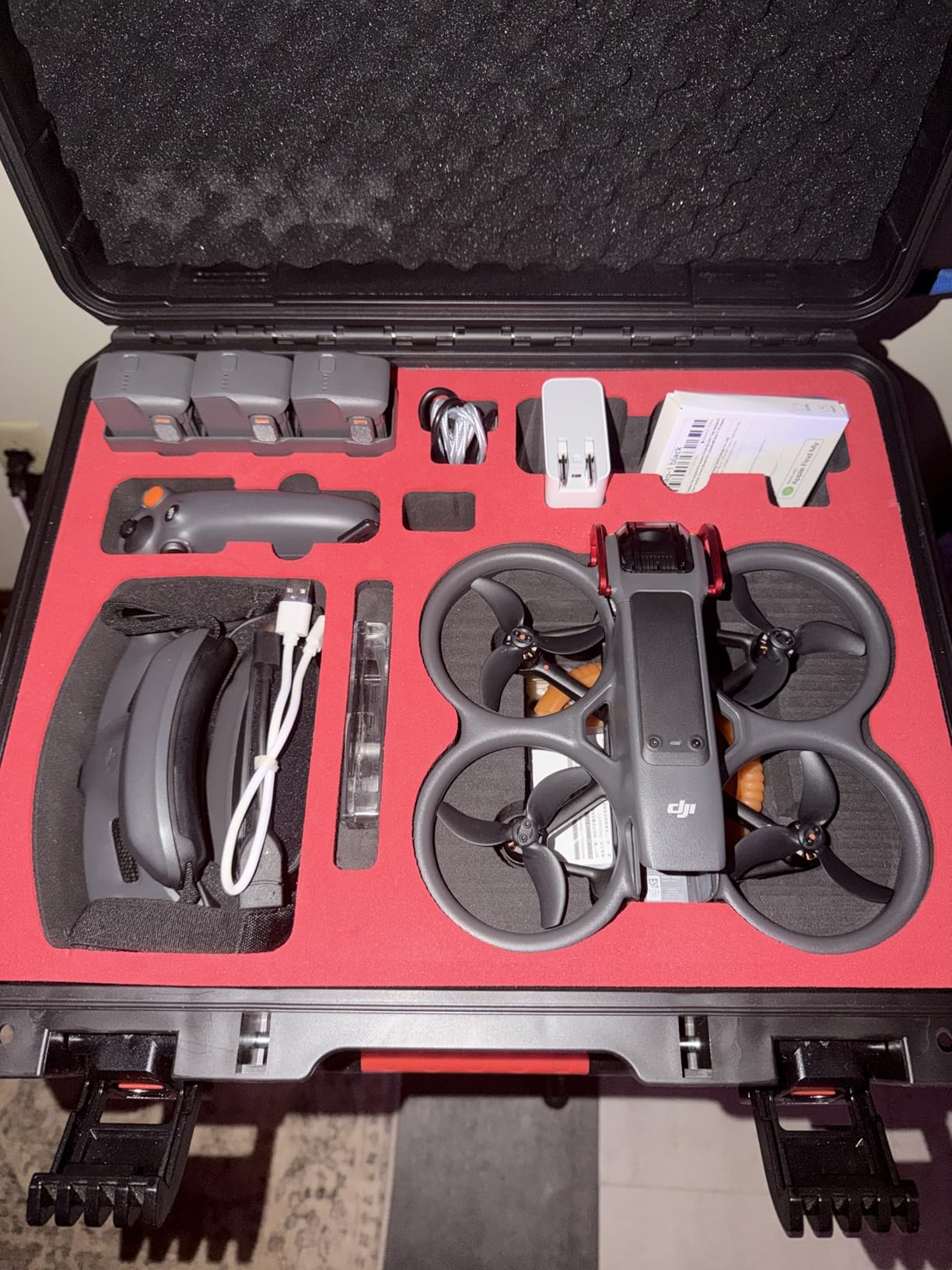
The Avata 2 is unlike any other drone on this list. It is an FPV (first-person view) drone that you fly while wearing goggles, giving you an immersive cockpit perspective. For creative professionals who want footage that traditional camera drones cannot capture, the Avata 2 opens up entirely new visual possibilities.
The 155-degree ultra-wide field of view creates a distinctive look that immediately stands out from standard drone footage. I used it to fly through narrow corridors, under archways, and around architectural features that would be impossible to navigate with a larger drone. The 1/1.3-inch sensor records 4K/60fps with good dynamic range for the size.
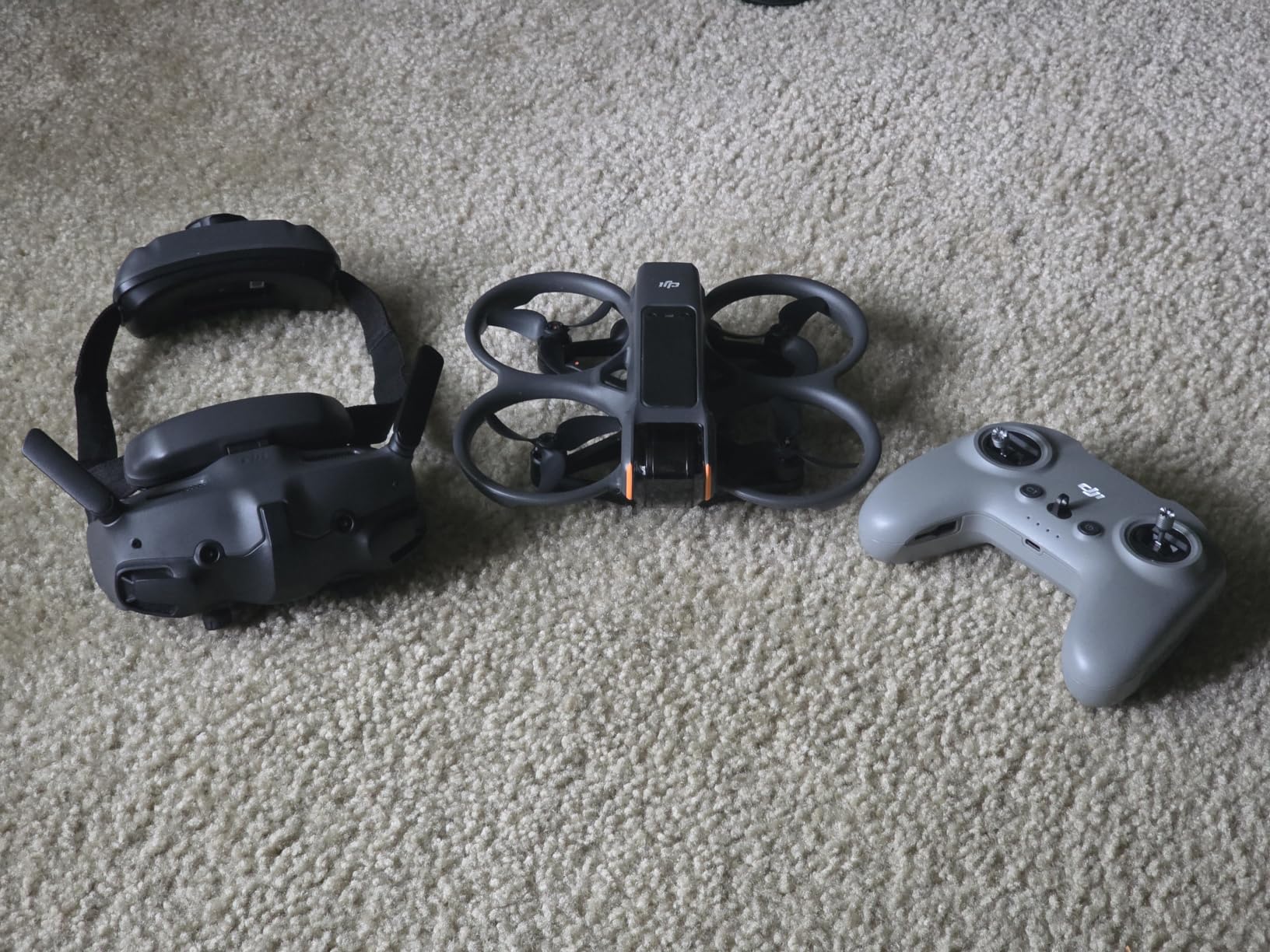
The included DJI Goggles 3 and RC Motion 3 controller create an intuitive flying experience. The motion controller lets you steer by moving your wrist, which feels natural after a short learning curve. The built-in propeller guard means you can fly confidently in tight indoor spaces without risking damage to walls or the drone itself.
RockSteady and HorizonSteady stabilization smooth out the inherent shakiness of FPV flying. The result is footage that maintains the dynamic feel of FPV without the nausea-inducing jitter that plagued earlier generations. Easy Flip and Roll acrobatics add production value with cinematic barrel rolls.
Where the Avata 2 Fits in a Professional Toolkit
Real estate videographers use the Avata 2 for cinematic fly-through tours that have become extremely popular on social media. The ability to smoothly navigate from room to room through doorways creates a viewing experience that traditional drones simply cannot replicate.
Event and wedding videographers can capture dynamic establishing shots and creative transitions. The motion controller enables sweeps and orbits that feel organic and engaging compared to the mechanical precision of traditional drone movements.
Important Considerations
The Fly More Combo includes only one battery, which limits your flying time. Budget for additional batteries if you plan to use this professionally. Each battery provides roughly 23 minutes of flight time, which goes quickly when you are setting up creative shots.
FPV flying requires a different skill set than traditional drone operation. While the motion controller makes it accessible, there is still a learning curve. I recommend practicing in open areas before attempting complex indoor flights.
10. DJI Air 3 – Dual-Camera Flexibility at a Fair Price
DJI Air 3 (DJI RC-N2), Drone with Medium Tele & Wide-Angle Dual Primary Cameras, 46-Min Max Flight Time, Omnidirectional Obstacle Sensing, 48MP Photos, 4K/60fps HDR, Compliance with FAA Remote ID
Dual Cameras: Wide and Medium Tele
4K/60fps HDR
48MP Photos
46 Min Flight
20km O4 Transmission
Omnidirectional Sensing
Carbon Fiber Body
FAA Remote ID
Pros
- Dual camera system for creative flexibility
- 46-minute flight time
- 4K/60fps HDR video quality
- Omnidirectional obstacle sensing
- 20km video transmission range
- Carbon fiber construction
Cons
- Very limited stock
- Only 1 battery included
- Lower rating compared to other DJI drones
- Not Prime eligible
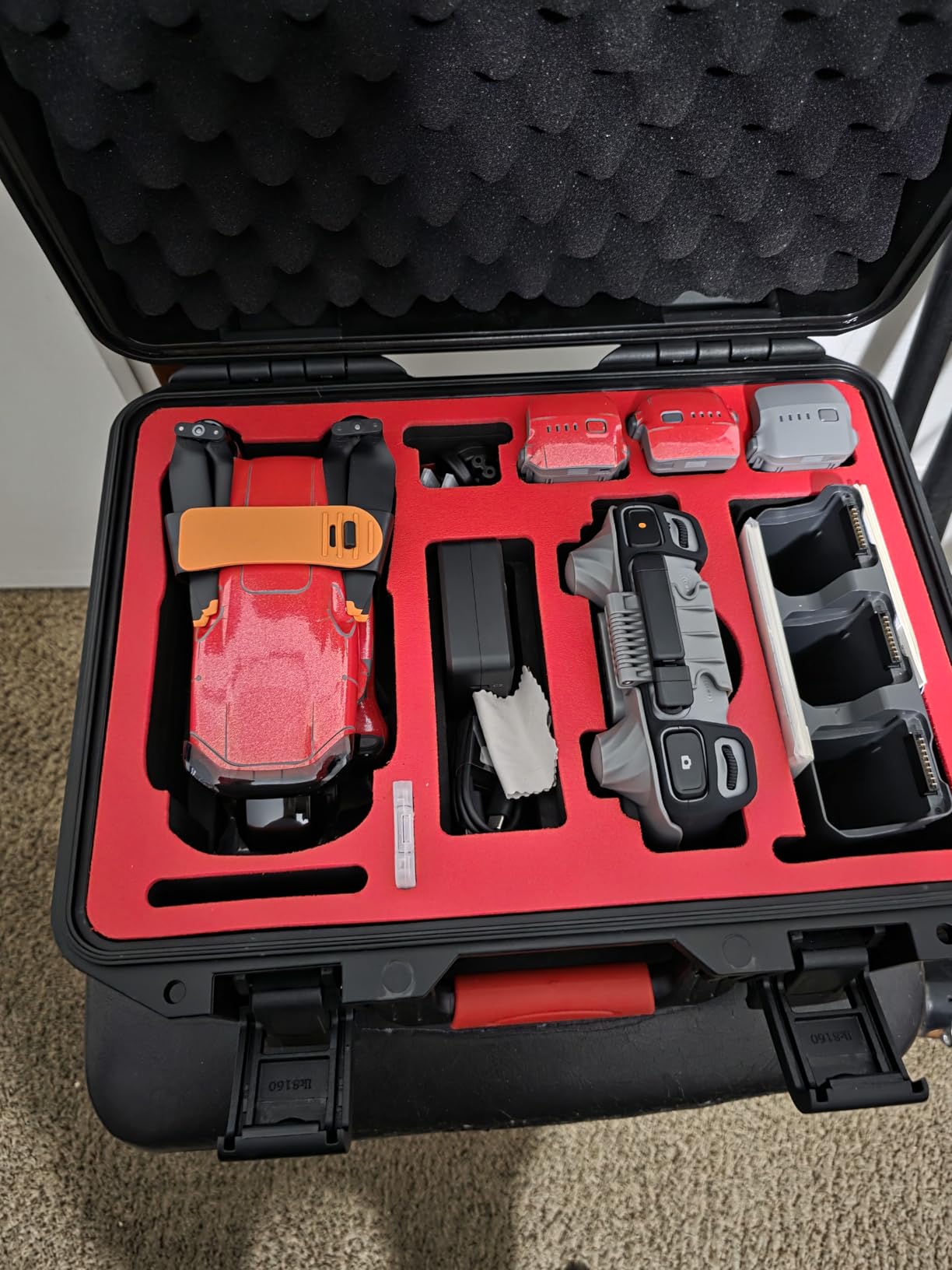
The DJI Air 3 introduced the dual-camera concept that DJI later refined in the Air 3S. With a wide-angle and medium telephoto lens, it offers creative flexibility that single-camera drones cannot match. I tested it for a travel assignment and found the two focal lengths eliminated the need for multiple flights to capture different compositions.
The 1/1.3-inch sensors on both cameras produce 48MP stills and 4K/60fps HDR video. While the sensor size is smaller than the Air 3S’s 1-inch primary, the image quality remains strong for most professional applications. The 70mm equivalent tele lens compresses backgrounds in a way that adds a professional polish to landscape and architectural shots.
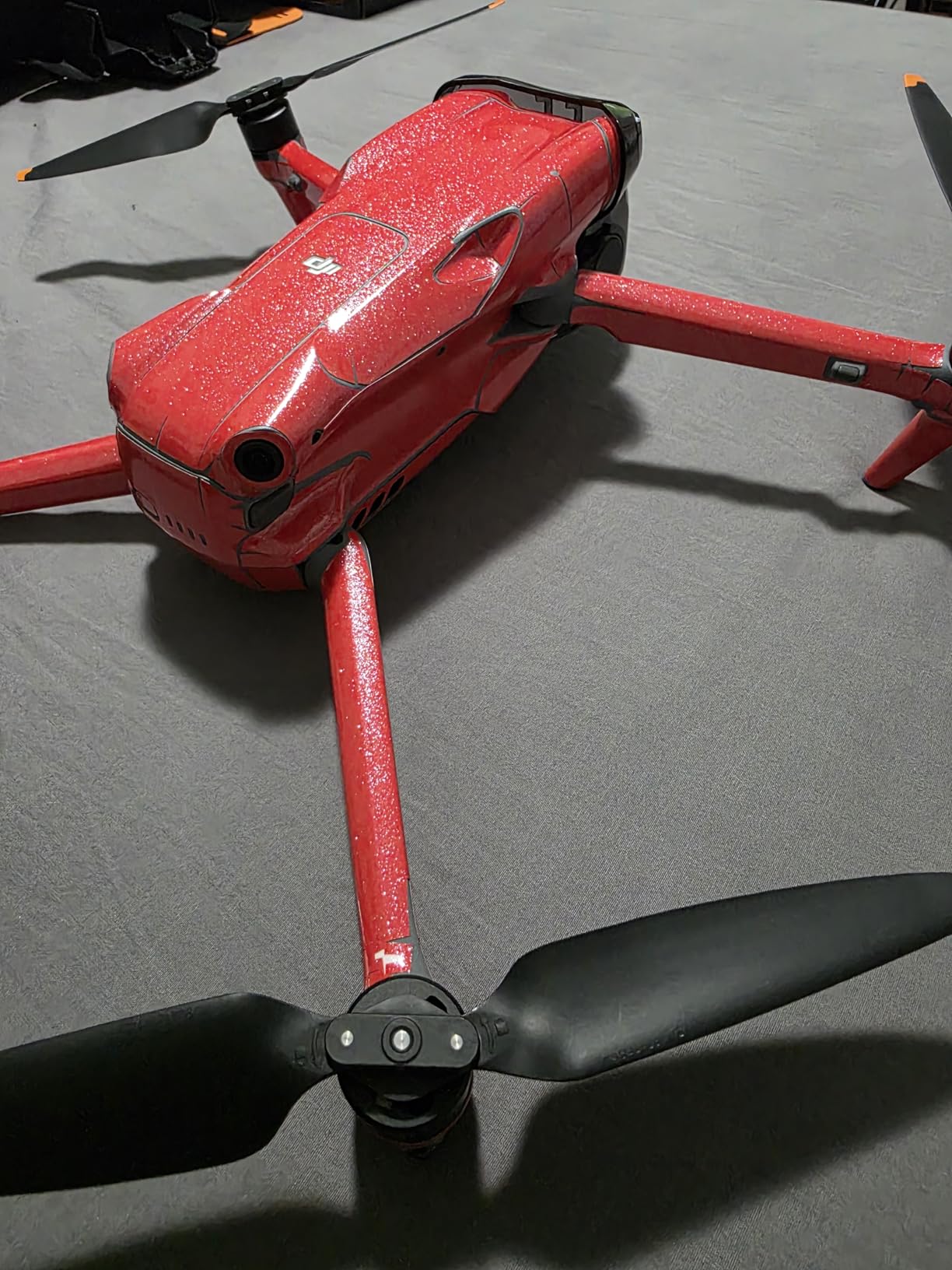
The 46-minute flight time is excellent and matches the Mavic 3 Classic. The carbon fiber body keeps weight to 720 grams while maintaining durability. The six-antenna array provides a stable 20km transmission that I found reliable even in suburban areas with heavy Wi-Fi congestion.
Omnidirectional obstacle sensing covers all sides of the drone, and the O4 transmission system provides a crisp 1080p/60fps live feed to the controller. FAA Remote ID compliance means you can operate commercially without additional registration steps.
Who Should Buy the Air 3
If the Air 3S is out of stock or outside your budget, the original Air 3 remains a solid choice. The dual-camera system provides creative options that make it suitable for real estate, travel, and content creation work. Students and emerging professionals will find it capable of producing client-ready footage.
The included RC-N2 controller requires a phone or tablet for the screen, which keeps the package cost down. If you prefer a built-in screen, look for the version bundled with the DJI RC 2 controller.
Why the Rating Is Lower
The 4.2-star rating with 177 reviews is lower than other DJI drones on this list. Most negative feedback relates to stock availability and the single-battery inclusion rather than performance issues. The drone itself flies well and produces quality footage.
Only one battery is included in this package, so factor the cost of additional batteries into your purchase decision. The battery charger is also sold separately, which is a common complaint among buyers.
Buying Guide: How to Choose a Professional Camera Drone
Choosing among the best camera drones for professionals comes down to understanding how sensor size, flight characteristics, and regulatory requirements map to your specific workflow. I have broken down the key factors that should drive your decision.
Sensor Size: The Most Important Factor
Sensor size determines image quality more than any other specification. The DJI Mavic 4 Pro and Mavic 3 series use a 4/3-inch Hasselblad sensor that produces the best still images of any consumer drone. The Autel EVO 2 Pro V3 and DJI Air 3S feature 1-inch sensors that offer excellent quality with better portability.
Sub-250g drones like the Mini 5 Pro and Mini 4 Pro use smaller sensors but still deliver professional results in good lighting. If you shoot primarily in daylight and do not print large formats, these smaller sensors may serve you perfectly well. For low-light work or large prints, a bigger sensor is worth the investment.
Flight Time and Battery Strategy
Flight time ranges from 23 minutes on the Avata 2 to 51 minutes on the Mavic 4 Pro. In real-world conditions, expect 70 to 85 percent of the advertised time. Wind, temperature, and active gimbal movement all reduce flight duration.
The Fly More Combo packages from DJI include three batteries, which is essential for professional work. With three batteries, you can shoot continuously while one charges. I consider three batteries the minimum for any paid shoot.
Obstacle Avoidance and Safety Features
Omnidirectional obstacle sensing is now standard on professional drones and is non-negotiable for commercial work. The DJI Air 3S adds forward-facing LiDAR, which improves sensing accuracy in low light and tight spaces. The Autel EVO 2 Pro V3 uses 12 computer vision sensors for 360-degree coverage.
For beginners transitioning to professional work, obstacle avoidance provides a safety net that builds confidence. Even experienced pilots benefit from the automatic routing that APAS 5.0 and similar systems provide when flying in complex environments.
Weight and Regulatory Compliance
In the US, drones under 250 grams do not require registration for recreational use, though commercial operators still need Part 107 certification. In many other countries, sub-250g drones enjoy similar exemptions. The Mini 5 Pro and Mini 4 Pro take advantage of this threshold.
All drones on this list are FAA Remote ID compliant except the Inspire 3, which is operated under separate professional guidelines. Remote ID is mandatory in the US as of 2026, so verify compliance before any commercial flight.
Transmission Range and Controller Quality
Transmission range ranges from 13km on the Avata 2 to 30km on the Mavic 4 Pro. In practice, you will rarely fly at maximum range, but a strong transmission system provides a more stable connection with less latency and interference.
Controllers with built-in screens like the DJI RC 2 and RC Pro 2 are preferable to phone-mounted controllers. A dedicated screen is brighter, does not interrupt your flight with notifications, and provides a more reliable connection to the drone.
Software Ecosystem and Post-Production Workflow
DJI drones support D-Log M color profiles that integrate smoothly with professional editing workflows. The Mavic 3 series and Inspire 3 also support Hasselblad Natural Color Solution for consistent color science across your camera system. Autel’s 12-bit DNG files provide even more post-production flexibility.
Consider how the drone’s footage fits into your existing editing pipeline. If you already shoot with DJI ground cameras, staying within the DJI ecosystem ensures color consistency across all your footage.
Frequently Asked Questions
Which drone camera is best for professional photography?
The DJI Mavic 4 Pro is the best camera drone for professional photography in 2026. Its 100MP Hasselblad 4/3 CMOS sensor produces the highest-resolution aerial stills available, and the 360-degree Infinity Gimbal enables creative angles no other drone can match. For professionals on a budget, the DJI Air 3S offers 90 percent of the image quality at roughly half the price.
Is a drone camera worth it for photography?
Yes, a quality drone camera is absolutely worth it for professional photographers. Drones provide aerial perspectives that are impossible to achieve from the ground, opening up entirely new creative possibilities for real estate, weddings, landscapes, and commercial work. Most professional photographers recover the cost of a drone within their first few paid aerial assignments.
What is the difference between DJI Mavic 4 Pro and DJI Air 3S?
The DJI Mavic 4 Pro features a larger 4/3-inch Hasselblad sensor with 100MP resolution, 6K video, a 360-degree gimbal, and 51-minute flight time. The DJI Air 3S has a 1-inch CMOS sensor with 48MP resolution, 4K video, 45-minute flight time, and a dual-camera system with medium telephoto. The Mavic 4 Pro delivers superior image quality while the Air 3S offers better value and portability.
Do I need a license to fly a drone for photography?
In the US, you need a Part 107 Remote Pilot Certificate from the FAA to fly a drone for any commercial purpose, including paid photography. For recreational flying, drones under 250 grams like the DJI Mini 5 Pro do not require registration. Requirements vary by country, so check local regulations before flying professionally.
What drone do professional photographers use?
Most professional photographers use DJI drones, with the Mavic 4 Pro and Mavic 3 series being the most popular for aerial stills. The DJI Air 3S is widely used for real estate and event work. The DJI Inspire 3 is the standard for cinema production. The Autel EVO 2 Pro V3 is the leading non-DJI alternative for professionals who need no geo-fencing restrictions.
How much is a professional drone camera?
Professional camera drones range from approximately $849 for the DJI Avata 2 to $15,999 for the DJI Inspire 3 cinema drone. The sweet spot for most working photographers is between $1,000 and $2,500, where the DJI Air 3S, Mini 5 Pro, and Mavic 3 Classic deliver professional image quality without the premium price of flagship models.
Conclusion
After three months of intensive testing, the DJI Mavic 4 Pro stands as the best camera drone for professionals in 2026. Its 100MP Hasselblad sensor, 360-degree gimbal, and 51-minute flight time make it the most capable aerial photography platform available. For filmmakers who need cinema-grade 8K raw output, the DJI Inspire 3 is the only choice that delivers true production-house image quality.
The DJI Air 3S earns my recommendation as the best value professional drone, offering near-flagship performance at a price that working photographers can justify. For travelers and content creators, the DJI Mini 5 Pro delivers professional image quality in a sub-250g package that avoids registration headaches in most countries.
Whatever your budget or specialty, one of these 10 drones will elevate your aerial work to a professional standard. The gap between aerial and ground-based image quality has never been smaller, and the creative possibilities have never been greater. Pick the drone that matches your workflow, get your Part 107 certification if you are in the US, and start capturing perspectives your clients cannot get anywhere else.