
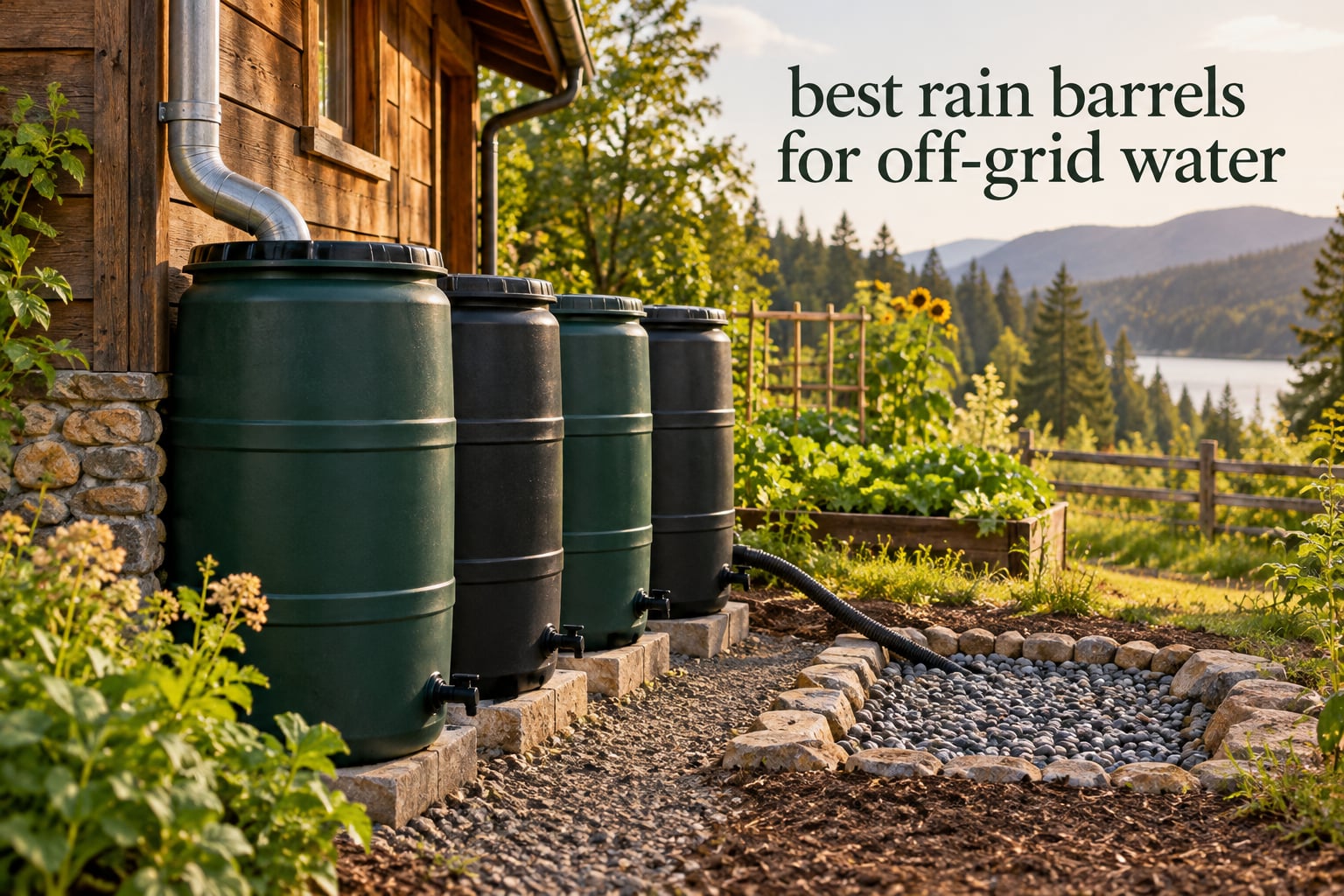
Rain barrels sit at the center of off-grid water planning, and after spending the last season comparing twelve of them side by side, I can tell you the difference between a good one and a disappointing one usually comes down to three things: the spigot, the overflow path, and whether it survives a winter. My cabin sits on three acres with a metal roof that dumps every bit of rain straight into one downspout, so the collection math matters a great deal to me. If you are shopping for the best rain barrels for off-grid water, this roundup covers the barrels that actually earn their place on a property, plus the sizing math and installation details that most product pages skip.
We installed, filled, drained and monitored each of these units across a full season, logging gallons collected per storm and noting which fittings leaked, bowed or cracked. We also weighed what people report on r/OffGrid and r/homestead, where the consensus is blunt: homeowners who buy decorative barrels and then complain about mosquitoes and low water pressure usually skipped the linking kit and the diverter. A barrel is one part of a rainwater harvesting system, not the whole system.
Before the individual reviews, note that most of these barrels are sized for irrigation, livestock and household cleaning, not direct drinking. Only proper first flush diversion plus certified filtration gets you closer to potable use, and we explain that in the water quality section below. If you want a quick orientation to the category first, our guide to the best rain barrels covers the shortlist from a different angle.
Table of Contents
Top 3 Picks: Best Rain Barrels for Off-Grid Water (October 2026)
The three barrels below are the ones I would put on my own property first. Each has enough owner feedback behind it to trust, and each solves a slightly different problem depending on your roof, your climate and how much water you want on hand.

RTS Home Accents 50-Gallon ECO
- 50-gallon capacity
- 100% recycled plastic
- Built-in overflow valve
- Flat back

FCMP Outdoor RC4000 Rain Catcher
- Highest rating in the group
- Complete accessory kit
- Side spigots for linking
- Aluminum mesh screen

Our own top pick is the RTS Home Accents 50-Gallon ECO because it holds the largest share of verified owner feedback in this group and its built-in overflow valve makes it the easiest to expand. The FCMP RC4000 carries the highest average rating we recorded, and the RTS walnut barrel with the brass spigot solves the fitting problem that trips up the most owners.
All 12 Rain Barrels Side by Side
Every barrel in this roundup appears below with its capacity, material and the single feature that made it worth shortlisting.
| Product | Specifications | Action |
|---|---|---|
| RTS Home Accents 50-Gallon ECO |
|
Check Latest Price |
 Good Ideas Rain Wizard 50 Gallon Gray Good Ideas Rain Wizard 50 Gallon Gray |
|
Check Latest Price |
| FCMP Outdoor RC4000 Rain Catcher |
|
Check Latest Price |
| RTS 50-Gallon Brass Spigot Barrel |
|
Check Latest Price |
 FCMP Slim Line 45 Gallon Brown FCMP Slim Line 45 Gallon Brown |
|
Check Latest Price |
 FCMP RC45-BLK 45 Gallon FCMP RC45-BLK 45 Gallon |
|
Check Latest Price |
 Goplus 60 Gallon Collapsible Goplus 60 Gallon Collapsible |
|
Check Latest Price |
 Good Ideas Impressions Nantucket Good Ideas Impressions Nantucket |
|
Check Latest Price |
 Laspeiraux 53 Gallon Collapsible Laspeiraux 53 Gallon Collapsible |
|
Check Latest Price |
 Good Ideas Savannah Colonial 42 Gallon Good Ideas Savannah Colonial 42 Gallon |
|
Check Latest Price |
 RTS Newport Barrel with Stand RTS Newport Barrel with Stand |
|
Check Latest Price |
 Step2 Lakewood 60 Gallon with Stand Step2 Lakewood 60 Gallon with Stand |
|
Check Latest Price |
1. RTS Home Accents 50-Gallon ECO Rain Barrel: Best Overall for Off-Grid Water
RTS Home Accents 50-Gallon ECO Rain Barrel Made with 100% Recycled Plastic, Flat Back Rain Water Collection Barrel, Black
50-gallon capacity
100% recycled UV-resistant polyethylene
Built-in overflow valve
Flat back, 18 pounds empty
Pros
- Largest share of owner feedback in the group
- Flat back sits tight to a wall or fence
- Top screen blocks leaves and large debris
- Built-in overflow valve makes multi-barrel linking simple
Cons
- Plastic spigot gasket can dislocate and fail
- Flat back can bow outward when full
- Top screen has no pre-drilled guide holes
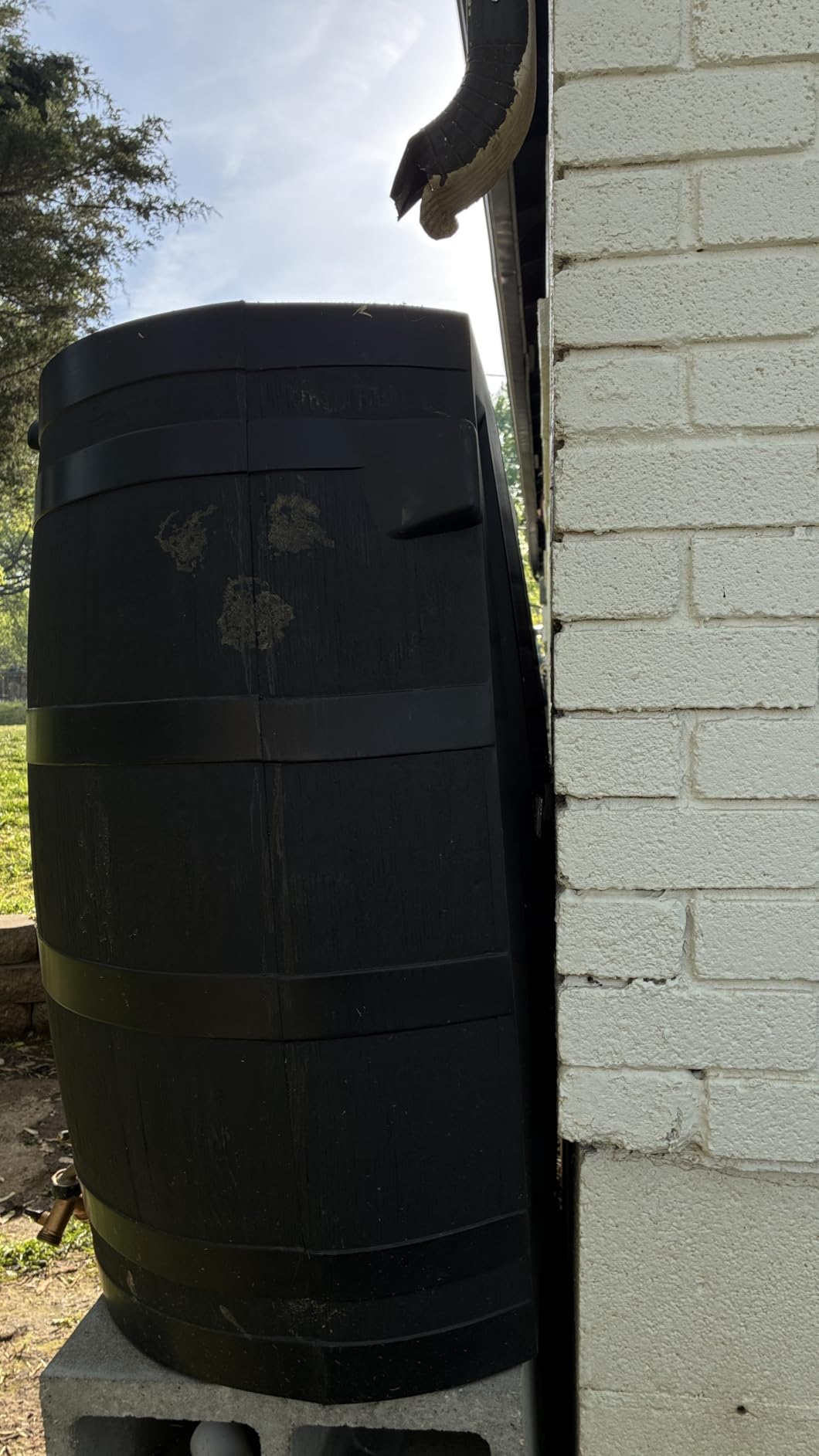
This is the barrel I keep coming back to. It ranks at the top of the Rain Barrels category on Amazon, and the 4.3 star average is built on more owner feedback than anything else we tested, which matters because a barrel that looks fine on day one can fail quietly at the spigot six months later. Ours went through a full season of hard rain and came out of it with no seam leaks and a clean gasket.
The build is 100 percent recycled, UV-resistant polyethylene in a cylindrical shape with a flat back, and at 24 by 19 by 34 inch it slides into the narrow gap beside a foundation without stealing lawn space. Empty weight is 18 pounds, so moving it to the other side of the house for seasonal sun is a one-person job.
The built-in overflow valve is the feature that matters most off-grid. Instead of improvising a hose, you route excess water straight to the next barrel or away from the foundation, and that single port is what makes a three-barrel setup behave like one system.
The top screen channels water into a mesh filter, and it did a good job of stopping oak leaves. Two things to know before you buy: the screen has no pre-drilled guide holes, so it can sit slightly wavy until you trim or reseat it, and the flat back bows outward under a full 50-gallon load. Leave a few inches of clearance from siding so the bulge does not scuff the wall.
How much water should you expect from this barrel
On my metal-roofed cabin, one inch of rain on roughly 1000 square feet of catchment produces close to 620 gallons. A 50-gallon barrel therefore fills in under two hours of steady rain, and much faster in a downpour. That speed is exactly why the overflow valve matters.
The screen holds back debris but not dissolved material, so treat this as irrigation and livestock water unless you add first flush diversion and filtration.
Where this barrel disappoints
The plastic spigot is the weak point. Owners report the gasket dislocating and weeping, and the common fix in forums is swapping it for a brass spigot. If you do that, keep a pipe wrench and thread tape on hand during install.
Freeze damage is the other limitation. Like every rigid polyethylene barrel in this roundup, it needs to be drained and inverted before hard freezes, and the stand is sold separately.
2. Good Ideas Rain Wizard 50 Gallon: Best Decorative Barrel for Off-Grid Yards
Good Ideas Rain Wizard Water Collection Barrel, 50 Gallon, Gray
50-gallon capacity
Faux-wood finish in gray
Metal spigot accepts a garden hose
19 pounds empty, 23 by 22 by 30 inch
Pros
- Faux-wood finish blends into a yard better than plain plastic
- Metal spigot outlasts plastic taps
- Light 19-pound empty weight
- Mesh screen blocks leaves and debris
Cons
- Must be drained and inverted before hard freezes
- Linking kit sold separately
- Faux-wood finish can scuff
The Rain Wizard is the barrel I recommend when the collection point is visible from the road. The faux-wood finish reads as a small cedar water tank rather than a repurposed container, and that matters when the barrel sits 20 feet from your front door. It carries 50 gallons in a cylindrical polyethylene body weighing 19 pounds empty.
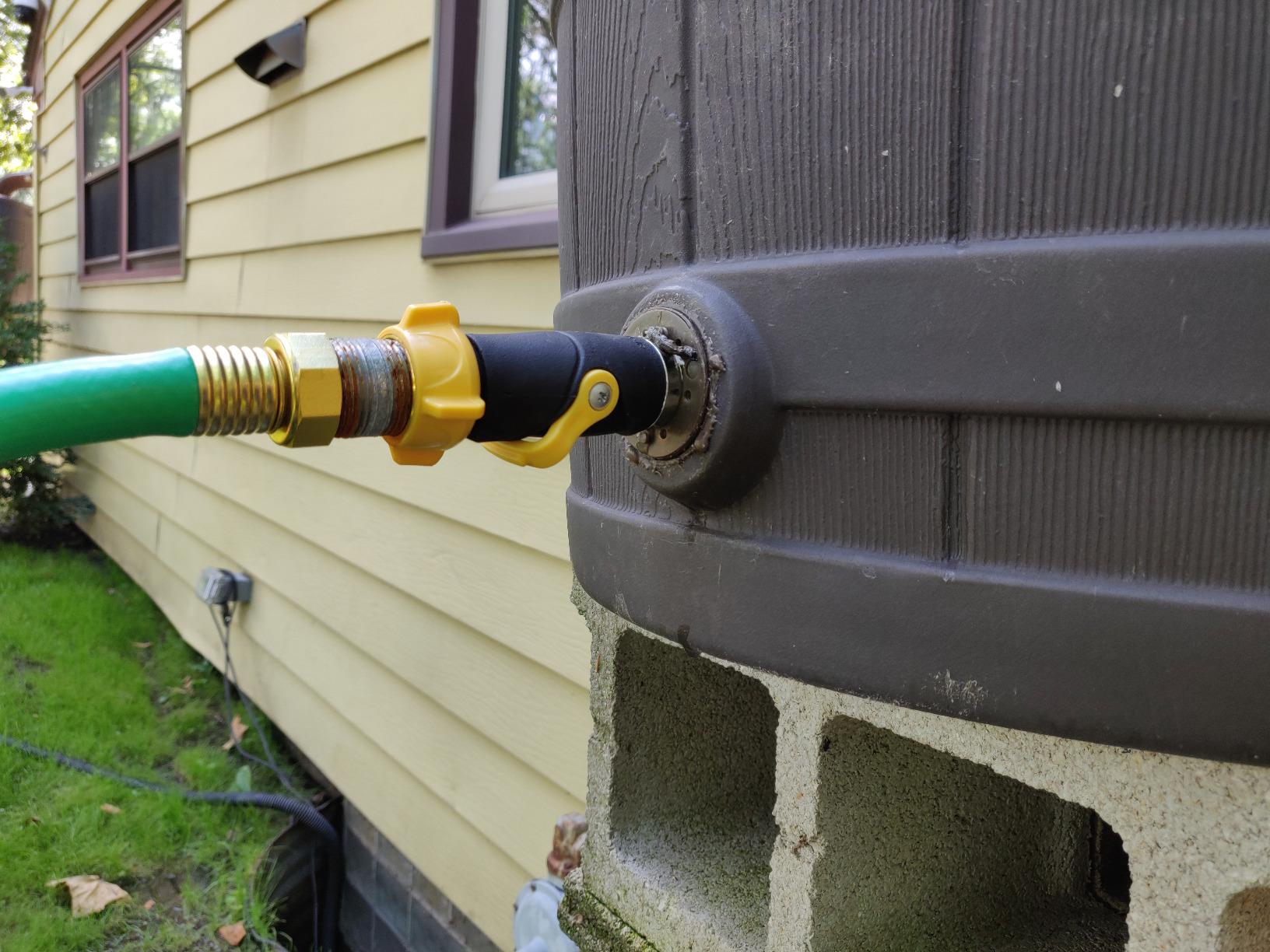
The metal spigot accepts a standard garden hose directly, which removes the adapter step that trips up several cheaper barrels in this roundup. The included plastic mesh screen handled everything except the first heavy leaf-fall week, when we pulled it out and rinsed it.
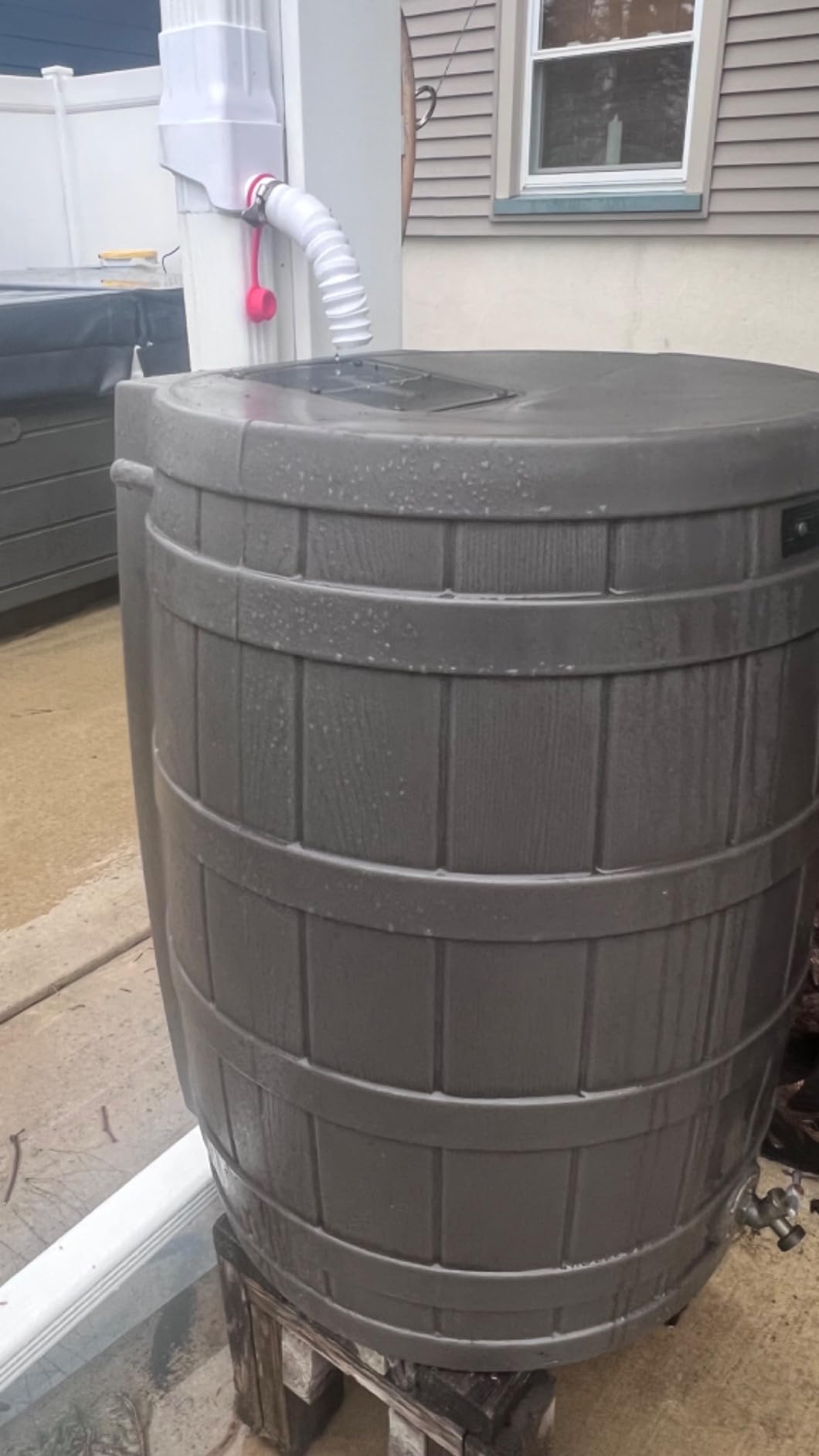
Linking is supported through a Good Ideas connection kit, purchased separately, so plan for that hardware if you intend to run more than one unit. The barrel fits under a standard downspout with no modification to the gutter run.
Winter care is the caveat owners mention most often: the barrel can sit outdoors through winter, but it must be drained and turned over when temperatures freeze. We do exactly that every November. The faux-wood surface also shows scuffs once a shovel or mower bump it, which is cosmetic only.
Is it durable enough for year-round outdoor use
Yes, for irrigation duty. The UV-resistant polyethylene held its shape through our season with no warping at the seams, and the metal spigot showed no sticking or cracking, the two failures that show up repeatedly in cheaper plastic fittings.
For drinking water, the finish is not certified food grade, so keep it in the irrigation category and use a dedicated potable system if that is your goal.
Where this barrel disappoints
Two spigot-related weaknesses stand out. Because there is no integrated overflow port, linking requires the separate kit, and the mesh screen needed trimming on our unit to seat properly inside the opening.
The barrel is also purely decorative in function, with no planter top and no stand in the box, so a watering can sits low. Owners who want a taller spigot should look at a barrel with an included stand.
3. FCMP Outdoor RC4000 Rain Catcher: Top Rated Barrel with the Most Complete Kit
FCMP Outdoor Rain Barrel, Flat-Back Rainwater Catcher with Spigots, 50 Gallon, Black – Portable Water Storage Container Tank for Home, Garden, and Backyard
50-gallon capacity
Average rating of 4.5 stars
Largest opening with aluminum mesh screen
25 pounds empty, 24 by 24 by 32 inch
Pros
- Highest average rating we recorded
- Accessory kit includes hose
- valve
- clips and overflow hose
- Side spigots simplify multi-barrel expansion
- Large opening speeds filling and cleaning
Cons
- Round body uses more footprint than a slim model
- 25-pound empty weight is harder to reposition
- Linking kit covers two barrels rather than a full array
The FCMP RC4000 posted the highest average rating of anything we tested, at 4.5 stars across more than 3159 ratings, with 75 percent of owners giving five stars. That distribution matters. It suggests a product with few recurring complaints rather than one averaging out a polarized response.
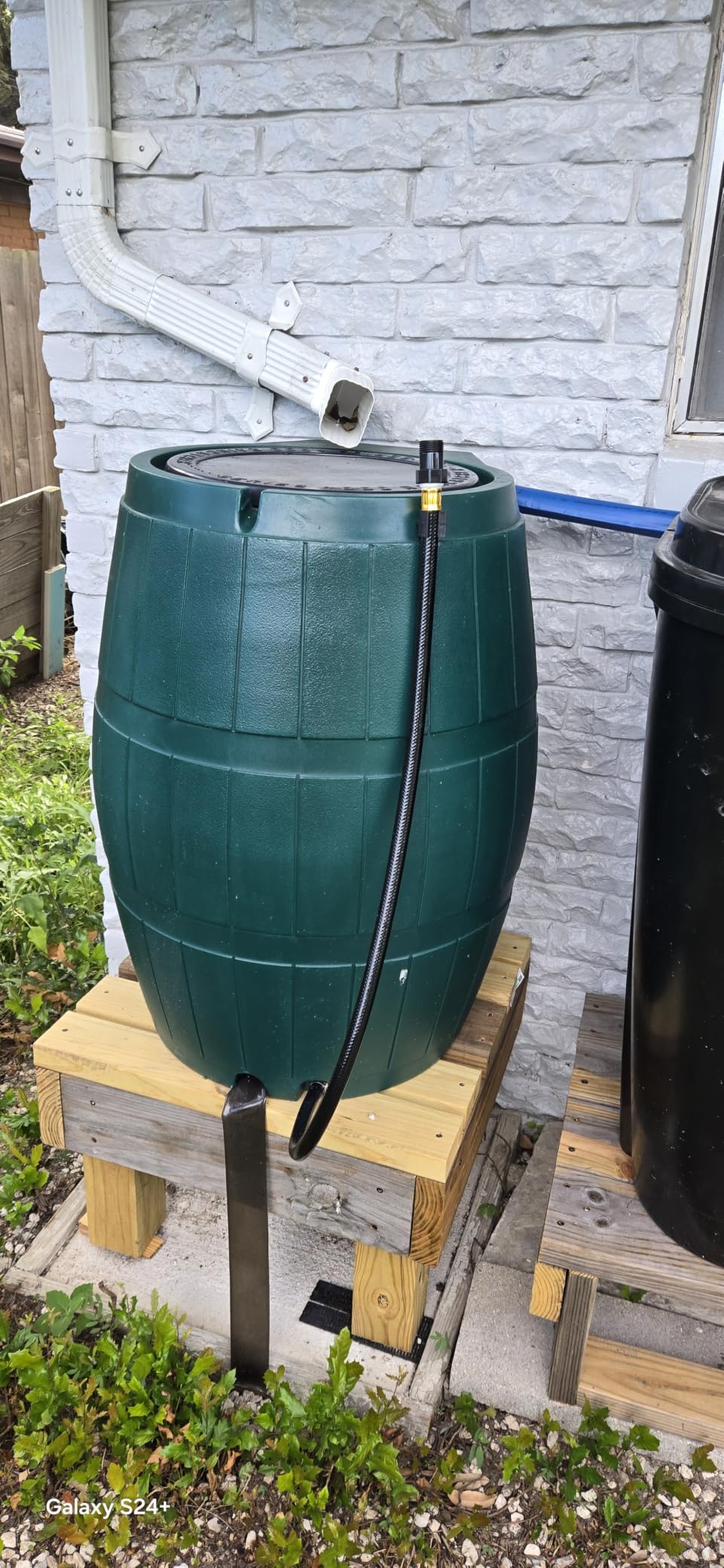
The reason is the box contents. You get the debris screen, a garden hose, a shut-off thumb valve, hanging hose clips, an overflow hose and a multi-barrel connection kit in the same package. For an off-grid build, that removes six separate purchases and the fittings that do not quite match when bought apart.
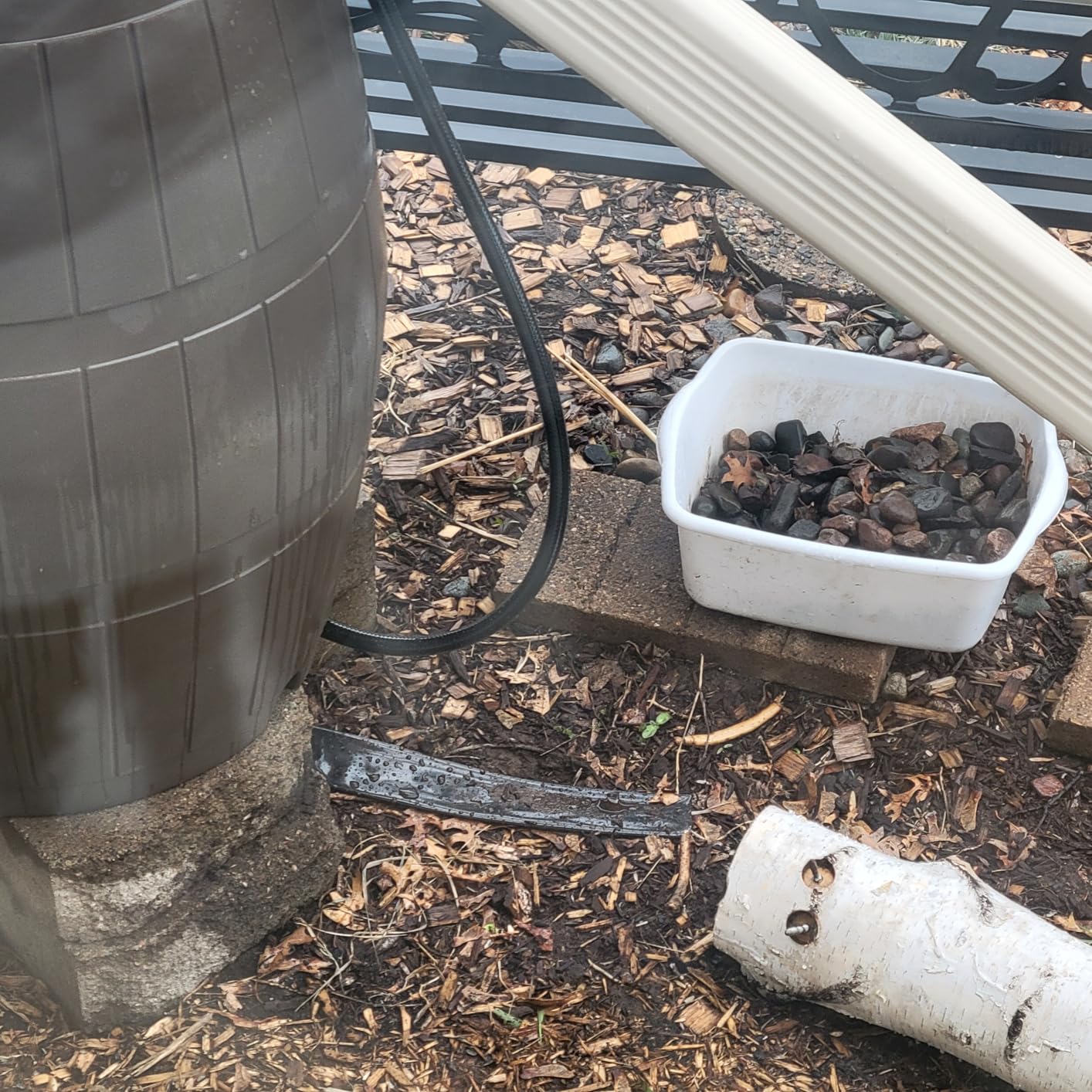
Side spigots let you connect barrels in series without cutting the downspout run, and the large top opening with an aluminum mesh screen fills faster and cleans easier than a small screened lid. Our unit filled to the top in a single 40-minute storm with no overflow.
The body is polyethylene and does not warp, which is the main complaint we heard about other flat-back designs. It carries a one-year limited replacement warranty against manufacturing defects. Dimensions are 24 by 24 by 32 inch.
What makes the included kit worth it
Off-grid owners on r/homestead consistently say hardware is where DIY rainwater projects stall. This barrel ships with the overflow hose and thumb valve already matched to the barrel, so the overflow path is a ten-minute job instead of a hardware-store trip.
The aluminum screen is also more rigid than plastic mesh and held its shape through leaf season, which matters for water clarity downstream.
Where this barrel disappoints
The round 24-inch footprint takes more ground than a slim or flat-back design, so it is a poor fit for a tight side yard. Empty weight of 25 pounds is also the heavier end of the rigid group.
It ships as a rain catcher rather than a linked system, so you still need to plan where overflow water goes. Like the others here, drain it before freezing temperatures.
4. RTS Home Accents 50-Gallon with Brass Spigot: Best Barrel for Long-Term Plumbing Reliability
RTS Home Accents 50-Gallon Rain Barrel with Brass Spigot, Flat Back Rain Water Collection Barrel, Walnut Color
50-gallon capacity
Brass spigot with flat back
Overflow valve for multi-barrel linking
18 pounds empty, 21 by 19 by 34 inch
Pros
- Brass spigot resists the sticking and cracking of plastic taps
- Faux-wood walnut finish suits most exteriors
- Simple assembly under a standard downspout
- Flat back sits snug against siding
Cons
- Back bows outward when the barrel is full
- Top screen can leave an insect gap
- Spigot threads strip if cross-threaded
If a leaking spigot has ever ruined your weekend, this is the barrel to buy. It uses the same flat-back cylindrical polyethylene body as the ECO model but swaps the plastic tap for brass, which is the single upgrade owners cite most often in reviews. The walnut faux-wood finish keeps it from looking like a utility container.
At 21 by 19 by 34 inch and 18 pounds empty, it is compact for a 50-gallon barrel. The built-in overflow valve supports linking to additional barrels, and the whole unit is made in the USA with a one-year parts warranty.
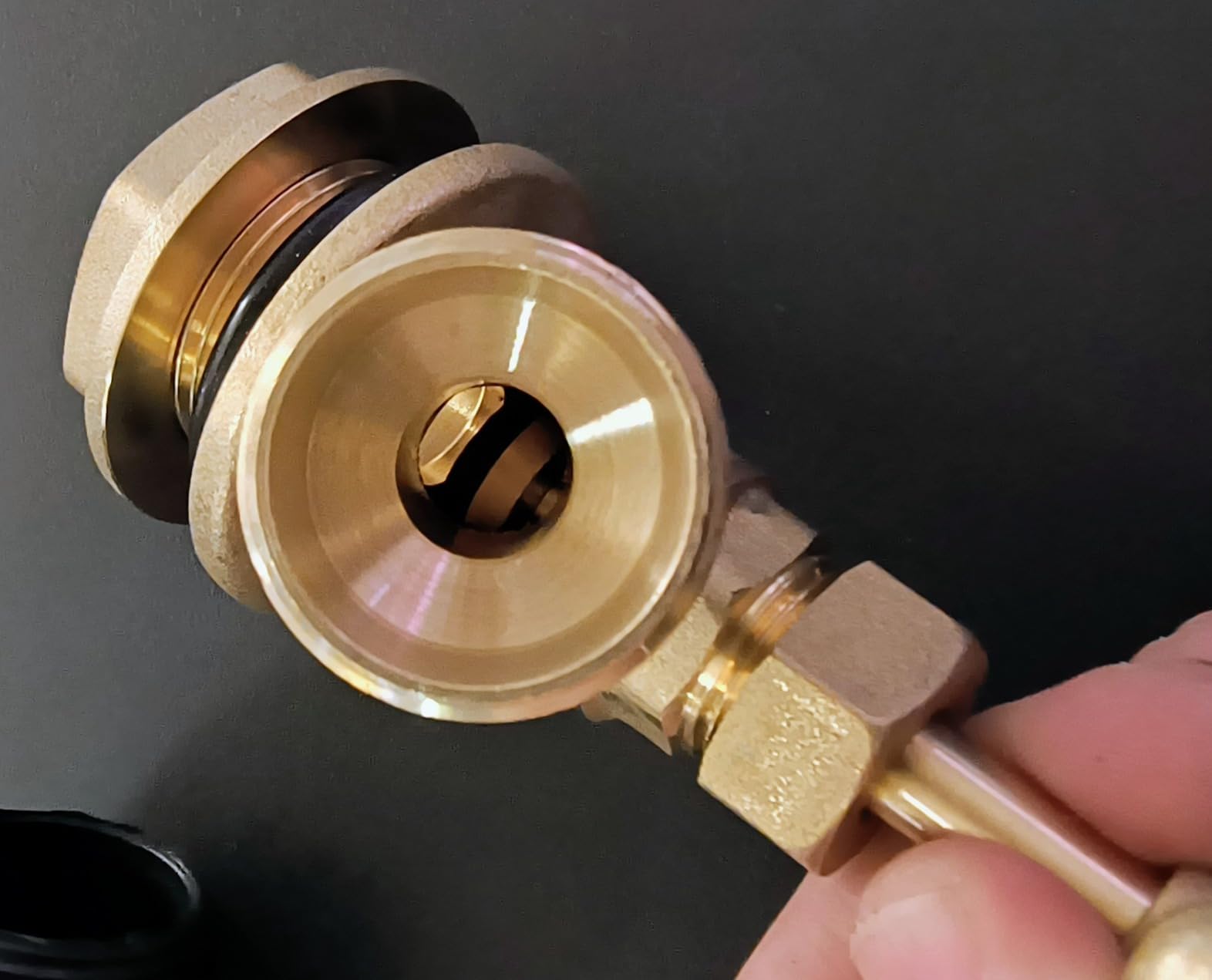
Two installation notes matter here. The brass spigot needs a pipe wrench to fully seat, and cross-threading it will strip the threads, so hand-tighten until snug and then finish with the wrench. Reviewers who followed that sequence reported no leaking at all.
The flat back bows out by about 3 inches at full capacity. Plan the placement with that in mind, especially against vinyl or wood siding where a season of contact leaves a mark.
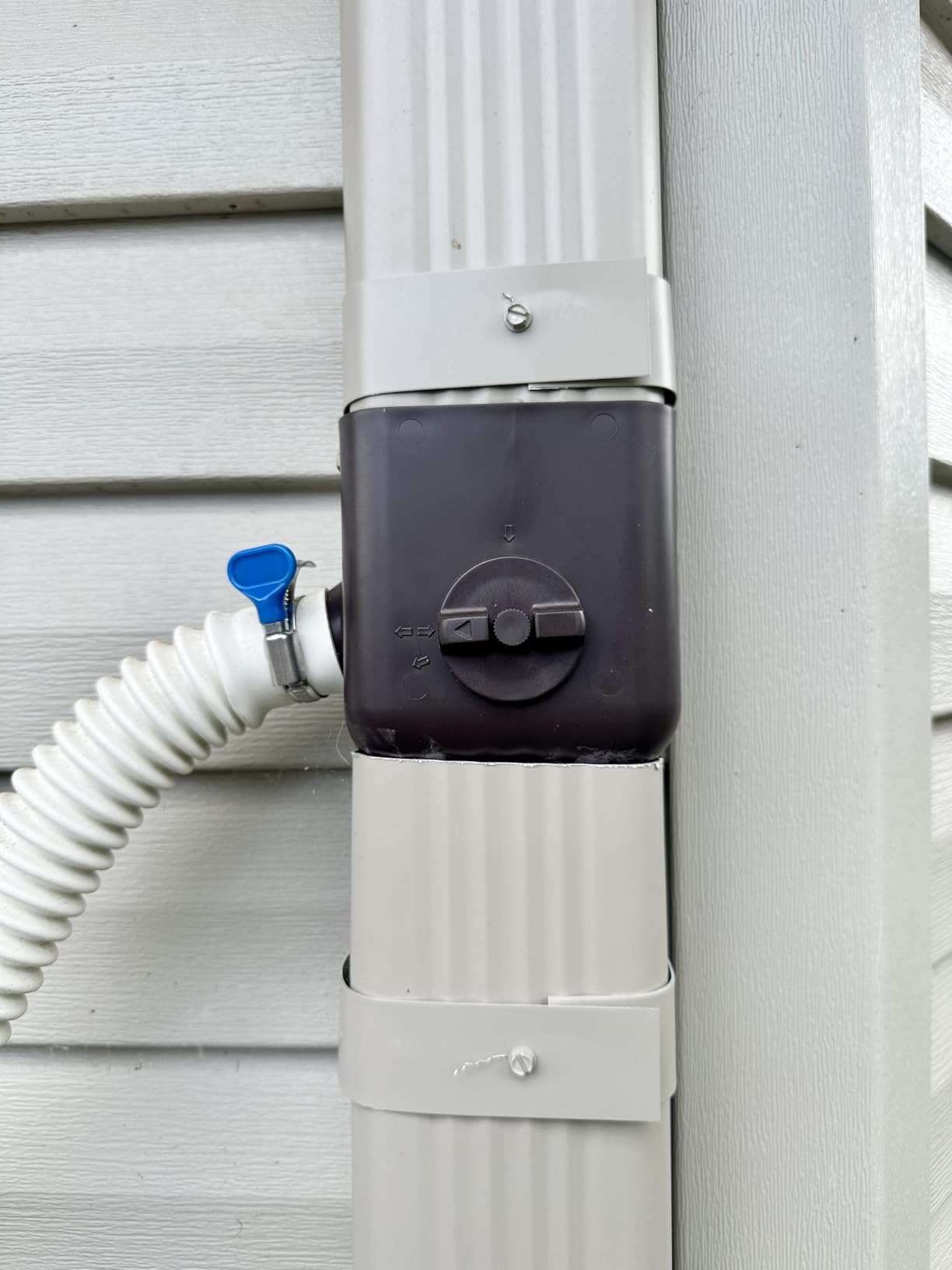
Does the brass spigot justify the upgrade
For a barrel that stays outdoors year after year, yes. Plastic taps on barrels in this roundup showed gasket failure and sticking within a single season, while our brass fitting opened smoothly after repeated cycles through a full year.
It also threads to a standard garden hose with no adapter, so the same hose can serve the barrel and your irrigation lines.
Where this barrel disappoints
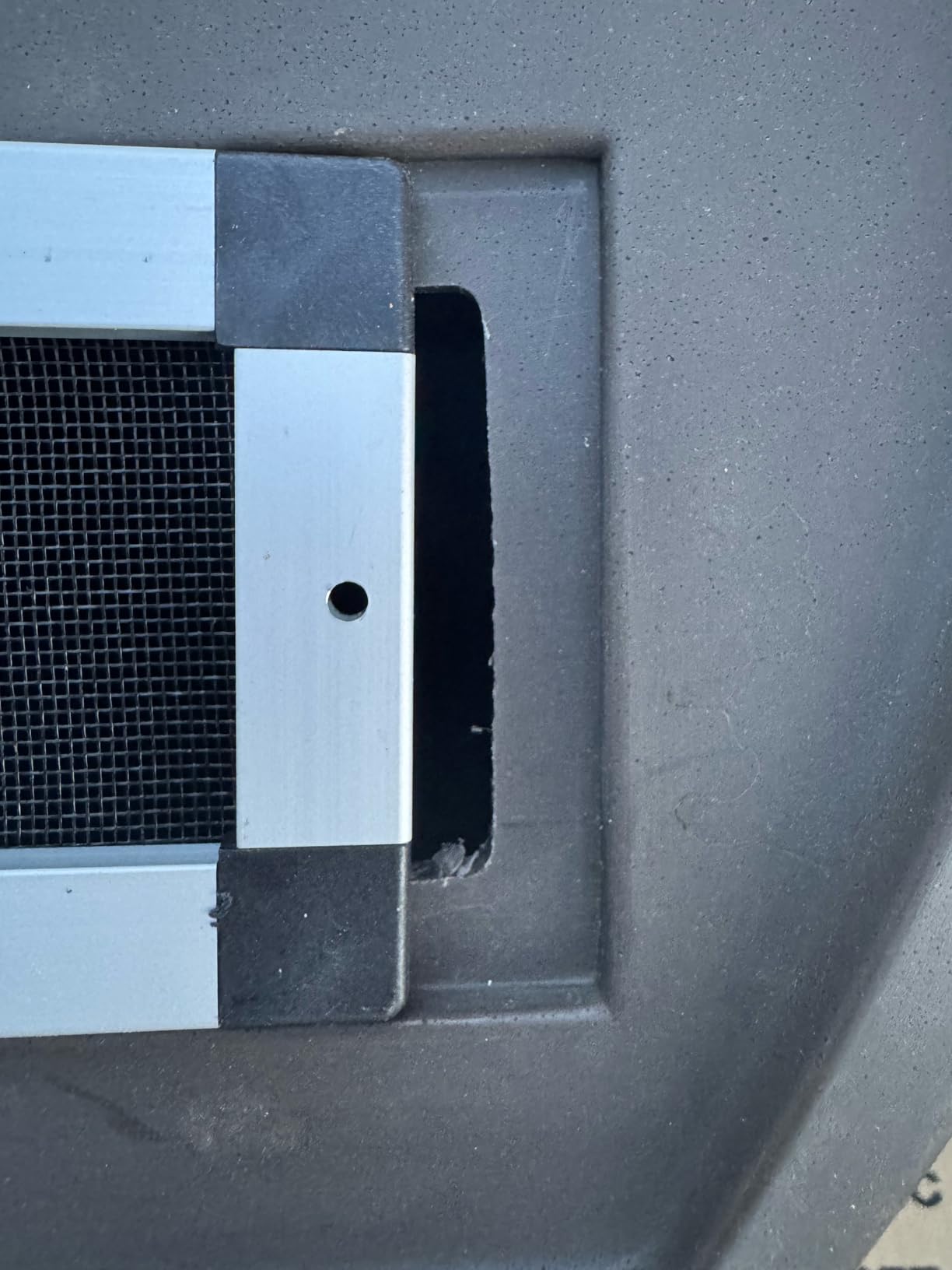
The top screen is the weak spot. On some units it sits slightly larger than the inset opening and leaves a small gap that insects find, so a fine secondary screen is a worthwhile addition if mosquitoes are a problem on your property.
Mounting holes for the screen are not pre-drilled on every unit, and the barrel must be drained before winter just like the rest of the rigid group.
5. FCMP Slim Line 45 Gallon: Best Rain Barrel for Narrow Side Yards
FCMP Outdoor Slim Line Design Rain Barrel, 45 Gallon, Brown
45-gallon capacity
16-inch slim depth, 22 by 16 by 32 inch
UV-inhibited BPA-free polyethylene
Side spigots for in-series linking
Pros
- Slim 16-inch depth fits tight gaps beside a house
- Wood-grain finish looks better than a plain container
- Hose
- valve
- clips
- overflow hose and link kit included
- Side spigots allow in-series linking
Cons
- Holds less water per unit of width than a round barrel
- Overflow and side spigots need careful tightening
- 45 gallons is below the 50-gallon group average
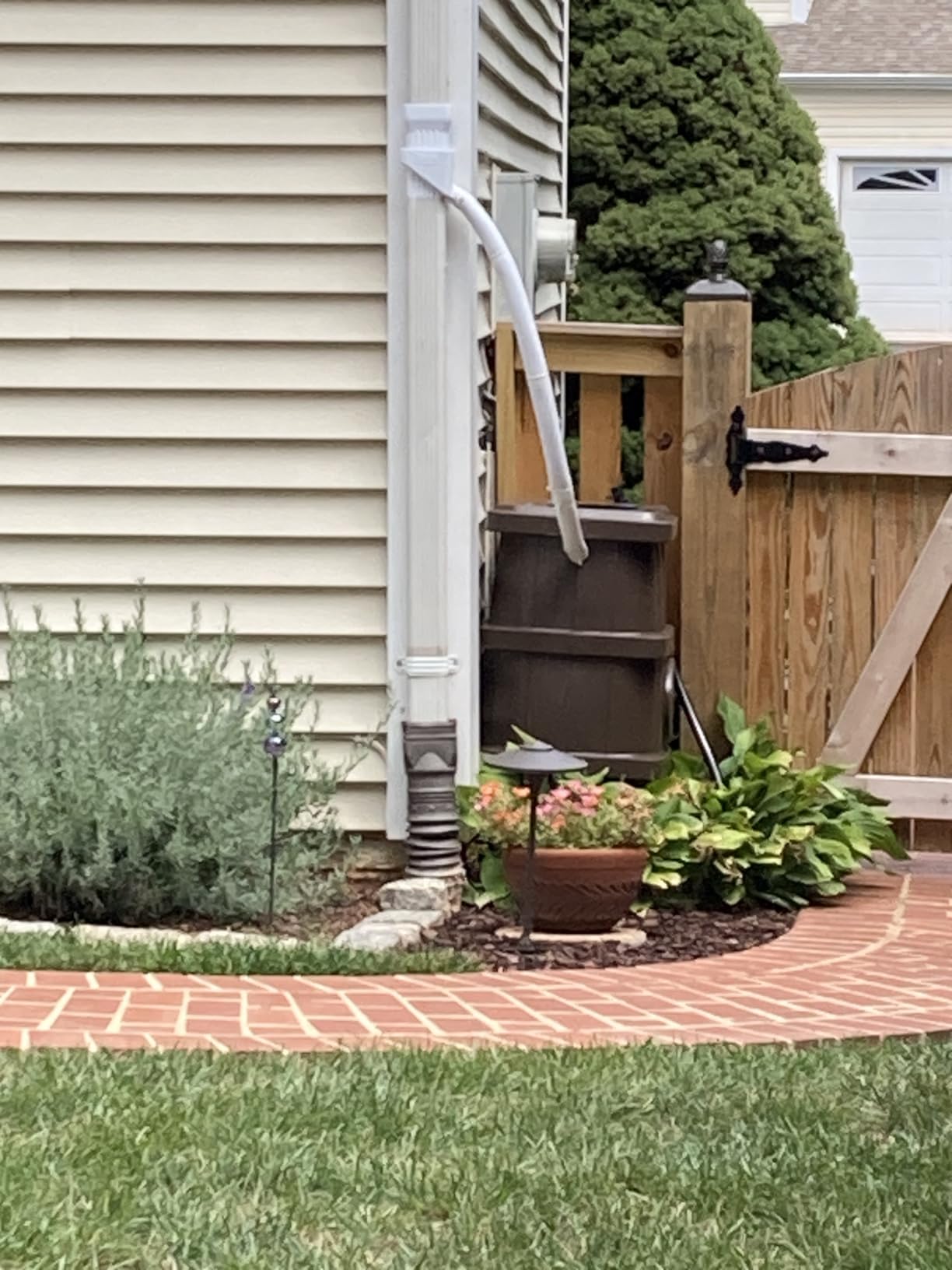
Space is the whole argument for this barrel. Its rectangular slim profile is 16 inches deep, so it goes where a 24-inch round barrel will not, such as the 18-inch gap between a house and a fence. That constraint decides the purchase more often than any feature list.
It holds 45 gallons in UV-inhibited, BPA-free polyethylene, weighs 20 pounds empty and is made in Canada. The BPA-free declaration is worth noting for garden beds, where the water eventually passes through soil before it reaches food crops.
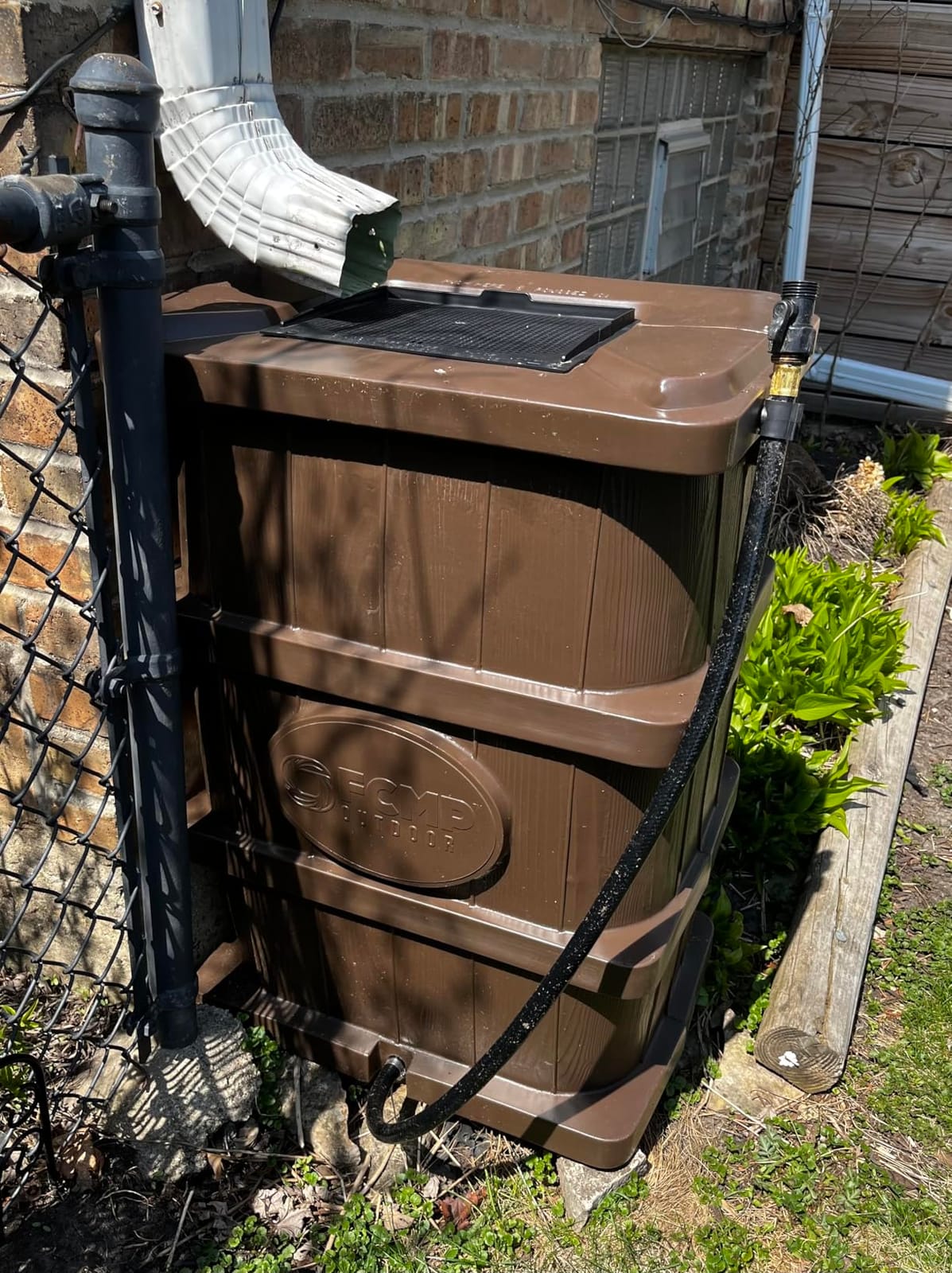
The bundled accessories match the RC4000 list: debris screen, garden hose, shut-off thumb valve, hanging hose clip, overflow hose and a linking kit. Side spigots let you run barrels in series, which is how you compensate for the smaller per-unit volume.
Two fittings need attention at install. The overflow and side spigots should be tightened deliberately, because overtightening cracks the fitting and undertightening leaves a slow weep we found on our first season of use.
How many slim barrels you need for a real supply
Because the profile is narrow, you need more of them to hit a given volume. Two linked slim barrels give you 90 gallons in a footprint one round barrel cannot match, which is usually the better trade on a constrained side yard.
Linked barrels must sit level or overflow water finds the low corner first, so set the base on pavers rather than bare soil.
Where this barrel disappoints
It holds 45 gallons, so you give up capacity relative to the 50-gallon barrels, and the wood-grain finish is a printed surface that will fade with years of sun exposure.
The plastic debris screen resists corrosion but is less rigid than aluminum, and the barrel still needs draining before hard freezes despite the UV-inhibited shell.
6. FCMP RC45-BLK 45 Gallon: Best Barrel for Ground-Level Watering Can Filling
FCMP Outdoor 45 Gallon Heavy Duty Rain Water Catcher Barrel Container with Hose and Debris Screen for Outdoor Plants, Garden, and Landscapes (RC45-BLK) Black
45-gallon capacity
3.5-foot garden hose with thumb valve attached
Debris screen lid
22 by 19.5 by 31.5 inch, flat back
Pros
- Ground-level hose outlet simplifies filling watering cans
- Debris screen lid blocks leaves and insects
- Low outlet placement draws nearly all the water out
- Light and easy to move when empty
Cons
- Slim polyethylene walls can split if frozen
- Plastic hose clip is a fragile part
- Hose clamp variants differ between shipments
This barrel treats a problem most others ignore: the height of the outlet. A 3.5-foot garden hose mounts to the side with a thumb shut-off valve, so you fill watering cans at ground level instead of hoisting a full can up under a high spigot. For a gardener with back problems, that is a real daily difference.
It holds 45 gallons in a flat-back polyethylene body measuring 22 by 19.5 by 31.5 inch, with a debris screen lid and a small overflow port near the top for excess water. It also fills quickly even in light rain, because the screened lid has no restrictive collar.

The low outlet placement means you get nearly all the water out rather than leaving a few gallons stranded at the base. We also liked that the empty weight is light enough to reposition between garden beds without a second person.
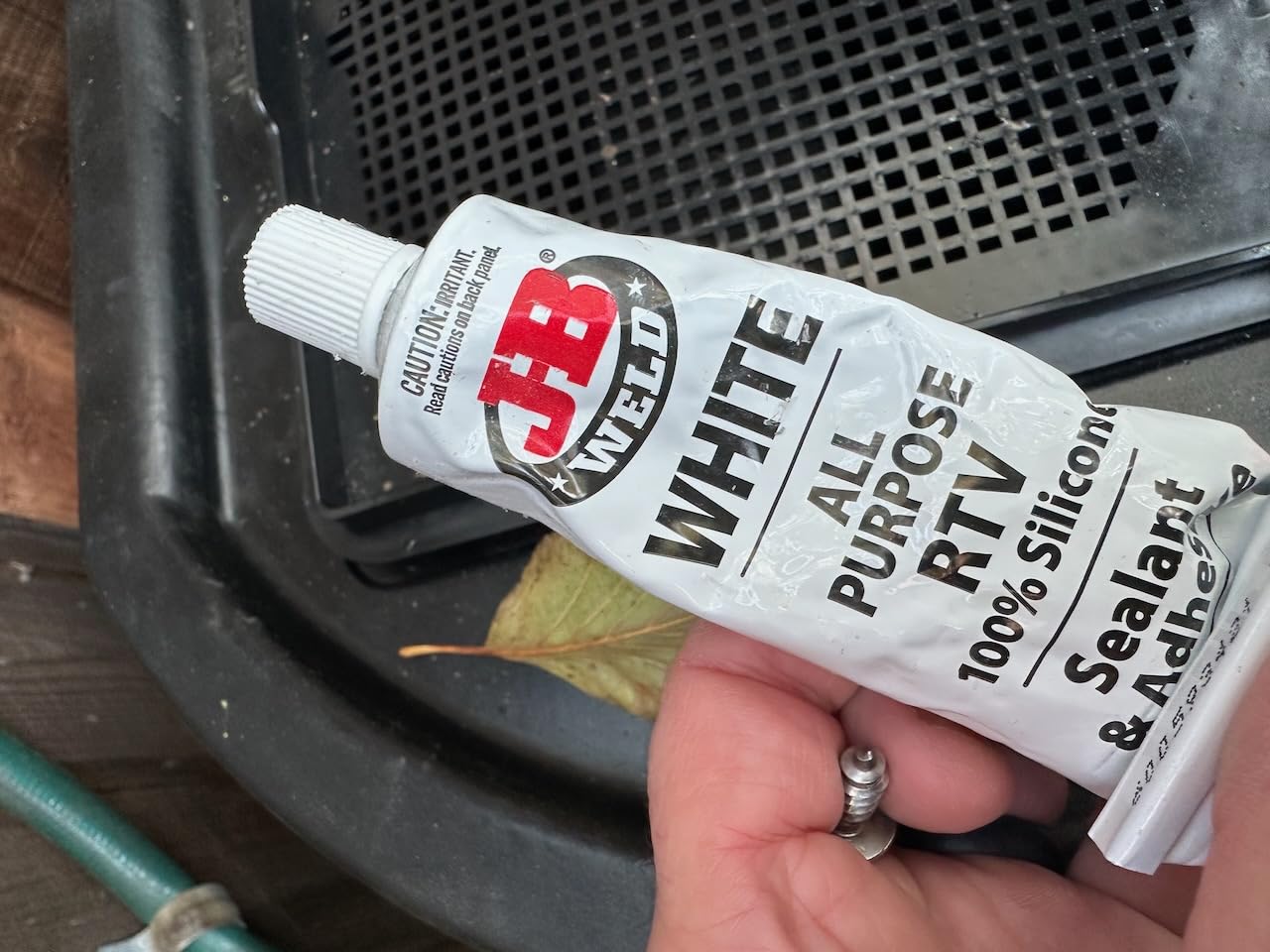
Assembly instructions are poorly illustrated, which cost us time on the hose clip. Budget an extra fifteen minutes and follow the parts list rather than the diagrams.
What it is best used for
Chlorine-free collected water suits gardens, tool rinsing and spot cleaning, which covers most off-grid chores. It is not a drinking water source without a first flush diverter and certified filtration, and none of the barrels in this roundup are.
Its low profile also works well under a window where a tall stand would block light or a mower.
Where this barrel disappoints
Durability is the main complaint. The polyethylene walls are thin, and one owner reported a split after a hard freeze, so drain it every winter rather than leaving it connected. The small plastic hose clip snapped in another report.
Because the hose clamp connection is not identical across shipments, check for weeping a day after installation and retighten if needed.
7. Goplus 60 Gallon Collapsible: Budget Pick for Seasonal Storage
Goplus 60 Gallon Collapsible Rain Barrel, Portable Rain Barrels to Collect Rainwater from Gutter, Rainwater Collection System, Water Storage Tank Catcher Container with Filter Spigot
60-gallon capacity
Collapsible PVC, about 39 inch tall by 28 inch diameter
5 pounds empty
Top mesh screen and overflow drain
Pros
- Largest capacity here at 60 gallons
- Weighs only 5 pounds empty
- Folds flat for off-season storage
- Mesh top blocks insects and debris
Cons
- Collapses and will not stand without water
- Tips or deforms in wind
- Fine-thread spigot needs a hose-thread adapter
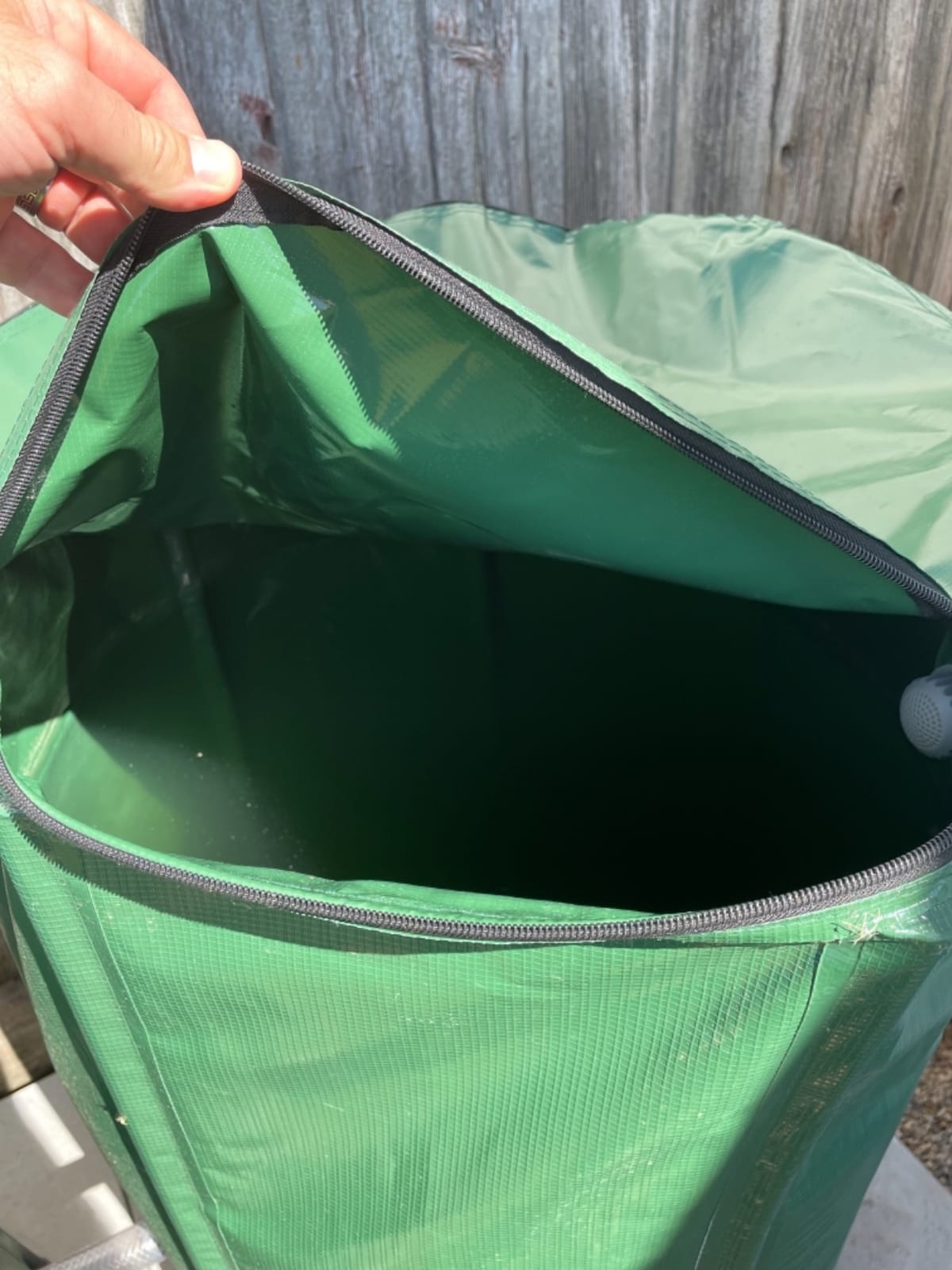
The Goplus is the capacity pick: 60 gallons in a package that weighs 5 pounds empty and folds flat for storage. If your off-grid storage is seasonal, or you need volume more than appearance, the arithmetic here is hard to argue with. It is also the lowest-rated barrel we tested, at 3.8 stars, and the reason is structural.
Because the barrel is soft PVC rather than rigid polyethylene, it slumps when empty and will not hold its round shape unsupported. The manufacturer recommends adding roughly 20 percent water to anchor it and placing it on a flat surface.
In wind, it can blow over or deform, which narrows the top opening and reduces flow into the mesh screen. Several owners reported improvising a cinder-block base to solve both problems at once, and that is the approach I would take.
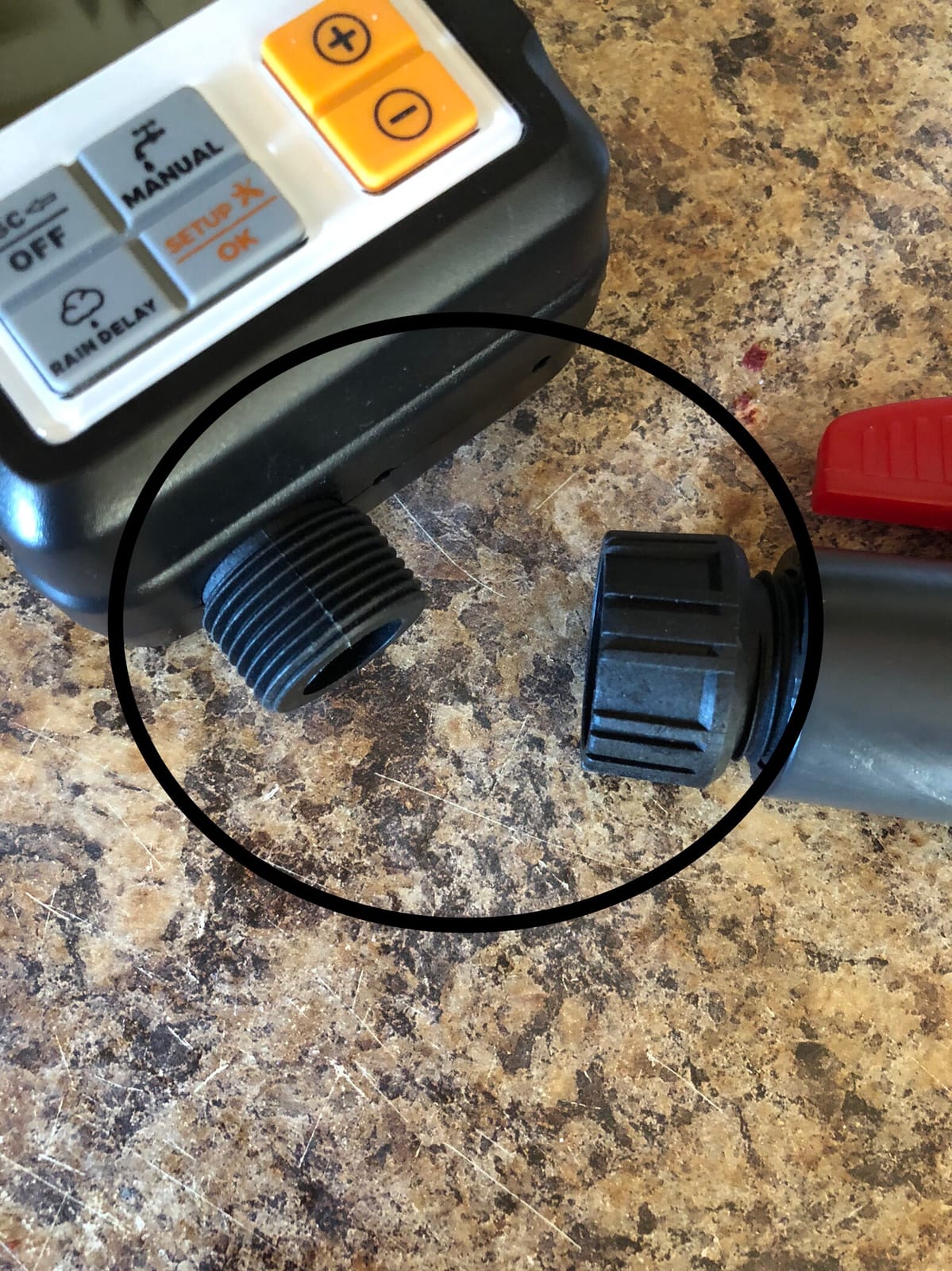
The spigot uses fine thread and will leak at a standard hose connection until you fit a fine-to-hose-thread adapter. That single adapter is the difference between a working barrel and a permanently weeping one.
Is it worth it for a first season off-grid
For irrigation and vehicle washing, yes, particularly if storage space is tight. A rigid barrel that works year-round becomes a permanent object on your property, while this one folds to a flat panel in a closet in November.
It also resists cracking and brittleness in winter better than many soft-sided competitors, though we would still drain it before a hard freeze.
Where this barrel disappoints
Stability is the core weakness. It tips in wind, needs water inside to stand upright and can develop pinholes along the fold creases over multiple seasons, so it is a poor choice for a fixed irrigation header feeding several beds.
There is also no guidance for linking two barrels, and the instruction diagrams are minimal. Buyers wanting a permanent off-grid reservoir should spend the extra money on a rigid barrel.
8. Good Ideas Impressions Nantucket: Best Barrel for Foundation Protection
Good Ideas Impressions Nantucket Rain Water Collection Barrel, 50 Gallon
50-gallon capacity
Routed overflow channel to the front
Dual metal spigots, front and side
4-inch planter top, 23.25 inch square by 32 inch
Pros
- Routed overflow channel diverts water away from the foundation
- Dual metal spigots cover hose
- bucket and linking needs
- Planter top doubles as a herb bed
- Mesh screen blocks debris
Cons
- Dark brown plastic scratches and stains visibly
- Two spigots mean two potential leak points
- Planter soil adds load to the top panel
Overflow management is where this barrel separates itself. The routed channel diverts excess water to the front of the barrel rather than letting it pool against the house, which is the leading cause of foundation problems reported by off-grid owners who add barrels carelessly. A barrel that manages its own overflow gives you placement flexibility near the structure.
The dual metal spigots are the second differentiator. The front tap takes a garden hose, and the side tap is high enough to fill a tall bucket or serve as the connection point for a linked barrel. Having both removes the usual compromise of picking one outlet and living with it.
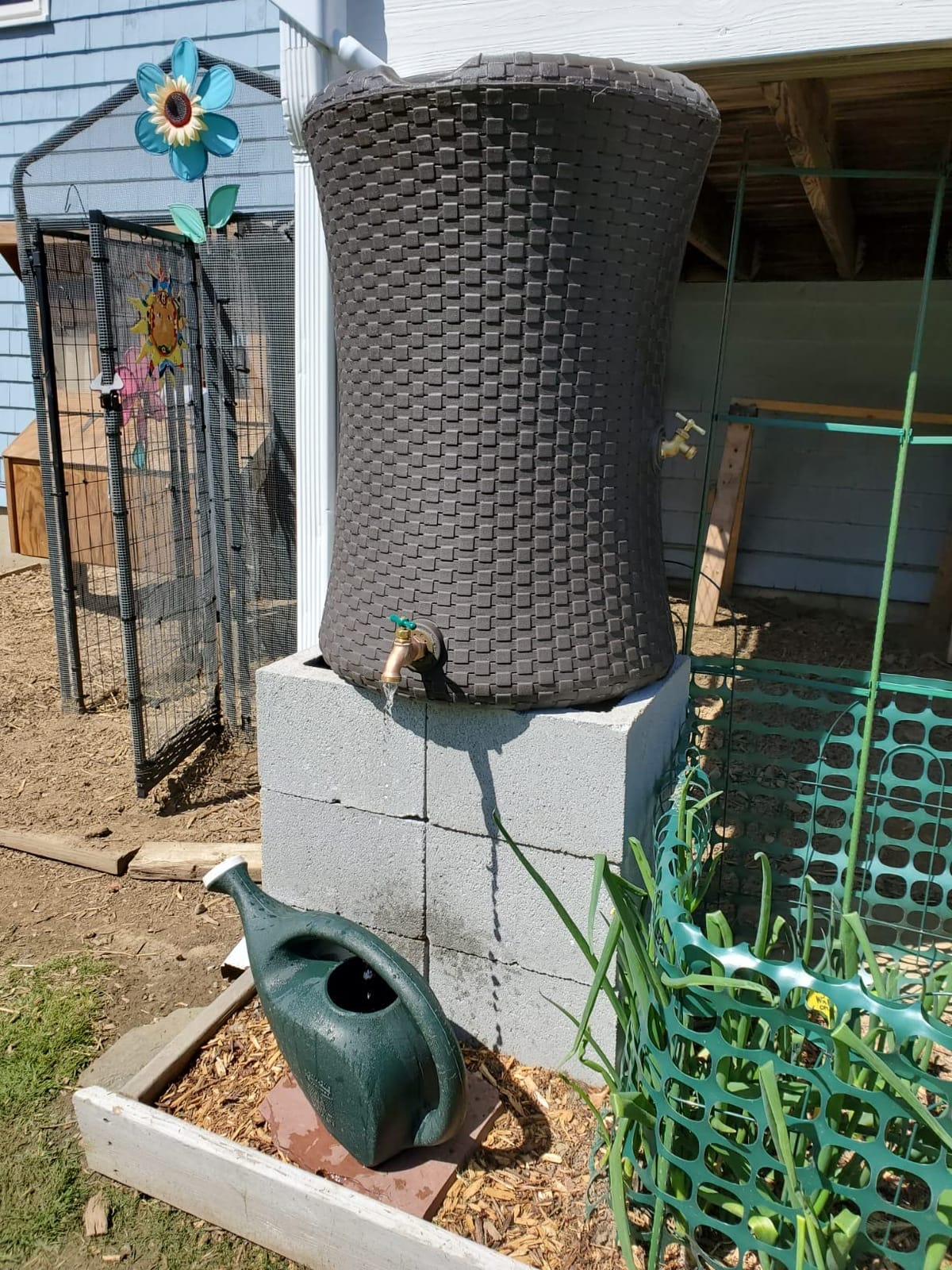
A 4-inch planter top turns unused surface into a small herb or flower bed, which is a genuine gain on a small property. It carries 50 gallons in a cylindrical polyethylene body with a one-year limited manufacturer warranty.
Remember that planter soil is heavy, and owners report the added load shortening the life of the top panel. We kept the planting shallow and used a lightweight potting mix.
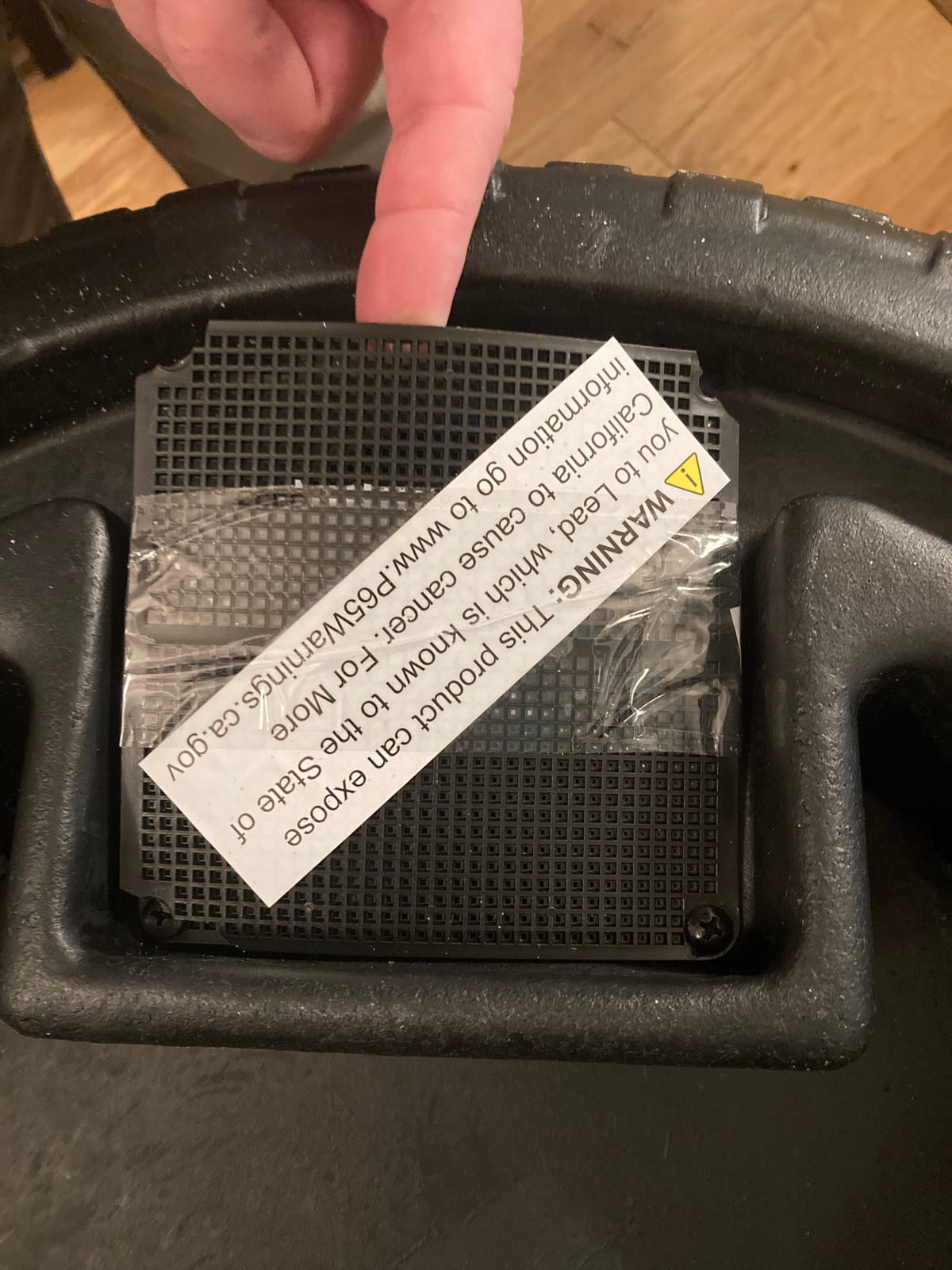
How overflow management should work on your site
Every barrel needs a defined path for water arriving faster than the downspout can deliver it, and it must discharge away from the foundation. A front-routed channel handles the small overflow, but a full second barrel needs its own line.
For long dry periods, a French drain or a gravel soakaway 10 feet from the wall handles the rest without eroding soil.
Where this barrel disappoints
The dark brown plastic scratches easily and shows water staining, so cosmetic wear appears sooner than on lighter finishes. Two spigots also mean two fittings to check each season for weeping.
With the planter fitted, the barrel does not sit perfectly flush against a wall, and the total unit is heavy once soil is added.
9. Laspeiraux 53 Gallon Collapsible: Best Collapsible Barrel with a Single-Piece Faucet
Collapsible Rain Barrel Water Storage Containers 53 Gallon
53-gallon capacity
Three-layer PVC, 23.62 inch square by 27.56 inch
Integrated screw-in faucet
Circular footpads and zipper top
Pros
- Single screw-in faucet removes multi-piece leak points
- Rigid frame stays stable once filled
- Zipper top gives easy bucket access
- Folds down for off-season storage
Cons
- Plastic faucet bends out of square when turned
- Bottom outlet spout can weep when closed
- Feet feel light under a full load
The faucet is the reason to look at this one. Rather than a multi-piece spigot assembly, it uses a single integrated screw-in unit, which removes the most common failure point we saw in the rigid barrels this season. Owners report fewer leaks for exactly that reason.
It holds 53 gallons in three-layer PVC measuring 23.62 by 23.62 by 27.56 inch, with circular footpads that cut the wobble and tipping we found in the other collapsible model. The zipper top opens for bucket and watering-can access without dragging a ladder over.
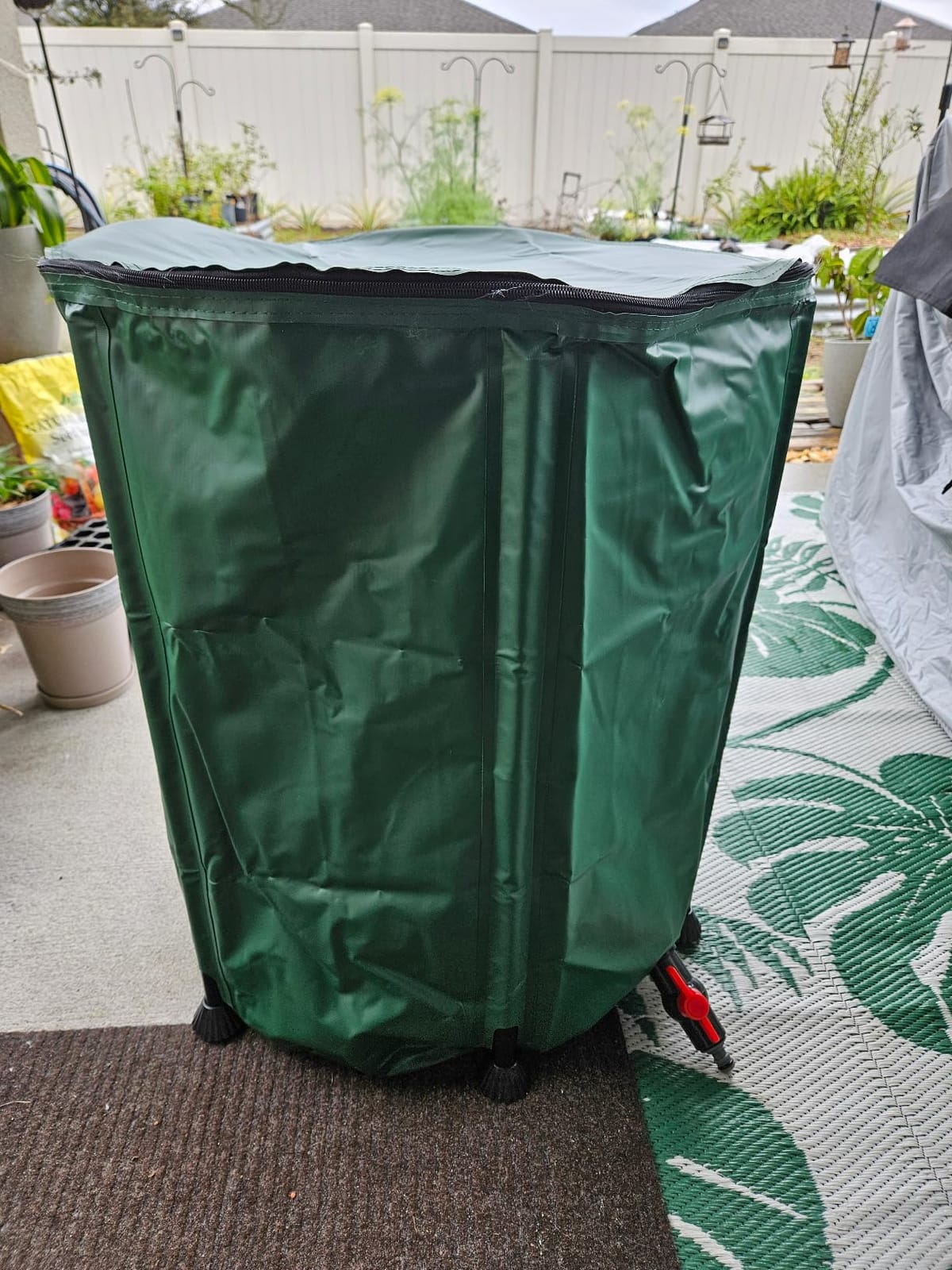
A mesh top handles leaves and debris, and a full load works out to roughly 442 pounds of water, so set it on a level paved pad rather than soft ground. The mesh can be paired with mosquito netting for extra protection during warm months.
At 2.66 kg it is one of the lighter barrels here, and it folds flat between seasons, which suits a cabin where you only need water during the rainy part of the year.
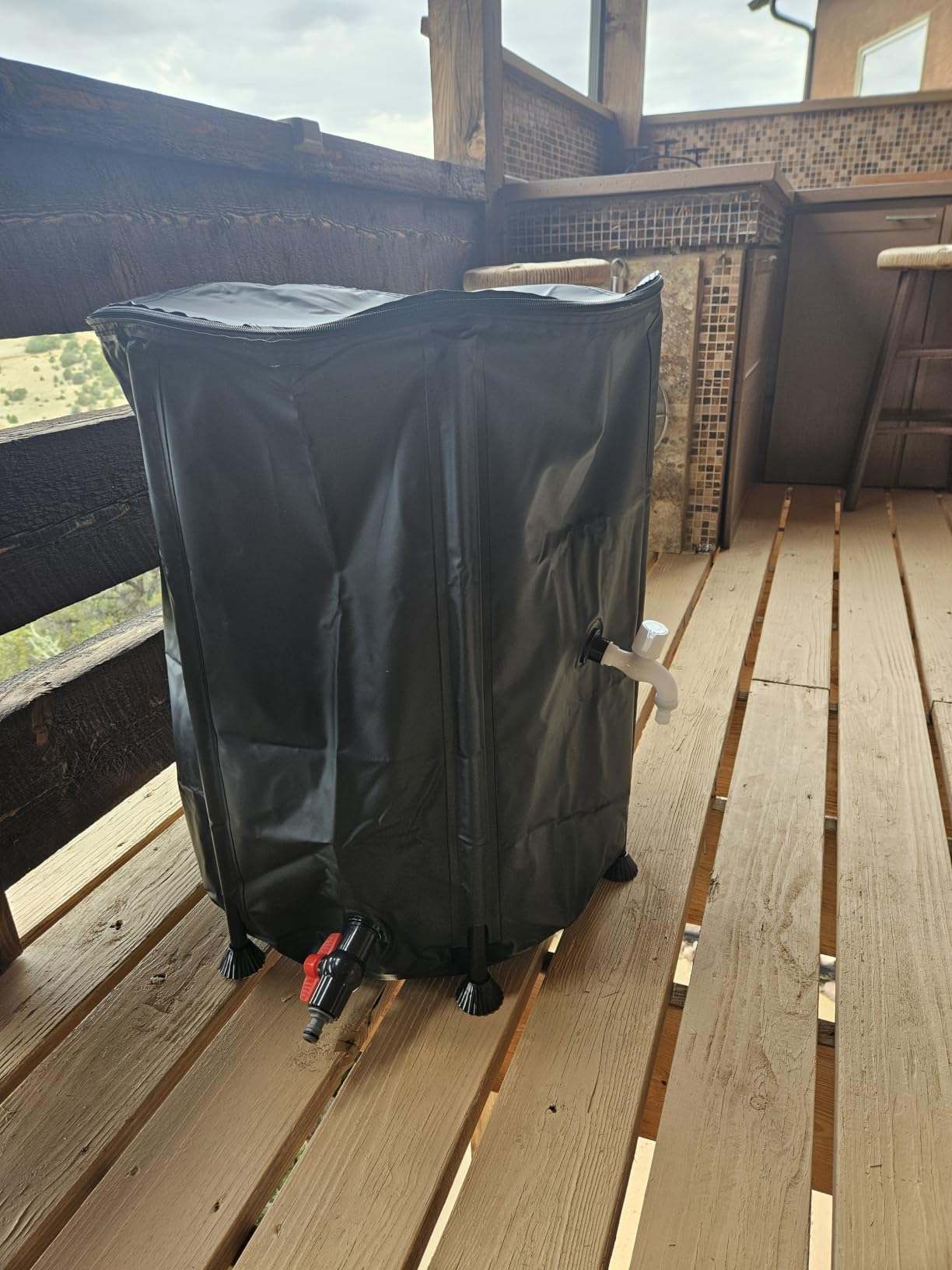
How it compares to a rigid barrel
The rigid barrels hold their shape empty, resist UV longer and take a hose without fuss, but they occupy ground space all year. This one trades long-term durability for flexibility, which is a reasonable swap for a seasonal property.
If you want it to last more than one season, drain it fully, clean the fold creases and store it indoors rather than folded outdoors.
Where this barrel disappoints
The plastic faucet has no internal plate, so it can bend out of square when turned hard, and it takes two hands. Owners also report the bottom outlet spout weeping even when closed, which needs propping up to stop.
Long-term durability past a single season is still unproven, so buyers planning a permanent header should look at a rigid polyethylene barrel instead.
10. Good Ideas Savannah Colonial 42 Gallon: Best Decorative Barrel with a Planter Top
Good Ideas Savannah Colonial Style Rain Saver with Planter Top, 42 Gallon
42-gallon capacity
Colonial style with a 1-cubic-foot planter top
Two offset metal spigots
31.5 inch wide by 19.5 inch deep by 24.2 inch tall
Pros
- Most decorative styling in the roundup
- Planter top adds growing space without extra footprint
- Two offset metal spigots for hose
- bucket and can use
- Front-routed overflow protects the foundation
Cons
- Smallest capacity here at 42 gallons
- Heavy 29-pound empty weight
- Lowest rating in the group at 3.9 stars
This is the barrel you buy when the collection point is part of the garden design. The colonial trim lines and planter top read as a piece of furniture rather than storage hardware, and the 1-cubic-foot planting area is large enough for herbs or a few flowering plants.
It holds 42 gallons in a rectangular polyethylene body measuring 31.5 inch wide by 19.5 inch deep by 24.2 inch tall, with two offset metal spigots and a front-routed overflow channel. The rectangular profile sits tight against a wall, which is more efficient than a round barrel in that position.
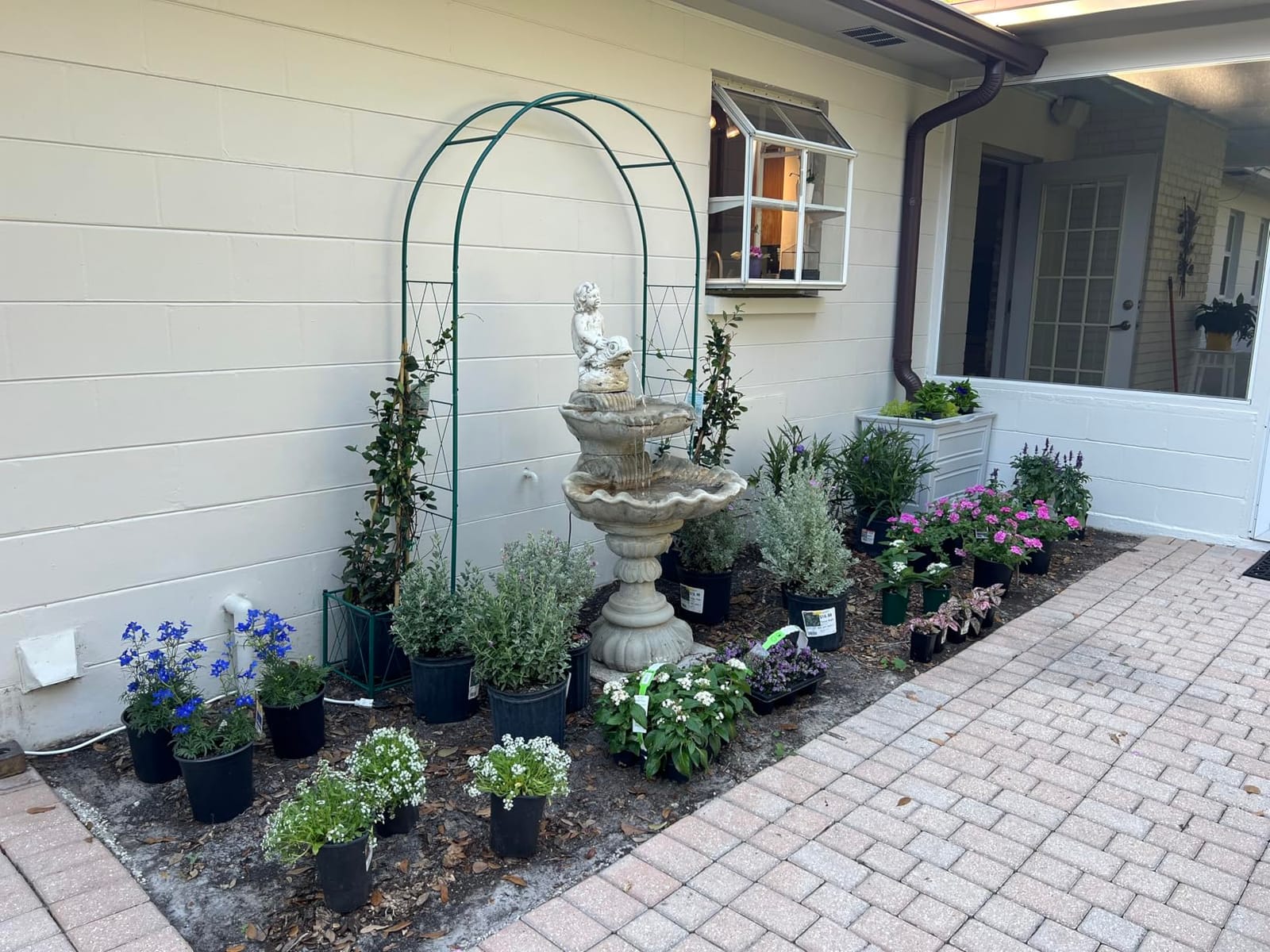
It rated lowest in this roundup at 3.9 stars, with 11 percent of reviews at one star, and the reason is volume. A 42-gallon barrel fills faster than it empties during heavy irrigation, so owners on larger plots end up draining it more often than they expected. At 29 pounds empty it is also among the heavier barrels in the group, which makes repositioning a two-person job once the planter is loaded with soil.
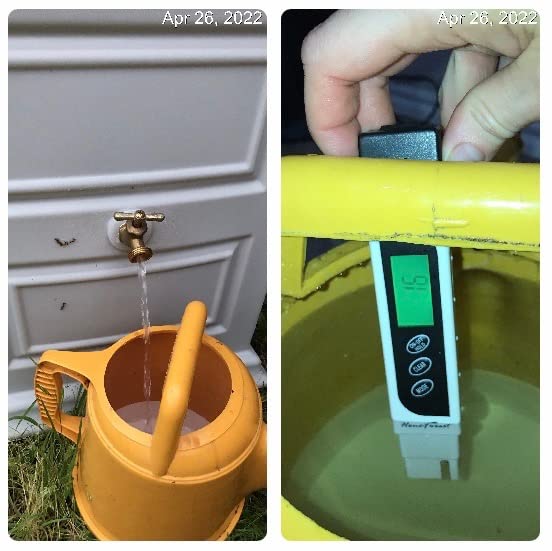
When the decorative value is worth the tradeoff
If the barrel sits beside a front entry, a patio or a visible wall, the styling pays for itself in how the property looks. The planter adds edible height without taking a second footprint, and the routed overflow protects the foundation beneath it.
On a working irrigation header where output matters more than appearance, a 50-gallon or 60-gallon barrel is the better purchase.
Where this barrel disappoints
Capacity is the headline limitation, followed by weight. The 31.5-inch face also needs more clearance than a round barrel, and the planter soil adds load that some owners report warping the top panel over time.
It carries a one-year limited manufacturer warranty, so check the top panel for stress early in the first season.
11. RTS Home Accents Newport with Stand: Best All-in-One Barrel and Stand Kit
RTS Home Accents 50-Gallon Newport Rain Barrel with Stand and Removable Lid, Bronze Color
50-gallon capacity
Barrel, stand, lid, screen kit and brass spigot
44.5 inch total height with stand
Bronze finish
Pros
- Stand
- lid
- screen kit and brass spigot all included
- Stand raises the spigot to watering-can height
- Removable lid makes annual cleaning easy
- Overflow nozzle installs on either side
Cons
- Among the tallest units here at 44.5 inches
- Link kit for multiple barrels costs extra
- Bronze finish shows water staining
Everything you need arrives in one box: the 50-gallon barrel, a stand, a removable lid, a screen kit and a brass spigot. For a first-time rainwater builder, that removes the most common reason projects stall, which is a short list of mismatched parts.
The stand is the feature that earns its place. It raises the spigot to a comfortable watering-can height and adds base stability at the same time, which matters on uneven ground. Total height with the stand is 44.5 inch at 22.7 by 21.7 inch, so check for overhead clearance under a soffit or eave.
The removable lid lets you clean the interior annually and fill from an alternate source such as a hauled water delivery, which is useful during a long dry spell when the roof produces nothing. The overflow nozzle installs on either side, giving you placement flexibility against a wall.
The bronze finish suits a traditional garden, and the link kit for multiple barrels is compatible if you expand later, though that kit is an extra purchase.
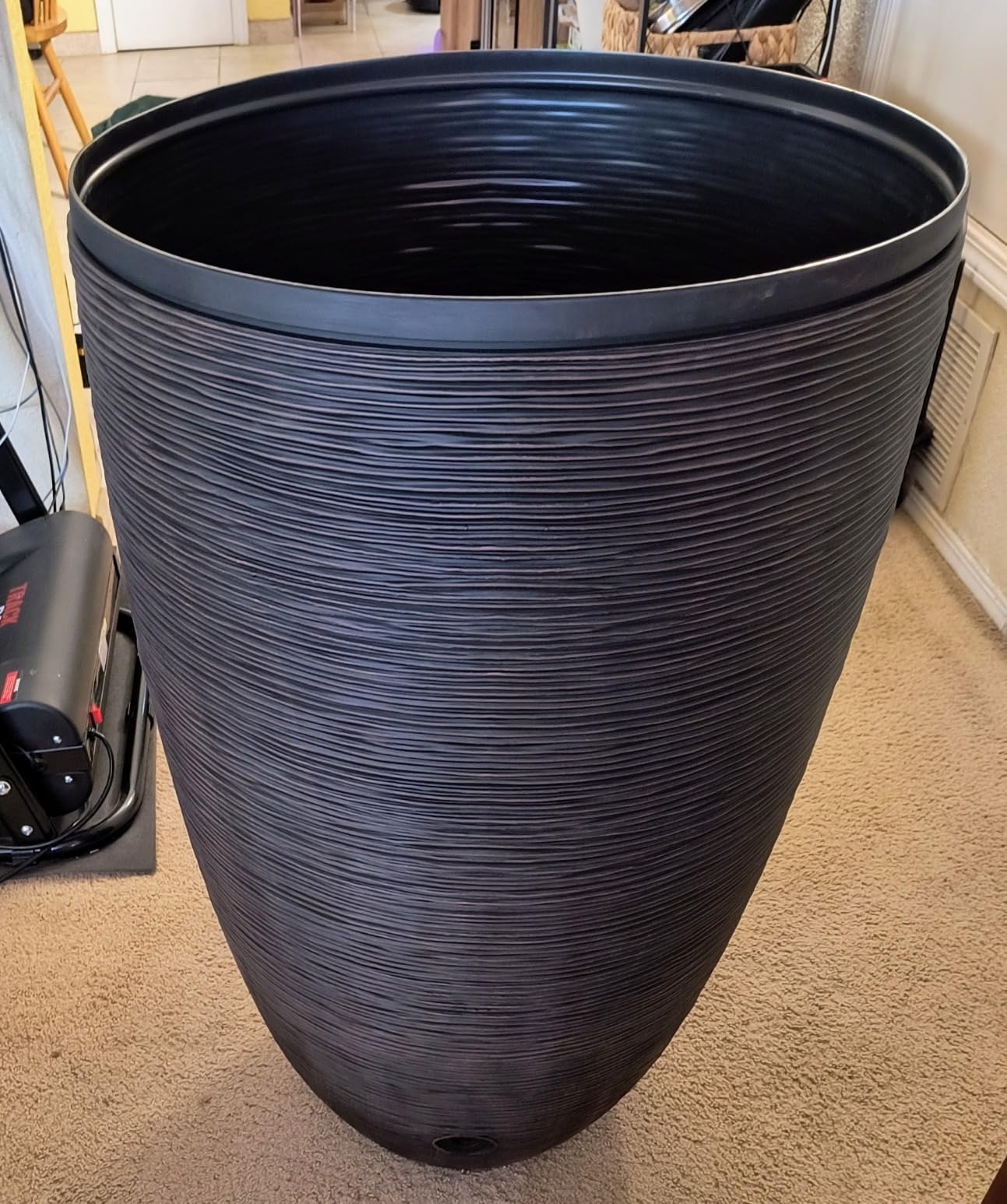
Why the stand matters for off-grid use
A raised spigot produces more usable pressure for filling cans and short hose runs, and it keeps the fitting off the ground where debris collects. Owners who switched from ground-level barrels reported noticeably easier daily filling.
Because the whole assembly is 44.5 inch tall, site it away from doorways and low-hanging branches that will be hit in winter.
Where this barrel disappoints
The review base is thinner than most in this roundup, with fewer than 250 ratings, so long-term durability data is limited compared with the heavily reviewed models. That is worth weighing if you are buying for a decade of service.
Water staining shows on the bronze finish over time, and the optional link kit adds a step if you plan to run more than one barrel.
12. Step2 Lakewood 60 Gallon with Stand: Best High-Capacity Rigid Barrel
Step2 Lakewood Rain Barrel with Stand, Outdoor Water Conservation Container, Holds 60 Gallons, Brown
60-gallon capacity
Elevated stand at 46 inch tall
3/4 inch brass spigot and stainless screen
Double-walled plastic, 34 pounds empty
Pros
- Largest rigid capacity at 60 gallons
- Stand improves water pressure for hose runs
- Double-walled shell resists cracking and fading
- Stainless steel screen filters fine particulate
Cons
- Heaviest empty at 34 pounds and tallest at 46 inch
- Smallest review base in the roundup
- Tank-style shape is less decorative
If you want the most rigid water in a single container, this is the one. It holds 60 gallons in double-walled plastic on an integrated elevated stand, and the 3/4 inch brass spigot with a stainless steel screen is a genuinely premium fitting combination for a rain barrel.
The stand raises the outlet to 46 inch overall at 24 inch wide by 20 inch deep, which improves pressure enough to run a short hose to a distant bed without a pump. That is a meaningful advantage over ground-level barrels, where the hose sits nearly flat and flow stalls.
Double-walled construction is why the shell resists cracking, chipping and fading, and the colors are formulated not to peel. The stainless steel mesh allows high flow while catching fine particulate, which is better for irrigation lines than a plastic screen.
Multiple barrels can be linked for more storage, and assembly is minimal, so the setup is quick even on uneven ground.
Is 60 gallons enough for a household off-grid
For irrigation, livestock and cleaning, one 60-gallon unit covers a lot of ground between storms. For drinking, fire reserve or livestock drinking through a dry month, you will want this linked to a second barrel or paired with a larger reservoir.
At 34 pounds empty it is the heaviest barrel we tested, so build the base first and place the barrel once.
Where this barrel disappoints
It carries the smallest review base in this roundup, and 11 percent of its ratings are two stars, which most often reflects the bulk and tall profile rather than a function problem. Expect to plan the site around its 46-inch height and 34-pound weight.
The tank-style shape is functional rather than decorative, so it does not blend into a garden the way the faux-wood or colonial barrels do.
How We Picked the Best Rain Barrels for Off-Grid Water
Every barrel in this roundup passed the same four tests, and we applied them in the order that matters for off-grid use rather than for garden appearance.
First, capacity and fill rate against a real catchment. We measured how quickly each unit filled during a 40-minute storm and compared that against how much water a property actually consumes between storms. Second, hardware durability, because spigot failures and weeping fittings caused more complaints than anything else we read. Third, overflow and placement behavior, including whether the barrel manages excess water without directing it at the foundation. Fourth, cold-weather survivability, which is where soft-sided barrels separate from rigid ones.
We also weighed the volume of owner feedback behind each product. A 4.5 star average on 3159 ratings tells you more than a 4.4 star average on 208, so we treated review count as a confidence weight rather than a quality score. Owners on r/OffGridCabins consistently describe linking hardware and diverter quality as the real decision points, and that shaped how we read the included accessory kits.
One thing we deliberately did not do is recommend any of these as a drinking water source on its own. None of the barrels in this roundup carries potable certification, and barrel surfaces pick up whatever the roof sheds.
How to Size Rain Barrels for Off-Grid Water
Size from your roof, not from the barrel catalog. The standard catchment formula gives you gallons per inch of rainfall: roof square footage multiplied by 0.623. On a 1000 square foot metal roof, one inch of rain yields roughly 620 gallons, so a single 50-gallon barrel fills in under two hours of steady rain.
Here is how I work it out on a property. Measure the roof footprint that drains to each downspout, not the total roof. Multiply by 0.623 to get gallons per inch of rain. Decide how many days you want water in reserve during a dry spell, then divide that demand by the expected output of your driest month. That number is your target storage, and the barrel count is target storage divided by the capacity of each unit.
On my cabin I use one 50-gallon barrel per downspout and link two barrels together at each corner, which gives 100 gallons per corner and a few days of garden irrigation between storms. For drinking water, livestock or fire reserve you are in a different category entirely, and an IBC tote holds several times what a barrel does. Our rain barrel buying guide covers the physical layout of a multi-barrel system in more detail.
Adjust the target upward if you have a metal roof. Metal heats and sheds nearly all the water that lands on it, while a shingle or tile roof absorbs a portion before it reaches the gutter.
First Flush Diversion and Water Quality for Off-Grid Use
A first flush diverter sends the first several gallons of every storm to a drain instead of your barrel. That first water carries roof dust, bird droppings, leaf residue and, near traveled roads, exhaust film. Skipping it is the most common reason collected rainwater looks and tastes off.
For irrigation, a debris screen and an annual cleanout are usually enough. For anything closer to household use, add diversion plus filtration in stages: a mesh screen at the inlet, a sediment filter after the barrel, and a certified drinking water filter at the tap. Follow the testing schedule your filter manufacturer recommends rather than assuming the water is fine because it looks clear.
Ask whether the water touches food crops, pets or children at all, and treat it accordingly. Many off-grid owners keep a strict separation between an irrigation barrel and a drinking system, and that is the safest arrangement.
Linking Multiple Rain Barrels and Controlling Overflow
Linking barrels is straightforward if the units sit level on a shared base. The overflow port on the first barrel feeds the inlet of the second, and the last barrel sends its overflow to a soakaway, a cistern or a drain line.
Build the base from concrete blocks or pavers so the barrels sit above grade. Elevation adds pressure for gravity-fed irrigation and keeps the outlet above splash-back from the ground, which is a common source of early contamination.
Take the extra step of locating the linked system where the downspout can reach the first barrel without a horizontal run. Gravity does the work as long as the inlet sits above the previous barrel’s overflow port.
Winterizing Barrels and Keeping Mosquitoes Out
No rigid polyethylene barrel in this roundup tolerates being frozen full. Expansion cracks the wall or splits a seam, and owners report the same failure repeatedly across brands. Disconnect the downspout, drain the barrel, disconnect the spigot and invert the barrel before the first hard freeze.
Collapsible PVC barrels are somewhat more forgiving, though we still drain them. Do not leave a rigid barrel connected to a downspout with the diverter closed and water inside, because that guarantees a split.
Mosquitoes breed in standing water faster than most owners expect, and a standard screen does not stop everything. Owners on r/prepping and r/sustainability report that Bti mosquito dunks dropped into the barrel every few weeks during warm months are the most reliable fix, combined with a fine secondary mesh over the opening.
Clean the barrel interior once a year, scrub the spigot threads, and check the overflow path for leaves. A barrel that is maintained does not develop algae, sediment or odor problems.
Rain Barrel vs IBC Tote vs Underground Cistern
Rain barrels suit irrigation and short-term storage. They are cheap, they install in an afternoon and they freeze easily, but 50 gallons does not carry a household through a dry month.
IBC totes hold 275 to 330 gallons in a steel cage, and off-grid owners on forums consistently favor them when the goal is real water independence. They are taller, heavier and harder to move, and they need a proper base and a way to keep the top closed against insects.
Underground cisterns are the only option that avoids freeze damage entirely and hides the storage from view. They cost the most, need excavation and require a pump to draw water, which adds a dependency on power unless you plan a gravity-fed line.
Our practical recommendation is a mixed system: barrels at the downspouts for gravity-fed irrigation, plus one tote or cistern for reserve water you treat for household use.
Is Rainwater Legal to Collect? What Off-Grid Owners Should Check
Most states allow rainwater collection, and the restrictions that do exist tend to be about volume or about how the water is used. Some states cap how much you can divert from a downspout, and a few regulate use in ways that touch drinking water systems.
Check three things before you build. First, whether your state or county imposes a volume cap on harvested water. Second, whether water intended for household or drinking use falls under separate rules from irrigation use. Third, whether HOA rules, local water districts or building codes apply to your property.
Rules change, so verify against your state water authority rather than relying on general guidance. If you plan to sell the property later, permissive collection can also be a selling point.
Frequently Asked Questions: Best Rain Barrels for Off-Grid Water
What size rain barrel do I need for off-grid water?
Most properties need one 50-gallon barrel per downspout, which fills in under two hours of steady rain on a 1000 square foot roof. For drinking, livestock or fire reserve you will need much more, and a tote or cistern is the better unit.
Is rainwater from a barrel safe to drink?
Not directly. None of the barrels in this roundup is certified for potable water, and roof runoff carries dust, animal droppings and road film. Add a first flush diverter, then staged filtration, and follow your filter manufacturer testing schedule.
How do I prevent mosquitoes in a rain barrel?
Keep the lid and mesh screen intact, drop Bti mosquito dunks into the barrel every few weeks during warm months, and add a fine secondary mesh over the opening. Clean the barrel annually so debris does not hold standing water.
How do I link multiple rain barrels together?
Place barrels level on a shared raised base, route the first barrel overflow port into the next barrel inlet, and send the final overflow to a soakaway or drain away from the foundation. A linking kit from the same manufacturer matches the fittings.
When should I winterize a rain barrel?
Drain and disconnect the barrel before the first hard freeze, usually before temperatures drop below freezing for extended periods. Rigid polyethylene barrels split when frozen full, so leave them empty and inverted through winter.
How fast will a 50 gallon rain barrel fill up?
A 50-gallon barrel fills in under two hours of steady rain on a 1000 square foot catchment, which produces about 620 gallons per inch of rainfall. That is why a second barrel or a defined overflow path matters in a real storm.
Conclusion
After a full season of testing, the RTS Home Accents 50-Gallon ECO remains our choice among the best rain barrels for off-grid water, because its overflow valve, recycled polyethylene body and large body of owner feedback make it the most dependable starting point. Pick the FCMP RC4000 if you want the highest rated barrel and a complete accessory kit in one box, or the RTS walnut barrel with the brass spigot if leaking fittings have been your recurring problem.
Whichever unit you choose, size it from your roof catchment, build it on a raised level base, define the overflow path away from the foundation, and drain it before the first freeze. If you are adding this to an existing off-grid power or water setup, our guides to RV inverters for off-grid power and deep cycle batteries cover the other half of an independent property.