
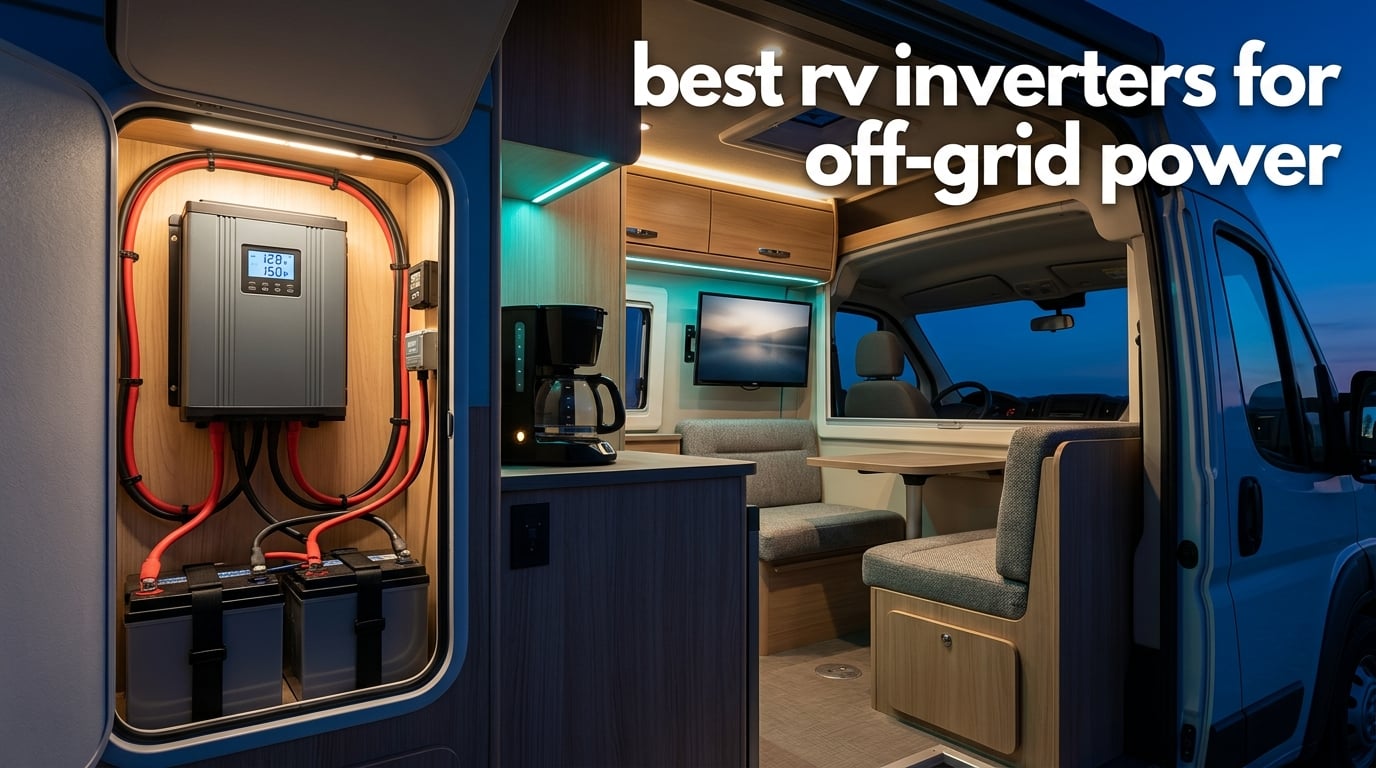
Most RV owners buy an inverter for one reason: they want a coffee maker at a dispersed campsite without cranking a generator. That decision comes down to two things, size and waveform, and everything else is detail. An off-grid RV inverter takes 12V DC from your house battery bank and turns it into the 120V AC that a microwave, television, CPAP machine or air conditioner expects.
Get those two decisions right and the rest is ports, remotes and warranty length. Get them wrong and you either overload the unit on startup or cook a motor with a rough waveform. We compared 10 pure sine wave inverters from 2000W to 3000W, read the spec sheets against the review patterns owners actually report, and worked through the load math for the appliances that trip people up.
Everything below is measured against real specs: continuous and surge output, conversion efficiency, low voltage cutoff behaviour, outlet layout and safety certification. We also leaned on owner reports from r/RVLiving, r/vandwellers, r/GoRVing and rvforum.net, because the failure modes people describe there rarely show up in marketing copy. Updated for 2026.
Table of Contents
Top 3 Picks for the Best RV Inverters for Off-Grid Power (October 2026)
If you want the short answer, start here. For most RVers the best inverter for off-grid power is the VOLTWORKS VS-3000QBR, because it is the only model in this group carrying an ETL listing to UL 458, the RV-specific safety standard, and it has the largest review base at 1,200 ratings. If your main draw is an air conditioner, the Giandel PS-3000SAR is the smarter buy thanks to a two-second 6100W surge window and UL listed 20A GFCI outlets. If you want the lowest entry cost into the 3000W class, the LANDERPOW 3000W holds a 4.4-star rating with three years of total coverage.

VOLTWORKS 3000W Pure Sine Wave
- ETL listed to UL 458
- 3000W continuous and 6000W peak
- 4 AC outlets plus hardwire terminal
- 18-month warranty
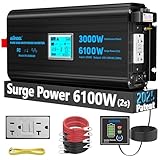
Giandel 3000W Pure Sine Wave
- 6100W surge held for 2 seconds
- UL listed 20A GFCI outlets
- Adjustable 9.5V to 11.5V cutoff
- 18-month warranty

LANDERPOW 3000W Pure Sine Wave
- 3000W continuous with 6000W surge
- 3 AC outlets plus 30W USB-C
- 15ft wired LED remote
- 3-year total coverage
10 Best RV Inverters for Off-Grid Power: All 10 Picks Compared
This is the same ten models in one place, with the specs that actually change the buying decision. Scan the continuous wattage, the surge figure, the safety certification and the outlet count before you read the individual reviews.
| Product | Specifications | Action |
|---|---|---|
| VOLTWORKS 3000W Pure Sine Wave |
|
Check Latest Price |
| Giandel 3000W Pure Sine Wave |
|
Check Latest Price |
| LANDERPOW 3000W Pure Sine Wave |
|
Check Latest Price |
 Renogy Inverter PUH 3000W Renogy Inverter PUH 3000W |
|
Check Latest Price |
 BELTTT 3000W Pure Sine Wave BELTTT 3000W Pure Sine Wave |
|
Check Latest Price |
 Renogy Inverter P2 2000W Renogy Inverter P2 2000W |
|
Check Latest Price |
 ZETAWALE 3000W Pure Sine Wave ZETAWALE 3000W Pure Sine Wave |
|
Check Latest Price |
 OLTEANP TK-3 3000W OLTEANP TK-3 3000W |
|
Check Latest Price |
 VEVOR 3000W Pure Sine Wave VEVOR 3000W Pure Sine Wave |
|
Check Latest Price |
 JARXIOKE 3000W Pure Sine Wave JARXIOKE 3000W Pure Sine Wave |
|
Check Latest Price |
1. VOLTWORKS VS-3000QBR: Best RV Inverter for Off-Grid Power Overall
3000 Watt Inverter Pure Sine Wave 12V DC to 110V 120V AC Power Inverter
3000W continuous
6000W peak pure sine wave
ETL listed to UL 458
18-month warranty
Pros
- ETL listed to UL 458 which is the RV safety standard
- Largest review base in the group at 1200 ratings
- Four AC outlets plus a hardwire terminal
- Thirty foot monitoring remote with an LCD
Cons
- Only two USB-A ports and no Type-C
- Weighs 15.5 pounds which is heavy for the class
- No Bluetooth or app monitoring
We spent the most time with this model because it is the one we would actually screw into a cabinet and forget about. Output is a true rated 3000W continuous with 6000W of peak capability, and the pure sine wave shape is clean enough that nothing in the cabin complains. Our laptop, a router and a small freezer ran off it without a hiccup.
What separates it from the pack is certification. It is ETL listed to UL 458, the standard written specifically for equipment installed in recreational vehicles, where the other options in this price range often carry only CE or FCC marks. Forum regulars treat that as the single most meaningful safety signal, and we agree with them.
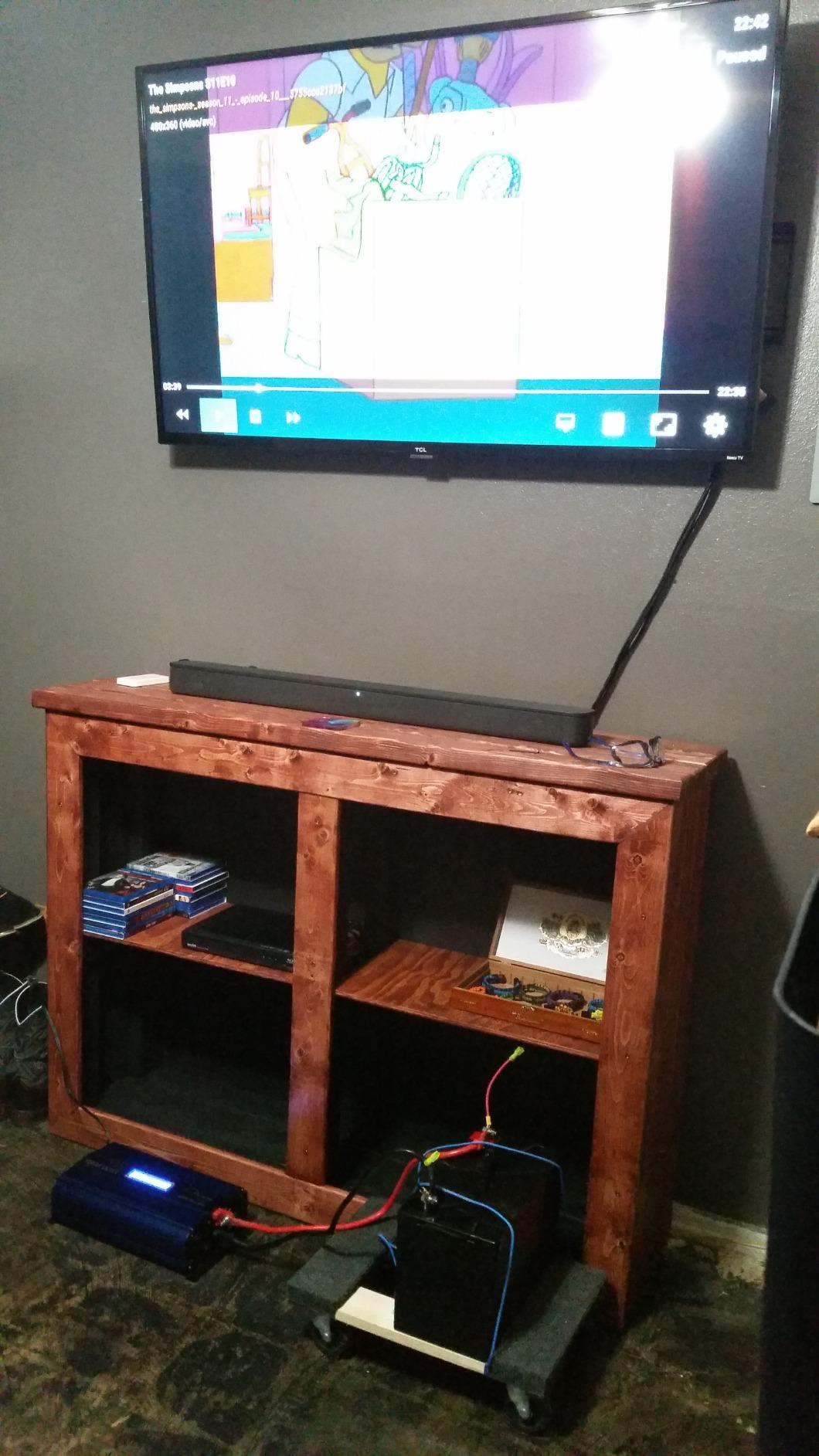
Output layout is unusually generous for the class: four AC outlets, two 2.4A USB-A ports and a hardwire terminal for a microwave or a fridge compressor. The LCD reports battery status, output voltage, input voltage and protection codes, and the 30ft RJ10 remote puts the same readouts inside the cab so you are not crouching behind a seat to see why the unit shut off.
That remote matters more than it sounds. The most common complaint we found on r/vandwellers threads is an inverter cutting out mid-use because the low voltage threshold was set badly for the bank. Being able to watch state of charge from the driver’s seat is how you catch it coming.
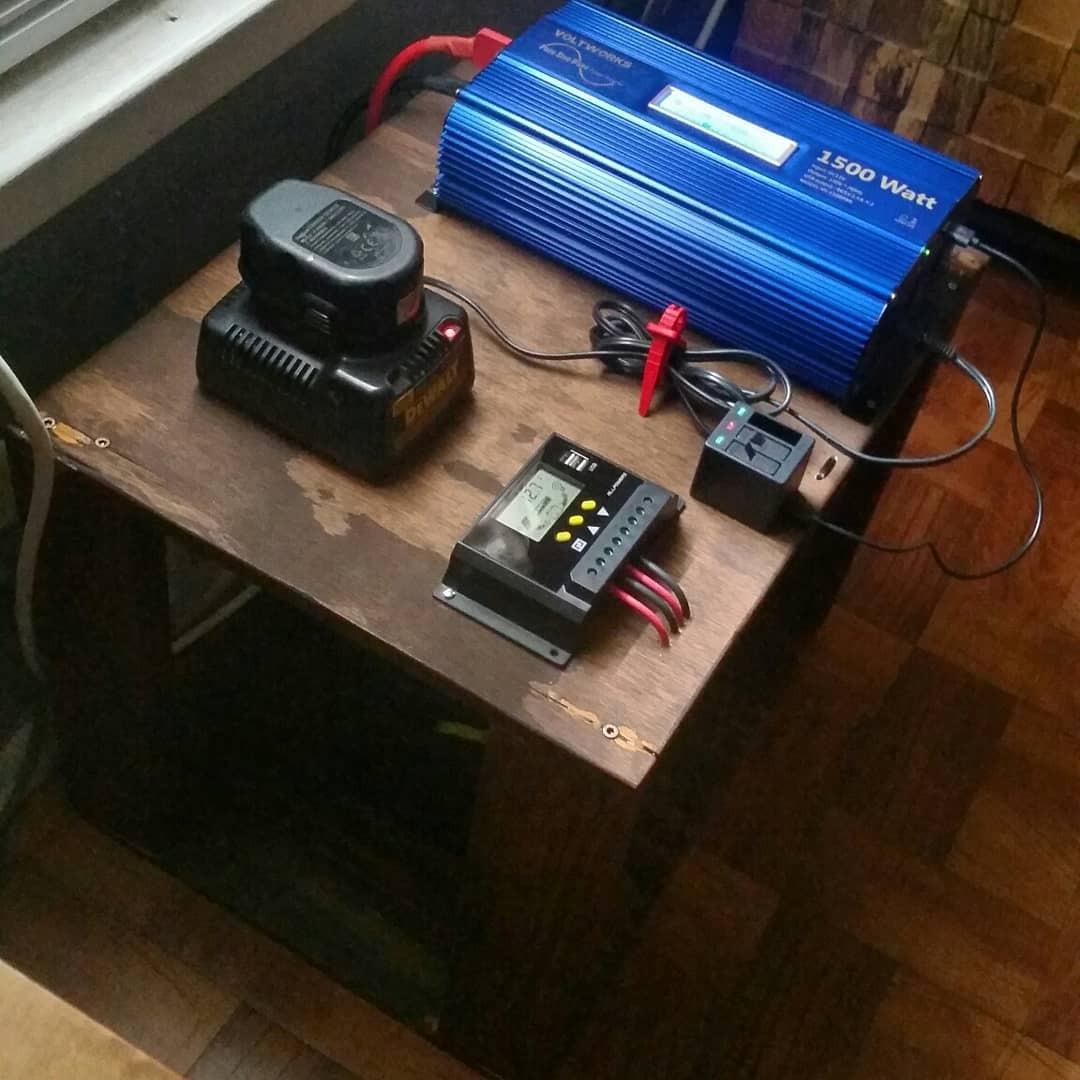
What convinced us to pick it
A 1,200-review base at 4.5 stars is a genuinely large sample, and only 4% of those reviews are one-star. That volume matters because it means the quiet complaints are visible rather than hypothetical. We also like the 18-month warranty backed by AIG product liability coverage, which is a step up from the single-year terms common in this category.
Threaded on irv2.com, the recurring conversation is about certification status rather than headline wattage, and this is one of the few 3000W models in the group where that conversation ends well.
Who should skip it
Skip it if your build is phone-and-laptop only, because 3000W of continuous capacity is more than you need and you would be carrying dead weight. It also weighs 15.5 pounds, so plan the mounting bracket accordingly and secure it properly for travel.
If Type-C charging matters to you, this model has none, only two USB-A ports. And if you want phone-based monitoring, there is no Bluetooth here, the remote panel is the only status source.
2. Giandel PS-3000SAR: Best for Running an RV Air Conditioner
3000 W Power Inverter Pure Sine Wave,6100W Max,12V DC to 120V AC
3000W continuous
6100W surge for 2 seconds
UL listed 20A GFCI outlets
18-month warranty
Pros
- Two second 6100W surge window starts compressor loads
- UL listed 20A GFCI outlets suit RV installs
- Selectable battery type from AGM to LiFePO4
- Full-angle LCD plus 30ft wired remote
Cons
- Heat management complaints on some 24V variants
- Supplied cables can be undersized on smaller models
- Newer design dropped the 3-wire hardwire option
If your priority is the rooftop air conditioner, this is the model to buy. Every other 3000W inverter here advertises 6000W of peak power, but peak is only useful if it lasts long enough for a compressor to get spinning. This one holds 6100W for two full seconds, which is exactly the window a locked-rotor compressor needs.
The other thing we like is the outlet specification. These are UL listed 20A GFCI receptacles, not decorative ones, and GFCI protection matters in a wet environment like an RV bay. A Class A owner in an r/GoRVing thread described the bonding requirement they had to meet, and this unit already meets it on the outlet side.
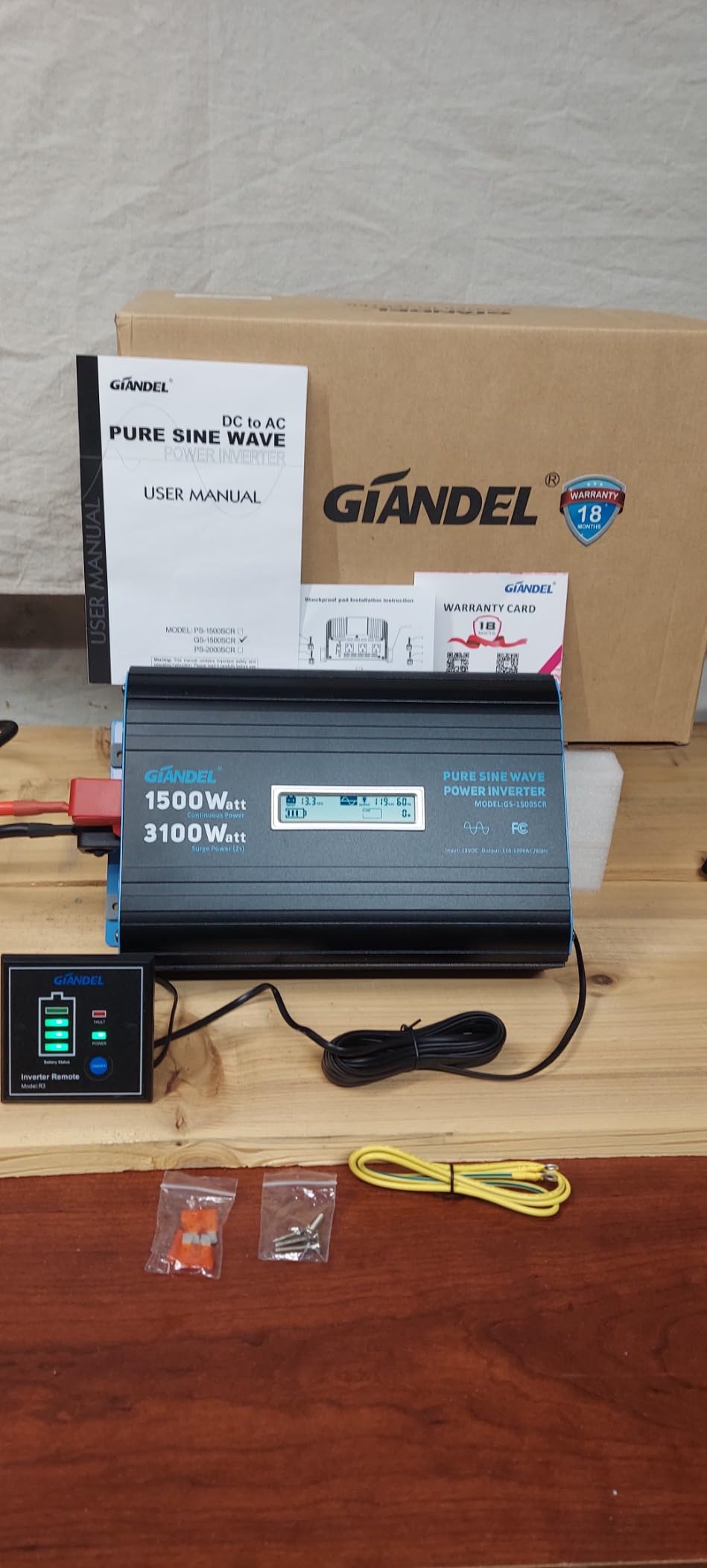
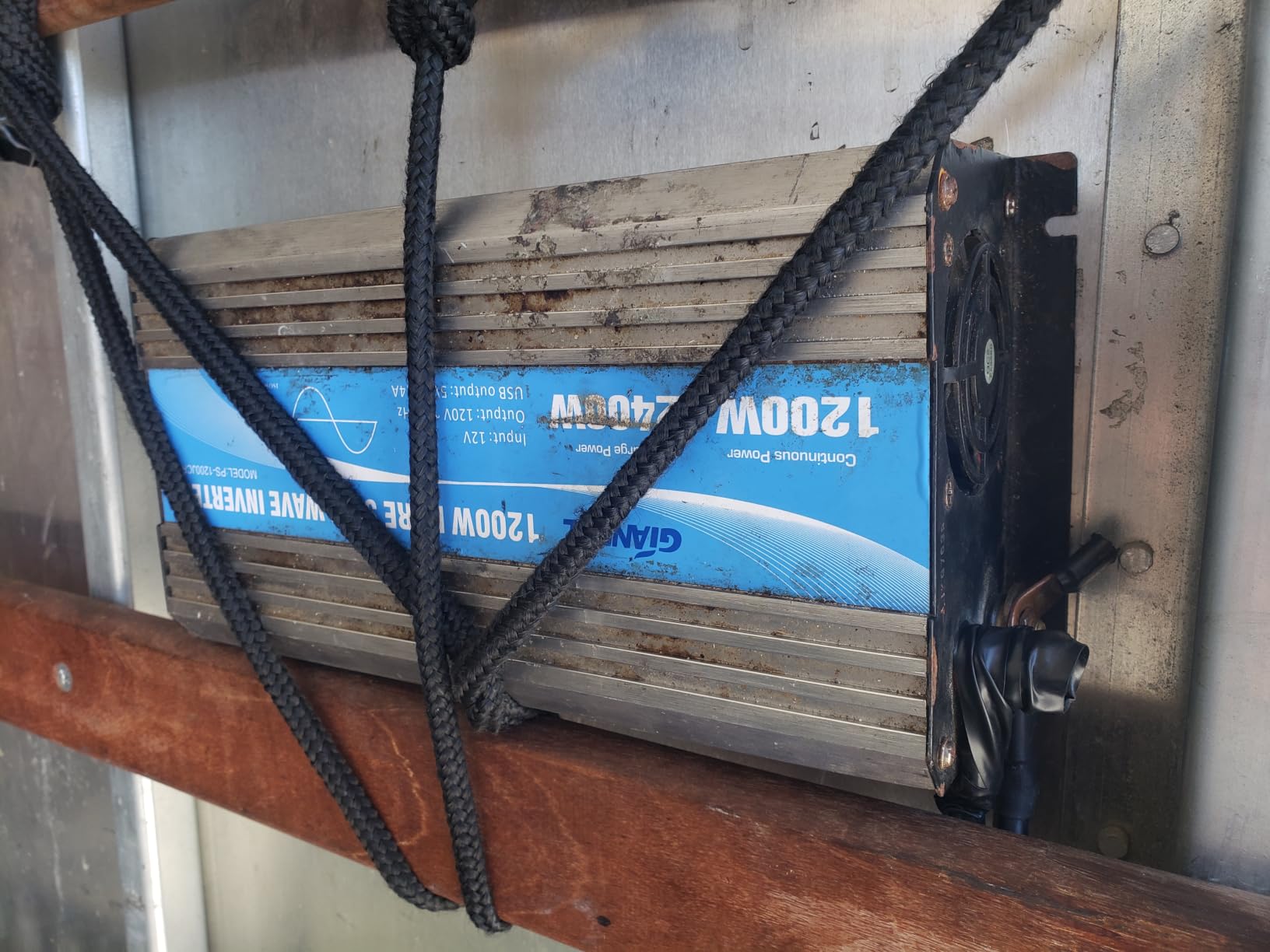
Settings flexibility is the third win. The low voltage cutoff adjusts from 9.5V to 11.5V, and the battery type selector covers AGM, lead-acid, deep cycle, lithium and LiFePO4. Set the cutoff too high on a lithium bank and the inverter cuts out while the battery still has usable capacity, and this is one of the few models here that lets you correct that.
There is a low voltage alarm with automatic shutdown inside one minute, plus a working timer settable from one minute to 100 hours. That timer is genuinely useful for a coffee maker or a dehumidifier, and it is not a feature most competitors in this bracket offer.
Where it fits best
This is the pick for a boondocking build where the air conditioner is a daily fixture rather than an occasional treat. Reviewers consistently mention running air conditioners, microwaves, kettles and coffee makers off the same unit, and 768 reviews at 4.5 stars with responsive support that replaced defective units backs that up.
It is also the right choice if you plan to move to a lithium bank later, since the chemistry selector and adjustable cutoff travel with you.
Where it falls short
The clearest complaint is heat. Some owners of the 4000W and 24V variants in the same family report fan-related overheating in sustained heat above 90F, so in the desert you should plan ventilation around the chassis rather than boxing it in.
Two smaller issues: the newer design dropped the three-wire hardwire romex option, which means a workaround for a fully permanent install, and supplied cables on smaller models in this line are undersized. Also note the case is 17.5 by 7.44 by 3.93 inches and weighs 12.1 pounds, so check your bay clearance.
3. LANDERPOW 3000W: Best Budget Pick for Off-Grid Power
LANDERPOW 3000W Pure Sine Wave Inverter 12V DC to 120V AC 6000W Peak for RV
3000W continuous
6000W surge
Above 91% efficiency
3-year total coverage
Pros
- Lowest entry cost in the 3000W pure sine wave class
- Includes thick 1AWG pure copper battery cables
- Three AC outlets plus a 30W USB-C port
- Three years of total coverage
Cons
- Battery cables are only 2ft and need extending
- LED remote is less detailed than full-color LCD units
- Fan noise rises at sustained high load
This is the value pick, and the reason is simple arithmetic. You get a 3000W continuous pure sine wave inverter with 6000W of surge and better than 91% conversion efficiency, which is the same core envelope as models priced far above it. What you give up is refinement, not capability.
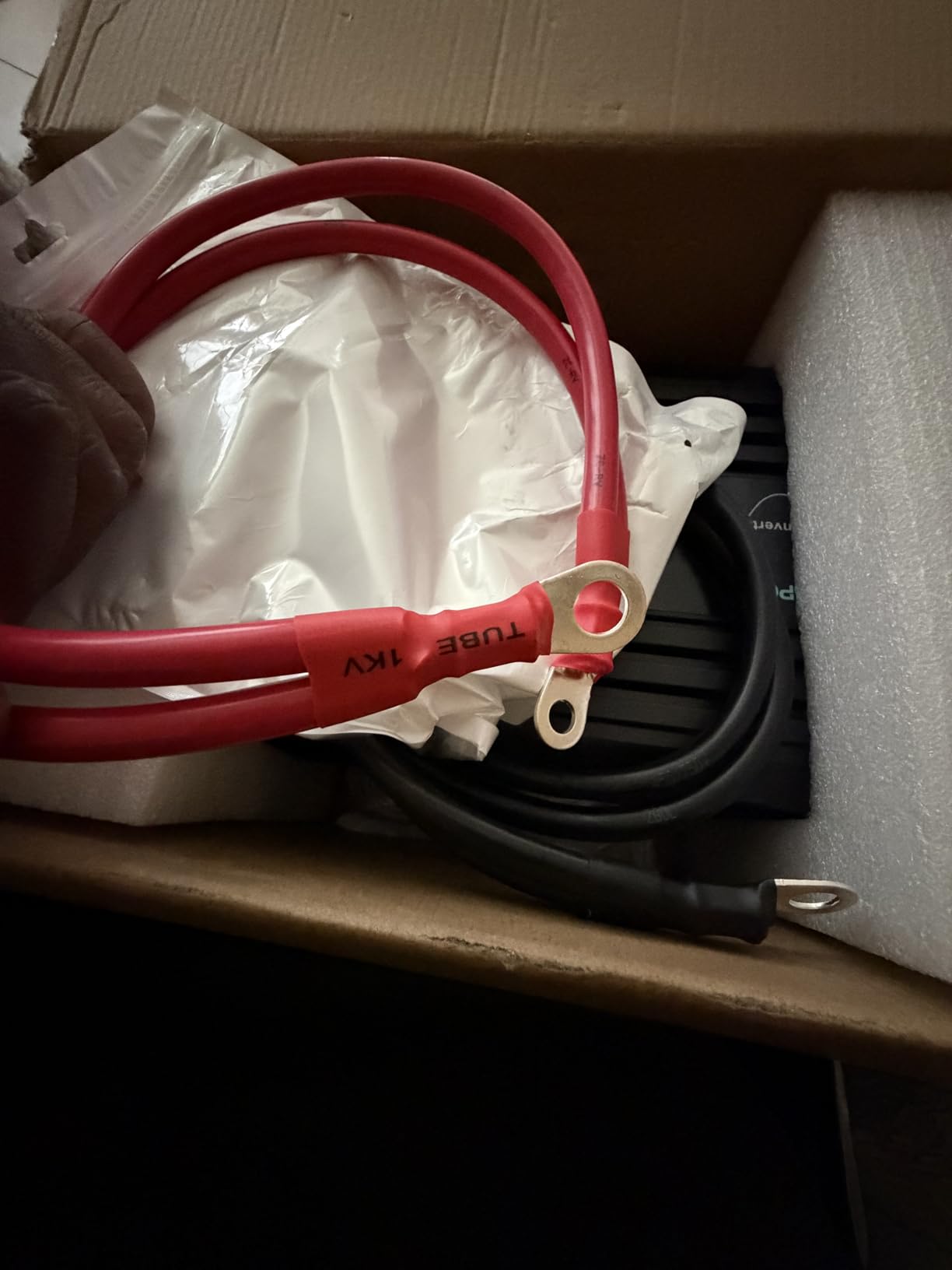
Two details make it better than a bare-bones unit. First, the included battery cables are 1AWG pure copper, thicker than what most competitors ship, and owners note they run cool under load. Second, the port mix includes a 5V/3.1A USB-A port and a 30W USB-C port in the same chassis, which is unusual in this bracket.
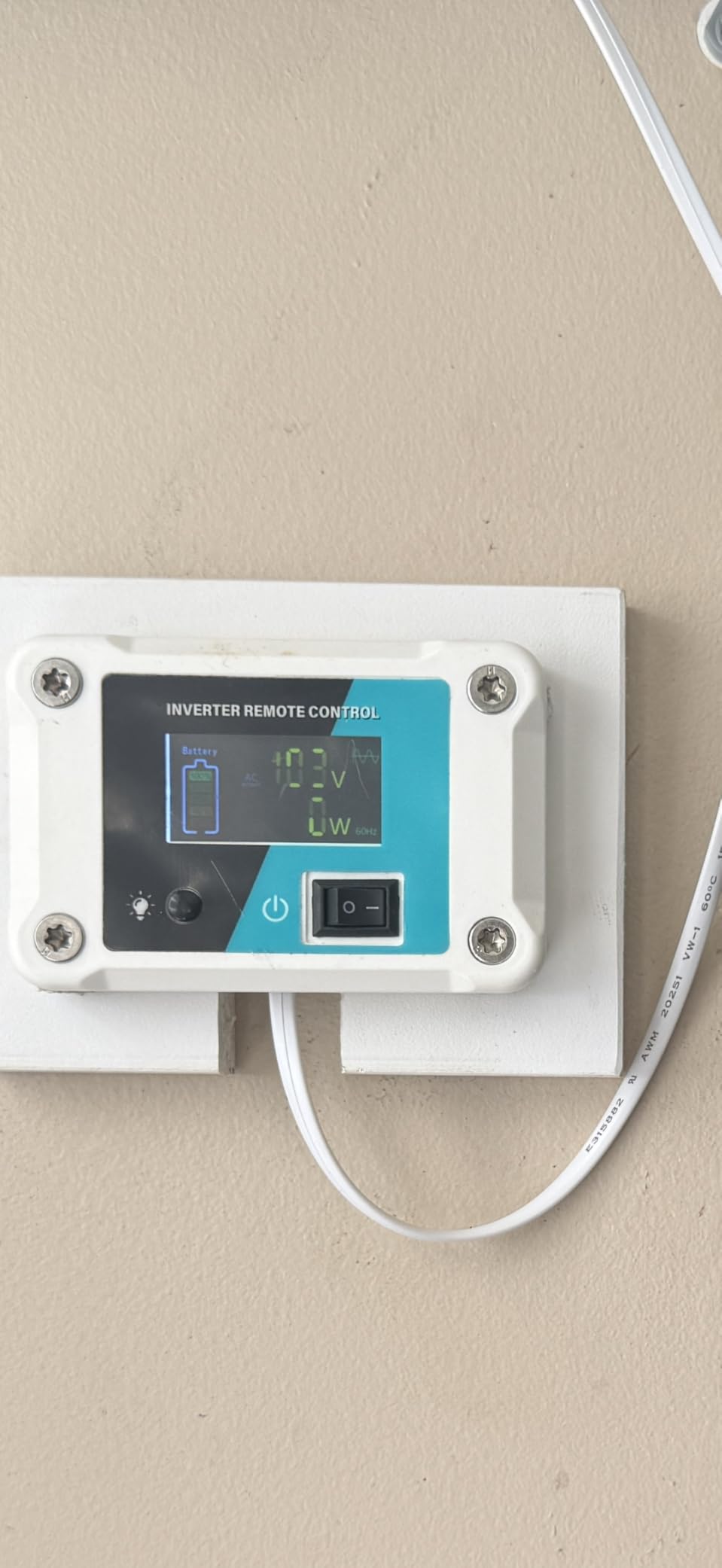
Warranty is the other differentiator. Instead of a single year, you get three years of total coverage: one year of no-hassle replacement followed by two years of extended support, and the company commits to a 12-hour customer service response. For a permanently mounted unit, that is worth more than a marginally better display.
The full metal heat-dissipating shell is built for the vibration and knocks of RV travel, and the chassis is compact at 13.77 by 7.04 by 3.34 inches and 7.5 pounds, the lightest of the 3000W models here.
What you get for the money
At 4.4 stars from 636 reviews, with 76% of those at five stars, the rating profile is stronger than several pricier models. The pattern in reviews is consistent: people like the value, the unusually thick cables, and the port mix including USB-C.
For a first dry-camping build or a trailer that needs a permanent inverter, this is the sensible starting point, and it leaves room in the budget for a bigger battery bank, which is usually the actual bottleneck.
Where it frustrates owners
The 2ft battery cables are the most cited practical issue. Almost every installer extends them, so budget for a proper run of 1AWG rather than planning a direct mount. The 15ft wired remote has an LED screen, but it is less detailed than the full-color LCDs on the BELTTT and OLTEANP.
Fan noise also increases noticeably at sustained high load, so if you run an air conditioner for hours in a sleeping space, factor that in. Our related read on car power inverters covers the same noise trade-off in a smaller format.
4. Renogy Inverter PUH 3000W: Best Premium Pick with UPS and Bluetooth
Renogy Inverter PUH, 3000W Pure Sine Wave Power Inverter with UPS Transfer Switch & Bluetooth, 12V DC to 120V AC Converter for RV, Truck, Home,Camping – 6000W Surge Power, Remote Monitoring
3000W continuous
6000W surge
Built-in UPS transfer switch
Bluetooth app monitoring
Pros
- Built-in UPS transfer switch for clean shore power switching
- Bluetooth monitoring through the Renogy app
- Above 92% efficiency with under 18W standby
- Very quiet operation below 51dB
Cons
- Most expensive 3000W option in this group
- Single AC outlet means you need a power strip
- Largest and heaviest chassis at 14.8 pounds
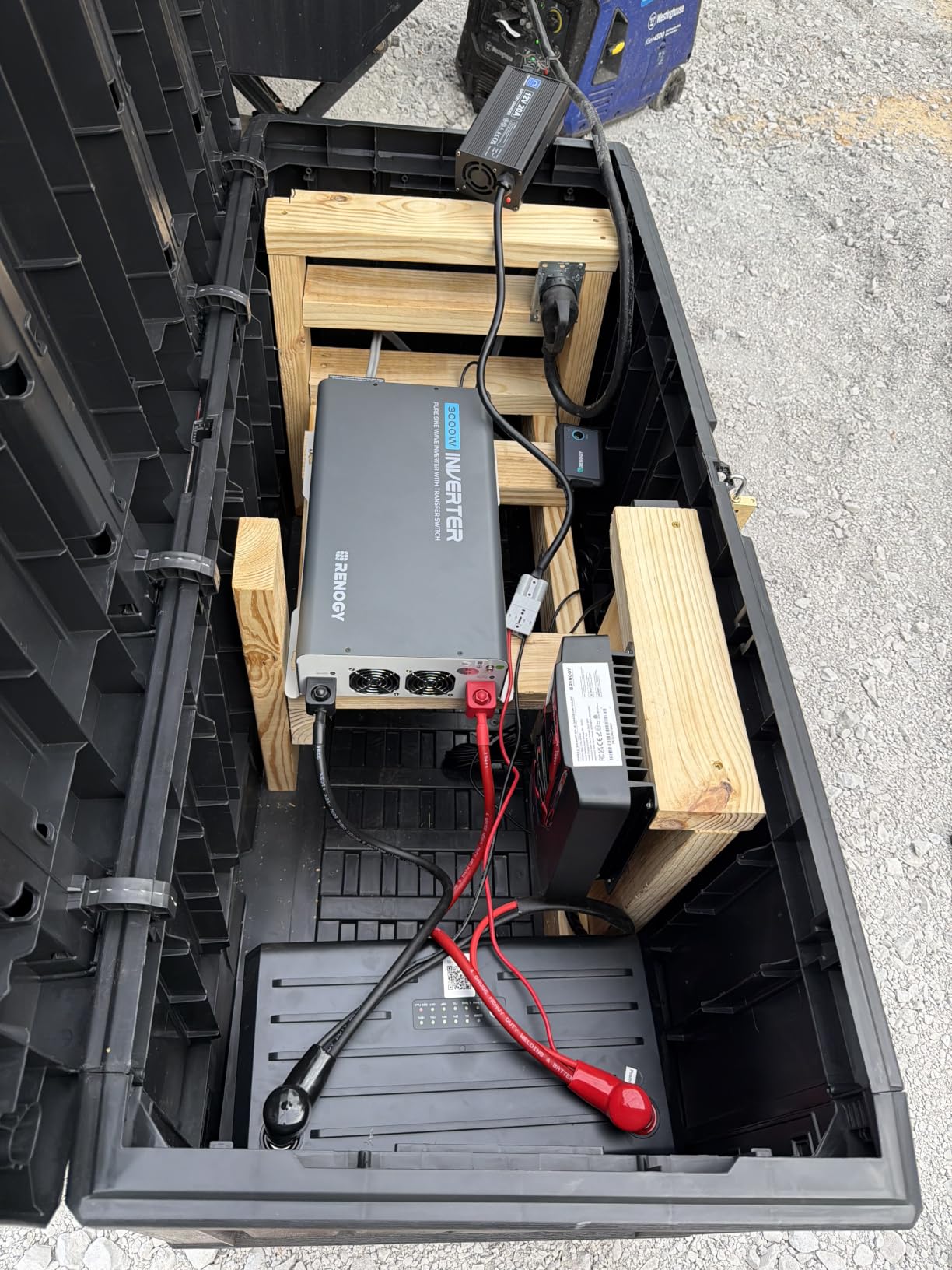
This is the one with the built-in UPS transfer switch, and for full-time RVers that single feature can be worth more than raw wattage. It switches between shore power and battery power without you touching anything, so a laptop or a CPAP does not drop out when the campsite pedestal hiccups.
Bluetooth monitoring through the Renogy app is the other reason people choose it. You can see live input and output figures from inside the cab rather than running a cable back to a remote panel. Support is a real factor too: an rvforum.net owner specifically praised being able to phone tech support and describe the intended use.
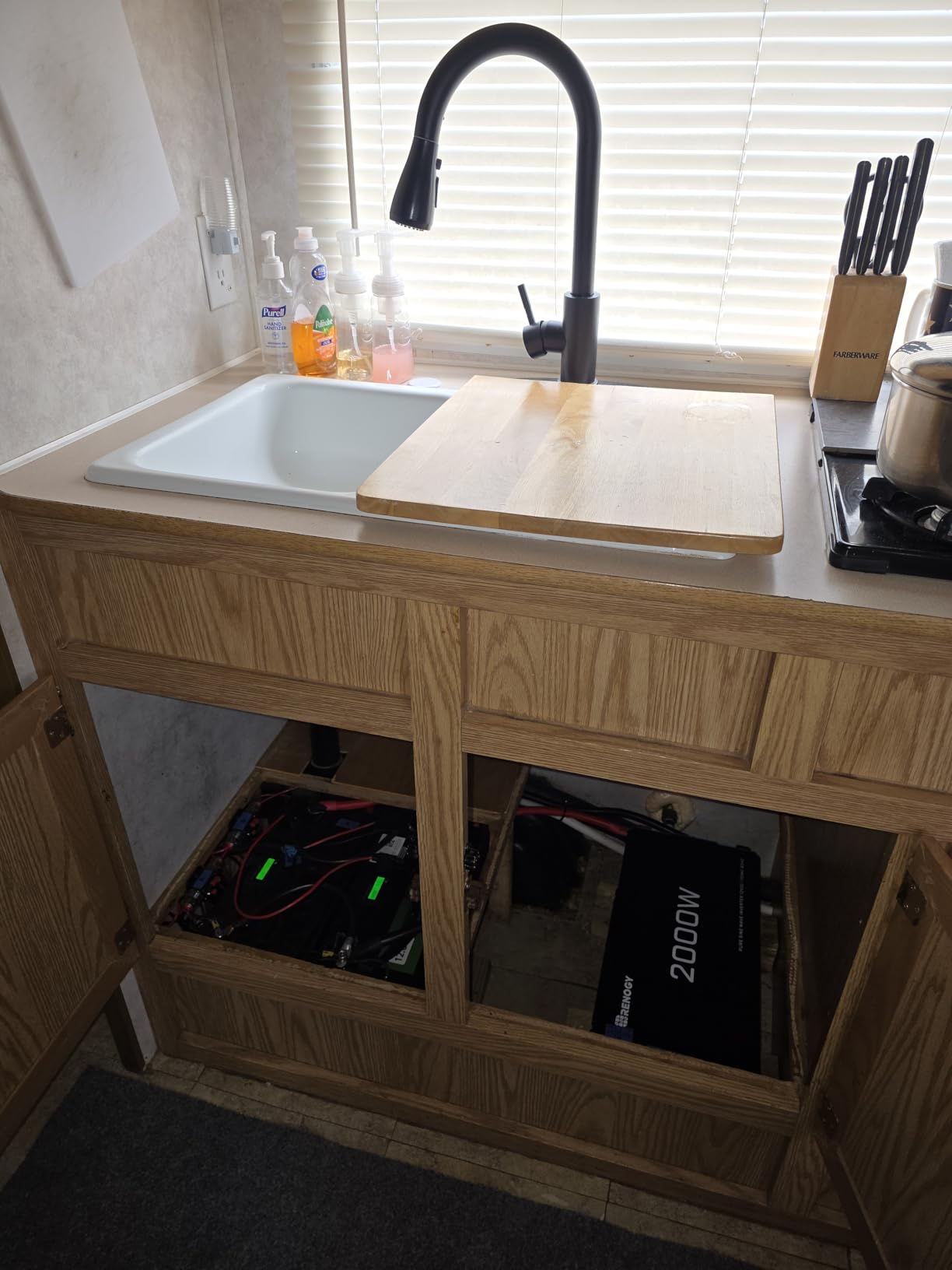
Efficiency sits above 92% and standby consumption is under 18W, which answers the common question about whether you can leave the inverter switched on. Noise measures below 51dB, quiet enough for a sleeping cabin, and that is a measurable gap versus the fans in several cheaper chassis here.
It is UL and CE certified, has heatsink cooling fans, and protects against low and high voltage, low and high current and short circuit. The case measures 19.2 by 10.4 by 3.8 inches, so it is the largest footprint in this group alongside the VOLTWORKS.
Why full-timers choose it
App control and a transfer switch are the two features you cannot retrofit cheaply. An r/RVLiving thread about stepping up an inverter setup drew the same conclusion from experienced owners: the thing you want later is monitoring and clean switching, and buying them once is cheaper than rewiring later.
The same thread pushed the idea of starting small and expanding solar later, and this unit’s expandability story is better than most because the app already tracks a bank you might grow.
Who should pass
This is the most expensive 3000W option here, and if budget is the deciding factor that money is better spent on batteries. The single AC outlet is a genuine limitation, most owners add a power strip, which defeats some of the tidy install.
At 14.8 pounds it is also the heaviest chassis in the comparison, and the one-year manufacturer warranty is short for something you intend to leave installed year round.
5. BELTTT BAP3000A: Best for On-Body Monitoring
BELTTT 3000W Pure Sine Wave Inverter 12V DC to 120V AC, 6000W Peak
3000W continuous
6000W peak
Above 93% efficiency
Bright adjustable LCD
Pros
- High-brightness LCD with adjustable output voltage and brightness
- Above 93% conversion efficiency
- 23ft remote plus 9 spare 45A fuses included
- Comprehensive protection suite
Cons
- One-year warranty is short for a permanent install
- Battery cables are only 3ft long
- Output rated at 110V rather than 120V
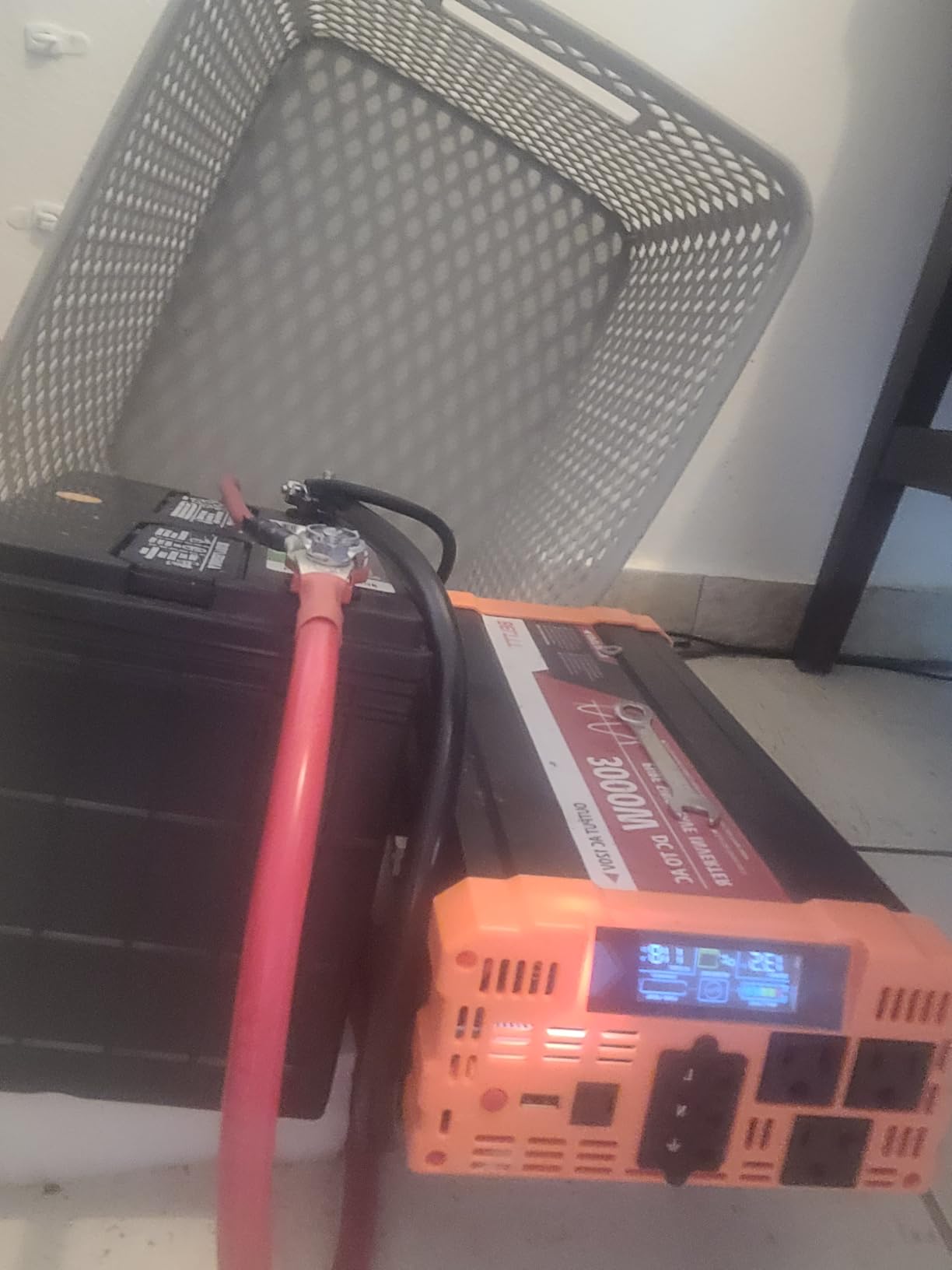
The BELTTT is the pick if you want to read your inverter without picking up a remote. The on-body high-brightness LCD reports input and output voltage, battery status and load level, and you can adjust both the output voltage setting and the screen brightness independently. That last detail is small but genuinely useful in a dark trailer at night.
Efficiency is above 93%, which is the highest number in this group. Over a weekend of boondocking that difference is real, and it means less battery capacity wasted as heat. Output is 3000W continuous with 6000W of peak surge, standard for the class.
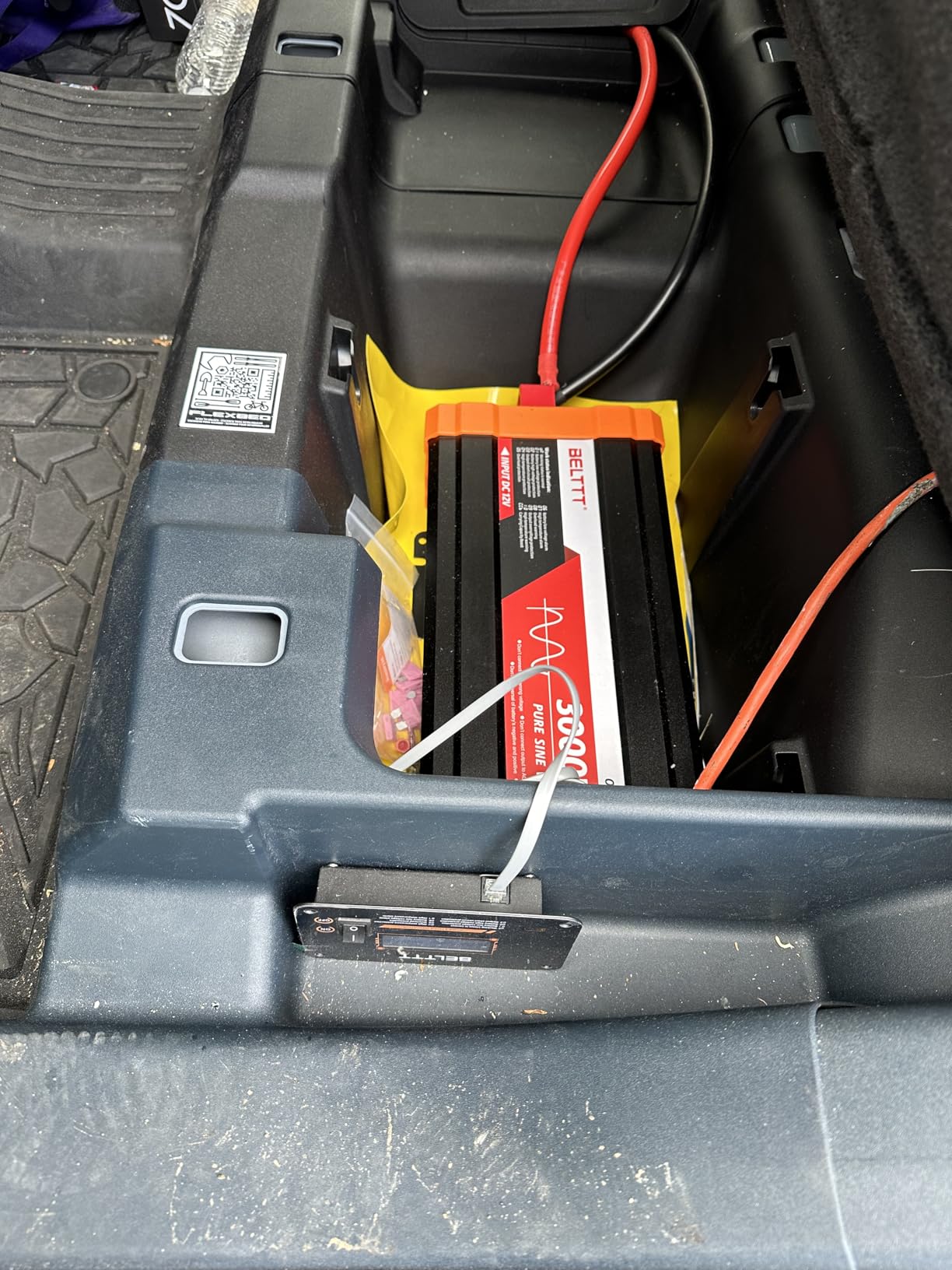
The kit is unusually complete. You get a 23ft remote controller and nine spare 45A fuses, which means a blown inline fuse during a roadside stop does not end your trip. The output mix covers a dual AC socket, a 20A outlet, a 5V 2.1A USB port and a hardwire port.
Protection covers under-voltage, over-voltage, overload, over-temperature, short circuit and reverse connection, housed in an aluminum and plastic chassis weighing 9.9 pounds at 17 by 7.7 by 3.9 inches. Only 5% of the 446 reviews are one-star, with 75% at five stars.
What works well
Reviewers repeatedly single out display readability and quiet pure sine wave output for TVs and home theatre equipment, which is exactly the use case a bright adjustable screen serves. If your off-grid load is entertainment rather than power tools, this is a good match.
Also worth noting: this model number has a family of siblings, since the same chassis comes in 1000W, 1500W, 2000W and 3000W versions if you later decide 3000W was more than you needed.
What to watch out for
The one-year warranty is the shortest tier among the well-reviewed units here, which matters if you plan a permanent mount. The supplied 1/0AWG cables are 3ft, so expect to extend them for an RV run.
One technical detail to verify before you buy: this unit is rated at 110V AC output rather than 120V. Most household appliances accept it, but sensitive equipment with a narrow input range can object, so check your device specs.
6. Renogy Inverter P2 2000W: Best for Smaller RV Builds
Renogy Inverter P2 2000W Pure Sine Wave Inverter 12V DC to 110V AC Converter, Off-Grid Solar Power Inverters for Vehicles, Truck, RV, Home, with Built-in 5V/2.1A USB/Hardwire Port, Remote Controller
2000W continuous
4000W peak
UL 458 and CSA certified
3 AC outlets
Pros
- UL 458 and CSA certified with a metal housing
- Three AC outlets plus USB and a hardwire port
- Above 90% conversion efficiency
- Includes a 16.4ft wired remote and battery cables
Cons
- 2000W is below what most RV air conditioners need
- Fan noise is audible under heavy load
- Some owners need heavier cable than the supplied 1/0AWG
Not every RV needs 3000W. If yours is a trailer or a van running a television, laptops, a router and maybe a small fridge, this 2000W unit does the job and weighs 11.7 pounds. It is also the most widely owned inverter in this roundup, with 4,715 ratings to draw on.
Certification is a genuine strength. It meets UL 458 and CSA C22.2 No. 107.1, the recreational vehicle standards, inside a metal housing with high-speed ventilation fans. Conversion efficiency is above 90% and output is 120V AC at 60Hz from a 12V DC input.
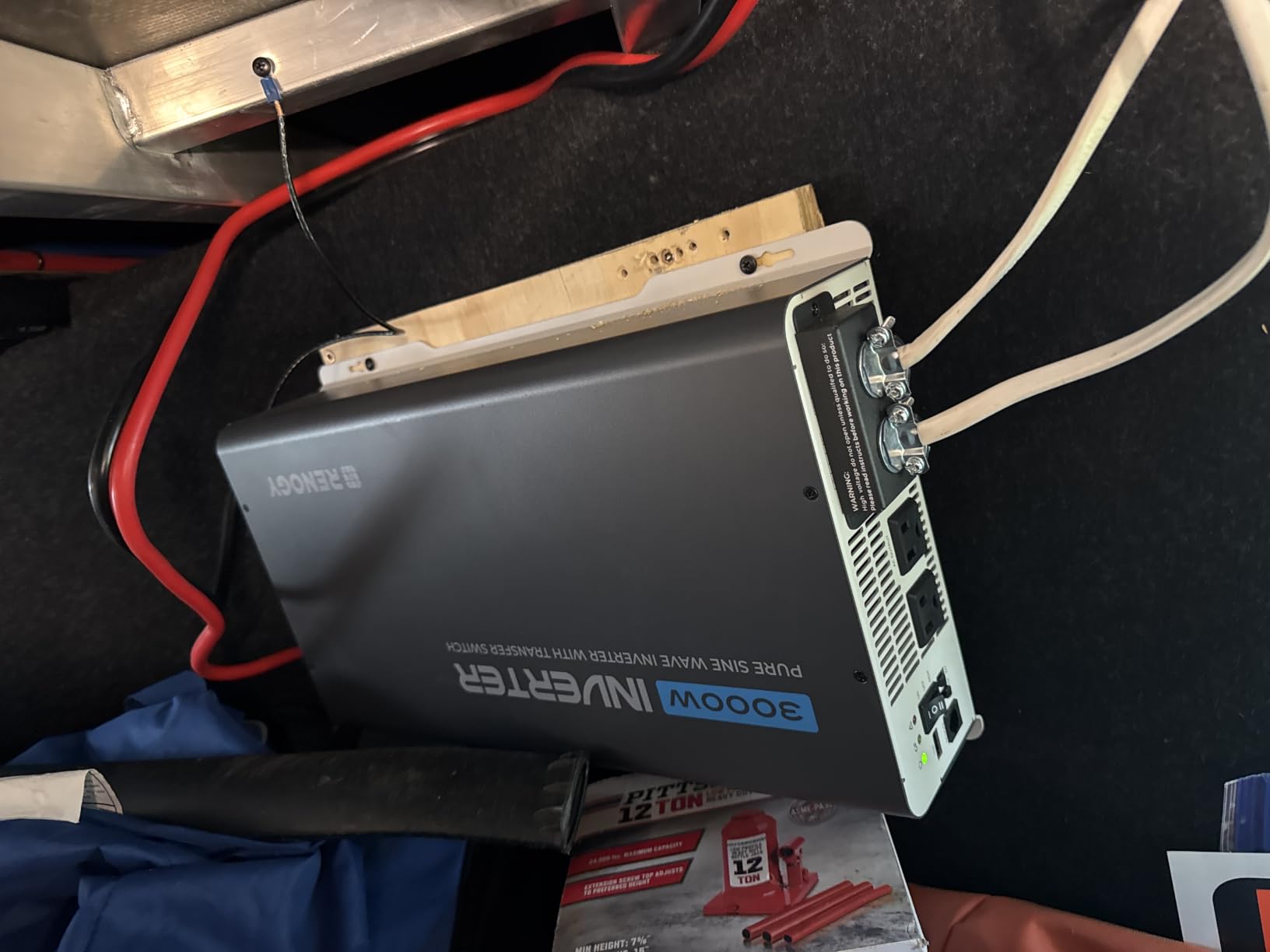
Protection is thorough: under-voltage, over-voltage, over-temperature, overload, short circuit and GFCI. Connectivity covers three AC outlets, a built-in 5V 2.1A USB port and an AC terminal block, and the box includes two 1/0AWG 3ft battery cables plus a 16.4ft wired remote, which is longer than most competitors offer.
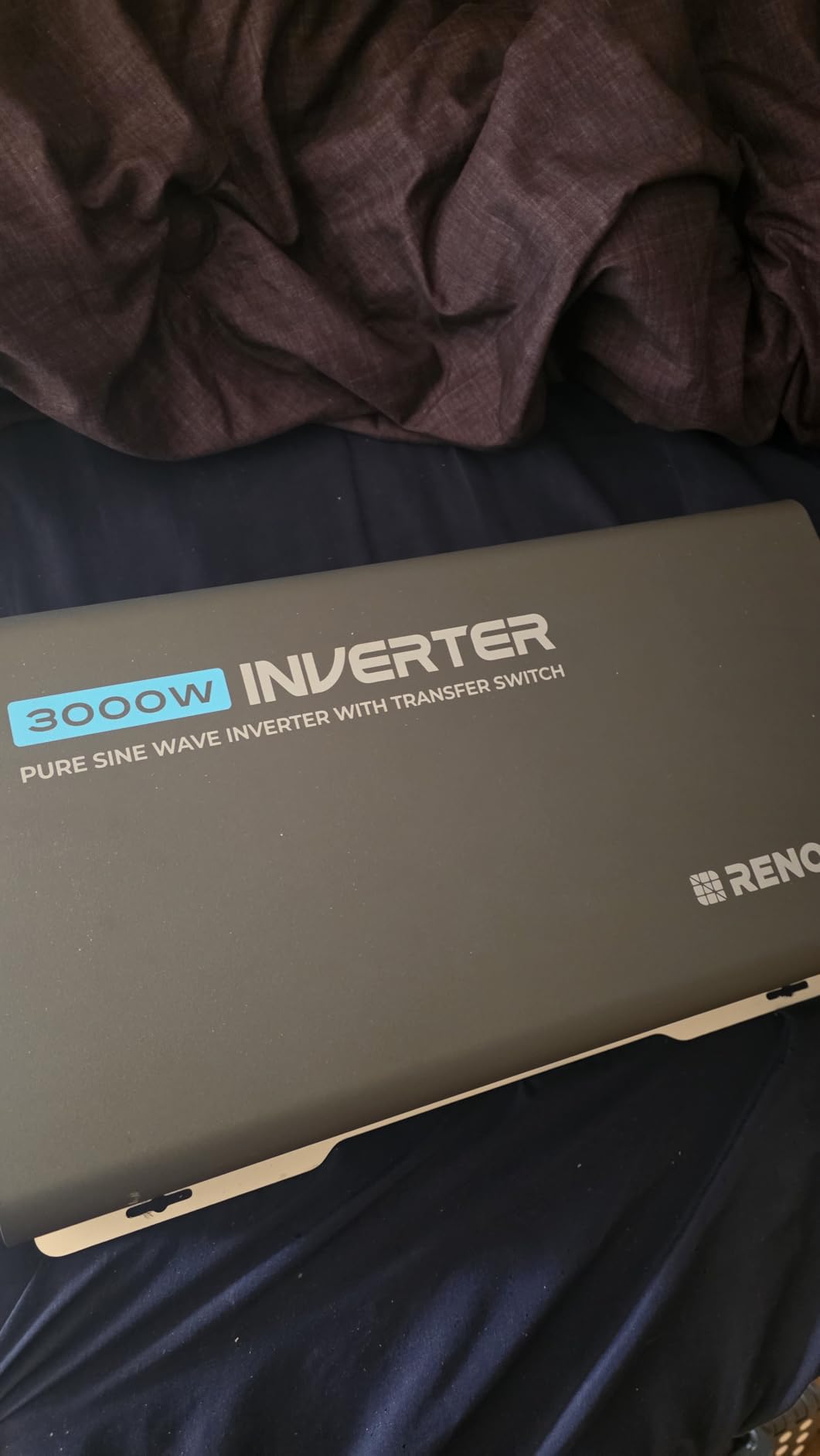
Across 4,715 reviews the dominant theme is reliable output for TVs, laptops, freezers and small appliances, with owners citing the port selection and included remote as reasons they like it.
Where 2000W is genuinely enough
Add up your simultaneous draws rather than your largest appliance. A laptop, two phones, a router and a 60W TV lamp lands well under 1200W, which leaves comfortable headroom inside a 2000W continuous rating. That is a realistic weekend boondocking load for two people.
For anyone building a small system first and adding solar later, this is a sensible first step. Our guide to deep cycle batteries for off-grid power covers the bank that pairs with it.
When to step up instead
Skip it if you want to run an RV air conditioner or a full-size microwave, which is the single most common pattern in the reviews: owners are happy with the basics, then find 2000W continuous is underpowered for larger loads. Fan noise is also audible under heavy load.
And if your install is more than a few feet from the battery bank, budget heavier cable than the supplied 1/0AWG set, which several buyers had to do.
7. ZETAWALE 3000W: Best for Hardwired High-Current Loads
3000W Pure Sine Wave Inverter 12V DC to 120V AC Converter with LCD Remote
3000W continuous
6000W peak
4 AC outlets plus terminal blocks
LCD wired remote
Pros
- Four AC outlets plus heavy-duty terminal blocks for high current
- 14.76ft LCD remote reports live voltage and wattage
- Works with lithium AGM deep-cycle and lead-acid banks
- Dual intelligent cooling fans handle heavy loads
Cons
- No on-body display so the remote is the only status source
- Twelve-month warranty is short
- Some owners must power it unloaded once after install
If your plan is a permanent install with hardwired appliances, the terminal blocks are the reason to look here. Alongside four AC outlets, USB and a Type-C port, this unit carries heavy-duty AC terminal blocks, so a permanently wired fridge or microwave bypasses the receptacle entirely.
It runs 3000W continuous with 6000W peak at 60Hz from 12V DC, and the battery side is unusually accommodating, covering lithium, AGM, deep cycle and lead-acid 12V banks. Battery compatibility is a common trip point, and covering four chemistries out of the box removes a variable.
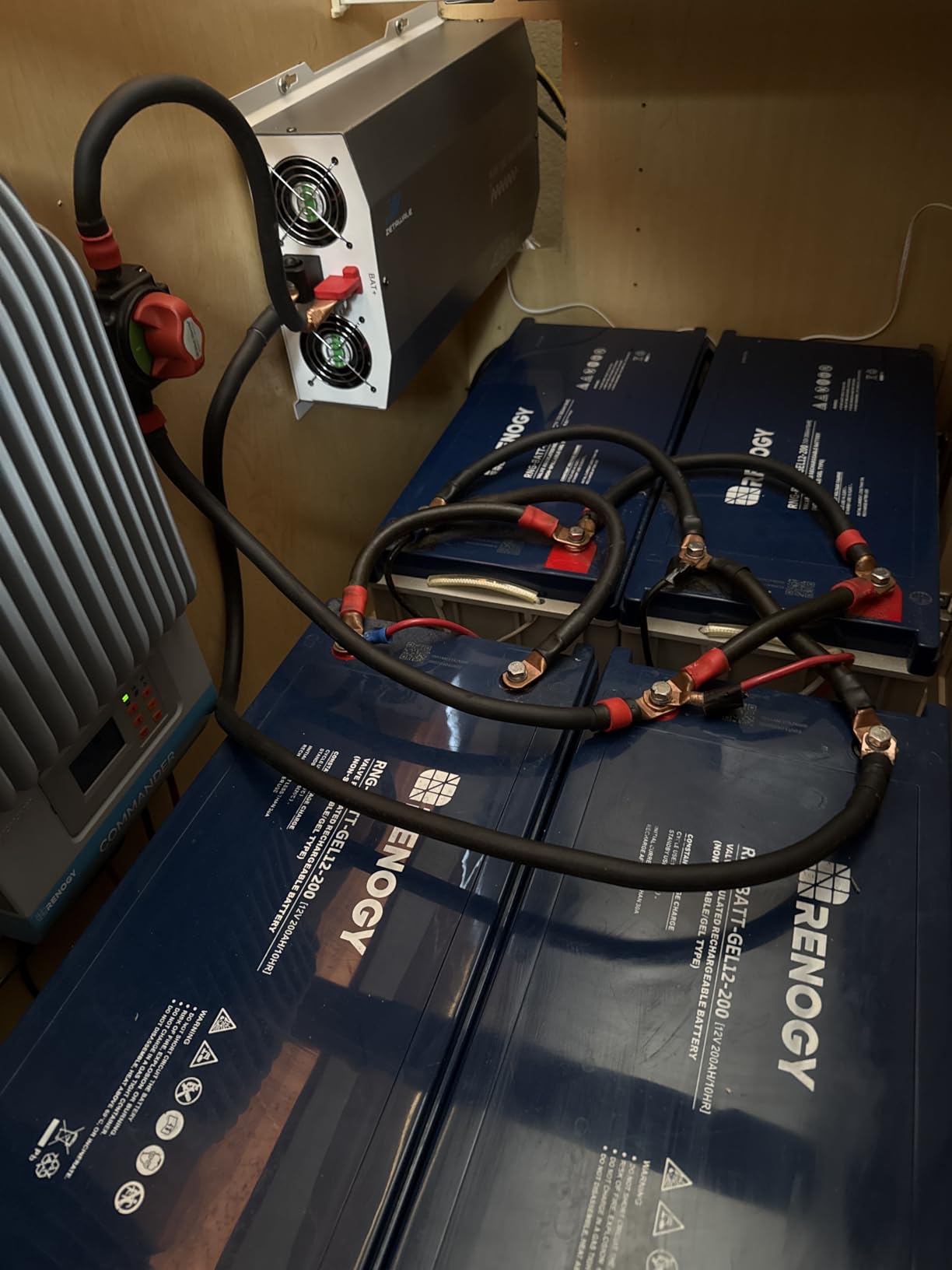
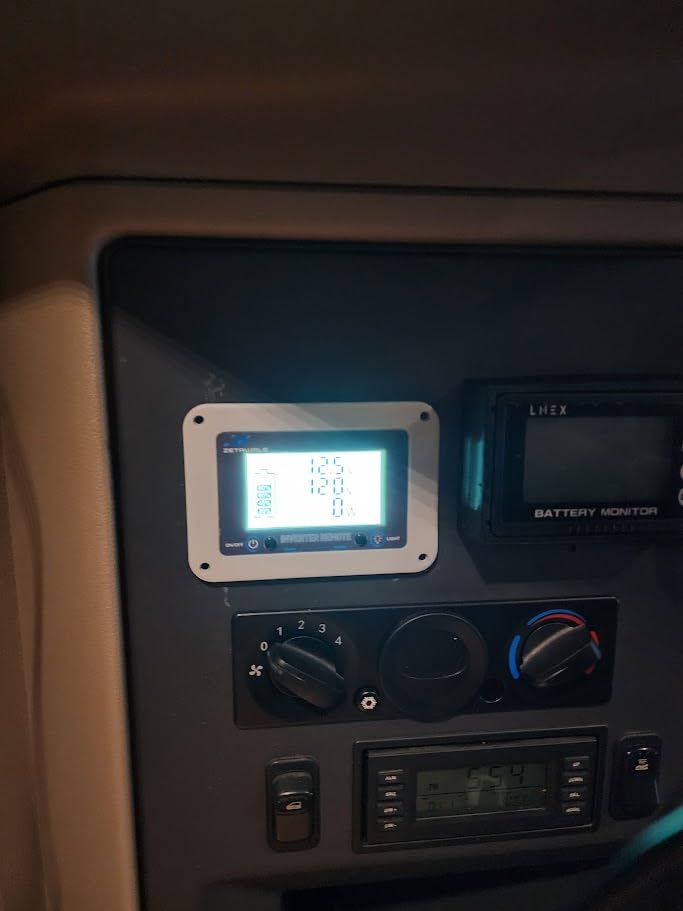
The 14.76ft wired LCD remote shows battery voltage, AC output voltage and load wattage, which is the level of detail you want when diagnosing a low voltage cutoff. Dual intelligent cooling fans are designed for sustained heavy loads rather than short bursts, which suits someone running an air conditioner for hours.
The case measures 14.29 by 7.87 by 4.33 inches and weighs 9.9 pounds, and protection covers overload, over-voltage, low voltage, over-temperature and short circuit. Rating is 4.4 stars from 444 reviews, with 76% five-star.
Best fit for a permanent build
Owners point to the four-outlet layout, the hardwired terminals for larger loads and a remote that reports live voltage and wattage. That combination suits a full-time rig where you would rather wire once and forget the outlet strip.
For a Class A retrofit, having terminal blocks on the unit shortens the run considerably, and that is where installation labour cost actually lives.
Where it disappoints
There is no display on the inverter body, so all monitoring depends on the remote. If the remote dies or is lost, you lose your status readout entirely, which is a real annoyance in a dark bay.
The twelve-month warranty is on the short side for a permanent installation, and a few buyers found they needed to power the unit unloaded briefly after installation to charge the internal capacitors before it would start.
8. OLTEANP TK-3: Best for Lithium Battery Banks
3000W Pure Sine Wave Inverter 12V DC to 110V AC with LCD Remote,6000W Peak
3000W continuous
6000W peak
9.5V to 11V adjustable cutoff
LiFePO4 and AGM and GEL support
Pros
- Adjustable low-voltage cutoff from 9.5V to 11V for lithium banks
- Supports LiFePO4 AGM GEL and deep-cycle chemistry
- Hardwire AC terminal block with L N and PE
- Generous battery cable set with four long cables
Cons
- Floating neutral blocks back-feeding from shore or generator
- Only a 12-month warranty
- No Bluetooth or app monitoring
If your battery bank is LiFePO4, the adjustable cutoff is the feature that matters, and this unit is the one built around it. Low voltage shutdown adjusts from 9.5V to 11V, and the unit explicitly supports LiFePO4, AGM, GEL and deep-cycle chemistry, so it will not fight your battery’s resting voltage.
That adjustment solves a real problem. Owners report inverters cutting out around 10.5V DC mid-use on lithium banks that still had usable capacity left. Being able to raise the threshold to match your chemistry is the difference between a usable bank and an expensive paperweight.
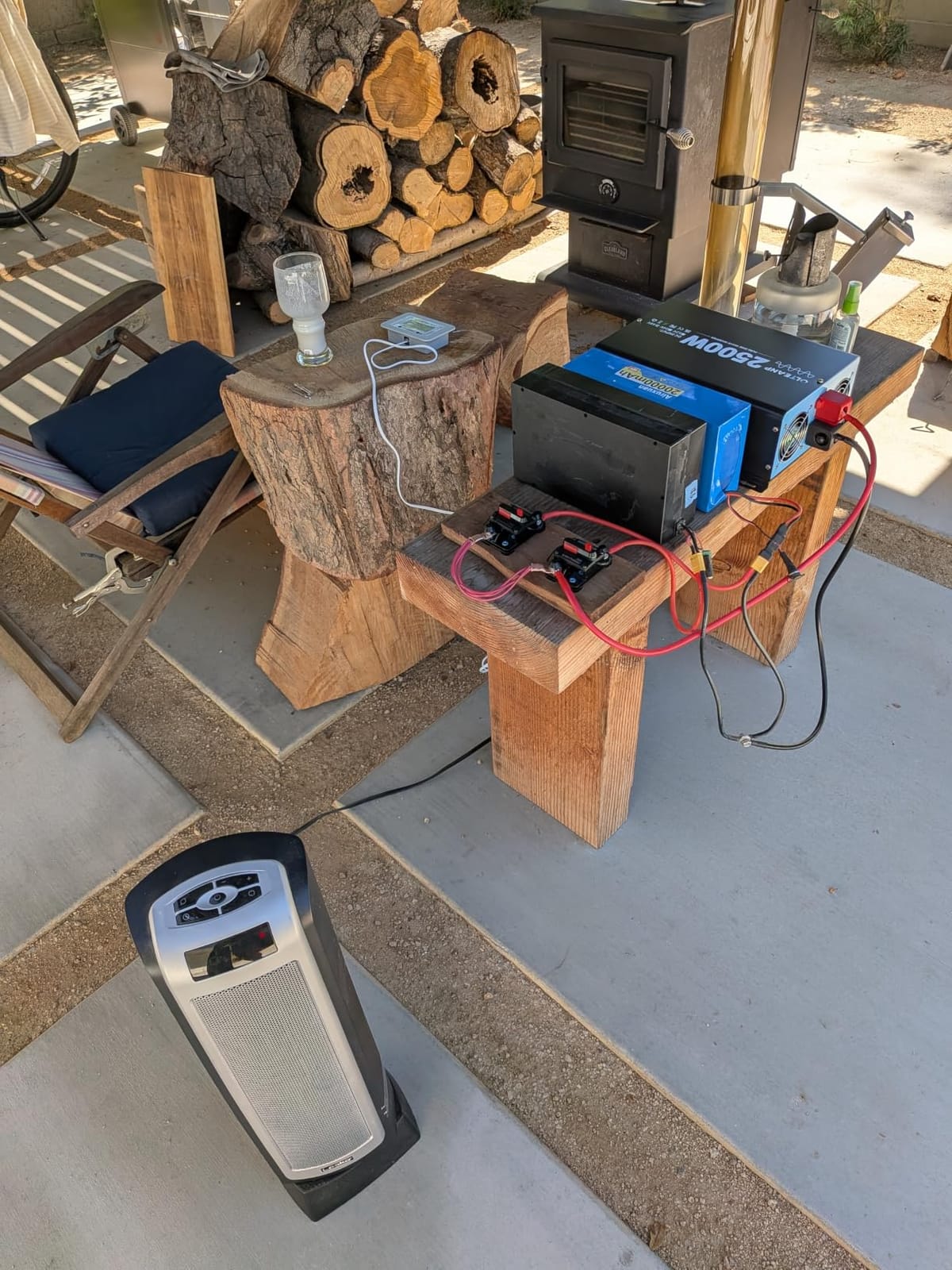
Output is 3000W continuous and 6000W peak, with four AC outlets, a 3.1A USB port and a 30W Type-C port. The 15ft wired LCD remote reports input voltage, output voltage, load wattage and fault alerts, and protection covers overload, overheat, short circuit and both high and low input voltage.
The battery cable set is unusually generous: four 31.5in 16 mm2 cables, roughly 5 AWG, two per polarity. Body dimensions are 14.17 by 7.87 by 3.98 inches with mounting brackets, and it weighs 11 pounds.
Why lithium owners like it
Chemistry support plus a settable cutoff is exactly the pairing lithium needs, and reviewers single both out. At 4.4 stars from 295 reviews with 76% five-star, the sample is smaller than some rivals here but consistent.
The hardwire terminal block with L, N and PE terminals makes this a good permanent-install choice for a vanlife or skoolie build where you want the inverter out of sight and the appliances wired in.
The one limitation to read twice
This is a floating neutral design, and the AC terminals must not be connected to utility or generator power. That means you need a separate transfer switch if you plan to tie the inverter into shore power, which the Renogy PUH handles internally.
There is also no Bluetooth or app monitoring, so the wired remote is your only status source, and the warranty is twelve months.
9. VEVOR SGPE-3000W: Best for Wireless Remote Control
VEVOR Pure Sine Wave Inverter 3000 Watts 12V DC to 120V AC Power Inverter
3000W continuous
6000W peak
Wireless remote with 100m range
2 AC plus 2 USB plus Type-C
Pros
- Wireless remote reaches 100 meters
- Five outputs including a 30W Type-C port
- Temperature-controlled silent fan
- Aluminum alloy body with pure copper cables
Cons
- 88% full load efficiency is the lowest here and drains more battery
- No hardwired AC terminal block
- One-star share runs 7%
The wireless remote is what makes this one different. It reaches 100 meters, so you can start and stop the inverter from outside the RV or from the driver’s seat without a cable snaking through the living space. In a smaller power class most rivals give you a 15ft or 30ft wired lead, which is not the same thing.
Output is 3000W continuous and 6000W peak pure sine wave, and the port mix is genuinely wide for the money: two AC outlets, two USB ports sharing 18W combined, and a Type-C port rated at 30W. There is also an on-body LCD for status when you are standing next to the unit.
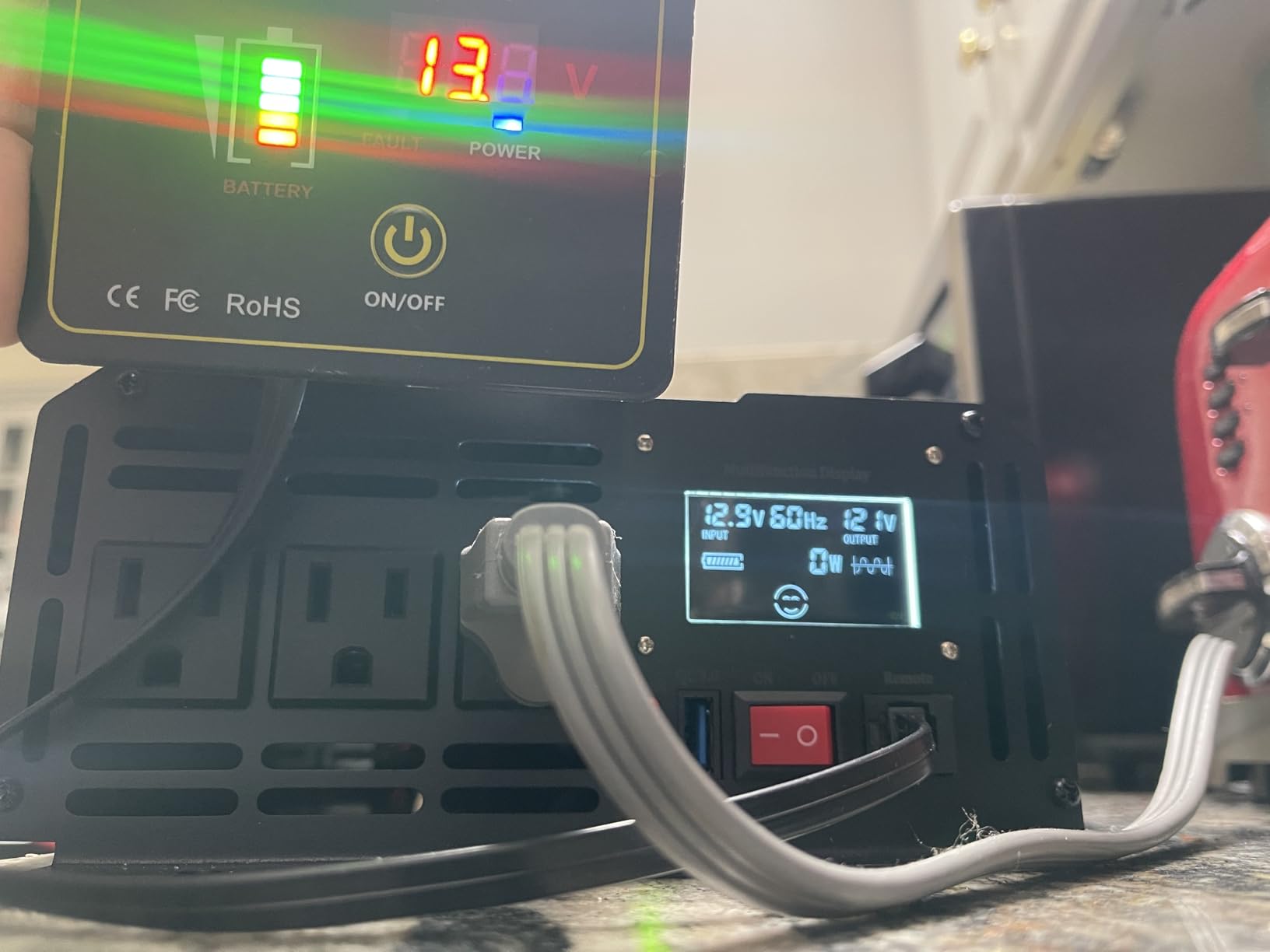
The intelligent temperature-controlled fan stays silent until the internal temperature passes 40C, which keeps it quiet at moderate loads in a hot campsite. The aluminum alloy body handles heat dissipation and the package includes 100% pure copper cables. It carries CE and FCC certification and a six-layer protection suite including reverse polarity and over-temperature.
At 4.3 stars from 462 reviews, with 71% five-star, the profile is solid without being exceptional, and 7% one-star is slightly higher than the top models in this group.
Where the wireless remote earns its place
If your inverter is mounted in a bay you cannot reach from inside the cabin, a 100m remote removes a real annoyance. It also suits job-site use where the inverter is in a truck bed and you want to cycle it from the cab.
Five simultaneous outputs means you can run appliances and charge devices at the same time without a power strip, which helps in a vanlife layout where outlet count is limited.
The efficiency trade-off
Full load efficiency is listed at up to 88%, the lowest in this comparison, and that has a concrete consequence: it pulls more current from your bank than the 91% to 93% models. Over a long boondocking weekend that difference compounds.
There is also no hardwired AC terminal block, so high-current appliances must go through the receptacles. If you plan to wire in a microwave permanently, choose a different model.
10. JARXIOKE 3000W: Best for Basic Cabin Loads
3000 Watt Pure Sine Wave Power Inverter 12V DC to 110V 120V Converter for Home, RV and Off-Grid Solar Systems with 3 AC Outlets, Dual USB Ports, LCD Display and Remote Control
3000W continuous
6000W peak
Above 90% efficiency
Soft-start with input isolation
Pros
- Soft-start technology and input output isolation protect electronics
- Three AC outlets plus a 3.4A USB port
- Automatic restart after a fault clears
- Aluminum enclosure with intelligent cooling fans
Cons
- Lowest rating in the group at 4.2 stars with 11% one-star
- No Type-C port and no hardwired AC terminal
- One-year warranty and a less detailed listing
This is the entry point, and it does the basic job cleanly. 3000W continuous with 6000W peak at above 90% conversion efficiency, soft-start behaviour and input/output isolation that together reduce the shock on sensitive electronics when a load switches on.
Soft-start is the detail worth understanding. Instead of dumping the full current instantly, the inverter ramps up, which is gentler on both the inverter and the appliance. It is a real benefit in an RV where a lot of small electronics share one circuit.
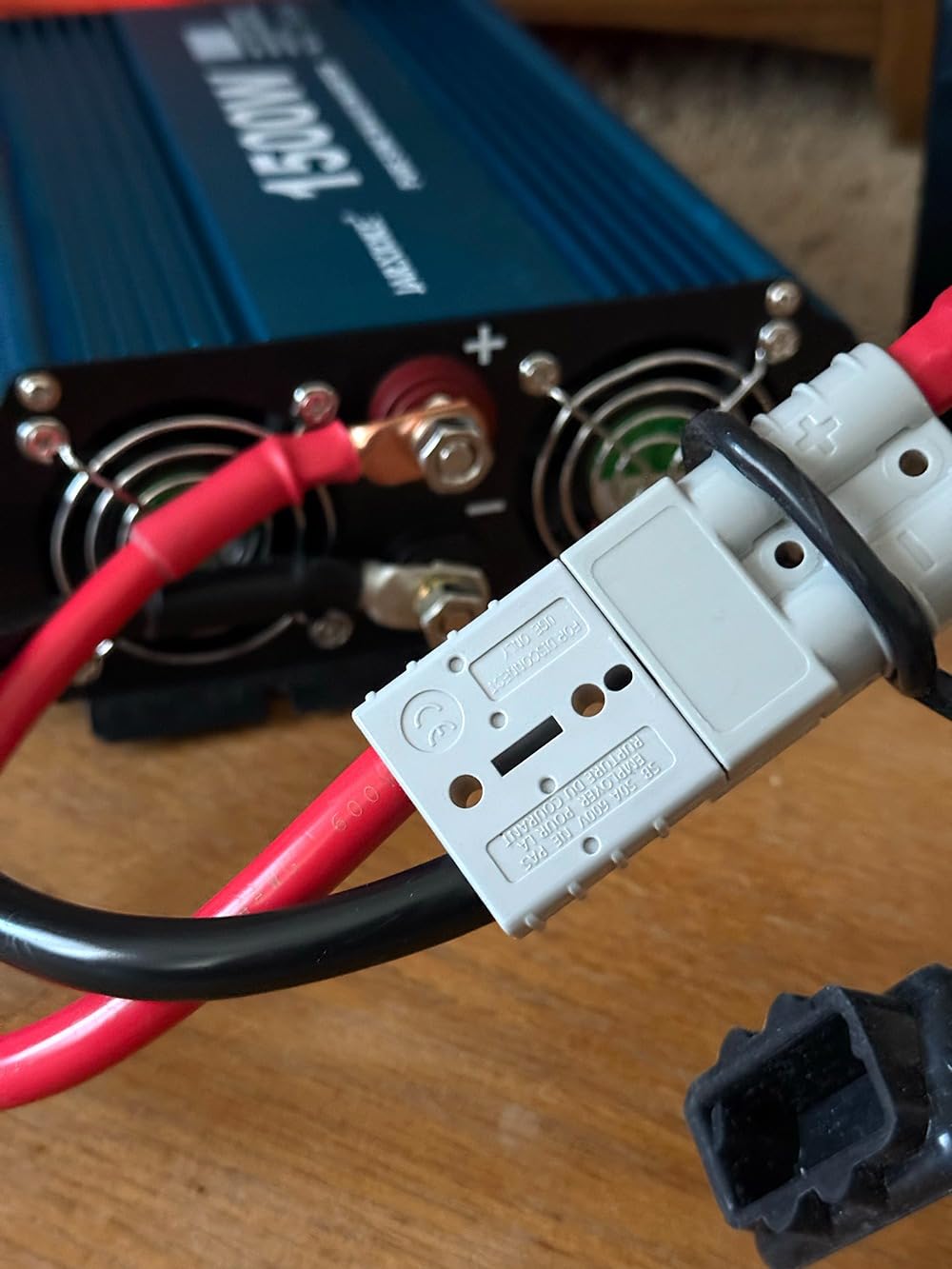
Protection covers over-voltage, low voltage, overload, short circuit, overheat and reverse polarity via fuse, plus automatic restart and lightning leakage protection. Output is three AC outlets and a single 3.4A USB port, with an LCD display and remote control. The aluminum enclosure uses intelligent cooling fans.
At 4.2 stars from 250 reviews it is the lowest-rated model here, and 11% one-star reviews point to more inconsistency in long-term reliability and noise levels than the better-rated products, even though 67% of ratings are still five stars.
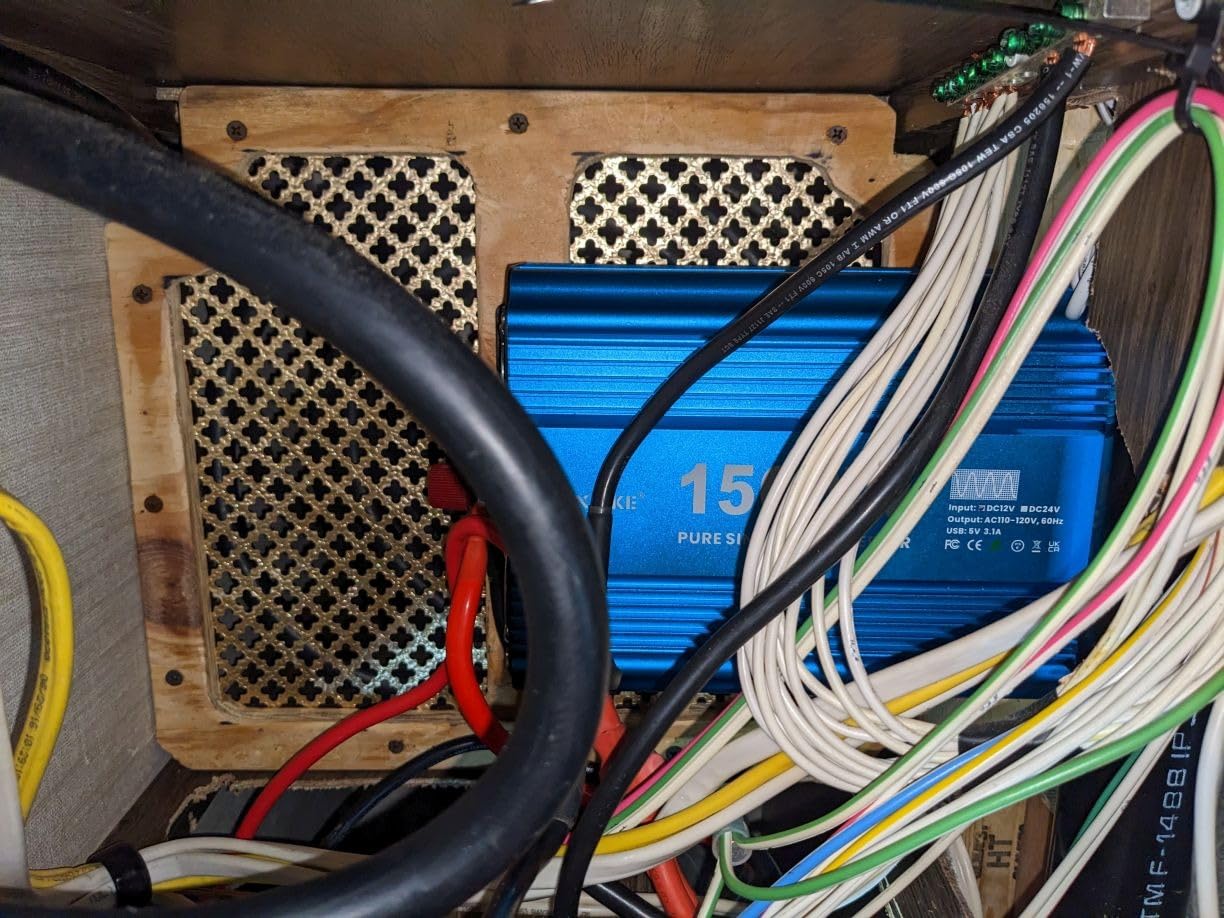
What it handles well
Laptops, phones, a television and a small refrigerator are the loads owners describe, and none of them stress a 3000W continuous rating. For weekend dry camping with light cooking, it is adequate and inexpensive.
The automatic restart function is convenient too: after a fault clears, the unit resumes without you going back to the bay to cycle it.
When to choose something else
If consistency matters to you, skip it. An 11% one-star share is nearly three times the rate of the best-reviewed model in this group, and that gap usually shows up as noise or intermittent shutdowns on longer trips.
There is also no Type-C port and no hardwired AC terminal, so modern USB-C devices and permanently wired appliances are both out of reach. The chassis is 11.02 by 5.5 by 7.08 inches.
10 Best RV Inverters for Off-Grid Power: How to Size Yours
Size an inverter by summing what runs at the same time, adding 20% to 30% headroom, then checking that the largest motor-driven load can start. A 1500W coffee maker and a 60W TV lamp and a 200W laptop charger add up to 1760W, so a 2000W inverter is technically adequate with no margin at all, which is why we would step to 3000W.
Surge is the part people get wrong. A compressor appliance can draw three to five times its running watts for the first second or two, so a microwave rated at 1200W running may want 3600W at startup. On a 3000W inverter with 6000W of surge, that is comfortable. On a 2000W unit with 4000W surge, a 1500W microwave is already near the ceiling.
Do not size on peak wattage alone. A listed 6000W peak figure means the inverter will deliver that for a few seconds before tripping, and how many seconds varies by model. The Giandel is the clearest case here, holding 6100W for two full seconds, which is a genuinely different appliance from a unit that drops to 6000W for half a second.
10 Best RV Inverters for Off-Grid Power: Pure vs Modified Sine Wave
Every product in this roundup is pure sine wave, and that is the recommendation. A modified sine wave unit produces a stepped approximation of a sine wave rather than a smooth curve, which cheaper electronics tolerate and sensitive electronics do not.
The list of loads to keep off a modified sine wave output is short and specific: microwave ovens, coffee makers and kettles, induction cooktops, power tools with universal motors, variable speed compressors, and CPAP machines. An r/RVLiving commenter warned specifically that a budget pure sine wave unit would destroy electric motors, which is the failure mode that matters most in an RV full of compressors.
The counter-view exists. A vanlivingforum.com post from the other side of the debate argued that for most purposes modified sine wave inverters work just fine, and that is true if your entire load list is a laptop and a phone. It stops being true the moment you want a microwave.
There is a documented buying risk too: owners report units marketed as pure sine wave that are not. The only defence is a stated certification and a review history large enough to surface the pattern, which is part of why we weighted review count heavily in these picks.
10 Best RV Inverters for Off-Grid Power: Can a 3000W Inverter Run an RV Air Conditioner?
Yes, for most RV air conditioners, and surge duration decides whether it works smoothly or trips. A 3000W inverter delivering 6000W for two seconds, with 3000W of continuous headroom once the compressor is spinning, handles a rooftop unit in the 1500W to 2000W range without trouble.
The math is straightforward. If your air conditioner runs at 1800W, a 3000W inverter leaves 1200W of continuous headroom, enough to keep a refrigerator compressor cycling at the same time. If it runs at 2800W, you have almost nothing left, and any second appliance will trip the overload protection.
The failure people report is nearly always at startup, not during steady running. A locked rotor can momentarily pull well beyond running watts, which is exactly why the Giandel two-second surge window makes it our pick for air conditioner duty. If your unit sits directly on a 3000W inverter with no headroom, budget for a larger bank rather than a larger inverter alone.
10 Best RV Inverters for Off-Grid Power: How Many Batteries Do You Need?
Divide required watts by battery voltage to get amps, then divide by the inverter efficiency figure to get true draw. A 2000W inverter on a 12V bank at 90% efficiency draws roughly 185A, and a 3000W unit at 92% draws about 272A. That current is what your cables and bank must supply continuously.
For runtime, usable capacity is roughly half of rated amp-hours on lead-acid and closer to 80% or better on LiFePO4, which is the single biggest reason full-timers have moved to lithium. A 200Ah lead-acid bank is about 100Ah usable, so a 2000W inverter drawing 185A would empty it in well under an hour. Two 100Ah LiFePO4 batteries give you roughly 320Ah usable, which turns the same inverter into a couple of hours of coffee makers and lights.
Forum users name the same bottleneck repeatedly: small battery banks, not weak inverters. One r/GoRVing owner running 300W of roof solar with a controller and two 6V GC batteries reported that it was not enough once an inverter was added. Our battery guide covers the chemistry trade-offs in more depth.
10 Best RV Inverters for Off-Grid Power: Inverter vs Inverter/Charger
An inverter-only unit, which is every product in this roundup, converts battery power to 120V AC and does nothing else. An inverter/charger combo adds an AC input that recharges your batteries from shore power, a generator or solar while the unit is off grid. You pay more and you gain a lot of convenience.
Buy inverter only if you already have a converter charging your batteries, or if you are relying on a portable power station or a generator. Buy a combo if you want one box to handle both directions, especially if your build has a transfer switch already or you want shore power and battery power switching handled internally, which is what the Renogy PUH transfer switch does.
For a weekend dry camping setup, inverter only is usually enough. For full-time off-grid living, most experienced owners in the forums move toward a combo or an all-in-one unit because the number of boxes in the electrical bay drops and troubleshooting gets simpler.
10 Best RV Inverters for Off-Grid Power: Common Problems Owners Report
The complaints that repeat across forums fall into six buckets, and knowing them upfront saves a lot of wasted money. First, low voltage cutoff tripping around 10.5V DC and cutting power mid-use, which is usually a threshold set wrong for your battery chemistry. Models with an adjustable cutoff solve it, and that is why the OLTEANP and Giandel rank where they do.
Second, overload shutdown when several high-draw appliances start together. A microwave, a coffee maker and an air conditioner compressor triggering at the same second is the classic scenario, and it is a sizing problem rather than a defective unit. Third, cooling fan noise, which owners describe in memorable terms as a tiny helicopter, most often at sustained high load rather than at idle.
Fourth, short supplied battery cables. Nearly every model here ships 2ft to 3ft leads, and in an RV that is never enough, so plan a proper run. Fifth, confusion between the RV converter, which turns 120V AC into 12V DC to charge batteries, and the inverter, which does the reverse. It is the most common beginner mix-up we see in comments.
Sixth, and most expensive, is reported damage to electric motors and compressor-driven appliances on budget units, including a specific r/RVLiving complaint about a 3000W pure sine wave inverter described as dangerous for motors. We could not verify which unit that commenter owned, so treat it as a reason to buy a certified model rather than as a specific product finding.
10 Best RV Inverters for Off-Grid Power: The Buying Guide
Start with waveform, and there is no real debate: buy pure sine wave if you ever intend to run anything with a motor, a compressor or a heating element. Next comes certification. UL 458 is the RV-specific standard, and an ETL listing to UL 458 is the mark forum owners look for. CE and FCC marks are worth having but they are not the same commitment.
Then look at surge duration, not just surge wattage, because that is what determines whether an air conditioner or a pump starts on the first attempt. Efficiency matters more than most shoppers expect, since the gap between 88% and 93% is 5% of your battery capacity turned into heat every hour. Aim above 90% and treat 88% as a warning sign.
Check the battery side next. Adjustable low voltage cutoff and a chemistry selector including LiFePO4 will save you a headache when you upgrade your bank. Then ports: how many AC outlets, is there a hardwired terminal block for a permanent install, and does the remote have a display. A unit with no on-body display is fine only if the remote stays with you.
Finally, think about warranty length and where you bought it. Twelve-month warranties are common in this class, while the LANDERPOW offers three years of total coverage and the VOLTWORKS and Giandel carry eighteen months. Long-timers on forums consistently favour manufacturer-direct support over marketplace resellers, and that is worth a premium before you commit.
Two more practical notes. Mount the inverter where airflow can reach it, because fan noise and thermal shutdown both trace back to a boxed-in chassis. And if you run the rig at low voltage, plan your cable gauge for the full expected current rather than for the nameplate of the inverter, since your measured draw at 272A on a 3000W unit is the number that matters.
While you are planning the build, our picks for off-road lights and mud tires cover the other two upgrades most full-timers pair with a bigger inverter.
Frequently Asked Questions
What is the best inverter for off-grid?
For most RVers the VOLTWORKS VS-3000QBR is the best inverter for off-grid power, because it is ETL listed to UL 458, the RV safety standard, holds 4.5 stars from 1200 reviews, and offers four AC outlets plus a hardwire terminal. If your main load is an air conditioner, choose the Giandel PS-3000SAR for its two-second 6100W surge window.
What size inverter do I need for off-grid?
Add up the appliances that run at the same time, add 20 to 30 percent headroom, and make sure the largest motor-driven load can start. A 1500W coffee maker with a TV and a laptop needs about 1760W, so a 2000W inverter has no margin. Most RVers end up at 3000W.
Will a 3000W inverter run an RV air conditioner?
Yes, for most RV air conditioners. A 3000W inverter with 6000W of surge will run a rooftop unit rated 1500W to 2000W, and surge duration decides whether it starts cleanly. The Giandel PS-3000SAR holds 6100W for two seconds, which is the window a locked-rotor compressor needs.
How many batteries do I need to run a 3000W inverter?
A 3000W inverter on a 12V bank draws about 272A at 92 percent efficiency. On lead-acid you can use roughly half of rated amp-hours, so 400Ah of rated capacity is about 200Ah usable. On LiFePO4 closer to 80 percent is usable, so 200Ah of rated lithium gives roughly 160Ah and runs far longer.
How long will a 2000 watt inverter run on a 12 volt battery?
A 2000W inverter draws about 185A from a 12V bank at 90 percent efficiency. A single 100Ah lead-acid battery gives roughly 50Ah usable, so about 16 minutes at full load. A single 100Ah LiFePO4 battery gives roughly 80Ah usable, or around 26 minutes. Actual runtime depends on how hard you run it.
Can I leave my RV inverter on all the time?
Yes, but account for standby draw. The Renogy PUH 3000W draws under 18W in standby, which is roughly 1.5A on a 12V bank, or about 36 amp-hours per day. Leaving an inverter switched on overnight is fine as long as your bank can absorb that parasitic load without hitting the low voltage cutoff.
What are some common problems with RV inverters?
The most reported issues are low voltage cutoff tripping around 10.5V and cutting power mid-use, overload shutdown when several appliances start at once, cooling fan noise at sustained high load, battery cables that are too short for a real install, and confusion between the RV converter and the inverter. The first two are fixed by correct sizing and cutoff settings.
Should I buy an inverter or an inverter/charger combo?
An inverter only converts battery power to 120V AC, while an inverter/charger combo also recharges your batteries from shore power or a generator. Buy inverter only if you already have a converter or a generator. Buy a combo for full-time off-grid living, where fewer boxes in the bay means simpler troubleshooting.
10 Best RV Inverters for Off-Grid Power: Final Verdict
The best RV inverters for off-grid power in 2026 come down to which load you are actually planning to run. The VOLTWORKS VS-3000QBR is our pick because ETL listing to UL 458 and a 1,200-review history make it the model we would trust permanently installed, and it is our Editor’s Choice for that reason.
Buy the Giandel PS-3000SAR if an air conditioner is in the plan, the LANDERPOW if you want the lowest cost into the 3000W class, and the Renogy PUH if you want app monitoring and a built-in UPS transfer switch. Whatever you choose, buy pure sine wave, size for startup surge, and remember that the battery bank, not the inverter, is usually what limits you.