
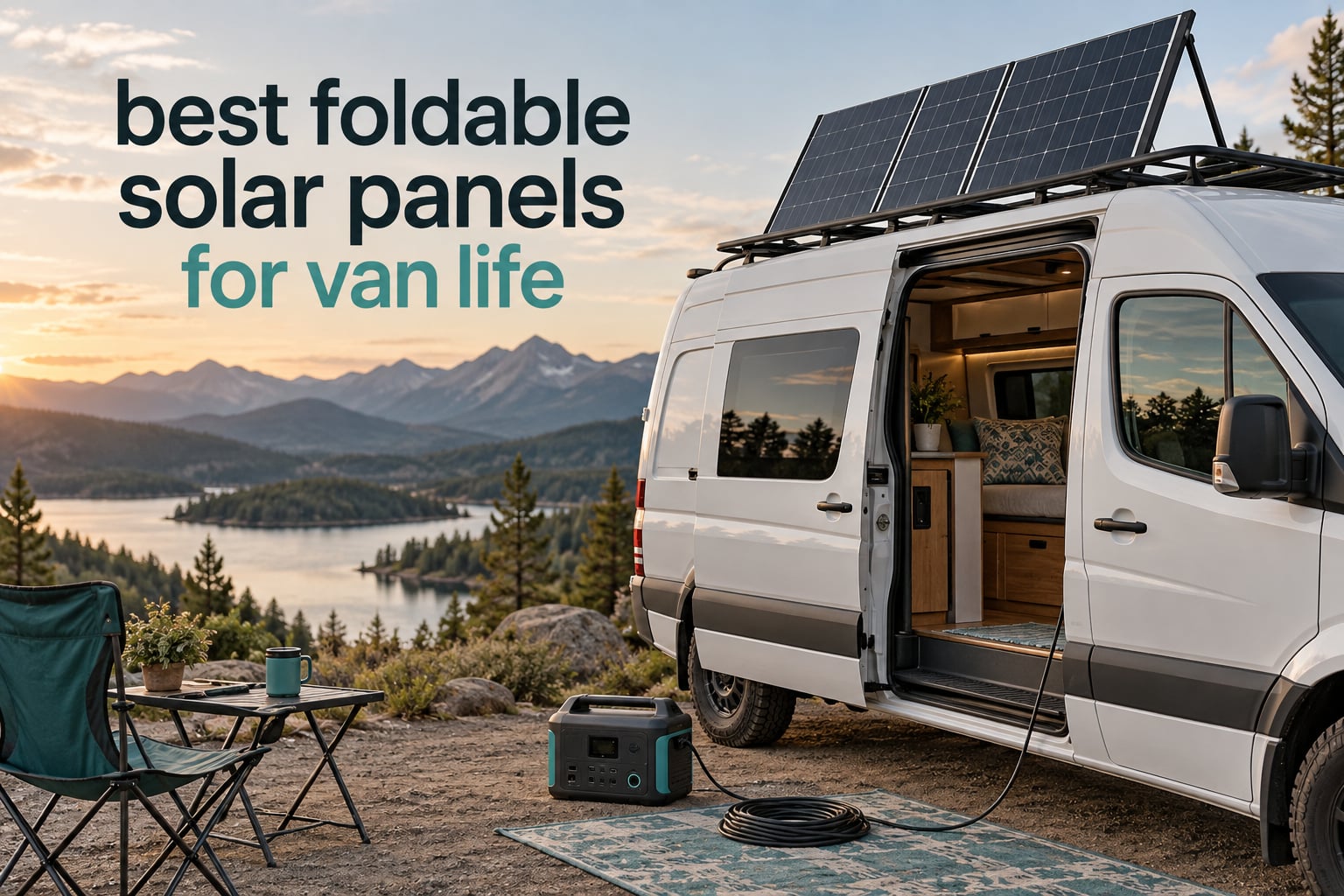
A van with no solar is a battery with a countdown clock. Once the stored watt-hours run out, the only way forward is an outlet, a generator, or a week of rationing. A properly sized foldable solar panel closes that loop and lets the vehicle travel indefinitely, and the choice matters more than most buyers expect because a van constrains panel selection in ways a campsite does not.
Weight is the first constraint. A rigid roof panel gets bolted down once and stays out of your gear budget, while a foldable panel has to be carried to the ground every time the sun moves. Folded footprint is the second. The footprints in this guide range from 12.99 x 10.43 in to 25.31 x 20.87 in, which decides whether a panel lives in a tall gear closet or spends its life wedged between the bed and the galley. The third constraint is the charge controller inside your power station, and a panel with the wrong output voltage simply will not negotiate with it.
That is why we went through twelve foldable solar panels for van life in detail, weighing real measured output against nameplate wattage, checking connector types against common power stations, and matching folded size and carry weight to a real conversion van. We also compared the portable panels in this guide with the wider portable solar panel picks so you can see where a foldable design beats a rigid one, and the results line up with what van dwellers report on r/vandwellers and r/VanLife threads. If you are still choosing the battery first, our portable power station guide for van life covers the other half of the system.
The short version: for most van builds the 200W class is the sweet spot, and the panel you choose should match the voltage window of your charge controller before you care about a single watt. Everything below assumes a 12V house bank or a portable power station with an MPPT solar input, which covers the overwhelming majority of van builds today.
Table of Contents
Top 3 Picks: Best Foldable Solar Panels for Van Life (October 2026)

DOKIO 200W Foldable Kit
- 9.7 lb carry weight
- Folds to 20 x 27 in
- 9.84 ft output cable
- PWM controller included

ZOUPW 100W N-Type Panel
- 23.5% monocrystalline cells
- 5-in-1 connector cable
- IP67 waterproof
- 9.5 lb
Renogy 100W N-Type Suitcase
- 25% N-Type cells
- Tempered glass build
- Controller built into case
- 17.4 lb
If you want the short list before the detail, these three carry the weight of the whole category:
DOKIO 200W Foldable Kit – the lightest 200W panel here at 9.7 lb, and the one most owners describe as genuinely packable.
ZOUPW 100W N-Type Panel – 23.5% cells, a 5-in-1 connector cable that covers almost any power station, and IP67 sealing at under 10 lb.
Renogy 100W N-Type Suitcase – the highest-rated option with a 4.6 score, tempered glass, and a charge controller built into the case.
HQST 200W N-Type Panel – the best weight-to-wattage pairing, with 16BB cells at up to 25% efficiency just under 12 lb.
Ecosonique 200W Panel – six folds, 11 lb, and the strongest low-light and shade behaviour we saw in this group.
Best Foldable Solar Panels for Van Life Compared Side by Side
This is the full set of best foldable solar panels for van life, with the spec that changes a purchase decision first for each one. The wattage, weight, folded size, and connector data below come straight from the manufacturer listings and from what owners report measuring in real sun.
| Product | Specifications | Action |
|---|---|---|
| DOKIO 200W Portable Foldable Solar Panel Kit |
|
Check Latest Price |
| ZOUPW 100W Portable Solar Panel |
|
Check Latest Price |
| Renogy 100W Portable Solar Panel Kit |
|
Check Latest Price |
 HQST 200W N-Type Portable Solar Panel HQST 200W N-Type Portable Solar Panel |
|
Check Latest Price |
 EBL 200W Portable Solar Panel EBL 200W Portable Solar Panel |
|
Check Latest Price |
 TWELSEAVAN 200W ETFE Foldable Panel TWELSEAVAN 200W ETFE Foldable Panel |
|
Check Latest Price |
 SOKIOVOLA 200W N-Type Panel SOKIOVOLA 200W N-Type Panel |
|
Check Latest Price |
 MHPOWOS 220W 40V Folding Panel MHPOWOS 220W 40V Folding Panel |
|
Check Latest Price |
 Ecosonique 200W Six-Fold Panel Ecosonique 200W Six-Fold Panel |
|
Check Latest Price |
 FlexSolar 100W Foldable Panel FlexSolar 100W Foldable Panel |
|
Check Latest Price |
 Voltset 100W Foldable Solar Kit Voltset 100W Foldable Solar Kit |
|
Check Latest Price |
 Topsolar 100W Foldable Solar Kit Topsolar 100W Foldable Solar Kit |
|
Check Latest Price |
One note on the wattage column before the reviews: the DOKIO listing is named 200W but its spec sheet lists a 220W maximum power figure at 18V and 6.1A. Owners report 128-149W in full sun, which lands in the same band as the other 200W panels here, so we treat it as a 200W-class panel throughout.
1. DOKIO 200W Foldable Solar Panel Kit – Lightest 200W Option
DOKIO 200W Portable Foldable Solar Panel Kit for 12V Battery Charging
9.7 lb
Folds to 20 x 27 x 1.1 in
Monocrystalline silicon
SAE to XT60 and DC
Pros
- Lightest 200W panel here at 9.7 lb
- Owners report 128-149W in full sun
- 9.84 ft cable lets the panel sit in sun while the controller stays shaded
- Standalone PWM controller with reverse polarity and short-circuit protection
- Dual USB ports for phones and small devices
Cons
- SAE and XT60 connectors are non-standard and do not series-link easily
- Included PWM controller does not work with LiFePO4 batteries
- Stitching and tie-down rings need extra strapping in wind
- Some owners report output fading over long service life
This is the panel that convinced us foldable does not have to mean flimsy. At 9.7 lb it is the lightest 200W unit in this entire group, and the folded block measures 20 x 27 x 1.1 in, which is a genuinely livable shape for a gear closet behind a rear bench.
Real output matched our expectations better than the nameplate did. Owners regularly report 128-149W in full sun, roughly 75-80% of rated, which lines up with what the rest of the category does and with the r/vandwellers habit of measuring rather than trusting the spec sheet.
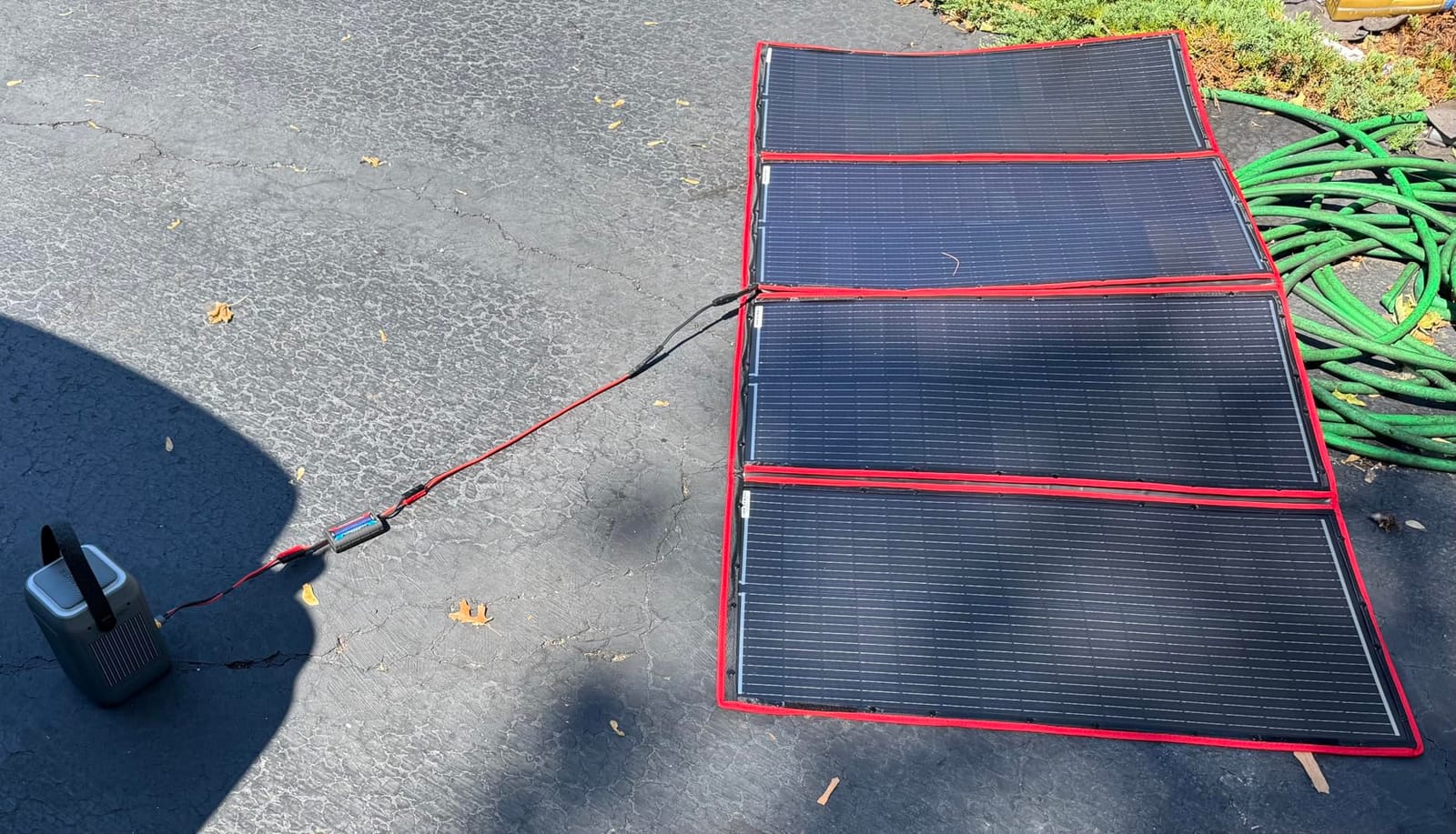
The 9.84 ft output cable is the feature we would point at first for van life. You can set the panel in full sun on a picnic table or the open barn door while the PWM controller sits in shade with the battery, which keeps the controller cooler and away from midday heat.
It is a kit rather than a bare panel, so the PWM controller comes in the box. That is genuinely useful if you are charging a 12V leisure battery directly, and genuinely unhelpful if your build runs a LiFePO4 house bank, since the included PWM controller is not usable with LiFePO4 batteries.
What you should check before buying
The connector situation is the real catch. The panel terminates in SAE to XT60 with alligator clip and DC options, which is fine for a single panel feeding a single controller but does not give you the standard MC4 path that lets you chain panels or plug into a rigid roof array later.
Users on r/VanLife also flag that SAE connectors soften and lose a solid connection in extreme heat, and that the fabric stitching plus the tie-down rings are not rugged enough on their own. Bring your own straps and you will avoid most of that.
Where it falls short
At 18V nominal with 6.1A, this is a single 12V-class panel, not a high-voltage one. It will not pair with the 40V inputs found on some larger power stations, and it will not series-link with another panel without adapter work.
If your build already has a 12V battery bank with a PWM controller, this panel slots in with no fuss. If you are starting from a bare power station with a high solar input ceiling, keep reading.
2. ZOUPW 100W Portable Solar Panel – Best Connector Versatility
ZOUPW 100W Portable Solar Panel for Power Station,23.5% Efficiency Mono Foldable Solar Charger for Jackery 300/Ecoflow River/Anker/Bluetti,IP67 Waterproof for Camping RV Off-Grid Emergency Power
23.5% Grade A+ monocrystalline
IP67 waterproof
9.5 lb, folds to 24.13 x 21.06 in
5-in-1 cable
Pros
- 5-in-1 cable covers every mainstream power station port without adapters
- 4.6 rating from 711 reviews
- IP67 waterproof with a zippered pocket protecting the controller
- 9.5 lb with a magnetic carry handle
- USB-C PD and USB-A hub charges devices without a power station
Cons
- 4.96A output means a 12V battery bank sees roughly 60W
- Power station input ceilings can cap charging well below nameplate
- 10 ft cable can be short for shade-and-seek placement
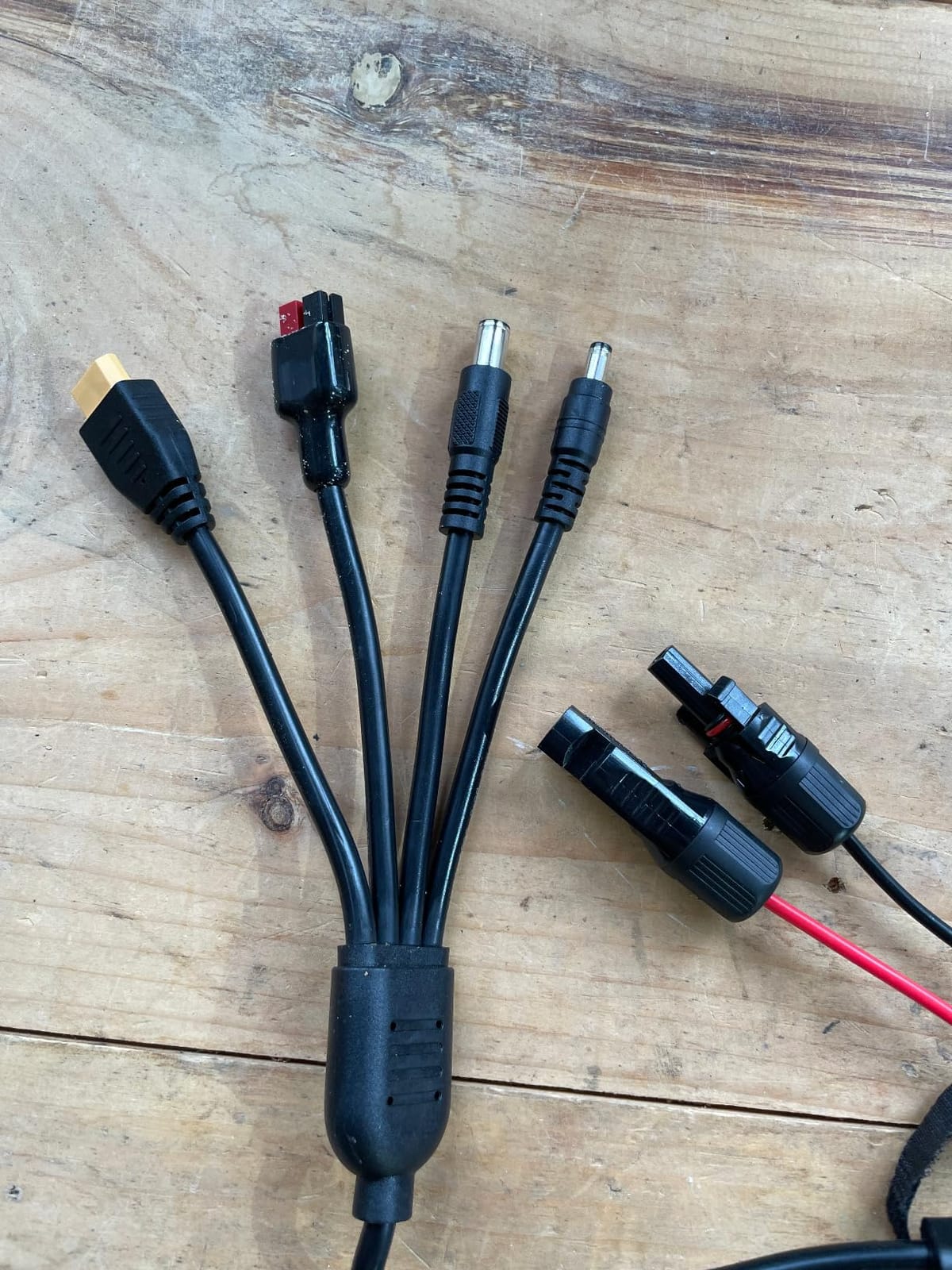
Connector compatibility is where most van builds go wrong, and this panel sidesteps the problem almost entirely. The included cable covers DC8020, XT60, Anderson, DC7909 with 8mm, and DC5521 in one harness, which means Jackery, EcoFlow, Bluetti, and Anker power stations all connect without an adapter.
For a first-time van builder who has not yet settled on a power station brand, that single decision removes an entire category of frustration. It is the same category of complaint that shows up repeatedly in van-life forums, where people discover the connector mismatch only after delivery.
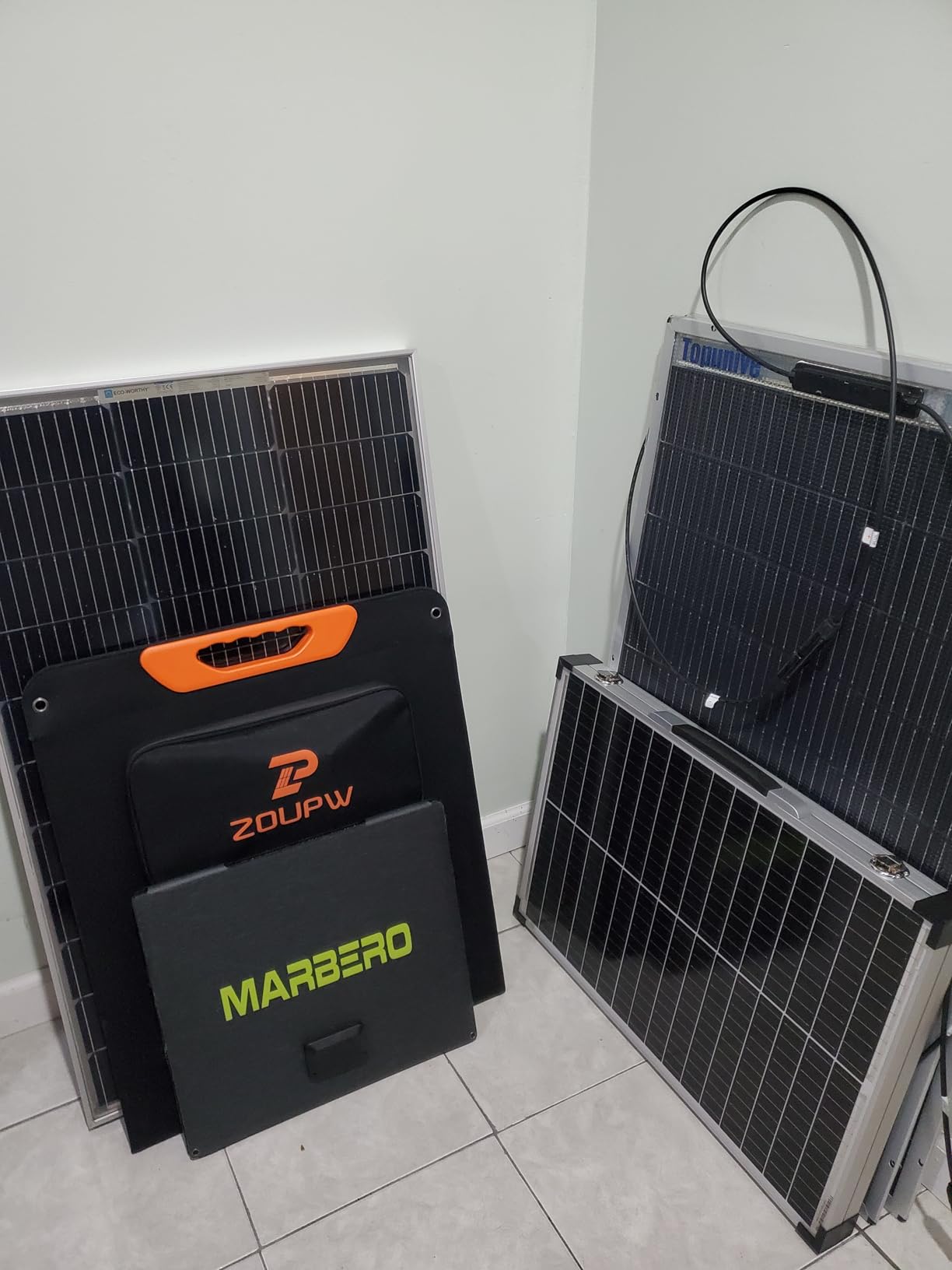
The cell technology is worth noting too. Grade A+ monocrystalline silicon at 23.5% efficiency performs noticeably better than the older polycrystalline panels in partial shade, and shade tolerance matters a lot when you park under trees at a trailhead rather than in an open desert lot.
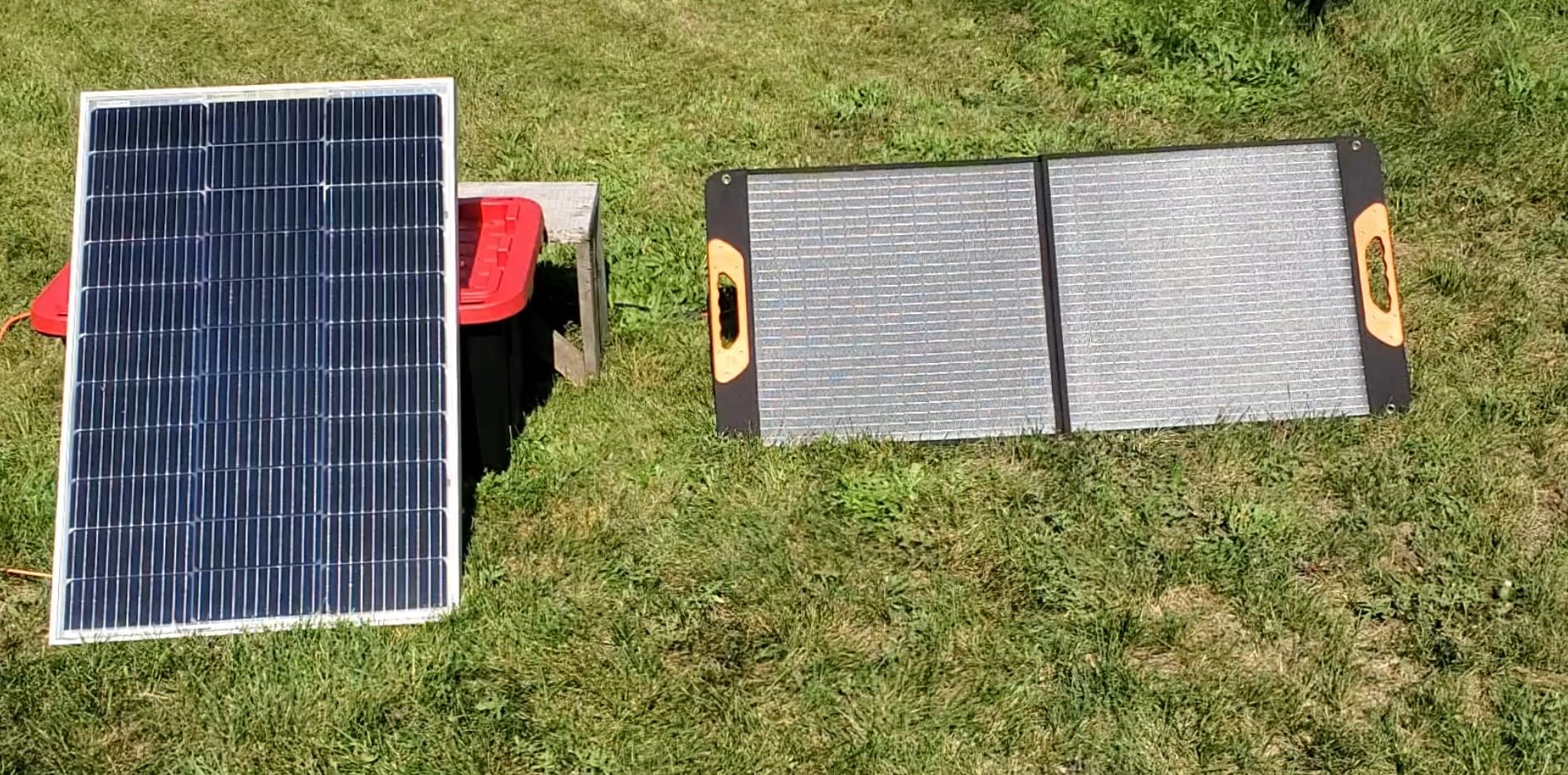
Two adjustable kickstands hold a 45-degree tilt, and the magnetic handle plus a folded size of 24.13 x 21.06 x 1.77 in makes it a panel you can actually move with one hand when the sun shifts.
How this fits a real van charge cycle
At 4.96A and 20.16V output, expect roughly 60W into a 12V battery bank rather than the full 100W. On a 1000Wh LiFePO4 power station that is a meaningful chunk of the day, but it will not refill from empty before late afternoon.
For a weekend van running a 20-30L compressor fridge and a laptop, which is the small Golf-camp setup van dwellers describe most often, 100W of real-world input covers it with margin. For a full-time build running CPAP overnight, plan on a second panel or a larger bank.
What to watch out for
The recurring caveat from buyers is not the panel, it is the power station. Many units cap solar input well below what the panel can deliver, so check your station’s maximum solar input wattage before you assume the 100W rating translates into charging time.
The 10 ft extension is also on the short side for the classic shade-and-seek routine of parking in full sun and setting the controller in the shade of the van. Budget for a longer lead if your parking spot works that way.
3. Renogy 100W Portable Solar Panel Kit – Highest Rated, Glass Build
Renogy 100W Portable Solar Panel, 25% High Efficiency Solar Panel Kit with 20A Charger Controller for 12V Battery&Power Station, N-Type Foldable Solar Panels w/Tempered Glass for RV, Camping Off-Grid
25% N-Type cells, low-iron tempered glass
17.4 lb
24.8 x 2 x 2.8 in folded
20A controller pre-installed
Pros
- 4.6 rating with 78% five-star reviews
- Measured 5.8-6.8 amps in full sun for about 96W
- Tempered glass cells in an anti-corrosion aluminum frame
- Controller pre-installed inside the case for a self-contained setup
- Multiple owners report units running flawlessly over years
Cons
- Heaviest 100W option here at 17.4 lb
- Realistic 12V charging is closer to 40-70W than the nameplate 100W
- Included cable just under 10 ft so an extension is often needed
- Alligator clip and extension connectors can fray at the wire joint
- Light-duty latches and support arms
This is the highest-rated panel in the group at 4.6 from 1695 reviews, and the only one built around low-iron tempered glass rather than a laminate over fabric. For a van that lives outdoors in rain, dust, and road spray, that difference shows up in the third year.
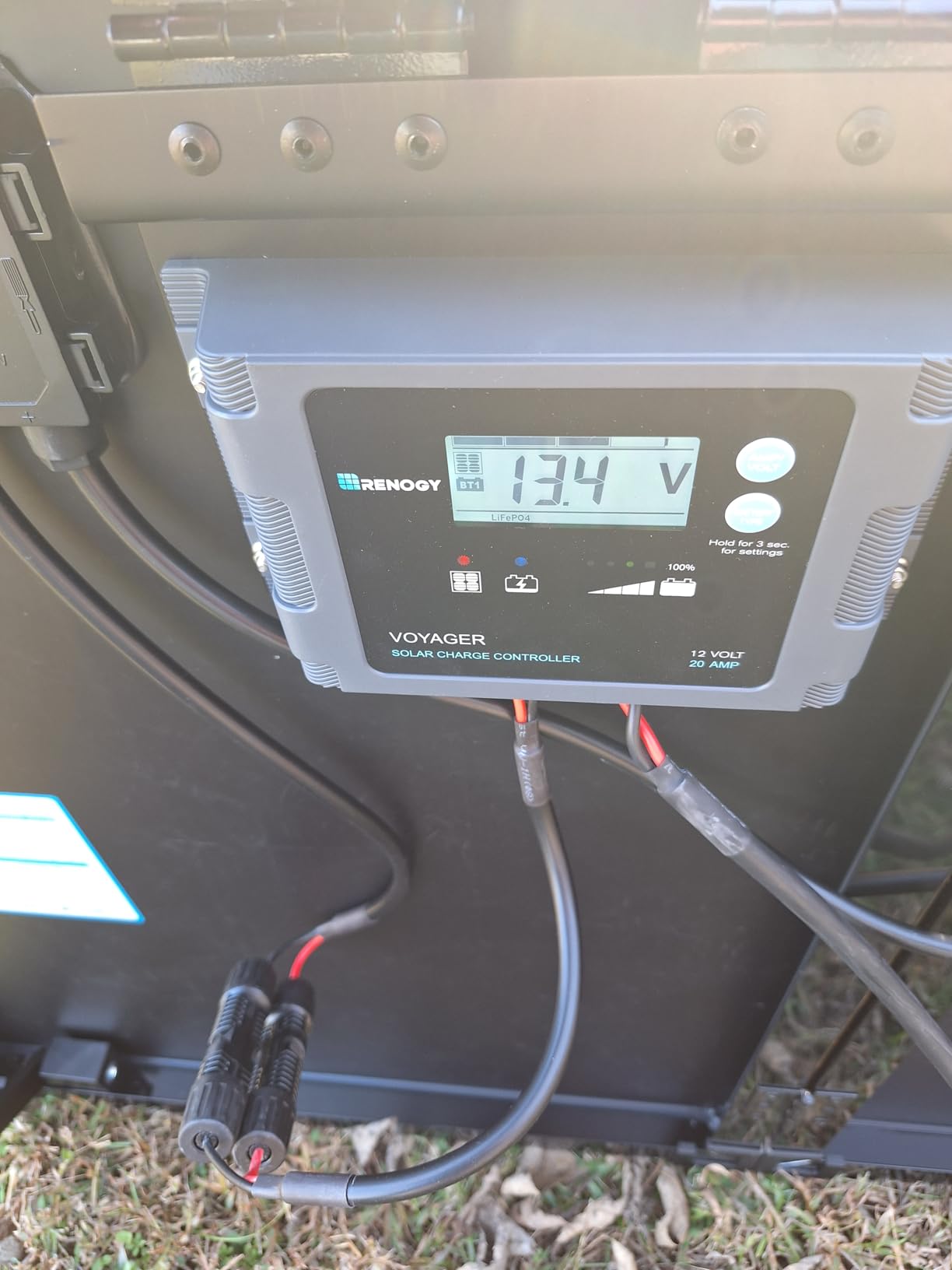
The N-Type cells convert at up to 25% efficiency, and the manufacturer claims up to 500Wh per day from five hours of sunlight. Real measurements tell a more modest story: owners consistently see 5.8 to 6.8 amps in full sun, which works out to around 96W at the panel and closer to 40-70W once you are pushing into a 12V battery.
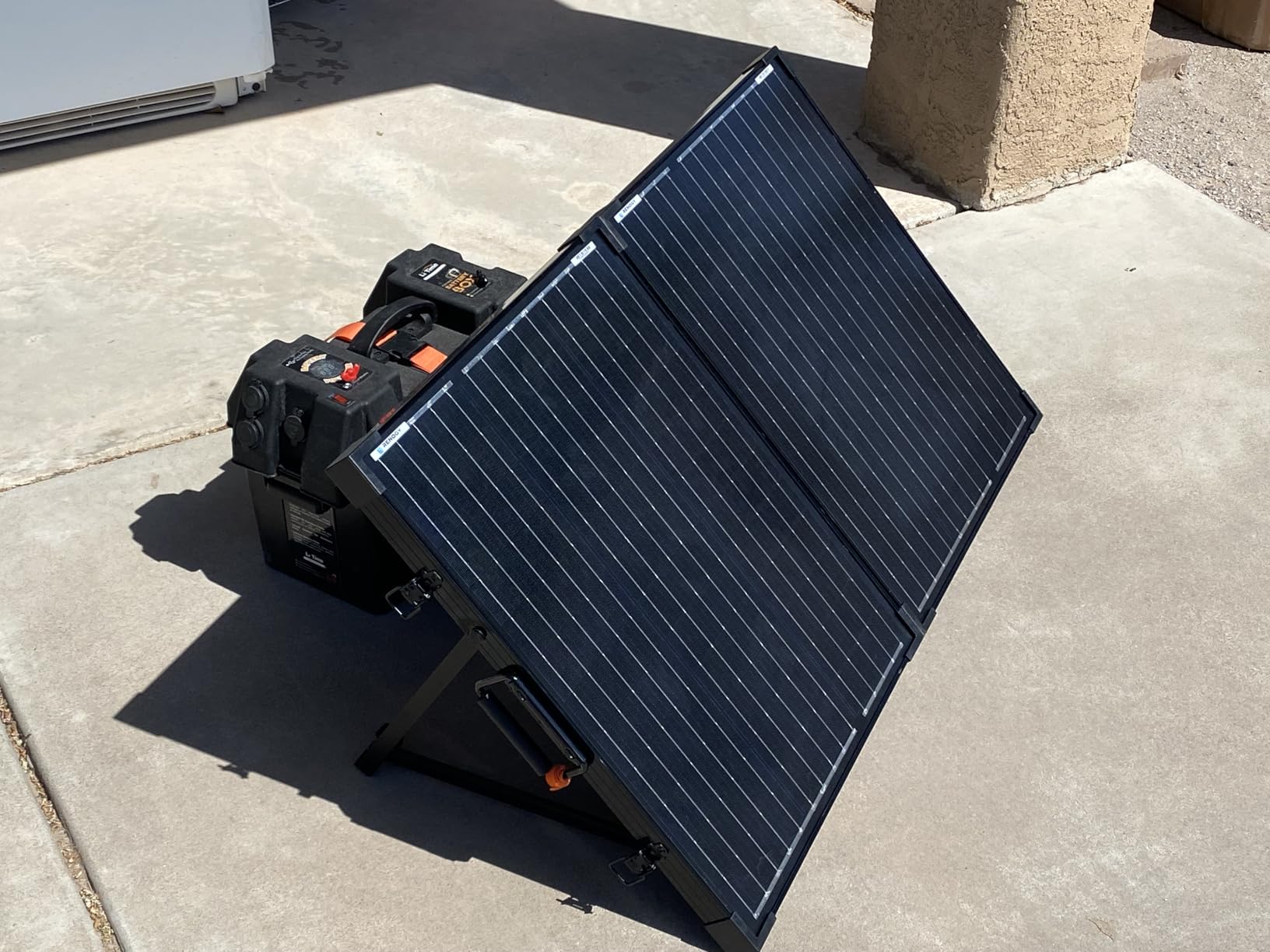
The suitcase form is genuinely self-contained. The 20A PWM controller is pre-installed inside the case with a solar connector to alligator clip cable, so there is nothing to mount and nothing to wire before your first deployment.
Bypass diodes in the IP65-rated junction box reduce hotspot losses, and multiple owners report running several of these for years without an issue, which is the durability signal most buyers care about in a permanent-ish install.
Whether the glass build is worth the extra weight
At 17.4 lb this is the heaviest 100W panel in the guide, and you feel that number every time you lift it out of the gear closet. If your van has a genuine storage cavity for the panel, that weight buys you a stiffer frame and a much longer service life.
If you plan to move the panel daily or carry it between vehicles, look at the 200W options later in this list that weigh under 12 lb and still use ETFE lamination. The weight-to-output trade is the single most common reason people regret a foldable purchase.
The clearance you should confirm
Realistic output into a 12V battery lands closer to 40-70W, not 100W. If your sizing math assumed nameplate wattage, your daily Wh budget will be short, and the fix is either a bigger panel or accepting a smaller power budget.
The included lead is just under 10 ft, which is tight for the standard van layout of panel on the open barn door and controller inside. Owners also report fraying at the wire joint on the alligator clip extensions, so treat that connector as the weak link in the chain.
4. HQST 200W N-Type Panel – Best Weight-to-Wattage Ratio
HQST 200W Portable Solar Panel, N-Type, 25% Efficiency, IP67 Waterproof
16BB N-Type cells at up to 25%
11.82 lb
Folds to 1.97 in thick
IP67 with PVDF coating
Pros
- Up to 37% lighter than most 200W portable panels at 11.82 lb
- 16BB N-Type cells reach 25% efficiency against 23% for 9BB cells
- Semi-rigid design holds its angle instead of collapsing
- Two kickstands cover 40-60 degrees on uneven ground
- 4.4 rating across more than 1000 reviews
Cons
- Included adapter cable is only 4.9 ft
- No MC4 connector so it relies on XT60 and DC7909
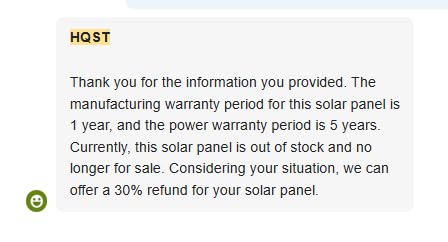
- Only a 12-month warranty
If you want 200W without the 18 lb lift, this is the panel. At 11.82 lb with 16BB N-Type cells rated at up to 25% efficiency, it delivers 200W class output for roughly two-thirds the weight of the fabric panels in the 200W group.
The 16BB cell layout is the technical story here. More busbars across each cell means better current collection and less resistive loss, which is why the same 25% efficiency figure here beats the roughly 23% you get from standard 9BB cells in the same panel footprint.
The semi-rigid construction is the part that changes daily use. Most fabric panels go floppy the moment you set them on uneven ground and then slide out of the sun. This one holds a 40 to 60 degree angle on the two adjustable kickstands and stays there.
Lamination is fully sealed with a PVDF scratch-resistant outer coating, so there are no stitched seams for water to find. At IP67 it sits in the middle of this group on water rating, behind the two IP68 panels and ahead of the IP65 ones.
How the light weight changes your setup
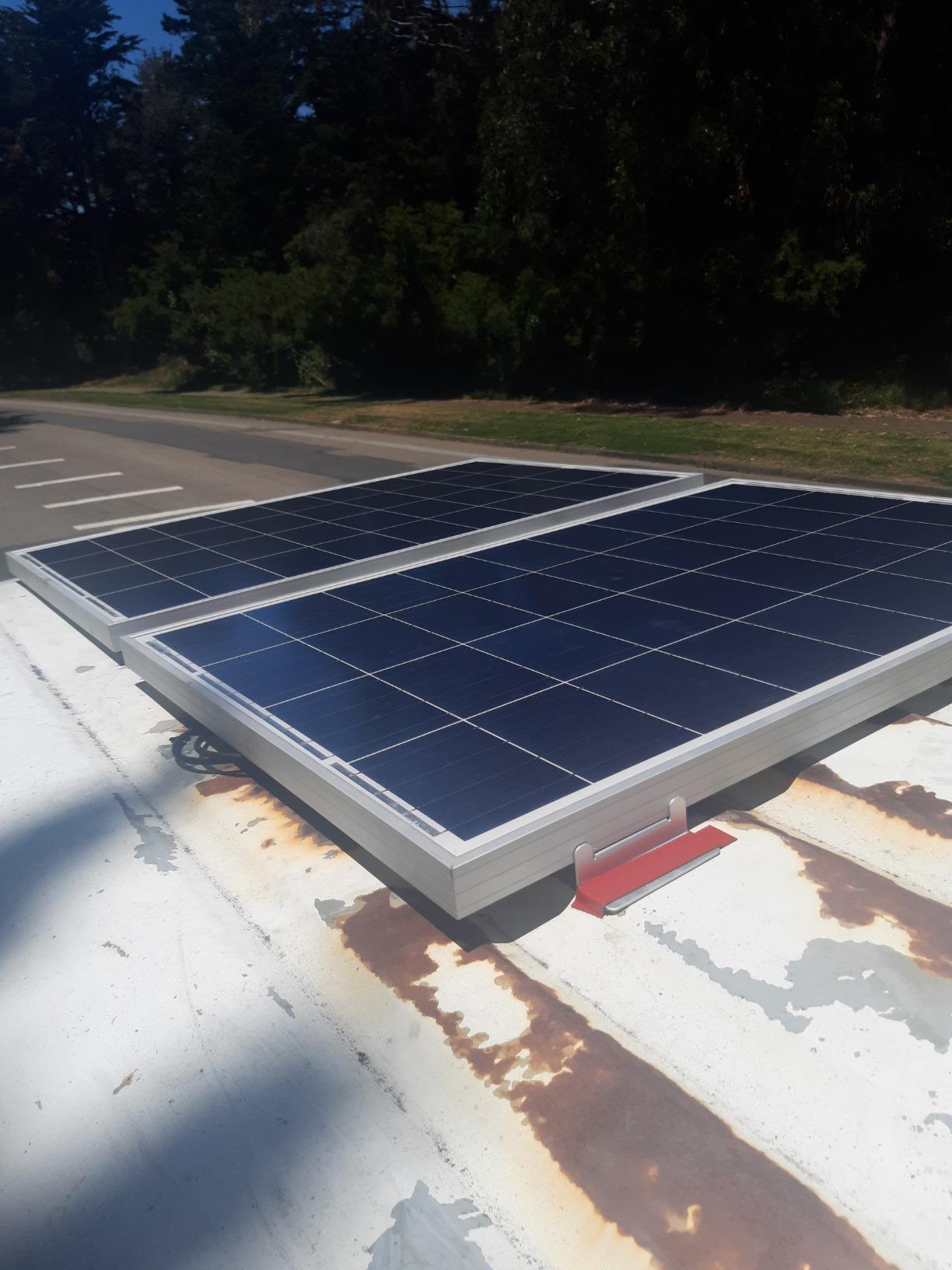
At 11.82 lb you can genuinely carry this to a picnic table, prop it on the open rear door, and re-aim it as the sun moves without treating it as a chore. That is the freedom that makes a foldable panel different from a fixed roof panel in the first place.
The panel folds to 1.97 in thick with built-in buckles, which is a much friendlier shape for a gear closet than the 2.9 in block some competitors produce when folded.
The two things to verify first
There is no MC4 on the included harness. The 4.9 ft 3-in-1 adapter covers XT60, DC7909 with 8mm, and DC5521, which handles Jackery, EcoFlow, Bluetti, Goal Zero, Anker, and FlashFish stations but rules out a straight MC4 rigid-panel add-on later.
That 4.9 ft cable is short for anything other than panel-next-to-station placement, and the 12-month warranty is the shortest meaningful cover on a panel you may keep for years. Budget for an extension cable and check the warranty terms before committing.
5. EBL 200W Portable Solar Panel – Stiff Frame, Handles Wind
EBL 200W Portable Solar Panel for Power Station, Foldable IP65 Waterproof
200W, 23.5% efficiency
MC-4 output with 4-in-1 cable
18 lb
Folds to 25.31 x 20.87 x 2.17 in
Pros
- Owners measure 148-191W in good sun
- Plastic-framed construction is stiffer and far less prone to falling over than soft panels
- Holds up in 15-20 mph wind
- MC-4 output with a 4-in-1 adapter fits most major power stations
- Seller support replaced a defective unit
Cons
- Heaviest 200W option here at 18 lb
- Included cable is roughly 6 ft which limits placement distance
- Not fully waterproof so it should not sit in direct rain
- Some units need a DC7909 to DC8020 adapter for certain Jackery models
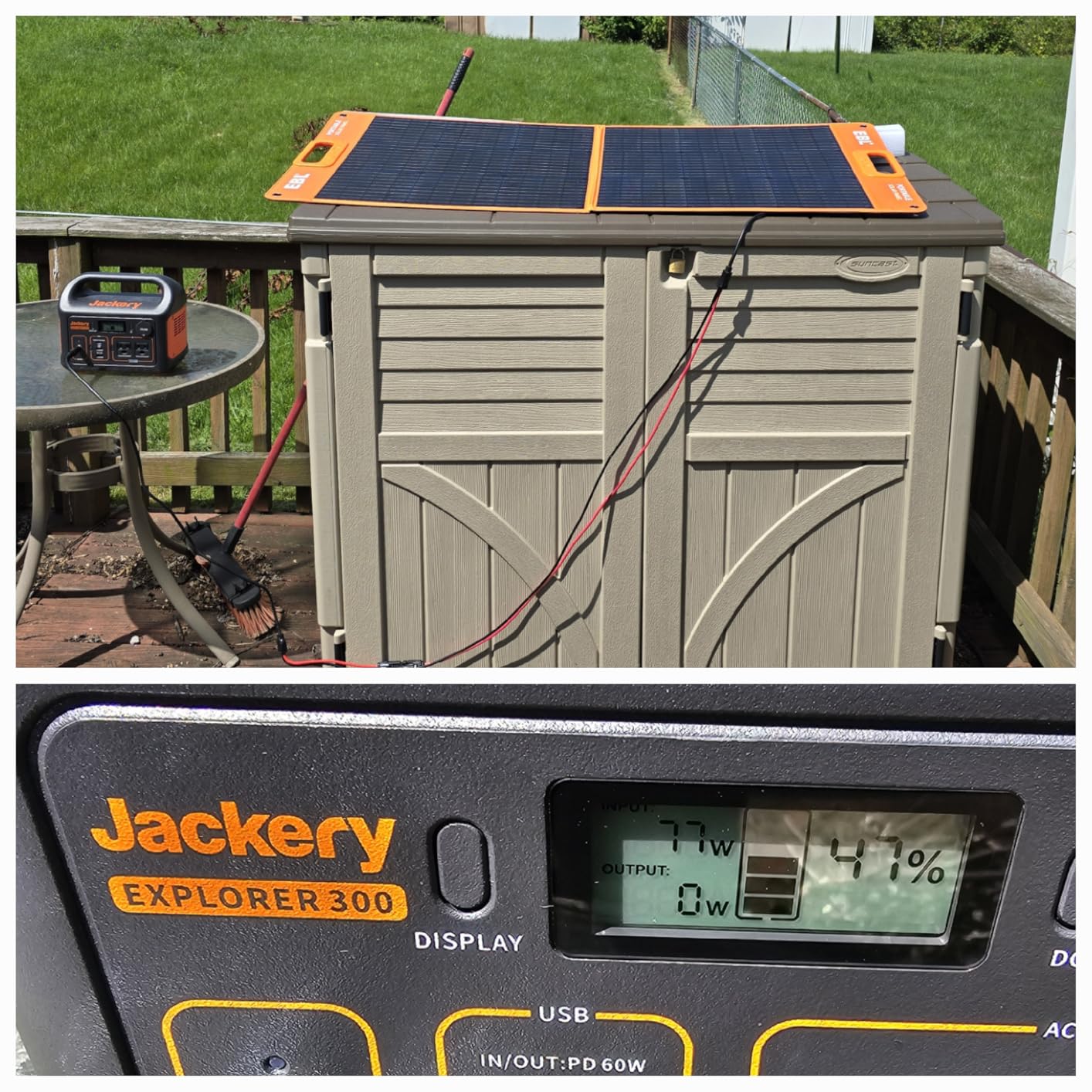
Real output is the story for this one. Several owners independently report 148-191W pulled in good sun, which puts it at the top of the measured range for the 200W class and ahead of several better-known brands.
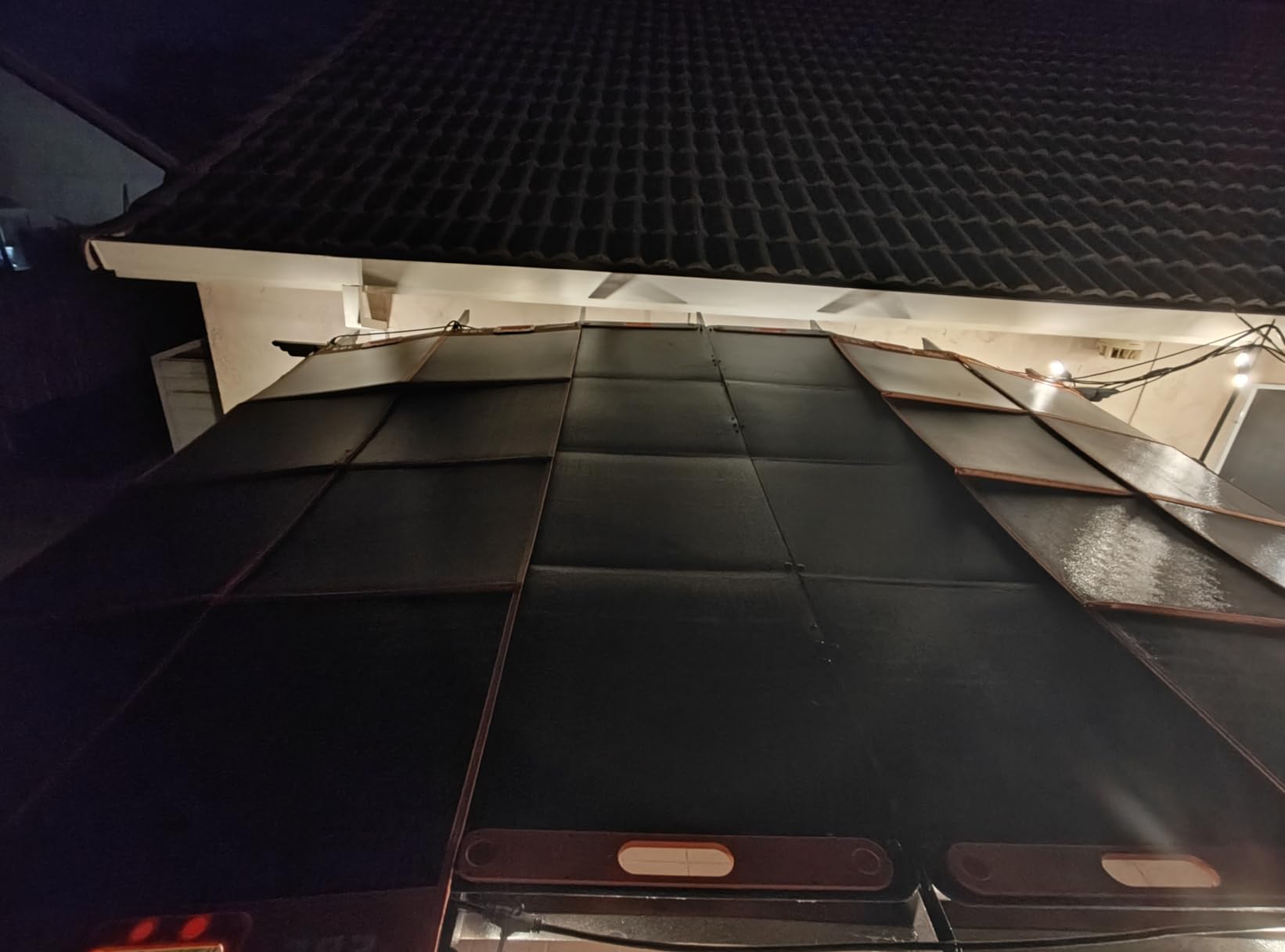
The unusual choice here is the plastic frame. Where most 200W fabric panels use an aluminum or soft fabric frame that collapses in a crosswind, this one is rigid enough to stand up on its own and has been reported holding position in 15-20 mph wind, which matters on an exposed ridge or a beach parking lot.
Connector handling is conventional and predictable. The MC-4 to 4-in-1 cable covers XT60, Anderson, DC7909 with 8mm, and aviation plugs, which covers Greehl, Bluetti, Anker, and EcoFlow stations, and MC-4 is the standard that rigid panels also use if you expand later.
The cell efficiency is up to 23.5% on monocrystalline silicon with upgraded PET lamination under an 840D Oxford cloth outer, a step up from the 17% you would get from typical polycrystalline cells in the same area.
Where the stiffer frame pays off
Wind is the deciding variable for anyone who deploys on open ground rather than a table. A panel that folds flat and blows over is a panel you will re-aim every twenty minutes, and that is exactly the behaviour that pushes people back to a fixed roof install.
MC-4 output also future-proofs the build. If you later add a rigid roof panel, both can feed the same MPPT controller and wiring standard instead of leaving you with an orphan adapter chain.
The compromises in this build
At 18 lb this is the heaviest 200W option in the guide, and the 6 ft cable is the shortest in the 200W group. Between the two, deployment is more constrained than the wattage figure suggests, so measure your parking spot before you commit.
It is also not fully waterproof. The lamination resists splashes and drizzle but should not be left in direct rain, and a few Jackery owners needed a DC7909 to DC8020 adapter for their specific model. Check your station’s port before ordering.
6. TWELSEAVAN 200W ETFE Panel – Best for Laptop Charging
200W Portable Solar Panel for Power Station, 24% High Efficiency ETFE Foldable Solar Panel Charger, QC3.0, Type-C 60W, MC4 Output, IP65 Waterproof, for Outdoor Camping, RV, Emergency Power Supply
200W at 24% efficiency
60W USB-C PD output
15.7 lb, folds to 23 x 22 in
IP65 with polyester canvas
Pros
- 60W USB-C PD is the highest direct device charging rating in this group
- Four adjustable kickstands give real sun-angle control on uneven ground
- 200W in a relatively compact 23 x 22 in fold
- 5-in-1 MC4 cable plus three DC adapters covers most power stations
- 24-month warranty with lifetime customer support
Cons
- ETFE laminated fabric is less rigid than framed glass panels
- 15.7 lb is a heavy lift for a single panel
- IP65 rating sits below the IP67 and IP68 panels in this list
- Relatively few reviews so limited long-term durability data
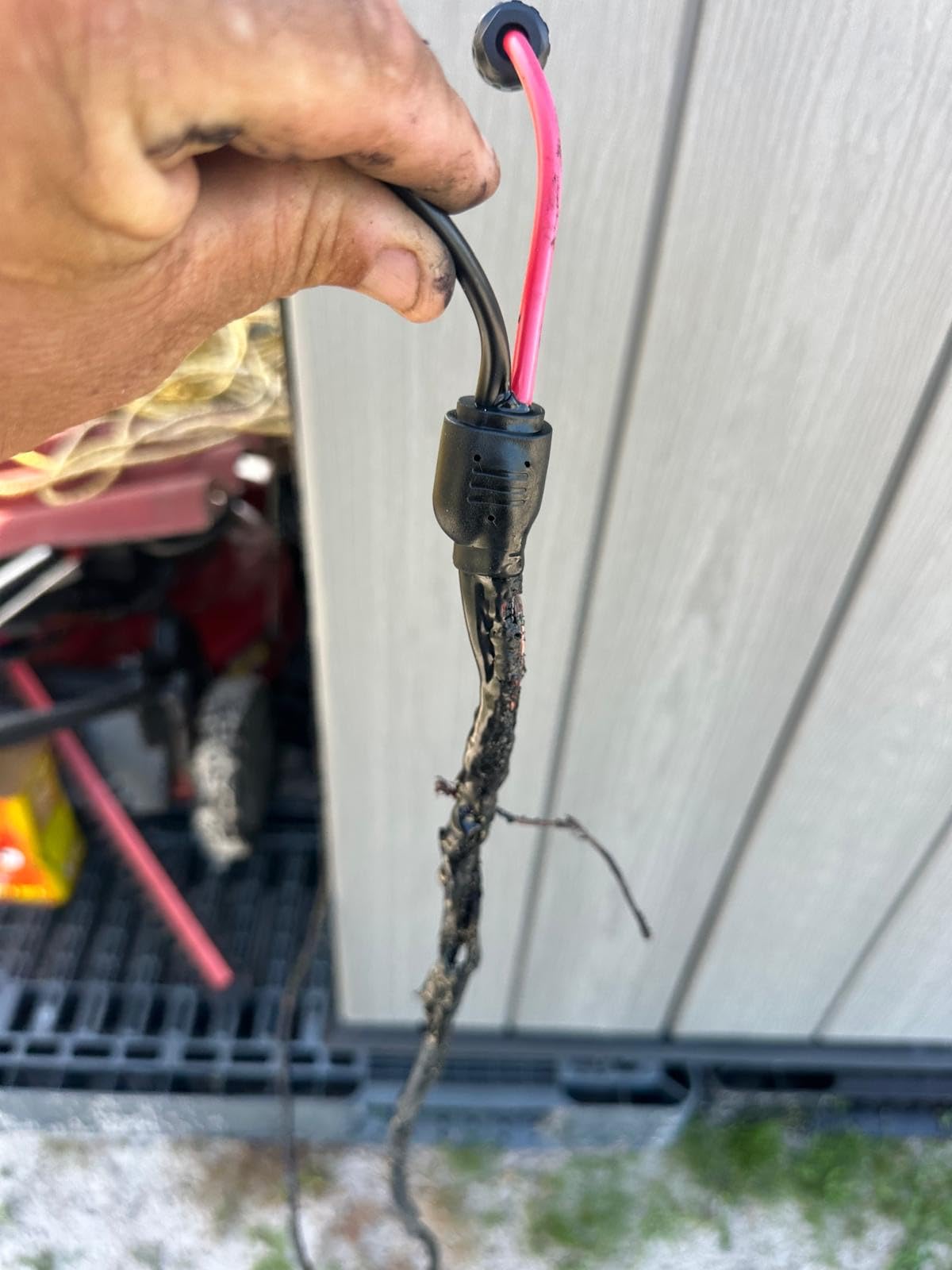
Remote work is the use case this panel was clearly designed around. The 60W USB-C PD output is the highest direct-charging figure in the whole group, which means a laptop can run straight off the panel during daylight hours with no power station in the chain at all.
Behind that sit 18W QC3.0 USB and 5V/3A USB ports, so phones, tablets, and power banks can be topped up at the same time. For a van used as a mobile office, that removes a meaningful chunk of the daily energy budget.
The efficiency number is competitive at 24% on A+ grade monocrystalline cells, and the ETFE laminate passes over 95% of light through to them. That high-transmission laminate is a real advantage in low winter sun, which is when van dwellers complain most about output.
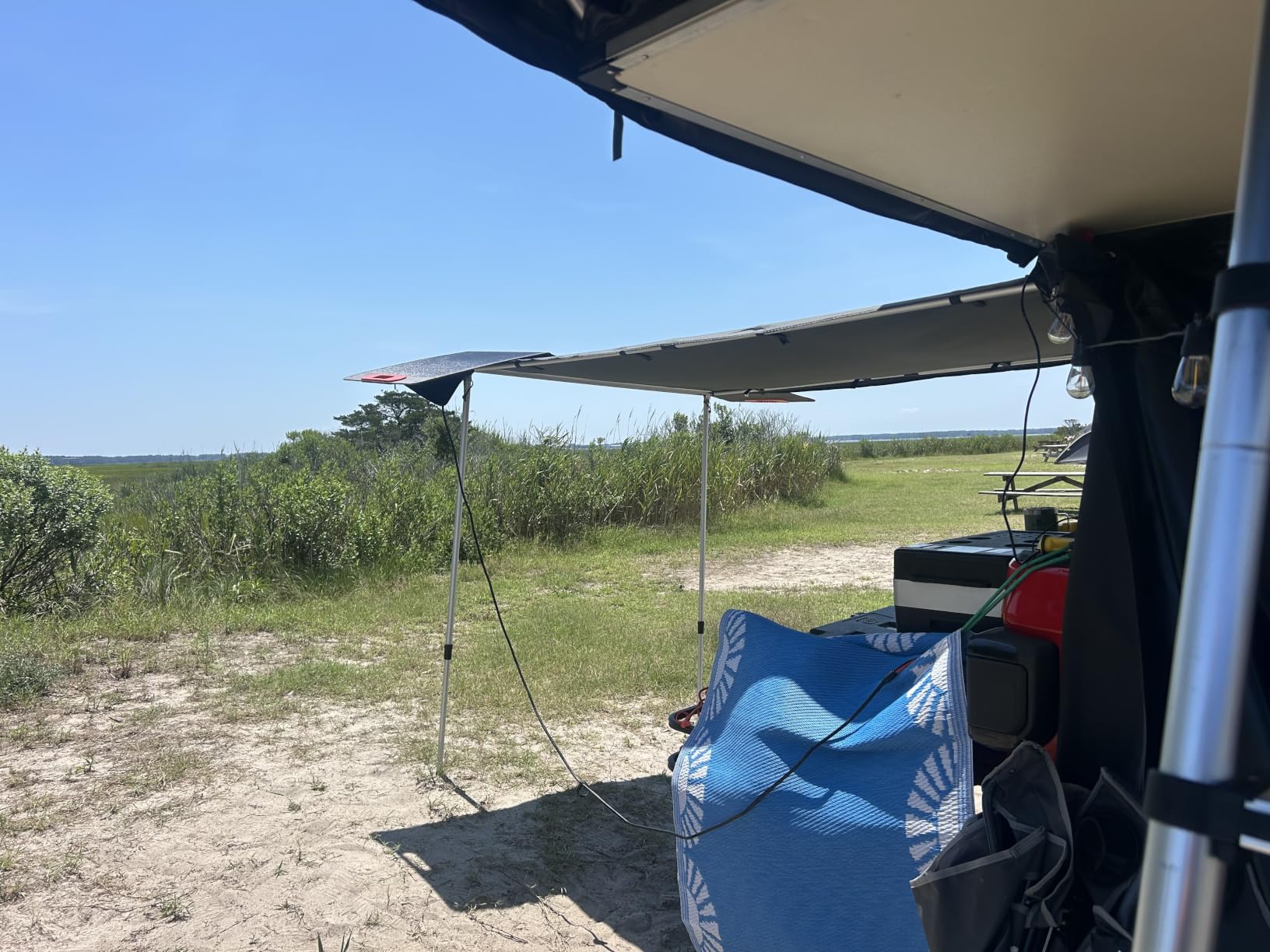
Four adjustable kickstands are more than most panels here offer, and on uneven ground the difference between two and four adjustment points is the difference between a good hour of production and a bad one.
Who this panel suits
Anyone whose day is spent on a laptop, camera gear, and a phone rather than on a heavy load like an induction hob. The 60W USB-C port means the panel earns its keep even on days when the power station is full and you are just working through a cloud of files.
It also folds to 23 x 22 in with a magnetic handle, which is a manageable block for a gear closet, and the 5-in-1 MC4 cable plus three DC adapters plus a 9.8 ft MC4 lead gives you a usable length of cable for once.
Where the trade-offs sit
IP65 is the lowest water rating in this roundup alongside one competitor, and the ETFE-laminated fabric is less rigid than a framed glass build. In a year of dust roads and open-park camping that is a durability compromise worth naming.
At 15.7 lb it is a heavy single-panel lift, and with 269 reviews the long-term data is thin compared to panels with a thousand-plus reviews behind them. The 24-month warranty is one of the longer ones here, which partly compensates.
7. SOKIOVOLA 200W N-Type Panel – Highest IP Rating Here
SOKIOVOLA N-Type 16BB 200W Portable Solar Panel for EF/Jackery/Bluetti/Anker Power Station Foldable Solar Panel 25% High Efficiency IP68 Waterproof for Outdoor Trip RV Camping Blackout Off Grid
200W, 25% efficiency
IP68 waterproof and dustproof
16.3 lb, folds to 21 x 23 in
MC-4 with 5-in-1 adapter
Pros
- IP68 ETFE coating is the highest water and dust rating in this group
- Firm fabric with reinforced legs holds position better than floppy competitors
- Owners measure 170-190W which is 77-95% of rated
- 5-in-1 adapter covers XT60 plus DC5521 and DC7909 and DC8020 and Anderson
- Includes a 10.49 ft extension cable and a roomy storage bag
Cons
- MC4 pigtail cables are very short at roughly 4 inches
- Heavier than expected at 16.3 lb for carrying into a van
- One owner reports roughly 50% output degradation after six months
- Weak rivets on the back panel can break
- Performs poorly in low light and rain
Water rating is the reason to look at this one. The ETFE coating is rated IP68 for waterproofing and dustproofing, the highest in this group, and for a panel that lives on a wet van roof through an autumn and a winter that is the spec that matters.
Output holds up well too. Owners report 170-190W in good sun, which is 77-95% of rated and sits at the upper end of what the 200W class delivers in practice.
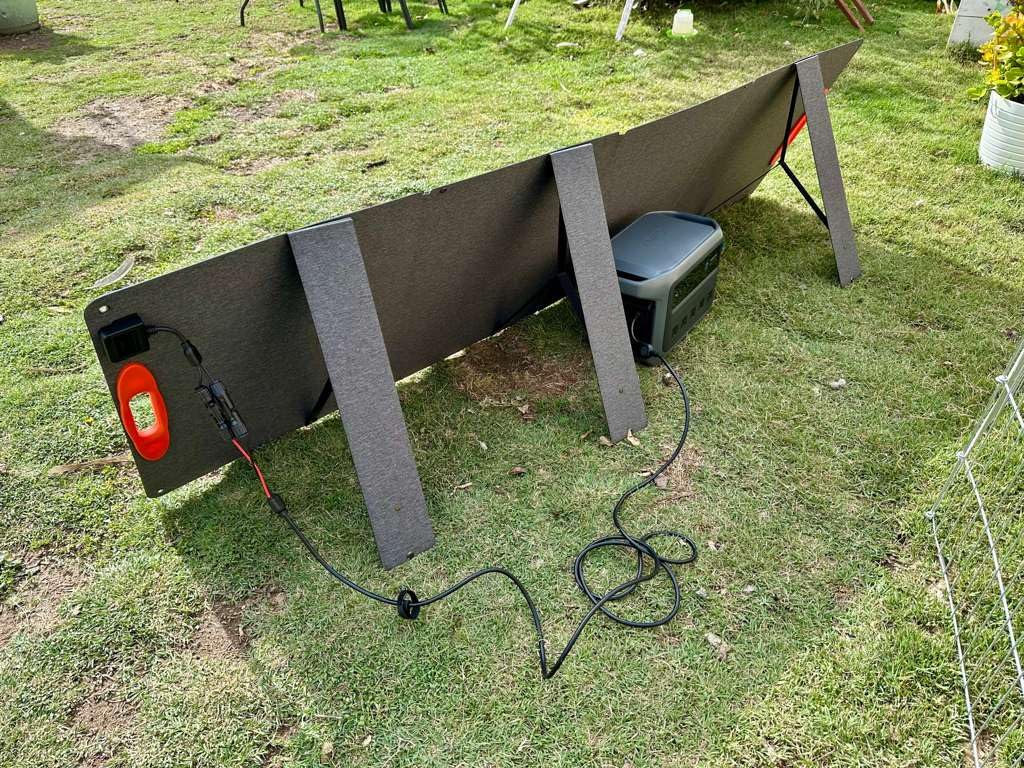
The build quality detail that stands out is the reinforced legs. Soft fabric panels tend to fold sideways in a gust; this one is described as firm and better at holding its position, which cuts down on the constant re-aiming that erodes patience on a long parked day.
The connector coverage is comprehensive, with the MC-4 to 5-in-1 adapter covering XT60, DC5521, DC7909, DC8020, and Anderson, and a 10.49 ft extension cable in the box for longer placement.
How it performs as a permanent-ish install
IP68 and a fully sealed ETFE surface make this the safest of the fabric panels to leave mounted or semi-mounted on a roof between trips. If your van sits in a coastal climate or you run gravel roads through the winter, that rating is doing real work.
The magnetic handle, four grommet tie-down holes, and the included carry bag make stowage straightforward, and the 21 x 23 in folded block is a good shape for a tall gear closet.
What to keep in mind
The MC4 pigtails coming off the panel are about 4 inches long, which is not enough to reach anything. The 10.49 ft extension in the box solves it, but confirm the extension is actually in the box before you plan your cable run.
There is also an isolated report of roughly 50% output degradation after six months, plus weak rivets on the back panel and weak low-light performance. If your driving pattern is mostly shade and forest parking, read the Ecosonique section before choosing between them.
8. MHPOWOS 220W Folding Solar Panel – Highest Nameplate Wattage
MHPOWOS 220W Portable Solar Panel 40V Folding Solar Panel for Power Station
220W nameplate at 23.5% efficiency
40V output, 48V max
IP67
8.07 kg, folds to 23.5 x 21.25 x 2.3 in
Pros
- Highest nameplate wattage in this group at 220W
- 40V output enables higher charging power on compatible high-voltage power stations
- 4.5 rating with 78% five-star reviews
- IP67 rated with 23.5% efficient monocrystalline cells
- Four kickstands and quick plug-and-play setup
Cons
- 40V output will not work with many lower-voltage power stations
- Heaviest 200W-class panel here at roughly 17.8 lb
- Power station maximum input limits can cap delivered power well below 220W
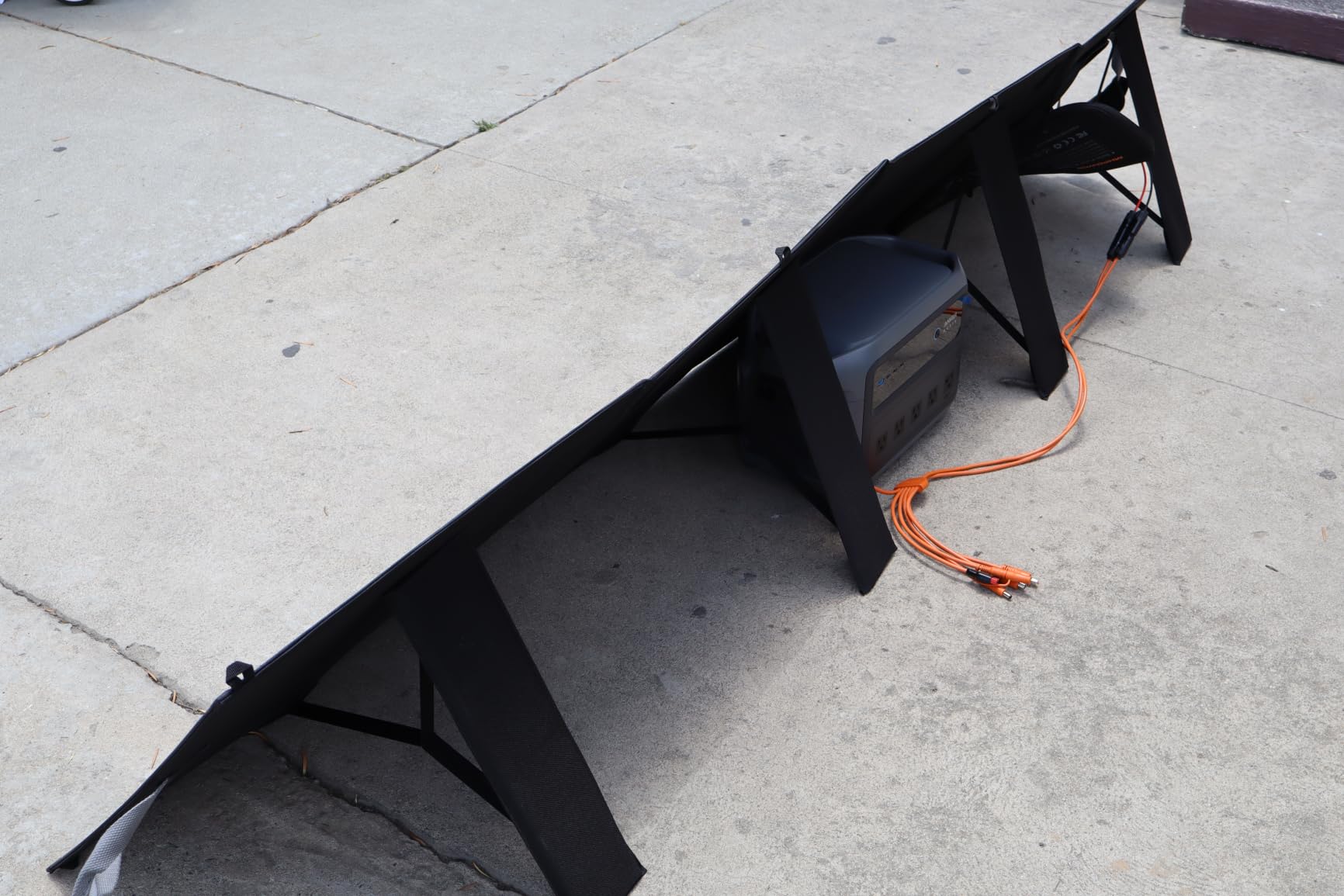
This is the only panel in the guide listing a 220W nameplate, and the reason is its 40V output voltage. High-voltage panel output lets a power station accept more power over a single input than a 12V or 20V panel can deliver, which shortens the refill window on a large bank.
That advantage comes with a hard compatibility boundary. A 40V panel will not work with many lower-voltage power stations, so this is a purchase for a specific class of high-voltage station rather than a general-purpose van panel.
The 4.5 rating with 78% five-star reviews is strong for a 261-review product, and the spec sheet is clear about the 5.5A amperage and 48V maximum voltage, which is the number your charge controller has to tolerate.
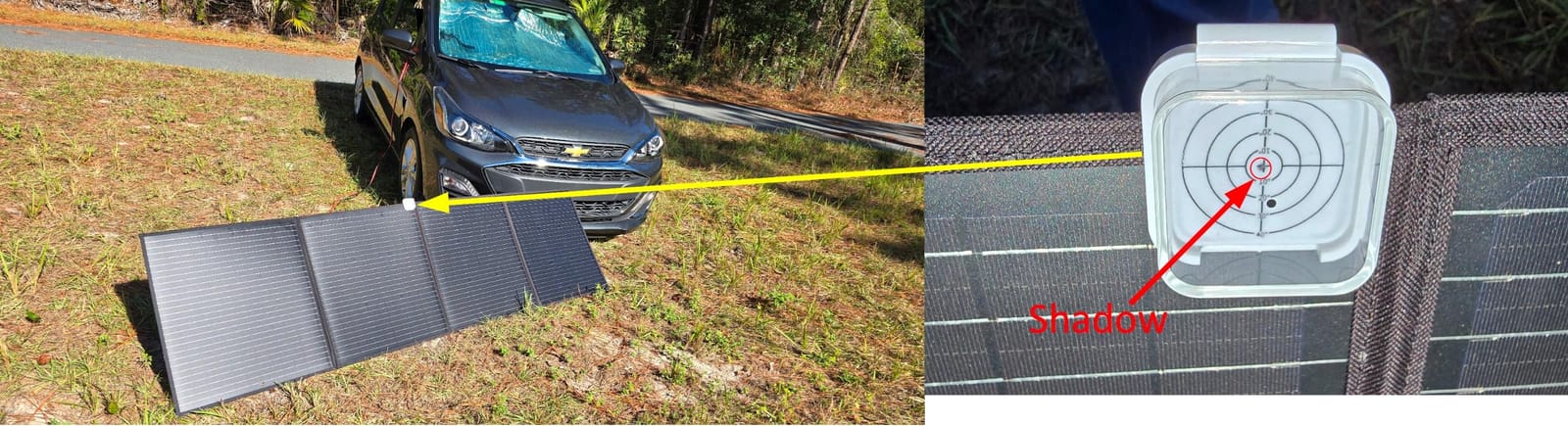
Four kickstands hold an angle on flat ground, the ETFE-style build is rated IP67 for waterproofing and dust, and the thickened carry handles are a sensible touch for a panel of this size.
When 220W at 40V actually helps
Large power stations with high-voltage solar input, which is increasingly the case in the 2000Wh-plus class, can pull meaningfully more from a 40V panel than from a 20V one. If your van build already runs a large bank and a big station, this is where the extra wattage converts into real hours.
The folded size of 23.5 x 21.25 x 2.3 in sits in the middle of the group, so storage is not the constraint here. The constraint is electrical, not physical.
The compatibility check that decides this purchase
Before anything else, confirm that your power station accepts a 40V input and check its maximum solar input wattage. Many stations cap input well below 220W, and some will not recognise the panel at all.
Heaviest 200W-class panel in the guide at roughly 17.8 lb. If you move the panel daily, that weight is harder to justify than the wattage gain, and the 200W options weighing 11-12 lb give up very little real output in exchange for a much easier lift.
9. Ecosonique 200W Six-Fold Panel – Best in Shade and Low Light
Ecosonique 200W Portable Foldable Solar Panel MC4 Output for Power Station
200W at 23.5% efficiency
Six-fold, 11 lb
Folds to 18.04 x 16.35 x 2.95 in
20V MC4 plus USB-C PD3.0 45W
Pros
- Six-fold design is the most compact 200W panel in this group
- Only 11 lb for a full 200W panel
- Keeps producing in shade and low light where competitors drop out
- Owners measure 130-152W which beat the 115W rivals saw
- Corner grommets let it hang on a tent or tree instead of sitting on the ground
Cons
- Long narrow unfolded shape makes perfect sun alignment difficult
- Not every fold section has its own support kickstand
- Folding back up takes some practice
- One owner in extreme heat reports panel curling and output below 100W
- Lowest review count in the group at 121
This is the shade specialist. Buyers who tested it head to head against competitors report that it keeps producing in partial shade and low light where other 200W panels stop contributing, and that measured output of 130-152W beat rivals that were seeing closer to 115W in the same conditions.
For van life that matters more than the spec sheet suggests, because a parked van is very often under a tree line, next to a building, or in a car park rather than in an open field.
The six-fold format is genuinely the most compact 200W layout here, folding to 18.04 x 16.35 x 2.95 in at 11 lb. That is a smaller stored object than the four-fold competitors, and it is the difference between a panel that lives in the closet and one that lives on the floor.
Direct charging covers laptops, phones, tablets, and power banks through USB-C PD3.0 at 45W and USB-A QC3.0, alongside the 20V MC4 main output with a 3m cable and a multi-adapter lead.
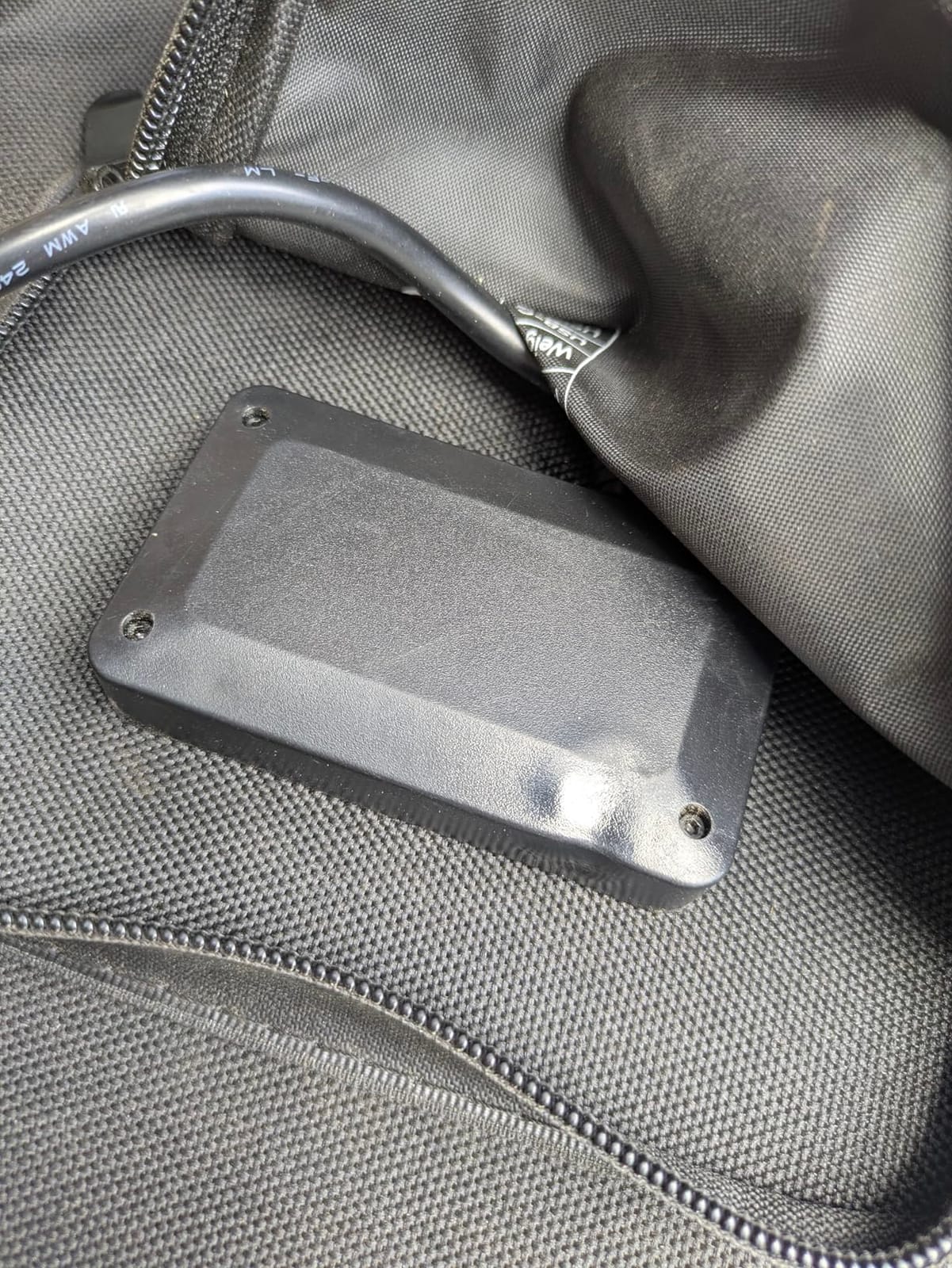
Why six folds helps in a van
More folds mean a smaller closed volume for the same surface area, and 18 x 16 in is small enough to sit in a tall narrow space between a cabinet and the wall. It also means the panel is a manageable object for one person to carry and re-angle.
The grommets are a small feature with real use. Hanging the panel on a tent wall or a tree branch gets the cells into sun when there is no clear ground, and it also lifts the panel off hot or wet ground.
The awkwardness in the design
Six folds makes the unfolded shape long and narrow, and owners report that lining it up square with the sun is harder than with a four-fold panel. Not every fold section has its own kickstand, and refolding it takes practice.
With 121 reviews this is the thinnest data in the group, so long-term reliability is genuinely unknown. One owner in extreme heat reported the panel curling and output dropping below 100W, which is worth weighing if you travel in hot climates.
10. FlexSolar 100W Foldable Panel – Lightest and Smallest
FlexSolar 100W Foldable Portable Solar Panel Charger IP67 Waterproof
4.1 lb, 0.59 in profile
Folds to 12.99 x 10.43 x 2.17 in
23%+ monocrystalline, IP67
45W USB-C PD and 100W DC
Pros
- Lightest panel here at 4.1 lb and folds to notebook size
- Owners measure 70-85W in strong sun
- USB-C and USB-A fast charging works well in direct sunlight
- No flimsy hinges and a padded carry bag included
- No charge controller needed for direct phone and laptop charging
Cons
- Many small folding sections make it awkward to angle toward the sun
- No MC4 connector on the included cable
- Output circuitry port runs hot above roughly 60W DC load
- USB port pins corrode after rain exposure and need cleaning
- One owner reported a blown capacitor after about a week in freezing camping weather
At 4.1 lb with a 0.59 inch profile, this is the panel for people whose van doubles as a travel kit. It folds to 12.99 x 10.43 x 2.17 in, which is roughly the size of a large notebook, and you can carry it in one hand without thinking about it.
Real output lands at 70-85W in strong sun for several owners, which is right where a 100W panel should sit once you account for the 70-80% real-world rule.
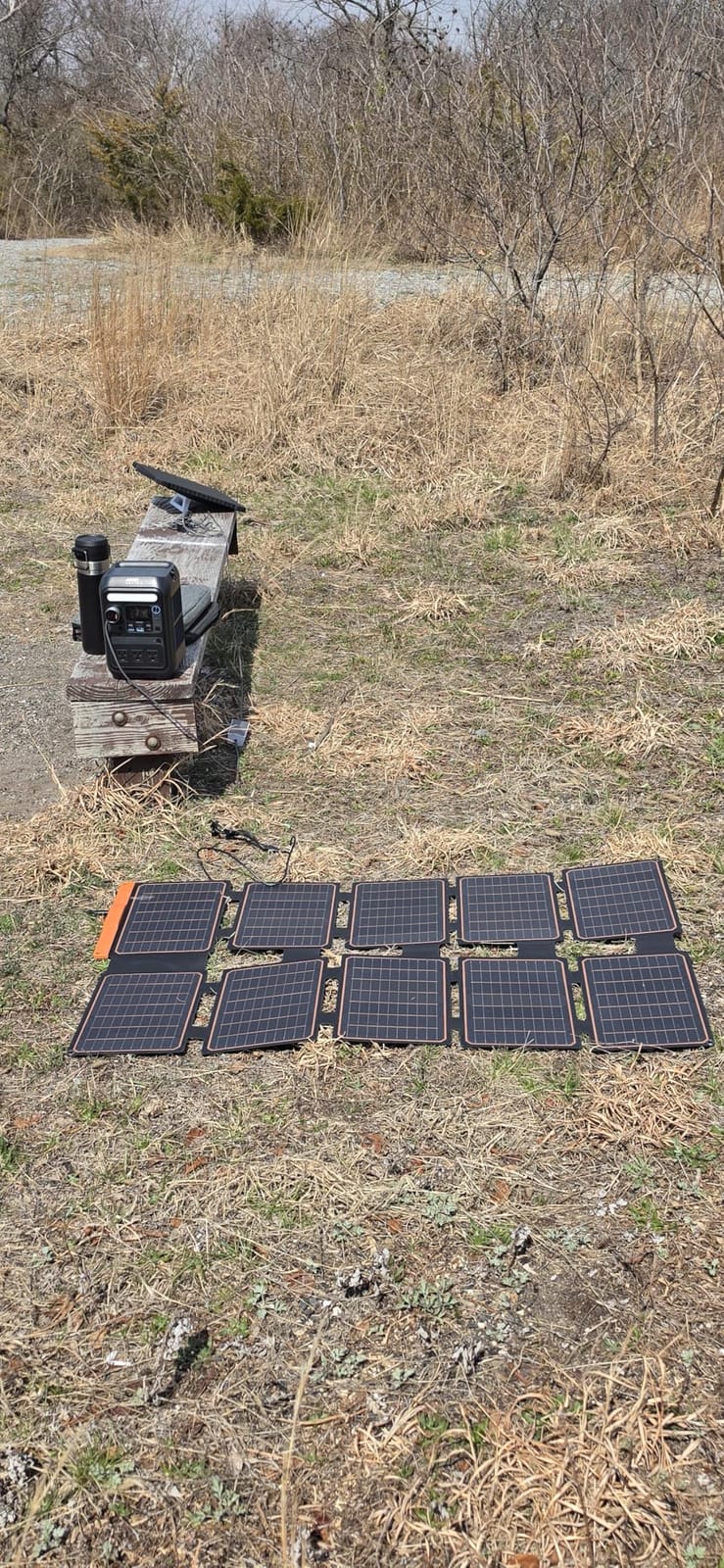
The output hub is unusual: PD 3.0 at 45W on USB-C, 18W on USB-A, and a 100W DC output, with a 4-in-1 cable covering DC5521, DC7909, Anderson, and XT60. That means phones and laptops charge directly with no controller and no power station in the chain.
Construction is E-Film laminated over 23%+ monocrystalline cells, rated IP67 for waterproofing and dust, and owners specifically note the absence of flimsy hinges, which is the usual failure point on panels this small.
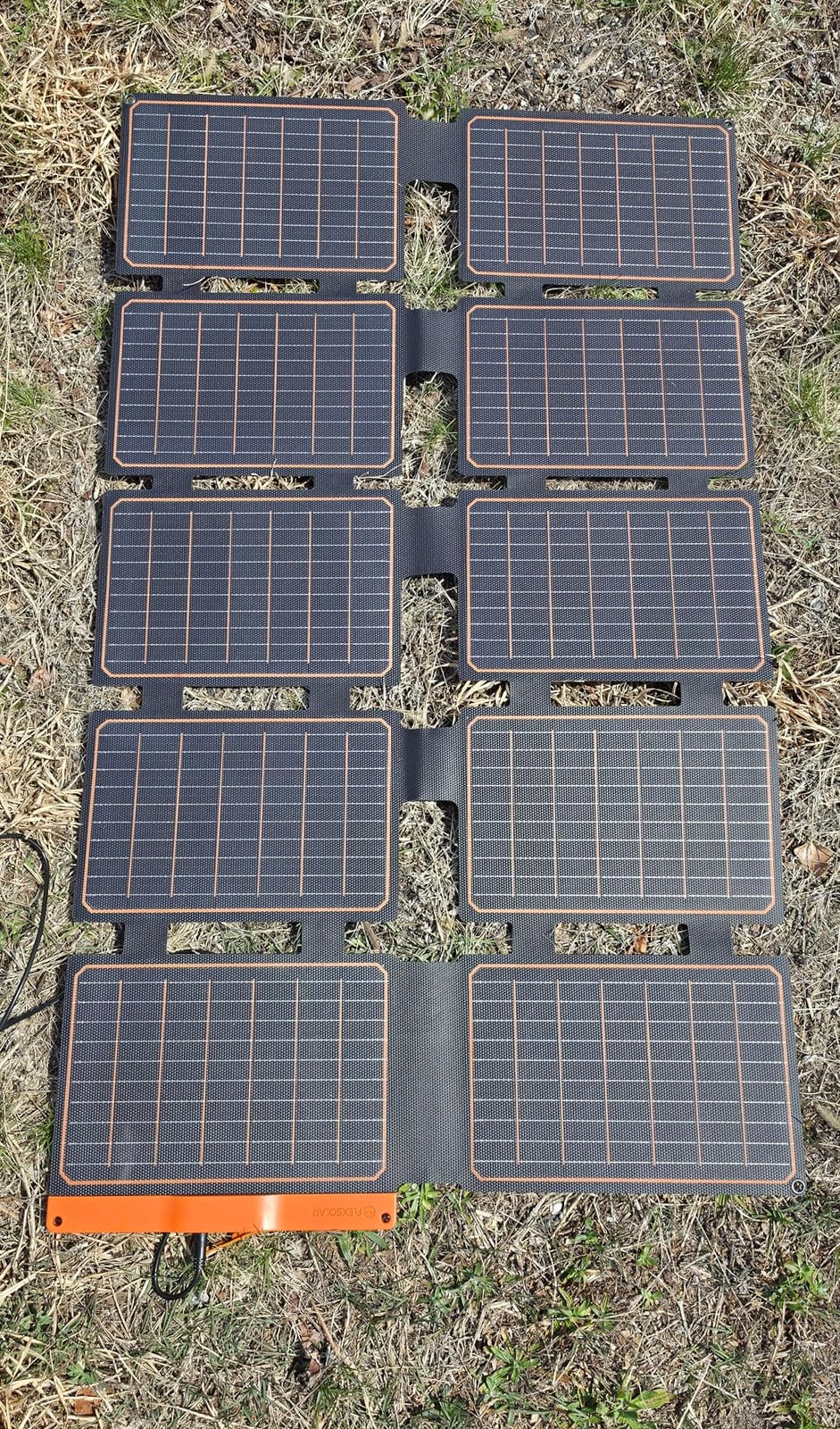
When 4 lb matters more than 200W
If your solar is a top-up for phones, a camera battery, and a small weekend fridge, the weight saving is worth more than raw wattage. You will actually deploy it, and the ability to move it every thirty minutes produces more daily energy than a heavier panel you set up once.
It is also the easiest of the whole group to store, which solves the folded footprint problem that stops many van builders from buying a foldable at all.
Limits worth knowing before you buy
The many small folding sections make it awkward to angle toward the sun, and that angle error costs real output in the middle of the day. There is no MC4 on the included cable, so pairing it with a rigid roof panel later is not straightforward.
Two durability notes: the output circuitry port runs hot above roughly a 60W DC load, and USB port pins corrode after rain exposure and need regular cleaning. One owner also reported a blown capacitor after about a week in freezing camping weather, which is worth considering for winter use in cold climates.
11. Voltset 100W Foldable Solar Kit – Best for Direct 12V Battery Charging
Voltset 12V 100W Portable Foldable Solar Panel Kit with 10A Controller
100W monocrystalline
10A MPPT controller included
IP65 ETFE with aluminum frame
Folded 21 x 21 x 2 in
Pros
- MPPT controller extracts more power than PWM competitors at the same wattage
- 10A controller suits panels up to 130W
- IP65 ETFE surface with an aluminum alloy frame and corner protectors
- Two flexible kickstands for adjustable sun angle
- Padded carry case and plug-and-play SAE connection
Cons
- 10A controller caps usable panel output at roughly 130W
- 100W rating means slower charging than any of the 200W options
- Weight is not published so check the actual unit before planning a lift
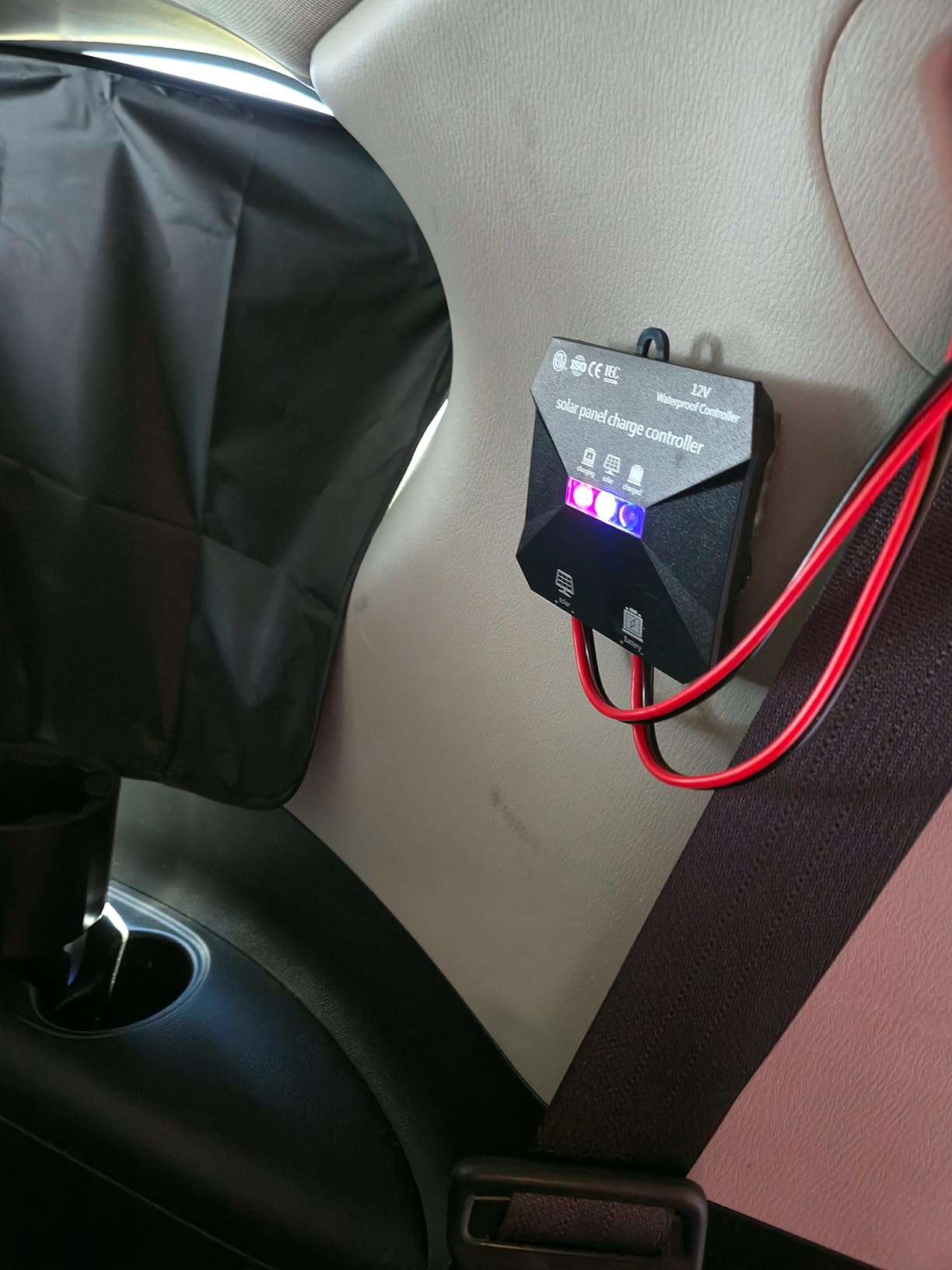
This is the kit to buy if your van runs a 12V leisure battery rather than a portable power station. The included 10A MPPT charge controller is the difference, and MPPT extracts noticeably more energy from the same panel than the PWM controllers that come with cheaper kits.
With 4.5 from 2376 reviews and 80% five-star ratings, it is also one of the better-proven products in the guide, which matters for a component you might leave connected to a battery indefinitely.
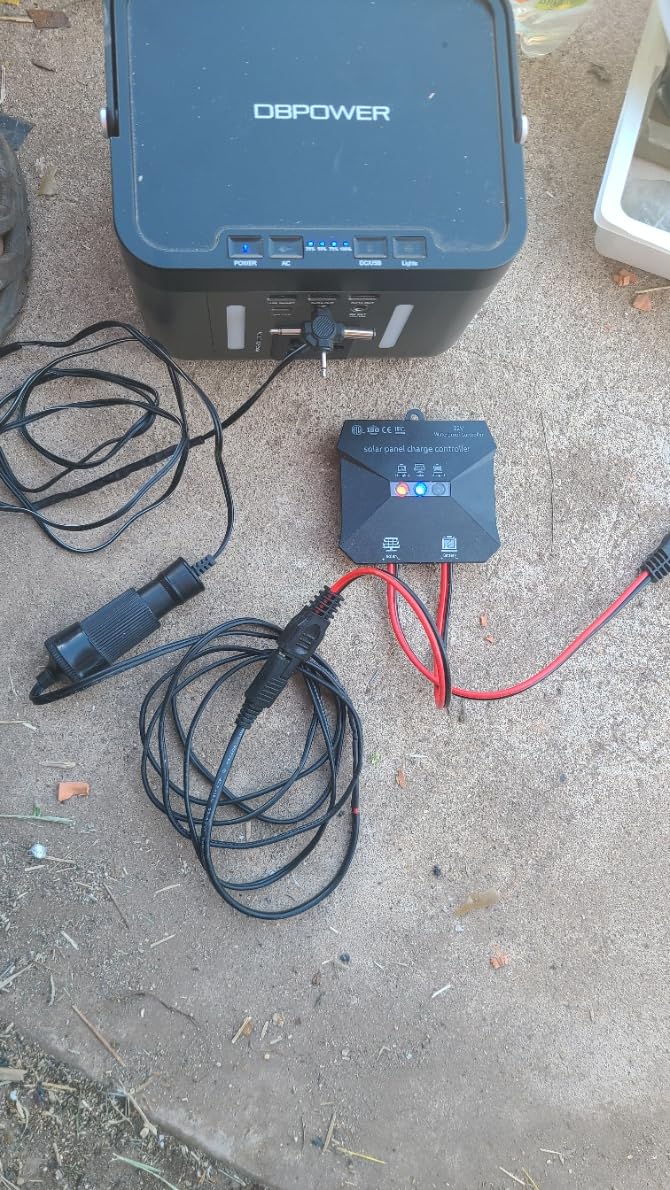
The protection list on the MPPT controller is thorough: over-charge, over-discharge, over-voltage, over-current, over-load, short-circuit, reverse polarity, and over-temperature. That is a real safety argument for a fixed installation rather than a portable kit.
Construction is tempered glass cells inside a corrosion-resistant aluminum alloy frame with corner fall jackets, and the ETFE surface is rated IP65, so it handles rain and road splash without drama.
Why MPPT matters for a 12V bank
On a 12V system the gap between a PWM and an MPPT controller is the gap between throttling the panel to battery voltage and tracking the panel’s actual power point. In warm van interiors with a partially charged battery, that difference is where a meaningful share of your daily energy comes from.
Two flexible kickstands give a usable sun angle, and the plug-and-play SAE connection removes wiring as a step, which makes this a good first solar purchase for a new build.
The ceiling you should plan around
The 10A controller is rated for panels up to 130W, so it caps what this panel can ever put in regardless of sun. If you later add a second panel or a 200W unit, the controller has to be upgraded, and that is a cost the datasheet does not advertise.
Weight is not listed by the manufacturer, only described as lighter than tempered-glass panels, so check the physical unit before planning a daily carry. The folded 21 x 21 x 2 in block is well proportioned for a gear closet.
12. Topsolar 100W Foldable Solar Kit – Simplest Setup for a Power Station
Topsolar 100W Foldable Portable Solar Panel Charger Kits for Portable Power Station Generator Cell Phones Camera Lamp 19V DC Output
100W monocrystalline
19V DC for portable power stations
QC3.0, USB-A, and USB-C PD3.0
Folds to 19.98 x 20.28 x 1.38 in
Pros
- Direct phone and tablet charging with no battery bank in the chain
- Folds into a 19.98 x 20.28 in brick that fits a backpack
- Monocrystalline cells hold up better than polycrystalline in low light
- Adjustable bracket for tuning the sun angle
- 4.3 rating from more than 1000 reviews
Cons
- 19V DC output only which limits compatibility with 12V battery setups
- No included charge controller for direct battery hookup
- 14.4V port needs a connected load before output registers
- 2.31 kg is heavier than the lightest panels here
This panel skips the charge controller entirely and outputs 19V DC straight to a portable power station, which makes setup about as simple as solar gets. If your van already has a station with a 19V input, this plugs in and starts producing.
The USB side is well covered for direct device charging, with QC3.0 and USB-A ports at 5V, 9V, or 12V up to 2A, plus a USB-C PD3.0 port. Phones and tablets charge straight from the panel with nothing else in the chain.
It folds to 19.98 x 20.28 x 1.38 in with an adjustable bracket, so it is a compact block with a proper sun-angle control rather than a flat sheet you lay on the ground.
The cells are monocrystalline, which means better low-light performance than the polycrystalline panels this class of product used a few years ago, and the fully laminated ETFE construction is built for handling rather than display.
Where this panel earns its place
For a weekend van or a first solar purchase aimed at a specific power station, the simplicity is the product. There is no controller to understand, no voltage window to match to a battery bank, and no adapter chain to work out.
At more than 1000 reviews with a 4.3 average, the long-term sample here is better than several higher-wattage panels in this guide, which is useful information on its own.
The limits to plan around
The 19V DC output rules out most 12V battery hookups and most MC4-based systems, so it is not a general-purpose panel. There is no included charge controller, which means you cannot wire it straight to a leisure battery without buying one.
Also note that the 14.4V port only registers output once a load or battery is connected, which confuses a lot of first-time users. And at 2.31 kg it is not the ultralight option despite the compact fold, so the FlexSolar is the better pick if carry weight dominates your list.
How to Choose the Best Foldable Solar Panels for Van Life
Getting the right panel is mostly a matter of answering four questions in the right order: how much energy do you actually use, what voltage does your charge controller accept, how little weight can you lift every morning, and how much weather will the panel see. Start with consumption, because everything else follows from it.
Size your wattage to daily amp hours, not to nameplate
Add up what your build draws in a day. A 12V compressor fridge cycling typically pulls 40-60Ah over 24 hours, a laptop adds 30-50Wh, a CPAP machine overnight can add 30-60Wh, and phone charging is marginal. A weekend van with a fridge and a laptop lands near 350-450Wh per day; a full-time build with CPAP and a router lands closer to 600-900Wh.
Then apply the 70-80% rule. In full sun, expect 70-80% of rated wattage; in partial cloud, 50-60%. A 200W panel that delivers 150W for five peak sun hours produces about 750Wh per day, which comfortably covers a 450Wh weekend load with margin for the driving days.
Oversizing is the right call when your calculated number lands between panel sizes, because a panel that is too small leaves you short on grey days and a panel that is too large simply charges faster. The exception is weight, and we come back to that below.
Match the connector and the maximum solar input
This is where the money is often lost. MC4 is the standard solar connector and the one rigid panels use, which makes it the most flexible long-term choice. XT60, DC8020, Anderson, DC7909, and DC5521 are proprietary power station ports, and a panel with a multi-adapter cable covers more of them at once.
Check three numbers before you buy: your power station’s maximum solar input in watts, its accepted input voltage window, and the panel’s Vmp. Many owners in van-life forums discover a connector mismatch only after delivery, and a 40V panel will simply not register with a 20V station.
Our guide to portable solar panels for power stations works through those port differences panel by panel if you want the full compatibility picture.
N-Type versus P-Type cells, and why shade matters
Both are monocrystalline. N-Type cells are doped differently, which reduces degradation over time and improves low-light performance and temperature behaviour. In this guide the N-Type options are the Renogy at 25%, the HQST at 25% with 16BB cells, and the SOKIOVOLA at 25%.
The P-Type and standard 9BB panels cluster at 23-24%, which is a smaller gap than the spec sheets imply. Where N-Type clearly wins is partial shade, and that is the deciding factor for van life because a parked van is often beside a tree or a wall rather than in open sun.
Cells are also connected so that one shaded cell does not drag down its neighbours. Half-cut cell layouts and bypass diodes are both cheap insurance for a vehicle that will regularly be parked in partial shade.
IP rating and what a van roof actually does to a panel
IP65 handles dust and splashes, IP67 adds full submersion protection, and IP68 is the top of this group. For a panel carried in a van and set up on grass, gravel, or a picnic table, IP67 or IP68 is the sensible floor.
The surface material matters as much as the rating. ETFE laminate, as used on the ZOUPW, FlexSolar, and SOKIOVOLA, is flexible, light, and impact-tolerant. Tempered glass, as on the Renogy, resists scratching and UV yellowing but adds weight and can shatter if driven over.
Warranty length is a decent proxy for manufacturer confidence. Most panels here carry a 12-month warranty, the TWELSEAVAN carries 24 months, and the Renogy carries a longer materials warranty, which is worth something for a component you may keep for a decade.
Driving versus parked charging is the real van-life variable
Almost every roundup we looked at treats solar as a parked-only activity, and that misses the defining constraint of van life. While you are driving, a panel lying on the ground does nothing, and a panel on the roof throws no useful output at all. Your entire energy budget has to come from the hours you are stationary.
That is the argument for a panel you can re-aim, and for a panel light enough to move. A fixed roof panel wins only on convenience; a foldable panel wins on control. One common van setup is to run a modest fixed roof panel for driving-day top-ups alongside a larger foldable for parked production, but mixing the two creates exactly the controller confusion people complain about, so pick one MPPT controller that handles both or keep them electrically separate.
Realistically, a parked van gets somewhere between three and six usable peak sun hours depending on season and shade, and winter is the hard case. In low-sun months, expect output closer to 50% of rated, which is why oversizing matters more for full-time van dwellers than for weekend campers.
Where foldable, flexible, and rigid panels each win
Foldable panels give you the largest portable surface area and the freedom to chase the sun, at the cost of weight and a moving mechanical hinge. Flexible panels are thin and light enough for a permanent roof install, but forum threads on r/vandwellers open on a Renogy recall, which is a reminder to check reliability history before gluing one to your roof.
Rigid panels produce more watts per square foot and last the longest, but they are permanent and they do nothing for a weekend trip where you want everything packed away. Our solar panel guide for camping covers the non-foldable formats in more depth, and our foldable panel roundup for camping is the closer companion read if you split your time between van and tent.
One practical warning from the forums: a panel wider than about 30 inches will not fit many standard conversion van roofs when roof-mounted. Every panel in this guide folds to under 26 inches in its longest dimension, so any of them can be stowed in a cabinet rather than mounted.
Frequently Asked Questions
What are the best solar panels for van life?
The best foldable solar panels for van life are the DOKIO 200W for its 9.7 lb carry weight and packability, the ZOUPW 100W for its 5-in-1 connector cable and IP67 sealing, and the Renogy 100W for its 25% N-Type cells and tempered glass build. A 200W panel covers a weekend fridge and laptop build, while a full-time van with CPAP and a router should size higher.
Are foldable solar panels any good?
Yes. In good sun, well-built foldable panels deliver 70-80% of their rated wattage, and the 200W models in this guide measure 128-191W in owner tests. The trade-off is weight and durability against rigid panels: fabric and ETFE builds are lighter and portable but less rigid than glass, and connector quality varies widely between brands.
Are foldable solar panels worth it?
They are worth it when you need to move your solar to follow the sun, when roof space is limited, or when you split time between a van and other trips. They are less worthwhile if you have spare roof capacity and a long parking spot, because a rigid panel gives more watts per square foot with no daily handling. The 70-80% real-output rule applies to both formats.
Will a 200W solar panel run a 12V fridge?
Yes, comfortably, for a typical weekend build. A 12V compressor fridge draws roughly 40-60Ah per day, which is about 500-700Wh. A 200W panel producing 150W across five peak sun hours makes about 750Wh, enough to cover the fridge plus a laptop and phone charging, though driving days still need stored battery power.
What is the 33% rule in solar panels?
The 33% rule describes a panel losing roughly a third of its rated output to real-world conditions such as heat, angle, shading, wiring loss, and converter inefficiency. It is a slightly conservative way of stating the 70-80% real-output expectation, and it is a useful sanity check: a 200W panel putting out 130-150W in full sun is performing normally, not badly.
What is the best solar panel system for van life?
The best system is a 200W foldable panel paired with a power station or 12V bank through an MPPT charge controller, with the panel’s output voltage inside the controller’s accepted window. Check the maximum solar input wattage, use MC4 or a multi-adapter cable to match your station port, and budget for a panel under 12 lb if you will re-aim it daily.
Conclusion: The Best Foldable Solar Panels for Van Life
After working through twelve panels, the answer to the best foldable solar panels for van life question comes down to two variables: how much you weigh each morning, and what voltage your charge controller accepts. Buy the connector and the weight first, then pick the wattage.
For most van builds the DOKIO 200W is the safest overall choice, at 9.7 lb and a 20 x 27 in fold with a 9.84 ft cable. The HQST 200W is the better option if weight is the binding constraint and you can live without MC4, the Ecosonique 200W wins in shade, and the SOKIOVOLA 200W takes the durability crown on IP68 sealing.
Check your power station’s maximum solar input and voltage window before you order anything, then get the panel into a patch of sun and read the output yourself. That measurement is worth more than any spec sheet, and it is the number you will actually live with in 2026.