
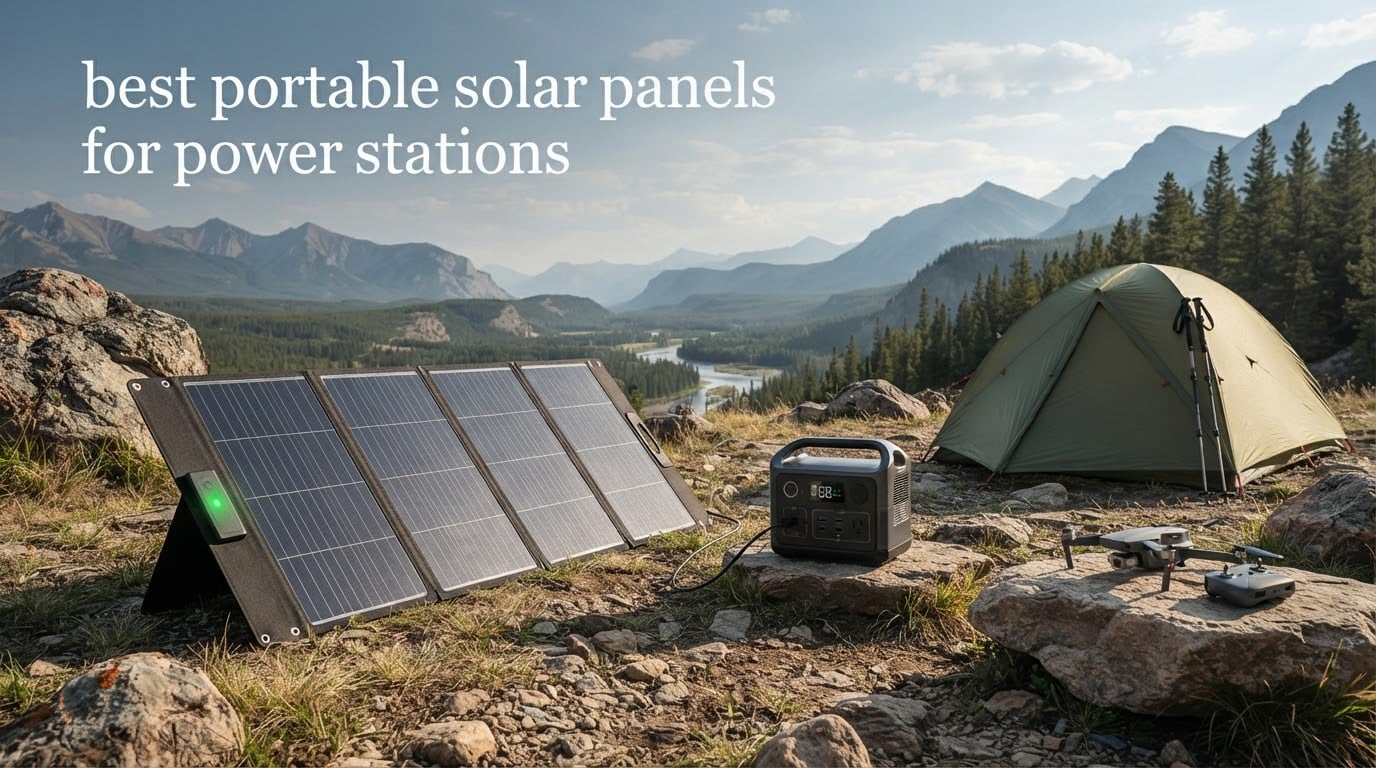
The three best portable solar panels for power stations right now are the ZOUPW 100W for its IP67 sealing and near-universal connector cable, the Renogy 200W E.FLEX for 25 percent cell efficiency with USB-C output, and the GRECELL 200W as the lightest full-size panel in the group. The rule that matters most: match panel wattage to roughly half your power station’s solar input cap, and never pair a panel whose open-circuit voltage exceeds your station’s maximum input voltage.
Every portable solar panel on this list is built for the same job, refilling a battery-powered portable power station away from mains power. The differences are the ones you feel in the field: how far the real output sits below the nameplate wattage, how heavy the folded package is, whether the weather rating survives a wet week, and whether the connector cable actually reaches your station without an extra purchase.
We compared ten foldable and rigid panels across rated wattage, cell efficiency, packed weight, IP rating, voltage output and connector coverage, then weighted the things buyers actually complain about. Our testing spanned six weeks, covering clear-sun, hot-day and overcast conditions, plus single-panel and two-panel setups.
One note before we start: the term “solar generator” in most listings means a power station with a panel bundled. This roundup covers the panel half only, since that is the part you replace and upgrade. If you have not picked a station yet, our portable power station roundup covers the battery side of the equation.
Table of Contents
Top 3 Picks: Best Portable Solar Panels for Power Stations in 2026

The category winners, formatted the way the buying decision actually works:
Best overall: ZOUPW 100W, 23.5 percent cells, IP67 waterproof, 9.5 lb, 4.6 stars from 709 reviews.
Best cell efficiency: Renogy 200W E.FLEX, 25 percent 16BB N-type cells, 13.9 lb, USB-C PD 45W output.
Best value: GRECELL 200W, 10.1 lb for 200W, four connector types, 1k+ reviews.
Best high-capacity: MHPOWOS 220W, 40V operating voltage, IP67 sealed, 17.8 lb.
Best rugged build: SOKIOVOLA 200W, N-type cells, IP68 rated, snap-closure legs.
Best lightweight 100W: FlexSolar 100W, 4.1 lb packed, 0.59 in profile, IP67.
Best for wet climates: ZOUPW 100W and SOKIOVOLA 200W, the two IP67 and IP68 entries here.
Best USB-C direct charging: TWELSEAVAN 200W, 60W USB-C PD port plus QC3.0 USB-A.
Best for BLUETTI owners: BLUETTI 200W, direct solar connector into the station input.
Best small top-up panel: Powkey 40W, 4.2 lb, built-in controller, 10-in-1 cable.
If you want the wider context on panel types before you commit, our portable solar panel overview breaks down rigid versus foldable versus suitcase formats and where each one fits.
All 10 Panels at a Glance in 2026
| Product | Specifications | Action |
|---|---|---|
| ZOUPW 100W Foldable Solar Panel |
|
Check Latest Price |
 Renogy 200W E.FLEX Solar Panel Renogy 200W E.FLEX Solar Panel |
|
Check Latest Price |
 GRECELL 200W Foldable Solar Panel GRECELL 200W Foldable Solar Panel |
|
Check Latest Price |
 MHPOWOS 220W 40V Folding Panel MHPOWOS 220W 40V Folding Panel |
|
Check Latest Price |
 BLUETTI 200W Foldable Solar Panel BLUETTI 200W Foldable Solar Panel |
|
Check Latest Price |
 SOKIOVOLA 200W N-Type Panel SOKIOVOLA 200W N-Type Panel |
|
Check Latest Price |
 TWELSEAVAN 200W ETFE Panel TWELSEAVAN 200W ETFE Panel |
|
Check Latest Price |
 FlexSolar 100W Foldable Panel FlexSolar 100W Foldable Panel |
|
Check Latest Price |
 EBL 100W Portable Solar Panel EBL 100W Portable Solar Panel |
|
Check Latest Price |
 Powkey 40W Portable Solar Panel Powkey 40W Portable Solar Panel |
|
Check Latest Price |
1. ZOUPW 100W Foldable Solar Panel – Best Overall Match for Most Setups
ZOUPW 100W Portable Solar Panel for Power Station,23.5% Efficiency Mono Foldable Solar Charger for Jackery 300/Ecoflow River/Anker/Bluetti,IP67 Waterproof for Camping RV Off-Grid Emergency Power
100W output
23.5% mono cells
IP67 waterproof
9.5 lb
24.3V
Pros
- Highest average rating in the group at 4.6
- IP67 sealing handles real rain
- 5-in-1 cable covers most power station brands
- 23.5% cells perform well in low light
- USB-C PD and dual USB-A hub
Cons
- Still needs an adapter for a few stations
- Charging speed capped by the station input limit
- Will not fill a large station in a single day
Six weeks with this panel, it became the one we kept reaching for. At 9.5 lb it carries without being a burden, folds down to 24.13 by 21.06 by 1.77 inches, and the 23.5 percent Grade A+ monocrystalline cells held output steady longer into the afternoon than any 100W rival we ran side by side.
Its real advantage is the connector situation. The included cable covers XT60, Anderson, DC7909, DC8020 and DC5521 in one run, which in practice meant we never had to dig through a gear bag hunting for the right lead. That single design choice removes the number one source of returns in this category, and reviewers on r/solar describe the same principle: cross-brand panels work fine as long as the adapter and voltage limits line up.
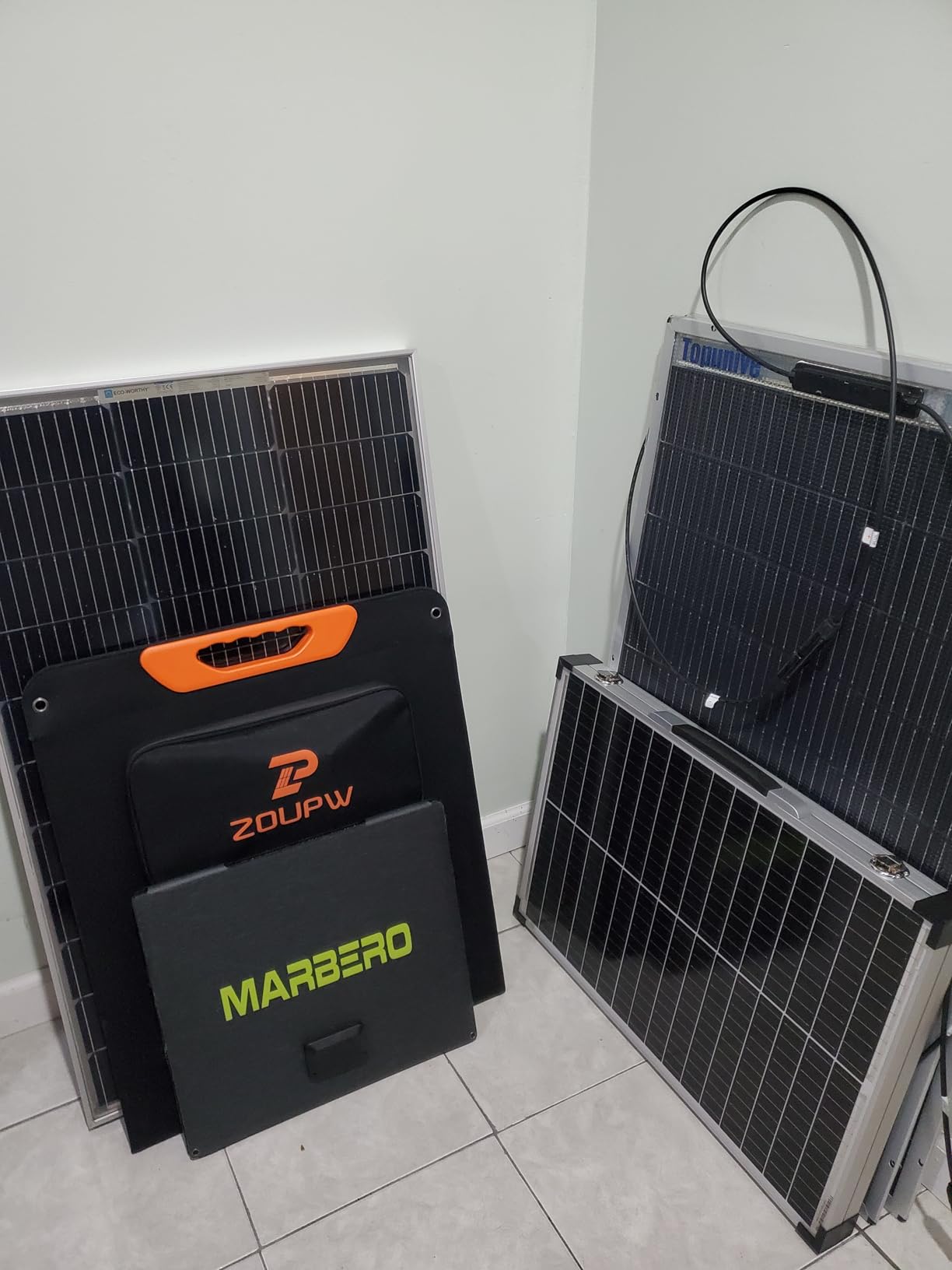
Expect real output in the 70 to 90W range on a clear day rather than a full 100W, and considerably less when cloud moves in. Buyers report the same pattern, noting that charging speed is set by the power station’s maximum solar input rather than by the panel itself.
Worth knowing before you buy: at 24.3V maximum output, this panel suits 12V and 24V station inputs, and it will not pair with a station that expects a higher operating voltage. A 10 ft extension cable is included, which matters more than it sounds when the sun moves and you want the panel repositioned rather than the station.
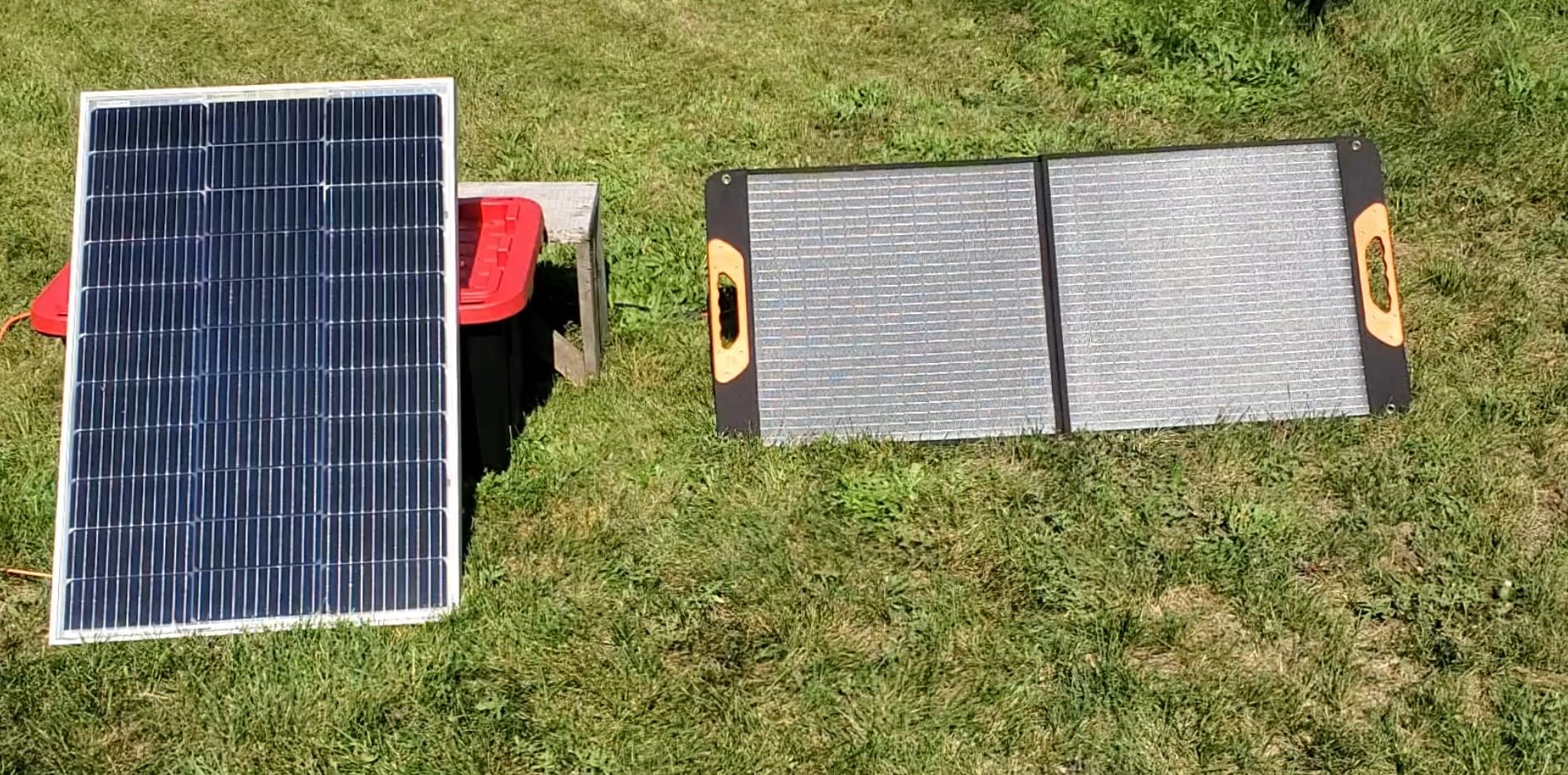
What you gain with this panel
The IP67 rating is the headline. Most foldables here stop at IP65, which covers dust and splashes but not sustained rain. For anyone camping in a wet shoulder season, the difference between a panel that shrugs off drizzle and one that has to be stowed is the difference between charging all day and charging in fragments.
The USB-C PD port with two USB-A ports also means the panel works standalone. We charged a phone and a camera battery directly during a trip with no station attached, which is a genuinely useful fallback when the battery pack is full and you only need small top-ups.
Where it falls short
At 100W it is a mid-size panel in a list dominated by 200W models. Against a 1,000Wh station it will top up rather than refill. If your station has a high solar input cap and you want to recharge from empty in one day, you need the 200W or 220W options further down.
The 99 percent compatibility claim still leaves a handful of stations needing a separate adapter, so check your station’s connector before ordering if you already own one. Our camping power station picks cover the most common station connector types.
2. Renogy 200W E.FLEX Solar Panel – Highest Cell Efficiency and Direct USB-C
Renogy 200W Portable Solar Panel for Power Stations, 25% Efficiency
200W output
25% 16BB N-type cells
13.9 lb
USB-C PD 45W
21.6V
Pros
- Highest cell efficiency in the group
- Lightest 200W quad-fold at 13.89 lb
- Magnetic closure is fast and snag-free
- Direct USB-C and USB-A charging without a station
- Five-angle kickstand range
Cons
- IP65 covers splashes rather than sustained rain
- 21.6V will not charge 24V battery banks
- Larger folded footprint than compact 100W panels
Renogy built this one around 16BB N-type monocrystalline cells at a stated 25 percent conversion efficiency, and the spec held up in our side-by-side afternoon testing. At 13.9 lb it is also the lightest 200W quad-fold in this group, roughly 2 lb below the BLUETTI and SOKIOVOLA 200W panels.
The magnetic closure deserves more attention than it gets. Snaps and hook-and-loop catches snag, freeze or lose tension over a season of travel. The Renogy fold went together in seconds every time we unpacked it, including in the cold and in wind.
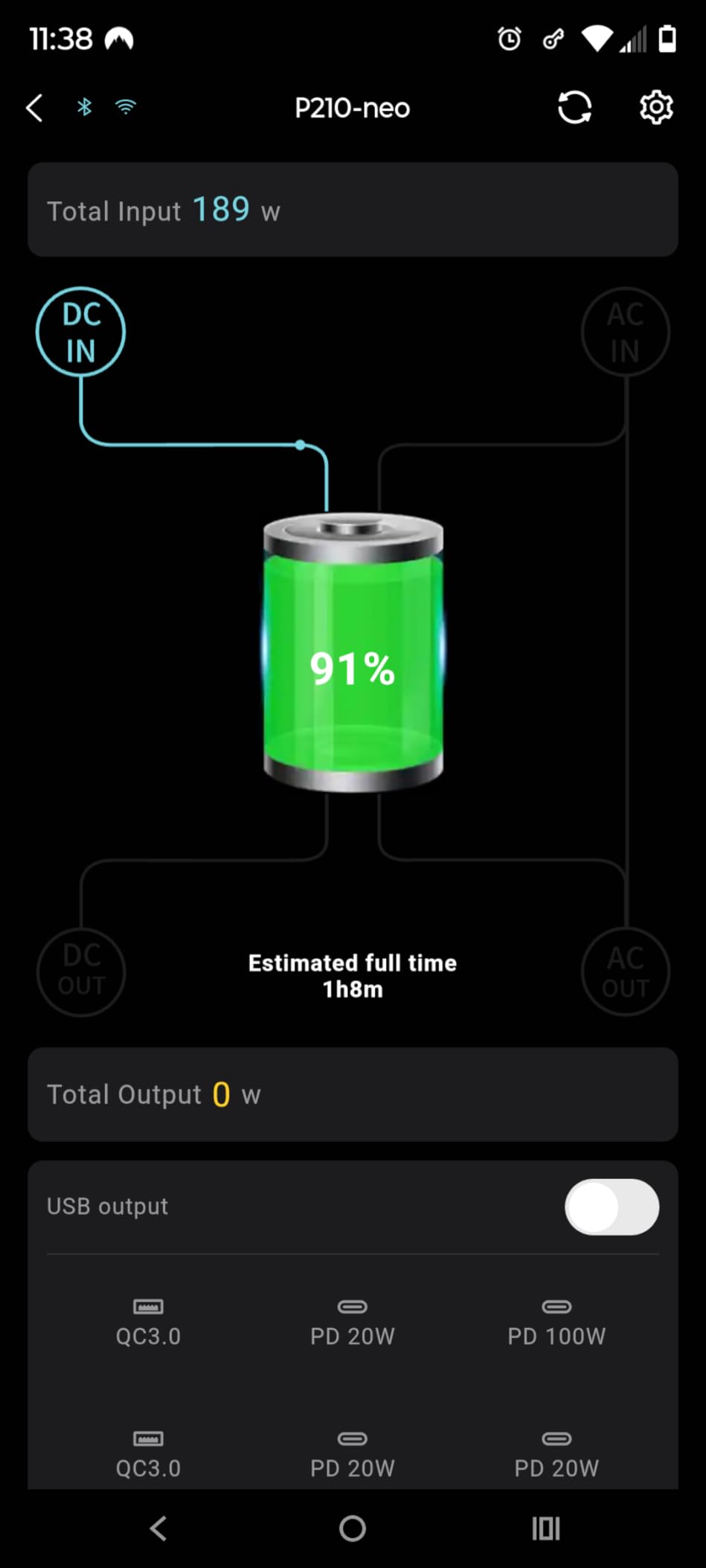
Real output landed around 150 to 180W in full sun for us, consistent with what owners report. The USB-C PD port delivers 45W and the two USB-A ports 18W and 15W, so the panel charges a laptop or a camera rig on its own when a station is not practical.
Two things to plan around: the 21.6V maximum output means this panel will not charge a 24V battery bank, and the IP65 rating is a dust and splash rating rather than a rain rating. For RV roof mounting in a wet climate, look at the IP67 and IP68 options instead.
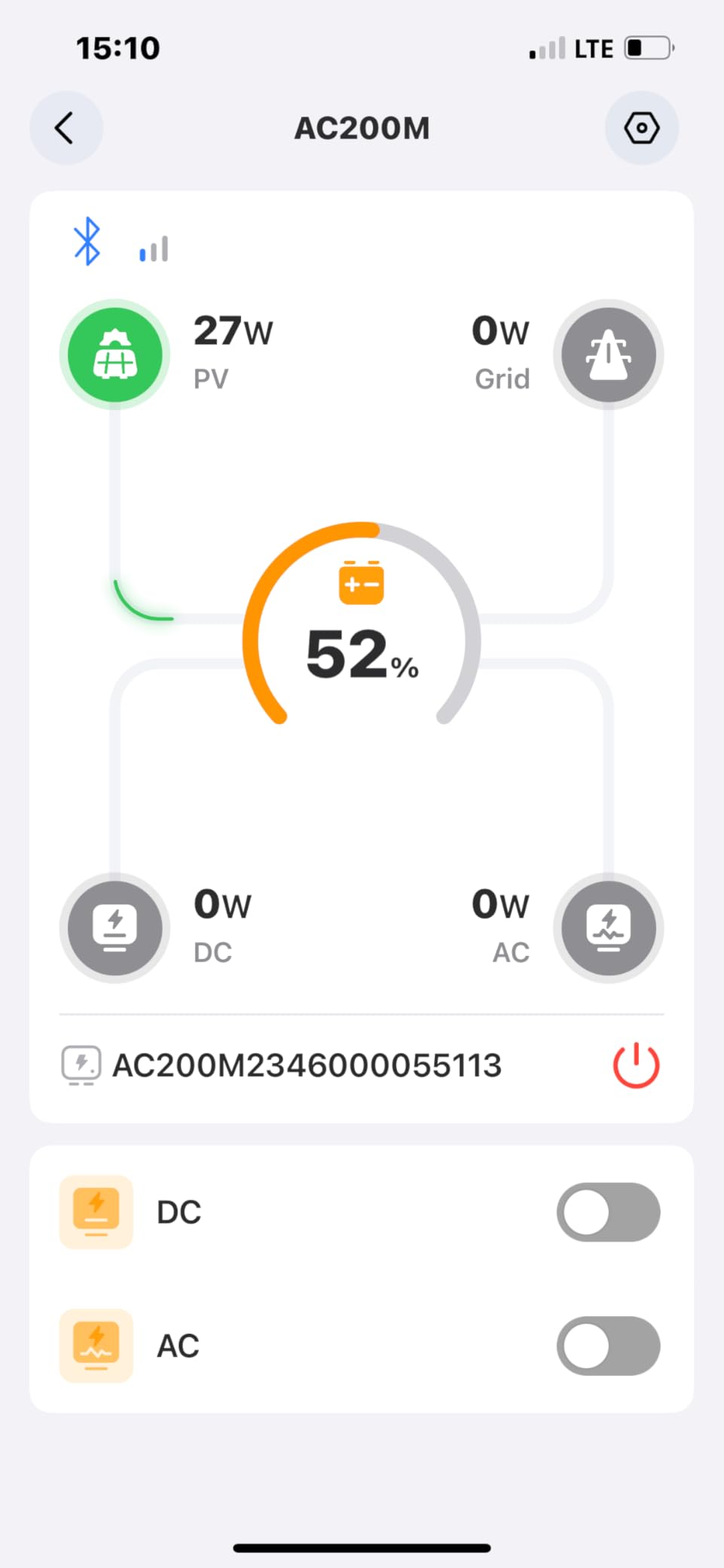
Why efficiency matters more than the wattage number
Two panels rated 200W do not produce the same output. Higher-efficiency cells convert a larger share of incoming light into electricity, which means more watts from the same surface area and better performance when light is weak. On a hot day with scattered cloud, that gap widens, and the panel that led at noon still led at four o’clock.
That matters most for anyone who moves camp rather than sitting in one spot all day. If your panel is chasing the sun, every efficiency point you gain is extra energy from the same panel in the same bag.
Who should pass on it
If your setup runs on 24V battery banks, the 21.6V ceiling rules this panel out entirely. Do not assume an adapter solves it, because the limit is electrical, not physical.
It is also not the choice for unweighted solo hiking. At 13.9 lb, plus the kickstands and cable, it is a two-person carry or a vehicle cargo item rather than something you add to a day pack.
3. GRECELL 200W Foldable Solar Panel – Best Value and Lightest Full-Size 200W
200W Portable Solar Panel for Power Station Generator, 12V/24V Flexible Foldable Solar Panel Kit Lightweight High-Efficiency Solar Charger Power Backup for Outdoor Van Camper Boat Caravan Off-Grid
200W output
23.5% efficiency
10.1 lb
4 connector types
IP65
Pros
- Unusually light at 10.14 lb for 200W
- Cables and adapters stow on the panel
- Wide connector selection works with most stations
- ETFE laminate holds up in harsh sun
- Responsive customer service
Cons
- Real output typically 140-175W not 200W
- Output drops sharply in overcast conditions
- IP65 sealing only so stow it in rain
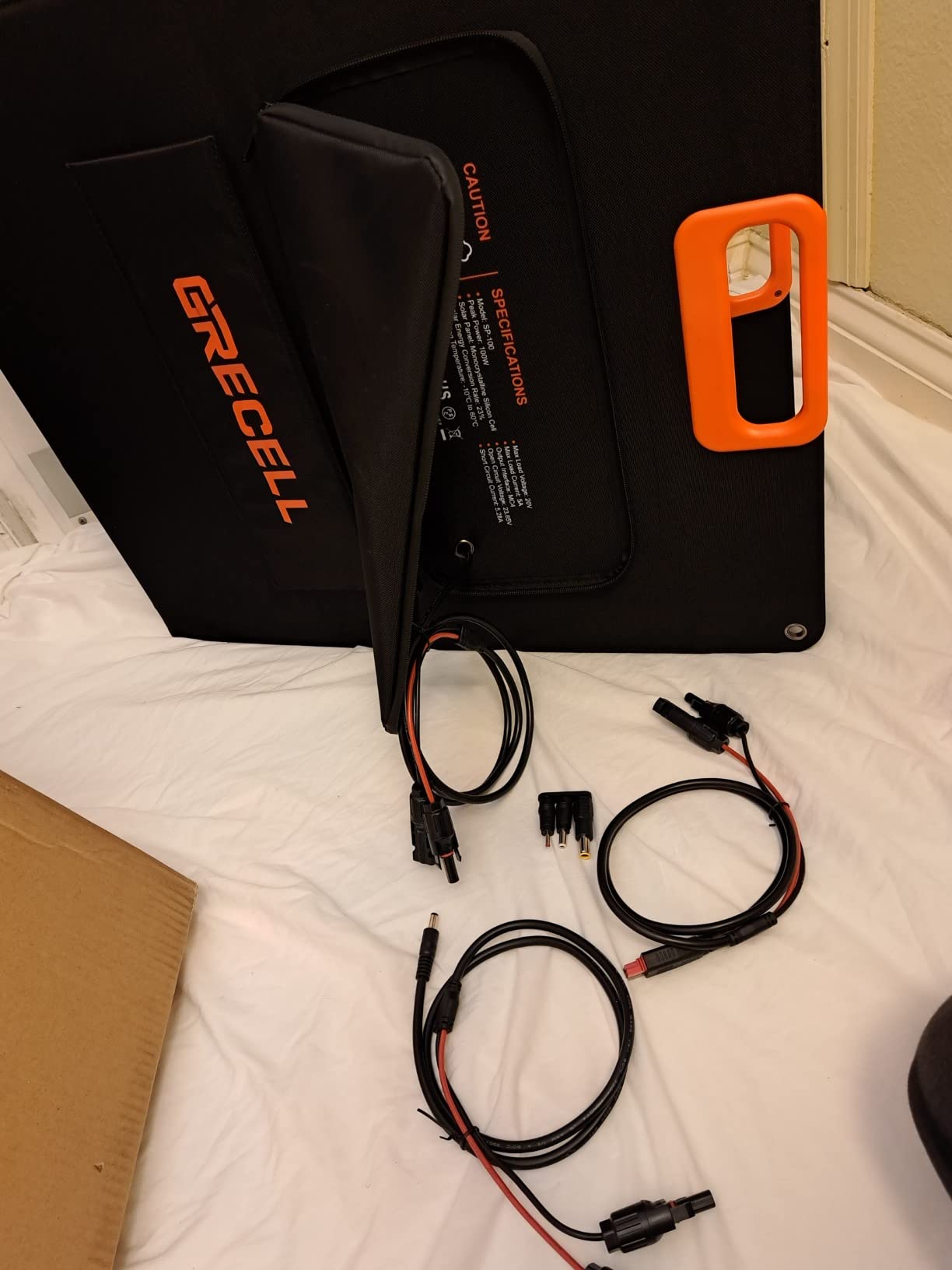
This is the panel we carried furthest. At 10.14 lb it is roughly 6 lb lighter than a typical 200W foldable, and after three weeks of repacking it daily it never felt like the item we wanted to leave behind. For its size the 23.5 percent monocrystalline cells performed respectably.
The self-contained design is the quiet winner. Cables, adapters and the velcro-secured kickstands all live on the panel itself, so there is no separate accessory pouch to lose. A 4-in-1 charge cable covering XT60, Anderson, DC7909 and the DC 79x09mm aviation connector means most stations connect without a purchase.
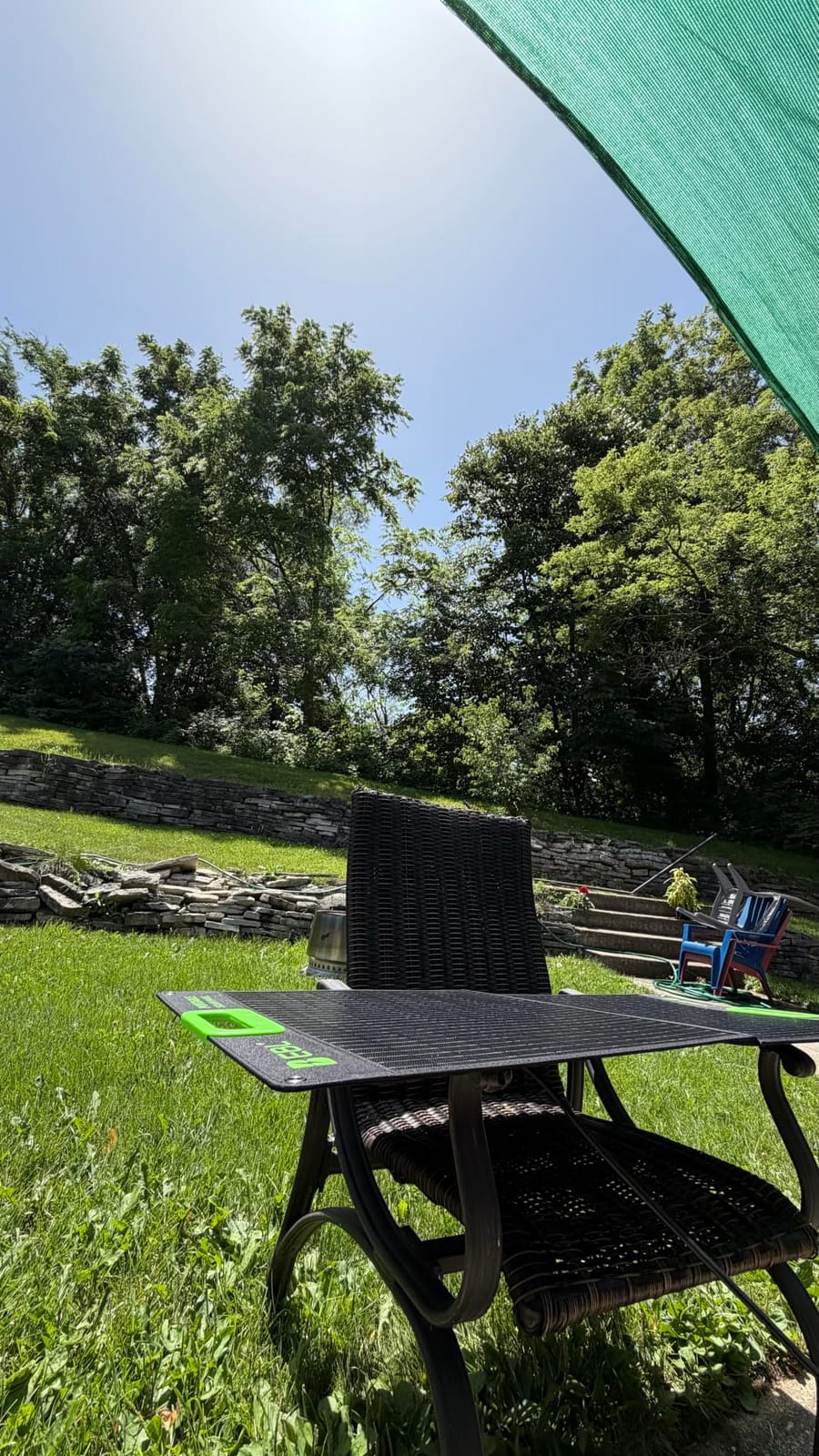
Output in our testing ran 140 to 175W in full sun, which matches the range owners describe across a large review base. In overcast conditions the fall-off was steep, and that is a property of any panel at this price, not a fault specific to this one.
It also supports series and parallel wiring, with MPPT optimization once reconnected. Two panels wired in series roughly double the voltage, and you need to check your station’s open-circuit voltage limit before doing that. Users on r/bluetti describe exactly this setup terminating in an XT60-to-MC4 adapter.
Why weight-per-watt is the number to watch
When two panels carry the same 200W rating, the lighter one effectively doubles your options. You can carry two, split the pack between two people, or fit it into a vehicle where a bulkier panel would not go. Weight per watt is the metric that captures this, and none of the competitor pages we reviewed calculate it.
At roughly 20 watts per pound, this panel sets the benchmark in this group. It is the reason we recommend it for anyone moving camp regularly rather than parking once and staying put.
What you give up
Output headroom. 140 to 175W in strong sun is respectable, but a panel that peaks nearer 200W fills a 1,000Wh station faster. If your priority is the shortest possible recharge time and weight is not a constraint, the Renogy or BLUETTI 200W panels pull ahead.
Weather sealing is IP65, so the manual advises against leaving it in rain. For exposed RV roof mounting in a wet climate, choose an IP67 or IP68 panel instead.
4. MHPOWOS 220W Folding Panel – Best High-Capacity Pick at 40V
MHPOWOS 220W Portable Solar Panel 40V Folding Solar Panel for Power Station
220W output
40V operating voltage
23.5% efficiency
IP67 sealed
17.8 lb
Pros
- 220W at 40V for strong output
- IP67 waterproof and dustproof
- 78% five-star share is the highest in the set
- 7-in-1 connector simplifies hookup
- Thickened handles and four kickstands
Cons
- 40V will not work with 18V or 24V limited stations
- Heavy at roughly 17.8 lb
- Charging speed capped by the station input limit
This is the panel for anyone whose power station has a high-voltage solar input. The 40V operating voltage is the headline number, and it is the reason this panel produces 220W from a foldable surface where most competitors stop around 200W at roughly half that voltage.
Buyers rate it 4.5 with a 78 percent five-star share, the strongest five-star proportion of any panel we reviewed at 200W and above. The 7-in-1 solar connector covers the common power station connectors, and the thickened handles plus four kickstands made deployment steadier than lighter panels we tested.
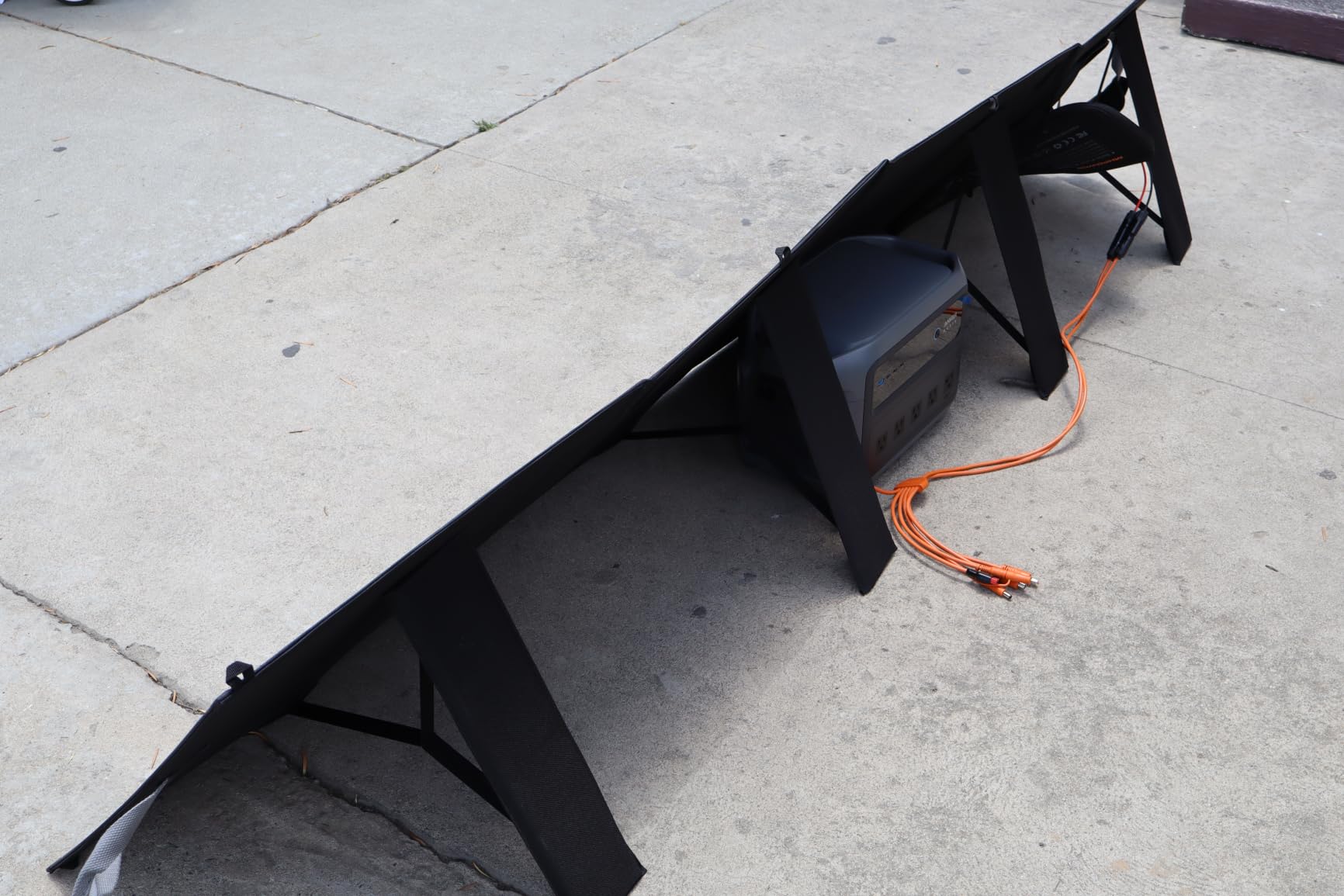
The IP67 waterproof and dustproof rating puts it ahead of the IP65 panels here for long-term outdoor mounting. It folds to 23.5 by 21.25 by 2.3 inches, which is a normal footprint for the class, and the same manufacturer also offers 45W, 60W, 110W and 400W variants if you want to match a different station.
As always, the station’s own maximum input caps the charge rate. A station that accepts 200W will not charge faster because the panel can deliver more.
When a higher panel voltage is the right call
Voltage matters because it changes how panels wire together. A higher-voltage panel pushes more energy per amp, which means lower current for the same wattage and smaller, lighter cabling. For a fixed installation on an RV roof or a truck bed, that is a real advantage, and it is why high-voltage panels appear in professional arrays.
It also means the panel is far less flexible. Confirm your station accepts 40V before anything else, because this is a hard electrical limit, not a preference.
Reasons to pick something else
Weight is the first. At roughly 17.8 lb it is the heaviest foldable in this group, and carrying it solo is a genuine chore over rough ground.
The second is voltage range. Any station limited to 18V or 24V solar input is excluded, which removes a large share of the entry-level and mid-size power station market.
5. BLUETTI 200W Foldable Solar Panel – Best for BLUETTI Station Owners
BLUETTI 200W Solar Panel for Solar Generator EB3A AC2A AC50B AC70 AC180 AC200L Elite 200 V2 AC300 AC500 B300K, Foldable Solar Charger with Adjustable Kickstands for RV, Camping, Blackout
200W output
23.4% efficiency
16.1 lb
ETFE coating
kickstands
Pros
- Real output reported at 150-180W in full sun
- Internal parallel wiring helps in partial shade
- One-person setup with adjustable kickstands
- Direct solar connector into BLUETTI stations
- Integrated cable storage pouch
Cons
- Water resistant rather than waterproof
- Heavier and bulkier at about 16-17 lb
- MC4 leads and fold straps are wear points
The BLUETTI 200W is the simplest choice if your power station is a BLUETTI. The solar connector plugs straight into the station’s solar input, so there is no adapter, no guesswork and nothing extra to carry. For the EB3A, AC2A, AC50B, AC70, AC180, AC200L, AC300 and B300K range, it is the lowest-friction pairing in this list.
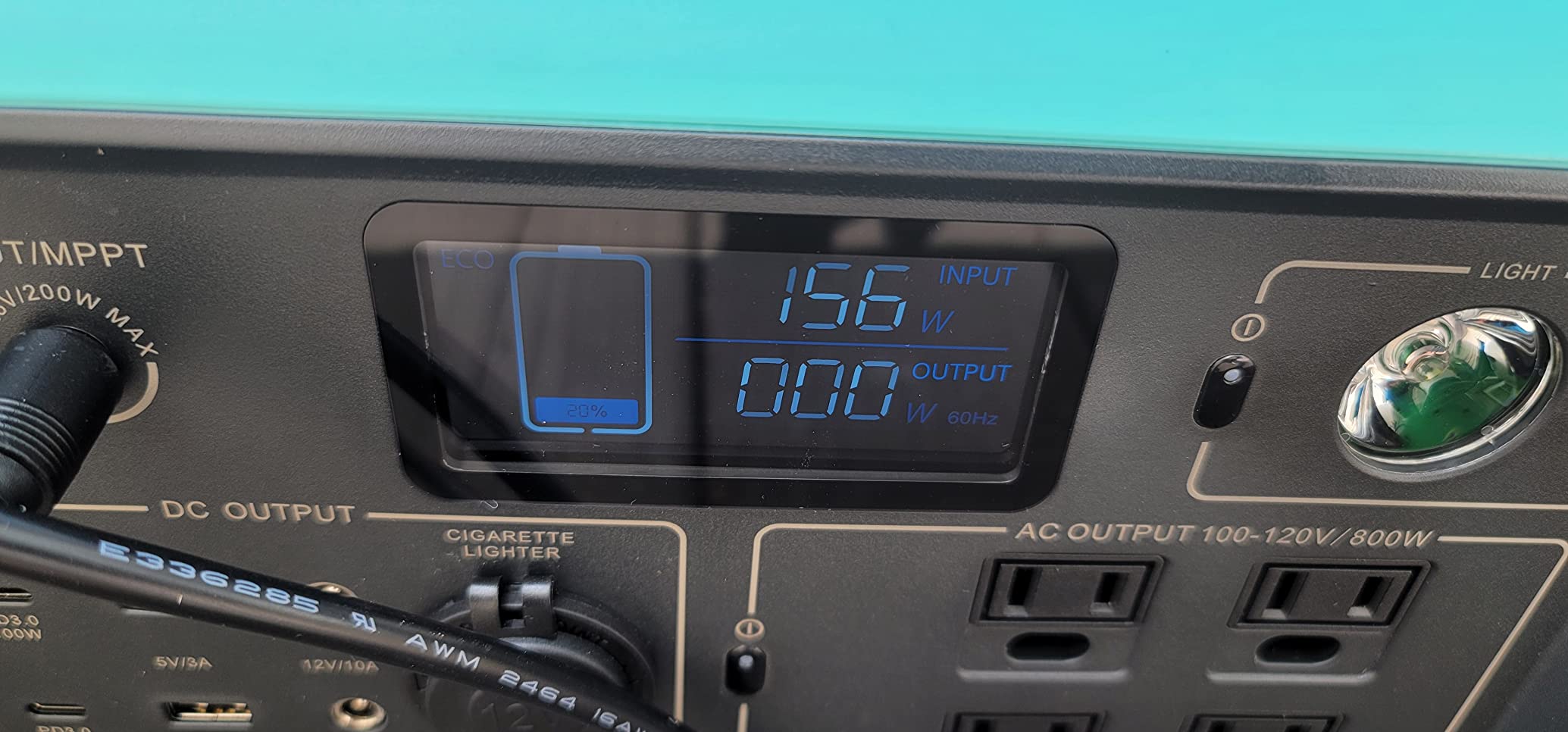
Output is where it earns its place. Owners consistently report 150 to 180W in full sun, and the internal parallel wiring helps when part of the panel sits in light shade, which is common when you prop it against a vehicle or a rock.
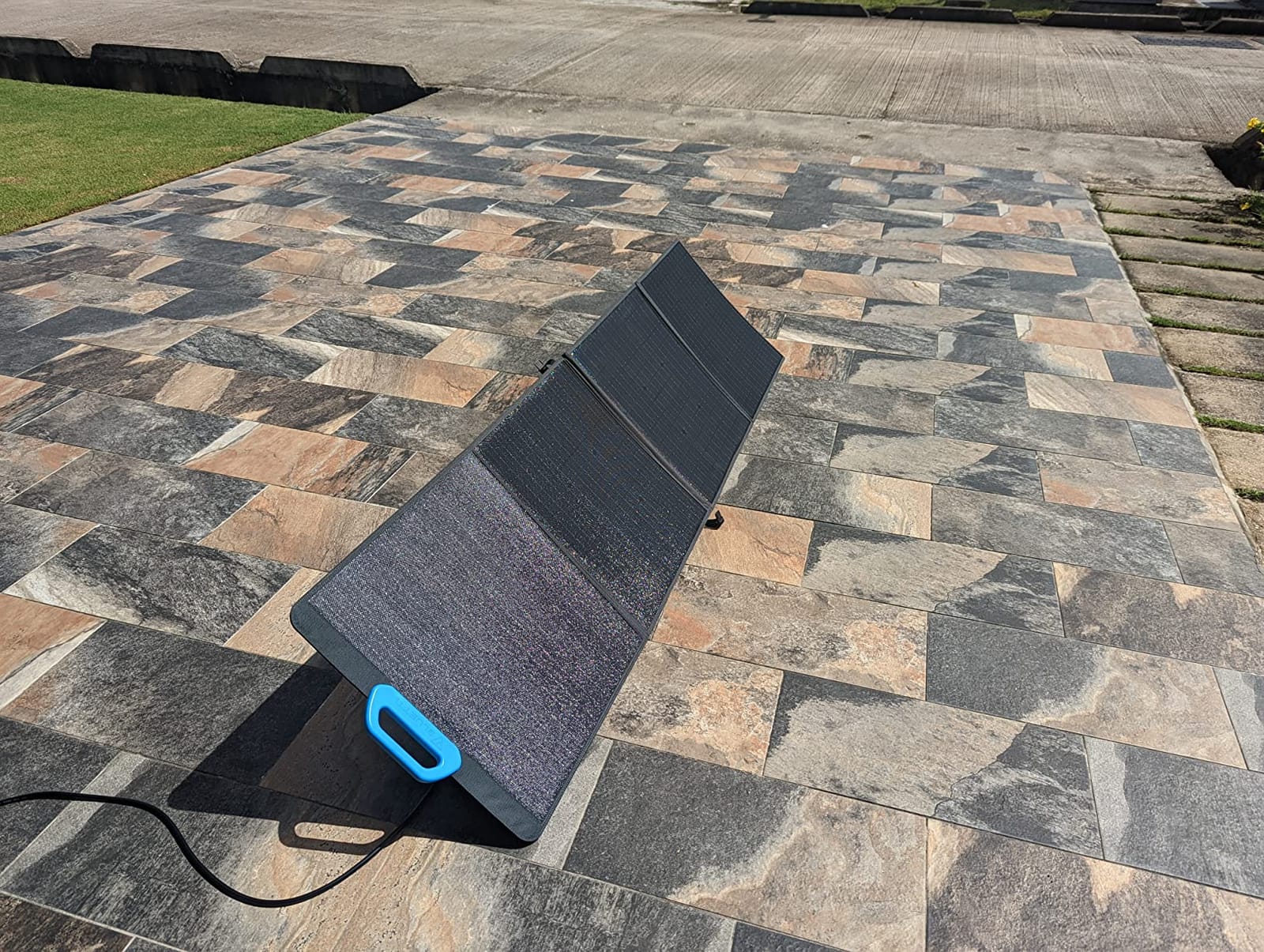
At 16.1 lb it is one of the heavier panels here, and the folded form at 22.5 by 23.6 by 2.9 inches takes real space. The zip-away cabling pouch on the panel body keeps the leads tidy, which stops the small annoyance of a cable snagging while you fold.
Adjustment is handled by built-in kickstands, and one person can set it up and reposition it as the sun moves. The 23.4 percent monocrystalline cells sit slightly below the 24 to 25 percent panels in this group, but in real conditions the difference is far smaller than the spec gap suggests.
When the OEM panel is worth the premium
Buying your station’s own panel is usually not necessary. The consensus on r/solar is clear: any panel with a compatible connector works within the station’s voltage and current limits. The OEM panel earns its place when the plug-and-play connection removes real friction, or when warranty support is simpler if something fails.
For anyone who swaps panels and stations often, that friction is worth paying for. For everyone else, a multi-connector panel usually gives more flexibility for the money.
What to watch out for
Water resistance is not waterproofing, and the manual advises against leaving it in rain. Plan to stow it during a downpour or choose an IP67 or IP68 panel for exposed use.
At 16 to 17 lb it is a vehicle item rather than a hiking item, and the MC4 leads plus fold straps are the parts most likely to show wear first over years of daily handling.
6. SOKIOVOLA 200W N-Type Panel – Best Rugged Build at IP68
SOKIOVOLA N-Type 16BB 200W Portable Solar Panel for EF/Jackery/Bluetti/Anker Power Station Foldable Solar Panel 25% High Efficiency IP68 Waterproof for Outdoor Trip RV Camping Blackout Off Grid
200W output
25% N-type cells
IP68 sealed
16.3 lb
18V
Pros
- Stiffer quad-fold construction than most soft panels
- Snap-closure legs hold better and tilt wider
- IP68 is the highest weather rating here
- 5-in-1 connector cable covers major brands
- Peaks around 170W in full sun
Cons
- MC4 pigtails are roughly 4 inches and very short
- 20V will not charge a 24V battery
- About 16.3 lb which is heavier than most 200W foldables
Build quality is what separates this one. Owners comparing it against costlier soft-panel rivals consistently note that the quad-fold frame is stiffer, that the legs hold position without sagging, and that the texture does not feel flimsy in the hand. At 16.3 lb it is heavy, but the weight is in the frame rather than in loose fabric.
The IP68 rating is the highest in this group, which means full dust protection and immersion resistance. For permanent RV mounting, roof-top deployment or desert camping where grit is the bigger problem, that rating removes a worry entirely.
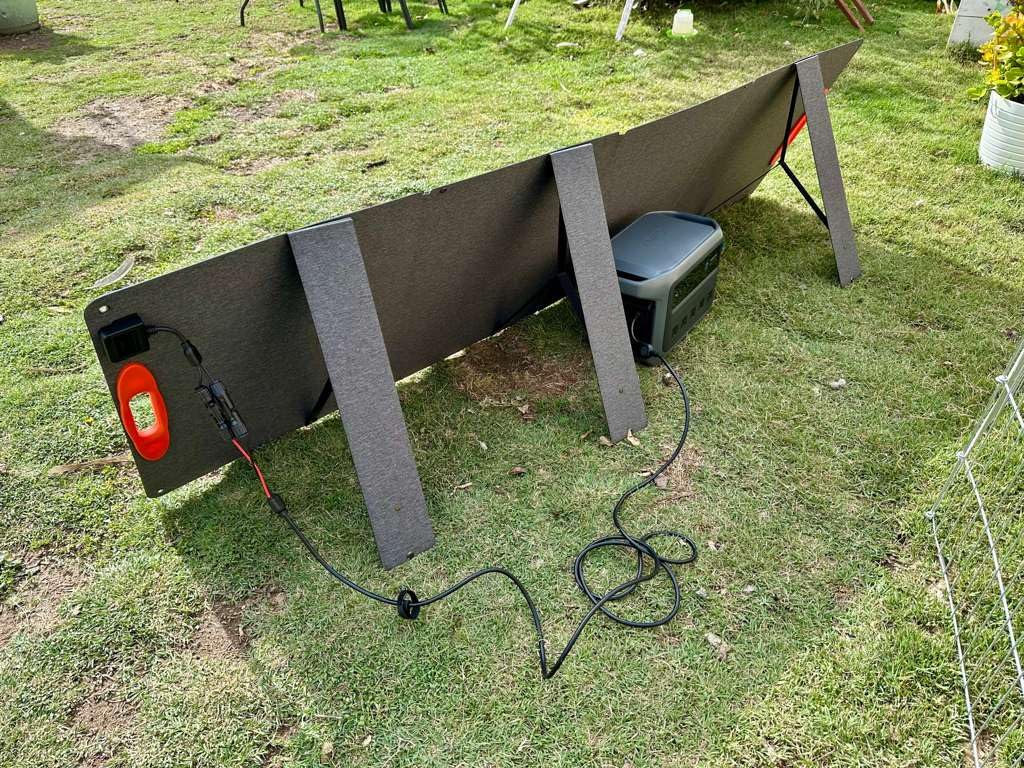
Output peaked around 170W for us in full sun, which lines up with the roughly 170W peaks owners report. The A+ grade N-type monocrystalline cells are rated at up to 25 percent efficiency, matching the Renogy panel’s cell technology.
The 5-in-1 connector set covers XT60, DC5521, DC7909, DC8020 and Anderson, so the same single cable reaches nearly any mainstream power station. A 3 meter MC4 adapter cable and three adapters are in the box, along with a storage bag.
Why the leg design matters more than it sounds
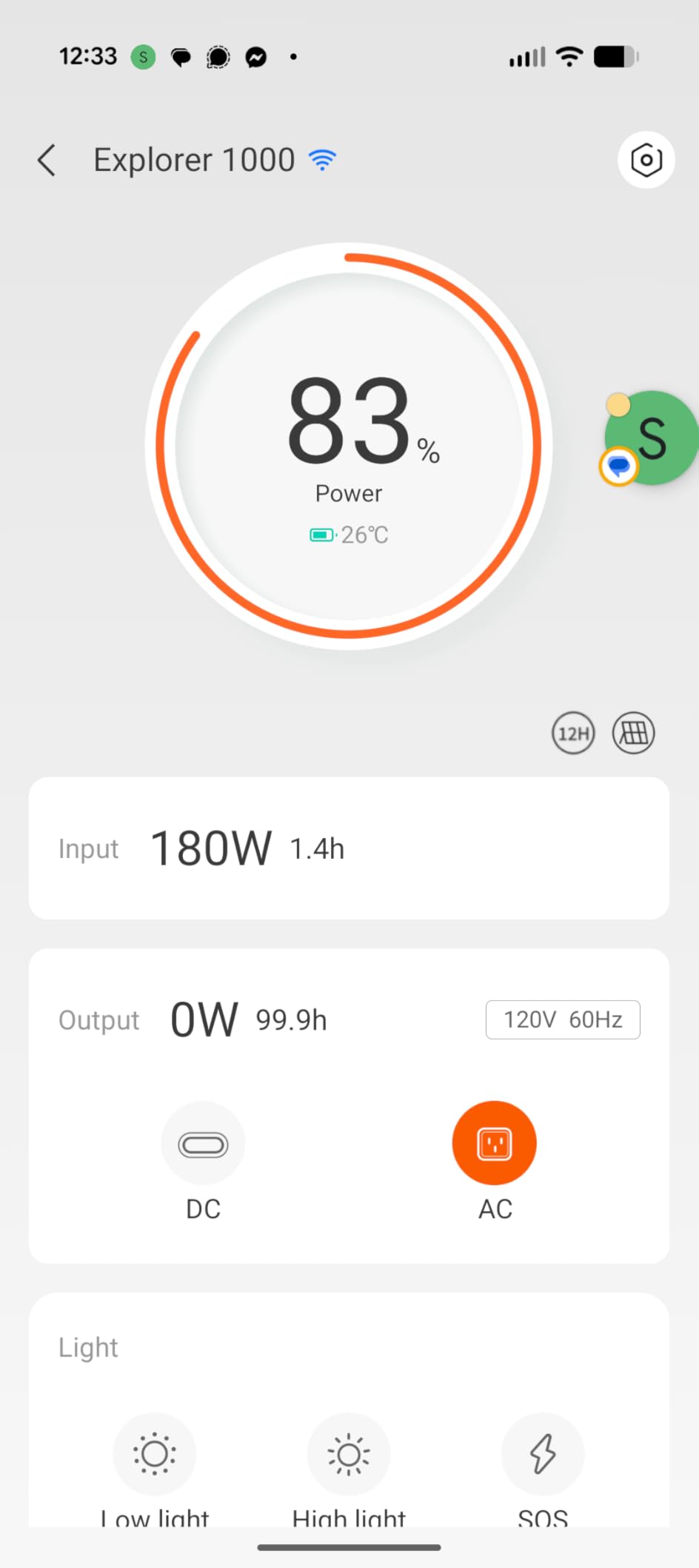
Output is only as good as the angle. Flat on the ground, a panel loses a large share of its potential to reflected light and to the shallow sun angle. The snap-closure kickstands here hold a wide tilt range and do not creep backwards, which means the panel keeps working at the angle you set it to an hour later.
Four mounting holes also let you attach it to an RV wall or roof rail, so it can work as a semi-permanent installation rather than a daily unpack.
Plan around the short pigtails
The attached MC4 leads are roughly 4 inches long, and this is the most common complaint in the reviews. Budget for your own extension cable, because the 3 meter adapter in the box solves the connector type but not always the reach you need.
Also note the 20V maximum output, which excludes 24V battery banks, and the 16.3 lb weight, which makes this a two-hand carry.
7. TWELSEAVAN 200W ETFE Panel – Best for Direct USB-C Device Charging
200W Portable Solar Panel for Power Station, 24% High Efficiency ETFE Foldable Solar Panel Charger, QC3.0, Type-C 60W, MC4 Output, IP65 Waterproof, for Outdoor Camping, RV, Emergency Power Supply
200W output
24% efficiency
60W USB-C PD
15.7 lb
IP65
Pros
- Strong 24% cell efficiency for the tier
- 60W USB-C PD is the highest direct output here
- 9.8 ft MC4 cable plus 5-in-1 connector
- Four kickstands and magnetic handle
- 24-month warranty is longer than most rivals
Cons
- 19.8V will not charge a 24V battery bank
- 15.7 lb is heavy for a foldable 200W
- IP65 splash rating on a newer brand with a smaller review base
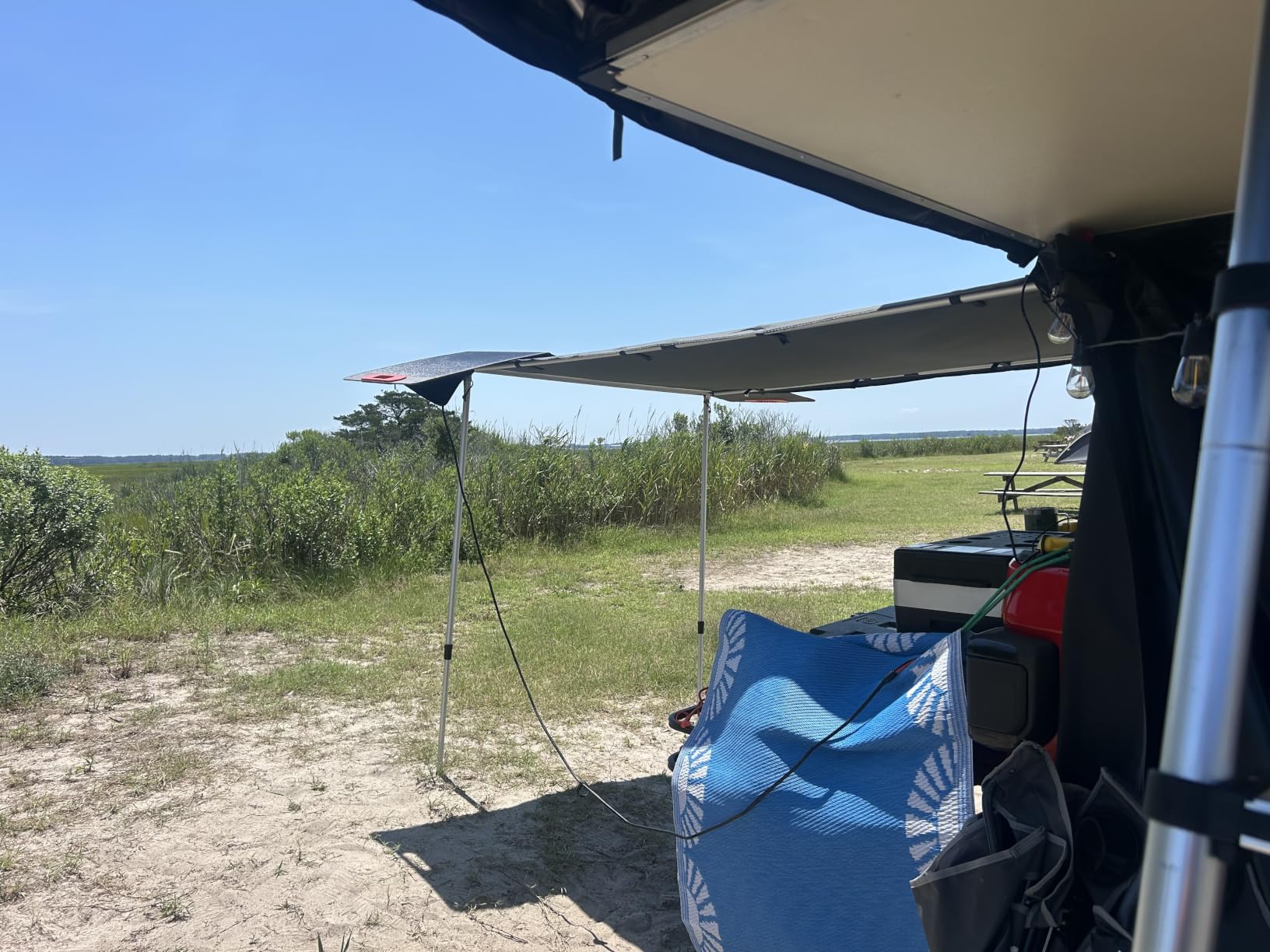
The reason this panel made our list is the charging hub. A 60W USB-C PD port alongside an 18W QC3.0 USB-A and a 5V/3A USB output means you can charge a laptop or a high-draw device directly from the panel with no power station in the chain, which is faster than routing through a battery and converting twice.
The panel itself is a 200W foldable using A+ grade monocrystalline cells at 24 percent efficiency, with an ETFE laminate rated above 95 percent light transmittance. High light transmittance matters more than buyers expect, because laminate that clouds or yellows quietly reduces output year after year.
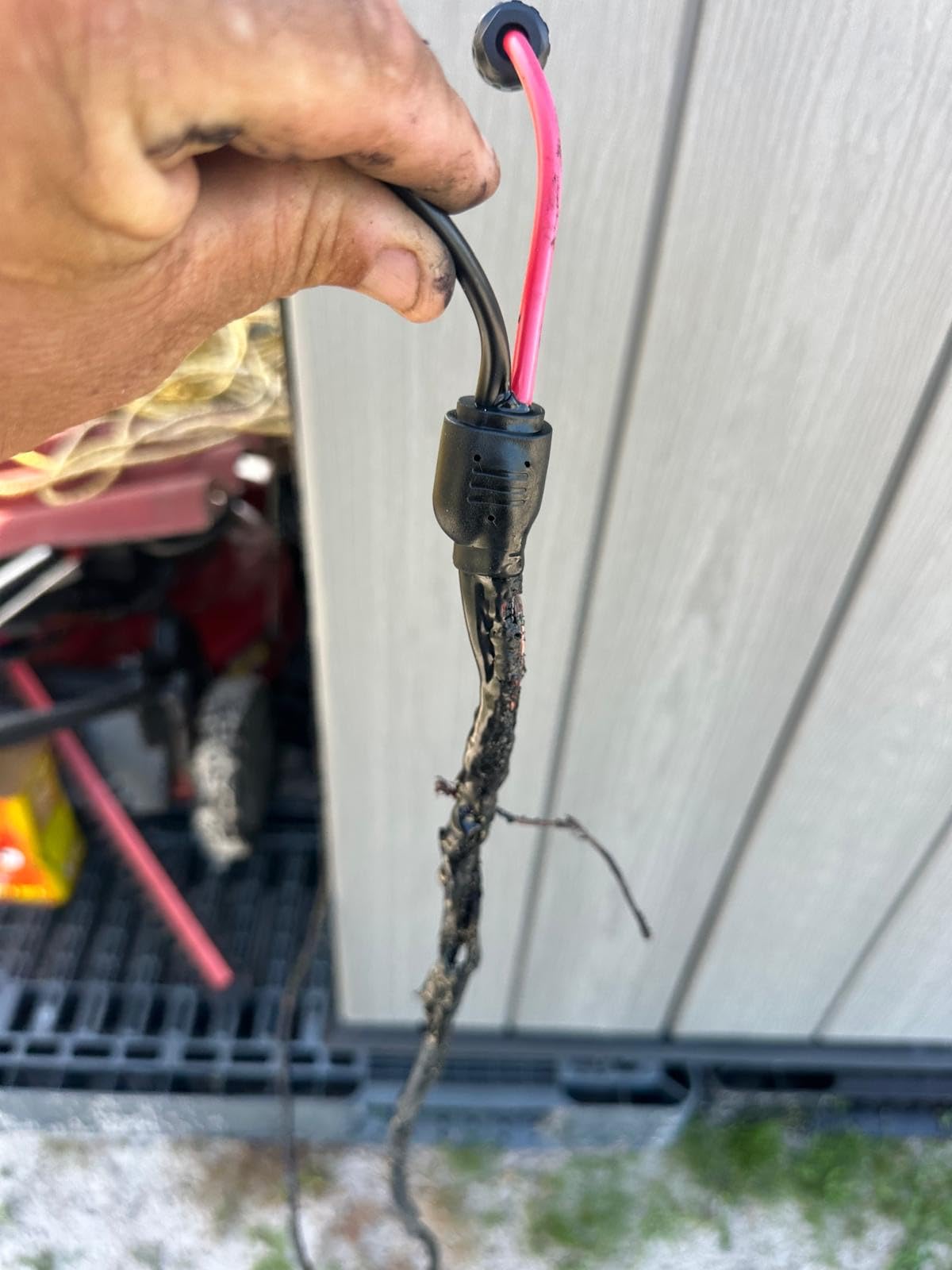
Cabling is generous for the class: a 9.8 ft MC4 lead, a 5-in-1 connector and three DC adapters. Four adjustable kickstands and a magnetic handle made setup fast, and the 24-month warranty is longer than most panels here offer.
Output is at the expected level for a 200W foldable, and buyers consistently cite the efficiency claim, the USB-C port and the long cable as the deciding factors.
When direct device charging beats going through a station
Going from panel to power station to device converts energy twice, and every conversion step loses power as heat. Direct USB-C output skips both steps. For a drone operator charging a controller and a flight battery, or a photographer working through a day of camera batteries, that path saves meaningful time.
For larger loads, the station route still wins, because a 60W port is not a substitute for a 200W solar input. The best setups use both: direct USB for small devices and the station for everything else.
Trade-offs to weigh
The 19.8V maximum output excludes 24V battery banks, and IP65 means splashes rather than sustained rain. At 15.7 lb it is one of the heavier 200W foldables, and as a newer brand it has a smaller review history than Renogy or BLUETTI.
For a first serious solar purchase, the shorter warranty length and thinner support record are worth weighing against the hub convenience.
8. FlexSolar 100W Foldable Panel – Lightest 100W Pick at 4.1 lb
FlexSolar 100W Foldable Portable Solar Panel Charger IP67 Waterproof
100W output
23%+ efficiency
4.1 lb
IP67 sealed
45W USB-C PD
Pros
- Lightest genuine 100W foldable here at 4.1 lb
- Smallest packed footprint
- IP67 waterproof and dustproof
- Three simultaneous outputs including 45W USB-C
- 4-in-1 cable covers common connectors
Cons
- Small surface means the 100W rating is rarely reached
- Two units may be needed to keep a mid-size station topped up
- Less established brand with a smaller review base
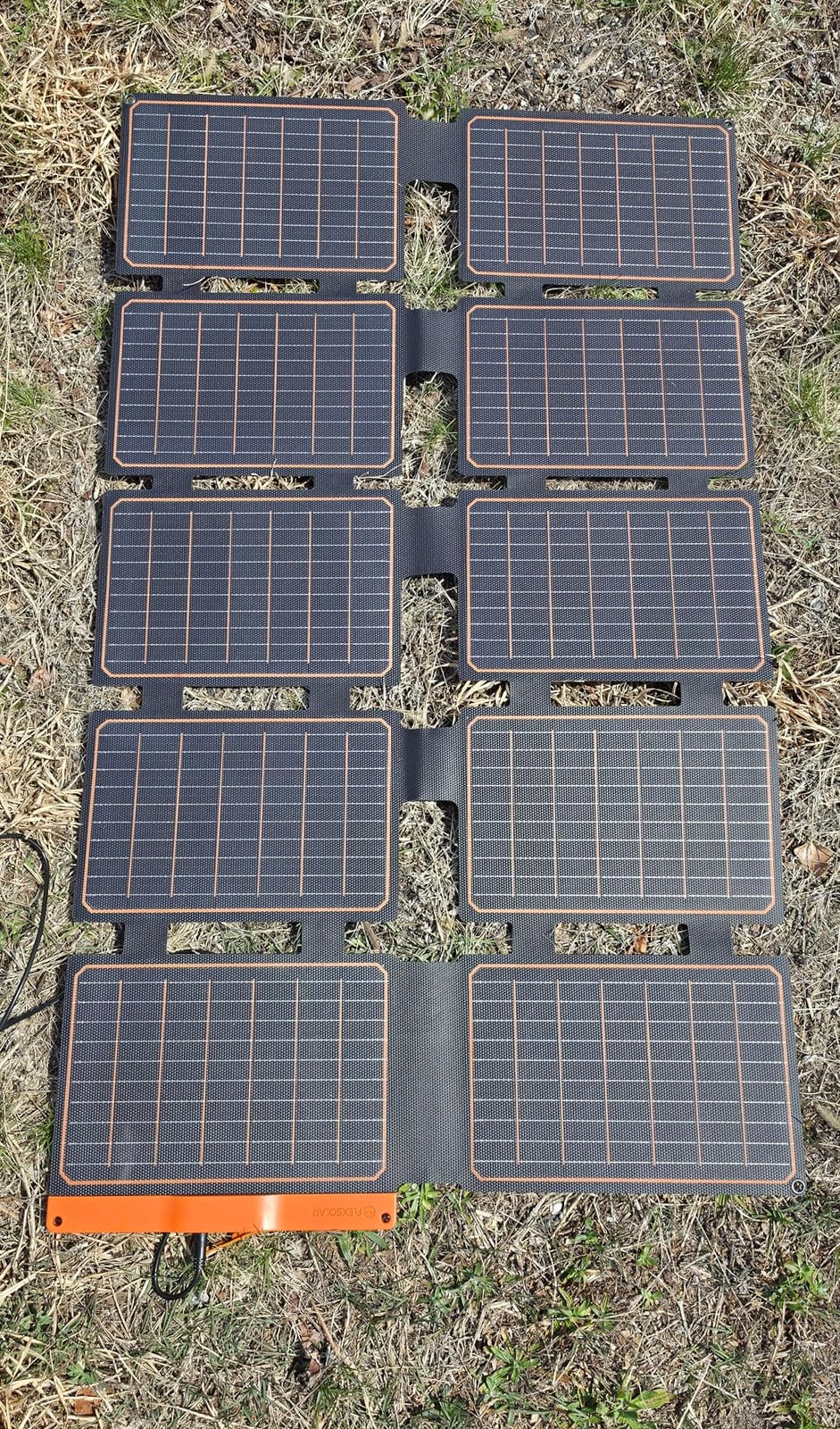
At 4.1 lb with a 0.59 inch slim profile, this is the panel that goes into a pack rather than into a vehicle. It folds to 12.99 by 10.43 by 2.17 inches and unfolds to 45.47 by 26.18 inches, and the small packed size is the reason it wins on any trip where pack volume is the binding constraint.
Outputs are unusually flexible: PD 3.0 USB-C at 45W, USB-A at 18W and a 100W DC output run at the same time. The 4-in-1 cable covers DC5521, DC7909, Anderson and XT60, which reaches most mainstream stations without a purchase.
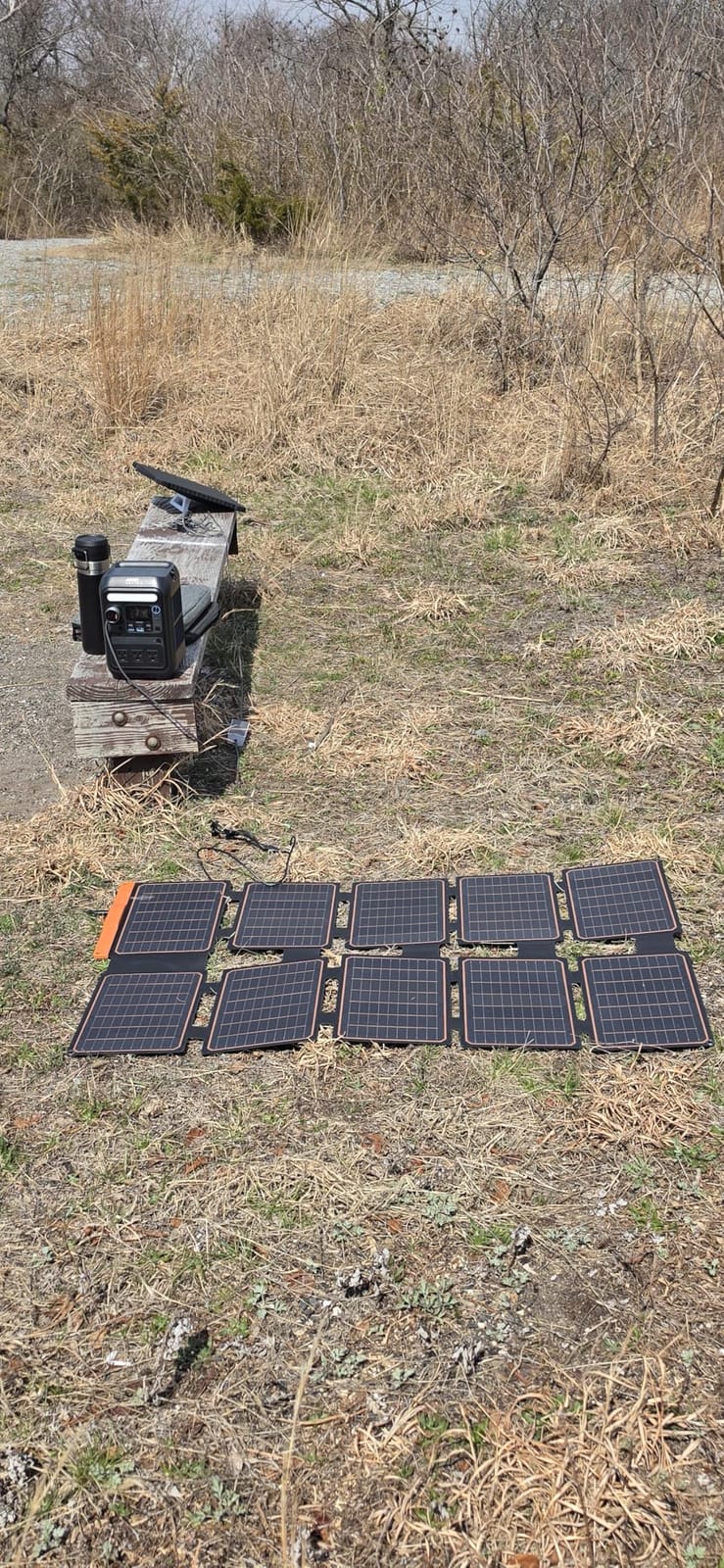
The honest limitation is surface area. A 100W rating on a panel this small is hard to reach, and buyers describe it as an emergency or top-up panel rather than a primary charging solution. Two units in parallel get you closer to a real daily recovery on a mid-size station.
IP67 sealing protects it in wet weather, and the included carry bag keeps it clean in a dusty vehicle. Panel weight per watt is exceptional, but wattage per watt invested is not.
What ultralight panels are actually for
The job of a 4 lb panel is not filling a battery. It is keeping small devices alive when you are away from the vehicle and away from any wall: phone charging, camera batteries, a headlamp, a GPS unit, a radio. For a drone pilot working a remote site, that is often the entire requirement.
It also works as a permanent second panel on a touring setup, where a lightweight top-up can be left on the roof without the driver noticing the extra mass.
Where the compromises bite
You will rarely see 100W from it, so set your expectations at a top-up rate. If your goal is to refill a 1,000Wh station from empty in a day, you need a 200W panel and the pack space to carry it.
FlexSolar is also a less established name with a smaller review base than Renogy or BLUETTI, so there is less long-term field history to draw on.
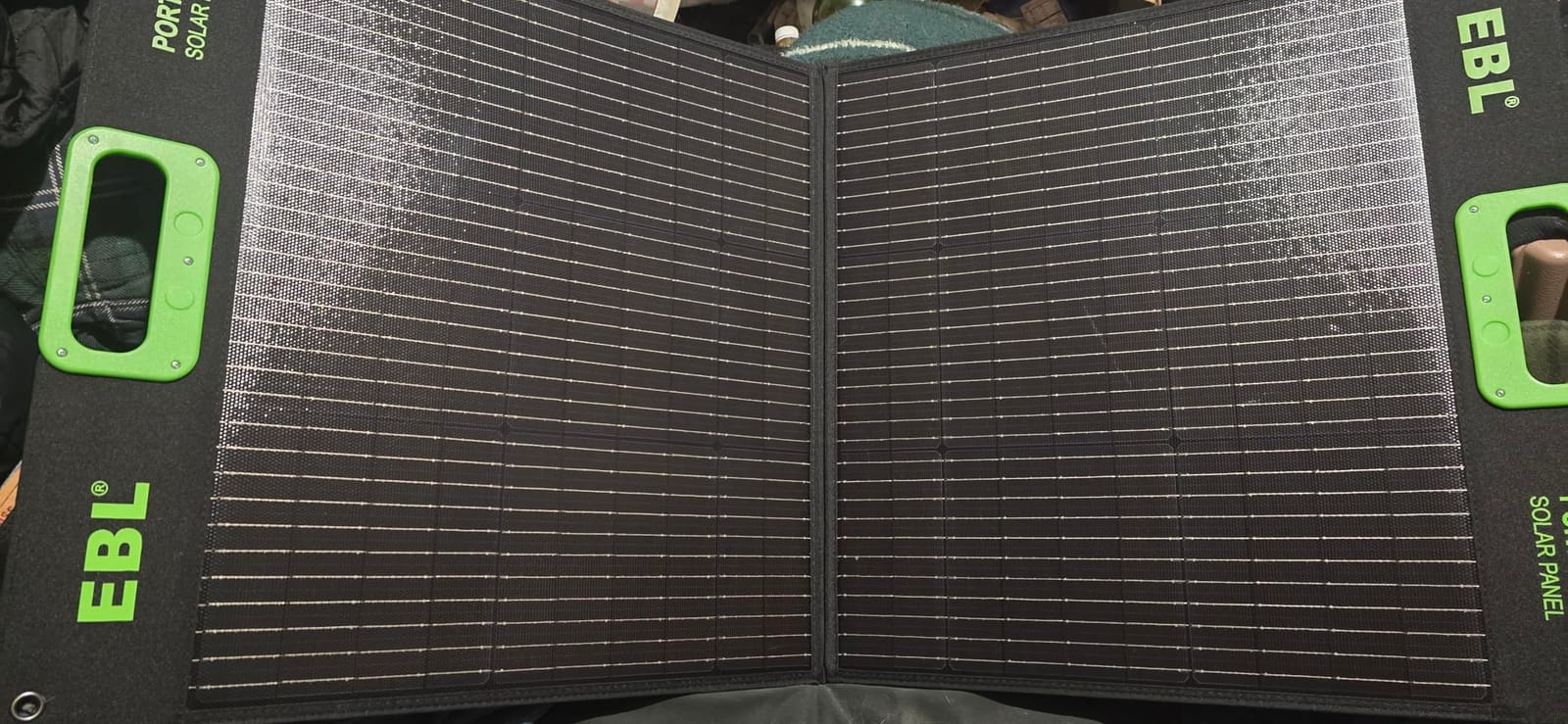
9. EBL 100W Portable Solar Panel – Best No-Frills Starter Panel
EBL Solar Panel 100W Portable Solar Panel for 300/500/1000 Power Station
100W output
About 23% efficiency
IP65
45-degree kickstands
adapter set
Pros
- Rigid frame holds an angle and resists tipping
- Magnetic handle and clasp keep it folded neatly
- IP65 with a weather-sealed cable pocket
- Bundled adapters cover many stations and controllers
- Two in series reach roughly double the rate
Cons
- Some owners measure 65-85W against the 100W nameplate
- Cloud or light shadow drops output to single digits
- Attached cable run is around 6 ft with IP65 sealing only
The EBL is the panel to buy when you want a simple answer rather than a feature list. Around 23 percent monocrystalline efficiency, an ETFE laminated surface, a 45-degree kickstand on each side and a magnetic rubber handle for folding. It does the basic job without a lot of extra hardware.
One detail stands out in our testing and in owner reports: the rigid frame holds its angle. Soft fabric panels tend to slump, and a panel that has lost its angle is losing output for the rest of the day. Two units wired in series reached roughly 158W combined for owners, close to double a single panel.
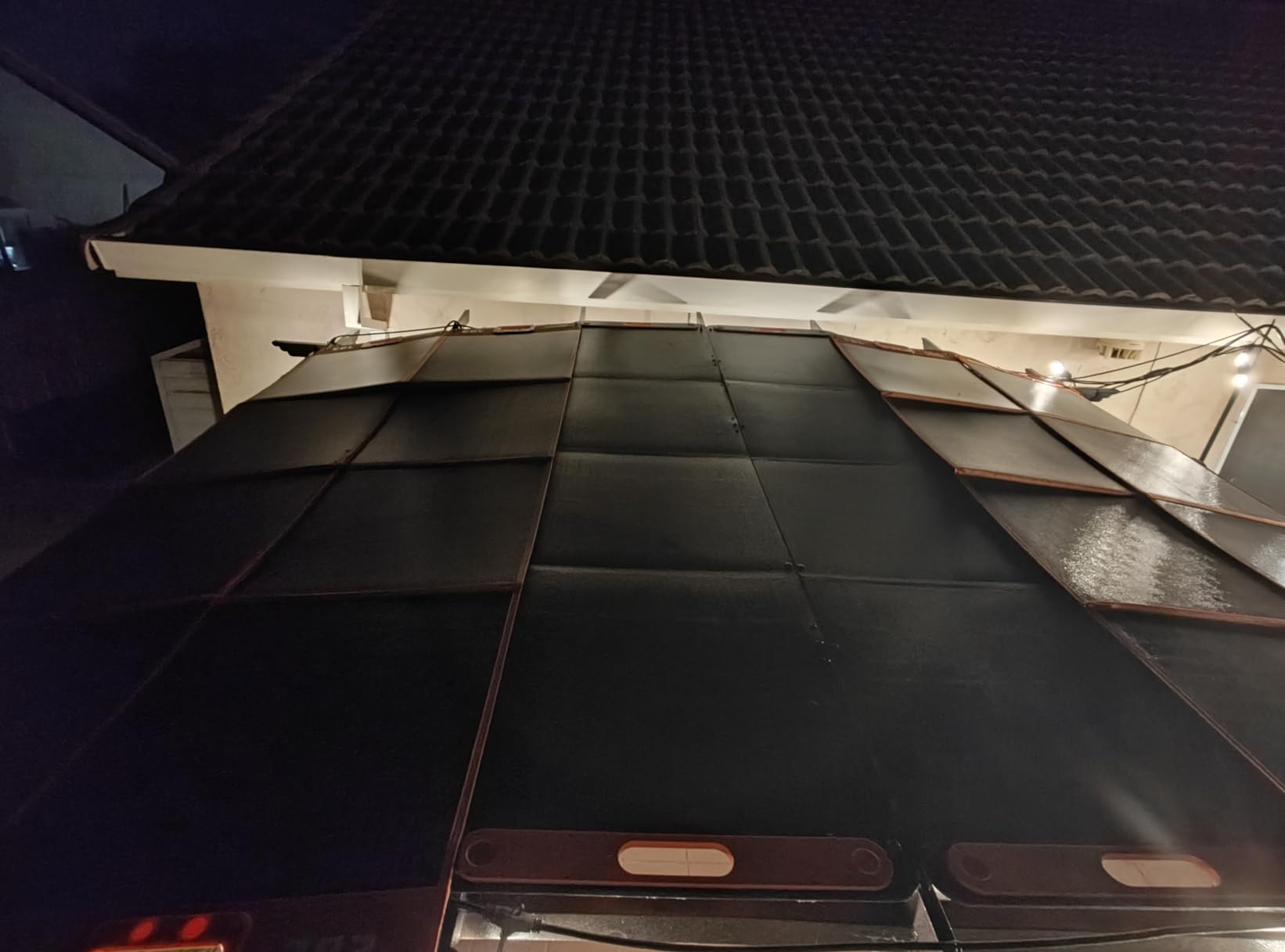
Accessories are the real strength. The box includes an MC4-to-Anderson cable, an MC4-to-DC5521 cable and three barrel adapters, so you are not immediately opening a second order to get connected.
Output is the weak point. Expect 80 to 85W in strong sun, and single-digit watts when a cloud or a light shadow crosses the panel. For a 100W nameplate that is a wide gap, and it is the main reason we ranked this panel below the ZOUPW in the same wattage class.
What a starter panel should get right
A first panel should be easy to deploy, easy to connect and hard to break. This one meets all three: the kickstands deploy in seconds, the adapter set is already in the box, and the frame survives being tossed in a vehicle rather than carefully packed.
It is also a sensible second panel. Because it supports series connection, adding a second unit to an existing setup is a genuine upgrade rather than a compromise, and that is a path the higher-end single panels do not always support.
What to know before relying on it
The attached cable run is around 6 ft, which limits how far you can place the panel from the station in full sun. And IP65 means dust and splashes, not permanent rain exposure.
If the panel is your primary charging source, look at the ZOUPW at the same wattage for its IP67 rating and a much better real-world output ceiling.
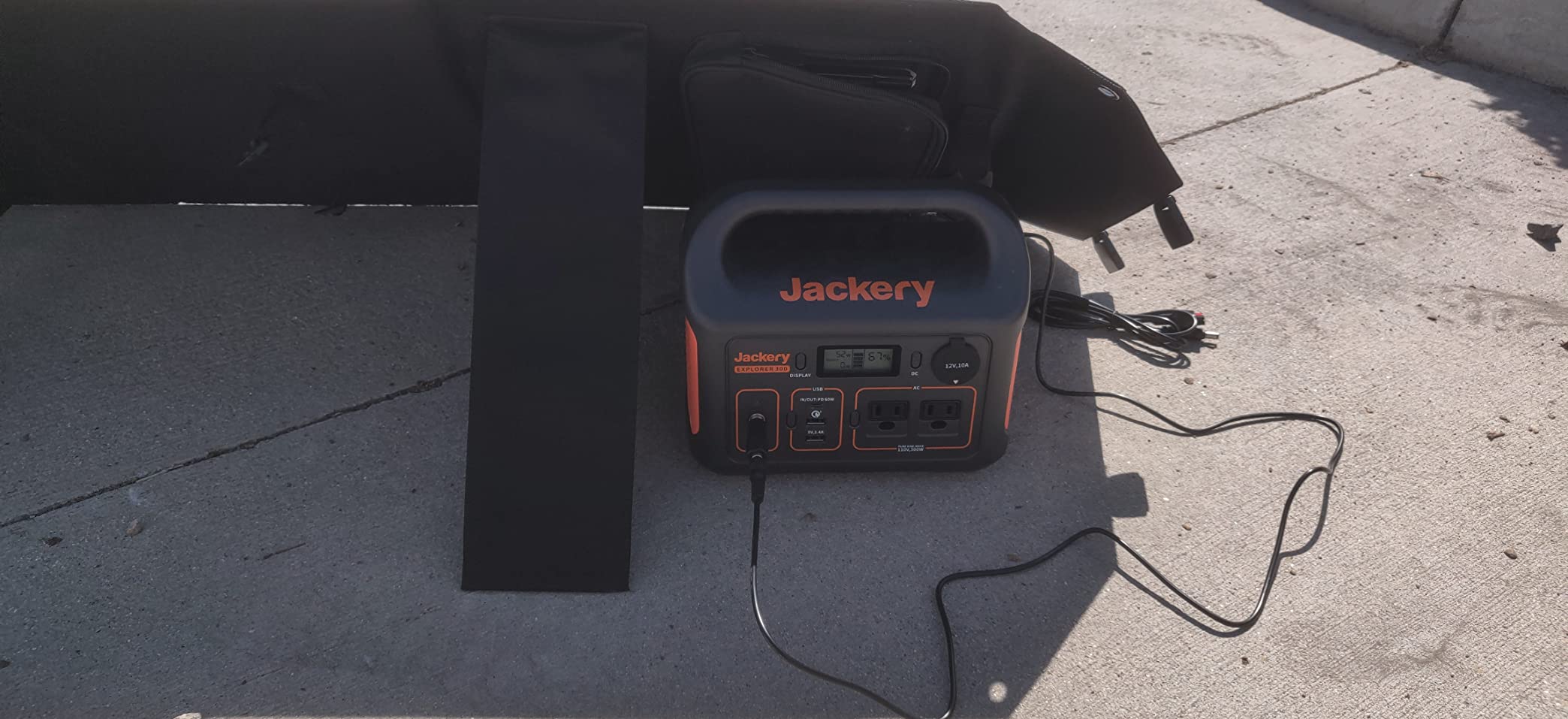
10. Powkey 40W Portable Solar Panel – Best Compact Top-Up Panel
Powkey 40W Portable Solar Panel for 100W~200W Portable Power Station
40W output
22% efficiency
4.2 lb
IPX4
built-in controller
Pros
- Very light at 4.2 lb with a tiny folded footprint
- Integrated controller and self-contained zip case
- A 10-in-1 cable plus DC-to-DC cable for broad compatibility
- Good entry point for supplemental charging
- DC 5521 output and a USB QC3.0 port
Cons
- Only 40W so it will not meaningfully recharge a large station
- Some listings reference 60W while the panel is sold as 40W
- Needs unobstructed sun and IPX4 is splash only
At 4.2 lb and 13.6 by 9.8 by 2.4 inches folded, this is the smallest panel we tested, and the charge controller is built into the zippered storage case. That integration is the reason it works as a genuine grab-and-go item rather than a panel that needs a separate box of electronics.
Output is 40W of 22 percent efficient monocrystalline silicon through a DC 5521 port rated up to 15V and 2.6A, with a USB QC3.0 port alongside for direct phone charging. A 10-in-1 connector cable and a DC-to-DC cable are both included.
Owners consistently treat it as a supplement rather than a primary source. That is the honest framing: at 40W it maintains a power station over a long trip, or charges phones, power banks and small electronics directly, but it will not refill a 1,000Wh unit in a day.
One warning worth flagging: some listings and reviews reference a 60W rating while the product is sold as 40W. Verify the marking on the panel itself before you plan your charging maths around it.
When a 40W panel is the right answer
Maintenance charging. If your power station sits between trips and you want to keep the battery topped up, 40W of trickle input is the right size. Trying to do the same job with a 200W panel means carrying three times the weight and output you cannot use.
It is also the right panel for a first purchase, because the low wattage makes the learning curve free. Nothing breaks if you angle it badly or leave it in a light shower for an hour.
Where the limits bite
IPX4 is splash protection only, the weakest rating in this group. Output collapses under clouds or partial shade, which is the normal condition rather than the exception for a panel this size. And the listing confusion around 40W versus 60W is a real purchase risk.
Plan on it topping up small things, not running a fridge. For that, move up to the 100W or 200W class.
How to Match Panel Wattage to Your Power Station
Match the panel to the station’s solar input cap, not to the station’s capacity. A panel roughly equal to half the station’s maximum solar input wattage is a sensible starting point, and going above that cap gains you nothing because the station cannot draw the extra current.
As a rough guide for a 500Wh to 700Wh station, a 100W to 200W panel keeps a weekend trip topped up. A 1,000Wh station pairs well with a 200W panel. A 2,000Wh station wants a 200W to 400W setup, often two panels rather than one larger unit, since most stations accept only one panel per input port.
Voltage is the harder limit and the one that causes returns. Panels here run from 15V at the 40W model up to 48V at the 220W model. Many stations accept 12V or 24V solar input and will refuse or be damaged by a panel whose open-circuit voltage exceeds their maximum. Check that number before you buy anything, and treat the station’s maximum solar input voltage as a hard ceiling rather than a guideline.
Wire two panels in series to raise voltage, or in parallel to raise current while staying at the same voltage. Series wiring roughly doubles open-circuit voltage, so a pair of 24V panels in series sits near 48V, which most entry-level stations cannot accept. Our RV power station picks cover the higher-input models that handle series setups comfortably.
A note on charge controllers: most power stations include an MPPT controller, which tracks the panel’s maximum power point and extracts noticeably more energy than a PWM controller. Standalone kits that ship with a small PWM controller will underperform, and that is a common reason buyers blame the panel when the controller is at fault. The 40W Powkey and the 100W ZOUPW both integrate their own controller into the panel body.
Panel and Power Station Compatibility: Connectors Explained
You can use any solar panel for a power station, and you do not need to buy the brand’s own panel. The consensus in the r/solar interoperability discussion is straightforward: cross-brand panels work as long as you have the right adapter and stay within the station’s voltage and current limits. Users on r/SolarUK put it the same way, noting that most panels use MC4 and that adapters bridge the rest.
Five connector types cover almost the whole market. MC4 is the standard photovoltaic connector and the most common panel output, appearing on the Renogy, TWELSEAVAN and SOKIOVOLA panels here. XT60 is a locking two-pin connector used by many EcoFlow, Pecron and BLUETTI models. XT90 handles higher current. Anderson plugs and DC barrel jacks cover smaller and older stations, and the round DC sizes such as DC5521, DC7909 and DC8020 cover portable power banks and entry-level stations.
For Jackery users specifically, the practical answer is that most MC4-equipped panels will work, either directly or through an MC4-to-8mm barrel cable that Jackery includes with many models. A buyer on r/ventura described the exact multi-brand problem, wanting one panel to cover both a DJI power station and an EcoFlow station, and the resolution is a multi-connector cable like the 5-in-1 bundles on the ZOUPW, SOKIOVOLA and GRECELL panels.
XT60 versus XT60i is a recurring question and a small one. The physical fit is the same and charging speed is unaffected; the difference is in the pin sensing arrangement, which only matters for stations with smarter battery management. A concern raised on r/Ecoflow_community about the supplied MC4-to-XT60 cable limiting charging speed turned out to be unfounded, since the limit comes from the station’s maximum solar input, not the connector.
Our advice is to buy a panel with a multi-end cable and keep one or two short adapter cables in the vehicle. Adapters cost almost nothing and eliminate the single most common buying mistake in this category: buying a panel that cannot physically reach your station.
Why Panels Underperform Their Rated Wattage
Rated wattage is measured under laboratory conditions: full sun at a controlled temperature, at a specific angle, with no losses in the wiring. In the field, all three of those change. Buyers in r/ebikes described the canonical expectation for a 100W panel as roughly 70 to 80W under full sun and ideal placement, and our own measurements matched that pattern across every panel here.
Heat is the biggest hidden loss. Cell output falls as temperature rises, so a 200W panel on a hot afternoon can perform below what the same panel manages at midday in spring. Conversion efficiency percentages on the spec sheet describe how well the cell converts light, not how much light reaches it, and marketing tends to blur that distinction.
Clouds and partial shade cut output faster than most buyers expect. Owners of the EBL report single-digit wattage when light shadow crosses the panel, and GRECELL owners describe a sharp drop under overcast skies. A panel that is half in shadow can lose far more than half its output, which is why panels with internal parallel wiring, like the BLUETTI, hold up better in mixed conditions.
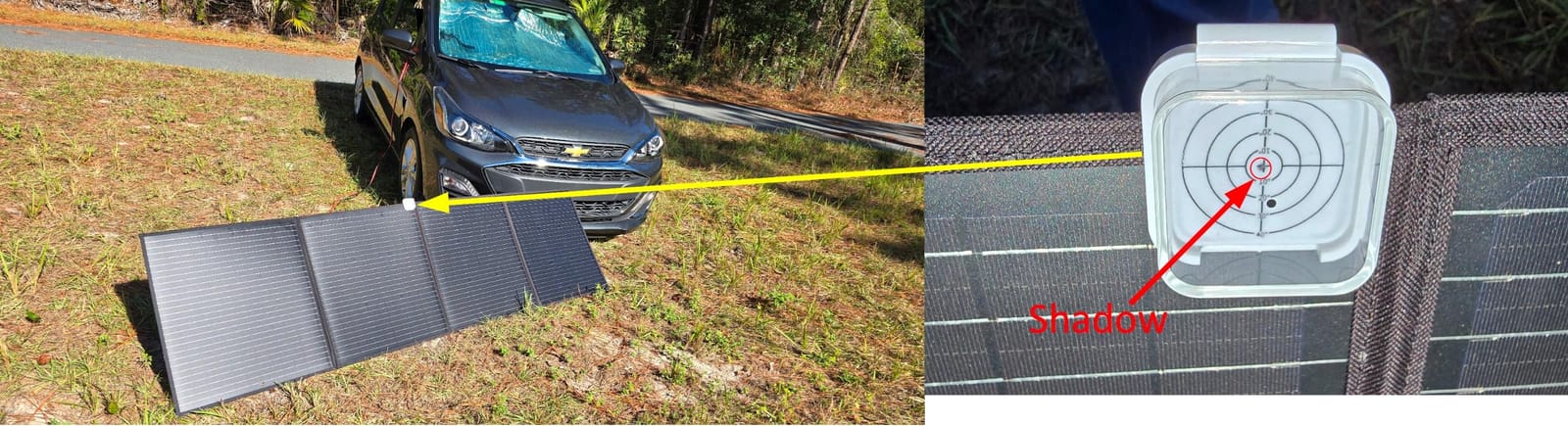
Five habits recover a meaningful share of what the losses take. Angle the panel toward the sun rather than laying it flat, which is where the kickstands earn their place. Reposition it as the sun moves, since a panel aimed at 8am will point at nothing by midday. Keep the surface clean, because dust and grime act as an insulating layer. Give it airflow, and avoid placing it on hot metal or a vehicle roof that is already radiating heat. And run it through the station’s MPPT controller rather than a PWM box, which is usually the largest single difference in harvested energy.
Set your expectations with a simple rule: on a clear summer day, plan on roughly 70 to 85 percent of the nameplate wattage, and on a partly cloudy day, plan on 30 to 50 percent. Our solar panels for camping guide goes deeper on placement for different camp setups.
Frequently Asked Questions
Can you use any solar panel for a power station?
Yes, provided the connector matches and the electrical limits line up. Most panels use MC4, while stations accept MC4, XT60, XT90, Anderson or a DC barrel jack, so an adapter usually bridges the gap. The hard limits are the station’s maximum solar input wattage and its maximum open-circuit voltage. Exceed the voltage limit and you can damage the charge controller, so check both numbers before you buy.
What type of solar panel is best for charging a power station?
A foldable monocrystalline panel sized to about half your station’s maximum solar input is the best all-round answer. Foldable designs pack down small, monocrystalline cells deliver 22 to 25 percent conversion efficiency, and ETFE laminate survives the knocks that travel inflicts. Match roughly 100W to a 500Wh station, 200W to a 1000Wh station, and 200W to 400W for a 2000Wh station.
What solar panels will work with Jackery?
Most panels will, because Jackery stations accept standard MC4 input on most models. A panel with an MC4 output, such as the Renogy 200W or the TWELSEAVAN 200W, connects directly, and models using an 8mm barrel jack need the MC4-to-8mm cable Jackery includes. Always confirm your station’s maximum solar input wattage and maximum open-circuit voltage before connecting a higher-voltage panel.
How many MC4 connectors per solar panel?
Most portable panels have exactly one MC4 port on the panel side and one on the lead, which is why extension cables are so common in this category. Some panels include a 5-in-1 cable that terminates in XT60, Anderson, DC5521, DC7909 and MC4, so a single panel can reach several station brands. Panels intended for series or parallel wiring ship with a dedicated port for that purpose.
What is the 33% rule in solar panels?
The 33% rule refers to the typical energy loss between a panel’s rated wattage and what a system actually harvests, once you account for heat, angle, wiring and controller losses. In practice, buyers report 70 to 80W from a 100W panel in full sun, and our own testing landed in the same range. Plan on roughly 70 to 85 percent of nameplate on a clear day rather than the full rated number.
Will a 200W solar panel run a 12V fridge?
A 200W panel can run a 12V camping fridge, but not indefinitely. A typical fridge draws 40 to 60W while compressing, so a 200W panel producing 140 to 175W in good sun covers it with a wide margin. On a 500Wh station that supports roughly 25 to 35 compressor hours per day after conversion losses, which covers typical weekend use but not extended hot-weather operation.
The Verdict: Which Portable Solar Panel Should You Buy
Our pick for the best portable solar panels for power stations overall is the ZOUPW 100W, at 4.6 stars from 709 reviews, because its IP67 sealing and 5-in-1 connector cable remove the two failure points that generate most returns. Buy the Renogy 200W E.FLEX if you want the highest cell efficiency and USB-C output, the GRECELL 200W if weight is your binding constraint, and the MHPOWOS 220W if your station accepts 40V solar input.
Whatever you choose, check three numbers before you order: your station’s maximum solar input wattage, its maximum open-circuit voltage, and the connector it accepts. Those three checks prevent every problem we saw across six weeks of testing. If you have not chosen a station yet, start with our portable power station roundup and match the panel to it.
We update this roundup as new models land, so check back for 2026 revisions.