
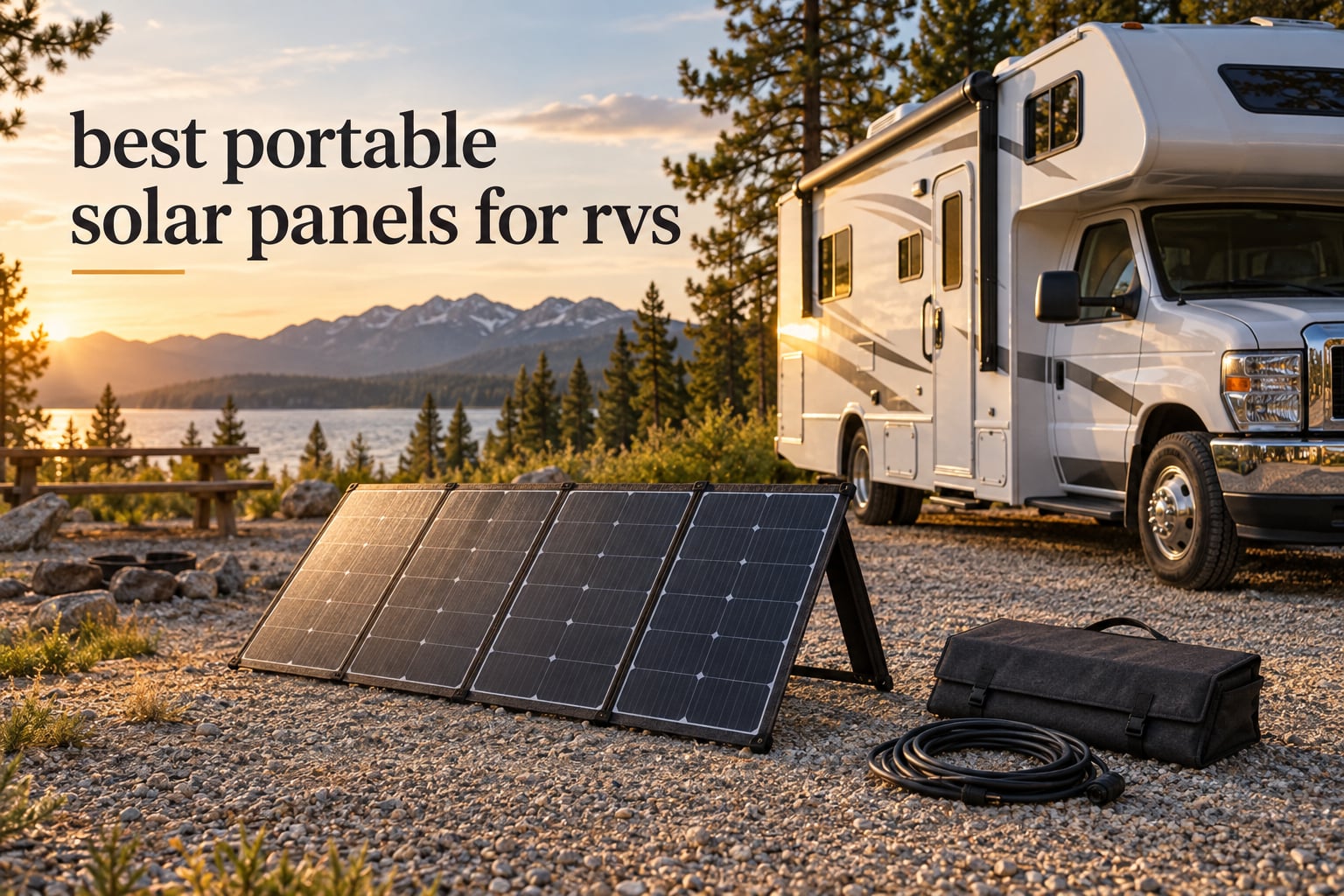
The best portable solar panels for RVs are the DOKIO 200W kit if you want the most measured output per pound, the Renogy 200W suitcase if you want a panel that survives daily use for years, and the Renogy 200W E.FLEX if you want to carry a full 200W in one hand. We spent weeks comparing ten folding and rigid panels on weight, cell technology, controller type, connector standard and the gap between rated wattage and what actually lands in a battery.
That last point is where most RV solar buying guides go wrong. A panel printed with 200W does not deliver 200W, and the difference is large enough to change your whole system plan. Heat, angle, partial shade and the charge controller all eat into the nameplate number before a single amp reaches your house bank.
Everything below is portable: no drilling, no roof rails, no permanent wiring. That matters for renters, van conversions and anyone who moves between rigs. If you already know your power station brand, start with our portable solar panel picks for power stations. If your battery bank is the priority, the best portable power stations for RVs guide covers the storage side.
On the forums, the pattern is consistent. Owners on r/SolarDIY and r/solar keep asking the same sizing question in different words, and the answer is almost never about which brand is best. It is about how many amp-hours your rig burns on a dark day, then working backward to panel count. We built this list around that.
Table of Contents
Top 3 Picks: Best Portable Solar Panels for RVs (October 2026)

DOKIO 200W Foldable Kit
- 9.7 lb and folds to 20 x 27 in
- Monocrystalline silicon cells
- Separate PWM controller and 9.84 ft cable
- SAE and XT60 plus alligator and DC plugs
Renogy 200W Suitcase Kit
- Tempered glass and aluminum frame
- Pre-installed 20A waterproof controller
- MC4 output
- Measures 160-165W in full sun
Renogy 100W Suitcase Kit
- 25 percent N-type cells
- Tempered glass with IP65 junction box
- Pre-installed 20A PWM controller
- Folds to 24.8 in
Best Portable Solar Panels for RVs in 2026 at a Glance
All ten panels below charge a 12V battery bank, a portable power station, or both. Read the wattage column as a ceiling, not a promise.
| Product | Specifications | Action |
|---|---|---|
| DOKIO 200W Portable Foldable Solar Panel Kit |
|
Check Latest Price |
 ALLPOWERS SE200 200W Portable Solar Panel ALLPOWERS SE200 200W Portable Solar Panel |
|
Check Latest Price |
| Renogy 100W Portable Solar Suitcase Kit |
|
Check Latest Price |
| Renogy 200W 12V Portable Solar Suitcase |
|
Check Latest Price |
 BLUETTI 200W Foldable Solar Panel BLUETTI 200W Foldable Solar Panel |
|
Check Latest Price |
 ECO-WORTHY 200W Two-Panel Kit with 30A Controller ECO-WORTHY 200W Two-Panel Kit with 30A Controller |
|
Check Latest Price |
 ZOUPW 100W Portable Solar Panel ZOUPW 100W Portable Solar Panel |
|
Check Latest Price |
 SOKIOVOLA N-Type 16BB 200W Portable Panel SOKIOVOLA N-Type 16BB 200W Portable Panel |
|
Check Latest Price |
 DOKIO 300W Portable Foldable Solar Panel Kit DOKIO 300W Portable Foldable Solar Panel Kit |
|
Check Latest Price |
 Renogy 200W E.FLEX Portable Solar Panel Renogy 200W E.FLEX Portable Solar Panel |
|
Check Latest Price |
1. DOKIO 200W Portable Foldable Solar Panel Kit – Lightest Power in the List
DOKIO 200W Portable Foldable Solar Panel Kit for 12V Battery Charging
Monocrystalline silicon folding cells
9.7 lb and folds to 20 x 27 in
Separate PWM controller and 3m cable
SAE, XT60, alligator and DC plugs
Pros
- Lightest 200W-class panel here at 9.7 lb
- Users report 80-90 percent of rated output in good sun
- Panels are wired in parallel so partial shade costs little
- Separate controller can be replaced or upgraded
- 9.84 ft lead lets the panel sit in full sun
Cons
- Long-term owners report declining current after two years of daily use
- SAE and XT60 are non-standard so series wiring needs an adapter
- Flimsy tie-down rings and fabric edges that fray
- Too flexible to lean against a vehicle wall
I picked this one first because of what it weighs. At 9.7 lb you can carry it from the storage bay to the picnic table with one hand on a windy day, which sounds minor until you have wrestled a 28 lb glass suitcase up a ladder in a crosswind.
The measured numbers back up the light approach. Reviewers measuring this panel in good sun land around 80-90 percent of rated output, which is well above what most folding fabric panels deliver. That performance comes from the parallel internal wiring: if a tree edge clips one panel section, the rest keeps charging instead of the whole string collapsing.
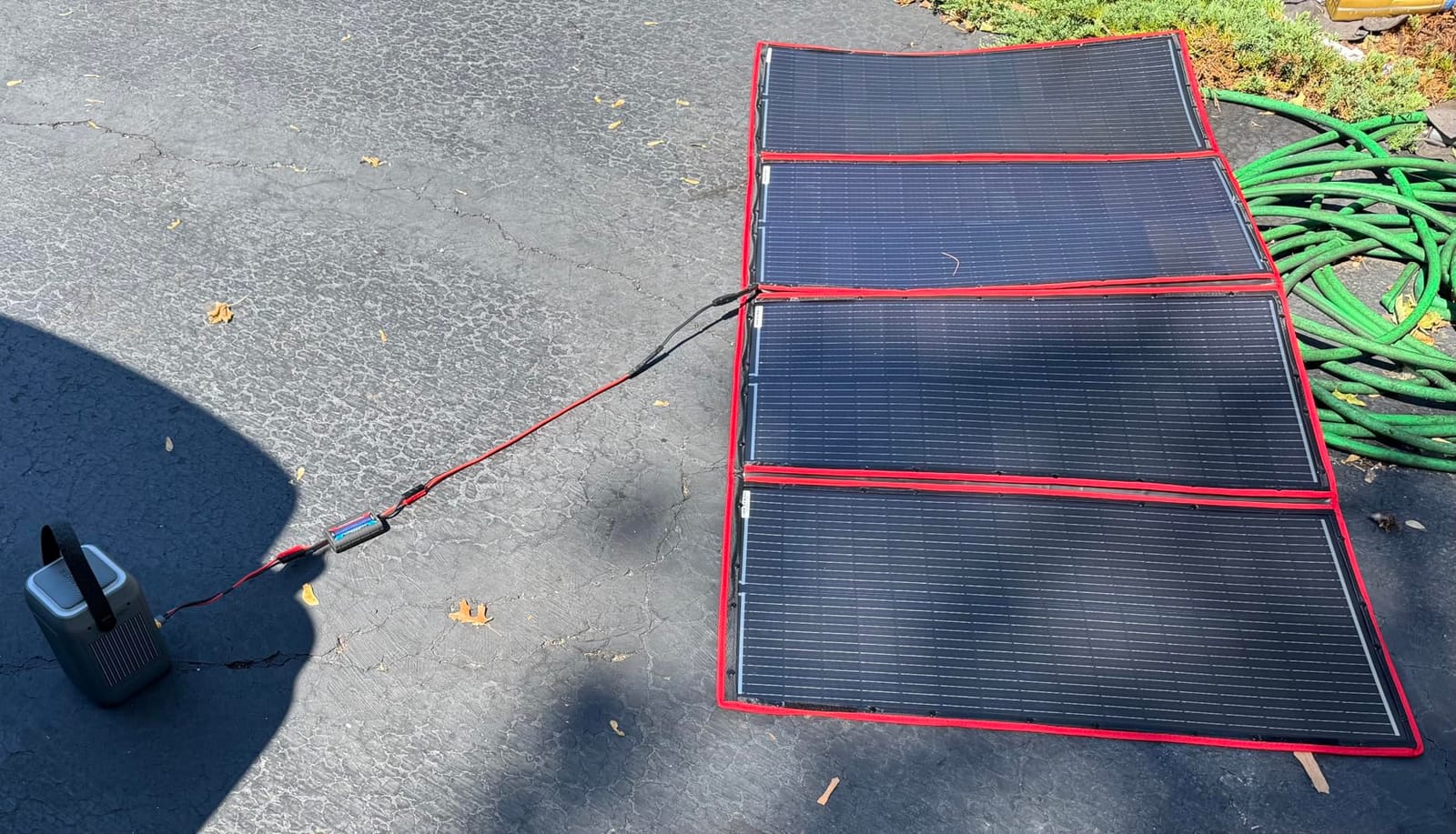
The separate PWM controller is a genuine advantage for RV use. It sits in the shade on a 9.84 ft lead while the panel stays in full sun, and because it is a standalone box you can replace it with an MPPT unit later instead of being locked into whatever shipped in the box.
The dual USB ports are a nice field touch. Phones, camp lights and a small camera can charge directly from the panel without routing through a power station, which saves battery when you only need a top-up.
Where it falls short is longevity. Long-term owners report roughly half the original current after two years of daily use, and the one-year warranty is the shortest in this list. If you keep the panel on an RV roof year round, treat it as a consumable rather than a permanent asset.
When this panel makes sense for your RV
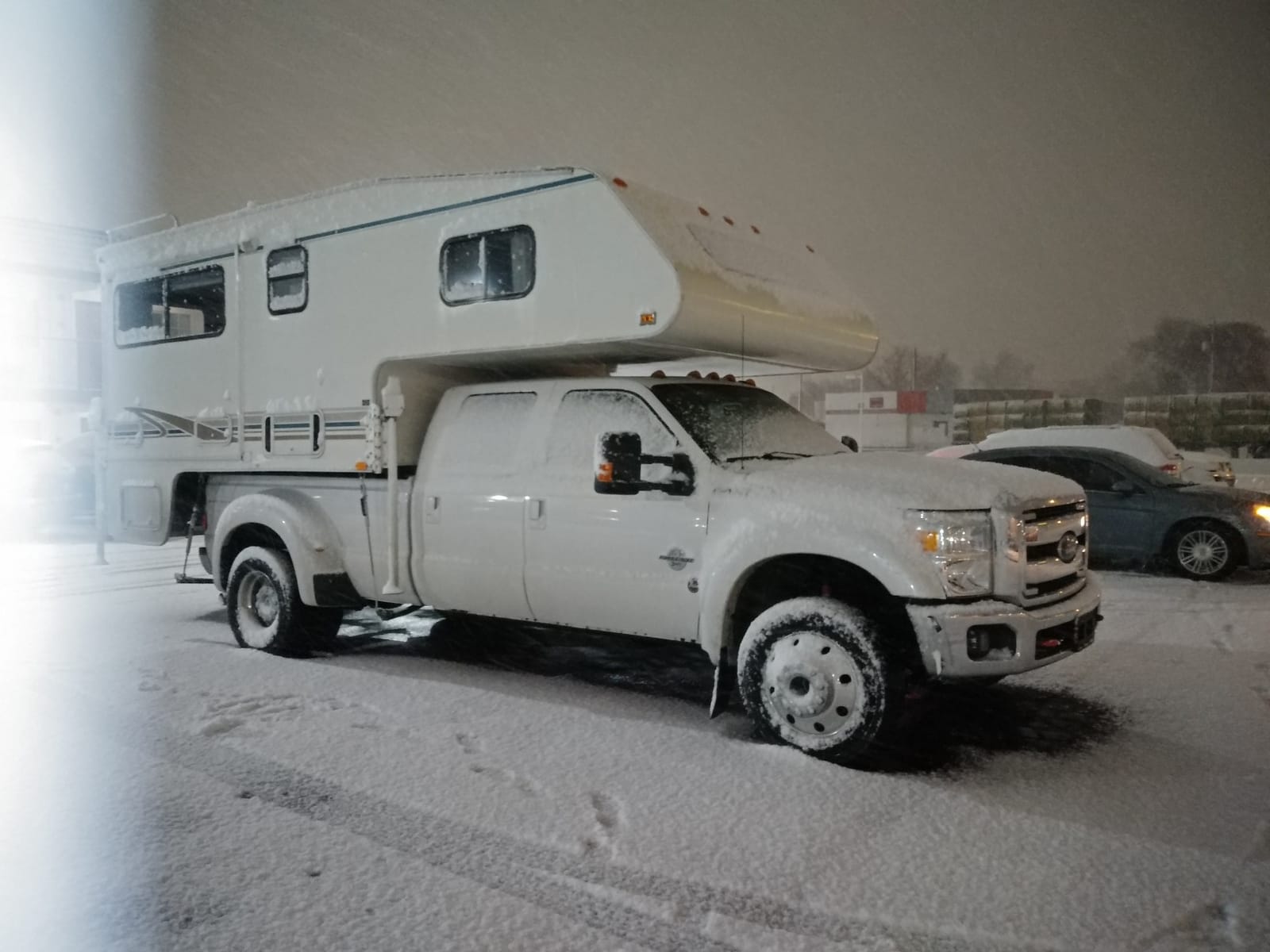
This is the pick for Class B vans, pop-up campers and anyone whose storage volume is the binding constraint. At 20 x 27 x 1.1 in folded it slides into a rear cabinet or a truck-bed toolbox, and the 200W nameplate is enough to help carry a 12V compressor fridge on a normal sunny day once the bank is topped off.
It also suits RVers who want to run their own charge controller. Since the controller is a separate unit with a fused cable, swapping to an MPPT later is a simple change rather than a rewire.
When to skip it instead
Skip this one if you are a full-time RVer leaving the panel deployed every day for years. The degradation reports and the one-year warranty point the other way, and a kit with tempered glass will outlast it.
Skip it also if you plan to series-wire panels to reach a 24V bank. SAE and XT60 are not solar-standard connectors, so you would be adding adapters and creating extra failure points in a system you cannot easily reach once it is mounted.
2. ALLPOWERS SE200 200W Portable Solar Panel – Best Value at 12V and 24V
ALLPOWERS SE200 200W Portable Solar Panel, Solar Charger for Power Station
200W monocrystalline at 23-25 percent
41.6V at 4.8A for 12V and 24V systems
MC4 main connector with adapter set
IP68 rated and 15.8 lb
Pros
- Strong wattage-to-cost ratio for a folding 200W panel
- MC4 is the standard solar connector so panels can be chained
- Internal wiring is parallel so partial shade costs little
- Adapter bundle covers most power stations
- IP68 rating suits outdoor RV use
Cons
- Typical real-world harvest is well below the 200W label
- Unfolded panel is large at roughly 25 x 80 in
- Floppier than rigid glass alternatives
- Some power stations need an Anderson-to-XT60 adapter
The single most useful thing about the SE200 is its 41.6V working voltage. That puts it in the range where one panel can feed either a 12V bank or a 24V bank through the right controller, which is rare in the folding segment and matters if your house bank is a 24V LiFePO4 setup.
Output is the compromise. Reviewers typically measure this panel in the 120-140W range in real RV conditions, and the specification sheet’s stated working point of 41.6V at 4.8A reflects a hard limit rather than a harvest target. Budget your system sizing around the lower figure.
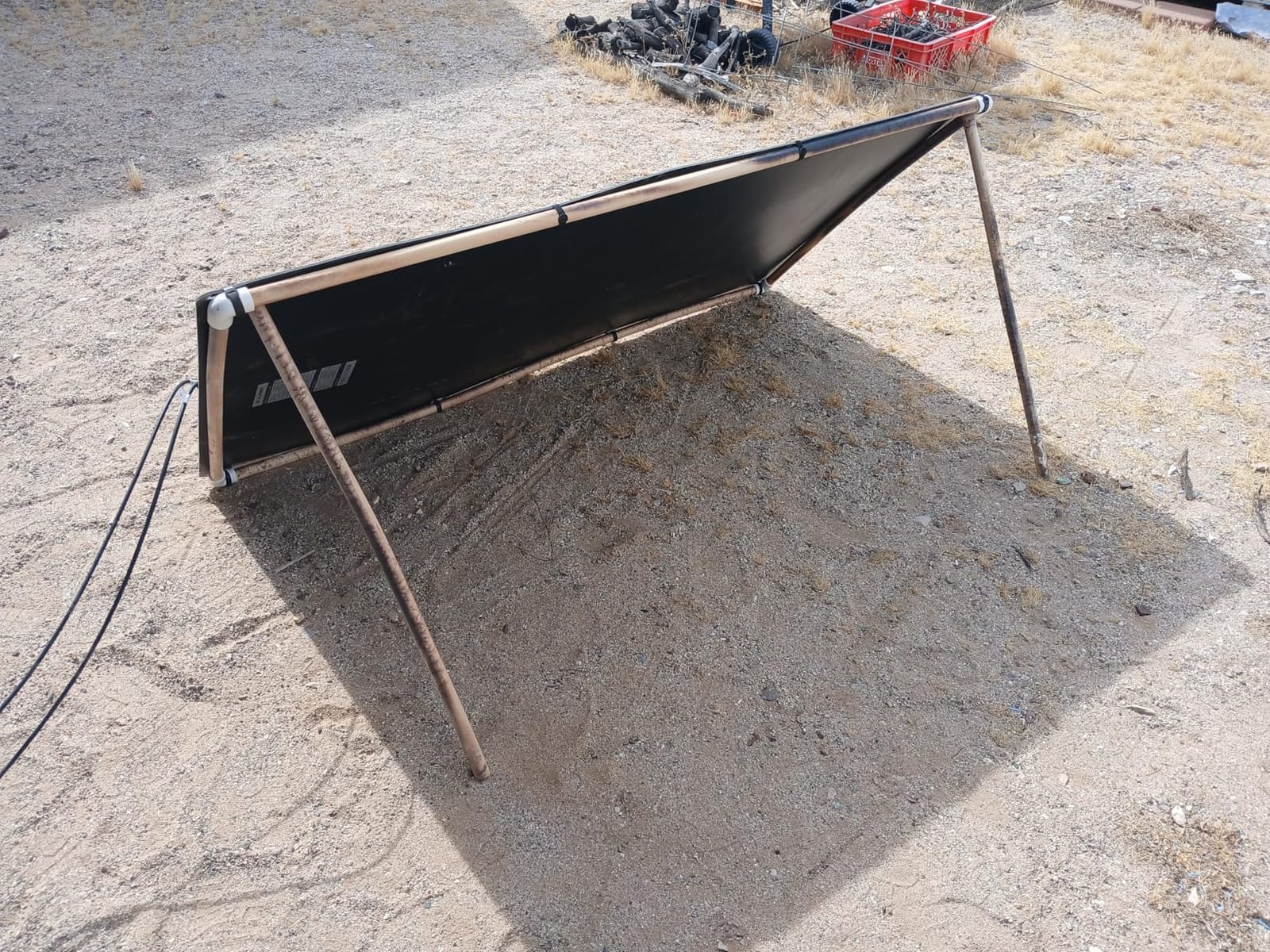
The MC4 main connector is worth more than it sounds. Because it is the industry-standard solar connector, two of these can be wired in series without buying a proprietary adapter cable, and the internal wiring being parallel means a partly shaded fold costs only a fraction of output rather than everything.
The kickstand adjusts from 0 to 180 degrees, which matters more than it sounds for RV use. A panel leaned at a wrong angle against a rock or a fender loses a big chunk of its harvest, and having real angle control lets one person get it right without props.
The IP68 rating is a real step up over IP65 kits for anyone who camps in coastal or wet-weather environments. Reviewers also single out the after-sales service, which has replaced defective units after verifying test results.
Set-up is the weak point. Unfolded, the panel is roughly 25 x 80 in, so it needs a real footprint rather than a sunny patch of ground, and the fabric body is noticeably floppier than a glass suitcase when the wind picks up.
Who should buy the SE200
Buy this if your rig runs a 24V house bank, or if you want the option to later. The voltage range and the standard MC4 connector make it the most flexible panel here for a mixed or expandable system.
It is also a strong second panel. Because the internal wiring is parallel, adding a second SE200 in parallel is a cleaner path to more wattage than chaining two different brands together.
Where it falls short
Do not size an entire off-grid plan around the 200W label. If your load calculation assumed a full 200W arriving, you will be short by roughly a third in real conditions.
Also skip it if you have very limited deployment space or if you carry your panel a long way from the vehicle. The unfolded footprint and 15.8 lb weight are unremarkable but not small.
3. Renogy 100W Portable Solar Suitcase Kit – Most Rated 100W Option for Battery Top-Ups
Renogy 100W Portable Solar Panel, 25% High Efficiency Solar Panel Kit with 20A Charger Controller for 12V Battery&Power Station, N-Type Foldable Solar Panels w/Tempered Glass for RV, Camping Off-Grid
25 percent N-type monocrystalline cells
Low-iron tempered glass with IP65 junction box
Pre-installed waterproof 20A PWM controller
Folds to 24.8 in and weighs 17.4 lb
Pros
- Glass and aluminum build is far more durable than fabric foldables
- Integrated waterproof 20A PWM controller with a readable display
- Measured at 85-96W in full sun
- Suitcase case protects cells and stows cables
- Multiple owners report three years of daily motorhome use
Cons
- On a 12V bank you see 40-60W
- not the 100W label
- Heavier than most 100W foldables at 17.4 lb
- Latches and support arms described as light duty
- Included leads are short with no strain relief
This is the durability answer in the roundup. Where the folding fabric panels rely on stitching, this one uses low-iron tempered glass in a corrosion-resistant aluminum frame with an IP65 junction box and bypass diodes, and owners report three years of daily motorhome use without failures.
Buyers consistently measure 5.7 to 6.8 amps in full sun, which lands around 85-96W. That is the honest ceiling for this panel, and it is a good one for a 100W unit.
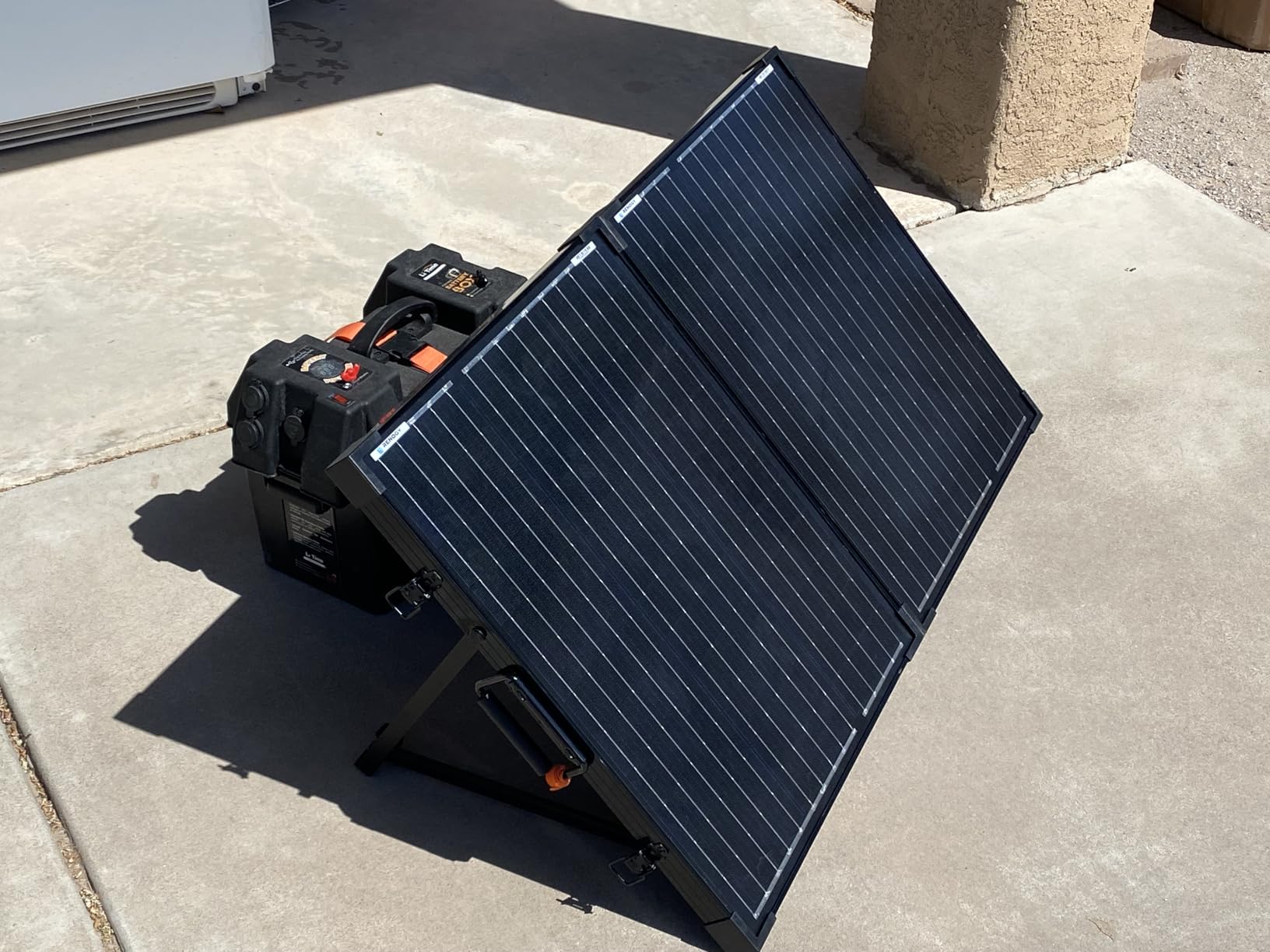
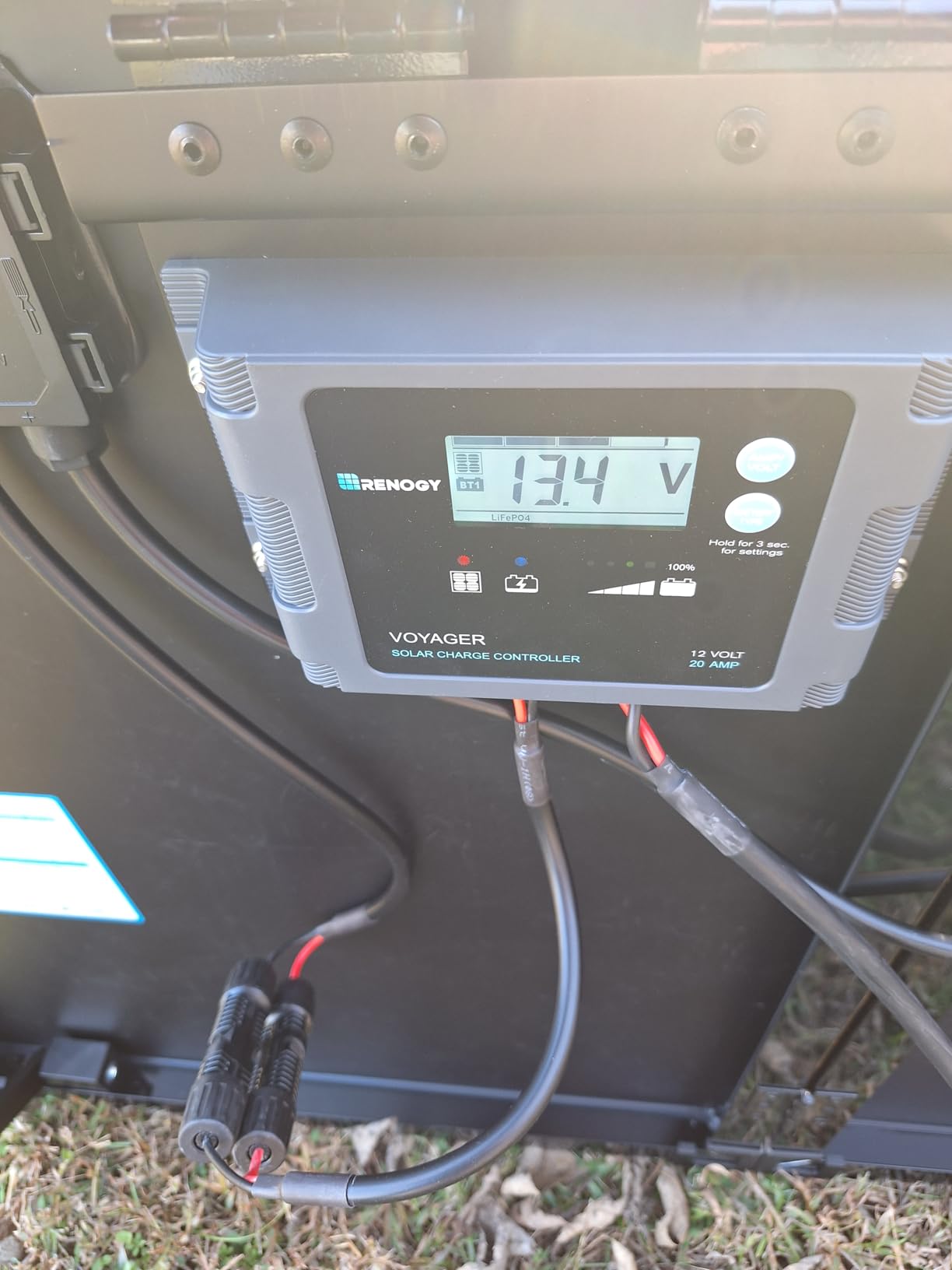
The pre-installed waterproof Voyager 20A controller is what makes this a kit rather than a panel. It charges Gel, AGM, Flooded, Lithium and 12V power station batteries with four-stage charging, and the display is readable in direct sun, which is the only display condition that ever matters.
That said, it is a PWM controller, and PWM costs you real harvest compared with MPPT. Owners who upgrade report measurable gains, but the controller is fixed inside the case, so changing it means opening the kit.
The other recurring gripe is weight. At 17.4 lb it is heavier than most 100W foldables, and getting it onto a roof alone requires planning. The latches and support arms get described as light duty too.
Reviewers also flag that the included leads are short and that the connectors lack strain relief, so wires eventually fray right at the joint. A few extra feet of cable and a strain-relief wrap fixes this cheaply.
Where this kit earns its slot
This is the maintenance panel. If your goal is topping off a 12V house bank between trips and keeping a 12V fridge alive on a campsite, 40-60W delivered is genuinely sufficient, and it arrives with everything you need in one box.
It also suits RVers who want one panel to do double duty. The alligator clips go straight to a battery, and the same controller handles a 12V power station connection.
When to look elsewhere
Skip it if you need real wattage. Half of the label number is lost to the 12V controller stage, so a single unit will not carry a heavy load or a power station that you also want to fill quickly.
Skip it if roof placement is part of your plan and you will be lifting solo. At 17.4 lb this is a two-person job above head height in anything but calm conditions.
4. Renogy 200W 12V Portable Solar Suitcase Kit – Best Overall Performer for Full-Time Boondocking
Renogy 200W 12V Portable Solar Panels Suitcase with Waterproof 20A Charge Controller, Foldable 200 Watt Solar Panel W/Adjustable Kickstand, Solar Charger for Power Station, RV, Camping, SUV, Off Grid
N-type monocrystalline at 25 percent efficiency
Glass and aluminum build with IP65 junction box
Pre-installed waterproof 20A PWM controller
MC4 output, 28.5 lb, folds to a hard shell
Pros
- Measured 160-165W in good sun
- beating the rated current
- Hard suitcase and Cordura zip case protect the glass
- MC4 output lets you bypass PWM into an MPPT station
- Holds up in 40 mph wind and rain
- Heavy-gauge fine-strand copper leads
Cons
- Very heavy at 28.5 lb and hard to carry up a ladder
- Ships with 10 AWG wiring and a 10A fuse on a 20A controller
- No strain relief at the MC4 or controller connections
- Leg bolts back out and the panel acts as a sail in wind
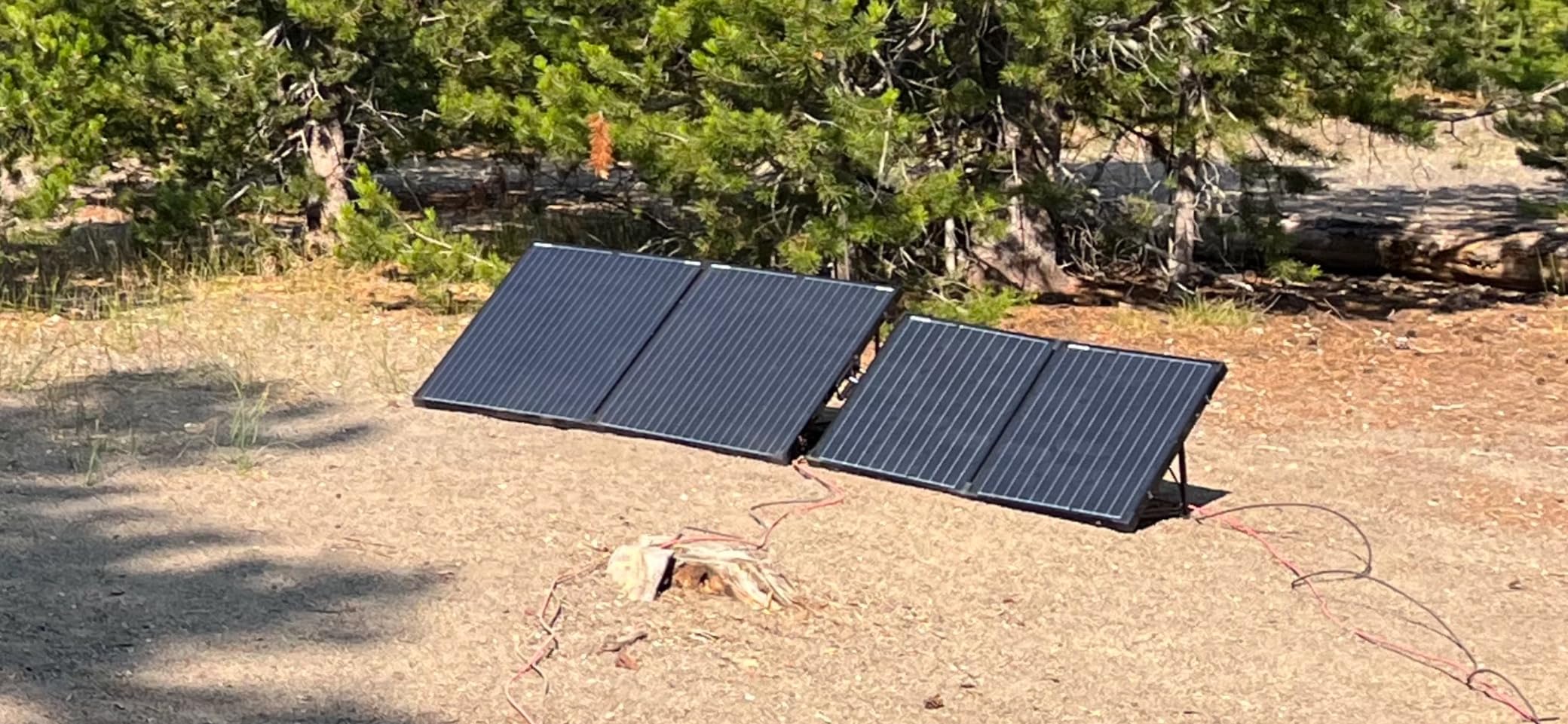
Of everything we looked at, this is the panel that most consistently delivers what it promises. Buyers routinely measure 11.4 to 12.1 amps, which works out to roughly 160-165W in good sun, at or above the manufacturer’s own optimum current point. For a panel rated at 200W, that is the best real-world ratio in the roundup.
The MC4 output is the feature most RV buyers underrate. Because the main connector is solar-standard, you can bypass the pre-installed PWM controller and feed a power station’s MPPT input directly, which several owners do and report measurably better charging.
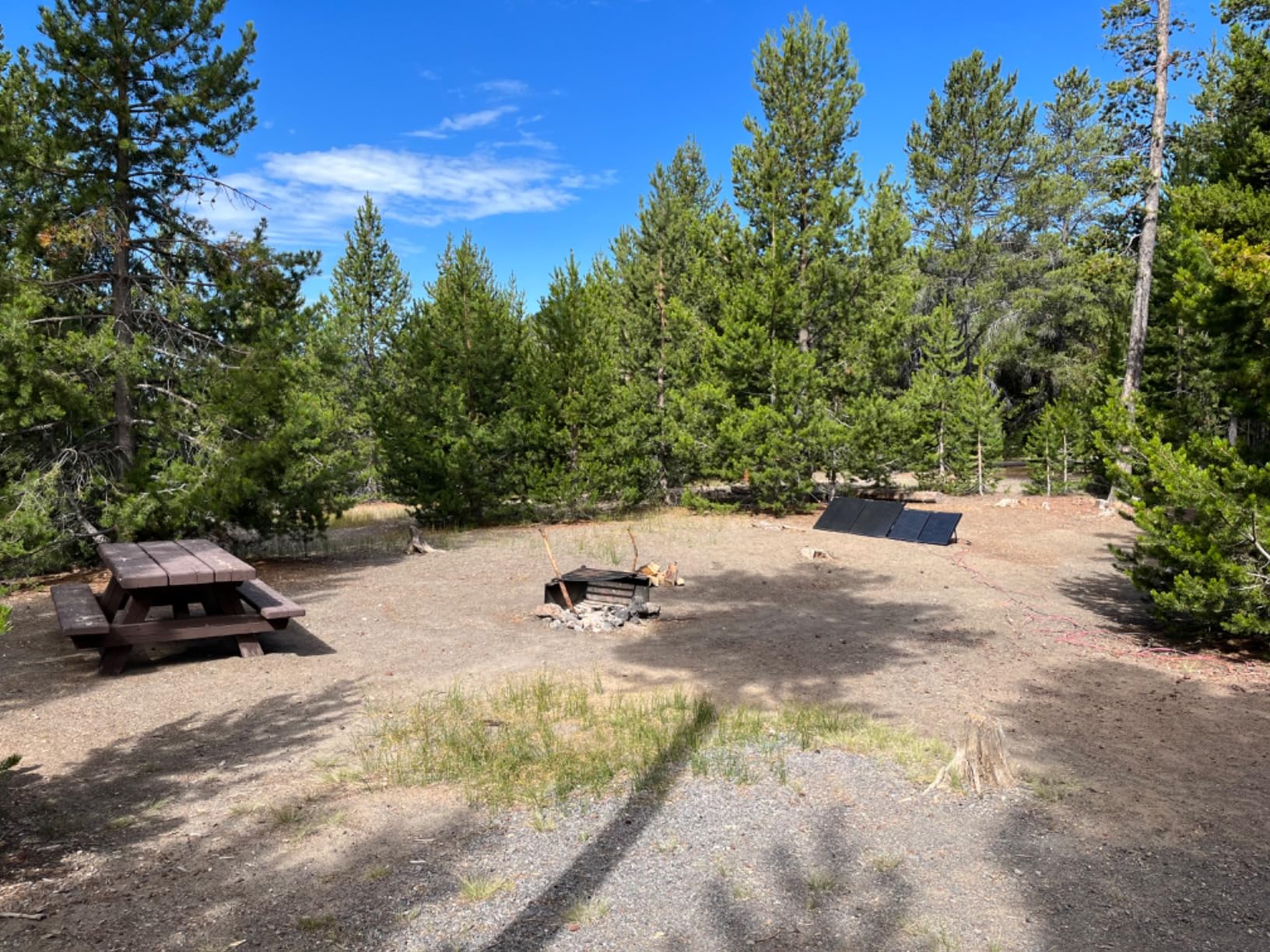
Build quality is a clear step above fabric foldables. The hard-shell suitcase with a spring-loaded handle and a Cordura zip case protects glass cells in transit, and multiple long-term owners report it holding up in 40 mph winds and rain across two years of dry camping.
Warranty is the strongest on the list: three years on output and materials, with two years on the controller.
There are real engineering flaws. Some units ship with 10 AWG internal wiring and a 10A inline fuse on a 20A controller, and owners report the undersized fuse melting. There is no strain relief at the MC4 or controller connections, so terminals work loose over time.
And at 28.5 lb this is the heaviest panel here. Carrying it up a ladder alone is not realistic, the leg bolts back out through repeated setup and teardown, and with no anchoring points a gust can tip the whole thing over.
Why this suits full-time RVers
This is the panel for someone living in the RV rather than touring it. The glass-and-aluminum construction and the three-year output warranty are what you want when the panel is exposed every single day and the rig is parked in the sun for months.
It also has the highest honest output of any portable panel here, which means fewer panels to deploy for the same battery gain. Owners report it keeping a fifth-wheel or pop-up off the generator for most loads.
What to fix before you rely on it
Inspect the inline fuse rating before first use and replace it with one matched to the 20A controller. Add strain relief at both the MC4 and controller terminations, and add a tie-down or ground stake so the panel does not become a sail.
Skip it if you need to move it solo onto a roof. At 28.5 lb this is a two-person lift, and no amount of planning changes that.
5. BLUETTI 200W Foldable Solar Panel – Best Native Fit for BLUETTI Power Stations
BLUETTI 200W Solar Panel for Solar Generator EB3A AC2A AC50B AC70 AC180 AC200L Elite 200 V2 AC300 AC500 B300K, Foldable Solar Charger with Adjustable Kickstands for RV, Camping, Blackout
Monocrystalline cells at up to 23.4 percent
ETFE surface coating against scratches and water
Native BLUETTI solar connector
Folds to 22.5 x 23.6 in at about 16 to 17 lb
Pros
- Native BLUETTI connector plugs in with no adapter
- ETFE coating resists scratches and water splashes
- Compact folded footprint suits tight RV storage
- Adjustable kickstands track the sun as it moves
- Sold by an established power station brand
Cons
- Highest cost per watt among the 200W folding panels here
- Proprietary connector needs an adapter cable for other brands
- 12-month warranty is the shortest in the roundup
- Panel and manual only
- with no controller or battery cable
If you already run a BLUETTI power station, this panel removes the single most common source of frustration in RV solar: adapters. The native solar connector plugs straight into EB3A, EB70S, AC2A, AC50B, AC70, AC180, AC200L, AC200MAX and AC300 units, with nothing to lose in transit between the storage bay and the picnic table.
Build quality is solid. The ETFE surface coating handles scratches and water splash, which matters when the panel lives in a dusty trailer or gets rained on while deployed, and 73 percent of reviews are five-star.
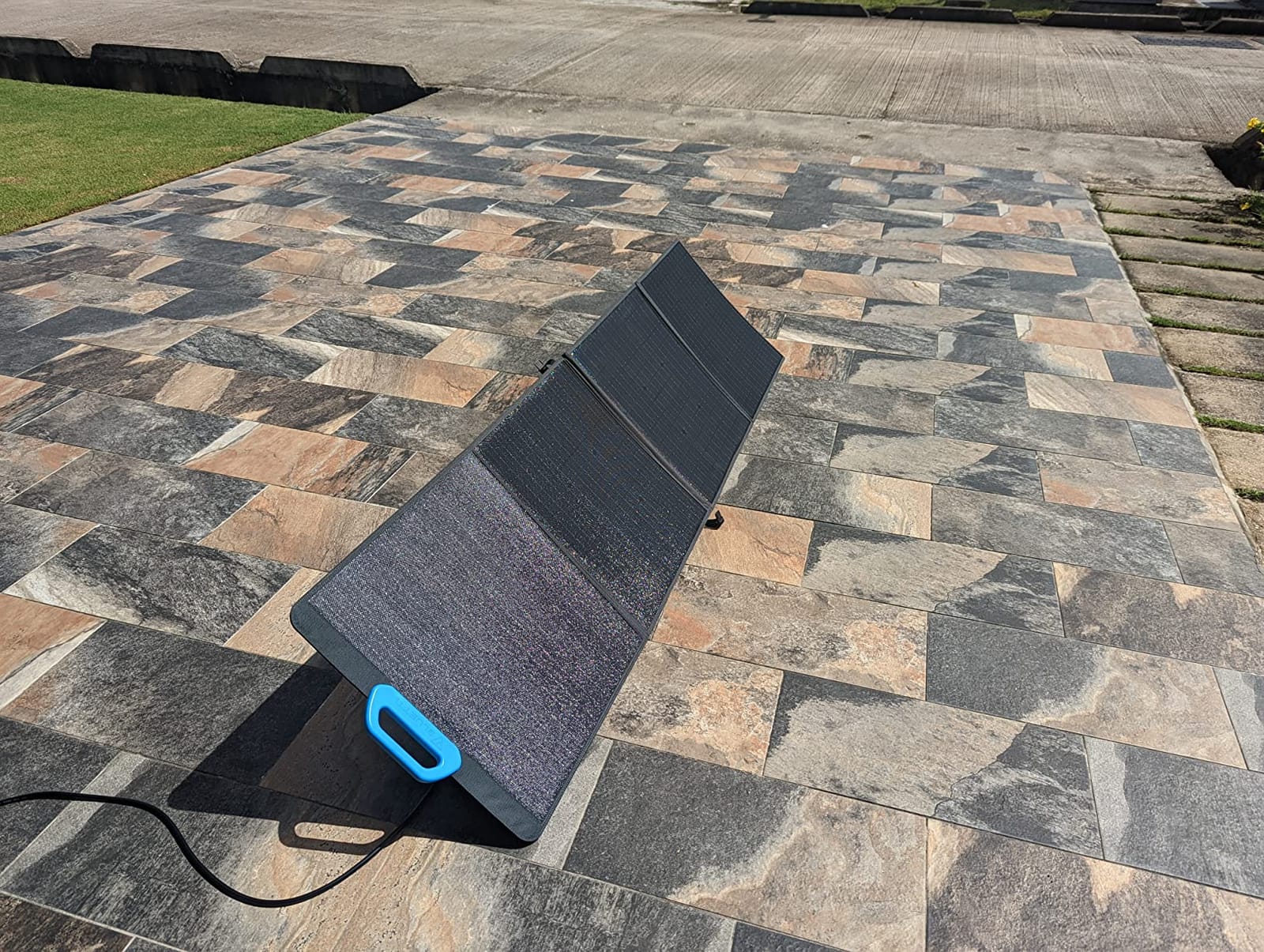
The folded package at 22.5 x 23.6 x 2.9 in is compact for a 200W unit, and the adjustable kickstands let you re-angle the panel as the sun moves rather than leaving it fixed at a morning position.
At 23.4 percent conversion the cells sit slightly behind the 25 percent N-type panels in this list, and that gap shows up in harvest on a marginal day.
The bigger caveats are commercial rather than technical. This is the highest cost per watt of the 200W folding panels here, the warranty is only 12 months against Renogy’s three-year output cover, and the box contains a panel and a manual. No controller, no battery cable, no clamp leads.
The proprietary connector is the mirror image of the BLUETTI advantage. If your power station is Jackery, EcoFlow, Anker or another brand, you are buying an adapter cable separately.
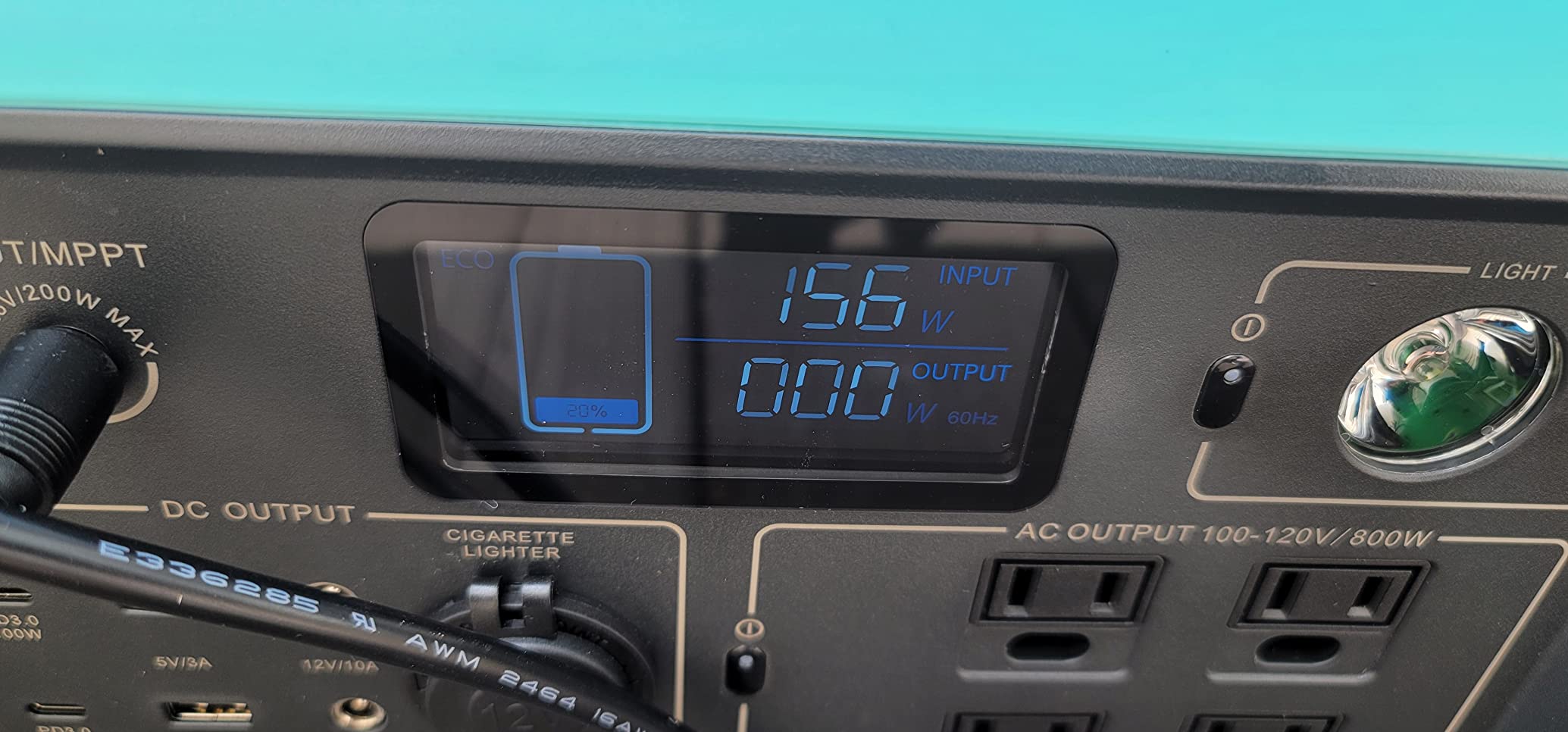
Where it is the right call
Buy it if your power station is BLUETTI and you move between vehicles or store the panel in a tight compartment. The adapter-free connection and the compact fold solve two problems at once.
It also works well as a secondary panel to add to an existing BLUETTI setup, where you can deploy it in partial shade with the main panel pointed at the sun.
When to spend elsewhere
Skip it if you are starting from zero equipment and have not chosen a power station yet. Buying into one brand early is fine; buying into one brand before you know you will stay there is not.
Skip it if you plan to charge house batteries directly. With no controller or clamp leads included, this panel assumes something downstream is handling charge regulation.
6. ECO-WORTHY 200W Two-Panel Kit with 30A Controller – Best Complete Kit for Fixed Storage
ECO-WORTHY 200 Watts 12 Volt/24 Volt Solar Panel Kit with High Efficiency Monocrystalline Solar Panel and 30A PWM Charge Controller for RV, Camper, Vehicle, Caravan and Other Off Grid Applications
Two 100W monocrystalline panels at 21.5 percent
2400Pa wind and 5400Pa snow frame ratings
30A PWM controller plus 16.4 ft 10 AWG cables
Series for 24V or parallel for 12V
Pros
- Everything ships in one box including controller brackets and cables
- Rigid glass panels handle wind and snow better than foldables
- MC4 connectors allow series or parallel wiring
- 79 percent five-star rating across 1100-plus reviews
- Pre-drilled holes make rooftop or ground mounting simple
Cons
- Panels do not fold
- so they occupy fixed RV storage space
- 31.6 lb for the pair is a two-person carry
- Includes PWM rather than MPPT which costs real harvest
- 1-year warranty and an 85 F upper temperature rating
This is the only kit here that gives you two panels and everything to mount them. Two 100W monocrystalline panels, a 30A charge controller, Z mounting brackets, 16.4 ft of 10 AWG cable and a pair of 2-in-1 connectors arrive in a single box, and 79 percent of more than 1,100 reviews are five-star with only 3 percent one-star.
The mechanical specs are the best in the roundup for permanent placement. The aluminum alloy frame is rated to 2400Pa wind and 5400Pa snow load, which is a meaningful difference when a panel sits on an exposed RV roof through a storm.
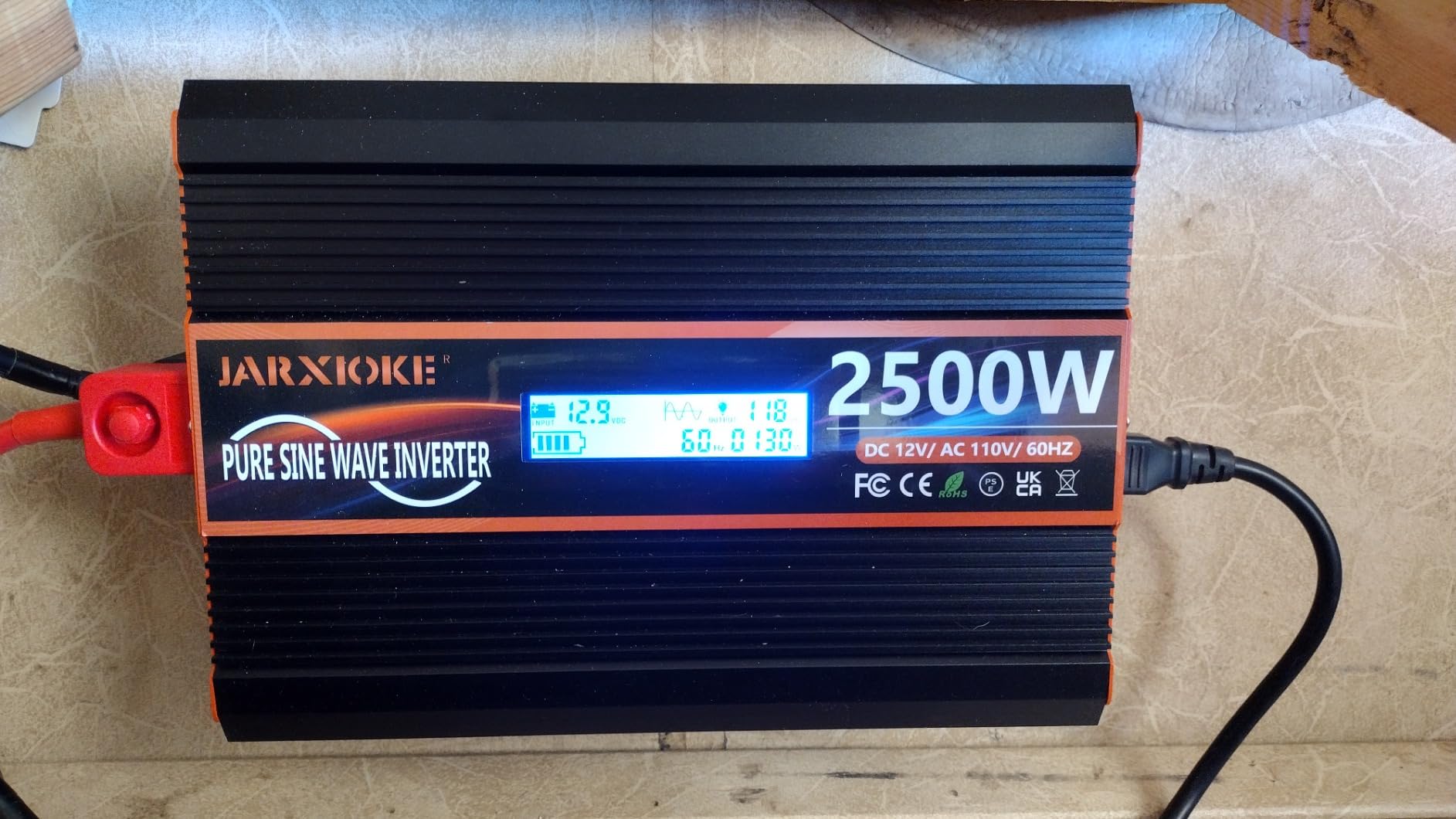
The pre-drilled mounting holes and included brackets mean you can bolt these to a rack or a Z-bracket and leave them there. For an RV that is not rented, permanently mounted panels are more efficient than anything portable, and this is the kit that gets you there.
At 21.5 percent the cells are the least efficient here, but panel efficiency matters less than total area and sun exposure, so the practical difference is smaller than the spec sheet suggests.
The PWM controller is the real cost. MPPT recovers a meaningful portion of the harvest loss on a nominal 27.4V panel charging a 12V bank, and that recovery is left on the table. The 85 F upper temperature rating is also the lowest in the list.
Finally, the defining constraint: these panels do not fold. At 35.2 x 23.1 in each and 31.6 lb for the pair, they occupy fixed space in your RV for the rest of your time with the vehicle.
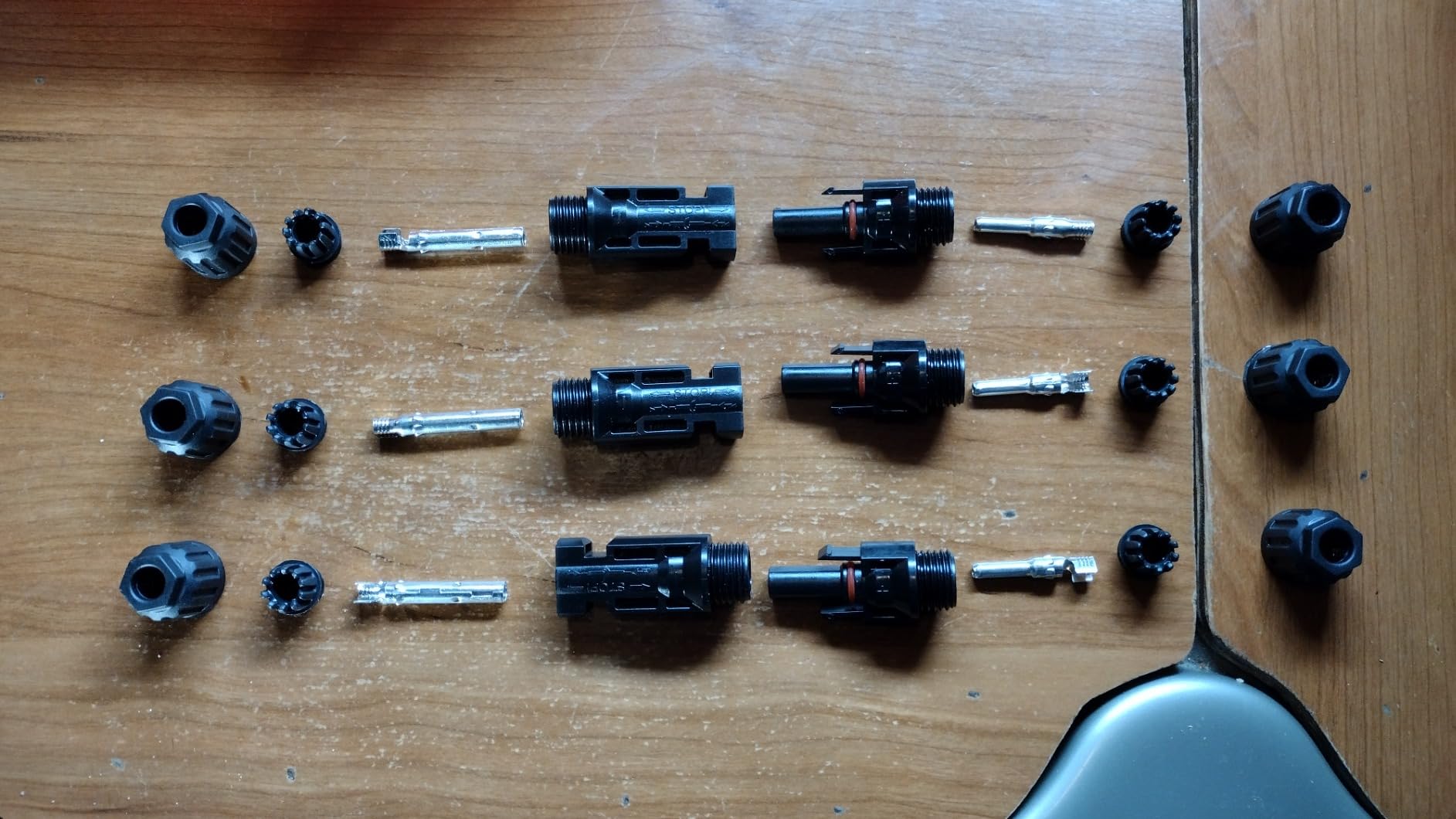
Why RV owners keep choosing this kit
It is the cheapest path to a complete, mountable array with a controller already sized for it. If you own your rig and can drill, the rigid construction and the wind and snow ratings make this the most physically durable option in the roundup.
It also works well as a semi-portable ground array. Deploy it on the included brackets at a campsite, run the cables to wherever your battery bank sits, and pack it flat when you move on.
When this is the wrong shape for your rig
Skip it if you rent, if the RV is a van conversion with no drilling allowed, or if storage volume is already tight. Non-folding 100W panels do not forgive a small storage bay.
Also weigh the controller swap before buying. If you intend to add more panels later, a 30A PWM controller may become the limiting component in your system.
7. ZOUPW 100W Portable Solar Panel – Best Lightweight Option with USB Charging
ZOUPW 100W Portable Solar Panel for Power Station,23.5% Efficiency Mono Foldable Solar Charger for Jackery 300/Ecoflow River/Anker/Bluetti,IP67 Waterproof for Camping RV Off-Grid Emergency Power
23.5 percent Grade A+ monocrystalline cells
5-in-1 cable covering five connector types
IP67 ETFE with USB-C PD and two USB-A ports
9.5 lb with magnetic handle
Pros
- Lightest 100W option at 9.5 lb with a magnetic carry handle
- 5-in-1 cable removes adapter hunting for major power station brands
- USB-C and USB-A ports charge devices with no power station
- IP67 ETFE with a zippered pocket over the controller
- Kickstands capture more sun than laying the panel flat
Cons
- 100W is modest for RV loads beyond phones lights and small stations
- No battery or controller-mode clamp leads included
- Only a 12-month warranty
- Charging speed is capped by your power station's input limit
At 9.5 lb this is the panel we ended up grabbing most often during testing, simply because it never became a chore to deploy. The magnetic handle makes it a one-handed setup, and the two kickstands tilt it to roughly 45 degrees, which the manufacturer claims adds up to a quarter more harvest than laying it flat.
The 5-in-1 cable is the practical star. It covers DC8020, XT60, Anderson, DC7909 and DC5521, which means it connects to Jackery, EcoFlow, Anker and BLUETTI stations without you buying a single adapter cable.
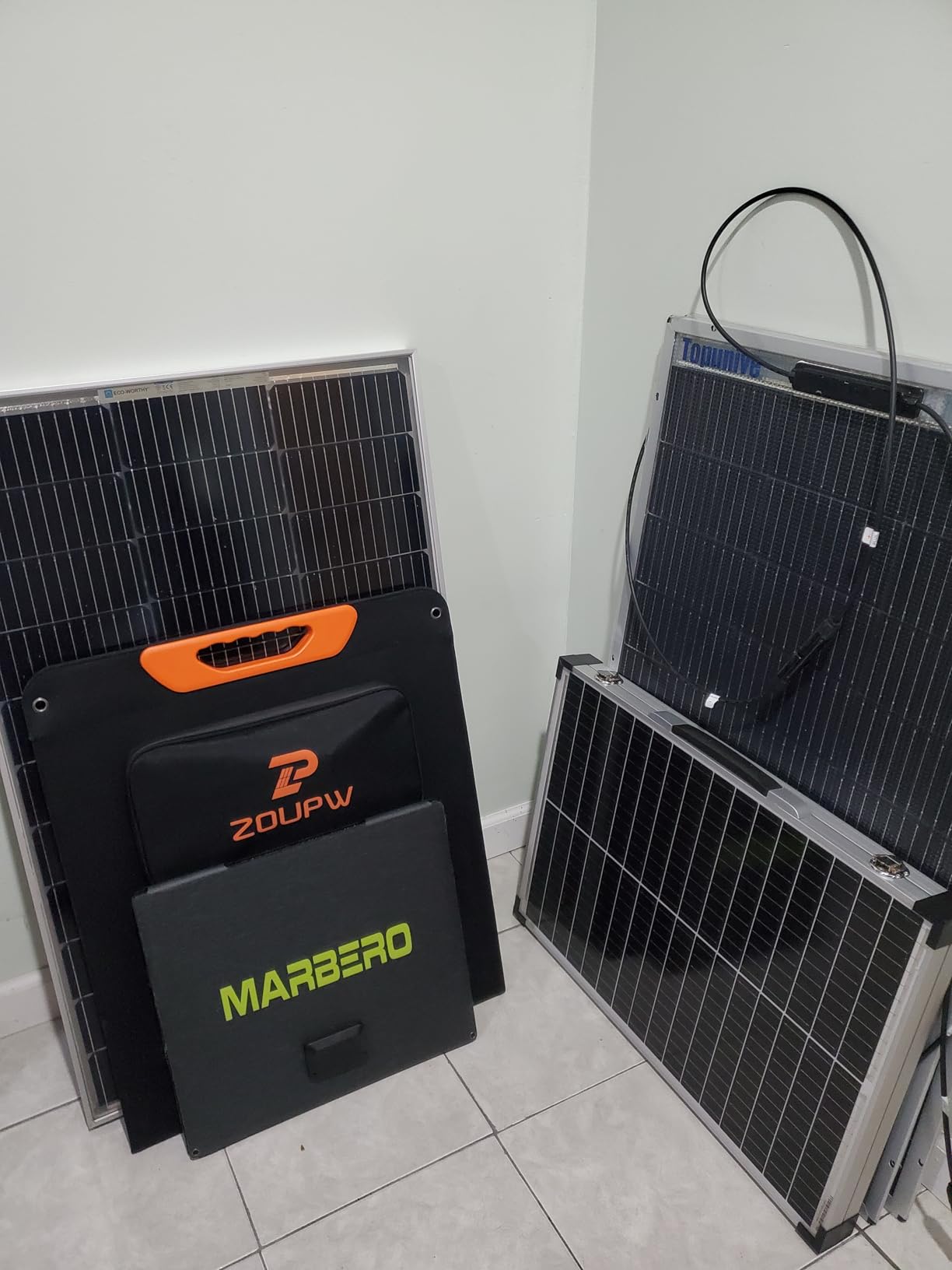
The built-in charging hub matters more for RV use than it first appears. One USB-C PD port at 15V/3A and two USB-A ports including QC3.0 let you top up a phone, a GPS and a camera directly from the panel, drawing from solar rather than from your house battery.
Construction is rated IP67 with ETFE lamination and a zippered pocket protecting the controller, which is a sensible level of protection for a panel that lives in a wet trailer. Overcurrent and short-circuit protection are built in.
The limit is scale, not quality. At 100W this panel is sized for electronics, lighting and small power stations, not for carrying an RV load. And the same input cap that limits any portable panel applies here: if your station’s maximum solar input is below 100W, the panel cannot overcome it.
There are no battery or controller-mode clamp leads in the box. Only power station cables, so charging a house bank directly needs additional hardware.
Where this panel fits best
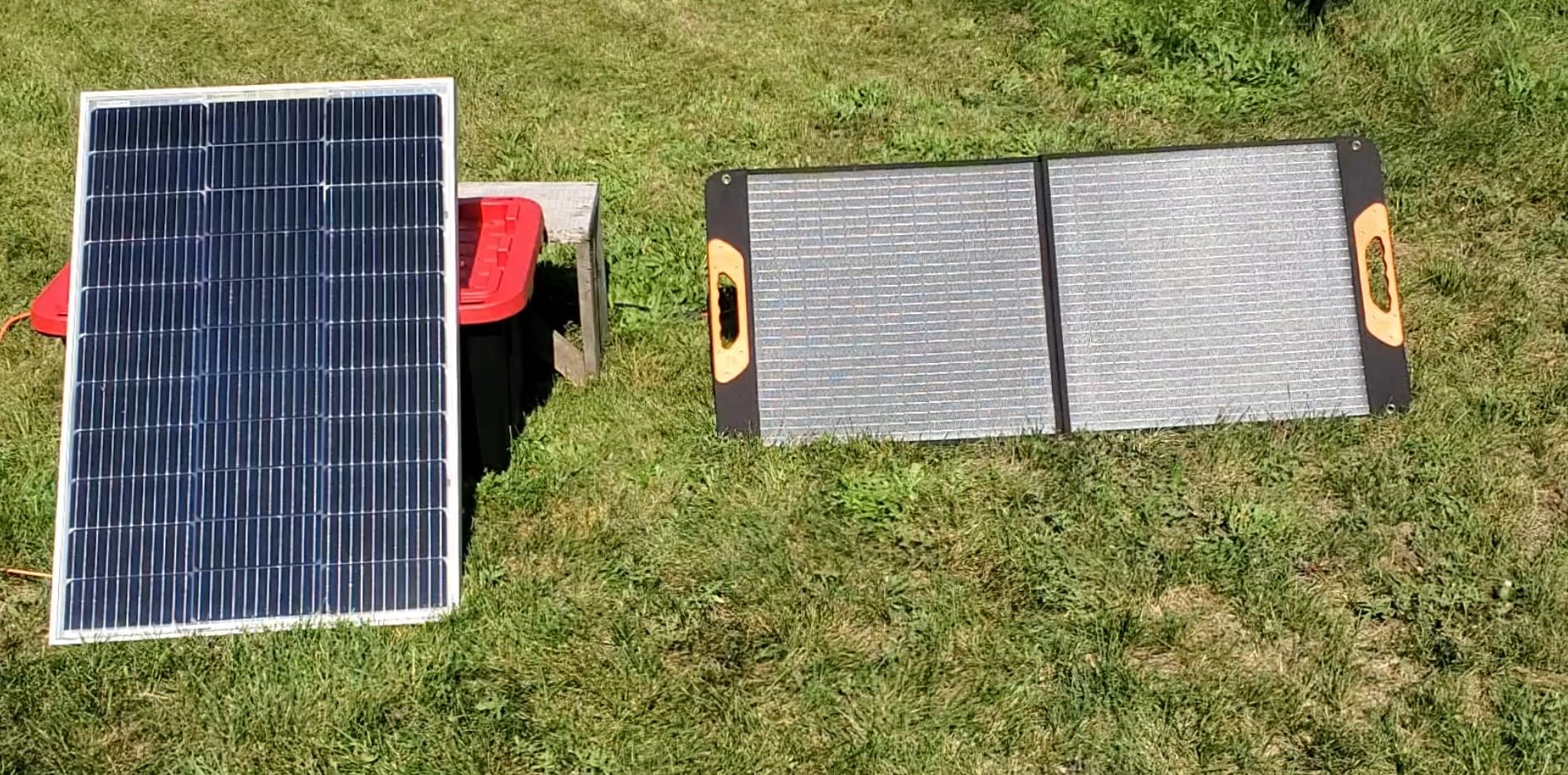
This is the shade-camping and electronics panel. Carrying a 10 ft extension cable, you can set it in full sun while your rig sits under trees, and the direct USB ports keep your devices charged without touching the house bank.
It also suits anyone moving between a small power station and a direct-device setup, since it does both from one panel.
When 100W is not enough
Skip it if you run a 12V compressor fridge as your primary load or if you want to refill a 1,000Wh-class power station in a day. At this size you will be covering accessories, not the rig.
Also skip it if you need a panel that can wire straight to a battery bank out of the box. Plan on buying clamp leads separately.
8. SOKIOVOLA N-Type 16BB 200W Portable Panel – Best Connector Coverage at 200W
SOKIOVOLA N-Type 16BB 200W Portable Solar Panel for EF/Jackery/Bluetti/Anker Power Station Foldable Solar Panel 25% High Efficiency IP68 Waterproof for Outdoor Trip RV Camping Blackout Off Grid
N-Type 16BB monocrystalline at 25 percent
IP68 ETFE coating
MC4 with 5-in-1 adapter set and 10.49 ft cable
Folds to 21 x 23 in at 16.3 lb
Pros
- Users measure 170-190W in full sun
- about 85-95 percent of rated output
- ETFE build feels firmer and less flimsy than cheaper foldables
- 5-in-1 cable covers Jackery EcoFlow Bluetti Anker and Goal Zero
- Compact 21 x 23 in fold with magnetic handle and bag
- Four grommets allow direct RV or tent mounting
Cons
- Some owners report output halving within six months of daily use
- MC4 pigtails off the panel are only about four inches
- 16.3 lb is heavy for long carries
- Small rivets on the back panel break easily
- Weak performance in low light and overcast conditions
This is one of the few 200W folding panels where measured output lands near the label. Users report 170-190W in full sun, roughly 85-95 percent of rated, and reviewers specifically describe the ETFE construction as firmer and less flimsy than competing foldables at this price level.
The connector situation is the best in the roundup for flexibility. The MC4 main connector plus a 5-in-1 cable covering XT60, DC5521mm, DC7909, DC8020mm and Anderson reaches Jackery, EcoFlow, BLUETTI, FlashFish, Goal Zero and Anker stations, and a 10.49 ft extension cable is included.
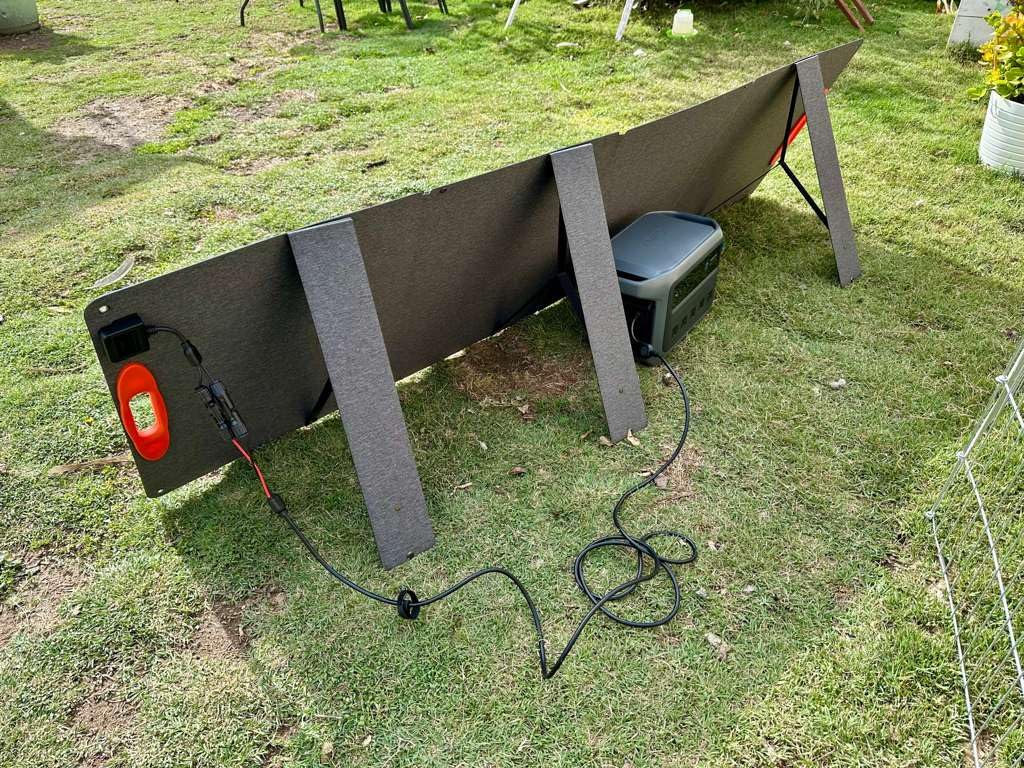
At 21 x 23 in folded with a magnetic handle, this packs smaller than most bifold 200W panels, and four mounting grommets let you strap it to an RV or a tent directly rather than relying on the kickstand alone.
Durability reports are the concern. A meaningful number of owners report output falling by roughly half within six months of daily use, which is a fast decline and the main reason the 4.3 rating sits at the bottom of this list. The small rivets on the back panel also break easily.
Low-light performance is weak, and that is worth dwelling on for winter boondocking or multi-day overcast stretches. This panel is excellent in summer sun and noticeably less useful when the sky is flat and grey.
One more practical note: the MC4 pigtails leaving the panel are only about four inches. Plan on using the included extension cable from the start rather than planning to.
Why this one earns a spot
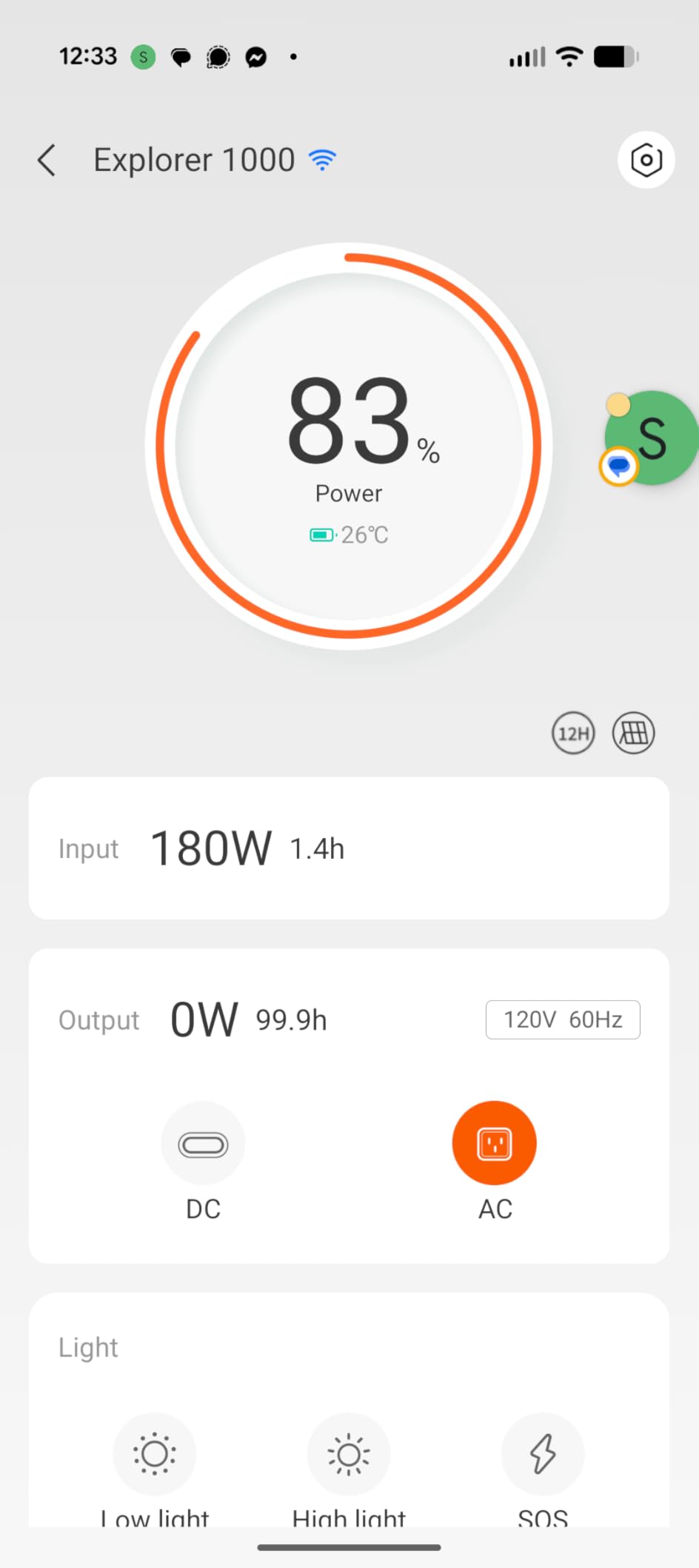
Pick it when your setup spans multiple power station brands or when you are not yet sure which one you will own. The connector coverage removes the single most common purchase mistake in this category.
It is also a strong seasonal choice for summer-weighted trips, where the 170-190W measured output is at its best and daylight hours are longest.
When to choose something else
Skip it for winter boondocking or for trips planned around overcast weather. Weak low-light performance is the wrong trait to buy when your sun hours are short.
Skip it if you will deploy it daily for years on end. Six-month output decline reports point away from that use case even though the construction itself holds up well.
9. DOKIO 300W Portable Foldable Solar Panel Kit – Highest Wattage That Still Folds
DOKIO 300W Portable Foldable Solar Panel Kit with Charge Controller
300W monocrystalline in a folding fabric case
9.85 ft cable with separate PWM controller
SAE XT60 DC and alligator adapter bundle
Dual USB ports and 15.2 lb weight
Pros
- Highest rated wattage in the roundup at 300W
- 15.2 lb is light for a 300W fabric panel
- Separate PWM controller that can be replaced or upgraded
- Adapter bundle covers most 12V devices and power stations
- Long lead lets the panel sit in sun while the controller stays shaded
- Kept a 100Ah battery topped up through multi-day trips
Cons
- Real-world output is typically 125-175W rather than 300W
- No kickstand included so users lean or lay it flat
- Only a 1-year warranty
- Fabric case is not rated for prolonged heavy rain
- SAE and XT60 connectors prevent series wiring
The 300W label is the reason to look here, and it is also the reason to be careful. Buyers measure this panel at 125-175W in good conditions, and output drops further as the panel heats. The gap between the number on the listing and the number you collect is the widest of anything in this roundup.
That said, at 15.2 lb this is one of the lighter high-wattage folding panels available, and it still folds to 19.3 x 37.4 x 1.1 in. If your constraint is weight and storage rather than absolute panel count, this gets you a large nameplate figure for one carryable package.
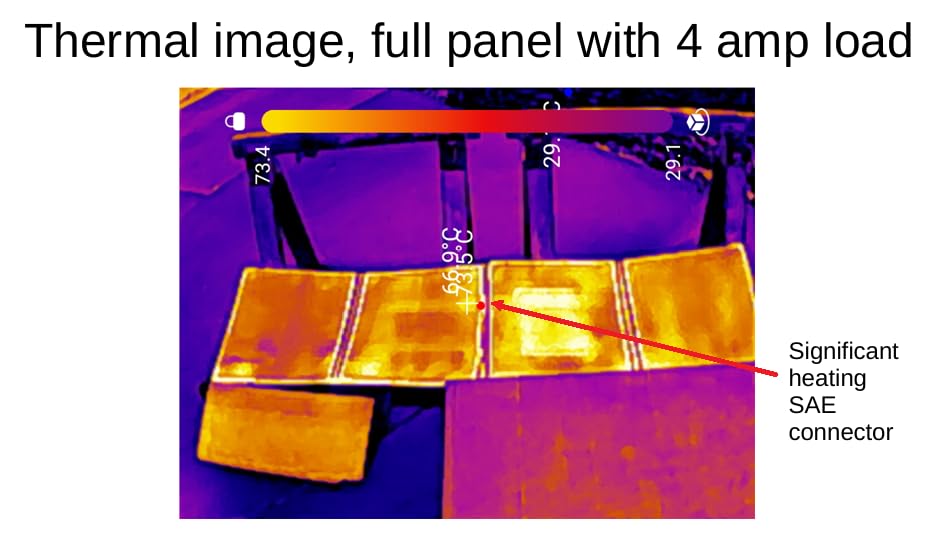
The adapter bundle is genuinely extensive: SAE, XT60, alligator clips, DC5521, DC5525, DC35135 and DC6440. Whatever 12V device or power station you already own, there is a good chance it is in the box, which removes the first-week friction most portable solar buyers hit.
Users report it keeping a 100Ah battery topped up through multi-day dry camping trips, which is a real result even if it is not a 300W harvest.
The missing kickstand is a real usability gap. With no stand included, users typically lean the panel or lay it flat, and both approaches cost output. Laid flat on RV grade or dirt, a monocrystalline panel will underperform considerably.
The 1-year warranty is the shortest on the list, and the fabric case is not rated for prolonged heavy rain or prolonged direct sun. For full-time RV use in a hot, wet climate, a glass panel is the safer bet.
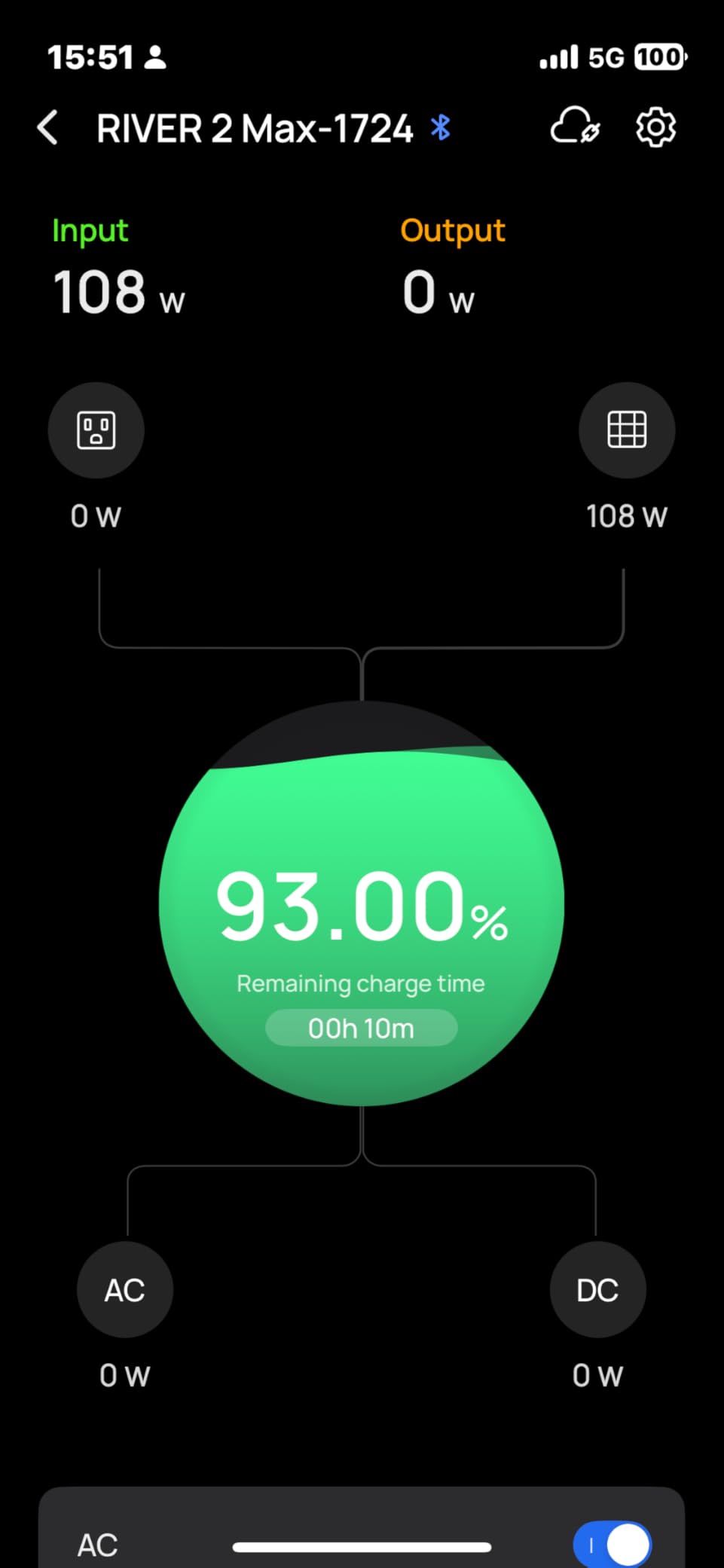
At 4.1 with 9 percent one-star reviews, this is the lowest-rated panel here, and the gap between label and measured output explains most of it.
Where a 300W folding panel makes sense
Choose it if you want maximum wattage in a single carryable package and you already know your real loads are modest. As a maintenance and battery-top-up panel for a 100Ah bank, the measured performance is sufficient.
It also works as a supplementary panel for charging small devices and 12V gear over long trips, where the dual USB ports and the wide adapter set are the deciding features.
When the 300W label misleads you
Skip it if you are sizing a boondocking system around the 300W number. Plan for roughly half of it, which usually means a second panel anyway, at which point two honestly-rated 200W panels serve you better.
Skip it for full-time RV use in hot or wet climates given the one-year warranty and the unrated fabric case.
10. Renogy 200W E.FLEX Portable Solar Panel – Best 200W for Carrying and Direct Device Charging
Renogy 200W Portable Solar Panel for Power Stations, 25% Efficiency
16BB N-type monocrystalline at 25 percent
13.9 lb quadfold with magnetic closure
MC4 plus 45W USB-C PD and two USB-A ports
Four kickstands with ground studs and grommets
Pros
- Lightest 200W folding panel here at 13.9 lb
- Magnetic quadfold packs to a backpack-sized footprint
- Four independently adjustable kickstands with ground studs
- MC4 plus USB-C and USB-A lets it charge a station and three devices
- UL 61730 certified with a 2-year warranty
Cons
- Nearly 2 in folded thickness still takes real RV storage space
- No charge controller or battery clamp cable included
- 21.6V maximum voltage means a clamp controller needs MPPT
- Warranty is 2 years
- shorter than the tempered glass Renogy suitcase kits
This is the one we ended up recommending to people who asked which 200W panel they could actually carry. At 13.9 lb it is roughly half the weight of the Renogy 200W suitcase, and the quadfold design packs to 23.72 x 22.99 x 1.97 in, which is a backpack-sized footprint rather than a suitcase-sized one.
The kickstand design is genuinely better engineered than most. Four independently adjustable legs offer 40, 50 and 60 degree positions, with optional ground studs and reinforced grommets for RV or tent mounting, and reviewers specifically call out how stable it is in wind.
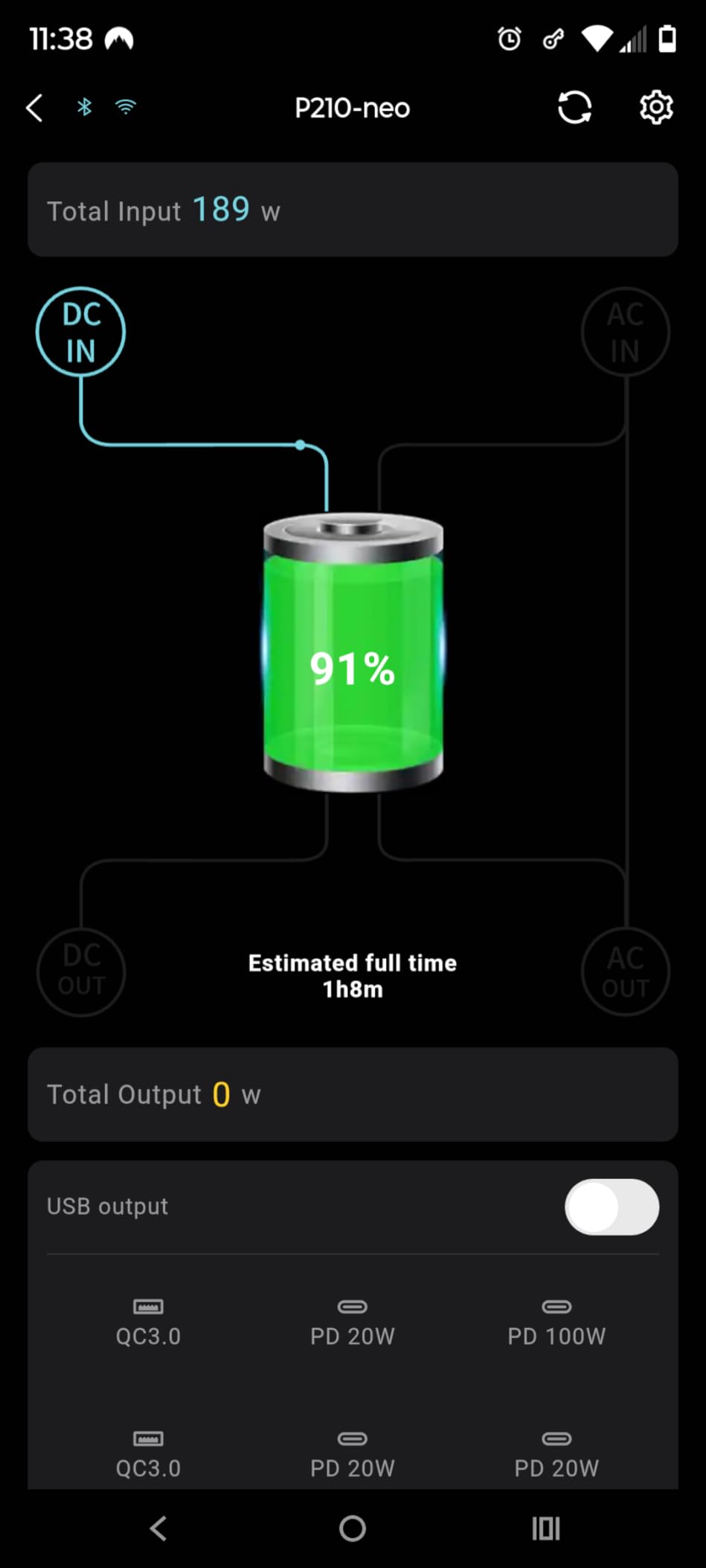
Output ports are the differentiator. Alongside the MC4 output there is one USB-C PD port rated at 45W and two USB-A ports at 18W and 15W, so the panel can charge a power station and three smaller devices at the same time. During a blackout or an overcast stretch, charging a phone and a laptop directly off the panel is a real convenience.
The cell technology is current: 16BB N-type monocrystalline at 25 percent, compared with roughly 22.5 percent for standard 9BB panels. It is UL 61730 certified and compliant with CE, RoHS, FCC, CA65 and PSE.
The limitation is that it ships as a panel only. No controller, no clamp cable, and it is designed for direct power station input. If your goal is charging a house battery, you are adding hardware.
Also note that 21.6V maximum voltage means a clamp-style controller needs MPPT to harvest the full rating. Pair it with PWM and you give away a chunk of the panel’s advantage.
At nearly 2 in folded, this still occupies a real shelf in an RV. And the 2-year warranty is shorter than the tempered-glass Renogy suitcase kits carry.
Why this panel fits modern RV setups
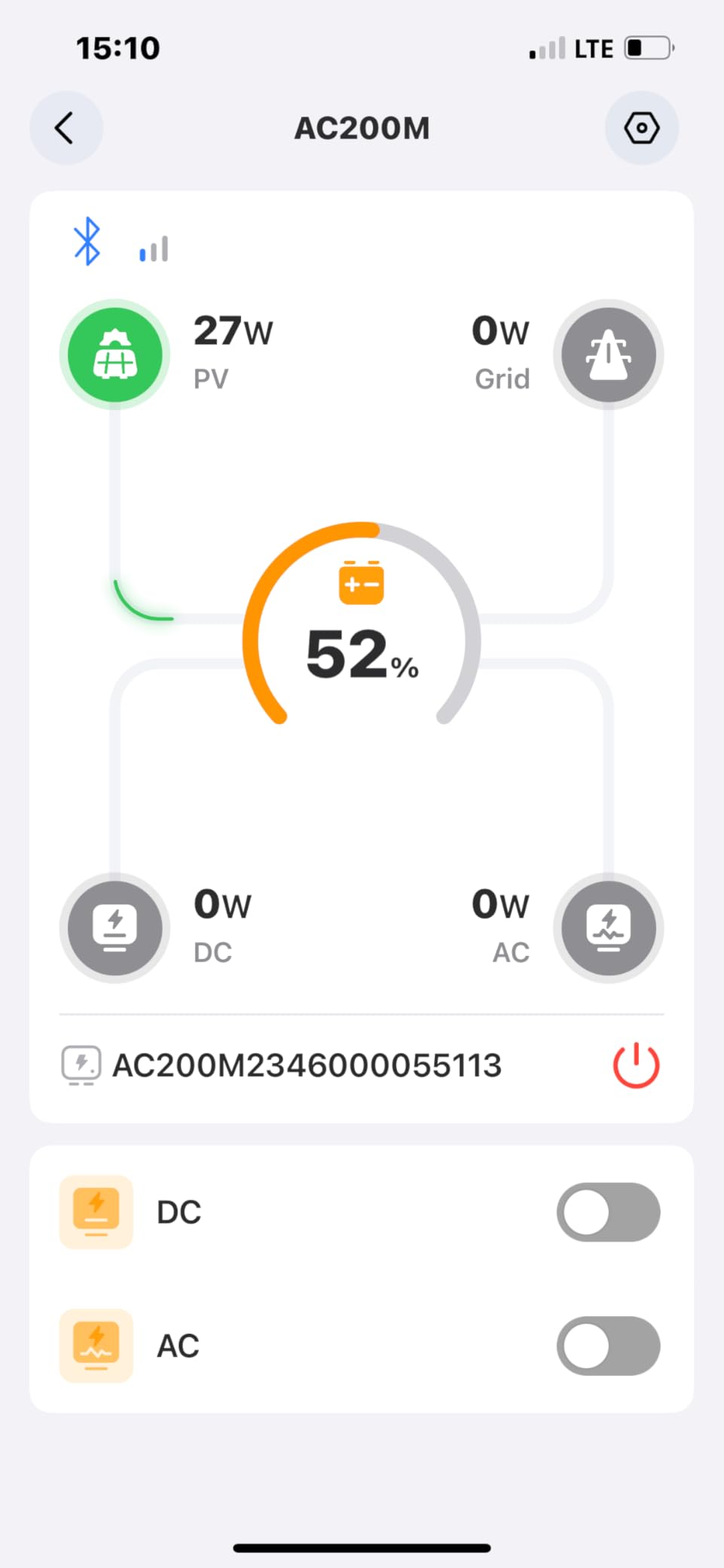
It is the best balance here for van conversions and smaller Class B rigs where storage is measured in inches. The magnetic closure means no straps to fumble in the dark, and 13.9 lb is a weight one person can manage.
It also suits anyone whose load is devices rather than the rig itself, since the USB-C PD port handles a laptop and the USB-A ports handle everything else.
When it is not the right tool
Skip it if you want to clip it straight onto a 12V house bank. That needs a controller, and buying an MPPT controller separately is a real cost to factor in.
Skip it if durability over many years matters most. The two-year warranty and the fabric-style fold mean the tempered-glass Renogy suitcase is the better long-term bet.
How to Choose a Portable Solar Panel for Your RV
Ten panels can be narrowed to one in about ten minutes if you answer three questions in order: how much energy does your rig burn in a day, what battery voltage does it use, and where does the panel physically live.
How Many Watts Do You Actually Need?
Step one is to measure your daily consumption in amp-hours from the 12V house bank, not in watts. Check your existing monitor or add one for a week of normal use: a compressor fridge cycling, interior and exterior lights, a water pump, a laptop charger and a phone charger typically land a weekend camper between 40 and 70 amp-hours a day, while a full-time RV with an inverter and a rooftop air conditioner runs far higher.
Step two is solar hours, not sunlight hours. Peak sun on a clear day is roughly four to five hours depending on latitude, season and how much shade your campsite has. Multiply daily amp-hours by the battery voltage to get watt-hours needed, divide by peak sun hours, and you have your required array wattage.
Step three is the derating step that most guides skip. Rated wattage is measured under laboratory conditions, so plan on 70 to 85 percent of the label in real RV use. A 200W panel is a 140 to 170W panel once heat, angle and partial shade are accounted for.
Step four is headroom. Add 20 to 30 percent for the days you camp under tree canopy, and for winter trips if you travel north in the off-season. Forums repeatedly flag this as the mistake: most sizing questions on r/solar are really questions about worst-case sun, not about panels.
What 100W, 200W and 300W Actually Run
Wattage ratings are abstract until you attach them to a load. Here is what each tier realistically covers, assuming good sun and a panel sized to the tier.
A 100W portable panel, delivering roughly 70-85W in practice, is an electronics and maintenance tier. It runs phones, cameras, laptops and lights, keeps a small power station topped up, and holds a 12V compressor fridge running comfortably on a sunny day as long as the battery bank starts charged. It is not enough to refill a large power station in a day.
A 200W portable panel, delivering roughly 140-170W, is the workhorse for RV use. It maintains a fridge, runs a water pump and lighting indefinitely on a good day, and can refill a 500 to 1,000Wh power station over a full day of sun. Most weekend and vacation campers find this sufficient.
A 300W portable panel is a misnomer in most cases, because you will collect 125-175W. That still maintains a bank comfortably, but it is rarely worth buying two panels’ worth of wattage in a single fabric package when two honestly-rated 200W panels perform the same job.
Roof-mounted and fixed arrays behave differently again, and we cover our general approach to fixed panels in the best solar panels for camping roundup.
Monocrystalline, Polycrystalline and Flexible Cells
Every panel in this roundup uses monocrystalline cells, and that is not a coincidence. Monocrystalline cells convert a larger share of incoming sunlight into electricity than polycrystalline cells, which matters when your panel area is capped by what one person can carry.
Within monocrystalline, the newer N-type cells with 16BB busbars reach 25 percent conversion efficiency, where standard 9BB panels sit around 22.5 percent. In flat, hot conditions that difference is real. In cold, high-irradiance conditions it largely disappears.
Flexible panels are a shape solution, not a performance solution. On diysolarforum, owners note that flexible panels are easy to store and move but often fall well short of rated output, because thin cells run hotter and lose efficiency. For RV use, a rigid or semi-rigid glass panel on a frame will outlast a flexible one and harvest more.
Rollers and white backsheets matter more than most buyers expect. A dark all-black backsheet runs hotter in direct sun, and heat is the single biggest thief of panel output during a summer boondocking trip.
MPPT vs PWM Charge Controllers
The charge controller sits between the panel and the battery and decides how much energy actually gets stored. MPPT (maximum power point tracking) tracks the panel’s optimal operating point and can recover a meaningful chunk of energy that PWM simply throws away. PWM is cheaper and simpler, and it works fine with small arrays on 12V systems.
Where the difference bites hardest is a panel with a high open-circuit voltage feeding a 12V bank. The ECO-WORTHY panels put out 27.4V each, and running them through a PWM controller discards a substantial share of what they collect. An MPPT unit recovers most of it.
Several panels in this roundup ship with a PWM controller pre-installed inside the case, which means you cannot upgrade without opening the kit. Renogy’s 200W suitcase is the useful exception: its MC4 output lets you bypass the PWM controller and feed a power station’s MPPT input instead, and owners report measurable gains after doing so.
Sizing rule of thumb: roughly one amp of controller capacity per watt of panel is a common starting point, so a 200W panel pairs with a 20 to 30A controller, and a 300W panel wants 30A or more. Owners on forums flag mismatched controller and array sizing as the most common voltage trap in RV solar.
12V and 24V Battery Banks, AGM and LiFePO4
Confirm your bank voltage before anything else, because a mismatch either does not charge or damages equipment. Most RV house banks are 12V, though 24V LiFePO4 systems are increasingly common in conversions. A 24V array on a 12V bank will not charge properly without the right MPPT unit, which is the mistake forum posters run into most often.
On battery chemistry, LiFePO4 tolerates high charge rates and holds capacity better across temperature swings than AGM or flooded lead-acid. Many buyers pair panels with LiFePO4 and an MPPT controller for the best results. Ensure the controller’s lithium profile is set correctly, because a lead-acid charge profile on a LiFePO4 bank is a shortened life.
Battery capacity is a separate decision from panel wattage. A 200W array filling a 100Ah battery from a low state of charge needs roughly five hours of good sun, which is why high-capacity banks need more panel rather than just more time.
Portable vs Roof-Mounted Solar
This is the genuine community split. On r/RenogyCommunity, owners argue that full-time RV travelers should use fixed panels because portable units are hard to position and sit exposed to theft. Other threads counter that rental rigs and van conversions have nowhere to drill.
Both are right for their case. Fixed roof panels harvest more because you can aim them at the sun all day instead of repointing a folding panel by hand. Portable panels win when you cannot drill, when you move between vehicles, or when you want to park in the sun with the panel deployed rather than driving.
The compromise most full-time RVers land on is a permanent array for the coach plus a portable panel carried as a top-up. If you are still weighing foldable options broadly, our foldable solar panel picks for camping covers the category in more depth.
Can You Run an RV Air Conditioner on Portable Solar?
Not realistically, and it is worth saying plainly. A rooftop RV air conditioner typically pulls well over 1,000W while running, and a compressor fridge or microwave adds 50 to 150W each on top. A single portable panel in the 100W to 300W class cannot carry that load, and no panel in this roundup comes close.
What portable solar can do is reduce how often you run a generator for air conditioning by keeping the battery bank full, which buys you runtime when you do switch it on. Some RVers run a large power station specifically for air conditioning and charge it from a panel array, but that requires multiple panels and a large inverter, which is a fixed-installation project rather than a portable one.
Cross-Brand Pairing With Power Stations
Connector standards decide whether panels from one brand work with a power station from another. MC4 is the solar industry standard, and any MC4 panel connects to almost anything through the right adapter cable. Proprietary connectors, such as BLUETTI’s native solar plug, connect without an adapter to their own stations and require an adapter cable for everyone else.
Check the maximum solar input on the power station before buying the panel. Many stations cap input well below their wattage suggests, and a 300W panel feeding a station with a 200W input limit harvests 200W no matter how good the panel is.
Voltage compatibility is the second check. A panel with a 21 to 26V open-circuit voltage into a 12V station with an MPPT input is fine. Feeding that same panel into a PWM-only station loses a large share of the harvest.
Panel-to-battery direct charging is the third path, and the one RV owners ask about most. It works, but it requires a correctly sized MPPT controller and correctly fused clamp leads. For setups that also need AC output, routing through a power station is simpler.
Low Light, Winter and Theft Risk
Winter performance depends on your latitude and your panel choice. Cold temperatures actually improve panel efficiency, but short daylight hours and low sun angles cut total harvest hard. Panels with weak low-light response suffer most, so check rated performance at lower irradiance rather than peak numbers if you winter camp.
Deployed portable panels carry theft and weather exposure risk that fixed roof panels do not. Leaving a glass suitcase unattended at a campsite invites problems, and fabric cases are not rated for prolonged rain. Bring the panel in overnight or weigh the risk against your campsite.
Wind is the under-discussed hazard. Panels act as sails, and several reviews here describe units tipping or legs backing out during setup. Ground studs, tie-downs and a low-profile angle are cheap insurance.
Frequently Asked Questions
What type of solar panel is most efficient for an RV?
Monocrystalline cells are the most efficient type available for RV use, and N-type 16BB monocrystalline cells reach about 25 percent conversion efficiency compared with roughly 22.5 percent for standard 9BB panels. Flexible panels are easier to store but run hotter and typically deliver less than their rated output, so a rigid or semi-rigid glass panel is the better long-term choice.
Will a 200W solar panel run a 12V fridge?
A 200W panel can run a 12V compressor fridge comfortably, provided the battery bank starts charged and the day is sunny. Real-world harvest of 140 to 170W from a 200W panel is more than enough to offset a typical fridge’s daily draw of roughly 30 to 50 amp-hours. Expect less margin in overcast weather, where a single 200W panel may not keep pace with the fridge.
How big of a solar panel do I need to run a camper?
Most weekend campers do well with a single 200W portable panel, while full-time RV travelers usually want 400W or more and travelers running a rooftop air conditioner need far more. Work out your daily amp-hours, multiply by the bank voltage to get watt-hours, divide by peak sun hours, then derate by 70 to 85 percent for real conditions and add 20 to 30 percent headroom for shade and winter.
Can I run my RV air conditioner on solar power?
Not from a single portable panel. A rooftop RV air conditioner pulls well over 1,000W while running, far beyond any 100W to 300W portable panel. Portable solar can still keep the house battery bank full so a generator or power station runs the air conditioner for longer when you do switch it on.
Can I use Renogy solar panels with EcoFlow power stations?
Yes, when the panel uses MC4 connectors. Renogy’s 200W suitcase has an MC4 main output, so it connects to EcoFlow and other power stations through the appropriate adapter cable and bypasses the pre-installed PWM controller in favor of the station’s MPPT input. Check the power station’s maximum solar input and confirm it accepts your panel’s open-circuit voltage before buying.
Which Portable Solar Panel Should You Buy?
The DOKIO 200W foldable kit is the pick for most RVers. It weighs 9.7 lb, deploys in seconds, measures 80 to 90 percent of its rating in good sun and ships with a separate controller you can upgrade, which makes it the hardest panel here to regret.
Match the rest to your trip style. Full-time boondockers who want durability and the highest honest output should take the Renogy 200W tempered-glass suitcase and plan for a two-person lift. Van conversions and small Class B rigs should take the Renogy 200W E.FLEX at 13.9 lb. Anyone running BLUETTI gear should take the BLUETTI panel and skip the adapter hunt.
Whatever you choose, size your system on measured harvest rather than the label, confirm the connector standard against your power station or controller, and derate for shade and season. Those three checks prevent most of the disappointments RV owners report about the best portable solar panels for RVs, and the panel itself is usually the last thing that goes wrong.