
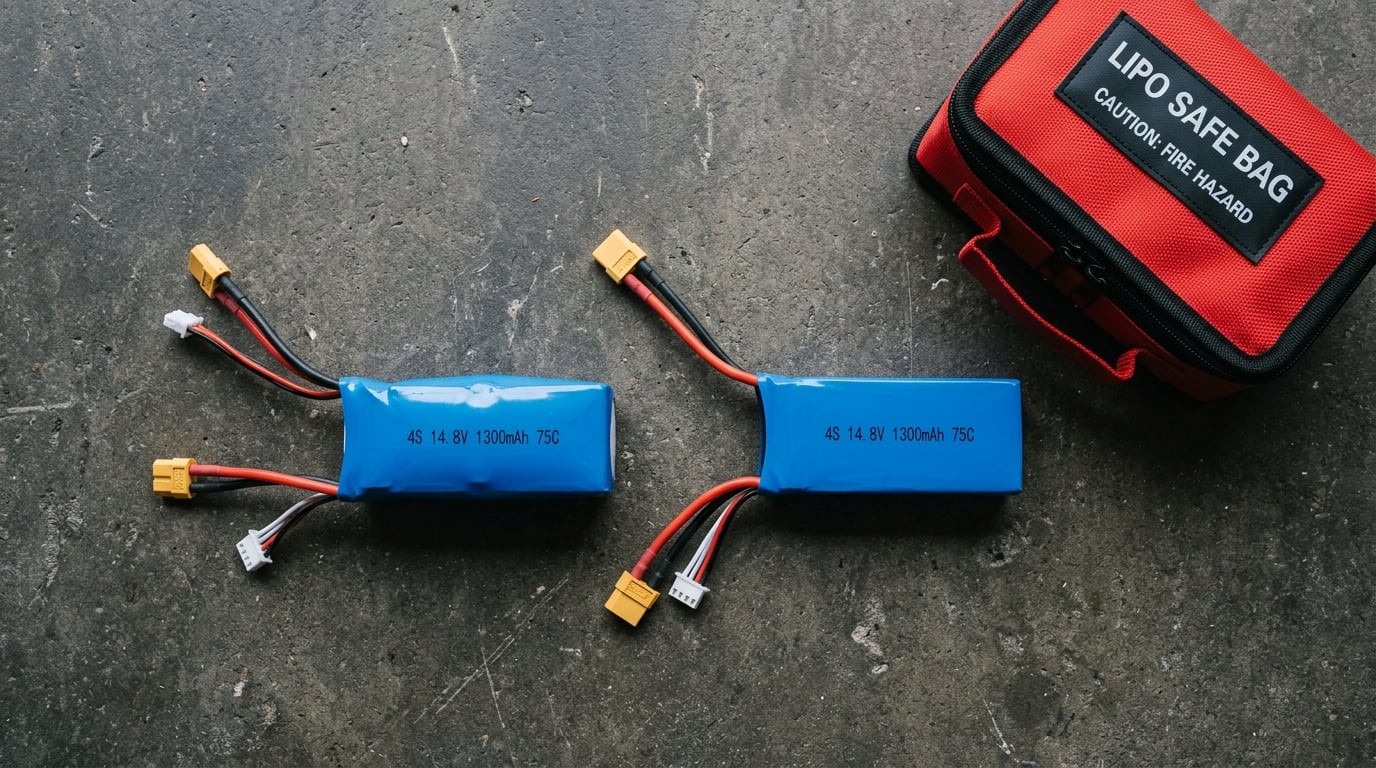
If your drone battery looks puffy, bulged, or no longer sits flat, stop using it. Drone battery swelling is a clear warning sign that the lithium polymer cells inside are chemically breaking down, and a swollen battery can catch fire or even explode if you keep charging or flying with it.
I’ve helped dozens of pilots deal with puffed batteries over the years, and the same lesson keeps coming up: a swollen pack cannot be fixed, only replaced. In this guide, I’ll walk you through what causes drone battery swelling, how to spot it early, exactly what to do the moment you notice it, and the habits that keep your batteries healthy for hundreds more cycles.
Table of Contents
What Causes Drone Battery Swelling
Drone battery swelling happens when gas builds up inside the lithium polymer cells. That gas is the byproduct of electrolyte decomposition, and once it starts, the chemical reaction cannot be reversed. Almost every swollen battery I’ve ever seen traces back to one of four root causes.
Overcharging and Over-Discharging
Pushing a LiPo cell above 4.2V per cell or draining it below 3.0V per cell damages the internal chemistry. Both extremes break down the electrolyte and produce gas. I have seen brand-new DJI batteries puff up within a month because the owner left them plugged into the charger overnight or ran them all the way to auto-land every flight.
Modern smart batteries prevent some of this with built-in cutoff circuits, but those circuits only work if you use the manufacturer’s charger and firmware. Charging a swollen battery is one of the fastest ways to start a fire.
Heat Damage From Flying or Charging
Heat is the number one cause of drone battery swelling. Anything above roughly 50°C (122°F) accelerates the chemical breakdown inside the cells. Flying in summer sun, leaving batteries in a hot car, or charging a pack that is still warm from a flight all push cells past their safe temperature range.
One of my readers learned this the hard way after leaving three Mavic 2 batteries in his trunk during a desert shoot. All three puffed within a week. Heat damage is permanent, and you cannot see it until the battery starts to bulge.
Physical Damage and Manufacturing Defects
A hard crash, a puncture, or even a small dent can flex the cell layers enough to cause an internal short. Manufacturing defects are rarer, but they do happen, especially in off-brand packs. If your battery swells within the first 10 cycles and you have been flying it carefully, a defect is the most likely culprit and most manufacturers will replace it under warranty.
Battery Aging and Natural Breakdown
Even with perfect care, lithium polymer cells slowly degrade over time. Most drone batteries are rated for 200 to 300 charge cycles before their capacity drops to 80% of the original. As they age, the electrolyte becomes less stable, and swelling becomes more likely. Batteries that sit in storage for a year or more without being topped off can also puff from internal chemistry drift.
Warning Signs of a Swelling Drone Battery
Catching swelling early can save your drone and your house. These are the warning signs I check on every battery, every flight.
Visible Bulging and Deformation
The most obvious sign is a battery that no longer looks flat. Place the pack on a glass table and spin it. A healthy battery will rock slightly at the corners but stay mostly stable. A swollen battery will wobble or sit on a raised center. For DJI batteries, compare the suspect pack against a brand-new one side by side. Even a small puff is enough to fail it.
Battery No Longer Fits Flush in the Drone
If your battery clicks into the drone but feels tight, or if the battery door no longer closes smoothly, the pack has likely expanded. I have heard from several pilots who discovered swelling only when the battery stopped seating properly. At that point the cells are already compromised.
Shorter Flight Times and Voltage Drops
A puffed battery cannot hold its full charge. If your flight time suddenly drops by 20% or more, the pack is on its way out. Check the voltage in the DJI app or your flight controller’s OSD. Any cell that drops below 3.3V under light load is a red flag.
Unusual Smell or Heat at Rest
Swollen batteries often vent small amounts of electrolyte, which smells sweet and chemical-like. If a battery feels warm when it has not been used or charged in an hour, stop and inspect it. Heat at rest means the cells are still reacting internally.
[warning] A swollen battery is a fire hazard. Do not charge it, do not fly it, and do not store it inside your home. Move it to a fireproof container outdoors until you can recycle it. [/warning]
Why a Swollen Drone Battery Is Dangerous
I want to be direct here: a swollen drone battery is one of the most dangerous things in your gear bag. The same chemistry that makes LiPo batteries lightweight and powerful also makes them volatile once the cells start to break down.
Fire and Explosion Risk
Lithium polymer cells contain a flammable electrolyte. Once the cell casing swells, the separator between the anode and cathode can fail, causing an internal short. A shorted cell can reach 600°C within seconds and ignite the electrolyte. This is called thermal runaway, and it is nearly impossible to stop once it starts.
Venting Toxic and Flammable Gases
A venting battery releases a mix of carbon dioxide, carbon monoxide, and other hydrocarbons. These gases are toxic to breathe and highly flammable. A small spark, including the static electricity from your fingers, is enough to ignite them. This is why pilots who store puffed batteries indoors risk venting inside their home.
Damage to Your Drone and Surroundings
A swollen battery can damage the battery compartment of your drone, warp the frame, and leak corrosive electrolyte onto sensitive electronics. I have seen Mavic Air 2s with corroded battery boards that were unrepairable because the owner flew with a puffed pack.
What to Do Immediately When You Notice Drone Battery Swelling
The moment you confirm swelling, follow these steps in order. Do not skip any of them.
Step-by-Step Safe Handling Procedure
- Stop flying immediately and power off the drone. Remove the battery from the aircraft.
- Move the battery outdoors to a non-flammable surface like concrete. Keep it away from cars, walls, and anything combustible.
- Do not throw the battery in the trash, do not put it in water, and do not try to puncture it to release the gas. Puncturing a swollen cell is one of the fastest ways to start a fire.
- Place the battery in a fireproof LiPo bag or a metal container with a loose lid. A sand-filled bucket also works as a temporary firebreak.
- Let the battery cool for at least 24 hours before handling it again.
- Take the battery to a certified battery recycling center, a hardware store that accepts LiPos, or your local hazardous waste facility.
- Order a replacement battery from the drone manufacturer or a reputable dealer. Do not buy cheap third-party packs as a substitute.
This is the same procedure I follow, and it is the one DJI, Autel, and other major manufacturers recommend. It takes 10 minutes and it could save your home.
[note] If the battery is actively smoking, hissing, or on fire, evacuate the area and call 911. Do not try to move a burning LiPo. Let the fire department handle it. A standard ABC fire extinguisher will not stop a LiPo fire, only water or a Class D extinguisher will, and even then the battery can reignite hours later. [/note]
How to Safely Dispose of a Swollen Drone Battery
Swollen drone batteries are classified as hazardous waste. They cannot go in your regular trash, recycling bin, or curbside pickup. Most cities have drop-off locations that accept lithium batteries for free.
Where to Recycle LiPo Batteries
- Call2Recycle locations including Home Depot, Lowe’s, and Best Buy
- Local hazardous waste collection events run by your city
- Battery specialty stores like Batteries Plus
- Drone retailers and hobby shops that sell LiPo batteries
- Earth911.com lets you search by zip code for the nearest drop-off
Before you drop the battery off, place it in a clear plastic bag or wrap the terminals with electrical tape. This prevents accidental shorts during transport. Most facilities will accept swollen packs as long as they are clearly labeled and not actively venting.
How to Prevent Drone Battery Swelling
Prevention is far easier than dealing with a swollen pack. These are the habits I have used to get 400+ cycles out of my DJI batteries without a single puff.
Storage Voltage and Temperature
Never store a drone battery fully charged. Most manufacturers recommend a 40% to 60% charge, or roughly 3.8V per cell, for long-term storage. DJI batteries over 10 days old will automatically self-discharge to storage voltage, but only if the auto-discharge feature is enabled in the app.
Store batteries in a cool, dry place between 10°C and 25°C (50°F to 77°F). Avoid garages that get hot in summer or basements that flood. A climate-controlled closet is ideal.
[tip] If you fly more than once a week, do not worry about storage voltage. Just fly, charge to 100% the night before, and let the auto-discharge handle the rest. If you fly less than once a week, manually discharge to storage mode after each session. [/tip]
Charging Best Practices
Always use the manufacturer’s charger. Third-party chargers may not respect the voltage cutoff, and balance charging issues can push individual cells above 4.2V.
Charge at room temperature, never below 5°C or above 40°C. If you just came back from a hot flight, let the battery cool to room temperature before plugging it in. Charging a hot battery is one of the top causes of swelling I see in the field.
Do not leave a charging battery unattended for hours. Most modern chargers stop automatically, but a battery that is already damaged can still go into thermal runaway even after the charger has shut off.
Flying Habits That Extend Battery Life
Do not drain the battery below 20% on a regular basis. Occasional deep discharges are fine, but if you fly to low battery warning every time, you will shorten the pack’s life by 30% to 50%.
Avoid flying in extreme heat. If the ambient temperature is above 35°C (95°F), expect shorter flights and more battery stress. Land before the high-temp warning appears in your app, and let the pack cool before charging.
Update your drone and battery firmware regularly. Manufacturers push updates that improve battery management, and skipping them can leave you with older charge curves that are harder on the cells.
Knowing When to Replace a Battery
Replace a battery when it shows visible swelling, when capacity drops below 80% of the original, when you see a sudden jump in internal resistance, or after 300 charge cycles. Most DJI batteries log cycle count in the app under battery health. If the app reports “Severe” or “Poor” health, retire the pack immediately.
Warranty and Replacement Options for Swollen Drone Batteries
If your battery swells within the warranty period, contact the manufacturer. DJI in particular has a reputation for honoring swelling claims, even when the battery is several months out of standard warranty. Start a repair request through the official DJI website, attach clear photos of the swelling, and include the battery’s serial number and flight logs if possible.
For out-of-warranty batteries, your only option is a new pack. Buy from the drone manufacturer or a licensed dealer. Counterfeit DJI batteries are common on marketplaces and can be dangerous. Genuine packs have QR codes that scan in the official app, plus serial numbers on the label.
If you are on a budget, consider the DJI Care Refresh warranty add-on, which covers battery replacement for a small fee for one or two years. For commercial operators, the cost is trivial compared to the cost of a puffed battery damaging a $1,500 drone.
[warning] Never buy a used drone battery. You have no idea how it was stored, charged, or cycled. A used pack might look fine and puff up the first time you charge it. Buy new, buy from authorized sellers, and keep the receipt. [/warning]
Frequently Asked Questions
Can you fix a swollen drone battery?
No. A swollen drone battery cannot be safely repaired. The gas buildup is a sign that the cell chemistry has broken down permanently. Puncturing, draining, or charging the battery is extremely dangerous. The only safe option is to recycle it and buy a new pack.
Is a slightly swollen drone battery still safe to use?
No. Even a small amount of swelling means the cells are damaged. Continued use risks fire, venting toxic gases, and damage to your drone. Stop flying immediately and recycle the battery.
Why is my drone battery swelling when I take good care of it?
Even well-cared-for batteries swell eventually. Heat, age, and natural electrolyte breakdown all cause swelling over time. If it happens within a few months of purchase, contact the manufacturer for a warranty replacement.
Can a swollen LiPo battery explode?
Yes. A swollen LiPo can vent, ignite, or explode if it is charged, punctured, or exposed to heat. Treat every swollen battery as a fire hazard and store it outdoors in a fireproof container until you can recycle it.
How long do drone batteries last before they swell?
Most drone batteries last 200 to 300 charge cycles or 2 to 3 years before swelling becomes likely. Heat, deep discharges, and storage at full charge can shorten that timeline significantly.
The Bottom Line on Drone Battery Swelling
Drone battery swelling is a chemical failure that cannot be reversed. The most common causes are heat, overcharging, deep discharges, and age. Once a battery puffs, your only safe move is to stop using it, store it in a fireproof container outdoors, and recycle it at a certified drop-off.
You can prevent most cases of drone battery swelling with simple habits. Store packs at 40% to 60% charge in a cool room, charge only at room temperature with the manufacturer’s charger, and replace any battery that shows visible puffing, drops below 80% capacity, or has been cycled more than 300 times. Following these rules has kept my own fleet of batteries healthy through 2026 and many flying seasons before it.
If you are dealing with a swollen battery right now, take it outside, follow the seven-step handling procedure above, and order a replacement from the manufacturer. The few dollars you save by stretching the life of a puffed battery are never worth the fire risk.