
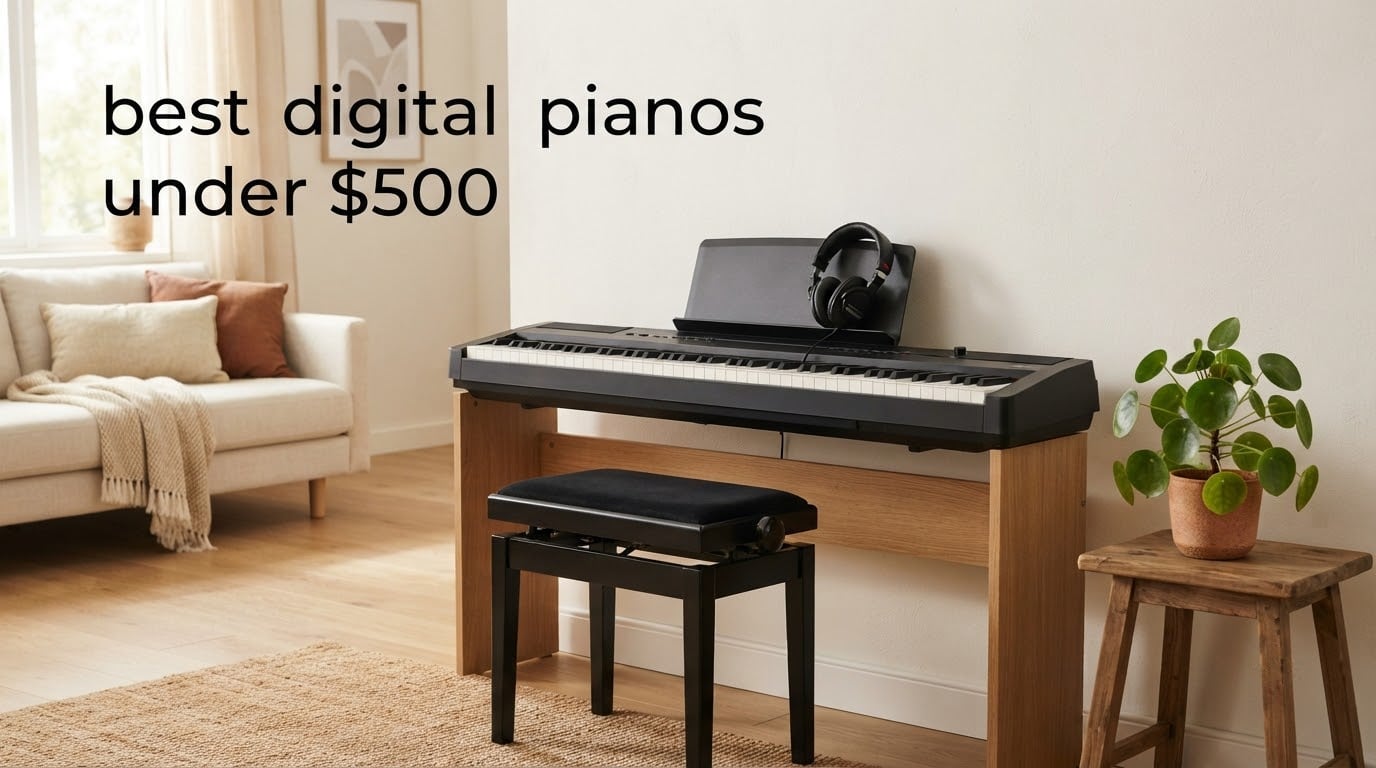
The Yamaha P71 is the best digital piano under 500 overall. Its GHS graded hammer action gives beginners a genuine weighted 88-key feel, the Yamaha grand samples have real dynamic range, and the sustain pedal and power supply ship in the box. At a 4.7-star average across more than 6,600 reviews, it is the most proven instrument in this price band.
That is the short answer. The longer one is that 500 dollars is a genuine compromise tier, not a bargain bin. Every piano on this list has 88 full-size keys and real weighted action, because below that line you are not buying a digital piano, you are buying a light-up keyboard. What the budget strips out is everything that is not piano playing: fewer voices, no onboard recorder on most models, no split mode, and speakers that need headphones to sound right.
We spent weeks comparing the ten models below on key action, tone, polyphony, speakers, connectivity and what actually arrives in the box. The Yamaha P71 wins overall because it does the one thing a beginner needs most well. If you need a desk that turns into a piano, or you want a triple pedal and bench included, the bundles further down this list deliver more hardware for the same money.
New to the category? Our full digital piano buying guide explains key action types in depth, and our picks for beginner digital pianos cover a wider budget range.
Table of Contents
Top 3 Picks for Best Digital Pianos Under $500 (October 2026)
Three instruments stand out. The Yamaha P71 takes the overall spot on action feel and sound quality. The Alesis Recital is the value pick for anyone who wants a full 88-key board for the least money. The Donner DEP-20 packs more features into one slab than anything else here.

Yamaha P71
- GHS graded hammer action
- 10 Yamaha voices
- 64-note polyphony
- Sustain pedal included
Best Digital Pianos Under $500 at a Glance
All ten models below are 88-key instruments that fit under a 500-dollar ceiling. The table shows the weight, action and connectivity differences that actually change daily practice, not the marketing filler.
| Product | Specifications | Action |
|---|---|---|
| Yamaha P71 |
|
Check Latest Price |
 Alesis Recital Alesis Recital |
|
Check Latest Price |
 Donner DEP-20 Donner DEP-20 |
|
Check Latest Price |
 Roland FP-10 Roland FP-10 |
|
Check Latest Price |
 Donner DDP-100 Donner DDP-100 |
|
Check Latest Price |
 STRICH SDP-300W STRICH SDP-300W |
|
Check Latest Price |
 UISCOM 1852 UISCOM 1852 |
|
Check Latest Price |
 HEXANT 88-Key HEXANT 88-Key |
|
Check Latest Price |
 Eastar EUP-100 Eastar EUP-100 |
|
Check Latest Price |
 Ktaxon RM88 Ktaxon RM88 |
|
Check Latest Price |
1. Yamaha P71 – Best Weighted Action Digital Piano Under $500
YAMAHA P71 88-Key Weighted Action Digital Piano with Sustain Pedal and Power Supply (Amazon-Exclusive)
GHS graded hammer action
10 Yamaha voices
64-note polyphony
25 pounds
1 year warranty
Pros
- Graded hammer action feels close to an acoustic
- Yamaha grand samples with wide dynamic range
- Sustain pedal and power supply in the box
- Simple one-button operation
- Trusted build with long owner histories
Cons
- No onboard recording
- Thin sound in the top octaves
- Stand and bench sold separately
The P71 is the instrument we keep coming back to. The GHS action is graded, so the bass end feels heavier than the treble, which is the single biggest step toward acoustic realism you can get at this budget. Long-term owners report four to six years of dependable daily use, and several mention gigging it in a car with a stand and bench folded in the back.
Sound is the other strength. The Yamaha grand samples hold up when you play softly, which matters more than most buyers expect: a piano that only sounds good at full volume is a toy. At 4.7 stars across 6,655 reviews it carries the highest average rating of any model here.
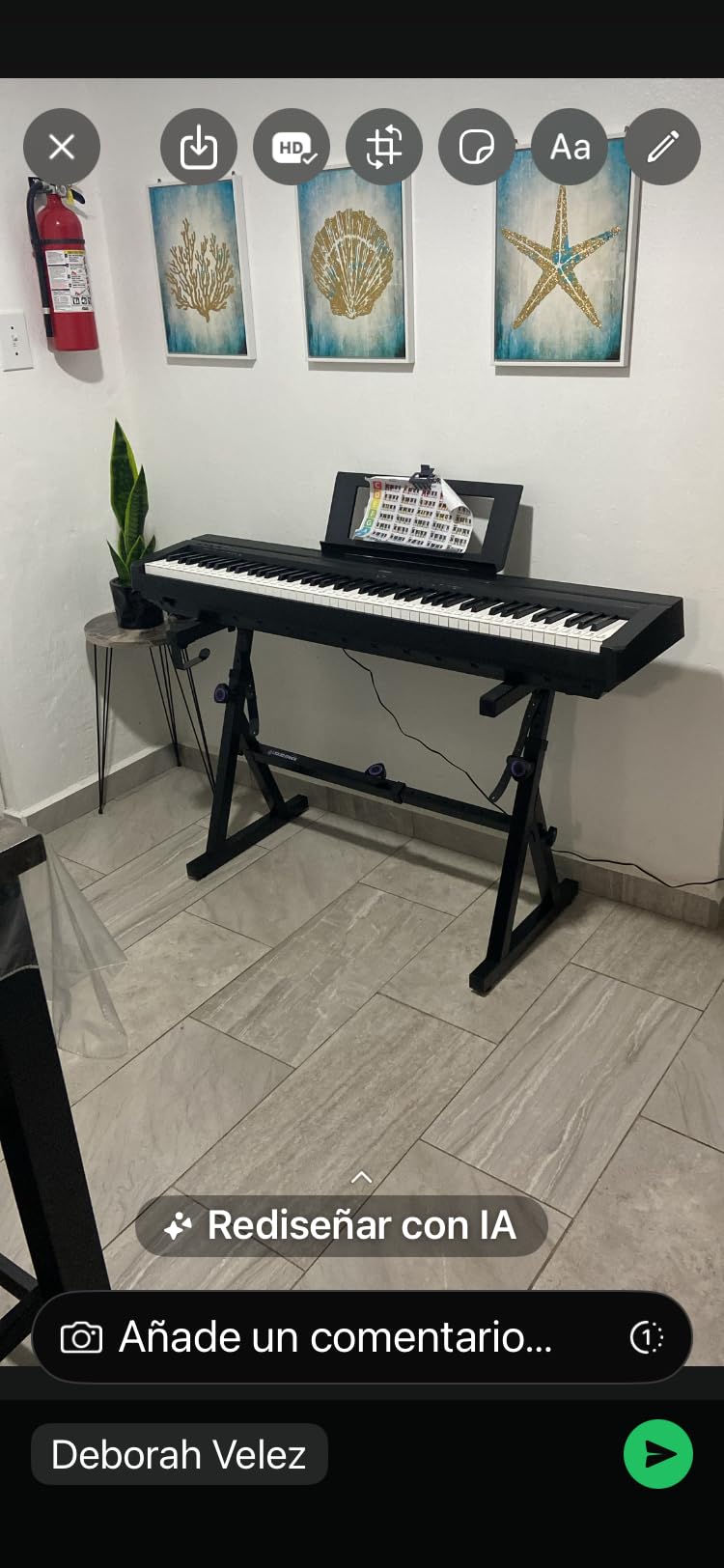
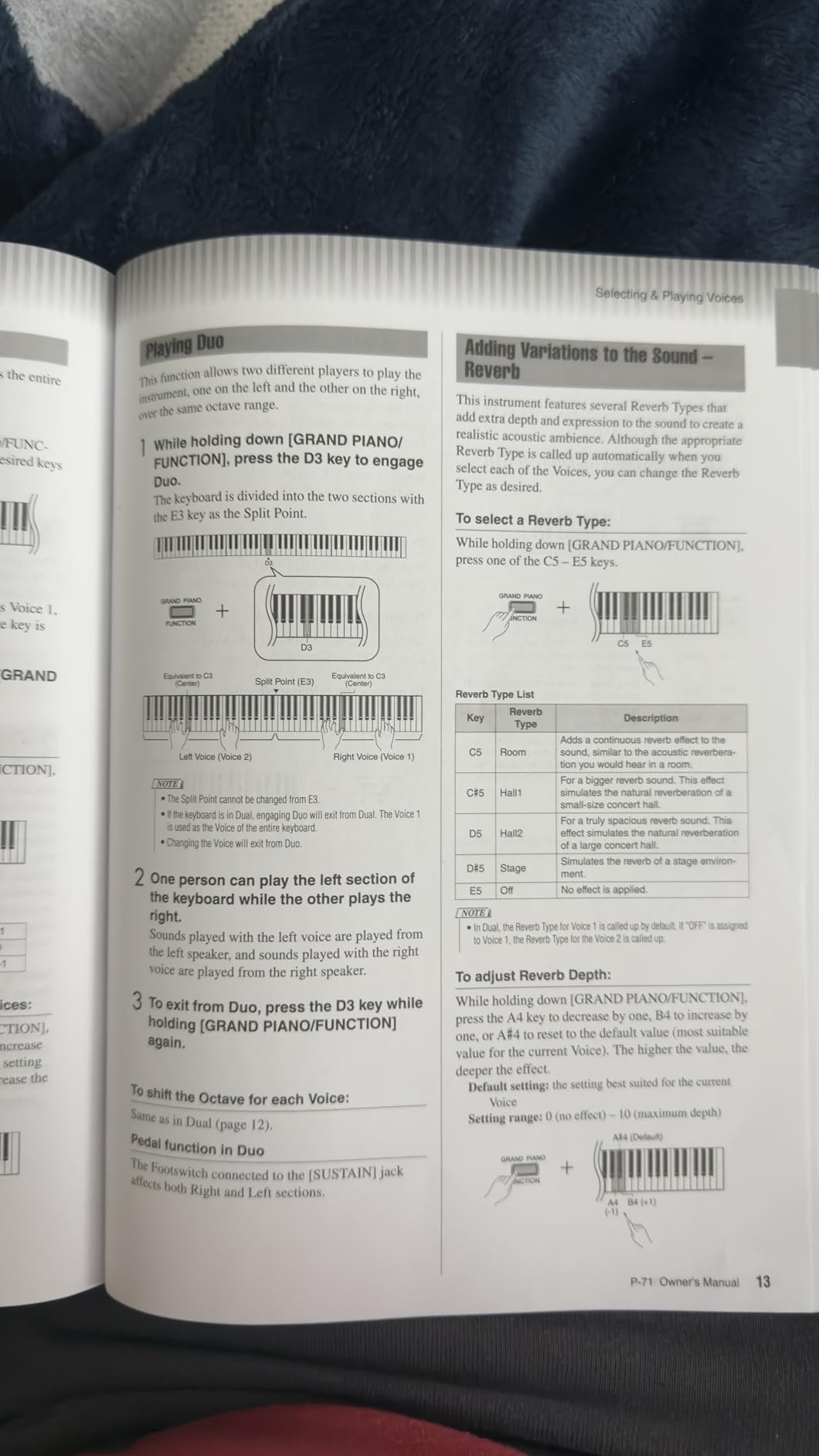
Controls are about as simple as a digital piano gets. One button handles the basics, dual mode lets you blend two voices, and a 3.5mm headphone jack is on the front panel. That low learning curve matters when the player is a seven-year-old rather than you.
The compromises are honest ones. There is no onboard recorder, no Bluetooth MIDI, and only 10 voices, so recording goes through a wired USB connection to a computer or tablet. At 25 pounds and 52.25 inches wide it is still a portable slab, and the 1-year Yamaha Corporation of America warranty covers the electronics.
Who the Yamaha P71 suits
It suits the adult beginner who wants technique that transfers to an acoustic piano later, and the student who will practise with a teacher every week. Graded action rewards a growing touch instead of letting bad habits set in.
It also suits anyone who plans to record or use lesson apps, because the wired USB connection works as a MIDI controller with no adapter. Just budget separately for a stand and a bench.
Where the P71 disappoints
It disappoints anyone who wants to layer synth pads over a piano sound, or who expects a USB port on the instrument to save recordings without a computer. Ten voices and 64-note polyphony are enough for practice, not for production.
Reviewers also flag slightly thin sound in the highest octaves and a MIDI velocity response that is less dynamic than some competing keyboards. For a Yamaha at 4.7 stars, those are refinements rather than faults.
2. Alesis Recital – Best Value Digital Piano Under $500
Alesis Recital Digital Piano 88-Key Semi-Weighted
88 semi-weighted keys
5 voices
128-note polyphony
2x20W speakers
15.7 pounds
Pros
- Most proven model here with more than 11000 reviews
- Layer and split modes for practice workflows
- Runs on AC adapter or six D cell batteries
- 128-note polyphony holds chords clearly
- Skoove and Melodics lessons included
Cons
- Semi-weighted action is lighter than true hammer action
- Sustain pedal not included
- Only five voices
With 11,681 reviews at 4.6 stars, the Recital has more owner history than any other instrument on this list. That matters at the entry level: you can read years of reports about key wobble, speaker failure and firmware behaviour before you commit, rather than gambling on a new name.
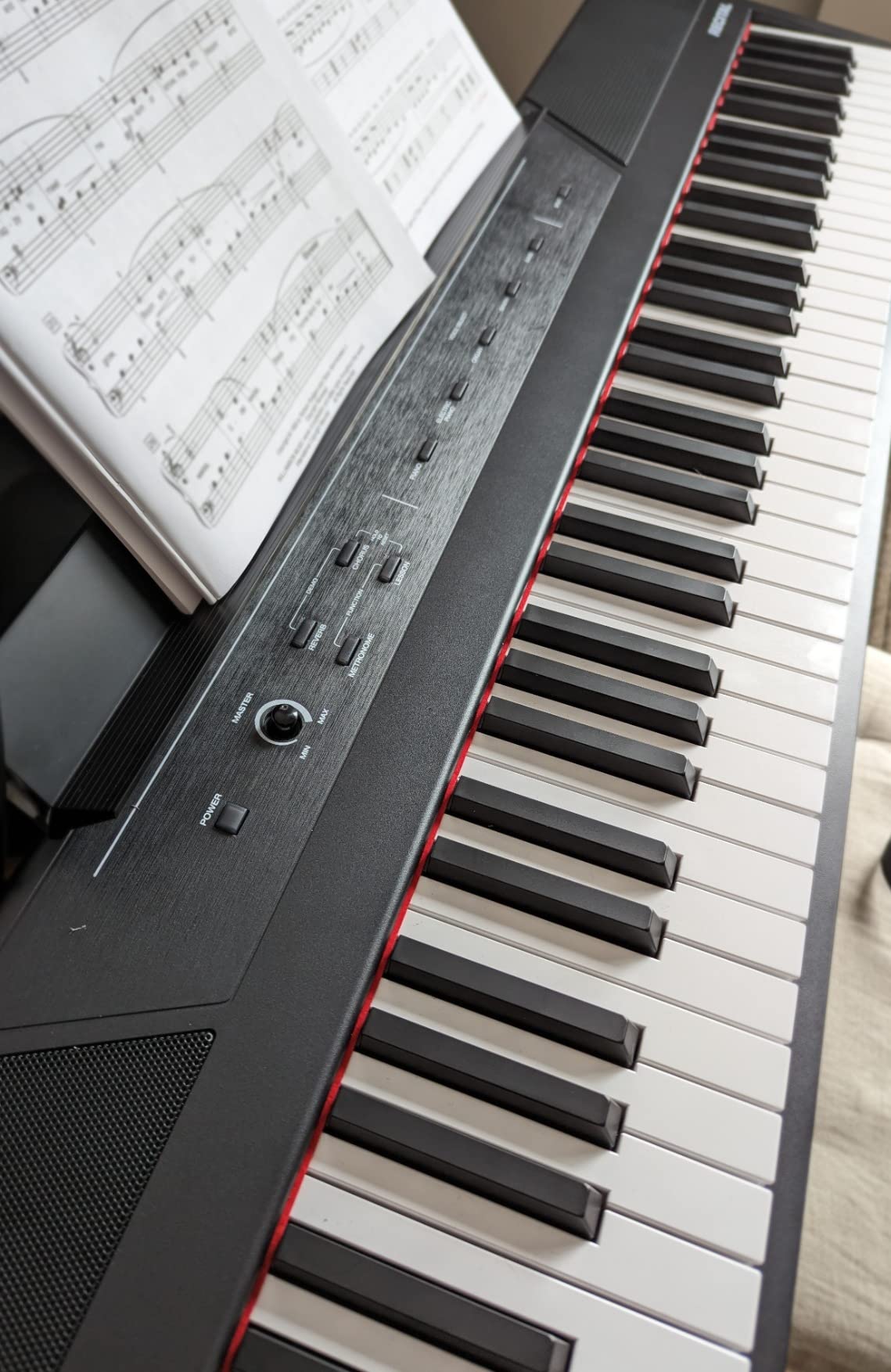
At 15.7 pounds it is the lightest full 88-key board here by a wide margin, and it runs on six D cell batteries when you are not near a socket. Standard, split, layer and lesson modes give you more practice structure than the Yamaha offers, and 128-note polyphony is double the P71.
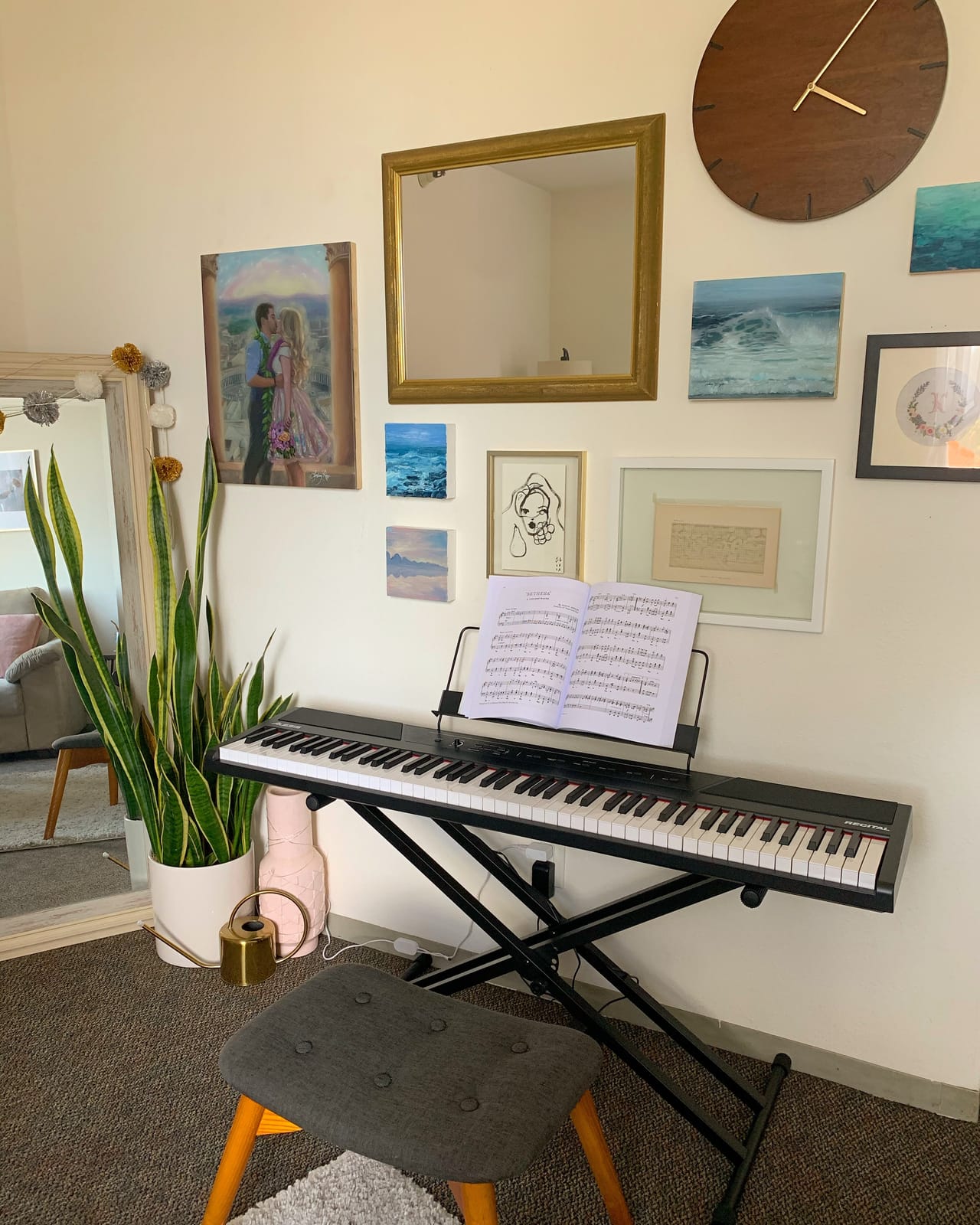
The 2x20W speakers are genuinely loud enough for a room, which surprises people who assume budget pianos are headphone-only instruments. Touch response is adjustable, so a child can start on a soft setting and move up as their hands get stronger.
The line between this and a real hammer-action piano is the keybed itself. Semi-weighted keys are lighter and quicker to rebound, which some players prefer for fast passages and others find too easy to pound.
Who the Alesis Recital suits
It suits a first-instrument buyer on a tight budget, a child starting lessons, and anyone who wants to practise away from a wall outlet. The included Skoove subscription and 100 Melodics lessons mean a beginner can start the same afternoon it arrives.
It also suits players who want split mode to work with a teacher sitting alongside them. The 1/4-inch sustain pedal input accepts a proper pedal even though one is not in the box.
Where the Recital disappoints
It disappoints anyone chasing acoustic realism. The lighter semi-weighted feel is the most common complaint in reviews, and five voices is a very short list for exploring timbres.
The plastic body and 15.7-pound weight also mean it looks and moves less like furniture than the wood-cabinet bundles further down this list. Headphone and stereo RCA outputs are there for external amplification.
3. Donner DEP-20 – Most Features on a Single Slab
Donner DEP-20 Beginner Digital Piano 88 Key Full Size Weighted Keyboard, Portable Electric Piano with Sustain Pedal, Power Supply
88 hammer action keys
238 tones
128-note polyphony
Backlit LCD
25.6 pounds
Pros
- Largest tone library here at 238 sounds
- Backlit LCD shows chords and notation
- Recording mode plus MIDI and MP3 playback
- Sustain pedal and music rest included
- Two 25W amplifiers
Cons
- Speaker volume is modest for group playing
- Action feels stiff and slow for the first weeks
- Stand and bench not included
The DEP-20 answers a question most budget pianos ignore: what do you do when the player wants more than one sound? The answer here is 238 tones, a backlit LCD screen that displays chords and notation, and a recording mode that saves take after take.
Key action is full-size hammer action with adjustable touch response, so it is a real step up from an unweighted 61-key keyboard. A 4.6-star average from 2,358 reviews reflects a well-regarded budget pick, with reviewers pointing to the feature density as the reason.
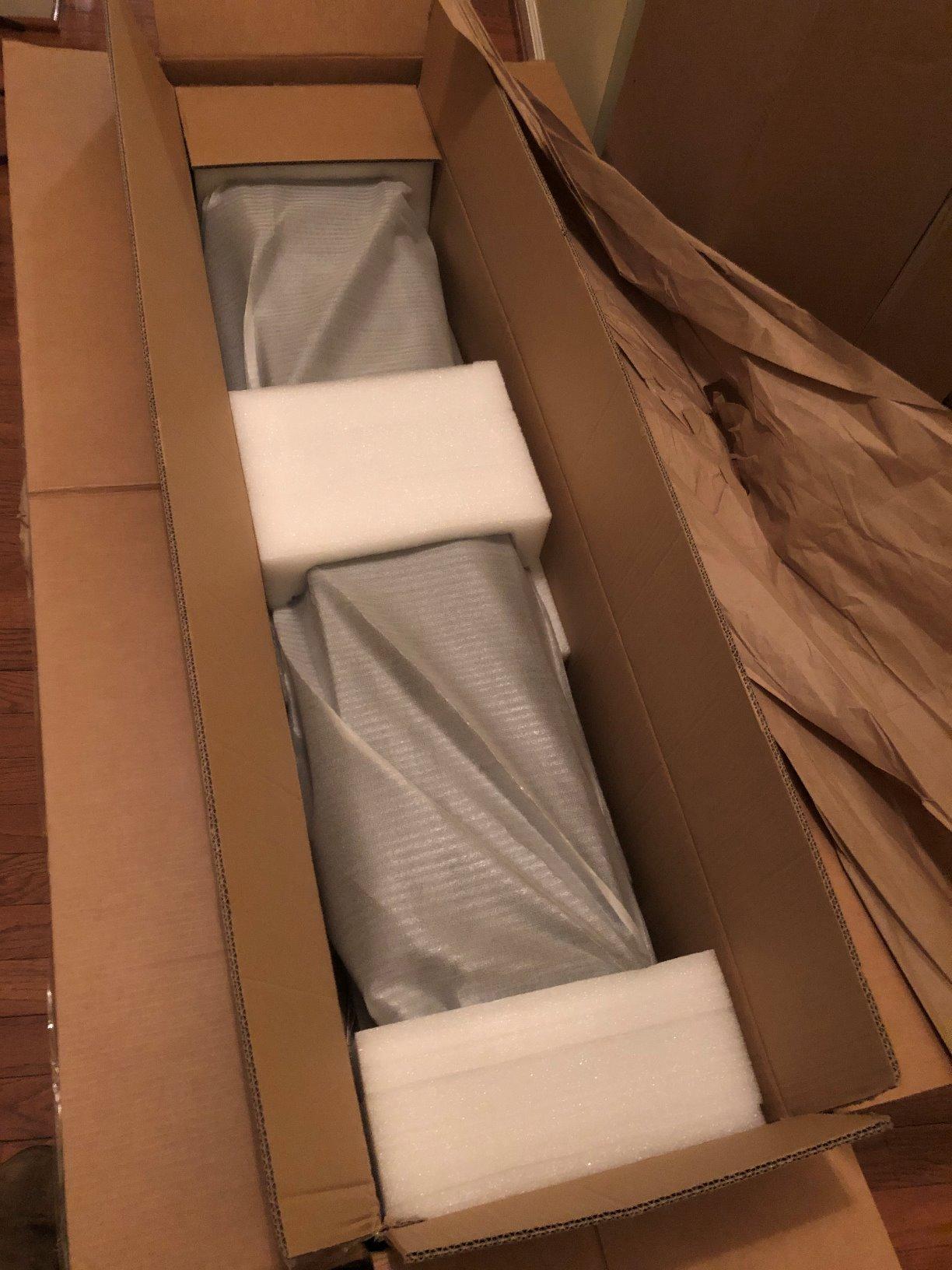
The two 25W amplifiers are the most powerful onboard pair among the portable slabs here, and audio inputs and outputs plus a 6.35mm headphone jack cover most connection needs. DAW compatibility is listed, so it doubles as a MIDI controller.
What you trade away is polish. The action reads as stiff and slow during the first weeks, and speaker volume is modest if you are playing with other instruments. The plastic finish is utilitarian next to a wood cabinet.
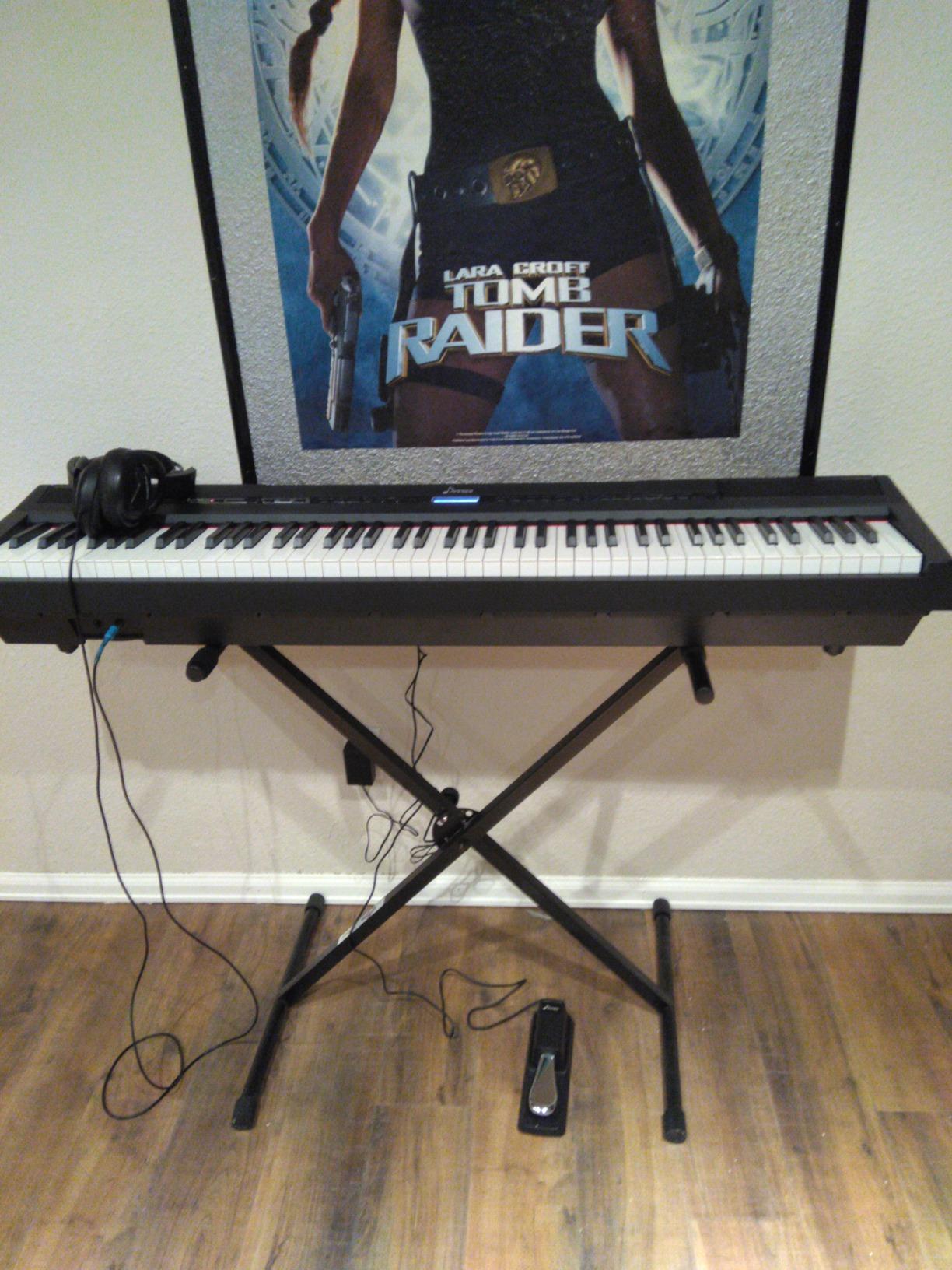
Who the Donner DEP-20 suits
It suits a beginner who wants to experiment with organ, synth and bass sounds while learning, and anyone teaching at home who wants notation on screen instead of a paper chart.
It suits players moving into music apps, since recording mode, MIDI and MP3 player functions are all built in. The sustain pedal and sheet music rest are in the box, so you only need a stand and a seat.
Where the DEP-20 disappoints
It disappoints anyone chasing a natural acoustic tone. With 238 sounds to cycle through, the piano voice is one option among many rather than the reason to buy.
It also disappoints in a quiet apartment. Modest onboard volume pushes you toward headphones, and the stiff initial key resistance is the adjustment period beginners mention most often. The 12-month warranty is the shortest coverage on this list.
4. Roland FP-10 – Premium Pick Action for Late-Night Practice
Roland FP-10 Compact 88-Note Digital Piano
SuperNATURAL sound engine
Authentic Acoustic Feel keys
Silent key action
27 pounds
Pros
- Best key action feel in this price bracket
- Silent action suits late-night practice with headphones
- Built-in MIDI and USB MIDI interface for recording
- Foot switch and music rest included
- Twin Piano mode built for lessons
Cons
- Only 15 voices
- No recording to onboard storage
- Plastic cabinet
- Heaviest keyboard-only option here
The FP-10 is the instrument we recommend to someone in a shared apartment. Roland’s silent key action means the mechanical noise of the keyboard itself drops away, so what your neighbours hear through the wall is far less than with a conventional hammer bed.
The 88-note Authentic Acoustic Feel keyboard with ivory-touch surfaces is widely considered the most realistic action under this budget, and the SuperNATURAL engine delivers a grand tone that rewards dynamic playing. Buyers consistently name the key action and the sound as the best in the bracket.
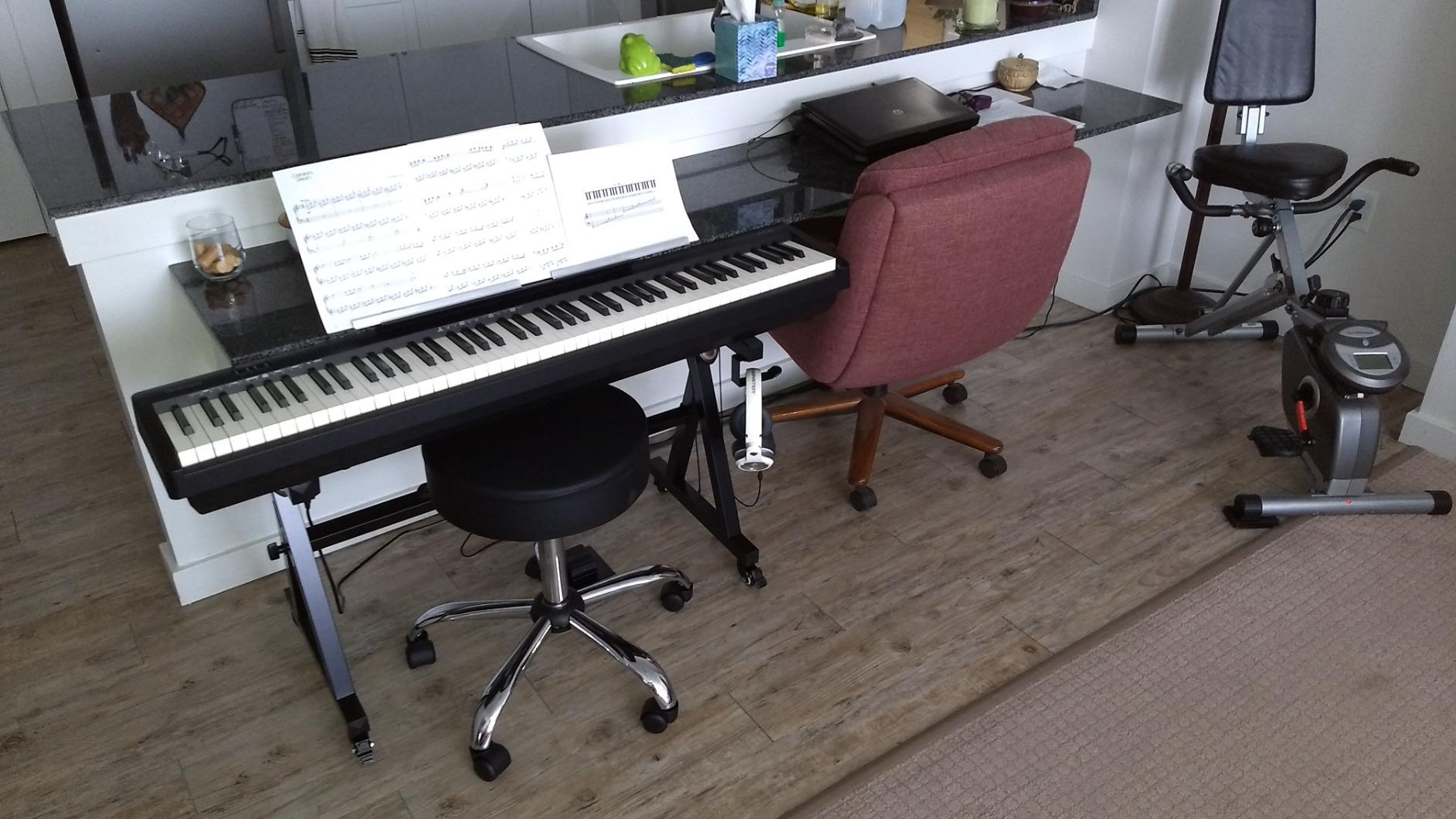
Connectivity is where it beats the Yamaha. Bluetooth, MIDI and USB MIDI are all built in, the Roland Piano App adds sounds and a metronome, and Twin Piano mode splits the keyboard for a student and teacher sitting side by side.
At 27 pounds it is the heaviest keyboard-only unit here, and the optional KSCFP10 stand is sold separately. The DP-2 foot switch and music rest do come in the box.
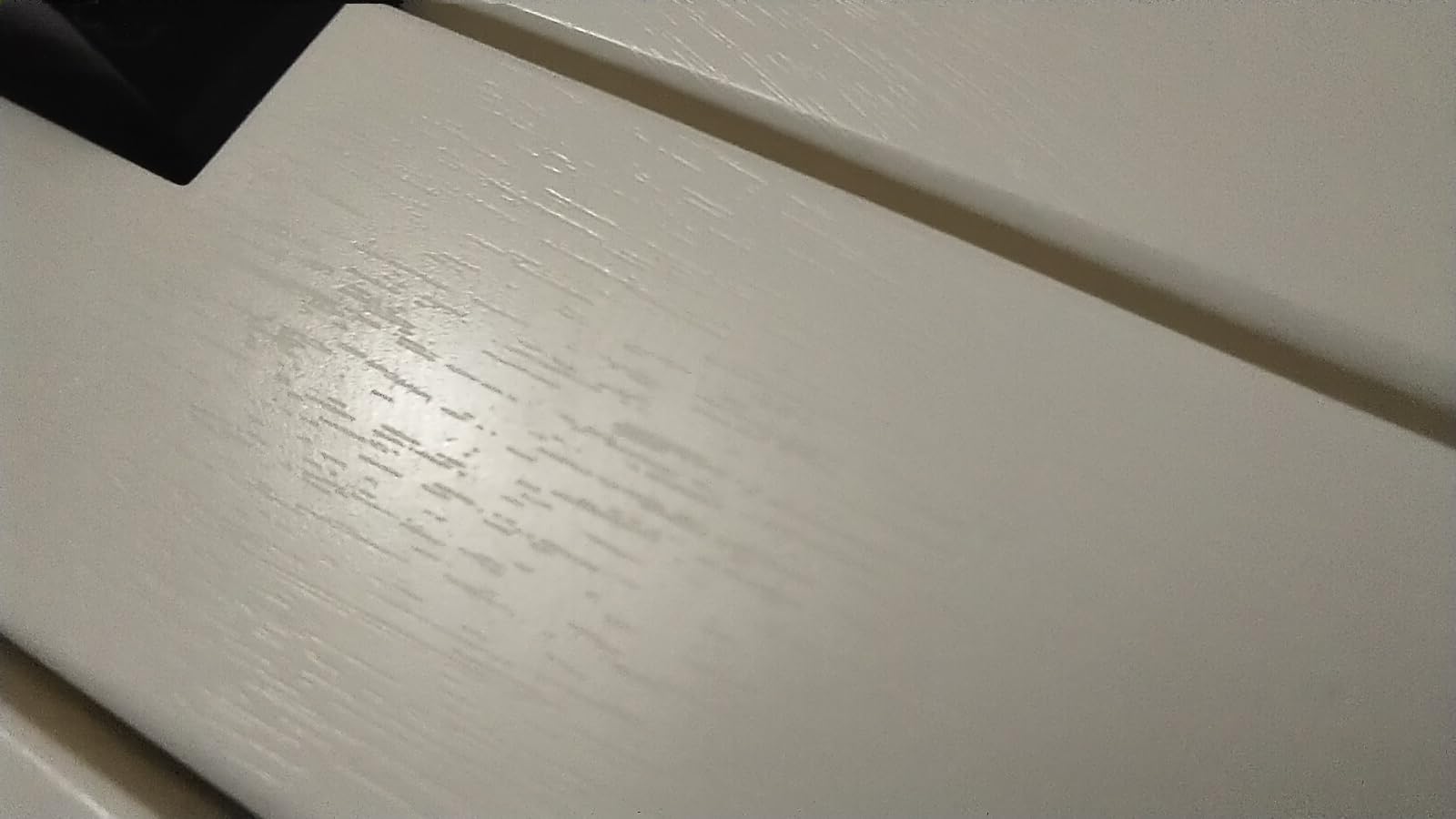
Who the Roland FP-10 suits
It suits apartment dwellers, night-shift players and anyone practising in a shared room where the sound of the keys matters as much as the sound of the tone.
It also suits teachers and students, since Twin Piano mode is purpose-built for a lesson. If you want to record into a DAW, the built-in MIDI interface removes the need for a separate controller.
Where the FP-10 disappoints
It disappoints players who want a long list of sounds. Fifteen voices is a short list even for a beginner who wants to explore beyond a grand piano sound.
There is no onboard recording, so saving a take means going through a computer or tablet. The included foot switch offers no half-pedaling or sostenuto, and the plastic cabinet will not blend into a living room the way a wood unit does.
5. Donner DDP-100 – Stand and Three Pedals in the Box
Donner DDP-100 88-Key Weighted Action Digital Piano for Beginner Bundle with Piano Keyboard Stand, Power Adapter, Triple Pedals, MP3 Function, USB-MIDI, 2 Headphone Jacks Black
88 fully-weighted action keys
Wood cabinet
Triple pedals
Furniture stand
97 pounds
Pros
- Furniture stand and triple pedals included in the box
- Wood cabinet with sliding key cover looks like an upright
- MP3 playback and USB-MIDI for practice flexibility
- Two headphone jacks allow two people to practise silently
Cons
- Very heavy and awkward to move without help
- Speakers have a canned digital character
- Uneven key voicing between registers
- Bench not included
Everything except a bench arrives in one box. The DDP-100 bundle includes the furniture stand, the pedal plate bridge, supporting columns, the triple pedal unit and all the screws, which removes the most annoying part of buying a furniture-style digital piano.
At 4.6 stars from 1,365 reviews, reviewers frame it as the most complete furniture-style package under 500 dollars. Sounds are sampled from real acoustic grand pianos, and two 1/4-inch headphone jacks mean two people can practise silently at the same time.
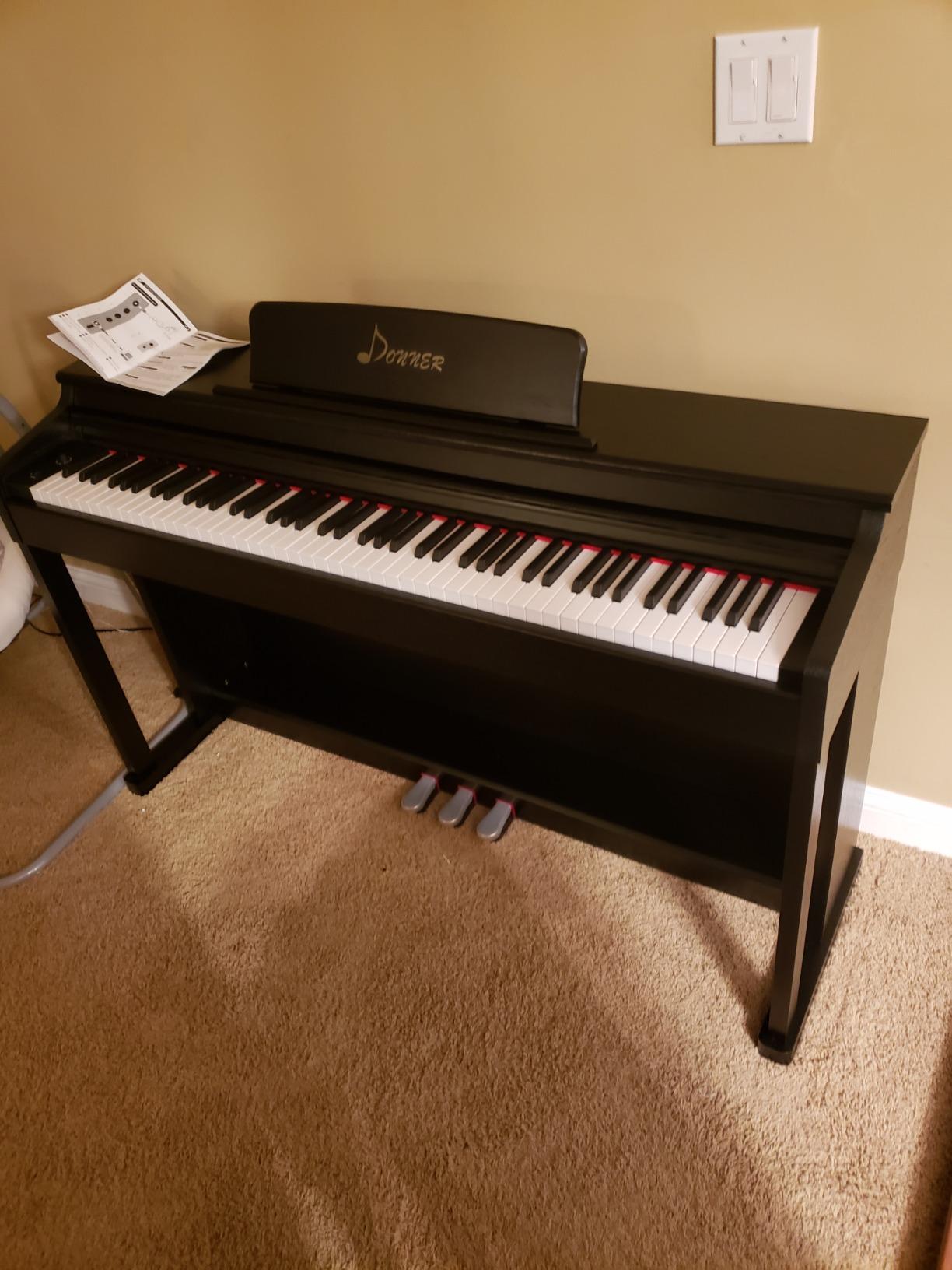
MP3 track input and playback through the built-in amplifier means you can run backing tracks through the same speakers, and USB-MIDI covers recording. The wood cabinet with a sliding key cover looks far more like a real upright than a plastic slab.
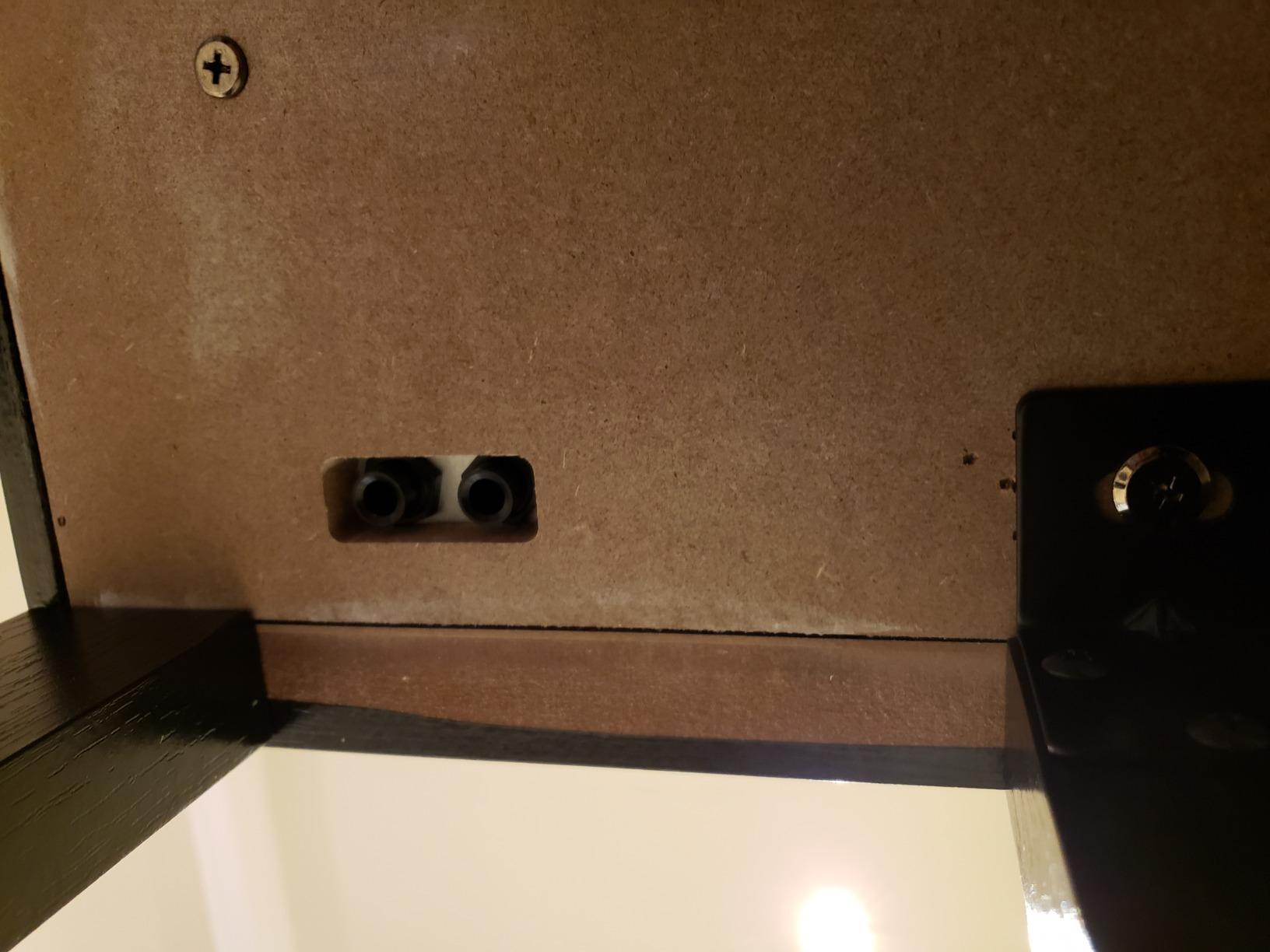
Assembly is achievable solo in about 40 minutes, though the instructions are a diagram rather than step-by-step text. The two built-in speakers are 6-inch units, and some units report pedal noise or headphone jack faults.
Who the Donner DDP-100 suits
It suits anyone who wants a furniture-style piano in a living room and refuses to buy a stand and pedals separately. It is also the practical pick for a family sharing one instrument.
It suits players who practise with backing tracks, since MP3 input and playback are built in rather than requiring a phone speaker next to the piano.
Where the DDP-100 disappoints
At 97 pounds it is the heaviest unit in this roundup by a wide margin, and moving it between rooms takes two people. If you might need to carry it to a lesson or a rehearsal, that is the deal-breaker.
Reviewers repeatedly note a canned, distinctly digital speaker character and uneven key voicing, where some registers sound louder than others. The bench is missing from the box despite some product imagery suggesting otherwise.
6. STRICH SDP-300W – Wood Cabinet With Teaching App Support
STRICH Digital Piano 88 Keys, Hammer-Action Weighted Keyboard, Full size Electric Piano Keyboard with Furniture Stand, 25Wx2 Speakers, Supports USB-MIDI/Wireless Connect, SDP-300W (Color Walnut Wood)
88 fully weighted hammer action keys
128 timbres
128-note polyphony
Walnut cabinet
58.8 pounds
Pros
- Walnut wood-grain cabinet reads as a real upright
- Fully weighted hammer action with ivory texture
- Generous 128 timbres and 200 rhythms
- Wireless and USB-MIDI both supported
- Furniture stand included
Cons
- Heavier than most 88-key options here
- Stand requires assembly
- Only 221 reviews so far
- Shorter brand track record
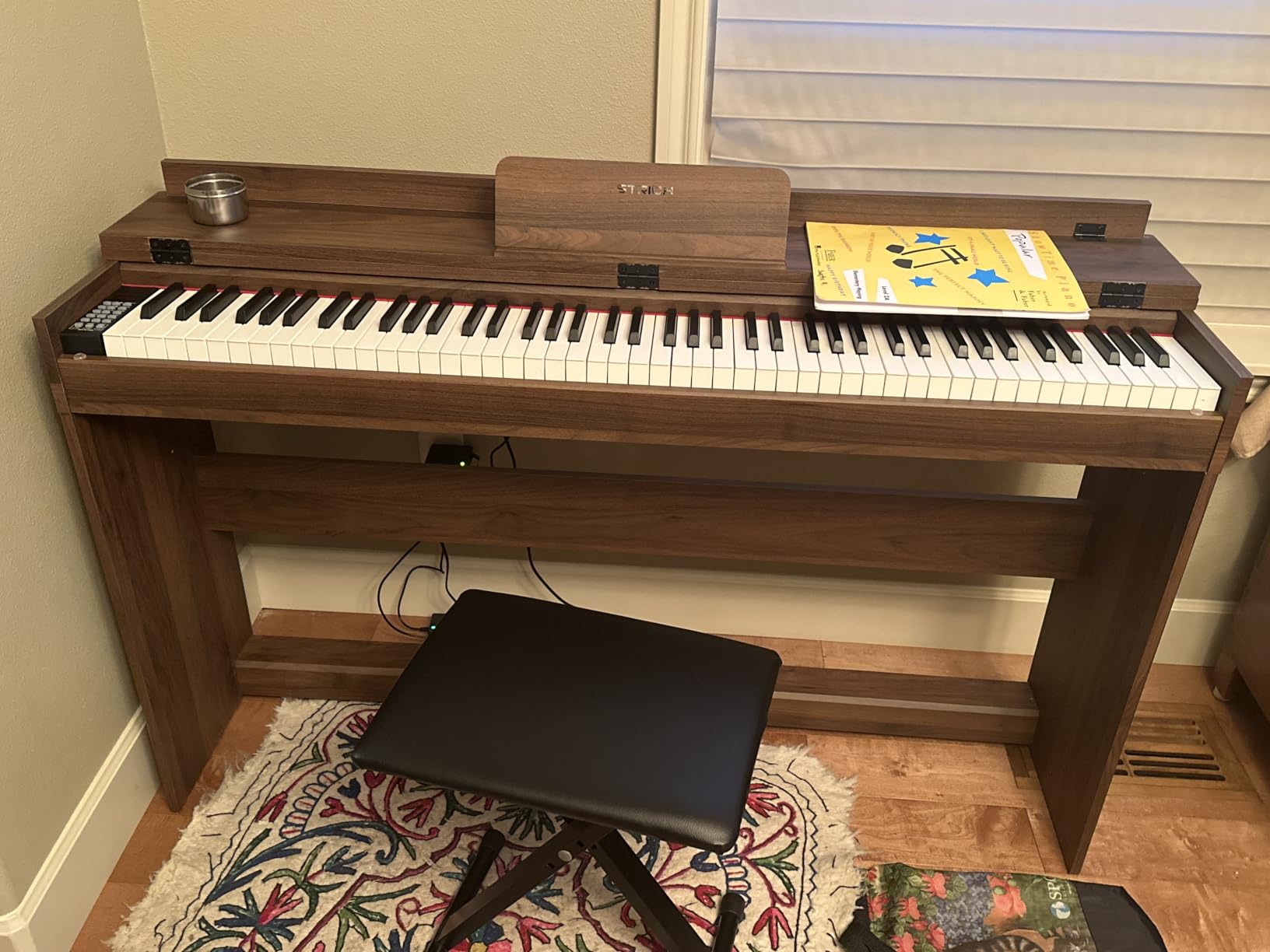
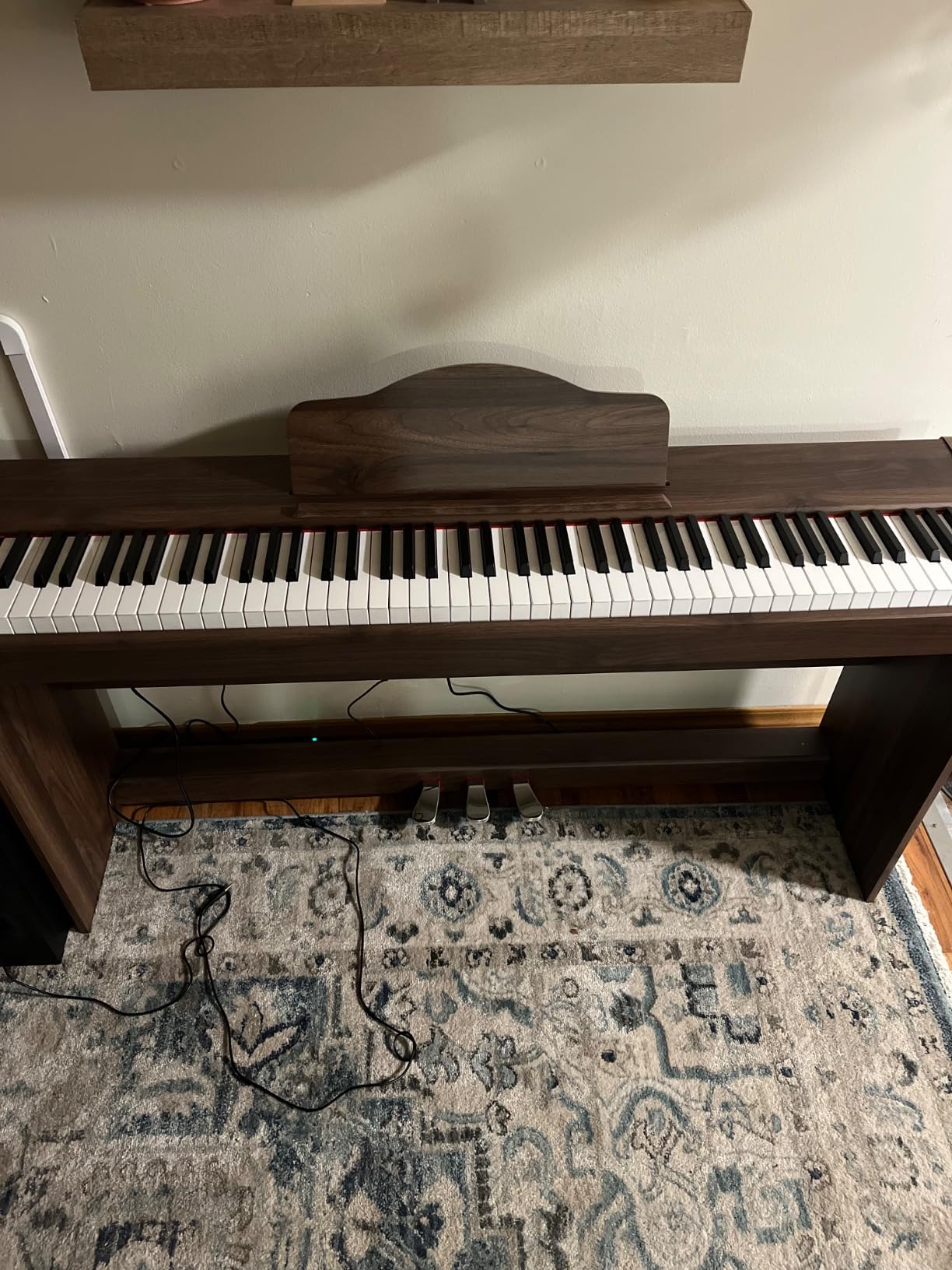
The SDP-300W answers the question we hear most from adults starting lessons: can a first piano look like furniture rather than a studio slab? The walnut wood-grain cabinet and matching stand do that job, and the furniture stand comes in the box.
Underneath the finish is fully weighted hammer action with simulated ivory texture, 128 preset timbres, 200 drum rhythms and 128-note polyphony. Chorus, layer, split, octave shift and transpose cover the practice functions most players need.
Connectivity is unusually good for the price. Both wireless MIDI and USB-MIDI are supported, and the piano works with the STRICH teaching app on iPad, phone, Windows, MacOS and Android. An audio-in port lets you route external playback through the piano speakers.
Speakers are 20W units, listed as 25Wx2 in the product title. Built-in demos and a dual-keyboard mode round out a beginner-friendly feature set, and the AC adapter accepts 100V-240V.
Who the STRICH SDP-300W suits
It suits a family buying a first piano that has to live in a dining or living room, where a plastic slab on an X-stand looks out of place. It also suits a player who wants wireless MIDI for lesson apps without a cable.
It suits anyone moving past 64-note polyphony, since 128 notes will not drop out when you layer sounds or hold a chord with a pedal.
Where the SDP-300W disappoints
At 58.8 pounds it is heavier than most 88-key slabs, and the stand needs assembling before the piano is usable. Plan the room before it arrives rather than after.
The honest weakness is evidence. With 221 reviews, there is far less long-term reliability data than for the Yamaha, Roland or Alesis, and a shorter brand track record means parts and service support are less predictable.
7. UISCOM 1852 – Desk That Converts Into a Piano
UISCOM 88 Key Weighted Home Digital Piano,Wooden Desk Keyboard,Triple-Pedal
Desk-to-piano cabinet
Progressive hammer action
Dream5704 sound chip
Triple pedals
Pros
- Converts between a writing desk and a keyboard
- Progressive hammer action with velocity-sensitive keys
- Triple pedal unit with true sostenuto
- Recording and playback plus MIDI function
- Dual headphone jacks
Cons
- Lowest average rating here at 4.4 stars
- Highest share of one-star reviews
- Only 8 tones
- Weight and dimensions not listed by the manufacturer
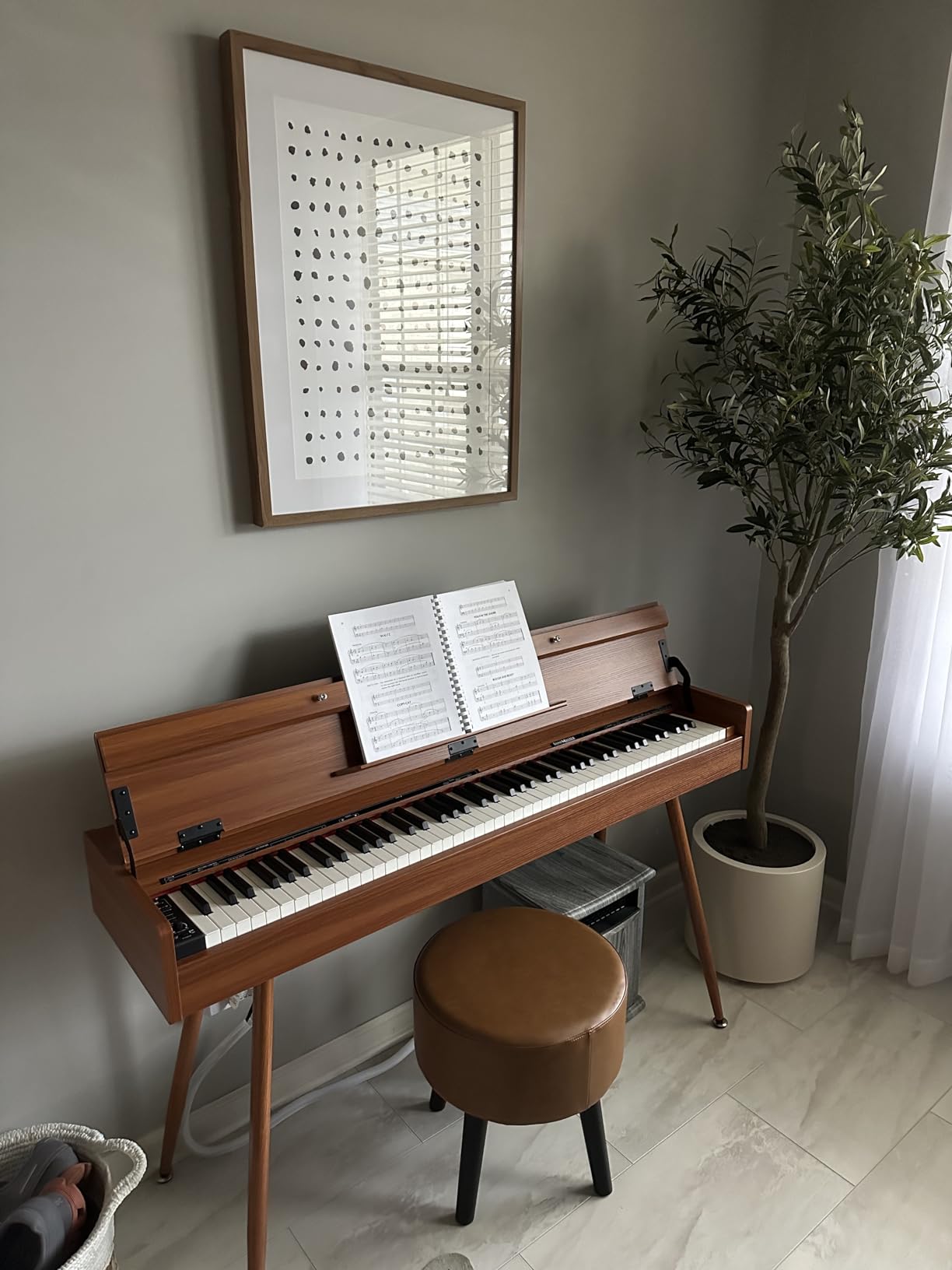
The UISCOM solves a problem no other model here does: what to do with a piano in a home office. The cabinet transforms between a writing desk and a keyboard, so when practice stops the surface becomes usable again. That single design decision can be the reason this fits your home.
The keybed is progressive hammer action with velocity sensitivity and adjustable key sensitivity, and the triple pedal unit covers sustain, sostenuto and soft. A Dream5704 sound chip drives 8 tones and 40 demo songs, with reverb, chorus and tempo controls.
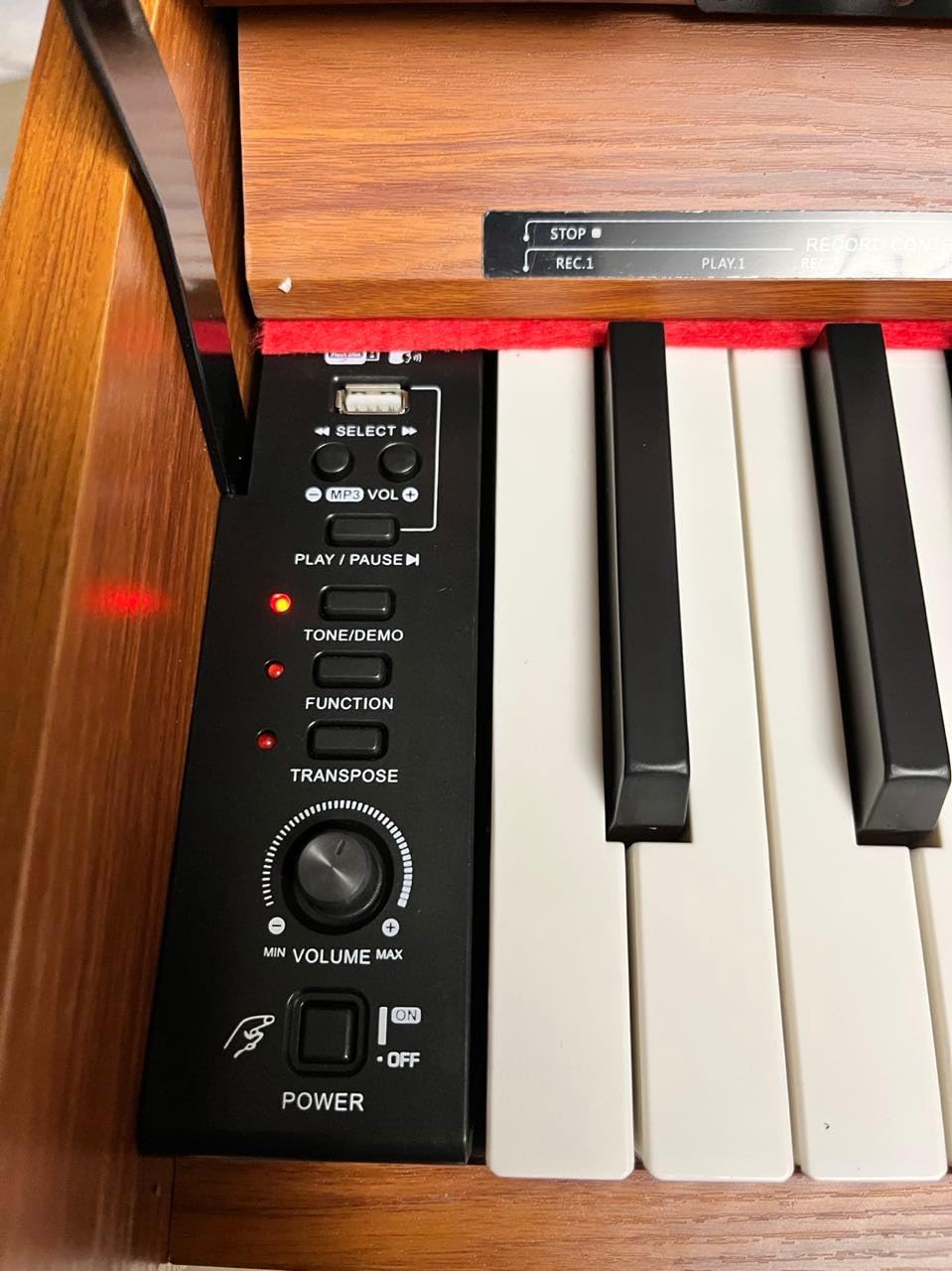
Recording and playback are built in, MIDI in and out is supported, and an integrated MP3 player with a USB port handles backing tracks. Dual headphone jacks let two people practise at once. It works with Windows, MacOS and Linux.
The box contents are listed as power adapter and user manual only, which is worth confirming directly with the seller before ordering if a pedal unit is essential to your setup.
Who the UISCOM 1852 suits
It suits a home-office or studio setup where a permanent keyboard would eat the only free desk surface. It also suits a player who wants sostenuto, which most budget bundles skip.
It suits anyone who records and layers, since recording, playback, MIDI and an MP3 player are all onboard rather than requiring extra hardware.
Where the UISCOM disappoints
It has the lowest average rating in this roundup at 4.4 stars, with the highest share of one-star reviews at 8%. Buyers point to a small tone library and general build consistency compared with the established brands.
Eight tones is the thinnest list here, and the manufacturer does not list weight or dimensions, which makes planning a room and a two-person move harder than it should be.
8. HEXANT 88-Key – Most Complete Starter Bundle
HEXANT 88-Key Weighted Digital Piano, Full-Size Semi-Weighted Upright Flip Electric Keyboard Piano with 3 Pedal and Multi-Functional Keyboard for Beginner(with Bench,Black)
Progressive weighted keyboard
480 tones
64-note polyphony
Bench and 3 pedals
66 pounds
Pros
- Bench
- triple pedals and hardware all included
- Progressive weighted action with velocity sensitivity
- Backlit LCD control panel
- 2x25W amplifiers
- Recording and playback built in
Cons
- This black variant is semi-weighted rather than fully hammer weighted
- Heaviest bundle here at 66 pounds
- Only 208 reviews
- 64-note polyphony
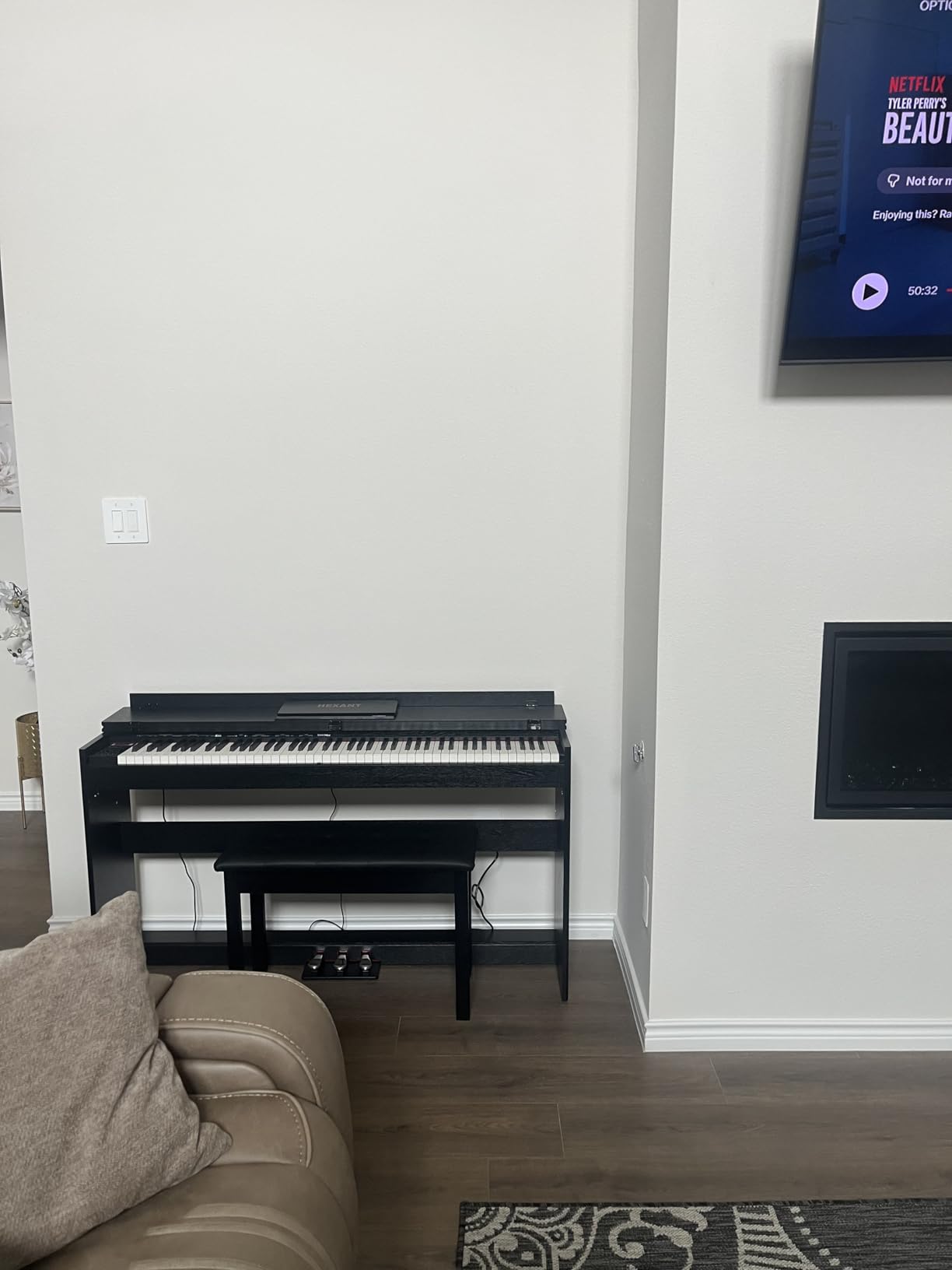
Few instruments arrive with more hardware attached. The HEXANT package includes the piano, a matching bench, a triple pedal unit for sustain, soft and sostenuto, plus the adapter and mounting hardware, so the only thing left to buy is a seat adjustment if the bench does not suit the player.
The tone library is the largest in this roundup at 480 tones plus 128 standard GM sounds and 200 preset rhythms, with 80 demo songs. A backlit LCD panel handles navigation, and 2x25W amplifiers make it one of the loudest onboard speaker sets here.
The keyboard is progressive and velocity-sensitive with adjustable touch response, and a double keyboard split function covers two-hand exercises. Recording control and playback are built in, and the bench measures 29 x 18.5 x 13.4 inches.
The catch is the action and the weight. This black variant is semi-weighted rather than fully hammer weighted, and the whole package is 66 pounds, so moving it between rooms is a two-person job. Multiple colour and hammer-weighted variants exist, which is worth checking before you settle on this one.
Who the HEXANT 88-Key suits
It suits someone buying a complete gift in one box, since bench, pedals and hardware are all in there. It also suits a player who wants a huge tone list for exploring organ and synth sounds.
It suits a household where the piano will be played loudly, since 2x25W amplifiers cover practice and small-group playing without external speakers.
Where the HEXANT disappoints
It disappoints anyone whose priority is acoustic realism, because the listed action here is semi-weighted. Check the variant carefully; hammer-weighted versions of this model exist.
Polyphony is capped at 64 notes, half the Donner DEP-20 and less than half the Alesis Recital, so layering sounds or holding long chords will cut out. With 208 reviews, there is limited long-term data.
9. Eastar EUP-100 – Gift-Ready Bundle With Headphones
Eastar EUP-100 Digital Piano 88 Key Weighted Keyboard Full Size, Home Digital Keyboard Piano Gifts for Beginners Daughter, with Cover, Headphone, Three-Pedal, Wireless Midi & Recording, Retro Wood
88 fully weighted hammer action
13 voices
Wireless MIDI
Includes headphones and 3 pedals
55 pounds
Pros
- Fully weighted hammer action at an entry-level price
- Headphones
- cover
- music stickers and triple pedal included
- Wireless MIDI plus MIDI in and out
- Recording and built-in metronome with sync start
Cons
- Thinnest review base here at 99 reviews
- Sound distorts at maximum volume
- Bench not included
- Two people recommended for assembly
The EUP-100 is the one to buy when the piano is a present. A protective cover, a pair of headphones, music stickers for a young learner and a three-pedal unit all come in the box, which means nothing is missing the day it is opened.
The keybed is 88-key fully weighted hammer action, and 13 voices include grand classical and electric sounds alongside 128 rhythms and 31 built-in songs. Even classically trained buyers describe the tone as comparable to a Yamaha at this price.
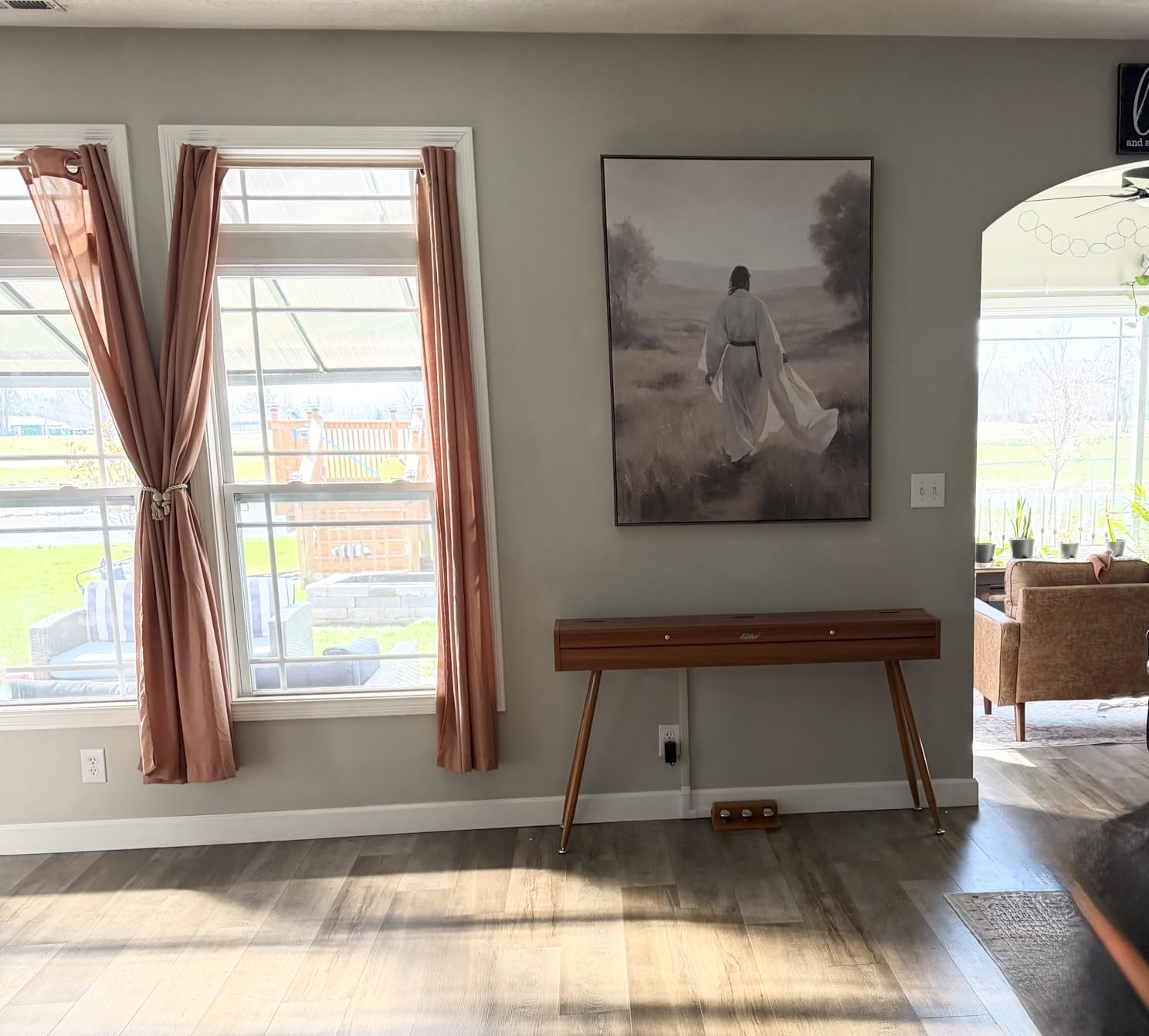
Wireless MIDI plus MIDI in and out connects to lesson apps without a cable, and recording is built in. A metronome with sync start, dual voice, auto chord, transpose and intro or ending accompaniment cover practice routines for a student.
The retro wood cabinet doubles as a desk, which is useful in a bedroom where surface space is limited. The 1-year warranty is standard, and the piano weighs 55 pounds.
Who the Eastar EUP-100 suits
It suits a parent buying for a child on lessons, because the cover, headphones and stickers remove the friction of starting. It also suits anyone who practises at night and wants headphones in the box.
It suits players working with lesson apps, since wireless MIDI means no cable to plug in each session.
Where the Eastar EUP-100 disappoints
It has the thinnest review base of any model here at 99 reviews, so long-term reliability claims are the least evidenced on this list. Treat the warranty as the real protection.
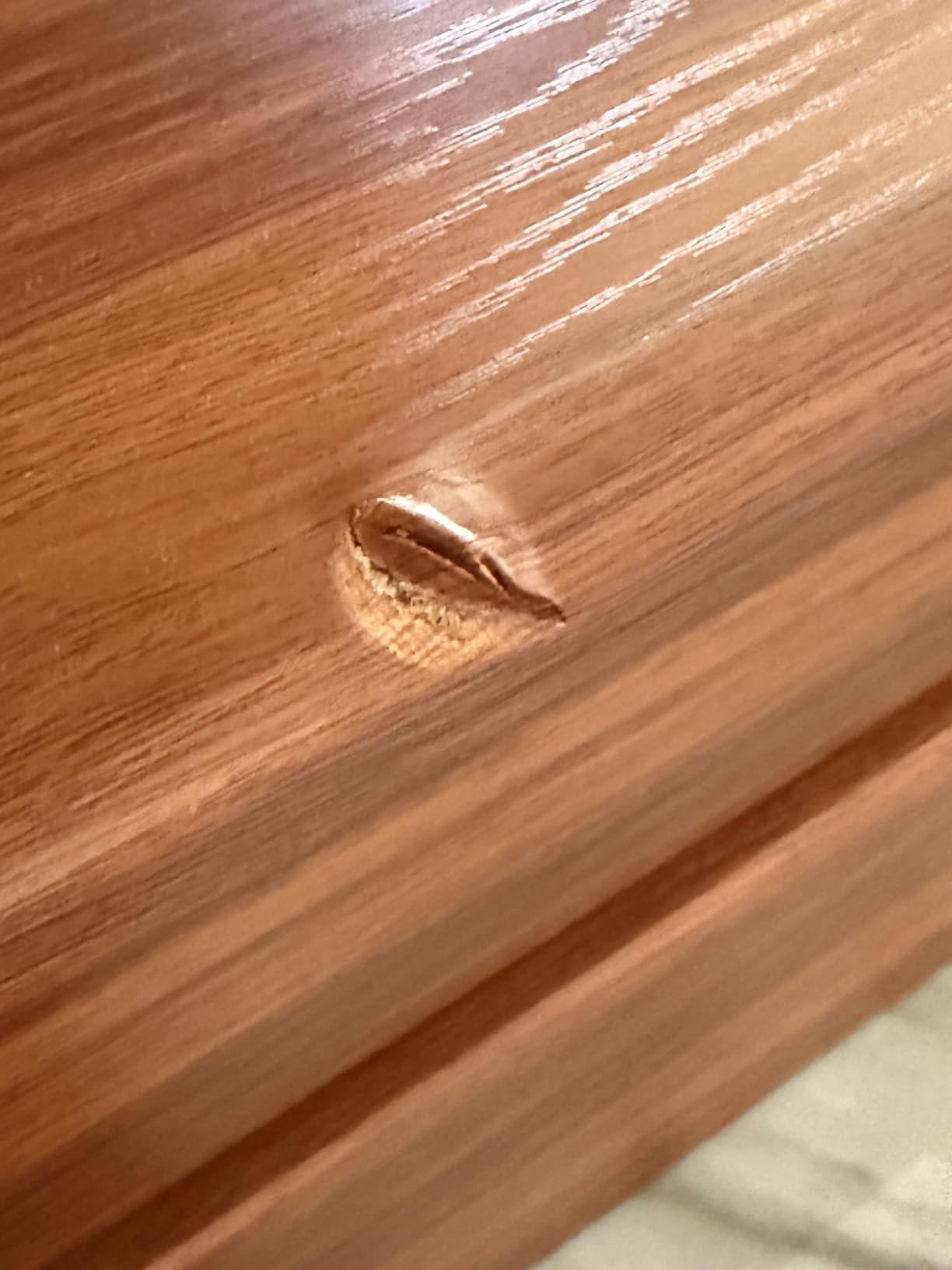
Owners flag distortion when volume is pushed to maximum, and the legs are painted rather than solid wood, so it will not survive being dragged around. A bench is not included, and assembly is a two-person job.
10. Ktaxon RM88 – Lowest-Cost Complete 88-Key Set
Ktaxon 88 Key Keyboard Piano Set, Full Size Digital Piano Keyboard-Wood
88 semi-weighted keys
128 GM tones
64-note polyphony
Bench, pedals and headphones
48.5 inch wide
Pros
- Lowest-cost complete 88-key set here
- Bench
- headphones
- key stickers and triple pedals included
- Bench has multiple height settings for growing players
- Compact 48.5-inch footprint fits smaller rooms
- Wireless app connectivity and MIDI
Cons
- Semi-weighted rather than fully weighted action
- Only 64-note polyphony
- Blue power light cannot be turned off
- Key action feels tight at first
The Ktaxon set is the shortest path to a complete 88-key station. The box contains a triple pedal unit, headphones, a piano bench, key stickers and a removable music stand, which removes almost every separate accessory purchase from the running total.
The bench is multi-height-adjustable, which matters more than it sounds when the player is a child who will grow into it. At 48.5 inches wide, this is the narrowest instrument here and fits the tightest rooms.
The 15-function control panel covers 128 GM tones and 128 rhythms, with recording and playback, dual keyboard split and wireless app connectivity alongside MIDI support. It works with Windows, MacOS and Linux. The removable music stand doubles as a shelf.
The keybed is semi-weighted with touch sensitivity, so the response is quick and the rebound is fast. That is a real difference from a light-up keyboard, but it is still a lighter feel than full hammer weighting.
Who the Ktaxon RM88 suits
It suits a family on the tightest budget who wants a small footprint and a complete set of accessories, and a child whose seat height will change year to year.
It suits anyone starting lesson apps, since wireless connectivity removes the cable and the key stickers help a new player find middle C without asking.
Where the Ktaxon RM88 disappoints
It disappoints anyone who wants acoustic realism. Semi-weighted keys are lighter and more responsive than hammer weighting, and reviewers note the action feels tight during the first sessions before it settles.
Polyphony is limited to 64 notes, so chords plus sustain pedal will cut voices. The bright blue power light cannot be turned off, and the music stand and piano are noticeably heavy to carry between rooms.
How to Choose a Digital Piano Under $500
Start with the keybed, because it is the one part of a digital piano you cannot upgrade later. If a listing says 88 fully weighted keys with hammer action, it qualifies. If it says semi-weighted, it is a step down. If it says unweighted, it is a keyboard and the technique will not transfer to an acoustic piano.
Next, listen for dynamic range. Play softly. A piano that only sounds convincing at full volume will teach you to hit the keys, which is the opposite of good technique. The Yamaha P71 and Roland FP-10 both handle soft playing well.
Then check polyphony. Sixty-four notes is enough for practice with a sustain pedal. One hundred and twenty-eight or higher is enough to layer sounds and play along with backing tracks without voices dropping out mid-chord.
Speakers matter less than buyers expect because most of these models are used with headphones, but check the wattage and the number of drivers. Two 20W to 25W units cover a living room; anything smaller is a headphone instrument.
Connectivity is a tiebreaker. Bluetooth MIDI is convenient for lesson apps, USB MIDI is essential if you want to record into a DAW, and a USB type A port is useful for loading files. Not every model here has all three, so check the specification list before you buy.
Finally, confirm what is in the box. Sustain pedal, music rest, bench, stand and pedal unit vary wildly between models. The Donner DDP-100, STRICH SDP-300W, HEXANT and Eastar EUP-100 include hardware; the Yamaha P71 and Roland FP-10 include a pedal but no stand.
Our guides to 88-key digital pianos and console digital pianos go deeper on the furniture side of this decision.
Specs Explained: Touch, Polyphony, Modes and Connections
Touch sensitivity, sometimes called velocity sensitivity, means the piano measures how hard and how fast you strike a key and adjusts volume and brightness to match. It is what lets one instrument sound like a whisper and a fortissimo from the same sample.
Polyphony is the number of voices that can sound at once. Each finger, each pedal press and each layered sound consumes voices. When a piano runs out of polyphony, held notes disappear rather than new ones being blocked, and it happens mid-piece.
Split mode divides the keyboard into two instruments, usually a piano on the right and an electric piano or organ on the left. Dual mode layers two sounds on the same keys. Duo, twin or partner mode gives each player their own half, often on a beginner digital piano built for lessons.
USB type B is the port used for MIDI and recording data, which is why the Yamaha P71 sends recordings to a computer rather than storing them internally. USB type A is the rectangular port used for flash drives and file playback on models like the Donner DEP-20.
Bluetooth audio plays music from your phone through the piano speakers, which is useful for backing tracks. Bluetooth MIDI sends note data instead, so an app can record what you play. They are different functions and many budget pianos support only one of them.
A slab digital piano is a portable rectangular instrument that needs a separate stand. A console digital piano is a furniture unit with a built-in stand and cabinet. If you want the furniture look and the pedal unit, budget for a bundle model such as the DDP-100 or the STRICH SDP-300W.
What 500 Dollars Actually Buys: Stand, Bench, Pedals and Headphones
Most buyers treat the piano as the whole purchase, and then discover on delivery day that they also need somewhere to put it and somewhere to sit. Here is what a complete station costs beyond the instrument, using the bundles on this list as reference points.
The Donner DDP-100 arrives with a furniture stand and a triple pedal unit, so you only need a bench. The STRICH SDP-300W includes a furniture stand, so it needs pedals and a seat. The HEXANT and Eastar bundles include bench and pedals but still leave the stand question open, so check the box contents carefully.
The Yamaha P71 and Roland FP-10 include a sustain pedal and nothing else. The Alesis Recital includes a pedal input but no pedal. Add a slab stand, a bench and a decent pair of closed-back headphones to any of those and you will spend more on accessories than the gap between the cheapest and most expensive piano here.
That is the argument for buying a bundle. A triple pedal unit gives you sostenuto and soft pedal control that a single switch cannot, and a bench that adjusts in height saves an awkward posture and sore shoulders later.
Closed-back headphones matter more than expensive open-back ones here, because they keep the piano’s low end contained and cut the key noise that carries through walls. That is how apartment dwellers practise at night without the whole building hearing them.
Five-Minute Audition Checklist Before the Return Window Closes
Play softly first. Sit at the instrument and play a simple scale at a whisper. If the piano thins out or sounds thin and brittle at low volume, it will not teach you dynamics.
Then play a repeated note several times in a row to check for buzzy chatter or a stuck key, and hold a full chord with the pedal down to see how long it sustains before notes fade.
Switch between two sounds without consulting a manual. On a piano aimed at beginners, the controls should be reachable in under a minute. Difficulty here is a sign you are looking at a menu-driven instrument rather than a practice instrument.
Check pedal polarity. Press the sustain pedal and confirm it holds the sound, then listen for pedal noise on the upstroke, which matters at 11pm in a shared flat.
Finally, measure the space. Check the instrument width plus stand clearance, and confirm two people can carry it to the room where it will live. Every model on this list except the lightest two needs two people to move.
Buying a Previous-Generation Digital Piano Used
Plenty of the models competitors still rank are previous-generation instruments that only appear on the used market now. Older slab models from the same families as the Yamaha P71 and the Roland FP-10 remain the standard reference point for used value, and buyers compare new budget pianos against those prices constantly.
Check the key action under load first. Play the same note in the bass and treble and confirm the weight feels even. Stiff or gritty keys usually mean the keybed pivot or the action felt needs servicing.
Play every key at low volume and listen for buzzing, crackle or notes that do not speak. Then hold a chord and check that the sustain pedal holds cleanly without rattle.
Confirm all outputs work: headphone jack, both RCA or line outputs and the USB port. Count the accessories, since a missing pedal or stand erodes the value quickly.
Look for a serial number and a receipt, and check whether the instrument still has manufacturer warranty coverage. Weight is a good authenticity test, since a piano that feels far lighter than the published figure is not what you think it is.
If you want a wider look at current models, our baby grand piano guide covers what happens when you stretch the budget upward.
Frequently Asked Questions
What is the best digital piano for value for money?
The Yamaha P71 is the strongest value in this bracket. It pairs GHS graded hammer action with Yamaha grand piano samples, includes a sustain pedal and power supply, and holds a 4.7-star average across more than 6,600 reviews. Buy a stand and bench separately.
Which digital piano is closest to the real piano?
The Roland FP-10 is usually cited as the most realistic instrument under 500 dollars. Its 88-note Authentic Acoustic Feel keyboard is widely considered the best action in the bracket, and the SuperNATURAL engine delivers a convincing grand tone. Key action feel varies more between brands than spec sheets suggest, so audition before you commit.
What are the best digital pianos for beginners under 500?
For most beginners the Yamaha P71 is the pick, with the Alesis Recital as the lower-cost option and the Roland FP-10 for quiet apartment practice. All three have 88 full-size weighted keys, which is the entry criterion at this price. Beginner buyers should prioritise key action and dynamic range over tone count.
Do I need weighted keys to learn piano?
Yes, if you plan to move to an acoustic piano or a teacher is involved. Weighted keys build the arm strength and dynamic control that unweighted keyboards do not develop, which is why teachers push back on the advice that semi-weighted is good enough. Semi-weighted is a real compromise; fully weighted hammer action is the entry bar.
Do I need a 3-pedal unit at a beginner level?
Not to begin with, a single sustain pedal is enough for most first-year material. Add a three-pedal unit when your repertoire includes pedal technique exercises or when you move toward classical studies. Bundles such as the Donner DDP-100, Eastar EUP-100 and HEXANT include one, so buying it separately is optional there.
Conclusion: The Best Digital Pianos Under $500
After comparing all ten models, the Yamaha P71 remains the best digital piano under 500 overall. Graded hammer action, a 4.7-star rating across 6,655 reviews and a sustain pedal in the box make it the safest first piano and the easiest upgrade path from a 61-key keyboard.
Buy the Alesis Recital if your budget is the deciding factor and you want the most proven instrument available. Buy the Roland FP-10 if noise matters in your home. Buy the Donner DDP-100 or Eastar EUP-100 if you want the stand, pedals and accessories taken care of for you.
Whichever you choose, play it softly before you commit, and give the keybed a week to settle. Check the return window before that week is over.