
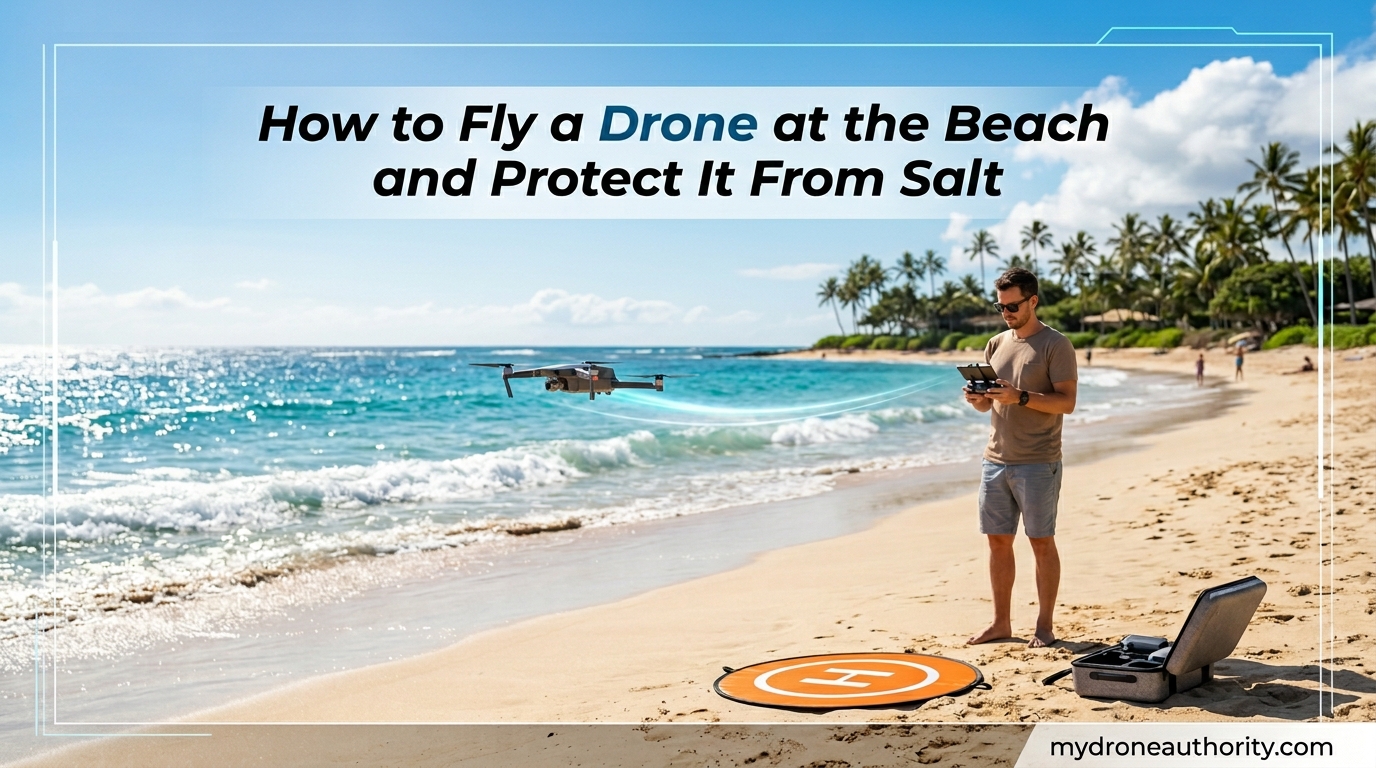
Salt is the silent killer of consumer drones. Flying a drone at the beach protecting it from salt means more than avoiding splashes. Salt particles in the air settle on motors, circuit boards, and battery contacts, then absorb moisture and start eating metal. I have watched pilots lose $1,500 drones to corrosion that built up over a single summer of regular coastal flights.
This guide covers what salt does to a drone, how to prepare before takeoff, what to do the moment you land, and how to spot salt damage before it grounds your aircraft. I have pulled in advice from pilots who fly over salt water daily, and tested the maintenance routine on my own Mini 3 Pro after dozens of Pacific coast sessions.
You can absolutely fly a drone at the beach. You just need to respect the salt.
Table of Contents
Why Salt is Dangerous for Drones
Salt air accelerates corrosion of electrical contacts, motor windings, and PCB traces in consumer drones. Salt particles are hygroscopic, meaning they pull moisture out of humid coastal air and form a thin, invisible electrolyte film on every metal surface they touch.
Once that film forms, galvanic corrosion begins. Dissimilar metals like copper traces, aluminum motor housings, and steel bearings act like a tiny battery, and the salt water electrolyte carries the current. The result is oxidized copper, pitted aluminum, and rust on bearing races within weeks of regular exposure.
Brushless motors are often called waterproof in marketing copy, but the seals only keep splashes out of the bearing. Salt still creeps in along the shaft and accumulates on the windings. I have pulled apart motors after 20 hours of beach flying and found white salt crust on the stator teeth every time.
Flight controllers, ESCs, and gimbal boards are not potted or sealed in most consumer drones. A few minutes of wind-driven salt spray is enough to start a corrosion chain that ends in sensor drift or a mid-flight power cut. The IP ratings on consumer camera drones, typically IP54 on newer DJI models, are dust and rain ratings. They were not designed with sustained salt exposure in mind.
Pre-Flight Protective Measures for Beach Drone Flying
Pre-flight prep is where you stop most of the damage before it starts. The goal is to keep salt off sensitive surfaces and give yourself a clean place to take off and land.
Choose a Landing Pad or Landing Mat
A landing pad is the single most useful beach flying accessory. It keeps prop wash from kicking sand into the motors, gives you a visible target for precise landings, and stops the legs from sinking into soft sand. Most pilots in the drone forums use a 75 cm to 110 cm foldable pad with reflective strips.
If you forget your pad, a piece of cardboard, a beach towel, or even a flattened box works in a pinch. Anything that creates a 60 cm or wider clean zone around the drone is better than bare sand.
Apply Conformal Coating or Dielectric Spray
Conformal coating is a thin polymer layer you brush or spray onto exposed electronics. It does not make a drone waterproof, but it stops salt from reaching solder joints and connector pins. For consumer drones, an acrylic or silicone conformal spray like MG Chemicals 422B or a light mist of DeOxit D5 on connectors is a practical option.
One pilot on the dronepilots community forum tested this by running an ESC underwater after spraying it with DeOxit D5. It kept running. That is not a recommendation to submerge your drone, but it shows how effective a proper conformal layer can be.
Skip WD-40. It is a popular fix online and it is wrong for drone motors. WD-40 leaves an oily residue that attracts sand, and the solvent base can damage winding insulation over time.
Check Weather, Wind, and Tide
Coastal wind is rarely steady. A 12 mph onshore breeze at the surface can turn into 20 mph gusts 30 feet up. Check the wind forecast, watch the flags on the beach, and stay below your drone’s rated wind limit with a 30% safety margin. Onshore sea breeze days also bring higher humidity, which speeds up corrosion.
Pick a launch spot above the high tide line and away from the splash zone. Salt water that lands on a warm motor dries fast and leaves a concentrated salt crust right where you do not want it.
How to Fly a Drone at the Beach Safely
Once you are in the air, the goal is to fly smart, stay legal, and avoid unnecessary exposure to the worst of the salt.
Maintain Visual Line of Sight
The FAA Part 107 rules and most international equivalents require you to keep the drone within unaided visual line of sight. At the beach, the bright horizon and water glare can swallow a small drone in seconds. Use a bright orange or yellow skin, keep it under 400 feet, and never fly it straight out over the ocean without a co-pilot watching it.
Mind the VPS and Vision Systems
Downward vision positioning systems, also called VPS, rely on texture to hold position. Flat water, wet sand, and shadows on the surf all confuse the sensors. The drone may drift, refuse to land, or warn that VPS is unavailable. Fly in ATTI mode or Sport mode when you are over water and let the GPS hold position instead.
Watch for Wildlife and Nesting Areas
Many beaches fall under the Migratory Bird Treaty Act and the Marine Mammal Protection Act. Nesting plovers, terns, and seals can be disturbed by a drone passing overhead. Stay at least 100 feet away from wildlife and check local beach rules. Some US beaches close sections entirely during nesting season, March through August.
Set Return-to-Home Carefully
If you launch from a moving boat or from wet sand near the waterline, update your RTH home point right after takeoff. A drone that auto-returns to its original GPS lock can land in the surf when the tide has moved 50 feet in 20 minutes.
Immediate Post-Flight Maintenance: How to Clean a Drone After the Beach
This is the part most pilots skip, and it is the part that decides whether your drone lasts one season or five. The sooner you clean it after a beach flight, the less time salt has to do its work. I run this routine within 15 minutes of landing every time.
Step 1: Remove the Battery and Props First
Power down completely, pop the battery, and take the props off. You want air, not spinning blades, moving across the motors next.
Step 2: Blow Off Loose Sand With Compressed Air
Use a rocket blower or a can of compressed air to clear sand from motor housings, gimbal gaps, vents, and landing gear joints. Hold the can upright and use short bursts. Compressed air at high pressure can push moisture into seams, so keep the pressure moderate.
Step 3: Wipe Down With a Slightly Damp Microfiber Cloth
Lay a thin stream of distilled water onto a clean microfiber cloth until it is barely damp, then wipe every external surface. The goal is to dissolve salt residue, not soak the drone. Avoid spraying water directly at vents, the gimbal, or the battery compartment.
Step 4: Clean the Motors and Motor Mounts
Salt crystals hide between the motor base and the arm. Use a soft brush, ideally an anti-static brush, to dislodge grains, then a dry microfiber to pick up the moisture. Spin each motor by hand and listen for any grinding. A gritty feel means sand has gotten into the bearing and needs deeper cleaning.
Step 5: Dry Thoroughly Before Storage
Let the drone air-dry in a shaded, low-humidity spot for at least 30 minutes. A small desk fan pointed at the open battery compartment speeds things up. Do not use a hair dryer on high heat. Excessive heat can warp gaskets and push moisture deeper into the electronics.
Step 6: Reassemble and Do a Quick Inspection
Pop the battery back in, power up, and run a quick motor test at low throttle. Listen for any roughness, check the gimbal calibration, and confirm the camera and sensors respond. Any hesitation or warning is a sign to dig deeper before your next flight.
Long-Term Corrosion Prevention for Beach Drone Pilots
If you fly at the coast more than a few times a month, the wipe-down routine is not enough. Long-term salt exposure builds up in places you cannot reach with a cloth. A monthly deep clean keeps that buildup from turning into a failure.
Use Silica Gel Packs in Your Drone Case
Salt does its damage with moisture. Drop two or three large silica gel packs into your hard case. They pull ambient humidity down below 30% RH and keep any leftover salt crystals from absorbing water between flights. Recharge the packs in a 200 F oven for two hours once a month.
Apply a Dielectric Spray Quarterly
Every three months, mist the battery contacts, the motor wire solder joints, and the gimbal connector with a light coat of dielectric grease or silicone conformal spray. This barrier stops the electrolyte from reaching the metal. Avoid getting it on the camera lens or the optical sensors.
Inspect Bearings and Motor Windings Every 25 Hours
Open the motor mounts if your model allows it and check the windings for white salt crust and the bearings for rust. A drop of light machine oil on the bearing shaft, worked in by hand, helps flush out grit and keeps the motor spinning smoothly.
Signs of Salt Damage to Watch For
Salt damage rarely shows up as a sudden failure. It creeps in as small symptoms that get worse over weeks. Catch them early and you can usually fix the problem for under $20 in parts. Miss them and you can write off the whole drone.
Motor Symptoms
One motor running hotter than the others, a faint grinding noise, or a slight twitch during hover are early signs. Sand in the bearing creates drag, the motor pulls more current, and the ESC compensates by sending uneven power. By the time a motor seizes, sand has likely wedged between the stator and the case.
Battery and Connector Symptoms
White or green powder on the battery contacts is oxidized copper. The drone may fail to power on, drop in mid-flight, or report a battery communication error. Cleaning the pins with isopropyl alcohol and a soft brush usually fixes it. Leaving the contacts corroded can damage the battery management board inside the pack itself.
Gimbal and Camera Symptoms
A gimbal that drifts, jitters, or fails to level often has salt on the ribbon cable connector or the IMU. A pink or white crust around the lens bezel is salt residue. Stop flying and clean the camera mount with a dry swab before it migrates onto the sensor.
Flight Controller Warnings
Repeated IMU errors, compass errors, or abnormal attitude warnings are a red flag. Salt on the compass module causes magnetic interference, and the drone may fly in circles, fail to hover, or refuse to arm. Recalibrating the IMU and compass will not help if the salt is still on the board. Clean first, then recalibrate.
Beach Drone Equipment Checklist
Pack this kit in a hard case or a dry bag before every coastal session. Total weight is under 3 pounds and it has saved me from at least three motor replacements.
- Foldable landing pad (75 cm or larger, with reflective strips)
- Two microfiber cloths (one for body, one for sensors)
- Rocket blower or small compressed air can
- Soft anti-static brush for motor crevices
- Distilled water in a small spray bottle
- Isopropyl alcohol wipes (90% or higher)
- Dielectric grease or silicone conformal spray
- Two large silica gel packs
- Spare props, screws, and one spare battery
- Anti-fog wipes for the lens
A small dry bag is worth its weight in gold. If the tide creeps up or a wave catches you by surprise, the bag protects the drone, the controller, and the spare batteries from a dunking. A single saltwater dip can fry a $1,000 drone in seconds.
Beach Drone Regulations You Should Know
Rules vary by country, state, and even by individual beach, but a few patterns hold in most coastal areas.
National parks almost always ban drones. State parks usually allow them outside of wildlife closures. Many city and county beaches require a permit for commercial flights and follow standard FAA Part 107 rules for hobbyists. The FAA 120m (400 ft) altitude limit, the 1:1 visibility rule where the drone stays within 1 mile of the pilot and within unaided sight, and the 5-mile airport buffer all apply at the beach just like anywhere else.
Check with the local park service or beach patrol before you fly. A 5-minute phone call can save a $1,000 fine and the awkward conversation that follows.
Frequently Asked Questions
Can I fly a drone over a beach?
Yes, you can fly a drone over most public beaches in the US under FAA Part 107 rules or the recreational flyer rules. You must keep the drone within visual line of sight, below 400 feet, and at least 5 miles from any airport. Some beaches in national parks, wildlife refuges, or active nesting areas are closed to drone flights. Check local beach rules before you launch.
How does salt air affect a drone?
Salt air deposits microscopic salt particles on every exposed surface of a drone. Those particles pull moisture out of humid coastal air and form a thin electrolyte layer that accelerates galvanic corrosion on copper traces, aluminum motor housings, steel bearings, and connector pins. Over time, this causes motor binding, sensor drift, intermittent power loss, and battery communication errors. Regular fresh water rinses and a conformal spray barrier are the standard defenses.
What happens if a drone gets salt water?
Salt water on a consumer drone almost always causes rapid, severe damage. The salt conducts electricity, so any moisture on a powered circuit board creates short circuits that can fry the ESC, flight controller, or gimbal board within seconds. Corrosion begins immediately on metal contacts, and the damage is usually not reversible even with thorough cleaning. A drone that takes a saltwater dip should be powered down, the battery removed, and the unit sent to a repair shop within 24 hours.
How do I clean a drone after the beach?
Power the drone off, remove the battery and props, blow loose sand out with compressed air, then wipe every surface with a barely damp microfiber cloth and distilled water. Brush out motor crevices with a soft anti-static brush, dry the drone in moving air for at least 30 minutes, then reassemble and run a low-throttle motor test. Do this within 15 minutes of landing for the best results. Avoid spraying water directly into vents, the gimbal, or the battery compartment.
Are consumer drones waterproof?
Most consumer camera drones are not waterproof. Newer DJI models carry an IP54 rating, which means they are protected from dust and light rain from any direction, but the rating does not cover submersion or sustained salt spray. Brushless motors can handle brief splashes, but salt still corrodes the bearings, windings, and connector pins over time. For real water protection, you need a marine-rated drone or a dedicated waterproof housing.
Final Thoughts on Flying a Drone at the Beach and Protecting It From Salt
Beach flying is one of the most rewarding ways to use a drone, but salt is patient and thorough. The pilots who keep their aircraft flying for years are the ones who build a 15-minute post-flight routine into every session, keep a landing pad in the car, and never ignore a noisy motor.
Start with a damp microfiber wipe after every flight. Add a conformal spray and silica gel packs once you start flying the coast weekly. Watch for the early warning signs, and your drone will keep coming back from the salt spray session after session.
That is the real secret to flying a drone at the beach protecting it from salt. Treat the salt as a constant, and the rest is just routine.