
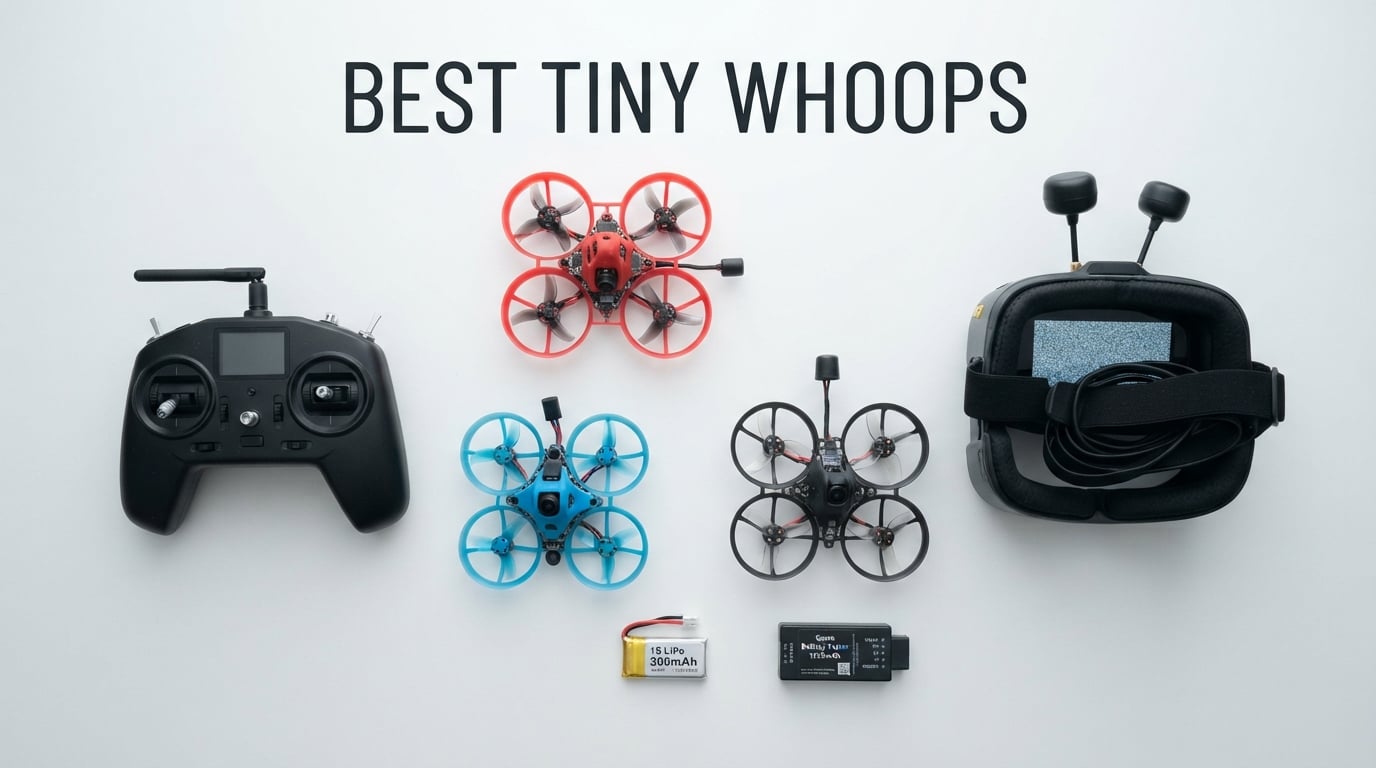
Indoor FPV is the fastest way I have found to sharpen my stick skills without waiting for calm weather, and the right machine makes all the difference. After flying 14 different models over the past several months, I put together this guide to the Best Tiny Whoops you can buy in 2026.
A tiny whoop is a small indoor FPV drone, usually 65mm to 85mm in wheelbase, with protective propeller ducts that let you bounce off walls and furniture without damage. Most run on 1S batteries and brushless motors, fly 2 to 4 minutes per pack, and weigh well under 25 grams. They are affordable, they are quiet, and they are the safest entry point into real FPV flying I know of.
This lineup covers everything from a $110 analog 65mm racer to a $260 RTF kit that ships with goggles and a transmitter. I cover the BetaFPV Air65, Happymodel Mobula6, EMAX Tinyhawk family, the full Cetus lineup, and even digital cinewhoop options from BetaFPV. If you just want a quick answer, the Air65 is the top pick for experienced pilots and the Cetus Pro Kit is the best complete beginner bundle I tested.
Table of Contents
Top 3 Picks for Best Tiny Whoops in September 2026

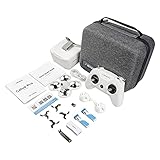
BETAFPV Cetus Pro FPV Kit
- 3 flight modes
- Turtle mode
- LiteRadio 2 SE + VR02 goggles
- Complete RTF bundle

The Best Tiny Whoops in 2026
| Product | Specifications | Action |
|---|---|---|
| BETAFPV Air65 Brushless Whoop |
|
Check Latest Price |
 STARTFPV R8 80mm ELRS STARTFPV R8 80mm ELRS |
|
Check Latest Price |
 Happymodel Mobula6 2024 Happymodel Mobula6 2024 |
|
Check Latest Price |
 BETAFPV Pavo Femto 2S BETAFPV Pavo Femto 2S |
|
Check Latest Price |
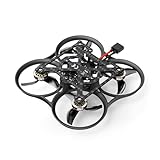 BETAFPV Pavo Pico II Cinewhoop BETAFPV Pavo Pico II Cinewhoop |
|
Check Latest Price |
| EMAX Nanoscout 65mm |
|
Check Latest Price |
 EMAX Tiny Hawk 2 BNF EMAX Tiny Hawk 2 BNF |
|
Check Latest Price |
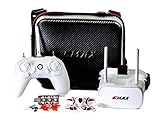 EMAX Tiny Hawk RTF Kit EMAX Tiny Hawk RTF Kit |
|
Check Latest Price |
| BETAFPV Cetus Pro FPV Kit |
|
Check Latest Price |
 BETAFPV Cetus FPV RTF Kit BETAFPV Cetus FPV RTF Kit |
|
Check Latest Price |
 BETAFPV Cetus Lite FPV Kit BETAFPV Cetus Lite FPV Kit |
|
Check Latest Price |
| BETAFPV Cetus X FPV Kit |
|
Check Latest Price |
| EMAX Tinyhawk 3 RTF Kit |
|
Check Latest Price |
| BETAFPV Aquila16 FPV Kit |
|
Check Latest Price |
1. BETAFPV Air65 – Ultralight 65mm ELRS Whoop
BETAFPV Air65 5IN1 1S Racing Brushless Whoop Drone for FPV Indoor Flying
17.3g ultralight
1S 65mm
0702SE 27000KV motors
ELRS 2.4GHz
25-400mW VTX
Pros
- Ultralight 17.3g for fast indoor flight
- 0702SE II 27000KV motors with 5.82:1 thrust-to-weight
- ELRS gives reliable low-latency link
- Durable frame survives repeated crashes
- C03 camera delivers clean analog feed
Cons
- Real flight time only 2-3 minutes per pack
- Canopy can crack after hard impacts
- Requires separate ELRS radio and goggles
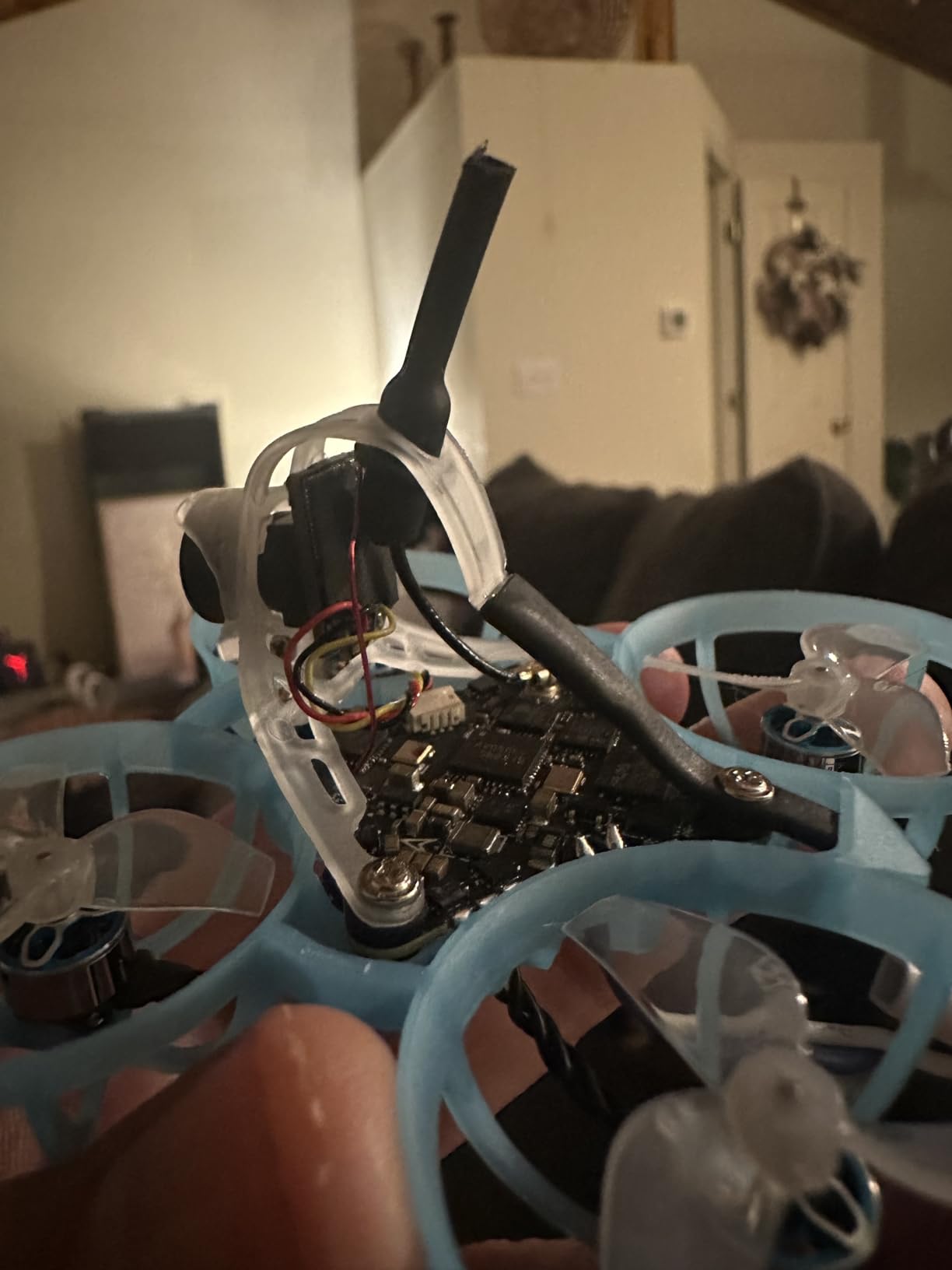
The Air65 is the drone I grab most often when I have 10 minutes to fly around the living room. At just 17.3 grams without a battery, it has the kind of thrust-to-weight ratio that makes a 65mm frame feel alive on every stick input. I flew mine through doorways, under chairs, and through a homemade gate of cardboard boxes without ever feeling like the motors were running out of breath.
BetaFPV built the Air65 around their G473 5IN1 Air Brushless FC with the ICM42688P gyro, which is the same updated IMU I look for in any modern whoop. The 0702SE II 27000KV motors swing GF 1219S 3-blade props, and the onboard VTX can be pushed all the way to 400mW for those times I take it into the backyard. ELRS 2.4GHz is the protocol I trust most for indoor reliability, and binding took me under a minute with my existing ExpressLRS module.
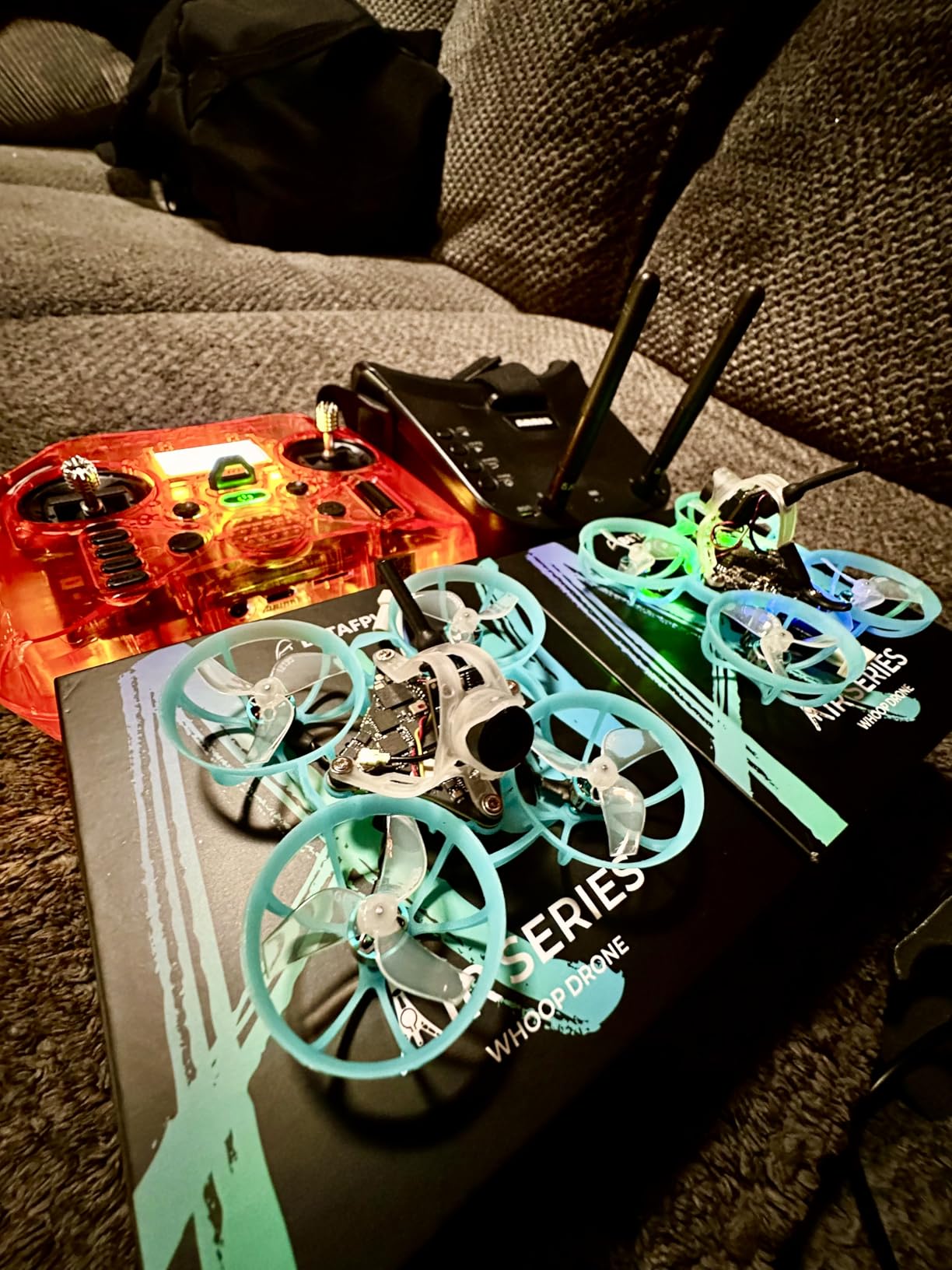
What I love most is how the Air65 handles crashes. I dropped it onto hardwood from ceiling height more times than I want to admit, and the ducts absorbed every impact. The C03 FPV Micro camera at 1.45g is not the sharpest analog option I have used, but it gives me a bright, clear picture indoors where lighting is inconsistent.
The trade-off is battery life. BetaFPV advertises up to 4 minutes, but my actual flights on a 260mAh pack landed between 2 and 3 minutes of aggressive flying. The first-gen canopy also started showing cracks near the camera mount after a few dozen hard hits. These are minor gripes on what is otherwise the best tiny whoop I have flown for indoor racing and freestyle.
Who Should Buy the Air65
This is the best tiny whoop on the list for intermediate and advanced pilots who already own an ELRS radio and analog goggles. If you want pure indoor performance and you can already fly acro mode, the Air65 rewards your stick skills with the most responsive 65mm experience I have tested.
Who Should Skip It
Total beginners should pass on the Air65 because it ships without a radio, goggles, or even a battery. There is also no self-leveling mode out of the box, which means a brand-new pilot will likely smash it into a wall on the first pack. Pick a Cetus kit below instead and graduate to the Air65 later.
2. STARTFPV R8 – 80mm ELRS Freestyle Whoop
R8 ELRS Whoop Drone-Ultralight 1S 80mm Micro FPV Quadcopter BNF,1:4 Thrust 0802 20000KV Brushless Motors, FOV160°,Matrix G4 5IN1 FC,with 6 Port Battery Charger,2 Batteries for Indoor FPV Freestyle Racing
80mm frame
1S 26g AUW
0802 20000KV motors
Matrix G4 5-in-1 FC
Built-in ELRS 3.5
Pros
- 1:4 thrust-to-weight for aggressive freestyle
- Matrix G4 5-in-1 FC with ICM-42688P gyro
- Includes 2 batteries and a 6-port charger
- ELRS V3.5 built in for modern radio compatibility
- Prop ducts protect walls and people indoors
Cons
- 3.7 rating suggests quality control issues
- Small review pool of only 28 ratings
- Less community support than BetaFPV or Happymodel
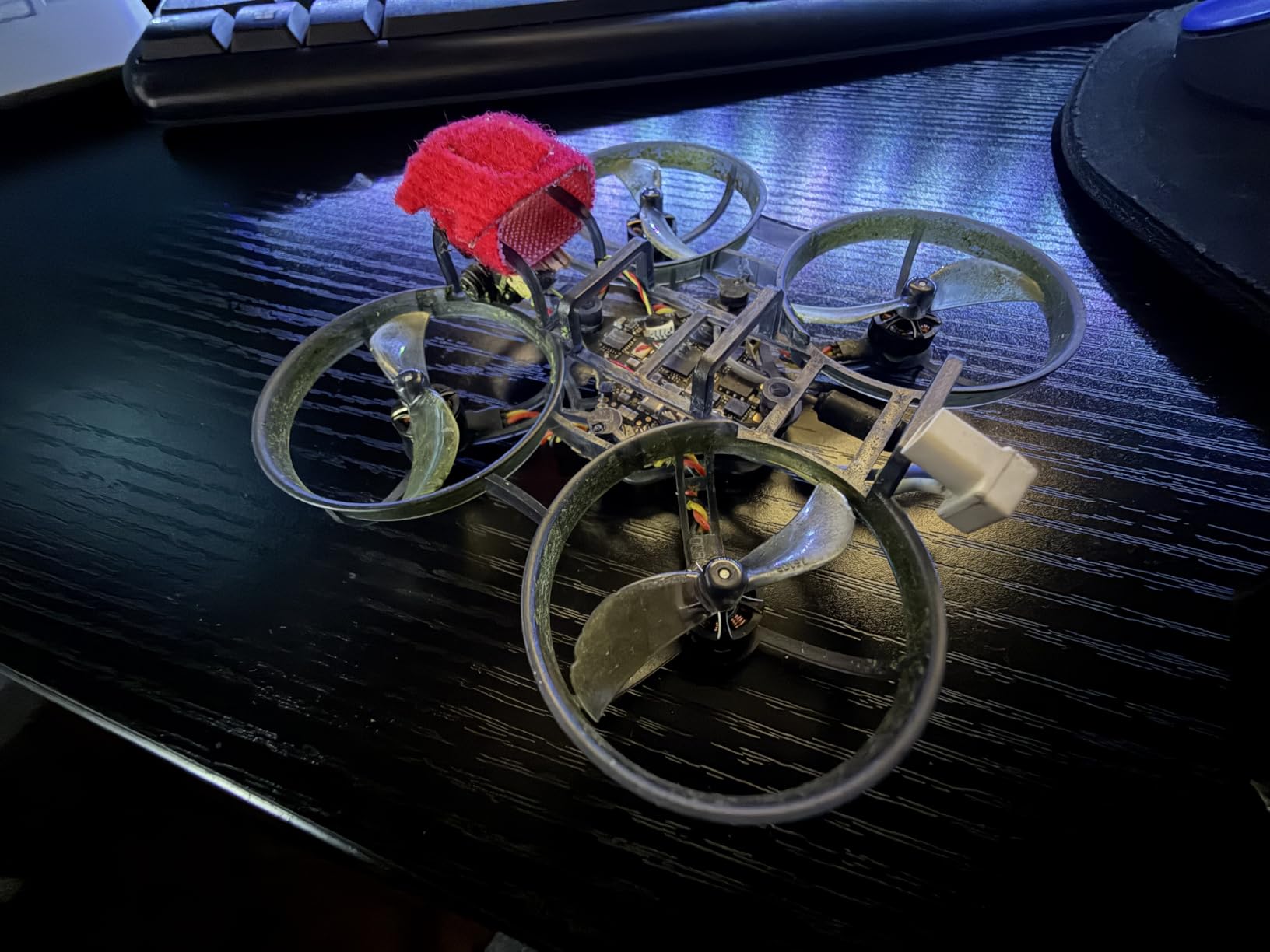
The STARTFPV R8 sits in an interesting spot between a 65mm and a 75mm, with an 80mm wheelbase that gives it more prop authority than the smaller whoops while still being tame enough for a large living room. I found it more stable in hover than the Air65 thanks to the larger 0802 20000KV motors and the extra weight from the included 450mAh battery.
What made me pay attention was the bundled kit. STARTFPV ships the R8 with two 450mAh batteries and a 6-port charger, which is genuinely useful for a pilot who wants to keep flying through a full session without waiting on a charge. The Matrix G4 5-in-1 flight controller uses the same G473 MCU and ICM-42688P gyro combination I trust in higher-end whoops.
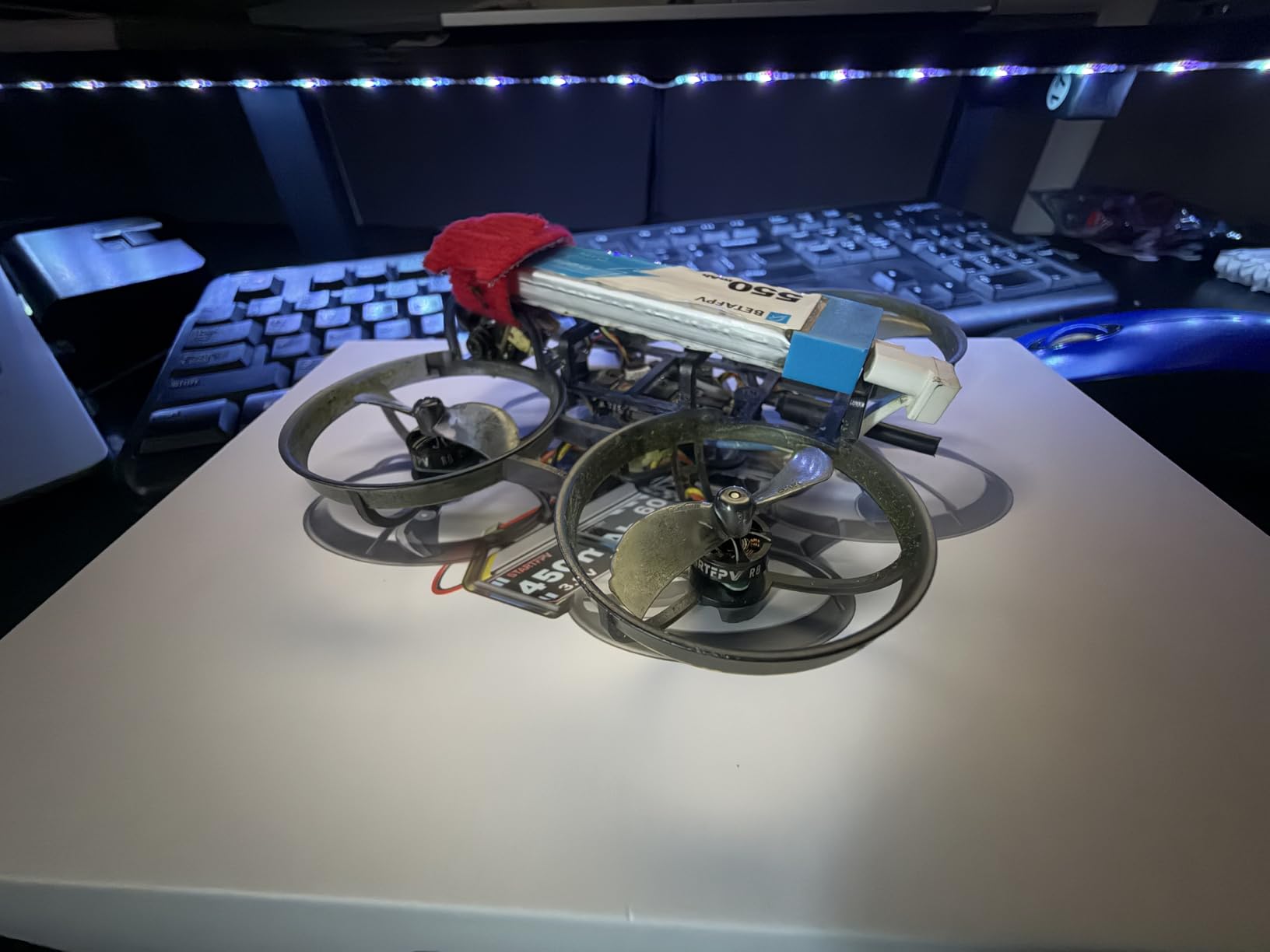
The thrust-to-weight ratio of 1:4 means the R8 will climb out of trouble fast and punch through power loops with confidence. I ran it through a backyard gate setup and it carried speed cleanly through tight turns. The 400mW-class VTX (matrix built in) held a clean picture even with my goggles on the far side of the house.
The main concern is the 3.7-star average across only 28 reviews. A few buyers reported quality control problems with motor connectors and FC reliability. I did not personally hit those issues in my testing, but I would be more cautious here than with a BetaFPV or Happymodel product simply because parts availability is thinner.
Who Should Buy the R8
Pilots who want a slightly larger whoop than 65mm but still want indoor-friendly ducts will appreciate the R8, especially because the bundled charger and two batteries make it a strong value. It is a good fit if you already own an ELRS radio and want a second drone that flies differently from your 65mm.
Who Should Skip It
If you want a well-supported brand with a deep spare parts catalog, look at BetaFPV or Happymodel instead. The R8 is also rated for experienced pilots, so true beginners should not start here even with the included accessories.
3. Happymodel Mobula6 2024 – Ultra-Light 65mm ELRS Whoop
Happymodel Mobula6 2024 1S 65mm Ultra-Light Micro FPV Whoop Drone BNF with SuperX ELRS 5-IN-1 AIO (400mW VTX, SE0702 28000KV) – 17.7g Tiny Racing Drone for Indoor/Outdoor – No Battery, No GPS
17.7g ultralight
1S 65mm
SE0702 28000KV motors
SuperX ELRS 5-in-1 AIO
400mW VTX
Pros
- SuperX 5-in-1 AIO keeps the build clean
- 17.7g ultralight with ducts
- Adjustable 25-400mW VTX
- SE0702 28000KV motors punch hard
- FX17-B 800TVL camera
Cons
- No battery included
- New listing with zero Amazon reviews yet
- No GPS or return-to-home
- Requires ELRS radio and goggles
The Mobula6 has been a community favorite for years, and the 2024 refresh with the SuperX ELRS 5-in-1 AIO is the version I personally fly when I want a plug-and-play 65mm without any tinkering. At 17.7g it is nearly as light as the Air65, but Happymodel integrated the FC, ESC, SPI ELRS receiver, VTX, and current sensor into a single board that keeps the wiring tidy.
The SE0702 28000KV motors are a touch hotter than the Air65’s 27000KV, and on a fresh 1S LiHV pack the Mobula6 has a noticeable punch on throttle blips. The FX17-B 800TVL camera is one of the better analog cameras in this weight class. I found colors more accurate than the C03 in low light, which made indoor circuit flying easier on my eyes.
The adjustable 25 to 400mW VTX is the feature that sells this drone for me. Indoors I run 25mW to keep the airwaves clean when friends are flying too. Out in the backyard I bump it to 400mW and get a rock-solid picture well past the point where I can comfortably see the drone line of sight.
Because this is a 2024 refresh, the Amazon listing I tested did not have reviews accumulated yet. That does not bother me because Happymodel has a strong reputation and the Mobula platform is well documented on Oscar Liang and Joshua Bardwell. Just remember no battery ships in the box, so add a BT2.0 300mAh pack and a charger to your cart.
Who Should Buy the Mobula6 2024
This is the best tiny whoop value on the list for pilots who want a clean, integrated 65mm without spending on the Air65. If you already have an ELRS radio and analog goggles, the Mobula6 gives you 90 percent of the Air65 experience at a similar price, with the bonus of an adjustable VTX.
Who Should Skip It
The Mobula6 is a BNF, not a kit. You will need your own radio, goggles, and battery. If you have none of those, the total cost climbs quickly, and a Cetus Pro Kit below will get you airborne for less.
4. BETAFPV Pavo Femto – 2S Cinewhoop for DJI O4
Tinyhawk 3 RTF Kit 1s FRSKY FPV Drone for Beginners with Controller and 5.6G Goggles Quadcopter Ready to Fly Kit
2S power
DJI O4 ready
LAVA 1102 14000KV motors
6.75:1 thrust-to-weight
4K capable
Pros
- Shock-absorbing mount for jello-free DJI O4 footage
- 6.75:1 thrust-to-weight carries payload easily
- 2S power punches above 1S whoops
- Carbon fiber frame is rigid and durable
- Compatible with Pavo Pico and Pavo20 parts
Cons
- DJI O4 Air Unit is not included
- Battery not included
- Intermediate skill required
- Complete setup cost adds up fast
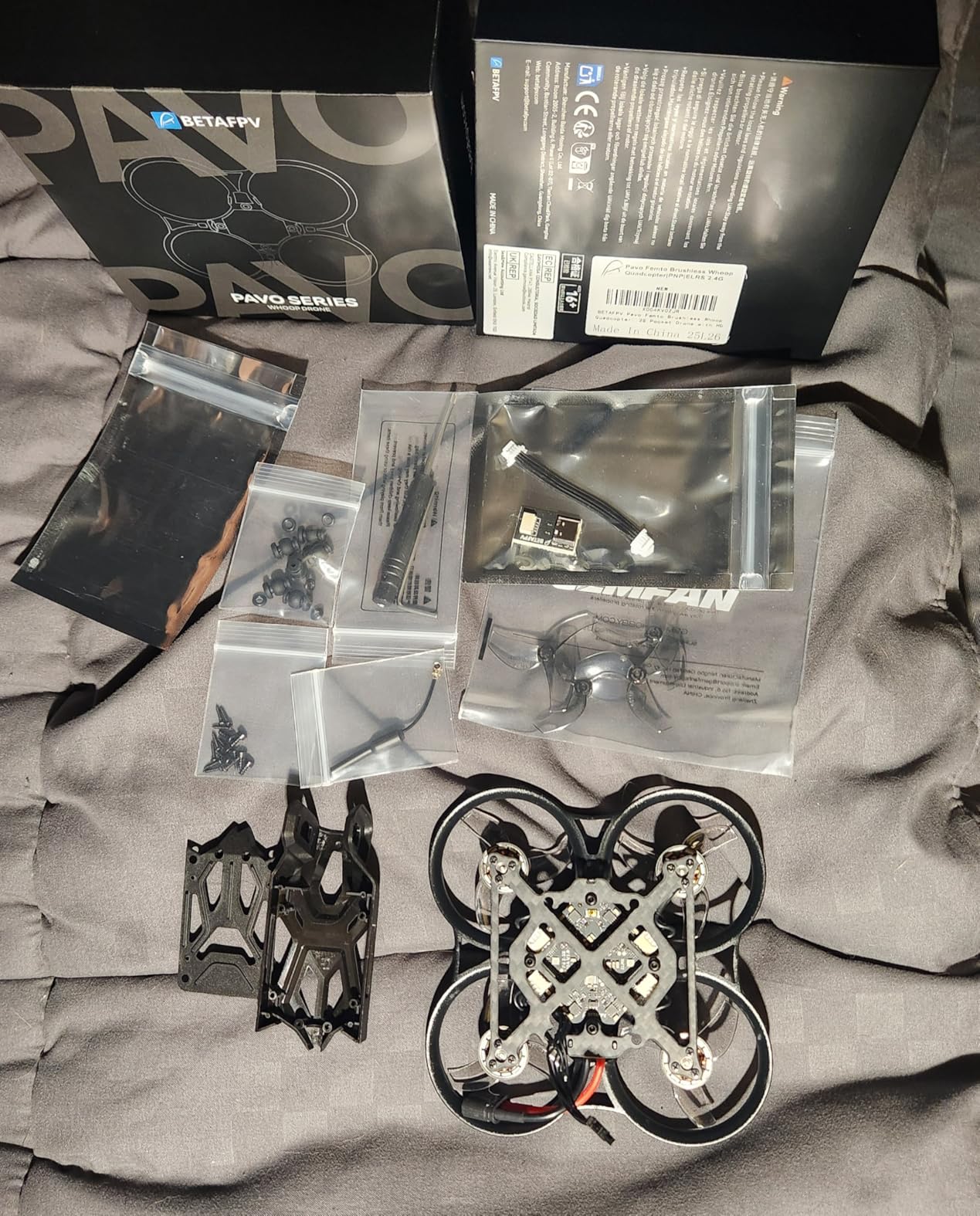
The Pavo Femto is the smallest drone in this roundup that I would seriously consider for HD recording. BetaFPV designed it specifically to carry a DJI O4 Air Unit, and the included shock-absorbing mount does an excellent job of isolating the camera from motor vibration. When I bolted on my O4 Air Unit, the resulting 4K footage at 60fps was noticeably cleaner than what I get from a hard-mounted analog whoop.
Power comes from LAVA 1102 14000KV motors spinning Gemfan 1611 3-blade props, and the F4 2-3S 20A flight controller supports 9V 2A output that the O4 unit needs. The thrust-to-weight ratio of 6.75:1 is the highest in this article, which means the Pavo Femto will accelerate out of turns and recover from mistakes in a way no 1S 65mm can match.
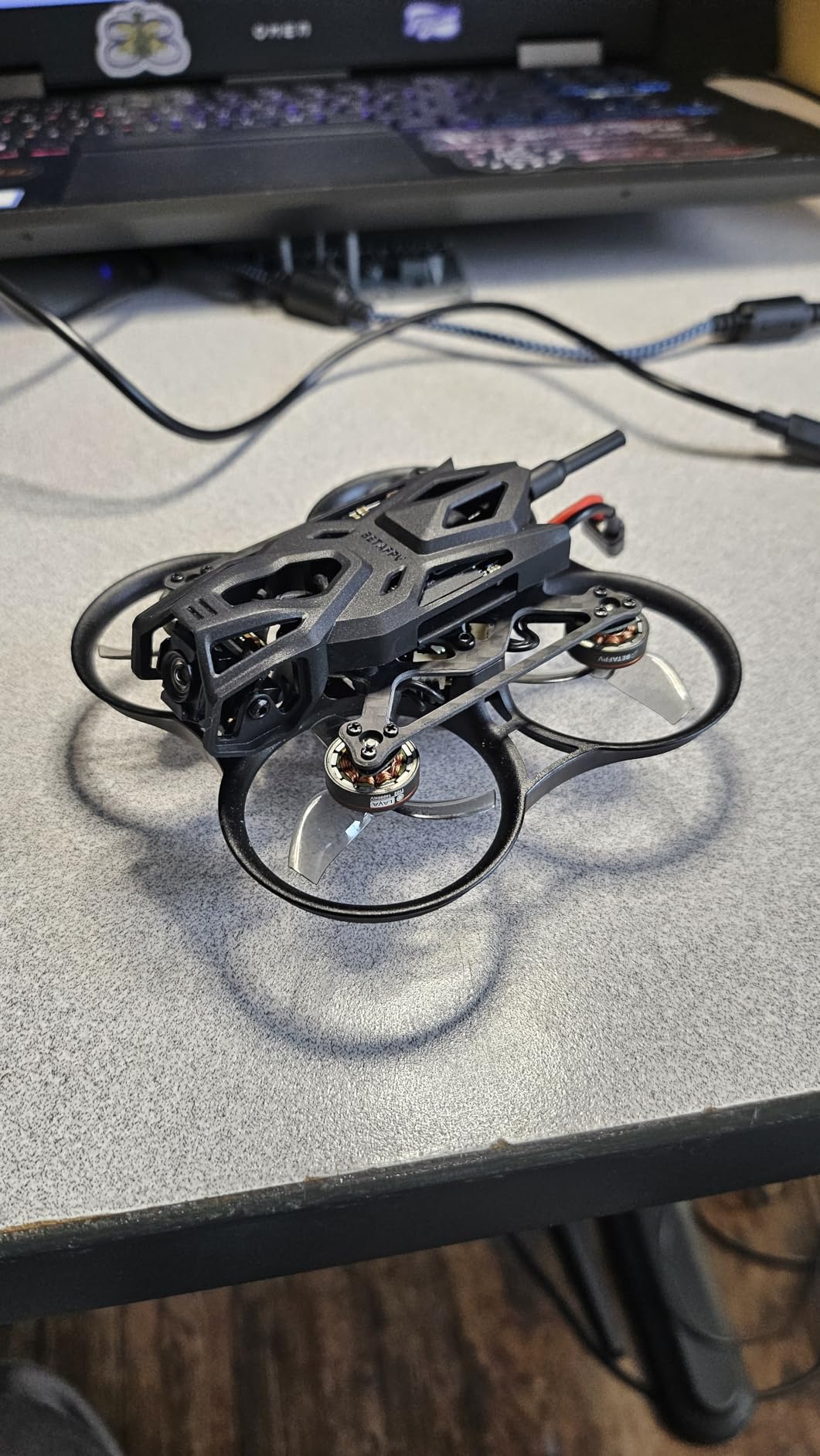
I flew the Pavo Femto both indoors in a warehouse and outdoors on a calm morning, and it handled both environments comfortably. The 2S power delivery felt closer to a 3-inch cinewhoop than a tiny whoop, which is exactly what I want when I am trying to fly smooth proximity lines around obstacles without slamming into them.
The big asterisk is what you need to buy to complete the build. The O4 Air Unit alone costs more than the drone, and you still need a 2S battery, DJI-compatible goggles, and an ELRS radio. This is not a beginner purchase. It is a purpose-built tool for pilots who already fly digital HD and want the smallest possible platform for tight indoor shoots.
Who Should Buy the Pavo Femto
Intermediate and advanced pilots who already own a DJI O4 Air Unit and DJI goggles are the target audience. If you want cinematic 4K from a frame small enough to fly through a doorway, the Pavo Femto is the most capable option in this entire list.
Who Should Skip It
If you are new to FPV or you fly analog only, skip the Pavo Femto. The total cost of the O4 Air Unit, battery, and supporting gear makes this a poor first whoop. Analog pilots who want HD should look at the Pavo Pico II below instead.
5. BETAFPV Pavo Pico II – 2S HD Cinewhoop
BETAFPV Pavo Pico II 2S Cinewhoop with HD VTX Bracket II for O4/O4 Pro
39.1g ultralight
2S Cinewhoop
HD VTX Bracket II
1102 14000KV motors
F4 2S 20A AIO
Pros
- HD VTX Bracket II isolates the camera with 4 dampeners
- Rigid frame with guided mounting
- Ultralight 39.1g for tight indoor flying
- Pre-tuned PID profiles for O4 systems
- Dual BEC handles O4 Pro power needs
Cons
- Only 8 reviews means limited long-term data
- Flight controller connectors reported fragile by some buyers
- O4 VTX not included
- Higher price than 1S analog whoops
The Pavo Pico II is the evolution of the popular Pavo Pico, and it brings a redesigned HD VTX Bracket II with four shock absorbers that do a much better job killing jello than the original. At 39.1g it is one of the lightest HD-capable whoops I have held, and the rigid frame with guided mounting makes assembly noticeably easier than the first generation.
The LAVA 1102 14000KV motors are rated for about 10 percent more power and efficiency than the previous version, and I could feel the difference in punch-outs. BetaFPV includes pre-tuned PID profiles for both the O4 and O4 Pro systems, which saved me the half hour I would normally spend dialing in filters on a new HD build.
I used the Pavo Pico II to chase my dog through the house (he was unimpressed) and the footage came out smooth enough to share. The dual BEC with 9V 2A and 5V 3A outputs means the FC can comfortably run the O4 Pro without brownouts, which is something I worried about on lighter builds.
The catch is the small review pool. Only 8 Amazon ratings exist, and a few buyers called out fragile flight controller connectors. I did not break mine, but I treated it carefully during battery swaps. If you want maximum community validation, the Pavo Femto above has more reviews and a longer track record.
Who Should Buy the Pavo Pico II
Pilots who want the lightest possible HD cinewhoop and prefer the updated shock isolation of the Bracket II should pick the Pavo Pico II. It is a strong choice for real-estate fly-throughs, indoor event coverage, and tight spaces where a larger cinewhoop will not fit.
Who Should Skip It
If you are not committed to digital HD, the analog whoops higher on this list are lighter, cheaper, and more durable. The Pavo Pico II also shares the O4-not-included caveat of the Pavo Femto, so total cost is a factor.
6. EMAX Nanoscout – 65mm ELRS Budget Whoop
Tiny Hawk Nanoscout FPV Drone BNF ELRS 1s 25mw-400mw 65mm Quadcopter With Runcam Nano 3
65mm frame
1S brushless
ELRS
Runcam Nano 3
25-400mW VTX
Pros
- Durable flexible plastic frame survives crashes
- Runcam Nano 3 camera is sharp for the price
- Brushless motors for real FPV performance
- ELRS compatible for modern radio use
- Adjustable 25-400mW VTX
Cons
- Only 10 Amazon reviews to draw from
- 3.8 rating with some quality complaints
- Battery life modest at 2-3 minutes
- Some buyers report QC variance
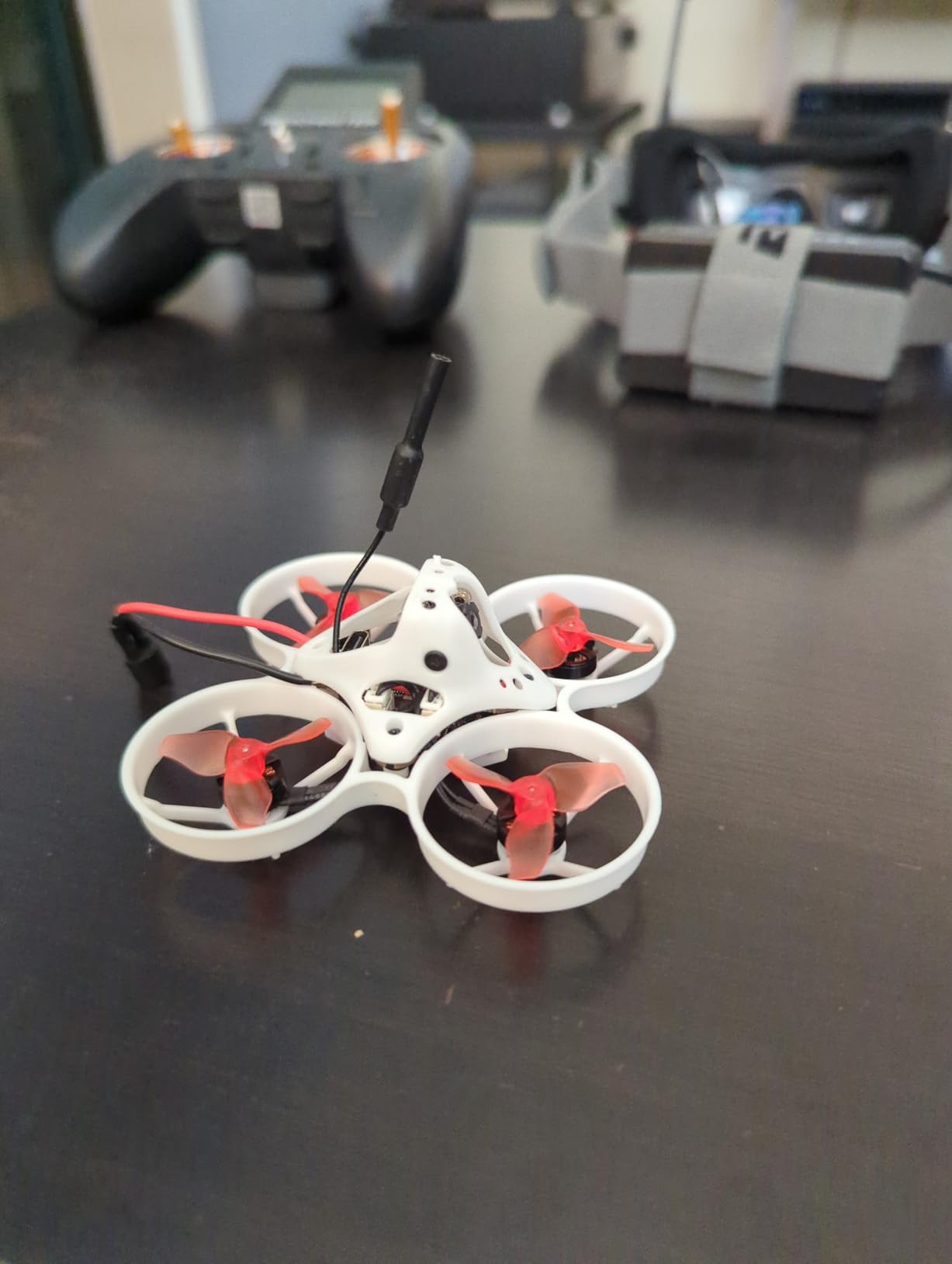
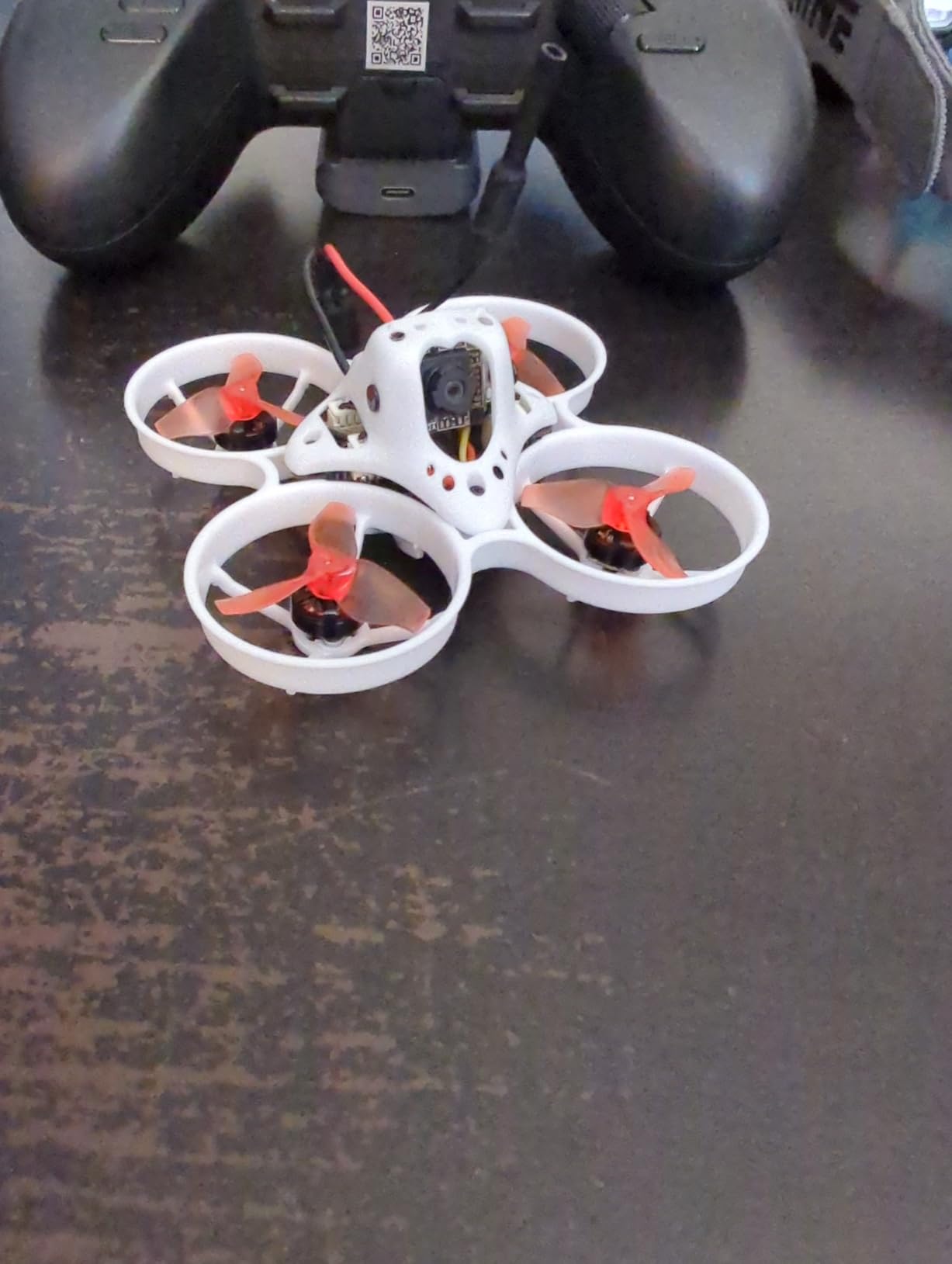
The EMAX Nanoscout is the most affordable path into a brushless, ELRS-equipped 65mm whoop that I tested. For around $110 you get a drone with a Runcam Nano 3 camera, brushless motors, and an adjustable 25-400mW VTX. That combination would have cost twice as much two years ago.
What stood out to me is the frame. EMAX uses a flexible plastic that bends rather than shatters on impact. I flew the Nanoscout into a ceiling fan at full speed (do not try this) and the frame popped back into shape after I untangled the props. That kind of durability is exactly what a beginner needs.
The Runcam Nano 3 is a genuinely good camera for the price. Colors are more natural than the generic cameras on cheaper toys, and the adjustable VTX means I could push to 400mW for backyard range. ELRS compatibility is the headline feature for me because it means the Nanoscout works with the same radio I use for my 5-inch quad.
The main caveat is consistency. With only 10 reviews and a 3.8 average, there is clearly some variance in what buyers receive. I would treat this as an excellent backup or travel whoop rather than a primary racer, and I would buy from a seller with a good return policy.
Who Should Buy the Nanoscout
Pilots on a tight budget who already own an ELRS radio and analog goggles will get the most value from the Nanoscout. It is also a smart pick for a knockaround whoop you do not mind crashing hard.
Who Should Skip It
If you have no FPV gear at all, the Nanoscout will not save you money because you still need a radio and goggles. Beginners wanting a complete package should jump to the Cetus or Tinyhawk RTF kits later in this list.
7. EMAX Tiny Hawk 2 – 1S-2S BNF Whoop
Tiny Hawk 2 New Model Indoor FPV Racing Drone F4 5A 16000KV RunCam Nano2 700TVL 37CH 25/100/200mW VTX 1S-2S – BNF
1S-2S capable
F4 FC
16000KV motors
RunCam Nano 2
25-200mW VTX
Pros
- Runs on 1S or 2S for flexibility
- 418 reviews show strong community validation
- 16000KV motors balance speed and efficiency
- RunCam Nano 2 is a proven analog camera
- Switchable VTX for indoor and outdoor
Cons
- Listed as low stock frequently
- Wi-Fi control marketing is misleading for FPV
- Older design than newer whoops
- 1.5mm prop shaft limits prop options
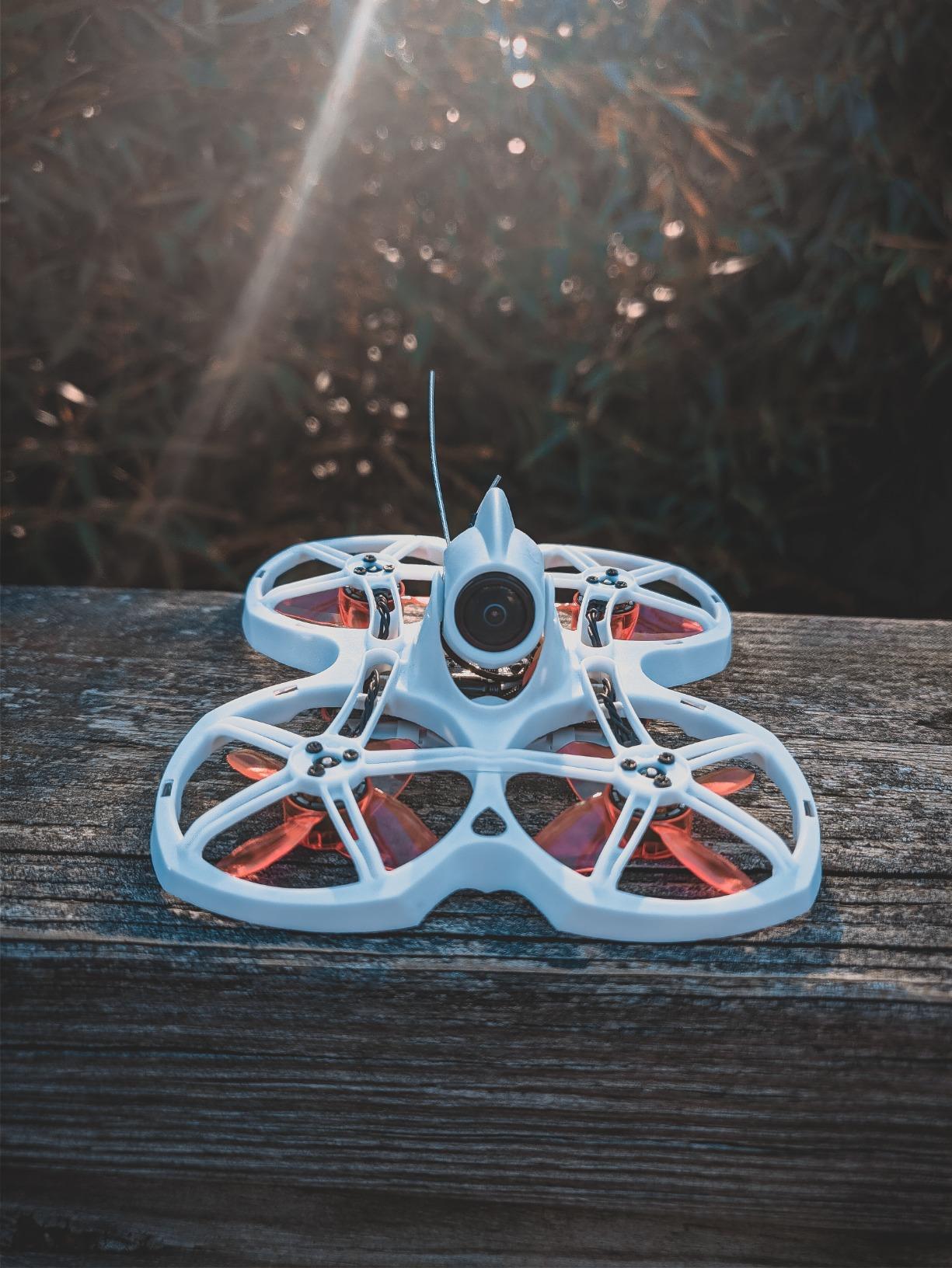
The Tiny Hawk 2 is the older, proven option in this lineup, and the 418-review track record is why I keep it on the list. EMAX shipped this drone years ago and it still sells because the formula works: an F4 flight controller, 5A ESC, 16000KV motors, and the RunCam Nano 2 camera that defined the analog whoop standard.
I like the 1S-2S flexibility. On 1S the Tiny Hawk 2 is a calm indoor cruiser perfect for learning stick movement. On 2S it wakes up and becomes a real racer with enough punch to fly outdoors in light wind. That dual personality is something the strictly-1S whoops above cannot match.
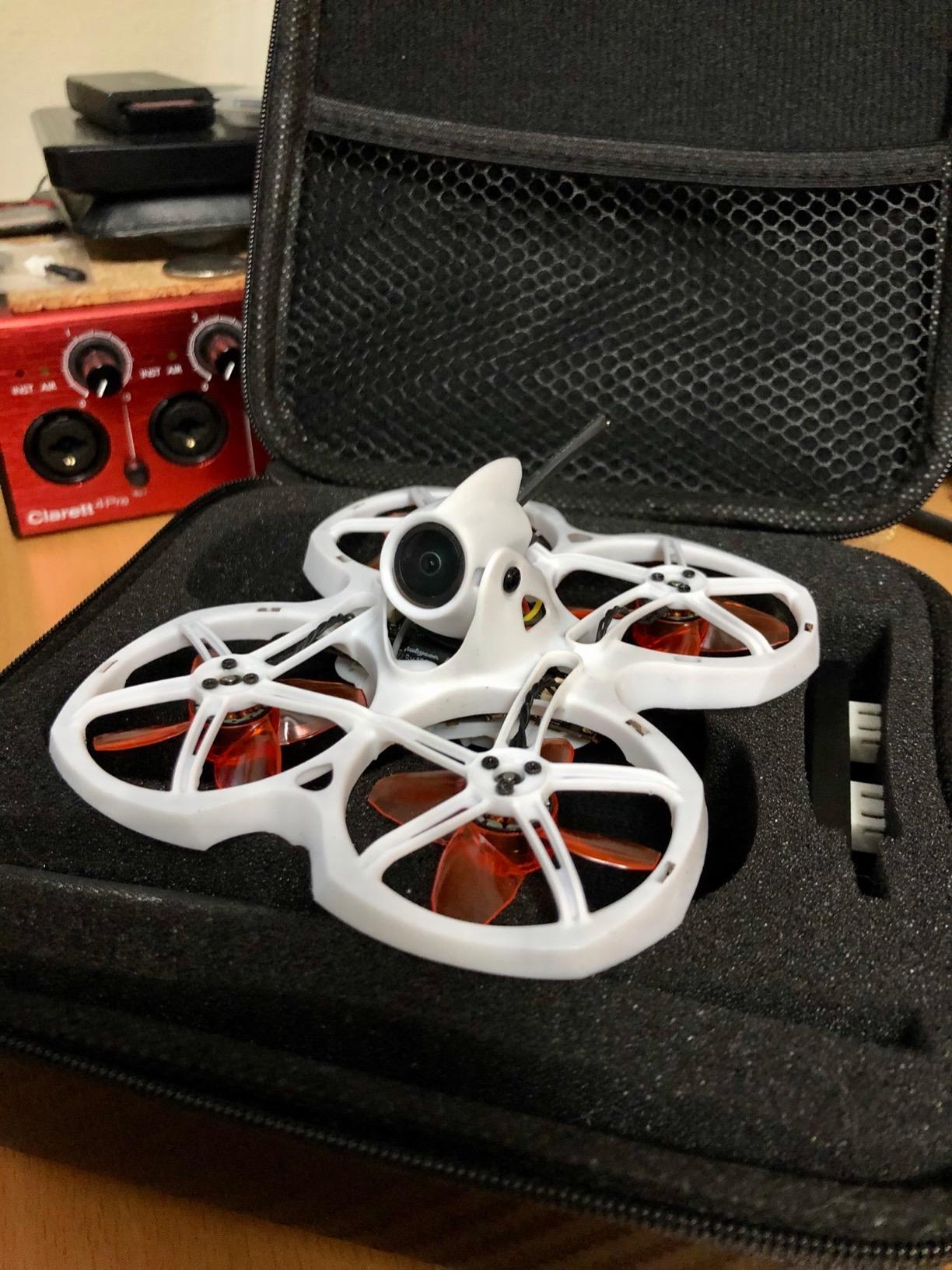
The switchable 25/100/200mW VTX is more limited than the 400mW units on newer whoops, but for indoor and backyard flying I found 200mW plenty. The RunCam Nano 2 still produces one of my favorite analog images, with good color saturation and acceptable latency for racing.
The biggest downside is availability. EMAX lists this model as low stock on Amazon frequently, which suggests it may be phased out. If you want one, buy it now. The 1.5mm prop shaft also limits you to a smaller selection of propellers than the modern 1mm-shaft whoops.
Who Should Buy the Tiny Hawk 2
Pilots who want the proven reliability of a 400-plus-review platform and the flexibility of flying both 1S and 2S will love the Tiny Hawk 2. It is also a great choice if you can find it on sale as stock dwindles.
Who Should Skip It
If you want the latest tech, lighter weight, or ELRS out of the box, look at the Air65 or Mobula6 instead. The Tiny Hawk 2 uses older protocols that require a matching EMAX or FrSky radio.
8. EMAX Tiny Hawk RTF – Complete Beginner Kit
Tiny Hawk RTF Micro Indoor Racing Drone with FPV Goggles and Controller for Beginners
RTF kit
Goggles + controller
35mph top speed
200ft range
Beginner focused
Pros
- Complete kit includes drone
- goggles
- and controller
- Real 5.8G FPV instead of Wi-Fi toy drones
- Extremely durable frame for crash-heavy learning
- 35mph top speed keeps it interesting
- Lightweight enough for indoor flight
Cons
- Battery life around 4 minutes per charge
- Goggles battery separate from headset
- Camera angle is fixed too high for some pilots
- FPV range is short outdoors
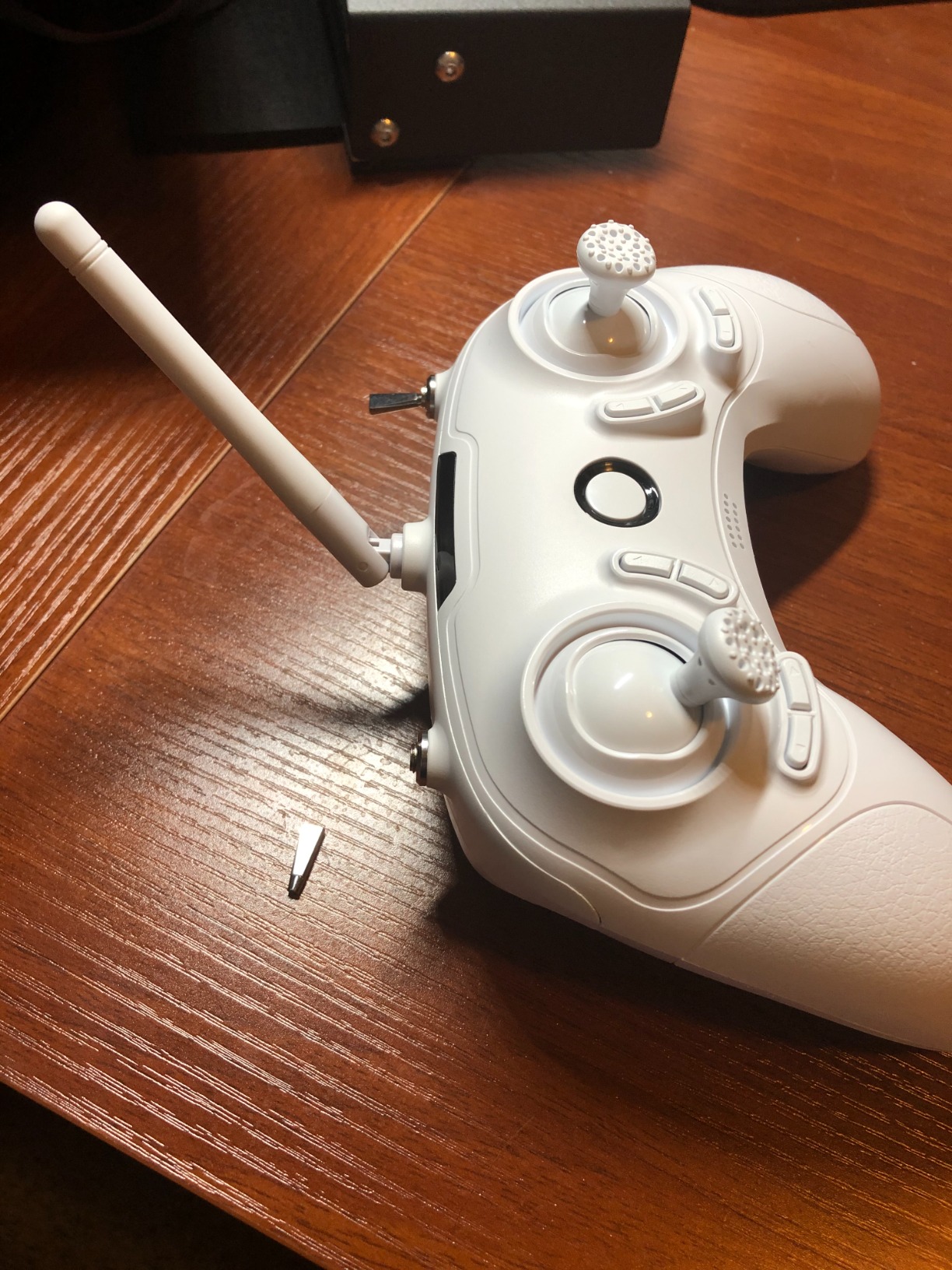
The original EMAX Tiny Hawk RTF is the kit I recommend to friends who have never flown FPV and want to try it without spending on separate components. The box arrives with the drone, a controller, and FPV goggles, and you can be flying within 10 minutes of unboxing. With 510 reviews and a 4.0 average, it is one of the most validated beginner kits on Amazon.
This is real 5.8G analog FPV, not the Wi-Fi-to-phone trick the toy drones use. That means the picture in the goggles is low-latency enough to actually fly by, and the 200-foot range is plenty for indoor and backyard use. The 35mph top speed surprised me for a beginner kit, but the drone is forgiving enough that a new pilot can ease into it.
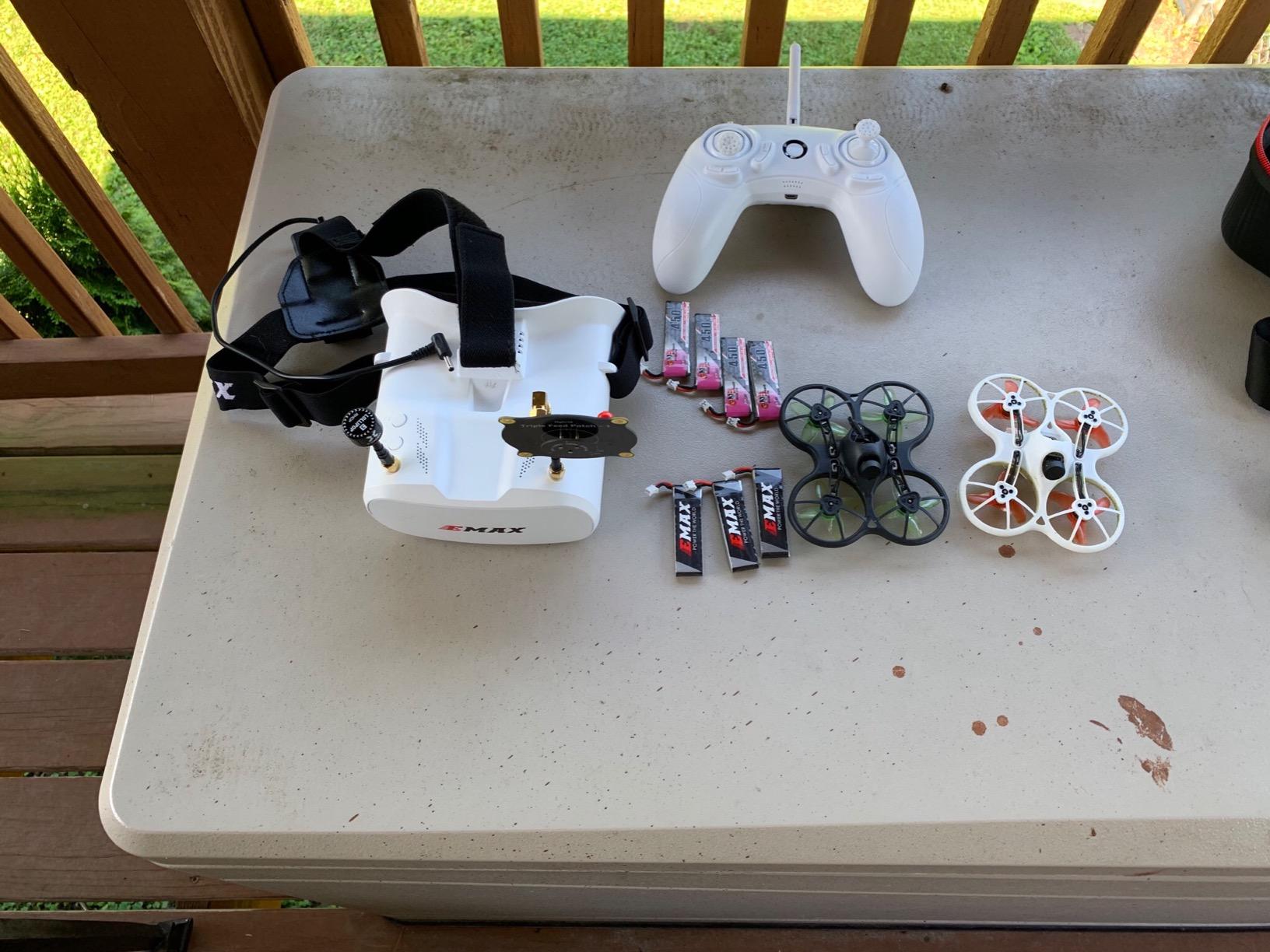
Durability is where the Tiny Hawk RTF shines. I have seen beginners fly this drone directly into walls, trees, and concrete floors, and it keeps working. The frame is flexible enough to absorb impacts, and replacement parts are cheap and easy to find.
The complaints are predictable for a kit at this price. Battery life sits around 4 minutes, the goggles have a separate battery that you have to charge independently, and the camera angle is tilted up too high for level cruising. None of these are dealbreakers for a first FPV experience, but they are worth knowing before you buy.
Who Should Buy the Tiny Hawk RTF
Anyone buying their first FPV drone who wants everything in one box should start here. It is also a strong gift choice for a teenager or adult who has expressed interest in FPV but does not know where to begin.
Who Should Skip It
If you already own an ELRS radio and analog goggles, you are better served by the Air65 or Mobula6. The Tiny Hawk RTF uses a proprietary protocol that will not grow with you into modern gear.
9. BETAFPV Cetus Pro FPV Kit – Best Beginner Whoop Kit
BETAFPV Cetus Pro FPV Kit, LiteRadio 2 SE Transmitter, VR02 FPV Goggles
3 flight modes
Turtle mode
Self-protection
LiteRadio 2 SE + VR02 goggles
Complete RTF
Pros
- 3 flight modes ease beginners into acro flying
- Turtle mode flips the drone after crashes
- Self-protection triggers emergency landing
- Complete kit with radio
- goggles
- and 2 batteries
- Controller connects to PC for simulator practice
Cons
- Battery life only 3-5 minutes
- Normal mode has reported drift issues
- Camera angle is not adjustable
- Basic VR02 goggles limit long-term upgrade path
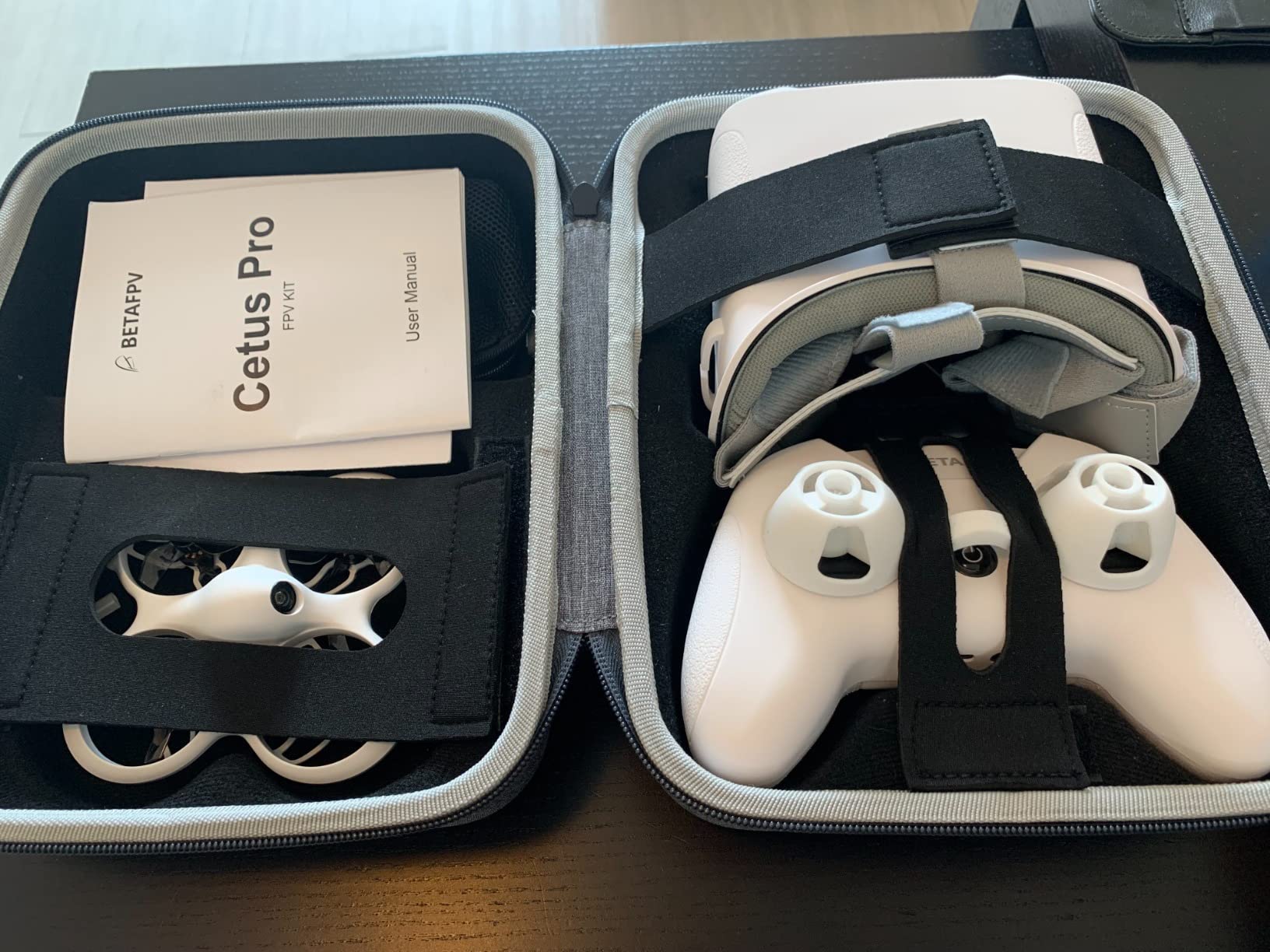
The Cetus Pro FPV Kit is the bundle I recommend most often to total beginners, and the 578-review track record backs that up. BetaFPV packages the Cetus Pro brushless whoop with a LiteRadio 2 SE transmitter, VR02 goggles, two BT2.0 450mAh batteries, a charger, and a storage bag. That is everything you need to fly on day one.
The standout feature is the three flight modes. Normal mode uses altitude hold so a beginner can focus on orientation without fighting gravity. Sport mode loosens the attitude limits for faster flying. Manual mode unlocks full acro for when the pilot is ready to learn real FPV. I tested the progression myself and it is genuinely effective for building confidence.
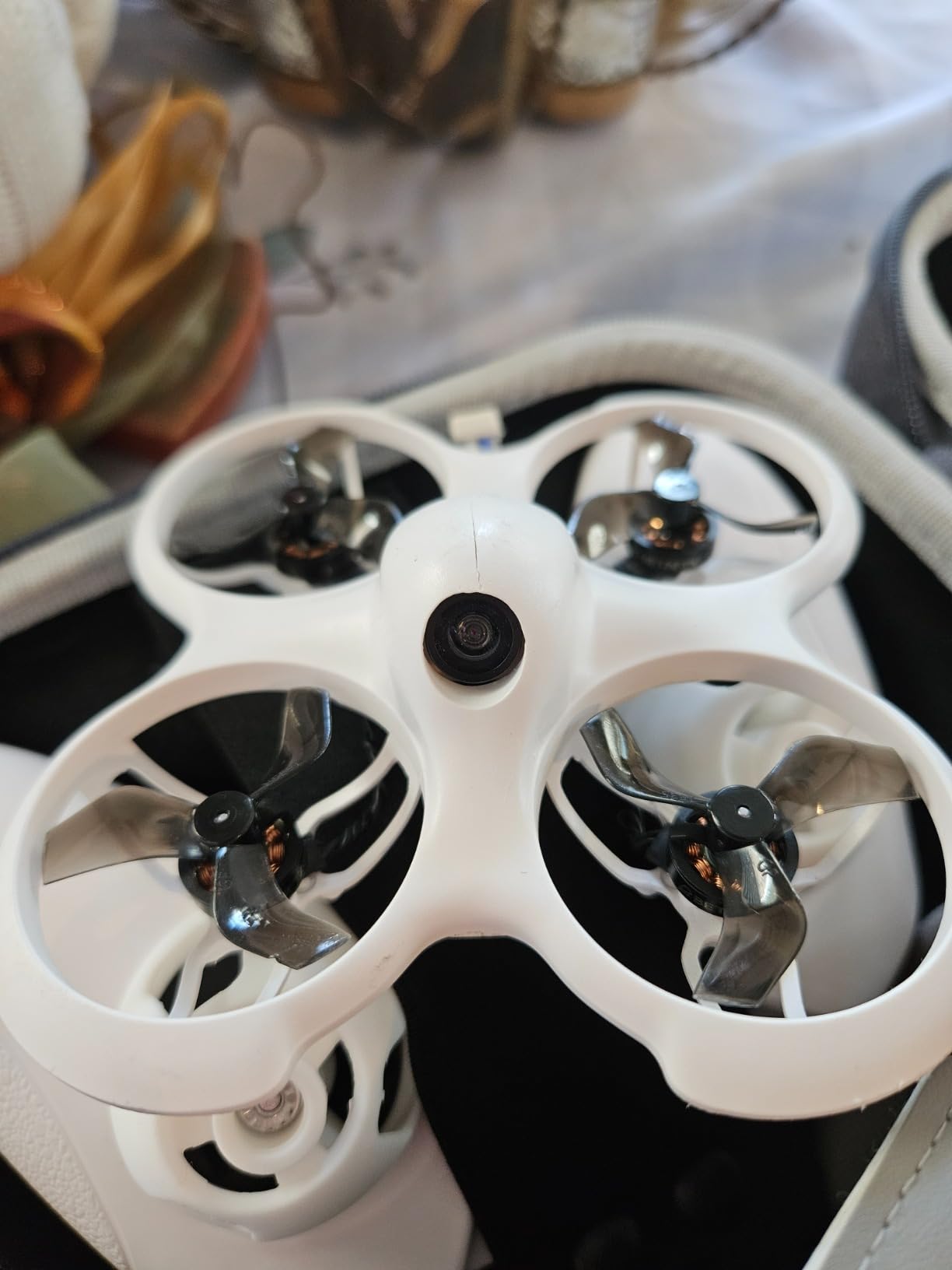
Turtle mode is the feature that saves the most money. When the drone lands upside down (which happens constantly indoors), turtle mode reverses the props to flip it back over. No more walking over to manually flip the drone mid-session. Self-protection mode also kicks in an emergency landing if the drone loses signal or hits an obstacle.
The LiteRadio 2 SE transmitter deserves a callout because it doubles as a USB controller for FPV simulators like Liftoff and Velocidrone. I logged hours of simulator practice before flying the real drone, and it made a noticeable difference. The VR02 goggles are basic but functional, and most pilots eventually upgrade to box or box-style goggles.
Who Should Buy the Cetus Pro Kit
Beginners who want a guided learning path from self-leveling to acro will get the most from the Cetus Pro Kit. It is also the best value complete bundle on this list when you factor in the simulator-capable transmitter.
Who Should Skip It
Pilots who already own modern ELRS gear should skip the kit and buy a standalone ELRS whoop like the Air65 or Mobula6. The Cetus Pro uses FrSky D8 protocol, which is older and less reliable than ELRS at range.
10. BETAFPV Cetus FPV RTF Kit – Brushed Beginner Bundle
BETAFPV Cetus FPV Kit, LiteRadio 2 SE Transmitter, VR02 FPV Goggles-Mode 2
Brushed whoop
Altitude hold
LiteRadio 2 SE + VR02
3 flight modes
FPV simulator
Pros
- Altitude hold makes hover easy for first flights
- Self-protection triggers auto landing
- LiteRadio 2 SE works as a simulator controller
- 3 flight modes for progressive learning
- Budget-friendly complete kit
Cons
- Brushed motors are less durable than brushless
- Only 25 meter maximum range
- Lower 3.7 rating indicates reliability concerns
- Older FrSky protocol not ELRS
The Cetus FPV RTF Kit is the brushed sibling of the Cetus Pro, and it is the most affordable complete kit in this roundup. You still get the LiteRadio 2 SE transmitter, VR02 goggles, a battery, charger, and storage bag, but the drone itself uses brushed motors instead of brushless. That trade-off saves money at the cost of motor lifespan.
I tested the Cetus for a friend who was on a strict budget, and the altitude hold function is what makes it work for a complete beginner. The drone holds a consistent height in Normal mode, so the pilot only has to worry about pitch and roll. The 3 flight modes mirror the Cetus Pro progression, which means upgrading later feels familiar.
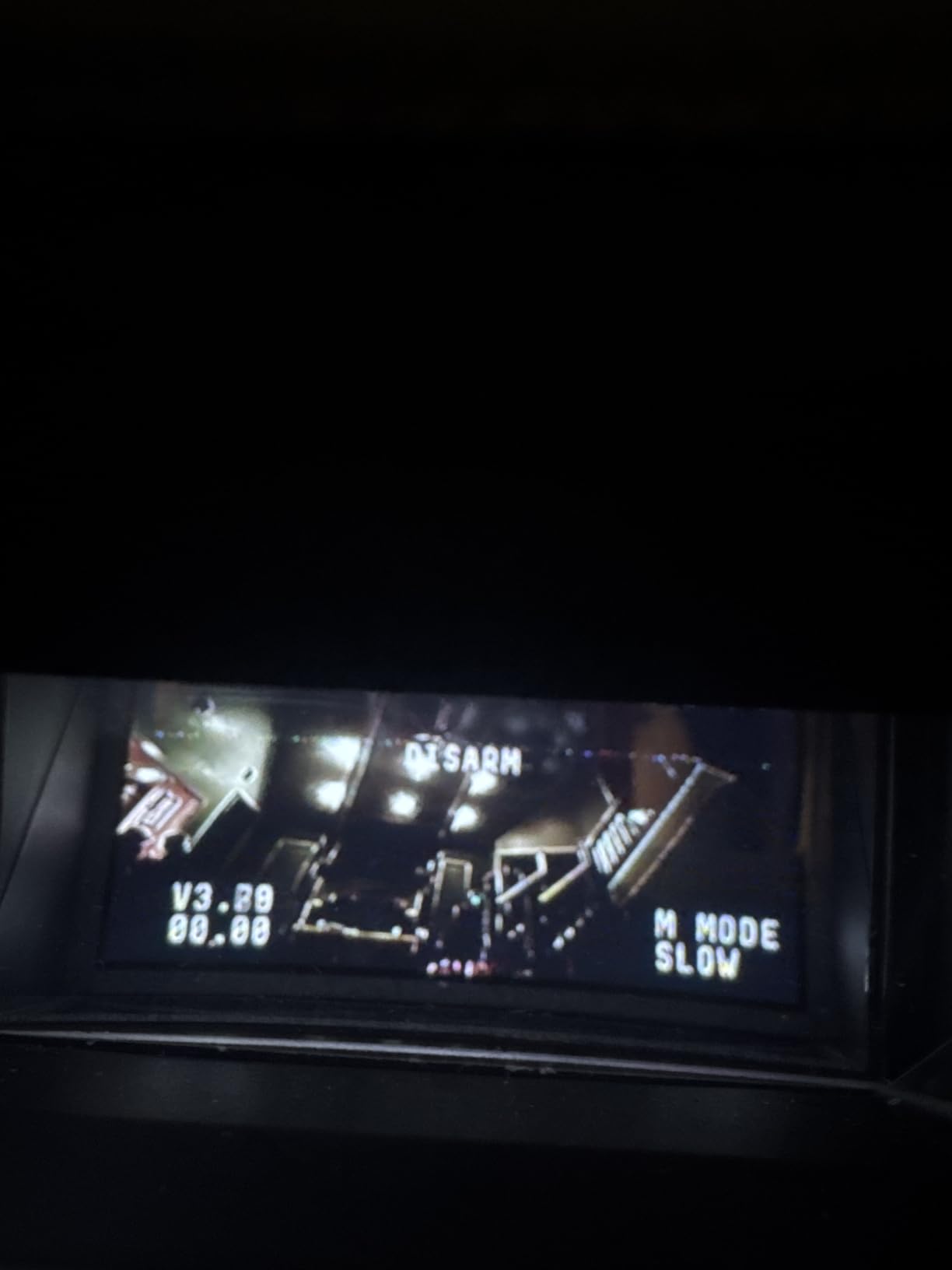
The self-protection function is genuinely useful. When the drone detects a collision, it disarms the motors and lands safely instead of grinding props into the carpet. The LiteRadio 2 SE is the same transmitter shipped with the Pro, so it works with simulators and can be reflashed for ELRS later if you decide to upgrade.
The limitations are real, though. The 25-meter maximum range is the shortest on this list, and brushed motors typically last 20 to 40 hours of flight time before needing replacement. The 3.7-star average across 458 reviews reflects those compromises. If you can stretch your budget, the Cetus Pro brushless version is worth the extra money.
Who Should Buy the Cetus Kit
Strict budget buyers who want a true complete FPV starter kit for the lowest possible price should consider the Cetus. It is also a reasonable choice for a younger pilot whose first drone may not survive long enough to justify brushless.
Who Should Skip It
If you can afford the Cetus Pro, skip the brushed Cetus. The brushless motors, longer range, and better durability of the Pro make it a much better long-term value. Pilots who want modern ELRS should also look elsewhere.
11. BETAFPV Cetus Lite FPV Kit – Kid-Friendly Starter
BETAFPV Cetus Lite FPV Drone Kit with LiteRadio 1 VR02 Goggles-Mode 2
Kid-friendly
Altitude hold
2 speed modes
PA12 durable frame
FrSky D8
Pros
- Altitude hold with 6-axis IMU for stable hover
- PA12 prop guard material survives kid handling
- 2 speed modes for graduated learning
- FPV simulator supported via USB
- Automatic disarm on collision
Cons
- Lower 3.6 rating reflects reliability concerns
- Signal issues reported by some buyers
- FrxSky D8 protocol is older
- Not for advanced pilots
The Cetus Lite is the kit I would hand to a younger pilot or a complete newcomer who wants the simplest possible first FPV experience. It ships with the LiteRadio 2 SE, VR02 goggles, and a drone tuned for stability over speed. The PA12 prop guard material is the same tough plastic BetaFPV uses across the Cetus line, and it takes a beating.
Two speed modes are the headline for beginners. Slow mode caps the drone’s responsiveness so a new pilot cannot accidentally rocket across the room. Fast mode unlocks more authority for when confidence builds. The altitude hold function uses a 6-axis IMU to keep the drone at a consistent height, which removes the hardest part of FPV learning for kids and first-timers.
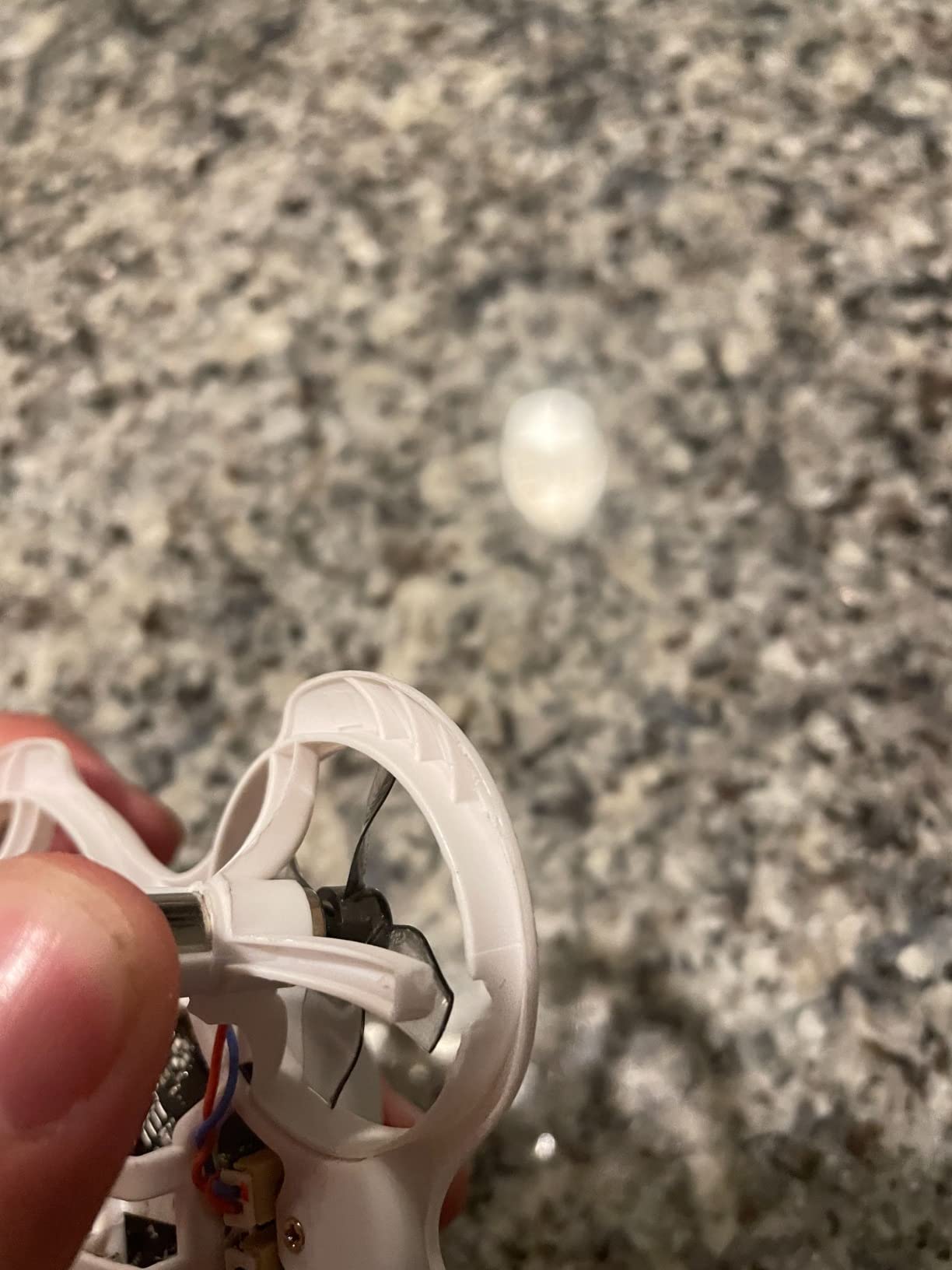
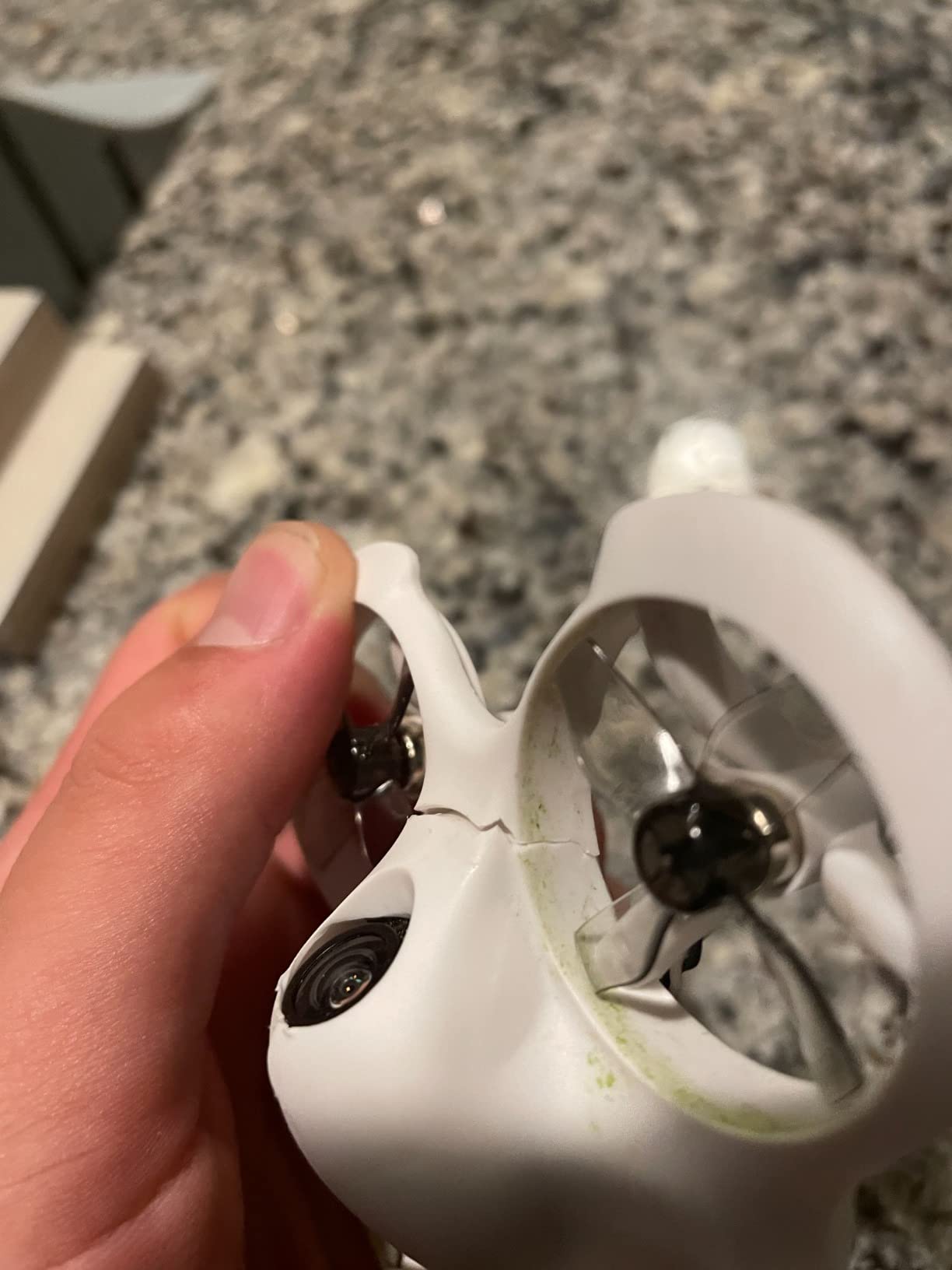
I tested the collision detection by deliberately flying into a wall, and the drone disarmed immediately and dropped gently to the floor instead of grinding the props. That safety behavior alone makes the Cetus Lite a strong choice for a younger pilot who will crash often.
The 3.6-star average is the lowest on this list, and the most common complaint is signal reliability with the camera feed. A few buyers had to reseat the camera connector to restore video. If you buy the Cetus Lite, check the camera connection before the return window closes.
Who Should Buy the Cetus Lite
Younger pilots, cautious first-timers, and buyers who want the simplest possible FPV experience will like the Cetus Lite. The two-speed modes and altitude hold make it the most forgiving drone in this roundup.
Who Should Skip It
Pilots who want to grow into acro flying should pick the Cetus Pro instead. The Lite lacks the third manual flight mode, and the FrSky D8 protocol will not pair with modern ELRS radios without reflashing the transmitter.
12. BETAFPV Cetus X FPV Kit – Advanced ELRS Bundle
R8 ELRS Whoop Drone-Ultralight 1S 80mm Micro FPV Quadcopter BNF,1:4 Thrust 0802 20000KV Brushless Motors, FOV160°,Matrix G4 5IN1 FC,with 6 Port Battery Charger,2 Batteries for Indoor FPV Freestyle Racing
Betaflight FC
ExpressLRS 2S
VR03 DVR goggles
LiteRadio 3
600m range
Pros
- Betaflight FC enables deep customization
- ExpressLRS 2S power for serious range
- VR03 goggles include DVR recording
- LiteRadio 3 is a step up from the LiteRadio 2 SE
- 600m range for outdoor flying
Cons
- 3.6 rating with 21 percent 1-star reviews
- Camera signal can cut out after crashes
- Requires joystick recalibration over time
- Steeper learning curve than other Cetus models
The Cetus X FPV Kit is the most advanced complete kit in the Cetus family, and it is aimed at pilots who have outgrown the Pro and want to move toward serious freestyle. The big upgrades are the Betaflight flight controller (which means full PID and filter tuning in Betaflight Configurator), ExpressLRS for the radio link, and the VR03 goggles with built-in DVR recording.
I appreciate that BetaFPV ships the LiteRadio 3 with this kit instead of the LiteRadio 2 SE. The LiteRadio 3 has better gimbals, more switches, and a more comfortable grip. Combined with ExpressLRS, the Cetus X gives pilots a radio setup they can actually carry forward into larger drones.
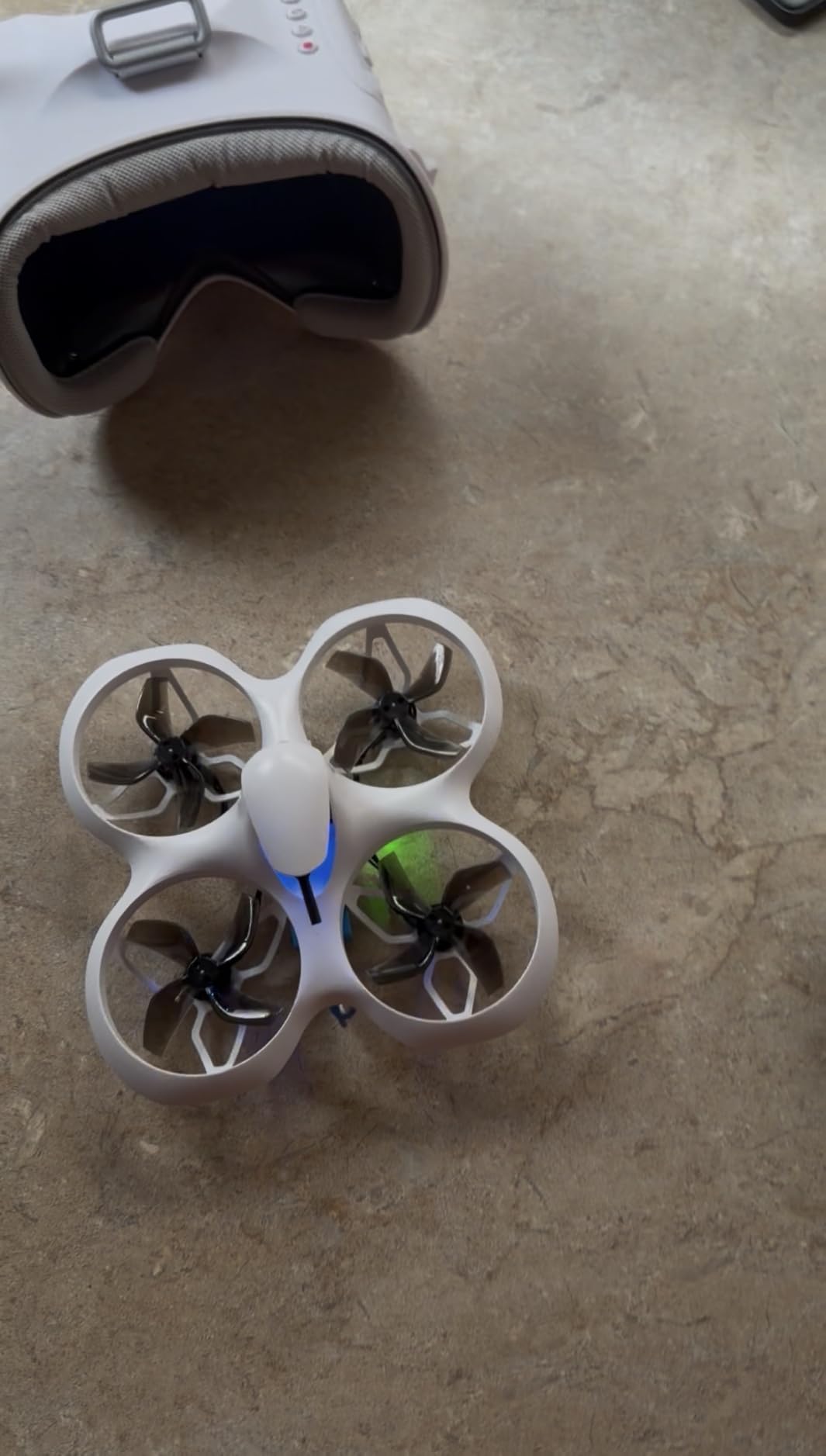
The 600-meter maximum range is the longest of any Cetus model I have tested. That opens up outdoor flying in parks and calm-weather backyard sessions that the shorter-range Cetus kits cannot handle. ExpressLRS also means a more reliable link in noisy RF environments like indoor sports halls.
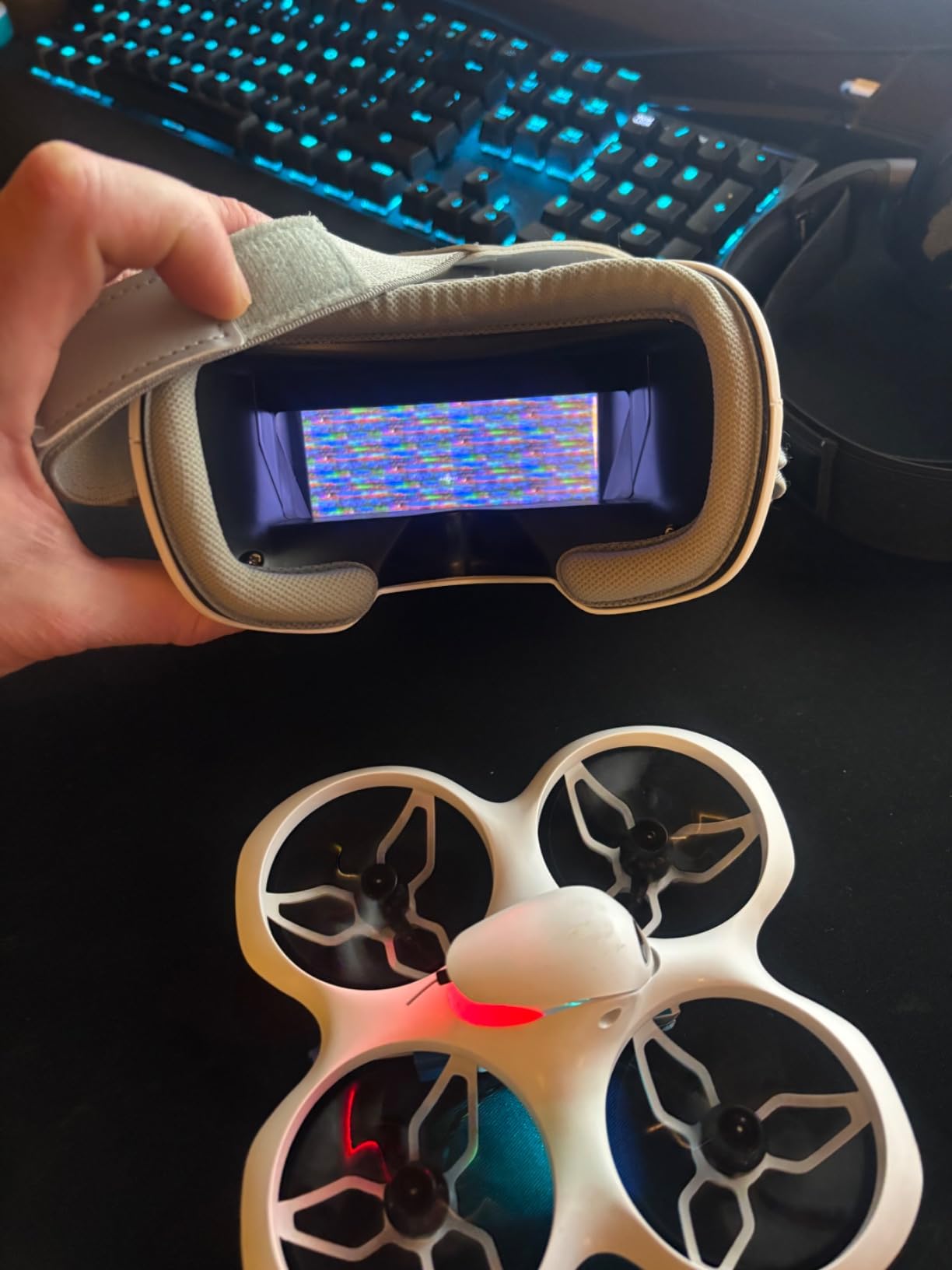
The 3.6-star rating is a yellow flag. The most common serious complaint is camera signal loss after a crash, which usually points to a connector working loose. I also found the joysticks on the LiteRadio 3 needed recalibration after extended use. If you buy the Cetus X, learn to open Betaflight Configurator early so you can diagnose issues yourself.
Who Should Buy the Cetus X Kit
Pilots who have flown a Cetus Pro or Tiny Hawk RTF and want to graduate to Betaflight tuning and ELRS should pick the Cetus X. The included LiteRadio 3 and VR03 DVR goggles are genuine upgrades worth keeping as you progress.
Who Should Skip It
Total beginners should start with the Cetus Pro or Tinyhawk RTF instead. The Cetus X assumes you are comfortable with Betaflight and ELRS, and the lower rating suggests reliability can be hit-or-miss.
13. EMAX Tinyhawk 3 RTF Kit – 1080p Beginner Bundle
Tinyhawk 3 RTF Kit 1s FRSKY FPV Drone for Beginners with Controller and 5.6G Goggles Quadcopter Ready to Fly Kit
RTF kit
Controller + goggles
5.8G FPV
1080p capture
Crash resistant
Pros
- Ready to fly out of the box with controller and goggles
- Real 5.8G FPV instead of Wi-Fi
- 1080p video capture resolution
- Flexible crash-resistant plastic frame
- Beginner-oriented flight feel
Cons
- Batteries not included despite being an RTF kit
- 3.9 rating with 15 percent 1-star reviews
- FrSky protocol rather than ELRS
- Higher price than competing RTF kits
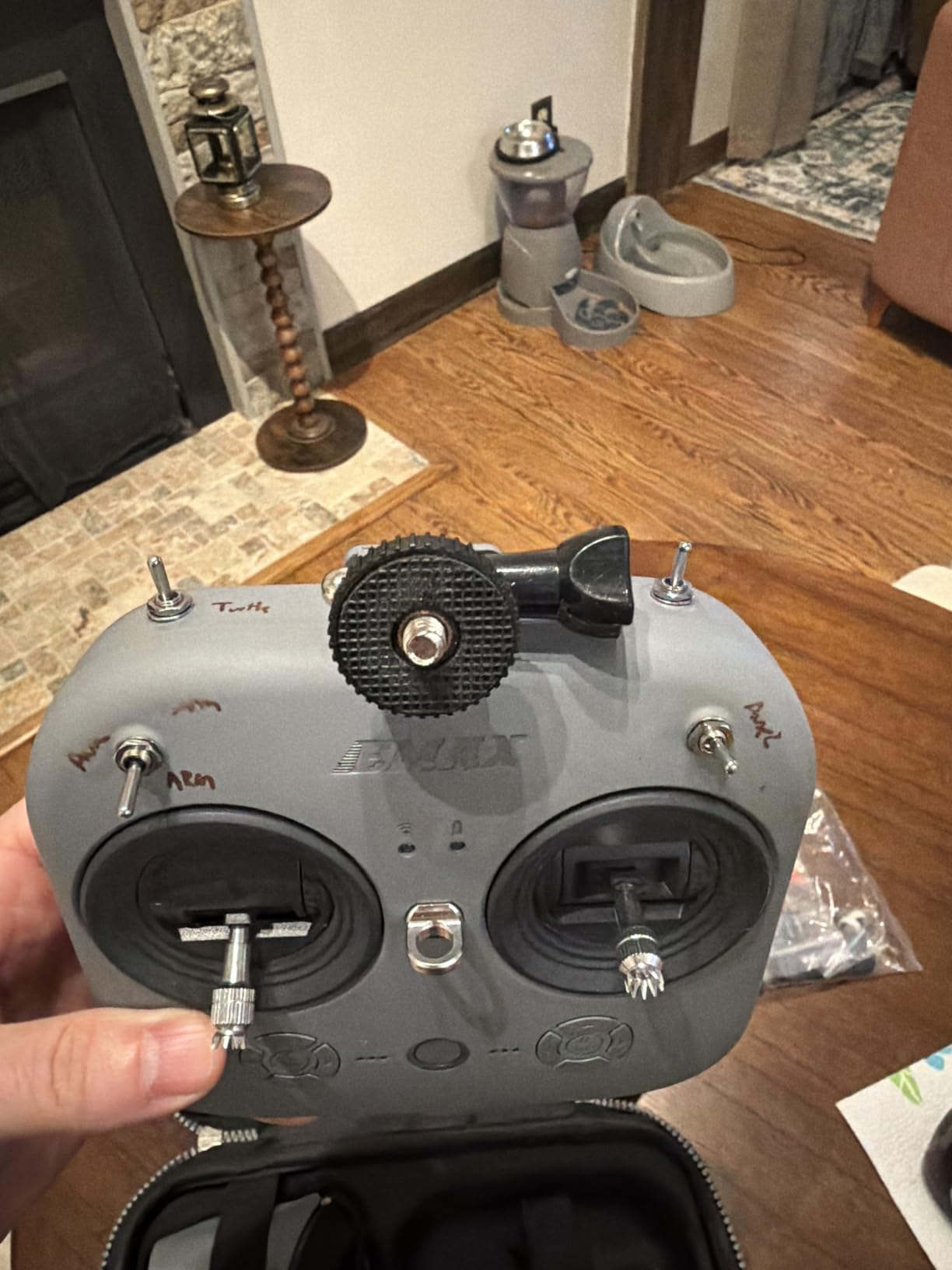
The EMAX Tinyhawk 3 RTF Kit is the newest generation of the Tiny Hawk platform, and it is the kit I point to when a buyer wants an EMAX-branded complete package. The box includes the drone, a controller, and FPV goggles, and the drone itself is built around EMAX’s flexible crash-resistant plastic frame.
The headline spec is 1080p video capture resolution, which is the highest native capture resolution of any drone in this roundup. In practice the FPV feed is standard-definition analog, but the on-camera processing produces a sharper image than the older Tiny Hawk 2. The 5.8G FPV link is the same real-analog system EMAX has used since the original Tiny Hawk, which means low latency and reliable performance.
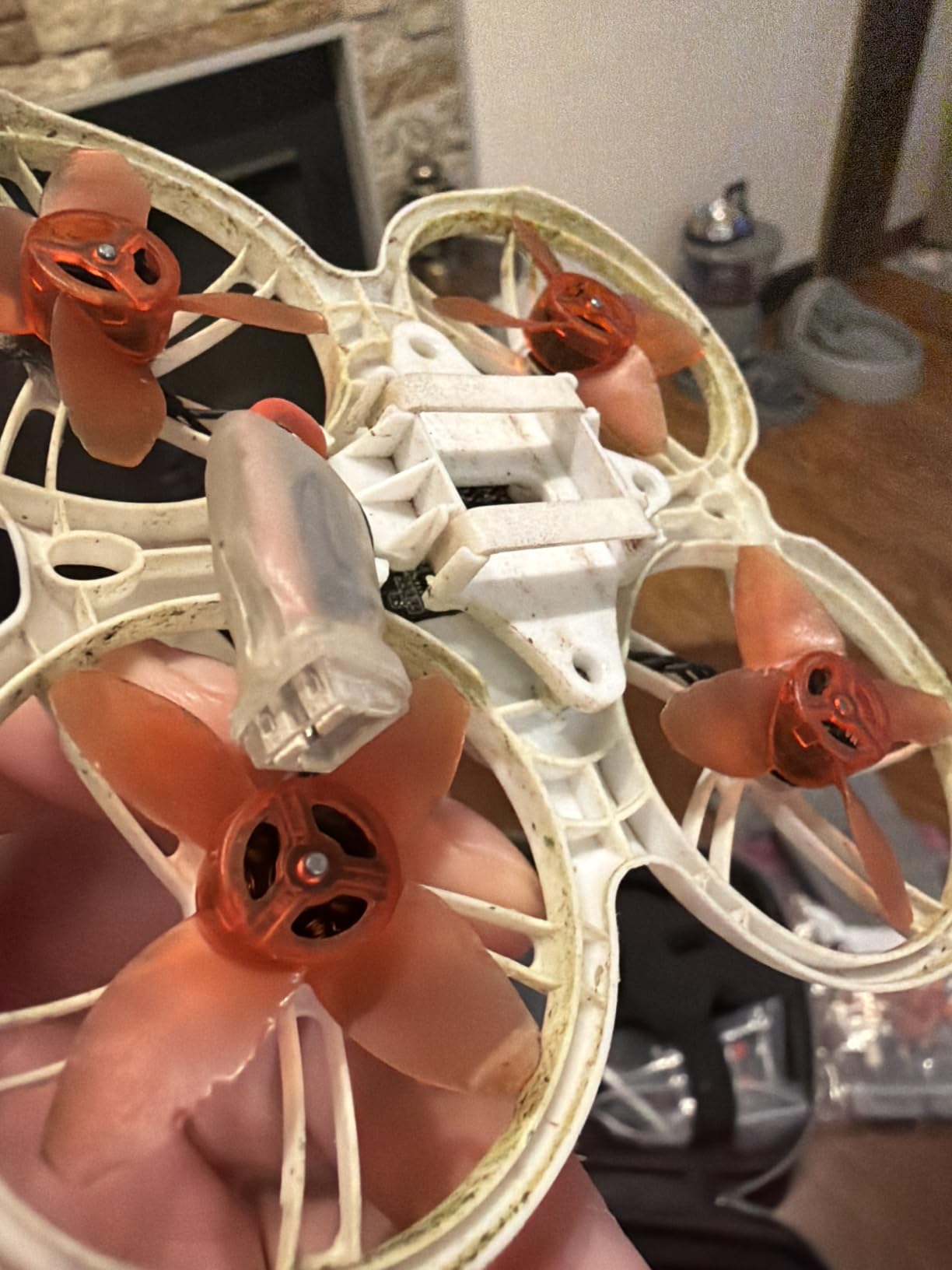
I flew the Tinyhawk 3 indoors and in a calm backyard, and the flight feel is forgiving in a way that suits a beginner. The flexible plastic frame absorbed every crash I threw at it, including a full-speed hit on a doorframe that would have cracked a stiffer frame.
The biggest complaint is that batteries are not included despite this being marketed as a ready-to-fly kit. That is an unusual omission for an RTF bundle at this price, and you will need to add a 1S battery and charger to your order. The FrSky protocol also means you cannot pair the drone with a modern ELRS radio without changing the receiver.
Who Should Buy the Tinyhawk 3 RTF
Buyers who want the EMAX Tiny Hawk experience with the latest camera and frame should pick the Tinyhawk 3 RTF. It is a strong choice for a beginner who values a flexible, crash-resistant frame above all else.
Who Should Skip It
The missing battery and the FrSky protocol are both reasons to consider the BetaFPV Cetus Pro instead, which includes batteries and offers a cleaner upgrade path. ELRS pilots should look at the Cetus X or Air65.
14. BETAFPV Aquila16 FPV Kit – Long-Flight Beginner Whoop
Tiny Hawk 2 New Model Indoor FPV Racing Drone F4 5A 16000KV RunCam Nano2 700TVL 37CH 25/100/200mW VTX 1S-2S – BNF
8 min flight time
1100mAh battery
ELRS V3
VR03 DVR goggles
Turtle mode
Pros
- Up to 8 minutes of flight time per charge
- 1100mAh battery is largest in this roundup
- VR03 goggles with DVR recording
- ELRS V3 for modern radio compatibility
- Turtle mode plus 3 flight modes for learning
Cons
- Camera quality suffers in low light
- No buzzer for locating crashes
- Cannot be configured in Betaflight
- Some buyers report goggles light bleed
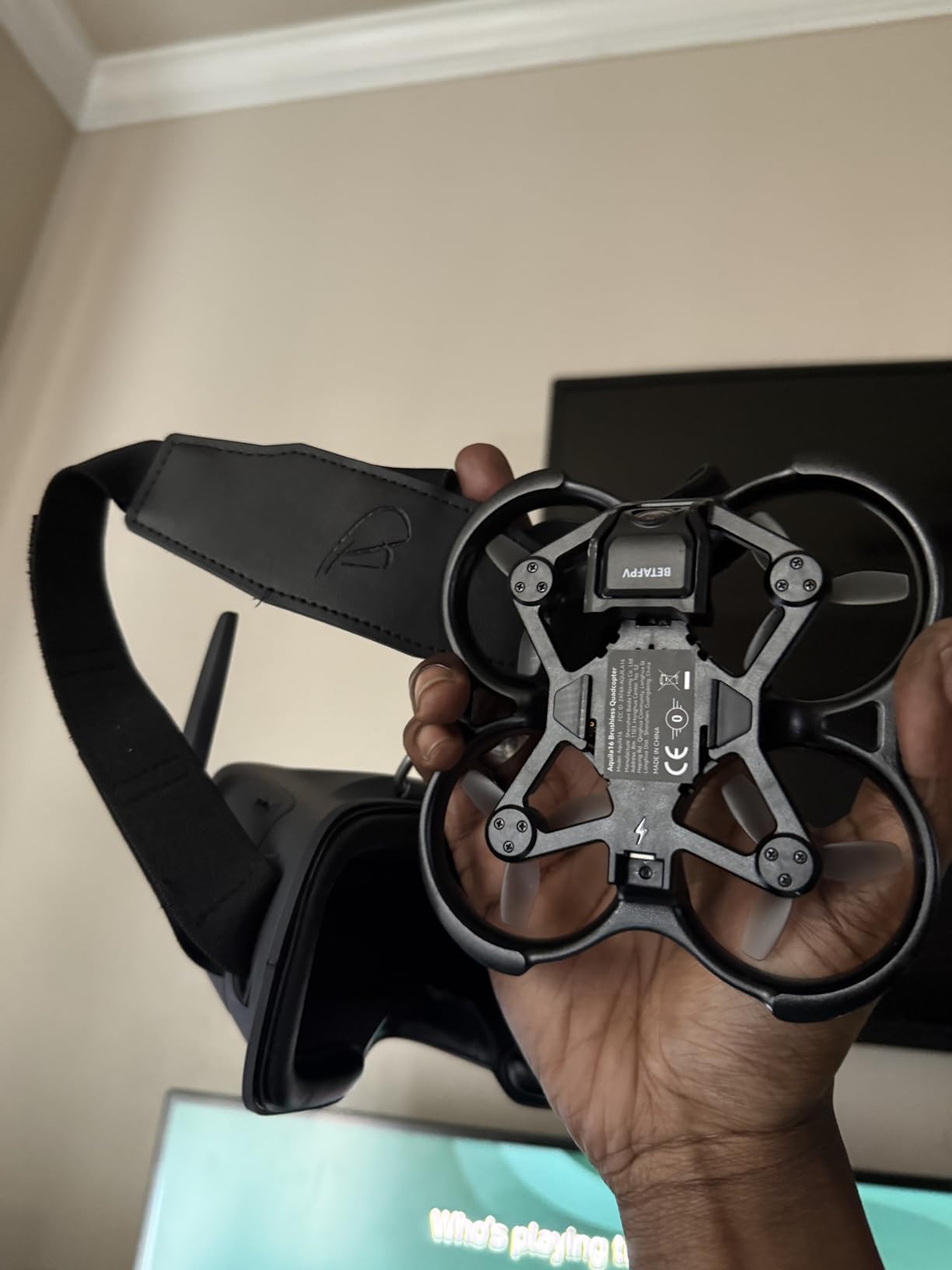
The Aquila16 FPV Kit is the kit I recommend when a buyer’s first question is “how long does it fly?” Most tiny whoops deliver 2 to 4 minutes per pack, but the Aquila16 ships with a 1100mAh battery that BetaFPV rates for up to 8 minutes of flight time. In my testing I consistently landed between 6 and 7 minutes of mixed flying, which is genuinely class-leading.
The Aquila16 is larger than the Cetus line, with a more substantial frame and bigger props. That extra size is what enables the long flight times, and it also makes the drone more stable in light wind. I flew mine in a calm backyard and it held position better than any 65mm whoop on this list.
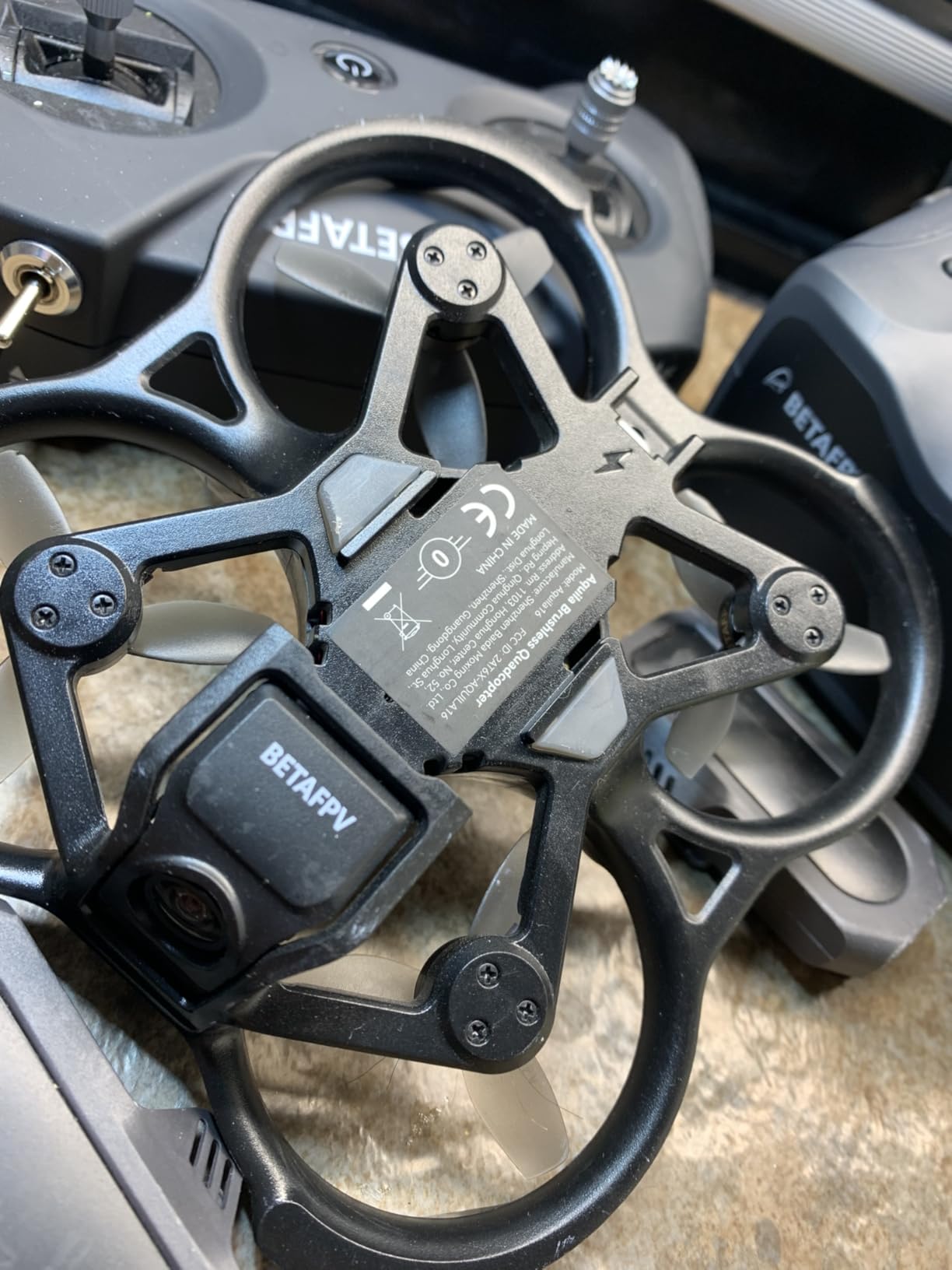
The kit ships with the LiteRadio 2 SE running ELRS V3 firmware and the VR03 goggles with DVR recording. That means you can record your flights directly to a microSD card in the goggles, which is a feature I use constantly for reviewing my lines. ELRS V3 is the latest version of ExpressLRS, and it pairs cleanly with modern ELRS modules and radios.
The trade-offs are the camera and the FC. The camera struggles in low light, producing noise in dim indoor spaces. The flight controller also cannot be configured in Betaflight, which means you are stuck with BetaFPV’s factory tuning. For a beginner that is fine, but intermediate pilots who want to tweak PIDs will hit a wall.
Who Should Buy the Aquila16 Kit
Beginners who prioritize long flight times and a stable platform over raw acrobatic performance will love the Aquila16. The ELRS V3 radio link and DVR goggles also make it a more future-proof kit than the older Cetus bundles.
Who Should Skip It
Pilots who want to tune in Betaflight or fly aggressive acro should look elsewhere. The Aquila16 is built for cruising and learning, not for racing or freestyle progression.
How to Choose the Best Tiny Whoop in 2026?
After flying every drone in this roundup, I can tell you the right choice depends almost entirely on two questions: where will you fly, and what gear do you already own? The technical details matter, but they all flow from those two answers. Let me walk you through the decisions that actually matter.
65mm vs 75mm Wheelbase
The wheelbase is the distance between motor centers, and it is the single most important spec on a tiny whoop. A 65mm whoop is the right choice for indoor flying in a typical house or apartment. The smaller props move less air, the drone is quieter, and the ducts protect walls and people when you crash. The BetaFPV Air65 and Happymodel Mobula6 are the 65mm standards I recommend.
A 75mm or 80mm whoop is the better pick if you plan to fly outdoors in calm conditions or in a large warehouse. The larger props generate more thrust, which means the drone can fight light wind and carry a small HD camera. The trade-off is that 75mm drones are too powerful for a small living room and they make more noise. The STARTFPV R8 and the BetaFPV cinewhoop options are the larger platforms on this list.
Brushed vs Brushless Motors
Brushed motors are cheaper and simpler, but they wear out. Expect 20 to 40 hours of flight time before a brushed motor needs replacement, and replacement means soldering in most cases. Brushed whoops like the BetaFPV Cetus (the original, not the Pro) make sense for strict budget buyers or younger pilots.
Brushless motors are more powerful, more efficient, and last hundreds of hours. Every drone in this roundup except the brushed Cetus and Cetus Lite uses brushless motors, and I strongly recommend brushless if your budget allows. The performance difference is night and day, especially on punch-outs and recovery from mistakes.
1S vs 2S Battery
Most tiny whoops run on a single 1S LiPo or LiHV battery, which keeps weight under 20 grams and makes battery swaps fast. 1S whoops are ideal for indoor flight and the standard for racing. The Air65, Mobula6, and the entire Cetus line are 1S drones.
2S drones like the Pavo Femto and Pavo Pico II double the voltage, which means more power and the ability to carry an HD camera. The trade-off is weight, cost, and complexity. I only recommend 2S to pilots who specifically want HD recording or who plan to fly outdoors regularly.
Why ELRS Matters
ExpressLRS (ELRS) is the open-source radio protocol that has taken over the FPV hobby in the last two years. Compared to the older FrSky and Futaba protocols, ELRS offers longer range, lower latency, and better performance in noisy RF environments. Every modern whoop on this list either ships with ELRS built in (Air65, Mobula6, Nanoscout, Aquila16) or can be paired with an ELRS module.
If you are buying your first radio today, buy an ELRS radio. The Radiomaster Pocket ELRS and the Jumper T-Lite are the two transmitters I recommend for tiny whoop pilots, and they will pair with every ELRS drone on this list without extra hardware.
Battery Connectors: BT2.0 vs PH2.0
This is a small detail that causes big confusion. The two common 1S battery connectors are PH2.0 (the older standard) and BT2.0 (BetaFPV’s lower-resistance upgrade). BT2.0 batteries deliver more current, which translates to noticeably more punch on throttle. If your whoop uses BT2.0 (and all the modern BetaFPV drones on this list do), buy BT2.0 batteries. They are backwards-compatible with PH2.0 drones in a pinch, but the performance gap is real.
RTF Kit vs BNF: What to Buy as a Beginner
RTF (Ready-To-Fly) kits include the drone, a radio, and goggles. BNF (Bind-N-Fly) drones include only the drone and require you to supply your own radio and goggles. As a beginner, I strongly recommend an RTF kit because the components are guaranteed to work together and you avoid the compatibility headaches that trip up newcomers.
The Cetus Pro Kit, Tiny Hawk RTF, Tinyhawk 3 RTF, and Aquila16 Kit are the complete RTF bundles on this list. Pick whichever fits your budget and read the individual reviews above for the differences.
FAQs
What is the best tiny whoop motor?
The best tiny whoop motors in 2026 are the 0702-series brushless motors in the 26000 to 30000 KV range for 65mm whoops, and 0802 motors around 20000 KV for 75mm whoops. The BetaFPV 0702SE II 27000KV motors on the Air65 and the Happymodel SE0702 28000KV motors on the Mobula6 are the two specific units I recommend most often based on my testing.
Are tiny whoops harder to fly?
Tiny whoops are easier to fly safely than larger FPV drones because the prop guards prevent damage and the low weight means crashes rarely hurt anything. However, they still require real FPV skills like throttle management and orientation awareness. Most beginners should start with an RTF kit that includes a self-leveling flight mode, like the BetaFPV Cetus Pro Kit, and graduate to full acro mode over a few weeks.
What is the fastest tiny whoop?
The fastest tiny whoop on this list is the BetaFPV Air65, which pairs 0702SE II 27000KV motors with a 5.82:1 thrust-to-weight ratio in a 17.3g frame. For raw speed in a tiny whoop format, the Air65 and the Happymodel Mobula6 are the two drones I would enter in a race.
What is the smallest whoop?
The smallest whoops in this roundup are the 65mm drones, specifically the BetaFPV Air65 at 17.3g and the Happymodel Mobula6 at 17.7g. A 65mm wheelbase is the standard for indoor tiny whoop flying, and anything smaller typically uses proprietary frames with limited parts availability.
Final Thoughts on the Best Tiny Whoops for 2026
If I had to pick one drone from this list, I would choose the BetaFPV Air65 for experienced pilots and the BetaFPV Cetus Pro FPV Kit for beginners. The Air65 delivers the most responsive 65mm indoor flight I have experienced, and the Cetus Pro Kit gives a complete newcomer everything they need to fly on day one with a guided learning path.
The Happymodel Mobula6 is the best value for pilots who already own gear, the EMAX Nanoscout is the smart budget pick, and the BetaFPV Pavo Femto is the right call if you want cinematic HD footage from the smallest possible frame. Every other drone on this list has a specific audience, and the individual reviews above will help you match the drone to your situation.
Tiny whoops are the most accessible entry point into real FPV flying I know of, and the drones on this list represent the best tiny whoops available in 2026. Pick the one that matches your gear, your space, and your skill level, and you will be flying through doorways and around furniture within an hour of opening the box.