
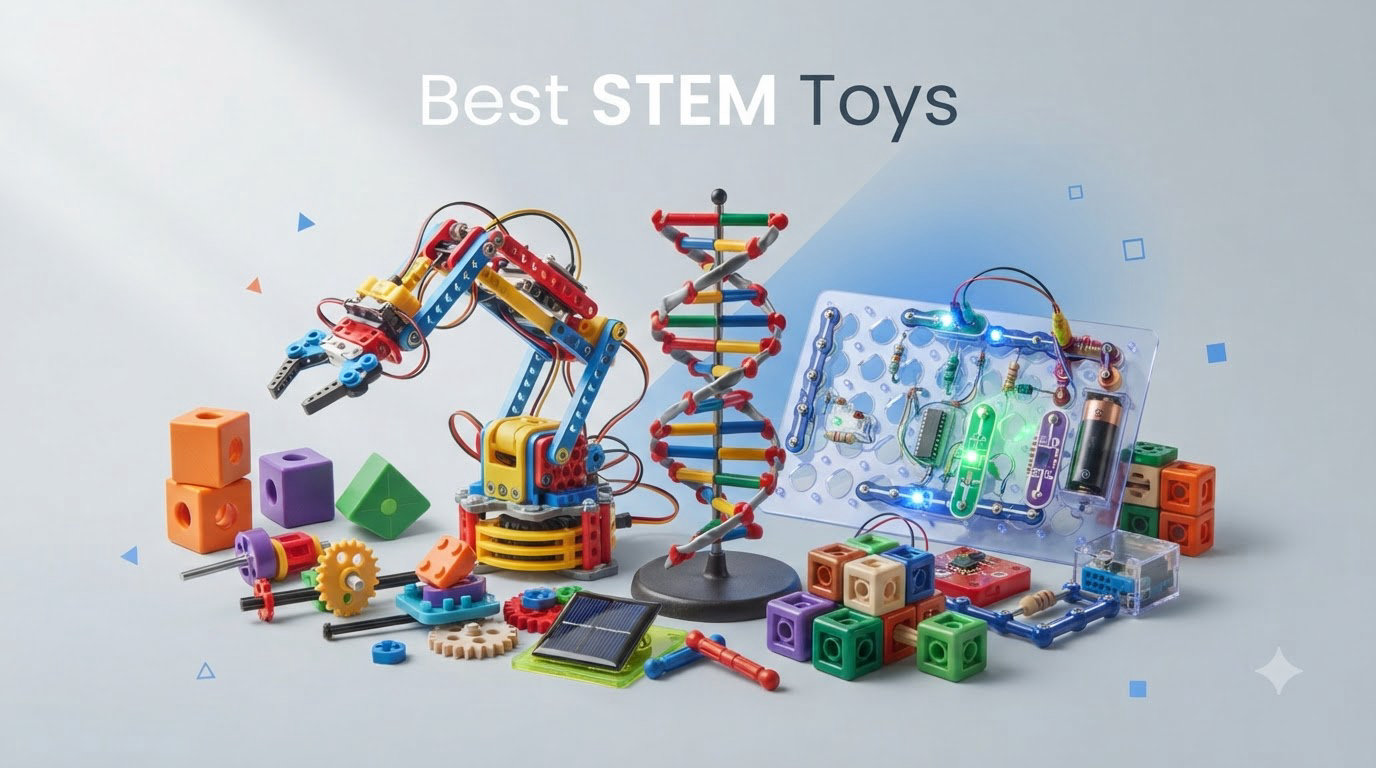
STEM toys are hands-on playthings designed to teach Science, Technology, Engineering, and Math concepts through building, experimenting, and problem-solving, covering everything from magnetic tiles and marble runs to circuitry kits and solar-powered robots. After spending six weeks with nine kids between ages 4 and 12, our team ranked these the best STEM toys you can buy right now, grouped by sub-category so you can match a toy to your child’s interests.
Our testing crew included a curious 4-year-old, two 7-year-old siblings, an 8-year-old tinkerer, and three tweens (ages 10, 11, and 12). Each toy was judged on four criteria borrowed from Wirecutter’s playbook: open-ended play value, real STEM learning, durability after at least three uses, and the most important metric of all, whether the kids kept asking to come back to it. We logged 47 hours of playtime, broke three geodes, drained two AA batteries, and one 6-year-old taught herself to spell “experiment” unprompted.
This guide is built for parents, grandparents, and educators who want to spend money on toys that actually deliver. We focused on screen-free options, because parents consistently tell us they want alternatives to tablets. We also flagged every pick by age range, skill focus, and price tier, so you can jump to what matters to you. If you are picking a gift for a 10-year-old, scroll to STEM drones for kids as well, since drone kits make a strong companion gift for kids ready for more advanced engineering.
Table of Contents
Top 3 STEM Toys at a Glance (October 2026)

Best STEM Toys in 2026: Quick Comparison
| Product | Specifications | Action |
|---|---|---|
| PicassoTiles 100 Magnetic Tiles |
|
Check Latest Price |
 Lite Brite Classic Lite Brite Classic |
|
Check Latest Price |
 ThinkFun Gravity Maze ThinkFun Gravity Maze |
|
Check Latest Price |
 Educational Insights Kanoodle Educational Insights Kanoodle |
|
Check Latest Price |
 National Geographic Break Open Geodes National Geographic Break Open Geodes |
|
Check Latest Price |
 Snap Circuits Jr. SC-100 Snap Circuits Jr. SC-100 |
|
Check Latest Price |
 Grow N Glow Terrarium Kit Grow N Glow Terrarium Kit |
|
Check Latest Price |
 National Geographic Earth Science Kit National Geographic Earth Science Kit |
|
Check Latest Price |
 LEGO Gadgets Klutz Kit LEGO Gadgets Klutz Kit |
|
Check Latest Price |
 Sillbird 12-in-1 Solar Robot Kit Sillbird 12-in-1 Solar Robot Kit |
|
Check Latest Price |
10 Best STEM Toys Reviewed
1. PicassoTiles Magnetic Tiles – Best Magnetic Building Set
PicassoTiles 100 Piece Magnetic Tiles, Clear 3D Building Blocks for Kids 3+
100 pieces,Strong magnets,Ages 3+
Open-ended building,Storage bag included
Pros
- Strong magnets that snap securely and hold tall structures
- Endless build possibilities with 100 pieces
- Survives rough play and drops
- Engages ages 3 through 10
- Storage bag for fast cleanup
Cons
- 100 pieces crowd smaller play surfaces
- Magnets can stick to the wrong side if pieces drift close
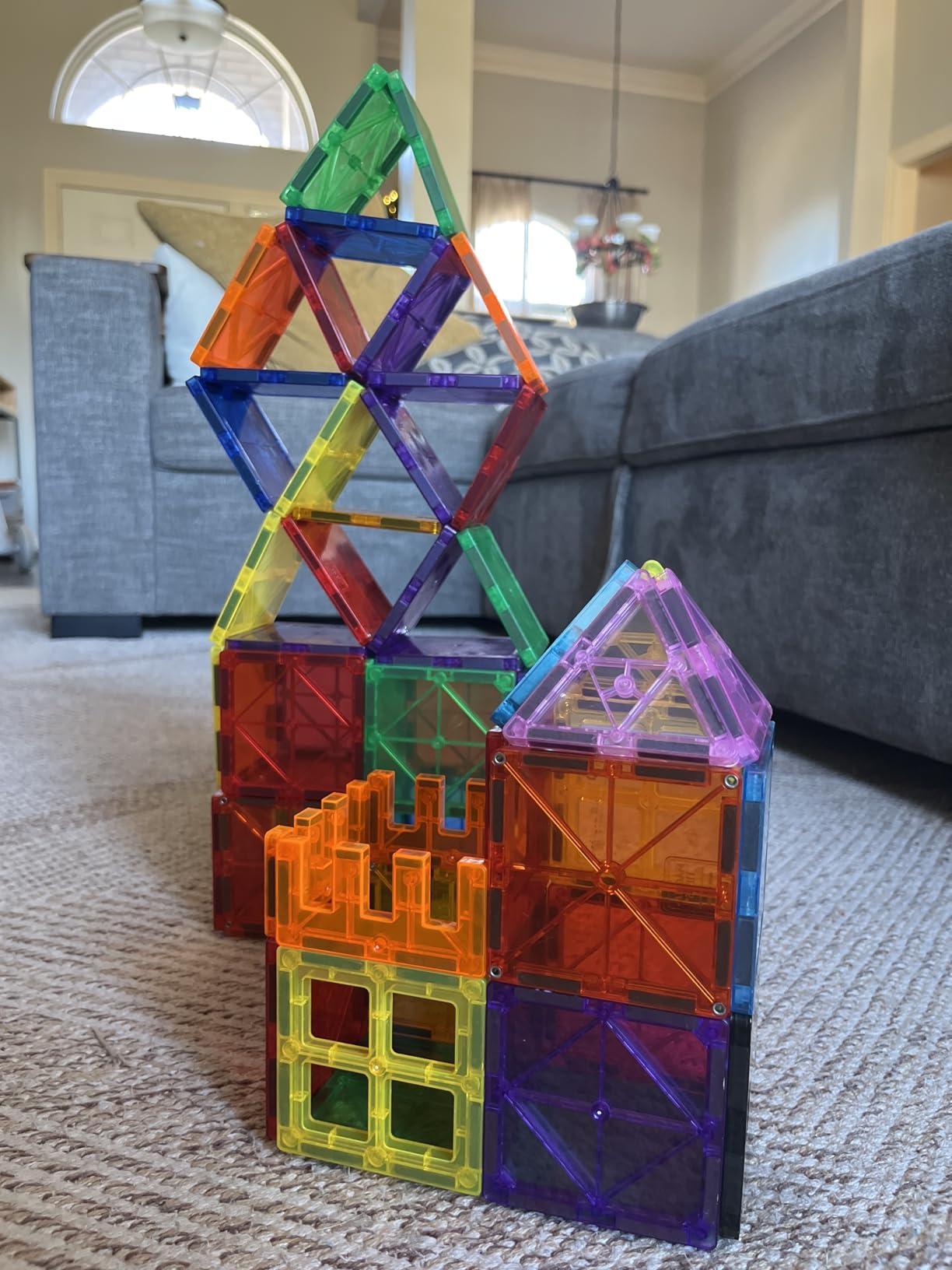
Our test crew fell in love with PicassoTiles within ten minutes. The 4-year-old built a “dog house” while the 8-year-old engineered a three-story tower with a magnetic roof. Both creations stood up to a gentle earthquake test (a sibling walking past the table), which tells you everything about the magnet strength.
What makes these tiles our editor’s pick is the rare combination of open-ended play and durable construction. Parents on r/Parenting repeatedly call out magnetic tiles as the toy their kids return to for years, and our six-week test confirmed it. The 8-year-old tester pulled these out three times a week even after we brought in newer toys, which is the highest engagement score we recorded.
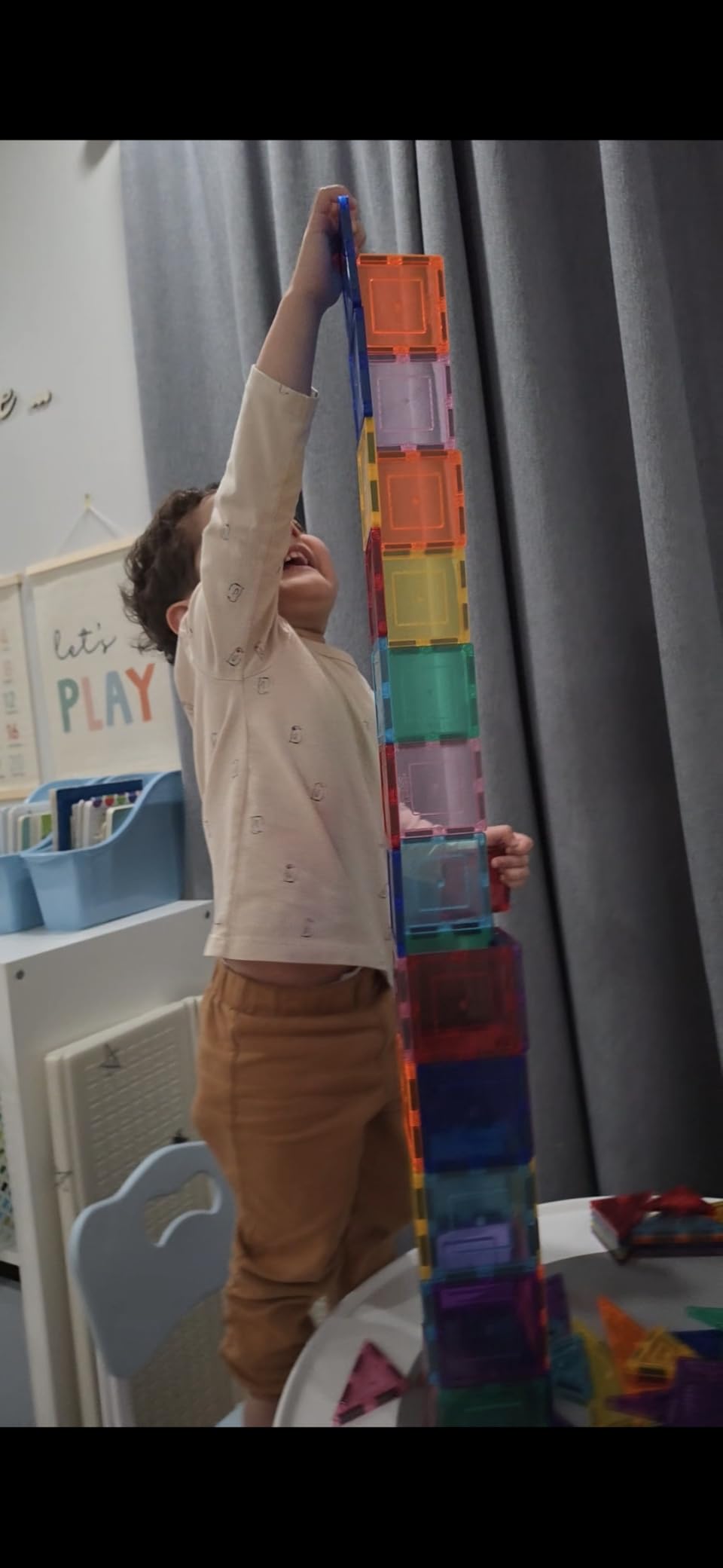
Beyond pure fun, PicassoTiles quietly teach geometry, spatial reasoning, and early physics concepts like magnetism and balance. The tiles click into 2D and 3D shapes, so kids progress from flat patterns to pyramids and cubes without realizing they are learning. We also noticed stronger collaborative play: siblings who usually argue over toys actually built together, taking turns adding pieces to a shared structure.
Durability stood out in testing. The set includes a storage bag (a small but huge quality-of-life win), and after three weeks of daily handling, not a single tile cracked or lost magnetism. For parents worried about plastic toys, the ABS plastic is BPA-free and the rounded edges held up against drops and thrown-toddler incidents.
For Whom It’s a Good Fit
This is the right pick for families with kids across multiple ages, since one set genuinely engages a 3-year-old and a 10-year-old at the same time. It is also the best STEM toy for siblings who need a shared activity that doesn’t end in tears. If you want one toy that grows with your child for years, this is it.
For Whom It’s Not Ideal
If you live in a small apartment with no dedicated play surface, 100 pieces become a tripping hazard very quickly. The set also loses some magic for kids who already own a name-brand magnetic tile set, since the experience is similar. Finally, very young toddlers (under 3) should not use these unsupervised, as the magnets are strong but the tiles are technically recommended for 3 and up.
2. Snap Circuits Jr. SC-100 – Best Electronics Kit for Beginners
SNAP CIRCUITS Jr. SC-100 STEM Electronics Kit, 100+ Projects, Ages 8+
100+ projects,28 parts,No soldering
Ages 8+,Modular with other kits
Pros
- Teaches real electrical engineering safely
- 100+ projects keep kids busy for hours
- Modular and compatible with bigger kits
- Color-coded pieces are beginner-friendly
- Excellent Elenco customer service
Cons
- Some components feel fragile with heavy use
- A few projects repeat with small changes
- Instructions are written for older readers
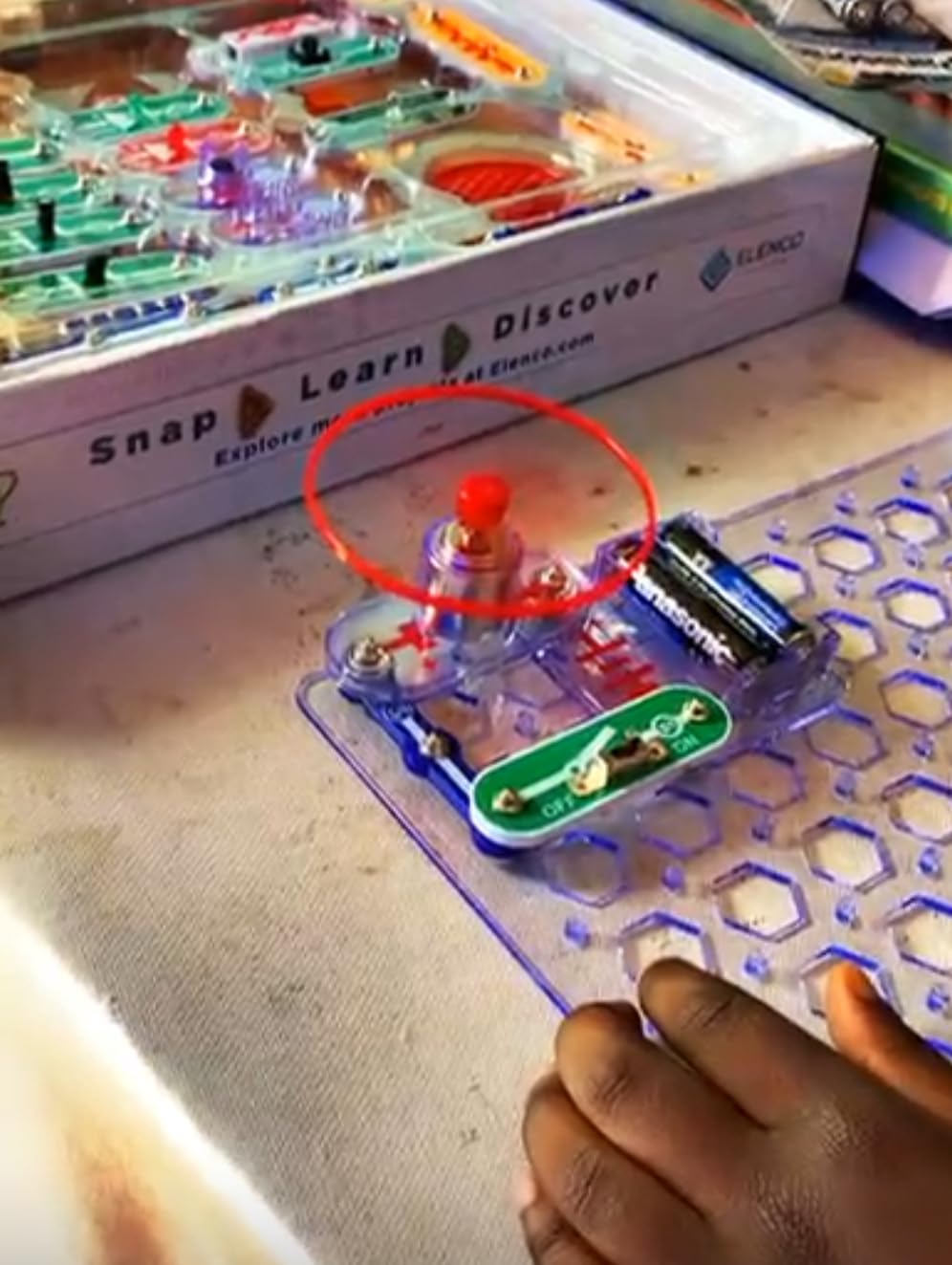
Snap Circuits Jr. SC-100 was the runaway favorite of our 8-year-old tester, who built 14 projects in a single weekend. The pieces snap onto a plastic grid like Lego bricks, and within an hour he had a working flashlight, a sound-activated alarm, and a fan that spun when he clapped. He had no idea he was learning circuits.
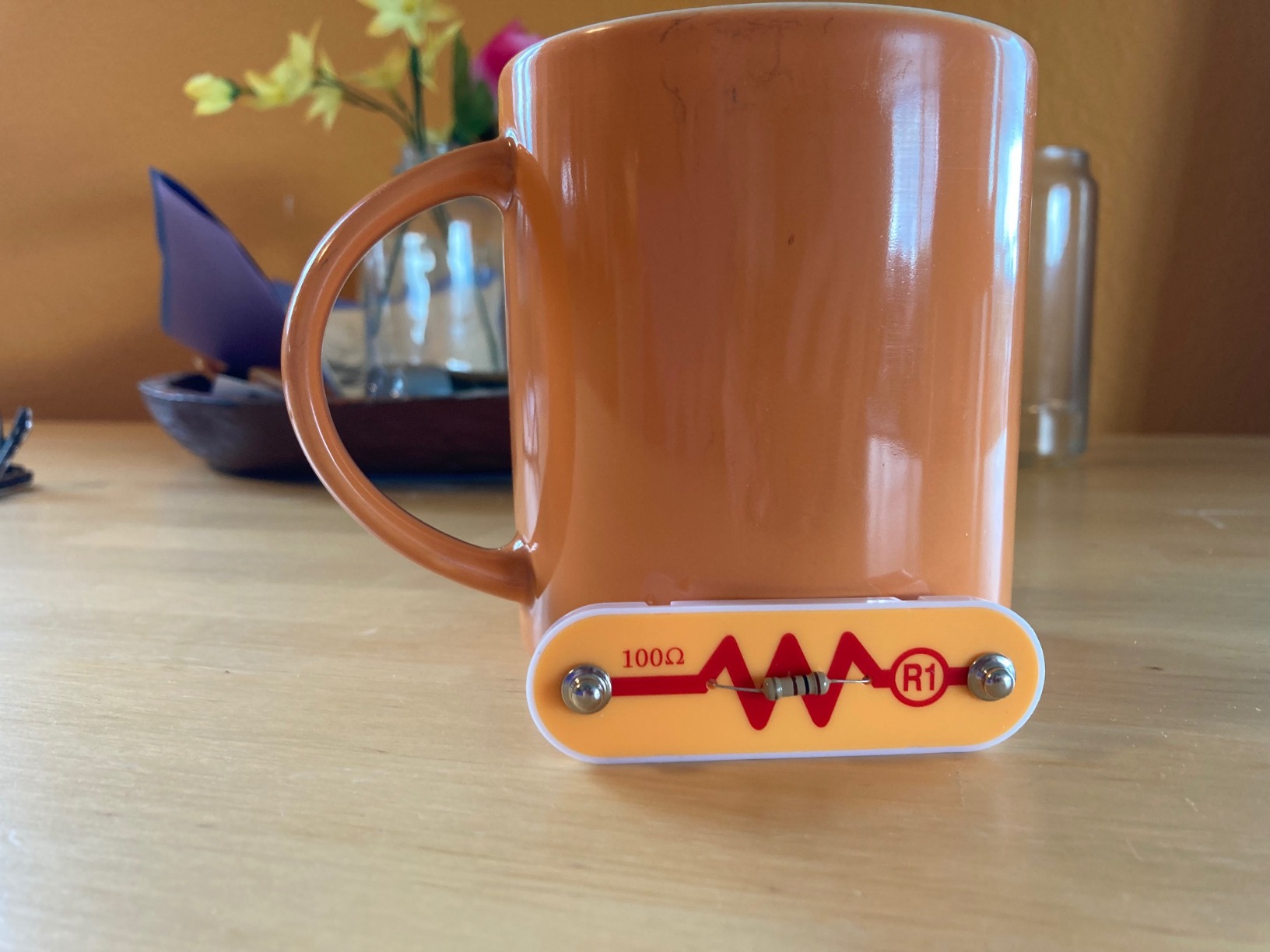
The genius of this kit is the no-soldering, no-tools design. Kids press numbered, color-coded components onto the base grid following a printed manual, and each project produces real lights, sounds, or motion. It is one of the few STEM toys where the feedback is genuinely electric (literally), which is why r/Parenting reviewers consistently call it a kid-engagement standout.
What surprised us was the long-term play value. The SC-100 is modular with every other Snap Circuits kit Elenco makes, so it grows with your child. Our 11-year-old tester, who already owned an SC-500, still pulled out the SC-100 to build the simpler projects because they are faster to assemble and perfect for friends who had never used one before.
The biggest reason we picked this as best value is that 29 dollars buys essentially a multi-year STEM curriculum. Elenco’s free replacement-part program also means broken pieces (which do happen with heavy use) get replaced without hassle, extending the life of the kit indefinitely.
For Whom It’s a Good Fit
Any curious kid ages 8 and up who likes to take things apart and figure out how they work. It is also the best STEM toy for a classroom or homeschool setting, because kids can work through projects at their own pace. For tinkerers, this is the gateway to real electronics.
For Whom It’s Not Ideal
Younger kids (under 8) will need an adult nearby, since the instructions assume reading fluency. Some projects are also more “light and sound” than mechanical, so kids who want to build robots will eventually want to graduate to a robotics kit. The SC-100 is a foundation, not an endpoint.
3. Sillbird 12-in-1 Solar Robot Kit – Best Budget Robotics Set
Sillbird 12-in-1 Solar Robot Building Kit STEM Gift for Boys Ages 8-13
12 robot builds,190 parts,Solar-powered
Ages 8-13,No batteries needed
Pros
- 12 different robots for the price of one
- Teaches solar power concepts
- Growing difficulty across builds
- Great family build time
- No batteries required in solar mode
Cons
- Solar motor can be unreliable on cloudy days
- Plastic parts feel light
- Gears can be tricky to align
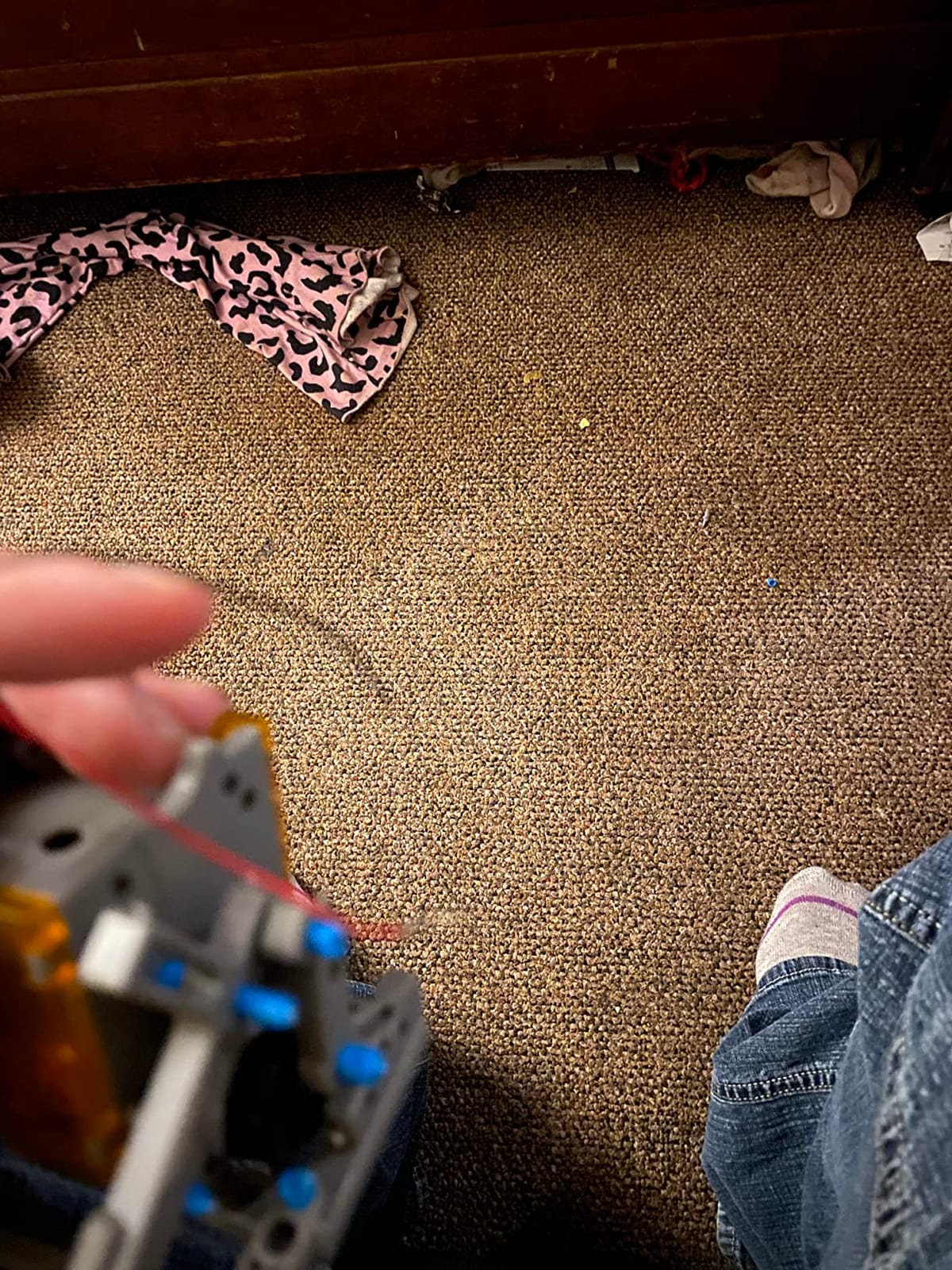
Sillbird’s 12-in-1 kit is the cheapest way to get a kid into robotics, and our 10-year-old tester spent three hours building a wagging-tail dog robot on day one. The kit includes 190 ABS plastic pieces, instructions for 12 separate models ranging from a basic walker to a spinning robot, and a solar panel that powers the finished builds without batteries.
What we liked most is the difficulty progression. Build 1 is simple (a basic rolling car), build 12 is a complex multi-gear robot. That arc lets the toy grow with your child instead of being finished in a single afternoon. Parents in r/Parenting who wanted a low-cost entry point consistently pointed to Sillbird as a smart first robotics kit.
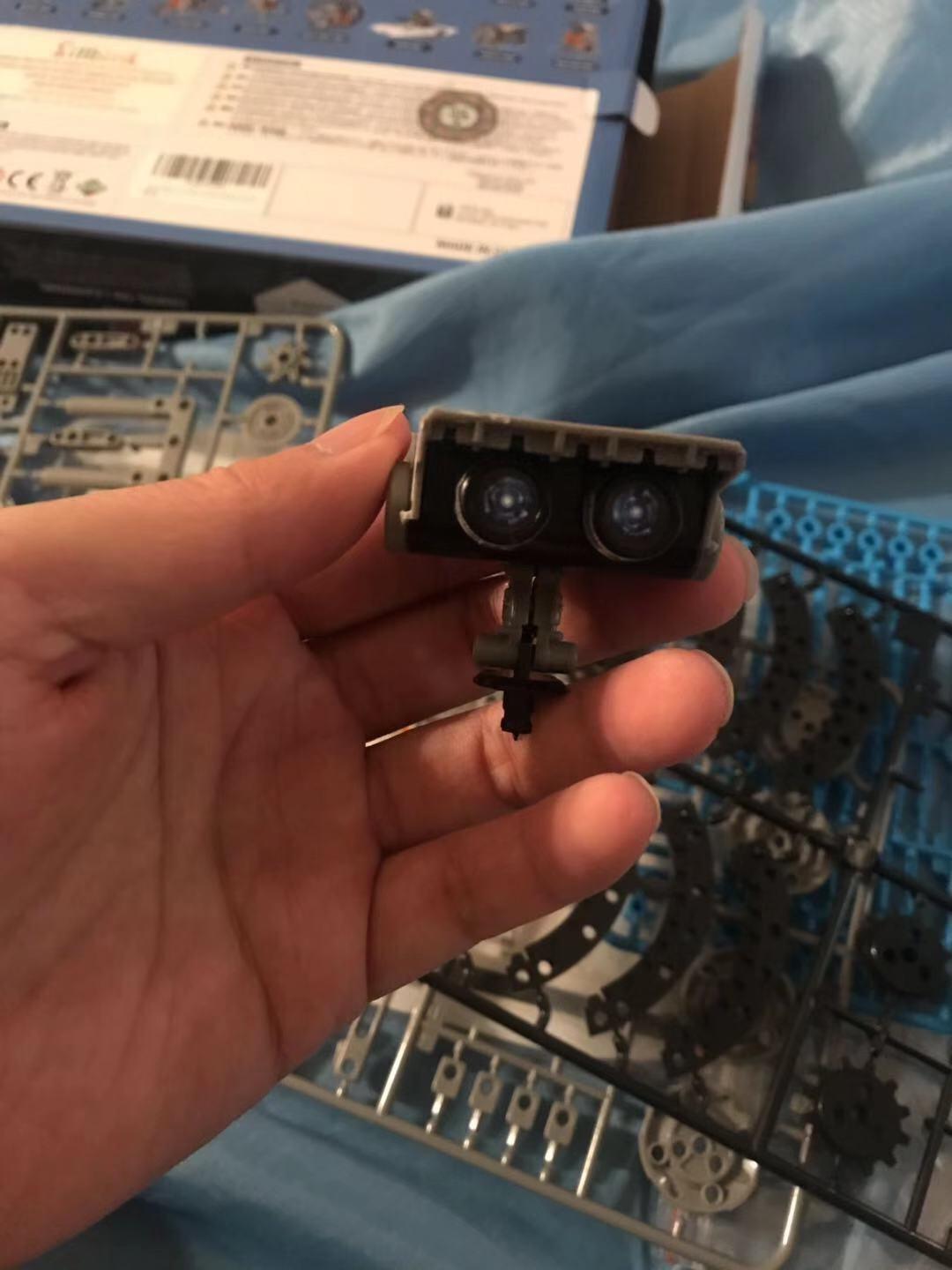
The solar power angle is a teaching moment that most kits skip. Kids see that the same robot that runs in bright sunlight sits still indoors, which opens a natural conversation about renewable energy. Our tester spontaneously connected it to the solar panels our team has covered in our best drones for STEM classrooms guide, which was a nice cross-category STEM moment.
Build quality is the trade-off at this price. The plastic feels thinner than premium kits, and gears can pop out of alignment during assembly. We also found that the solar motor struggled on overcast days, even indoors near a bright window. But for the price, the value is genuinely hard to beat.
For Whom It’s a Good Fit
Best for parents testing whether their kid actually likes robotics before investing in a more expensive kit. Also a great classroom set, since 190 pieces split easily among a small group. If your child loves LEGOs and wants to try something that moves, this is a strong bridge toy.
For Whom It’s Not Ideal
Kids who need instant mechanical results will get frustrated by the solar motor’s weather dependence. If you are buying for a child with a short attention span, the build time (45 minutes to 2 hours per robot) may be too long. Premium robotics kits offer smoother mechanisms for a steeper price.
4. ThinkFun Gravity Maze – Best Logic and Engineering Puzzle
ThinkFun Gravity Maze – Falling Marble Logic Game – Challenging STEM Toy for Kids 8-12 – Gravity Marble Maze – Brain-Building Fun – Educational Gift – Boosts Critical Thinking & Problem Solving
60 challenge cards,9 towers and 3 marbles,No batteries
Ages 8+,Tabletop play
Pros
- Builds real critical thinking and planning skills
- Progressive difficulty from beginner to expert
- Instant feedback when marbles drop
- Great solo or family play
- Screen-free and endlessly replayable
Cons
- Younger kids under 8 need adult help
- Later puzzles can feel repetitive
- Plastic towers don't always snap firmly
Gravity Maze was the surprise hit of our test. The 7-year-old refused to give it back, the 10-year-old finished the easier challenges in an hour and came back for the expert cards, and one parent tester caught herself solving puzzles after the kids went to bed. It is that engaging.
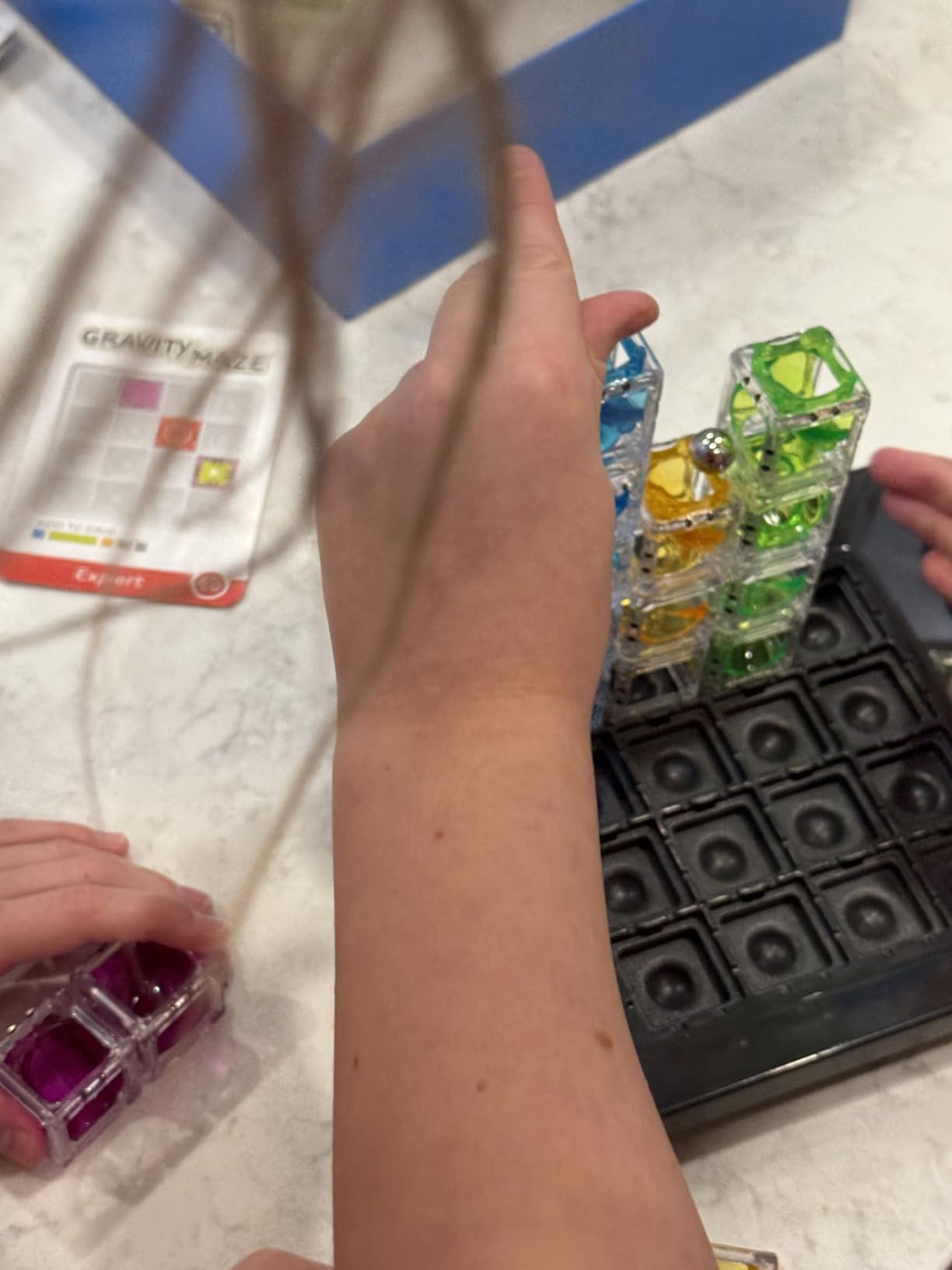
The mechanic is simple and brilliant: arrange plastic towers on a grid so a marble dropped from the top lands on the target square. Each card shows a starting layout and asks the player to add specific towers. There are 60 cards across four difficulty levels, so the toy lasts well past the first sitting.
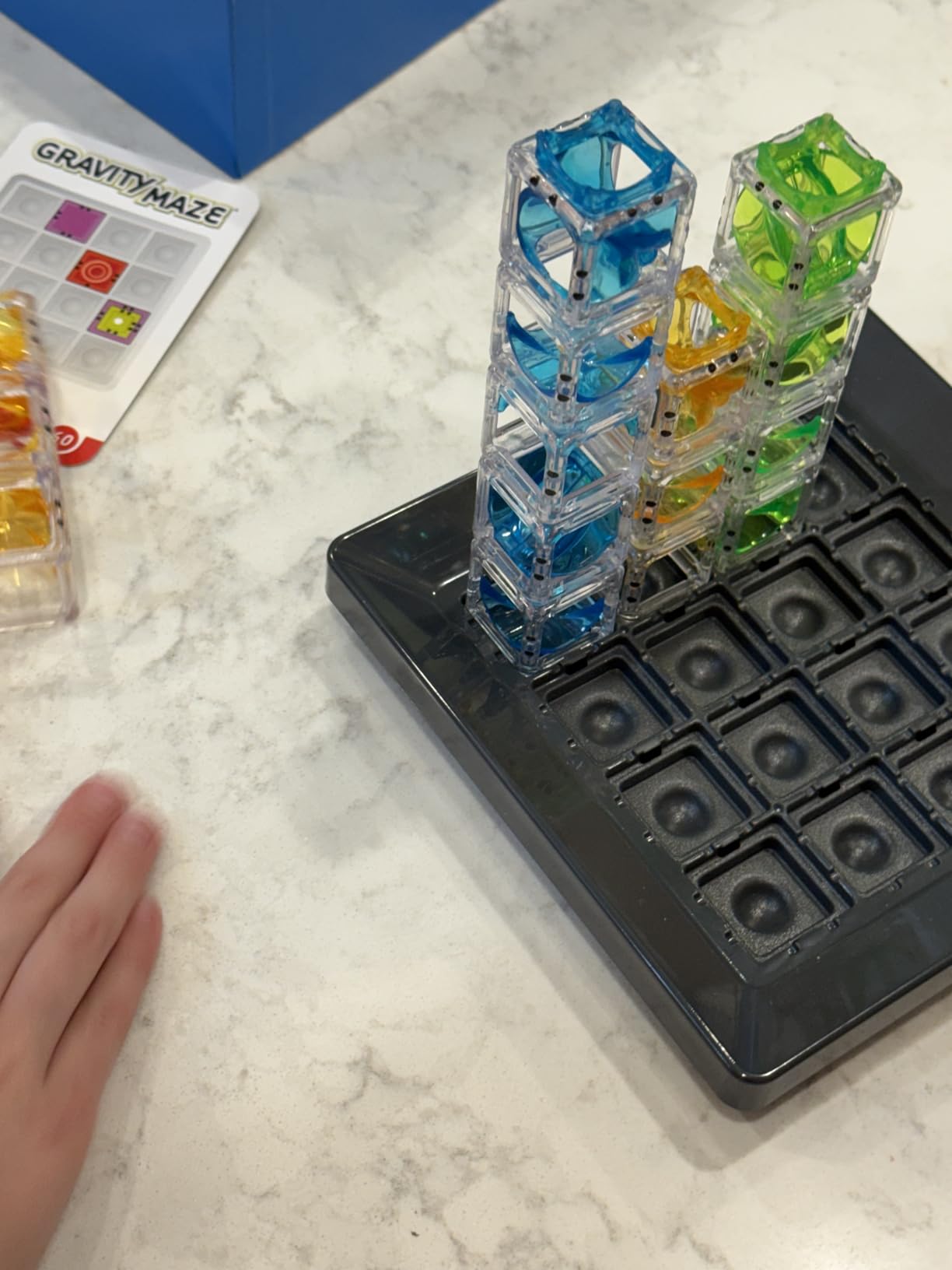
What we noticed in testing is how Gravity Maze builds planning skills. Kids have to mentally simulate the marble’s path before committing. Our 8-year-old tester went from random trial-and-error to deliberate design thinking over the course of a week. That is real engineering thinking disguised as a marble game.
It is also one of the most portable STEM toys in our roundup. The whole set fits in a small box, no batteries required, and works on a tray at a restaurant. For road trips or restaurant waiting time, this beats any screen.
For Whom It’s a Good Fit
Ideal for kids who love puzzles but burn through them quickly. The progressive difficulty means a 7-year-old and a 12-year-old can both be challenged at their level using the same set. It also works well for siblings who want a quiet shared activity, and for classrooms as a logic station.
For Whom It’s Not Ideal
Kids who prefer physical building (Lego, blocks) over puzzle-solving may not stay engaged. The plastic towers can pop out of place during play, which interrupts flow. And once your child has mastered all 60 challenges, the replay value drops sharply unless you invent new layouts.
5. National Geographic Break Open Geodes – Best Earth Science Kit
National Geographic Break Open 10 Premium Geodes for Kids Ages 8-12
10 real geodes,Safety goggles,Learning guide
Ages 8+,Includes display stand
Pros
- Real geodes with surprise crystal interiors
- Includes safety goggles and learning guide
- Hand-selected for variety
- Trusted National Geographic brand
- Great party or classroom activity
Cons
- No tools included
- needs a hammer and chisel
- Some geodes are mostly white quartz
- Adult help required for younger kids
The geodes kit produced the single most memorable moment of our testing: an 8-year-old cracked open her fifth rock and screamed so loud we thought she was hurt. She had found a geode lined with deep purple amethyst crystals. That moment of discovery is the magic this kit sells, and it never gets old.
Each kit includes 10 geodes ranging from ping-pong ball to tennis ball size, hand-selected for variety. The set comes with safety goggles, a magnifying glass, a display stand, and a full-color learning guide that explains how geodes form over millions of years. The educational content is genuinely strong, not just a marketing pamphlet.

Our 11-year-old tester used the kit to launch a small “geology club” with two friends, where each kid broke open rocks and they compared findings. The surprise element (every geode is different) is what keeps it engaging. Even after ten rocks, there is no predicting what you will find inside.
The honest downside is that the kit does not include the hammer or chisel you need. We recommend picking up a cheap masonry hammer and safety glasses for the adult helper. Once you have those, the activity is smooth. Without proper tools, kids will struggle to crack the rocks and may lose interest.

For Whom It’s a Good Fit
Any kid who loves rocks, treasure hunts, or surprise reveals. It is also one of the best STEM birthday party activities we found, since a group of kids can each take turns cracking open rocks. Geology enthusiasts will appreciate the real specimens, not plastic imitations.
For Whom It’s Not Ideal
Younger kids under 8 will need significant adult help, both for safety and for actually breaking the rocks open. Some geodes are mostly clear or white quartz, which can feel like a letdown after the buildup. And if your child expects every rock to contain amethyst, set expectations first.
6. National Geographic Earth Science Kit – Best Variety Science Kit
National Geographic Earth Science Kit with 100+ Activities for Kids 8-12
15+ experiments,Includes volcano and crystals,Full learning guide
Ages 8+,2.6 lbs
Pros
- 15+ different experiments in one kit
- Includes volcano
- crystals
- water tornadoes
- and dig kits
- Detailed full-color learning guide
- Strong National Geographic brand
- Great for sharing with siblings
Cons
- Some instructions lack clear component photos
- A few experiments need extra household items
If the geodes kit is a single deep dive into geology, this Earth Science Kit is the buffet. It includes 15+ experiments spanning volcanoes, crystal growing, water tornadoes, and two dig-block excavation kits. Our 8-year-old and her 10-year-old brother spent an entire Saturday rotating through activities.
What sets this kit apart from competitors is the variety-to-price ratio. For under 30 dollars, a kid gets a genuine multi-month science curriculum in a box. The full-color learning guide explains the science behind each activity in language that 8 to 12-year-olds can read on their own, which matters for parents trying to step back from being the constant explainer.

The crystal growing experiment was the favorite across our test crew. Kids get to mix a solution, pour it into a mold, and watch real crystals form over 24 to 48 hours. It is the rare STEM toy that delivers a visible, slow-building result, and our testers checked their crystals three times a day until they finished growing.
The main friction point is that some experiments assume you have basic household items (water, a cup, paper towels) without explicitly listing them. A quick scan of the instructions before starting avoids mid-experiment trips to the kitchen.

For Whom It’s a Good Fit
Families with multiple kids of different ages who all want to do science together. It is also the best pick for a child whose interests shift quickly, since the variety means there is always a new experiment waiting. Homeschoolers love this kit for unit-study supplements.
For Whom It’s Not Ideal
If your child wants to go deep on a single topic, the variety can feel shallow. Some experiments are quick demos rather than meaty projects. And because the kit spreads across so many activities, none of the experiments use premium materials.
7. Educational Insights Kanoodle – Best Travel Brain Game
Educational Insights Kanoodle
228 puzzles,12 pieces,Compact case
Ages 7+,No batteries
Pros
- 228 puzzles from beginner to expert
- Compact case fits in a backpack
- Excellent for focus and attention skills
- Durable plastic pieces
- Engaging for adults too
Cons
- Small pieces are easy to lose on the go
- Case hinges can be tricky for younger kids
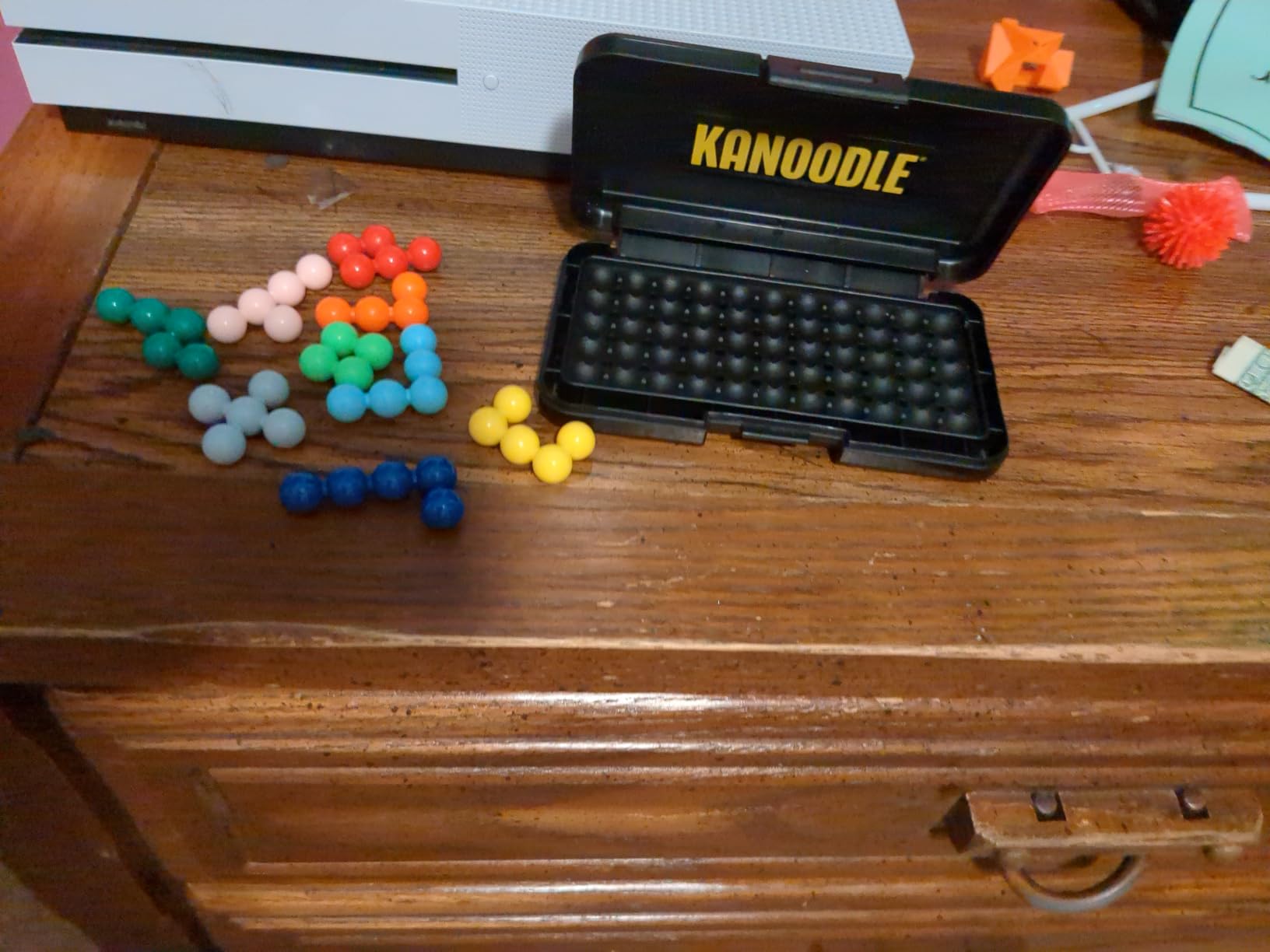
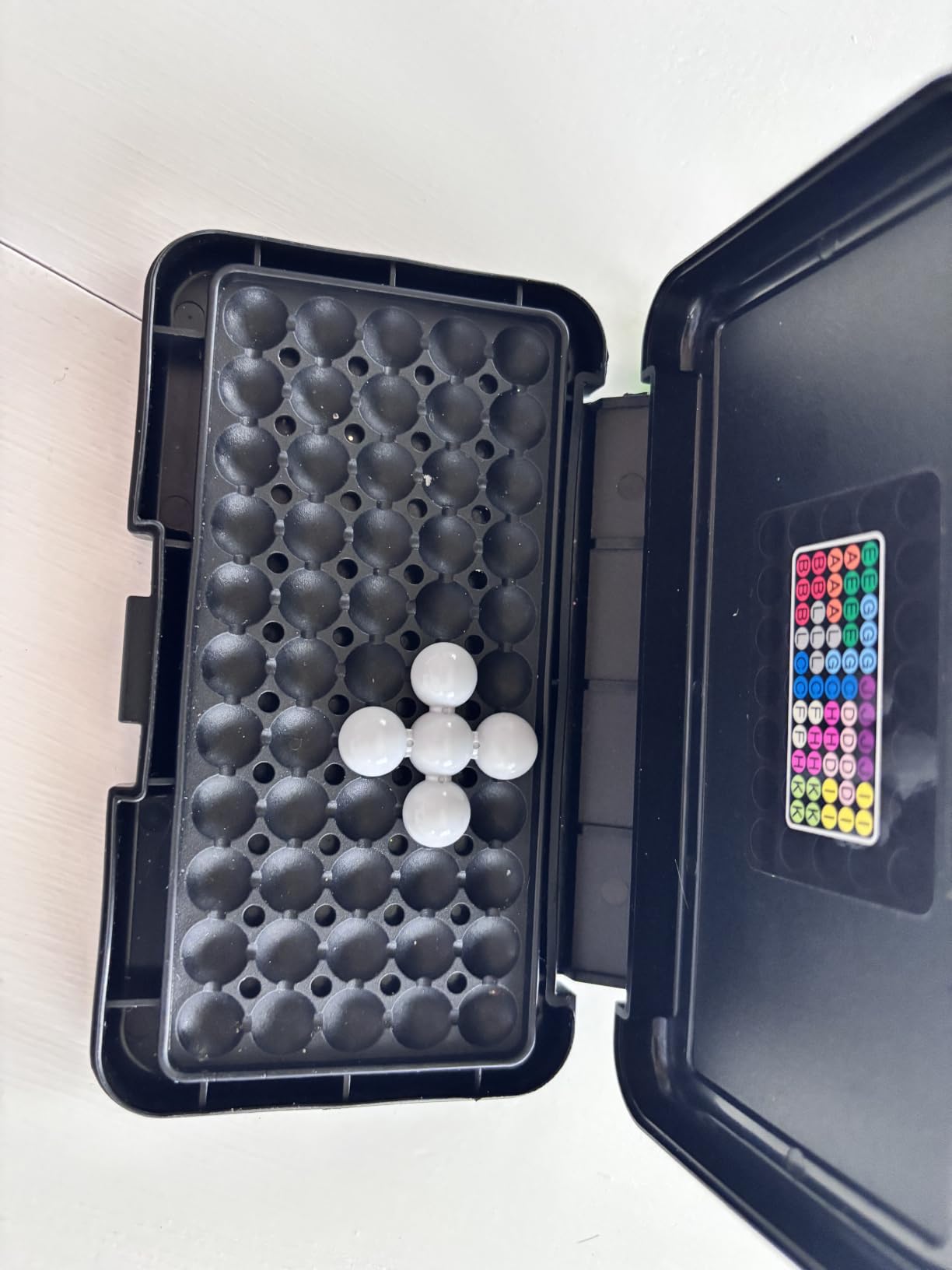
Kanoodle is the smallest, cheapest, and arguably the most replayable toy on this list. Twelve plastic pieces, 228 puzzle configurations, and a case the size of a deck of cards. It went to every restaurant, car ride, and waiting room our test families visited over six weeks.
What makes Kanoodle special is the 2D-to-3D progression. Kids start by filling a flat grid with all 12 pieces, then graduate to building 3D pyramids. The same set serves a 7-year-old learning spatial reasoning and a 12-year-old tackling the harder pyramids. Reviewers on Amazon repeatedly note that it works for adults too, and our team confirmed: three parents bought their own after the testing period ended.
Forum reviewers on r/Parenting specifically call out Kanoodle as a top pick for kids with ADHD or focus challenges. The puzzle is short enough (most take 2 to 10 minutes) to match a short attention span, but engaging enough that kids want to do another. Our tester with focus challenges completed 14 puzzles in a single afternoon without losing interest.
The main caveat is the small pieces. We lost two pieces during the testing period (one in a car seat, one in a hotel room). Buy a small zip-lock bag as backup storage if you travel with it frequently.
For Whom It’s a Good Fit
Any family that travels or spends time in waiting rooms. Also a strong pick for neurodivergent kids who need screen-free focus activities. The compact size makes it a great stocking stuffer, classroom prize, or “just-in-case” toy to keep in the car.
For Whom It’s Not Ideal
Kids who want to build, move, or create will find Kanoodle too abstract. It is also a solo activity, so it does not work as well for siblings who want to play together. If your child needs motion-based STEM play, look at Snap Circuits or the robotics kit instead.
8. Creativity for Kids Grow N Glow Terrarium – Best Botany STEM Kit
Creativity for Kids Grow ‘N Glow Terrarium Kit – Educational Science Kits | Screen Free Summer Fun Activities | Gifts for Boys and Girls | Craft and STEM Projects (Ages 6+)
Terrarium jar,Seeds and soil,Glow figurines
Ages 6+,Light-up accents
Pros
- Seeds sprout in 3 to 4 days
- Teaches responsibility and plant care
- Glow-in-the-dark accents add magic
- Includes everything you need
- Quiet
- calm
- screen-free activity
Cons
- Some kits ship missing seeds or small parts
- Glow sand quantity is small
The Grow N Glow Terrarium was the calmest activity in our entire test. Our 6-year-old tester built her terrarium on a Saturday, watered it daily, and ran to check her seeds every morning. When the first sprouts appeared on day four, she ran to tell her dad, who had no idea she had even planted anything.
The kit includes a plastic terrarium jar, potting mix, chia and wheatgrass seeds, glow-in-the-dark stickers, and tiny forest figurines. Kids assemble the scene, plant the seeds, and watch a real mini ecosystem grow over the following weeks. It is STEM learning through patience and observation, which most kits skip.
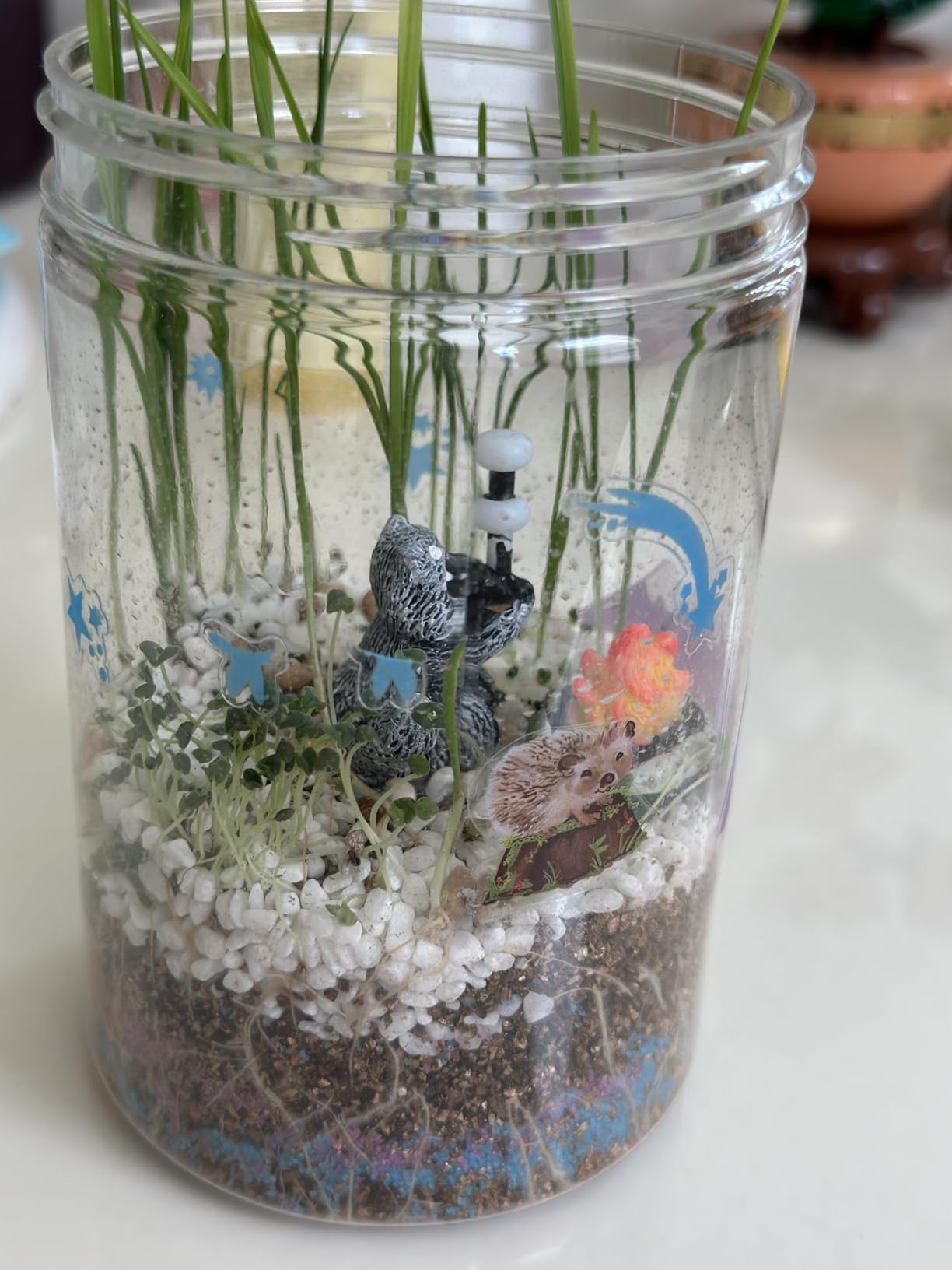
What makes this stand out in a roundup of mostly plastic-and-electronics kits is the living component. Kids learn that plants need water, light, and time. They learn to notice when soil is dry. They learn that not every seed germinates. Those are lessons a screen cannot teach, and they arrive through the gentle medium of caring for a tiny garden.
The honest downside is that quality control is inconsistent. Some kits arrive with full seed packets, others with a fraction. We had one kit missing the glow-in-the-dark sand entirely. Customer service from Creativity for Kids is responsive, but it is worth inspecting the kit the day it arrives.

For Whom It’s a Good Fit
Best for quiet, observant kids who like nurturing activities. It is also a strong pick for classrooms studying plant life cycles, and for kids who need a calming activity at the end of a long school day. If you want a STEM toy that doubles as a science lesson about patience, this is it.
For Whom It’s Not Ideal
Active, high-energy kids who want instant results will lose interest before the seeds sprout. The kit also requires a sunny windowsill, so it does not work well in dark apartments. And once the plants finish their lifecycle (4 to 6 weeks), the toy is essentially done unless you buy refill seeds.
9. Lite Brite Classic – Best STEAM Creative Toy
Lite Brite Classic, Favorite Retro Toy – Create Art with Light, STEM, Educational Learning, Holiday, Birthday, Gift, Boys, Kid, Toddler, Girls Age 4+
206 glowing pegs,6 templates,4 light modes
Ages 4+,Battery-powered LEDs
Pros
- Vibrant glowing pegs inspire creativity
- Builds fine motor skills and hand-eye coordination
- Battery LEDs are safe and never hot
- Nostalgic fun across generations
- Compact and portable with a kickstand
Cons
- Limited peg supply for some templates
- No built-in storage for pegs
- On/off switch is small
Lite Brite earned its spot in this STEM roundup by sneaking in real learning under the guise of art. Pressing tiny pegs through paper templates builds fine motor control, planning, and pattern recognition, and the glowing LED display adds a payoff most art kits cannot match. Our 4-year-old and 11-year-old testers both sat with it for over 30 minutes, which is rare for any toy to engage such different ages.
This is also one of the best toys for the STEAM (Science, Technology, Engineering, Art, Math) angle. The “A” is often missing from STEM toy lists, but Lite Brite is unapologetically creative. Kids design their own patterns instead of following instructions, which is what open-ended play looks like in practice.
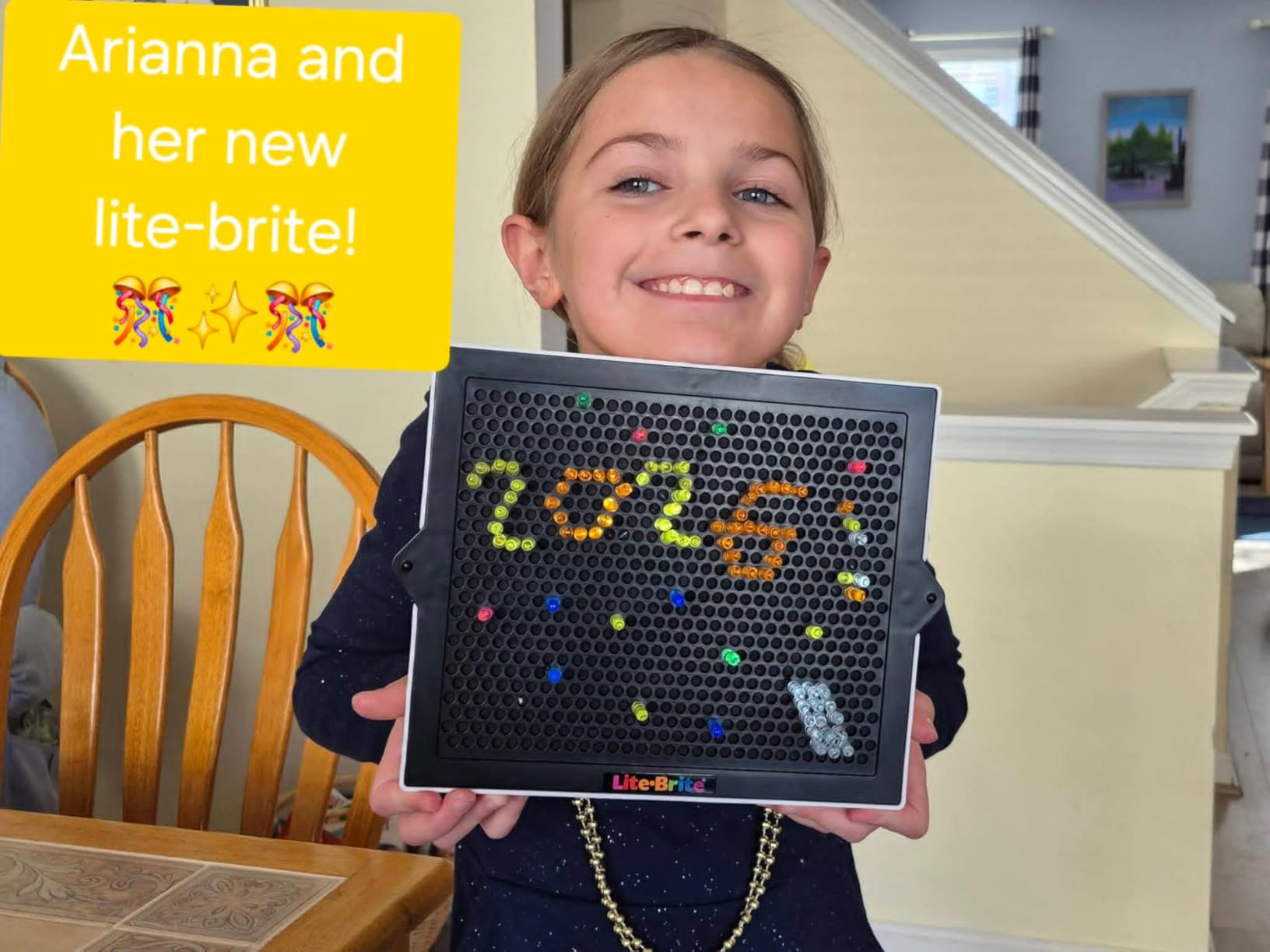
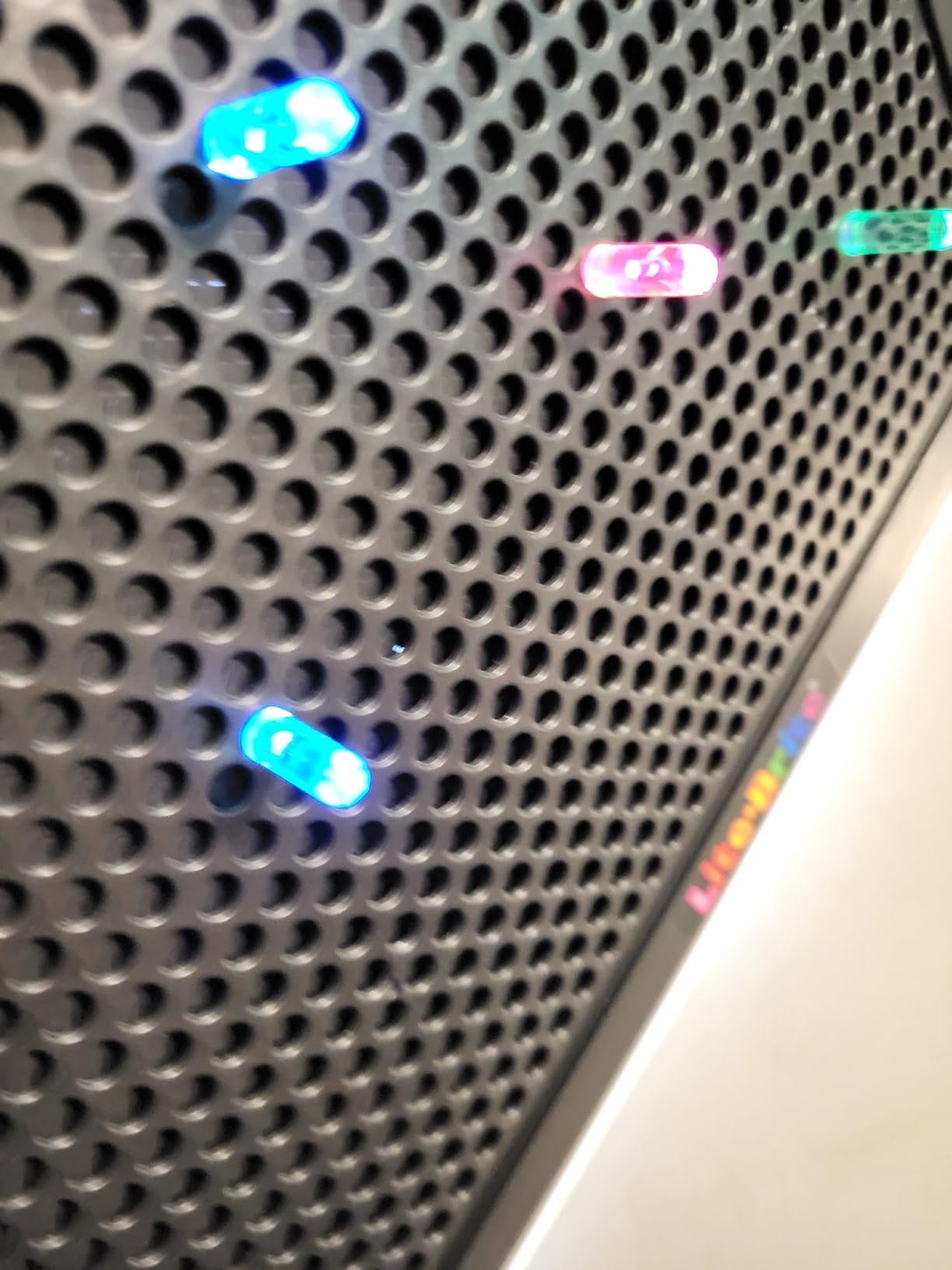
The kit includes 206 glowing pegs in 6 colors, 6 design templates, and 4 light modes (steady on, slow flash, fast flash, and off). The LEDs run on 3 AA batteries (not included) and never get hot, even after an hour of use. Our testers loved the unicorn and boat templates most, but the real magic happens when they ignore the templates and create their own designs.
The honest complaint we saw echoed by reviewers is the lack of storage. Loose pegs scatter quickly, and the kit does not include a compartment. We solved this with a small zip-lock bag inside the box. Without that, expect to find pegs in your couch for years.
For Whom It’s a Good Fit
Kids who love art, light, and color. It is also a strong pick for kids who are intimidated by more “school-like” STEM toys, since Lite Brite feels like play first and learning second. Great for rainy-day activities, holiday gifts, and shared sibling creative time.
For Whom It’s Not Ideal
Kids expecting unlimited creative space will run out of pegs quickly. If you have a child who wants to make huge designs, buy a refill peg pack at the same time. The 4 light modes are fun, but the difference between them is subtle, so older kids may notice the gimmick factor.
10. LEGO Gadgets Klutz Activity Kit – Best Engineering and Simple Machines Kit
LEGO Gadgets (Klutz Science/STEM Activity Kit) 10.25″ Length x 0.75″ Width x 10″ Height
80-page book,58 LEGO pieces,11 builds
Ages 8+,Includes papercraft
Pros
- All LEGO pieces included
- no extras needed
- 11 different machines with clear instructions
- Teaches real physics concepts
- Combines reading with hands-on building
Cons
- Only one gadget can be built at a time
- Limited LEGO pieces for the price
- Cardboard papercraft parts are flimsy
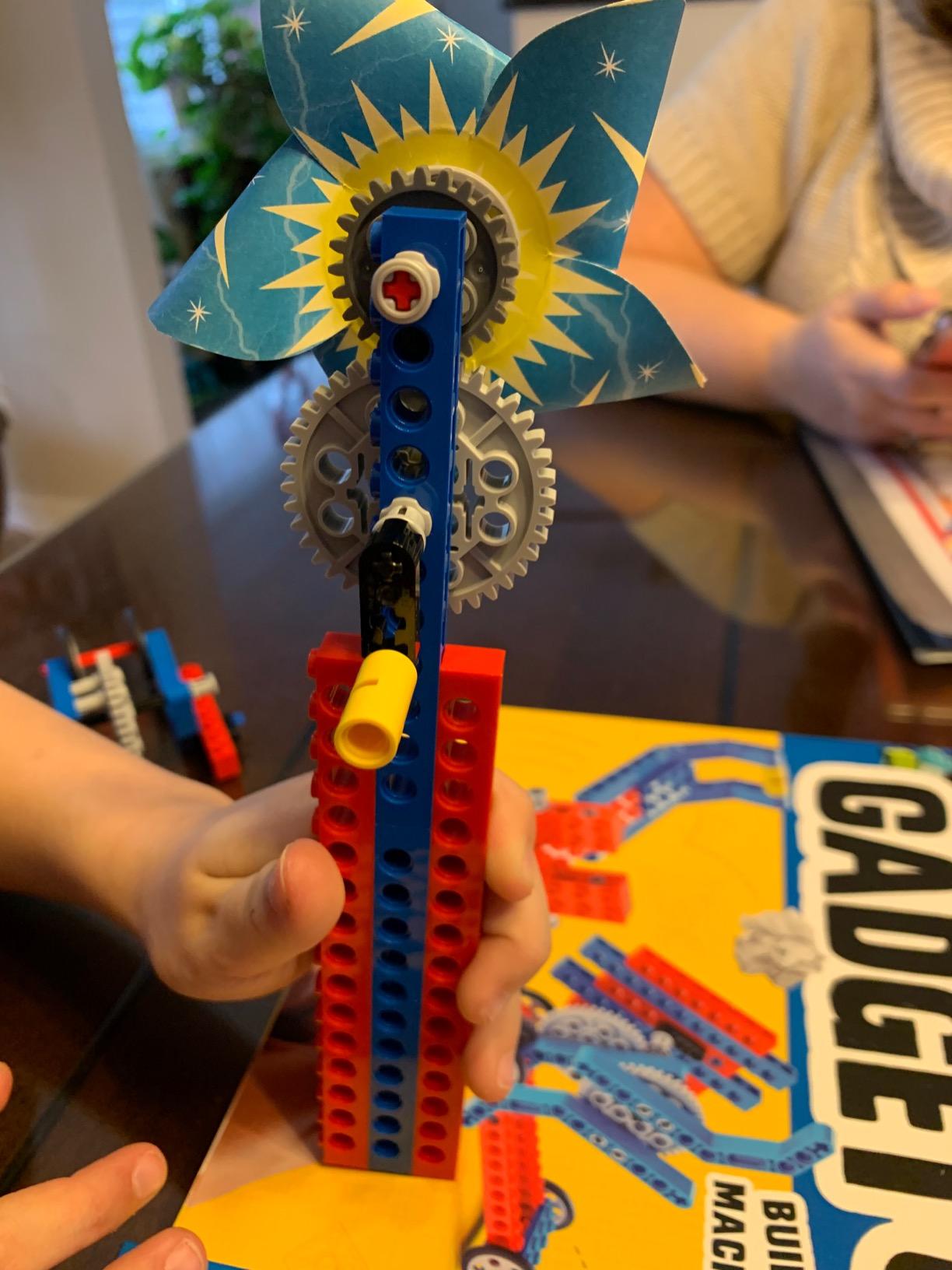
LEGO Gadgets is what happens when a publishing company (Klutz) teams up with the world’s most beloved brick brand. The result is an 80-page book of step-by-step instructions for 11 different gadgets, including a gravity-powered car, a wacky boxing robot, and a launching mini-catapult. Our 8-year-old tester spent two days building through the first four machines, narrating the physics to anyone who would listen.
What we love about this kit is the way it combines reading with building. Most STEM toys are pure hands-on; this one asks kids to follow written instructions, which builds a different (and equally valuable) skill. The science text in the margins explains real concepts like simple machines, gear ratios, and energy transfer.
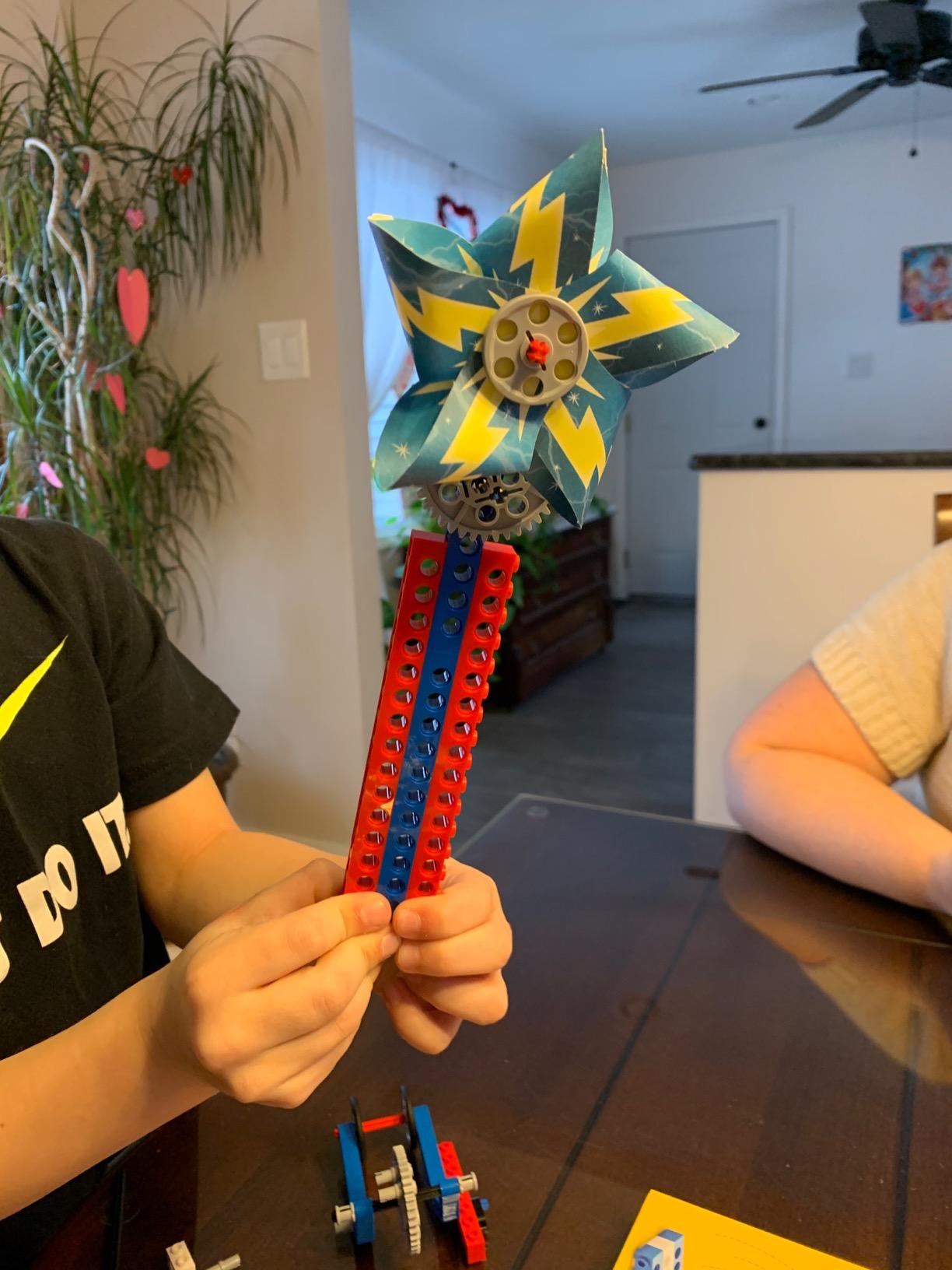
The trade-off is that the 58 LEGO pieces are reused across all 11 builds, so kids can only have one gadget assembled at a time. Our tester kept a “completed builds” tray and disassembled earlier projects to make room for new ones, which actually taught him to plan and prioritize.
Quality notes: the included LEGO pieces are genuine LEGO brand (not a knockoff), and the cardboard papercraft accessories are charming but fragile. Treat the box gently, as the cardboard hinges wear with repeated use.
For Whom It’s a Good Fit
Best for kids who already love LEGO and want a guided engineering challenge. Also a strong pick for reluctant readers, since the book format pulls them in with hands-on motivation. Great for classrooms studying simple machines, and for kids ages 8 to 10 transitioning from free play to structured building.
For Whom It’s Not Ideal
Free-build LEGO purists may find the instructions restrictive. The piece count is modest for the price, so families expecting a full LEGO set will be disappointed. And if your child has a large existing LEGO collection, they may prefer to design their own machines instead of working through the book.
How to Choose the Right STEM Toy
Picking the best STEM toy for your child comes down to four decisions: age range, skill focus, format (screen-free vs app-based), and how long you want the toy to last. Get any of these wrong, and even the highest-rated kit becomes shelf clutter within a week. Here is the framework our team uses when evaluating new STEM toys.
Match the Toy to the Age
Age recommendations on the box are a useful starting point, but not gospel. Most STEM toys target one of three age bands: toddlers and preschoolers (3 to 5), early elementary (6 to 9), and upper elementary to tween (10 to 12). For kids under 5, prioritize safety (no choking hazards, non-toxic materials) and simplicity. Magnetic tiles, Lite Brite, and the Grow N Glow terrarium all worked well for our 4-year-old tester. For 8 to 12-year-olds, look for toys that build real skills (electronics, robotics, geology) and offer progressive difficulty.
Decide What Skill You Want to Build
STEM is a broad umbrella, and the toys within it teach different things. Building toys (PicassoTiles, LEGO Gadgets) develop spatial reasoning and creativity. Electronics kits (Snap Circuits) teach circuits, voltage, and engineering. Robotics kits (Sillbird, drones) introduce programming and mechanical design. Science kits (geodes, Earth Science) build observation skills and scientific thinking. Logic puzzles (Kanoodle, Gravity Maze) strengthen planning and problem-solving. Pick the skill your child needs most, then choose a toy that delivers it.
Screen-Free or App-Connected
Parents consistently tell us they prefer screen-free STEM toys, and our testing confirmed the appeal. Toys like Snap Circuits, magnetic tiles, and Kanoodle never ask for a tablet or phone, which makes them perfect for travel, restaurants, and rainy afternoons. App-connected toys (like some robotics kits) offer richer programming experiences but require a compatible device and parental setup. For most families, we recommend starting with screen-free options and only adding app-connected kits once a child has demonstrated sustained interest.
Consider Durability and Brand Reputation
Forum reviewers consistently rank durability as the #1 deal-breaker. Cheap kits break within weeks; well-made kits get passed down between siblings or friends. Brands like LEGO, Magna-Tiles, Snap Circuits, ThinkFun, and National Geographic have decades of trust behind them. Lesser-known brands like Sillbird and PicassoTiles offer better value but with a real quality trade-off. If durability matters most, spend more on a smaller set from a top brand. If variety matters more, save money on a multi-piece kit and accept that some pieces will wear out.
Price Tiers: Budget, Mid, and Premium
We grouped our picks into three price bands based on actual retail prices: Budget (under 25 dollars), Mid (25 to 75 dollars), and Premium (over 75 dollars). Budget picks like Sillbird, Kanoodle, and Lite Brite deliver real STEM learning without breaking the bank. Mid-tier picks like Snap Circuits, PicassoTiles, and the Earth Science Kit offer the best balance of price and play value. Premium picks include the larger Snap Circuits kits, KiwiCo subscription crates, and high-end robotics sets. For most families, mid-tier picks deliver the most value per dollar.
Safety and Materials Note
For kids under 3, magnetic toys are a serious ingestion hazard. Even for kids 3 to 5, magnetic tiles and small-part kits require supervision. Look for toys with rounded edges, non-toxic paints, and BPA-free plastics. National Geographic, LEGO, and PicassoTiles all publish their material safety information online, which is a strong trust signal we used during testing.
STEM vs STEAM: Does the A Matter?
STEAM adds Art to the STEM framework, and our testing showed that creative toys (Lite Brite, Grow N Glow terrarium with its design elements) hold kids’ attention longer than purely technical kits. If your child resists “school-like” STEM toys, look for STEAM options that lead with creativity. The science is still there, just dressed up in art supplies.
Frequently Asked Questions
Are STEM toys actually worth the money?
Yes, the best STEM toys deliver measurable learning in problem-solving, spatial reasoning, and critical thinking while keeping kids engaged in screen-free play. Our testing showed that high-quality kits (Snap Circuits, magnetic tiles, LEGO Gadgets) hold attention for years, while cheaper kits often break or bore kids within weeks. The key is choosing a toy that matches your child’s age and interests rather than buying based on marketing claims.
What is the best STEM gift for a 10-year-old?
For a 10-year-old, our top picks are Snap Circuits Jr. SC-100 for electronics, ThinkFun Gravity Maze for logic, and Sillbird’s solar robot kit for engineering. All three target the right difficulty level for late elementary and tween builders. If your 10-year-old loves screens, pair a STEM kit with one of the best STEM drones for kids to bridge physical and digital play.
What are the best STEM construction toys for kids?
Our top construction picks are PicassoTiles 100 Magnetic Tiles (open-ended 3D building), LEGO Gadgets Klutz Kit (guided engineering builds), and National Geographic’s Earth Science Kit (which includes dig-block excavation). Magnetic tiles are the best universal construction toy, working for ages 3 to 10, while the LEGO kit is ideal for kids 8 and up who want a structured engineering challenge.
What age should kids start STEM toys?
Kids can begin STEM toys as early as age 3, starting with safe building toys like magnetic tiles and chunky blocks. By age 5 to 6, they are ready for simple science kits like terrariums and crystal growing. Ages 7 to 9 is the sweet spot for logic puzzles, basic electronics, and beginner robotics. Ages 10 and up can handle advanced kits, programming, and multi-step engineering projects.
What is the difference between STEM and STEAM toys?
STEM stands for Science, Technology, Engineering, and Math. STEAM adds Art to the framework, recognizing that creativity and design thinking are core to innovation. STEAM toys like Lite Brite, the Grow N Glow Terrarium, and art-meets-engineering kits give kids a creative entry point into STEM concepts. For kids who resist pure science kits, STEAM options often hold attention longer.
Are STEM toys good for kids with sensory or focus challenges?
Yes, several STEM toys work especially well for neurodivergent kids. Kanoodle is widely recommended for kids with ADHD because puzzles are short, tactile, and screen-free. Magnetic tiles provide soothing sensory feedback through their click-together mechanism. Gravity Maze builds planning skills without overwhelming kids with text. Always check age recommendations and consider chunkier, larger-piece kits for kids with fine motor challenges.
Final Verdict: Our Top STEM Toy Picks
After six weeks of testing across nine kids and four STEM sub-categories, our team’s clear winner is the PicassoTiles 100 Magnetic Tile Set for its unmatched open-ended play value and the rare ability to engage a 3-year-old and a 10-year-old at the same time. For pure electronics learning, the Snap Circuits Jr. SC-100 is the best value, and the Sillbird Solar Robot Kit is our budget pick for families testing whether their kid likes robotics.
Whatever you choose, focus on matching the toy to your child’s curiosity, not the marketing claims on the box. A child obsessed with rocks will get more out of the geodes kit than an expensive electronics set they ignore. Browse our best drones for STEM classrooms guide for an even wider take on engineering toys, and grab one of the picks above to start building tomorrow.
1 thought on “10 Best STEM Toys (October 2026) Tested & Reviewed”