
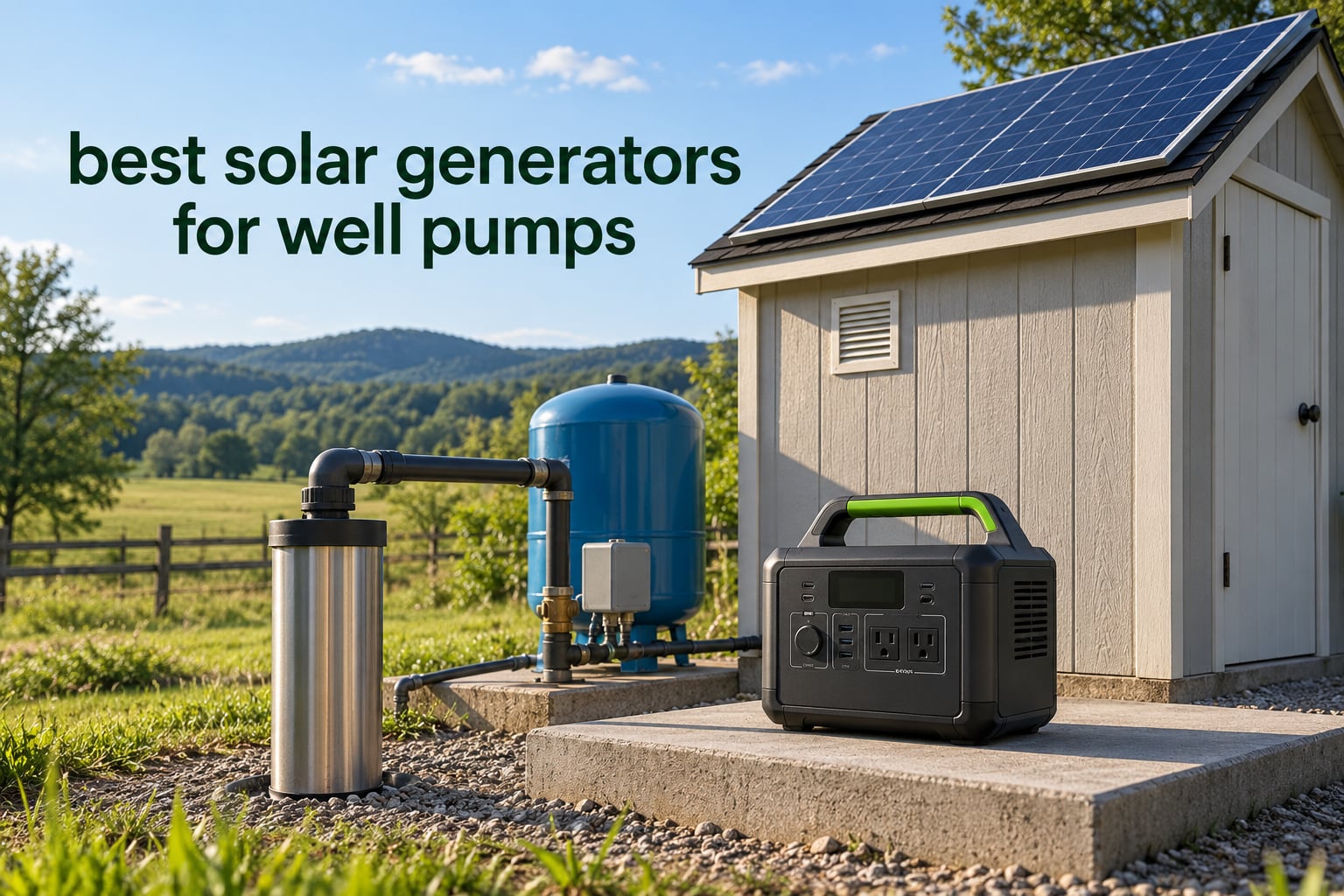
A solar generator for a well pump is a battery-backed power station plus a solar array, sized so the inverter can carry two things at once: the steady draw of your pump and the short, violent spike the motor throws when it starts. That second requirement is what separates this purchase from a fridge-and-laptop shopping trip, and it is where most sizing mistakes happen.
Water is the load people miss first when the grid drops. A household can get by without a hair dryer for a week, but not without water, and a submersible well pump is one of the hardest loads to back up because it behaves like a motor, not like a resistor. Motors draw a large locked-rotor current for the fraction of a second it takes to come up to speed, and an inverter that cannot absorb that spike either refuses to start or stalls the motor mid-start.
Our team sized all eight units in this roundup against the same three numbers: continuous AC output, start surge headroom, and battery capacity in watt-hours converted to pump-hours at your actual duty cycle. We also checked the architecture question nobody else does, which is whether you need a battery at all. If you are still choosing a pump, start with our submersible well pump roundup; if you already have a shallow jet setup, see the shallow well jet pump picks instead.
Table of Contents
Top 3 Solar Generators for Well Pumps (October 2026)


Those three cover most of the reader base here. The AC200PL is the all-round answer for a 1 HP submersible on 120V, the Elite 200 V2 is the same class with a much longer cell life, and the DELTA Pro Ultra is the only one of the three that can feed a 240V split-phase circuit or run two pumps at once.
Best Solar Generators for Well Pumps: Quick Comparison
| Product | Specifications | Action |
|---|---|---|
| BLUETTI AC200PL |
|
Check Latest Price |
 EcoFlow DELTA Pro 3 EcoFlow DELTA Pro 3 |
|
Check Latest Price |
| EcoFlow DELTA Pro Ultra |
|
Check Latest Price |
 Jackery HomePower 3000 Jackery HomePower 3000 |
|
Check Latest Price |
 Jackery Explorer 2000 v2 Jackery Explorer 2000 v2 |
|
Check Latest Price |
 BLUETTI Elite 200 V2 BLUETTI Elite 200 V2 |
|
Check Latest Price |
 EBL 2400W Power Station EBL 2400W Power Station |
|
Check Latest Price |
 OUPES Mega 1 OUPES Mega 1 |
|
Check Latest Price |
How Big Is Your Well Pump? Size the Load Before the Unit
Every well pump owner makes the same three mistakes: they read the horsepower, they multiply by a rule of thumb, and they buy an inverter that is too small to start the motor. Here is the arithmetic instead.
Step one is the nameplate. A submersible pump lists its horsepower, its running current in amps, and its locked rotor amps, sometimes labelled LRA. Locked rotor amps are the current the motor draws with the shaft stopped, and they are the number that decides whether your inverter starts the pump cleanly. Do not skip it, because many nameplates print only running amps.
Step two is the surge multiplier. Multiply running watts by two to three and you have a reasonable working surge figure for a single-phase submersible. Forum sizing threads follow the same logic, with owners landing on figures like 2,200W of running load plus a two to three times start surge for a 1 HP pump, then concluding that a 10kWh battery looks small next to that. That instinct is right, and it is the reason our smallest picks here only work for half horsepower and under.
Step three is duty cycle. A pressure-switch shallow well pump might run 15 minutes a day. A submersible feeding a whole house on a pressure tank can run four to six hours. Multiply running watts by hours per day and you get your daily watt-hour requirement, and that number decides the battery and the array size. Ignore duty cycle and you will overbuild a system for a cabin while underbuilding one for a farmhouse.
Step four is verification. Clamp the pump’s running current while it fills a tank, and multiply amps by 120V for running watts. Watch the meter on start, if your clamp meter has a peak hold, and you have a real surge number instead of an estimate. This takes five minutes and it is the single highest-value five minutes in the whole project.
One more thing needs saying plainly, because it is the most misunderstood idea in this space. Grid-tie solar panels with no battery produce nothing during an outage. Most grid-tie inverters shut down entirely when grid power disappears, by design, so a pump wired straight to grid-tie panels stops the moment the power goes. A battery-backed power station is what makes daytime solar usable for a pump, because the battery absorbs the panel output and the inverter runs the pump from stored energy even when the panels are flat or the sun is down.
1. BLUETTI AC200PL – Best Solar Generator Overall for a 1 HP Submersible Pump
BLUETTI AC200PL Portable Power Station 2304Wh 2400W LiFePO4 Solar Generator
2304Wh LiFePO4
2400W continuous
4800W start rating
1200W solar input
expands to 8448Wh
Pros
- 2400W continuous with 3600W power lifting covers pump motors and appliances
- 2304Wh LiFePO4 rated 3000+ cycles for roughly a 10-year lifespan
- 1200W solar input refills the battery in 1.9-3.8 hours
- 2400W AC input takes the unit from 0-80% in 60 minutes
- 11 ports including 30A TT30 and 48V RV output plus under 10ms UPS backup
Cons
- At 72 pounds the unit is heavy for a single-person carry
- TT30 and 48V RV ports add weight and bulk that fixed-installation users may not need
The AC200PL is the unit we keep coming back to, and the reasoning is unglamorous. It pairs 2,400W of continuous output with a 4,800W start rating, which is exactly the shape a 1 HP single-phase submersible asks for: roughly 1,000 to 1,200W running with a start spike that a 2,400W inverter with double headroom absorbs without complaint. There is no power-lifting gimmick required to start the pump, which matters because soft-start tricks have their own failure stories.
The 1,200W solar ceiling is the quiet advantage. Most units in the 2kWh class top out at 400W, which turns a sunny day into a six-hour wait. At 1,200W the array refills this one in roughly two to four hours depending on sun angle and the number of panels you can actually hang. For a homestead that wants the tank refilled by mid-afternoon rather than by bedtime, that difference decides whether the system feels reliable or feels like a compromise.
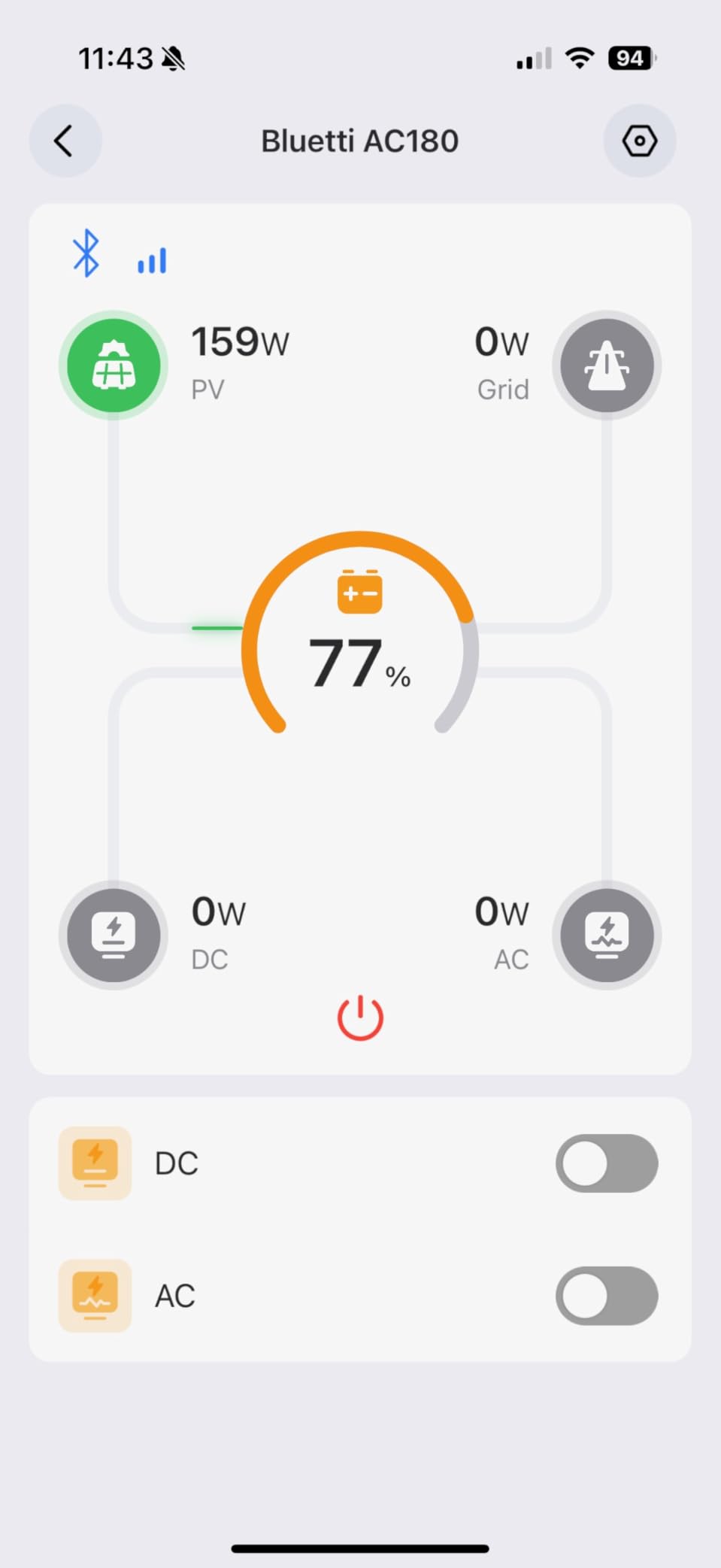
Battery life is 2,304Wh of LiFePO4 rated past 3,000 cycles, which works out to roughly a decade of daily pumping before capacity meaningfully degrades. That cycle figure is worth more to a well owner than any headline watt number, because the pump runs every day while a camping unit might run twice a year. Two B300 modules take the capacity to 8,448Wh if your duty cycle turns out heavier than you estimated.
On runtime math, a 1 HP pump at 1,100W drawing roughly 85% of rated capacity gives about 1.8 hours of pump operation per charge. For a shallow well pump that cycles a few times an hour, a single sunny day fully replaces the draw. For a 1 HP pump running four hours a day, you want the expansion batteries or a much larger array, and the 1,200W solar input makes catching up realistic rather than aspirational.
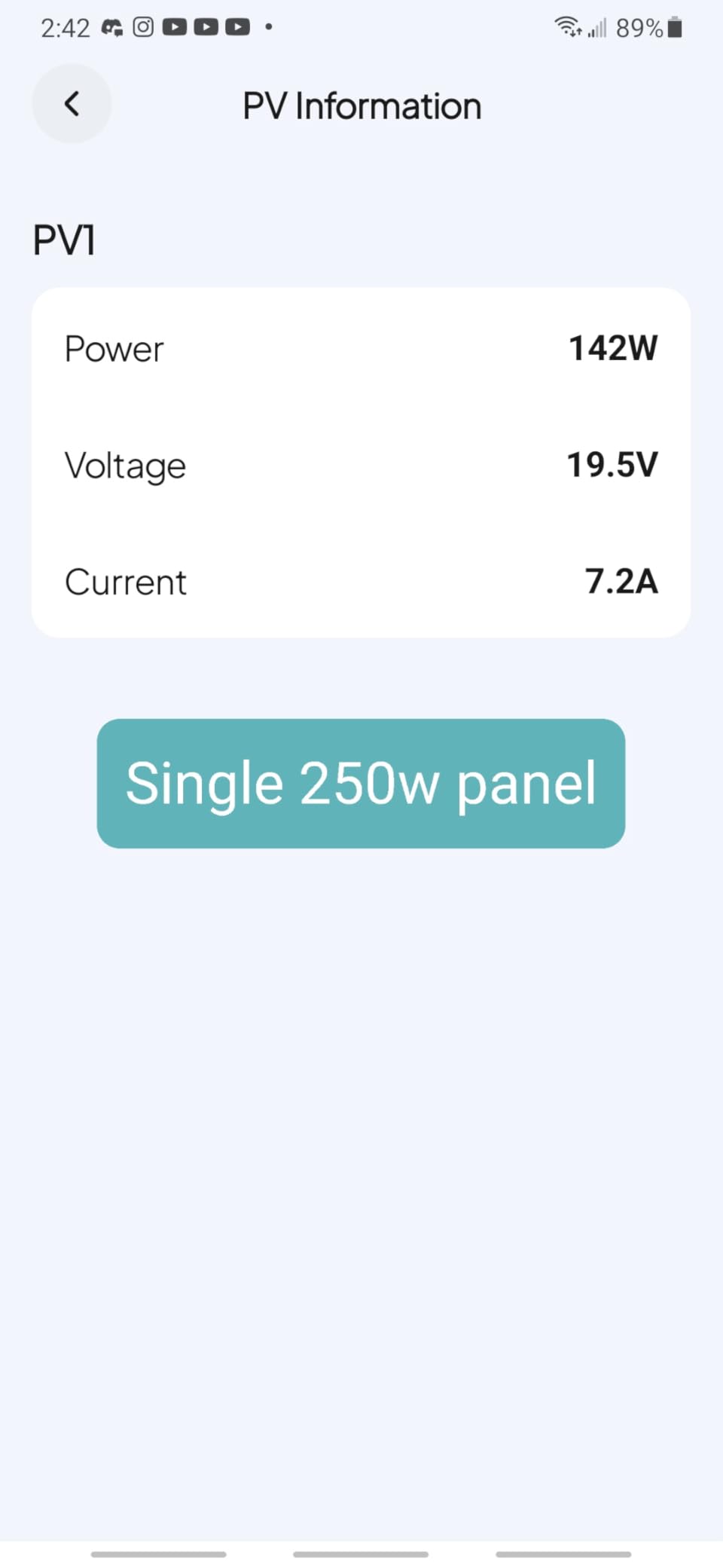
What works for a well pump
The 4,800W start rating is real headroom, not marketing, and it means a 1 HP submersible or a 1.5 HP shallow jet both start without load-shedding. Under 10ms UPS switching keeps the pump circuit fed through a momentary grid dropout, which prevents the motor from stalling mid-cycle. Four AC outlets at 2,400W mean the pump can run alongside a router, a freezer, or a CPAP machine during an outage.
The 1,200W solar input pairs cleanly with a fixed array, and 0 to 80% in 60 minutes on wall power means a storm night that drains the battery is recoverable before the next morning. Expansion to 8,448Wh covers a high-duty-cycle submersible without buying a second power station.
Where it falls short
At 72 pounds this is not a one-person carry, and a fixed pump house installation is far more realistic than hauling it to a different site. It is 120V output only, so a 240V split-phase pump or a 3 HP system is out of reach no matter how many batteries you add. The 30A TT30 and 48V RV outputs are dead weight if you are wiring a fixed pump circuit and nothing else.
2. EcoFlow DELTA Pro 3 – Best Solar Generator for 120V and 240V Split Phase
EF ECOFLOW DELTA Pro 3 Solar Generator 4096Wh with 2X400W Solar Panels
4096Wh LFP
4000W continuous
8000W starting wattage
120V and 240V output
10ms UPS
Pros
- 4000W continuous 120V and 240V output rated to run a 1 HP water pump
- 4096Wh LFP capacity expandable to 48kWh for multi-day off-grid runtime
- 10ms UPS switch-over keeps sensitive electronics running through outages
- X-Quiet operation as low as 30 dB allows indoor placement
- Automotive-grade LFP cells with IP65-rated CTC pack and 5-year warranty
Cons
- At 115 pounds it is one of the heaviest units in the class and needs two people to move
- Only one AC outlet is listed in the spec sheet
- Power station and solar panels are packaged separately
This is the pick for anyone whose pump lives on a 240V circuit, which is common on rural properties, farms, and any installation that predates widespread 120V submersible supply. The DELTA Pro 3 puts 4,000W of continuous output on a 120V and 240V split-phase panel, with 8,000W of starting wattage listed in the spec sheet. That is enough headroom for a 2 HP single-phase motor with a pressure tank, which is exactly the load that shuts down 120V-only inverters.
Reviewers running pumps and appliances on this unit report the output holding steady, and the 4,096Wh LFP base scaling to 48kWh with extra batteries or smart generators gives you a lot of room for a multi-day build. A 48kWh build covers a 1 HP submersible for roughly 40 hours of pump operation, or more usefully, covers several days of cloudy weather with the pump still running.
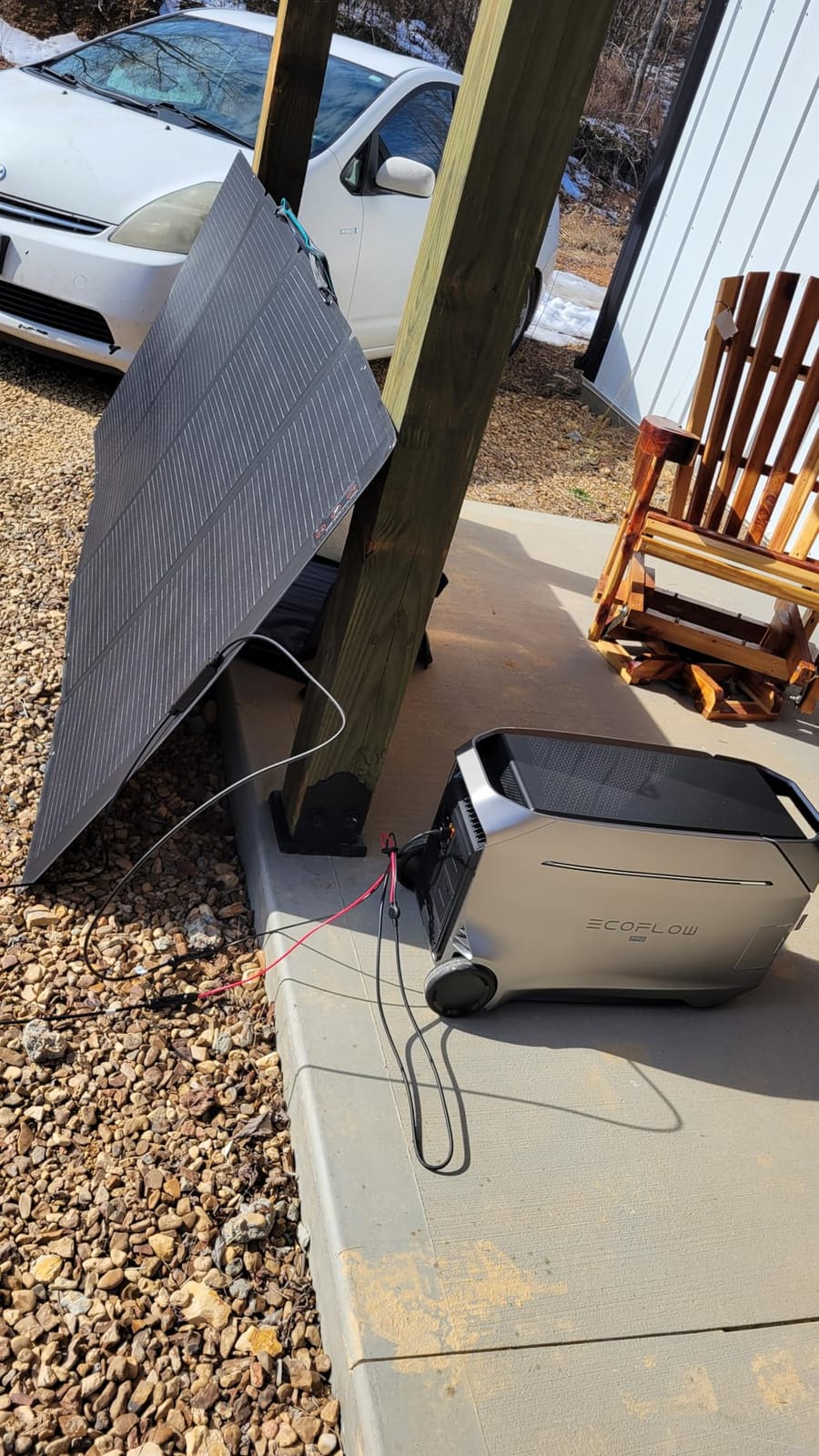
The 10ms switch-over is short enough that a pump running when the grid drops will not notice the handover, and X-Quiet operation at 30 dB means you can put this inside a pump house or a utility room without the neighbours hearing a machine. Solar input is capped at 800W, so a fixed array refills it over a long day rather than a short one, and the two included 400W panels are a good starting point rather than a finished system.
Runtime: at 4,000W continuous and 4,096Wh, a 1 HP pump at 1,100W gets roughly 3.2 hours per charge using about 85% of rated capacity. A 2 HP pump at roughly 2,200W gets about 1.6 hours. The 240V capability, not the capacity, is the reason to buy this one.

What works for a well pump
The 240V split-phase output is the decisive feature for 2 HP submersibles and 230V jet pumps that a 120V-only power station simply cannot start. Starting wattage of 8,000W gives real margin for a motor that has been sitting under load. Expansion to 48kWh turns a weekend backup into a genuine off-grid water supply.
Operation at 30 dB and indoor-safe LFP chemistry mean you can mount it near the pump rather than outside in the weather, and the 5-year warranty and IP65-rated battery pack suit a damp pump house better than a consumer-grade case would.
Where it falls short
At 115 pounds this needs two people or a cart, and it is not a unit you move between a cabin and a homestead easily. The spec sheet lists a single AC outlet, so plan around one pump circuit rather than assuming several loads. Solar input of 800W is modest for a battery this size, and the panels and unit being packaged separately is an inconvenience worth noting.
3. EcoFlow DELTA Pro Ultra – Best for 3 HP Pumps and Two-Pump Systems
EF ECOFLOW DELTA Pro Ultra 6144Wh Power Station, 120/240V 7200W AC Outpu
6144Wh LFP
7200W continuous 120V and 240V
3 AC outputs
20ms online UPS
UL1973 and UL9540
Pros
- 7200W continuous split-phase output handles heavy household loads and motor start
- 6144Wh base capacity scales to 90kWh
- Full recharge in about 2 hours from EV pile
- solar
- wall outlet or gas generator
- 20ms online UPS keeps sensitive electronics running
- Modular inverter-plus-battery design pairs with a transfer switch
Cons
- Battery state-of-charge readout reported as inaccurate after a few weeks of use
- Standby draw of roughly 5-10% per day matters for off-grid van or camper use
- Charge controller clicks on and off during low-light solar transitions
The DELTA Pro Ultra exists for the loads nothing else here can take. Seven thousand two hundred watts of continuous split-phase output is a 3 HP single-phase motor’s entire operating range with room for the start surge on top, and the three AC outputs let you run a main well pump and a secondary irrigation or stock-water pump at the same time. Owners running deep-well pumps and sump pumps describe the output and expandability as the reason they bought it, and the 6,144Wh base scaling to 90kWh across fifteen batteries gives you the deepest build-out in this category.
Charging is unusually fast. A full recharge in about two hours from an EV charging pile, wall outlet, solar, or gas generator means a battery emptied by a storm is back in service before the day is out. For water, that speed is worth more than it would be for a laptop.
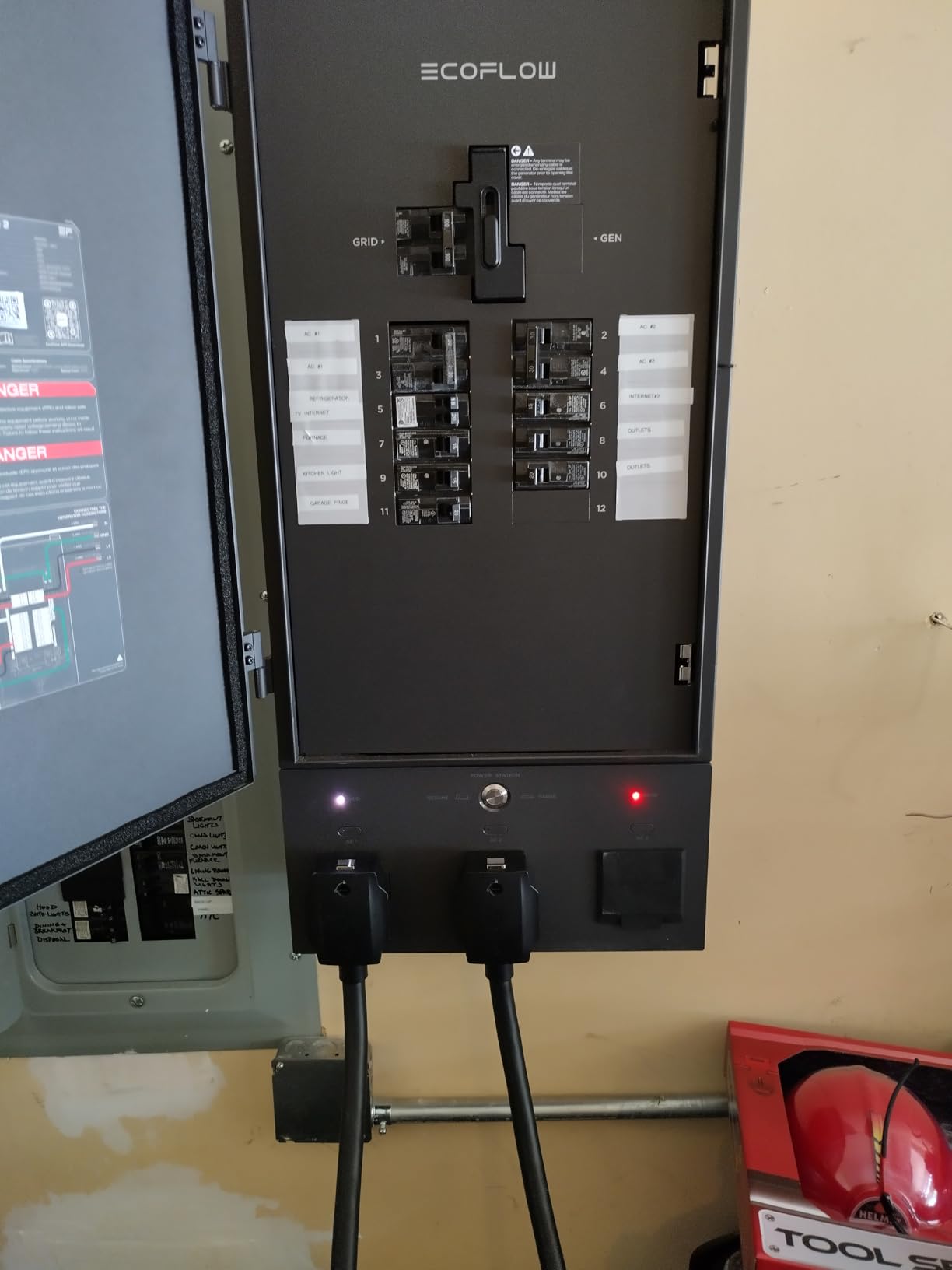
It is also the portable power station in this group carrying both UL1973 and UL9540 certification, and the modular inverter-plus-battery design is built to pair with a transfer switch or a smart home panel. The 20ms online UPS keeps sensitive electronics running through grid failure, and the fans stay off for the first 30 minutes at 2,000W of output, which is when a pump is most likely to be running.
Runtime: a 1 HP pump at 1,100W gets roughly 4.7 hours from the base battery, and a 2 HP pump at 2,200W gets about 2.4 hours, both at about 85% of rated capacity. With two expansion batteries the numbers triple. If you already have a large pump and a real household load behind it, this is the one that stops you from load-shedding.
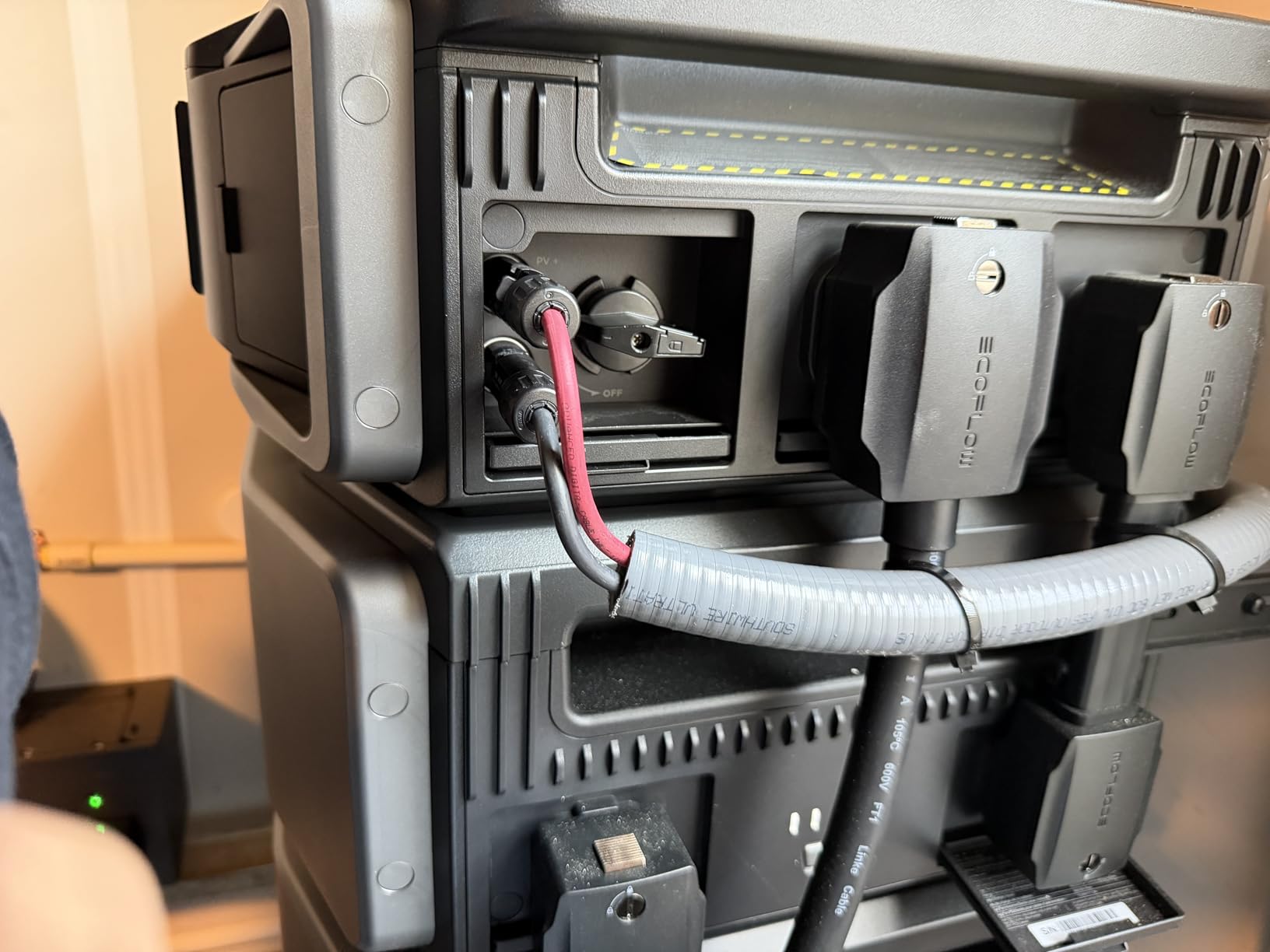
What works for a well pump
Seven thousand two hundred watts of split-phase output is the only continuous figure in this roundup that comfortably starts a 3 HP pump without shutting anything else down. Three AC outputs mean a main pump plus an irrigation pump plus a freezer can share the unit, which no other pick here supports. Expandability to 90kWh turns it into a homestead power source rather than an outage accessory.
UL1973 and UL9540 certification gives a fixed installation the documentation an inspector and an insurer will ask about, and the two-hour recharge means recovery time is short.
Where it falls short
Owners report the battery state-of-charge readout drifting from reality after a few weeks, so plan on verifying with the clamp meter rather than trusting the gauge. Standby draw of roughly 5 to 10% per day is a real cost on a long off-grid stay, and the charge controller clicking on and off during low-light solar transitions is an audible annoyance at dusk. The app cannot run EPS mode and scheduled failover tasks at the same time.
4. Jackery HomePower 3000 – Best for Off-Grid Homesteads With a Fixed Pump House
Jackery HomePower 3000 and 2x200W Solar Panels, 3072Wh, 3600W AC Output
3072Wh LFP
3600W continuous
7200W surge
400W bundled solar
under 20ms UPS
Pros
- 3600W continuous output with 7200W surge headroom for pump motor startup
- 3072Wh LFP battery keeps a refrigerator running 1-2 days on a single charge
- Under 20ms UL-certified UPS for security cameras
- medical refrigerators and routers
- Recharges 0-80% in 1.7 hours on hybrid AC and DC input
- Includes two 200W SolarSaga panels that bring the unit to 80% in about 9 hours
Cons
- Battery pack is not expandable
- so capacity is fixed at 3072Wh
- Firmware has a minimum-load requirement that is not documented
- Bundled panel cables are short and require a separate cable for full 400W output
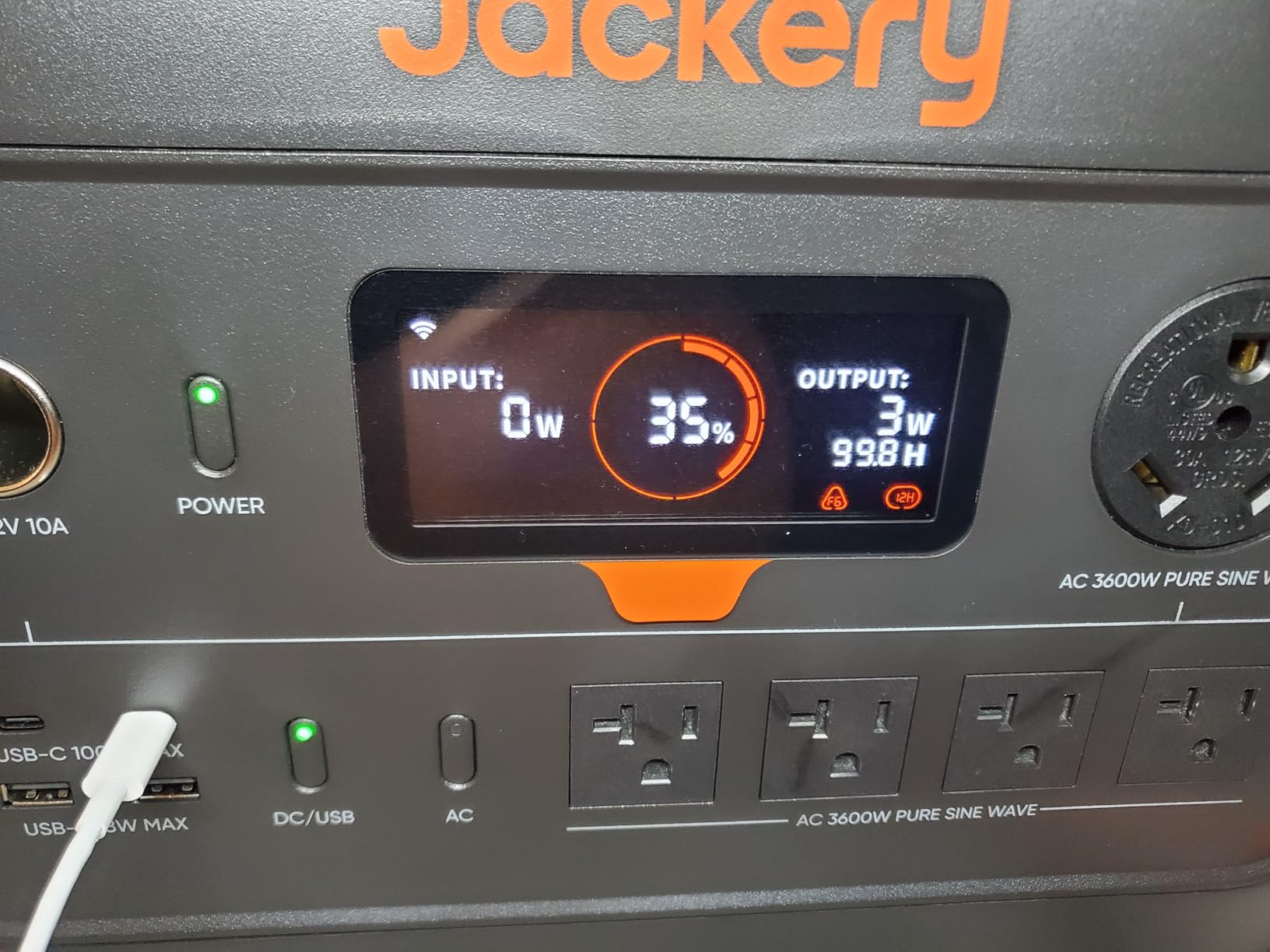
Jackery’s CTB packaging is the story here. The HomePower 3000 comes in at 47% smaller and 43% lighter than comparable 3kWh units, which sounds like marketing until you try to get a 59.5-pound power station into a pump house through a narrow door. For a permanent installation this is the unit you can actually find room for.
The electrical figures are well matched to a homestead load rather than a weekend one: 3,600W continuous with 7,200W surge covers a 1 HP submersible, a 1.5 HP shallow jet, and a freezer or a small refrigerator alongside without load-shedding. The 3,072Wh LFP battery is rated for 4,000 cycles to 70% capacity, which suits a pump that runs every single day.
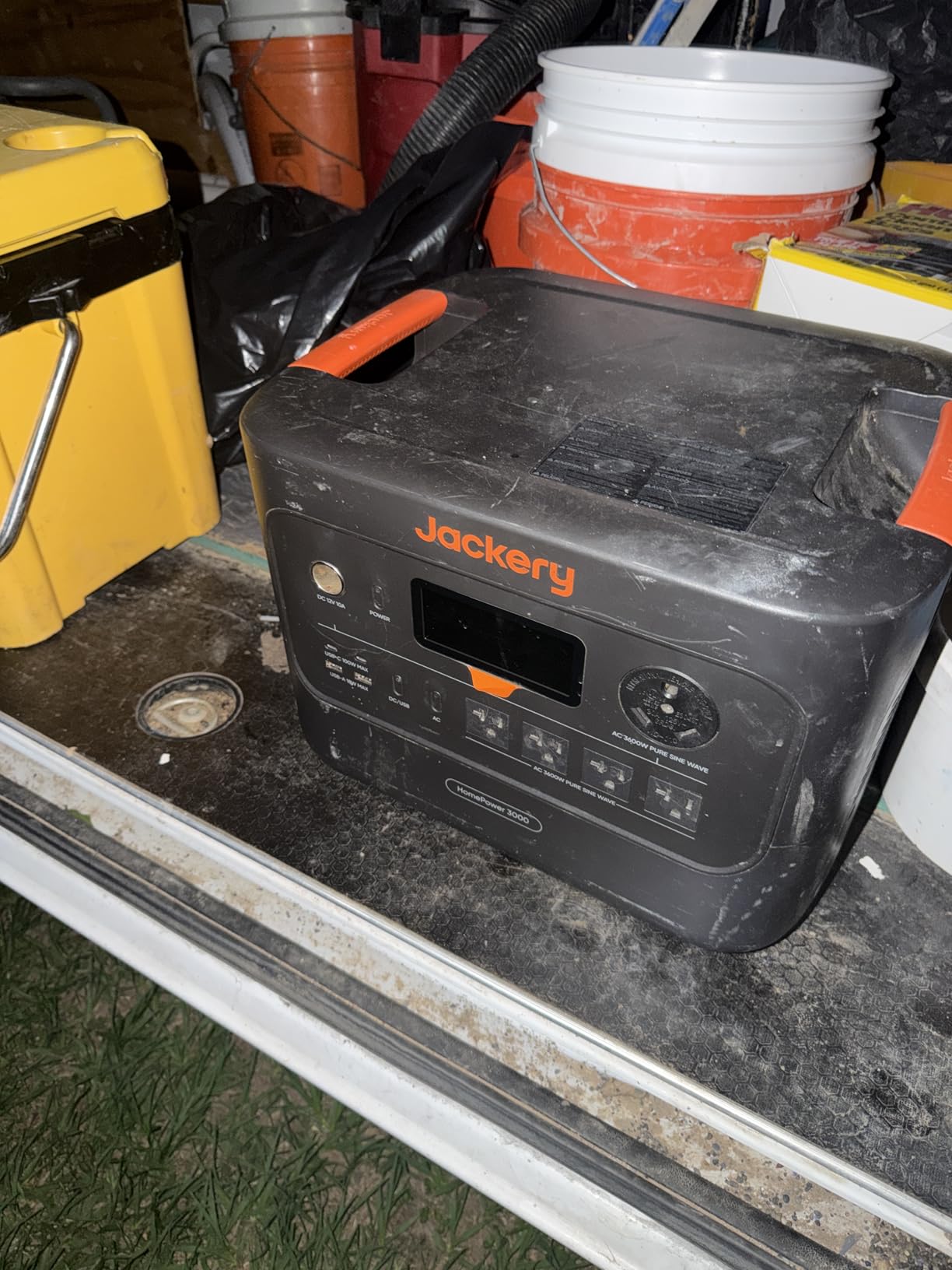
Two 200W SolarSaga panels are included and bring the unit to 80% in about nine hours of good sun, and hybrid AC plus DC charging fills it from 0 to 80% in 1.7 hours when you have wall power. The under 20ms UL-certified UPS is the kind of detail that matters when a transfer switch is in the circuit, because the pump sees a continuous supply.
Runtime: a 1 HP pump at 1,100W gets roughly 2.4 hours per charge at about 85% of rated capacity, and a 2 HP pump at 2,200W gets about 1.2 hours. The included panels put back roughly 320W average, so covering a four-hour daily duty cycle needs either a larger array or an occasional wall charge.
What works for a well pump
Seven thousand two hundred watts of surge against a 3,072Wh battery is generous start headroom, so a pump that has difficulty launching on a weak battery still starts. The compact footprint and lighter weight make a fixed pump-house install realistic, and the 4,000-cycle cell rating suits daily duty. The 400W panel bundle is enough to run a low-duty-cycle pump indefinitely with a battery float between them.
Under 20ms UL-certified switching keeps the pump circuit uninterrupted through a transfer event, which protects the motor control board from repeated start-stall cycles.
Where it falls short
The battery pack is not expandable, so 3,072Wh is a hard ceiling. That is the single biggest limitation for a homeowner whose pump turns out to run six hours a day. The firmware carries a minimum-load requirement that is not documented, so a very small pump on a lightly loaded inverter can behave oddly, and the bundled panel cables are short enough that you may need a separate cable to reach the full 400W input.
5. Jackery Explorer 2000 v2 – Best for Small Shallow Wells and Half Horsepower Pumps
Jackery Explorer 2000 v2 and 2x200W Solar Panels, 2042Wh, 2200W AC Output
2042Wh LiFePO4
2200W continuous
400W solar input
20ms UL1778 UPS
39.5 lb station
Pros
- 2200W continuous AC output from three outlets handles pumps and household tools
- 2042Wh LiFePO4 capacity with a lifespan rated up to 10 years
- Reaches 80% in 66 minutes on AC or fully charges in 102 minutes in Super Charging mode
- 20ms UPS with UL1778 certification keeps critical devices running through outages
- Lightest 2kWh class unit at 39.5 lbs thanks to CTB cell-to-body packaging
Cons
- 2200W with no listed surge boost limits headroom for larger pump motors
- Solar input tops out around 400W
- so refills take roughly 6 hours in good sun
- Panel cable requires swapping the L-shaped DC7909 plug for the straight DC8020 plug
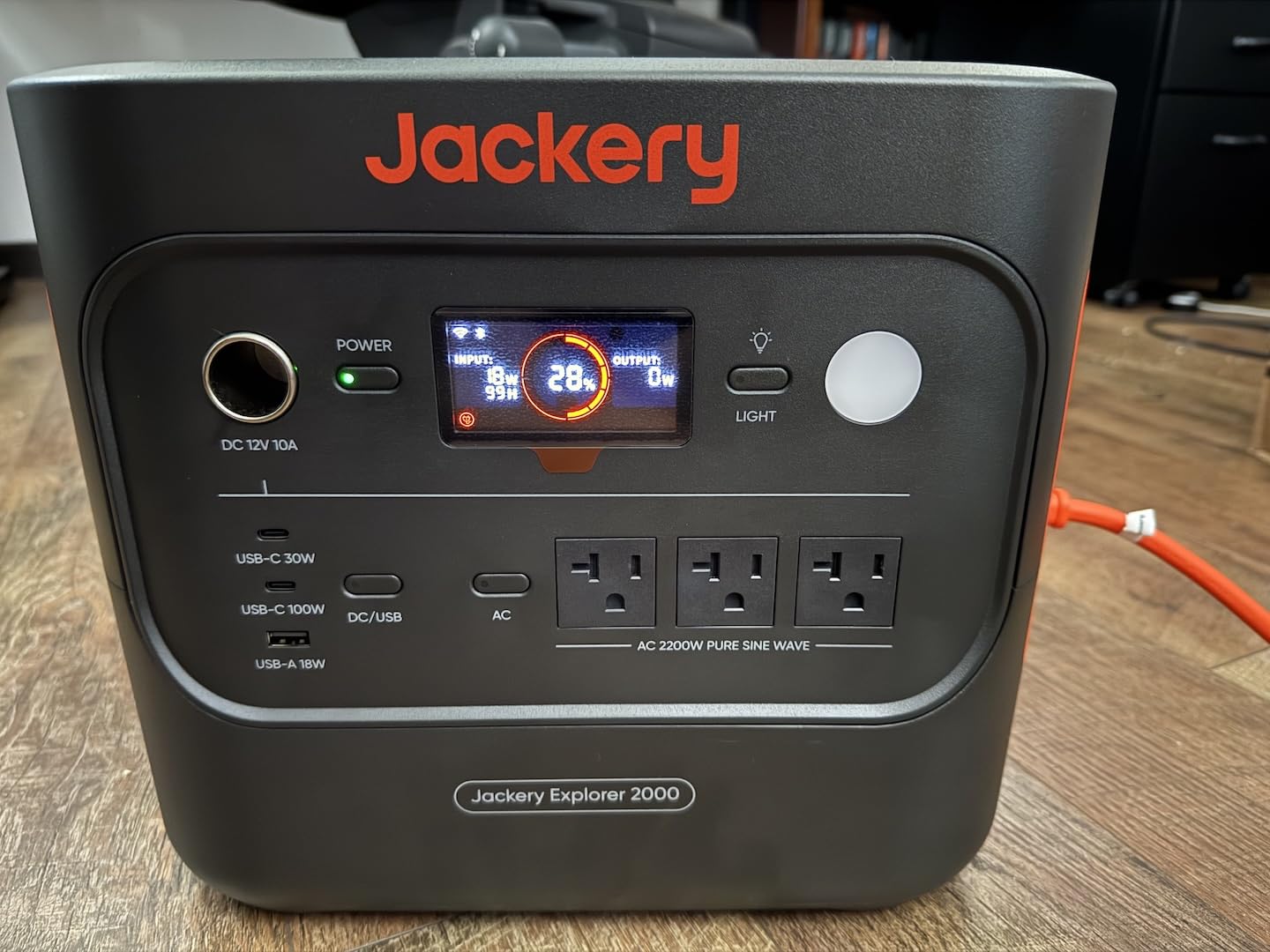
Here is the permission to size down. If your pump is a half horsepower shallow well jet with a pressure tank, or a 3/4 HP submersible on a modest property, a 2,042Wh unit is genuinely enough and the money you keep is better spent on panels. Telling you that is more useful than upselling a 4,000Wh machine you will never load.
The 2,200W continuous output across three AC outlets is comfortable for a small pump, and the 2,042Wh LiFePO4 pack is rated for up to 10 years of performance. The 39.5-pound CTB design is 41% lighter and 34% smaller than conventional 2kWh LiFePO4 units, which means one person can carry it to a pump house and reposition it seasonally.
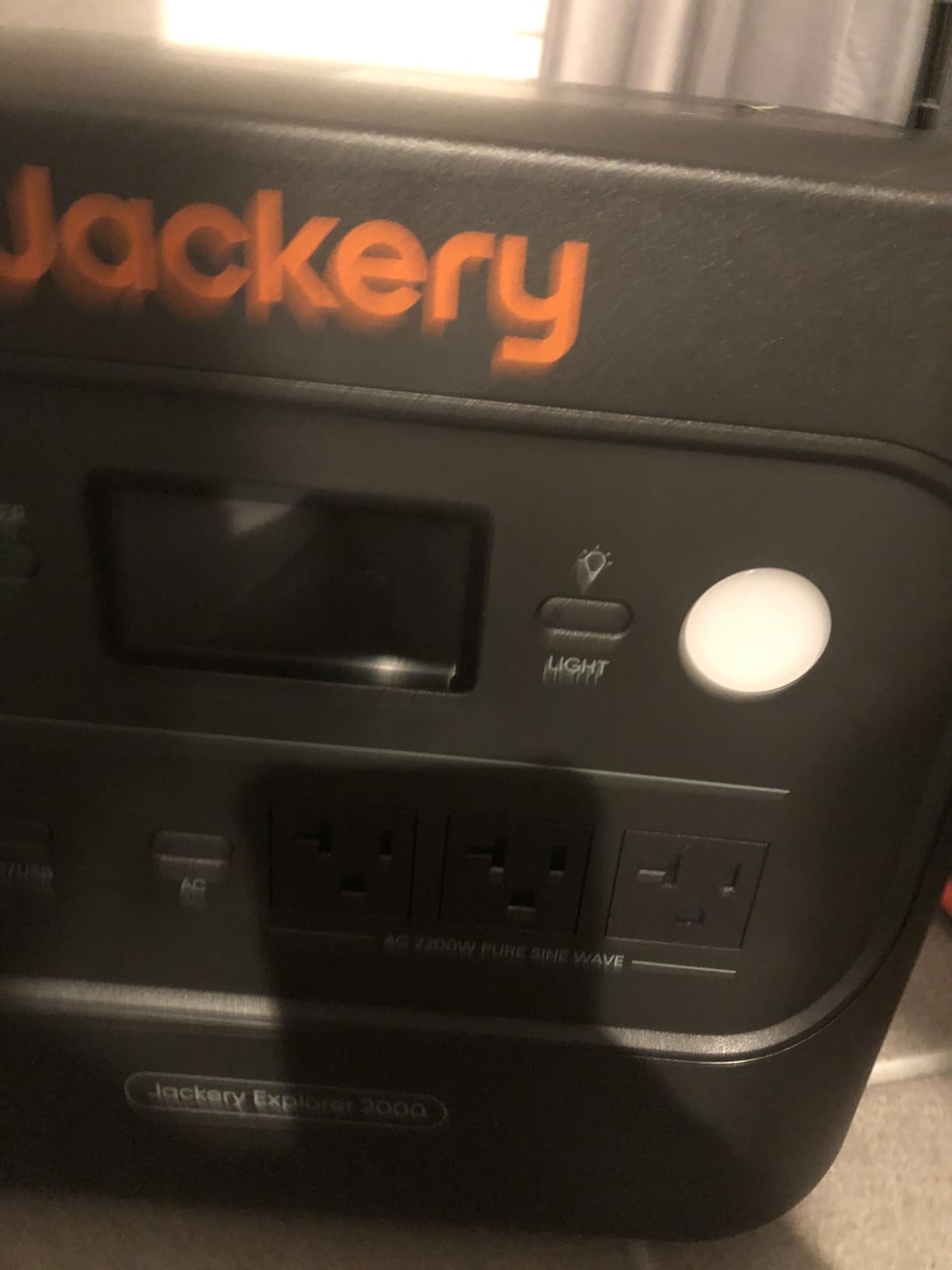
Charging is the strength: 0 to 80% in 66 minutes on AC, and a full charge in 102 minutes in Emergency Super Charging mode. Silent charging reaches full in five hours at 30 dB, and the 20ms seamless UPS switching is UL1778 test certified, so a pump mid-cycle during an outage does not see a break.
Runtime: a half horsepower pump at roughly 575W gives about three hours per charge at about 85% of rated capacity, and a 3/4 HP pump at roughly 750W gives roughly 2.3 hours. For a shallow well pump cycling on a pressure tank, a full charge covers a normal day easily.
What works for a well pump
Three AC outlets mean the pump, a router, and a light can share the unit, which is the realistic load list for a small well property. The 39.5-pound station is light enough for one person and small enough to sit on a pump house shelf rather than a floor. The 10-year cell rating suits a pump that runs daily, and the 400W solar input pairs with a modest two-panel array.
Silent charging at 30 dB is useful when the pump house adjoins living space, and the UL1778-certified UPS is a genuine reassurance for a motor that dislikes interrupted supply.
Where it falls short
There is no listed surge boost, and the starting wattage figure equals the running wattage, which means the headroom above continuous output is thin. Reviewers who tried a larger pump on this unit found the headroom limiting, so treat it as a half to three-quarter horsepower device and no more. The 400W solar ceiling means a refill takes about six hours in good sun, and swapping the panel plug from DC7909 to DC8020 is a small but real cable chore.
6. BLUETTI Elite 200 V2 – Top Rated Pick for Long-Lasting Daily Pumping
BLUETTI Elite 200 V2 Portable Power Station 2073.6Wh 2600W Solar Generator
2073.6Wh LiFePO4
2600W continuous
3900W power lifting
1000W solar input
under 15ms UPS
Pros
- 2600W continuous with 3900W power lifting handles high-draw appliances and motor loads
- 6000+ cycle automotive-grade LiFePO4 cells rated for a 17-year lifespan
- Only 10W standby draw
- extending runtime compared with similar 2kWh units
- 0-80% in 50 minutes on dual AC and DC charging and full solar charge in 2.4 hours
- Compact 53.4 lb chassis with dual handles
Cons
- Not expandable with BLUETTI battery modules
- unlike the AC200L
- Solar input is capped at 1000W and a 60V MPPT ceiling limits PV string options
- Only one 12V car output and no 30A 12V port like larger BLUETTI models
The Elite 200 V2 carries the highest average rating in this roundup, and the number behind it that matters most for a well pump is 6,000+ cycles rated for a 17-year lifespan. A pump runs every day; a 4,000-cycle cell that takes a hit from daily shallow cycling still has a long life, but the margin here is large enough that battery replacement stops being part of your ten-year plan.
Electrically it is a step up from most of the 2kWh class: 2,600W continuous with 3,900W of power lifting, which gives a 1 HP submersible a start spike it can absorb without leaning on a soft-start circuit. Solar input is capped at 1,000W and a full charge from 1,000W of panels takes about 2.4 hours, roughly three times faster than the 400W units in this list.
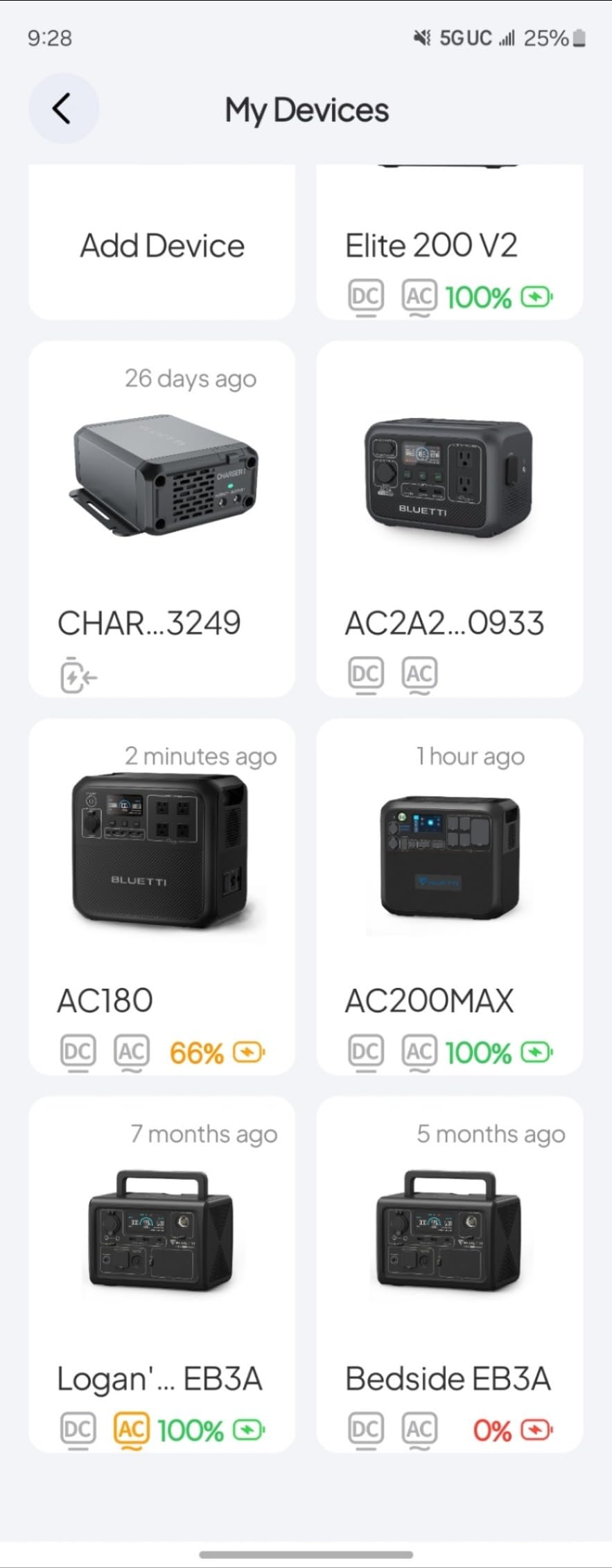
Two details separate it from the crowd for a pump house. Standby draw is 10W, around three times lower than comparable power stations, so a unit sitting idle through a week of dry weather does not eat the charge you stored for water. And the under 15ms UPS means a momentary grid dropout does not interrupt a pump cycle.
Runtime: a 1 HP pump at 1,100W gets roughly 1.6 hours per charge at about 85% of rated capacity, and a 3/4 HP pump at 750W gets about 2.4 hours. Independent testing quoted in the reviews confirmed 92% inverter efficiency and accurate watt meters, so the runtime estimates are not relying on an optimistic gauge.
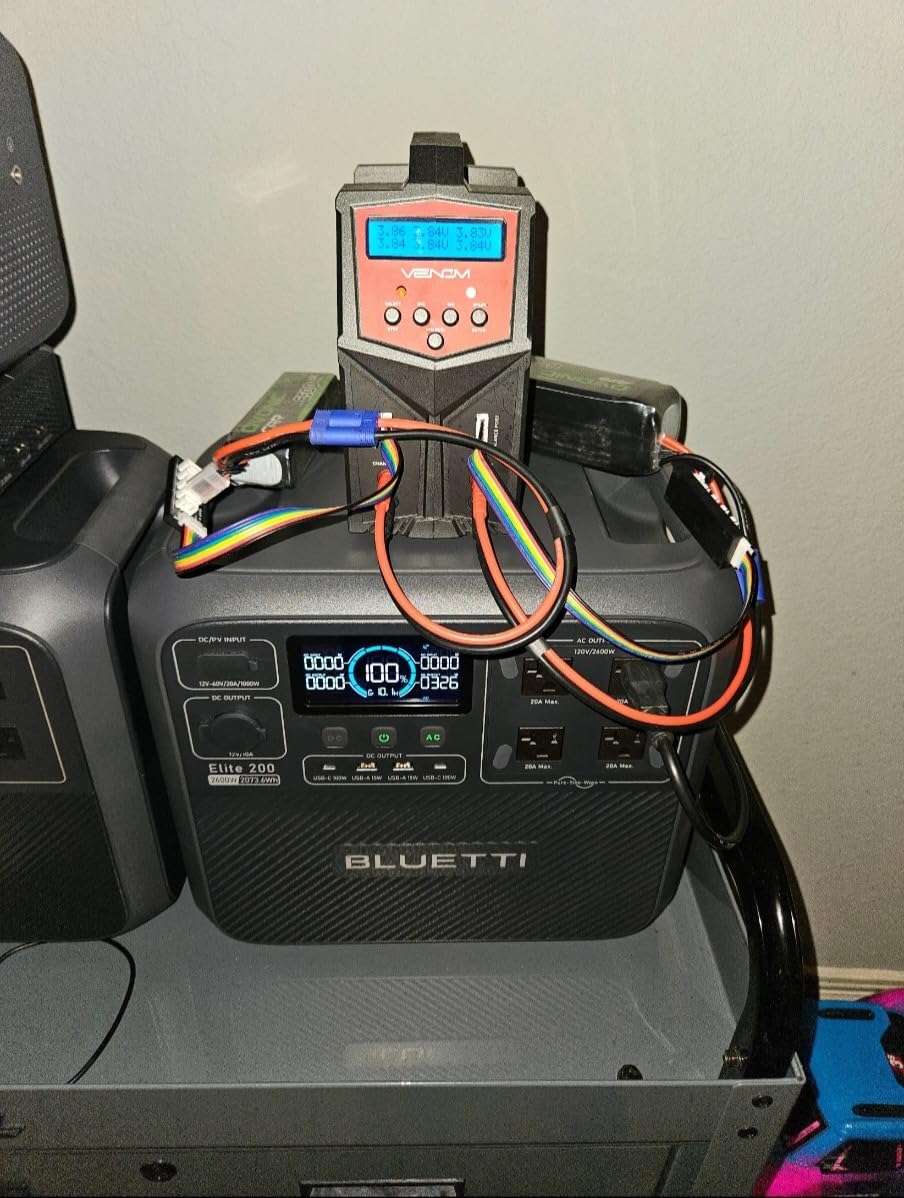
What works for a well pump
Six thousand plus cycles is the strongest longevity case here, and a 53.4-pound chassis with dual handles is a one-person install in most pump houses. A 1,000W solar input refills the battery in a single good day, which matters when a storm clears and you need the tank back up quickly. Low standby draw protects stored water capacity through dry spells.
Power lifting covers a starting pump that would otherwise stall, and 92% inverter efficiency means less of your battery is lost to conversion than on units that overstate their output.
Where it falls short
It cannot be expanded with BLUETTI battery modules, so 2,073.6Wh is fixed and a high-duty-cycle pump will outgrow it. The 60V MPPT ceiling restricts which photovoltaic strings you can connect, and firmware lacks user-settable state-of-charge limits when charging from solar, so you cannot simply cap the charge to protect a pump on a long float cycle. There is also only one 12V car output and no 30A 12V port.
7. EBL 2400W – Best for Compact Fixed Installations on a Budget
EBL 2400W Portable Power Station LiFePO4 Battery for Home Use
1843.2Wh LiFePO4
2400W continuous
4 AC outlets
0.1s emergency mode
2 year warranty
Pros
- 2400W continuous output suitable for kettles
- hair dryers
- coffee makers and power tools
- 1843.2Wh LiFePO4 rated 3500+ cycles for a 10+ year service life
- 12 devices can charge simultaneously from 4 AC
- USB-A
- USB-C
- car
- DC and wireless outputs
- 4-mode LED light covers camping and emergency lighting needs
- Dual-side handles and a 54 lb weight keep it manageable for off-grid use
Cons
- Smallest capacity of the 2400W-output models at 1843.2Wh
- limiting runtime on higher-draw pumps
- Only a 2-year manufacturer warranty
- half the 5-year coverage on most competitors
- No mention of expandable battery modules
The EBL is the honest budget answer, and it earns the place by doing one thing: putting 2,400W of continuous output into a 54-pound, 1,843.2Wh box with four AC outlets. For a 3/4 HP submersible or a half horsepower jet pump, that output is adequate, and the four AC outlets let the pump share the unit with lights, a router, and a refrigerator without a power distribution mess.
Battery chemistry is outdoor-specific LiFePO4 rated past 3,500 cycles for a 10-year-plus service life, and the case is shock-resistant and flame-retardant with overcharge, over-discharge, short-circuit, and high-temperature protection. In a pump house that sees condensation and occasional flooding, that physical build matters as much as the electrical spec.
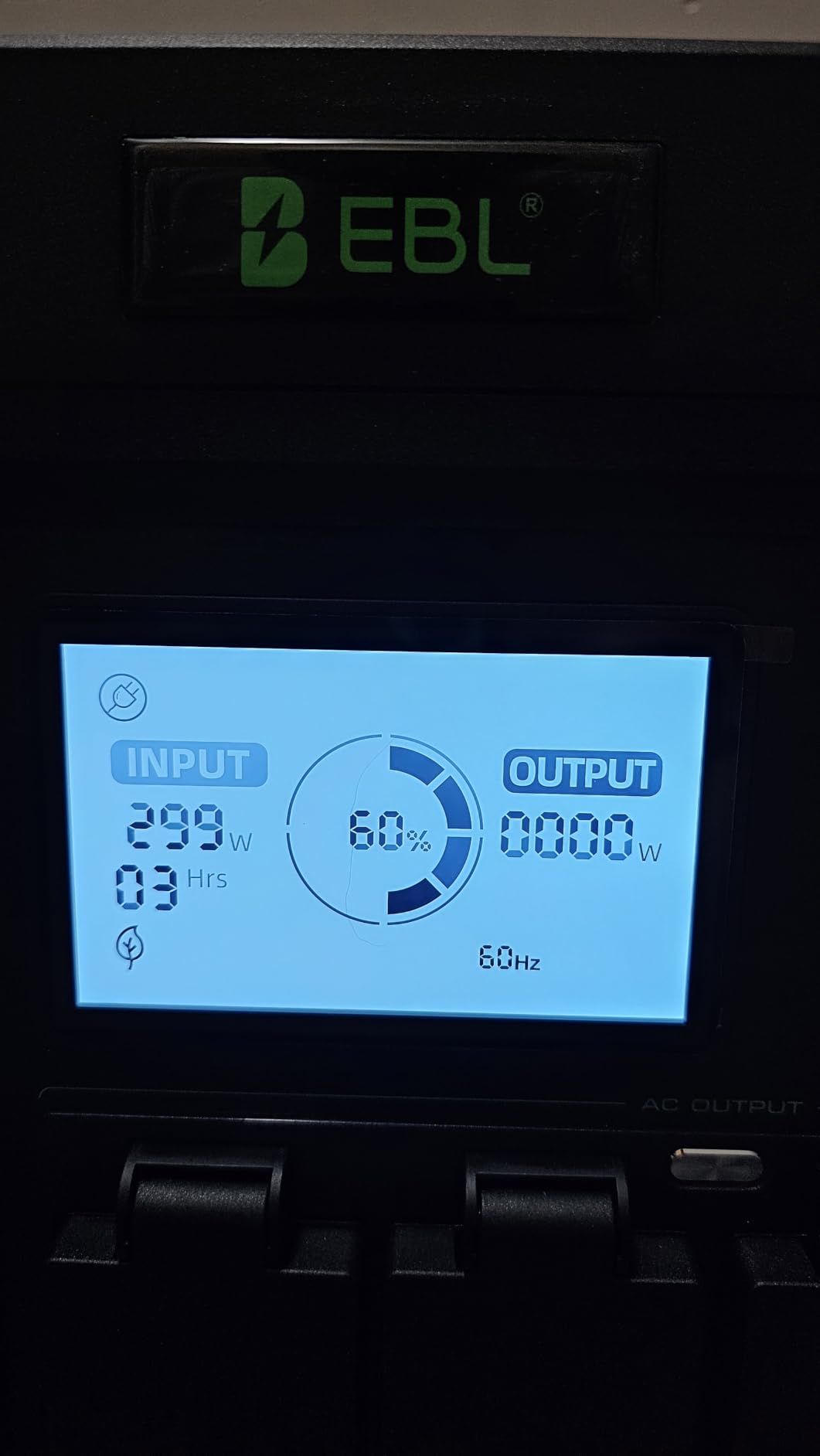
The emergency power mode switches to backup in 0.1 seconds, which protects computers from data loss during a blackout, and the 4-mode LED light covers the case where you are filling a jug by headlamp. Runtime is where the compromises sit: a 3/4 HP pump at 750W gets roughly 2.1 hours per charge at about 85% of rated capacity, and a 1 HP pump at 1,100W gets roughly 1.4 hours.
At that capacity, this works best as a standby unit for a small pump on a larger array, or as a secondary unit that covers a pressure tank refill while a bigger power station handles the heavy load. It is not the right choice for a whole-house submersible running four to six hours a day.
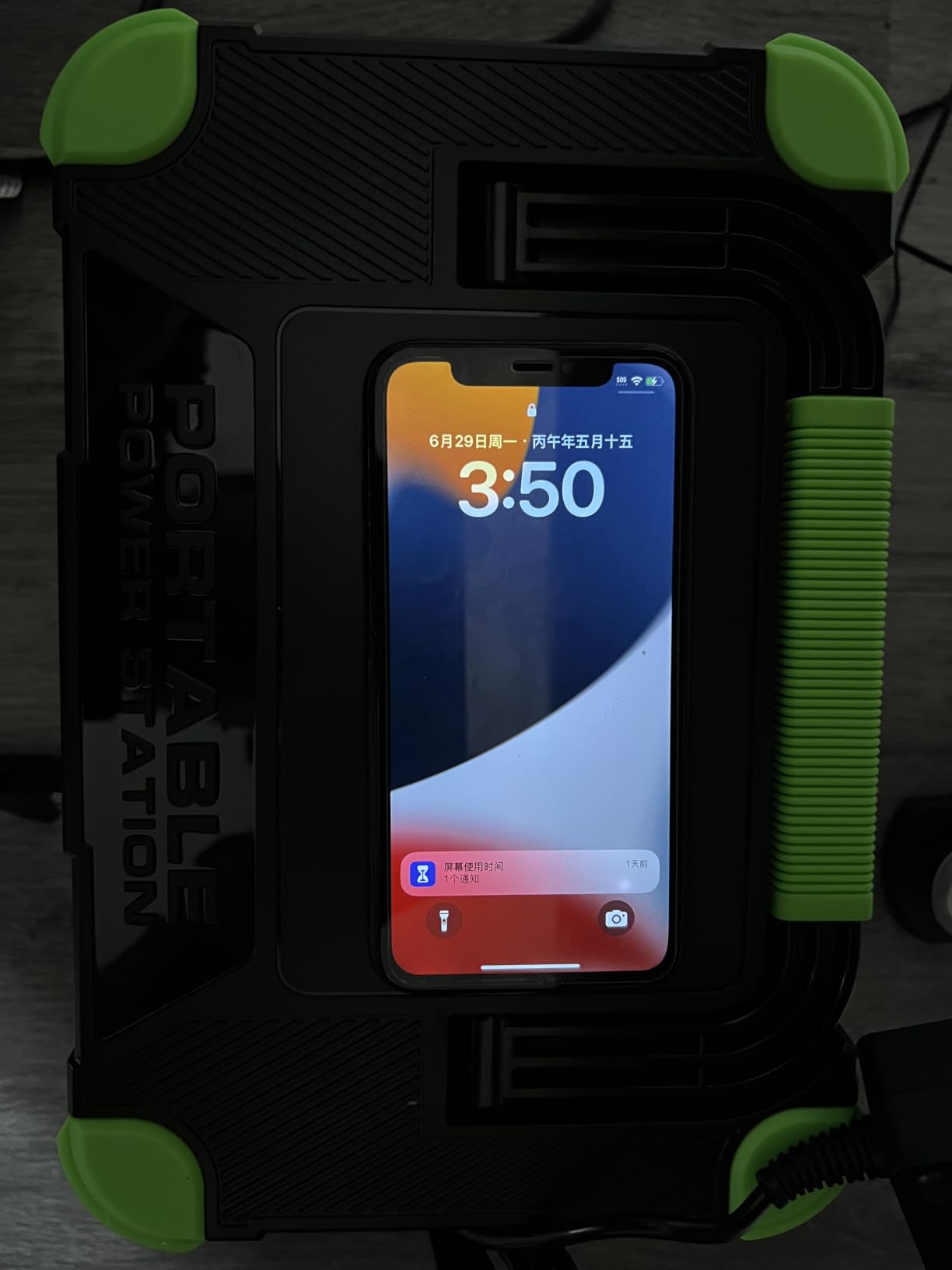
What works for a well pump
Two thousand four hundred watts is more than a 3/4 HP pump needs, so a small pump starts easily with headroom to spare. The 54-pound dual-handle body is a realistic one-person install, and the outdoor-specific LiFePO4 cells with full protection circuitry suit a damp location. Four AC outlets let you serve the pump and essential household loads from one place.
A 10-year-plus service life rating means a budget purchase here is not a short-lived one, and the emergency power mode protects electronics during a handover.
Where it falls short
At 1,843.2Wh this is the smallest battery here among the 2,400W-output models, and it shows in pump-hours rather than in a headline figure. The 2-year manufacturer warranty is half the 5-year coverage most competitors carry, and there is no mention of expandable battery modules, so capacity is fixed. The 0.1-second switchover is also far slower than the 10 to 20ms UPS modes of the BLUETTI, Jackery, and EcoFlow units, which can stall a motor that is already running.
8. OUPES Mega 1 – Budget Pick for Shallow Jets and Occasional Use
OUPES Mega 1 Portable Power Station 1024Wh 2000W (4500W Surge)
1024Wh LiFePO4
2000W continuous
4500W surge
800W solar MPPT
27.8 lb
Pros
- Fastest recharge in the roundup: 0-80% in 36 minutes on AC
- 26 minutes with solar assist
- 2000W pure sine wave output from a sub-30 lb body with 4500W surge
- Expands to 5120Wh by daisy-chaining two B2 extra batteries
- 800W solar input with built-in MPPT and standard MC4 connectors
Cons
- Advertised 4500W surge is optimistic
- with one unit tripping consistently between 2050-2200W
- 1024Wh is the smallest capacity in the roundup
- giving roughly 9 hours at a 120-130W draw
- Cooling fans run throughout charging and are audible in quiet settings
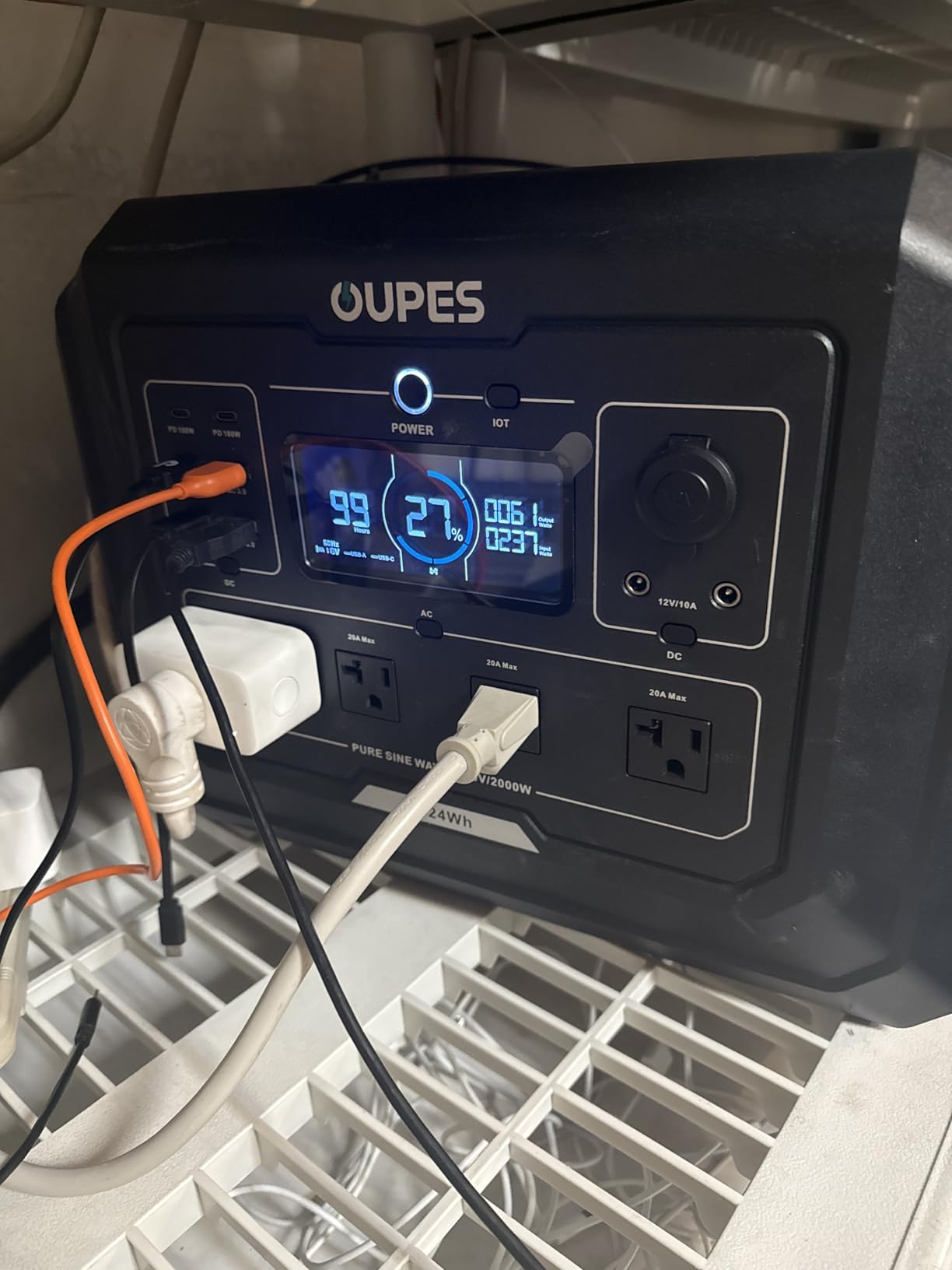
The Mega 1 is the lightest and fastest-charging option here at 27.8 pounds, and it is a serious answer for a small shallow well jet pump on a property where water demand is occasional. Pure sine wave output at 2,000W continuous will start a small motor cleanly, and the 800W solar input with a built-in MPPT charges faster than anything else in the 1kWh class.
Runtime is the constraint. At 1,024Wh, a half horsepower pump at roughly 575W gets about 1.5 hours at 85% of rated capacity, and reviewers cite roughly nine hours at a modest 120 to 130W draw. That is fine for topping up a pressure tank on a backup schedule and a poor fit for a daily whole-house supply.
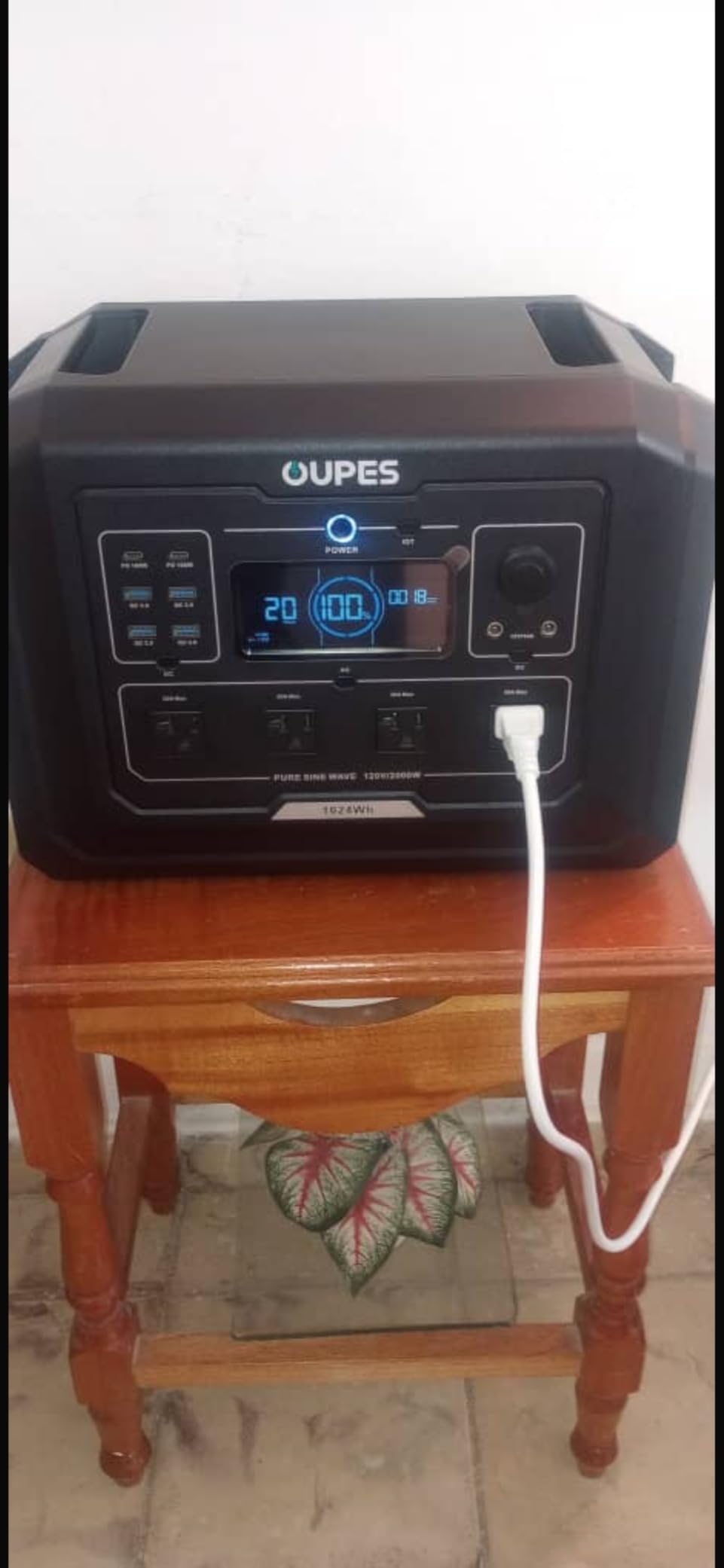
Expansion to 5,120Wh with two B2 batteries is what makes this a real option rather than a stopgap, and once expanded the runtime problem largely disappears for a small pump. Under 20ms UPS transfer protects servers, medical devices, and workstations, and the smart battery management system handles cell balancing and overcharge protection. The 3,500-plus cycle rating with 80% capacity retained over years is competitive at this tier.
Owners consistently describe it as the best power-per-dollar option in the 1kWh tier, and the 0 to 80% recharge in 36 minutes on AC means a drained unit is useful again the same evening. For a 1/2 HP shallow jet pump on a cabin or a small acreage, that combination is genuinely good value.
What works for a well pump
Pure sine wave output is the right waveform for a motor load, and 2,000W continuous covers a half horsepower jet pump with margin. At 27.8 pounds it is the only power station in this roundup one person can comfortably carry between a pump house, a wellhead, and a truck bed without planning for it. The 800W MPPT solar input and MC4 connectors mean a standard array plugs straight in.
Expansion to 5,120Wh turns a stopgap into a workable daily system for a small pump, and the 5-year warranty is competitive rather than cut-rate.
Where it falls short
The advertised 4,500W surge is optimistic. One owner reported a unit tripping consistently between 2,050W and 2,200W, so treat the real start headroom as around 2,200W and size your pump around that, not the sticker. At 1,024Wh the runtime is short for anything but occasional use. The cooling fans run throughout charging and are audible in a quiet space, the moulded handles feel uncomfortable on a long carry, the casing is not weather-sealed for a wet pump house, Wi-Fi app connectivity is unreliable though Bluetooth works, and the charge cable is proprietary and hard to replace.
How Many Solar Panels Do You Need for a Well Pump?
Start from the daily watt-hour requirement you calculated from running watts times hours per day, then divide by peak sun hours and derate. A 1 HP pump at 1,100W running four hours a day needs 4,400Wh per day, and in a location averaging four peak sun hours, an ideal 1,100W array would cover it.
In practice, build roughly 30% more than the arithmetic says. Panel output falls with heat, angle, dust, and the shading of a pump house roof, and a low winter sun angle can halve usable production. A 1,400W array on the example above is a comfortable target rather than a marginal one.
Every unit here accepts panels, but the ceilings differ sharply. The BLUETTI AC200PL accepts 1,200W, the Elite 200 V2 accepts 1,000W, the DELTA Pro 3 accepts 800W, and the OUPES Mega 1 accepts 800W. The two Jackery bundles here top out at 400W with the included 200W panels, which is a trickle relative to what a daily pump load needs. If you want daylight replenishment rather than battery conservation, match the array to the input ceiling, not the other way round.
Plan a battery-only contingency regardless. Cloud cover and winter both cut solar input, and water is not a load you can defer. Two cloudy days of autonomy on a four-hour daily duty cycle means roughly 8,800Wh of usable capacity, which is one extra expansion battery on the AC200PL or the DELTA Pro 3 rather than a different unit entirely. Our general solar generator roundup covers the appliance-side choices in more depth, and the cabin-focused picks cover smaller duty cycles.
120V or 240V: Which Output Your Well Pump Actually Needs
Single-phase 120V covers most residential submersible and shallow jet pumps up to about 1 HP, and five of the eight models in this roundup handle that class. Above roughly 1.5 HP, or for a 230V jet pump, a farm, or a two-pump system, you need genuine 240V split-phase output, and only the two EcoFlow models in this roundup provide it.
The reason so many 120V-only units fail on a well pump is the one described repeatedly in the forums: motors shudder and the unit shuts off on start. A motor with high locked rotor amps on a 120V-only inverter sees a start demand the inverter cannot source, and the protection circuitry cuts in to protect itself. The result is a pump that will not run at all, which is more expensive than buying the right unit up front.
Three things reduce that risk before you shop. A soft-start or variable frequency drive on the pump can cut inrush current substantially, and a pressure switch set to a lower cut-in pressure can reduce how often the motor starts. But neither substitutes for adequate surge headroom, and both add failure points in a pump house you cannot easily reach.
Check the pump’s nameplate before anything else. If it lists 230V or 240V, do not attempt to run it from a 120V circuit. If it lists a locked rotor figure, multiply it by your voltage to get the surge watts and compare that to the surge rating on the power station, not the continuous rating.
Installing and Protecting a Solar Generator in a Pump House
Ventilation first. A lithium iron phosphate battery produces heat while charging, and one owner reported the inverter running hot enough to warm an enclosed camper space. In a small pump house, leave clearance on all sides and avoid a sealed cabinet. Keep the unit out of standing water, since even an IP-rated battery pack is not designed for submersion.
Use a transfer switch or a proper home integration panel if the power station feeds a house circuit. Back-feeding a panel from a portable power station without a transfer switch is how people create an energised generator during an outage. The UL1973 and UL9540 certification on the DELTA Pro Ultra is worth having here, because it is the documentation an inspector will ask about.
Match your switching speed to the motor. UPS modes under 20ms keep a running pump completely unaware of a grid failure, which protects the motor control electronics. A 0.1-second emergency mode, as on the EBL, can cause a running pump to stutter, so avoid that path for continuous water service and switch loads manually instead.
Temperatures matter in an unheated pump house. Keep the unit above freezing and within the manufacturer’s charging temperature range, and remember that cold weather reduces both battery capacity and charging speed. A rodent guard or a small sealed enclosure around the cables is worth adding, because chewed wiring in a damp enclosure is a common failure that is cheap to prevent.
Finally, ground properly and use GFCI protection on the pump circuit. The included grounding screw exists for a reason, and a pump house is exactly where a grounding fault is most likely to find a path.
When a DC Solar Well Pump Is the Better Buy
If your pump is not yet installed, there is an architecture that removes the battery entirely. DC direct-drive solar well pumps from brands such as Grundfos with the SQ Flex controller and SunPumps run a pump motor directly from panel output, with no inverter and no battery bank. Owners report five to six years of reliable solar water pumping from that architecture.
The trade is honest and worth stating both ways. A DC system has no battery to cycle, so there is no capacity to deplete when the sun is behind cloud, and no inverter surge problem because there is no AC motor start. What you give up is storage, which means the pump only runs in daylight, and the pump must be sized for the head and flow you need rather than chosen from a hardware catalogue.
Where a power station wins is flexibility. You keep your existing AC pump, you get water at night and during outages, and the same battery carries a refrigerator, a freezer, lighting, and a medical device during a grid failure. For a homestead where water and power are both needed, that versatility is usually worth the extra components.
Our rule of thumb: if water is your only load and you have never had a pump, look seriously at DC direct drive. If you already own an AC pump or need power for anything else, a battery-backed unit like the BLUETTI AC200PL is the simpler path.
Frequently Asked Questions
Can I run a well pump on solar power?
Yes, but only through a battery-backed power station rather than grid-tie panels. A submersible pump draws roughly 1,000-1,200W while running and up to three times that on start, so panels must feed a battery and an inverter sized for the surge. Grid-tie inverters shut down during an outage, so panels wired directly to a pump produce nothing when the power goes.
How many solar panels are needed to run a well pump?
Work from daily watt-hours. Multiply the pump’s running watts by hours per day, divide by your local peak sun hours, then build about 30% more to cover heat, angle, and shading losses. A 1 HP pump at 1,100W running four hours a day needs 4,400Wh daily, which is about 1,100W of panels at four peak sun hours, or roughly 1,400W once you add a margin.
How much solar is needed for a 1 hp submersible pump?
A 1 HP submersible pump needs roughly 1,000-1,200W of solar input to sustain a four-hour daily duty cycle at a site with four peak sun hours, and about 1,400W of panel capacity once you allow for real-world losses. Match that figure to the power station’s solar input ceiling, which ranges from 400W to 1,200W across the units in this roundup.
Can a solar generator start a submersible pump motor?
It can, if the inverter’s surge rating is at least two to three times the pump’s running watts. A 1 HP pump at 1,100W running needs roughly 3,600W of start capacity, so a 2,400W continuous inverter with a 4,800W start rating works comfortably. Units with no listed surge boost, such as the 2,200W Jackery Explorer 2000 v2, leave too little headroom for larger motors.
What size solar generator do I need for a 2 hp well pump?
A 2 HP pump needs roughly 2,200W of running capacity and 5,000W or more of start headroom, which means a power station rated at about 3,000W continuous or higher. If the pump is 230V, you also need 240V split-phase output, and only the EcoFlow DELTA Pro 3 and DELTA Pro Ultra in this roundup provide it.
How long will a portable power station run a well pump?
Divide usable capacity by running watts, where usable is about 85% of rated watt-hours. A 2,304Wh unit at 85% gives about 1,950Wh, which is roughly 1.8 hours on a 1 HP pump at 1,100W and about 3.6 hours on a half horsepower pump at 575W. Expansion batteries multiply these figures, and daily solar replenishment is what keeps the pump running indefinitely.
Do I need a transfer switch for a well pump?
Yes, if the power station feeds a house circuit. A transfer switch or home integration panel prevents back-feeding an energised circuit during an outage, which is the standard way people get hurt running a portable power station. For a single dedicated pump circuit, plugging the pump directly into a properly sized outlet is acceptable, provided the pump is on its own branch circuit.
Can grid-tie solar run a well pump during an outage?
No. Most grid-tie inverters shut down completely when grid power is lost, by design, so a pump wired straight to grid-tie panels stops the moment the power goes. A pump during an outage needs a battery-backed power station or a hybrid inverter with a battery, because only stored energy can carry the pump once the sun is down.
What is the best generator for an off-grid solar system?
For off-grid water, the deciding specifications are continuous AC output, start surge headroom, battery capacity in watt-hours, and solar input ceiling, in that order. A pure sine wave inverter with LiFePO4 chemistry and expandable batteries serves a daily duty cycle better than a larger unit with fixed capacity. The BLUETTI AC200PL is our pick because it combines 2,400W of output, a 4,800W start rating, 1,200W solar input, and expansion to 8,448Wh.
Which solar generator is best rated by Consumer Reports?
We do not publish ratings or testing from Consumer Reports, because we do not have verified access to their results and will not guess at them. Judge any unit on published specifications instead: continuous output, surge rating, battery chemistry and cycle life, solar input ceiling, and warranty length. Owner review volumes on retailer listings are useful context but say nothing about a manufacturer’s test methodology.
The Best Solar Generators for Well Pumps, Final Word
The best solar generators for well pumps are not the biggest ones, they are the ones whose surge rating matches your pump’s locked rotor demand and whose battery matches your daily duty cycle. That is why the BLUETTI AC200PL takes our Editor’s Choice: 2,400W of continuous output, a 4,800W start rating, a 1,200W solar ceiling, and expansion to 8,448Wh covers the widest range of real 1 HP and smaller installations without wasting money.
Move up to the BLUETTI Elite 200 V2 if cell longevity matters most and 2,073.6Wh is enough. Move to the EcoFlow DELTA Pro 3 for 240V split-phase, and to the DELTA Pro Ultra for 3 HP pumps or two-pump systems. Size down to the Jackery Explorer 2000 v2 or the OUPES Mega 1 for a half horsepower shallow jet and no other load.
One last check before you buy: clamp your pump’s running amps, multiply by 120V, and confirm the continuous and surge ratings clear it with margin. That single measurement prevents the most common and most expensive mistake in this whole category.