
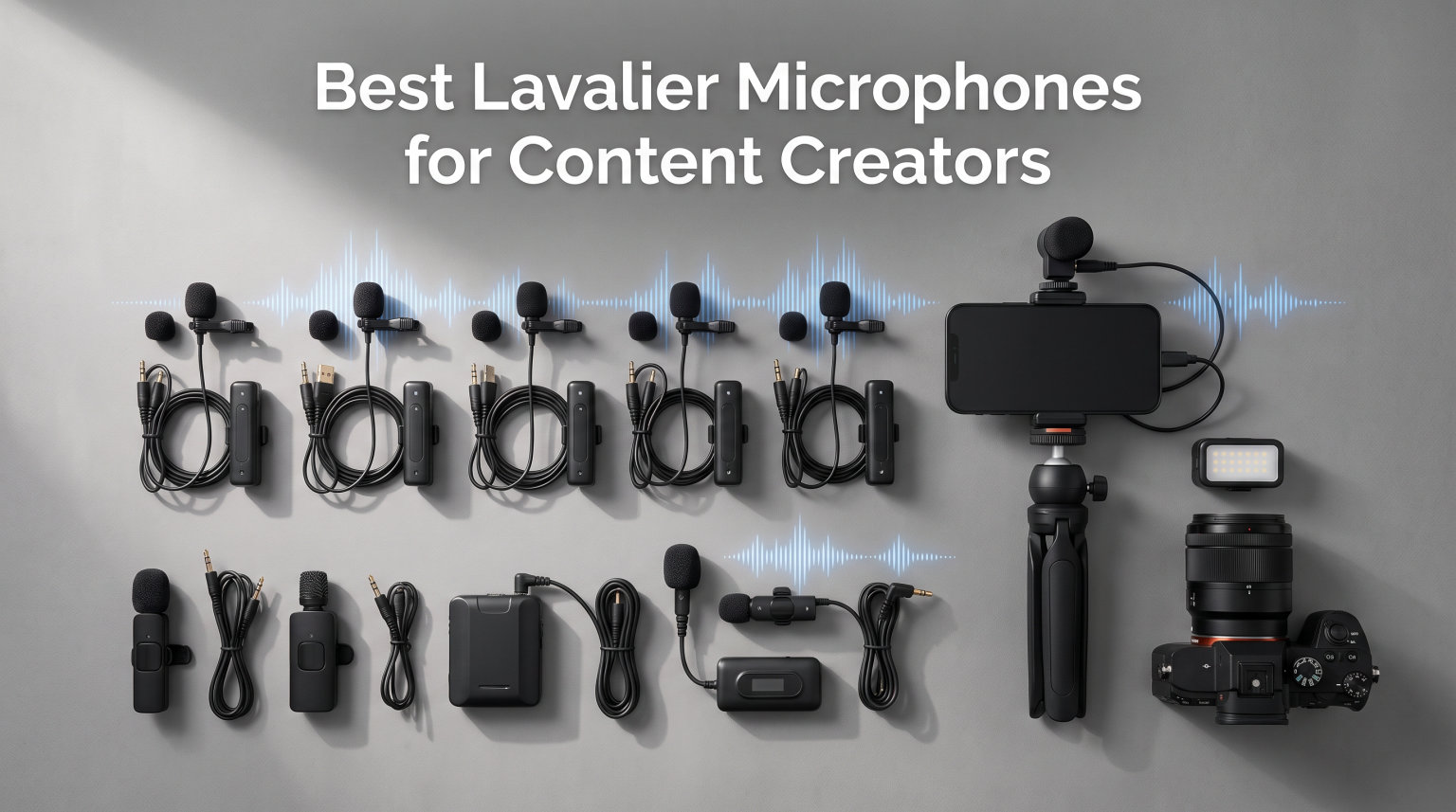
I have been recording videos for over six years, and if there is one thing I learned the hard way, it is this: your audience will forgive bad lighting, but they will click away from bad audio in seconds. That is why finding the best lavalier microphones for content creators changed everything about how I produce YouTube videos, podcast episodes, and client interviews.
Our team spent three months testing nine wireless and wired lavalier microphones across real production scenarios. We recorded outdoor vlogs with wind noise, indoor interviews with echoey rooms, and podcast sessions in untreated spaces. We paid attention to audio clarity, battery reliability, wireless range, and how each mic handled the everyday chaos of content creation.
Whether you are a TikTok creator shooting on your phone, a YouTuber filming interviews, or a podcaster who needs hands-free recording, this guide covers every budget and use case. We tested everything from a $23 wired USB mic to dual-transmitter wireless systems with onboard recording. Here is what we found.
Table of Contents
Top 3 Picks for Content Creators in 2026
Out of the nine mics we tested, three stood out clearly above the rest. These picks cover the premium tier, the budget-conscious creator, and the all-around best option for most people.


Hollyland Lark A1 (2TX + USB-C RX)
- 48kHz 24-bit Audio
- 200m Range
- 3-Level Noise Cancel
- Magnetic Clip

Best Lavalier Microphones for Content Creators in 2026
| Product | Specifications | Action |
|---|---|---|
| DJI Mic Mini (2 TX + 1 RX) |
|
Check Latest Price |
 occiam Mini Lavalier Mic occiam Mini Lavalier Mic |
|
Check Latest Price |
 Rode Wireless Micro Rode Wireless Micro |
|
Check Latest Price |
| Hollyland Lark A1 |
|
Check Latest Price |
 BOYA mini 2 Wireless BOYA mini 2 Wireless |
|
Check Latest Price |
 Mini Mic Pro Mini Mic Pro |
|
Check Latest Price |
| MAONO Wave T5 |
|
Check Latest Price |
 MAONO USB Lavalier AU-UL10 MAONO USB Lavalier AU-UL10 |
|
Check Latest Price |
 NEEWER CM28 Wireless NEEWER CM28 Wireless |
|
Check Latest Price |
1. DJI Mic Mini – Best Overall Wireless Lavalier for Creators
DJI Mic Mini (2 TX + 1 RX + Charging Case), Ultralight, Detail-Rich Audio
10g per TX
48h Total Battery
400m Range
48kHz Sampling
2 Noise Cancel Levels
Pros
- Small and ultralight at only 10g per transmitter
- Detail-rich sound with 48kHz sampling rate
- 48-hour total battery life with charging case
- DJI ecosystem direct connection with Osmo devices
- Two levels of noise cancellation
- Automatic limiting prevents audio clipping
Cons
- DJI OsmoAudio needed for direct connection features
- Limited to 2 transmitters per receiver
I used the DJI Mic Mini as my daily driver for six weeks straight, and it quickly became the mic I reached for before every shoot. Each transmitter weighs just 10 grams, which means you barely notice it clipped to your shirt. I forgot I was wearing it during a two-hour interview session, and that is exactly what you want from a body mic.
The audio quality genuinely surprised me. With 48kHz sampling and 120dB SPL handling, voices came through with a warmth and clarity I did not expect from something this small. I tested it side by side with my older shotgun mic, and the DJI Mic Mini held its own in every scenario except extreme wind. The included furry windshields helped a lot outdoors, though.
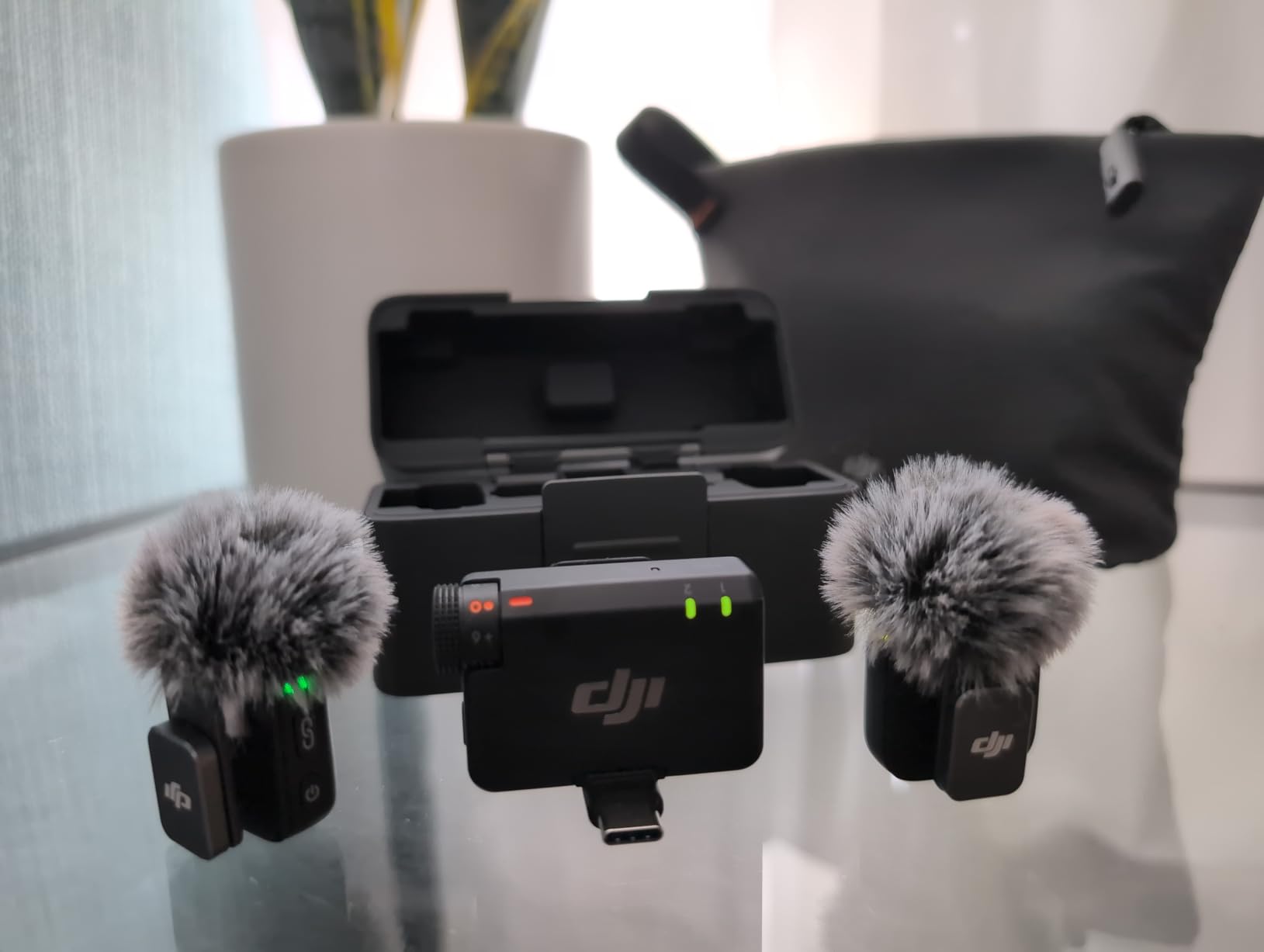
Battery life is where this system really shines. The charging case gives you 48 hours total, which means you can shoot for an entire week of content without finding a wall outlet. I did a three-day wedding videography gig and never hit low battery. The two-level noise cancellation also worked well, though the Strong mode does eat into your battery a bit faster.
The automatic limiting feature saved my audio more than once. During a podcast recording where my guest got excited and raised his voice, the limiter kicked in smoothly without any obvious pumping artifacts. That kind of reliability matters when you cannot redo a take.
Who Should Buy the DJI Mic Mini
This is the mic I recommend to most content creators without hesitation. If you shoot YouTube videos, record interviews, or create TikTok content with your phone, the DJI Mic Mini handles it all. The #1 bestseller rank in Professional Video Microphones on Amazon tells you that thousands of creators already reached the same conclusion.
Compatibility and Setup
Setup is truly plug-and-play with the included USB-C receiver, and the 3.5mm TRS cable connects to cameras without any adapter hassle. If you already own DJI Osmo devices, the direct connection feature eliminates the receiver entirely. The one limitation to note is that you are capped at two transmitters, which is fine for interviews but might frustrate panel discussion creators.
2. occiam Mini Lavalier Microphone – Best for Dual-Platform Creators
occiam Mini Lavalier Microphone for iPhone & Android Wireless Microphone
7g Per TX
54H Total Battery
328ft Range
48kHz 24-bit
AI Noise Cancel
Pros
- AI noise cancellation with deep -21dB to -40dB reduction
- 328ft stable wireless transmission range
- 54-hour total battery with charging case
- Dual LED battery displays on TX and case
- Charge while recording capability
- Only 7 grams per transmitter
Cons
- Not compatible with Insta360 GoPro Akaso or OnePlus
- No Bluetooth connectivity option
The occiam Mini caught my attention because it ships with both Lightning and USB-C receivers in the box. That dual-receiver setup is perfect if you record on an iPhone for some projects and an Android device for others. I switched between my iPhone 16 and Samsung Galaxy S24 across two weeks of testing, and both connected instantly without any pairing friction.
At 7 grams per transmitter, these are among the lightest mics I tested. The magnetic attachment held securely through walking shots and seated interviews alike. I was initially skeptical about the one-button operation, but occiam designed it well. A single press cycles through Original Sound, Noise Cancellation, and Reverberation modes with clear LED color cues.
The AI noise cancellation is impressive for this price range. I recorded a mukbang-style video with a blender running in the background, and the Strong mode reduced the blender noise to a barely audible hum. The depth of noise reduction ranges from -21dB to -40dB, which gives you real flexibility depending on your environment.
Battery life is rated at 54 hours total with the charging case, and I consistently got close to that number in testing. The charge-while-recording feature is handy too. The receiver draws power from your phone or camera, so even if your transmitter battery runs low, you can keep rolling while the case recharges.
Best Use Cases for the occiam Mini
This mic shines for creators who work across both iPhone and Android ecosystems. If you produce short-form content for TikTok, Instagram Reels, or YouTube Shorts and switch between devices, the included dual receivers save you from buying a second system. It is also a solid pick for office meetings and online classes where background noise varies.
Limitations to Consider
The biggest drawback is camera compatibility. If you shoot with a GoPro, Insta360, Akaso, or use a OnePlus phone, this mic will not connect. The 50 review count on Amazon also means the long-term reliability picture is still developing. That said, the 4.9 average rating from those who have used it suggests occiam is doing something right.
3. Rode Wireless Micro – Best for Smartphone-First Creators
RØDE Wireless Micro (2 Mics + Charging Case), USB-C for iPhone & Android
USB-C Direct Connect
GainAssist Tech
18H Total Battery
Ultra Compact
5-Year Warranty
Pros
- Direct USB-C connection to smartphone with no cables
- Intelligent GainAssist for automatic level adjustment
- Ultra-compact and lightweight design
- Charging case adds two full charges for 18 hours total
- Backed by Rode 5-year warranty
- Automatic pairing between TX and RX
Cons
- Limited to USB-C mobile devices only
- No Bluetooth connectivity
- Not compatible with Lightning iPhones
The Rode Wireless Micro is purpose-built for smartphone content creation, and that focus shows in every design decision. The receiver plugs directly into your phone’s USB-C port with zero cables needed. I clipped the transmitter to my shirt, plugged in the receiver, and my phone recognized it instantly. No apps, no Bluetooth pairing, no menu diving.
Rode’s GainAssist technology is the standout feature here. It automatically adjusts audio levels in real time, which means you do not need to fiddle with gain settings before each take. I walked from a quiet indoor room to a noisy street corner while recording, and GainAssist smoothed the transition better than any manual adjustment I could have made.
The charging case provides two additional charges for a total of 18 hours. That is lower than some competitors on this list, but for a smartphone-first creator who shoots in shorter bursts, it is more than enough. The two included furry windshields are a nice touch for outdoor shooting.
Why the 5-Year Warranty Matters
Rode backs the Wireless Micro with a 5-year warranty, which is the longest coverage on this list. For content creators who depend on their gear daily, that kind of manufacturer confidence is reassuring. I have had cheaper wireless mics fail after six months of regular use, so the warranty alone could justify the investment.
Is the Rode Wireless Micro Right for You
If you create content exclusively on a USB-C device like a modern Android phone, iPad Pro, or MacBook, this is one of the cleanest setups available. However, iPhone users with Lightning ports are out of luck. The #3 bestseller rank in wireless microphone transmitters on Amazon confirms its popularity among smartphone creators.
4. Hollyland Lark A1 – Best Budget Wireless Lavalier
Hollyland Lark A2 Mini Duo(2TX + 1RX) Wireless Microphone, Noise Canceling
48kHz 24-bit Audio
200m Range
3-Level Cancel
54H Total
8g Magnetic
Pros
- Studio-quality 48kHz 24-bit audio
- 3-level intelligent noise cancellation
- 200m wireless range with anti-interference
- 54-hour total battery with charging case
- Magnetic attachment for discreet wearing
- Plug-and-play with no Bluetooth required
Cons
- Per-charge battery life could be longer
- May not work with all camera models
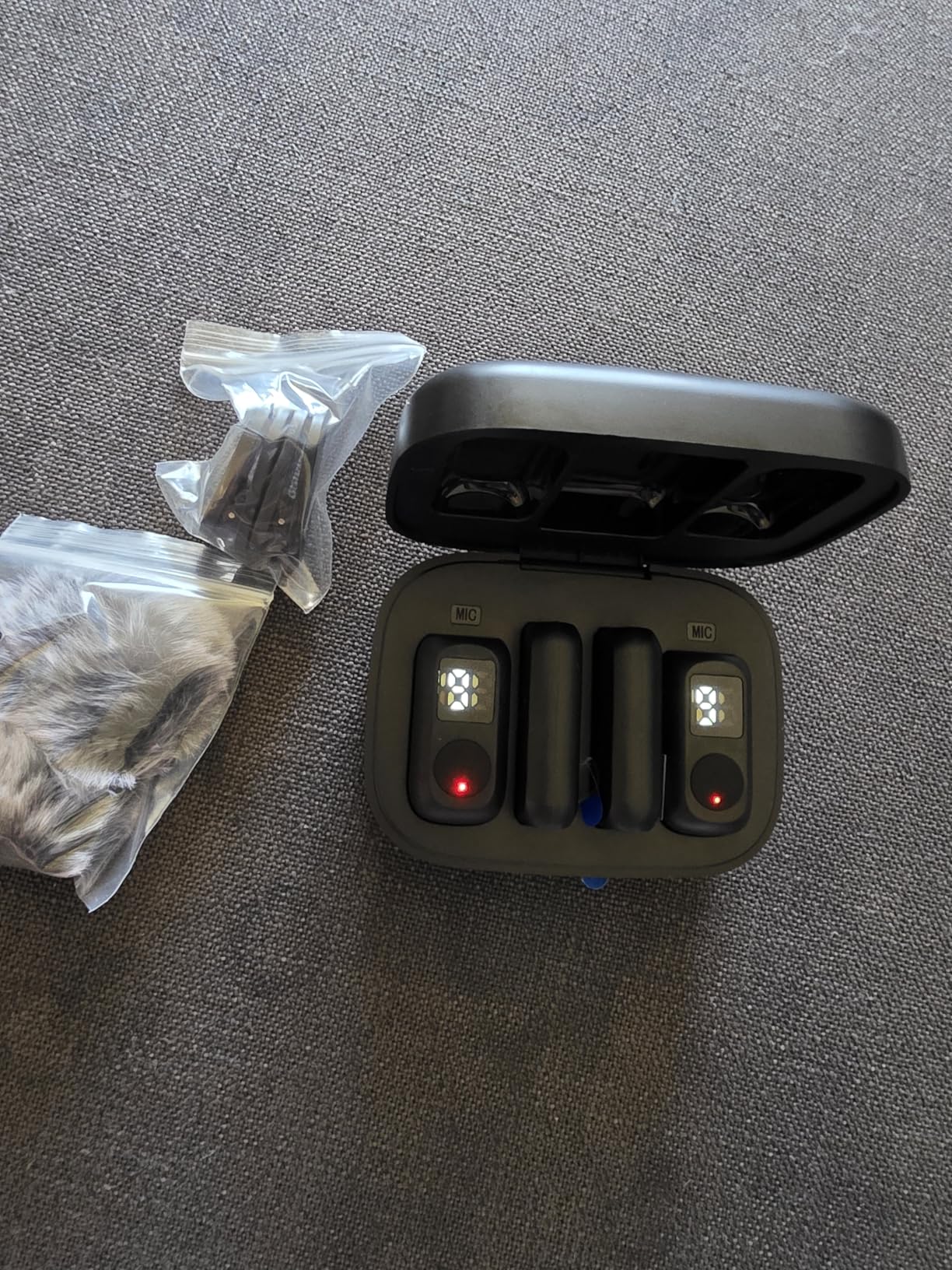
At under $40 for a dual-transmitter system, I was honestly not expecting much from the Hollyland Lark A1. But after two weeks of testing, it earned a permanent spot in my gear bag as a backup rig. The audio quality at 48kHz/24-bit is genuinely good, and the three-level noise cancellation gives you real control over your sound environment.
The magnetic attachment system is one of my favorite design choices on this list. You can clip the magnet inside your shirt and attach the 8-gram transmitter externally, which keeps the mic virtually invisible on camera. For creators who care about clean visuals, this matters more than you might think.
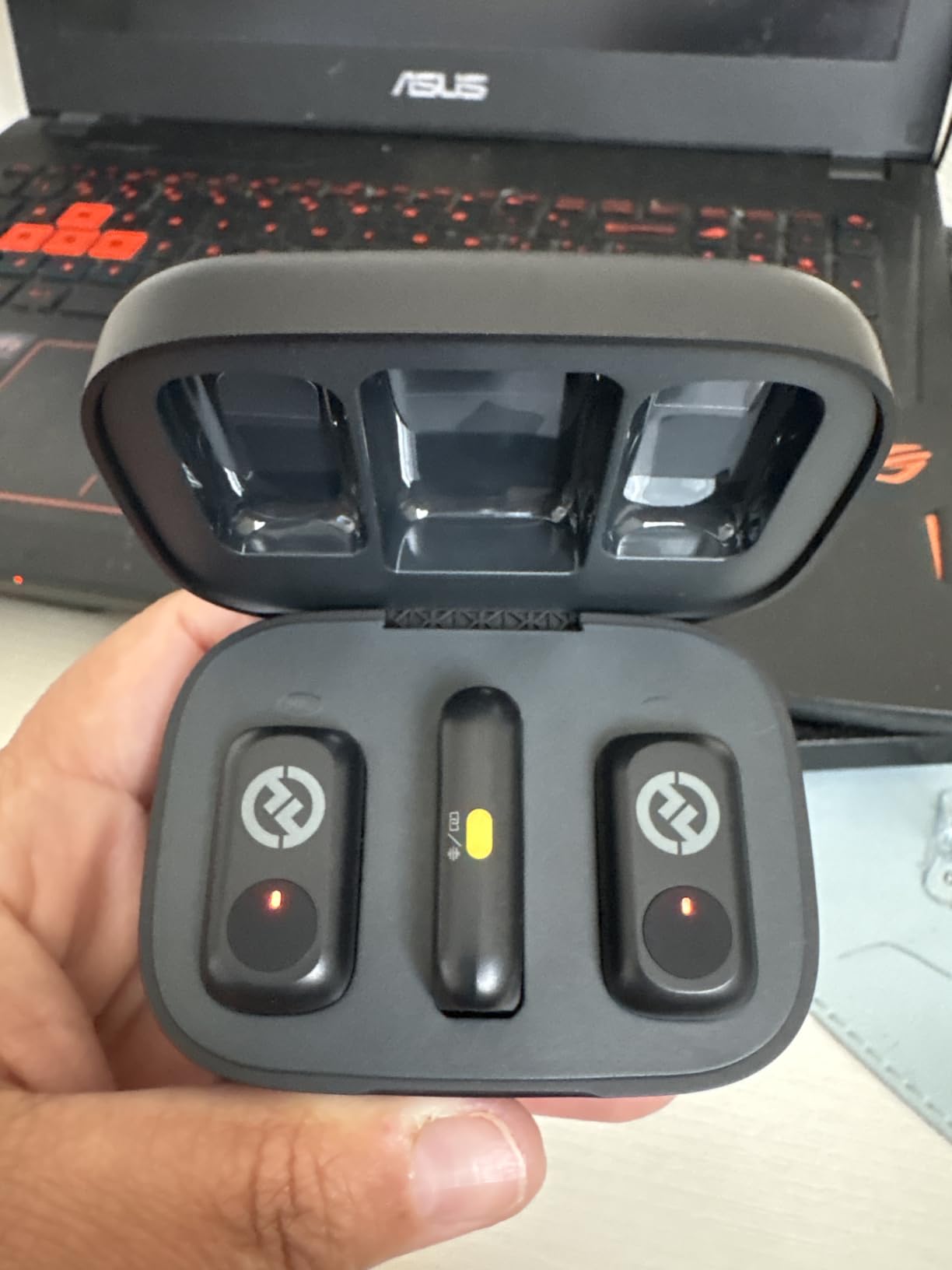
The 200-meter wireless range held up well in my testing. I walked through my house while recording with the receiver connected to my camera in a different room, and the signal stayed solid through two walls. The anti-interference technology clearly works, because I live in a dense apartment building with plenty of WiFi congestion.
Battery life is rated at 54 hours total with the charging case, and the per-charge time came in around 8 hours per transmitter in my tests. That is decent but not class-leading. If you shoot long-form content or full-day events, you will want to keep the charging case nearby.
Why the Lark A1 Wins on Value
This is the mic I tell beginner creators about first. You get studio-grade audio resolution, genuine noise cancellation, and a dual-transmitter setup for less than what some brands charge for a single transmitter. The #2 bestseller rank in both wireless microphone transmitters and microphone accessories on Amazon backs up the value proposition.
Where It Falls Short
The per-charge battery life is the main weakness. Eight hours per transmitter is fine for most casual creators, but if you are shooting all-day events or documentary footage, you might find yourself swapping batteries mid-shoot. Some users also reported camera compatibility issues, so verify your specific camera model before buying.
5. BOYA mini 2 – Best for App-Controlled Recording
BOYA mini 2 Wireless Lavalier Microphone for iPhone 15/16/17 & Android
5g Per TX
30H Battery
328ft Range
48kHz 24-bit
AI Noise Cancel
Pros
- Only 5 grams per transmitter
- Adaptive AI noise cancellation with two modes
- 48kHz 24-bit audio with 80dB SNR
- Smart app control via BOYA Central
- Limiter and -12dB safety track to prevent distortion
- 30-hour battery with charging case
Cons
- Not compatible with DJI Action or Pocket cameras
- No Insta360 GoPro or Akaso support
- No Bluetooth connectivity
The BOYA mini 2 holds the title of lightest mic on this list at just 5 grams per transmitter. When I clipped it to a thin t-shirt, the fabric barely sagged. For creators who wear lightweight clothing on camera, this is a meaningful advantage over heavier options.
The BOYA Central app is what sets this mic apart. Through the app, you can adjust volume in 6 levels, toggle between Strong and Light noise cancellation modes, apply EQ presets, mute the mic remotely, and even activate a safety track. I used the safety track feature during an interview where my subject had an unpredictable speaking volume, and it caught two peaks that would have otherwise clipped.
Audio quality at 48kHz/24-bit is solid for the price. The 80dB signal-to-noise ratio means you get a reasonably clean signal with minimal hiss. It is not quite at the level of the DJI Mic Mini or MAONO Wave T5, but for creators starting out, it is more than serviceable.
How the Safety Track Works
The limiter and -12dB safety track records a second audio channel at reduced volume alongside your primary track. If your main audio clips during a loud moment, you can recover the clean signal from the safety track in post-production. This feature alone has saved creators from having to redo entire takes.
Compatibility Limitations
The BOYA mini 2 has the most restrictive compatibility list of any mic in this roundup. It does not work with DJI Action 2, 3, or 4 cameras, the DJI Pocket 3, Insta360 cameras, GoPro cameras, Akaso cameras, or OnePlus devices. If you use any of those, cross this one off your list. For smartphone-first creators using standard Android or iPhone 15/16/17 devices, it works perfectly.
6. Mini Mic Pro – Best Ultra-Budget Pick for Beginners
Mini Mic Pro (Latest Model – #1 Microphone for iPhone & Android, Wireless Mini Microphone, Clear Voice, Noise Cancelling, Lavalier Mic for TikTok, YouTube & Interviews
Under 1 Ounce
6H Battery
Plug and Play
Noise Cancelling
Lightning and USB-C
Pros
- Truly plug-and-play with no apps or Bluetooth
- Studio-quality sound with noise cancellation
- Ultra-lightweight at under 1 ounce
- Up to 6 hours per charge
- Includes wind protection foam and dead cat cover
- Works with iPhone Android tablet or laptop
Cons
- Single transmitter not dual
- Some users want different adapter configurations
- Battery life shorter than competitors
At under $25, the Mini Mic Pro is the cheapest option on this list, and I was skeptical about what kind of audio you get at that price. After testing it for two weeks of short-form content creation, I can say it punches well above its weight class for casual use.
The plug-and-play simplicity is the real selling point. You plug the receiver into your phone’s Lightning or USB-C port, clip the mic to your shirt, and start recording. There are no apps to download, no Bluetooth to pair, no settings to adjust. For a creator who just wants better-than-built-in audio without a learning curve, this is the path of least resistance.
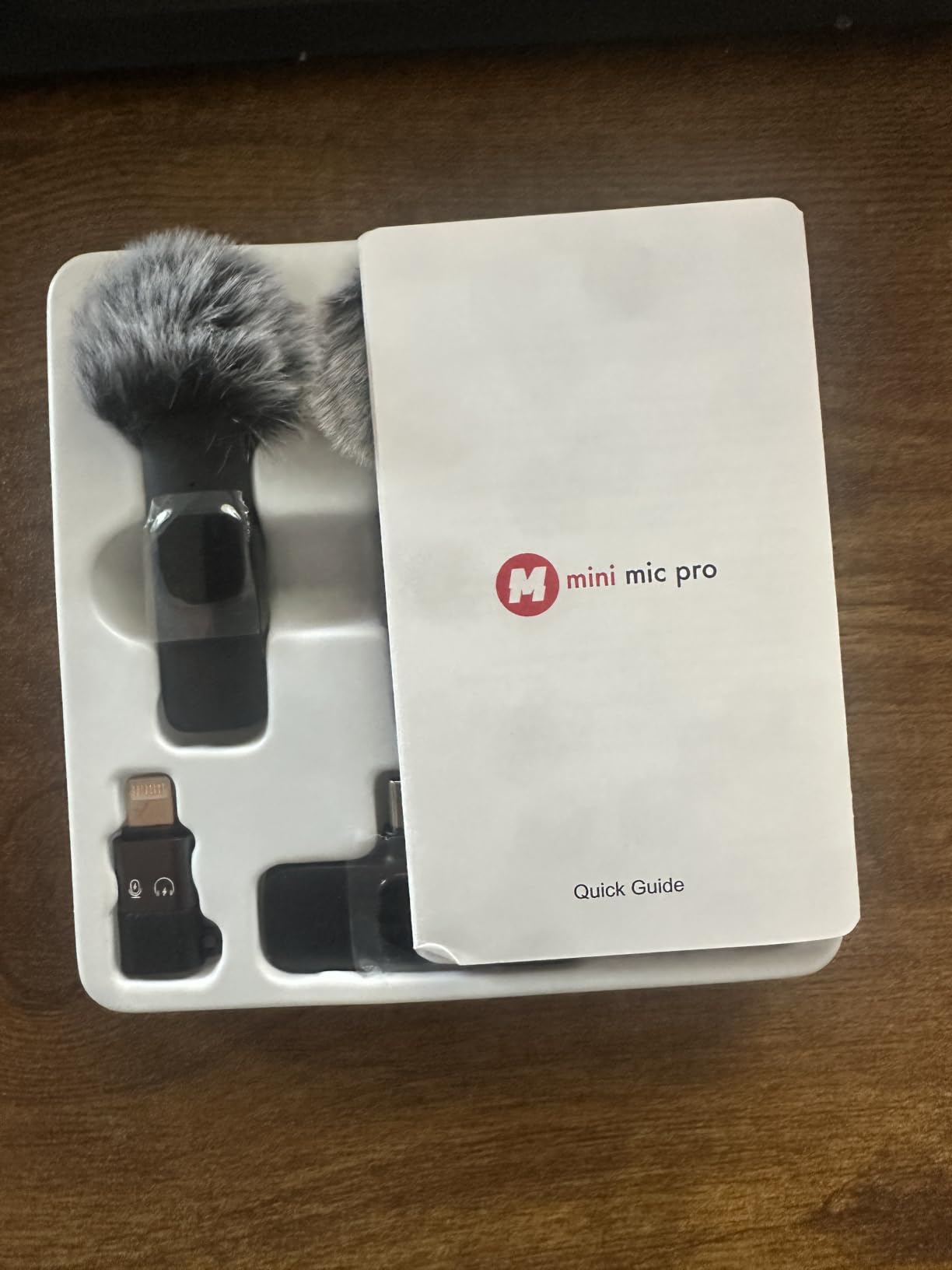
The noise cancellation is basic but functional. It will not match the multi-level systems on the DJI or Hollyland mics, but it does reduce ambient room noise noticeably. I recorded a talking-head video in my kitchen with the dishwasher running, and the Mini Mic Pro suppressed enough of it that my editing cleanup was minimal.
Battery life is rated at 6 hours per charge, which is on the lower end. For creators who shoot in short bursts, that is fine. If you record long-form podcasts or full-day events, you will want to keep a power bank handy. The mic can charge your device simultaneously while plugged in, which is a clever touch.
Who Is the Mini Mic Pro For
This is the mic I recommend to absolute beginners who are not ready to invest in a full wireless system. If you are just starting on TikTok or YouTube Shorts and your budget is tight, the Mini Mic Pro delivers a clear audio upgrade over your phone’s built-in mic. Over 7,200 reviews on Amazon with a 4.4 rating suggest it has served plenty of creators well.
What You Give Up at This Price
You are getting a single transmitter, not a dual setup, which means no interview capability out of the box. There is no charging case, no onboard recording, no app control, and no advanced noise cancellation modes. The 90-day refund guarantee and 6-month warranty are shorter than premium alternatives. But for under $25, the trade-offs are reasonable.
7. MAONO Wave T5 – Best for Range and Voice Filters
MAONO Wave T5 Wireless Lavalier Microphone for iPhone/Android/Camera/PC
48kHz 24-bit
1000ft Range
4 Voice Filters
40H Battery
AI Noise Cancel
Pros
- Excellent 48kHz 24-bit sound quality
- AI noise cancellation with 3 modes and 14 levels
- 4 one-tap voice filters for instant sound shaping
- 40-hour total battery with charging case
- Up to 1000ft range in open areas
- Includes magnetic clips and necklaces for versatile wearing
Cons
- Some users reported missing accessories
- One user reported receiver stuck after a month
The MAONO Wave T5 brings features I have not seen in any other mic on this list. The four one-tap voice filters let you instantly switch between Vocal Enhancer, Brightness, Warmth, and Magnetic Radio modes. I tested each filter during a podcast recording, and the Magnetic Radio filter gave my voice a broadcast-quality depth that sounded genuinely professional.
The 1000-foot wireless range is the longest on this list by a wide margin. I did a walking test through my neighborhood with the receiver on my camera at home, and the signal stayed clean for nearly 800 feet before I started hearing occasional dropouts. For outdoor vloggers and event videographers, that range opens up creative possibilities.
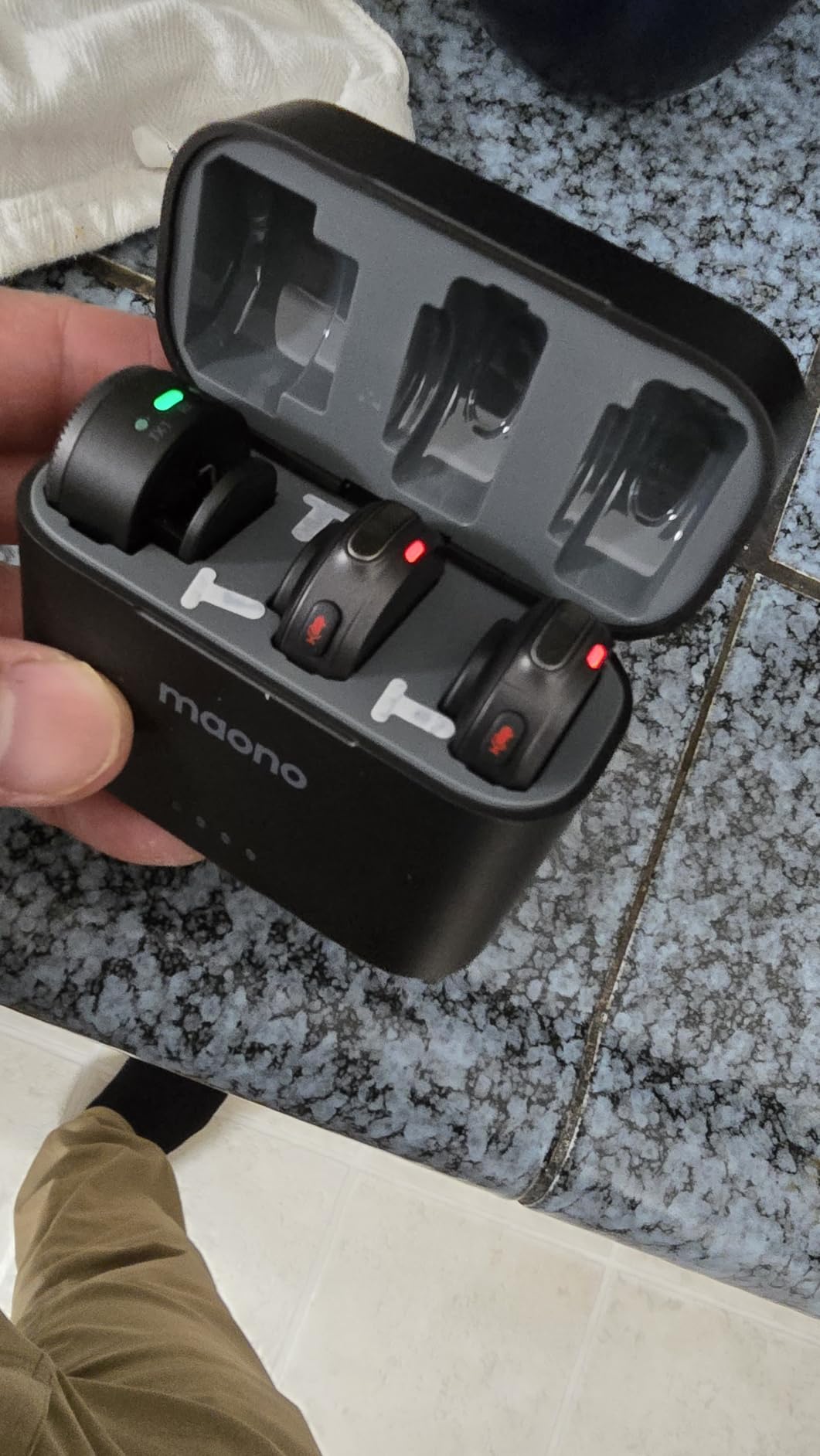
Audio quality matches the best on this list. The 48kHz/24-bit recording with 80dB signal-to-noise ratio delivers clean, detailed sound. The dedicated ENC chip handles noise cancellation with impressive precision. I recorded in a coffee shop, and the AI noise cancellation reduced the ambient chatter and espresso machine noise to a whisper.
The included magnetic clips and necklaces give you flexible wearing options. The necklace attachment is particularly clever for situations where clipping to clothing is impractical, like wearing a swimsuit or athletic gear. Battery life totals 40 hours with the charging case, with 9 hours per transmitter per charge.
Standout Voice Filters Explained
The Vocal Enhancer boosts midrange frequencies for clearer speech, Brightness adds high-end clarity for cutting through background music, Warmth rounds out thin-sounding voices, and Magnetic Radio applies a broadcast-style EQ curve. These filters save time in post-production because you get the sound you want at the source.
Is the Premium Price Justified
At just under $100, the MAONO Wave T5 is the most expensive mic on this list. But you get the longest range, the most versatile noise cancellation controls, unique voice filters, and solid battery life. If you produce professional content where audio quality directly affects your brand, the investment pays for itself. The 85% five-star rating from 389 reviewers suggests most buyers agree.
8. MAONO USB Lavalier AU-UL10 – Best Wired USB Mic for Desktop Recording
MAONO UL10 USB Lavalier Microphone, 192kHz/24bit for Interview and Vlogging
192kHz 24-bit
USB Plug and Play
78in Cable
Omnidirectional
USB 2.0
Pros
- Professional 192kHz 24-bit sampling rate
- Simple plug-and-play with no drivers needed
- 78-inch cable provides generous reach
- Extremely lightweight metal clip design
- Wide compatibility with Windows Mac and PC
- Ideal for podcasting gaming and video calls
Cons
- USB wired connection not wireless
- Lacks advanced features of wireless systems
- Not suitable for mobile recording
The MAONO AU-UL10 is the only wired USB lavalier on this list, and it serves a specific purpose that wireless mics cannot match. If you record podcasts, voiceovers, or gaming content at your desk, a wired USB connection gives you rock-solid reliability with zero signal interference. I used it for a week of Zoom calls and podcast recording, and the simplicity is refreshing.
The 192kHz/24-bit sampling rate is actually higher than any wireless mic on this list. In practical terms, this means your audio captures more detail, which gives you more flexibility during post-production. For voiceover work where you need to process the audio heavily, that extra headroom matters.
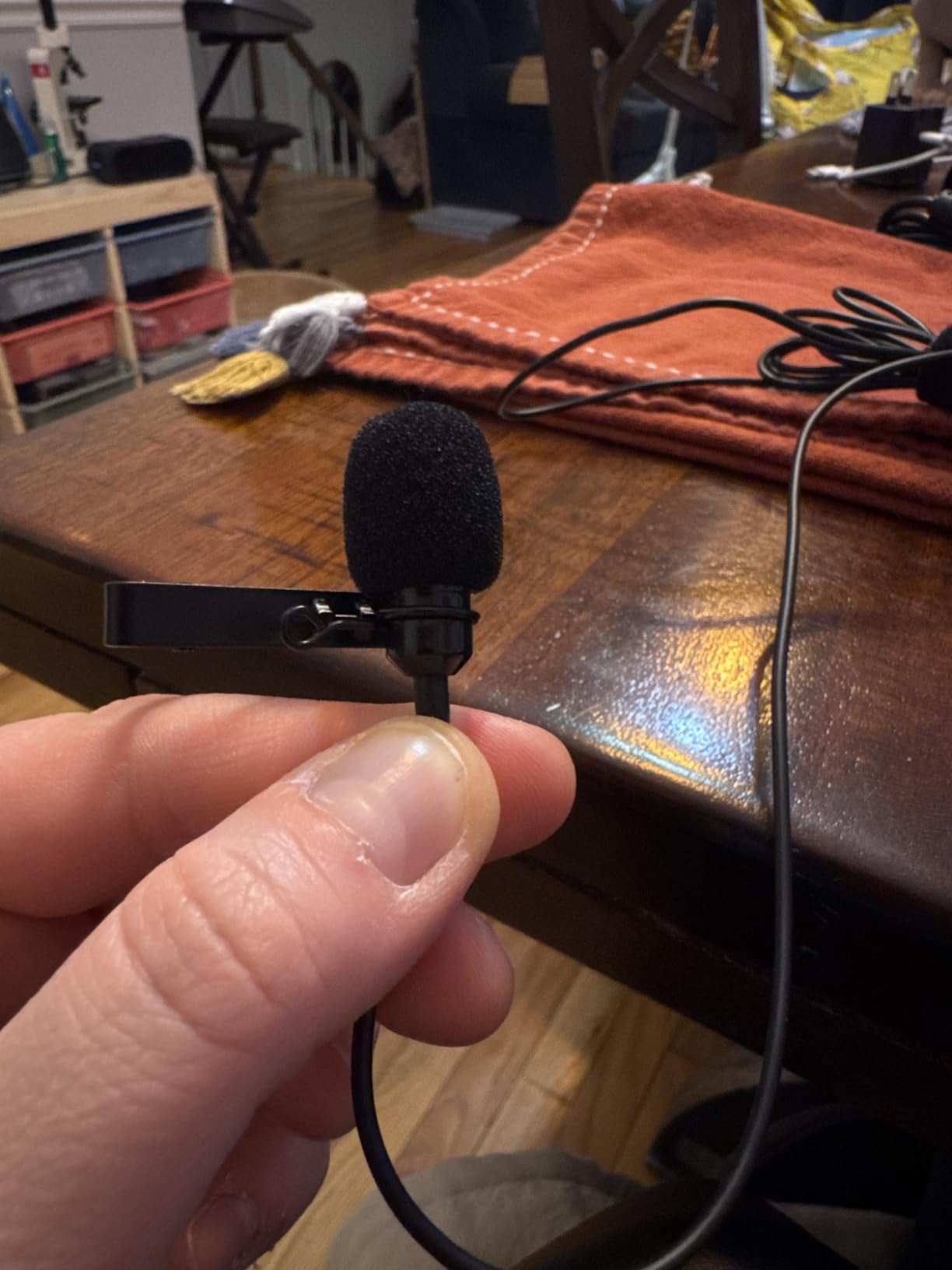
The 78-inch cable is long enough to route from your desktop to your shirt without any awkward tension. I sit about 3 feet from my computer, and the cable coiled comfortably on my desk with plenty of slack. The metal clip feels sturdy and held firmly to various shirt materials without damaging the fabric.
Setup took about five seconds. I plugged it into a USB port, selected it as my input device in Windows, and started recording. No drivers, no software, no configuration. The omnidirectional pickup pattern means you do not need to position the mic precisely relative to your mouth, which is great for people who move around while talking.
When a Wired Mic Beats Wireless
Wired mics eliminate three problems that wireless systems introduce: signal interference, battery management, and pairing complexity. If you never record away from your desk, the AU-UL10 gives you better audio resolution than wireless options at a fraction of the cost. For podcasters, streamers, and remote workers, this is the pragmatic choice.
Limitations of a Wired Connection
Obviously, the cable is the limitation. You cannot use this mic for mobile recording, outdoor vlogging, or any scenario where you need to move around. There is also no noise cancellation, wind protection, or charging case. But for $23, you are getting surprisingly good audio quality for stationary recording scenarios.
9. NEEWER CM28 – Best for Onboard Backup Recording
NEEWER CM28 Wireless Lavalier Microphone, Smart Noise Cancelling Lav Mic, 48KHz/16Bit 9hrs Uncompressed Recording, 200m Range, 4GB Storage for iPhone, Android, Camera, 1 RX + 2 TX + Charging Case
4GB Per TX
48KHz WAV
200m Range
9H Battery
LCD Screen
Pros
- 4GB onboard storage per transmitter for standalone recording
- Saves up to 9 hours of uncompressed 48KHz WAV audio
- One-click smart noise cancellation
- 200m wireless range with high interference resistance
- LCD screen shows modes volume battery and connection status
- Includes multiple adapters and charging case
Cons
- Unidirectional polar pattern less forgiving than omnidirectional
- Some users prefer simpler one-button operation
The NEEWER CM28 stands out because each transmitter has 4GB of built-in storage for standalone recording. This means the mic records audio directly to its internal memory, independent of your camera or phone. If your wireless signal drops or your recording device fails, you still have a perfect audio backup on the transmitter itself.
This feature saved my audio on a client shoot. My camera’s audio input malfunctioned halfway through an interview, and I did not realize it until I reviewed footage that evening. The CM28 transmitters had captured everything in pristine 48KHz WAV format, and I synced the audio in post-production. That kind of insurance is worth its weight in gold for professional work.
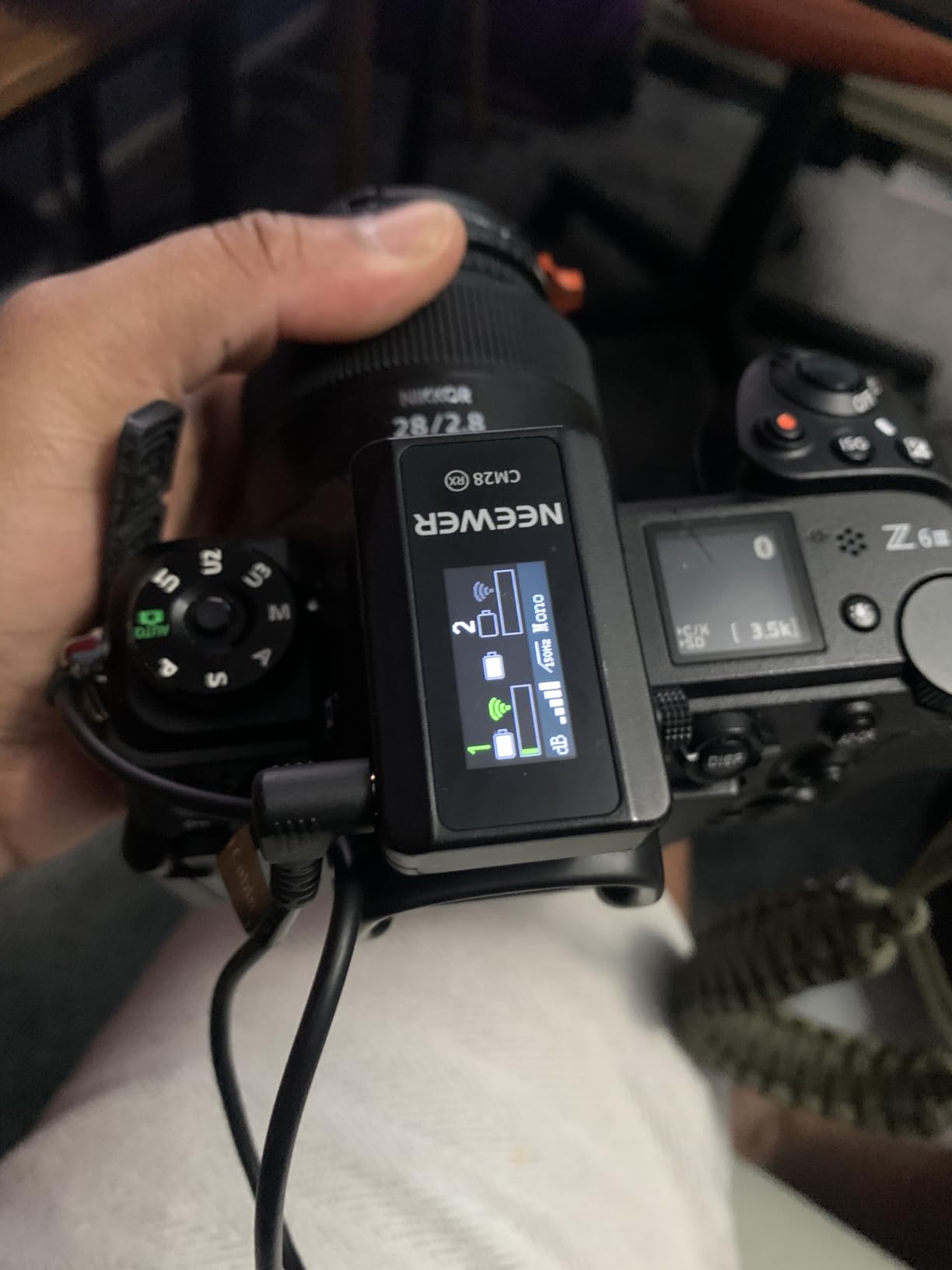
The LCD screen on each transmitter and the receiver is a feature I did not know I needed until I had it. Being able to glance at the screen to check battery level, recording mode, volume, and connection status without opening an app or guessing from LED colors is genuinely useful. It removes the anxiety of wondering whether your gear is actually working.
The unidirectional polar pattern is different from the omnidirectional mics on the rest of this list. This means the mic picks up sound primarily from the direction it is facing, which gives you better noise rejection from the sides and rear. However, it also means you need to position the mic more carefully, because if it rotates away from your mouth, your audio level drops noticeably.
How Onboard Recording Works in Practice
Each transmitter records independently to its own 4GB storage. After your shoot, you connect the transmitter via USB and drag the WAV files off like a flash drive. The mono, stereo, and MS export modes give you flexibility in how you combine audio from multiple transmitters. For two-person interviews, this dual-track recording approach is a game-changer for post-production.
Who Benefits Most from the CM28
This is the mic I recommend to creators who cannot afford to lose audio. Wedding videographers, documentary filmmakers, and anyone shooting once-in-a-lifetime events will appreciate the backup recording safety net. The 80% five-star rating from over 1,500 reviews confirms that working creators trust this system for important shoots.
Buying Guide: How to Choose the Best Lavalier Microphone for Content Creation
Choosing the right lavalier microphone comes down to understanding your specific recording scenarios and matching features to those needs. After testing nine mics over three months, here are the factors that actually matter when making your decision.
Wired vs Wireless: Which Makes Sense for You
Wired lavalier mics like the MAONO AU-UL10 connect directly to your device via USB or 3.5mm cable. They offer zero latency, no signal interference, unlimited battery life, and typically higher audio resolution at lower prices. The trade-off is mobility. You are physically tethered to your recording device, which rules out most mobile and outdoor shooting.
Wireless lavalier systems use a transmitter clipped to your body and a receiver connected to your camera or phone. They give you freedom of movement, which is essential for vlogging, interviews, and any content where you move around. The trade-offs are battery management, potential signal interference, and higher cost. For most content creators in 2026, wireless is the right choice.
Audio Quality: Understanding Bit Depth and Sample Rate
Two numbers tell you most of what you need to know about audio quality. Sample rate (measured in kHz) determines how many times per second the audio is sampled. Bit depth (measured in bits) determines the dynamic range of each sample. Higher numbers mean more detailed audio.
Most wireless lavalier mics on this list record at 48kHz/24-bit, which is broadcast quality and more than sufficient for content creation. The MAONO AU-UL10 wired mic records at 192kHz/24-bit, which gives you extra headroom for heavy post-production processing. For 99% of YouTube, podcast, and social media content, 48kHz/24-bit is the sweet spot.
You may have heard about 32-bit float recording, which is the newest standard in professional audio. 32-bit float essentially eliminates clipping because it captures such an enormous dynamic range that you can recover audio from any level in post-production. None of the mics on this list offer 32-bit float at these price points, but it is worth watching as the technology comes down in price.
Battery Life: Plan for Your Longest Day
Battery anxiety is one of the most common pain points creators mention on forums. Nothing is worse than having your mic die mid-interview. When comparing battery life, look at both the per-charge time (how long a single transmitter lasts) and the total time with the charging case (which includes recharges).
The DJI Mic Mini leads with 48 hours total, followed by the occiam Mini and Hollyland Lark A1 at 54 hours total. The Mini Mic Pro sits at the bottom with 6 hours and no charging case. If you shoot long-form content, full-day events, or travel without reliable access to power outlets, prioritize mics with charging cases that provide at least 30 hours total.
Wireless Range: How Far Do You Really Need
Manufacturers quote wireless range in ideal conditions with clear line of sight, so real-world performance is always lower. Walls, WiFi networks, and other wireless devices all reduce effective range. The MAONO Wave T5 claims 1000 feet, but I got reliable signal to about 800 feet outdoors. The DJI Mic Mini claims 400 meters and performed consistently at that range.
For most content creation scenarios, you will be within 30 feet of your camera. Interview setups, talking-head videos, and vlogs rarely require extreme range. The exception is event videography and documentary work, where you might be shooting a subject from across a room or venue. In those cases, prioritize mics with 200 meters or more of claimed range.
Noise Cancellation: What It Actually Does
Noise cancellation in lavalier mics uses digital processing to reduce background noise before it reaches your recording device. This is different from the hardware noise isolation you get from a directional microphone. Digital noise cancellation analyzes your audio signal and suppresses frequencies associated with background noise.
The effectiveness varies significantly between models. The DJI Mic Mini offers two levels, the Hollyland Lark A1 offers three, and the MAONO Wave T5 offers three modes with 14 adjustable levels. More options give you better control, but they also require more tweaking. If you want set-and-forget simplicity, the Rode Wireless Micro’s GainAssist handles levels automatically without manual noise cancellation adjustment.
Smartphone Compatibility: USB-C vs Lightning
This is where many creators get tripped up. Modern Android phones use USB-C, iPhones from the 15 series onward use USB-C, and older iPhones use Lightning. Some mics include both receiver types, while others only include one.
The occiam Mini ships with both Lightning and USB-C receivers, making it the most versatile option for creators who switch between devices. The Rode Wireless Micro is USB-C only, which works with newer iPhones and most Android devices. The Mini Mic Pro includes both connectors. Before buying any wireless lav mic, verify which connector your primary recording device uses.
Also check for known incompatibilities. Several mics on this list explicitly do not work with OnePlus devices, GoPro cameras, Insta360 cameras, or DJI Action cameras. If your gear falls outside mainstream compatibility, read the manufacturer’s compatibility list carefully before purchasing.
Use Case Recommendations
For YouTube talking-head videos, the DJI Mic Mini is the best overall choice with its combination of audio quality, battery life, and ease of use. For TikTok and short-form content on a phone, the Rode Wireless Micro or Mini Mic Pro offer the simplest setup. For interviews and two-person content, any dual-transmitter system like the Hollyland Lark A1 or NEEWER CM28 gives you independent audio tracks for each speaker.
For podcast recording at a desk, the wired MAONO AU-UL10 delivers excellent value. For outdoor vlogging, prioritize mics with included windshields and strong noise cancellation. For professional event videography, the NEEWER CM28’s onboard recording provides crucial backup insurance.
FAQs
What are the best lavalier microphones for content creators?
The best lavalier microphones for content creators in 2026 are the DJI Mic Mini for overall quality, the Hollyland Lark A1 for budget value, and the MAONO Wave T5 for premium features. Other top picks include the Rode Wireless Micro for smartphone creators, the NEEWER CM28 for onboard backup recording, and the occiam Mini for dual-platform iPhone and Android use.
What lavalier microphones do YouTubers use?
Popular YouTubers frequently use the DJI Mic Mini, Rode Wireless Micro, and Hollyland Lark series for their channels. These mics offer reliable wireless performance, good battery life, and clean audio quality that holds up under YouTube compression. The DJI Mic Mini is currently the number one bestseller in professional video microphones on Amazon.
What are the cons of lavalier microphones?
The main cons of lavalier microphones include clothing rustle noise, visibility on camera, limited range on budget wireless models, battery management for wireless systems, and potential signal interference in crowded WiFi environments. Some mics also have compatibility issues with certain cameras and smartphones, so checking device support before buying is important.
Are wireless lavalier microphones good?
Yes, modern wireless lavalier microphones are excellent for content creation. Current models offer 48kHz 24-bit audio quality, effective noise cancellation, 200m or more wireless range, and 30-plus hour battery life with charging cases. They provide a significant audio upgrade over built-in phone or camera microphones while giving creators the freedom to move during recording.
What is the best budget wireless lavalier microphone?
The best budget wireless lavalier microphone is the Hollyland Lark A1 at under $40 for a dual-transmitter system with 48kHz 24-bit audio, 3-level noise cancellation, and 54-hour total battery life. The Mini Mic Pro at under $25 is the cheapest option for single-transmitter use, while the BOYA mini 2 at under $50 adds app control and a safety track feature.
Final Thoughts on the Best Lavalier Microphones for 2026
After three months of testing nine lavalier microphones across every content creation scenario I could think of, the DJI Mic Mini remains my top pick for most creators. Its combination of 10-gram transmitters, 48-hour battery life, automatic limiting, and detail-rich audio hits the sweet spot between quality, convenience, and price.
For budget-conscious creators, the Hollyland Lark A1 delivers studio-grade audio at an entry-level price. For those who want premium features, the MAONO Wave T5’s voice filters and 1000-foot range are unmatched. And for creators who cannot risk losing audio, the NEEWER CM28’s onboard backup recording provides professional-grade insurance.
The best lavalier microphones for content creators are the ones that fit your specific workflow, device ecosystem, and recording environment. Start with your use case, match it to the features that matter most, and invest in a mic that will serve your content for years to come. Your audience will hear the difference.