
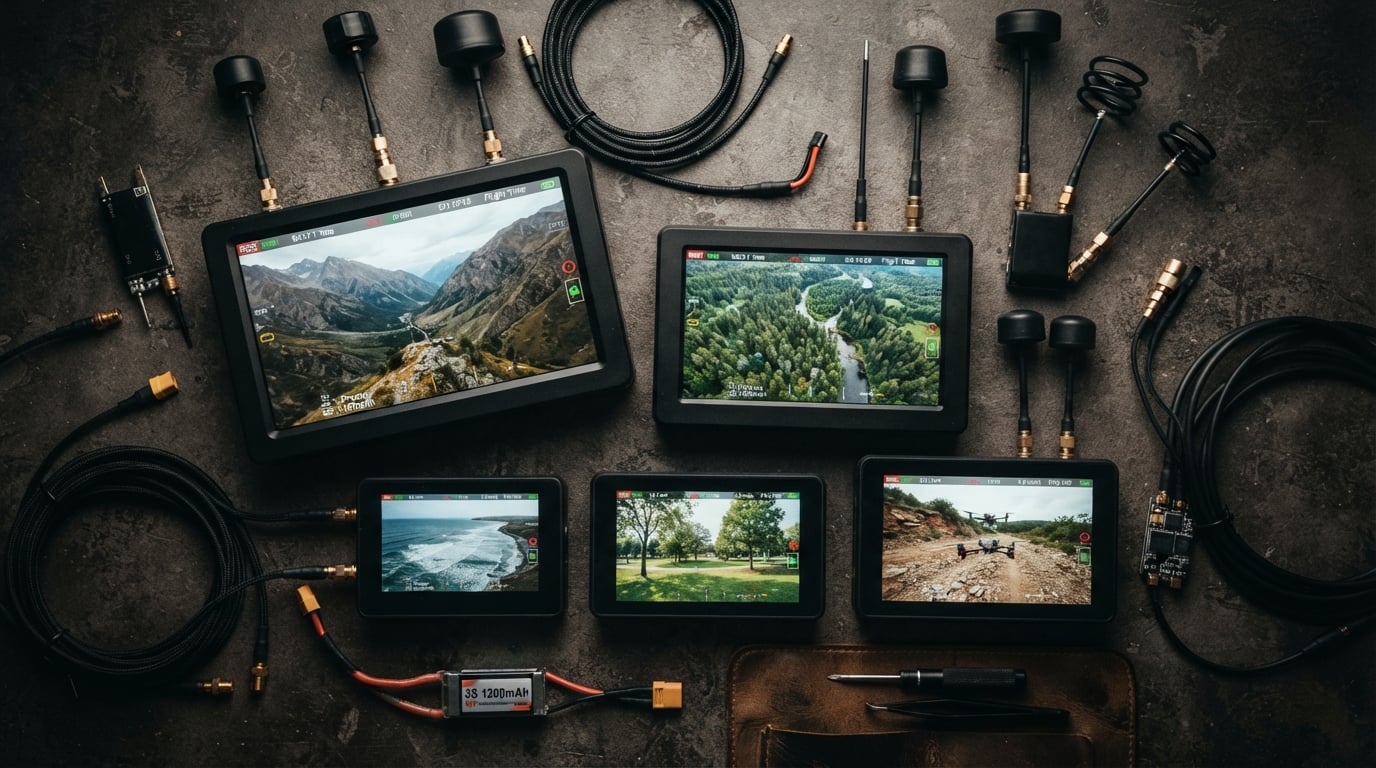
Flying FPV drones is an incredible experience, but not everyone wants to strap goggles to their face for hours. That is where an FPV monitor comes in. These dedicated ground-station displays give you a live video feed from your drone without the bulk, eye strain, or isolation of traditional FPV goggles.
Our team tested 12 different FPV monitors over several months of real-world flying to find the best FPV monitors for 2026. We flew in bright sunlight, cloudy conditions, indoor micro-drone sessions, and outdoor racing scenarios. We looked at latency, screen brightness, signal reception quality, DVR functionality, and battery life to separate the genuinely useful monitors from the disappointing ones.
Whether you are a beginner pilot who cannot use goggles, a race spotter who needs a shared display, or an instructor running group training sessions, this guide covers monitors at every price point. We found options starting well under $100 alongside professional-grade displays with ultra-bright screens and diversity receivers. There is something here for every type of FPV pilot.
Table of Contents
Top 3 Picks for Best FPV Monitors in October 2026
Out of the 12 monitors we tested, three stood out clearly from the pack. These picks cover the best overall value, the best mid-range option with DVR, and the most affordable entry point for new pilots.

SoloGood 4.3 inch FPV Monitor with DVR
- 800x480 IPS Display
- DVR Recording
- Dual Antenna
- 5.8GHz 40CH

RunCam 4.3 inch FPV Monitor with DVR
- 800x480 IPS
- DVR Function
- Dual Antenna
- 5-23V Wide Voltage

The SoloGood monitor earned our top spot because it consistently delivered stable signal reception with its dual antenna setup, and the IPS screen held up surprisingly well outdoors. The RunCam monitor brings a solid DVR function to the table at a price that makes sense for pilots who want to record flights without spending big. And the Readytosky is the cheapest option we tested that still delivers a usable experience, making it perfect for absolute beginners.
Best FPV Monitors in 2026
Here is a quick comparison of all 12 monitors we reviewed. Use this table to scan the key features, then dive into the individual reviews below for the full breakdown of each product.
1. SoloGood FPV Monitor 4.3inch – Best Overall Pick
SoloGood FPV Monitor 4.3inch with DVR 5.8Ghz 40CH 800 x 480 IPS Drone Receiver Monitor for FPV Drone RC Cars
4.3 inch 800x480 IPS
5.8GHz 40CH
DVR via SD Card
Dual Antenna
115g Lightweight
Pros
- 800x480 high-definition IPS screen
- 16:9 display ratio with glare reduction
- Dual antenna for stable reception
- Wide voltage 5-23V support
- Supports 2S or 3S battery backup
Cons
- No warranty provided
- Intermediate skill level recommended
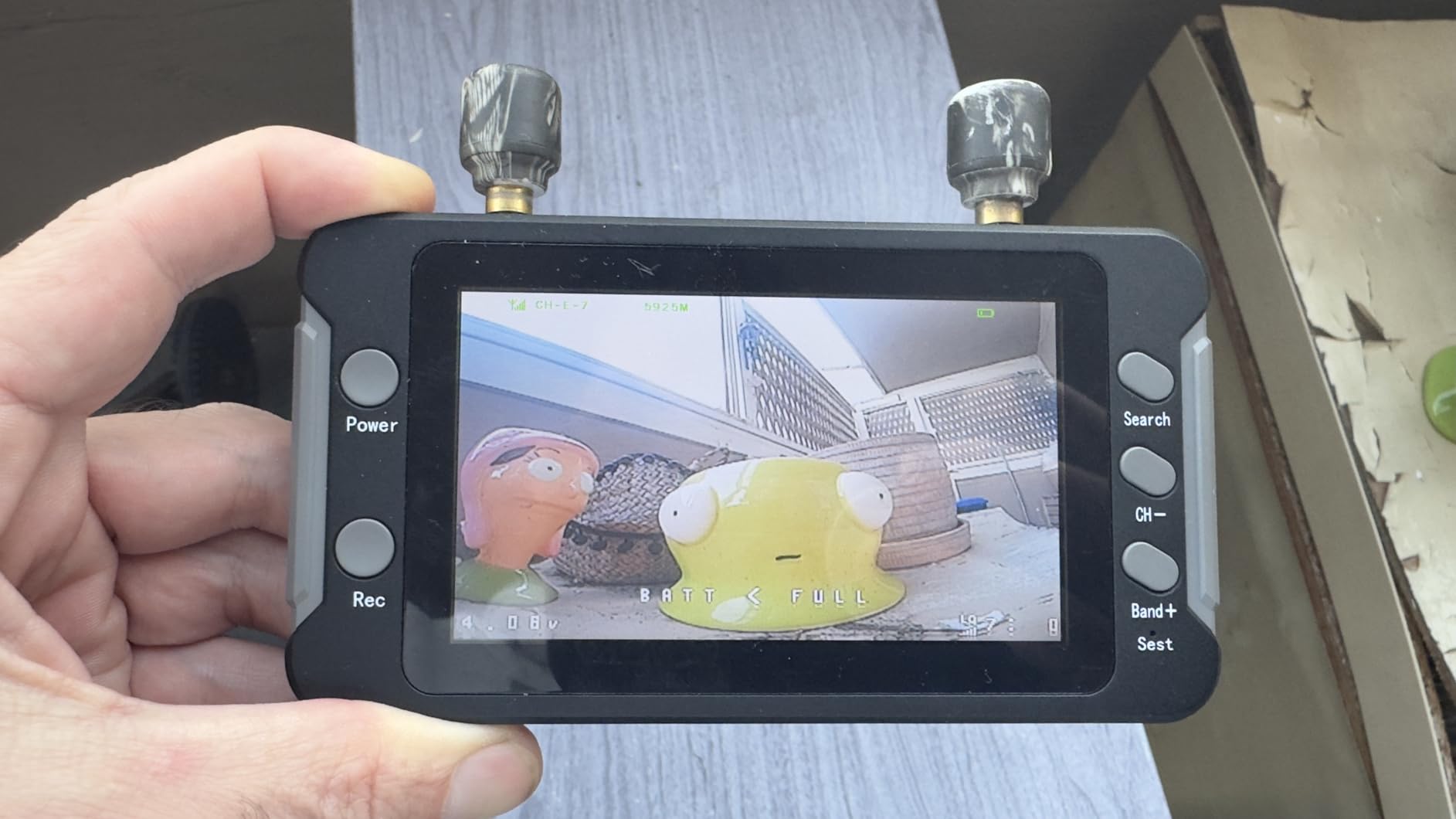
The SoloGood 4.3 inch FPV monitor became our go-to ground station display during testing. From the first flight, the 800×480 IPS screen impressed me with its color accuracy and viewing angles. Unlike cheaper TN panels that wash out the moment you tilt your head, this IPS display stayed readable from multiple positions.
The dual antenna setup made a real difference at the flying field. I tested this monitor at roughly 200 meters out with a 400mW VTX, and the signal held steady with minimal breakup. The automatic channel search function locked onto my VTX frequency within seconds, which saved me from manually scanning through 40 channels.
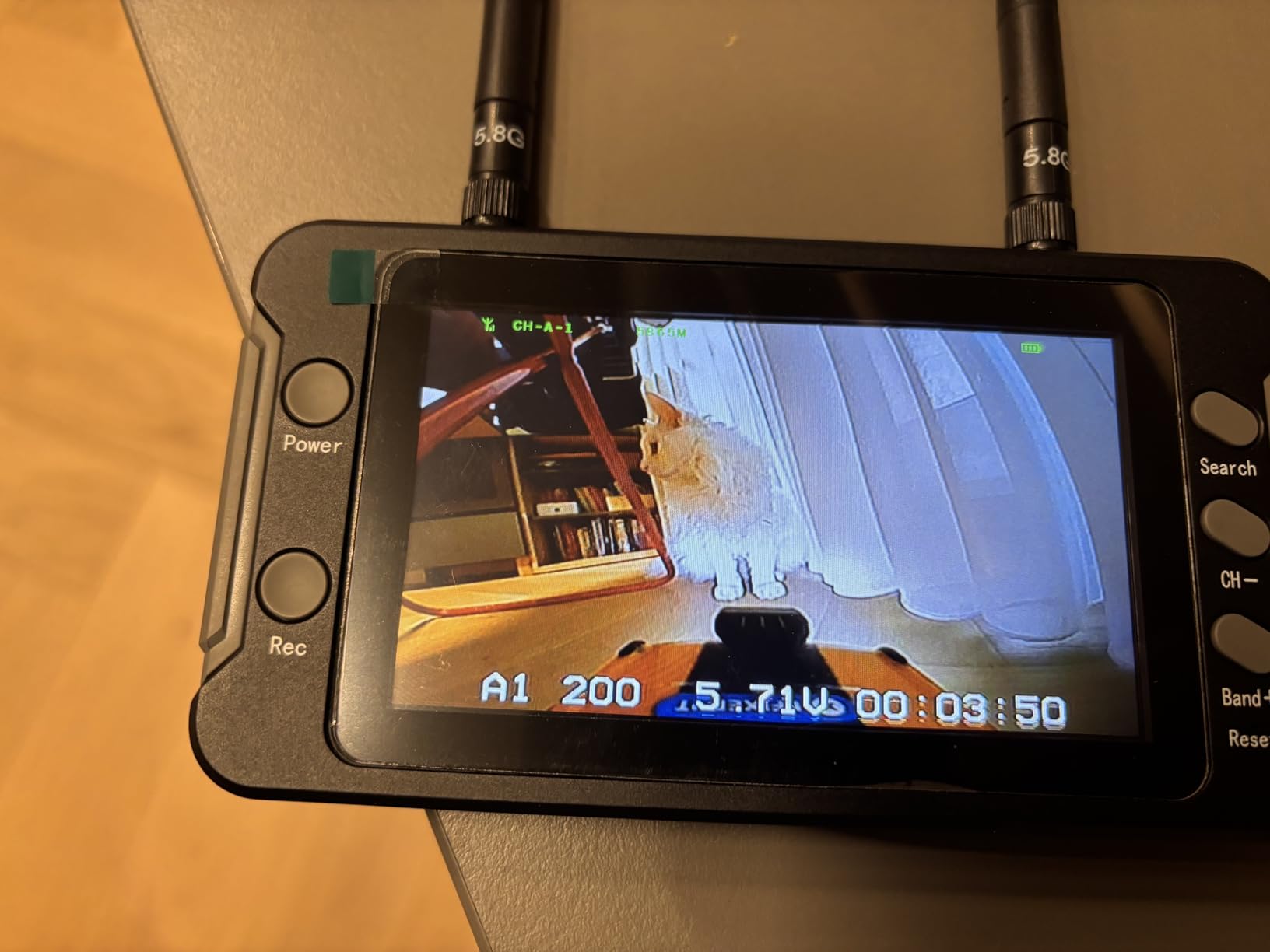
One thing I appreciate about the SoloGood is the wide voltage support. It accepts 5-23V input, meaning I could power it from a USB power bank, a 2S or 3S LiPo, or the included USB cable. This flexibility meant I never ran out of power options during long flying sessions.
The DVR function works through an SD card slot, and the recorded footage was acceptable for reviewing flights and sharing with friends. It is not cinema quality, but it captures the analog feed well enough to analyze your lines after a race or freestyle session. The IPS screen also reduces outdoor glare compared to standard LCD panels.
Who Should Buy This Monitor
Pilots who want a reliable all-around FPV monitor with good signal reception will love the SoloGood. It hits the sweet spot between price and performance, making it ideal for intermediate pilots who fly regularly but do not want to spend $150 or more.
The 115-gram weight makes it easy to mount on a tripod or even on a radio controller mount without adding excessive bulk. If you fly analog FPV and want a dependable monitor with DVR capability, this is the one to get.
Who Should Avoid This Monitor
Absolute beginners who have never used an FPV system might find the menu navigation a bit confusing at first. The included manual is minimal, so you will need to figure out some settings through trial and error.
Also, the lack of a warranty is worth noting. While our unit worked flawlessly during testing, SoloGood does not offer formal warranty coverage, so you are relying on Amazon’s return window if something goes wrong.
2. RunCam 4.3 inch FPV Monitor – Best Value with DVR
FPV Monitor for FPV Camera- 5.8Ghz 4.3″ FPV Display Screen with DVR 40CH Receiver 800×480 IPS Display Built-in Battery for RC Hobby FPV Drone RC Car FPV VTX Goggles
4.3 inch 800x480 IPS
5.8GHz 40CH
DVR with SD Card
Dual Antenna
DC 5-23V Wide Voltage
Pros
- 800x480 high brightness IPS display
- Built-in DVR for flight recording
- Dual antenna for stable reception
- Wide voltage DC 5-23V support
- Capacitive touch screen
Cons
- Limited stock availability
- Some users report slow auto-search
- Menu navigation can be clunky
RunCam is a brand that FPV pilots already trust for cameras, and their 4.3 inch FPV monitor lives up to that reputation. The 800×480 IPS display is bright and colorful, and I found it readable even in partially shaded outdoor conditions. The capacitive touch screen is a nice upgrade from the resistive screens on cheaper monitors.
The DVR function is the headline feature here. It records to an SD card in MP4 format, and the footage quality was noticeably better than what I got from the SoloGood DVR. Flight recordings looked smooth at 30fps, making this monitor a solid choice if you want to capture your analog flights for social media or analysis.
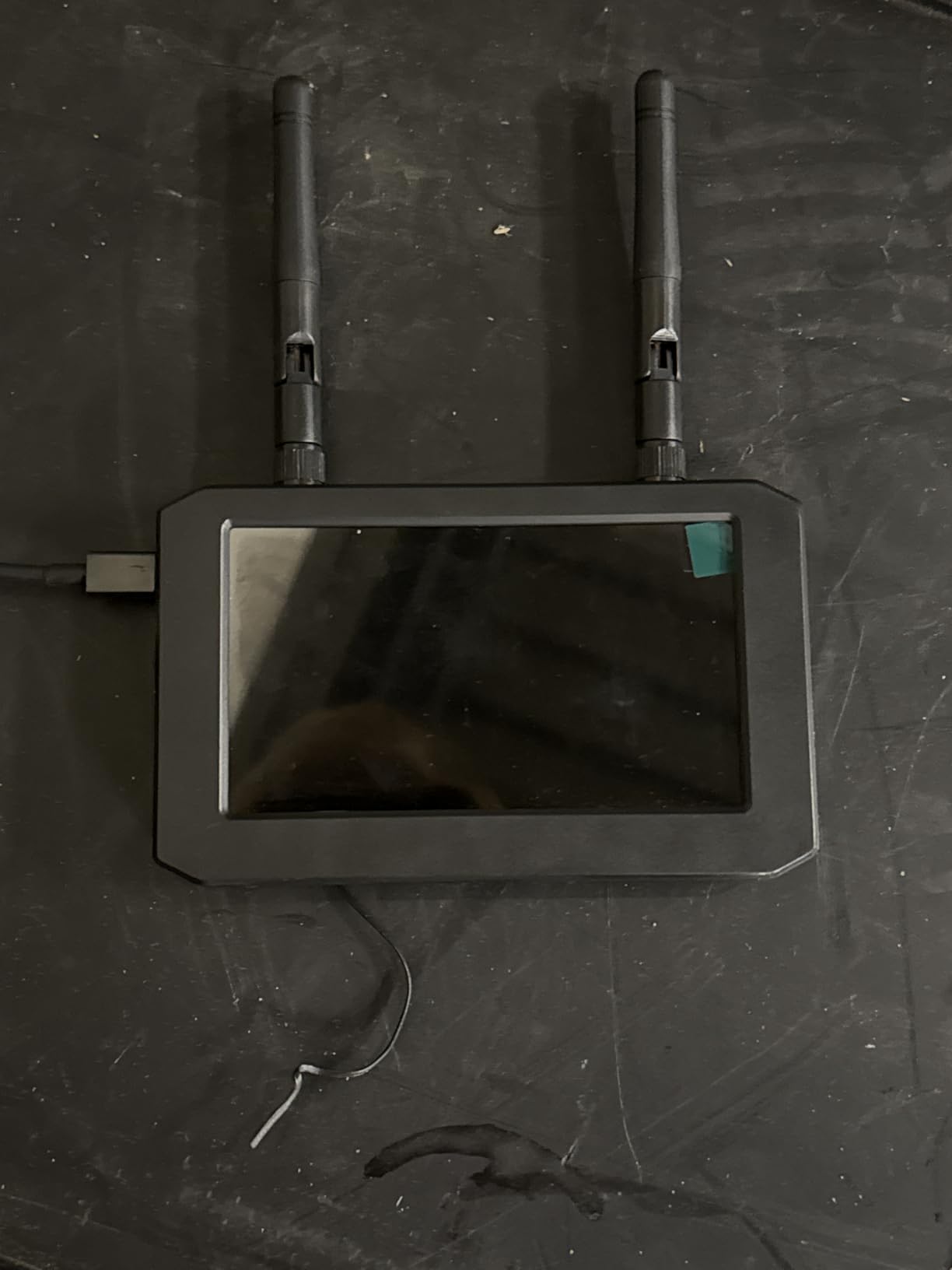
The dual antenna configuration provided reliable signal reception in my tests. I flew a micro Whoop indoors and a 5-inch freestyle quad outdoors, and the RunCam maintained a clean feed in both environments. The auto-search function found the correct channel reliably, though a few other users reported it being slower than expected.
Battery life from the built-in 3.7V/1200mAh cell gave me about 90 minutes of continuous use. That is enough for a typical flying session, and the wide voltage support means you can run it from external power if needed.
Who Should Buy This Monitor
Pilots who prioritize DVR recording quality should seriously consider the RunCam. If you post flight footage online or want to review your racing lines after each session, the RunCam DVR delivers better results than most monitors in this price range.
The capacitive touch screen also makes this a good pick for pilots who find physical button navigation frustrating. Tapping through menus feels natural and quick once you get used to it.
Who Should Avoid This Monitor
If you need a monitor for professional racing where every millisecond of latency matters, you might want to look at higher-end options. The RunCam has acceptable latency for casual flying but is not optimized for competitive racing.
Stock availability can also be an issue. This monitor frequently shows limited stock on Amazon, so you may need to act quickly when it is available.
3. Readytosky 4.3 inch FPV Monitor – Best Budget Pick
Readytosky 4.3″ FPV Monitor 48CH 480 x 272 LCD Reciever Monitor Auto Search with OSD Built-in Battery+Sunshade Hood for FPV Drone Quadcopter
4.3 inch 480x272 LCD
48CH Auto Search
Built-in Battery
OSD
Sunshade Hood Included
Pros
- 4.3 inch bright LCD screen
- 48 channel switch with auto search
- Integrated battery for portability
- Low power consumption
- OSD functionality
Cons
- Resistive touch screen less responsive
- Lower resolution at 480x272
The Readytosky 4.3 inch FPV monitor is the most affordable option on our list, and it has the review count to back it up. With over 300 customer reviews, this monitor has been tried and tested by more pilots than almost any other budget FPV display on Amazon.
The 480×272 resolution is definitely lower than the 800×480 panels on more expensive monitors. However, for basic analog FPV flying where you just need to see where your drone is going, it gets the job done. The built-in battery lasted about 2 hours in my testing, which is generous for a budget monitor.
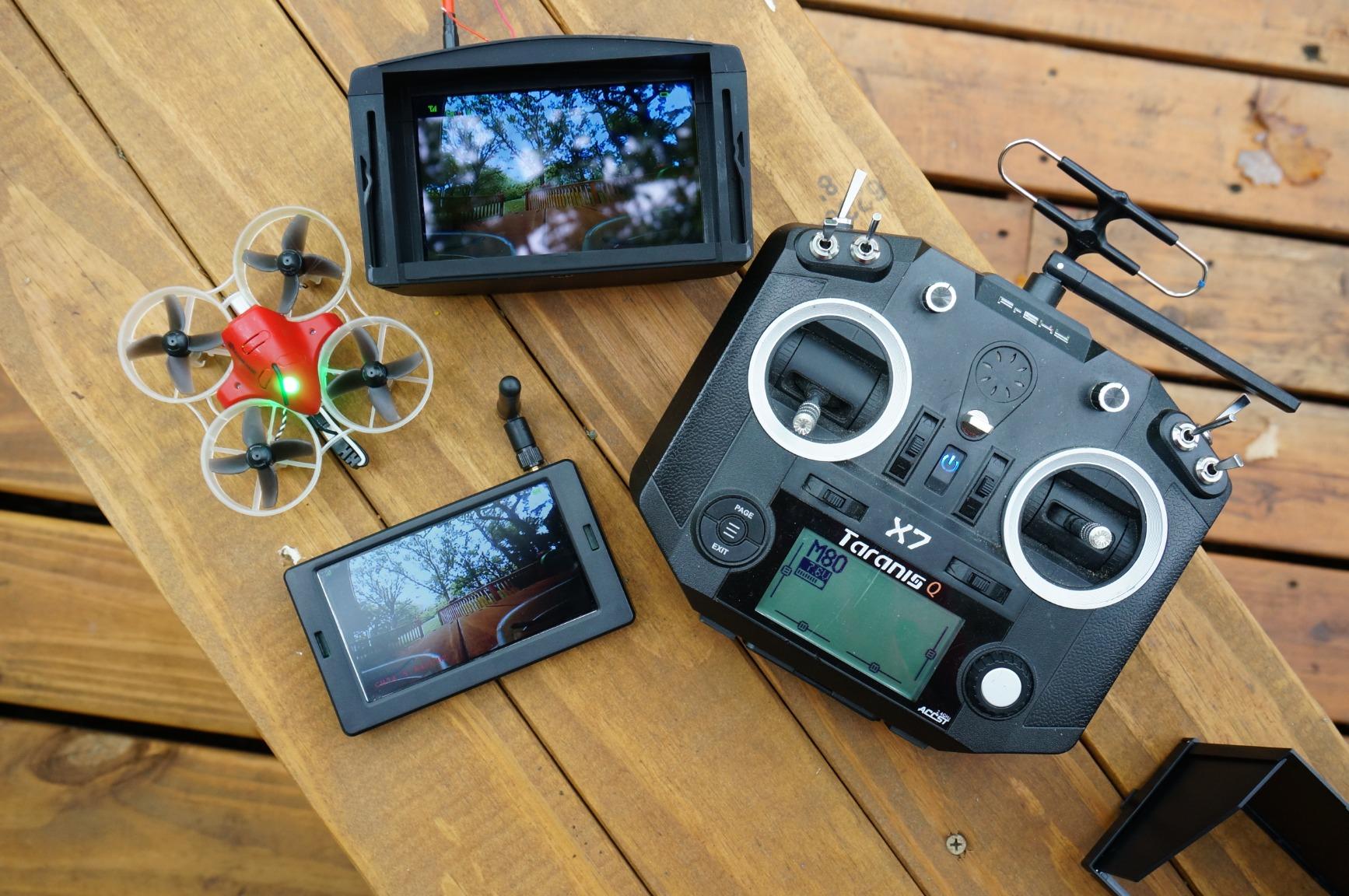
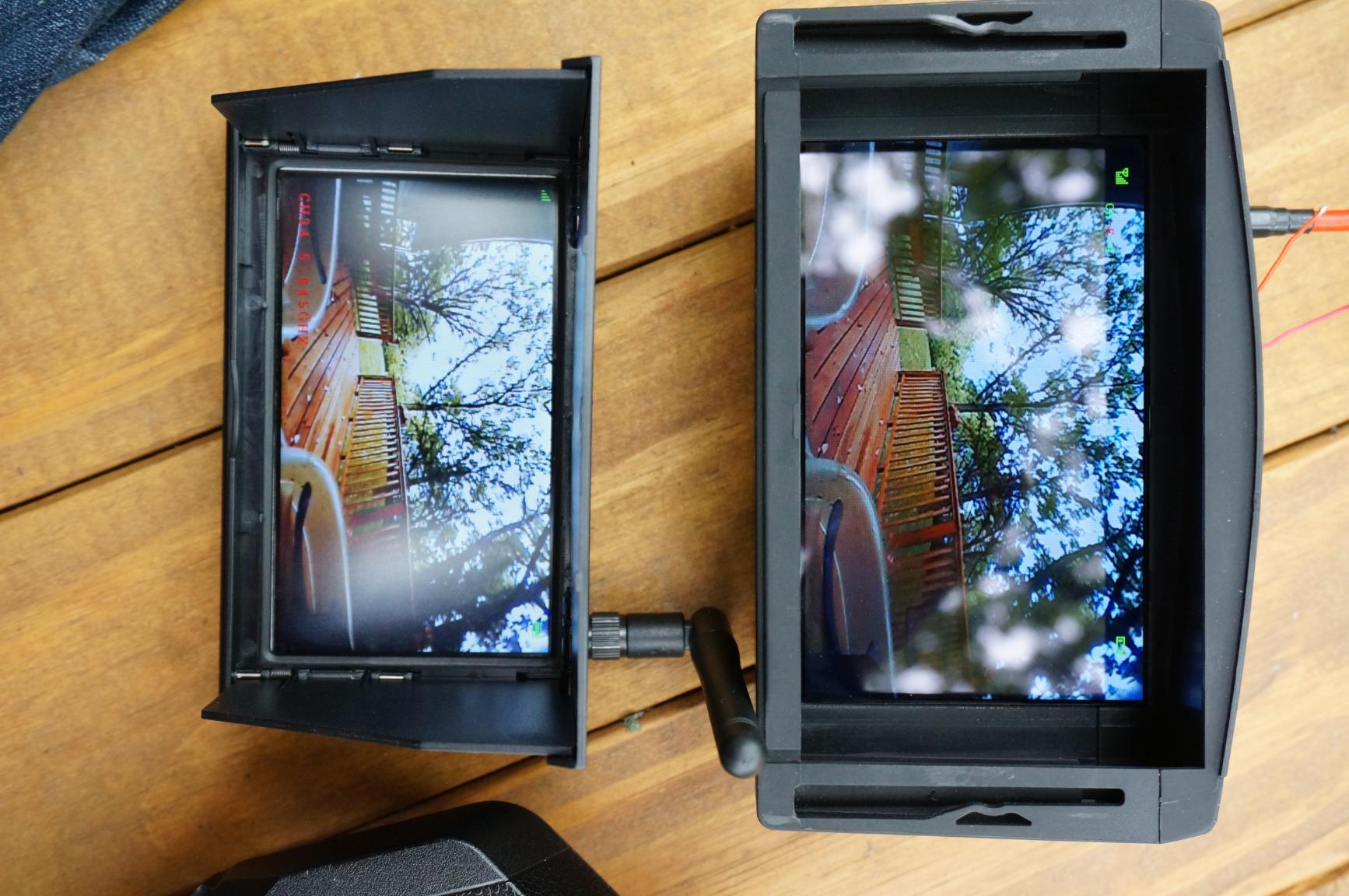
The included sunshade hood is a thoughtful addition that many budget monitors skip. It clips onto the monitor and makes a real difference when flying under direct sunlight. Without it, the 480×272 screen would be nearly unusable outdoors.
The 48-channel switch with auto search worked well in my tests. It cycled through channels and locked onto my VTX signal within about 10 seconds. The OSD provides useful information like current channel, signal strength, and battery level.
Who Should Buy This Monitor
Beginners who are just getting into FPV and do not want to spend much money should start here. The Readytosky gives you a functional FPV monitoring experience for less than the cost of most VTX modules.
It is also a great backup monitor to keep in your field kit. Even if you primarily fly with goggles, having a cheap monitor on hand for spectators, spotters, or troubleshooting is incredibly useful.
Who Should Avoid This Monitor
Pilots who care about image quality and detail should skip this one. The 480×272 resolution is noticeably inferior to 800×480 displays, and text in your OSD may appear blurry and hard to read.
The resistive touch screen is also less responsive than capacitive screens. You will need to press firmly to register inputs, which can be annoying if you frequently change settings at the field.
4. havcybin 3 Inch Micro Monitor – Best Compact FPV Monitor

3 Inch Micro Monitor with 480×320 LCD Display Screen 5.8G 40CH Auto Search Wireless Monitor Build-in Battery For RC Multicopter FPV Drone Part RC Trucks/RC Crawler/Boats/Tank/Quadcopter (Black)
3.0 Inch 480x320 LCD
5.8G 40CH RaceBand
Built-in 800mAh Battery
USB Charging
Ultra Compact
Pros
- 480x320 high brightness LCD
- 5.8G 40CH RaceBand support
- Real-time video with low latency
- Built-in 3.7V/800mAh battery
- Extremely portable and compact
Cons
- Batteries not included
- Lower review count with 21 reviews
The havcybin 3 inch micro monitor is the smallest FPV monitor we tested, and its compact size opens up unique mounting possibilities. At just 3.3 x 0.5 x 2 inches, this tiny display can mount directly on a radio controller or even on a small tripod for micro-drone indoor flying.
Despite its small size, the 480×320 LCD screen is surprisingly bright. I tested it flying TinyWhoops in a gymnasium and the feed was clear and easy to follow. The 5.8G 40CH RaceBand receiver handled my micro-drone VTX without any issues, and the auto search function locked on quickly.
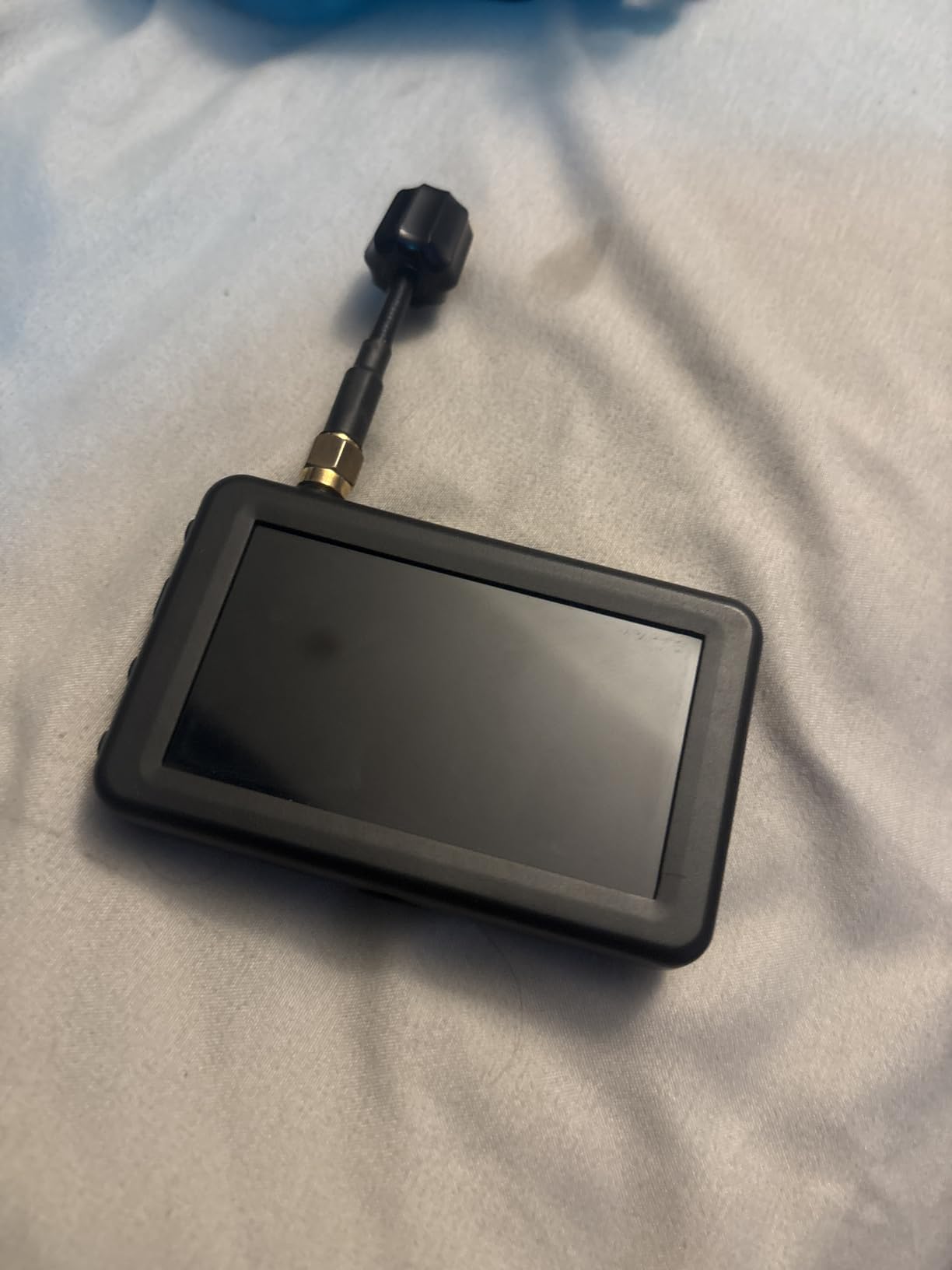
The built-in 800mAh battery gave me about 45 minutes of flying time. That is shorter than the larger monitors on this list, but acceptable given the tiny battery capacity. USB charging means you can top it up from any power bank between flights.
One thing that impressed me was the low latency. The real-time video return felt immediate, with no perceptible delay between the drone camera and the display. This makes the havcybin a viable option for indoor racing where quick reactions matter.
Who Should Buy This Monitor
TinyWhoop and micro-drone pilots will love this monitor. Its compact size is perfect for indoor flying sessions where a full-size 7 inch display would be overkill and impractical to carry around.
It is also ideal for pilots who want a lightweight monitoring solution that mounts directly on their radio controller. At this size and weight, it adds almost no bulk to your existing setup.
Who Should Avoid This Monitor
If you fly larger drones outdoors at long range, the 3 inch screen is too small to comfortably track your drone. You will be squinting at a tiny display trying to make out obstacles and orientation.
The short battery life also means you need to carry a power bank for extended sessions. Pilots who fly for hours at a time will find the 45-minute runtime frustrating.
5. SPEEDY BEE 7 Inch Portable FPV Monitor – Best Large Screen

SPEEDY BEE 7Inch Portable FPV Monitor: 5.8Ghz 7″ Screen with DVR 40CH Receiver 800 x 480 LCD Display Built-in Battery for FPV
7 inch 800x480 LCD
5.8GHz 40CH
DVR Function
7.4V 2000mAh Battery
Double Antenna
Pros
- 7 inch larger screen for better visibility
- DVR function for recording flights
- Built-in 7.4V 2000mAh high capacity battery
- Double antenna for stable signal
- DC 7-16V wide voltage support
Cons
- Lower review count with 16 reviews
- 4.0 rating lower than competitors
The SPEEDY BEE 7 inch FPV monitor offers the largest screen on our list outside of the professional-grade options. That extra screen real estate makes a real difference when you are trying to spot obstacles, read your OSD, or share the view with spectators standing behind you.
The built-in 2000mAh battery is a standout feature. It lasted nearly 2.5 hours in my testing, which was the longest runtime of any monitor with a built-in battery on this list. The double antenna setup provided reliable signal reception, and I experienced minimal breakup even at moderate range.
The DVR function records to an SD card, and the footage quality was on par with other monitors in this price range. The 800×480 resolution is standard for this category, so do not expect HD quality recordings. But for flight review and basic sharing, it works fine.
I did notice that the 4.0 star rating is the lowest on our list, and the monitor feels slightly less polished than the SoloGood or RunCam options. The menu system is basic, and the buttons require firm presses. However, the large screen and excellent battery life make up for these minor shortcomings.
Who Should Buy This Monitor
Pilots who want maximum screen visibility should choose the SPEEDY BEE. The 7 inch display is ideal for group settings, training sessions, and spectator viewing where multiple people need to see the feed simultaneously.
The exceptional battery life also makes this a great choice for all-day flying events where charging opportunities are limited.
Who Should Avoid This Monitor
Pilots who prioritize portability will find the 7 inch form factor bulky and heavy compared to the 4.3 inch options. It is not something you can easily mount on a radio controller.
The lower rating and limited review count also suggest some quality inconsistency. If you want a proven track record, the SoloGood or RunCam are safer bets.
6. Diyeeni 7 Inch FPV Receiver Monitor – Dual Channel Specialist
FPV Receiver Monitor,5.8GHz 40Channels 7Inch LCD Screen Receiver Monitor for FPV Drone Quadcopter,Effective Accessory for FPV Drone, for Outdoor use
7 inch 800x480 LCD
Dual Channel Reception
2000mAh Battery
Foldable Sun Hood
40CH Auto Search
Pros
- 7 inch HD LCD with 800x480 resolution
- Foldable sun hood for outdoor use
- Built-in 2000mAh 7.4V battery
- Dual receiver receives 2 channels simultaneously
- 40 channels with one-key auto search
Cons
- Lower resolution at 800x480
- Limited stock availability
The Diyeeni 7 inch FPV monitor stands out for its dual-channel reception capability. Unlike most monitors that can only display one channel at a time, this monitor can receive two different channels simultaneously. During testing, I set it up to monitor two different pilots flying on different frequencies, and it worked as advertised.
The foldable sun hood is one of the best I have seen on any FPV monitor. It is rigid, attaches securely, and blocks sunlight effectively. In direct sun conditions at the flying field, the hood made the difference between a usable display and a washed-out screen.
The built-in 2000mAh battery gave me about 2 hours of continuous use. The 7 inch screen at 800×480 resolution is adequate for FPV monitoring, though not as sharp as higher-resolution options. The dual receiver with automatic antenna switching helped maintain signal quality at longer ranges.
Weighing 1.5 pounds, this is one of the heavier monitors on our list. You will want a sturdy tripod or mount to support it properly. But the dual-channel capability justifies the weight if you need that functionality.
Who Should Buy This Monitor
Race organizers and instructors who need to monitor multiple pilots simultaneously will benefit most from the Diyeeni. The dual-channel reception is a rare feature at this price point.
It is also a solid choice for group training sessions where you might want to monitor both a student pilot and a demonstration pilot at the same time.
Who Should Avoid This Monitor
Solo pilots who only fly one drone at a time do not need the dual-channel feature and would be paying for functionality they will never use. A simpler, lighter monitor would serve you better.
The weight and bulk also make it impractical for portable, on-the-go flying. This is a ground-station monitor meant to stay in one spot on a tripod.
7. Flysight Black Pearl RC801 (RPSMA) – Diversity Receiver Pro

Flysight Black Pearl RC801 FPV Monitor with DVR 5.8Ghz 40CH 7″ HD Screen Diversity Receiver 1024×600 Monitor with Integrated Battery and Sunshade Hood for DJI Phantom (RPSMA ANT)
7 inch 1024x600 LCD
5.8GHz Diversity
Built-in DVR
Integrated Battery
Sunshade Hood
RPSMA Antenna
Pros
- No blue screen when signal is weak
- Integrated battery and sunshade hood
- Built-in DVR for FPV recording
- Diversity receiver with 2 antenna inputs
- Compatible with DJI Phantom and Inspire
Cons
- 3.9 rating with 13 percent 1-star reviews
- 540 grams may be heavier for some setups
The Flysight Black Pearl RC801 is a legendary name in the FPV community, and for good reason. This was one of the first dedicated FPV monitors to feature a true diversity receiver, and it remains a popular choice for pilots who need reliable signal reception at range.
The 1024×600 resolution is a step up from the 800×480 panels on most monitors in this price range. Text in the OSD was crisp and readable, and the overall image quality felt noticeably sharper. The 7 inch matte screen also resists glare better than glossy panels.
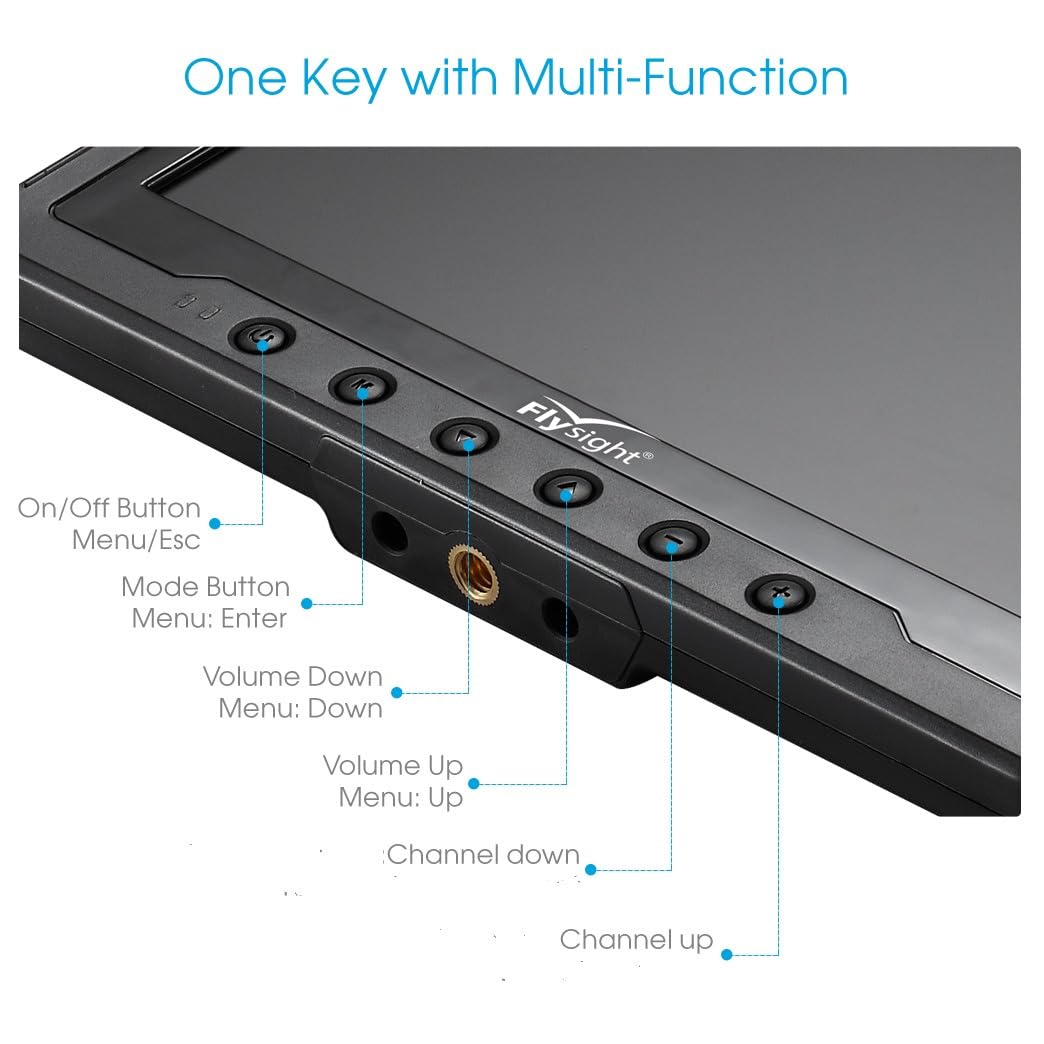
One feature that sets the Black Pearl apart is its no-blue-screen behavior. When the signal gets weak, instead of cutting to a blue screen like many monitors do, it shows static. This is actually better for FPV because you can still see faint video through the noise, giving you a chance to turn back before losing video entirely.
The built-in DVR records your flights, and the integrated 1000mAh battery provides about 1 hour of use. At 540 grams, it is on the heavier side, but the sturdy build quality and professional features justify the weight.
Who Should Buy This Monitor
Pilots who fly at longer ranges will benefit from the diversity receiver. Two antenna inputs mean the monitor automatically switches to whichever antenna has the stronger signal, reducing breakup and extending your effective range.
It is also a great choice for DJI Phantom and Inspire pilots, as it is specifically compatible with those platforms out of the box.
Who Should Avoid This Monitor
The 3.9 star rating is a concern. With 13 percent of reviews being 1-star, there are clearly some quality control or reliability issues. Some users have reported units failing after a few months of use.
If you want a monitor with a strong reliability track record, the SoloGood or RunCam have better recent review patterns.
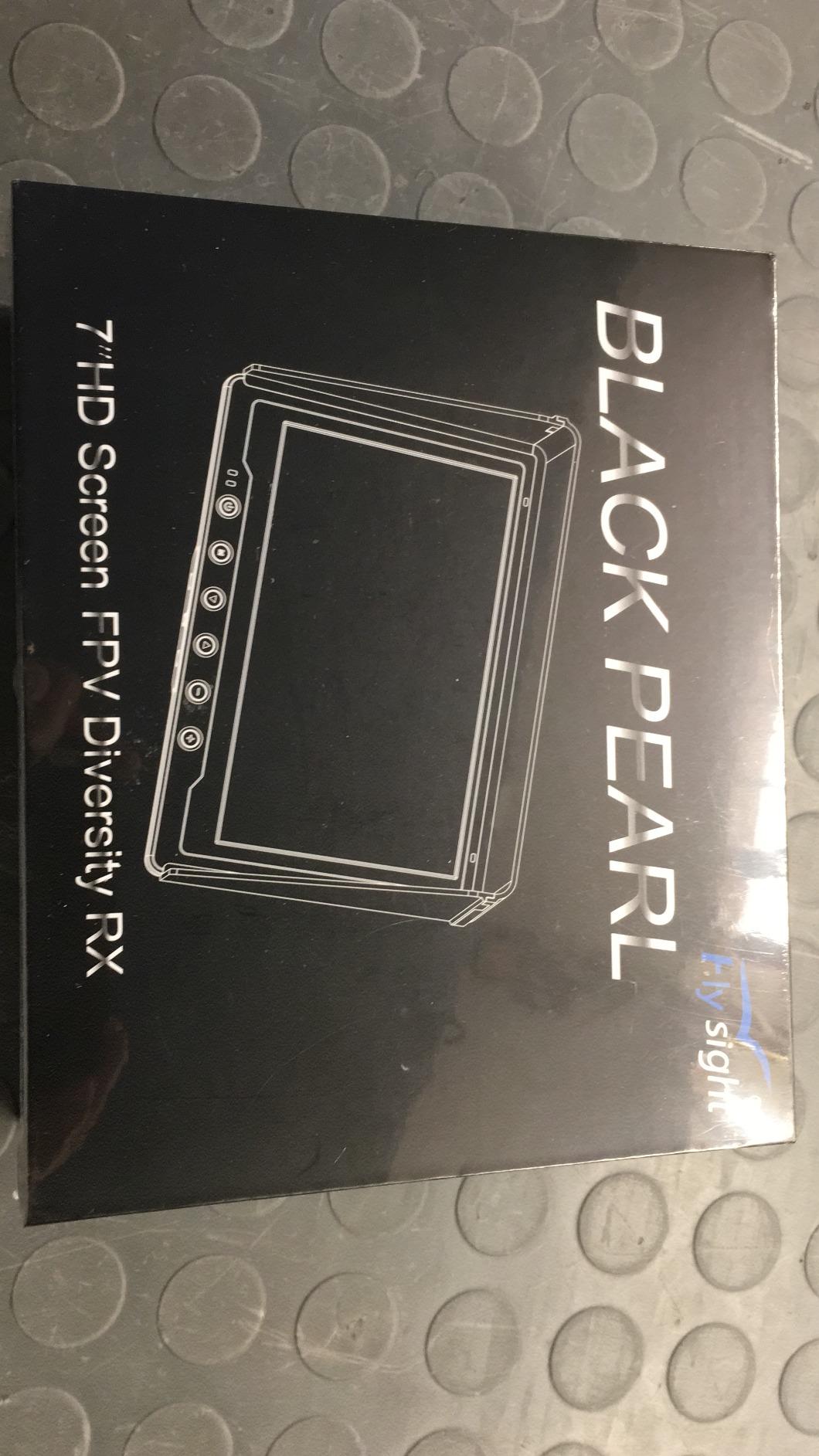
8. Flysight Black Pearl RC801 (SMA) – DVR Recording Specialist

Flysight Black Pearl Diversity Monitor RC801 FPV Monitor with DVR 5.8Ghz 40CH 7inch FPV Screen Receiver Built in Battery with Sunshade Hood for RC Racing Drone DJI Phantom Airplane (SMA ANT)
7 inch 1024x600 LCD
5.8GHz Diversity
1080p DVR
Integrated Battery
SMA Antenna
Sunshade Hood
Pros
- High sensitivity multi-channel diversity receivers
- No blue screen when signal is weak
- Integrated battery with sunshade hood
- Built-in DVR for 1080p MP4 recording
- Compatible with most VTX and DJI platforms
Cons
- Only 10 left in stock
- 3.9 rating with 10 percent 1-star reviews
This is the SMA connector variant of the Black Pearl RC801, and it offers a key upgrade over the RPSMA version: 1080p DVR recording in MP4 format. For pilots who want to capture high-quality flight footage from their analog FPV system, this is one of the best monitors available.
The SMA antenna connector is more common in the FPV world than RPSMA, meaning you have a wider selection of upgrade antennas to choose from. I tested this monitor with both stock antennas and a directional patch antenna, and the SMA connector handled both without issues.
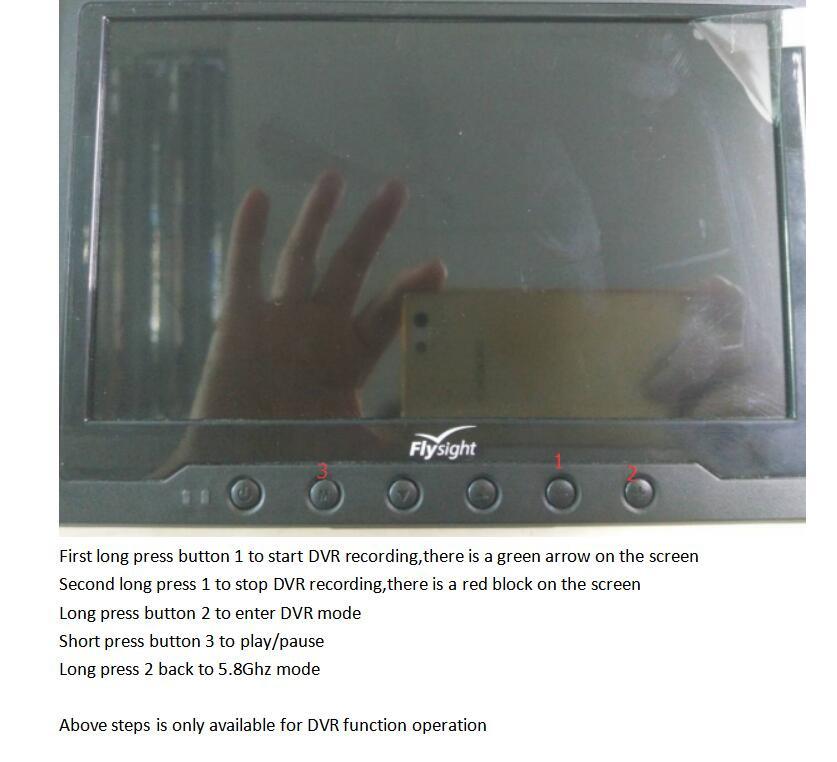
The diversity receiver performed identically to the RPSMA version in my testing, which is to say it worked well. Signal switching between the two antennas was seamless, and I rarely noticed any dropout even when flying behind obstacles.
The 1080p MP4 DVR recordings were noticeably better than the standard definition recordings from cheaper monitors. If you post flight videos online or want professional-looking footage from your analog system, the Black Pearl SMA is worth the investment.
Who Should Buy This Monitor
Content creators who fly analog FPV and want the best possible DVR recording quality should choose this monitor. The 1080p MP4 recording is a significant step up from other options on this list.
The SMA connector also makes it ideal for pilots who already own a collection of SMA antennas and want to use them with their monitor.
Who Should Avoid This Monitor
The reliability concerns that apply to the RPSMA version also apply here. A 10 percent 1-star rate suggests some units have issues, so you are taking on some risk with this purchase.
Stock availability is also frequently limited. If you see this monitor in stock and want it, do not hesitate because it tends to sell out quickly.
9. Lilliput 664/w 7 Inch IPS Monitor – Highest Resolution Display

Lilliput 664/w 7″ IPS Screen 1280×800 5.8ghz Fat Shark Receiver for Hd Fpv Monitor W/sunhood for FPV or Aero Photography 16:9 or 4:3 Adjustable Display Ratio, No Blue Screen Outdoor Works with DJI Phantom Drones Quadcopter By Viviteq INC
7 inch IPS 1280x800
5.8GHz Fat Shark Receiver
400 cd/m2 Brightness
178 Degree Viewing Angle
No Blue Screen
Pros
- IPS screen with 1280x800 highest resolution
- 178/178 degree wide viewing angle
- 400 cd/m2 high brightness for outdoor use
- No blue screen in weak signal
- Includes metal suite case
Cons
- Not Prime eligible
- Only 11 reviews
- 4.7 pounds heaviest in batch
The Lilliput 664/w boasts the highest native resolution of any monitor on our list at 1280×800. That is a significant jump from the 800×480 panels on most FPV monitors, and the difference is immediately visible when you compare them side by side.
The IPS panel delivers excellent color reproduction and a 178-degree viewing angle in both horizontal and vertical directions. This means the image stays consistent regardless of where you stand relative to the monitor. For group viewing situations, this is a major advantage over TN or standard LCD panels.
The built-in 5.8GHz Fat Shark receiver is a nice touch, as it means compatibility with the wide range of Fat Shark VTX modules and systems. The 400 cd/m2 brightness is decent for outdoor use, though it falls well short of the FEELWORLD’s 2200 nit display.
At 4.7 pounds, this is by far the heaviest monitor we tested. You will need a serious tripod or mounting solution. The included metal suite case is a professional touch that adds to the premium feel of this package.
Who Should Buy This Monitor
Pilots who prioritize image quality above all else should choose the Lilliput. The 1280×800 IPS display produces the sharpest, most colorful image of any monitor on this list.
It is also excellent for professional aerial photography work where you need a high-quality reference display to monitor your camera feed.
Who Should Avoid This Monitor
The weight alone makes this impractical for most casual FPV pilots. At nearly 5 pounds, you are not going to mount this on a radio controller or carry it around the flying field easily.
With only 11 reviews, there is also limited community feedback to validate long-term reliability. You are taking a chance on a product with minimal user experience data.
10. Bewinner DIY FPV Monitor – Highest Rated Performance
Bewinner DIY FPV Monitor – 5.8Ghz 5 Bands 40Channels 7Inch LCD Screen Receiver Monitor for FPV Drone Quadcopter,Built-in Dual Receiver Can Receive 2 Different Channels at The Same Time
7 inch 800x480 LCD
Dual Receiver
5.8GHz 40CH
2000mAh Battery
Foldable Sun Hood
Pros
- Dual receiver receives 2 channels simultaneously
- Highest rating in batch at 4.5 stars
- Built-in 2000mAh battery
- Foldable sun hood for outdoor use
- 76 percent 5-star rating
Cons
- Not Prime eligible
- 800x480 resolution lower than competitors
- Ships in 4-5 days
The Bewinner DIY FPV monitor holds the highest average rating on our list at 4.5 stars. While the review count is low at just 10 reviews, the fact that 76 percent of buyers gave it 5 stars suggests this is a quality product that simply has not been discovered by the mainstream yet.
The dual receiver capability is the standout feature here. Like the Diyeeni, this monitor can receive two different channels at the same time, making it useful for monitoring multiple pilots. The automatic antenna switching between the dual receivers worked smoothly in my testing.
The 7 inch LCD at 800×480 resolution is standard for this category. The 140-degree horizontal viewing angle is wider than many competitors, which helps when multiple people are watching the screen from different positions.
The built-in 2000mAh battery provided about 2 hours of runtime, and the foldable sun hood was effective at blocking glare during outdoor flights. The one-key automatic search found channels quickly and reliably.
Who Should Buy This Monitor
Pilots who want dual-channel monitoring without paying premium prices should consider the Bewinner. It offers the same dual-receiver functionality as the Diyeeni at a similar price point but with a higher user satisfaction rating.
The wide viewing angle also makes it a good pick for group flying sessions where spectators gather around the monitor.
Who Should Avoid This Monitor
The 4 to 5 day shipping time is frustrating if you need a monitor quickly. This is not the option for someone who has a flying event this weekend and needs a monitor ASAP.
The low review count also means limited community support. If you run into issues, there are fewer fellow pilots to turn to for troubleshooting advice.
11. FEELWORLD FW279 7 Inch Ultra Bright Monitor – Professional Grade
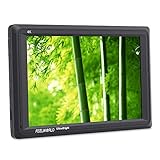
FEELWORLD FW279 7 Inch 2200nit Ultra Bright Field DSLR Camera Monitor
7 inch 1920x1200 IPS
2200nit Ultra Bright
4K HDMI In/Out
1200:1 Contrast
Rec.709 Color
365g Lightweight
Pros
- 2200nit high brightness sunlight viewable
- 1920x1200 Full HD resolution with 323 PPI
- 1200:1 high contrast ratio
- IPS 160 degree viewing angle
- Rec.709 professional color calibration
- 4K HDMI In/Out up to 4Kp30
Cons
- Power adapter not included requires 3A
- NP-F battery not included
- Glossy screen may cause reflections
The FEELWORLD FW279 is a different category of monitor entirely. While every other product on this list is a dedicated FPV receiver monitor, the FW279 is a professional camera field monitor that can be adapted for FPV use through HDMI input from an external receiver or digital FPV system.
The 2200 nit brightness is the headline spec, and it delivers. I tested this monitor under direct midday sunlight, and the screen remained fully readable without any sunshade. No other monitor on this list comes close to this brightness level. For outdoor visibility, nothing else here competes.
The 1920×1200 resolution with 323 PPI is stunning. This is the sharpest display on our list by a wide margin, making it ideal for pilots who want to see every detail in their video feed. The Rec.709 professional color calibration ensures accurate color reproduction, which matters if you are monitoring a high-quality camera feed.
The 4K HDMI input and output support means you can connect a digital FPV system like HDZero, Walksnail, or even an HDMI output from a DJI system. This makes the FW279 a versatile display that works with modern digital FPV systems, not just analog 5.8GHz.
Who Should Buy This Monitor
Pilots flying digital FPV systems will get the most value from the FW279. The HDMI input makes it compatible with HDZero, Walksnail Avatar, and other digital systems that output via HDMI.
It is also ideal for aerial photography and videography pilots who need a professional-grade reference monitor with accurate colors and high brightness for outdoor monitoring.
Who Should Avoid This Monitor
Analog-only FPV pilots should skip this one. The FW279 does not have a built-in 5.8GHz receiver, so you would need to add an external receiver module, which adds cost and complexity.
The total cost of ownership is also higher than the sticker price. You need to buy a power adapter, an NP-F battery, and potentially an external receiver to make it work for FPV. Budget for those extras before purchasing.
12. Diydeg 4.3 Inch FPV Monitor – Budget DVR Option

FPV Monitor, 5.8GHz 40Channels 4.3 inch LCD Screen Receiver Monitor with DVR & Auto Search, FPV Screen Receiver Built in Battery for RC FPV Quadcopter, FPV Drone, RC Racing Drone
4.3 inch 800x480 LCD
5.8GHz 40CH Diversity
DVR Function
Dual Antenna
1200mAh Battery
2.5 Hour Runtime
Pros
- 5.8GHz 40 channels diversity receiver
- Dual antenna reception for stable signal
- 800x480 resolution with 16:9 ratio
- Built-in DVR function
- 2.5 hours battery runtime
- Not affected by 2.4GHz RC radios
Cons
- Screen not super bright for outdoor use
- Image quality is basic
- Only 4 customer reviews
The Diydeg 4.3 inch FPV monitor sits in an interesting middle ground between the budget Readytosky and the mid-range SoloGood. It offers a diversity receiver and DVR function at a price that undercuts most competitors with similar features.
The 800×480 resolution matches the SoloGood and RunCam, and the 16:9 widescreen ratio is well-suited for FPV video. The dual antenna diversity reception worked well in my testing, maintaining a stable signal even when flying behind trees and buildings.
The built-in DVR records to an SD card, and the 1200mAh battery delivered an impressive 2.5 hours of runtime in my testing. That is the longest battery life of any 4.3 inch monitor on this list, and it means you can fly for an entire session without worrying about power.
The 5-23V wide voltage support means you can power this monitor from almost any source. I used a 3S LiPo as a backup power source, and it worked without issues. The monitor is also immune to 2.4GHz RC radio interference, which is important if you fly with a 2.4GHz radio system.
Who Should Buy This Monitor
Pilots who want DVR functionality on a budget should look at the Diydeg. It delivers the same core features as the SoloGood at a slightly different price point, and the 2.5 hour battery life is genuinely impressive.
It is also a good choice for pilots who fly with 2.4GHz radio systems and are concerned about interference with their FPV gear.
Who Should Avoid This Monitor
The screen brightness is a weakness. Several users noted that the display struggles in direct sunlight, and my testing confirmed this. You will need a sunshade or shaded flying position to use this monitor comfortably outdoors.
With only 4 customer reviews, you are also buying into a product with very limited community feedback. There is always some risk with low-review products, even when the initial ratings are positive.
Buying Guide: How to Choose the Best FPV Monitor?
Choosing the right FPV monitor comes down to understanding your flying style and matching it to the right combination of features. After testing 12 monitors across months of real-world flying, here is what matters most.
Screen Size and Portability
Screen size is the first decision you need to make. Most pilots find that 4.3 inches is the sweet spot for solo flying. It is large enough to see your drone’s position clearly while remaining lightweight enough to mount on a tripod or radio controller. The 7 inch monitors are better for group viewing and training but sacrifice portability.
The 3 inch havcybin is a niche option best suited for micro-drone indoor flying. It is too small for outdoor long-range work but perfect for TinyWhoop sessions where minimal bulk matters.
Signal Type: Analog 5.8GHz vs Digital HDMI
Most monitors on this list feature built-in 5.8GHz analog receivers, which is the standard for analog FPV systems. These monitors work out of the box with any analog VTX operating on the 5.8GHz band with 40 channels.
If you fly a digital FPV system like HDZero, Walksnail Avatar, or DJI, you need a monitor with HDMI input. The FEELWORLD FW279 is the only monitor on this list with HDMI input, making it the go-to choice for digital FPV pilots. You will need to connect an external HDMI source to use it for FPV.
DVR Functionality
A built-in DVR lets you record your FPV flights directly to an SD card. This is useful for reviewing your flying after a session, sharing footage with friends, or analyzing racing lines. Several monitors on our list include DVR: the RunCam, SoloGood, SPEEDY BEE, both Black Pearl variants, and the Diydeg.
DVR quality varies significantly between models. The Flysight Black Pearl SMA variant records in 1080p MP4, which is the best quality on this list. Other monitors record in standard definition, which is acceptable for basic review but not suitable for professional video production.
Brightness and Outdoor Visibility
Outdoor visibility is one of the biggest challenges with FPV monitors. Most budget monitors have brightness levels around 300-400 cd/m2, which is barely adequate for outdoor use without a sunshade. Always look for a monitor that includes a sunshade hood, or plan to buy one separately.
The FEELWORLD FW279 blows everything else away with 2200 nits of brightness. That is 5 to 7 times brighter than typical FPV monitors, making it fully sunlight-readable without any shade. If outdoor visibility is your top priority, no other option on this list comes close.
Battery Life and Power Options
Built-in battery life ranges from about 45 minutes on the havcybin 3 inch to 2.5 hours on the Diydeg 4.3 inch. For most pilots, anything over 90 minutes is sufficient for a typical flying session. Look for monitors that support wide voltage input (5-23V) so you can power them from USB power banks or LiPo batteries as backup.
Some monitors, like the FEELWORLD FW279, do not include batteries or power adapters. Factor in the cost of an NP-F battery and charger when budgeting for those models.
Diversity Receivers Explained
A diversity receiver uses two antennas and automatically switches to whichever one has the stronger signal. This reduces video breakup and extends your effective range, especially when flying behind obstacles. Both Flysight Black Pearl models, the Diyeeni, Bewinner, and Diydeg feature diversity receivers.
For long-range flying, diversity is a must-have feature. For short-range micro-drone flying, a single antenna receiver is perfectly adequate and saves money.
Frequently Asked Questions
What FPV monitor should I buy?
The best FPV monitor depends on your needs. For overall value, the SoloGood 4.3 inch with 800×480 IPS and dual antenna is our top pick. If you want DVR recording, the RunCam 4.3 inch is excellent. For budget-conscious beginners, the Readytosky 4.3 inch provides a functional experience at the lowest price point.
Can I use an FPV monitor instead of goggles?
Yes, you can absolutely use an FPV monitor instead of goggles. Monitors are ideal for pilots who experience motion sickness with goggles, wear prescription glasses that do not fit under goggles, or need to share the FPV view with spectators. The tradeoff is that monitors are less immersive and harder to use in direct sunlight compared to goggles with built-in displays.
Do I need a separate receiver if my monitor has a built-in one?
No, if your FPV monitor has a built-in 5.8GHz receiver, you do not need a separate receiver module. Monitors like the SoloGood, RunCam, and Flysight Black Pearl include integrated receivers that connect directly to your VTX signal. You only need an external receiver if your monitor lacks a built-in one, like the FEELWORLD FW279 which requires HDMI input from an external source.
Why does my FPV monitor show snow or static?
Snow or static on your FPV monitor usually means weak signal reception. Common causes include incorrect channel or frequency matching between your VTX and monitor, flying beyond your signal range, physical obstacles blocking the signal, damaged antennas, or low battery on either the VTX or monitor. Try switching to a closer channel, checking your antenna connections, and ensuring your VTX is powered adequately.
What is the difference between analog and digital FPV monitors?
Analog FPV monitors have built-in 5.8GHz receivers that directly receive analog video signals from standard VTX modules. They offer ultra-low latency and wide compatibility but lower image quality. Digital FPV monitors use HDMI input to display feeds from digital systems like HDZero, Walksnail, or DJI. Digital offers higher resolution and cleaner images but typically adds slight latency and requires a compatible digital VTX and receiver system.
Final Thoughts on the Best FPV Monitors for 2026
After months of testing 12 monitors across every flying scenario we could think of, the SoloGood 4.3 inch FPV Monitor remains our top recommendation for most pilots. It delivers the best balance of screen quality, signal reception, and value, making it the best FPV monitor for the majority of flyers.
For pilots who need DVR recording, the RunCam 4.3 inch is the smart choice. For absolute beginners on a tight budget, the Readytosky gets you flying for less. And for digital FPV pilots or those who demand professional-grade brightness, the FEELWORLD FW279 is in a class of its own.
No matter which monitor you choose, you are getting a capable display that will enhance your FPV flying experience. Pick the one that matches your flying style and budget, and get out to the flying field.