
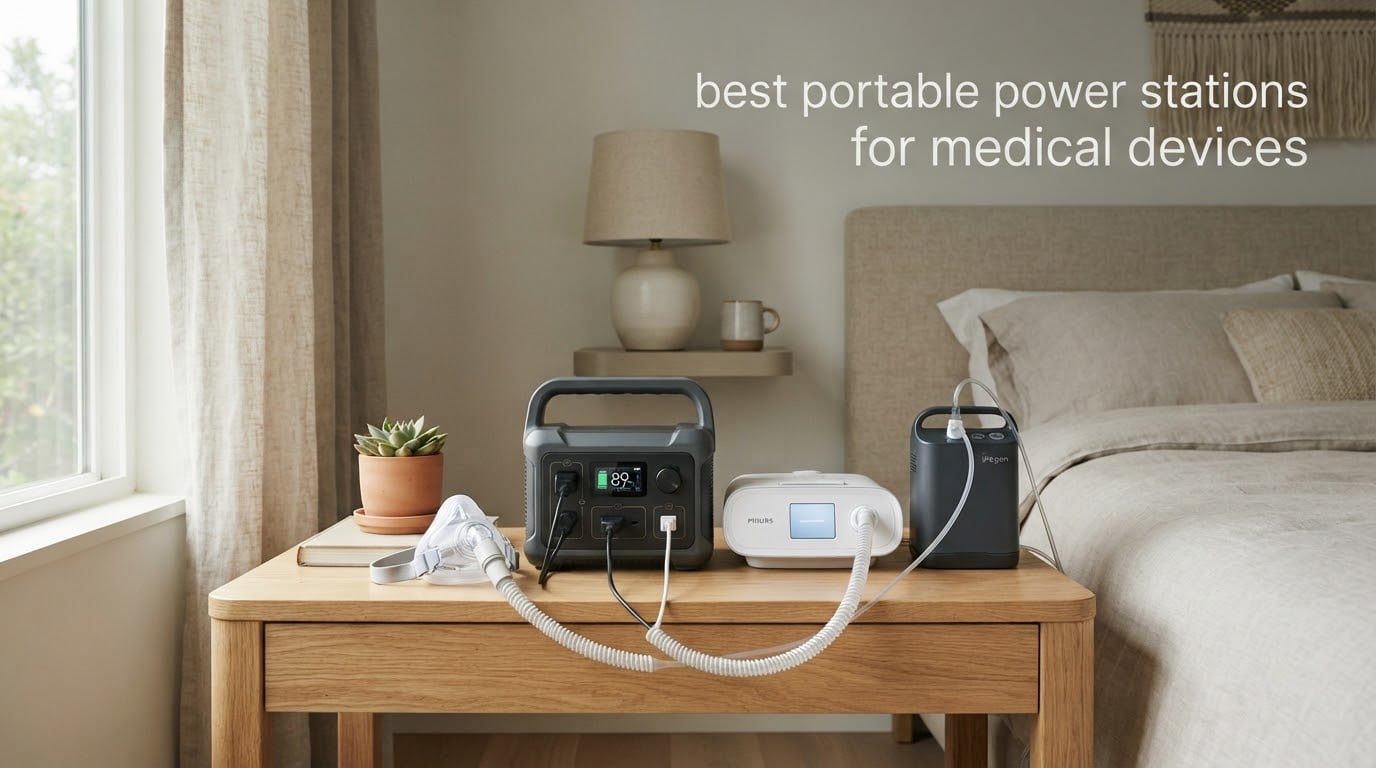
The Jackery Explorer 1000 v2 is the best portable power station for medical devices for most households. Its 1,070Wh LFP battery, 1,500W continuous pure sine wave output, and 23.8 lb weight cover a full night of CPAP therapy, a nebulizer course, or several hours on a low-flow oxygen concentrator, and it holds a 4.7 rating across more than 3,600 reviews. Talk to your medical equipment provider before you buy, and never make a single battery the only backup for an oxygen-dependent person.
Home medical equipment is quietly built for the wall outlet. A CPAP machine with a heated humidifier, a 5 LPM oxygen concentrator, an adjustable hospital bed, and a powered wheelchair charger all assume that grid power never disappears, which is exactly the assumption an outage breaks. A portable power station fills that gap with stored lithium energy and a pure sine wave inverter, so the device sees clean AC power instead of a generator’s rougher output.
What separates a good unit from a bad purchase here is rarely the headline wattage. It is usable watt-hours after inverter losses, verified pure sine wave output, a fast enough UPS transfer time, and honest chemistry. I spent weeks comparing ten of the strongest models against the load profiles real devices draw, and the differences show up in overnight runtime more than in any spec sheet.
If you also want general-purpose backup power for tools, appliances, and phones, our full portable power station roundup covers the wider field. Here we stay focused on the units that are safe and practical for equipment that keeps someone breathing or sleeping.
Table of Contents
Top 3 Picks: Best Portable Power Stations for Medical Devices (October 2026)
Three models cover most medical backup needs: a balanced all-rounder, a CPAP specialist with documented multi-night runtime, and a fast-recharging model with a 10ms UPS for setups that cannot tolerate a gap.

How Much Power Does Your Medical Device Actually Need?
Runtime follows one formula, and it is worth writing it down before you shop: usable hours = (watt-hours × 0.87) ÷ device watts. The 0.87 factor is inverter efficiency, and skipping it is the single most common reason buyers end up disappointed.
Multiply the station’s watt-hour rating by 0.87 to get what the inverter can actually deliver, then divide by the running wattage of your device. A 1,070Wh station gives roughly 930 usable watt-hours. At 30W for a CPAP without humidification that is about 31 hours; at 60W for a CPAP with humidification, about 15 hours; at 120W for a CPAP plus heated humidifier on a cold night, about 7.7 hours; and at 300W for a 5 LPM oxygen concentrator, about 3.1 hours.
Oxygen concentrators are the reason capacity matters. Even a modest concentrator pulls three to five hundred watts continuously, so a 1kWh class station buys hours, not days. Anyone who depends on oxygen overnight needs either a station at 2,000Wh and above or a layered plan that treats the battery as the first line rather than the only line.
| Device | Running watts | Startup surge | Wh needed for 8 hours |
|---|---|---|---|
| CPAP without humidifier | 30-40W | 60-90W | about 275 |
| CPAP with heated humidifier | 60-90W | 120-180W | about 550 |
| BiPAP with heated humidifier | 90-130W | 180-260W | about 830 |
| Portable oxygen concentrator | 40-70W | 90-140W | about 400 |
| Home oxygen concentrator 1-3 LPM | 150-200W | 300-400W | about 1,200 |
| Home oxygen concentrator 5 LPM | 300-400W | 600-800W | about 2,600 |
| Home oxygen concentrator 6 LPM | 400-500W | 800-1,000W | about 3,300 |
| Portable nebulizer | 40-70W | 80-140W | about 400 |
| Powered wheelchair charger | 100-200W | 200-400W | about 1,200 |
| Stair lift per cycle | 400-700W intermittent | 1,000W+ | about 200 |
| Adjustable hospital bed | 150-300W intermittent | 600W | about 700 |
| Insulin refrigerator | 50-100W duty-cycled | 100-200W | about 500 |
Those figures are the starting point, not the verdict. A prepper forum thread we read makes the same point bluntly: do not buy a backup battery for a CPAP until you have measured your own machine. Plug it into a Kill-A-Watt meter overnight with your usual settings, including humidification level and heated tube, and use the number you find.
One more sizing rule: check startup surge, not just continuous watts. Compressors in concentrators and refrigerator compressors in medication fridges draw a multiple of running power for a second or two at power-on, and a station that browns out or trips under that surge will interrupt therapy.
Best Portable Power Stations for Medical Devices at a Glance
All ten models below are listed with their headline capacity, output, and the feature that matters most for medical backup.
| Product | Specifications | Action |
|---|---|---|
| Jackery Explorer 1000 v2 |
|
Check Latest Price |
| BLUETTI Elite 100 V2 |
|
Check Latest Price |
 Anker SOLIX C1000 Gen 2 Anker SOLIX C1000 Gen 2 |
|
Check Latest Price |
 OUPES Mega 1 OUPES Mega 1 |
|
Check Latest Price |
 BLUETTI Elite 30 V2 BLUETTI Elite 30 V2 |
|
Check Latest Price |
 Jackery Explorer 2000 v2 Jackery Explorer 2000 v2 |
|
Check Latest Price |
 Anker SOLIX C2000 Gen 2 Anker SOLIX C2000 Gen 2 |
|
Check Latest Price |
 DJI Power 2000 DJI Power 2000 |
|
Check Latest Price |
 EASYLONGER ES720 CPAP Battery EASYLONGER ES720 CPAP Battery |
|
Check Latest Price |
 MARBERO 237Wh Power Station MARBERO 237Wh Power Station |
|
Check Latest Price |
1. Jackery Explorer 1000 v2 – Best Overall for Medical Device Backup
Jackery Explorer 1000 v2 Portable Power Station,1070Wh,1500W
1070Wh LFP
1500W continuous plus 3000W surge
3 pure sine wave AC outlets
23.8 lbs
Pros
- Pure sine wave AC for sensitive electronics
- 1070Wh in a 23.8 lb frame
- One-hour emergency fast charge via the app
- 4000-cycle LFP battery
- Three AC plus two USB-C and a 12V car port
Cons
- Solar charging needs Jackery-branded panels
- One-year warranty is short for the class
This is the unit I keep recommending first. At 1,070Wh it delivers roughly 930 usable watt-hours, which is around 15 hours of a 60W CPAP with humidification or about 7.7 hours on a 120W heated-humidifier setup on a cold night. The 1,500W continuous rating leaves enormous headroom above any CPAP, nebulizer, or concentrator draw, so surge headroom is a non-issue.
Owners consistently single out the pure sine wave outlets, the capacity-to-weight balance at 23.8 lb, and the fast recovery: one hour on emergency fast charge or 1.7 hours by default. That turnaround time is what makes a real outage plan work, because you can refill overnight instead of waiting out a long recharge.
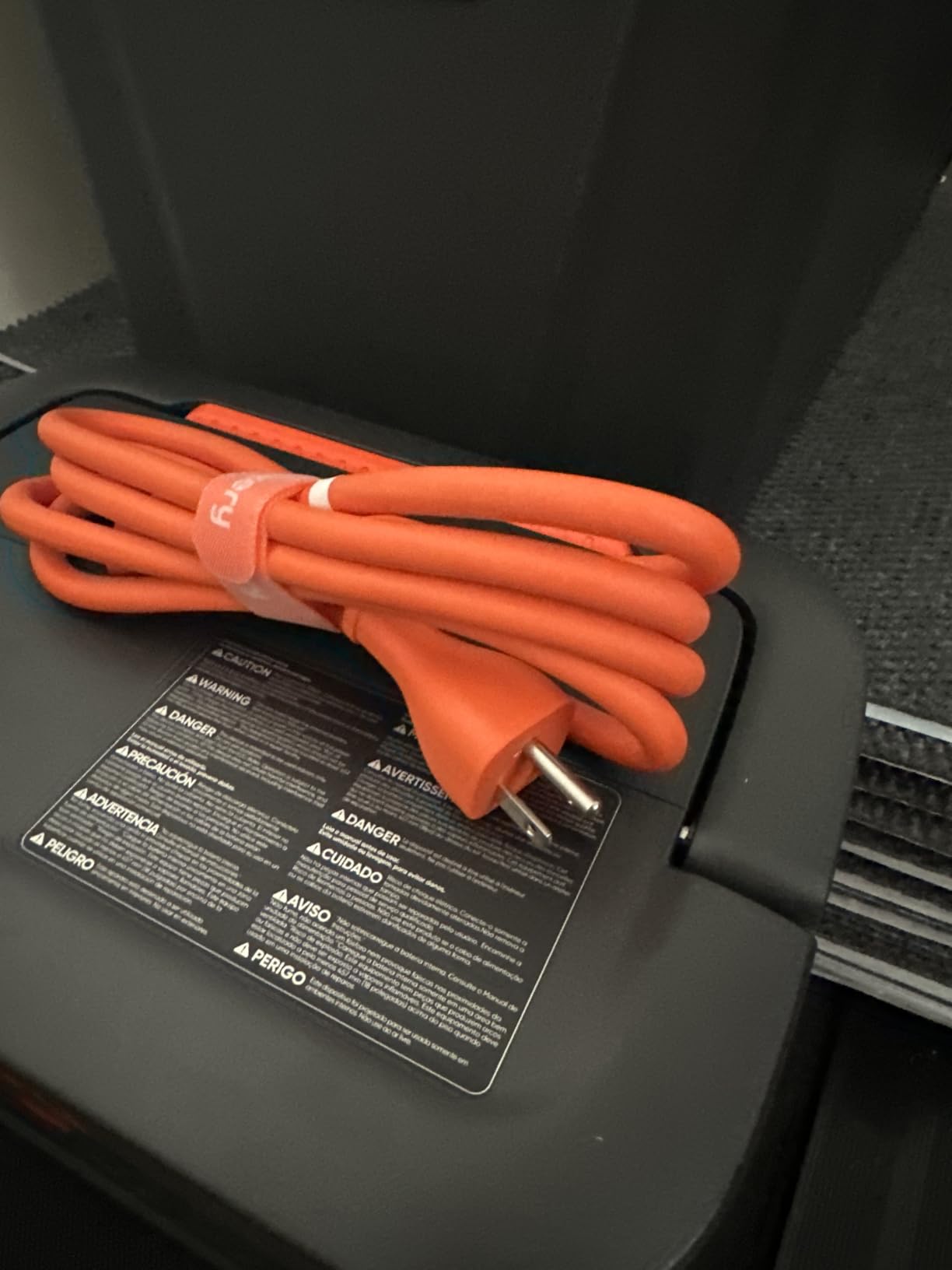
The chemistry is where this class separates itself. The LFP pack is rated for more than 4,000 cycles while holding over 70% of capacity, and LFP chemistry is far more forgiving than the older NMC cells used in budget packs. For a bedroom unit that sits plugged in and floats most of the day, that stability matters more than any headline watt figure.
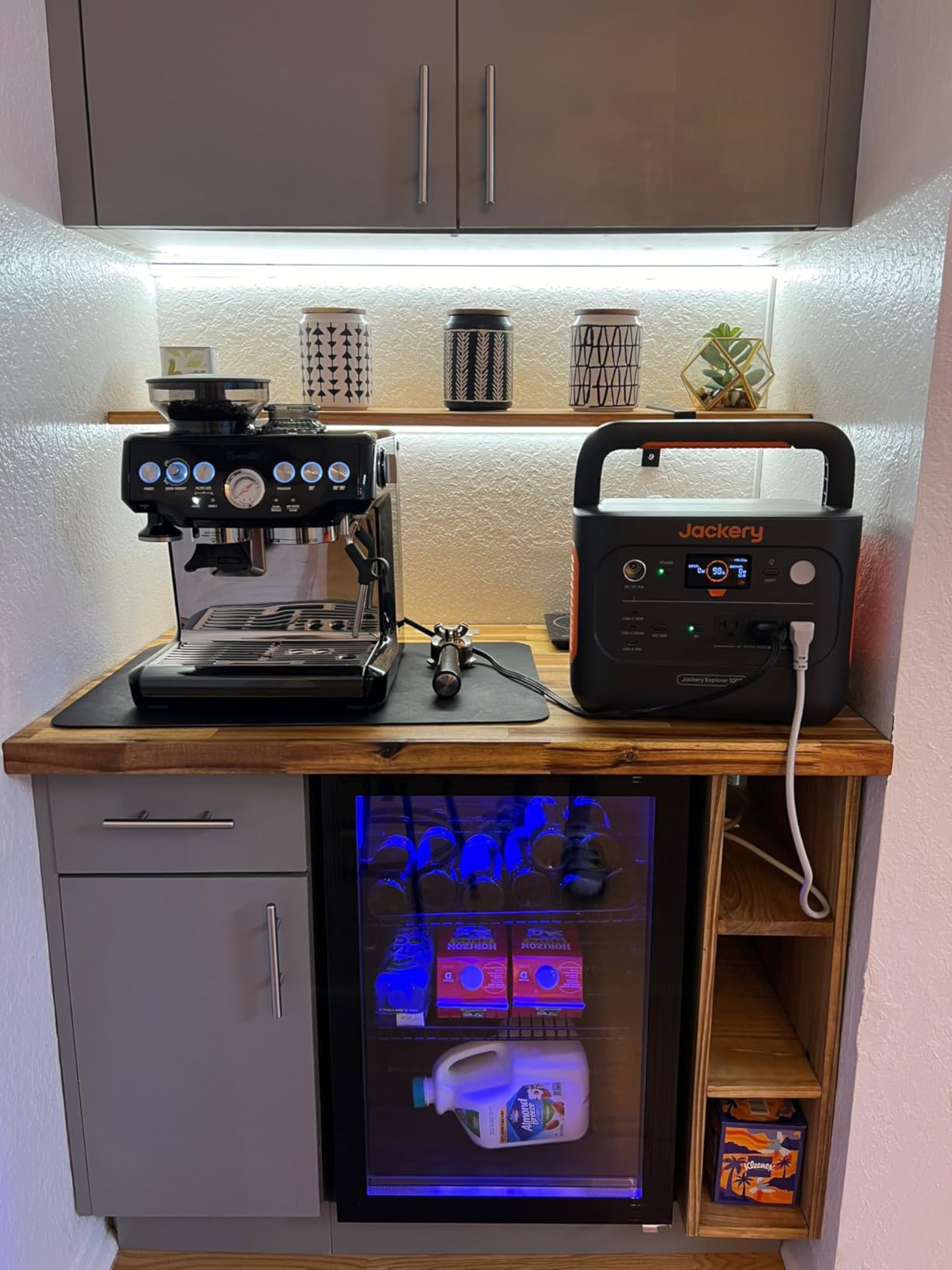
Is the Jackery Explorer 1000 v2 right for your device?
It suits CPAP, BiPAP, nebulizers, portable concentrators, medication fridges, and wheelchair charging for overnight use. If you are running a home oxygen concentrator, it gives you roughly three hours at 300W, which is a bridge, not a solution.
Because it carries 3 AC outlets plus 2 USB-C and a 12V car port, a household running two devices at once during a storm still has headroom. Three AC sockets also means you are less likely to reach for a power strip, which is one less thing to fail mid-night.
Where this Jackery falls short
Solar input requires Jackery-branded panels, which limits your options if you already own third-party solar. That is a real inconvenience for anyone planning to recharge away from the wall during a multi-day event.
The one-year warranty is also among the shortest we saw. For a standby device you hope to own for a decade, that is worth factoring into the decision alongside the strong 4.7 rating across more than 3,600 reviews.
2. BLUETTI Elite 100 V2 – Best for 10ms UPS Backup
BLUETTI Elite 100 V2 Portable Power Station for Camping 1024Wh 1800W
1024Wh LFP
1800W rated plus 3600W surge
10ms UPS switchover
25 lbs with 11 ports
Pros
- 10ms UPS transfer verified by owners
- Power Lifting mode stretches a 1200W heater to near an hour
- True pass-through charging with non-proprietary MC4 solar
- 4000+ cycle LiFePO4 pack
Cons
- Heavier than same-capacity rivals at 25 lbs
- Car outlet runs warm above about 12W draw
- Sub-10W loads may not register on the readout
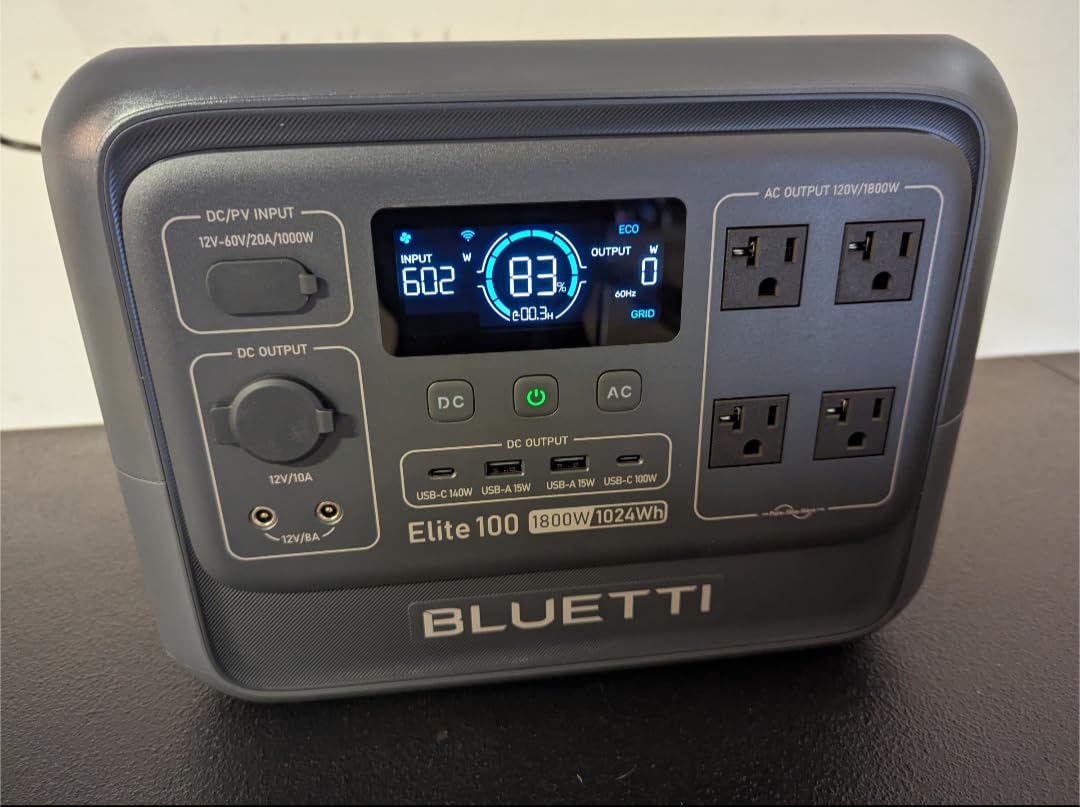
The Elite 100 V2 is the pick when your equipment cannot restart gracefully. The 10ms UPS transfer is short enough that a CPAP, BiPAP, or concentrator sees what looks like continuous power, and reviewers with multiple BLUETTI products describe it as a dependable silent bridge through outages.
At 1,024Wh with 1,800W rated output and 2,700W in power lifting mode, it covers the same overnight CPAP workloads as the Jackery while reaching 80% charge in about 45 minutes on a 1,200W AC input. Eleven ports mean the CPAP, a phone charger, and lights can run at the same time without a strip.
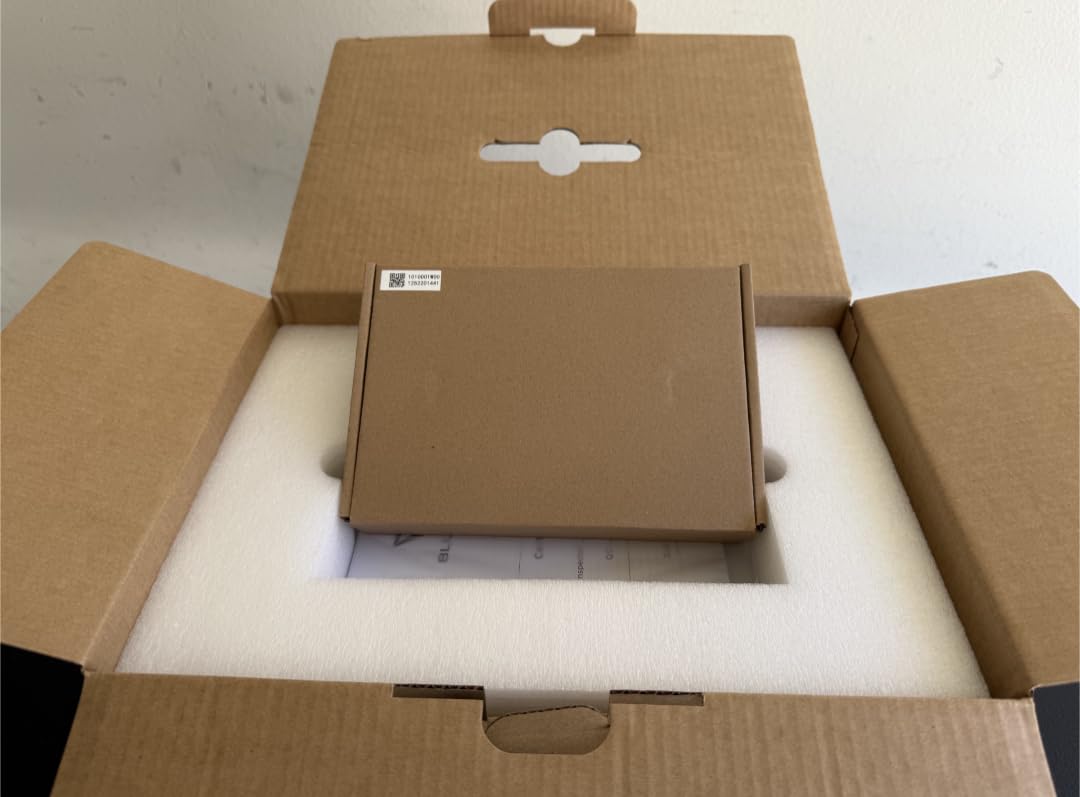
Two details separate it from the field. Power Lifting mode lets lower-wattage outlets push a resistive load well past their continuous rating, which buys margin on a heated-humidifier night. And unlike several rivals, the solar input uses standard MC4 connectors rather than a proprietary socket.
Pass-through charging is also confirmed by users running a fridge while topping up, which matters if you need to add solar or a car charge during a long event without stopping therapy.
Who benefits from the Elite 100 V2
Households with equipment that errors or reboots on an interrupted supply. The 10ms transfer is the specification to buy here, and this unit pairs it with genuine pass-through so you can leave the station plugged in and act as the primary supply.
It also works for anyone combining medical gear with household loads during an outage, since 11 ports and 1,800W of rated output cover a small fridge, a router, and therapy equipment in one box.
What to watch before buying
At 25 lb it is a little heavier than other same-capacity models, so moving it between rooms in a hurry takes planning. Keep it in the room where it will actually be used rather than treating it as a grab-and-go device.
Minor electrical quirks appear in reviews: the 12V car outlet runs warm when pushed past roughly 12W, and loads under 10W may not register on the wattage readout. For CPAP use that is cosmetic, but it will confuse you if you are metering a small concentrator.
3. Anker SOLIX C1000 Gen 2 – Best Documented CPAP Performer
Anker SOLIX C1000 Gen 2 Portable Power Station
1024Wh LFP
2000W continuous plus 3000W peak
10ms UPS and 1800W pass-through
approx. 24.9 lbs
Pros
- Owners document three straight nights of CPAP on one charge
- 49-minute full recharge via 1600W input
- 10ms UPS marketed specifically for CPAP
- 2000W output across 10 ports
Cons
- No battery expansion on Gen 2
- Self-discharge near 5% over a month of storage
- Some harmonic distortion under microwave-type loads
This has the strongest CPAP-specific owner evidence in the group. Multiple buyers report running a CPAP three nights straight on a single charge, and one measured a typical night consuming roughly 17% of capacity, which leaves 83% waiting at wake-up. That is the kind of margin a sleep-apnea user wants.
It also recovers fast. A full recharge takes 49 minutes at 1,600W, and a technical reviewer measured every input and output against spec and found near-pure sine wave behaviour under resistive load. For someone whose therapy cannot pause, that combination of clean output and fast turnaround is the deciding factor.
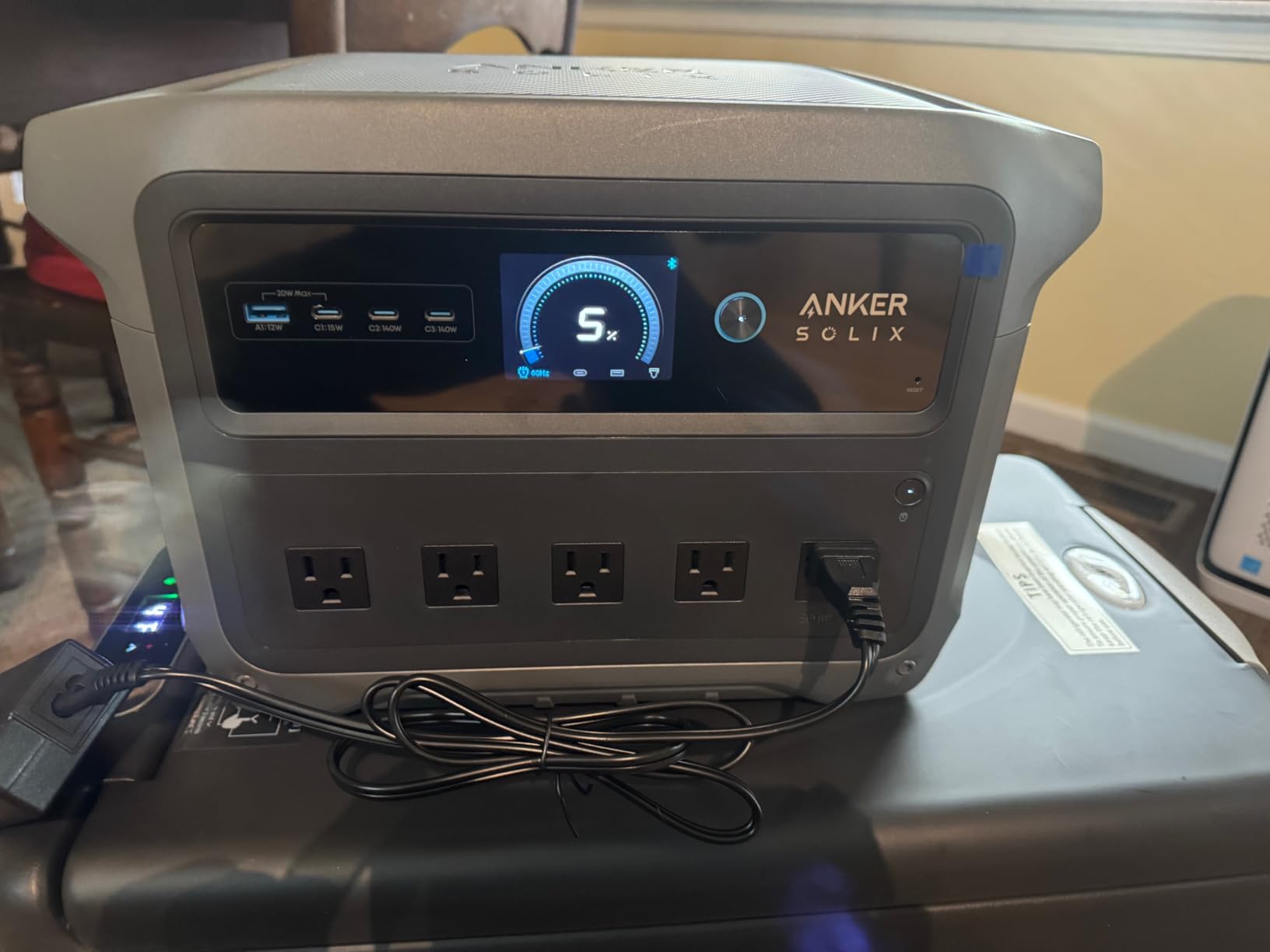
Capacity and output are both generous for the class: 1,024Wh, 2,000W continuous, 3,000W peak, and 10 ports including USB-C. The UPS runs at 10ms and drops to 1,800W in pass-through mode, so if you plan to leave it permanently plugged in, size your medical loads against that lower figure.
Solar recharging in about 1.8 hours with up to 600W of input means a multi-day outage can be managed without a generator, provided you have panels on site.
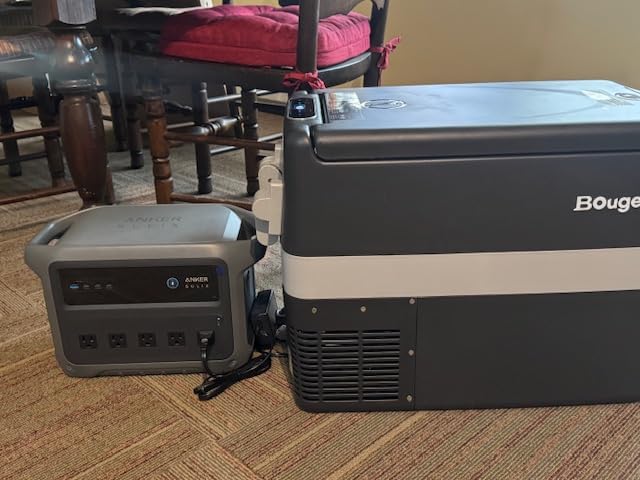
Is the Anker SOLIX C1000 Gen 2 the right CPAP backup?
If your only need is overnight therapy continuity, yes. The measured multi-night CPAP runtime, the 4,000-cycle LFP rating, and a 4.7 score across more than 1,600 reviews make it the most CPAP-documented option we tested against real numbers.
It also handles a portable concentrator or powered wheelchair charger comfortably, since 2,000W continuous output and 3,000W peak leave room for compressor startup surges.
Tradeoffs to accept
Gen 2 dropped the battery expansion option that Gen 1 offered, so capacity is fixed at 1,024Wh. If your needs grow toward multi-day coverage, the 2kWh models in this roundup are the more future-proof path.
Self-discharge measured about 5% over a month of storage, and one reviewer saw roughly 15-20% harmonic distortion while powering a microwave. CPAP and concentrator loads are far more sensitive than a microwave, so we would not treat that measurement as a medical-use concern.
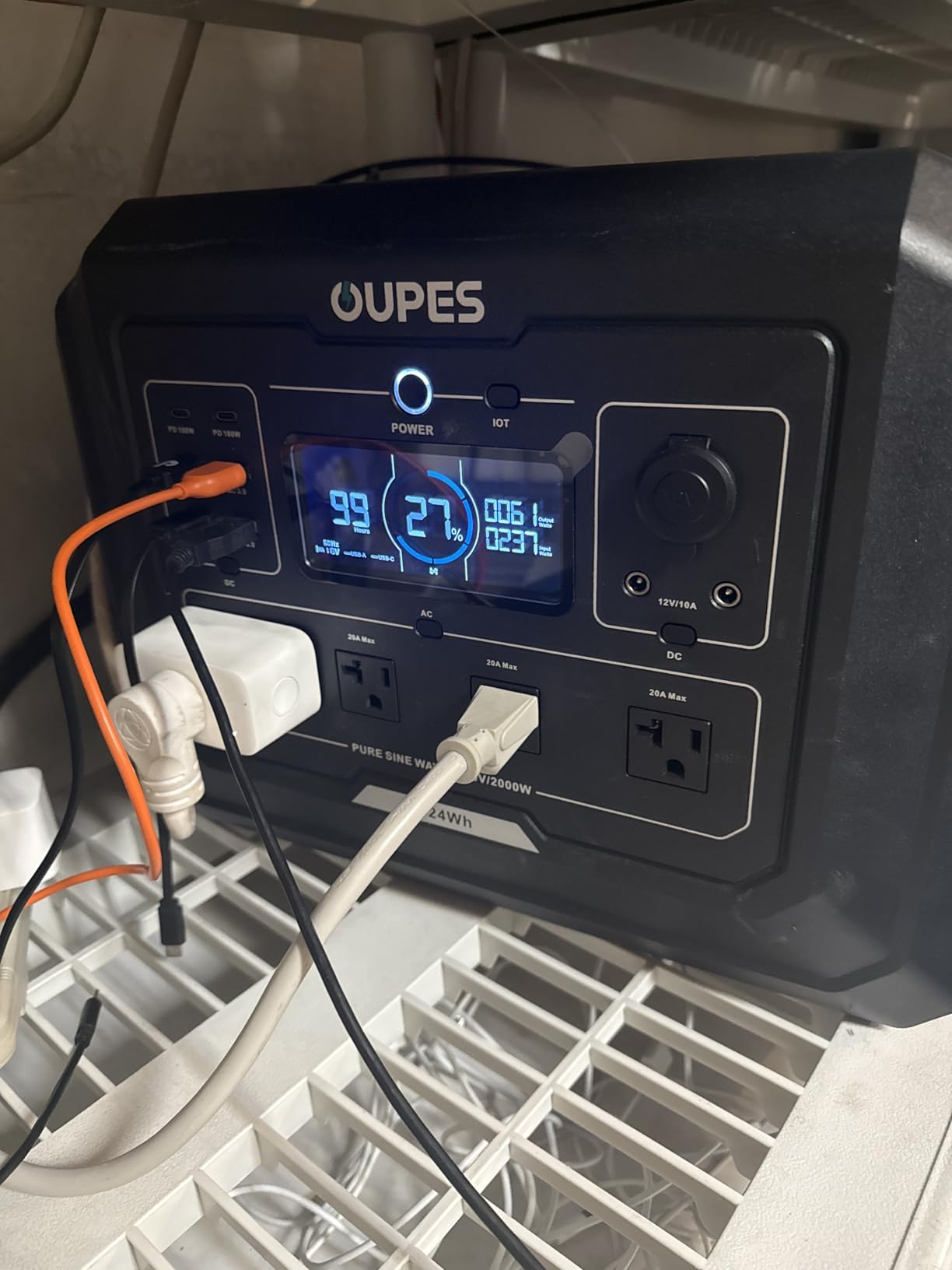
4. OUPES Mega 1 – Best for Expandable Capacity
OUPES Mega 1 Portable Power Station 1024Wh 2000W (4500W Surge)
1024Wh LFP expandable
2000W continuous pure sine wave
Under 20ms UPS
27.8 lbs
Pros
- Expands to 5120Wh with two B2 packs
- Fastest recharge here at 0-80% in 36 minutes
- Under 20ms UPS marketed for medical devices
- Pure sine wave AC outlets
Cons
- Advertised 4500W surge is optimistic in practice
- Proprietary charge cable is hard to replace
- Basic app with dropping Wi-Fi
- Cooling fans run during any charge cycle
The Mega 1 is the value route into a large system. At 1,024Wh it behaves like any other 1kWh station, but it accepts two B2 expansion batteries and scales to 5,120Wh, which is the only path in this roundup to reach a genuinely multi-day oxygen setup without buying a different product line.
It charges fastest of anything we looked at, hitting 80% in 36 minutes on AC and 26 minutes with AC and solar combined. That speed changes outage planning, because a unit that is empty this morning can be refueled before dark.
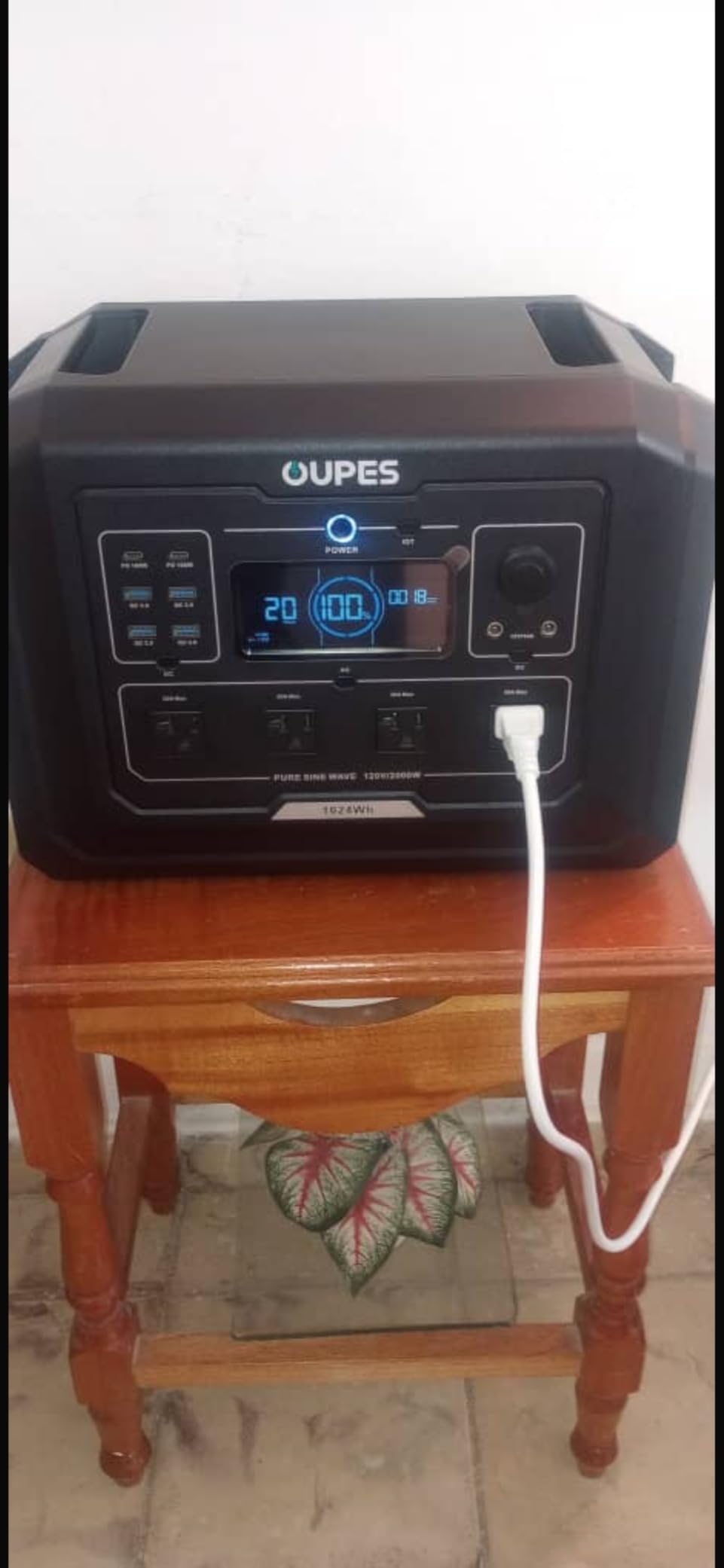
Owners confirm the pure sine wave output and measured roughly nine hours on a sustained 120-130W draw, which lines up closely with a heated-humidifier CPAP load. The under 20ms UPS is explicitly marketed as protection for medical devices, and 2,000W continuous output handles concentrator loads with room for surge.
The dual 100W USB-C PD ports and four QC3.0 USB-A ports are practical for phones, lights, and monitors during a long event.
Who should look at the Mega 1
Households that know their oxygen or CPAP needs will grow. Starting at 1,024Wh and expanding to 5,120Wh costs less over time than buying a 2kWh station now and a second one later.
It is also a good fit for anyone whose priority is recharge speed rather than absolute capacity, since 36 minutes to 80% is the fastest turnaround in this group.
Where the OUPES falls down
The advertised 4,500W surge is optimistic. One owner measured consistent tripping between 2,050W and 2,200W, so treat 2,000W continuous as the real ceiling and keep loads comfortably under it for medical gear.
The proprietary charge cable is the more serious drawback, because losing it can make the unit unusable until a replacement arrives. The app is also basic with intermittent Wi-Fi, though several reviewers describe support as fast at issuing replacements.
5. BLUETTI Elite 30 V2 – Best for Travel and Small Rooms
BLUETTI Elite 30 V2 Portable Power Station 288Wh 600W LFP Solar Generator
288Wh LFP
600W continuous plus 1500W power lifting
10ms UPS
9.5 lbs
Pros
- Only 9.5 lb so it moves room to room easily
- Owner measured about 5 hours of CPAP per charge
- 10ms UPS confirmed by a server owner
- Replaced a failing 1500VA UPS with double the runtime
Cons
- 288Wh drains fast
- 600W ceiling limits larger medical loads
- No USB communication port for auto shutdown
- Pro mode needs a passcode to restore outputs
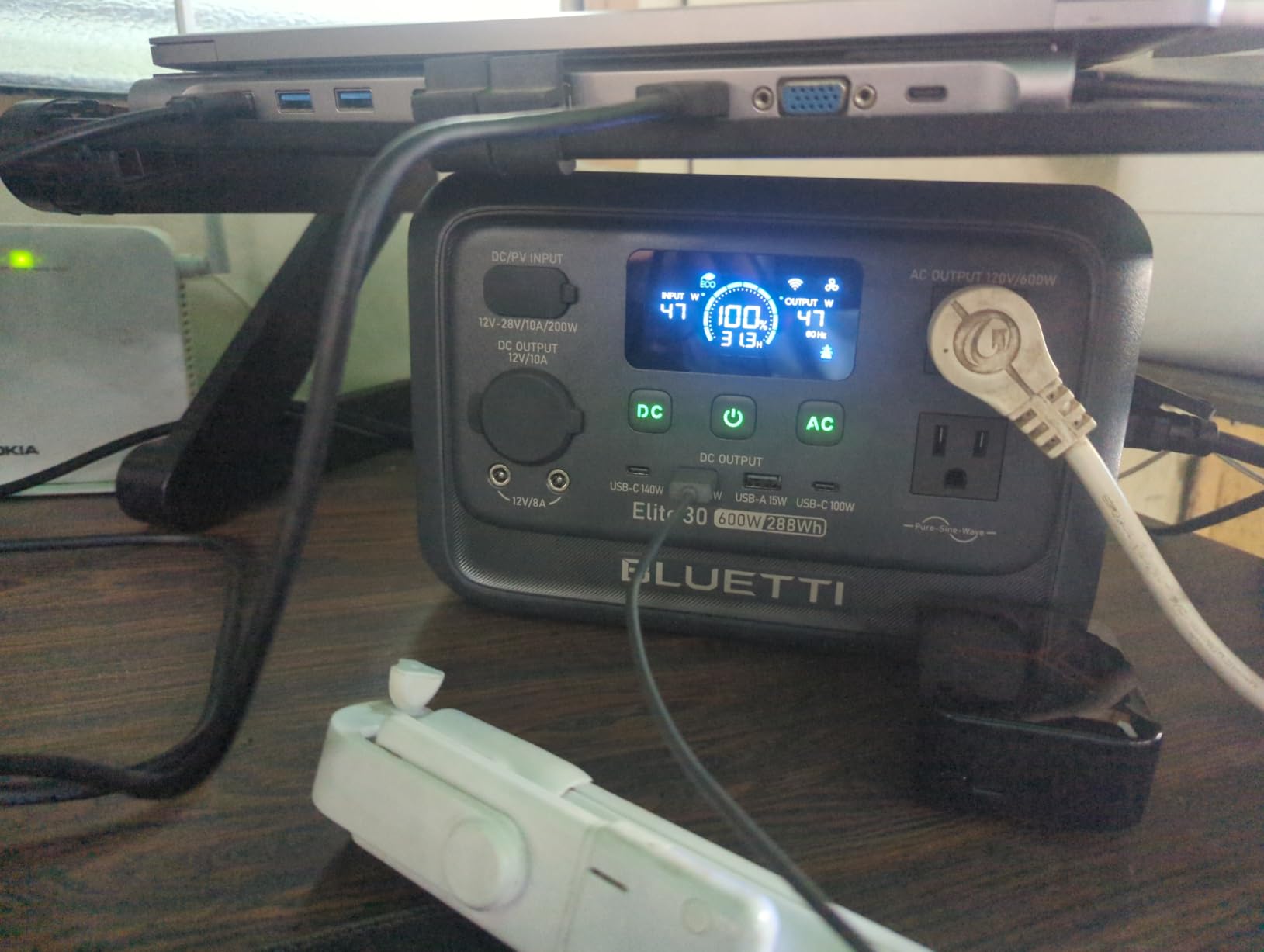
This is the compact option. At 9.5 lb and 288Wh it is small enough to keep by the bed, carry to a relative’s house, or pack for travel, and it charges to 80% in 45 minutes or fully in 70.
One owner measured about five hours of CPAP runtime on a full charge with 16% remaining, which covers most of a night for a machine without heated humidification. Another replaced a failing 1,500VA CyberPower UPS and got 2.4 hours where the old unit gave 1.2 at a similar load.
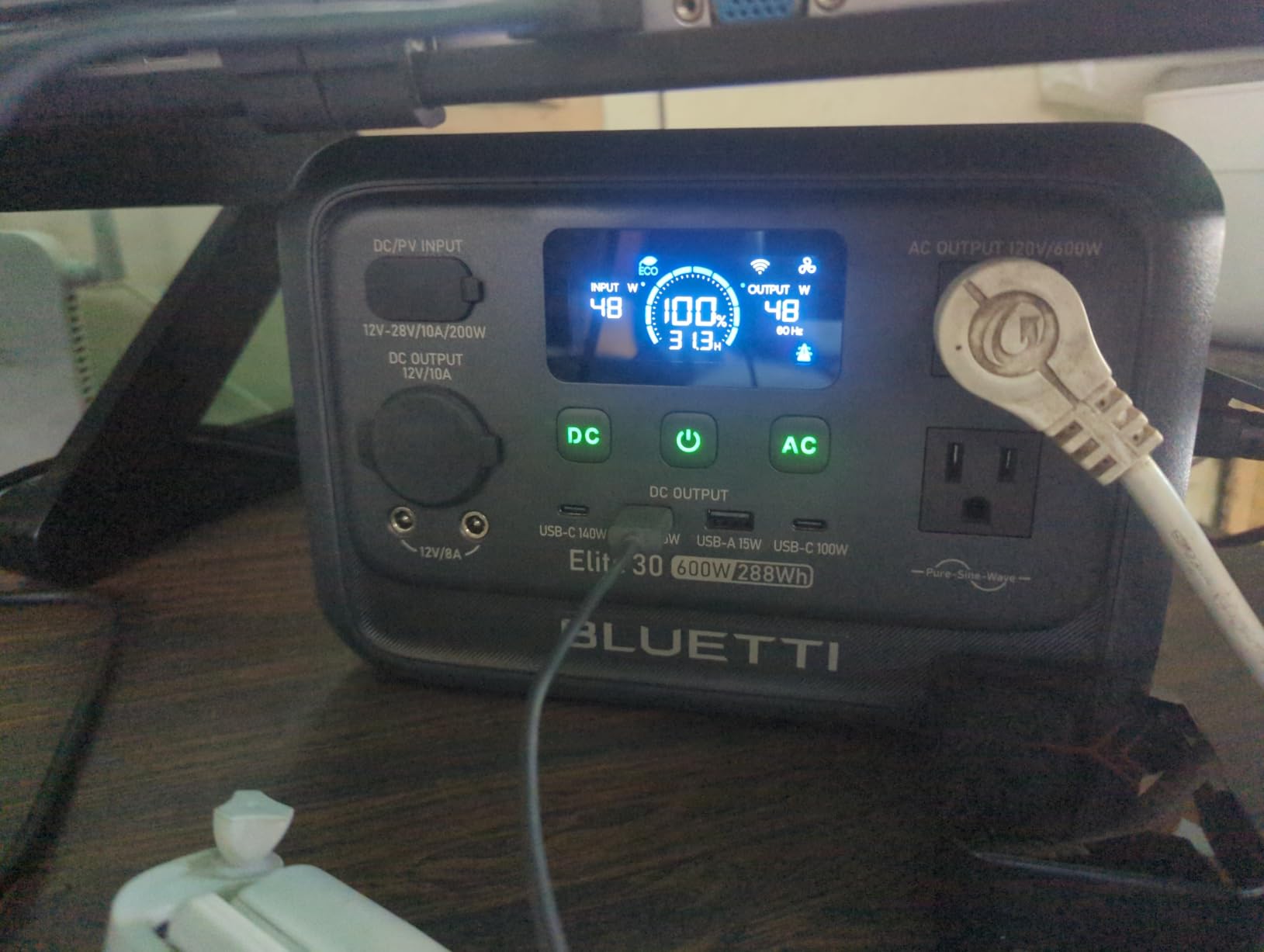
The 10ms UPS switch is confirmed in use by owners running sensitive electronics without a hiccup or restart. Standby draw is low at 4.5W, which matters for a unit that spends weeks plugged in as insurance between outages.
Nine ports including 140W USB-C PD cover a CPAP, a phone, and lighting at the same time. The 60-month warranty is also the longest we saw among the compact options.
Where the Elite 30 V2 makes sense
It works as a bedroom bridge or a travel companion for someone who needs a CPAP or nebulizer away from mains power. Light enough to lift one-handed, it is the practical choice for an older user who cannot easily move a 25 lb unit.
It is also a sensible second unit for a household that already owns a large station, giving redundancy for a lower-draw device.
What it cannot do
288Wh is genuinely small. One owner saw a single CPAP night take 47% of the pack, so do not plan on overnight heated-humidifier use without a wall or car recharge in between.
The 600W continuous ceiling rules out any home oxygen concentrator, and the missing USB communication port means a computer will not auto-shut-down the way it would with a traditional UPS. Pro mode also requires a passcode to restore outputs after a full discharge, which is worth writing down before an emergency.
6. Jackery Explorer 2000 v2 – Best for Long Oxygen Runs
Jackery Explorer 2000 v2 Portable Power Station, 2042Wh, 2200W AC Output
2042Wh LFP
2200W across 3 AC ports
UL1778 certified 20ms UPS
39.5 lbs
Pros
- UL1778 test-certified UPS for backup power
- 2042Wh covers multi-night medical runtime
- Silent charging under 30 dB for bedrooms
- Compact 39.5 lb frame for a 2kWh pack
Cons
- Among the heaviest models here at 39.5 lb
- 20ms transfer is slower than 10ms rivals
- Solar charging needs Jackery panels
- Five-year warranty is short for the class
Capacity is the reason to step up to this unit. At 2,042Wh, roughly 1,777 usable watt-hours, it delivers close to six hours at 300W for a 5 LPM concentrator, close to nine hours at 200W for a 3 LPM unit, and about 29 hours of a 60W CPAP with humidification.
It also carries the strongest formal backup-power certification we found: UL1778 test certification for UPS function. For a household that wants a documented safety standard rather than a marketing claim, that is the differentiator here.
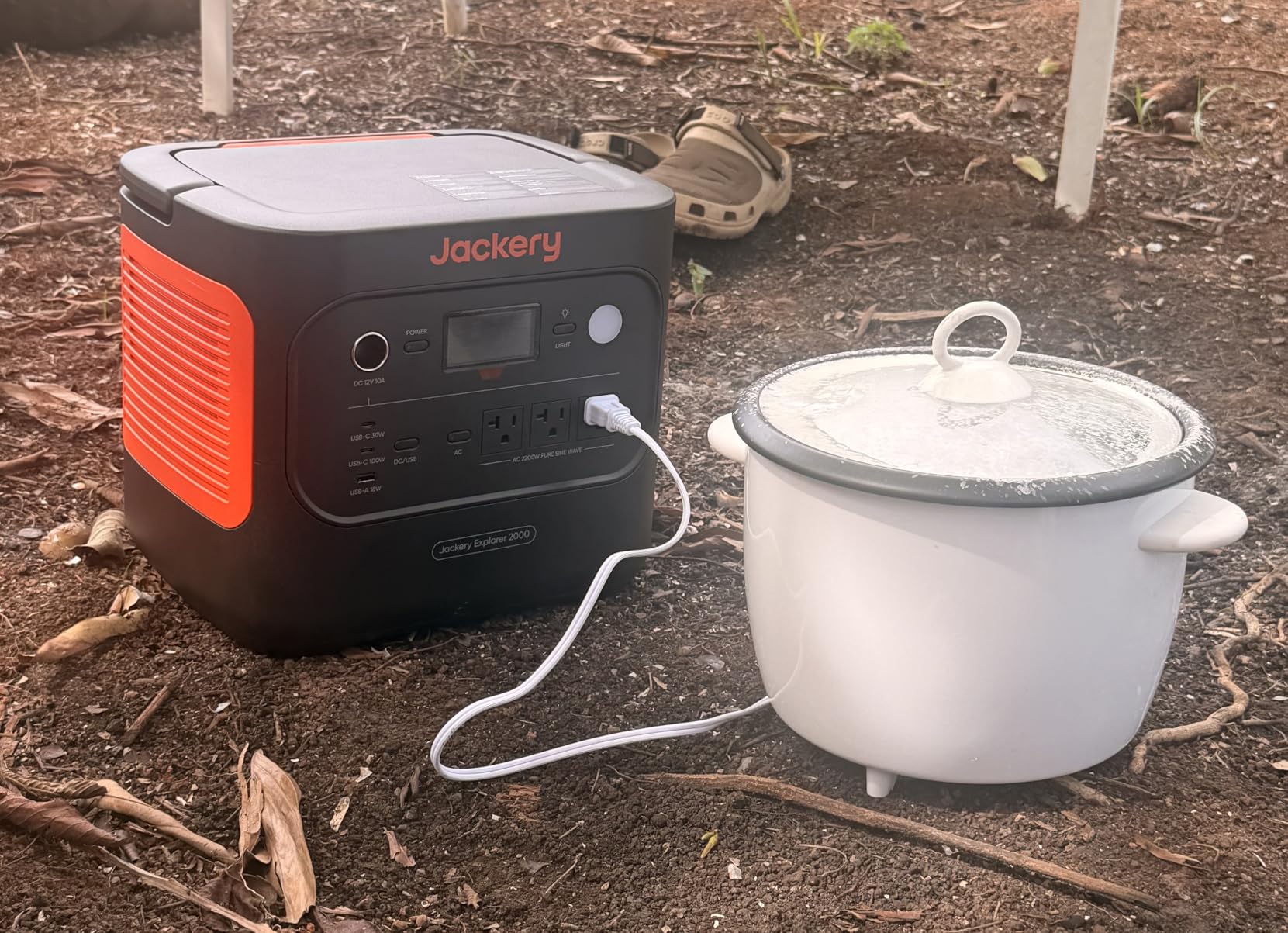
Charging is quick, reaching 80% in 66 minutes on AC fast charge and full in 102 minutes in emergency super charging mode. The silent charging mode stays under 30 dB, which makes it practical to recharge in a bedroom overnight.
Cell-to-Body construction keeps it at 39.5 lb and 34% smaller than typical 2kWh packs, and a 100W USB-C PD port removes one more adapter from the drawer.
Is the Explorer 2000 v2 right for oxygen users?
For a 3 LPM concentrator drawing around 200W, it gives roughly nine hours. For 5 LPM at 300W, close to six. Those are meaningful blocks of time, but they are still bridge coverage rather than independence, so pair it with the redundancy plan below.
Anyone running a concentrator plus CPAP plus lighting overnight also gets headroom from 2,200W across three AC ports.
The compromises
At 39.5 lb it is one of the heaviest options we recommend, and the 20ms transfer is slower than the 10ms models. That gap rarely matters for concentrators, but a device that errors on a brief dip will notice.
Solar input remains limited to Jackery panels, and the five-year warranty is the shortest paired with the top cost tier here. If your oxygen needs are modest, a 1kWh station with fast charging may serve you better.
7. Anker SOLIX C2000 Gen 2 – Best for High-Output Loads
Anker SOLIX C2000 Gen 2 Portable Power Station, 2,048Wh, 2,400W, Camping
2048Wh LFP expandable to 4kWh
2400W rated plus 4000W peak
9W standby draw
approx. 41.7 lbs
Pros
- 2400W rated and 4000W peak clears high-start medical loads
- 58-minute full recharge
- Expandable to 4kWh for multi-day coverage
- 9W standby draw protects stored charge
Cons
- Among the heavier models here at about 41.7 lb
- No published UPS switchover time
- Cost premium over the 1kWh Anker option
The C2000 Gen 2 has the strongest output headroom in this group short of the DJI Power 2000, rated at 2,400W with 4,000W peak. That matters when you are running a home oxygen concentrator, a hospital bed, and a stair lift in the same outage, because those are the loads that push a 2,000W inverter toward its limits.
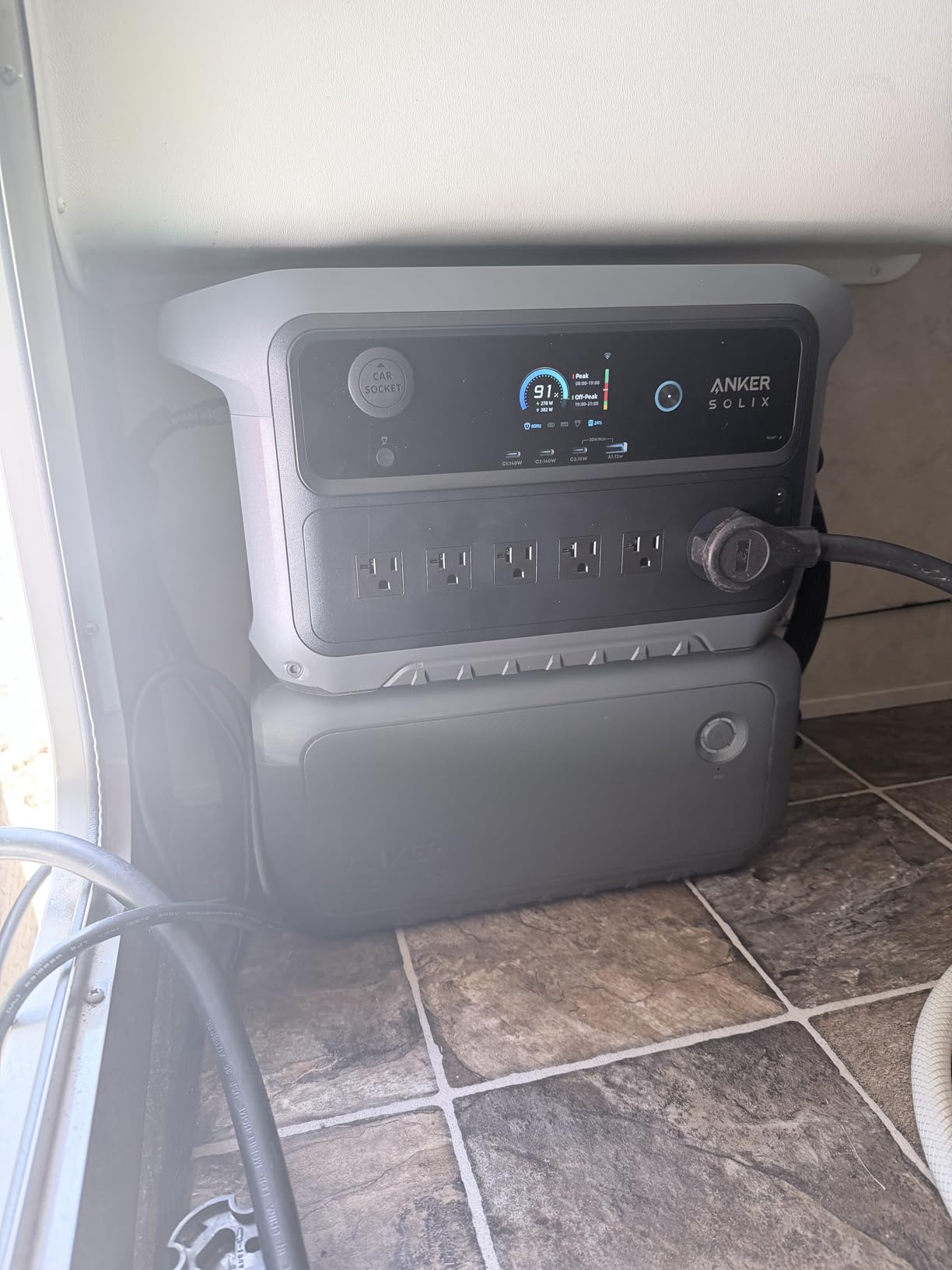
Capacity is 2,048Wh with expansion to 4,000Wh, giving about 1,780 usable watt-hours at base capacity. Owners rate it as the most capable 2kWh option for high-draw medical and household backup, holding a 4.7 score.
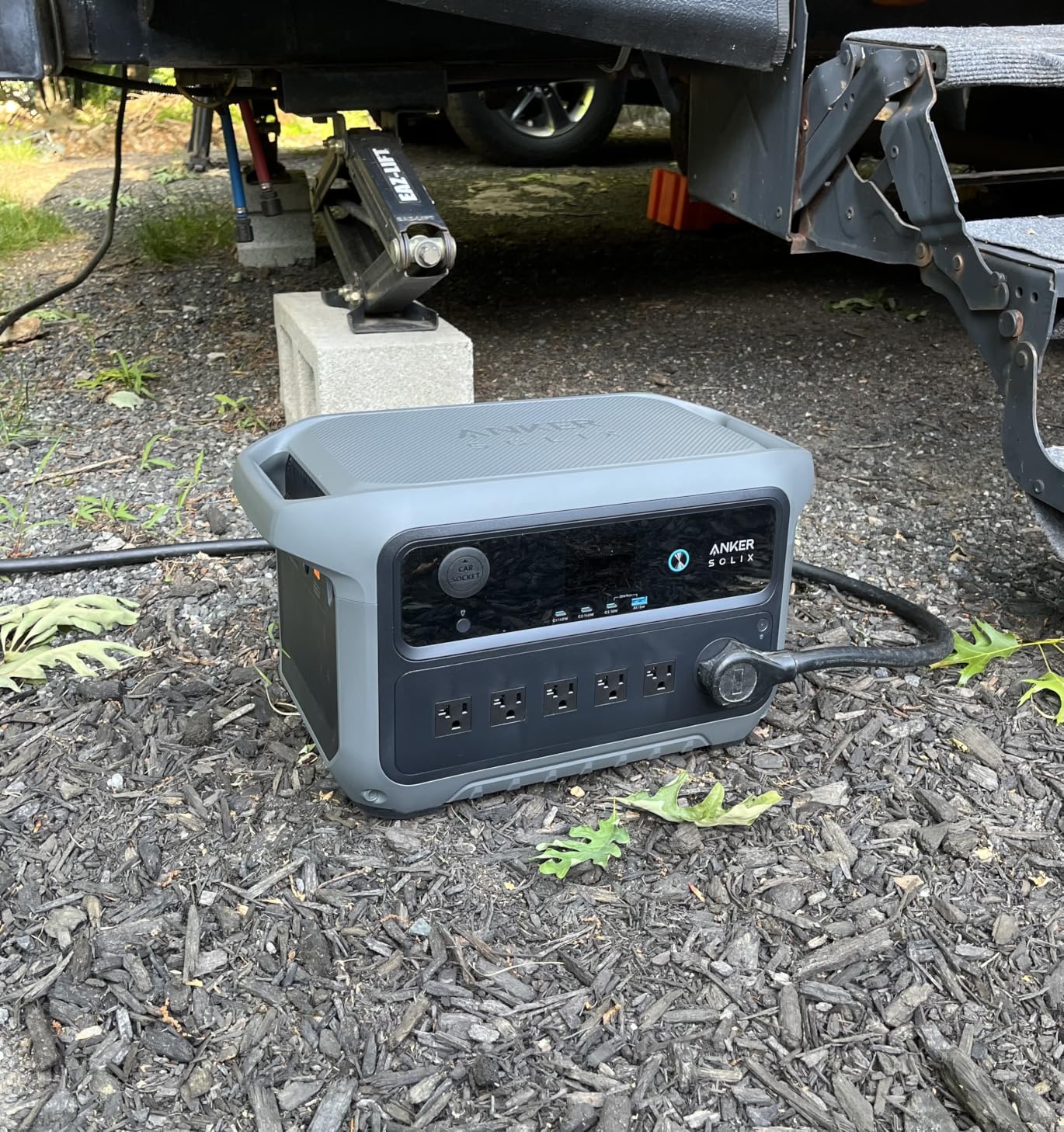
Recharge is fast: full in 58 minutes using AC and solar together, and the 800W alternator charging path fills it in three hours from a car, which is practical for long-distance medical travel. The 9W standby draw is low enough that a stored unit holds its charge through months of float storage.
Expansion to 4kWh turns a single night of bridge power into something closer to a multi-day plan, which is the closest thing here to a compact alternative to whole-home backup.
Who this unit is for
Households combining several high-draw devices, or oxygen users who want a unit that can also run a powered bed or wheelchair charger during the same event. The 2,400W rating removes most of the surge anxiety that comes with concentrators.
If your current need is only overnight CPAP, this is more unit than you need. The LFP chemistry guide explains why we still lean toward this class of chemistry for any medical application.
What to keep in mind
At about 41.7 lb it is one of the two heaviest units in the roundup, so plan a permanent location instead of a grab-and-go role. Bring your own dolly if you will move it often.
The listing does not publish a UPS switchover figure, so if you plan to leave it plugged in as a continuous supply, confirm the transfer time with the manufacturer rather than assuming it matches the 10ms competitors.
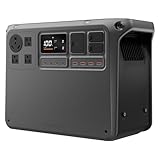
8. DJI Power 2000 – Best for Multi-Day Backup
DJI Power 2000 Portable Power Station, 2048Wh LFP Battery
2048Wh LFP
3000W stable continuous output
10ms seamless UPS switch
approx. 47.9 lbs
Pros
- Highest continuous output here at 3000W
- 10ms UPS among the fastest switchovers
- 55-minute charge to 80%
- Expansion up to 22.5kWh for days of runtime
- 30 dB operation suits bedrooms
Cons
- Heaviest model here at 47.9 lb
- Solar and car charging need separate adapters
- Listing carries conflicting warranty terms
- One-star and two-star reviews total 9% of ratings
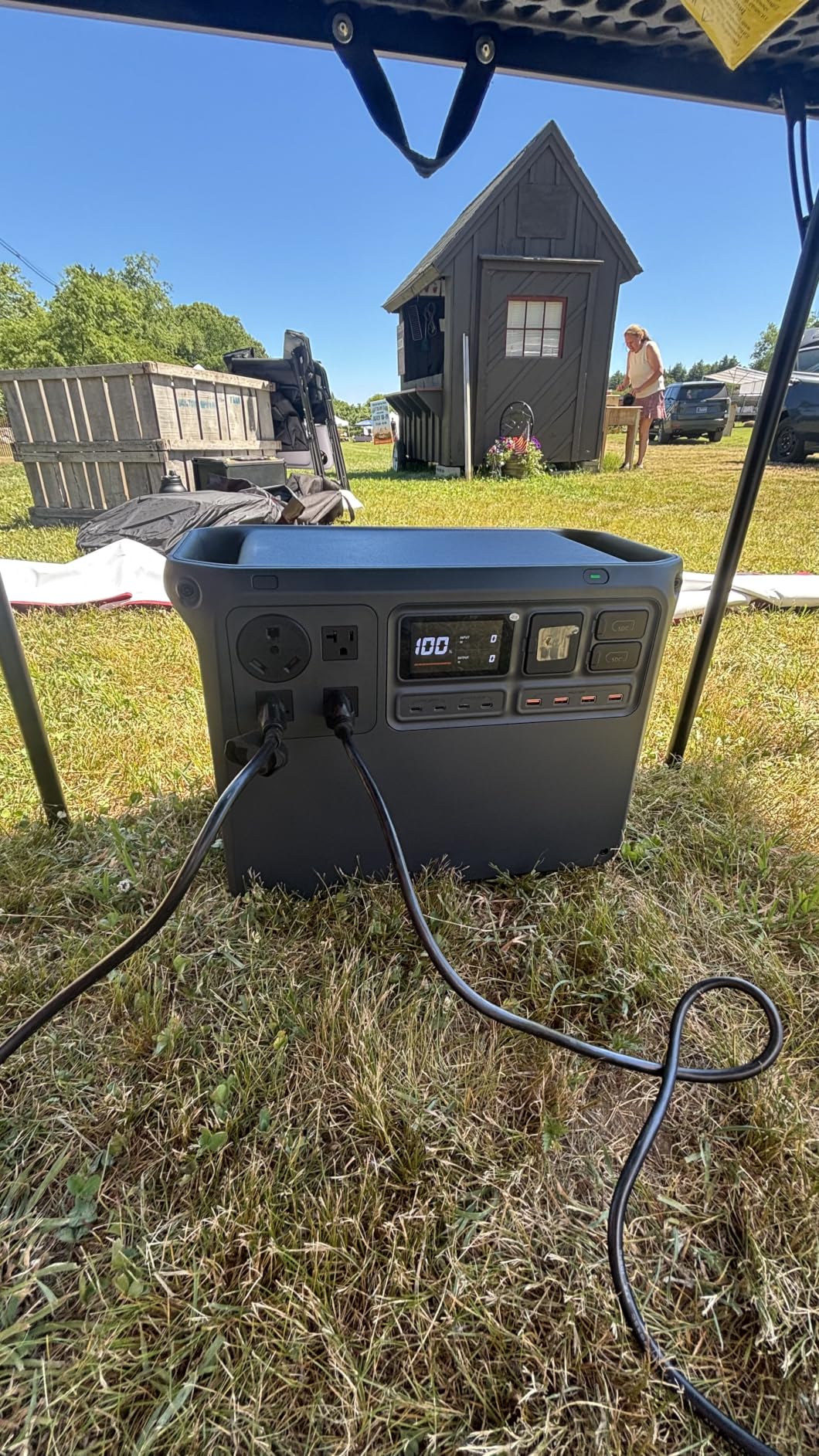
The DJI pairs the highest continuous output in this roundup at 3,000W with a 10ms UPS, and that pairing is the one most relevant to concentrators, ventilators, and CPAP during an outage. Very little else in the 2kWh class clears 3,000W while switching over that quickly.
At 2,048Wh base capacity, expansion batteries scale it up to 22.5kWh, which buyers describe as four to six days of essential home device runtime. That is the difference between a bridge and a real outage plan.
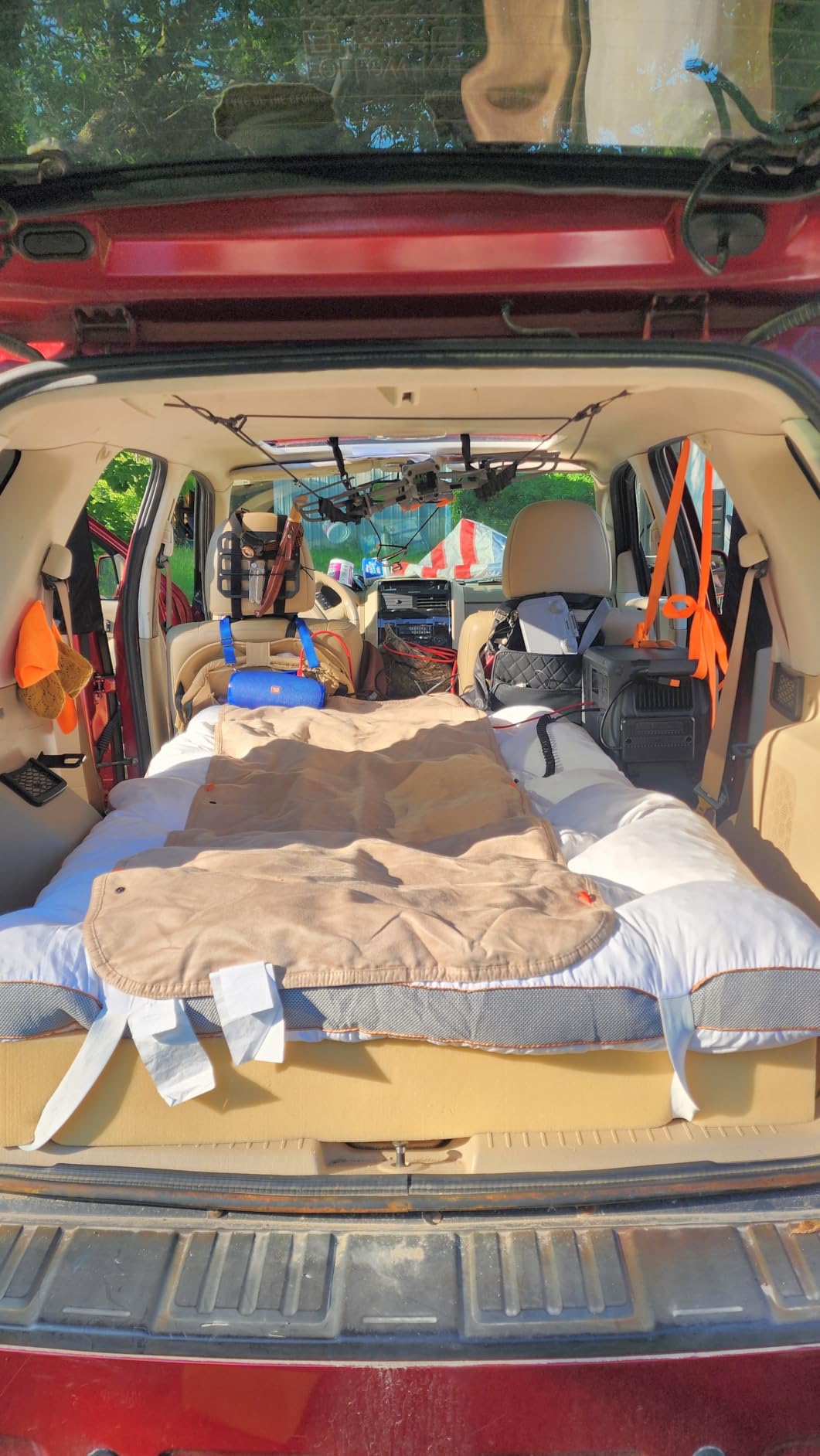
Charging reaches 80% in 55 minutes, and the smart BMS with a flame-retardant housing and sub-nano coating is a sensible safety story for a unit that will live indoors near a sleeping person. Fifteen ports including dual full SDC ports cover everything except hardwired appliances.
Operation drops to 30 dB, so a bedroom placement is realistic, and the DJI Home app handles control and monitoring.
When the DJI Power 2000 is worth it
It earns its place when you want days of coverage rather than one night. Expansion to 22.5kWh is by far the deepest scaling path in this roundup, and 3,000W of continuous output handles hospital beds, stair lifts, and concentrators together.
For a household that is oxygen-dependent and wants a battery that can eventually replace a permanently installed system, it is the closest option here.
The practical drawbacks
At 47.9 lb it is the heaviest unit we tested, and MPPT solar plus car charging modules are not built in, so you need separate adapters for those input paths.
The listing carries conflicting warranty terms, five years in one section and one year in the specifications, so confirm coverage in writing before purchase. One-star and two-star reviews also total 9% of its rating distribution.
9. EASYLONGER ES720 CPAP Battery – Best for CPAP Only
EASYLONGER ES720 CPAP Battery Backup, 266.4Wh Portable CPAP Power Supply
266.4Wh dedicated CPAP pack
3.31 lb weight
4 machine-specific DC cables
no AC inverter
Pros
- Purpose-built for CPAP with four included DC cables
- Lightest device here at 3.31 lb
- 266Wh avoids inverter and standby losses
- Pass-through charging with BMS protection
- FSA and HSA eligible for reimbursement
Cons
- No AC inverter so no concentrators or ventilators
- Heated tube on Luna G3 is not supported
- Cigarette lighter port needs an external voltage converter
- Only 266.4Wh of capacity
Not every household needs a power station. If your only powered medical device is a CPAP machine, this dedicated pack does the job with fewer losses than a general inverter station, because there is no inverter stage eating 13% of the stored energy.
Four machine-specific DC cables ship in the box, covering ResMed S9, AirSense 10 and 11, AirCurve 10 and 11, AirMini, Luna G3, and Philips DreamStation and DreamStation 2. At 3.31 lb it is the lightest device we tested and genuinely travel-friendly.
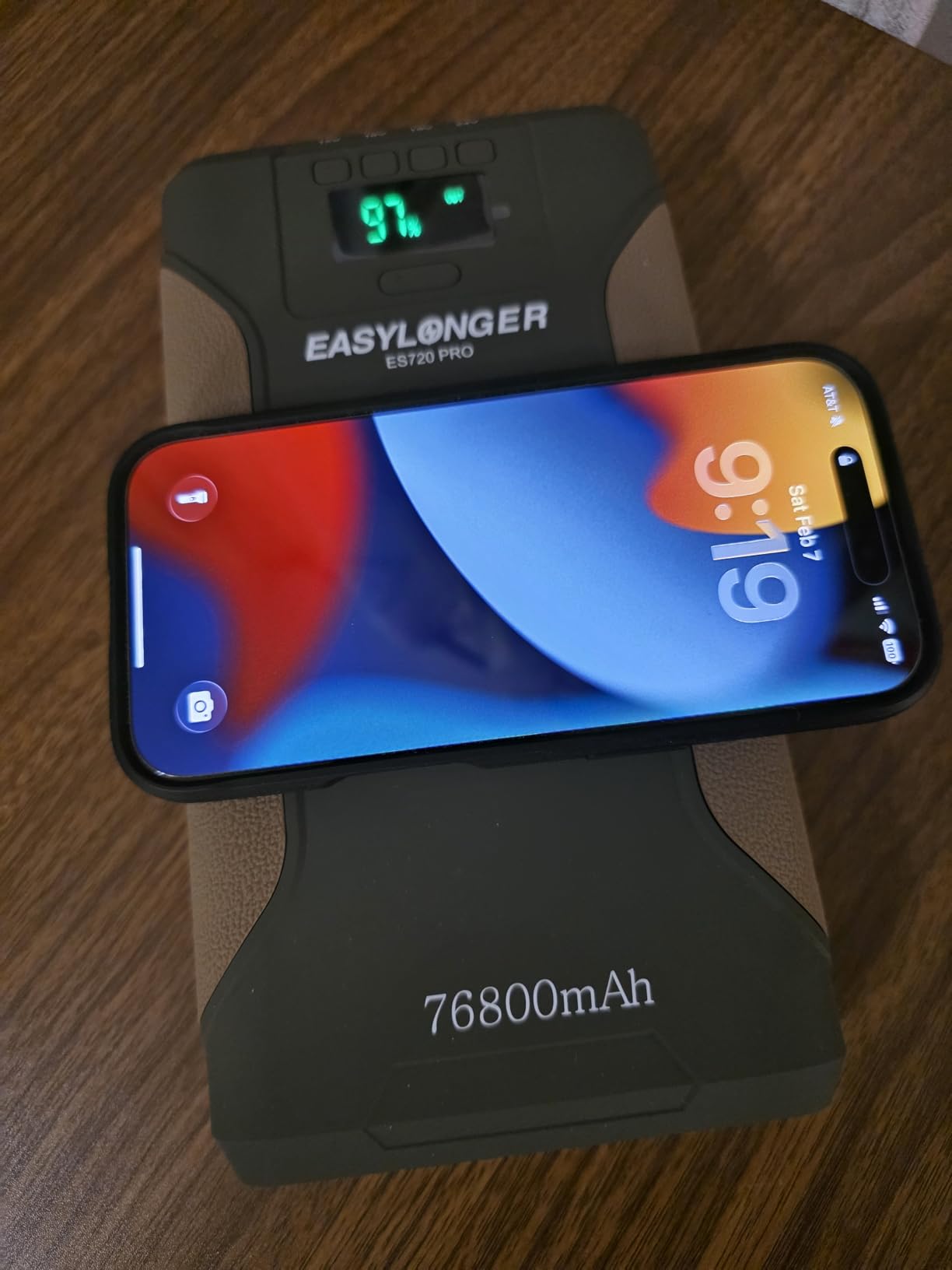
It recharges four ways: a 72W AC adapter in four to five hours, 60W USB-C PD, a 100W solar panel, or a car outlet. Pass-through charging lets it refill while powering the machine, and the BMS covers over-charge, over-discharge, over-current, and short-circuit protection.
It is also FSA and HSA eligible, which means health spending accounts can reimburse it. That changes the effective cost for many CPAP users more than any spec on the sheet.
Is a dedicated CPAP battery enough?
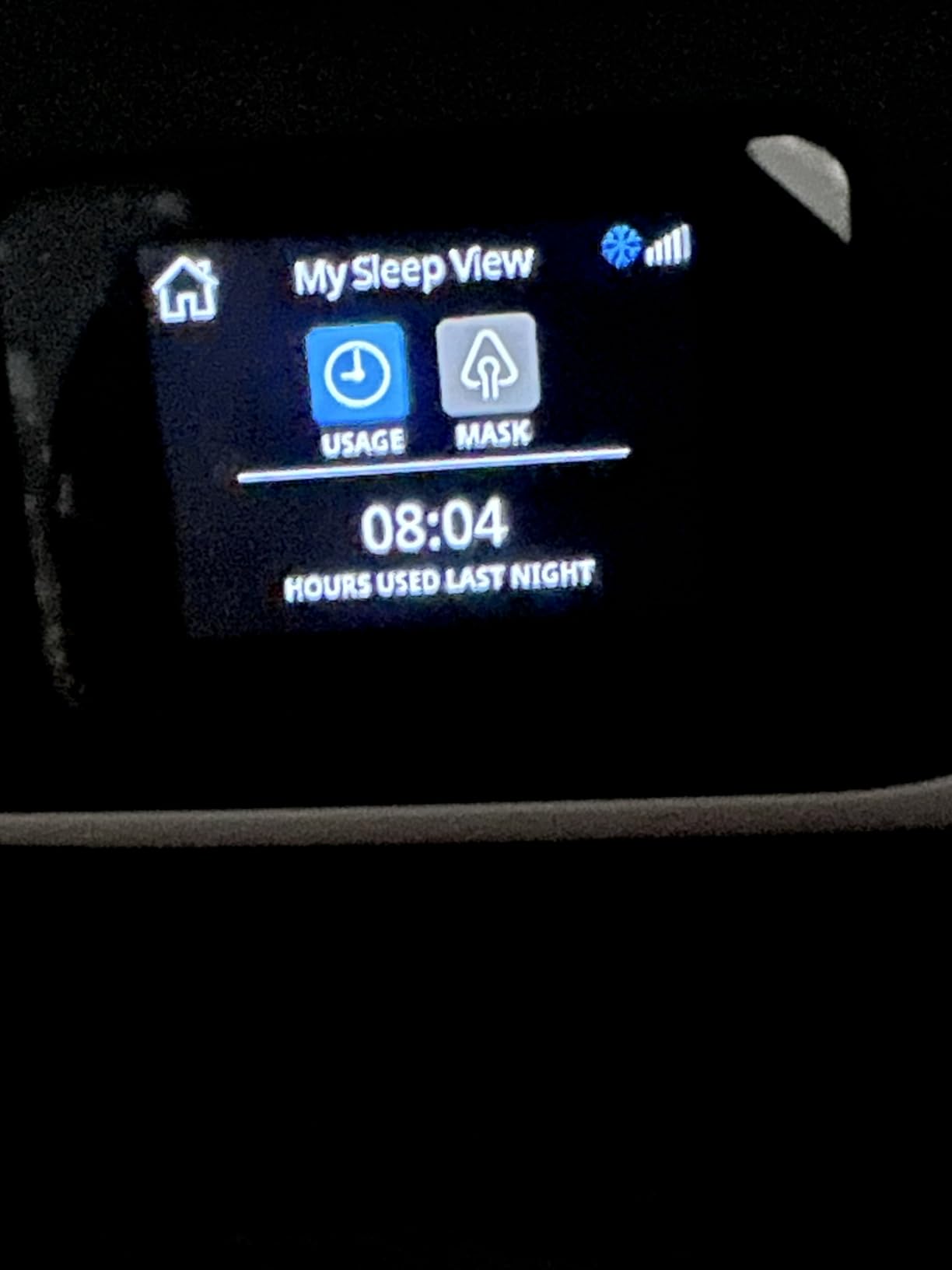
Yes, if a CPAP is your sole powered medical device and your main goal is overnight runtime away from the wall. Eliminate the inverter losses and a 266Wh pack becomes meaningful CPAP-only capacity, plus an LED light with an SOS mode for the outage itself.
It is also the most portable option for anyone who travels with therapy equipment and wants to carry their own power rather than relying on hotel outlets.
Where it stops short
There is no AC inverter, so it cannot power an oxygen concentrator, a ventilator, a nebulizer, a wheelchair charger, or anything else on mains power. That is a hard limit, not a preference.
Compatibility is narrower than it looks: heated tube on the Luna G3 is not supported, and connecting through the cigarette lighter socket requires an external voltage converter. Anyone with mixed or changing equipment should use a general station instead.
10. MARBERO 237Wh Power Station – Budget Pick for Small Loads
Portable Power Station 300W MARBERO 237Wh Camping Solar Generator Backup Lithium Battery with Pure Sine Wave 110V AC Outlet, USB C, USB A, DC for Outdoors Camping CPAP Home Blackout Emergency
237Wh capacity
300W continuous plus 375W peak
Pure sine wave 110V AC
4.6 lb
Pros
- Pure sine wave 110V AC output
- Compact 4.6 lb body
- Eight outlets including two- and three-prong AC
- Owner ran a modem over 5 hours per charge
Cons
- One CPAP night measured at 47% of capacity
- 300W ceiling excludes most clinical equipment
- 6-hour wall recharge is slow
- Proprietary round charger port
- Reports of cells failing after 1 to 3.5 years
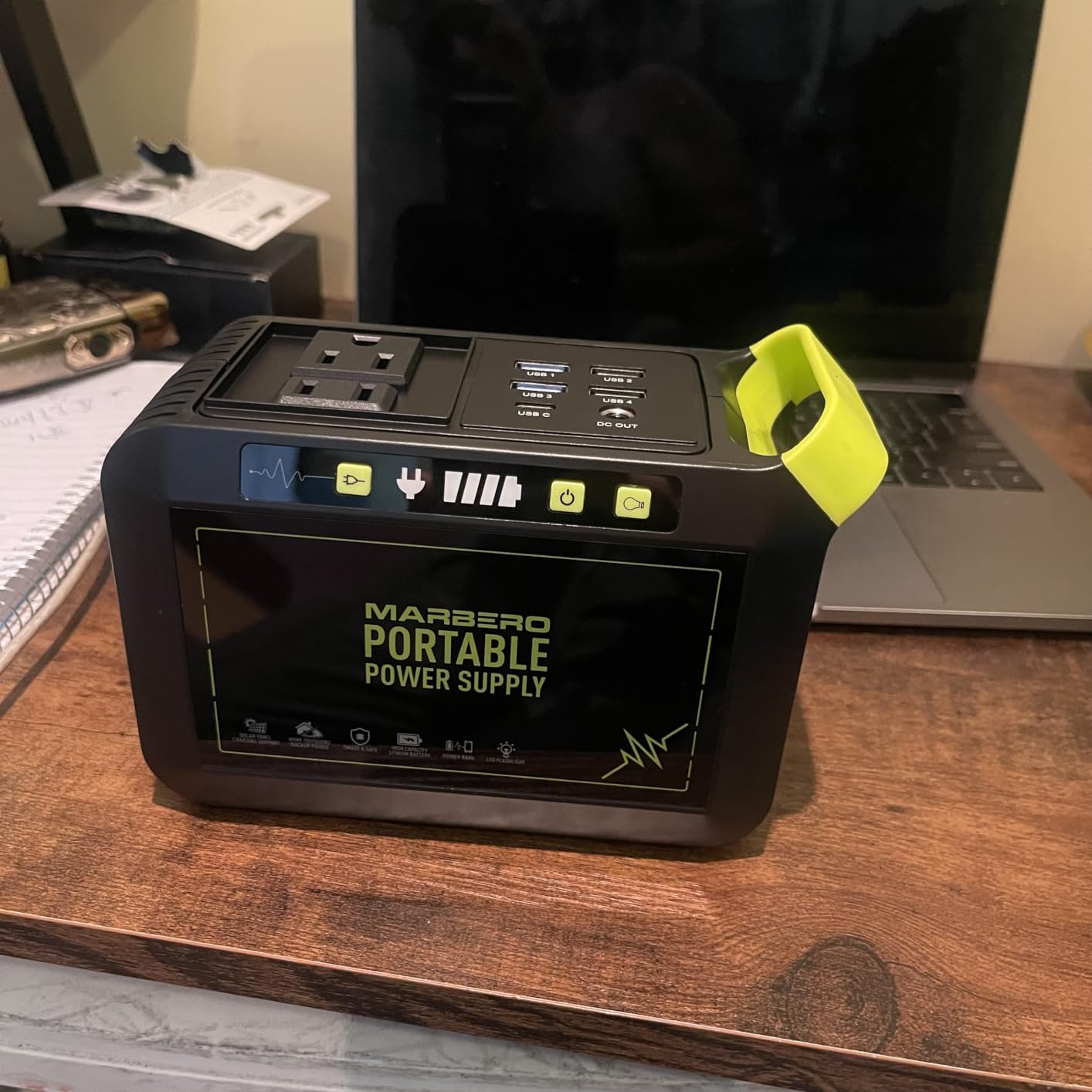
This is the low-cost way to add silent, emissions-free backup power, and it does deliver genuine pure sine wave 110V AC at 4.6 lb. That matters because a pure sine wave output is what makes it acceptable for sensitive electronics at all.
Eight outlets include two-prong and three-prong AC, so brick-style medical device adapters fit without a workaround. Dual LED lanterns with SOS modes double as outage lighting, and an owner ran a modem for over five hours on a single charge.
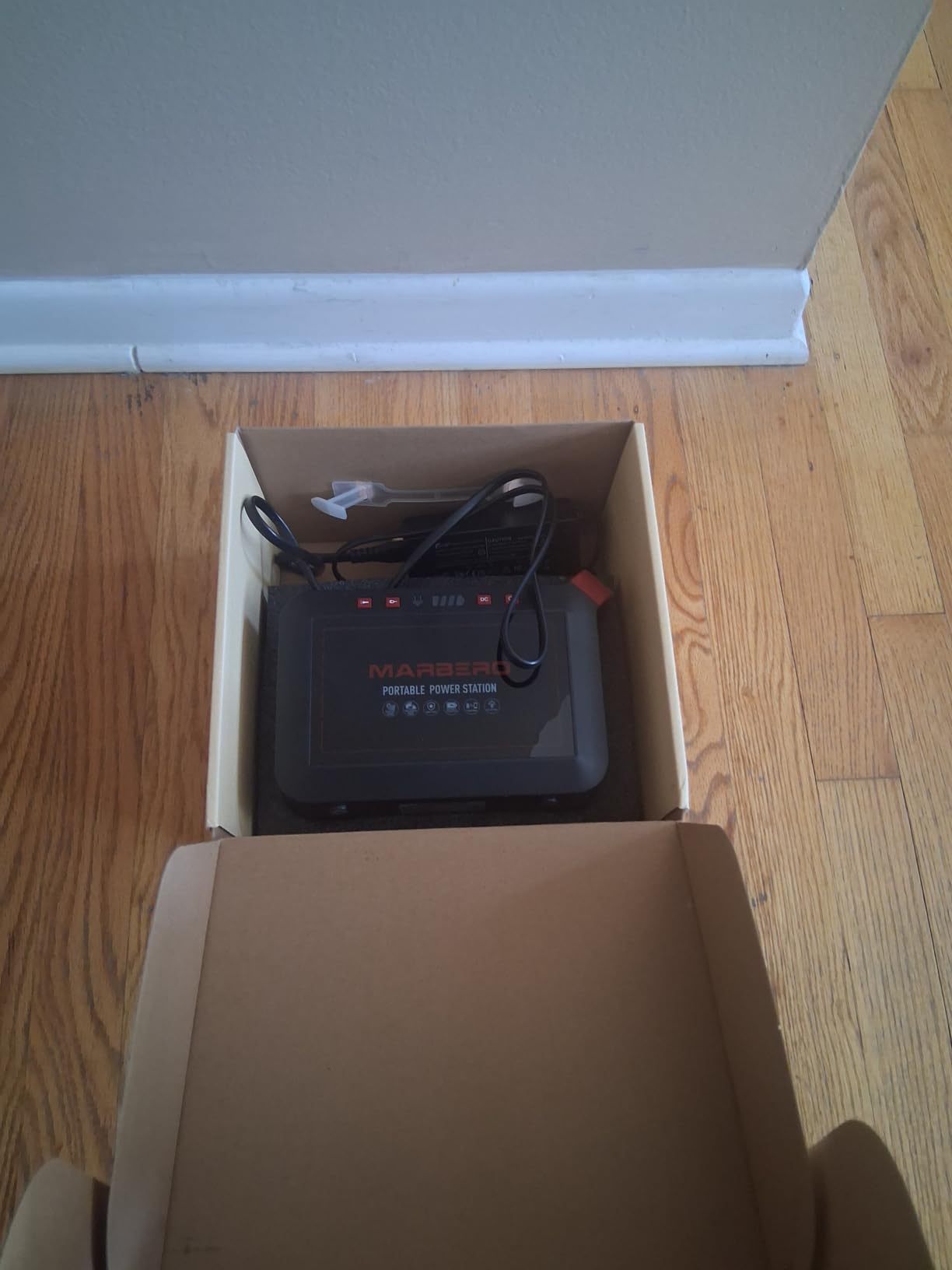
The BMS covers voltage, temperature, short circuit, and overload protection, and the body is roughly the size of a car battery, so it moves between rooms without difficulty.
It charges from a wall outlet in six hours, a car adapter in eight, or a compatible solar panel. For occasional use as a phone and light backup it is genuinely good value, and it carries the largest review base in this roundup at over 9,000 ratings.
What the MARBERO can realistically cover
Think of it as a bridge for low-draw devices: a CPAP without humidification for a few hours, a nebulizer session, a router and phone charging, or an insulin fridge during a short outage. The 300W continuous ceiling handles anything under that, including low-flow portable concentrators.
If you want it as a camping companion alongside a CPAP, our camping power station picks cover that use case in more depth.
Why we would not rely on it for critical equipment
One reviewer measured a CPAP night draining 47% of the pack, which means an evening use case at best. The 300W AC limit excludes most clinical equipment, including every home oxygen concentrator we measured.
Longer-term durability is the bigger concern: several reviewers report cells that stopped holding charge after one to three and a half years, after the 12-month warranty expired. The wall charger uses a proprietary round port, so losing it is a real problem. If someone depends on you for oxygen, this is not the tier to buy.
How to Choose a Portable Power Station for Medical Devices
Start with the formula, then the waveform, then everything else. Here is the sequence we use when a reader asks us to check their setup.
Verify pure sine wave from the manufacturer. Modified sine wave output is a stepped approximation that can confuse motors, fans, and sensitive electronics, and CPAP motors and compressor-driven concentrators sit right in that category. A poster on r/CPAP bought a model specifically because it advertised pure sine wave and concluded the claim was false advertising, which is a fair caution about retailer copy. Confirm the wording in the manufacturer’s specification sheet, not the listing headline.
Check chemistry, and prefer LFP. LiFePO4 cells are rated for 4,000-plus cycles here versus far fewer for older NMC packs, and they tolerate long float storage at a partial charge without the same degradation. The Jackery pack claims over 70% capacity after 4,000 cycles, and the Anker and BLUETTI units state at least 80% after a similar count.
Budget for the 0.87 derating. That factor is not marketing caution, it is inverter loss, and it changes which capacity you need. A 2,000Wh station is really about 1,740Wh delivered, so size up rather than sizing exactly.
Look at UPS switchover, not just UPS claims. Ten milliseconds is effectively invisible to most therapy devices. Twenty milliseconds is usually fine for concentrators but can restart a sensitive device. If the manufacturer does not publish a figure, treat the claim as unverified.
Size for continuous and surge separately. Continuous watts are what you run; surge is what the compressor or motor demands at switch-on. A 5 LPM concentrator at roughly 300W can momentarily pull 600W or more, so buy headroom above your measured load.
Verify safety certification. UL or ETL listing plus an LFP pack is the combination we want for a unit living in a bedroom. The Jackery Explorer 2000 v2 carries UL1778 test certification for UPS function, which is the most formal backup-power standard here.
Check recharge inputs. Speed decides whether a multi-day outage is survivable. Units reaching 80% in 36 to 58 minutes can be refuelled between uses; a six-hour wall recharge cannot.
Best Portable Power Stations for Medical Devices vs. Gas Generators
People caring for someone on 6 LPM of oxygen around the clock often hear that a battery backup is not viable and a properly vented generator is the answer. Both halves of that advice are correct, and the conflict is an indoor air quality problem rather than a power problem.
A gas generator produces carbon monoxide, which is why it must run outside at least 20 feet from the home with an exhaust pointed away from openings. For an oxygen-dependent patient, oxygen itself raises fire risk, so fuel-burning equipment near the patient is exactly what guidelines caution against. This is why a portable power station is not a compromise for this use case; it is the safer layer.
The sensible plan is layered. Layer one is the station, sized to bridge the longest credible outage for your measured load. Layer two is a station at a second location or a second battery, since a single point of failure defeats the purpose. Layer three is a professionally installed system with an automatic transfer switch for anyone whose oxygen cannot tolerate a gap.
Gas equipment still has a place for recharging batteries and powering heavy non-medical loads over several days, kept well away from the patient and the home. It just should not be the thing keeping someone alive indoors.
Keeping a Backup Medical Power Station Ready
An untested backup is a rumour, not a plan. Forum users describe stations sitting for months, losing capacity, then failing to hold a charge exactly when an outage started.
Run a 30-minute load test once a month: plug the device you care about into it, confirm the station powers it, and watch the capacity readout fall. That single habit catches a dead cell, a failed outlet, and a missing cable before they matter.
For long storage, hold the unit near 80% charge rather than full or empty, keep it in a dry room at normal household temperature, and leave the maintenance recharge switched on so it tops itself up. Low standby draw matters here, which is why the 9W figure on the Anker C2000 Gen 2 and the 4.5W draw on the BLUETTI Elite 30 V2 are worth noting.
Finally, label it. Write the device, the output it powers, and the restart steps on the housing in large print, and rehearse the sequence with everyone in the household. A caregiver who has done it once in daylight will manage it in the dark.
Frequently Asked Questions About Portable Power Stations for Medical Devices
What is the best portable power station for a CPAP machine?
The Anker SOLIX C1000 Gen 2 is the strongest match for CPAP users, with owners documenting three straight nights on a single charge and a 4.7 rating across more than 1,600 reviews. Its 10ms UPS keeps therapy running through a brief outage without a restart, and 1,024Wh means roughly 15 hours of a 60W machine with humidification.
Can a portable power station run an oxygen concentrator?
Yes, but size it carefully. A 1,024Wh station delivers about 890 usable watt-hours, so a 5 LPM concentrator drawing 300W gets roughly three hours. For all-night coverage you need 2,000Wh and above, or a station plus expansion batteries. Confirm the concentrator’s rated draw with your equipment provider first.
Do I need a pure sine wave inverter for medical devices?
Yes for anything with a motor or compressor. CPAP blowers, concentrator compressors, and powered wheelchairs run cleaner on pure sine wave output, while modified sine wave is a stepped approximation that can cause noise, resets, or erratic behaviour. Verify the pure sine wave claim in the manufacturer specification sheet rather than on a retailer listing.
Do portable power stations work as a UPS for medical devices?
Most current models do, and several publish the transfer time. Ten milliseconds is effectively invisible to therapy devices, while 20ms or more can restart sensitive equipment. Leave the station plugged in and confirm the pass-through wattage limit, since some units drop output rating while acting as a continuous supply.
What is the best backup power source for an oxygen concentrator?
Layered backup works best: a pure sine wave station at 2,000Wh or more for the first night, a second battery or station at another location, and a professionally installed transfer-switch system for anyone oxygen-dependent. A gas generator can recharge batteries but must run outdoors, well away from the home and the patient.
Conclusion
The Jackery Explorer 1000 v2 is our pick among the best portable power stations for medical devices, with the Anker SOLIX C1000 Gen 2 the pick for CPAP specialists and the BLUETTI Elite 100 V2 the pick for the fastest UPS handoff. Apply the 0.87 inverter factor to each and you land near 930 and 890 usable watt-hours respectively, which covers a full night of therapy for most devices.
Measure your own draw before you buy, confirm pure sine wave output in the manufacturer’s specifications, and treat any battery as one layer of a layered plan. For anyone oxygen-dependent, talk to your medical equipment provider about a permanently installed backup, and rehearse it with your household before 2026 weather tests it.