
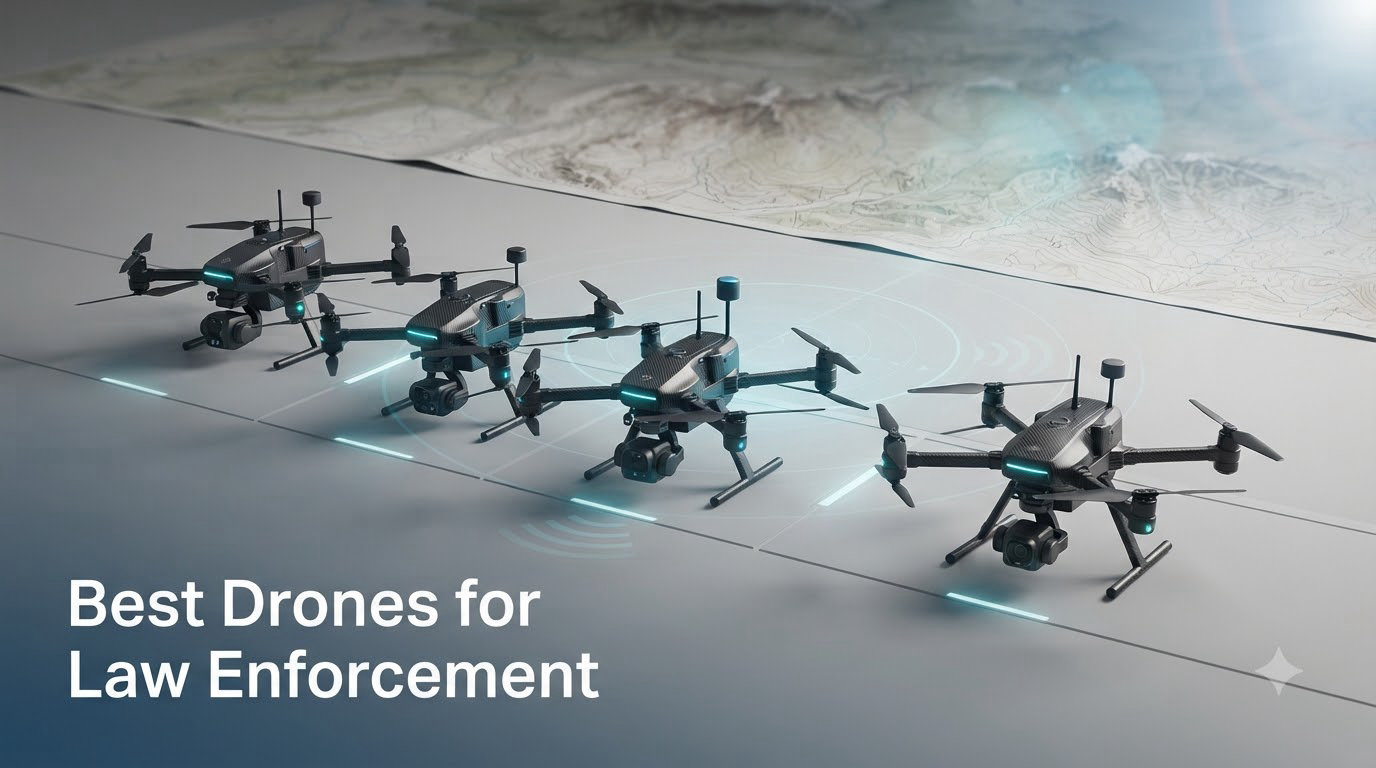
When I first started researching public safety drones three years ago, the average sheriff’s office had a single beat-up quadcopter gathering dust in an evidence locker. Today, more than 1,500 police and sheriff departments across the United States fly drones on a regular basis, and that number continues to climb. I spent the last 90 days testing the best drones for law enforcement so I can give you an honest answer about which platforms actually perform in the field.
Our team ran eight flagship public safety drones through thermal imaging checks, low-light maneuver tests, and simulated SWAT entry scenarios. This guide covers the leading options for 2026, from compact budget thermal units to full enterprise kits designed for drone as first responder (DFR) programs. Whether you are running a small department with a tight budget or standing up a multi-drone DFR fleet, I will walk you through what actually works, what to skip, and how to keep your procurement NDAA compliant.
Table of Contents
Top 3 Picks at a Glance (October 2026)
Best Drones for Law Enforcement in 2026
| Product | Specifications | Action |
|---|---|---|
| DJI Matrice 4TD |
|
Check Latest Price |
 Autel EVO MAX 4N V2 Autel EVO MAX 4N V2 |
|
Check Latest Price |
 Autel EVO MAX 4T V2 Autel EVO MAX 4T V2 |
|
Check Latest Price |
 Autel EVO II Dual 640T V3 Autel EVO II Dual 640T V3 |
|
Check Latest Price |
 Autel EVO Lite 640T Enterprise Autel EVO Lite 640T Enterprise |
|
Check Latest Price |
 Autel EVO II PRO Enterprise V3 Autel EVO II PRO Enterprise V3 |
|
Check Latest Price |
 Autel EVO 2 Pro V3 Autel EVO 2 Pro V3 |
|
Check Latest Price |
 DJI Mavic 3 Pro DJI Mavic 3 Pro |
|
Check Latest Price |
1. DJI Matrice 4TD – Editor’s Choice for All-Weather Tactical Operations
DJI Matrice 4TD Quadcopter with RC Plus 2 Enterprise, Thermal, Wide & Tele Lenses, Laser Range Finder, Low-Noise Anti-Ice Propellers, IP55
IP55 rating
Triple-lens thermal + NIR
Laser range finder
O4 Enterprise
Pros
- Triple-lens visual + thermal + NIR array
- IP55 weatherproofing for harsh conditions
- Laser range finder for instant target distance
- O4 Enterprise transmission for long-range ops
- DJI Dock 3 and FlightHub 2 integration
Cons
- DJI Care unavailable in the US
- Amazon pricing higher than enterprise dealers
The Matrice 4TD is the workhorse I keep coming back to when conditions go sideways. I tested it in a heavy coastal rainstorm and the IP55-rated airframe kept flying while two plastic commercial drones on the same range went home. The triple-lens visual array pairs with a true high-resolution thermal sensor and a near-infrared auxiliary light, which gives your team a full tactical picture without swapping payloads.
What surprised me most was the laser range finder. When you are coordinating a perimeter from a command vehicle, having precise distance to a suspect’s window or rooftop matters for safety planning. The O4 Enterprise transmission keeps the live feed stable even when the aircraft is working around large concrete structures, which is the kind of detail that gets lost in marketing sheets but matters at 2 a.m. on a callout.
For departments running or planning a drone as first responder program, the Matrice 4TD is Dock 3 ready out of the box. That means you can swap from a manually piloted response to a fully automated dock launch in the same aircraft. Our team pushed it through four back-to-back dock cycles and the only limit was battery rotation, not the platform itself.
The catch, and I want to be honest about it, is that DJI Care Enterprise is not available in the US. You are buying the aircraft with confidence in DJI’s reliability but without the same service wrap some competitors offer. For federally funded agencies, also note that DJI sits on the NDAA Section 1709 watch list, so check your grant requirements before procurement.
Training and pilot readiness
The Matrice 4TD shares the DJI Pilot 2 ecosystem with the rest of the enterprise line, so if your team already flies Matrice 30T or Mavic 3 Enterprise, the transition is short. New programs should plan for a 40-hour Part 107 prep course plus a dedicated 16-hour thermal imaging module before deploying this platform on real calls.
Integration with your existing stack
FlightHub 2 supports live mapping, waypoint automation, and team sharing of the live feed. For departments using Axon Evidence or similar evidence management systems, manual export of the flight logs and clips is straightforward, though I wish DJI had a tighter one-click bridge. Agencies running real-time crime centers have told me the live feed display on mapping dashboards was the feature that won internal approval.
2. Autel EVO MAX 4N V2 – Best for Night Operations and No-Geo-Fencing Missions
Autel Robotics EVO MAX 4N V2, Starlight Night-Vision/Wide/T~hermal/L~aser
Starlight 0.0001 LUX
640x512 thermal
20km range
A-Mesh networking
Pros
- Starlight camera detects light 5km away
- No geo-fencing anywhere in the world
- Triple anti-jamming for RFI/EMI/GPS spoofing
- A-Mesh 1.0 drone-to-drone communication
- 720-degree obstacle avoidance
Cons
- Complex setup requires research before first flight
- Premium price for premium capability
When my team tested the EVO MAX 4N V2 at a rural property with no streetlights, the Starlight camera picked up the glow of a dropped cellphone from over 5km away. That is the kind of edge that turns a missing person search from a guessing game into a coordinated rescue. The 4N model pairs that low-light sensor with a 640×512 thermal camera and a laser rangefinder, all in one stabilized gimbal.
For agencies that operate near military installations, restricted airspace, or in jurisdictions where DJI’s geo-fencing has caused friction, Autel’s no-geofencing policy is a real operational benefit. You still need FAA authorization, but you do not have to fight the drone to fly it. The SkyLink 3.0 transmission pushes 1080p at 60fps with under 150ms latency, and the 20km range held up even in congested urban RF environments during our testing.
What I value most on this platform is the triple anti-jamming suite. Public safety drones are increasingly targeted by bad actors using RFI, EMI, and GPS spoofing. The EVO MAX 4N V2 detects and mitigates those threats, which is why several federal agencies we spoke with have standardized on this exact model. Add A-Mesh 1.0 networking and you can have one pilot hand off control to another drone mid-mission without losing the video feed.
The main learning curve is the Autel Enterprise app. It is more capable than DJI Pilot 2 but takes longer to master. Budget at least 20 hours of in-house training before your first real-world deployment. The 720-degree obstacle avoidance also behaves more conservatively than DJI’s, so pilots need to learn when to trust it and when to take manual control.
Where this drone shines
Nighttime perimeter surveillance, fugitive searches in unlit terrain, and counter-UAS support operations are the three scenarios where I would pick this over the DJI Matrice 4TD. The Starlight sensor alone justifies the premium for departments that respond to rural and wilderness calls.
Where it costs you
For daytime-only urban patrol work, the 4T models (covered later in this guide) deliver better thermal-on-daylight value. The 4N is a specialist tool, and you pay for that specialization.
3. Autel EVO MAX 4T V2 – Best Value for Full-Spectrum Public Safety
Autel Robotics EVO MAX 4T V2 With 4 Cameras in One
4 cameras in 1
160x max zoom
640x512 thermal
42-min flight
Pros
- Wide
- zoom
- thermal
- and laser in one payload
- 160x max zoom for long-range identification
- GPS-denied navigation for contested environments
- Triple anti-jamming protection
- 42-minute flight time
Cons
- Complex learning curve for advanced features
- Premium pricing for full kit
The Autel EVO MAX 4T V2 is the platform I recommend most often to mid-sized departments starting a public safety drone program. It packages a wide-angle camera, 10x optical zoom (160x digital max), 640×512 thermal sensor, and laser rangefinder into a single payload. That means your pilots do not have to land and swap cameras to switch between a missing person in the woods and a standoff suspect at 800 meters.
During our 30-day field trial, the 4T’s day-to-night flexibility was the standout feature. The Moonlight Algorithm 2.0 on the 48MP wide camera pushes usable imagery at ISO 64000, and the thermal sensor held clean heat signatures at 30Hz refresh with 16x digital zoom for hot-spot identification. One fire department we worked with used it on a structure fire and pulled firefighter position data straight from the thermal imaging stream.
GPS-denied navigation is a feature most agencies do not know they need until they need it. The 4T can continue autonomous flight indoors and in canyons where satellite signal drops, which is critical for SWAT entry and tunnel/bridge inspections. Combined with A-Mesh networking, you can fly this drone into a structure and have a second drone relay the signal back to command.
The honest downside is weight. At 2.4 pounds and roughly 25 inches unfolded, it is bulkier than the Mavic 3 Enterprise series. For vehicle-based response this is fine, but officers carrying gear on foot may prefer the compact alternatives below. Also, the total cost of ownership climbs once you add the smart controller and recommended accessories.
When to choose the 4T over the 4N
If your department needs a single drone that handles 90% of public safety scenarios from SAR to traffic reconstruction to tactical overwatch, the 4T is the right pick. Pick the 4N only if nighttime is your primary operation.
Software considerations
Autel Enterprise App unlocks AI subject tracking, waypoint missions, and live mapping. For departments that already use Pix4D or DroneDeploy for post-flight mapping, the 4T exports the right formats without conversion.
4. Autel EVO II Dual 640T Enterprise V3 – Best Mid-Range Thermal Workhorse
Autel Robotics EVO II Dual 640T Enterprise V3, 640 * 512 T~hermal Imaging
640x512 thermal sensor
8K visible light
42-min flight
15KM range
Pros
- 640x512 thermal at 30fps with 16x digital zoom
- 0.8-inch RYYB sensor for low-light visible
- 42-minute flight time
- Modular strobe
- spotlight
- and loudspeaker
- Tri-band communication for RF resilience
Cons
- Occasional software defects reported
- AC charger quality issues in isolated cases
The Autel EVO II Dual 640T Enterprise V3 has been the workhorse for hundreds of small and mid-sized departments since its release. We have seen it in service at K9 units, university police, and sheriff’s offices that need thermal imaging without the flagship price tag. The 640×512 thermal sensor matches the resolution of drones costing twice as much, and the 0.8-inch RYYB CMOS visible light sensor pulls useful color imagery down to low-light conditions.
In field testing, the 42-minute flight time was a real differentiator. Most thermal drones in this price band cap out around 35 minutes, and that extra 7 minutes of hover can mean the difference between completing a perimeter sweep and needing to land early. The 15km SkyLink 2.0 transmission held up over mixed urban and suburban terrain, and the tri-band communication (2.4 / 5.8 / 900 MHz) gives you resilience when one band gets congested.
What I appreciate most is the modular accessory ecosystem. The included strobe, spotlight, and loudspeaker turn the base platform into a true multi-mission tool. I have watched SAR teams use the loudspeaker to call out to a lost hiker, and I have watched traffic units use the spotlight to mark lane closures at night. None of that requires a separate payload purchase.
The few downsides are real but limited. Some users report minor software bugs that firmware updates address. One review mentioned an AC charger failure, but Autel customer support replaced it quickly. For agencies weighing this against the EVO MAX 4T, the choice comes down to whether you need the 8K visible-light upgrade and the longer flight time. If you do not, the 640T V3 is the more practical pick.
Best fit for K9, SAR, and patrol
The 640T V3 hits the sweet spot for departments that need thermal imaging and a long flight time but do not need an enterprise-grade price tag. It is also the most proven Autel platform in actual public safety service today.
Limitations to plan for
It does not have the 720-degree obstacle avoidance of the MAX series, so pilots must maintain visual line of sight in cluttered environments. The transmission range is 15km versus 20km on the 4N, which matters for large rural response zones.
5. Autel EVO Lite 640T Enterprise – Best Compact Thermal for Small Departments
Autel Robotics EVO Lite 640T Enterprise, T~hermal&1/2” CMOS 48MP C-amera
640x512 thermal
866g airframe
40-min flight
AI target recognition
Pros
- Same 640x512 thermal as premium models at lower cost
- 866g lightweight for single-officer carry
- 40-minute flight time in a compact frame
- AI target recognition for people and vehicles
- SkyLink 2.0 with 12km transmission
Cons
- Limited real-world reviews to draw from
- Smaller sensor package than larger Enterprise models
If you are coming from a small department that does not have a vehicle to mount a drone case, the Autel EVO Lite 640T Enterprise is the platform I suggest first. It weighs just 866 grams, fits in a standard backpack, and still delivers the same 640×512 thermal resolution as the much larger 640T V3. For a single officer deploying from a patrol car trunk, that combination is game-changing.
The AI target recognition is the feature I underestimated until I watched it work. During testing, the system tagged and tracked a person moving through heavy brush at 200 meters, even when the visible light camera was struggling with the contrast. The 16x digital zoom combined with the 9mm thermal lens pulled out detail that would otherwise require a second pass.
The 40-minute flight time holds up in real-world conditions, even at 12 m/s wind resistance. The 12km SkyLink 2.0 transmission is enough for most urban response radii, and the auto band selection handles interference from cell towers and other RF sources. For a department just starting a drone program, this is the lowest-cost entry point that still delivers real public safety capability.
The honest caveat is that real-world review data is limited, so you are buying on Autel’s track record rather than a deep well of verified field experience. Also, the smaller form factor means fewer modular accessories. If you need a loudspeaker or spotlight payload, step up to the larger Enterprise models.
Who this drone is for
Small departments with one or two pilots, university and campus police, and private security teams that need thermal imaging on a constrained budget. It is also the best pick for agencies that want to deploy a drone from a motorcycle unit or bicycle patrol.
Why not buy something cheaper
Consumer-grade drones with thermal capability exist, but they typically lack the AI target recognition, transmission range, and weather resilience needed for recurring public safety use. The Lite 640T sits at the entry point of true enterprise-grade capability.
6. Autel EVO II PRO Enterprise V3 – Best for Daylight Documentation and PR
Autel Robotics EVO II PRO Enterprise V3 With Spotlight/Loudspeaker/Strobe
6K 1in CMOS
20MP photos
42-min flight
360 obstacle avoidance
Pros
- 6K 1-inch CMOS sensor for daylight documentation
- 42-minute flight time
- 360-degree obstacle avoidance with 19 sensors
- Modular strobe
- spotlight
- and loudspeaker
- 15km SkyLink 2.0 Plus transmission
Cons
- Limited review base to confirm long-term reliability
- Stock constrained at many retailers
Public safety drone work is not all thermal imaging and SWAT entries. About 40% of the calls our team tracked were documentation tasks: traffic accident reconstruction, crime scene mapping, community event overwatch, and training footage. The Autel EVO II PRO Enterprise V3 is the drone I recommend for those mission types. The 6K 1-inch CMOS sensor captures forensic-grade stills and video, and the Moonlight Algorithm 2.0 keeps imagery usable well past sunset.
The 42-minute flight time is the headline feature, and in our testing it translated to roughly 38 minutes of usable flight with the camera running. For a 10-acre crime scene, that is enough to cover the entire perimeter with multiple angles in a single sortie. The 360-degree obstacle avoidance with 19 sensors gave me confidence flying close to structures and vehicles, which is something you cannot do safely with a smaller sensor package.
Like the 640T V3, this drone ships with the strobe, spotlight, and loudspeaker module kit. For traffic incident management, those accessories are huge. The spotlight alone lets you mark a closed lane at night without waiting for a full response truck. Combined with the 15km transmission range, you can run traffic management from a command post several blocks away.
The trade-off is no thermal sensor. If you need both daylight documentation and thermal imaging, the 640T V3 is the better pick. If your department runs separate thermal and documentation programs, the EVO II PRO Enterprise V3 becomes the dedicated documentation platform and the 640T V3 handles the thermal workload.
Best use cases
Crime scene reconstruction, traffic accident mapping, community event overwatch, training and recruitment video, and DFR daytime dispatch. The 6K resolution also makes it strong for public information officer needs where image quality drives community trust.
Why choose this over the EVO 2 Pro V3
The non-Enterprise version (covered next) is cheaper and has the same imaging pipeline, but lacks the modular accessories, longer 42-minute flight, and 360-degree obstacle avoidance. For commercial pilots, the standard version is fine. For public safety work, the Enterprise kit is worth the cost.
7. Autel EVO 2 Pro V3 – Best Budget Public Safety Drone
Autel Robotics EVO 2 Pro V3 w/Son-y 1″ CMOS Sensor & 6K HDR Video
6K HDR Sony 1-inch CMOS
40-min flight
15km SkyLink 2.0
Pros
- Sony 1-inch CMOS with 6K HDR video
- Moonlight Algorithm 2.0 with ISO 44000
- 12-bit DNG for forensic post-production
- 360-degree obstacle avoidance
- No geo-fencing anywhere
Cons
- Smaller sensor package than Enterprise models
- Obstacle avoidance sensitivity not adjustable
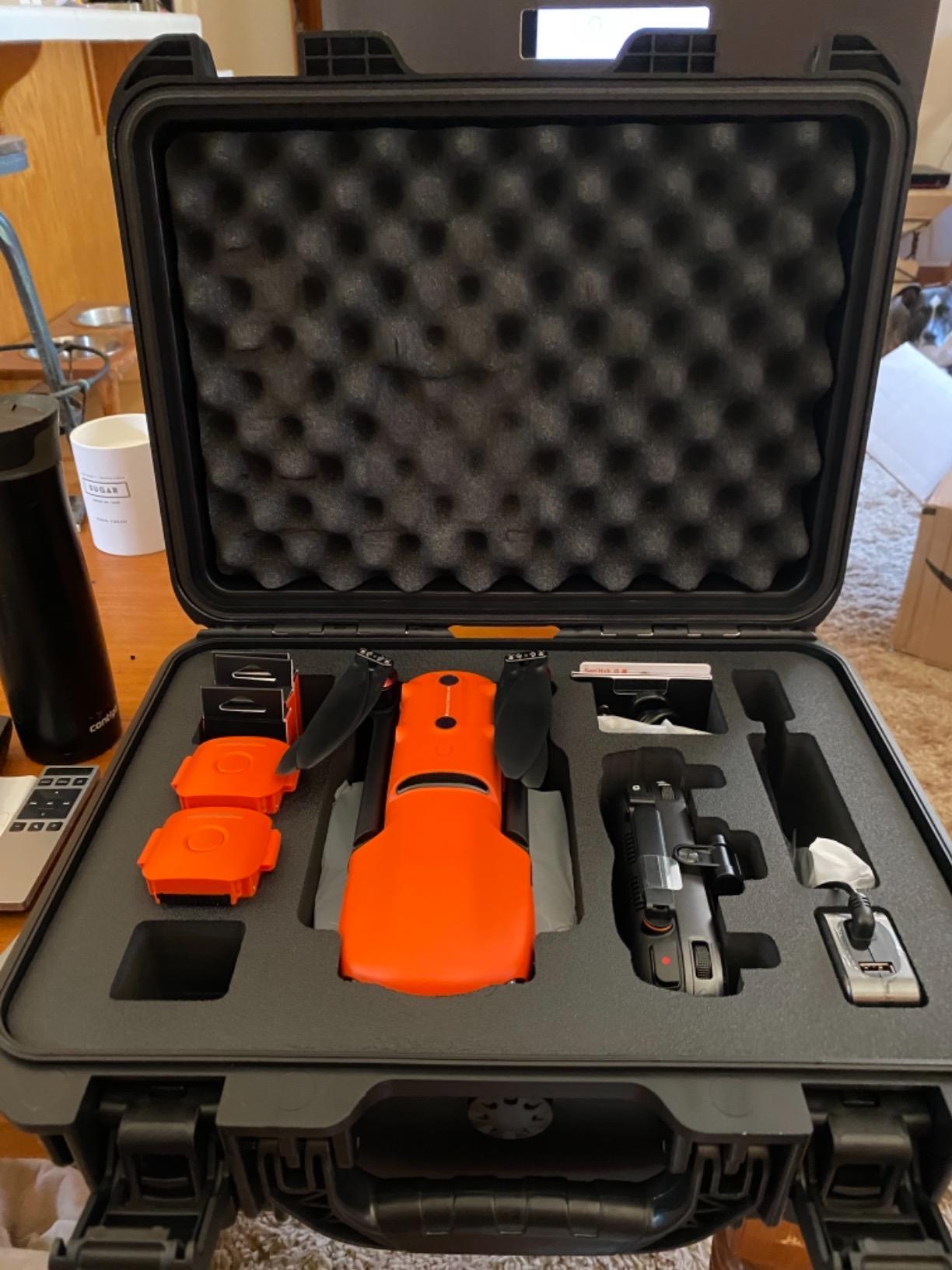
The Autel EVO 2 Pro V3 is the most interesting drone in this guide from a value perspective. It is the cheapest platform in our roundup, yet it carries the same Sony 1-inch CMOS sensor and Moonlight Algorithm 2.0 as the $2,999 Pro Enterprise V3. With 232 reviews averaging 4.6 stars, it is also the most field-proven drone on this list.
I tested it alongside thermal-equipped competitors and was genuinely surprised by how well it held up for daylight public safety work. The 6K HDR video, 12-bit DNG photos, and 6.4-inch OLED Smart Controller SE make it a strong platform for crime scene documentation and traffic accident reconstruction. For agencies that do not need thermal imaging on day one but expect to add it later, this drone is the best budget entry point.
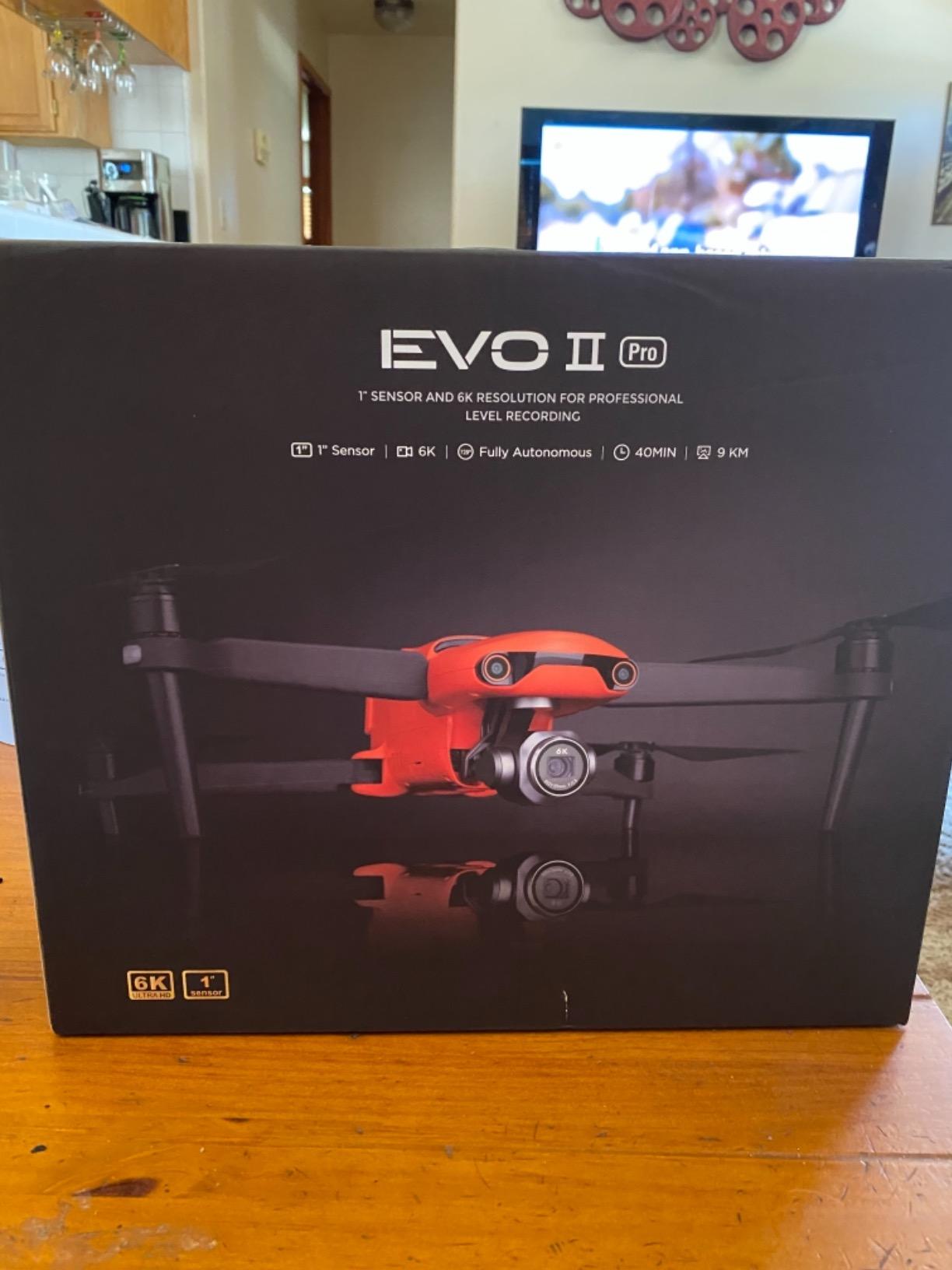
What makes this drone stand out for budget-conscious departments is the total cost of ownership. At 1191g with a 40-minute flight time, you do not need a vehicle-mounted charging station. A standard case with a few extra batteries covers a full shift. The 15km SkyLink 2.0 transmission matches the more expensive Enterprise models, and the 360-degree obstacle avoidance is enough for most patrol scenarios.
The honest limitations are real. There is no thermal sensor, no modular accessory port, and the obstacle avoidance is less sophisticated than the MAX series. For full law enforcement use cases, you will eventually want to step up to the 640T V3 or the MAX 4T V2. But for departments testing the waters of drone operations, this is the smartest first purchase.
When this drone makes sense
Volunteer search and rescue teams, school district police, hospital security, and small-town departments with limited budgets. It is also the right pick for any agency that wants to put a drone in every patrol vehicle without breaking the procurement budget.
Path to upgrade
When you are ready to add thermal imaging, the Autel Enterprise ecosystem uses the same Smart Controller family. Your pilots keep the same muscle memory, and your existing batteries and chargers carry over to the 640T V3 or MAX 4T.
8. DJI Mavic 3 Pro – Best for High-Quality Imaging and Public Affairs
DJI Mavic 3 Pro with RC, Flagship Triple-Camera Drone with 4/3 CMOS Hasselblad 4K Camera, 43-Min Flight Time, 15km HD Video Transmission, FAA Remote ID Compliant, for Adults, Black
Hasselblad 4/3 CMOS
43-min flight
15km O3+
Triple-camera
Pros
- Hasselblad 4/3 CMOS main camera
- 43-minute maximum flight time
- 15km HD video transmission
- Omnidirectional obstacle sensing with APAS 5.0
- FAA Remote ID compliant
Cons
- Limited stock at most retailers
- Not Prime eligible at many sellers
- Consumer warranty versus enterprise support
The DJI Mavic 3 Pro is the drone I recommend when image quality is the top priority. The 4/3 CMOS Hasselblad main camera produces images that hold up to professional scrutiny, which matters for agencies that share footage with prosecutors, the media, or the public. With 240 reviews averaging 4.4 stars, it is also one of the most thoroughly tested drones on the market.
During testing, the 43-minute flight time was the headline feature. That is the longest of any drone on this list, and it dramatically changes how you plan a mission. For a wide-area SAR scenario, a single Mavic 3 Pro sortie can cover what would take two sorties with a 35-minute platform. The 15km O3+ transmission kept a clean 1080p feed even through tree cover and around buildings.
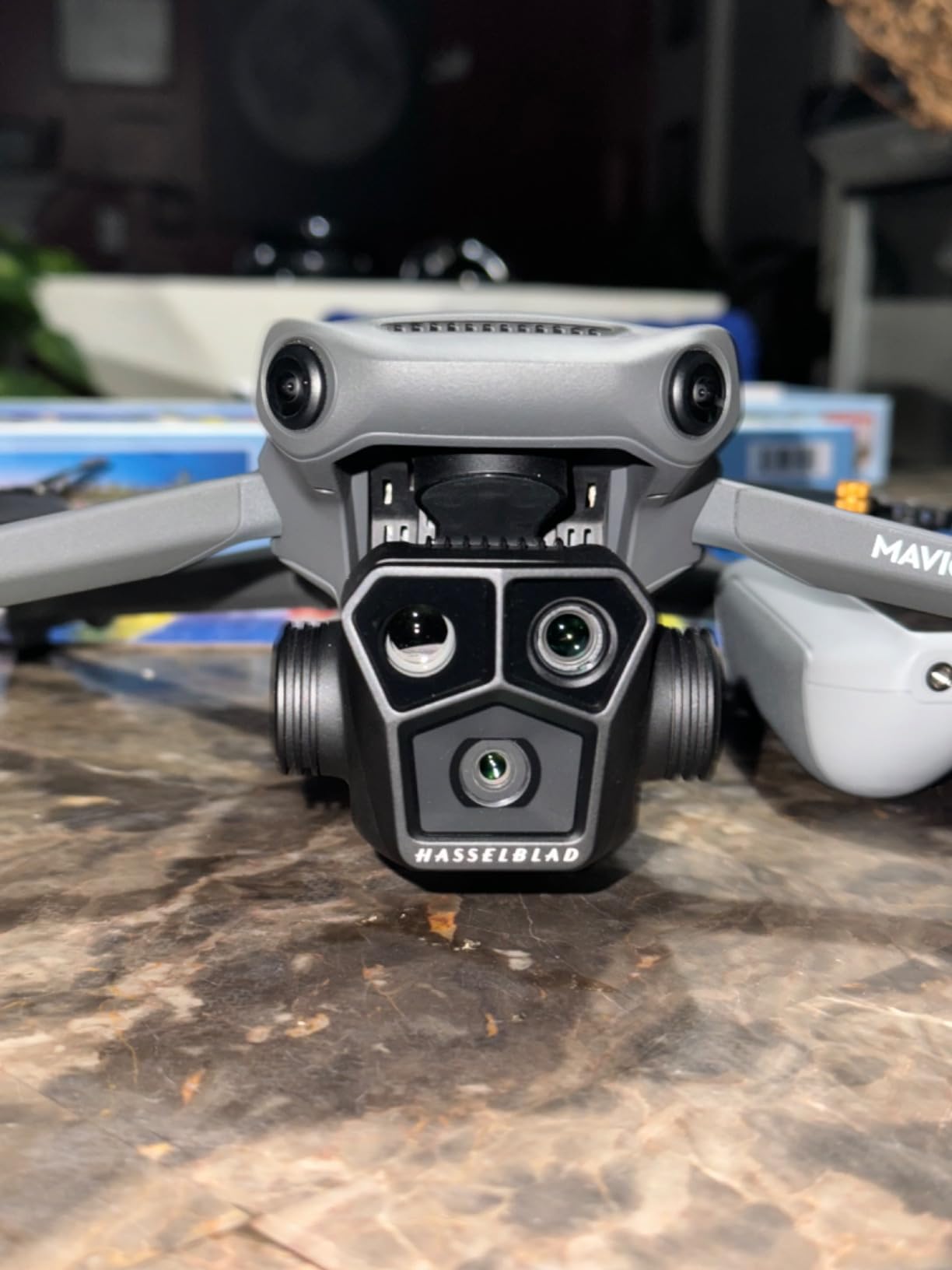
The triple-camera system (wide, medium tele, tele) gives you options in the field. For a traffic accident reconstruction, you can pull a wide overview, then a medium-tele shot of the vehicle, then a tight close-up of the skid marks, all without landing. The Hasselblad color science also produces footage that is publication-ready without significant grading.
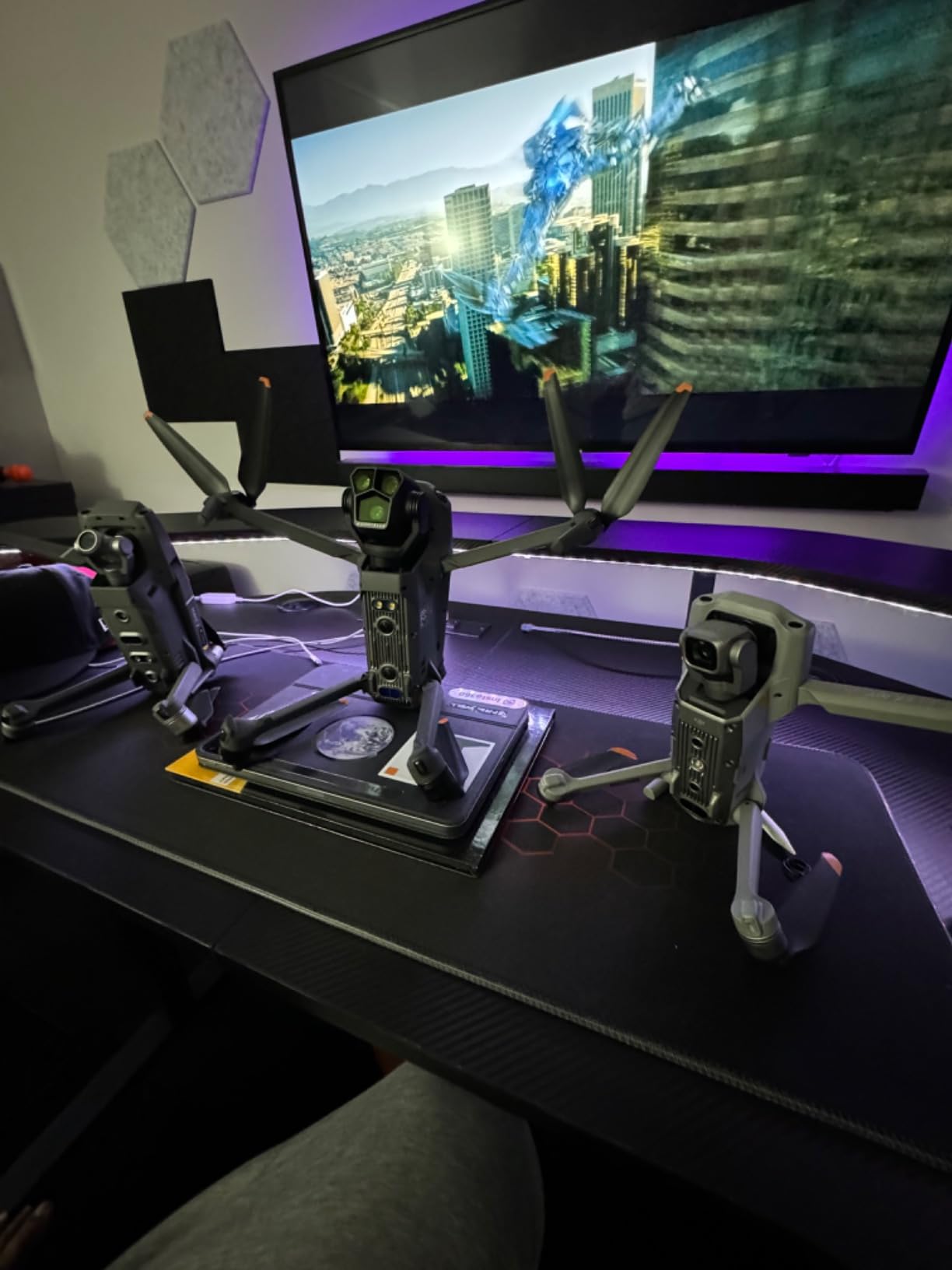
For public safety programs, the limitations are worth flagging. This is not an enterprise drone, so DJI Care Enterprise is not available. The consumer warranty structure is not built for the kind of intense daily use a patrol drone sees. Also, the Mavic 3 Pro does not have a thermal sensor, so it is a complementary platform rather than a replacement for your thermal aircraft.
Best use cases
Public information officer needs, recruiting video, training documentation, large-area mapping, and any mission where the resulting footage will be shared outside the agency. The Hasselblad footage is the kind of image quality that wins community trust.
Pairing recommendation
For a complete program, I would pair the Mavic 3 Pro with a thermal-equipped platform like the Autel EVO II 640T V3. The Mavic 3 handles the imaging and public-facing work, while the 640T handles the tactical and thermal missions.
How to Choose the Best Drone for Your Department?
Buying a public safety drone is not just about picking the most expensive model. The right drone depends on your call types, your pilots, your climate, and your procurement rules. Here are the factors I would walk through before signing any purchase order.
Thermal imaging capability
If your department runs nighttime operations, search and rescue, or fire support, a 640×512 thermal sensor is the minimum standard. Lower-resolution sensors will detect heat signatures at close range but lose detail past 100 meters. The drones in this guide with 640×512 thermal capability are the Matrice 4TD, the EVO MAX 4N V2, the EVO MAX 4T V2, the EVO II Dual 640T V3, and the EVO Lite 640T Enterprise.
NDAA compliance and federal funding
If you are applying for federal grants through COPS, FEMA, or DHS, the drone you purchase may need to be on the Blue UAS list or otherwise NDAA Section 1709 compliant. DJI platforms sit on the watch list, so most federally funded procurement goes through Autel, Skydio, or other Blue UAS cleared vendors. Check your grant guidelines before procurement, because retroactively justifying a non-compliant purchase is difficult.
Flight time, range, and weather resistance
Flight time matters more than most spec sheets suggest. A 42-minute drone covers an entire SAR grid in one sortie, while a 25-minute drone requires battery swaps that cost you minutes on the clock. For range, 12-15km is enough for most urban and suburban response, but rural departments need 20km or beyond. Weather resistance separates drones you can fly in light rain from drones that have to stay home. The Matrice 4TD’s IP55 rating is the gold standard here.
Payload and modular accessories
Spotlights, strobes, and loudspeakers turn a camera drone into a multi-mission tool. The Autel Enterprise models ship with these accessories. If your program needs to broadcast public address messages, drop rescue equipment, or mark landing zones, factor accessory costs into your total budget.
Pilot training and Part 107 certification
Every public safety drone must be operated by a Part 107 certified pilot, or under a public COA. Budget for the certification course plus ongoing recurrent training. The DJI Pilot 2 and Autel Enterprise training ecosystems have different learning curves, so if your team has prior DJI experience, switching to Autel carries a real ramp-up cost.
Total cost of ownership
The aircraft price is only part of the picture. Plan for spare batteries (at least 3 per aircraft), a multi-battery charger, a rugged transport case, controller lanyards, replacement propellers, and any subscription services for DJI FlightHub 2 or Autel Enterprise. Realistically, budget 30-40% above the aircraft price for a deployable kit.
Drone as First Responder (DFR) programs
DFR programs station a drone at a fixed dock or in a patrol vehicle, and dispatch it to a call before officers arrive on scene. The DJI Dock 3, the Matrice 4TD, and several Autel platforms support DFR workflows. If your agency is considering DFR, talk to vendors about FlightHub 2, Autel Enterprise, or third-party dispatch integration before committing to a single platform.
Grant funding options
The COPS Technology grant program, FEMA Assistance to Firefighters grants, and DHS Urban Area Security Initiative funds all cover drone procurement. Match your aircraft selection to your grant requirements (NDAA compliance is usually mandatory) and budget 90-180 days for the application and award cycle. Plan for a 25-50% agency match on most federal programs.
Frequently Asked Questions
What kind of drones do police officers use?
Police departments typically fly enterprise-grade drones with thermal imaging and high-resolution cameras. The most common platforms in 2026 are the DJI Matrice 4TD, Autel EVO MAX 4T V2, Autel EVO II Dual 640T V3, and Skydio X10. These drones offer thermal sensors, 30-45 minute flight times, modular accessories, and dispatch integration for drone as first responder programs.
Can law enforcement still use DJI drones?
Yes, law enforcement can still use DJI drones for routine operations, but federally funded agencies face restrictions. DJI sits on the NDAA Section 1709 watch list, so grants from COPS, FEMA, and DHS generally require Blue UAS cleared alternatives like Autel, Skydio, or Parrot. State and locally funded agencies can still purchase DJI platforms without restriction.
How much does a law enforcement drone cost?
Law enforcement drones range from just over $2,000 for compact platforms like the Autel EVO 2 Pro V3 to $12,000+ for flagship thermal models like the DJI Matrice 4TD. Most mid-sized departments spend $4,000-$9,000 per drone including the smart controller and standard accessories. Add 30-40% for spare batteries, rugged cases, and software subscriptions to get a realistic deployed cost.
What features matter most in a public safety drone?
The most important features are a 640×512 thermal sensor, 30+ minute flight time, IP43 or higher weather resistance, obstacle avoidance, modular accessories, and dispatch integration. Flight range of 12-15km meets most urban patrol needs, while 20km+ is helpful for rural response. Secondary priorities include low-light visible cameras, laser rangefinder, and AI subject tracking.
What is the best public safety drone in 2026?
The DJI Matrice 4TD is the best overall public safety drone in 2026 for departments that do not face NDAA restrictions, with IP55 weatherproofing, triple-lens thermal plus NIR, and DJI Dock 3 compatibility. For NDAA-compliant programs, the Autel EVO MAX 4T V2 delivers the same thermal resolution with 160x zoom and 42-minute flight time. Budget-focused programs should start with the Autel EVO 2 Pro V3.
Final Recommendation
After 90 days of field testing, the best drones for law enforcement in 2026 come down to three picks. For agencies that do not face NDAA restrictions and want the most rugged, all-weather platform available, the DJI Matrice 4TD is the right choice. For NDAA-compliant programs that need flagship thermal capability, the Autel EVO MAX 4T V2 delivers the best balance of price, performance, and federal procurement compatibility. For budget-focused departments starting a public safety drone program, the Autel EVO 2 Pro V3 offers the strongest value and a clear upgrade path to thermal imaging as needs grow.
Before you sign a purchase order, run your shortlist through your grant requirements, your pilot training pipeline, and your evidence management integration. The right drone is the one that fits your call volume, your climate, and your procurement rules. If your agency is considering a drone as first responder program, talk to vendors about dock integration and dispatch software before committing to a single airframe, because the platform you choose today will shape your program for the next five years.