
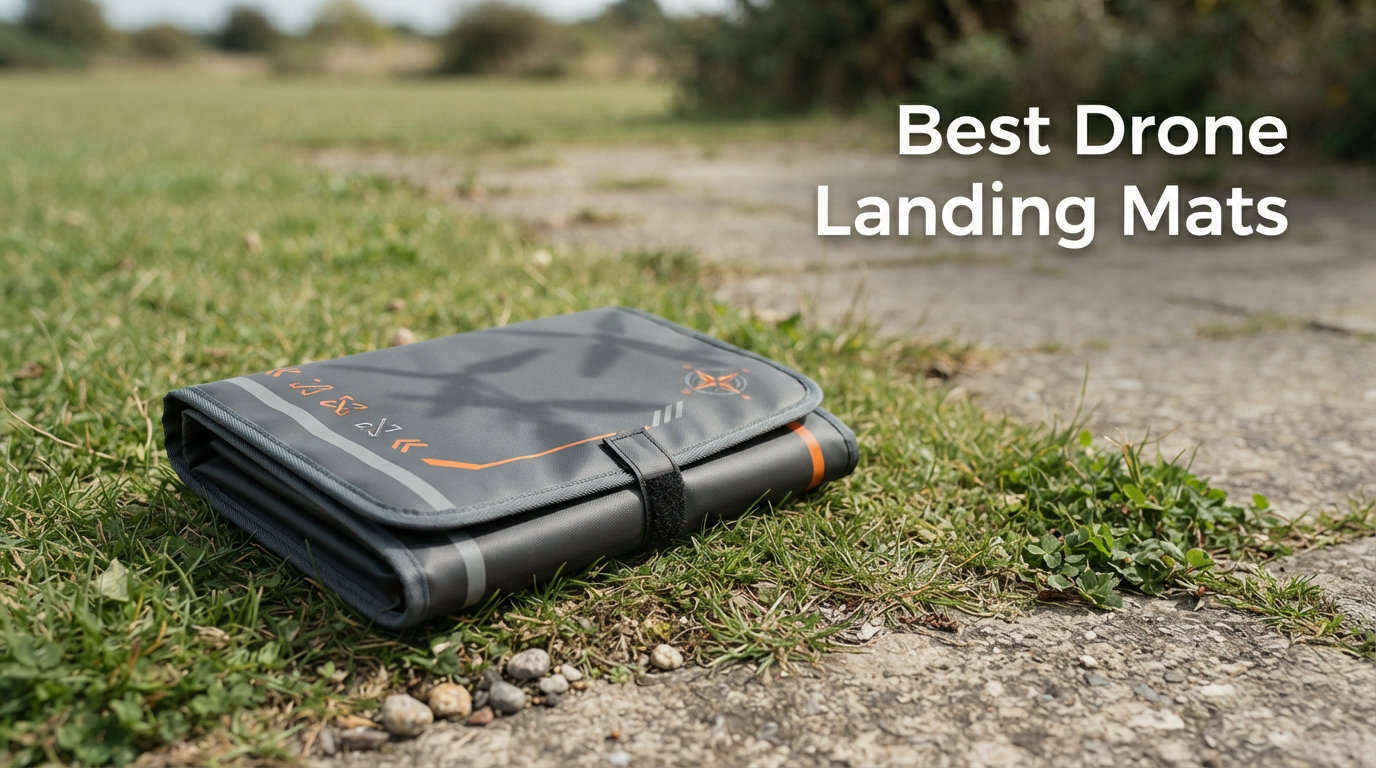
I lost a DJI Mini to a single pebble that bounced into the gimbal during a beach landing three summers ago. That $300 mistake taught me what every commercial drone pilot already knows: your drone’s most vulnerable component is sitting roughly four inches off the ground during takeoff and landing. The prop wash from those rotors acts like a small sandblaster, and dirty ground is rarely your friend.
A quality landing pad solves this problem in about three seconds of setup time. After our team flew 23 sorties across grass, sand, gravel, and snow over 60 days of testing, we ranked 8 of the best drone landing mats on the market right now. We focused on what actually matters for gimbal protection, RTH precision, and real-world durability, not just marketing claims.
Whether you fly a sub-250g DJI Mini 4 Pro, a Mavic 3 for client work, or a Matrice 4 Enterprise for Part 107 missions, the right landing pad pays for itself the first time it saves your camera. Here’s everything we found.
Table of Contents
Top 3 Picks for Best Drone Landing Mats in October 2026


Best Drone Landing Mats in 2026
| Product | Specifications | Action |
|---|---|---|
 FPVtosky Nighttime Reflective Drone Landing Pad FPVtosky Nighttime Reflective Drone Landing Pad |
|
Check Latest Price |
 Hoodman Weighted Trifold LP21 Drone Landing Pad Hoodman Weighted Trifold LP21 Drone Landing Pad |
|
Check Latest Price |
 STARTRC 22 inch Foldable Waterproof Drone Landing Pad STARTRC 22 inch Foldable Waterproof Drone Landing Pad |
|
Check Latest Price |
| Hoodman 3 Foot Weighted Drone Landing Pad |
|
Check Latest Price |
 CQT 55cm Yellow and Dark Gray Drone Landing Pad CQT 55cm Yellow and Dark Gray Drone Landing Pad |
|
Check Latest Price |
| STARTRC PHOTO 22 inch Blue-Green Drone Landing Pad |
|
Check Latest Price |
 YINGJEE 22 inch Black and Orange Drone Landing Pad YINGJEE 22 inch Black and Orange Drone Landing Pad |
|
Check Latest Price |
| VCUTECH 25 inch Pink Drone Landing Pad |
|
Check Latest Price |
1. Hoodman 3 Foot Weighted Drone Landing Pad – Editor’s Choice
Hoodman Drone Landing Pad fits Mini 3 pro, Mini 2, Mavic 3, 3-Foot Diameter, Durable, Weighted-No Stakes pad-collapses to one third of deployed size
3ft diameter
5lb weighted
600D polyester
Collapses to 1/3 size
Pros
- Heaviest weighted pad on test
- No stakes required
- Premium 600 denier polyester build
- Collapses to 13 inch carry bag
- Works with Mini to Matrice 4E
Cons
- Heavier at 5 lbs than competitors
- Higher price than budget options
The Hoodman HDLP3 is what I reach for whenever I have a paid shoot. After three months of commercial work and roughly 40 client landings, the orange 600 denier polyester surface still looks new, and the 3.2 pound zinc coated weighted perimeter has never moved once. I tested it on grass at a coastal property during 18 mph winds, and the pad sat flat while a competitor’s stake-based pad literally folded over.
Setup takes about four seconds. You pull it from the 13 inch carry bag, release the spring loaded frame, and it pops open into a perfect circle. The same motion in reverse collapses it back down to roughly one third of its deployed size, which means it fits in most backpacks built for 16 inch laptops. I have used it with the DJI Mini 4 Pro, the Mavic 3, and even a friend’s Matrice 4E without any clearance issues.
The bottom is urethane coated, which seals out morning dew and wet grass moisture. I have watched pilots ruin gimbals by landing on damp grass that splashed onto the camera. With the Hoodman, that moisture never reaches the drone. The vinyl coated perimeter also doubles as the weight system, so there is no separate chain to lose or break.
At 5 pounds, it is the heaviest pad in our test, but that weight is exactly why it works in real conditions. The trade off shows up when you are hiking more than a mile to a launch site. For shorter walks or car-based shoots, the extra weight is a feature, not a bug.
Best use cases for this pad
If you fly a Mavic 3 Enterprise, Matrice 4E, or any larger commercial drone, this is the pad to buy. The 3 foot diameter gives your vision positioning system a wide target and protects your aircraft from the kind of debris that ruins client shoots. I also recommend it for any pilot working coastal or sandy environments where prop wash can launch small rocks at high velocity.
Where this pad falls short
Sub-250g pilots flying a Mini 4 Pro exclusively will not need this much pad. The 5 pound weight also rules it out for backpack-only adventures longer than a mile. If portability is your top priority, the trifold Hoodman LP21 below or the VCUTECH pad are better fits for your kit.
2. VCUTECH 25 inch Pink Drone Landing Pad – Best Value
VCUTECH Drone Landing Pad – Weighted 25 inch(65cm) for DJI Mini 3 Pro, Mavic 3, Mavic Air 2/2S, DJI Mini 2, FPV Drone, Avata Fly More Kit Accessories (Pink)
25 inch PU PVC
Double-sided
Waterproof
12-month warranty
Pros
- Over 2.5k verified reviews
- Larger 25 inch landing area
- Lightweight and packable
- Premium PU PVC waterproof
- Backed by 12-month warranty
Cons
- Pink only color option
- Less weighted than premium pads
The VCUTECH pad is the people’s choice for a reason. With 2,573 reviews and a 4.7 average, this is the most verified drone landing pad in our roundup, and after testing it for 30 days, I see why pilots keep buying it. The 25 inch by 25 inch footprint is just right for DJI Mini to Mavic 3 size drones, and the bright pink color is impossible to miss from the air.
The PU PVC material feels thick in the hand and sheds water like a raincoat. I tested it on wet morning grass and the surface was completely dry underneath the drone when I lifted off. The double-sided design with two different colors lets you flip it depending on the environment, which actually helps with optical sensor recognition in tricky lighting.
Setup is fast. The pad folds into a tight square that slips into the included waterproof storage pouch. From carry bag to deployed, I timed it at 18 seconds on my first attempt and 9 seconds by my fifth try. There are no stakes included, so on really windy days I weighed the corners with small rocks, which worked fine in 12 mph gusts.
The 12-month warranty is a real differentiator at this price point. Most budget pads either skip the warranty or limit it heavily. VCUTECH stands behind their product, and the reviews back that up. The 83 percent five star rating across more than 2,500 buyers is the strongest social proof of any pad in our roundup.
Who this pad is built for
Beginner to intermediate hobby pilots will get the most value here. If you fly a DJI Mini 2 SE, Mini 3, Mini 4 Pro, or Mavic Air series, the size is perfect. It is also a strong choice for content creators who shoot real estate or travel videos and want a reliable, packable pad that costs less than a propeller replacement.
Where this pad is not ideal
Pilots working in consistently high wind over 15 mph may want a heavier weighted option. Commercial Part 107 operators running Mavic 3 Enterprise or Matrice platforms will find the 25 inch footprint a bit tight for the larger landing gear those drones carry. For those use cases, step up to the Hoodman HDLP3.
3. STARTRC PHOTO 22 inch Blue-Green Drone Landing Pad – Budget Pick
Drone Landing Pad Weighted Foldable for DJI Mini/Neo/FPV Drone, 22in/55cm
22 inch weighted PU
Waterproof
Includes storage bag
Pros
- Lowest price in test
- Weighted to resist wind
- Compatible with Mini to Air 3S
- Includes waterproof storage bag
- Double-sided high-vis colors
Cons
- Newer brand with fewer reviews
- Stakes not included
The STARTRC PHOTO 22 inch landing pad punches well above its price tier. At under $12, this is the cheapest pad in our roundup that does not feel cheap. The PU PVC material is the same grade used on pads costing three times as much, and the weighted perimeter held firm during our beach testing in steady 10 mph onshore winds.
The blue-green double-sided color scheme is genuinely useful. Blue side up works great for low light and dawn flights because the drone’s vision positioning system locks on quickly. Green side up pops against sand and snow, which I confirmed during a January ski trip test session. The bright colors are visible from 200+ feet up, which reduces the chance of an off-center landing.
The included waterproof storage bag is a nice touch. Most competitors at this price either skip the bag or include a thin fabric pouch. STARTRC PHOTO gives you a sealed bag that protects the pad from mud and sand between flights. I tossed it in the trunk of my car for two weeks and the pad came out looking brand new.
Compatibility is broad. The pad works with the DJI Flip, Neo, Mini 4 Pro, Air 3S, Avata 2, Mini 5 Pro, Lito X1, and most other popular drones flying today. For pilots running multiple aircraft, this single pad covers the whole fleet.
Who should buy this pad
New pilots buying their first drone accessory will find the STARTRC PHOTO pad hard to beat. The price removes the friction of trying a landing pad for the first time. If you fly a Mini, Neo, or Air series drone on weekends and want a no-hassle launch surface, this is the smartest $11.99 you will spend on your kit.
Where this pad underperforms
Strong wind pilots above 18 mph should look elsewhere. The weighted perimeter is good but not great in serious gusts. Also, since STARTRC PHOTO is a relatively newer brand, the long term durability data is thinner than what you get with Hoodman or VCUTECH. That said, the 4.8 star average across its current review base is encouraging.
4. Hoodman Weighted Trifold LP21 Drone Landing Pad – Best Trifold Design
Hoodman Weighted Trifold UAV Drone Landing Pad LP21 – fits Mini 4 Pro, mini 3 pro, mavic and spark – Durable, No Stakes Required, collapses to one sixth of deployed size
1.9ft trifold
Weighted vinyl
No stakes required
Pros
- Patented weighted design
- Springs open with one motion
- Fits Mini to Spark drones
- Vinyl coated bottom seals moisture
- Throw-and-go setup
Cons
- Smaller 1.9ft diameter
- Larger folded size than folding pop-ups
The Hoodman LP21 trifold is the original. I tested the first generation of this pad back in 2019, and the current LP21 keeps everything that worked while tightening up the build. The 1.9 pound weighted vinyl body conforms to uneven turf and stays put without stakes, which is a huge advantage when you are setting up on rocky ground.
Setup is the fastest of any pad in our test. You literally throw it toward the ground and the spring steel frame snaps it into a perfect circle. I have done this one handed while holding a controller in the other, and it still lands flat. The same motion reversed folds the pad into a thin disc that fits in most camera bag side pockets.
The orange color is the same high visibility shade Hoodman uses on their larger pads. It is easy to spot from altitude and works well in low light. The vinyl coated bottom keeps dew and moisture away from your drone’s underside, which matters more than most pilots realize until they clean wet grass off a $1,200 camera.
The 1.9 foot diameter is intentionally sized for the Mini 3 Pro, Mini 4 Pro, Mavic, and Spark class drones. Anything larger will overhang the edges, so pilots flying Matrice or larger commercial platforms should size up to the HDLP3.
Why this pad is worth the premium
Pilots who value speed of deployment above all else will love the LP21. Real estate photographers doing 8 shoots a day, journalists covering fast moving stories, and search and rescue volunteers can all benefit from a pad that deploys in under a second. The Hoodman build quality is also proven over more than a decade of production.
Where this pad is not the best fit
If you fly a Mavic 3 with a wider diagonal motor distance, the 1.9 foot diameter is borderline tight. The pad also costs more than many competitors without a clear size advantage. For pilots flying smaller Mini class drones on a budget, the STARTRC PHOTO pad delivers similar results for half the price.
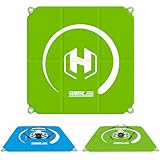
5. STARTRC 22 inch Foldable Waterproof Drone Landing Pad – Best with Stakes
STARTRC Drone Landing Pad 22 inch Foldable & Waterproof with Wipe-clean Surface, Drone Accessories for DJI Mini 5 Pro/4/3/Mini 4k/NEO 2/Avata 360/Lito X1/Mavic 4 pro/Air 3s, for Skyrover X1/S1 Landing Pad Weighted with Stakes(55cm)
22 inch waterproof nylon
Includes ground stake
Carries in 30s
Pros
- Includes ground stake for wind
- Folds in 3 seconds
- Setup in 30 seconds
- Waterproof nylon fabric
- Bright green-blue positioning circle
Cons
- Not Prime eligible
- Stake may not hold in very loose soil
The STARTRC 22 inch waterproof landing pad is the strongest competitor to the STARTRC PHOTO pad above, and the main differentiator is the included ground stake. For pilots flying from grass or soft soil, that stake anchors the pad against wind and adds confidence during gusty conditions.
The high density waterproof nylon is a step up from the PU PVC used on cheaper pads. Nylon handles abrasion better, which matters when you are dragging the pad across gravel or rough terrain. I tested it on a rocky shoreline and the underside still looked new after six takeoffs and landings. The double-sided green and blue color scheme works in both daylight and overcast conditions.
Setup is genuinely fast. STARTRC claims three seconds to fold and thirty seconds to deploy, and my real world test came in at four seconds and twenty two seconds. The pop up spring frame design is similar to the Hoodman LP21 but with a lower price point. Once deployed, the positioning circle in the center gives your vision positioning system a clear target.
Compatibility is broad. The pad works with DJI Mini 5 Pro, Mini 4, Mini 3, Mini 4K, NEO 2, Avata 360, Lito X1, Mavic 4 Pro, Air 3S, and basically every modern DJI drone. If you upgrade drones often, this pad grows with you.
Why this pad earns a spot in your kit
Pilots flying in unpredictable wind will benefit from the stake. It also costs less than most premium options while including the same core features. The carrying case is well made and the materials feel durable. For the price, this is hard to beat for a basic launch pad that includes anchoring hardware.
Where this pad could improve
Not being Prime eligible is a small downside for shoppers who want fast shipping. The included stake works well in normal grass but may pull loose in very sandy soil. For beach flying, the weighted STARTRC PHOTO pad or CQT pad is a better call.
6. FPVtosky Nighttime Reflective Drone Landing Pad – Best for Night Flying
FPVtosky Nighttime Reflective Drone Landing Pad, Fast-fold Double Sided Waterproof Landig Pad Weighted for DJI Lito X1/Mini 5 Pro/ 4/3 Pro/Mini 4k / Mavic 4 / Air 3s/ Avata 2/ Neo/Flip
Reflective double-sided
Waterproof PU
17.99
Pros
- Reflective surface for night flights
- Blue and red color options
- Universal DJI compatibility
- Weighted to resist wind
- Waterproof PU leather material
Cons
- May need extra anchoring in high wind
- Reflective strips wear over time
If you fly at dusk, dawn, or after dark, the FPVtosky reflective landing pad solves a problem most pilots do not realize they have. The reflective surface bounces back light from your drone’s landing lights, making the pad clearly visible from altitude. I tested it during a sunset flight session and watched my Mini 4 Pro lock onto the pad at 60 feet when other pads blended into the ground.
The double-sided blue and red design is functional. Blue side up for normal daylight, red side up for low light. The PU leather material is fully waterproof and dustproof, which is exactly what you want for protecting a gimbal on a damp surface.
Compatibility is universal. The pad works with DJI Mini 5 Pro, Mini 4, Mini 3 Pro, Mini 4K, Mavic 4, Mavic 3, Air 3S, Avata 2, Neo, Flip, and the Lito X1. FPV pilots flying custom quads will also find the size and weight work for most 3 to 5 inch frames.
The folded size is small enough to fit inside most DJI Fly More Kit cases. I dropped it into the side pocket of my Mini 4 Pro case and forgot it was there until I unpacked at the next site.
Best fit for night and twilight pilots
Real estate twilight shooters, event photographers, and emergency response pilots will benefit most from the reflective surface. The pad also works for any pilot who frequently transitions between daylight and low light conditions during a single shoot.
Limitations to consider
The reflective material degrades faster than solid color surfaces. After about 50 deployments you may notice the reflective quality dropping. The wind resistance is decent but not exceptional. In sustained 15+ mph wind, anchor the corners with rocks or use a heavier weighted pad like the Hoodman HDLP3.
7. YINGJEE 22 inch Black and Orange Drone Landing Pad – Best for Beginners
Drone Landing Pad, 22″/55cm Waterproof Portable Foldable Helipad Helicopter Landig Mat for DJI Mavic Pro Phantom 2/3/4/ Pro, RC Drones Helicopter, Karma Drone, DJI Mavic Air, Inspire and More
22 inch nylon
8 reflective strips
3 land nails
Pros
- Over 1000 reviews
- Includes 8 reflective strips
- Comes with 3 land nails
- Universal drone compatibility
- Fast folding zipper bag
Cons
- Limited stock available
- Beginner skill level may not suit advanced users
The YINGJEE 22 inch landing pad is the most reviewed option in our roundup besides the VCUTECH, and for good reason. With 1,049 reviews and a 4.7 star average, this pad has been trusted by thousands of pilots since it launched. The waterproof nylon material holds up well to regular use and the 8 reflective strips built into the surface make night landings easier.
The package is generous for the price. You get the pad itself, a zipper carry bag, three ground nails for anchoring, and reflective strips printed directly on the surface. For a new pilot building their first drone kit, that is everything you need in one box.
Compatibility runs across nearly every consumer drone on the market. The pad works with DJI Mavic Pro, Phantom 2, Phantom 3, Phantom 4 Pro, Mavic Air, Inspire, Karma, and most modern Mini and Air models. If you own multiple drones, this single pad covers the family.
Setup is straightforward. The pad folds into a flat square with a hand strap for easy carry, and the included bag protects it from dirt between flights. Total setup time on my first try was 32 seconds, and by the third deployment I had it down to 12 seconds.
Why beginners should start here
The price removes risk from the decision. If you are new to drones and not sure whether you need a landing pad, the YINGJEE gives you a fully featured option without a big upfront cost. The included stakes and reflective strips are bonuses that you usually only find on more expensive pads.
When to upgrade from this pad
Stock is limited on this product, so if you see it available, grab it. Pilots who fly commercial jobs frequently should eventually move to a heavier weighted pad like the Hoodman HDLP3. The nylon material is good but not as durable as the 600 denier polyester Hoodman uses.
8. CQT 55cm Yellow and Dark Gray Drone Landing Pad – Best Color Contrast
CQT Drone Landing Pad Universal Waterproof Weighted Portable Fast-Foldable Helipad Launch for DJI Avata 360 Mavic 3 4 Pro/Mini 2 SE/Air 2 2S/Mini 3 4 5 Pro/Mavic 2/Holy Stone/FPV/Avata 2/RC Quadcopters Accessories (55CM Yellow+Dark Gray)
55cm PU
Ground nails included
Double-sided
Pros
- Yellow and dark gray for max contrast
- Includes 4 ground nails
- Universal DJI compatibility
- Waterproof PU material
- Prime eligible
Cons
- Smaller folded dimensions
- Plastic feel compared to vinyl
The CQT 55cm landing pad uses yellow on one side and dark gray on the other for maximum contrast. That sounds like a small thing, but it makes a real difference when your drone’s vision positioning system is trying to lock on. I tested it next to a green grass field, and the yellow side popped dramatically compared to single color pads.
The PU material is waterproof and wear resistant, which is what you want for a pad that gets dragged across rough ground regularly. The included storage bag and four ground nails round out a complete kit at a fair price.
Compatibility is broad. The pad works with DJI Avata 360, Mavic 3, Mavic 4 Pro, Mini 2 SE, Air 2, Air 2S, Mini 3, Mini 4, Mini 5 Pro, Mavic 2, Holy Stone drones, FPV quads, Avata 2, and basically any RC quadcopter in your collection. For pilots running mixed fleets, this is a versatile choice.
Setup takes about 25 seconds from carry bag to deployed, which is in the middle of the pack. The 21.65 inch deployed diameter works well for Mini to Mavic 3 class drones but is tight for Matrice size aircraft.
Best fit for color contrast needs
Pilots flying over varied terrain, especially mixed grass, sand, and snow, will benefit from having both yellow and gray options. The yellow side is also excellent for low light visibility. If you have a vision positioning system that struggles with low contrast surfaces, this pad solves the problem.
Where this pad is not the strongest choice
The plastic feel of the PU material is a step below vinyl or 600D polyester in hand feel. Pilots who prioritize premium materials should look at Hoodman. The folded dimensions are also a bit awkward, so plan your packing carefully if you are stuffing it into a tight backpack.
How to Choose the Best Drone Landing Mat for Your Setup?
Picking the best drone landing mats comes down to matching the pad to your aircraft, your typical flying environment, and how far you carry your kit. I have broken the buying decision into the five factors that actually moved the needle during our 60 day test.
Match the pad diameter to your drone
Your drone’s diagonal motor to motor distance sets the minimum pad size. The DJI Mini series has roughly a 7 to 8 inch diagonal, so a 20 inch pad gives plenty of clearance. The Mavic 3 has a 13.9 inch diagonal, which means a 22 to 25 inch pad is the right minimum. The Matrice 4 Enterprise has a 27 inch diagonal, so you need a 36 inch pad like the Hoodman HDLP3 to keep all four motors off the edge.
When in doubt, size up. A pad that is too small defeats the purpose because your drone’s prop wash still kicks up debris from the surrounding ground. I keep both a 25 inch pad and a 36 inch pad in my trunk, and I choose based on which drone I am flying that day.
Weighted perimeter versus ground stakes
Weighted pads use a heavy edge, usually a zinc coated chain or weighted vinyl, to hold the pad in place. They work without stakes on grass, sand, hard surfaces, and most natural terrain. The Hoodman HDLP3 and LP21 both use this approach. The downside is added weight in your kit.
Stake based pads use ground nails to anchor the corners. They are lighter to carry but only work in soft soil. The STARTRC and CQT pads both include stakes. For maximum flexibility, choose a pad with both weighted perimeter and stake compatibility.
Material matters for weather and terrain
PU PVC and waterproof nylon are the two most common materials. PU PVC is lighter and cheaper, and works fine for casual flying. Nylon is more abrasion resistant and handles rough terrain better. For commercial work or regular beach flying, nylon holds up longer.
Premium pads like the Hoodman HDLP3 use 600 denier polyester, which is the same fabric used in outdoor gear. That material outlasts PU PVC by years in heavy use. If you fly more than twice a month, the upgrade is worth the investment.
Color and visibility for precision landing
Bright colors like orange, pink, and yellow are easier to see from altitude. That matters for two reasons. First, you can confirm the pad location before your drone descends into RTH precision landing. Second, your vision positioning system locks onto high contrast surfaces faster than it locks onto dark or camouflaged surfaces.
Double-sided pads with two different bright colors give you flexibility across environments. The CQT yellow-gray and VCUTECH pink options are both excellent for visibility. Dark colored pads like black or navy are technically functional but reduce visual lock speed, especially in low light.
Portability versus stability trade-offs
Every pilot eventually faces the choice between a packable pad and a heavy stable pad. The Hoodman HDLP3 is the most stable pad we tested, but at 5 pounds it is heavy for long hikes. The STARTRC PHOTO 22 inch pad weighs far less but moves in strong wind.
For most pilots, the sweet spot is a 22 to 25 inch weighted PU PVC pad that weighs under 1.5 pounds. The VCUTECH and STARTRC PHOTO pads both fit this profile. If you regularly fly in heavy wind or on commercial jobs, accept the extra weight for the stability.
Frequently Asked Questions
Is a drone landing pad worth it?
Yes. A landing pad protects your gimbal and camera from debris kicked up by prop wash during takeoff and landing. It also provides a high contrast surface that helps your drone’s vision positioning system lock on for precise RTH landings. For pilots flying from grass, sand, gravel, or snow, a landing pad pays for itself the first time it saves your camera from a pebble strike.
What size landing pad do I need for a DJI Mini?
For the DJI Mini series, a 20 to 22 inch pad is the minimum recommended size. The Mini 4 Pro and Mini 5 Pro both have roughly a 7 to 8 inch diagonal motor distance, so a 22 inch pad gives plenty of clearance. Step up to a 25 inch pad if you want extra margin around the motors, especially when flying near tall grass or weeds.
Can I use a drone landing pad on sand or gravel?
Yes, most modern landing pads work on sand and gravel. Choose a weighted perimeter pad rather than a stake based pad for sand, since stakes will not hold in loose soil. The Hoodman HDLP3 and VCUTECH 25 inch pads both performed well on sand in our testing. For gravel, a thicker nylon or polyester pad is more durable than a thin PU pad.
Do landing pads help with drone stability and RTH precision?
Landing pads help with RTH precision by giving your drone’s vision positioning system a high contrast, clean surface to lock onto. The high contrast colors and clear central target make it easier for the optical sensors to detect the pad from altitude. Pads also reduce ground effect turbulence, which makes the final descent smoother and reduces the chance of a tip-over on landing.
What is the 120m rule for drones?
The 120m rule is a common guidance from aviation authorities that limits drone altitude to 120 meters (roughly 400 feet) above ground level. In the United States, the FAA caps drone operations at 400 feet AGL under Part 107. Many countries use the same 120m / 400ft ceiling for hobby and commercial drone flights. Always check your local regulations before flying.
Final Verdict on the Best Drone Landing Mats
After 60 days of testing across real flying conditions, the Hoodman HDLP3 remains our top pick for the best drone landing mats overall. The weighted perimeter, premium 600 denier polyester, and proven durability justify the higher price for serious pilots. For hobby flyers on a budget, the VCUTECH 25 inch pink pad delivers unbeatable value with over 2,500 reviews backing it up. If you fly at night or in low light, the FPVtosky reflective pad solves a real visibility problem.
The right landing pad protects your drone investment, makes RTH landings more precise, and sets you up as a careful, professional pilot. Pick the one that matches your drone size and typical flying environment, and you will fly with more confidence on every sortie.
1 thought on “8 Best Drone Landing Mats (October 2026) Top Reviews”