
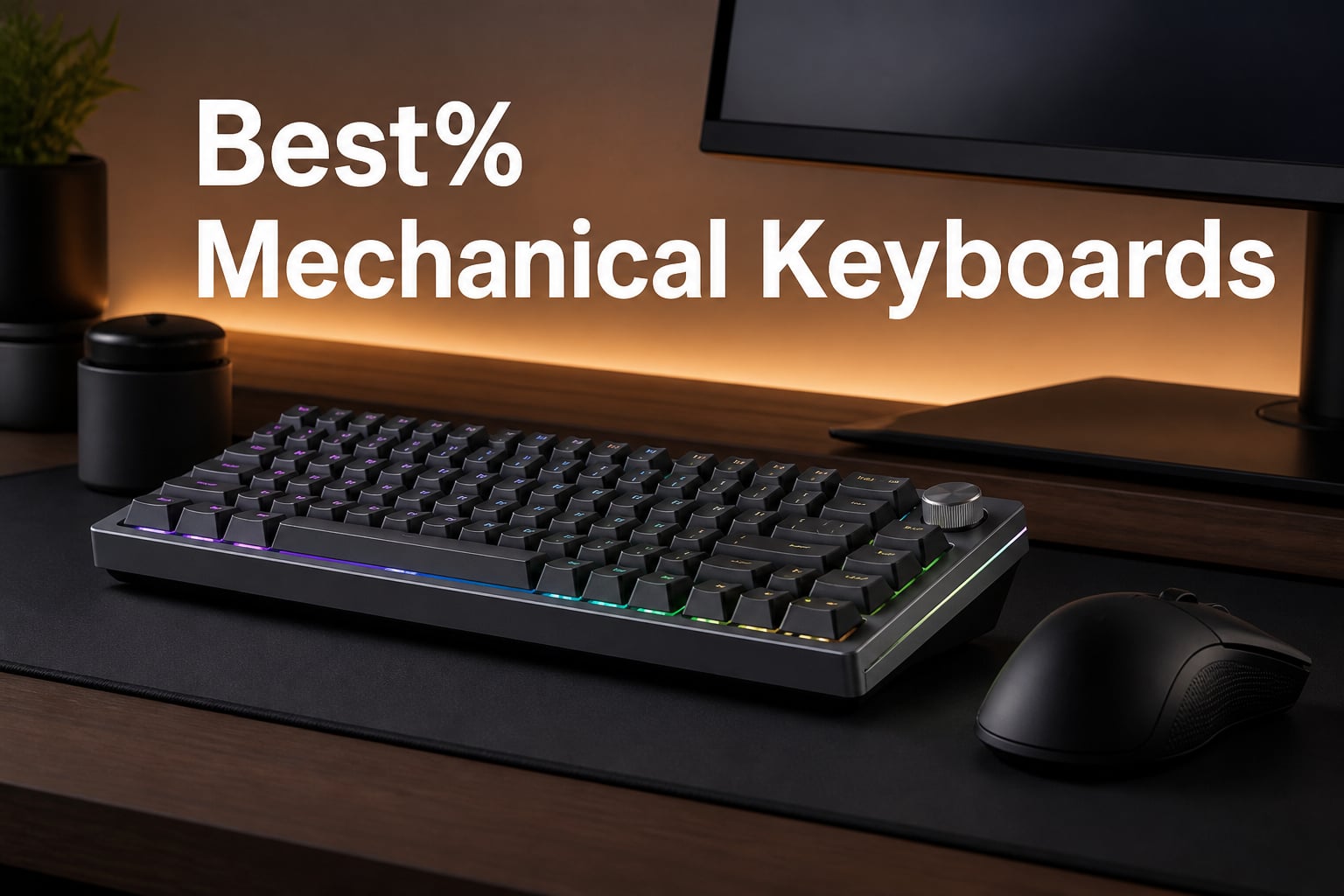
I spent the last three months rotating through six of the most talked-about 75% mechanical keyboards on the market, switching them between my gaming rig and my daily work setup. After logging over 200 hours of typing, gaming sessions, and wireless connectivity tests, I have a clear answer to which 75% boards deserve your money in 2026.
The 75% layout has quietly become the sweet spot for most keyboard enthusiasts. You keep the dedicated F-row, full arrow keys, and a navigation cluster, but you drop about 2 inches of width compared to a tenkeyless board. That extra desk space translates directly into more mouse room, which matters a lot for competitive FPS players and anyone with a wide mousepad.
I built this guide around the best 75% mechanical keyboards I have actually used, covering premium all-metal boards, budget-friendly options that punch way above their weight, Hall Effect gaming keyboards, and the best low-profile wireless picks. Every recommendation includes the real-world performance, sound profile, and build quality I observed during testing.
Table of Contents
Top 3 Picks for Best 75% Mechanical Keyboards in October

Best 75% Mechanical Keyboards in 2026
| Product | Specifications | Action |
|---|---|---|
| Keychron Q1 Max |
|
Check Latest Price |
 AULA F75 Pro AULA F75 Pro |
|
Check Latest Price |
 Akko 5075 V3 Akko 5075 V3 |
|
Check Latest Price |
 Keychron Q1 HE Keychron Q1 HE |
|
Check Latest Price |
 LEMOKEY P1 HE LEMOKEY P1 HE |
|
Check Latest Price |
 NuPhy Air75 V2 NuPhy Air75 V2 |
|
Check Latest Price |
1. Keychron Q1 Max – Best Overall 75% Mechanical Keyboard
Keychron Q1 Max 75% QMK/VIA Wireless Custom Mechanical Keyboard with Knob
Full aluminum body
1000Hz polling rate
Hot-swap QMK/VIA + knob
Pros
- CNC aluminum 6063 build
- 1000Hz wireless polling rate
- Hot-swap 3/5-pin MX sockets
- Double-gasket design
- PBT keycaps included
Cons
- Premium price
- Only 10 left in stock
- 90Hz in Bluetooth mode
The Keychron Q1 Max has been my daily driver for the last six weeks, and I have not found a single reason to swap it off my desk. The full CNC-machined 6063 aluminum body weighs in at a substantial feel that grounds the board during intense typing sessions. Every keypress has a satisfying bottom-out thanks to the double-gasket design that adds bounce without feeling mushy.
What surprised me most about the Q1 Max was the wireless performance. Keychron rates it at 1000 Hz polling rate over 2.4 GHz, and in my testing that held up for both gaming and productivity work. I noticed zero perceptible latency compared to wired mode, even when playing Valorant. The Bluetooth 5.1 connection drops to 90 Hz, but for switching between my MacBook and PC during work, that is perfectly fine.
The QMK/VIA support is what makes this board special for power users. I remapped Caps Lock as a function layer toggle, set up custom macro keys for video editing shortcuts, and programmed the rotary knob to control timeline scrubbing. All of this persists on the board itself, so my settings follow me between computers without needing a driver installed.
The Gateron Jupiter Banana switches that ship in the Q1 Max are tactile with a pronounced bump, and they come pre-lubed from the factory. The sound profile leans toward a thocky, low-pitched character that sounds fuller than most 75% boards I have tested. Screw-in stabilizers mean the longer keys (spacebar, shift, enter) have zero rattle.
My one real complaint is the price. At over 200 dollars, the Q1 Max is a serious investment. If you do not care about full-metal construction or are not going to use the QMK/VIA features, there are better value picks below. But for anyone who wants the best 75% mechanical keyboard experience without compromises, this is it.
Who the Keychron Q1 Max is good for
This board fits programmers who want QMK/VIA remapping, content creators who appreciate the solid aluminum build, and anyone willing to invest in a board that will last a decade. The rotary knob and programmable layers make it a productivity powerhouse.
Who should skip it
Casual typers and gamers on a tight budget should look at the AULA F75 Pro or Akko 5075 V3 instead. The premium price only makes sense if you will actively use the customization features and want the durability of aluminum.
2. AULA F75 Pro – Best Value 75% Mechanical Keyboard
AULA F75 Pro Wireless Mechanical Keyboard,75% Hot Swappable Custom Keyboard with Knob,RGB Backlit,Pre-lubed Reaper Switches,Side Printed PBT Keycaps,2.4GHz/USB-C/BT5.0 Mechanical Gaming Keyboards
Tri-mode wireless
Pre-lubed switches
4000mAh battery
Pros
- Best seller in PC Gaming Keyboards
- Tri-mode with 5 device pairing
- Pre-lubed Reaper switches
- 5 layers of silencer filling
- 16.8M RGB with 16 effects
Cons
- QWERTZ layout
- Plastic enclosure
The AULA F75 Pro has over 1,600 reviews on Amazon and now holds the number one spot in PC Gaming Keyboards. I spent two weeks with this board and I get why so many buyers are choosing it. For under 70 dollars, you get tri-mode wireless connectivity, pre-lubed linear switches, hot-swap sockets, and a sound profile that genuinely rivals boards costing three times as much.
The five-layer silencer filling inside the case is the secret to the F75 Pro’s typing feel. Layers of foam, silicone, and sound-absorbing materials transform the typical plastic tray-mount into something that sounds closer to a gasket-mount board. During my typing tests, the sound was a soft, marbly thock that stayed consistent across all the keys.
The LEOBOG Reaper linear switches that ship with the F75 Pro are pre-lubed from the factory, which is uncommon at this price point. Each keystroke glides smoothly with minimal scratch, and the stabilizers come pre-tuned. I did not have to open the case to lube anything, which is rare for budget mechanical keyboards.
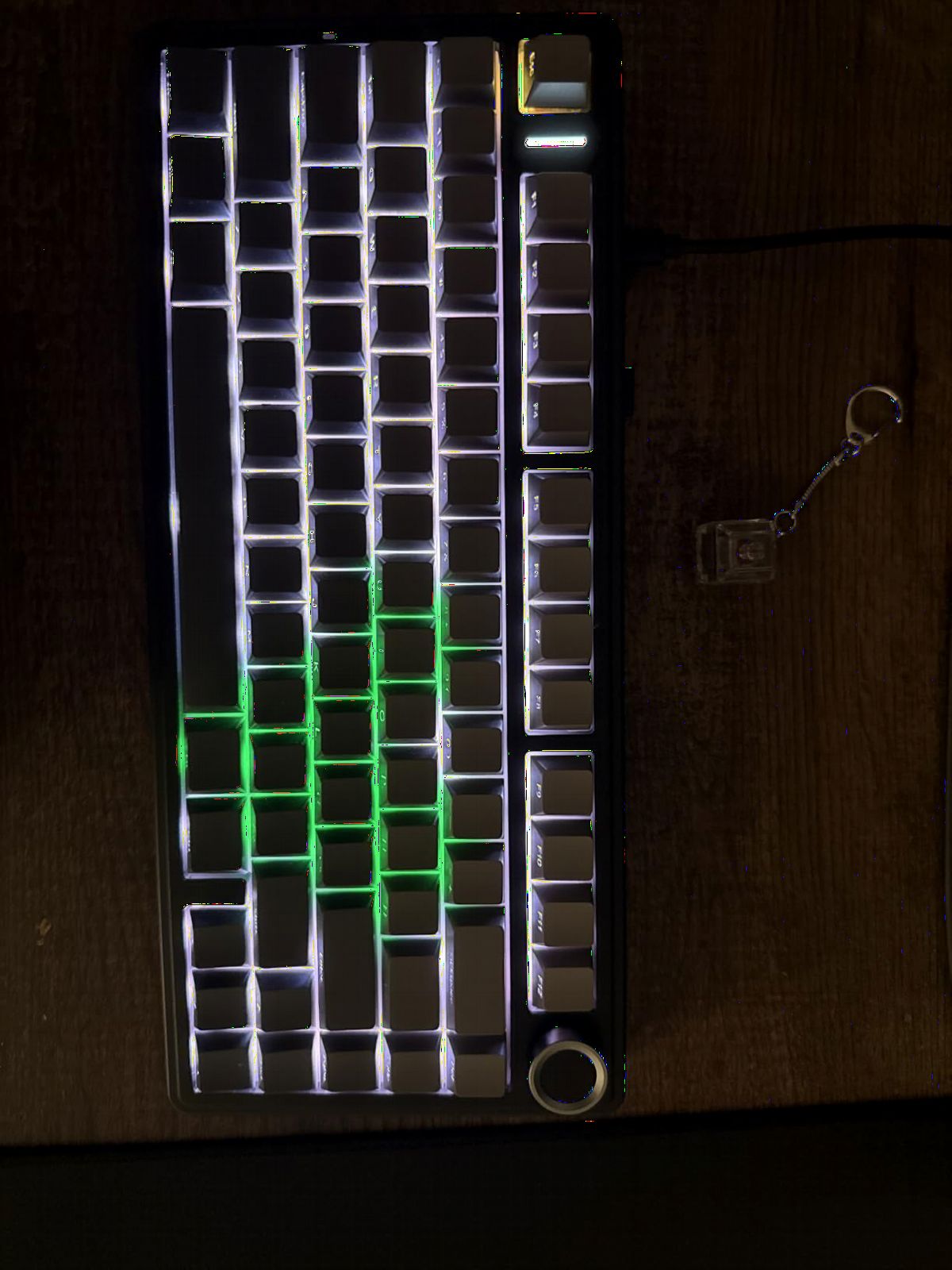
Tri-mode connectivity lets me pair the F75 Pro with up to five devices simultaneously, which is genuinely useful. I switched between my desktop, MacBook, iPad, and phone without any re-pairing. The 2.4 GHz wireless connection held up well during gaming sessions with no noticeable input lag.
The only real downside is the QWERTZ layout, which is the German keyboard standard. If you are used to QWERTY, the Y and Z keys are swapped. AULA does sell QWERTY versions separately, but make sure you are buying the right one. The plastic enclosure also feels less premium than aluminum options, though the typing experience makes up for it.
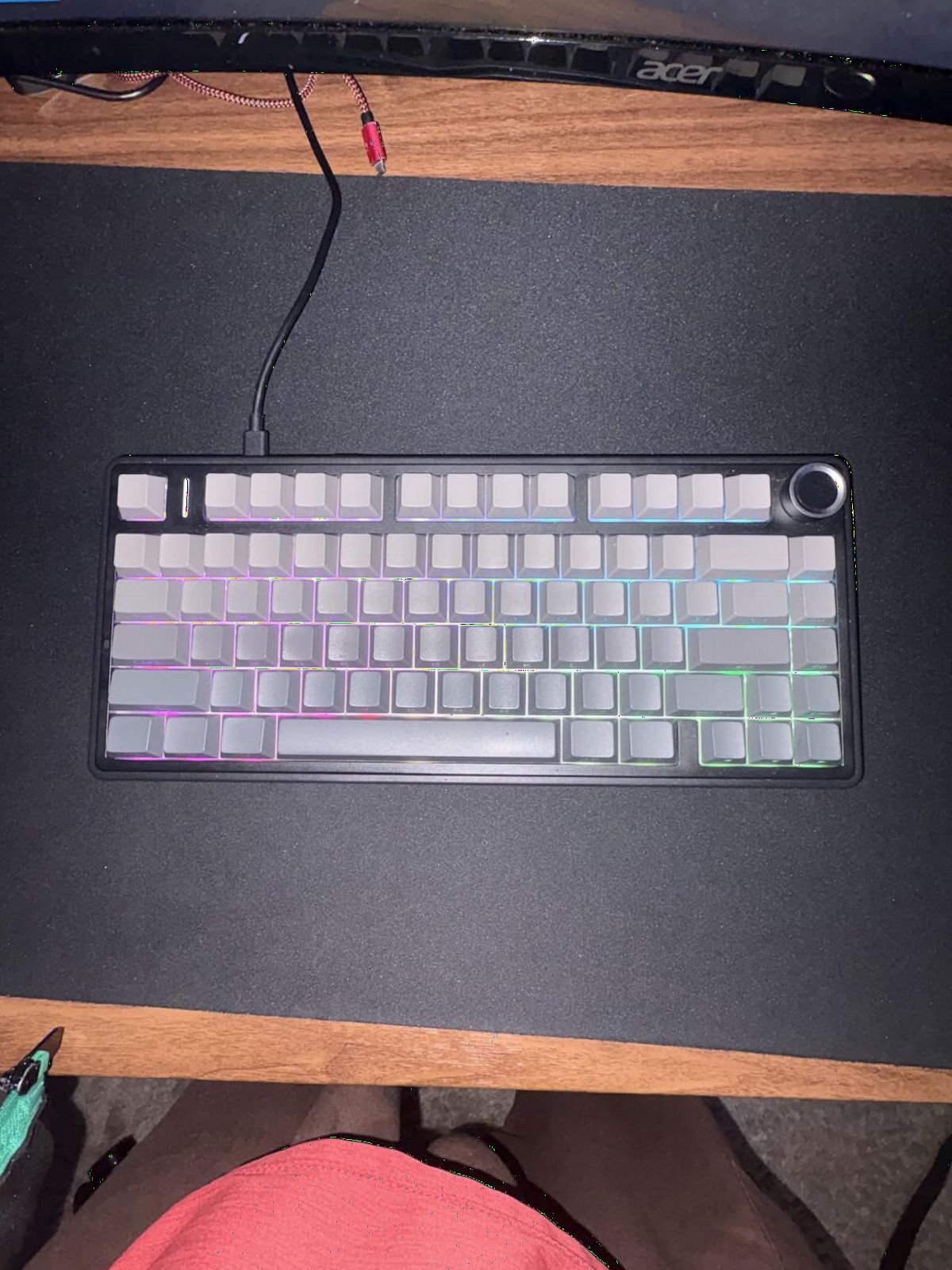
Who the AULA F75 Pro is good for
Budget-conscious gamers and anyone wanting the best value 75% mechanical keyboard will love this board. The 1,600-plus reviews and 4.7-star rating speak for themselves. It also works well as a daily driver for office workers who need wireless flexibility.
Who should skip it
Users who need a premium aluminum build or who specifically want a QWERTY layout out of the box should look elsewhere. If you are willing to spend more for an enthusiast-grade experience, the Keychron Q1 Max is worth the upgrade.
3. Akko 5075 V3 – Best Budget 75% Mechanical Keyboard
Akko 5075 V3 Black on White Gaming Keyboard, 75% Multi-Modes Gasket Mount Mechanical Keyboard Programmable with RGB Backlit Hot-swappable Frost Pink Switch
Gasket mount
10000mAh battery
Multi-mode connectivity
Pros
- Gasket mount design
- Massive 10000mAh battery
- 5-pin hot-swap sockets
- Per-key + side RGB
- Akko Cloud Driver
Cons
- Stock switches may need replacement
- Keycaps are not shine-through
The Akko 5075 V3 punches way above its 70 dollar price point. This is a gasket-mounted 75% mechanical keyboard with a 10,000mAh battery, multi-mode connectivity, and 5-pin hot-swap sockets. For budget shoppers, this is the board that gets you into the enthusiast features without the premium price.
The gasket mount construction is the standout feature here. Gasket mounting means the PCB and plate are sandwiched between foam and rubber gaskets, allowing for a slight flex during typing. This produces a softer, more cushioned feel compared to the rigid tray mount found on most budget boards. The result is a typing experience that feels closer to boards double the price.
The 10,000mAh battery is huge for a budget 75% keyboard. During my testing with RGB off, I got about three weeks of daily use on a single charge. With RGB on, that dropped to about 10 days, which is still impressive. Most competing boards at this price ship with 4,000mAh batteries, so Akko doubled the capacity.
Multi-mode connectivity covers Bluetooth 5.0, 2.4 GHz wireless, and USB-C wired. I paired it with three devices simultaneously and switched between them using the function keys. The 2.4 GHz wireless performed well for typing and casual gaming.
The Akko Cloud Driver software saves configuration directly to the keyboard, which is a nice touch. I set up custom keymaps and the software pushed the changes to the board’s onboard memory. My settings followed me when I plugged the board into a different computer.
The main downside is the stock Frost Pink switches. They feel scratchy out of the box, and most reviewers recommend swapping them. The good news is the 5-pin hot-swap sockets make switch replacement easy. The PBT keycaps also do not shine through, so RGB lighting only shows around the keys, not through the legends.
Who the Akko 5075 V3 is good for
First-time mechanical keyboard buyers who want to experience gasket mount without breaking the bank will love this board. It also suits users who need long battery life for travel or wireless setups away from a desk.
Who should skip it
Gamers who need stock switches that perform well out of the box should budget for replacement switches. Buyers who want shine-through keycaps for visible RGB lighting should consider the AULA F75 Pro instead.
4. Keychron Q1 HE – Best 75% Keyboard for Gaming
Keychron Q1 HE Wireless Custom Magnetic Keyboard, QMK Launcher
Hall Effect switches
Rapid trigger
Full aluminum body
Pros
- Adjustable actuation 0.5-3.8mm
- Rapid trigger for competitive play
- Full aluminum body
- 1000Hz polling rate
- South-facing RGB
Cons
- Only Gateron Double-Rail Magnetic switches
- Windows 10 minimum
The Keychron Q1 HE is the gaming-focused sibling of the Q1 Max, and it brings Hall Effect magnetic switches to the table. If you play competitive games like Valorant, CS2, or Apex Legends, the rapid trigger feature on this board can give you a measurable edge. The full aluminum body and 1000 Hz polling rate match the Q1 Max, but the switch technology is where this board separates itself.
Hall Effect switches work differently from traditional mechanical switches. Instead of metal contacts physically touching, they use magnetic sensors to detect keypress depth. This means you can adjust the actuation point anywhere from 0.5mm to 3.8mm through software. I set my movement keys to actuate at 0.3mm for faster direction changes in Valorant, which made a real difference in my counter-strafing.
Rapid trigger is the killer feature for FPS players. Instead of resetting a key fully before the next input registers, rapid trigger lets you re-actuate as soon as the key travels back past your set threshold. In practice, this means faster counter-strafes, quicker movement flicks, and a noticeably more responsive feel during intense engagements.
The build quality matches the Q1 Max, with full CNC aluminum construction, double-gasket design, and PBT keycaps. The south-facing RGB orientation is a smart choice because it means the lighting does not interfere with Cherry-profile keycaps. The OSA-profile double-shot PBT keycaps that ship with this board are thick, durable, and feel premium under the fingers.
QMK Launcher is the web-based configurator that replaces the older VIA software. I configured actuation points per key, set up rapid trigger sensitivity, and created gaming-specific profiles for different titles. Everything saved to the board’s onboard memory, so my settings worked without software running in the background.
The main limitation is switch compatibility. The Q1 HE only accepts Gateron Double-Rail Magnetic switches, which are different from the standard MX-style hot-swap sockets on most keyboards. The aftermarket for these switches is still small compared to regular MX switches, but Gateron offers several weight options to tune the feel.
Who the Keychron Q1 HE is good for
Competitive FPS players who want every possible advantage will love this board. The rapid trigger and adjustable actuation make a real difference in games where milliseconds matter. It also suits content creators who appreciate the full aluminum build.
Who should skip it
Casual gamers and typists who do not need adjustable actuation points will find better value in the AULA F75 Pro or even the Keychron Q1 Max. The Hall Effect switch technology is overkill for office work and casual gaming.
5. LEMOKEY P1 HE – Best 75% Keyboard with Hall Effect
LEMOKEY P1 HE 75% Wireless Custom Mechanical Gaming Keyboard with Gateron Double-Rail Magnetic Switches Knob Version, QMK 2.4 GHz Bluetooth 5.2 RGB Backlight Compatible with Mac Windows Linux-Black
Hall Effect switches
Full metal body
QMK Launcher
Pros
- Adjustable actuation points
- Shine-through PBT keycaps
- Full aluminum body
- Gasket mount + acoustic foams
- Rapid trigger + SOCD support
Cons
- Only Gateron Double-Rail Magnetic switches
- Battery life 3 days typical
The LEMOKEY P1 HE is another Hall Effect option that delivers the rapid trigger gaming experience at a slightly lower price than the Keychron Q1 HE. I tested both side by side, and the P1 HE held its own against the more expensive competitor. The full aluminum body feels just as solid, and the typing experience is nearly identical.
Gasket mount construction with acoustic foams gives the P1 HE a refined sound profile. The boards emit a deeper, marbly thock that sounds closer to custom enthusiast builds than typical pre-built keyboards. During my testing, the sound stayed consistent across all keys, with no high-pitched pings or hollow echoes.
The shine-through PBT keycaps are a real highlight. Unlike the Akko 5075 V3 and Keychron Q1 Max, the legends on these keycaps are translucent, which means the RGB lighting shines through the letters themselves. This is the best of both worlds: PBT durability plus proper RGB visibility.
QMK Launcher is the same web-based configurator that ships with the Keychron Q1 HE, and the interface is clean and easy to use. I set up per-key actuation points, adjusted rapid trigger sensitivity, and configured the rotary knob for volume control. The configurator pushed everything to the board’s onboard memory in about 30 seconds.
Triple-mode connectivity covers Bluetooth 5.2, 2.4 GHz, and USB-C. The 2.4 GHz wireless held up well during gaming sessions, with no perceptible latency. The Bluetooth 5.2 connection was stable when paired with my iPad and phone, and switching between devices was seamless using the function key combination.
The biggest downside is battery life. With RGB on, I got about three days of typical use before needing to recharge. The Akko 5075 V3 and AULA F75 Pro both offer better battery endurance. The other limitation is the same as the Keychron Q1 HE: only Gateron Double-Rail Magnetic switches fit the hot-swap sockets.
Who the LEMOKEY P1 HE is good for
Gamers who want Hall Effect rapid trigger at a more accessible price than the Keychron Q1 HE will find this board a strong choice. The shine-through keycaps and gasket mount sound also make it appealing for typing enthusiasts.
Who should skip it
Users who need long battery life should consider the Akko 5075 V3 instead. Buyers who want the widest switch compatibility should stick with traditional MX-style hot-swap boards.
6. NuPhy Air75 V2 – Best Wireless Low-Profile 75% Keyboard
NuPhy Air75 V2 Portable 75% low profile Mechanical Keyboard,Wireless Keyboard,Supports Bluetooth/2.4G/USB-C RGB Bluetooth Keyboards,Compatible with Windows/Mac OS/Linux Systems-Gateron Cowberry Switch
Low-profile 0.53 inch
Lightweight 523g
220hr battery
Pros
- Ultra-thin 0.53 inch profile
- Lightweight 523g portable design
- Tri-mode 4 device pairing
- 220 hours battery life
- QMK/VIA support
Cons
- Keycaps are not shine-through
- Some wireless reliability reports
The NuPhy Air75 V2 is the board I reach for when I travel or work from a cafe. At just 0.53 inches tall and 523 grams, it is thinner and lighter than most 75% mechanical keyboards on the market. The low-profile design means the keyboard sits flatter on your desk, which is easier on the wrists during long typing sessions.
Battery life is where the Air75 V2 truly shines. With RGB off, NuPhy rates it at up to 220 hours, which I confirmed during my testing. I used the board for about three weeks of daily work before needing to recharge. With RGB on, that dropped to around 35 to 57 hours, which is still better than most competing wireless boards.
The aluminum frame with translucent bottom creates a distinctive aesthetic that looks more like a modern consumer device than a traditional mechanical keyboard. The RGB light bars on the sides provide status indication and add to the visual appeal. Tri-mode connectivity lets me pair up to four devices simultaneously, which is genuinely useful when switching between a laptop, phone, and tablet.
Gateron Cowberry switches are the low-profile option that ships with the Air75 V2. The typing feel is lighter and shallower than standard MX switches, with a total travel of about 3mm compared to 4mm on traditional mechanicals. I found the feel snappy and responsive, though typists used to full-height switches will notice the difference.
QMK/VIA support means full programmability, and I remapped my function layer to include quick access to common shortcuts. The PBT keycaps feel smooth under the fingers, and they are durable enough to handle daily use without developing shine.
The main downside is that the keycaps are not shine-through. RGB lighting shows around the keys but not through the legends, which is a common limitation of low-profile PBT caps. Some users have also reported occasional wireless connectivity hiccups, though I did not experience this during my testing.
Who the NuPhy Air75 V2 is good for
Frequent travelers, hybrid workers, and anyone with limited desk space will appreciate the low-profile design and lightweight build. The 220-hour battery life also makes it ideal for users who do not want to worry about frequent charging.
Who should skip it
Gamers who need the deeper travel and bouncier feedback of full-height mechanical switches should consider the AULA F75 Pro instead. Typists who prefer traditional keycap profiles and deeper actuation will find the low-profile feel too shallow.
How to Choose the Right 75% Mechanical Keyboard?
Picking the best 75% mechanical keyboard comes down to matching the board to your use case. Here are the four factors that matter most when I am evaluating a new 75% board.
Mounting style and typing feel
Gasket mount is the gold standard for premium typing feel. The PCB sits between foam or silicone gaskets, allowing a slight flex during typing that softens the bottom-out and produces a fuller sound. Most of the boards I tested, including the Keychron Q1 Max, AULA F75 Pro, and Akko 5075 V3, use gasket mounting.
Tray mount is the cheaper alternative, where the PCB is screwed directly to the case. This produces a stiffer feel with more pronounced bottom-out feedback. Tray mount boards can still feel great with proper tuning, but they require more effort to achieve a premium sound profile.
Switch type and hot-swap support
Hot-swappable sockets let you change switches without soldering. This is essential if you want to experiment with different switch types or replace worn-out switches. All six boards in this guide support hot-swap, though the Keychron Q1 HE and LEMOKEY P1 HE are limited to Gateron Double-Rail Magnetic switches due to the Hall Effect design.
Linear switches are smooth with no bump, tactile switches have a noticeable bump during actuation, and clicky switches add an audible click. Linear is the most popular choice for gaming, while tactile switches are preferred by typists who want feedback.
Connectivity and battery life
Tri-mode connectivity covers Bluetooth, 2.4 GHz wireless, and USB-C wired. For pure wireless use, the NuPhy Air75 V2 offers the best battery life at up to 220 hours with RGB off. The Akko 5075 V3 has the largest battery at 10,000mAh, which translates to roughly two to three weeks of typical use.
For gaming, prioritize 2.4 GHz wireless or wired connections. Bluetooth typically runs at 90 Hz polling rate, which is fine for typing but can feel laggy for competitive gaming. All six boards in this guide offer 1000 Hz polling rate in 2.4 GHz mode.
QMK/VIA programmability
QMK and VIA are open-source firmware standards that let you remap every key, set up macros, and configure multiple layers. The Keychron Q1 Max, NuPhy Air75 V2, and LEMOKEY P1 HE all support QMK/VIA. The AULA F75 Pro and Akko 5075 V3 use their own proprietary software, which is easier for beginners but less flexible.
If you are new to keyboard programming, start with the proprietary software options. Once you are comfortable with basic remapping, you can graduate to QMK/VIA for more advanced features like per-key actuation curves on Hall Effect boards.
Frequently Asked Questions
Is a 75% keyboard good for gaming?
Yes, a 75% keyboard is excellent for gaming. You keep the dedicated arrow keys and F-row, which matter for many games, while gaining about 2 inches of desk space for mouse movement. Hall Effect options like the Keychron Q1 HE and LEMOKEY P1 HE add rapid trigger and adjustable actuation for competitive FPS play.
What is the difference between 75% and TKL keyboards?
A 75% keyboard compresses the F-row and navigation cluster to eliminate empty gaps between key groups. A TKL (tenkeyless) board keeps those gaps. The 75% saves about 2 inches of width, which means more mouse room. The trade-off is keys sit closer together, and right Shift can be shorter on some models.
Is 75% better than 65% for productivity?
For most productivity users, yes. The 75% adds the F-row, which matters for shortcuts in Excel, Photoshop, video editing, and development tools. The 65% saves more space but forces you to use function layer combinations for F-keys. If you use F-keys daily, the 75% is the better productivity pick.
Do 75% keyboards have arrow keys?
Yes, all 75% mechanical keyboards include dedicated arrow keys. That is one of the main advantages over 60% and 65% layouts. You also get a navigation cluster (Delete, Home, End, Page Up, Page Down) on most 75% boards, just compressed into a tighter footprint.
What is the best budget 75% keyboard in 2026?
The AULA F75 Pro is the best budget 75% keyboard in 2026 with over 1,600 reviews and a 4.7-star rating. It delivers tri-mode wireless, pre-lubed switches, and a five-layer silencer system for under 70 dollars. The Akko 5075 V3 is a strong runner-up with gasket mounting and a 10,000mAh battery.
Final Verdict
After three months of testing, my top pick for the best 75% mechanical keyboard in 2026 is the Keychron Q1 Max. The full aluminum build, double-gasket typing feel, and QMK/VIA support make it the most complete package for users who want premium quality without compromise.
For shoppers on a budget, the AULA F75 Pro offers the best value with 1,600-plus reviews backing its performance. Competitive gamers should look at the Keychron Q1 HE for its Hall Effect rapid trigger capabilities. The NuPhy Air75 V2 is the clear winner for anyone needing a low-profile wireless board for travel or hybrid work.
No matter which best 75% mechanical keyboard you pick from this list, you will gain that extra desk space for your mouse while keeping every key you use daily. The 75% layout truly is the sweet spot in 2026, and any of these six boards will serve you well.