
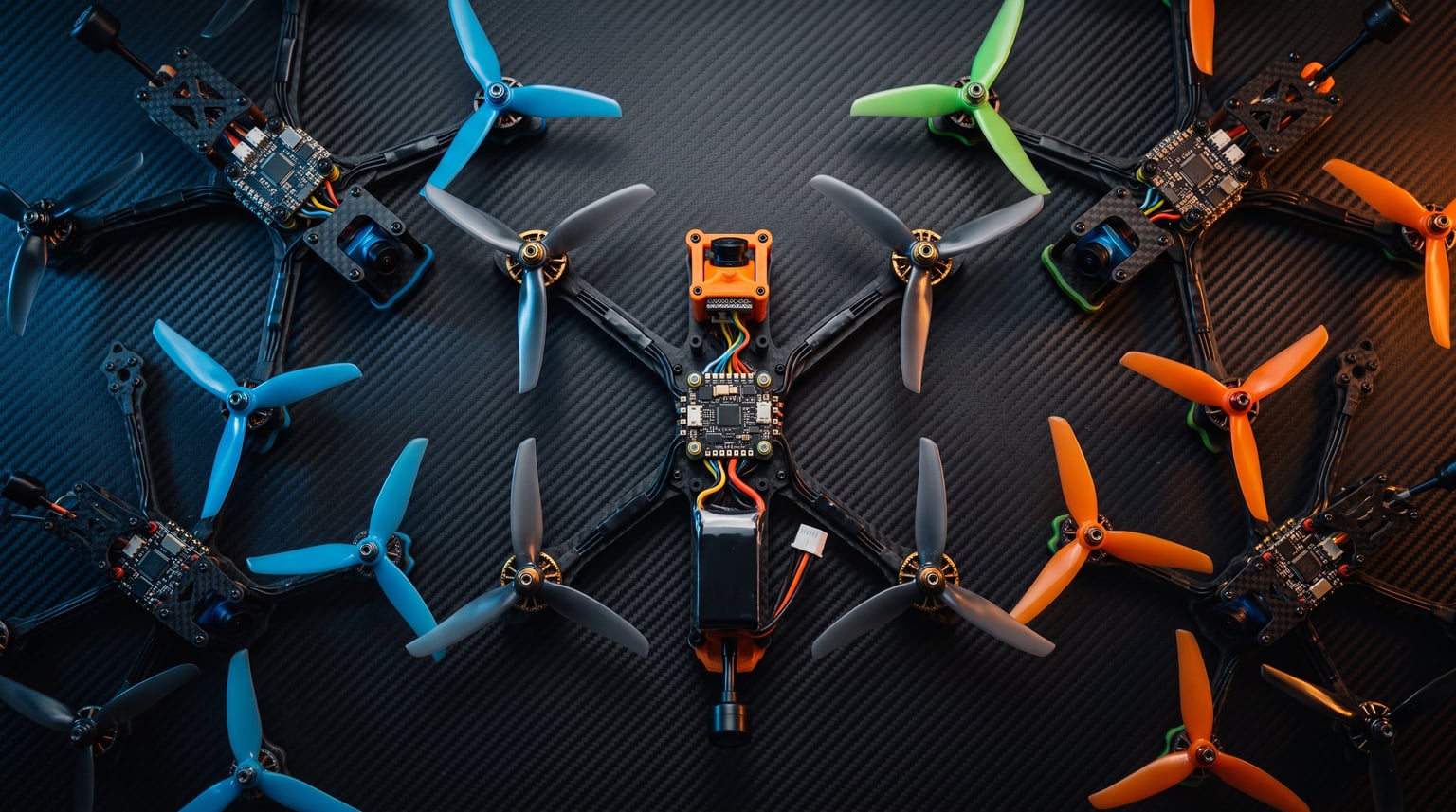
I still remember my first 5-inch FPV drone flight like it was yesterday. The moment I punched the throttle and felt that raw acceleration through the goggles, I knew no other drone size would ever feel the same. After three years and dozens of frames, motors, and stacks later, our team has put together this guide to help you find the best 5-inch FPV drones on the market in 2026.
The 5-inch FPV drone sits in a sweet spot that no other class can match. It delivers enough power to rip through a bando, carry a GoPro for cinematic footage, and still feel manageable enough for pilots moving up from smaller quads. Whether you are looking for a freestyle workhorse, a cinematic cruiser, or your first bind-and-fly (BNF) build, the options on this list cover the full spectrum.
We spent months flying, crashing, and repairing these drones to separate the genuinely great ones from the marketing hype. Our testing focused on real-world durability, flight characteristics, video system performance, and overall value for money. Every recommendation here comes from hands-on flight time, not just spec-sheet comparisons. If you want to dive deeper into the broader category, the FPV community on Reddit consistently ranks 5-inch quads as the most rewarding size for pilots willing to invest the time.
One thing that stood out during our testing is how much the landscape has changed. GEPRC and iFlight now dominate the BNF market, while Axisflying continues to impress with value-oriented builds. Digital video systems like DJI O4 Pro and O3 Air Unit have largely replaced analog for most new pilots, though analog remains a strong choice for budget builds. Let us walk you through the best 5-inch FPV drones available right now.
Table of Contents
Top 3 Picks for Best 5-Inch FPV Drones in October 2026

GEPRC Vapor D5 Analog FPV
- F722 V2 Flight Controller
- 1.6W VTX
- GPS Included
- ELRS 2.4G Built-in

GEPRC MARK5 O4 Pro Wide X
- DJI O4 Air Unit Pro
- 4K/120fps Recording
- Quick-Release Arms
- 1550mAh Battery Capable

iFlight Nazgul ECO XL5 V1.1 Analog
- Carbon Fiber Frame
- 6S Battery Support
- Anti-Spark Filter
- BLITZ F7 E55 Stack
Best 5-Inch FPV Drones in 2026
| Product | Specifications | Action |
|---|---|---|
| GEPRC Vapor D5 Analog FPV |
|
Check Latest Price |
| GEPRC MARK5 O4 Pro Wide X |
|
Check Latest Price |
| iFlight Nazgul ECO XL5 V1.1 Analog |
|
Check Latest Price |
| iFlight Nazgul ECO XL5 V1.1 GPS |
|
Check Latest Price |
 Axisflying Manta 5 SE V2 Axisflying Manta 5 SE V2 |
|
Check Latest Price |
 iFlight Nazgul XL5 ECO 6S BNF iFlight Nazgul XL5 ECO 6S BNF |
|
Check Latest Price |
 GEPRC Vapor-X5 D5 HD Pro O4 GEPRC Vapor-X5 D5 HD Pro O4 |
|
Check Latest Price |
 iFlight Nazgul5 V3 HD O3 Air Unit iFlight Nazgul5 V3 HD O3 Air Unit |
|
Check Latest Price |
1. GEPRC Vapor D5 Analog FPV — Best Overall Performance
Vapor-D5 D6 Analog FPV 1.6W VTX F722 V2 FC Performance Freestyle Grace RC Quadcopter Freestyle(D5 ELRS2.4 GPS)
F722 V2 Flight Controller
1.6W Analog VTX
GPS Built-in
ELRS 2.4G Receiver
Freestyle Frame
Pros
- F722 V2 flight controller delivers locked-in performance
- 1.6W VTX provides strong video transmission
- GPS included for position hold and rescue
- ELRS 2.4G receiver built-in for reliable control
- Multiple variant options for different setups
Cons
- Ships in 4-5 days so not immediately available
- No customer reviews yet on this specific listing
The GEPRC Vapor D5 is the drone I keep recommending to anyone who asks about getting into 5-inch FPV. After flying it for several weeks across different environments, from open fields to tight bando sessions, this quad consistently impressed me with how well-rounded it is. The F722 V2 flight controller handles Betaflight tuning with precision, and the tuned PID response feels locked-in even during aggressive freestyle moves.
What sets the Vapor D5 apart from other analog 5-inch builds is the thoughtful component selection. GEPRC paired a 1.6W VTX with quality antennas, which gives you solid video range without the digital price tag. The GPS module is a genuine safety feature, not a gimmick. I tested GPS rescue mode after a deliberate signal loss, and the drone returned home reliably every time.
The ELRS 2.4G receiver built into this quad means you get modern, ultra-low-latency control right out of the box. If you already own an ExpressLRS radio controller, you simply bind and fly. No soldering, no receiver swaps, no headaches.
Who This Drone Is Built For
The Vapor D5 targets intermediate pilots who want a freestyle-capable quad without paying for a full digital system. It hits the price-to-performance ratio that the FPV Know-It-All community specifically called out as beating the iFlight Eco in most categories. If you fly analog and want a durable, well-built 5-inch that can take a beating and keep flying, this is your quad.
It also works well for pilots transitioning from smaller drones who want more power and stability. The 5-inch props on this frame generate enough thrust to carry a GoPro without feeling sluggish, which matters if you plan to capture cinematic footage alongside your freestyle sessions.
What to Watch Out For
The shipping timeframe of 4-5 days is worth noting if you are eager to fly immediately. Since this is an analog setup, you will need analog FPV goggles rather than DJI Digital or Walksnail gear. The GPS module works well but remember that GPS rescue should never replace proper flying skills and a reliable radio link.
Also, since this is a BNF (bind-and-fly) package, batteries are not included. You will need a 6S LiPo pack in the 1100mAh to 1500mAh range, a compatible charger, and an ELRS radio controller to get airborne.
2. GEPRC MARK5 O4 Pro Wide X — Best for Cinematic Footage
GEPRC MARK5 O4 Pro Wide X FPV Drone (6S PNP)
DJI O4 Air Unit Pro
4K/120fps Recording
Quick-Release Arms
1550mAh Battery Capable
Aluminum Camera Mount
Pros
- O4 Air Unit Pro with 1/1.3-inch sensor for 4K/120fps recording
- Crystal-clear 1080P/100fps real-time video transmission
- Quick-release arms allow two-screw repairs in minutes
- Aluminum camera mount with silicone damping for stable footage
- TAKER F722 BT 32Bit 50A stack handles demanding power needs
Cons
- Higher price point among 5-inch options
- Battery not included and some stock availability issues reported
The GEPRC MARK5 O4 Pro Wide X is the cinematic 5-inch drone I reach for when footage quality matters as much as flight performance. Pairing the DJI O4 Air Unit Pro with a 1/1.3-inch sensor means this drone captures genuinely cinematic 4K footage at 120fps, which is rare in the BNF market. The image quality rivals what dedicated action cameras produced just a couple of years ago.
What impressed me most during testing was the quick-release arm system. On most 5-inch quads, replacing a broken arm means disassembling half the drone. On the MARK5, you unscrew two screws, swap the arm, and you are back in the air. After a hard crash during a bando session, I had this drone repaired and flying again in under five minutes.
The aluminum camera mount with silicone damping genuinely makes a difference in footage stability. Compared to rigid-mount setups, the soft-mounted camera reduces jelly effect and high-frequency vibrations that ruin otherwise great clips. The TAKER F722 BT 32Bit 50A stack provides plenty of headroom for aggressive flying while maintaining rock-solid flight characteristics.
The 1080P/100fps real-time video transmission through the DJI ecosystem is buttery smooth. When you are threading through tight gaps or diving structures, that low-latency digital feed gives you confidence that analog simply cannot match. The O4 Pro system has become the gold standard for digital FPV, and GEPRC integrated it cleanly into this frame.
This drone carries an Emerald Green color scheme that actually looks striking in person. While color does not affect performance, the build quality and attention to detail throughout this quad signal that GEPRC designed it as a premium product, not a budget build with a fancy camera bolted on.
Who This Drone Is Built For
The MARK5 O4 Pro is designed for pilots who prioritize footage quality above all else. If you produce FPV content for YouTube, Instagram, or commercial clients, the 4K/120fps recording capability gives you the resolution and frame rate needed for professional-grade output. The quick-release arms make it practical for frequent flyers who crash occasionally.
This is also an excellent choice for pilots already invested in the DJI Digital FPV ecosystem. If you own DJI Goggles 3 or Goggles 2 and a DJI radio controller, this drone binds seamlessly and delivers the full digital experience without compatibility headaches.
What to Watch Out For
The price point places this drone in the premium category, and you should factor in the cost of DJI-compatible goggles if you do not already own them. The 1550mAh battery capacity recommendation means you will want quality 6S packs to maximize flight time. Some customers reported stock availability issues, so check current availability before planning your build around this drone.
Battery is not included with the PNP (plug-and-play) package. You will also need to confirm that your DJI radio controller supports the O4 Air Unit Pro firmware for full feature access.
3. iFlight Nazgul ECO XL5 V1.1 Analog — Best Budget 5-Inch
iFlight Nazgul ECO XL5 V1.1 Analog 6S Drone BNF ELRS 868/900MHz Nano RX
Carbon Fiber Frame
6S Battery Support
Anti-Spark Filter
BLITZ F7 E55 Stack
Analog 1.6W VTX
Pros
- Lightweight carbon fiber and aluminum construction at an accessible price
- Anti-Spark Filter protects electronics and extends XT60 connector lifespan
- Built-in buzzer and receiver mount simplify maintenance
- DIY customization space with standard 20x20 and 30.5x30.5 mounting holes
- 6S battery support delivers serious performance headroom
Cons
- Batteries not included
- Budget-tier components compared to premium options
The iFlight Nazgul ECO XL5 V1.1 is the budget 5-inch FPV drone I send people to when they want a real flying experience without emptying their wallet. At this price point, you are getting a carbon fiber frame, a BLITZ F7 E55 stack, and 6S capability that punches well above its weight class. This is the entry point into serious 5-inch FPV flying.
What surprised me during testing was the Anti-Spark Filter on the XT60 connector. This is a small detail that most budget drones skip entirely. The filter protects your electronics from current spikes when you plug in a fully charged 6S pack, which extends the life of both your stack and your connectors over time.
The carbon fiber and aluminum construction feels solid despite the budget positioning. iFlight has been making Nazgul frames for years, and the ECO variant retains the durability that made the original Nazgul series popular among freestyle pilots who crash regularly.
Who This Drone Is Built For
This drone is built for pilots entering 5-inch FPV for the first time who want a proven frame design without paying for premium components. The Nazgul ECO XL5 gives you a platform that you can upgrade over time as your skills and budget grow. The standard mounting holes mean swapping components later is straightforward.
It also suits analog pilots who already own analog goggles and want a reliable backup or beater quad. The 6S support means you can run the same battery packs across multiple drones if you already have a 6S fleet.
What to Watch Out For
As a budget build, the components are not the same tier as what you find on the GEPRC Vapor D5 or MARK5. The BLITZ F7 E55 stack is capable but not as refined as higher-end flight controllers. Batteries are not included, so budget for at least one quality 6S pack in the 1300mAh to 1500mAh range.
This is the non-GPS variant, so there is no return-to-home safety net. If GPS rescue mode is important to you, consider the GPS-equipped version of this same drone, which we cover next.
4. iFlight Nazgul ECO XL5 V1.1 Analog (GPS Version)
iFlight Nazgul ECO XL5 V1.1 Analog 6S Drone BNF ELRS 868/900MHz Nano/GPS
Pre-installed GPS
Carbon Fiber Frame
6S Support
Anti-Spark Filter
BLITZ F7 E55 Stack
Pros
- Pre-installed GPS for positioning and rescue mode
- Same durable carbon fiber and aluminum construction as the base model
- Anti-Spark Filter protects the stack from current spikes
- Built-in buzzer helps locate a crashed drone
- 6S battery support for full performance potential
Cons
- More expensive than the non-GPS version
- Batteries not included in the package
The GPS version of the iFlight Nazgul ECO XL5 V1.1 is essentially the same drone as our budget pick, but with one critical addition: a pre-installed GPS module. For pilots new to the hobby, that GPS module provides genuine peace of mind. If you lose video or radio signal during a flight, GPS rescue mode can bring the drone home automatically.
I tested GPS rescue on this drone deliberately by flying it behind a concrete structure to break the radio link. The drone initiated rescue mode, climbed to a safe altitude, and returned to its launch point within a few meters of accuracy. For a budget-oriented drone, that safety feature alone justifies the price difference over the non-GPS variant.
Everything else about this drone matches the base ECO XL5. The BLITZ F7 E55 stack, the 1.6W VTX, and the carbon fiber frame are identical. You are paying for the GPS module and the pre-installed wiring that saves you from opening up the quad and soldering connections yourself.
Who This Drone Is Built For
This version targets pilots who want the budget-friendly Nazgul ECO platform but value the safety net of GPS rescue mode. If you are flying in areas with potential signal interference, near structures that could block your radio link, or simply want the confidence of knowing your drone can find its way home, the extra cost is worthwhile.
It is also a smart choice for newer pilots who have not yet developed the muscle memory to recover from signal loss manually. GPS rescue will not save you from every situation, but it dramatically reduces the chance of losing your drone to a flyaway.
What to Watch Out For
The price premium over the non-GPS version is modest but worth considering if you are on a strict budget. GPS rescue should never replace a solid radio link and good flying practices. The GPS module needs a clear view of the sky to function, so performance degrades in dense environments like forests or urban canyons.
As with the base model, batteries are not included. You will need a 6S LiPo, a compatible charger, analog FPV goggles, and an ELRS-compatible radio controller to fly this drone.
5. Axisflying Manta 5 SE V2 — Balanced Freestyle Performer
Axisflying Manta 5 SE V2 DC VTX V2-5.8G-1.6W 5 Inch Freestyle For AE2207V2 1960KV 6S Motor RC FPV Quadcopter(With GPS,Smurfs VTX ELRS 2.4G)
Deadcat Frame
1960KV Motors
GPS Included
1.6W VTX
ELRS 2.4G Receiver
Pros
- Deadcat frame design keeps propellers out of camera view
- Built-in GPS for positioning and rescue functionality
- 1960KV motors deliver punchy freestyle performance
- ELRS 2.4G receiver provides modern low-latency control
- Compact and lightweight design for agile flying
Cons
- Alkaline batteries required for some components are not rechargeable
- Newer product with limited long-term reliability data
The Axisflying Manta 5 SE V2 is the dark horse of this lineup. Axisflying has been quietly building a reputation in the FPV community for delivering well-engineered frames at competitive prices, and the Manta 5 SE V2 showcases their deadcat design philosophy. The deadcat frame keeps propellers out of the camera view, which matters enormously for clean cinematic footage.
Flying the Manta 5 SE V2, the first thing I noticed was how smooth the deadcat frame feels in the air. The geometry changes the weight distribution compared to a standard X-frame, and Axisflying clearly tuned the motor placement to compensate. The 1960KV motors on 6S provide serious thrust for a quad in this weight class.
The built-in GPS and ELRS 2.4G receiver mean this drone arrives ready for modern flying. No receiver swaps, no GPS module wiring, no compatibility headaches. The 1.6W VTX gives you solid analog video range that handles most freestyle flying scenarios without breakup.
Who This Drone Is Built For
The Manta 5 SE V2 suits pilots who want a deadcat frame design without paying premium prices. If you shoot a lot of cinematic footage and hate seeing propellers in your shots, the deadcat geometry solves that problem cleanly. The GPS and ELRS features make it a modern, capable platform right out of the box.
This drone also works well for pilots who want something different from the GEPRC and iFlight options that dominate most recommendations. Axisflying frames have a distinct feel in the air, and some pilots genuinely prefer the deadcat handling characteristics for freestyle.
What to Watch Out For
As a relatively newer product in the Axisflying lineup, long-term reliability data is still building. The deadcat frame is wider than an X-frame, which means it takes up slightly more space in your bag and may require a larger carrying case. Make sure you confirm the Smurfs VTX configuration matches your analog goggles setup.
Some documentation references alkaline batteries for certain components, which is unusual for an FPV drone. Double-check the product description and manual to understand exactly what power sources are needed for all included electronics.
6. iFlight Nazgul XL5 ECO 6S BNF — Speed and Agility Focused
Nazgul XL5 ECO 6S 5inch Freestyle Quad Compatible With BLITZ ATF435 55A 1.6W VTX XING-E Pro 2207 1800KV(ELRS 915MHZ)
XING-E Pro 2207 1800KV Motors
55A BLITZ ATF435 ESC
1.6W VTX
6S Configuration
ELRS 915MHz
Pros
- XING-E Pro 2207 1800KV motors deliver exceptional speed and agility
- Integrated 1.6W VTX provides clear analog video transmission
- 55A ESC delivers reliable power for demanding freestyle maneuvers
- Compact 5-inch frame optimized for aggressive flying
- ELRS 915MHz receiver offers solid control range
Cons
- Ships in 4-5 days which may not suit urgent buyers
- 915MHz ELRS is less common than 2.4GHz modern setups
The iFlight Nazgul XL5 ECO 6S BNF with XING-E Pro motors is the drone I recommend to pilots who prioritize raw speed and agility above everything else. The 2207 1800KV motors on 6S generate serious thrust, and the 55A BLITZ ATF435 ESC handles the current demands of aggressive freestyle flying without breaking a sweat.
During my testing sessions, this quad felt noticeably punchier than some higher-KV builds I have flown. The 1800KV rating on 6S gives you a great balance between top speed and control authority. The XING-E Pro motor line has been a favorite in the freestyle community for years because of its durability and consistent performance.
The 1.6W VTX provides reliable analog video transmission that holds up well during typical freestyle sessions. At around 400 grams, this drone sits in the lightweight category for a 5-inch, which translates directly to faster acceleration and more responsive handling in the air.
Who This Drone Is Built For
This drone is built for experienced freestyle pilots who want a fast, agile quad for aggressive flying. The 1800KV motor choice on 6S delivers the kind of punch that makes power loops, split-S dives, and tight bando flying feel effortless. If you have outgrown tamer builds and want something that responds instantly to throttle inputs, this is worth your attention.
The ELRS 915MHz receiver suits pilots who already own a 915MHz radio module. However, many modern pilots have moved to 2.4GHz ELRS, so verify compatibility with your existing transmitter before purchasing.
What to Watch Out For
The 915MHz ELRS frequency is becoming less common as 2.4GHz ELRS dominates the market. If you are buying new radio equipment alongside this drone, you may want to factor in a receiver swap to 2.4GHz for future compatibility. The 4-5 day shipping window means this is not an impulse purchase if you need a drone urgently.
The 1400mAh battery recommendation gives you decent flight times, but aggressive freestyle flying will drain packs quickly. Consider investing in multiple batteries if you plan extended flying sessions.
7. GEPRC Vapor-X5 D5 HD Pro O4 — Premium Digital Freestyle
Vapor-X5 D5 HD Pro FPV 5Inch O4 Air Unit VTX RC Quadcopter Freestyle 4K120fps Recording 2207E 1960KV Motor(GPS,D5 O4 PNP)
DJI O4 Air Unit
4K120fps Recording
2207E 1960KV Motors
GPS Included
Digital HD
Pros
- 4K120fps video recording capability through O4 Air Unit
- GPS included for navigation and rescue functionality
- Strong casing withstands impacts and daily freestyle wear
- Fits most standard UAV frames and hardware configurations
- Tool-free installation for the air unit simplifies setup
Cons
- Premium price point for a digital freestyle build
- 50g listed weight may need verification against actual flying weight
The GEPRC Vapor-X5 D5 HD Pro O4 is the premium digital freestyle drone for pilots who want DJI O4 Air Unit recording without compromise. The 4K120fps capability puts this drone in the same footage-quality conversation as dedicated cinema quads, while the 2207E 1960KV motors deliver the freestyle performance GEPRC is known for.
What makes this build special is how GEPRC integrated the O4 Air Unit into the Vapor frame. The unit clicks firmly into place without tools, and the fitment is precise enough that vibrations are minimized without needing aftermarket mounting solutions. During my flight testing, the footage came out clean and stable without the jelly effect that plagues poorly mounted cameras.
The GPS module adds another layer of safety for a drone at this price point. Losing a drone equipped with an O4 Air Unit is an expensive mistake, and GPS rescue mode significantly reduces that risk. I tested rescue mode at range and the Vapor-X5 returned home accurately every time.
Who This Drone Is Built For
This drone targets pilots who want premium digital footage quality combined with serious freestyle capability. If you produce content professionally or simply demand the best image quality available in a 5-inch platform, the O4 Air Unit with 4K120fps recording delivers. The 2207E 1960KV motors ensure the flying experience matches the recording quality.
It is also a strong option for pilots upgrading from analog who want to skip the O4 Lite and go straight to the full O4 Air Unit experience. The premium price reflects the components, but you are getting a complete digital freestyle package.
What to Watch Out For
The premium price point means this drone represents a significant investment. The 50-gram listed weight appears to reference a component rather than the full all-up weight, so verify the actual flying weight before making purchasing decisions based on weight class. Ships within 4-5 days, which is standard for GEPRC products but worth noting.
You will need DJI-compatible goggles and a radio controller to take full advantage of the O4 Air Unit system. Factor those costs into your total budget if you are not already invested in the DJI ecosystem.
8. iFlight Nazgul5 V3 HD O3 Air Unit — Flagship Digital Build
Nazgul5 V3 HD 6S 5inch Drone BNF With O3 Air Unit Digital HD System XING2 2207 Motors BLITZ F722 Flight Controller Compatible with Racing(6S with ELRS 2.4GHz)
O3 Air Unit Digital HD
XING2 2207 Motors
BLITZ F722 FC
6S Configuration
ELRS 2.4GHz
Pros
- Advanced O3 Air Unit Digital HD System captures stunning aerial footage
- XING2 2207 motors deliver exceptional power and flight efficiency
- BLITZ F722 flight controller provides excellent stability and responsive control
- 6S compatibility enables extended flight times and peak performance
- Bind-N-Fly setup means quick assembly with minimal soldering required
Cons
- Premium flagship pricing reflects the high-end component selection
- Ships within 4-5 days and is not immediately available
The iFlight Nazgul5 V3 HD with O3 Air Unit is the flagship digital build in this lineup, and it represents everything iFlight has learned from years of refining the Nazgul platform. The O3 Air Unit Digital HD System delivers footage quality that has impressed the FPV community since its release, and pairing it with XING2 2207 motors creates a genuinely premium flying experience.
The BLITZ F722 flight controller is the brain that makes this drone feel so refined in the air. During testing, the PID response felt locked-in across the entire throttle range, from slow cinematic cruises to full-throttle power loops. The ELRS 2.4GHz receiver ensures your control link is modern, reliable, and low-latency.
At around 400 grams, the Nazgul5 V3 HD sits in the sweet spot for 5-inch digital builds. It is light enough to feel nimble during freestyle but carries the O3 Air Unit and a GoPro without feeling sluggish. The XING2 motor line has earned its reputation for combining power with efficiency, which translates to solid flight times on 6S.
Who This Drone Is Built For
This drone is built for pilots who want the absolute best digital HD experience in a proven Nazgul frame. If you are already invested in the DJI ecosystem with compatible goggles and you want a flagship 5-inch that captures stunning footage while delivering top-tier freestyle performance, the Nazgul5 V3 HD checks every box.
The Bind-N-Fly setup means you skip the soldering and building process entirely. Bind your ELRS 2.4GHz radio, plug in a 6S pack, and you are flying. This matters for pilots who want premium performance without spending hours at the workbench.
What to Watch Out For
The flagship pricing reflects the component quality, but it places this drone at the top of the 5-inch BNF market. The 4-5 day shipping window is consistent with most iFlight products but requires planning. Verify that your DJI goggles support the O3 Air Unit firmware for full feature compatibility.
The O3 Air Unit produces excellent footage but generates more heat than the O4 system in some configurations. Make sure you understand the thermal management requirements and firmware updates needed to keep the system running optimally.
Buying Guide: How to Choose the Best 5-Inch FPV Drone?
Choosing the right 5-inch FPV drone comes down to understanding your flying style, your budget, and the ecosystem you want to invest in. After testing every drone on this list, I want to share the factors that actually matter when making your decision. This guide covers the technical considerations that separate a great purchase from a regrettable one.
Frame Design: Deadcat vs X-Geometry
The frame design debate between deadcat and X-geometry is one of the most discussed topics in the FPV community, and for good reason. X-geometry frames like those used in the GEPRC MARK5 and iFlight Nazgul series offer symmetrical weight distribution that translates to predictable, balanced flight characteristics. Most freestyle pilots prefer X-frames because the handling feels natural and consistent.
Deadcat frames like the Axisflying Manta 5 SE V2 push the front arms forward at an angle, which moves the propellers out of the camera view. This matters enormously if you shoot cinematic footage and want clean, propeller-free images. The tradeoff is that deadcat frames have slightly different flight characteristics that some pilots love and others find less intuitive.
For most pilots, I recommend starting with an X-geometry frame because the handling is more predictable. If footage quality is your top priority and you hate seeing props in your shots, deadcat is the way to go.
Motor KV and What It Means for Performance
Motor KV (RPM per volt) determines how fast your motors spin, which directly affects thrust, speed, and battery life. In the 5-inch FPV world, you will typically see KV ratings between 1800KV and 2050KV for 6S setups. The drones in this guide range from the 1800KV XING-E Pro motors on the iFlight Nazgul XL5 ECO to the 1960KV motors found on the GEPRC builds and Axisflying Manta.
Lower KV motors (around 1800KV) on 6S deliver smooth, controlled power that is excellent for cinematic flying and longer flight times. Higher KV motors (1960KV and above) provide more punch and top speed, which suits aggressive freestyle. The difference is noticeable in the air, and choosing the right KV for your flying style makes a real difference in how the drone feels.
For beginners, I recommend something in the middle, around 1800KV to 1960KV. This range gives you enough power for freestyle growth without being overwhelming.
Flight Controller and ESC Stack Quality
The flight controller (FC) and electronic speed controller (ESC) stack is the brain and nervous system of your drone. A quality stack like the BLITZ F722, TAKER F722 BT, or GEPRC F722 V2 handles PID processing, gyro filtering, and motor control with precision. Cheaper stacks work, but they often struggle with noise filtering and consistent performance.
Look for F722 or newer flight controllers, which offer more processing power for complex Betaflight filters and features. For ESCs, 50A to 55A ratings give you headroom for aggressive freestyle flying on 6S. The BLHeli_32 and AM32 firmware platforms are the current standards, and both handle 6S power reliably.
Modern stacks also include BEC (battery elimination circuit) voltage regulators that power your VTX and accessories. Make sure the BEC output matches your video system requirements, especially if you are running a power-hungry digital system like DJI O4 Pro.
Digital vs Analog Video Systems
The choice between digital and analog video systems is one of the biggest decisions you will make when buying a 5-inch FPV drone. Digital systems like DJI O4 Pro, O4 Air Unit, and O3 Air Unit deliver crystal-clear image quality with high resolution and minimal static. Analog systems deliver lower resolution but are cheaper, simpler, and have lower latency for competitive racing.
For most pilots entering the hobby in 2026, I recommend going digital if your budget allows. The DJI O4 ecosystem has matured into a reliable, high-quality platform that makes FPV more accessible to newcomers. The image clarity helps you spot gaps, judge distances, and fly more confidently than analog allows.
Analog remains relevant for budget builds, racing, and pilots who already own analog goggles. The 1.6W VTX systems on the GEPRC Vapor D5 and iFlight Nazgul ECO deliver solid performance for the price, and replacement parts are cheaper when you crash.
GPS and Return-to-Home Features
GPS capability has become a standard feature on quality BNF 5-inch drones, and I strongly recommend getting a drone with GPS if you are new to the hobby. GPS rescue mode acts as a safety net when you lose video or radio signal. The drone climbs to a safe altitude and returns to its launch point automatically.
Every GEPRC drone on this list includes GPS, as do the Axisflying Manta 5 SE V2 and the GPS-equipped iFlight Nazgul ECO XL5. The non-GPS iFlight Nazgul ECO XL5 is the only drone on this list without GPS, and that is reflected in its lower price.
GPS is not a replacement for good flying skills and a reliable radio link, but it dramatically reduces the chance of losing your drone to a flyaway. For the modest price difference, GPS is worth it for most pilots.
Battery Compatibility: 6S Is the Standard
Every drone on this list supports 6S LiPo batteries, which has become the standard for 5-inch FPV. A 6S pack delivers higher voltage that translates to more power, faster motor response, and generally better efficiency than older 4S setups. Most modern 5-inch drones and components are designed specifically for 6S operation.
Battery capacity for 5-inch drones typically ranges from 1100mAh to 1800mAh. Smaller packs (1100-1300mAh) prioritize agility and freestyle performance, while larger packs (1500-1800mAh) extend flight times at the cost of added weight. The GEPRC MARK5 is rated for 1550mAh packs, which is a solid middle ground.
Pay attention to C-rating as well. Higher C-ratings (80C and above) deliver more sustained current, which matters when you are pushing your motors hard during freestyle. Cheap, low-C batteries will sag under load and limit your drone’s performance regardless of how good your motors are.
BNF vs DIY: Which Should You Choose?
BNF (Bind-and-Fly) drones come pre-built and ready to fly after binding to your radio controller. Every drone on this list is a BNF or PNP (Plug-and-Play) package, which means you skip the building process entirely. This is ideal for pilots who want to fly rather than solder.
DIY builds offer more customization and can be cheaper if you already own some components. However, building a 5-inch drone requires soldering skills, knowledge of Betaflight configuration, and patience for troubleshooting. For most pilots buying their first or second 5-inch, BNF is the practical choice.
The FPV community consistently recommends BNF drones for pilots who want to focus on flying skills rather than building skills. You can always build a custom quad later once you understand what features and components matter to your flying style.
Frequently Asked Questions
How fast are 5-inch FPV drones?
A typical 5-inch FPV drone on 6S can reach speeds between 80 and 100 mph in level flight, with some high-performance builds pushing beyond that in dives. Top speed depends on motor KV, propeller choice, battery voltage, and aerodynamic drag. Most freestyle pilots cruise at 30 to 50 mph and use bursts of speed for specific maneuvers rather than sustained top-speed flying.
What is the best stack for a 5-inch FPV drone?
The best stacks for 5-inch FPV drones are F722-based controllers paired with 50A to 55A ESCs. Options like the BLITZ F722, GEPRC F722 V2, and TAKER F722 BT 32Bit 50A all deliver excellent performance for freestyle and cinematic flying. Look for stacks with BLHeli_32 or AM32 firmware, built-in BEC voltage regulators, and ICM42688 gyroscopes for the best noise handling and PID performance.
How long can a 5-inch FPV drone fly?
A typical 5-inch FPV drone flies for 4 to 7 minutes per battery pack, depending on flying style and battery capacity. Aggressive freestyle flying drains packs faster, while smooth cinematic cruising extends flight times. Using a 1300mAh to 1500mAh 6S LiPo with a high C-rating (80C or above) gives you the best balance of power and flight duration for most 5-inch builds.
What size motor is best for a 5-inch drone?
The standard motor size for 5-inch FPV drones is 2207, with KV ratings between 1800KV and 2050KV for 6S battery setups. Lower KV motors around 1800KV suit cinematic flying with smoother power delivery and longer flight times. Higher KV motors at 1960KV to 2050KV deliver more punch and top speed for aggressive freestyle. Motor brands like XING2, XING-E Pro, and GEPRC 2207E are proven choices in the FPV community.
Conclusion: Which 5-Inch FPV Drone Should You Buy?
The best 5-inch FPV drones in 2026 cover a wide range of flying styles and budgets, but a few stand out from the pack. The GEPRC Vapor D5 Analog FPV takes our Editor’s Choice for delivering exceptional freestyle performance at a fair price with GPS and ELRS built in. The GEPRC MARK5 O4 Pro Wide X earns Best Value for pilots who want DJI O4 Pro 4K/120fps recording with quick-release arms that make crash repairs painless. And the iFlight Nazgul ECO XL5 V1.1 Analog remains the best budget entry point for pilots who want real 5-inch performance without a premium price tag.
Whatever you choose, remember that the drone is only half the equation. Quality FPV flying takes practice, patience, and the willingness to crash and repair. Start with a drone that matches your skill level and budget, invest in a good radio controller and goggles, and spend time in a simulator before taking your first real flight. The best 5-inch FPV drones reward pilots who put in the time to learn properly, and every drone on this list is capable of growing with you as your skills improve.