
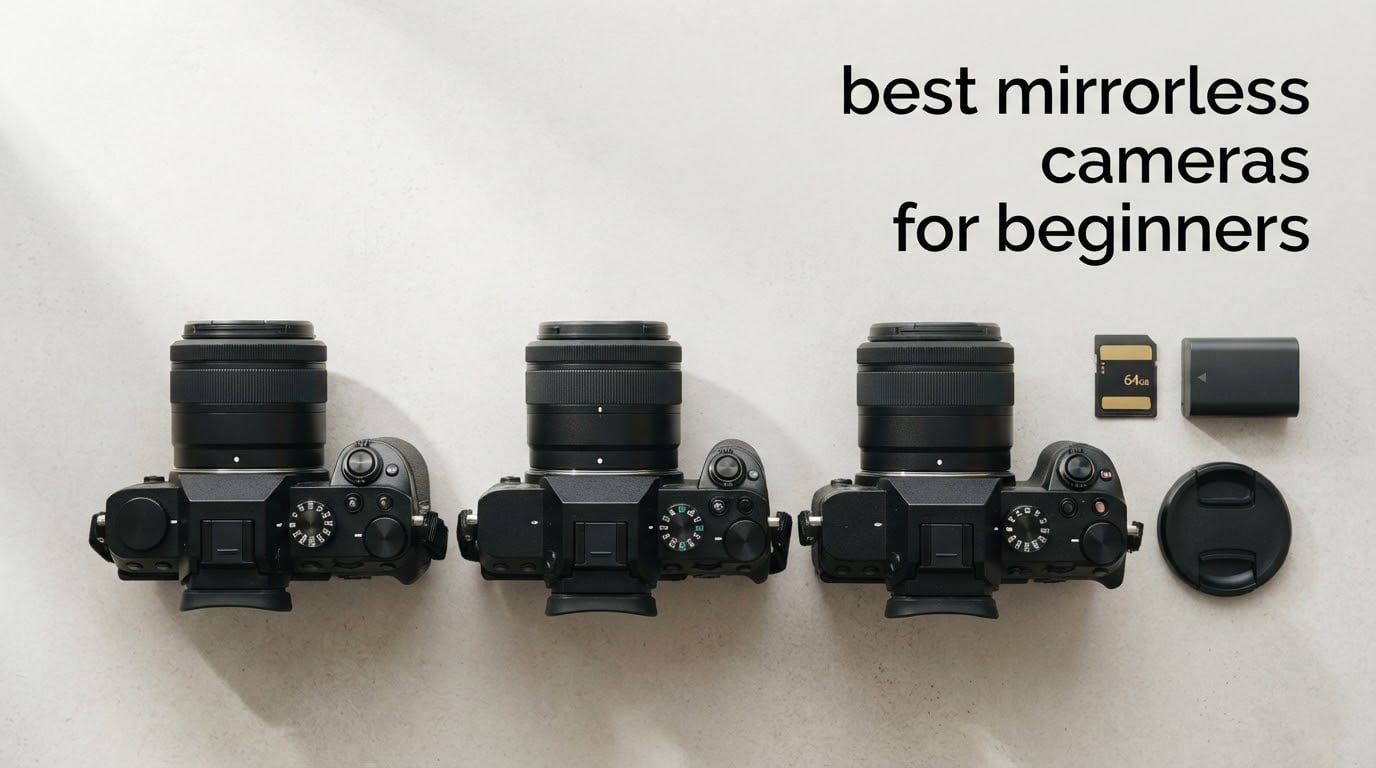
Choosing the best mirrorless cameras for beginners is harder than it should be. Every brand publishes a spec sheet full of numbers that mean nothing until you have the camera in your hands, and most guides rank bodies that cost several times what a first-time shooter needs.
After spending weeks with these ten bodies, our short answer is this: the Canon EOS R50 is the best mirrorless camera for beginners overall, because its guided menus walk a new owner through the actual decisions behind a good photo. The Sony Alpha a6400 is the runner-up if you want the widest lens choice, and the Sony ZV-E10 takes the vlogging spot for anyone splitting time between photos and video.
The rest of this guide covers ten bodies in the beginner bracket, from a budget bundle that arrives with a memory card and bag to a used kit that costs a fraction of the new equivalent. We look at sensors, autofocus, viewfinders, video and lens ecosystems, and we flag where each one falls short so you do not find out after the box is open.
If you would rather see the wider field of mirrorless bodies beyond the beginner tier, our guide to the best mirrorless cameras covers the midrange and flagship models too.
Table of Contents
Top 3 Picks: Best Mirrorless Cameras for Beginners in 2026
These three came closest to being a universal recommendation. Each one has a clear weakness, and each weakness is narrow enough that most beginners will never meet it.
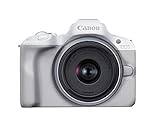
The Canon R50 wins on teaching. Its sensor and processor produce images that hold up well past what the class usually delivers, and the assisted shooting modes explain what the camera is doing instead of hiding it.
Best Mirrorless Cameras for Beginners in 2026: Quick Overview
Every camera below sits in the beginner bracket, so the differences are smaller than the marketing suggests. The table gives you the deciding facts for all ten at once.
| Product | Specifications | Action |
|---|---|---|
| Canon EOS R50 |
|
Check Latest Price |
 Sony Alpha a6400 Sony Alpha a6400 |
|
Check Latest Price |
 Sony ZV-E10 Sony ZV-E10 |
|
Check Latest Price |
 Panasonic LUMIX G85 Panasonic LUMIX G85 |
|
Check Latest Price |
 Nikon Z 50 Two-Lens Kit Nikon Z 50 Two-Lens Kit |
|
Check Latest Price |
 Canon EOS R10 Canon EOS R10 |
|
Check Latest Price |
 OM System E-M10 Mark IV OM System E-M10 Mark IV |
|
Check Latest Price |
 Canon EOS R100 Bundle Canon EOS R100 Bundle |
|
Check Latest Price |
 Sony Alpha a6700 Sony Alpha a6700 |
|
Check Latest Price |
 Canon EOS M50 Renewed Canon EOS M50 Renewed |
|
Check Latest Price |
1. Canon EOS R50 – Best Overall for Newcomers
Canon EOS R50 Mirrorless Camera RF-S18-45mm F4.5-6.3 is STM Lens Kit, 24.2 Megapixel CMOS (APS-C) Sensor, 4K Video, Hybrid Camera, Photo and Video, Vlogging, Content Creator, RF Mount, White
24.2MP APS-C CMOS
Up to 15 fps electronic
Dual Pixel AF II, 651 zones
6K oversampled 4K
Pros
- Image quality well beyond the entry class
- Reliable subject detection for people animals and vehicles
- Light and compact body for travel
- Vari-angle touchscreen plus electronic viewfinder
- Wi-Fi and Bluetooth transfer through the Canon Camera Connect app
Cons
- Very small grip is uncomfortable with larger hands
- Kit RF-S 18-45mm lens is entry-level in sharpness
- APS-C sensor struggles in low light
- Small battery limits long sessions
The R50 is the camera I hand to friends who have never held anything more serious than a phone. Canon put the same 24.2MP APS-C sensor and DIGIC X processor into this body that powers cameras costing far more, and the results are clean files with plenty of latitude for cropping later.
What actually sets it apart for learning is the assist layer. The A+ Assist auto scene modes handle difficult lighting without abandoning you, and the guided menu structure walks through exposure settings in plain language instead of burying you in icon rows.
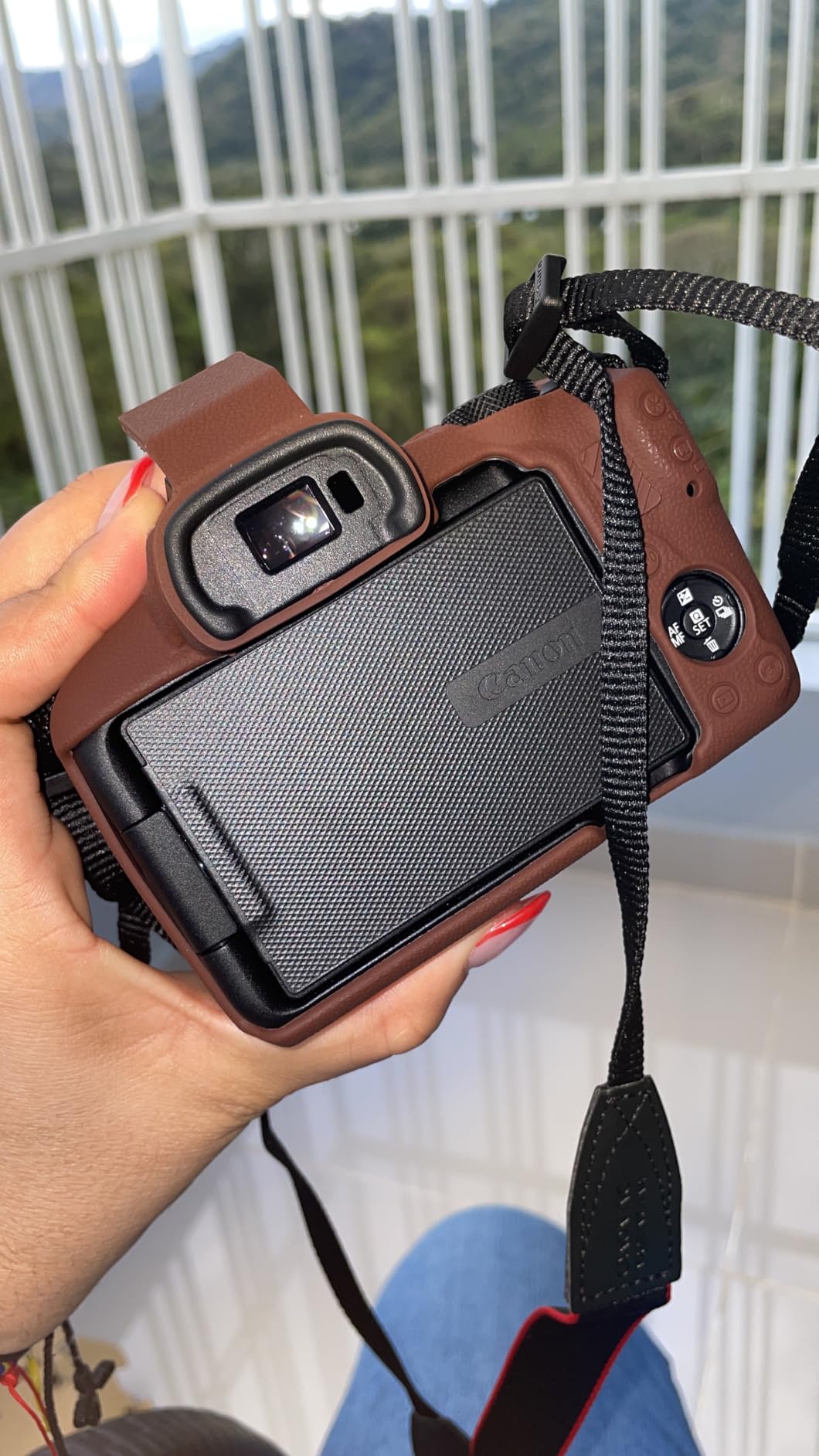
Continuous shooting runs up to 15 fps on the electronic shutter, and Dual Pixel CMOS AF II covers the full frame across 651 zones with detection for people, animals and vehicles. That tracking is the difference between a blurry photo of a running child and a usable one.
For video, the 6K oversampled uncropped 4K is unusual at this level, and Full-HD capture reaches 120 fps. The 2.36-million-dot electronic viewfinder and Clear View LCD II vari-angle touchscreen let you shoot from low or high angles without guessing at framing.

Who the Canon EOS R50 suits
This is the right pick if photography is something you want to understand, not just point and shoot. The exposure information available on the rear screen gives immediate feedback, and the small body fits into a normal day bag rather than a dedicated camera pack.
Families shooting children and pets will get the most from the subject detection and burst rate. If you also plan to make short videos for social platforms, the flip screen and uncropped 4K handle both jobs on one body.
Where the Canon EOS R50 disappoints
The grip is the most common complaint, and it is a real one for anyone with larger hands. Several owners add an extension grip, which fixes the comfort issue and costs little compared with the body.
The bundled RF-S 18-45mm kit lens is serviceable but not sharp, and many buyers replace it within a few months. Low light is where the APS-C format shows, and the small battery means a spare pack belongs in your bag from day one.
2. Sony Alpha a6400 – Best Value With the Widest Lens Choice
Sony Alpha a6400 Mirrorless Camera: Compact APS-C Interchangeable Lens Digital Camera with Real-Time Eye Auto Focus, 4K Video, Flip Screen & 16-50mm Lens – E Mount Compatible – ILCE-6400L/B, Black
20.1MP Exmor RS APS-C
425 phase-detect AF points
Up to 11 fps
1.07x viewfinder
Pros
- Dependable Real-Time Eye AF for portraits pets and action
- Strong low light performance for the class
- Lightweight body with a 180-degree tilting screen
- 11 fps burst plus 4K video
- Enormous E-mount lens catalogue
Cons
- Bundled 16-50mm power zoom is slow and average in sharpness
- No in-body stabilization so it depends on the lens
- Older menu system feels dated next to newer bodies
The a6400 has been the entry recommendation in this category for years, and the reason is stubborn reliability rather than headline features. Real-Time Eye AF holds onto a face through moderate movement, which is the single most useful thing a beginner can have when the subject will not sit still.
At 10.3 ounces with a 16-50mm kit lens attached, it is one of the lighter combinations here. The 1.07x viewfinder is the largest in this group, and the 180-degree tilting screen makes self-recording straightforward.

Autofocus coverage runs across 84 percent of the frame with 425 phase-detect points backed by contrast detection. Continuous shooting reaches 11 fps, and 4K recording captures more than most beginners will use in their first year.
The real argument for this body is the Sony E mount. First-party glass, third-party lenses and adapted older A-mount glass all fit, so a single purchase does not trap your money in one system. If you want to see how that compares, our best mirrorless cameras for video guide covers the bodies that lean harder into motion work.

Who the Sony Alpha a6400 suits
Choose this if you shoot portraits, pets or casual action and want the camera to do the focusing. The eye detection is dependable enough that you can concentrate on framing rather than on where the focus box lands.
It also suits anyone who plans to add glass over time. The E-mount catalogue is deep enough that you can find a fast prime, a travel zoom and a telephoto from several manufacturers without leaving the mount.
Where the Sony Alpha a6400 disappoints
There is no in-body stabilization, so steady handheld shots depend on the lens you have mounted. That matters most indoors or at night, where slower shutter speeds expose the gap.
The bundled 16-50mm power zoom is slow and unremarkable in sharpness, and the menu layout is dense compared with the guided interfaces on newer beginner bodies. If menus feel intimidating, budget time for a settings walkthrough before your first outing.
3. Sony ZV-E10 – Best for Vlogging and Hybrid Creators
Sony ZV-E10 APS-C Mirrorless Camera Body Black
24.2MP APS-C sensor
4K oversampled from 6K
Product Showcase mode
No electronic viewfinder
Pros
- Same 24.2MP sensor as the a6400
- Oversampled 4K with full pixel readout
- Product Showcase shifts focus from face to object
- Background Defocus button adds instant bokeh
- Single-cable USB streaming with no extra hardware
Cons
- No electronic viewfinder
- Body only so a lens must be bought separately
- 8-bit color depth limits grading headroom
- Autofocus is weaker with third-party lenses
The ZV-E10 is built around a single idea: a beginner filming alone should not need an assistant to get a shallow background. Product Showcase mode shifts focus from your face to whatever you hold up, and a dedicated Background Defocus button applies a blur effect in a single press.
Stills quality is a genuine bonus rather than an afterthought. The 24.2MP APS-C sensor matches the a6400, and 4K video is oversampled from 6K with a full pixel readout, which produces cleaner detail than a cropped alternative.
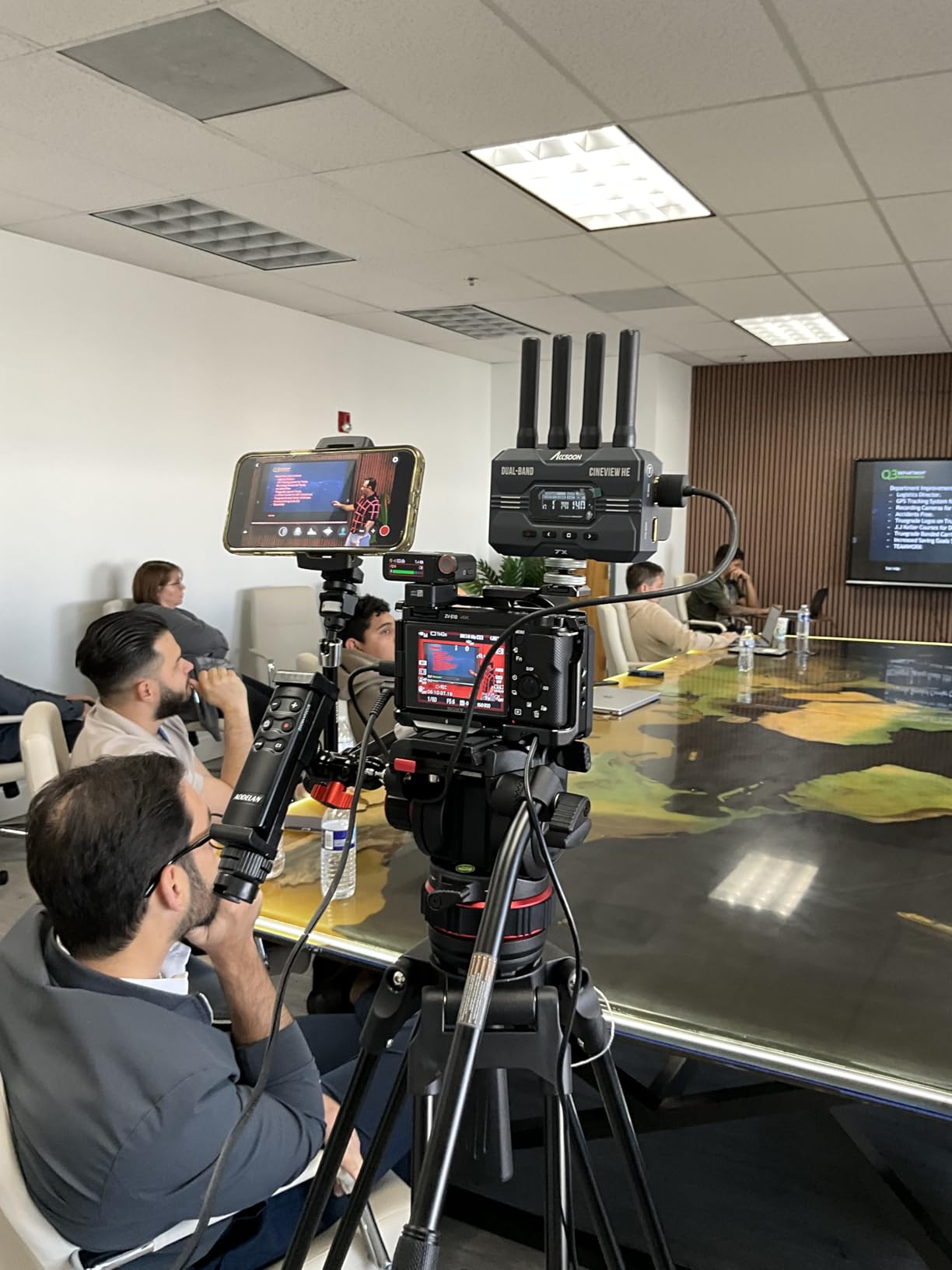
At 12.16 ounces the body disappears on a rig, and the three-capsule directional microphone picks up narration cleanly without a separate mic at the start. Single-cable USB streaming means you can go live with a laptop and no capture card.
Reviewers report no overheating problems even during extended use, which matters for anyone shooting long sessions on location. Our best vlogging cameras for beginners guide covers the support gear that pairs well with this body.
Who the Sony ZV-E10 suits
This is the pick for a creator whose camera spends more time recording than photographing. The flip-out vari-angle touchscreen, simple control layout and streaming features remove most of the friction from solo work.
It also suits anyone who wants a capable stills camera that fits in a bag on the way to a family gathering. The sensor is modern enough to grow into, and the E-mount keeps lens options wide.
Where the Sony ZV-E10 disappoints
There is no electronic viewfinder. Bright daylight shooting and manual focus work are harder without one, and photographers who care about framing accuracy should look at the a6400 or a Canon body with a viewfinder instead.
The listing is body only, so a lens is a separate purchase, and 8-bit color depth leaves less headroom for grading than 10-bit bodies. Autofocus is also noticeably slower with third-party lenses than with first-party glass.
4. Panasonic LUMIX G85 – Best for Handheld Low-Light Work
Panasonic LUMIX G85 4K Digital Camera, 12-60mm Power O.I.S. Lens, 16 Megapixel Mirrorless Camera, 5 Axis in-Body Dual Image Stabilization, 3-Inch Tilt and Touch LCD, DMC-G85MK (Black)
16MP Micro Four Thirds
5-axis dual in-body IS
12-60mm O.I.S. lens
4K Photo modes
Pros
- Class-leading 5-axis in-body stabilization for stills and 4K
- 16MP sensor with no low-pass filter for fine detail
- 12-60mm lens gives a 24-120mm equivalent range
- OLED electronic viewfinder plus touch LCD
- 4K Post Focus lets you choose focus after the shot
Cons
- Older 16MP sensor gives less detail than newer APS-C bodies
- Micro Four Thirds is weaker at high ISO
- Body is larger and heavier than most rivals here
- Autofocus system is dated next to phase-detect cameras
The G85 is the odd one out in this list, and that is its appeal. It is a Micro Four Thirds body, which means the lenses are noticeably smaller than the glass for any other system here, and it carries in-body stabilization that most cameras in this bracket leave out.
That stabilization is the reason to consider it. Five axes of compensation smooth out handheld stills and 4K video, and paired with the bundled 12-60mm lens you get a 24-120mm equivalent range that covers most family and travel situations.

Two features reward experimentation. 4K Photo records a burst and lets you pick the sharp frame after the fact, and 4K Post Focus applies focus to a selected area once the shot is already taken, which is a real learning aid for framing.
Continuous shooting reaches 30 fps with eye detection across 49 points, and the electronic OLED viewfinder is one of the larger ones here. Sixteen-bit recording gives more latitude for grading than most entry bodies offer.

Who the Panasonic LUMIX G85 suits
Pick this if handheld video, indoor work or long-lens shooting without a tripod matter to you. Stabilization in the body means you can use cheaper, lighter glass and still get steady results.
The bundled zoom is a genuinely useful one, and the whole kit is easy to carry for travel. If your interest is wildlife or distant subjects on a budget, the stabilization buys you shutter speed you could not otherwise reach.
Where the Panasonic LUMIX G85 disappoints
The 16MP sensor is older than the competition and gives up detail to newer APS-C bodies, especially when you crop. At high ISO the Micro Four Thirds format also shows more noise than larger sensors.
At 1.1 pounds it is the heaviest camera in this roundup, and the 49-point autofocus system is dated beside phase-detect rivals. If children or pets are your main subject, the Canon and Sony options track more reliably.
5. Nikon Z 50 Two-Lens Kit – Best Two-Lens Bundle
Nikon Z 50 with Two Lenses | Compact mirrorless Stills/Video Camera with Wide-Angle and telephoto Zoom Lenses | Nikon USA Model
20.9MP APS-C sensor
16-50mm and 50-250mm lenses
1.02x electronic viewfinder
11 fps burst
Pros
- Two lenses included covering wide and telephoto ranges
- Large 55mm Z mount with solid low light performance
- Very low noise even when heavily cropped
- Excellent electronic viewfinder and physical controls
- Collapsible lenses pack down small for travel
Cons
- No in-body stabilization so it depends on the lens
- Very limited DX lens selection going forward
- Controls have a steeper learning curve than guided beginner bodies
- Older 20MP sensor with no fully articulating screen
Most starter bundles give you one zoom and a wish. This one gives you a 16-50mm wide-angle zoom and a 50-250mm telephoto, which means you can frame a landscape and then pull in tight on a distant subject without buying anything else.
For a beginner who wants to explore focal lengths, that pairing teaches more than any single lens. Both collapse down for packing, and the wide end reaches into street and indoor scenes that a kit zoom alone will struggle with.

Image quality comes from a 20.9MP APS-C sensor mounted on the wide 55mm Z mount, and reviewers note the files stay very clean even when cropped hard. Continuous shooting hits 11 fps with 209 hybrid autofocus points, and 4K UHD video records at 14-bit.
The 1.02x electronic viewfinder is bright and large, and the flip-down selfie screen handles vlogging positions. Wi-Fi and Bluetooth are built in, and F-mount lenses work through a FTZ adapter if you already own Nikon glass.

Who the Nikon Z 50 Two-Lens Kit suits
This is the strongest pick for someone who wants immediate range, especially if your subjects include sports, birds or distant events. Having the telephoto in hand removes the most common reason beginners give up on a subject.
Nikon users moving from an F-mount DSLR keep their lenses usable through the adapter, which makes this a low-friction entry. The physical control layout also rewards anyone who prefers dials and buttons over menu diving.
Where the Nikon Z 50 Two-Lens Kit disappoints
There is no in-body stabilization, so the two kit lenses carry that job on their own. Neither is designed for heavy cropping in low light, and the body is heavier than the Canon and Sony entries here.
The DX lens selection is narrow compared with Sony E or Micro Four Thirds, and the menu system takes longer to learn than the guided interfaces on Canon beginner bodies. The screen flips down rather than out, which limits low-angle shooting positions.
6. Canon EOS R10 – Best for Fast Burst Shooting
Canon EOS R10 Mirrorless Camera Lens Kit
24.2MP APS-C CMOS
15 fps mechanical, 23 fps electronic
651 AF zones
Fully rotating touchscreen
Pros
- Very fast accurate autofocus with subject detection
- 15 fps mechanical burst is quick for the class
- Comfortable firm grip in a compact body
- Fully rotating touchscreen for any angle
- Bundled RF-S 18-45mm lens shoots well out of the box
Cons
- Kit lens is weak past about 10 feet
- No in-body stabilization in the body
- Wi-Fi transfers are slow so a cable is better
- Battery is not shared with higher-tier Canon EOS models
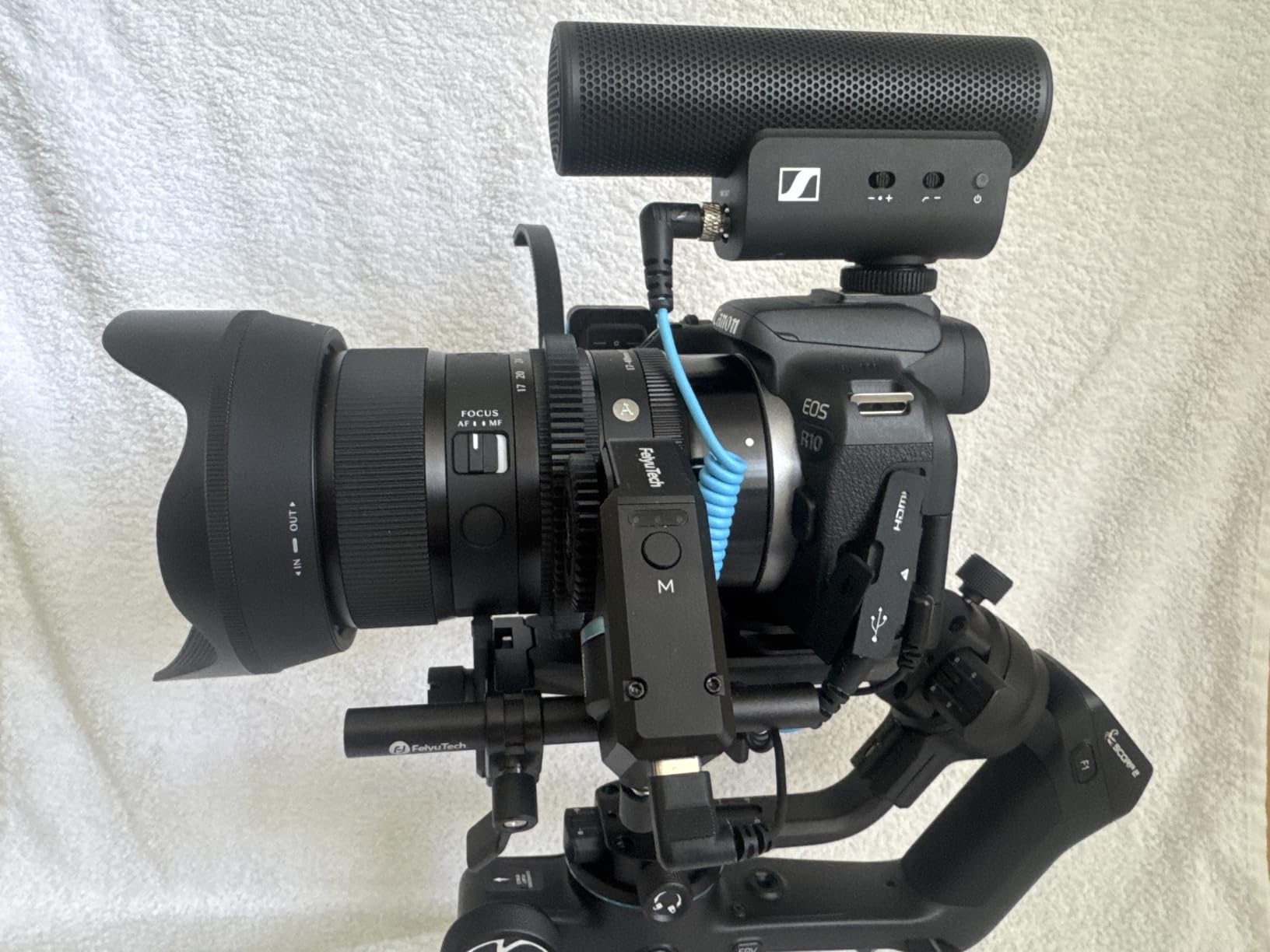
The R10 shares the R50 sensor but adds speed and a grip you can actually hold. Fifteen frames per second on the mechanical shutter, and 23 fps electronic, is a real difference when you are chasing a child or a dog across a garden.
Dual Pixel CMOS AF II covers 651 zones with the same people, animal and vehicle detection as the R50, so tracking is dependable. The fully rotating anti-smudge coated screen means you can shoot overhead or at floor level without contorting.
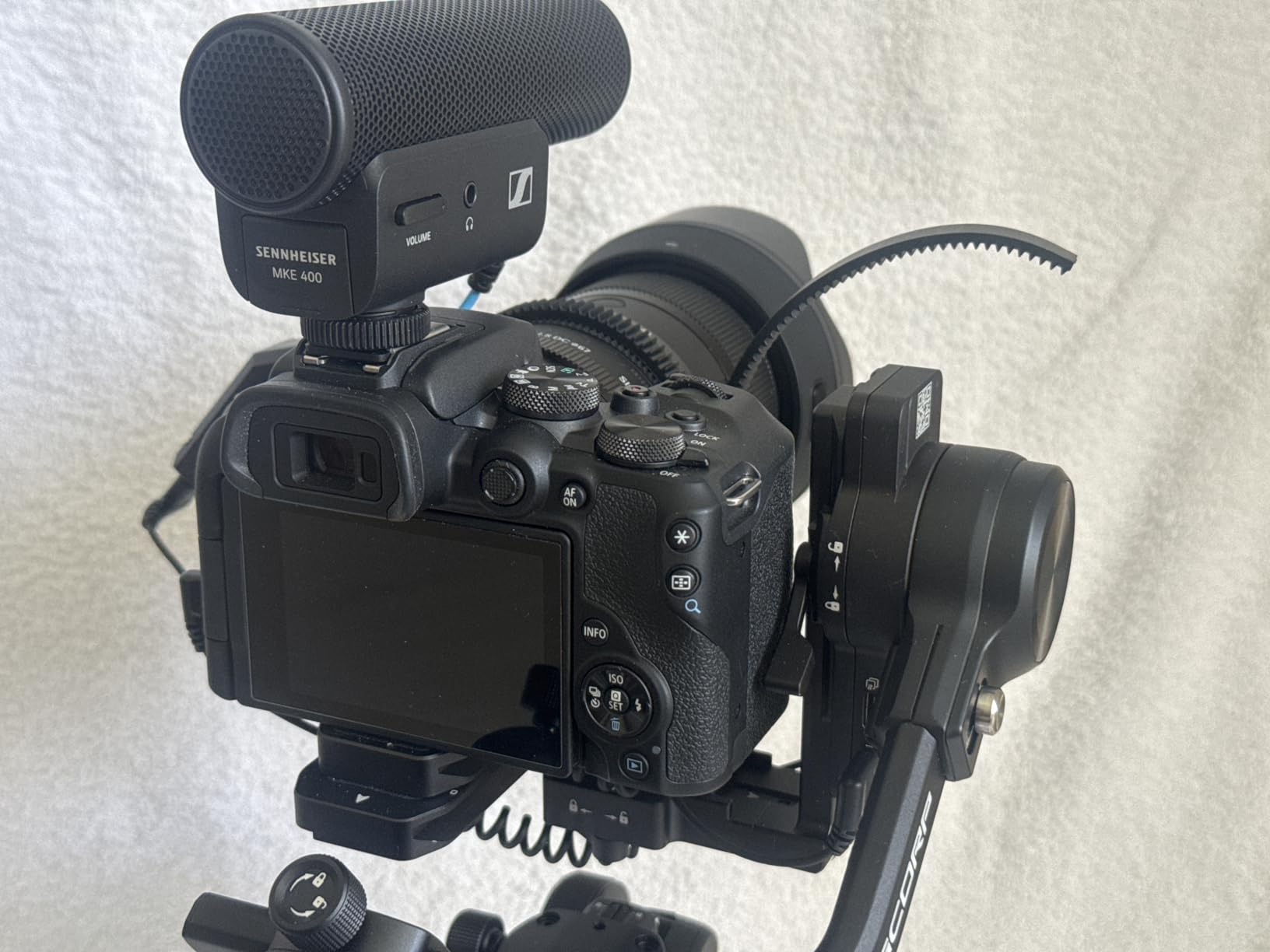
Kit lens performance is better than the usual entry zoom. The bundled RF-S 18-45mm produces good results straight from the box, which matters for anyone who wants usable photos before buying a second piece of glass.
You can charge through a USB power adapter while the battery stays in the camera, which is convenient on long days out. The single UHS-II SD slot handles high-speed burst files without a second card.
Who the Canon EOS R10 suits
Pick this if action is part of the plan. Sports, school events, pets and children all benefit from the burst rate, and the subject detection reduces the number of missed frames dramatically.
The larger grip is the reason to step up from the R50 if you have larger hands or shoot for long sessions. You give up nothing on stills quality and gain a body that feels solid in the hand.
Where the Canon EOS R10 disappoints
There is no in-body stabilization, so handheld video and stills at slow shutter speeds depend on the lens. The kit zoom is weak past about 10 feet, so distant subjects will need a second lens eventually.
Wi-Fi image transfer is very slow, which makes a cable the better route for large files. The battery is not shared with higher-tier Canon EOS models, so a spare pack is specific to this body.
7. OM System OM-D E-M10 Mark IV – Best Compact Travel Camera
OM SYSTEM Olympus E-M10 Mark IV Black Micro Four Thirds System Camera 20MP Sensor 5-Axis Image Stabilization 4K Video Wi-Fi
20MP Live MOS sensor
5-axis IBIS up to 4.5 stops
121-point contrast AF
16 art filters
Pros
- Genuinely pocketable body with real top-plate dials
- 5-axis stabilization with up to 4.5 stops of compensation
- 20MP sensor shows better color and contrast than earlier E-M10 models
- 16 art filters including an Instant Film look
- Flip-down monitor with automatic selfie mode
- USB charging removes the external charger
Cons
- Body only so a lens must be bought separately
- Contrast-detection autofocus can be finicky
- Plasticky build compared with earlier OM-D bodies
- Not weather sealed
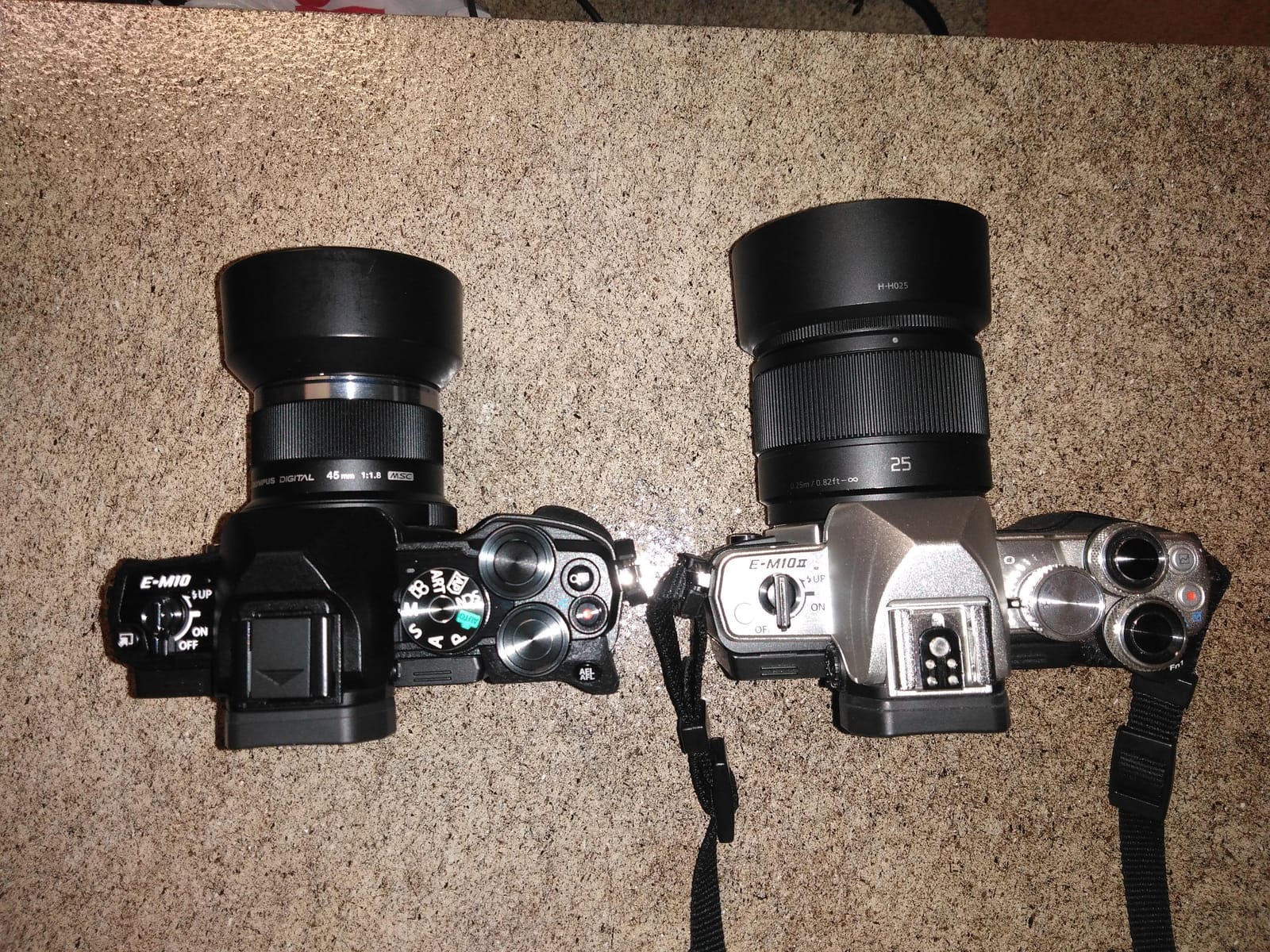
This is the camera that goes in the pocket when you do not plan to take photographs. The E-M10 Mark IV is small enough to carry every day, and unlike most compact bodies it still gives you dials for manual control as your skills develop.
The 20MP Live MOS sensor delivers noticeably better color and contrast than earlier E-M10 models, and the 1.23x viewfinder is the highest magnification in this roundup. That makes the viewfinder genuinely useful rather than a token feature.

Five-axis in-body stabilization compensates up to 4.5 shutter speed steps, so handheld stills and 4K video both benefit. Sixteen art filters give creative beginners a look straight out of the camera, including a new Instant Film style that mimics a film stock.
The flip-down monitor switches to a selfie mode automatically, and USB charging means the camera tops up from a power bank without a dedicated charger. Bluetooth and Wi-Fi work through the OI Share app.
Who the OM System E-M10 Mark IV suits
Choose this for travel and everyday carry, where a larger camera simply stays at home. The stabilization compensates for the low light and long lenses that limited compact bodies in the past.
It also suits anyone who enjoys dials and manual settings. A flip-down screen, real top-plate controls and in-body stabilization let you grow into the camera without upgrading within a year.
Where the OM System E-M10 Mark IV disappoints
The listing is body only, so a lens is a separate purchase, and Micro Four Thirds glass is a separate budget line. Autofocus is contrast-detection only across 121 points, which can be finicky with some subjects.
The build feels plasticky beside earlier OM-D bodies, and the camera is not weather sealed, so rain and dust are a real risk outdoors. Eye-sensor viewfinder switching and app connectivity can also prove unreliable.
8. Canon EOS R100 Bundle – Best All-In-One Starter Package
Canon EOS R100 Mirrorless Camera with RF-S 18-45mm Lens Bundle
24.1MP APS-C sensor
Lens card and bag included
143 AF zones
4K 24p and Full HD 60p
Pros
- Camera lens memory card and bag arrive in one box
- 24.1MP sensor with DIGIC 8 gives sharp vibrant images
- Light and easy to carry for travel and family work
- Dual Pixel autofocus is quick and reliable for stills
- Simplified menus and auto scene modes ease the learning curve
Cons
- No in-body stabilization
- 4K is capped at 24 fps and heavily cropped
- Fixed rear screen is poor for vlogging and low angles
- 6.5 fps burst is slow beside newer entry bodies
The R100 bundle solves a problem most first-time buyers underestimate: accessories. The box includes the camera, the RF-S 18-45mm lens, a memory card and a camera bag, so there is nothing else to buy before the first shoot.
Image quality is better than the tier usually suggests. The 24.1MP APS-C sensor with a DIGIC 8 processor produces sharp, vibrant files, and Dual Pixel autofocus with 143 zones is quick enough for family snapshots and daylight portraits.
Simplified menus and auto scene modes create a gentle learning curve, which suits buyers who want to grow without a wall of settings at first. A 2.36m-dot OLED viewfinder and 3-inch LCD give you both framing options.
Buyers frequently choose this as a gift, and the completeness of the package is the main reason. It is a straightforward way to hand someone a complete first camera without a second shopping trip.

Who the Canon EOS R100 Bundle suits
Pick this if you want the lowest-effort path to owning a real camera. Everything needed for the first shoot is in the box, and the simplified interface means less time reading menus.
It also suits gift buyers and anyone who wants a backup body for travel. The sensor is modern enough to grow into, and Canon RF mount access means more lenses are available as you progress.
Where the Canon EOS R100 Bundle disappoints
There is no in-body stabilization, so steady handheld shots depend entirely on the lens. The 6.5 fps burst rate is slow beside the Canon R10 and R50, which is a real limit for moving subjects.
The fixed rear screen is a problem for vlogging and low-angle shooting, and 4K video is capped at 24 fps with a heavy crop. If video matters at all, the ZV-E10 or a body with a flip screen is a better target.
9. Sony Alpha a6700 – Best Video Quality for the Money Spent
Sony Alpha a6700 APS-C Mirrorless Camera Body 26MP 4K Black
26MP back-illuminated APS-C
759 phase-detect AF points
4K 60p 10-bit uncropped
5-axis IBIS
Pros
- 26MP sensor delivers sharp detail with low noise
- AI subject recognition tracks people animals and fast movement
- 4K 60p 6K oversampled 4:2:2 10-bit with no crop plus 4K 120p
- Compact body with a premium feel
- In-body stabilization aids static handheld and long lens work
- Existing A-mount lenses work through an adapter
Cons
- Menu system is complex for new users
- Body only so a lens must be purchased
- Can overheat during extended 4K 60p in hot conditions
- Weak high ISO performance for the sensor size
- Single card slot with no dual-card backup
The a6700 is the only body here that records uncropped 4K at 60 fps in 10-bit 4:2:2, oversampled from 6K. Add 4K 120p slow motion and a dedicated AI processor for subject recognition, and this is a serious hybrid camera in a compact shell.
For stills, the 26MP back-illuminated APS-C sensor produces sharp detail, strong dynamic range and low noise. Five-axis in-body stabilization helps with static handheld work and long-lens framing, which is where APS-C bodies usually struggle.

Autofocus runs across 759 phase-detect points with real-time eye and subject tracking, and the body weighs 14.5 ounces. If you already own Sony A-mount glass, the LA-EA5 adapter protects that investment rather than stranding it.
Users moving up from older Sony bodies call this a major quality-of-life improvement, particularly for tracking and low light output. Our best gimbals for mirrorless cameras guide covers stabilizers that pair well with bodies of this size.

Who the Sony Alpha a6700 suits
This is the choice for a beginner who already knows video is going to be half the work. The recording formats give you real grading latitude and no crop, which removes two limitations that bother people later.
Anyone upgrading from an older Sony body or holding A-mount lenses will feel the difference immediately. The AI subject recognition and in-body stabilization are both features usually reserved for higher tiers.
Where the Sony Alpha a6700 disappoints
The menu system is complex and takes real time to learn, which is a poor fit if you want a camera that teaches you photography on day one. The listing is body only, so a lens is a separate purchase.
Sustained 4K 60p recording can overheat and shut down in hot conditions, high ISO performance is weak for the sensor size, and the single card slot means no dual-card backup for paid work.
10. Canon EOS M50 Renewed – Best Low-Cost Used Entry Point
Canon EOS M50 Mirrorless Camera Kit w/EF-M15-45mm and 4K Video (Black) (Renewed)
24.1MP APS-C sensor
EF-M 15-45mm lens included
0.39x OLED viewfinder
90-day warranty
Pros
- Cheapest route into an APS-C Canon mirrorless body
- 24.1MP sensor with Dual Pixel AF and Eye Detection
- Compact body with a fully tilting touchscreen
- 4K UHD 24p plus 1080p 120p slow motion
- Built-in OLED electronic viewfinder with touch and drag AF
Cons
- Refurbished condition and 90-day warranty differ from new stock
- Very small 0.39x viewfinder is dim and cramped
- 4K 24p recording is heavily cropped
- Older generation autofocus beside current Canon bodies
- Limited native EF-M lens selection going forward
The renewed M50 is the cheapest way onto this list, and for some beginners it is the right answer. You get a 24.1MP APS-C sensor, Dual Pixel autofocus with Eye Detection, and a tilting touchscreen in a body that weighs 13.7 ounces.
The catch is obvious once you look closely. The viewfinder magnification is 0.39x, which is small and dim next to every other camera here, and the EF-M mount has a shrinking range of new native lenses as Canon shifts investment to RF.

4K UHD capture runs at 24p with a heavy crop, and 1080p reaches 120p for slow motion. ISO runs from 100 to 25600 and expands to 51200, which covers casual evening shooting without drama.
Buyers tend to be gift shoppers and people testing whether they want to keep photographing. The bundled EF-M 15-45mm lens covers a 24-72mm equivalent range, and touch-and-drag autofocus through the OLED viewfinder is easy to use once you know it.

Who the Canon EOS M50 Renewed suits
Pick this if your goal is to spend as little as possible on a real interchangeable-lens camera. The body and lens are included, and the tilting screen works for vlogging positions even though the viewfinder is cramped.
It also suits anyone committed to staying in the EF-M system, since the mount already has second-hand glass available. Treat the purchase as a stepping stone rather than a five-year system.
Where the Canon EOS M50 Renewed disappoints
Refurbished means refurbished. Physical condition varies between units and the warranty is a 90-day limited one, so there is no long protection if something fails later. Check listings carefully and buy from a seller with a clear returns process.
Autofocus is an older generation system next to current Canon bodies, the viewfinder is the smallest in this group, and 4K is heavily cropped. If you want a longer relationship with a camera, spend more now and step up to an RF-mount body.
How to Choose Your First Mirrorless Camera in 2026
Sensor size is the first decision, and it is less important than most guides suggest. All of the cameras above except two use an APS-C sensor, and two use the smaller Micro Four Thirds format.
APS-C gives you a good balance of image quality, lens size and autofocus capability, which is why most of this list sits there. Micro Four Thirds bodies and lenses are smaller, and the stabilization on the G85 and E-M10 Mark IV compensates for a sensor that gathers less light.
Full frame is worth considering only if you expect to shoot low light, print large, or want shallow backgrounds without buying fast glass. It is not a requirement for learning photography, and a good APS-C body with a fast prime will teach you more per pound spent.
Autofocus matters more than resolution
Beginners underestimate autofocus and overvalue megapixels. A camera that holds focus on a moving child produces more usable photographs than a higher-resolution body that hunts.
Subject detection for people, animals and vehicles appears on the Canon R50, the Canon R10, the Sony a6400, the a6700, the ZV-E10 and the Panasonic G85. The OM System E-M10 Mark IV uses contrast detection, which can be slower with some subjects.
Video, viewfinders and flip screens
If you will record video, a flip-out or fully rotating screen matters more than most stills specifications. The ZV-E10, the a6700, the R10, the R50, the G85, the E-M10 Mark IV and the M50 all have a movable screen.
An electronic viewfinder lets you shoot in bright sun and compose manual focus accurately. The ZV-E10 and the renewed M50 have weak or missing viewfinders, which is the single strongest reason to choose a different body for daylight work.
For video quality, the a6700 is the only camera here with uncropped 4K at 60 fps in 10-bit. The ZV-E10 and the R50 both oversample 4K from 6K, while the R100 and the renewed M50 cap 4K at 24 fps with a heavy crop.
Lens ecosystem and upgrade path
The mount you choose shapes what you can buy next, and that matters more than the body. Sony E offers the widest catalogue here with first-party, third-party and adapted A-mount options. Canon RF has strong recent glass but the cheapest kit lenses are entry-level.
Micro Four Thirds lenses are the smallest and cheapest, and the Panasonic 12-60mm covers a 24-120mm equivalent range. Nikon Z DX glass is narrower, so the two-lens kit is often the practical starting package.
A common piece of community advice is to spend less on the body and more on one good fast prime lens. Our best action cameras for beginners guide covers a different kind of starter gear if you want something simpler to carry on trips.
Buying used or refurbished
Used gear is where beginners save the most. The renewed M50 above is one route, but specialist used retailers such as MPB and KEH come up repeatedly in photography communities, and community consensus points to a warranty of around six months on bodies and lenses.
Check the shutter count, look for fungus or haze on the sensor glass, test every dial and button, and confirm the autofocus acquires quickly. Buy from a seller with a return window, and remember that a battery and a card are extra regardless of the seller.
Frequently Asked Questions
Should I get a mirrorless camera as a beginner?
Yes, if you want control over depth of field, lens choice and video quality. Every major manufacturer has stopped making new DSLRs, so mirrorless now gets first access to new lenses and features. A guided beginner body such as the Canon EOS R50 teaches exposure while keeping menus simple.
What is the best entry-level mirrorless camera in 2026?
The Canon EOS R50 is the best entry-level mirrorless camera for most beginners. It pairs a 24.2MP APS-C sensor with guided assist modes, 15 fps electronic burst shooting and oversampled 4K video, and it carries the highest review count in our group.
Is mirrorless better than DSLR for beginners?
For most people, yes. Mirrorless bodies are lighter, show exposure in real time through the electronic viewfinder, and use eye detection autofocus that tracks subjects without manual work. The main trade-off is that stabilization usually depends on the lens, since most entry bodies omit in-body stabilization.
What is the disadvantage of a mirrorless camera?
The most common drawbacks are the lack of in-body image stabilization on entry bodies, smaller viewfinders on budget models, and menus that can be denser than those of older DSLRs. Batteries are also smaller, so a spare pack is worth carrying on long days.
What is the best used mirrorless camera for beginners?
A recent APS-C body with an electronic viewfinder gives the best return, and specialist used retailers such as MPB and KEH are recommended in photography communities because they supply a warranty of roughly six months. Check shutter count, sensor haze, and that autofocus acquires quickly before buying.
What three lenses should every photographer have?
A flexible wide-to-short zoom for everyday work, a fast normal prime such as a 50mm equivalent for portraits and low light, and a telephoto for distant subjects. Start with the zoom that ships with the camera, then add the fast prime once you know which focal length you reach for most.
Which Beginner Camera Should You Buy?
After comparing all ten, the Canon EOS R50 remains the best mirrorless camera for beginners overall. Its 24.2MP APS-C sensor delivers more than the class usually offers, the guided assist modes teach rather than hide, and the vari-angle screen plus electronic viewfinder make it comfortable in any shooting position.
Buy the Sony Alpha a6400 instead if lens choice and eye detection are your priorities, the Sony ZV-E10 if video is the main job, and the Canon EOS R10 if you need burst speed for action. The Panasonic LUMIX G85 and the OM System E-M10 Mark IV are the small-sensor options with in-body stabilization, and the Canon EOS R100 bundle is the simplest complete package.
Whichever you pick, buy a spare battery and a fast memory card alongside it, and plan your first lens purchases around the mount. Then take the camera out and use it more than you think you need to. Work down the shortlist above and compare the bodies side by side before you commit.