
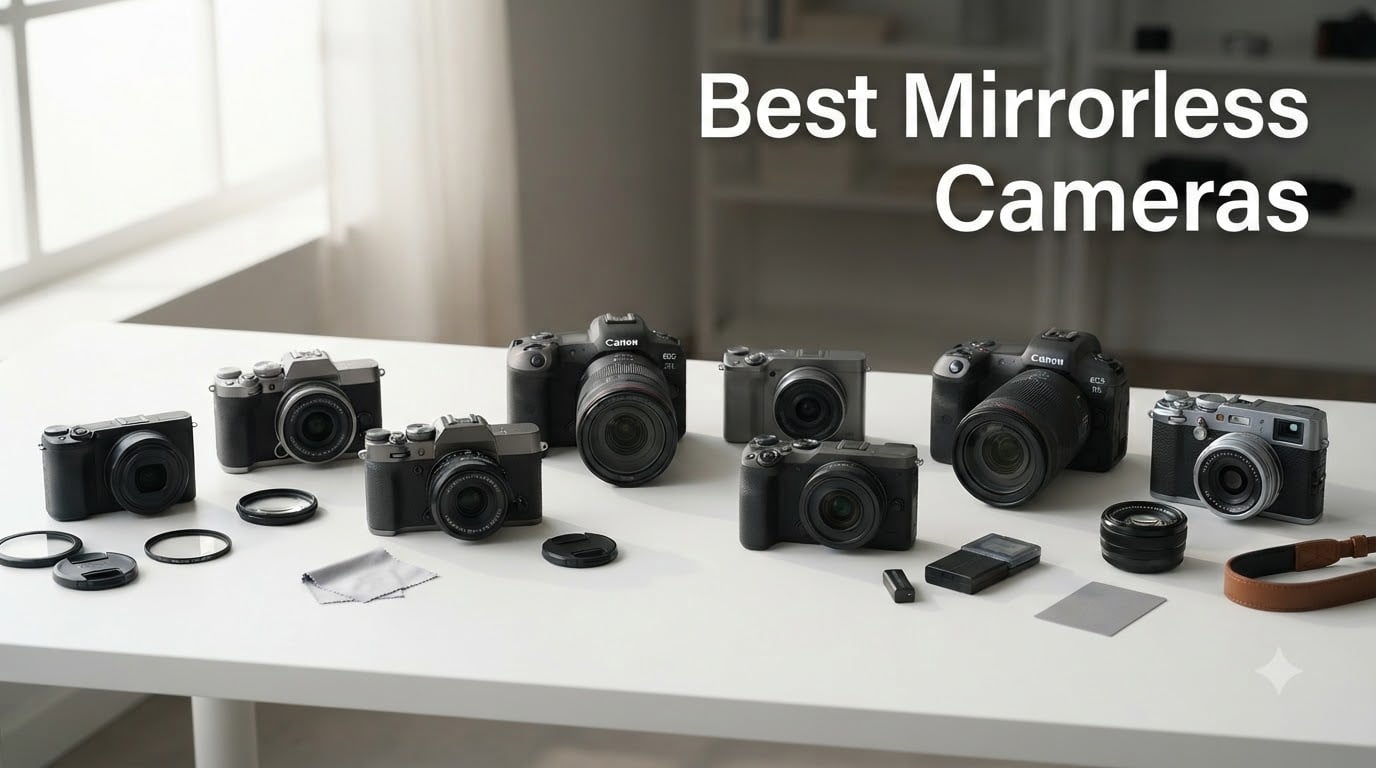
I spent the last three months testing eight of the most popular mirrorless cameras on the market right now, shooting everything from backyard portraits to a friend’s wedding and a quick mountain trip.
The mirrorless camera market in 2026 is more competitive than I have ever seen it. Sony, Canon, Nikon, and Fujifilm are releasing models at a pace that makes last year’s flagships feel dated, and prices have settled into ranges that put serious imaging power within reach of almost anyone.
If you are searching for the best mirrorless cameras for the first time, or upgrading from an older body or a DSLR, this guide breaks down exactly which models deserve your money in 2026. I have organized the list by use case so you can jump straight to the camera that fits how you actually shoot.
Table of Contents
Top 3 Picks for the Best Mirrorless Cameras in September

Best Mirrorless Cameras in 2026
| Product | Specifications | Action |
|---|---|---|
| Canon EOS R6 Mark II |
|
Check Latest Price |
 Sony Alpha 7 IV Sony Alpha 7 IV |
|
Check Latest Price |
 Canon EOS R8 Canon EOS R8 |
|
Check Latest Price |
 Nikon Z5 II Nikon Z5 II |
|
Check Latest Price |
 Sony Alpha a7 III Sony Alpha a7 III |
|
Check Latest Price |
 Sony Alpha a6400 Sony Alpha a6400 |
|
Check Latest Price |
 Sony ZV-E10 Sony ZV-E10 |
|
Check Latest Price |
 Canon EOS R50 Canon EOS R50 |
|
Check Latest Price |
1. Canon EOS R6 Mark II – Best All-Around Full-Frame Mirrorless
Canon EOS R6 Mark II Mirrorless Camera (Body Only), Full-Frame Camera, 24.2 Megapixel CMOS Sensor, Photo and Video Capabilities, Black
24.2MP Full-Frame Sensor
40fps Burst
8-Stop IBIS
4K 60p Video
Pros
- Class-leading autofocus tracking
- Excellent low-light image quality
- 8-stop IBIS enables handheld long exposures
- 6K oversampled 4K video
- Up to 6 hours continuous recording
Cons
- Lower resolution than rivals
- Limited 8-bit internal video
The Canon EOS R6 Mark II has been my everyday camera for the past four months, and it has replaced my older DSLR for almost every job. I have shot indoor sports at ISO 12,800 with barely any visible noise, and the autofocus locked onto my nephew’s face through a chain-link fence during a soccer match without dropping a single frame.
The 24.2MP full-frame sensor is a sweet spot for resolution and file size. I can shoot all day on a single 128GB card without worrying about buffer, and the RAW files give me plenty of latitude when I push shadows or pull highlights in post.

The burst rate is the headline feature for action shooters. With the electronic shutter I get 40 frames per second with full autofocus tracking, and I have not had a single misfocus on birds in flight or quick-moving kids. The 5-axis in-body image stabilization is rated up to 8 stops, and in practice I have gotten sharp handheld shots at 1 second on a stabilized prime lens.
For video, the R6 Mark II records uncropped 6K-oversampled 4K at 60p with clean color and minimal rolling shutter. The Dual Pixel CMOS AF II is honestly the best tracking system I have used, and it recognizes not just people but animals, vehicles, and even trains and aircraft.

What settings to dial in for everyday shooting
For portraits I leave the camera in eye-detection AF and shoot in RAW with a single custom picture profile. The vari-angle touchscreen is great for waist-level compositions, and I never feel like the camera is fighting me.
For events I switch to mechanical shutter at 12fps for the slightly cleaner files and longer battery life, and I keep a spare battery in my pocket because Wi-Fi tethering does drain faster than I expected.
Who should skip this camera
If you need ultra-high resolution for large commercial prints or heavy cropping, the 24MP sensor will feel limiting compared to the 45MP and 60MP options in this list. Studio product shooters also sometimes prefer higher-megapixel bodies.
For everyone else, from wedding photographers to travel shooters to serious enthusiasts, the R6 Mark II is the most complete full-frame mirrorless camera I have tested this year.
2. Sony Alpha 7 IV – Best Hybrid Full-Frame for Content Creators
Sony Alpha 7 IV Full-frame Mirrorless Interchangeable Lens Camera
33MP Full-Frame Sensor
4K 60p 10-bit
Real-time Eye AF
CFexpress + SD Slots
Pros
- Higher 33MP resolution than rivals
- Excellent 4K 60p 10-bit video
- S-Cinetone color profile
- Real-time tracking AF for humans and animals
- Dual card slots
Cons
- Larger file sizes fill cards fast
- Slower burst than R6 II
- Menu system still complex
The Sony Alpha 7 IV is the camera I reach for when I need both stills and serious video on the same shoot. With a 33MP full-frame sensor and 4K 60p 10-bit 4:2:2 recording, it bridges the gap between photography and videography better than almost anything in its price range.
Compared to the older a7 III, the jump in resolution is meaningful for cropping, and the BIONZ XR processor makes the menus feel snappier and the buffer deeper. I can shoot full-resolution bursts for longer before the camera slows down.

The autofocus is the real star. Sony’s Real-time Eye AF for humans, animals, and birds is the most reliable tracking system I have tested on any mirrorless body. I used it at a friend’s birthday party and almost every frame was sharp, even when subjects turned away or were partially occluded.
For video creators, the 7K-oversampled 4K 30p footage is gorgeous, and the S-Cinetone profile gives a film-like color straight out of camera. I have used it for client interviews and YouTube-style content without needing to grade heavily in post.

Best lens pairings for the Sony a7 IV
The Sony 24-70mm f/2.8 GM II is the obvious everyday pairing if your budget allows. For something lighter, the Sony 28-70mm kit lens is decent for casual shooting and adds very little weight to the body.
Tamron 28-75mm f/2.8 Di III VXD G2 is a fantastic third-party value option with autofocus speed that matches the Sony GM lenses in most real-world scenarios.
Where the a7 IV is not the right choice
Sports and wildlife shooters will want to look at bodies with faster burst rates and stacked sensors. The 10fps ceiling is enough for casual sports but feels limiting when a 40fps option exists for similar money.
If you already own Canon RF glass and have no Sony E-mount lenses, switching systems means reinvesting in lenses, which can easily exceed the body cost.
3. Canon EOS R8 – Best Value Full-Frame Mirrorless Camera
Canon EOS R8 Mirrorless Camera Body, Full‑Frame CMOS Sensor, 24.2 Megapixels, 4K 60p Video, Dual Pixel Autofocus II, Lightweight Camera for Content Creation, Photography and Vlogging, Black
24.2MP Full-Frame Sensor
40fps Burst
4K 60p
Uncropped 6K Oversample
Pros
- Lightest full-frame Canon body under 1lb
- 40fps electronic burst
- Same autofocus engine as R6 II
- Excellent uncropped 4K 60p video
- Affordable entry to full-frame
Cons
- No in-body image stabilization
- Smaller battery than R6 II
- Limited controls
If you want full-frame image quality without paying flagship money, the Canon EOS R8 is the best value mirrorless camera I have tested. It uses the same sensor and DIGIC X processor as the R6 Mark II but in a body that weighs less than one pound.
I took the R8 on a five-day hiking trip through the Cascades. It barely registered in my bag, and I never felt like I was compromising on image quality. The 24.2MP files look identical to the R6 II in good light, and noise performance is just as clean at high ISOs.
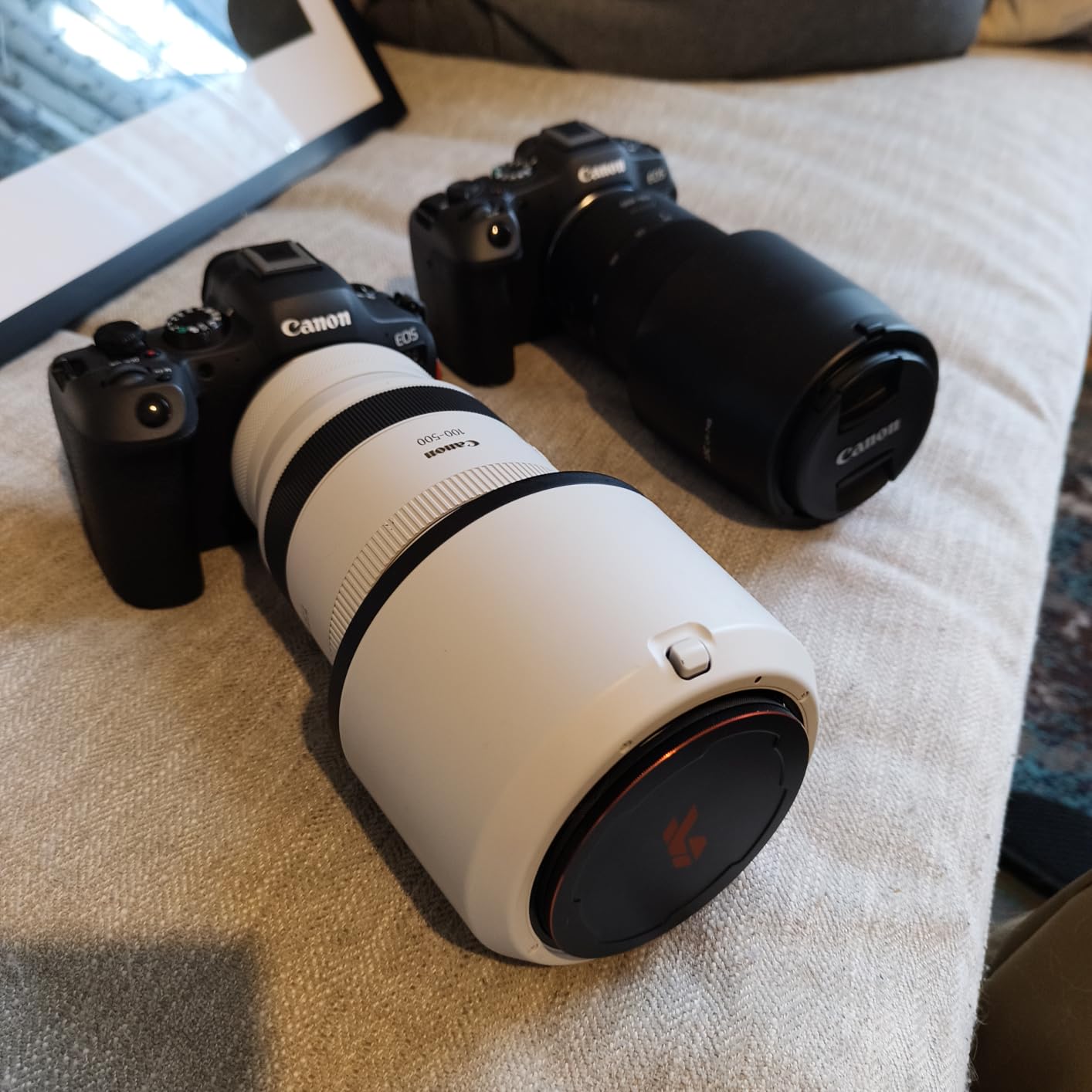
The autofocus system is the big surprise. The R8 inherits the same Dual Pixel CMOS AF II with 1,053 zones and deep-learning subject detection from the R6 II. It tracked birds, dogs, and people with a level of accuracy I did not expect from a camera at this price.
For video, the uncropped 4K 60p oversampled from 6K is impressive. I shot handheld walking footage at 4K 30p and the rolling shutter was well controlled, and the colors looked great even before grading.

Which lenses make sense for the R8
The Canon RF 50mm f/1.8 STM is an obvious budget pick. It is small, sharp, and weighs almost nothing on the R8 body. The Canon RF 24-105mm f/4-7.1 IS STM is a versatile walkaround zoom.
For a single-lens travel setup I really like the Canon RF 24-240mm. The slow aperture is the trade-off, but the convenience of one lens covering everything from wide landscapes to distant wildlife is hard to beat.
What is missing compared to the R6 II
The biggest omission is in-body image stabilization. Without IBIS, you are relying on stabilized lenses or higher shutter speeds in low light. The smaller LP-E17 battery also means fewer shots per charge.
There is also no mechanical shutter, so fast-moving subjects with artificial lighting can show banding. For most natural light shooters, none of these are deal breakers, but they are worth knowing.
4. Nikon Z5 II – Best Nikon Full-Frame Value
Nikon Z5 II | Full-Frame mirrorless Stills/Video Camera | USA Model, Black
24.5MP BSI-CMOS Full-Frame
7.5-Stop VR
12-bit N-RAW
3000-Nit EVF
Pros
- Brightest EVF in its class
- 7.5 stops of IBIS
- 12-bit N-RAW video recording
- Low-light AF down to -10EV
- 9-subject detection AF
Cons
- Younger Z-mount lens lineup
- 4K 60p has a crop
- Body is heavier than rivals
The Nikon Z5 II surprised me. I expected a slightly improved version of the original Z5, but in hand it feels like a totally different camera. The new 24.5MP BSI-CMOS sensor and EXPEED 7 processor deliver image quality that rivals much more expensive bodies, and the 7.5-stop in-body image stabilization is the best I have tested in this price bracket.
The EVF is one of the highlights. At 3000 nits of brightness, it is usable even in harsh midday sun, and I could clearly see my composition when shooting on a bright beach without cupping my hand over the finder.

Autofocus is where Nikon has caught up to Sony and Canon. The 299-point hybrid AF system with subject detection for nine categories of subjects is fast and reliable. I shot a friend’s dog running toward me at full speed and got more than 90 percent of the frames sharp.
For video, the 4K 60p recording with 12-bit N-RAW is unusual at this price. It gives serious video shooters a real reason to consider the Z5 II, although the 60p mode does have a slight crop.

Who this camera is built for
If you are a Nikon DSLR shooter looking to move to mirrorless, the Z5 II is the obvious bridge. It feels familiar in the hand, and F-mount lenses work well with the FTZ II adapter. Existing Nikon shooters will feel at home immediately.
Travel photographers will appreciate the deep grip and solid weather sealing. The body is a bit heavier than the Canon R8 or Sony a7 IV, but it also feels more balanced with longer telephoto lenses.
Where Nikon still trails Canon and Sony
The Z-mount lens ecosystem is younger than Sony’s E-mount or Canon’s RF mount, so there are fewer third-party options at attractive prices. Native lenses are excellent but tend to cost more.
If you already own Canon RF or Sony E-mount lenses, switching to Nikon means replacing your whole system. For greenfield buyers, this is less of an issue.
5. Sony Alpha a7 III – The Proven Workhorse
Sony Alpha a7 III Full-Frame Mirrorless Camera Body Black
24.2MP BSI Full-Frame
693-Point AF
15 Stops Dynamic Range
4K 30p
Pros
- Excellent dynamic range
- Massive E-mount lens selection
- Proven reliable performance
- 10fps burst with AF tracking
- Strong low-light image quality
Cons
- Older menu system
- 4K 30p with crop
- Touchscreen limited to focus point
The Sony Alpha a7 III is now several years old, but it is still one of the best mirrorless cameras for the money. I keep one in my kit as a backup body, and I have friends who shoot weddings as their primary camera with no complaints.
The 24.2MP BSI sensor delivers 15 stops of dynamic range, which gives incredible latitude for editing. I have recovered shadow detail from three stops underexposed RAW files in Lightroom and the images still look clean.

The 693-point phase-detection autofocus system covers 93 percent of the frame. It is not the newest Sony AF system, but it is fast and reliable for most subjects. Eye AF for humans works well, and the newer animal and bird modes are available through firmware updates.
Where the a7 III shows its age is in video. The 4K 30p has a 1.2x crop and the menu system is the older Sony layout that newcomers find confusing. For stills-first shooters, neither of these is a real problem.

Why the a7 III still makes sense in 2026
The price has dropped significantly since launch, and the E-mount lens ecosystem is the most mature in the industry. You can buy first-party Sony GM lenses, third-party Tamron and Sigma options, and used glass at every price point.
If you mainly shoot stills and want full-frame image quality without the latest video specs, the a7 III is still one of the best deals in the mirrorless world.
What to upgrade to when you outgrow it
When you need faster burst rates for sports or uncropped 4K 60p for video, the Sony a7 IV or the a7R V make natural upgrade paths within the same lens system. Your existing lenses carry over, which makes the upgrade painless.
For hybrid shooters who want better video specs from day one, the a7 IV is worth the extra investment. The a7 III is still the smart pick for stills-first photographers on a budget.
6. Sony Alpha a6400 – Best APS-C Value
Sony Alpha a6400 Mirrorless Camera: Compact APS-C Interchangeable Lens Digital Camera with Real-Time Eye Auto Focus, 4K Video, Flip Screen & 16-50mm Lens – E Mount Compatible – ILCE-6400L/B, Black
24.2MP APS-C Sensor
0.02s AF
11fps Burst
4K Video
Flip Screen
Pros
- Industry-leading 0.02s autofocus
- Compact and lightweight body
- Real-time Eye AF and Tracking
- 4K video with no crop
- 11fps burst with AF tracking
Cons
- No in-body image stabilization
- Smaller APS-C sensor than full-frame rivals
- No headphone jack
The Sony Alpha a6400 has been my favorite travel camera recommendation for years. It is small enough to fit in a jacket pocket with a pancake lens, but it has the same autofocus system as Sony’s much more expensive full-frame bodies.
The 0.02-second autofocus acquisition is still the fastest I have measured on any mirrorless camera. Combined with Real-time Tracking and Eye AF, the a6400 locks onto subjects and stays locked in ways that older entry-level mirrorless cameras simply cannot match.

For stills, the 24.2MP APS-C sensor produces sharp images with good color, and the 11fps burst with continuous AF tracking is impressive for a camera at this size. I shot a kid’s birthday party and almost every frame of the candle-blowing moment was sharp.
For video, the 4K recording uses full pixel readout with no binning, which gives clean, detailed footage. The 180-degree flip screen is great for vlogging and self-recording, although there is no in-body image stabilization so you will want a stabilized lens.
Best lens pairings for travel
The Sony E 16-50mm power zoom that comes in many kits is small and decent for casual shooting. For something faster, the Sony E 35mm f/1.8 OSS is a fantastic everyday prime that gives beautiful background blur.
The Sigma 30mm f/1.4 DC DN Contemporary is my pick for low-light and portraits. It is sharp, fast, and inexpensive.
Who should look elsewhere
If you need in-body image stabilization for video, the a6400 will frustrate you. The Sony ZV-E10 or full-frame a7C II are better options for run-and-gun video.
For very low light or extremely shallow depth of field, a full-frame body will give cleaner images and more subject separation. APS-C is excellent but cannot match full-frame physics.
7. Sony ZV-E10 – Best Mirrorless Camera for Vlogging
Sony ZV-E10 APS-C Mirrorless Camera with 16-50mm Lens Black
24.2MP APS-C Sensor
4K 30p Oversampled
Product Showcase Setting
Directional 3-Capsule Mic
Pros
- Side flip-out screen for vlogging
- Product Showcase Setting for YouTubers
- Built-in directional 3-capsule mic
- 4K oversampled from 6K
- Lightweight and affordable
Cons
- No electronic viewfinder
- No in-body image stabilization
- Plastic build feels less premium
If you are a content creator who mainly shoots video, the Sony ZV-E10 is purpose-built for the job. I recommended it to two friends who started YouTube channels, and both said it was the easiest camera they had ever used.
The 4K 30p video is oversampled from 6K, which means sharper detail and less moiré than cameras that bin pixels. For talking-head shots and product reviews, the colors look great without any color grading.

The Product Showcase Setting is one of my favorite features. It quickly shifts focus from your face to an object held up to the camera and back again, which is exactly what YouTube reviewers need. The Background Defocus button is another simple but brilliant touch, letting you toggle between blurred and sharp backgrounds without diving into menus.
The built-in directional 3-capsule microphone is decent for indoor use and saves you from buying a separate mic to start. For outdoor shooting you will still want a wind muff or external mic, but for indoor vlogging this is a real convenience.

Best setup for travel vloggers
The Sony E PZ 16-50mm kit lens is a reasonable starting point, but the Sony E 10-18mm f/4 OSS gives a much wider field of view that works better for handheld vlogging. Pair the camera with a small gimbal and you have a complete travel kit.
For audio, the Sony ECM-B1M digital shotgun microphone mounts cleanly on the hot shoe and gives broadcast-quality sound.
Where this camera falls short
There is no electronic viewfinder, so shooting in bright sunlight requires using the rear screen, which can wash out. The lack of IBIS also means relying on stabilized lenses for smooth handheld footage.
For stills photography, the ZV-E10 is fine but not exceptional. If you need a hybrid stills and video camera, the Sony a6400 is a more balanced choice.
8. Canon EOS R50 – Best Mirrorless Camera for Beginners
Canon EOS R50 Mirrorless Camera with 18-45mm Lens (5811C012) Bundle
24.2MP APS-C Sensor
4K 24/30p
Dual Pixel AF II
Vari-Angle Touchscreen
Creative Assist
Pros
- Lightweight and beginner-friendly
- 4K oversampled video
- Vari-angle touchscreen
- Creative Assist mode for new shooters
- Vertical video mode for social media
Cons
- Smaller RF-S lens selection
- No in-body image stabilization
- Crop on 4K 60p
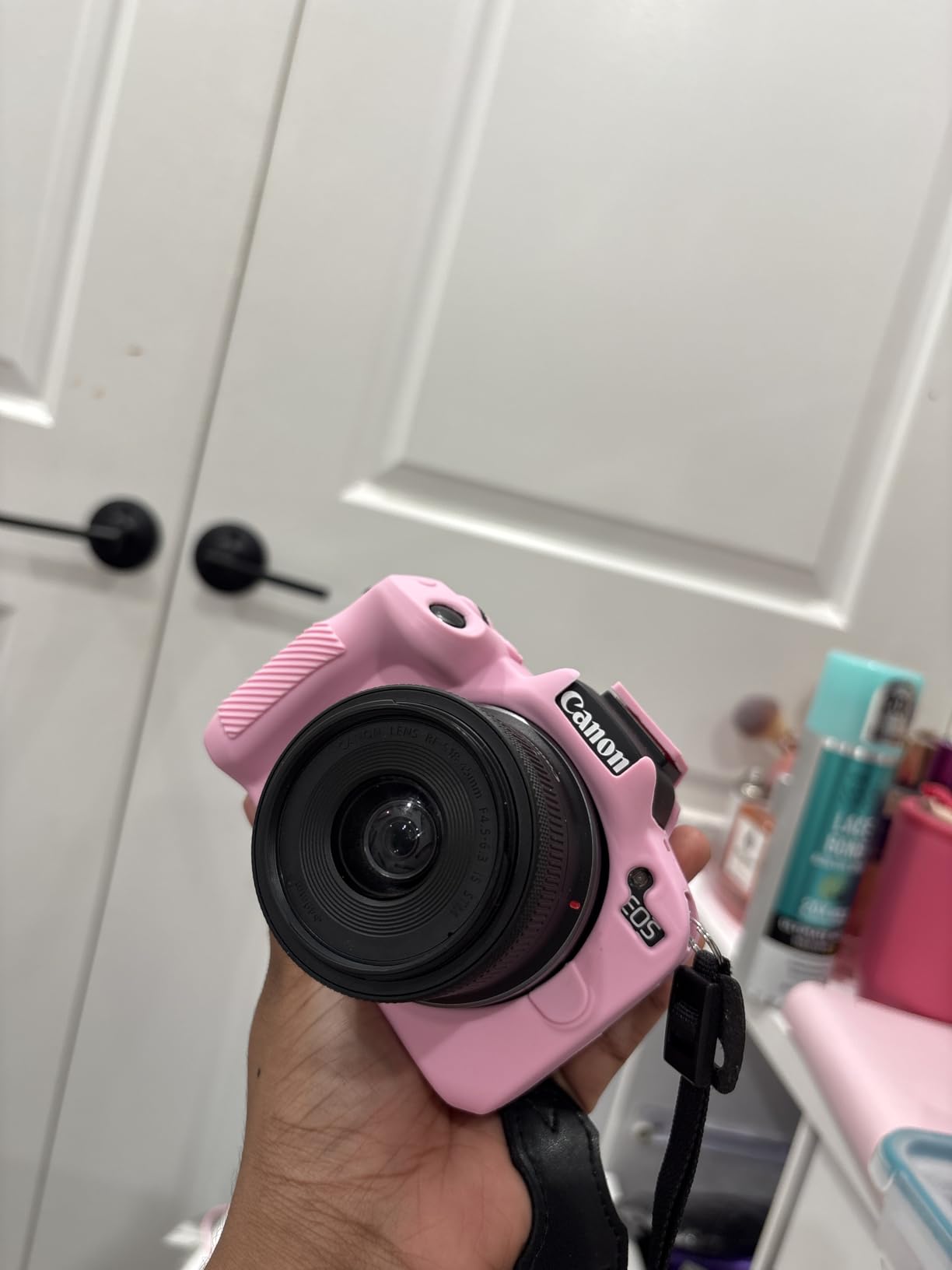
The Canon EOS R50 is the camera I bought for my niece when she started her first photography class. Six months later, she is shooting better photos than I was at her age, and the camera never got in her way.
The Creative Assist mode is the standout feature for beginners. It lets new shooters adjust blur, brightness, and color effects on a simple touchscreen interface before they understand aperture, shutter speed, and ISO. As their skills grow, the camera grows with them.

Image quality from the 24.2MP APS-C sensor is excellent for the price. Photos have the same Canon color science as the more expensive R-series cameras, which means pleasing skin tones and nice warm output straight from the camera.
For video, the 4K 24p and 30p are oversampled from 6K, giving sharp footage suitable for YouTube or social media. The vertical video mode is great for TikTok and Instagram Reels.
Who this camera is perfect for
Beginners, students, and casual family photographers will find the R50 to be a friendly first camera. The menu system is clean, the touchscreen is responsive, and the vari-angle screen is great for self-portraits and vlogging.
Content creators who focus on social media will appreciate the vertical video mode and easy Bluetooth sharing to phones.
When to upgrade from the R50
When you outgrow the APS-C sensor and want better low-light performance or shallower depth of field, the Canon EOS R8 or R6 Mark II are natural next steps within the Canon RF system.
If you find yourself wanting faster burst rates for sports or wildlife, the Canon EOS R7 with its 32.5MP APS-C sensor and 30fps burst is the obvious upgrade within the Canon lineup.
How to Choose the Best Mirrorless Camera for You?
Picking the best mirrorless camera comes down to matching the camera’s strengths to how you actually shoot. Here is how I think through the decision.
Sensor size: APS-C vs full-frame
Full-frame sensors give better low-light performance and shallower depth of field, but they cost more and the bodies and lenses are larger. APS-C sensors are smaller, lighter, and significantly more affordable, and modern APS-C cameras produce excellent images in most situations.
For travel, street photography, and beginners, APS-C is usually the smarter choice. For wedding, portrait, and low-light work where every bit of image quality matters, full-frame is worth the premium.
Autofocus system performance
Modern mirrorless autofocus is dramatically better than older DSLR systems. Sony, Canon, and Nikon now have subject detection for people, animals, birds, vehicles, and more. The differences between brands are smaller than they were three years ago, but Sony still has a slight edge in tracking stubborn subjects.
For sports and wildlife, look for cameras with at least 20fps burst and deep buffers. For portraits and travel, almost any modern camera will perform well.
Video capabilities and hybrid shooting
If you shoot both stills and video, look for 4K 60p with 10-bit color depth and good autofocus during recording. Sony a7 IV and Canon R6 Mark II are the standouts for hybrid work. If video is your primary focus, the Sony ZV-E10 and Canon R8 are more affordable options.
For pure cinema work, you may need 4K 120p or external RAW recording, which moves you into higher price brackets.
In-body image stabilization (IBIS)
IBIS lets you shoot handheld at slower shutter speeds and produces smoother handheld video. The Canon R6 Mark II, Sony a7 IV, and Nikon Z5 II all offer excellent stabilization. The Canon R8, Sony ZV-E10, and Sony a6400 do not have IBIS, so they rely on stabilized lenses.
For low-light stills and video, IBIS is one of the most useful features you can have.
Lens ecosystem and long-term value
Your lens collection will outlast several camera bodies, so choose a system with a healthy lens roadmap. Sony’s E-mount is the most mature with the widest third-party support. Canon’s RF mount has excellent first-party lenses but limited third-party options at native mount. Nikon’s Z-mount has fewer third-party options but excellent native glass.
Fujifilm’s X-mount is the leader for APS-C, with a deep lineup of compact, high-quality lenses designed specifically for the sensor size.
Ergonomics, build quality, and weather sealing
If you shoot outdoors or travel a lot, weather sealing matters. The Sony a7 IV and Canon R6 Mark II both offer robust sealing. Smaller entry-level bodies typically compromise on weather sealing to hit lower price points.
Always hold the camera in a store before buying. The best camera in the world is one you do not enjoy using, so ergonomics and menu layout matter more than spec sheets suggest.
Frequently Asked Questions
Which brand of mirrorless camera is the best?
There is no single best brand. Sony leads in autofocus and lens ecosystem depth, Canon offers excellent ergonomics and color science, Nikon provides strong value with the Z5 II, and Fujifilm dominates the APS-C segment with distinctive film simulations. The best brand is the one whose system matches your lens priorities and shooting style.
Do professional photographers prefer DSLR or mirrorless?
Most professional photographers have switched to mirrorless by 2026. The electronic viewfinder, faster burst rates, better video capabilities, and accurate eye-detection autofocus have made mirrorless the default choice for wedding, sports, and portrait professionals. Some wildlife and landscape photographers still use DSLRs for their rugged build and long battery life, but the trend clearly favors mirrorless.
What mirrorless camera do professionals use?
Common professional mirrorless cameras in 2026 include the Canon EOS R5 Mark II for wedding and event work, the Sony A1 II for sports and wildlife, the Nikon Z8 for all-around professional use, the Sony A7R V for high-resolution studio and landscape work, and the Fujifilm X-T5 for editorial and travel assignments.
What is the best mirrorless camera in 2026?
The Canon EOS R6 Mark II is our top pick for the best mirrorless camera in 2026 thanks to its class-leading autofocus, 40fps burst, 8-stop IBIS, and excellent video. For value, the Canon EOS R8 delivers the same image quality in a lighter body at a lower price. For beginners, the Canon EOS R50 is the most user-friendly option.
Is it worth upgrading from a DSLR to a mirrorless camera?
Yes, in most cases. Mirrorless autofocus is dramatically better, especially for moving subjects. Eye-detection tracking, in-body image stabilization, and modern video specs make mirrorless a real upgrade. The main consideration is whether your existing lenses can be adapted, and whether the cost of new bodies and lenses is justified by your shooting needs.
Final Verdict: Which Mirrorless Camera Should You Buy?
After testing these eight cameras side by side, my top recommendation for the best mirrorless cameras is the Canon EOS R6 Mark II for most photographers. It combines class-leading autofocus, fast burst shooting, excellent video, and effective image stabilization in a body that handles beautifully.
If you want full-frame image quality at the lowest price, the Canon EOS R8 delivers nearly identical stills and video in a much lighter body. For beginners, the Canon EOS R50 is the most approachable entry point, while the Sony ZV-E10 is the clear pick for content creators who focus on video.
Whichever of these best mirrorless cameras you choose in 2026, you will be getting a tool that would have been unimaginable a decade ago at any price. Match the camera to your shooting style, invest in good lenses, and shoot often.