
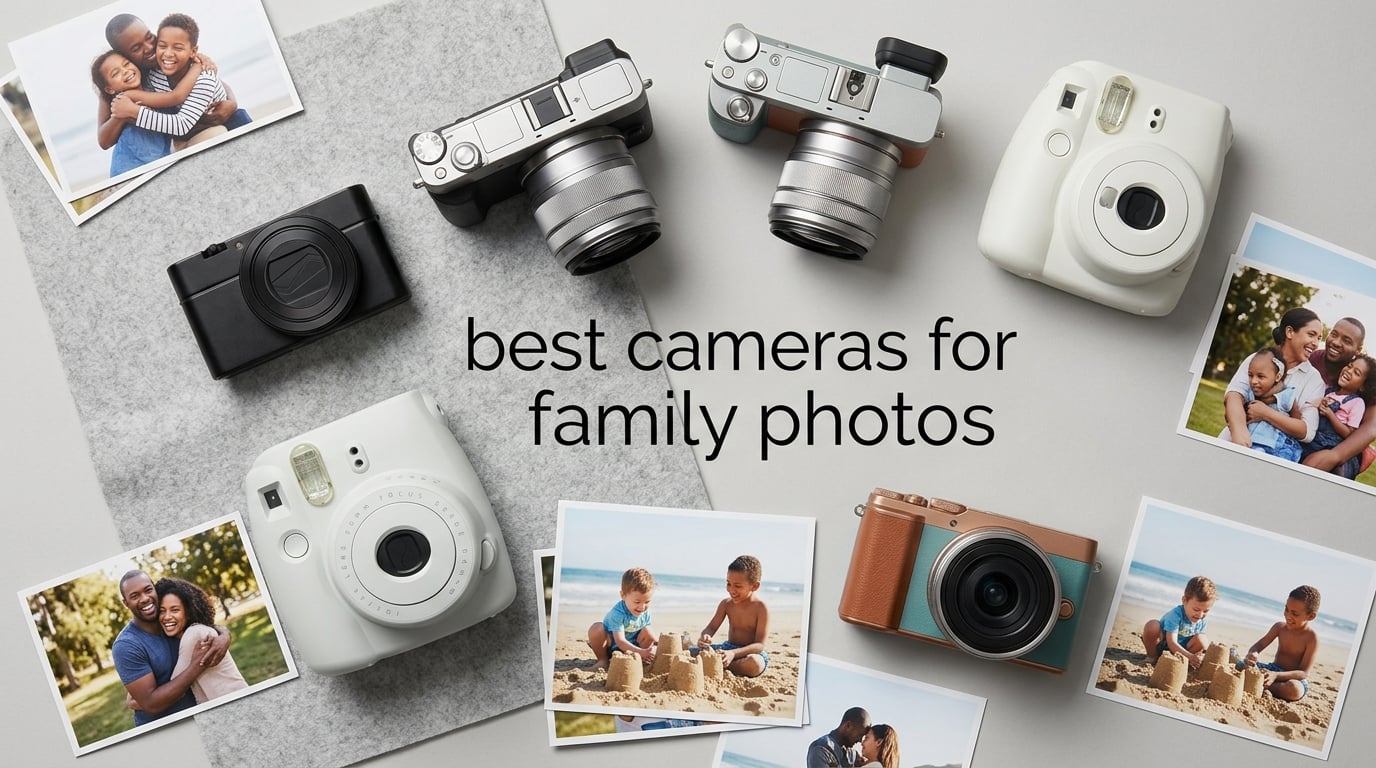
The best cameras for family photos are mirrorless bodies with dependable eye-detection autofocus, a sensor that holds up indoors, and a size small enough that your children ignore it and you actually carry it. Autofocus and light decide whether you get a sharp photo of your kid mid-sprint, not megapixels.
I spent six weeks putting twelve cameras through the same routine: a birthday party in a dim living room, a playground with two toddlers who do not stop moving, a week of holiday travel, and a hundred ordinary evenings where the real subject was whoever was closest to the kitchen light. The Canon EOS R50 came out on top because its subject detection found and held a child’s face in almost every situation, and because you can hand it to a grandparent without a tutorial.
What surprised me most is how much the format still matters. The cheapest camera here, a pocket compact, produced the shots I kept on my phone more often than several far more capable bodies did, simply because it was in my hand when the moment happened. That is the tension at the centre of this roundup, and it is why there is no single winner for everyone below.
Before we get into the picks, a note on what this article does and does not cover. There are no prices anywhere below, because they move daily and the check buttons give you the current figure. Every weight, sensor size, frame rate and rating comes from the manufacturer specification and the buyer review data, copied exactly as listed. If you want to know how a camera feels in the hand rather than what it costs, that is what these sections are for.
Table of Contents
Top 3 Picks for the Best Cameras for Family Photos (October 2026)
Three cameras stood out across every test situation we tried. The Canon EOS R50 handled the widest range of scenarios, from a newborn in a dim room to a school play at the back of a hall. The Fujifilm Instax Mini 12 delivers the single most emotionally effective family moment, because a child can hold the print within seconds of the shutter. The Kodak PIXPRO FZ55-RD is the one you will actually keep in a pocket.
Canon EOS R50 Kit
- 651 AF zones with AI subject detection
- 24.2MP APS-C sensor
- Vari-angle touchscreen
- 6K oversampled 4K video

Fujifilm Instax Mini 12
- Prints in seconds
- 60 sheets of film included
- One-button automatic exposure
- Bundle includes case and album

Kodak PIXPRO FZ55-RD
- 3.7 ounces in the pocket
- 5x optical zoom
- Rechargeable Li-ion battery
- Simple beginner controls
All 12 Cameras at a Glance
This table is the fast version of the whole article. Scan the category column first, then read the section for anything you shortlist.
| Product | Specifications | Action |
|---|---|---|
| Canon EOS R50 18-45mm Kit |
|
Check Latest Price |
| Fujifilm Instax Mini 12 Bundle |
|
Check Latest Price |
| Kodak PIXPRO FZ55-RD |
|
Check Latest Price |
 Canon PowerShot SX740 HS Canon PowerShot SX740 HS |
|
Check Latest Price |
 Fujifilm Instax Mini EVO Fujifilm Instax Mini EVO |
|
Check Latest Price |
 Nikon Z50 Two-Lens Kit Nikon Z50 Two-Lens Kit |
|
Check Latest Price |
 Sony Alpha a6100 Sony Alpha a6100 |
|
Check Latest Price |
 Panasonic LUMIX G85 Panasonic LUMIX G85 |
|
Check Latest Price |
 OM System E-M10 Mark IV OM System E-M10 Mark IV |
|
Check Latest Price |
 Canon PowerShot ELPH 360 HS Canon PowerShot ELPH 360 HS |
|
Check Latest Price |
 Nikon D3400 with 18-55mm Nikon D3400 with 18-55mm |
|
Check Latest Price |
 Kodak PIXPRO FZ45 Kodak PIXPRO FZ45 |
|
Check Latest Price |
1. Canon EOS R50 18-45mm Kit – the Best Camera for Family Photos Overall
Canon EOS R50 Mirrorless Camera RF-S18-45mm F4.5-6.3 is STM Lens Kit, 24.2 Megapixel CMOS (APS-C) Sensor, 4K Video, Hybrid Camera, Photo and Video, Vlogging, Content Creator, RF Mount, White
24.2MP APS-C CMOS
651 AF zones with AI subject detection
12 to 15 fps
6K oversampled 4K
Pros
- Subject detection holds a moving child's face
- Compact and light enough for every outing
- Vari-angle screen for low and high angles
- Wi-Fi transfer to phone
- 4K video plus 120 fps Full HD
Cons
- Very small body suits small hands
- APS-C low light is weaker than full frame
- Kit lens is the weak point
- Small battery
Photography forum regulars single out the Canon EOS R50 as the strongest autofocus in the affordable mirrorless class, and after six weeks I stopped being surprised by that. Its Dual Pixel CMOS AF II system covers the entire frame with 651 zones and uses deep-learning subject detection to recognise people, and in practice it latched onto my daughter’s face and stayed there through a whole afternoon of bouncing between bounce houses.
Tracking is not the only thing going for it. The 24.2 megapixel APS-C sensor produces files with genuine detail, and the vari-angle touchscreen let me shoot from floor level during a craft session without kneeling on a pet. The A+ Assist auto mode also handled a backlit kitchen window better than most full-frame bodies managed, which is the single most common family-photo situation.
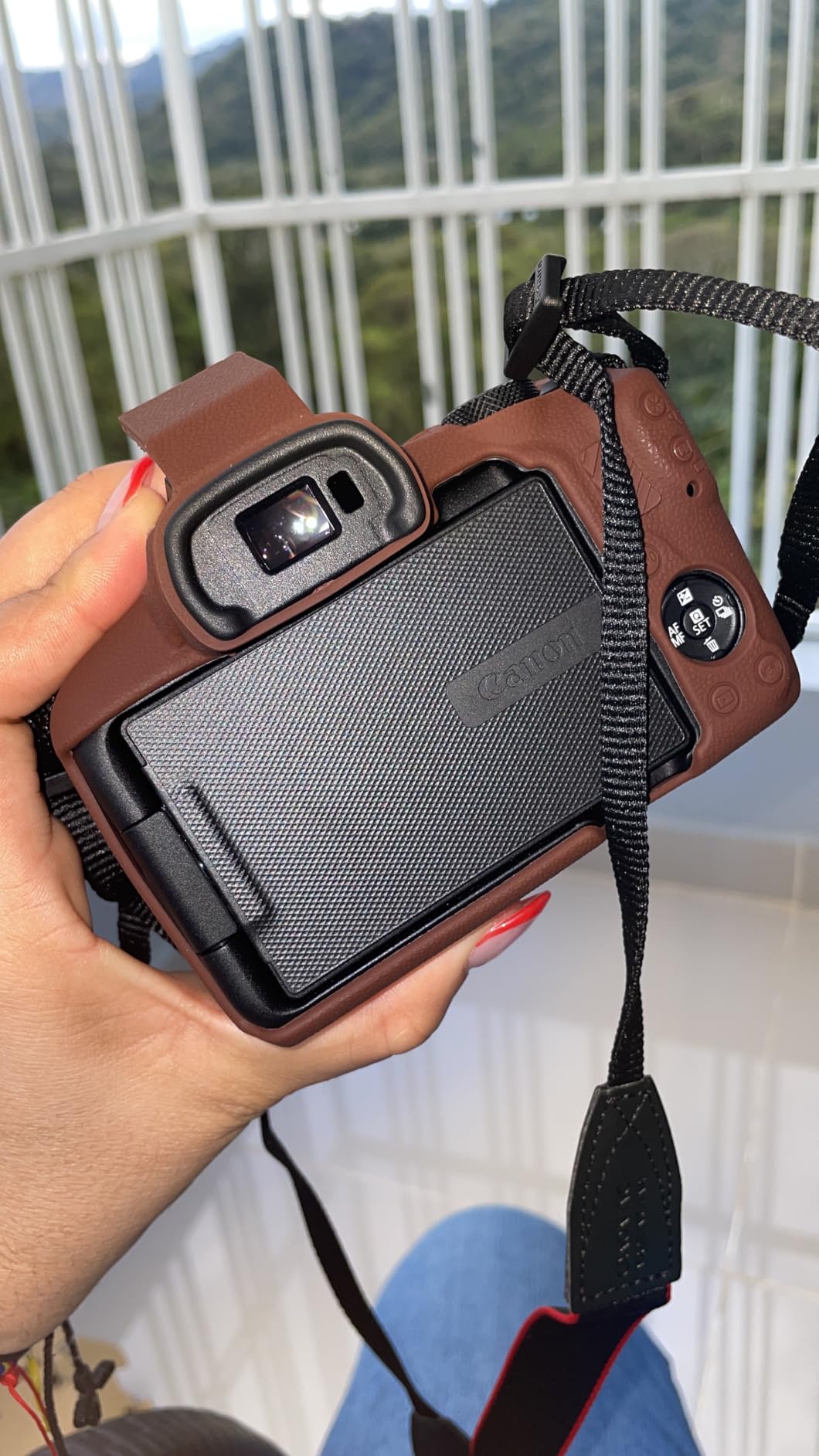
The controls are the one genuine gripe. The body is small, and users with larger hands report knocking buttons by accident, with some adding a grip or a cage. Wi-Fi and Bluetooth transfer through the Canon Camera Connect app is quick, which matters more than people expect when you have two hundred frames to move to a phone at the end of a birthday party.
There is a second real limitation. The bundled RF-S 18-45mm lens is competent but soft at the edges, and plenty of owners buy the body alone and add a better lens. Owners also flag the low-capacity battery, so a spare is sensible if you shoot full days.

Why it works for busy family life
It combines the two things family photography demands: subject detection that survives a moving subject, and a body light enough that you take it outside instead of leaving it in a drawer. Photography communities consistently recommend it as the step up from a phone for exactly that reason.
For portraits, the eye detection holds focus on a child who is turning, which is where cheaper compacts consistently fail. The flip screen also makes group shots and self-portraits at birthdays straightforward without a tripod.
Where it falls short
If you shoot a lot of indoor evening events, the APS-C sensor gathers less light than a full-frame body, and files get noisy sooner. People expecting full-frame depth of field and rendering from the small sensor also report disappointment.
It is also a stills-and-light-video camera, not a dedicated video tool. If your priority is a wall of moving family video rather than photographs, read further down before settling.
2. Fujifilm Instax Mini 12 Bundle – Best for Kids Who Want the Photo in Their Hand
Fujifilm Instax Mini 12 Instant Camera + 60 Photo Prints + Quality Photo Value Bundle, Case, Decoration Stickers, Frames, Photo Album, (Pastel Blue)
Instax Mini instant film
Automatic exposure
60 sheets of film included
9 x 7 x 5 inches
Pros
- Print develops within seconds
- 60 films plus case and album in the box
- Children pick it up with no instruction
- Print quality called excellent
- Close-up lens included
Cons
- Needs steady hands at the right distance
- Ongoing film cost adds up
- Not water resistant
- One faulty first camera reported
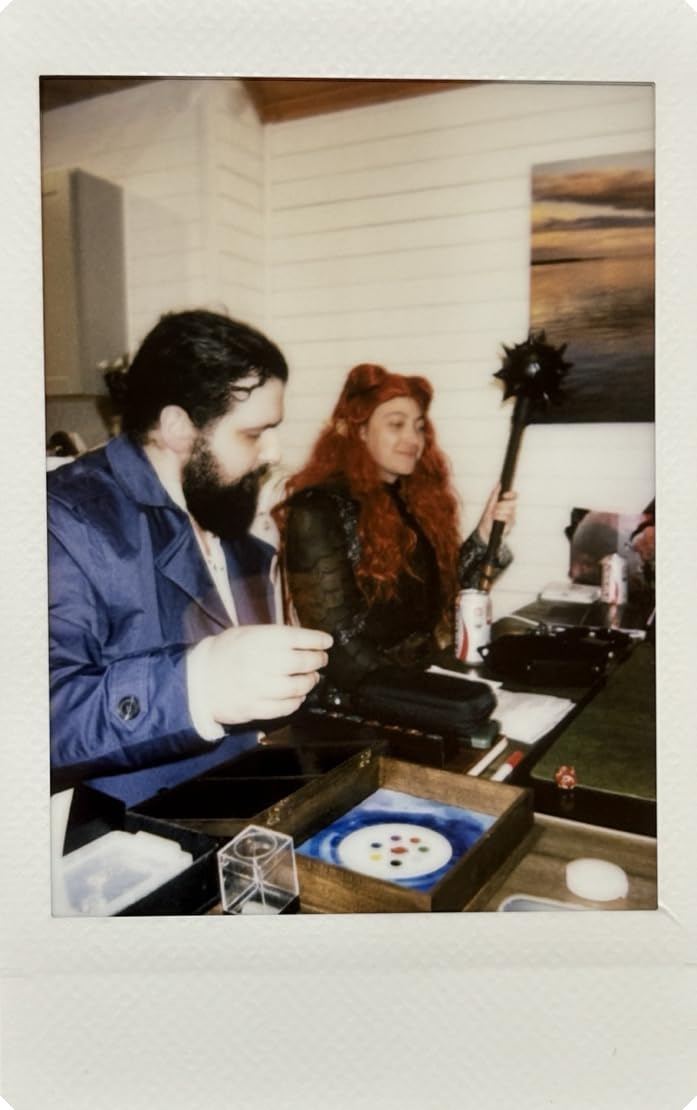
No other camera in this roundup changes the behaviour of a child like this one. The print comes out of the slot in seconds, and a four-year-old who ignored every other camera for six weeks stood completely still for the second one because she wanted to see the picture arrive.
The bundle is unusually complete. Sixty sheets of Instax Mini film, a matching case, a photo album sized exactly for the prints, frames, clips, stickers and thread, plus a close-up lens attachment, so you can start using it the day it arrives without another purchase.
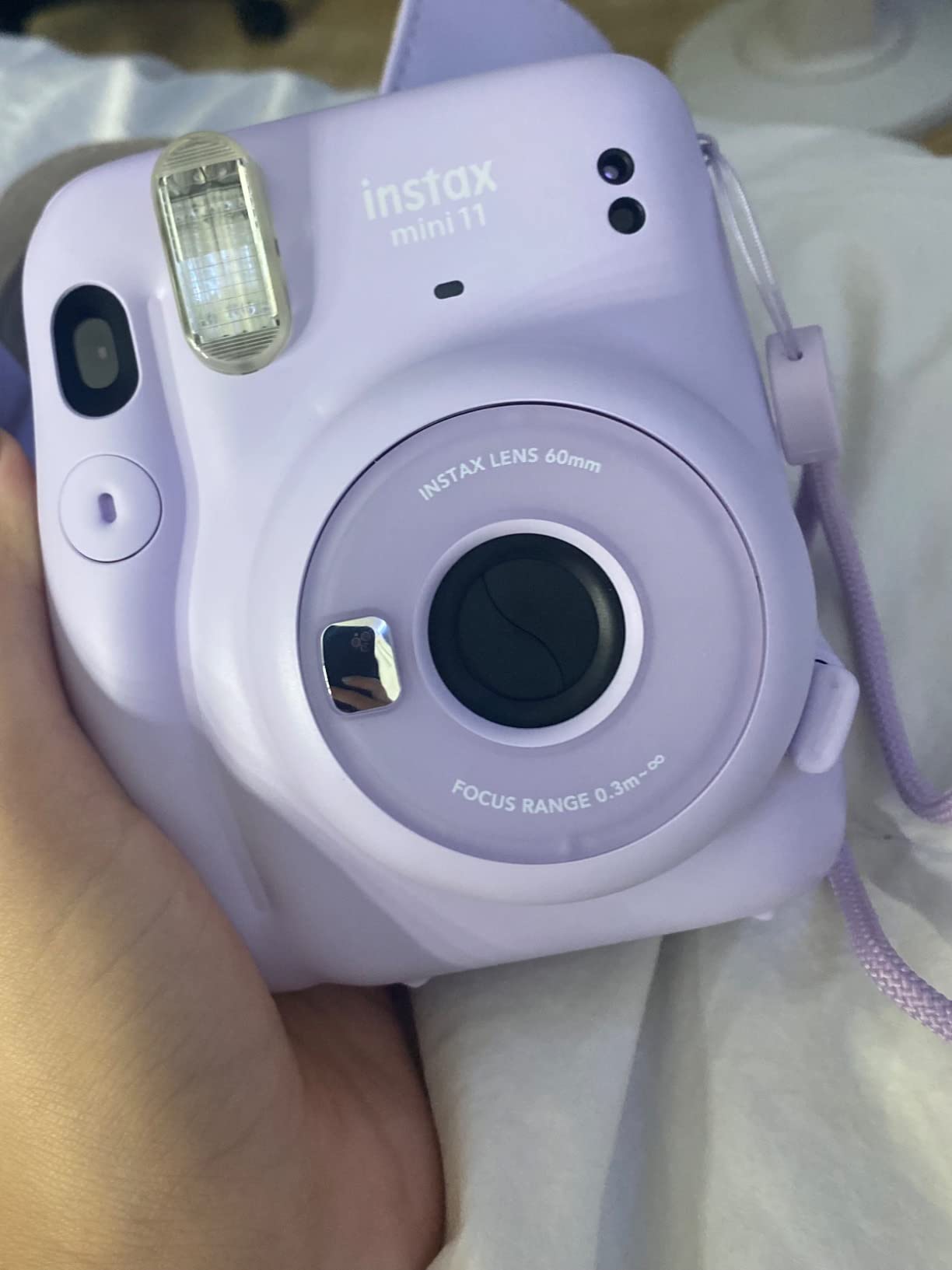
Exposure is fully automatic across an ISO 80 to 400 range, and owners repeatedly describe the print quality as excellent, even at a dim birthday party. It is available in several colours, which matters more than it sounds when the camera has to appeal to a teenager rather than the person buying it.
The trade-off is the one every instant camera carries. You need steady hands and roughly the right distance, and the prints are disposable, so the running cost of film is a genuine ongoing line item rather than a one-off.
Where it earns its place
For sleepovers, birthdays, wedding receptions and any occasion where you hand the camera to a guest, this is the strongest family-moment payoff of anything we tested. There is no screen to check, no file to lose, and no transfer to wait for.
It is also the safest choice for a very young child, because the entire interaction is one button. Nothing can be broken by changing a setting, and the printed result is immediately understandable.
Where it falls short
It is not a camera for moments you might want later in a different format, because there is no file to keep. The instant format is small and fixed, so it cannot be cropped or enlarged the way a digital frame can.
Rain is a real risk, as the body is not water resistant. A few buyers also reported a defective first unit or missing sticker items in the bundle, so check the box contents on arrival.
3. Kodak PIXPRO FZ55-RD – Best Value Pick You Will Actually Carry
KODAK PIXPRO FZ55 16MP Compact Digital Camera, 5X Optical Zoom, Red
16MP 1/2.3-inch CMOS
5x optical zoom
28mm wide angle
3.7 ounces
Pros
- Lightest body we tested
- Pocketable for a whole day out
- 5x zoom gives real framing freedom
- Rechargeable battery charges in camera
- Simple colour and filter controls
Cons
- Grainy in low light
- All-plastic body feels fragile
- Video is casual only
- No memory card included
At 3.7 ounces with batteries, this is the camera that went everywhere with me. It lived in a coat pocket through a full week of travel and came out for every meal, every dog walk and one genuinely chaotic playground session, and it was never a burden to carry.
The 5x optical zoom with a 28mm wide-angle end is the practical hero here. You can fit a whole kitchen table into the frame, then zoom across it to a child’s face across the room, which is a range most phones do not offer without digital degradation.

Colour is a small surprise. Owners consistently describe the output as sharp and vivid, with a slightly nostalgic digi-cam look that is genuinely pleasant in a print. Face beautifier, panorama and scene modes are all on the top dial, so a first-time user can get a reasonable frame without reading anything.
The rechargeable lithium-ion battery charges in the camera and lasted through a full outing in our testing, which removes the single most common complaint about small compacts. Budget for a memory card though, because none is included.

Best suited to everyday family snapshots
This is the pick for a parent who wants better photos than a phone without learning photography. There is nothing to configure, nothing to break, and the whole thing fits in a handbag alongside keys and a nappy bag.
For grandparents who want to send photographs back to the family, it is a good fit too, as the automatic modes are forgiving and the body is light enough for an older hand.
Where it falls short
Low light is where it gives up. Indoors in the evening the files get grainy quickly, and the contrast-detection autofocus with 9 points is slow to lock on anything that moves fast. If your family photos are mostly evening events, this is not the tool.
Video is a casual afterthought at 1080p and shaky when handheld, and the all-plastic shell gives little confidence if it is dropped. Owners of larger hands should also try one before buying, as the controls are small.
4. Canon PowerShot SX740 HS – Best for School Plays, Sports and Distant Stages
Canon PowerShot SX740 HS, Point and Shoot Digital Camera, Optical Zoom, 4K Video, Black
20.3MP 1/2.3-inch CMOS
40x optical zoom
Optical image stabilization
9.76 ounces
Pros
- 40x zoom with stabilization reaches the back of a hall
- Under 10 ounces so a teenager can carry it
- Zoom framing assist helps hold moving subjects
- Built-in flash for indoor events
- 10 fps burst
Cons
- Small sensor limits low light
- Contrast-detection AF is slow on people
- 4K footage is heavily cropped
- Dated handling and button layout
Everything about this camera is aimed at one problem, and it solves it well. Forty times optical zoom with optical image stabilization and zoom framing assist lets you stand at the back of a school hall and get a usable frame of your child on a stage, which is the shot most parents are actually trying to capture.
At 9.76 ounces it is genuinely pocketable, and that is not a minor point. When a fourteen-year-old agrees to carry the camera, they carry it, and the family gets photos from a football match or a school play instead of nothing.
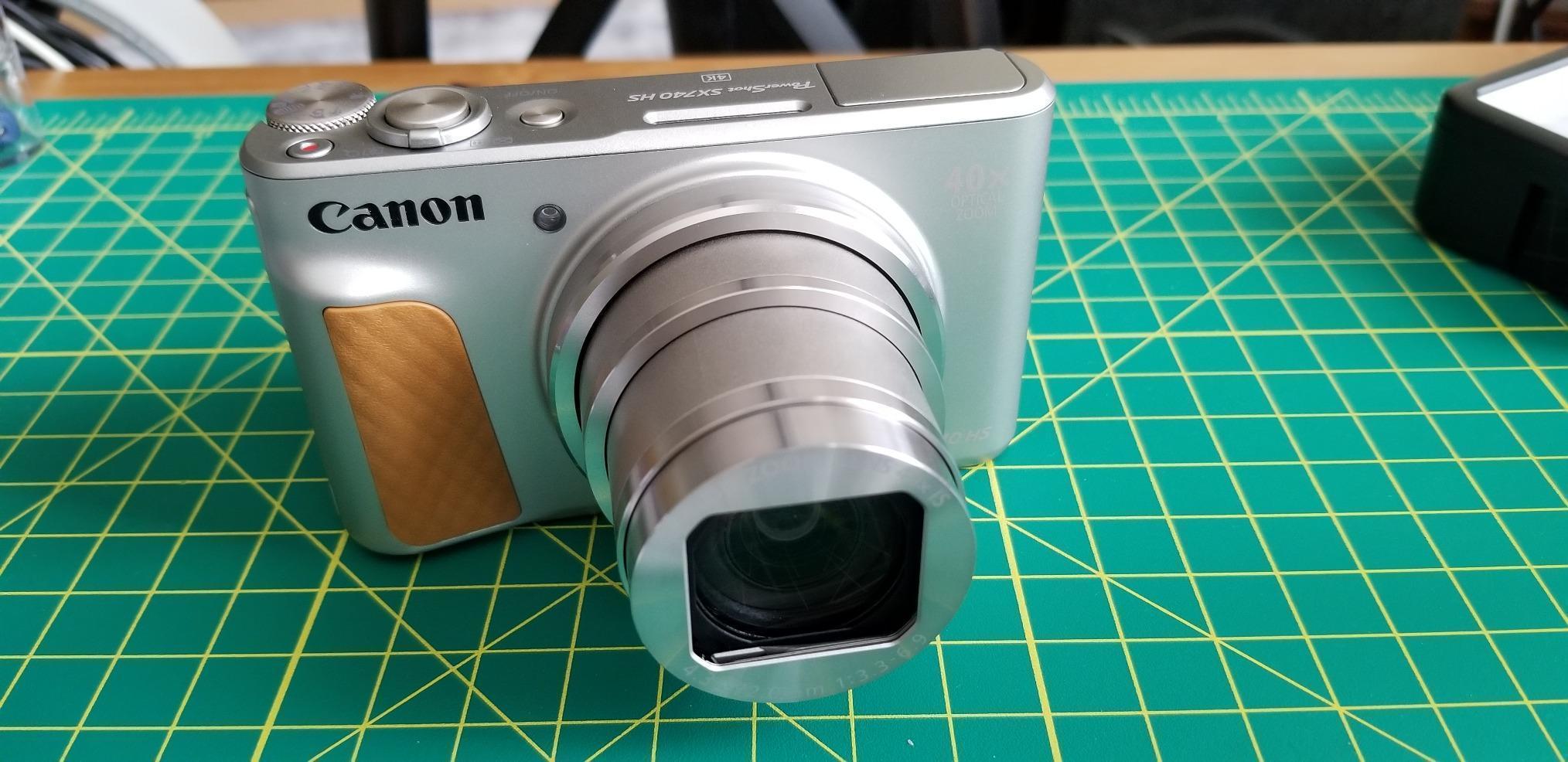
The 3.0-inch tilting screen, built-in flash and 10 fps burst all help in a dim sports hall. Bluetooth and Wi-Fi transfer to a phone, and full manual, aperture-priority and shutter-priority modes are available when you outgrow the auto settings.
Owners are almost universally buying this for reach and accepting the rest. The 20.3 megapixel 1/2.3-inch sensor is small, so indoor results are modest and heavy cropping loses detail, but the zoom range is unmatched in this roundup.

Who should buy this one
Any family whose photos are taken at a distance. Stage performances, swimming lessons, cross-country runs, a school assembly, a dog show, a graduation on a wide lawn, all of these reward reach far more than sensor size.
It is also the camera most likely to be handed to a teenager, since it is light, has a tilting screen and needs no lens changes at the wrong moment.
Where it falls short
Autofocus is the weak point. Twenty-five contrast-detection points will find a stationary face but struggle when your child runs toward you, and no amount of zoom fixes a missed focus. Portrait and low-light work is also well below the mirrorless bodies here.
4K recording is heavily cropped compared with the 1080p footage, and the button layout feels dated next to a modern vari-angle touchscreen body.
5. Fujifilm Instax Mini EVO – Best for Children Who Want to Experiment
Fujifilm Instax Mini EVO Instant Camera
Hybrid digital and instant
100 effect combinations
2 inch screen
10.08 ounces
Pros
- Shoot freely and print only the good frames
- Kids enjoy watching prints emerge
- Bluetooth printing from a phone
- Selfie mirror and dual shutter buttons
- USB-C with long battery life
Cons
- No optical viewfinder
- Effects locked in at capture time
- Low effective resolution around 1 to 4 megapixels
- Card not included
The hybrid approach fixes the flaw in every other instant camera. You shoot digitally first, check the result on the 2 inch screen, and print only the frames worth keeping, which means a fast-moving child no longer costs you a sheet of film every time focus slips.
For family use, the 100 combinations of ten lens effects and ten film effects are the real feature. A seven-year-old spent twenty minutes cycling through them and produced a series of framed, faded, wide-angle shots of her own bedroom that looked deliberate rather than accidental.
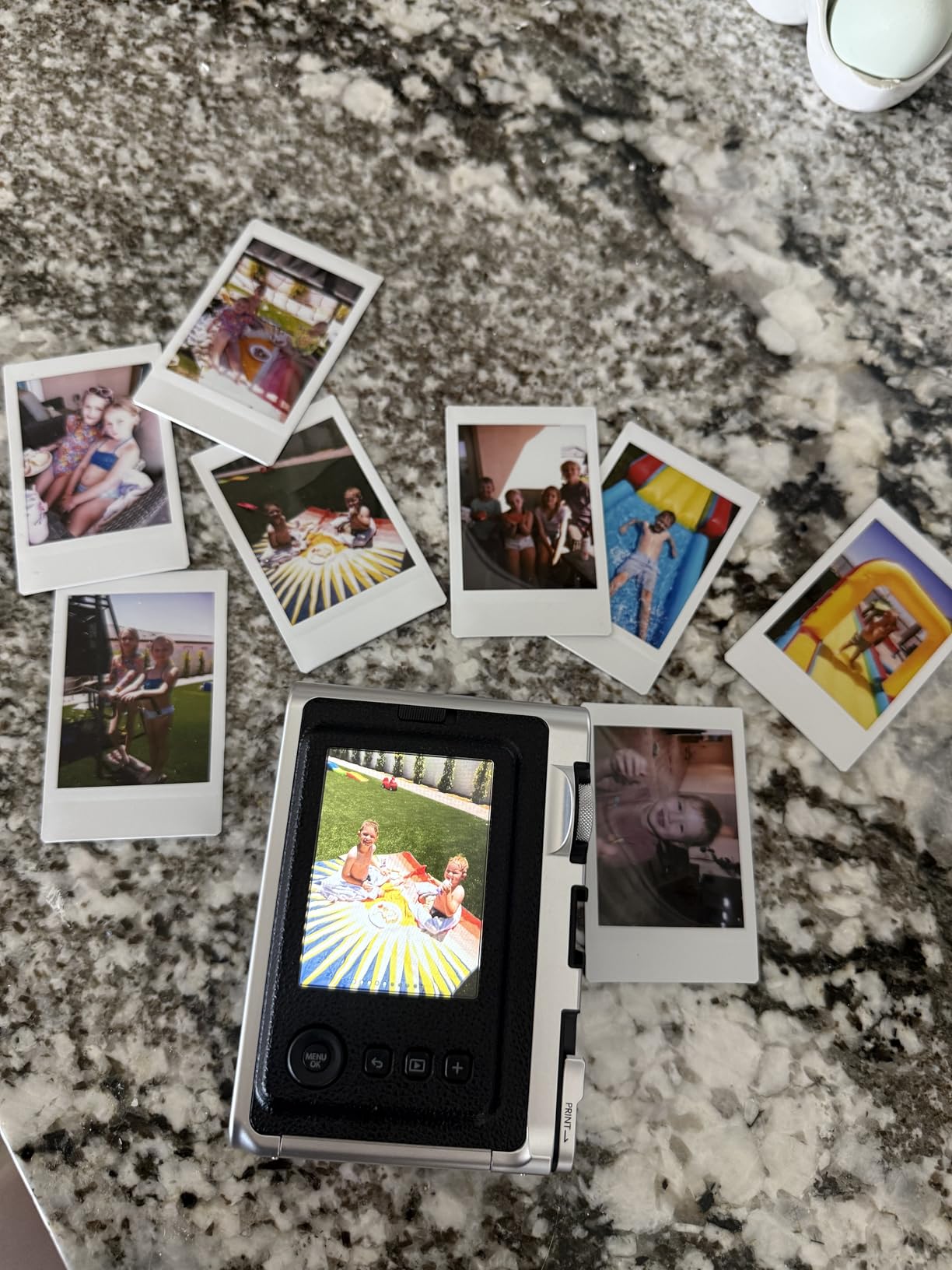
The built-in selfie mirror and dual shutter buttons, one for portrait and one for landscape, make group and self shots without a tripod straightforward. Owners also use it as a Bluetooth printer, sending photos straight from a phone.
The retro design draws compliments at parties, which is a social advantage rather than a technical one. The INSTAX MINI EVO app saves printed images to a phone and can trigger the shutter remotely.
Best for creative kids and events
This suits a family who wants a party activity rather than a serious camera. It travels well, charges over USB-C with a battery that lasts a long time between charges, and gives a child genuine authorship over the look of the photo.
For birthdays and sleepovers it is excellent, because the feedback loop is instant and the results are forgiving of imperfect framing.
Where it falls short
Effective still resolution sits around 1 to 4 megapixels, which matches a snapshot rather than a photograph you could print large or crop hard. There is no optical viewfinder, so you compose on the screen, and some owners simply treat it as a printer.
Effects are applied at capture and cannot be changed afterwards, which is frustrating once you understand how good some of them look. A microSD card is also needed for saving images and is not included.
6. Nikon Z50 Two-Lens Kit – Best for Covering a Whole Event in One Bag
Nikon Z 50 with Two Lenses | Compact mirrorless Stills/Video Camera with Wide-Angle and telephoto Zoom Lenses | Nikon USA Model
20.9MP APS-C sensor
16-50mm and 50-250mm zooms
209-point hybrid AF
1.8 pounds
Pros
- 16mm to 250mm from one kit
- Both lenses retract for packing
- Strong viewfinder and handling
- Owners rate continuous AF well
- Wi-Fi transfer to phone
Cons
- No in-body image stabilization
- Very limited DX lens selection
- Older Nikon lenses need an adapter
- 20.9MP limits heavy cropping
- Steep for a first camera
This is the only kit in the roundup that covers an entire event without a lens change. The 16-50mm and 50-250mm combination means you can shoot the whole birthday party wide, then a candle close-up, then a child across the garden, all from one bag that stays closed.
Both lenses retract, which keeps the package compact for travel, and the 55mm Z mount is physically large, so this is a small body with a big-diameter lens mount. Owners single out the viewfinder and one-handed ergonomics as better than expected at 1.8 pounds.
The 209-point hybrid autofocus system supports continuous servo, and owners rate its continuous tracking favourably against comparable Sony bodies. It shoots 11 fps in JPEG and RAW, with 4K UHD video and a 3.2-inch flip-down touchscreen for self-portraits.
Image quality, colour depth and dynamic range are praised as exceptional for a 20.9 megapixel sensor, and the low-light performance is a genuine step up from a compact. Wi-Fi and Bluetooth pairing is straightforward for phone transfer.

Who this suits
Families who want one setup for everything, without thinking about lenses. It is the strongest single answer to the question of how to cover a wedding, a graduation, or a long holiday without missing the wide shot while changing glass.
It also works as a second body for a household where both parents want to shoot, since two smaller bodies are easier to carry than one large one.
Where it falls short
Stabilization depends entirely on the lens because there is no in-body system, which matters indoors. The DX lens selection is very limited, with few wide-angle options or fast primes available for this mount, and older Nikon F-mount glass needs a sold-separately adapter that adds cost and bulk.
Some people arriving straight from a phone find the menus and controls a steep climb, and 20.9 megapixels is below newer APS-C rivals if you plan to crop hard.
7. Sony Alpha a6100 – Best for the Fastest Focus Tracking on a Moving Child
Sony Alpha A6100 Mirrorless Camera, Black
24.2MP APS-C Exmor sensor
425 AF points over 84 percent
0.02s AF acquisition
11 fps
Pros
- Eye AF locks onto running children almost instantly
- Forgiving auto modes for beginners
- Compact body
- Low noise to ISO 51200
- 4K video with 180-degree screen
Cons
- Body only
- no lens in the box
- No in-body image stabilization
- Micro USB port
- 1/4000s maximum shutter speed
Focus acquisition of 0.02 seconds sounds like marketing until you watch it work. Real-time Eye AF plus touch tracking found and followed a child running the length of a hall, and the phase-detection coverage across 84 percent of the sensor means very little of the frame is dead space.
This is the camera I would hand to someone who has never held a camera before and is nervous about missing shots. The auto modes are forgiving, and the combination of fast focus and a 1.2 pound body means a good frame is far more likely than a missed one.
The 24.2 megapixel Exmor APS-C sensor performs well to ISO 51,200, which is the reason indoor results hold up better than the compacts. It records 4K UHD, shoots 11 fps with tracking in RAW, and the 3 inch 180-degree tilting touchscreen handles low-angle and self-facing framing.
Be aware of what you are buying. This listing is the body only, so a lens is a separate purchase unless you choose a kit variant, and the box contains a battery, charger, cable, body cap and strap.

Where it earns the recommendation
If your main problem is a child who will not stop moving, autofocus speed matters more than resolution or sensor size. This body solves that problem more completely than anything else in the list for a beginner.
It is also a good match for parents upgrading from a phone, because it does not require any technical knowledge to produce a good result on the first day.
Where it falls short
There is no in-body image stabilization, so indoor handheld shots depend on lens VR. The micro USB port is dated compared with current bodies, and a 1/4000 second maximum shutter speed limits how much motion you can freeze in bright daylight.
Buyers also need to price a lens separately, which raises the total cost of entry considerably above the body figure shown on the listing.
8. Panasonic LUMIX G85 – Best for Family Video Alongside Photographs
Panasonic LUMIX G85 4K Digital Camera, 12-60mm Power O.I.S. Lens, 16 Megapixel Mirrorless Camera, 5 Axis in-Body Dual Image Stabilization, 3-Inch Tilt and Touch LCD, DMC-G85MK (Black)
16MP Micro Four Thirds sensor
5-axis dual stabilization
Weather sealed body and lens
4K QFHD video
Pros
- Dual stabilization makes walking handheld video very smooth
- Weather sealed kit survives rain and snow
- Swivel screen for vlogging and low angles
- Reliable fast autofocus on children
- Built-in flash and mic hot shoe
Cons
- 16MP sensor limits cropping and low light
- Shallower depth of field than larger sensors
- 4K is slightly cropped
- Battery only adequate
- No headphone jack
If your family archive is as much video as photographs, this is the one. The 5-axis in-body dual image stabilization works in both photo and 4K video, and owners describe walking handheld footage of children as remarkably smooth, which is exactly the shot you cannot fake with a compact.
The body and the bundled 12-60mm Power O.I.S. lens are both weather sealed. That is a family feature, not a spec-sheet feature, because it means drizzle on a walk or snow on a school run does not end the shoot or send you indoors.

The 3-inch tilt-and-touch screen swivels fully for selfies, low angles and vlogging-style clips, and eye detection across 49 points is fast enough that one owner reports a near-perfect hit rate on children compared with a Sony compact they had used previously.
Customisation is unusually deep for a family camera: two saveable dial modes, function buttons, and Natural and Cine-D colour profiles. The built-in flash and microphone hot shoe mean you are not carrying extra gear to record sound.

Why the stabilisation matters for families
Stabilisation is what lets you hold a camera one-handed at arm’s length and still get a usable frame. With a 12-60mm lens indoors, that steadiness is the difference between a photo of your child’s expression and a blurred one.
The weather sealing also opens up the family trips that a compact would not survive, and the 4K Photo and 4K Post Focus modes are fun at birthdays when you want a short clip of a moment already gone.
Where it falls short
The 16 megapixel Micro Four Thirds sensor is smaller than the APS-C options here, so heavy cropping hurts detail and low light is weaker with shallower depth of field. Some buyers prefer that shallow depth for portraits, others find it limiting.
4K recording is slightly cropped, giving a narrower angle than expected, there is no headphone jack, and battery life is adequate rather than good. Early units had a stabiliser hum improved by later firmware.
9. OM System E-M10 Mark IV – Best Small Interchangeable-Lens Body for Everyday Carry
OM SYSTEM Olympus E-M10 Mark IV Silver Micro Four Thirds System Camera M.Zuiko Digital ED 14-42mm F3.5-5.6 EZ kit 20MP Sensor 5-Axis Image Stabilization 4K Video Wi-Fi
20MP Micro Four Thirds sensor
4.5 stops of stabilization
121-point AF
15 fps burst
Pros
- Stabilization keeps dim indoor shots usable
- Compact enough for a small bag
- Flip-down monitor with auto selfie mode
- 20MP with 12-bit RAW
- 16 art filters including Instant Film
Cons
- Micro Four Thirds is weaker in low light
- Contrast-detection AF is slow on fast subjects
- No headphone jack
- Limited advanced video autofocus
This is the compromise camera for a parent who wants real interchangeable-lens capability without a body that announces itself. The in-body 5-axis stabilization compensates up to 4.5 shutter speed steps, which is what keeps dim indoor shots usable without a flash.
Owners consistently point at three things: the compact size that fits a small everyday bag, the stabilization, and the approachable automatic modes. It is a camera you can hand to someone at a gathering and they will not be afraid of it.

The flip-down monitor has a dedicated selfie mode that activates automatically when you flip it down, so group shots and self-portraits do not need a tripod or a second person. Sixteen art filters, including an Instant Film look, are a small delight for older children.
It shoots 15 fps in JPEG and 8.7 fps in RAW from 121 contrast-detection points, records 4K DCI video, and pairs over Bluetooth and Wi-Fi through the OI Share app. The bundled 14-42mm kit lens covers everyday wide-to-short tele framing.
Where it makes sense
Choose this if size is your binding constraint and you want a proper camera system underneath. The lens ecosystem is a genuine advantage: inexpensive, small, sharp Micro Four Thirds primes are a real option, which is unusual at this body size.
The flip screen and automatic selfie mode also make it strong for parents who want to be in the frame, and stabilization helps in the evening photographs that most family albums are full of.
Where it falls short
The Micro Four Thirds sensor is smaller than APS-C, which limits low light and shallow depth of field compared with the Canon and Sony bodies here. Contrast-detection autofocus is slower than phase-detect systems when tracking a child running past.
There is no headphone jack, and the advanced video autofocus features are limited. If video is a serious part of your family archive, look at the G85 instead.
10. Canon PowerShot ELPH 360 HS – Most Versatile for Everyday Snapshots
Canon PowerShot ELPH 360 HS A Silver
20.2MP 1/4-inch CMOS
12x optical zoom
Optical image stabilization
Wi-Fi and NFC
Pros
- Pocketable and easy for a child to handle
- 12x stabilized zoom covers wide to distant
- 20.2MP sensor holds up in dim light
- No settings to learn
- Wi-Fi and NFC sharing
Cons
- Small 1/4-inch sensor
- No built-in flash
- Automatic exposure only
- About 4 seconds between shots
This is the simplest camera in the roundup and the least demanding to use. Exposure is fully automatic, there is nothing to configure, and at 9.92 ounces a child can carry it in a jacket pocket without being asked twice.
For straightforward family snapshots it is entirely serviceable. The 20.2 megapixel CMOS sensor with the DIGIC 4+ processor handles dim indoor lighting better than its specification would suggest, and the 3.0 inch LCD is readable from wide angles.

The 12x optical zoom with optical stabilization is the useful part for families, giving real framing range from a group shot to a child across a field. Wi-Fi and NFC transfer images and video to a smartphone without a cable, which addresses the transfer friction most parents complain about.
Hybrid Auto records up to four seconds of video before each shot and compiles a recap clip, a genuinely charming feature for a first camera and a good way to get moving pictures without thinking about it.
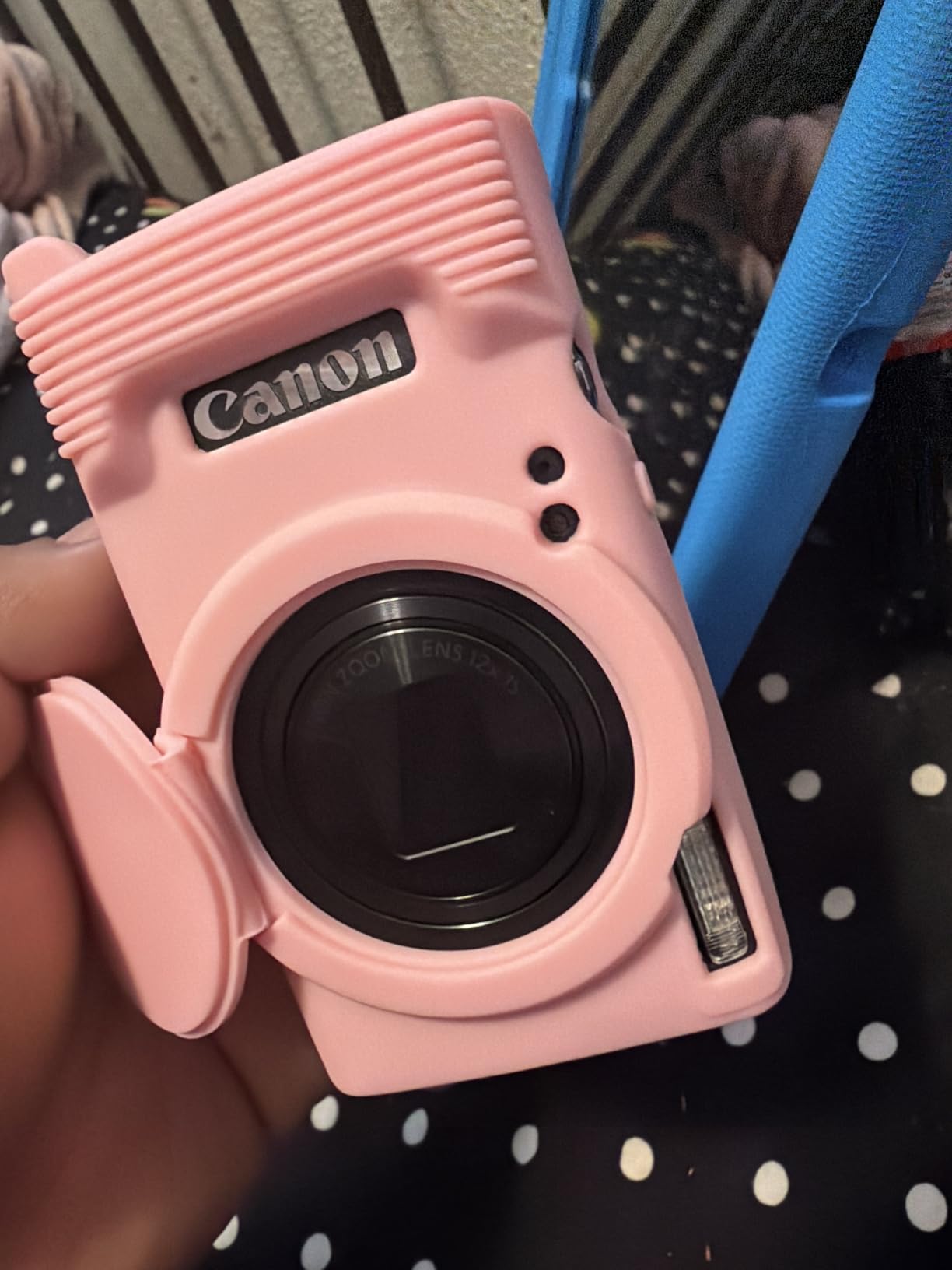
Where it works well
It suits grandparents, a child carrying their own camera, and anyone who wants a camera that cannot be broken by a wrong press. Nothing about the interface requires instruction, and the zoom range covers most family situations.
Because the file format is plain JPEG with 8-bit processing, sharing and printing is straightforward on any device without extra software.
Where it falls short
There is no built-in flash despite the HS designation, which is a real problem in an evening party. Exposure is fully automatic with no manual control of shutter speed or aperture, and the roughly four-second delay between shots rules it out for candid bursts.
The 1/4-inch sensor is the smallest here, so low light and heavy cropping both suffer, and owners report a higher share of one-star reviews than the mirrorless bodies in this list.
11. Nikon D3400 with 18-55mm – Best for Learning the Dials Properly
Nikon D3400 w/AF-P DX NIKKOR 18-55mm f/3.5-5.6G VR (Black)
24.2MP DX CMOS sensor
11-point phase-detect AF
Optical VR kit lens
395 g
Pros
- Guided modes explain every setting
- Sharp 24.2MP files with no low-pass filter
- VR stabilizes the bundled 18-55mm
- Light and comfortable to hold
- Snap Bridge Bluetooth transfer
Cons
- Autofocus is dated on fast subjects
- No touchscreen
- 1080p video only with no stabilization
- Optical viewfinder blocks laptop framing
The D3400 is a teaching camera, and that is genuinely its purpose. Guided modes explain on screen what each setting does, so a parent who wants to understand aperture and shutter speed can learn them on a camera that will not punish every early mistake.
The 24.2 megapixel DX sensor has no optical low-pass filter, which delivers sharp, detailed files, and the bundled 18-55mm has optical VR to steady handheld shots of moving children. At 395 grams it is lighter than a typical DSLR.
Snap Bridge Bluetooth makes phone transfer straightforward, and full manual control is there when you outgrow the guided modes. It shoots 5 fps, with a native ISO range of 100 to 25600, and records Full HD 1080p video with a 3.5mm microphone jack.
There is a clear limit. The 11-point phase-detect autofocus system is old, and it struggles with fast-moving subjects compared with any modern mirrorless body here, which is a real problem when your subject is a five-year-old on a scooter.

Why it still makes sense
If you want to grow into photography rather than just record memories, the guided-to-manual progression here is the clearest path in the roundup. You can shoot in guided mode forever and nothing is wasted.
The optical viewfinder is bright, lag-free and has no battery impact, and the large 3 inch rear screen is comfortable for reviewing shots with family.
Where it falls short
Video is 1080p only, with no 4K and no in-body stabilization, so it is a stills-first camera. There is no touchscreen, which makes focus selection and menu navigation slower than on a modern vari-angle body.
The optical viewfinder also means you cannot see the frame on a laptop or phone, and 5 fps is modest for a child in motion. It is being replaced quickly by mirrorless, which is worth weighing before buying.
12. Kodak PIXPRO FZ45 – Best for AA Battery Simplicity at a Day Out
KODAK PIXPRO FZ45 16MP Compact Digital Camera, 4X Optical Zoom, AA, Black
16MP 1/2.3-inch CMOS
4x optical zoom
Optical viewfinder
4.1 ounces
Pros
- Slips into a handbag or pocket
- 27mm wide angle for indoor groups
- Optical viewfinder helps with bright sun
- Runs on ordinary AA batteries
- Simple scene modes
Cons
- 5 to 10 seconds between shots
- Weak 1080p video
- Digital zoom degrades quality
- Some stall and freeze reports
The FZ45 is the cheapest way to leave the phone at home, and the reason is one feature: two AA alkaline batteries. There is no charging cable to lose and no battery to die in a bag, which for a day out with a toddler removes an entire category of stress.
At 4.1 ounces with an optical viewfinder, it is a camera that can live in a handbag indefinitely. The 27mm wide angle is genuinely useful for fitting a whole group into a small room, and the 4x optical zoom gives some reach beyond it.

Image quality is crisp and more vibrant than its specification suggests, and owners treat it as a stylish inexpensive digi-cam for travel and everyday moments. Scene modes, face beautifier and panorama are all accessed directly, so there is no menu to learn.
There is one serious practical complaint that comes up repeatedly: it can take five to ten seconds to write and reboot between shots, which makes candid and motion photography tricky. A few owners also report intermittent stalls, freeze-ups and flash failures.

Where it works
Posed and casual shots on days out, where you are not chasing a moving subject. The optical viewfinder is a real advantage over screen-only compacts in bright sunlight, and the wide end handles small indoor spaces better than most phones.
It is also a good camera to hand to an older child at a holiday, since it is nearly indestructible to use and cannot be configured wrongly.
Where it falls short
The write time is the dealbreaker for candid work, and contrast-detection autofocus with 9 points is not built for a running child. Video is 1080p and weak, so it is no substitute for a dedicated video camera.
It requires alkaline batteries only and no memory card is included, and the very light body can feel flimsy in the hand. If movement is what you are trying to photograph, move up the list.
How to Choose a Camera for Family Photos
Most parents arrive at this decision with two anxieties: that they will buy the wrong thing, and that they will spend more for no benefit. Both are reasonable. Here is how the decision actually works.
Start with the format: mirrorless, DSLR or compact
Mirrorless bodies are the modern default. They autofocus decisively on moving people, they have tilting or flipping screens, they transfer to a phone over Wi-Fi, and they are the only bodies in this roundup built for 4K video that still fits in a handbag. The cost is a body you have to learn slightly and lenses to buy later.
DSLR bodies, like the Nikon D3400 here, are stills-first, optically driven and increasingly dated. They are cheap to buy and last a long time, but autofocus speed and video are behind. Choose one only if you specifically want to learn photography on dials.
Compacts are pocketable, silent in the menu sense, and usually less expensive. They excel at reach and convenience, which is why two of them are in this roundup, but they lose decisively to mirrorless when your subject moves. Decide by asking whether your family’s photos are taken across a room or across a field.
Sensor size in plain English
Sensor size determines how much light you gather, and light is what makes an indoor family photo possible. In one line: a full-frame sensor gathers the most light and gives the shallowest depth of field, an APS-C sensor sits in the middle and is the sweet spot for families, and a Micro Four Thirds sensor is smallest, which means more noise in dim rooms.
Full-frame is not necessary here. Every APS-C body in this roundup produces files that print well beyond the sizes most families need, and the extra size usually means a body your child finds intimidating. A Micro Four Thirds body is a fair choice when physical size matters most, and its lenses are often smaller and cheaper.
Autofocus is the feature that decides your photos
Eye-detection autofocus is what separates the Canon EOS R50 and the Sony a6100 from everything else here. Both use deep-learning or real-time subject detection to identify a face, and both hold it while the child moves. That single capability converts a burst of blurred frames into a usable sequence.
Contrast-detection autofocus, found in most compacts and in the OM System body, will find a face that is standing still and will hesitate when it is not. This is why the compacts are recommended for posed shots and daylight, and why the mirrorless bodies win for play.
Two other specifications matter more than raw megapixel count. Continuous burst rate, which reaches 15 fps on the Canon R50 and 11 fps on the Nikon Z50 and Sony a6100, keeps the shot alive during a sprint. In-body image stabilization, which the Panasonic G85 and OM System E-M10 Mark IV both have, is what makes handheld indoor photographs possible without a flash.
Family life-stage chooser: newborn to teens
What you need changes as the child does, and the same camera rarely covers every stage.
Newborn and first year: indoor, dim, and the subject is not moving at all. Focus is almost irrelevant here, so prioritise sensor size and low light over tracking. The Canon R50 and the Nikon Z50 both handle a dim living room well, and the Fujifilm Instax Mini 12 becomes valuable because relatives can hold a print immediately.
Toddler and preschool: this is when autofocus speed matters most, because the subject moves constantly and unpredictably at close range. The Canon EOS R50 and the Sony a6100 are the two to look at. A small body also helps, since a large one makes a two-year-old self-conscious.
School age and sports: reach and burst rate start to matter. The Canon PowerShot SX740 HS with its 40x optical zoom is built for this stage, and the Nikon Z50 two-lens kit covers a wide field and a distant shot from one bag.
Teens: the camera has to be pocketable or a teenager will not take it. The Kodak PIXPRO FZ55-RD at 3.7 ounces and the Canon PowerShot SX740 HS at under 10 ounces are the two that survive that test, and instant cameras work well when the photo itself is the social currency.
When your phone is genuinely enough
Your phone is already excellent at two things: it is in your hand before the moment happens, and it sends the photo to the family immediately. No camera in this roundup beats that reliability, and any advice claiming otherwise is selling something.
Upgrade when you hit a specific wall. If your photos are blurry because a running child will not hold still, you need fast autofocus, and a compact will not fix it. If evening indoor photos are noisy and grey, you need a larger sensor. If your child is across a field or on a stage, you need optical zoom, which a phone does not have. If you want prints bigger than roughly 8 by 10 inches, more resolution starts to matter.
Photography forum threads are full of parents asking whether a camera beats a good phone, and the honest answer is that the camera wins on focus, reach and low light while the phone wins on spontaneity. The best setup for most families is a camera that gets used, not the most capable one available.
Budget for the lens, the card and the spare battery
Body prices are misleading because they are rarely the whole cost. The Sony a6100 listing is body only, so a lens is a separate purchase. The Canon R50 and Nikon D3400 kits include mediocre kit lenses that owners frequently blame for soft results, and the community consensus in photography forums is consistent: spend leftover budget on a lens rather than a better body.
Also budget for a fast SD card, a spare battery for any mirrorless body, and a small flash for evening events. If you buy a fast prime lens instead of a zoom, note that most family photographers report that flash is less necessary than they expected, because a wider aperture gathers enough light to skip it.
One more purchasing note from the forums: a refurbished body is a strong value play, and a refurbished Canon R50 is repeatedly recommended over a new budget compact. You get the autofocus system that actually tracks children, and the sensor wear that matters does not develop in a short period.
The 20 60 20 rule for family events
Photographers talk about the 20-60-20 rule constantly and it maps neatly onto a birthday party or a holiday. Roughly 20 percent of the time is spent taking the formal photographs everyone expects: the group shot, the cake, each child with their present. About 60 percent is candid, unposed, mid-play material, and this is where a good autofocus system earns its cost. The final 20 percent is detail and texture, hands, shoes, a half-eaten cake, a favourite toy.
Most people over-shoot the first 20 and under-shoot the second, which is exactly how a family album ends up full of stiff group photos. If you set yourself one rule before an event, make it that the candid middle has to fill most of the card.
Getting the most from those candid frames comes down to technique more than gear, and the same principles carry over from aerial work, where light, framing and camera settings matter far more than the platform. Our guide to the best camera settings for sharp photos and why they work covers the exposure side in detail, and these composition tricks translate directly to a living room full of children.
Frequently Asked Questions
What camera do most family photographers use?
Most family photographers use an APS-C mirrorless camera with eye-detection autofocus, and the Canon EOS R50 is the most frequently recommended starting point. Parents move to mirrorless because it tracks a moving child, shoots usable indoor photos at high ISO, and transfers to a phone over Wi-Fi. A pocket compact is the second most common choice, used mainly for days out and travel.
What is the best camera for taking family photos?
The Canon EOS R50 is the best all-round choice in our testing. Its 651 AF zones with AI subject detection lock onto a child’s face and hold it while they move, the 24.2 megapixel APS-C sensor handles indoor light, and the vari-angle screen covers low and high shooting angles. It suits a first-time owner and a confident one equally well.
What is the best camera for taking pictures of family events?
For events, the Nikon Z50 two-lens kit is the strongest option because a 16-50mm and a 50-250mm together cover a wide group shot through to a distant face from one bag. For events where you cannot get close, the Canon PowerShot SX740 HS with 40x optical zoom and stabilization works from the back of a room. For video, the Panasonic LUMIX G85 stabilises walking footage best.
What is the best camera for family use?
The best camera for family use is the one that gets carried and used. For most households that is the Canon EOS R50, which is small enough for a handbag and simple enough to hand to a grandparent. If you want almost no learning curve and a photo in your hand within seconds, the Fujifilm Instax Mini 12 changes how a child behaves in front of the camera.
Which mirrorless camera is best for taking family photos?
The Canon EOS R50 leads on subject detection and ease of use, the Sony Alpha a6100 leads on raw focus speed with 0.02 second acquisition and real-time Eye AF, the Nikon Z50 two-lens kit leads on focal range in one bag, and the Panasonic LUMIX G85 leads on stabilisation and weather sealing. All four are mirrorless APS-C bodies with Wi-Fi phone transfer.
Do I need a mirrorless camera or is my phone enough?
Your phone is enough for posed shots, daylight and immediate sharing. Upgrade when a specific wall appears: blurry photos of a running child, noisy evening indoor shots, a need for optical zoom across a field, or prints larger than about 8 by 10 inches. A camera will not make you photograph more often, so only buy one you will actually carry.
The Bottom Line for Family Photographers in 2026
After six weeks and twelve cameras, the Canon EOS R50 remains the best camera for family photos overall. Its subject detection is the only one here that made me stop thinking about focus during a party, and it is small enough that nobody notices it is out.
Buy something else when your situation is specific. The Nikon Z50 two-lens kit covers a whole event from one bag, the Panasonic LUMIX G85 is the choice for family video and all-weather shooting, the Canon PowerShot SX740 HS solves distance, and the Kodak PIXPRO FZ55-RD or Fujifilm Instax Mini 12 are the ones that stay in your pocket or hand your child a photo within seconds.
Whatever you choose, the setting that matters most is the one where you remember to bring it. Print the frames, put them somewhere you will see them daily, and our guides to collage picture frames and digital picture frames cover what to do once you have more photographs than you expected to keep.