
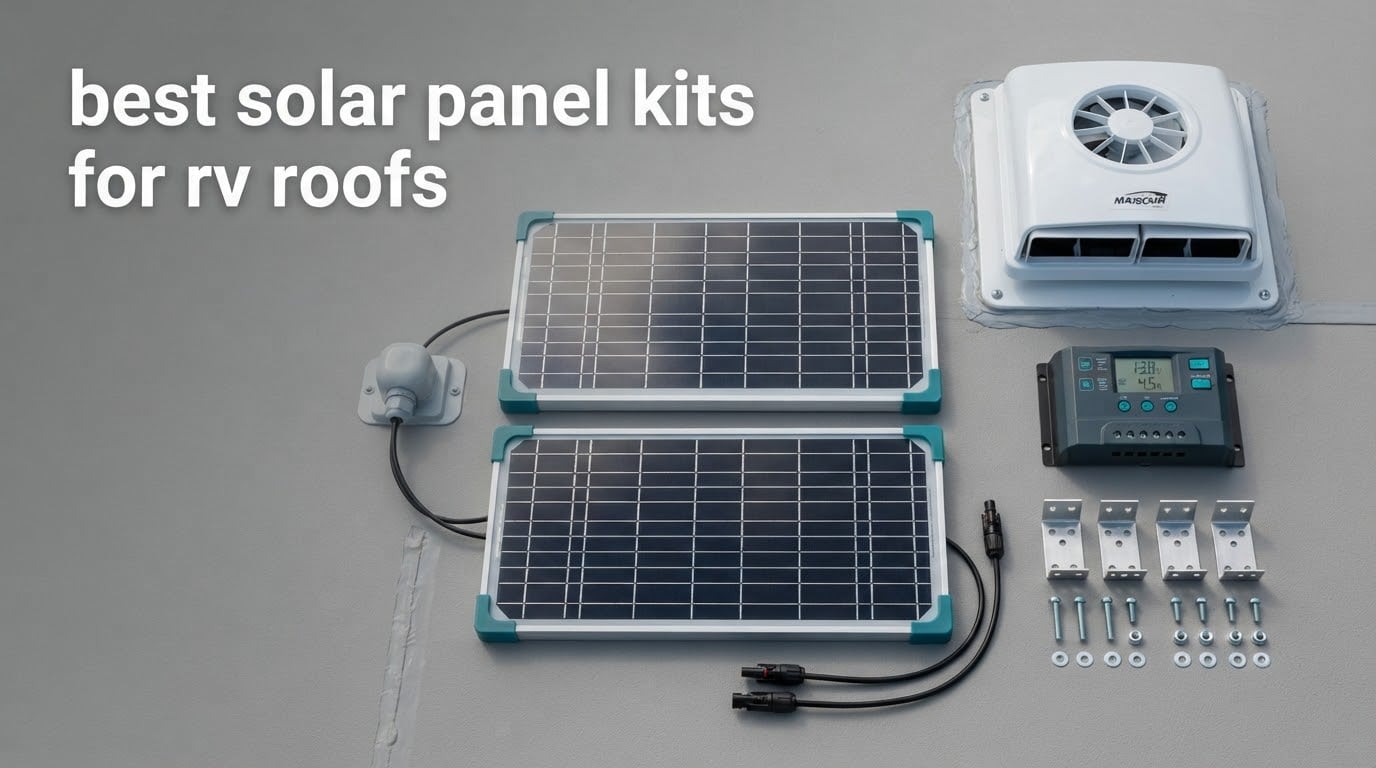
An RV solar panel kit is a pre-matched bundle of rooftop solar panels plus a charge controller and all the wiring you need to get them onto a travel trailer, motorhome or van. The best solar panel kits for RV roofs pair monocrystalline panels with a properly sized MPPT or PWM controller, and nothing else. Battery and inverter are usually extra.
That is exactly where I see first-time owners get caught. They buy a kit expecting a complete off-grid system, then discover on delivery day that there is no battery, no inverter and no mounting hardware for a curved roof. Every kit in this roundup is judged on what is actually in the box, how much it weighs, and how the controller behaves in real roof conditions.
Our team compared eight complete panel and controller bundles across the price bands an RV buyer actually shops in, from a 100W starter set to a 220W pair with an LCD controller. We looked at nameplate output, measured dimensions, kit weight per 100W, controller type, warranty length, and the complaints that show up again and again in owner threads. If you want the short version first, the panel, brackets, cables and matched controller pattern is the one experienced owners recommend most often, and the ExpertPower bundle is the only one here that ships a true MPPT controller.
We also had a look at how these panels behave in the field. If your roof is hard to reach or hard to see, drones built for solar panel inspections are the practical answer to a bent or cracked module you cannot reach from a ladder.
Table of Contents
Top 3 Picks: Best RV Roof Solar Kits in 2026

Renogy 100W 12V Starter Kit
- 22.5% cell efficiency
- 100% EL tested
- 10 year materials warranty
- expandable to 400W
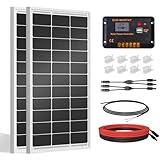
ECO-WORTHY 200W Mono Kit
- 2 x 100W monocrystalline panels
- 30A PWM controller
- 16.4 ft 10 AWG cables
- 800Wh per day
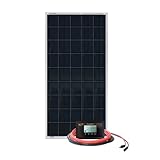
Go Power Overlander 200W Kit
- 200W mono module
- 30A Bluetooth PWM controller
- 2 x 25 ft output cables
- expandable to 600W
Three kits rise above the rest here. The Renogy 100W starter has the largest proven review base in the group and a warranty that outlasts most competitors. The ECO-WORTHY 200W doubles your panel area for a modest step up and is the best value per watt. The Go Power Overlander is the one built specifically for RV and dry camping routing, with 25 foot cables that reach a controller mounted inside the living space.
Quick Overview: All 8 Solar Panel Kits for RV Roofs Compared
| Product | Specifications | Action |
|---|---|---|
| Renogy 100W 12V Starter Kit with 30A PWM Controller |
|
Check Latest Price |
| ECO-WORTHY 200W 12V/24V Monocrystalline Kit |
|
Check Latest Price |
| Go Power Overlander 200W Kit with 30A Bluetooth PWM Controller |
|
Check Latest Price |
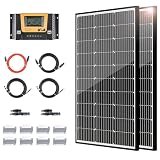 JJN 200W Half-Cut Cell Kit with 30A PWM Controller JJN 200W Half-Cut Cell Kit with 30A PWM Controller |
|
Check Latest Price |
 ExpertPower 200W Kit with 20A MPPT Controller and Display ExpertPower 200W Kit with 20A MPPT Controller and Display |
|
Check Latest Price |
 Renogy 200W 12V Monocrystalline Kit with 30A PWM Controller Renogy 200W 12V Monocrystalline Kit with 30A PWM Controller |
|
Check Latest Price |
 ZOUPW 220W N-Type 16BB Kit with 30A LCD PWM Controller ZOUPW 220W N-Type 16BB Kit with 30A LCD PWM Controller |
|
Check Latest Price |
 DOKIO 200W 2-Pack Kit with Brackets and 5 m Cable DOKIO 200W 2-Pack Kit with Brackets and 5 m Cable |
|
Check Latest Price |
Two things jump out of that table. First, seven of the eight kits include a charge controller and one does not, so treat the DOKIO bundle as panels plus brackets rather than a finished system. Second, panel weight varies far more than wattage does here, from 14.1 pounds for the 100W Renogy to 36 pounds for the 200W JJN pair.
Every kit on this list ships without a battery and without an inverter. That is normal for this product category and it is the single largest surprise for new buyers, so we cover it in the buying guide below.
1. Renogy 100W 12V Starter Kit with 30A PWM Controller
Renogy 100W 12V Solar Panel Starter Kit with 30A PWM Controller
100W monocrystalline panel
30A PWM controller
14.1 pounds
500Wh per day
Expandable to 400W
Pros
- 22.5% cell efficiency with 100% EL testing on every panel
- 10 year materials and workmanship warranty with 25 year power output coverage
- At 14.1 pounds it is the easiest panel here to get onto a roof solo
- Compatible with AGM
- Gel
- Flooded and Lithium batteries
Cons
- Wanderer controller is PWM rather than MPPT so harvest is lower than an MPPT kit
- Reaching past 400W means buying panels that are not included
- Roughly 500Wh per day will not run a compressor fridge overnight
This is the kit that experienced owners name first, and it is the one we kept coming back to while assembling this roundup. With 4,010 ratings averaging 4.7 stars and 93 percent of those ratings at four stars or better, it has more real installation history behind it than anything else in the set. Buyers consistently describe it as the complete, ready-to-install package rather than a pile of parts.
The panel itself is the strongest all-rounder here. Cell efficiency is listed at 22.5 percent, and every panel ships with 100 percent electroluminescence testing to catch hidden cracks before the module ever sees a roof. Owners report an average of about 500Wh per day depending on sunlight, which is roughly what you would expect from 100W through a 12V controller at a few hours of peak sun.
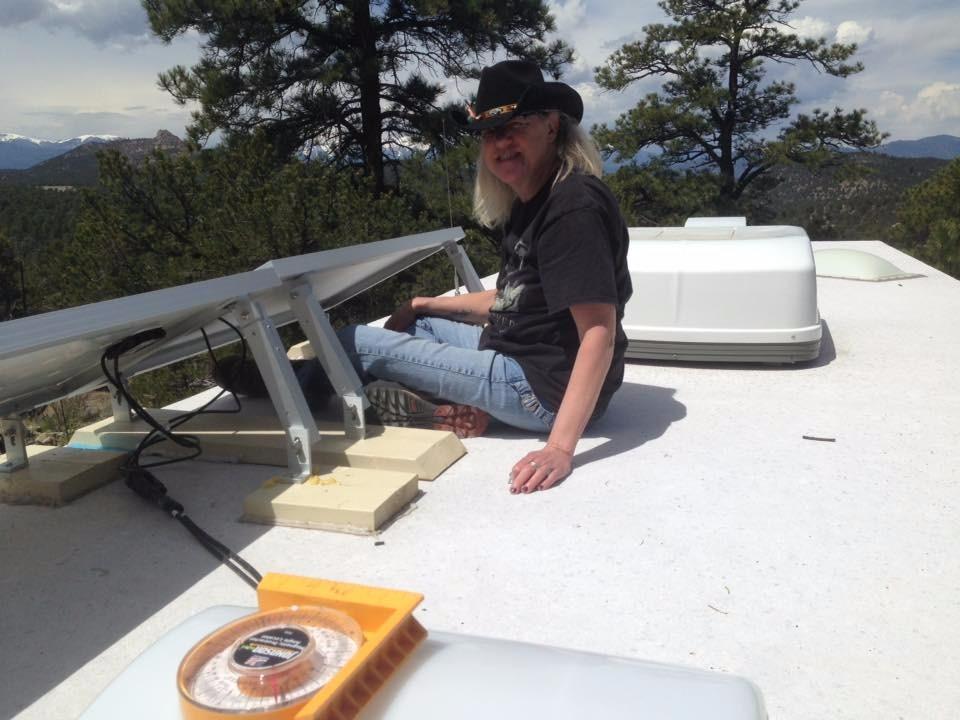
The build details are where this kit separates itself. You get a monocrystalline panel, a Wanderer 30A PWM charge controller, cables and Z-brackets in one box, and the panel frame carries an IP65-rated junction box with IP67-rated solar connectors. It is certified to UL 61730, CSA C22.2#61730 and IEC 61730 and IEC 61215, and it carries 2400Pa wind and 5400Pa snow load ratings, which matters more on a moving vehicle than most buyers realise.
Warranty is the quiet star of this package. You get 10 years on materials and workmanship, 25 years on power output and 2 years on the controller. The controller also has an RS232 port that accepts the optional Bluetooth module for app monitoring through the Renogy DC Home app, so you can add remote visibility later without replacing anything.
What to check before you commit to a 100W kit
Weight is the first thing, and this one wins. At 14.1 pounds with panel dimensions of 43.58 by 22.72 by 2.95 inches, a single person can lift it, position it and drill the Z-bracket mounting holes from a ladder without a second set of hands. On a curved aluminium roof that difference is the whole install.
Output is the second thing. Around 500Wh per day comfortably covers phone charging, laptop work, LED lighting and a water pump. It will keep a 12V compressor fridge running on sunny days, but on a cloudy afternoon you will be back on shore power, and it will never run a rooftop air conditioner. Owners consistently treat this kit as a starting point and add panels later.
Where this kit falls short
The controller is PWM, not MPPT. That means it harvests less energy when temperatures climb or when the panel sits in partial shade, and it is the most common complaint in the reviews. If your roof has a vent stack, an air conditioner or an antenna that throws shade across the panel in late afternoon, that loss shows up directly in your amp-hours.
Expansion is possible but not free. The controller supports systems up to 400W, which means reaching a serious boondocking setup means buying additional panels and possibly a second controller, then reworking the wiring. If you already know you want 400W or more, look at the 200W kits below and start there.
2. ECO-WORTHY 200W 12V/24V Monocrystalline Kit
ECO-WORTHY 200 Watts 12 Volt/24 Volt Solar Panel Kit with High Efficiency Monocrystalline Solar Panel and 30A PWM Charge Controller for RV, Camper, Vehicle, Caravan and Other Off Grid Applications
2 x 100W monocrystalline panels
30A PWM controller
31.6 pounds
800Wh per day
12V or 24V wiring
Pros
- 200W of panel for a modest step up from a 100W starter kit
- Includes two sets of Z-brackets
- 16.4 ft 10 AWG cables
- 2-in-1 connectors and 4.92 ft tray cable
- Works in 12V or 24V configurations
- 2400Pa wind and 5400Pa snow load ratings
Cons
- PWM controller rather than MPPT so charging efficiency trails MPPT kits
- Warranty is only 1 year which is the shortest here
- At 31.6 pounds the two-panel package needs two people on the roof
If you want the most panel you can get without stepping up to a full 400W system, this is the kit to look at. It pairs two 100W monocrystalline panels rated at up to 21.5 percent cell efficiency with a 30A PWM controller, and 1,166 ratings averaging 4.6 stars with 92 percent at four stars or better is a solid foundation of owner feedback.
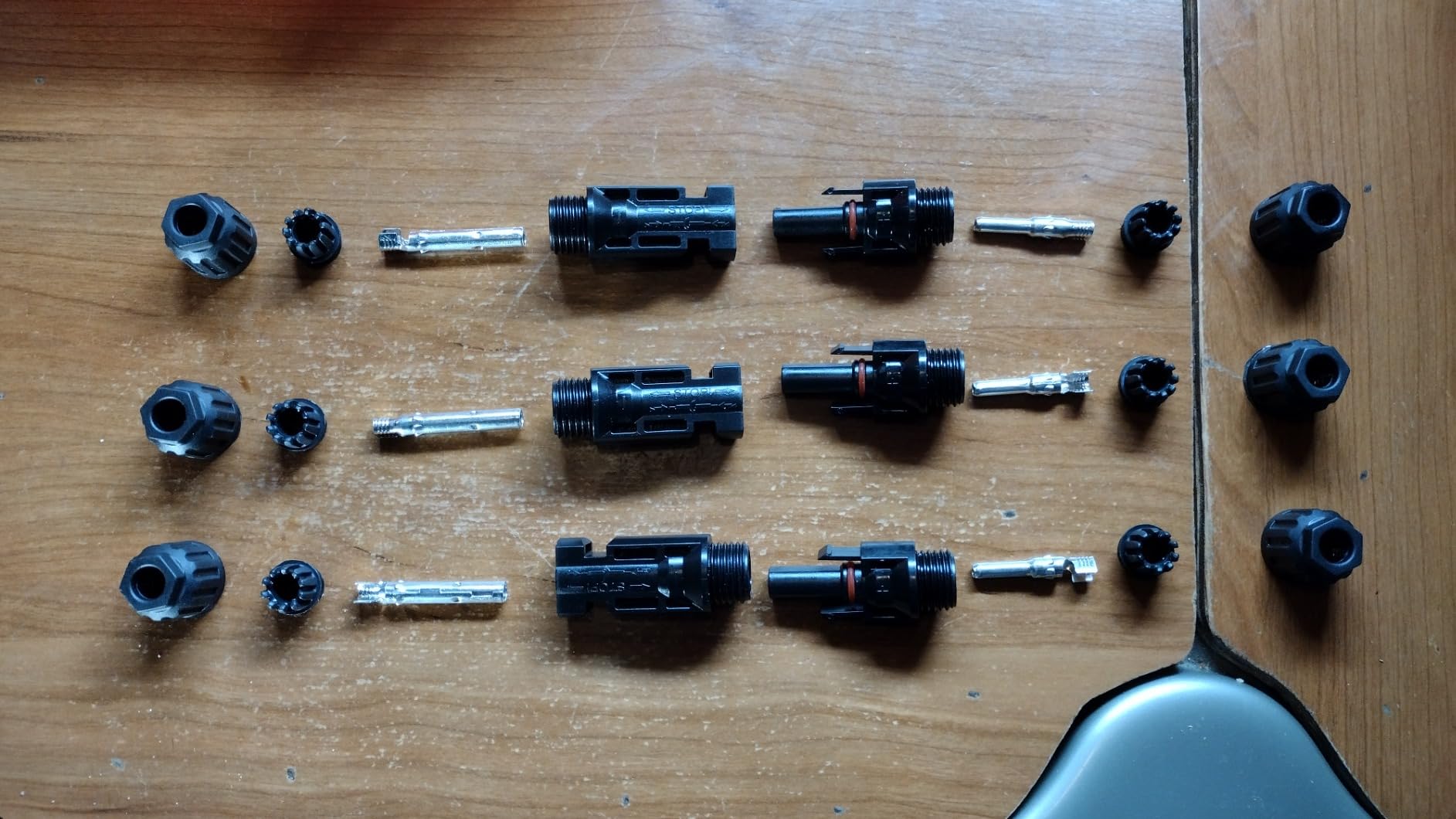
The box is genuinely complete. You get two 100W panels, Z mounting brackets, the 30A controller, a pair of 16.4 foot 10 AWG solar cables with 2-in-1 connectors, and a 4.92 foot tray cable. Plug-and-play pre-drilled mounting holes speed up the roof work considerably compared with kits where you have to locate your own bracket positions.
Output is listed at about 800Wh per day under four hours of full sunshine, which lines up neatly with real boondocking expectations for a two-panel array. The wiring configuration is flexible too, with series for 24V systems and parallel for 12V, so the same kit works whether your bank is 12V or 24V. Maximum voltage is listed at 27.4 volts, which is worth checking against your battery bank’s charge ceiling before you series-wire it.
Physical details are solid for an RV. The panels sit in a corrosion-resistant aluminium alloy frame, the junction box is IP65 rated, and the load ratings again come in at 2400Pa wind and 5400Pa snow. At 35.2 by 23.1 by 1.3 inches per panel, they are compact enough to pair side by side between a roof vent and an air conditioner on a travel trailer.
Why this is the value pick
Two panels for the price of roughly one premium single panel is the core of the appeal, and reviewers repeatedly frame it that way. It is the configuration most experienced full-timers recommend as a starting point because 200W can carry a compressor fridge plus lights and a water pump through a normal day, which 100W cannot reliably do.
Owners on r/SolarDIY report running 400W to 500W arrays on their RVs and truck campers and describe entry-level 200W kits from this bracket as a good first stage. The plan most of them follow is to start at 200W and add a second matching kit in parallel later, which is easier when the panels are identical.
Where this kit falls short
Two items stand out, and both are repeated in the reviews. The controller is PWM rather than MPPT, so you give up some harvest in heat and shade compared with an MPPT kit, and the warranty is one year, which is the shortest in this group and far shorter than the Renogy packages.
The other real issue is weight. At 31.6 pounds for the pair, getting two panels onto a roof is a two-person job, and a curved or high aluminium roof makes it more awkward. If you are installing solo, budget the effort accordingly or look at a lighter option.
3. Go Power Overlander 200W Charging Kit with Bluetooth Controller
Go Power Overlander 200W 12V Solar Panel Charging Kit
200W monocrystalline module
30A Bluetooth PWM controller
2 x 25 ft cables
35 pounds
Expandable to 600W
Pros
- Long 25 ft male and female output cables simplify roof-to-battery routing
- Designed specifically for RV and dry camping use
- 25 year limited solar panel output warranty
- Controller expands to 600W without changing hardware
- Canadian-made construction
Cons
- Heaviest and longest panel here at 35 pounds and 59 inches
- Bluetooth app connection is reported as buggy and needs frequent re-pairing
- Monitoring needs the separate app rather than a built-in display
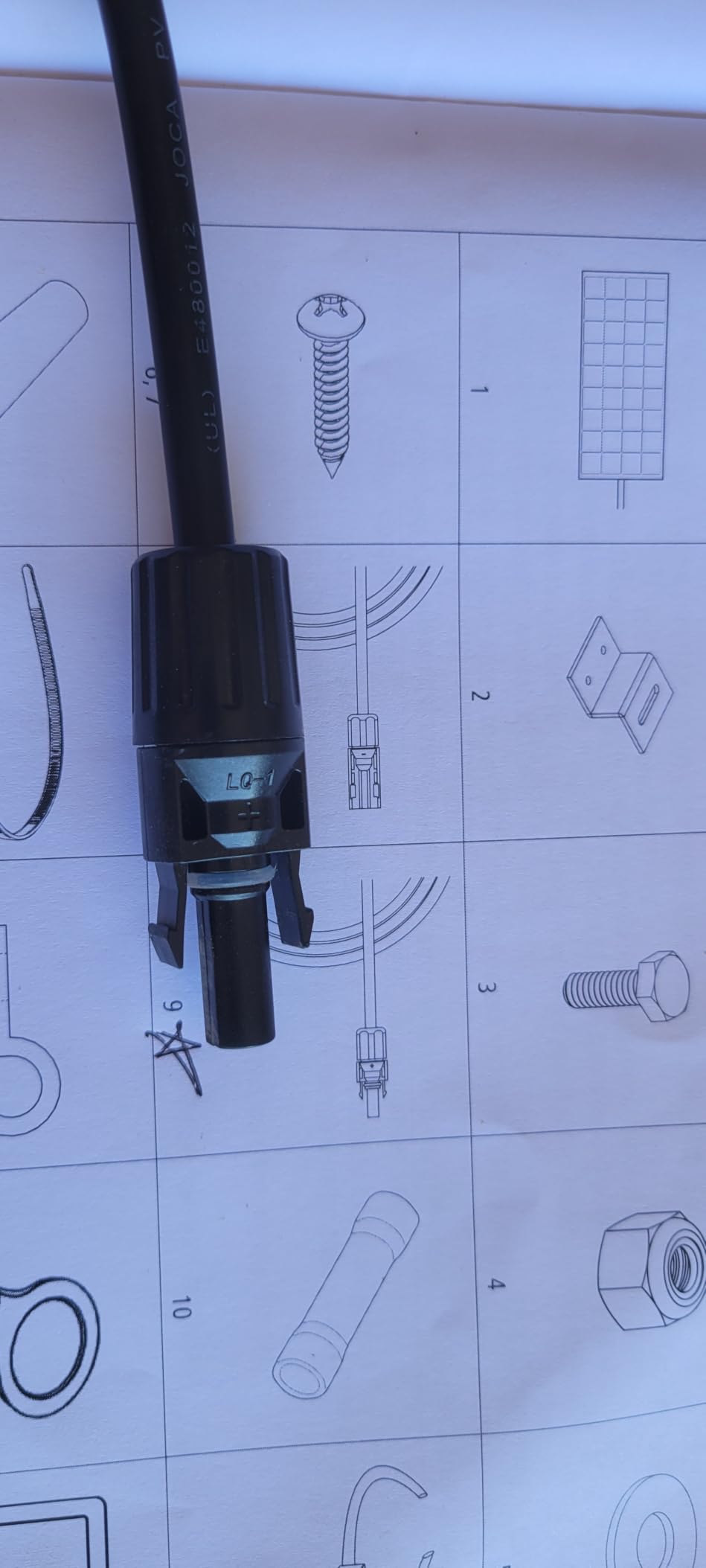
This is the kit that was designed for the job rather than adapted to it. The Go Power Overlander is marketed explicitly for RV and dry camping use, and the specification sheet shows it: two 25 foot solar output cables, one black and one red in number 10 gauge, are in the box rather than a short 10 foot lead you have to extend.
Those long cables matter more than they sound. A controller usually lives inside the trailer or at the front of an under-bed compartment, and 25 feet of number 10 cable gets you there from a rear-mounted panel without buying extra wire or dealing with a second splice. That is a real install-time saving that most kits do not offer.
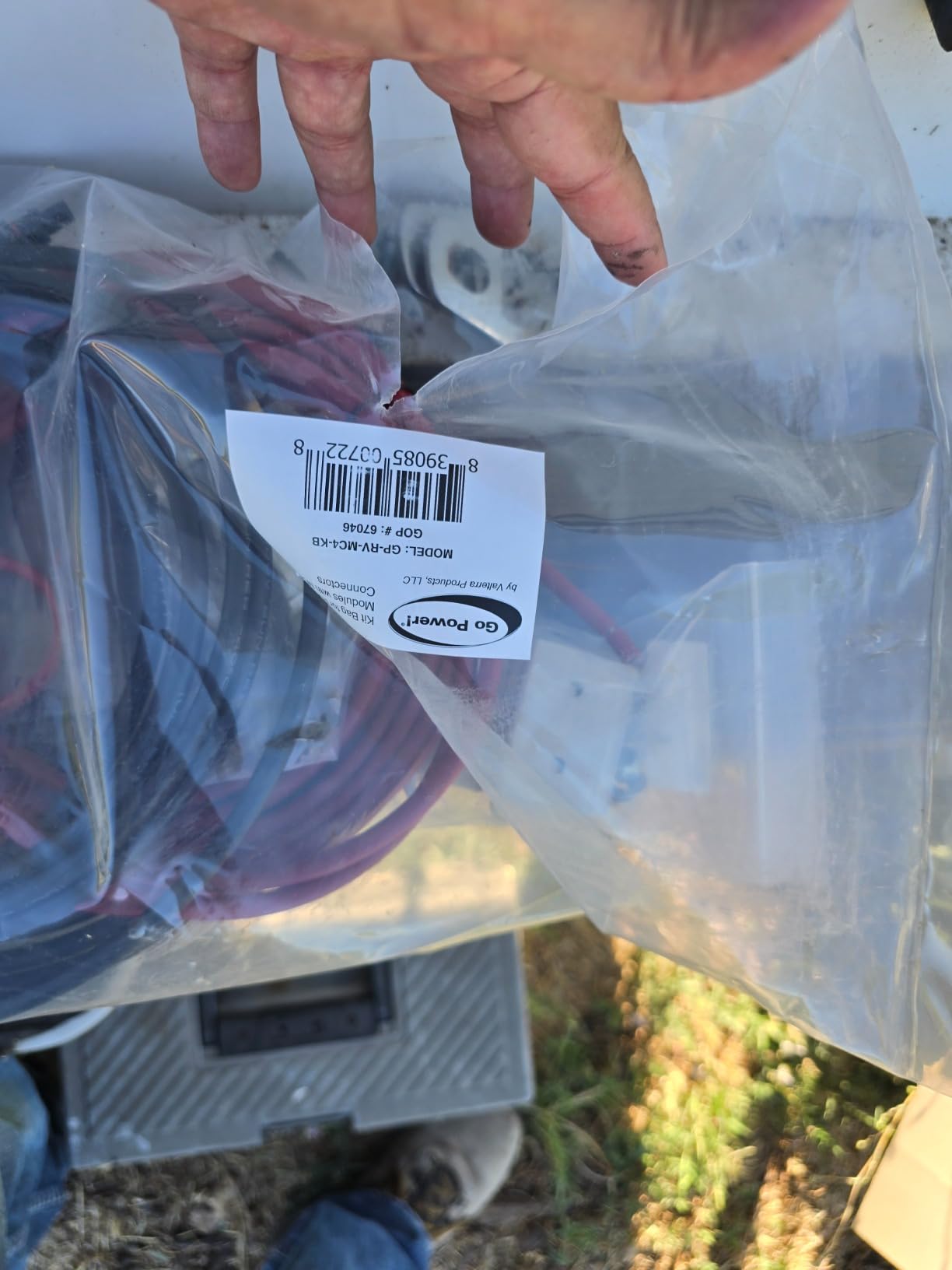
Owners report real-world charge rates in the 8 to 9 amp range in full sun, which is what a 200W module should deliver through a PWM controller. The kit is built around the 200W monocrystalline module and the 30 amp single-bank Bluetooth PWM controller, and the whole system is rated to expand to 600W of solar on the same controller, which is the most headroom in this roundup.
Warranty is strong on the panel, with 25 years of limited output power coverage. The controller is a GP-SB-PWM-30-BT and pairs with the Go Power app for remote charge-state viewing, which is a nice touch if your battery bank sits where you cannot reach it easily.
What makes this the dry-camping choice
The expansion path is the headline. Going from 200W to 600W on the same 30A controller means you can add panels as your camping pattern grows, and each addition is a straightforward parallel run rather than a controller swap. For someone who started with a weekend setup and moved to full-time use, that is the difference between a one-day install and a rebuild.
Keystone Forums veterans, who have seen a lot of permanent roof mounts come and go, recommend a 100W minimum and name Renogy and Zamp as the brands worth looking at for both kits and permanent mounts. That 100W floor is exactly the gap this kit fills comfortably for a single 200W module with a matched 30A controller.
Where this kit falls short
Size and weight are the honest drawbacks. The panel is 59 inches long and 26.3 inches wide, and at 35 pounds it is one of the harder modules to position on a roof alone. If your usable roof area is broken into narrow channels between vents and a rooftop air conditioner, measure before you commit.
The Bluetooth experience is the other weak point. Owners report the app connection being buggy and needing frequent re-pairing, and there is no built-in display on the controller, so if the pairing fails you are checking charge state the old way, with a meter at the battery. The panel itself performs well, so this is a monitoring complaint rather than a charging one.
4. JJN 200W Half-Cut Cell Kit with 30A PWM Controller
JJN 200 Watt Solar Panel Kit 12V Solar Panels with 30A PWM 12V/24V Charge Controller 2 Pair 10BB Solar Panel Cables Connectors Brackets for RV Boats Marine Home Off-Grid System [New Version]
2 x 100W half-cut cell panels
30A PWM controller
up to 22 percent efficiency
36 pounds
25 year output warranty
Pros
- Half-cut cell design lowers panel temperature and reduces shading losses
- Up to 22 percent conversion efficiency on 10BB cells
- 25 year transferable power output warranty
- Complete bundle with brackets
- controller
- wires and two cable pairs
- Controller works with Wet
- Gel
- MF
- EFB and AGM batteries
Cons
- Heaviest kit here at 36 pounds making roof mounting a two-person job
- Uses a PWM rather than MPPT charge controller
- Smallest review base among the higher-rated kits at 110 ratings
Shade is the number one complaint we found in owner threads about RV solar, because every roof has a vent, an air conditioner or an antenna throwing a shadow across the panels at some point in the day. The JJN kit is built specifically around half-cut cell technology, which is the design choice that addresses it. Half-cut cells split the panel into smaller sections so a shaded section does not drag down current across the whole module.
Owners and reviewers credit the same effect twice over, noting that half-cut cells lower panel operating temperature and reduce the output penalty from partial shading. On an RV roof where obstructions are unavoidable, that is a more useful feature than a slightly higher headline efficiency number.
![JJN 200 Watt Solar Panel Kit 12V Solar Panels with 30A PWM 12V/24V Charge Controller 2 Pair 10BB Solar Panel Cables Connectors Brackets for RV Boats Marine Home Off-Grid System [New Version] customer photo 1](https://mydroneauthority.com/wp-content/uploads/2026/09/B0B8HY2HCJ_customer_1.jpg)
The panels use a 10BB monocrystalline silicon design with up to 22 percent conversion efficiency, mounted in tempered glass with an aluminium frame. The 30A controller handles both 12V and 24V systems and is compatible with Wet, Gel, MF, EFB and AGM batteries, so it works with virtually any bank you already own.
The wiring package is complete, with two pairs of 10BB solar panel cables and connectors plus Z mounting brackets with pre-drilled holes. Output power coverage is backed by a 25 year transferable warranty, which is a genuine advantage if you ever sell the trailer, since the coverage moves with the panel.
![JJN 200 Watt Solar Panel Kit 12V Solar Panels with 30A PWM 12V/24V Charge Controller 2 Pair 10BB Solar Panel Cables Connectors Brackets for RV Boats Marine Home Off-Grid System [New Version] customer photo 2](https://mydroneauthority.com/wp-content/uploads/2026/09/B0B8HY2HCJ_customer_2.jpg)
Why half-cut cells matter on a real RV roof
Roof layouts force compromises. A 200W array often has to straddle a vent or sit at an angle around a rooftop air unit, and a conventional full-cell panel in partial shade can lose a large share of its current. Half-cut construction with bypass diodes is the same mitigation used on commercial rooftop arrays, and it costs nothing extra here.
Forum discussions on r/SolarDIY about component matching make the point that many underperforming RV systems are not faulty, they are simply wired and placed badly. Buying shade-tolerant cells is a partial fix, but wiring matters just as much, and we cover the series versus parallel decision in the buying guide.
Where this kit falls short
At 36 pounds this is the heaviest package in the roundup, and with panel dimensions of 41 by 23 by 1.5 inches for a two-panel set, the lift onto a curved roof is a genuine two-person task. Anyone installing alone should factor in a roof ladder, a lift or a second set of hands.
Trust is the other consideration. With 110 ratings at a 4.5 average, 88 percent at four stars or better, the feedback is positive but the sample is thin compared with the thousands of ratings behind the Renogy kits. Long-term field history is simply less documented, and the controller is PWM rather than MPPT, so heat and shade still cost you some harvest.
5. ExpertPower 200W Kit with 20A MPPT Controller and Display
ExpertPower 200W 12V Solar Power Kit | 200W Mono Rigid Solar Panels, 20A MPPT Solar Charge Controller | RV, Trailer, Camper, Marine, Off Grid, Solar Projects
2 x 100W monocrystalline panels
20A MPPT with Bluetooth and display
Auto 12V and 24V detect
10 ft 12AWG MC4 cables
Pros
- The only MPPT charge controller in this roundup
- Controller auto-detects 12V and 24V systems for faster setup
- Built-in display shows state of charge and battery health
- Bluetooth connectivity for remote monitoring
- Full mounting hardware and wiring included in the box
Cons
- Smallest review base here at 54 ratings so long-term history is thin
- 20A controller gives less headroom for adding panels later
- Panel weight is not listed in the specification data so check the physical panel
This is the only kit in the group that ships a genuine MPPT charge controller, and that single fact changes the arithmetic. The manufacturer claims 20 percent or more additional power generation over PWM through maximum power point tracking, and the reason is straightforward: an MPPT controller holds the panel at its optimal operating point and converts the extra voltage above battery level into usable current instead of wasting it as heat.
That gain is largest in the exact conditions an RV roof creates. On a hot day, a panel’s output voltage drops, and PWM gives up more of the shortfall than MPPT does. In partial shade, an MPPT controller also recovers more of the current than a PWM unit. If your roof is shaded by a vent or an antenna, this is the kit that gives you the most from the same 200W of glass.
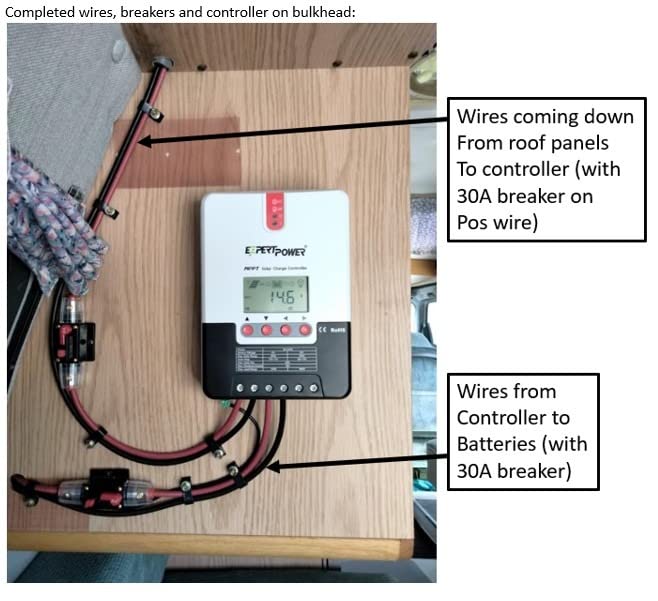
The controller is unusually thoughtful for a kit at this level. It auto-detects whether your bank is 12V or 24V, which removes the most common setup mistake, and the built-in display screen shows state of charge and battery health so you are not relying entirely on the battery monitor. Bluetooth connectivity is included for remote monitoring without buying an add-on module.
Everything else in the box is standard but complete: two 100W monocrystalline rigid panels, two sets of mounting brackets, a pair of 10 foot 12AWG MC4 solar cables and a pair of 6 foot 12AWG battery cables. Charging profiles are temperature-compensated, with over-charge, over-discharge, overload and short circuit protection built in.
What the MPPT controller changes on a real roof
Think of it as a percentage discount on your roof space. If a 200W array only delivers the output it should because the controller is giving away voltage, the fix is not more panels, it is a better controller. For buyers with a tight roof and shade obstructions, that is usually a better return than upgrading wattage.
It also simplifies mixed battery installs. Owners frequently keep a mixed bank, for example an existing lead-acid battery plus a newer LiFePO4 unit, and the temperature-compensated charging profiles here are designed to behave more sensibly across that mix. The state of charge and battery health readout on the display is the part you will use most.
Where this kit falls short
The 20A controller is the main limitation. It is sized to the 200W of panels in the box but leaves less headroom than a 30A unit if you want to add a second pair of panels later, so plan the array size before you commit to this one.
Documentation is thin as well, with 54 ratings at a 4.6 average. That is the smallest review base in the roundup, though 94 percent of those ratings sit at four stars or better, and few negative remarks are recorded at all. Panel weight is not listed in the specification data, so check the physical module before planning a solo roof install.
6. Renogy 200W 12V Monocrystalline Kit with 30A PWM Controller
Renogy 200W 12V Monocrystalline Solar Panel Kit + 30A PWM Charge Controller
2 x 100W monocrystalline panels
30A PWM controller with 4 stage charging
22 percent efficiency
Expandable to 400W
Pros
- Produces about 1000Wh per day in five hours of direct sunlight
- 4 stage bulk
- boost
- float and equalisation charging
- Bypass diodes improve low-light performance and multi-layered lamination protects cells
- Compatible with Sealed
- Gel
- Flooded and Lithium batteries
- Cables
- Z-brackets and pre-drilled holes included
Cons
- PWM controller is less efficient than MPPT alternatives especially in heat or partial shade
- Listed item dimensions and weight in the listing do not match the physical panel
- Buyers must rely on the panel's own sizing for roof clearance
This is the 200W kit that most buyers end up with, and 1,542 ratings averaging 4.6 stars with 91 percent at four stars or better is a very large sample of real roof installs. On r/GoRVing, when veterans ask for a best all-encompassing solar kit at 400W or more, Renogy is the name that comes back as the default answer more often than any other.
The headline figure is roughly 1,000Wh per day based on five hours of direct sunlight, which is the number most owners quote and it lines up with what two 100W panels should deliver in good conditions. Cell efficiency is listed at 22 percent, and the panels use bypass diodes for better low-light behaviour along with a multi-layered sheet lamination that protects the cells from physical damage.
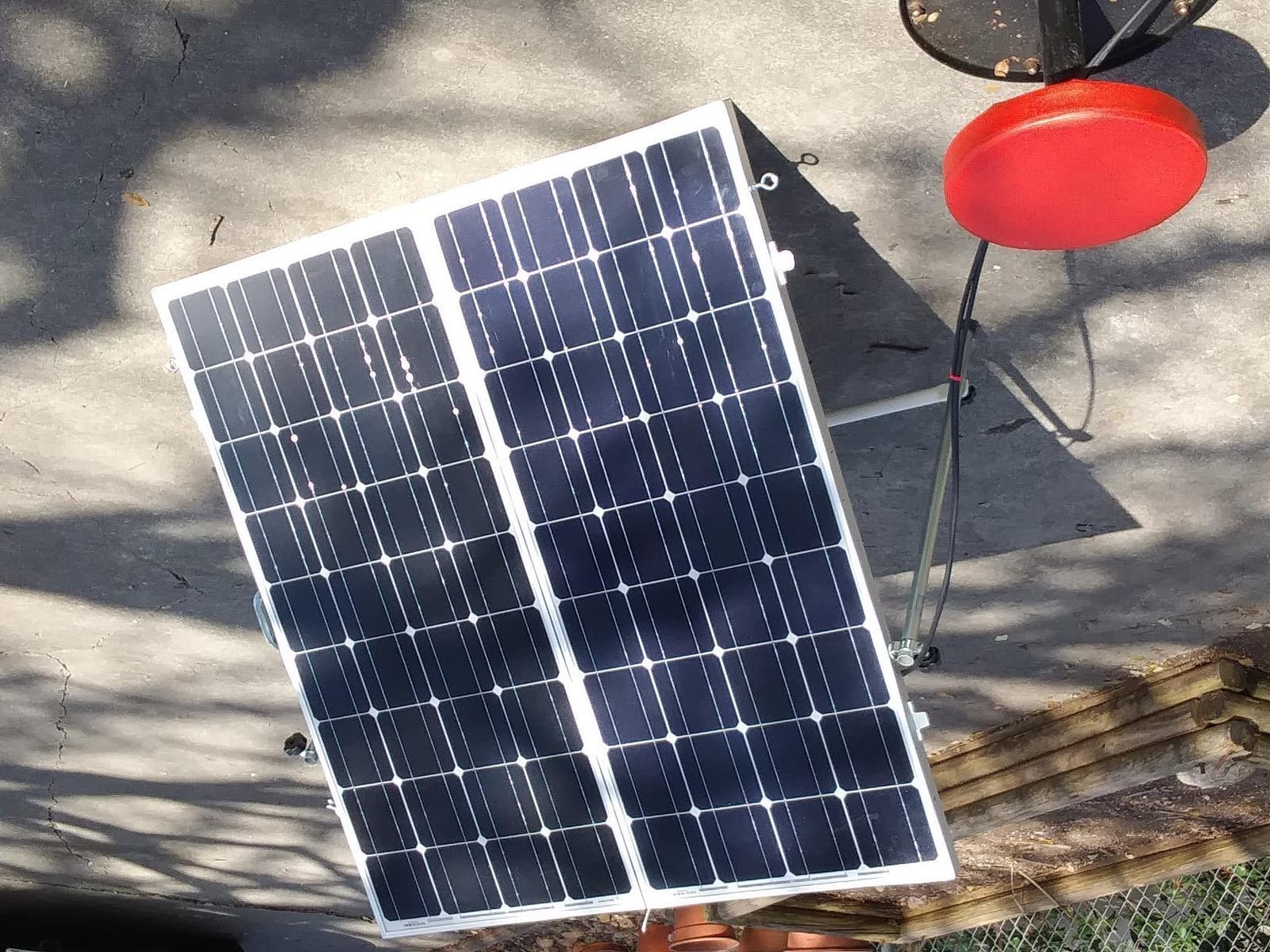
Charging is handled in four stages, bulk, boost, float and equalisation, which brings the battery up to a full charge rather than tapering off early. The controller adds reverse polarity, overcharging, overload and short circuit protection, and it works with Sealed, Gel, Flooded and Lithium batteries. A TPT back sheet dissipates excess heat, which matters on a roof in full sun.
The kit includes cables, Z-brackets and pre-drilled frame mounting holes, and the 30A controller expands to 400W, so the natural upgrade path is a second identical kit rather than a new controller. That redundancy is something a number of owners value, since a single failure in a large array can take the whole system down.
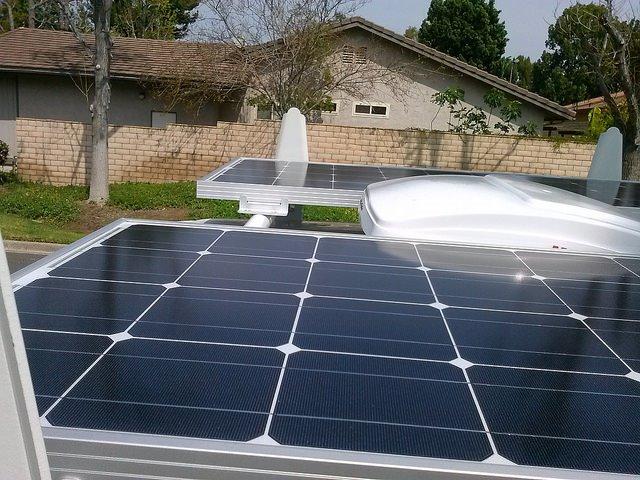
What 200W actually covers on a weekend trip
This is the array size most full-time RVer conversations settle on. It runs a 12V compressor fridge, LED lighting, a water pump, phone and laptop charging and small appliances comfortably on a normal sunny day. What it will not do is run a rooftop air conditioner for hours, which is a 1,000W to 1,500W load that no roof-mounted array covers well.
The upgrade path is the quiet strength. At 400W expansion on the included controller, owners can add a second matching 200W kit in parallel later and roughly double the array without touching the existing wiring run or the controller location. That is cheaper and less work than starting over.
Where this kit falls short
The PWM controller is the most common mild criticism in the reviews, and it is a fair one. In high heat or partial shade, an MPPT controller like the ExpertPower unit harvests more from the same 200W of panels. If shade is your main worry, weigh that against the warranty and support you gain here.
One more practical caution. The listed item dimensions of 6.45 by 4.31 by 1.76 inches and the listed weight of 0.27 g do not describe the physical panel, so the listing data cannot be trusted for roof clearance. Measure or confirm the real panel size before you plan the layout, especially around a vent or a rooftop air conditioner.
7. ZOUPW 220W N-Type 16BB Kit with 30A LCD PWM Controller
ZOUPW 220 Watt Solar Panel Kit for 12V/24V Battery, 2Pcs 110W 25% High-Efficiency Monocrystalline PV Module Power Charger with 30A LCD PWM Charge Controller for Off-Grid RV Marine Boat Rooftop
2 x 110W N-Type 16BB panels
25.6 percent efficiency
30A LCD PWM controller
IP68
26.9 pounds
Pros
- Highest stated cell efficiency in the group at 25.6 percent using N-Type 16BB cells
- Compact 38.2 by 22.7 inch panels fit Class B camper van roofs
- Controller includes an LCD monitor and dual USB output ports
- IP68 waterproofing with a corrosion-resistant aluminium frame
- Up to 1.1kWh daily generation at five hours of full sun
Cons
- Lowest rating in the roundup at 4.3 stars with 12 percent of reviews at 3 stars or below
- PWM controller rather than MPPT so harvest drops in hot or partly shaded conditions
- Only a 2 year warranty on the controller
If your roof is small, this is the kit designed for it. Each panel measures 38.2 by 22.7 by 1.2 inches, which is the most compact footprint in the roundup, and the pair delivers 220W in total. That is more power per square foot of roof than any 200W kit here, which matters on a Class B van conversion or a truck camper with a short high roof.
The cell technology is the most advanced on this list. It uses N-Type 16BB monocrystalline cells rated at up to 25.6 percent efficiency, and the N-type structure resists light-induced degradation, which is the slow fade that eats conventional panel output over a decade of hard use.
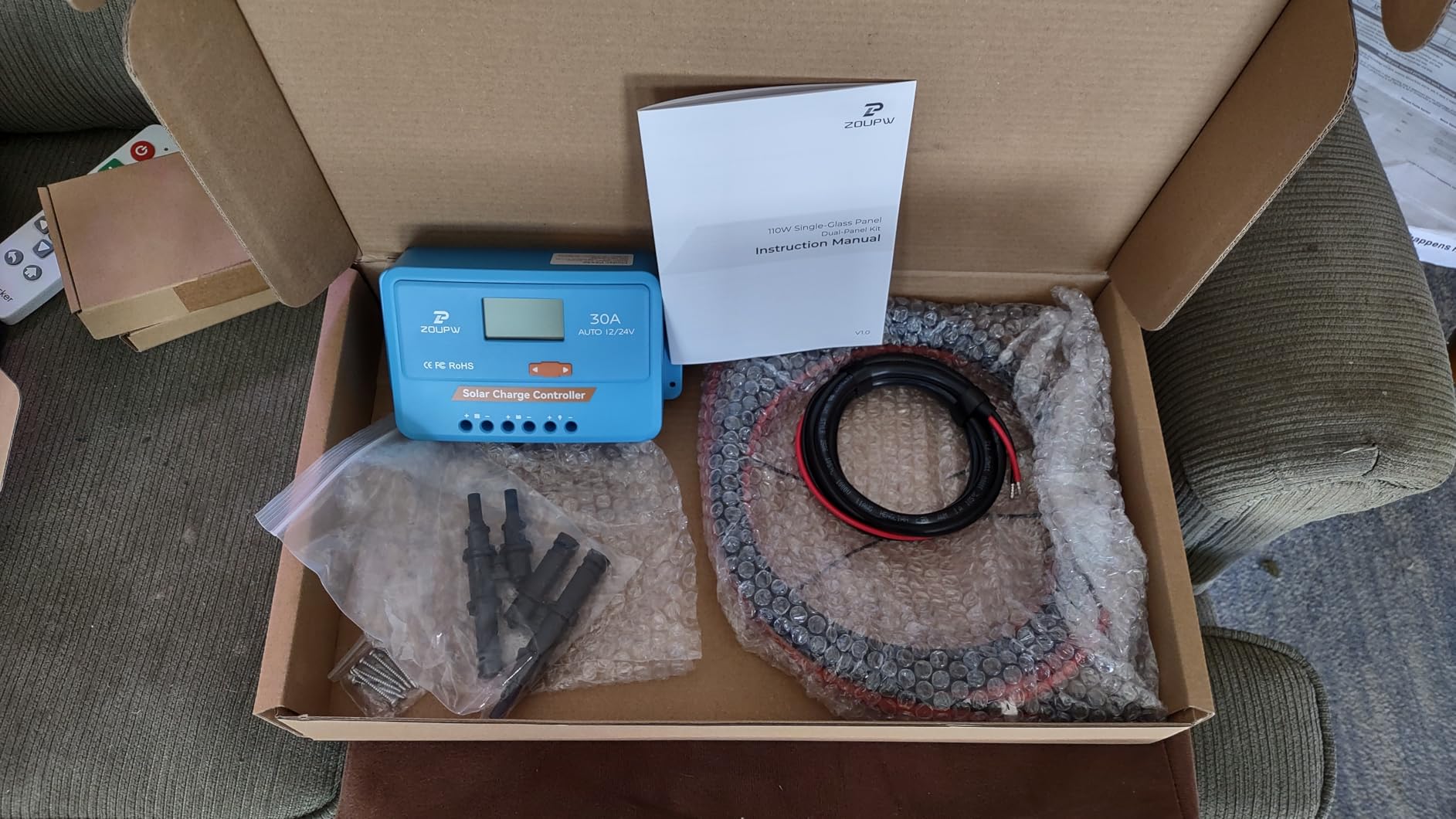
The 30A controller is the most featured one in the group, with an LCD monitor for at-a-glance charge status and dual USB output ports you can use to charge phones directly. It auto-senses 12V or 24V systems and runs a three-stage charging profile, and the controller supports up to 400W of input, so the kit can double later.
Environmental ratings are the strongest here. The panels are IP68 waterproof in a corrosion-resistant aluminium frame, and the specification lists a low temperature coefficient for stable output in hot climates, with up to 1.1kWh of daily generation at five hours of full sunlight. Bypass diodes handle partial shade, and the box includes Y-connectors, Z mounting brackets, a 16.4 foot 11AWG PV cable and a 4.9 foot O-ring cable.
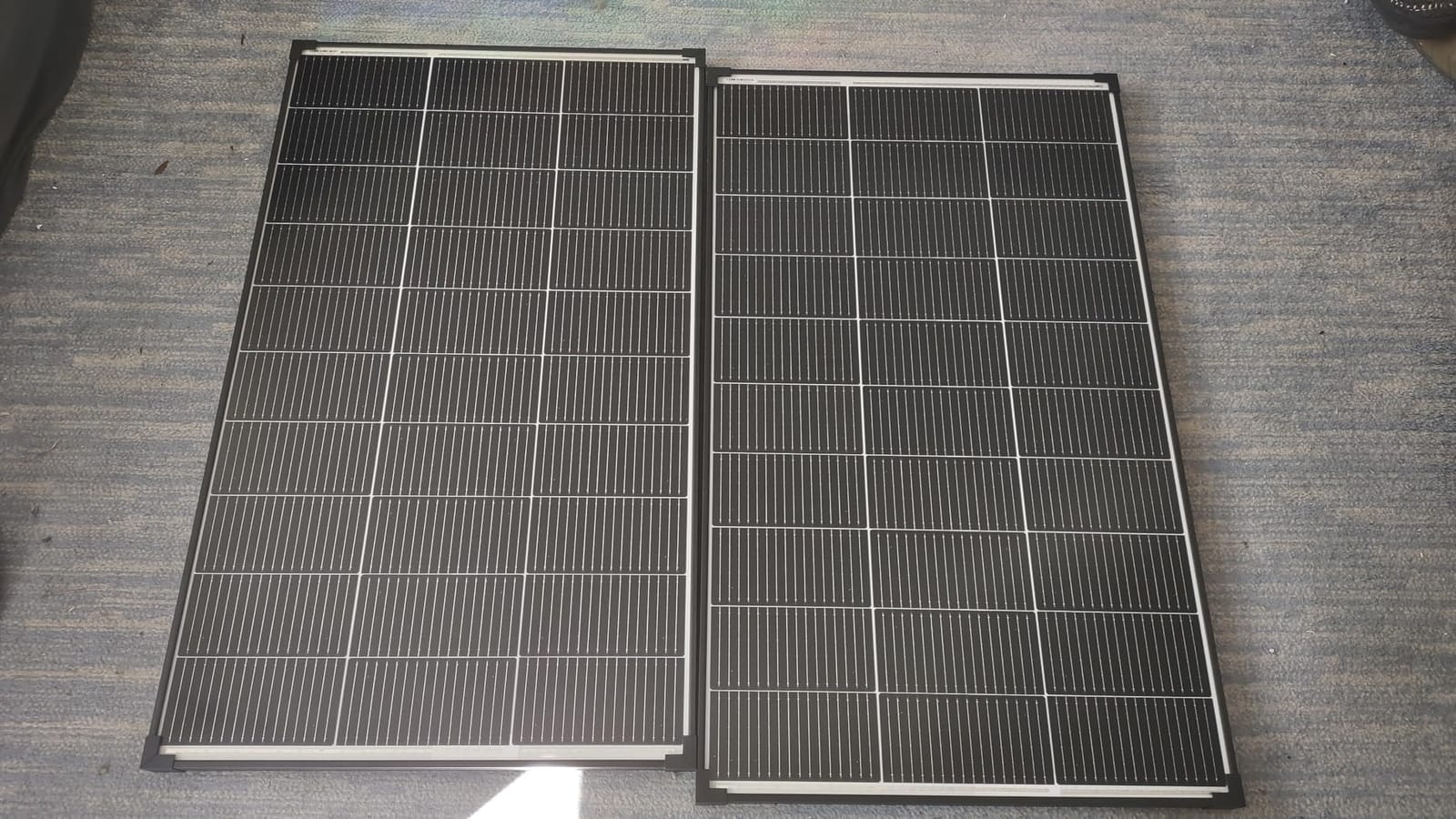
Why efficiency per square foot is the story here
On a small van roof, area is the binding constraint, not watts. At 26.9 pounds for the pair this is also one of the lighter two-panel kits here, and combined with the compact footprint it is the easiest 200W-plus array we found for a constrained roof. The 11AWG cabling is thinner than the 10AWG in most kits, so plan the run length carefully to avoid voltage drop.
The N-type cells also age well. Light-induced degradation is the reason some panels lose a noticeable share of output after a decade, and resisting it means more usable wattage in year ten, which is when most RV solar systems are still running.
Where this kit falls short
Owner feedback is the weakest in the roundup, with a 4.3 average across 78 ratings and 12 percent of reviews at three stars or below. That pattern usually points to inconsistency in real-world output or finish rather than a systematic fault, and reviewers who measured output often reported it at or near expectations, so testing the panel before you mount it is worthwhile.
The controller is PWM, not MPPT, which means hot and partly shaded conditions cost you more harvest here than they would with an MPPT unit despite the better cells. The controller warranty is also only 2 years, against 10 years on the panels, so treat the controller as the part most likely to need replacing.
8. DOKIO 200W 2-Pack Kit with Brackets and 5 m Cable
DOKIO 200W Solar Panel Kit, 2-Pack of 100W, Brackets and 5 m Cable
2 x 100W monocrystalline panels
24 pounds
NO charge controller included
5 m MC4 and 3 m clip cable
Z-brackets included
Pros
- Lowest cost per watt in the roundup for 200W of panels
- Half-cell layout with bypass diodes reduces shading loss and overheating
- 5 m MC4 cable plus 3 m alligator clip lead let the controller and battery stay shaded
- Pre-drilled holes and included Z-brackets support roof
- tilt or pole mounting
- 24 pounds is light for a 200W pair
Cons
- No charge controller included so a PWM or MPPT unit must be bought separately
- Highest one-star share of any kit here at 12 percent
- Some buyers report receiving a single larger panel rather than the advertised 2 x 100W
- Several reviews cite listing inaccuracies and an unresponsive seller
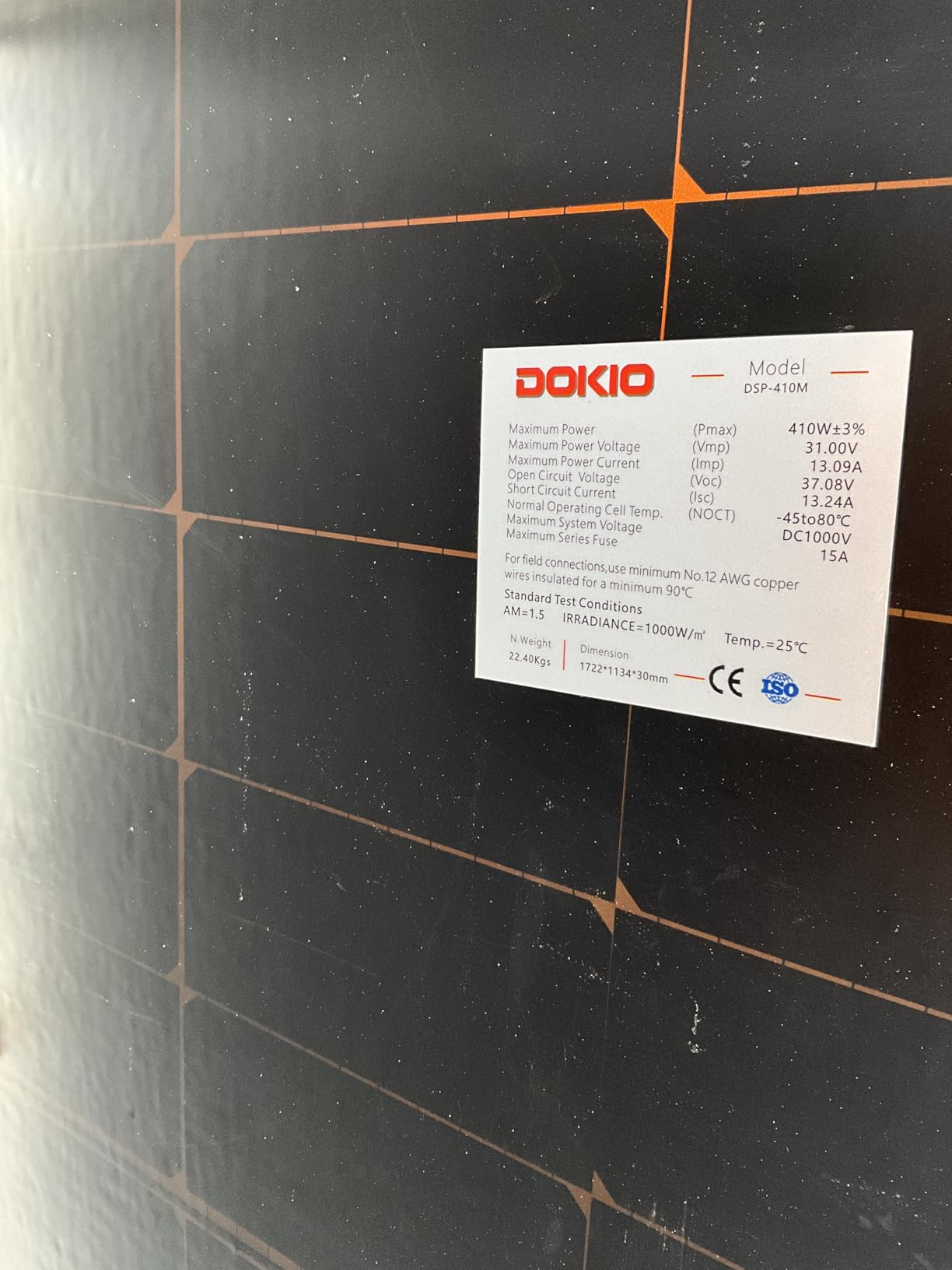
This bundle gives you 200W of monocrystalline panel at the lowest cost per watt of anything in the roundup, and at 24 pounds for the pair it is also one of the lighter options. Panels measure 38.2 by 22.2 by 0.98 inches, sit in tempered glass with an aluminium frame, and use waterproof MC4 connectors.
The half-cell construction with bypass diodes is the same shade-tolerant approach the JJN kit uses, and owners credit it with reducing shading loss and overheating. The cabling is unusually generous, with a 5 meter MC4 cable and a 3 meter alligator clip lead, so the controller and battery can both sit in the shade while the panels sit in the sun. Z-brackets with pre-drilled holes support roof, tilt or pole mounting.
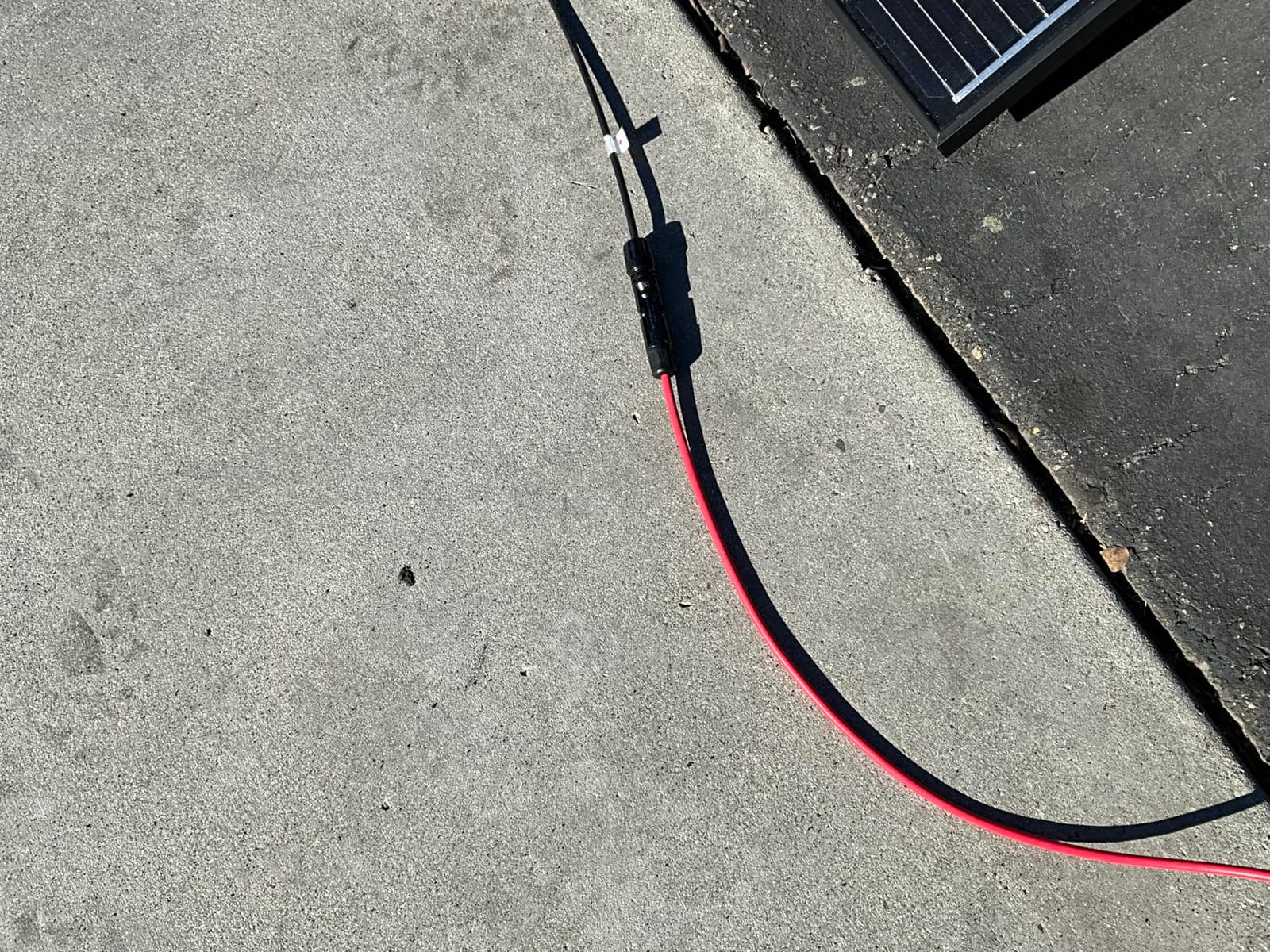
There is one thing this kit does not include, and it is the thing that matters most. No charge controller ships in the box. You have to buy a PWM or MPPT unit separately, and if you want app monitoring you will need one with Bluetooth rather than the cheapest option. Budget for that before you compare the total against the other kits here.
Buyer feedback is sharply split. With 457 ratings at a 4.0 average, 62 percent sit at five stars and 13 percent at four, but 12 percent are one-star, the highest one-star share in the group. Buyers who measured output often report it at or above nominal peak when the panel is properly angled, which suggests the panels themselves perform.
What you gain and what you take on
The gain is straightforward. Two 100W panels with brackets, pre-drilled holes and long cables for very little money per watt, in a footprint small enough for a van roof. If you already own an MPPT controller, or you are comfortable wiring one in, this is a sensible way to fill a roof with affordable glass.
Several reviews also report shipping and listing problems, including some buyers receiving a single larger panel rather than the advertised pair of 100W panels, and complaints about listing inaccuracies and an unresponsive seller on listing questions. The manufacturer ships with foam corners and reinforced cartons for damage protection, but the configuration question is worth resolving with the seller before you commit.
Where this kit falls short
No controller is the defining limitation, and it changes the economics. Once you add a 20A or 30A MPPT unit, the total cost lands close to the complete kits on this list, and you have done the component matching yourself. That is the trade: cheaper panels, more work and more decision-making.
The rating spread is the other caution. A 4.0 average with 21 percent of ratings at three stars or below is a wider spread than any other kit here, so expect variability in finish and possibly in output. We would pair it with a proper MPPT controller and test each panel with a meter before mounting.
How Much Solar Do You Need on an RV Roof?
Start with a load audit rather than a wattage number. Write down what you actually run while boondocking and how long it runs. Most RV solar sizing debates collapse once you separate the compressor fridge and lighting, which a modest array handles, from the air conditioner and microwave, which no roof array handles well.
Once you have your daily watt-hour figure, use this formula: panel watts x peak sun hours x 0.85. The 0.85 factor accounts for real-world losses from heat, dust, wiring and angle. A 200W array through five peak sun hours with that derate gives roughly 850Wh per day before you subtract controller and cable losses.
Typical loads on an RV break down roughly like this. LED interior and exterior lighting runs 15 to 20W. A 12V compressor fridge cycles at 60 to 100W, averaging far less over a day. A water pump draws 50 to 70W in short bursts. Ladders and monitors add 45 to 90W while you work. A rooftop air conditioner runs 1,000 to 1,500W while it is on, which is why it does not belong in an off-grid solar budget.
Is 400W enough for an RV? For full-time boondocking with a fridge, lighting, a water pump and a laptop, yes, and it is the figure most experienced owners land on. Forum threads on r/SolarDIY regularly describe 400W to 500W arrays on RVs and truck campers as a comfortable setup, and a 460Ah lithium bank is the storage that typically gets paired with it.
How much solar does it take to run a 12V fridge? A 100W array will keep a small compressor fridge running on sunny days, but it will not replace shore power in the afternoon. Two 100W panels, so a 200W kit, is the practical floor for anyone who wants the fridge to be a non-event rather than a daily concern. Below 200W you are topping up, not powering.
One more sizing note that owners mention constantly: dirty panels lose 15 to 25 percent, and winter generation can fall 40 to 60 percent depending on where you camp. If you are heading north for shoulder season, size for the worst stretch rather than the best week of the year.
RV Solar Kit Buying Guide: Roof Weight, Shade and Controller Type
Roof weight and load rating come first
Weight is the loudest concern in every owner thread we read, and it is a fair one. Residential-spec panels in the 40 pound-plus range for around 300W are simply too heavy for many trailers, and plenty of owners are hunting for lighter alternatives at exactly that wattage. The kits on this list range from 14.1 pounds for a single 100W panel to 36 pounds for a 200W pair, which is a meaningful spread.
Check the dynamic or FC load rating on your trailer before you buy, not just the static weight of the panels. The number that matters is what the roof is rated to carry while the rig is moving, with wind and road vibration included. Mounting hardware adds weight too, and an aluminium or fiberglass roof has a different tolerance than a steel-framed one.
Rigid versus flexible panels for RV roofs
Rigid glass panels, which is everything in this roundup, are more efficient per square foot, last longer and run cooler under sun. Flexible ETFE-laminate panels are lighter and thinner, which helps on a curved or weight-limited roof, but they cost more per watt and degrade faster, and they are not walkable. On a roof you climb for the A/C unit, rigid panels are the better choice.
Whatever you choose, the cell type matters more than brand. Monocrystalline and N-type cells produce more from the same area than polycrystalline or thin film, and half-cut cell designs handle partial shade far better than full-cell panels. In a category where every roof has obstructions, that shade behaviour is worth more than a small efficiency gain.
Series versus parallel wiring, and why shade ruins arrays
This is the least understood decision in RV solar and it causes most underperformance. In a series string, current flows through every panel, so one shaded panel drags down the whole string. In parallel, each panel works independently, so shading one panel only costs you that panel’s share.
On an RV roof with vents, air conditioners and antennas, parallel wiring is the safer default. Several kits here support both, and the ECO-WORTHY kit can be wired in series for 24V or parallel for 12V. The JJN, ZOUPW and DOKIO kits use half-cut cells with bypass diodes specifically to limit the damage a shadow does to the rest of the module.
Check open-circuit voltage before you series-wire anything. The ECO-WORTHY panels are listed at 27.4 volts maximum, and two in series on a 12V bank can exceed the charge ceiling of some controllers. If you are unsure, wire in parallel and size the controller for the current instead.
MPPT versus PWM, and why it changes your numbers
A PWM controller simply chops the panel output down to battery voltage, so everything above that threshold is lost. An MPPT controller tracks the panel’s optimal operating point and converts the surplus voltage into extra current, which manufacturers typically put at 20 percent or more additional power generation compared with PWM.
That gain shows up most in heat and shade, which is to say in the conditions an RV roof lives in. Six of the eight kits here ship a PWM controller because it is cheaper, and for a 100W starter kit on a small trailer the difference rarely justifies the extra spend. For a 200W array on a shaded roof, the ExpertPower MPPT kit is the reason we would pay more.
Give any controller 25 to 30 percent headroom over your panel wattage, and treat Bluetooth app monitoring as a genuine selection criterion rather than a gimmick. Being able to see state of charge and battery health without crawling into a storage compartment saves real time, and the Renogy 100W kit, the Go Power Overlander and the ExpertPower kit all support it. If you also want a portable fallback for phones and laptops away from the rig, our picks for the best solar power banks cover that side of the setup.
What is not in the box, and how the roof is mounted
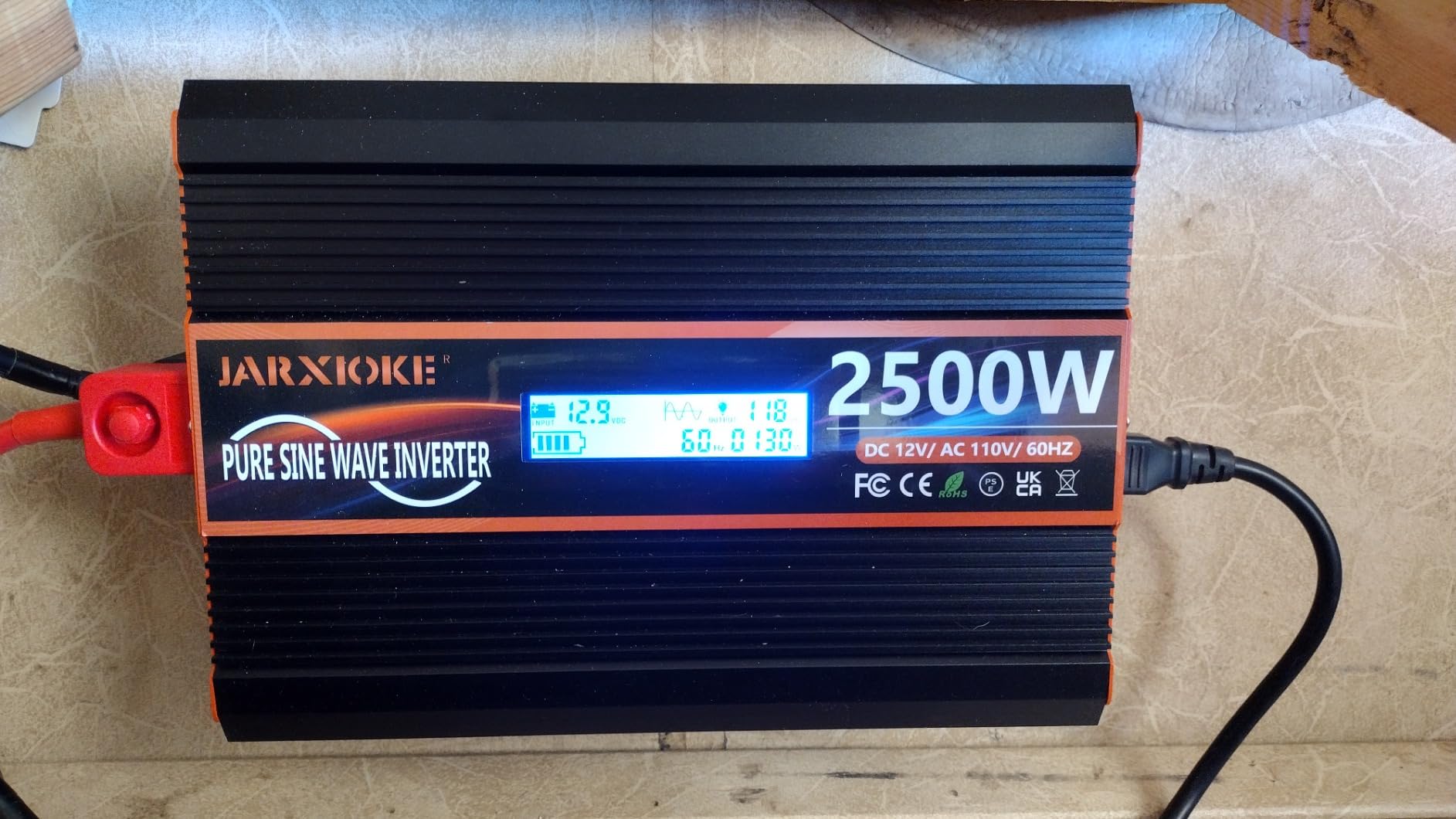
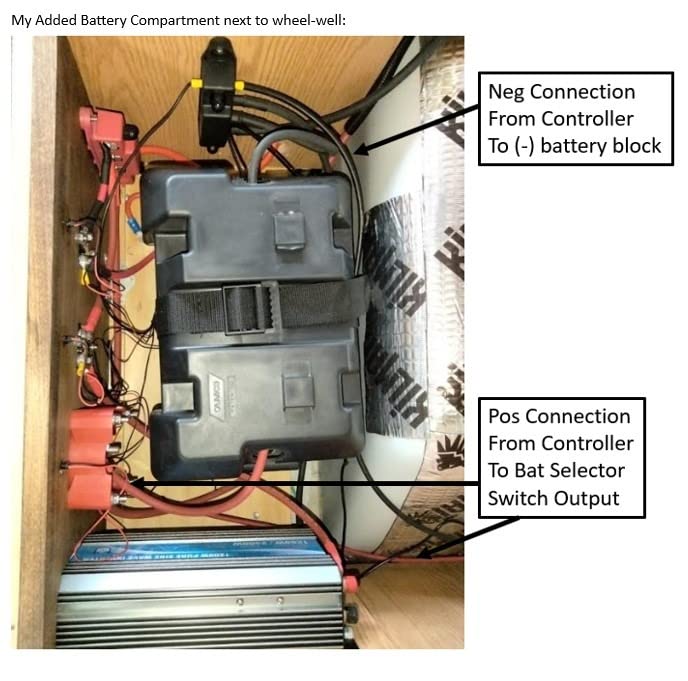
Not one kit in this roundup includes a battery or an inverter. That is the top surprise for new buyers, and it is where the forum complaints about cost shock come from. A typical off-grid system needs a battery bank sized in amp-hours, a pure sine wave inverter if you want to run AC appliances, and a fuse or breaker between the panel and the battery. None of the eight kits supply any of those.
On mounting, aluminium and fiberglass roofs take different approaches. Metal and aluminium-framed roofs accept a bonded or screwed Z-bracket directly. Fiberglass and aluminium-coated roofs are usually bonded with a proper structural adhesive and a cable entry gland, because drilling risks the factory warranty. Every kit here includes Z-brackets, but only some include a sealing method, and you still need Dicor or a quality sealant at each penetration.
Leave a small ventilation gap under a rigid panel rather than mounting it flush, because a panel sitting on the roof runs hotter and produces less. Keep the cable run short, use the gauge that came with the kit or heavier, and secure it where it cannot chafe against a roof edge. The most common install failures we see in reviews are unsealed cable entries and panels lifting off at highway speed from inadequate adhesive, not electrical faults.
Planning to expand later
Every kit in this roundup is expandable in some form, but the ceilings differ. The Renogy 100W controller supports up to 400W, the Renogy 200W and ZOUPW kits also cap at 400W, the ECO-WORTHY panels can be configured for 12V or 24V, and the Go Power Overlander expands to 600W on the same 30A controller.
The advice from experienced owners is to add a second identical kit in parallel rather than one large array, because a single failure in a big array can take the whole system offline. Several owners run multiple smaller 200W kits for exactly that redundancy. If you plan to expand, decide the controller location and cable route now so the second run is a short job later.
Frequently Asked Questions
What is the best solar panel kit for an RV?
The Renogy 100W 12V starter kit is the best all-round choice because it pairs a 22.5 percent efficient monocrystalline panel with a matched 30A controller, brackets and cables in one box. It weighs 14.1 pounds, so one person can mount it, carries 10 year materials and 25 year output warranties, and has 4,010 ratings averaging 4.7 stars behind it. For a 200W array, the Renogy 200W kit covers more load.
How big of a solar panel do I need to run my camper?
For a weekend camper running lights, a water pump, a compressor fridge and phone charging, 200W is the practical starting point and 100W is the minimum. A 400W array suits full-time boondocking. Use the formula panel watts x peak sun hours x 0.85, so a 200W array through five peak sun hours produces roughly 850Wh per day before controller losses.
Is 400W solar enough for an RV?
Yes, 400W is enough for full-time boondocking with a 12V compressor fridge, LED lighting, a water pump and laptop charging on a good day. It will not run a rooftop air conditioner, which draws 1,000 to 1,500W. Expect winter generation to fall 40 to 60 percent, so size for your worst camping stretch rather than your best week.
How much solar do I need to run a 12V RV fridge?
A 100W array will keep a small compressor fridge running on sunny days but will not carry it through a cloudy afternoon. Two 100W panels, meaning a 200W kit, is the practical floor for treating the fridge as a non-event. The fridge itself cycles at 60 to 100W, so its daily draw is far lower than the running figure suggests.
What type of solar panel is best for an RV roof?
Rigid monocrystalline panels are the best choice for most RV roofs. They run cooler, produce more per square foot, last longer and are walkable. Half-cut cell designs with bypass diodes are the most shade tolerant, which matters because vents and air conditioners shadow panels in the afternoon. Flexible ETFE panels are lighter and thinner but cost more per watt, degrade faster and cannot be walked on.
What is the best MPPT solar charge controller for an RV?
Within this roundup, the ExpertPower 20A MPPT controller is the strongest option because it auto-detects 12V and 24V systems, has a built-in display showing state of charge and battery health, and includes Bluetooth monitoring. MPPT units typically harvest 20 percent or more than PWM controllers, with the biggest gains in heat and partial shade. Pair it with half-cut monocrystalline panels.
How do I know if my RV solar charge controller is faulty?
Check the panel side first. A multimeter at the controller’s solar terminals should show a voltage close to the panel’s open-circuit voltage in daylight; near zero volts points to a bad MC4 connection, a blown inline fuse or a damaged cable. If the panel voltage is correct but the battery side reads zero, the controller itself has failed. Clean connectors and check polarity before condemning the unit.
Final Verdict: Which RV Solar Kit Should You Buy?
Buy the Renogy 100W 12V starter kit if you want the most proven, lightest and best-supported package in the category, and treat it as step one toward a larger system. It is the kit owners name first on r/GoRVing, it weighs the least at 14.1 pounds, and its 10 year materials and 25 year output warranties outlast every competitor here.
Buy the Renogy 200W monocrystalline kit instead if you want a fridge to stop being a daily concern, since roughly 1,000Wh per day and expansion to 400W on the included controller covers the standard weekend-to-full-time progression. The ECO-WORTHY 200W kit is the value alternative with the same wattage in a complete box, and the ExpertPower 200W kit is the one to choose if your roof is shaded and you want a real MPPT controller rather than PWM.
Whatever you pick, remember what none of these kits include: a battery, an inverter and roof sealing hardware. Those three add-ons decide whether the system actually works off-grid. Plan the controller location and cable route now, and you can always add a second matching kit in parallel later. We keep coming back to the same shortlist when people ask us, and the Renogy 100W starter is where we send them.
We update this roundup as new kits land, so check back before you buy.