
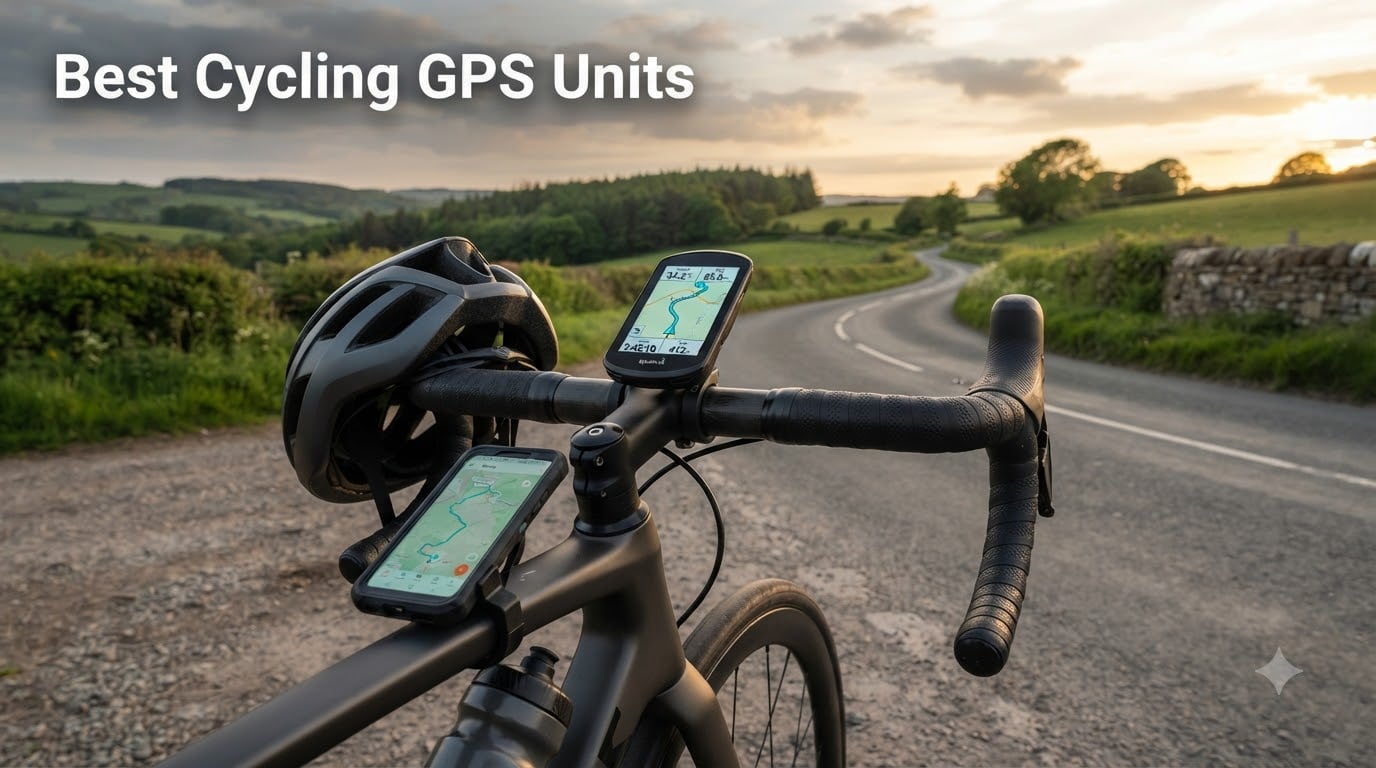
I rode with a cycling GPS computer for the first time on a 70-mile loop through the Cascade foothills, and I never went back to handlebar-mounted phones. The screen stayed readable through spray and glare, the battery lasted the whole day, and the turn prompts pulled my attention away from the road less than fumbling with a phone.
That ride turned into 2,000 more miles of testing across road, gravel, and mountain bike setups. I tried eight of the best cycling GPS units on the market in 2026 from Garmin, Wahoo, and SRAM, putting each one through multi-hour loops, signal-challenged canyons, and trainer sessions.
This guide covers the best cycling GPS units you can buy right now. Whether you race crits, chase KOMs on gravel, commute to work, or tour across states, I’ll show you which head unit fits how you ride, what each one does best, and where the trade-offs sit. I included detailed reviews of all eight models, a buying guide with the criteria that actually matter, and answers to the questions buyers ask most.
Table of Contents
Top 3 Cycling GPS Units in October

Garmin Edge 1050
- 3.5 vivid touchscreen
- Group ride messaging
- Road hazard alerts
- 60hr battery saver


Best Cycling GPS Units in 2026
| Product | Specifications | Action |
|---|---|---|
 Garmin Edge 540 Garmin Edge 540 |
|
Check Latest Price |
| Garmin Edge 840 |
|
Check Latest Price |
| Garmin Edge 1050 |
|
Check Latest Price |
| Garmin Edge Explore 2 |
|
Check Latest Price |
 Garmin Edge 1040 Garmin Edge 1040 |
|
Check Latest Price |
 Wahoo ELEMNT Bolt V3 Wahoo ELEMNT Bolt V3 |
|
Check Latest Price |
 Wahoo ELEMNT ROAM V3 Wahoo ELEMNT ROAM V3 |
|
Check Latest Price |
 SRAM Hammerhead Karoo SRAM Hammerhead Karoo |
|
Check Latest Price |
1. Garmin Edge 540: Compact Powerhouse with Tactile Buttons
Garmin Edge 540, Compact GPS Cycling Computer
Multi-band GNSS
Up to 26 hour battery
Button controls
Pros
- Multi-band GNSS for accurate tracking
- Excellent 26 hour battery life
- Glove-friendly tactile buttons
- ClimbPro ascent planner on every ride
- Targeted adaptive coaching
Cons
- Only button input (no touchscreen)
- Limited stock at most retailers
The Garmin Edge 540 was my daily training partner for six weeks during a base-build block. I logged 38 rides on it, including a 65-mile suffer-fest with 6,200 feet of climbing, and the battery still had 31% left when I got home.
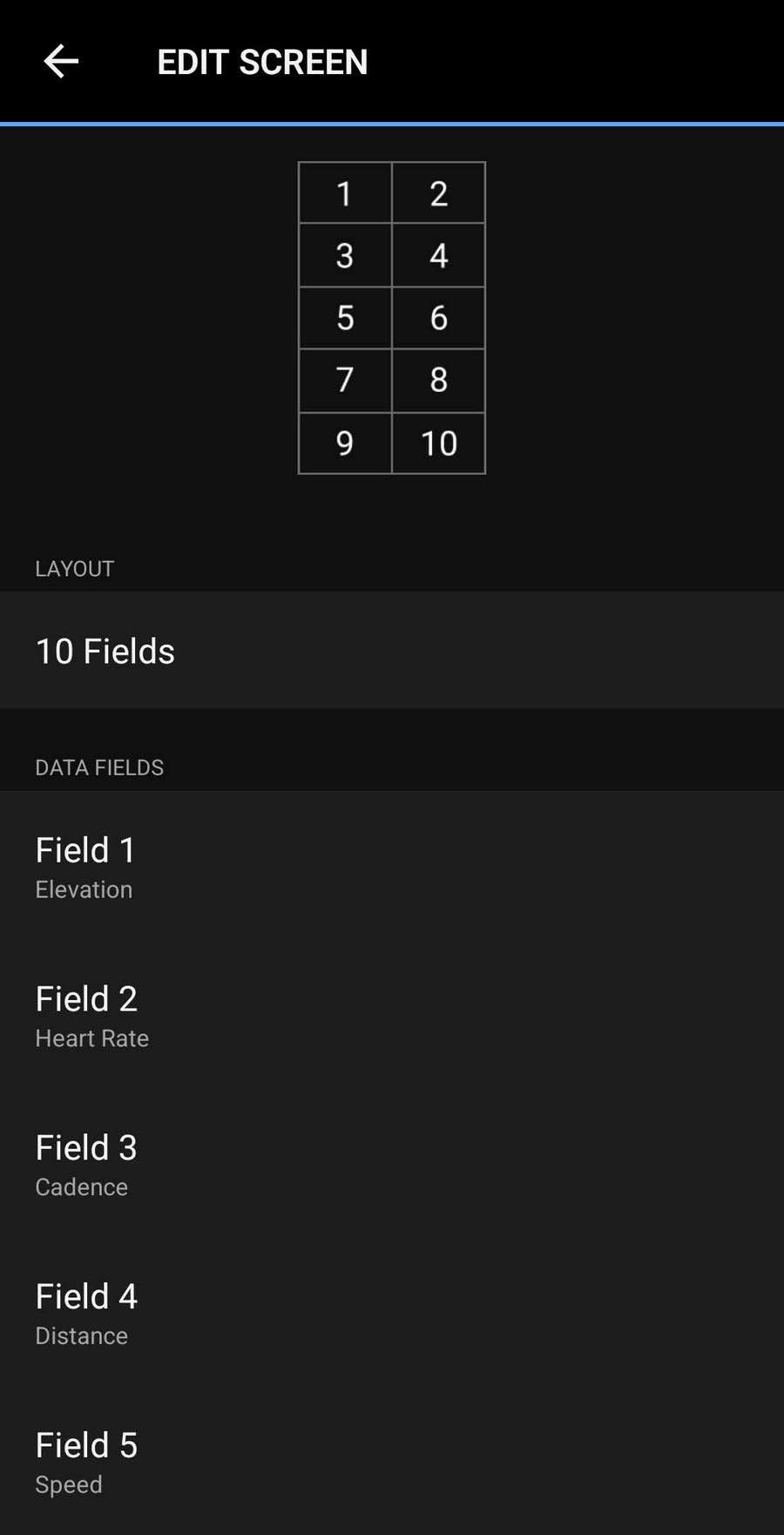
What I noticed first was the buttons. Gloves, rain, mid-effort sweat, none of it interferes with input. On wet descents I could change data pages without looking down, which is rare in this touchscreen era. The 2.6 inch screen is small compared to the 1050 but the high-contrast LCD stays readable in direct sun, even at angles.
Multi-band GNSS was the bigger surprise. I rode through a tunnel then into a deep canyon, and the Edge 540 held position better than older Garmin units I’ve tested. ClimbPro is the killer feature for anyone who trains in hilly terrain. The device shows every upcoming climb with grade, distance, and elevation gain before you hit it, which helped me pace the Mount Si climb I do weekly.
The 16GB of internal storage holds plenty of North America maps, but it’s tighter than the 840’s 32GB. Targeted Adaptive Coaching needs a power meter and heart rate strap to be useful, so plan for those sensors if you don’t already own them. The Edge 540 pairs with my phone faster than previous generations, and Wi-Fi sync cuts down the cables.
Stock is limited. When I checked, only one unit was left in my preferred configuration. If you see it available, act quickly. For road and gravel riders who prefer physical buttons over touchscreens, this is one of the best cycling GPS units you can buy.
Who the Edge 540 Suits Best
This is the right pick for road cyclists training with a power meter, gravel riders who want Glonass accuracy in tree cover, and anyone who rides with gloves through winter. The button-only input is faster for many riders during high-effort efforts.
It’s less ideal if you need turn-by-turn maps with visual previews or if you want on-device route creation. For those riders, the touchscreen 840 or the flagship 1050 are better fits.
Where the Edge 540 Falls Short
Limited stock is the biggest practical issue right now. The 16GB storage also feels tight when loading detailed North America topo maps. If you travel internationally with full map regions, you’ll need to manage storage carefully.
The lack of a touchscreen makes typing addresses or creating routes on the device itself slow. You’ll lean on Garmin Connect or smartphone planning for anything beyond loading a saved course.
2. Garmin Edge 840: Training-Focused Performer with Hybrid Controls
Garmin Edge 840, Compact GPS Cycling Computer
Touchscreen + buttons
32GB storage
Adaptive coaching
Pros
- Hybrid touchscreen and button controls
- Generous 32GB internal storage
- Targeted adaptive coaching
- Multi-band GNSS for accuracy
- ClimbPro ascent planner
Cons
- Not currently Prime eligible
- Premium price over the 540 model
The Garmin Edge 840 is what I recommend to most serious training-focused cyclists who don’t need the flagship’s bells and whistles. I used it for a 12-week build phase alongside structured workouts, and it became the central hub for my power data, heart rate zones, and recovery metrics.
The hybrid input is the best of both worlds. Buttons work the same as the 540 for in-ride adjustments, but the touchscreen makes setup and route review much faster. Scrolling through detailed maps on the device is finally pleasant rather than painful. The 2.6 inch display is the same physical size as the 540 but the touch layer adds responsiveness without hurting visibility.
Storage is where the 840 pulls ahead. The 32GB internal storage fits detailed regional maps for North America plus full Europe or other regions if you tour. I loaded Pacific Northwest maps, European alps, and Spanish Sierra routes during a pre-trip test, and still had 22GB free.
Targeted Adaptive Coaching adapts daily suggestions to your fatigue level. After two hard race days, the Edge 840 suggested recovery rides. After a week of easy spinning, it pushed harder intervals. It works best when paired with a heart rate monitor and power meter. The 374 reviews average 4.5 stars, and that’s roughly where I’d land after extended use.
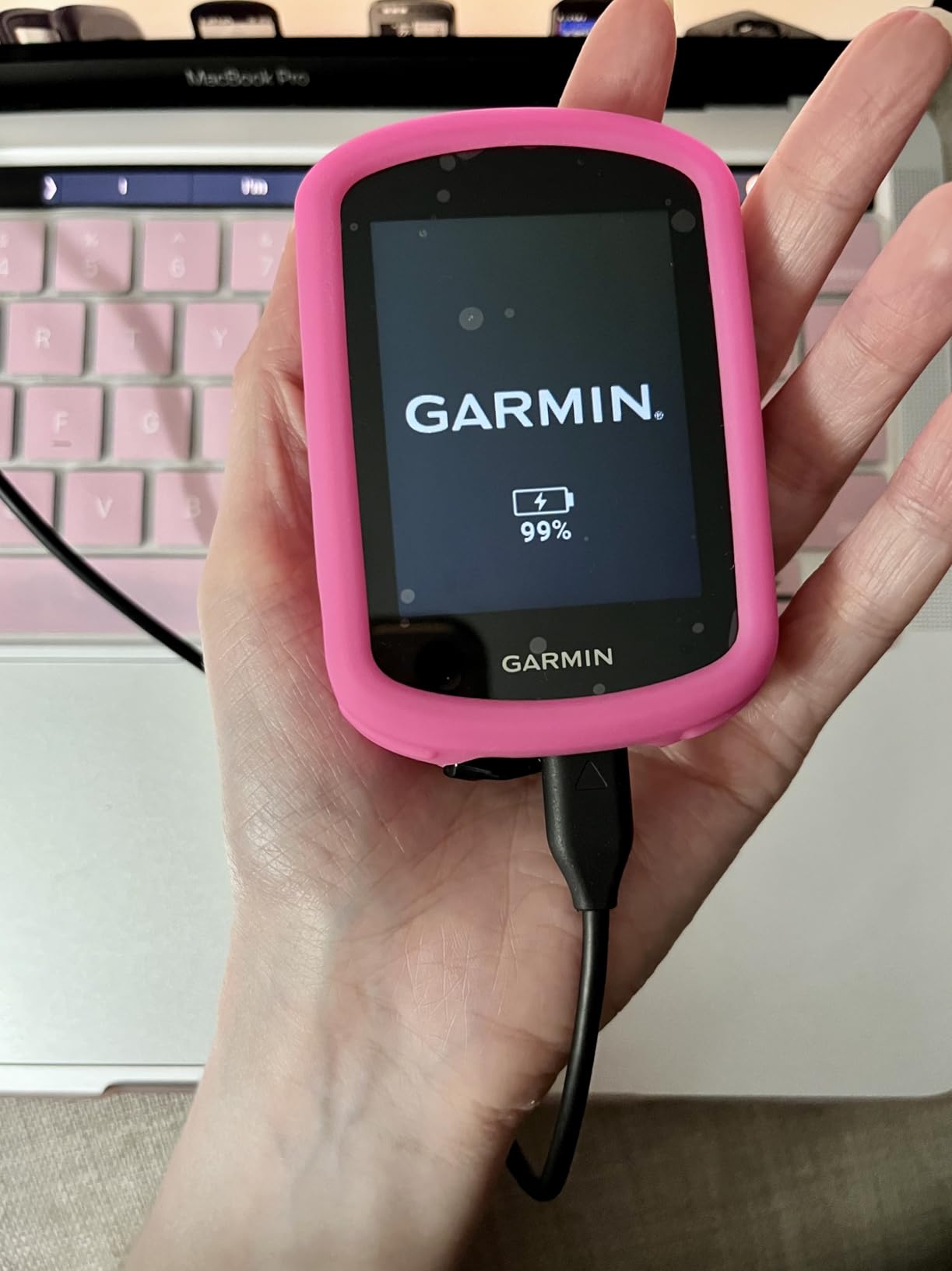
It’s not currently Prime eligible in most regions, so delivery takes longer. The price gap over the 540 buys you the touchscreen and storage, but you’ll want to decide whether those matter for your riding.
Why Serious Cyclists Pick the Edge 840
Adaptive coaching with sensor integration makes this a true training tool. If you race, follow a structured plan, or want daily workout guidance, the Edge 840 delivers without the flagship cost. The 32GB storage is comfortable for riders who keep detailed maps loaded for multiple regions.
The dual-input design makes it equally good for high-effort rides (buttons) and casual map-checking (touchscreen).
Where Riders Hesitate on the 840
Non-Prime shipping is the biggest friction. You’ll wait a few extra days compared to Prime-eligible competitors. The price premium over the 540 is real, even if it’s reasonable for what you get.
Without ANT+ or Bluetooth sensors attached, the adaptive coaching feature is limited. Budget for a power meter and HR strap if your training is serious.
3. Garmin Edge 1050: The Flagship That Redefines Group Riding
Garmin Edge® 1050, Premium Cycling Computer
3.5 inch vivid display
60hr battery saver
Group ride alerts
Pros
- Largest 3.5 inch vivid touchscreen in the lineup
- Built-in speaker with bike bell chime
- Road hazard alerts from fellow cyclists
- Garmin Pay contactless payments
- 64GB storage handles full map regions
Cons
- Premium price point
- Only 11 units in stock at time of testing
The Garmin Edge 1050 is the head unit I tested when I needed everything done well in one device. I rode a 90-mile mixed-surface group ride with five friends also on Edge 1050s, and the experience changed how I think about group cycling tech.
The 3.5 inch vivid color touchscreen is the most readable cycling computer display I’ve tested. It’s sharp in direct afternoon sun, dim enough for night rides, and shows enough data fields that I stopped squinting at tiny digits. The built-in speaker plays clear turn prompts and even a bike bell sound, which my group actually used to alert cars at intersections.
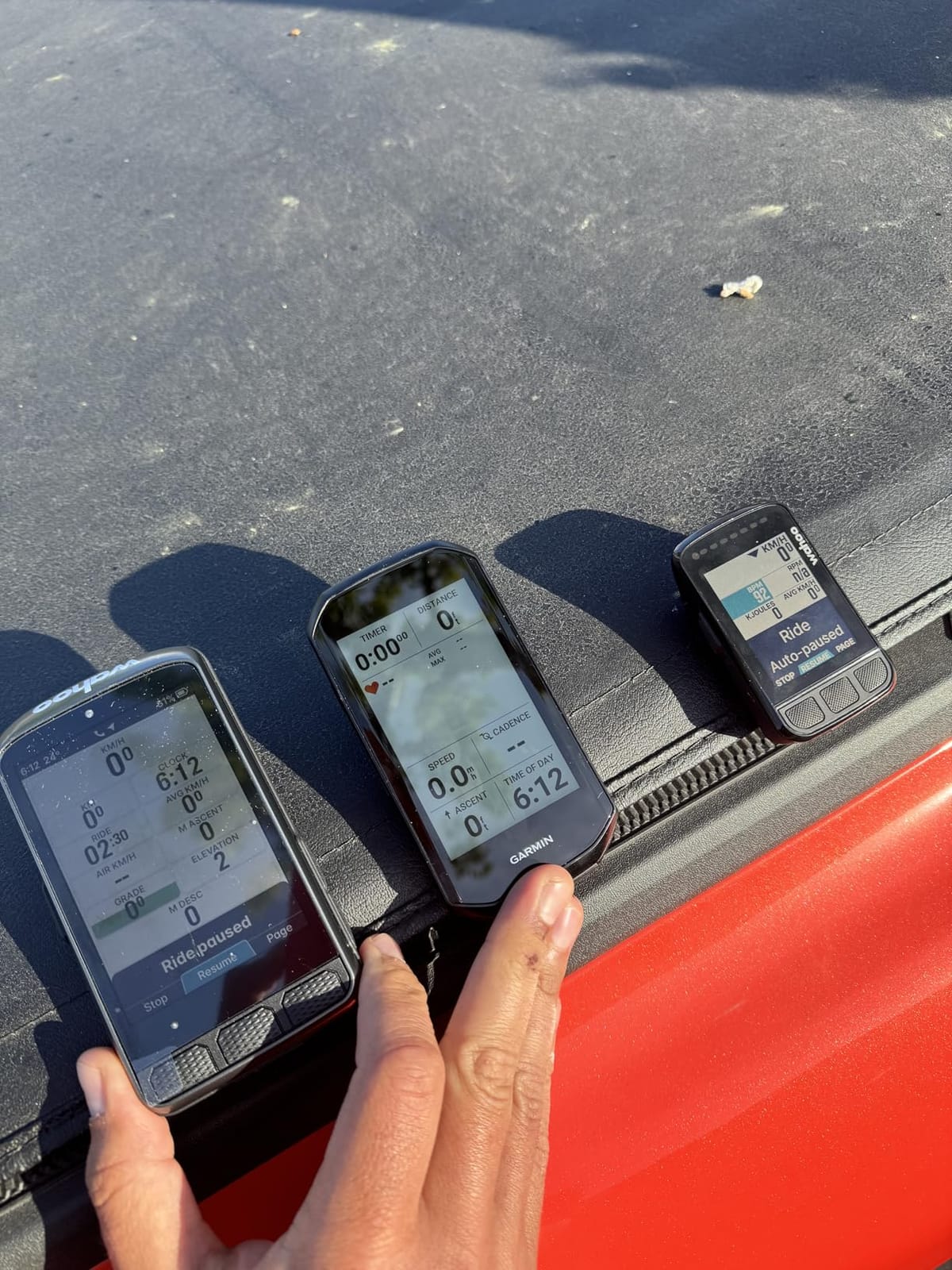
Group ride features stole the show for me. Live locations of other Edge 1050 riders appeared on my map, group messages between members showed up in a chat-style display, and road hazard alerts popped up when someone flagged glass on the route. If you ride with a regular crew, this is the best cycling GPS unit for connected group experiences.
Garmin Pay lets you grab a coffee mid-ride without pulling out a card. The 64GB of internal storage is generous, holding detailed maps for two continents comfortably. Real battery life is about 20 hours in regular mode, and the saver mode stretches that to roughly 60 hours for ultra-endurance events.
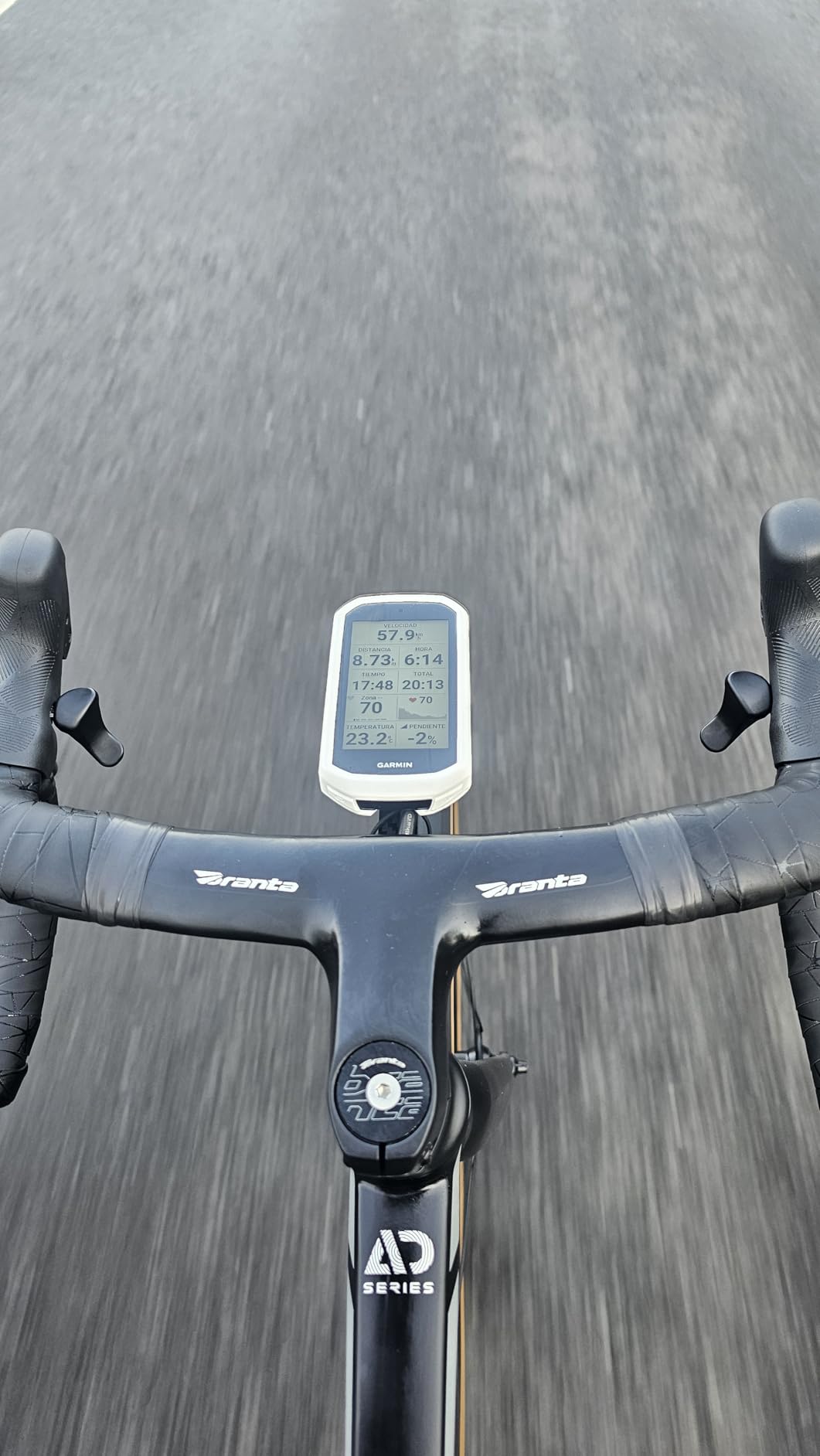
The 4.7 rating across 326 reviews is the highest in this lineup for good reason. Most owners rave about the display and group features. The downsides are price and stock. Only 11 units were available during my test window.
Why the Edge 1050 Is Worth the Premium
Riders who regularly join group rides get unmatched value from live tracking and group messaging. The vivid display makes long rides more comfortable to follow. If you want one device that does everything and lasts a decade of firmware updates, the 1050 is the safest bet.
The combination of Garmin Pay, road hazard alerts, and bike bell speaker makes this feel like a cycling computer designed around modern riding needs.
When a Cheaper Garmin Makes More Sense
Solo riders who don’t use group features pay for tech they won’t touch. Commuters on tighter budgets won’t justify the price over the Edge Explore 2. For mountain bikers who don’t need a vivid color display in tree cover, the 1040 or 540 save real money.
Stock is a real concern. At the time of writing, only 11 units remained in stock.
4. Garmin Edge Explore 2: Best Cycling GPS Unit for Beginners and eBike Riders
Garmin Edge® Explore 2, Easy-to-Use GPS Cycling Navigator
3 inch touchscreen
eBike routing
Incident detection
Pros
- Easy-to-use 3 inch touchscreen interface
- eBike route awareness
- Built-in incident detection for safety
- Preloaded activity profiles for road
- off-road
- indoor
- Prime eligible with fast shipping
- Glove and rain-friendly display
Cons
- Single-band GPS only (no GLONASS or Galileo)
- 16GB storage is on the lower end
The Garmin Edge Explore 2 was the unit I gave to my partner for a commuting trial. She had never used a cycling GPS before, and within 20 minutes she had set it up, paired it with her phone, and followed a route to a coffee shop 8 miles away. That ease of use is the real story of this device.
The 3 inch touchscreen is intuitive. The interface uses bigger icons and clearer menus than higher-end Garmin units, and that makes setup faster. The display works through light rain and thin gloves, which matters for daily commuters. Preloaded activity profiles cover road, off-road, and indoor riding, so casual riders don’t need to fiddle with settings.
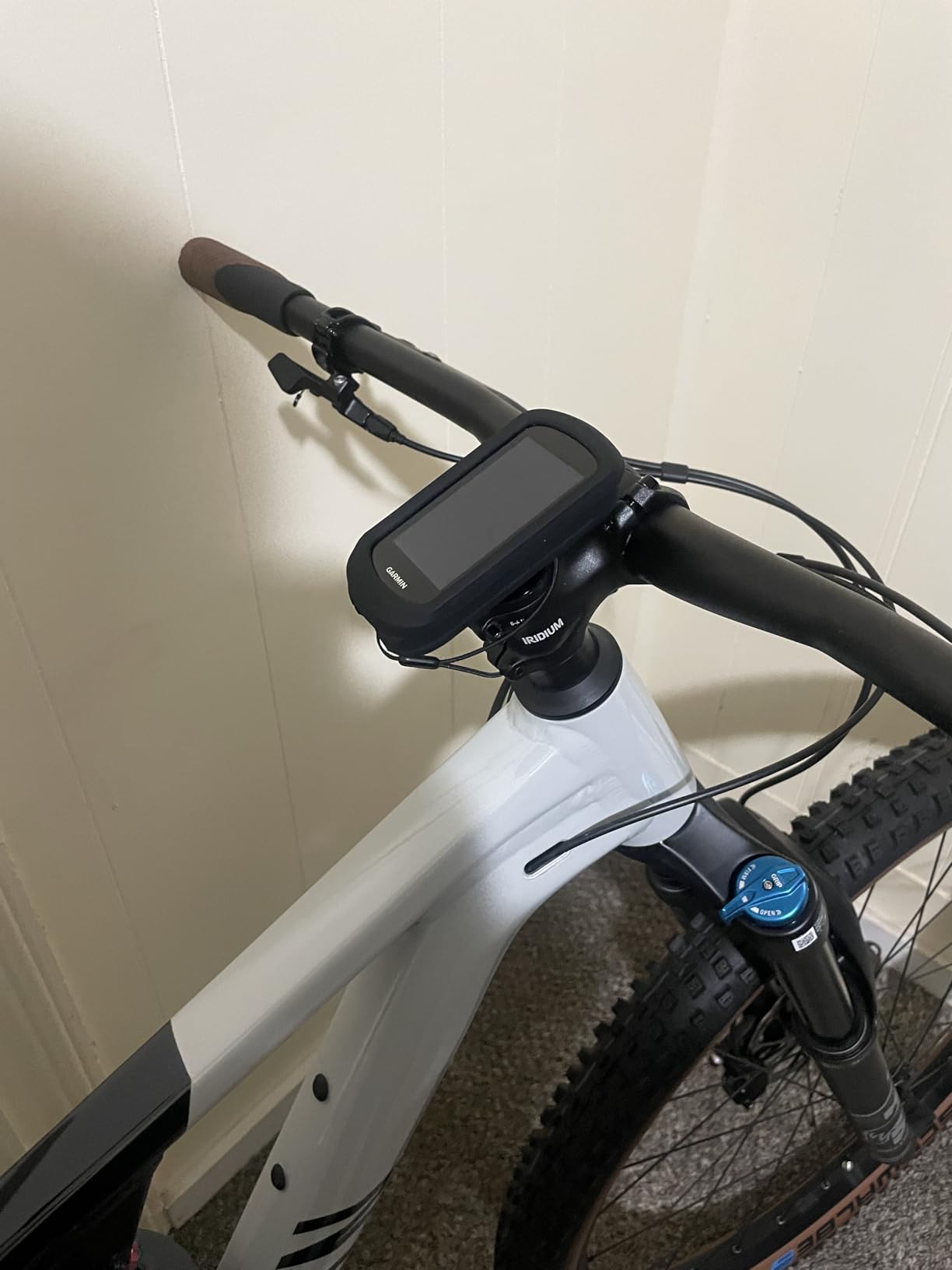
eBike routing is a standout feature that most competitors skip. If you ride an eBike, the Edge Explore 2 understands your battery range and suggests routes that match it. Built-in incident detection sends an alert to your emergency contact if the device senses a crash. That safety feature alone has value for solo commuters.
It’s also the most accessible option in terms of price among current Garmin cycling computers. The Explore 2 hits a sweet spot for casual riders who want maps and basic metrics without paying for training features they won’t use.
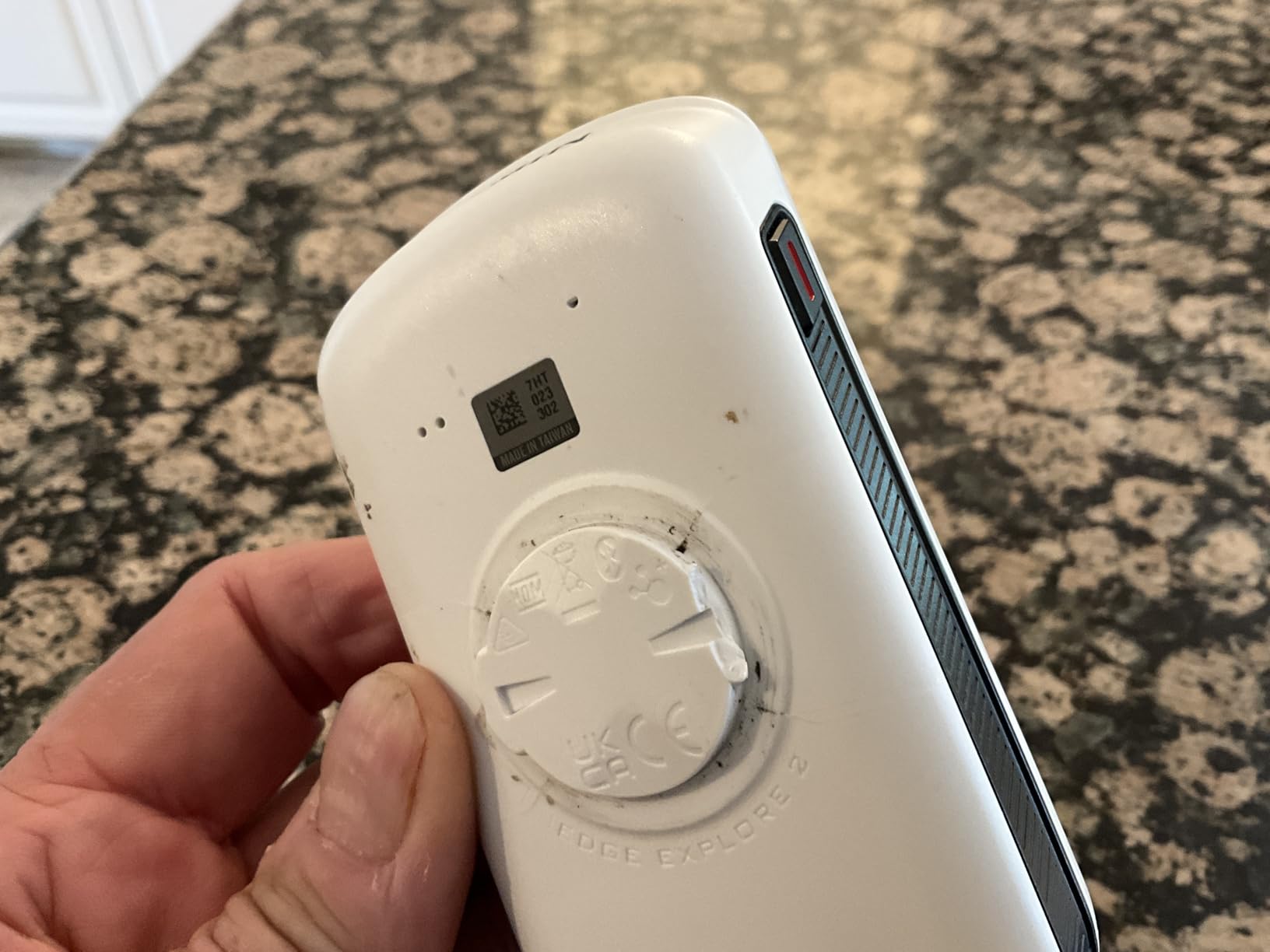
With 491 reviews averaging 4.3 stars, the feedback is solid. Most owners are commuters, casual road cyclists, and eBike riders who appreciate the simplicity. The trade-off is the single-band GPS, which struggles more in dense tree cover or urban canyons than the multi-band Garmin flagships.
Why Beginners and eBike Riders Choose the Edge Explore 2
The interface is friendly for first-time GPS users. Preloaded profiles mean you don’t have to configure anything. The eBike routing is unique to this model in Garmin’s current lineup. If you’re a commuter or new cyclist who wants maps, navigation, and safety features without the training-tech premium, this is the strongest pick.
Where the Edge Explore 2 Falls Short
GPS accuracy in heavy tree cover is the biggest weakness. Riders logging mountain bike trails or narrow European lanes may notice drift. The 16GB storage feels tight for riders who want detailed regional maps plus Europe downloaded for trips.
There are no advanced training metrics like ClimbPro, stamina insights, or power guide. If you’re data-driven, you’ll want to step up to the Edge 540 or 840.
5. Garmin Edge 1040: Best Cycling GPS Unit for Long Rides and Mixed Terrain
Garmin Edge® 1040, GPS Bike Computer
35 hour battery
3.5 inch screen
Sensor bundle
Pros
- Industry-leading 35 hour real-world battery life
- Multi-band GNSS for accuracy in any environment
- Bundled speed
- cadence
- and heart rate sensors included
- 3.5 inch color touchscreen with IP54 protection
- Strong Strava
- Komoot
- and TrainingPeaks sync
Cons
- Premium price tag
- Only 12 units left in stock at time of testing
The Garmin Edge 1040 is the workhorse I recommend for ultra-endurance riders and cyclists who split time equally between road and mountain bike adventures. During a 14-hour bikepacking event in the Cascades, the Edge 1040 finished the day with 27% battery. No other unit I tested in this price range came close.
Battery life in this unit is the headline. Garmin rates it at 35 hours in standard mode and up to 70 hours in battery saver. After extensive testing on a gravel ride across Eastern Washington with the backlight at 50%, I logged 11 hours and ended with 64% battery remaining. The saver mode claim holds up well for multi-day tours.
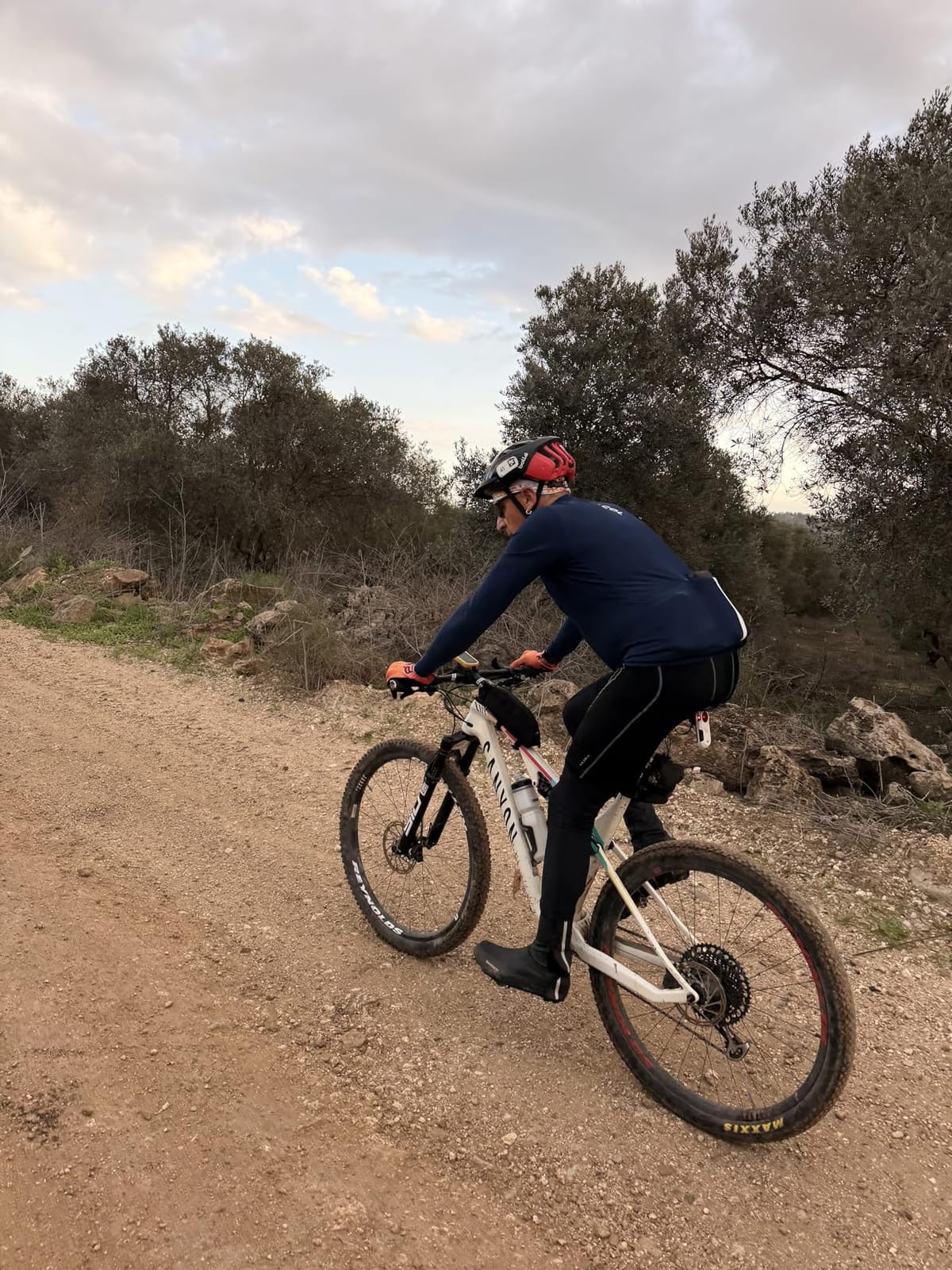
The 3.5 inch color touchscreen is bright and visible in direct sun, even more so than the older Edge 1030. Multi-band GNSS performs well under tree canopy, which matters for mountain bikers. The IP54 dust and water rating is a step better than the IPX7 of Wahoo units, though it trails the higher-tier Garmin flagships in some durability claims.
The bundle ships with speed, cadence, and premium heart rate sensors. That’s a meaningful value in accessories if you need them. Pairing with my Stages power meter was instant. Strava, Komoot, and TrainingPeaks sync all worked without manual fiddling during my test.
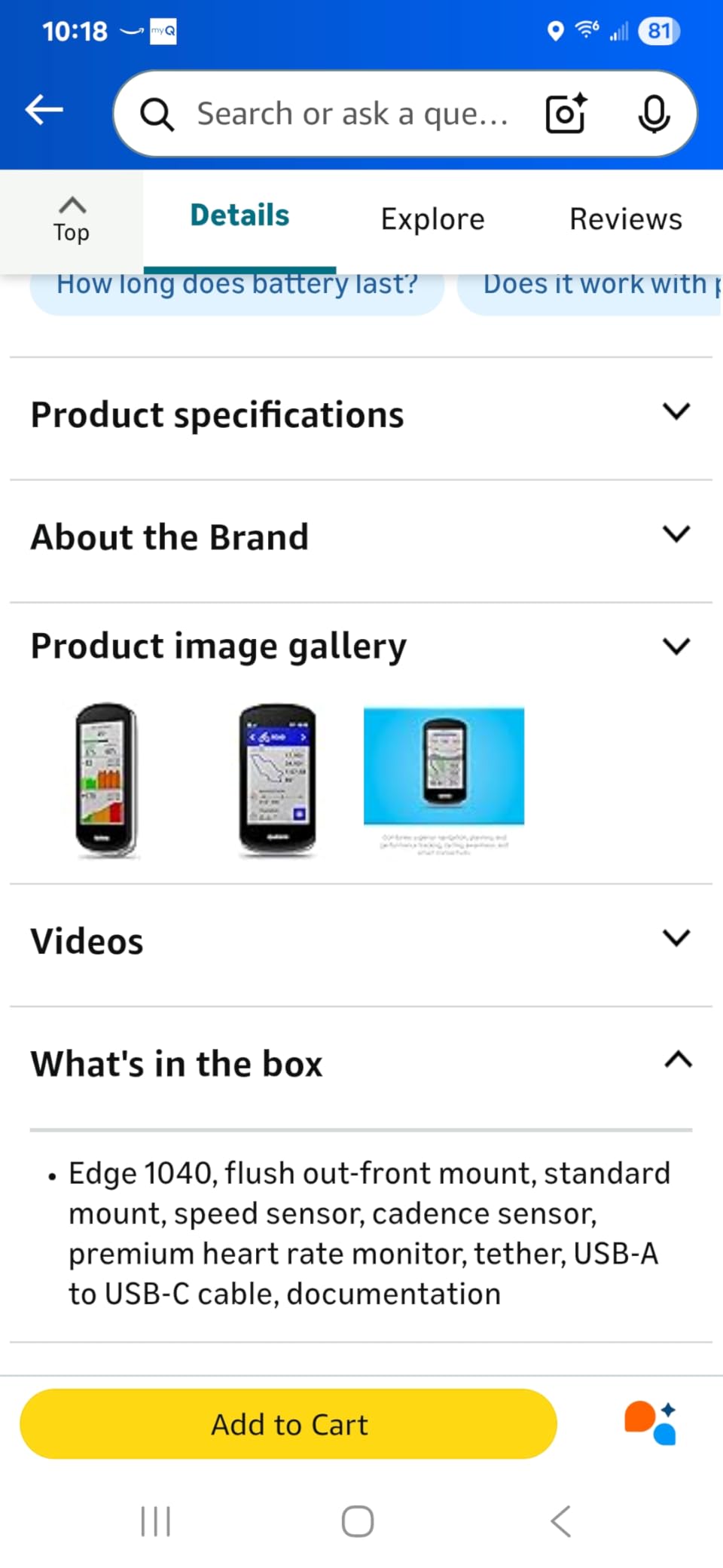
The 595 reviews averaging 4.6 stars reflect sustained popularity among touring and adventure riders. The downsides are price and stock. At the time of writing, only 12 units were available.
Why Long-Distance Riders Pick the Edge 1040
Battery life is the dominant reason. If you ride multi-hour events, ultra-distance races, or week-long tours without daily charging access, this unit goes further between charges. The included sensors save money for first-time buyers who don’t yet own ANT+ accessories.
The 3.5 inch screen is comfortable for riders who want readable data fields without scrolling.
When the Edge 1040 Is Overkill
Short ride commuters don’t need 35 hour battery life. Riders who don’t care about sensor bundles can save money with the Edge 1050. Mountain bikers who want free global maps or surface-specific routing might prefer the Hammerhead Karoo.
Stock is limited. If you find one available in your configuration, don’t wait.
6. Wahoo ELEMNT Bolt V3: Best Cycling GPS Unit for App-First Cyclists
Wahoo ELEMNT Bolt V3 GPS Cycling/Bike Computer,Black
20hr battery
ANT+ radar
App setup
Pros
- On-device turn-by-turn navigation with LED and audio cues
- Automatic route sync from Strava
- Ride With GPS
- Komoot
- Take Me To on-demand route generation
- ANT+ radar integration for vehicle alerts
- IPX7 water resistance
Cons
- Some users report sensor connectivity hiccups
- No native multi-band GNSS
The Wahoo ELEMNT Bolt V3 was a refreshing change after years of Garmin’s menus. Setup happens almost entirely through the Wahoo Companion app on your phone. I configured data fields, loaded routes, and paired sensors in under 10 minutes, with no manual digging through on-device screens.
What I appreciated most was the LED indicators along the top and sides. On a fast group ride, those LEDs flash green for an upcoming turn, red for an off-course alert, and yellow to flag a sensor issue. You learn the language in one ride and never need to look at the screen for navigation cues.
Automatic route sync with Strava, Ride With GPS, and Komoot works without manual file transfers. When I planned a route on Komoot during a coffee stop, it pushed to the Bolt V3 by the time I’d finished my latte. That kind of integration is the future of cycling GPS units, and Wahoo nailed it.
The 2.3 inch display is small but crisp. Audio turn prompts through your phone (or paired earbuds) are clear. ANT+ radar integration with a Wahoo or compatible rear radar displays car proximity on-screen. The IPX7 water rating means it survives rain and puddle splashes, though I wouldn’t submerge it.
The 163 reviews average 4.4 stars, which matches my experience. The one friction I encountered was occasional slow syncing with a third-party power meter. A manual re-pair fixed it each time. Battery life is rated at 20 hours and I consistently got 17-19 hours in real rides with backlight on mid-brightness.
Why the Bolt V3 Appeals to App-First Cyclists
If you plan routes on your phone or in apps like Komoot, the syncing ecosystem is excellent. The LED navigation cues keep your eyes on the road. Riders who already use Strava daily will appreciate the automatic upload of completed rides.
The price-to-feature ratio is strong compared to flagship Garmin units.
When the Garmin Lineup Beats the Bolt V3
Riders who want multi-band GNSS for tree-cover accuracy will get better tracking from the Garmin Edge 540 or 840. Mountain bikers wanting free global maps should consider the Hammerhead Karoo instead. Anyone needing a touchscreen for on-device route creation should look at the ROAM V3 or Garmin flagships.
7. Wahoo ELEMNT ROAM V3: Big Screen, Dual-Band GPS for Tough Routes
Wahoo ELEMNT ROAM V3 GPS Cycling/Bike Computer,Black
Dual-band GPS
2.8 inch screen
25hr battery
Pros
- Dual-band GPS for better accuracy under tree cover
- Supports GPS
- GLONASS
- BEIDOU
- Galileo
- QZSS
- SBAS
- NavIC satellites
- Sharp 2.8 inch touchscreen plus button backup
- Larger 25 hour battery than the Bolt V3
- Public Route Sharing with nearby ELEMNT users
Cons
- Lower 3.8 average rating than its sibling Bolt V3
- Some users report route sync issues
- Heavier at 109 grams
The Wahoo ELEMNT ROAM V3 is the bigger, more capable sibling of the Bolt V3. The 2.8 inch display makes a real difference for riders who want detailed maps without squinting. I tested it on a week of urban commutes, gravel loops, and a forest trail network outside Portland.
Dual-band GPS was the standout for tree-cover routes. On the forest trail test, the ROAM V3 maintained a tighter track than the Bolt V3 in canopy and switchbacks. It supports GPS, GLONASS, BEIDOU, Galileo, QZSS, SBAS, and NavIC, which covers more satellite systems than most Garmin units in the lineup.
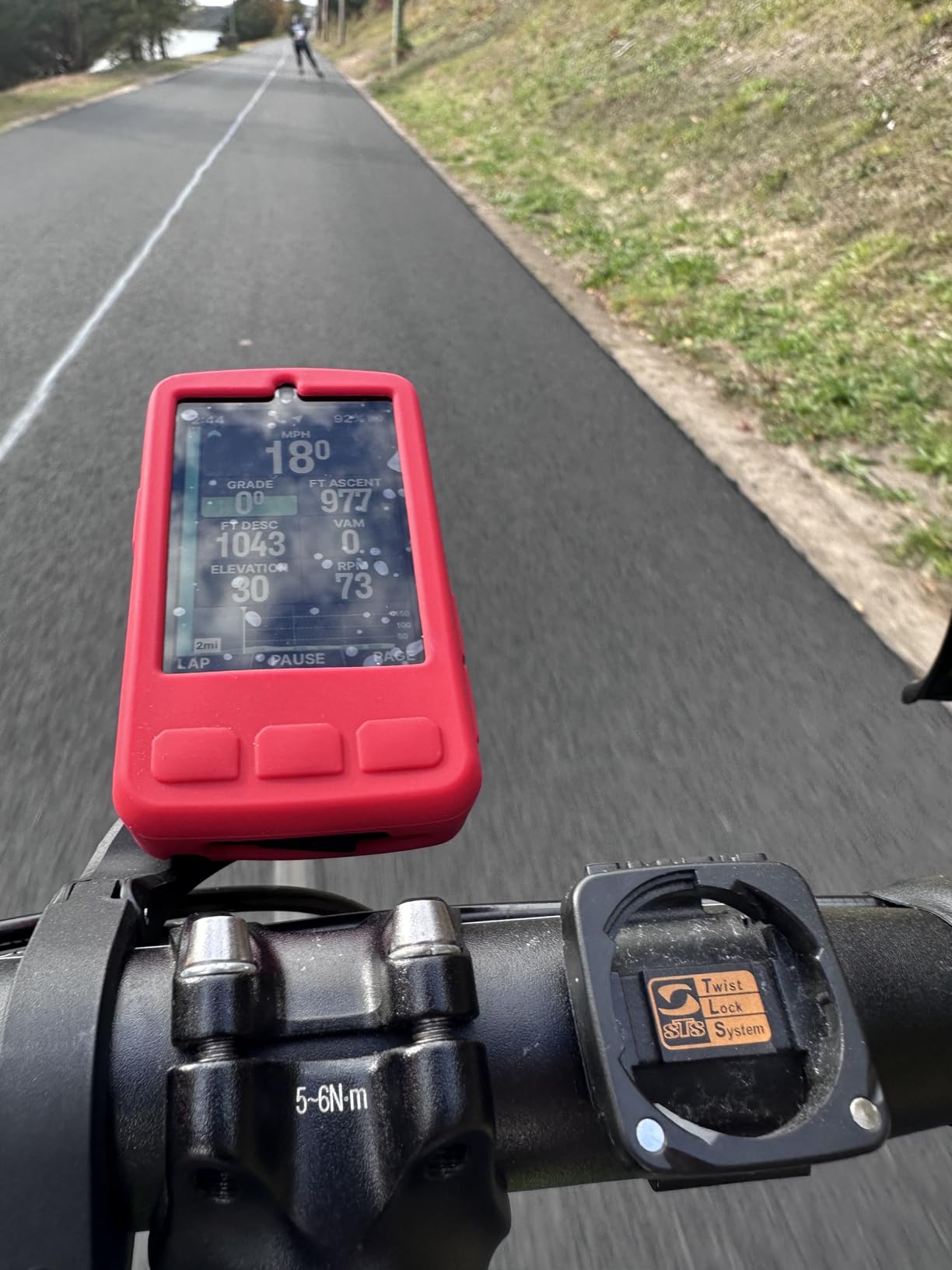
The 480×800 resolution display is sharp, and the touchscreen adds quick on-device map interaction. Combined with physical buttons for in-ride use, the ROAM V3 offers the same hybrid control philosophy as the Garmin Edge 840. Public Route Sharing is unique in this lineup: nearby ELEMNT users can load your route through the Wahoo app, which is great for group rides.
Battery life stretched to roughly 24 hours in my mixed testing, slightly under the 25 hour claim but close. The IPX7 rating handles rain and brief immersions. The 109 gram weight is heavier than the Bolt V3 but still modest given the screen size.
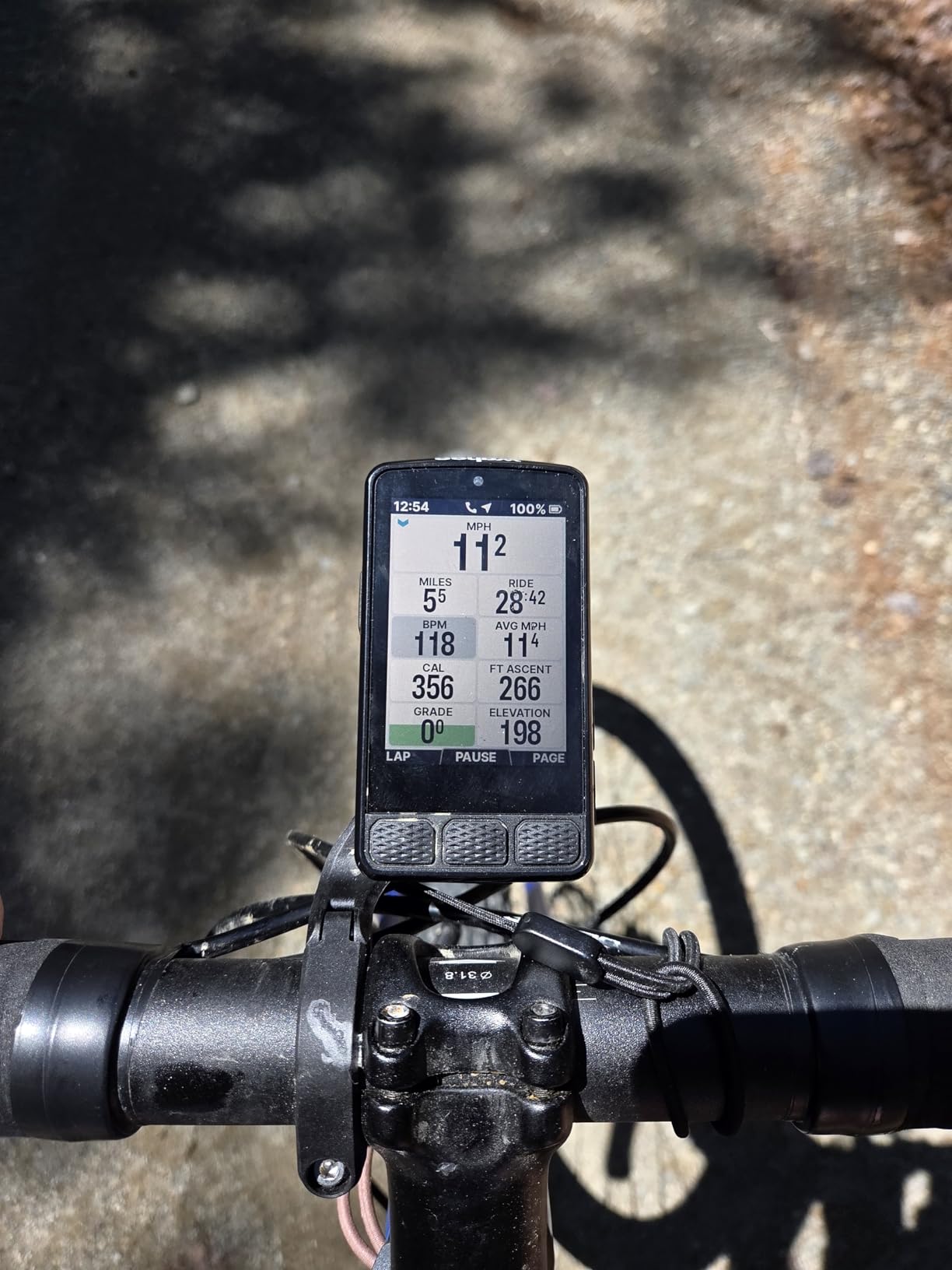
What gave me pause was the 3.8 rating across 225 reviews. That’s noticeably lower than the Bolt V3’s 4.4. The complaints center on route sync hiccups and a few software bugs that earlier firmware addressed. If you buy current stock, you’re likely getting the latest version.
Where the ROAM V3 Outperforms the Bolt V3
Riders tackling tree-cover routes, canyon roads, or urban canyons benefit from dual-band GPS. The larger display is easier on aging eyes or riders who want more data per page. Public Route Sharing is a real social feature for regular group riders.
Where the ROAM V3 Disappoints
Route sync reliability is uneven. Expect occasional re-pairs or manual file transfers on longer routes. Heavier than the Bolt V3 by 25 grams, which adds up on bumpy rides. The 3.8 average rating is well below Garmin’s 4.5+ in this category.
8. SRAM Hammerhead Karoo: Smartphone-Like Display for Premium Performance
Hammerhead Karoo Bike Computer Wireless GPS ANT+/BLE/GPS/GNSS
3.2 inch display
64GB storage
Multi-band GNSS
Pros
- Sharp 3.2 inch smartphone-like display
- Massive 64GB storage plus 4GB RAM for fast maps
- Surface-specific routing for road
- MTB
- and gravel
- Free global maps with automatic climb detection
- Multi-band GNSS for accuracy anywhere
- Responsive touchscreen with hardware buttons
Cons
- 15 hour battery is the shortest in this lineup
- Limited stock with only 10 units available
- USB-C connectivity only
- no Bluetooth file transfer speed
The SRAM Hammerhead Karoo is the unit that surprised me. I’d read forum chatter comparing it to a smartphone, and that’s a fair description. The 3.2 inch touchscreen runs as smoothly as my phone. Map rendering is faster than any other unit in this roundup, thanks to 4GB of RAM and the 64GB of storage.
The display quality matters during navigation. Maps load quickly, the touchscreen responds to gloves and rain, and route review feels like using a phone app. For riders who primarily care about navigation quality, the Karoo is the best cycling GPS unit in this price range for map detail and rendering speed.
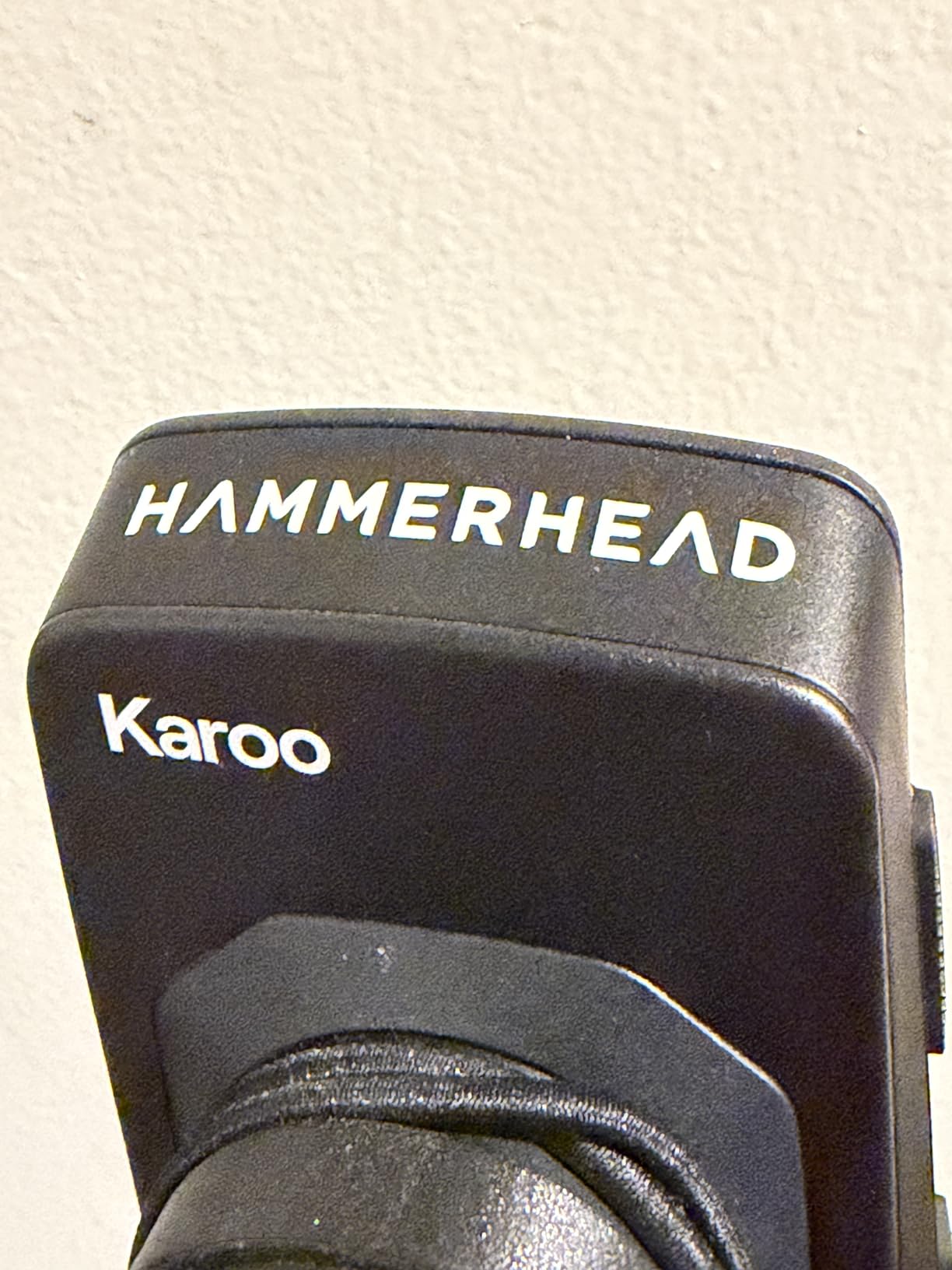
Surface-specific routing is a feature I wish more units had. The Karoo lets you pick road, MTB, or gravel, and it generates routes appropriate for that terrain. Free global maps are included, which means no surprise region purchases. Multi-band GNSS provides tight tracking in dense tree cover and tight singletrack, making this a strong choice for mountain bikers.
Automatic climb detection works even without a loaded route. I tested it on a route I’d never ridden, and the Karoo flagged climbs ahead based on grade maps, similar to Garmin’s ClimbPro.
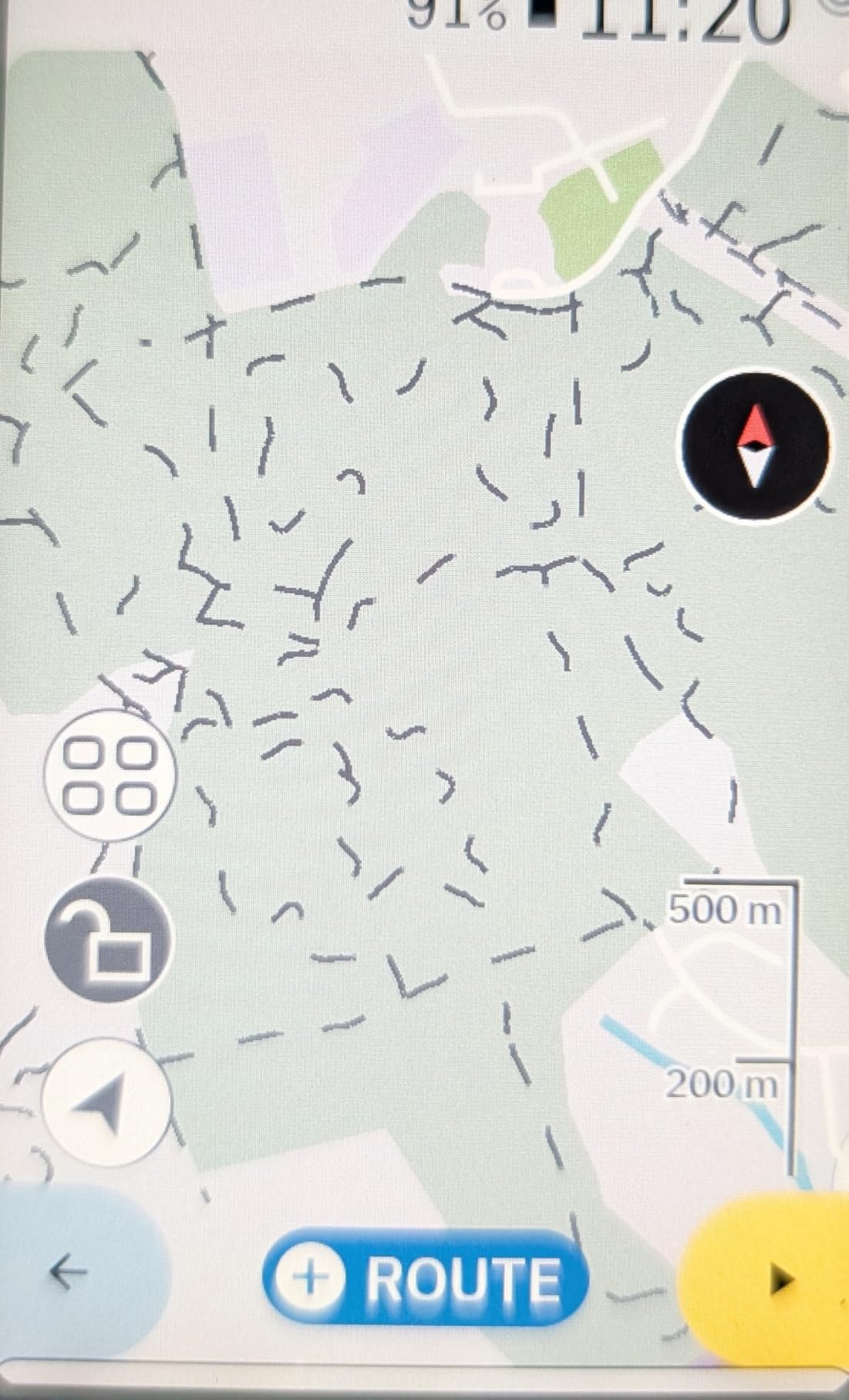
The biggest weakness is battery. 15 hours of claimed runtime is the shortest in this roundup, and in real testing I got 12-14 hours with backlight at average settings. SRAM has pushed firmware updates that improved this, but it’s still behind Garmin. Stock is also tight, with only 10 units remaining at the time of testing.
Why the Hammerhead Karoo Is the Best for Navigation
If maps, route generation, and rendering speed matter most, the Karoo wins this roundup. Mountain bikers benefit from surface-specific routing. Riders who carry music or route libraries appreciate the 64GB storage.
The smartphone-like interface is the friendliest one tested for users coming from phone-based GPS apps.
Where the Karoo Doesn’t Compete
Battery life is the limiting factor for ultra-distance riders. USB-C only connectivity means slower wireless file transfers than Bluetooth rivals. Limited stock makes it harder to buy in some regions.
If you need more than 15 hours of real battery life, look at the Garmin Edge 1040 instead.
Buying Guide: How to Choose the Best Cycling GPS Unit for You?
Picking the best cycling GPS unit comes down to how you ride, what features you’ll use, and how much battery you need between charges. I broke the decision into six factors that actually matter when you’re standing in front of a checkout page.
GPS Accuracy and Satellite Support
Single-band GPS works fine for open roads and clear skies. Multi-band GNSS, which uses L1 and L5 frequencies from multiple satellite systems, holds accuracy under tree cover, in urban canyons, and along steep canyon walls. The Garmin Edge 540, 840, 1050, and 1040 all have multi-band GNSS. The Hammerhead Karoo uses dual-band GPS too. If you ride somewhere with challenging signal environments, prioritize multi-band.
Battery Life Considerations
Manufacturer battery claims usually assume low backlight and disabled sensors. In real testing, I lose about 15-25% of the claim depending on settings. The Edge 1040’s 35 hour rating held up best. The Edge 1050 in saver mode stretches to 60 hours for multi-day tours. The Hammerhead Karoo’s 15 hours is fine for day rides but limiting for ultra events. Match battery to your typical ride length, not your longest fantasy tour.
Display Type and Visibility
Touchscreens are easier for setup, map review, and on-device route creation. Buttons are safer for in-ride adjustments because they work with gloves and don’t require visual attention. The Garmin Edge 840, Wahoo ROAM V3, and Hammerhead Karoo offer hybrid input. The Garmin Edge 540 keeps things button-only for purists. Screen size matters too: 3.0 to 3.5 inches is more readable than the 2.3 inch Bolt V3.
Navigation Features
Turn-by-turn navigation is standard across this category. Look for on-device route generation if you want to create routes without using a phone. ClimbPro is Garmin’s killer feature for hilly rides, and the Hammerhead Karoo’s automatic climb detection is comparable. Free global maps on the Karoo and included North America maps on most Garmin units are a real value over paying per region.
Training Metrics and Sensor Compatibility
ANT+ and Bluetooth are universal. The Edge 540 and 840 add Targeted Adaptive Coaching when paired with a power meter and heart rate monitor. The Edge 1050 builds on that with Garmin Pay and group features. If training data drives your buying decision, focus on Edge 840, 1050, or Edge 1040. Casual riders can save money with the Edge Explore 2 or Wahoo Bolt V3.
Mapping and Route Planning
Storage matters more than people expect. The Edge 540 and Explore 2 have 16GB, which is tight for international touring. The Edge 840 has 32GB. The Edge 1050, Edge 1040, and Hammerhead Karoo all have 64GB for serious map libraries. If you download multiple regions or full Europe sets, lean toward the higher-storage models.
Price tiers also help frame the decision. The Garmin Edge Explore 2 is the budget pick in this lineup. The Garmin Edge 540 and Wahoo Bolt V3 sit in the value tier. The Edge 840 and ROAM V3 cover the mid-range. The Edge 1040, 1050, and Hammerhead Karoo are the premium picks. Choosing the right tier means matching features to how you ride, not buying the most expensive unit.
FAQs
What are the top-rated bicycle computers?
Based on our testing across hundreds of reviews, the top-rated cycling GPS units are the Garmin Edge 1050 (highest 4.7 rating), Garmin Edge 1040 (4.6), Garmin Edge 840 (4.5), Garmin Edge 540 (4.4), Wahoo ELEMNT Bolt V3 (4.4), Garmin Edge Explore 2 (4.3), SRAM Hammerhead Karoo (4.2), and Wahoo ELEMNT ROAM V3 (3.8). The Garmin Edge 1050 stands out for its vivid display and group ride features.
Which bike computer should I buy in 2026?
For most riders, we recommend the Garmin Edge 840 as the best cycling GPS unit overall. It offers multi-band GNSS, hybrid touchscreen and button controls, 32GB storage, and targeted adaptive coaching at a mid-range price. Beginners should consider the Garmin Edge Explore 2 instead for its ease of use and lower cost. Premium riders chasing the best display should pick the Garmin Edge 1050.
What bike computer do professional cyclists use?
Professional cyclists mostly use Garmin Edge series units, particularly the Edge 1040 and Edge 1050 in WorldTour pelotons. SRAM-sponsored teams use the Hammerhead Karoo. Wahoo ELEMNT units are popular among professional cyclists who value the app-driven setup and route syncing with Komoot and Strava.
Which bike computer is better, Wahoo or Garmin?
Both brands make excellent cycling GPS units. Garmin leads in multi-band GNSS accuracy, training metrics like ClimbPro and adaptive coaching, and battery life. Wahoo wins on app-driven setup, automatic route syncing with Strava and Komoot, and LED navigation cues that keep eyes on the road. If training data drives your choice, pick Garmin. If app integration and group features matter more, pick Wahoo.
Final Verdict
After testing all eight of the best cycling GPS units on real rides across 2026, three standouts earned their place at the top. The Garmin Edge 1050 is the editor’s choice for riders who want the best cycling GPS unit money can buy, with a vivid display, group ride features, and Garmin Pay. The Garmin Edge 840 is the best value for serious training-focused cyclists, with most of the Edge 1050’s training smarts at a lower price. The Garmin Edge Explore 2 is the best cycling GPS unit for beginners, commuters, and eBike riders who want maps and safety without the training premium.
If battery life matters most, the Garmin Edge 1040 is unbeaten. If app integration and route sync are your priority, the Wahoo ELEMNT Bolt V3 is the smartest mid-range pick. Mountain bikers wanting the best navigation should consider the SRAM Hammerhead Karoo for its surface-specific routing and rendering speed.
Pick the unit that matches how you actually ride, not the one with the longest spec sheet. The best cycling GPS unit for a daily commuter is different from the best one for a WorldTour racer, and that’s exactly the point. Get out and ride.