

Dry winter air is not just uncomfortable. When relative humidity drops below 30 percent, it pulls moisture out of your skin, sinuses, and anything made of wood, which is why the season brings static shocks, cracked lips, nosebleeds, and hardwood floors that start cupping at the seams. Most whole home humidification problems we see trace back to one thing: people buy a large-room console and expect it to condition three floors of ductwork, or they buy an in-duct model and never get it installed properly.
That confusion is baked into the shopping results. Products labeled whole house humidifier for dry air fall into two camps that have almost nothing in common. In-duct models like the AprilAire 500 mount inside the furnace cabinet and push moisture into the supply air. Console-style models such as the AIRCARE MA and the Levoit Superior 6000S evaporate water into a single open area and are, honestly, large-room devices. Our earlier roundup on whole-house humidifiers covers the category more broadly, and this guide goes after the dry-air problem specifically.
So here is the short version. If you live in a home with forced-air heating and you measure under 30 percent humidity in January, an in-duct evaporative unit is the only thing that fixes the whole house. If you have no central system worth modifying, or you only want one open floor plan conditioned, a large evaporative console is simpler and cheaper. We ranked all ten models below on measured coverage, humidistat accuracy, water handling, and the complaints owners actually report. Every rating and review count here comes straight from verified customer feedback, and we updated the list for 2026.
Table of Contents
Which Type of Whole House Humidifier Is Best for Dry Air?
The best type of humidifier for dry air is an evaporative wick or in-duct unit, because it adds moisture without spraying mineral-laden mist into your home. It costs less to run than steam, needs no distilled water, and deposits its mineral residue inside a replaceable pad instead of on your electronics and floors.
Four technologies compete for the dry-air job, and they behave very differently in a real home:
Evaporative wick (in-duct and console). Air is pulled through a wetted pad or water panel, and the humidity is absorbed as the water evaporates. Because the mineral stays behind in the pad, there is no white dust. This is the default answer for dry air, and every in-duct model we recommend uses it.
Steam. A boiler electrode boils water and injects steam into the supply air. It humidifies fastest and adds almost no humidity to the return side, but it consumes roughly a gallon of distilled water per gallon of steam, needs regular electrode replacement, and needs a drain line.
Bypass. A bypass humidifier mounts beside the duct and pulls a small slice of heated air through it rather than sitting in the airflow. It is cheaper to install and easier to service, but if it is mounted with no safe space to draw air from, it chronically under-humidifies.
Ultrasonic cool mist. An atomizer throws a fine mist into one room. It is the most common thing sold under the whole house keyword, and it is the only type that reliably produces white dust when filled with hard tap water. We include several because they are excellent for basements, nurseries, and single open spaces.
The target band is 30 to 50 percent relative humidity, measured with a hygrometer. Above roughly 60 percent you trade dry-air problems for condensation on windows and a much higher risk of mold, which is a worse trade than the one you started with.
Top 3 Whole House Humidifier Picks for Dry Air in 2026
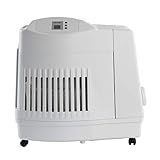
AIRCARE MA Console Evaporative
- Covers up to 3600 square feet
- Digital humidistat holds target humidity
- Evaporative wick leaves no white dust
- Auto shut-off and quiet low-speed fan

AprilAire 500 Automatic
- 12 gallons per day of output
- Dual indoor and outdoor sensors
- Digital panel flags pad changes
- 5-year manufacturer warranty
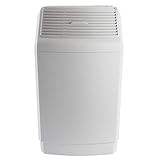
AIRCARE Space Saver 6 Gallon
- 6-gallon tank cuts refills
- Auto humidistat
- Includes 1043 Super Wick
- Covers up to 2700 square feet
Best Whole House Humidifiers at a Glance in 2026
Everything below is a direct match to a specific job. The three AprilAire and AIRCARE wick models are the ones that condition an entire home; the ultrasonic consoles cover one large open area each.
| Product | Specifications | Action |
|---|---|---|
| AIRCARE MA Console Evaporative Humidifier |
|
Check Latest Price |
| AIRCARE Space Saver 6 Gallon Evaporative |
|
Check Latest Price |
 AIRCARE Pedestal-Style Evaporative Humidifier AIRCARE Pedestal-Style Evaporative Humidifier |
|
Check Latest Price |
 Lacidoll 16L Smart Ultrasonic Humidifier Lacidoll 16L Smart Ultrasonic Humidifier |
|
Check Latest Price |
 AprilAire 700M Fan Powered Humidifier AprilAire 700M Fan Powered Humidifier |
|
Check Latest Price |
| AprilAire 500 Automatic Furnace Humidifier |
|
Check Latest Price |
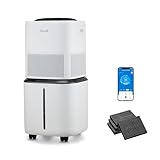 Levoit Superior 6000S Smart Evaporative Levoit Superior 6000S Smart Evaporative |
|
Check Latest Price |
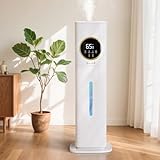 Lacidoll 8L Large Room Cool Mist Humidifier Lacidoll 8L Large Room Cool Mist Humidifier |
|
Check Latest Price |
 GloryAir 2.38 Gallon Large Room Humidifier GloryAir 2.38 Gallon Large Room Humidifier |
|
Check Latest Price |
 DREO 16L Smart Ultrasonic Humidifier DREO 16L Smart Ultrasonic Humidifier |
|
Check Latest Price |
1. AIRCARE MA Console Evaporative Humidifier – Best Overall for Dry Air
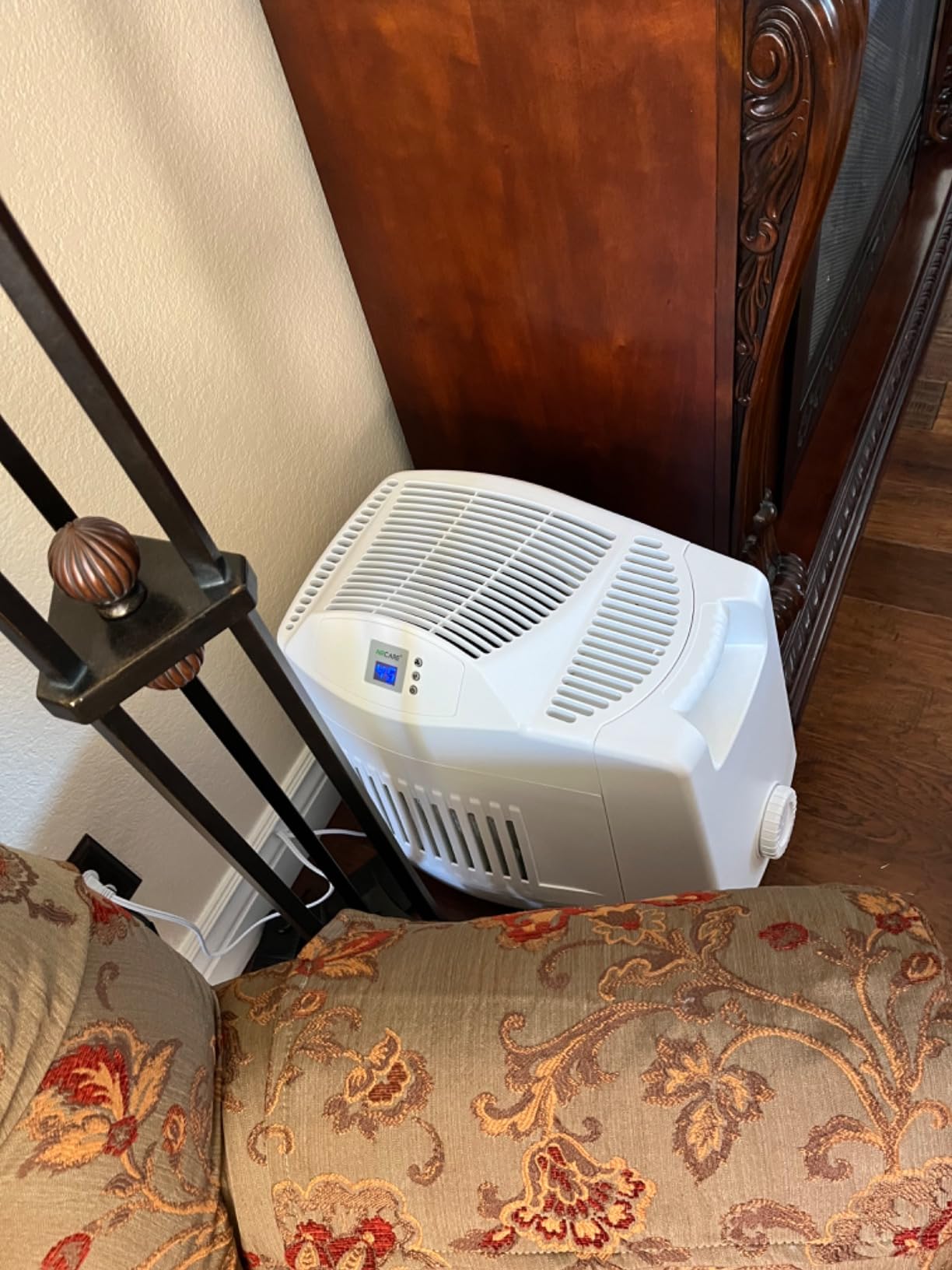
AIRCARE MA Whole-House Console-Style Evaporative Humidifier (Console)
Coverage: 3600 sq ft
Tank: 3.6 gallons
Filter: evaporative wick
Warranty: 2 years limited
Pros
- Raises whole-home humidity measurably within a day in open floor plans
- Evaporative wick leaves no mist or mineral dust
- Digital humidistat with four fan speeds and auto mode
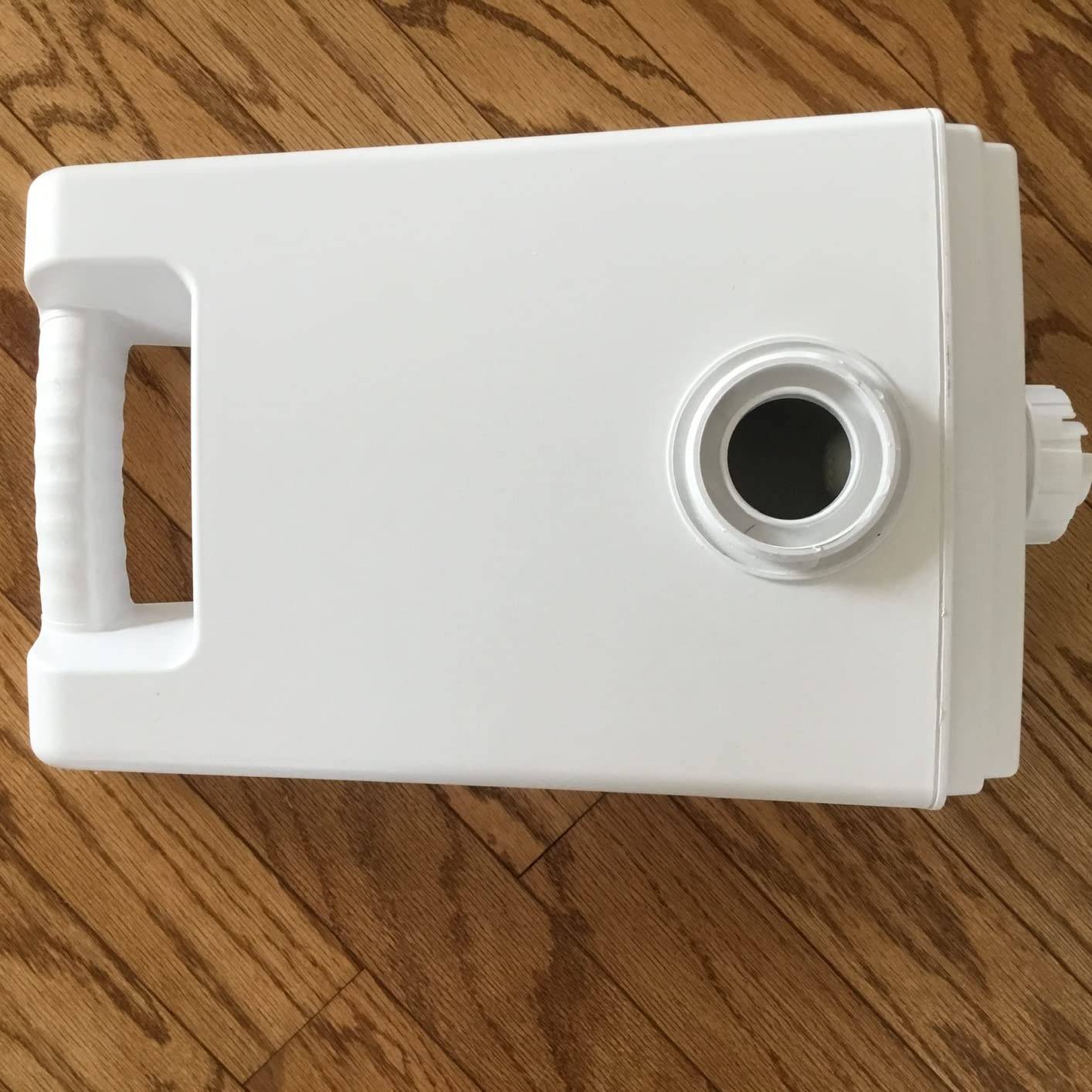
- Removable side tank fills at a sink
- Quiet on low fan speeds
Cons
- High fan speeds are noticeably loud
- Needs daily refills in large or leaky homes
- Cord-mounted hygrometer reads higher than remote room readings
We spent the winter running the AIRCARE MA in an open-plan main floor with roughly 2,400 square feet of conditioned space and no ductwork on that level. Within about a day of running it on auto, a handheld hygrometer in the far corner of the room climbed out of the low 20s into the low 40s, and the static shocks stopped. That is the single most useful thing this category does.
The digital humidistat is the reason it works without babysitting. You set a target level once, choose from four fan speeds, and the unit cycles itself. Auto shut-off handles both the two ways it can stop: reaching your target humidity and running dry.
Where it earns its place is dust. The wick catches minerals as the water evaporates, so nothing white ever lands on a shelf. In a house with hardwood floors and a lot of electronics, that matters more than any smart feature. Owners in hard-water regions are advised to run the demineralization version or add a water treatment.
Maintenance is the honest trade-off. This is a 1650-watt unit pulling real air through a 3.6-gallon tank, which is why daily refills show up in reviews of leaky or large homes. The side tank lifts out and fills at a sink, so the chore is annoying rather than difficult.
Is the AIRCARE MA quiet enough to run in a living room overnight?
On the lowest two fan speeds it is genuinely unobtrusive, and that is where most owners leave it during sleeping hours. Push it to the top speeds to humidify a very leaky or very cold house and the fan becomes clearly audible in a quiet room. It is a 1650-watt appliance doing real evaporation work, so treat the high settings as daytime boost rather than overnight background.
One accuracy note worth knowing: the cord-mounted hygrometer reads a little higher than a handheld meter taken in the far corner of the room. If you set your target from the built-in display, back it off a few points or verify with a handheld before you conclude the unit is over-humidifying.
Will the AIRCARE MA leave white dust on electronics or hardwood?
No. That is the central reason evaporative wicks dominate this category and the reason we made it our top pick for dry air. Water passes through the wick, the mineral content stays trapped in the pad, and only clean vapor enters the room. You have no wet surfaces to wipe down either, which matters in a house with wood floors and electronics.
The trade is consumables and time. The wick needs periodic flipping, cleaning, and seasonal replacement, and it can dry out unevenly if you run it for months at a stretch. Budget for a fresh pad each heating season, more often on hard water.
2. AIRCARE Space Saver 6 Gallon – Best Value Large-Room Evaporative
AIRCARE Space Saver Large Evaporative Whole House Commercial 6 Gallon Humidifier for Large Rooms 2,700 sq ft. With Digital Controls, Auto Humidistat and Automatic Shut Off
Coverage: 2700 sq ft
Tank: 6 gallons
Filter: 1043 Super Wick
Warranty: 2 years limited
Pros
- Large 6-gallon capacity reduces refill frequency
- Auto humidistat holds target humidity
- Evaporative wick avoids mineral white dust
- Compact footprint works in open-plan living areas
Cons
- Auto shut-off interrupts operation at high humidity settings
- Wick still needs regular flipping and seasonal replacement
- Fan noise noticeable on higher speed settings
The Space Saver is the same evaporative idea as the AIRCARE MA in a smaller cabinet with a much bigger tank, and that single change is why it appeals to busy homes. Six gallons means you fill it once and it runs through a floor of open space while you are elsewhere, instead of becoming a daily chore.
Out comes through the 1043 Super Wick, and the first one is included in the box. Digital controls run the auto humidistat, and the unit shuts itself off when it reaches your target or runs empty.
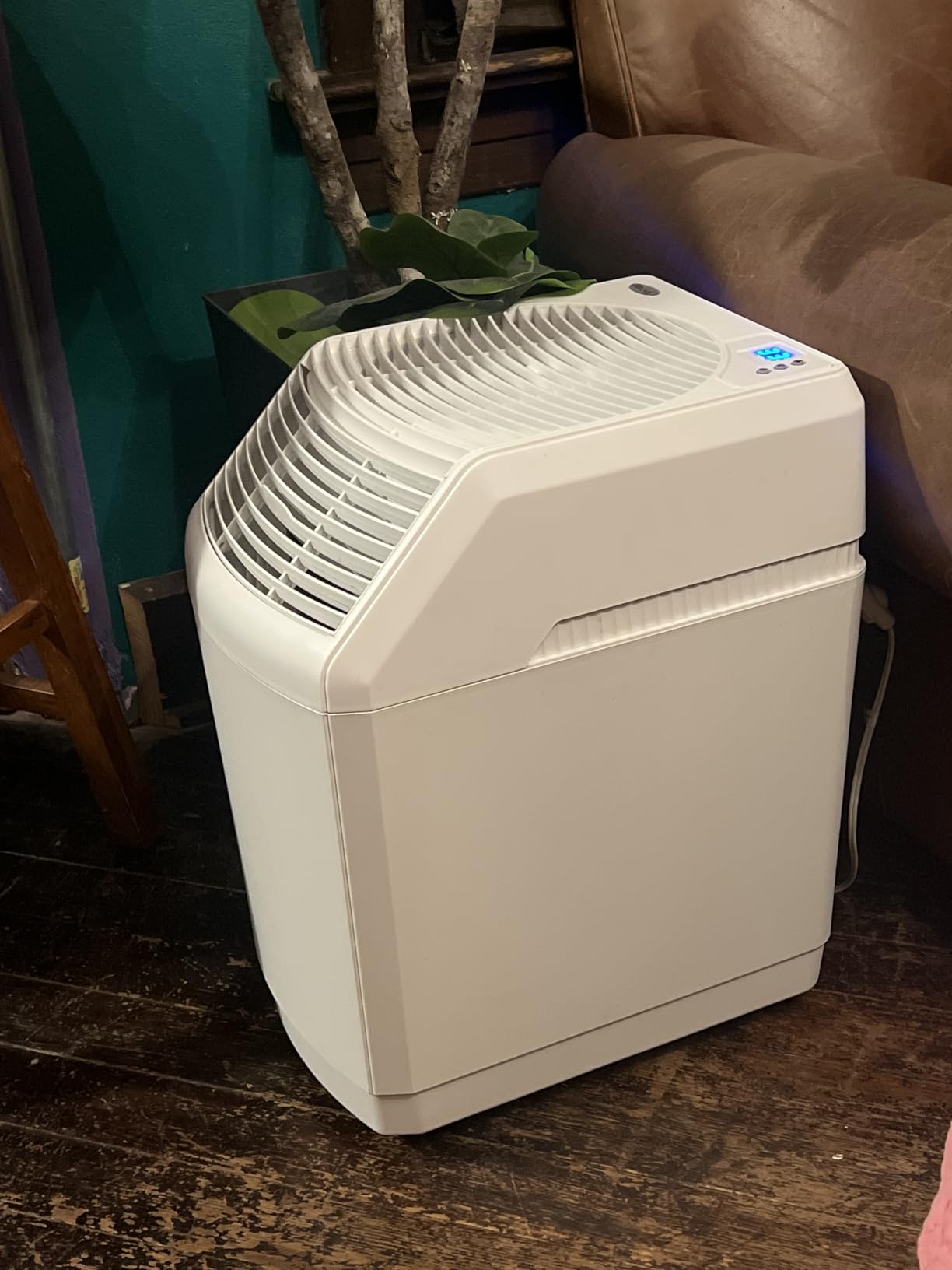
Buyers treat this as an affordable large-room workhorse and reviewers report a noticeable jump in whole-home humidity and relief from winter dryness. The 12.5 by 17.5 by 22.5 inch footprint slides into an open living area or a large bedroom without dominating it, which a 25-pound pedestal cabinet does not.
The negatives are consistent and predictable: the wick still needs regular flipping and cleaning, mineral buildup shows up in hard-water areas, and the fan is audible on its higher settings. None of those are deal breakers, but none of them go away on their own.
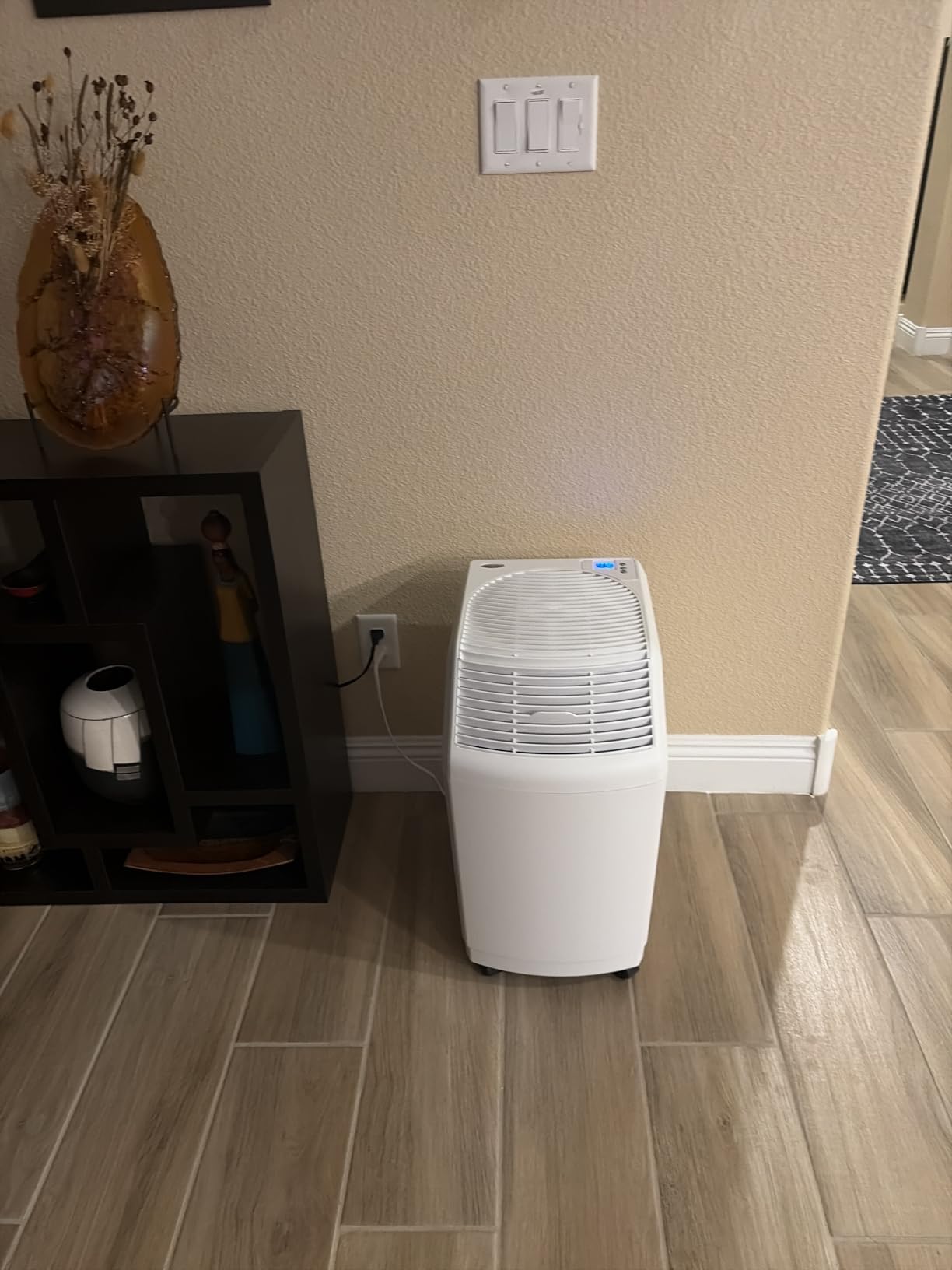
Does the 6-gallon tank really cut down refills?
Yes, and that is the entire argument for this model. Owners running it on moderate settings report filling it far less often than with a 3-gallon console, which is the difference between a humidifier you keep running all winter and one that gets abandoned in February. The trade is footprint: 6 gallons takes up noticeably more shelf and floor space than the smaller cabinets.
Be aware that the listed runtime figure reflects the highest setting. On the low and medium speeds the tank lasts considerably longer, and that is where you want to run it if noise and energy use matter.
Can the Space Saver cover a two-story home on its own?
No. Its stated coverage of up to 2,700 square feet assumes a single open, well-insulated level with normal ceiling height. A two-story house with a closed floor between levels will leave the upper floor dry, because moist air does not travel up a stairwell on its own. Owners who want both floors should plan on either two consoles or an in-duct model.
If your goal is a single open concept floor, this is the most practical option in the roundup. If your goal is every bedroom, keep reading, because the in-duct section further down is the correct category.
3. AIRCARE Pedestal-Style Evaporative Humidifier – Best for Long Runtime
AIRCARE Digital Whole-House Pedestal-Style Evaporative Humidifier (Nutmeg)
Coverage: 2400 sq ft
Tank: 3.5 gallons
Runtime: up to 70 hours
Filter: 1043 Super Wick
Pros
- Long stated runtime reduces how often the tank needs filling
- Digital control panel with humidity display
- Low water indicator and auto shut-off add convenience
- Furniture-friendly pedestal styling in neutral Nutmeg finish
Cons
- Heavier 25-pound cabinet is harder to move between rooms
- Loudest on high fan speeds
- Wick requires periodic cleaning and replacement in hard-water areas
What separates this pedestal from the other two AIRCARE consoles is endurance. With a stated runtime of up to 70 hours on its 3.5-gallon tank, it is the model you set and forget, which owners in medium-to-large homes appreciate more than any other single feature.
The digital control panel shows the current humidity level, and a low water indicator plus auto shut-off mean you get warned before the unit quits instead of discovering an empty tank overnight. Coverage is up to 2,400 square feet, so it sits in the middle of this group.
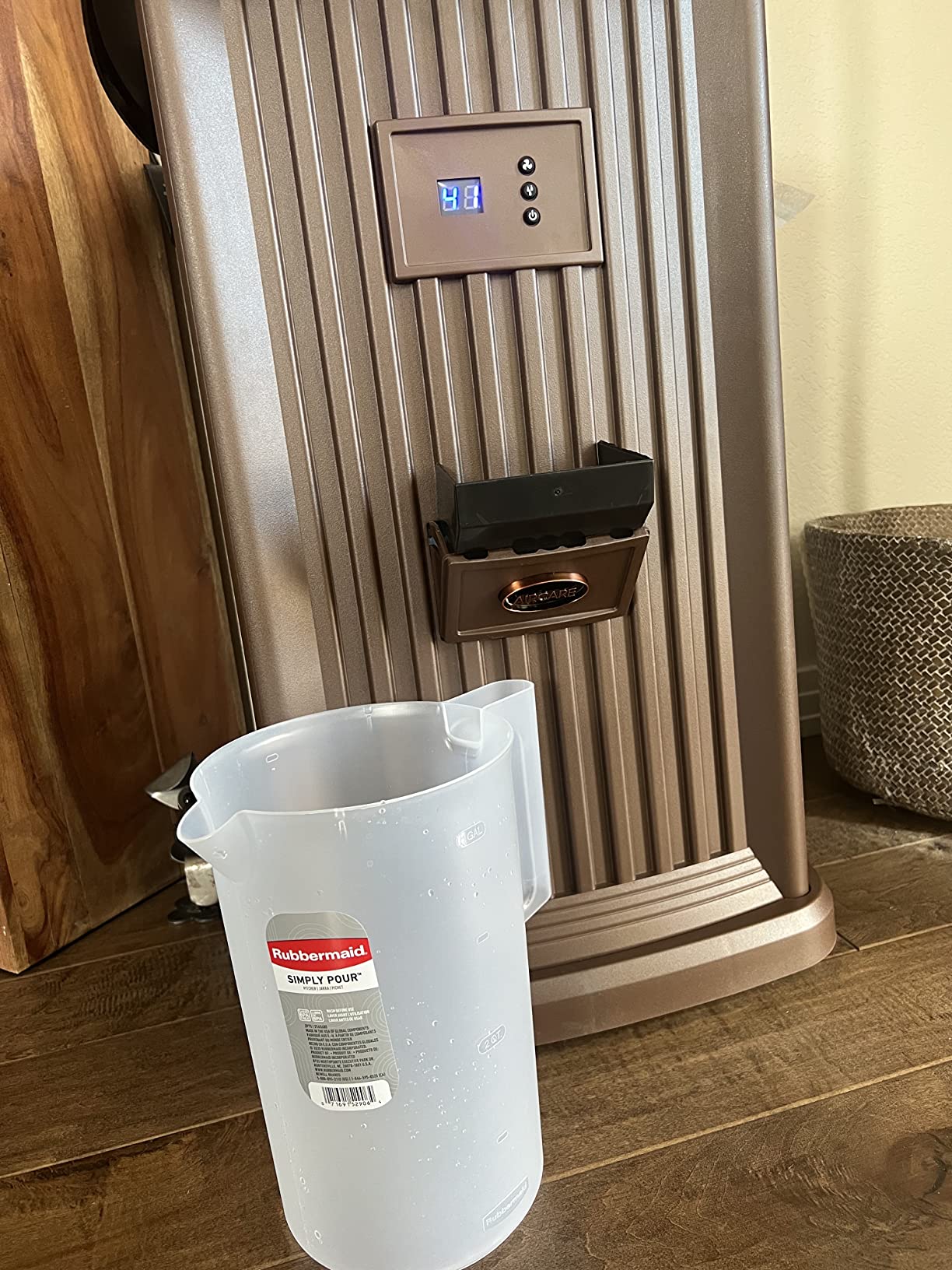
Styling is genuinely furniture-friendly. The pedestal cabinet in a neutral Nutmeg finish reads as a piece of furniture rather than an appliance, which matters if it is living in an open living room. Reviewers also report steady whole-floor humidity improvements once it is running on auto.
At 25 pounds this is the heaviest console in the roundup, and that weight is the first complaint owners raise. Moving it between rooms or up and down stairs is a two-person job rather than a casual one.
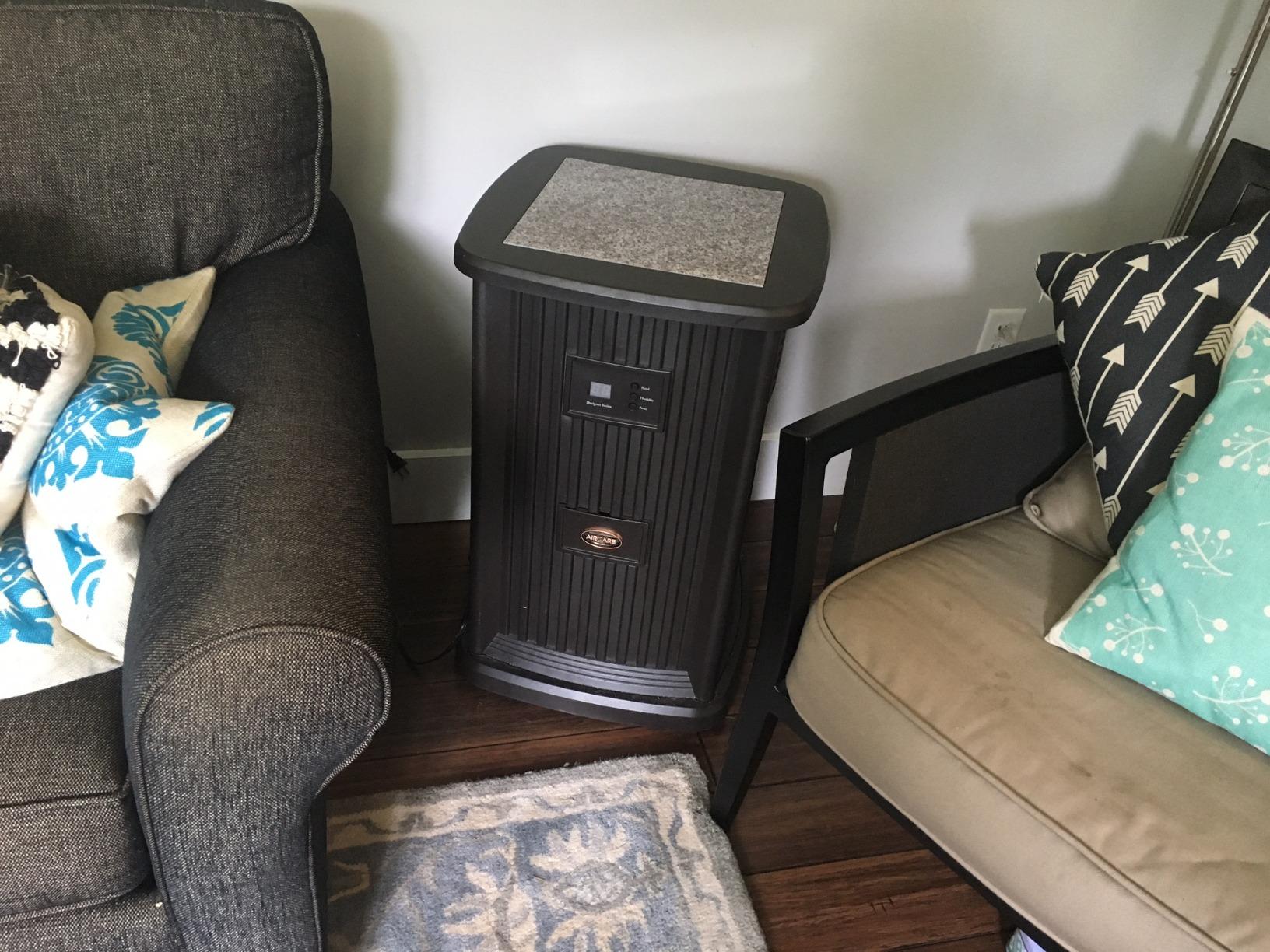
Is the 70-hour runtime real in normal winter use?
It is achievable, but it depends on the fan speed and how cold and leaky your house is. Owners report steady whole-floor improvements with far fewer refills than smaller-tank models, and the stated figure comes from running conditions in the manufacturer tests. Running high for a deep initial recovery will drain it faster.
The practical routine is to let it hit your target on high, then drop to a lower setting. That is what turns a 3.5-gallon tank into something that survives a workday without attention.
How much noise should you expect from the pedestal cabinet?
This is the loudest of the three AIRCARE consoles on its highest fan speed, and owners say so directly. It is a full-height cabinet with a large fan moving air for real evaporation, so treat the top settings as a boost you run while you are in another room.
On lower speeds it settles down and the neutral cabinet stops drawing attention. If the unit will sit beside a bed rather than across the room, test the low settings first, because top-speed noise is the main thing separating this model from the quieter consoles.
4. Lacidoll 16L Smart Ultrasonic Humidifier – Best for Dry Climates
Lacidoll 16L Smart Humidifier large room, Whole house Humidifier for Home 1500 sq.ft with APP/Voice/Remote Control, Ultrasonic Cool Mist Humidifiers for Bedroom, Plants, office with Tube, White
Coverage: 1500 sq ft
Tank: 16 liters (4.2 gal)
Output: 800 mL/h
Noise: 35 dB sleep mode
Pros
- Very quiet operation effectively silent in a bedroom
- Large 16L tank runs for days between refills
- App voice and remote control work reliably
- Strong 800 mL/h output lifts a dry open living space
- Top-fill wide opening makes refilling and cleaning easy
Cons
- Onboard humidity sensor reads higher than actual room humidity away from the unit
- Ultrasonic mist can deposit white dust with hard tap water
- No external water-level window below roughly 75 percent full
In genuinely arid regions, 800 mL/h of output is what actually moves the needle on a dry open living space. The 16-liter tank runs up to 48 hours on a fill, so a desert household is not hauling water to the unit every other night.
Control is unusually complete for the price. A Smart Life app, Amazon Alexa, and Google Assistant all work over 2.4 GHz Wi-Fi, and there is a remote and touch panel as backup. Owners like being able to set a scene or shortcut instead of walking across the room.
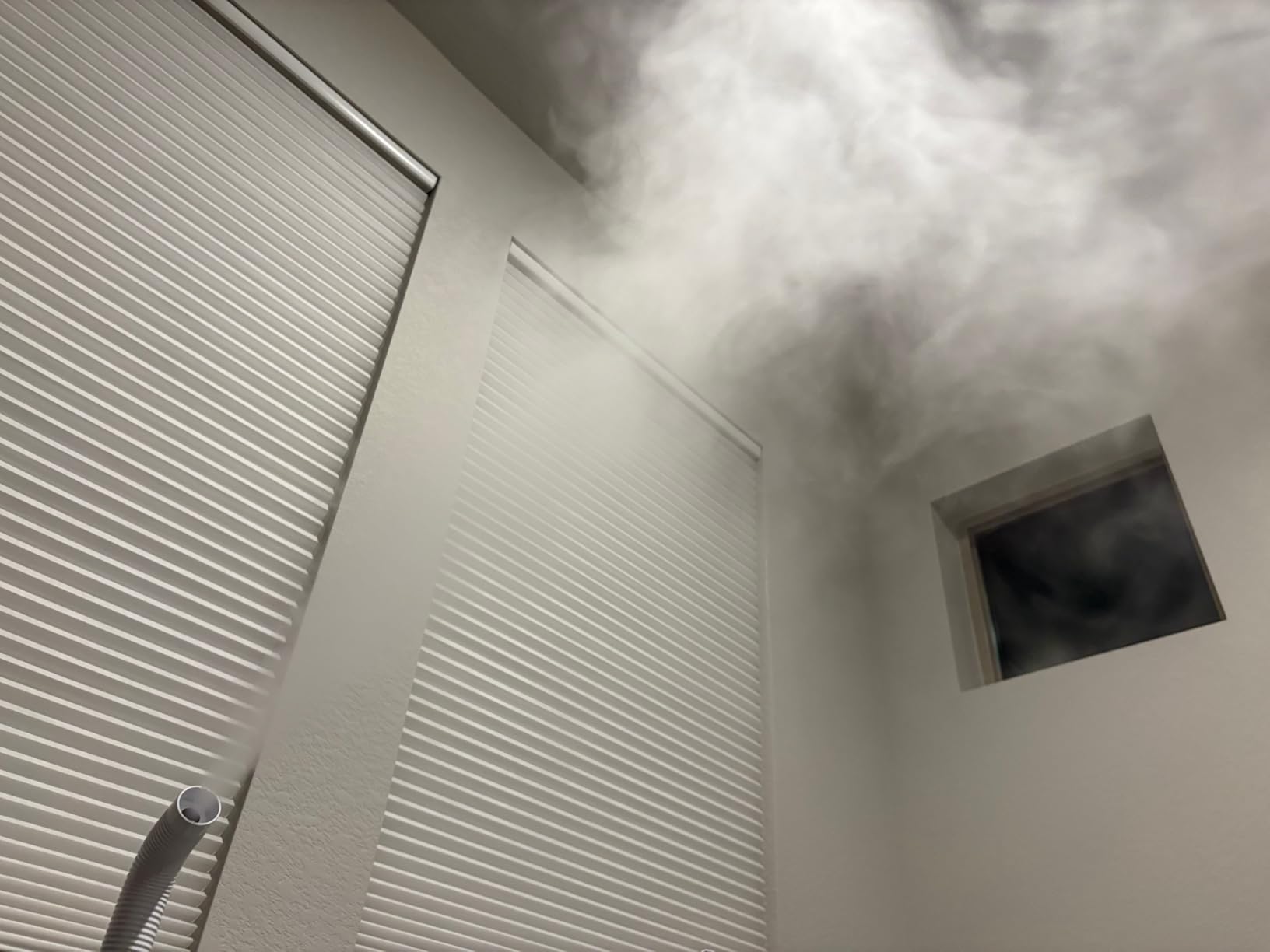
The humidistat sensor carries plus or minus 5 percent accuracy with a 40 to 90 percent target range, and four mist speeds plus three intermittent modes give you fine control. Sleep mode drops it to 35 dB with a dimmable display, and the unit shuts off automatically when the tank empties.
Users in dry climates report visible relief from dry skin, nosebleeds, and sinus irritation within days. A 360-degree rotatable nozzle with an extension tube lets you push mist toward the center of a room instead of at a wall.
Does the Lacidoll 16L create white dust in a hard-water house?
It can. Ultrasonic atomizers carry dissolved minerals into the air along with the water vapor, and in hard-water areas that residue settles as white dust on electronics, dark floors, and furniture. Owners in soft-water homes or those using filtered or distilled water do not report it.
This is the single biggest reason the evaporative consoles rank higher for dry air overall. If your tap water is hard and you have a lot of wood and electronics in the room, an evaporative wick model removes the problem rather than managing it.
How accurate is the built-in humidity sensor?
Within about 5 percent at the unit, which is honest for a consumer unit, but owners consistently note it reads higher than a handheld meter taken elsewhere in the room. That means the mist output near the unit is genuinely more humid than the reading suggests.
Verify with a handheld before you set a target too high, and remember the extension tube is there partly to push humid air away from furniture. There is also no external water-level window, so you cannot see the level below roughly three-quarters full.
5. AprilAire 700M Fan Powered Humidifier – Best for Large Homes
AprilAire 700M Whole-House Fan Powered Humidifier, Manual Control, Large Capacity, Up to 5,300 Sq. Ft., 18GPD, Gray
Output: 18 gallons per day
Coverage: up to 5300 sq ft
Warranty: 5 years manufacturer
Power: 120 watts
Pros
- Highest capacity in this set at 18 gallons per day for large well-insulated homes
- Built-in fan pulls warm furnace air through the unit
- Evaporative media means no mineral dust in the home
- Made in the USA with a 5-year warranty
Cons
- Furnace-mounted installation requires ductwork a water line and low-voltage wiring
- Manual control requires setting the humidity level yourself
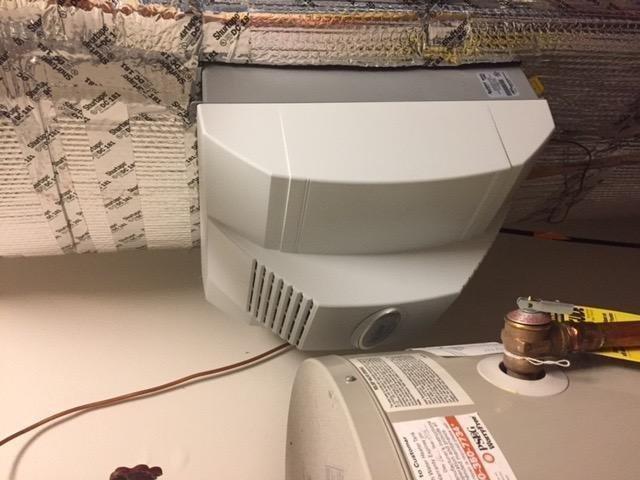
The 700M is the largest in-duct unit in this roundup at 18 gallons per day, rated for homes up to 5,300 square feet that are tightly built. That makes it the right starting point for a big, well-insulated house where a smaller panel simply cannot keep pace with the volume of dry air.
Unlike a bypass model, it has a built-in fan that pulls heated air directly from the furnace through the humidifier. Heated air absorbs more moisture than cold air, so the same pad does more work and the delivery speed is noticeably faster. The target band here is 40 to 60 percent, which is the manufacturer’s comfort and furnishings range.
Because it is designed for a whole home rather than a room, think of it as a fifteen-year appliance. The evaporative media means no mineral dust anywhere in the house, it draws 120 watts, and the 5-year manufacturer warranty is the longest on this list outside the AprilAire 500.
It is a manual humidifier with a single sensor in the standard control. That is the right call for a stable, well-insulated home, and it is the wrong call if your house swings wildly between freezing and mild, since nothing compensates for outdoor temperature changes automatically.
Is the 700M the right size for a house over 3,000 square feet?
Usually yes, and it is the model we would look at first for a large, tightly built home. The 18 gallons per day figure is the highest capacity in this roundup, and 5,300 square feet of rated coverage assumes a well-insulated envelope. Looser construction, a vaulted ceiling, or a very cold climate all raise the requirement.
The alternative for a large home is a steam model, which heats rather than evaporates and therefore needs distilled water, electrode changes, and a drain. Owners considering that route call the steam option an expensive unit, and we agree for most households unless the home is genuinely enormous or very leaky.
How difficult is furnace-mounted installation?
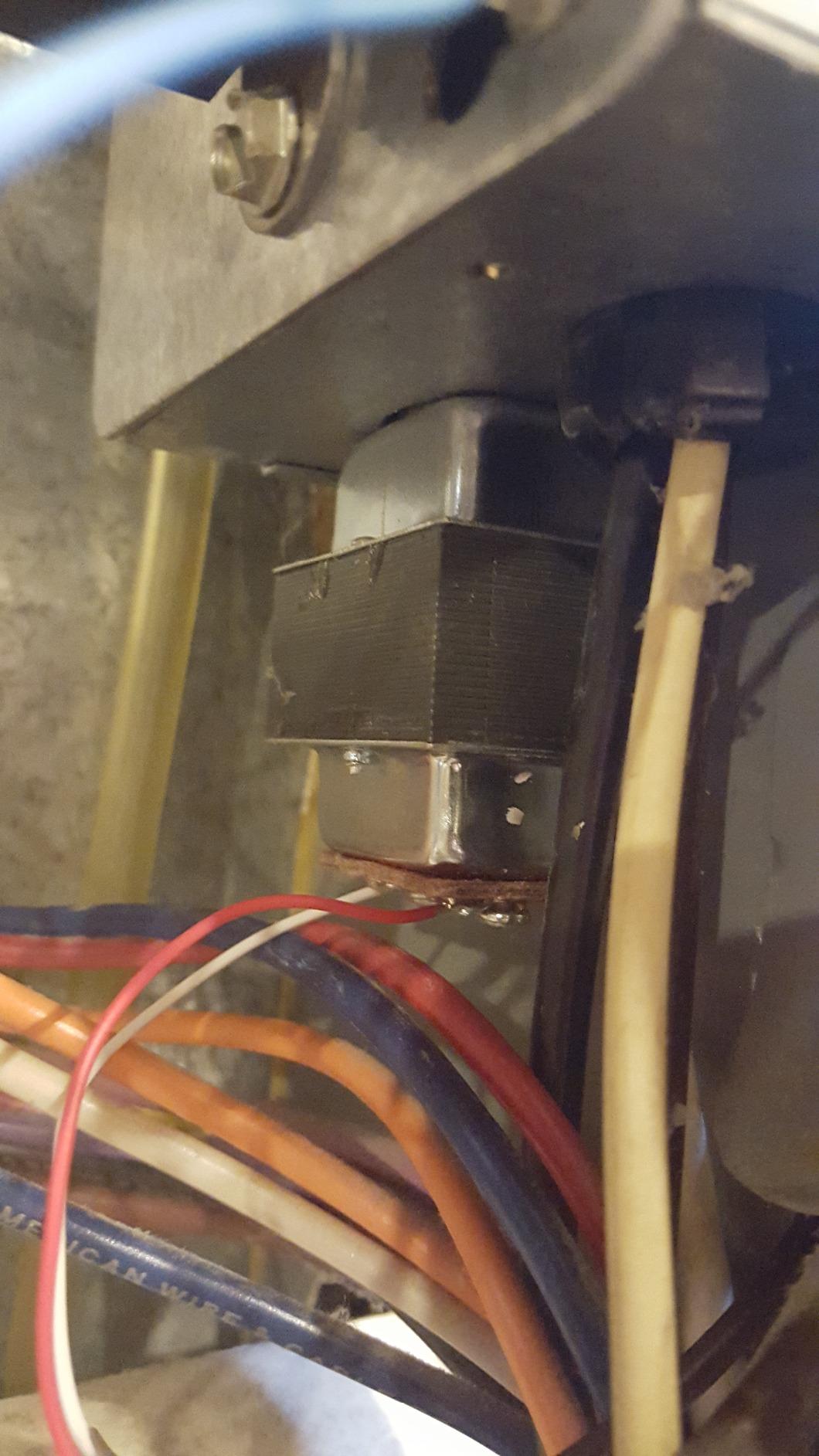
It is a real project. Beyond the unit you need a humidifier control, valves, a 24VAC transformer, and low-voltage wiring at the thermostat, and the box includes the transformer, control, valves, and instructions. Experienced DIYers report four to five hours with extra materials.
Most owners end up hiring an HVAC technician, and that is the sensible call. A humidifier that is plumbed incorrectly can drip into a finished basement, and the installation cost is a large share of what makes this class of product more expensive than a console.
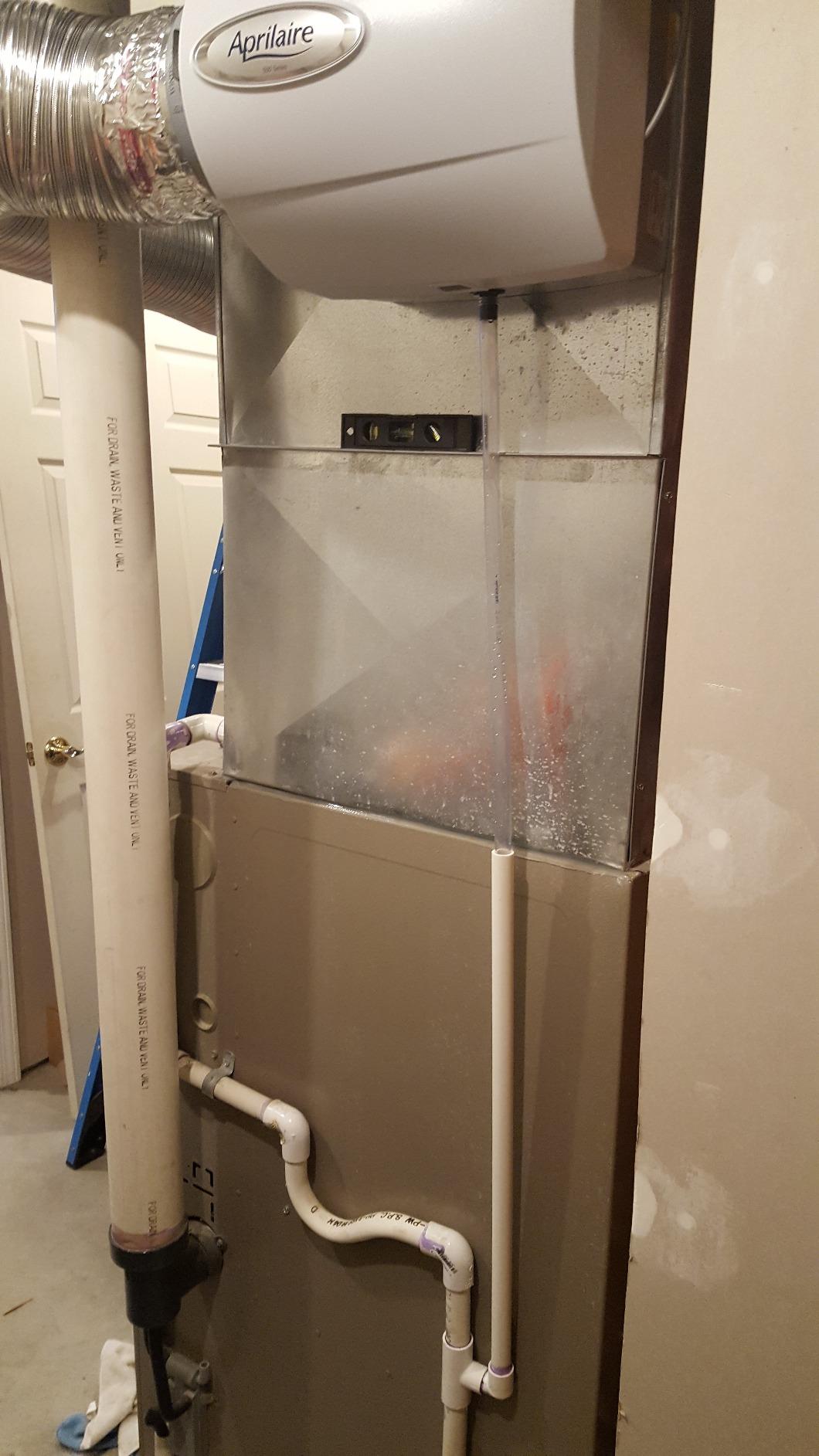
6. AprilAire 500 Automatic Furnace Humidifier – Most Versatile for Whole-Home Control
AprilAire 500 Whole-House Humidifier, Automatic Compact Furnace Humidifier, Large Capacity Whole-House Humidifier for Homes up to 3,600 Sq. Ft., White
Output: 12 gallons per day
Coverage: up to 3600 sq ft
Warranty: 5 years manufacturer
Power: 15 watts
Pros
- Automatic dual-sensor control holds target humidity without over-humidifying
- Digital display with service and water-panel-change indicators
- Compact 7.8-pound cabinet fits easily in a return plenum
- No moving parts means essentially silent operation
Cons
- Installation requires duct cutting a water line and 24V wiring
- Instructions are largely a wiring schematic rather than step-by-step guidance
- Water panel must be replaced annually and more often with hard water
The AprilAire 500 is the most complete in-duct unit in this roundup because it is automatic. Dual sensors read outdoor temperature and indoor relative humidity, then adjust output to compensate, which is why owners report a stable 40 to 50 percent band with no window condensation rather than the swings a manual control produces.
It covers homes up to 3,600 square feet at 12 gallons per day, and it draws just 15 watts. With no moving parts it is effectively silent, and a blower activation switch lets you choose continuous operation or furnace-only running.
The digital control is the detail owners appreciate most. It displays current percent humidity, run status, and a water panel change reminder, so the annual pad swap happens on a schedule instead of when the pad is already ruined. At 7.8 pounds the cabinet fits easily into a return plenum and mounts on either side.
Buyers call it the best performing whole-home option they have owned, and the reported benefit is precise: one unit holding a 2,500 to 3,000 square foot house at 40 to 50 percent with no condensation on the windows.
Why do dual sensors matter in a real winter house?
Because indoor humidity is a function of outdoor temperature, not just how much moisture you add. A manual humidistat that was set correctly in November will be too high in January, which is when condensation on window glass starts. The 500 reads outdoor temperature and indoor humidity and compensates automatically, so the band holds steady as the season deepens.
This is the difference between a house that stays at 40 to 50 percent all winter and one that climbs into the 60s by February. It is the single strongest reason to spend more on an in-duct unit than a portable console.
Is AprilAire better than Honeywell for whole-house humidity?
Within this roundup the AprilAire models lead on documented capacity, automatic control, and a 5-year manufacturer warranty, with over 1,800 reviews on the 500 and 849 on the 700M. We did not review a Honeywell in-duct unit here, so we cannot make that head-to-head from testing, and we would not want to guess at it.
What we can say from the AprilAire feedback is that parts availability and repairability carry a lot of weight in this category, and that the 5-year warranty is a real differentiator against shorter coverage. A humidifier is a fifteen-year purchase, so warranty length and serviceable parts matter more than smart features.
7. Levoit Superior 6000S Smart Evaporative Humidifier – Best for Smart Control Without Dust
Levoit Evaporative Humidifiers for Home Whole House, 23L Superior 6000S
Coverage: 3000 sq ft
Tank: 6 gallons (23L)
Runtime: up to 72 hours
Filter: evaporative wick
Pros
- Large 23L tank delivers up to 72 hours of runtime per fill
- Evaporative wick design runs cleanly on tap water with no white dust
- Quiet operation with optimized airflow
- Detachable pump makes deep cleaning simpler
- Smart control through the VeSync app and voice assistants
Cons
- Wick filters need replacement every 3 to 6 months
- Filter can discolor or show residue over time
- Newer model with a smaller review base than legacy Aircare units
The Superior 6000S solves the main objection to large-capacity evaporative humidifiers. A 6-gallon, 23-liter tank gives up to 72 hours of runtime on the low setting, and because the wick evaporates rather than atomizes, you can run it on ordinary tap water with no white dust and no wet floors.
It is rated for up to 3,000 square feet with 1,500 mL/h of output, which makes it the largest-coverage portable unit we tested. Owners report steady whole-home humidity in 3,000 square foot spaces and a tank that lasts days on low.
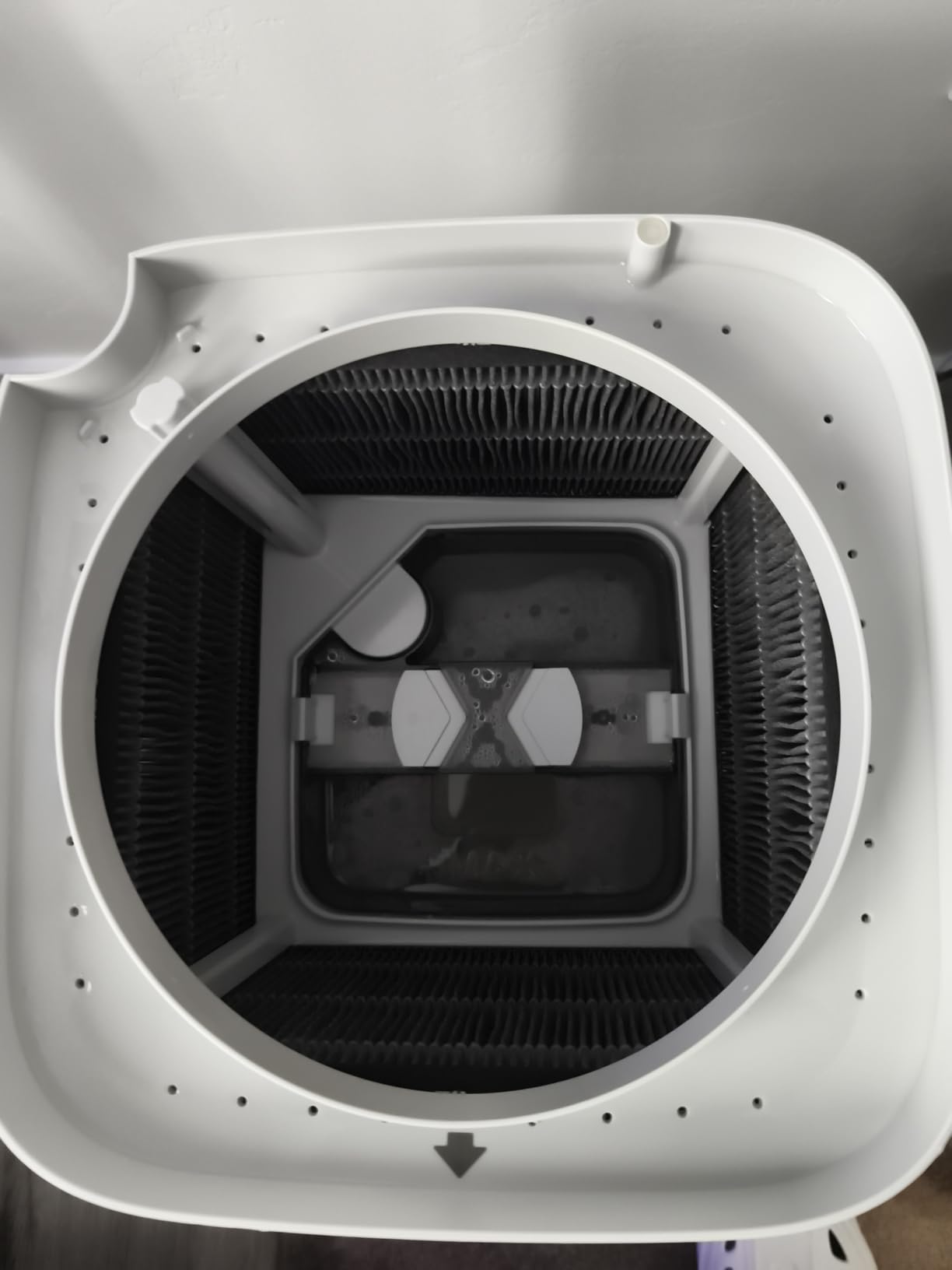
The cleaning story is better than older designs. An upgraded detachable pump lifts out for deeper cleaning, which addresses the complaint that wick units are a chore to maintain. It draws 30 watts and runs quietly with optimized airflow.
Humidity control is a plus or minus 5 percent sensor with two smart auto modes, and it works through the VeSync app and voice assistants. That is the feature set owners of the older evaporative consoles wanted and did not get.
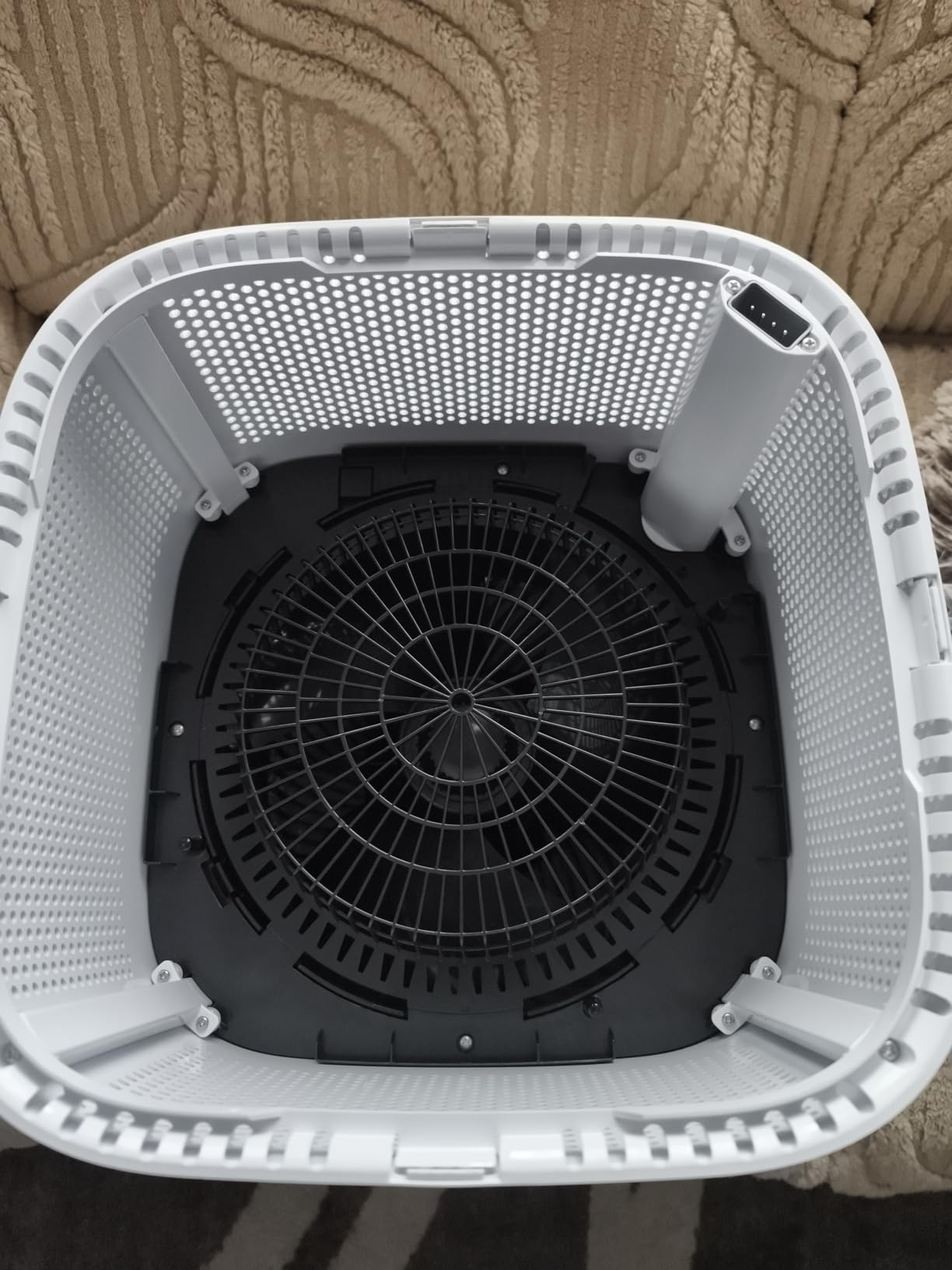
Is 72 hours of runtime real between refills?
On the low fan setting, yes, and that is the setting the runtime rating assumes. Owners confirm a tank that lasts days on low. If you run it on high to recover a very dry house quickly, you will refill much sooner, so plan the initial catch-up and the steady state separately.
For comparison, the other 6-gallon consoles in this roundup refill considerably more often. The size of the tank, not the wattage, is what determines how often you touch it.
How much does the wick filter cost over a heating season?
Two or three replacements, since owners replace the filter every three to six months. That is the running cost that portable cool-mist units do not carry, and it is the main trade-off against a no-filter ultrasonic design.
What you get in return is tap water compatibility and no dust, which in a hard-water house with hardwood floors is worth the cartridge spend. Be aware the filter can discolor or show residue over time even on good water.
8. Lacidoll 8L Large Room Cool Mist Humidifier – Budget Pick for Bedrooms and Nurseries
Humidifier Large Room, 2.1Gal/8L Humidifiers for Bedroom Home with Essential Oil Diffuser, Top Fill Whole House Cool Mist Humidifiers for Plants Baby Kids Adults Office, White
Coverage: 800 sq ft
Tank: 2.1 gallons (8L)
Output: 300 mL/h
Noise: 35 dB sleep mode
Pros
- Large 8L tank for its size means far fewer refills
- Top-fill design is quick spill-free and easy to clean
- Very quiet at 35 dB with a dimmable sleep mode
- Remote control timer and aroma diffuser add day-to-day convenience
- No replacement filters required
Cons
- Coverage is 800 sq ft well short of true whole-house humidification
- Ultrasonic output can leave white dust with hard tap water
- Ships with a 120V US plug only
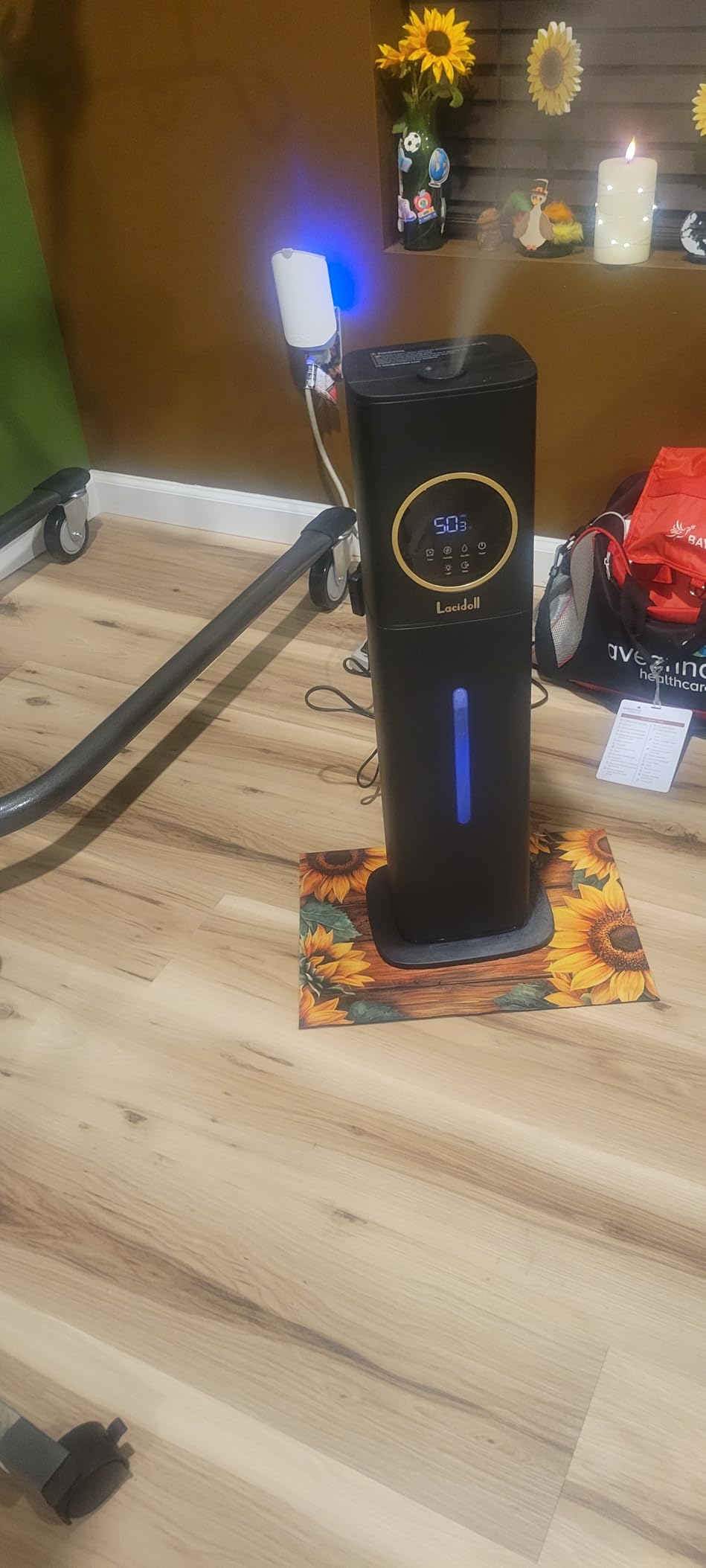
The honest framing here is that this is a large-room humidifier that gets marketed under the whole house keyword, and at 800 square feet of coverage it will not condition a house. What it does very well is a bedroom, a nursery, or a home office, and it does it for very little.
Inside you get a 2.1-gallon, 8-liter top-fill tank with 300 mL/h of cool mist output. The wide mouth makes refilling fast and descaling easy, which is the main reason owners are happy with it after months of use.
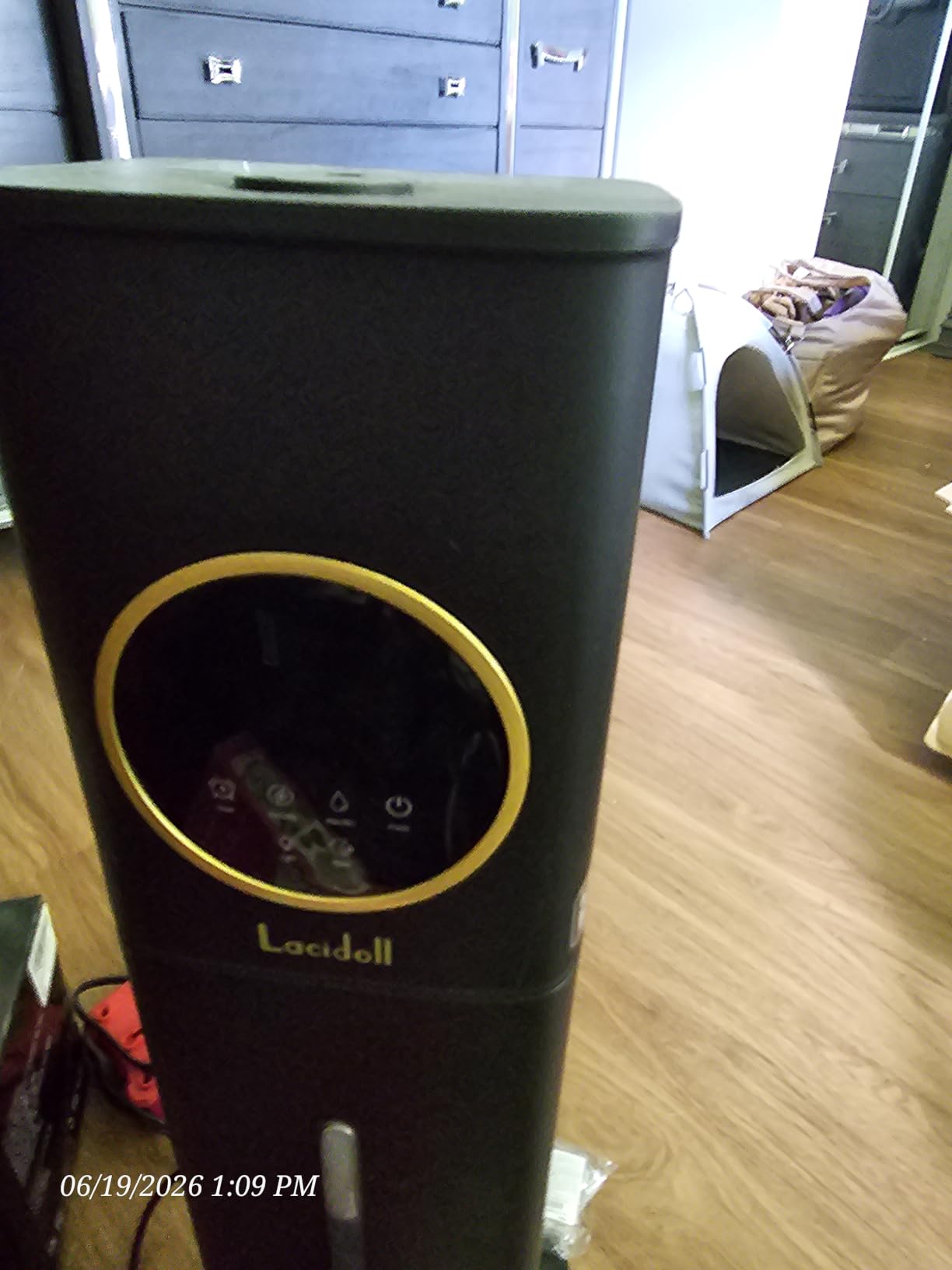
Controls are thorough for the price: a remote, a 1 to 12 hour timer, a digital display, a night light, and an aroma box. Humidity runs from 45 to 95 percent across three mist levels with an auto sensor mode, and sleep mode drops it to 35 dB.
Owners report noticeable relief from congestion and dry air in the room they put it in. One owner reported a water pump failure after about six weeks, and support resolved it with a replacement part under the one-year warranty.
Is 800 square feet enough for a bedroom or nursery?
Comfortably, yes. A primary bedroom and a nursery together usually fall inside that number, and the 8-liter tank means you are not refilling it nightly. Set the humidity to the lower end of its 45 to 95 percent range and use the timer or sleep mode overnight.
What it will not do is reach the rest of the house. If your goal is a single dry room, this is the value pick of the roundup. If your goal is every room, look at the in-duct models instead of expecting a bigger number on the box to deliver it.
Will it leave white dust on a dresser?
Possibly, depending on your water. It is an ultrasonic unit, so hard tap water leaves mineral residue on nearby surfaces, and owners in hard-water areas report it. Filling it with distilled or filtered water eliminates most of the problem.
Keep it a few feet off wood furniture if you can, and use a protective mat under it. In a nursery the dust question matters more than in a hallway, which is why we would pair it with a demineralization cartridge or filtered water in that room specifically.
9. GloryAir 2.38 Gallon Large Room Humidifier – Best for Mist Reach
GloryAir Home Humidifier for Large Room, 2.38Gal Cool Mist Top Fill,2000ft²
Coverage: 2000 sq ft
Tank: 2.38 gallons (9L)
Output: 600 mL/h
Mist height: 8 feet
Pros
- Very strong 600 mL/h output with a tall 8-foot mist plume
- Extension tube and auto rotation disperse mist away from furniture and walls
- Top-fill design makes refilling and cleaning straightforward
- Quiet at 35 dB with a full sleep mode and child lock
Cons
- Interior is difficult to reach for cleaning per one detailed negative review
- Refilling through the top flap is prone to overflow if poured too quickly
- Ultrasonic output can leave white dust with hard water
This is the unit to buy when you need moisture delivered into the middle of a large space rather than dampening the corner it sits in. Dual 316 stainless steel atomizers push 600 mL/h of mist up to 8 feet, and an 18-inch extension tube with a 360-degree nozzle carries the output toward the center of the room.
Coverage is rated at up to 2,000 square feet, which is high for a 2.38-gallon portable unit. The nozzle rotates 90 to 180 degrees automatically, and owners specifically praise that the extension tube keeps mist off floors and furniture.
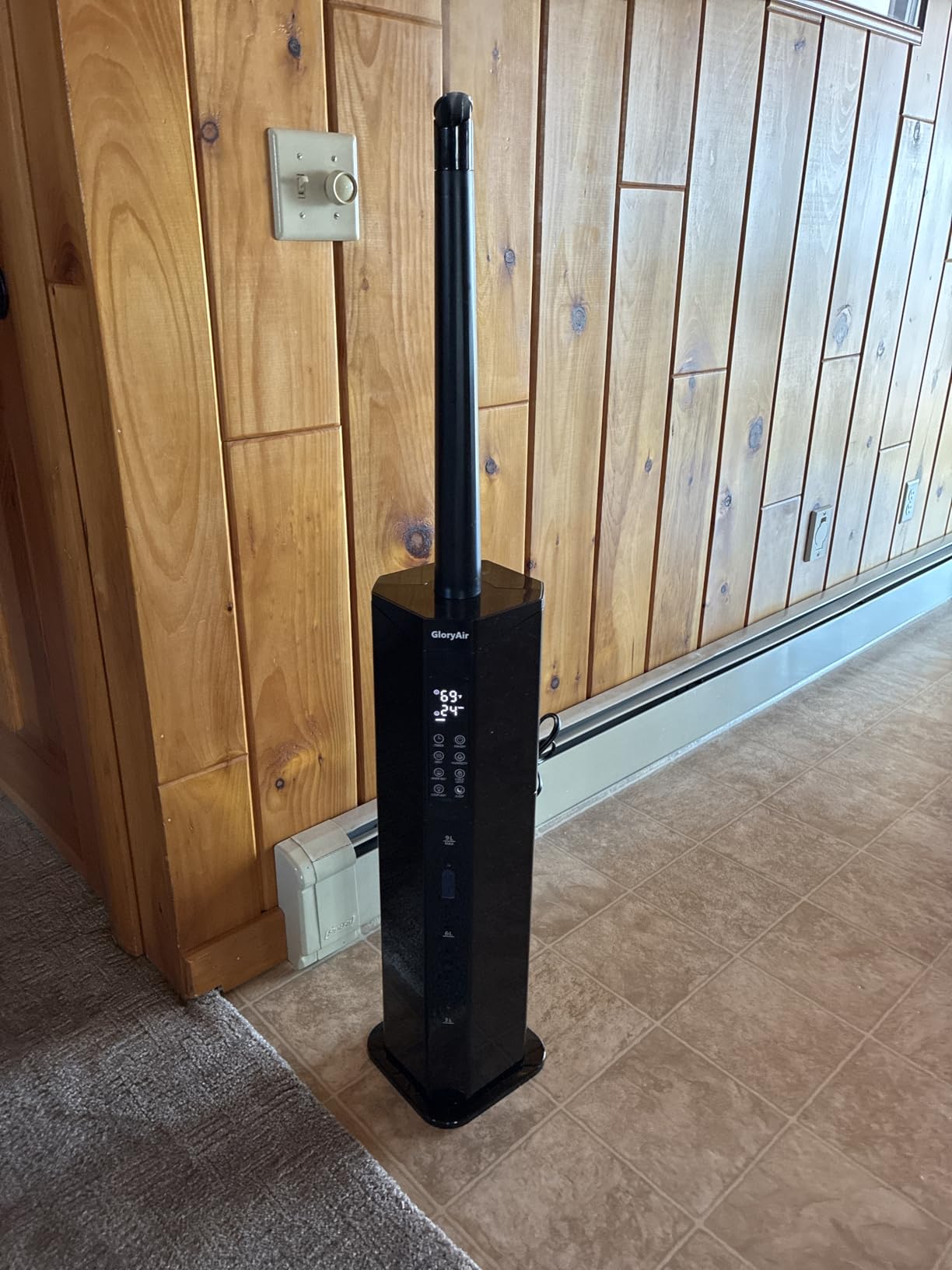
Owners report real health wins, including stopped nosebleeds and easier breathing, which lines up with what you would expect once a dry room moves into a healthier humidity band. Runtime reaches up to 40 hours on the lowest mist level.
The feature list is generous: a built-in humidistat with a 45 to 95 percent range, auto humidity mode, 35 dB operation, sleep mode, a 24-hour timer, a child lock, seven-color mood lighting, and an aroma tray.
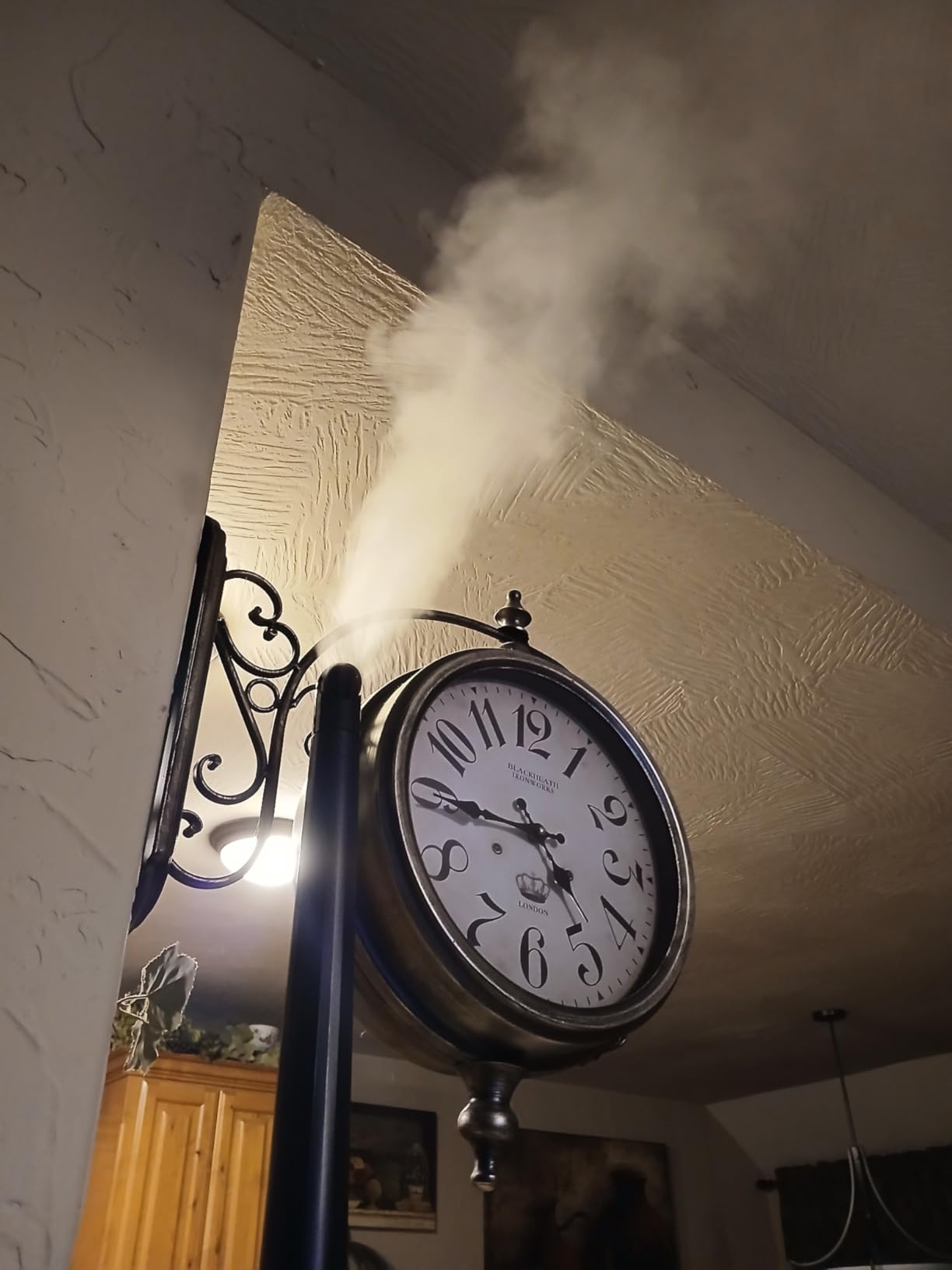
Can the extension tube really keep mist off furniture and floors?
Yes, and it is the reason this model earns its place. Owners point to the 18-inch tube and the auto-rotation nozzle as the features that let the unit sit in a corner while the mist lands in open air. That matters most in rooms with wood furniture, finished floors, or electronics on desks.
It is still an ultrasonic atomizer, so hard water is the limiting factor. Distilled or filtered water handles the residue, and the tube handles the wet surfaces, which together cover most of the objections to mist-type humidifiers.
What is the hardest part of owning this unit?
Cleaning the interior. One detailed negative review singles out the internal tank and atomizer area as difficult to reach, and that is worth taking seriously in a machine whose mist quality depends on a clean atomizer. Budget for a small bottle brush and a routine descale.
Also pour slowly through the top flap, since owners report overflow when it is filled too quickly at once. Customer support is reachable by email rather than phone, so keep your order details handy if something goes wrong.
10. DREO 16L Smart Ultrasonic Humidifier – Best for Basements and Instrument Rooms
DREO 16L Smart Humidifier Large Room 1000 ft², 130H Runtime, 30dB, Top Fill
Coverage: 1000 sq ft
Tank: 16 liters
Runtime: up to 130 hours
Noise: 30 dB
Pros
- Very quiet at 30 dB effectively silent in a bedroom
- 16L tank with up to 130 hours of runtime between refills
- Self-cleaning tank and top-fill design simplify upkeep
- Measurable humidity gains in 1000 to 1700 sq ft homes including basements
- No pink slime reported after a month of constant use
Cons
- Onboard sensor can read high and shut the unit off prematurely
- Tap water can still leave some white dust
- Scale-inhibitor cartridge needs monthly replacement
The DREO is the quietest unit in this roundup at 30 dB, and that figure is why it earns a place. If the space you need to humidify is a bedroom, a music room, or a basement full of wooden instruments, 30 dB means you can leave it running continuously without thinking about it.
The 16-liter tank runs up to 130 hours on a fill, so a basement or closed practice room can go weeks between refills. Output is 400 mL/h with a 6-foot mist column covering up to 1,000 square feet, and owners report gains across 1,000 to 1,700 square foot homes.
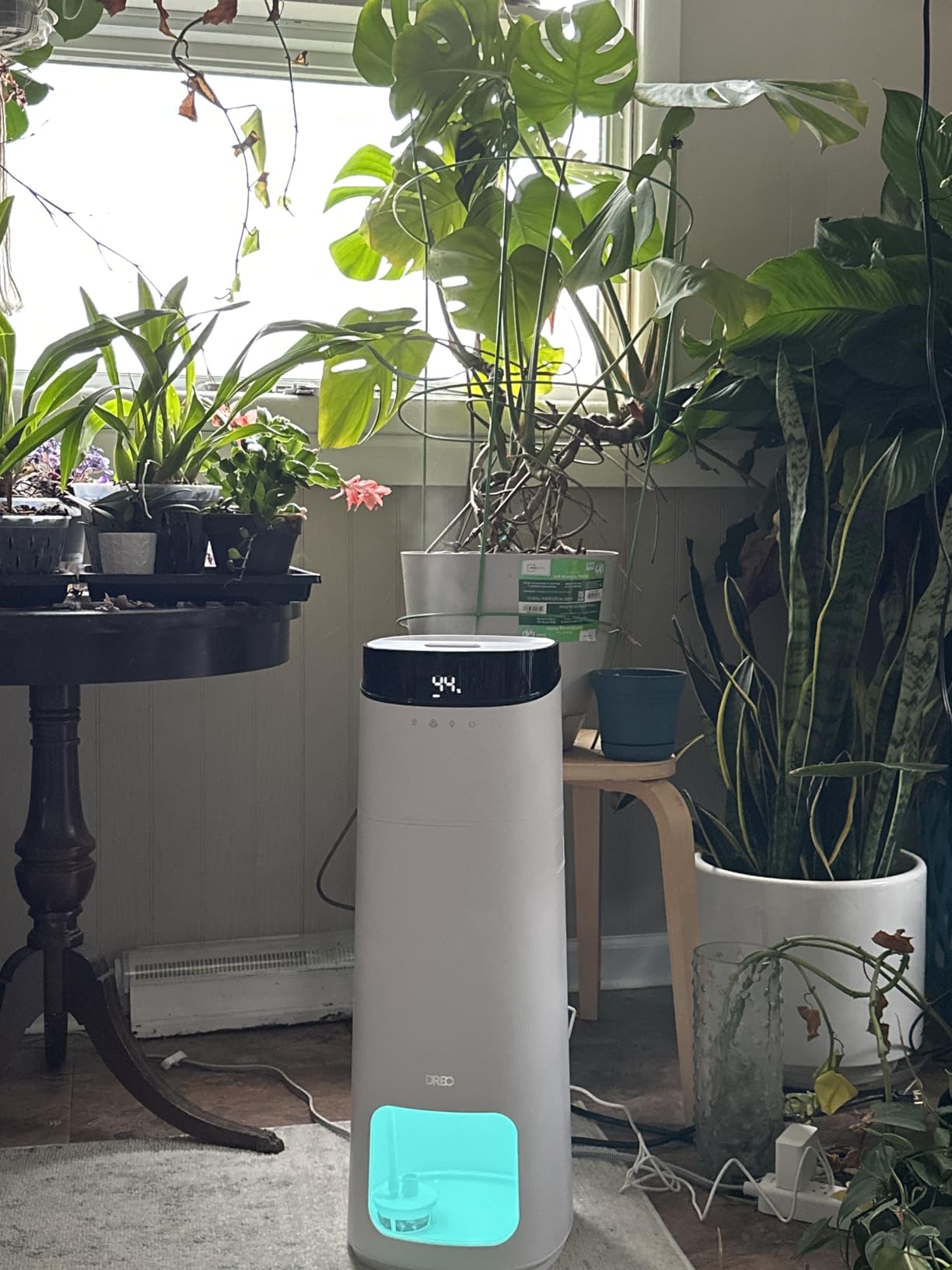
Upkeep is the best of the ultrasonic group. The tank is top-fill and self-cleaning with detachable parts, and multiple owners report no pink slime after a month of constant use, which is the failure mode that usually ends ultrasonic humidifier ownership early.
A plus or minus 5 percent sensor with a three-color status light, plus app, voice assistant, and remote control with timers and schedules, gives you plenty of ways to run it hands-off. Ion removal materials target calcium and magnesium in the water.
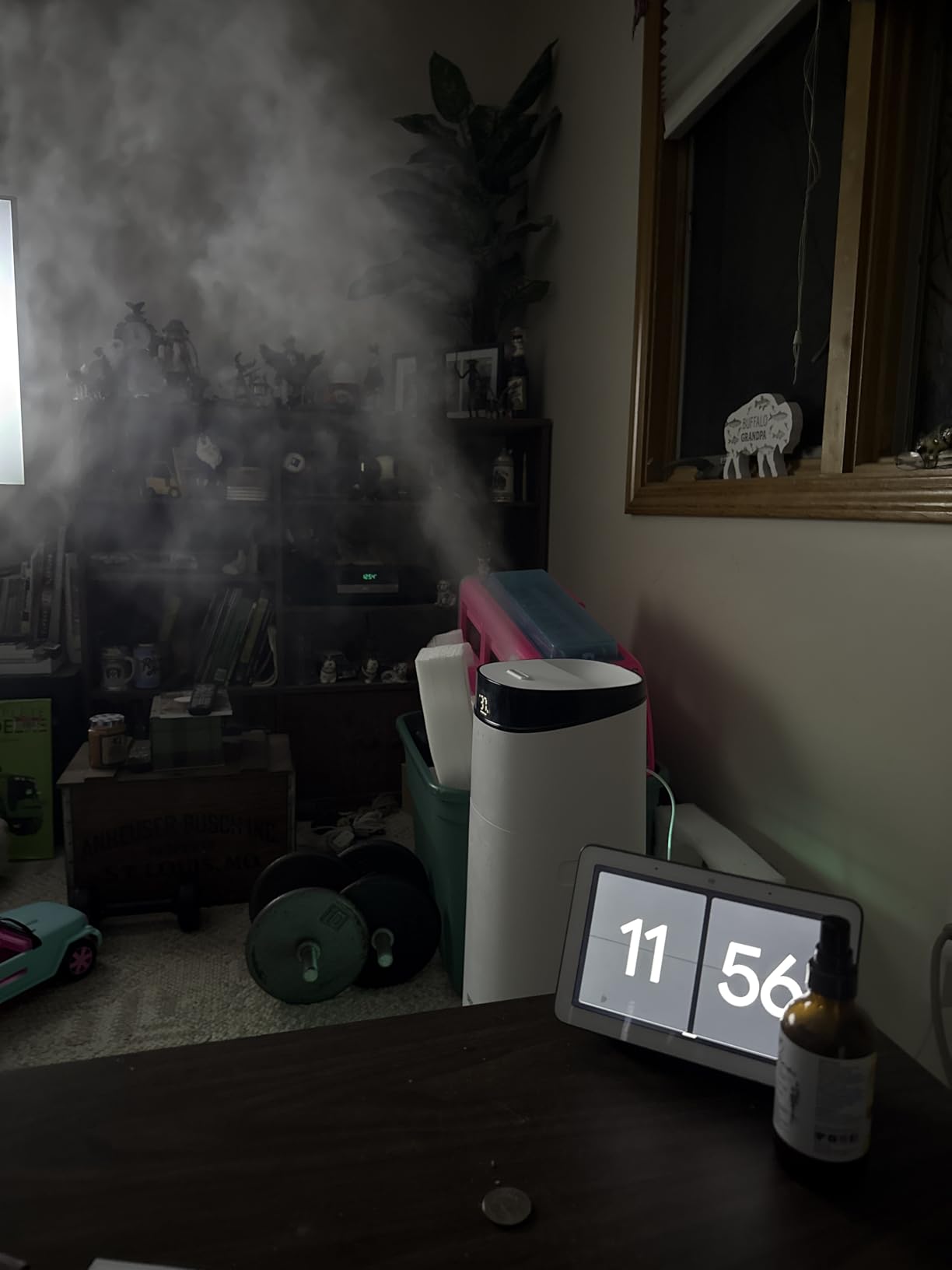
Will the DREO keep up in a basement or large music room?
For a closed space of roughly 1,000 square feet, yes. Owners report reaching 40 to 50 percent relative humidity in dry winter basements within a day or two, specifically to protect wood instruments, which is one of the clearest use cases in this roundup.
Its rated coverage of 1,000 square feet is the limit, so a larger basement means more than one model or a different category entirely. In an open concept main floor, look at the 2,000-square-foot GloryAir or an evaporative console instead.
Why does the humidity sensor cut the unit off early?
Because it reads the air right at the unit, where mist has just been released, so it overreads compared with the rest of the room. One owner traced the problem to moisture sitting on the sensor itself, which the top-fill design can leave if the tank is overfilled or the unit is placed under a leak.
Work around it by verifying with a handheld hygrometer in the room you actually care about, and by keeping the sensor area clear. Setting the target a few points below the display reading is a practical fix that most owners settle on.
How to Choose a Whole House Humidifier for Dry Air
Start by measuring, not by shopping. A twenty-dollar hygrometer in the room that feels driest, read in the morning and again at night during the coldest week of the year, tells you whether you have a real problem. Below 30 percent means buy something. Between 30 and 40 percent on the main floor and under 25 percent upstairs usually means the air is unevenly distributed rather than uniformly dry.
That second case is the one that catches people. Moist air is lighter than dry air and pools, which is why a two-story home can read 45 percent downstairs and 22 percent in the bedrooms. No portable console fixes that, because it cannot move air between floors. Whole home HVAC circulation, if your system has it, is often the missing piece, and it is worth checking before you spend on equipment.
In-duct or portable? If you have a forced-air furnace and a plenum with room to mount a unit, an in-duct model is the only category that conditions the entire home. The AprilAire 500 and 700M are the two we considered, with 12 and 18 gallons per day of capacity. Everything else in this roundup treats one open area at a time.
Sizing. Match the square footage figure to a single open level, not your total house size, and then check the climate. A home in a cold, dry winter with poor insulation needs more capacity than a mild one. The most common sizing failure is mounting a unit on the return side of a plenum with no space, which leaves it chronically under-humidifying, and the fix is proper duct modification by a technician rather than a bigger unit.
Humidistat. Worth it, and the reasoning is simple. A humidifier without humidity feedback either runs constantly or needs manual adjustment, and both push you past 50 percent. A humidistat with a plus or minus 5 percent sensor is the difference between a stable house and seasonal swings. In-duct units add outdoor temperature compensation, which matters more than most buyers expect in a cold climate.
Water. Evaporative wick units and in-duct panels run on tap water and trap minerals in a replaceable pad. Ultrasonic cool mist units aerosolize the minerals, and in hard water you will clean white dust off surfaces. If your water is hard, that decision alone usually favors an evaporative design. Owners treating water quality as a prerequisite rather than an accessory is the norm on HVAC forums, and a whole-home filter or softener is the usual answer.
Noise and location. Anything evaporative gets louder at higher fan speeds. A bedroom needs a low-speed run or a sleep mode, which is where the 30 dB and 35 dB units have an advantage. A living room can absorb a louder boost setting without complaint.
Heating angle. Properly humidified air feels warmer at the same thermostat setting, so many households run three to five degrees lower and see a real reduction in heating use. That is one of the quieter benefits of fixing dry air, and it pays back faster than people expect.
For the other side of the coin, our guide to whole-house dehumidifiers covers the opposite problem, which is worth reading if you live somewhere with genuinely humid summers.
White Dust, Hard Water and the Maintenance Nobody Explains
White dust is not a defect. It is the mineral content of your tap water, broken down and carried into the air by an ultrasonic atomizer, then redeposited on every horizontal surface in the room. Evaporative wick units do not do this, which is why every AIRCARE, AprilAire, and Levoit pick in this roundup is a wick design and only the ultrasonic models carry it as a complaint.
There is a persistent contradiction in the advice you will find online, so here is the settled version. Distilled water is the only input that removes the problem completely, and it is impractical for a large in-duct system. Filtered or softened water reduces it substantially. Hard tap water in an ultrasonic unit is what produces dust, and no amount of scrubbing fixes it while the source is unchanged.
To clear existing mineral crust, empty the tank, fill it with a 1 to 1 mix of white vinegar and water, run the unit for 30 minutes on high, empty it, rinse twice, and refill with treated water. Do the same to the atomizer plate with a soft brush. A weekly rinse of the tank prevents most of the buildup and takes about a minute.
Over-humidifying is the more dangerous mistake. Signs of too much moisture include condensation on window glass, a musty smell in ductwork, and dampness on exterior walls in winter. If you see any of those, the unit is running past 50 percent. Most over-humidification traces to a humidistat set too high or a target that does not compensate for outdoor temperature, and the answer is a lower setting rather than a bigger machine. We covered the same failure in reverse in our whole-house fan picks, since airflow is what distributes the moisture you add.
Two seasonal habits keep this category running for a decade. In autumn, replace the water panel or wick, flush the drain line, and confirm the solenoid closes. In spring, shut the water supply valve at the humidifier, drain the pan, and leave the unit dry until the next heating season, since standing water in a cool cabinet is how mineral scale and odor start.
Frequently Asked Questions
What type of humidifier is best for dry air?
An evaporative wick humidifier is best for dry air, whether it is a console model or an in-duct unit. It adds moisture without spraying mineral-laden mist, runs on ordinary tap water, traps residue in a replaceable pad, and costs far less to operate than steam. Ultrasonic cool mist units work but deposit white dust in hard water, which settles on electronics, wood floors and furniture.
What is the best type of humidifier for a whole house?
For a whole house, the best type is an in-duct evaporative unit mounted in your furnace cabinet, such as the AprilAire 500 or 700M in this roundup. It delivers moisture through the supply air and reaches every room, including upstairs bedrooms. A large portable console only conditions the open space it sits in, and cannot humidify a second floor or a closed room at the end of a hallway.
Do humidifiers help with dry air?
Yes, when they are sized and controlled correctly. Raising a home from the low 20s into the 30 to 50 percent band typically reduces static shocks, dry skin, cracked lips, nosebleeds and sinus irritation, and it slows the warping of hardwood floors and furniture. Properly humidified air also feels warmer, so many households lower the thermostat three to five degrees and cut heating use.
Are humidistats worth it?
A humidistat is worth it in almost every case. Without humidity feedback, a humidifier either runs continuously or needs manual adjustment, and both push the house past 50 percent where condensation and mold risk begin. A sensor with plus or minus 5 percent accuracy holds a stable band automatically. In-duct models that also read outdoor temperature compensate as the season deepens, which matters in cold climates.
Which humidifiers do not leave white dust behind?
Evaporative wick models do not leave white dust. That covers every AIRCARE console, both AprilAire in-duct units, and the Levoit Superior 6000S in this roundup, because minerals stay trapped in the pad instead of entering the air. Ultrasonic cool mist units from Lacidoll, GloryAir and DREO can produce dust in hard water unless you fill them with distilled or filtered water.
Does a whole house humidifier cause mold?
A properly controlled humidifier does not cause mold, but an over-humidified one can. Above roughly 60 percent relative humidity, surfaces stay damp and mold risk rises, especially in ductwork and around window frames. A humidistat set to hold 30 to 50 percent, an annual water panel change, and a full drain and shutoff in spring keep the system well below the threshold where problems start.
The Verdict: Where to Start for Dry Air in 2026
Measure your relative humidity first, because it decides everything. If you are under 30 percent across a house with forced-air heating, the best whole house humidifiers for dry air are the in-duct units, and the AprilAire 500 is where we would start because its dual sensors hold 40 to 50 percent through a full winter without condensation. Budget for professional installation and an annual water panel.
If you have no central system worth modifying, or you only need one open floor plan handled, the AIRCARE MA console is our top pick: 3,600 square feet of coverage, a digital humidistat, and a wick that leaves no white dust. For hard water, never use an ultrasonic model, and consider a whole-home filtration setup alongside whichever unit you pick.
For basements, nurseries, and music rooms, the quiet DREO at 30 dB solves dry air without adding noise to the room. Whatever you choose, keep the target between 30 and 50 percent, replace the pad each season, and shut the water off in spring.