
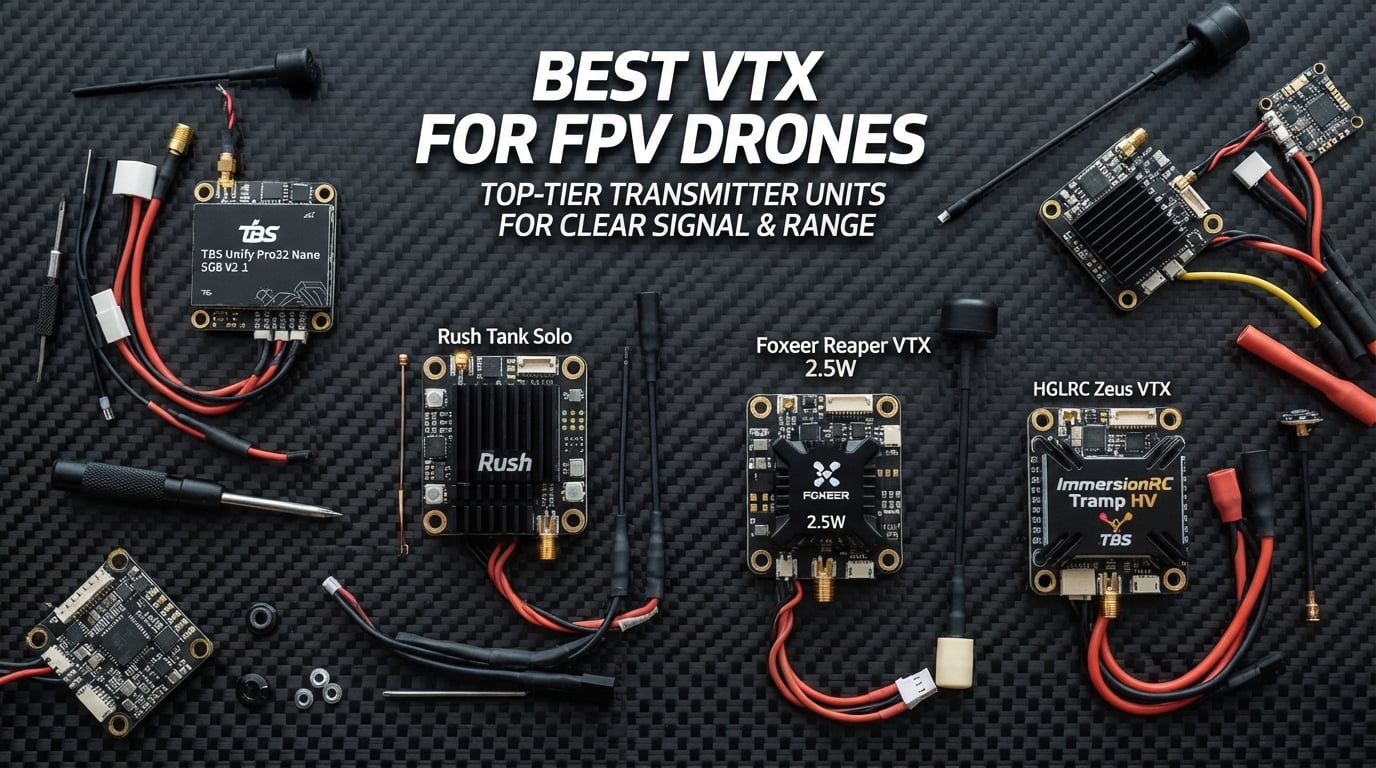
Flying FPV drones without a reliable video link is like driving blindfolded. Every pilot knows that heart-stopping moment when your goggles go to static mid-flight, and you are left guessing where your quad is headed. After testing dozens of video transmitters across freestyle, racing, and long-range builds, our team put together this guide to help you find the best VTX for FPV drones in 2026.
A VTX (Video Transmitter) is the component that takes the analog or digital signal from your camera and broadcasts it wirelessly on the 5.8GHz frequency band to your FPV goggles. Think of it as the bridge between what your drone sees and what you see. Without a quality VTX, you get shorter range, more signal breakup behind trees and buildings, and worse overall flight confidence.
The right FPV video transmitter depends entirely on your flying style. Racers need 25mW to 200mW for indoor tracks with strict power limits. Freestyle pilots typically run 400mW to 800mW for smooth penetration through trees and around structures. Long-range explorers want 1000mW or more to push past the horizon. On top of power, you need to consider control protocols like SmartAudio and Tramp, antenna connector types (SMA, MMCX, U.FL), and thermal management for high-output units.
In this guide, we cover 10 video transmitters spanning budget-friendly analog options to premium digital systems. We break down real-world power output, heat behavior, protocol support, and what actual buyers report after months of use. Whether you are building your first 5-inch freestyle quad or upgrading a long-range explorer, this roundup has you covered.
Table of Contents
Top 3 Picks for Best VTX for FPV Drones
Our team narrowed down the field to three standout picks based on build quality, real-world performance, and overall value. The TBS Unify PRO32 DP takes our Editor’s Choice spot for its exceptional signal quality and professional-grade construction. The AKK X2-Ultimate earns Best Value with 1000mW output at a fraction of premium pricing. For budget-conscious pilots, the AKK FX3-ultimate delivers solid SmartAudio support without breaking the bank.


Best VTX for FPV Drones in 2026
Here is our complete comparison of all 10 video transmitters we tested and researched. Each entry includes power output range, key features, and customer ratings to help you compare at a glance.
| Product | Specifications | Action |
|---|---|---|
| TBS Unify PRO32 DP |
|
Check Latest Price |
| AKK X2-Ultimate |
|
Check Latest Price |
 AKK FX3-ultimate AKK FX3-ultimate |
|
Check Latest Price |
 HGLRC Zeus350mW HGLRC Zeus350mW |
|
Check Latest Price |
 AKK A1918 1000mW AKK A1918 1000mW |
|
Check Latest Price |
 HGLRC Zeus 1.6W PRO HGLRC Zeus 1.6W PRO |
|
Check Latest Price |
 RunCam Spotter V2 AIO RunCam Spotter V2 AIO |
|
Check Latest Price |
 SoloGood Rush Tank Racing SoloGood Rush Tank Racing |
|
Check Latest Price |
 SoloGood RUSH TANK III SoloGood RUSH TANK III |
|
Check Latest Price |
 Walksnail Avatar GT Kit Walksnail Avatar GT Kit |
|
Check Latest Price |
1. TBS Unify PRO32 DP 3W – Premium Long Range Powerhouse
XFCZMG TBS Unify PRO32 DP 3W 5.8GHz Video Transmitter for Long Range FPV Pilots
3W max power
6V-25V input
MMCX connector
8.7g weight
SNR >63dBm
Pros
- Industry-leading signal quality
- Massive 3W power ceiling
- Wide 2-6S voltage range
- Ultralight at 8.7g
- Professional TBS build
Cons
- Premium price point
- Limited stock availability
When pilots on Reddit and FPV forums talk about the gold standard for analog video transmitters, the TBS Unify Pro32 series comes up more than any other. TeamBlackSheep has been building the industry benchmark for years, and the PRO32 DP continues that legacy with a staggering 3W power ceiling. This is the unit I would put on a long-range explorer without thinking twice.
The signal-to-noise ratio of over 63dBm tells the real story here. In practical terms, that means cleaner video with less interference even when you are pushing past the 2-kilometer mark. The PRO32 DP maintains stable output without the frequency drift that plagues cheaper units, and the MMCX connector gives you flexibility with antenna choices.
At just 8.7 grams, this transmitter weighs less than most premium antennas. The 6V to 25V input range covers everything from 2S micro builds to 6S long-range quads, making it one of the most versatile VTX units on the market. TBS includes a silicone cable, MMCX to SMA pigtail, and heat transfer tape in the package.
The 4.6-star average rating with zero 1-star reviews tells you everything about build quality. Pilots consistently report that TBS units outlast the drones they are installed on. The PRO32 DP is built for pilots who refuse to compromise on their video link.
Who Should Buy the TBS Unify PRO32 DP
Long-range pilots will get the most value from this transmitter. If you are doing mountain surfing, Bando exploration, or pushing past 3 kilometers, the 3W output and clean signal give you confidence that few competitors can match. It is also an excellent choice for pilots flying in RF-dense environments where signal integrity matters more than raw power.
Competitive racers and group flyers benefit from the rock-solid frequency stability. The PRO32 DP holds its channel without drift, which means less interference with other pilots on adjacent frequencies. For organized racing events, this reliability is non-negotiable.
What to Watch Out For
The main consideration is availability. TBS products frequently run low on stock due to high demand and manufacturing scale. If you see this unit in stock, it is worth grabbing immediately. The premium price reflects the quality, but pilots switching from budget VTX units should expect a noticeable step up in both cost and performance.
The 3W maximum output should only be used in appropriate settings and regions where it is legal. Most flying happens at 800mW or below, so think of the higher power as a safety margin rather than a daily setting. The unit does run warm at maximum output, so proper airflow installation is essential.
2. AKK X2-Ultimate 1000mW – Best Value Long Range VTX
AKK X2-Ultimate 5.8GHz 0.01mW/25mW/200mW/600mW/1000mW Switchable FPV Transmitter Compatible with Betaflight OSD FC Configuring Upgraded Long Range Version
5 power levels to 1W
Betaflight OSD
7-26V input
Built-in MIC
IP66 rated
Pros
- Five switchable power levels up to 1W
- Betaflight OSD integration
- Super compact and lightweight
- Built-in microphone
- One-button channel and power setup
Cons
- Limited waterproof rating at IP66
- Requires soldering for installation
The AKK X2-Ultimate hits a sweet spot that few video transmitters can match. For pilots who want 1000mW long-range capability without paying premium TBS prices, this unit delivers exceptional value. With 191 customer reviews and a 4.4-star rating, it has earned its reputation as one of the most popular analog VTX options for FPV builds.
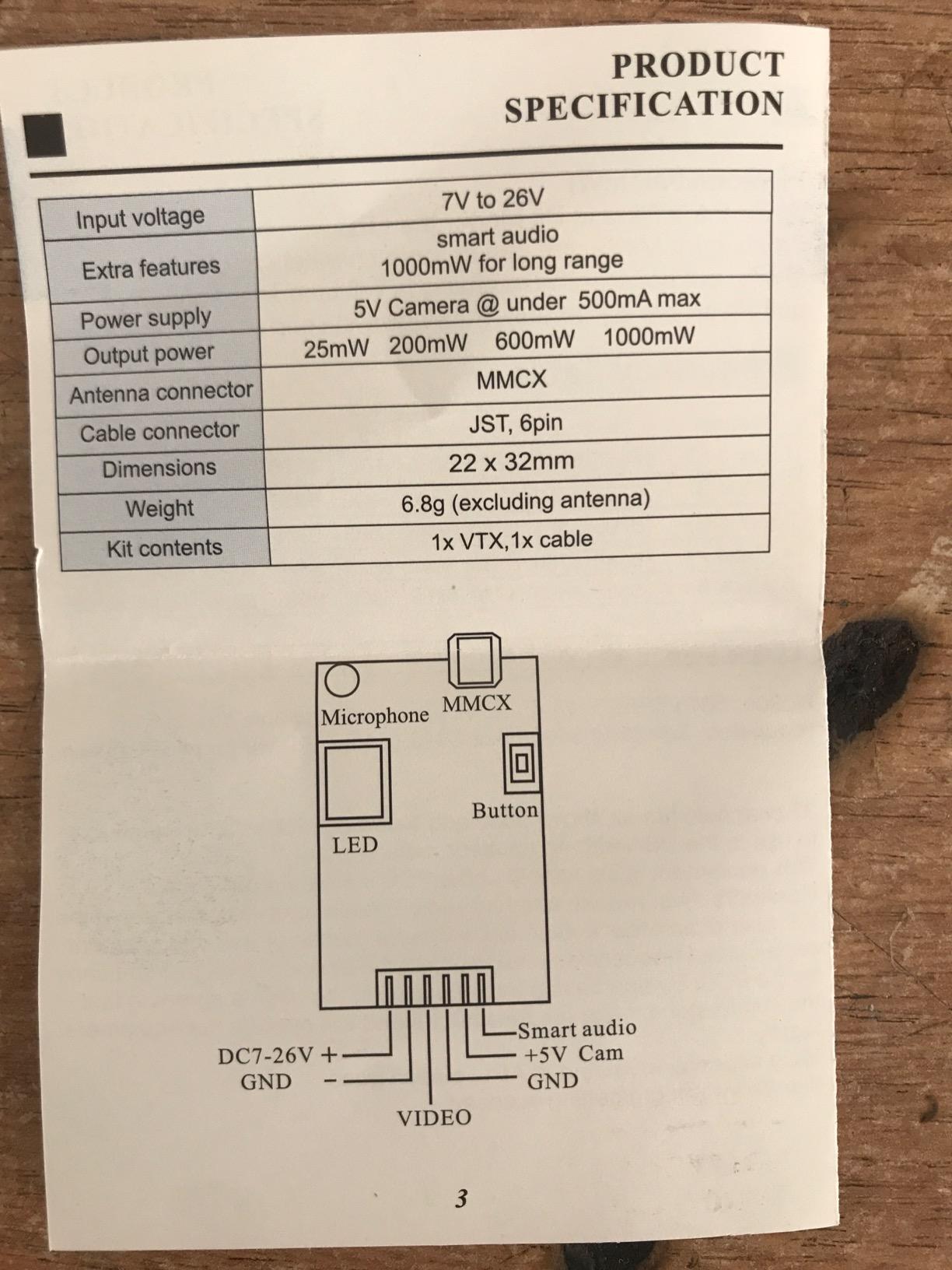
What makes the X2-Ultimate stand out is its five power levels: 0.01mW for pit mode, 25mW for racing, 200mW for close freestyle, 600mW for park flying, and 1000mW for long range. This flexibility means you can use the same VTX across multiple drones and flying scenarios without compromise. The 0.01mW pit mode is particularly useful for safe frequency changes at group events.
The 7-26V input range supports 2S through 6S batteries, and the built-in 5V output powers your camera directly. This eliminates the need for a separate BEC in many builds, simplifying your wiring. The integrated microphone lets you hear motor tones during flight, which helps with throttle management and troubleshooting.
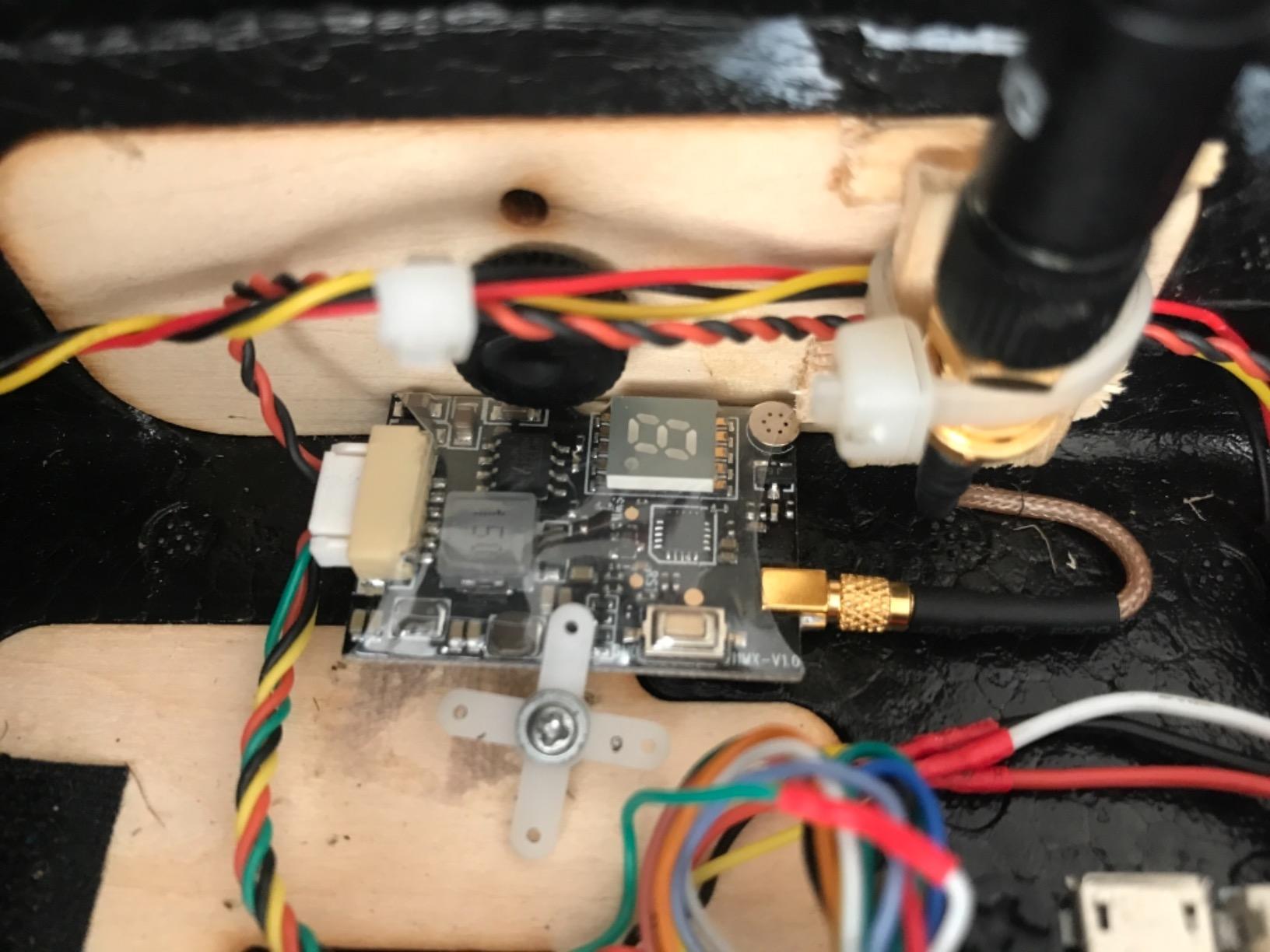
Betaflight OSD support means you can change channels, bands, and power levels directly from your transmitter using SmartAudio. No more landing and pressing buttons to switch frequencies. The one-button setup is also available for pilots who prefer manual configuration or are using flight controllers without OSD support.
The IP66 water resistance rating is a bonus for pilots who fly in unpredictable weather. While I would not recommend flying in heavy rain, this rating means occasional moisture and damp conditions will not kill your VTX. AKK also includes filtered power circuitry for super clean video output.
Who Should Buy the AKK X2-Ultimate
This is the ideal first upgrade for pilots moving beyond stock whoop VTX units. The 1000mW maximum output gives you genuine long-range capability, while the lower power settings make it equally suitable for racing and freestyle. If you fly multiple disciplines and want one VTX that handles all of them, the X2-Ultimate is hard to beat.
Beginner builders will appreciate the one-button setup and extensive community documentation. AKK products are widely used in the FPV community, which means troubleshooting guides, wiring diagrams, and Betaflight configurations are easy to find.
What to Watch Out For
The IP66 rating is decent but not fully waterproof. Treat it as splash resistance rather than submersion protection. Some pilots have reported that the unit runs warm at 1000mW, so adequate airflow and heatsink contact are important when mounting.
The MMCX connector on some versions may require an adapter depending on your antenna choice. Check the connector type before ordering antennas to avoid compatibility issues. The soldering requirement means this is not a plug-and-play option for complete beginners.
3. AKK FX3-ultimate 600mW – Best Budget VTX
AKK FX3-ultimate 5.8GHz 25mW/200mW/400mW/600mW Switchable Mini VTX Support OSD Configuring via Betaflight
4 power levels to 600mW
SmartAudio OSD
7-24V input
MMCX+UFL
Built-in MIC
Pros
- Affordable entry point
- SmartAudio OSD support
- Four switchable power levels
- Built-in microphone
- One-button channel setup
Cons
- MMCX+UFL connectors may need adapters
- Lower maximum power than premium options
Not every pilot needs 1000mW or 3W of output power. For indoor flying, tiny whoops, and backyard freestyle, the AKK FX3-ultimate delivers everything you need at the lowest price point in this roundup. At under $25, it is the most accessible way to get SmartAudio support and switchable power levels.
The FX3-ultimate offers four power levels: 25mW, 200mW, 400mW, and 600mW. This covers the vast majority of flying scenarios for pilots who stay within visual range. The 25mW setting is perfect for indoor whoop racing where interference with other pilots is a concern.
SmartAudio support means you get full Betaflight OSD control over channels, bands, and power. This is remarkable at this price point, as many budget VTX units require manual button pressing for configuration changes. The built-in microphone adds audio feedback during flight.
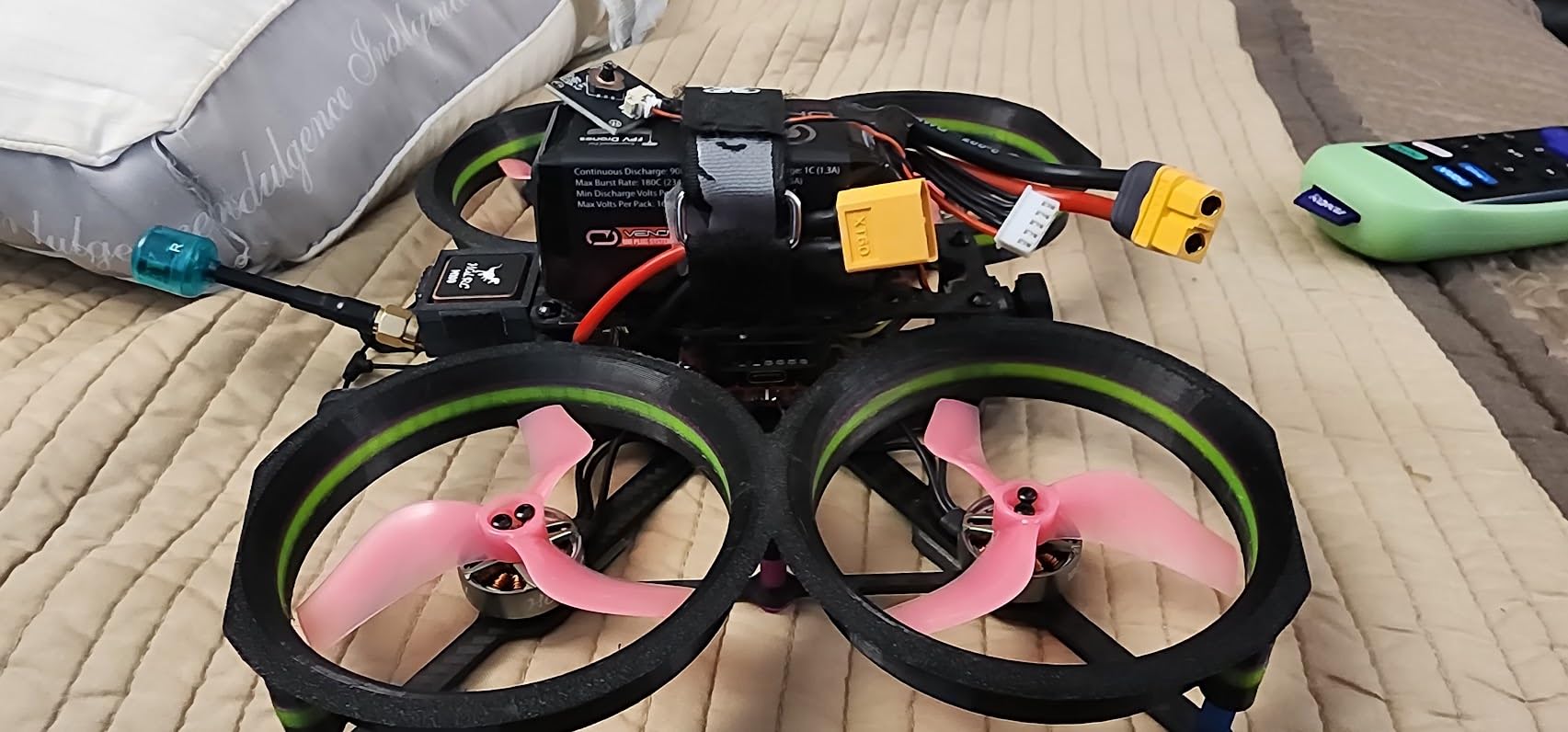
The 7-24V input range covers 2S through 4S batteries, which is ideal for micro drones and small freestyle builds. The 5V camera output simplifies wiring by eliminating the need for a separate voltage regulator in many setups.
The 0.01mW parameter-adjusting mode is a standout feature for a budget VTX. This pit mode allows you to change settings without interfering with other pilots, which is essential for organized racing and group flying events.
Who Should Buy the AKK FX3-ultimate
Tiny whoop pilots and indoor racers are the primary audience for this VTX. The 600mW maximum is more than enough for indoor environments and small outdoor spaces. If you fly mostly within 200 meters, this unit provides excellent performance at an unbeatable price.
Beginners building their first custom FPV drone will find the FX3-ultimate forgiving and easy to set up. The one-button configuration means you can start flying quickly even without advanced Betaflight knowledge. It is also a great backup VTX to keep in your field kit.
What to Watch Out For
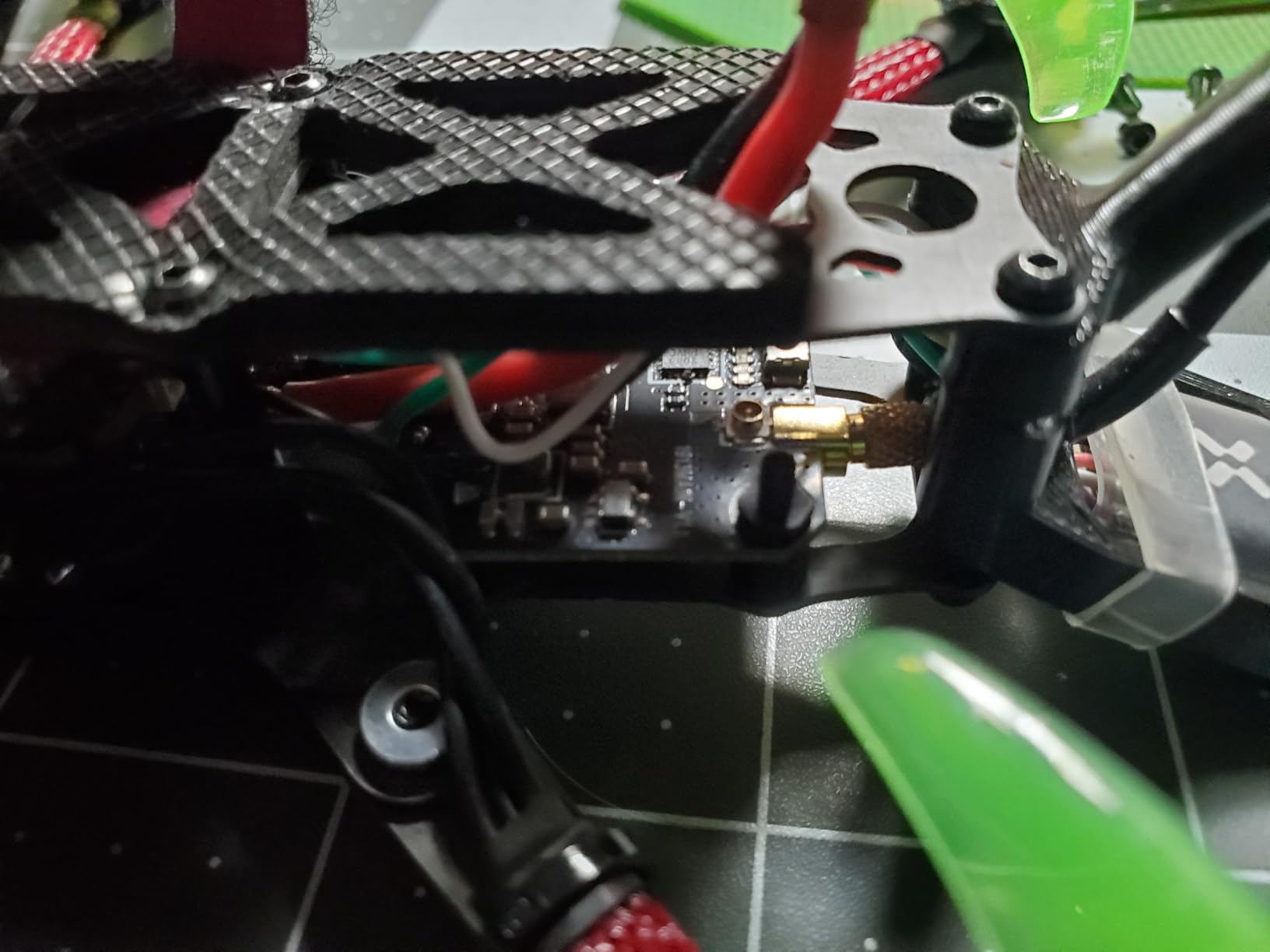
The MMCX+UFL dual connector system can be confusing for first-time builders. You only need one connector at a time, but the dual pads mean you should double-check your wiring before soldering. Some pilots report needing adapters depending on their antenna choice.
At 600mW maximum, this VTX is not suitable for long-range flying. If you plan to explore beyond 500 meters or fly through dense urban environments, consider stepping up to a higher-power option like the AKK X2-Ultimate or TBS Unify PRO32.
4. HGLRC Zeus350mW – Compact Beginner-Friendly VTX
HGLRC Zeus350mW VTX 5V M2 M3 16×16 20×20 25.5×25.5 5.8GHz VTX Betaflight for FPV Racing Drone Quad (SMA)
350mW output
PIT/25/100/200/350mW
5V input
SMA connector
Built-in MIC
Pros
- Five power levels including PIT mode
- Built-in microphone for audio feedback
- SMA connector for antenna durability
- Easy soldering for beginners
- Fits 20x20 mounting pattern
Cons
- Requires soldering installation
- Lower maximum power for outdoor range
The HGLRC Zeus350mW is a no-nonsense analog video transmitter that nails the basics. With 214 customer reviews and a solid 4.3-star rating, it has proven itself as a reliable choice for racing drones and micro builds. The five power levels from PIT mode to 350mW cover everything from indoor racing to park freestyle.
HGLRC designed this VTX with beginners in mind. The solder pads are generously sized and well-labeled, making installation straightforward even for first-time builders. The 20×20 mounting pattern fits most modern micro drone frames, and HGLRC provides detailed wiring diagrams on their website.
The SMA connector is a notable advantage over MMCX in terms of durability. SMA connectors can withstand more abuse during crashes and antenna changes, which matters for newer pilots who may be crashing more frequently. The trade-off is slightly more weight than MMCX alternatives.
The built-in microphone is a nice touch that many pilots overlook. Hearing your motor tones during flight helps with PID tuning, throttle management, and identifying mechanical issues before they become catastrophic. At 350mW maximum, the Zeus stays cool without requiring additional heatsinking in most installations.
Who Should Buy the HGLRC Zeus350mW
Beginner to intermediate pilots building racing quads or micro drones will find this VTX hits the sweet spot between price and capability. The 350mW output is ideal for indoor racing and close-quarters freestyle where you need clean video without overwhelming the channels of nearby pilots.
Pilots who prioritize durability will appreciate the SMA connector and robust build quality. If you crash often while learning, the Zeus can take the abuse better than units with more fragile MMCX connectors.
What to Watch Out For
The 350mW maximum output limits your effective range, particularly in environments with RF interference or physical obstacles. For outdoor freestyle beyond 200 meters, you may experience signal breakup that a higher-power VTX would eliminate.
The 5V input requirement means you need a compatible BEC or flight controller with 5V output. Some builds running higher voltage systems may need additional voltage regulation to power this unit safely.
5. AKK A1918 1000mW – Popular Long Range Performer
AKK A1918 5.8G Long Range VTX FPV Transmitter 200mW/400mW/800mW/1000mW Switchable VTX Support Smart Audio
1W max output
SmartAudio
7-28V input
2-6S battery
Built-in MIC
Pros
- 1000mW for serious long range
- SmartAudio OSD control
- Wide 7-28V voltage range
- Built-in microphone
- One-button frequency setup
Cons
- Runs hot at max power requires cooling
- No pit mode feature
- Antenna and cable routing can be tight
With 274 customer reviews, the AKK A1918 is one of the most purchased analog VTX units on the market. That kind of volume speaks to its popularity among FPV pilots who need 1000mW output for long-range flying without paying TBS prices. The 4.3-star average rating confirms that most buyers are satisfied with their purchase.
The four power levels cover the essential range: 200mW for racing, 400mW for freestyle, 800mW for intermediate range, and 1000mW for pushing past the horizon. SmartAudio support means you can adjust all settings through Betaflight OSD without landing your quad. The wide 7-28V input range handles 2S through 6S batteries with ease.
The built-in microphone is standard AKK fare, providing audio feedback during flight. The 5V camera output simplifies wiring by powering your FPV camera directly from the VTX. Filtered power circuitry ensures clean video without interference from your ESC and motors.
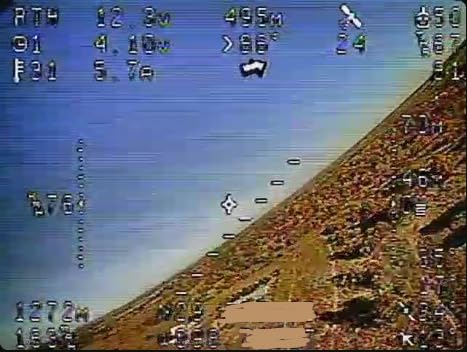
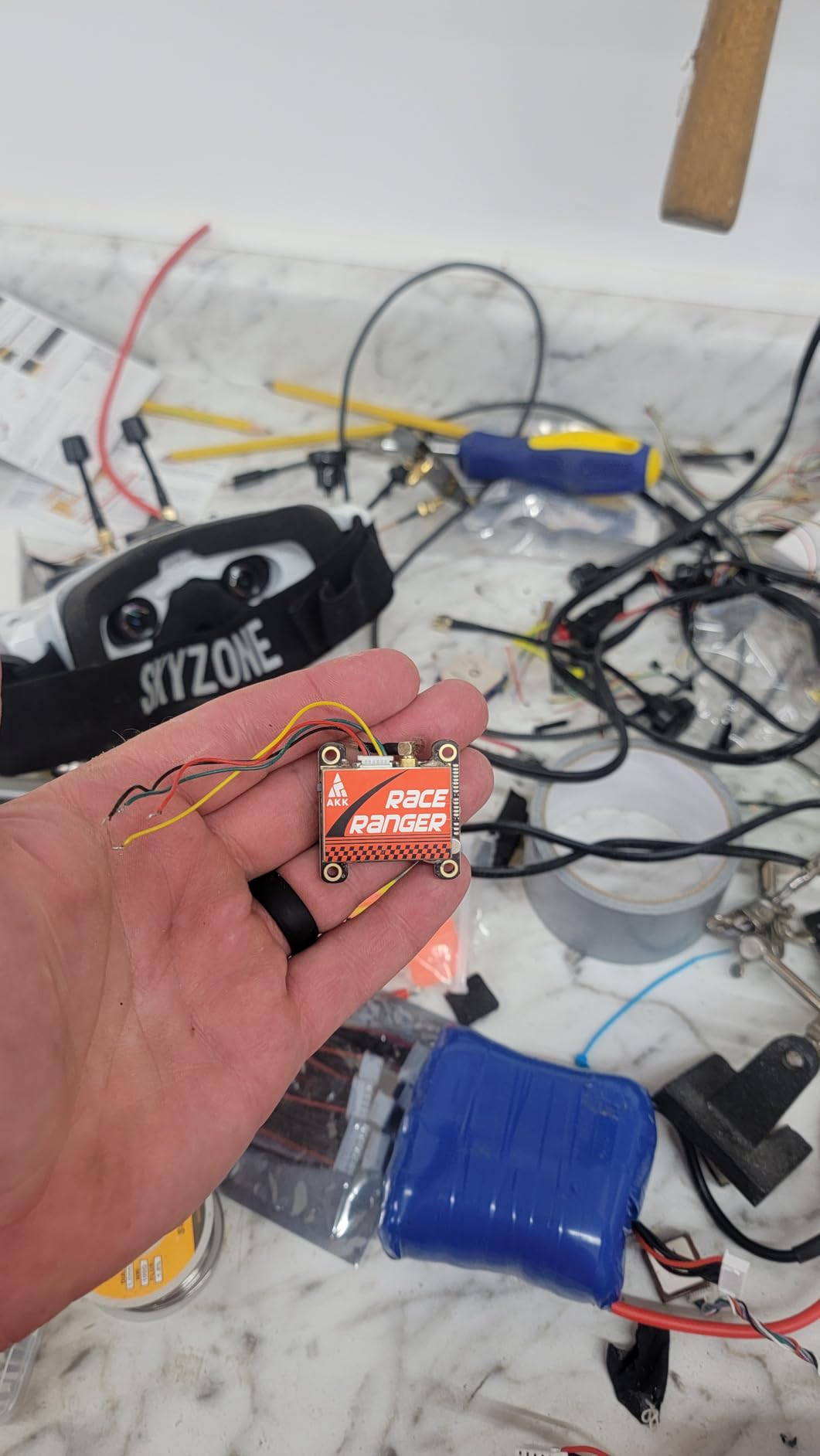
Real-world testing from the FPV community confirms that the A1918 delivers on its power claims. Users report reliable performance at 800mW for typical freestyle sessions, with the 1000mW setting reserved for long-range exploration. The signal holds up well through trees and around structures at intermediate power levels.
The main complaint from users centers on thermal management at maximum power. The A1918 gets noticeably hot at 1000mW, requiring adequate airflow in your frame design. Some pilots add small heatsinks or thermal pads to improve heat dissipation during sustained high-power flights.
Who Should Buy the AKK A1918
Long-range explorers and mountain surfers will benefit most from the 1000mW output capability. If you regularly fly past 1 kilometer or navigate through dense RF environments, the extra power headroom gives you confidence in your video link. Freestyle pilots who fly in areas with heavy tree cover will also appreciate the stronger signal penetration.
Pilots upgrading from lower-power VTX units will notice an immediate improvement in range and signal stability. The SmartAudio support makes it easy to adjust power levels on the fly based on your flying location and conditions.
What to Watch Out For
Heat management is the primary concern at maximum power. You need to ensure adequate airflow around the VTX in your frame, and consider adding thermal pads or heatsinks for sustained 1000mW operation. Without proper cooling, the unit may reduce output to protect itself.
The lack of pit mode is a notable omission for organized racing events. Pit mode allows safe frequency changes without interfering with other pilots, and its absence means you need to power off your quad completely when switching channels at group events. The antenna and FC cable exiting the same side can also create routing challenges in tight builds.
6. HGLRC Zeus VTX PRO 1.6W – High Power Long Range Beast
HGLRC Zeus 1.6W VTX PRO PIT/25/400/800/1.6W Switchable FPV DVR Transmitter Built-in Microphone Support OSD 20X20mm M2 Upgraded Long Range Version For FPV Racing Drone Quad (MMCX)
1.6W output
PIT/25/400/800/1600mW
MMCX connector
CNC heatsink
Built-in DVR MIC
Pros
- Massive 1.6W maximum output
- CNC machined heatsink shell
- Five power levels including PIT mode
- Built-in microphone
- OSD support for easy configuration
Cons
- Higher price than standard analog VTX
- Runs hot at maximum power
- Limited customer reviews so far
The HGLRC Zeus VTX PRO 1.6W takes power output to another level. With a maximum of 1600mW, this transmitter is built for pilots who need maximum range and signal penetration in challenging environments. The CNC machined heatsink shell sets it apart from plastic-bodied competitors and addresses the thermal challenges of high-power output.
The five power levels give you full flexibility: PIT mode for safe configuration, 25mW for racing, 400mW for freestyle, 800mW for intermediate range, and 1600mW for extreme long-range exploration. The PIT mode is particularly useful at group events where you need to change frequencies without disrupting other pilots.
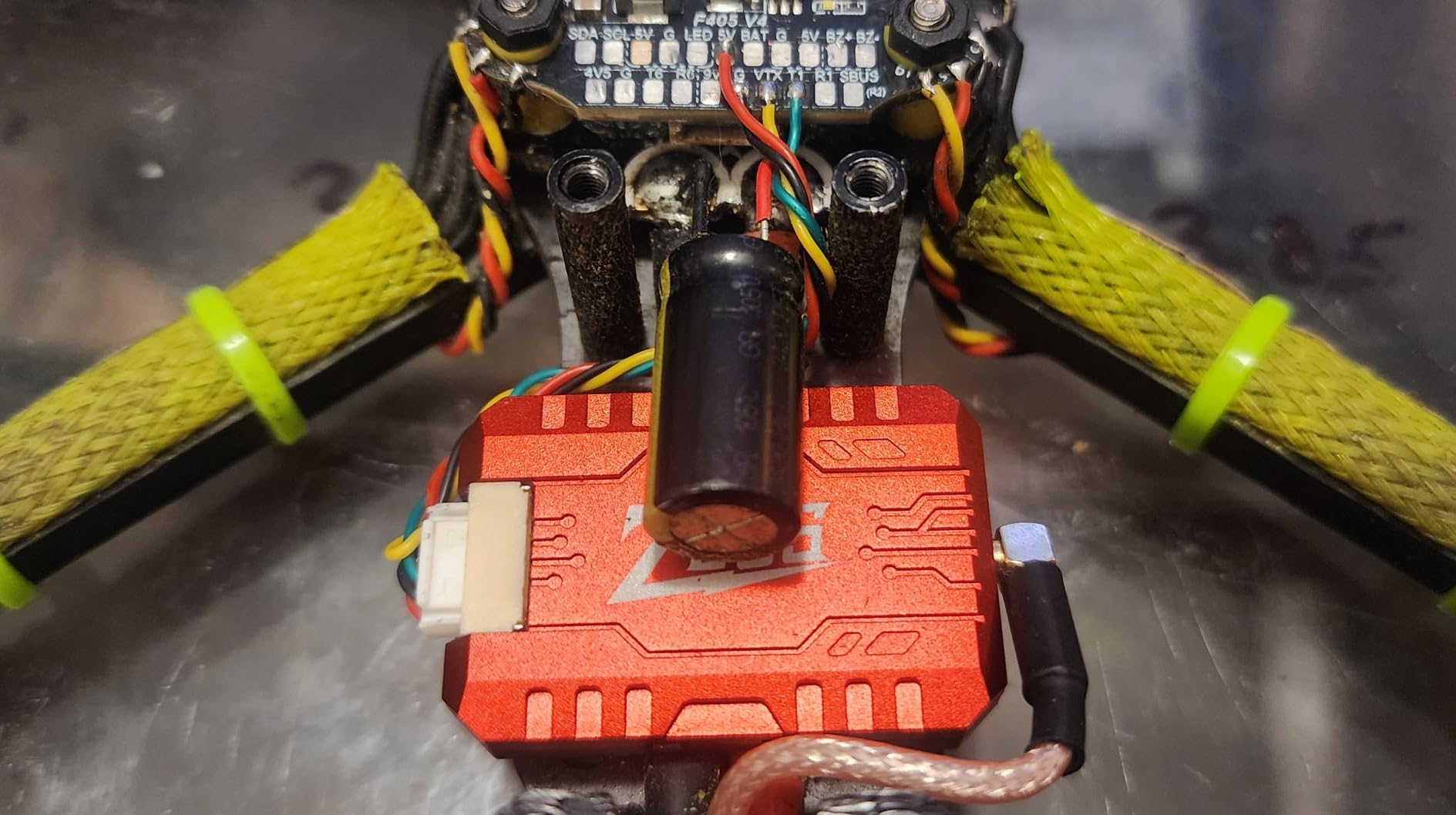
The CNC heatsink is more than just a design feature. At 1600mW, thermal management becomes critical, and the metal shell provides significantly better heat dissipation than plastic alternatives. The built-in microphone adds audio feedback for motor diagnostics during flight.
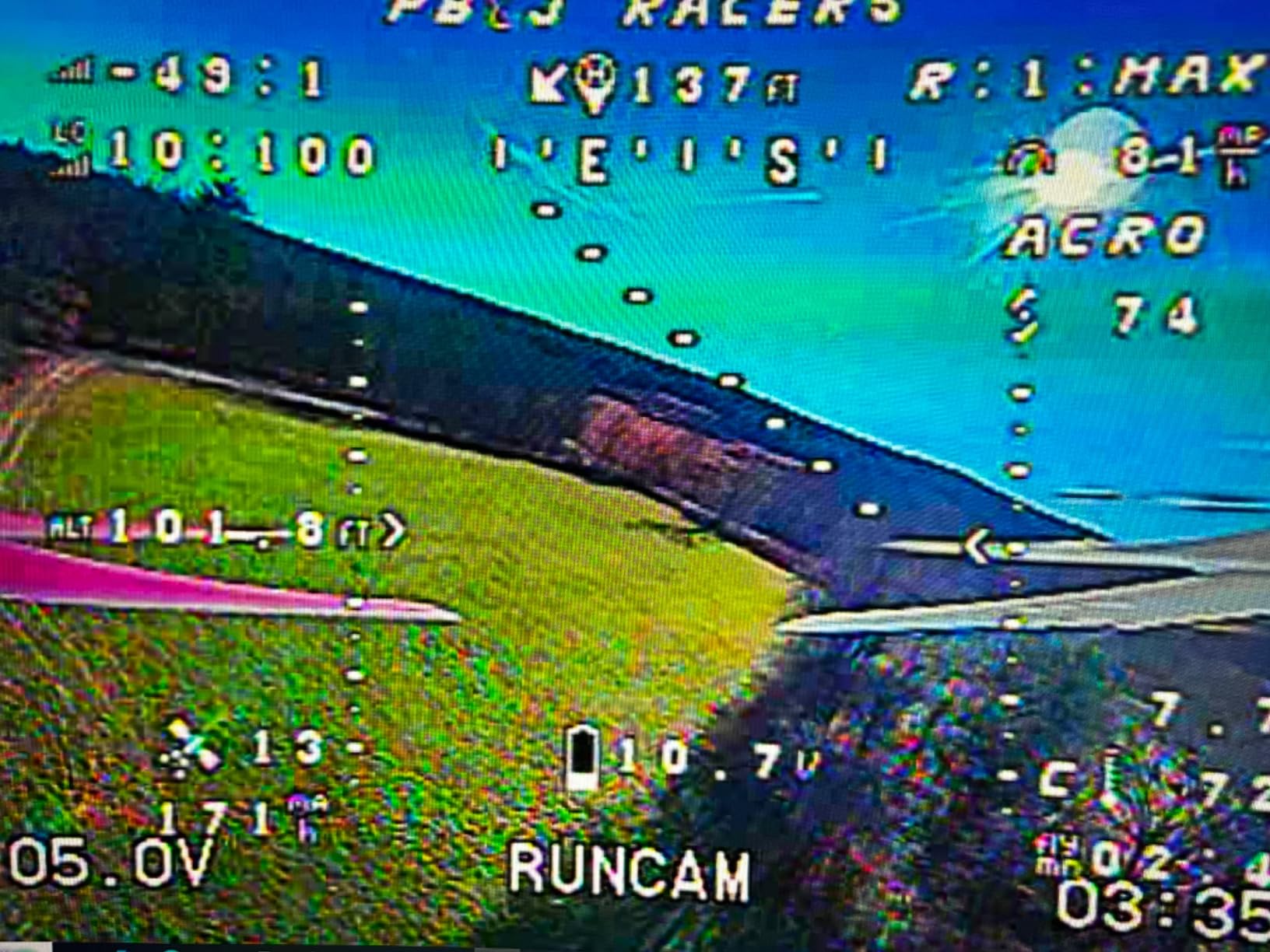
OSD support means full Betaflight integration for channel, band, and power changes through your goggles. The MMCX antenna interface is secure and compatible with a wide range of antenna options. The 20x20mm mounting pattern fits most modern freestyle and long-range frames.
With 34 reviews and a 4.1-star rating, the Zeus PRO is newer to the market than some competitors. The rating distribution shows 61% five-star reviews with 9% one-star, suggesting some quality control variance. Most satisfied customers praise the long-range capability and effective heatsink design.
Who Should Buy the HGLRC Zeus VTX PRO 1.6W
Long-range pilots who need maximum power output will find the 1600mW ceiling appealing. If you are mountain surfing, exploring remote areas, or flying in RF-heavy urban environments, the extra power provides a safety margin that lower-output units cannot match. The CNC heatsink makes sustained high-power operation more reliable.
Pilots who value build quality and thermal management will appreciate the metal construction. The heatsink shell is a meaningful upgrade over plastic bodies, especially for pilots who fly long sessions at high power settings.
What to Watch Out For
The 1.6W maximum output requires careful attention to legal regulations in your region. In the United States, FCC Part 15 rules apply, and many countries have stricter power limits for 5.8GHz transmission. Always verify local regulations before flying at maximum power.
The limited review count means less community data compared to established options. While early feedback is mostly positive, pilots who want proven long-term reliability may prefer options with more extensive track records. The unit runs warm even with the heatsink, so proper frame airflow remains important.
7. RunCam Spotter V2 – All-in-One Camera and VTX Kit
RunCam Spotter V2 FPV Camera and Transmitter Kit, 5.8G Micro AIO Cam, OSD, Integrated Mic, FOV170 Degree 700TVL, 40CH, 20MW-200MW Adjustable
Camera+VTX AIO kit
700TVL 170 FOV
40CH 5.8G
20-200mW
Integrated mic
Pros
- All-in-one camera and VTX solution
- 170-degree wide FOV camera
- 40 channels for maximum compatibility
- Adjustable 20-200mW power
- Versatile for drones planes and RC cars
Cons
- Some quality control issues reported
- Lower power limits range
- Higher price than standalone VTX
The RunCam Spotter V2 is unique in this roundup because it combines an FPV camera and video transmitter into a single unit. This all-in-one approach is perfect for pilots who want a simplified build process without sourcing and wiring separate components. With 194 reviews and a 4.3-star rating, it has proven popular across multiple RC applications.
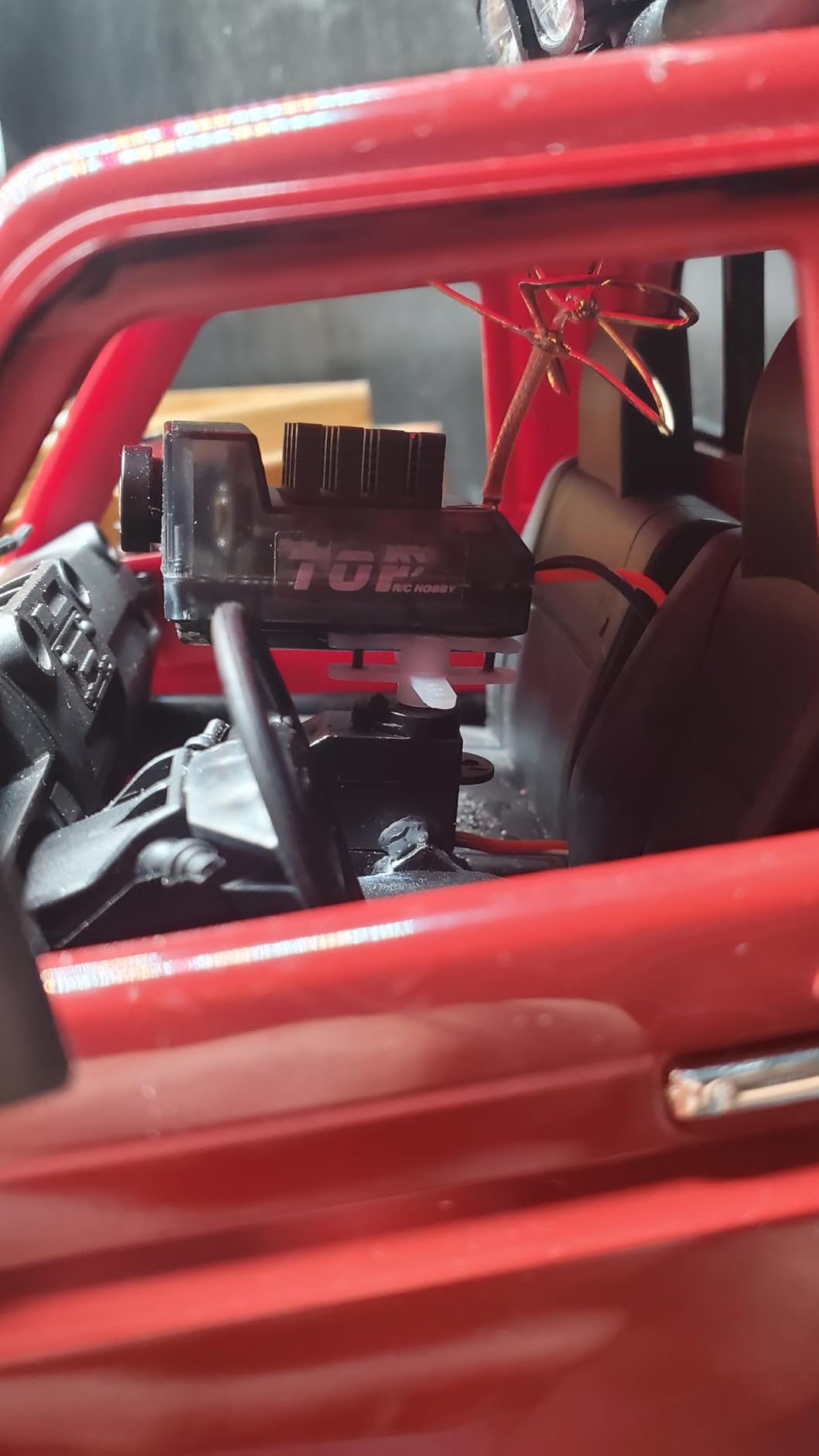
The 700TVL camera with 170-degree field of view provides a wide, immersive flight experience. The CMOS sensor delivers clear image quality for both indoor and outdoor flying. Whether you are mounting it on a micro drone, an RC airplane, or even an RC car, the Spotter V2 adapts to your platform.
The 40-channel 5.8GHz transmitter covers all standard bands, ensuring compatibility with virtually any FPV goggles on the market. The adjustable power output ranges from 20mW to 200mW, making it suitable for indoor racing and close-range outdoor flying.
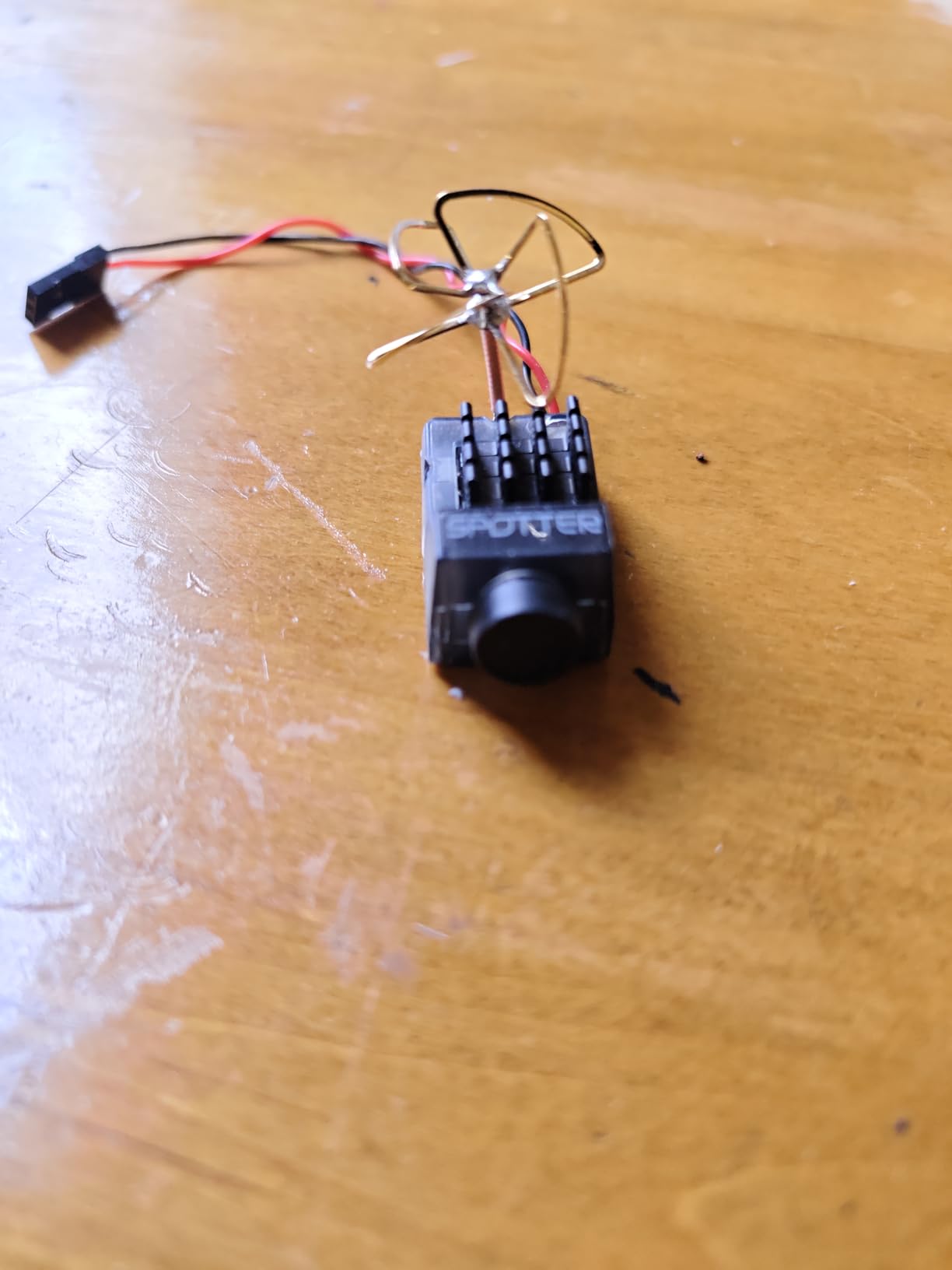
The integrated microphone provides audio feedback during flight, which is especially useful for motor diagnostics and immersion. The OSD functionality displays real-time data including frequency, channel, and power level directly in your goggles.
The compact micro design weighs just 10 grams total, making it ideal for lightweight builds where every gram matters. The beginner-friendly design means minimal wiring and configuration, getting you in the air faster than a multi-component setup.
Who Should Buy the RunCam Spotter V2
Pilots building their first FPV drone will love the simplicity of an all-in-one solution. No need to worry about camera-to-VTX wiring, voltage regulation, or mounting separate components. This is the fastest path from workbench to airfield for new pilots.
RC enthusiasts who fly multiple vehicle types will appreciate the versatility. The Spotter V2 works on drones, airplanes, RC cars, and boats, making it a flexible investment for pilots with diverse interests. The wide FOV camera is particularly well-suited to the varied perspectives these different platforms offer.
What to Watch Out For
The 200mW maximum output limits this unit to close-range flying. If you plan to fly beyond 300 meters, you will want a dedicated VTX with higher power output. The camera quality, while good for the price, will not match high-end standalone FPV cameras from Caddx or RunCam’s premium lines.
Some customers report quality control inconsistencies, so it is worth testing the unit thoroughly before committing it to a primary flying setup. The higher price compared to standalone VTX units reflects the integrated camera, but pilots who already own a quality camera may find better value elsewhere.
8. SoloGood Rush Tank Racing VTX – Compact Pit Mode Champion
SoloGood Rush Tank Racing VTX FPV Video Transmitter …
800mW max
PIT/25/200/500/800mW
Rush lock-on tech
Smart Audio
10g weight
Pros
- Smallest tank series VTX
- Rush lock-on technology for stability
- Silent setting mode
- PIT mode for racing events
- Button or Smart Audio control
Cons
- Limited stock frequently available
- Low review count of 46 reviews
The SoloGood Rush Tank Racing VTX brings the respected Rush Tank technology into a compact, lightweight package. At just 10 grams, it is one of the lightest 800mW options available, making it perfect for racing drones where every gram affects performance. The rush lock-on technology ensures excellent frequency stability and power accuracy.
The five power levels cover all racing and freestyle scenarios: PIT mode for safe frequency changes, 25mW for indoor racing, 200mW for close freestyle, 500mW for park flying, and 800mW for longer range and obstacle penetration. The PIT mode is a standout feature for organized racing, allowing you to power up and configure without disrupting other pilots.
The silent setting feature is unique and thoughtful. When changing frequencies or power levels, the VTX operates silently to avoid disturbing other pilots during configuration. This might seem minor, but at busy race events with many pilots on the stand, it makes a real difference in the overall experience.
Control options include both button-based manual configuration and Smart Audio for Betaflight OSD integration. This dual approach means the Rush Tank works with any flight controller setup, whether or not you have OSD capability.
Who Should Buy the SoloGood Rush Tank Racing VTX
Racing pilots who need a lightweight, PIT mode-equipped VTX will find this unit ideal. The compact size and 10-gram weight make it perfect for racing quads where weight savings translate directly to faster lap times. The rush lock-on technology ensures your signal stays clean even in RF-heavy race environments.
Pilots who participate in organized group flying events will appreciate the PIT mode and silent setting features. These are specifically designed for multi-pilot scenarios where frequency management is critical to everyone’s enjoyment.
What to Watch Out For
The limited stock availability is a recurring issue with SoloGood products. When this VTX is in stock, it tends to sell out quickly. If you find it available, do not hesitate if it meets your needs.
The 46-review sample size is smaller than established competitors like AKK or TBS. While the 4.0-star rating is respectable, there is less community data to draw from compared to more popular alternatives. Pilots who prioritize proven track records may want to consider options with more extensive user feedback.
9. SoloGood RUSH TANK III – Premium Racing with Lock-On Technology
SoloGood FPV VTX Rush Tank III RUSHFPV 5.8G FPV Video Transmitter 30 * 30mm PIT/25/200/500/800mW Switchable with Foxeer Antenna for FPV Racing Drone (Red Antenna)
800mW max
PIT/25/200/500/800mW
Lock-on tech
Metal casing
Foxeer antenna included
Pros
- LOCK-ON technology eliminates frequency drift
- Supports up to 8 quads simultaneously
- Tank Armor full metal casing
- Includes Foxeer Micro Lollipop antenna
- Excellent anti-interference
Cons
- Some reports of missing antenna in package
- Limited warranty coverage
- Higher price point
The RUSH TANK III represents the pinnacle of SoloGood’s tank series, combining their proprietary LOCK-ON technology with a rugged metal casing. This VTX is built for racing environments where signal integrity and interference rejection are paramount. The included Foxeer Micro Lollipop antenna is a genuine value-add that many competitors do not include.
The LOCK-ON technology is the headline feature. It eliminates the frequency drift that can plague cheaper VTX units, ensuring your signal stays locked on your chosen channel. The system supports up to 8 quads flying simultaneously without interference, which is impressive for organized racing events.
The Tank Armor metal casing provides both physical protection and thermal management. Metal construction dissipates heat more effectively than plastic, allowing sustained high-power operation without thermal throttling. The casing also protects internal components during crashes, which is essential for racing drones.
The five power levels match the racing VTX: PIT, 25mW, 200mW, 500mW, and 800mW. The PIT mode enables safe frequency changes at events, while the 800mW maximum handles longer-range freestyle flying. The included Foxeer antenna is a quality component that many pilots would purchase separately.
Who Should Buy the RUSH TANK III
Organized racing pilots who fly in multi-pilot events will get the most value from the LOCK-ON technology. If you regularly participate in race meets with 4 to 8 pilots on adjacent channels, the interference rejection and frequency stability are genuinely game-changing. The metal casing adds durability for the inevitable racing crashes.
Pilots who want a complete package will appreciate the included Foxeer antenna. This is a quality antenna that would cost extra separately, so the bundled value is real. The Tank Armor construction also appeals to pilots who fly hard and crash often.
What to Watch Out For
Some customers have reported receiving packages without the advertised antenna. While this appears to be a packaging issue rather than a product defect, it is worth verifying all included components upon delivery. The limited warranty coverage means you should test thoroughly upon arrival.
The higher price point compared to plastic-bodied alternatives reflects the metal construction and LOCK-ON technology. Pilots who primarily fly solo or in small groups may not fully benefit from the multi-pilot interference rejection, making cheaper alternatives more cost-effective for their use case.
10. CADDXFPV Walksnail Avatar GT Kit – Digital HD Powerhouse
CADDXFPV Walksnail Avatar GT VTX Kit – 6km Long-Range FPV Air Unit
2W digital max
6km range
22ms latency
1080P 100fps
160 FOV
Starvis II sensor
Pros
- Stunning 1080P 100fps digital video
- 22ms ultra-low latency for digital
- 6km maximum range
- 1/1.8-inch Starvis II sensor for low light
- Built-in recording up to 256GB
Cons
- Premium price point
- Lower 3.8-star rating with reliability concerns
- Requires Walksnail goggles for full features
The CADDXFPV Walksnail Avatar GT Kit represents the digital HD side of FPV flying. Unlike the analog transmitters that dominate this roundup, the Avatar GT delivers crisp 1080P digital video at 100 frames per second. For pilots who prioritize image quality over analog latency, this is the system to beat.
The specifications are impressive on paper. Maximum 2W power output delivers up to 6 kilometers of range. The 22ms latency is remarkably low for a digital system, approaching analog performance. The 1/1.8-inch Starvis II sensor excels in low-light conditions, extending your flying window into dawn and dusk hours.
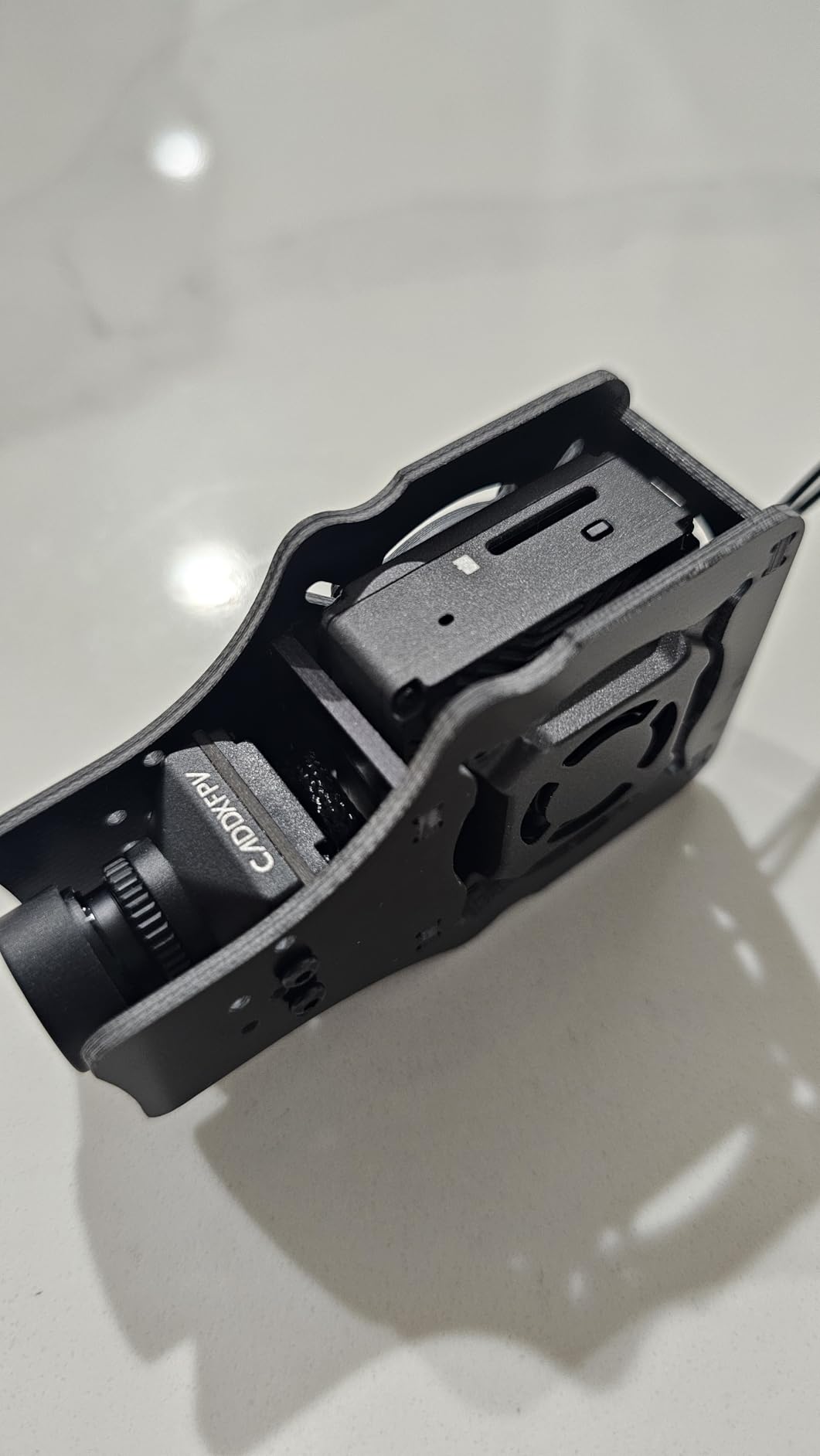
The 160-degree field of view provides an immersive flying experience that analog cameras struggle to match. Built-in recording supports up to 256GB microSD cards, eliminating the need for a separate DVR. The included booster antenna and coaxial cable round out a professional-grade package.
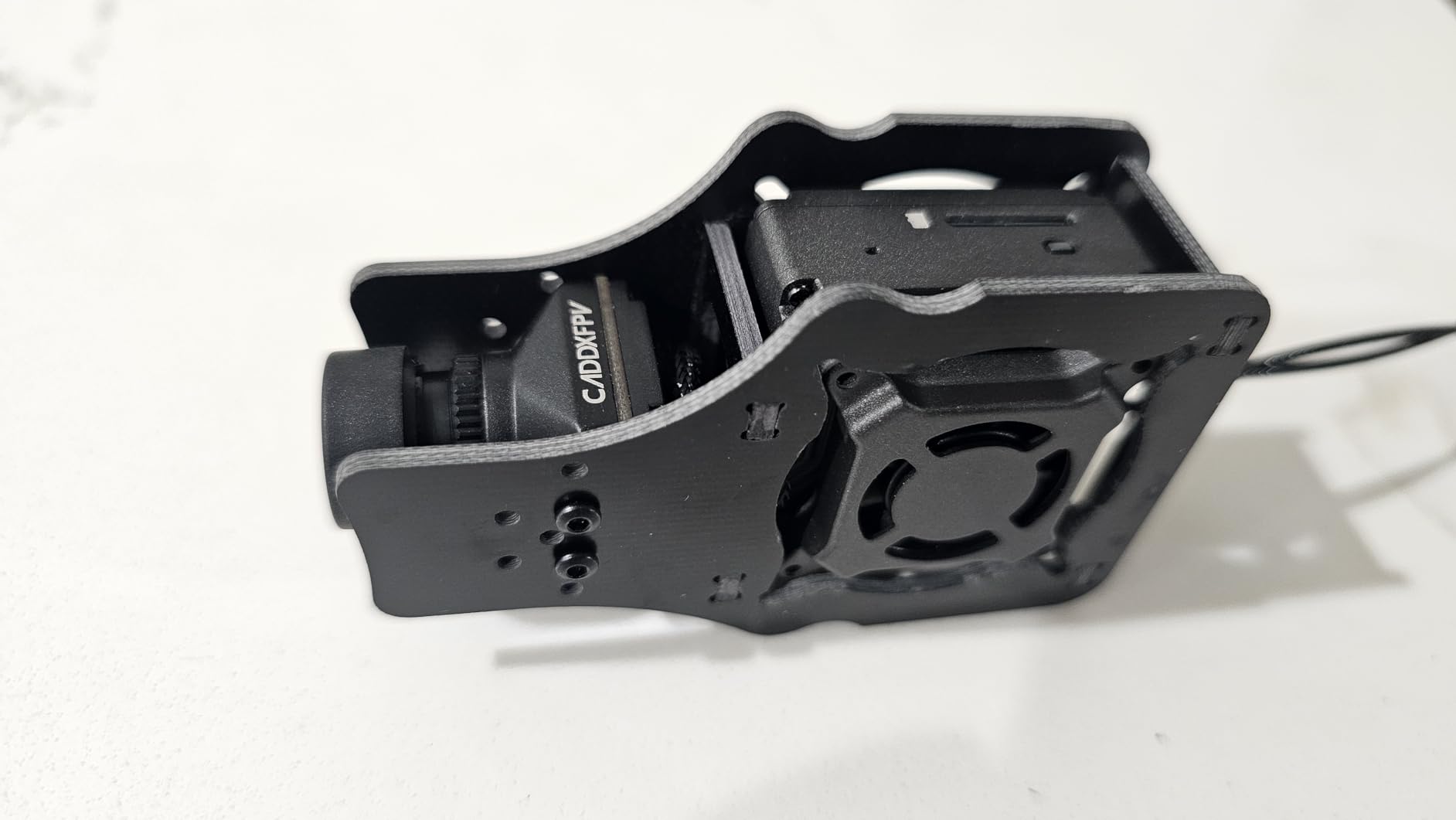
The kit is compatible with both 20x20mm and 25.5×25.5mm frame mounting patterns, making it versatile across different build sizes. The metal heatsink construction addresses the thermal demands of high-power digital transmission. Efficient cooling is essential for sustained high-quality video output.
The 3.8-star rating with 22% one-star reviews is a concern that buyers should investigate carefully. While 58% of reviewers give it five stars, the reliability issues suggest some quality control or compatibility challenges. Research recent firmware updates and community feedback before committing to this ecosystem.
Who Should Buy the Walksnail Avatar GT Kit
Cinematic FPV pilots who prioritize image quality will find the 1080P digital video transformative for their footage. If you produce FPV content for social media or commercial clients, the crisp digital image eliminates the analog grain that post-production sharpening can never fully fix. The Starvis II sensor is particularly valuable for golden-hour flying.
Pilots already invested in the Walksnail ecosystem will find this a natural upgrade. The Avatar GT represents the latest generation of Walksnail technology, and existing goggles and receivers are fully compatible. The built-in recording eliminates the need for a separate GoPro or action camera on many builds.
What to Watch Out For
The digital ecosystem lock-in is the primary consideration. Unlike analog VTX units that work with any 5.8GHz receiver, the Avatar GT requires Walksnail-compatible goggles. This means a significant additional investment if you are currently using analog goggles.
The 22% one-star rating warrants careful research. Some users report reliability issues that may be related to firmware, thermal management, or quality control variance. Check recent community discussions and firmware changelogs to understand whether known issues have been addressed before purchasing.
Buying Guide: How to Choose the Best VTX for FPV Drones
Choosing the right FPV video transmitter comes down to understanding five key factors: power output, control protocol, antenna connectors, thermal management, and your flying style. Our team has broken down each factor based on real-world testing and community feedback to help you make an informed decision.
Understanding VTX Power Output
Power output is measured in milliwatts (mW), and it directly affects your effective range and signal penetration. The relationship is not linear but logarithmic, which means doubling your power does not double your range. Here is what each power level means in practice:
25mW is the standard for indoor racing and organized events with many pilots. It provides enough signal for close-quarters flying while minimizing interference with other pilots on adjacent channels. Most racing leagues mandate 25mW for competition.
200mW to 400mW is the sweet spot for park freestyle and backyard flying. This range provides solid penetration through light tree cover and around buildings without overwhelming local RF environment. Most pilots spend the majority of their flying time in this range.
800mW to 1000mW is for long-range exploration and flying in RF-dense environments. At this power level, you can push past 2 kilometers in open areas and maintain signal through moderate obstacles. This is where thermal management becomes important.
1600mW and above is specialized territory for mountain surfing and extreme long-range. At these power levels, you need serious heatsinking and airflow to prevent thermal shutdown. Always verify local regulations before transmitting at these levels.
Analog vs Digital FPV Systems
The analog versus digital debate is one of the most discussed topics in FPV, and the answer depends entirely on your priorities. Analog systems, like the AKK and TBS units in this roundup, offer zero perceptible latency and universal compatibility with 5.8GHz receivers. Digital systems like the Walksnail Avatar GT deliver dramatically better image quality at the cost of slight latency and ecosystem lock-in.
Choose analog if you race competitively, fly acro freestyle, or want the lowest possible latency. Analog is also the better choice if you fly with groups using mixed equipment, since any 5.8GHz analog receiver can pick up any analog VTX signal. The upgrade path is simpler and more affordable.
Choose digital if you fly cinematic lines, capture footage for content creation, or fly in low-light conditions. Digital systems eliminate analog grain and provide crisp, detailed images that hold up in post-production. The trade-off is higher cost and compatibility limited to same-ecosystem goggles.
SmartAudio vs Tramp Protocol
SmartAudio and Tramp are the two protocols that allow you to control VTX settings through Betaflight OSD. Without one of these protocols, you need to physically press buttons on the VTX to change channels, bands, and power levels. Having protocol support means you can make these changes through your goggles while flying.
SmartAudio is the more widely supported protocol, used by TBS, AKK, HGLRC, and many other manufacturers. It transmits VTX control data through the audio channel of your video signal. Most flight controllers and Betaflight versions support SmartAudio out of the box.
Tramp is the alternative protocol used by ImmersionRC and some other manufacturers. It uses a different communication method and is less common in the current market. If your flight controller supports Tramp, it will also support SmartAudio in most cases.
For most pilots, SmartAudio support is the key feature to look for. All of the AKK, HGLRC, and TBS units in this roundup support SmartAudio, giving you full OSD control over your VTX settings.
Antenna Connector Types
The connector type on your VTX determines which antennas you can use. The three common types are SMA, MMCX, and U.FL, each with different characteristics:
SMA (SubMiniature Version A) is the most durable connector type. It screws on securely and can withstand crashes and frequent antenna changes. The trade-off is slightly more weight and bulk. The HGLRC Zeus350mW uses SMA for maximum durability.
MMCX (Micro-Miniature Coaxial) is the most popular connector for modern VTX units. It clicks in securely while being much smaller and lighter than SMA. MMCX is used by the TBS Unify PRO32, AKK X2-Ultimate, and most other units in this roundup.
U.FL is the smallest and lightest connector, typically used on micro drones and whoops. It is less durable than SMA or MMCX and can pop off during crashes. Some VTX units, like the AKK FX3-ultimate, offer both MMCX and U.FL pads for maximum flexibility.
Heat Management Considerations
Heat is the enemy of VTX reliability. At power levels above 400mW, thermal management becomes a critical factor in your build design. The FPV community consistently reports overheating as a top pain point, particularly with budget VTX units that lack proper heatsinking.
The HGLRC Zeus VTX PRO 1.6W addresses this with its CNC machined heatsink shell, which provides significantly better thermal dissipation than plastic bodies. The RUSH TANK III uses a similar Tank Armor metal casing approach. For sustained high-power flying, metal construction is worth the extra weight.
In your build, ensure adequate airflow around the VTX. Avoid enclosing it in tight frame sections without ventilation. Consider adding thermal pads between the VTX and your frame arm for additional heat sinking. If your VTX has thermal protection, it will reduce output power when overheating, which manifests as sudden range reduction during flight.
Legal Considerations for VTX Power
5.8GHz video transmission is subject to regulations that vary by country. In the United States, FCC Part 15 governs unlicensed RF transmission. The legal power limit for 5.8GHz under Part 15 is generally interpreted as 250mW for analog video, though enforcement is minimal for hobby use.
In the European Union, regulations are stricter, with power limits typically around 25mW for unlicensed 5.8GHz transmission. If you fly in EU countries, check local regulations carefully before using high-power settings. Many VTX units include 25mW specifically for EU compliance.
The practical approach most pilots take is to use 25mW at organized events where interference management is important, higher power for solo freestyle flying in less populated areas, and maximum power only for long-range exploration in remote locations. Always fly responsibly and respect local regulations.
FAQs
What is the best FPV VTX for freestyle?
For freestyle flying, the AKK X2-Ultimate and AKK A1918 are excellent choices with 1000mW output for tree penetration and SmartAudio support for on-the-fly power adjustments. The TBS Unify PRO32 DP is the premium option if budget allows, offering superior signal quality and stability through obstacles.
What power VTX do I need for FPV racing?
For organized FPV racing, 25mW is the standard required by most racing leagues to minimize interference between pilots. For practice sessions or solo racing, 200mW to 400mW provides a good balance of range and signal clarity. PIT mode is essential for safe frequency changes between heats at racing events.
How do I choose a VTX for my FPV drone?
Consider your flying style first: racing needs 25-200mW with PIT mode, freestyle needs 400-800mW with SmartAudio, and long-range needs 1000mW or higher with proper heatsinking. Then match the voltage range to your battery, choose SMA or MMCX based on durability needs, and ensure SmartAudio or Tramp protocol support for OSD control.
What is the difference between analog and digital VTX?
Analog VTX transmits standard definition video on 5.8GHz with zero perceptible latency and universal compatibility with any analog receiver. Digital VTX like Walksnail Avatar transmits HD 1080P video with 22ms latency but requires matching digital goggles. Analog is better for racing and acro, digital is better for cinematic flying and content creation.
What is pit mode on a VTX?
Pit mode is a low-power setting (typically 0.01mW) that lets you power up your VTX and change frequency settings without interfering with other pilots. It is essential for organized racing and group flying events where multiple pilots share the 5.8GHz band. You configure your channel and power in pit mode, then switch to your flying power level when ready to launch.
Conclusion
Finding the best VTX for FPV drones in 2026 comes down to matching power output, protocol support, and build quality to your specific flying style. The TBS Unify PRO32 DP remains the premium choice for pilots who demand maximum signal quality and range. The AKK X2-Ultimate delivers outstanding value with 1000mW output and SmartAudio at an accessible price. For budget-conscious builders, the AKK FX3-ultimate and HGLRC Zeus350mW provide solid performance without the premium price tag.
Remember that your VTX is only as good as your antenna and power delivery system. Invest in quality antennas, use filtered power with appropriate LC filtering, and ensure proper thermal management for sustained high-power operation. Whatever transmitter you choose, fly responsibly and respect local regulations on 5.8GHz transmission power.