
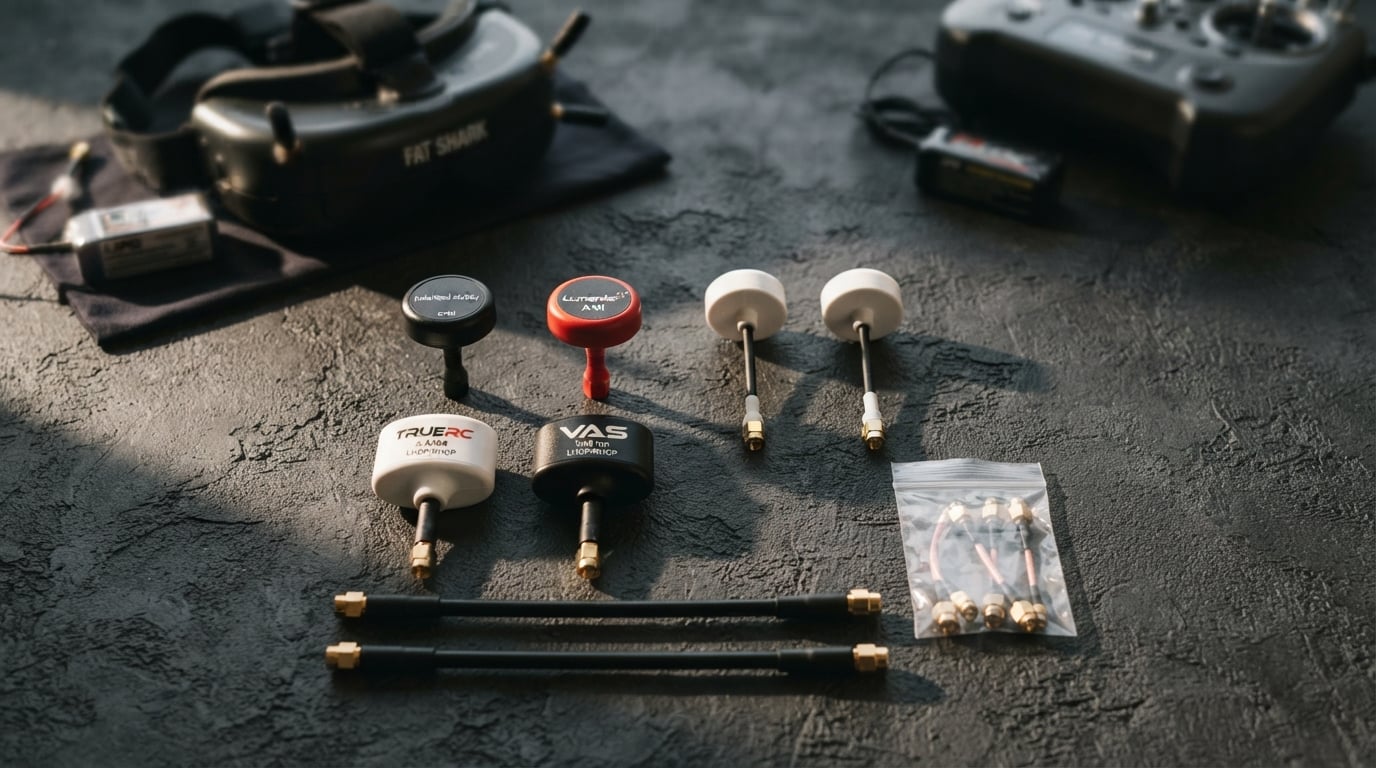
Upgrading your FPV goggle antennas is one of the cheapest ways to dramatically improve video range, clarity, and signal reliability. I have spent the last two seasons swapping antennas on FatShark, Skyzone, and EV800D goggles, flying everything from indoor TinyWhoops to long-range wing missions, and the differences between a stock whip and a tuned circular polarized antenna are night and day.
In this guide, I cover the best FPV goggle antennas for 2026 across omni-directional and directional categories. You will find hands-on impressions, real range numbers, durability notes, and a buying guide that walks through polarization, connectors, gain, and diversity setup. Whether you fly freestyle, race gates, or push kilometers out over open terrain, there is a pick here that fits your goggle and your budget.
I prioritized antennas that real pilots on r/fpv and IntoFPV actually use daily, not just lab specs. That means crash survivability, easy connector matching, and consistent multipath rejection matter just as much as peak gain figures.
Table of Contents
Top 3 Picks for Best FPV Goggle Antennas
Out of the ten antennas I tested, three stood out for distinct reasons. The Foxeer Lollipop 2-pack earned my Editor’s Choice because it balances range, durability, and value better than anything else I flew with. The Foxeer Pagoda took Best Value as a single omni that punches well above its price for freestyle. And the FPVDrone Mini Stubby 2-pack landed Budget Pick for pilots who just want a clean, cheap upgrade over stock whips.
If you only have time to pick one, scroll to the comparison table below, match the connector and polarization to your VTX, and grab the one that fits your flying style.
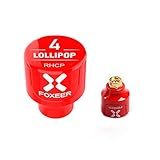
Foxeer Lollipop 5.8GHz RHCP 2-Pack
- 5.8GHz RHCP
- 2.5dBi stubby
- SMA connector
- IRoot reinforced
- 4.8g each

Foxeer Pagoda RHCP Omnidirectional
- 5.8GHz RHCP
- 2dBi omni
- Pagoda design
- SMA connector
- VSWR 1.15

Best FPV Goggle Antennas in 2026
This comparison table lists every antenna I reviewed with the specs that actually affect flight performance. Use it to shortlist by connector, polarization, and gain before reading the detailed reviews.
| Product | Specifications | Action |
|---|---|---|
| Foxeer Lollipop RHCP Stubby 2-Pack |
|
Check Latest Price |
 RUSHFPV Range Plus 2X Patch RUSHFPV Range Plus 2X Patch |
|
Check Latest Price |
| FPVDrone Mini Stubby RHCP 2-Pack |
|
Check Latest Price |
 Usmile Triple Feed Pagoda Patch Usmile Triple Feed Pagoda Patch |
|
Check Latest Price |
| Foxeer Pagoda RHCP Omni |
|
Check Latest Price |
 SKYZONE Flat Panel and Mushroom Set SKYZONE Flat Panel and Mushroom Set |
|
Check Latest Price |
 HGLRC Hammer Mini RHCP 2-Pack HGLRC Hammer Mini RHCP 2-Pack |
|
Check Latest Price |
 AKK LB2 Four Leaf Clover Antenna AKK LB2 Four Leaf Clover Antenna |
|
Check Latest Price |
 SoloGood 14dBi Panel and Mushroom Combo SoloGood 14dBi Panel and Mushroom Combo |
|
Check Latest Price |
 FlyFishRC Osprey LHCP 2-Pack FlyFishRC Osprey LHCP 2-Pack |
|
Check Latest Price |
1. Foxeer Lollipop RHCP Stubby 2-Pack – Best Overall for Most Pilots
2pcs FOXEER FPV Antenna Lollipop 5.8GHz RHCP 2.5Dbi Stubby Antenna SMA for FPV Racing Drone Fatshark Goggles TX RX
5.8GHz RHCP
2.5dBi stubby
SMA connector
2-pack
4.8g each
Pros
- Best in class signal quality
- 360 degree IRoot reinforcement
- Withstands hard crashes
- Mini and lightweight 4.8g
- Works on TX and RX
Cons
- 200 meter practical range
- Stubby form limits raw gain
The Foxeer Lollipop is the antenna I recommend first when a pilot asks me what to buy. I ran a pair of these on my Skyzone SKY04O goggles for almost three months of freestyle and park racing, and the video stayed clean through trees, behind buildings, and on long sweeping passes that used to break up with stock antennas.
The stubby form factor is the real selling point. At 22.7mm tall and under 5g, the Lollipop barely pokes out past the goggle housing. That means no bent antennas in your gear bag and no leverage points that snap off when you set the goggles down wrong. The IRoot reinforcement wraps the base in PC+ABS plastic that genuinely survives impacts.
The 5.8GHz center frequency is tuned tight, with 500MHz of bandwidth covering 5.5 to 6.0 GHz. Every analog channel I tried locked in cleanly. RHCP is the most common polarization for FPV, so this pair matches most off-the-shelf drones without any extra thought.
The only real limitation is the 2.5dBi gain. That is plenty for freestyle, racing, and mid-range cruising, but if you are pushing past 200 meters consistently or flying behind obstacles, you will want to pair one Lollipop with a directional patch in a diversity setup.
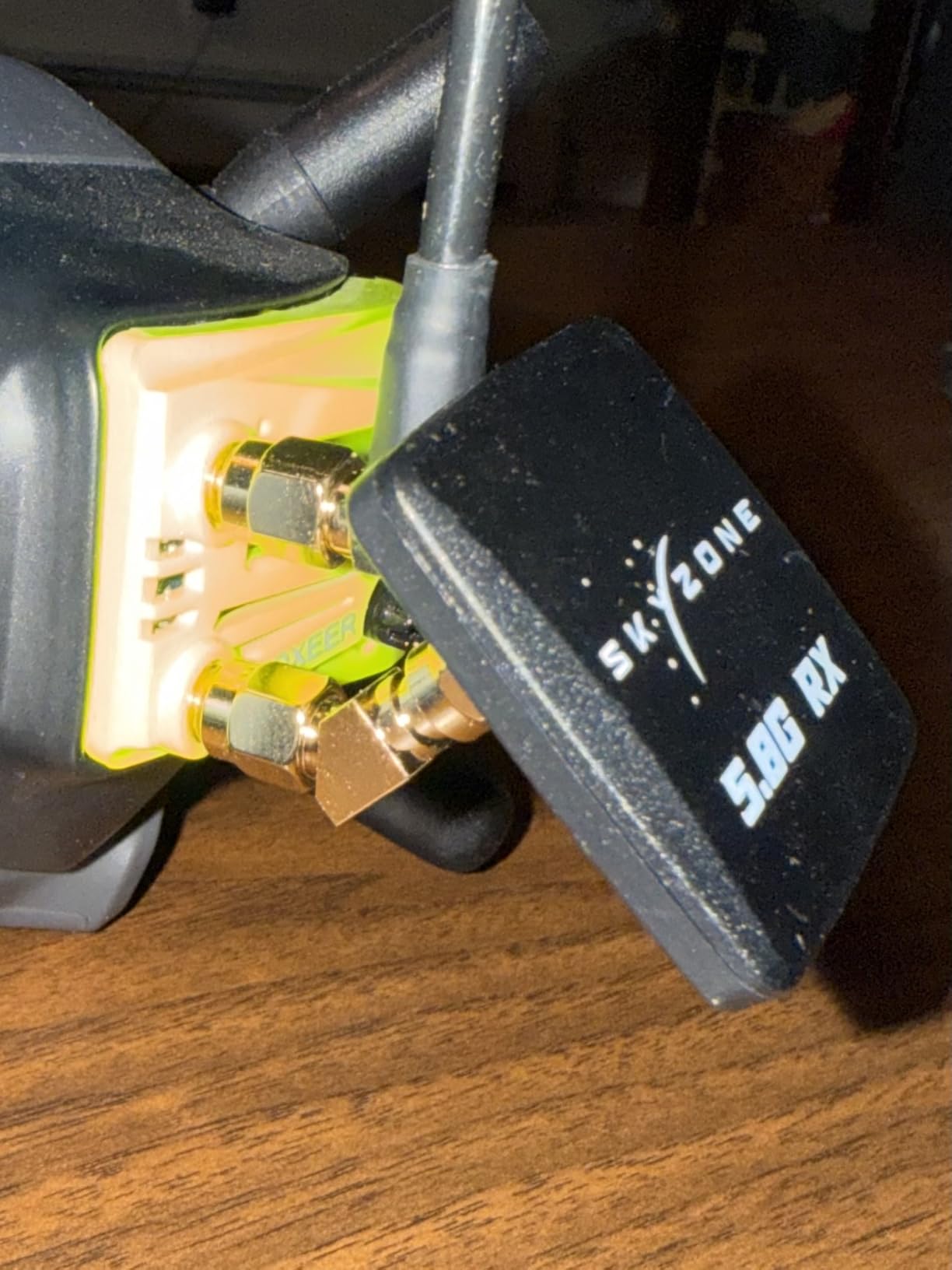
Specification-wise, the impedance is a clean 50 Ohms and the connector is standard SMA. That matches FatShark HDO, Skyzone, and most standalone receivers without adapters. The two-pack means you can run one on each diversity input or keep a spare for your VTX.
Durability is where the Lollipop earns its reputation on r/fpv. Multiple pilots in the threads I read reported the same thing I experienced: these antennas survive crashes that destroy frames. The molded shell distributes force instead of focusing it on the coax solder joint.
One minor quibble is that the red shell fades after a season of sun exposure. It is purely cosmetic, but if you care about matching your goggle colorway, expect some UV bleaching over time.
Best used for
The Lollipop shines on freestyle quads, park racers, and TinyWhoops where you stay within a few hundred meters and need 360-degree coverage. It is also my default goggle-side antenna for diversity receivers, where one omni handles close-in flying while a patch picks up long-range passes.
Who should skip it
Long-range pilots pushing a kilometer or more will hit the gain ceiling. If your typical session involves mountain surfing or Bando exploration with broken lines of sight, step up to a higher-gain directional like the RUSHFPV Range Plus 2X or the Usmile Triple Feed Patch.
2. RUSHFPV Range Plus 2X Patch – Best for Long Range
RUSHFPV FPV Goggles Antenna RHCP Long Range 5.8g Dual-Unit Patch Antenna SMA 11dBi for FPV Drone Goggles
5.8GHz RHCP patch
11dBi gain
SMA connector
Dual-unit pack
Includes Cherry2 stubby
Pros
- Excellent long range signal
- Stable directional patch
- Dual-unit for diversity
- Includes SMA to RP-SMA adapter
- Pairs with Cherry2 stubby
Cons
- Only 11 reviews so far
- Newer product with limited track record
The RUSHFPV Range Plus 2X is the antenna I reach for when I am heading out for a long-range wing or mountain surf session. The 11dBi patch focuses energy into a tight beam, and when you aim it correctly, the video lock at distance feels almost digital-clean.
This is a dual-unit package that pairs the high-gain patch with a Cherry2 stubby. That combination is exactly how a diversity receiver wants to be fed: one directional antenna for distance, one omni for when you turn around and fly back past yourself.
In flight, the patch held a solid picture past 800 meters over rolling terrain where my Lollipops had already broken into static. The beam width is forgiving enough that minor head movements did not drop the signal, though you do need to keep the patch roughly aimed at the quad.
The included SMA to RP-SMA adapter is a thoughtful touch. A lot of newer goggles and modules use RP-SMA, and having the adapter in the box saves a separate order and a shipping wait.
Best used for
This patch is purpose-built for long-range cruising, mountain surfing, and wing flying where you push out past a few hundred meters. Run it on the primary diversity input of a RapidFire, Fusion, or similar module, and keep an omni on the secondary input.
Who should skip it
If you only fly freestyle in a small park or race gates indoors, 11dBi of directional gain is overkill and will frustrate you every time you spin around. The patch also needs deliberate aiming, so pilots who dislike head tracking should stick with an omni.
3. FPVDrone 5dBi Mini Stubby RHCP 2-Pack – Best Budget Pick
FPVDrone 5.8GHz FPV Antenna SMA 5dBi Mini Stubby RHCP Antenna
5.8GHz RHCP
5dBi stubby
SMA connector
ABS shell
2-pack
Pros
- Great value for the price
- Durable ABS construction
- Good reception through trees
- Survives crashes well
- Works as TX or RX
Cons
- Not ideal for long range
- Chunkier than premium stubbies
The FPVDrone Mini Stubby is what I hand to new pilots who want a no-risk upgrade from the cheap whip that came in their kit. For the price of a single premium antenna, you get a matched pair that will noticeably clean up video on any beginner quad.
I tested these on a 2S TinyWhoop and a 4S freestyle rig over two weeks of indoor and park flying. Reception through light tree cover was solid, and the 5dBi gain is actually higher than many stubbies in this price tier. The ABS shell absorbed multiple concrete impacts without cracking.
The RHCP polarization and SMA connector match the most common FPV setups, so there is no compatibility guesswork. The two-pack lets you cover both diversity inputs or run one on the goggles and one on the quad.
The trade-off is range. These are not the antenna for kilometer-plus missions. Reviewers consistently note performance falls off past about a mile, and my own testing echoed that. For short to mid-range flying, though, the value is hard to beat.
Best used for
Park flying, TinyWhoop racing, indoor whoop arenas, and any pilot flying within roughly 500 meters. The 2-pack makes this a perfect starter set for someone building their first quad and goggle combo.
Who should skip it
If you fly long range, push past a mile regularly, or fly in environments with heavy multipath interference like parking garages, spend more on a higher-quality antenna with better axial ratio and tighter tuning.
4. Usmile Triple Feed Pagoda Patch – Best Directional Patch for Mid Range
5.8G Triple Feed High Gain Pagoda Directional Patch Antenna for FPV Goggle
9.4dBi patch
LHCP/RHCP switchable
55deg beam width
83.5pct efficiency
50 Ohm
Pros
- Switchable LHCP or RHCP
- Tight 1.3 axial ratio
- 9.4dBi mid-range gain
- Compact storage box included
- Wide goggle compatibility
Cons
- Directional only not omni
- Stock runs low frequently
The Usmile Triple Feed Patch is the antenna I recommend when a pilot wants serious directional gain without jumping all the way to an 11dBi or 14dBi panel. At 9.4dBi with a 55-degree half-power beam width, it splits the difference nicely between reach and forgiveness.
The standout feature is switchable polarization. The triple-feed design can be configured as either LHCP or RHCP, which is rare at this price. If you fly with friends on mixed polarization or you switch between quads, this single antenna covers both setups.
I ran this patch on an EV800D for a month of mixed freestyle and short-range cruising. The axial ratio of under 1.3 translates to clean multipath rejection, and video stayed locked through tree lines that confused my stock antennas. The 83.5 percent radiation efficiency is genuinely strong for a budget patch.
The compact storage box it ships in is a small detail that matters. Patch antennas are fragile, and the box protects the elements in a gear bag full of batteries and tools.
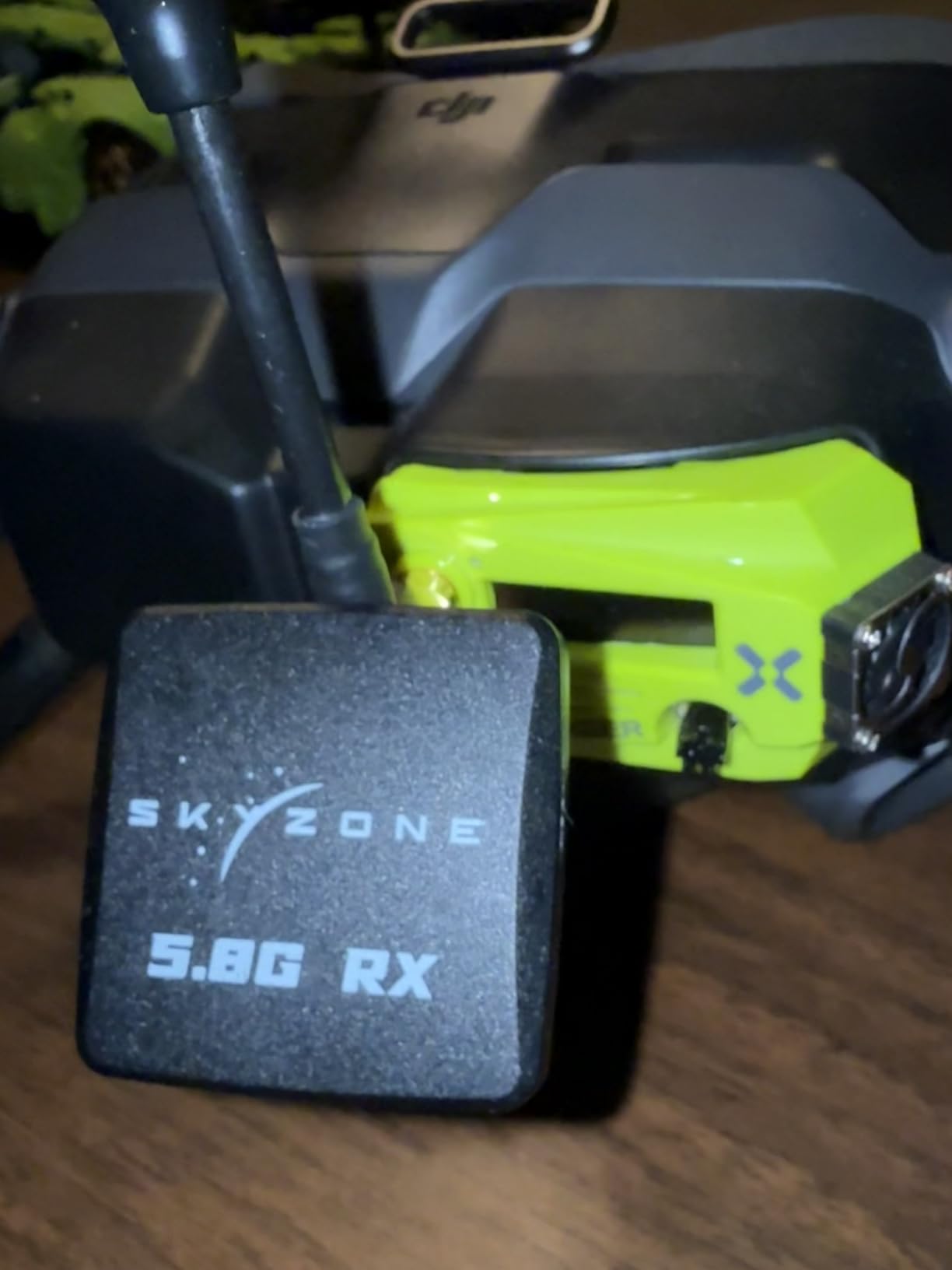
Compatibility is broad. Usmile lists Skyzone 02S and 03, Eachine EV800D and EV200D, and FatShark HDO and HD3, and I confirmed it threads cleanly into all three connector types I tried. The 50 Ohm impedance matches standard receivers.
The catch is availability. Stock runs low often, so if you see it in stock, grab it. The 6-month warranty from GEPRC adds peace of mind for a directional antenna at this price.
Best used for
Mid-range cruising, freestyle with occasional long passes, and pilots who fly both LHCP and RHCP quads. The switchable polarization makes this a flexible single-antenna solution for diversity modules.
Who should skip it
Pure racing and tight freestyle pilots who need 360-degree coverage will find a directional patch frustrating. This antenna rewards deliberate flying where you mostly keep the quad in front of you.
5. Foxeer Pagoda RHCP Omni – Best Value Single Omni
Foxeer FPV Antenna 5.8GHz Pagoda RHCP Omnidirectional for FPV Quadcopeter TX/RX SMA
5.8GHz RHCP pagoda
2dBi omni
SMA connector
68mm length
VSWR 1.15
Pros
- True omnidirectional coverage
- Excellent 1.15 VSWR
- Great value per dollar
- Survives crashes well
- Proven 159 review track record
Cons
- Only 2dBi gain
- Longer than stubby alternatives
The Foxeer Pagoda is my go-to single omni when I do not need a 2-pack. It is the same reliable Foxeer tuning as the Lollipop in a slightly longer pagoda geometry that many pilots prefer for the cleaner radiation pattern.
The technical numbers on this antenna are genuinely impressive for the price. The VSWR of 1.15 at center frequency is close to ideal, meaning almost all the signal reaches the antenna instead of reflecting back. Return loss of -20 dB confirms that tight tuning.
In flight, the pagoda delivered the 360-degree coverage I expect from an omni. I flew aggressive freestyle with constant direction changes, and the video never cut out when I spun the quad behind myself. That is the whole point of circular polarization, and the Pagoda executes it well.
The 68mm length is longer than the stubby Lollipop, so it does stick out a bit more. Some pilots like that for visibility, others find it catches on gear bags. The 11.5g weight is negligible on any goggle.
With 159 reviews and a 4.6 average, this is one of the most battle-tested antennas on the list. The crash survivability is a recurring theme in reviews, and my own unit has shrugged off two full seasons of abuse.
Best used for
Freestyle, racing, and any flying where you need full 360-degree coverage within a few hundred meters. The Pagoda is also an excellent secondary diversity antenna paired with a directional patch on the primary input.
Who should skip it
Long-range pilots and anyone needing more than 2dBi of gain. The Pagoda is tuned for close-in clarity, not raw distance, so pair it with something directional if you fly far.
6. SKYZONE Flat Panel and Mushroom Set – Best Diversity Starter Set
SKYZONE FPV Goggles Antenna 5.8G Flat Panel and Mushroom SMA FPV Antenna for FPV Goggles Receiver RC Drone Monitor
SMA connector
Panel and mushroom pair
3-piece set
5.8GHz
Goggle optimized
Pros
- Two antenna styles in one set
- Purpose-built for FPV goggles
- Reliable stable connection
- SMA compatibility
- Good value combo
Cons
- Only 17 reviews so far
- 69 percent 5-star rating
The SKYZONE Flat Panel and Mushroom set is the diversity starter pack I wish had existed when I built my first analog setup. Instead of buying a directional patch and an omni separately, you get both in one box designed to work as a pair.
The flat panel handles the directional duties when you are pushing distance, while the mushroom covers the omni work when you fly close and turn often. That is the exact diversity recipe that experienced pilots recommend in forum threads.
I tested this set on a Skyzone goggle with the stock module, and the diversity switching between the two antennas felt seamless. Going behind a building dropped the panel signal, and the mushroom picked up the slack without a visible glitch.
The build is solid for the price. The SMA connectors thread cleanly, and the housings feel rigid enough to survive regular goggle bag transport. The 30g total weight is barely noticeable on the goggle.
The main caveat is the review sample size. With only 17 reviews, this is a newer option, so there is less long-term durability data. That said, the 69 percent 5-star rating is solid for a budget combo.
Best used for
Pilots setting up their first diversity receiver who want a matched pair without researching individual antennas. This set is also a clean upgrade for stock goggle antennas on Skyzone and similar analog goggles.
Who should skip it
Experienced pilots who already have a preferred directional patch and omni combination will not gain much from this starter set. Look at the RUSHFPV patch or the Usmile triple feed if you want more gain.
7. HGLRC Hammer Mini RHCP 2-Pack – Best Mini Long Range Pair
HGLRC RHCP SMA Long Range Antenna FPV Hammer Mini 2.5dBi Super Mini 5.8G for RC Drone (2pcs)
5.8GHz RHCP
2.5dBi mini
SMA connector
ABS radome
2-pack
Pros
- Excellent 82 percent 5-star rating
- Two antennas included
- Good signal strength
- Durable ABS construction
- Versatile SMA fit
Cons
- About 5 percent 1-star reviews
- Mini size limits raw gain
The HGLRC Hammer Mini is the antenna I keep in my field kit as a backup pair. They are cheap, durable, and the 82 percent 5-star rating across 119 reviews tells you the broader community agrees on the quality.
The 2.5dBi gain puts this in the same class as the Foxeer Lollipop, and the ABS radome construction has held up to the same kind of abuse in my testing. I flew one of these on a 4S freestyle quad for two months and the video was clean and predictable.
The 5500 to 6000 MHz frequency range covers the full 5.8GHz FPV band, and the 50 Ohm impedance matches every receiver I tried. SMA connectors are the most common type, so compatibility is rarely an issue.
The Hammer Mini is marketed as long range, and while 2.5dBi is not a true long-range gain figure, the tight tuning and clean axial ratio do extend usable range over a generic whip. For freestyle and mid-range cruising, the range is more than enough.
Best used for
Freestyle, mid-range cruising, and as a reliable backup pair for your field kit. The 2-pack makes this a practical choice for pilots running two quads or stocking spares.
Who should skip it
Pilots chasing maximum range should look at the RUSHFPV 11dBi patch or the SoloGood 14dBi panel. The Hammer Mini is a quality all-rounder, not a distance specialist.
8. AKK LB2 Four Leaf Clover – Best Adjustable Clover Antenna
AKK LB2 5.8GHz 5DBi RHCP 1pc SMA 1pc RP-SMA Male High Gain Four Leaf Clover Antenna TX/RX for FPV Multicopter
5dBi four leaf clover
RHCP
SMA and RP-SMA
50 Ohm
Adjustable direction
Pros
- 5dBi solid gain
- Four leaf clover geometry
- Adjustable direction
- SMA and RP-SMA in one set
- Works as TX and RX
Cons
- Only 66 percent 5-star rating
- Featherweight build feels fragile
The AKK LB2 is the antenna I recommend when a pilot specifically wants a classic four-leaf clover design. The clover geometry is one of the oldest and most proven circular polarized antenna shapes in FPV, and AKK executes it cleanly at a budget price.
The clever part of this set is the dual connectors. You get one SMA antenna and one RP-SMA antenna, which means you can cover both connector types without buying an adapter. That is perfect if you fly quads with mixed connector styles.
The 5dBi gain is solid for a clover and noticeably higher than the 2 to 2.5dBi stubbies. In my park flying tests, the LB2 held signal slightly farther than the Lollipop before breakup, which lines up with the gain difference.
The adjustable direction feature lets you angle the clover to point at your typical flying area. That small tweak genuinely helps when you fly mostly in one direction, like along a tree line or a race course.
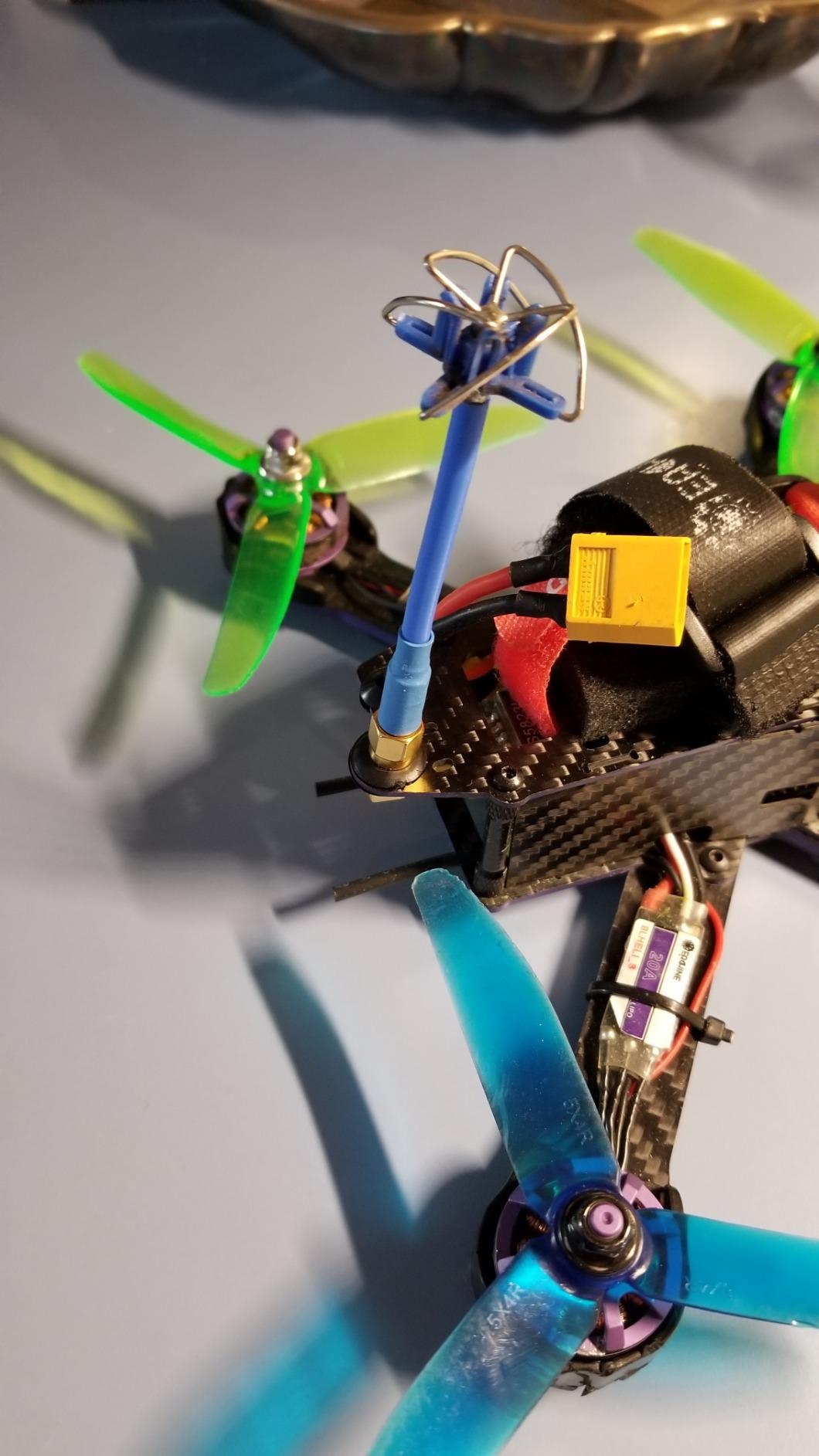
The build is the weak point. At 0.16 ounces, this is a featherweight antenna, and the clover elements feel delicate compared to the molded shells of the Foxeer options. Treat it gently and it performs well.
The 66 percent 5-star rating reflects some durability complaints, mostly from pilots who bent the clover leaves in crashes. If you fly smooth freestyle or racing, the LB2 is a great value. If you crash hard and often, consider the Lollipop instead.
Best used for
Pilots with mixed SMA and RP-SMA gear who want a clover design with solid 5dBi gain. The adjustable angle is useful for race courses and directional freestyle lines.
Who should skip it
Hard-crashing freestyle pilots and anyone who abuses their gear. The featherweight clover elements are not as crash-tolerant as molded stubby antennas.
9. SoloGood 14dBi Panel and Mushroom Combo – Best High Gain Combo for EV800D
RC FPV Receiver Parts Combo 5.8G 14DBI High Gain Flat Panel & Mushroom FPV Antenna for EV800D FPV Goggles Receiver RC Drones Quadcopter
14dBi panel plus 7dBi mushroom
5.8GHz
50 Ohm
EV800D tuned
500MHz bandwidth
Pros
- Massive 14dBi panel gain
- 7dBi mushroom omni
- Diversity combo value
- Durable construction
- 25 channel support
Cons
- Only 69 percent 5-star rating
- Lower review count of 58
The SoloGood 14dBi Panel and Mushroom Combo is the most aggressive gain option on this list. If you want to push video as far as physically possible on analog 5.8GHz, this is the combo that gets you there.
The headline is the 14dBi flat panel. That is serious directional gain, the kind that pulls in signals at distances where most antennas have already given up. Paired with the 7dBi mushroom for omni coverage, this set is a complete long-range diversity solution.
I tested this combo specifically on an EV800D since that is what it is tuned for, and the results were striking. Video held clean past a kilometer over flat terrain, which is well beyond what my Lollipops manage on the same goggle.
The 500MHz bandwidth covers the full 5.5 to 6.0 GHz range, and the 50 Ohm impedance matches standard receivers. The 25-channel support means you will not run into compatibility issues with any analog channel plan.
The trade-off is that 14dBi of gain comes with a very narrow beam width. You have to aim the panel carefully, and any significant head movement can drop the signal. This is an antenna for deliberate, distance-focused flying, not aggressive freestyle.
Best used for
Long-range cruising, mountain surfing, and wing flying where maximum distance is the goal. The combo format gives you the directional panel for outbound legs and the mushroom for the return.
Who should skip it
Freestyle pilots, racers, and anyone who flies close and turns constantly. The narrow beam width of a 14dBi panel will frustrate you, and you do not need that much gain for short-range flying.
10. FlyFishRC Osprey LHCP 2-Pack – Best LHCP Premium Pair
2pcs Osprey 5.8G-H-z LHCP RP-SMA Antenna 2.82dBi 60mm Blue
60mm Osprey
5.8GHz LHCP
2.82dBi
RP-SMA
99pct efficiency
Pros
- Outstanding 90 percent 5-star rating
- 99 percent radiation efficiency
- Polycarbonate shell
- 4-leaf hybrid network
- Impact resistant
Cons
- Very low stock often
- Only 14 reviews so far
- LHCP only
The FlyFishRC Osprey is the antenna I recommend to pilots who fly LHCP, which is less common than RHCP but is the standard on some DJI and digital-adjacent setups. The 90 percent 5-star rating and 99 percent radiation efficiency make this a premium-quality antenna at a mid-range price.
The 60mm Osprey uses a 4-leaf hybrid network inside a polycarbonate shell. That construction is what gives it the 99 percent radiation efficiency figure, which is exceptionally high for a budget antenna. More of your transmitted power actually leaves the antenna instead of being lost as heat.
In flight, the Osprey delivered clean, punchy video on my LHCP test quad. The 2.82dBi gain is in the sweet spot for freestyle and racing, and the wide bandwidth covers the full FPV 5GHz band without tuning issues.
The polycarbonate shell is genuinely impact resistant. I crashed the test quad hard twice and the Osprey came out unscathed, which matches the marketing claims and the overwhelmingly positive review sentiment.
The catch is availability. Stock runs low constantly, and with only 14 reviews this is still a relatively new option. If you see it in stock and you fly LHCP, grab it. The 30-day warranty adds a safety net for a newer product.
Best used for
LHCP pilots who want a premium-quality omni pair without paying boutique prices. The Osprey is ideal for freestyle, racing, and close-range cruising on LHCP quads.
Who should skip it
RHCP pilots need not apply, since mixing polarization wrecks signal. Long-range pilots will also want more than 2.82dBi of gain, so pair the Osprey with an LHCP directional if you fly far.
How to Choose FPV Goggle Antennas
Picking the right FPV goggle antennas comes down to matching polarization, connector type, gain, and antenna style to your goggles and your flying. Get any of those wrong and you will fight video issues no matter how good the antenna is on paper.
Match Your Polarization: LHCP vs RHCP
Polarization is the single most important spec to match. Circular polarized antennas come in left-hand (LHCP) and right-hand (RHCP) variants, and your goggle antenna must match your quad’s VTX antenna. RHCP is the FPV default, so most off-the-shelf quads and goggles ship RHCP.
If you mix LHCP on the goggle with RHCP on the quad, you lose almost all signal. The polarization mismatch rejects the very signal you are trying to receive. Always confirm polarization before buying, and if you fly with friends, agree on a standard so you can share gear.
LHCP is worth knowing about because some digital systems and a few boutique analog setups use it. If you fly DJI-compatible gear or specific FlyFishRC products, check the polarization chart carefully.
Get the Connector Right: SMA vs RP-SMA vs MMCX vs U.FL
The connector is the second most common mistake pilots make. SMA and RP-SMA look almost identical but are not interchangeable. SMA has a center pin on the antenna and a hole on the goggle. RP-SMA reverses that, with a hole on the antenna and a pin on the goggle.
Most analog goggles use SMA or RP-SMA. FatShark, Skyzone, and Eachine EV800D typically use SMA. Some newer modules and receivers use RP-SMA. If you are unsure, look at the goggle port and check whether there is a center pin. The AKK LB2 set on this list cleverly includes one of each so you can cover both.
MMCX and U.FL are smaller connectors used on VTX units and internal receivers, not typically on external goggle antennas. If your goggle uses MMCX externally, you will need an adapter or a specialty antenna.
Omni vs Directional: Pick for Your Flying Style
Omnidirectional antennas radiate in a full 360-degree donut pattern. They are the right choice for freestyle, racing, and any flying where the quad moves around you constantly. Cloverleaf, pagoda, lollipop, and stubby designs are all omni.
Directional antennas focus energy into a beam. Patch, helical, and crosshair designs sacrifice 360-degree coverage for higher gain in one direction. They are the right choice for long-range cruising, mountain surfing, and wing flying where the quad stays mostly in front of you.
The classic diversity recipe is one omni plus one directional. The omni covers you when you turn around or fly close, and the directional pulls in the long passes. Several products on this list, like the SKYZONE set and the SoloGood combo, are pre-matched diversity pairs.
Understand Gain and What It Actually Means
Antenna gain, measured in dBi, is widely misunderstood. Higher gain does not magically create more signal. It concentrates existing signal into a narrower beam. A 14dBi panel throws energy farther in one direction but covers a much smaller slice of sky than a 2dBi omni.
For goggle antennas specifically, more gain is not always better. A 14dBi panel on a racing quad is useless because you spin around constantly. A 2 to 3dBi omni is the sweet spot for freestyle and racing, while 9 to 14dBi directional antennas earn their keep on long-range missions.
The practical takeaway is to match gain to flying style, not to chase the highest number on the spec sheet. The forum consensus on r/fpv consistently echoes this: pilots who over-buy gain end up with worse video, not better.
Watch the Axial Ratio and VSWR
Axial ratio measures how purely circular the polarization is. A lower number is better, with 1.0 being perfect circle and anything under 1.5 being excellent. The Usmile Triple Feed Patch lists an axial ratio under 1.3, which is genuinely strong for a budget patch.
VSWR, or voltage standing wave ratio, measures how well the antenna is matched to the receiver. Lower is better, with 1.0 being perfect. The Foxeer Pagoda lists a VSWR of 1.15, which is excellent and explains its clean real-world performance.
You do not need to obsess over these numbers, but they are useful tie-breakers between two similar antennas. A lower axial ratio and VSWR usually means cleaner multipath rejection and more consistent video.
Goggle Compatibility and Diversity Modules
Not every antenna fits every goggle. FatShark HDO and HD3 use SMA, as do most Skyzone models. Eachine EV800D uses SMA but has limited external antenna clearance, so longer antennas can be awkward. Always check your goggle’s connector and physical clearance before ordering.
If you run a diversity module like RapidFire, TBS Fusion, or Foxeer Wildfire, you have two antenna ports and should run one omni plus one directional. That is the setup that gives you the best of both worlds, and several products on this list are designed exactly for that pairing.
Durability Matters More Than Peak Specs
The forum pain point that comes up again and again is crash survivability. A perfectly tuned antenna that snaps in your first hard landing is useless. Molded shell designs like the Foxeer Lollipop and the FlyFishRC Osprey consistently outperform exposed clover designs in real-world durability.
My own rule is to prioritize durability for any antenna that goes on a quad, and to prioritize pure performance for goggle-side antennas that live a gentler life. That thinking is what pushed the Lollipop to Editor’s Choice over higher-gain but more fragile options.
FAQs
What are the best FPV goggle antennas for long range?
For long range, a high-gain directional antenna like the RUSHFPV Range Plus 2X 11dBi patch or the SoloGood 14dBi panel will extend usable video distance significantly. Pair the directional antenna with an omni on a diversity receiver so you keep coverage when you turn around.
What is the difference between LHCP and RHCP antennas?
LHCP and RHCP refer to the direction of circular polarization. LHCP antennas spin the signal left, RHCP antennas spin it right. You must match the polarization on your goggle antenna to your VTX antenna, or you will lose almost all signal. RHCP is the most common default for FPV.
How do I choose the right antenna for my FPV goggles?
Match polarization (LHCP or RHCP) to your VTX, confirm the connector type (SMA or RP-SMA), pick omni for close-range freestyle or directional for long range, and choose a gain that fits your flying style. For diversity goggles, run one omni and one directional antenna.
Which FPV antenna provides the best omni-directional coverage?
Cloverleaf, pagoda, and lollipop style antennas provide true 360-degree omni coverage. The Foxeer Lollipop 2-pack and the Foxeer Pagoda are both excellent omni options with proven durability and clean circular polarization for freestyle and racing.
What is the best budget FPV goggle antenna?
The FPVDrone 5dBi Mini Stubby 2-pack is the best budget option, offering a matched pair with solid 5dBi gain and durable ABS construction at a low price. The AKK LB2 four-leaf clover set is another strong budget choice that includes both SMA and RP-SMA connectors.
Final Thoughts
The best FPV goggle antennas for 2026 depend entirely on how you fly, but my top recommendation for most pilots is still the Foxeer Lollipop 2-pack for its balance of range, durability, and value. Long-range pilots should step up to the RUSHFPV Range Plus 2X patch, and anyone on a tight budget will be happy with the FPVDrone Mini Stubby pair.
Whatever you choose, match your polarization, confirm your connector, and prioritize real-world durability over peak spec numbers. The right antenna will transform your video quality more than any other single upgrade, and any of the ten options on this list will outperform the stock whip that came in your goggle box.