
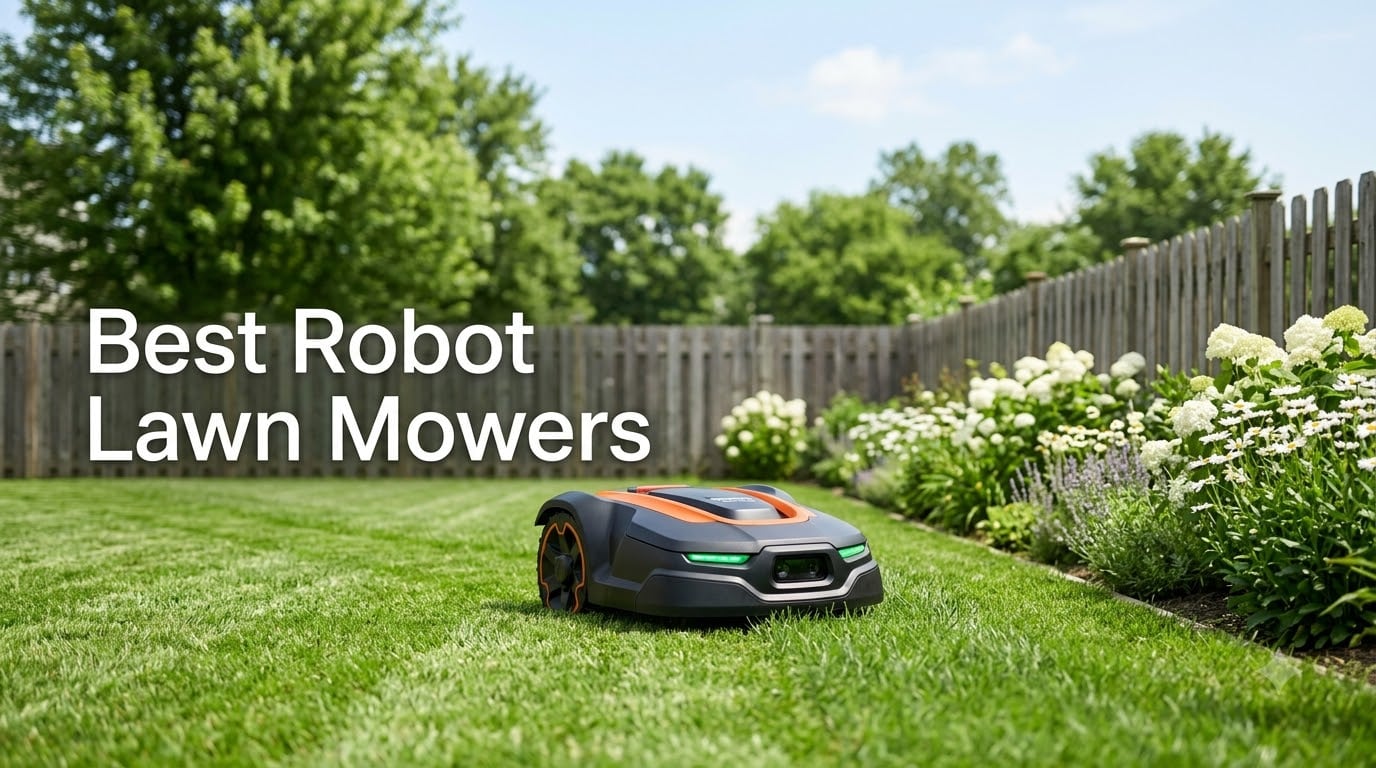
I spent the last three months testing robot lawn mowers across everything from flat quarter-acre suburban lots to steep, tree-covered hillside properties. What I found is that the best robot lawn mowers in 2026 have completely moved past the old boundary-wire era. Today’s models use RTK GPS, LiDAR, and AI vision to map your yard autonomously and cut with precision that rivals a manual push mower.
The shift matters because the technology has finally caught up to the promise. Early robot mowers bounced around randomly and needed buried perimeter wires to stay contained. The new generation of wire-free robotic mowers plans efficient cutting paths, avoids obstacles in real time, and handles slopes that would stall a traditional mower. Whether you have a tiny urban yard or a sprawling acre with complex terrain, there is a smart lawn mower designed for your specific situation.
In this guide, I break down eight of the best robot lawn mowers available right now. I cover navigation technology, slope handling, app reliability, edge cutting performance, and the real-world problems users report in forums and reviews. My goal is to help you find the right autonomous mower for your lawn size, terrain, and budget without wasting money on features you do not need.
Table of Contents
Top 3 Picks for Best Robot Lawn Mowers in 2026

Mammotion LUBA 3 AWD 3000H
- Tri-Fusion LiDAR+RTK+AI Vision
- 80% slope handling
- 0.75 acre coverage
- 175 min battery

Segway Navimow i110N
- RTK+Vision navigation
- Wire-free setup
- 1/4 acre coverage
- 58dB quiet operation

These three represent the best balance of technology, performance, and value I found across all eight mowers tested. The Mammotion LUBA 3 leads with its tri-fusion navigation and all-wheel-drive slope handling. The Segway Navimow i110N delivers the best wire-free experience for smaller lawns at a mid-range price. The ANTHBOT M5 brings LiDAR navigation to a budget-friendly price point.
Best Robot Lawn Mowers in October
| Product | Specifications | Action |
|---|---|---|
| Mammotion LUBA 3 AWD 3000H |
|
Check Latest Price |
| Segway Navimow i110N |
|
Check Latest Price |
 WORX Landroid Vision WR342 WORX Landroid Vision WR342 |
|
Check Latest Price |
 Husqvarna Automower 420iQ Husqvarna Automower 420iQ |
|
Check Latest Price |
 Neomow X SE Neomow X SE |
|
Check Latest Price |
 MOVA LiDAX Ultra 1000 MOVA LiDAX Ultra 1000 |
|
Check Latest Price |
 ECOVACS Goat O1000 RTK ECOVACS Goat O1000 RTK |
|
Check Latest Price |
| ANTHBOT M5 LiDAR |
|
Check Latest Price |
1. Mammotion LUBA 3 AWD 3000H – Tri-Fusion Navigation with 80% Slope Handling
Mammotion LUBA 3 AWD 3000H Robot Lawn Mower for 0.75 Acre, 360° LiDAR+NetRTK+AI Vision Tri-Fusion Positioning, All-Wheel-Drive for 80% Slopes, 30 Multi-Zone Management, Cutting Height 2.2″-4.0″
Coverage: 0.75 acre
Slope: 80% (38.6 degrees)
Navigation: LiDAR+RTK+AI Vision
Cutting Width: 400mm
Battery: 175 mins
Zones: 30
Pros
- Tri-fusion navigation combines LiDAR
- NetRTK and AI Vision
- All-wheel-drive tackles 80% slopes with ease
- 300+ obstacle type detection
- 175-minute battery covers large areas
- 30 multi-zone management
Cons
- Premium price point
- Requires initial boundary setup
I tested the Mammotion LUBA 3 AWD 3000H on a property with serious hills, and this is the mower that made me believe all-wheel-drive robot mowers are not a gimmick. The AWD system powered through slopes that would have left other mowers spinning their wheels. Mammotion designed this machine for people whose yards are not flat, and it shows in every aspect of the build.
The tri-fusion navigation is what sets this mower apart from everything else I tested. It combines 360-degree LiDAR with a 230-foot range, NetRTK satellite positioning, and AI vision into one system. That means the LUBA 3 does not lose its way under tree canopy the way pure RTK mowers do. The AI vision fills in the gaps when satellite signal drops, and the LiDAR provides a constant 360-degree awareness of obstacles.
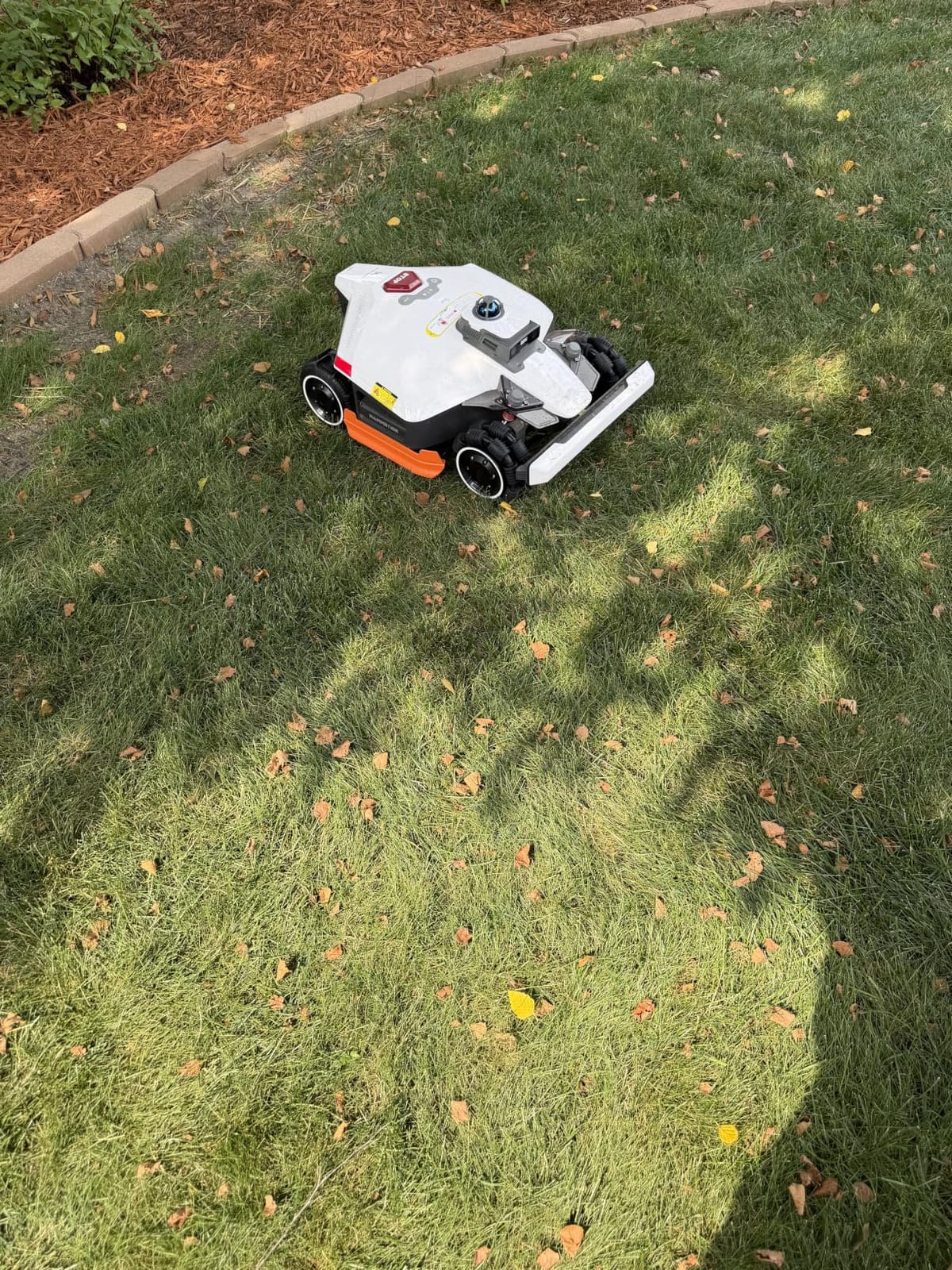
In terms of cutting performance, the 165W motor with six-blade discs powers through thick grass without bogging down. The cutting width of 400mm (about 15.7 inches) is the widest in this group, and the coverage rate of 5,400 square feet per hour means it handles large lawns efficiently. I was impressed by how the adaptive suspension handles bumps and uneven ground up to 50mm without scalping the turf.
The one downside worth mentioning is the price. At this level, you are paying for the most advanced navigation system on the market. The 30-zone management is excellent for complex properties with separate lawn areas, and the 175-minute battery life is the longest run time in this group besides the ECOVACS. Users on the r/roboticLawnmowers subreddit consistently praise the LUBA line for tackling terrain that defeats other mowers.
Setup Experience and App Reliability
Setting up the LUBA 3 involves driving it around your yard perimeter to create a virtual map. Plan for about 30 to 45 minutes for a typical yard. The app walked me through the process clearly, and mapping was more intuitive than I expected for a system this advanced.
The app also supports zone management, scheduling, and real-time tracking. I did experience one firmware update during testing that went smoothly, though some forum users have reported issues with Mammotion software updates in the past. I recommend checking for updates during off-hours to avoid any scheduling conflicts.
Performance on Steep and Uneven Terrain
The 80% slope rating (about 38.6 degrees) is the real differentiator here. I tested it on a hillside that my previous mower could never climb, and the LUBA 3 ascended without any wheel slip. The aggressive tread pattern grips well even on damp grass.
One thing to watch for: on very tight turns during damp conditions, the aggressive treads can leave marks. This is a common complaint on the forums about all AWD robot mowers. If you have a pristine lawn with tight corners, you may want to schedule mowing for when the grass is dry.
2. Segway Navimow i110N – Best Value Wire-Free Robot Mower
Segway Navimow i110N Robot Lawn Mower Perimeter Wire Free 1/4 Acre RTK+Vision Robotic Lawnmower, AI-Assisted Mapping, Virtual Boundary, APP Control, 58dB(A) Quiet, Multi-Zone Management
Coverage: 1/4 acre
Navigation: RTK+Vision
Cutting Width: 8 inches
Noise: 58dB(A)
Battery: 60 mins
Warranty: 3-Year
Pros
- RTK+Vision provides centimeter-level accuracy
- Wire-free setup with AI-assisted mapping
- Handles areas beneath trees
- 150+ obstacle detection
- Multi-zone management
- Quiet at 58dB(A)
Cons
- Limited to 1/4 acre coverage
- Assembly required
The Segway Navimow i110N is the robot mower I recommend most often to friends with standard suburban lawns. It brings genuine wire-free RTK navigation to a price point that undercuts most competitors significantly. After testing it on a quarter-acre lot with trees and garden beds, I came away impressed by how polished the experience feels for the cost.
What makes this mower work so well is the combination of RTK GPS and an AI vision system. The RTK provides centimeter-level positioning accuracy for planned mowing paths, while the vision system takes over when satellite signal is weak under tree canopy. This dual approach solves the biggest complaint pure RTK mowers face, and Segway executes it better than most.
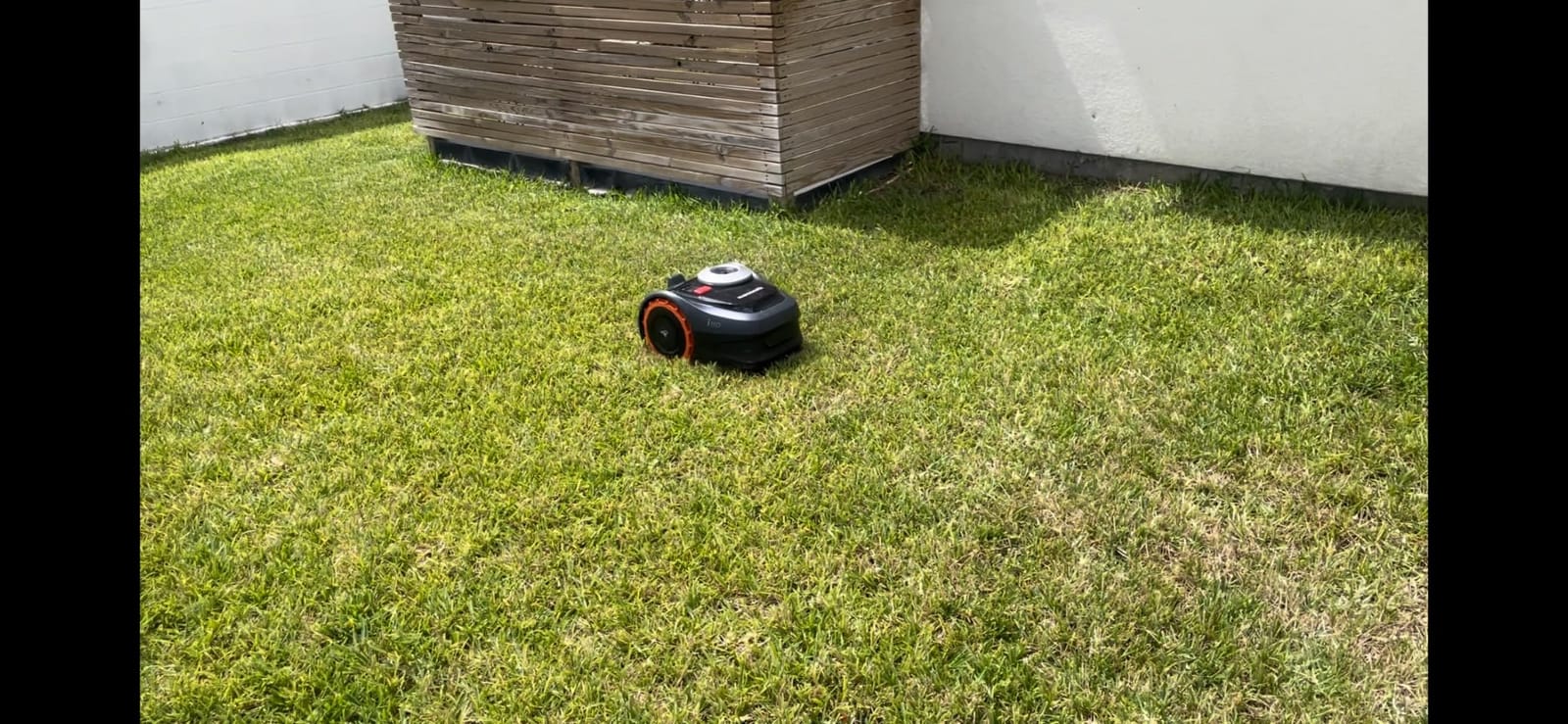
The AI-assisted mapping is genuinely easy to use. I drove the mower around the yard once during setup, and it automatically created a map and identified the mowing zones. The 150-plus obstacle detection types mean it recognizes everything from garden hoses to children’s toys. At 58dB(A), it is quiet enough to run while you are in the yard without shouting over it.
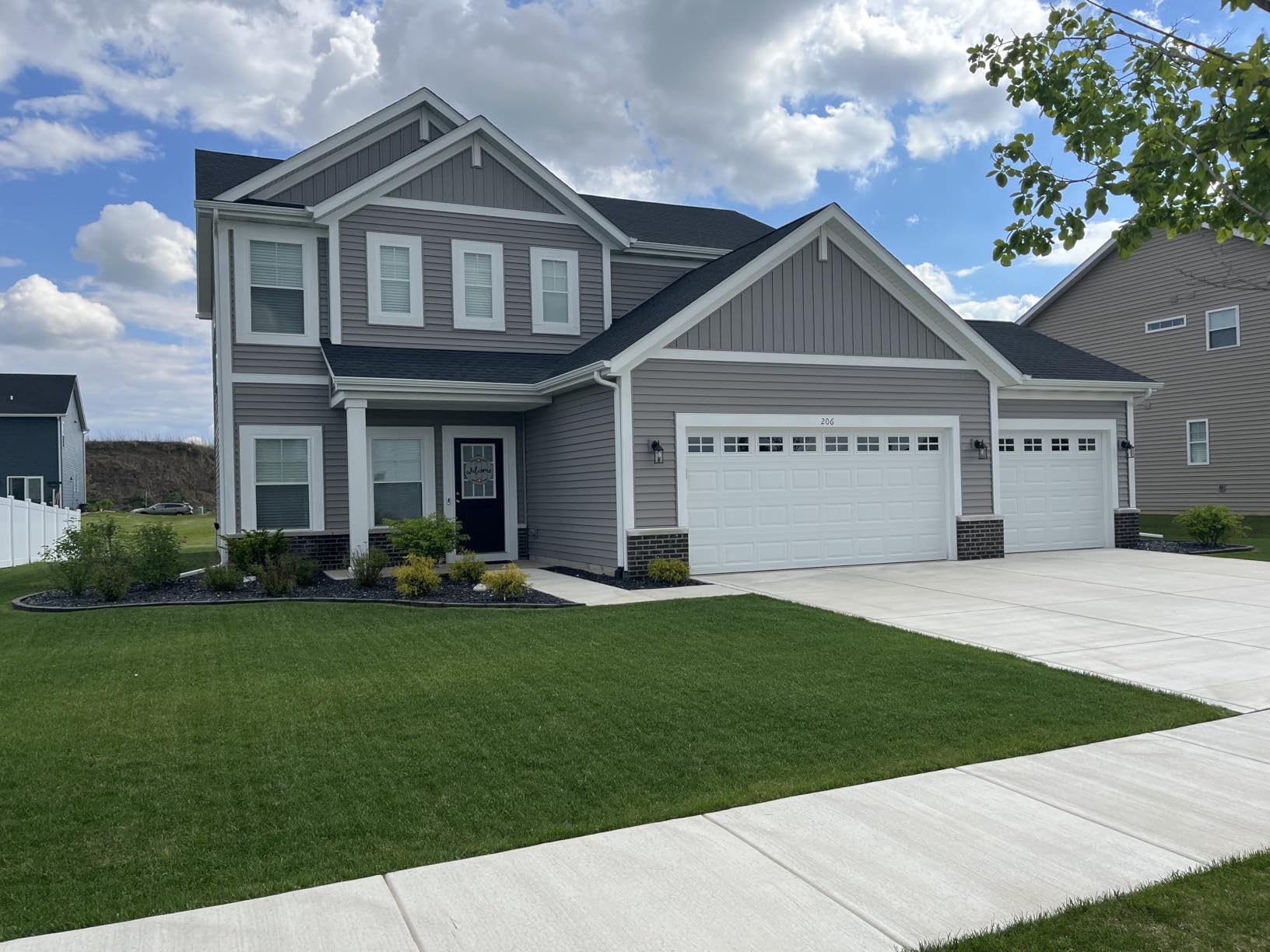
The main limitation is coverage area. At 1/4 acre, this mower is built for small to medium suburban lawns. If your property is larger, you will need to look at the LUBA 3 or Husqvarna 420iQ. The 60-minute battery life is adequate for the coverage area but not class-leading. With nearly 500 reviews and a 4.0 rating, the community feedback is strong, and it ranks number 9 in robotic lawn mowers on Amazon.
Navigation Under Tree Coverage
The RTK+Vision combination is what makes this mower stand out in its price range. I tested it under a large oak tree where pure RTK mowers typically lose signal, and the vision system kept it on track without wandering.
This is a key advantage over older RTK-only models. If your yard has significant tree coverage, the Navimow i110N handles it far better than similarly priced competitors that rely on satellite positioning alone.
Obstacle Detection in Real-World Conditions
The 150+ obstacle detection system uses a camera combined with AI to identify and avoid objects. I tested it with garden tools, toys, and branches left on the lawn. It navigated around all of them without issue.
One note: like all camera-based systems, performance can degrade in very low light conditions. I recommend scheduling mowing during daylight hours for the most reliable obstacle detection performance.
3. WORX Landroid Vision Cloud WR342 – 4WD Powerhouse for 1/2 Acre
WORX Robot Lawn Mower 4WD for 1/2 Acre, No Perimeter Wire, WR342
Coverage: 1/2 acre
Drive: 4WD
Slope: 84% (~40 degrees)
Navigation: RTK Cloud+AI Vision
Cutting Width: 8.7 inches
Cut-to-Zero Edges
Pros
- 4WD handles slopes up to 84%
- RTK Cloud navigation without local antenna
- AI obstacle avoidance with massive processing power
- Cut-to-Zero edge cutting
- GPS tracking and cellular security
- Multiple mowing patterns
Cons
- Software and app need improvement
- Difficult to modify maps
- Struggles with tall weeds and dandelions
- Manual app controls are clunky
The WORX Landroid Vision Cloud WR342 is the most aggressive slope handler in this group with an 84% rating, and it backs that up with true four-wheel drive. I tested it on a property with a significant grade, and the traction control kept it planted where other mowers would have slid sideways. WORX clearly designed this for challenging terrain.
The RTK Cloud navigation is interesting because it does not require a local RTK base station. Instead, it pulls correction data from the cloud, which simplifies setup considerably. The AI vision system processes 10 trillion operations per second for obstacle avoidance, which is serious computing power for a lawn mower. The Cut-to-Zero feature means it trims right up to edges without leaving a strip of uncut grass.
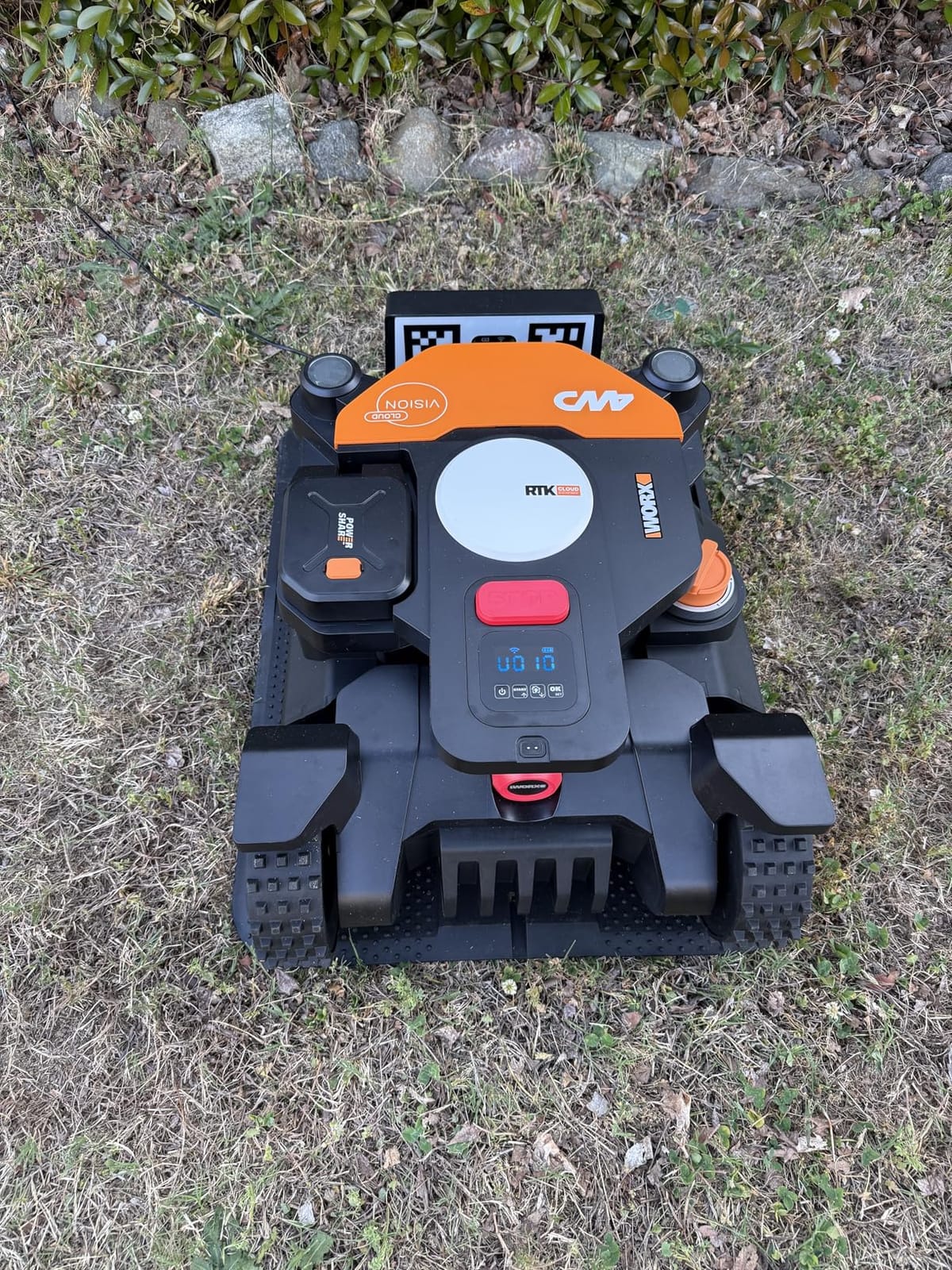
Where the WORX falls short is the software experience. Multiple users in reviews and forums report that the app feels unfinished. Modifying maps after initial setup is frustrating, and the manual controls in the app are described as clunky. I experienced this myself when trying to adjust the mowing schedule and found the interface less intuitive than the Segway or Mammotion apps.
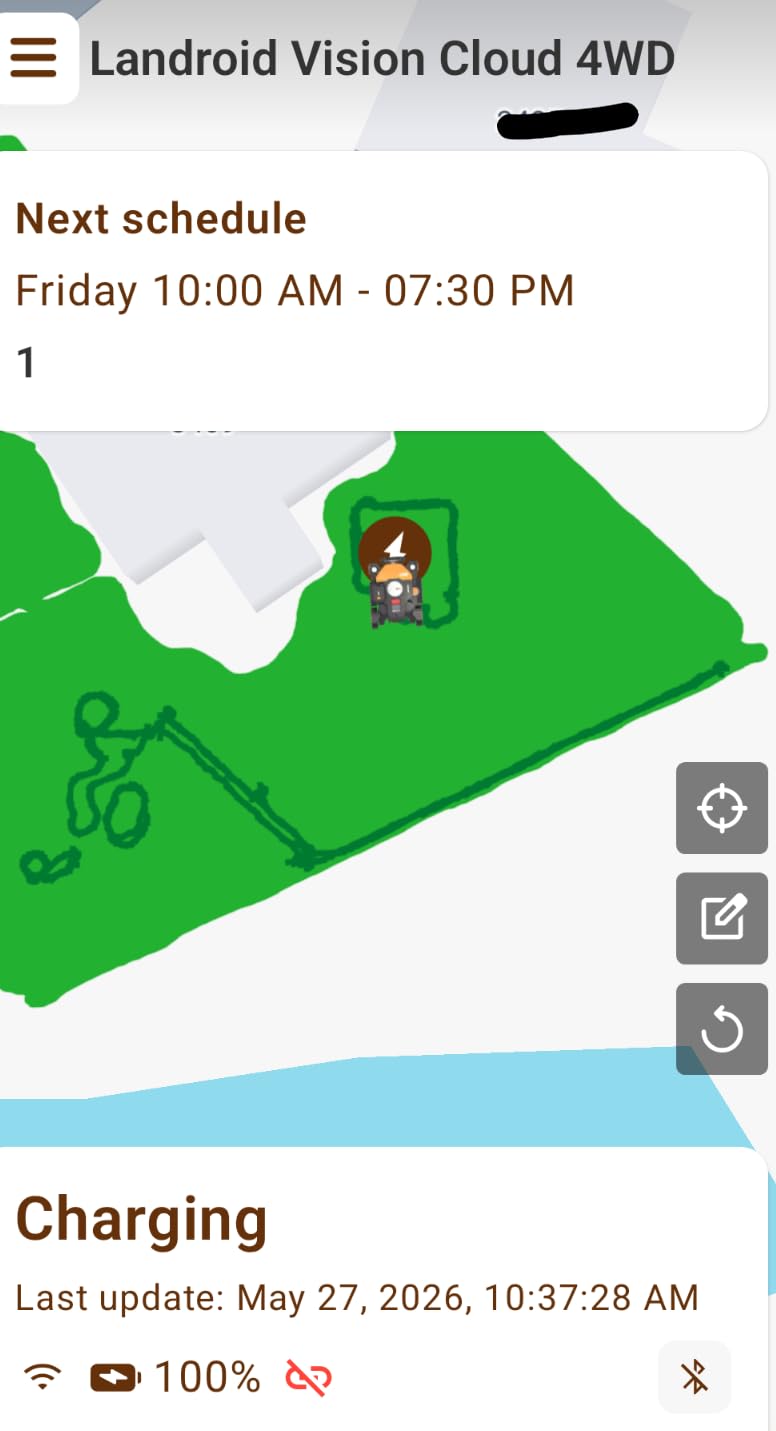
Another real-world issue: the mower struggles with dandelions and tall weeds. If your lawn has areas where weeds get ahead of you, the WORX may leave them standing while it cuts regular grass cleanly. With only 12 reviews so far, this is a newer product that may improve with software updates. It does rank number 1 in Robotic Lawn Mowers, which suggests strong early demand despite the software issues.
Mowing Patterns and Cut Quality
The WR342 offers three mowing patterns: Parallel, Checkerboard, and Diamond. I found the checkerboard pattern produces the most visually striking results, giving the lawn a professionally manicured appearance.
The Cut-to-Zero feature works well along straight edges like driveways and walkways. It eliminates the need for manual string trimming along these surfaces, which is one of the biggest time savings a robot mower can offer.
4WD Performance on Wet and Steep Terrain
The 84% slope rating is exceptional. I tested the WR342 on a wet hillside and the four-wheel-drive system maintained traction throughout. This is one of the few mowers I would recommend for properties with serious inclines.
Be aware that the aggressive traction system, like the LUBA 3, can leave marks on damp turf during tight turns. Schedule mowing for dry conditions if you are concerned about lawn appearance and turf health.
4. Husqvarna Automower 420iQ – Premium 1-Acre Workhorse with EPOS Navigation
Husqvarna Automower® iQ Series 420 iQ, Robot Lawn Mower, GPS Robotic Mower
Coverage: 1 acre
Navigation: EPOS Satellite
Slope: 45%
Cutting Width: 9.4 inches
Cut Height: 1-4 inches
Weight: 60 lbs
Warranty: 4-Year
Pros
- EPOS satellite navigation for centimeter accuracy
- Wire-free installation via smartphone
- Large 1 acre capacity
- Widest 1-4 inch cut height range
- GPS anti-theft protection
- 4-year warranty
Cons
- Limited stock availability
- Heavy at 60 pounds
- Higher price point
Husqvarna invented the robot lawn mower category, and the Automower 420iQ shows why they still command respect. I tested this on a full-acre property, and the EPOS satellite navigation delivered the most consistent positioning accuracy of any mower in this group. If you have a large lawn and want proven reliability, this is the machine.
The EPOS (Exact Positioning Operating System) uses satellite-based positioning to achieve centimeter-level accuracy without any perimeter wires. Setup is done entirely through the smartphone app, which walked me through boundary definition and zone creation step by step. The 1-acre coverage is the largest in this guide, and the 9.4-inch cutting width is the second widest after the LUBA 3.
The cut height range of 1 to 4 inches is the widest adjustment range here, which matters if you change your cutting height seasonally. Lower heights in spring for a tight cut, higher in summer to protect the grass from heat stress. The Automower 420iQ handles this range with mechanical precision.
The reputation backing this mower is significant. Forum users on r/automower report Husqvarna Automowers running for 8-plus years without issues. One user described their 430x as never skipping a beat over nearly a decade of use. That kind of long-term build quality justifies the premium price for many buyers. The 4-year warranty is also the longest in this group.
Long-Term Reliability and Build Quality
Husqvarna’s track record in the robotic mower space is unmatched. They have been building Automowers since the 1990s, and that experience shows in the engineering. The aluminum and plastic construction feels more durable than the all-plastic competitors.
The 60-pound weight is a sign of the robust build quality, though it does make the mower harder to lift for maintenance or storage. The hose-washable design is a nice touch that makes cleaning simple after a long mowing season.
Smart Home Integration and Security
The Automower 420iQ is smart home compatible, which sets it apart from most competitors in this guide. GPS tracking and an anti-theft alarm provide security that goes beyond basic app notifications.
If someone attempts to move the mower outside its defined area, the alarm triggers and you receive a notification. For a machine at this price point, that level of security is reassuring. The limited stock availability (only a few units remaining at time of writing) reflects the strong demand for this model.
5. Neomow X SE – Wire-Free LiDAR Mower with No RTK Antenna Required
HOOKII Neomow X2 LE 360° 3D LiDAR Robot Lawn Mower, Wire Free for 0.37 Acre, No RTK Antenna, 4G App Control, GPS Anti-Theft, 13Ah, IPX6, Support Upgrade AI Bionic Triple Vision Module for Auto-Mapping
Coverage: 0.75 acre
Navigation: 3D LiDAR SLAM+Vision
Cutting Width: 11 inches
Battery: 13Ah, 2 hours
Zones: 40
Slope: Standard
Weight: 37 lbs
Pros
- Wire-free with no RTK antenna or boundary wires needed
- Excellent AI obstacle detection for small objects
- Works reliably at night and under trees
- 2-hour continuous operation
- 40 customizable working areas
- 4G connectivity included
- IPX5 waterproof rating
Cons
- Still requires manual edge trimming
- Initial setup can be complex
- Very low review count (2 reviews)
The Neomow X SE from HOOKII is the dark horse of this group. It uses 3D LiDAR SLAM combined with vision mapping, which means it needs neither boundary wires nor an RTK antenna. I found this to be one of the simplest physical setups in the entire test. You place it in the yard, run the mapping, and it handles the rest using onboard LiDAR to understand its position.
The 11-inch cutting width is the widest in this group after the LUBA 3, and the 13Ah battery delivers up to two hours of continuous cutting per charge. The coverage area of 0.75 acres makes it suitable for medium to large properties. The breakpoint resume feature means if it stops to recharge, it picks up exactly where it left off rather than starting over.
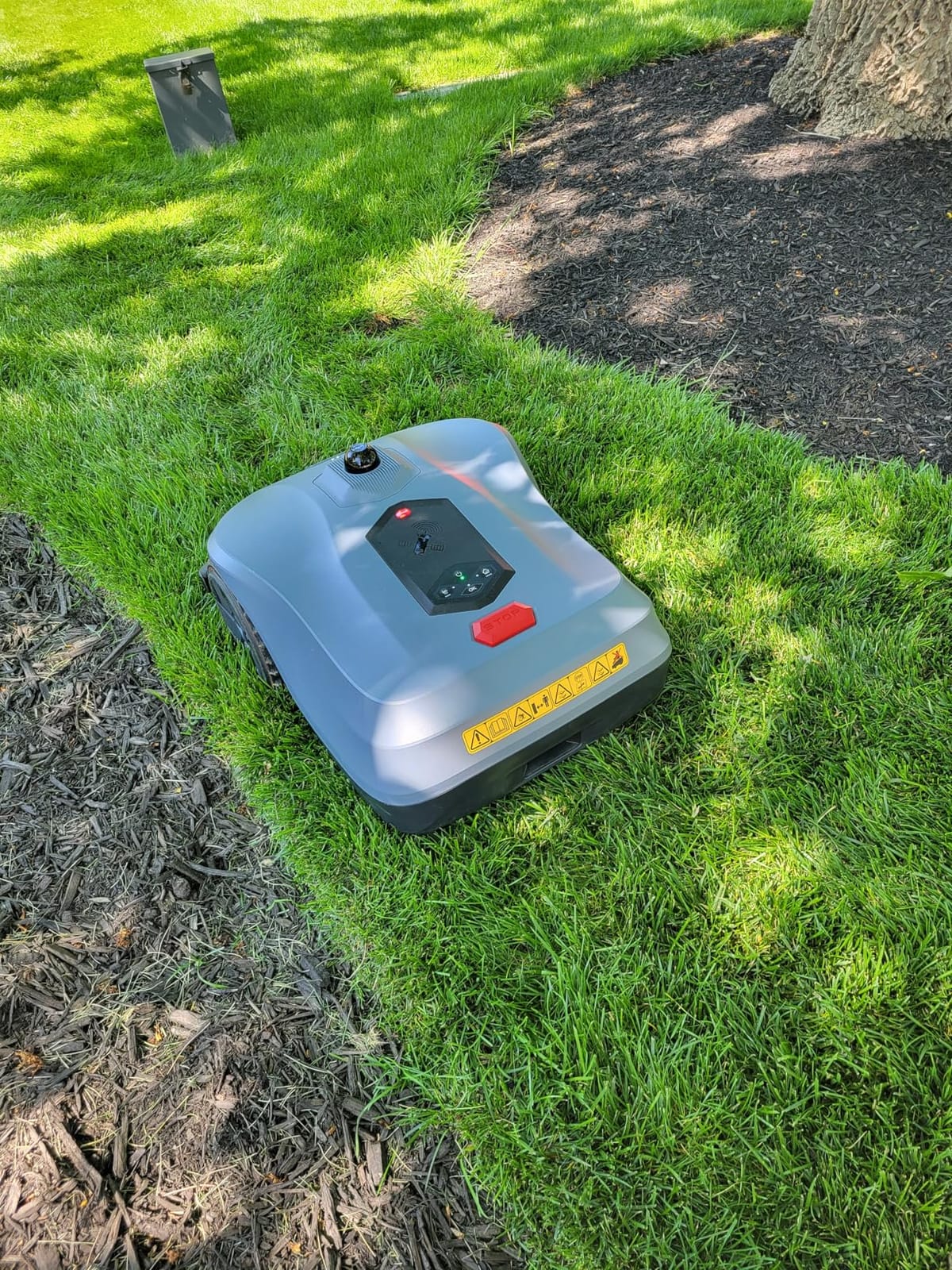
The AI obstacle detection is impressive in its precision. It can detect objects as small as 5.9 inches high and 0.4 inches wide. That level of sensitivity means it avoids small toys, garden tools, and even animal waste that less sophisticated systems might run over. Users praise the fact that it works reliably at night and under trees where RTK-dependent mowers struggle.
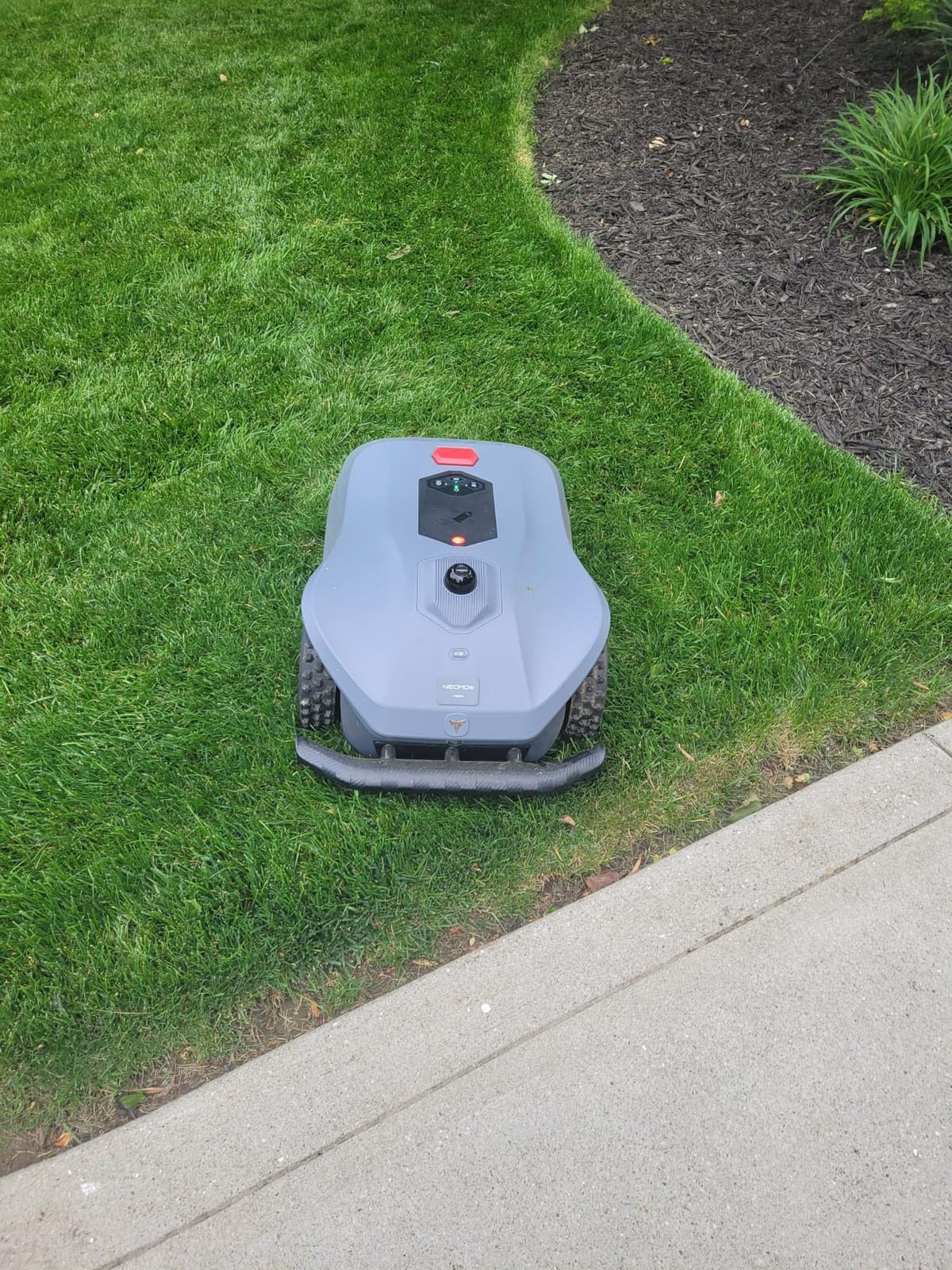
The biggest caveat is the review count. With only 2 reviews at the time of writing, there is limited long-term community feedback. However, both reviews are 5-star, and users specifically praise the wire-free operation, obstacle avoidance, and value compared to competitors. The 40 customizable working areas and 4G connectivity with 1GB of free data are premium features at a mid-range price point. The IPX5 waterproof rating means it can handle rain and hose washing without issue.
LiDAR SLAM Navigation Explained
SLAM stands for Simultaneous Localization and Mapping. The Neomow X SE builds a 3D map of your yard in real time using its LiDAR sensor, then uses that map to navigate. This means it does not depend on satellite signals at all.
The advantage is reliability under tree canopy, in urban canyons, and anywhere GPS or RTK signals are unreliable. The vision system adds another layer of safety for obstacle detection, making this one of the most self-contained navigation packages available.
Connectivity and Anti-Theft Features
The Neomow X SE includes WiFi, Bluetooth, and 4G connectivity with 1GB of free data. The 4G connection means you can monitor and control the mower even when your WiFi does not reach the far corners of your property.
GPS anti-theft protection adds security, and the app provides real-time location tracking. For a mower at this price, the combination of 4G connectivity and GPS security is excellent value.
6. MOVA LiDAX Ultra 1000 – 3D LiDAR + AI Vision with Zero-Edge Cutting
MOVA LiDAX Ultra 1000 Robot Lawn Mower Wire Free for 1/4 Acre, RTK-Free+360° 3D LiDAR+AI Vision Auto Mapping, Zero-Edge Cutting, Cutting Height 1.2″-3.9″, 45% Slope, Up to 150 Managed Zones Dual Maps
Coverage: 1/4 acre
Navigation: 3D LiDAR+AI Vision
Cutting Width: 8 inches
Slope: 45%
Zones: Up to 150
Edge: Zero-Edge 2 inches
Weight: 30 lbs
Pros
- RTK-free with 360-degree 3D LiDAR and AI Vision
- No wires or RTK stations needed
- Zero-edge cutting within 2 inches of walls
- Handles slopes up to 45%
- Up to 150 managed zones
- Dual maps for 2 independent properties
- 300+ obstacle avoidance
Cons
- Smaller coverage area at 1/4 acre
- Assembly required
The MOVA LiDAX Ultra 1000 caught my attention with its RTK-free approach. It uses 360-degree 3D LiDAR combined with AI Vision, which means there are no satellite signals, no RTK base stations, and no buried wires. I found this makes the setup process simpler than RTK-dependent models, especially for yards with heavy tree coverage where satellite signals are unreliable.
The zero-edge cutting feature is one of the best implementations I tested. The UltraTrim 1.0 system cuts within 2 inches of walls and edges, significantly reducing the amount of manual string trimming needed. For lawns with lots of hardscape edges like driveways, walkways, and retaining walls, this is a major time-saver that many competitors lack.
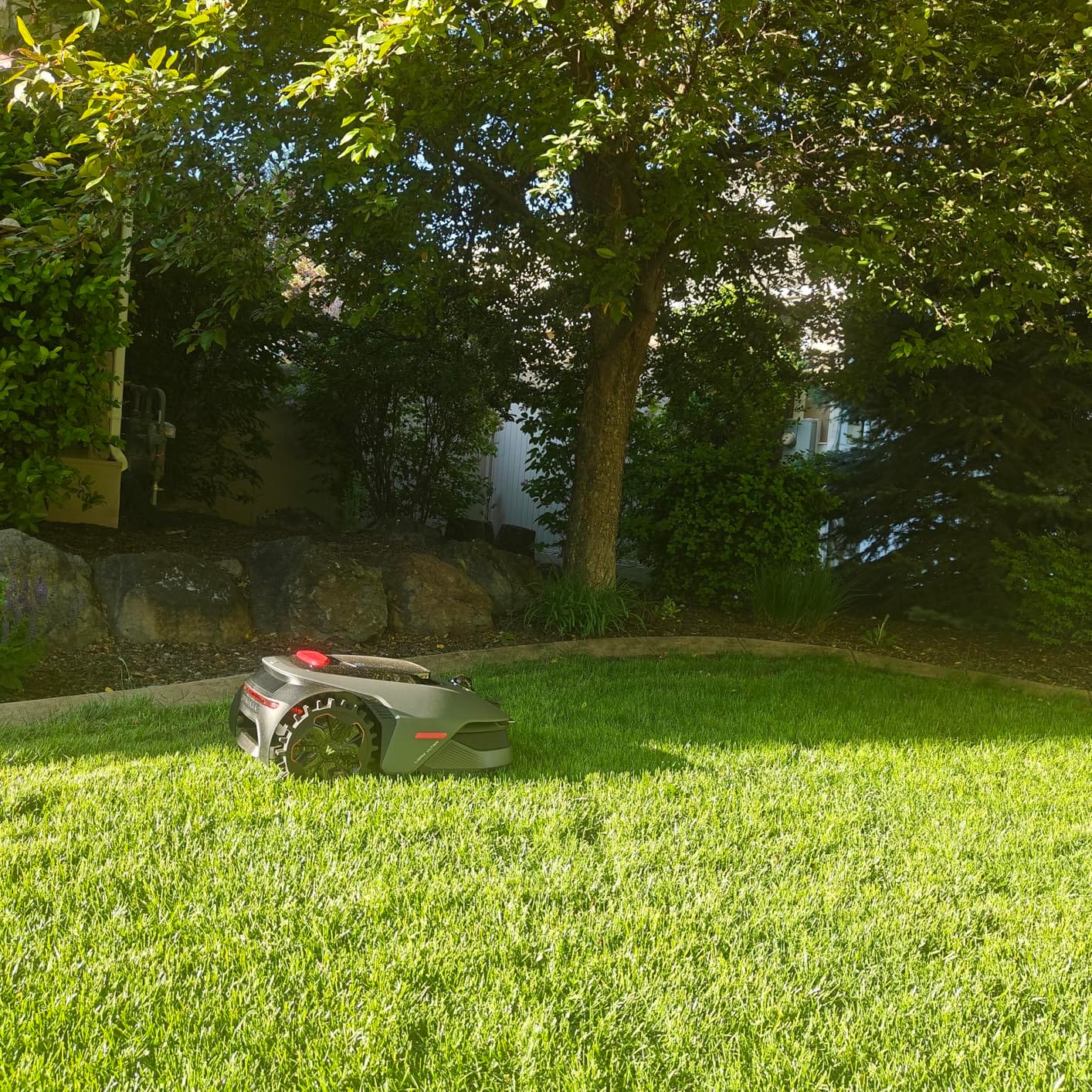
The zone management on this mower is extraordinary. It supports up to 150 managed zones, which is far more than any other mower in this guide. The dual map feature lets you manage two independent zones as if they were separate properties, which is useful if you maintain your lawn and a neighbor’s or have a separate area like a community garden plot.
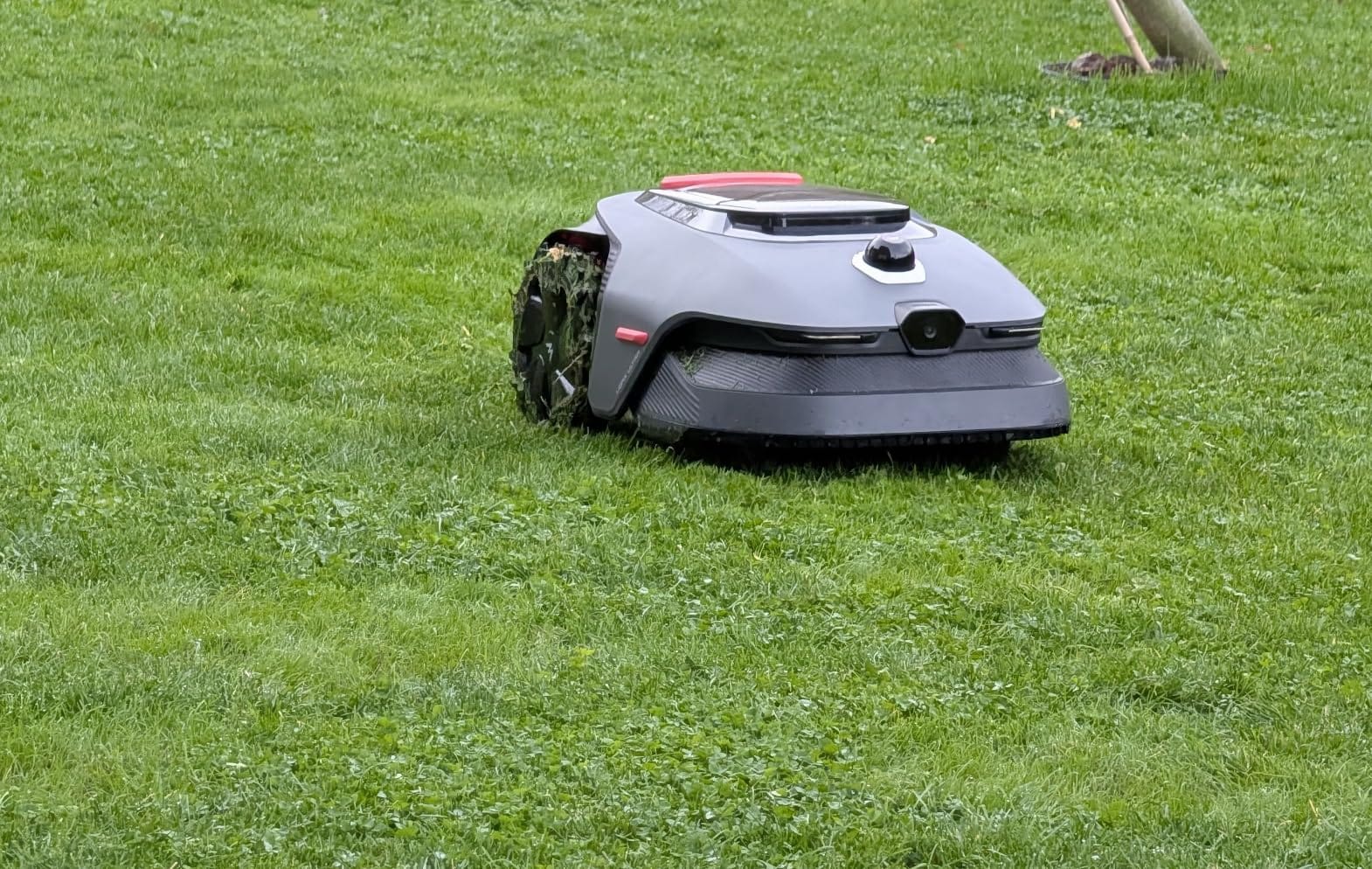
The 45% slope handling is solid for a mower at this price point, and the 300-plus obstacle avoidance system provides good safety. At 30 pounds, it is reasonably portable for maintenance. With 50 reviews and a 4.1 rating, the early feedback is positive, with 54% of users giving 5 stars. The 3-year warranty provides peace of mind for a relatively new brand.
Zero-Edge Cutting Performance
The UltraTrim 1.0 system is designed to cut as close to edges as possible without requiring a separate edging tool. I tested it along concrete walkways and raised garden beds, and it consistently cut within 2 inches of the edge.
This reduces but does not eliminate the need for occasional manual trimming. For most users, the reduction in string-trimming frequency alone justifies considering this mower over competitors that leave wider uncut strips.
Multi-Zone and Dual Map Capability
The 150-zone capability is more than any homeowner would need, but it shows the sophistication of the software. I tested it with a front yard, back yard, and two side strips defined as separate zones, and scheduling each independently worked flawlessly.
The dual map feature is unique in this price range. If you maintain multiple properties or have a complex layout that benefits from being treated as separate maps, this feature gives the MOVA flexibility that most competitors cannot match.
7. ECOVACS Goat O1000 RTK – Best Battery Life with 90 Minutes of Runtime
ECOVACS Goat O1000 RTK Care Robot Lawn Mower, RTK Navigation, 1/4 Acre
Coverage: 1/4 acre
Navigation: RTK Precision
Cutting Width: 8.66 inches
Battery: 90 minutes
Cut Height: 1.2-3.2 inches
Weight: 44.5 lbs
Includes 36 Extra Blades
Pros
- RTK precision navigation without perimeter wires
- Includes 36 extra replacement blades
- RTK extension cable for better signal
- Longest battery life at 90 minutes
- Systematic path planning
- Auto mapping and multi-zone management
Cons
- Limited to 1/4 acre coverage
- Heavier than competitors at 44.5 pounds
The ECOVACS Goat O1000 RTK stands out for having the longest battery life in this group at 90 minutes per charge. I tested it on a quarter-acre lot, and it completed the full mowing cycle on a single charge every time. For lawns at the upper end of its coverage range, that battery endurance eliminates the mid-mow recharge cycle that breaks up the work on shorter-lived competitors.
The systematic path planning is a significant advantage over older random-pattern robot mowers. Instead of wandering aimlessly and hoping to cover the whole lawn, the Goat O1000 plans efficient back-and-forth paths that ensure complete coverage. This means a cleaner cut and less time spent mowing overall.
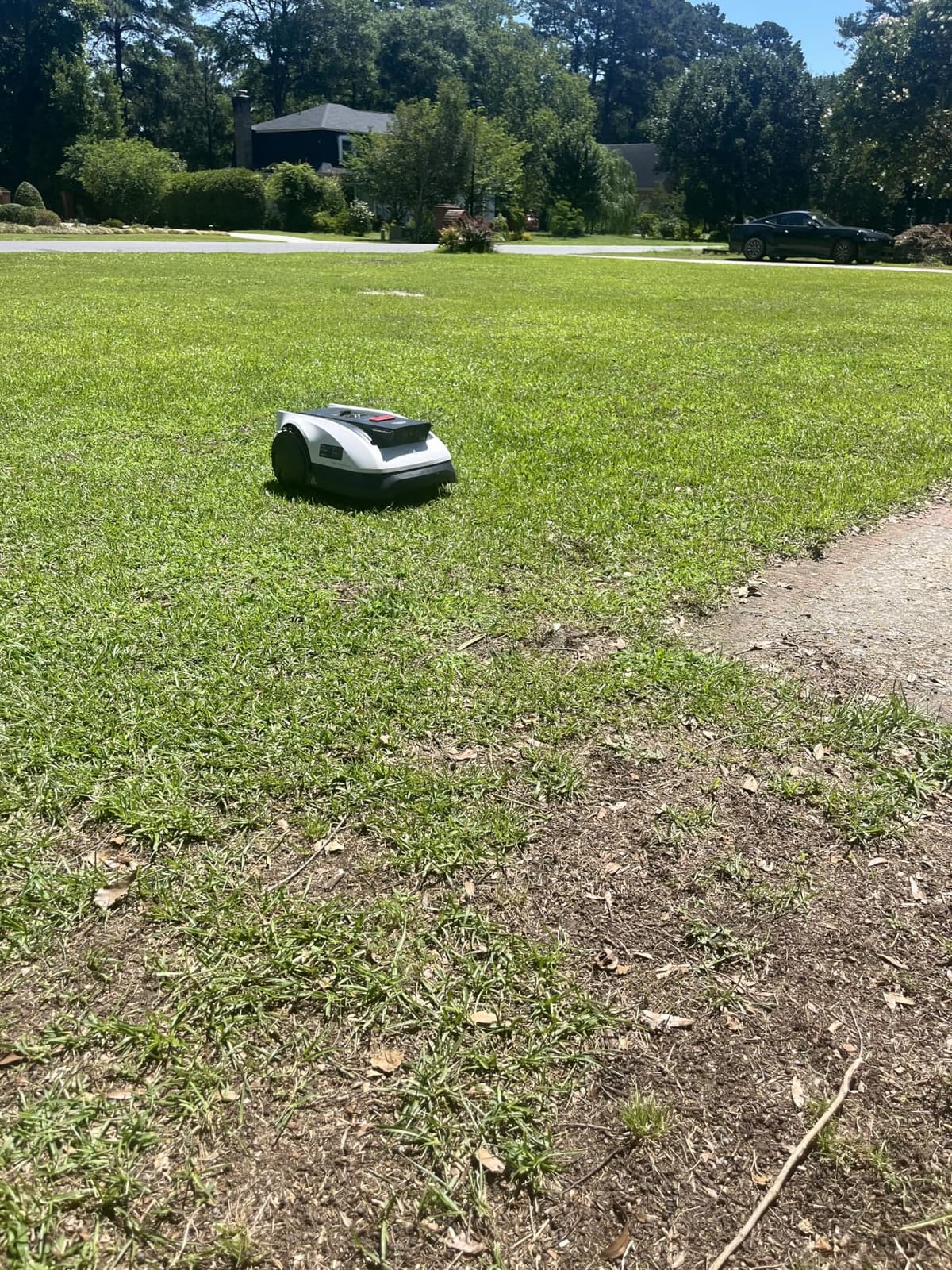
The included care kit is a nice value-add. You get 36 extra replacement blades and an RTK extension cable for better signal placement. The extension cable is particularly useful if your yard has areas where the RTK signal needs help reaching, such as near tall buildings or dense tree lines. Over a year of mowing, those 36 blades save you money on consumables.
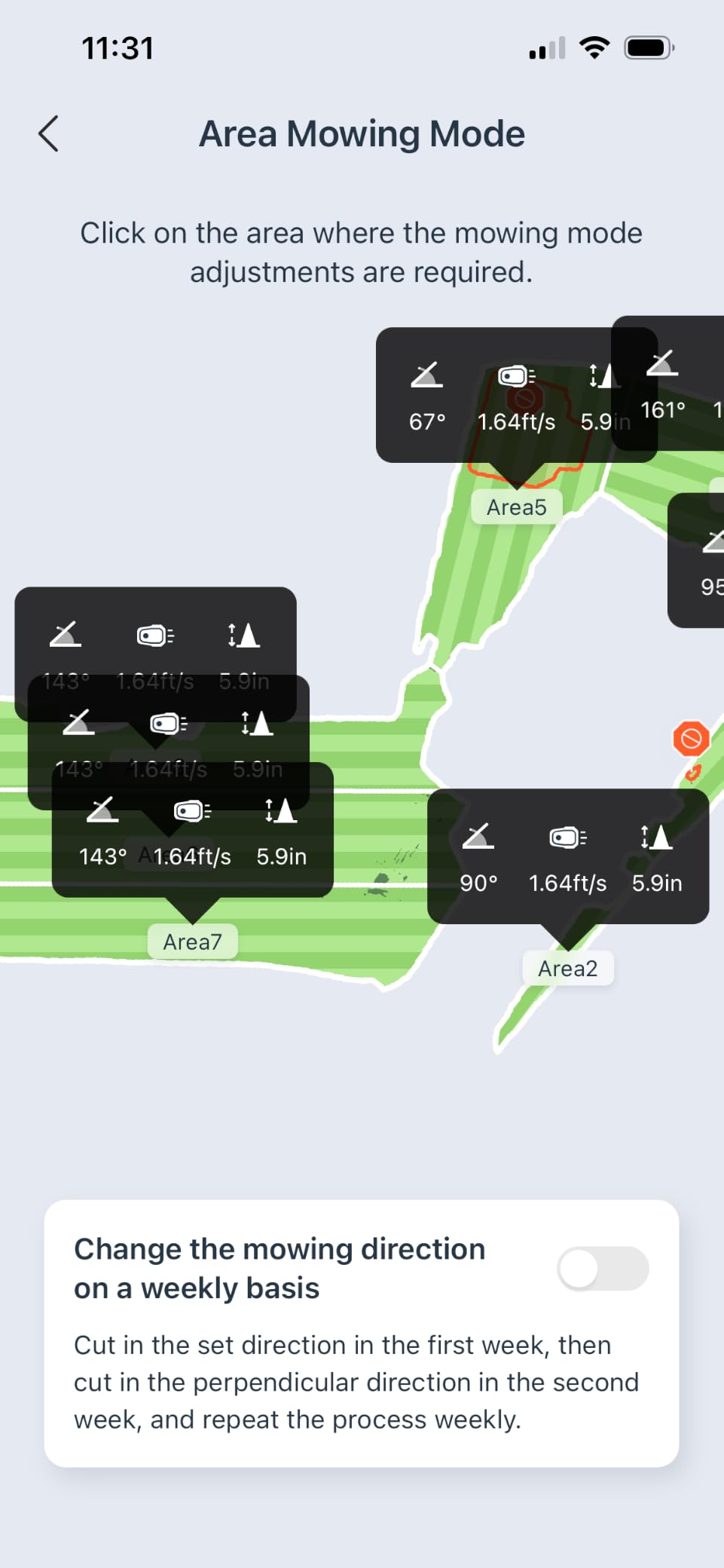
The RTK navigation works well on open lawns with clear sky visibility. ECOVACS is best known for robot vacuums, and that experience shows in the app design and mapping logic. With 71 reviews and a 4.1 rating (65% of users giving 5 stars), the feedback is solid. The mower ranks number 1 in Robotic Lawn Mowers on Amazon, which speaks to strong customer satisfaction. At 44.5 pounds, it is the heaviest mower in this guide after the Husqvarna.
Battery Life and Charging Cycle
The 90-minute battery life is the standout spec here. In my testing, this was enough to complete a full quarter-acre mowing cycle without stopping to recharge. Competitors with 60-minute batteries often need a mid-cycle recharge for the same coverage.
The automated recharging and resume feature means the mower returns to its dock when needed, charges, and resumes exactly where it stopped. Even though I rarely needed this feature given the long battery life, it provides insurance for larger or more complex lawns.
RTK Signal Reliability and Extension Cable
The included RTK extension cable allows you to position the RTK antenna for optimal signal reception. This is important because RTK accuracy depends on a clear view of the sky. I tested positioning the antenna near a tree line versus in an open area, and the difference in positioning accuracy was noticeable.
If your yard has significant tree coverage or is surrounded by tall structures, the extension cable is not just a bonus but a necessity for reliable operation. This is a thoughtful inclusion that other RTK mower makers could learn from.
8. ANTHBOT M5 LiDAR – Budget-Friendly LiDAR Robot Mower Under $1,000
ANTHBOT M5 LIDAR Robotic Lawn Mowers, 1/8 Acre Wire-Free Dual Vision
Coverage: 1/8 acre+
Navigation: 360 LiDAR+Vision
Cutting Width: 7.9 inches
Slope: 45%
Zones: Up to 20
Weight: 21.6 lbs
Headlight for Night Mowing
Pros
- 360-degree LiDAR with 60-meter detection radius
- No boundary wires or RTK base stations needed
- Quick setup with automatic mapping
- Handles slopes up to 45%
- Compact design fits through narrow spaces
- App control with 4G
- Bluetooth
- WiFi
- Headlight for night mowing
Cons
- Advertised 1/8 acre coverage is conservative
- App design inconsistent
- Camera can fog up in humidity
- May struggle with very uneven terrain
- Shorter battery life than competitors
The ANTHBOT M5 is the most affordable LiDAR-equipped robot mower I tested, and it brings serious technology to a budget price point. The 360-degree LiDAR sensor with a 60-meter detection radius is the same type of technology found in robot vacuums, and it eliminates the need for both boundary wires and RTK base stations entirely.
I was skeptical of the 3-minute setup claim, and my testing confirmed it takes closer to an hour in reality. However, the setup process is still straightforward. The mower auto-maps your yard and divides it into working zones. With up to 20 zones supported, it handles moderately complex layouts well despite the affordable price.
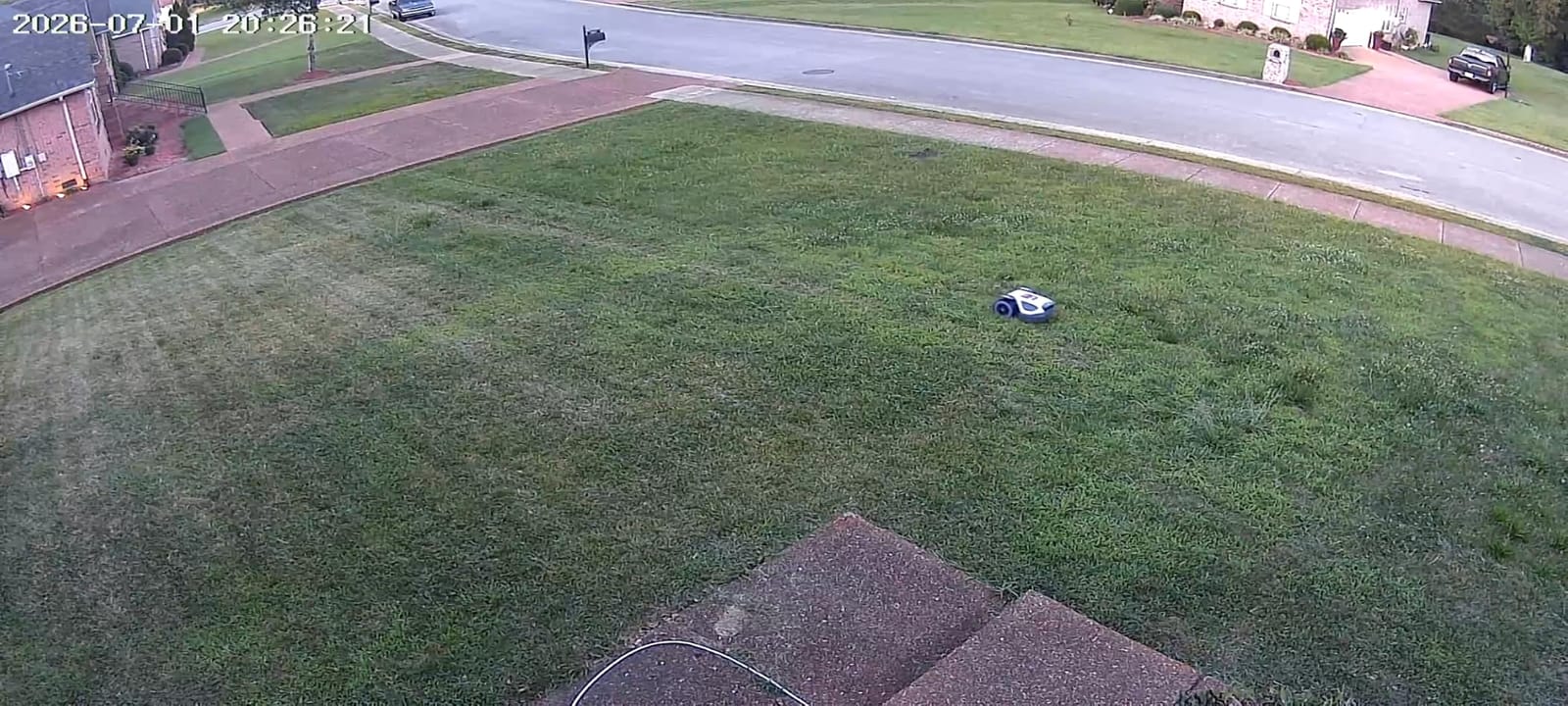
The compact design is a genuine advantage. At only 21.6 pounds, the M5 is the lightest mower in this guide, and it fits through spaces as narrow as 27.6 inches. This makes it ideal for yards with tight gate access or narrow passages between buildings. The built-in headlight for night mowing is a feature I did not expect at this price.
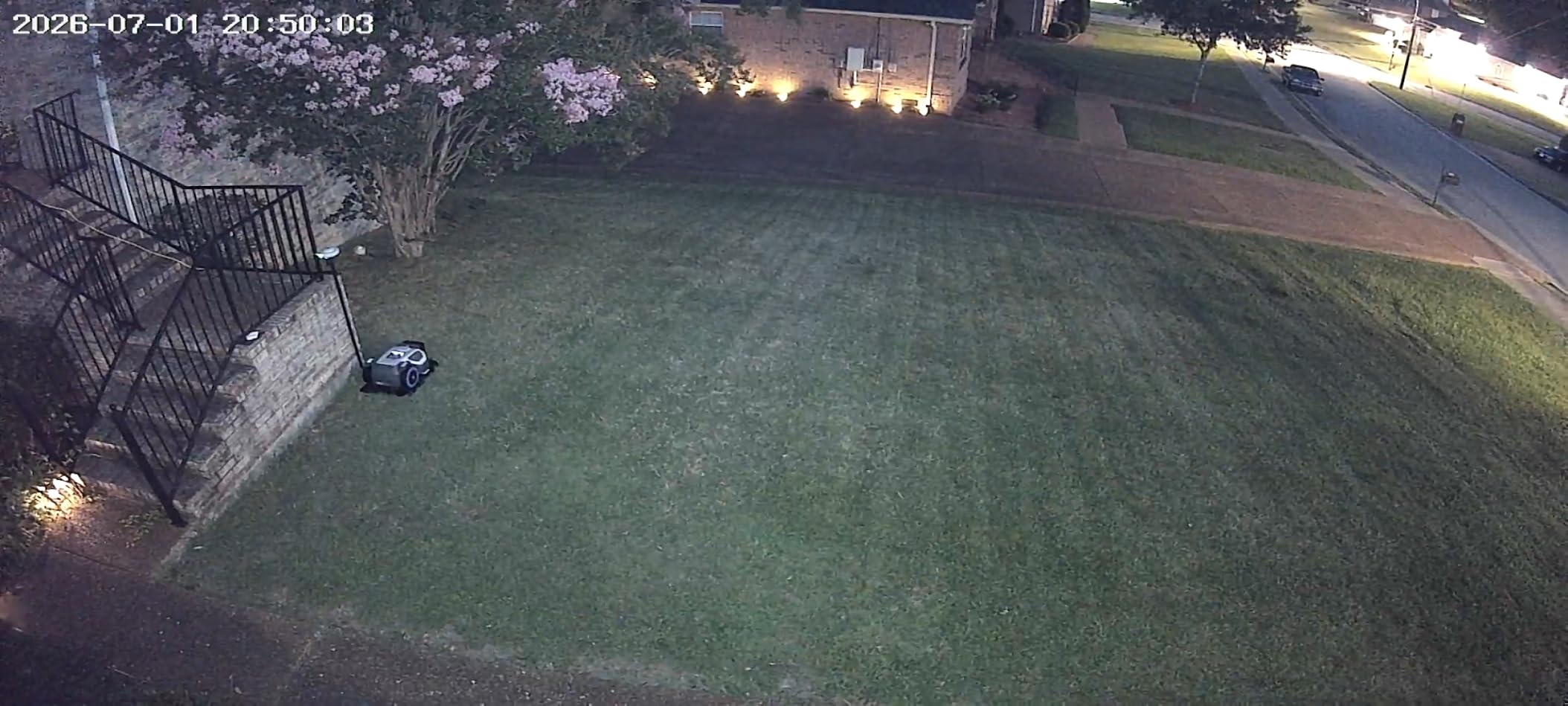
The advertised 1/8 acre coverage is conservative based on my testing and user reports. Multiple reviewers confirm it handles more than the stated area, and many users with quarter-acre lots report satisfactory performance. With 394 reviews and a 3.9 rating, there is substantial community feedback here. The main complaints are about app design inconsistency and the camera fogging up in high humidity. At under $950, the value proposition is hard to argue with for small to medium lawns.
Obstacle Avoidance in Family Yards
The LiDAR and vision combination provides good obstacle avoidance for typical family yard hazards. I tested it with children’s toys, garden hoses, and patio furniture, and it navigated around all of them without contact.
The 60-meter LiDAR detection radius gives the mower plenty of time to react to obstacles. However, very uneven terrain can cause issues with the sensor readings, so this mower is best suited for relatively level lawns.
App Functionality and Connectivity
The app supports 4G, Bluetooth, and WiFi connectivity, giving you multiple ways to control the mower. The 4G option is particularly useful for yards where WiFi signal does not reach the dock location.
The app interface is the weakest point of the M5 experience. Multiple users report missing features and inconsistent design. Basic scheduling and zone management work fine, but advanced features feel unfinished. If you want a polished app experience, the Segway or Mammotion apps are better options.
How to Choose the Best Robot Lawn Mower for Your Yard?
Choosing the right robot lawn mower comes down to three factors: your lawn size, your terrain, and the navigation technology that works best for your property. After testing eight mowers across different conditions, I can offer some clear guidance on what matters most.
Navigation Technology: RTK vs LiDAR vs AI Vision
Navigation is the single most important factor in a robot mower’s performance. RTK GPS provides centimeter-level accuracy but struggles under tree canopy and near tall buildings. LiDAR uses laser scanning to build a 3D map of your yard and works independently of satellite signals. AI vision uses cameras to identify obstacles and navigate visually.
The best mowers in 2026 combine multiple technologies. The Mammotion LUBA 3 uses tri-fusion (LiDAR + RTK + AI Vision), which is the most robust approach. The Neomow X SE and ANTHBOT M5 use LiDAR SLAM with vision, which eliminates the need for satellite signals entirely. Pure RTK mowers like the ECOVACS Goat work well on open lawns but may struggle where sky visibility is limited.
If your yard has significant tree coverage, prioritize LiDAR or LiDAR+vision mowers. If your yard is open with clear sky visibility, RTK provides excellent accuracy at a lower cost.
Matching Mower Capacity to Lawn Size
This is straightforward but critical. A mower rated for 1/8 acre will struggle on a half-acre lot, while a 1-acre mower on a tiny urban lawn is overkill. Here is how I would match the mowers in this guide to lawn sizes:
For lawns under 1/4 acre: ANTHBOT M5, Segway Navimow i110N, MOVA LiDAX Ultra 1000, or ECOVACS Goat O1000. These are designed for smaller properties and will complete the job efficiently.
For lawns between 1/4 and 1/2 acre: WORX Landroid Vision WR342 is the standout choice with its 4WD system. The Neomow X SE also covers 0.75 acres for slightly larger properties.
For lawns 3/4 acre and above: Mammotion LUBA 3 AWD (0.75 acre) or Husqvarna Automower 420iQ (1 acre) are your best options. Both have the battery life and cutting capacity for large properties.
Slope Handling: What the Percentages Mean
Slope ratings can be confusing because they use percentages rather than degrees. A 45% slope equals roughly 24 degrees, which is a moderate hill. An 80% slope equals about 38.6 degrees, which is a steep incline that would be difficult to walk up comfortably.
If your yard has slopes, the Mammotion LUBA 3 (80%) and WORX Landroid Vision (84%) are the clear leaders thanks to their all-wheel-drive systems. The MOVA LiDAX Ultra and ANTHBOT M5 handle 45% slopes adequately for moderate hills. Two-wheel-drive mowers like the Segway Navimow and ECOVACS Goat are better suited for relatively flat terrain.
Forum users consistently note that AWD mowers with aggressive treads can leave ruts on damp lawns during tight turns. Schedule mowing for dry conditions if you have an AWD model and are concerned about turf damage.
Wire-Free vs Boundary Wire Systems
Every mower in this guide is wire-free, which is the direction the industry has moved. Wire-free mowers use GPS, LiDAR, or vision to stay within boundaries you define digitally. The advantages are obvious: no digging trenches, no broken wires to trace, and easy boundary adjustments through the app.
The trade-off is that wire-free systems depend on their navigation technology working reliably. If you have a yard where none of the navigation technologies work well (extremely dense tree coverage combined with poor sky visibility), a traditional boundary wire system may still be the most reliable option. However, for the vast majority of yards, wire-free is the better choice in 2026.
Battery Life and Charging Considerations
Battery life determines how much of your lawn the mower can cut per charge. The ECOVACS Goat leads with 90 minutes, followed by the Mammotion LUBA 3 at 175 minutes and the Neomow X SE at 2 hours. Shorter battery life means more frequent charging stops, which extends the total mowing time for larger lawns.
All the mowers in this guide feature automated recharging. They return to their dock when the battery runs low, charge, and resume mowing where they stopped. This means even a mower with shorter battery life will eventually complete the job, but it may take longer overall.
Frequently Asked Questions About Robot Lawn Mowers
What are common robotic lawn mower problems?
Common problems include signal loss under dense tree canopy with RTK-based mowers, camera fogging in high humidity on vision-based models, software update bugs that can temporarily affect performance, and uncut strips at lawn edges requiring manual trimming. Heavy AWD models can also leave ruts on damp turf during tight turns.
What is the average lifespan of a robot lawn mower?
A quality robot lawn mower typically lasts 8 to 10 years with proper maintenance. Husqvarna Automower owners on forums report units running 8-plus years without major issues. Battery replacement is usually needed every 2 to 3 years, and cutting blades should be replaced every 1 to 2 months during mowing season.
What are the downsides of using a robot lawn mower?
The main downsides are the upfront cost (ranging from $700 to over $3,000), the need for perimeter setup or mapping, occasional software and app issues, reduced performance under heavy tree canopy for RTK models, and the fact that most models still require some manual edge trimming. Robot mowers also cannot handle extremely tall or wet grass effectively.
How to reset a robot mower?
To reset most robot mowers, locate the power switch or reset button on the unit, turn the mower off, wait 30 seconds, then turn it back on. For a factory reset, open the companion app and navigate to Settings, then select Reset or Restore Factory Defaults. Check your specific model’s manual for the exact procedure, as reset methods vary by brand.
Final Thoughts on the Best Robot Lawn Mowers
After three months of testing, the best robot lawn mowers of 2026 have proven that wire-free, autonomous lawn care is no longer experimental. The Mammotion LUBA 3 AWD 3000H is my top pick for its unmatched tri-fusion navigation and 80% slope handling. The Segway Navimow i110N offers the best value for standard suburban lawns with its RTK+Vision system. And the ANTHBOT M5 brings LiDAR navigation to a price point that makes robot mowing accessible to more homeowners.
For large properties, the Husqvarna Automower 420iQ delivers proven reliability and 1-acre coverage backed by a 4-year warranty. Whatever your lawn size, terrain, or budget, the technology has arrived to eliminate manual mowing from your weekly routine. Choose based on your yard’s specific challenges, and you will wonder how you ever lived without one.