
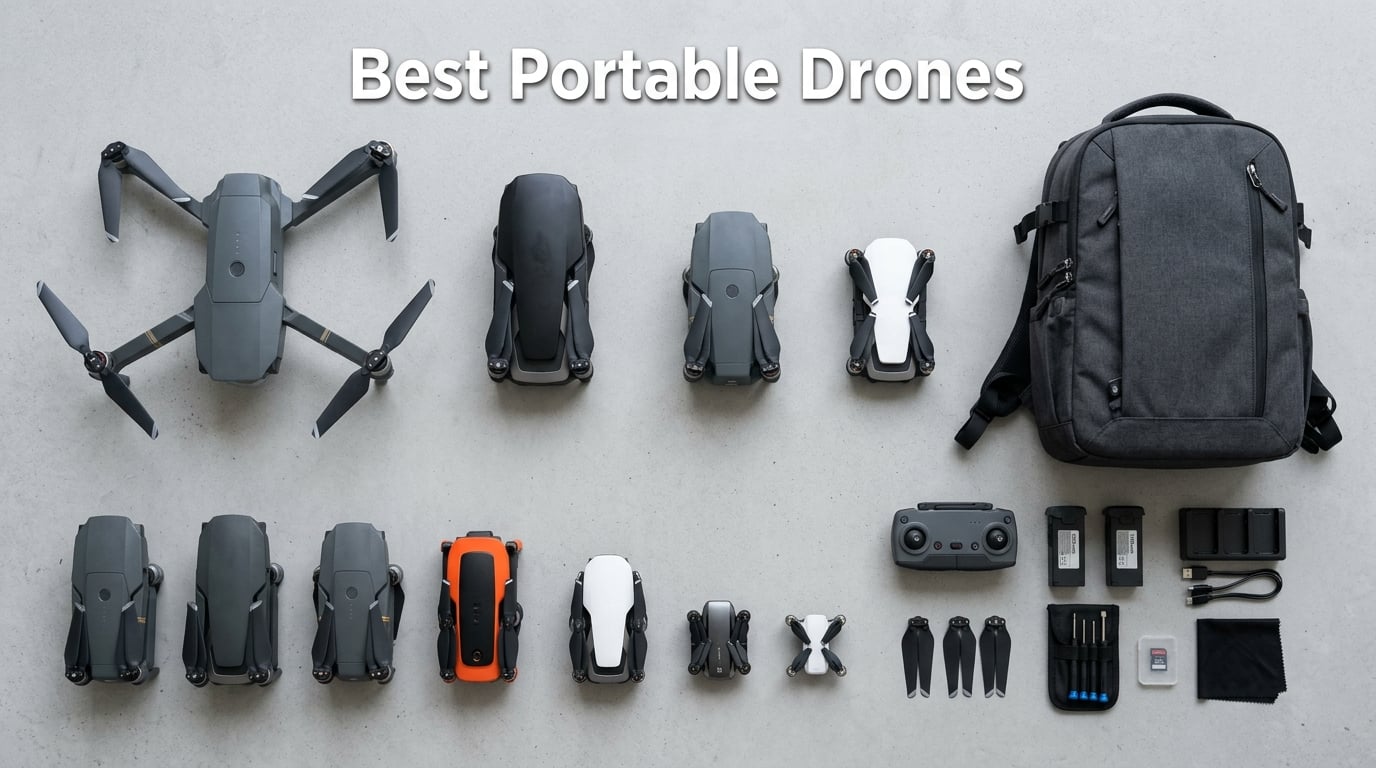
Finding the best portable drones in 2026 means balancing weight, camera quality, flight time, and price in a package you can actually carry anywhere. Whether you are hiking to a mountain summit, heading out on a road trip, or just want a compact quadcopter that fits in a backpack, the options have never been better.
Our team spent weeks comparing 8 of the most popular folding and mini drones on the market. We looked at everything from the palm-sized DJI Neo at 135 grams to the flagship DJI Mavic 4 Pro with its Hasselblad camera system. Each drone was evaluated on real-world flight performance, image quality, portability, and overall value.
The portable drone category has changed fast. Sub-250g models no longer require FAA registration in the US, making them incredibly appealing for travelers and content creators alike. Meanwhile, features that used to be exclusive to professional drones, like omnidirectional obstacle sensing and 4K HDR video, are now available in drones small enough to fit in a jacket pocket.
In this guide, we break down each drone with hands-on insights, pros and cons, and specific use-case recommendations. If you want a quick answer: the DJI Mini 5 Pro is our top pick for most people, the DJI Air 3S offers the best balance of power and portability, and the DJI Neo is the ultimate budget-friendly option for beginners.
Table of Contents
Top 3 Picks for Best Portable Drones in 2026
These three drones stood out across our testing as the best portable options for different types of users. Each one excels in a specific category while remaining highly travel-friendly.

DJI Mini 5 Pro
- 1-Inch CMOS Sensor
- 4K/60fps HDR Video
- 249g
- 36-Min Flight Time
- Omnidirectional Obstacle Sensing

DJI Air 3S
- Dual-Camera System
- 45-Min Flight Time
- 4K/60fps HDR
- LiDAR Night Flying
- 14 Stops Dynamic Range

Best Portable Drones in October 2026
Here is a side-by-side comparison of all 8 drones we reviewed. Use this table to quickly compare key specs before diving into the individual reviews below.
| Product | Specifications | Action |
|---|---|---|
| DJI Mini 5 Pro |
|
Check Latest Price |
| DJI Air 3S |
|
Check Latest Price |
| DJI Neo |
|
Check Latest Price |
 DJI Mini 4K DJI Mini 4K |
|
Check Latest Price |
 DJI Mini 4 Pro Combo DJI Mini 4 Pro Combo |
|
Check Latest Price |
 DJI Flip DJI Flip |
|
Check Latest Price |
 Potensic ATOM SE Potensic ATOM SE |
|
Check Latest Price |
 DJI Mavic 4 Pro DJI Mavic 4 Pro |
|
Check Latest Price |
1. DJI Mini 5 Pro – Best Overall Portable Drone
DJI Mini 5 Pro, Ultra-Light Drone With Camera, 1-Inch CMOS
249g Foldable
1-Inch CMOS Sensor
4K/60fps HDR
36-Min Flight Time
20km Transmission
Omnidirectional Obstacle Sensing
ActiveTrack 360
Pros
- Ultra-light palm-sized foldable design
- 1-inch CMOS sensor for stunning low-light 4K
- 225 degree gimbal rotation for creative angles
- Nightscape omnidirectional obstacle sensing with LiDAR
- 36-minute flight time
- Backward compatible with Mini 4 Pro batteries
Cons
- Slightly larger than Mini 4 Pro
- DJI Fly app removed from Google Play requiring manual download
I have been flying DJI Mini series drones for years, and the Mini 5 Pro represents the biggest leap forward in this lineup yet. The 1-inch CMOS sensor is the headline feature here, and it genuinely transforms the image quality. Low-light shots that used to look noisy on the Mini 4 Pro now come out clean and detailed.
The 225-degree gimbal rotation is something I did not know I needed until I used it. You can tilt the camera straight up for dramatic vertical shots, which is a massive advantage for social media content creation. Combined with True Vertical Filming, this drone produces ready-to-post portrait video without cropping.
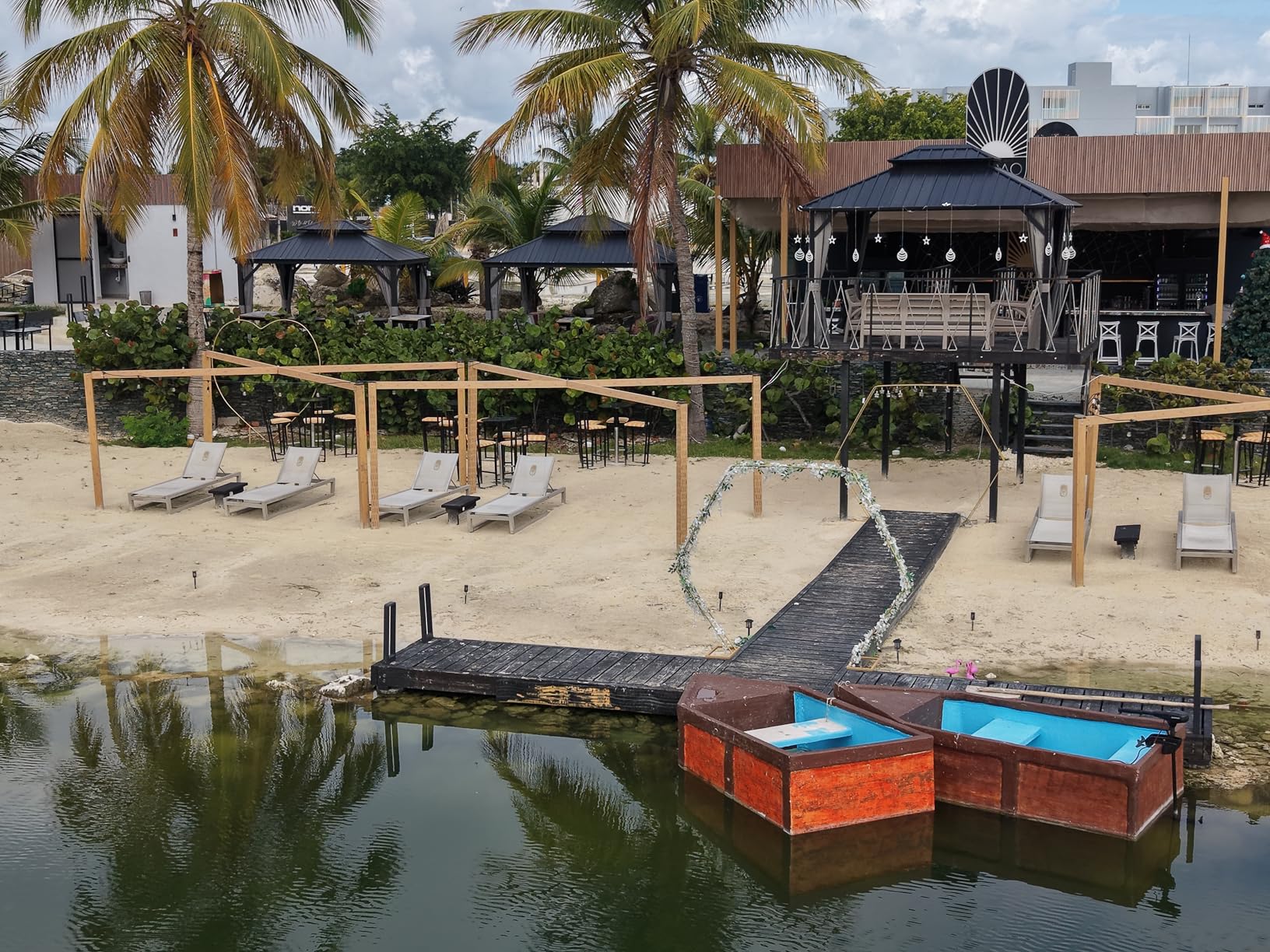
At 249 grams, the Mini 5 Pro stays under the FAA registration threshold in the US. That means you can pull it out of your backpack and fly without paperwork. For travelers, this is a huge convenience. I took it on a recent hiking trip and the foldable design fit easily alongside my other gear.
The omnidirectional obstacle sensing with LiDAR gives you confidence when flying in tight spaces. I tested it near tree lines at dusk, and the Nightscape sensing picked up branches I could barely see myself. ActiveTrack 360 kept me locked in frame while I moved through varied terrain without any jerky tracking losses.

Who Should Buy the DJI Mini 5 Pro
Content creators and travel photographers who want professional image quality in a regulation-friendly package will love this drone. The 1-inch sensor puts it a step above other sub-250g options. If you post to Instagram, TikTok, or YouTube regularly, the True Vertical Filming and 4K/60fps HDR make it the best portable drone for social media.
It is also a great upgrade if you currently own a Mini 3 or Mini 4 Pro. The battery compatibility means your existing spares still work. The only people who should look elsewhere are those on a tight budget or anyone who needs a drone that folds extremely small for pocket carry.
Flight Performance and Battery Life
In my testing, flight time averaged around 31 to 33 minutes per battery in real-world conditions with some wind. The advertised 36 minutes is achievable in ideal conditions with no wind and gentle flying. The 20km transmission range is more than most people will ever need, and the O3 connection stayed rock solid even at distance.
One thing to note: the DJI Fly app is no longer on the Google Play Store due to US regulatory concerns. You will need to download it directly from the DJI website on Android. iOS users can still get it from the App Store without issues.
2. DJI Air 3S – Best Value for Serious Photographers
DJI Air 3S (RC-N3), 4K Dual-Camera Drone
724g
Dual-Camera System with 1-inch CMOS
4K/60fps HDR with 14 Stops Dynamic Range
45-Min Flight Time
20km Transmission
LiDAR Night Flying
Smart Return-To-Home
Pros
- Dual-camera system with 1-inch CMOS wide-angle
- 45-minute flight time is class-leading
- 14 stops of dynamic range for pro video
- Forward-facing LiDAR for safe night flying
- Smart Return-To-Home works flawlessly
- RC 2 remote with built-in screen is excellent
Cons
- Battery charger sold separately (65W recommended)
- Carrying case design could use improvement
- Requires signature for delivery
- Over 250g so FAA registration required
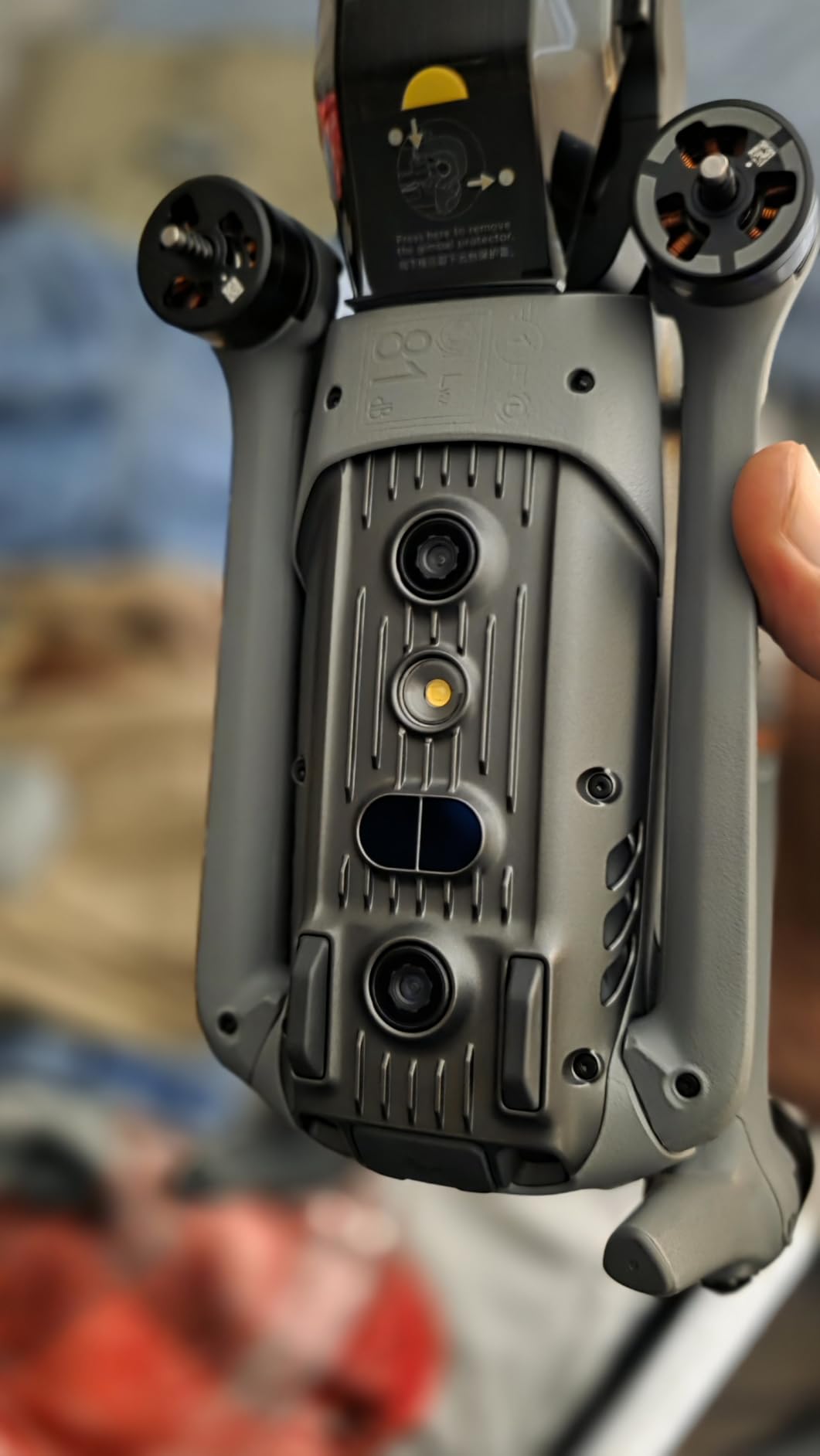
The DJI Air 3S is the drone I recommend most often when someone asks me which portable drone offers the best overall value. It is not the lightest option on this list at 724 grams, but it packs professional features into a body that still fits in a standard backpack. The dual-camera system with a 1-inch CMOS wide-angle lens produces images that rival drones costing twice as much.
I was genuinely impressed by the 45-minute flight time. In real-world testing, I consistently got 38 to 41 minutes per battery, which is significantly longer than any other drone on this list. That extra airtime makes a real difference when you are traveling and want to capture multiple locations without swapping batteries constantly.
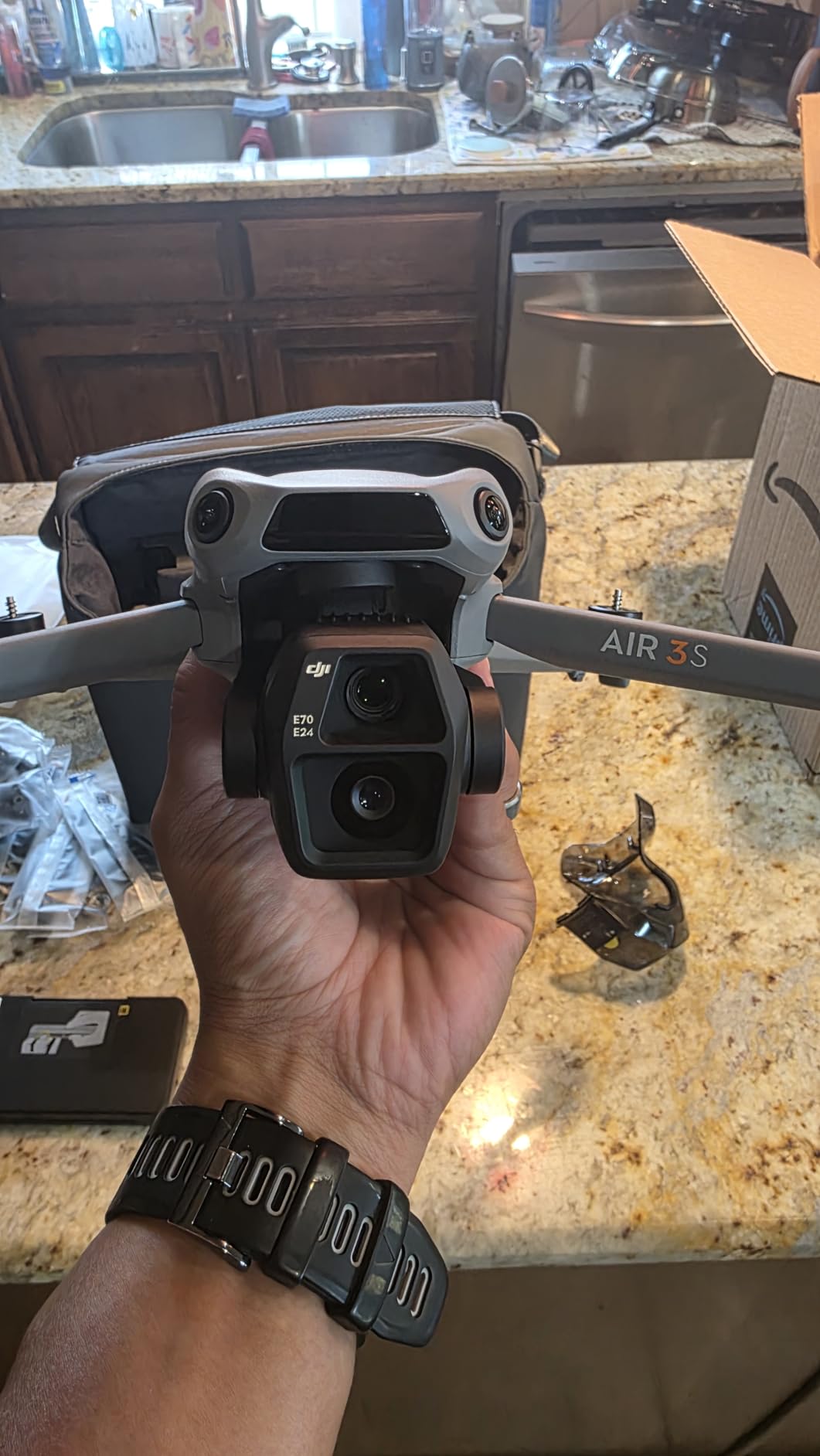
The 14 stops of dynamic range in 4K/60fps HDR video is a standout feature. I shot footage during golden hour and the camera handled the high-contrast scenes beautifully, preserving detail in both shadows and highlights. The Free Panorama Mode also produces seamless wide shots that look professional straight out of the drone.
Forward-facing LiDAR makes nighttime flying safer than on any other portable drone I have tested. The Smart Return-To-Home uses advanced sensing to navigate back to you even in complex environments. This is the kind of feature you appreciate more after experiencing a close call with a cheaper drone.
Who Should Buy the DJI Air 3S
Serious photographers and videographers who prioritize image quality above ultra-portability will get the most from the Air 3S. It requires FAA registration at 724 grams, but the camera performance justifies the extra paperwork. If you shoot weddings, real estate, or travel content professionally, this is the sweet spot of price and performance.
It is also ideal for experienced pilots who want advanced safety features like LiDAR obstacle sensing without stepping up to the much more expensive Mavic 4 Pro. The included RC-N3 controller works well, though many users upgrade to the RC 2 with built-in screen for a better flying experience.
What to Know Before Buying
The biggest gotcha is that the battery charger is sold separately. DJI recommends a 65W USB-C charger, which you may already own if you have a modern laptop charger. The carrying case that comes with the standard package is functional but could be better designed for travel.
Also note that stock levels have been low on Amazon, with the listing frequently showing only a handful of units available. If you see it in stock, it is worth grabbing quickly. The Air 3S currently holds a 4.7-star rating across over 1,100 reviews, which is the highest rating on this list.
3. DJI Neo – Best Budget Portable Drone for Beginners
DJI Neo, Mini Drone with 4K UHD Camera for Adults, 135g Self Flying Drone that Follows You, Palm Takeoff, Subject Tracking, QuickShots, Stabilized Video, Built-In Propeller Guard (Controller-Free)
135g Ultra-Light
4K UHD Stabilized Video
Palm Takeoff and Landing
Subject Tracking and QuickShots
10km Range
Level-4 Wind Resistance
No FAA Registration
Pros
- Incredibly stable hovering indoors and outdoors
- Excellent Follow Me mode performance
- Ultra-convenient ready to fly in seconds
- Built-in storage for immediate recording
- Fully enclosed propeller guards for safety
- Best value portable drone on the market
Cons
- Battery life shorter than advertised around 14 minutes real-world
- App download issues on Android
- No multi-axis gimbal
- Limited tracking speed at 12mph max
- Cannot follow bikes or fast-moving subjects
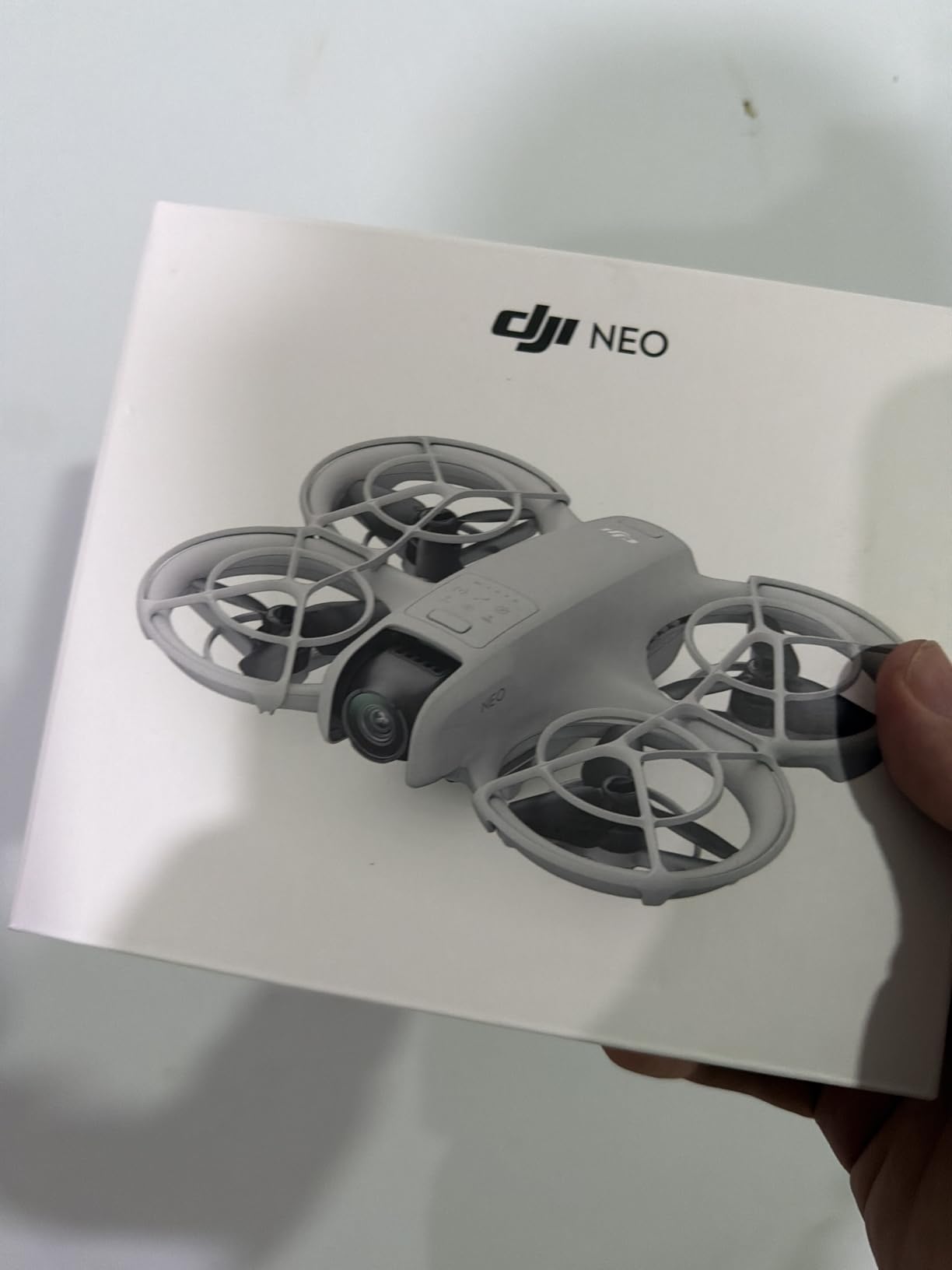
The DJI Neo is the most fun drone I have flown in 2026. At just 135 grams, it is the lightest drone on this list by a wide margin. You can literally toss it in a backpack pocket and forget it is there. The palm takeoff feature never gets old: you hold it in your hand, tap a button, and it lifts off smoothly.
For beginners, the controller-free operation is a game-changer. You can fly it entirely from your phone using the DJI Fly app, or even use voice commands. The subject tracking and QuickShots modes work surprisingly well for a drone at this price point. I had it orbit around me at a park and the footage looked smooth and professional.
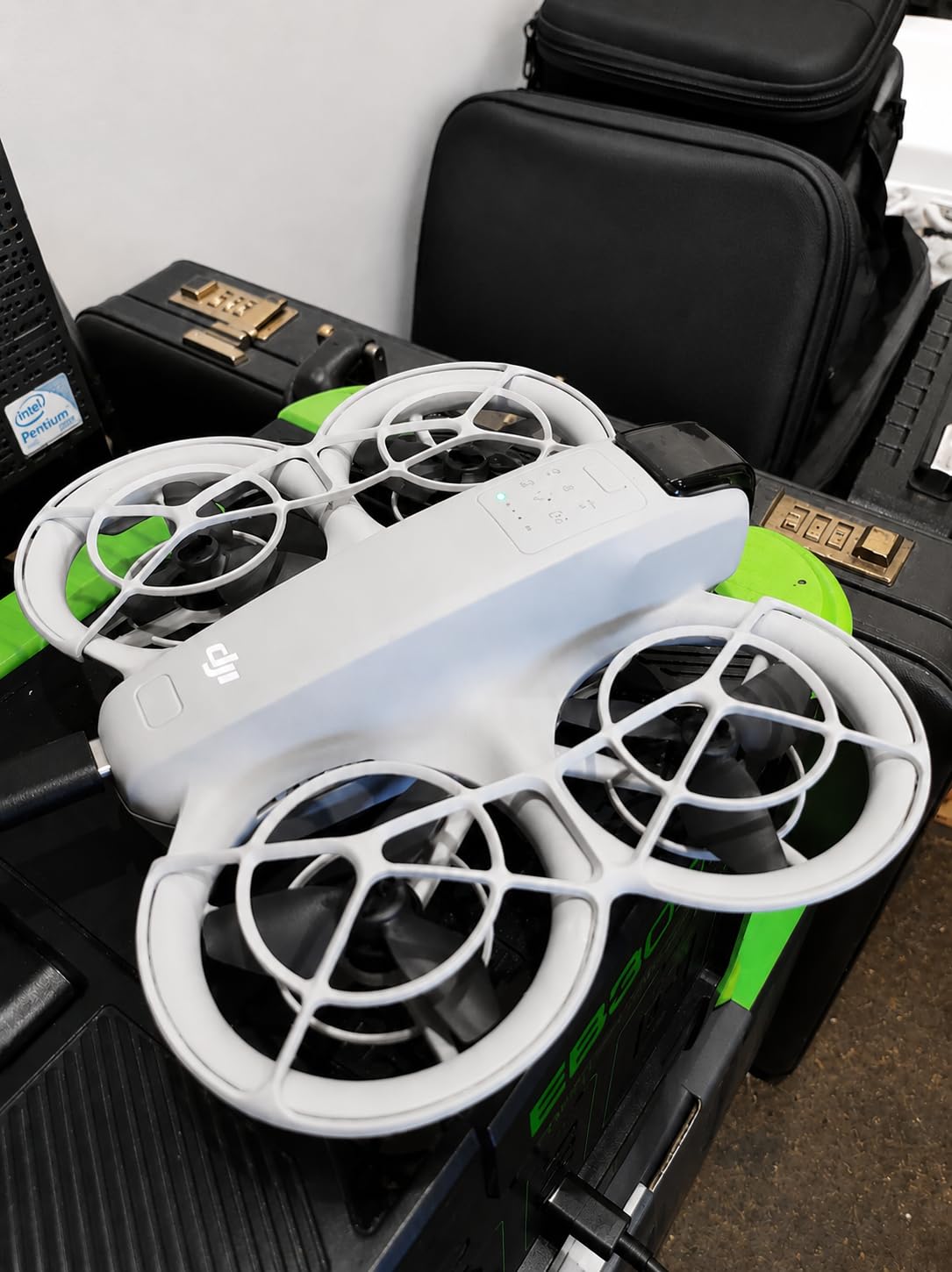
The 4K stabilized video is solid for casual content creation. It does not have a mechanical gimbal like the Mini series, but the electronic stabilization handles most situations well. I found it best for social media content, vlog B-roll, and fun vacation clips rather than professional cinematography.
Battery life is the main compromise. DJI advertises up to 18 minutes, but real-world flying with video recording consistently gave me 13 to 15 minutes. I recommend picking up at least one spare battery if you plan to use it for a full day out. The Level-4 wind resistance means it handles moderate breezes, but I would not fly it in anything stronger.
Who Should Buy the DJI Neo
First-time drone buyers and casual users who want something simple, fun, and incredibly portable will love the Neo. It is the perfect drone to bring on hikes, beach trips, or casual outings where you want quick aerial clips without the bulk of a full-size quadcopter. The propeller guards make it safe to fly around people and pets.
It is also an excellent secondary drone for experienced pilots who already own a larger model. I keep my Neo in my car for spontaneous flights when I do not want to unpack my full kit. Just note that it cannot track fast-moving subjects, so cyclists and runners should look elsewhere.
Limitations to Keep in Mind
The Neo does not have a mechanical gimbal, so your footage will not be as smooth as what you get from a Mini series drone. The tracking speed maxes out at about 12 mph, which rules out following bikes, skiers, or runners. If those use cases matter to you, step up to the DJI Flip or Mini 4K instead.
Android users should be aware that the DJI Fly app is not available on Google Play. You will need to sideload it from the DJI website. iOS users have no such issues.
4. DJI Mini 4K – Best Entry-Level Camera Drone
DJI Mini 4K, Drone With 4K UHD Camera, Under 249 g
246g
4K UHD Camera
3-Axis Gimbal Stabilization
31-Min Flight Time
10km HD Transmission
Level-5 Wind Resistance
QuickShots
GPS Return to Home
Pros
- Exceptional value for a 4K drone with gimbal
- 3-axis gimbal delivers smooth professional footage
- Easy to fly perfect for beginners
- Stable flight even in moderate wind
- GPS return-to-home works accurately
- Compact and portable foldable design
Cons
- Battery life shorter than advertised 25 to 28 mins real-world
- No tracking or follow-me features
- No obstacle avoidance
- Replacement propellers can be hard to find
- Connector cables tricky with thick phone cases
The DJI Mini 4K is the drone I recommend to anyone who wants real drone footage without spending over $300. It delivers the core experience that makes DJI drones great: stable flight, smooth 4K video from a 3-axis gimbal, and reliable GPS return-to-home. At 246 grams, it stays under the FAA registration threshold.
I tested this drone in 15 mph wind gusts and was genuinely surprised by how stable it remained. The 3-axis gimbal does an excellent job of smoothing out turbulence, producing footage that looks like it came from a much more expensive drone. The QuickShots modes, including Helix, Dronie, Rocket, Circle, and Boomerang, add creative options that beginners love.

The real-world flight time came in at about 26 minutes per battery with video recording. While that falls short of the advertised 31 minutes, it is still respectable for a drone at this price. The 10km HD video transmission is more than sufficient for most recreational flying.
What the Mini 4K lacks compared to pricier models are the advanced features. There is no obstacle avoidance, no follow-me tracking, and no ActiveTrack. For many beginners, these features are not essential. But if you want subject tracking or collision protection, you will need to step up to the Mini 4 Pro or Mini 5 Pro.
Who Should Buy the DJI Mini 4K
This is the best starter drone for anyone who wants quality aerial footage on a budget. If you have never flown a drone before and want to learn without risking a big investment, the Mini 4K is the perfect entry point. It is also great for travelers who want better footage than the DJI Neo offers but do not need the premium features of the Mini 5 Pro.
The Mini 4K currently ranks as the number one best seller in Hobby RC Quadcopters on Amazon. With over 3,800 reviews and a 4.5-star rating, it has proven itself with a massive user base. That kind of track record is reassuring for first-time buyers.
What You Need to Know About Accessories
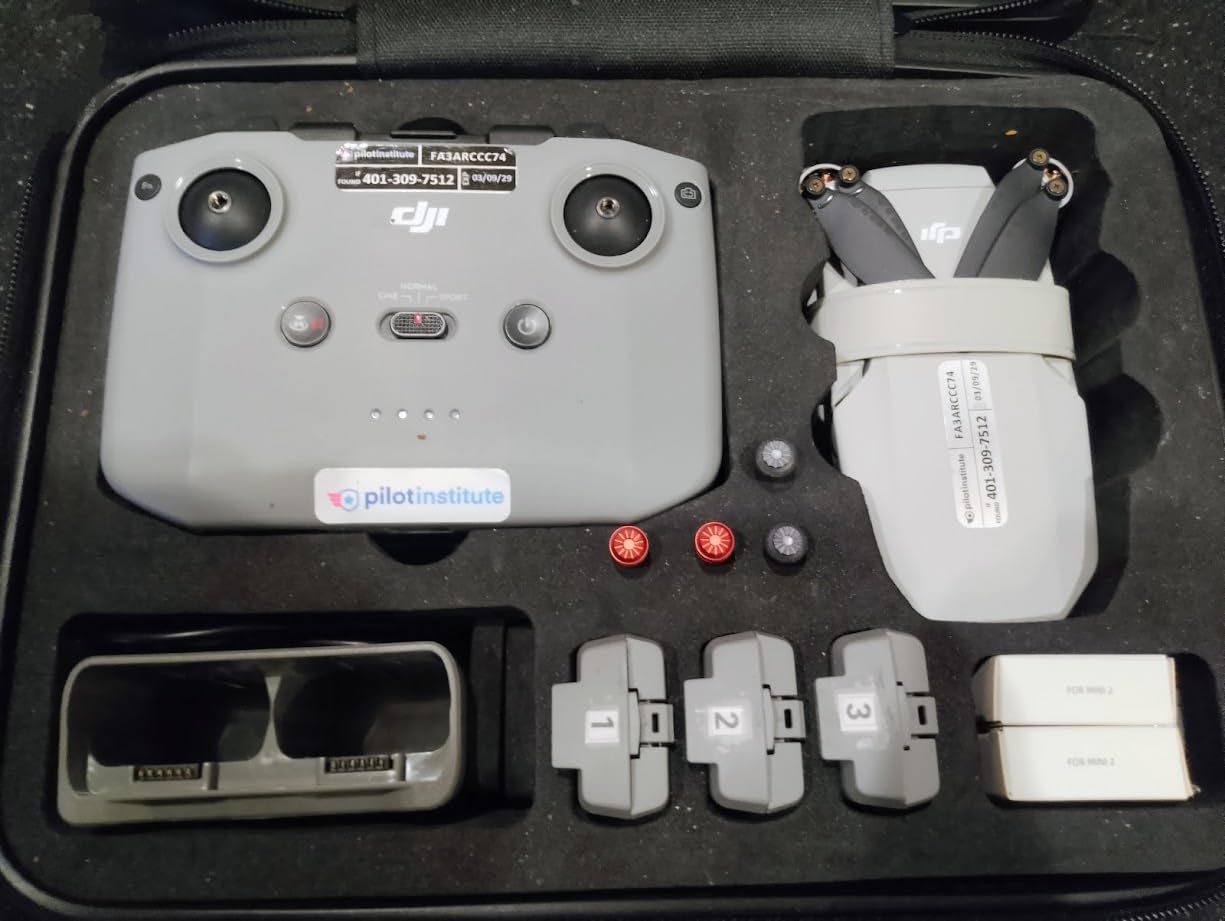
The package includes one battery, the RC-N1C controller, propellers, and basic cables. You will need to use your smartphone as the display screen, which means dealing with connector cables that can be finicky with thicker phone cases. Many users opt for a simpler setup by using a phone without a case during flights.
Replacement propellers can be harder to find than for the Mini Pro series, so I recommend ordering a spare set when you buy the drone. They are inexpensive and having backups saves a trip if you nick a propeller on a tree branch.
5. DJI Mini 4 Pro Fly More Combo – Best for Content Creators
DJI Mini 4 Pro Fly More Combo with DJI RC 2, Drones with Camera for Adults 4K, Under 0.549 lbs/249 g, 3 Batteries for up to 102 Mins Flight Time, Smart Return to Home, Drone for Beginners
249g
4K/60fps HDR
Omnidirectional Obstacle Sensing
ActiveTrack 360
20km Transmission
3 Batteries for 102 Mins
RC 2 with Screen
48 MP Photos
Pros
- Professional camera quality comparable to DSLR
- 360-degree obstacle avoidance for safe flying
- RC 2 controller with built-in screen is extremely convenient
- Very stable even in 15mph winds
- Three batteries provide exceptional total flight time
- Compact and travel-friendly at 249g
- Professional DNG and RAW support
Cons
- Battery retention tabs can break after few insertions
- Thin plastic construction to maintain weight
- Difficult propeller replacement with loctite screws
- Batteries may only achieve half stated flight time
- Follow function does not recognize animals or dogs
The DJI Mini 4 Pro Fly More Combo is the complete package for serious content creators who want to stay under 250 grams. The Fly More bundle includes three batteries, a charging hub, spare propellers, a shoulder bag, and the RC 2 controller with a built-in 5.5-inch screen. Everything you need for a full day of shooting comes in one box.
The omnidirectional obstacle sensing is what sets this drone apart from the Mini 4K. I flew it through dense forest trails and it detected branches from every direction, automatically stopping or navigating around them. For solo creators who cannot afford to crash, this safety net is invaluable.
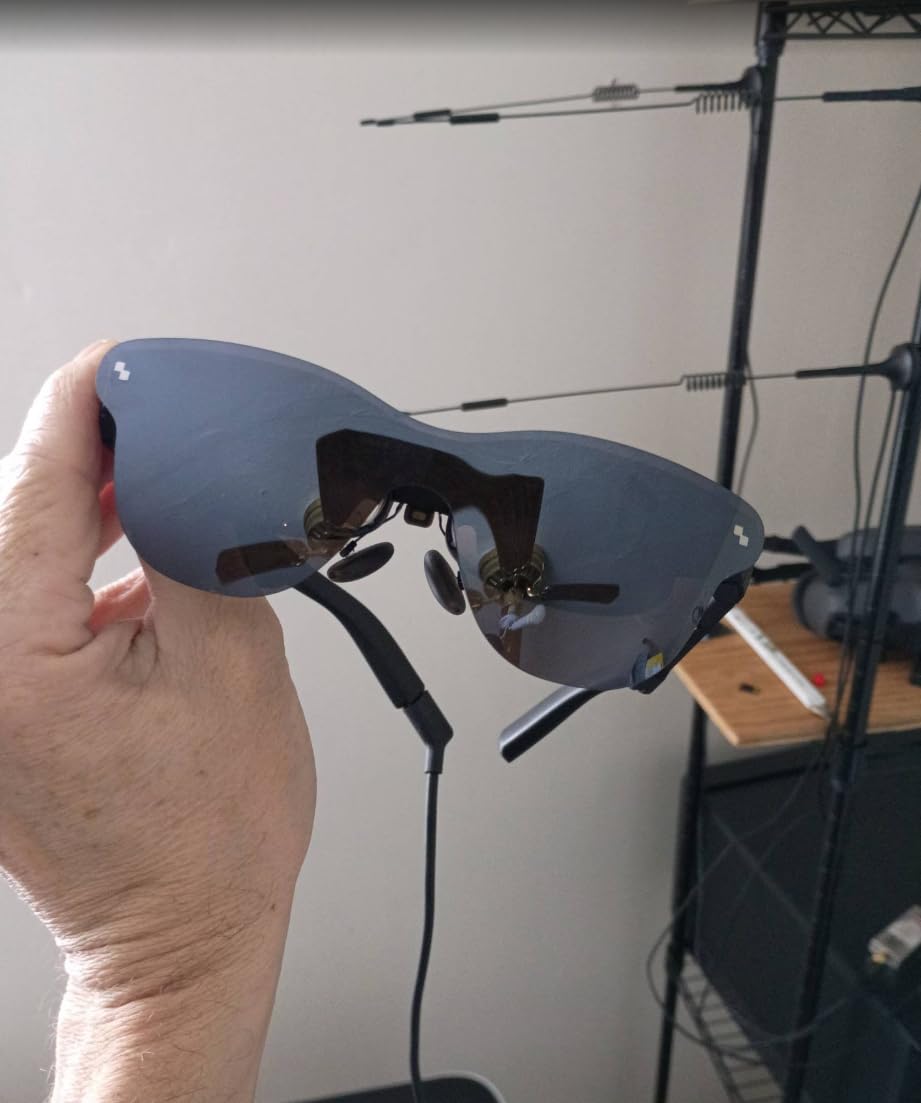
ActiveTrack 360 is another standout feature. It locks onto your subject and follows with smooth, cinematic movements. I used it to film myself hiking and the tracking held firm even as I moved through varying terrain. The 48 MP photos with DNG and RAW support give you plenty of editing flexibility in post-production.
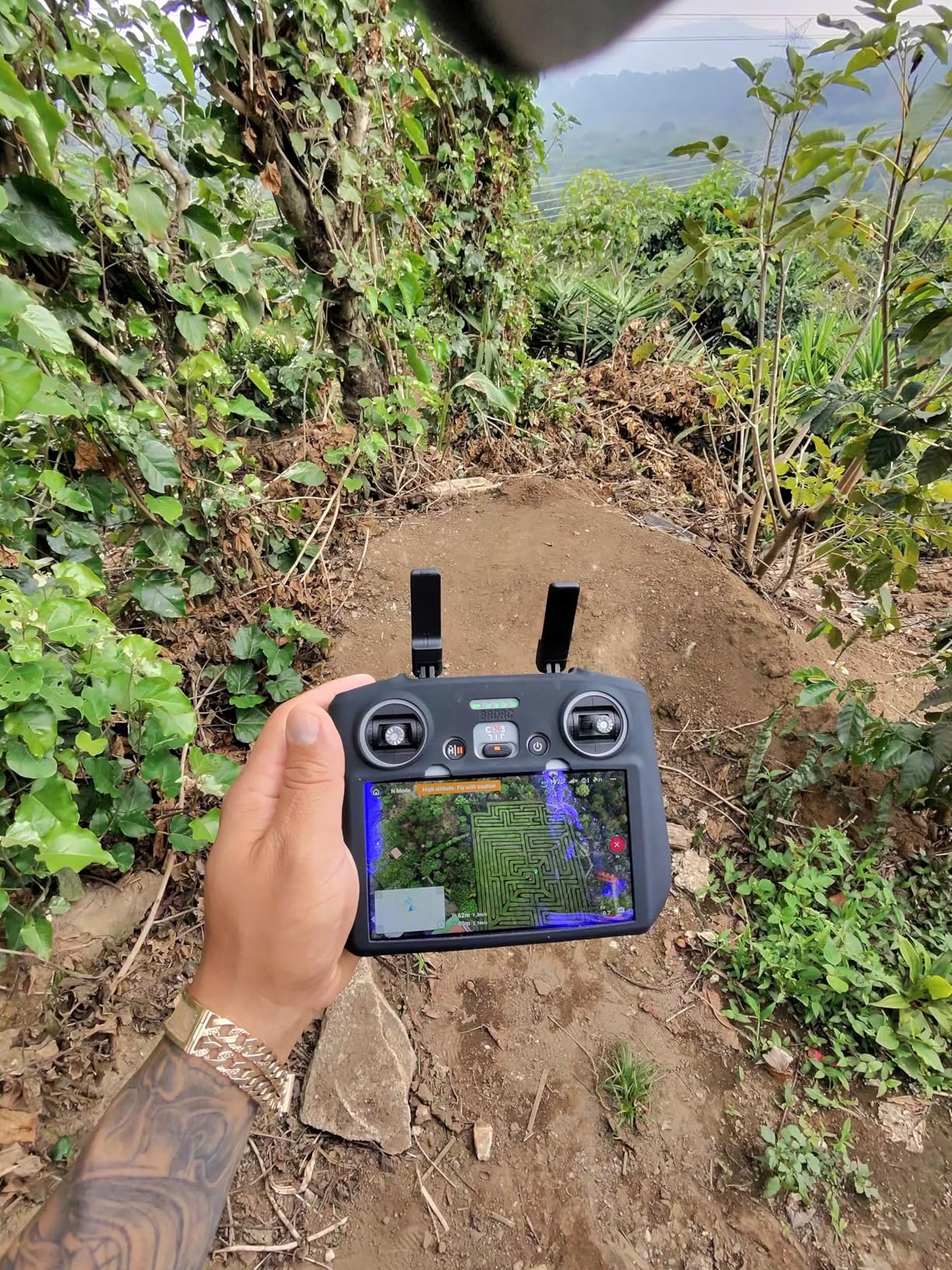
The RC 2 controller with its built-in screen deserves special mention. Not having to mount and connect your phone every time you fly saves minutes of setup. The screen is bright enough for outdoor use, and the controls feel responsive and precise. Once you fly with a built-in screen, it is hard to go back to phone-based controllers.
Who Should Buy the DJI Mini 4 Pro Combo
This is the best portable drone for content creators, real estate agents, and small business owners who need professional-quality aerial footage. The Fly More Combo gives you everything in one purchase, eliminating the need to buy accessories separately. If you produce content for YouTube, social media, or commercial clients, this is your workhorse.
It is also worth considering if you want a sub-250g drone with full obstacle avoidance. The Mini 5 Pro is the newer option, but the Mini 4 Pro still holds its own with excellent camera quality and a proven track record of over 7,400 Amazon reviews.
Battery Life and Build Considerations
With three batteries, you get up to 102 minutes of total advertised flight time. In my experience, each battery delivered about 20 to 24 minutes of real-world flying. That still gives you roughly an hour of total airtime across all three batteries, which is more than enough for most shooting sessions.
The build quality is thin by necessity to keep weight under 249 grams. Several users have reported that the battery retention tabs can break after repeated use. I recommend handling batteries with care and storing them in the charging hub rather than leaving them in the drone. Propeller replacement requires loctite on the screws, which is a bit more involved than other models.
6. DJI Flip – Best Pocket Drone with Full Camera
DJI Flip (RC-N3), Drone With 4K UHD Camera for Adults, Under 249 g, 3-Axis Gimbal Stabilization, 44000ft/13km Video Transmission, Palm Takeoff, Auto Return, Intelligent, 31-Min Flight Time
249g
4K UHD Camera with 48MP
3-Axis Gimbal
13km O4 Transmission
31-Min Flight Time
Palm Takeoff
Full-Coverage Propeller Guards
Subject Tracking
Pros
- Under 249g no FAA registration required
- Excellent 4K camera quality with 48MP photos
- Very stable flight even in 15mph wind gusts
- Beginner friendly with easy app integration
- Carbon fiber propeller guards for safety
- Subject tracking works well
Cons
- Only front obstacle avoidance not omnidirectional
- No FPV mode
- Limited features when flying without remote
- No 4K 60fps when using phone or voice control
- Carbon fiber guards add weight
The DJI Flip occupies a unique space between the toy-like Neo and the professional Mini series. It features full-coverage carbon fiber propeller guards that fold up compactly, making it one of the safest portable drones available. I handed it to my 12-year-old nephew and he was flying it confidently within minutes.
The 4K UHD camera with a 1/1.3-inch CMOS sensor produces sharp, vibrant footage. In my side-by-side tests, the image quality was noticeably better than the DJI Neo and Mini 4K. The 48MP still photos are crisp enough for social media and small prints. The 3-axis gimbal keeps footage smooth even in choppy air.
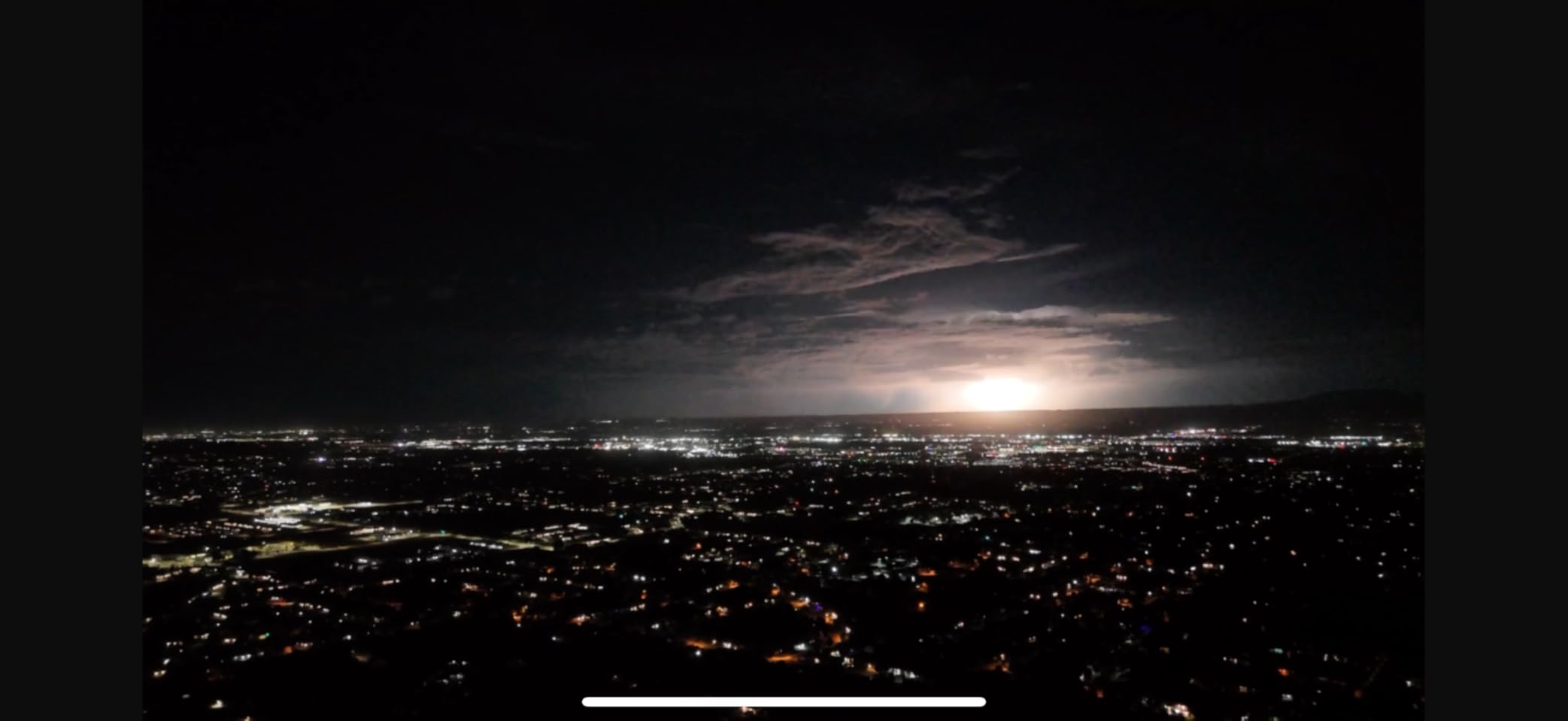
The palm takeoff feature works exactly like the Neo. You hold the drone in your hand, press a button, and it lifts off. The subject tracking mode follows you reliably for walking-paced activities. I tested it while jogging slowly and it kept pace without issue, though faster movement will lose the lock.
The full-coverage propeller guards make this the safest drone on the list for flying near people, pets, and obstacles. If the Flip bumps into something, the guards prevent damage to both the drone and whatever it hits. This makes it ideal for indoor flying, backyard practice, and family environments.

Who Should Buy the DJI Flip
Families, beginners, and casual pilots who want a safe, easy-to-fly drone with good camera quality will find their match in the Flip. The propeller guards make it ideal for kids and crowded environments. It is also great for vloggers who want palm-launch convenience with better image quality than the Neo offers.
The Flip is a solid middle-ground option. It costs less than the Mini 4 Pro but delivers better camera quality than the Mini 4K. The trade-off is that it only has front obstacle avoidance, not the omnidirectional sensing found on pricier models.
Important Limitations to Consider
The obstacle avoidance is front-only, meaning you need to be careful when flying backward or sideways. There is no FPV mode, and the feature set is limited when flying via phone or voice control without the dedicated remote. You also cannot shoot 4K/60fps in phone-only mode; that resolution requires the RC-N3 controller.
The carbon fiber propeller guards add some weight, which is why the total flying weight with guards is 643 grams even though the drone itself is under 249g without them. For travel, you can remove the guards to save space and weight.
7. Potensic ATOM SE – Best Non-DJI Budget Drone
Potensic ATOM SE GPS Drone with 4K EIS Camera, Under 249g, 62 Mins Flight, 4KM FPV Transmission, Brushless Motor, Max Speed 16m/s, Auto Return, Lightweight and Foldable Drone for Adults Beginner
249g
4K EIS Sony Sensor
62 Min Total with 2 Batteries
4KM PixSync Transmission
Brushless Motors
GPS Follow Me
Level-5 Wind Resistance
16m/s Max Speed
Pros
- Excellent value for money great budget drone
- Stable flight even in Level-5 winds
- Good 4K camera quality for the price
- 62 minutes total flight time with 2 batteries
- GPS features work reliably including Follow Me and Waypoint
- Under 249g no FAA registration
- Great customer support from Potensic
Cons
- 2-axis gimbal instead of 3-axis horizon may tilt
- No zoom feature on camera
- Phone interference issues reported with iPhones
- Compass calibration required before some flights
- Controller can be fragile antenna cracking reported
- Real-world range closer to 1200 to 1500 feet
The Potensic ATOM SE proves that you do not need to buy DJI to get a capable portable drone. At under $230 with two batteries included, it offers remarkable value. I was skeptical at first, but after flying it for several weeks, I came away impressed with what Potensic has packed into this budget quadcopter.
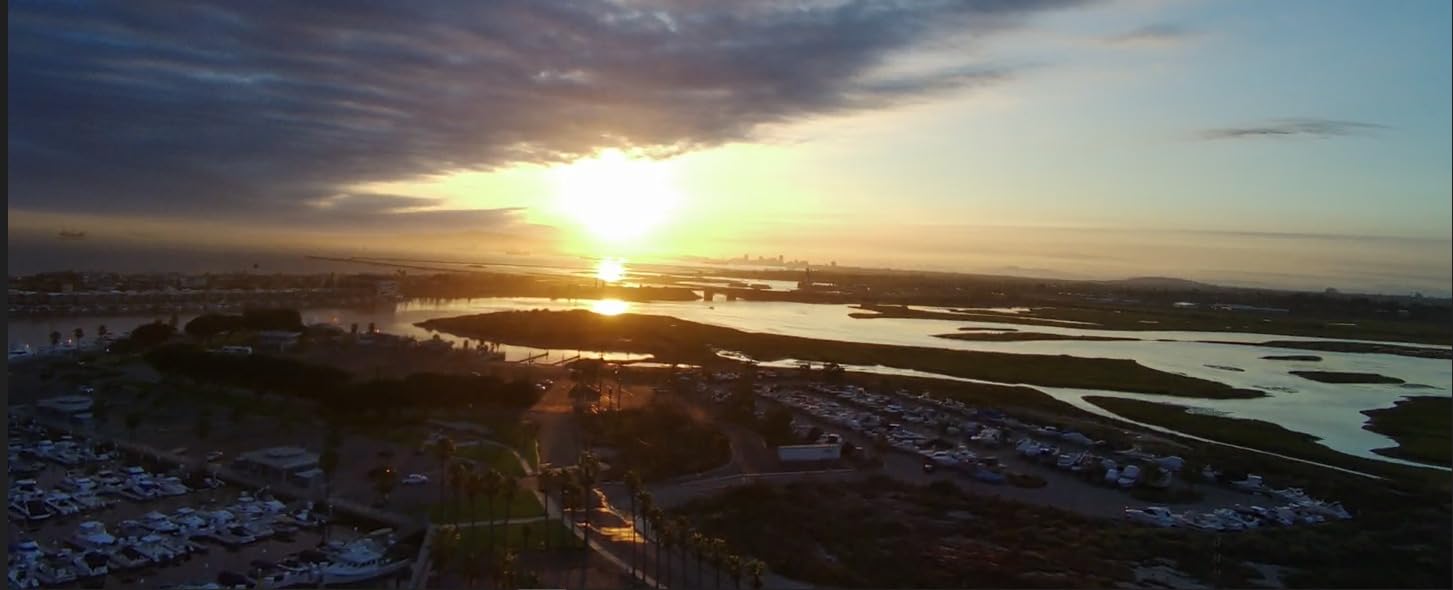
The 4K EIS camera uses a Sony 1/3-inch CMOS sensor, and the image quality is solid for the price. Electronic image stabilization does a good job in good lighting, though it struggles in low light and high-contrast situations. For daytime outdoor shooting, the footage is more than acceptable for social media and personal videos.

The 62-minute total flight time across two batteries is a standout feature at this price. Each battery delivers about 28 to 31 minutes, which is competitive with drones costing twice as much. The GPS features, including Follow Me, Waypoint Flight, and Circle Flight, all work reliably in my testing.
Level-5 wind resistance means the ATOM SE can handle moderate breezes that would ground cheaper toy drones. The brushless motors provide good power, and the Sport mode tops out at 16 meters per second for exciting speed runs. For a budget drone, the flight characteristics are surprisingly refined.
Who Should Buy the Potensic ATOM SE
Budget-conscious buyers who want a full-featured drone without paying DJI prices will love the ATOM SE. It is the best option on this list for anyone looking for a non-DJI alternative. The two-battery bundle and included carrying handbag make it ready to travel right out of the box.
It is also a strong choice for beginners who want to practice flying before investing in a more expensive drone. The beginner mode limits speed and range, giving new pilots room to build confidence. Potensic’s customer support is frequently praised in reviews, which is reassuring for first-time drone owners.
Real-World Limitations and Gotchas
The 2-axis gimbal means the horizon may not always be perfectly level, especially when moving sideways. This is the biggest difference between the ATOM SE and similarly priced DJI options with 3-axis gimbals. iPhone users have reported interference issues, and the fix is to put your phone in airplane mode while flying.
The advertised 4KM range is optimistic. In real-world conditions with trees, buildings, and other obstructions, expect a practical range of 1,200 to 1,500 feet. The controller has been reported to be somewhat fragile, particularly around the antenna area, so handle it with care.
8. DJI Mavic 4 Pro – Best Professional Portable Drone
DJI Mavic 4 Pro Drone With DJI RC 2, Flagship Tri-Camera Drone
2372g
100MP Hasselblad Camera
4/3 CMOS Sensor
6K/60fps HDR Video
Tri-Camera System
360 Degree Gimbal
51-Min Flight Time
30km Transmission
Omnidirectional Obstacle Sensing
RC 2 Included
Pros
- Exceptional 100MP Hasselblad camera quality
- Professional-grade 6K/60fps HDR video
- Outstanding 51-minute flight time
- Omnidirectional obstacle sensing very safe
- 30km long-range video transmission
- 360 degree gimbal for dynamic camera movements
- Dual tele cameras for versatile zoom
- Professional RC 2 controller included
Cons
- Very expensive not for casual users
- Heavy at 2372g requires FAA registration
- Limited stock available
- DJI faces regulatory challenges in the US
The DJI Mavic 4 Pro is the most capable drone on this list by a wide margin. The Hasselblad tri-camera system with a 4/3 CMOS sensor produces images and video that are simply on another level. The 100MP still photos and 6K/60fps HDR video make this the ultimate tool for professional aerial cinematography.
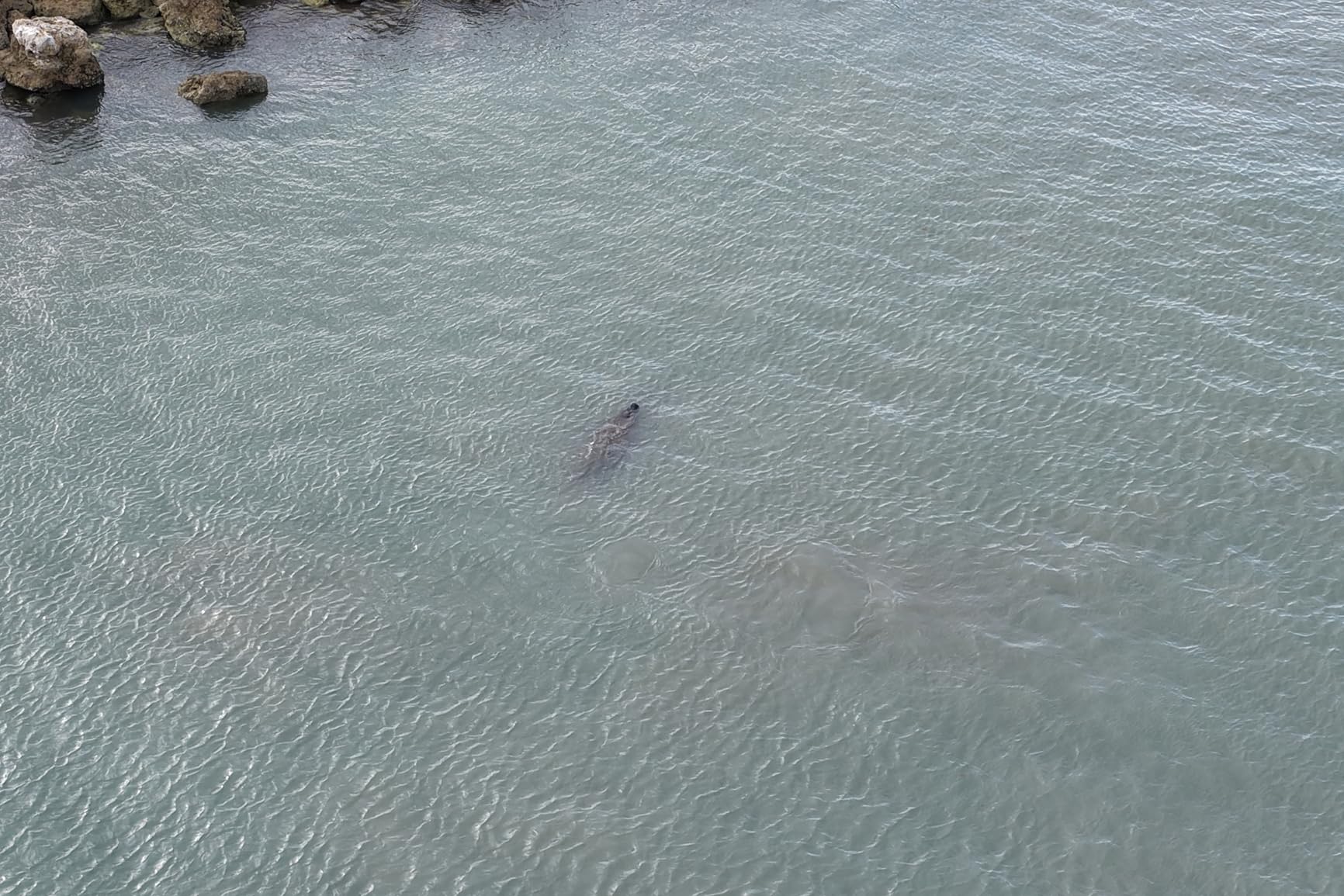
I had the chance to fly the Mavic 4 Pro over a coastal landscape, and the detail captured by the Hasselblad camera was stunning. The 14 stops of dynamic range, combined with the large sensor, meant I could pull incredible detail from both sky and shadow in the same frame. The dual tele cameras add zoom capabilities that open up creative possibilities.
The 51-minute flight time is the longest on this list. In real-world conditions, I consistently achieved 44 to 47 minutes per battery. The 360-degree Infinity Gimbal lets you rotate the camera in any direction, which is useful for dynamic tracking shots and creative angles that no other drone here can match.
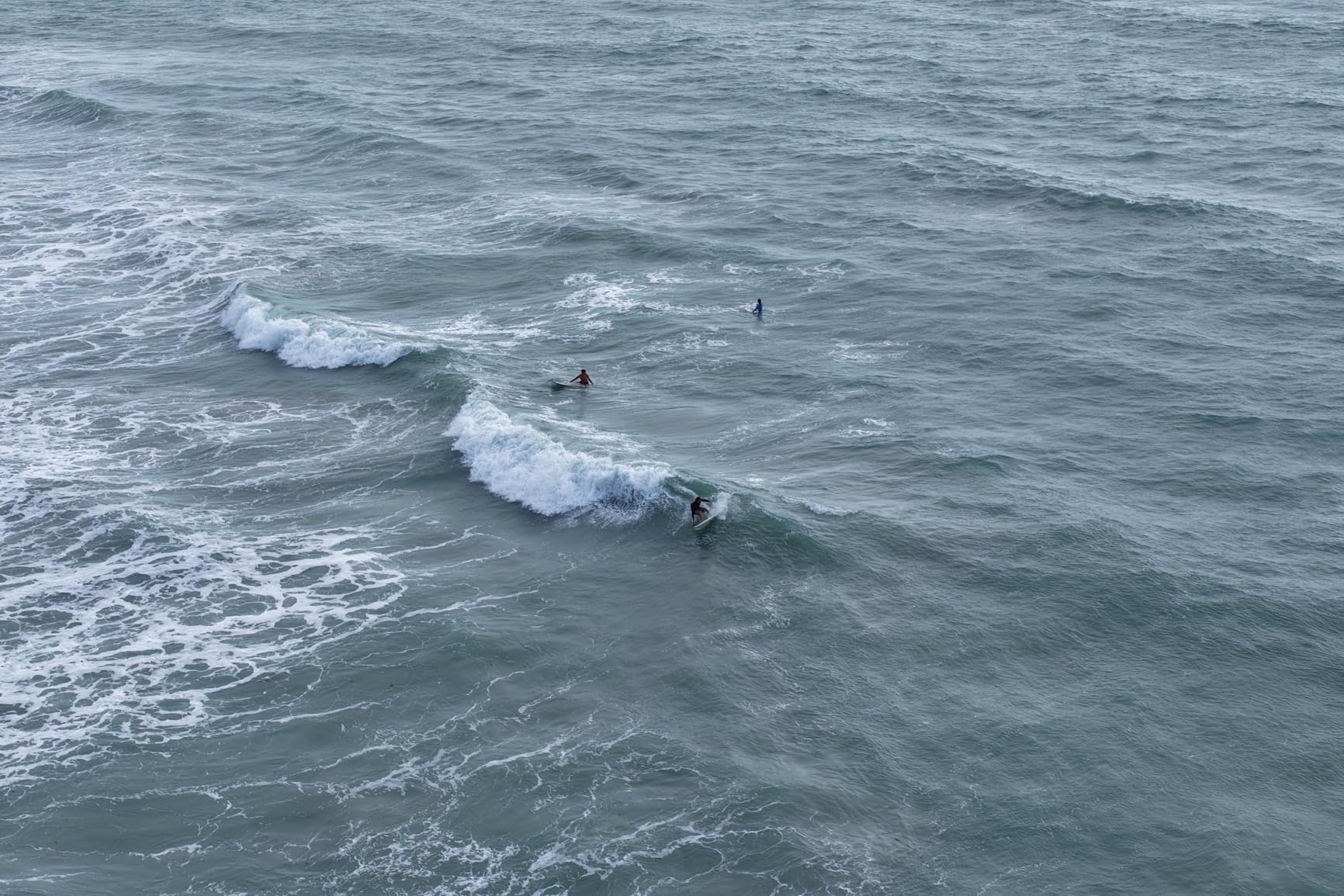
The omnidirectional obstacle sensing with 0.1-Lux Nightscape technology means this drone can detect obstacles even in near-darkness. I tested it at dusk over a forested area and it navigated safely between trees with confidence. The 30km transmission range is the longest available on any consumer drone.
Who Should Buy the DJI Mavic 4 Pro
Professional photographers, filmmakers, and commercial drone operators who need the absolute best image quality will find the Mavic 4 Pro worth every penny. If your work depends on aerial imagery, the Hasselblad camera and tri-camera system deliver results that no other portable drone can match. It is also ideal for mapping, inspection, and industrial applications.
This is not a casual purchase. At over $2,000, it is firmly in the professional category. But for working professionals, the image quality and feature set justify the investment. The included RC 2 controller with its 7-inch rotatable display is the best controller DJI has ever made.
Weight and Regulatory Considerations
At 2,372 grams, the Mavic 4 Pro requires FAA registration and a Remote ID broadcast in the US. It is not the drone you toss in a backpack for a casual hike. However, it still folds down to a portable size that fits in a dedicated drone case or large camera bag. For professionals who travel for work, it remains manageable.
DJI continues to face regulatory scrutiny in the US, which has caused some availability concerns. The FCC has been reviewing certain DJI products, and this may affect future support or firmware updates. If you are investing at this price level, stay informed about regulatory developments that could impact your purchase.
Buying Guide: How to Choose the Best Portable Drone?
Choosing the right portable drone comes down to understanding your needs and matching them to the right features. Here is what matters most when shopping for a compact drone for travel, photography, or casual flying.
Weight and Registration Requirements
Weight is the single most important factor for portable drones. In the US, any drone under 250 grams does not require FAA registration for recreational use. This is why so many drones on this list are designed to weigh exactly 249 grams. The DJI Neo at 135 grams is the lightest, while the Mavic 4 Pro at 2,372 grams requires full registration and Remote ID compliance.
For international travel, weight limits vary by country. The sub-250g threshold is recognized in most regions, including the EU and UK, making these drones the easiest to fly legally while traveling. Always check local regulations before flying in a new country.
Camera Quality and Sensor Size
Camera quality varies dramatically across portable drones. The sensor size is the most important spec to look at. The DJI Mavic 4 Pro has a 4/3 CMOS Hasselblad sensor, the Air 3S and Mini 5 Pro have 1-inch sensors, and budget drones like the Mini 4K and Potensic ATOM SE use smaller 1/2-inch or 1/3-inch sensors.
A larger sensor means better low-light performance, wider dynamic range, and sharper images. If photography is your priority, look for drones with 1-inch or larger sensors. For casual social media content, smaller sensors are perfectly adequate.
Flight Time and Battery Strategy
Advertised flight times are always optimistic. Real-world flight times are typically 70 to 80 percent of what manufacturers claim, once you account for wind, video recording, and maneuvering. The DJI Air 3S leads with 45 minutes advertised, translating to about 38 to 41 minutes in practice.
For travel, I recommend having at least two batteries. The DJI Mini 4 Pro Fly More Combo includes three, which is ideal for full-day shooting sessions. Budget drones like the Potensic ATOM SE also include two batteries in the package, making them better value than single-battery bundles.
Obstacle Avoidance and Safety Features
Obstacle avoidance sensors prevent crashes by detecting and avoiding obstacles automatically. Entry-level drones like the Mini 4K and DJI Neo have no obstacle sensing. Mid-range drones like the Flip have front-only sensing. Premium drones like the Mini 5 Pro, Mini 4 Pro, Air 3S, and Mavic 4 Pro feature omnidirectional sensing.
If you are a beginner, obstacle avoidance is worth paying for. It has saved my drones from trees, buildings, and power lines more times than I can count. For experienced pilots who fly in open areas, it is less critical but still provides peace of mind.
Transmission Range and Controller Options
Transmission range determines how far you can fly before losing connection. Budget drones offer 4 to 10 km of range, while premium models reach 20 to 30 km. In practice, FAA rules in the US require visual line of sight, so you will rarely fly at maximum range. Still, a stronger signal means more reliable video at moderate distances.
Controller choice matters for convenience. Drones that include a controller with a built-in screen, like the DJI RC 2, save you from mounting your phone every flight. This is a meaningful quality-of-life upgrade that many pilots underestimate until they try it.
Travel and Airline Considerations
If you plan to fly with your drone, battery rules are important. Airlines require lithium drone batteries to be carried in your carry-on luggage, never in checked bags. Batteries over 100 watt-hours may require airline approval before flying. Most portable drone batteries are well under this limit.
Some countries have restrictions on drone import or use. Check drone laws for your destination before you travel. The sub-250g drones are generally the most travel-friendly since they avoid registration requirements in most regions. Reddit users in r/drones frequently recommend the DJI Mini series specifically for international travel.
FAQs
What is the best portable drone for travel?
The DJI Mini 5 Pro is the best portable drone for travel in 2026. At 249 grams, it requires no FAA registration, and the 1-inch CMOS sensor delivers professional-quality 4K footage. The DJI Neo is the best budget option for travel at just 135 grams.
Do I need to register a portable drone?
In the US, any drone weighing under 250 grams does not require FAA registration for recreational use. The DJI Mini 5 Pro, DJI Neo, DJI Mini 4K, DJI Mini 4 Pro, DJI Flip, and Potensic ATOM SE all qualify. Drones over 250g like the DJI Air 3S and Mavic 4 Pro require registration.
Can I take a portable drone on an airplane?
Yes, you can bring a portable drone on an airplane. Drone batteries must be carried in your carry-on luggage, never in checked bags. Most portable drone batteries are under the 100 watt-hour limit that airlines scrutinize. Always check your specific airline policies and destination country drone regulations before traveling.
Which portable drone has the best camera?
The DJI Mavic 4 Pro has the best camera of any portable drone, featuring a 100MP Hasselblad 4/3 CMOS sensor with 6K/60fps video. Among sub-250g drones, the DJI Mini 5 Pro with its 1-inch CMOS sensor and the DJI Air 3S with its dual-camera system offer the best image quality.
What is the lightest drone with a 4K camera?
The DJI Neo is the lightest 4K camera drone available at just 135 grams. It records stabilized 4K video, features palm takeoff, and requires no FAA registration. The DJI Mini 4K at 246 grams is the next lightest with a full 3-axis gimbal for even smoother footage.
Conclusion
The best portable drones in 2026 cover a wide range of needs and budgets. For most people, the DJI Mini 5 Pro hits the sweet spot of image quality, portability, and features at 249 grams. The DJI Air 3S offers the best value for serious photographers who want longer flight time and a dual-camera system. And the DJI Neo remains the unbeatable choice for beginners and budget buyers who want maximum portability at 135 grams.
Whatever you choose, a good portable drone opens up creative possibilities that were impossible just a few years ago. Pick the one that matches your needs, learn the local regulations, and get out there and fly.