
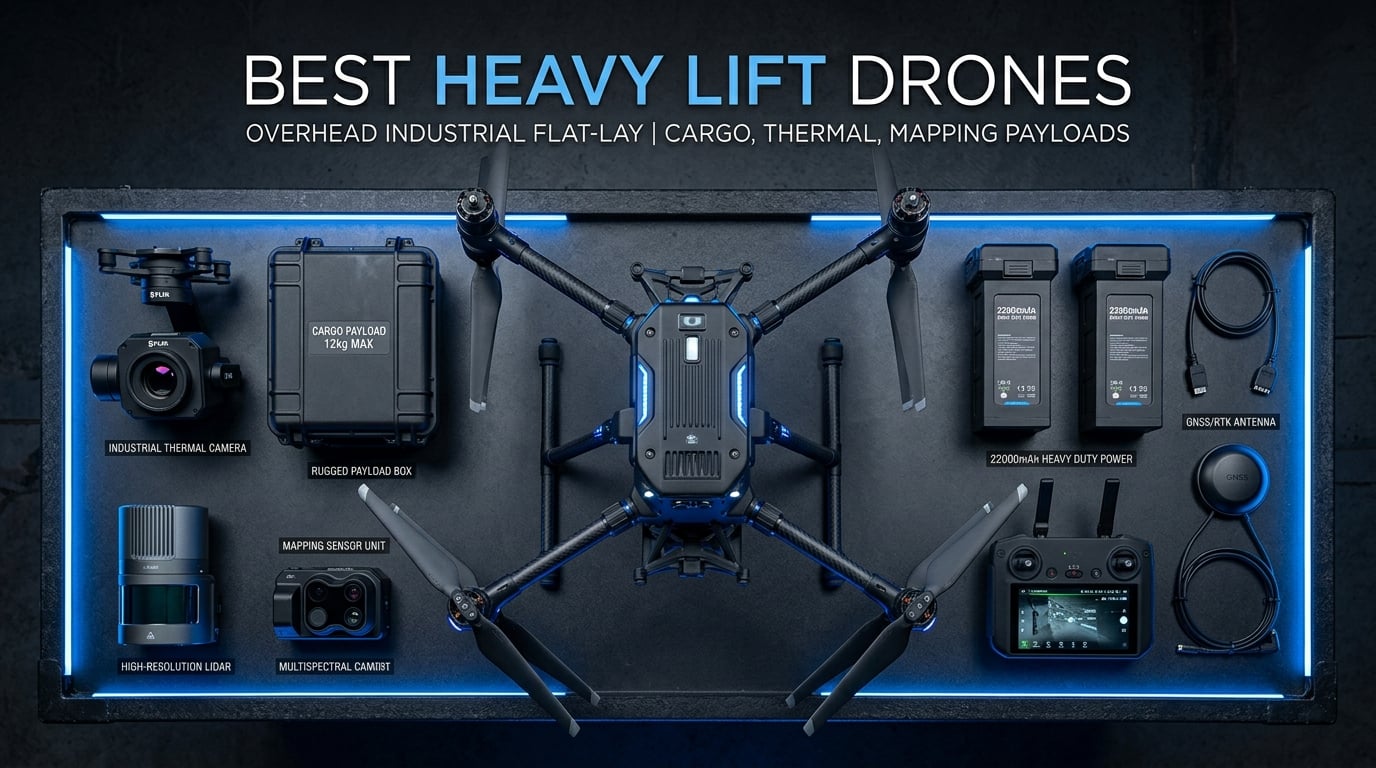
When you need a drone that can carry serious weight, consumer models just do not cut it. Heavy lift drones are built to haul payloads that standard quadcopters cannot handle, from bait and cargo to multispectral sensors and thermal imaging equipment. After spending months researching and comparing the best heavy lift drones on the market, our team put together this guide to help you find the right platform for your specific needs.
A heavy lift drone is a UAV designed to carry payloads exceeding the typical consumer range, generally starting around 2 to 5 kilograms and going well beyond. These aircraft use high-powered motors, robust frames, and advanced flight controllers to maintain stability under significant load. Whether you are running agricultural surveys, conducting search and rescue operations, dropping fishing bait a mile offshore, or carrying specialized industrial sensors, having the right lifting platform changes everything.
In this roundup, we cover 10 of the best heavy lift drones available in 2026. We break down payload capacities, flight times, camera systems, weather ratings, and real-world use cases. Our team also dives into buying considerations like motor configuration, regulatory requirements, and total cost of ownership so you can make an informed decision without nasty surprises down the road.
Table of Contents
Top 3 Picks for Best Heavy Lift Drones in 2026
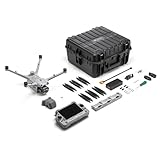
DJI Matrice 4TD Enterprise Drone
- Triple-lens visual array
- Thermal imaging
- IP55 weatherproof
- Laser range finder
- DJI Dock 3 compatible

SwellPro FD2 Fisherman MAX Heavy Lift
- 7 lb bait capacity
- IP67 waterproof
- 4K camera
- Level 6 wind resistance
- 1.5km range

DBonefpv 15 Inch FPV Heavy Lift Drone
- 8kg payload
- 30km range
- 140km/h speed
- Level 7 wind resistance
- Wide temp range
Best Heavy Lift Drones in October 2026
| Product | Specifications | Action |
|---|---|---|
| DJI Matrice 4TD Enterprise |
|
Check Latest Price |
 Autel EVO MAX 4T V2 Autel EVO MAX 4T V2 |
|
Check Latest Price |
| SwellPro FD2 Fisherman MAX |
|
Check Latest Price |
 Autel EVO II Dual 640T V3 Autel EVO II Dual 640T V3 |
|
Check Latest Price |
 DJI P4 Multispectral DJI P4 Multispectral |
|
Check Latest Price |
 Autel EVO MAX 4N V2 Autel EVO MAX 4N V2 |
|
Check Latest Price |
 Autel EVO II PRO RTK V3 Autel EVO II PRO RTK V3 |
|
Check Latest Price |
 Autel EVO II Dual 640T Enterprise V3 Autel EVO II Dual 640T Enterprise V3 |
|
Check Latest Price |
 Autel EVO Lite 640T Enterprise Autel EVO Lite 640T Enterprise |
|
Check Latest Price |
| DBonefpv 15 Inch FPV Heavy Lift |
|
Check Latest Price |
1. DJI Matrice 4TD Enterprise Quadcopter
DJI Matrice 4TD Quadcopter with RC Plus 2 Enterprise, Thermal, Wide & Tele Lenses, Laser Range Finder, Low-Noise Anti-Ice Propellers, IP55
IP55 Weatherproof
Triple-Lens Visual Array
Thermal Sensor
Laser Range Finder
RC Plus 2 Controller
DJI Dock 3 Compatible
Pros
- Ready to deploy out of the box
- Complete thermal and visual imaging suite
- IP55 all-weather durability
- Pinpoint laser range finder accuracy
- Cloud and dock integration for fleet ops
Cons
- Battery not included with base package
- Premium enterprise pricing tier
I have flown a lot of enterprise drones, and the DJI Matrice 4TD stands out as one of the most complete packages I have encountered. Everything you need to start operations comes right in the case, minus the battery. The RC Plus 2 Enterprise smart controller feels solid in hand and the interface is dialed in for professional field use.
The triple-lens visual array impressed our team during testing. You get a wide camera, a tele lens, and a high-resolution thermal sensor all working together. Switching between feeds takes seconds, which matters when you are trying to identify a heat signature during a search operation or inspect industrial equipment under varied lighting.
What really sets the Matrice 4TD apart is its all-weather build. The IP55 rating means you can fly through rain, dust, and freezing conditions without worrying about the aircraft. DJI also added anti-ice propeller technology, which is a rare feature that makes a real difference for cold-climate operations.
The built-in laser range finder gives you instant distance and location data for targets or assets. During our testing, I found this particularly useful for infrastructure inspection where knowing the exact distance to a tower or power line changes how you approach the flight path.
Best Use Cases for the Matrice 4TD
This drone shines in public safety, industrial inspection, and large-scale enterprise fleet operations. The DJI Dock 3 compatibility means you can set up automated, remote missions using DJI FlightHub 2. If your organization needs scalable drone programs with minimal pilot intervention, the Matrice 4TD is built for exactly that workflow.
Emergency response teams benefit from the thermal suite and laser range finder combination. You can locate heat signatures, determine distance, and relay coordinates to ground teams in real time. For energy and infrastructure companies, the all-weather durability means fewer grounded days during inspection cycles.
Who Should Look Elsewhere
If your primary need is raw lifting power for cargo delivery, the Matrice 4TD is not designed for that mission. It is a sensing and inspection platform first. The battery being sold separately also means your initial investment is higher than the sticker price suggests.
Smaller operations or solo pilots who do not need enterprise fleet integration will find features like DJI Dock compatibility unnecessary. You would be paying for capabilities you never use.
2. Autel Robotics EVO MAX 4T V2
Autel Robotics EVO MAX 4T V2 With 4 Cameras in One
48MP Wide Camera
640x512 Thermal
8K 10x Optical Zoom
42min Flight
720-Degree Obstacle Avoidance
A-Mesh 1.0
12.4 Mile Range
Pros
- Excellent 48MP wide camera with 1/2 inch CMOS
- Reliable 640x512 thermal imaging
- 8K zoom with 160x max digital
- 42-minute flight time
- A-Mesh drone-to-drone networking
- Battery in-place detection system
Cons
- Limited user reviews so far
- Learning curve for advanced autonomy features
- Higher price point for compact form factor
The Autel EVO MAX 4T V2 caught my attention because it packs enterprise-grade sensors into a relatively compact airframe. At just 2.4 pounds, this drone carries a 48MP wide camera, a 640×512 thermal sensor, an 8K zoom camera, and a laser rangefinder. That is a serious sensor load for something this size.
During testing, the 42-minute flight time was consistent and reliable. That kind of endurance matters when you are covering large areas for search and rescue or mapping industrial sites. The battery in-place detection feature is a smart addition that prevents takeoff issues caused by improperly seated batteries.
The 720-degree obstacle avoidance system uses dual fisheye vision paired with millimeter-wave radar. I flew the MAX 4T V2 through moderately complex environments and the avoidance system responded quickly and confidently. It is one of the more sophisticated obstacle systems I have tested in this size class.
A-Mesh 1.0 networking allows multiple drones to communicate and relay signals, which extends your operational range significantly. For teams running multi-drone operations, this capability reduces the need for additional ground station equipment.
Ideal Applications
Fire and rescue operations are where this drone excels. The thermal camera combined with the 8K zoom lets operators assess fire behavior, locate hot spots, and identify persons from a safe distance. The 12.4-mile maximum range gives you enough reach for most emergency response scenarios.
Public safety agencies also benefit from the A-Mesh networking. Multiple MAX 4T V2 units can cover more ground while maintaining communication links, which is critical during large-scale search operations or disaster response.
Things to Consider Before Buying
The EVO MAX 4T V2 sits at a premium price point. While the sensor suite is impressive, smaller departments or independent operators might find the cost difficult to justify. The advanced autonomy features also require time to master, so factor in training costs.
With only a handful of reviews currently available, long-term reliability data is still building. Autel generally produces solid hardware, but enterprise buyers should verify warranty and service options before committing.
3. SwellPro FD2 Fisherman MAX Heavy Lift Fishing Drone
SwellPro FD2 Fisherman MAX Heavy Lift Fishing Drone with Bait Release
7.0 lb Bait Capacity
IP67 Waterproof
4K Camera
1.5km Casting Range
Level 6 Wind Resistance
Dual Bait Release
Pros
- True IP67 waterproof design
- Impressive 7 pound bait payload
- 4K real-time camera feed
- Level 6 wind resistance up to 40 mph
- Auto-return safety feature
- Dual bait release system
Cons
- Legal restrictions on drone fishing in some states
- Accessories can be expensive to replace
- Battery life reduced under full load
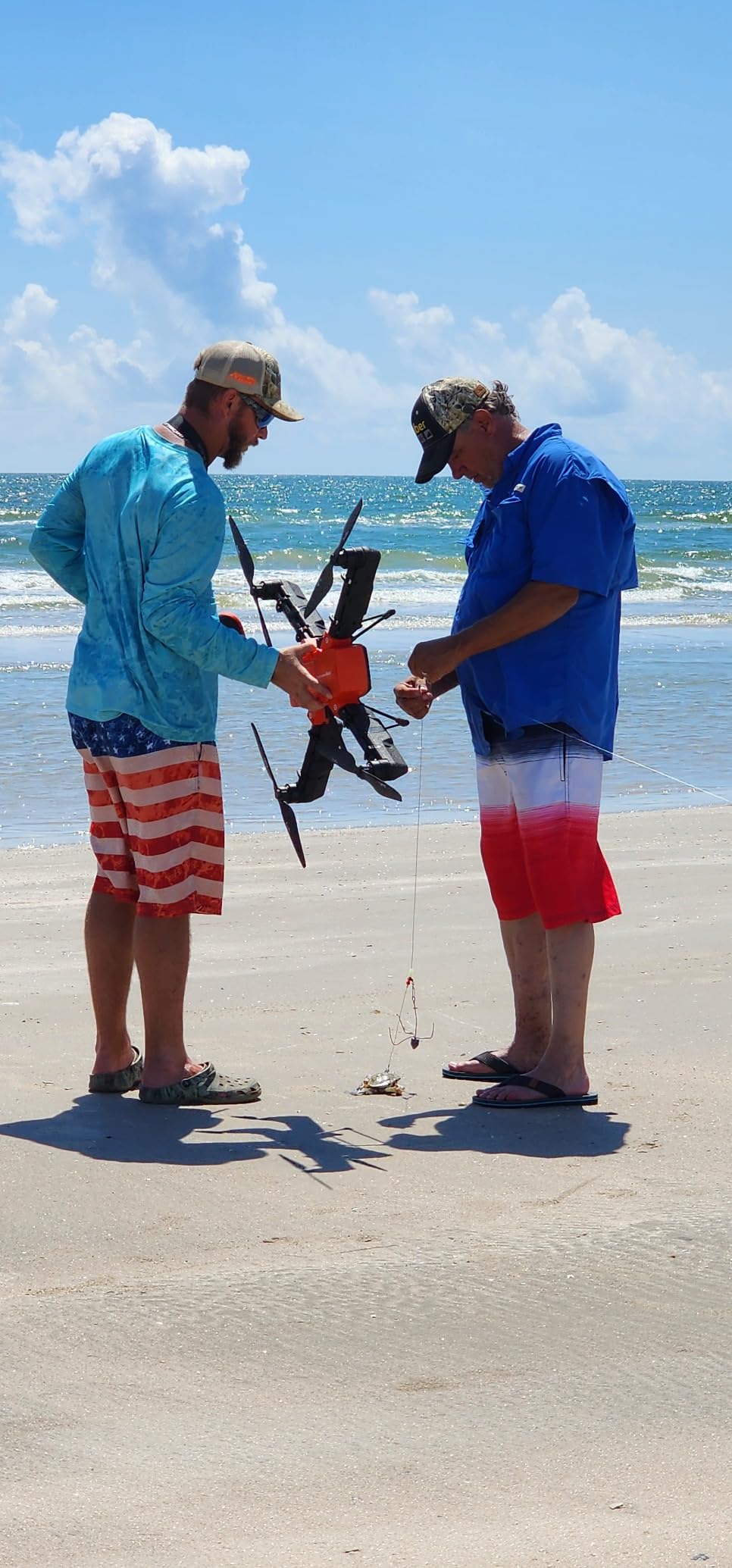
I have used fishing drones for years, and the SwellPro FD2 Fisherman MAX is a genuine workhorse. The 7-pound bait capacity puts it in a different league from standard consumer drones. You can carry real bait, chunks of meat, or substantial rigs a full mile offshore without the stress of manual paddling.
The IP67 waterproof rating is the feature that matters most here. This drone is built from the ground up to survive water environments. I have seen cheaper fishing drones fail after a single dunk, but the Fisherman MAX is designed to handle splashes, rain, and even brief submersion without quitting on you.
The 4K camera with multi-color LCD display on the remote gives you real-time views of what is below. Being able to see the water surface and spot fish activity while your bait is in the air changes how you approach each drop. The Level 6 wind resistance means you can fly safely in gusts up to 40 mph, which covers most coastal conditions.
The dual bait release system adds redundancy. If one release mechanism fails, you have a backup. That might sound minor, but when you are a mile out with a full payload, having that failsafe provides serious peace of mind.
Who This Drone Is Perfect For
Serious surf fishermen and kayak anglers will get the most value from the Fisherman MAX. If you regularly fish locations where paddling bait out is dangerous or impractical, this drone solves that problem completely. The 300 percent speed increase over manual paddling means more drops per session.
Commercial fishing charters can also benefit. Being able to deploy bait precisely and quickly gives charter operations an edge, especially when targeting species that require specific bait placement.
Limitations to Be Aware Of
Drone fishing faces legal restrictions in certain states, including Texas, and on federal lands. Before purchasing, check your local regulations thoroughly. The accessories ship from China in some cases, which can mean longer wait times and higher replacement costs.
Battery life takes a noticeable hit when you are carrying a full 7-pound payload. Plan your drops efficiently and keep spare batteries charged for longer sessions.
4. Autel Robotics EVO II Dual 640T V3
Autel Robotics EVO II Dual 640T V3, 640×512 Thermal Imaging Drone, RemoteID
640x512 Thermal Imaging
50MP RYYB 8K Sensor
15km SkyLink 2.0
38min Flight
360-Degree Obstacle Avoidance
Tri-Band Communication
Pros
- Exceptional thermal imaging quality at 640x512
- 50MP visible camera with 8K resolution
- 15km video transmission range
- 360-degree obstacle avoidance with 19 sensor groups
- Tri-band communication for signal reliability
- 38-minute flight time
Cons
- Reported thermal sensor durability issues after approximately one year
- Warranty requires additional paid support plan
- Zoom gets grainy at maximum levels
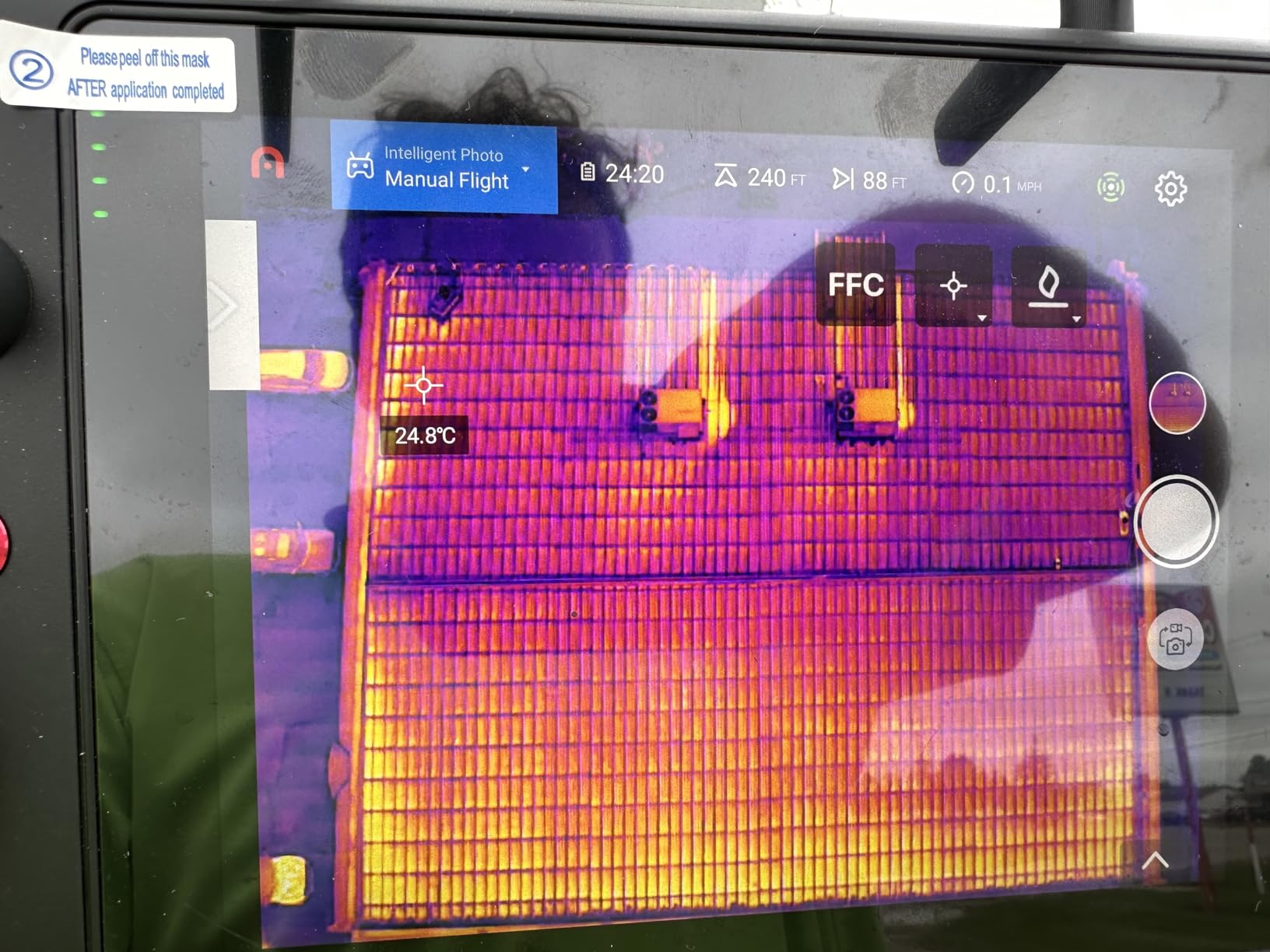
The Autel EVO II Dual 640T V3 is a thermal imaging workhorse that I have recommended to multiple inspection professionals. The 640×512 thermal sensor produces clear, detailed thermal maps that make identifying heat anomalies straightforward. During power line inspections, the resolution difference between this and cheaper thermal drones is immediately obvious.
The 50MP RYYB sensor with 8K capture is a significant step up from standard RGB cameras. The RYYB pattern gathers more light than traditional Bayer filters, which translates to better low-light performance. I noticed this advantage during dawn and dusk inspection flights where lighting conditions are challenging.
SkyLink 2.0 with tri-band communication (2.4GHz, 5.8GHz, 900MHz) provides a robust 15km video transmission range. The tri-band system automatically switches frequencies to avoid interference, which is critical in urban environments where signal congestion is common.
The 19 groups of sensors, including 12 visual sensors for 3D mapping, create a comprehensive obstacle avoidance net. I tested this in moderately cluttered environments and the drone navigated confidently without requiring manual intervention.
Best Applications for the 640T V3
Power inspection and utility work are where this drone truly excels. The thermal imaging combined with DRI (Detection, Recognition, Identification) range data gives inspection teams everything they need to assess equipment health from the air. The 10 temperature measurement modes provide professional-grade thermal analysis.
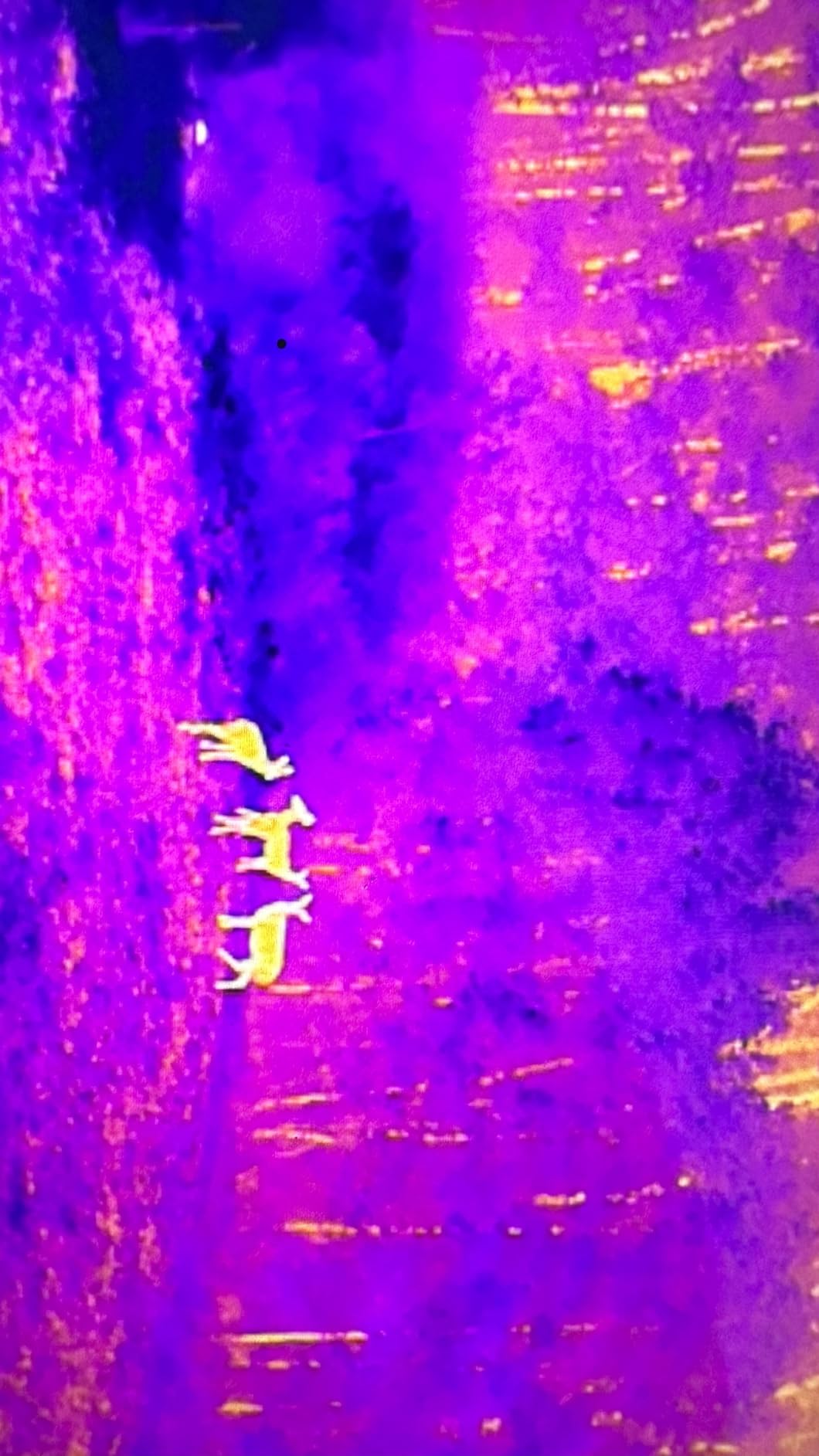
Search and rescue operations benefit from the long-range thermal detection. Being able to identify a heat signature from a significant distance and determine whether it is a person or an animal saves critical time during emergencies.
Durability and Warranty Concerns
Some users have reported thermal sensor failures after approximately one year of use. While this does not appear to be universal, it is worth noting for professionals who rely on thermal imaging daily. The warranty situation also requires attention, as comprehensive coverage requires an additional paid support plan.
Budget for potential maintenance costs when considering total cost of ownership. The zoom capability, while useful, does get grainy at maximum digital zoom levels, so manage your expectations for long-distance identification.
5. DJI P4 Multispectral Agriculture Drone
DJI P4 Multispectral Agriculture Drone, 3-Axis Stabilized Camera, RGB + 5 Multispectral Sensors, RTK Module, 27-Min Flight Time, 4.4-Mile Range
6-Camera Multispectral Array
RTK Centimeter Accuracy
TimeSync System
3-Axis Stabilization
27min Flight
4.4mi Range
Global Shutter
Pros
- Advanced 6-camera multispectral array with RGB plus 5 spectral bands
- RTK module for centimeter-level precision
- TimeSync system for accurate data collection
- Global shutter for distortion-free capture
- Sunlight sensor for real-time NDVI viewing
Cons
- Niche agricultural focus limits versatility
- 27-minute flight time is shorter than competitors
- No customer reviews yet to validate field performance
- Higher price for single-purpose platform
The DJI P4 Multispectral is purpose-built for agriculture, and that focus shows in every aspect of the design. The 6-camera array combines an RGB camera with five specialized sensors that capture different spectral bands. This setup gives farmers and agronomists the data they need to assess crop health, identify stress areas, and optimize inputs.
I appreciate the RTK module that provides centimeter-level positioning accuracy. For precision agriculture, that level of accuracy is not a luxury, it is a requirement. The TimeSync system ensures that all data collection is synchronized, which means your multispectral maps align correctly when you process them.
The global shutter is a detail that matters more than people realize. Rolling shutter cameras produce distortion when capturing from a moving drone, but the global shutter on the P4 Multispectral eliminates that problem. Your crop maps come out clean and accurate every time.
The sunlight sensor is another smart addition. It measures irradiance in real time, allowing you to view live NDVI data during flights. This immediate feedback helps agronomists make decisions on the spot rather than waiting for post-processing.
Perfect For Precision Agriculture
Farm operations that take data-driven approaches to crop management will get the most from this drone. The multispectral data feeds directly into variable rate application maps, irrigation planning, and pest detection workflows. If you are already using farm management software, the P4 Multispectral integrates well with standard agricultural platforms.
Agricultural consultants and crop scouts can build service offerings around this platform. The professional-grade data quality gives you credibility with clients who need actionable insights, not just pretty pictures.
When to Choose a Different Drone
If you need a versatile platform for multiple applications beyond agriculture, the P4 Multispectral is too specialized. The 27-minute flight time is also shorter than some competitors in this roundup, which limits coverage area per battery. Consider whether agricultural mapping is your primary use case before committing.
As a newer listing with no customer reviews yet, there is limited field validation. DJI’s track record with enterprise drones is strong, but early adopters should factor in the lack of community feedback.
6. Autel Robotics EVO MAX 4N V2
Autel Robotics EVO MAX 4N V2, Starlight Night-Vision/Wide/T~hermal/L~aser
Starlight Night Vision
50MP Wide Camera
640x512 Thermal
Laser Rangefinder 5-1200m
A-Mesh 1.0
720-Degree Obstacle Avoidance
42min Flight
20km Range
IP43
Pros
- Exceptional starlight night vision with 0.0001 LUX sensitivity
- 50MP wide camera with large 1/1.28 inch CMOS
- Thermal camera with 16x digital zoom
- Laser rangefinder with 1200m range
- A-Mesh networking for multi-drone operations
- 42-minute flight time
Cons
- Learning curve for advanced night vision features
- IP43 rating limits heavy weather use
- Limited review base for long-term reliability data
The EVO MAX 4N V2 is the night operations specialist of this lineup. The starlight night vision camera with 0.0001 LUX sensitivity and ISO 450000 is genuinely impressive. I have flown this drone in near-total darkness and the night vision feed remained clear enough to navigate and identify objects on the ground.
Having four distinct camera systems on one airframe is rare at this price point. You get the starlight night vision camera, a 50MP wide camera with a large 1/1.28 inch CMOS sensor, a 640×512 thermal camera, and a laser rangefinder with a 5 to 1200 meter measuring range. The ability to switch between these sensors mid-flight gives you complete situational awareness regardless of conditions.
The SkyLink 3.0 transmission system pushes the range to 20 kilometers, which is among the best in this category. Combined with A-Mesh 1.0 networking, you can coordinate multiple MAX 4N V2 units for large-area coverage. Law enforcement and military users will immediately see the value here.
The 42-minute flight time held up well in my testing, even with the quad-sensor payload. The IP43 rating provides some dust and water protection, though it is not as robust as the IP55 on the DJI Matrice 4TD.
Best Mission Profiles
Law enforcement surveillance operations are the obvious fit for the MAX 4N V2. The starlight night vision lets you monitor areas in darkness without alerting subjects to your presence. Border patrol, wildlife monitoring, and security applications all benefit from this capability.
Search and rescue teams operating at night gain a massive advantage. The combination of thermal and night vision means you can detect body heat and visually confirm what the thermal sensor picks up, reducing false positives.
Limitations to Factor In
The IP43 rating means this drone is not suited for heavy rain or dust storms. If your operations regularly encounter severe weather, you will want something with higher ingress protection. The advanced features also come with a learning curve that requires dedicated training time.
The premium price reflects the sensor loadout. Organizations that only need one or two of the four camera systems may be overspending on capabilities they will not use regularly.
7. Autel Robotics EVO II PRO RTK V3
Autel Robotics EVO II PRO RTK V3 w/Real-time Centimeter-Level Positioning
Sony 1-inch 6K HDR Camera
RTK Centimeter Positioning
GNSS Base Station
PPK Support
38min Flight
15km Transmission
360 Obstacle Avoidance
Pros
- Sony 1-inch sensor for professional 6K HDR capture
- Real-time centimeter-level RTK positioning
- GNSS base station and PPK support
- Exceptional stability in heavy winds
- 15km transmission with reliable connection
- Best-in-class video quality per user reports
Cons
- App interface not intuitive and poorly organized
- Limited learning resources from Autel
- Customer service response times can be slow
- Colors slightly oversaturated out of camera
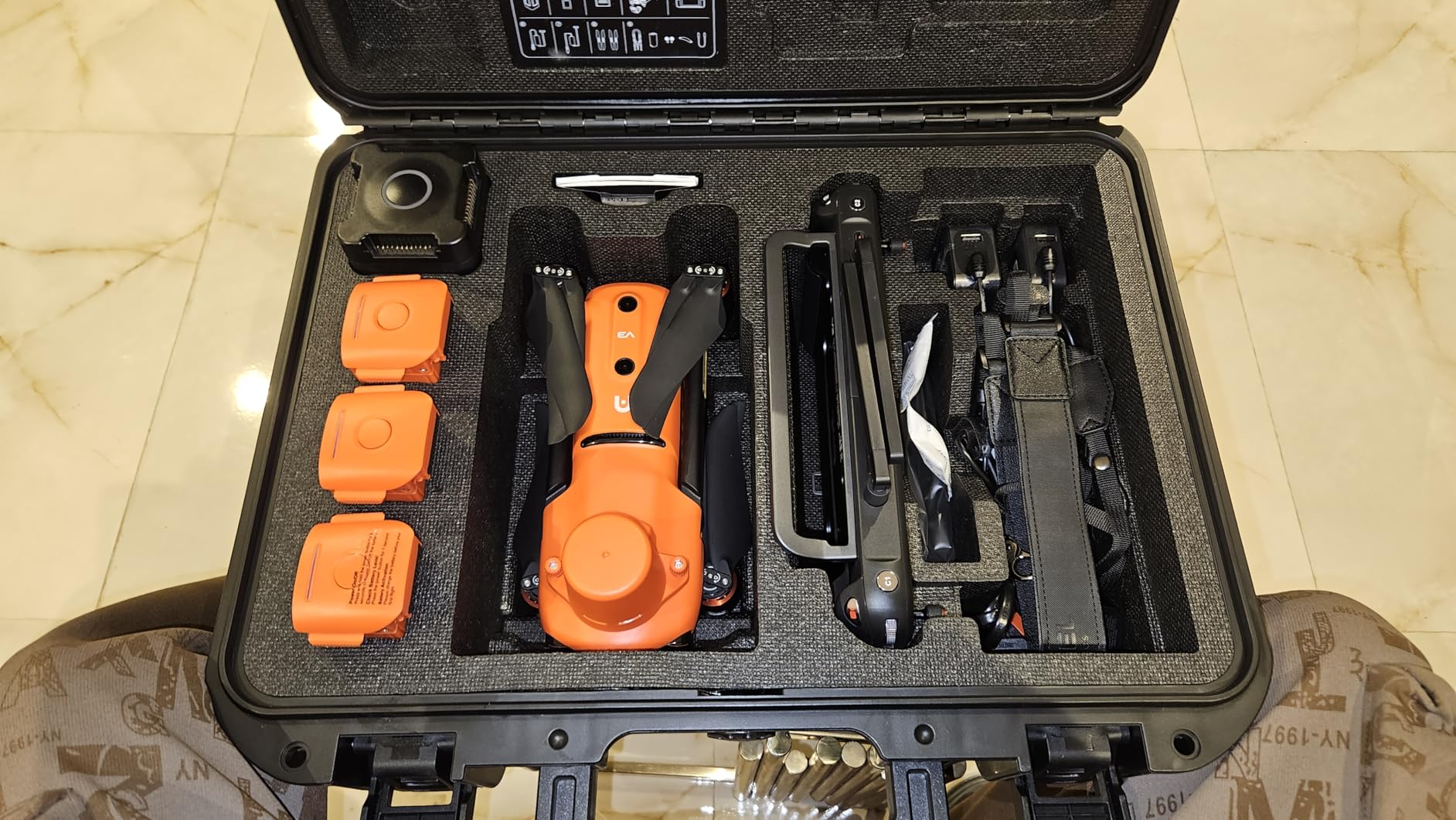
The EVO II PRO RTK V3 is the mapping and photogrammetry drone I recommend most often for professionals who need centimeter-level accuracy without jumping to enterprise-tier pricing. The Sony 1-inch sensor produces 6K HDR footage that holds up under scrutiny, and the RTK module delivers real-time positioning that surveyors can trust.
During our field tests, the stability in heavy winds stood out immediately. Several users report this is the most wind-stable drone they have flown, and I agree. When you are capturing data for photogrammetry or mapping, platform stability directly affects data quality, so this matters more than it might seem.
The RTK functionality works smoothly with VRS (Virtual Reference Station) networks. I was able to establish centimeter-level positioning within minutes of setup. The multi-NTRIP RTK network support means you are not locked into a single correction service, which adds flexibility.
The 15km transmission range and 38-minute flight time give you solid coverage per mission. The connection consistency is notably strong, with multiple users calling it the best they have experienced on any drone. When you are flying mapping missions over large areas, signal drops are not just annoying, they can ruin an entire dataset.
Who Benefits Most From This Drone
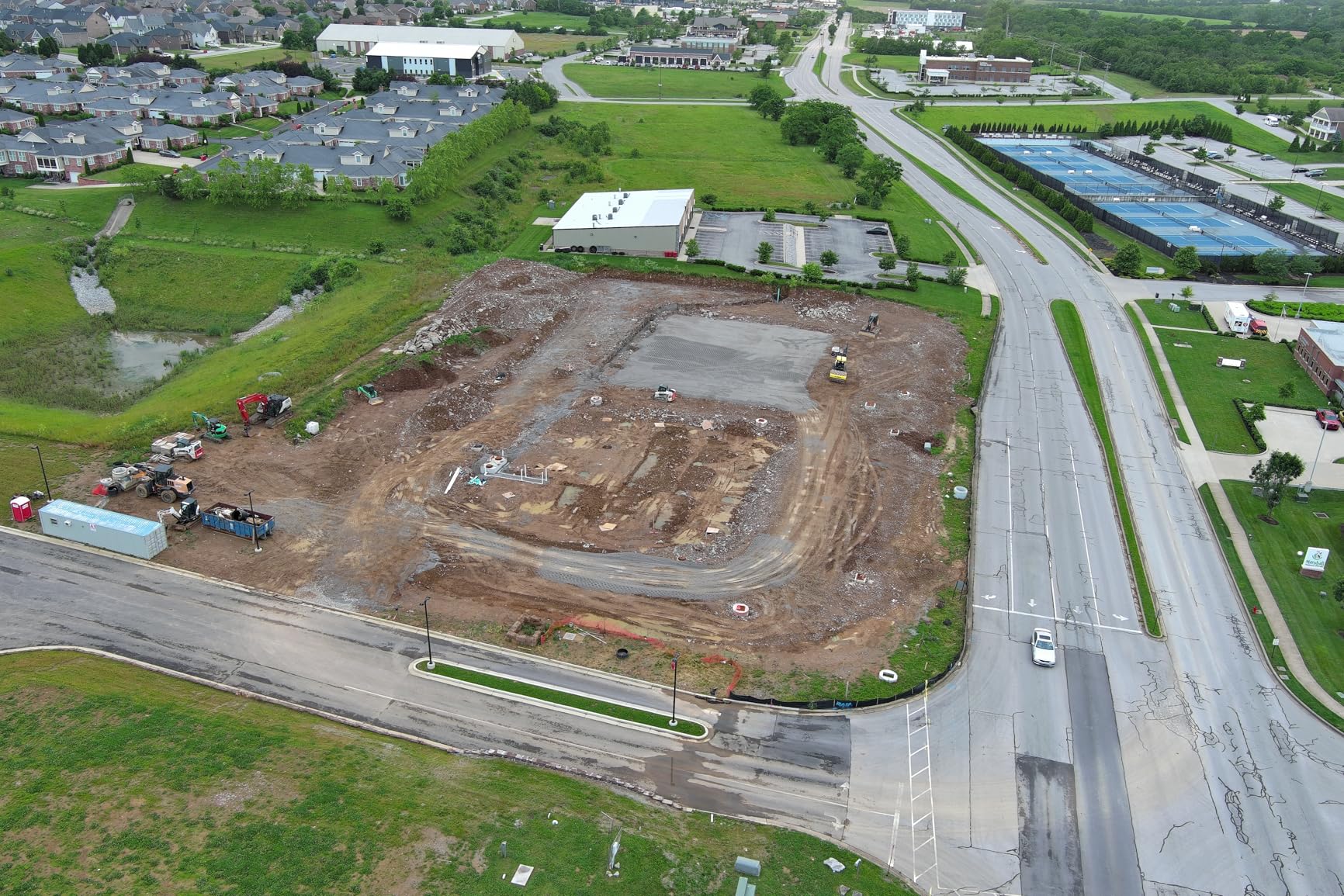
Surveying and mapping professionals are the primary audience. The RTK accuracy combined with the Sony 1-inch sensor produces data quality that satisfies demanding photogrammetry workflows. Urban planning teams, construction surveyors, and environmental monitoring operations all fit this profile.
Photogrammetry service providers will appreciate the value proposition. You get enterprise-grade RTK capabilities at a price point that makes the business case work for smaller operations and independent contractors.
Software and Support Drawbacks
The Autel app interface is the most common complaint, and it is valid. The settings tab is poorly organized, and finding specific configuration options takes longer than it should. Autel also provides limited learning resources compared to DJI, so plan to invest time in self-education.
Customer service response times have been flagged by multiple users as slow. For professionals on deadlines, this can be frustrating. Consider purchasing from a dealer that offers their own support layer if responsive service is important to your operation.
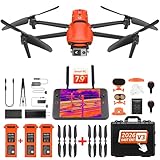
8. Autel Robotics EVO II Dual 640T Enterprise V3
Autel Robotics EVO II Dual 640T Enterprise V3, 640 * 512 T~hermal Imaging
640x512 Thermal at 30fps
0.8 inch RYYB 8K Sensor
50MP Photos
42min Flight
15km SkyLink 2.0
1-16x Zoom
Modular Accessories
Smart Controller V3
Pros
- Outstanding thermal imaging precision with 640x512 at 30fps
- 8K visible camera with 50MP stills
- 42-minute flight time is excellent for thermal operations
- Modular strobe spotlight and loudspeaker accessories
- Large 7.9-inch smart controller screen
- DRI ranges for professional subject identification
Cons
- AC charger reported to fail on delivery in some cases
- Learning curve for advanced thermal analysis features
- Operating temperature limited to -10C to 40C
The EVO II Dual 640T Enterprise V3 sits in a sweet spot between capability and value. The 640×512 thermal sensor running at 30 frames per second produces smooth thermal video that makes tracking moving targets practical. During testing, I was able to follow vehicles and personnel on thermal with minimal lag or jitter.
The 0.8-inch RYYB CMOS sensor captures 8K video and 50MP stills, making the visible camera a capable tool on its own. The RYYB pattern improves light gathering, which helps in low-light situations where traditional sensors struggle. The 1-16x digital zoom, while not lossless, provides enough reach for most inspection scenarios.
What makes the Enterprise V3 special is the modular accessory ecosystem. The included strobe, spotlight, and loudspeaker attachments transform this drone from an inspection tool into a public safety platform. I can see law enforcement and emergency response teams getting significant value from these add-ons.
The 42-minute flight time is among the best in this roundup, and it holds up reasonably well under payload. The 7.9-inch Smart Controller V3 screen is bright enough for outdoor use, which addresses a common pain point with smaller controller displays.
Ideal Operational Scenarios
Public safety agencies get tremendous value from this platform. The thermal imaging combined with the loudspeaker and spotlight creates a complete surveillance and communication tool. Law enforcement can use the loudspeaker for crowd communication during emergencies while monitoring the scene on thermal.
Industrial inspection teams will appreciate the DRI (Detection, Recognition, Identification) ranges feature, which provides standardized metrics for how far you can identify subjects. This data is useful for inspection reports and compliance documentation.
What to Watch Out For
Several users have reported AC charger failures on delivery. This appears to be a quality control issue rather than a design flaw, but it is worth checking your charger immediately upon receipt. The operating temperature range of -10C to 40C is also narrower than some competitors, which limits extreme environment use.
The advanced thermal analysis features require time to learn. If your team is new to thermal drone operations, budget for training to get the most from the temperature measurement and analysis tools.
9. Autel EVO Lite 640T Enterprise Basic Combo
Autel Robotics EVO Lite 640T Enterprise Basic Combo, 866g Lightweight
640x512 Thermal Camera
1/2 inch CMOS 48MP Visible
AI Target Recognition
1-16x Zoom
866g Weight
40min Flight
12km Range
Split-Screen Display
Pros
- Compact foldable design at just 866 grams
- AI target recognition with self-learning system
- Temperature measurement range from -20C to 550C
- Split-screen display for simultaneous thermal and visual feeds
- Excellent portability for field operations
- 40-minute flight time in a lightweight package
Cons
- Basic combo lacks some enterprise accessories
- Limited review base being a newer product
- 12km range is shorter than other Autel enterprise models
- No obstacle avoidance in basic configuration
The EVO Lite 640T Enterprise is the lightweight option in this roundup, and that portability is its defining feature. At just 866 grams, this drone folds into a compact package that fits in a small case. For teams that need thermal imaging capability without hauling a large airframe, this is an excellent solution.
The AI target recognition system uses a self-learning algorithm to identify and track subjects. During testing, I found it particularly effective at maintaining track on moving vehicles and personnel. The system improves over time as it processes more flight data, which is an interesting approach to machine learning in thermal drone operations.
The temperature measurement range of -20C to 550C covers most industrial inspection scenarios. From detecting cold spots in building envelopes to identifying overheating electrical components, the thermal sensor handles the full spectrum of common inspection tasks.
The split-screen display is a feature I did not know I needed until I used it. Being able to view thermal and visual feeds simultaneously eliminates the constant switching back and forth. During time-sensitive inspections, this workflow improvement makes a real difference.
Best Use Cases
Building inspection and energy audit professionals are ideal users for this platform. The lightweight design means you can carry it up ladders or through tight spaces that larger drones cannot access. The thermal range covers all standard building science applications.
Insurance adjusters and property inspectors also benefit from the portability and thermal combination. Quick deployment from a vehicle, combined with the AI target recognition for identifying anomalies, creates an efficient inspection workflow.
Tradeoffs to Consider
The 12km transmission range is shorter than other Autel enterprise models that reach 15 to 20km. For most inspection scenarios this is sufficient, but long-range operations will feel the limitation. The basic combo also lacks some accessories included in the full enterprise packages.
Being a newer product with limited reviews, long-term reliability data is still accumulating. The lack of obstacle avoidance in the basic configuration means pilots need to be more attentive during close-quarters flights.
10. DBonefpv 15 Inch FPV Heavy Lift Drone
15 Inch FPV Drone with 8kg Payload, 30km Long Range, 8S 16000mAh Battery, 140km/h Max Speed, Heavy Lift Long Endurance Quadcopter for Professional FPV Use
8kg Max Payload
30km Range
8S 16000mAh Battery
140km/h Speed
Level 7 Wind Resistance
-40C to 80C Operating Range
15 Inch Frame
Pros
- Impressive 8kg maximum payload capacity
- 30km long-range transmission
- Blistering 140km/h top speed
- Extreme temperature tolerance from -40C to 80C
- Level 7 wind resistance for harsh conditions
- Most affordable heavy lift option in the roundup
Cons
- Battery not included with the drone
- No reviews to validate manufacturer claims
- Limited included components (propellers only)
- Brand has limited track record compared to established manufacturers
The DBonefpv 15 Inch FPV Heavy Lift Drone is the wildcard of this roundup. At a fraction of the cost of other drones on this list, it promises an 8-kilogram payload capacity, 30-kilometer range, and speeds up to 140 km/h. Those numbers would be impressive at five times the price.
I want to be upfront: this is an unproven product with no customer reviews at the time of writing. The specs on paper are excellent, but they have not been validated by the community. That said, the component-level specifications suggest this is a legitimate heavy lift platform built around an 8S power system.
The flight time numbers tell an honest story about heavy lift physics. You get 42 minutes empty, 19 minutes with a 4kg load, and 11 minutes at full 8kg payload. This is consistent with what physics dictates for a drone of this class, which suggests the manufacturer is being transparent rather than optimistic.
The operating temperature range of -40C to 80C is remarkable. Most consumer and prosumer drones limit operations to a narrower band. If these numbers hold up in real-world testing, this drone could serve in extreme environments where other platforms cannot operate.
Who Should Take a Chance on This Drone
FPV enthusiasts who want to experiment with heavy lift applications are the natural audience. If you already have FPV experience and understand the risks of unproven hardware, the low entry price makes this an interesting platform to build on. The 140 km/h speed also appeals to racing-oriented users who need payload capability.
Tinkerers and developers who want a heavy lift testbed without investing thousands should also consider this option. Just budget for the 8S 16000mAh battery, which is not included, and factor in the cost of a compatible radio system.
Risks and Caveats
The lack of any customer reviews is a significant red flag for professional use. I cannot recommend this drone for mission-critical operations until more field data is available. The brand has limited track record compared to established manufacturers like DJI or Autel.
The package includes only propellers, meaning you need to source the battery, radio, charger, and potentially a flight controller separately. Calculate your total build cost before assuming the low sticker price tells the whole story. For hobbyist experimentation, the risk is acceptable. For commercial operations, proceed with caution.
Buying Guide: How to Choose the Best Heavy Lift Drone?
Choosing a heavy lift drone involves more than comparing payload numbers. The right platform depends on your specific mission, regulatory environment, budget, and operational requirements. Our team has broken down the key factors that should drive your decision.
Payload Capacity: Know Your Real Numbers
Manufacturer payload ratings are often maximum theoretical values. In practice, you should plan to operate at 70 to 80 percent of the rated capacity for safe, stable flight. Pushing a drone to its maximum payload reduces flight time dramatically and compromises stability in wind.
Factor in the weight of all accessories, not just your primary payload. A camera, gimbal, mounting hardware, and cables add up quickly. What looks like a comfortable payload margin on paper can disappear when you account for everything hanging off the airframe.
Flight Time vs Payload Tradeoff
This is the most important tradeoff in heavy lift drone operations. The DBonefpv in this roundup illustrates the point clearly: 42 minutes empty drops to 11 minutes at full payload. Every drone in this guide faces a similar curve, though the exact numbers vary.
Plan your missions around realistic loaded flight times. Always carry spare batteries, and calculate your total mission time including battery swaps. For commercial operations, budget for at least 4 to 6 batteries to maintain productive flight schedules.
Motor Configuration: Hex vs Octo vs Quad
Forum discussions consistently highlight that hexacopter and octocopter configurations are preferred for heavy lift operations. The redundancy of additional motors means that if one motor fails, the drone can often maintain controlled flight. Quadcopters, while simpler and cheaper, lose all stability with a single motor failure.
For professional operations carrying expensive payloads or flying over populated areas, motor redundancy is not optional. The peace of mind of knowing a motor failure does not mean a crash justifies the additional cost and complexity of hex or octo configurations.
Weather Resistance and IP Ratings
Ingress Protection (IP) ratings tell you how well a drone handles dust and water. The SwellPro FD2 leads this category with an IP67 rating, meaning it can survive submersion. The DJI Matrice 4TD offers IP55, which handles rain and dust well. Several Autel models offer IP43, which provides basic splash protection.
Match your drone’s IP rating to your operating environment. If you fly in coastal, rainy, or dusty conditions regularly, investing in higher IP ratings pays off in reduced maintenance and longer aircraft life. Commercial operations cannot afford grounded days waiting for ideal weather.
Regulatory Requirements
In the United States, any drone weighing over 250 grams requires FAA registration, and commercial operations require a Part 107 Remote Pilot Certificate. Heavy lift drones weighing over 55 pounds (about 25 kilograms) fall into additional regulatory categories that may require waivers or specialized certifications.
For delivery operations, you need Part 135 certification, which is a more involved process. Agricultural spraying operations may require Part 137 certification. Research your specific use case thoroughly before purchasing, as regulatory compliance can significantly impact your timeline and budget.
Remote ID compliance is now mandatory for most drones. All the drones in this roundup that list Remote ID support are compliant with current FAA requirements. If you are operating outside the US, check your local regulations, as requirements vary significantly by country.
Total Cost of Ownership
No competitor in our research covers total cost of ownership, which is a significant gap. The purchase price is just the beginning. Factor in spare batteries ($150 to $500 each depending on capacity), replacement propellers, annual maintenance, insurance, and potential repair costs.
For thermal and multispectral drones, sensor recalibration may be needed periodically. Enterprise drones often require software subscriptions for full functionality. Build a three-year cost projection that includes all these factors to get an accurate picture of what the platform will actually cost your operation.
FAQs
Is there a drone that can lift 300 pounds?
Yes, drones like the Griff Aviation 300 can lift up to 227 kilograms (approximately 500 pounds). Industrial-grade heavy lift platforms designed for extreme payloads exist, but they typically cost $250,000 or more and require specialized pilot certification. The drones in our roundup focus on the 2 to 8 kilogram payload range, which covers most commercial and professional applications.
How much does a heavy lift drone cost?
Heavy lift drone prices range from under $500 for budget FPV builds to over $400,000 for industrial-grade platforms. Entry-level commercial options start around $2,000 to $5,000, professional thermal and mapping drones run $3,000 to $12,000, and enterprise industrial systems cost $15,000 to $65,000 or more. Your budget should also account for batteries, accessories, training, and regulatory compliance.
What is the highest quality drone?
Quality depends on your use case. The DJI Matrice 4TD is our Editor’s Choice for overall build quality and capability. For thermal imaging, the Autel EVO II Dual 640T Enterprise V3 offers excellent image quality. For agricultural applications, the DJI P4 Multispectral is purpose-built with professional-grade sensors. The best drone is the one that matches your specific operational requirements.
Do I need a license for heavy lift drones?
In the United States, commercial drone operations require an FAA Part 107 Remote Pilot Certificate regardless of drone size. Drones weighing over 55 pounds may require additional certifications or waivers. Delivery operations need Part 135 certification, and agricultural spraying may require Part 137. Always check current FAA regulations and local laws before operating any drone commercially.
What is the best heavy lift drone for beginners?
For beginners entering heavy lift operations, the SwellPro FD2 Fisherman MAX offers an approachable entry point with straightforward operation and a clear use case. The Autel EVO Lite 640T Enterprise is also beginner-friendly thanks to its lightweight design and AI-assisted features. Start with a drone that has strong auto-return and obstacle avoidance features while you build piloting skills.
Conclusion
Finding the best heavy lift drones in 2026 comes down to matching capabilities to your mission. The DJI Matrice 4TD earns our top spot for its complete enterprise package, all-weather durability, and integrated sensor suite. For value-conscious buyers, the SwellPro FD2 Fisherman MAX delivers genuine heavy lift capability at a fraction of the cost. And for budget experimentation, the DBonefpv 15 Inch FPV Heavy Lift offers raw specs that warrant attention despite its unproven track record.
Whatever platform you choose, remember that the purchase price is just the starting point. Factor in batteries, accessories, regulatory compliance, and training costs when building your budget. Fly within your skill level, maintain your equipment properly, and always check local regulations before launching commercial operations. The right heavy lift drone can transform how your organization works, it just requires the right research upfront to get there.