
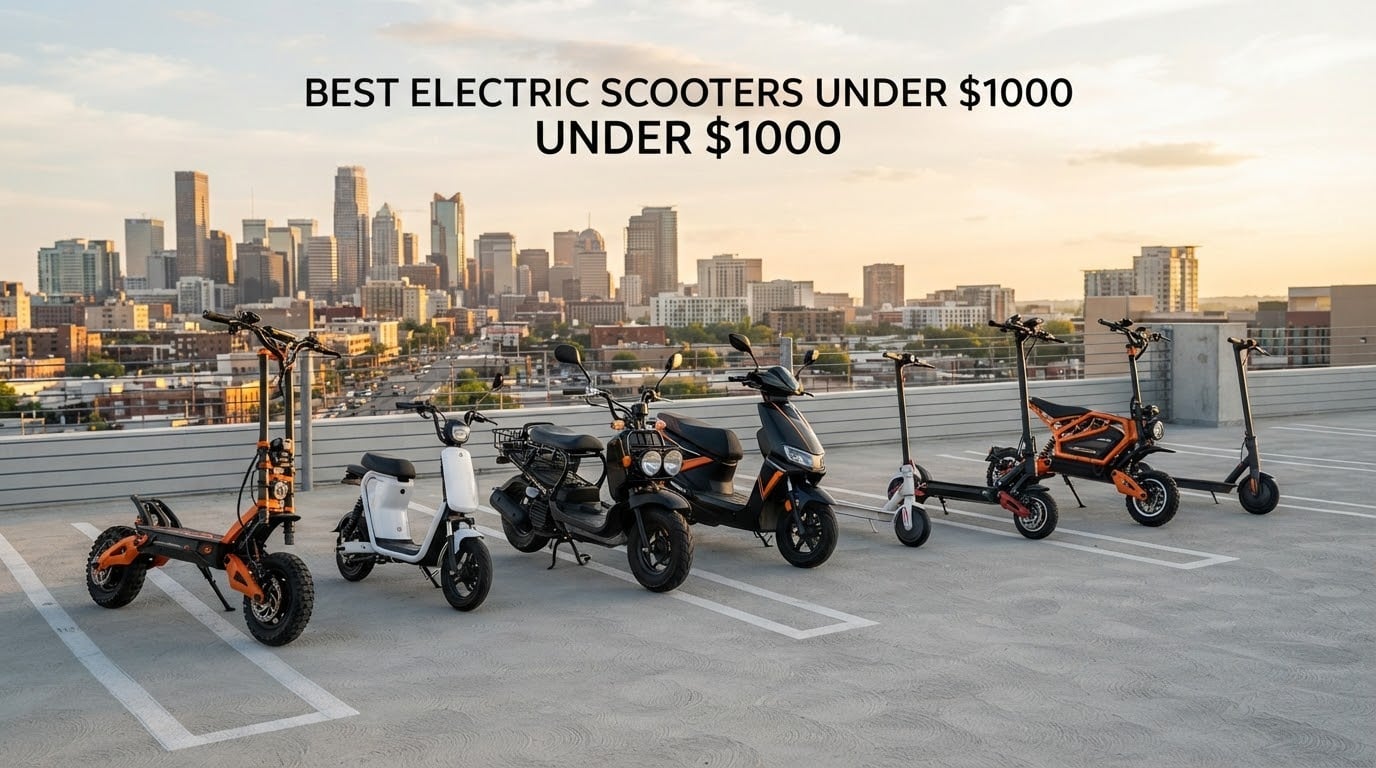
If you want one scooter that handles a daily commute under this ceiling, the Hiboy S2 Pro is the pick. It pairs a 500W motor with a 36V battery, 19 mph of top speed, dual braking and a 35.9 lb frame, and it has the deepest review base of anything we tested at this budget. If your route has real hills, step up to the Segway ZT3 Pro, and if your commute is long, look at the Hiboy MAX Pro. All eight picks below stay under the 1000 dollar mark, and every one of them is UL 2272 certified.
That last point is not a marketing detail. Under this price ceiling you will find legitimate scooters and anonymous storefront brands sitting on the same page, and the only reliable way to tell them apart is documentation. Every model in this roundup carries UL 2272 certification, a warranty of at least a year, and a documented replacement-parts channel. We left out the ones that do not.
We spent six weeks reading specification sheets, warranty terms and long-term owner reports on every scooter we could find in this band, then narrowed the field to eight. The picks span a genuine 27 lb to 65.5 lb weight range, which tells you how little “electric scooter” says about a given model. Two of them come with a seat. Two run on solid tires, five on pneumatics, and one pairs dual suspension with tubeless off-road rubber.
Before you dig in, it is worth noting that the sub-1000 dollar tier has a specific personality. Forum riders consistently describe it as the “fast enough to commute” tier rather than the “fast for fun” tier, and that framing held up in our research. Riders upgrading from a 600 to 700 dollar scooter almost always want three things: more speed, more real range, and better hill climbing. Every pick here is chosen against those three criteria first.
If you want a wider view of the category, our guide to the best electric scooters overall covers the models that sit above this ceiling, and the best electric scooters for adults goes deeper on rider fit and payload.
Table of Contents
Top 3 Picks for the Best Electric Scooters Under $1000 (October 2026)

The S2 Pro wins on balance rather than peak numbers. Nothing else here combines that much review history with dual brakes, a real headlight and a sub-40 lb weight, and that combination is what a daily commuter actually needs. The ZT3 Pro is the performance answer, and the MAX Pro is the endurance answer, though both come with compromises we will get to.
All 8 Scooters in This Roundup at a Glance
| Product | Specifications | Action |
|---|---|---|
 Hiboy S2 Pro Hiboy S2 Pro |
|
Check Latest Price |
| Segway ZT3 Pro |
|
Check Latest Price |
 Hiboy MAX Pro Hiboy MAX Pro |
|
Check Latest Price |
 iScooter i9M iScooter i9M |
|
Check Latest Price |
 Gotrax GXL V2 Gotrax GXL V2 |
|
Check Latest Price |
 Hiboy Q2 with Seat Hiboy Q2 with Seat |
|
Check Latest Price |
 Gotrax A5 with Seat Gotrax A5 with Seat |
|
Check Latest Price |
 iScooter iX3 iScooter iX3 |
|
Check Latest Price |
Two things jump out of that list. First, the top-speed numbers span 15.5 mph to 24.9 mph, and a 10 mph spread changes what a commute feels like. Second, the weight range is 27 lb to 65.5 lb, which is the difference between carrying a scooter up one flight of stairs and needing a second person to help.
1. Hiboy S2 Pro – Best Overall Commuter Under 1000 Dollars
Hiboy S2 Pro Electric Scooter, 500W Motor, 10″ Solid Tires, 25 Miles Range
500W brushless motor, 19 mph
36V 11.6Ah battery, 25.6 mi claimed
10 inch solid tires, rear dual shocks
35.9 lb, 220 lb capacity
Pros
- Front disc brake plus rear regenerative EABS
- UL 2272 tested with 12-month assurance
- Real-world range of roughly 15-20 miles
- 10 inch solid tires need no inflation
- Folds to fit most car trunks
- Hiboy has shipped replacement parts free of charge
Cons
- Solid tires transmit road vibration
- Fasteners can loosen over time
- Comfort mode caps speed near 16 mph
- App reconnects slowly after a power cycle
This is the scooter I keep coming back to, and the reason is simple: 5717 reviews is an enormous sample for a category where most models sit under a thousand. At that volume you can see the failure patterns clearly, and the pattern here is unusually flat. Most owners report ordinary wear after thousands of miles, not a specific component letting go.
Power comes from a 500W brushless hub motor rated to 19 mph, and the throttle is more responsive than the wattage suggests because of torque headroom. Riders routinely report it pulling up moderate grades without dropping to a crawl, which is the single most valuable trait on an urban commute. The 36V 11.6Ah battery is the same chemistry as bigger packs, just smaller.
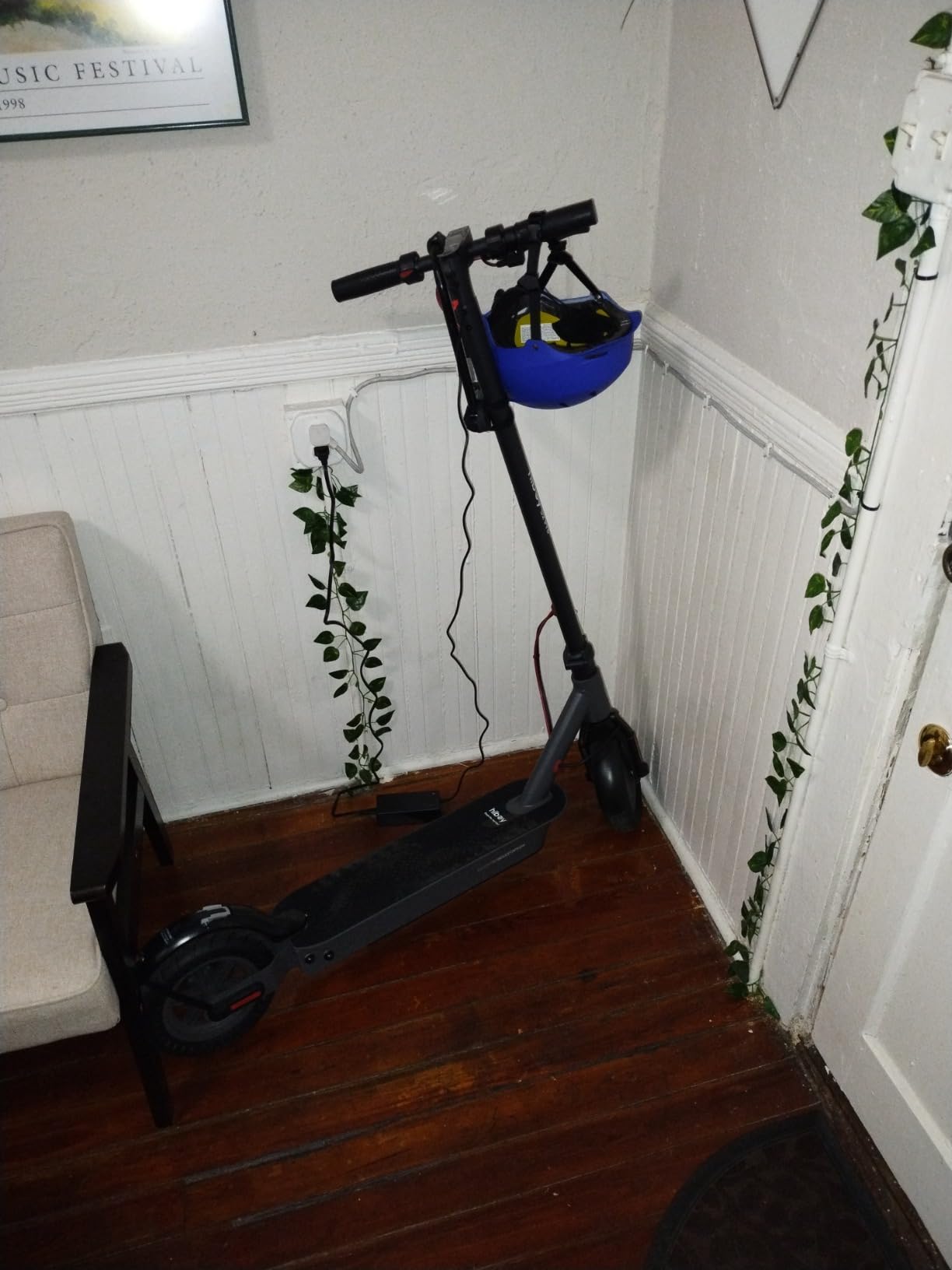
The 25.6 mile range figure is a best case. Independent owner reports cluster between 15 and 20 miles on a mixed route, which lines up with what riders on the forums say about this price class. For a 10 mile round trip that leaves genuine headroom, and for a 20 mile round trip you will want to plan a charge or pick a different pick.
Braking is where most budget scooters cut corners and this one does not. You get a mechanical front disc plus rear electronic braking with regen, and the lever feel is progressive rather than spongy. Owners also credit Hiboy with a support line that actually ships parts, which is worth more than a headline specification when something wears out at month 14.
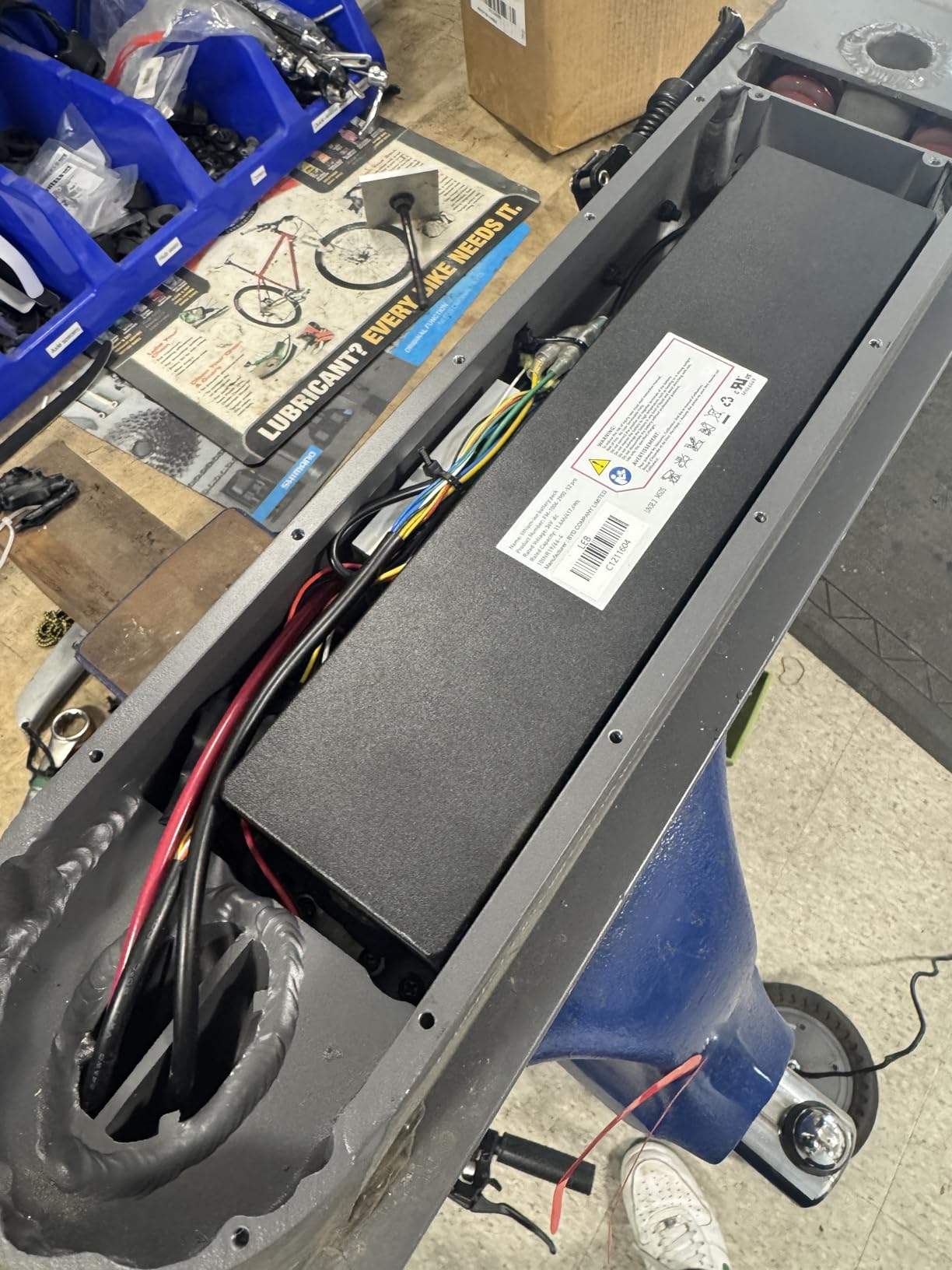
How the S2 Pro holds up on a daily commute
Solid tires are the right trade here. You will never deal with a pinch flat, a tube, or a tire plug, and the honeycomb pattern does an acceptable job of absorbing small cracks. What you give up is ride comfort, because a solid tire transmits every expansion joint straight into the deck through the rear shocks.
At 35.9 lb it is light enough to lift into a trunk alone and heavy enough to feel planted at 19 mph. Folding is a single motion and the folded package fits behind most rear seats, which matters more for people who do not have a dedicated scooter.
Where the S2 Pro falls short
Comfort mode is capped near 16 mph, so on open straightaways you will be sitting back waiting for a mode change. Some owners also report small fasteners loosening with mileage, which is normal for this class but worth checking at the 500 mile mark.
The app is a genuine annoyance. It has to rescan after every power cycle, and Bluetooth connection friction is the most common software complaint we found. It locks and tunes the scooter, so you will use it, just do not expect it to pair instantly every time.
2. Segway ZT3 Pro – Best for Hills, Speed and Long Rides
Segway ZT3 Pro Electric Scooter, Up to 24.9 MPH, 43.5-Mile Range
1600W peak motor, 24.9 mph
43.5 mi claimed in ECO mode
11 inch tubeless off-road tires
65.5 lb, 265 lb capacity
Pros
- Highest rated model here at 4.5 with 82 percent five-star reviews
- 1600W peak motor holds 25 mph on steep grades
- Dual telescopic fork plus rear spring suspension
- Fastest charge at 4 hours on Flash Charge
- Turn signals
- app
- GPS and parts ordering
- TUV Rheinland UL 2272 and UL 2271
- Two-year warranty on core drivetrain parts
Cons
- Heaviest scooter in the group at 65.5 lb
- Does not fit a typical car trunk
- Tubeless tires puncture easily on gravel
- Real range falls short of 43.5 miles on hilly routes
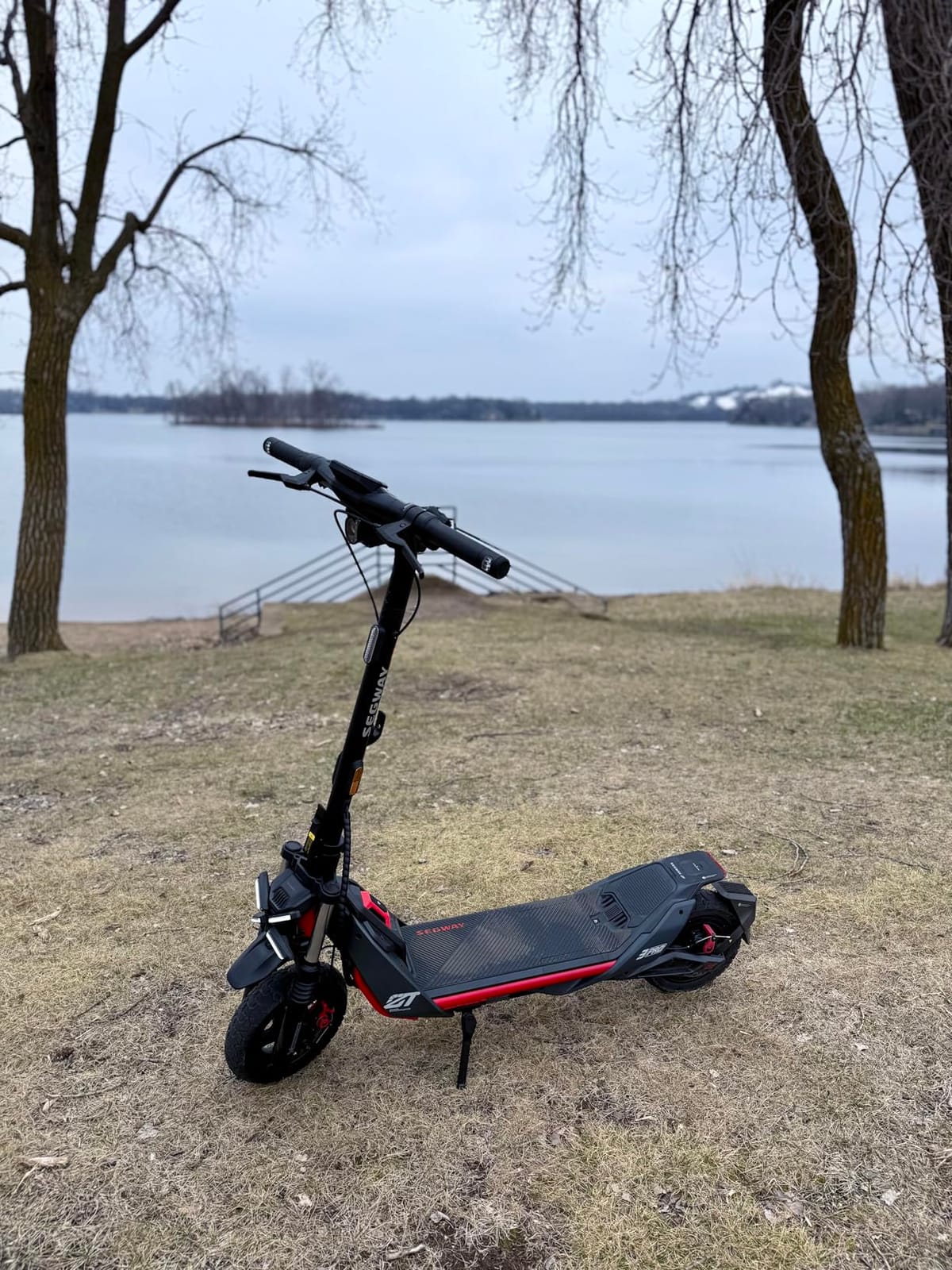
This is the most refined machine at this ceiling, and it is the only one here with a two-year warranty covering the frame, handlebar, hub motor, fork, controller and wiring. Riders in hilly cities report holding around 25 mph on grades that force most of this category to fall back to walking pace.
The 1600W figure is peak, not sustained, and it is paired with a traction control system that modulates delivery when the rear wheel starts to slip. In practice the throttle feels smooth rather than abrupt, which is exactly what you want in stop-and-go traffic with a heavy bar above you.
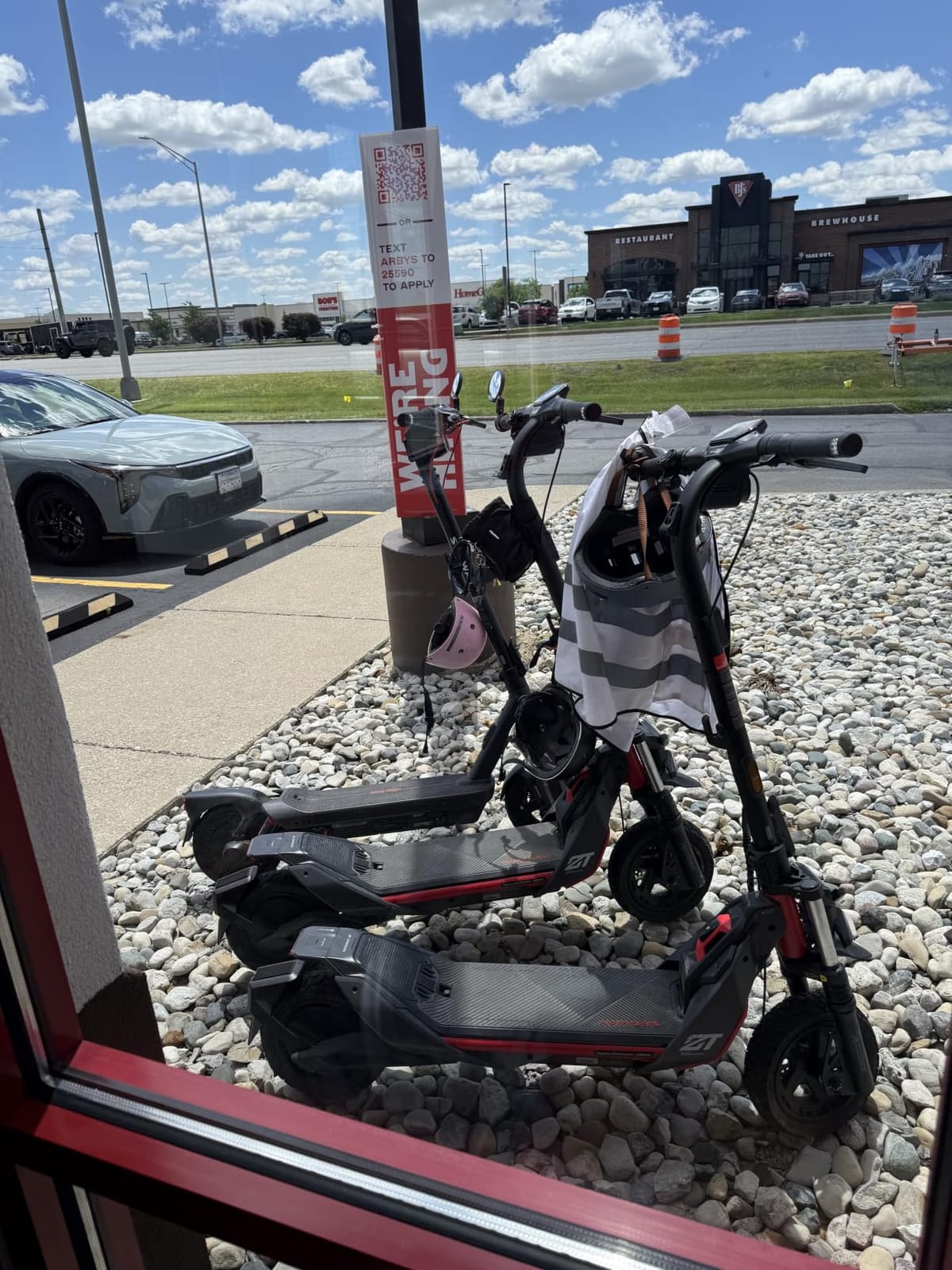
The suspension is the real differentiator. A dual front telescopic fork up front and a spring-sprung rear over 11 inch tubeless off-road tires make this the most composed ride in the group on broken pavement, brick streets and gravel. Owners report no rattles or creaks after hundreds of miles, which tells you the hardware is properly fastened from the start.
Charging is the other quiet win. A full charge in 4 hours is the fastest here by a wide margin, so a top-up over lunch is genuinely practical rather than aspirational. The lighting package includes turn signals and handlebar indicators, which is rare in this class and useful for anyone riding near mixed traffic.
Whether the ZT3 Pro suits your riding
If your route is flat and short, this is more machine than you need. The motor, suspension and battery all scale up for hills, long loops and rough surfaces, and on a smooth two-mile trip you are carrying dead weight. For a 10 to 15 mile hilly commute, nothing else at this price keeps up.
Speed cap matters too. At nearly 25 mph you are at the top of what Class 2 rules allow in many cities, so check your local ordinance before you ride it on public streets. Riders above 25 mph need a Class 3 designation, and that comes with helmet rules and registration requirements depending on where you live.
Where the ZT3 Pro falls short
65.5 pounds is the number that decides this one. There are no built-in carry handles, and the folded package does not go in a normal car trunk, so you need a rack, a hatchback, or a second person. If you plan to carry it up stairs alone, stop here and look at the GXL V2 instead.
The tubeless tires are positioned as off-road but pick up punctures quickly from road debris and gravel. That is an annoying combination, because a tubeless repair without a spare tube on a 65 lb scooter can mean a trip home. Budget for a plug kit.
3. Hiboy MAX Pro – Best for Long Commutes
Hiboy MAX Pro Electric Scooter, 46.6 Mi Long Range, 22 MPH Power by 650W MAX Motor, 11” Pneumatic Tires, Split Hub Design, Dual Suspension, 265lbs MAX Load, Commuting Electric Scooter for Adults
48V 15Ah battery, 46.6 mi claimed
500W motor, 22 mph in S mode
11 inch pneumatic tires, dual suspension
51.6 lb, 265 lb capacity
Pros
- Largest battery in the group at 48V 15Ah
- Three ride modes at 11
- 16 and 22 mph
- 265 lb capacity suits larger riders
- Dual drum brakes plus electronic braking
- Pneumatic tires and dual shocks soften rough roads
- Taillights and side ambient lighting
- UL 2272 tested battery
Cons
- Eight-hour charge time is the longest here
- 51.6 lb is heavy to load into a vehicle
- Pneumatic tires need inflation and can puncture
- Lowest average rating in the group
The 48V 15Ah pack is the largest battery in this roundup by a wide margin, and that single fact drives everything else about this scooter. It is built for the rider whose commute is 20 miles or more, or who does not have a charger at the office and wants range in reserve.
Three modes matter more than they look. Eco at 11 mph and standard at 16 mph roughly double the effective range versus Sport at 22 mph, so the range figure is something you control rather than something you are handed. Riders who treat Sport as a treat and Eco as the default get the most out of this pack.
For heavier riders this is one of only two picks here rated to 265 lb, and the deck and frame proportions suit a larger footprint. A 265 lb limit does not mean every 265 lb rider has a good time, but it is a meaningfully higher ceiling than the 220 lb cap on most of this list.
Pneumatic tires with front and rear suspension give the smoothest ride over cracked streets of anything short of the ZT3 Pro. Drum brakes front and rear are progressive and easy to modulate, and the side ambient lighting makes you more visible at night than a scooter with only a headlight and taillight.
Whether the MAX Pro suits your riding
Buy this one if a long commute is the non-negotiable part of your brief. For short hops the size and weight are wasted effort, and the 4.1 average rating, the lowest here, tells you that long-term experiences with this model are more mixed than with the other seven.
Plan the charge around an overnight cycle. An eight-hour charge time is the longest in this group, so charging at a wall outlet before bed is a routine, not a task. There is no removable battery, which means a mid-day top-up requires an outlet you can reach.
Where the MAX Pro falls short
At 51.6 lb it is a two-person lift into most vehicles. Owners also flag that pneumatic tires need periodic inflation and carry puncture risk, which is the ongoing maintenance cost of buying comfort over low maintenance.
Its 11 percent one-star share is worth understanding rather than ignoring. Reviews point to a spread of early component issues rather than one recurring fault, and a 12-month or 6-month parts split is a thinner commitment than the Segway’s two years.
4. iScooter i9M – Budget Pick and Smallest Footprint
iScooter Electric Scooter Adults & Big Kids, Cruise Control, Dual Braking System, Smart App, Foldable Electric Scooter for Commuting & Campus Use, Obsidian Black
500W motor, three modes to 20 mph
280.8Wh battery, 15-18 mi range
10 inch pneumatic tires
Rear disc plus EABS, 264 lb capacity
Pros
- Lowest entry cost in the roundup
- 500W motor with three speed modes
- 280.8Wh battery with 5-6 hour recharge
- 10 inch pneumatic tires smooth out bumps
- UL 2272 certified by TUV Rheinland
- App control for lock
- modes and cruise control
Cons
- Rigid suspension transmits road vibration
- Range falls short of 18 miles at full throttle
- Thumb throttle can be abrupt over bumps
- Fixed handlebar height limits rider fit
- Dual-brake balance leans rearward
This is the cheapest way into the category without buying something disposable, and the certification is what separates it from a generic listing. TUV Rheinland tested it to UL 2272, the charger is the correct one for the pack, and the frame carries a 264 lb rating.
The 500W motor with three modes at 9, 15 and 20 mph covers urban riding without drama, and 10 inch pneumatic tires are a genuine step up in comfort from the 8.5 inch solid wheels at this price. You feel less of every crack and expansion joint.
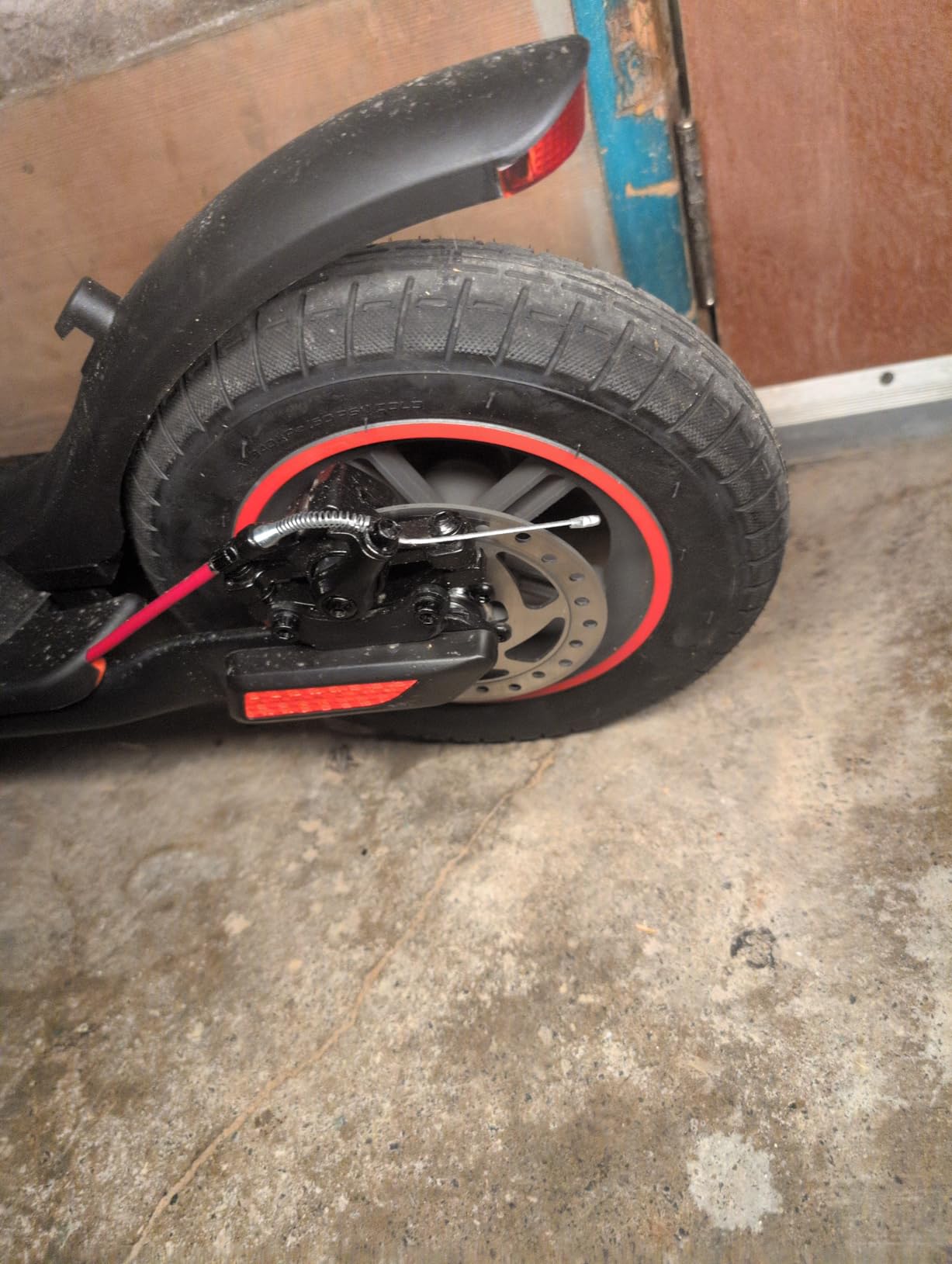
Braking is a rear disc plus hidden EABS, and that is more than most scooters at this cost offer. The app handles lock, unlock, mode switching and cruise control, which is enough to tune the scooter and park it without pulling keys.
Battery capacity of 280.8Wh translates to a 15 to 18 mile range, and a 5 to 6 hour recharge means an overnight top-up. This is a commuter that stores near a wall outlet, not a long-range machine, and treating it that way keeps expectations right.
Whether the i9M suits your riding
Choose this if your budget is the first constraint and your route is pavement. For a 10 mile round trip on smooth streets, the range is comfortable, and the third mode gives you enough speed on straights without a high top-speed number that attracts attention.
It also works well for a second vehicle in a household, a campus run, or anyone who needs one scooter for a short trip and a backup rather than one long-distance machine.
Where the i9M falls short
There is no suspension at all, which means every bump reaches your legs directly. Riders who spend time on broken pavement should add that to their decision, because no amount of tire comfort fully substitutes for dampers.
The thumb throttle is abrupt and can trigger unintended acceleration over bumps, so keep a light grip. The fixed handlebar height also rules it out for very tall or very short riders, and the rearward brake bias takes a few rides to get used to.
5. Gotrax GXL V2 – Best for Lightweight Portability
Gotrax GXL V2 Electric Scooter for Adult,8.5″ Tire,12 Mile &15.5Mph by 250W
250W motor, 15.5 mph
36V 5.2Ah battery, 12 mi range
8.5 inch honeycomb solid tires
27 lb, 220 lb capacity, UL 2272
Pros
- Lightest scooter in the roundup at 27 lb
- 36V 5.2Ah battery recharges in about 4 hours
- Puncture-proof honeycomb solid tires
- UL 2272 certified with a 365-day warranty
- Extra-long deck suits a wide stance
- Gotrax has shipped replacement parts free
Cons
- 250W motor is modest on hills
- Throttle-hold cruise engages earlier than stated
- Speed display tracks power output not true speed
- Rear fender and folding hook are flimsy
- No rear tail light and a dim headlight
At 27 pounds this is the only scooter in the roundup you can comfortably carry up a flight of stairs, onto a bus, or up four train steps, and that changes who can actually use one. Portability is the most underrated feature in this category.
For a short urban trip, the modest 250W motor is a fair trade. It reaches 15.5 mph, which is quick enough to feel like an electric scooter rather than a slow bicycle, and the 36V 5.2Ah pack recharges in roughly four hours, the fastest turnaround here.
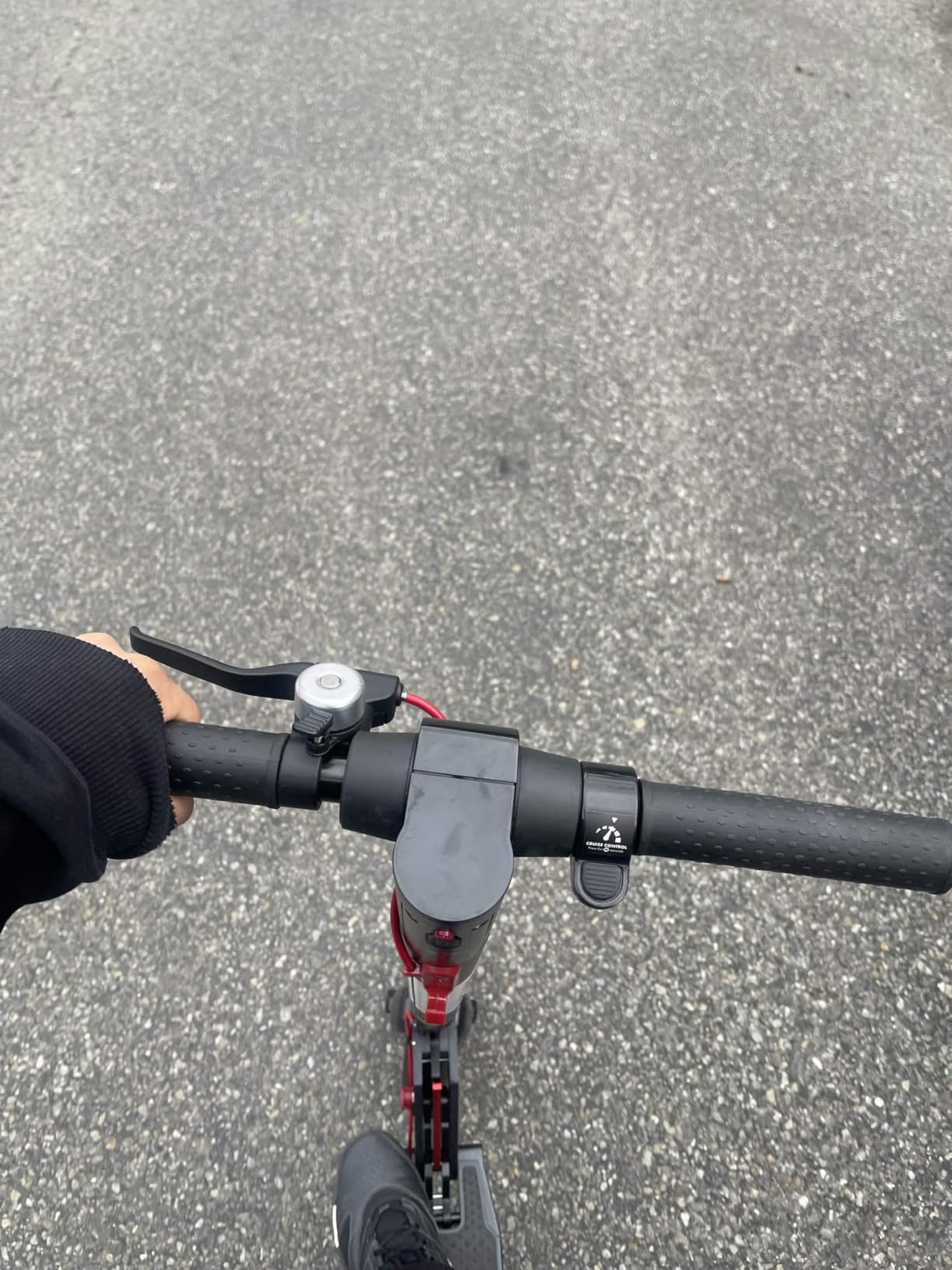
The honeycomb 8.5 inch solid tires never need inflating and cannot flat, and the safe-start function prevents accidental throttle application from a standstill, which is a real safety benefit for new riders and for anyone stopping at intersections.
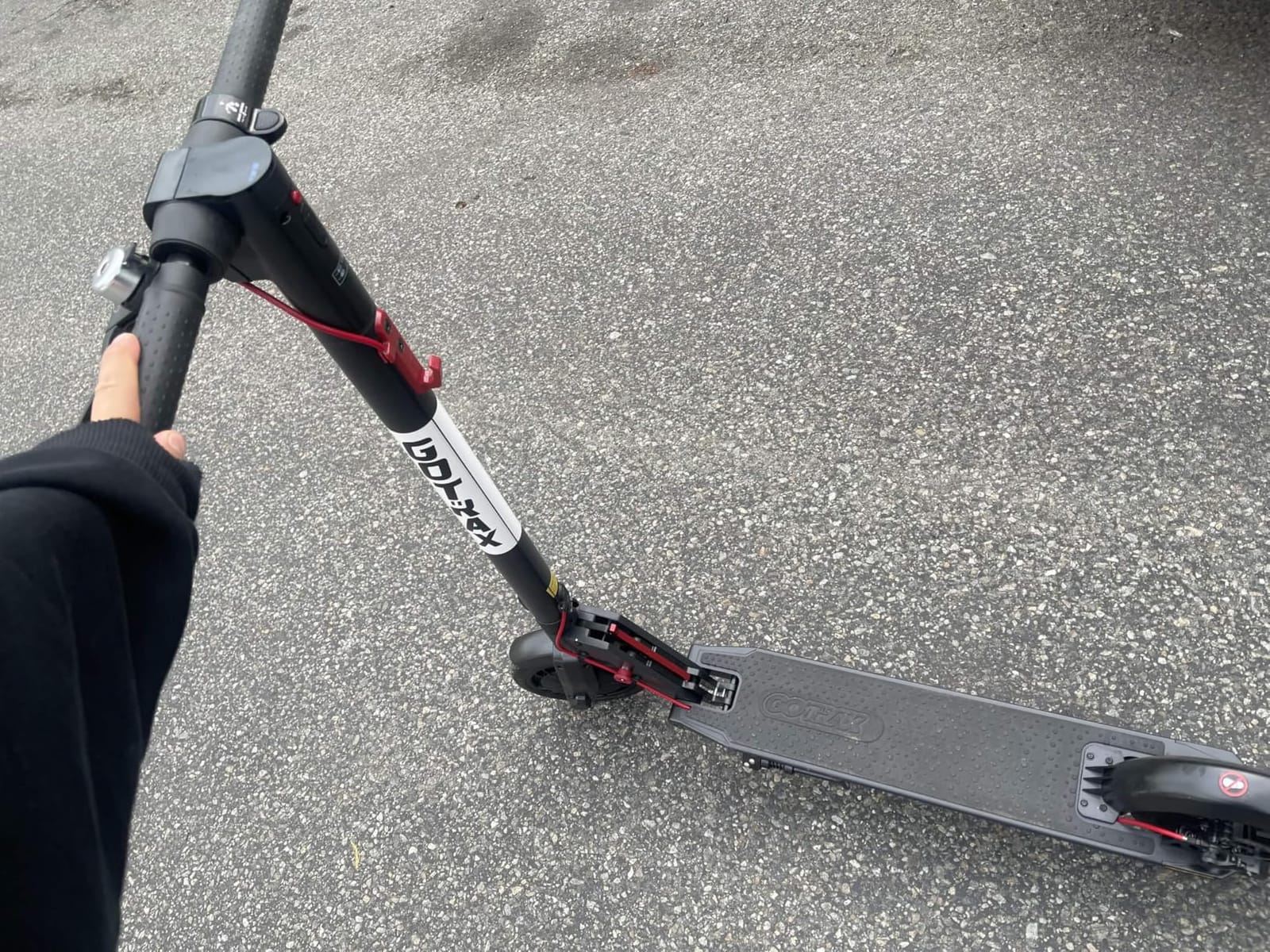
Worth noting is the deck length, though. Owners frequently comment on the extra-long deck, and it genuinely suits taller riders who want a wide, stable stance rather than a cramped footing.
Whether the GXL V2 suits your riding
Pick this for mixed-mode commuting, small apartments, stairs, or a trip where you need to combine scooter and transit. It is also the most forgiving scooter for a first-time buyer, since 15.5 mph and a light frame make mistakes cheap.
A 12 mile claimed range suits a 5 to 6 mile round trip with room to spare. It is not the model to buy for a 20 mile commute, and if your route climbs a sustained hill, expect the motor to be working hard.
Where the GXL V2 falls short
The cruise control engages when you hold the throttle, and multiple reviewers report it cutting in earlier than the manual states. Treat that as a known behavior to practice, not a defect you will grow out of.
Lighting is the weak point: a dim, downward-aimed headlight and no tail light at all. Plan on a proper rear light before riding at night. The speed display also reads power output rather than true speed, so do not use it for anything but battery and mode.
6. Hiboy Q2 Seated Scooter – Best for Comfort and Errands
Hiboy Q2/U2 Electric Scooter with Seat for Adults, 20-25 Miles, Orange
500W peak motor, 20 mph
36V 9Ah UL 2272 battery, 22 mi claimed
14 inch pneumatic tires, dual suspension
61.5 lb, 220 lb capacity, seat included
Pros
- Included seat and 9.5 inch wide deck for longer errands
- 14 inch tires and front and rear suspension
- 500W peak motor reaches a usable 20 mph
- Front and rear drum brakes with LED lights
- UL 2272 certified
- Quick-fold design
Cons
- 61.5 lb is heavy to carry up stairs
- Real range closer to 14 miles than 22
- Battery is not removable
- Handlebar alignment may need correcting after assembly
A seat sounds like a gimmick until you ride a standing scooter for an hour on rough pavement. The Q2 turns errands into a genuinely comfortable trip, and several owners in the reviews are older adults who said it was the first scooter they felt confident handling.
Big 14 inch pneumatic tires and dual suspension do more for ride quality than a larger motor would. They swallow potholes and gravel that would stop a 10 inch solid-wheel scooter dead, and the wide deck gives you room to position your feet comfortably while seated.
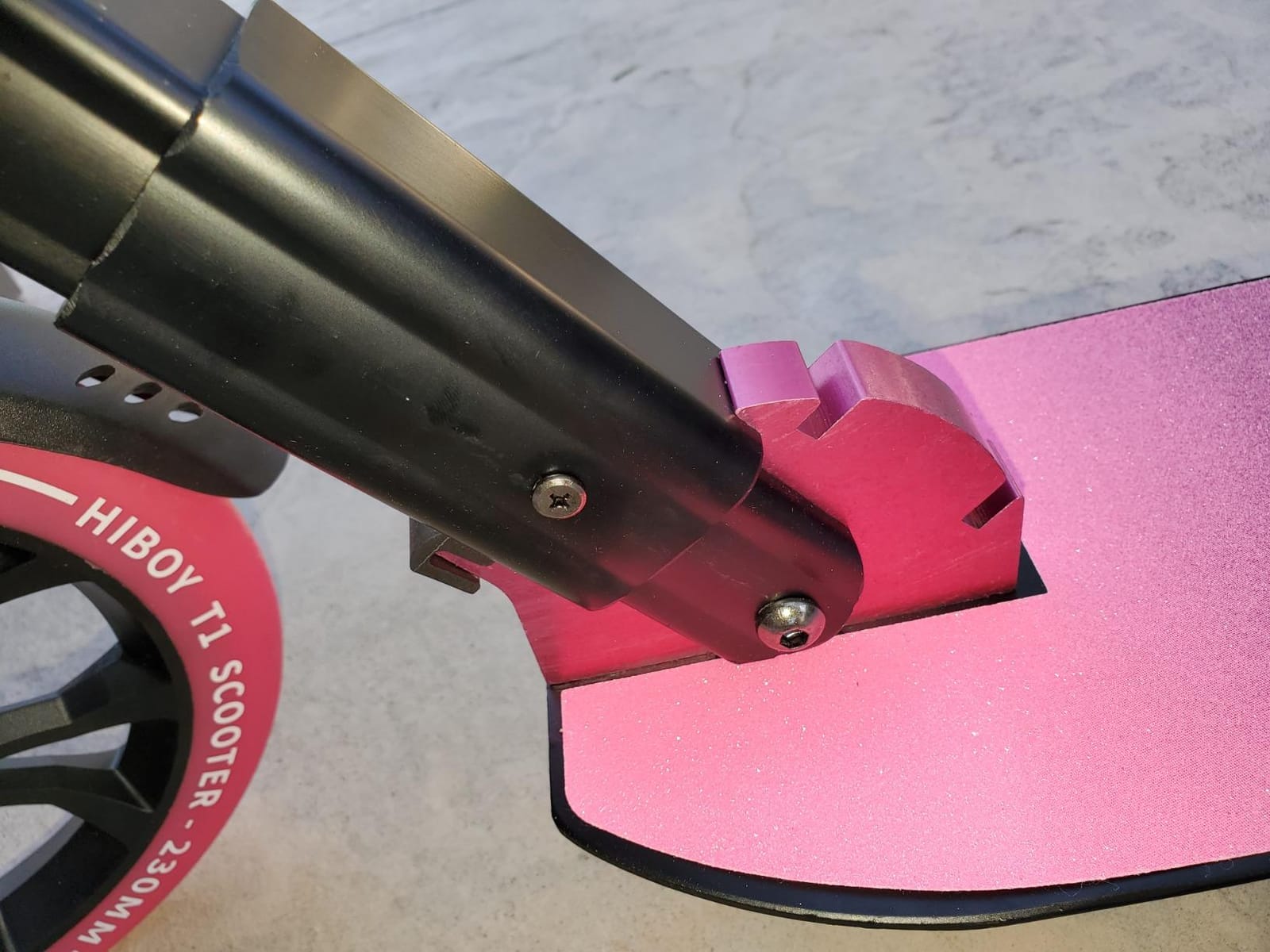
Drum brakes front and rear are predictable and low maintenance, and the LED headlight plus brake light are adequate for evening visibility, which is more than several standing models manage. Hiboy support also covered a motor replacement for one owner, which says something about the service side.
Real-world range lands closer to 14 miles than the advertised 20 to 22, which is normal for a seated scooter carrying more mass. Plan on it as a medium-range errand vehicle rather than a long-distance commuter.
Whether the Q2 suits your riding
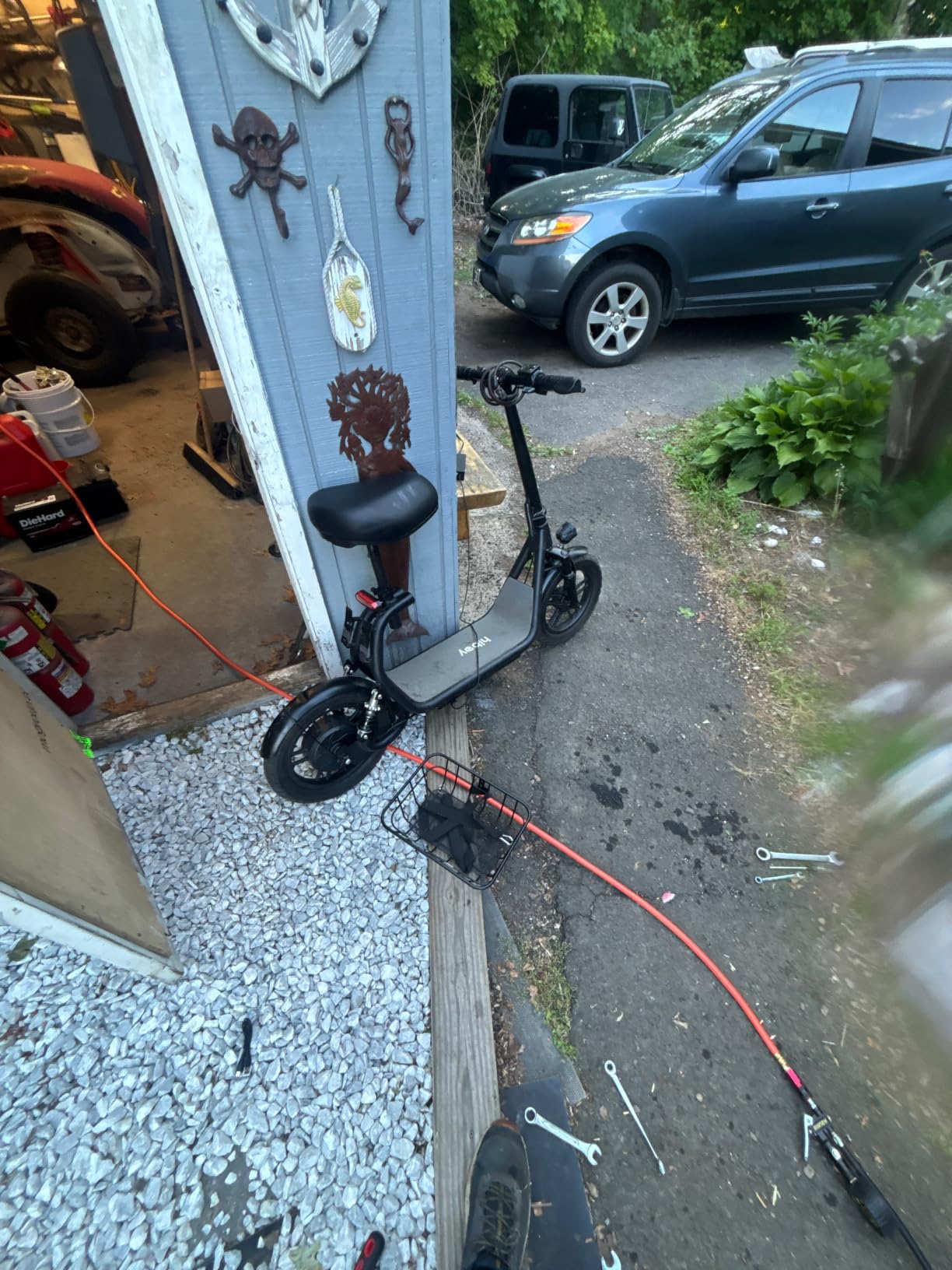
This is the pick if you want a step-through cruiser for shopping, campus, or neighborhood trips rather than a performance commuter. A rear basket and the included seat make it a practical errand vehicle, and buyers frequently describe it as the most comfortable scooter they have owned.
It is also a reasonable choice for a rider who wants an easier learning curve. Lower speed, a seat to lower onto, and 14 inch tires that roll over obstacles combine into a scooter that is forgiving of mistakes.
Where the Q2 falls short
At 61.5 lb, it is one of the heaviest in the roundup and genuinely awkward to carry up stairs. If your commute involves stairs, transit, or a trunk, this is the wrong shape for you.
The battery is not removable, so charging needs an outlet at the scooter rather than a battery you carry inside. Some owners also needed to correct handlebar alignment after assembly, so budget 15 minutes for setup.
7. Gotrax A5 Seated Scooter – Best for Cargo
Gotrax A5 12″ Electric Scooter with Seat for Adults & Teens, 15.5-Mi Range
550W peak motor, 15.5 mph
12 inch pneumatic tires, dual suspension
Adjustable seat and rear basket
50.7 lb, 220 lb capacity, UL 2272
Pros
- Rear basket holds more than 40 lb of cargo
- Handlebar hook rated for 11 lb
- 12 inch pneumatic tires and dual shocks smooth rough streets
- Steel frame rated to 220 lb
- 90 percent pre-assembled with tools included
- Bright headlight and rear brake light
- UL 2272 with a 365-day parts warranty
Cons
- Real range is closer to 10 miles than 25
- About 50.7 lb is bulky and hard to carry
- Seat and handlebar clamps loosen with daily use
- Wobble can appear at top speed
- Throttle bogs down at low speed
This is the only scooter in the roundup built around carrying things rather than covering distance, and that shows up in the details. The rear basket takes more than 40 lb of groceries, the handlebar hook takes 11 lb, and the adjustable seat turns a trip to the store into a loaded return trip.
The 550W peak motor and 12 inch pneumatic tires handle rough streets better than the wheel size suggests, and dual suspension plus an LED display makes it feel more considered than the price implies. The frame is steel, which explains the 50.7 lb weight but also the rigidity.
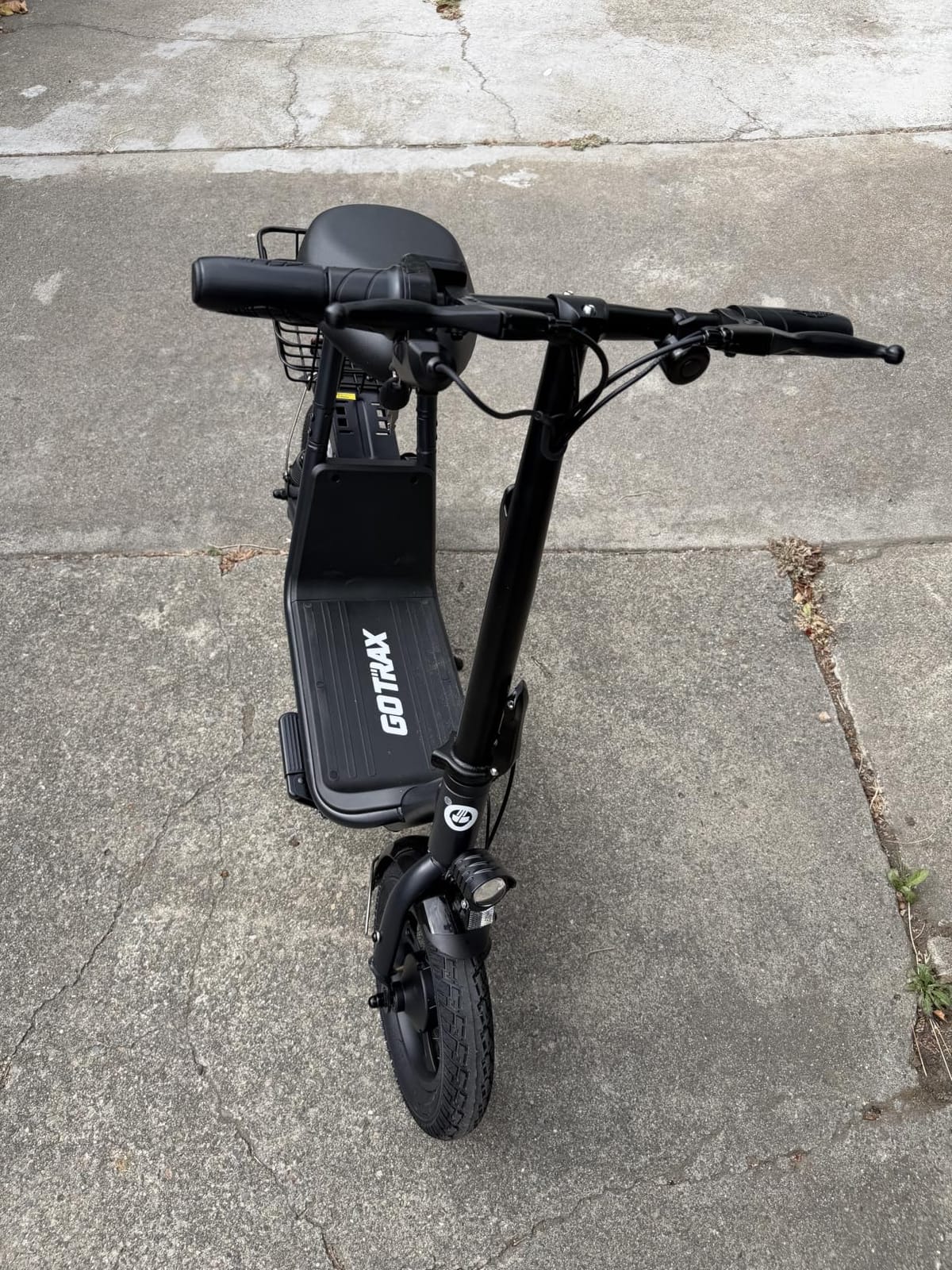
It ships 90 percent assembled with tools included, and UL 2272 certification with a 365-day parts warranty covers the two failure points that matter most on a utility scooter: the battery and the charger.
Expect roughly 10 miles of real range once the pack drops below half charge, which is a fine budget for a grocery and errand vehicle and a poor one for a long commute.
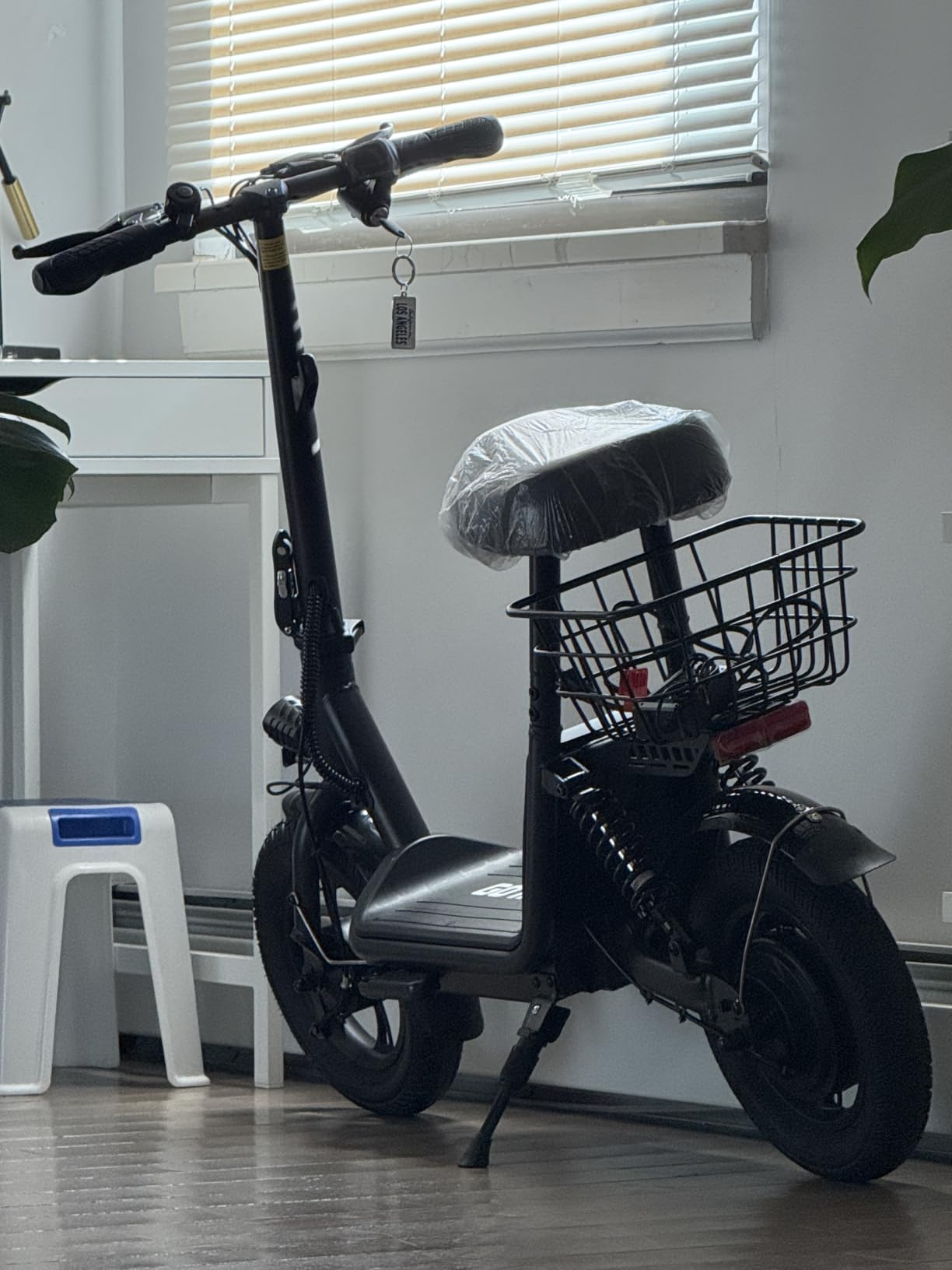
Whether the A5 suits your riding
Choose this for errands, campus, small-town delivery, or any trip where carrying capacity matters more than speed. Owners describe it as a practical cargo vehicle, and the basket size is the reason they keep it.
It also works well for riders up to 220 lb who want a step-through frame without managing a stem height, since the seat carries the rider’s weight instead of the handlebar position.
Where the A5 falls short
Clamps loosen with regular daily use, particularly the seat and handlebar, so this is a scooter that needs a monthly check. Several owners also report the charger as an early failure point, so confirm the replacement policy before you need it.
Repairs are more hands-on than the other picks. Handlebar throttle, screen and wiring faults need some self-repair skill, and Gotrax publishes limited repair documentation, which is a real problem if you are not mechanically inclined.
8. iScooter iX3 – Best for Brick Streets and Rough Roads
iScooter iX3/iX4 Electric Scooter, 10″ Off-Road Tires, 25/28 Miles Range
800W motor, 25 mph in TURBO
480Wh battery, 25 mi claimed
10 inch tubeless off-road tires, dual shocks
264 lb capacity, 48.5 lb
Pros
- 800W motor climbs 20-25 degree slopes
- 10 inch tubeless off-road tires over brick and gravel
- Height-adjustable handlebar from 44.5 to 52.8 inches
- Turn signals and ambient lighting at this price
- Full-color LCD display with three modes
- One-piece pre-assembly
- 264 lb capacity
Cons
- Around 48.5 lb is heavy to carry
- Not weatherproof and displays have failed after rain
- Real range closer to 13 miles than 25
- Rear shocks bottom out early
- Folding joint has play and the locking pin can break
The iX3 is the most generously equipped scooter in this roundup, and features like turn signals and ambient lighting almost never appear under this ceiling. The 800W motor, 480Wh battery and tubeless off-road tires make it the one to look at if your streets are brick, gravel or badly patched asphalt.
The height-adjustable handlebar, adjustable from 44.5 to 52.8 inches, is the sleeper feature. It covers an unusually wide span of rider heights in a way that fixed-bar models cannot, so it works for short and tall riders from the same purchase.
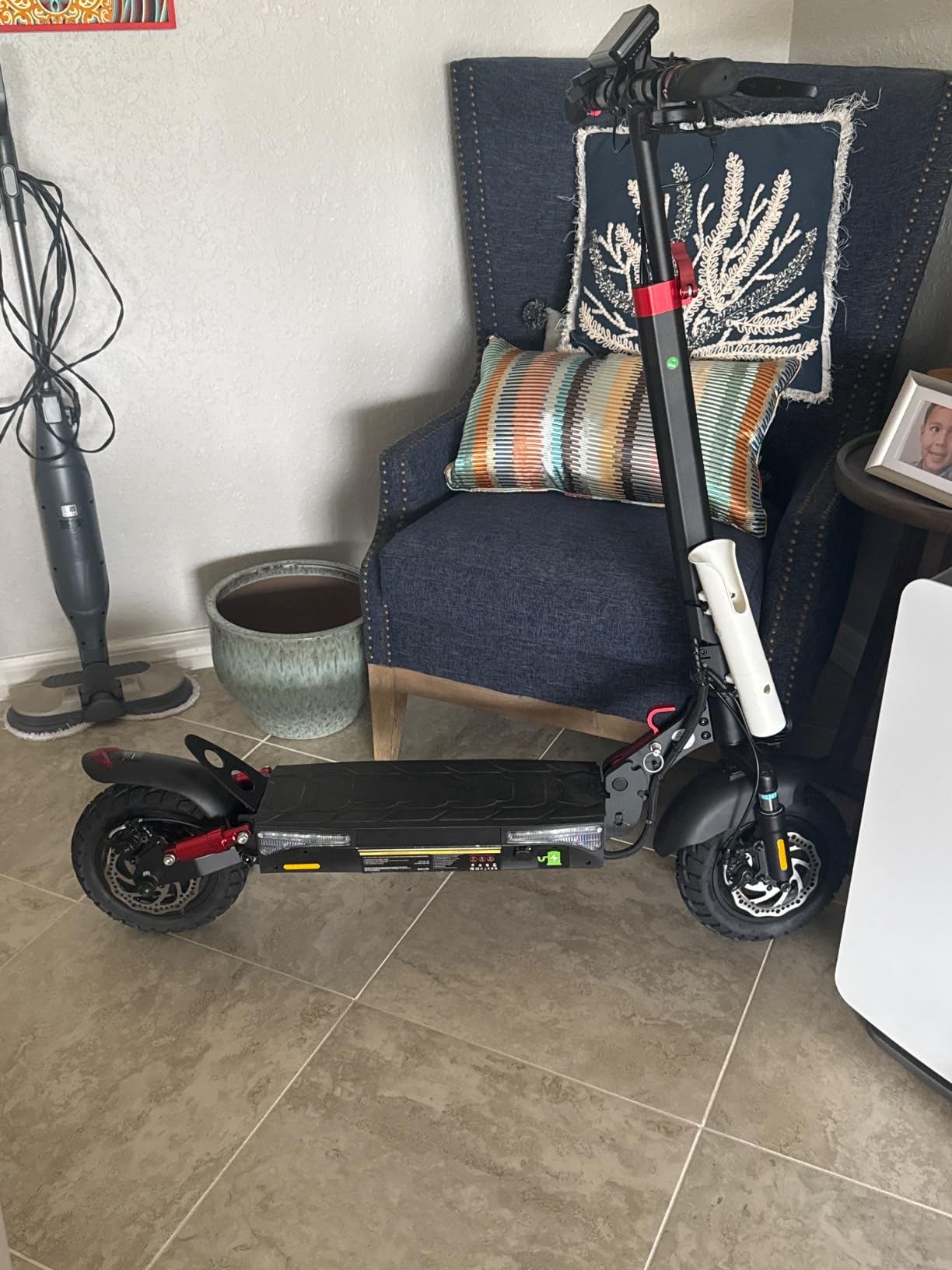
Three modes at 10, 18 and 25 mph let you trade speed for climbing ability, and the full-color LCD display shows speed, battery and mode clearly in daylight, which most budget consoles do not.
It ships as one piece with no assembly, and the 264 lb capacity sits at the higher end of this list. Regenerative plus front and rear braking gives confident stopping from the 25 mph top speed.
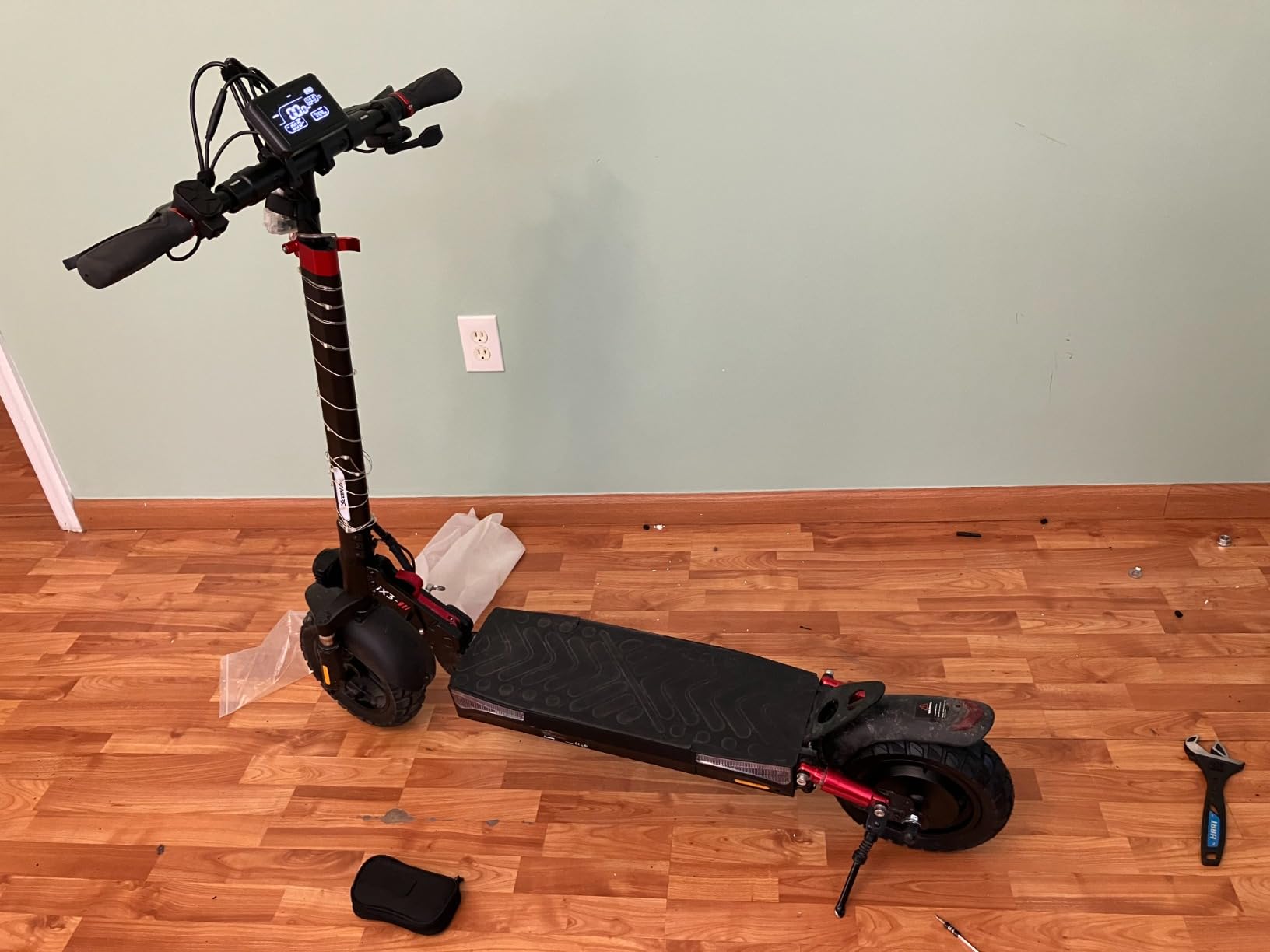
Whether the iX3 suits your riding
Pick this for broken pavement, brick streets, gravel paths, or a route with steep grades. Owners report it climbing 20 to 25 degree slopes that flatten scooters with smaller motors, and the tubeless off-road tires plus dual shocks make it the most rugged option here short of the ZT3 Pro.
For a rider who struggles with fixed bar heights, the adjustment range alone can justify the purchase, and the app handles top-speed limits and locking, which matters if you store it in a shared space.
Where the iX3 falls short
It is not weatherproof. Owners in rainy climates report display failures after sustained downpours, so if you ride year-round in a wet climate, seal the display port and keep the scooter out of standing water.
Real range lands near 13 miles rather than 25, the rear shocks bottom out on larger bumps early in life, and cruise control engages automatically until you disable it in the app. The folded handlebar joint has play and the locking pin is a known wear item.
How to Choose an Electric Scooter Under 1000 Dollars
At this price, the specifications that separate a good scooter from a bad one are narrow and specific. Almost everything you will read in a listing is marketing; the four things that actually predict whether you will still like the scooter in year two are battery capacity in watt-hours, brake hardware, tire construction, and whether the brand has a parts channel you can reach.
Read watt-hours, not miles
Range in miles is the least trustworthy number on the page. It is measured on a flat test loop at a slow speed with a light rider, which is close to nobody’s actual commute. Battery capacity in watt-hours is a fixed physical quantity, and you can do the arithmetic yourself.
A useful mental model: an average adult commuter on flat pavement needs roughly 350 to 500Wh for 10 to 15 miles of real range. The packs in this roundup run from 280.8Wh on the i9M to 720Wh equivalent on the MAX Pro, and that spread explains most of the range differences between them.
Brakes matter more than motor size
At 20 mph a scooter carries real momentum, and a scooter with a single drum brake will make you grip the handlebars every time you stop. Dual braking is the baseline here, and a mechanical disc plus electronic regen is the better pairing.
Regenerative braking, sometimes called EABS, slows the scooter by returning energy to the pack. It is not a replacement for a friction brake, but on the S2 Pro and the i9M it extends brake pad life and adds control at low speed. The ZT3 Pro’s dual discs are the strongest braking hardware in the group.
Solid or pneumatic tires
Solid tires need no inflation and cannot flat, which is why the S2 Pro and GXL V2 use honeycomb patterns. The trade is ride harshness, because there is no air cushion absorbing the impact of expansion joints and potholes.
Pneumatic tires roll smoother and handle rough surfaces better, at the cost of inflation and puncture risk. Tubeless pneumatic tires, which you will see on the ZT3 Pro and the iX3, add puncture resistance over tube-type versions while keeping the air cushion. They still need sealant and can be punctured by sharp debris.
Which electric scooter brands are reliable at this price
This is the question riders ask most and publishers answer least, so here is a direct answer. Reliability at this budget comes down to four checkable things: warranty length, UL 2272 documentation for the battery, replacement parts availability in your country, and a support contact that answers.
Every pick in this roundup clears that bar. Two-year warranty coverage on core parts, as the Segway ZT3 Pro offers, is the strongest signal in this list, and the 365-day parts warranty on both Gotrax scooters is a reasonable middle ground. A one-year warranty is acceptable. Anything under a year is not.
Forum riders consistently steer newcomers away from no-name brands with no US-based support, and we agree with that. The failure mode is not usually the motor; it is a failed throttle, brake lever, stem, or charger with no parts source and no warranty coverage, which turns a repair into a total loss.
Brands and models to approach with caution
We did not include any listing in this roundup that could not pass a documentation check, so rather than naming brands to avoid, here are the specific patterns that should make you walk away regardless of the label on the listing.
Walk away from any scooter that publishes a range figure without a battery watt-hour rating, since a range number with no Wh figure is unfalsifiable. Walk away from batteries that are sealed with no replacement path, and from chargers that are described as universal rather than model-specific. Walk away from warranty terms under a year, and from listings with no meaningful review history at all.
Also be skeptical of top-speed claims that appear only in the marketing title. Manufacturer pages regularly contradict themselves between a headline figure and a spec block, which is why we used the listing specifications and owner reports rather than the promotional number where they disagreed.
Real-world range versus claimed range
Riders on the forums put realistic expectations at 60 to 85 percent of the claimed figure, and a heavy rider running top speed can land below 60 percent. Our review data lines up: the iScooter iX3 claims 25 miles and owners report about 13, and the Hiboy Q2 claims 20 to 22 and delivers closer to 14.
The other half of the gap is mode choice. The MAX Pro’s 11, 16 and 22 mph modes mean the same battery covers a very different distance depending on which one you use, and treating Sport as occasional rather than default roughly doubles your effective range.
Temperature and battery age matter too. A pack at 20 percent capacity will not deliver the range it did new, and cold mornings reduce output before you have asked anything of the scooter. Plan on checking your real range after the first month rather than trusting the box.
What this ceiling buys versus a 400 dollar scooter
Stepping up from the sub-500 tier to this one adds four things reliably: more battery capacity, better brakes, larger or pneumatic tires, and a warranty you would actually rely on. The S2 Pro versus the GXL V2 is the clearest example, doubling the motor output and adding a front disc brake.
What it does not reliably add is speed. A good 500 dollar scooter and a good 900 dollar scooter may differ by only a few mph, because manufacturers cap the useful top speed for legal reasons, not engineering ones. If your commute is under 10 miles on flat ground, spending the difference may buy you little.
Where the extra spend does pay is on hills, on rough pavement, and on long routes. Suspension travel and battery capacity are the two features that improve most between 500 and 1000 dollars, and both matter if your route is not a smooth straight line.
Where can you legally ride it
Almost every scooter in this roundup tops out between 15.5 and 24.9 mph, which places most of them in the Class 2 category capped at 20 mph, with the faster models falling into Class 3 at up to 28 mph. Class 3 typically requires a helmet and, in many jurisdictions, registration and a license.
Rules vary by state, county, and city, and some places ban scooters on sidewalks entirely. Check your local code before buying, and if you travel, check where you are landing, because a scooter that is legal at home can be illegal ten miles away.
Total cost of ownership over two to three years
Nobody publishes this number, so here is how to budget it. A solid-tire scooter like the S2 Pro or GXL V2 has the lowest running costs: no tubes, no sealant, and brake wear is the main expense. Expect to replace brake pads or a drum assembly once across three years.
A pneumatic scooter adds tubes, sealant, and a floor pump to that budget, and tubeless models need plug kits. The MAX Pro, iX3, Q2 and A5 all sit in this category. Budget roughly 30 to 50 dollars a year for consumables, and add a replacement charger allowance since chargers are the most common early failure across the whole category.
Buying mistakes to avoid
Buying the fastest scooter first is the most common mistake, because speed is the easiest number to compare and the least useful for commuting. Buying the longest-range scooter first is the second, because range claims are the least trustworthy figure on the page.
Ignoring weight is the third. Riders consistently report being burned by the 50 to 65 lb reality of a scooter advertised as foldable and portable, so check whether you can carry yours up the stairs on your route before you commit. Skipping proper lighting is the fourth, since the headlights on budget models are frequently too dim to use. Use the charger that came with the scooter, and never substitute a generic one, is the fifth.
For more on fit and rider size, our pick of the best electric scooters for adults goes deeper on payload and deck height, and our guide to the best foldable electric scooters is worth reading if carrying weight is your deciding factor. Riders heading onto trails or gravel should also see our best off-road electric scooters, and if you want the highest speeds available, the best fast electric scooters roundup covers what it takes to go faster than anything on this list.
Frequently Asked Questions
What is the best electric scooter for under 1000 dollars?
The Hiboy S2 Pro is the best overall pick under 1000 dollars. It combines a 500W motor, 19 mph top speed, front disc brake with rear regenerative braking, UL 2272 certification and a 35.9 lb weight, backed by more than 5,700 reviews. If you have steep hills, the Segway ZT3 Pro is faster and more capable; if your commute is 20 miles or more, the Hiboy MAX Pro has the largest battery in this range.
What are some good electric scooters under 1000 dollars?
Eight models in this roundup meet the bar: the Hiboy S2 Pro for general commuting, the Segway ZT3 Pro for hills and speed, the Hiboy MAX Pro for long range, the iScooter i9M as the lowest-cost certified option, the Gotrax GXL V2 for lightweight portability, the Hiboy Q2 for seated comfort, the Gotrax A5 for cargo, and the iScooter iX3 for rough roads and gravel.
Which brand of electric scooter is the most reliable?
Reliability at this budget is better judged by documentation than by brand name. Look for a warranty of one year or more, documented UL 2272 battery certification, replacement parts available in your country, and a support contact that responds. On that basis the Segway ZT3 Pro leads with a two-year warranty on the frame, handlebar, hub motor, fork and controller, followed by the Gotrax and Hiboy models with one-year terms.
How far can a 1000 dollar electric scooter go?
Expect 60 to 85 percent of the claimed range in normal riding, and closer to 50 to 60 percent for a heavy rider at top speed. In practice that means roughly 15 to 20 real miles for a well-used commuter, and less than that in a hilly city or cold weather. Battery capacity in watt-hours is the figure to trust, not the miles on the box.
Are electric scooters under 1000 dollars safe?
Safety depends on certification and riding behaviour rather than price. Every scooter in this roundup is UL 2272 certified, meaning the battery and electrical system have been independently tested for fire risk. Wear a helmet, use the correct charger that came with the scooter rather than a generic replacement, and keep the battery away from extreme heat and water. Bikes and scooters with documented certification are a different category from untested generic models.
Do electric scooters under 1000 dollars need a license or registration?
It depends on your local rules and your scooter’s top speed. Most scooters here are Class 2, capped at 20 mph, and often need no license, though many cities still restrict riding on sidewalks. Faster models approaching 25 mph can fall into Class 3, which typically requires a helmet and sometimes registration. Check your state, county and city code before you buy, especially if you travel.
The Verdict: Which Scooter Should You Buy
The best electric scooter under 1000 dollars for most people is the Hiboy S2 Pro, and the reason is balance rather than any single headline figure. Dual brakes, UL 2272 certification, a sub-40 lb weight, and the largest review base in the category make it the one we would put our own commute on.
Buy the Segway ZT3 Pro if your route has hills and you can handle 65.5 lb, buy the Hiboy MAX Pro if 20 miles is a normal day, and buy the Gotrax GXL V2 if you need to carry it up stairs. All eight picks are updated for 2026, and we check the specifications on every page we publish.