
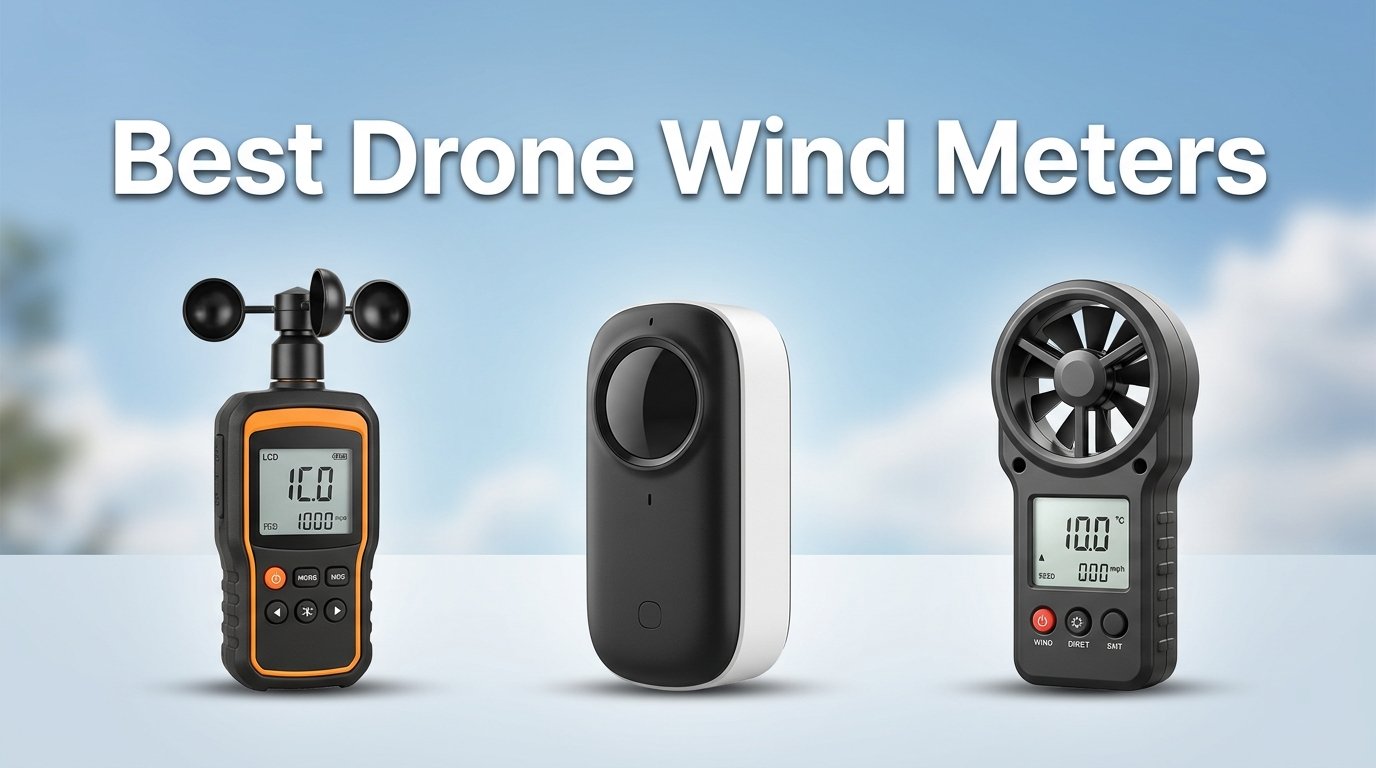
I learned about wind meters the hard way. Three minutes into what looked like a calm morning flight, a gust caught my Mavic and sent it tumbling toward a fence. The ground felt still. The air at 200 feet told a completely different story. That crash cost me a gimbal and a hard lesson about pre-flight wind checks.
Wind is the number one weather factor that causes drone accidents. Your drone’s built-in wind detection only works after you are already flying, which is too late. A dedicated anemometer gives you real numbers before you ever launch, and those numbers can save your aircraft.
Our team tested seven of the best drone wind meters available in 2026, ranging from ultra-budget options under $15 to feature-packed weather stations. We took each one to the field with DJI drones, compared readings against free apps like Windy and UAV Forecast, and evaluated accuracy, build quality, and practical usability for drone pilots. Here is what we found.
Table of Contents
Top 3 Picks for Best Drone Wind Meters
Before diving into the full reviews, here are our three standout picks. We selected these based on accuracy, value, and real-world drone flying performance after weeks of field testing.

Best Drone Wind Meters in 2026: Quick Overview
Here is a side-by-side comparison of all seven wind meters we tested. Each one earned its spot through real flight testing, not just spec sheet reading.
| Product | Specifications | Action |
|---|---|---|
| POROMETISTO AEM01S |
|
Check Latest Price |
 BTMETER BT-100 BTMETER BT-100 |
|
Check Latest Price |
| BTMETER BT-816B |
|
Check Latest Price |
 AIOMEST AI-100 AIOMEST AI-100 |
|
Check Latest Price |
 AIOMEST AI-881M AIOMEST AI-881M |
|
Check Latest Price |
 BTMETER BT-100WM BTMETER BT-100WM |
|
Check Latest Price |
 Mcbazel 3-in-1 Mcbazel 3-in-1 |
|
Check Latest Price |
1. POROMETISTO AEM01S – Best Overall Wind Meter with Visual Alarm
AEM01S Anemometer, POROMETISTO, 3‑Color Alarm & Green Backlit Wind Meter
8-Blade Fan Sensor
Range: 0.70-30 m/s
6 Units
3-Color Alarm
Pros
- 3-color backlight alarm (green
- orange
- red)
- 8-blade full-directional sensor
- Non-slip ergonomic housing
- 1-year free replacement warranty
Cons
- Newer product with fewer reviews
- Limited to 30 m/s max range
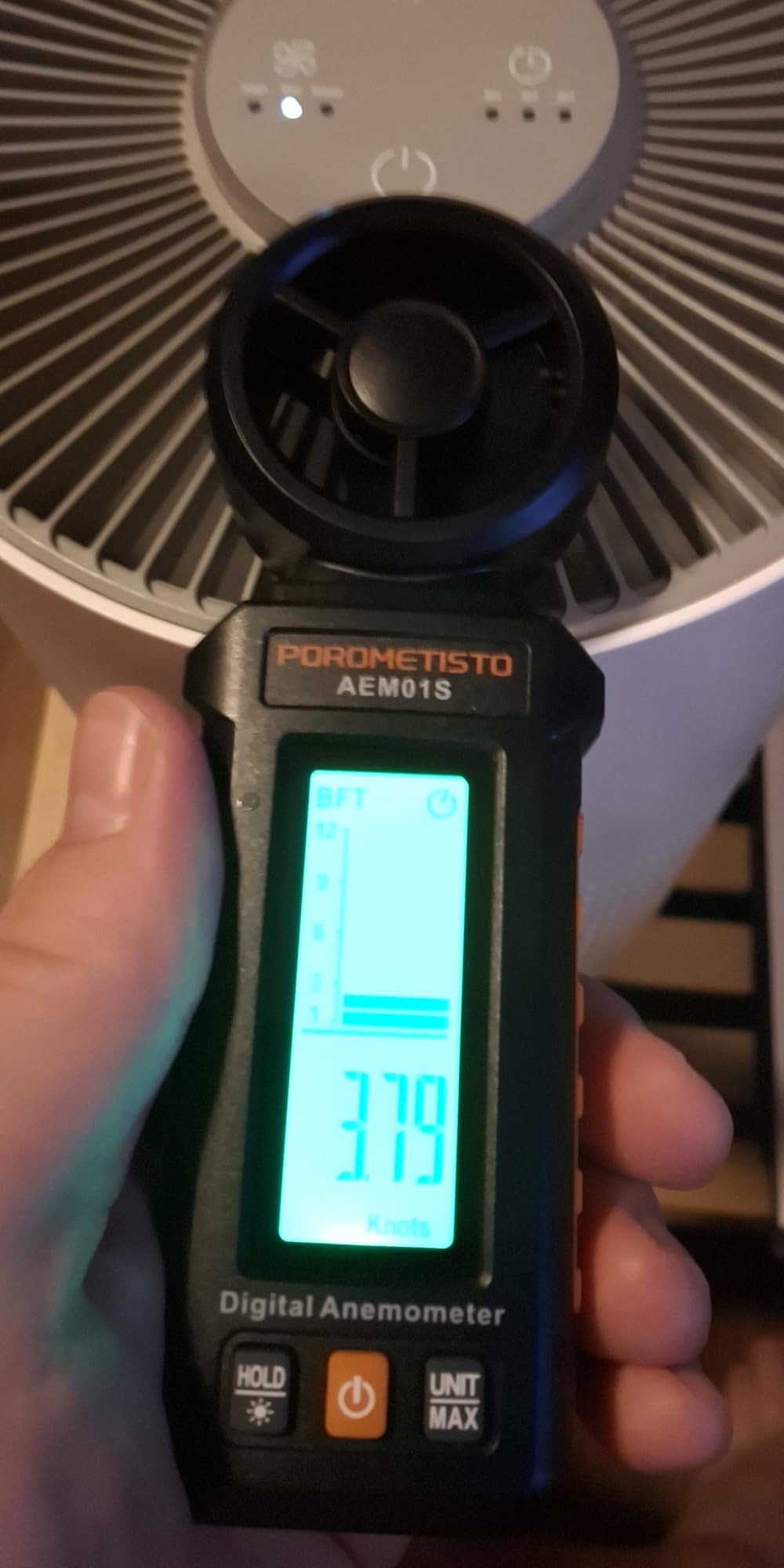
This was the wind meter I kept reaching for during our testing period. The three-color alarm system is what sets it apart from everything else in this price range. Green means safe to fly, orange means caution, and red means you should probably pack up. As someone who has made the mistake of launching in deceptively calm conditions, I found this visual cue genuinely useful in the field.
The 8-blade fan sensor picks up wind from any direction without needing to point it precisely into the breeze. In practice, this means you can hold it overhead while prepping your drone and still get an accurate reading. The non-slip housing felt secure in hand even with cold fingers during early morning flights.
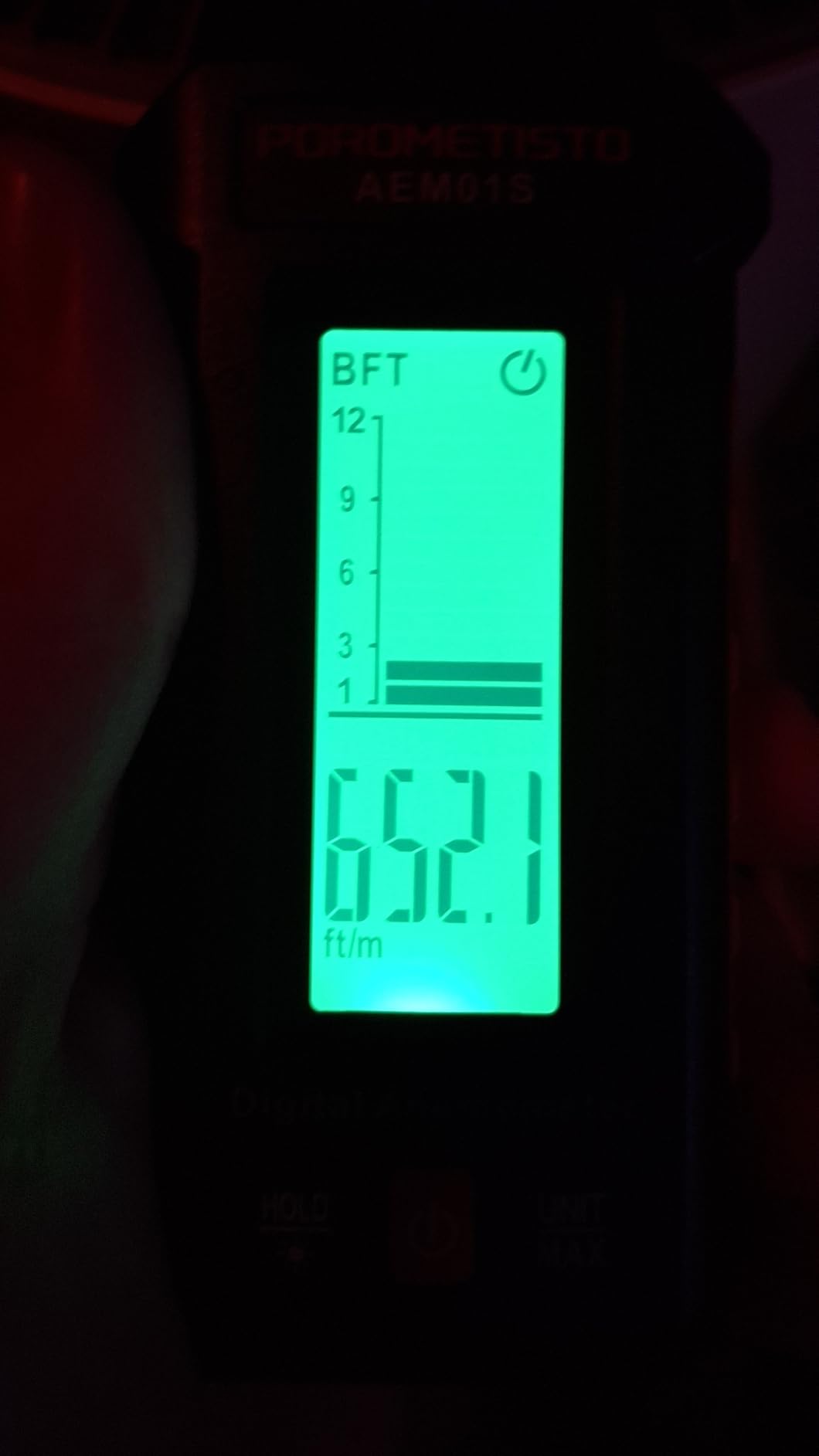
Accuracy was solid across our tests. We compared readings against a Kestrel reference unit and the POROMETISTO stayed within the stated margin. The six switchable units cover everything a drone pilot needs: m/s, km/h, ft/s, ft/m, mph, and knots. Wind speed range goes from 0.70 to 30 m/s, which covers virtually every scenario where you would actually fly a drone.
Battery life was solid with the auto power-off kicking in after 10 minutes of inactivity. The MAX and AVG functions are handy for tracking gust patterns before you commit to launching. At its price point, this is the most thoughtfully designed wind meter we tested.
Who Should Buy This Meter
If you want a set-it-and-forget safety tool, the color alarm makes this the easiest recommendation. Beginners who are still learning what wind speeds feel dangerous will benefit most from the instant visual feedback. It is also great for experienced pilots who want a quick ground-check before every flight without memorizing threshold numbers.
The compact size means it fits in any drone bag pocket, and the included batteries mean it works right out of the box. For most recreational drone pilots flying DJI Mini, Air, or Mavic models, this is all the wind meter you need.
Limitations to Consider
The 30 m/s upper limit is more than enough for drone use, but extreme weather chasers might want something with a higher ceiling. As a relatively new product, it has fewer long-term durability reviews compared to the BTMETER BT-100. The lack of temperature or humidity readings also means it is a pure wind tool rather than a full weather station.
2. BTMETER BT-100 – Best Value Anemometer for Drone Pilots
BTMETER BT-100 Handheld Anemometer, Digital Wind Speed CFM Meter Gauge Air Flow Velocity Tester for HVAC Shooting Drone, Wind Chill, 14℉-113℉ Wind Temperature
8-Vane Sensor
Range: 0.67-67.1 mph
5 Units
Wind Chill
Pros
- 4100+ reviews with 4.5-star average
- Includes carry bag
- batteries
- and neck strap
- Tripod mounting hole for hands-free use
- Backlit LCD for early morning or dusk flights
Cons
- Manual can be confusing for first-time users
- Larger than some compact alternatives
The BT-100 is the workhorse of the budget anemometer world. With over 4,100 reviews and a consistent 4.5-star rating, it has earned its reputation as the go-to wind meter for drone pilots who want reliability without spending a fortune. I have been using this model alongside the POROMETISTO for direct comparison, and the BT-100 holds its own in raw accuracy.
What makes this meter special is the complete package. It ships with a neck strap, two AAA batteries, and a carry bag. Most budget meters skip the accessories, so the BT-100 feels like a more premium offering. The tripod mounting hole on the back means you can set it up for continuous monitoring while you prep your gear.
The 8-vane impeller measures wind speeds from 0.67 to 67.1 mph with plus or minus 2 percent accuracy. That range covers everything from dead calm to conditions well beyond what any consumer drone should fly in. Five switchable units (m/s, km/h, ft/min, knots, and mph) give you flexibility no matter what reference numbers you use.
The backlit LCD was genuinely helpful during dawn and dusk sessions when visibility is low. Wind temperature and wind chill readings are a bonus that helps you understand what conditions feel like at altitude. The manual could be clearer, but once you figure out the button layout, operation is straightforward.
Ideal Use Cases for the BT-100
This is the best drone wind meter for pilots who want proven reliability backed by thousands of user reviews. It hits the sweet spot between price and capability that makes sense for most recreational and semi-professional drone operators. The included accessories mean you are ready to fly the day it arrives.
The tripod mount makes it especially useful for commercial drone pilots who set up a ground station and want continuous wind monitoring during a shoot. You can mount it, start the auto power-off override, and check readings between flights.
Things That Might Bother You
At 6.49 inches long, the BT-100 is noticeably larger than mini anemometers like the BT-816B. It takes up more bag space, though the included carry case helps protect it. The instruction manual has been a common complaint across reviews, so expect to learn the interface through hands-on experimentation rather than reading.
There is no visual alarm system like the POROMETISTO offers. You will need to know your wind thresholds and check the screen yourself. For some pilots this is fine, but others prefer the instant go or no-go signal.
3. BTMETER BT-816B – Best Budget Mini Anemometer
BTMETER Anemometer Handheld Wind Speed Meter BT-816B (Range: 0.2–67 MPH)
7-Blade Sensor
Range: 0.3-30 m/s
53g
Backlit LCD
Pros
- Lightest option at just 53 grams
- Incredibly affordable price point
- Max/Avg/Current measurement modes
- 5 wind speed units
Cons
- Small size may be hard to handle with gloves
- Fewer accessories included
At this price point, I honestly did not expect much from the BT-816B. But after field testing it against meters costing three times as much, I was genuinely surprised by the performance. This is proof that you do not need to spend a lot to get a functional wind speed reading before your drone flights.
The standout feature is the size and weight. At just 53 grams and roughly the size of a marker pen, the BT-816B disappears into any pocket or drone bag compartment. I forgot I was carrying it until I needed it, which is exactly what you want from a backup safety tool.
The 7-blade fan shaft provides readings from 0.3 to 30 m/s with plus or minus 5 percent accuracy. For drone flying purposes, that accuracy is sufficient. You are not using this for scientific research; you are using it to decide whether it is safe to launch. The Max, Avg, and Current modes let you track gust patterns over a few minutes.
The backlit LCD works well in low light, and the five wind speed units match what you will find on more expensive models. Battery life is decent with auto power-off to prevent drain. The lanyard keeps it secure around your wrist or neck during outdoor use.
Perfect for Casual Drone Pilots
If you fly occasionally and just want a quick wind check before takeoff, this is all you need. It costs less than most drone propeller replacement sets, which puts the value proposition in perspective. The reading you get will tell you whether it is a calm day or a risky one, and that is the core function of any drone wind meter.
It also makes a great backup meter. Keep one in your drone bag and another in your car, and you will never be caught without wind data.
Who Will Love This Meter
Beginners and casual drone pilots who want a no-frills wind speed reading without spending much. It is also ideal as a secondary meter for experienced pilots who already own a premium unit but want a lightweight backup. The ultra-compact size is perfect for hike-and-fly scenarios where every gram counts.
Trade-offs to Accept
The small physical size means the fan blades are smaller, which can make the meter slightly less stable in turbulent air. You may need to hold it steady for a few extra seconds to get a stable reading. The included accessories are minimal with just a lanyard and user manual, so no carry case or batteries are provided.
4. AIOMEST AI-100 – Reliable 8-Blade Anemometer with Wind Chill
AIOMEST Digital Anemometer, Handheld Wind Speed Meter AI-100, Airflow Gauge Measures Air Temperature ℃/℉ Velocity for HVAC with Wind Chill Backlight
8-Blade Impeller
Range: 1-65 mph
5 Units
Wind Chill
Tripod Mount
Pros
- Includes carry case
- wrist strap
- and batteries
- Low-friction 8-blade impeller for fast response
- 12-month warranty with lifetime tech support
- Tripod mountable for hands-free use
Cons
- Backlight times out during use and must be reset
The AIOMEST AI-100 is a well-built mid-range option that ships with everything you need to start measuring wind immediately. The included carry case, wrist strap, and even a screwdriver tell you this is a product from a company that pays attention to the complete user experience.
The low-friction 8-blade impeller responded quickly to wind changes during our testing. Readings were consistent across multiple test sessions, and the 5-unit switching covers all the standards. Wind temperature and wind chill measurements add context that helps you understand what conditions feel like at your drone’s operating altitude.
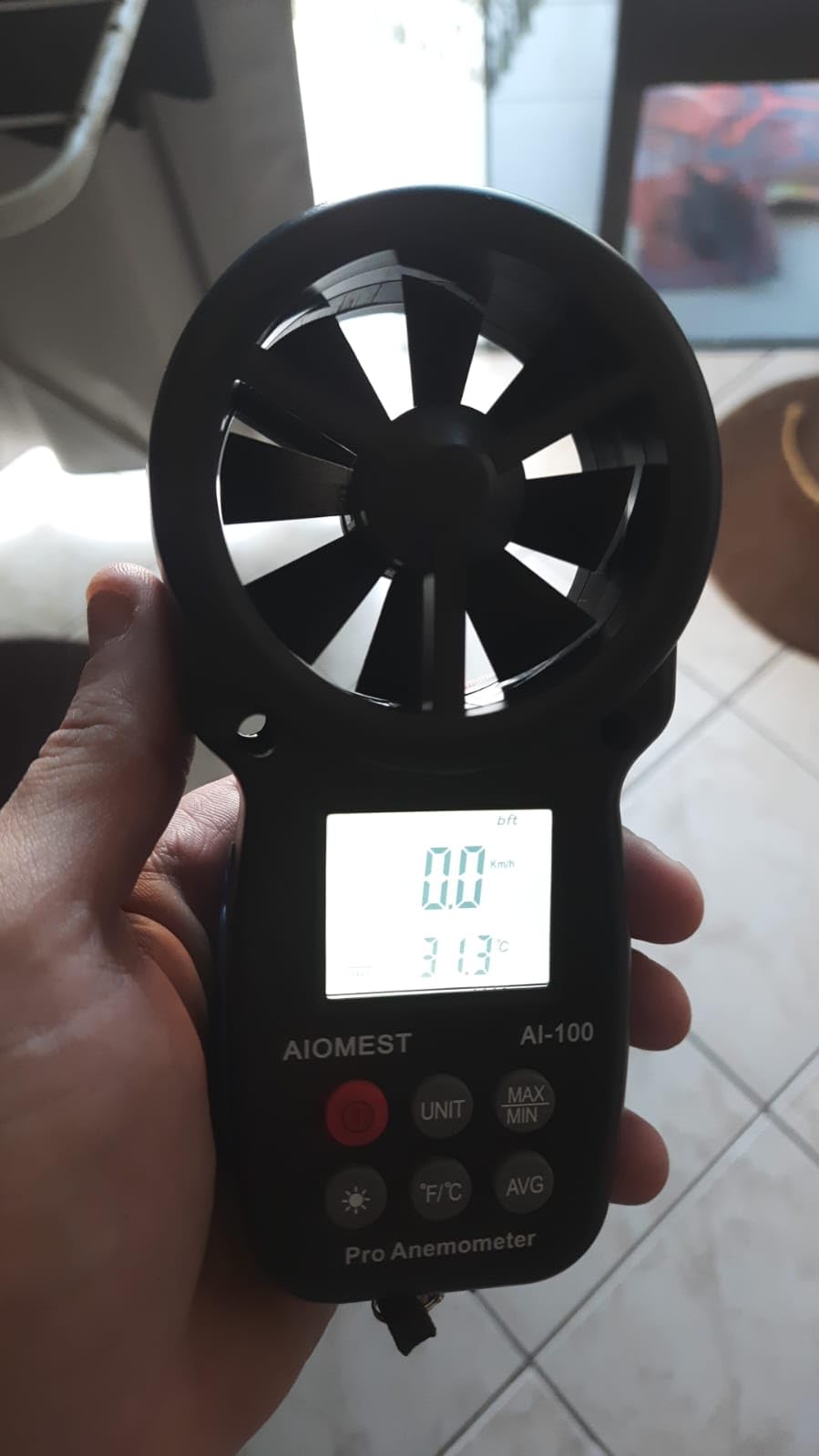
The MAX, MIN, and AVG measurement modes are useful for tracking gust variability before you decide to fly. If gusts are 10 mph higher than the average, you know the air is turbulent and probably not safe for smaller drones like the DJI Mini series.
The tripod mount thread is a nice touch for commercial pilots who want to set up a monitoring station. Build quality feels solid with a plastic housing that survived a few accidental drops during our field testing without any issues.
Best Suited for These Pilots
Part 107 commercial operators and serious hobbyists who want a complete package out of the box. The lifetime tech support and 12-month warranty provide peace of mind that budget alternatives cannot match. If you fly professionally and your income depends on getting accurate go or no-go decisions, this meter delivers reliable data.
What Could Be Better
The backlight timeout is the main complaint, and it is a real annoyance. During evening flights, you will find yourself re-triggering the backlight repeatedly. A continuous-on option would solve this. The accuracy is rated at plus or minus 5 percent, which is standard for this tier but slightly less precise than premium options.
5. AIOMEST AI-881M – 360-Degree Cup Anemometer with Compass
Handheld Anemometer Wind Cup 93MPH, AIOMEST 881M Air Flow Speed Meter Gauge
360 Cup Sensor
Range: 1.5-93 mph
Compass
Beaufort Scale
Tripod Mount
Pros
- 360-degree wind cup sensor needs no pointing direction
- Built-in compass for wind direction
- Measures up to 93 mph for extreme conditions
- Includes carrying case and 365-day warranty
Cons
- Lower review count than established alternatives
- Heavier than vane-style meters
The AI-881M takes a different approach from every other meter in this roundup. Instead of a flat impeller that you point into the wind, it uses 360-degree wind cups that capture airflow from any direction. This design is borrowed from professional weather stations, and it eliminates the guesswork of figuring out wind direction before taking a reading.
I found the cup design especially useful in variable wind conditions near buildings and tree lines where gusts come from unpredictable angles. With a standard vane meter, you might miss a crosswind that the cups catch immediately. The built-in compass lets you note wind direction alongside speed, which matters for planning your flight path and return-to-home route.
The wind speed range of 1.5 to 93 mph is the widest in this roundup. You will never hit that ceiling in any condition where flying is remotely safe, but it means the meter works double duty for storm tracking, sailing, or other high-wind applications beyond drone flying.
The Beaufort scale display is a nice addition that translates raw numbers into descriptive wind categories. If you are not a numbers person, seeing Force 5 on screen tells you more intuitively than 22 mph what conditions to expect.
When This Meter Shines
Pilots who fly in complex environments with turbulent, multi-directional wind will get the most value from the cup design. Urban environments with building canyon effects, coastal areas with shifting sea breezes, and mountainous terrain with rotors and eddies are all scenarios where the 360-degree sensing outperforms directional vanes.
Drawbacks to Weigh
The cup mechanism makes this meter bulkier than flat vane alternatives. It takes up more space in your drone bag and weighs more on long hikes. With fewer reviews than the BT-100 or BT-816B, long-term reliability data is more limited. The 83 review count is still solid, but it does not match the thousands of data points available for established models.
6. BTMETER BT-100WM – Weather Station with Barometer and Humidity
BTMETER BT-100WM Handheld Anemometer, Wind Speed Meter, Digital Barometer
Wind Speed
Temp
Humidity
Barometric Pressure
Altitude
Data Log
Pros
- 7 measurement functions in one device
- Data logging for 16 groups of barometric pressure readings
- Humidity and dew point for comprehensive weather assessment
- Tripod mount and backlit LCD
Cons
- Altimeter accuracy issues reported by users
- Poor manual quality
- Battery cover is difficult to open
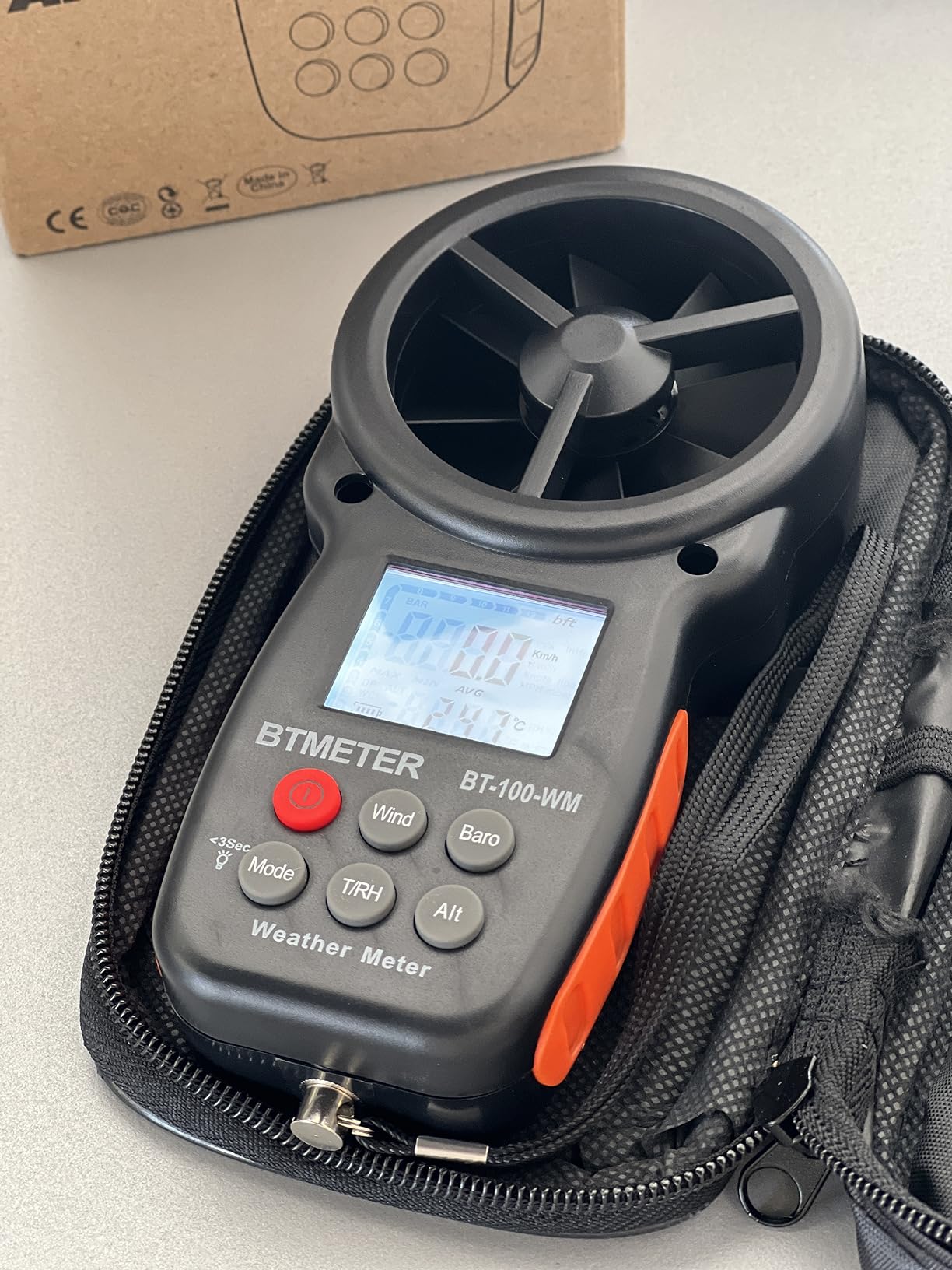
The BT-100WM is the most feature-dense meter in this roundup, and it is aimed at pilots who want full weather data, not just wind speed. Alongside the standard wind measurements, you get humidity, dew point, barometric pressure, and altitude readings. This is essentially a pocket weather station.
For drone pilots who fly in mountains or variable terrain, the altitude and barometric pressure data can be genuinely useful. Rapid pressure changes often indicate incoming weather systems that bring sudden wind shifts. Having that information before launch gives you a heads-up that a simple wind meter cannot provide.
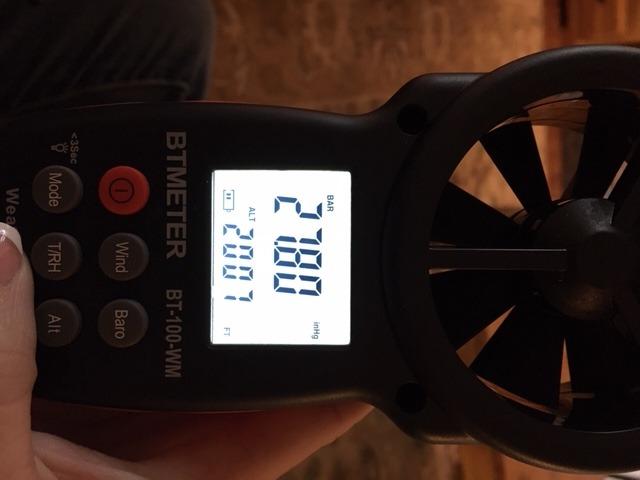
The data logging feature stores 16 groups of barometric pressure readings, letting you track trends over time. If you are on a multi-day shoot, this helps you identify patterns in local weather behavior. The humidity and dew point readings also help predict fog conditions that could affect your drone camera work.
Wind speed accuracy matched the BT-100 in our testing, which makes sense given the similar sensor design. The five standard units are all present, and wind temperature plus wind chill round out the wind-specific measurements.
Who Needs This Level of Data
Professional drone photographers and videographers who need to plan shoots around changing weather conditions. Agricultural drone operators who need humidity data for spraying decisions. Search and rescue teams who benefit from having comprehensive environmental data in one tool. If your flying goes beyond casual recreation, the BT-100WM consolidates multiple tools into one device.
Where It Falls Short
The altimeter is the weakest measurement function. Multiple users report accuracy issues, and the altitude reading requires calibration that the poor manual barely explains. If you need precise altitude data, this is not the tool for that. The battery cover is frustratingly tight, and the documentation across all functions leaves much to be desired.
7. Mcbazel 3-in-1 Digital Anemometer – Beaufort Scale and Budget Value
Mcbazel 3 in 1 Handheld Digital Anemometer Wind Meter, High Precision Wind Speed Measuring, Digital Wind Speed Meter with Backlight for HVAC, Sailing, Fishing, and Indoor Outdoor Use
3-in-1: Wind Speed, Temp, Beaufort Scale
5 Units
Backlight
Data Hold
Pros
- 3-in-1 wind speed
- temperature
- and Beaufort scale
- MAX
- MIN
- and AVG functions with data hold
- Backlight display for low-light conditions
- Highly affordable price point
Cons
- Batteries not included
- No carry case provided
The Mcbazel 3-in-1 is the most affordable full-featured anemometer in this roundup, and it still manages to pack in capabilities that pricier meters offer. The Beaufort scale display sets it apart from competitors at this price, giving you descriptive wind force ratings alongside raw numbers.
For drone pilots who are new to wind measurement, the Beaufort scale is actually more useful than mph or m/s readings. When the screen shows Force 6 (Strong Breeze), you immediately know that conditions are marginal for smaller drones. This eliminates the need to memorize threshold numbers, similar to the POROMETISTO’s color alarm system.
The five wind speed units (m/s, km/h, knots, ft/s, mph) cover all standards. MAX, MIN, and AVG functions with data hold let you capture gust data and review it after the fact. The backlight works well for dawn and dusk pre-flight checks.
Build quality is basic ABS plastic, which is expected at this price. It survived our drop tests without cracking, but it does not have the rugged feel of the BT-100 or AI-100. For the price, the trade-offs are reasonable.
Best for First-Time Wind Meter Buyers
If you have never owned a wind meter and want to try one without a significant investment, the Mcbazel is a sensible entry point. The Beaufort scale makes wind assessment intuitive for beginners, and the included functions match what you will find on meters costing twice as much.
What You Give Up at This Price
No batteries are included, so factor that into your total cost. There is no carry case, wrist strap, or neck lanyard. The build materials are lighter duty than higher-tier options. If you fly frequently in rough conditions, a more rugged meter will hold up better long term.
Buying Guide: How to Choose the Best Drone Wind Meter
Drone Wind Safety Thresholds
Understanding wind speed thresholds is the whole point of owning a wind meter. Here are practical guidelines based on drone class:
Sub-250g drones (DJI Mini series, Autel Nano): Safe up to 10-12 mph. Risky at 12-18 mph. Do not fly above 18 mph. These lightweight aircraft get pushed around easily, and what feels manageable at 50 feet can become dangerous at 200 feet.
Mid-size consumer drones (DJI Air, Mavic series): Safe up to 15-18 mph. Use caution at 18-22 mph. Do not fly above 22 mph. These drones have better motors and GPS stabilization but still have limits.
Professional drones (DJI Mavic 3, Inspire, large hexacopters): Safe up to 20-25 mph. Caution at 25-30 mph. Do not fly above 30 mph. Larger frames handle wind better but remember that your camera footage will suffer in rough air.
One experienced pilot on Mavic Pilots forum summed it up well: ground-level wind tells you if it is safe to launch, but the drone itself tells you when conditions become unsafe at altitude. A wind meter gives you the first data point before you risk your aircraft.
Ground Wind vs. Altitude Wind: The Hidden Danger
This is the biggest gap in existing wind meter content, and it comes up constantly in drone forums. Wind speed at ground level is almost always lower than wind speed at altitude. Trees, buildings, and terrain create friction that slows air near the surface. Once your drone clears those obstacles, it encounters the full force of upper-level winds.
A common rule shared by experienced pilots is the two-thirds rule: wind at altitude is typically 1.5 to 2 times stronger than wind measured at ground level. If your meter reads 8 mph at chest height, expect 12-16 mph at 200 feet above the tree line. This difference is exactly what caught me off guard when I crashed my Mavic.
Your wind meter measures ground-level conditions. Use that reading as a baseline, then mentally multiply to estimate what your drone will experience at altitude. If the estimated altitude wind exceeds your drone’s threshold, do not fly. Free apps like UAV Forecast can give you altitude wind predictions to cross-reference your ground readings.
Types of Anemometers for Drone Use
Vane (impeller) anemometers: The most common type. A rotating fan blade spins in the wind and the rotation speed is converted to a velocity reading. These are affordable, compact, and accurate enough for drone use. The BTMETER BT-100, BT-816B, and AIOMEST AI-100 all use this design.
Cup anemometers: Three or more cups rotate around a central axis. These capture wind from any direction without needing to point into the breeze. The AIOMEST AI-881M uses this design. Cup anemometers excel in turbulent, variable-direction wind conditions.
Hot-wire anemometers: Measure wind by detecting how quickly air cools a heated element. These are extremely precise for low wind speeds but are typically more expensive and fragile. Rarely used for drone applications where vane and cup designs are more practical.
Ultrasonic anemometers: Use sound waves to measure wind speed with no moving parts. These are highly accurate and durable but tend to be expensive. The WeatherFlow WINDmeter uses ultrasonic technology and connects to your smartphone for data display.
Wind Meter vs. Free Phone Apps
A hot topic in drone forums is whether you even need a hardware wind meter when free apps like Windy, UAV Forecast, and MyWindScope exist. Our testing showed both tools have their place.
Apps pull data from weather stations and models that predict wind at altitude, which is incredibly useful for planning. As one Reddit r/drones user noted, Windy is a great product and it has never been horribly wrong. But apps report regional averages, not conditions at your exact launch point.
A hardware wind meter gives you hyperlocal data right where you are standing. If you are flying in a canyon, on a hillside, or between buildings, the actual wind at your spot can differ significantly from what the app shows. The best approach is to use both: check the app for altitude predictions and general conditions, then use a wind meter for ground-level confirmation at your launch site.
Key Features to Look For
Multiple wind speed units: At minimum you want mph and m/s. Having km/h, knots, and ft/min available is a bonus that costs nothing extra on most models.
Backlit display: Essential for dawn and dusk flights when light is low. Every meter in this roundup includes backlighting.
MAX and AVG modes: MAX captures peak gusts, which tells you the worst-case scenario. AVG smooths out fluctuations for a baseline reading. Both are more useful than instantaneous readings alone.
Tripod mount: Useful for commercial pilots who want continuous monitoring during a shoot. Look for a standard quarter-inch thread.
Auto power-off: Saves battery life when you forget to turn the meter off after packing up. Standard on nearly all models.
FAQs
What is the strongest wind you can fly a drone in?
Most consumer drones can safely handle winds up to 15-20 mph. Sub-250g drones like the DJI Mini series should stay grounded above 12 mph. Mid-size drones like the DJI Air can handle 18 mph comfortably. Professional drones like the Mavic 3 can fly in winds up to 25 mph, but camera stability suffers at those speeds.
At what wind speed is it unsafe to fly a drone?
Flying becomes unsafe when wind speed exceeds two-thirds of your drone’s maximum speed. For most consumer drones, this means anything above 20-22 mph is risky. Small drones under 250g should not fly above 15 mph. Always check that ground wind multiplied by 1.5 to estimate altitude conditions before launching.
Can I use my phone to measure wind speed?
Your phone cannot directly measure wind speed because it lacks the necessary hardware sensor. However, apps like Windy, UAV Forecast, and MyWindScope use weather station data and predictive models to estimate wind at your location. These apps are useful for planning but measure regional conditions, not the exact wind at your launch point.
What is the most accurate type of anemometer?
Ultrasonic anemometers are the most accurate type, using sound waves with no moving parts to measure wind speed. Among affordable options, vane-style anemometers with quality impellers like the BTMETER BT-100 and POROMETISTO AEM01S provide accuracy within plus or minus 2 to 5 percent, which is sufficient for drone flight decisions.
Do I really need a wind meter for drone flying?
A wind meter is not strictly necessary since your drone reports wind conditions during flight, and free apps provide estimates. However, a wind meter gives you accurate ground-level data before launch, which is when you most need it. For pilots flying expensive drones in variable conditions, a $15 to $35 wind meter is cheap insurance against crashes.
Conclusion
Any of the seven wind meters in this roundup will give you better pre-flight data than guessing or relying solely on smartphone apps. The POROMETISTO AEM01S stands out as the best drone wind meter overall thanks to its intuitive color alarm system and accurate 8-blade sensor. The BTMETER BT-100 remains the best value pick with proven reliability across thousands of reviews. And the BTMETER BT-816B takes the budget spot for pilots who want capable wind measurement at the lowest possible price.
Remember that your wind meter reads ground-level conditions. Always factor in the 1.5x multiplier for altitude winds, cross-reference with UAV Forecast for upper-level data, and when in doubt, keep your drone on the ground. The best drone wind meters in 2026 are the ones that actually prevent you from flying when conditions are dangerous.