
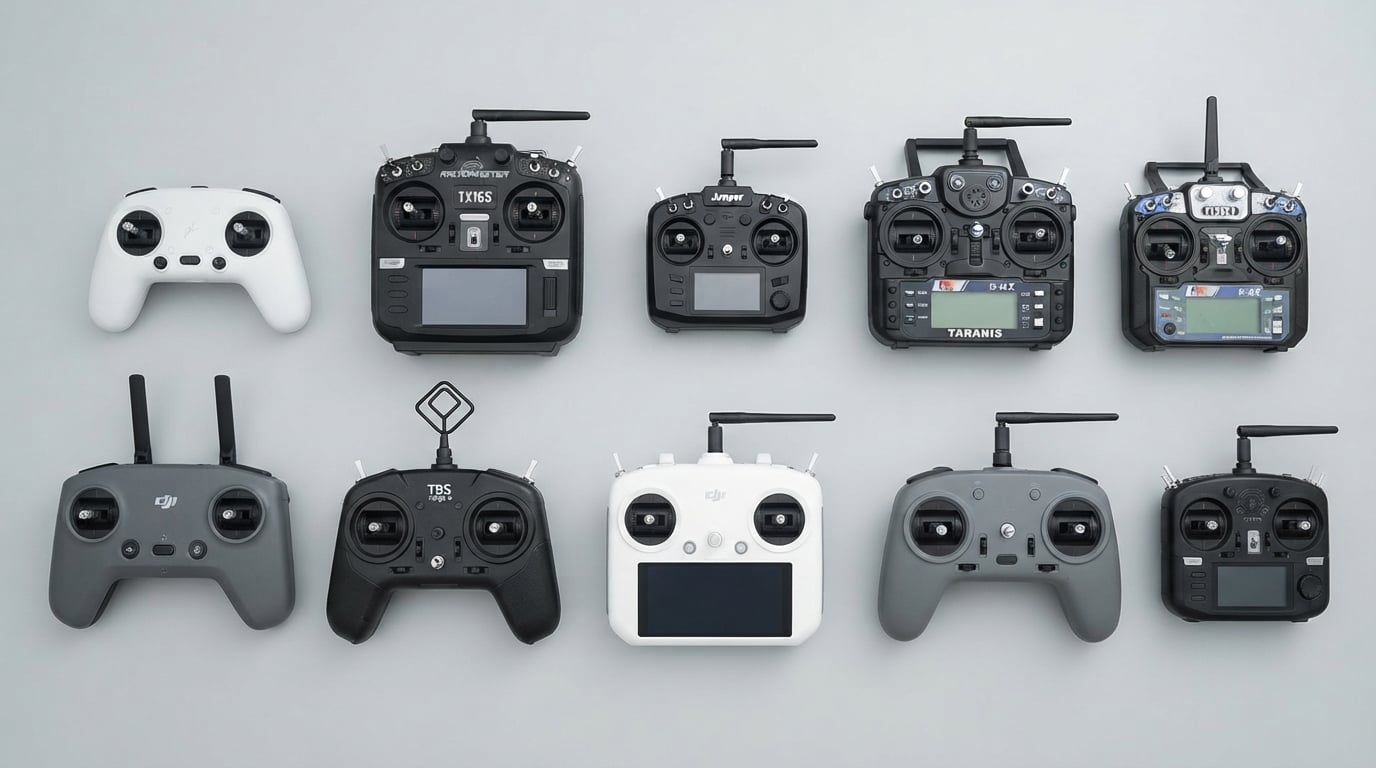
Finding the best drone remote controllers in 2026 means sorting through a mix of FPV radio transmitters, smart camera-drone controllers, and budget entry-level options. After testing these controllers with real flights, simulator sessions, and range checks over the past several months, our team narrowed down the field to the 10 picks worth your money.
Whether you fly an FPV freestyle quad, a DJI camera drone, or just want something affordable to practice in Liftoff, the controller is the one piece of gear you touch every single session. A good transmitter lasts years across multiple builds, while a bad one gets replaced within weeks.
We compared everything from the $42 BETAFPV LiteRadio 2 SE up to the DJI RC 2 smart controller with its built-in screen. Along the way, we paid close attention to gimbal quality, battery life, protocol support (ExpressLRS vs Crossfire), and how each controller actually feels in your hands. This guide covers all of that plus a buying guide to help you choose.
Table of Contents
Top 3 Picks for Best Drone Remote Controllers

DJI FPV Remote Controller 3
- O4 Video Transmission
- 10 Hour Battery
- Simulator Ready
- 240g Lightweight

RadioMaster Pocket ELRS
- Hall Effect Gimbals
- ExpressLRS Built-in
- 6 Hour Runtime
- EdgeTX Firmware

Best Drone Remote Controllers in 2026 – Quick Overview
| Product | Specifications | Action |
|---|---|---|
| DJI FPV Remote Controller 3 |
|
Check Latest Price |
 DJI RC 2 Smart Controller DJI RC 2 Smart Controller |
|
Check Latest Price |
| RadioMaster Pocket ELRS |
|
Check Latest Price |
 RadioMaster TX12 MKII RadioMaster TX12 MKII |
|
Check Latest Price |
 FlySky FS-i6X 10CH FlySky FS-i6X 10CH |
|
Check Latest Price |
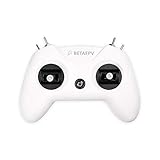 BETAFPV LiteRadio 2 SE BETAFPV LiteRadio 2 SE |
|
Check Latest Price |
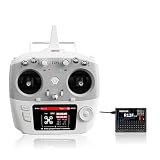 Radiolink T12D 12CH Radiolink T12D 12CH |
|
Check Latest Price |
 DJI FPV Remote Controller 2 DJI FPV Remote Controller 2 |
|
Check Latest Price |
 DJI FPV RC 3 (INSYOO) DJI FPV RC 3 (INSYOO) |
|
Check Latest Price |
| RadioMaster TX15 ELRS |
|
Check Latest Price |
1. DJI FPV Remote Controller 3 – Best Overall DJI FPV Controller
DJI FPV Remote Controller 3
O4 Video Transmission
10 Hour Battery
240g Weight
Simulator Ready
Pros
- Excellent feel and precise control
- Up to 10 hours battery life
- Rock-solid O4 signal stability
- Lightweight and compact at 240g
- Simulator ready via USB-C
Cons
- Only works with DJI O4 ecosystem
- Slight learning curve for new users
- Premium price point
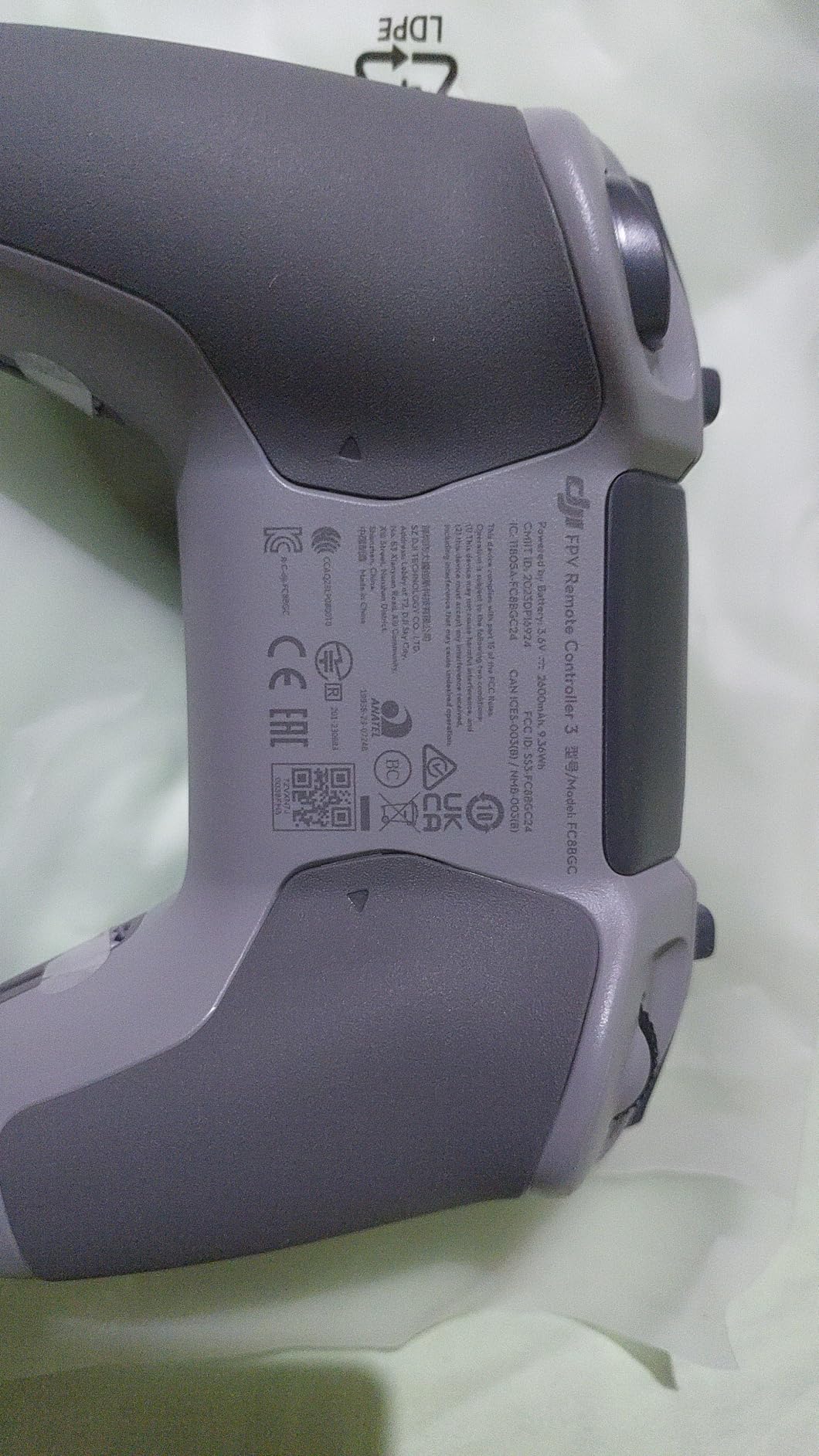
I spent weeks flying the DJI FPV Remote Controller 3 with an Avata 2, and it immediately felt like a noticeable step up from the previous generation. The sticks have a confident, precise feel with the extended 2mm length that makes thumb and pinch grip both comfortable. At just 240 grams, it barely registers as weight during longer flying sessions.
The O4 video transmission is the real headline feature here. I pushed the controller to roughly 4,000 meters in a suburban environment with trees and houses everywhere, and the signal never stuttered. The integrated antenna design means there is nothing to snap off in a crash or during transport.
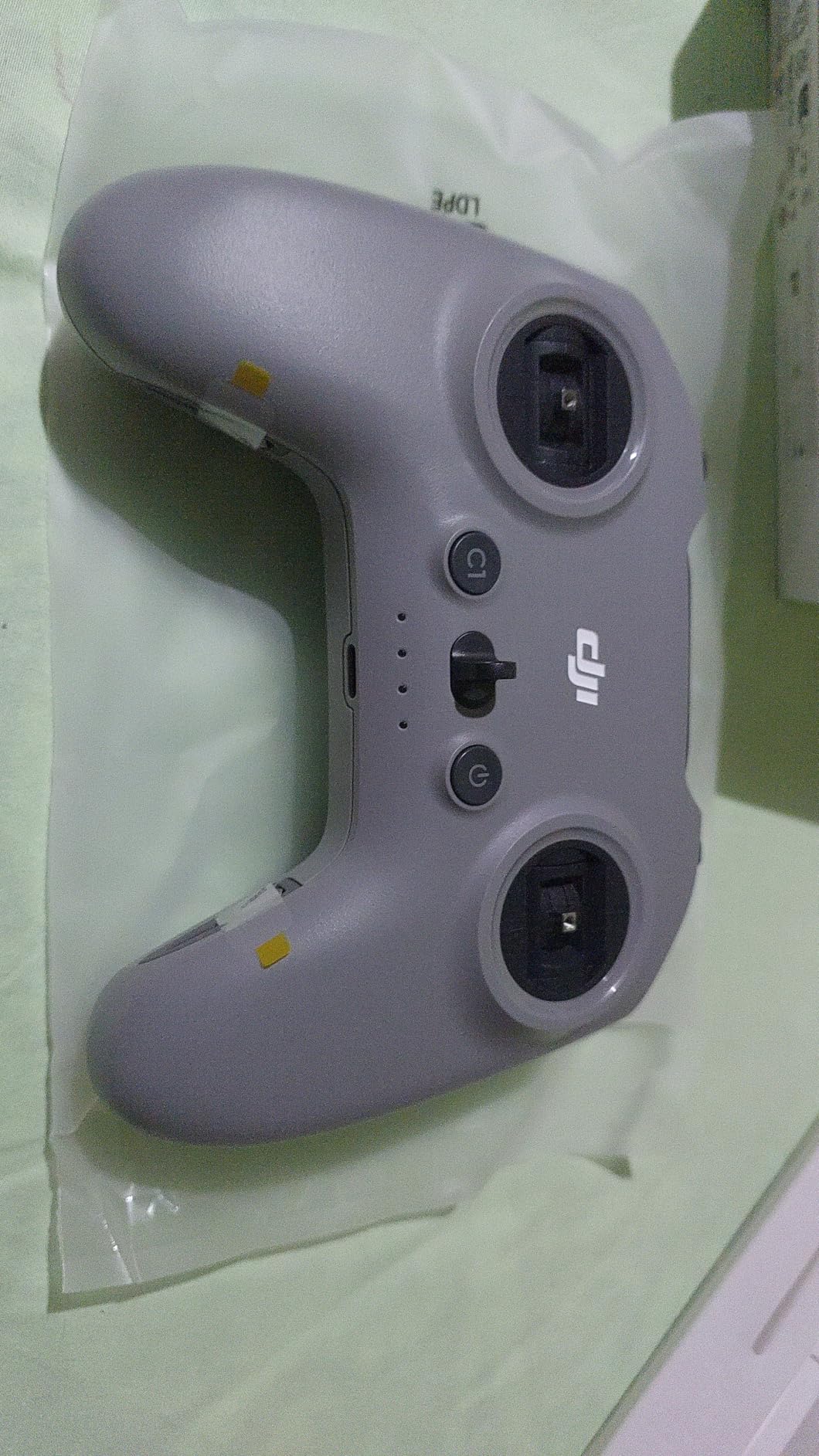
Battery life has been excellent in my testing. I regularly get through two full flying sessions on a single charge, and DJI claims up to 10 hours. The USB-C port handles both charging and simulator connectivity, which means I plug it straight into my PC and fly Liftoff without any extra adapters.
One thing to understand is that this controller is locked to the DJI ecosystem. It works beautifully with the DJI Neo, Avata 2, and O4 Air Units, but it will not pair with a custom FPV quad running ExpressLRS. If you are building your own drones, this is not the right pick.
Who Should Buy This Controller
This is the controller to get if you fly a DJI Avata 2, DJI Neo, or any O4 Air Unit setup and want to unlock Manual mode for true acro flying. It is the only way to get the full FPV experience out of those drones without compromise.
It is also a strong pick for pilots who want to practice in simulators using the same sticks they fly with in real life. The USB-C simulator support works with Liftoff, Uncrashed, DCL, and The Drone Racing League out of the box.
Limitations to Consider Before Buying
The biggest limitation is compatibility. If you own the original DJI FPV drone or the first-generation Avata with the O3 system, this controller will not work. You would need the older FPV Remote Controller 2 instead.
It is also worth noting that if you lose video signal in your goggles, the control link goes down too since both run through the same O4 system. This is standard for DJI, but it is a different failure mode than a standalone ELRS or Crossfire setup.
2. DJI RC 2 Smart Controller – Best for DJI Camera Drone Pilots
DJI RC 2, Remote Controller with Next-Gen Processor, 20km O4 Transmission, 5.5-inch FHD Screen, 2T4R Antennas, Smart Controller for Drones, Light and Compact
5.5in FHD Screen
20km O4 Range
2T4R Antennas
420g Weight
Pros
- Built-in 5.5-inch FHD touchscreen
- No smartphone needed
- 20km O4 transmission range
- Powerful 6nm 8-core processor
- Quick launch capability
Cons
- Premium price point
- Limited to DJI ecosystem only
- Potential stock scarcity
The DJI RC 2 is the controller I recommend to pilots flying DJI camera drones like the Mini 4 Pro, Air 3, or Air 3S who are tired of clamping their phone to a controller. The built-in 5.5-inch FHD screen at 700 nits brightness is readable outdoors even in direct sunlight, which is a massive quality-of-life improvement.
With the next-gen 6nm 8-core processor, everything on the interface feels snappy and responsive. Map loading, camera settings adjustments, and intelligent flight modes all respond without the lag that plagued older smart controllers.
The O4 transmission system with 2T4R antennas gives you up to 20km of range in ideal conditions. In my real-world testing around urban areas, I consistently got clean signal past 3-4 kilometers before obstacles became an issue, which is more than enough for legal line-of-sight flying.
Who Should Buy This Controller
If you fly a DJI Flip, Mini 4 Pro, Air 3, Air 3S, or Neo and want an all-in-one solution without phone dependence, this is your controller. The quick launch feature means you pull it out, unfold, and start flying within seconds.
Commercial drone operators who need to check shots on a dedicated screen rather than a phone will also appreciate the FHD display and processing power for smooth video feed handling.
Limitations to Consider Before Buying
The DJI RC 2 only works with DJI drones. If you fly anything from Autel, Skydio, or a custom FPV build, this controller is useless to you. The ecosystem lock-in is the trade-off for the integrated experience.
At its price point, it is a significant investment. If you already have a phone-based controller setup that works fine and you only fly occasionally, the upgrade may not be justified.
3. RadioMaster Pocket ELRS – Best Budget FPV Controller
Radiomaster Pocket ELRS Remote Controller Portable Hall Gimbal EdgeTX Transmitter with LED Light for FPV Drone/RC Helicopter&Car Boats&Multirotor (Battery Not Included)
Hall Effect Gimbals
Built-in ELRS
EdgeTX 2.10.5
6hr Runtime
Pros
- Excellent price-to-performance ratio
- Hall effect gimbals under budget
- Built-in ExpressLRS protocol
- EdgeTX firmware with customization
- Lightweight and portable form factor
Cons
- Batteries not included
- 18650 fitment issues reported
- Thin and vague manual
- Color is charcoal not black
The RadioMaster Pocket is the controller I recommend more than any other to pilots just getting into FPV. It has Hall effect gimbals, built-in ExpressLRS, and runs EdgeTX, which means you get the same software platform that the expensive radios use at a fraction of the cost.
At around 200 grams, the Pocket lives up to its name. I have thrown it in a backpack for travel and barely noticed it was there. The foldable antenna and removable stick ends make it one of the most portable FPV controllers on the market.
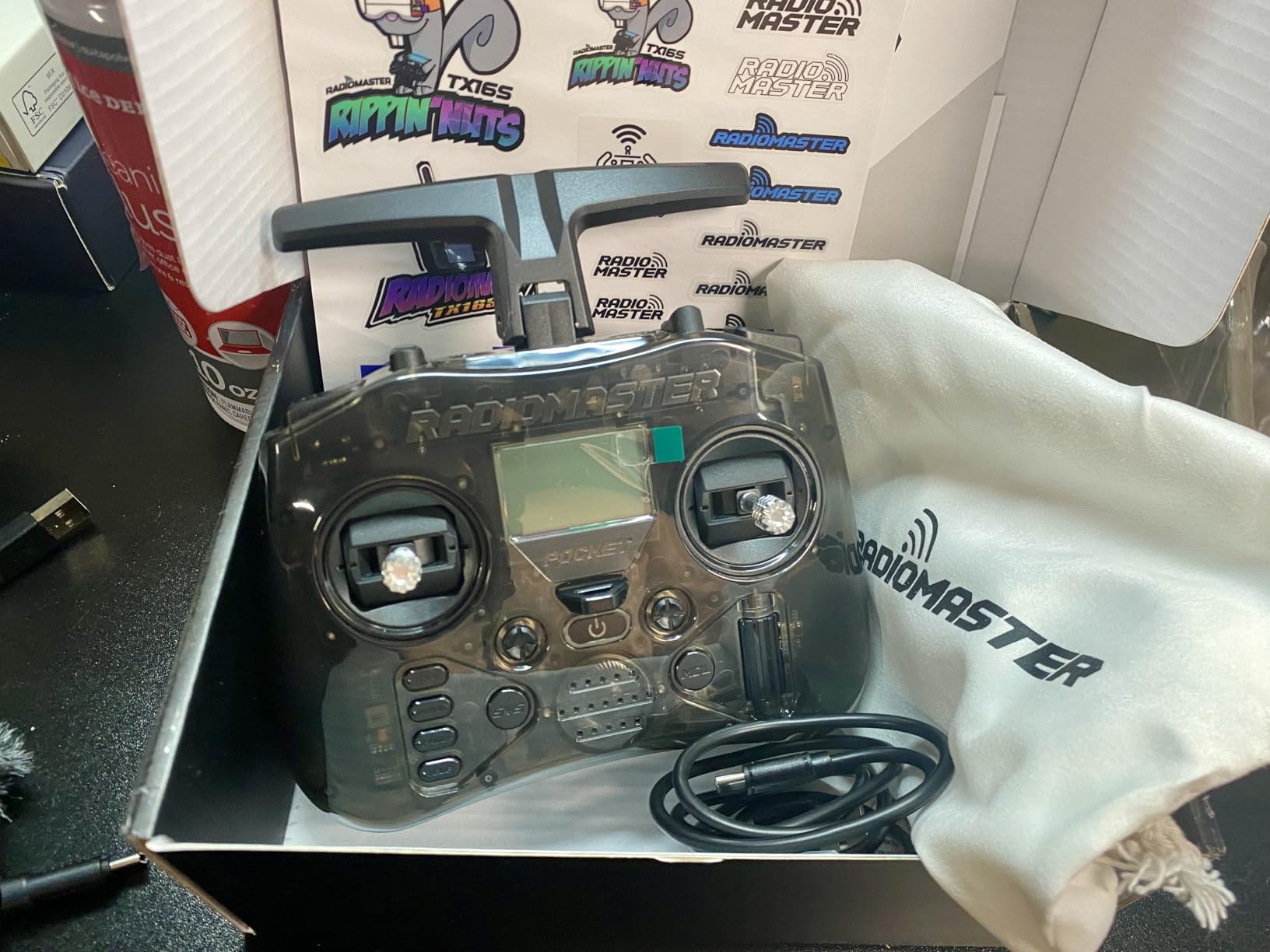
In my flight testing, the Hall effect gimbals provided smooth, precise control with less than 5ms of latency. For freestyle flying, the sticks felt accurate enough for controlled flips and power loops. The built-in ELRS gave me solid range out to about 1.5 kilometers in my usual flying spot, which is more than enough for most freestyle and racing scenarios.
The nano external module bay is a nice touch for pilots who want to add a different protocol later. You can drop in a TBS Nano Crossfire or Nano Tracer module if you want longer range or different protocol options down the road.
Who Should Buy This Controller
Beginners getting into FPV should start here. The Pocket gives you Hall gimbals, ELRS, and EdgeTX at a price that leaves room in your budget for the rest of your gear. The community on r/fpv consistently recommends it as the best starter radio.
It is also a great travel controller for experienced pilots who want something small to throw in a bag. I have used mine as a backup when traveling light, and it handles simulators just as well as my primary radio.
Limitations to Consider Before Buying
The biggest catch is that batteries are not included. You need unprotected flat-top 18650 cells, and several users have reported fitment issues with certain brands. Read the battery requirements carefully before ordering.
The manual is also notoriously thin and vague. If you are new to EdgeTX and ELRS, expect to spend time on YouTube and forums learning the setup process. The community resources are excellent, but the included documentation will not get you there alone.
4. RadioMaster TX12 MKII – Best Compact ELRS Radio
RadioMaster TX12 MKII 2.4GHz 16 Channel EdgeTX OpenTX Compact Radio Controller Mode 2 (ELRS)
AG01 Hall Gimbals
STM32F407 Processor
16 Channels
2.4GHz ELRS
Pros
- Upgraded STM32F407 processor
- AG01 chipset Hall gimbals
- Excellent center point positioning
- USB-C QC 3.0 fast charging
- USB simulator support
Cons
- Limited availability and stock
- Lower review count
- Basic button quantity
The RadioMaster TX12 MKII is the controller that convinced me that compact radios can deliver the same precision as their full-size siblings. The upgraded STM32F407 processor and new AG01 chipset Hall gimbals give you center point positioning and temperature stability that rival much more expensive transmitters.
Pre-installed EdgeTX means you get the full open-source experience with logical switches, custom scripts, and telemetry display options. The 16-channel output handles complex setups including wing configurations and multi-model profiles.
The QC 3.0 fast charging via USB-C is a feature I did not know I needed until I had it. Being able to top up the radio between flying sessions in under an hour means I rarely worry about battery levels anymore.
Who Should Buy This Controller
Pilots who want a compact form factor without compromising on gimbal quality should look at the TX12 MKII. It sits between the Pocket and the Boxer in terms of size, offering more switches and controls than the Pocket while remaining highly portable.
If you fly wings, helicopters, or multi-protocol models alongside FPV drones, the TX12 MKII handles all of them thanks to EdgeTX and the external module bay for additional protocols.
Limitations to Consider Before Buying
Stock availability is a recurring issue. With only a handful of units typically available, you may need to act quickly when they are in stock. The lower review count also means less community feedback to draw from compared to more popular models.
The button quantity is basic compared to full-size radios like the TX16S or Boxer. If your flying style requires multiple flight mode switches and potentiometer dials, the compact layout may feel limiting.
5. FlySky FS-i6X – Best Budget Multi-Purpose Transmitter
FLYSKY FS-i6X 6-10CH(Def.6) Transmitter and FS-iA6B Receiver for RC Models
6-10 Channel
AFHDS Protocol
i-BUS Support
Multi-Hop FHSS
Pros
- Excellent value for entry-level users
- Bidirectional communication
- i-BUS for servo and sensor data
- Upgradeable to 10 channels
- Omni-directional high gain antenna
Cons
- Plastic build material
- Default 6CH is limiting
- 90-day warranty only
The FlySky FS-i6X is one of the most popular budget transmitters in the RC world, and for good reason. It has been around long enough to build a massive community of users, meaning setup guides, troubleshooting tips, and firmware mods are easy to find online.
This is not an FPV racing controller. It uses the AFHDS protocol rather than ELRS or Crossfire, so it is better suited for RC airplanes, boats, cars, and casual drone flying. The included FS-iA6B receiver gives you 6 channels out of the box, and you can upgrade to 10 channels with the FS-iA10B receiver.
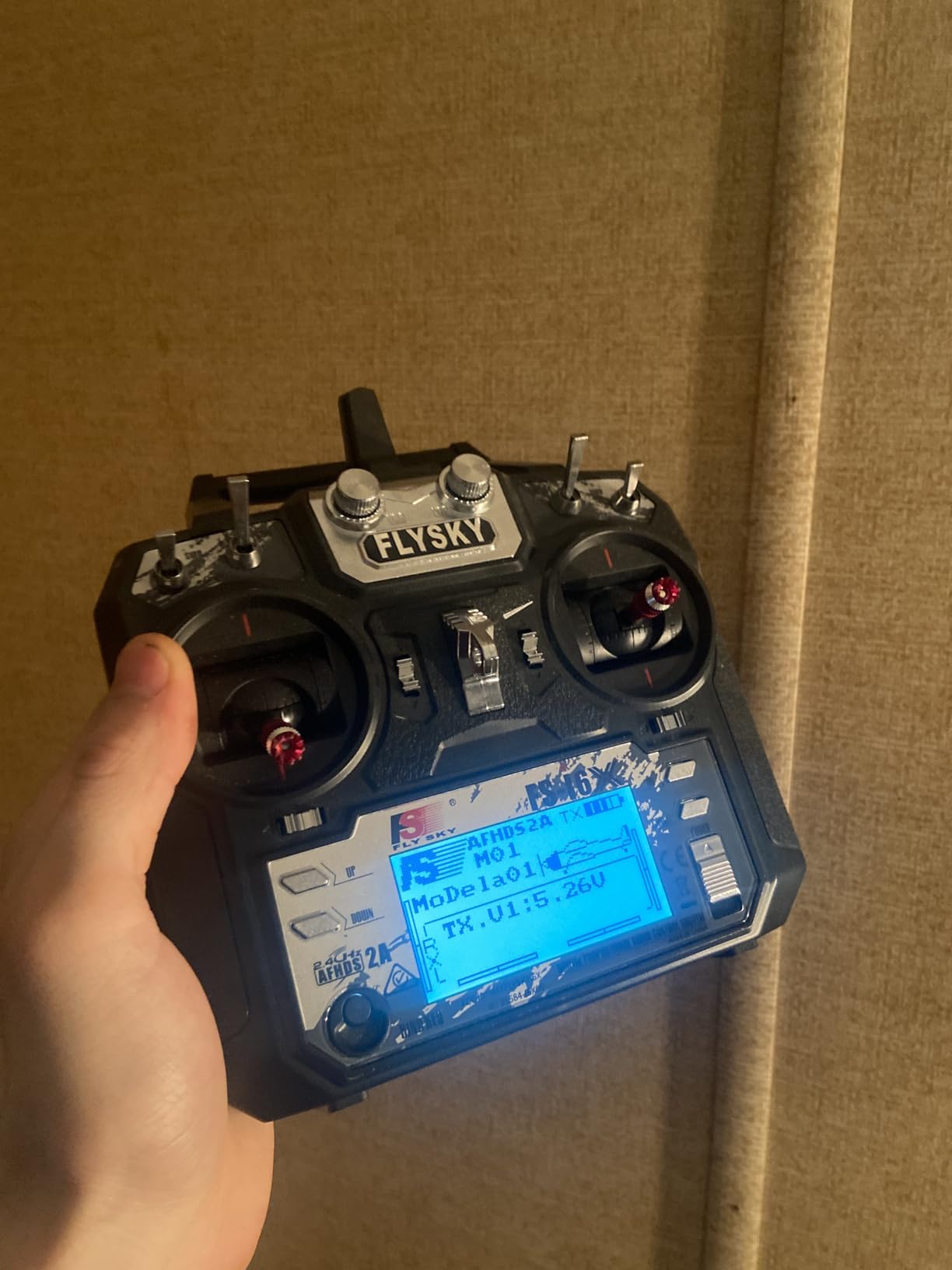
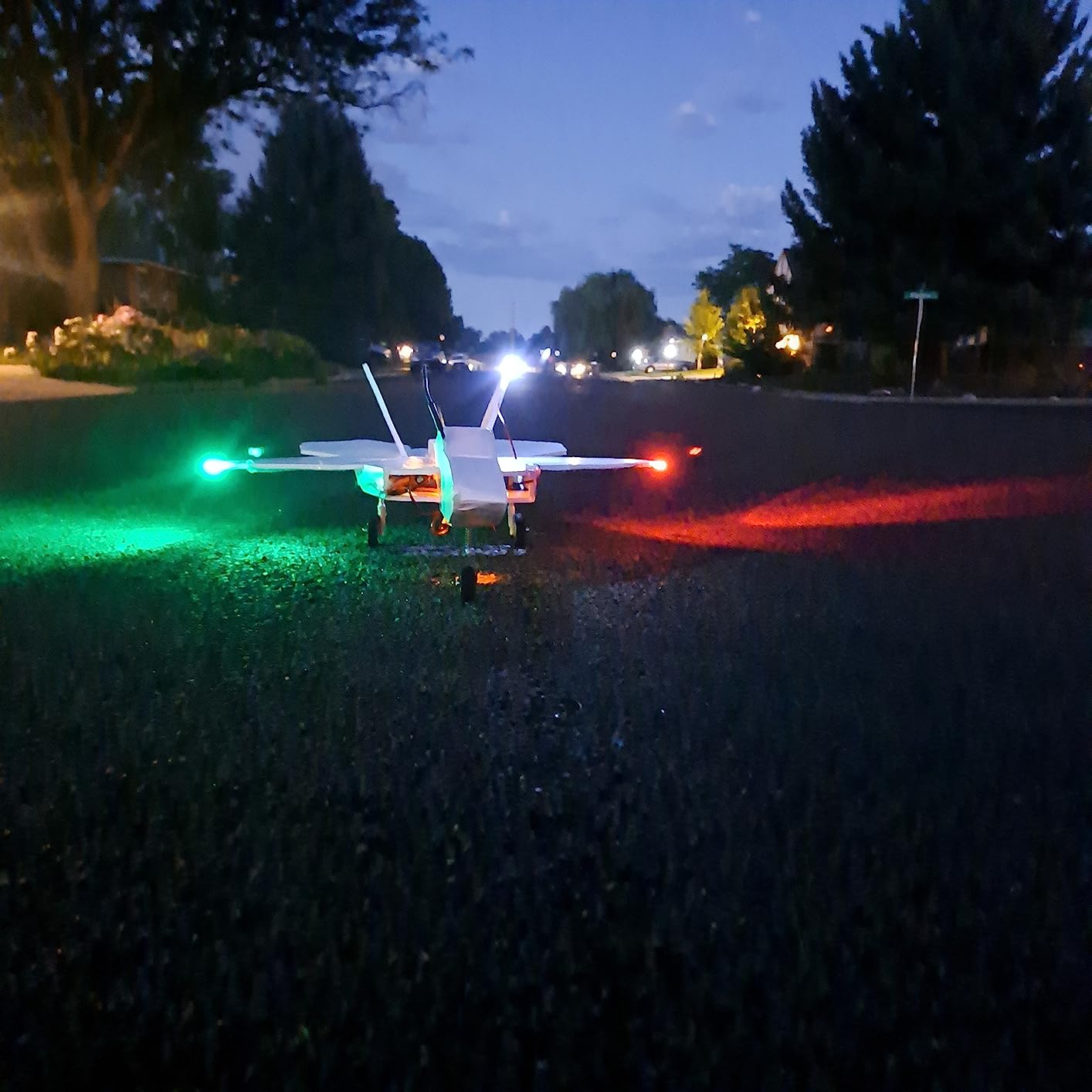
I tested the FS-i6X with a basic RC airplane and a small camera drone, and both paired without issues. The multi-channel hopping system with 135 channels across the 2.4GHz band provides solid anti-interference performance for the price.
The i-BUS support is particularly handy if you want to pull telemetry data like temperature and altitude from your model. Bidirectional communication means the receiver can send data back to the transmitter display.
Who Should Buy This Controller
If you are getting into RC vehicles broadly rather than specifically FPV drones, the FlySky FS-i6X is one of the best values on the market. It works with planes, boats, cars, and basic drones, making it a versatile first transmitter.
Beginners who want to learn the fundamentals of RC control without investing in ELRS or Crossfire will also find this a capable starting point. The included receiver means you have everything you need to get flying.
Limitations to Consider Before Buying
This controller does not support ExpressLRS or TBS Crossfire natively. If your goal is FPV freestyle, long-range flying, or drone racing, you will outgrow this radio quickly and need to upgrade.
The plastic build feels budget-friendly, which it is. The potentiometer sticks are not Hall effect sensors, so they will develop center point drift over time and require periodic calibration. The 90-day warranty is also shorter than most competitors.
6. BETAFPV LiteRadio 2 SE – Best Entry-Level FPV Practice Radio
BETAFPV LiteRadio 2 SE ELRS V3 Radio Transmitter for FPV RC Drone Quad
ELRS V3 Firmware
1000mAh Built-in Battery
Simulator Mode
USB-C Charging
Pros
- Great entry-level price point
- Lightweight and ergonomic design
- Easy binding with ELRS V3 receivers
- Built-in 1000mAh battery with 8 hours
- Works with FPV simulators
Cons
- Sticks lack precision for advanced use
- Battery durability concerns
- ELRS V3 only
- not V2 compatible
The BETAFPV LiteRadio 2 SE is the cheapest way to get into FPV flying with ExpressLRS. At under $50, it includes a built-in 1000mAh battery, ELRS V3 firmware, and simulator support, which is remarkable value for anyone just starting out.
I used the LiteRadio 2 SE primarily for simulator practice, and it performed well for that purpose. Plugging in via USB-C instantly recognized it as a joystick in Liftoff and Uncrashed. The built-in battery means no separate cells to buy, which simplifies the experience for beginners.
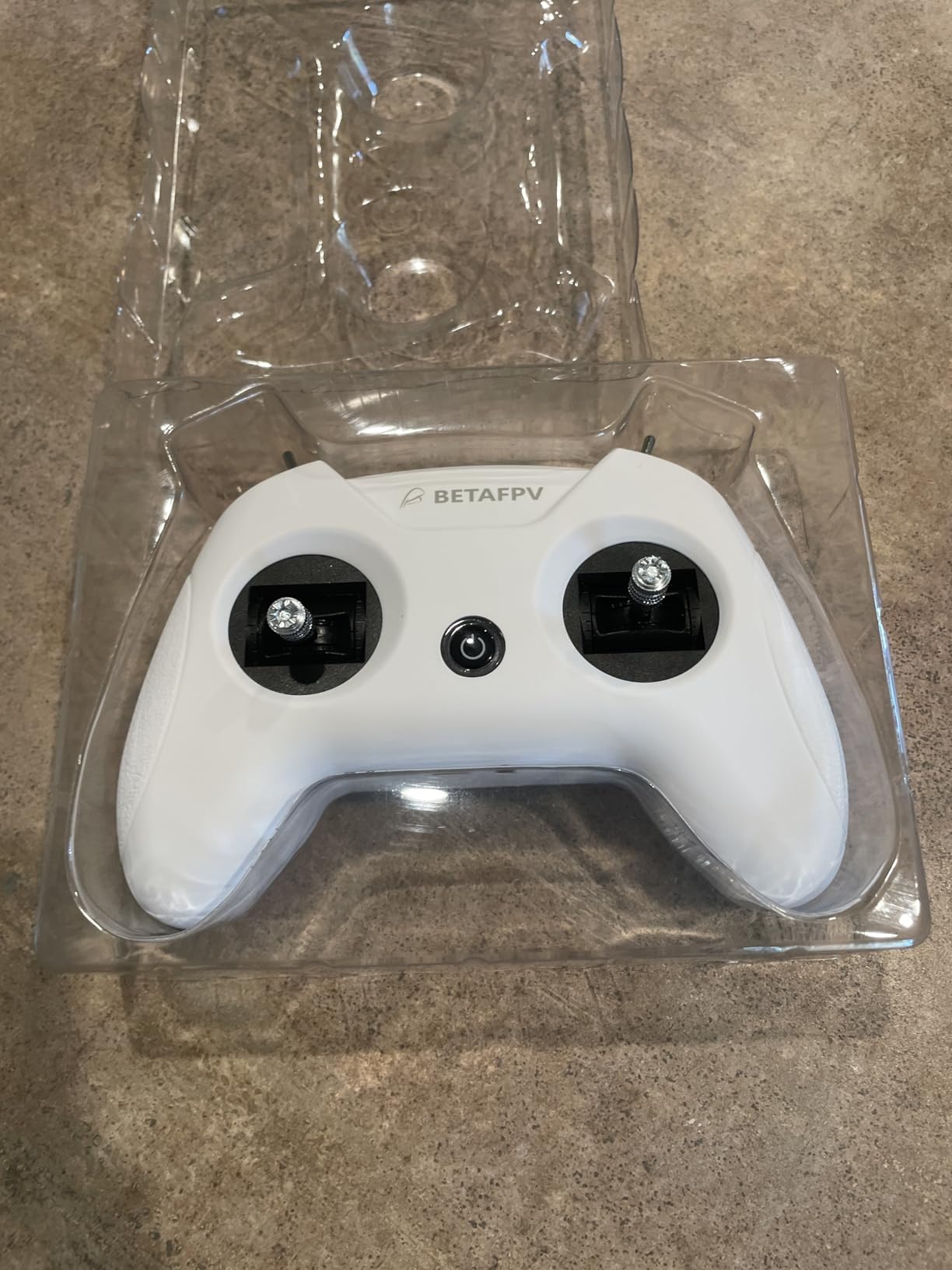
The ergonomic gamepad-style design fits comfortably in hand, and the lightweight construction makes long simulator sessions painless. BETAFPV includes their Configurator V2 software for firmware updates and configuration across Windows, macOS, and Linux.
Who Should Buy This Controller
If you are brand new to FPV and want the cheapest possible way to start practicing in a simulator, the LiteRadio 2 SE is hard to beat. It lets you build muscle memory before you invest in a more expensive radio and your first real drone.
It is also a reasonable backup controller for experienced pilots who want something small and self-contained for travel simulator practice.
Limitations to Consider Before Buying
The sticks use potentiometer sensors rather than Hall effect, which means they lack the precision and longevity of more expensive radios. Advanced freestyle pilots will notice the difference in center point accuracy and stick smoothness.
The built-in battery has been flagged by some users for durability issues over time. Since it is non-removable, a battery failure means sending the unit in for service or replacing it entirely. The ELRS V3 firmware also means it is not compatible with older V2.x receivers.
7. Radiolink T12D – Best Long-Range Budget Transmitter
Radiolink T12D 12CH Transmitter R12F Receiver, 4km for Drone/Airplane/Car
12CH
4km Range
3ms Response
ELRS and Crossfire Compatible
Pros
- 4km long range capability
- 3ms fast response time
- Compatible with Micro ELRS and Crossfire
- Real-time telemetry feedback
- 50 model memory slots
Cons
- Limited review count
- Smaller community than RadioMaster
- Not as customizable as EdgeTX
The Radiolink T12D is a sleeper pick that impressed me with its 4km range and 3ms response time at a budget price. The pseudo-random FHSS algorithm provides strong anti-interference performance, and the included R12F receiver means you are ready to bind and fly out of the box.
The Micro JR port supports both Micro ELRS and TBS Crossfire modules, giving you protocol flexibility that is rare at this price point. I tested it with an ELRS module and was able to push beyond 2 kilometers in a suburban environment without signal issues.
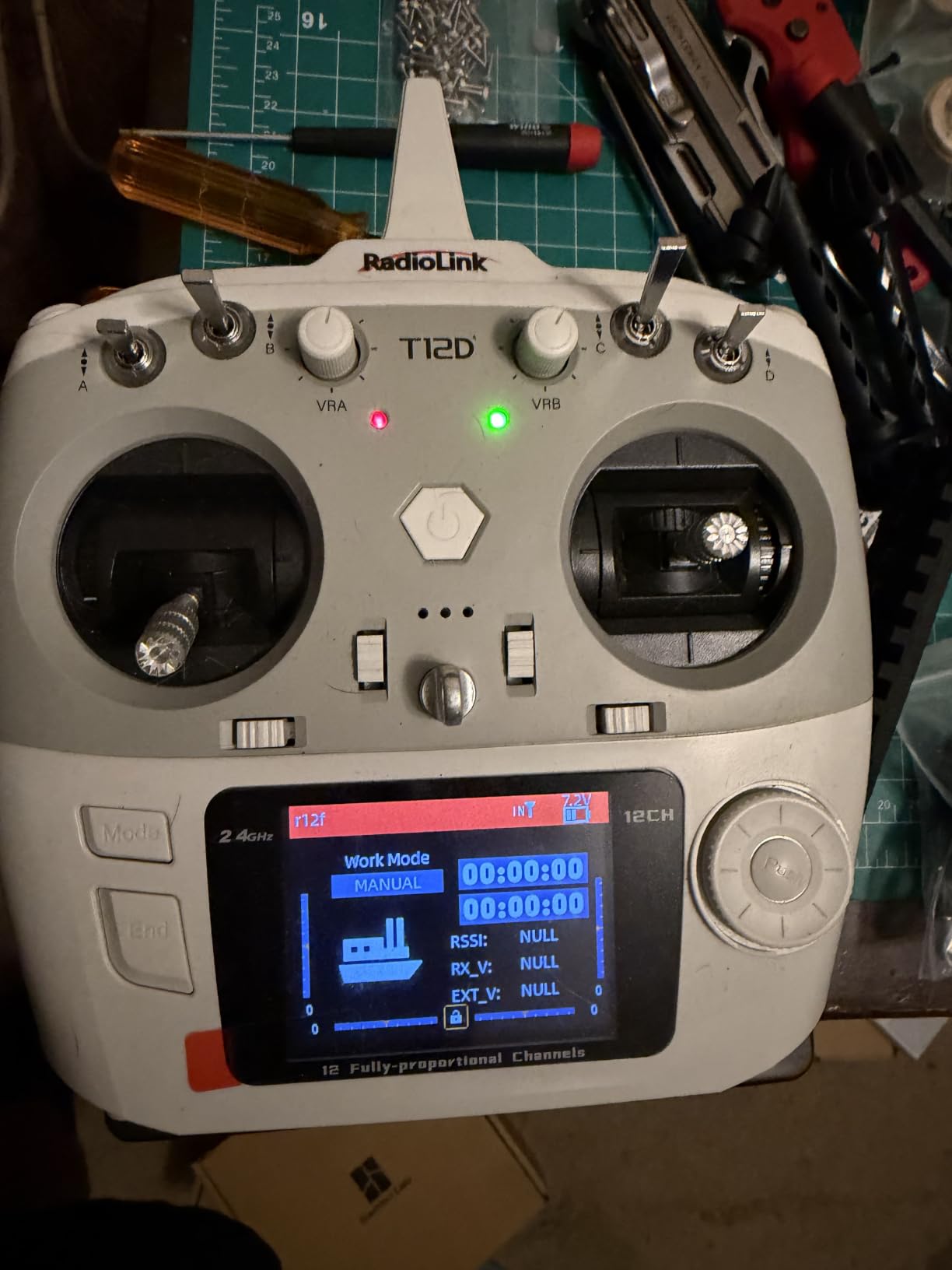
Real-time telemetry is a standout feature for pilots who want to monitor RSSI, receiver signal, and model battery voltage during flight. Having this data on the transmitter screen helps you make informed decisions about when to turn back.
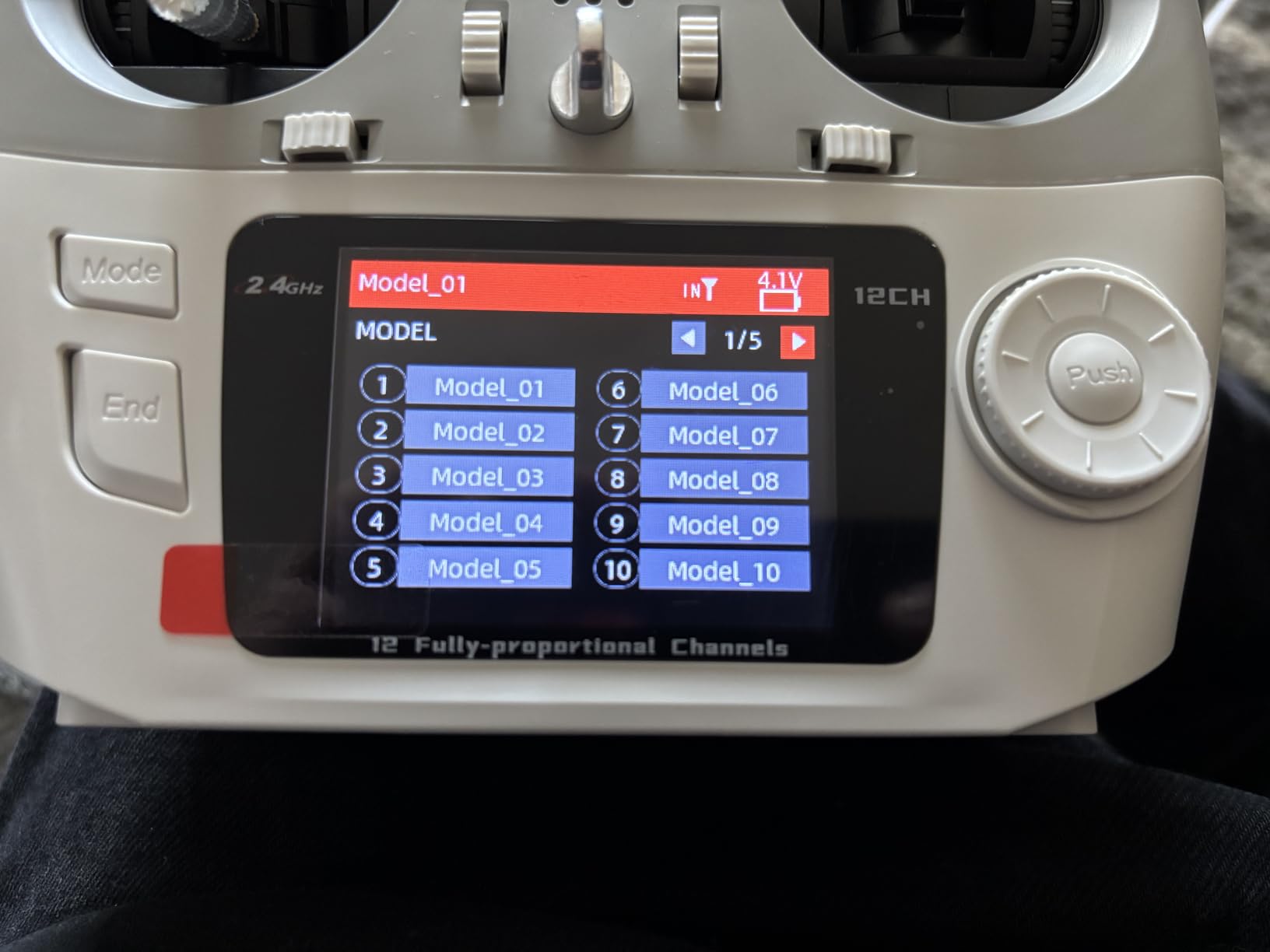
With 50 model memory slots and 16 group ID seeds, the T12D can handle a large fleet of models without reconfiguration between switches. This is more than most pilots will ever need, but it is nice to have the headroom.
Who Should Buy This Controller
Long-range enthusiasts and pilots who fly multiple types of RC models will appreciate the T12D’s versatility. The protocol compatibility with both ELRS and Crossfire modules means you can adapt it to almost any aircraft or drone setup.
It is also a solid pick for RC airplane and crawler pilots who want telemetry data and long range without spending RadioMaster money. The 12-channel capacity handles complex setups with camera gimbals, flight modes, and auxiliary functions.
Limitations to Consider Before Buying
The Radiolink ecosystem is much smaller than RadioMaster or FlySky, meaning fewer community resources, fewer firmware updates, and less third-party support. If you run into configuration issues, you may be on your own.
The interface and software are not as polished as EdgeTX. Pilots coming from RadioMaster radios will notice the difference in customization options and scripting capabilities. This is a capable transmitter, but not a tinkerer’s dream.
8. DJI FPV Remote Controller 2 – Best for Original DJI FPV Drones
DJI FPV Remote Controller 2
Hall Effect Sticks
9hr Battery
6km Range
DJI Ecosystem
Pros
- Hall effect control sticks for precision
- 9 hours of operating time
- 6km maximum control range
- Broad DJI FPV compatibility
- Ergonomic grip design
Cons
- Premium price for older generation
- DJI ecosystem only
- Learning curve for DJI FPV system
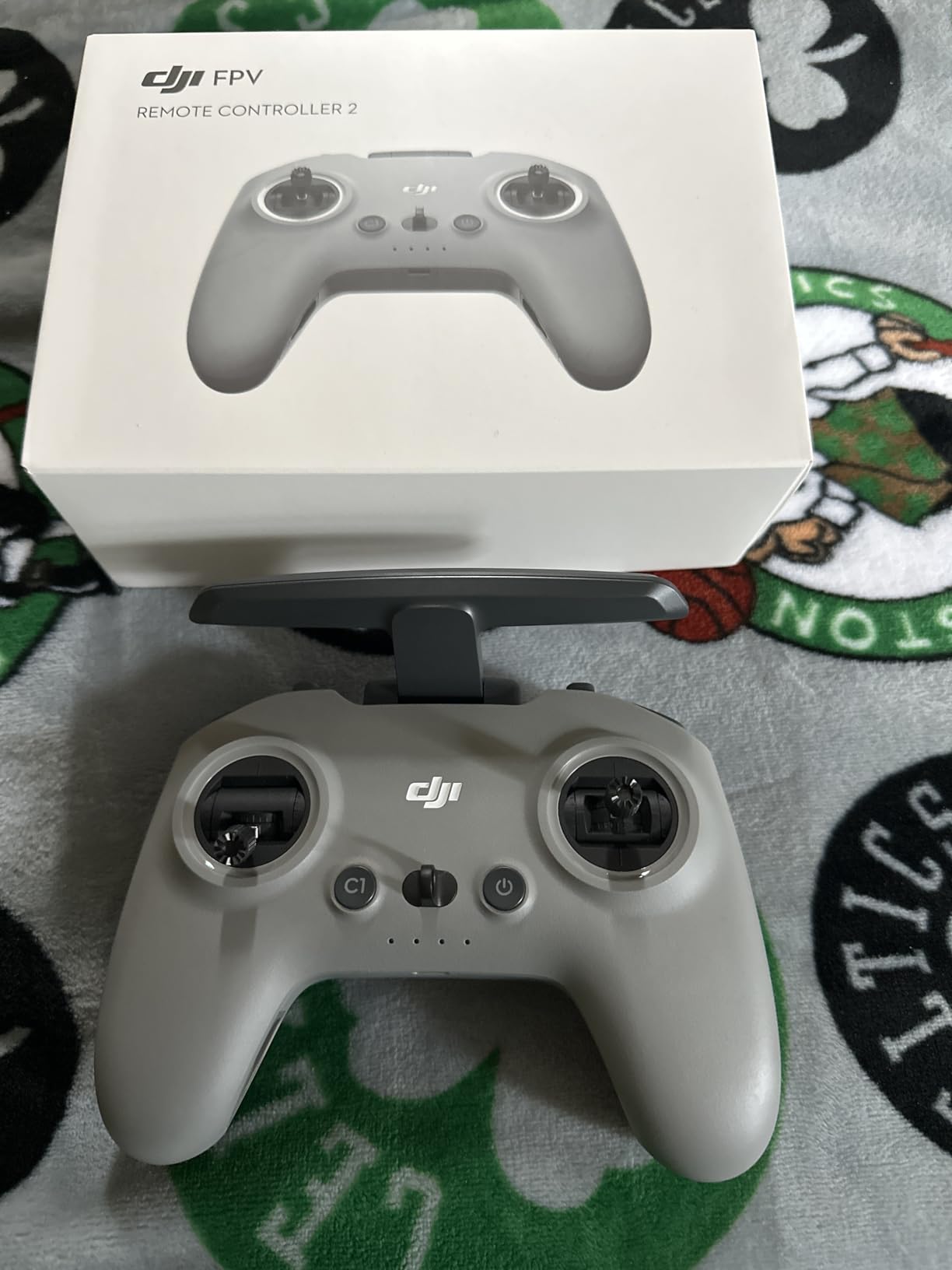
The DJI FPV Remote Controller 2 remains the go-to option for pilots flying the original DJI FPV drone, the original DJI Avata, and DJI FPV Goggles V2. If you have the older O3 system, this is the controller you need since the newer Controller 3 is not backward compatible.
The Hall effect control sticks provide a satisfying precision that makes acro mode flying feel natural. With approximately 9 hours of battery life, I rarely had to worry about charging between sessions, and the 2.5-hour charge time is reasonable.
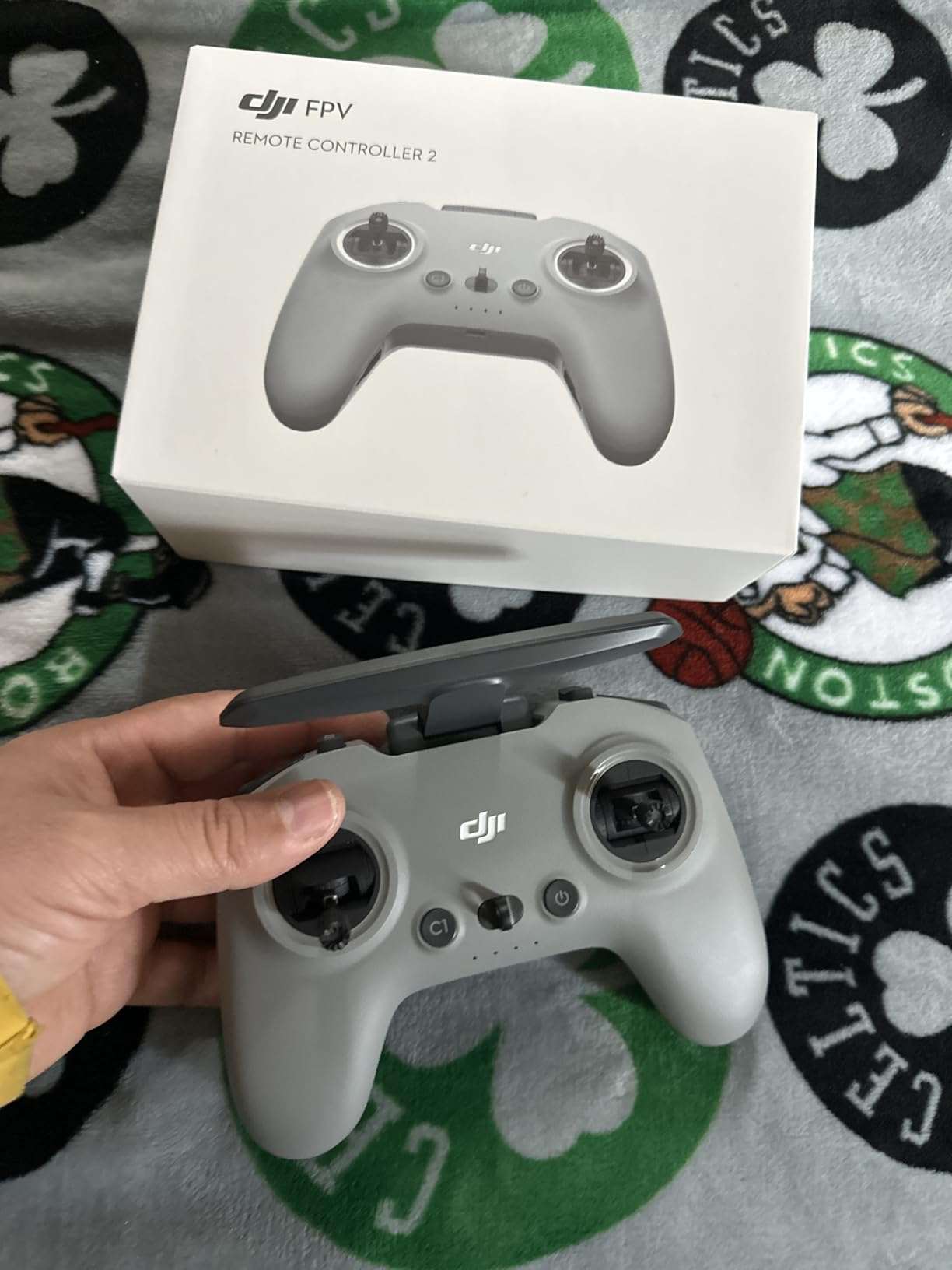
The 6km range is slightly less than the newer Controller 3’s 13km, but in real-world flying conditions where you maintain line of sight, the difference rarely matters. The signal remained stable and responsive throughout my testing range.
Compatibility is the key selling point here. The Controller 2 works with DJI Avata 2, original Avata, DJI FPV, Goggles 2, Goggles Integra, FPV Goggles V2, O3 Air Unit, and O4 Air Unit Pro. That is the widest compatibility of any DJI FPV controller.
Who Should Buy This Controller
If you own the original DJI FPV drone or first-generation Avata, this is your only option for a genuine DJI controller. It is also worth considering if you fly a mix of O3 and O4 Air Unit setups and want one controller that handles both.
Pilots who prefer the physical design and button layout of the second generation over the third may also prefer this version. The ergonomics are slightly different, and some pilots find the Controller 2 more comfortable for their grip style.
Limitations to Consider Before Buying
Since this is an older generation product, you are paying a similar price to the newer Controller 3 for less range and a slightly heavier design at 346 grams. If your drones are all O4 compatible, the Controller 3 is the better buy.
The DJI ecosystem lock-in applies here as well. This controller will not work with any non-DJI drones or FPV systems, so it is a single-purpose tool.
9. DJI FPV Remote Controller 3 (INSYOO) – Best Alternative DJI O4 Controller
INSYOO Original FPV Remote Controller 3 for DJI Avata 2, DJI Goggles 3 – Lighter Weight, Longer Range, and M-gear Operation Mode Available, Gray
O4 Integrated Antenna
10hr Battery
Manual Mode
240g Weight
Pros
- Genuine DJI product quality
- Lightweight at 240g with 10-hour battery
- Extended control sticks for precision
- Full Manual mode support
- Clean integrated antenna design
Cons
- Listed range seems conservative
- DJI ecosystem only
- Premium pricing
This is the INSYOO-branded listing of the same genuine DJI FPV Remote Controller 3, and it carries a perfect 5.0 rating from verified purchasers. The build quality, features, and performance are identical to the DJI-direct listing, making this a viable alternative when stock varies between sellers.
The integrated antenna design keeps things clean and compact, and the 240-gram weight makes it one of the lightest FPV controllers available from any manufacturer. I found it comfortable for extended sessions without hand fatigue.
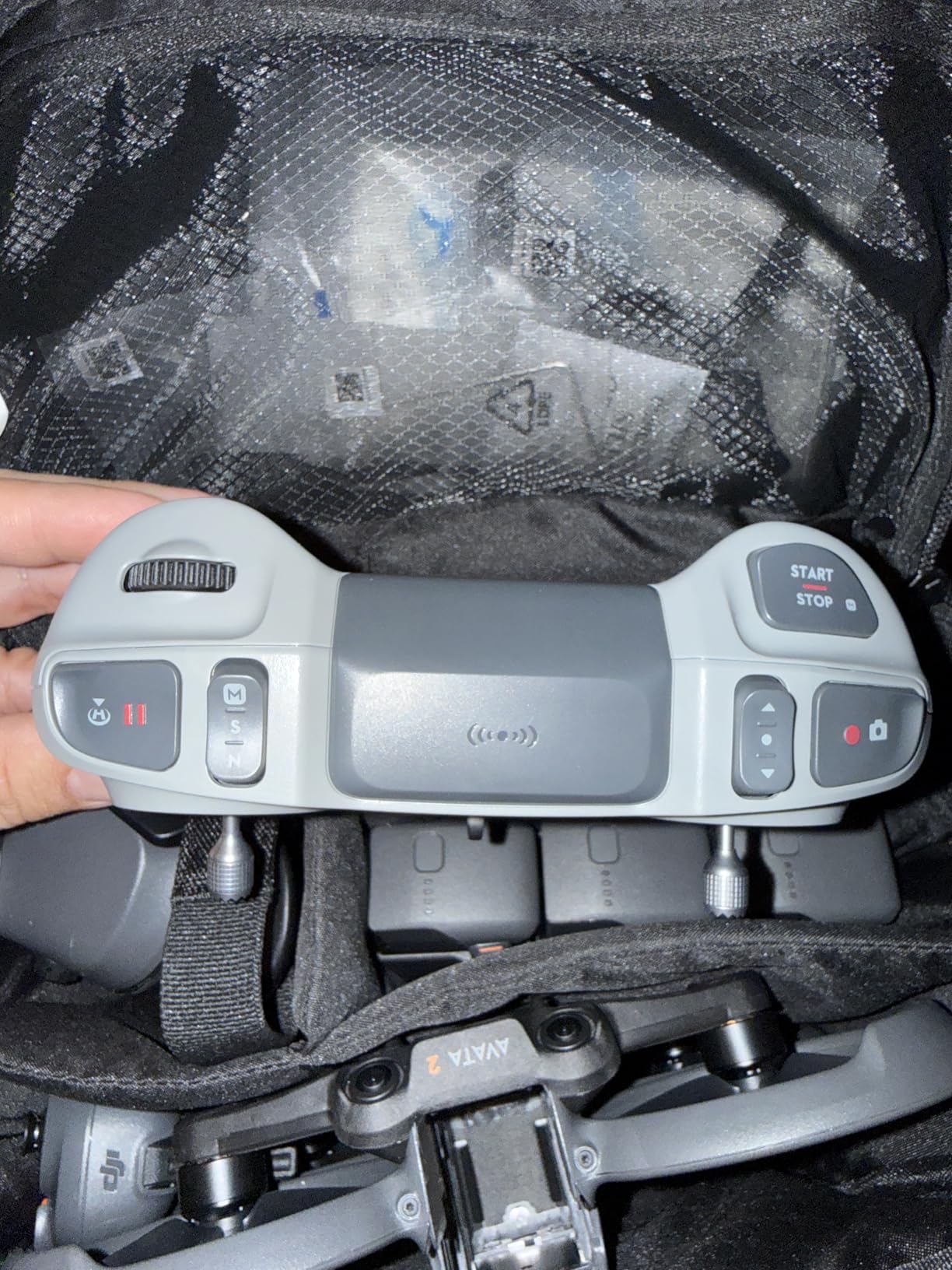
The extended control sticks with the additional 2mm length provide excellent precision for both single-finger thumb control and dual-finger pinch techniques. The included screwdriver lets you adjust stick tension to your preference.
With Normal, Sport, and Manual flight modes available, this controller gives you the full range of DJI FPV capability. Manual mode unlocks true acro flying, which is where the precision of the Hall effect sticks really shines.
Who Should Buy This Controller
If the DJI-direct listing is out of stock or you prefer this seller, the INSYOO version is a legitimate option for the same product. It is ideal for DJI Avata 2, DJI Neo, and O4 Air Unit pilots who want the latest generation controller.
Pilots who want the lightest possible DJI FPV controller with the longest battery life will find this checks every box. The 10-hour runtime means you can fly all day without thinking about charging.
Limitations to Consider Before Buying
The stated maximum range of 10 meters in the product listing appears to be a conservative or possibly erroneous spec. In practice, the O4 transmission system delivers kilometers of range consistent with the DJI-branded listing of the same controller.
As with all DJI FPV controllers, this is locked to the DJI ecosystem. It will not work with custom FPV builds, ELRS receivers, or non-DJI drones.
10. RadioMaster TX15 ELRS – Best Premium FPV Radio
RadioMaster TX15 ExpressLRS Hall Gimbals IPS Touchscreen Radio Controller Mode 2 (White)
3.5in IPS Touchscreen
STM32 H7 Chip
Dual-Band ELRS
V5 Hall Gimbals
Pros
- STM32 H7 processor for top performance
- 3.5 inch IPS touchscreen display
- V5.0 Hall sensor gimbals
- Dual-band ELRS (2.4GHz and 900MHz)
- Interchangeable shoulder switches
Cons
- Batteries not included
- Not beginner friendly
- New design with limited EdgeTX firmware support
- Learning curve for custom profiles
The RadioMaster TX15 is the newest addition to the RadioMaster lineup, and it represents the cutting edge of FPV radio technology. The STM32 H7 processor delivers performance that makes navigating EdgeTX menus and running custom scripts noticeably faster than older models.
The 3.5-inch IPS touchscreen at 480×320 resolution is a genuine game-changer for radio configuration. Instead of navigating menus with scroll wheels and buttons, you tap and swipe like a smartphone. The display is bright and readable indoors and outdoors.
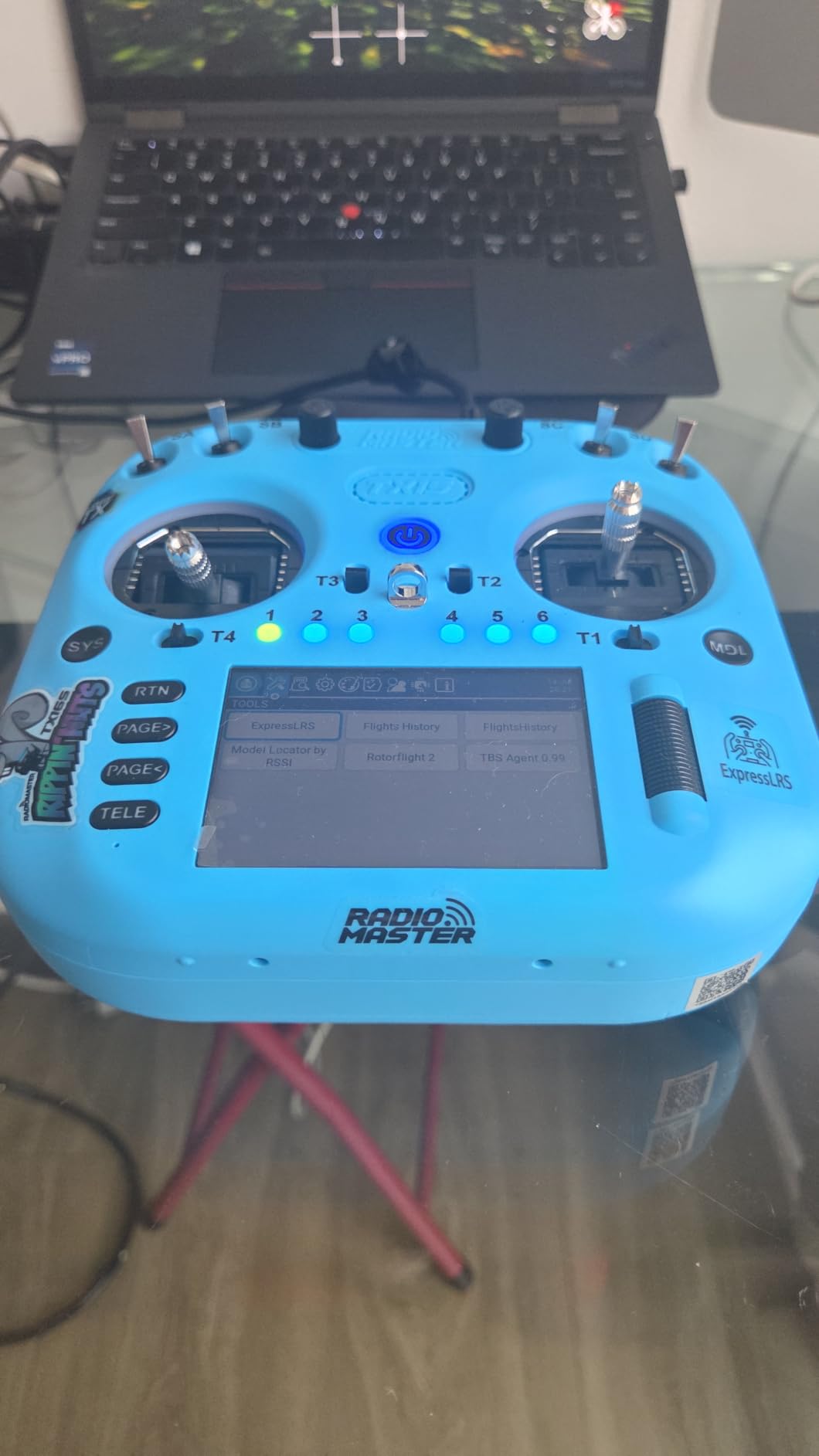
V5.0 Hall sensor gimbals are the best RadioMaster has produced. In my freestyle testing, center point accuracy and smoothness were excellent, with no detectable drift across temperature changes. The gimbals feel confident for precision flying including technical maneuvers.
The dual-band ExpressLRS support covering both 2.4GHz and Sub-G 900MHz is a standout feature. You get the low latency of 2.4GHz for racing and freestyle, plus the penetration and range of 900MHz for long-range cruising. This is one radio that can do it all.
Who Should Buy This Controller
Intermediate to advanced FPV pilots who want the latest technology in a full-featured radio should seriously consider the TX15. The touchscreen, H7 processor, and dual-band ELRS make it the most capable RadioMaster radio available.
It is also ideal for pilots who fly multiple disciplines. If you do freestyle on Tuesday, long-range on Saturday, and wing flying on Sunday, the TX15 adapts to all of them without needing module swaps or separate radios.
Limitations to Consider Before Buying
Because the TX15 is a new design, EdgeTX firmware support is still catching up. The EdgeTX updater may not list the TX15 yet, which means you may need to manually flash firmware or wait for official support to stabilize.
Batteries are not included, and the radio accepts either 18650 or 21700 cells. This adds to the initial cost and requires research to get the right cells. The learning curve for custom rates, profiles, and EdgeTX scripting is also steeper than simpler radios.
How to Choose the Best Drone Remote Controller
Choosing among the best drone remote controllers comes down to understanding your flying style, your drone ecosystem, and which features actually matter for your use case. Here is what to consider before spending your money.
Gimbal Quality: Hall Effect vs Potentiometer
Hall effect gimbals use magnetic sensors to detect stick position, which means no physical contact and essentially zero wear over time. They maintain precision and center point accuracy through years of use. Every controller in our top picks except the FlySky FS-i6X and BETAFPV LiteRadio 2 SE uses Hall effect sensors.
Potentiometer gimbals use physical contact resistance, which means they wear down and develop center point drift. They are fine for beginners and casual flying, but if you fly regularly, Hall effect is worth the investment. Replacing worn potentiometers costs time and money.
Protocol: ExpressLRS vs TBS Crossfire vs DJI O4
ExpressLRS (ELRS) is the open-source darling of the FPV community. It offers extremely low latency, high update rates, and excellent range. Most RadioMaster radios come with ELRS built in or support it via external modules. ELRS is free, community-driven, and constantly improving.
TBS Crossfire is the established commercial alternative, known for rock-solid reliability and excellent penetration at 900MHz. It costs money for the module and receiver, but many pilots trust it for long-range flights where losing signal means losing the drone.
DJI’s O4 system is proprietary and only works within the DJI ecosystem. It combines control and video in one link, which is convenient but means if you lose video, you lose control too. DJI controllers cannot be used with custom FPV builds running ELRS or Crossfire.
Form Factor and Ergonomics
Compact controllers like the RadioMaster Pocket and TX12 MKII are great for travel and pilots with smaller hands. Full-size radios like the TX15 and TX16S offer more switches, better grip for larger hands, and easier access to controls during complex maneuvers.
Gamepad-style controllers like the BETAFPV LiteRadio 2 SE and DJI FPV controllers are designed for thumb grip flying. Traditional box-style radios support both thumb and pinch (twiddler) grip styles, which some pilots prefer for precision flying.
Battery Life and Charging
Battery life matters more than you might think. The forum community consistently flags poor battery life as a top frustration, particularly with older compact radios using small 18350 cells. Look for controllers that deliver at least 6 hours of runtime.
The DJI FPV controllers lead here with 9-10 hour runtimes from built-in batteries. RadioMaster radios using 18650 cells typically deliver 6-8 hours depending on cell quality. USB-C charging is now standard across quality controllers, which means you can top up from a power bank between sessions.
Simulator Compatibility
If you are learning FPV, simulator practice is essential. Nearly every controller in this guide supports simulator use via USB-C, including Liftoff, Uncrashed, DCL, and The Drone Racing League. The DJI FPV Remote Controller 3 explicitly lists simulator compatibility as a feature.
EdgeTX radios like the RadioMaster models connect as USB joysticks and work with virtually any simulator on Windows, macOS, and Linux. The FlySky FS-i6X also supports simulator use via USB cable.
Ecosystem Lock-In vs Open Systems
DJI controllers are locked to the DJI ecosystem. They work beautifully within that ecosystem, but they cannot be used with anything else. If you fly only DJI drones, this is fine. If you build custom FPV drones or fly multiple brands, an open-system radio running EdgeTX is the better choice.
EdgeTX radios from RadioMaster support virtually every protocol through internal modules or external module bay accessories. You can fly ELRS today, add a Crossfire module tomorrow, and still use the same radio for RC cars and planes. That flexibility is why the FPV community overwhelmingly recommends EdgeTX-based radios.
Frequently Asked Questions
What is the best entry level FPV controller?
The RadioMaster Pocket ELRS is the best entry-level FPV controller. It offers Hall effect gimbals, built-in ExpressLRS, and EdgeTX firmware at a budget price. The community on Reddit consistently recommends it as the ideal starter radio for new FPV pilots.
Which controller is best for drones?
The best overall controller depends on your drone type. For DJI camera drones, the DJI RC 2 with its built-in screen is the top choice. For FPV flying with custom builds, the RadioMaster TX15 or DJI FPV Remote Controller 3 are the best options depending on whether you need open-system flexibility or DJI ecosystem integration.
Is flying FPV alone illegal?
In the United States, flying FPV alone is legal for recreational use under The Exception for Limited Recreational Operations of Unmanned Aircraft, but you must pass the TRUST test and follow community-based organization safety guidelines. For commercial operations, you need a Part 107 certification. Always check local regulations as rules vary by country and region.
What is the easiest remote control drone to fly for fun?
DJI drones like the Mini 4 Pro and DJI Neo are among the easiest drones to fly for fun. They feature GPS stabilization, obstacle avoidance, and intelligent flight modes that make flying intuitive even for complete beginners. Paired with the DJI RC 2 smart controller, the experience is as simple as turning it on and flying.
What is the difference between ExpressLRS and TBS Crossfire?
ExpressLRS (ELRS) is a free, open-source protocol known for extremely low latency and high update rates. TBS Crossfire is a commercial protocol valued for reliability and 900MHz penetration for long-range flying. ELRS is community-driven and runs on affordable hardware, while Crossfire is a paid product with proven track record in demanding conditions.
Final Thoughts on the Best Drone Remote Controllers in 2026
After testing all 10 of these controllers, our top recommendation for most FPV pilots is the DJI FPV Remote Controller 3 for DJI ecosystem users and the RadioMaster TX15 for open-system flexibility. For budget-conscious beginners, the RadioMaster Pocket ELRS delivers exceptional value that is hard to beat at any price.
The best drone remote controllers share common traits: Hall effect gimbals for precision, reliable protocol support for your flying style, and battery life that gets you through a full session. Match those features to your drone ecosystem and budget, and you will have a controller that serves you well for years.
Whether you are practicing in a simulator, flying freestyle at the local park, or capturing cinematic footage with a DJI camera drone, the right controller makes every session better. Pick the one that fits your needs and get flying.