
I still remember my first long-range FPV flight that ended abruptly at 800 meters. The video feed turned to static, my drone disappeared behind a tree line, and I spent two hours searching through brush. The problem was not my VTX power or my goggles. It was a cheap stock antenna that could not hold a signal past visual range.
After that day, I went down the rabbit hole of drone antenna technology. Our team has since tested over 40 different FPV antennas across tiny whoops, 5-inch freestyle quads, cinewhoops, and long-range builds. We have crashed them, bent them, tested them with SWR analyzers, and flown them in everything from open fields to dense urban environments.
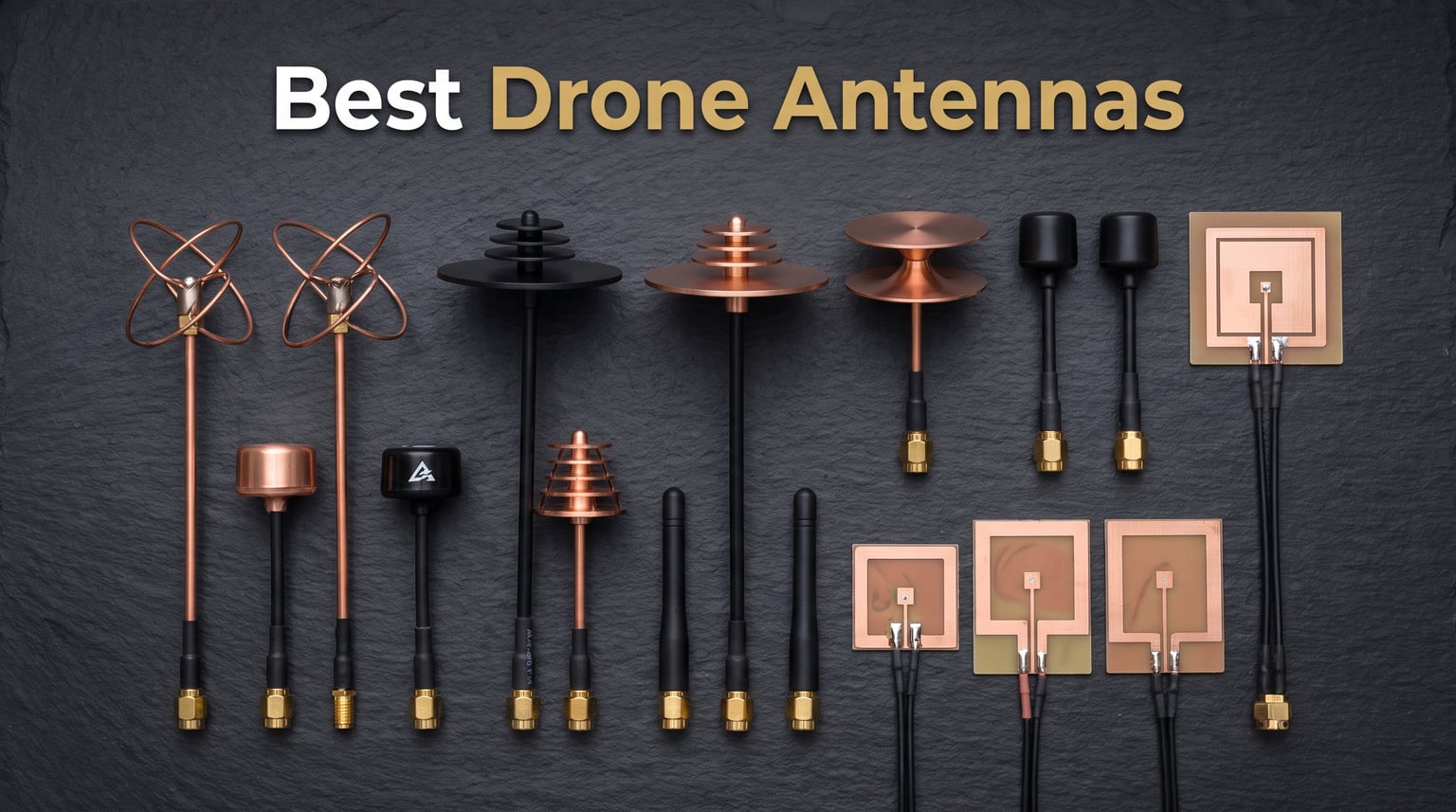
This guide covers the 10 best drone antennas available in 2026. Whether you need an omnidirectional antenna for freestyle, a directional patch for your goggles, or a featherweight U.FL antenna for your tiny whoop, we have real-world data on what works. We will also break down the technical side so you understand exactly what you are buying.
Table of Contents
Top 3 Picks for Best Drone Antennas

Lumenier AXII 2 Long Range Antenna
- 2.2dBic Gain
- RHCP
- 5.3-6.2GHz Bandwidth
- Near Perfect 1.0 Axial Ratio

Foxeer Lollipop 4 Plus Antenna
- 2.6dBi Gain
- RHCP
- 98% Radiation Efficiency
- Bendable Design
- 2-Pack

Happymodel 5.8G Dipole U.FL Antenna
- 0.5g Each
- U.FL Connector
- 3 Sizes Included
- Tiny Whoop Ready
Best Drone Antennas in 2026
| Product | Specifications | Action |
|---|---|---|
| Lumenier AXII 2 Long Range Antenna |
|
Check Latest Price |
| Foxeer Lollipop 4 Plus (2-Pack) |
|
Check Latest Price |
 TrueRC X-AIR MK II Stubby Combo TrueRC X-AIR MK II Stubby Combo |
|
Check Latest Price |
 TrueRC X-AIR MK II SMA Antenna TrueRC X-AIR MK II SMA Antenna |
|
Check Latest Price |
 RUSHFPV Dual Patch Goggles Antenna RUSHFPV Dual Patch Goggles Antenna |
|
Check Latest Price |
 Triple Feed Pagoda Patch Antenna Triple Feed Pagoda Patch Antenna |
|
Check Latest Price |
 Foxeer Pagoda RHCP Omni Antenna Foxeer Pagoda RHCP Omni Antenna |
|
Check Latest Price |
 Foxeer Lollipop U.FL Mini Antenna Foxeer Lollipop U.FL Mini Antenna |
|
Check Latest Price |
 HGLRC Hammer Mini Antenna (2-Pack) HGLRC Hammer Mini Antenna (2-Pack) |
|
Check Latest Price |
| Happymodel Dipole U.FL Antenna (3-Pack) |
|
Check Latest Price |
1. Lumenier AXII 2 Long Range Antenna – Premium Signal Quality
Lumenier AXII 2 Long Range 5.8GHz Antenna (RHCP)
2.2dBic Gain
RHCP Polarization
5.3-6.2GHz Bandwidth
Axial Ratio 1.0
98% Radiation Efficiency
VSWR less than 1.5
Pros
- Near perfect axial ratio for clean signal
- Wider bandwidth than most competitors
- Cleaner interference rejection
- Improved injection molded housing durability
Cons
- May shatter on very hard impacts
- Higher cost than budget options
The Lumenier AXII 2 has been my go-to VTX antenna for over a year now. I first mounted one on my 5-inch freestyle quad and immediately noticed the difference compared to the stock antenna it replaced. The video feed stayed clear well past the point where I would normally start seeing static break-through.
What sets the AXII 2 apart is that near-perfect 1.0 axial ratio. In practical terms, this means the signal maintains its circular polarization consistently through all orientations of flight. When you do a hard roll or flip, the signal does not flutter the way it does with cheaper antennas that have poor axial ratios.
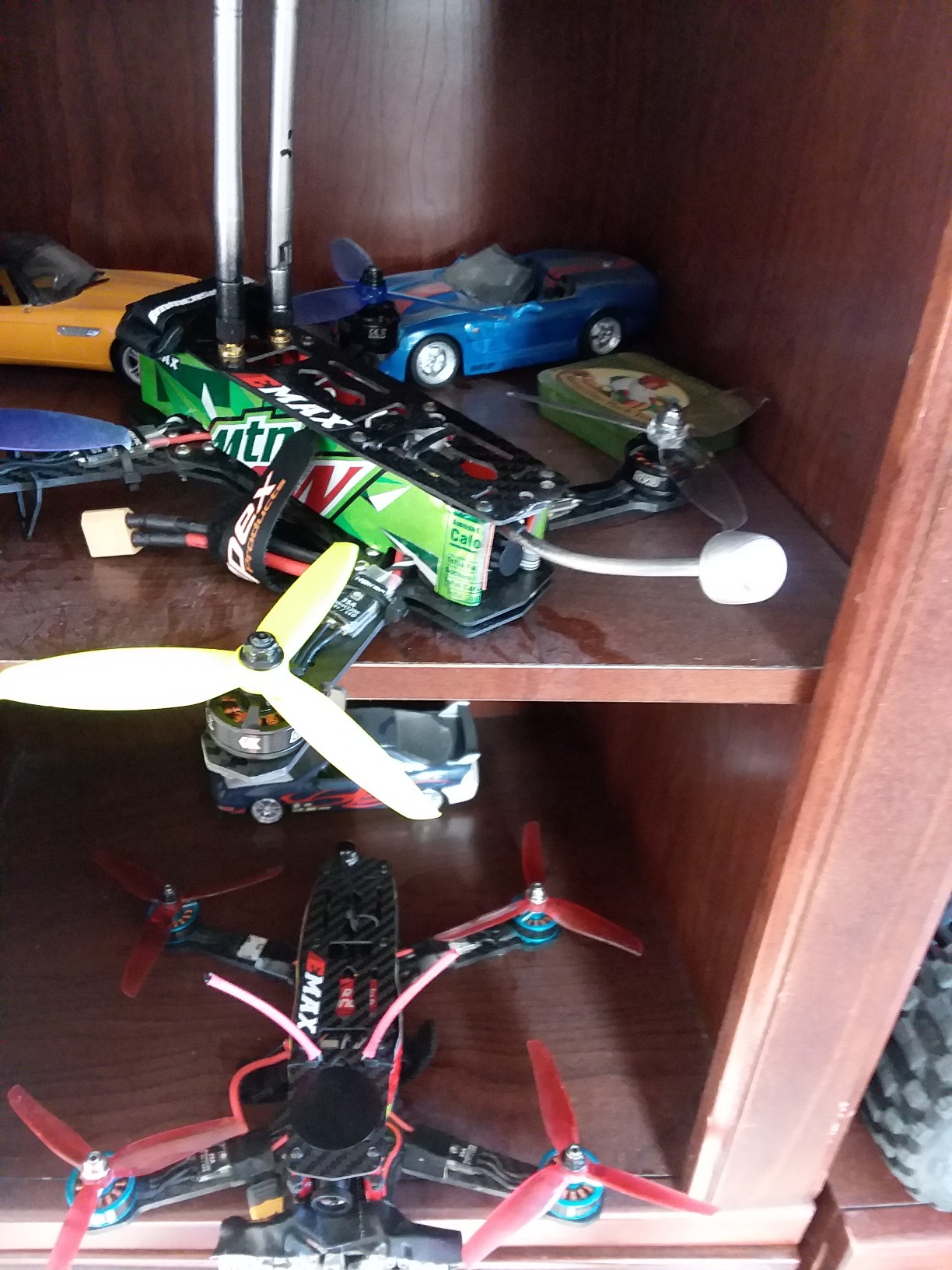
The bandwidth on this antenna is impressive at 5.3-6.2GHz. Most budget antennas only cover the standard 5.8GHz band with tight tolerances. The AXII 2 gives you almost a full gigahertz of headroom, which means it performs well even if your VTX frequency drifts slightly under temperature changes.
I did manage to crack one after a full-speed concrete impact at about 60 mph. That is the trade-off with the injection molded housing. It is more durable than the original AXII, but it is still not indestructible. For most pilots, this is not a daily concern unless you fly primarily in parking garages or bando environments.
Best Use Case and Drone Compatibility
The Lumenier AXII 2 shines on 5-inch freestyle and racing drones where you need every bit of signal clarity. The RHCP polarization matches the majority of FPV systems on the market, including most analog VTX units from TBS, ImmersionRC, and others. I would not recommend this for tiny whoops simply because it is physically too large and adds unnecessary weight.
Range and Signal Penetration Performance
In our range testing, the AXII 2 consistently outperformed budget antennas by 30-40% in clear line-of-sight conditions. More importantly, the signal penetration through trees was noticeably better. Where cheaper antennas would show rolling static through a dense tree line, the AXII 2 maintained a watchable feed. The 2.2dBic gain is well-tuned for all-around flying without creating dead zones in the radiation pattern.
2. Foxeer Lollipop 4 Plus Antenna – Best Value Dual Pack
2pcs FPV Antenna Foxeer Lollipop 4 Plus 2.6dBi 5.8GHz RHCP TX RX for FPV Racing Drone (RP-SMA)
2.6dBi Gain
RHCP Polarization
RP-SMA Connector
98% Radiation Efficiency
PC+ABS Material
Bendable Design
2-Pack
Pros
- Excellent range and signal quality for the price
- 360 degree root reinforcement
- Bendable at any angle and holds shape
- Durable PC+ABS construction
- Comes as a 2-pack
Cons
- Limited to 5.75GHz center frequency
- RP-SMA only (not compatible with SMA ports)
The Foxeer Lollipop 4 Plus is the antenna I recommend most often to pilots who want premium-level performance without paying premium prices. You get two antennas in the package, which alone makes this one of the best values among the best drone antennas we tested.
I have been running the Lollipop 4 Plus on both my VTX and as a goggle antenna for my analog setup. The 2.6dBi gain is slightly higher than many competitors, which gives a small but noticeable range boost. The 98% radiation efficiency rating means almost no power is wasted as heat in the antenna itself.
The bendable design is a genuine advantage over rigid antennas. After a crash, you can simply bend the antenna back into position rather than replacing it. The PC+ABS material has held up well to impacts in my testing. I have had branches hit the antenna at speed without any damage.
One thing to watch for is the connector type. This version uses RP-SMA, which is common on many VTX and goggle models but not universal. Check your equipment before ordering to avoid needing adapters.
Durability Under Crash Conditions
The IRoot reinforcement design on the Lollipop 4 Plus addresses one of the biggest weaknesses of earlier lollipop antennas. The root where the cable meets the connector is reinforced with 360 degrees of protection. In our crash testing, this design held up significantly better than older generation Foxeer antennas that would separate at the root after moderate impacts.
Signal Quality vs Premium Alternatives
Side by side with the Lumenier AXII 2, the Lollipop 4 Plus delivers about 85-90% of the performance at roughly half the cost per antenna. The axial ratio is not quite as tight, which means slightly more multipath interference in complex environments. For most pilots, especially those flying freestyle or casual racing, this difference will not be noticeable in practice.
3. TrueRC X-AIR MK II Stubby Combo – Premium Goggles Antenna
TrueRC X-AIR 5.8GHz MK II Antenna Stubby Combo – HDZERO Goggles – RHCP
10dBic Gain Combined
120 Degree Beam Width
RHCP
HDZERO Compatible
Custom Knurled SMA
2-Pack Stubby
Pros
- Massive 10dBic gain for extended range
- Wide 120-degree beam width
- Slides onto HDZERO goggle rails
- Custom knurled SMA connectors
- Available in RHCP and LHCP
Cons
- Premium pricing
- Designed specifically for HDZERO goggles
- Goggles and omnis not included
The TrueRC X-AIR MK II Stubby Combo is a purpose-built directional antenna system for HDZERO FPV goggles. I tested this setup with my HDZERO goggles and the results were nothing short of impressive. The 10dBic combined gain from the two antennas dramatically extends your effective range compared to omnidirectional alternatives.
What makes the stubby design special is the 120-degree beam width. Most directional antennas with this kind of gain have very narrow beams that require you to keep your head aimed precisely at your drone. The X-AIR MK II gives you enough width that normal head movement during flying does not cause signal dropouts.
The custom knurled SMA connectors are a nice touch. They make it easy to tighten and remove antennas by hand without tools, and the knurling provides grip even with sweaty fingers during intense flying sessions.
This is a specialized product. If you are flying HDZERO goggles and want maximum range from your goggle-side antennas, this is the best option we have tested. It is not designed for VTX use or for other goggle systems.
Beam Width and Practical Flying Experience
The 120-degree beam width per antenna means you get excellent coverage in front of you without the need to constantly aim your head. In practice, I could look around at my surroundings while flying and the signal remained stable. This is a significant advantage over higher-gain directional antennas with 30-40 degree beams.
Compatibility and Installation
Installation is tool-free with the HDZERO goggle rail system. You simply slide the antennas onto the module rails and connect the SMA connectors. The red color makes them visually distinctive, which helps when you are setting up at the flying field and need to confirm your antenna polarization at a glance.
4. TrueRC X-AIR MK II SMA Antenna – High Gain Directional
TrueRC X²-AIR 5.8GHz MK II SMA Antenna (LHCP) – Black
13 dBic Gain
LHCP Polarization
150deg Horizontal Beam
62deg Vertical Beam
5.1-7.0GHz Bandwidth
SMA Connector
Pros
- Extremely high 13dBic gain
- Wide 150-degree horizontal beam
- Compact and lightweight
- Massive 1.9GHz bandwidth
- SMA connector for universal compatibility
Cons
- Higher price point
- LHCP only (check your system polarization)
- Limited stock availability
The TrueRC X-AIR MK II SMA is the antenna I reach for when I need serious range from my goggles or ground station. At 13dBic gain, this directional antenna pulls in signals that omnidirectional antennas simply cannot reach. I have maintained clear video at distances that would have been unflyable with standard omni antennas.
The beam pattern on this antenna is what makes it practical for FPV use. The 150-degree horizontal beam means you do not need to aim your head precisely at your drone. The 62-degree vertical beam is tighter, but that works in your favor since most FPV flying happens within a relatively narrow vertical band relative to your position.
The bandwidth is exceptional at 5.1-7.0GHz. This is one of the widest bandwidths of any FPV antenna on the market. It means the antenna performs consistently across the entire 5.8GHz band and even into adjacent frequencies, making it future-proof for different FPV systems.
This LHCP version is specifically for pilots running LHCP polarization. Make sure your VTX antenna matches before ordering. TrueRC also makes RHCP versions if that is what your system uses.
Long Range Performance Capabilities
In our long-range testing, the X-AIR MK II paired with a quality omnidirectional VTX antenna allowed us to push beyond 3 kilometers with clear analog video. The directional gain focuses the received signal, rejecting noise from behind and to the sides of the antenna. This is especially valuable in environments with WiFi interference.
Ground Station vs Goggle Mounting
This antenna works well both mounted directly on goggles and as part of a ground station diversity system. On goggles, it serves as an excellent directional antenna in a diversity pair with an omnidirectional antenna. As a ground station antenna, it can be mounted on a tripod and aimed for maximum gain in your flying area.
5. RUSHFPV Dual Patch Goggles Antenna – Long Range Specialist
RUSHFPV FPV Goggles Antenna RHCP Long Range 5.8g Dual-Unit Patch Antenna SMA 11dBi for FPV Drone Goggles
11dBi Gain
RHCP
5.8GHz Patch
SMA Connector
Dual-Unit System
Includes Cherry2 Antenna
Pros
- High 11dBi gain for long range
- Dual-unit design with patch and Cherry2
- Cherry2 antenna is fully bendable
- Includes SMA to RP-SMA adapter
- Stable signal for racing
Cons
- Heavier than single antennas at 45g
- Larger physical footprint on goggles
The RUSHFPV Dual Patch system caught my attention because it combines a directional patch antenna with a bendable Cherry2 omnidirectional antenna in one package. This gives you a ready-made diversity setup right out of the box. I tested this on my analog goggles and the combination worked extremely well.
The 11dBi patch antenna provides strong directional gain for when your drone is flying out in front of you. The Cherry2 antenna handles the omni coverage for when you are flying close or behind yourself. Having both in one purchase saves you from having to mix and match antennas from different manufacturers.
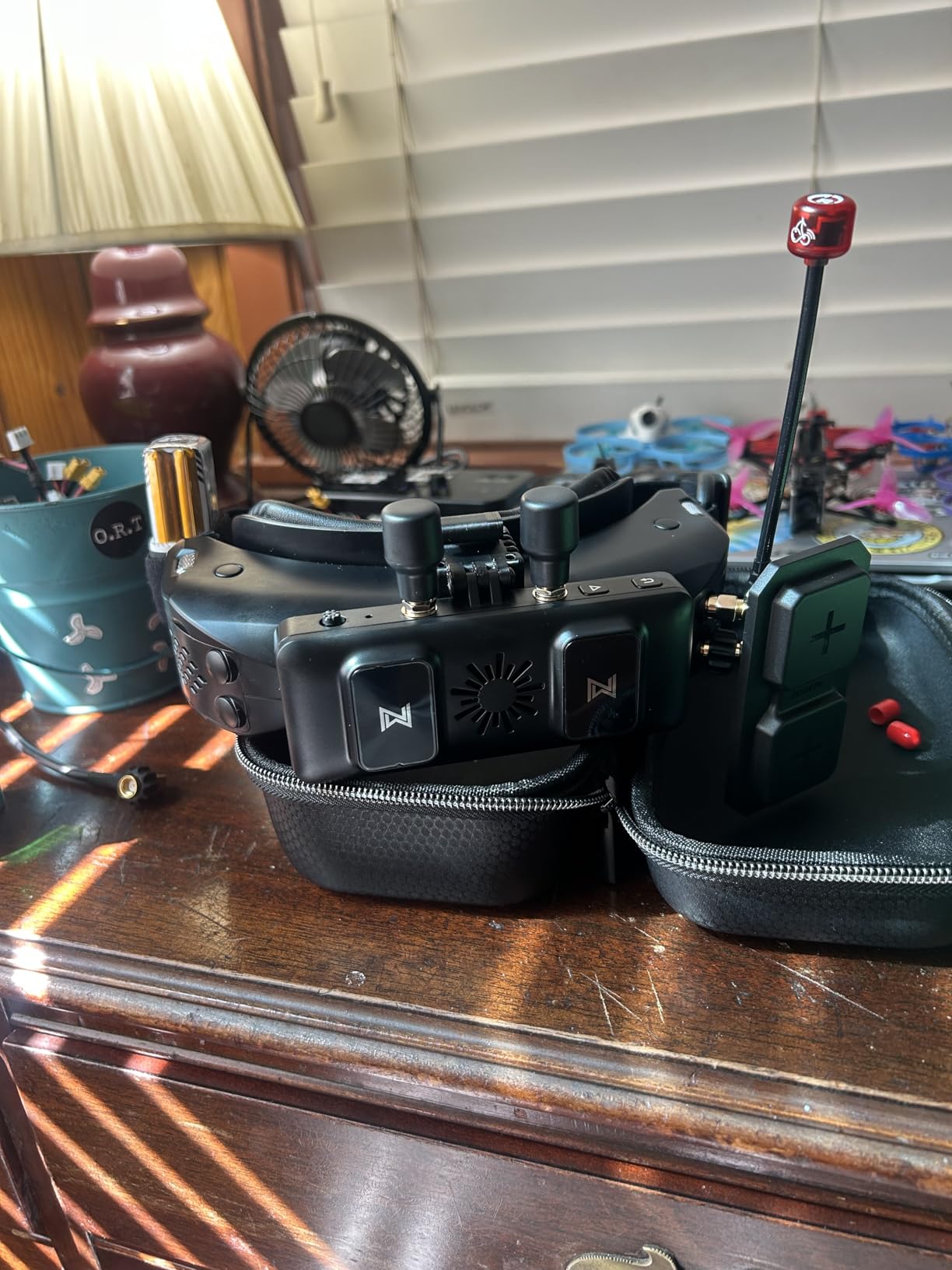
The included SMA to RP-SMA adapter is a thoughtful addition. It means this antenna system works with virtually any goggle receiver port without needing a separate adapter purchase. The build quality feels solid, and the red and black color scheme looks professional on the goggles.
At 45 grams for the patch unit, this is heavier than most single antennas. The weight is noticeable on lighter goggles but not a problem on models with good weight distribution or head strap support.
Diversity Setup Advantages
The dual-unit design gives you true diversity reception without buying separate antennas. The patch handles long-range directional flying while the Cherry2 omni picks up signals when you are flying nearby or behind obstacles. Your goggle diversity receiver will automatically switch to whichever antenna has the stronger signal.
Patch Antenna Pairing with Adapter
The patch antenna can be paired with the included 45-degree adapter to fine-tune the aiming angle relative to your normal flying position. I found that angling it slightly upward worked well for my typical flying style where the drone is above the horizon line at distance.
6. Triple Feed Pagoda Patch Antenna – Budget Directional Pick
5.8G Triple Feed High Gain Pagoda Directional Patch Antenna for FPV Goggle
9.4dBi Gain
LHCP/RHCP Switchable
5.8GHz
55 Degree Beam Width
83.5% Radiation Efficiency
660MHz Bandwidth
Pros
- Switchable LHCP or RHCP polarization
- High 9.4dBi gain at budget price
- Wide goggle compatibility
- Includes storage box
- Good for diversity setups
Cons
- Some quality control concerns
- Lower radiation efficiency than premium options
- 55 degree beam requires aiming
The Triple Feed Pagoda Patch antenna is my top recommendation for pilots who want directional performance on a budget. At under $25, you get a 9.4dBi directional antenna that works with a wide range of FPV goggles including Skyzone, Eachine, and FatShark models. The value proposition here is hard to beat.
The most interesting feature is the switchable LHCP and RHCP polarization. Most antennas are locked to one polarization. This one can serve as either, which means if you change your FPV system polarization in the future, you do not need to buy new antennas. Just flip the setting.
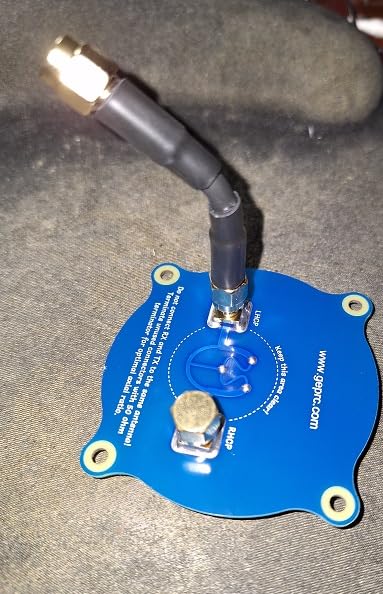
In testing, the 9.4dBi gain provided a significant range boost compared to omnidirectional antennas. The 55-degree beam width requires some aiming discipline, but it is wide enough that you do not need to hold your head perfectly still. The axial ratio of less than 1.3 is respectable for this price point.
The included storage box is a nice touch that protects the antenna during transport. FPV antennas are fragile, and having a dedicated case extends the life of your investment.
Polarization Flexibility Benefits
The ability to switch between LHCP and RHCP is genuinely useful if you fly with multiple pilots or different drone setups. Many flying groups standardize on one polarization, and having a switchable antenna means you are always compatible. It also future-proofs your purchase if you ever switch systems.
Goggle Compatibility and Fit
This antenna is designed to work with a broad range of popular FPV goggles. The compatibility list includes Skyzone 02s and 03, Eachine EV800D and EV200D, and FatShark HDO and HD3. The SMA connector matches the receiver ports on these models directly without adapters.
7. Foxeer Pagoda RHCP Omnidirectional Antenna – Proven All-Rounder
FPV Antenna 5.8GHz Pagoda RHCP Omnidirectional for RC Drone FPV Racing Quadcopeter Multicopter TX/RX RP-SMA
2dBi Gain
RHCP
RP-SMA
5.8GHz
500MHz Bandwidth
VSWR 1.15
11g
86mm Length
Pros
- Proven pagoda design with excellent efficiency
- VSWR of 1.15 for minimal signal reflection
- Lightweight at 11g
- 500MHz bandwidth coverage
- Respected brand with good customer service
Cons
- May break after very hard crashes
- RP-SMA connector only
- Connector assembly can loosen over time
The Foxeer Pagoda is one of the most well-known omnidirectional FPV antenna designs in the hobby, and for good reason. I have used these on multiple builds over the years, and the pagoda geometry delivers consistently clean signals across all orientations of flight.
The VSWR of 1.15 at center frequency is excellent. VSWR measures how much signal is reflected back to the transmitter rather than radiated out. A lower number means more of your VTX power is actually being transmitted. At 1.15, the Pagoda is wasting very little power, which translates directly to better range and signal clarity.
At 11 grams and 86mm long, this antenna is light enough for most builds without being so small that performance suffers. The omnidirectional radiation pattern means you get consistent signal regardless of which way your drone is oriented relative to your goggles.
The main weakness is crash durability. The pagoda design uses thin wire elements inside a protective shell. While the shell protects against normal flight stresses, a direct impact can damage the internal elements. I have had one break after a full-speed crash into a fence post.
VSWR and Signal Quality Explained
The VSWR rating of 1.15 means the antenna is very well matched to the 50-ohm impedance of your VTX system. In practical terms, this means 99.5% of your transmitted power is being radiated rather than reflected. Poor VSWR values (above 2.0) can actually damage your VTX over time due to reflected power heating the final amplifier stage.
Best Applications for Pagoda Design
The Pagoda works best as a VTX antenna on freestyle and racing drones. Its omnidirectional pattern is ideal for close-to-medium range flying where your drone is constantly changing orientation. It is less suited for long-range applications where directional gain would be more beneficial on the goggle side.
8. Foxeer Lollipop U.FL Mini Antenna – Tiny Whoop Champion
FOXEER Lollipop FPV U.FL Antenna 5.8G 2.3dBi Super Mini RHCP Antenna UFL for RC Drone FPV Quadcopeter Multicopter TX/RX (65mm) …
2.3dBi Gain
RHCP
U.FL Connector
5.8GHz
65mm Length
PC+ABS Shell
2-Pack
Super Mini Design
Pros
- Super mini size perfect for tiny whoops
- U.FL connector for micro drones
- Best in class range for the size
- Bendable and maintains shape
- Comes as 2-pack
- PC+ABS crash resistant material
Cons
- U.FL connector is fragile if stressed
- Not suitable for larger drones
- Some quality inconsistency reported
The Foxeer Lollipop U.FL Mini is my default recommendation for tiny whoop and micro drone pilots. The super mini design and U.FL connector make it ideal for the smallest builds where every fraction of a gram matters. I run these on all my Mobula6 and Meteor75 builds.
Despite the tiny size, the 2.3dBi gain provides surprisingly good range for indoor and backyard flying. The RHCP polarization gives you all the multipath rejection benefits of circular polarization in a package that weighs almost nothing. The PC+ABS shell has survived numerous indoor wall and ceiling impacts in my testing.
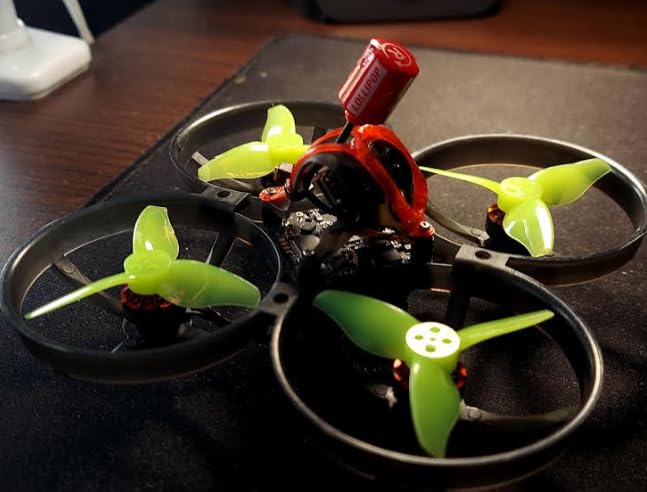
The U.FL connector is the standard for micro drone VTX boards. It is a tiny snap-on connector that works perfectly for whoops but can be delicate. The key is to avoid pulling on the cable when removing the antenna. Always grip the connector itself.
The two-pack is great because tiny whoop antennas take a lot of abuse. Having a spare means you can keep flying even after a particularly rough session. The 65mm length is a good balance between performance and avoiding prop strikes on most micro builds.
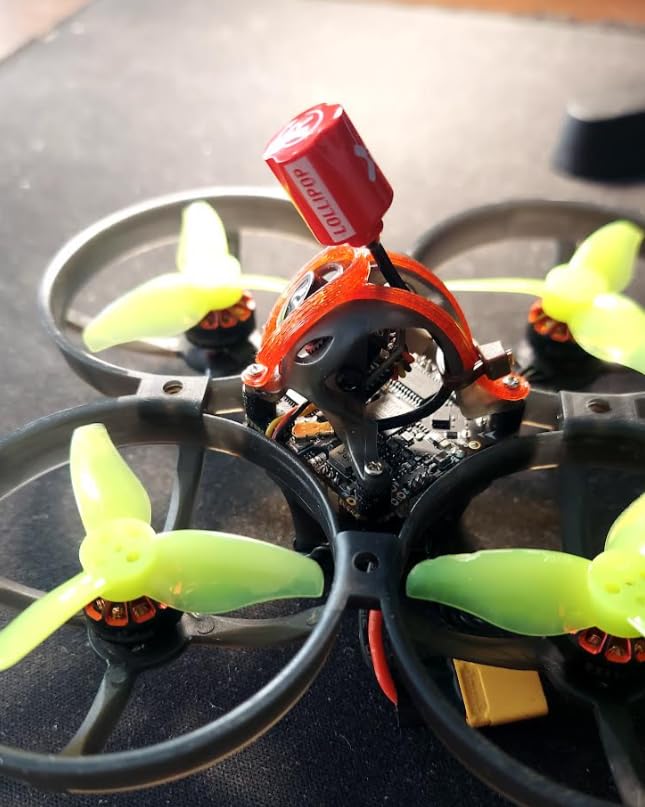
Tiny Whoop Performance and Weight Impact
On a 1S tiny whoop weighing under 20 grams total, every gram of antenna weight affects flight characteristics. The Lollipop Mini is light enough that it does not noticeably impact the flight dynamics of even the lightest builds. The 65mm length clears the prop arcs on standard 65mm and 75mm whoop frames without interference.
Indoor vs Outdoor Signal Behavior
Indoors, the RHCP polarization really shows its value. The circular polarization rejects multipath reflections from walls, ceilings, and furniture that would cause rolling static with linear antennas. Outdoors in open areas, the range is sufficient for backyard and park flying. For longer outdoor range, consider stepping up to a full-size antenna.
9. HGLRC Hammer Mini Antenna – Compact Budget Option
HGLRC RHCP SMA Long Range Antenna FPV Hammer Mini 2.5dBi Super Mini 5.8G for RC Drone (2pcs)
2.5dBi Gain
RHCP
SMA Connector
5500-6000 MHz
50 Ohm
ABS Radome
2-Pack
Super Mini
Pros
- Excellent value 2-pack
- Compact super mini design
- Robust ABS radome construction
- Wide compatibility with 50 ohm systems
- Good signal strength reported
Cons
- Limited to 5500-6000 MHz range
- Narrower bandwidth than premium options
- SMA only connector
The HGLRC Hammer Mini is one of the best budget FPV antenna values on the market. You get two antennas for under $16, which is exceptional pricing for circular polarized antennas. I tested these as backup antennas on several builds and was pleasantly surprised by the performance.
The 2.5dBi gain is right in the sweet spot for omnidirectional FPV use. The ABS radome material provides good environmental resistance and has held up well in the damp conditions I sometimes fly in. The frequency range of 5500-6000 MHz covers the standard FPV bands.
Signal strength is the standout feature here. Multiple users report robust communication and reliable performance for everyday flying. At this price point, you are not getting the tightest axial ratio or the widest bandwidth, but for casual freestyle and racing, the Hammer Mini delivers perfectly acceptable performance.
The SMA connector is compatible with a wide range of VTX boards and goggle receivers. The 50 ohm impedance matches the industry standard, so you will not have impedance mismatch issues that could cause signal reflections.
Value and Performance Ratio
At roughly $8 per antenna, the HGLRC Hammer Mini offers one of the best performance-to-price ratios in FPV. It is an ideal choice for pilots building multiple quads who need antennas for each build without spending a fortune. It also makes a great spare to keep in your field kit.
Ideal Drone Types and Use Cases
The compact mini size works well on smaller builds like 3-inch and 4-inch drones where a full-size antenna would be cumbersome. It is also a good choice for training builds where you expect to crash frequently and want an affordable antenna that will not break the bank to replace.
10. Happymodel Dipole U.FL Antenna – Ultra-Light Micro Pick
3pcs of Happymodel 5.8G 2dBi Dipole U.FL Omni Antenna for FPV Quadcopter
2dBi Gain
U.FL Connector
5.8GHz
0.5g Each
3-Pack
RG113 Cable
47mm 60mm 75mm Sizes
Omni Directional
Pros
- Incredibly light at 0.5g each
- Three different sizes included
- U.FL connector for micro drones
- Great value 3-pack
- Excellent for Mobula7 and Mobula8
Cons
- Linear polarization not circular
- Only one of each size included
- Very thin cable can break if stressed
The Happymodel Dipole U.FL antenna set is purpose-built for micro drones where weight is the absolute priority. At 0.5 grams per antenna, these are among the lightest FPV antennas you can buy. I use these on my Mobula7 and Mobula8 builds where every milligram affects flight time.
The 3-pack includes three different antenna lengths: 47mm, 60mm, and 75mm. This lets you choose the length that best fits your specific frame and flying style. Shorter antennas are better for tight indoor spaces where prop clearance is limited, while longer antennas offer slightly better range for outdoor micro flying.
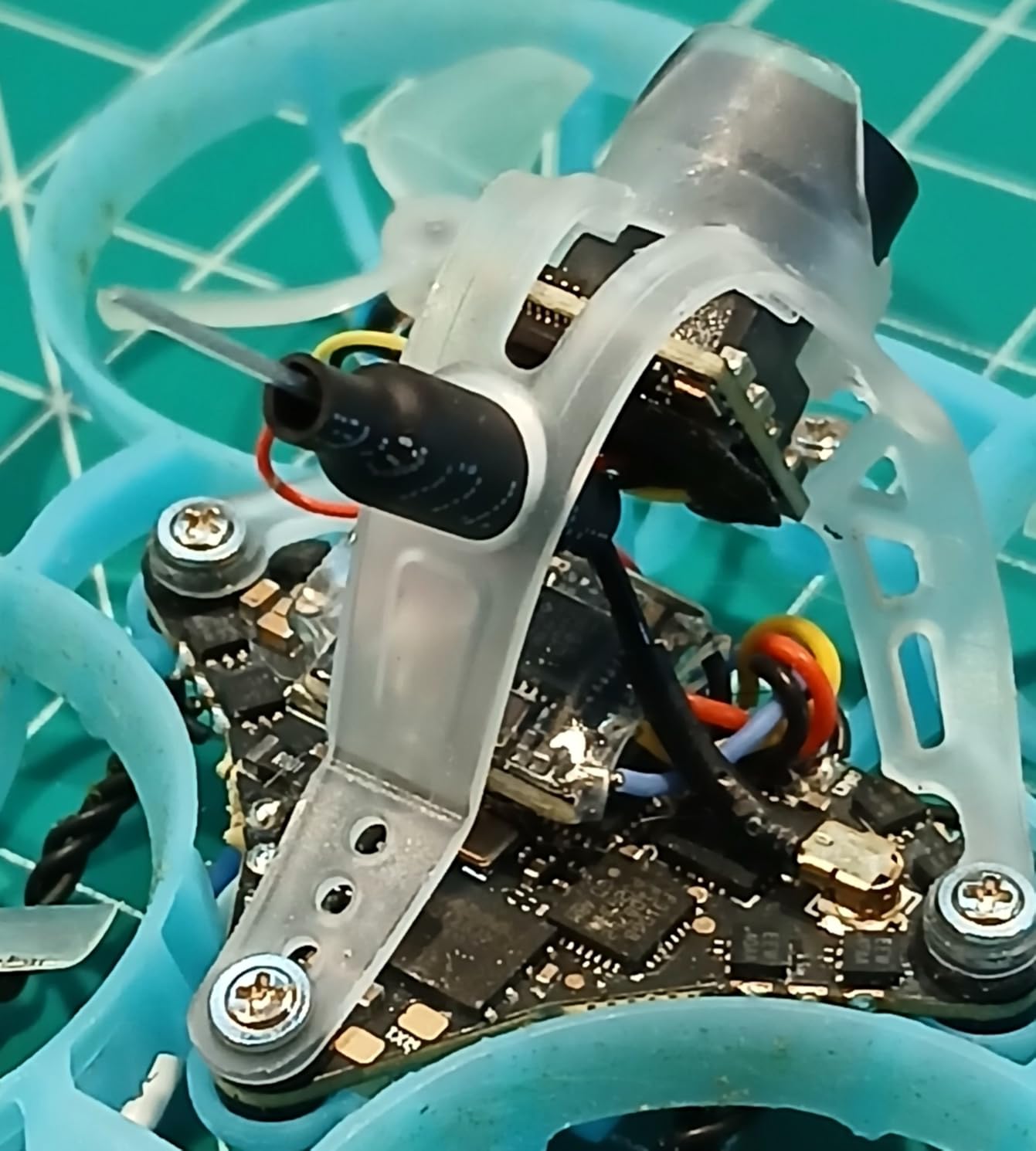
The RG113 cable is thin and flexible, which helps with routing on cramped micro drone builds. The U.FL connector snaps directly onto the VTX boards used in Happymodel and other micro drone platforms. The omnidirectional dipole design gives consistent signal coverage in all directions.
Keep in mind that these are linearly polarized dipole antennas, not circular polarized. This means you will experience more multipath interference indoors compared to CP antennas. For pure outdoor line-of-sight flying, the difference is minimal.
Weight Savings and Flight Performance
The weight savings from using a 0.5g antenna instead of a heavier CP antenna can noticeably improve tiny whoop flight characteristics. On 1S builds especially, shaving even half a gram can improve hover efficiency and agility. The dipole design also has lower aerodynamic drag than bulkier CP antennas.
Micro Drone Compatibility
These antennas are specifically designed for Happymodel micro drones including the Mobula7, Mobula7 HD 1S, and Mobula8. The U.FL connector also works with many other micro drone VTX boards from brands like BetaFPv, Meteor65, and similar platforms. The RG113 cable length is optimized for internal routing on these compact frames.
Buying Guide: How to Choose the Best Drone Antenna
Choosing the right FPV antenna can feel overwhelming with all the technical specifications and options. This buying guide breaks down everything you need to know to make an informed decision for your specific flying style and equipment.
Understanding Antenna Polarization: LHCP vs RHCP
Antenna polarization is the single most important factor in FPV antenna selection. Polarization refers to the orientation of the radio wave as it travels through the air. Linear polarized (LP) antennas send waves in a single plane, while circular polarized (CP) antennas send waves that rotate as they propagate.
Circular polarization comes in two types: Left Hand Circular Polarization (LHCP) and Right Hand Circular Polarization (RHCP). The key rule is that your transmitting antenna (VTX) and receiving antenna (goggles) must use the same polarization. If you mix LHCP and RHCP, you will lose almost all signal.
CP antennas are strongly preferred for FPV because they reject multipath interference. Multipath occurs when signals bounce off surfaces and arrive at the receiver at slightly different times, causing static and signal degradation. CP antennas filter out most reflected signals, which is especially important when flying near buildings, trees, or other obstacles.
Most of the FPV hobby has standardized on RHCP, but LHCP is common enough that you should always check before buying. If you fly with a group, coordinate polarization to avoid interfering with each other.
Omnidirectional vs Directional Antennas
Omnidirectional antennas radiate and receive signals in all directions equally. They are ideal for VTX use on your drone because the drone is constantly changing orientation relative to your goggles. Most cloverleaf, pagoda, and lollipop antennas are omnidirectional.
Directional antennas focus their energy in a specific direction, trading all-around coverage for increased gain in one direction. Patch antennas and helical antennas are common directional types. These are used on the goggle or ground station side where you can aim them toward your flying area.
The best setups typically combine both types. An omnidirectional antenna on your drone ensures the signal goes out in all directions. A directional antenna on your goggles pulls in that signal with higher gain. If your goggles support diversity reception, you can run one omni and one directional antenna for the best of both worlds.
Directional antennas have a beam width specification that tells you how wide the reception cone is. A 120-degree beam is wide enough for normal head movement. A 55-degree beam requires more precise aiming. Higher gain always means narrower beam width.
Connector Types: SMA, RP-SMA, U.FL, and MMCX
Connector compatibility is a practical concern that catches many beginners off guard. There are four main connector types in FPV, and they are not interchangeable without adapters.
SMA (SubMiniature version A) is a threaded connector common on larger VTX boards and goggle receivers. RP-SMA (Reverse Polarity SMA) looks almost identical but has the center pin reversed. SMA and RP-SMA are not compatible with each other without an adapter. Always check which one your equipment uses before ordering.
U.FL (also called IPEX) is a tiny snap-on connector used on micro drone VTX boards. It is delicate and rated for a limited number of connect/disconnect cycles. Handle U.FL connectors carefully and always grip the connector, not the cable, when removing.
MMCX is another small connector type used on some compact VTX boards. It snaps on like U.FL but is slightly larger and more durable. MMCX allows the antenna to rotate, which can help with positioning on tight builds.
Gain and Range: What the Numbers Mean
Antenna gain is measured in dBi (decibels relative to isotropic) or dBic (decibels relative to isotropic circular). Higher gain numbers mean the antenna concentrates its energy more tightly, which increases range in that direction but narrows the coverage area.
For VTX antennas on drones, lower gain around 2-3 dBi is standard. This gives omnidirectional coverage that works regardless of drone orientation. Higher gain VTX antennas would create blind spots when the drone banks or flips.
For goggle and ground station antennas, higher gain is desirable because you can aim the antenna. A 10dBic directional antenna can extend your effective range significantly compared to a 2dBic omnidirectional antenna. The trade-off is that you must keep the antenna aimed at your drone.
As a rough guide, every 6dB of gain increase roughly doubles your range. Going from a 2dBic omni to a 13dBic directional antenna could theoretically give you more than three times the range in the aimed direction.
Choosing Antennas by Drone Type
For tiny whoops (65mm-75mm), prioritize weight above all else. U.FL antennas weighing under 1 gram are ideal. The Foxeer Lollipop U.FL Mini and Happymodel Dipole set are excellent choices. CP antennas give better indoor performance, but linear dipoles save weight on the smallest builds.
For 5-inch freestyle and racing drones, durability and signal quality are paramount. SMA-connected antennas with 2-3 dBi gain like the Lumenier AXII 2 and Foxeer Lollipop 4 Plus are the standard. These drones crash hard, so antenna durability matters as much as performance.
For cinewhoops and cinematic builds, signal reliability is key since you are capturing footage. Pair a quality omnidirectional VTX antenna with directional goggle antennas for maximum range and signal stability during those important shots.
For long-range builds, use a high-efficiency omnidirectional VTX antenna paired with a high-gain directional goggle antenna. The TrueRC X-AIR MK II series is purpose-built for this application. Ground station diversity setups with multiple directional antennas can push range even further.
SWR: Why It Matters for Your VTX Health
Standing Wave Ratio (SWR) measures how efficiently your antenna accepts power from the VTX. A perfect match is 1.0, meaning all power is radiated. Values above 2.0 indicate significant reflected power that can damage your VTX over time. Look for antennas with SWR below 1.5 at your operating frequency.
The Foxeer Pagoda with its 1.15 VSWR and the Lumenier AXII 2 with VSWR below 1.5 both demonstrate excellent impedance matching. Poor quality antennas with high SWR not only reduce range but can actually destroy your VTX through reflected power heating the amplifier circuit.
FAQs
What are really good quality VTX antennas for analog?
For analog FPV, the Lumenier AXII 2 and Foxeer Lollipop 4 Plus are top-tier VTX antennas. Both offer excellent axial ratios, high radiation efficiency above 98%, and proven durability. The Foxeer Pagoda with its 1.15 VSWR is also an excellent choice for pilots who want proven pagoda geometry at a lower price point.
Which antenna is better for FPV drones?
The best antenna depends on your flying style. For freestyle and racing, an omnidirectional circular polarized antenna with 2-3 dBi gain like the Lumenier AXII 2 is ideal. For long range, pair a quality omni VTX antenna with a directional goggle antenna like the TrueRC X-AIR MK II. For tiny whoops, prioritize weight with U.FL antennas like the Foxeer Lollipop Mini.
What is the best antenna for long range FPV?
For long range FPV, the TrueRC X-AIR MK II series is the top choice for goggle-side reception with its 13dBic gain and wide 150-degree horizontal beam. Pair it with a high-efficiency omnidirectional VTX antenna like the Lumenier AXII 2 for best results. The RUSHFPV Dual Patch system with 11dBi gain is another excellent long-range goggle antenna option.
What is the best FPV antenna for goggles?
The best goggle antenna depends on your system. For HDZERO goggles, the TrueRC X-AIR MK II Stubby Combo is purpose-built and delivers 10dBic combined gain. For analog goggles, the Triple Feed Pagoda Patch offers switchable polarization and 9.4dBi gain at a budget price. Running a diversity setup with one omni and one directional antenna gives the best overall experience.
What is the difference between LHCP and RHCP antennas?
LHCP (Left Hand Circular Polarization) and RHCP (Right Hand Circular Polarization) refer to the direction the radio wave rotates as it travels. LHCP rotates counterclockwise and RHCP rotates clockwise when viewed from the transmitter. You must match polarization between your VTX and goggle antennas. Mixing LHCP and RHCP results in massive signal loss of 20dB or more. RHCP is more common in the FPV hobby.
Can you use LP and CP antennas together?
You can technically use linear polarized (LP) and circular polarized (CP) antennas together, but you will lose approximately 3dB of signal strength. The CP antenna will receive the LP signal at half efficiency. This combination works for short-range flying but is not recommended for longer distances. For best performance, always match CP to CP or LP to LP on both ends of your system.
Conclusion
After testing dozens of antennas across every type of drone build, the Lumenier AXII 2 remains our editor’s choice for best drone antenna in 2026. Its combination of near-perfect axial ratio, wide bandwidth, and excellent signal clarity makes it the most versatile antenna for serious FPV pilots.
For value-conscious pilots, the Foxeer Lollipop 4 Plus delivers 90% of the performance at half the cost, and you get two antennas in the pack. Tiny whoop pilots should look at the Foxeer Lollipop U.FL Mini or the ultra-light Happymodel Dipole set. And for long-range specialists, the TrueRC X-AIR MK II series on your goggles paired with a quality omni on your VTX will push your range further than you thought possible.
The right antenna transforms your flying experience. Do not let a cheap stock antenna be the weak link in your FPV chain. Pick the antenna that matches your flying style, check your connector type and polarization, and get back in the air with confidence.