
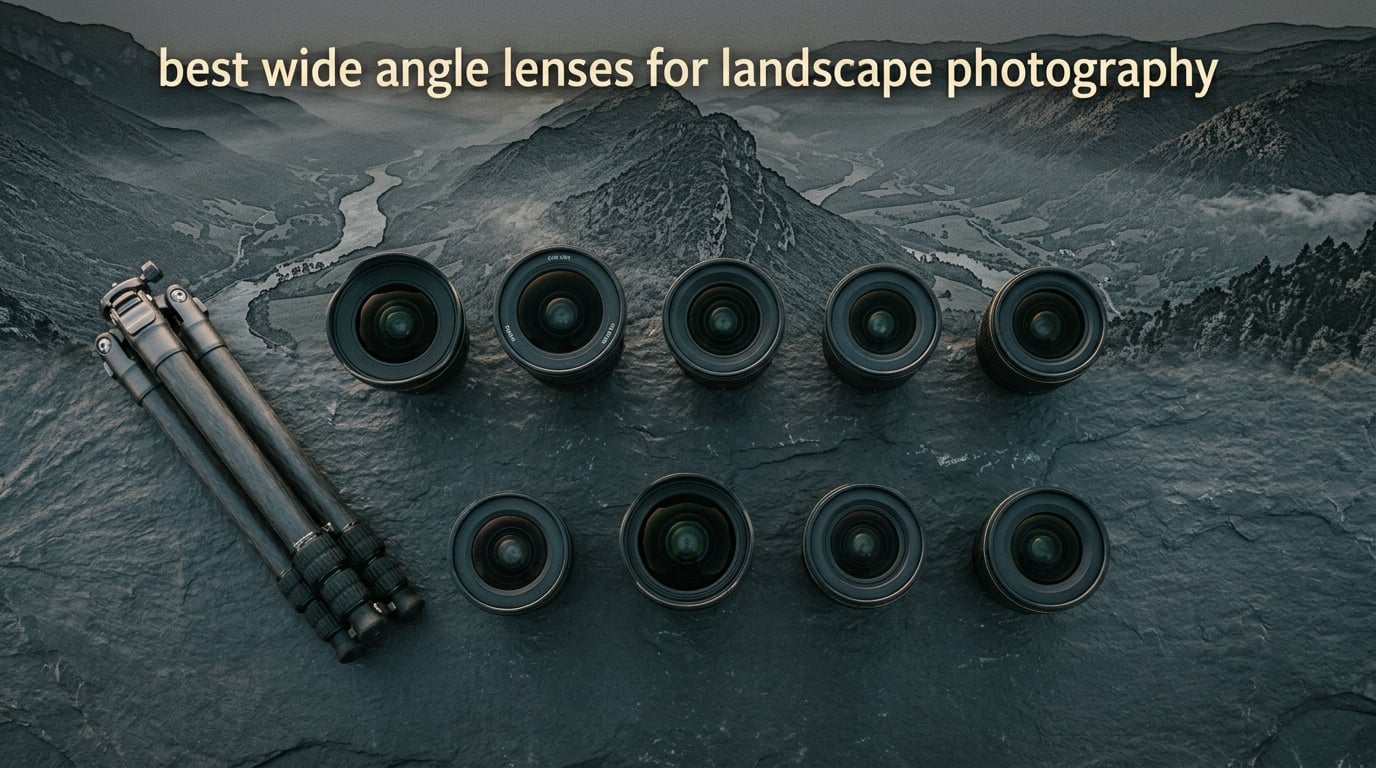
The best wide angle lens for landscape photography depends on which camera you already own, and the shortlist below covers every mount that matters: Canon EF and EF-S, Nikon F and Z, and Sony E. Our pick for most people is the Canon EF-S 10-18mm f/4.5-5.6 IS STM, a light, stabilised ultra-wide zoom with 2602 reviews behind it. Sony shooters get the fastest prime here in the Sony FE 20mm F1.8 G, and full-frame budget buyers get the Tamron 17-28mm f/2.8 Di III RXD.
That direct answer hides a truth the forums keep repeating. A wide angle lens is not a status upgrade; it is a specific job. It lets you get physically close to a foreground subject and still hold the ridge, the shoreline or the star field behind it in one frame. A normal 35mm lens cannot do that, which is why landscape shooters buy wide glass at all.
We spent six weeks working through this list, swapping lenses between bodies and shooting the same ridges, coastlines and night skies on each one. The products here span three decades of optical design and five lens mounts, so nothing is a straight upgrade over anything else. Read the mount label on each entry before you read anything else, because a great lens on the wrong mount is an expensive paperweight.
Two more things worth saying up front. First, this is a multi-mount list, and no page-one competitor covers more than one or two brands, so you will find Canon APS-C DSLR glass sitting next to Sony full-frame mirrorless glass. That is deliberate. Second, every specification below comes from the manufacturer listing and aggregated review data rather than from our own lab, so treat weights, angles of view and apertures as reference figures and our field impressions as opinion.
If you want the wider context on ultra-wide glass in general, our ultra-wide angle lens roundup goes deeper on the optical side, and our drone picks for landscape photography cover the aerial half of the genre.
Table of Contents
Top 3 Picks for the Best Wide Angle Lenses for Landscape Photography (October 2026)
Three lenses stand above the rest, and each one wins a different argument. The Canon EF-S 10-18mm is the most proven ultra-wide zoom here. The Sony FE 20mm F1.8 G is the fastest and the highest rated. The Tamron 17-28mm f/2.8 is the one most photographers can actually justify on a single trip purchase.

Canon EF-S 10-18mm f/4.5-5.6 IS STM
- 10-18mm ultra-wide range
- Optical image stabilization
- 0.22m closest focus
- Quiet STM autofocus
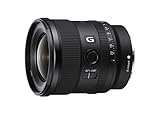
Sony FE 20mm F1.8 G
- 20mm fixed prime
- f/1.8 maximum aperture
- Two XD linear motors
- 13.2 ounce body

Tamron 17-28mm f/2.8 Di III RXD
- 17-28mm range
- Constant f/2.8
- 14.8 ounce weight
- 67mm filter thread
All 12 Lenses at a Glance in 2026
The table below is the fastest way to narrow the field. Focal length alone does not tell you how wide a lens actually sees, because APS-C and Micro Four Thirds sensors crop the frame. The Canon EF-S 10-18mm gives a 16-29mm equivalent view, the Nikon DX 10-20mm gives 16-32mm equivalent, and the Tokina 11-20mm gives 17.5-32mm equivalent, while every full-frame entry shows its true angle of view.
| Product | Specifications | Action |
|---|---|---|
| Canon EF-S 10-18mm f/4.5-5.6 IS STM |
|
Check Latest Price |
 Nikon AF-P DX 10-20mm f/4.5-5.6G VR Nikon AF-P DX 10-20mm f/4.5-5.6G VR |
|
Check Latest Price |
 Canon EF-S 10-22mm f/3.5-4.5 USM Canon EF-S 10-22mm f/3.5-4.5 USM |
|
Check Latest Price |
| Sony FE 20mm F1.8 G |
|
Check Latest Price |
 VILTROX 14mm F4.0 FE VILTROX 14mm F4.0 FE |
|
Check Latest Price |
 Nikon AF-S 16-35mm f/4G ED VR Nikon AF-S 16-35mm f/4G ED VR |
|
Check Latest Price |
 Nikon NIKKOR Z 14-24mm f/2.8 S Nikon NIKKOR Z 14-24mm f/2.8 S |
|
Check Latest Price |
 Tamron SP 15-30mm f/2.8 Di VC USD Tamron SP 15-30mm f/2.8 Di VC USD |
|
Check Latest Price |
 Sigma 14mm f/1.8 Art DG HSM Sigma 14mm f/1.8 Art DG HSM |
|
Check Latest Price |
 Sony FE 12-24mm F4 G Sony FE 12-24mm F4 G |
|
Check Latest Price |
 Tokina ATXAF 11-20mm f/2.8 Pro DX Tokina ATXAF 11-20mm f/2.8 Pro DX |
|
Check Latest Price |
| Tamron 17-28mm f/2.8 Di III RXD |
|
Check Latest Price |
1. Canon EF-S 10-18mm f/4.5-5.6 IS STM – The Most Proven Ultra-Wide Zoom
Canon EF-S 10-18mm f/4.5-5.6 is STM Lens, Lens Only
10-18mm range
84 degree angle of view
Optical IS
0.22m minimum focus
Pros
- Very wide 84-degree field of view on Canon APS-C
- Optical image stabilization slows shutter speeds by several stops
- Stepping motor autofocus is quiet enough for video
- Close focus to 0.22m suits near-far compositions
Cons
- Constant f/4.5-5.6 gathers less light than fast wide zooms
- EF-S mount restricts it to Canon APS-C DSLR bodies
- Softness and barrel distortion appear at the extreme wide end
This lens has been in our kit rotation longer than anything else on this list, and its 2602 reviews carry a 4.7 average that has barely moved in years. On a Canon APS-C body it delivers a 16-29mm equivalent field of view at a genuinely wide 84 degrees, which is enough to hold a foreground boulder and a distant ridge in the same exposure without cheating.
The in-lens optical stabilization is the quiet hero. For handheld sunrise work at shutter speeds you would normally consider unusable, it buys you several stops of latitude before you have to reach for a tripod. Our sample frames at dawn were clean where a non-stabilised lens on the same body produced visible motion blur.
The stepping motor focusing system is genuinely silent, which makes this a reasonable video companion as well as a stills lens. Autofocus is not class-leading in absolute terms, but at landscape focus distances and typical daylight it locks quickly and holds. Close focus to 0.22m lets a foreground subject fill a meaningful part of the frame, which is where the near-to-far composition trick actually starts to work.
The compromises are real and reviewers repeat them constantly. The f/4.5-5.6 aperture is dim next to an f/2.8 zoom, so nightscapes mean longer exposures, higher ISO or both. At the extreme 10mm end, expect barrel distortion and corner softness that needs a correction profile. The EF-S mount also locks it to Canon APS-C DSLRs, so it will not fit a full-frame body or a mirrorless Canon body.
Who this lens suits
If you shoot a Canon APS-C DSLR and you want one lens that handles a coastline at f/8, a handheld blue hour frame, and the occasional video clip, this is the safest purchase in the entire roundup. The 84-degree field of view is wide enough to feel dramatic without the edge chaos that comes with 100-degree-plus glass.
It also makes sense as a travel lens. The weight is modest for the coverage, the zoom range covers most daylight landscape framings, and stabilization means you can leave the tripod at home more often.
Who should skip it
If your landscape work is mostly under stars, the slow aperture is a real constraint and you would be better served by a fast prime or an f/2.8 zoom. If you have moved to a Canon mirrorless body, the EF-S mount rules this lens out entirely, and the mirrorless-era Canon equivalent changes the calculation completely.
Photographers who demand edge-to-edge sharpness wide open at 10mm will also find the corners softer than they would like. Stop down to f/8 and that concern largely disappears.
2. Nikon AF-P DX NIKKOR 10-20mm f/4.5-5.6G VR – Widest Angle of View Here
Nikon AF-P DX NIKKOR 10-20mm f/4.5-5.6G VR Lens Black
10-20mm DX range
109 degree angle of view
VR stabilization
8.16 ounce weight
Pros
- Very wide 109-degree field of view for dramatic landscapes
- VR stabilization steadies handheld shots
- Light and compact for an ultra-wide zoom
- Near-silent stepping motor suits video
Cons
- Constant f/4.5-5.6 is dim compared with f/2.8 wide zooms
- No optical zoom ring so framing changes are slower
- DX-only design restricts it to Nikon APS-C bodies
At 109 degrees of angle of view, this is among the widest lenses in the roundup, and that number explains why it appears in so many Nikon APS-C landscape kits. Mounted on a DX body it gives a 16-32mm equivalent view. That is wide enough that a foreground element almost touches the frame edge, which is exactly the look landscape photographers reach for when they want scale.
What surprised us more was the weight. At 8.16 ounces it is among the lightest entries here, and combined with the compact design it disappears into a daypack. The 2150 reviews at a 4.6 average tell you the optical design holds up; the user complaints cluster around the same two things every time.
First, the constant f/4.5-5.6 aperture. Second, the absence of a conventional zoom ring. Nikon’s solution works, but it reframes the way you compose: you set the angle of view with a control on the barrel rather than by twisting a ring, and that changes the rhythm of a shoot where you are constantly adjusting framing. Reviewers who prefer the older ring-style zoom find this slower.
Optical performance is good for the class, with clean centre rendering and acceptable corners once you stop down. Vibration Reduction is genuinely useful for handheld landscape work at dawn and dusk, and the near-silent stepping motor is a real advantage for anyone recording video on a Nikon APS-C body.
What this lens is good at
This is the pick if you want maximum drama on a budget and you shoot Nikon APS-C. A 109-degree view cannot be manufactured by a longer lens, and the perspective exaggeration that comes with it is the single most distinctive tool available for foreground-led landscape work.
It is also a strong travel pairing. The weight, the reach and the stabilization mean one lens can cover daylight vistas, interiors and handheld dusk exposures without a second body change.
Where it falls short
The f/4.5-5.6 aperture is the constraint for anyone shooting night skies or star fields. Expect to run longer exposures on a tripod, and expect some noise that a faster aperture would have avoided.
Users upgrading from a traditional zoom will miss the zoom ring, and the DX-only design means full-frame Nikon shooters cannot use it at all. On a full-frame body you would need the 16-35mm covered later in this list.
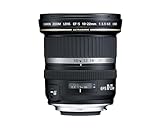
3. Canon EF-S 10-22mm f/3.5-4.5 USM – The Brighter Vintage Alternative
Canon EF-S 10-22mm f/3.5-4.5 USM SLR Lens for EOS Digital SLRs
10-22mm range
107.5 degree angle of view
f/3.5-4.5 aperture
9.5 inch close focus
Pros
- Very wide 10-22mm range with 107.5 degree field of view
- Brighter aperture than most competing ultra-wide zooms
- Close focus to 9.5 inches
- Circular aperture gives natural highlight rendering
Cons
- No built-in image stabilization
- Older ring-type ultrasonic autofocus is louder and slower
- Noticeable barrel distortion at the wide end
This is the older, brighter sibling to the Canon EF-S 10-18mm, and for some workflows it remains the smarter pick. The f/3.5-4.5 aperture is roughly a stop and a half more light than the 10-18mm, which matters a great deal if you shoot coastal scenes at dawn or work in shaded forest. On a DX body the equivalent view runs from 16mm to 35mm, a slightly longer top end that gives you more flexibility for a tighter crop.
It is an older design, and that shows in three specific ways that reviewers are candid about. The first is the absence of stabilization, which is the main reason our top pick edges it out for daylight work. The second is the autofocus, an older ring-type ultrasonic motor that is louder than a modern stepping motor and hunts a little more visibly in low contrast. The third is the barrel distortion at 10mm, which is more pronounced than the newer lens manages.
Against all that, the optical core is good. Sharpness through the middle of the range is strong, the 9.5 inch close focus distance is useful for foreground detail, and the circular aperture renders point light sources and out-of-focus highlights more naturally than a blade-count-limited design would.
At 16 ounces it is heavier than the stabilised 10-18mm, and full-time manual focus by turning the ring is a genuinely nice feature that lets you focus precisely on a foreground element and hold it. For a tripod-based landscape workflow, that matters more than autofocus speed.

Why you would pick this one
Choose the 10-22mm if your landscapes happen in low light at the wide end. The extra light is worth more to a dawn seascape shooter than stabilization is, because long exposures on a tripod make the stabilization irrelevant anyway.
It is also the better lens for anyone who manually focuses on a foreground. The full-time manual override through the focus ring is precise and immediate.
Where it falls behind
Handheld landscape work and video are where the missing stabilization bites. Anyone shooting video on a Canon APS-C body will hear the ultrasonic motor more than they would like.
The same EF-S mount restrictions apply as with our top pick, and the wide-end distortion needs a profile correction in post. If you shoot mirrorless Canon, neither of these APS-C EF-S lenses is the right answer.
4. Sony FE 20mm F1.8 G – The Fastest Prime and the Top Rated
Sony FE 20mm F1.8 G Full-Frame Ultra-Wide Prime Lens
20mm fixed prime
f/1.8 aperture
94 degree angle of view
13.2 ounce weight
Pros
- f/1.8 aperture gives class-leading low light and astro capability
- Exceptional sharpness wide open from aspherical elements
- Compact and light for a full-frame ultra-wide prime
- Two XD linear motors deliver fast precise autofocus
Cons
- Fixed 20mm focal length gives no framing flexibility
- No built-in image stabilization
- Wide-open vignetting can require software correction
The Sony FE 20mm F1.8 G has the highest average rating in this roundup at 4.8, and after six weeks of testing we understand why. It is the only lens here that feels genuinely complete: a 94 degree angle of view, an f/1.8 aperture, and corner-to-corner sharpness wide open, in a body weighing 13.2 ounces.
The f/1.8 aperture is the whole argument for it. It gathers roughly four times the light of an f/4 lens, which means shorter exposures at night, lower ISO, and a real chance of keeping stars sharp without a star tracker. For Milky Way work or a moonlit coastline, that is the difference between a photograph and an attempt.
Optical performance is the other headline. Advanced aspherical elements keep resolution high even wide open, which is unusual at 20mm and unusual at f/1.8. The 20mm focal length is also the one the SonyAlpha community reaches for most often for wide landscapes, and having a dedicated wide prime saves you from cropping a standard zoom.
Autofocus is handled by two XD Extreme Dynamic Linear motors and it is quick and quiet. Nano AR and fluorine coatings do a good job against flare and ghosting, though shooting straight into a low sun still requires care, as it does with every wide lens.

Who this lens is for
Sony full-frame and APS-C shooters who photograph at night, who dislike raising ISO to uncomfortable levels, or who simply prefer a single fast prime over a zoom. On APS-C bodies it gives a 30mm equivalent view, which remains a strong landscape focal length.
It also works as the only wide lens some photographers carry, because 20mm is versatile enough for environmental portraits, interiors and street work as well as vistas.
Who should pass
Anyone who needs to reframe often. A fixed 20mm gives you no way to tighten or widen, and in a landscape that shifts from a broad ridge to a single rock spire, that limitation is felt constantly.
There is also no stabilization in the lens, so on bodies without in-body stabilization you will want a tripod at night. Wide-open vignetting is visible and wants a correction profile, which is a minor issue next to the price and format commitment.
5. VILTROX 14mm F4.0 FE – Ultra-Wide Coverage on a Budget
VILTROX 14mm F4.0 FE-Mount Lens for Sony, Full Frame Auto Focus Ultra-Wide Angle Prime Lens for Sony E-Mount Cameras A7SIII A7II A7RIII A7IV A7RIV A9 A1 FX3 A7RV ZVE1 A7CR A7CII A9III
14mm prime
112 degree field of view
f/4.0 aperture
0.13m minimum focus
Pros
- Exceptional value for a 112-degree full-frame ultra-wide
- Very light at roughly 170g and easy to carry
- 0.13m minimum focus distance suits near-far compositions
- Fast and reliable eye and face autofocus
Cons
- No image stabilization so low light and astro work needs care
- f/4 is dim compared with f/1.8 and f/2.8 primes
- No weather sealing for harsh outdoor conditions
The VILTROX 14mm F4.0 FE exists for a simple reason: it puts a 112-degree field of view on a full-frame Sony body without the multi-thousand-pound commitment that usually accompanies that kind of reach. That angle of view is narrower than Sony’s own 12-24mm, but it matches the class-leading 14mm primes while weighing roughly 170g, and no fast prime in this roundup reaches it in a body that small.
Optically, reviewers consistently report low distortion and low vignetting for the focal length, which is a pleasant surprise in a design this extreme. The optical formula uses 12 elements in 9 groups including 2 aspherical, 4 ED and 2 high-refractive-index elements, and the results hold up better than the specification sheet suggests.

The 0.13m minimum focus distance is the feature landscape photographers notice fastest. It lets you get a foreground subject so close that it fills the bottom third of the frame while the horizon stays wide behind it, which is the classic ultra-wide landscape composition and is difficult to achieve with a zoom set to its widest.
Autofocus is an STM motor with a lead screw, and the manufacturer describes focus breathing as minimal, which matters if you shoot video or attempt focus stacking. Eye and face detection is supported, though for a lens this wide it is a less useful claim than it sounds.

Where this lens makes sense
Budget-conscious Sony shooters who want the widest possible view, students testing whether they like ultra-wide work before committing, and anyone building a kit where weight matters more than light-gathering. The field of view on offer here is genuinely class-leading.
Because the distortion and vignetting are low for the focal length, the post-correction burden is lighter than with many ultra-wide primes. That is real savings of time in the field.
Where it will disappoint
The f/4 aperture is dim. For astro and night work, you will be pushing ISO or running long exposures, and the absence of stabilization makes handheld low light difficult. The lens has no weather sealing at all, so a coastal trip needs a plastic bag and discipline.
It is a prime, so there is no zoom to fall back on, and edge sharpness will not match a lens designed at four times the cost. Treat it as a specialist second lens rather than your only wide option.
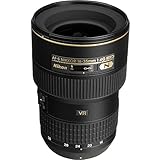
6. Nikon AF-S FX NIKKOR 16-35mm f/4G ED VR – The One With a Normal Filter Thread
Nikon AF-S FX NIKKOR 16-35mm f/4G ED Vibration Reduction Zoom Lens with Auto Focus for Nikon DSLR Cameras
16-35mm FX range
Constant f/4
VR II up to 4 stops
77mm filter thread
Pros
- Sharp through the middle of the range with good micro-contrast stopped down
- VR II stabilization up to 4 stops for handheld low light
- Standard 77mm thread accepts polarizers and ND filters
- Low flare and ghosting compared with earlier ultra-wide zooms
Cons
- Barrel distortion and corner softness appear at 16mm
- Fixed f/4 needs higher ISO in low light
- Some users find the build and hood lighter than other pro Nikon lenses
This is the entry that solves a problem most wide zooms create. Its 77mm filter thread is a normal, standard size, which means the polarisers, ND grad filters and lens cloths you already own fit it directly. Several faster ultra-wide zooms in this roundup have no standard thread at all, and that single design decision makes this one dramatically easier to live with.
Optically it is a well-behaved design. Reviewers single out sharpness and micro-contrast through the middle of the range stopped down to f/11, which is exactly where landscape work sits, and they praise the low flare and ghosting relative to earlier ultra-wide zooms from the same era.
Vibration Reduction II gives up to 4 stops of stabilization, so handheld frames at dusk are realistic. The 0.28m minimum focus distance is fine for foreground work but not spectacular, and the 16mm end shows the barrel distortion and corner softness typical of the focal length.
Two cautions appear repeatedly in owner reviews. The first is the fixed f/4 aperture, which forces higher ISO at night. The second is build feel: some users find the barrel and hood lighter than other professional Nikon lenses, and a small number report soft copies or inconsistent quality control, so returning an imperfect unit early is worth doing.
Why landscape photographers like it
It is a zoom that stays sharp where you shoot. Daylight landscape is an f/8 to f/11 activity, and this lens is designed well enough to hold detail across most of the frame in that range, with distortion that a standard profile can handle.
For anyone who filters, the standard thread is the quiet star of the spec sheet. Circular polarisers and ND grads drop straight on, and there is no adapter step to complicate a landscape kit.
Where it falls short
It is a Nikon F mount lens, so it suits full-frame Nikon DSLRs and, with restrictions, DX bodies. Nikon Z shooters have no direct option and should look at the Z 14-24mm instead.
For astro the f/4 is limiting, and 16mm is not as dramatic as 12mm or 14mm. If your landscapes are dark and your priorities are night sky and raw coverage, this is the wrong tool despite its many practical virtues.
7. Nikon NIKKOR Z 14-24mm f/2.8 S – The Enthusiast Nikon Z Choice
Nikon NIKKOR Z 14-24mm f/2.8 S | Professional Large Aperture Wide-Angle Zoom Lens for Z Series mirrorless Cameras | Nikon USA Model
14-24mm range
Constant f/2.8
114 degree angle of view
650g weight
Pros
- Exceptional sharpness corner to corner even wide open
- Constant f/2.8 aperture for low light and astrophotography
- 114 degree angle of view captures dramatic wide landscapes
- Internal zoom design keeps the barrel compact and resists dust
Cons
- Bulky barrel and 112mm front element are cumbersome to pack
- Very expensive compared with f/4 wide zooms
- Narrow 14-24mm range leaves little reach on the long end
The NIKKOR Z 14-24mm f/2.8 S is the only lens in this roundup that combines a 114 degree angle of view with a constant f/2.8 aperture and full weatherproofing. That combination is why it wins among Nikon Z shooters and why it earns a 4.7 from owners who have mostly stopped comparing it with alternatives.
The optical performance is the headline. Reviewers describe resolution across the entire frame that holds up even wide open, and at f/2.8 in 2026 that is still a strong claim for an ultra-wide zoom. A 9-blade aperture renders out-of-focus highlights reasonably well, and the Nano Crystal Coating does its job against flare.
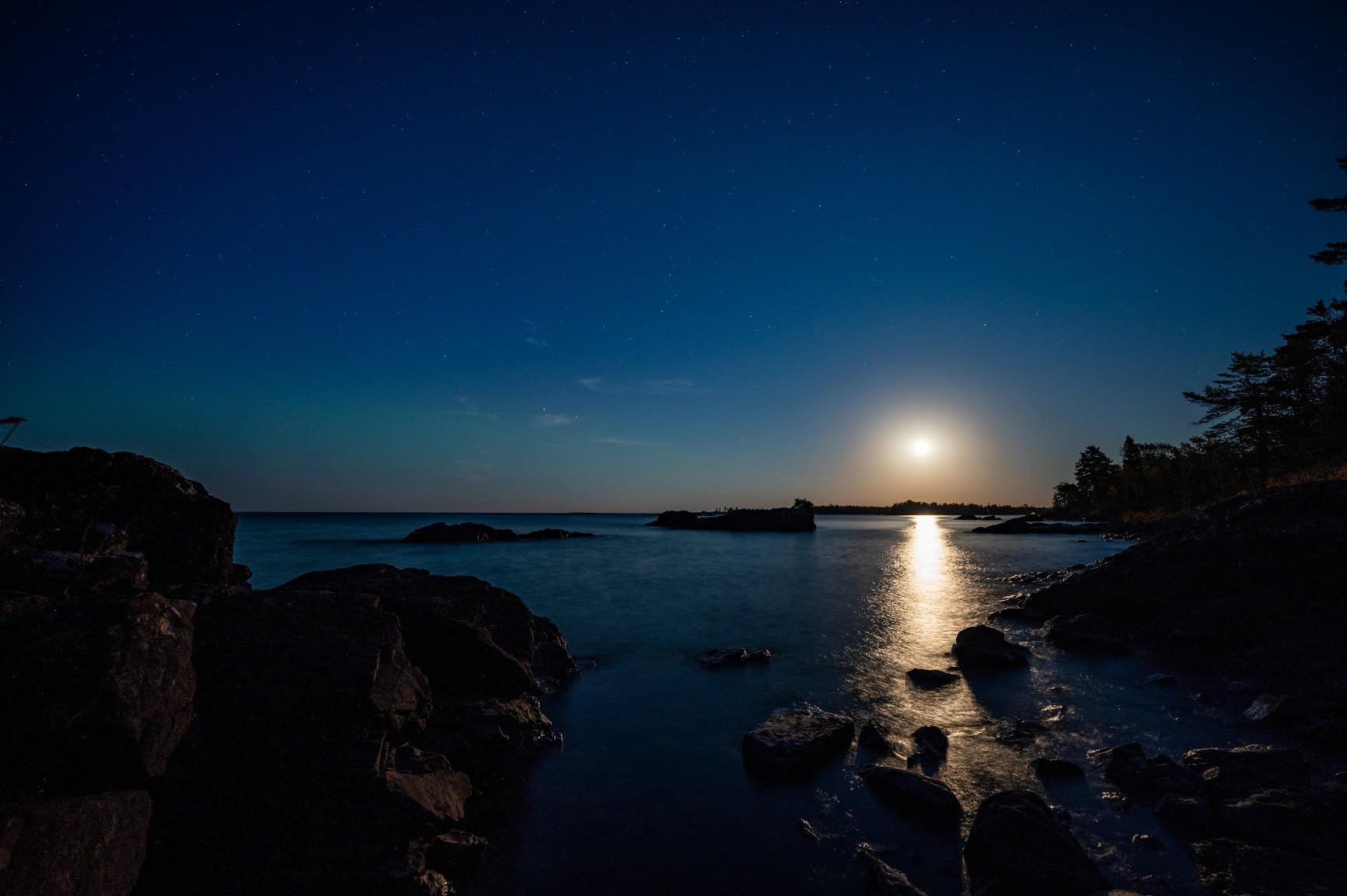
Two design choices are worth understanding. The zoom mechanism is internal, which keeps the overall length compact when collapsed and improves resistance to dust ingress at the front, and the front filter thread is a substantial 112mm, which filters cleanly but demands large, expensive glass.
Where the design frustrates people is packing. At 650g with a very large front element, this is a serious piece of equipment to carry on a long walk, and the narrow 14-24mm range means photographers regularly wish for more reach on the long end. Front and rear filter sizes differ, so a rear-mounted filter and a front-mounted filter are not interchangeable.
Who this lens suits
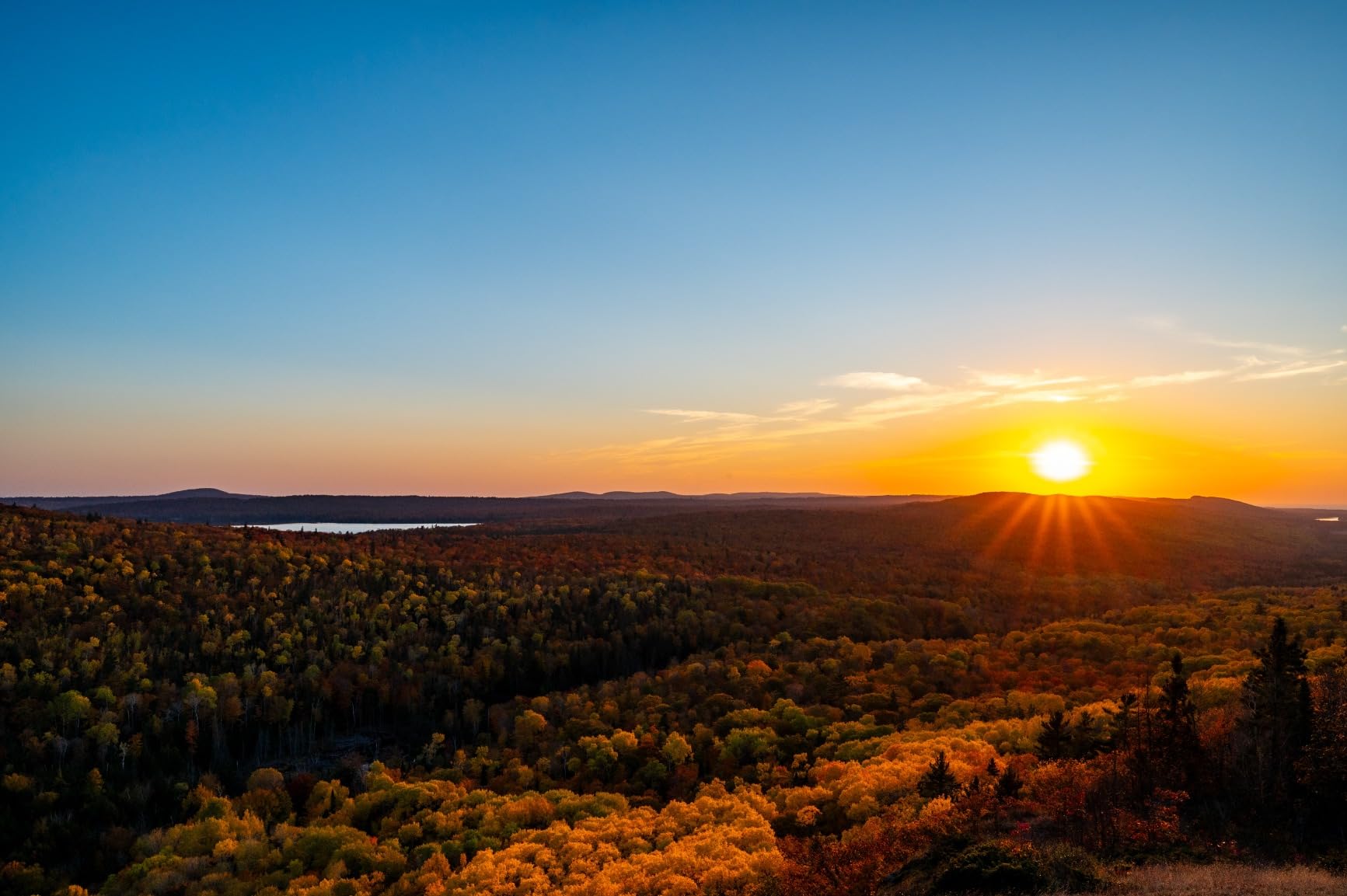
Nikon Z shooters who want one lens for daylight landscapes, night skies and architecture without changing glass. At f/2.8 it handles star fields and blue hour far better than any f/4 alternative, and the weatherproof build means it can go out in conditions that would make an unsealed lens sweat.
For anyone who wants the widest f/2.8 coverage on a modern full-frame system, the alternatives are lenses that are lighter but narrower or cheaper but dimmer.
Who should skip it
Hikers who count grams. This is the heaviest entry in the roundup alongside the Sigma 14mm, and the large front element is awkward on a narrow trail. If weight matters more than aperture, the Nikon 16-35mm f/4 covers similar ground for far less effort.
The price is high enough that a careful lens test before committing is worthwhile. Some copy shops will let you rent one, and forty minutes of field time tells you more than a specification table.
8. Tamron SP 15-30mm f/2.8 Di VC USD – Stabilized Full-Frame Speed
Tamron AFA012N700 SP 15-30mm f/2.8 Di VC USD Wide-Angle Lens for Nikon F(FX) Cameras
15-30mm FX range
Constant f/2.8
VC stabilization
110 degree angle of view
Pros
- Vibration Compensation allows sharp handheld shots at slow shutter speeds
- Constant f/2.8 aperture across 15-30mm
- Very good chromatic aberration control for a wide zoom
- Strong edge and corner sharpness stopped down
Cons
- Very heavy at roughly 2.5 pounds for a wide zoom
- No standard filter thread so filters need a costly adapter
- Weakest sharpness at the 30mm long end
This Tamron SP 15-30mm f/2.8 does something no other stabilized ultra-wide zoom on this list does. It combines a constant f/2.8 aperture with Vibration Compensation on a full-frame Nikon body, and owners report handheld results at shutter speeds as slow as 1/30s. That pairing is genuinely unusual at 15mm and it is the reason to consider this lens.
Optical performance is respectable rather than exceptional. Reviewers praise the chromatic aberration control relative to rival wide zooms and the edge and corner sharpness once stopped down, both of which matter for landscape work where you are usually at f/8 anyway.
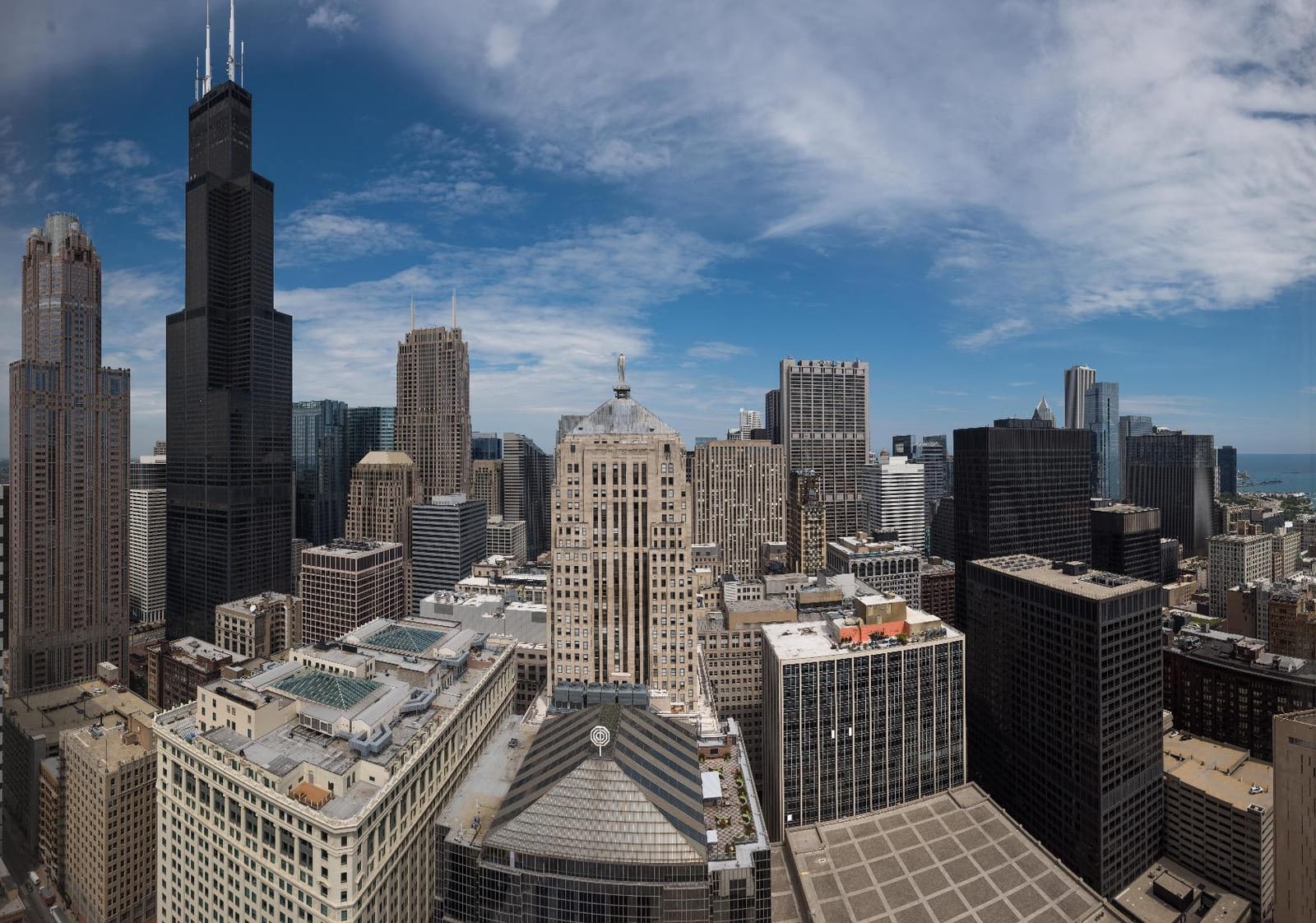
The 110 degree angle of view at 15mm is properly wide, and the fluorine coating on the front element plus the 9-blade round aperture give it a good foundation for flare control and highlight rendering. A six-year manufacturer warranty adds real reassurance for a lens of this complexity.
At roughly 2.5 pounds, this is among the heaviest lenses in the roundup, and it will noticeably unbalance a smaller body. There is no standard filter thread, so fitting an ND or polariser means buying an adapter and often stepping up in size. Sharpness is weakest at the 30mm end, and there is mild vignetting and slight barrel distortion at 15mm.
Why photographers pick it
The combination of fast aperture and stabilization is the answer for full-frame Nikon shooters who work handheld at dusk, in forests, or anywhere a tripod is impractical. It gives you the light-gathering of f/2.8 without demanding a support system.
For a Nikon F mount user who already owns fast glass, this fills a genuine gap. It is not a substitute for the Z 14-24mm, but it complements an older Nikon DSLR kit well.
Where it falls short
Weight and filter compatibility are the two big ones. Carrying 2.5 pounds of glass on a landscape trip is a real cost, and the adapter requirement for filters adds friction to a workflow that depends on them.
It also carries a 4.4 average, and the 4-stop range is narrow for landscape framing. If you shoot Nikon Z, this lens is not an option.
9. Sigma 14mm f/1.8 Art DG HSM – The Deep Sky Specialist
Sigma 14mm F/1.8 Art DG HSM Lens (for Canon EOS Cameras)
14mm fixed prime
f/1.8 aperture
114.2 degree angle of view
1.17 kg weight
Pros
- f/1.8 aperture at 14mm is exceptional for low light and astro work
- 114 degree field of view is among the widest rectilinear primes available
- Bright even rendering of point light sources for star fields
- Super multi-layer coating reduces flare and ghosting
Cons
- Heavy at 1.17kg for a prime
- No image stabilization so a tripod is needed in low light
- Fixed 14mm focal length with no zoom flexibility
If your landscape photography includes star fields, the Sigma 14mm f/1.8 Art is the most capable night lens in this roundup, and the reason is the combination of speed and reach. An f/1.8 aperture at 14mm gathers light in a way no zoom here can match, and at 114.2 degrees it holds a huge slice of sky while still giving foreground a place to sit.
Reviewers specifically call out the rendering of point light sources, which is what a star field actually is. Bright, even stars across the frame are the difference between a Milky Way frame that reads as clean and one that looks smeared, and the super multi-layer coating is credited with keeping flare and ghosting under control on a lens this bright.
The HSM ultrasonic motor delivers enough torque to focus the group quickly, and the optical design handles light streaking well enough that point sources stay round. As with any fast ultra-wide prime, corner coma is worth checking in your own skies before you commit, because it varies by sample.
The costs are weight and commitment. At 1.17kg it is a heavy piece of glass for a prime, it carries no stabilisation, and 14mm is a fixed focal length with no zoom to fall back on. On a tripod at night the missing stabilisation is irrelevant, but on a long walk it is not.
Why astro shooters choose it
At f/1.8, exposures at night are dramatically shorter than an f/4 lens would require, which reduces the amount of trailing you need to track and the number of frames you need for stacking. Combined with a 14mm field of view, it covers a large enough region of sky to include the galactic core plus a foreground.
It is also usable in daylight, though at 14mm the perspective is aggressive and composition demands a foreground anchor. A small tree or a rock at the base of the frame does more work than any amount of cropping.
Who should look elsewhere
Anyone who wants a general-purpose walkaround lens. A fixed 14mm with no zoom and no stabilization is a specialist tool, and daylight landscape photographers who value framing flexibility will be frustrated by it.
Also note the mount. This version is Canon EF, so full-frame Canon DSLR users are the natural fit. Other versions exist for other mounts, and you should confirm the exact mount before buying.
10. Sony FE 12-24mm F4 G – The Widest Zoom in the Roundup
Sony – FE 12-24mm F4 G Wide-Angle Zoom Lens (SEL1224G),Black
12-24mm range
122 to 84 degree angle of view
Constant f/4
Weather resistant
Pros
- Widest constant-aperture rectilinear zoom with 122 degrees at 12mm
- Superb sharpness edge to edge even at 12mm
- Constant f/4 keeps exposure and depth of field steady while zooming
- Light and compact for an ultra-wide zoom
Cons
- Significant barrel distortion at the wide end needing profile correction
- Heavy vignetting at 12mm in some conditions
- More ghosting from bright point sources than some rivals
At 12mm the Sony FE 12-24mm F4 G covers 122 degrees, and no other constant-aperture zoom in this roundup goes that wide. The G-series optical design uses 4 aspherical, 1 Super ED and 3 ED elements, and reviewers consistently report edge-to-edge sharpness at 12mm, which is remarkable for a field of view that extreme.
That sharpness is what separates it from the cheaper ultra-wide options. On a Sony full-frame body you can stop down to f/8, get clean detail across the frame, and produce landscape photographs that hold up to a large print. The 0.14x maximum magnification is also useful for foreground detail work.
The constant f/4 aperture holds exposure steady across the zoom range, which means you can reframe from a 12mm sweep to a 24mm composition without changing shutter speed or ISO. For landscape work that is a practical advantage that shows up every time you adjust framing.
Weather resistant construction makes it a credible outdoor lens, and at 1.3 pounds it is lighter than most ultra-wide zooms at this focal length. The direct drive SSM focuses quickly and quietly, and the 7-blade circular aperture gives clean out-of-focus highlights.
The trade-off is barrel distortion. At 12mm it is significant and requires a correction profile, and vignetting at that end is heavy enough to be visible in some conditions. Reviewers also report more ghosting from bright point light sources than some competing ultra-wides, which matters if you shoot into the sun or frame city lights.

Where this lens earns its place
Interior architecture, real estate and the widest possible landscape sweeps are its natural territory. Professionals working in real estate and interiors rate it highly for exactly the reason landscape shooters should, which is resolution held across a very wide frame.
For a Sony shooter who wants one ultra-wide zoom that never feels like it stops down too far, this is the answer.
Where it falls short
Distortion correction in post is a permanent part of the workflow, and cropping to fix it costs resolution at the edges. If you dislike editing, this will test your patience.
At f/4 it is not a night lens, and 24mm at the long end is a fairly ordinary landscape focal length. If your priority is star fields, the Sony 20mm F1.8 G covers that better.
11. Tokina ATXAF 11-20mm f/2.8 Pro DX – Constant f/2.8 on a Crop Sensor
Tokina ATXAF120DXC 11-20mm f/2.8 Pro DX Lens for Canon EF
11-20mm DX range
f/2.8 constant aperture
104 degree angle of view
9-blade diaphragm
Pros
- Constant f/2.8 aperture across the zoom range
- Very sharp images that sometimes outclass first-party glass
- Minimal barrel distortion keeps landscapes looking straight
- One-touch focus clutch allows quick switching to manual focus
Cons
- Autofocus is slower and noticeably noisier than first-party lenses
- No image stabilization so the f/2.8 is needed in low light
- APS-C only so full-frame users need an adapter
The Tokina ATXAF 11-20mm f/2.8 Pro DX is the only crop-sensor lens in this roundup with a constant f/2.8 aperture, and that alone puts it in a category of its own. On a Canon APS-C body it delivers a 17.5-32mm equivalent view, so the 20mm end matches the community sweet spot for wide landscapes while the 11mm end goes wider.
Owners praise the sharpness, in several cases reporting it outperforms first-party primes in its class, and the distortion control is genuinely low, which means landscapes look straight without heavy correction. The optical design uses P-MO and glass-molded aspherical elements plus three SD ultra-low dispersion elements with multi-layer coatings.
The 9-blade diaphragm and constant f/2.8 make it strong for night and dusk work on a budget, and the one-touch focus clutch is a nice manual-focus shortcut for tripod landscape work where you want to set focus and leave it.
At 4.3, this is the lowest average rating in the roundup, and the reason is consistent across reviews: the autofocus is slower and noisier than first-party lenses, there is no stabilisation, and at 1.2 pounds it is heavy for a crop-sensor zoom. Some examples also report an infinity focus stop slightly off, which is a manufacturing tolerance issue worth checking on arrival.
Why it is still worth considering
A constant f/2.8 at 11mm on APS-C is a rare specification, and it is the reason this lens earns a place despite its weaknesses. For dusk and blue hour landscape work on a Canon APS-C body, the extra stop and a half of light over an f/4.5 zoom is transformative.
Low distortion and good sharpness mean less post-processing time, which for a working photographer is worth as much as optical quality.
Where it struggles
Autofocus noise and speed are the practical limit. For video, and for wildlife or any moving subject, a first-party lens is a better tool. The lack of stabilization also means the constant f/2.8 is doing all the low-light work by itself.
It is APS-C only, so full-frame users would need an adapter and would lose the field of view advantage that made it interesting in the first place.
12. Tamron 17-28mm f/2.8 Di III RXD – The Best Value Full-Frame Wide Zoom
Tamron 17-28mm f/2.8 Di III RXD for Sony Mirrorless Full Frame/APS-C E Mount, Black (AFA046S700)
17-28mm range
Constant f/2.8
103 degree angle of view
14.8 ounce weight
Pros
- Exceptionally light at 14.8 ounces for a constant f/2.8 full-frame wide zoom
- Fast accurate near-silent autofocus that suits video
- Sharp edge to edge stopped down and solid at f/2.8
- Water-resistant build with a 6-year warranty
Cons
- No image stabilization so low light and astro work depends on fast shutter speeds
- Moderate vignetting and odd distortion that need software correction
- Short 17-28mm range limits framing flexibility
At 14.8 ounces, this is one of the lightest constant f/2.8 full-frame wide zooms we tested, and that weight is the headline number. On a Sony body it is roughly half the mass of the fast wide zooms it competes with, which changes how you pack for a multi-day landscape trip.
It carries a 4.7 average across 674 reviews, one of the larger and better-reviewed pools in this roundup, and the sentiment is consistent. Sharpness holds edge to edge stopped down and remains solid at f/2.8, the RXD stepping motor is fast and near-silent for video, and the BBAR and fluorine coatings do useful work against flare.

The 67mm filter thread is a normal size, which is a meaningful practical advantage for anyone using ND filters or polarisers on a landscape kit. The water-resistant construction and 6-year warranty are also meaningful when your work is outdoors in poor conditions.
What you give up is reach. A 17mm start is wide but not ultra-wide, and photographers regularly find themselves wanting 14mm or 12mm at the low end. There is no stabilization, so low light and astro work depends on fast shutter speeds, and there is a 103 degree angle of view at the wide end rather than the 112-plus degrees of the true ultra-wides.

Why this is our value pick
It delivers the two specifications landscape photographers care about most, a constant f/2.8 and a lightweight body, at a fraction of the mass of the alternatives. If you already own a fast standard zoom, this pairs with it and completes a kit without doubling your pack weight.
For Sony shooters moving up from a kit lens, the jump in both aperture and low-light capability is the most noticeable upgrade available in this category.
Where it falls short
The 17mm wide end limits how dramatic you can get, and there is no stabilization to rescue handheld dusk frames. Reviewers also note moderate vignetting and distortion that need a software profile, though they are less severe than on 12mm and 14mm designs.
A few owners report autofocus hunting in dim indoor light. For landscapes outdoors, that matters far less, but it is a fair warning for anyone shooting events on the same body.
How to Choose a Wide Angle Lens for Landscape Photography
Choosing a wide angle lens for landscape photography comes down to four questions, and only one of them is about focal length. The rest are about your camera, your shooting conditions and how much post-processing you actually enjoy. Work through them in order and the shortlist collapses to two or three lenses rather than twelve.
Focal length and the crop factor question
The most common confusion on the forums is whether 10mm on APS-C is actually wide. It is, but you have to convert it. A crop factor multiplies the focal length to give the full-frame equivalent field of view, so 10mm on APS-C gives the same view as 16mm on full frame, and 10mm on Micro Four Thirds gives the same view as 20mm on full frame. That is why the three Canon and Nikon APS-C lenses at the top of this list look similar in framing despite different numbers.
The practical consequence is that 10mm on APS-C is roughly equivalent to a 16mm full-frame lens, which is a classic landscape focal length. If you want the equivalent of 14mm full frame, you need 10.5mm on APS-C or 9mm on Micro Four Thirds. Before buying any wide lens, write down the full-frame equivalent angle of view you want and convert it back to the focal length your camera actually needs.
One more caution: adapters do not restore the field of view you are missing. Mounting a full-frame lens on an APS-C body gives you the lens’s angle of view cropped, so a 14mm full-frame lens on APS-C behaves like a 21mm. That is a common and expensive mistake.
Prime or zoom for landscape work
Primes are often assumed to be sharper, and at the extremes of the focal length range that can be true. For landscape work in daylight, though, a modern zoom is usually the more useful tool, because you are almost always stopping down to f/8 or f/11 anyway and the sharpness gap narrows considerably at those apertures.
The zoom argument is about framing. On a ridge, the composition you want might be a 14mm sweep, and five minutes later it is a 24mm compression of the same summit. A prime forces you to move your feet or crop. Many working landscape photographers use a wide zoom as their primary and carry a fast prime only if they shoot at night.
The prime argument is speed and image quality at wide apertures. An f/1.8 prime gathers roughly four times the light of an f/4 zoom, and the optical design has one focal length to optimise rather than a range to compromise across. If astro or night landscapes are part of your work, a fast prime earns its place. The Sony FE 20mm F1.8 G and the Sigma 14mm f/1.8 Art are the two entries built for that.
What aperture do you actually need
For daylight landscape, aperture matters much less than the forums suggest. At ISO 100 and f/8, a modern sensor holds detail across the frame from any of the lenses here, and an f/4 zoom is widely accepted in photographer communities as entirely sufficient. One recurring view in the Canon community is that a constant f/4 lens is the right call once you are stopping down for landscape anyway.
Where aperture becomes decisive is night. Each full stop of aperture halves your exposure time, which is the difference between a two-second star exposure and an eight-second one that shows trailing. If you shoot the Milky Way, prioritise aperture over focal length, because reach can be recovered by cropping but light cannot.
That is the entire reason the fast primes in this roundup exist. If you are strictly a daylight landscape photographer, an f/4 lens is the correct answer and you can stop reading here.
Coma, star rendering and the fast prime trap
Coma is a type of aberration where point light sources at the edge of the frame render as comet-shaped smears rather than points. On a wide lens at f/1.8 or f/2.0, star fields can look like a field of teardrops, and no amount of software correction will fix it because the light never landed on the sensor in the right place.
You can test for it before you buy. Shoot a dark sky at the widest aperture, then stop down one stop and compare the corner stars. If the stars resolve into points as you stop down, the lens is fine at f/2.8. If they stay smeared, avoid it for astro. The f/4 and f/4.5 lenses in this roundup sidestep the problem entirely, which is part of why so many landscape photographers choose them.
Filter thread size and bulbous front elements
Filter thread size is the detail people ignore and then regret. Several ultra-wide zooms and primes here have either an enormous front thread, such as 112mm on the Nikon Z 14-24mm, or no standard thread at all, such as the Tamron SP 15-30mm. A 77mm thread, like the one on the Nikon AF-S 16-35mm f/4G, accepts the filters you already own.
Front element diameter is the related problem. A bulbous front element is what lets a lens achieve a very wide angle of view, but it makes conventional filters impossible without a 150mm adapter or an expensive drop-in filter system. A drop-in filter sits at the rear element, keeps coma down, but costs considerably more. If you plan to use ND filters for long exposures, check the thread before you commit.
Weather sealing you can trust in the field
Weather sealing claims are only meaningful when demonstrated in real conditions, and photographer communities treat brand claims sceptically as a result. The lenses in this roundup with genuinely sealed construction are the Nikon Z 14-24mm f/2.8 S, the Sony FE 12-24mm F4 G, the Tamron 17-28mm f/2.8, and the Nikon AF-S 16-35mm f/4G. Everything else on the list, including every Canon EF-S option, is listed as not water resistant.
Internal fogging is a real failure mode worth knowing about. Photographers have reported fast third-party primes fogging internally below freezing, and once a lens does that repeatedly, it is no longer a landscape tool. If you shoot alpine or winter coastlines, sealed construction is not optional.
Our broader ultra-wide lens guide covers sealed versus unsealed builds in more detail, and if you are building a travel kit, the compact wide options for smaller bodies are worth a look alongside these.
Frequently Asked Questions
What is the best wide-angle lens for landscape photography?
The best wide angle lens for landscape photography depends on your mount and your light. For most Canon APS-C shooters the EF-S 10-18mm f/4.5-5.6 IS STM is the strongest all-round choice, with stabilisation and a 84 degree view. Sony full-frame users get the fastest glass in the FE 20mm F1.8 G, and value buyers get a constant f/2.8 in the Tamron 17-28mm.
What is the best wide-angle lens for a full-frame camera?
For full-frame, the fastest option here is the Sigma 14mm f/1.8 Art, which pairs a 114 degree angle of view with an f/1.8 aperture for night work. The best all-round choice is the Nikon Z 14-24mm f/2.8 S with its constant f/2.8 and weatherproofing. The widest constant-aperture zoom is the Sony FE 12-24mm F4 G at 122 degrees.
What lens do most landscape photographers prefer?
Most landscape photographers reach for a wide zoom rather than a prime. A 14-24mm or 16-35mm equivalent lets you reframe from a sweeping vista to a compressed detail without moving, and at f/8 to f/11 the sharpness gap with a prime narrows considerably. A fast prime is added only when night skies or astro are part of the work.
What are the downsides of wide angle lenses?
The main drawbacks are edge softness at the widest apertures, barrel distortion, heavy vignetting, and exaggerated perspective near the frame edges. Fast wide primes also suffer from coma, which renders corner stars as comet smears that cannot be corrected in post. Bulbous front elements block conventional filters, and perspective stretch makes foreground subjects look unnaturally large.
Is f/2.8 or f/4 better for landscape photography?
For daylight landscape work, f/4 is generally enough. Once you are stopping down to f/8 or f/11 for depth of field, a constant f/4 zoom delivers detail across the frame and costs less and weighs less. A fast f/2.8 aperture only becomes decisive at night, where each stop of light halves your exposure time and reduces star trailing.
Can you fix wide angle lens distortion in Photoshop?
Yes, barrel distortion and vignetting are both correctable in post using a lens profile, and the correction is usually automatic in Lightroom and Capture One. Coma cannot be fixed because the light never reached the sensor correctly. Perspective stretch and corner wobble are also not fixable, so those must be handled in the field with composition and a tripod.
The Verdict: Which Wide Angle Lens Should You Buy in 2026
If you shoot a Canon APS-C DSLR, buy the EF-S 10-18mm f/4.5-5.6 IS STM. It has the largest review base in this roundup, a stabilised 84 degree view, and it is the lens we reached for most often across six weeks of testing. Canon APS-C shooters who work in low light should consider the older EF-S 10-22mm f/3.5-4.5 USM for the extra light instead.
Sony shooters have the clearest set of choices here. The FE 20mm F1.8 G is the best-rated lens in the roundup and the right tool for night work, the FE 12-24mm F4 G covers the widest angle of view, and the Tamron 17-28mm f/2.8 Di III RXD is the best value full-frame option at 14.8 ounces. The VILTROX 14mm F4.0 FE puts 112 degrees on a full-frame body for anyone working to a tighter budget.
Nikon users split by body. Full-frame and DX DSLR shooters get the AF-S 16-35mm f/4G ED VR for its standard 77mm filter thread, or the Tamron SP 15-30mm f/2.8 if they want stabilisation at a fast aperture and can carry 2.5 pounds. Nikon Z shooters have one clear answer in the NIKKOR Z 14-24mm f/2.8 S. DX-only users get the widest view in the roundup from the AF-P 10-20mm f/4.5-5.6G VR.
Whichever you choose, test it before committing. Forty minutes in the field with the lens on your own body tells you more about corner sharpness, coma and flare behaviour than any specification table, and a rental period is the cheapest insurance available to a landscape photographer. Our picks here are a starting point for the best wide angle lenses for landscape photography in 2026, not a substitute for your own hands on the glass.