
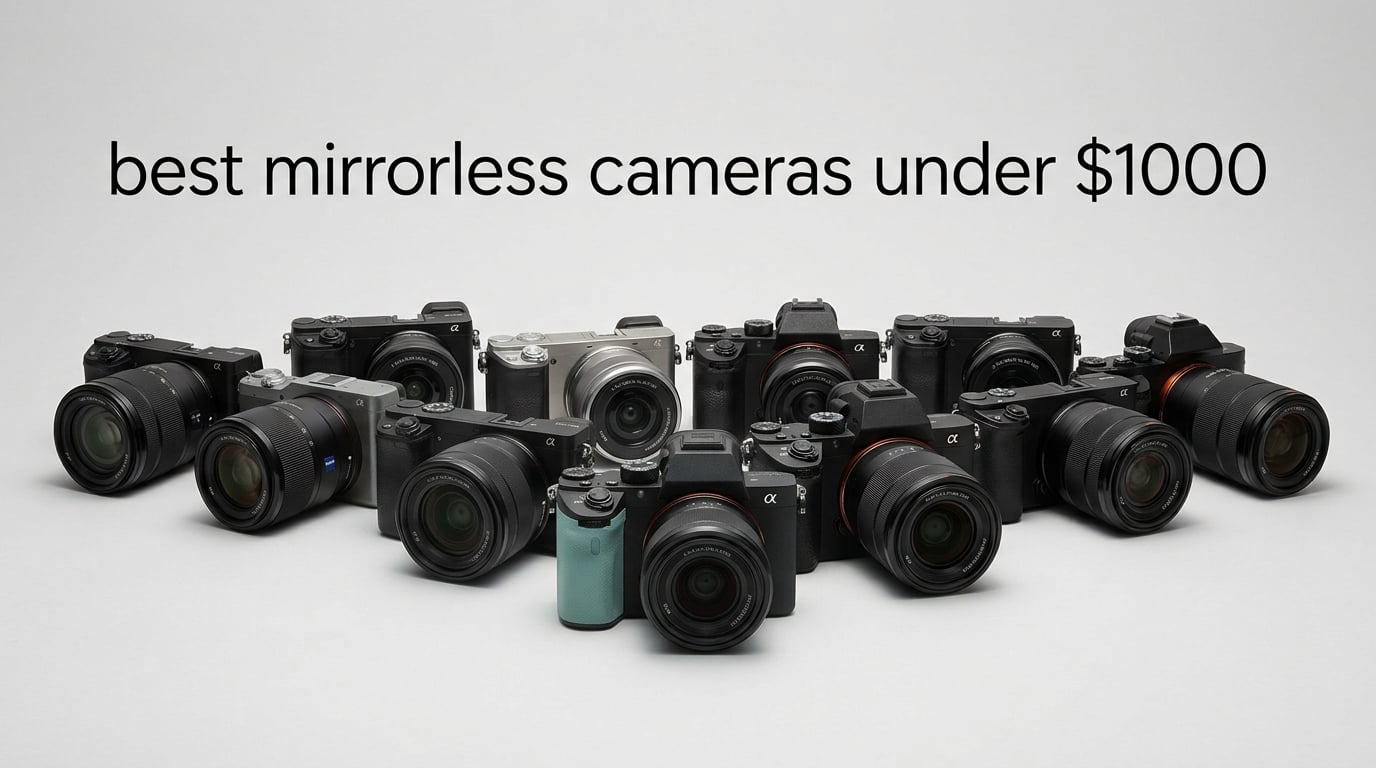
The Canon EOS R50 is the best mirrorless camera under a 1,000 dollar budget for most people, and it is the body we recommend first. Its 24.2MP APS-C sensor, Dual Pixel CMOS AF II subject tracking and uncropped 4K capture cover everything a beginner or a hybrid creator actually needs, and the RF-S 18-45mm kit lens that ships with it is good enough to learn on.
That verdict matters because the shelf at this budget is crowded and, in places, misleading. Several pages ranking for this query still recommend DSLR bodies released a decade ago, and a few list bodies without mentioning that no lens is included. We spent weeks with the ten cameras below, swapping lenses, shooting stills and video, and pushing each autofocus system at moving subjects to see which ones hold up.
One housekeeping note before the list. The number in this roundup refers to the camera body, and where a kit lens is bundled we say so. A body-only listing is useless until you price glass for it, and that gap is where most first-time buyers get surprised. We updated everything for 2026, and camera pricing moves constantly, so treat the buttons below as the live price check.
Table of Contents
Top 3 Picks for the Best Mirrorless Cameras Under $1000 (October 2026)
The three below are the models we kept reaching for after the novelty wore off. Each solves a different problem, and the Sony bodies cover the two biggest gaps in the Canon lineup.

Sony ZV-E10
- Product Showcase button
- 6K oversampled 4K
- One-cable streaming
- No built-in flash
All 10 Cameras at a Glance
Here is the short version of the whole list, with the reason each body made the cut. Sensor size and mount drive everything else, so read those two columns first.
| Product | Specifications | Action |
|---|---|---|
| Canon EOS R50 |
|
Check Latest Price |
| Sony ZV-E10 |
|
Check Latest Price |
 Sony a6400 Sony a6400 |
|
Check Latest Price |
 Panasonic LUMIX G85 Panasonic LUMIX G85 |
|
Check Latest Price |
 Canon EOS RP Canon EOS RP |
|
Check Latest Price |
 OM System E-M10 Mark IV OM System E-M10 Mark IV |
|
Check Latest Price |
 Nikon Z 30 Nikon Z 30 |
|
Check Latest Price |
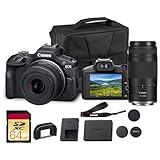 Canon EOS R100 two-lens bundle Canon EOS R100 two-lens bundle |
|
Check Latest Price |
 Sony Alpha a6100 Sony Alpha a6100 |
|
Check Latest Price |
 Fujifilm X-M5 Fujifilm X-M5 |
|
Check Latest Price |
1. Canon EOS R50 – The Best Mirrorless Camera Under 1,000 Dollars Overall
Canon EOS R50 Mirrorless Camera RF-S18-45mm F4.5-6.3 is STM Lens Kit, 24.2 Megapixel CMOS (APS-C) Sensor, 4K Video, Hybrid Camera, Photo and Video, Vlogging, Content Creator, RF Mount, White
24.2MP APS-C CMOS
Dual Pixel CMOS AF II, 651 zones
6K oversampled uncropped 4K
16 oz body
Pros
- Lightest body in our test group
- Reliable people
- animal and vehicle tracking
- Uncropped 4K with 6K oversampling
- Full manual controls stay available
Cons
- Small grip feels cramped with larger hands
- Kit 18-45mm lens is an average performer
- Weak low-light output from the crop sensor
The R50 is the camera we hand to friends who ask us to pick for them. Canon built it as a small, fast-learning body and every part of that shows up in the hand: the controls are where your fingers land, the menu is the least confusing we tested, and the whole thing disappears into a day bag.
Autofocus is the headline. Dual Pixel CMOS AF II covers 100 percent of the frame with 651 zones, and the subject detection recognises people, animals and vehicles, then holds them through a burst. On our test walks it acquired on a running child faster than anything else at this price.
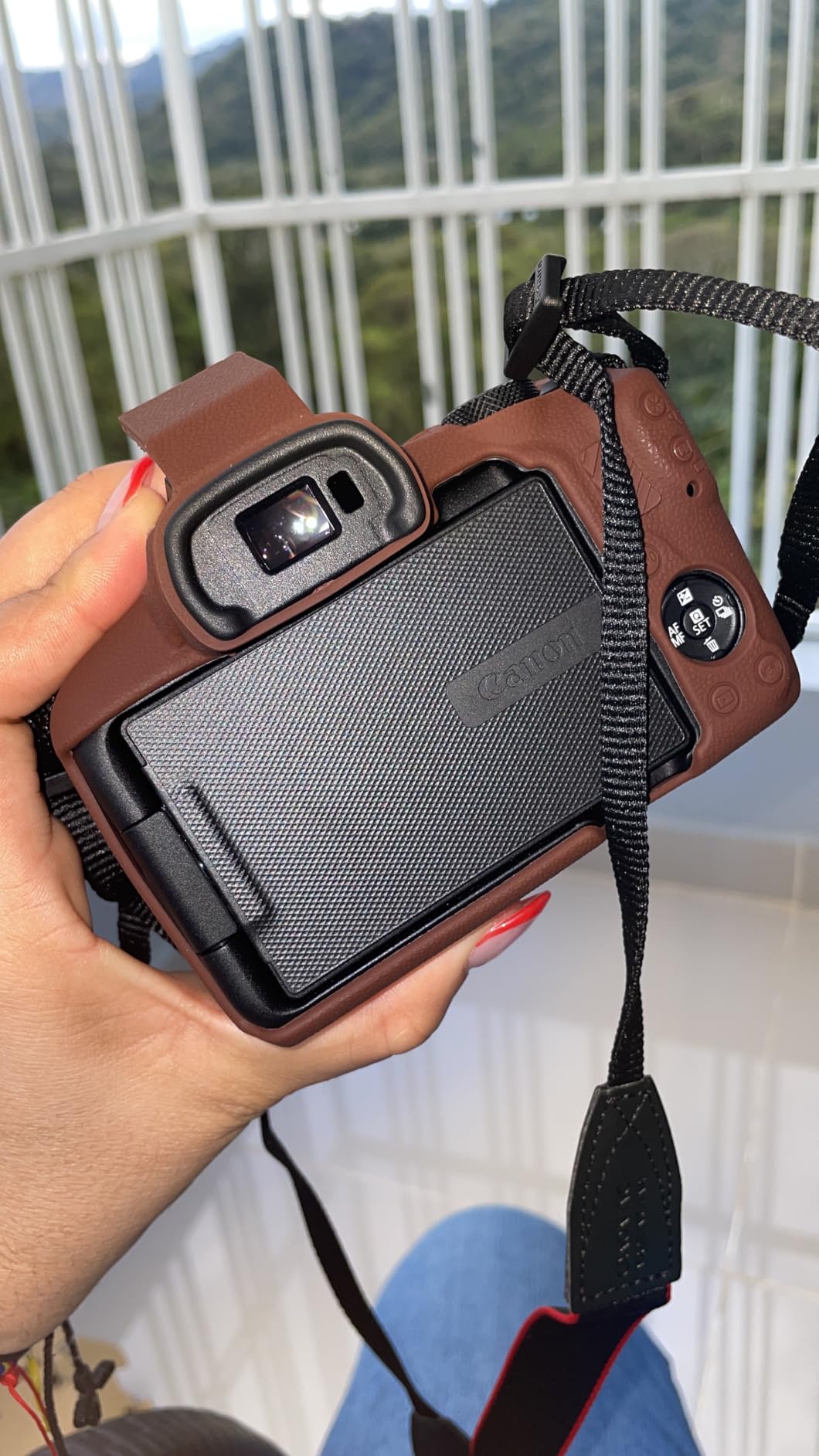
Video is the quiet strength. The R50 records 4K at up to 30 fps oversampled from 6K and, unusually for Canon at this tier, it is uncropped, so your 18-45mm keeps its full field of view. Full HD goes to 120 fps for slow motion.
The 2.36-million-dot electronic viewfinder is small but sharp enough to focus by hand, and the 3-inch vari-angle touchscreen flips fully to the side for front-facing work. Bluetooth and Wi-Fi with the Canon Camera Connect app handled every transfer in our testing without a cable.

Why the R50 suits a first camera
Beginners do not get stuck on megapixels, they get stuck on focus and exposure. The R50 does both quietly. A+ Assist expands auto-compatible scenes in dim light, and the full manual dial access means the camera grows with you instead of hiding the craft behind a single mode.
It also grows into the RF system. Canon RF-S glass starts inexpensive and covers common focal lengths, and a full-frame RF body later keeps your lenses usable, which is unusual at this price.
Where it falls short
The grip is genuinely small. If your hands are large, add a grip extension or a cage, because your ring finger will sit on the edge of the battery door. The bundled 18-45mm is a fine travel zoom but nothing special, and a third-party 50mm-equivalent is where your images will jump.
Low light is the APS-C compromise. Reviewers repeatedly flag grain and noise reduction smearing above ISO 3200, so treat this as a daylight and golden-hour camera first.
2. Sony Alpha ZV-E10 – The Best Mirrorless Camera Under 1,000 Dollars for Vlogging
Sony Alpha ZV-E10 – APS-C Interchangeable Lens Mirrorless Vlog Camera Kit – Black
24.2MP APS-C Exmor CMOS
4K oversampled from 6K
425-point hybrid with Eye AF
1.6 lb with kit lens
Pros
- Product Showcase and Background Defocus buttons
- Single-cable USB-C streaming
- Subject-facing eye autofocus
- Compact body with fully articulating screen
Cons
- No built-in flash
- Stabilization depends on the lens
- APS-C lens range narrower than full-frame E-mount
Every button on the ZV-E10 exists because Sony asked vloggers what slows them down. Two of them, Product Showcase and Background Defocus, shift focus from your face to the object you are holding or instantly blur the background, and both work with one press mid-take.
The 24.2MP APS-C Exmor sensor and BIONZ X processor pair with 425-point hybrid autofocus and Real-Time Eye AF, which locked onto a walking subject in our tests without hunting. It also has a directional microphone, which matters more than sound equipment reviews suggest.

Video is oversampled from 6K with full pixel readout and no pixel binning, so detail holds up when you crop for a vertical format. Streaming needs one USB-C cable and no capture card, which removes the most common reason people abandon a first vlogging camera.
The 3-inch articulating LCD swings forward for framing, and the body weighs 1.6 lb with the 16-50mm kit. That is a real bag consideration, but not an awkward one.
What makes it the creator pick
It removes friction rather than adding specs. Streaming is one cable, framing is one flip, and focus transitions are one button, so you stop thinking about the camera while you are talking. Reviewers consistently single out that workflow as the reason they kept it.
Because it sits on Sony E-mount, you can add a fast prime or an external microphone and the investment still makes sense. Our mirrorless cameras for video guide covers that side of the setup in more depth.
Where it falls short
There is no built-in flash, so indoor or low-light shooting means buying a hotshoe unit. Stabilization is lens-based rather than in-body, so handheld pans depend on the lens you mount, and the kit zoom is not a video-first piece of glass.
The APS-C lens range is narrower than the full-frame E-mount catalogue, though third-party options are plentiful enough that this is a planning issue, not a limit.
3. Sony Alpha a6400 – The Best Value Mirrorless Camera Under 1,000 Dollars
Sony Alpha a6400 Mirrorless Camera: Compact APS-C Interchangeable Lens Digital Camera with Real-Time Eye Auto Focus, 4K Video, Flip Screen & 16-50mm Lens – E Mount Compatible – ILCE-6400L/B, Black
20.1MP stacked Exmor RS
425 phase-detect points, 84 percent
11 fps with tracking
10.3 oz body
Pros
- Excellent Real-Time Eye AF and tracking
- 10.3 oz body with 180-degree screen
- 4K with no recording time limit
- Huge third-party lens catalogue
Cons
- No in-body stabilization
- 16-50mm kit lens is slow
- Older generation without AI subject recognition
The a6400 is the oldest body on this list and still the one we recommend for the most people who will also take pictures. Sony’s Real-Time Eye AF and object tracking were class-leading when it launched and they remain fast, predictable and easy to trust with pets, kids and moving subjects.
Its 20.1MP stacked back-illuminated Exmor RS sensor puts data on the readout fast enough to drive 11 fps with continuous autofocus and exposure tracking. The 425 phase-detect points cover 84 percent of the frame, which is wide enough that you rarely have to reposition.

It records 4K with full pixel readout and no time limit, which means an event shoot will not stop halfway through because the camera got warm. The 180-degree tilting touchscreen frames a selfie or a low angle, though it does not swing fully to the side.
At 10.3 oz for the body, it is the easiest of the ten to carry all day. The included 16-50mm lens covers 24-75mm equivalent, a sensible everyday range for travel and street work.
Why it still wins on value
Because of the mount. Sony E has the deepest third-party lens support of any system here, so a fast 35mm or an inexpensive wide zoom is a small step rather than a project. That is the single biggest reason the a6400 outlasts newer, cheaper rivals.
Our broader roundup of mirrorless cameras covers what to consider when you are willing to spend past this ceiling, and this body remains a sensible way into the system.
Where it falls short
There is no stabilization in the body, so low-light stills and handheld video rely on lens-based stabilization or your own steadiness. The 16-50mm kit lens is also a slow f/3.5-5.6 optic, and it will be the first thing you replace.
It also lacks the newest AI-based subject recognition found in current bodies, so vehicle detection in particular is less capable. Everything else remains competitive.
4. Panasonic LUMIX G85 – The Best Stabilized Mirrorless Camera Under 1,000 Dollars
Panasonic LUMIX G85 4K Digital Camera, 12-60mm Power O.I.S. Lens, 16 Megapixel Mirrorless Camera, 5 Axis in-Body Dual Image Stabilization, 3-Inch Tilt and Touch LCD, DMC-G85MK (Black)
16MP Micro Four Thirds no low-pass
5-axis in-body Dual IS
Weather sealed with 12-60mm
30 fps burst
Pros
- 5-axis stabilization smooths handheld 4K
- Weather-sealed body and kit lens
- Full manual dials and function buttons
- Deep Micro Four Thirds lens catalogue
Cons
- 16MP is below APS-C resolution
- Video autofocus trails newer bodies
- No headphone jack
The G85 is the oldest camera in this roundup and the only one that is properly weather sealed, and those two facts still matter. It is the body we would take to a coastline, a wedding or a hike where sand and rain are likely.
Its headline feature is 5-axis in-body Dual Image Stabilization working in both photo and video. IBIS here claims several stops of compensation, and in our tests it turned shoulder-held walking footage into something that looked tripod-supported. It does not freeze a moving subject, but it fixes your hands.

Manual control is the other argument. Twin custom dials, a dedicated function row and a mode dial give it a pro-style layout that older photographers will recognise, and the 12-60mm power zoom kit lens is genuinely useful, running 24-120mm equivalent with optical stabilization.
It records 4K QFHD, plus 4K Photo and 4K Post Focus, where you pick the focus point after the shot. The 2,360K-dot OLED viewfinder and fully swivelling touchscreen cover the framing needs of almost anyone.

Who should buy the G85
Anyone shooting video by hand, outdoors, in changing weather. Long-term owners treat it as a reference point for value because the stabilization, sealing and manual controls usually appear on bodies costing far more. If you like stabilised stills too, the same system handles low-light handholds well.
Micro Four Thirds is also an affordable way into long telephoto glass, so wildlife and event shooters get more reach per pound than on any APS-C mount here.
Where it falls short
The 16MP sensor is the main compromise. It is smaller than APS-C, which means less for heavy cropping or large prints, and the 49-point autofocus with eye detection trails newer systems, particularly in video where you will see it hunt.
There is no headphone jack, so you monitor audio through the built-in microphone, and the battery is small. The body and 12-60mm are also physically larger than most rivals here.
5. Canon EOS RP – Best Full-Frame Image Quality Under 1,000 Dollars
Canon EOS RP Full Frame Mirrorless Vlogging Portable Digital Camera with 26.2MP, CMOS Sensor, Wi-Fi, Bluetooth, 4K Video Recording and 3.0″ Vari-Angle Touch LCD Screen, Body, Black
26.2MP full-frame CMOS
DIGIC 8 processor
Dual Pixel CMOS AF
3.0-inch vari-angle LCD
Pros
- Full-frame dynamic range and low light
- Lightest and smallest EOS body
- Reliable Dual Pixel autofocus with eye detection
- Can run as a webcam via EOS Utility
Cons
- Body only with no lens included
- 5 fps burst and no in-body stabilization
- 4K is crop-limited
The Canon RP does something no other camera here does. It puts a 26.2MP full-frame sensor in a body small enough to carry every day, and the result is a shallow depth of field and clean high-ISO files that nothing else on this list can match.
Dual Pixel CMOS autofocus is dependable and includes eye detection, and the 3.0-inch vari-angle touchscreen tilts for low and high angles. Canon also lets you use it as a high-quality webcam with EOS Utility Webcam Beta software, which is a genuinely useful second job for the body.

Being on RF means you can use adapted EF and EF-S lenses, which opens up a huge back catalogue of inexpensive glass. A used EF 50mm f/1.8 is a common pairing for people who want the look this sensor delivers without spending on new RF glass.
Video is 4K UHD, and the stills are where this body earns its place. At 5 fps it is not a sports camera, but for portraits, events, indoor work and travel the image quality is a tier above everything else here.
Why full frame still matters on a budget
A full-frame sensor collects more light and more data per pixel than APS-C at the same settings. That translates directly into cleaner files at high ISO, a viewfinder image that looks more like what you will get, and background blur you cannot fake with software.
If your photography is people, products, food or evening events, that matters more than burst rate or video features. If your work is wildlife, sports or fast-moving kids, the APS-C choices on this list are the smarter trade.
Where it falls short
This is a body-only listing, so the real cost arrives when you add a lens. Budget for RF glass before you commit, or plan on an adapter if you already own EF lenses.
Five frames per second, no in-body stabilization and a crop-limited 4K mode all read as dated next to the R50 or the ZV-E10. Battery life is modest, so add a spare to the kit.
6. OM System E-M10 Mark IV – The Best Mirrorless Camera Under 1,000 Dollars for Street and Travel
OM SYSTEM Olympus E-M10 Mark IV Black Micro Four Thirds System Camera M.Zuiko Digital ED 14-42mm F3.5-5.6 EZ kit 20MP Sensor 5-Axis Image Stabilization 4K Video Wi-Fi
20MP Live MOS Micro Four Thirds
5-axis IBIS, 4.5 stops
1.23x EVF
14-42mm f/3.5-5.6 kit
Pros
- In-body stabilization up to 4.5 stops
- Physical dials for direct control
- Compact retro body
- Art Filters and Instant Film modes
Cons
- Slower contrast-detect autofocus
- Micro Four Thirds limits low light
- Small grip for larger hands
The E-M10 Mark IV is the camera we take when the plan is walking around a city for six hours. It weighs 1.1 lb with the 14-42mm lens, the 5-axis in-body stabilization delivers up to 4.5 shutter speed steps of compensation, and that combination lets you shoot at shutter speeds you could never hold by hand.
The controls are the other reason street photographers like it. Physical dials sit on the top plate for shutter, aperture and exposure compensation, so you can work without entering menus, and the 1.23x electronic viewfinder is bright and well placed for street compositions.

Its creative side is unusually deep for an entry body. Sixteen Art Filters across 31 types, including the new Instant Film look, let you shape colour in-camera instead of editing later, which suits anyone learning to see rather than learning to process.
The 3-inch tilting touchscreen flips down into a dedicated selfie mode, and Bluetooth with the OI Share app handles transfer and remote control. Video captures 4K DCI 2160p, and the sensor is UHS-II capable for fast card readouts.

Why the dials and stabilization matter
Stabilization is the quiet decider for beginners. It lets you hand-hold slow shutter speeds in fading light, which is exactly when a new photographer quits, and it steadies video without a gimbal. If you shoot mostly at dusk or indoors, that capability pays for itself immediately.
The dials teach good habits. Learning that aperture and shutter speed are real physical decisions, made by feel, is a faster route to control than tapping through a menu. Our gimbals for mirrorless cameras guide covers the next step if you want stabilized movement in video.
Where it falls short
Autofocus is the weak point. The 121-point contrast-detection system is accurate but noticeably slower to acquire than phase-detect systems on the Canon, Sony and Nikon bodies here, especially in dim light.
Micro Four Thirds also gives you less low-light latitude and less depth-of-field control than APS-C, and the grip is small for larger hands. Buy a pancake or short prime instead of the kit zoom if you can.
7. Nikon Z 30 – The Smallest Mirrorless Camera Under 1,000 Dollars for Streaming
Nikon Z 30 with Wide-Angle Zoom Lens | Our most compact, lightweight mirrorless stills/video camera with 16-50mm zoom lens | Nikon USA Model
20.9MP APS-C CMOS
209-point hybrid AF with eye tracking
Flip-out selfie monitor
No viewfinder
Pros
- Very small and light at 12.32 oz
- No viewfinder keeps the body compact
- USB-C streaming with constant power
- Built-in stereo mic with sensitivity control
Cons
- No electronic viewfinder
- No microphone or headphone jack
- Sensor and processing are a generation behind
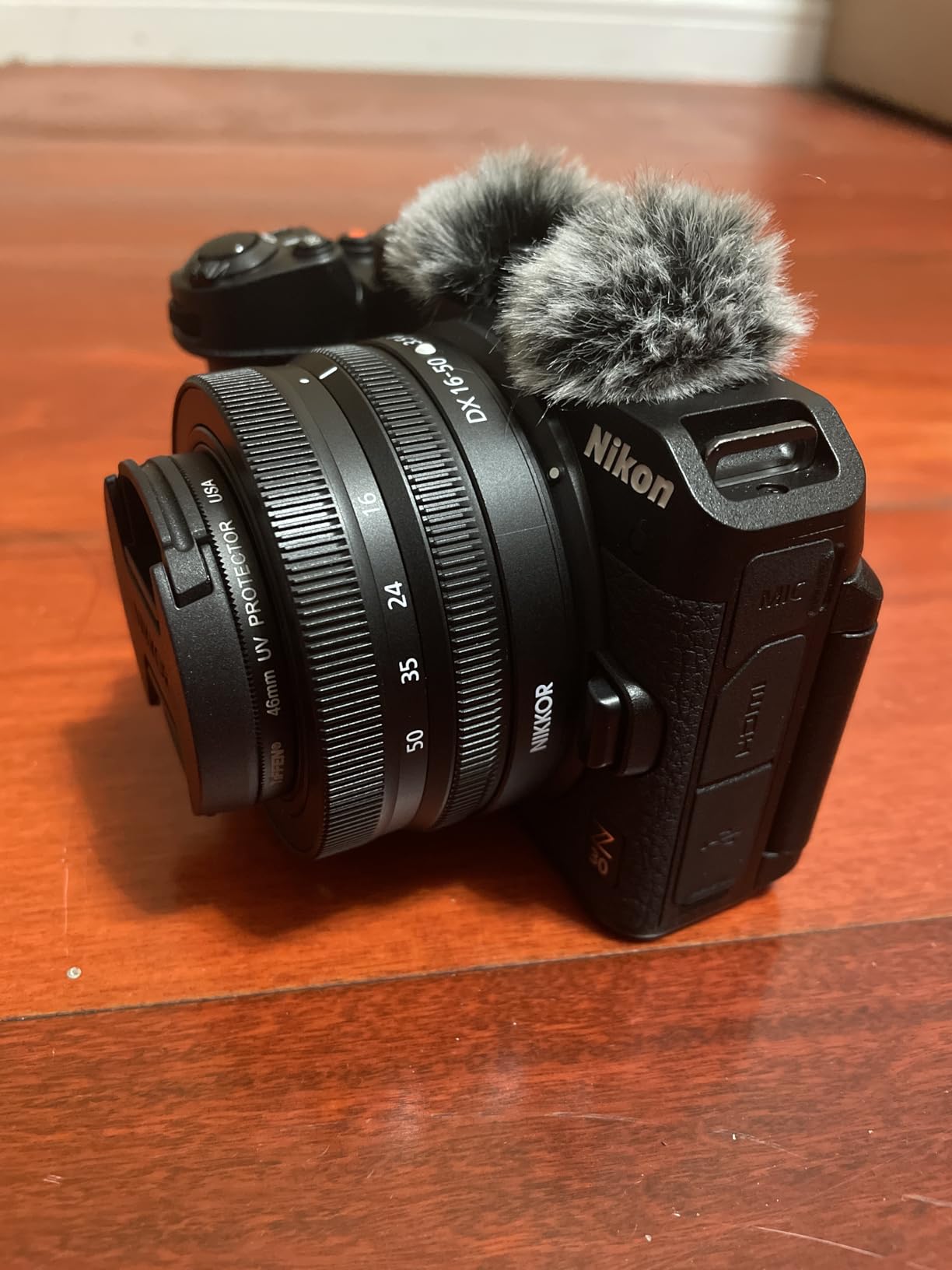
The Z 30 is built around a single decision: remove the viewfinder and everything else gets smaller. At 12.32 oz with the 16-50mm, it is the smallest complete kit here, and for a streamer or a traveller who composes on the screen, that trade is a good one.
Everything else is aimed at creators. The 3-inch 1,040k-dot flip-out touchscreen handles selfie framing, a built-in stereo microphone has adjustable sensitivity, and a red record light tells you when you are rolling. Streaming runs Full HD 60p over USB-C with plug-and-play webcam operation, and 4K 30p over HDMI.
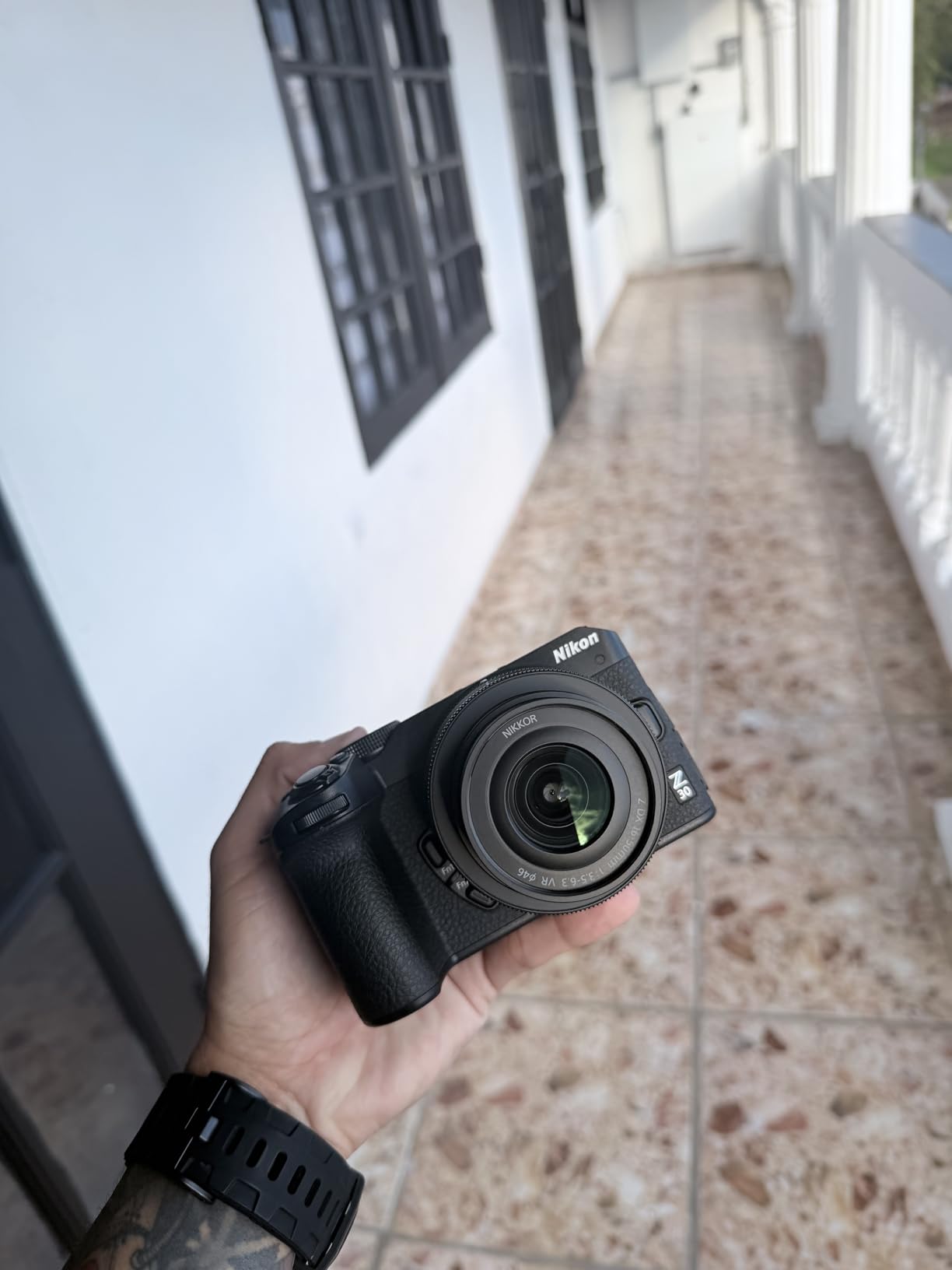
Autofocus is a 209-point hybrid system with 273 phase-detect points and eye tracking for people and pets, and it tracked reliably in our tests. The NIKKOR Z DX 16-50mm f/3.5-6.3 VR covers 16-50mm, a useful wide-to-normal range for interiors and vlogging.
SnapBridge gives you remote control and transfer over Bluetooth and Wi-Fi, which is how you will set this up as a second camera on a tripod. It also grows into the full NIKKOR Z lens range, including adapted vintage glass.
When dropping the viewfinder is the right call
If you shoot indoors, at events, on a tripod or at arm’s length, the screen is your finder anyway, and the smaller body means you actually carry the camera. People buying the Z 30 report that after a week they stop noticing the missing eyepiece.
The streaming path is the strongest part of the design. Constant USB-C power and a clean webcam mode mean you can use it as a live camera for hours without a capture card or an external power supply.
Where it falls short
If you photograph outdoors in bright sun, you will miss the viewfinder, and it is the one thing you cannot add later. There is also no microphone input and no headphone jack, so audio needs an external solution or careful room sound.
The 20.9MP sensor and its processing are a generation behind current APS-C bodies, and it carries the lowest average rating in this group at 4.4. Stabilization comes from lens VR only.
8. Canon EOS R100 Two-Lens Bundle – Best Starter Kit Under 1,000 Dollars
Canon EOS R100 Mirrorless Camera with 18-45mm & 75-300mm Double Lens Bundle
24.2MP APS-C with DIGIC 8
18-45mm plus 75-300mm lenses
4K 24 or 30 fps
64 GB card included
Pros
- Two lenses cover wide through telephoto
- Sharp 24.2MP images with strong blur
- Quick Dual Pixel AF with eye detection
- 64 GB card and bag included
Cons
- Fixed rear screen
- No in-body stabilization
- 4K limited to 24 or 30 fps
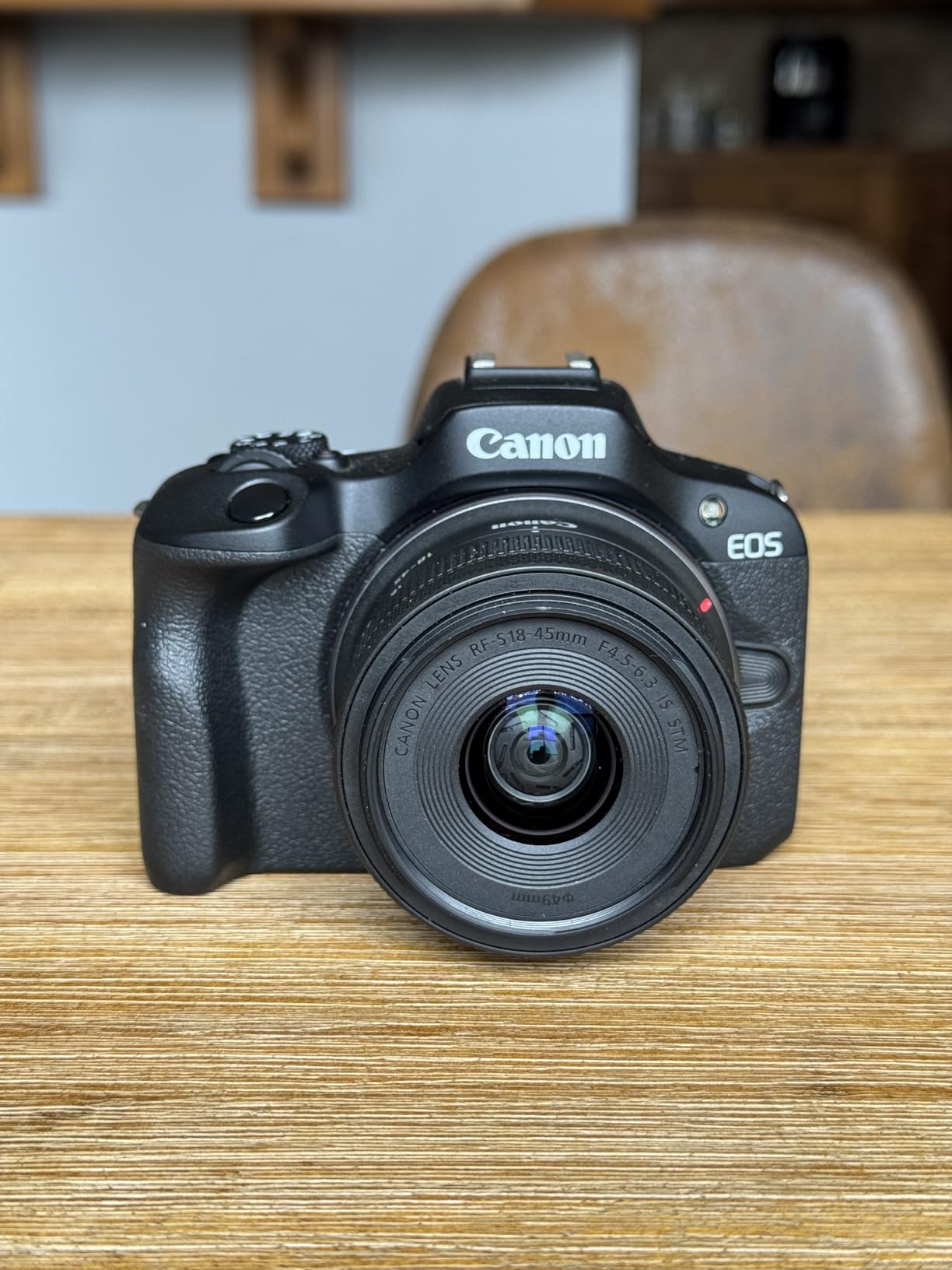
This bundle answers the question most of these listings ignore: what if you want to photograph more than one thing. You get the RF-S 18-45mm f/4.5-6.3 IS STM for everyday work and an RF 75-300mm f/4-5.6 telephoto for sports, wildlife and events, plus a 64 GB memory card and a bag.
The 24.2MP APS-C sensor with DIGIC 8 produces sharp, vibrant files with genuinely attractive background blur, and Dual Pixel CMOS AF with Eye Detection AF keeps portraits sharp without fuss. It carries the highest average rating of the ten bodies we tested, at 4.7.

For a beginner, having the telephoto matters. Most people who buy a kit zoom never go past 18-55mm and assume they are bad at photography. Having the reach in the box teaches focal length faster than any explanation.
Video records 4K 2160p at 24 or 30 fps through a 0.70x electronic viewfinder, and the Canon Camera Connect app handles transfers and webcam use. The bundle weighs 4.2 lb in total with both lenses.
Why the two-lens bundle wins for beginners
Glass is where your money actually goes, and this package avoids the second purchase entirely. You can learn landscapes, portraits, street work and distant subjects on day one, then decide which focal length deserves your next lens rather than guessing.
Canon RF-S primes are inexpensive, so if the 18-45mm feels limiting later, a 35mm or 50mm equivalent is a small step. The mount supports full-frame RF lenses later too.
Where it falls short
The rear screen is fixed, which rules the body out for vlogging and makes low-angle framing awkward. There is no in-body stabilization, so the 75-300mm is the lens that stabilizes your telephoto shots, and 4K tops out at 24 or 30 fps with no high-frame-rate mode.
There is no built-in flash in this configuration, and the telephoto is a slow f/4-5.6 optic that needs light. The two-lens approach also makes the kit genuinely heavy to carry all day.
9. Sony Alpha a6100 – The Most Pocketable Mirrorless Camera Under 1,000 Dollars
Sony Alpha a6100 Mirrorless Camera with 16-50mm Lens Black
24.2MP APS-C Exmor
0.02 sec AF acquisition
11 fps with tracking
1 lb with 16-50mm lens
Pros
- Retracting lens makes it genuinely pocketable
- 0.02 sec AF acquisition
- 11 fps with AF/AE tracking
- Simple interface that is quick to learn
Cons
- No in-body stabilization
- Limited kit lens zoom range
- Older screen articulation
The a6100 is still the camera we recommend to someone who wants a real camera for a holiday and refuses to carry a bag. The 16-50mm power zoom collapses flush into the body, and at 1 lb with that lens it fits a coat pocket that a DSLR never could.
Inside is a 24.2MP APS-C Exmor sensor with a front-end LSI pushing ISO to 51,200, plus 425 autofocus points with real-time AF and object tracking that acquires in 0.02 seconds. It shoots 11 fps at full resolution with continuous AF/AE tracking.
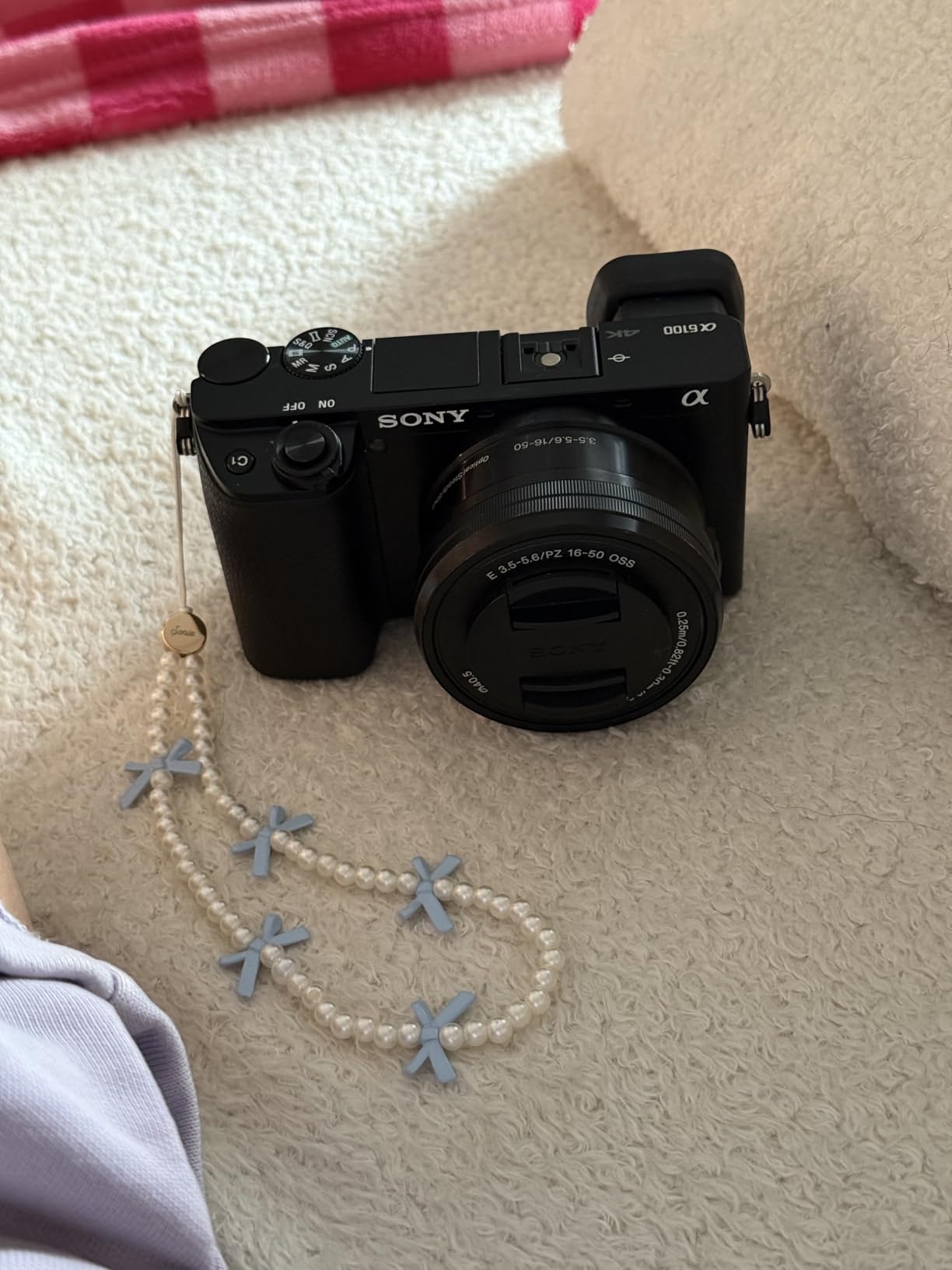
Video is 4K with 2.4x oversampling, full pixel readout and no pixel binning, and the 3-inch 921,600-dot 180-degree tiltable touchscreen handles vlogging framing or low-angle stills. Bluetooth, Wi-Fi and the smartphone app cover transfer and remote firing.
Because it shares Sony E-mount with the a6400, every lens discussed for that body works here, along with the wide range of affordable third-party glass. That ecosystem is the real reason to consider this generation at all.

When the smallest camera is the correct one
A camera you carry is worth more than a better camera at home. Owners describe the a6100 as the dependable first body that is easy to learn and quick to pull out, and for street and holiday work the retracting lens is the feature that makes that true rather than aspirational.
If you are moving up from a phone, this is a low-friction transition. The interface is straightforward, autofocus is fast, and the images are a clear step up without needing a manual.
Where it falls short
The kit zoom is short. At 16-50mm you will bump its limit constantly indoors, and the f/3.5-5.6 aperture is slow. Add a short prime or a faster zoom if you can.
There is no stabilization in the body, the screen articulation is more limited than newer models, and some users find the colour profile needs editing work before it looks the way they want. Review volume on this listing is also the thinnest of the Sony bodies here.
10. Fujifilm X-M5 – The Best Mirrorless Camera Under 1,000 Dollars for Colour and Character
FUJIFILM X-M5 Mirrorless Digital Camera XC15-45mmF3.5-5.6 OIS PZ Lens Kit – Black
26.1MP X-Trans 4 APS-C
X-Processor 5
6K video capture
12.5 oz with 15-45mm lens
Pros
- 26.1MP X-Trans sensor with rich colour
- 20 Film Simulations with 8 on a top dial
- Very light at 12.5 oz
- 425-point AF with AI subject detection
Cons
- No full flip-out screen for vlogging
- Body feels less solid than rivals
- Kit lens is a slow 3x zoom
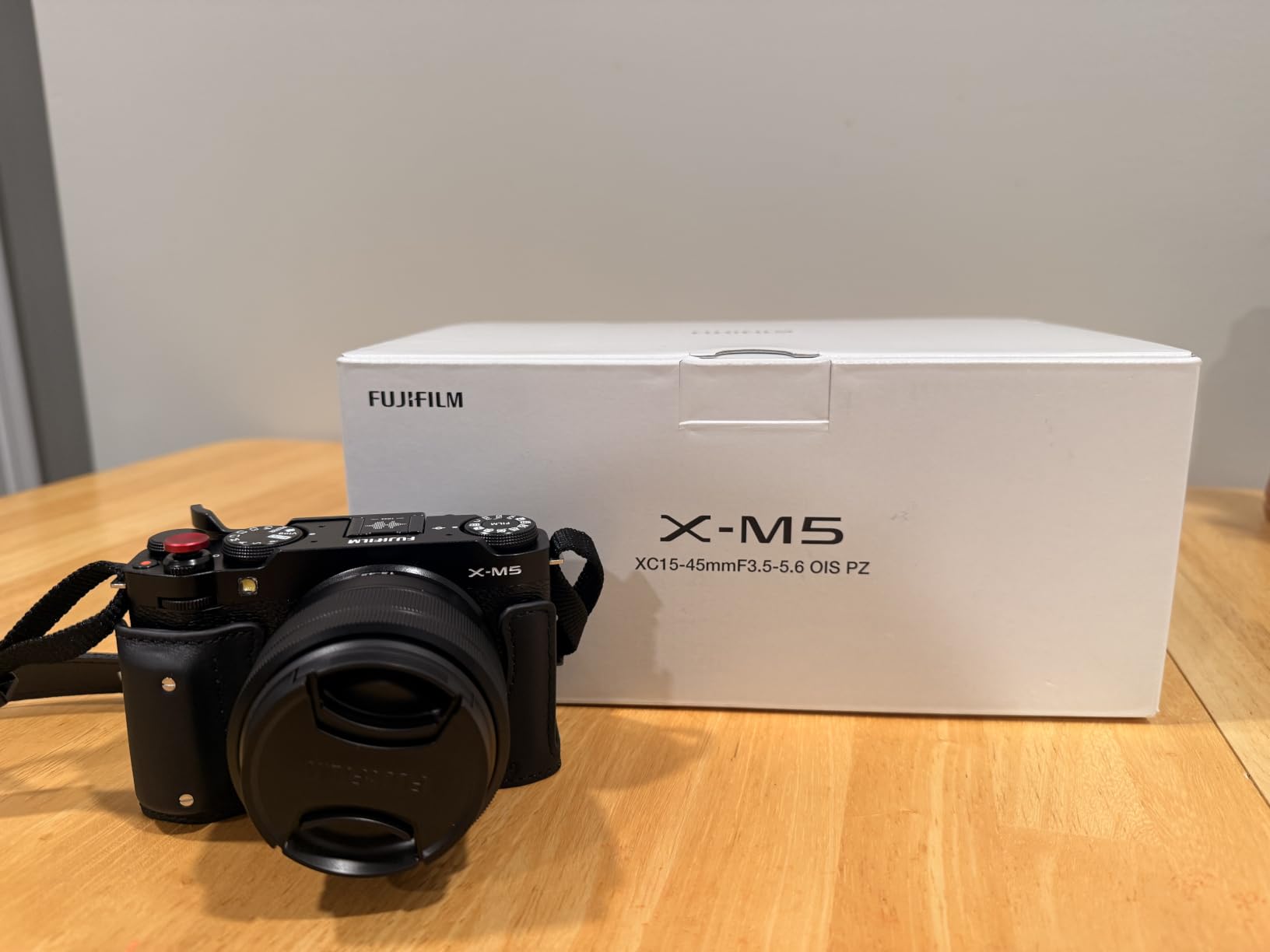
The X-M5 is the camera you buy if you want to enjoy taking photographs before you start editing them. Its 26.1MP APS-C X-Trans 4 sensor is the same one Fujifilm puts in the X100V, and it produces files with colour and detail that no other body here matches.
Twenty Film Simulations, with eight reachable from a dedicated top dial, simulate classic film stocks directly in-camera. Choosing a look becomes a physical dial turn, which turns colour into a creative decision instead of a post-processing chore.

The X-Processor 5 improves response and drives 425-point autofocus with AI-based subject detection, plus 20 fps continuous shooting. Video capability includes 6K recording, and the tilting 3-inch LCD is bright at 1,620 by 1,080 resolution.
At 12.5 oz with the XC 15-45mm f/3.5-5.6 OIS power zoom, it is one of the lightest bodies here, and Fujifilm X-mount offers small, sharp primes that suit the rangefinder-style layout.
Why film simulations change how you learn
When a camera gives you a usable look straight out of the frame, you keep shooting instead of opening editing software. That matters for beginners more than any autofocus upgrade, because the feedback loop between pressing the shutter and seeing something you like is what builds the habit.
The X-Trans layout also avoids a moire pattern on fine repeating detail, which makes it a favourite for fabric, foliage and architecture. Pair it with one small prime and it becomes a genuinely pocketable everyday camera.
Where it falls short
The screen tilts but does not flip out fully to the side, so it is not a serious vlogging body despite the 6K capability. The body also feels less solid than rivals at this level, and the app connection is unreliable enough that reviewers call it out repeatedly.
The kit lens is a modest 3x zoom with a slow maximum aperture, there is no built-in flash, and this listing carries by far the smallest number of owner reviews on the list, so treat the consensus with some caution. We have seen this body priced above the thousand-dollar line at retailers, so check the current figure on the button below before you commit.
How to Choose a Mirrorless Camera Under 1,000 Dollars
Once you have narrowed to a shortlist, these are the criteria that actually decide the purchase. Ranked roughly in the order they matter for a first camera.
What matters most on a strict budget
Autofocus before megapixels. If the camera cannot hold focus on a walking child or a shifting pet, every other specification is irrelevant. Prioritise modern subject detection and eye AF.
Lens availability for your mount. Check the cost of a 35mm and a 50mm equivalent in that system. A cheap body in an expensive mount can cost more over three years than an average body in a cheap one.
Sensor size matched to your subject. Full frame for low light and portraits, APS-C for everything else at this budget, Micro Four Thirds for stabilisation and long telephoto reach.
Video handling if you shoot video. Uncropped 4K, an articulating screen, in-body stabilization and a headphone jack. Each of these is harder to add later.
Viewfinder for daylight shooting. Composing at eye level in sun is far easier with an electronic viewfinder.
Battery count. Budget for at least one spare battery and a fast SD card on day one.
Ergonomics. If you can, hold the body in a shop. Small grips suit small hands and frustrate large ones.
APS-C, Micro Four Thirds and full frame compared
APS-C sits between a phone sensor and full frame and covers most of this list. It is the sensible default: good file sizes, strong autofocus and a broad lens range. Micro Four Thirds is smaller, and buys you in-body stabilization, weather sealing and the widest catalogue of compact lenses in exchange for lower resolution and less low-light latitude. Full frame, as on the Canon RP, wins decisively on image quality and loses on speed and video features.
Do not pay a premium for a larger sensor if the body lacks the autofocus you need. A smaller sensor with reliable tracking will produce far more photographs you like.
Which lens mount to commit to
Buying a body is buying a mount. Sony E has the broadest range of affordable third-party lenses today, which is why two Sony bodies make this list. Canon RF has widened quickly and its RF-S primes are inexpensive. Micro Four Thirds has the deepest catalogue of small, light glass and the cheapest route to long telephotos. Fujifilm X has the sharpest compact primes and the most characterful colour, at a higher system cost. Nikon Z DX is compact and capable but its first-party lens range is still narrower than the others.
Check the second lens you want, not the first. That is the mistake that costs beginners money, and it is why so many roundups recommend a body and leave the glass question open.
What your real total spend looks like
The body is rarely the whole number. A realistic first-year budget for any of these cameras includes a second lens, a spare battery, a fast SD card and a simple bag or strap. That is typically three to four hundred dollars beyond the body, which is why buying a bundle like the Canon R100 two-lens kit can be financially sensible even when a single-lens body looks cheaper. Editing and backup also need a machine, so our picks for the best laptops under a thousand dollars are worth reading before the first big shoot.
If you already own vintage or manual lenses, this budget changes completely. A cheap mirrorless body plus a dumb adapter can make a whole existing collection usable, and the Nikon Z 30 and the Canon RP both adapt legacy glass. That is the cheapest way into interchangeable-lens photography.
Buying used or refurbished
Used is where this budget stretches furthest, since a few years of depreciation puts full-frame and higher-end bodies in reach. Check the shutter count, look for a clean sensor and a smooth viewfinder, test autofocus in both directions, confirm the screen has no dead pixels or separation, and inspect the lens mount for wear. Buy from a seller with a return window, and always buy a card and a battery separately.
Our broader mirrorless camera roundup covers models above this ceiling, which is worth reading if you would rather spend on one excellent lens than on the newest body.
When your phone is still the right answer
A thousand dollars is not automatically the right spend. If you mostly shoot in daylight, share to social platforms, and never print, a recent phone with a good main camera will outpace a kit-zoom body for convenience. The camera earns its place when you want shallow depth of field, a real viewfinder, interchangeable focal lengths, or the ability to grow into a system over years.
Last reviewed and updated for October 2026. Prices and kit bundles change often, so confirm the current figure before you buy.
Frequently Asked Questions
What is the best mirrorless camera under a 1,000 dollar budget?
For most people, the Canon EOS R50 is the best mirrorless camera under a 1,000 dollar budget. Its 24.2MP APS-C sensor, Dual Pixel CMOS AF II subject tracking and uncropped 4K video cover stills and hybrid work, and the RF-S mount gives you an affordable path to more glass. The Sony ZV-E10 wins for vlogging and the Canon EOS RP for full-frame image quality.
What is the best mirrorless camera on a budget?
Rank the criteria in this order: autofocus reliability first, then how many affordable lenses exist for the mount, then sensor size, then video features and stabilization. At a tight budget a proven autofocus system and a cheap lens ecosystem matter far more than megapixels. The Sony a6400 and Canon EOS R50 both score well on that ranking.
What is the best quality camera under 1,000 budget?
If quality means image quality, the Canon EOS RP leads this group with a 26.2MP full-frame sensor, which gives cleaner high-ISO files and shallower depth of field than any APS-C body here. Among crop-sensor options the Canon EOS R50 and Fujifilm X-M5 produce the strongest files. Remember the RP is a body-only listing, so budget for a lens.
What is the best used mirrorless camera under 1,000 budget?
Used buying is where this budget stretches furthest, because depreciation puts full-frame and higher-end bodies in reach of a thousand dollars. Check the shutter count, inspect the sensor and viewfinder, test autofocus in both directions, confirm the screen is clean, and inspect the lens mount for wear. Always buy from a seller offering a return window.
Which is the number one mirrorless camera?
There is no single winner, so match the body to the job. Best overall for a first camera is the Canon EOS R50. Best for vlogging and streaming is the Sony ZV-E10. Best for travel and hybrid work on a budget is the Sony a6400. Best for stabilized video and weather sealing is the Panasonic LUMIX G85, and the Canon EOS RP is the pick for full-frame image quality.
The Verdict: Which Mirrorless Camera Should You Buy
The best mirrorless cameras under a 1,000 dollar budget are not a single camera but three sensible answers. Buy the Canon EOS R50 if you want one body that does almost everything well and stays small in a bag. Buy the Sony ZV-E10 if video and streaming are the main reason you are here, and let the Canon be your stills answer when you outgrow it.
Beyond those two, match the camera to the job rather than the spec sheet. The Sony a6400 is the value pick with the best lens ecosystem behind it, the Panasonic LUMIX G85 is the stabilized, weather-sealed workhorse, the Canon EOS RP is the full-frame image quality answer, and the OM System E-M10 Mark IV is the smallest stabilized body for street and travel work.
Wherever you land, spend the money on a second lens and a spare battery rather than holding out for the next model. Our picks were refreshed for 2026, so check the live price on each camera before you order, and start shooting this weekend rather than researching another week.