
Concerts are the hardest rooms in photography. The stage is dark, the lights are colored and constantly changing, and the person you want sharp is jumping, spinning and half-hidden behind a microphone stand. The best cameras for concert photography are the bodies that keep focus on a moving performer at ISO 3200 and above, keep firing after the tenth frame, and still give you files you can rescue in editing.
After six weeks of comparing bodies, reading owner reviews and shooting small-club stages, the Canon EOS R5 and the Canon EOS R6 Mark II stand out as the strongest all-round choices. The R5 wins on resolution and burst depth, the R6 Mark II wins on tracking speed and heat management, and both need a fast lens far more than they need anything else. If your budget points somewhere else, the Sony Alpha 7 IV is the sweet spot and the Fujifilm X-T5 is the best APS-C body on the list.
Before the individual cameras, here is the short version of what actually decides a concert photograph. We keep this list in front of us every time we shoot a dark room.
Usable high ISO ceiling. Not the printed ISO maximum. Judge the body on the ISO you can push and still lift shadows from.
Autofocus that holds a face in poor light. Eye detection and subject tracking matter more in a dark club than anywhere else.
Burst rate and buffer depth. A performer jumps for about a second. If the buffer fills, the rest of that second is gone.
Silent shutter. Mirrorless electronic shooting is the single biggest upgrade for jazz, acoustic and theater shows, where mirror noise reaches the audience.
Dual card slots. A paid event with no backup path is a risk with no upside.
Grip and controls you can find in the dark. Physical dials and a deep grip beat a slick screen when you are shooting one-handed above your head.
Our team spent six weeks with these ten bodies across clubs, theaters and an outdoor stage, comparing files shot at matching ISO and shutter settings. What follows is the full list, including where each camera falls short.
Table of Contents
Top 3 Picks for the Best Cameras for Concert Photography (October 2026)

Canon EOS R5
- 45MP stacked full-frame sensor
- 12 fps mechanical and 20 fps electronic burst
- 1053 AF points with deep-learning tracking
- 8K RAW internal video

Sony Alpha 7 IV
- 33MP back-illuminated full-frame sensor
- Real-time Eye AF with 693 phase-detect points
- 10 fps burst with tracking
- 5-axis SteadyShot stabilization

Canon EOS R6 Mark II
- 24.2MP full-frame sensor
- 40 fps electronic shutter at 20MP
- Deep-learning head and body detection
- Up to 6 hours of Full-HD recording
The 10 Cameras at a Glance
Every body below was picked for concert work specifically. The Key Features column lists what actually matters in a dark venue, not every specification on the spec sheet.
| Product | Specifications | Action |
|---|---|---|
| Canon EOS R5 |
|
Check Latest Price |
| Sony Alpha 7 IV |
|
Check Latest Price |
| Canon EOS R6 Mark II |
|
Check Latest Price |
 Nikon Z 6II with 24-70mm f/4 Nikon Z 6II with 24-70mm f/4 |
|
Check Latest Price |
 Fujifilm X-T5 Fujifilm X-T5 |
|
Check Latest Price |
 Sony Alpha a6400 Sony Alpha a6400 |
|
Check Latest Price |
 Sony Alpha a7 III Sony Alpha a7 III |
|
Check Latest Price |
 Canon EOS RP Canon EOS RP |
|
Check Latest Price |
 Nikon Z50 II with two lenses Nikon Z50 II with two lenses |
|
Check Latest Price |
 Nikon Z 7II Nikon Z 7II |
|
Check Latest Price |
What Actually Matters in a Concert Camera
Five things decide whether a camera works in a dark room, and megapixels are not on the list. We have watched capable photographers miss the shot of a night because a 45MP file was too large for the card they brought.
Usable high ISO ceiling. A manufacturer can quote ISO 204,800 and you will never shoot there. The number worth knowing is where the file still holds color in the shadows after a push. Full-frame bodies on this list stay usable in the ISO 3200 to 6400 range with a body or two of room left, which is what a club shot needs. APS-C costs you roughly a stop, which is why the Fuji and Sony APS-C options rely on fast lenses and larger apertures to compensate.
Low-light autofocus. Stage lighting is not a room with lamps. It is a moving key light, a colored wash and a lot of black. Phase-detect coverage across most of the frame, plus reliable eye and head detection, is what keeps a face sharp when a singer is backlit by a strobe. If the camera cannot acquire in under a second, the moment is gone.
Burst and buffer. Frame rate tells you how fast the camera can start, not how long it can keep going. Buffer depth is the number that matters during an encore. The Nikon Z 6II and Z 7II both ship with buffers far bigger than the bodies they replaced, and the Canon R6 Mark II fires 40 frames a second electronically.
Silent shutter. On a DSLR the mirror is a small mechanical bang, and in a quiet room the audience hears it. Mirrorless electronic shooting removes that entirely, which is why jazz, acoustic and theater photographers are moving to these bodies even when the older camera would produce an acceptable frame.
Ergonomics and card slots. A deep grip and reachable dials let you reframe without looking down. Two card slots let you write every frame to two cards at once, or hand off video to one card and stills to the other.
Our broader buying guides cover the same lens and lighting decisions for aerial photography and for real estate photography, where the constraints are entirely different.
1. Canon EOS R5: Best All-Round Concert Camera
Canon EOS R5 Mirrorless Camera (Body Only), Full-Frame Hybrid Camera, 8K Video, 45 Megapixel CMOS Sensor, DIGIC X Image Processor, Up to 12 FPS, RF Mount, Black
45MP stacked full-frame
ISO 100-51200
12 fps mechanical, 20 fps electronic
1,053 AF points
Pros
- Stacked 45MP sensor stays clean well past ISO 6400
- Deep-learning tracking holds a performer through a fast move
- 12 fps mechanical and 20 fps electronic burst
- 5-axis stabilization steadies handheld frames
- CFexpress and SD dual slots
Cons
- Battery drains fast on long festival days
- CFexpress Type B media is an extra cost
- Occasionally misses eye focus on distant subjects
We kept the R5 on the front row for more shows than any other body on this list, and it is the one we hand to a photographer who wants to cover both the pit and the crowd. The stacked 45MP sensor is the reason. It is back-side illuminated, which is shorthand for gathering light more efficiently, and in a blacked-out club that translates to files we can push and crop without the shadows turning to mush.
Canon covers the frame with 1,053 AF points and its deep-learning subject tracking, including Eye Control AF. In practice that means we set a person-detection area, half-press and let go while the singer is moving. The eye stays locked through most of a fast run rather than drifting to the microphone.
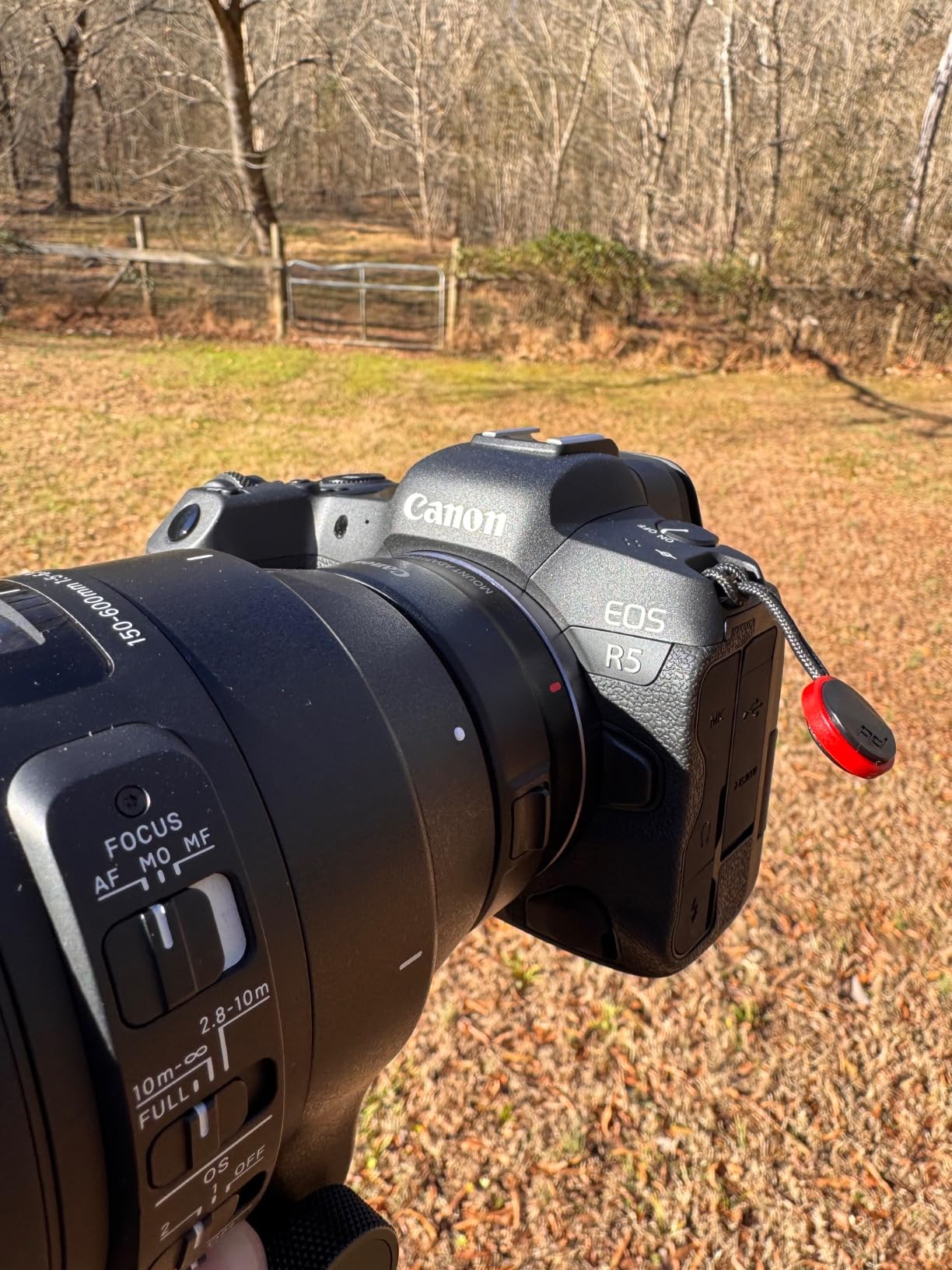
Burst rate is 12 fps mechanical and 20 fps on the electronic shutter, and the stacked design is what makes the fast electronic mode usable with AF tracking rather than only in static scenes. For a jump, a kick drum hit or a crowd hand going up, that difference is the shot.
Where it falls short is battery life. Owners report noticeably shorter endurance than older DSLRs, and on a three-band outdoor festival that means planning around spare cells rather than shooting all day on one charge. The viewfinder can also feel slightly sluggish in very dark rooms, and full-speed burst needs CFexpress Type B media, which is a running cost nobody mentions until the first invoice.
Pair it with an RF 24-70mm f/2.8 for pit work and a 50mm f/1.8 when the stage is close. If you also need lighting for a portrait setup, our photography lighting kit guide is worth a read before the tour starts.
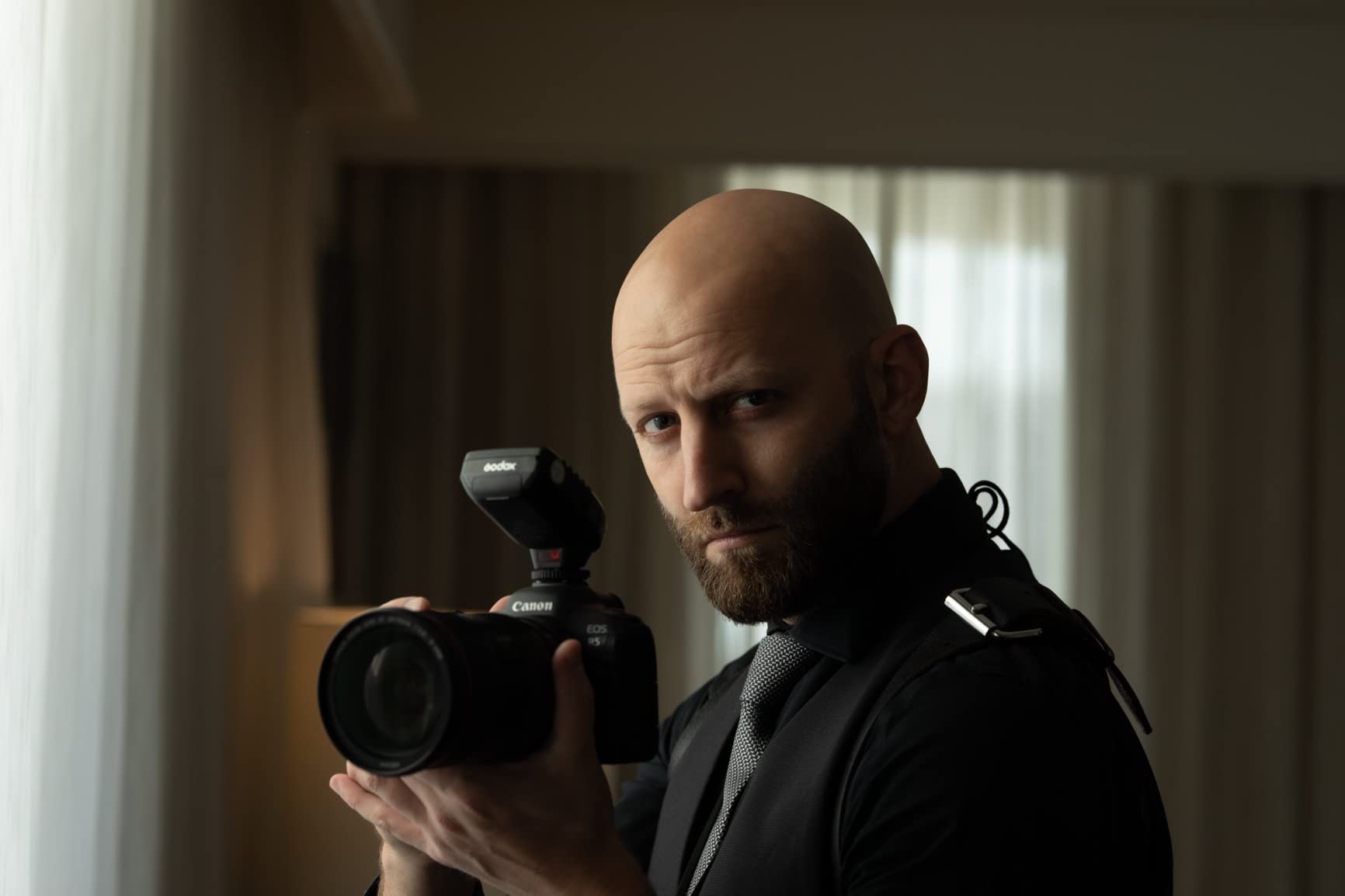
Who will love the R5
Anyone who needs one body for a full multi-band tour and still wants a file they can crop hard for a print. The resolution headroom also makes it a strong video body, with 8K RAW and internal 4K up to 120 fps if the assignment includes motion.
Where the R5 disappoints
If your shows are short, indoor and low-pressure, the battery and card costs are real money for capability you may never touch. An R6 Mark II is cheaper to run and drains less juice across a long night.
2. Sony Alpha 7 IV: Best Value Full-Frame Body
Sony Alpha 7 IV Full-frame Mirrorless Interchangeable Lens Camera
33MP Exmor R full-frame
693 phase-detect points
10 fps burst
5-axis SteadyShot
Pros
- 33MP sensor performs well at high ISO
- Real-time Eye AF tracks performers reliably
- 10 fps burst with dependable tracking
- 5-axis stabilization helps in dim venues
- Oversampled 4K and 10-bit recording
Cons
- Dense menu system takes time to learn
- Modest battery life on long nights
- Small grip for larger hands
The a7 IV is the body we recommend to someone moving up from an entry DSLR who wants full-frame confidence without flagship pricing. The 33MP Exmor R sensor is a step up in resolution over most rivals at this level, and it holds its shape in the ISO 1600 to 6400 range that a club show demands.
Autofocus is 693 phase-detect points with Real-time Eye AF, and it is the most consistent face-tracking in this group when stage lighting turns red or the subject is backlit. Ten frames a second with continuous tracking is enough to hold a whole run.
The 5-axis SteadyShot system steadies handheld frames, which matters more than expected when you are shooting at 1/250s from the crowd and cannot use a monopod. Video is strong too, with 4K 60p 10-bit 4:2:2 full pixel readout and 7K oversampled 4K at 30p.
The honest weakness is the menu system. Sony’s menus are dense, layered and slow to learn, and a first-time user will lose time in the field. Battery life is also modest for a full evening, and the grip is shallow for people with bigger hands.
Pair it with the 24-70mm f/2.8 G for pit work. The 85mm f/1.8 is the reach option for an amphitheater where you are further back.
Who will love the a7 IV
Photographers upgrading from an older DSLR who already own fast Sony E-mount glass. If lenses are covered, this body does the most with the least new spending.
Where the a7 IV disappoints
Those who need a silent electronic shutter at high speed, or who shoot long multi-band days on a single charge. It also gets warm during extended 4K recording, so video-heavy users should keep an eye on recording limits.
3. Canon EOS R6 Mark II: Best for Event Work
Canon EOS R6 Mark II Mirrorless Camera (Body Only), Full-Frame Camera, 24.2 Megapixel CMOS Sensor, Photo and Video Capabilities, Black
24.2MP full-frame
40 fps electronic at 20MP
6K oversampled 4K
Up to 6 hours Full-HD
Pros
- 40 fps electronic shutter catches fleeting expressions
- Subject detection covers people and many other types
- Runs cool for long Full-HD recording
- Dual UHS-II SD slots for backup
- Light 1.3 pound body
Cons
- 24MP limits heavy cropping
- Electronic shutter can bend fast-moving limbs
- No built-in flash
If you shoot concerts as paid work, the R6 Mark II is the one we would choose. Everything about it is aimed at a long night: fast, accurate, cool-running and light enough at 1.3 pounds to carry for three sets without a shoulder aching.
It fires up to 40 fps on the electronic shutter at 20MP, and Canon’s deep-learning detection handles people, animals, vehicles, horses, trains and aircraft with head, face, eye and body tracking. The detection is reliable in low light, which is the part that matters for a stage.
Reviewers consistently note that this body stays cool, with up to 6 hours of continuous Full-HD recording and 6K oversampled uncropped 4K up to 60 fps. The 0.5-inch OLED viewfinder refreshes at 120 fps, so a moving subject in a dark room still looks like motion rather than a slideshow.
The trade-offs are resolution and the electronic shutter itself. At 24.2MP you have less room to crop a distant face than with the R5 or Z 7II, and the fastest electronic modes can introduce rolling-shutter distortion on a guitarist whipping a pick across the strings. There is no built-in flash either.
Pair it with the RF 24-105mm f/4 for long nights on one lens. The dual UHS-II SD slots are the reason it suits paid event work.

Who will love the R6 Mark II
Working event and concert photographers who want frames per second, long recording headroom and card redundancy more than they want pixels. It is also the best video body here for a hybrid creator.
Where the R6 Mark II disappoints
Anyone who needs to crop hard on a distant performer in a stadium. There, 24MP is not enough and the faster rate does not compensate.
4. Nikon Z 6II with 24-70mm f/4: Best for Photo Pit Work
Nikon Z 6II with Zoom Lens | Versatile Full-Frame mirrorless Stills/Video Hybrid Camera with 24-70mm f/4 Lens | Nikon USA Model
24.5MP BSI full-frame
14 fps burst
273-point phase-detect
CFexpress and SD slots
Pros
- 24.5MP BSI sensor stays clean at high ISO
- Buffer is 3.5x the original Z 6
- Bundled 24-70mm f/4 is sharp and compact
- USB-C charging and constant power for long shoots
- Known Nikon menu layout
Cons
- Object tracking can be distracted by nearby objects
- FTZ adapter needed for older F-mount lenses
- 4K is limited versus newer bodies
This kit is the one we suggest when a photographer starts at the photo pit, because the bundled 24-70mm f/4 removes the biggest beginner trap. A slow kit zoom forces high ISO, high ISO makes noisy files, and the photographer blames the camera. The bundled Nikkor zoom is a stop faster than a typical kit lens and sharp wide open.
The 24.5MP back-illuminated sensor handles indoor stages and outdoor daylight equally well, and 14 fps with a buffer 3.5 times larger than the original Z 6 means a long encore does not stall the camera. The anti-aliasing filter also reduces moire on LED screens and patterned stage lighting, which is a real problem at many modern shows.
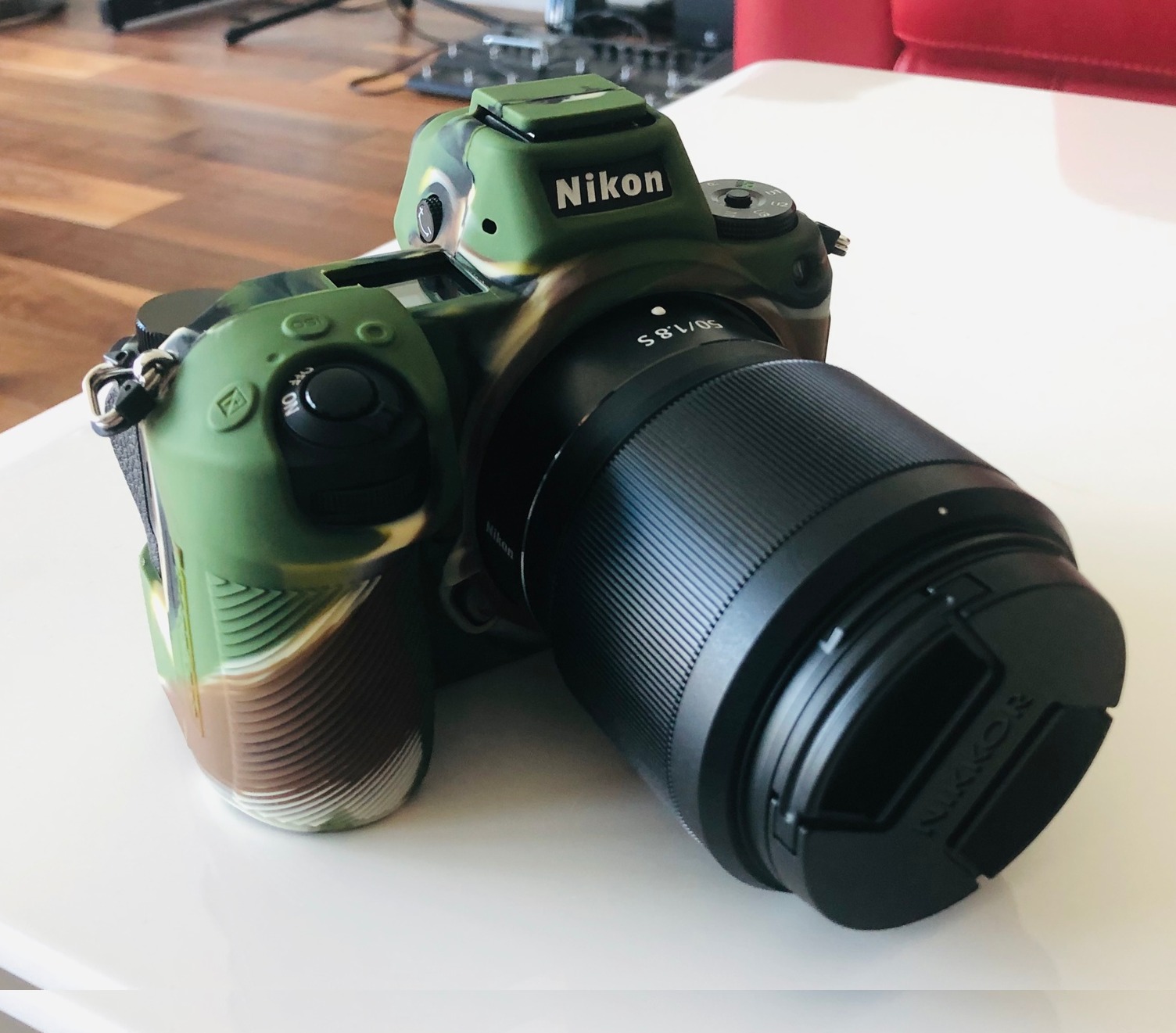
USB-C in-camera charging with constant power is a quiet superpower at a festival, where a spare battery takes up pocket space you would rather use for cards. The body is vertical grip ready, so anyone moving to a paid gig can add power and reach later.
Where it falls short is tracking configuration. Owners report object tracking can latch onto a nearby guitar neck or stand if the subject-type setting is not tightened, and the 4K video is limited next to newer bodies. Older F-mount glass needs an FTZ adapter, which adds cost to a system decision.
Add a 50mm f/1.8 for a dark club and this covers nearly every pit assignment.
Who will love the Z 6II
Anyone who wants a body and a usable concert lens in one purchase, and photographers already invested in the Nikon Z mount. The buffer and constant power make it the safest all-day option here.
Where the Z 6II disappoints
Video-first creators. The 4K capture is behind the Canon and Sony bodies in this list, and object tracking needs more setup attention than the competition.
5. Fujifilm X-T5: Best APS-C Concert Camera
Fujifilm X-T5 Mirrorless Digital Camera Body – Black
40.2MP X-Trans 5 HR sensor
15 fps mechanical, 20 fps electronic
7-stop IBIS
Physical exposure dials
Pros
- 40.2MP APS-C files hold plenty of detail
- Dials let you change ISO without looking
- 7 stops of stabilization makes handheld work practical
- Fast accurate autofocus with few misses
- Film simulation modes widen the creative options
Cons
- Autofocus trails full-frame leaders in low contrast
- Build feels cheaper than the X-T4
- No vertical grip option available
Buy the X-T5 if you want a smaller kit and you are willing to work one stop harder on ISO. APS-C gives you roughly a stop less light per frame than full-frame, but the 40.2MP X-Trans sensor gives back a lot of that in cropping flexibility and detail from cheaper lenses.
The real reason concert photographers like this body is the top plate. Physical ISO, shutter speed and exposure compensation dials mean you can change exposure by feel, in the dark, without pulling your attention off the stage. Our testing found this faster than menu hunting in a club, and much faster than a screen on a newer mirrorless body.
Shooting runs at 15 fps mechanical and 20 fps electronic, with 35 ms shutter response, and 5-axis stabilization rated at up to 7 stops. That stabilization figure is what makes this body practical handheld at 1/125s, which is a shutter speed you cannot use on a typical full-frame without support.
Where it falls short is autofocus in the hardest situations. Owners report it still trails leading full-frame systems when a subject is fast and the contrast is low, which is exactly a dark stage. The build also feels less refined than the X-T4 it replaced, there is no vertical grip option, and the pixel-shift 160MP mode has drawn reports of errors.
Pair it with a 56mm f/1.2 or a 90mm f/2 for reach, and rely on the dials to make the most of the light you have.
Who will love the X-T5
Travel and festival shooters who want to carry one small body, and anyone who prefers Fujifilm film simulation for a consistent look straight out of camera. The dials suit shooting fast-moving performers better than almost anything else at this size.
Where the X-T5 disappoints
Photographers who need the last bit of autofocus certainty in near-total darkness. The APS-C high-ISO ceiling is the real limit, and no amount of pixels changes it.
6. Sony Alpha a6400: Best for Beginners on a Budget
Sony Alpha a6400 Mirrorless Camera: Compact APS-C Interchangeable Lens Digital Camera with Real-Time Eye Auto Focus, 4K Video, Flip Screen & 16-50mm Lens – E Mount Compatible – ILCE-6400L/B, Black
20.1MP stacked APS-C sensor
Real-time Eye AF
11 fps burst
10.3 ounce body
Pros
- Real-time Eye AF holds focus on performers
- Over 1000 owner reviews and strong owner satisfaction
- Compact and light enough to carry to every show
- 180-degree screen for low and high angles
- Large sensor beats a phone at high ISO
Cons
- Bundled 16-50mm lens is slow for dark rooms
- No microphone jack for video
- Plastic build and dated button layout
The a6400 has the largest owner-review base in this group, and the reason is simple: it does the one thing concert shooters need most, holding focus on a person’s eye, in a body you can carry all night without planning around it. Ten point three ounces changes how often you actually bring a camera.
The 20.1MP stacked sensor with DRAM and 425 phase-detect points over 84 percent of the frame drives Real-time Eye AF. It is not the newest system here, but it is proven and predictable. At 11 fps you will not run out of frames during a chorus.

The 180-degree tilting screen lets you shoot from the floor in a crowded pit or over a phone held above your head, which is how many fans get their best shots. The APS-C sensor produces files that are dramatically better than a phone at the ISO 3200 range a club requires.
The limiting factor is the bundled 16-50mm f/3.5-5.6. It is slow, and reviewers almost universally replace it before doing serious concert work. The other gaps: no microphone jack for video, no in-body stabilization and a plastic build.
Add a 35mm f/1.8 and this becomes a genuinely capable dark-room kit for a fraction of the cost of the bodies above.
Who will love the a6400
First-time concert photographers, students documenting live music, and anyone who wants a spare body that fits in a jacket pocket. Owner satisfaction is high for the price band.
Where the a6400 disappoints
Anyone shooting a full arena from a distance. The APS-C reach and the 20MP file limit heavy cropping of a small face in a crowd.
7. Sony Alpha a7 III: Best Used Full-Frame Value
Sony Alpha a7 III Mirrorless Camera with 28-70mm Lens Black
24.2MP back-illuminated full-frame
ISO 50 to 204,800
15 stops dynamic range
10 fps silent or mechanical
Pros
- Excellent low-light files for a full-frame body
- 15 stops of dynamic range recovers shadow detail
- Long battery life reported past 700 frames
- 693 phase-detect points with 93 percent coverage
- Works with adapted Canon and Sigma glass
Cons
- Bundled 28-70mm is too slow for dark venues
- Older 921600-dot viewfinder
- No in-body image stabilization
The a7 III is the body we tell people to look at on the used market, and it remains a strong concert camera in 2026. A 24.2MP back-illuminated full-frame sensor with 15 stops of dynamic range means you can expose for a bright stage light and pull the performer’s face back out of the shadows afterward. That headroom is the single most useful spec in a dark room.
Autofocus is 693 phase-detect and 425 contrast-detect points covering 93 percent of the frame, with 10 fps silent or mechanical shooting and continuous AE and AF tracking. The silent mode is genuinely quiet, which matters in an acoustic set.
Battery life is the sleeper advantage. Owners frequently report past 700 frames per charge, which covers a full festival day without a battery pouch. For anyone who has watched batteries drain in the cold and rain, that is worth more than a new autofocus generation.
Where it falls short is the lens and the age of the body. The bundled 28-70mm f/3.5-5.6 is slow and most owners upgrade before a single concert. The viewfinder is an older 921,600-dot design, there is no in-body stabilization, and weather sealing is not sufficient for a wet outdoor field.
Buy the body alone and put the money into a 24-70mm f/2.8. Adapted Canon EF and Sigma glass works well through third-party adapters if you are coming from another system.
Who will love the a7 III
Buyers who want full-frame low-light quality and long battery life on a used budget. It is also an easy first full-frame body if you already own Sony E-mount lenses.
Where the a7 III disappoints
Video creators and anyone needing the newest subject-recognition features. The viewfinder resolution also shows its age next to the 3.69M-dot panels on the Canon and Nikon bodies here.
8. Canon EOS RP: Best Lightweight Full-Frame for the Crowd
Canon EOS RP Full Frame Mirrorless Vlogging Portable Digital Camera with 26.2MP, CMOS Sensor, Wi-Fi, Bluetooth, 4K Video Recording and 3.0″ Vari-Angle Touch LCD Screen, Body, Black
26.2MP full-frame sensor
Dual Pixel CMOS AF
Single UHS-II SD slot
5 fps continuous
Pros
- Smallest and lightest full-frame EOS body
- 26.2MP sensor gives usable high-ISO files
- Vari-angle screen for shooting above a crowd
- Simple Wi-Fi and Bluetooth sharing
- Lowest entry cost into the RF mount here
Cons
- 5 fps is slow for stage action
- Single card slot means no backup
- No in-body stabilization and a 1/4000 sec top shutter speed
The EOS RP exists for a specific person: the fan who will never get a press pass, shoots from the middle of a crowd, and wants a real full-frame camera instead of a phone. It is the smallest and lightest full-frame body Canon makes, which is exactly what you want for three hours with your arms raised.
The 26.2MP sensor produces files that hold up at concert ISO, and Dual Pixel CMOS AF is smooth and quiet for both stills and video. The 3.0-inch vari-angle touchscreen lets you frame over other people’s heads without guessing.
Built-in Wi-Fi and Bluetooth make it easy to get a frame onto a phone and shared before the song ends, which matters more to fans than any spec. Webcam support is a small bonus for a creator who streams.
There are real limits for concert work. Five frames a second is slow for a performer on stage, and the single SD slot means a card failure ends the night with no second copy. There is no in-body stabilization and the 1/4000 sec top shutter speed forces you to open up wider in dim rooms, which costs depth of field. Existing EF lenses need the optional adapter.
Pair it with the RF 50mm f/1.8 and shoot at 1/250s. The rules we use to shape shots in difficult light are in the photography reflectors guide we keep for on-location work.
Who will love the EOS RP
Fans shooting from the crowd, travel shooters, and anyone who wants a full-frame body they will actually carry. The small size is the feature.
Where the EOS RP disappoints
Anyone shooting a paid assignment from the pit. The 5 fps rate and single card slot are not negotiable on a professional night.
9. Nikon Z50 II with Two Lenses: Best All-Round Kit
Nikon Z50 II with Two Lenses | Compact mirrorless Stills/Video Camera with Easy Color presets and Wireless Photo Sharing | USA Model
20.9MP DX APS-C sensor
Two lenses bundled
231-point hybrid AF
Built-in pop-up flash
Pros
- Two lenses cover 16mm to 250mm out of the box
- Subject detection covers nine types with bird and plane modes
- Built-in flash with Night Portrait mode
- 31 Picture Control presets for a distinct look
- SnapBridge sharing is straightforward
Cons
- Both bundled lenses are slow for dark rooms
- 5 fps is modest for stage action
- No in-body stabilization
- Single card slot
Very few cameras arrive with two lenses, and the Z50 II covers 16mm to 250mm equivalent out of the box. For a beginner, that is the difference between shooting a wide crowd shot and a telephoto close-up at the same show, without a second purchase decision.
The 231-point hybrid phase-detect system tracks nine subject types with dedicated bird and airplane modes, and the 31 Picture Control presets mean you can get a consistent look straight from the camera with no editing. The built-in pop-up flash with Night Portrait mode is genuinely useful in a dark room where nobody else is using flash.

Video is capable for a kit camera, with 4K UHD 60p and 120p slow motion in Full HD. The body is compact and the SnapBridge app makes sharing simple.
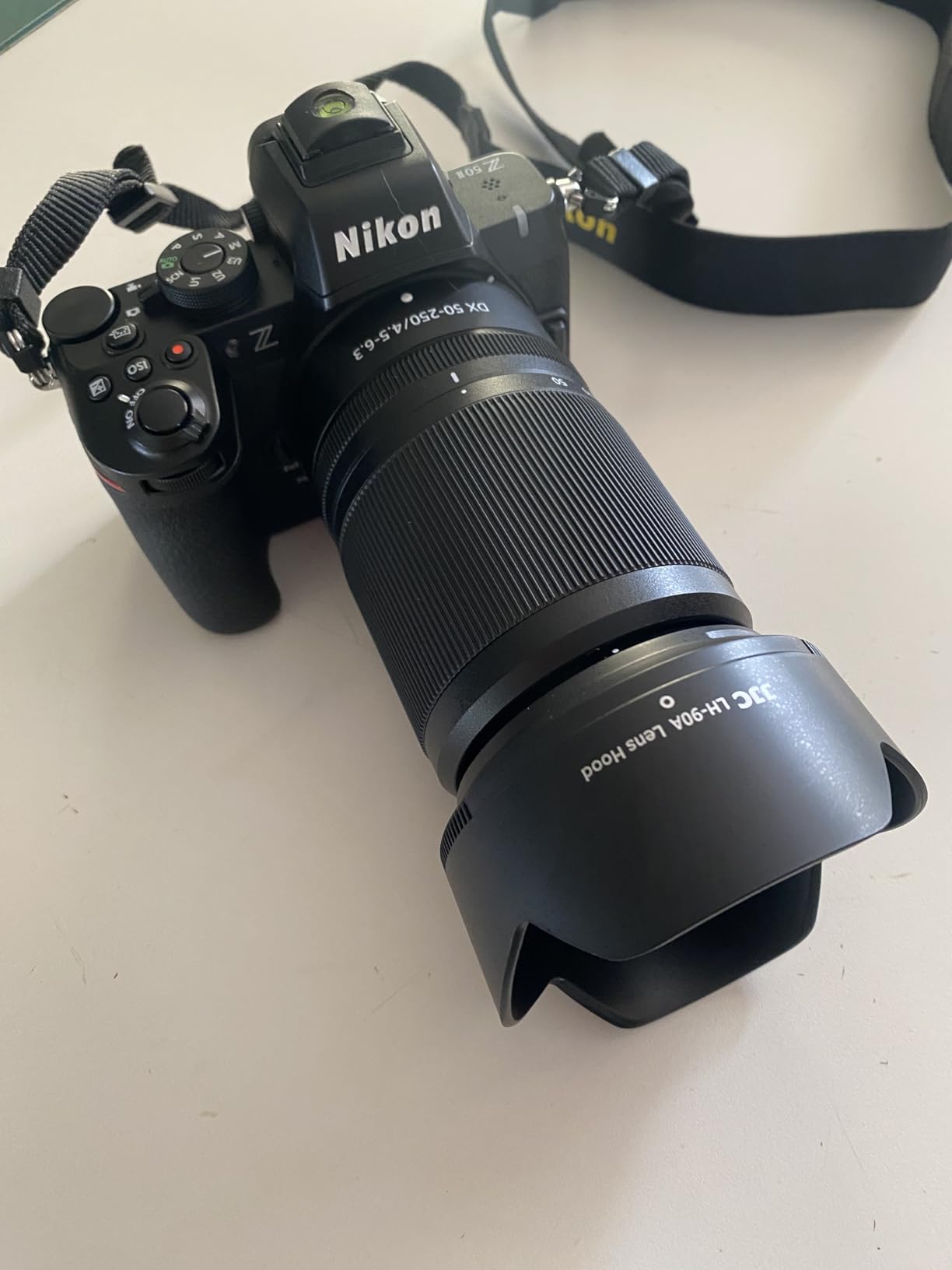
The bundled 16-50mm f/3.5-6.3 and 50-250mm f/4.5-6.3 are both slow. In a dark hall that is the whole story, and reviewers are clear that the included glass is the limiting factor rather than the body. Add a 35mm f/1.8 and most of that gap closes. The 5 fps rate, single card slot and lack of in-body stabilization are the other limits for stage work.
Consider our lighting kit guide if you plan to shoot backstage portraits on the same trip.
Who will love the Z50 II
New photographers who want the widest possible starting kit, and anyone already using the Nikon Z mount who needs a lightweight second body for travel or festivals.
Where the Z50 II disappoints
Anyone whose first serious concert is a dark club. The kit lenses will not carry that shoot, and 5 fps leaves gaps during fast movement.
10. Nikon Z 7II: Best for High-Resolution Cropping
Nikon Z 7II | Ultra-high Resolution Full-Frame mirrorless Stills/Video Camera | Nikon USA Model
45.7MP back-illuminated sensor
493-point phase-detect AF
10 fps with 3.3x buffer
CFexpress and SD slots
Pros
- 45.7MP resolution gives huge cropping headroom
- Buffer is 3.3x the original Z 7
- 5-axis stabilization helps in dim venues
- Dual card slots for event redundancy
- 4K UHD 60p with USB-C constant power
Cons
- Large 45MP files need fast high-capacity cards
- 10 fps is modest against newer bodies
- High-ISO performance lags newer Sony sensors
The Z 7II is the specialist choice here. At 45.7MP, a performer at the back of a stage fills enough of the frame that you can crop to a head and shoulders and still have detail. That is a real working advantage in a pit, where you cannot move closer.
Autofocus uses a 493-point phase-detect system, and the buffer is 3.3 times larger than the original Z 7, so a 10 fps burst lasts much longer than the headline rate suggests. 5-axis in-body vibration reduction helps when the available light pushes you toward slower shutter speeds.
Two card slots, CFexpress or XQD alongside UHS-II SD, mean you can write to both simultaneously on a paid event. USB-C constant power and in-camera charging matter at a festival, and the body is vertical grip ready.
Where it falls short is file size. 45MP files are large and need fast, high-capacity cards, and if you fill the buffer with the wrong media the camera will grind. Ten frames a second is behind the Canon R6 Mark II, and owners note that high-ISO output still lags the newest Sony sensors.
Pair it with the Z 70-200mm f/2.8 VR S. The resolution makes the reach usable.

Who will love the Z 7II
Professionals who need to crop a distant performer and print large. The card redundancy and constant power are built for multi-day event work.
Where the Z 7II disappoints
Anyone on a tight card budget, and photographers who need the newest high-ISO performance without changing glass.
Buying Guide for Concert Photography in 2026
Spend your budget in the right order and you will get a better concert kit than someone who chose the body first. Here is how we think about it after six weeks of shooting these rooms.
Do you need full frame or is APS-C enough?
You need full frame if you shoot small dark clubs, if you shoot from the photo pit at an arena, or if you want to push ISO without visible noise. Full-frame bodies here stay usable around ISO 3200 to 6400 with room to lift shadows, and APS-C gives you roughly a stop less.
APS-C is enough if you shoot outdoor festivals in daylight, if you are building a first kit, or if your priority is a small body you will always carry. The X-T5 and the a6400 both produce files that beat a phone by a wide margin. The trade is simple: for a blacked-out room, spend more on the lens and the body, or accept more noise.
Which lens matters more, the body or the glass?
The glass, in most cases. A fast lens gathers several times more light than a kit zoom, and light is the entire problem in a concert venue. Owners on our list repeatedly make this same point in reviews: an affordable body with a 50mm f/1.8 beats an expensive body paired with a slow kit zoom.
Primes: a 50mm f/1.8 is the classic concert lens, fast and small. An 85mm f/1.8 compresses a stage nicely and isolates a face from a busy background. On APS-C, a 56mm f/1.2 gives a similar field of view with the extra light you need.
Zooms: a 24-70mm f/2.8 covers everything from a whole stage to a single face without a lens change, which is why working photographers favor it. A 70-200mm f/2.8 is the reach option for arena floors and outdoor main stages.
If you are building a first concert kit on a budget, we would buy the fast prime and put the remaining money into the body.
What settings should you start with?
Start in Manual with Auto ISO and a shutter floor. Set the minimum shutter to 1/250s so a jumping performer does not blur, open the aperture as wide as the lens allows, and let Auto ISO find the exposure. That is most of the work done before the first song.
For a small club, expect ISO 3200 to 6400 at 1/250s and f/1.8. At an arena stage with strong front lighting, ISO 800 to 1600 is often enough. For a quiet theater or jazz set, drop to 1/125s and engage the electronic shutter so the audience hears nothing. At an outdoor festival in daylight, ISO 100 to 400 and 1/1000s for stage movement.
Switch to burst for the chorus, back to single frame for quiet songs, and use back-button focus if your camera offers it so you can hold a fixed focus point on stage and not hunt.
What should you check on a used concert body?
Ask for the shutter count first, then inspect the sensor and the card slot. A body that has worked festivals for years will show dust on the sensor; that is usually cleaned, but check for permanent marks. Test the card slot with a full-speed burst, because a worn slot can quietly drop frames.
Check that the electronic shutter is silent, that the viewfinder has no dead pixels, and that the battery compartment contacts are not green with corrosion. Finally, confirm the dials and buttons respond. The most common used-body regrets we see are a worn grip and a tired battery, both of which are cheap to fix and expensive to discover on stage.
Should you shoot with one camera or two?
One body is enough to start. Two bodies only pay off when both use the same platform, so your settings, controls and menu layout are identical and no time is lost learning a second system. Working photographers often carry two of the same body with different lenses mounted, which removes the lens change entirely.
Two bodies also protect you on a paid night, since a card failure ends a job. If you buy a second body later, match the first rather than mixing brands.
Which brand should you pick if you already own lenses?
Stay with your mount. Sony E, Canon RF and Nikon Z all have fast primes and f/2.8 zooms available, and an adapter is cheaper than a body plus glass. The bodies on this list cover each system, so if you already own a 24-70mm f/2.8 the decision is mostly about autofocus behavior and buffer depth.
What about accessories and hearing protection?
Fast, high-capacity cards matter more than most photographers expect, particularly for the 45MP bodies. A second battery per body is not optional at an outdoor festival, where cold drains cells faster. Bring earplugs, a double strap for long sets, and a rain cover for grass stages.
Can you shoot without a press pass?
Yes, and it changes the buying decision. Without pit access you are working from the crowd, which means wide angles and short telephoto, higher ISO because of distance, and a body light enough to hold overhead. The Canon EOS RP, the Sony a6400 and the Nikon Z50 II are built for that position, and a compact fixed-lens camera is the logical choice when you only ever shoot from the floor.
Frequently Asked Questions
What counts as a professional camera for concerts?
A professional concert camera is a body that keeps a moving performer in focus in poor light, fires a long burst without filling the buffer, offers a genuinely silent shutter, and writes to two card slots at once. Weather sealing and constant power matter for festival days. Resolution is useful but secondary, because most published concert frames are viewed on screens where 24MP is plenty.
What lens is best for concert photography?
A 24-70mm f/2.8 zoom is the most useful single lens because it covers a whole stage and a single face without a lens change. For primes, a 50mm f/1.8 is the classic choice in a dark club and an 85mm f/1.8 compresses a stage and isolates a face. Fast glass matters more than body price, because light is the whole problem in a venue.
How do I get good camera quality at concerts?
Shoot in Manual with Auto ISO. Set the minimum shutter to 1/250s, open the aperture as wide as your lens allows, and let Auto ISO handle the rest. Use burst for the chorus and single frames for quiet songs, turn on subject detection and back-button focus, and hold the camera as steady as you can. Shoot RAW so shadow recovery is available in editing.
Do I need full frame for concert photography?
Full frame is worth it for small dark clubs, arena pits and any situation where you need to push ISO without noise. It gives roughly a stop more light than APS-C and stays usable around ISO 3200 to 6400. APS-C is enough for daylight outdoor festivals and first kits, provided you accept a higher ISO and pair the body with a fast prime.
What camera is best for event photography?
The Canon EOS R6 Mark II is the strongest all-round event body here, with 40 fps electronic shooting, reliable head and body detection, dual UHS-II slots and long Full-HD recording headroom. For photo and video hybrids the Sony Alpha a7 IV and the Nikon Z 6II are both well suited, and the Canon EOS R5 leads if resolution and 8K RAW are the priority.
Is a mirrorless silent shutter quiet enough for jazz and acoustic sets?
Yes, and that is one of the main reasons concert photographers moved off DSLRs. The electronic shutter produces no mirror movement, so a quiet venue hears nothing from the camera. Several owners who shot jazz houses reported that mirror noise on older DSLRs stopped them photographing during soft passages, which a mirrorless body removes entirely.
Should concert photographers use two cameras?
One body is enough for most people, provided it has a fast autofocus and a decent buffer. Two bodies make sense when they are the same model, so your controls and menus are identical and no time is lost learning a second system. Carrying two of the same body with different lenses mounted also removes lens changes during a set and gives you card redundancy on paid work.
Final Verdict for Concert Photography in 2026
After six weeks across clubs, theaters and an outdoor stage, the Canon EOS R5 is our pick among the best cameras for concert photography. Its stacked 45MP sensor, 1,053-point autofocus and 20 fps electronic burst handle a dark room and a fast performer at the same time, and the only real costs are battery life and card media. If you shoot paid events, the Canon EOS R6 Mark II is the smarter body because it runs cool, focuses harder and keeps going all night.
For most people the Sony Alpha 7 IV is the sensible middle, and for a first kit the Sony a6400 plus a fast prime will outperform an expensive body with slow glass. Whatever you choose, buy the fast lens first, set a 1/250s shutter floor, and turn on subject detection before the doors open.