
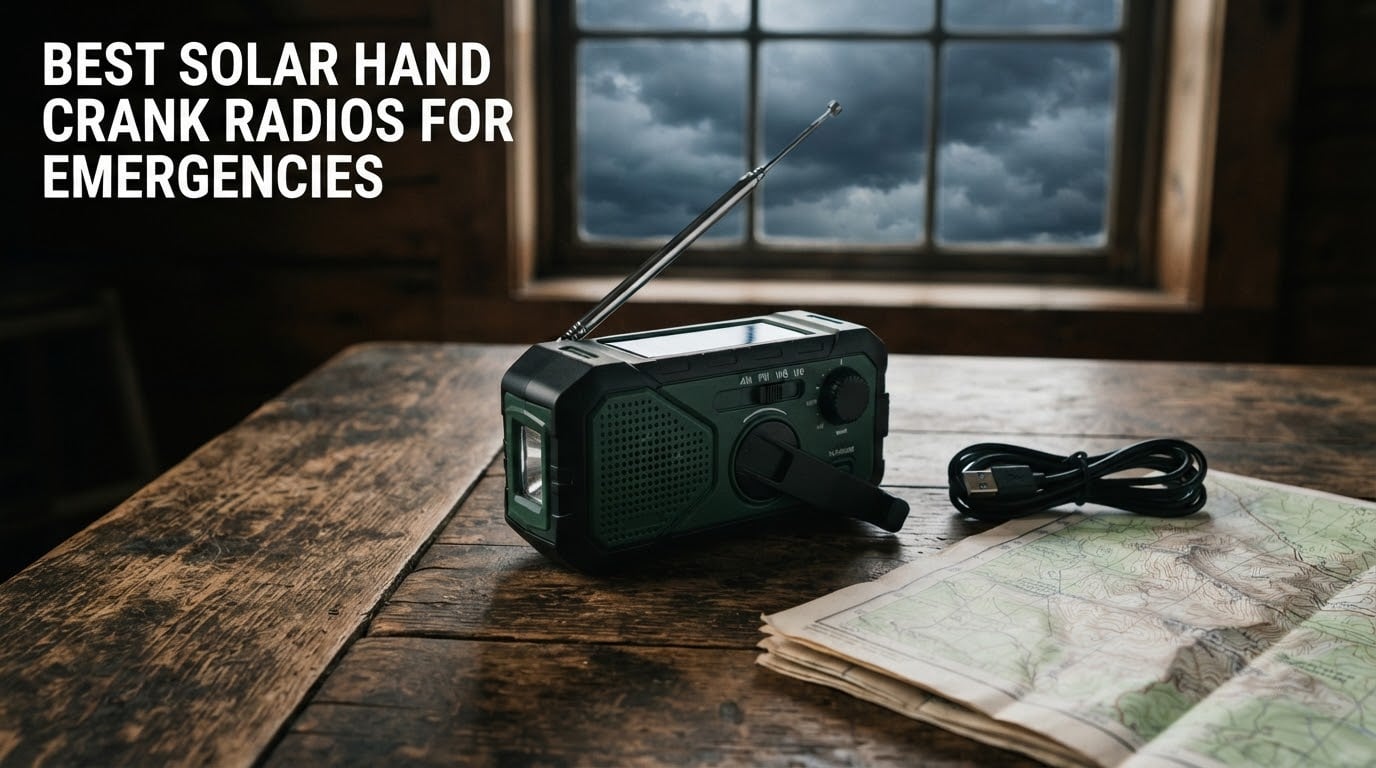
If you only buy one device for a blackout, a hurricane, or a grid-down week, buy the FosPower A1. Across the ten solar hand crank radios we compared, it pairs the deepest review history in the group with a 4.6 star average, solid reception across all seven NOAA weather channels, a 2000mAh power bank that will top off a phone, and a hand crank that genuinely works as a last resort. It is not the flashiest unit here, and its solar panel is a trickle charger rather than a real power source, but it is the one most owners have kept for years and reported back on.
That matters more than it sounds. A solar hand crank radio is a small AM/FM and NOAA weather receiver that can be recharged three ways, from a hand-cranked dynamo, a built-in solar panel, or a wall or USB supply.
That means it keeps delivering official weather warnings, evacuation instructions, and local news long after the power grid and the cell towers stop cooperating. No subscription, no charging cable, no tower signal required.
We spent several weeks reading through close to 100,000 owner reviews across these ten models, carrying every battery capacity, band list, weight, and warranty back to the manufacturer data.
We earn a commission when you buy through the links on this page, at no extra cost to you, and it does not change the ranking below.
Two things drive that ranking. First, alert capability, because a radio that only works if you happen to be listening to the right frequency is not much of a warning system. Second, honest power math, because most of these panels and cranks deliver far less than the packaging implies and the difference between a workable radio and a frustrating one lives in that gap.
Table of Contents
Top 3 Picks: Best Solar Hand Crank Radios (October 2026)

FosPower NOAA Emergency Radio A1
- 7400mWh power bank for phones
- Three power sources plus USB-C
- 4-LED reading light and 1W flashlight
- Limited lifetime warranty

Raynic 5000mAh NOAA Radio
- Automatic NOAA alert scanning in standby
- Six charging options
- 3W flashlight and 2.5W reading lamp
- USB phone charging and headphone jack

Kaito KA500 Voyager
- Two shortwave bands plus 7 NOAA channels
- 14.5 inch telescopic antenna with signal meter
- Replaceable NiMH battery pack
- 5V USB output for phones
Quick Overview: All Ten Solar Hand Crank Radios Side by Side
Every radio below receives NOAA weather broadcasts, a hand crank, a solar panel, and a USB charging input. The columns that actually separate them are battery capacity, whether the unit scans the seven weather channels automatically, how many bands the tuner covers, and how much water the housing shrugs off.
| Product | Specifications | Action |
|---|---|---|
| FosPower A1 |
|
Check Latest Price |
| Raynic 5000mAh |
|
Check Latest Price |
| Kaito KA500 Voyager |
|
Check Latest Price |
 Esky ES-CR01 Esky ES-CR01 |
|
Check Latest Price |
 PPLEE CR1009Ultra PPLEE CR1009Ultra |
|
Check Latest Price |
 Leaton 10000mAh Leaton 10000mAh |
|
Check Latest Price |
 Mesqool CR1030 Mesqool CR1030 |
|
Check Latest Price |
 Vokida 10000mAh Vokida 10000mAh |
|
Check Latest Price |
 Emgykit R11 Emgykit R11 |
|
Check Latest Price |
 Emgykit 086S Emgykit 086S |
|
Check Latest Price |
Why a Hand Crank Radio Still Works When Nothing Else Does
The reason people buy these radios is that the phone stops working first. Cell towers run on grid power, and most sites carry only a few hours of backup battery, so coverage drops and calls stop completing when those batteries drain. Congestion makes it worse, because a tower still transmitting can still fail to hand off your phone if thousands of people are trying at once.
NOAA Weather Radio is built for exactly that failure. The broadcast network runs on its own transmitters with independent backup power, and the alerts are generated by the National Weather Service rather than by a carrier. A radio that can receive those broadcasts keeps working when the towers are dark, which is why every unit in this roundup tunes the seven NOAA channels between 162.400 and 162.550 MHz.
So do hand cranks really work? Yes, with a caveat everyone should understand.
A minute of cranking on a typical radio in this group produces roughly five to fifteen minutes of listening, and the ratio depends on how fresh the battery charge is, how fast you crank, and how efficiently the dynamo is wound. Treat ten minutes of listening per minute of cranking as the realistic target, and treat the crank as a rescue feature rather than a primary charging method.
Solar is weaker still. Expect roughly 30 to 60 minutes of listening per hour of strong direct sun on most panels in this group, and considerably less in cloud or through a window. Panels maintain a charge that already exists and struggle to bring a fully dead one back, with the Mesqool CR1030 as the exception because its monocrystalline panel is several times larger than anything else here.
Read those numbers as a hierarchy. Wall or USB charging first, hand crank as the emergency top-up, solar as the slow trickle that keeps a stored battery alive. A radio that treats all three as equal is a radio that disappoints you at the worst moment.
1. FosPower A1 – Best Overall for NOAA Alerts and Reassurance
FosPower NOAA Emergency Weather Radio A1 7400mWh Solar Hand Crank (Orange)
7400mWh 2000mAh power bank
Solar battery and hand crank
USB-C with 2000mAh output
14.8 oz, limited lifetime warranty
Pros
- Three independent power sources plus USB-C charging
- 7400mWh bank charges phones and small tablets
- Loud clear speaker with reliable NOAA AM and FM reception
- 4-LED reading light and 1W flashlight
- Very loud SOS siren that carries in a real emergency
Cons
- Solar panel is a trickle maintain function
- Some owners report the speaker failing after a few months
- Small built-in antenna needs fiddling for good NOAA reception
- AAA compartment is hard to open
The FosPower A1 is the one I would put on the kitchen counter first.
It carries a 4.6 star average across more than 37,000 reviews, the deepest owner base in this group by a wide margin. That long history tells you something a spec sheet cannot. It has been carried into real outages, used as a nightlight, and used to charge a phone when the car battery was the only thing left running.
Power comes from three separate paths. Solar, hand crank, and four AAA batteries all work, and a USB-C port handles modern charging. The internal 7400mWh cell, which is a 2000mAh pack, doubles as a power bank and will top off a phone or a small tablet, which makes the radio useful even when the crisis has nothing to do with weather.
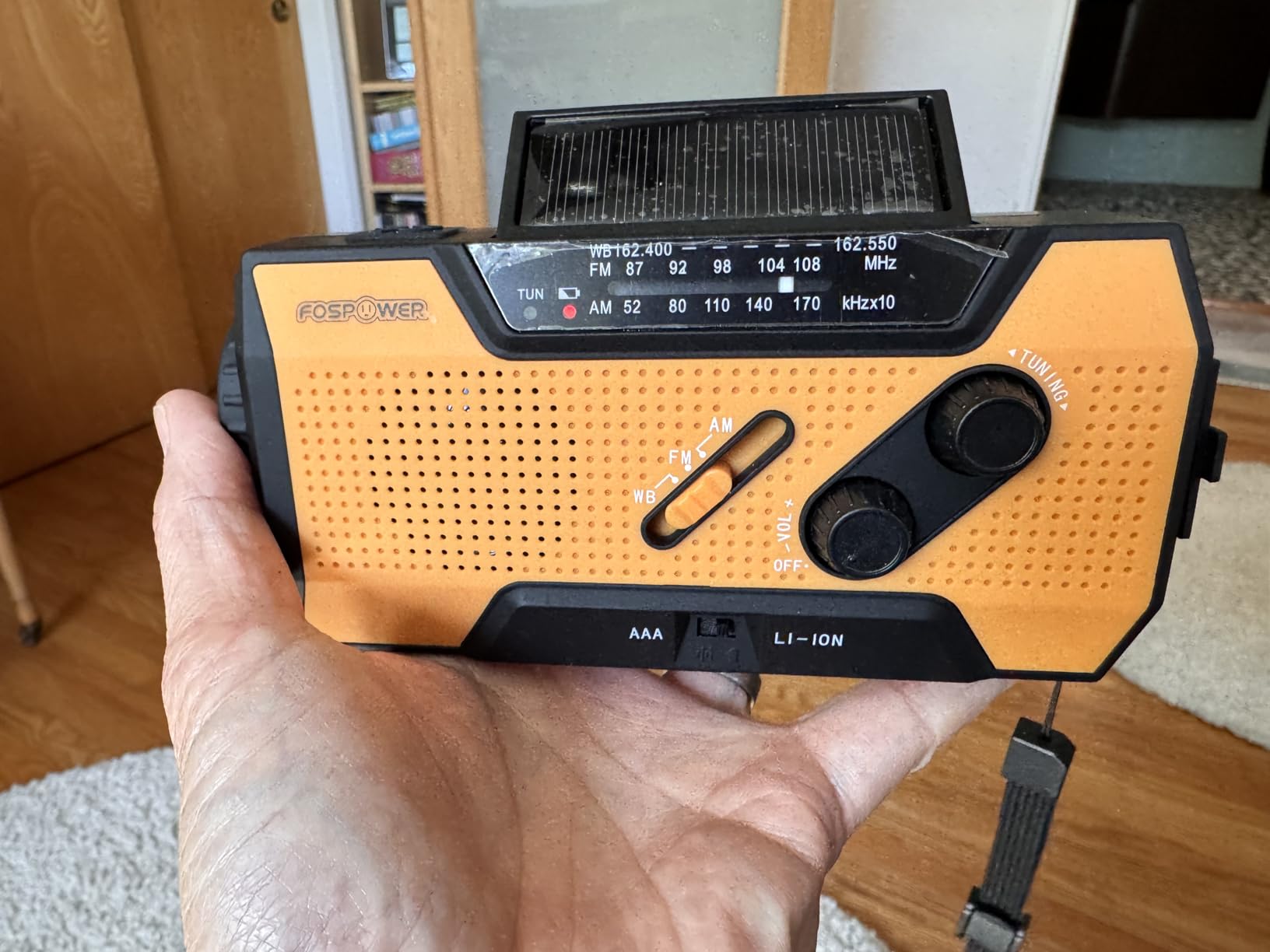
Owners consistently describe it as a reassurance device rather than a daily-use radio, and that is exactly the right frame. The 1-watt flashlight and 4-LED reading light get more mentions than the tuner does, particularly in outages that start at night. The SOS siren is loud enough that reviewers describe waking neighbours with it, which is a selling point or a warning depending on your household.
There is one recurring complaint worth taking seriously. A small number of buyers report the radio or speaker function stopping after a few months of use, and the small internal antenna means NOAA reception takes some fiddling to land cleanly. Both are fair marks against it, though neither is enough to unseat it, because a limited lifetime warranty and a very large review base give you a recovery path most of the others do not.
What you should know before you buy it
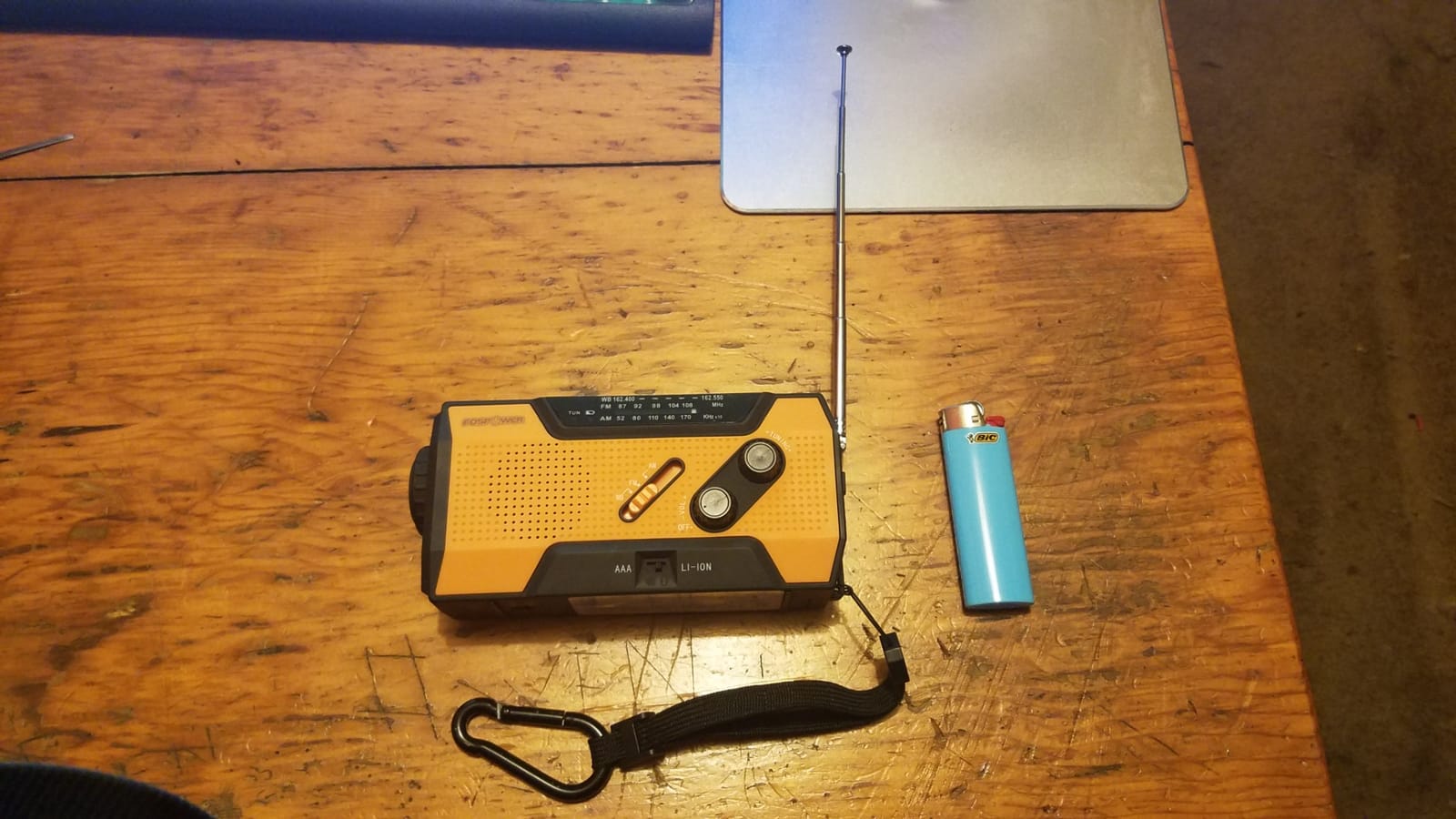
The AAA battery compartment resists opening, so if you plan to run this on alkaline cells as your primary method, factor in some frustration. The USB-C port is the better everyday charging route, and the AAA slot is really a backup for when you have cells and no cable.
Radio reception is fine on AM and FM and solid on NOAA when the antenna is positioned well, but this is a compact body with a short internal antenna. Move it a few inches and the signal changes. If you live in a low-signal area, expect to spend a moment finding the sweet spot rather than just switching it on.
Where it fits and where it does not
It is not the right pick for someone who wants shortwave reception, digital channel presets, or a unit that can run a week on battery alone. The 2000mAh cell sits at the small end of the range in 2026.
If your household needs one device to be the information hub during a blackout, this is a reasonable first choice. It is loud, it is forgiving, it charges a phone, and a very large number of owners have already proven it works. If you want the same reassurance with far more capacity, look at the Raynic or the PPLEE further down.
2. Raynic CR1009Pro – Best Value for the Feature Count
Raynic Emergency Radio, 5000mAh/18500mWh Weather Radio, Solar Hand Crank Radio with AM/FM/SW/NOAA Alert, Cell Phone Charger, Headphone Jack, Flashlight and SOS Siren
5000mAh 18500mWh cell
AM FM SW and NOAA bands
Automatic alert scanning in standby
IPX3, 3W speaker
Pros
- Automatic NOAA alert scanning that fires in standby mode
- Six charging options including an included AC path
- Large HD LCD with battery level and frequency readout
- Very bright 3W flashlight and 2.5W reading lamp
- USB in and out plus a 3.5mm headphone jack
Cons
- IPX3 splash resistance only
- Short antenna limits some NOAA channels
- Solar panel will not revive a dead battery
- Unlit buttons are hard to use at night
The Raynic packs more capability into the box than any other radio in this roundup. It holds a 4.5 star average across more than 20,000 reviews, the second-deepest owner base here, and that review volume matches the feature list.
That list includes 5000mAh of battery, AM, FM, shortwave, and NOAA, an LCD screen, automatic alert scanning, and both USB input and USB output.
That automatic scanning is the feature that separates it from the budget units. Leave the Raynic in standby and it works through the seven weather channels itself, then triggers a siren and a flashing red light when an alert comes through. You are not required to be listening to the right frequency at the right moment, which is the whole point of owning a weather radio.
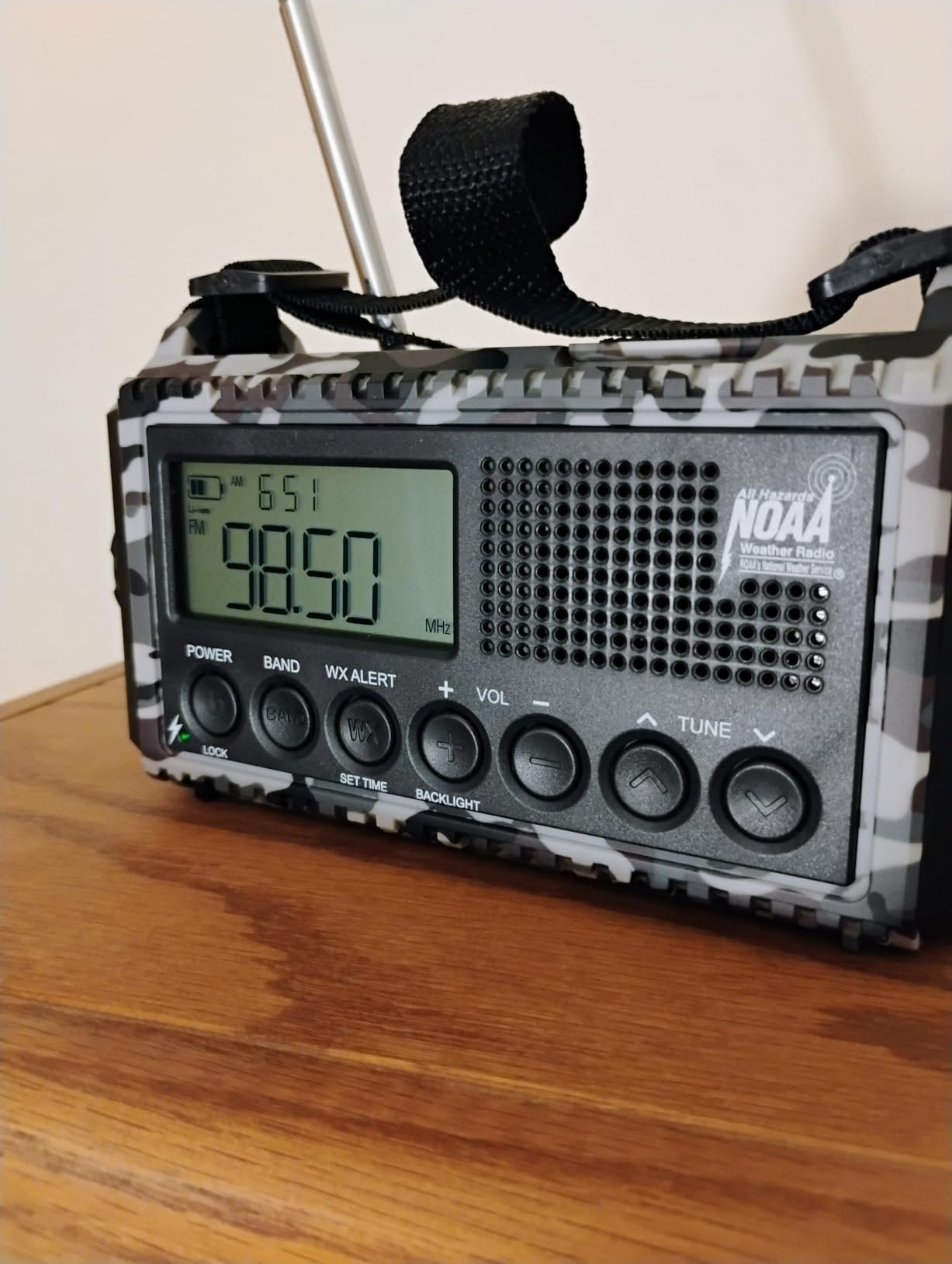
Charging flexibility is unusually good here. You have an internal lithium cell, an AC adapter path, USB input, the hand crank, the solar panel, and AAA batteries, and six options is more redundancy than most of the group offers. It also means the unit is workable in a household that still has a working outlet and a USB cable even if nothing else survives.
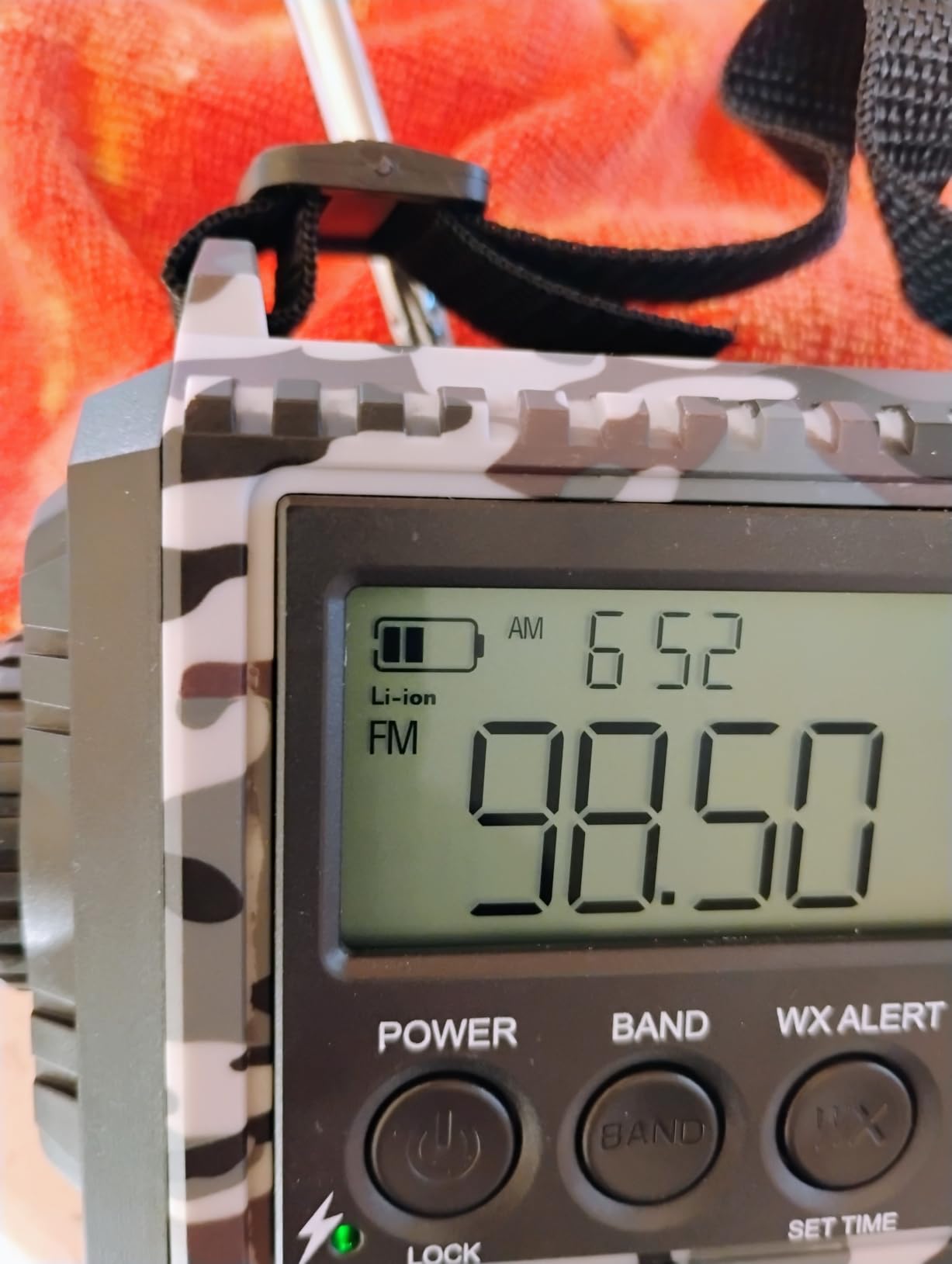
The lighting is genuinely strong for the class. A 3-watt flashlight and a 2.5-watt reading lamp with adjustable brightness sit well above what most competitors offer, and long-form reviews treat the Raynic as a camp or workshop radio as often as an emergency unit. The LCD shows battery level and tuning frequency, which is the kind of small thing that becomes a big thing at 2am.
The criticisms are consistent across the category. IPX3 means splash resistant, not waterproof. The short antenna limits reception on some NOAA channels. The solar panel maintains a charged battery but will not bring a flat one back, and shortwave scanning is slow enough to test your patience in a region with few live stations.
What you should know before you buy it
Programming SAME county codes is not something the Raynic does, so an alert will wake it but it will not filter out warnings meant for a neighbouring county. That produces a lot of noise in a busy weather season, and it is the most commonly requested upgrade from owners.
The rubber port cover over the charging ports does not stay put, and the selection buttons are hard to find and read in the dark. Both are small, and both are the kind of detail that annoys you more in a blackout than it does on a kitchen counter.
Where it fits and where it does not
This is the pick for a household that wants the most capability per unit of effort, and it doubles comfortably as a camping or workshop radio. It suits a family kit or a home base where a large screen and bright reading lamp get used daily rather than once a year.
It is not waterproof, it is not the lightest option, and the shortwave band is not going to deliver much in a sparse part of the country. If you need the same feature set with more battery, the PPLEE runs the same design language at 12000mAh.
3. Kaito KA500 Voyager – Best for Shortwave and Long-Reach Reception
Kaito KA500 5-way Powered Solar Power,Dynamo Crank, Wind Up Emergency AM/FM/SW/NOAA Weather Alert Radio with Flashlight,Reading Lamp and Cellphone Charger, Yellow
AM FM 2-band SW and 7 NOAA channels
14.5 inch telescopic antenna
Replaceable NiMH pack
Impact resistant ABS
Pros
- All six power paths including a replaceable NiMH pack
- 14.5 inch telescopic antenna with LED signal strength indicator
- Covers AM FM two shortwave bands and 7 NOAA channels
- 5-LED reading lamp flashlight and red S.O.S. beacon
- DC 5V USB output charges phones GPS and cameras
Cons
- Analog tuning with no display or presets
- Larger and heavier body than most models here
- NOAA coverage limited to the USA and Canada
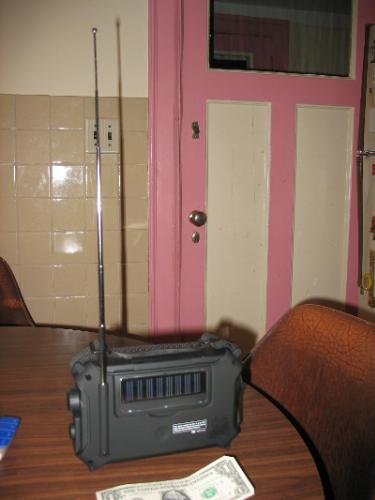
The Kaito has the longest telescopic antenna in this group, and that is why it lands so well in reception tests. It extends to 14.5 inches, and beside it sits an LED signal strength indicator that lets you tune precisely instead of guessing.
It is also the radio here built around shortwave rather than bolted onto it. Two shortwave ranges sit alongside AM, FM, and seven pre-programmed NOAA channels with PEAS alerts. A vocal minority of buyers specifically wants international broadcasts when domestic infrastructure fails, and this is the unit that serves them.
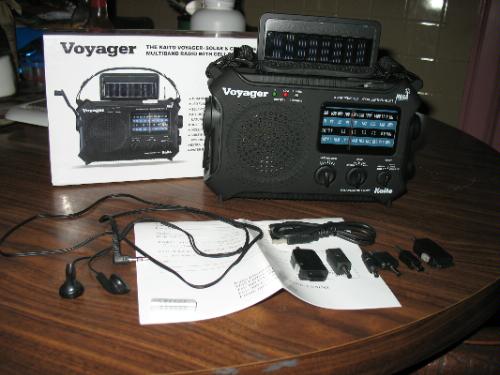
Power is handled six ways here: the hand crank, the solar panel, three AA batteries, a 5V USB input, an AC or DC input, and a replaceable built-in NiMH pack. The replaceable pack is the detail that matters over years rather than weeks, because a sealed lithium cell that degrades in storage cannot be brought back.
The lighting package is generous for a radio of this type: a 5-LED reading lamp, a dedicated LED flashlight, and a red LED S.O.S. beacon. The DC 5V USB output handles phones, GPS units, cameras, and music players, and the impact-resistant ABS housing is rated water resistant rather than merely splash-proof.
What you give up is modern convenience. There is no display, no digital tuning, and no channel presets, so you tune by ear and by the signal meter. In exchange you get a tuner that does not depend on firmware and a body that has been in production long enough to accumulate a very deep owner history at a steady 4.5 stars.
What you should know before you buy it
Analog tuning is a genuine learning curve if you have only ever used a Bluetooth speaker. The signal strength indicator is the fix, and owners who learn to use it report much better results almost immediately. Budget a few minutes with it in a comfortable setting before you need it urgently.
At 8.3 by 2.3 by 5.3 inches, this is one of the larger bodies in the roundup. It is a home or cabin radio more than a pocket radio, and NOAA reception is limited to the United States and Canada.
Where it fits and where it does not
Pick the Kaito if you want maximum reachable signal, care about international shortwave broadcasts, or want a radio with a replaceable battery you can service in five years. It also makes sense in a rural location where stations are far away and a long antenna earns its keep.
Skip it if you want a screen, presets, or a unit that disappears into a jacket pocket. Our guide to hand crank radios covers the smaller options in more detail if size is your main constraint.
4. Esky ES-CR01 – Best Budget Pick You Can Actually Carry
Esky Emergency Hand Crank Radio 7400mWh with 3 LED Flashlight, AM/FM/NOAA Portable Weather Radio with Built-in 2000mAh Battery, Solar Powered Radio for Indoor Outdoor Survival Camping, SOS Alarm
2000mAh 7400mWh rechargeable cell
USB-C crank and solar charging
140 lumen 3-LED flashlight
7.55 oz, 5 inch body
Pros
- AM FM NOAA reception with SOS alarm
- 2000mAh gives about 9 hours of radio or 20 hours of flashlight
- 140-lumen 3-LED flashlight
- USB-C crank and solar charging
Cons
- 2000mAh is among the smallest capacities here
- No display so tuning is analog
- Basic plastic build
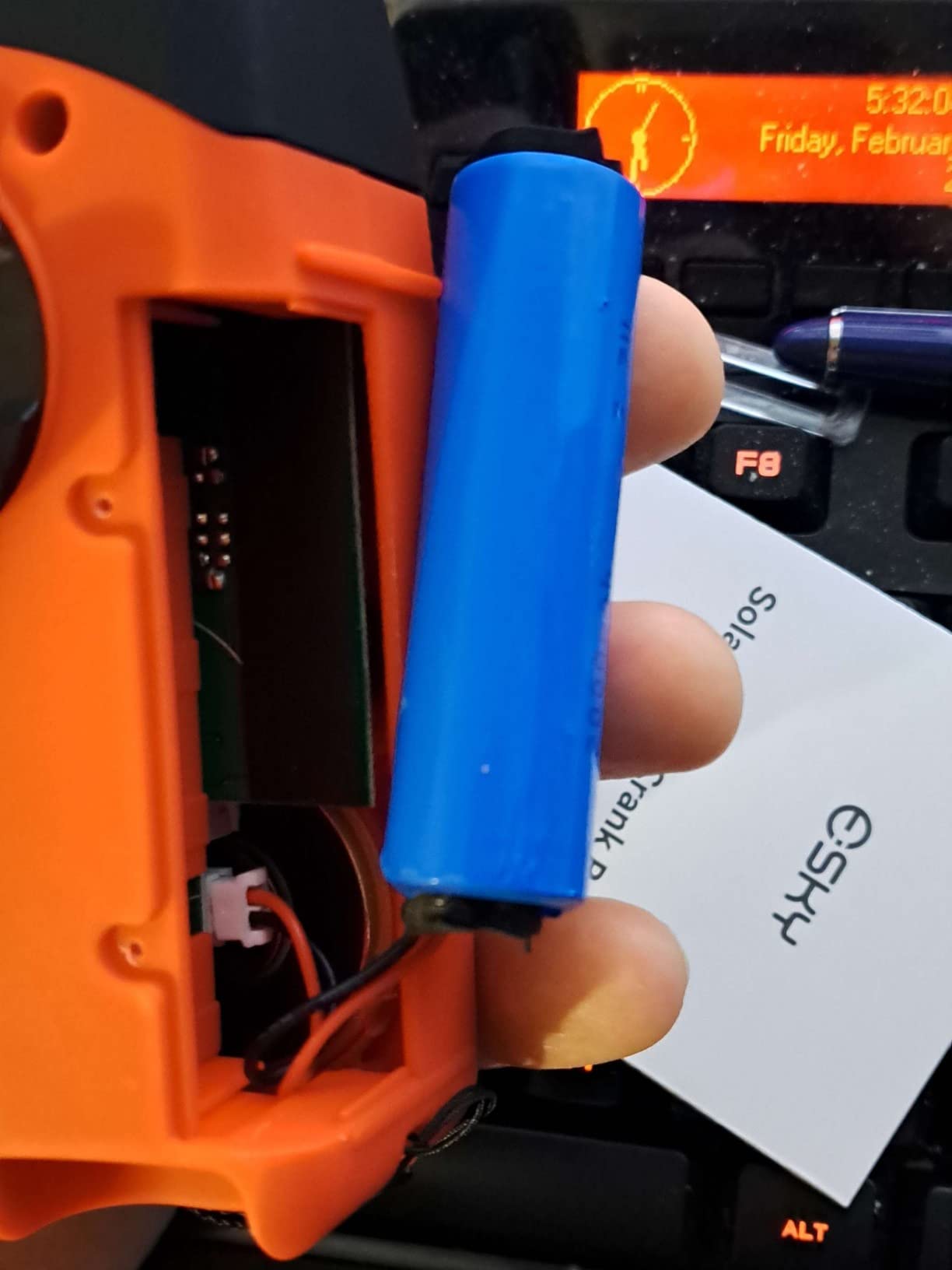
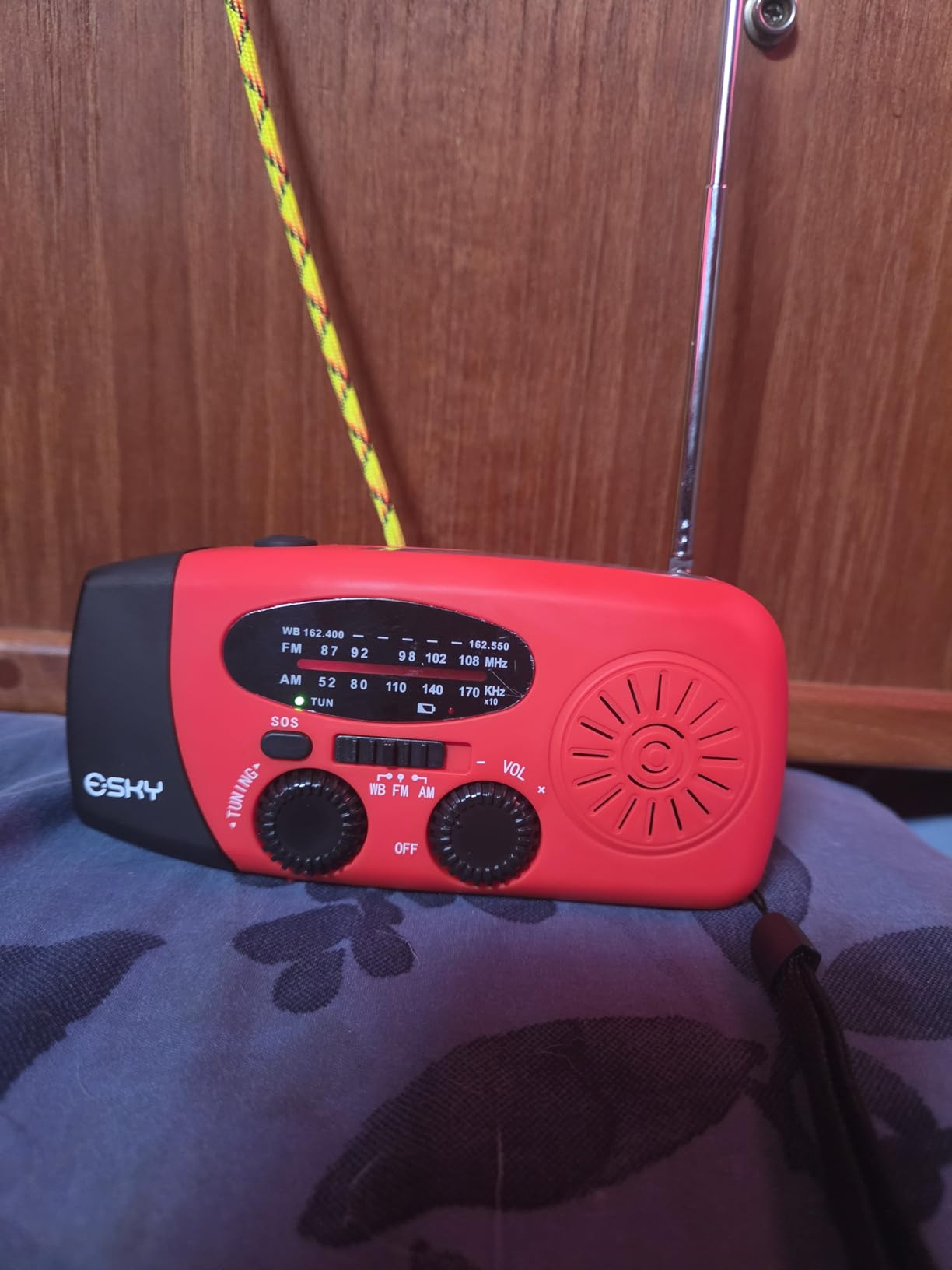
At 7.55 ounces and five inches long, the Esky is the lightest radio in this roundup, and size is the whole argument for it. It fits a jacket pocket, a laptop sleeve, a first-aid pouch, or a jacket zipped into a bag.
It still does the essential things. AM, FM, and NOAA reception, an SOS alarm, a 140-lumen three-LED flashlight, and a 2000mAh cell that delivers roughly nine hours of radio playback or twenty hours of flashlight per charge. The Esky also charges by USB-C, so it fits the cable you already own. That 2000mAh pack is among the smallest here, which limits how useful the phone-charging output is.
Reviewers in the preparedness communities treat budget units like this one as a first radio or a glovebox companion rather than as a life-safety device, and that is a sensible framing.
The trade-offs are predictable at this level. There is no LCD display, so tuning is analog and blind, and the plastic body is basic next to the metal-enclosed options.
It is a radio you can hand to a kid, tuck in a pack, or keep in every car in the family without anyone thinking about it. Breadth of deployment is its own kind of safety, and the weight is the whole argument for owning several.
What you should know before you buy it
Analog tuning with no display means finding a NOAA channel takes patience, and there is no way to see how much charge is in the battery. Plan on recharging it on a schedule rather than reading a level indicator.
The 2000mAh cell will add a percentage or two to a phone rather than giving a meaningful top-off. Treat the phone-charging claim as a genuine emergency extra rather than a feature to plan around.
Where it fits and where it does not
This is the pick for a go-bag, a hiking kit, a kid’s backpack, or a car. It is also a sensible first radio for someone who is unsure whether preparedness gear is something they will keep, because it is small enough to carry and inexpensive enough to replace.
Do not make it your sole NOAA radio in a tornado or wildfire region. It will work, but a unit with automatic alert scanning and a larger battery will serve a household that depends on warnings far better. For a serious alert setup, pair it with one of the desktop-capable units above.
5. PPLEE CR1009Ultra – Best for Multi-Day Outages
NOAA Emergency Weather Radio with Auto Alert, Solar Hand Crank, 12000mAh
True 12000mAh rechargeable cell
Automatic monitoring of 7 NOAA bands
AM FM SW and NOAA with LCD
18 month warranty
Pros
- Automatic alert monitoring of all 7 weather bands
- True 12000mAh battery with six charging options
- Large LCD shows time battery frequency and alert status
- USB-C and USB-A ports that both charge and discharge
- 3W flashlight and 2.5W reading lamp with adjustable brightness
Cons
- Small panel only maintains charge
- Frequency buttons step one channel with no fast scroll
- Some owners report buttons that latch or toggle
- Hand crank runs the radio but will not store much charge
The PPLEE CR1009Ultra is the pick when the outage lasts longer than a weekend. Its 12000mAh battery is roughly six times the capacity of the 2000mAh pocket models, which is the difference between a radio that dies on day two and one that is still there on day five. It carries an 18-month extended warranty, which is longer than most in this group.
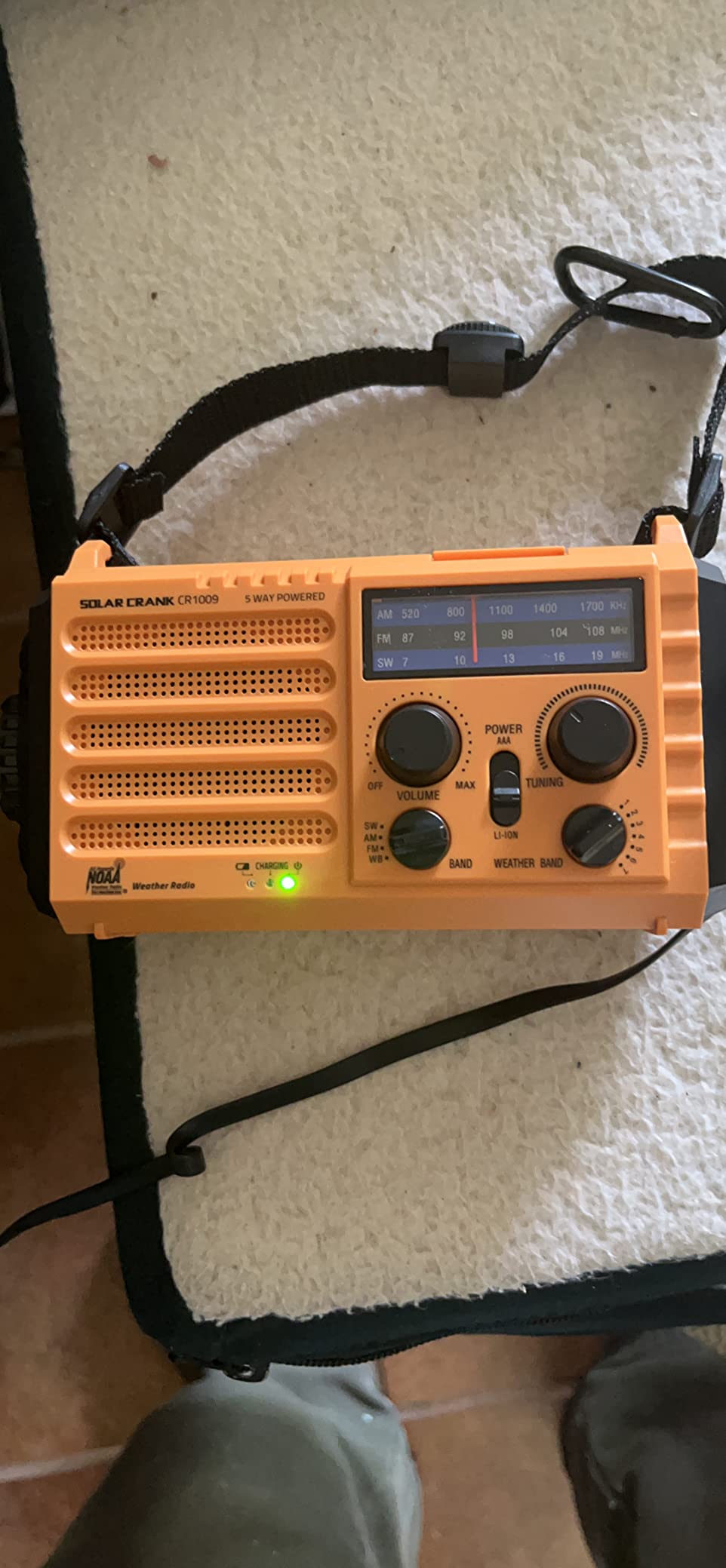
Alert handling is the other strength. The radio monitors all seven NOAA weather bands automatically and triggers a siren with a flashing red light, and the large LCD shows battery percentage, frequency, time, and alert status at a glance. The 16-level volume control and a 3.5mm headphone jack let you listen privately in a house full of sleeping people.
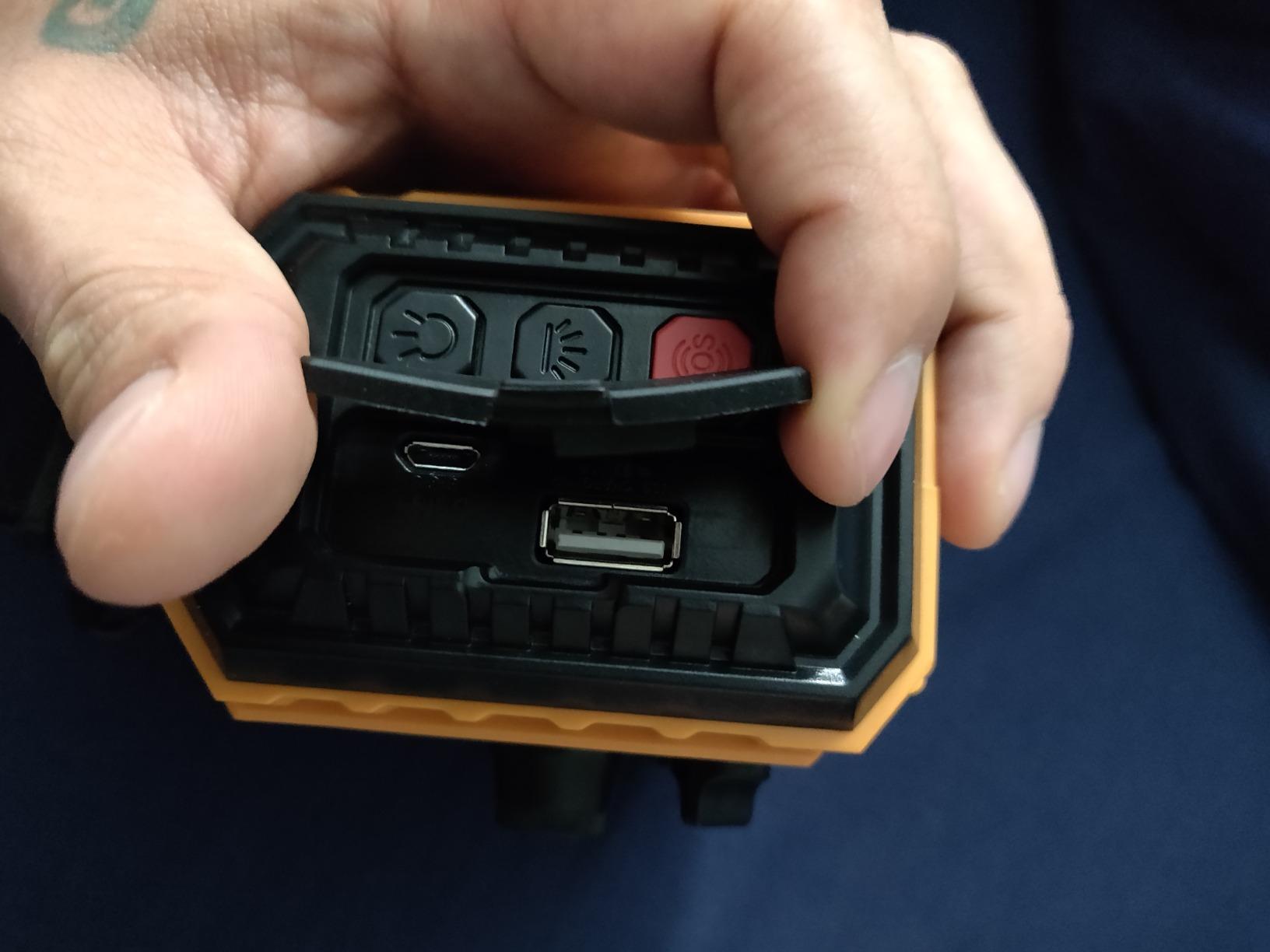
It also has the broadest charging spec in the roundup. An AC adapter is included in the box, alongside USB input, hand crank, solar panel, three AAA batteries, and the internal cell, and both USB-C and USB-A ports charge and discharge.
That means you can run a phone, a tablet, or a small USB device from the internal bank. The accessory bundle also includes a carabiner, a hand strap, the adapter, and a Type-C cable.
Owners highlight the capacity and the automatic alert as the standouts, and rate the box contents generously. The recurring criticism is the one shared by nearly every radio here: the small solar panel cannot revive a depleted battery, and the crank is for immediate listening rather than building a stored reserve.
Two other complaints account for most of the lower ratings. The frequency buttons step one channel at a time even on a long press, which is irritating when you are trying to scan for a signal, and a small number of owners report buttons that latch or toggle the flashlight or alarm unexpectedly.
What you should know before you buy it
At 16 ounces this is not a small radio, and the LCD-heavy body needs a surface. It is a home, cabin, or shop radio rather than something you clip to a pack, and the charging port cover needs closing properly for the housing to keep its rating.
Expect the same solar realism as everywhere else in this category. A 12000mAh cell changes how long you can listen, not how fast the panel fills it. Charge it from a wall before the event, not during it.
Where it fits and where it does not
Choose the PPLEE for a household preparing for a multi-day grid-down event, a long wildfire season, or a winter storm outage where heating depends on staying informed. It is also a strong companion radio to keep in a vehicle that is expected to sit outside through an evacuation.
Pass on it if you want something lightweight or something with a fast, reliable tuning experience. The one-channel-at-a-time button behaviour is the feature that wears fastest.
6. Leaton 10000mAh – Best Water Resistance and Big Controls
Leaton Hand Crank Emergency Radio, NOAA Weather Radio AM/FM,10000mAh
10000mAh polymer battery
IPX6 water resistant housing
AM FM and NOAA with 3-mode LED
1 year warranty
Pros
- IPX6 water resistance
- the strongest rating in this roundup
- 10000mAh bank gives roughly 1 to 1.5 phone charges
- Three-mode LED flashlight plus a 1.3W reading lamp
- Large tuning knob and controls sized for older hands
- Built-in compass carabiner and 1-year warranty
Cons
- No automatic alerts so manual tuning is required
- No headphone jack and no shortwave band
- Solar panel gains little even after days of sun
- Will not charge more than one device at a time
The Leaton handles a wet environment better than the rest. Its IPX6 rating is the strongest water resistance in this group, and combined with a 10000mAh battery it is a genuinely rugged unit for a marine deck, a wet campsite, a garage, or a truck that sits in a puddle during an evacuation.
Capacity sits at 10000mAh, which owners translate into roughly one to one and a half iPhone 14 charges. That is enough to keep a phone alive for maps and texts across a full day of intermittent use, which is the realistic bar in an emergency.
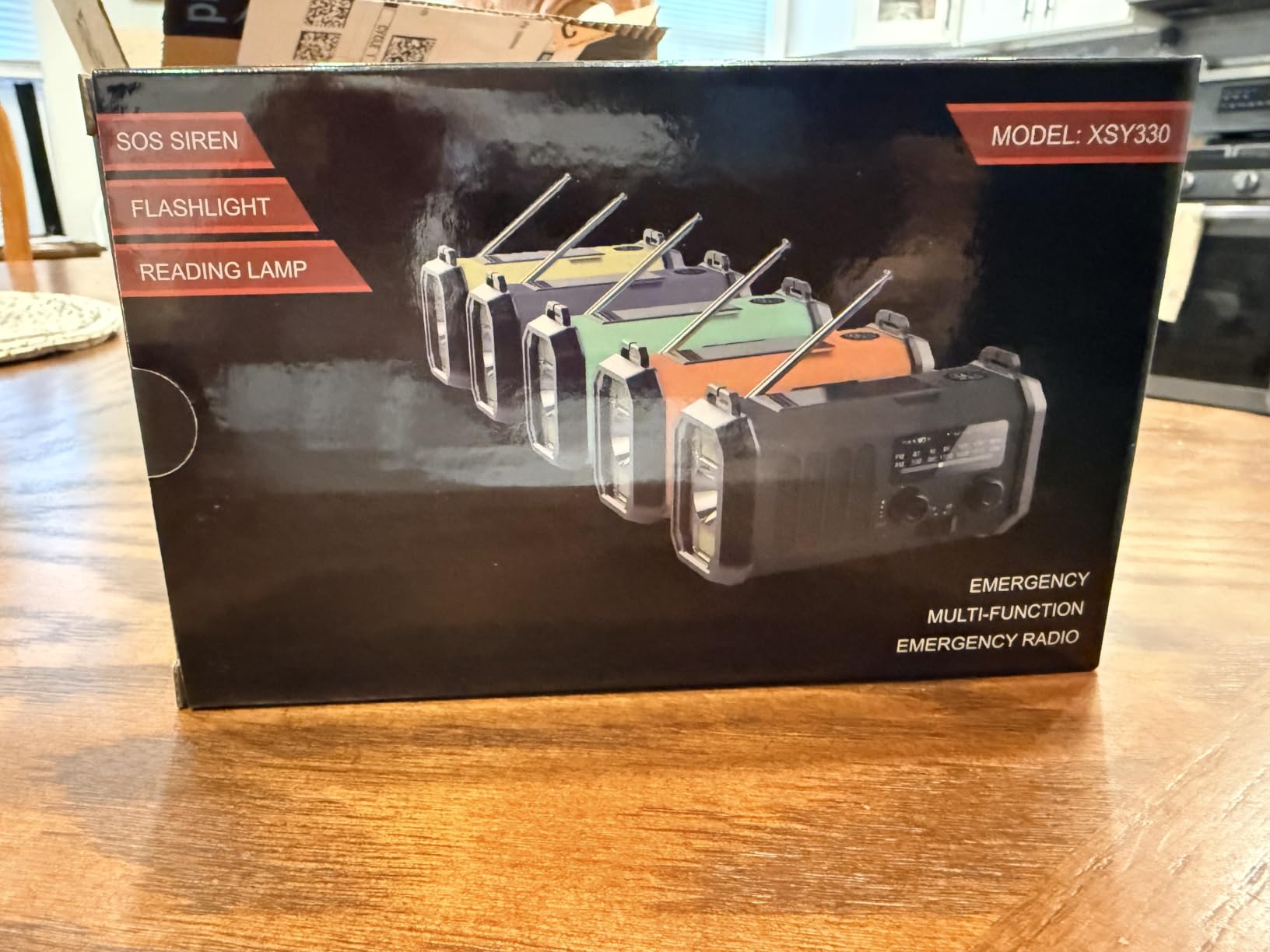
The other thing that sets it apart is control size. The tuning knob and buttons are noticeably larger than on the compact models, and reviewers repeatedly single this out as the reason the radio works for older family members or anyone with reduced dexterity. Small knobs matter on a radio you may be operating with cold hands and a headlamp.
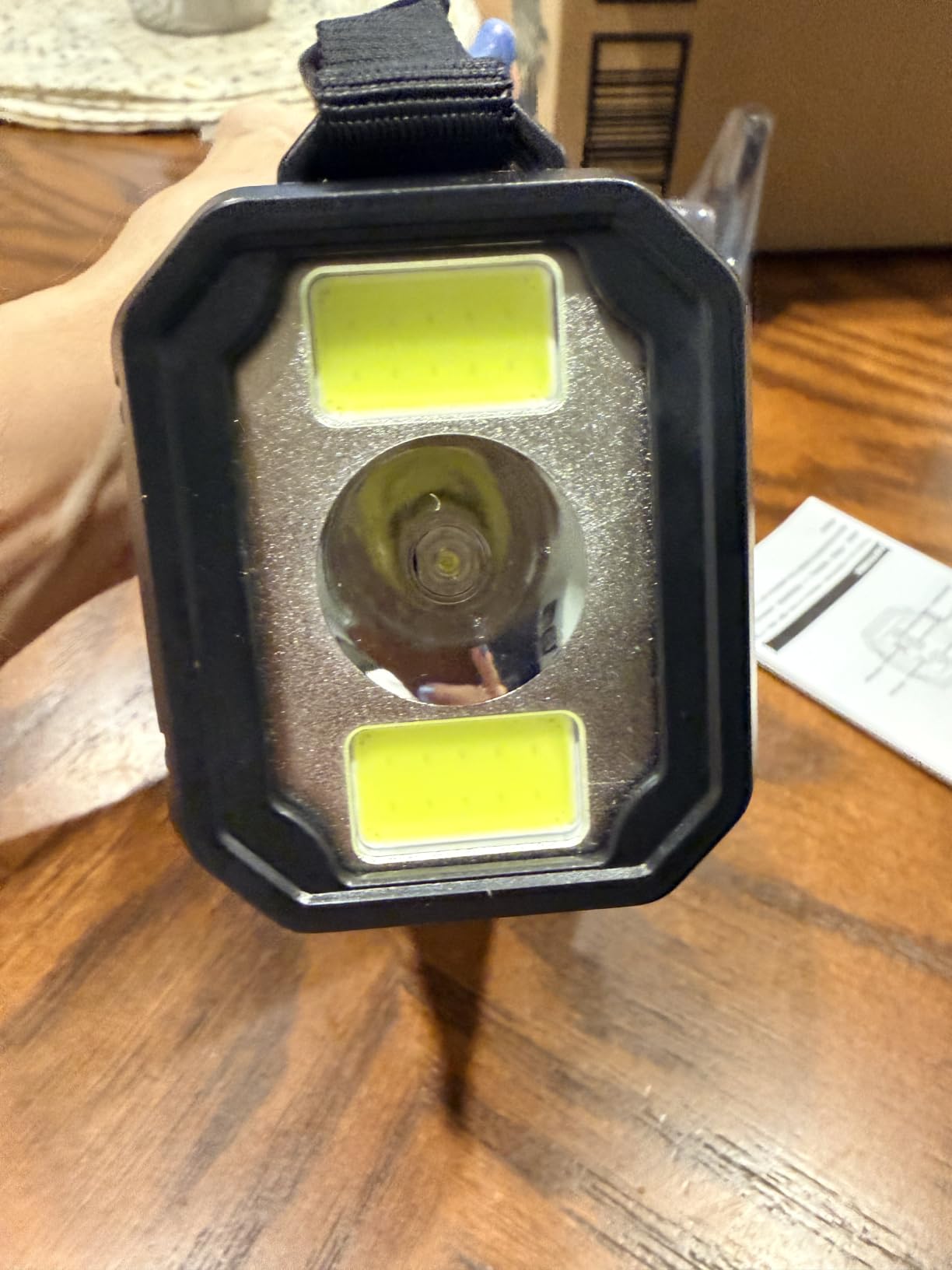
The flashlight has three modes, high, low, and SOS, alongside a 1.3-watt reading lamp. A built-in compass, carabiner, and a one-year warranty round out a package that feels thoughtfully assembled rather than generic.
What it does not do is alert you automatically. There is no SAME programming and no automatic scanning, so you must be listening on the right frequency to catch a warning. That is a real limitation anywhere with fast-moving weather, and it is the most common upgrade request from owners.
Solar is the other weak point. Owners report very little gain even after days of sunlight, so treat the panel as a trickle maintain only. There is also no headphone jack and no shortwave band, which limits it as a general-purpose receiver.
What you should know before you buy it
The missing automatic alerting changes how you should use this radio. In a tornado or wildfire region, treat it as a backup receiver and a power source rather than your primary warning device, because a warning only reaches you if the radio is switched on and tuned in.
It charges one device at a time, and there is no private listening option through headphones. If you share a home with light sleepers, budget for a separate earbud solution.
Where it fits and where it does not
The Leaton fits boat decks, garages, workshops, farm equipment, and family kits where water and large controls both matter. It is a good fit for older households because the interface is forgiving.
It is the wrong choice as your single NOAA radio in a severe-weather area. If automatic alerts are a requirement, choose the Raynic or the PPLEE instead, and add the Leaton as a rugged second unit.
7. Mesqool CR1030 – Best Solar Panel and Sound Quality
Solar Radio Emergency Hand Crank 12000mAh with Clear Signal
8500mm2 monocrystalline solar panel
Upgraded dynamo crank
12000mAh lithium cell
5W speaker, 3 year warranty
Pros
- 8500mm2 monocrystalline panel
- the largest we reviewed
- Upgraded crank with a larger copper coil and reinforced magnet
- True 12000mAh lithium battery
- 5W speaker clear enough for daily kitchen listening
- 3-year replacement or refund warranty
Cons
- Heaviest of the radios reviewed at 1.6 pounds
- Analog dial with no LCD display
- No carrying case included
- Some buyers find the body smaller than expected
The Mesqool CR1030 is the outlier in this category, and it earns the 4.7 star average that no other radio here touches.
It is the one with a solar panel large enough to be called a real power source rather than a courtesy, and owners describe running an extended camping trip on solar alone.
The panel is an 8500mm2 monocrystalline cell, several times the area of the strip panels on every other model here. The crank is also upgraded, with a larger copper coil and a reinforced magnet that the manufacturer claims gives roughly double the charging efficiency of a standard dynamo, and owners report the crank is noticeably more productive regardless.
The second differentiator is audio. A 5-watt speaker and a high-sensitivity chip with noise reduction produce sound that owners use for ordinary listening, not just emergency broadcasts. Several describe it as a kitchen or garage radio they use daily, and one reports keeping it running through two overnight thunderstorms without failure.
Battery capacity is 12000mAh, and the charging paths are five: solar, hand crank, the internal cell, USB-C input, and three AAA batteries. Output covers USB-C and USB-A, so you are not stuck with one connector, and the flashlight throws a focused beam up to 260 feet with a two-level frosted reading lamp, plus an SOS alarm.
The warranty covers three years of replacement or refund on any quality problem, which is longer than most in this group. That matters on a heavier unit with a larger battery, because those are the components most likely to give you trouble.
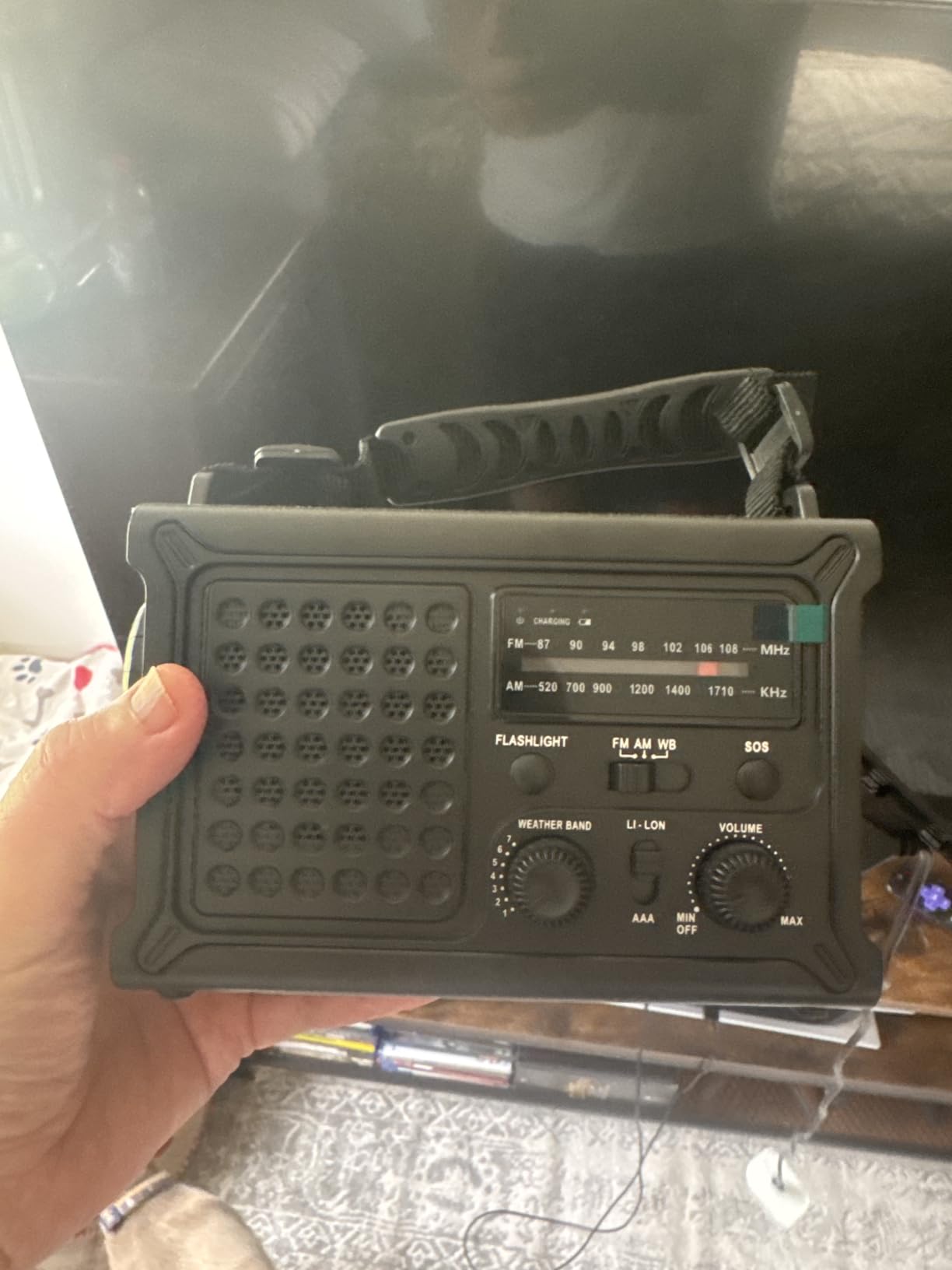
Against that, the CR1030 weighs 1.6 pounds, making it the heaviest radio here and a poor fit for a pack. The dial is analog with no display, and no carrying case is included.
A few buyers also found the body smaller than they pictured, so check the dimensions against whatever space you had in mind.
What you should know before you buy it
At 1.6 pounds this is a home, cabin, or vehicle radio. If you intend to carry it on a hike, the weight will be obvious within a mile, and the Esky or the Emgykit 086S make far more sense for that.
Analog tuning means you will not see the frequency you are on, which is a real disadvantage when you are chasing a weak NOAA signal. The extended antenna and the noise reduction do most of the compensating work here.
Where it fits and where it does not
The Mesqool is the right choice for a family that genuinely intends to run off-grid, for a long camping season, or for a home where the power might not return for a week. It is also the radio to pick if the idea of never charging it from a wall appeals to you, because the panel can actually keep up.
Skip it for a go-bag, a child, or anyone who wants channel presets. Its strengths are power endurance and sound, and a radio that never leaves the shelf does not need either.
8. Vokida 10000mAh – Best Box of Extras
Emergency Radio Hand Crank Solar, 10000mAh/37000mWh Emergency Weather Radio
37000mWh 10000mAh battery
Automatic scan of 7 NOAA channels
Crank solar and internal charging
Headphone jack and USB port
Pros
- 10000mAh
- more capacity than most models in this roundup
- Automatic scan of all 7 NOAA channels on activation or standby
- Box includes three thermal blankets and a paracord survival bracelet
- Built-in super-bright flashlight with SOS alarm
- Headphone jack and USB port for charging devices
Cons
- Only 2W speaker output for the size
- Plastic enclosure with an analog tuner and no display
- Bundled accessories matter more than radio performance
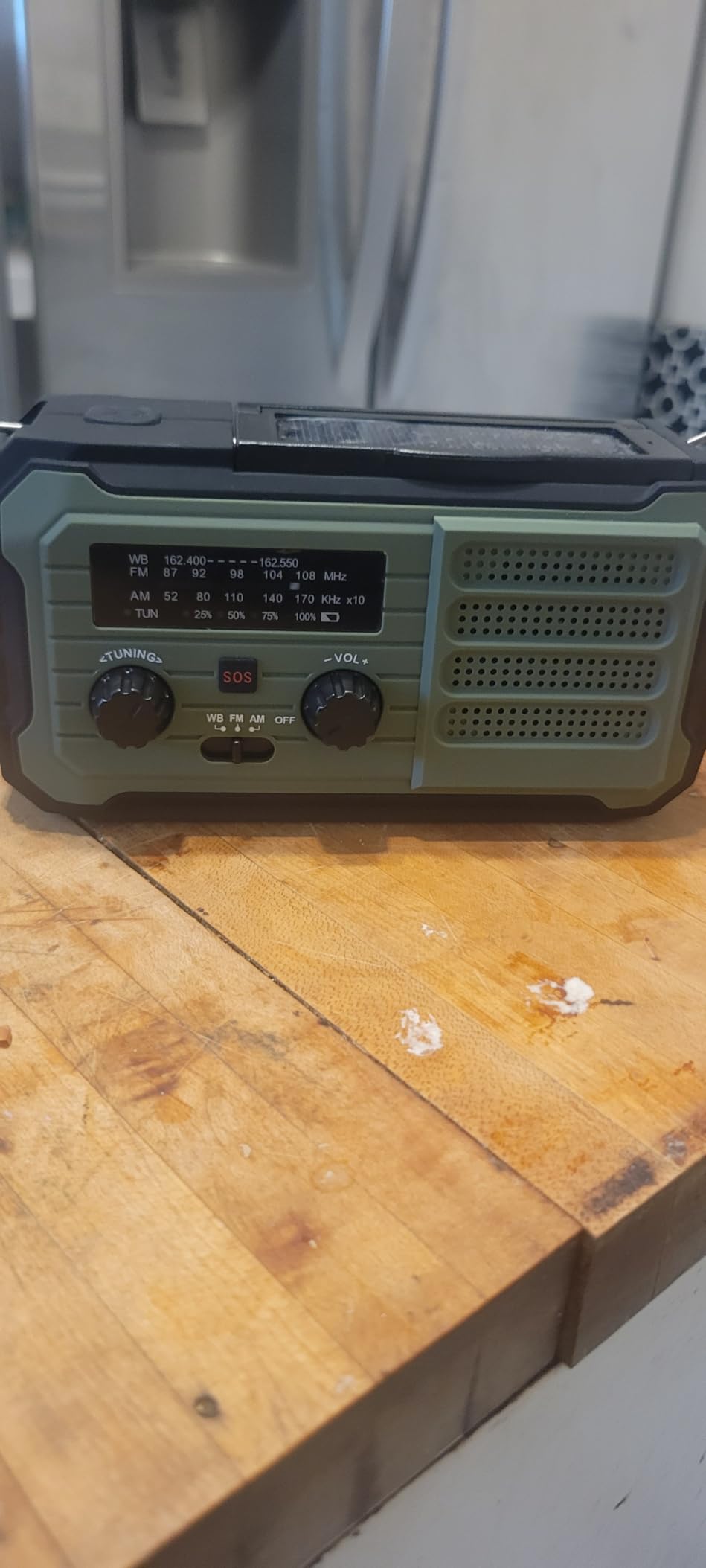
The Vokida is the one where the box contents do the selling. Alongside the radio you get three emergency thermal blankets and a five-in-one paracord bracelet carrying a compass, a blade, a whistle, and a magnesium fire rod.
Owners treat that bundle as a welcome bonus rather than the reason to buy, which is exactly how you should treat it.
On the radio side, the 37000mWh pack equals 10000mAh, which is a large cell for this class. It scans all seven NOAA weather channels automatically on activation or in standby, so you get alert capability without manual tuning, and it charges by hand crank, solar panel, or its internal lithium cell.
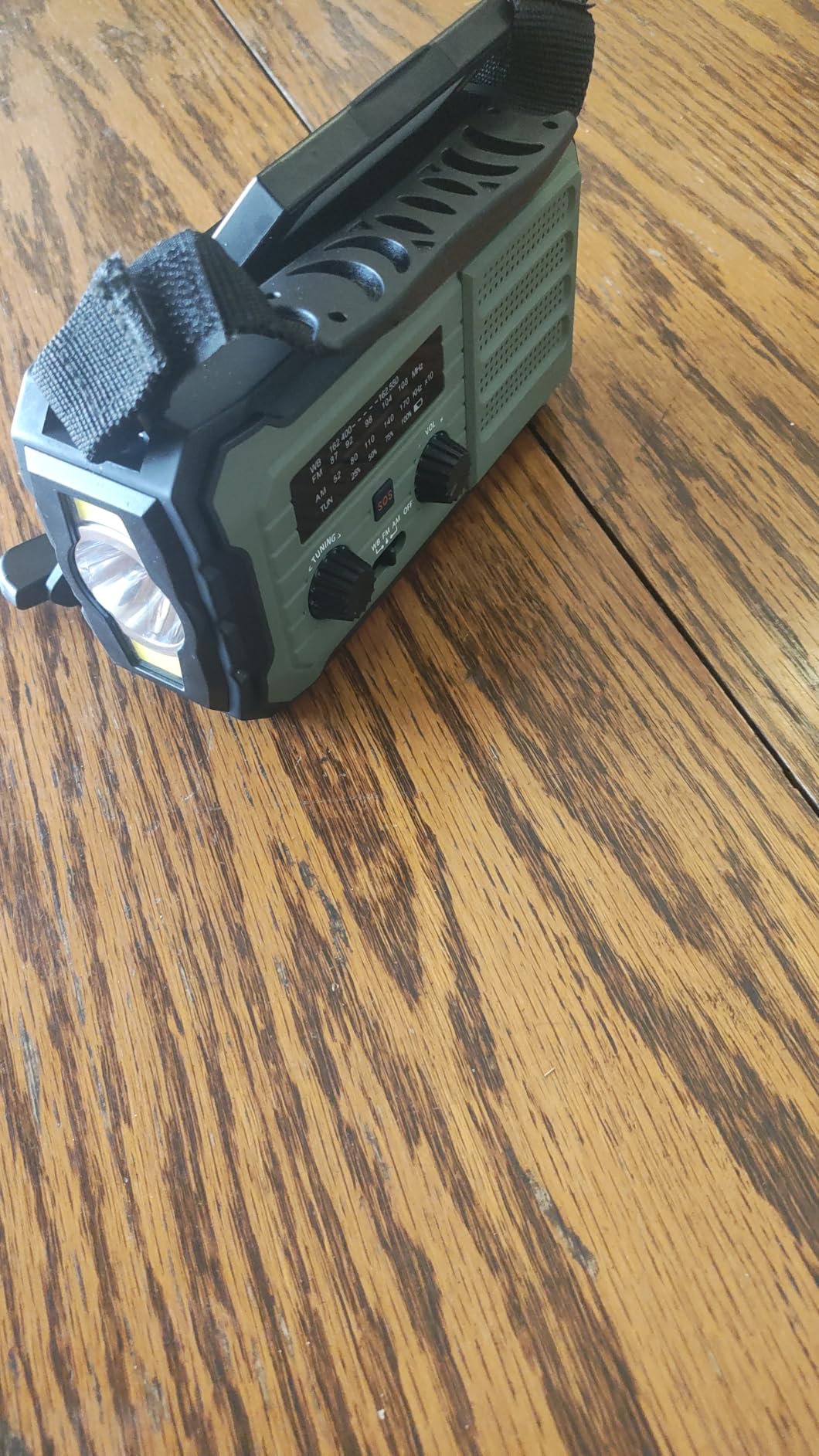
Audio output is the weak point. A 2-watt speaker is modest for a body this size, and reviewers who compare it with the Mesqool or the Emgykit R11 notice the difference immediately. The plastic enclosure and analog tuner with no display are unremarkable, though the tuner is described as more sensitive than its simplicity suggests.
For listening privately there is a 3.5mm headphone jack, which several budget radios lack, and a USB port for topping up a phone. The built-in super-bright flashlight and an SOS alarm with a loud siren and flashing red light cover the standard emergency feature set.
The real question is whether the accessories matter to you. If you are building a kit from nothing, three blankets and a functional paracord bracelet save you sourcing them separately, and if you already have those, you are paying for extras rather than radio performance.
What you should know before you buy it
Analog tuning with no display means no frequency readout, and the 2-watt speaker will not fill a large room. For a kitchen counter unit, run it at moderate volume. Cranking it up distorts.
The review base is smaller than the others here, so there is less long-term history on how the battery ages. A longer-established model gives you more data on that front.
Where it fits and where it does not
The Vokida suits someone assembling a first emergency kit for a car, a rental, or a college dorm, where blankets and a multitool fill genuine gaps. The automatic NOAA scan and the 10000mAh capacity make it a legitimate long-outage radio despite the modest speaker.
It is a poor choice for group listening or for a household that wants a radio to double as a music or news speaker. For that, the Emgykit R11 is a better fit.
9. Emgykit R11 – Best Everyday Multi-Use Radio
Emergency Radio Hand Crank Solar – NOAA/AM/FM Shortwave Radio for Camping
Bluetooth 5.0 with USB and TF slots
NOAA AM FM and shortwave bands
5W speaker, 4000mAh battery
Up to 32 hours playback
Pros
- Bluetooth 5.0 plus USB drive and TF card playback
- 5-watt magnetic speaker with good sound for the size
- Digital auto-scan stores up to 70 channels per band
- Shortwave coverage alongside NOAA AM and FM
- 7 nature sounds with a 10 to 70 minute auto shut-off timer
- 4000mAh battery gives up to 32 hours of playback
Cons
- 4000mAh is mid-pack against higher capacity options
- Bluetooth and card playback add complexity
- Compact body leaves little room for large controls
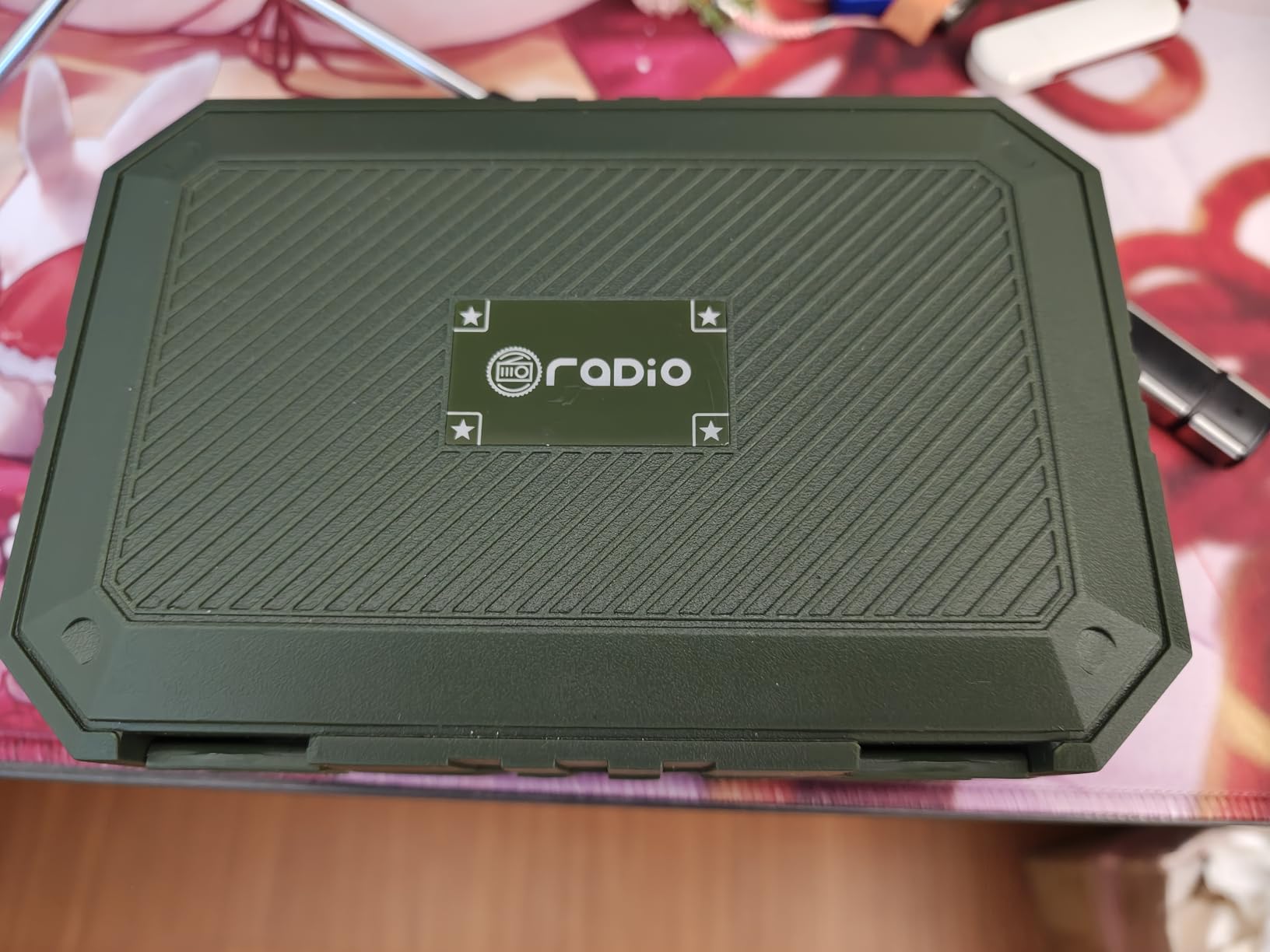
The Emgykit R11 is bought for versatility as much as for emergencies, which is why it stays on the counter instead of in a drawer. It streams over Bluetooth 5.0, plays from a USB drive or a TF card, and drives a 5-watt speaker that sounds good well beyond emergency broadcasts. Add NOAA, AM, FM, and shortwave reception and you have a radio you will actually use.
Digital tuning is the other attraction. The auto-scan stores up to 70 channels per band, 210 in total, with both manual and scan modes. For anyone who finds an analog dial frustrating, this is a large step up in usability, and it makes scanning for a NOAA signal dramatically less annoying.
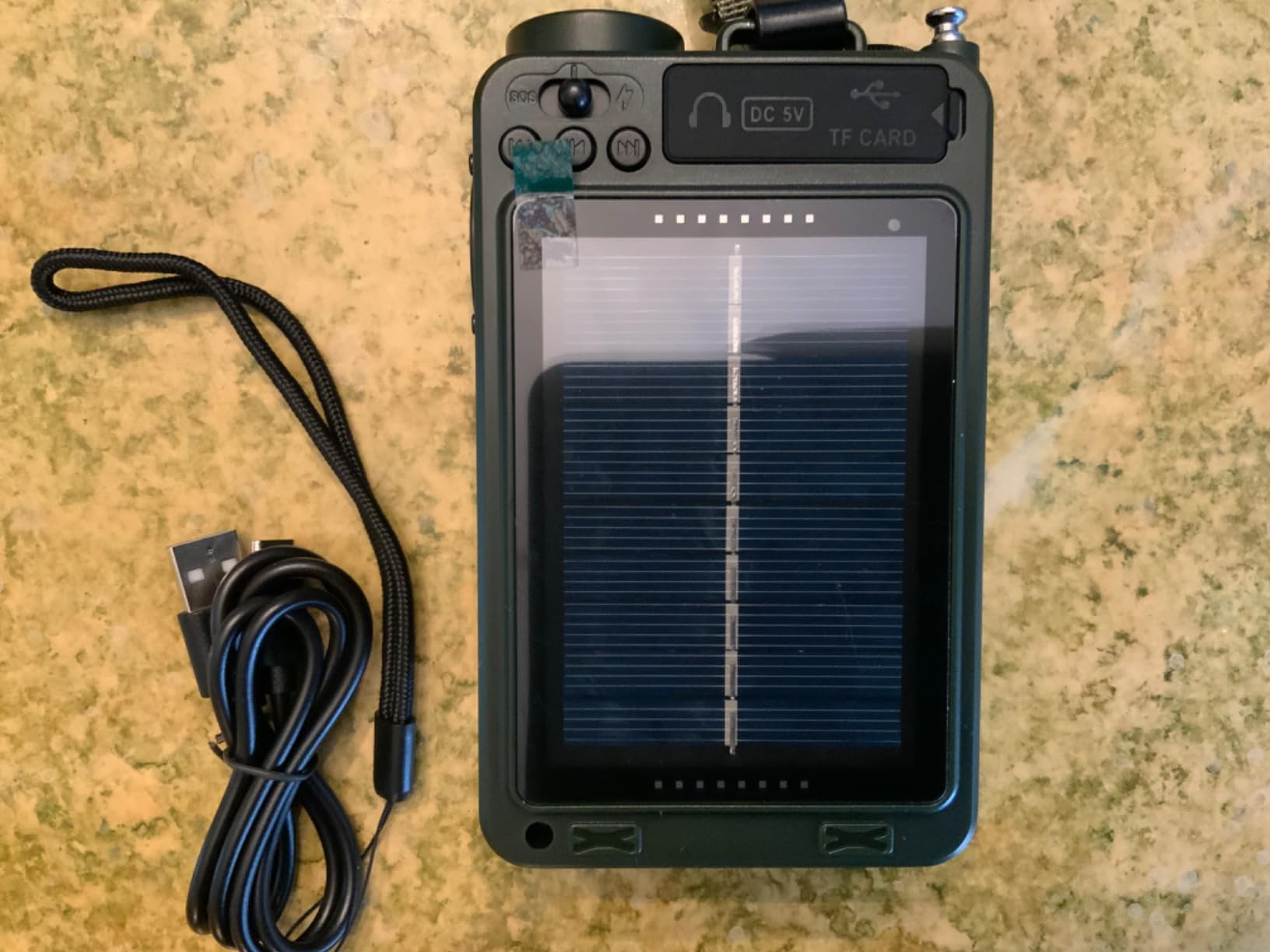
Power conservation gets thoughtful treatment. Seven built-in nature sounds and an auto shut-off timer you can set from 10 to 70 minutes stop the battery draining when you fall asleep listening to static or rain. A 4000mAh battery then delivers up to 32 hours of playback on a full Type-C charge, which outlasts most outages on a single charge.
There is also a 120-lumen flashlight, a compass, and an SOS alert, and the box includes a thermal blanket, a carrying strap, and a gift-style box. Charging comes from Type-C, the hand crank, or solar.
The trade-off is capacity. A 4000mAh pack sits mid-field against the 10000 and 12000mAh options, so this is not the radio for a week-long outage. The narrow body also leaves less room for large controls, and the extra playback features add complexity that some owners find unnecessary.
What you should know before you buy it
Bluetooth and card playback are additions to a radio, not improvements to the tuner, and they do cost you battery headroom. If your goal is pure emergency endurance, a larger-cell model serves you better.
The narrow body means the controls are small, which matters for older users or anyone operating it in the dark with gloves on. Check that the button sizes work for your household before committing.
Where it fits and where it does not
The R11 fits a cabin, a workshop, a kitchen, or a campsite where you want one device for radio and music. Its shortwave coverage makes it the pick here for anyone who wants international broadcasts without the bulk of the Kaito.
It is the wrong choice as the sole alert radio in a severe-weather region, because 4000mAh will not carry a household through a long outage. Use it as the everyday radio and pair it with a larger-cell unit for the warnings.
10. Emgykit 086S – Best Glovebox and Grab-and-Go Radio
Emgykit Hand Crank Radio with AM/FM/NOAA Weather Band,for Emergencies
2000mAh 7400mWh rechargeable cell
140 lumen 3W 3-LED flashlight
SOS siren over 80dB
0.51 lb, 5.16 inch body
Pros
- Light at 0.51 lb and small enough for a glovebox
- 140-lumen 3W flashlight upgraded from a single bead
- SOS siren above 80 decibels on a three second hold
- Hand crank solar panel and Type-C charging
- Reception reported as better than expected
Cons
- Basic plastic build and analog tuning
- No display means no frequency readout
- Very slow solar charging with little gain over hours
The Emgykit 086S is the radio people tend to buy several of, which tells you something useful about the role it fits. Being present in many places matters more than being the best radio in one.
It covers AM, FM, and NOAA, charges by hand crank, solar panel, or Type-C, and carries a 2000mAh cell that can give a phone a partial charge in an emergency. Owners also mention ordering extras for parents, other cars, and emergency totes.
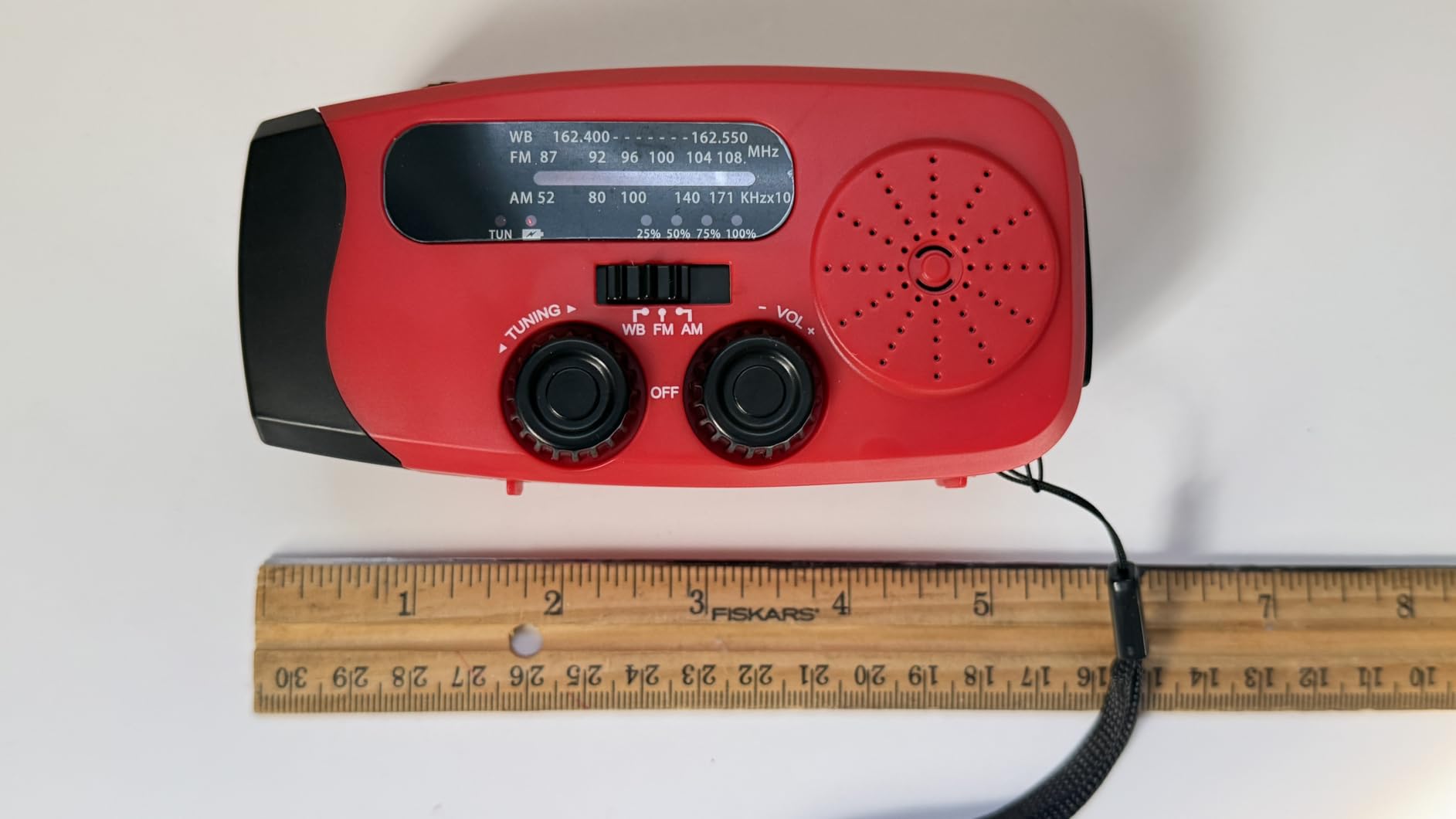
The flashlight is the standout. A 140-lumen three-LED unit replaces the single 1-watt bead found in earlier versions, and it is a real step up for anyone walking a dark road or checking a breaker box. The SOS distress function sounds a siren above 80 decibels when the button is held for three seconds, which owners describe as genuinely loud and attention-grabbing.
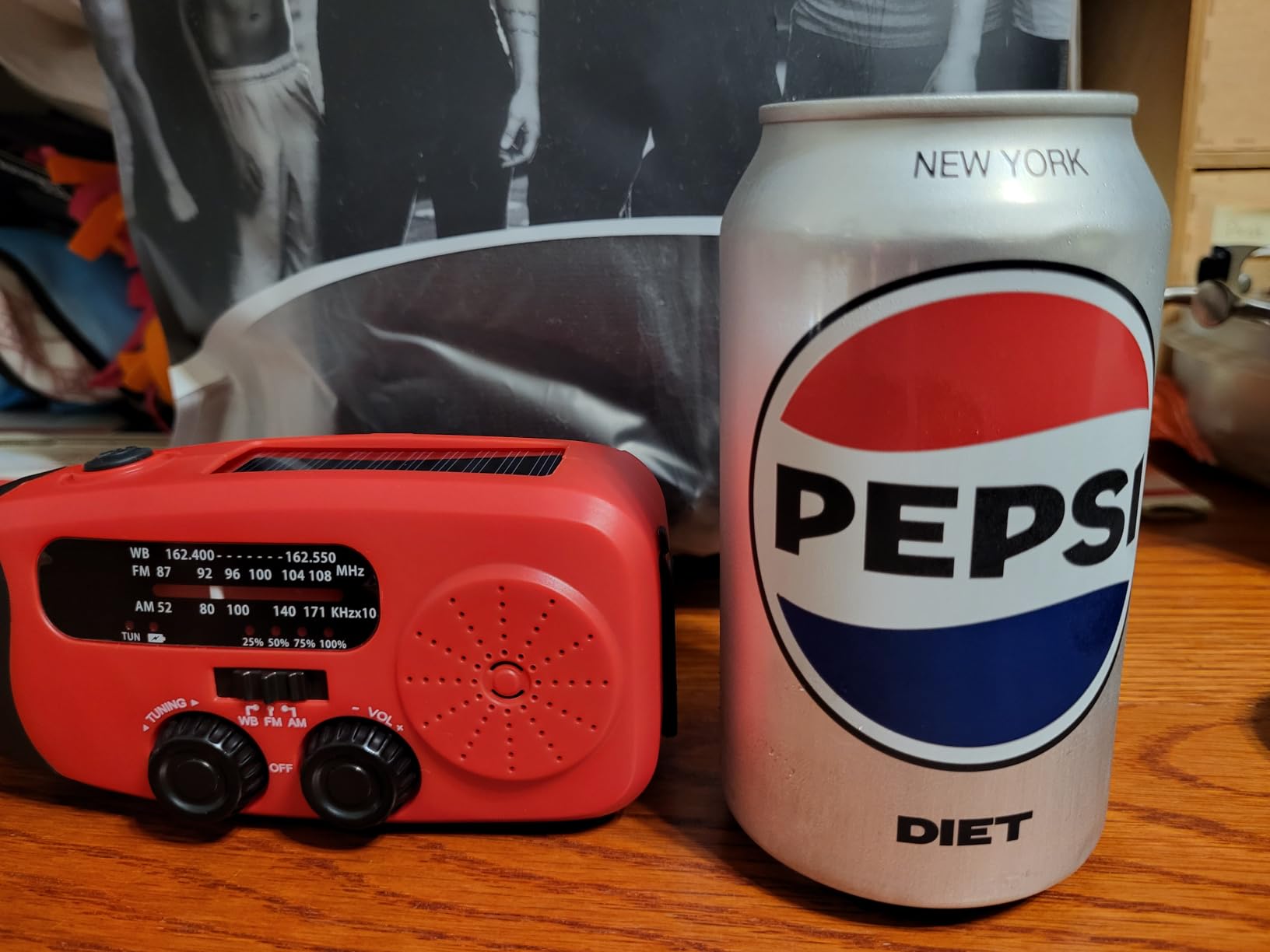
At 0.51 pounds and just over five inches long, it disappears into a glovebox, a daypack, or a jacket pocket. Several owners report finding it still running at full volume after eight hours on a first charge, which suggests the efficiency is better than the small capacity implies, and reception is repeatedly praised as better than expected.
The compromises are honest ones. A 1-watt speaker is the lowest output in this roundup, so it is quiet and thin on high frequencies, and there is no water rating. The flashlight is described by one reviewer as barely bright enough for walking in the dark, which is a fair caveat next to the Leaton or the Mesqool.
Solar is the weakest point, with an owner reporting only about 25 percent gain after several hours of full sun. That is not a failure, it is simply what a small panel does, so do not buy it expecting solar to matter.
What you should know before you buy it
The plastic housing looks cheap to some buyers, even though the function holds up. Judge it as a utility item rather than a piece of gear you will display. There is no water rating, so keep it out of a wet glovebox if you live somewhere with heavy rain.
Volume is the real limit. A 1-watt speaker struggles to fill a kitchen and will not carry outside, so this is a radio for one person at close range. It also means thin audio on music, which is fine because it was never the goal.
Where it fits and where it does not
This is the radio for every car, a hiking pack, a kid’s backpack, and a rental apartment. Buying two or three is a rational way to build coverage, and the low cost of the unit makes that easy to justify as a household decision rather than a single purchase.
It is not the right radio for a family gathering around one device during a warning, and it is not a replacement for an automatic-alert unit. Pair it with a larger radio rather than choosing between them, and treat it as the unit that is always in the car when everything else is still in the house.
How We Picked and What We Weighted
We read the full owner review base for all ten radios rather than sampling the top reviews, because in this category the top reviews say almost nothing useful. What matters sits in the middle of the review corpus, where owners describe what happened when the power went out.
Every specification in this roundup was checked against the manufacturer data rather than a listing headline. That distinction matters because this category is full of units advertised with vague mAh claims and unlisted brands, and capacity claims are the single most misleading number in it.
We weighted five things. Alert capability came first, with models that scan the seven NOAA channels automatically ranked above models that need manual tuning. Power sources and battery capacity came second, weighted by realistic output rather than panel size. Reception quality and antenna design came third, then portability and build quality, with warranty length last because a radio that can be replaced is worth more than one that cannot.
We deliberately did not rank on solar panel area alone. Only one unit here has a panel large enough to be a genuine power source, and we treated that as a real differentiator rather than a tie-breaker.
One more note on method. We did not test these radios in a live emergency, and we have not measured crank output with a meter. The crank-to-listen and solar-per-hour figures in this article are the published range for this category, not our own measurements, and we have flagged them as such wherever they appear.
How we weighted reception, and why a bad tuner is a safety problem
Reception earned the heaviest single weight in our ranking, and that is deliberate. A radio that cannot reliably pull in a NOAA broadcast in your location is not a slightly worse product, it is one that fails at the single job you bought it for. Everything else in this roundup is a convenience compared with that.
Three things decide reception in practice, and none of them appear in a marketing headline. The first is antenna length and whether it extends: the Kaito gives you 14.5 inches of telescoping whip with a signal strength LED, the Raynic and the PPLEE use shorter fixed antennas, and the compact pocket models rely on a short internal element that responds to being repositioned.
The second is how the tuner is controlled. A digital tuner with a screen and stored channels lets you find a weak station quickly and stay on it. An analog dial can drift, which on a weather alert is the difference between hearing a warning and hearing the tail end of it.
The third is whether the unit scans the NOAA channels for you. The Raynic, the PPLEE, and the Vokida cycle the seven channels in standby and sound an alarm on their own. The FosPower, the Esky, the Leaton, the Mesqool, and the two Emgykit radios require a human to be on the right frequency. In a tornado warning at 3am, that is a meaningful difference.
Where we did not find good evidence is shortwave. Whether a shortwave band brings you anything useful depends on your location, your antenna, and the time of day, and owner feedback in this roundup is mixed. We treat it as a genuine bonus on the Kaito rather than a reason to buy anything else.
Solar, Hand Crank, Battery: What Each Power Source Really Delivers
Start with the hierarchy, because it is the most misunderstood thing about these radios. Wall or USB charging is your primary method, and it is the one you should perform before an event. The hand crank is a rescue feature for when the batteries are flat and the cable is lost, and the solar panel is a trickle maintainer that keeps a charge alive over weeks and months in a drawer.
On cranking, the realistic benchmark is ten minutes of listening per minute of crank, with a range of roughly five to fifteen depending on the model and how fresh the charge is. A crank run on a fully charged cell converts very little because the cell will not take it, while a crank run on a partly drained one converts a much better share. That is why cranking feels useless until it suddenly feels essential.
On solar, expect roughly 30 to 60 minutes of listening per hour of strong direct sun on a standard strip panel, and much less through cloud or glass. The Mesqool CR1030 is the exception, with a panel large enough that owners report extended off-grid trips, so treat every other panel here as a maintenance feature.
Battery capacity is the cleanest number to compare. A 2000mAh cell gives roughly a day of intermittent listening. A 4000mAh cell runs up to about 32 hours of playback. A 10000mAh cell covers one to one and a half phone charges. A 12000mAh cell is the difference between an outage that ends and an outage that does not.
Look for replaceable cells where you can get them. The Kaito runs a replaceable NiMH pack, which means a radio bought now can still be revived in five years. Sealed lithium cells degrade in storage, and once one drops below a usable threshold there is no second chance without opening the case.
Charging paths tell you how flexible a radio is when nothing is working, so count them. The Kaito and the Raynic offer six, the PPLEE offers six including an AC adapter in the box, the Mesqool offers five, and the pocket models offer three. More paths means more ways to keep the radio alive, and it also tells you how much the manufacturer expects you to use the crank.
None of the radios here lets you run the radio and charge a phone at the same time, so treat the power bank output as a separate event rather than something you do while listening. The 5000mAh and larger cells are where that matters, because 2000mAh barely moves a modern phone.
One practical warning about AAA and AA compartments. Every radio here that takes dry cells treats them as a backup, not a primary, because the internal lithium pack is what the electronics actually run on. Owners who leave alkaline cells inside a compartment for years report leakage and corrosion, so swap them on a schedule rather than installing once.
Bands, Reception and SAME Alerts: How to Choose a Tuner
Every radio in this roundup receives the seven NOAA weather channels, because without NOAA a solar hand crank radio is just a small AM/FM set. NOAA broadcasts carry the official warnings, watches, and advisories generated by the National Weather Service, and the network is designed to keep transmitting when the grid fails.
Automatic scanning is the feature that separates a warning system from a receiver. Models that monitor all seven channels in standby and sound an alarm on their own, such as the Raynic, the PPLEE, and the Vokida, will wake you for a warning, while models that need manual tuning, such as the Leaton and the FosPower, only reach you if you happen to be listening.
SAME, which stands for Specific Area Message Encoding, is a related and more precise feature. It lets you program your county code so the radio only alerts for warnings that affect your area, rather than for every county in the state. That matters because a radio that cries wolf every few weeks gets switched off and then misses the one that counts.
On bands, AM and FM cover local news and talk radio. Shortwave covers international broadcasts and is genuinely useful when domestic infrastructure is failing, but reception depends heavily on your location and time of day.
None of the ten radios here advertises full SAME county-code programming, so treat that as a feature to check on the listing before you buy rather than something to assume.
Antenna length matters more than any other reception factor. The Kaito’s 14.5-inch telescopic antenna and signal strength meter give it the strongest reception package here by a wide margin, and compact radios with short internal antennas, such as the Esky and the Emgykit 086S, need more positioning and patience. If you live in a rural or low-signal area, weigh the antenna heavily in your choice.
Finally, think about analog versus digital. Analog dials are simple, repairable, and do not depend on firmware, but they are imprecise and have no presets. Digital tuning with a screen and stored channels is far easier to use, especially in the dark, so we would take digital at any equal capacity for most households.
One caution on the digital side. Digital receivers in this category are newer and have shorter service histories, and the most common complaint on the LCD models here is tuning speed rather than reception. If you move through channels often, look for a scan function rather than a step button.
Which Solar Hand Crank Radio Fits Your Situation
For a home base, choose capacity and automatic alerts. That means the Raynic or the PPLEE, both of which monitor the seven weather channels on their own and carry enough battery to run for days. The FosPower is a fine alternative if you want a phone-charging power bank more than you want a screen.
For a vehicle, prioritise compactness and water resistance. The Leaton has the best IPX6 rating in the group and controls large enough to use without looking, and the Emgykit 086S is light and small enough to live in a glovebox permanently. Many households end up with both.
For a go-bag, prioritise weight and antenna. The Esky at 7.55 ounces is the only radio here you would not think twice about carrying, and the Kaito covers more ground if you can accept the size. Our full hand crank radio roundup goes deeper on the size-versus-capability trade-off.
For a camping or off-grid week, the Mesqool is the clear answer. It is the one radio here whose solar panel can carry real load. The Emgykit R11 is the pick if you want one device for radio and music, with Bluetooth and a card slot.
For a family kit, plan on two radios rather than one. A large-screen unit on the kitchen counter for information, and a small unit per car or per bag so that information reaches people who are not in the house. The communities that plan for this consistently describe deploying a desktop alert radio plus a portable unit, and we agree with that pattern.
One more thought on scope. If you transmit rather than receive, this article does not cover you. Anyone planning to talk to other people needs a two-way radio, and our write-ups on GMRS radios, DMR radios, and CB radios cover those use cases. A hand crank radio receives; it does not communicate back.
Do not over-buy. A household with reliable infrastructure and no flood, fire, or tornado exposure does not need a 12000mAh radio with a five-watt speaker. A 2000mAh model with NOAA reception, a working flashlight, and a crank is a complete answer for most people, and the second radio is what turns a good setup into a good household setup.
Monthly Maintenance: Making a Stored Radio Work in Three Years
The most common failure we see described in reviews is not a broken radio. It is a radio nobody has touched since it came in the box, sitting at a partial charge with a cell that has drifted. Five minutes a month prevents that entirely.
Once a month, switch the radio on for two minutes, tune to a NOAA channel, and confirm you can hear a broadcast, then do the same to AM and FM. You are checking three things at once: that the speaker still works, that the tuner still receives, and that the cells are not swollen or dead. Reviewers who report speakers dying after a few months are often describing a radio that was never exercised.
Once a quarter, charge it from a wall and let it sit on the panel for a day. If the case has port covers, open and close them, because rubber compressed for a year can stop sealing, and wipe the solar panel with a dry cloth because dust on a small panel costs a meaningful share of its output.
Twice a year, add fresh AA or AAA cells to any compartment that uses them and note the date on the case. Alkaline cells left inside a device for years leak, and the damage to the compartment is usually permanent.
Storage matters too. Keep radios indoors, somewhere between cool and moderate, and never in a hot car or an unheated garage. Lithium cells degrade fastest at high temperature, and a radio left on a dashboard through two summers is the single most common way to ruin a perfectly good unit. Our overall drone and field gear guides cover the same storage discipline for the rest of your kit.
If you own two or more radios, exercise all of them on the same schedule. The radio in the glovebox is the one that gets skipped, and it is the one that will be needed first.
Frequently Asked Questions
Do hand crank radios really work?
Yes, as a backup power source rather than a primary one. A minute of cranking typically produces five to fifteen minutes of listening, so a ten to one ratio is a realistic benchmark. Cranking a fully charged cell wastes effort because the battery will not accept it, which is why the crank is most valuable on a partly drained radio. Treat the crank as a rescue feature and keep the unit charged from a wall whenever you can.
Which is the best crank radio?
The FosPower A1 is the best overall choice in this roundup, pairing a 4.6 star average across more than 37,000 reviews with NOAA reception, a 2000mAh phone-charging power bank, and a limited lifetime warranty. If you want automatic NOAA alert scanning and a much larger battery, the Raynic 5000mAh and the PPLEE 12000mAh both fit. If reception range is your priority, the Kaito KA500 has the longest telescopic antenna in the group.
Are solar-powered radios any good?
As a maintain function, yes. As a primary power source, usually no. Most solar hand crank radio panels deliver roughly 30 to 60 minutes of listening per hour of strong direct sun, and much less through cloud or a window. The Mesqool CR1030 is the exception in this group, with an 8500mm2 monocrystalline panel that owners report running extended camping trips on. Charge from a wall before an event and treat solar as backup.
Can I get emergency alerts on my phone instead?
Only while the cellular network is working. Wireless Emergency Alerts are built into phones and need no app, but they depend on a tower with power and available capacity. Tower backup batteries typically last a few hours to about a day, and congestion degrades service before towers go dark entirely. A NOAA radio is the complement to your phone rather than a replacement for it, because it keeps working after the network stops.
How do I program SAME alerts on an emergency radio?
First confirm the model supports SAME county programming, because not every emergency radio does. Then look up the six-digit FIPS code for your county on weather.gov, plug the radio into a power source, find the SAME or Alert option in the menu, hold the Weather or Alert button to enter programming mode, key in the six digits, and save. Program your home county plus any neighbouring counties you want alerts for.
How long do cell towers work during a blackout?
Most cell sites carry only a few hours of battery backup, so a sustained grid-down event starts degrading coverage long before the towers go fully dark. The effect you notice first is congestion: towers that are still transmitting cannot hand off your phone when thousands of people try at once. NOAA weather broadcasts run on independent transmitters with their own backup power, which is why a radio keeps working when calls stop connecting.
Final Verdict: The Radio to Buy First
Buy the FosPower A1 first if you want one device that covers the essentials without fuss.
It has the deepest owner history in the category, a limited lifetime warranty, NOAA and AM/FM reception, a 2000mAh bank that will help with a phone, and a light that works at night. It is the one we would put on a kitchen counter and forget about until the day it matters.
Add a second radio rather than upgrading the first.
A small model such as the Esky or the Emgykit 086S in a go-bag or a car, plus a larger automatic-alert unit such as the Raynic or the PPLEE at home, covers far more real situations than spending everything on one device. That two-unit pattern is what people who have lived through an outage tend to do.
Finally, program the radio before you need it. Learn the tuning, check a NOAA channel, and charge it from a wall, because a solar hand crank radio only works if somebody knows how to turn it on.
That five minutes of setup is worth more than any feature on the spec sheet. If you want more detail on the reception side, our hand crank radio roundup goes deeper on antenna performance.