
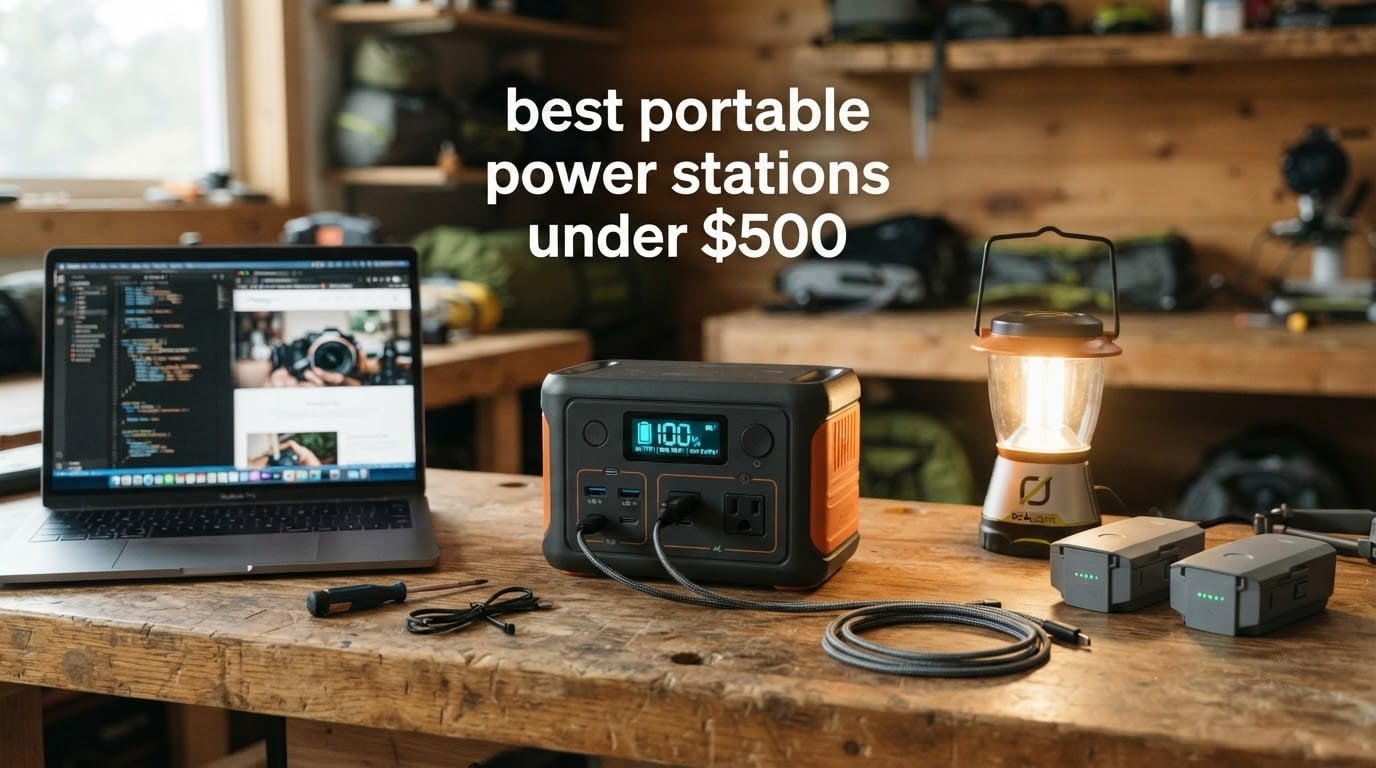
A portable power station under 500 dollars is a rechargeable battery generator that typically holds 200 to 1,000 watt-hours and pushes 300 to 1,800 watts of continuous AC output, with no fuel, noise or exhaust. Our best overall pick is the Jackery Explorer 300: 292Wh, 300W of pure sine wave output, about 7 pounds, and the most owner feedback of any unit in this price tier.
Every pick below was verified against a strict 500-dollar ceiling when we wrote this in October 2026, and each one runs silently indoors with nothing but lithium cells and a built-in inverter. That is the whole appeal: no fuel to store, no pull cord, no exhaust, and instant restart after the grid goes down.
We spent weeks reading the review history on all ten units, comparing capacity, continuous output, surge headroom, port mix, charge times, battery chemistry and weight, then cross-checked every spec against the manufacturer listing. What we found is that the biggest mistake buyers make in this tier is not the brand, it is the capacity-to-output mismatch, and we explain that in detail further down.
Brands here run the usual spread: Jackery, EcoFlow, BLUETTI, Anker SOLIX and two ALLWEI models cover the range from a 6.4-pound entry unit to a 1,152Wh powerhouse with 1,800W of inverter. If you want the short version, the best portable power stations overall cover the tiers above this budget too.
Table of Contents
Top 3 Picks: Best Portable Power Stations Under $500 in October

Jackery Explorer 300
- 292Wh capacity
- 300W output
- About 7 lb with carry handle
- MPPT solar input

Jackery Explorer 500 v2
- 512Wh capacity
- 500W output with 1000W surge
- 0-80 percent in 52 minutes
- Built-in LED light

BLUETTI AC180
- 1152Wh LiFePO4 capacity
- 1800W output with 2700W boost
- 11 outlets
- 500W solar input
Those three cover the realistic middle of this budget. The Explorer 300 is the safest buy if you have never owned one, the Explorer 500 v2 is the smarter capacity per pound, and the AC180 is the one to buy if you plan to run real appliances rather than electronics.
Quick Picks: The Best Portable Power Stations in the Sub-500 Tier
Jackery Explorer 300 – best overall. 292Wh, 300W of pure sine wave AC, about 7 lb, and the highest owner rating base in the group.
Jackery Explorer 500 v2 – best value. 512Wh with 500W continuous and 1,000W surge, back on a wall outlet in under an hour.
EcoFlow Delta 3 Classic – best for refrigerators and pumps. 1,024Wh, 1,800W output, 3,600W surge and sub-10ms UPS transfer.
Anker SOLIX C300 – best for drone and camera batteries. Two 140W two-way USB-C ports and a 15W USB-C for lens warmers.
ALLWEI 300W – best entry option. 256Wh, 600W surge, 6.4 lb, and a built-in three-level flashlight with SOS mode.
Anker SOLIX C1000 – best solar recharge headroom. 1,056Wh with up to 600W of solar input and 11 ports.
Several of these also show up in our camping-specific power station picks, where the weighting shifts toward weight and solar input rather than UPS behaviour.
All 10 Picks Side by Side in 2026
| Product | Specifications | Action |
|---|---|---|
| Jackery Explorer 300 |
|
Check Latest Price |
| Jackery Explorer 500 v2 |
|
Check Latest Price |
 EcoFlow RIVER 2 EcoFlow RIVER 2 |
|
Check Latest Price |
 Jackery Explorer 1000 v2 Jackery Explorer 1000 v2 |
|
Check Latest Price |
| BLUETTI AC180 |
|
Check Latest Price |
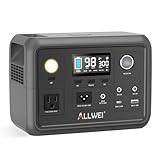 ALLWEI 300W ALLWEI 300W |
|
Check Latest Price |
 ALLWEI 500W ALLWEI 500W |
|
Check Latest Price |
 Anker SOLIX C1000 Anker SOLIX C1000 |
|
Check Latest Price |
 Anker SOLIX C300 Anker SOLIX C300 |
|
Check Latest Price |
 EcoFlow Delta 3 Classic EcoFlow Delta 3 Classic |
|
Check Latest Price |
1. Jackery Explorer 300 – The Most Proven Unit in the Tier
Jackery Explorer 300 Portable Power Station,292Wh
292Wh capacity
300W pure sine wave output
About 7 lb with integrated handle
2 AC, USB-C PD, 2 USB-A, car port
Pros
- Most owner feedback of any unit in this tier
- Light carry weight with an integrated handle
- Clean pure sine wave output for sensitive electronics
- MPPT solar charging and pass-through both work as advertised
- Backlit LCD shows live wattage and state of charge
Cons
- Modest 292Wh capacity
- No built-in lantern on the body
- USB-C port is output only and no C-to-C cable is included
- 12V car socket is limited to 10A
The Explorer 300 is the unit most people in this category already know, and after reading more than eleven thousand reviews it is the one we would hand a first-time buyer without hesitating. It weighs about 7 pounds, has an integrated carry handle, and the shell is small enough to sit between a cooler and a toolbox in a hatchback.
Two AC outlets sit behind a hinged panel, and the panel also carries a 100W USB-C PD port, two USB-A ports and a car socket rated to 120W. Output is clean pure sine wave, which matters more than most specs suggest because it is what keeps a CPAP machine, a router or a sensitive desktop from complaining when the grid dips.
Jackery rates the pack at more than 4,000 cycles to 70 percent capacity and includes an MPPT charge controller, so an appropriate 100W panel brings the unit to roughly 80 percent in about 2.8 hours. The backlit display shows input and output wattage, battery percentage and low-battery warnings, which is more feedback than most units at this size give you.
What the Explorer 300 does well
Runtime is the honest story here. Reviewers report multiple nights of a CPAP machine, several laptop charges, and full days of phone and camera work. At 292Wh with inverter overhead, expect roughly 2.5 to 3 hours on a 100W load and close to 10 hours on a 30W load.
Solar and pass-through charging both behave the way the manual claims, which is not a given in this category. For our money this is also the easiest unit here to carry into a campsite, a tailgate or a second floor, because at about 7 lb it is closer to a large lunch cooler than a piece of camping equipment.
Where the Explorer 300 falls short
The 292Wh pack is the constraint. It will not run a refrigerator, a space heater or a kettle, and reviewers are clear about that. The 10A ceiling on the 12V car socket also rules out some tire compressors, and the USB-C port is output only, so you need your own cable.
One more quirk worth knowing: an auto power-off below roughly 10W can interrupt very low-draw always-on equipment. If you plan to leave a small device plugged in overnight, test it before you rely on it.
2. Jackery Explorer 500 v2 – The Best Capacity-to-Price Step Up
Jackery Explorer 500 v2 Portable Power Station,512Wh,500W AC
512Wh LiFePO4 capacity
500W continuous with 1000W surge
13.3 lb with foldable handle
0-80 percent in about 52 minutes
Pros
- 512Wh at 500W continuous
- a rare combination under the cap
- Lightest LiFePO4 unit in this group at about 14 lb
- 0-80 percent wall recharge in about 52 minutes
- 10ms UPS keeps networking gear alive
- Built-in LED light and foldable handle
Cons
- Fewer AC outlets than the port count implies
- Warranty detail is unclear in the listing metadata
- Not sized for full-home loads or large appliances
If the Explorer 300 feels like it will run out the moment the fridge compressor kicks on, the Explorer 500 v2 is the same idea with 75 percent more capacity and a 500W inverter instead of a 300W one. The jump from 292Wh to 512Wh is the single most useful upgrade you can make inside this budget.
This is the version to buy if your outage list includes a router, a lamp, a laptop and a CPAP machine all running at once. At 13.3 pounds with a foldable handle, it is still carryable by one person, and the chemistry is LiFePO4 rated for 6,000 charge cycles, which is the best cycle figure attached to any sub-500 unit we reviewed.
Charging is the other headline. Jackery claims 0 to 80 percent in about 52 minutes from a wall outlet, and reviewers confirm the fast charge is real in normal use. The 10ms UPS function with bypass charging is genuinely useful for a home office, where a two-second grid flicker would otherwise reboot a desktop.
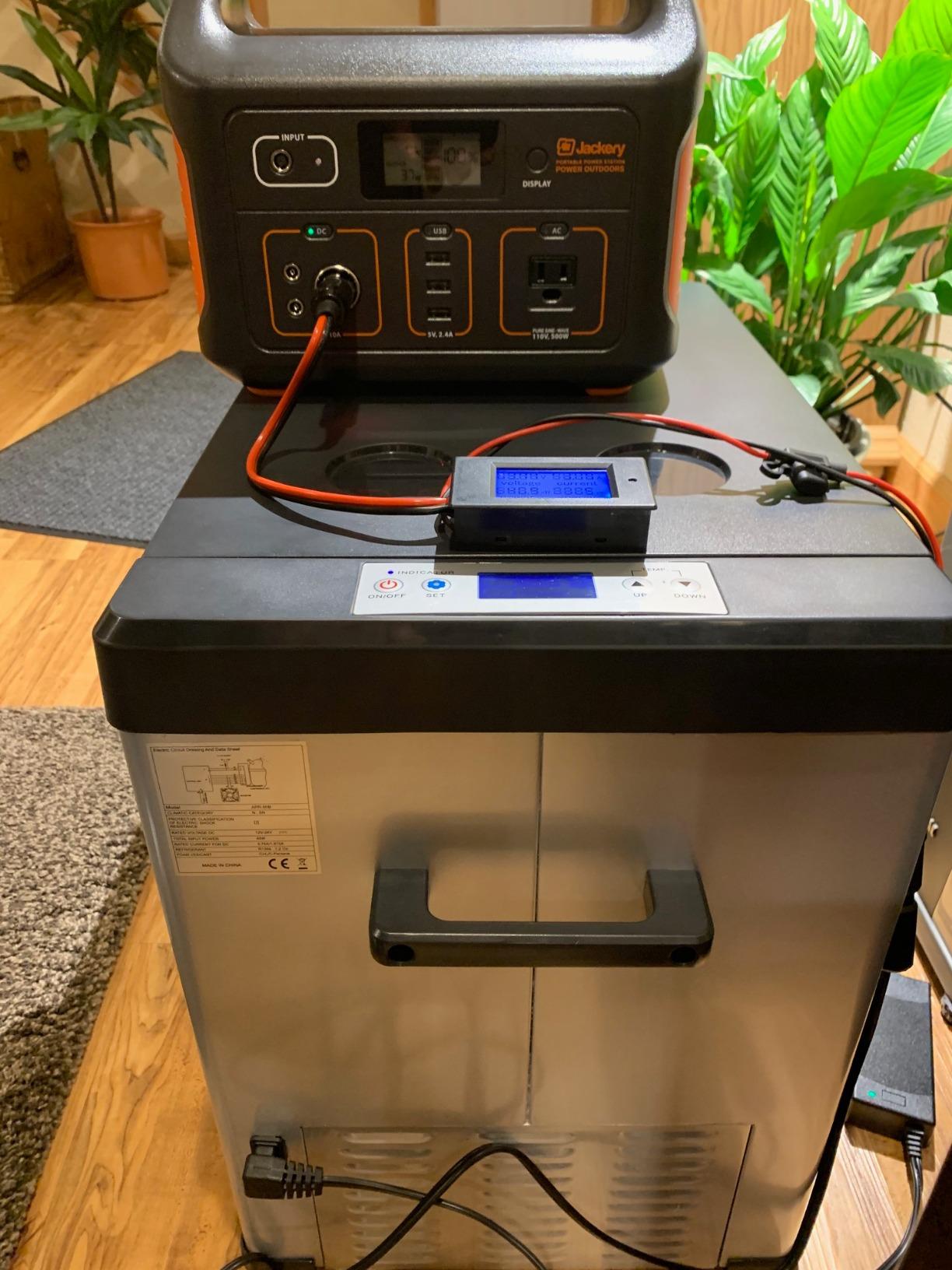
Owners highlight the low self-discharge, which means the unit can sit in a closet for months and still be there when you need it. Long-term owners report units that sat unused for a year and a half still held around 94 percent of their charge after a single outage use, which is the sort of detail that separates a real backup tool from a drawer ornament.
What the Explorer 500 v2 does well
The inverter headroom is the story. A 500W continuous rating with 1,000W surge will start a refrigerator, a small air conditioner or a kettle where a 300W unit simply refuses. The quiet operation, listed at about 28 dB, means it can live in a bedroom during an outage without becoming the thing everyone complains about.
Two pure sine wave AC outlets is still a modest count, so plan your loads rather than plugging in hope. The built-in LED light is a small touch that earns its place during a night with the power out and every flashlight in the house at three percent.
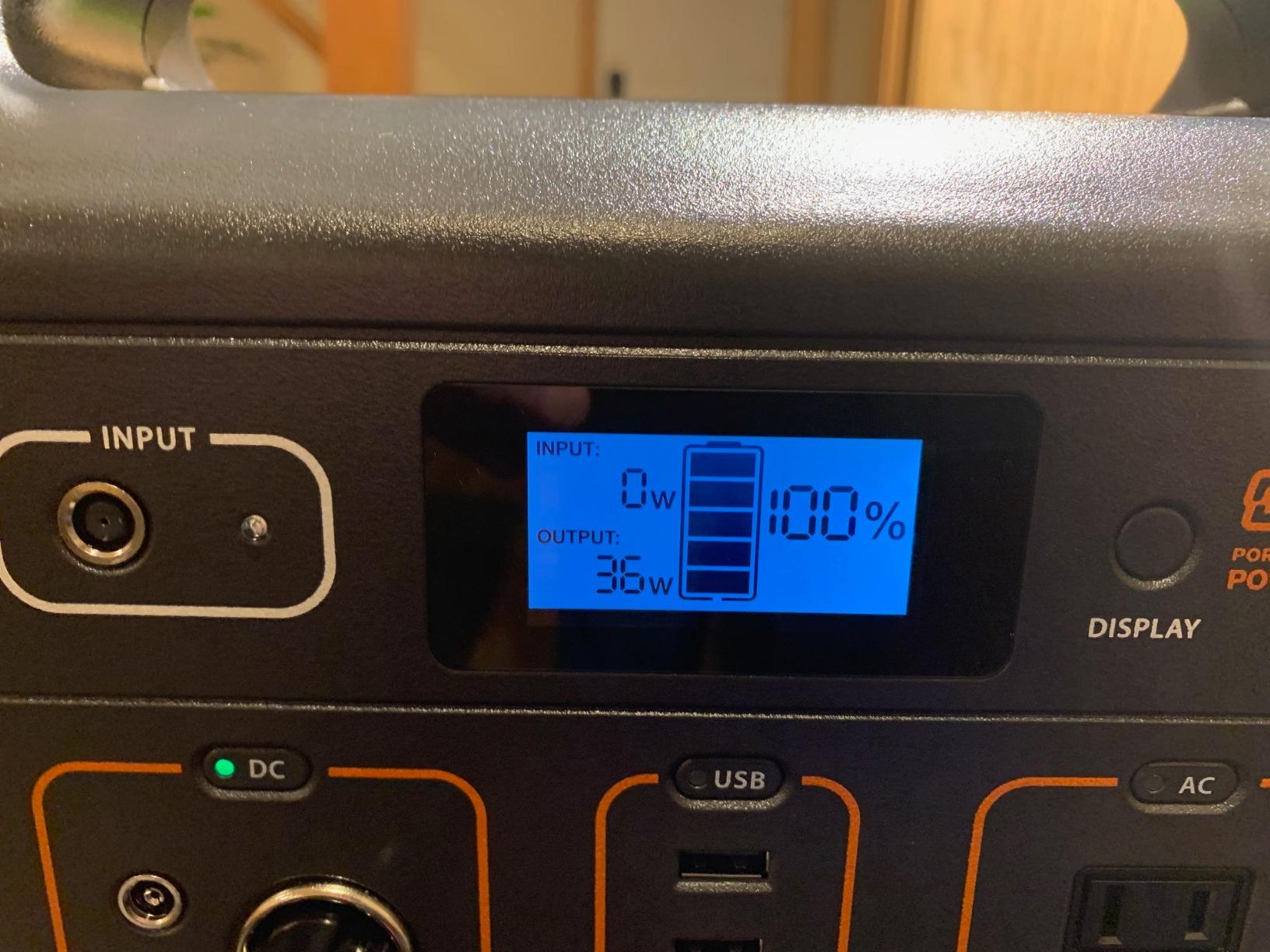
Where the Explorer 500 v2 falls short
The mismatch between port count and AC outlet count surprises people. There are more ports than outlets here, and if you need to run several mains devices simultaneously you will be sharing. The listing metadata also leaves the warranty story vague, so confirm the coverage terms before you buy rather than after.
And at 512Wh it is still an essentials-plus unit, not a household one. A 12V mini fridge on a moderate setting is comfortably within reach; a full-size compressor fridge cycling all night is not.
3. EcoFlow RIVER 2 – The Fastest Wall Recharge Here
EF ECOFLOW Portable Power Station RIVER 2, 256Wh 300W
256Wh capacity
300W AC output with 600W X-Boost
7.7 lb with built-in handle
About 1 hour full AC recharge
Pros
- Full AC recharge in about one hour
- Fast wall charging changes how you prepare for an outage
- LiFePO4 cells rated for more than 3000 cycles
- Works as a pass-through UPS while charging
- Flat top is a convenient surface for a phone or a light
Cons
- Lowest average rating in this group at 4.3
- Some buyers report charge percentage drift after a year or two
- Only one USB-C port
- Solar input capped at 110W
- Cooling fan is audible at maximum charging speed
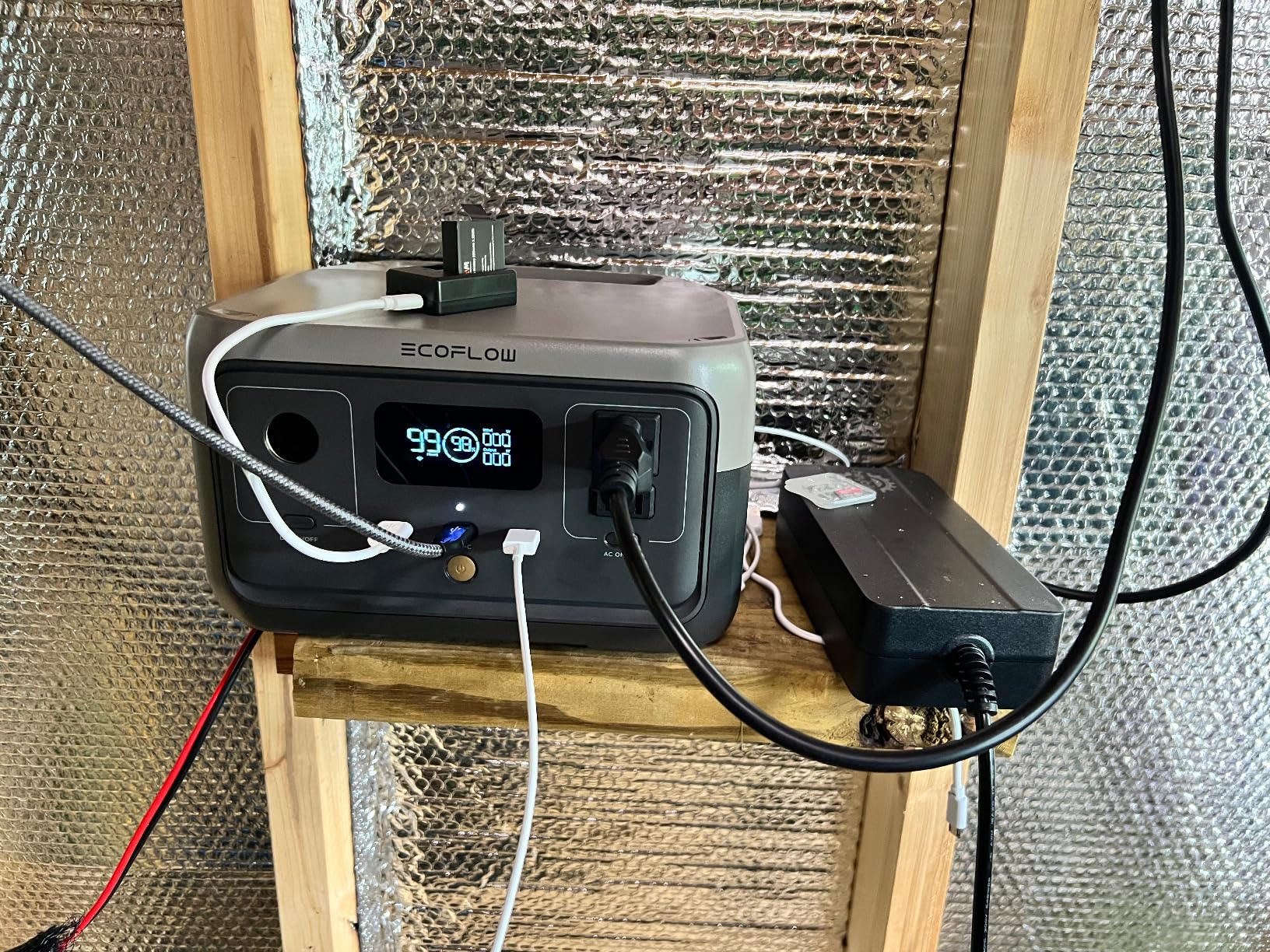
The RIVER 2 is defined by one number: a full recharge from a wall outlet in about an hour. That single feature changes the failure mode of backup power. Most stations in this tier need three or four hours to refill, which means a unit drained during yesterday’s outage is still sitting there when the next one starts.
Underneath, it is a 256Wh pack with 300W of AC output, boostable to 600W through X-Boost, at 7.7 pounds with a built-in handle. The app shows real-time charge and discharge data, and EPS emergency power keeps a desktop alive when the wall quits.
Capacity is the trade you make. 256Wh is the same class as the Explorer 300 and the ALLWEI 300W, so this is a unit for phones, laptops, cameras, lights and a router rather than for appliances.
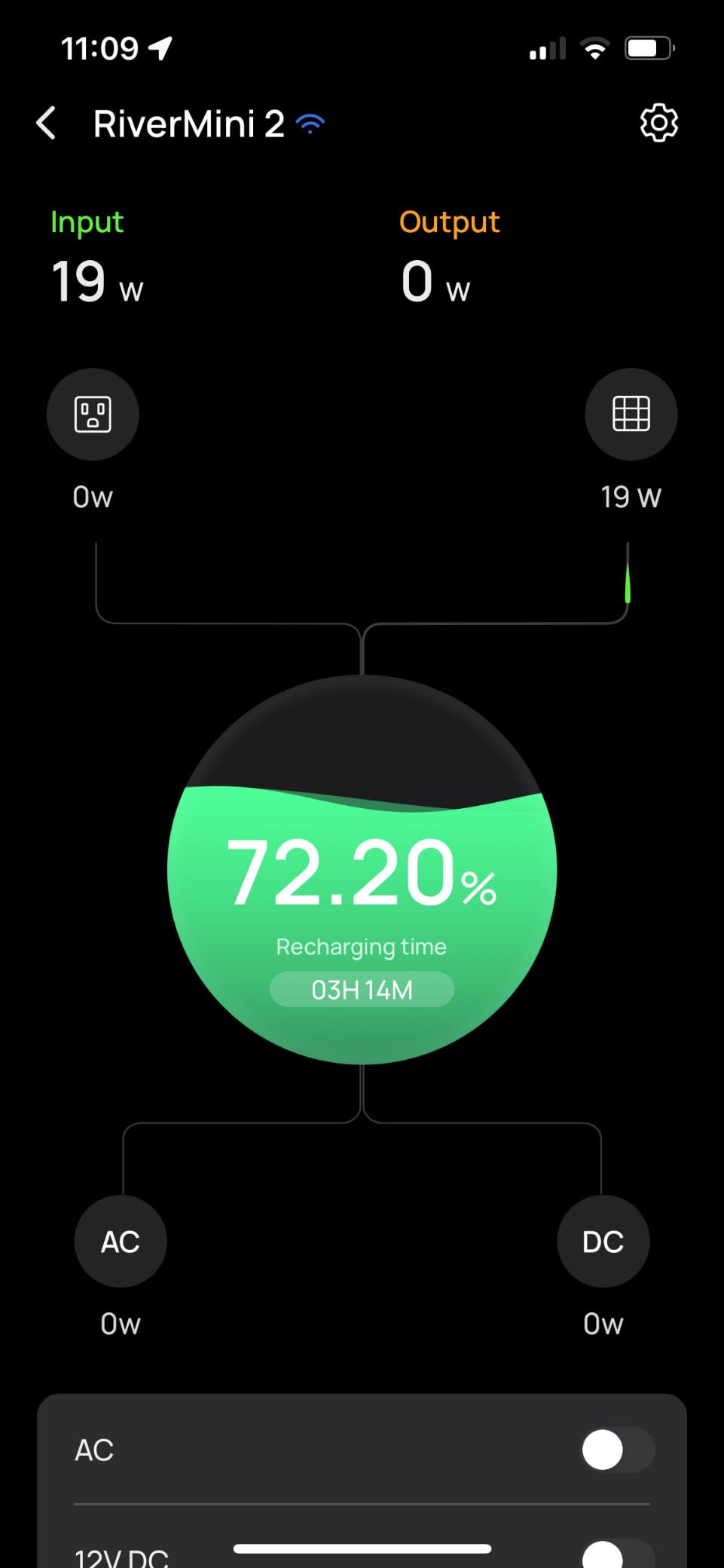
The RIVER 2 also charges from a car socket and from up to 110W of solar input in about 2.3 hours. That solar ceiling is a real limitation if you own a 200W panel, and low-output panels under roughly 25W are not detected reliably, which bites in overcast conditions.
What the RIVER 2 does well
For disaster preparation specifically, recharge speed is the most underrated feature in the category. A unit that refills during a coffee break on the morning of a storm is a different tool from one that needs half a day. The pass-through behaviour means you can charge the station and run a load from it at the same time, which is exactly what you want when the outage is already underway.
Reviewers consistently call it the best value in its size class, and the app is one of the more useful ones in the group, particularly for setting a charge ceiling to protect long-term battery health.
Where the RIVER 2 falls short
It carries the lowest average rating of the ten at 4.3, with about 9 percent one-star reviews, and the complaints cluster in one place: battery management accuracy. Some buyers report the percentage indicator drifting or a unit that no longer held a full charge after a year or two, and one owner lost AC and USB-C charging until a firmware update completed.
Inverter overhead also eats into usable capacity on very small loads, so expect slightly less than the label suggests when you are running a phone charger rather than a kettle.
4. Jackery Explorer 1000 v2 – Most Power You Can Buy Under the Cap
Jackery Explorer 1000 v2 Portable Power Station,1070Wh,1500W
1,070Wh LiFePO4 capacity
1500W AC output with 3000W surge
23.8 lb with foldable handle
7 total power outlets
Pros
- 1070Wh and 1500W handles fridges
- air units and pots
- One-hour emergency charge mode through the app
- Over 70 percent capacity retained after 4000 cycles
- Three pure sine wave outlets plus two USB-C including 100W PD
- Only 23.8 lb for a 1kWh unit
Cons
- Solar charging works only with Jackery panels
- One-hour charge must be enabled in the app each time
- Only the unit and manual are included
- 23.8 lb is heavy for a car-camping carry
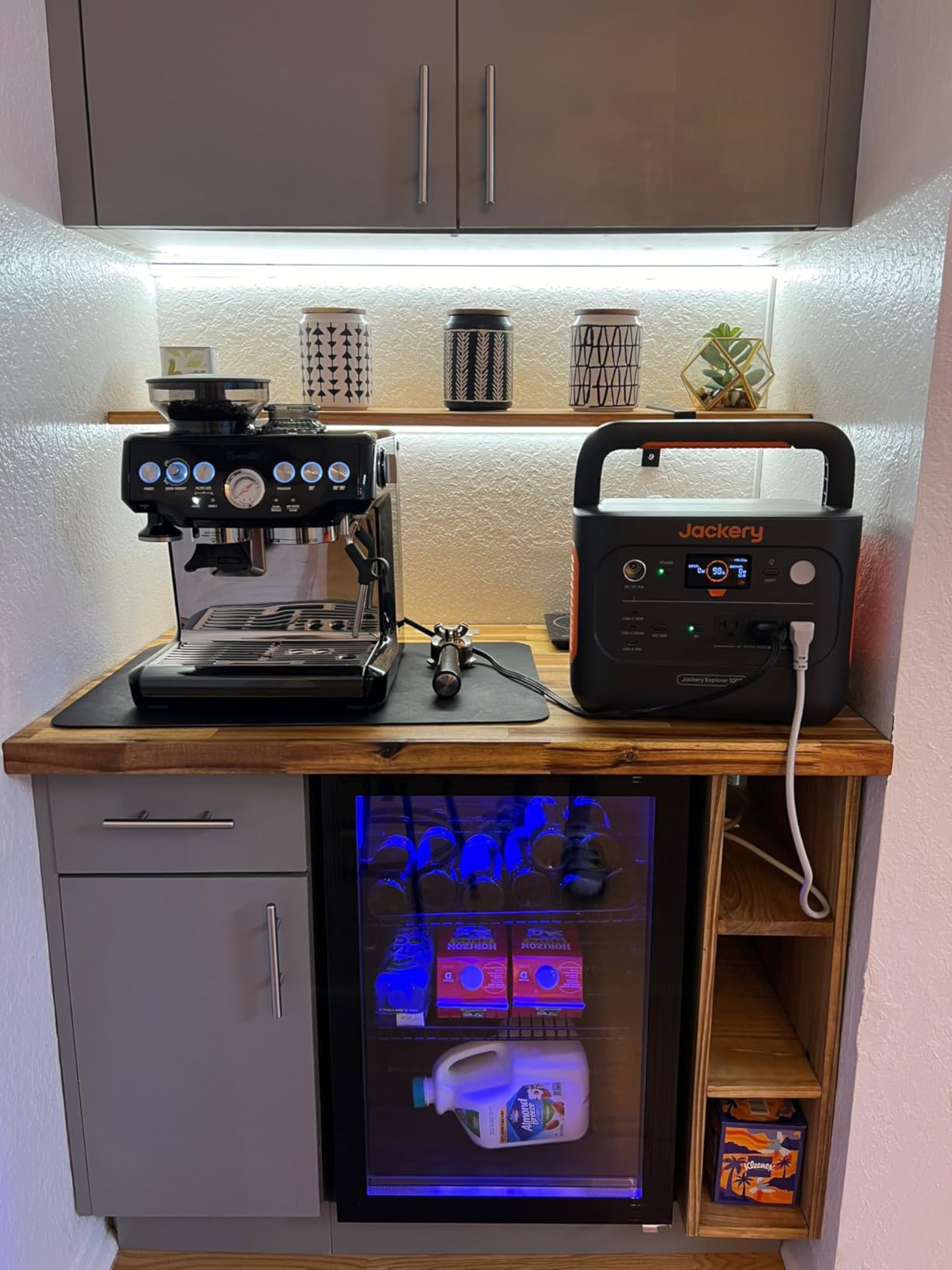
This is the ceiling of the sub-500 tier and, in our view, the single most capable unit you can buy inside it. At 1,070Wh with 1,500W of continuous output and 3,000W of surge, it is the only pick here that comfortably runs a refrigerator, a small air conditioner or a pot of water.
Jackery rates the LFP battery at more than 70 percent capacity retained after 4,000 cycles, which puts its lifespan in the same territory as the far more expensive units. Charging is 0 to 100 percent in about 1.7 hours by default, or roughly one hour with emergency charging enabled in the Jackery app.
Port layout is generous: two USB-C ports including 100W PD, one USB-A, a 12V car port and three pure sine wave AC outlets, seven in total. App control covers charge modes, a 30 dB quiet setting and an energy efficiency mode, and ChargeShield 2.0 handles the battery management.
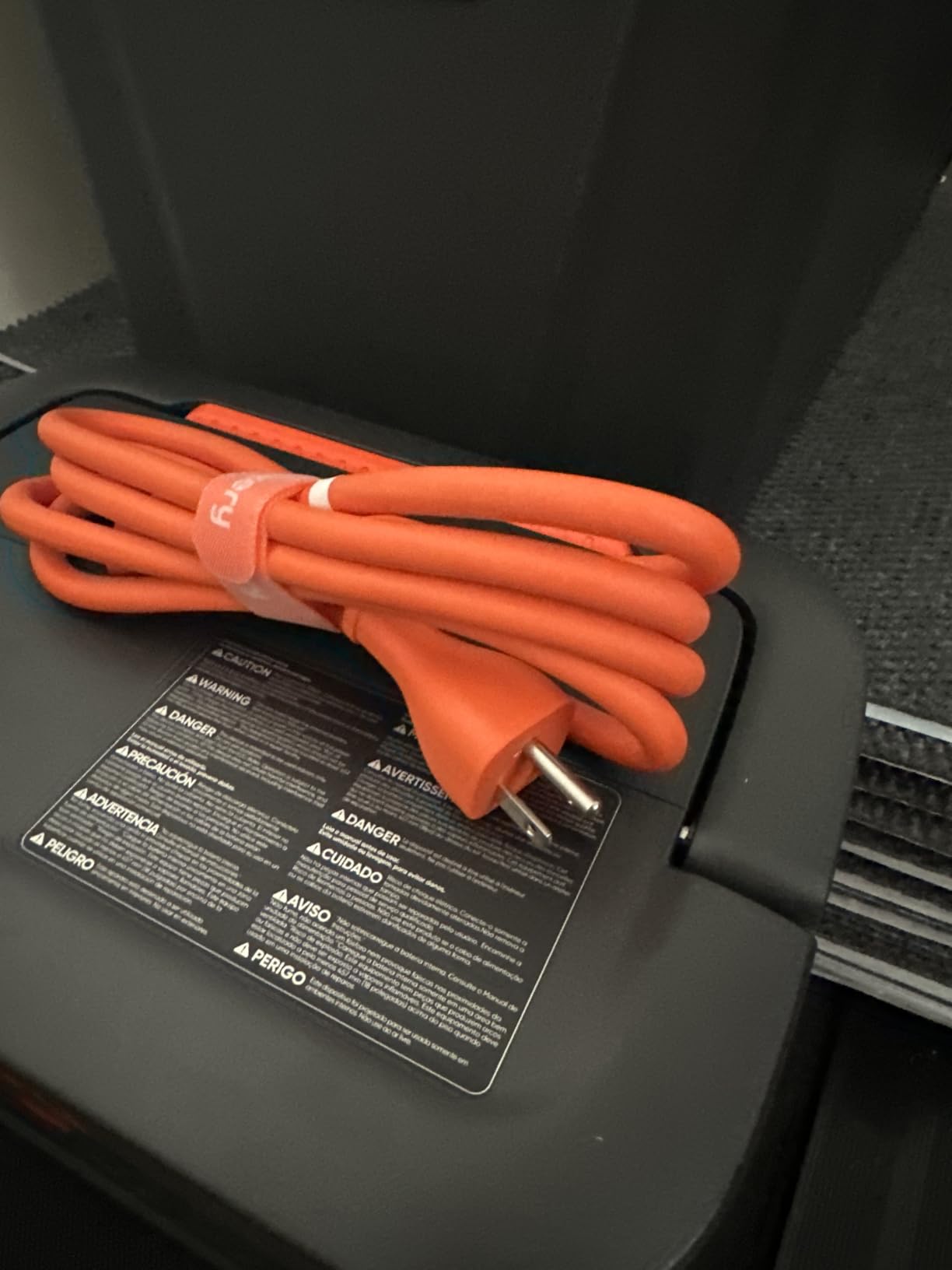
At 23.8 lb with a foldable handle it is heavy, but this is the only unit in the group where the weight is worth it because of what it can actually run. If you are sizing for an outage rather than for a weekend, this is the honest answer.
What the Explorer 1000 v2 does well
Inverter headroom is the differentiator. When a refrigerator compressor asks for 150W on startup and a router is already drawing 15W, a 300W unit stalls and a 1,500W unit does not notice. The same logic applies to power tools on a job site, where a circular saw can pull well past what a small inverter will hold.
Owners report an 85 percent five-star share, and the recurring theme is that the fast charge plus real inverter headroom removes the anxiety that comes with a small station during a long outage.
Where the Explorer 1000 v2 falls short
Solar compatibility is the sharpest limitation. It pairs with Jackery panels rather than generic ones, so if you already own a 200W panel from another brand, it will not help you here. The headline one-hour charge is also an opt-in mode, which means an app dependency every time you want it.
Only the power station and the manual are in the box. Cables and panels are extra purchases, which is a meaningful detail when you are stretching a fixed 500-dollar budget across the whole kit.
5. BLUETTI AC180 – Outlet-Rich Power With 500W Solar Input
BLUETTI AC180 Portable Power Station 1152Wh 1800W LiFePO4 Solar Generator
1,152Wh LiFePO4 capacity
1,800W output, 2,700W with app boost
37.4 lb
11 total power outlets
Pros
- 1152Wh pack fully recharges in about an hour at 1440W input
- 1800W output across eight outlets with app boost to 2700W
- 500W solar input recharges in roughly 2.8 to 3.3 hours
- 20ms UPS keeps routers and electronics running
- Bluetooth app shows live AC and DC wattage
Cons
- Heaviest unit in the group at about 37 lb
- Idle self-consumption of roughly 15-20W cuts usable capacity
- Only 90 percent of rated capacity is usable by design
- Wireless charging pad on top frequently fails
The AC180 is the largest capacity in the group at 1,152Wh, with 1,800W of continuous output, eight AC outlets and eleven in total, plus wireless charging on top. BLUETTI charges the entire pack in about an hour at 1440W AC input, which is the fastest full-charge figure any sub-500 unit lists.
Solar is the other headline. A 500W solar input recharges in roughly 2.8 to 3.3 hours, which is the highest solar ceiling here apart from the Anker SOLIX C1000, and it makes off-grid topping up genuinely practical rather than aspirational.
The interface is refreshingly simple: three buttons and a bright, easy-to-read display. A Bluetooth app shows live input and output wattage for both AC and DC, and a 20ms UPS mode keeps networking gear and sensitive electronics running through a switchover.
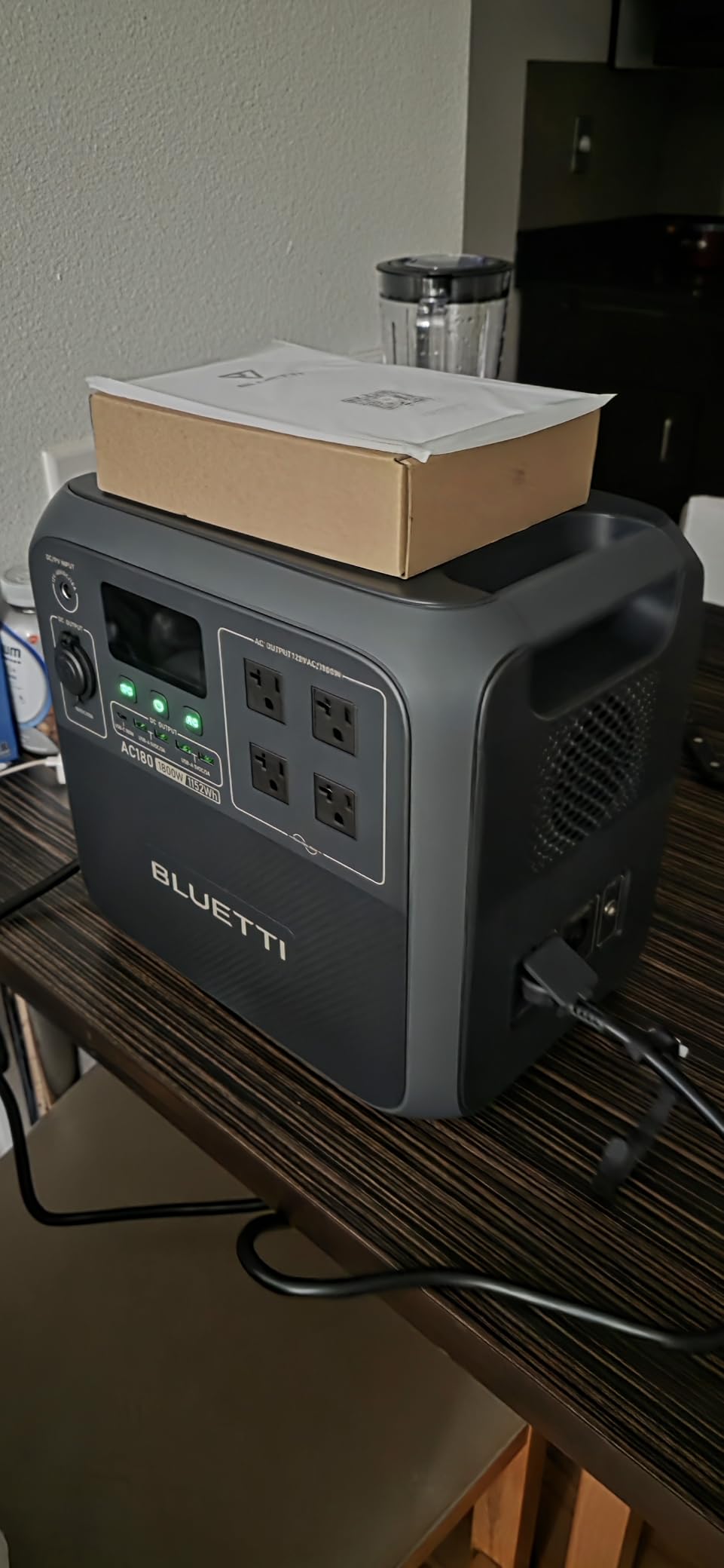
Reviews are consistently positive on build quality, quiet operation, UPS behaviour and BLUETTI customer service, with a 4.6 rating across more than 2,600 reviews. The metal frame and rubberised housing also feel a tier above the plastic shells in this price range.
What the BLUETTI AC180 does well
Outlet count is the quiet superpower. If your load list is a router, a modem, a monitor, a laptop, a lamp and a small appliance, you can plug all of them in without sharing or hunting for a wall outlet. The app-enabled boost to 2,700W gives you surge headroom for compressor loads without a separate generator.
It also runs long. A 1,152Wh pack with a 20ms transfer and roughly 16 hours of listed runtime means this is the pick for someone who wants a fridge, a router and lights running for a full day and most of a second one.
Where the BLUETTI AC180 falls short
At about 37 pounds it is the heaviest unit here, and that is not a rounding error. Moving it between rooms or loading it into a vehicle is a two-person job, and it is the wrong choice for car camping despite the camping claims in the listing.
Two design choices cost you real capacity. Idle self-consumption runs about 15 to 20W, which is meaningful on small loads, and the manual states that only 90 percent of rated capacity is usable by design. A minority of owners also report the wireless charging pad failing to charge phones, and some units needed a firmware update before AC charging reached full speed.
6. ALLWEI 300W – The Floor of the Tier
ALLWEI Portable Power Station 300W, 256Wh Solar Generator LiFePO4 Battery
256Wh capacity
300W continuous with 600W pure sine wave surge
6.4 lb
6 outputs including 60W USB-C
Pros
- Entry price point with a 4.4 rating across 2450 reviews
- Thin 6.4 lb body that fits tighter spaces than most 300W units
- Display shows remaining percentage
- remaining time and live wattage
- Real 2.4A USB outputs that handled two lens warmers at once
- Three-level flashlight with SOS mode and a rubber cover over the car port
Cons
- One owner reports a unit that stopped holding charge after about a year
- Another reports a stuck and suddenly dropping charge level
- Solar input limited to about 120W so 200W panels cannot be used
- Only a 2-year manufacturer warranty
The ALLWEI 300W exists to answer a question most roundups ignore: what if you want a genuine backup tool without spending half the budget? At 256Wh, 300W continuous and 600W pure sine wave surge, it is a real unit rather than a novelty, and at 6.4 pounds it is the lightest thing on this list.
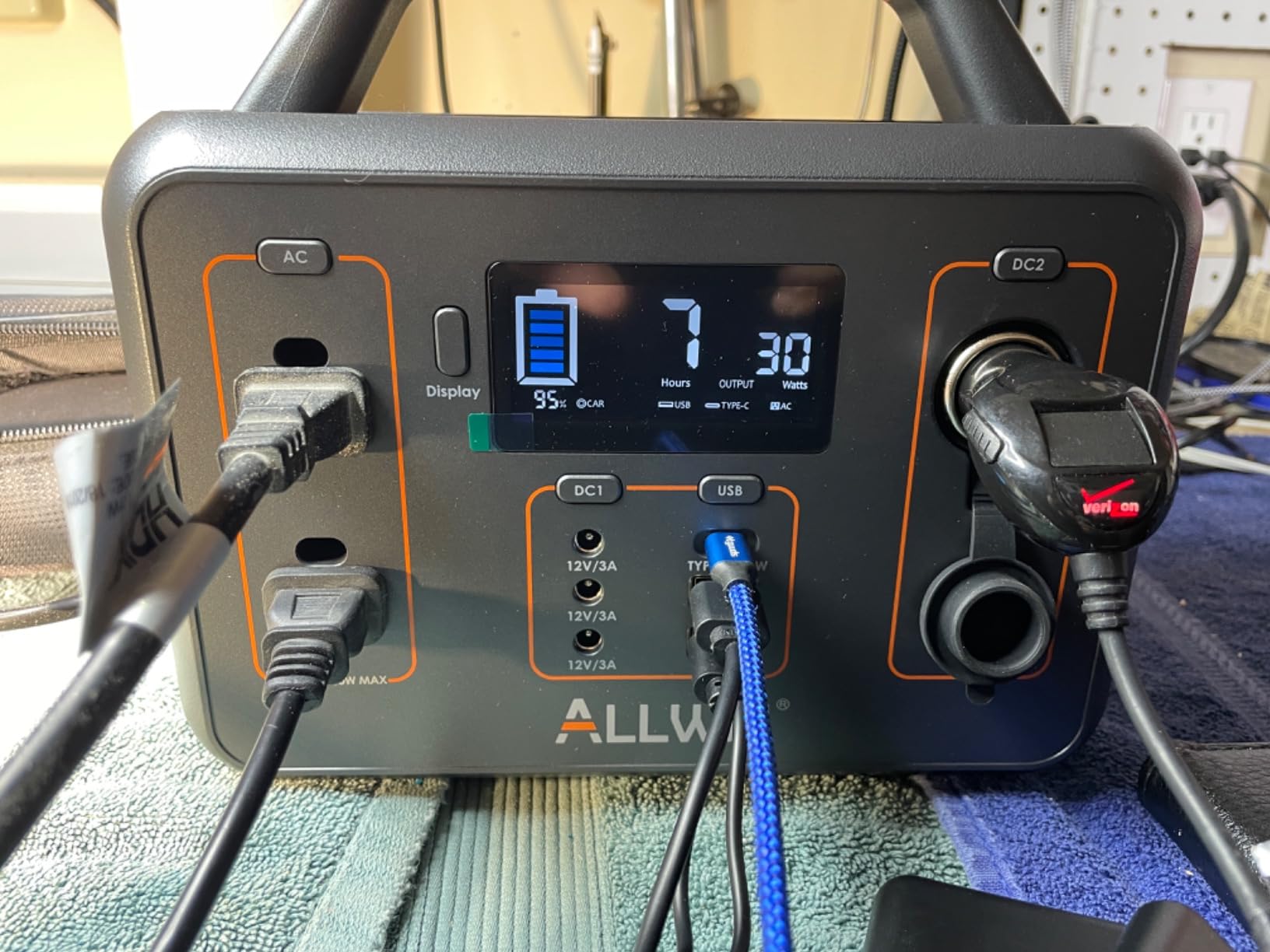
It has six outputs: one AC outlet, two DC5521 barrel ports, a car socket, an 18W USB-A and a 60W USB-C PD port. AC, car, solar and dual-input recharging all work through a built-in MPPT controller, and a six-layer battery management system handles pass-through charging.
Reviewers treat this as the budget pick, and the port behaviour is genuinely good for camera work. Owners report the real 2.4A USB outputs running two 12W and 9W lens warmers at the same time, which most sub-300-dollar units cannot do.
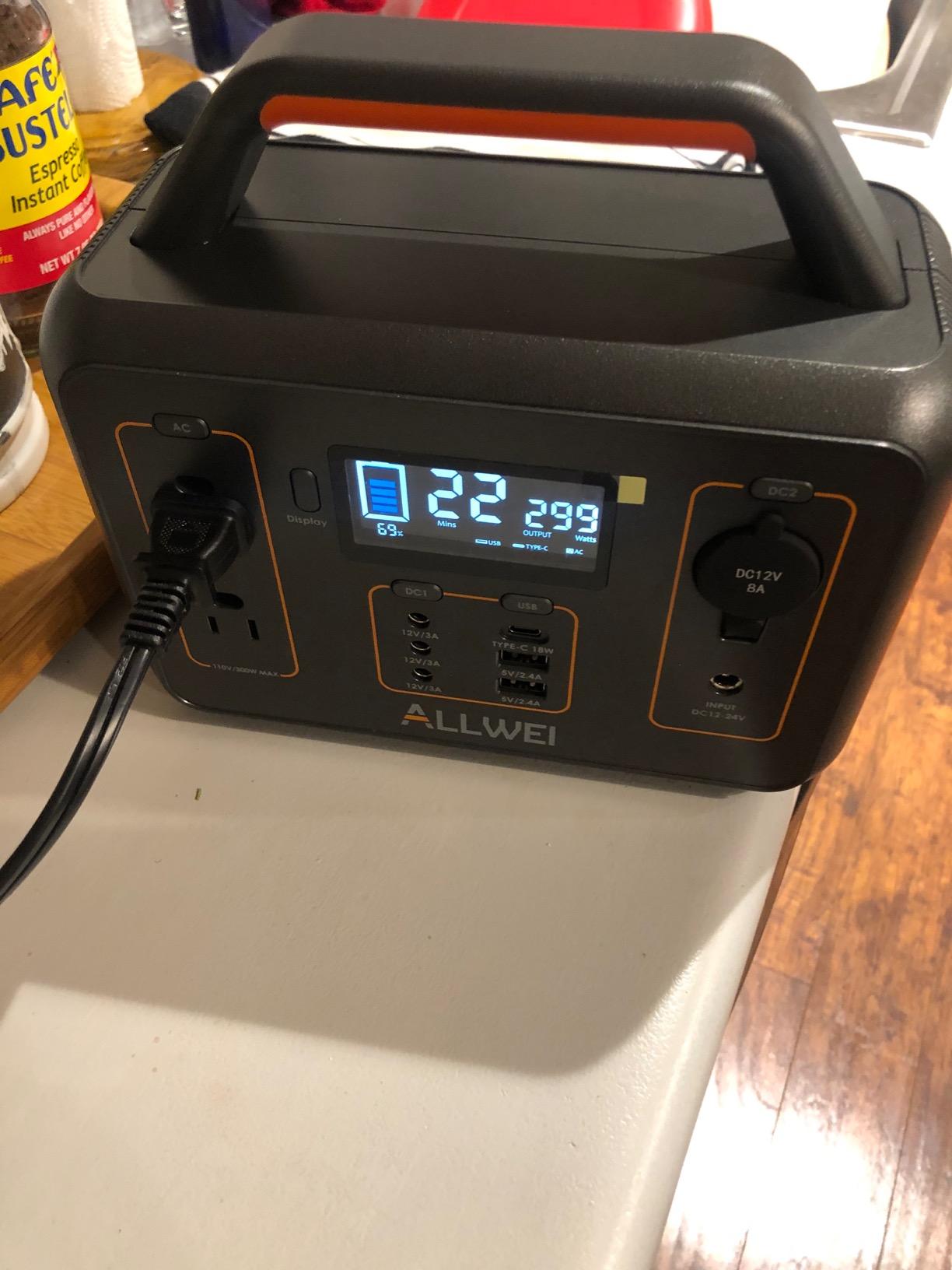
The display is better than the price suggests, showing remaining percentage, remaining time and live wattage rather than a single percentage figure. It also holds charge well over months of standby, and CPAP owners report running a machine for many hours on it.
What the ALLWEI 300W does well
Form factor is the quiet advantage. At 9.25 by 5 by 6.8 inches it is thin enough to slide into a tight trunk gap, a campervan cabinet or a closet shelf, which matters more than raw wattage for people who will actually move it. The three-level LED flashlight with SOS mode is another practical touch at this level.
For a weekend of phone charging, a laptop, camera work and a couple of lights, the math is comfortable. A 300W inverter with 600W of surge is also enough to start a small CPAP or a portable fan without tripping.
Where the ALLWEI 300W falls short
Solar input caps at about 120W, so the 200W panels most people already own cannot be used with it. There is also no 24V output, which rules it out for some RV users, and the warranty is two years against five on several competitors here.
Long-term reliability reports are mixed. One owner reports a unit that stopped holding charge after about a year, another reports a charge level that appeared stuck and then dropped suddenly, and the centre power button turns off the display rather than the AC and DC outputs, which confused more than one buyer. Buy it for occasional use, not as your only line of defence.
7. ALLWEI 500W – UPS Behaviour for Desktops and Network Gear
ALLWEI Portable Power Station 500W, 512Wh LiFePO4 Battery UPS Backup Power
512Wh LiFePO4 capacity
500W continuous with 1,000W surge
13 lb
2 AC, 2 USB-C, 2 USB-A, 2 DC and car port
Pros
- 512Wh at 500W continuous
- among the best capacity-to-price ratios here
- Full AC recharge in roughly 2.5 hours
- Two AC outlets plus USB-C 100W
- USB-C 36W
- two USB-A
- two DC5521 and a car port
- Reliable UPS function for desktops
- file servers and network gear
- Only 13 lb in a compact 11.6 x 7.5 x 7.6 inch body
Cons
- Solar input limited to about 120W
- Cigarette-lighter plug tip runs hot during charging
- USB-A outputs can glitch and reset when a USB-C device is connected
- Only a 2-year manufacturer warranty
The 500W ALLWEI is the sleeper in this group. It pairs 512Wh of LiFePO4 capacity with 500W of continuous output, 1,000W of surge, a full AC recharge in roughly 2.5 hours, and a port count that is better than most units costing meaningfully more.
For anyone running a home office, the UPS function is the reason to look here. Reviewers report it reliably carrying desktops, file servers and network gear through an outage, which is a different and more specific claim than simply running a laptop.
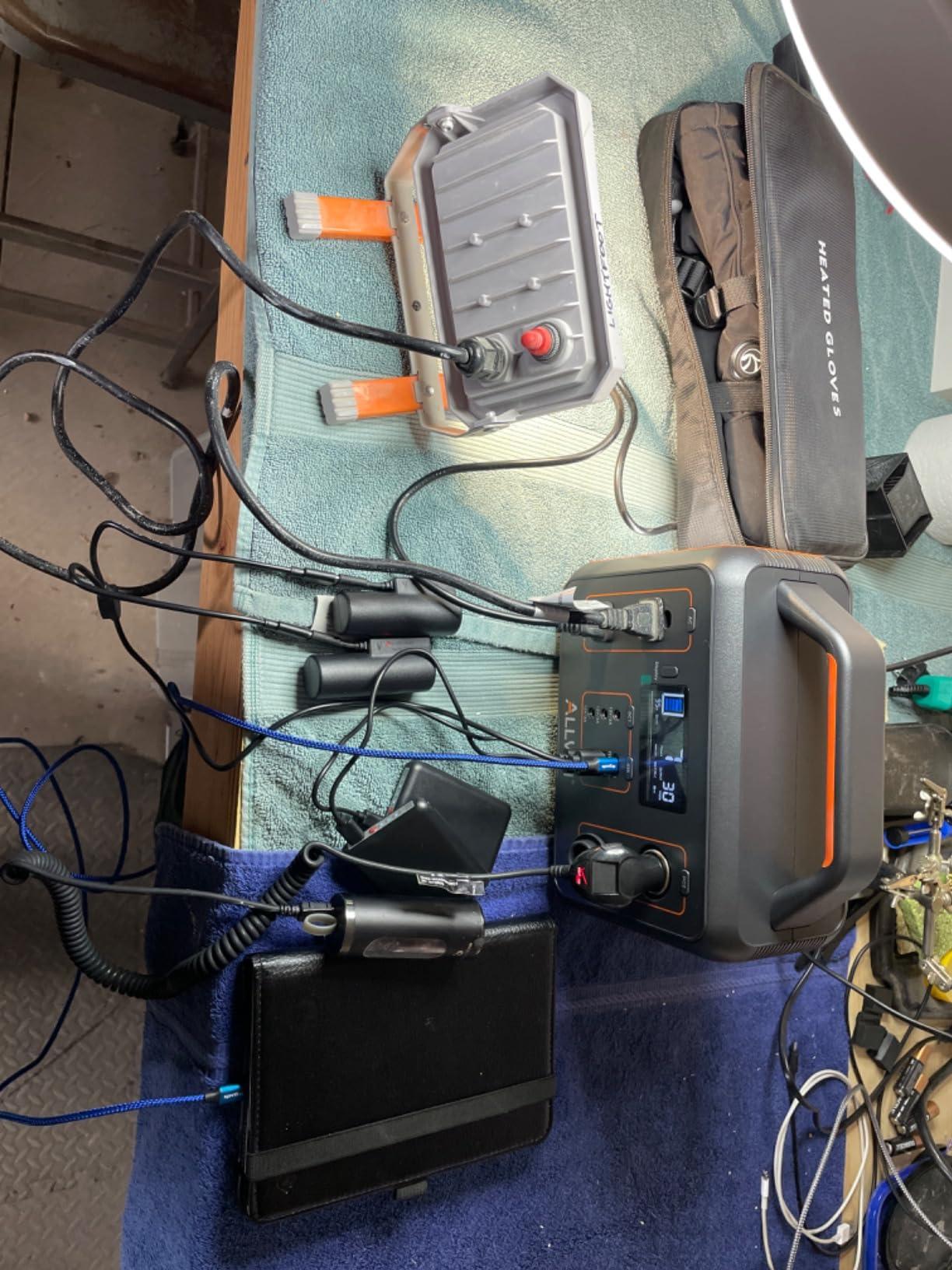
There are two AC outlets, USB-C at 100W, a second USB-C at 36W, two USB-A, two DC5521 barrel ports and a car socket. Q, N and S three-mode charging control lets you prioritise recharge speed, quiet operation or battery longevity depending on whether you are preparing for a storm or storing it for a month.
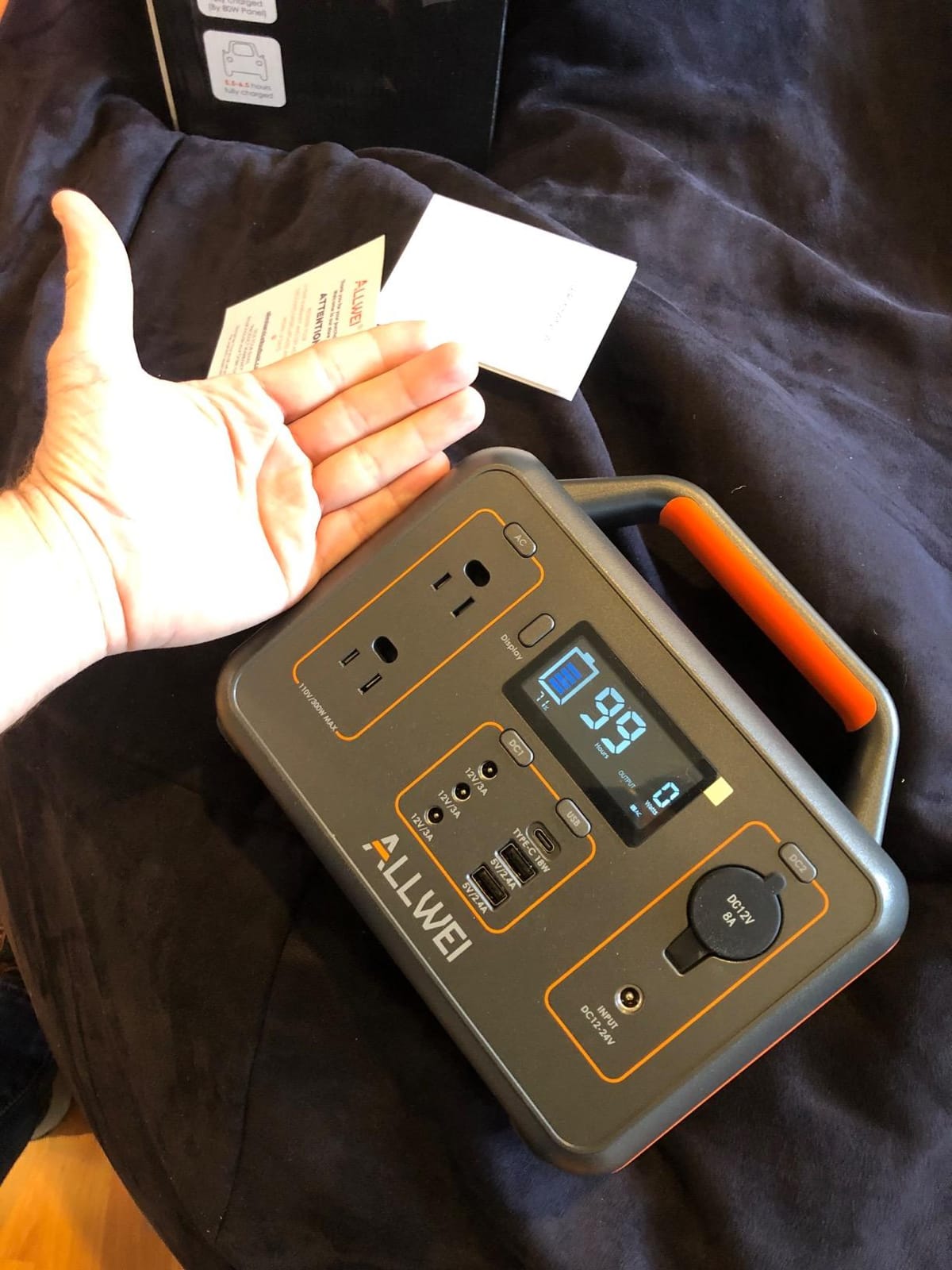
It is also one of the more compact 512Wh units at 11.6 by 7.5 by 7.6 inches and 13 pounds, with a 3,000-cycle battery and a stated 10-year battery lifespan. Buyers treat it as a strong value step up from the 300W ALLWEI.
What the ALLWEI 500W does well
The port mix is the differentiator at this price. Two USB-C ports, one of them at 100W, means a laptop, a drone battery charger and a phone can all be fed directly without fighting over a single port. That combination is rarer in the sub-500 tier than it should be.
Runtime lands in the same useful window as the Jackery Explorer 500 v2, so you can run a router and modem indefinitely, a desktop for a full workday, or a CPAP overnight plus lights and charging with room to spare.
Where the ALLWEI 500W falls short
Solar input again tops out near 120W, which is the most common limitation across the value tier. The cigarette-lighter plug tip is reported to run hot during charging, and some owners saw USB-A outputs glitch and reset when a USB-C device was connected at the same time.
Support and warranty are the other gap. Some buyers report the central power button behaving confusingly and customer support asking for extensive data before engaging, and the warranty is two years, half of what the premium picks carry.
8. Anker SOLIX C1000 – The Best Solar Recharge Headroom
Anker SOLIX C1000 Portable Power Station with Car Charging Cable, 1,056Wh
1,056Wh LiFePO4 capacity
1800W output with 2400W SurgePad surge
27.6 lb
11 ports and up to 600W solar input
Pros
- 1056Wh with 1800W output and 2400W SurgePad surge
- 80 percent recharge in about 43 minutes with a full charge under an hour
- Eleven ports covering AC
- USB-C
- USB-A and car
- Up to 600W solar recharging
- roughly 1.8 hours
- Anker app for custom charge speeds and live power statistics
- About 15 percent smaller than comparable 1kWh units
Cons
- UltraFast recharging must be switched on in the Anker app with a smartphone
- At 27.6 lb it is one of the heavier units here
- Solar charging does not reach the advertised rate outside ideal conditions
If your plan is to actually go off grid rather than simply ride out an outage, the Anker SOLIX C1000 is the pick. It takes up to 600W of solar input and recharges in roughly 1.8 hours, which is the fastest solar path in this group and the one that makes multi-day camping realistic.
Underneath it is a 1,056Wh LiFePO4 pack with 1,800W of output and 2,400W of SurgePad surge, plus eleven ports covering AC, USB-C, USB-A and car connections. It reaches 80 percent in about 43 minutes and completes a full charge in under an hour on UltraFast mode.
The Anker app handles custom charge speeds and live power statistics, and the 3,000-cycle battery carries a 5-year warranty. It also runs about 15 percent smaller than comparable 1kWh units, which matters when the alternative is a unit that will not fit in the van.
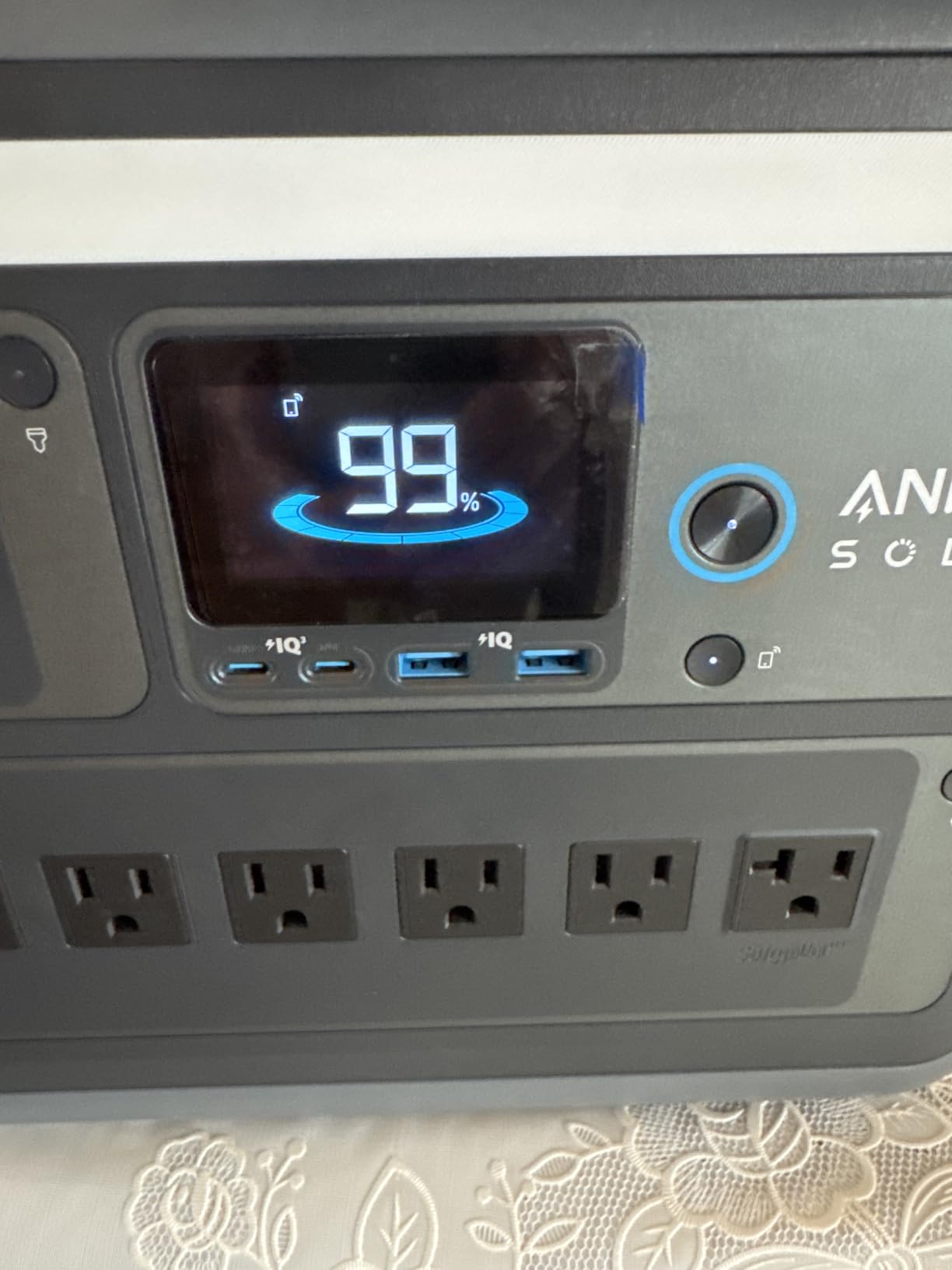
Owners report an 86 percent five-star share, with the strongest praise going to charging speed and port variety. For van life, tailgating or a job site where you need to refill during the day, the 600W solar ceiling is the reason this one is worth the extra weight over lighter options.
What the Anker SOLIX C1000 does well
Eleven ports is the most generous count here, and the mix is unusually balanced rather than front-loaded on USB. That means you can run a fridge, charge a laptop, run a router and top up a camera battery without cycling through a single overloaded hub.
With 1,800W continuous and 2,400W of surge, it handles the loads that defeat the smaller units: a refrigerator cycling overnight, a space heater for an hour, a sump pump, a power tool. Combined with fast solar, it is the most self-sufficient unit in the sub-500 tier.
Where the Anker SOLIX C1000 falls short
Fast charging is app-gated. UltraFast mode has to be switched on in the Anker app, which means a smartphone in the loop every time you want the headline number, and a unit that will not fast-charge because an app was not opened is a bad trait in emergency gear.
At 27.6 lb it is one of the heavier units here, and solar performance falls short of the advertised rate outside ideal conditions. Complaints are otherwise limited, with one owner reporting a unit that would not power on at all and needed a return.
9. Anker SOLIX C300 – Best for Drone and Camera Batteries
Anker SOLIX C300 Portable Power Station, 288Wh Solar Generator for Camping
288Wh capacity
300W output with 600W surge
About 9 lb
3 AC outlets, two 140W USB-C and 100W solar input
Pros
- Compact vertical body at about 10 lb with a built-in handle
- Two 140W two-way USB-C ports plus a 15W USB-C and a USB-A
- Recharges to 80 percent in about 50 minutes
- Three-level forward-facing light bar with SOS mode
- Very quiet at about 25 dB and holds charge over multi-day trips
Cons
- 288Wh is too small for large appliances or all-day heavy loads
- USB-A output limited to 12W
- Not compatible with Anker SOLIX PS30
- PS200 or PS400 panels
- Shoulder strap sold separately
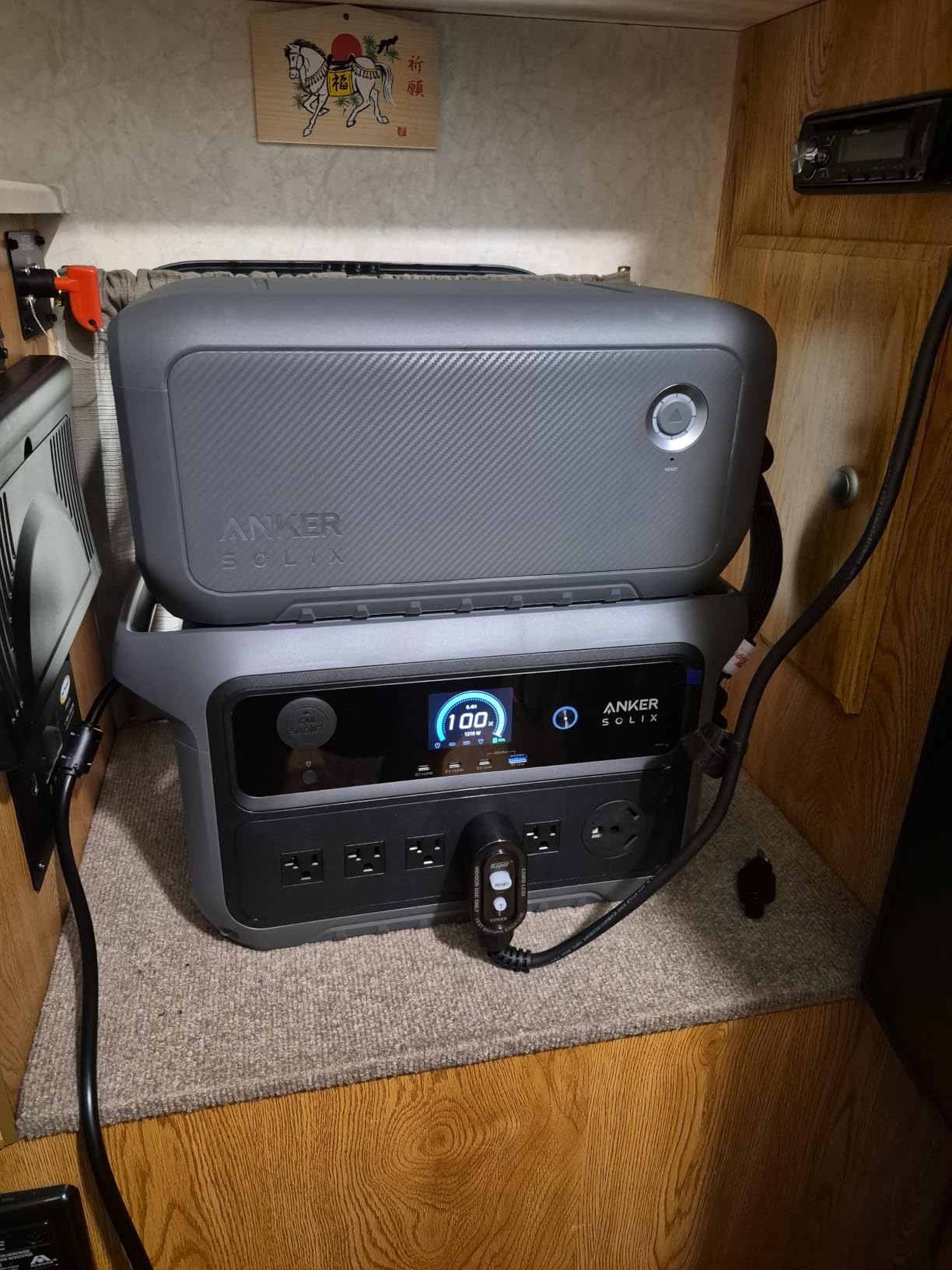
For flying and shooting, USB-C Power Delivery is the spec that matters, and the C300 is the best-equipped unit in this budget for it. Two USB-C ports rated at 140W each, plus a third USB-C at 15W and one USB-A, cover drone battery hubs, camera batteries, lens warmers and a laptop without any adapter hunting.
Both USB-C ports are two-way, so you can charge a laptop from the station and charge the station from a suitable source through the same cable. Three standard 120V AC outlets and a 120W car socket fill out the eight total connections.
The body is a compact vertical design at about 9 to 10 lb with a built-in handle, which is easier to pack in a camera bag than a wide rectangular unit. It recharges to 80 percent in about 50 minutes from a wall, runs at roughly 25 dB, and holds charge well on multi-day trips.
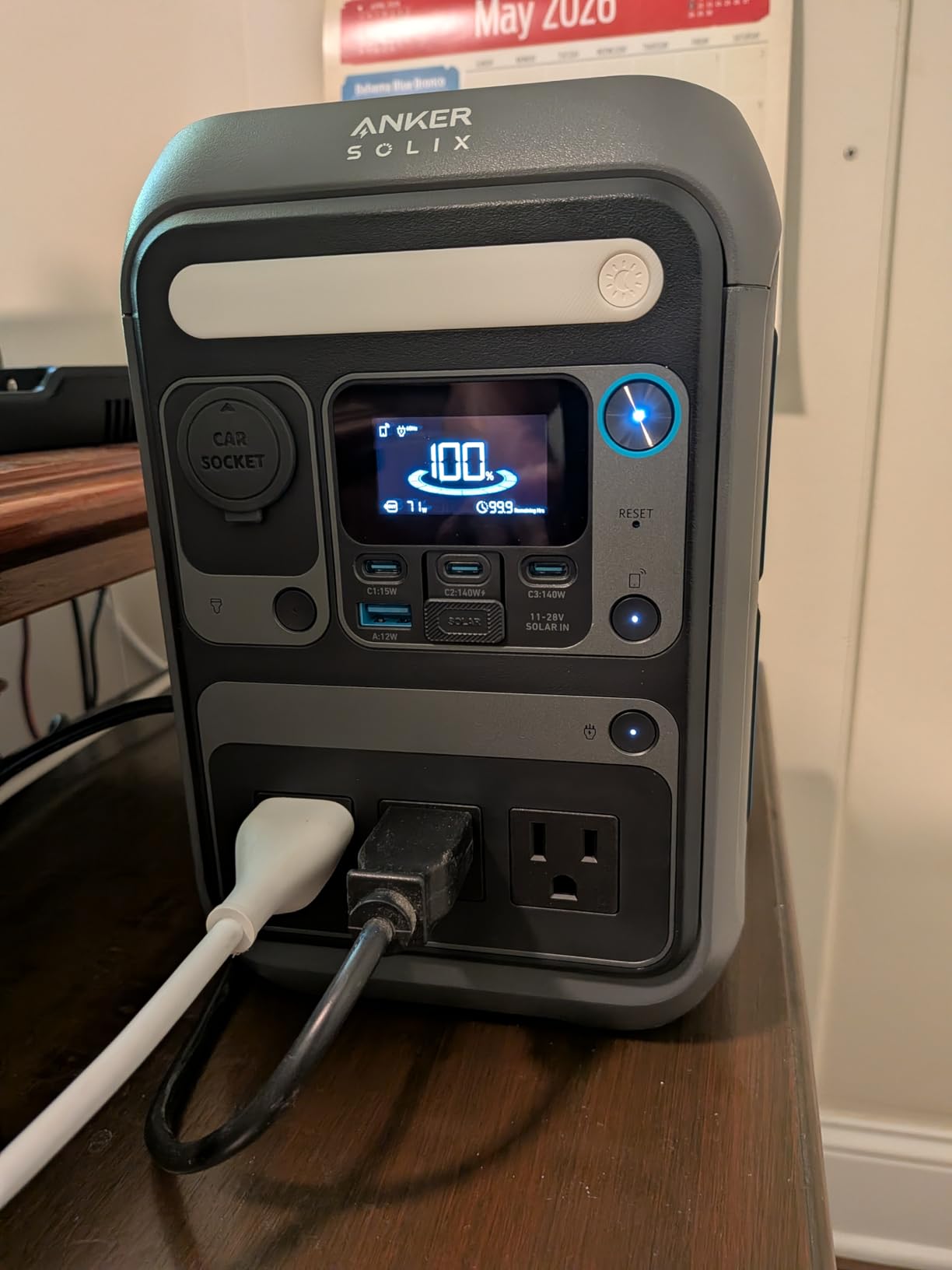
The three-level forward-facing light bar with SOS mode is more useful than it sounds on an early-morning shoot or when the grid is down and you need to find a cable in the dark. One owner verified UPS-style switchover for a router during a simulated outage, which is real behaviour rather than a marketing line.
What the Anker SOLIX C300 does well
Port behaviour is the whole case. Most budget stations give you one slow USB-C and a pair of 12W USB-A ports, which is not enough to charge a modern drone battery hub. Two 140W two-way USB-C ports change what you can bring on a shoot, and they are the reason this unit earns its place on this list rather than the Explorer 300.
Its 288Wh capacity is genuinely fine for a full day of field work: multiple battery cycles, a laptop top-up, cameras and a couple of lights, with a light bar instead of a separate torch.
Where the Anker SOLIX C300 falls short
288Wh is simply too small for large appliances or all-day heavy loads, and the USB-A output is limited to 12W, below what many accessories expect. Solar input tops out at 100W, and it will not accept Anker SOLIX PS30, PS200 or PS400 panels.
The shoulder strap is sold separately, which is an odd thing to charge extra for on a unit marketed as portable, and one owner reported a USB-C port that stopped working after heavy use.
10. EcoFlow Delta 3 Classic – For Fridges, Pumps and Sensitive Gear
EF ECOFLOW Portable Power Station Delta 3 Classic, 1024Wh 1800W AC
1,024Wh capacity
1800W output with 3600W surge
26.7 lb
Sub-10ms UPS switchover and 6 outlets
Pros
- 1024Wh with 1800W output
- 3600W surge and X-Boost to 2600W
- 0-80 percent in about 45 minutes with X-Stream AC charging
- Under 10ms UPS switchover for PCs
- servers and medical devices
- Full recharge in about 2.5 hours with a 500W solar panel
- EcoFlow app with Storm Alert and Self-Powered Mode
- 5-year manufacturer warranty
Cons
- At 26.7 lb it is heavy for frequent carrying
- Not compatible with DELTA 2 or DELTA 3 Smart Extra Batteries
- 12V car charging input tops out near 100W
- Two isolated reports of units arriving with quality problems
The Delta 3 Classic is the pick for anyone whose outage list starts with a refrigerator or a sump pump. It delivers 1,024Wh at 1,800W of continuous output with 3,600W of surge, and X-Boost pushes the effective ceiling to 2,600W for resistive loads.
The headline feature for sensitive gear is the under-10ms UPS switchover. Computers, servers and medical devices treat anything slower than about 20ms as a power failure, so this unit is the one here that genuinely keeps a desktop from rebooting when the grid flickers.
Charging is quick: 0 to 80 percent in about 45 minutes with X-Stream AC charging, or a full recharge in about 2.5 hours with a 500W solar panel. The EcoFlow app includes Storm Alert and a Self-Powered Mode, and the warranty runs 5 years.
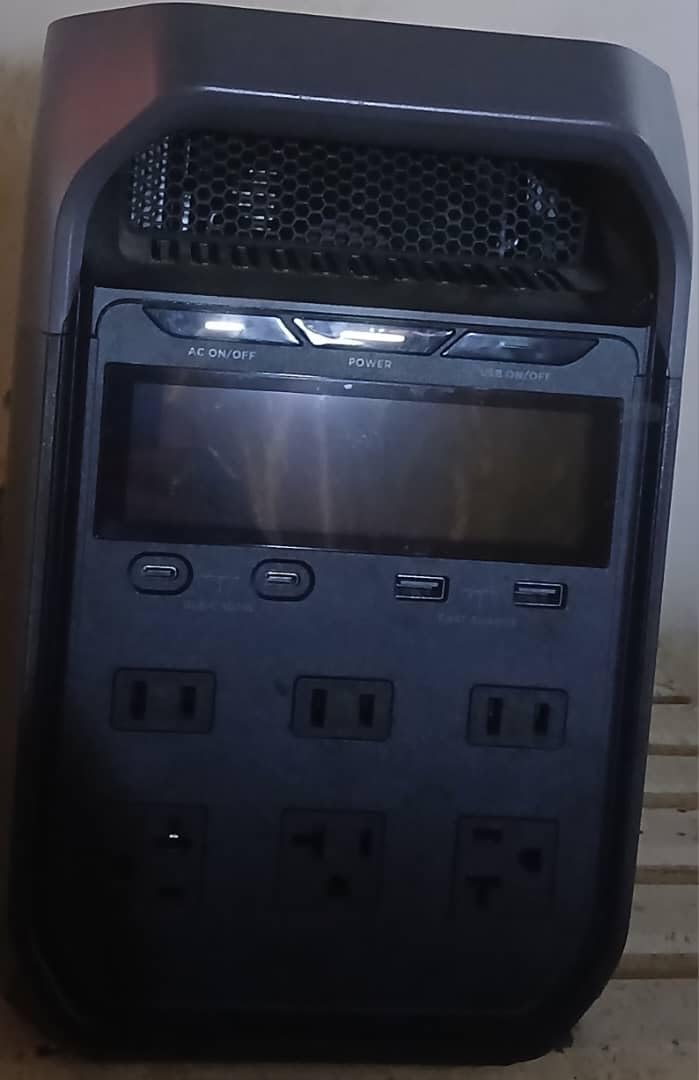
Owners report 89 percent five-star ratings, praising fast charging, the sub-10ms transfer, the app and the ability to run a fridge or pumps for days. The physical design earns mention too: two handles, non-skid feet and well-oriented outlets that you can actually reach in the dark.
What the EcoFlow Delta 3 Classic does well
Fridge compatibility is the specific claim. A compressor fridge can draw several times its running wattage at startup, and the 3,600W surge figure absorbs that without a shutdown, which is why reviewers report multi-day fridge runtime rather than a few hours.
The sub-10ms transfer also makes this the unit to buy for a home office or a small server closet. Combine that with a 1,024Wh pack and a 5-year warranty and it is the most complete home-backup answer inside the sub-500 tier.
Where the EcoFlow Delta 3 Classic falls short
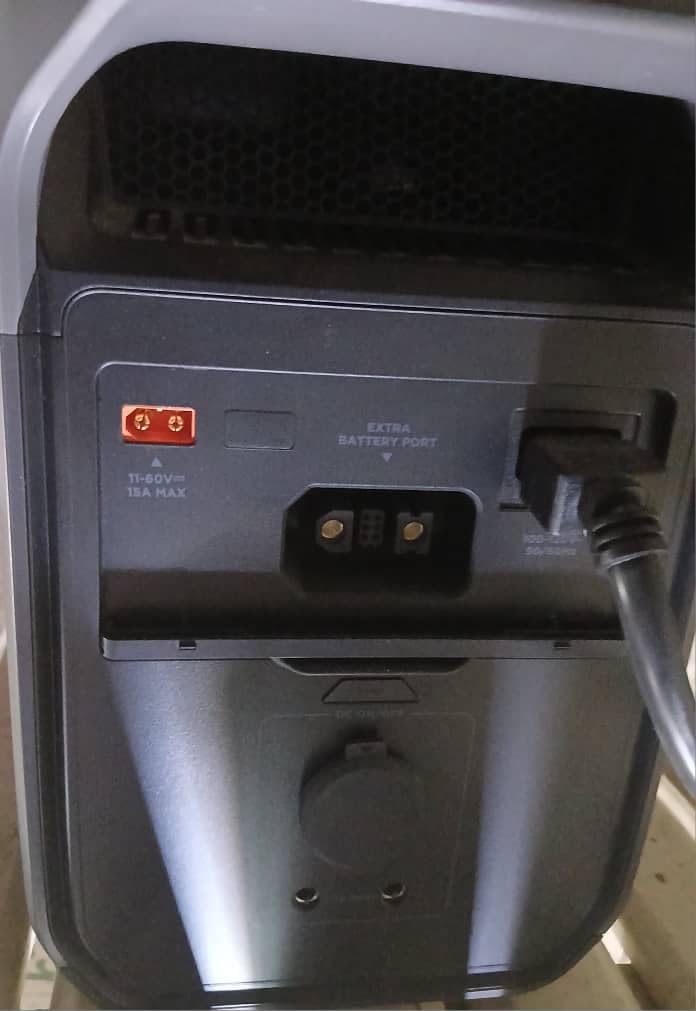
At 26.7 lb it is heavy for frequent carrying, and the 12V car charging input tops out around 100W, which is too slow for overcast multi-day off-grid use where solar is the only refuel. It also will not accept DELTA 2 or DELTA 3 Smart Extra Batteries, so you cannot grow it.
Two isolated buyers reported a unit that would not power on and a used unit with screen damage, which points to fulfilment rather than design. Still worth inspecting on arrival, especially if you have no local support.
What a 500-Dollar Budget Gets You (and What It Does Not)
A 500-dollar ceiling buys roughly 250 to 1,150 watt-hours and 300 to 1,800 watts of continuous output. That is enough for a night or two of essential power, and it is genuinely useful. It is not enough to run a house.
The honest limits are clear. There is no 2,000W-plus continuous output at this budget, so no full-home backup and no heavy appliances like a space heater on high, an electric kettle plus a fridge, or a microwave. There is also no meaningful expandability on most picks, so capacity is fixed on the day you buy.
What you do get is the ability to keep a router, a modem, a laptop, a CPAP machine, lights and a phone charged for a couple of days, or to run a 12V fridge or a small mains fridge for a comparable period. Buyers who arrive with that expectation are happy. Buyers expecting a whole-house solution are not.
Our general guidance: buy the largest capacity you can physically move, and only then optimise for output. A heavier 1,000Wh unit that sits in a closet is more useful than a 300Wh one you leave in the garage because it is too awkward to grab.
How to Size a Portable Power Station in Three Steps
Step one is to list your devices with their actual watt draw, not their marketing wattage. A router is about 10W, a laptop charger 45 to 65W, a CPAP machine 30 to 60W, an LED lamp 10W, a 12V mini fridge 40 to 60W, and a full-size fridge 70 to 150W when the compressor runs.
Step two is to add the watts, then add roughly 20 percent for inverter losses and startup surges. A router, a lamp, a CPAP and a laptop charger totals about 130W, so budget for around 160W of continuous headroom.
Step three is to divide that total by the hours you need, which gives you the watt-hours required. 160W for 10 hours is 1,600Wh, which exceeds everything in this roundup. That is the moment to be honest: either cut the load or accept a longer, partial outage rather than buying a station that will disappoint you on night one.
Adjust for the load you actually care about keeping on. If the fridge is what matters, budget for it alone and let the router die for a while. Prioritising two or three loads beats trying to protect everything at a 10 percent duty cycle.
Runtime Math: What 300Wh, 500Wh and 1000Wh Actually Run
Runtime is capacity divided by the combined wattage of your load, discounted for inverter overhead of roughly 10 to 15 percent. A 500Wh pack is not 500Wh of usable energy; budget for roughly 400 to 450Wh in practice, and less on units with higher idle draw.
On a 256-292Wh unit: a 10W router runs about 22 hours, a 45W laptop charger about 5 hours, a 45W CPAP with a humidifier about 5 hours, a 60W mini fridge cycles on and off for 4 to 6 hours, and a 150W mains load such as a kettle is not a realistic target.
On a 512Wh unit: a 10W router runs a couple of days, a 45W laptop charger about 9 hours, a CPAP about 9 hours, a 60W mini fridge 8 to 10 hours, and a 150W load such as a small fan plus lights runs 3 hours.
On a 1,024-1,152Wh unit: a CPAP runs about 20 hours, a 60W mini fridge runs 16 to 18 hours, a 120W load runs about 8 hours, and a 150W compressor fridge runs through roughly a full day and part of a second depending on ambient temperature.
These are estimates built from the published capacity and the inverter efficiency figures in the listings, not laboratory measurements we performed. The AC180 is the exception to the general rule: its idle self-consumption of roughly 15 to 20W and 90 percent usable-capacity design mean the real figure is lower than the math suggests.
LiFePO4 vs NMC: The Chemistry Decision That Outlives the Brand
Nearly every pick in this roundup uses lithium iron phosphate, or LiFePO4, and that is the single most important technical fact on this page. LiFePO4 cells typically deliver 3,000 to 6,000 cycles in this category against roughly 500 to 1,000 for older NMC cells.
The second advantage is cold behaviour. NMC chemistry locks out charging below freezing unless the unit has active low-temperature protection, while LiFePO4 packs tolerate cold charging far better. If you live somewhere that sees winter storms, that difference decides whether your station works in January.
LiFePO4 also has a better thermal profile, which is why these units are safe to run indoors. The trade-off is weight and price: LiFePO4 is heavier for the same watt-hour count, and that is exactly why the 512Wh Jackery weighs 13.3 lb while some older NMC packs of similar capacity weighed less.
Only the Jackery Explorer 300 is listed with a generic lithium-ion cell type in its specification block, though Jackery rates the pack at more than 4,000 cycles. Treat that one carefully if you are buying for a ten-year horizon.
Continuous vs Surge Watts: The Number Buyers Misread
Continuous watts is how much the inverter delivers indefinitely. Surge or peak watts is how much it delivers for a few seconds while a motor spins up. Marketing copy leads with peak, which is why buyers end up disappointed.
The failure mode is predictable: a refrigerator or a power tool asks for three times its running wattage at startup, a 300W continuous inverter that is already loaded shuts down, and the unit resets in a loop. This is the single most common complaint in owner reviews of small stations.
The rule we use is simple. Sum the running watts of everything connected, then confirm that total sits comfortably under the continuous figure rather than the surge figure. Only the Explorer 1000 v2, the AC180, the C1000 and the Delta 3 Classic have enough continuous headroom to absorb a compressor start while other loads are running.
Ignore the X-Boost and SurgePad numbers when planning a load. They are useful software tricks for resistive loads like a kettle or a heater element, and they do not help with a motor that needs a genuine surge.
Do You Need a Solar Panel With a Sub-500 Station?
No, not on day one. Every unit here recharges from a wall outlet in under four hours and from a car socket, and forum consensus favours car charging over solar for anyone who moves regularly. A panel is a second purchase, not part of the station.
Here is the problem: a competent 100W folding panel costs more than several of the stations in this roundup, and a 200W rigid panel costs more still. Add one to a 500-dollar station and you have blown the budget you came in with, which is why so many buyers end up with a station they have to keep plugged in.
What solar actually buys you is time away from the grid. The Anker SOLIX C1000 accepts up to 600W and refills in about 1.8 hours, the AC180 takes 500W and recharges in 2.8 to 3.3 hours, and the Delta 3 Classic recharges in about 2.5 hours on 500W. Those three are the picks that make solar a genuine system rather than a slow trickle.
Several units cap solar input at 100 to 120W, including the EcoFlow RIVER 2, the Anker SOLIX C300 and both ALLWEI models, so a 200W panel you already own will not help. Add to that the reality that panel output is quoted at peak sun, and a realistic day in overcast conditions is a fraction of the label. Our advice is to buy the station first, run it for a season, and add solar only if you have a genuine reason to be off grid.
Jackery vs Anker SOLIX: A Head-to-Head
Jackery owns the middle of this budget with three of our ten picks, and Anker SOLIX answers with two of the strongest. Jackery leads on verified owner volume and chemistry consistency; Anker leads on port layout, solar headroom and USB-C Power Delivery.
For capacity, the Jackery Explorer 500 v2 gives you 512Wh at 13.3 lb while the Anker SOLIX C300 gives you 288Wh at about 9 lb, so Jackery wins on energy density in the portable class. For charging flexibility, the Anker SOLIX C300’s two 140W two-way USB-C ports beat everything except the larger Jackery units.
For solar, Anker is clearly ahead: up to 600W on the C1000 against a 100W ceiling on the C300, and no PS30, PS200 or PS400 panel compatibility on the smaller unit. Jackery, conversely, restricts the Explorer 1000 v2 solar input to Jackery panels.
Warranty and cycle life are close. Jackery lists 4,000 to 6,000 cycles on these models and Anker lists 3,000 with a 5-year warranty. If you want the most owner history to draw comfort from, Jackery’s review counts are larger by a wide margin; if you want the better port mix, Anker.
Both are in our RV power station guide where draw and vent space matter, and both appear again in our home backup picks with different weightings.
Powering Drones and Camera Batteries From a Power Station
Yes, and this is the use case our readers ask about most. The rule is to match the charging hub rather than the battery. A drone charging hub draws roughly 30 to 90W depending on the aircraft and how many batteries are cycling at once, so anything with a 100W USB-C PD port will feed it directly.
Two USB-C PD ports is the useful threshold, because you can charge a flight battery while topping up the controller at the same time. That is exactly the layout on the Anker SOLIX C300, and it is why we rate it highest here for field work despite its modest 288Wh capacity.
For camera work, barrel DC outputs at the 5521 size that the ALLWEI 300W and 500W carry will run many third-party battery plates and some lens warmers. The ALLWEI 300W is documented running two lens warmers at 12W and 9W simultaneously, which is a level of detail we rarely see at this price.
Plan the arithmetic carefully. A 288Wh station gives you roughly 230Wh of usable energy, so a 90W hub is about 2.5 hours of continuous charging, or four or five battery cycles spread across the day. Our full power stations for drones guide covers the larger units that charge four or more packs at once.
Running a Power Station Indoors and in Cold Weather
Running one indoors is safe. These are sealed lithium battery systems with no combustion and no exhaust, so a unit on a bedroom floor during an outage is far safer than a fuel generator of any kind. Keep the vents clear and leave clearance around the intake and output.
What is not safe is treating a sub-500 unit as whole-house backup. It will run a fridge, a router and lights, and it will do so quietly, but it is not a substitute for a properly installed transfer switch and a generator built for the job.
Cold is the other limit. Charge a lithium pack above 20 percent and keep it away from freezing temperatures when it is not in use, and warm it before charging if it has sat in a car overnight. Owners who store a unit in a cold garage and expect full charging in the morning are the ones who get disappointed.
A couple of habits extend the life of any of these units considerably. Store it at 60 to 80 percent rather than full, do not routinely run it to zero percent, keep firmware current, and clean the vents. Units that sat unused for 12 to 18 months and still held around 94 percent of their charge are common in this category, and that is a function of chemistry choice rather than luck.
Frequently Asked Questions
What is the best and most affordable portable power station?
The Jackery Explorer 300 is the best overall pick: 292Wh, 300W of pure sine wave output, about 7 pounds and the highest owner rating base in the sub-500 tier. If you want the lowest entry point with the same chemistry, the ALLWEI 300W gives you 256Wh and 600W of surge at 6.4 pounds.
What is the best portable power station under 500 dollars?
At this budget you are choosing between capacity and portability. The Jackery Explorer 300 wins for most first-time buyers, the EcoFlow Delta 3 Classic wins for fridges and pumps with 1,800W of output and a sub-10ms UPS, and the Anker SOLIX C1000 wins for solar at up to 600W of input.
Is Jackery or Anker better?
Jackery has the larger verified owner base and better energy density in the portable class, with 512Wh at 13.3 pounds on the Explorer 500 v2. Anker SOLIX has the better port layout and solar headroom, including two 140W two-way USB-C ports on the C300 and 600W of solar input on the C1000. Both use LiFePO4 chemistry with multi-year warranties.
Which brand of portable power station is the most reliable?
Reliability tracks warranty length and chemistry rather than brand alone. Jackery, EcoFlow, BLUETTI and Anker SOLIX all offer 5-year warranties and LiFePO4 cells rated from 3,000 to 6,000 cycles, while the two ALLWEI models carry 2-year warranties. Forum consensus also names Jackery, Anker, BLUETTI, EcoFlow and Pecron as the safer shortlist.
What is the best budget portable power station?
The ALLWEI 300W is the budget pick at 256Wh, 300W continuous, 600W of pure sine wave surge and 6.4 pounds, with a 4.4 rating and USB-C PD at 60W. Buyers who want more capacity for the money usually step up to the ALLWEI 500W at 512Wh and 500W continuous.
Is it worth getting a portable power station?
Yes for outages, camping and medical device backup, because it runs silently with no fuel and restarts instantly. No if you expect to run a household, because this budget caps out around 1,800W of continuous output and roughly 1,150Wh of capacity, which covers a fridge, a router and lights for a day or two rather than a whole house.
How long does a 300Wh portable power station last?
On a 256 to 292Wh unit, expect roughly 22 hours on a 10W router, about 5 hours on a 45W laptop charger, about 5 hours on a 45W CPAP machine with humidifier and 4 to 6 hours of cycling on a 60W mini fridge. Inverter overhead means real runtime runs 10 to 15 percent below the raw math.
What can a 500 watt power station run?
A 500W continuous rating handles a CPAP machine, a router and modem, LED lighting, a laptop, a fan and small kitchen appliances, plus a 12V fridge or a small mains fridge. It cannot start a heavy compressor while other loads are running, which is why 1,500W and 1,800W units exist further up the market.
Do I need a solar panel with a portable power station?
Not at first. Every station here recharges from a wall in under four hours or from a car socket, and adding a capable panel costs more than several of these units, which breaks a 500-dollar all-in budget. Buy solar later if you need time off grid, and check the input ceiling first, since several units cap at 100 to 120W.
Can a portable power station run a mini fridge?
Yes. A 60W 12V mini fridge runs about 4 to 6 hours on a 256 to 292Wh unit, 8 to 10 hours on a 512Wh unit and 16 to 18 hours on a 1,024 to 1,152Wh unit. Keep the total load under the continuous wattage rather than the surge figure, and leave headroom for the compressor to start.
The Best Portable Power Stations Under 500 in 2026
Our best portable power stations under 500 dollars cover a wide range, but three picks stand out. The Jackery Explorer 300 is the one to buy if you are starting out: 292Wh, 300W of clean pure sine wave output and about 7 pounds with more owner history behind it than anything else in this tier.
If you want more runtime without doubling the weight, take the Jackery Explorer 500 v2 at 512Wh and 500W continuous, or the ALLWEI 500W if you need USB-C at 100W and a second USB-C port. If you need to run actual appliances, the EcoFlow Delta 3 Classic and the Jackery Explorer 1000 v2 are the only two here with the inverter headroom for a refrigerator, and the BLUETTI AC180 adds the most outlets and the fastest solar recovery alongside them.
Check your wattage list first, buy the largest capacity you can realistically move, and treat any solar panel as a second purchase rather than part of the budget. Prices and availability shift constantly, so use the buttons above to see the current figure before you commit, and see how these compare in our broader power station reviews.