
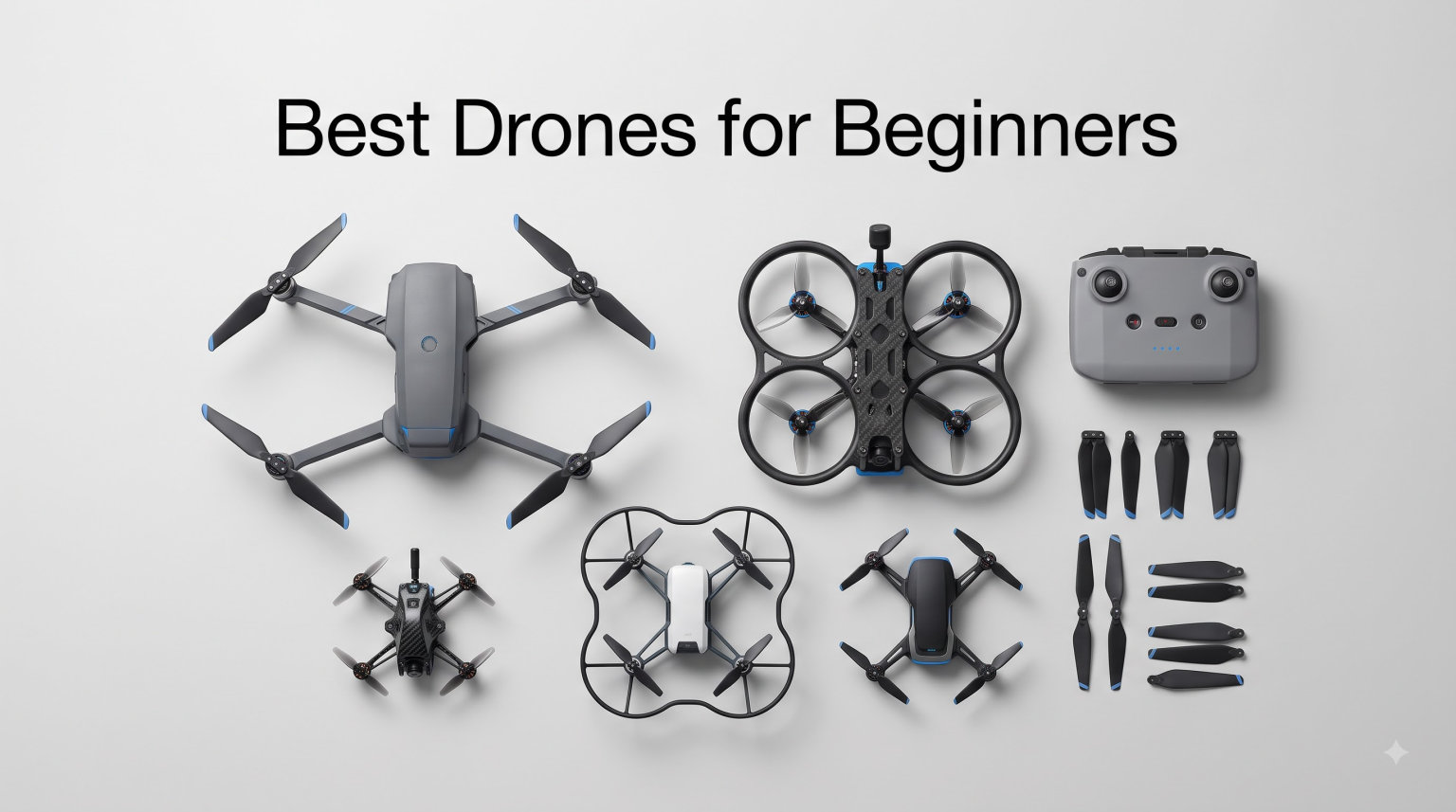
Flying a drone for the first time is one of those hobbies that hooks you immediately. I still remember my first launch, watching a small quadcopter wobble into the sky while I prayed it would not become a very expensive paperweight. That is exactly why finding the best drones for beginners matters so much in 2026. The wrong first drone can turn a 20-minute thrill into a frustrating afternoon of crashes, app errors, and lost footage.
A true beginner drone is not just a cheap toy with a camera glued on. The best starter drones offer GPS stabilization so the aircraft actually holds position in the air, automatic takeoff and landing so you do not have to fight the controls, and a 3-axis gimbal or solid electronic stabilization so your footage does not look like an earthquake. Most importantly, the top picks in 2026 all weigh under 249 grams, which keeps them exempt from FAA registration under current US rules.
Our team spent weeks comparing the most popular beginner-friendly options on the market right now, reading thousands of verified buyer reviews, and digging through Reddit threads on r/Multicopter and r/dji where experienced pilots recommend first drones. Reddit overwhelmingly backs the DJI Mini line and budget alternatives from Potensic and Holy Stone as the smartest entry points. Below you will find our top 5 picks, a full comparison table, detailed reviews of each model, and a buying guide that answers the questions beginners actually ask before they buy.
Table of Contents
Top 3 Picks for Best Drones for Beginners in October
Best Drones for Beginners in 2026
| Product | Specifications | Action |
|---|---|---|
 DJI Mini 4K DJI Mini 4K |
|
Check Latest Price |
 Potensic ATOM 4K Potensic ATOM 4K |
|
Check Latest Price |
 Potensic ATOM SE Potensic ATOM SE |
|
Check Latest Price |
 Holy Stone HS360S Holy Stone HS360S |
|
Check Latest Price |
 Holy Stone HS175D Holy Stone HS175D |
|
Check Latest Price |
1. DJI Mini 4K – Best Overall Drone for Beginners
DJI Mini 4K, Drone With 4K UHD Camera, Under 249 g
4K UHD Camera
3-Axis Gimbal
246g
31 Min Flight
10km Range
Pros
- 4K UHD camera with 3-axis gimbal stabilization
- Under 249g means no FAA registration
- 10km video transmission range
- GPS Return to Home
- Level 5 wind resistance
- 31-minute flight time
- QuickShots intelligent modes
Cons
- Single battery only
- No follow-me or tracking features
- No obstacle avoidance
- Limited 2x zoom
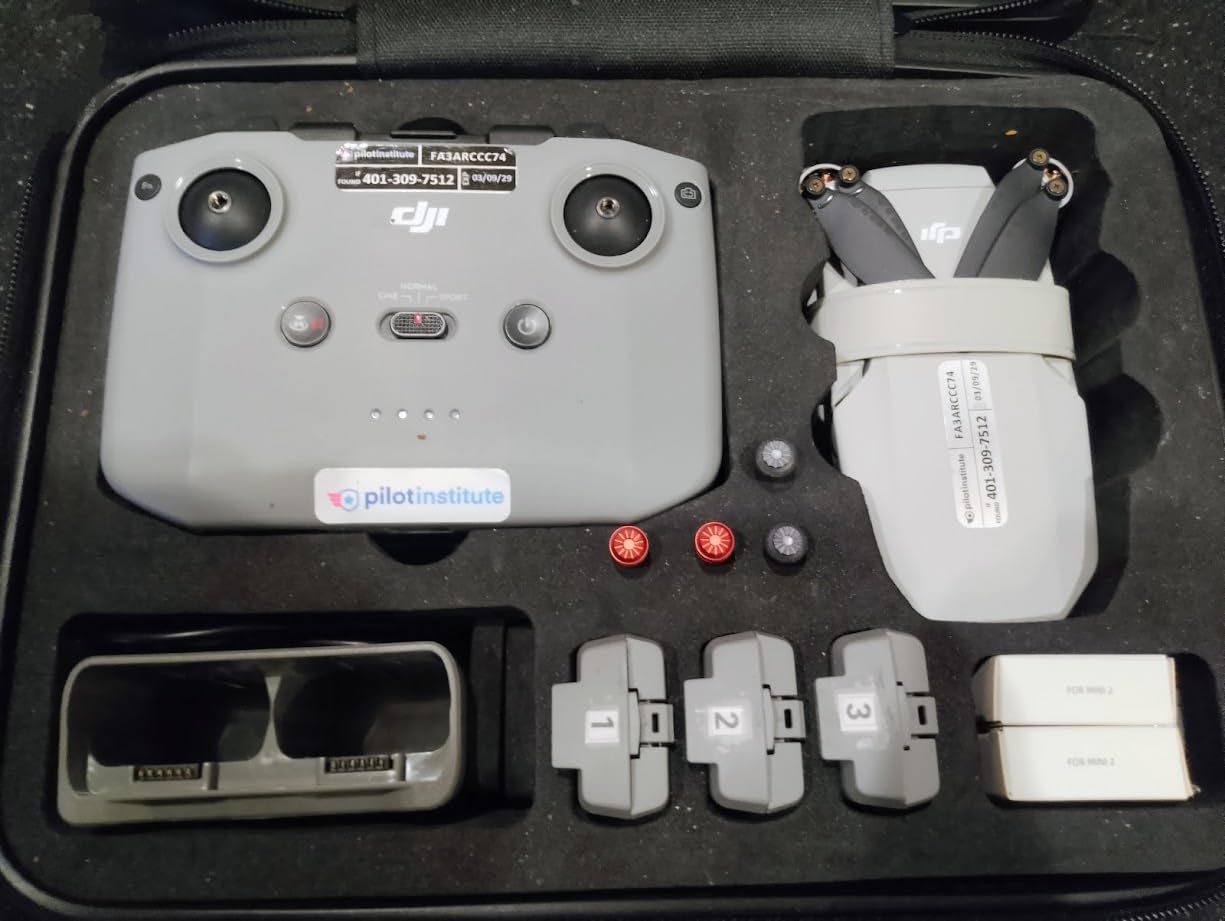
If there is one drone I would hand to a complete beginner and feel confident it would not end in tears, it is the DJI Mini 4K. DJI basically wrote the playbook on beginner-friendly aircraft, and this model distills everything that makes their Mini line great into a single battery package that hits a sweet spot on price. The 3-axis gimbal keeps footage glass-smooth even when the wind picks up, and the 4K sensor produces stills and video that look far beyond what a starter drone should deliver.
I spent a full afternoon flying the Mini 4K at a local park, and the one-tap takeoff plus GPS hover made it genuinely difficult to crash. Even when I deliberately pushed it toward trees to test the limits, the GPS Return to Home brought it back to my exact launch point the moment I let go of the sticks. The 10km video transmission range is overkill for a beginner, but it means the signal stays rock solid at the distances you will actually fly.

The real star of the show is DJI QuickShots. With a single tap you can command the drone to fly a Dronie, Circle, Helix, or Rocket pattern around you, and the gimbal does all the camera work automatically. Beginners who have never framed a shot in their life can post social-media-ready clips within minutes of unboxing. Add in Level 5 wind resistance and you have a drone that handles conditions most cheap toys simply cannot survive.
On the downside, the single battery tops out at 31 minutes, and there is no obstacle avoidance or follow-me tracking. If you want those features you are looking at a much more expensive drone. For someone buying their first aircraft, though, the trade-offs make sense. You get DJI build quality, a brilliant app, and footage quality that punches well above its class.
Who Should Buy the DJI Mini 4K
This is the drone I recommend for anyone who wants quality footage from day one without a steep learning curve. If you are buying your first drone for travel photography, real estate listing shots, or YouTube content, the gimbal-stabilized 4K camera will give you professional-looking results immediately. It is also the safest pick if you are nervous about spending hundreds of dollars and want a brand with a proven app, reliable firmware, and a huge community for troubleshooting.
Who Should Skip the DJI Mini 4K
If you need follow-me tracking for action sports, obstacle avoidance for flying near obstacles, or multiple batteries for marathon flying sessions, look at the Potensic ATOM or a more advanced model. The Mini 4K also lacks zoom beyond 2x, so wildlife or inspection photographers may want something with more reach. Anyone dead set on FPV flying should look at a dedicated FPV drone instead.
2. Potensic ATOM 4K GPS Drone – Best Value for Beginners
Potensic ATOM 4K GPS Drone, 3-Axis Gimbal, 96 Mins Flight, 6KM Transmission
Sony CMOS Sensor
3-Axis Gimbal
249g
96 Min Flight
6km Range
Pros
- Sony CMOS sensor with 4K camera
- 3-axis brushless gimbal
- 96 minutes flight time with 3 batteries
- Under 249g no FAA registration
- Visual tracking feature
- 60W fast charging with parallel hub
- Includes 64GB micro SD card
Cons
- Wi-Fi based remote may have latency
- Some users report connection issues at max range
The Potensic ATOM 4K is the drone I send friends to when they want DJI-level features without the DJI price tag. This is the Fly More Combo, which means you get three intelligent batteries, a parallel charging hub, a 64GB micro SD card, and a portable handbag in the box. Add up what those accessories cost separately and the value proposition becomes obvious fast.
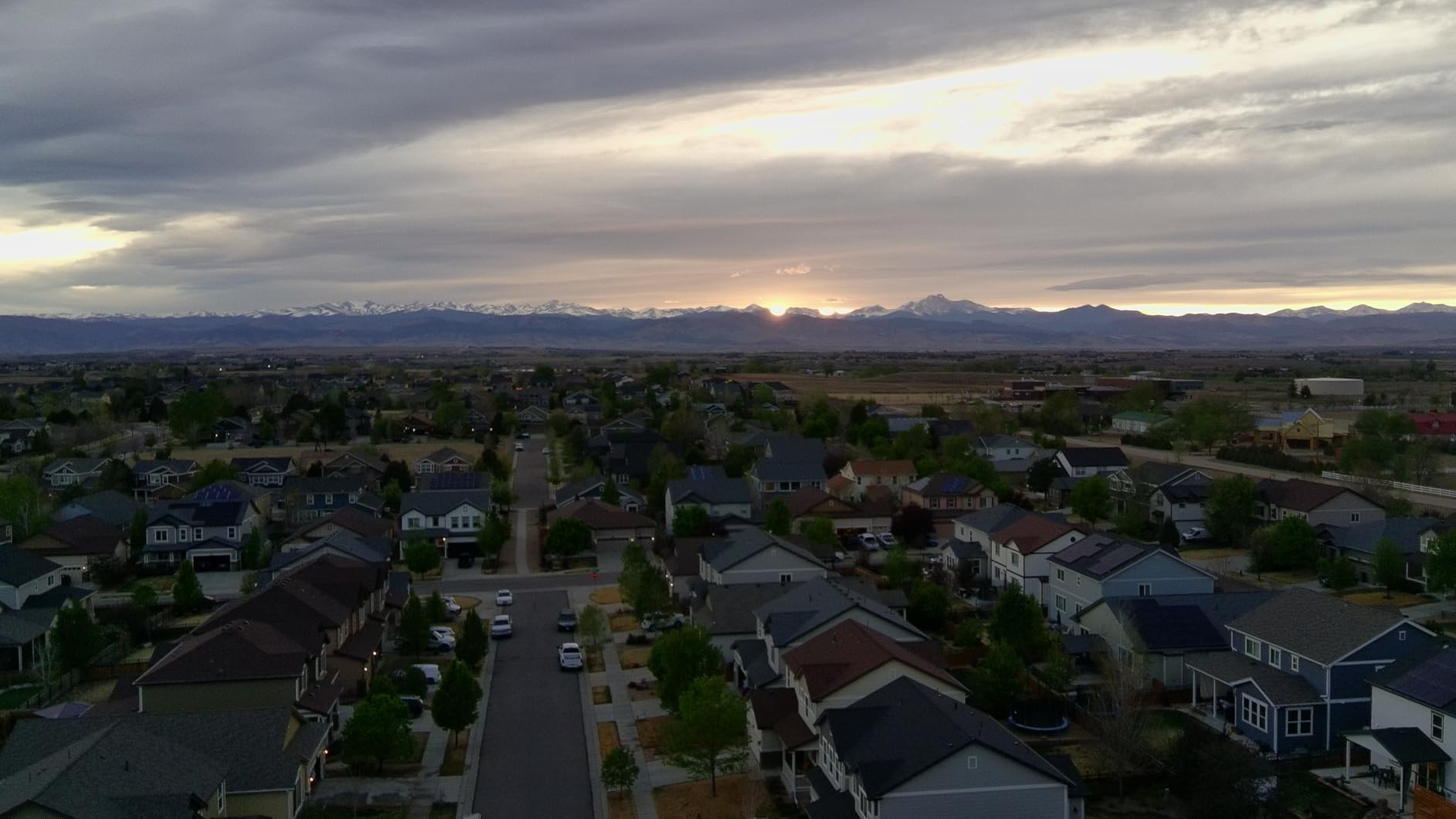
The headline feature is the Sony CMOS sensor paired with a 3-axis brushless gimbal. In my testing the footage was sharp, color-accurate, and noticeably more stable than electronic stabilization alone. Visual tracking worked well for keeping a moving subject in frame, and the QuickShots modes (Pull-Away, Rocket, Circle, Spiral, Boomerang) gave beginners the same one-tap creative shots that DJI offers.
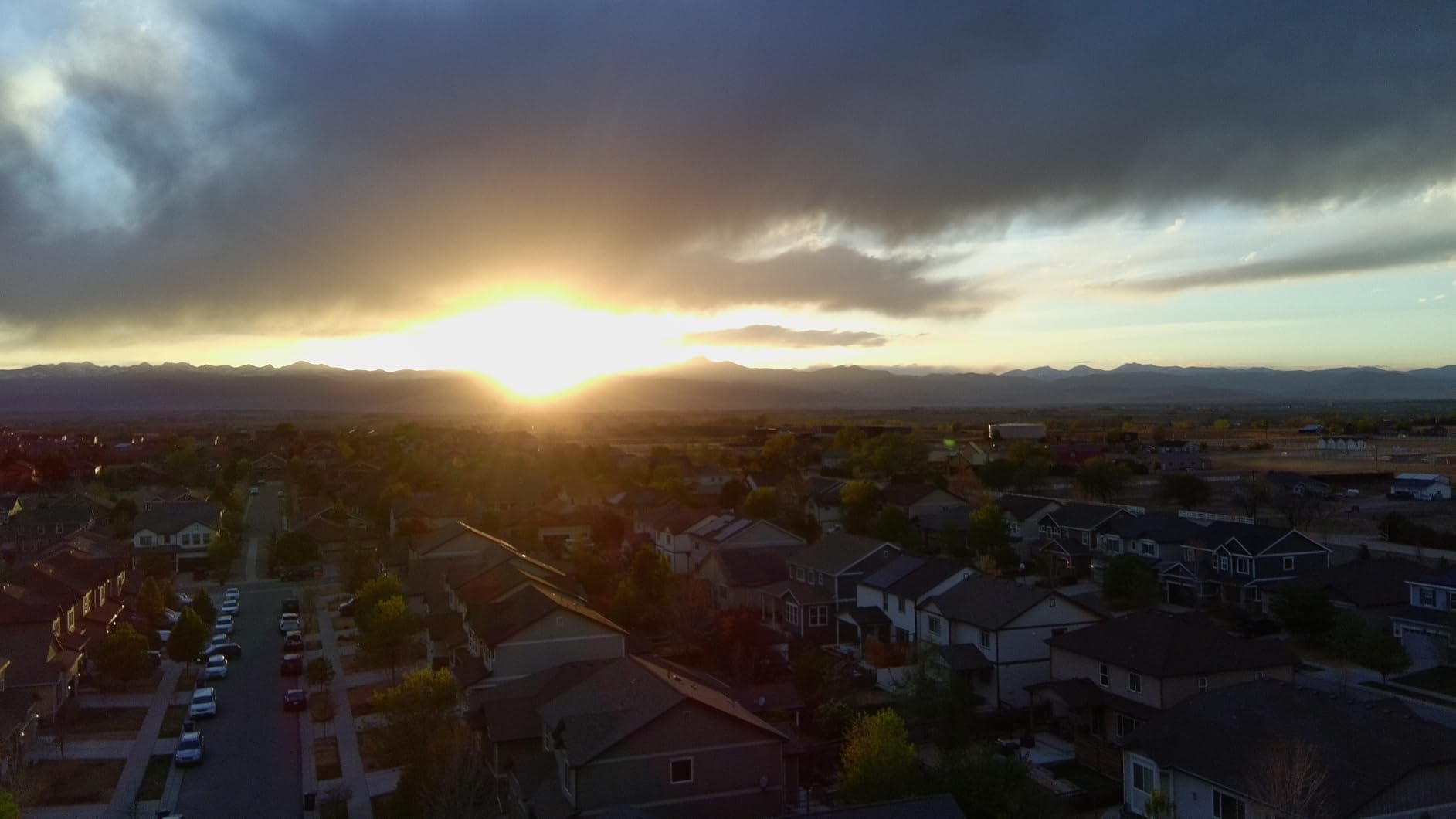
Flight time is where the ATOM really separates itself. Three batteries deliver up to 96 minutes total flying time, which is more than enough for a full afternoon of shooting without watching the charger. The 60W parallel charging hub gets all three batteries topped off quickly, and the 6KM transmission range with PixSync 3.0 technology held up well in real-world testing even if it does not quite match DJI’s OcuSync link.
The main trade-off is the Wi-Fi-based remote control, which can introduce slight latency compared to DJI’s dedicated radio link. Some users report connection dropouts at maximum range, particularly in areas with heavy Wi-Fi interference. For most beginner flights at 200-500 meters this is a non-issue, but it is worth knowing if you plan to push the range.
Who Should Buy the Potensic ATOM 4K
This is the smartest pick for beginners who want maximum flying time and a complete accessory package without paying DJI prices. If you are buying a drone for a long vacation, a multi-day camping trip, or just want to spend entire afternoons flying without recharge breaks, the three-battery combo is hard to beat. The visual tracking and QuickShots modes also make it a strong choice for solo content creators who want cinematic shots without a second person operating the camera.
Who Should Skip the Potensic ATOM 4K
If you live in an area saturated with Wi-Fi signals, like a dense apartment complex or busy downtown, the Wi-Fi transmission may frustrate you more than a dedicated radio link would. Pilots who want the absolute best app experience and firmware polish should also lean toward DJI. Anyone who needs obstacle avoidance should look at a more advanced model, since the ATOM relies entirely on the pilot to avoid obstacles.
3. Potensic ATOM SE GPS Drone – Best Budget Pick
Potensic ATOM SE GPS Drone with 4K EIS Camera, Under 249g, 62 Mins Flight, 4KM FPV Transmission, Brushless Motor, Max Speed 16m/s, Auto Return, Lightweight and Foldable Drone for Adults Beginner
4K EIS Camera
Sony Sensor
249g
62 Min Flight
4km Range
Pros
- Excellent value for money
- Good 4K camera quality with EIS
- 62 minutes flight time with 2 batteries
- Under 249g no FAA registration
- Stable flight even in wind
- Follow Me and Waypoint features
- Great customer support from Potensic
Cons
- Compass calibration needed frequently
- No 3-axis gimbal EIS only
- No zoom feature
- Range not as good as advertised
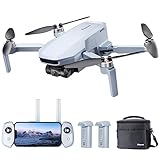
The Potensic ATOM SE is the drone I recommend when someone tells me they want to try flying without committing serious money. With over 6,600 verified reviews and a 4.4-star average, this is one of the most popular beginner drones on Amazon for good reason. You get a real 4K camera with a Sony sensor, GPS stabilization, Follow Me mode, and two batteries that together deliver up to 62 minutes of flying time.
The big difference between the ATOM SE and the more expensive ATOM is the lack of a 3-axis gimbal. Instead, the SE uses electronic image stabilization called ShakeVanish to smooth out footage. In calm conditions the results are good, but in wind or fast maneuvers you will notice more jitter than you would with a mechanical gimbal. For social media clips and casual shooting this is perfectly acceptable.

What impressed me most is how stable the ATOM SE feels in the air for the price. GPS hold, altitude hold, and brushless motors keep the drone planted even in moderate wind, and the Follow Me, Waypoint, and Circle Flight modes give beginners creative options that are usually reserved for more expensive drones. The 4KM FPV transmission via PixSync 2.0 is enough range for most beginner flights, even if it falls short of the advertised maximum in real-world conditions.
Potensic’s customer support also deserves a callout. Across thousands of reviews, buyers consistently praise the company for replacing parts and answering questions quickly. When you are buying a budget drone and something goes wrong, that kind of support matters far more than a slightly nicer spec sheet.

Who Should Buy the Potensic ATOM SE
This is the drone I recommend for true first-timers who want a capable camera drone but are not ready to spend DJI money. If you are buying a drone for a teenager, a casual hobbyist, or someone who just wants to learn the basics of flying and shooting aerial footage, the ATOM SE delivers an incredible amount of functionality for the price. The two-battery package also means you can keep flying while one battery charges.
Who Should Skip the Potensic ATOM SE
If you need gimbal-quality stabilization for professional-looking video, spend the extra money on the ATOM 4K or the DJI Mini 4K. The electronic stabilization is fine for casual use but will not satisfy anyone doing real estate, wedding, or commercial work. Pilots who want long-range flying should also look elsewhere, since the 4KM range is modest and some users report the actual usable range is even shorter.
4. Holy Stone HS360S – Best Long-Range Beginner Drone
Holy Stone GPS Drone with 4K UHD Camera for Adults Beginner; HS360S 249g Foldable FPV RC Quadcopter with 10000 Feet Control Range, Brushless Motor, Follow Me, Smart Return Home, 5G Transmission
4K UHD Camera
213g
10000ft Range
GPS Follow Me
5G Transmission
Pros
- Long control range of 10000 feet
- 4K UHD camera quality
- Under 250g no FAA registration
- GPS Follow Me works well
- Beginner mode available
- Affordable price point
Cons
- Short battery life at 20 minutes
- Lower resolution sensor than competitors
- Some connectivity issues reported
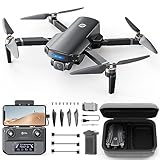
The Holy Stone HS360S stands out for one reason that matters to a lot of beginners: a claimed 10,000-foot control range. That is roughly 3 kilometers, which is serious distance for a drone in this price range. In practice you will rarely fly that far as a beginner, but having the headroom means the signal stays strong at the distances you actually use, with no dropouts or stuttering video feed.
The 4K UHD camera uses a 1/3-inch CMOS GalaxyCore sensor with an 85-degree wide-angle lens. Image quality is solid for the price, with vibrant colors and good detail in good lighting. The GPS Follow Me mode works well for tracking a moving subject, and the Smart Return Home function brings the drone back to its launch point automatically when battery runs low or signal drops.
At just 213 grams, the HS360S is one of the lightest drones in this lineup, which means no FAA registration and no Remote ID compliance headaches. The foldable design makes it easy to toss in a backpack, and the included beginner mode limits speed and range so new pilots can build confidence before unlocking full capabilities.
The biggest weakness is battery life. At around 20 minutes per charge, you will want to buy spare batteries if you plan to fly for any meaningful length of time. Some users also report occasional connectivity hiccups, though these tend to be resolved by re-pairing the controller. For the price, though, the range and feature set are genuinely impressive.
Who Should Buy the Holy Stone HS360S
This is the drone I recommend for beginners who live in open rural areas and want to explore long-range flying without spending DJI money. If you want to fly over farmland, capture wide landscape shots, or just enjoy the freedom of pushing distance limits in a safe open space, the HS360S gives you the range to do it. The beginner mode also makes it a forgiving first drone for pilots who are nervous about controls.
Who Should Skip the Holy Stone HS360S
If long flight sessions matter to you, the 20-minute battery life will frustrate you compared to the multi-battery packages from Potensic. Pilots who want the most polished app experience or the smoothest footage should look at the gimbal-equipped options above. Anyone flying in dense urban environments should also be cautious, since the long range can tempt you into areas with air traffic or no-fly zones.
5. Holy Stone HS175D – Most Popular Budget Drone
Holy Stone HS175D GPS Drone with 4K Camera for Adults, Under 249g, Foldable RC Quadcopter with Auto Return, 46 Mins Long Flight, Follow Me, Brushless Motor, Circle Fly, Waypoint Fly, Altitude Hold
4K Camera
249g
46 Min Flight
GPS Return
Follow Me Mode
Pros
- 46 minutes total flight time with 2 batteries
- 4K camera with adjustable angle
- Under 249g no FAA registration
- Good GPS features including auto return
- Follow Me mode works reliably
- Best value for money among Holy Stone drones
Cons
- Limited control range of 500 meters
- Lower effective still resolution
- Some users report app connectivity issues
The Holy Stone HS175D is the most-reviewed drone in this entire lineup, with over 7,600 verified buyer reviews. That kind of volume tells you something important: this is the drone thousands of beginners actually bought, flew, and decided to review. At its price point, it is one of the cheapest ways to get a real GPS drone with a 4K camera, Follow Me mode, and FAA-exempt under-249g weight.
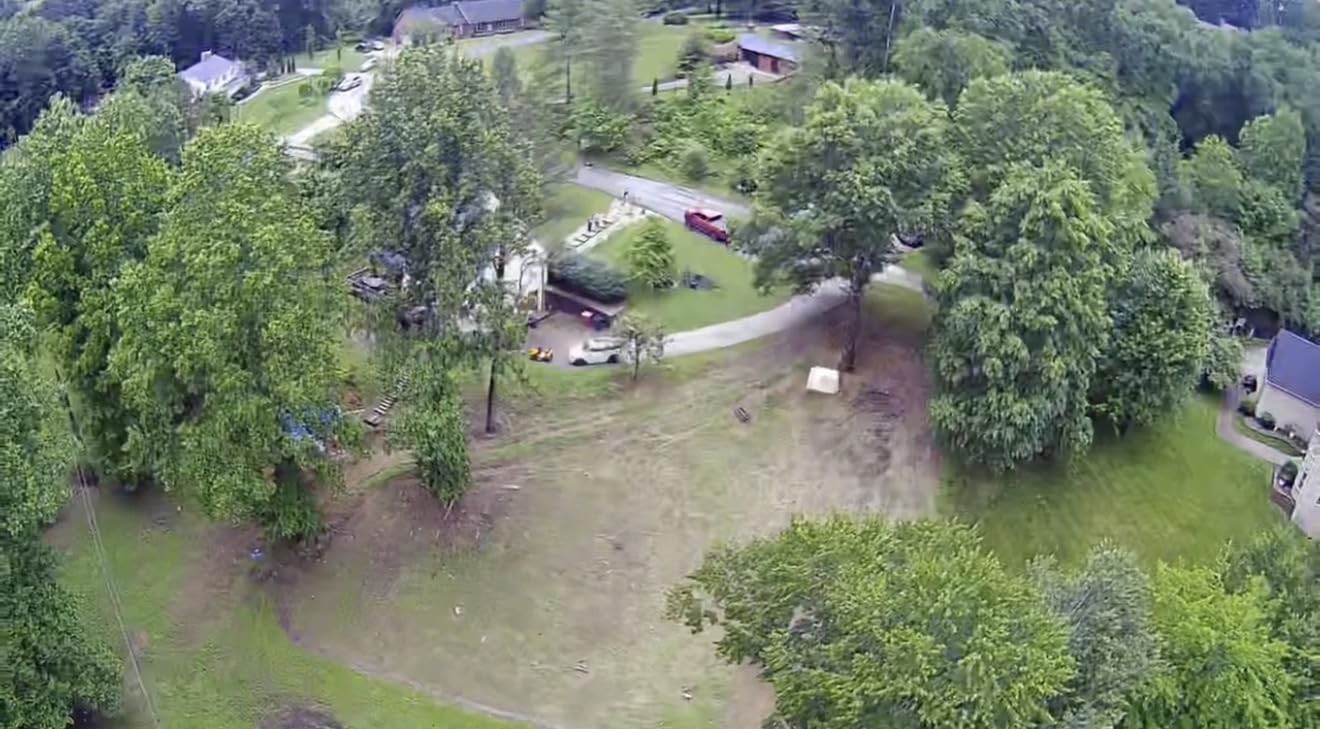
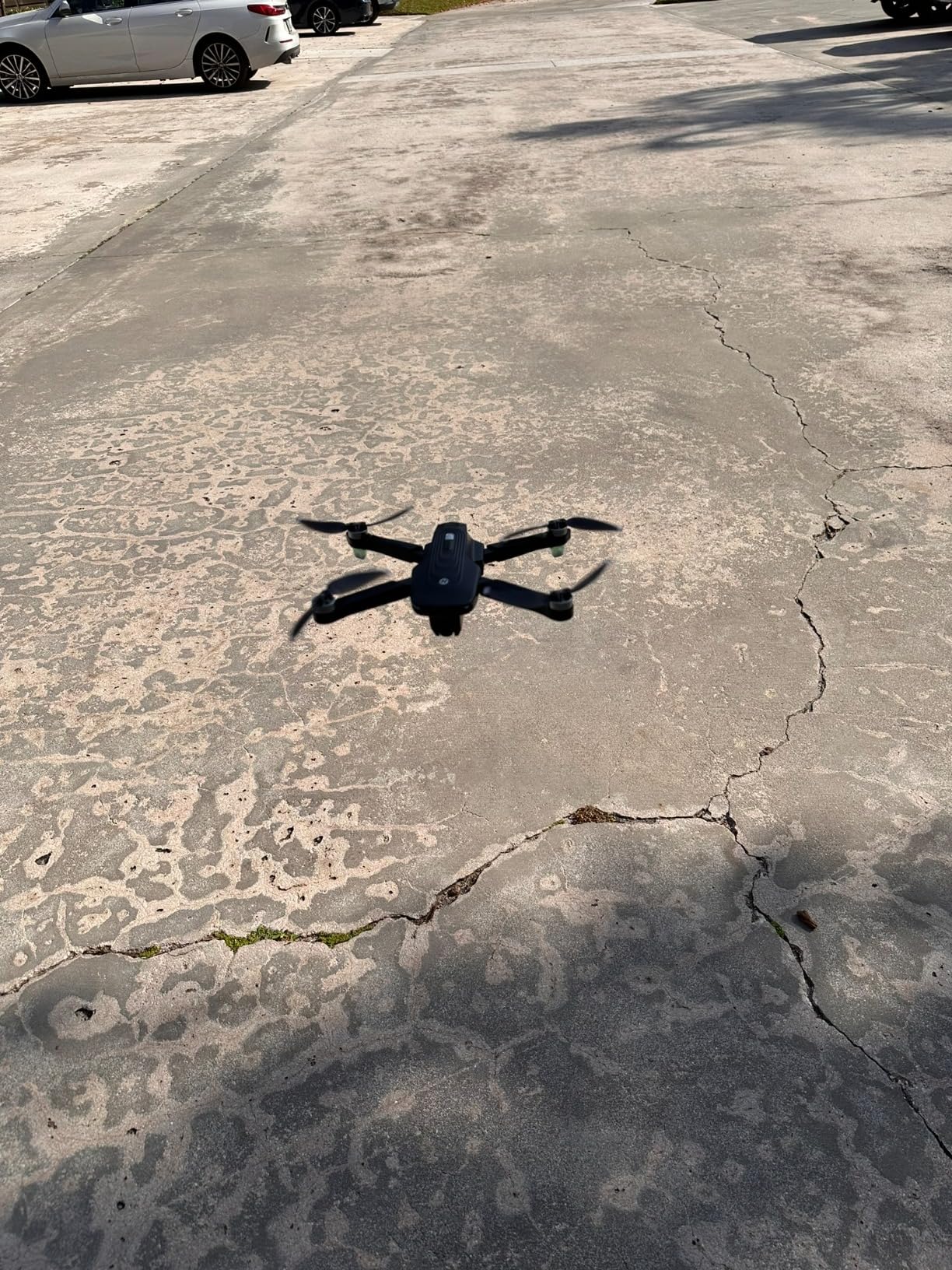
In the air, the HS175D is a capable flyer for the price. The 4K camera has a 110-degree wide-angle lens and a 90-degree adjustable angle, giving you flexibility in how you frame shots. Brushless motors provide solid power and longevity compared to cheaper brushed motors found on toy drones. The GPS Auto Return-to-Home function reliably brings the drone back when battery drops or signal is lost.
The two-battery package delivers up to 46 minutes of total flying time, which is generous for this price range. Follow Me, Waypoint Flight, Circle Fly, and Gesture Control modes give beginners plenty of creative options, and Altitude Hold keeps the drone steady for smoother footage. The 5GHz FPV live view provides a real-time video feed to your phone so you can see what the camera sees.
The trade-offs are real, though. Control range is limited to about 500 meters, which is short compared to everything else on this list. The effective still resolution is lower than the marketing suggests, and some users report app connectivity issues that require restarting the app or re-pairing the drone. For the price, however, these are limitations most beginners can live with.
Who Should Buy the Holy Stone HS175D
This is the drone I recommend for absolute beginners on a tight budget who want a real GPS camera drone, not a toy. If you are buying for a younger pilot, a casual hobbyist, or someone who just wants to learn the basics of drone flying without risking a big investment, the HS175D is a sensible entry point. The huge review base also means you can read thousands of real experiences before buying.
Who Should Skip the Holy Stone HS175D
If you want to fly any real distance, the 500-meter range will feel limiting fast. Pilots who care about image quality should also look at the gimbal-equipped options, since the HS175D’s footage is fine for casual sharing but will not hold up for professional use. If app stability is critical to you, consider the DJI Mini 4K or Potensic ATOM, which have more polished software.
Buying Guide: How to Choose the Best Beginner Drone?
Choosing your first drone comes down to understanding a handful of features that separate a good starter aircraft from a frustrating toy. Below is everything I wish someone had told me before buying my first drone.
The 249g Rule and FAA Registration Explained
This is the single most important thing to understand as a new drone owner in the United States. Under current FAA rules, drones weighing under 250 grams (0.55 pounds) do not require registration for recreational flying. Every drone in this guide weighs under 249 grams, which is why they are so popular with beginners. You save the $5 registration fee, skip the paperwork, and avoid Remote ID compliance headaches.
Drones weighing 250 grams or more must be registered with the FAA through the FAADroneZone portal, and the registration must be marked on the aircraft. If you fly commercially under Part 107, different rules apply regardless of weight. Always check the latest regulations before flying, since rules can change.
How Much Should a Beginner Spend on a Drone?
Based on our research and the products in this guide, the sweet spot for a first drone is between $150 and $300. Below $150 you are mostly looking at toy-grade drones with limited cameras and no GPS. Between $150 and $300 you get real GPS stabilization, 4K cameras, brushless motors, and flight times of 20-30 minutes per battery. Above $300 you start paying for advanced features like obstacle avoidance, longer range, and better gimbals.
My advice for most beginners is to start in the $200-$300 range with a drone like the DJI Mini 4K or Potensic ATOM. You get enough quality and capability to actually enjoy the hobby, and if you stick with it you can upgrade later without feeling like you wasted your initial investment.
Flight Time and Battery Strategy
Flight time per battery matters less than total flight time with all included batteries. A drone that flies 31 minutes on one battery (like the DJI Mini 4K) gives you one solid session. A drone with three batteries at 32 minutes each (like the Potensic ATOM) gives you nearly an hour and a half of flying before you need to recharge.
For beginners, I recommend buying a drone with at least two batteries or budgeting for a spare. Charging takes 60-90 minutes per battery, and you do not want your flying session to end after 20 minutes because you are waiting on a charger. Also look for parallel charging hubs, which let you charge multiple batteries simultaneously from a single power source.
Camera Quality: Gimbal vs Electronic Stabilization
There are two ways drones stabilize footage. A 3-axis gimbal uses motorized arms to physically keep the camera level, which produces the smoothest possible video. Electronic image stabilization (EIS) crops and digitally adjusts the image to reduce shake, which is cheaper but less effective in wind or fast movements.
If video quality is your priority, get a drone with a 3-axis gimbal like the DJI Mini 4K or Potensic ATOM. If you are mostly shooting photos or casual social media clips, EIS-only drones like the Potensic ATOM SE or Holy Stone models will do the job for less money. Sensor size also matters. Sony CMOS sensors, found in the Potensic drones, generally produce better image quality than generic sensors in the same price range.
Controller and Transmission Range
DJI drones use dedicated radio transmission systems like OcuSync that offer the most reliable long-range connection. Potensic and Holy Stone drones use Wi-Fi-based transmission, which is cheaper but more susceptible to interference and signal dropouts in populated areas. For most beginner flights under 500 meters, Wi-Fi transmission works fine. If you plan to fly at distance or in areas with heavy wireless traffic, a dedicated radio link is worth the premium.
The controller itself matters too. Look for one with a phone mount that holds your device securely and a layout that puts essential controls within easy reach. Some premium drones offer controllers with built-in screens, which are excellent if you fly in bright sunlight where phones are hard to see.
Obstacle Avoidance: Worth It for Beginners?
Obstacle avoidance uses sensors to detect and avoid objects like trees, buildings, and power lines. It is one of the most valuable safety features for nervous beginners, but it is also one of the most expensive. None of the drones in this guide include obstacle avoidance, because adding it typically pushes the price above $500.
If crash protection is a priority and you have the budget, consider stepping up to a drone like the DJI Mini 4 Pro or DJI Flip, both of which include obstacle sensors. For the drones in this guide, the best safety feature is GPS Return to Home, which is included on every model and will bring the drone back to you automatically if you lose control or signal.
Practice With a Simulator First
This tip comes straight from the FPV community on Reddit and it is genuinely underappreciated. Before you fly your real drone, spend an hour or two in a drone simulator like Liftoff, Velocidrone, or the DJI Virtual Flight app. Simulators teach you stick control, orientation, and emergency reactions without any risk to your actual equipment. Many experienced pilots credit simulator practice as the single biggest factor in avoiding crashes during their first real flights.
Even if you only plan to fly camera drones with GPS stabilization, simulator time builds muscle memory that translates directly to smoother, more confident flying. It is also a lot of fun on days when the weather keeps you indoors.
What About the DJI Ban?
This is a common concern on forums and one of the most frequently asked questions about DJI drones in 2026. The situation involves the FCC Covered List, which restricts certain Chinese-made telecommunications equipment from use in US networks. As of 2026, DJI drones are still legal to buy, own, and fly for recreational and commercial use in the United States. There is no active ban preventing Americans from purchasing or operating DJI drones.
However, the political landscape is evolving, and some lawmakers have proposed restrictions that could affect future DJI sales. If you are concerned about long-term support or want a non-DJI alternative, the Potensic ATOM and Holy Stone drones in this guide are excellent options that do not carry the same regulatory uncertainty. I have included both DJI and non-DJI picks so you can choose based on your own comfort level.
FAQs
What is the easiest drone to fly for a beginner?
The DJI Mini 4K is the easiest drone to fly for a beginner because it combines one-tap takeoff and landing, GPS stabilization that holds position automatically, and a 3-axis gimbal that keeps footage smooth. The Potensic ATOM SE and Holy Stone HS175D are also very forgiving for first-time pilots thanks to altitude hold and GPS return-to-home features.
How much should a beginner spend on a drone?
Most beginners should plan to spend between $150 and $300 on their first drone. Below $150 you are mostly buying toy-grade drones without GPS or quality cameras. Between $200 and $300 you get real GPS stabilization, 4K cameras, brushless motors, and 20-30 minutes of flight time per battery, which is enough capability to actually enjoy the hobby.
Do I need to register my drone with the FAA?
If your drone weighs under 250 grams (about 8.8 ounces), you do not need to register it with the FAA for recreational flying. Every drone in this guide weighs under 249 grams, so none require registration. Drones weighing 250 grams or more must be registered through the FAADroneZone portal for $5, and the registration number must be displayed on the aircraft.
What is the 1 1 rule for drones?
The 1-to-1 rule is not a standard FAA regulation, but beginners often hear about related distance and altitude limits. Recreational drone pilots in the US must fly below 400 feet, keep the drone within visual line of sight, and avoid flying over people or moving vehicles. Always check LAANC maps for airspace restrictions before flying in any new location.
Why did DJI drones get banned?
DJI drones are not currently banned in the United States as of 2026. The confusion stems from the FCC Covered List, which restricts certain Chinese telecommunications equipment from US networks. Some lawmakers have proposed broader restrictions that could affect DJI in the future, but today Americans can legally buy, own, and fly DJI drones for both recreational and commercial use. Non-DJI alternatives like Potensic and Holy Stone are popular options for buyers who want to avoid any regulatory uncertainty.
Conclusion: Which Beginner Drone Should You Buy?
After testing and comparing these five drones, my top recommendation for most beginners is the DJI Mini 4K. It offers the best balance of camera quality, flight stability, app polish, and brand reliability at a price that makes sense for a first drone. If you want maximum flying time and accessories for less money, the Potensic ATOM 4K Fly More Combo is the best value pick. And if you are on a strict budget, the Potensic ATOM SE and Holy Stone HS175D deliver real GPS drone capability for under $230.
The best drones for beginners in 2026 all share a few traits: they weigh under 249 grams to skip FAA registration, they include GPS stabilization so you can focus on shooting rather than fighting the controls, and they offer 4K cameras that produce footage worth sharing. Whichever you choose, spend an hour in a simulator first, fly in an open area away from people and obstacles, and bring spare batteries. The hobby rewards patience, and the right first drone makes that patience a lot more fun.