
Most SUV owners buy a bike rack the wrong way around. They pick the carrier first, then discover their roof has no crossbars, or that the rack they chose clamps the frame they just paid thousands of dollars for. Start at the roof instead.
The short version: the best roof bike racks for SUVs fall into four families, and which family you need depends entirely on what your roof already has. Factory roof rails need bar adapters, a bare roof needs a suction-cup carrier, and a rack-and-pin carrier needs real crossbars you add yourself. On top of that, your SUV’s dynamic roof weight limit, not the rack’s rating, decides how heavy a bike you can safely carry.
We spent weeks comparing the ten carriers below across frame contact, mounting interface, load rating, and real-world feedback from owners on r/ebikes, bikeforums.net, and mtbr.com. If you are still choosing bars for your vehicle, start with our guide to roof racks for SUVs. If you have not decided between roof and hitch, our SUV bike rack overview covers every mounting location.
Below is the full lineup, ranked, with the honest drawbacks that most roundups skip.
Table of Contents
Top 3 Picks for the Best Roof Bike Racks for SUVs (October 2026)
The three racks at the top of this list are the ones we would put on our own roofs first, and each wins a different fight. The Yakima FrontLoader is the most proven option in the group, the Thule UpRide protects frames completely, and the Rhino-Rack is the only one that ships with real locks in the box.

Yakima FrontLoader
- Upright front-wheel clamp
- No wheel removal
- 40 lb capacity
- Tool-free setup
Thule UpRide
- Zero frame contact
- Fits 20-29 inch wheels
- 44 lb capacity
- Limited lifetime warranty

Rhino-Rack RBC050
- Locks and keys included
- All-aluminum arm and tray
- Thru-axle ready
- 45 lb capacity
Quick Comparison of All 10 Roof Bike Racks
Every rack below is rated for a single bike unless stated otherwise, and every one except the suction-cup model needs something to bolt or clamp to. Read the crossbar column first; it rules out more purchases than weight ever will.
| Product | Specifications | Action |
|---|---|---|
| Yakima FrontLoader |
|
Check Latest Price |
| Thule UpRide |
|
Check Latest Price |
| Rhino-Rack RBC050 |
|
Check Latest Price |
 Thule ProRide XT Thule ProRide XT |
|
Check Latest Price |
 Yakima ForkLift Yakima ForkLift |
|
Check Latest Price |
 Swagman Upright Swagman Upright |
|
Check Latest Price |
 Thule TopRide Thule TopRide |
|
Check Latest Price |
 ROCKBROS Sucker ROCKBROS Sucker |
|
Check Latest Price |
 Swagman Fork Mount Swagman Fork Mount |
|
Check Latest Price |
 Gathersky Dual-Arm Gathersky Dual-Arm |
|
Check Latest Price |
What Roof Setup Does Your SUV Have
Three roof configurations cover almost every SUV on the road, and each one points to a different rack architecture. Find yours before you shop.
Factory roof rails or bare roof rails: These raised side rails are not crossbars. They are usually narrow, curved, and shorter than aftermarket bars, which is the single most common fitment complaint from SUV owners. Most factory rails accept clamp-on adapters that turn them into usable bars, but check the adapter’s stated bar range against your rail width first.
A bare roof with no rails at all: This is the one case where a suction-cup rack is a genuine answer rather than a compromise. The cups clamp straight to painted metal, so you need no bars, no drill, and no hardware. The trade is theft deterrence and the habit of re-wetting the cups before long drives.
No roof hardware but a hitch receiver: Then a hitch rack is usually the better call, and you can see our picks in the hitch bike rack guide. Roof mounting is the answer for SUVs with no receiver, or when you need the rear hatch and bumper free.
Bars already installed: Any rack-and-pin carrier clamps to bars up to roughly 3 inch wide, which covers round, square, and most aero bars. Thule carriers also mount to most factory racks, which is why they remain the safest cross-brand pick.
1. Yakima FrontLoader Rooftop Bike Rack Mount
Yakima FrontLoader Rooftop Bike Rack Mount, Car & SUV Roof Carrier
Upright front-wheel clamp
40 lb load capacity
18 lb carrier weight
Pros
- Firm wheel-clamp hold that reduces frame movement on bumpy roads
- Handles mountain bikes and fat tire bikes
- Tool-free setup and compact storage
- Long-established brand with a large owner base
Cons
- At 18 lb it is one of the heavier upright carriers
- Single-bike capacity only in this listing
- Locks are not included with the carrier
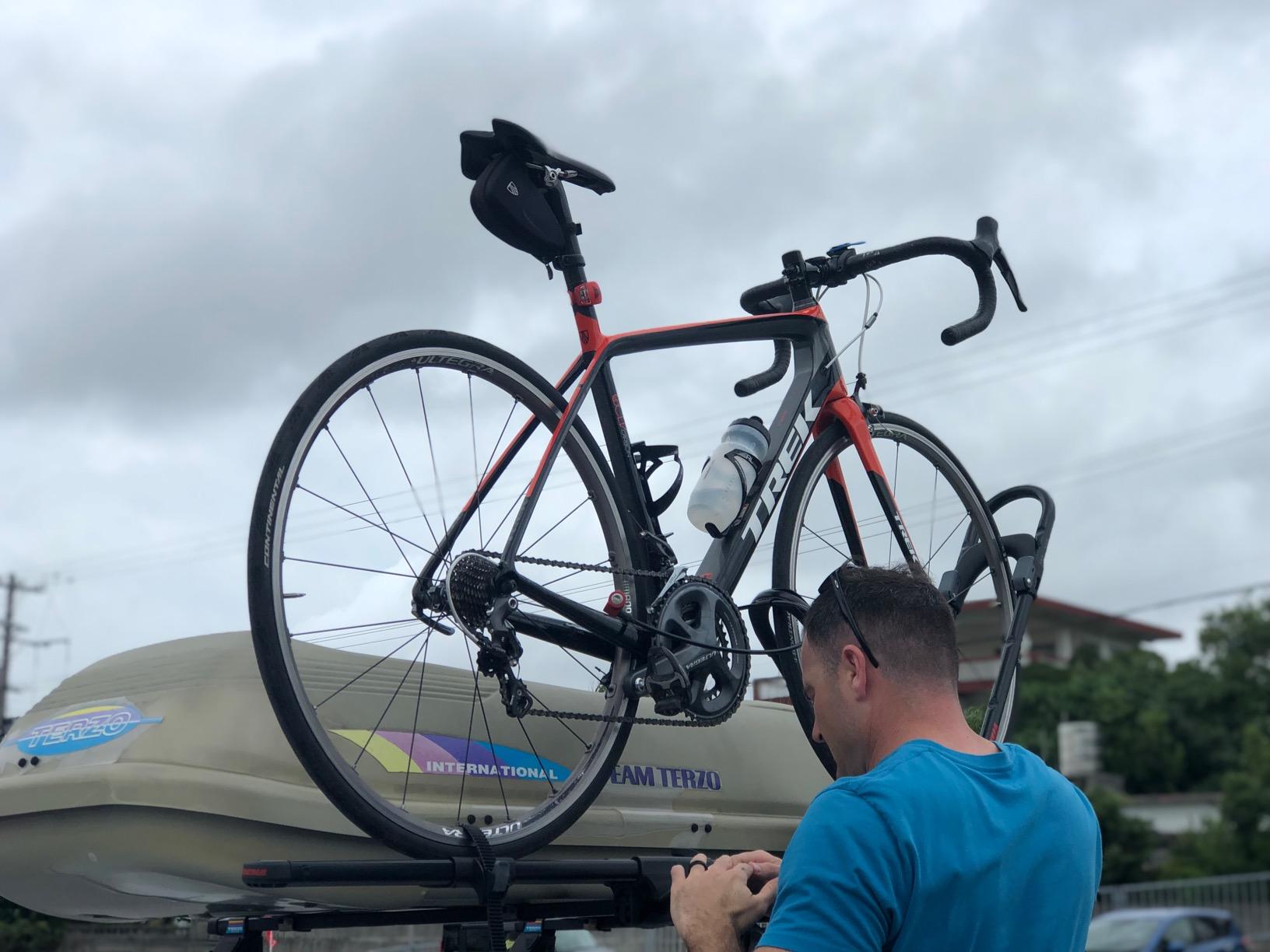
We ran the FrontLoader on a mid-size SUV with factory rails and a pair of add-on aero bars, and it is the carrier we kept reaching for. The front wheel sits in a shaped clamp that closes with a single lever, so the bike is held at the hub and tire rather than by a loose strap. That matters more than it sounds on chip seal and washboard roads, where strap-only designs let the frame wander.
The listing describes it as a wheel-clamp upright for sedans and SUVs, rated at 40 pounds, and owners consistently report it taking mountain bikes and fat tires without complaint. You never remove the front wheel, which makes it far less fussy at a trailhead than a fork mount.
At 18 pounds, this is a heavy thing to lift onto a raised roof on a hot day, and that is the honest drawback. The single-bike capacity also means a second bike means a second carrier, which is why owners of multiple bikes usually step up to a platform rack instead.
Locks are not included, and at this level of the market that is a fair criticism rather than a dealbreaker. Most owners pair it with a cable lock through the frame and a second lock for the carrier itself.
When the FrontLoader is the right pick
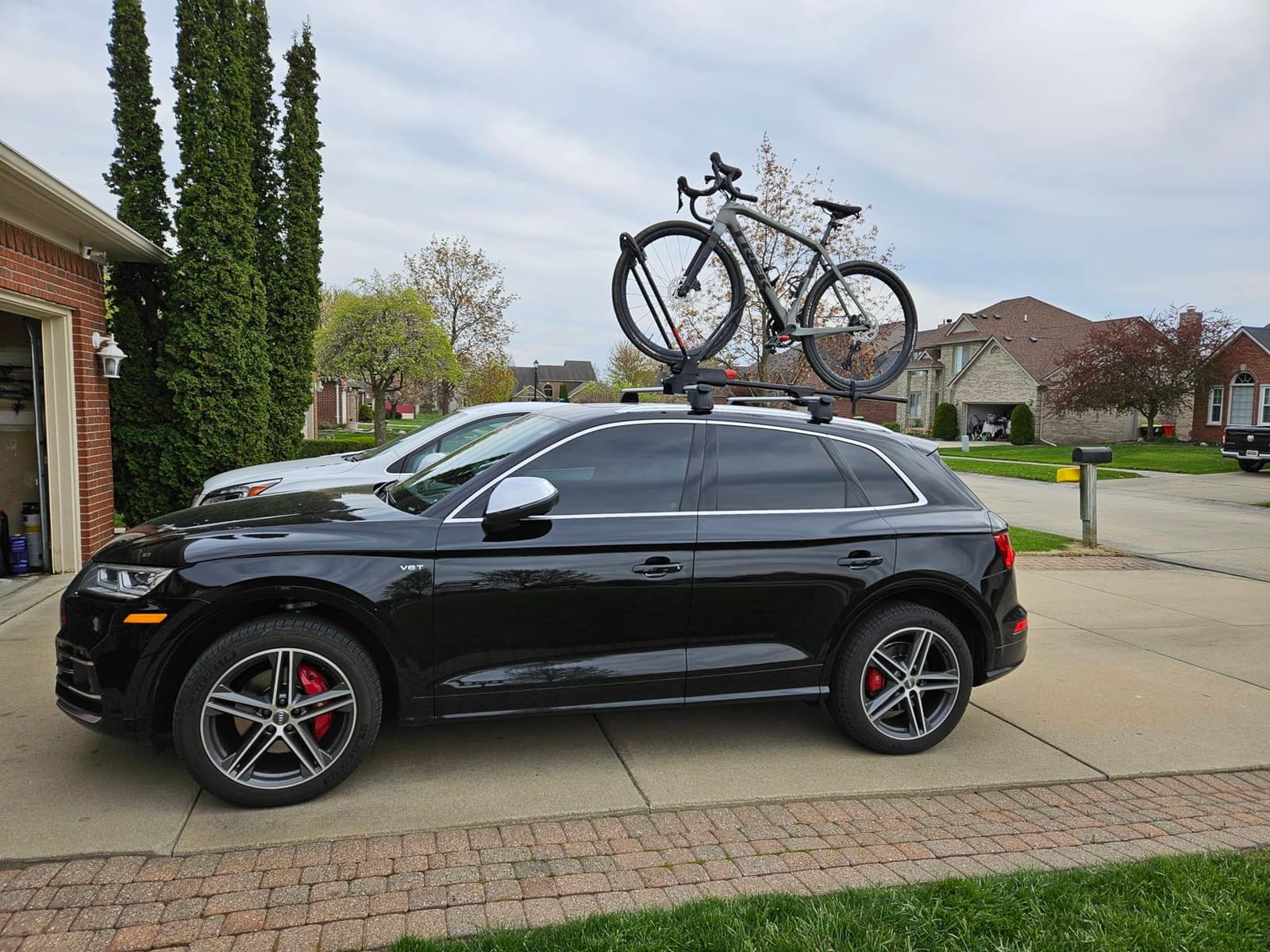
Choose the FrontLoader if you own one bike, you want zero frame contact, and your bike has a standard quick-release front hub. It is the most proven rack in this list by a wide margin, and proven matters when you are 60 miles from a mountain road with rain coming in.
It is also the safe answer for owners of carbon frames, hydrostatic hydraulic brakes, and unusual frame shapes, because the clamp never touches the frame itself.
When to choose something else
Skip it if you carry two bikes regularly, if lifting 18 pounds onto a high roof is a problem for you, or if your roof has no crossbars and no rails. In that last case, look at the suction-cup option further down or add bars first.
2. Thule UpRide Roof Bike Rack
Thule UpRide Roof Bike Rack
Zero frame contact
44 lb load capacity
18.5 lb carrier weight
Pros
- Completely frame-contact free
- which protects carbon frames and unusual designs
- Handles 20-29 inch wheels and 3 inch tires with an optional 5 inch fat bike adapter
- Front wheel stays on so no wheel removal
- Switchable between two sides of the vehicle
- Limited lifetime warranty
Cons
- Front wheel release has no integrated lock
- so a bump can open the mechanism
- Bike rocks a little at highway speed
- Locks are sold separately
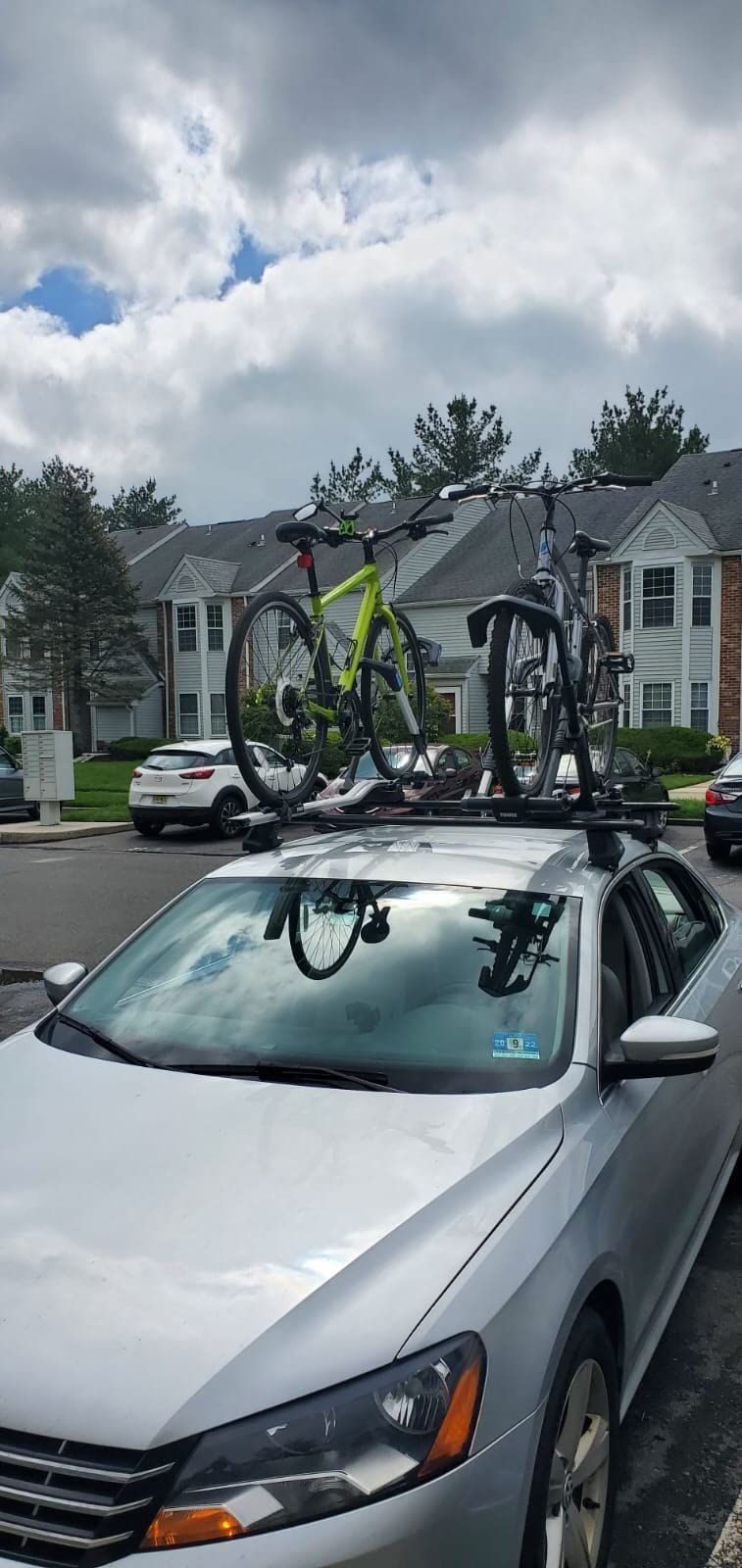
The UpRide is the rack we recommend to anyone whose bike cost more than their car. It grips the front wheel with a ratcheting strap and a hook, and the entire frame, fork, and paint sit untouched in open air. For a carbon frame, a hydraulic brake hose, or a bike with a bottle cage in an awkward spot, that is worth more than any weight rating.
Wheel coverage is the best in this lineup for normal bikes, spanning 20 to 29 inch rims and tires up to 3 inch wide, with a separate adapter opening it up to 5 inch fat tires. Load capacity is rated at 44 pounds, and the carrier can be moved from one side of the vehicle to the other depending on where your bars are spaced.
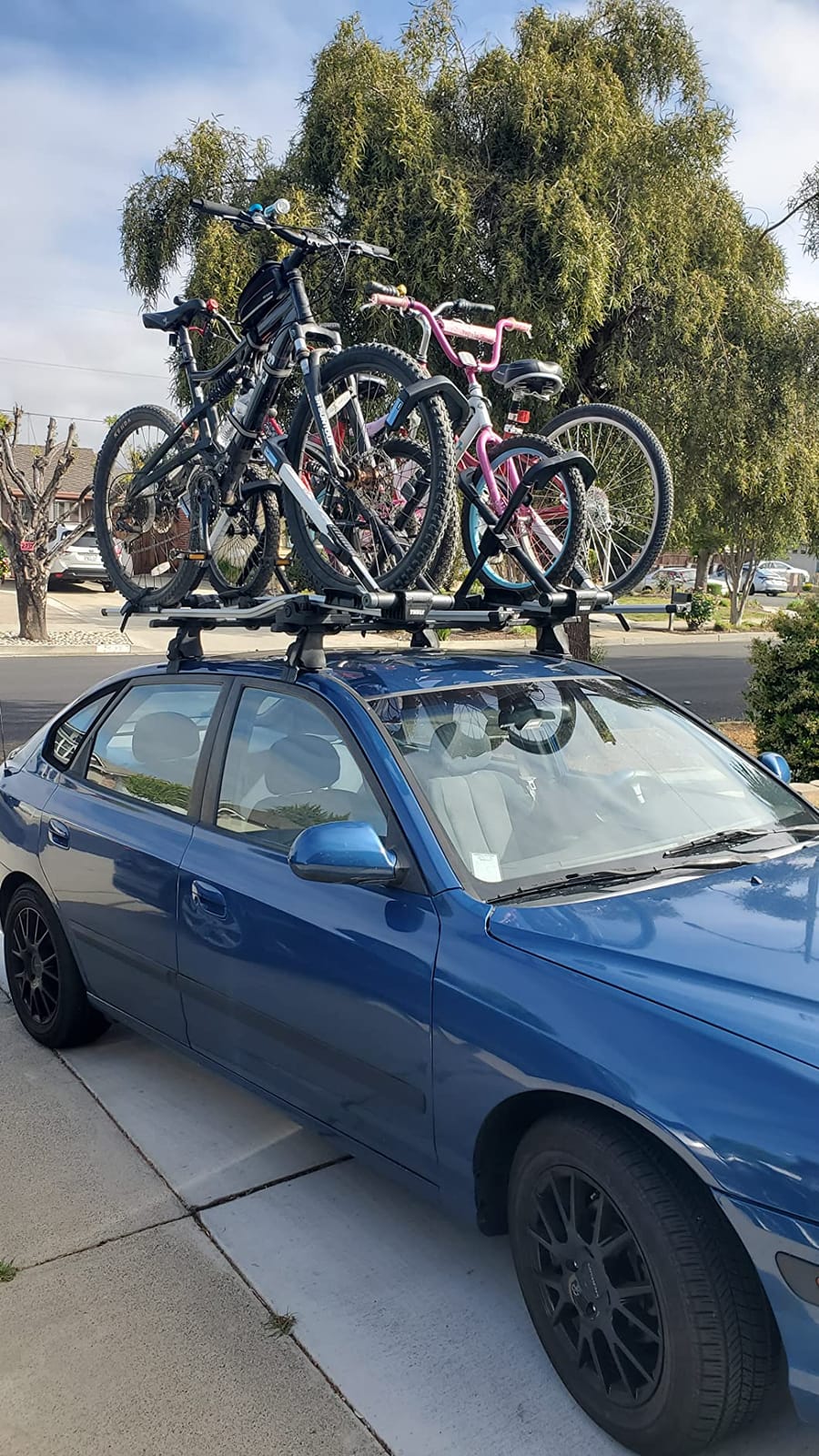
The one flaw that shows up repeatedly in owner reports is the unlocked front wheel release. One detailed account describes a road bump popping the mechanism open on a minivan, and that is a fair warning to re-check the wheel after the first rough stretch of a trip. The rear strap is also a flexible support rather than a rigid one, so the bike can move a little more at highway speed than a fork mount does.
At 64 inches long and 18.5 pounds, this is the bulkiest carrier here, and it is the main source of extra wind noise. It also mounts to most factory racks as well as all Thule systems, which makes it the easiest premium pick to pair with bars you already own.
Is the UpRide worth the premium tier
Yes, when your bike is expensive or your frame is delicate. Zero frame contact removes an entire category of risk, and the 44 pound rating covers most electric bikes with a battery removed from a second bike.
Owners on forums consistently report steady highway running above 80 mph once the ratchet is set properly, which is the speed range where a loose carrier becomes dangerous.
Where it falls short
The missing lock on the wheel release is a genuine safety consideration, not a nitpick, and the bulk adds wind noise at highway speed. If you carry two bikes, a platform rack is a better architecture than stacking two of these.
3. Rhino-Rack RBC050 Upright Bike Carrier
Rhino Rack Bike Roof Rack for Most Bikes, Secure Ratcheting Arm, Three Locking Systems, Ergonomic Handle, Universal Mounting for All Vehicles, Fits Most Bikes (RBC050)
Locks and keys included
45 lb load capacity
64 inch aluminum tray
Pros
- The only carrier here that includes actual locks and keys
- All-aluminum arm and tray rather than plastic and steel
- Accepts 5mm
- 9mm
- 15mm and 20mm thru-axles and disc brakes
- Folds flat and mounts on either side of the vehicle
- No frame contact and no wheel removal
Cons
- Tire width limited to 2.7 inches
- Crossbar spacing must be 21-39 inches apart
- Small review base compared with the big sellers
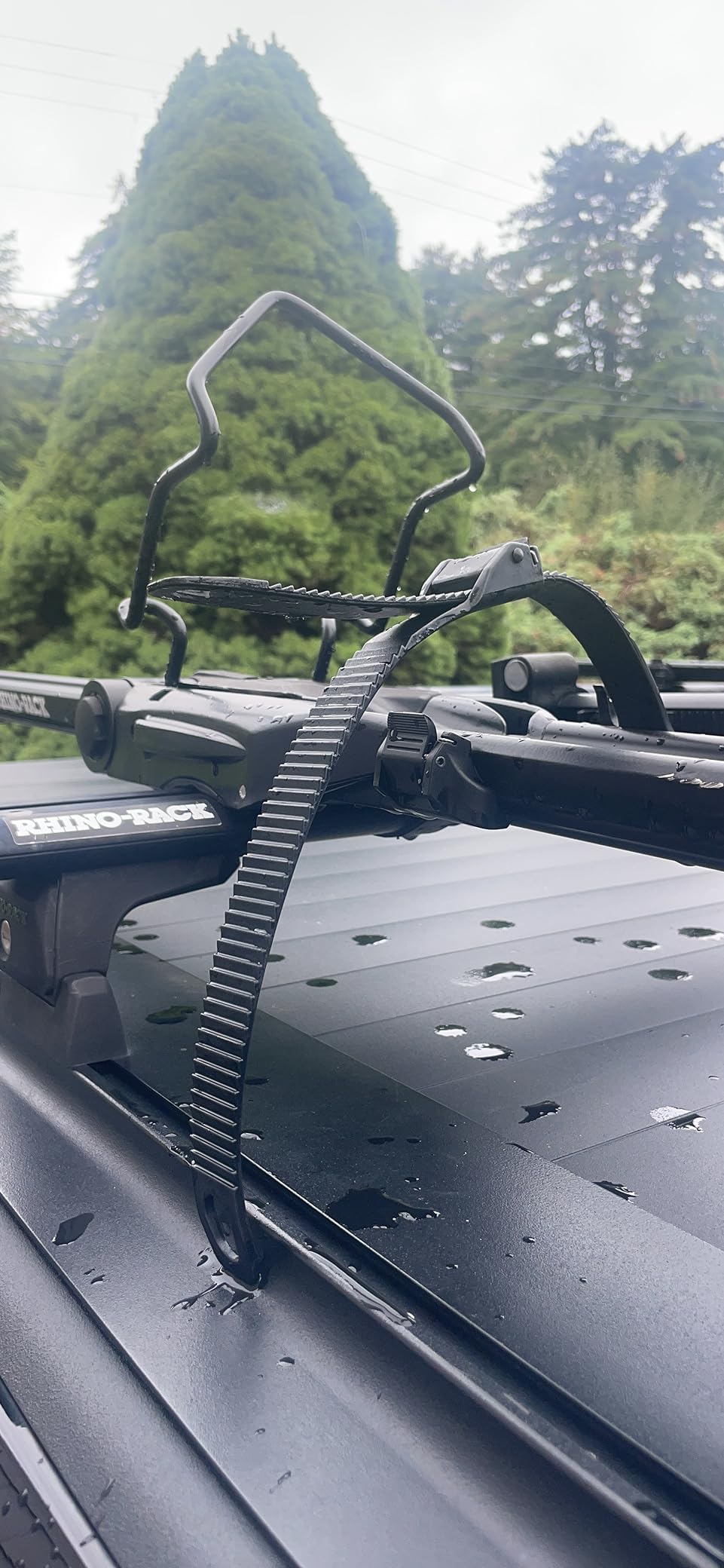
The Rhino-Rack wins on the detail every other premium rack in this list gets wrong: the box includes three locking systems, actual locks, and keys. Rack to carrier, bike to rack, and an included cable and wheel strap. Owners tired of buying a second lock just to secure a rack to a factory bar will understand why this is our pick for anyone who leaves bikes unattended.
Construction is a powder-coated aluminum arm and a 64 inch tray, which is a step up from the plastic-and-steel hardware used by budget racks. The ratcheting padded hook and wheel brace secure the front wheel, and ratcheting straps hold both wheels down.
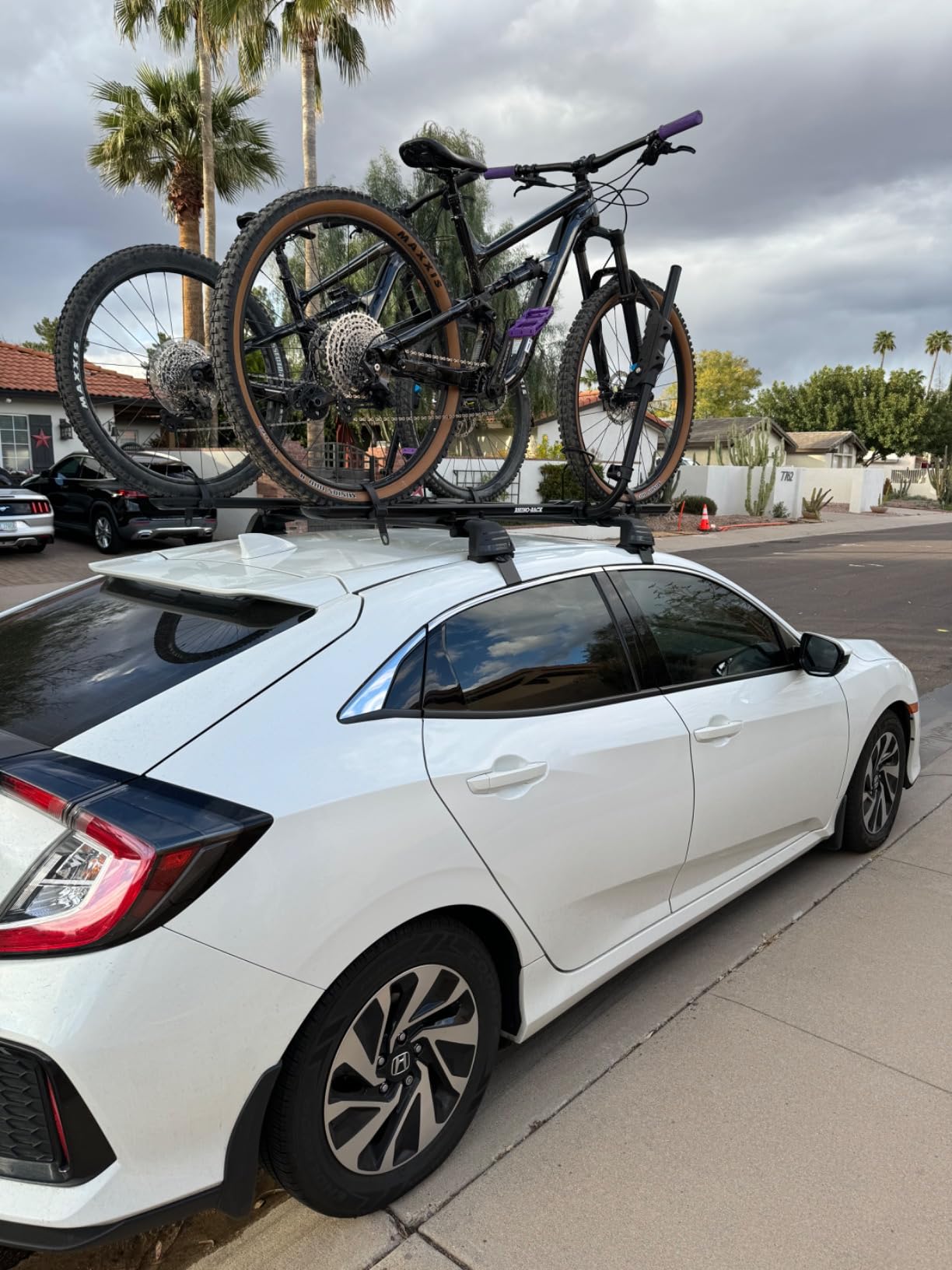
Thru-axle compatibility is unusually broad, covering 5mm, 9mm, 15mm, and 20mm axles plus disc brakes, and wheels run 20 to 29 inch. Capacity is rated at 45 pounds, the highest verified number in this lineup alongside the Thule racks at 44 pounds.
The limits are real though. Tires must be 2.7 inch wide or narrower, which excludes most fat bikes without an adapter, and your crossbars need to sit between 21 and 39 inches apart. Measure before you buy, because that spacing requirement rules out a number of factory rail setups.
Who should buy the Rhino-Rack
This is the pick for owners who carry modern thru-axle bikes, who leave their gear parked in view, or who refuse to buy a separate lock. The included hardware also means fewer small parts to lose.
It also folds flat, which reduces wind noise and makes it easier to live with on a permanently rigged roof.
What to check before ordering
Measure your crossbar spacing and your tire width first. If your tires are wider than 2.7 inch or your bars are spread wider than 39 inches, this carrier will not work without an adapter, and buying a cheap adapter is a worse fix than choosing a different rack.
4. Thule ProRide XT Roof Bike Rack
Thule ProRide XT Roof Bike Rack
Torque-control clamping dial
Soft claw pads
44 lb load capacity
Pros
- Front wheel stays on so there is no wheel removal
- Torque-control dial sets clamping force on the frame
- Soft claw pads conform to round
- oval and unusual frames
- Frame holder and wheel tray self-position as you tighten
- Diagonal quick release straps stabilize the wheel tray
Cons
- Frame contact means frame protector tape is recommended for carbon frames
- Locks sold separately
- Rigid wheel tray is bulkier than a fold-down arm design
The ProRide XT is the middle ground in the Thule lineup, and the torque-limit dial is the reason to choose it. Rather than clamping harder, the dial caps how much force reaches the frame, so you can load a delicate tube with confidence. The soft claw pads conform to round, oval, and unusually shaped frames, which reduces the need for padding.
It shares the no-wheel-removal convenience of the wheel-tray designs, and the frame holder and tray position the bike for you as you tighten the dial. Diagonal quick release straps keep the wheel holders stable, and capacity is rated at 44 pounds with an 11 pound carrier weight.
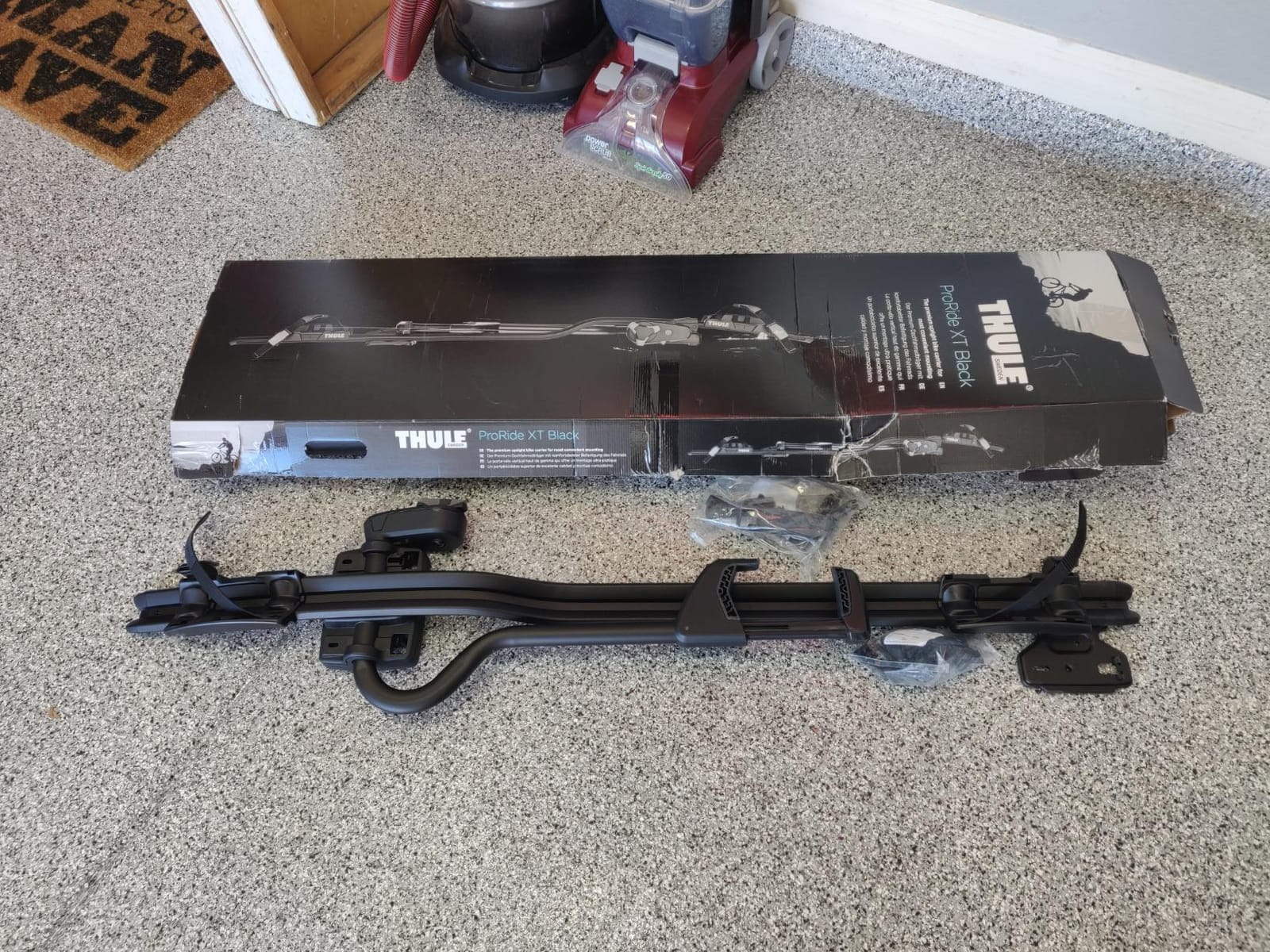
The unavoidable trade is frame contact. Unlike the UpRide, the ProRide XT grips your frame, which means carbon owners should add frame protector tape to the clamped area. That single step removes nearly all of the risk and takes about a minute.
Owners also note the wheel tray is rigid rather than folding, so the whole assembly is longer in storage than a clamp-style carrier. Locks are sold separately here as well, which is the most common complaint at this level.
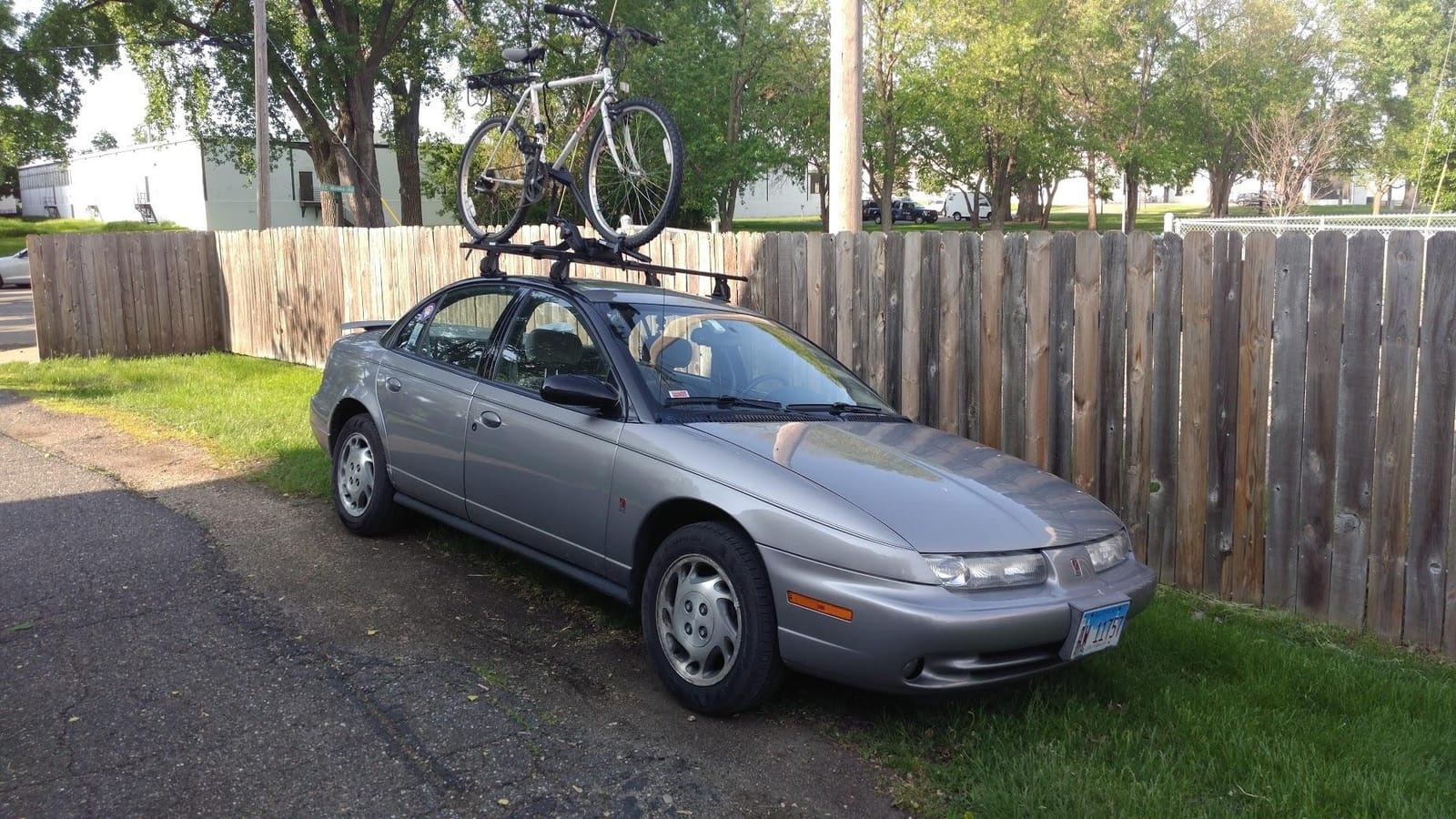
Best for carbon frames with a safety dial
If you want frame contact but a controlled amount of it, the dial is a real engineering answer rather than a marketing line. It is the pick for riders whose frames are round and whose top tubes are not oversized.
It also mounts to all Thule rack systems and most factory racks, so it is a low-risk addition to an existing bar setup.
Where it is not the answer
Do not choose it for a frame you are terrified of scratching and do not want to tape, and do not choose it for a fat bike. For zero-contact transport, the UpRide above is the better architecture.
5. Yakima ForkLift Fork Mount Bike Carrier
Yakima, Forklift Fork Mount Bike Carrier for Roof Racks, 1 Bike Capacity
True fork mount carrier
35 lb load capacity
7 lb total weight
Pros
- Genuine fork mount holds the bike at the axles so it stays stable at speed
- Fits Yakima round
- square
- factory and aerodynamic bars with no adapter
- Tool-free and very fast to install
- Only 7 lb
- which is light for a fork mount
- Limited lifetime warranty
Cons
- Front wheel must be removed for loading
- 9mm quick release skewer means thru-axle bikes need an adapter
- Standard setup assumes the bike has disc brakes
Of all the designs here, a fork mount holds a bike most like it is sitting in a shop stand, which is why dedicated fork-mount carriers remain the first choice for road and gravel riders. The ForkLift weighs only 7 pounds and installs without tools, and owners consistently highlight how quickly it goes on and comes off.
It fits Yakima round, square, factory, and aerodynamic crossbars straight out of the box, and the low profile with an integrated ski lift for clearance is what keeps it quiet. Capacity is 35 pounds, which is the lowest rating among the fork mounts in this list but still covers most non-electric bikes with room to spare.
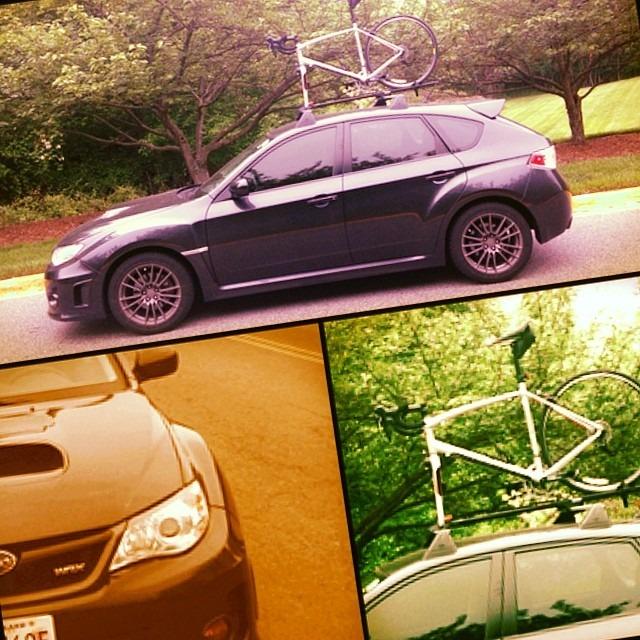
Two practical conditions come with every fork mount. You remove the front wheel to load, and with a rim brake bike you need to reinstall the brake pads and cable correctly, which is why the standard setup here assumes disc brakes. Neither is a dealbreaker, but both add a step at the trailhead.
The included skewer is 9mm quick release, so thru-axle bikes need an adapter. Buyers frequently report that the adapter is an inexpensive and worthwhile purchase, and it is the reason the ForkLift has held its value for years.
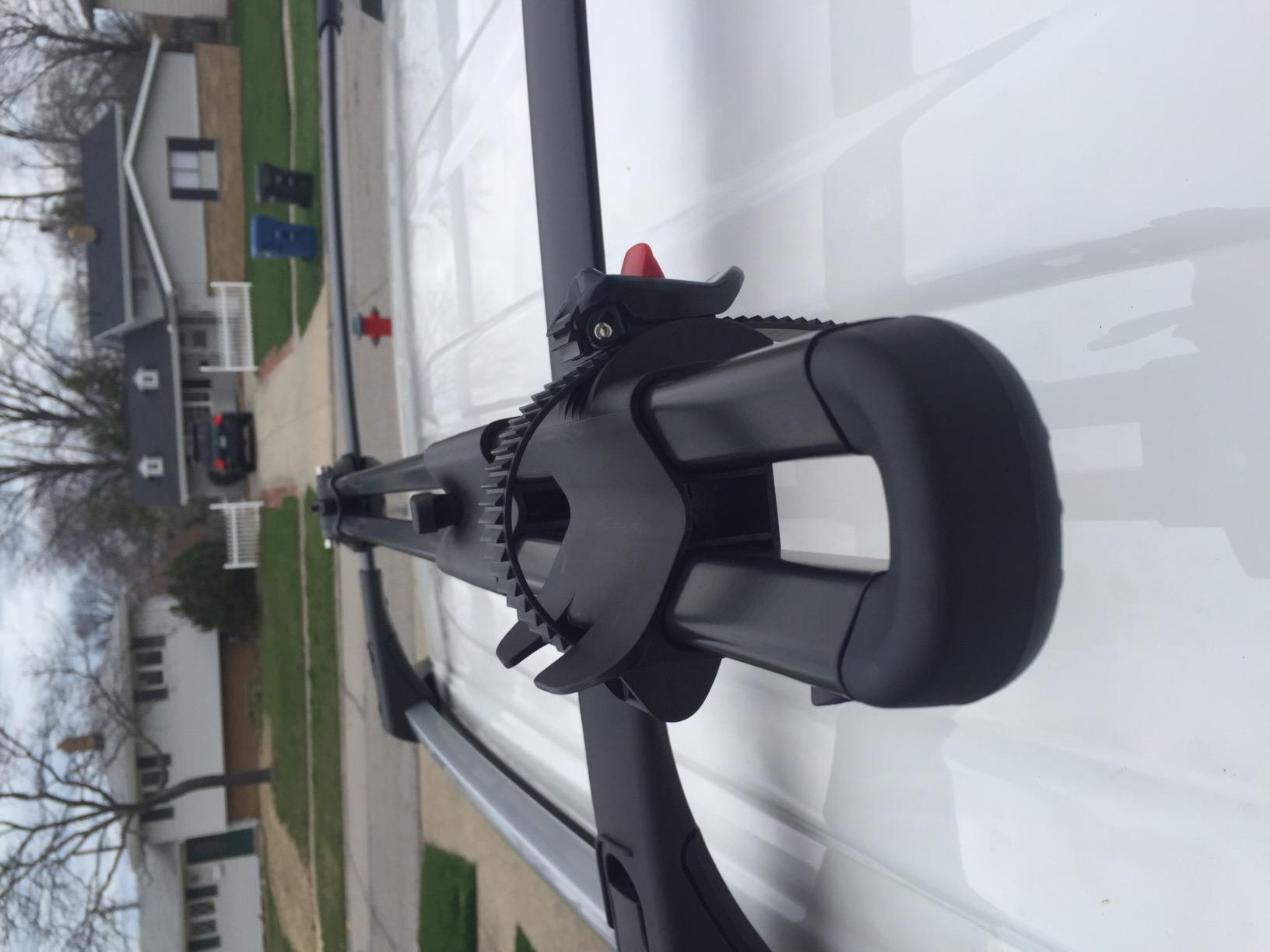
When a fork mount wins
Choose the ForkLift for road, gravel, and hardtail bikes where the front wheel comes off easily and the car has a rear hatch you can leave open. There is no frame or wheel movement at speed, which makes it the steadiest ride in this group.
It is also the pick if you already own Yakima bars, since no adapter is needed for any bar type in the range.
When to pick something else
Do not choose it if your bikes all use thru-axles and you refuse to buy adapters, or if you carry bikes you never want to touch. A wheel-clamp carrier like the Yakima FrontLoader removes the wheel step entirely.
6. Swagman Upright Roof Mount Bike Rack
Swagman Upright Roof Mount Bike Rack – Rooftop Upright Bike Carrier for Secure Bicycle Transport
Wheel-clamp upright design
35 lb per bike
5 lb rack weight
Pros
- Very light at 5 lb and installs in minutes with no tools
- Carries a full-size bike with no wheel removal
- Fits square
- round and oval bars up to 3 inch wide
- Wheel tie-down straps and an integrated lock feature
- An accessible entry point into roof transport
Cons
- Wheelbase capacity capped at 54 inches so very long bikes may not fit
- No frame contact means less security than a fork mount on bumpy roads
- Basic plastic and steel hardware
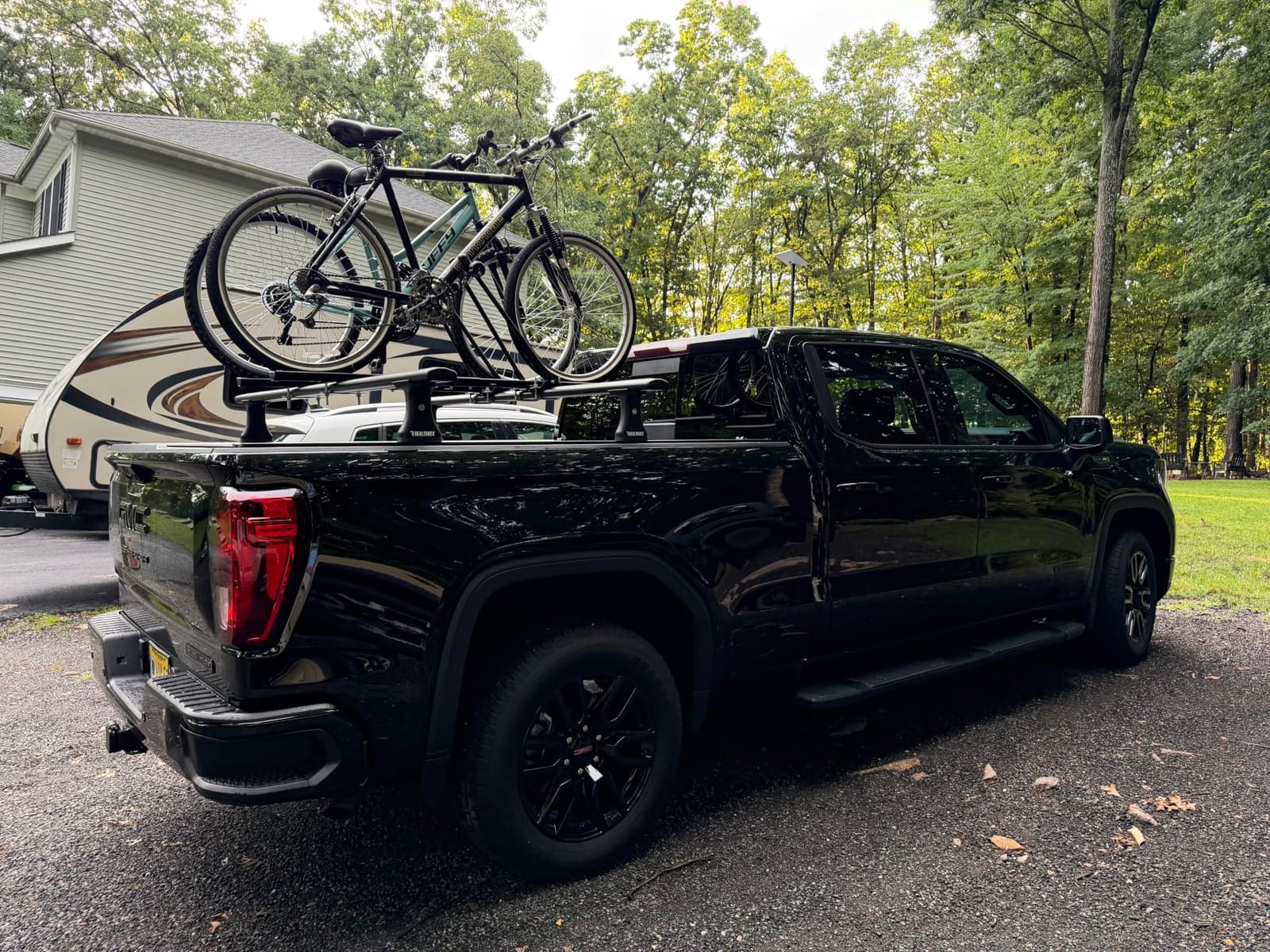
With more than 3,200 ratings, this is the most widely used roof carrier in this entire comparison, and that track record matters more than any spec sheet. It weighs 5 pounds, installs in minutes with no tools, and carries a full-size bike without removing the front wheel.
The upright clamp grips the wheel rather than the frame, so your paint and your carbon tubes are never touched. It fits square, round, and oval bars up to 3 inch wide, and you can run more than one carrier on a single vehicle for a two-bike setup.
Two limits are worth checking before you commit. Bikes need a wheelbase of 54 inch or less, which excludes some long-wheelbase road bikes, and the security comes primarily from the wheel straps, so it is not as positive a hold as a fork mount on a genuinely rough road.
The 35 pound per-bike rating is adequate for road, mountain, and hybrid bikes but tight for a heavy electric bike with a battery installed. The hardware is basic plastic and steel, which is exactly what you would expect at this level, and it is also why the rack weighs so little.
Best low-cost first rack
This is the rack to buy if you carry one non-electric bike, you already have crossbars, and you want to spend as little as possible without buying something that feels flimsy. Three thousand-plus owners have already made that argument for it.
It is also a sensible second rack, since two carriers on a spread of bars give you a two-bike setup for very little money.
Where it does not reach
It is not for thru-axle-heavy fleets, very long bikes, or heavy electric bikes on a vehicle with a modest roof limit. And if your SUV has no bars, none of this matters until you add crossbars or choose a suction-cup rack.
7. Thule TopRide Roof Mounted Bike Rack
Thule TopRide Roof Mounted Bike Rack
Premium fork mount
AcuTight torque limiter
7.7 lb carrier weight
Pros
- Fork mount that handles thru-axle and disc brake bikes out of the box
- Green-tab visual confirmation that the bike is locked in place
- Lightest premium Thule option here at 7.7 lb
- Owners report stable highway running with minimal wind noise
Cons
- Locks are not included
- Reported to fit poorly on Subaru factory aluminum bars with a wiggling rear clamp
- Front wheel must be removed
The TopRide is the fork mount for people whose bikes stopped taking quick releases years ago. It supports thru-axle and disc brake bikes directly, so there is no adapter hunt, and the AcuTight torque limiter knob clicks when a quick-release bike is properly mounted. That audible and visual confirmation is the feature owners mention most.
It is also the smallest and lightest premium carrier here at 7.7 pounds, with a release lever for fast removal and an adjustable protective rear wheel strap. Owners running it on a Subaru Outback with Thule CrossBar Edge report stable, quiet highway travel over long distances.
One owner report deserves attention: on rounded Subaru factory aluminum bars, the rear clamp wiggled. That is a bar-shape problem rather than a carrier problem, but it is the reason we would confirm fit against your specific bar before committing, especially on factory equipment.
Locks are sold separately despite this being a premium tier, and a few buyers reported missing lock and key parts in the box. Check the contents before you leave.
Best for modern thru-axle bikes
If every bike in your garage runs thru-axles, this is the fork mount that works out of the box. The torque limiter also removes the guesswork from tightening a clamp against a frame you care about.
Its compact dimensions and light weight make it the premium carrier that is least annoying to install and store.
Where it falls short
It is not the pick for factory bars of unusual shape, and it is not the pick if you refuse to buy locks separately. And like every fork mount, it means removing the front wheel every single time you load.
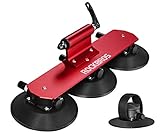
8. ROCKBROS Sucker Suction Cup Roof Bike Rack
ROCKBROS Sucker Bike Rack Quick Release Aluminium Alloy for 1 Bike
Suction cup roof mount
No crossbars required
20 kg (44 lb) capacity
Pros
- No crossbars required
- so it works on SUVs with a bare or factory roof
- Mounts in minutes with no tools and no assembly
- Owners report holding bikes at highway speed over long distances
- Rubber suction cups and the included crank strap protect the paint
Cons
- Thru-axle bikes may need plastic inserts drilled out and spacers added
- Suction cups need re-wetting and periodic checking on long trips
- Low theft deterrence because it is designed to be removed easily
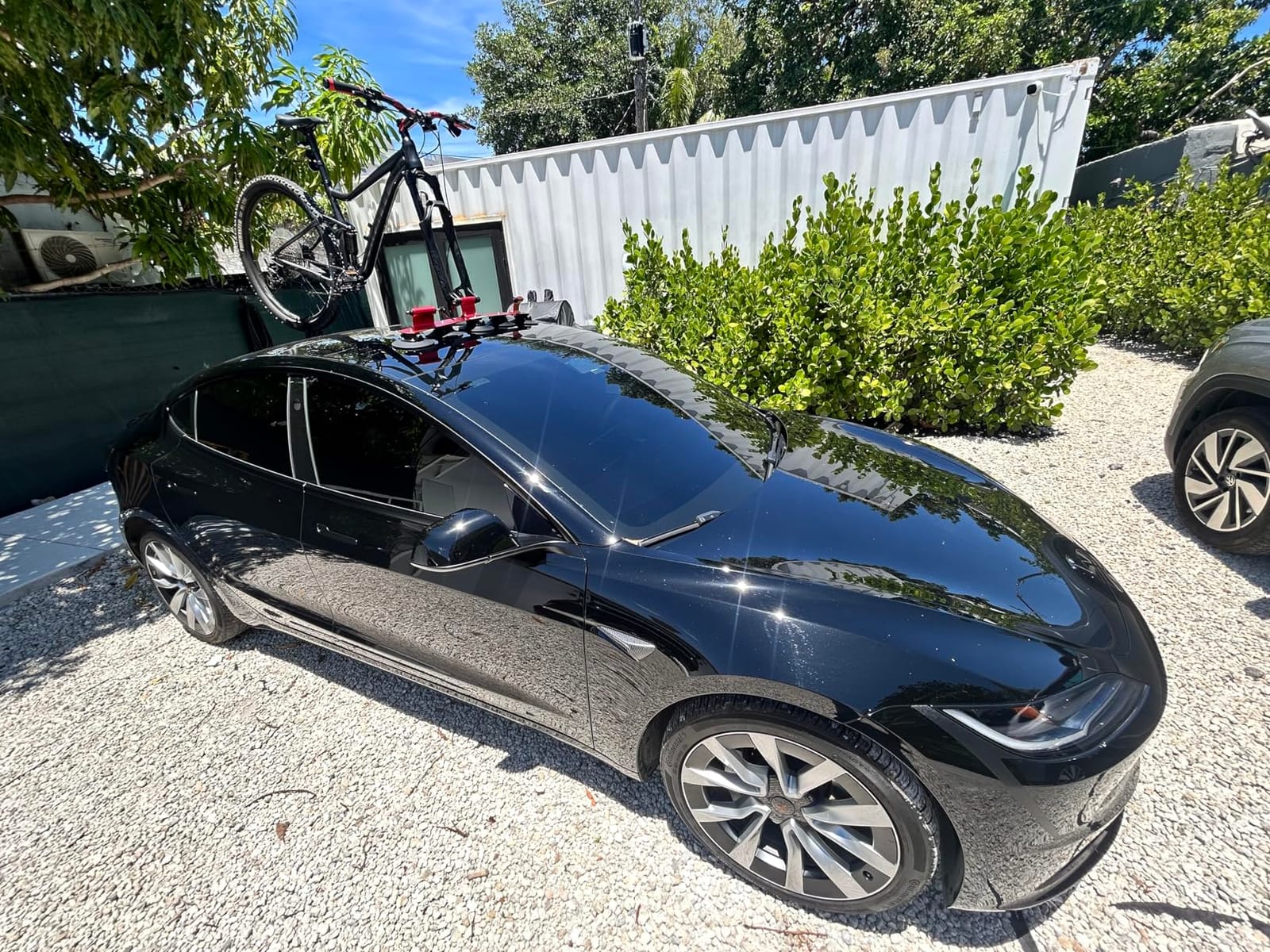
This is the only rack here that answers the question do I need crossbars to mount a roof bike rack with a straight no. The cups clamp straight to your painted roof, so an SUV with no rails and no bars can carry a bike without drilling anything or spending on a full rack system.
Capacity is 20 kg, which is 44 pounds, enough for most bikes including many electric models. The rubber cups and the included pedal strap keep the cranks from touching paint, and the quick-release front clamp and adjustable rear strap mean loading takes minutes with no tools.
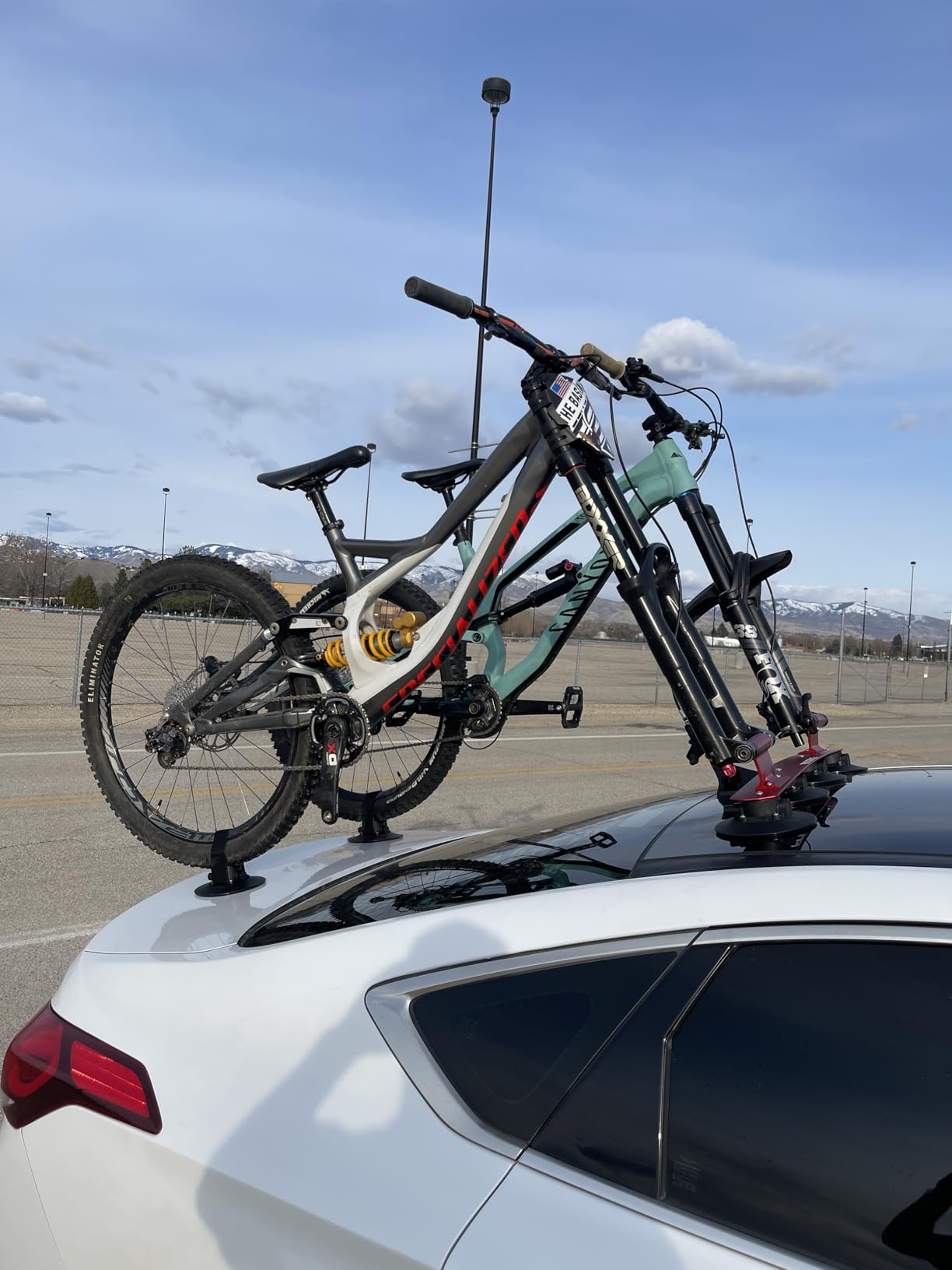
Fitment is the real caveat. Thru-axle and Boost hub bikes may need the plastic inserts drilled out and spacers added before the front clamp will work, and several owners describe exactly that modification. Budget an afternoon rather than a coffee break.
Long trips also demand attention. The cups must be wetted for best grip and checked periodically, and one documented case had a rear cup lose its seal after a handful of uses. There is also effectively no theft deterrence, since the whole point is that it comes off in two minutes.
Best for a bare-roof SUV
If your SUV has no rails, no bars, and no plans for either, this rack makes roof transport possible with what is already on the car. Owners treat it as a solid budget alternative to a premium suction platform and log hundreds of miles at highway speed without failure.
Variants exist for one, two, or three bikes, which is unusual in a category built around single-bike carriers.
When to buy bars instead
Buy crossbars and a conventional carrier instead if you park in view regularly, carry expensive bikes unsupervised, or drive long highway stretches back to back. A suction cup needs attention that a bolted clamp never does.
9. Swagman Standard Fork Mount Roof Bike Rack
Swagman Standard Fork Mount Roof Bike Rack – Rooftop Bike Carrier for 9mm Quick Release Bikes
Fork mount carrier
35 lb load capacity
16 oz total weight
Pros
- Exceptionally light at 16 oz
- easy to carry and install
- Assembles with no tools required
- A fork mount is far more secure than a strap-only wheel clamp
- Includes 9mm quick release skewers for quick loading
Cons
- 9mm quick release skewer only
- so thru-axle bikes need an adapter
- Fits bars up to 3 inch wide
- Single-bike capacity
The Swagman Standard does something no other rack in this list does at this weight: it holds your bike by the fork, at 16 ounces. You can carry it to a trailhead in one hand, which sounds trivial until you are hauling a carrier to the back of a loaded SUV in a parking lot.
Because the bike is held at the axles, it stays put at highway speed in a way that a strap-only wheel carrier cannot match. It assembles with no tools, fits square, round, and oval bars up to 3 inch wide, and carries 35 pounds.
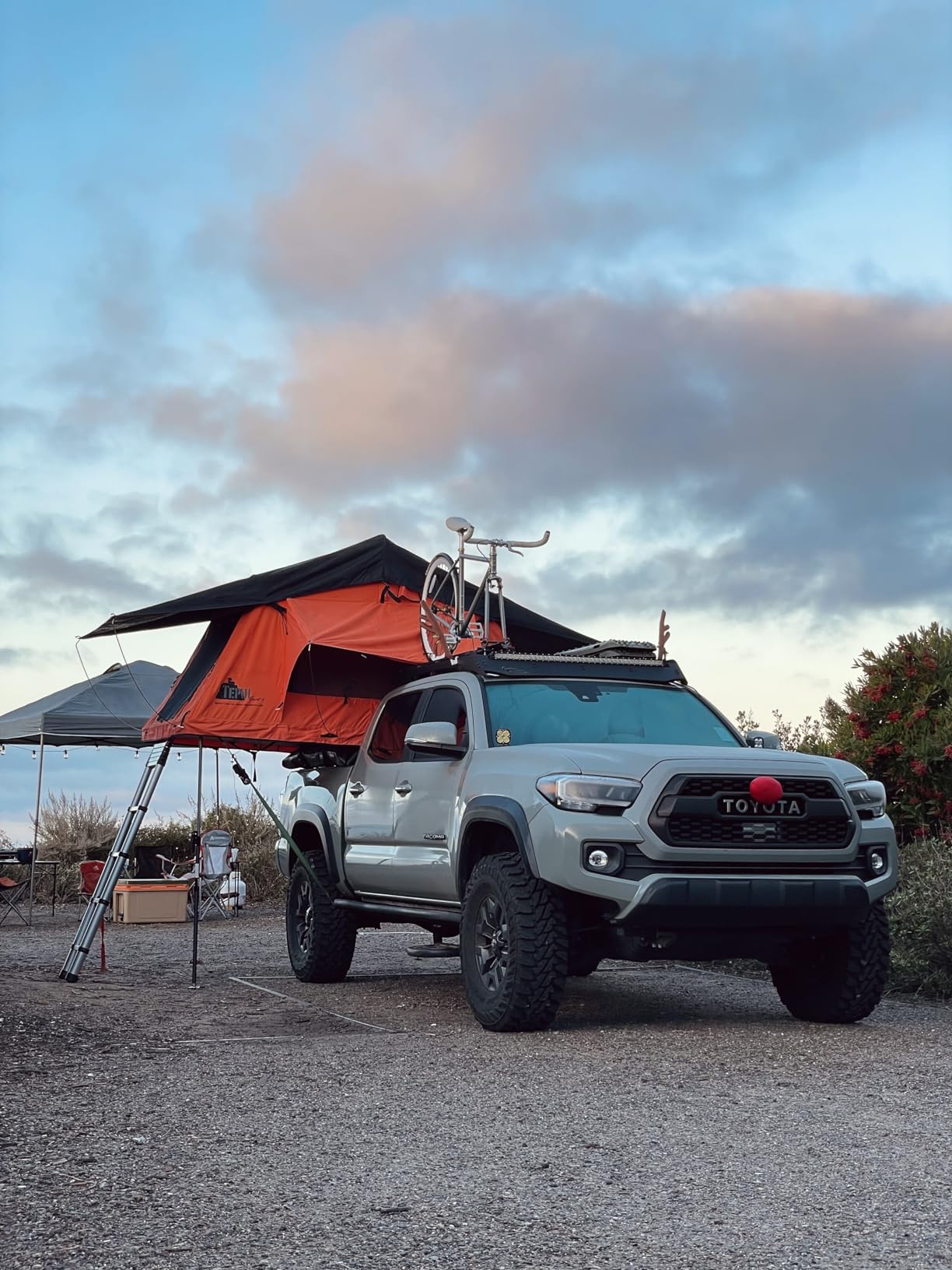
The catch is the included 9mm quick release skewer. Modern bikes with thru-axles, and many mountain and gravel bikes, will need an adapter before this rack will accept them, so check your hub before ordering. The 3 inch bar width limit also rules out very wide aero bars.
Owners otherwise rate the security far above the wheel-clamp budget racks, and a limited lifetime warranty is a rare inclusion at this level of the market.
Best budget fork mount
Pick it if your bike takes a 9mm quick release, you carry one bike, and you want real fork-mount security without paying for a premium carrier. The weight alone makes it the easiest to install in this entire list.
It also makes a sensible backup rack to keep in the back of the vehicle for trips where a small, light carrier matters more than features.
When to choose a different design
Move up if your bikes use thru-axles, if you want to keep the front wheel on, or if you need more than one bike. In each of those cases the money is better spent on a wheel-clamp design or a platform rack.
10. Gathersky Dual-Arm Upright Roof Bike Rack
GATHERSKY Roof Bike Rack, Upright Dual-Arm Rooftop Bike Carrier for Car SUV
Dual pivoting upright arms
50 lb per-bike capacity
10.5 kg total weight
Pros
- Two pivoting arms hold the bike by the wheels with no frame contact
- One-handed ratchet lock release makes loading fast
- Arms fold down for compact storage
- 50 lb per-bike capacity among the higher ratings here
- T-bolt and U-bolt hardware fits a wide range of crossbar shapes
Cons
- Wheelbase limit of 48 inches is short for premium racks
- Heavy at 10.5 kg for a single-bike carrier
- Only a 3 month manufacturer warranty
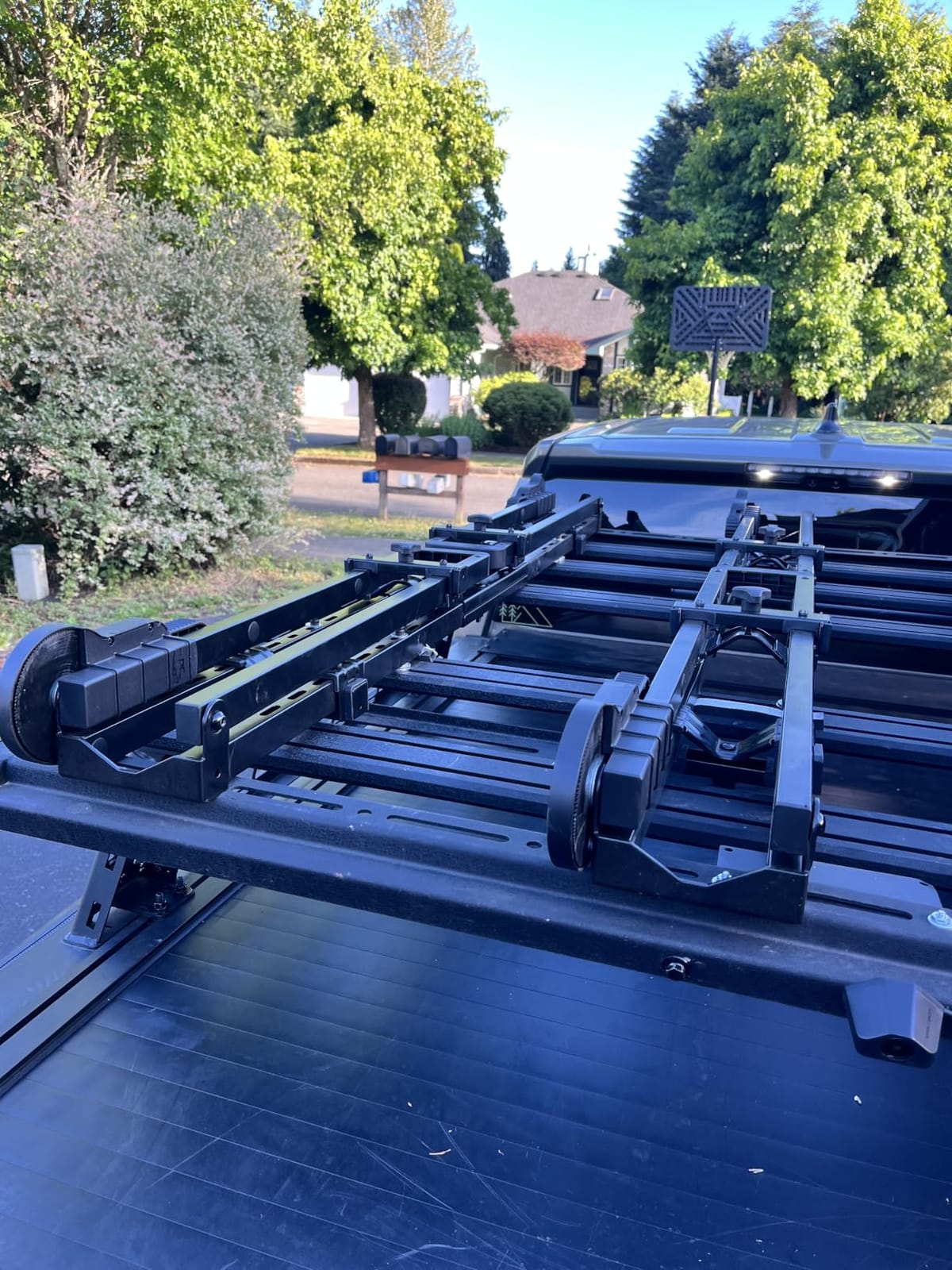
The Gathersky is the only carrier here with a genuine one-handed load. The integrated tightening knob drives a ratchet lock release on both pivoting arms at once, so you swing two arms around the wheels and squeeze one control. It is the fastest loading sequence in this comparison, and it needs no wheel removal and no frame contact.
It also folds flat, which is a real advantage on a permanently rigged roof where wind noise matters. Capacity is 50 pounds per bike, the highest verified rating in this lineup, and the included T-bolt and U-bolt hardware fits a wide range of crossbar shapes and spacings.
Its rating profile is the weakest here, with the largest share of three-star reviews of any product in this roundup, which usually signals a young and uneven review base rather than a broken product. Owners still praise the two-arm wheel grip and the release mechanism for the price.
The 48 inch wheelbase cap is shorter than most premium racks, so a long road bike may not fit. At 10.5 kg it is also heavy for one bike, and the 3 month warranty is far shorter than the limited lifetime coverage offered by Thule, Yakima, and Swagman.
Best for fast loading and compact storage
Choose it if you load in the dark before dawn rides, if you care about folding the carrier flat, or if you need a higher single-bike rating than the premium upright racks offer. Two bikes at 50 pounds each is a real capability.
Confirm your bike’s wheelbase measures 48 inch or less before you order, since that is the most common reason this rack gets returned.
When to spend elsewhere
Pass on it for a long-wheelbase bike, for anyone who needs a serious warranty behind a rack mounted over a car, or for owners who want a lock included rather than hunting for one separately.
How Much Weight Can an SUV Roof Actually Carry
Your SUV’s dynamic roof weight limit, not the rack’s rating, is the real ceiling. Rack capacity numbers like the 44 and 45 pound ratings above describe what the carrier can hold. They say nothing about what your roof, your crossbars, and your suspension can take at speed.
Most vehicle manufacturers publish a roof load figure in the owner’s manual, typically somewhere between 100 and 165 pounds including the bars and feet. Subtract your bar system, then subtract the rack, then subtract everything else on the roof, and you have what is left for bikes.
That arithmetic matters most for electric bikes. A heavy e-bike with a battery can weigh 50 to 70 pounds, and two of them plus a rack and bars can push a mid-size SUV past its limit with no warning other than vague handling complaints. The frequent advice from owners on r/ebikes is simple: run one heavy bike at a time, or remove the second battery and carry it inside.
Raising your center of gravity also changes how the vehicle handles. Loaded roof racks increase body roll, lengthen braking distance, and add wind noise, and they do so even when you are comfortably under the weight limit.
Fork Mount vs Frame Mount vs Wheel Tray vs Suction Cup
These four mount styles trade off against each other in predictable ways, and the right answer depends on what you are carrying rather than on which brand you prefer.
Fork mount: The most secure hold because the bike is clamped at the axles, and the lightest of the four designs. The cost is removing the front wheel every time and needing a skewer or thru-axle adapter for modern bikes.
Frame mount: Clamps the top tube or down tube with a padded arm. It is compact and quick, but it touches paint on every load, which is why carbon riders add frame protector tape.
Wheel tray or wheel clamp: Holds the bike by the front wheel with no frame contact and no wheel removal. It is the best compromise for most people, and the reason it dominates this list. The trade is slightly more body movement at speed.
Suction cup: Attaches to the roof itself rather than to bars. It is the only option that needs no bars at all, and it asks the most of you in return with seal checks, re-wetting, and no theft deterrence.
Frame contact is where carbon frames come in. If you own carbon, choose a no-contact design and skip the debate entirely.
Can You Mix Thule and Yakima
Yes, and the evidence comes overwhelmingly from forums rather than from brand pages. Thule carriers mount to all Thule rack systems and most factory racks, and Yakima carriers fit Yakima round, square, factory, and aerodynamic bars out of the box. Yakima and Thule are described on mtbr.com as nearly equal in performance, with owners reporting Yakima systems fitting on the first try.
The short version of the rule: rack-and-pin carriers from either brand work on any standard bar up to about 3 inch wide, so the practical cross-brand pairs are a Thule carrier on Yakima bars or a Yakima carrier on Thule bars. What does not cross over is proprietary clamping hardware, particularly on factory aluminum rails where the cross-section is unusual. That is exactly the complaint attached to the Thule TopRide on rounded Subaru factory bars.
Beyond the fit question, the ecosystem question is what drives purchase confidence for most buyers. Owning one brand end to end gives you guaranteed compatibility and a single fit guide, and that is why many owners deliberately choose Yakima bars and accessories as a set.
Our broader roof bike rack roundup covers the remaining architectures, including dual-bike platforms for families and bike groups.
Roof Rack or Hitch Rack for an SUV
SUVs are the one vehicle class where both options are usually available, so it is worth being honest about the comparison. Hitch racks win on loading height, on security, and on leaving bikes off the roof between trips. Several SUV owners on forums prefer them specifically because they fold down and keep the roof clear.
The roof wins when you have no receiver, when you need the hitch for a cargo box or a spare tire carrier, or when you want more bikes than a typical hitch carrier holds. The roof also keeps your rear hatch and bumper completely free.
There are cases where the roof is the wrong answer entirely. If your SUV has a low garage or a car wash, a roof rack with a bike on it may not clear. If you overland on rough tracks constantly, re-tightening becomes a chore. And if your roof limit is modest, two heavy bikes may exceed what your vehicle is rated for.
For anything beyond short trips, we would pair a roof-mounted solution with the hitch racks we recommend only if the hitch is free, since the two compete for the same space.
Installation and Re-Torque Checklist
Most rack complaints trace back to installation rather than to the product. Work through this once and a tight rack stays tight.
First, confirm your bar width and spacing against the carrier’s stated range before you unbox anything, because a rack that does not fit the spread cannot be made to fit by tightening it. Second, fit the carrier with the bike removed so you can reach the fasteners, then load the bike and re-check.
For fork mounts, tighten the clamp gently and confirm the lever cannot be twisted by hand. For torque-dial designs, set the dial rather than forcing the knob. For wheel trays, ratchet the strap until the ratchet clicks, then push the bike laterally against the hook to confirm nothing moves.
Re-check everything after the first 10 miles and again after any long highway drive or any off-road section. Owners on forums who report persistent rattle almost always tightened the rack once and never again.
Finally, before you pull away, walk around the vehicle and confirm nothing contacts the antenna, the hatch seal, or a partially open door. If your doors cannot open fully with the bars in position, move the bars rearward or stagger them, which is the standard fix for tall SUV door conflicts.
Frequently Asked Questions
What type of bike rack is best for an SUV?
For most SUVs, a wheel-clamp or wheel-tray carrier on top of crossbars is the best all-around choice. It holds the bike by the front wheel, needs no wheel removal, and never touches your frame. If your SUV has factory rails only, add clamp-on bar adapters first. If it has no roof hardware at all, a suction-cup carrier is the only option that needs nothing installed.
What is the best bicycle holder for an SUV?
Our top pick is the Yakima FrontLoader, a wheel-clamp upright carrier rated for 40 pounds that installs without tools and keeps the front wheel on. It suits one bike, works with bars up to 3 inch wide, and has the largest owner base in this comparison. It requires crossbars, so add a bar system first if your SUV has no roof rails.
What is the best 2-bike roof rack for an SUV?
For two bikes, the practical answer is a dual-bike platform rack rather than two single carriers. If you already own crossbars, you can also run two single-bike carriers side by side, which is how the lightweight Swagman upright is commonly used. For one heavy electric bike plus one standard bike, check your SUV’s dynamic roof limit before buying anything.
Do I need crossbars to mount a roof bike rack?
Yes for almost every rack in this roundup. Rack-and-pin carriers clamp to bars, and Thule and Yakima carriers are designed around their own bar systems or standard bars up to about 3 inch wide. The single exception is a suction-cup carrier, which grips painted metal directly and needs no bars. If your SUV has factory rails, clamp-on adapters convert them into usable bars.
Can I put an e-bike on my SUV roof rack?
Only after you check the numbers, because the roof limits you, not the rack. Heavy electric bikes commonly weigh 50 to 70 pounds. Add your bar system, carrier, and any other roof cargo, then compare the total against the dynamic roof weight limit published in your owner’s manual. Many electric bike owners carry one bike at a time or remove the second battery and bring it inside.
Final Verdict
For most SUV owners, the best roof bike rack for your vehicle is the Yakima FrontLoader on properly sized crossbars. It is the most proven design we found, it holds the wheel instead of the frame, and it never asks you to remove a wheel in a dark parking lot.
Buy the Thule UpRide if your bike is expensive or carbon and you want zero frame contact. Buy the Rhino-Rack if you refuse to buy locks separately. Buy a fork mount like the Yakima ForkLift or Thule TopRide if you ride roads and gravel and want the steadiest hold. Buy the ROCKBROS suction rack if your SUV has no bars and no plans for any.
Whatever you choose, start with your roof configuration, then confirm your dynamic weight limit, then check crossbar spacing and tire width. Those three checks eliminate almost every return in this category. Our in-depth comparisons across other rack types are in the SUV bike rack guide, updated for 2026.