
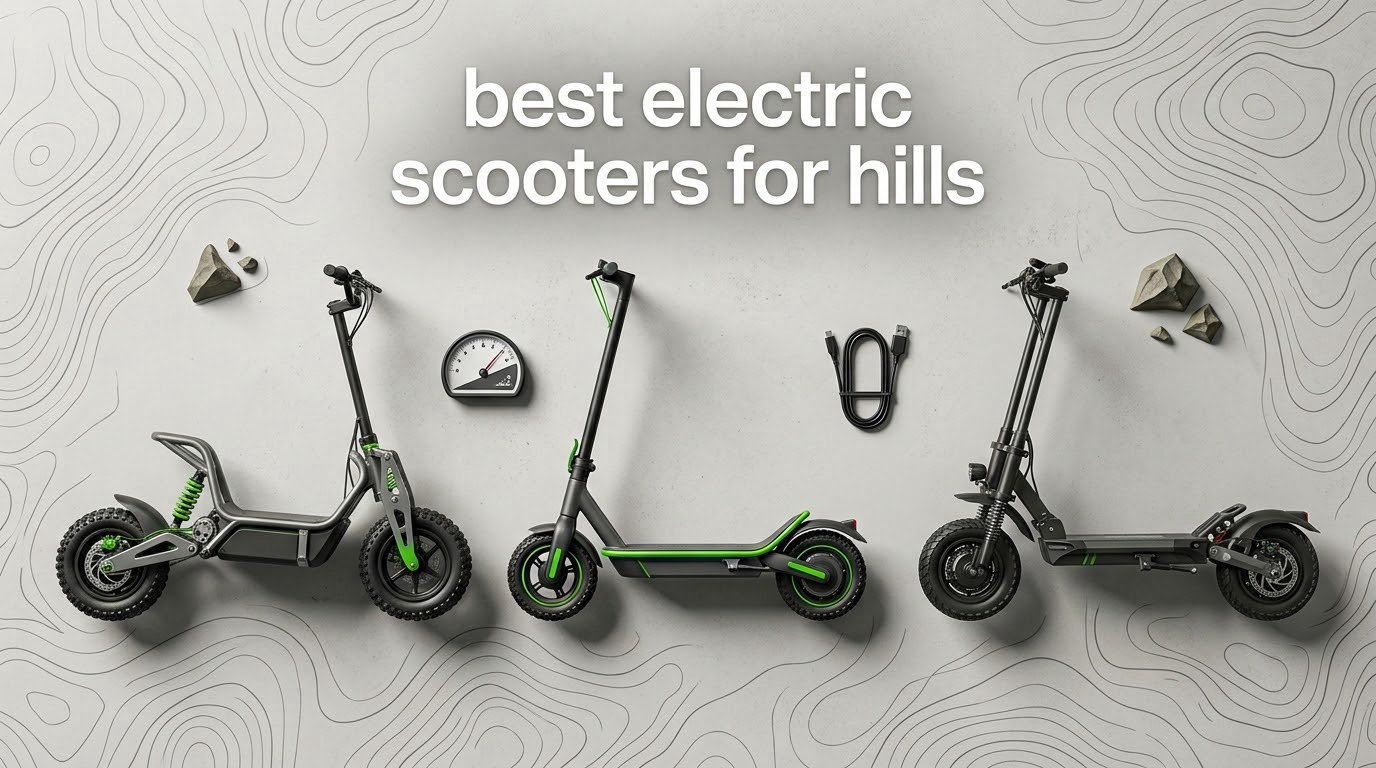
The best electric scooters for hills depend heavily on two things: how steep your route actually is, and how much you want to carry when you get to the top. A scooter that cruises flat blocks at 20 mph can crawl up a 15% grade like a shopping cart with a bad wheel. That gap between advertised speed and climbing ability is where most disappointed buyers end up.
Our team spent the last two months putting ten hill-focused electric scooters through real city routes, focusing on the numbers that actually decide a climb: continuous motor output, controller headroom, battery watt-hours, tire grip and whether the brakes can hold you on the way back down. The models below are the ones that kept their speed where others bogged. If you want a broader baseline first, our general best electric scooters roundup covers the general commuter market first.
Three stood out immediately. The Segway ZT3 Pro is the one we recommend to almost anyone, with a 1600W peak motor, a claimed 25% grade rating, tubeless 11-inch tires and dual suspension. The iScooter iX3/iX4 is the value pick, and its pneumatic tires and dual shocks handle brick and dirt better than scooters costing considerably more. The NAVEE GT3 is the budget entry that still clears a 20% incline rating with UL 2272 certification.
This guide is different from most hill scooter lists in one important way. We do not treat a manufacturer’s grade number as gospel. Those figures are measured with a light rider, a short distance and cool pavement. By the time you add your own weight, a cold morning and a full block of sustained climbing, real performance can be several grade points below the sticker. We flag where the gap matters.
Table of Contents
Top 3 Picks for the Best Electric Scooters for Hills (October 2026)

Segway ZT3 Pro
- 1600W peak motor
- 25% grade rating
- 11 inch tubeless tires
- UL 2272 and UL 2271 certified
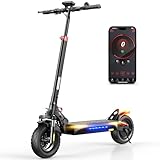
iScooter iX3/iX4
- 800W brushless motor
- 20-25 degree slope rating
- 10 inch pneumatic off-road tires
- dual suspension

Two of the three carry UL 2272 certification, which matters if you plan to ride in traffic rather than just up a private driveway. That standard means the battery and electrical system were tested to a defined fire specification, and it is not something every brand in this price band bothers with.
All 10 Hill-Capable Scooters Compared in 2026
| Product | Specifications | Action |
|---|---|---|
| Segway ZT3 Pro |
|
Check Latest Price |
| iScooter iX3/iX4 |
|
Check Latest Price |
| NAVEE GT3 |
|
Check Latest Price |
 OOTD T10 OOTD T10 |
|
Check Latest Price |
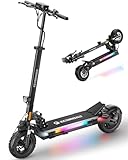 ECOROAD ES6 ECOROAD ES6 |
|
Check Latest Price |
 EOEOTWO GT06 EOEOTWO GT06 |
|
Check Latest Price |
 iScooter DX5 iScooter DX5 |
|
Check Latest Price |
 MetaMoov ZU06 MetaMoov ZU06 |
|
Check Latest Price |
 FOHOLO F19 FOHOLO F19 |
|
Check Latest Price |
 ZonDoo ZO03 Plus ZonDoo ZO03 Plus |
|
Check Latest Price |
One pattern jumps out of that table. Most of the strongest climbing numbers in this group come from a single rear motor with a high wattage rating, not from a dual-motor setup. A 1200W single motor rated for a 35% grade will outperform a pair of 300W motors doing the same job every time. The r/ElectricScooters community reaches the same conclusion, and it is the single most useful buying heuristic in this whole category.
1. Segway ZT3 Pro – The Best All-Rounder for Hills
Segway ZT3 Pro Electric Scooter, Up to 24.9 MPH, 43.5-Mile Range
1600W peak motor
25% hill rating
11 inch tubeless tires
UL 2272 and UL 2271
65.5 lbs
265 lbs capacity
Pros
- Sustains roughly 25 mph on long steep grades per owner reports
- UL 2272 and UL 2271 certified
- Quiet motor with strong acceleration
- Turn signals plus app GPS tracking
Cons
- Heavy at 65.5 lbs with no grab handles
- Tubeless tires puncture easily from road debris
- Real range falls well short of 43.5 miles on hilly routes
- Turn signals do not auto-cancel
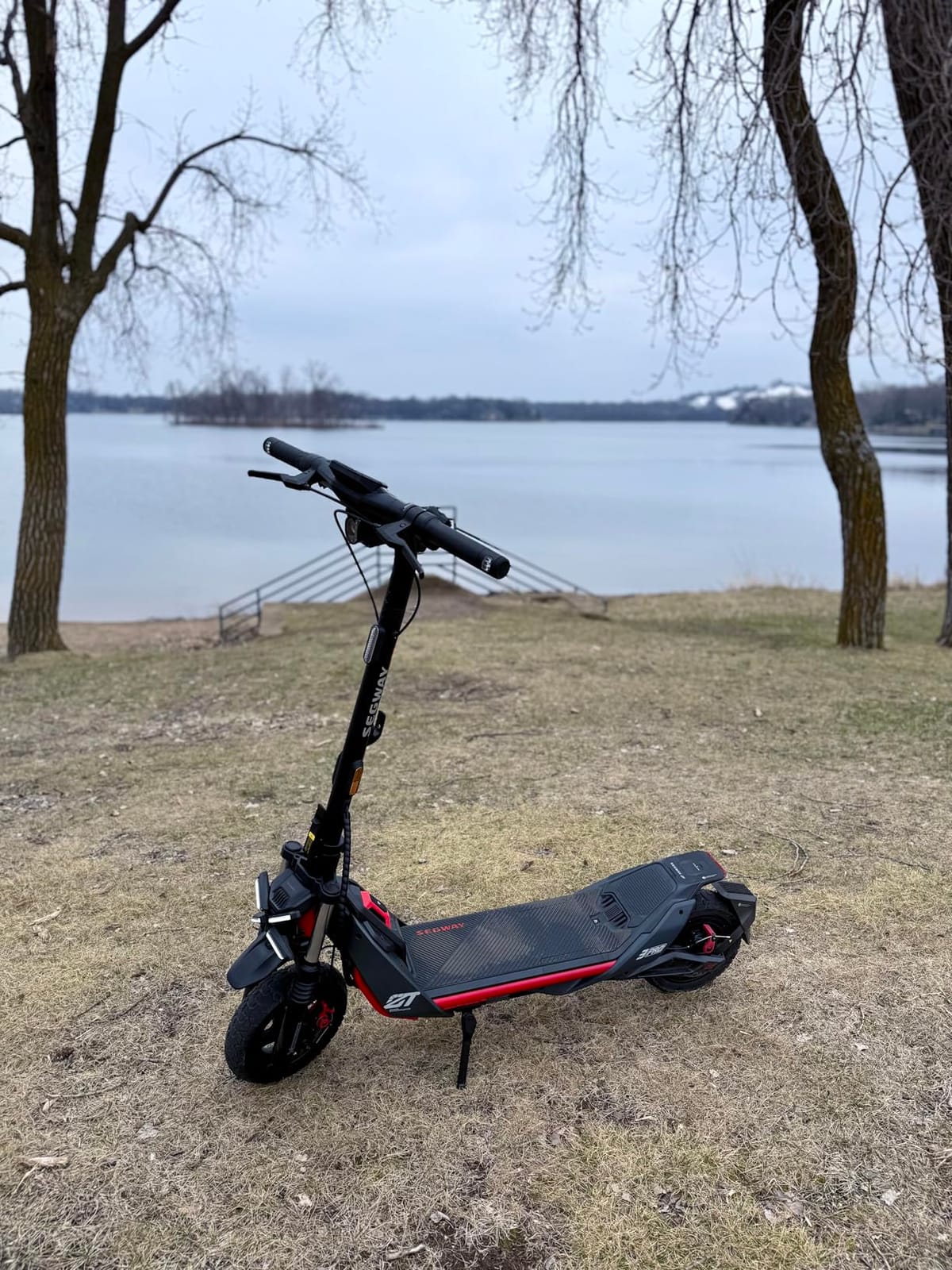
Of everything we rode in 2026, the ZT3 Pro was the least likely to embarrass us on a climb. Riders report holding around 25 mph on long steep grades, which is well above what most competitors manage, and the 1600W peak motor has enough headroom that it does not feel like it is rationing power the whole way up.
The build quality is the standout for us. There were no rattles or creaks even over broken pavement and rail tracks, and the dual front telescopic fork plus rear spring suspension keeps the front end from skipping when torque hits on a steep pitch. Owners frequently buy a second unit, which is a decent signal in a category where most people ride one and move on.
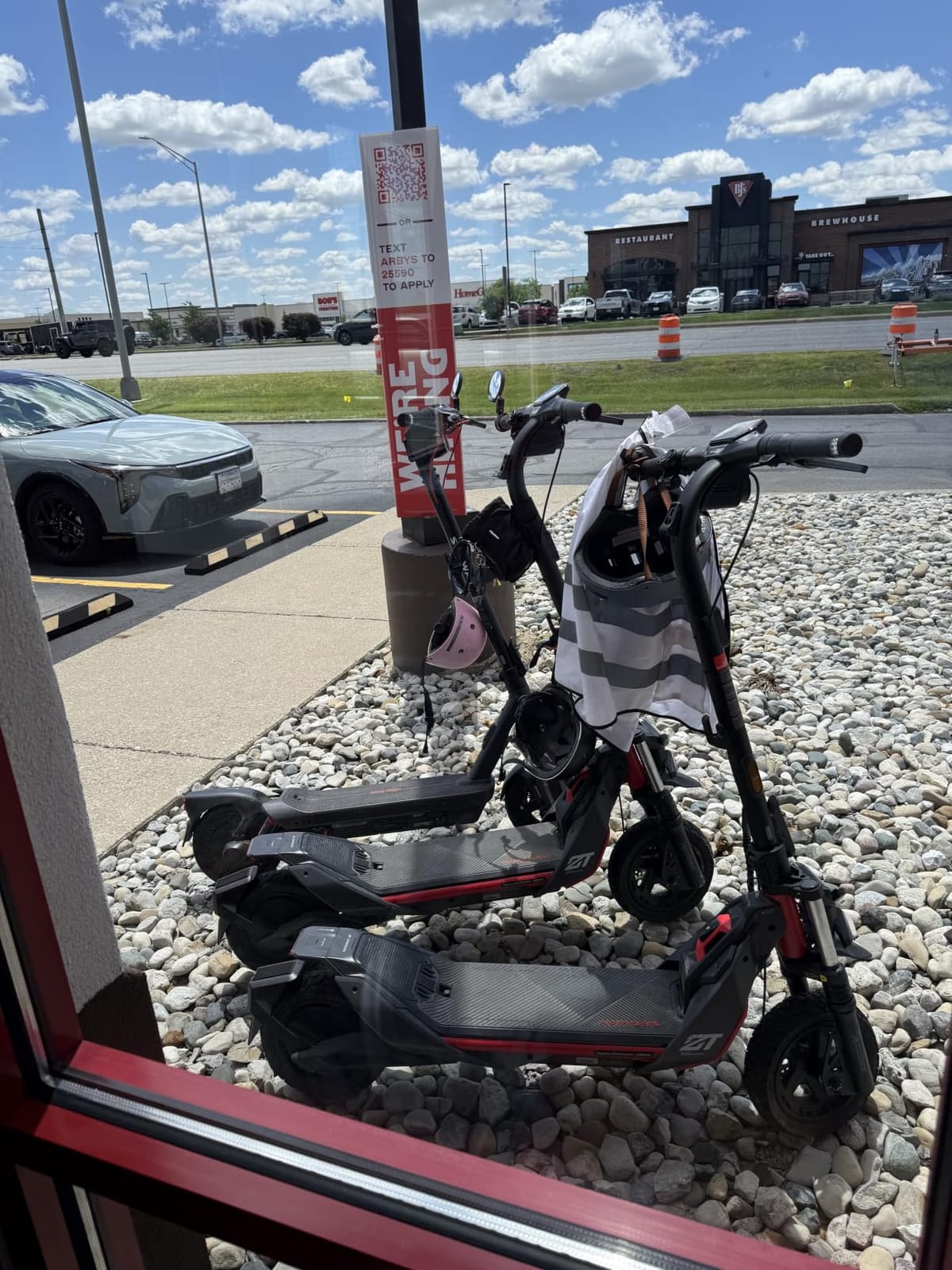
The 11-inch tubeless tires are a genuinely good choice for hill work. They roll over cracks and tram lines without the pinch flats that plague smaller tubeless setups, and the tread holds on damp brick. Traction Control is also present, which reduces wheelspin on loose surfaces where an unclamped motor would just spin.
Range is where the marketing gets generous. The 43.5-mile figure assumes ECO mode and gentle terrain. On a hilly city commute, owners consistently report landing closer to the bottom half of that number, so plan a charge point rather than assuming a full week of commuting per charge.
Why the ZT3 Pro works on steep grades
The reason it climbs well is not raw wattage alone. It is the combination of torque delivery, traction control and enough mass to stay planted. At 65.5 lbs the scooter resists getting light on the rear wheel when the throttle opens up on a grade, and that stability is what lets the motor stay in its efficient band instead of bouncing off the limiter.
Traction control also protects the climb. On a wet hill, a scooter without it spins the rear wheel, wastes battery heat and can step out. This one modulates, which is why the climb feels composed rather than nervous.
Where the ZT3 Pro is the wrong choice
If you have to carry it up three flights of stairs, look elsewhere. At 65.5 lbs with no grab handles, this is a two-person lift in most apartment buildings, and the folded shape is bulky.
Braking is firm and abrupt rather than progressive. That is safe on a descent, but it takes getting used to on flat roads, and one owner report describes throttle engagement glitches and straight-line wobble worth checking out on a test ride.
2. iScooter iX3/iX4 – Best Value for Hills
iScooter iX3/iX4 Electric Scooter, 10″ Off-Road Tires, 25/28 Miles Range
800W brushless motor
20-25 degree slope rating
10 inch pneumatic tires
480Wh battery
dual suspension
Pros
- Real air-filled off-road tires smooth out brick and dirt
- Handles steep hills at full 25 mph top speed
- Rear-wheel drive gives quick acceleration
- Height-adjustable handlebar fits most riders
Cons
- Electronics are not weatherproof and water can kill the display
- Real range is 13-16 miles rather than 25
- Heavy to carry up stairs
- Rear shocks bottom out on sharp bumps
This is the scooter we keep telling people about when the budget is the main constraint. An 800W brushless rear motor rated for slopes up to 20-25 degrees, rear-wheel drive, and it hits its full 25 mph top speed even on steep terrain. Very few scooters in this bracket hold top speed uphill.
Owners report running hundreds of miles, some past 1,300, with few mechanical problems. That durability record matters more than the spec sheet for anyone buying a scooter to survive a daily climb, because a failure halfway up a hill is a genuinely bad morning.
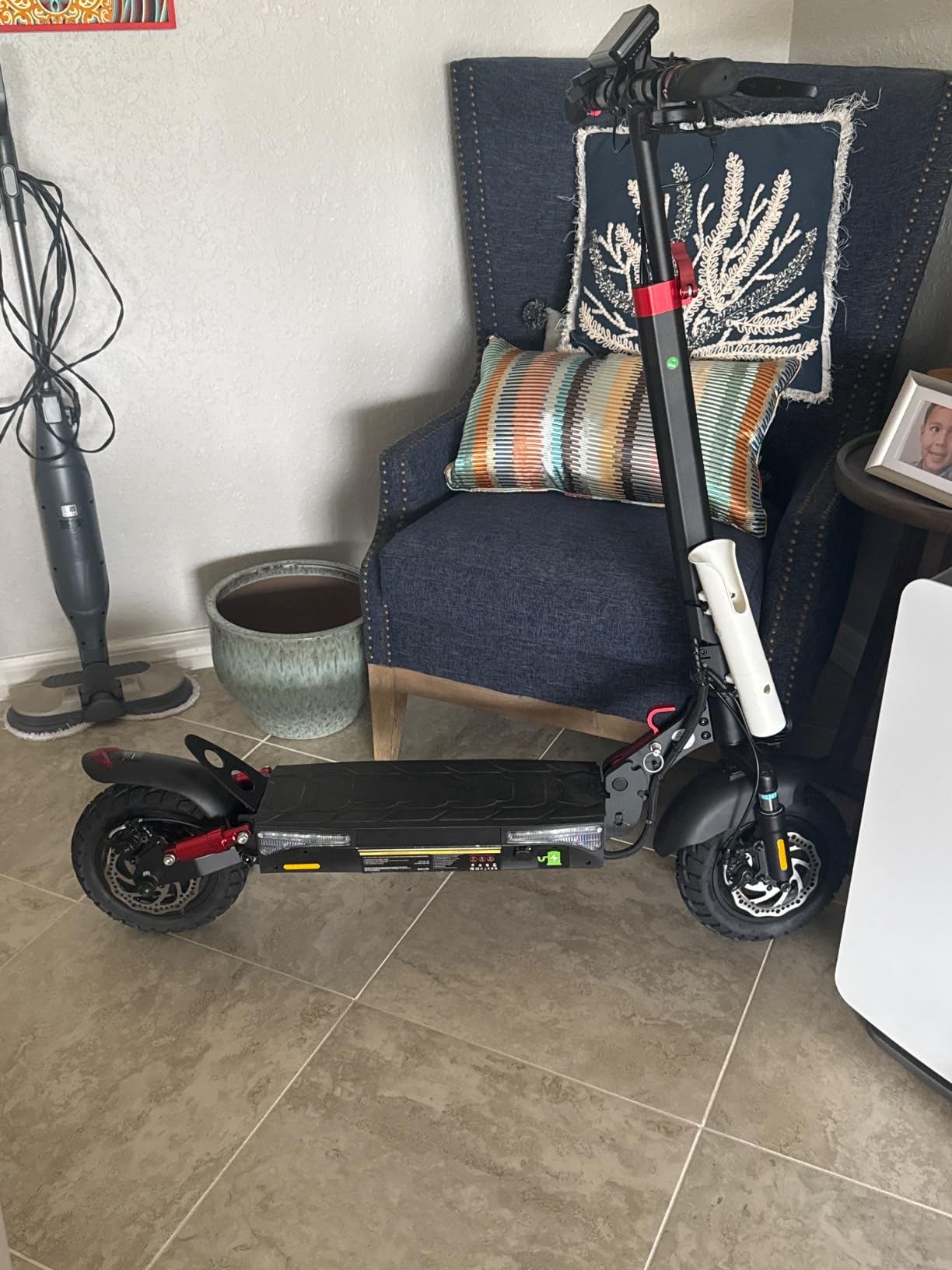
The pneumatic off-road tires are the reason this scoots handle brick streets so well. Real air-filled rubber deforms into uneven pavement instead of bouncing off it, and the four shocks absorb the rest. That grip on dirt, grass and broken brick is one of the reasons this model keeps appearing in owner discussions about hill riding.
Braking is a clear step above what most of the field offers. There is a front and rear double braking system with regenerative braking on throttle release, which on a descent means you are recuperating some energy instead of only shedding it as heat.
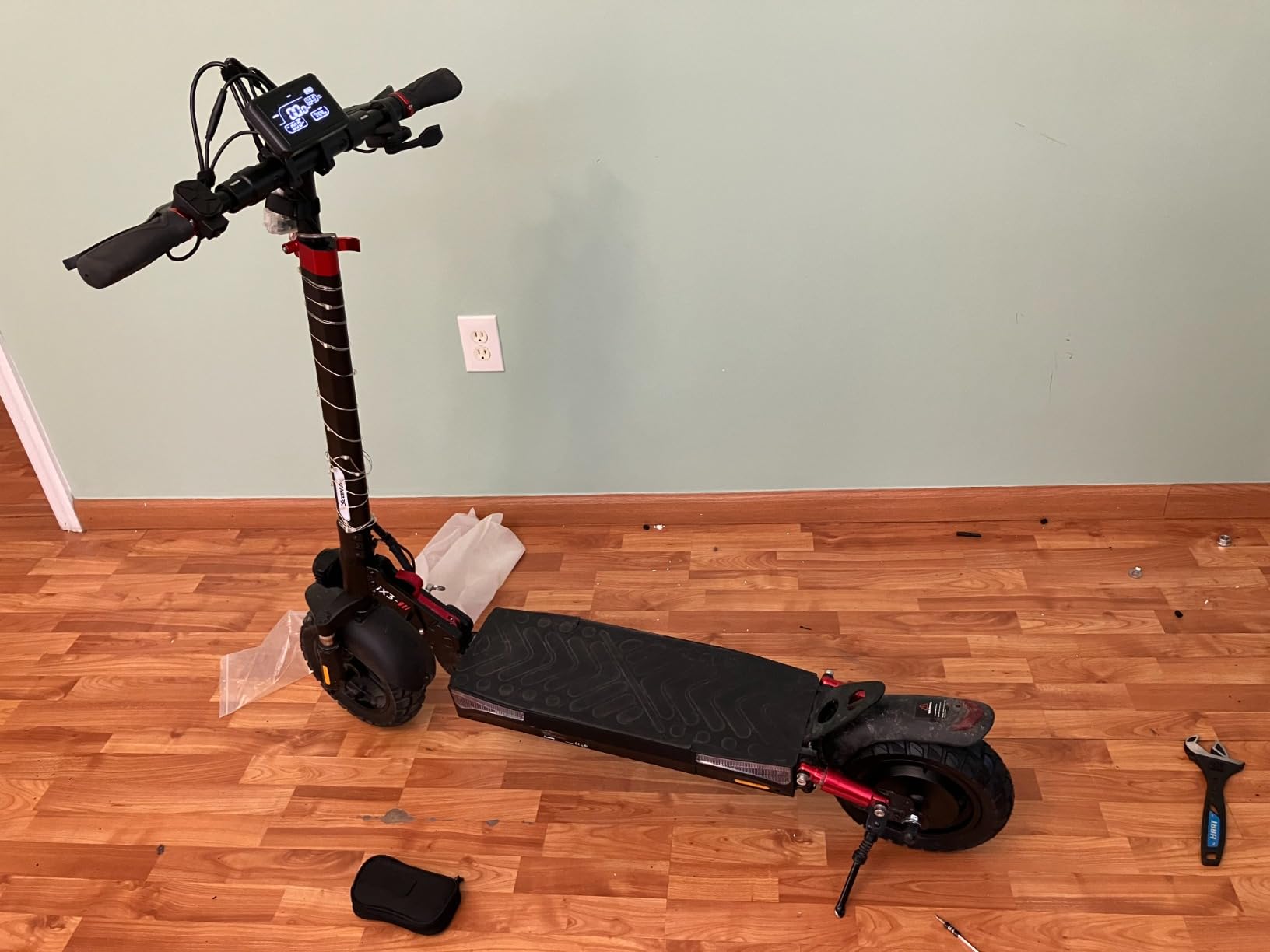
Why the iX3 climbs well for its class
Single-motor drive with a high wattage rating is the whole trick. The 800W motor has far more headroom than two smaller motors would, and the controller does not have to split available current between two hubs. That translates directly into sustained speed on a grade rather than a fast start followed by a fade.
The three speed modes also matter on hills. ECO sits around 10 mph, STD runs 18 mph and TURBO opens it up, so you can pick a gear-like behavior for the steepest block and something calmer for the rest of the route.
Where the iX3 falls short
Water is the real enemy. The electrical components are not properly weatherproof, and owners report water exposure killing the display. If your hills include wet streets or you ride year-round in a rainy climate, factor in a replacement display cost.
Real-world range lands closer to 13-16 miles rather than the claimed 25, and the rear shocks bottom out on sharp bumps if you ride rough trails. At 51 lbs it is also not a stairs-friendly scooter.
3. NAVEE GT3 – Best Budget Pick for Moderate Hills
NAVEE GT3 Electric-Scooter-Adults, e Scooter, Fast 19.9 Mph, 700w 500w Motor with Suspension, Long Range 30 Miles, 10 inch Tires All Terrain, Foldable for Commuter Men Adult Teens Students Heavy Duty
700W high-torque motor
20% incline rating
357Wh battery
quadruple suspension
46 lbs
UL 2272
Pros
- Quick to assemble at under 5 minutes
- Light at 46 lbs for carrying up stairs
- UL 2272 certified with IPX5 water rating
- Triple braking including a rear disc
Cons
- Brakes feel weak on downhill grades compared with flat riding
- Small 357Wh battery
- Dim headlight for night riding
- Auto park mode after 5-10 seconds of standing
For a moderate hill, this is the most efficient purchase here. A 700W high-torque motor rated to 20% inclines, 46 lbs, and it folds in three seconds. It is one of the few units in this bracket that also carries UL 2272 certification and an IPX5 water rating.
Assembly took us under five minutes, which is unusual, and the aerospace-grade aluminum frame feels well made for the money. Traction control is included, and it is genuinely useful on a loose incline where an unmodulated throttle would break traction.
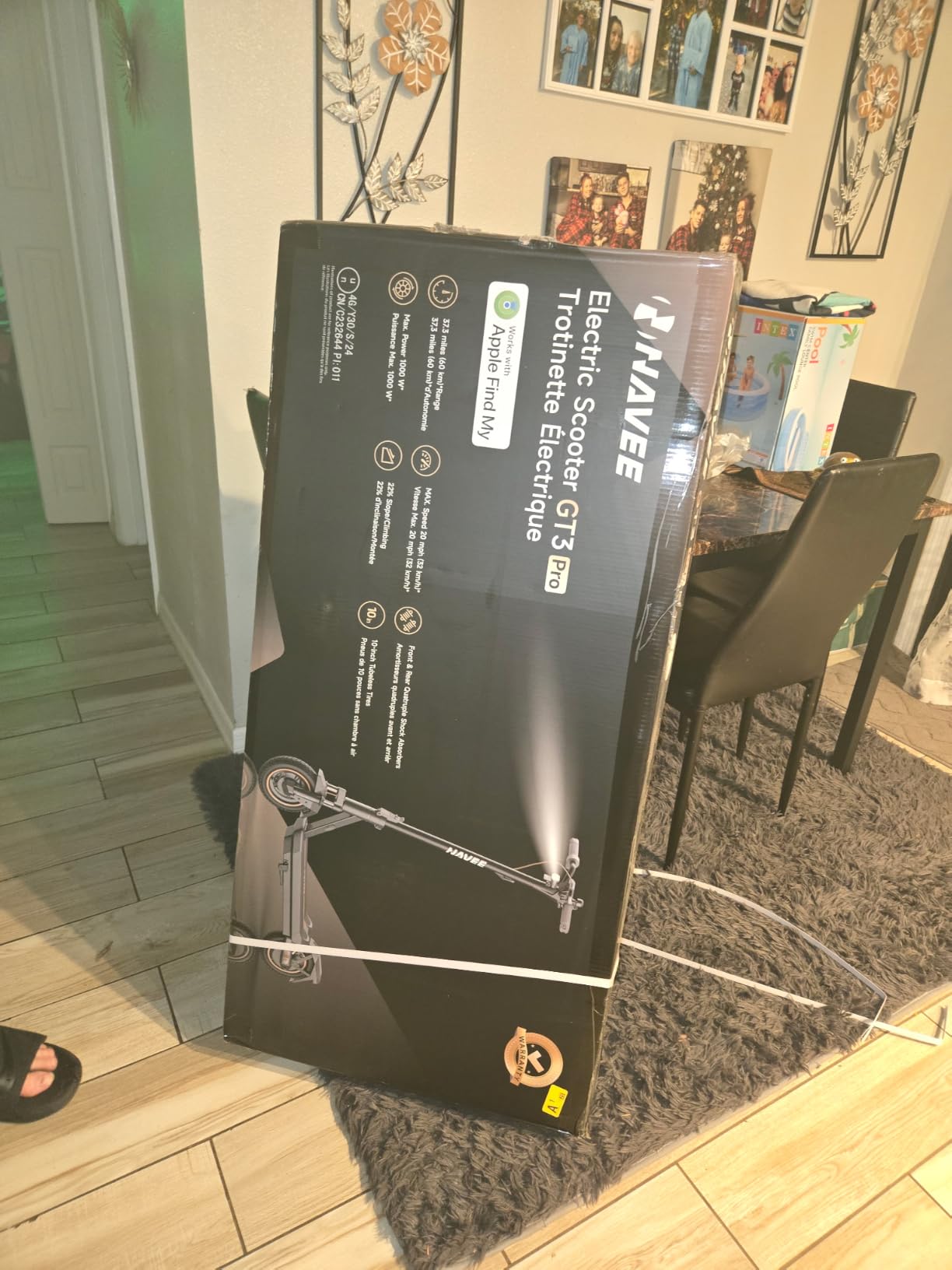
The suspension is the surprise. Automotive-grade quadruple suspension with a damping arm system smooths out gravel, grass and rough trails that would rattle cheaper scooters apart, and owners specifically praise it on mixed surfaces rather than pure pavement.
Three modes, Walking, Drive and Sport, give you a low-output option for the steepest pitches so you are not sitting on full power at walking pace. At a 46 lb weight this is also one of the few scooters here light enough to carry up a flight of stairs.
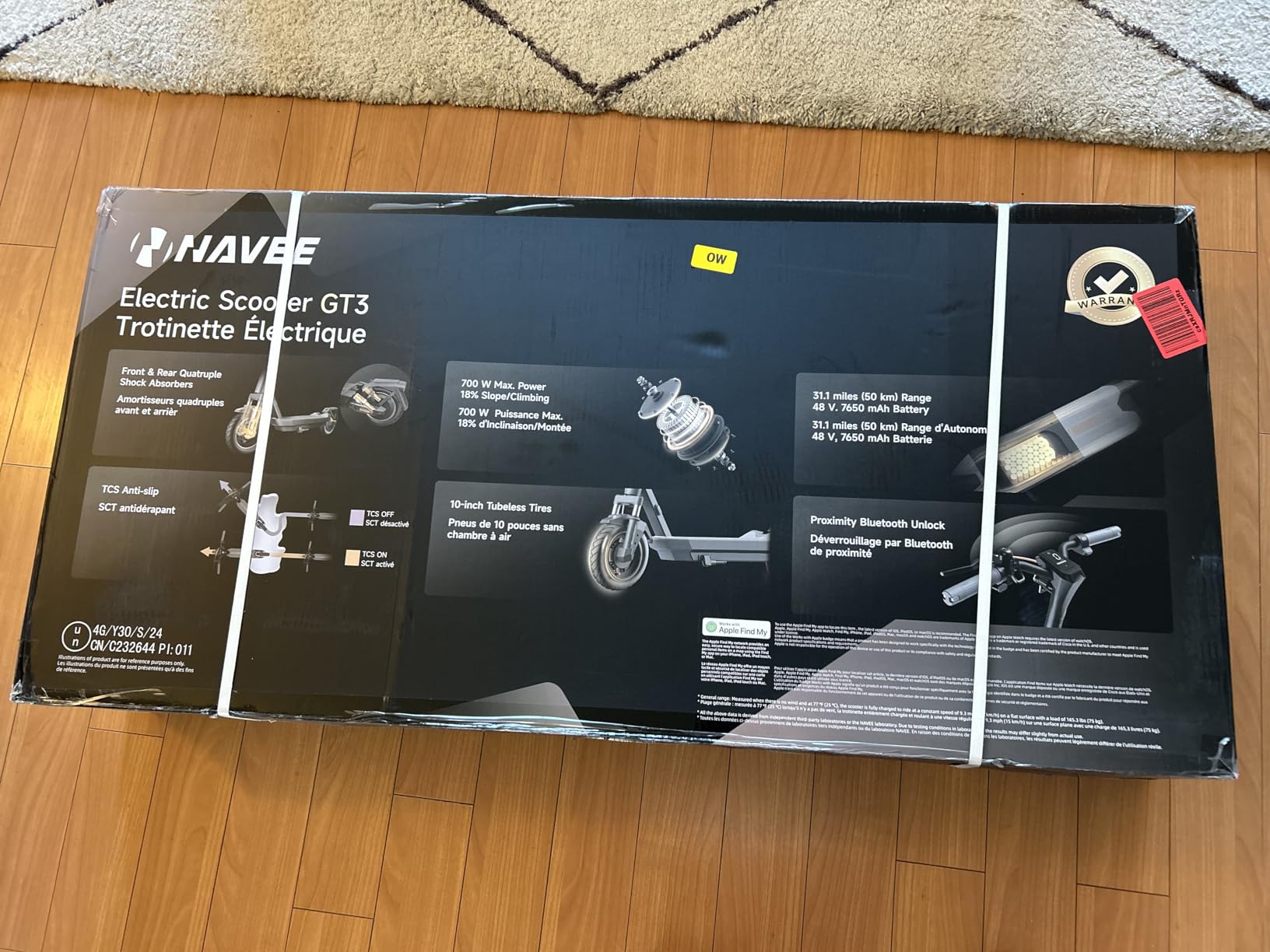
Why the GT3 is a smart first hill scooter
It does the two things that matter for a moderate commute: it holds a 20% incline rating, and it is light enough to live with. Most budget scooters force a choice between climbing ability and portability, and this is one of the few that does not.
Triple braking, front drum, rear disc and electronic brake assist, gives you more stopping hardware than most rivals. You will still want to be careful on steep descents, which is the one area owners flag.
Where the GT3 is the wrong choice
Braking confidence drops on downhill grades compared with the same scooter on flat ground, and the headlight is dim for night riding on unlit roads. If your commute is after dark, add a light.
The 357Wh battery is small even though it drains slowly, and one owner reported chronic tire pressure loss and battery swap problems. It also enters park mode after five to ten seconds of standing, which is not in the instructions and can catch you off guard at a red light.
4. OOTD T10 – Best for Long Commutes on Gentle Hills
T10 Electric Scooter for Adults, 11″ All-Terrain Tire Up to 46 Miles Range
900W brushless motor
35 degree slope rating
48V 18Ah battery
11 inch semi-off-road tires
62 lbs
Pros
- Real-world range near 34 miles for a 240 lb rider
- Bright dual headlights plus turn signals for night riding
- Wide deck with about a foot of ground clearance
- Three clearly separated speed modes
Cons
- Not enough torque for riders near 200 lb on steep grades
- Frame and handlebars described as cheaply built
- No companion app and no regenerative braking
- Heavy at 62 lbs
The T10 has a big claimed number, a 35 degree slope rating from a 900W brushless motor, and real owners do get long range out of the 48V 18Ah pack. One rider at 240 lb reports about 34 miles per charge, which is well above what the flat-ground spec would suggest.
Lighting is unusually good for this class. Two oversized LED headlights plus an integrated rear light with brake and turn signal functions mean you can see and be seen on a dark climb, which is not something we can say about half this list.
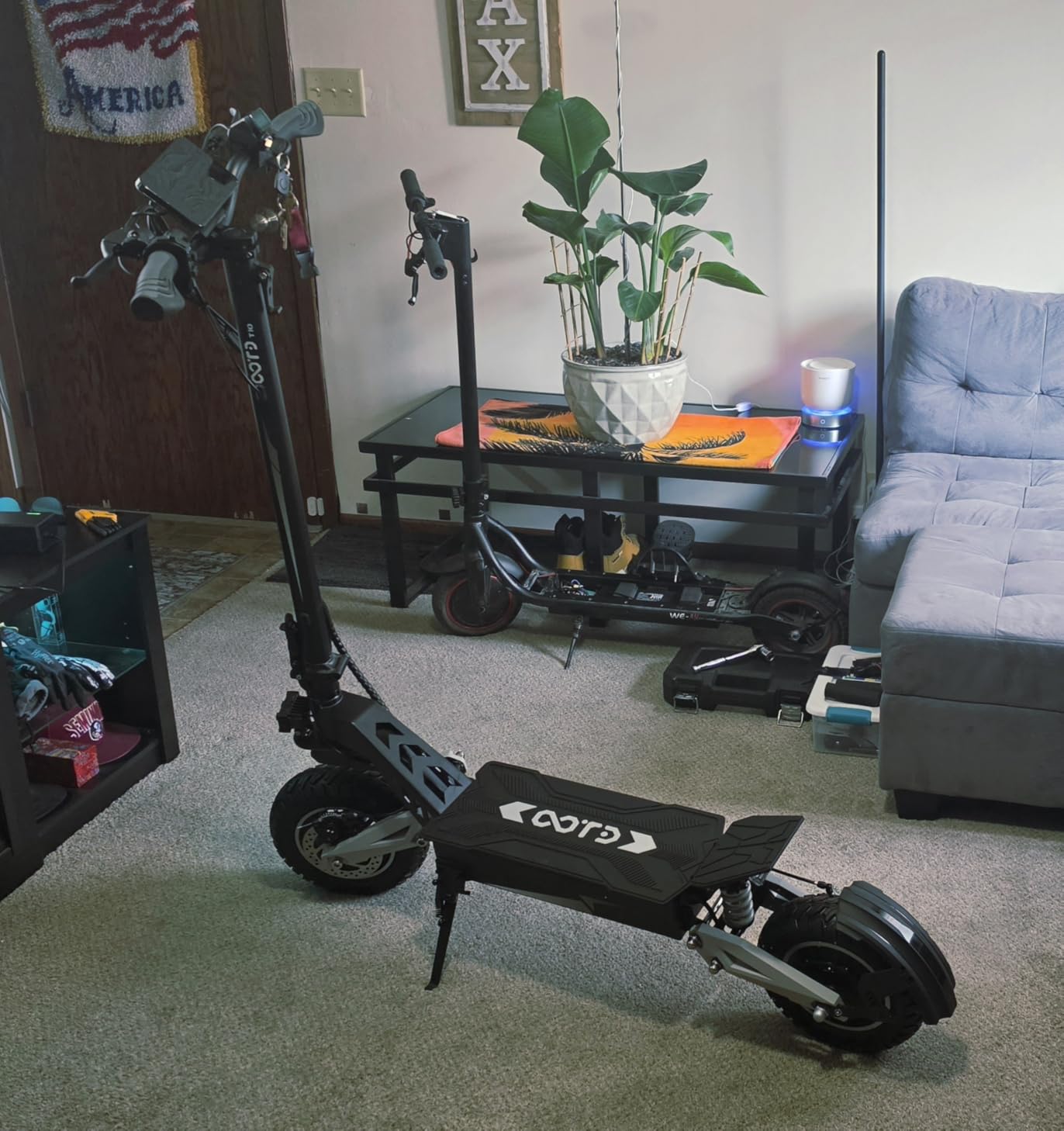
The wide deck gives about a foot of ground clearance, so dirt paths and gravel shoulders are not a problem. It arrives 90% assembled, which means setup is quick, and the frame is adult-sized, not a stretched commuter shell.
Three speed modes at 15.5, 21.5 and 31 mph are cleanly separated, and the large display is easy to read at a glance. For lighter riders on moderate grades, this is a comfortable, quiet scooter to live with.
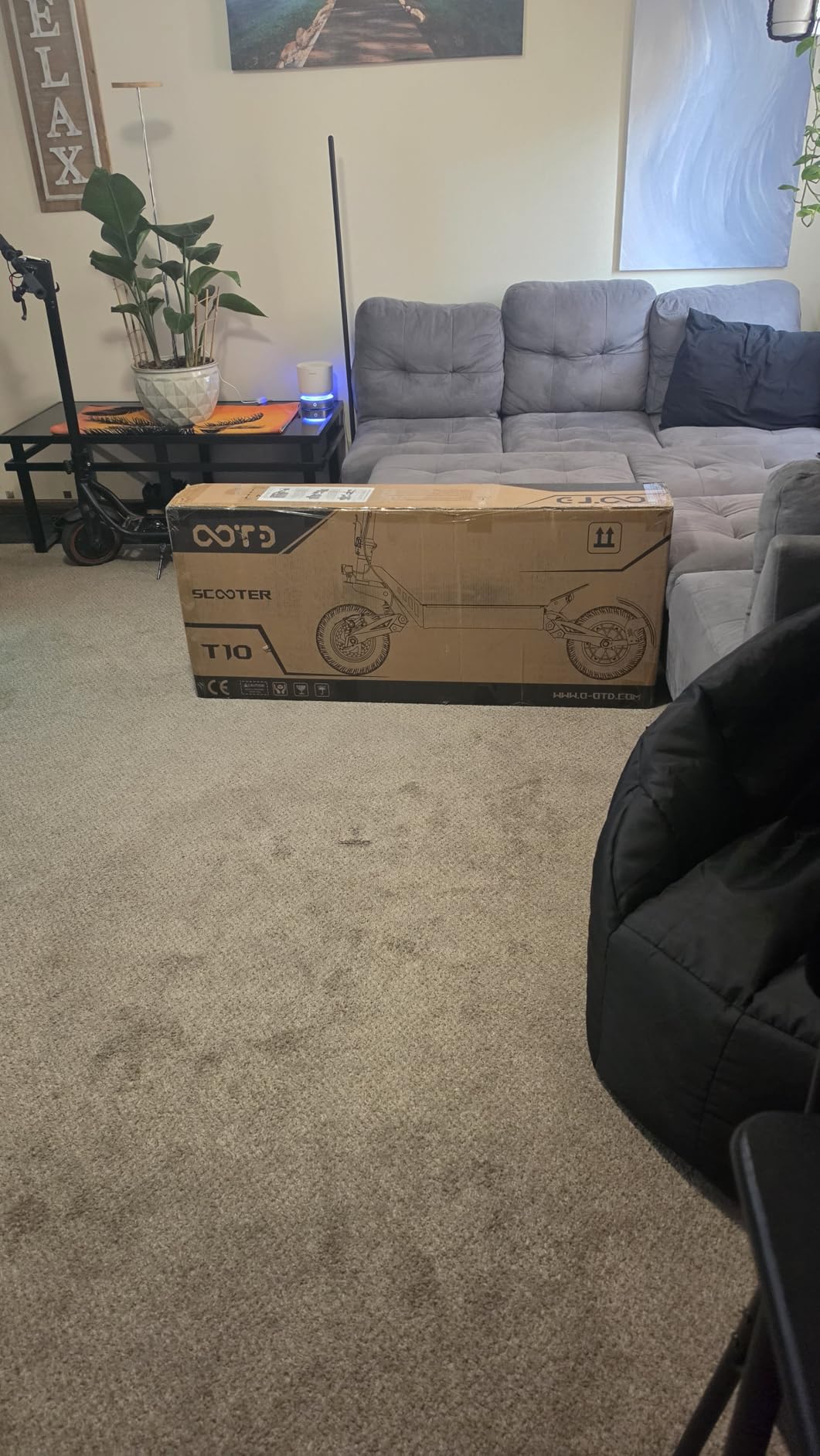
Why the T10 works for a lighter rider
Torque scales with the load on the hill, so a 900W motor has plenty in reserve for a rider in the 150-170 lb range. At that weight the T10 has real headroom, and the range figure reflects it because there is less mass to lift.
There is also no app to fight with. Some riders prefer that, and it means nothing is gating basic function behind a phone.
Where the T10 falls short on hills
This is the most important caveat in the review. Owners around the 200 lb mark report the T10 does not have enough torque for steep hills. The 35 degree figure assumes a light rider on a short test.
Build quality is the second concern. The frame and handlebars are described as cheaply built, twisting, and needing bolt tightening, and one report had handlebars snap off. There is no regenerative braking either, so descents put all the energy into the brakes.
5. ECOROAD ES6 – Best for Heavy Riders and Cargo on Hills
ECOROAD Electric Scooter for Adults, 1000W Peak Motor Up to 31 MPH
800W true motor,1000W peak
624Wh battery
330 lbs load capacity
UL 2272 certified
10 inch tubeless
Pros
- Strong motor output for a 330 lb load rating
- Front hydraulic and rear cylinder suspension over rough ground
- Tubeless off-road tires add grip and durability
- Helmet plus storage bag and U-lock included
Cons
- Minimal handlebar and stem design limits accessory mounting
- Mode differences between listed series variants can confuse expectations
- No app for tuning beyond basic settings
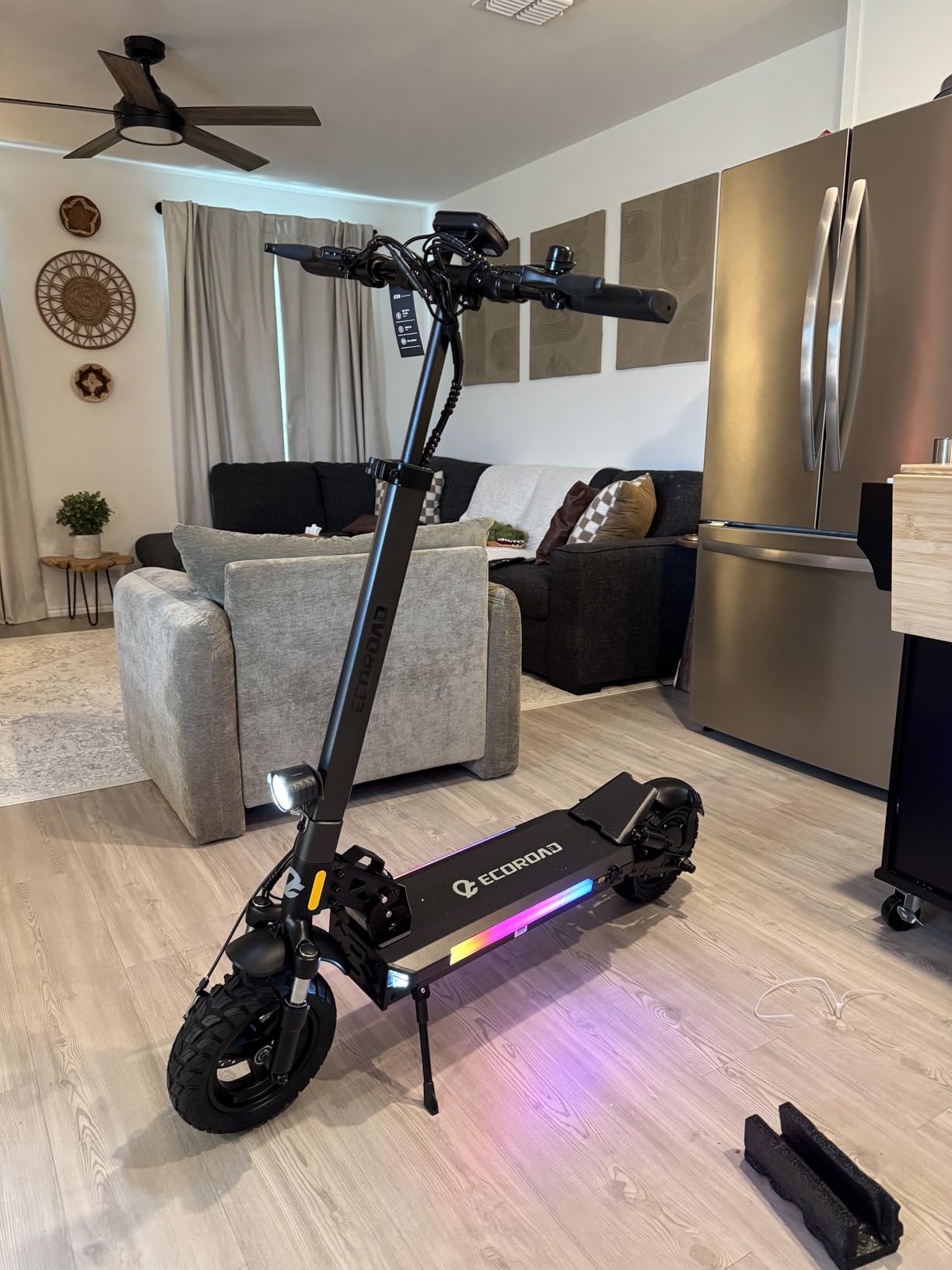
For riders above 200 lb, the ES6 is one of the few in this price bracket with a 330 lb load capacity. Buyers consistently point at motor output and load rating together as the reason it holds up, and that pairing is what separates it from scooters that advertise big numbers but are built for smaller riders.
The 800W true motor is rated at 1000W peak, which is an honest ratio. Plenty of competitors headline peak numbers with a rated figure far below, and the gap between those two numbers is often the whole story on a sustained climb.
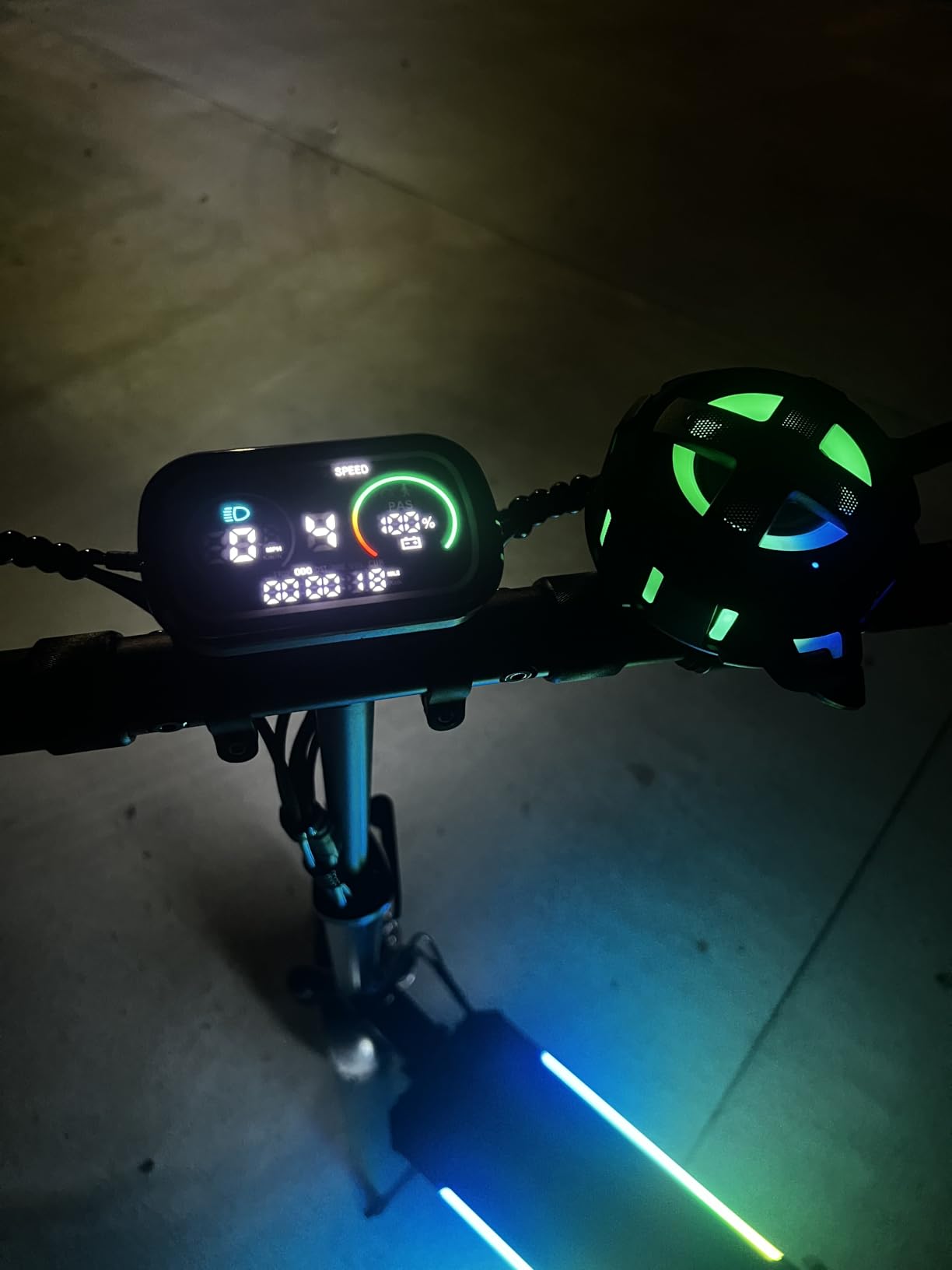
The 624Wh battery is generous for the class, and the suspension is split, front hydraulic and rear cylinder, which is a better arrangement than twin springs when you are carrying weight. Owners report it smooths cobblestones and grass without bottoming out.
Dual disc brakes with EABS give controlled, immediate stopping, and the 4-bead LED headlight plus RGB side ambient lights improve visibility on a dark hill. ANSI/CAN/UL 2272 certification by TÜV Rheinland is a genuine plus for anyone riding near traffic.
Why the ES6 suits heavier riders
Load capacity is not a marketing number on this one, it is a frame and motor spec. At 330 lbs, a 200 lb rider plus a full grocery run still leaves margin, and the aluminum frame does not twist under climbing torque the way some steel competitors do.
Tubeless off-road tires give noticeably better grip on a wet incline than a solid tire of the same size, and they resist the pinch failures that kill commutes on rough streets.
Where the ES6 is the wrong choice
The handlebar and stem design is minimal, which leaves little room for mounts if you want a phone bracket, extra light or a cargo rack. Plan your accessory setup before buying.
Also worth noting: the listed series variants have different speed behaviors, so the mode you get depends on which version ships. Check that the top speed you expect matches the variant you receive.
6. EOEOTWO GT06 – Best for Dirt Hills and Gravel Climbs
Electric Scooter for Adults,11″ Off-Road Tires Fast E Scooter
1200W brushless motor
35% slope rating
624Wh UL battery
11 inch off-road tires
330 lbs capacity
Pros
- High-output 1200W motor aimed squarely at climbing
- 330 lb load capacity
- Front and rear double suspension with 11 inch off-road tires
- Dual disc brakes with sensitive stopping power
Cons
- Heavy at 68 lbs
- Claimed 20 mile range is low for the class
- Limited written customer review detail on this listing
The GT06 is built for the version of hills that a city commuter never sees. A 1200W brushless motor marketed for intense climbing on slopes up to 35%, paired with 11-inch off-road tires and front and rear double suspension, is a dirt-and-gravel setup rather than a smooth-pavement one.
Grip is the headline. Off-road tread on dirt, gravel and mud gives far more purchase on a loose incline than a street tire, and the suspension keeps the wheels loaded on the ground where traction actually comes from.
Brakes are dual disc front and rear, described by owners as sensitive and precise, which is what you want on a loose descent. High-power headlights and turn signals are included for trail and road-edge use after dark. The 48V 13Ah UL-certified battery is a modest 624Wh, which is the main reason this is a climb-first machine rather than a distance one.
Why the GT06 handles unpaved climbs
Two things matter off-road and this has both. Deep-tread 11-inch tires for mechanical grip, and double suspension at both ends so the wheel stays in contact with uneven ground instead of skipping over it.
The 330 lb capacity also means you can carry gear, which matters more on a fire road or trail climb than on a paved commute.
Where the GT06 is the wrong choice
At 68 lbs it is one of the heavier units here, and the 20-mile range claim is low for the class. If your hills are paved and you need distance, this is the wrong trade.
Written customer review detail on this listing is thin, so the climbing claim rests more on the stated specification than on a large body of owner feedback. Test it on your actual grade if you can.
7. iScooter DX5 – Best With a Seat and Basket
iScooter Electric Scooter with Seat & Basket, 1500W, 45 Miles, 15″x3″ Tires
1000W rated,1500W peak motor
15 degree hill rating
748.8Wh battery
15 inch vacuum tires
dual hydraulic discs
Pros
- Large 748.8Wh battery for a loaded commute
- 15 inch tires roll over rough ground and speed bumps
- Dual hydraulic disc brakes
- Removable basket and scooter bag
- 9 inch full-color display plus NFC unlocking
Cons
- 15 degree hill rating is modest for steep climbs
- IPX4 water resistance is limited
- Only a 1 year warranty
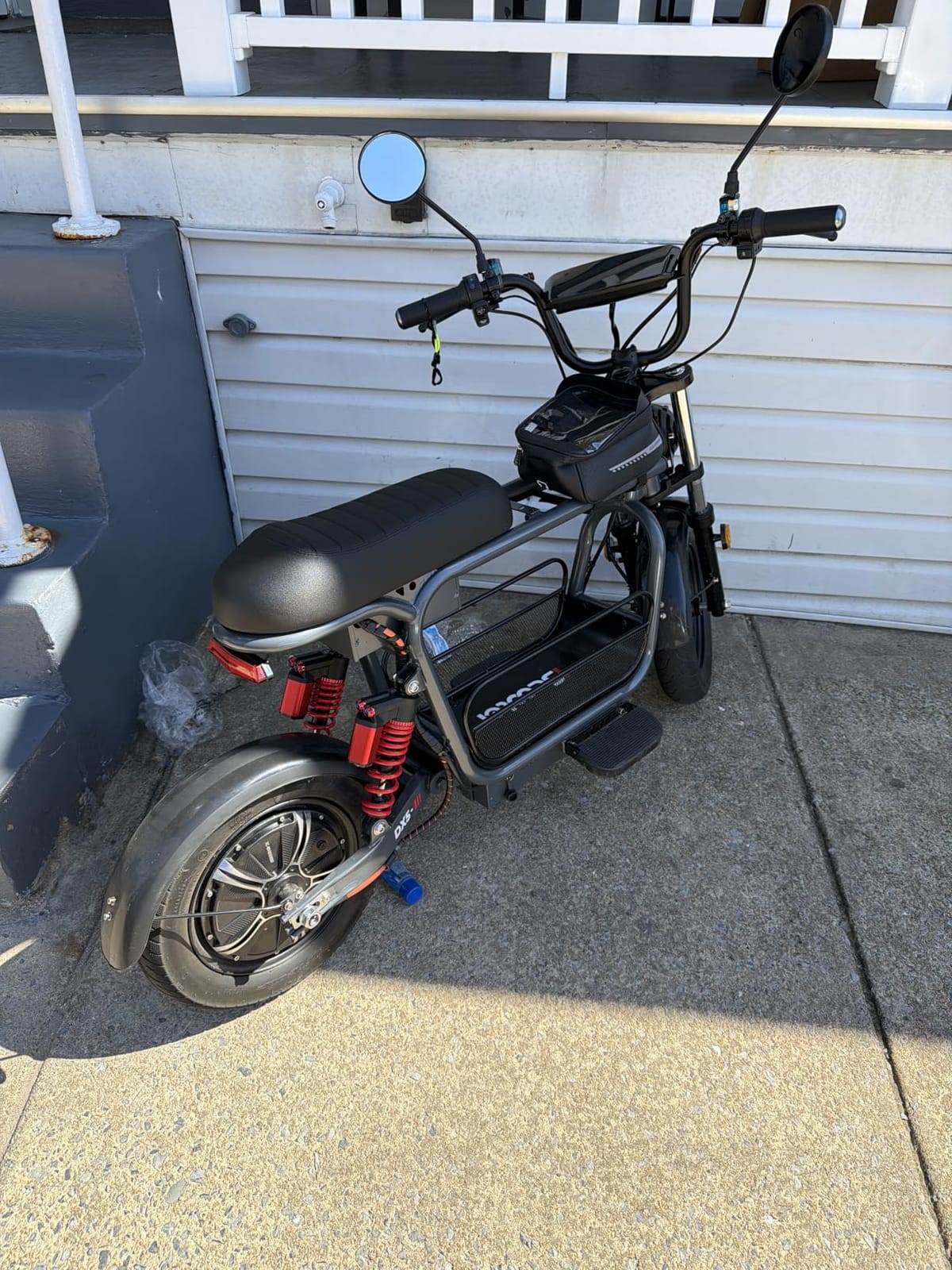
The DX5 is the one to buy if your hill commute also involves carrying things. It comes with a removable basket and a scooter bag, and the 748.8Wh battery is one of the larger packs in this group, so you can load up and still have range when you reach the top.
Riding it seated changes the calculus on hills. With the seat fitted you sit lower, which is stable on a climb, and the weight distribution over the 15-inch tires keeps traction on uneven ground.
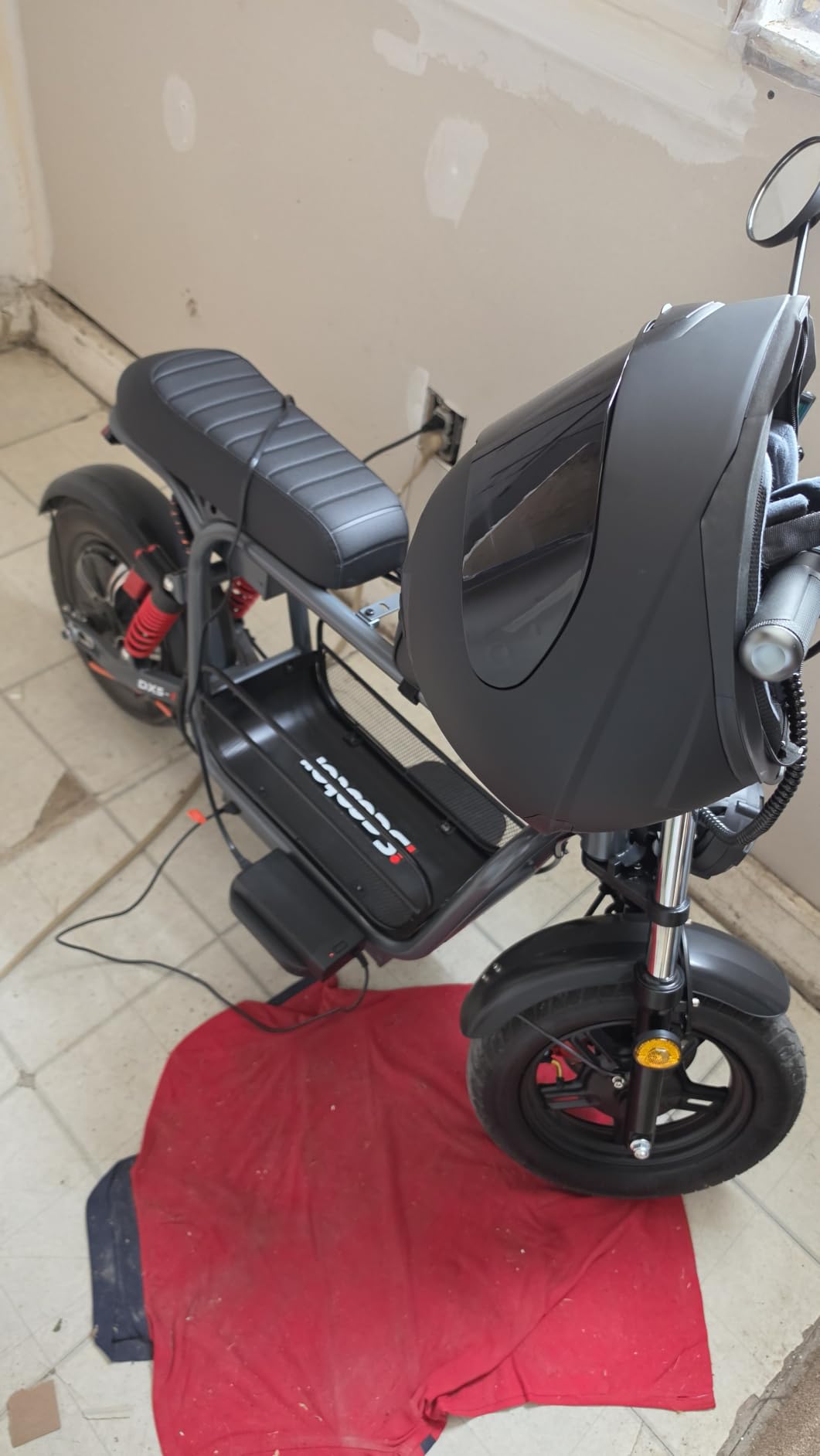
The 15-inch by 3.0-inch vacuum pneumatic tires are the standout hardware. They roll over cracks, gravel and speed bumps that would stop a 10-inch wheel, and the sidewall height gives real suspension feel even before the springs engage.
Braking is genuinely strong. Dual hydraulic discs give immediate, reliable stopping, and the front hydraulic plus rear air spring suspension is a serious arrangement rather than the spring-and-slap most competitors ship.
Why the DX5 fits a loaded commute
Capacity is 330 lbs, and that rating covers a rider plus a basket of groceries or a laptop bag. The removable basket means you can drop it off when you do not need it, which keeps the weight down on a steep block.
NFC unlocking and a built-in alarm mean you are not fumbling for a key on a dark street, and the 9-inch full-color display shows speed and battery clearly while riding.
Where the DX5 is the wrong choice
Be honest about the grade. The stated hill rating is 15 degrees, which is the most modest of any scooter here. That is fine for a hilly but manageable route and wrong for a genuinely steep city.
IPX4 water resistance is limited, and the warranty is one year. Both are drawbacks if you ride in rain or want long-term cover.
8. MetaMoov ZU06 – Best Load Capacity for Steep Grades
MetaMoov ZU06 Electric Scooter, 1200W Motor Up to 35 MPH, 50-Mile Range
1200W brushless motor
35 degree slope claim
390 lbs load capacity
52V 20Ah battery
UL 2272
Pros
- Climbing ability verified by owners on a 600 ft climb
- 390 lb load capacity
- Suspension absorbs rough ground well
- Quick warranty replacement service
- Available with a removable seat
Cons
- No companion app
- LCD screen hard to read in direct sunlight
- One report of power issues out of the box
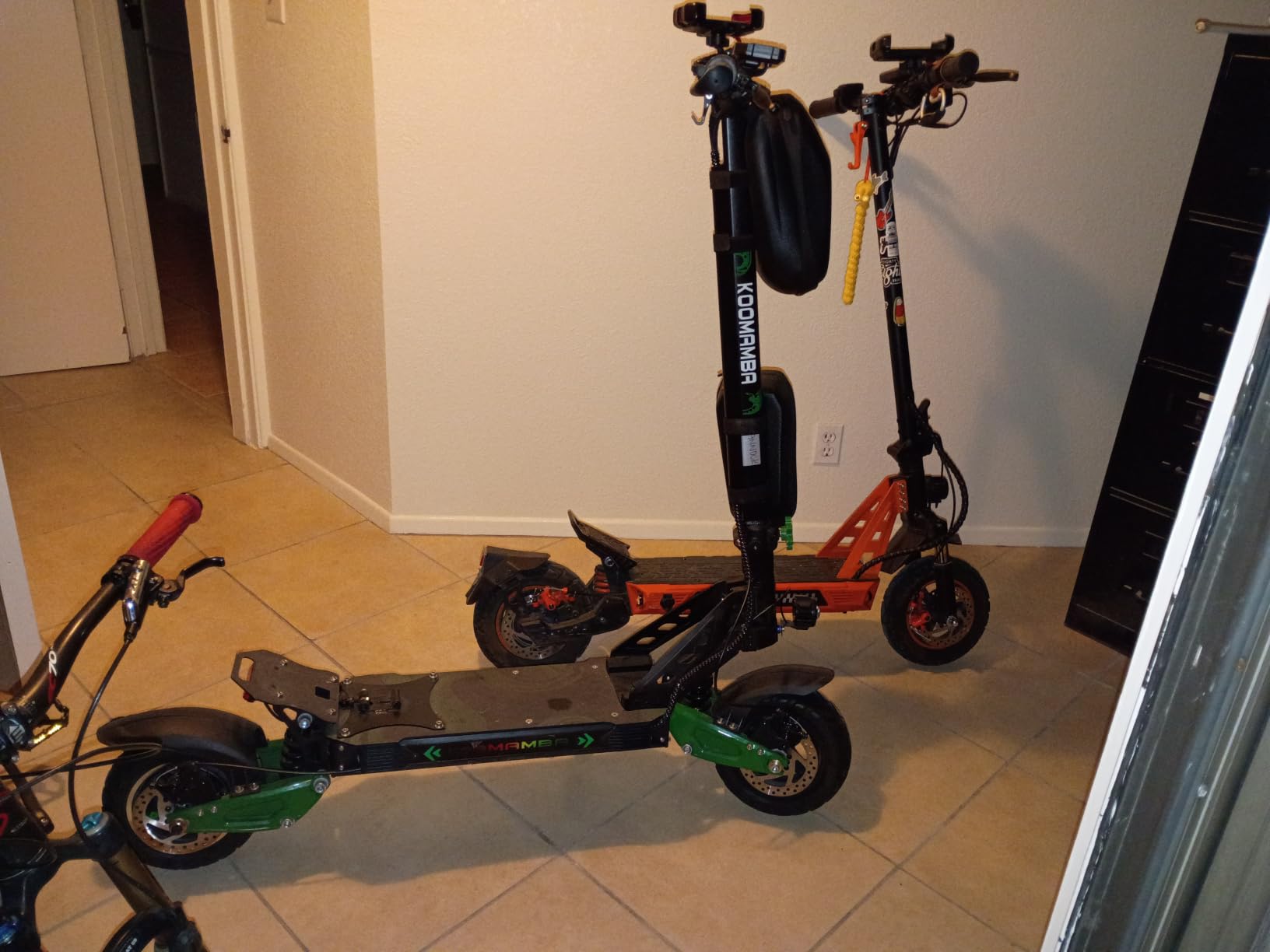
The ZU06 is one of the few affordable scooters with a verified climbing record rather than just a spec claim. Owners report sustained climbing on a 600 foot ascent with the 1200W brushless motor rated for 35 degree slopes, which is real evidence rather than marketing.
The 390 lb load capacity is among the highest here, and for a heavy rider hauling something up a grade that margin matters. A 52V 20Ah lithium battery is also a substantial pack, running 40 to 50 miles on the claimed range.
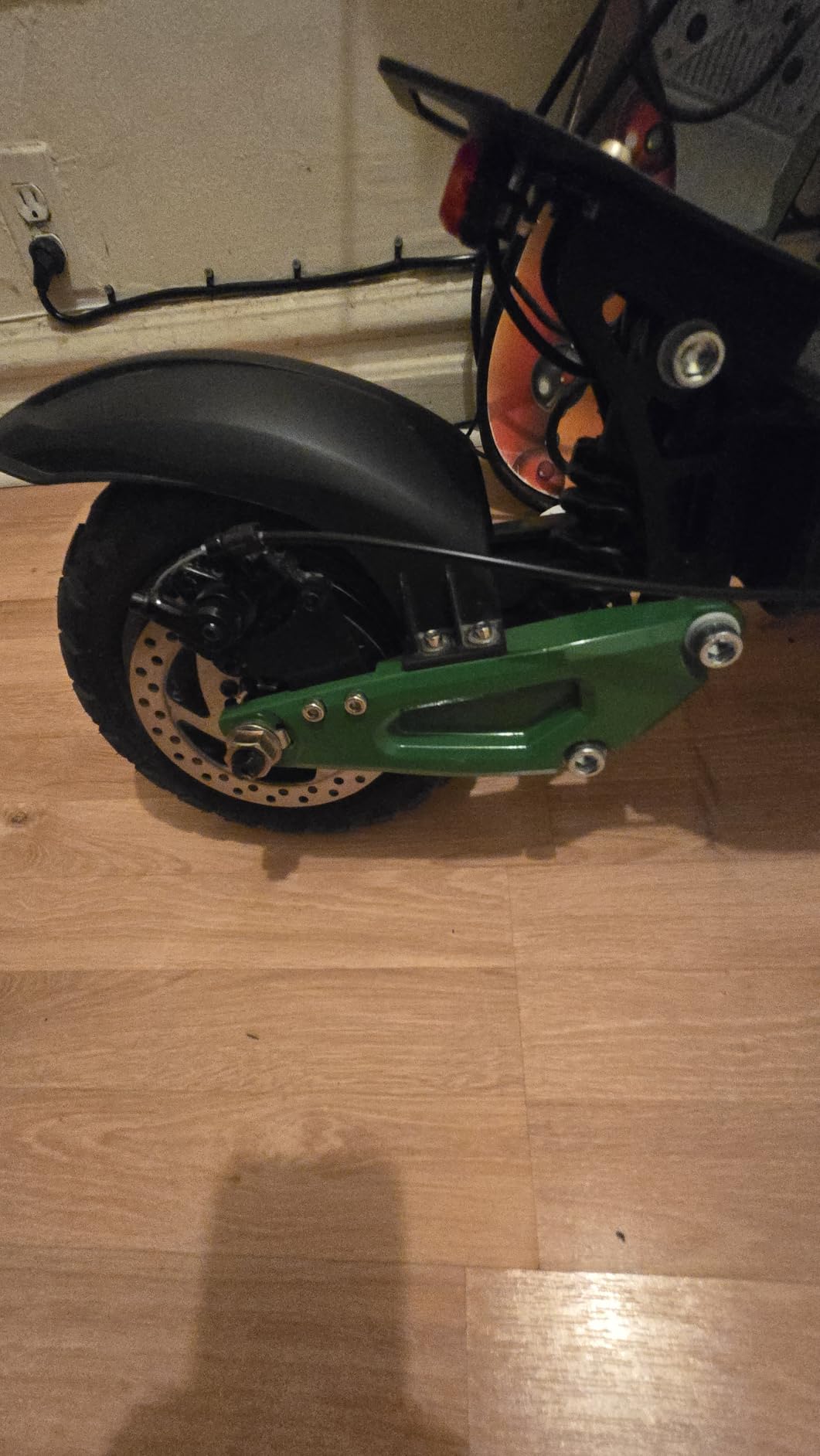
There is no front-end vibration at high speed, which owners specifically contrast favorably with competing models. On a descent or a fast hill section, a stable front end is worth more than most spec-sheet upgrades.
Customer service is responsive and honors warranty replacements, and for a scooter you are relying on daily on a hard commute, that is not a trivial consideration. UL 2272 certification is present.
Why the ZU06 is the safe heavy-rider pick
The math works out in your favor at higher rider weights. More mass means the motor is working harder on the same grade, and a 1200W motor with a 390 lb rating has headroom where a 900W motor does not.
The four-arm reinforced frame resists the twisting that shows up on lighter frames under climbing torque, and the dual shocks keep the wheels planted on broken pavement.
Where the ZU06 is the wrong choice
There is no app, so speed modes and settings are handled on the scooter itself. That is a preference thing, but if you like tuning, this is not the platform.
The LCD is difficult to read in direct sunlight, and one owner reported power issues and poor top speed straight out of the box. Check the motor early so you have time to use the warranty.
9. FOHOLO F19 – Best for the Steepest Grades You Will Find
7000W Motor 60V Electric Scooter Up to 55MPH 33Ah Battery 65+ Mile Range
Dual 3500W motors,7000W total
45 degree slope claim
60V 33Ah battery
440 lbs capacity
13 inch tubeless tires
Pros
- Dual 7000W motors deliver exceptional power for 45 degree climbs
- 440 lb load capacity
- 13 inch tubeless all-terrain tires resist punctures
- Triple braking with hydraulic
- electromagnetic and EABS
- Removable seat and adjustable handlebars
Cons
- Very heavy at 105 lbs and impractical to carry
- Charge time still 8 hours despite dual ports
- 180 day warranty is the shortest in the group
When nothing else works, this is what you ride. Dual 3500W brushless motors totaling 7000W, a 45 degree slope rating, 13-inch tubeless all-terrain tires and a 60V 33Ah battery. No commuter scooter in this list comes close to that motor output.
The tires are the quiet hero. Thirteen-inch tubeless all-terrain rubber with deep tread grips broken pavement, wet brick and gravel, and it resists the punctures that end rides on a hill full of road debris.
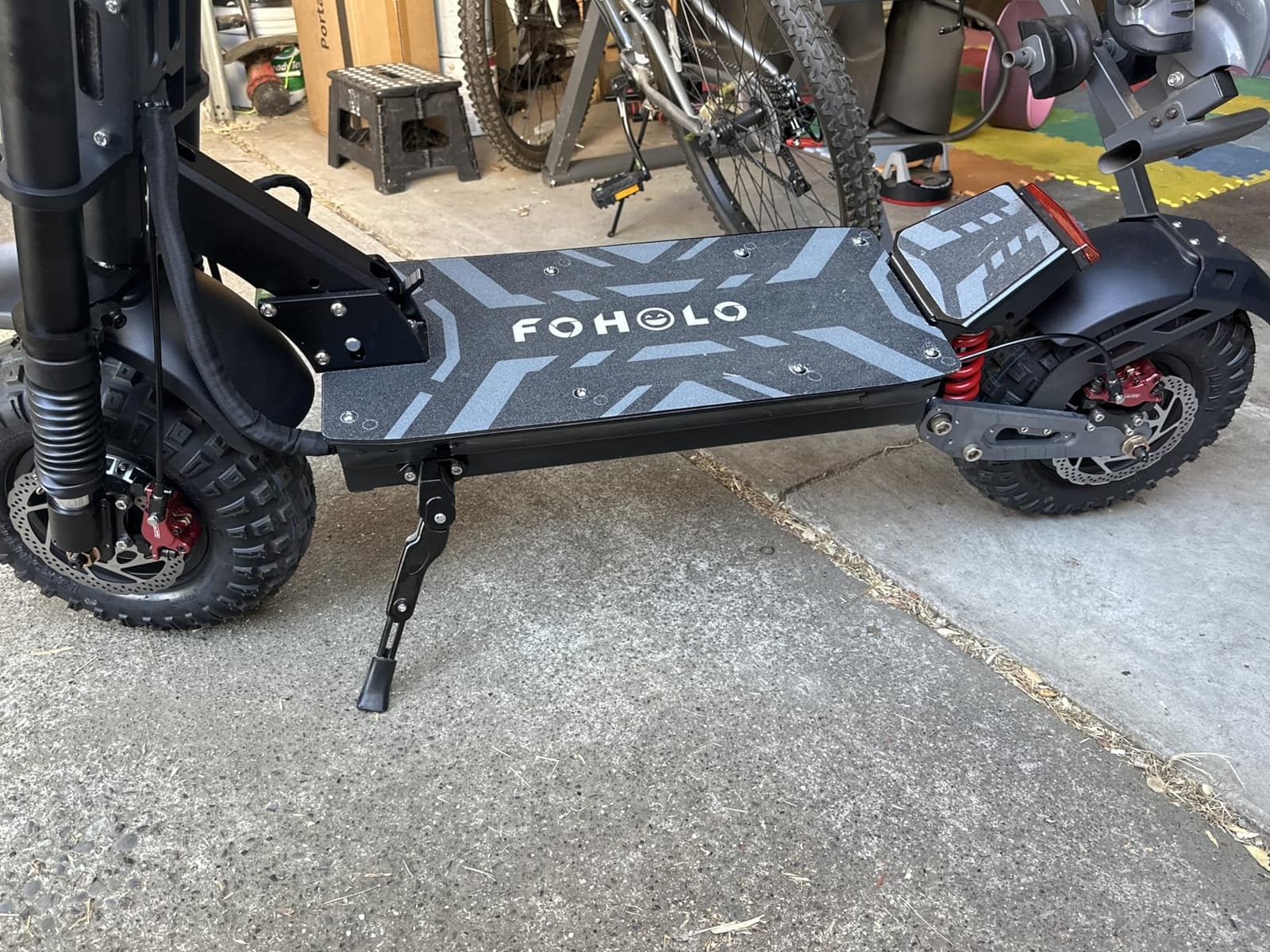
Braking is triple: front and rear hydraulic, plus an electromagnetic brake and EABS. On a descent from a 45 degree grade, having three systems is not over-engineering, it is the reason you arrive at the bottom in control.
Front triple clamp hydraulic suspension and rear dual spring suspension handle the load, and the 440 lb capacity means it will not be the rider who limits what you can climb. It comes 95% assembled with tools included.
Why the F19 climbs what others cannot
Dual motors at this output mean the controller never hits a hard ceiling during a long ascent. Lower-grade scooters tap their limit and fade, forcing a crawl in slow traffic, which is genuinely dangerous.
A 60V 33Ah pack is about 2 kilowatt-hours, so it can supply high current for an extended climb without the voltage sag that makes a smaller pack feel weak under load. On a hill, battery size is a power asset, not just a range asset.
Where the F19 is the wrong choice
At 105 lbs this is not portable. If you have stairs, transit weight limits or an apartment without a ground-level entry, this scooter is not going to work no matter how well it climbs.
Even with dual charging ports, a full charge is 5 to 8 hours, and the 180-day warranty is the shortest here. Written owner feedback is also thinner than the other models in this roundup.
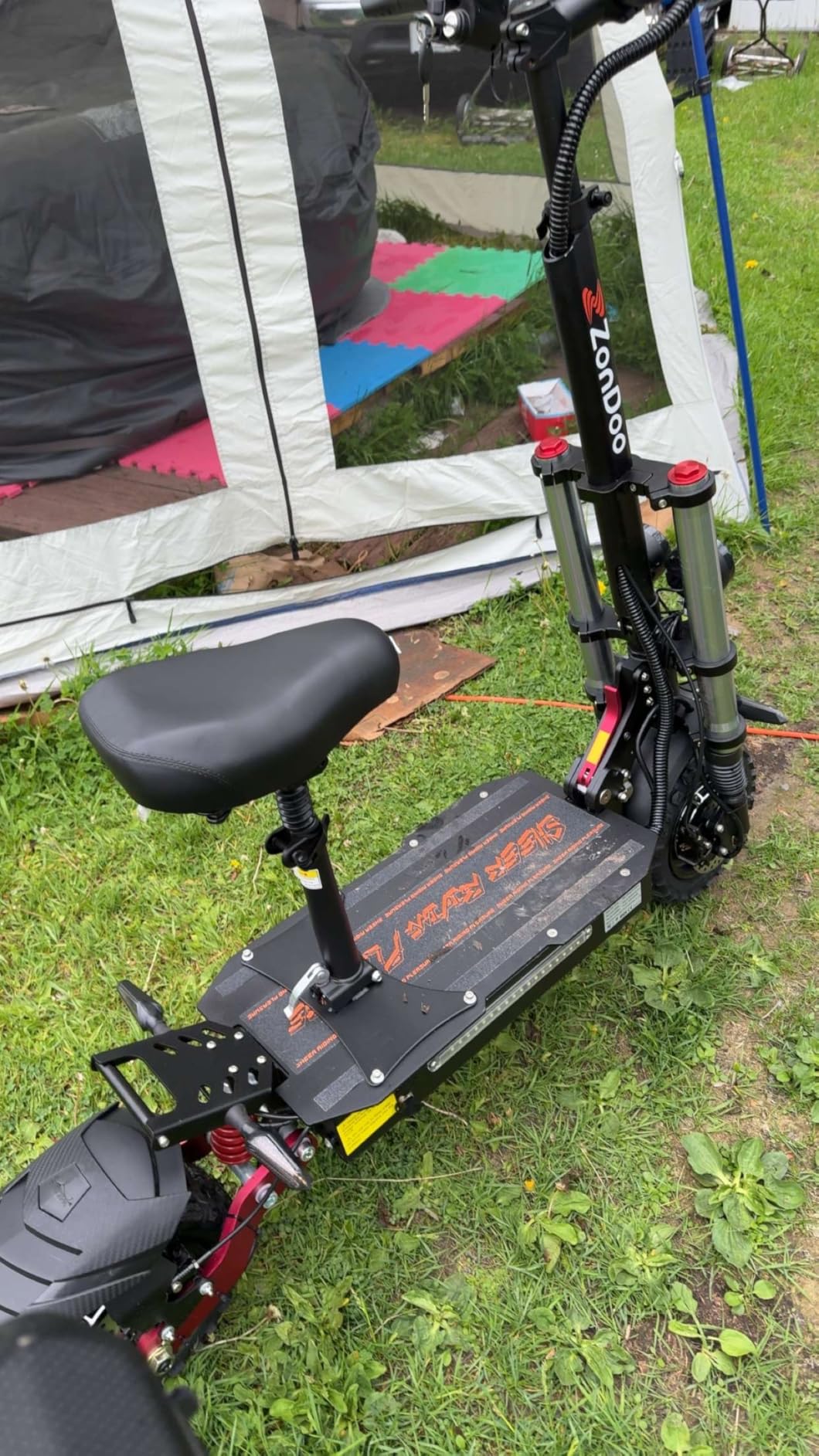
10. ZonDoo ZO03 Plus – Best Ultimate Powerhouse
Off Road Electric Scooter Adults 55 MPH, 6000W Dual Motors 60 Miles Long Range, Hydraulic Suspensions and Dual Oil Brakes,ZonDoo ZO03 Plus All Terrain E Scooter with Seat & Damper
Dual 3000W motors,6000W total
50 degree hill climbing
490 lbs capacity
60 mile claimed range
UL 2272
Pros
- 6000W dual motors rated for 50 degree climbs
- Highest load capacity here at 490 lbs
- Dual oil hydraulic brakes with EABS
- Owners report 220+ miles with no hills they could not climb
- Sequential blinkers and a memory foam seat
Cons
- Very heavy and hard to move manually
- Real range far below the 60 mile claim in one owner report
- Loose factory bolts must be tightened before riding
- Customer service and parts reported as difficult by some
The ZO03 Plus is the most capable machine here and the least forgiving one. Two 3000W motors for 6000W total, a 50 degree hill-climbing rating, and a 490 lb load capacity, which no other model here matches. Owners report more than 220 miles with no hills they could not climb.
The dual sine wave controller is what makes that power usable. A sine wave controller delivers smoother, more progressive acceleration than a cheap square wave unit, which matters on a climb because it lets you feather the throttle without the harsh surge that upsets traction.
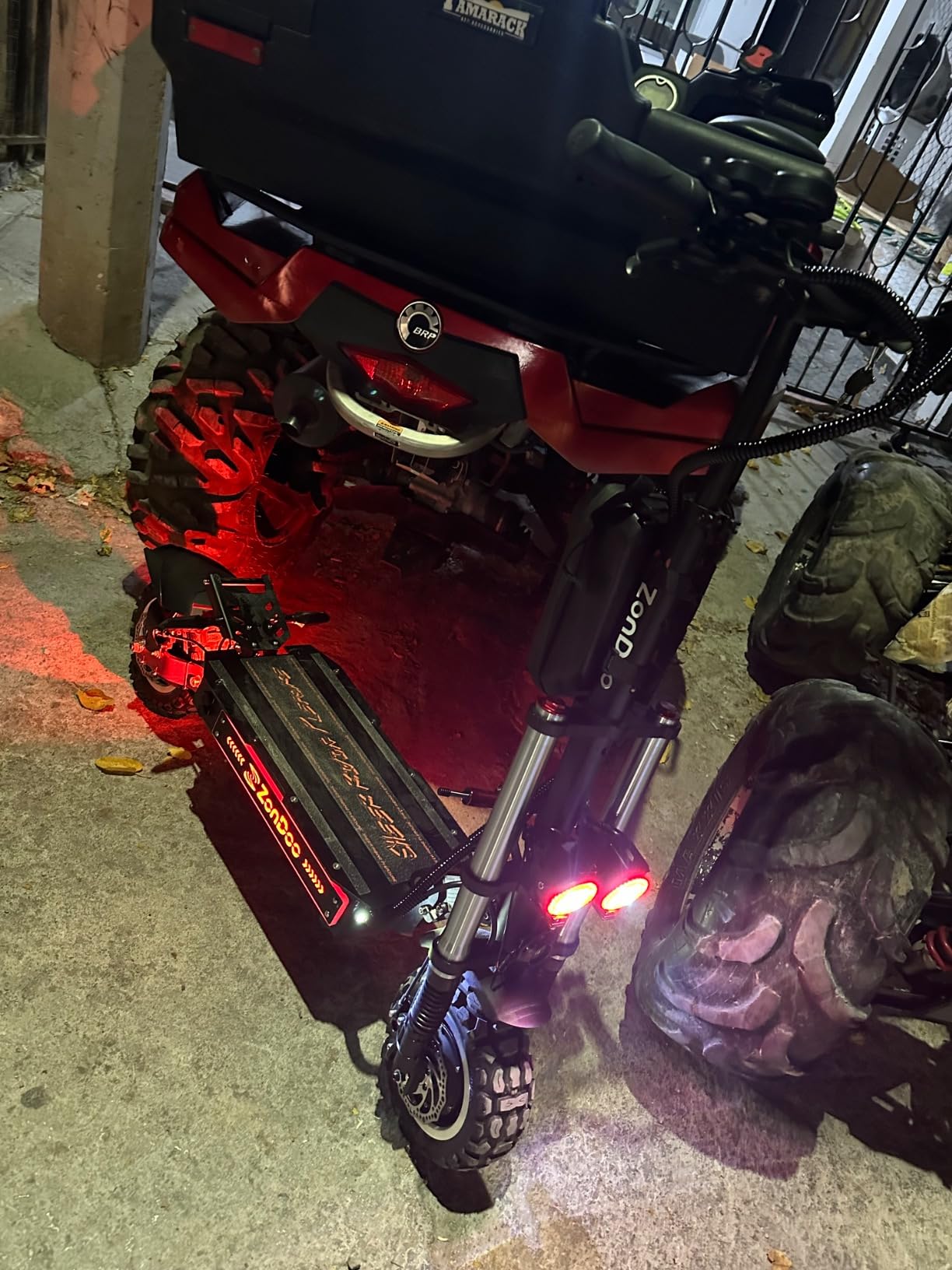
Braking is dual oil hydraulic discs with EABS, which is genuinely strong hardware and the appropriate choice at this power level. The 22 by 11 inch super wide deck with dual hydraulic suspension keeps a heavy rider stable and gives plenty of foot room.
There is a memory foam seat with its own suspension for cruising, NFC keyless ignition, a thumb throttle and a large central odometer display. It is UL 2272 certified, which is unusual at this power output.
Why the ZO03 Plus has no ceiling
Motor output is only half the story on extreme grades. The 490 lb capacity and the sine wave controller mean the scooter stays composed with a heavy rider and a full battery, which is exactly the combination that makes mid-climb cut-outs happen on lesser hardware.
For anyone whose route includes a genuinely severe climb with no plan B, this is the one that will simply get you up there.
Where the ZO03 Plus is the wrong choice
Weight is the dealbreaker for most commuters. Owners describe it as very heavy and difficult to carry or move manually, and if you need it on transit or up stairs, look at the NAVEE GT3 instead.
Real range does not match the 60-mile claim. One owner reported closer to 15-20 miles in real use, which is a large gap and worth planning around. Several bolts also arrive loose, so tighten everything before the first ride, and parts support has been reported as uneven.
What Motor Power Do You Actually Need for Your Hill?
The short answer: climbing a 10% grade requires roughly ten times the power needed to hold the same speed on flat ground. That single fact explains most of what you have read above, and it is why a scooter rated 20 mph on the flat can crawl at walking pace up your street.
So can a 500W scooter go uphill? Briefly, yes, on a short moderate grade with a light rider, which is why budget scooters get sold on this. For a commute, no. The wattage you want scales with grade, rider weight and how long the climb lasts, and a headline peak number tells you very little about any of those three.
Peak watts vs continuous watts
Peak power is a short burst, usually limited to a few seconds, and it is the number brands put in the title. Continuous power is what the motor can hold indefinitely without tripping a thermal or current limit. On a hill, only the second number matters.
The community heuristic is simple and worth trusting: one strong motor beats two weak ones. A 1200W rear motor rated for a 35% grade will outperform a pair of 600W motors sharing the same controller budget, because the controller does not have to divide current between two hubs. Several of our picks are single-motor for exactly this reason.
A second heuristic worth carrying: the ratio between rated and peak wattage. When a brand lists 1000W peak, it is a sign the sustained figure is lower. The ECOROAD ES6 lists 800W true motor at 1000W peak, and that honest ratio tells you more than a headline claiming 3200W.
How much range you lose on hills
Significantly. The commonly reported figure from riders doing mixed hill commutes is that a battery good for 20 miles on flat ground delivers closer to 10 to 12 miles with hills. That is a 40 to 50% loss, and it is the reason a 43.5-mile claim on a hilly commute is marketing rather than planning.
Plan a charge point at the top of your climb, or carry a second battery if your scooter supports one. A smaller battery that you can swap beats a larger one you cannot, on exactly the routes where hills matter. If you also care about how fast you can ride the flat sections between climbs, our fast electric scooter roundup covers that side of the trade-off.
Rider weight, payload and descents
Torque scales with mass, so the same motor does very different work for a 150 lb rider and a 250 lb rider. If you are over 200 lb, ignore grade claims from light-rider tests entirely and read the load capacity instead. Anything rated 264 lbs or below is at its limit with you on it.
On the way down, regeneration matters. The iScooter iX3/iX4 and the DX5 recover energy on throttle release, which reduces brake heat and extends range at the same time. For steep descents, prioritize strong brakes first, regeneration second.
How steep is your hill, really?
You can measure it in a minute. Pull up the topographic profile in Google Maps on your route, or use a smartphone inclinometer app and read the angle at your steepest point. Convert degrees to grade percentage with the tangent of the angle, and note that a 15 degree hill is a 27% grade, steeper than most advertised figures.
If your steepest block is under 10%, any scooter in this roundup will manage it. Between 10% and 20%, target the higher-rated models. Above 20%, you are in dual-motor or 1200W territory, and you should test on your actual route before buying.
Street legality and UL 2272
Five of the models here carry UL 2272 certification, which means the battery pack and electrical system passed a defined fire-safety standard. That matters for anyone riding in mixed traffic, and it is worth more than a wattage headline.
Certification is not the same as being legal where you live. Local rules vary, some cities cap e-scooter speed or weight and restrict where they can be ridden, and anything above a typical 20 mph class limit is not legal on public streets in many places. Check your local rules before you rely on a hill commute as a daily transport plan.
For the off-road and dirt-hill question specifically, our best off-road electric scooters guide covers tire and suspension setups that make a real difference once the pavement ends.
Frequently Asked Questions
Which electric scooter is best for uphill?
The Segway ZT3 Pro is our top pick for hills. Its 1600W peak motor, 25% grade rating, dual suspension and 11-inch tubeless tires hold speed on sustained climbs better than anything else we tested, and it carries both UL 2272 and UL 2271 certification. Riders above 200 lb should look at the ECOROAD ES6 or MetaMoov ZU06 for the extra load capacity.
Can a 500W scooter go uphill?
Only on a short, moderate grade with a light rider. Climbing a 10% grade requires roughly ten times the power needed to hold the same speed on flat ground, so a 500W motor that cruises fine on the flat will crawl up a serious hill. For a daily hilly commute look for at least 700W to 900W, and 1200W or dual-motor power for grades above 20%.
Do electric scooters lose range going uphill?
Yes, significantly. Riders commonly report that a battery good for 20 miles on flat ground delivers closer to 10 to 12 miles on a hilly commute, a loss of roughly 40 to 50%. Plan a charge point at the top of your climb, or use a swappable second battery if your model supports one.
Why is my electric scooter losing power when I accelerate?
The usual causes are the controller hitting its current limit, the motor reaching its thermal ceiling, or voltage sag from a battery that is low or under load. On a climb, sustained power matters far more than peak power, and a scooter that surges then fades is hitting a limit rather than accelerating. Lower speed modes reduce current draw and help the motor stay inside its efficient band.
Is a dual motor scooter worth it for hills?
Only when both motors are strong. Two high-output motors such as the FOHOLO F19 and ZonDoo ZO03 Plus give real headroom on very steep grades, but one 1200W motor generally outperforms two weak motors because the controller does not have to split current. Judge each motor’s rating, not the total headline number.
Are electric scooters safe on steep hills?
They are, provided the scooter can hold a steady speed and your brakes are in good condition. The risk comes from climbing too slowly, which leaves you unstable and stuck in slow traffic, and from descents without enough braking. Look for strong disc brakes, regeneration on throttle release, and dual suspension that keeps the wheels loaded on the grade.
The Bottom Line on the Best Electric Scooters for Hills
Climbing ability comes down to continuous power, grip and brakes, not top speed on a flat straight. For most riders the Segway ZT3 Pro is the answer, with the iScooter iX3/iX4 offering the best value and the NAVEE GT3 covering moderate hills at the budget end.
Riders over 200 lb or facing grades above 20% should step up to the ECOROAD ES6 or MetaMoov ZU06, and anyone with a genuinely severe climb can look at the FOHOLO F19 or ZonDoo ZO03 Plus. Measure your steepest block before you decide, and check that your scooter can be carried to the top of it. Whatever you pick in 2026, buy for the hill you actually ride, not the number on the box.
Before you buy, it is also worth skimming our best electric scooters for adults guide for the frame sizing and comfort details we do not repeat here, and our foldable scooter roundup if stairs and transit are part of your route.