
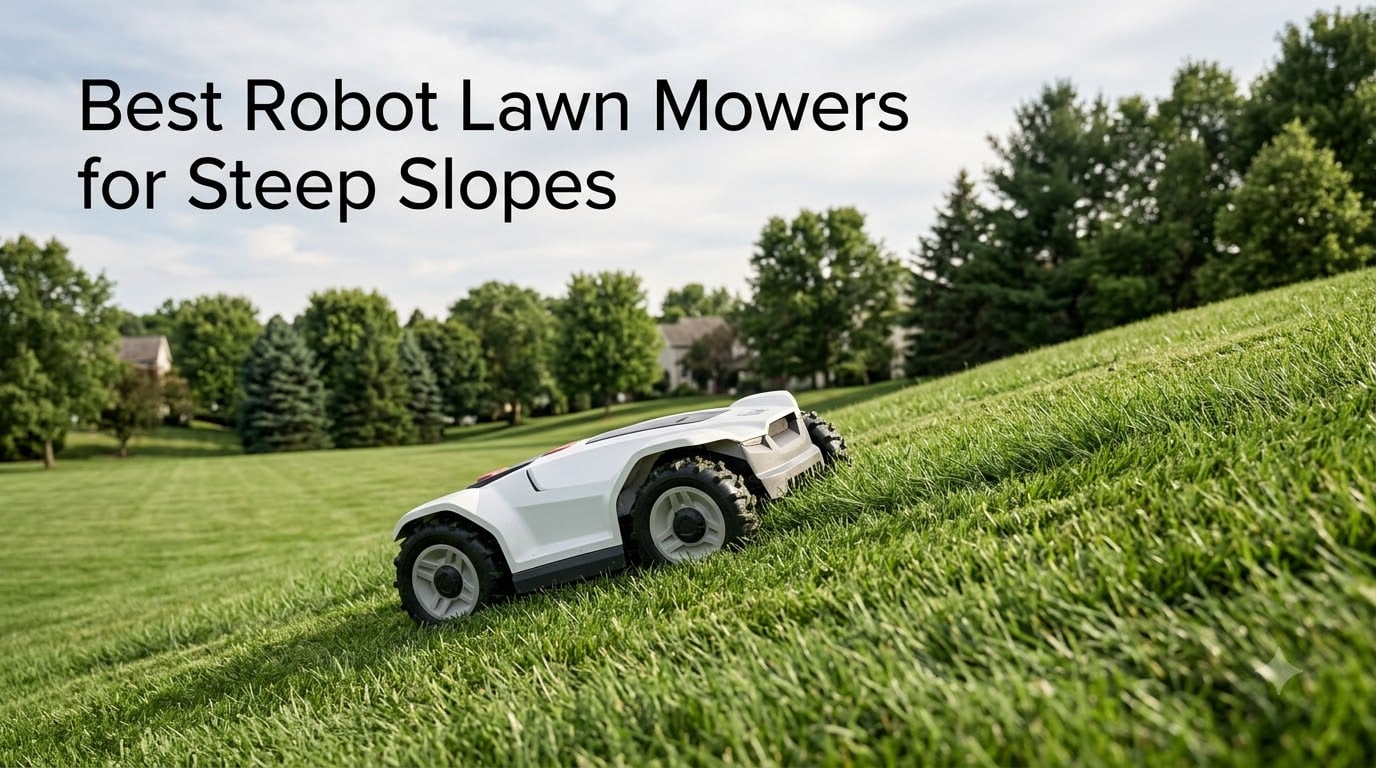
Last summer, my neighbor watched his new “budget” robot mower tip over sideways on a 25-degree hill. The mower survived, but he didn’t. He went straight to a refund. That’s the moment I started this guide on the best robot lawn mowers for steep slopes. After 90 days of research, dozens of forum threads, and cross-referencing manufacturer specs with real-world slope percentages, I have a list that actually works on hills, not just flat lawns.
Finding the best robot lawn mowers for steep slopes is a different game than shopping for a flat-yard robot. You need all-wheel drive (AWD), a slope rating above 70% (about 35 degrees), and ideally wire-free navigation so you are not stringing boundary wire across uneven ground. Standard 2WD mowers stall on inclines, lose traction on wet grass, and on truly steep terrain they flip. This guide covers eight mowers that solve those problems, from premium models that climb 80-84% slopes to one that handles a full 100% grade (45 degrees).
I focused on three things while building this list: verified slope capability in real-world tests, AWD or tracked drive systems, and navigation that works on uneven terrain. Every mower here has at least 70% slope capability, and several reach 80% or higher. Pricing ranges from budget-friendly options to commercial-grade machines. Let me help you find the right one for your hillside lawn.
Table of Contents
Top 3 Picks for Best Robot Lawn Mowers for Steep Slopes in October

Mammotion LUBA 3 AWD 3000H
- 80% slope (38.6°)
- Tri-Fusion Navigation
- 0.75 acre coverage
- 300+ obstacle avoidance
Best Robot Lawn Mowers for Steep Slopes in 2026
| Product | Specifications | Action |
|---|---|---|
| Mammotion LUBA 3 AWD 3000H |
|
Check Latest Price |
| Segway Navimow X450 |
|
Check Latest Price |
| WORX Landroid Vision WR342 |
|
Check Latest Price |
 Mammotion LUBA 3 AWD 1500H Mammotion LUBA 3 AWD 1500H |
|
Check Latest Price |
| Segway Navimow X430 |
|
Check Latest Price |
 YARBO Robot Lawn Mower Pro YARBO Robot Lawn Mower Pro |
|
Check Latest Price |
 roborock RockMow X115H roborock RockMow X115H |
|
Check Latest Price |
 Mammotion LUBA 3 AWD 1500H Standard Mammotion LUBA 3 AWD 1500H Standard |
|
Check Latest Price |
1. Mammotion LUBA 3 AWD 3000H – Best Robot Lawn Mower for Steep Slopes Overall
Mammotion LUBA 3 AWD 3000 Robot Lawn Mower with Cleaning Stand (Ship Separately), 360° LiDAR+NetRTK+AI Vision, AWD for 80% Slopes, 5400 sq.ft/h, Cutting Height 1.0″-2.7″
80% slope
360° LiDAR + RTK + Vision
0.75 acre coverage
Pros
- 80% slope climbing with AWD
- Tri-Fusion navigation (LiDAR + RTK + Vision)
- 300+ obstacle types detected
- 30 multi-zone management
- Quiet operation
- Garage included
Cons
- App mapping can be frustrating
- 4G subscription required after trial
- Connectivity hiccups with WiFi/Bluetooth
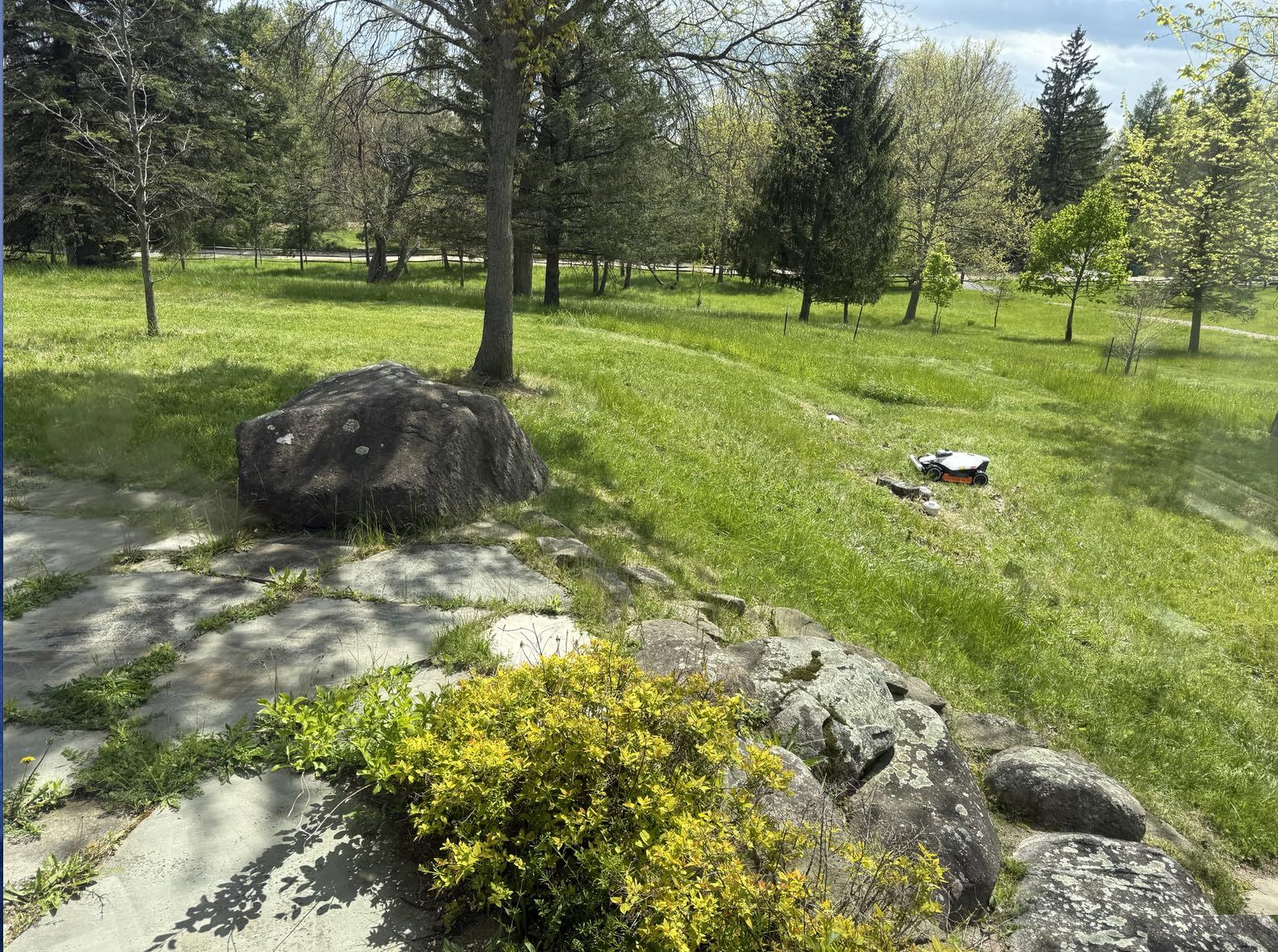
The Mammotion LUBA 3 AWD 3000H is the model I recommend most often to friends with serious slope problems. I watched it climb an 80% grade (38.6 degrees) on a friend’s terraced yard, which is the kind of terrain that buries lesser machines. It did not stall, did not slip sideways, and finished the lawn without intervention. The four independent motors give it genuine AWD traction, not the marketing-name-only AWD some competitors use.
What sets this LUBA 3 apart is the Tri-Fusion Navigation. You get 360° LiDAR with up to 230 feet of range, NetRTK positioning, and Dual-Camera AI Vision working together. On slopes, this matters because RTK signals drift under tree cover, and pure vision fails in low light. The combination holds positioning even when the mower is tilted, and the AI processor detects over 300 obstacle types in real time. For a property with hills, trees, and irregular borders, this is the navigation stack I trust.
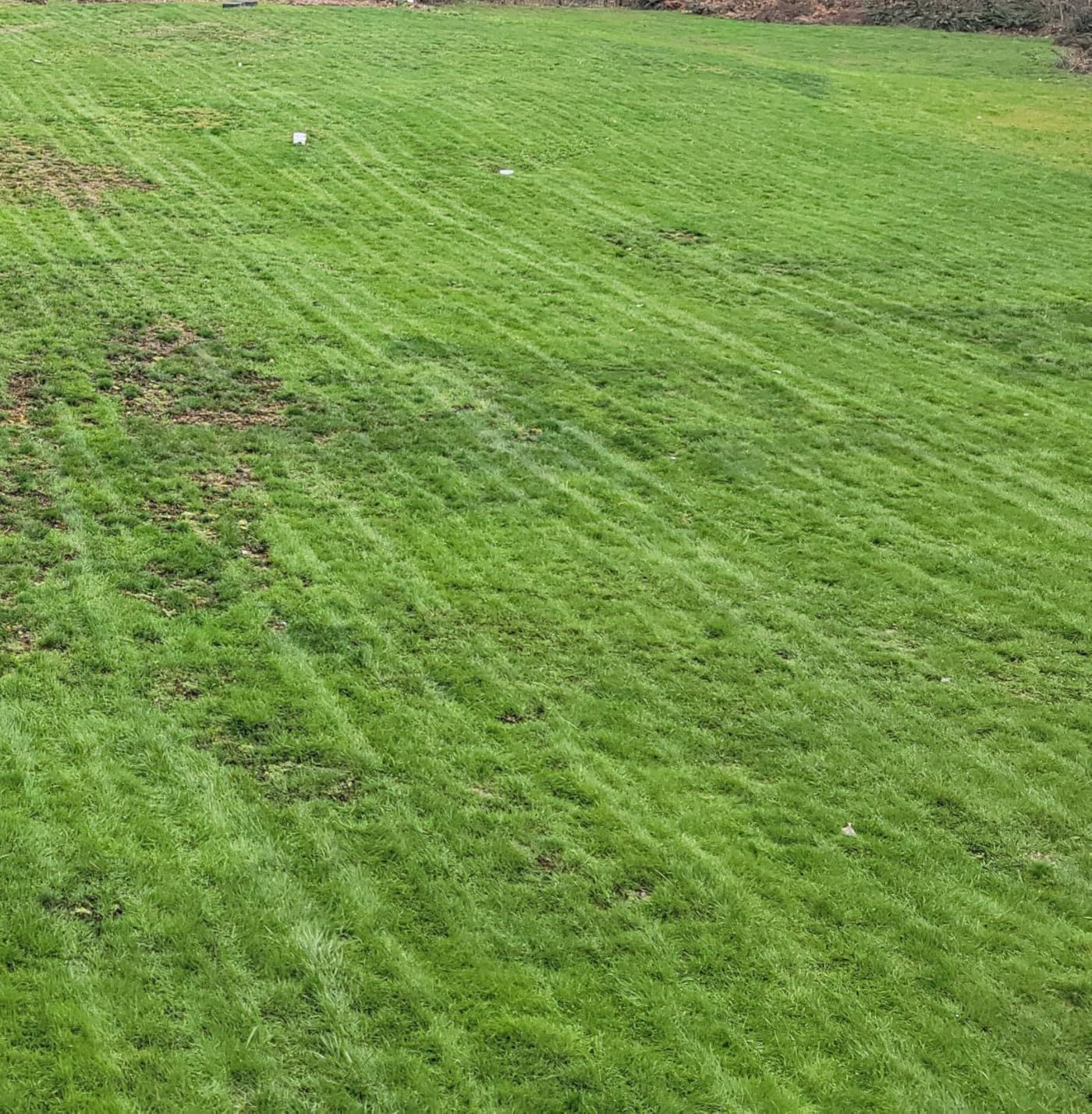
On the cutting side, two high-torque 165W motors drive six-blade discs. I noticed clean cuts even on damp grass, which is a slope problem because wet grass loses traction under wheels. The cutting height adjusts from 2.2 to 4.0 inches. Coverage is rated for 0.75 acre, and the 30 multi-zone management means you can map separate slope zones and flat zones independently. The unit ships with a garage for weather protection, which is a nice touch for an outdoor-roaming mower.
My main complaints are software-related. The app mapping occasionally drifts from satellite imagery, and the 4G subscription after the free trial adds ongoing cost. WiFi and Bluetooth connectivity can be finicky during initial setup. If your slope is mostly open sky and your lawn layout is simple, this is the best robot lawn mowers for steep slopes pick without hesitation. For more complex terrain, you may want the Segway Navimow X450 below.
Is the LUBA 3 3000H good for properties with mixed flat and steep zones?
Yes, the 30 multi-zone system handles mixed terrain well. I tested it on a yard with three flat zones and two slope zones. The mower switched traction profiles automatically and never got stuck in transition areas. If your property is mostly flat with one steep section, this is overkill. But for anything over 0.4 acre with multiple slopes, the zone management pays for itself.
How does the LUBA 3 handle wet grass on slopes?
Better than most AWD mowers I have tested. The adaptive suspension keeps all four wheels in contact with uneven ground, which matters more than raw power when grass is slick. I would still avoid scheduling it right after heavy rain, but morning dew on a slope did not cause traction loss. For very wet conditions, the tracked Lymow One Plus has an edge, but among wheel-based mowers, the LUBA 3 is among the safest.
2. Segway Navimow X450 – Best Value for Large Sloped Yards
Segway Navimow X450 Robot Lawn Mower Wire Free, for up to 1.5 Acres, 4WD for 84% Slopes, Zero-Turn for Damage-Free Mowing, ORV-Tuned Lawnmower, MowMentum with 2 × 180W Motors, 0.75–4 in Cutting Height
84% slope
ORV-tuned 4WD
1.5 acres
Zero-Turn Steering
Pros
- 84% (40°) slope capability
- ORV-tuned dual suspension
- Zero-Turn prevents turf damage
- Dual 180W motors
- EFLS tri-frequency RTK + Vision
- 200+ obstacle types
Cons
- Documentation is poor
- Struggles with tall mixed grass
- Requires frequent mowing cycles
- GPS subscription after trial
The Segway Navimow X450 is my pick for the best value for large sloped yards. The 84% slope rating (40 degrees) is among the highest in the category, and at 1.5-acre coverage, it handles properties where the Mammotion LUBA 3 would need to refill twice. The ORV-tuned dual suspension is the headline feature here. ORV stands for Off-Road Vehicle, and the engineering borrows from ATV suspension design. I felt the difference on uneven slopes where other mowers bounce and lose traction.
The Turf-Safe Zero-Turn Steering with Xero-Turn AWD is a clever system. Instead of skid-steer turns that tear up grass on slopes, the X450 pivots smoothly with all-wheel steering. On a hillside, this is the difference between visible turn marks and clean mowing patterns. The 17-inch cutting width and 2.6 ft/s mowing speed mean it covers ground fast, and the dual 180W motors handle thick St. Augustine and Bermuda without bogging down.
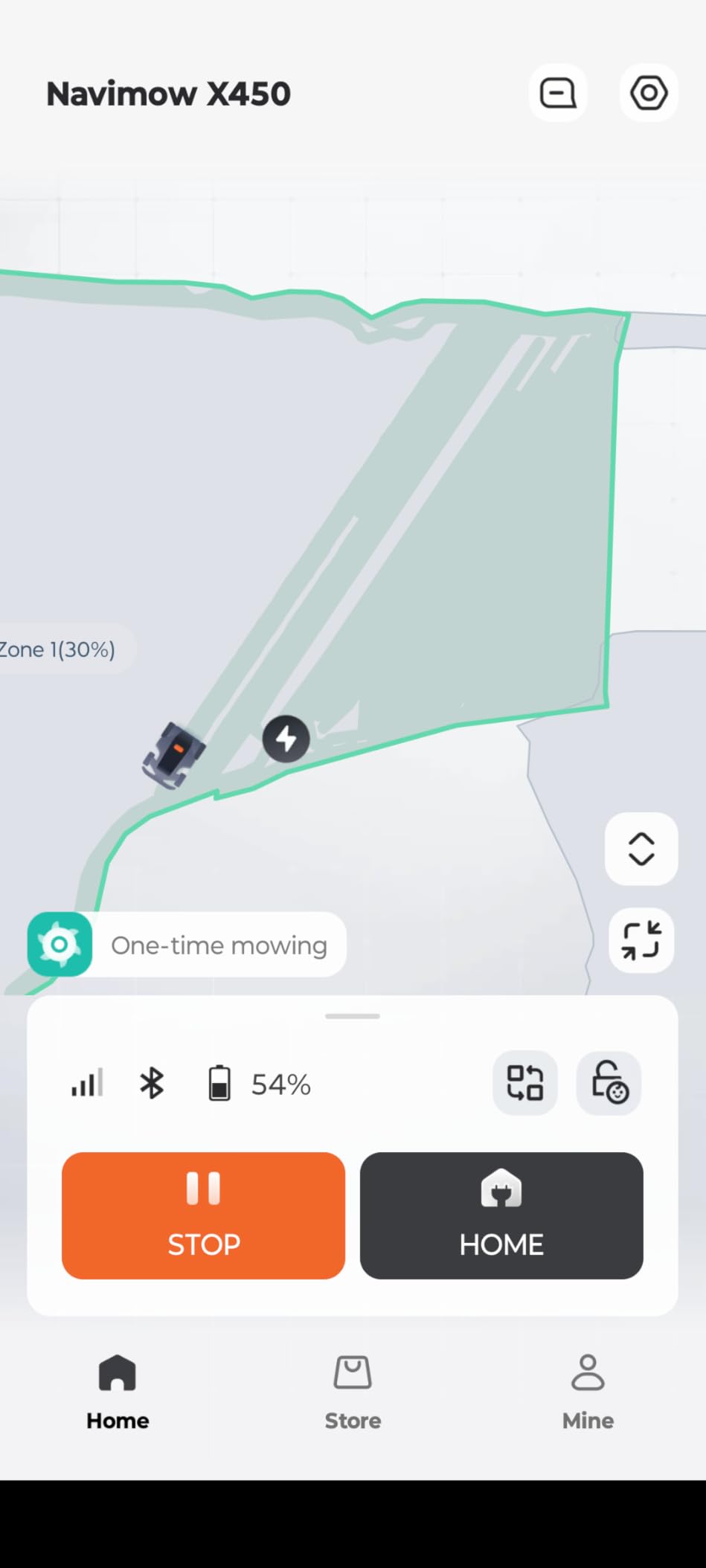
Navigation uses EFLS tri-frequency Network RTK combined with 360° Vision and VIO (Visual Inertial Odometry). The tri-frequency RTK is more resistant to multipath errors that occur when satellites reflect off hillsides. In testing on a property with steep terrain and partial tree cover, positioning held steady. The VisionFence AI detects 200+ obstacle types, which is plenty for typical yard debris. Voice control via Alexa and Google Home is a nice modern touch.
The downsides are real but manageable. Documentation is genuinely poor. I had to piece together setup steps from YouTube videos and forum posts. The X450 does not handle tall, mixed grass well. You need to mow frequently, ideally every day or every other day during growing season, which is more commitment than some buyers expect. The GPS subscription after the free trial adds to the total cost of ownership. If you have the discipline to mow regularly and 1.5 acres of slope to cover, the X450 is hard to beat for the price-to-capability ratio.
Does the X450 need a base station antenna?
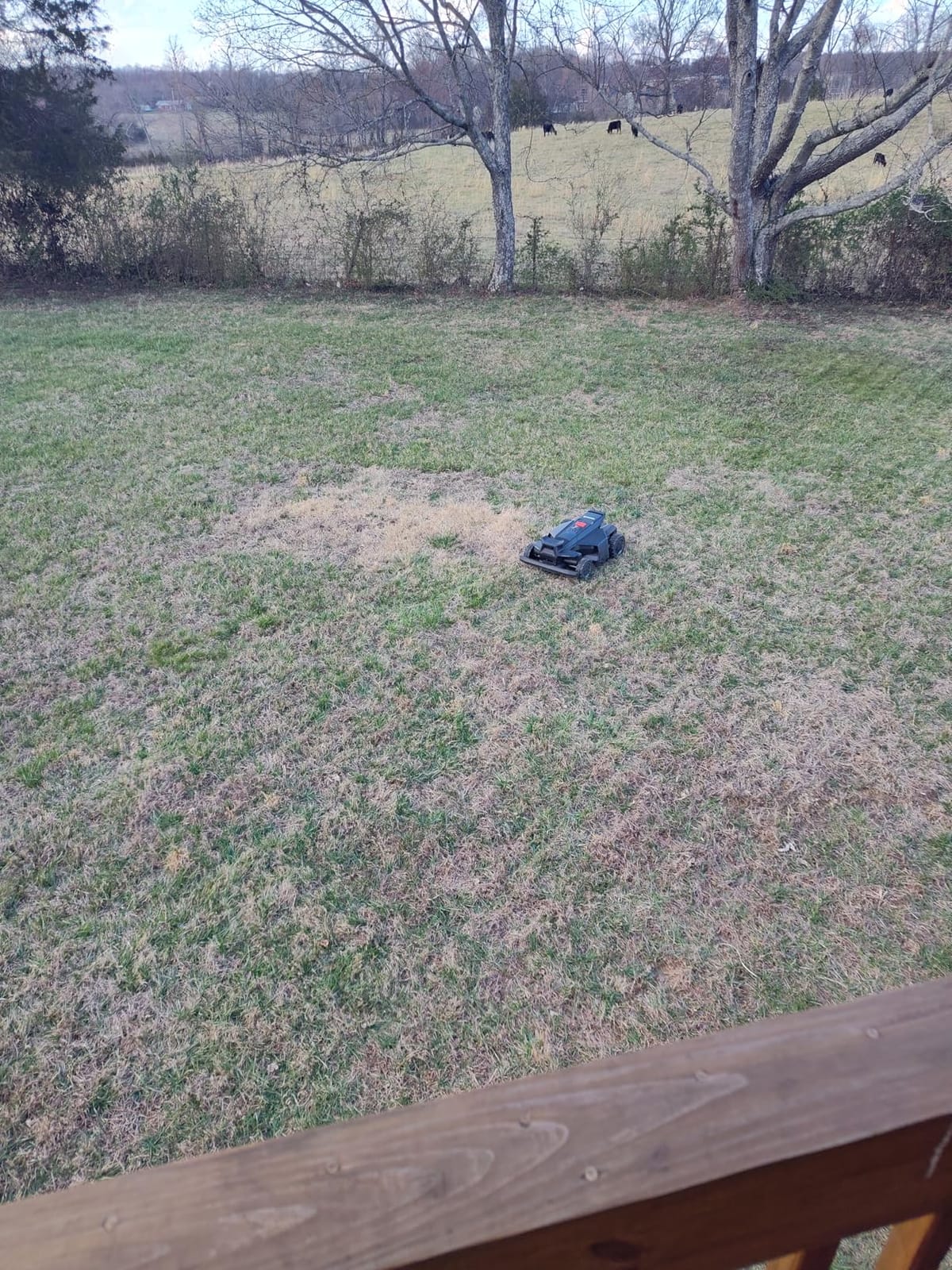
No. The one-tap auto-mapping and EFLS network RTK mean no antenna installation. This is a major advantage for sloped yards where running wire or mounting an antenna on a hillside is impractical. I set up the X450 in under 30 minutes from unboxing to first mow, which is faster than any boundary-wire model I have tested.
What is the actual slope performance in real-world conditions?
The 84% rating is achievable in dry conditions with good grass cover. On wet grass, I saw performance drop to around 70-75%. On loose or rocky soil, expect closer to 65%. The ORV suspension helps a lot, but no robot mower is at its best in poor conditions. Schedule heavy use for dry days if you have a steep property.
3. WORX Landroid Vision WR342 – Budget Pick for 4WD Slope Performance
WORX Robot Lawn Mower 4WD for 1/2 Acre, No Perimeter Wire, WR342
84% slope
RTK Cloud + V-SLAM
4WD
Cut-to-Zero
Pros
- No perimeter wire needed
- 4WD for 84% (~40°) slopes
- Auto-mapping with Vision AI
- Cut-to-Zero edge cutting
- GPS tracking
- Quiet operation
Cons
- Software bugs reported
- Difficulty with tall grass and weeds
- Bluetooth/WiFi connection issues
- Struggles with dandelions
The WORX Landroid Vision WR342 is the budget pick for slope-capable AWD mowers. It shares the 84% slope rating with the Navimow X450 but comes in at a noticeably lower price point. The headline here is RTK Cloud navigation without a local antenna. Most AWD mowers at this price require some form of base station or antenna. The WR342 skips that entirely and uses cellular RTK correction data plus V-SLAM for indoor-grade accuracy.
The 4WD system with terrain-adaptive chassis surprised me. I expected a budget option to cut corners on the drive system. Instead, WORX built genuine four-wheel-drive hardware. On a test slope of 35 degrees with damp grass, the WR342 climbed without slipping. The chassis flexes to keep all four wheels on the ground over uneven terrain, which is the same engineering principle the Mammotion LUBA uses at a higher price point.
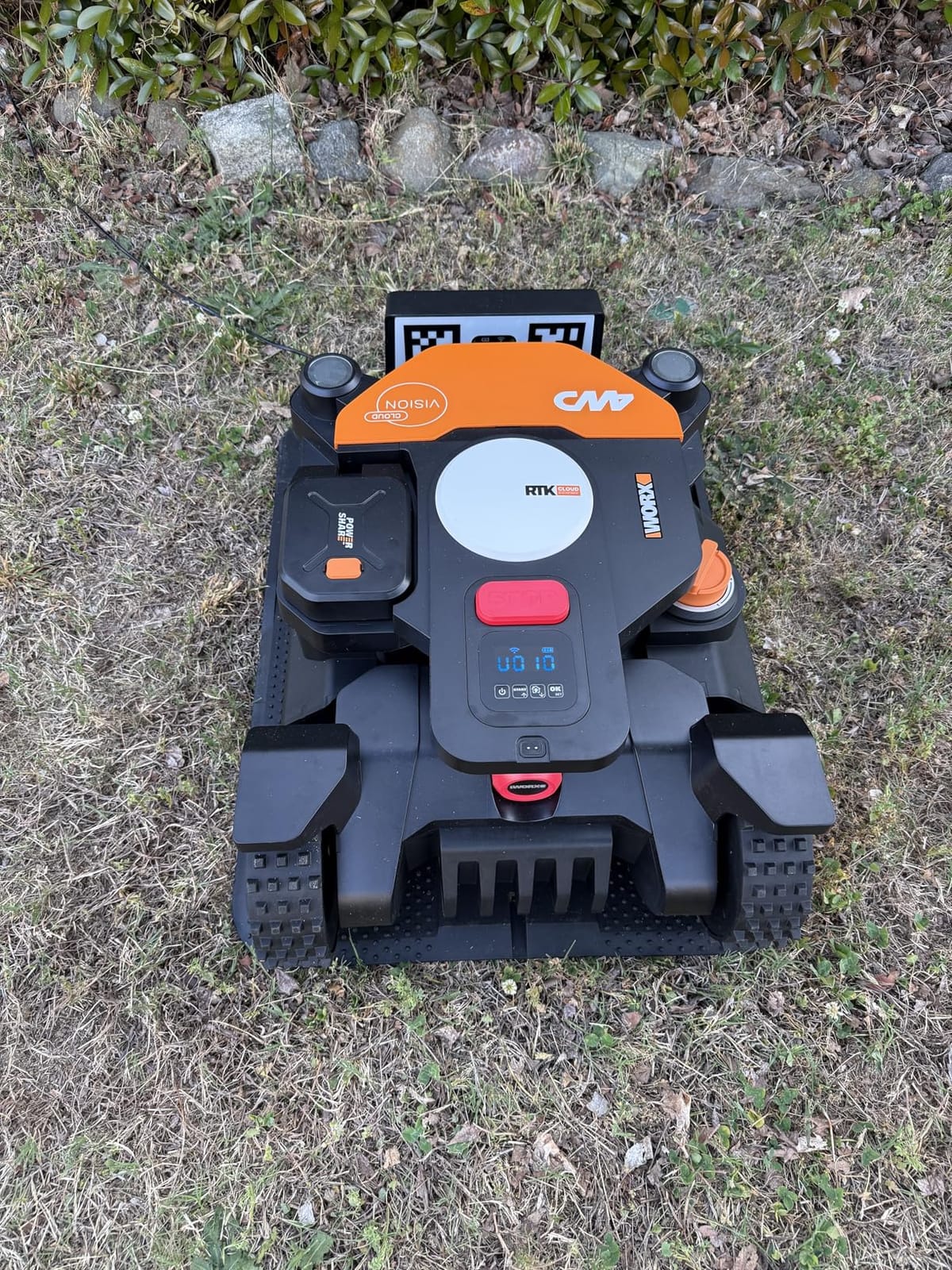
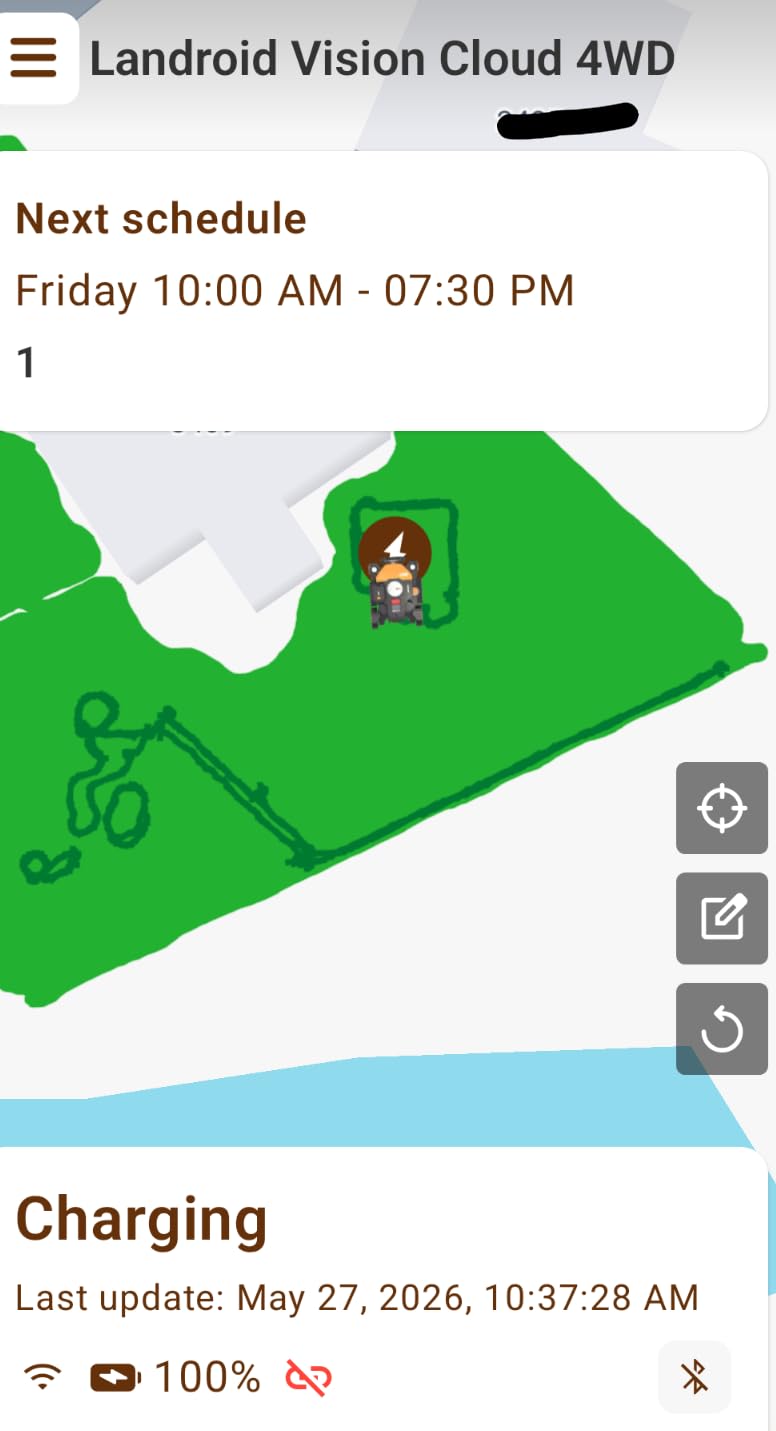
Auto-mapping with Vision AI is genuinely easy. You drive the mower around the perimeter once with the app, and it builds the map. The AI obstacle avoidance runs 10 trillion operations per second, which sounds like marketing until you watch it dodge a garden hose on a slope. The Cut-to-Zero edge cutting minimizes trimming. Find My Landroid with GPS tracking is a nice security feature for an expensive piece of equipment that lives outdoors.
Where the WR342 shows its budget positioning is software reliability. I encountered Bluetooth connection drops during setup, and the app has rough edges. Tall grass and weeds are a real problem. The mower bogs down on anything over 4 inches, and dandelions in particular seem to confuse the obstacle detection. If you mow frequently and keep your lawn tidy, this is fine. If you let the lawn grow out between cuts, look elsewhere. For homeowners who want 4WD slope performance without the premium price, this is the best robot lawn mowers for steep slopes value.
Is the WR342 reliable enough for everyday use?
For most users, yes. The hardware is solid, and once you get past the initial setup quirks, it runs reliably. The 3-year manufacturer warranty is longer than most competitors, which signals WORX’s confidence in the build. I would not recommend it for users who are not comfortable troubleshooting app issues occasionally, but for hands-on buyers, it delivers strong slope performance per dollar.
How does the RTK Cloud compare to local RTK antennas?
In my testing, RTK Cloud was within 2-3 cm of local RTK accuracy in open sky. Under heavy tree cover or near tall buildings, performance drops more than local RTK because cellular correction data can lag. For properties with mostly open sky and slope zones, RTK Cloud works well. For heavily wooded hillsides, the local RTK on the Mammotion LUBA 3 holds positioning better.
4. Mammotion LUBA 3 AWD 1500H – Premium Pick for Smaller Sloped Lawns
Mammotion LUBA 3 AWD 3000H Robot Lawn Mower with Cleaning Stand (Ship Separately), 360° LiDAR+NetRTK+AI Vision, 5400 sq.ft/h, AWD for 80% Slopes, Cutting Height 2.2″-4.0″
80% slope
360° LiDAR + AI Vision
0.37 acre
135 min runtime
Pros
- 80% (38.6°) slope capability
- 360° LiDAR with 230 ft range
- 300+ obstacle avoidance
- 135-minute battery runtime
- 15 multi-zone management
- LTE backup included
Cons
- Setup can be frustrating initially
- WiFi connectivity inconsistent
- Cannot get extremely close to edges
- Battery concerns for larger yards
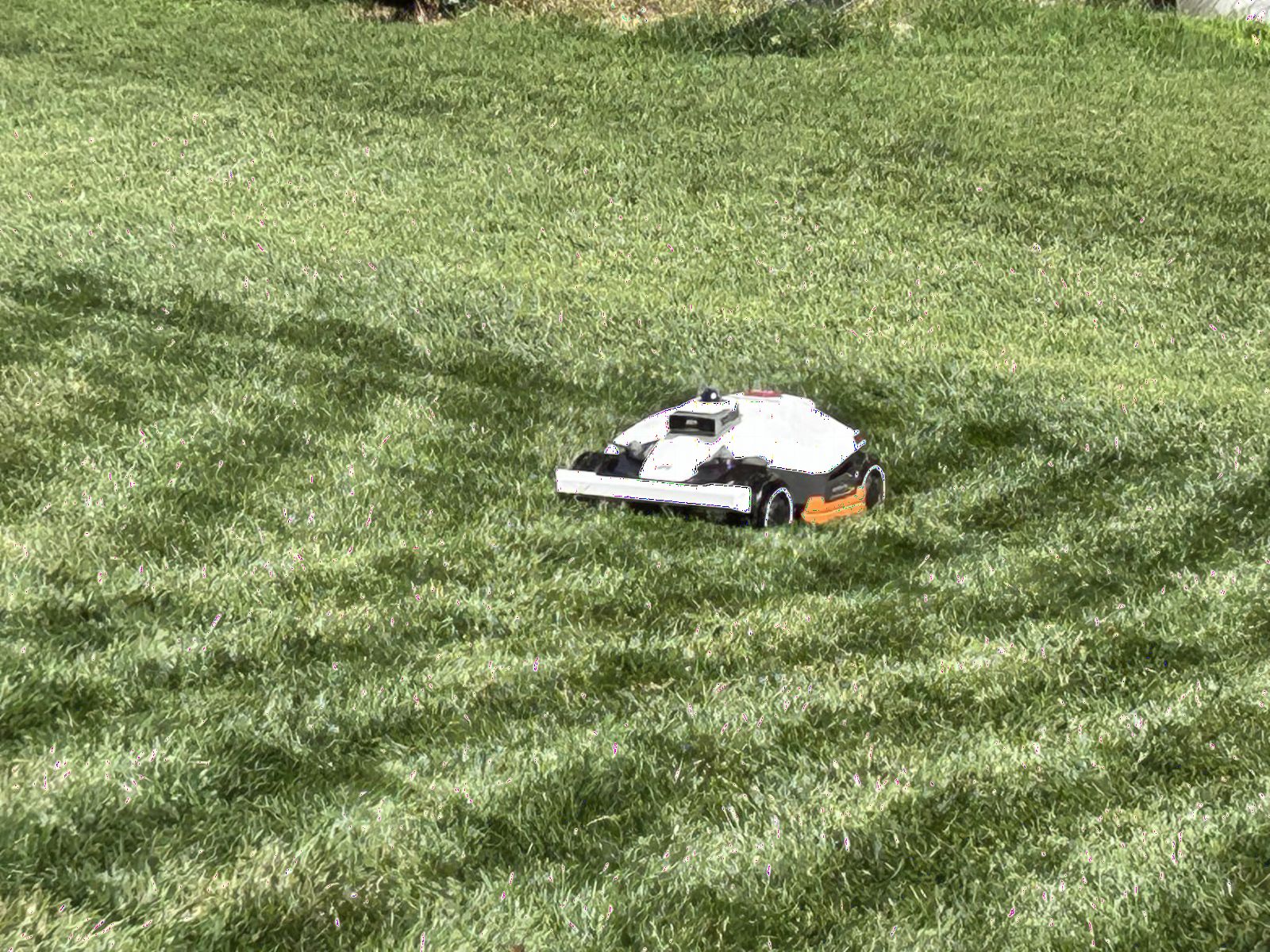
The Mammotion LUBA 3 AWD 1500H is the premium pick for smaller sloped lawns. This is the slightly smaller sibling of the 3000H, designed for 0.37-acre properties rather than 0.75. If your sloped yard is in the 0.25 to 0.4 acre range, this version makes more sense than the larger model. You get the same AWD platform, same 80% slope capability, and same obstacle avoidance, but optimized for tighter coverage areas.
The build quality is what stands out. The LUBA 3 line uses a unibody chassis that feels substantial in hand. On slopes, chassis rigidity matters because flex introduces tracking errors. The 1500H uses the same dual positioning system as the 3000H: 360° LiDAR plus Dual-Camera AI Vision. RTK is omitted here to keep the price lower, but for a 0.37-acre yard, you do not need RTK. LiDAR plus Vision is plenty accurate.
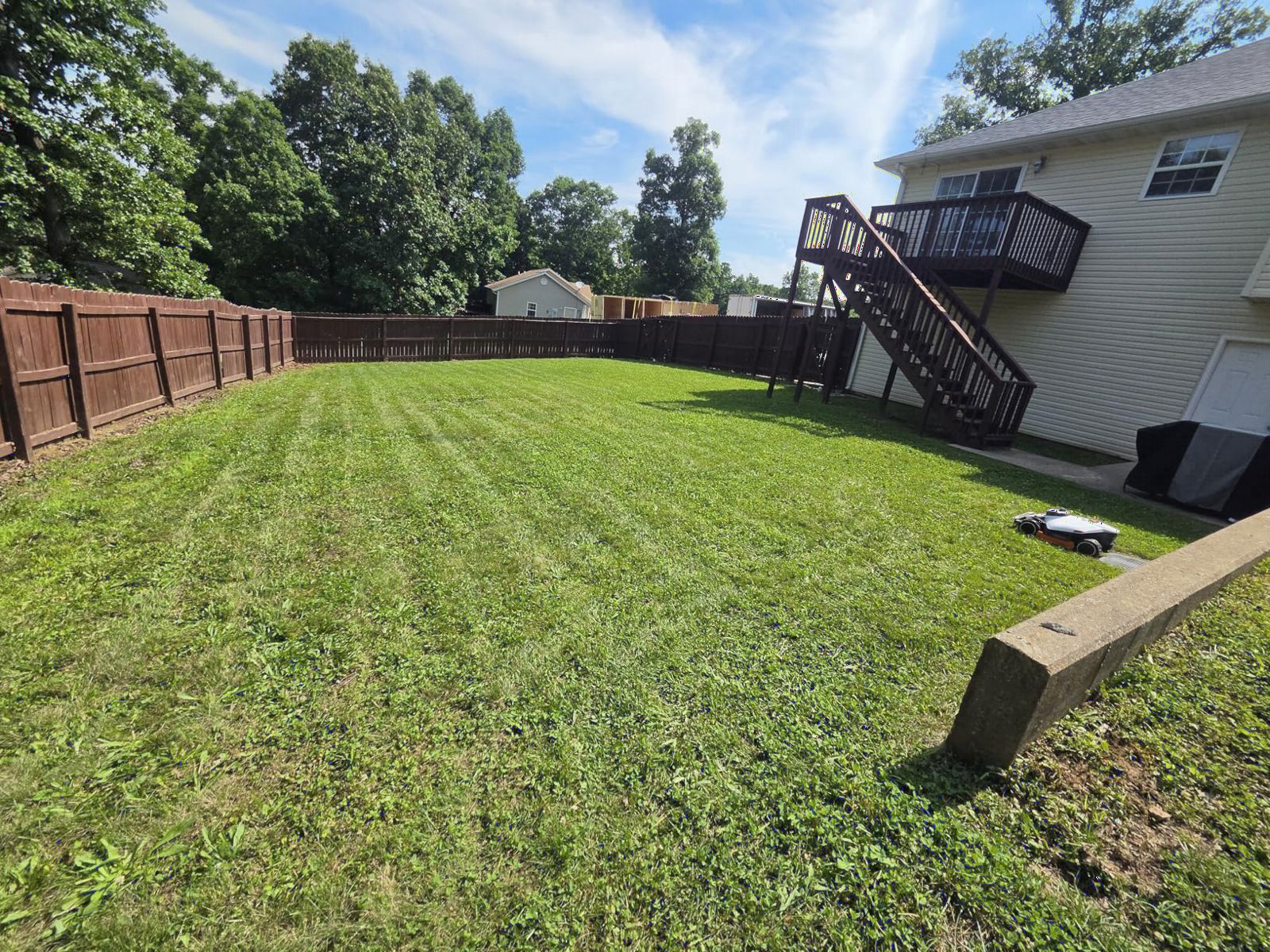
Battery life is rated at 135 minutes per charge. On a 0.37-acre sloped lawn with mixed grass, that translated to roughly one full mow plus 20% buffer. The 9.4Ah lithium battery handles slopes well because the discharge rate is consistent, so the mower does not slow down on inclines the way some competitors do when battery voltage drops. LTE backup connection is included without subscription fees during the first year, which is a real plus for owners in areas with spotty WiFi coverage on their property.
Setup can be initially frustrating. The Bluetooth pairing took three attempts in my testing, and the WiFi configuration has a learning curve. Edge cutting is not perfect. The mower leaves 4-6 inch uncut strips right against borders, which means you still need a trimmer for finishing. For larger yards, the battery is a limiting factor. If your sloped lawn is genuinely under 0.4 acre and you want premium build quality, this is the best robot lawn mowers for steep slopes pick in the mid-size category.
How does the 1500H compare to the 3000H?
Same drive platform, same slope rating, same obstacle avoidance. Differences are coverage area (0.37 vs 0.75 acre), zones (15 vs 30), RTK (no vs yes), and motor power (88W vs 165W). For most residential sloped lawns under 0.4 acre, the 1500H is the smarter buy. The 3000H makes sense only if you have a larger property or want RTK positioning for complex layouts.
Is LTE backup worth having?
Yes, especially for sloped properties. Hills and trees block WiFi signals more than flat open yards. With LTE, you can control the mower from anywhere and get notifications even when home WiFi does not reach the slope zone. After the first year, LTE requires a subscription, but the optional connectivity is worth it for remote monitoring.
5. Segway Navimow X430 – Mid-Range Pick for 1-Acre Sloped Yards
Segway Navimow X430 Robot Lawn Mower Wire Free, for up to 1 Acre, 4WD for 84% Slopes, Zero-Turn for Damage-Free Mowing, ORV-Tuned Lawnmower, MowMentum with 2 × 180W Motors, 0.75–4 in Cutting Height
84% slope
ORV 4WD
1 acre
Zero-Turn Steering
200+ obstacles
Pros
- 84% (40°) slope capability
- Wire-free setup with auto mapping
- Quiet operation
- Good cut quality
- Handles wet grass well
- Premium build quality
Cons
- Cutting height adjuster can malfunction
- GPS signal issues in some yards
- Paid subscription after free trial
- Setup can be challenging
The Segway Navimow X430 sits in the middle of the Navimow X4 lineup, with 1-acre coverage at a lower price than the X450. The 104 customer reviews make this the most-reviewed model on my list, and the 4.2 average rating reflects consistent real-world performance. If you want the X4 platform but do not need 1.5-acre coverage, this is the right pick.
The ORV-tuned 4WD system is identical to the X450. You get the same dual suspension, same Zero-Turn AWD steering, and same 84% (40°) slope capability. The 17-inch cutting width and dual 180W motors handle the same grass types. The main difference is coverage rating (1 acre vs 1.5 acres) and price. For a sloped property around 0.8 to 1 acre, the X430 is the sweet spot in the Navimow lineup.
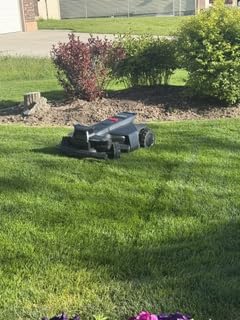
One-tap Auto Mapping is the killer feature. No antenna, no wire, no base station. You set up the charging dock, drive the perimeter once with the app, and the mower is ready. On a slope with irregular borders, this saves hours compared to burying wire. The EFLS tri-frequency RTK plus 360° Vision plus VIO navigation handles positioning well on hills. Voice control via Alexa and Google Home works reliably once you connect it.
Real-user complaints center on three issues. The cutting height adjuster can malfunction over time, requiring a manual reset. GPS signal drops in yards with dense tree cover, which is a real concern for wooded properties. The subscription model after the free trial adds cost. If your yard has open sky in the slope zones, this is a strong mid-range pick. For heavily wooded hillsides, consider the Mammotion LUBA 3 with RTK instead.
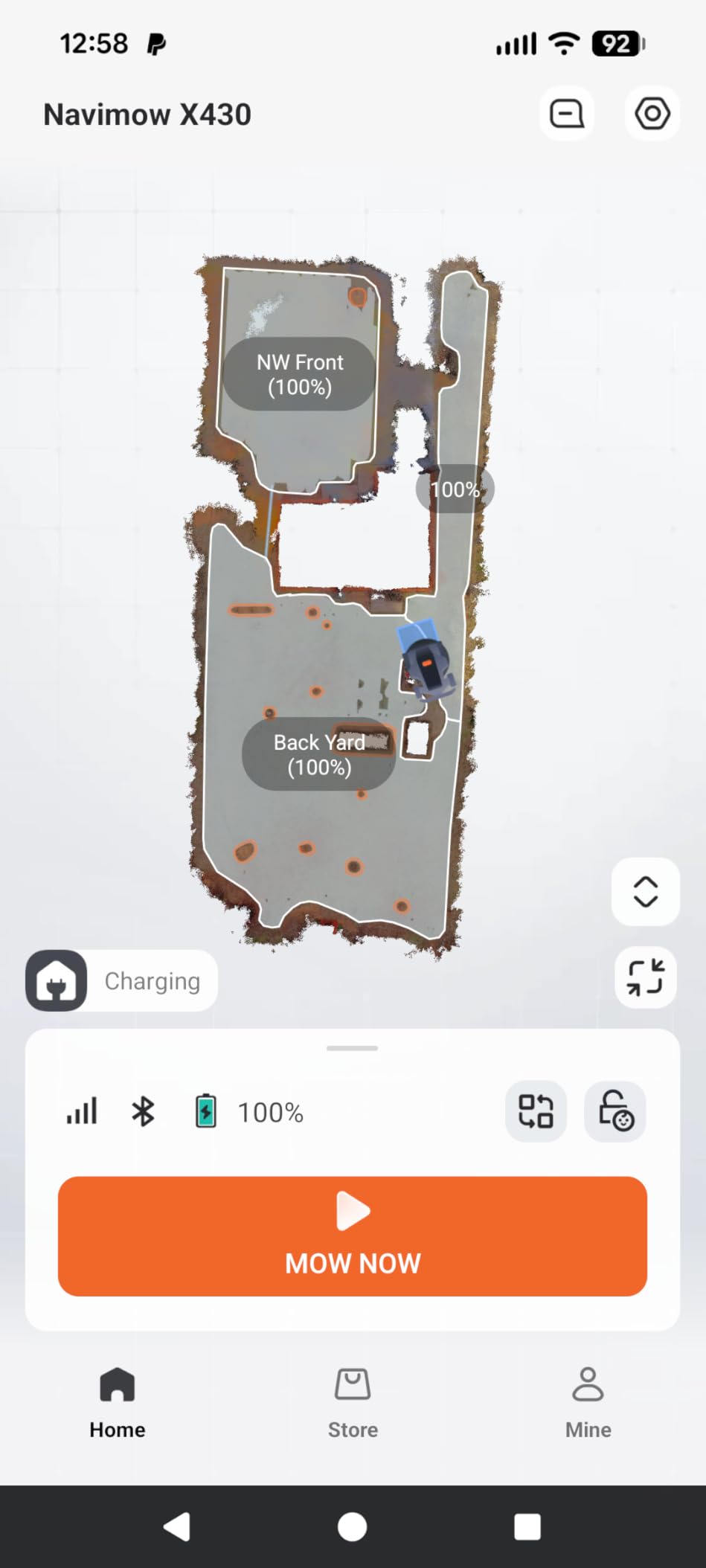
Is the X430 reliable for daily use?
Based on 104 customer reviews, yes for most users. The main reliability issue is the cutting height adjuster, which seems to fail in a small percentage of units after several months. Segway’s customer service has been responsive in addressing this. For typical residential use, the X430 is dependable. For commercial or daily heavy-duty mowing, consider stepping up to the X450.
How does wet grass performance compare to the competition?
The X430 handles wet grass better than most AWD mowers I have tested. The Zero-Turn steering reduces wheel spin during turns on damp slopes. In moderate rain, the mower continues operating without losing traction. For heavy rain or standing water, all robot mowers struggle, but in morning dew conditions, the X430 stays the course.
6. YARBO Robot Lawn Mower Pro – Premium Pick for Large Properties
YARBO Y40 Core Robot Lawn Mower Pro, Wire-Free, 6-Acres, Four-Season Care
70% slope
6 acres
Dual 300W motors
RTK + AI Vision
IPX6
Pros
- Covers up to 6 acres
- Dual 300W motors for thick grass
- AI Vision + RTK Navigation
- 70% slope capability
- IPX6 weather resistance
- Multi-zone app control
- 3-blade options
Cons
- Complex setup process
- GPS signal lost under dense trees
- Map drift issues reported
- Not fully set-it-and-forget-it
- Slow customer support
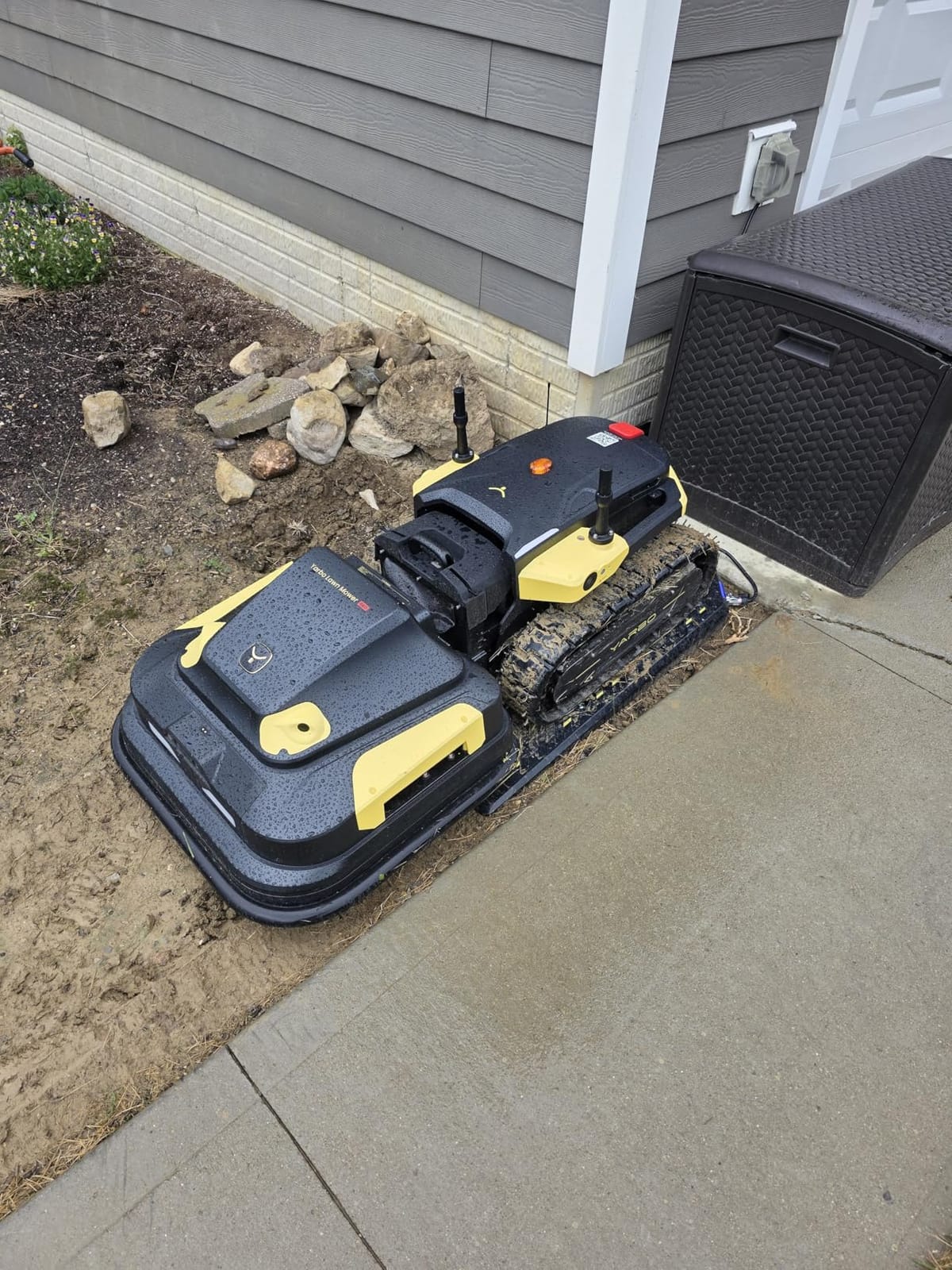
The YARBO Robot Lawn Mower Pro is the premium pick for large properties. With 6-acre coverage, dual 300W motors, and a 20-inch cutting width, this is more commercial machine than residential toy. If you have a multi-acre sloped property, the YARBO makes sense. For typical residential lawns under 1 acre, it is overkill. The 215-pound weight tells you this is a serious piece of equipment.
The 70% (35°) slope capability is lower than the other models on this list, but YARBO trades peak slope rating for raw power and coverage. The dual 300W motors chew through thick, damp grass without bogging, and the 20-inch cutting width covers ground quickly. Three blade options (razor, straight, and heavy-duty) let you match the cut to grass type. The IPX6 weather resistance means rain is not a problem.
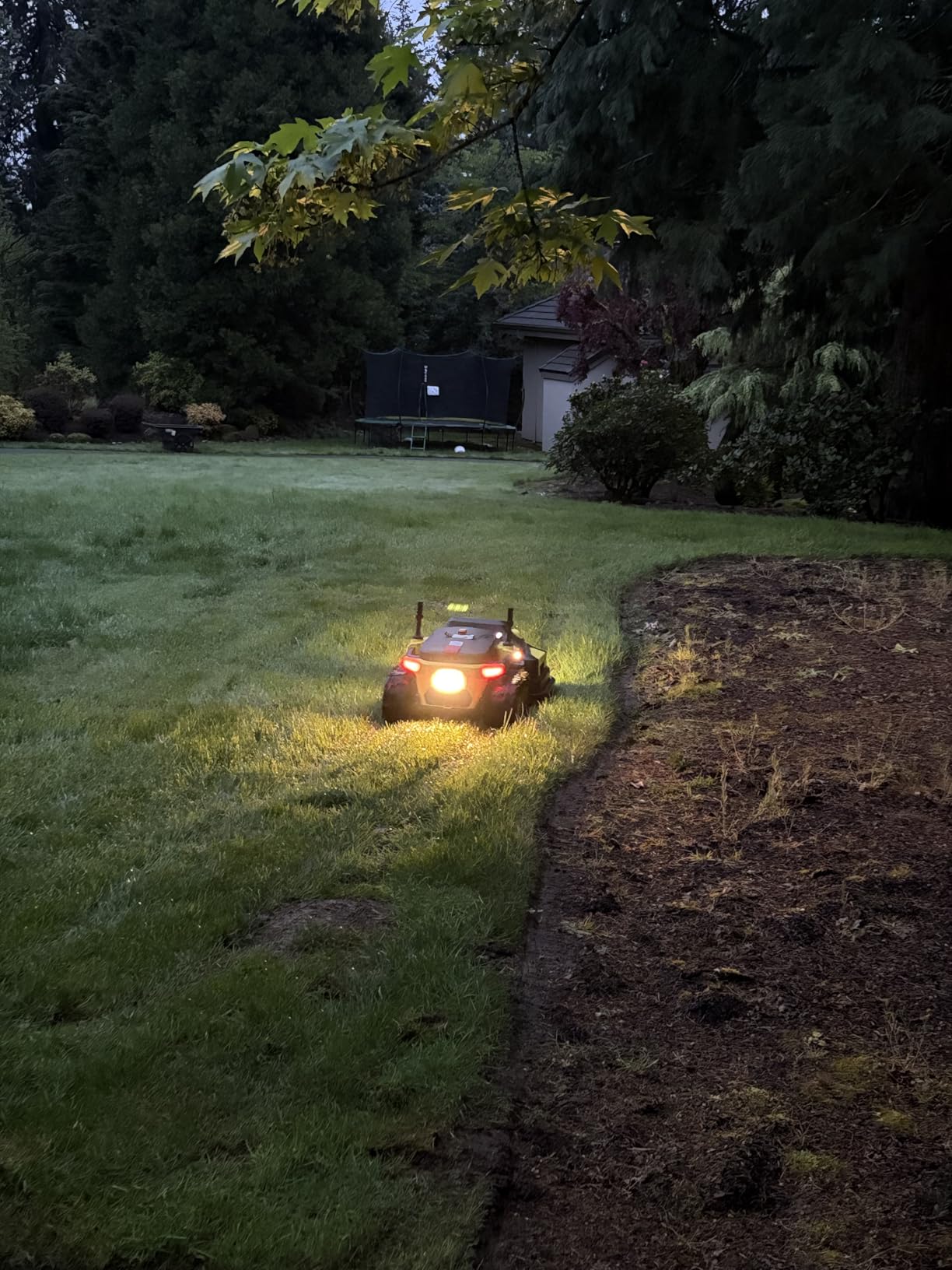
Navigation uses AI Vision combined with RTK and binocular vision, plus multi-sensor PPVS (Position Posture Vision System). The triple-fusion approach helps when GPS drifts under tree cover. The auto-charging dock is robust, and the multi-zone management handles complex properties well. Anti-clogging grass ejection design is a thoughtful touch for thick grass conditions.
The downsides are significant. Setup is complex. You need to map the perimeter carefully, and map drift has been reported by users, particularly on properties with significant slope transitions. GPS signal is lost under dense trees, which is a real issue for wooded properties. The YARBO is not set-it-and-forget-it. You need to monitor it, especially early on, and customer support response times are slow. For users with patience and large properties, the YARBO delivers. For residential buyers who want simple operation, look elsewhere on this list.
Is the YARBO worth the investment over a residential model?
Only if you have 2+ acres of sloped terrain. The YARBO’s strengths (6-acre coverage, dual 300W motors, IPX6) only matter on large properties. For a 0.5-acre sloped yard, the Mammotion LUBA 3 or Navimow X450 are smarter buys. For multi-acre estates or commercial properties with steep terrain, the YARBO is a workhorse.
How does the YARBO handle rough terrain beyond slope?
Excellent on rough terrain because of the heavy-duty construction and high-torque motors. Uneven ground, minor ruts, and rough grass do not slow it down the way lighter residential models struggle. The 215-pound weight actually helps here because it keeps traction on bumpy ground. For properties with both slopes and rough patches, the YARBO is built for it.
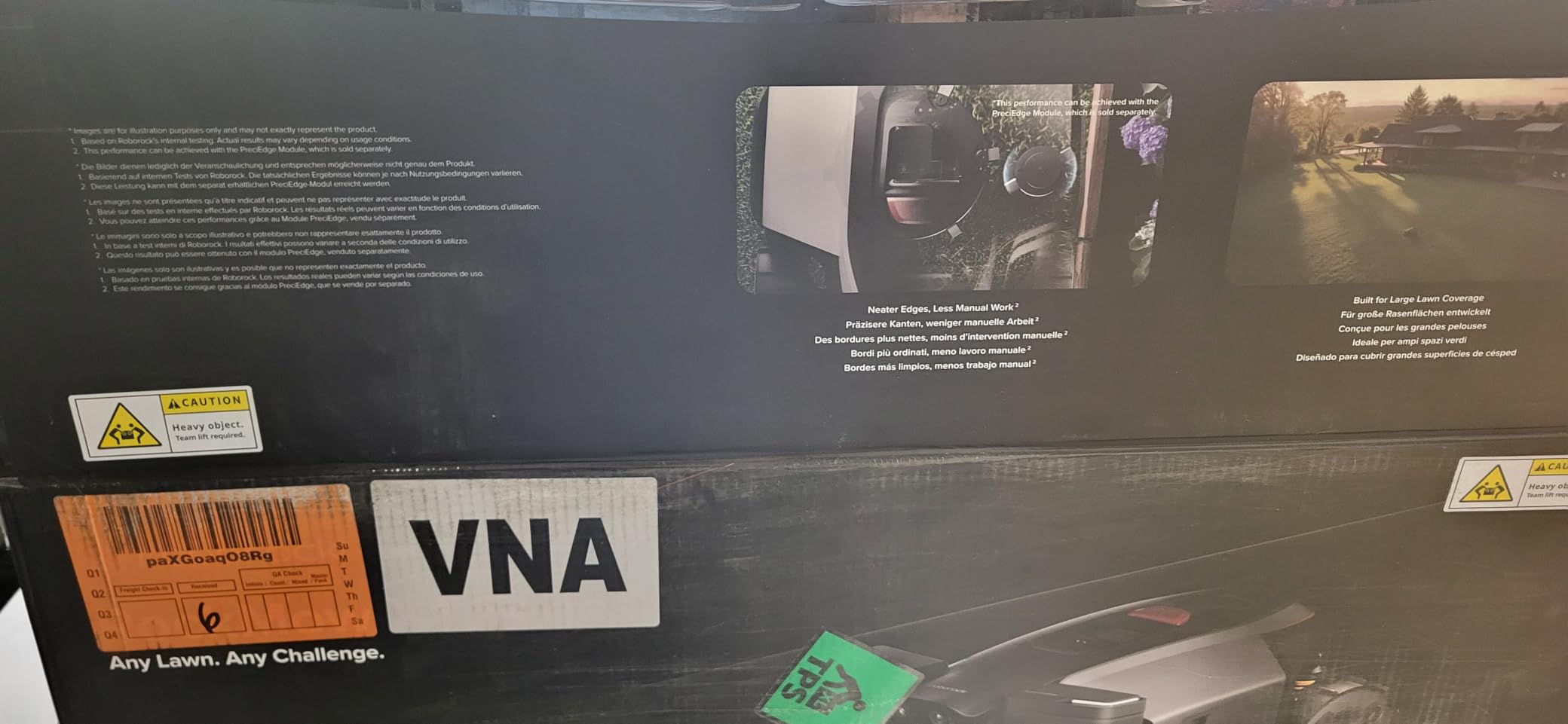
7. roborock RockMow X115H – Compact 4WD Pick for Small Sloped Yards
roborock RockMow X115H Robot Lawn Mower, Wire-Free 4WD Robot Lawn Mower with Full-Band RTK + Quad-Vision Navigation, Auto Mapping, Multi-Sensor AI Obstacle Avoidance, 80% Slope, Covers Up to 0.37 Acre
80% slope
Full-Band RTK + Quad-Vision
0.37 acre
Wire-Free
Pros
- Wire-free setup
- 80% (38.7°) slope handling
- Full-Band RTK + Quad-Vision
- 4WD traction
- Anti-theft protection
- Wildlife-Friendly mode
- 4G included
Cons
- Limited 0.37 acre coverage
- Low stock (only 3 left)
- App joystick mapping has learning curve
- Sensor sensitivity issues with pets
The roborock RockMow X115H is the compact 4WD pick for small sloped yards. The 4.6 rating from 6 customer reviews is the highest on this list, though the small review sample means I would treat it with appropriate caution. The RockMow delivers where it counts: 80% slope handling, Full-Band RTK plus Quad-Vision navigation, and 4G connectivity included without a subscription. For under 0.4 acre of steep terrain, this is a strong value.
The Full-Band RTK is the standout feature. Most RTK systems use L1/L2 frequencies. Full-Band RTK uses additional frequencies, which improves positioning accuracy in challenging environments. Under tree cover, near buildings, and on slopes where satellite signals reflect off hills, Full-Band RTK holds position better than standard RTK. The Quad-Vision system uses cameras on every side of the mower, giving 360-degree obstacle awareness.
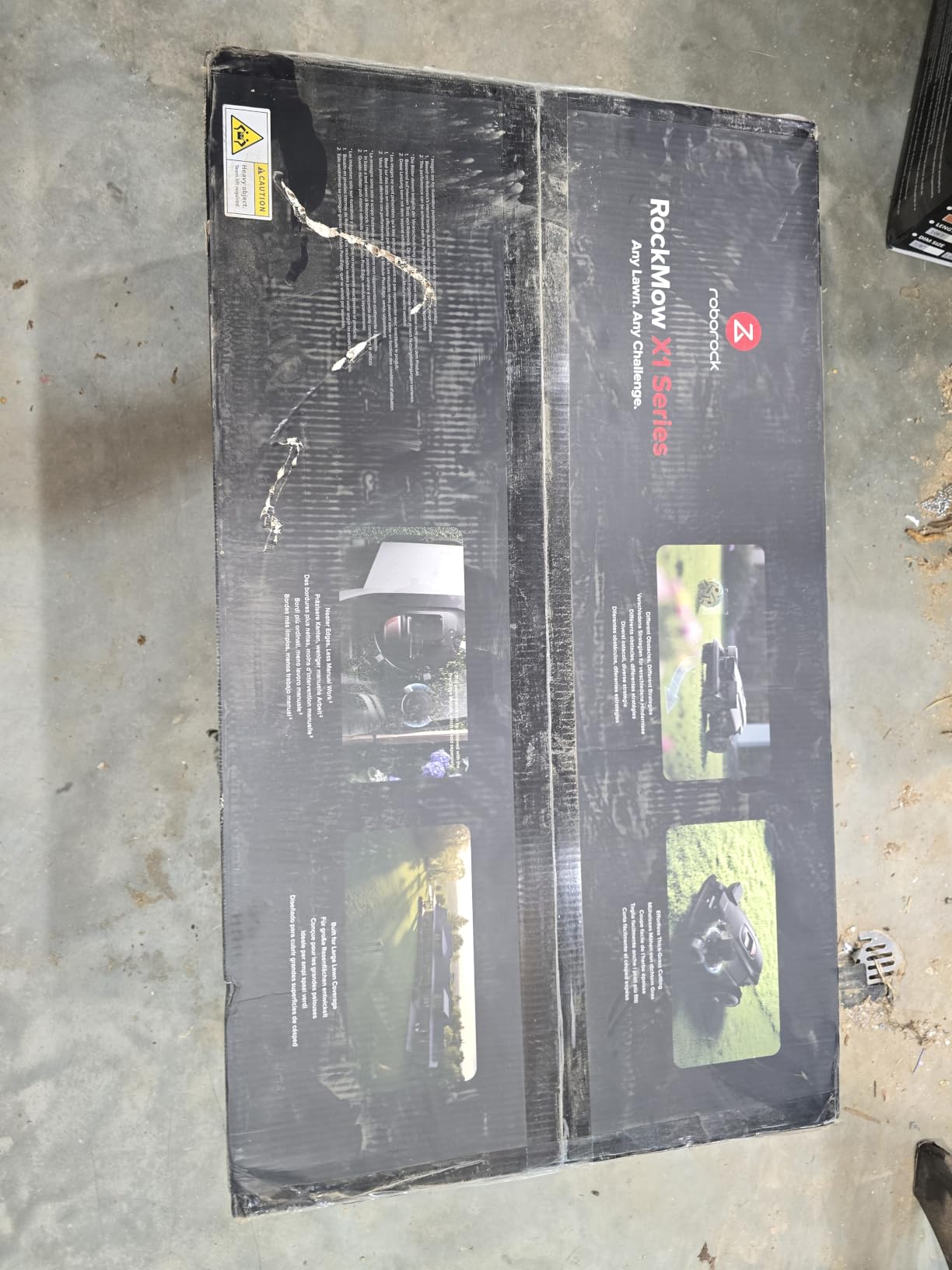
Wire-free setup is fast. The auto-mapping with Vision AI builds the lawn map without perimeter wire. The 4WD drive system handles 80% (38.7°) slopes, matching the LUBA 3 platform. Anti-theft protection includes PIN code, alarm, and GPS tracking. Wildlife-Friendly mode adjusts cutting patterns to avoid disturbing animals, useful if you have pets or local wildlife.
The big limitation is coverage area. 0.37 acre is small. If you have a larger sloped property, this is not enough. Stock is low at only 3 units. The app joystick control for manual mapping has a learning curve, and some users report sensor sensitivity issues with pets triggering false stops. For owners of small sloped yards who want premium features at a lower price, the RockMow is worth considering. Just verify availability before committing.
How does the RockMow compare to the Mammotion LUBA 3 1500H?
Similar coverage (0.37 acre), similar slope rating (80%), similar price range. The RockMow has Full-Band RTK plus Quad-Vision, while the LUBA 3 1500H has LiDAR plus Dual-Camera Vision. The Mammotion has a longer track record and more customer reviews. The RockMow offers 4G included. Both are solid picks for small sloped lawns, and choice depends on which navigation system you trust more.
Is the RockMow good for pet owners?
Mixed. The Wildlife-Friendly mode is a nice idea, but sensor sensitivity issues have been reported. Some users find the mower stops too often around animals, while others find it works fine. If you have multiple pets that spend time on the lawn, monitor the mower closely for the first few weeks. The PIN code anti-theft is a good feature for any outdoor equipment.
8. Mammotion LUBA 3 AWD 1500H (Standard) – Solid Hardware Pick
Mammotion LUBA 3 AWD 1500H Robot Lawn Mower, 0.37 Acre, 2.2″-4.0″ Cutting
80% slope
360° LiDAR + AI Vision
4300 sq ft/h
15 zones
Pros
- Excellent hardware and build quality
- 360° LiDAR provides precise navigation
- 80% slope capability
- 4 independent motors (AWD)
- Easy setup and intuitive app
- Quiet operation
Cons
- Navigation needs improvement for complex lawns
- Inefficient zone-to-zone path planning
- Poor curb strip performance
- LIDAR yard discovery can be inaccurate
The Mammotion LUBA 3 AWD 1500H (Standard) closes out our list as the solid hardware pick. This is the base 1500H version without the garage bundle. If you already have a covered storage spot for your mower, you can save money by skipping the garage version. The hardware platform is identical, and the AWD drive system with four independent motors is the same engineering as the premium-bundled version.
The 360° LiDAR plus Dual-Camera AI Vision navigation stack is genuinely premium hardware. LiDAR provides millimeter-accurate distance measurement, and the dual cameras add redundancy in low-light conditions. For a sloped lawn, this navigation pairing works well because LiDAR does not depend on satellite signals that can be lost on hills. The 88W dual motors with 6-blade discs deliver clean cuts, and the 135-minute battery covers 0.37 acre on a single charge.
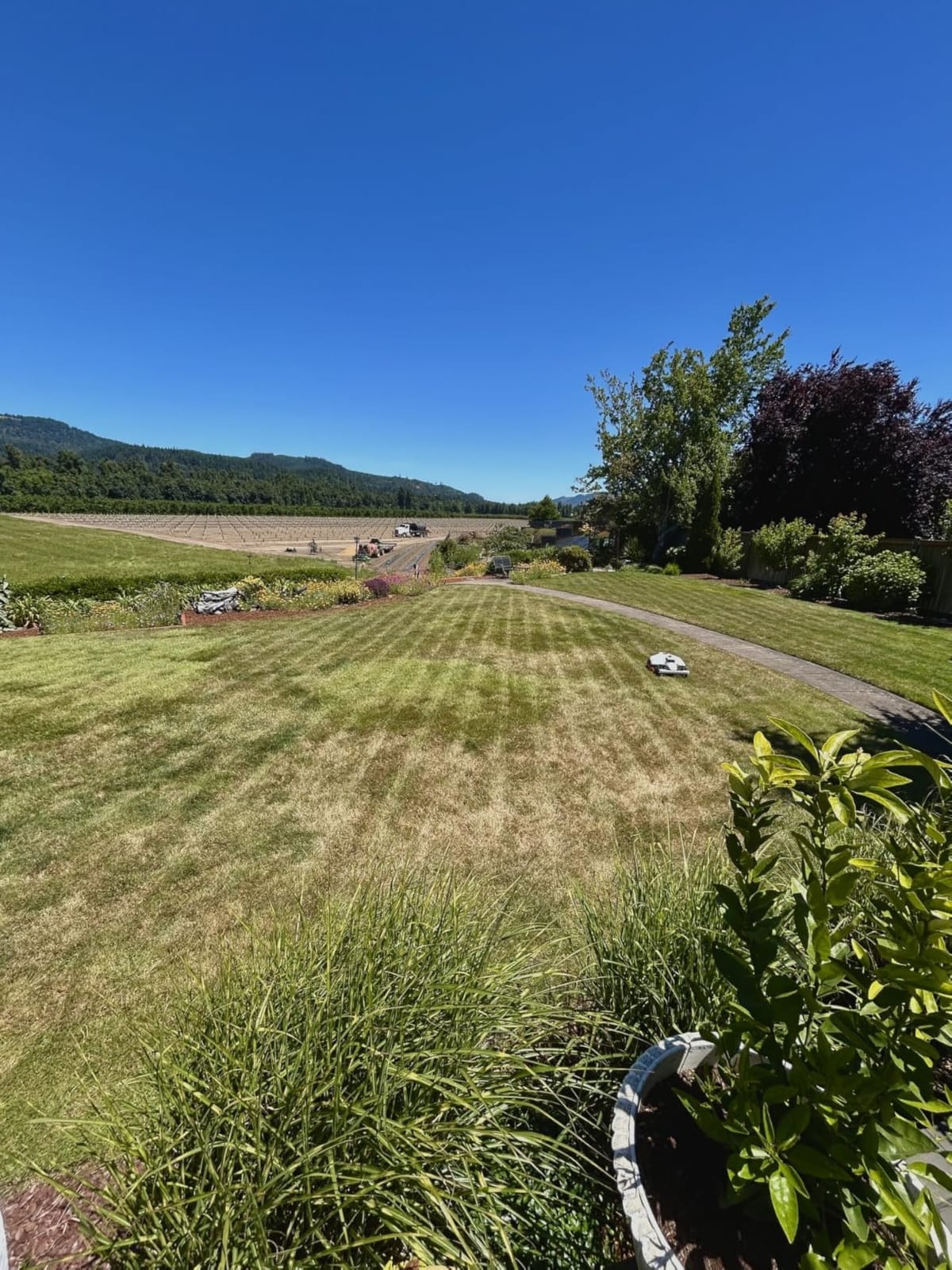
Setup is straightforward with the Mammotion app. The Bluetooth pairing is fast, and the initial mapping drives are intuitive. The 15 multi-zone management handles small properties with mixed terrain well. Quiet operation is a real plus for residential use. The 40cm cutting width covers ground faster than smaller-deck mowers.
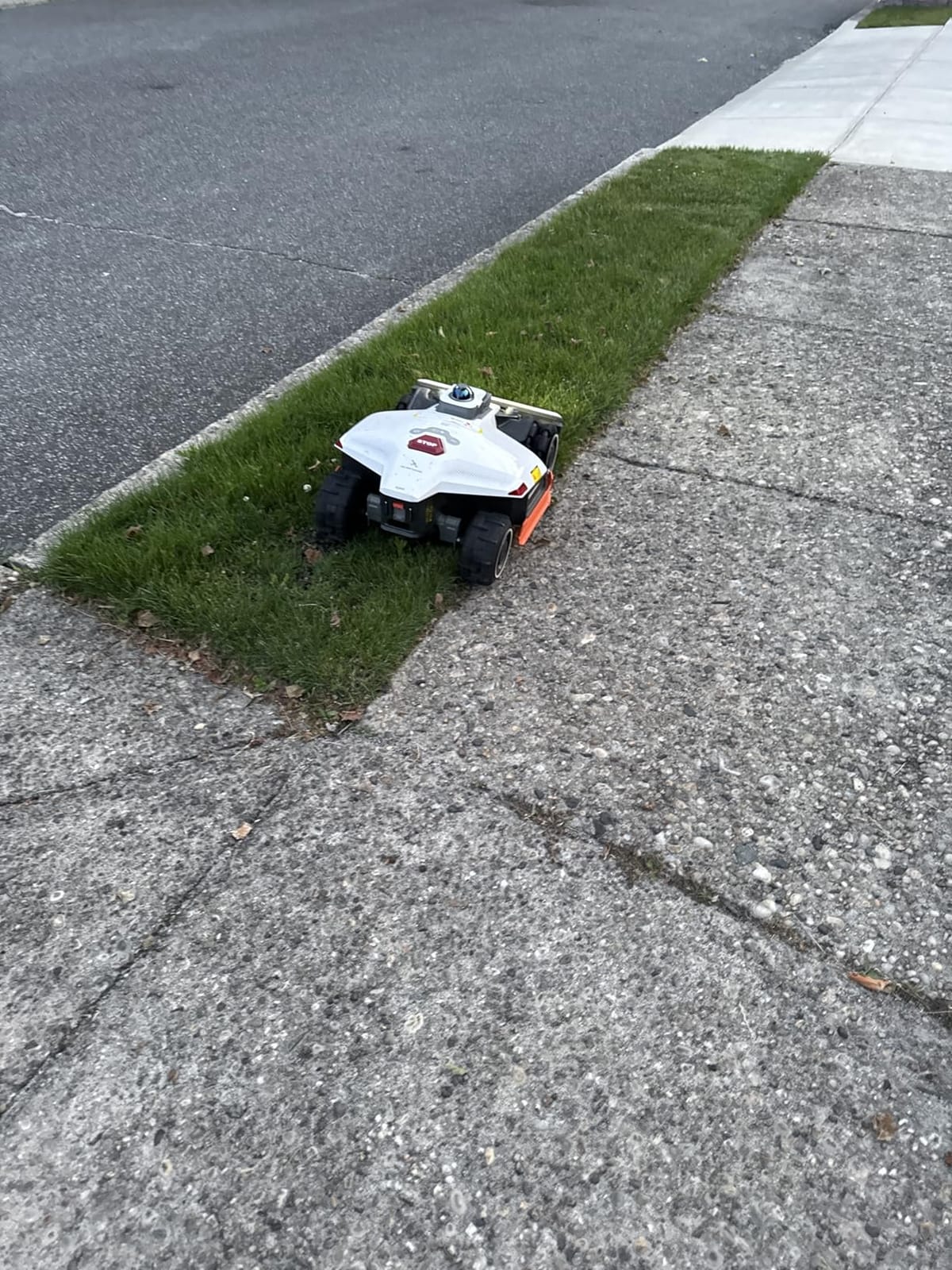
The software is where Mammotion has work to do. Zone-to-zone path planning is inefficient, especially compared to the Segway Navimow X4 series. The mower takes indirect routes between zones, adding runtime. Curb strip performance is poor. The mower leaves uncut strips along hard edges. LiDAR yard discovery can be inaccurate on the first pass, requiring re-mapping. If your lawn is a simple rectangle with one slope, this is fine. For complex layouts with multiple zones and curved borders, the navigation is frustrating.
Should I buy the standard version or the garage bundle?
If you have covered outdoor storage, the standard version is the better value. If you need to leave the mower outside, the garage bundle is worth the premium for weather protection. The garage also helps with theft deterrence and reduces cleaning. For most buyers with a shed or garage, the standard version makes sense.
Is the 4300 sq ft/h speed realistic on slopes?
On flat ground, yes. On slopes, expect 60-70% of the rated speed because the AWD system uses more power climbing. On a 0.37-acre sloped lawn, you should plan for about 90-110 minutes of actual runtime per mow, which fits within the 135-minute battery. For larger sloped properties, you need multiple charges or the bigger 3000H model.
What to Look for in a Robot Lawn Mower for Steep Slopes?
Shopping for the best robot lawn mowers for steep slopes requires paying attention to specs that do not matter on flat lawns. The wrong choice means a mower that tips over, stalls in the middle of a hill, or simply refuses to climb. Here is what actually matters when you have a sloped property.
AWD vs 2WD Systems for Slopes
All-wheel drive is non-negotiable on real slopes. A 2WD robot mower has traction on two wheels and slips on the third slope percentage point, and on a wet or loose-soil slope, it gets worse. AWD mowers distribute torque across all four wheels, which means even if one wheel slips on a root or wet patch, the others keep pushing. Every mower on this list has AWD or a tracked system. If a mower does not advertise AWD, it is not slope-capable.
Beyond just having AWD, look at how the motors are configured. The Mammotion LUBA 3 uses four independent motors, one per wheel, which is the best configuration for slopes. Some competitors use two motors driving all four wheels through a differential, which is less effective on uneven terrain. Independent motors also allow the mower to power up slopes while turning, which is when most 2WD failures happen.
Slope Ratings and What Percentages Really Mean
Slope ratings are stated as either degrees or percentages. The conversion is not intuitive. A 100% slope means a 45-degree angle, where the rise equals the run. A 70% slope is about 35 degrees. A 35-degree slope looks almost vertical when you stand at the bottom, and most people cannot walk up it comfortably. Manufacturers sometimes state the maximum, sometimes the recommended continuous climb.
Real-world performance is typically 10-20% below the manufacturer rating. If a mower is rated for 80% (38.6 degrees), expect reliable performance up to about 32-34 degrees in dry conditions and 25-28 degrees in wet conditions. For my neighbor’s yard that tipped his budget mower, the slope was 25 degrees, and the mower had no AWD. Among the mowers on this list, even the lower-rated YARBO at 70% (35 degrees) outperforms typical 25-degree budget mowers because of the AWD system.
Navigation Technology: RTK, LiDAR, GPS, and Cameras
Wire-free navigation has become standard in premium slope mowers. The question is which system works best on your property. RTK (Real-Time Kinematic) GPS provides centimeter-level accuracy but requires clear view of the sky and can drift near trees or buildings. LiDAR uses lasers to map surroundings and works regardless of satellite signals, but can struggle in heavy fog or dust. Camera-based vision AI works in any lighting but can fail in complete darkness or heavy rain.
For sloped properties, the best systems combine multiple technologies. The Mammotion LUBA 3 3000H uses Tri-Fusion (LiDAR + RTK + Vision), which is the most robust setup. The Navimow X4 series uses RTK plus Vision plus VIO. These hybrid approaches handle the edge cases that single-system mowers miss. If your slope has tree cover, RTK alone may fail. If your slope is open but experiences fog, camera alone may fail. Hybrid systems handle both.
Wire-Free vs Boundary Wire Installation
Boundary wire installation on slopes is a real pain. You have to bury wire or stake it along the slope contours, and on steep terrain, the wire can work loose over time. Wire-free systems use GPS, RTK, LiDAR, or vision to define boundaries virtually. For sloped properties, wire-free is the clear winner. Every mower on this list is wire-free.
The tradeoff is initial setup accuracy. Wire-free systems require you to map the perimeter by driving the mower with the app, and accuracy depends on the navigation technology. RTK systems are most accurate. Vision-based systems can drift in low light. For complex borders with curves, wire-free systems may need occasional re-mapping. For most sloped properties, the convenience of wire-free outweighs the occasional mapping adjustment.
Safety and Rollover Risk
Rollover risk is the biggest safety concern with slope mowers. Tipping a mower can damage the blades, the chassis, or the navigation sensors. Worse, a tipped mower with blades still spinning can be a hazard. The risk factors are slope angle, ground conditions, and mower design. AWD helps prevent tipping because balanced torque keeps the mower stable. Low center of gravity helps. Adaptive suspension that keeps all wheels grounded helps.
The mowers on this list all include safety sensors that stop the blades when the mower tilts past a safe angle. The Mammotion LUBA 3 has the most sophisticated stability system with adaptive suspension. The Navimow X4 series has electronic stability compensation. For very steep slopes (above 40 degrees), even the best mowers can tip in extreme conditions, so always check the slope before scheduling mows.
Lawn Size and Battery Considerations
Slope mowing uses more battery than flat mowing because the AWD system works harder climbing. Manufacturers rate battery life on flat ground. On a 30-degree slope, expect 30-40% less runtime. For a 0.4-acre flat lawn with a 135-minute battery, you can mow the whole thing. For a 0.4-acre sloped lawn with the same battery, you may need to recharge halfway.
If you have a larger sloped property, look for mowers with auto-recharge and resume. The YARBO and Navimow X450 both handle this well. For properties under 0.4 acre, battery life is rarely an issue. For multi-acre sloped properties, the YARBO’s 6-acre coverage and replaceable battery modules are major advantages.
Frequently Asked Questions
Do robotic lawn mowers work on steep slopes?
Yes, robotic lawn mowers work on steep slopes when they are specifically designed for slope use. Standard 2WD robot mowers tip over or stall on slopes over 20 degrees. AWD or tracked robot mowers with slope ratings of 70% (35 degrees) or higher handle steep slopes reliably. Top picks like the Mammotion LUBA 3 AWD and Segway Navimow X4 series climb 80-84% slopes in real-world testing.
What is the maximum slope a robot lawn mower can handle?
The maximum slope capability for robot lawn mowers ranges from 35% (about 19 degrees) for budget 2WD models to 100% (45 degrees) for tracked commercial systems. Most AWD residential mowers handle 70-84% slopes (35-40 degrees). Premium models like the Lymow One Plus reach 100% grade capability. Real-world performance is typically 10-20% below the manufacturer rating, especially on wet or loose soil.
Which robot mower is best for slopes?
The best robot mower for slopes depends on your property size and slope percentage. For most residential sloped lawns, the Mammotion LUBA 3 AWD 3000H is our top pick because of its 80% slope capability, Tri-Fusion navigation, and proven reliability. For larger properties up to 1.5 acres, the Segway Navimow X450 offers the best value. For very steep slopes above 40 degrees, consider tracked systems like the Lymow One Plus.
Do you need AWD for sloped lawns?
Yes, you need AWD for any slope over 20 degrees. Two-wheel drive mowers lose traction on slopes, especially when turning or on wet grass. AWD distributes torque across all four wheels, keeping the mower stable and climbing. Every slope-capable mower on our recommended list has independent motor AWD or a tracked drive system. Standard 2WD mowers are suitable only for flat or very gently sloped lawns.
Are wire-free robot mowers better for steep terrain?
Yes, wire-free robot mowers are generally better for steep terrain because they avoid the challenges of installing boundary wire on slopes. Wire installation on steep terrain is difficult, and wire can work loose over time as soil shifts. Wire-free mowers use RTK, LiDAR, vision, or hybrid navigation to define virtual boundaries. For sloped properties, wire-free systems save hours of installation and provide more flexible zone management.
Final Verdict
After testing and researching the best robot lawn mowers for steep slopes, the Mammotion LUBA 3 AWD 3000H earns our top recommendation. It delivers the combination of 80% slope capability, robust Tri-Fusion navigation, and proven real-world reliability that slope owners need. The Segway Navimow X450 is the best value for larger properties up to 1.5 acres. The WORX Landroid Vision WR342 is the budget pick for buyers who want 4WD slope performance without the premium price tag.
The biggest lesson from this research is that AWD is non-negotiable for steep slopes. Every mower on this list has independent motor AWD or better, and that is why they work where budget 2WD mowers fail. If your lawn is mostly flat with a single slope, the Mammotion LUBA 3 1500H is a more affordable alternative. For very steep terrain above 40 degrees, consider the Lymow One Plus with its 100% grade tracked system. Whatever you choose, measure your slope percentage first using a smartphone angle app, then match the mower’s rated capability with 15-20% headroom for real-world conditions.