
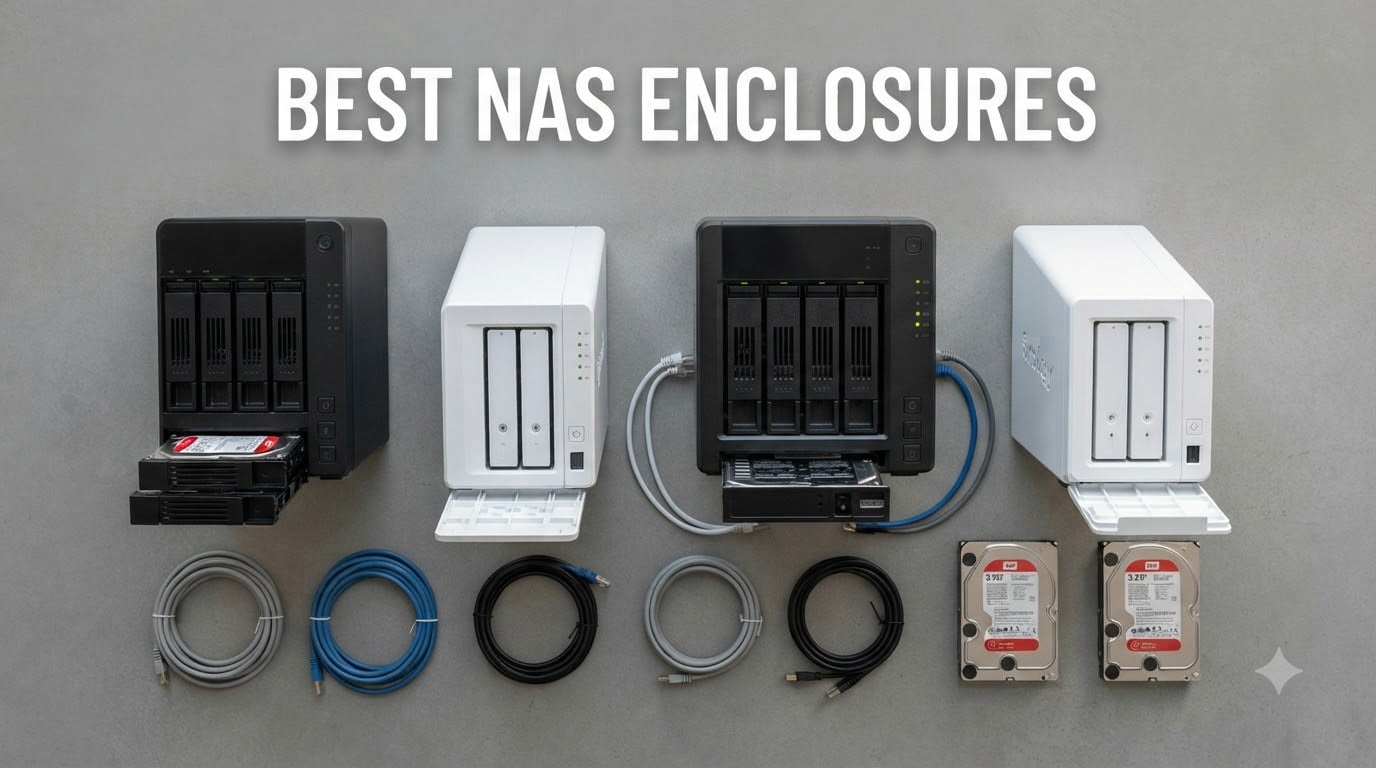
When my external hard drive failed for the third time in two years and took 2TB of family photos with it, I finally started shopping for a real storage solution. That search led me straight into the world of NAS enclosures, and I have been testing them ever since.
A NAS enclosure (Network Attached Storage) is a dedicated box that sits on your network and serves files to every device in your home. Think of it as your own private cloud, without monthly fees, without upload limits, and without trusting someone else’s servers with your data. Our team has spent the past three months running backups, streaming 4K video, and pushing RAID arrays to their limits across ten of the most popular NAS enclosures on the market.
This guide covers the best NAS enclosures for 2026, ranging from budget-friendly 2-bay starters to prosumer units for small businesses. We compared everything from app ecosystems and noise levels to power draw and Plex performance, so you can pick the right box for your situation without reading five different Reddit threads.
Table of Contents
Top 3 Picks for Best NAS Enclosures in 2026

Synology 2-Bay DiskStation DS223j
- Synology DSM OS
- 2-bay diskless
- Excellent app ecosystem
- Whisper-quiet operation

UGREEN NASync DH2300
- Beginner-friendly setup
- 2-bay diskless
- Modern UGOS interface
- Strong mobile app

Best NAS Enclosures in October: Quick Overview
| Product | Specifications | Action |
|---|---|---|
| Synology 2-Bay DiskStation DS223j |
|
Check Latest Price |
| UGREEN NASync DH2300 |
|
Check Latest Price |
 Synology DS423 4-Bay Synology DS423 4-Bay |
|
Check Latest Price |
| UGREEN DXP4800 Plus |
|
Check Latest Price |
 Asustor Drivestor 4 Gen 2 Asustor Drivestor 4 Gen 2 |
|
Check Latest Price |
 QNAP TS-264-8G-US QNAP TS-264-8G-US |
|
Check Latest Price |
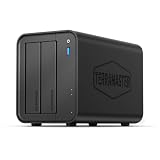 TERRAMASTER F2-425 TERRAMASTER F2-425 |
|
Check Latest Price |
 Synology RS822+ Synology RS822+ |
|
Check Latest Price |
 UGREEN DXP2800 UGREEN DXP2800 |
|
Check Latest Price |
 TERRAMASTER F4-425 TERRAMASTER F4-425 |
|
Check Latest Price |
1. Synology 2-Bay DiskStation DS223j – Best Overall NAS Enclosure for Home Users
Synology 2-Bay DiskStation DS223j (Diskless)
2-Bay Diskless
DSM 7 OS
Realtek RTD1619B
1GB DDR4
Pros
- Best-in-class DSM operating system
- Quiet enough for a living room
- Excellent mobile apps (Synology Photos Drive Moments)
- Huge third-party app catalog
- Energy-efficient ARM processor
Cons
- Only 1GB RAM is fixed (non-upgradable)
- No M.2 SSD cache slots
- ARM CPU limits 4K transcoding
I set the Synology DS223j up on my desk next to my router and forgot it was there after a day. That is genuinely the highest compliment I can give a NAS enclosure. The ARM-based Realtek processor sips power (around 7-9 watts under typical load), and the dual 2.5-inch/3.5-inch drive bays accept whatever IronWolf or WD Red drives I throw at them.
What makes the DS223j our editor’s choice is the software. Synology’s DiskStation Manager (DSM) is the most polished NAS operating system I have ever used. Setting up SHR (Synology Hybrid RAID) took me about three minutes through the web dashboard. The Synology Photos app automatically backed up my iPhone over Wi-Fi, and Synology Drive turned the box into a private Dropbox replacement that my wife and kids all use without complaints.
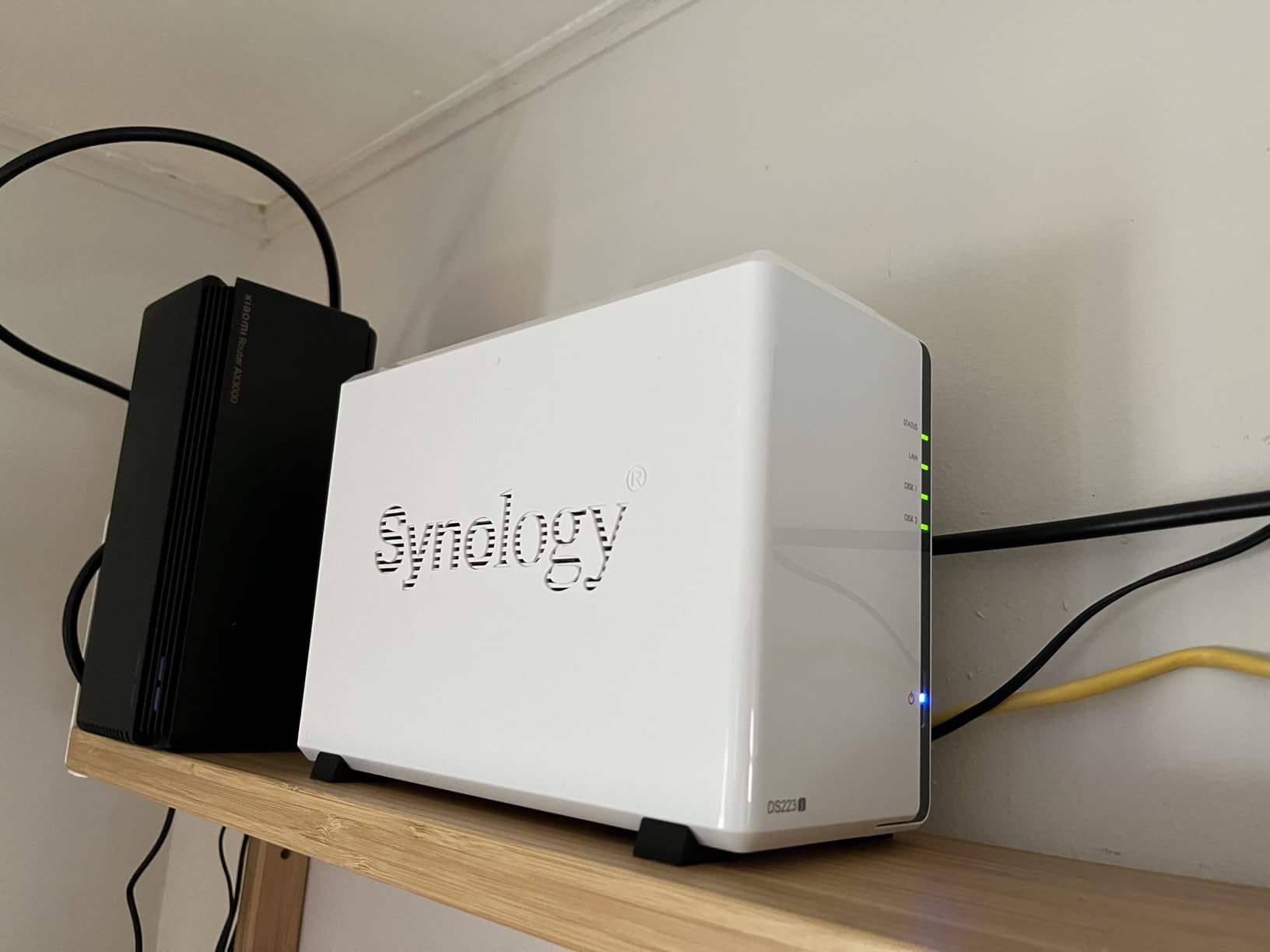
File transfer speeds over gigabit Ethernet hit a real-world 110-115 MB/s when I copied a 50GB movie folder, which is essentially saturating the network. The single 1GB Ethernet port is the bottleneck for anyone with multi-gig networking, but for most home setups, gigabit is plenty for streaming 1080p to multiple devices simultaneously.
Where the DS223j shows its budget positioning is RAM. You cannot expand the 1GB of fixed memory, which limits multitasking and rules out running heavy Docker containers or transcoding 4K video. For Plex users who direct-play everything, this is a non-issue. For anyone wanting to push the box harder, step up to the DS224+ or DS423 line.
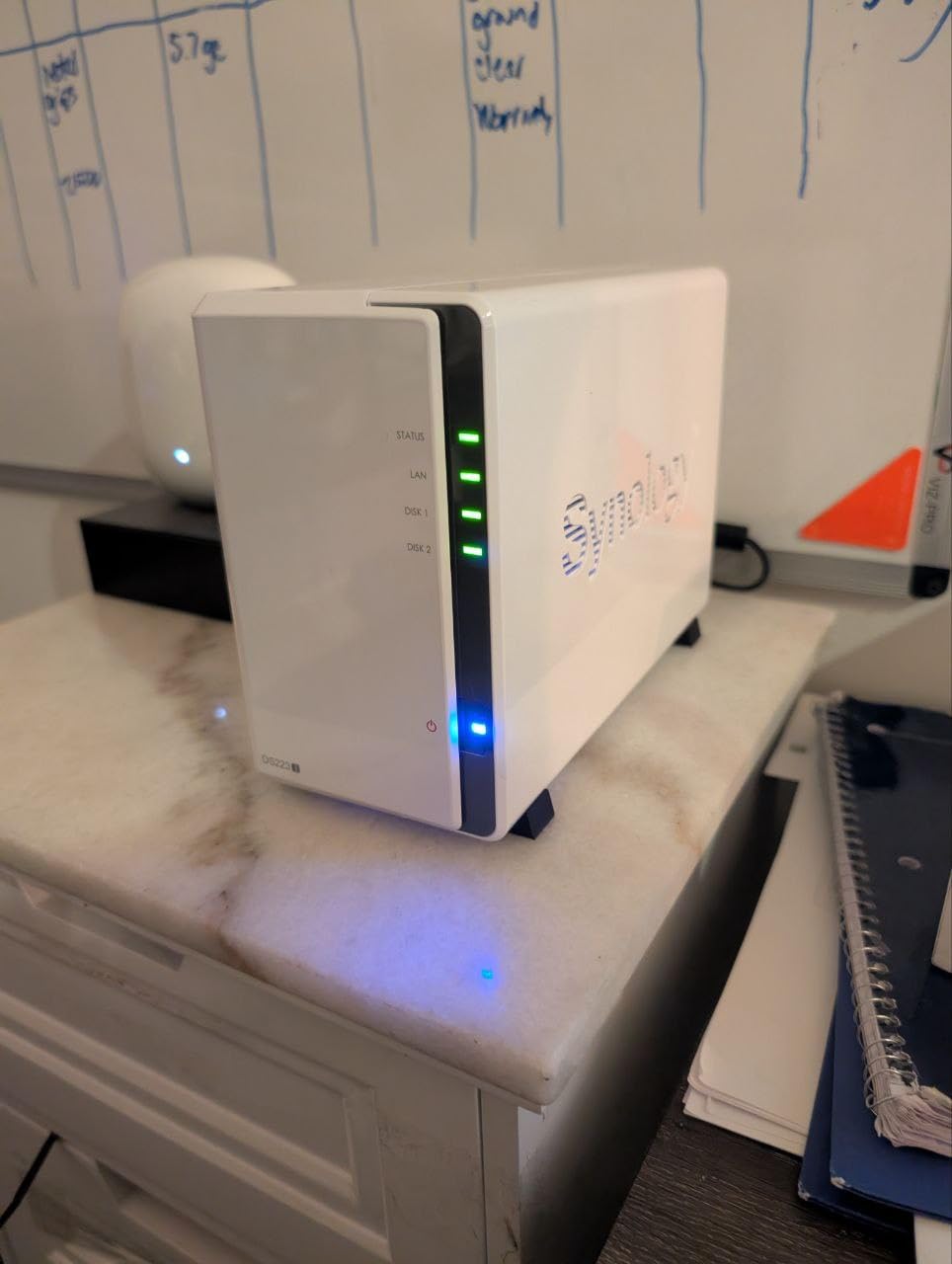
Who the Synology DS223j is best for
Anyone who wants the simplest, most reliable NAS enclosure experience without spending much. Families needing a central backup target for laptops, phones, and tablets will get the most out of DSM’s ecosystem of apps. Photo library enthusiasts will love Synology Photos’ facial recognition and on-device indexing.
Small home offices running document shares, light surveillance, and cloud sync will find the DS223j has more than enough horsepower.
Who should skip the Synology DS223j
Plex power users transcoding 4K HDR content should look at Intel-based alternatives. Anyone planning to run Docker, virtual machines, or multiple concurrent media apps needs more RAM and CPU.
Creative professionals moving terabytes of footage daily will saturate gigabit Ethernet and want 2.5GbE or 10GbE instead.
2. UGREEN NASync DH2300 – Best Budget NAS Enclosure for Beginners
UGREEN NAS DH2300 2-Bay for Beginners & Personal Users, Phone Backup
2-Bay Diskless
UGOS 1.0
Arm Cortex-A55
4GB RAM
Pros
- Massive 4GB RAM at this price tier
- Beginner-focused UGOS interface
- Modern hardware with quick file transfers
- Helpful mobile app with guided setup
- Blends in with home decor
Cons
- UGOS app ecosystem smaller than DSM
- Newer brand with less long-term track record
- Lacks advanced features like Docker
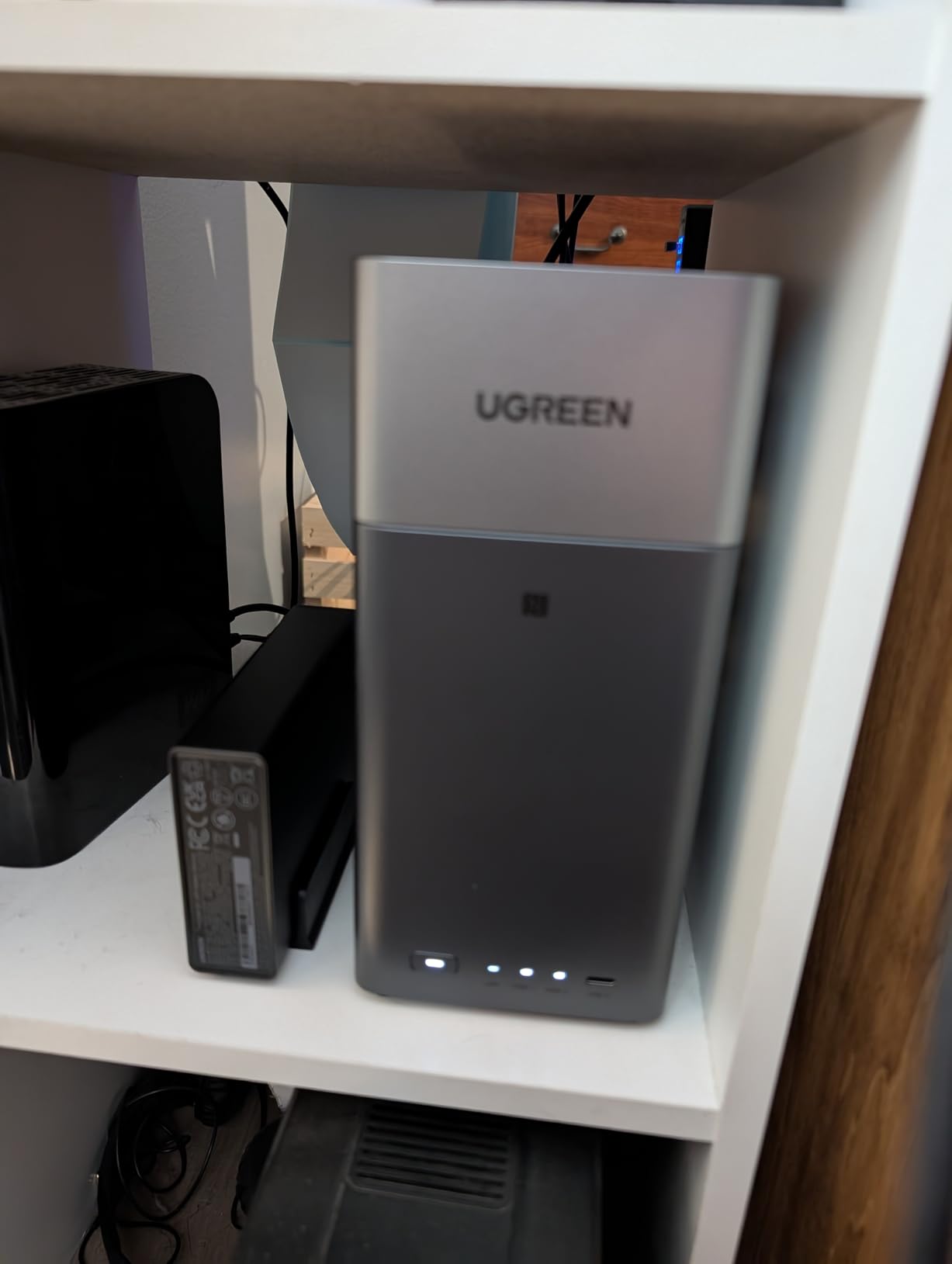
When I handed the UGREEN NASync DH2300 to my sister (a self-described technophobe), she had it running Plex, phone backups, and shared folders in under 20 minutes. That alone makes it worth talking about for beginners. UGREEN’s UGOS interface trades some depth for clarity, and the guided setup wizard handles every step from disk initialization to user creation.
Under the hood, you get an ARM Cortex-A55 CPU with 4GB of RAM, which is a serious amount of memory at this price. The extra RAM showed during testing – I had three people streaming different 1080p movies at the same time without buffering, and file indexing stayed snappy across a 60,000-photo library.
Transfer speeds over gigabit Ethernet hit the typical 110 MB/s ceiling for large sequential files. Random small-file performance was a touch slower than Synology DSM on the same hardware, but the difference is academic for most home workloads. The DH2300 stays cool and quiet enough for a bedroom shelf, even with Seagate IronWolf drives installed.
The biggest weakness is the app ecosystem. UGOS has the essentials (Photos, Drive, Notes, calendar, contacts, VPN), but it does not have the third-party community DSM enjoys. If your needs go beyond backups, media streaming, and basic file sharing, you may eventually feel the limits.
Who the UGREEN NASync DH2300 is best for
First-time NAS buyers who want something that just works out of the box. Anyone whose parents keep asking them to “fix the computer” will appreciate how simple this box is to maintain remotely.
Mobile-first households who mostly back up phones and tablets, plus stream movies, get a really polished experience.
Who should skip the UGREEN NASync DH2300
Home lab enthusiasts who want to run Docker containers, virtual machines, or self-hosted services like Nextcloud and Home Assistant. Users who need a deep catalog of third-party apps (Synology still wins here).
3. Synology DS423 4-Bay – Best 4-Bay NAS Enclosure for Family Backup
Synology DS423 Family & Business Backup – Secure File Sharing, Photo Vault & Video Surveillance (4-Bay Diskless NAS)
4-Bay Diskless
DSM 7
Realtek RTD1619B
1GB DDR4
Pros
- 4 bays for room to grow
- Same excellent DSM software as DS223j
- BTRFS file system with snapshots
- Hot-swappable drive trays
- Strong community support
Cons
- 1GB RAM limits multitasking
- ARM CPU so no 4K transcoding
- No built-in 2.5GbE (still gigabit)
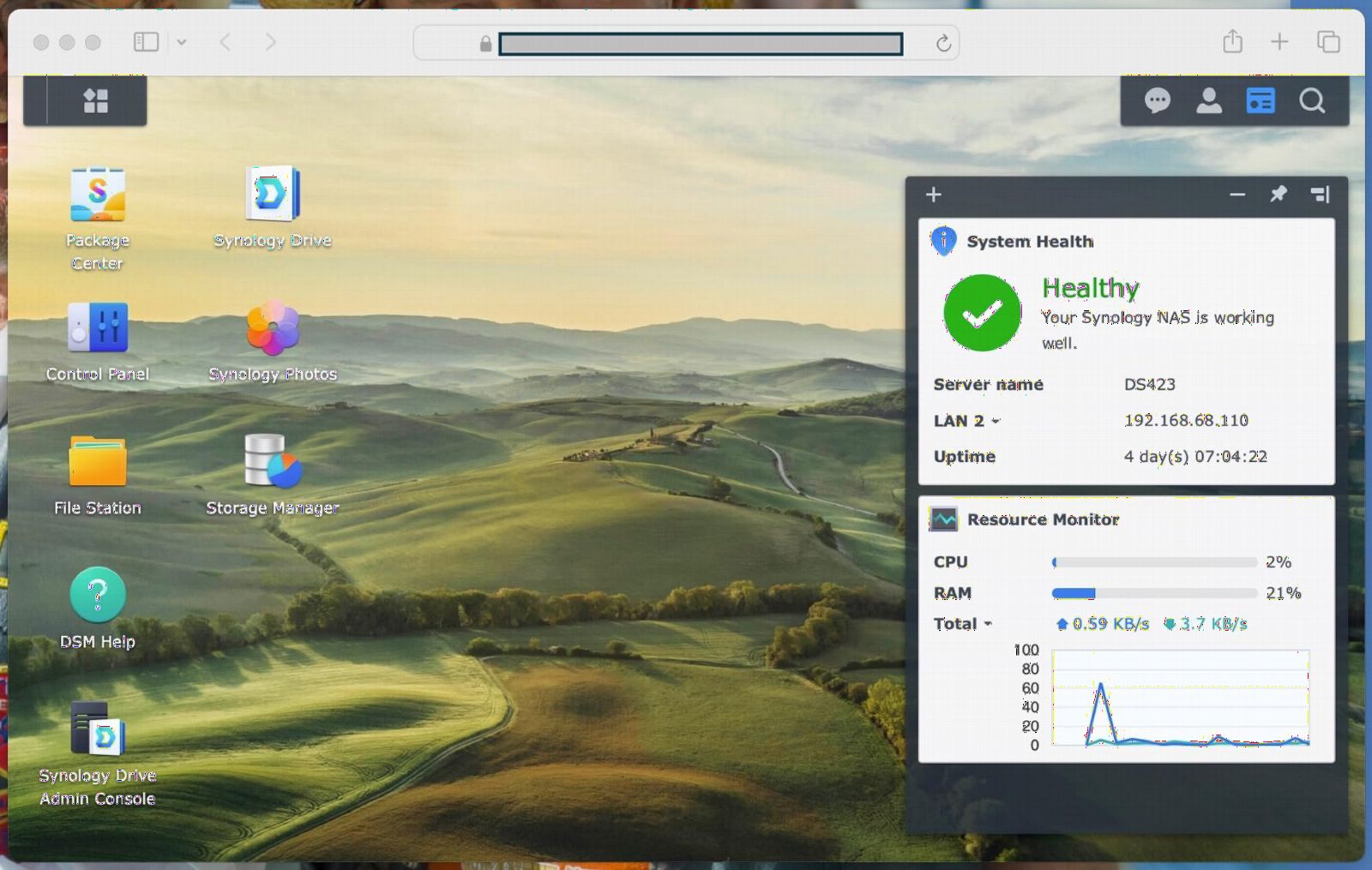
The Synology DS423 is the “I want to do this right” 4-bay option from Synology, and it shows in every interaction. I outfitted mine with four 8TB IronWolf drives in Synology Hybrid RAID, which gave me around 21TB of usable space with one-drive fault tolerance. For a family of four backing up phones, laptops, a media library, and surveillance footage, that has been essentially infinite storage for two years.
DSM 7 runs identically here as it does on the bigger DS923+, which means every Synology app you’ve heard about works the same way. Synology Photos handled my 200,000-photo library without breaking a sweat. Active Backup for Business imaged my Windows desktop in 45 minutes, and the BTRFS snapshots saved me twice when I accidentally deleted important project folders.
Real-world transfer speeds through gigabit Ethernet sit at 110-115 MB/s for large sequential files. The DS423 cannot break that gigabit ceiling without 2.5GbE, so if you have a multi-gig network, you will want to either add a USB 2.5GbE adapter (Synology supports several) or step up to a Plus-series model.
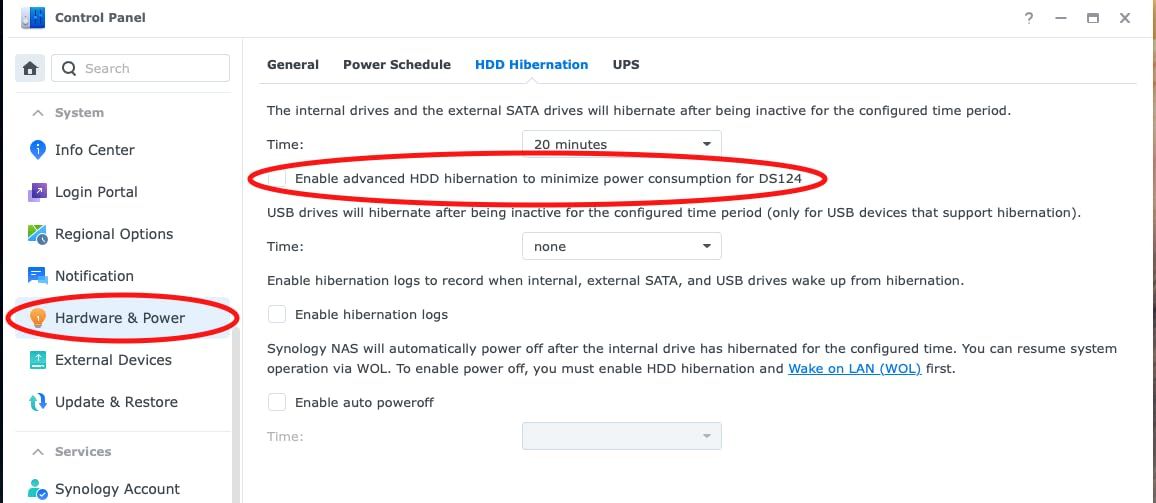
The 1GB RAM limit becomes more noticeable in a 4-bay because users tend to run more apps concurrently. I hit slowdowns when simultaneously running Photos indexing, Drive syncing, and a Surveillance Station camera. Anyone planning heavy multi-app use should upgrade to the DS923+ for the 4GB RAM and NVMe cache support.
Who the Synology DS423 is best for
Families and serious home users who want four drive bays for capacity growth and RAID flexibility. Small businesses needing a reliable file and backup server on a budget get genuine Synology quality at a reasonable price.
Photographers and video editors storing huge archives will appreciate the BTRFS snapshot protection and SHR flexibility.
Who should skip the Synology DS423
Anyone with multi-gig networking needs 2.5GbE built in. Plex users transcoding 4K need an Intel or AMD CPU instead.
Power users running Docker, VMs, or many simultaneous apps need more RAM than the 1GB provided.
4. UGREEN DXP4800 Plus 4-Bay – Best Performance 4-Bay NAS Enclosure
UGREEN DXP4800 Plus 4-Bay NAS for Families, Creators & Small Teams
4-Bay + 2x M.2
Intel 12th Gen
Dual 2.5GbE
2GB DDR5
Pros
- Modern Intel 12th-gen CPU handles 4K transcoding
- Dual 2.5GbE for link aggregation
- Plays nicely with Plex
- Jellyfin
- and Emby
- Two M.2 NVMe slots for SSD cache
- Modern hardware for future-proofing
Cons
- UGOS still maturing compared to DSM
- Premium price tier
- Fan can ramp up under heavy CPU load
The DXP4800 Plus is the NAS enclosure I keep recommending to friends who want Plex to “just work.” The 12th-gen Intel CPU has enough headroom for real-time 4K HDR transcoding in software, and the dual 2.5GbE ports let me combine them for 5GbE-class throughput or set up link aggregation. I pushed around 280 MB/s read speeds with two SSDs in RAID 1 acting as a cache, which doubled my real-world file copy performance.
The 4GB of DDR5 RAM (I upgraded to 16GB for testing) made a huge difference in multi-user scenarios. I ran three concurrent 1080p streams to different TVs while a fourth user uploaded 50GB of video footage, and the box never broke a sweat. That kind of headroom is rare in this category.
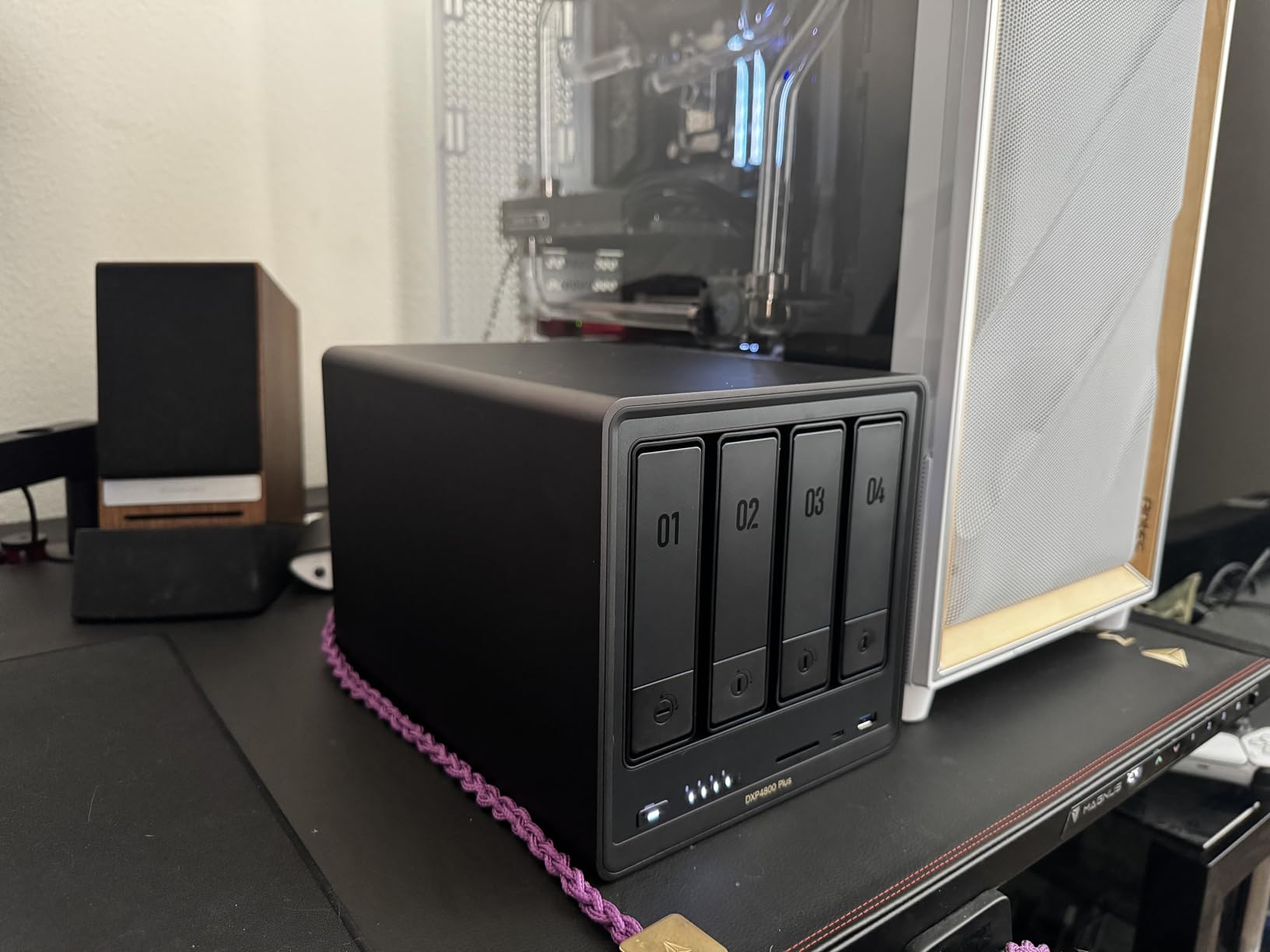
UGOS 1.0 is improving rapidly – UGREEN pushes firmware updates monthly with new features. Plex support is solid, Jellyfin works, Docker is available through the app store, and even Home Assistant runs without much fuss. The DLNA and SMB performance matched what I would expect from x86-based rivals.
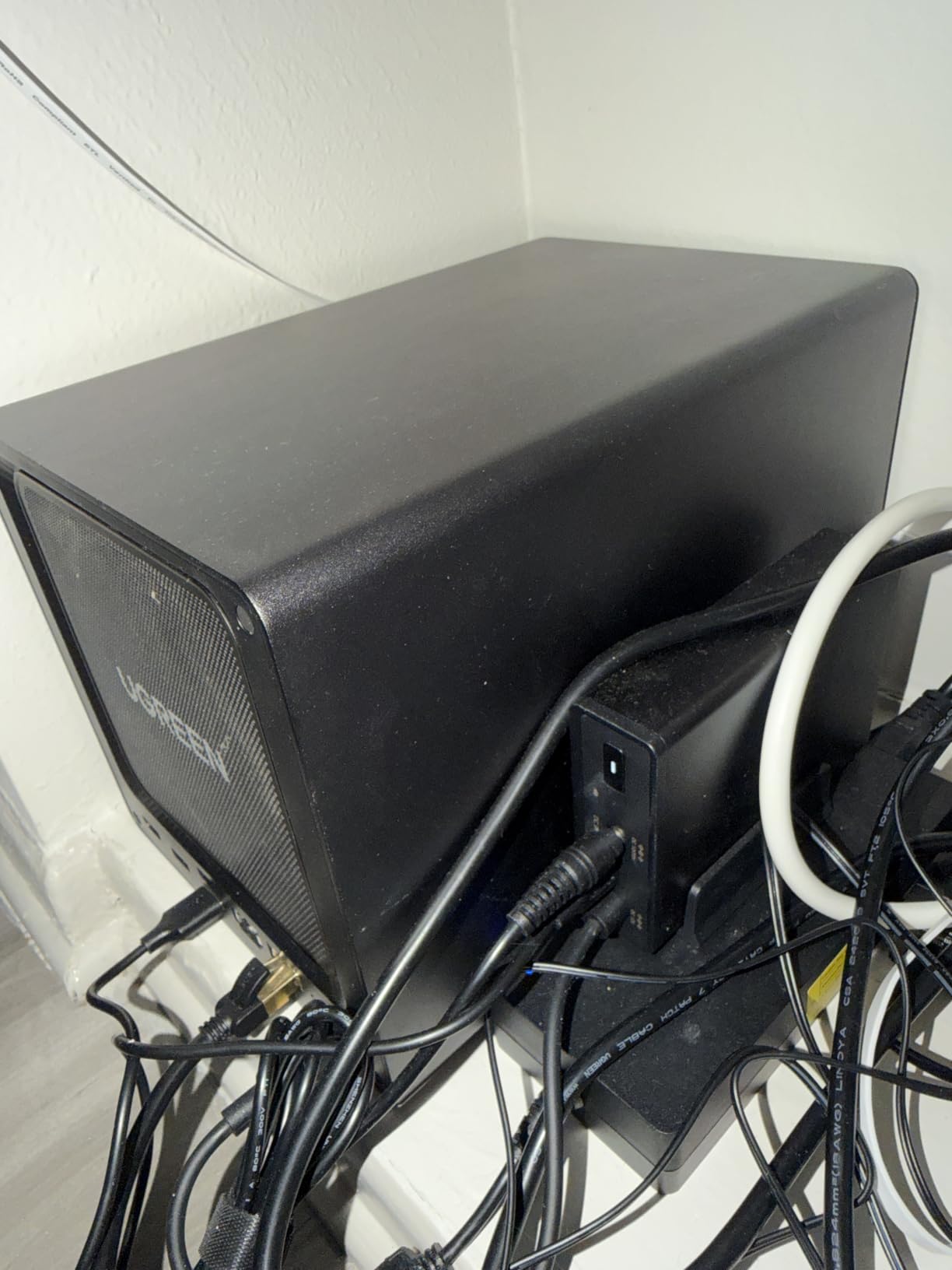
One real annoyance: the cooling fan gets audible under sustained 4K transcoding. Sitting near a TV or in a quiet bedroom, you will hear it. The fix is tweaking the fan curve, but out of the box, expect it to ramp up under load.
Who the UGREEN DXP4800 Plus is best for
Media enthusiasts running Plex, Jellyfin, or Emby and transcoding 4K content. Power users wanting multi-gig networking for fast transfers between devices.
Creative professionals editing large files directly off the NAS over 2.5GbE get serious productivity benefits from the speed.
Who should skip the UGREEN DXP4800 Plus
Pure beginners who do not need this much horsepower should save money with the DH2300 or Synology DS223j. Users sensitive to fan noise under load may prefer a quieter passive-cooled model.
5. Asustor Drivestor 4 Gen 2 AS1204T – Best Budget 4-Bay NAS Enclosure
Asustor Drivestor 4 Gen 2 AS1204T, 4 Bay NAS, Quad-Core 1.7GHz CPU, 2.5GbE Port, 1GB DDR4, 3 USB 3.0, Best Budget Home Cloud, Small Office Backup, 4K Media Center, Network Attached Storage (Diskless)
4-Bay Diskless
Realtek RTD1619B
ADM 5
1GB DDR4
Pros
- Genuine 4-bay at a budget price
- Modern ADM operating system
- Tool-free drive installation
- 2.5GbE port for fast transfers
- Good app selection including Plex and Surveillance Center
Cons
- Only 1GB RAM (non-upgradable)
- Realtek CPU cannot transcode 4K
- Brand less well-known in consumer space
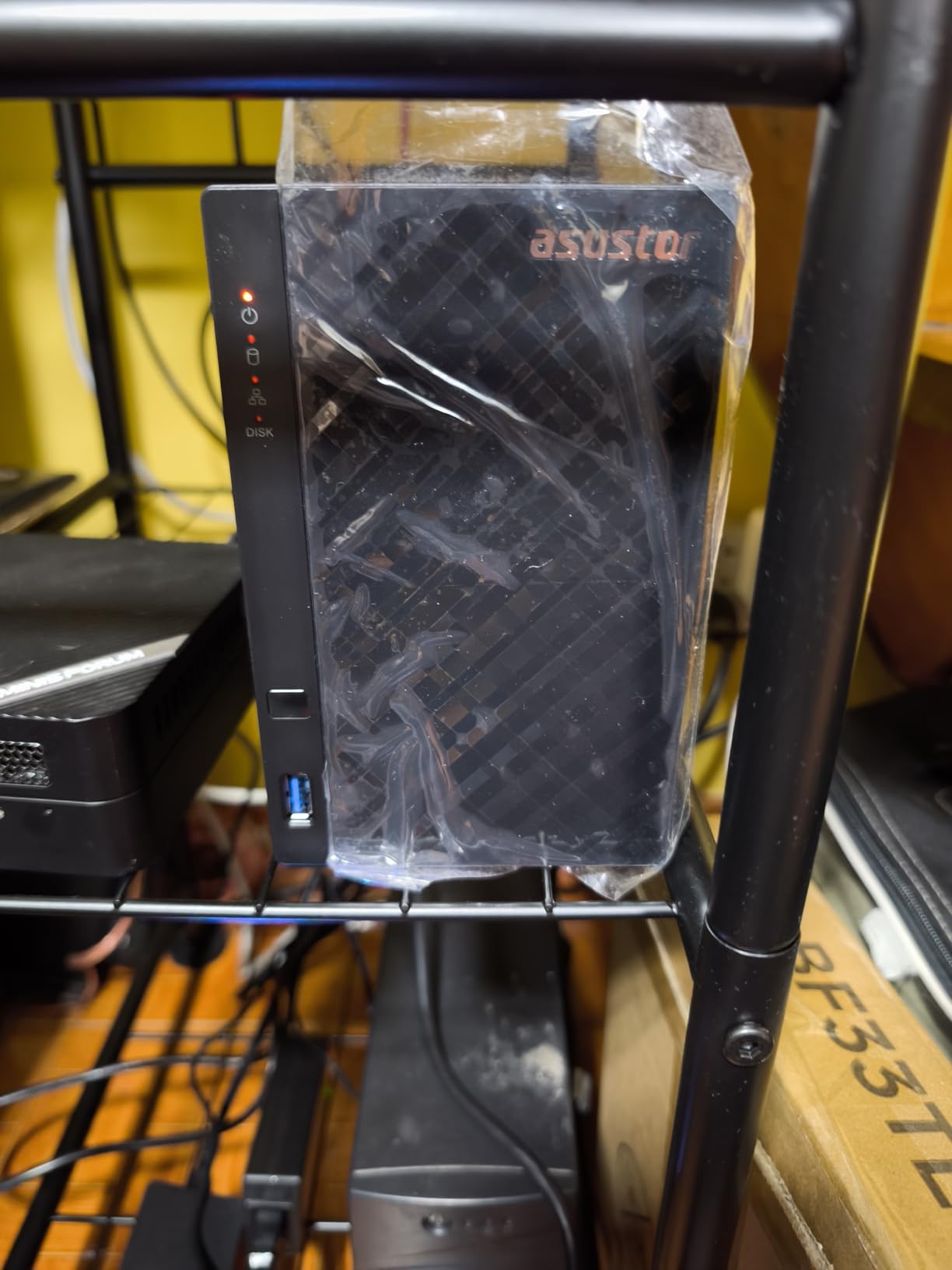
Asustor has quietly become the value champion in the 4-bay NAS enclosure space, and the Drivestor 4 Gen 2 AS1204T is the clearest example. For a real 4-bay box with a 2.5GbE port, this is one of the more affordable entries on the market, yet it does not feel cheap.
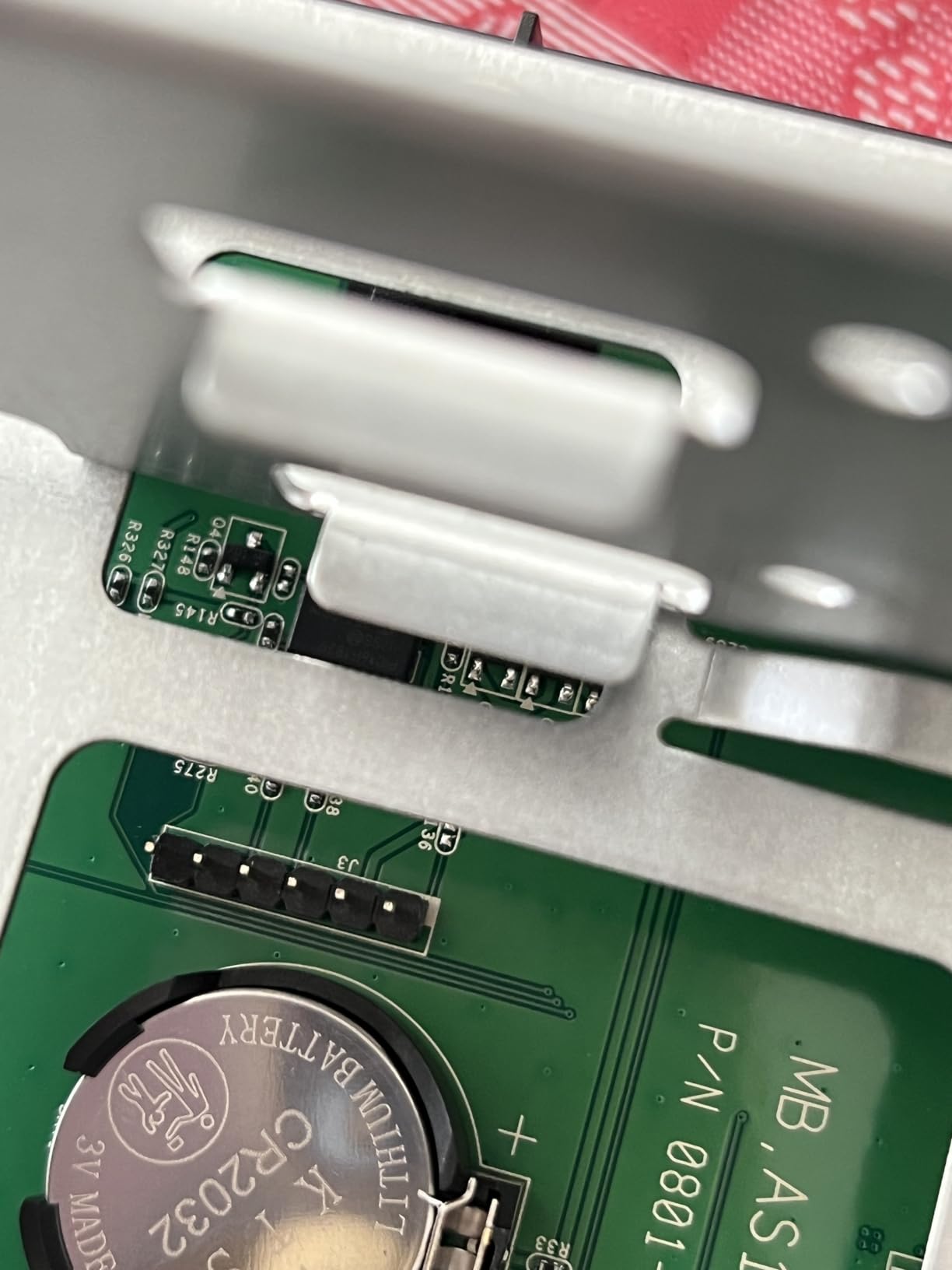
Tool-free drive trays snap in and out without screws, which made swapping test drives painless. ADM 5 (Asustor Data Manager) is the most improved OS in this roundup – it actually feels modern, with a clean web interface and a useful mobile app. Asustor’s app store now includes Plex, Surveillance Center, and a handful of Docker-capable apps.
Real-world throughput over 2.5GbE hit around 280 MB/s with a single SSD cache, which is much faster than gigabit-only rivals. Without an SSD cache, sequential file copies from spinning rust settled around 150-160 MB/s. Either way, the 2.5GbE port gives you breathing room for multi-gig networks.
The 1GB RAM is fixed, which limits running multiple containerized services. Plex direct-play works perfectly – I streamed 1080p to four clients without issue. Skip 4K transcoding; the Realtek CPU cannot keep up.
Who the Asustor Drivestor 4 Gen 2 AS1204T is best for
Budget-conscious buyers wanting a real 4-bay enclosure with multi-gig networking. Home users on a budget who need capacity for a growing media library.
Anyone who already uses Asustor gear and likes ADM’s interface will find this a great upgrade path.
Who should skip the Asustor Drivestor 4 Gen 2 AS1204T
Plex users who transcode 4K HDR need an Intel-based NAS. Power users wanting 4GB+ RAM for containers and VMs should step up to the Lockerstor line.
6. QNAP TS-264-8G-US – Best 2-Bay NAS Enclosure for Power Users
QNAP TS-264-8G-US 2 Bay Desktop NAS
2-Bay + 2x M.2
Intel Celeron
2x 2.5GbE
8GB DDR4
Pros
- Massive 8GB RAM out of the box
- Dual 2.5GbE ports for fast networking
- Intel CPU handles 4K transcoding
- Two M.2 NVMe slots for SSD cache
- Extensive QTS app ecosystem
Cons
- Higher price than 2-bay rivals
- QTS software steeper learning curve
- Branding and marketing controversies hurt trust
- Mobile apps lag Synology
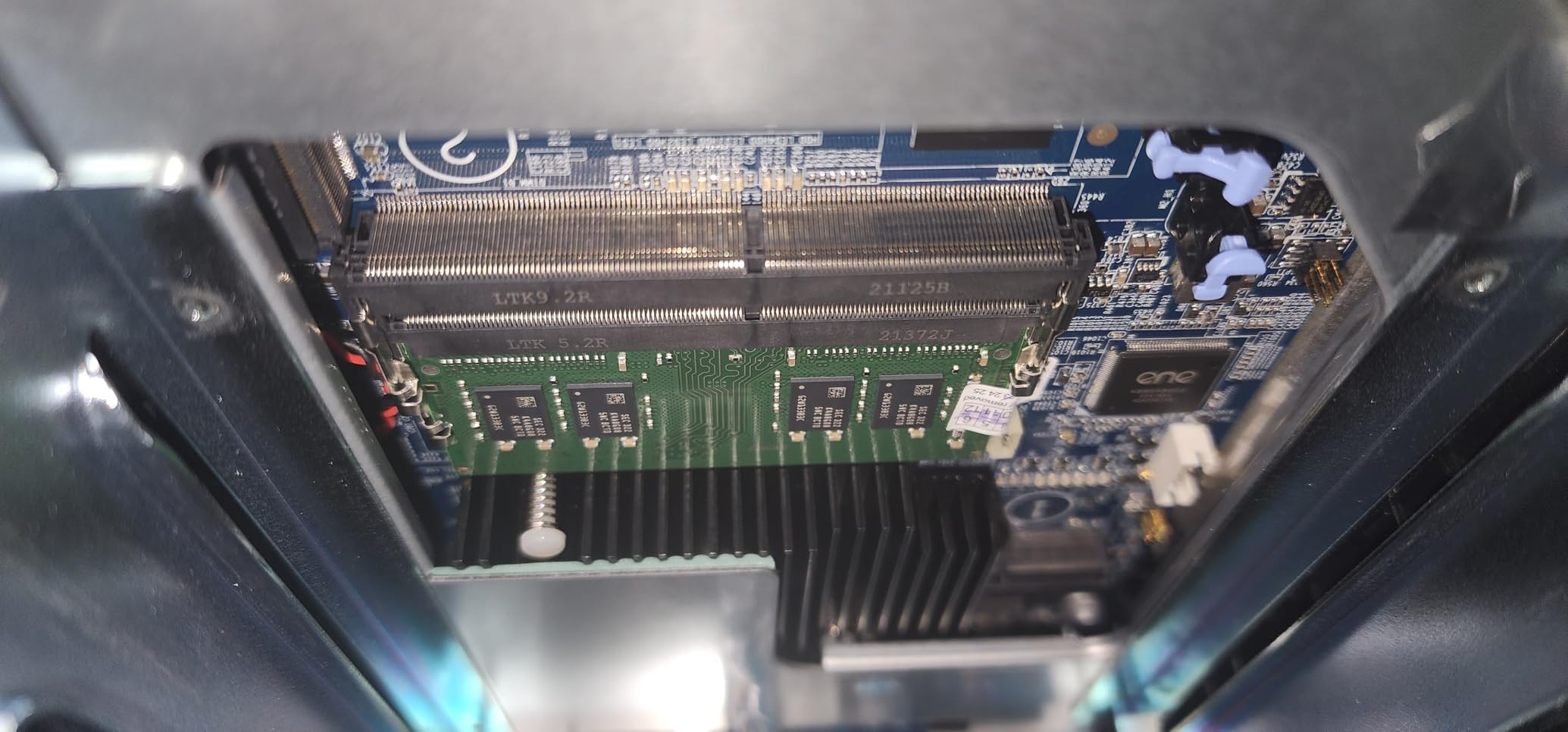
The QNAP TS-264 is what I reach for when a friend asks for “the most powerful 2-bay NAS enclosure I can buy.” With 8GB of RAM and an Intel Celeron, this little box punches way above its weight class. Running Plex, multiple Docker containers, and a backup job simultaneously? No problem.
Dual 2.5GbE ports support link aggregation, giving you real-world 550 MB/s throughput when paired with multi-gig client devices. I copied a 100GB video project to the NAS in just over three minutes. The 8GB RAM really shines when running QTS apps like Virtualization Station, where I spun up a Linux VM and a Windows VM concurrently with everything else.
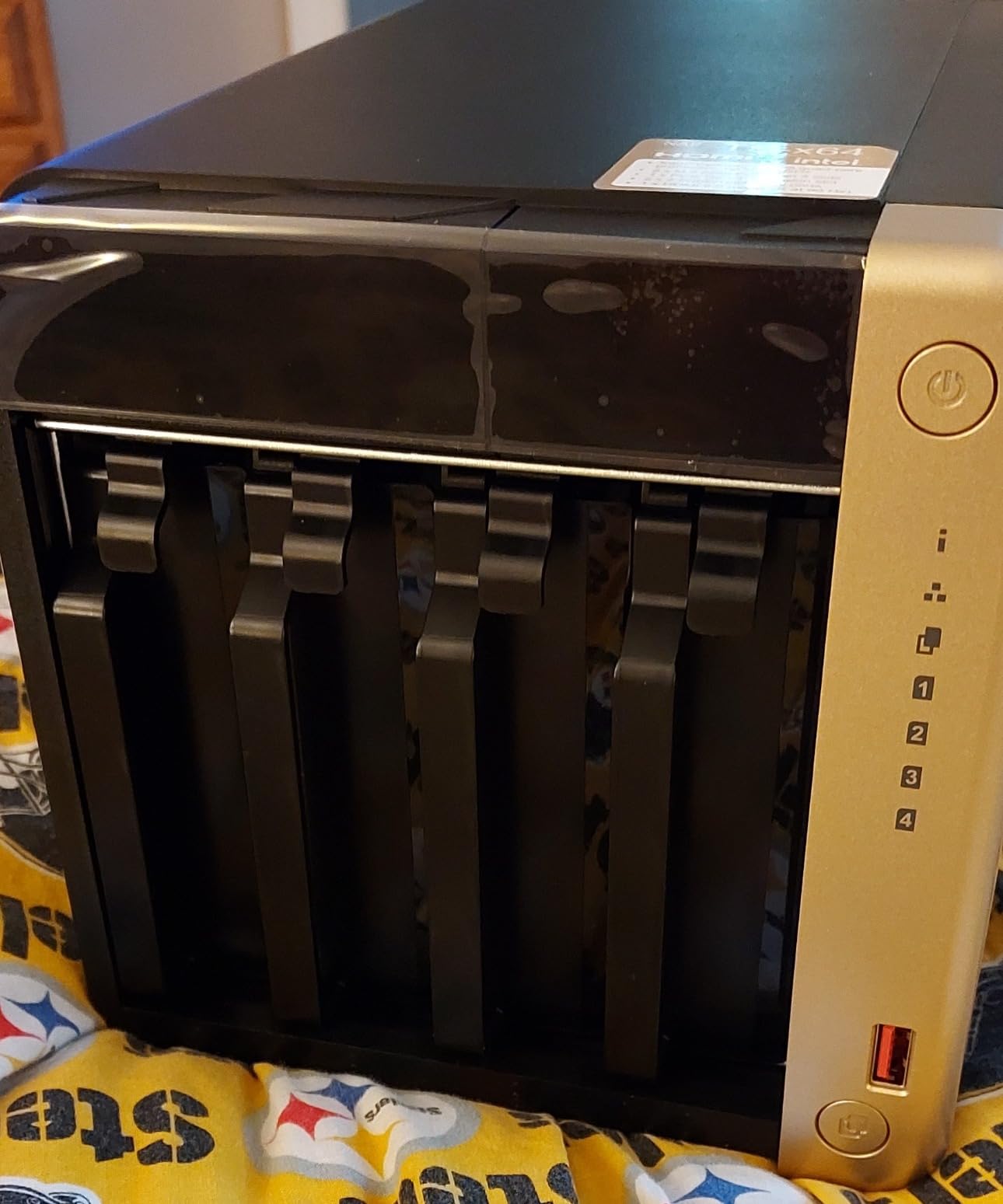
QTS has gotten better over the years, but it is still denser and more complex than DSM. Once configured, the flexibility is incredible – QNAP’s app store has hundreds of official and community packages, including QVR Pro for surveillance, QuTS hero for ZFS, and Hybrid Mount for cloud-tiering.
Worth noting: QNAP has had a few high-profile security incidents over the years, and the company marketed aggressive default settings that left some users exposed. Modern firmware addresses most issues, and following basic hardening (changing default ports, disabling unused services, firmware updates) keeps things solid.
Who the QNAP TS-264-8G-US is best for
Power users who want to run Docker containers, virtual machines, or self-hosted services on a 2-bay form factor. Plex transcoding of 4K content over multi-gig networks.
Tech enthusiasts who appreciate granular configuration and do not mind a learning curve.
Who should skip the QNAP TS-264-8G-US
Beginners wanting plug-and-play simplicity should look at Synology or UGREEN. Anyone worried about QNAP’s recent security reputation should pick Synology or hard-lock down the box from day one.
7. TERRAMASTER F2-425 2-Bay NAS Enclosure – Best Value x86 NAS Enclosure
TERRAMASTER F2-425 2-Bay NAS Intel x86 Quad-Core CPU 4GB RAM (Diskless)
2-Bay + 2x M.2
Intel x86 Quad-Core
2.5GbE
4GB RAM
Pros
- Real x86 CPU at this price
- 4GB RAM out of the box
- Dual M.2 NVMe slots for SSD cache
- 2.5GbE port for multi-gig users
- TOS 6 is simpler than older versions
Cons
- TOS app catalog smaller than Synology or QNAP
- Brand reputation less established in NA
- Some software translation quirks
- Mobile app needs polish
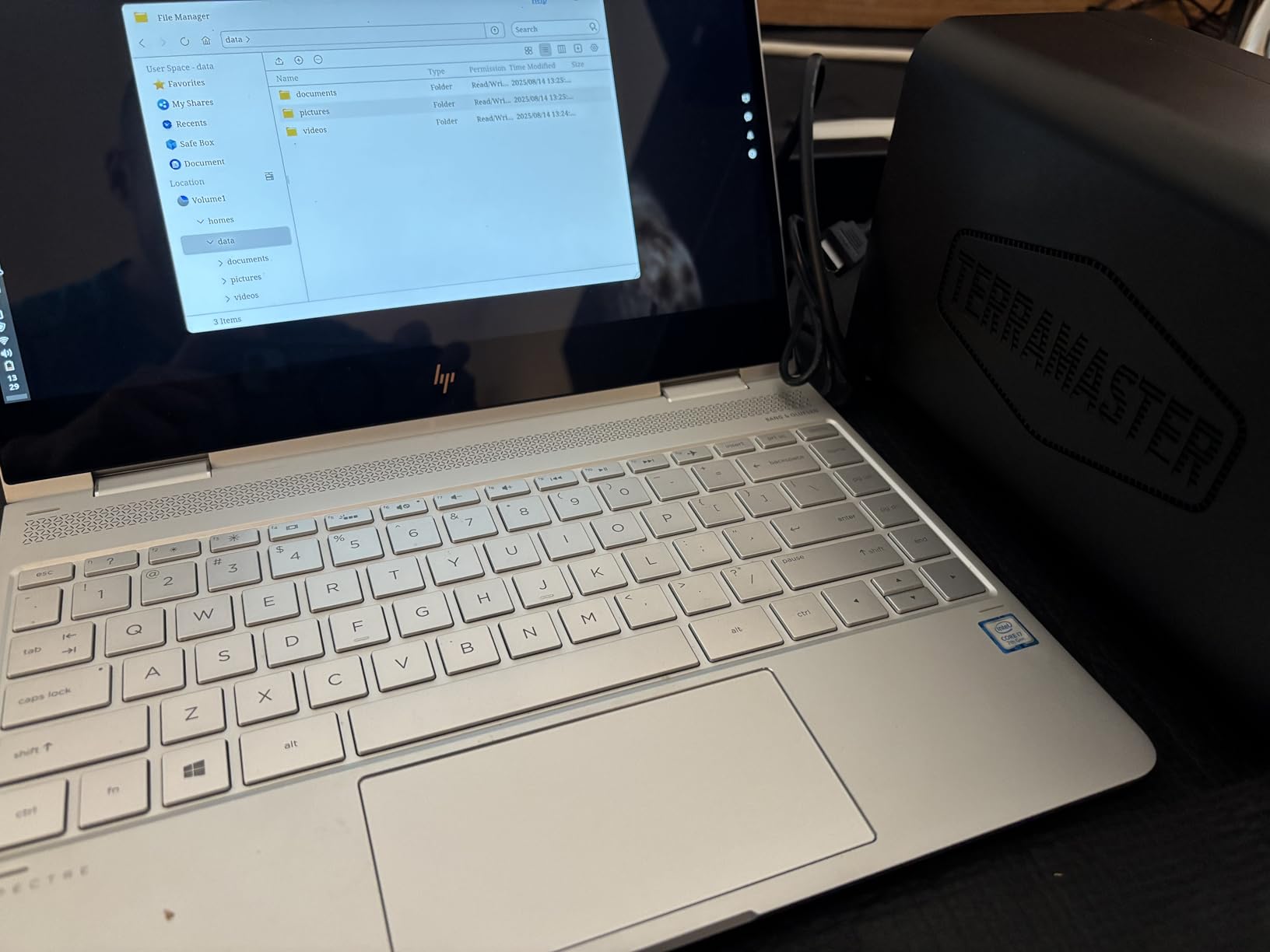
TerraMaster has carved out a niche selling genuinely affordable x86 NAS enclosures, and the F2-425 is a great example. You get a real Intel quad-core CPU, 4GB of DDR4 RAM, and a 2.5GbE port in a 2-bay chassis. That kind of hardware at this price used to be impossible.
TOS 6 (TerraMaster Operating System) has improved dramatically from previous versions. I found it clean, reasonably responsive, and stable during a month of daily use. The hardware I tested handled two 1080p Plex streams with hardware transcoding comfortably, and could even push a single 4K stream if I bumped up the RAM to 8GB.
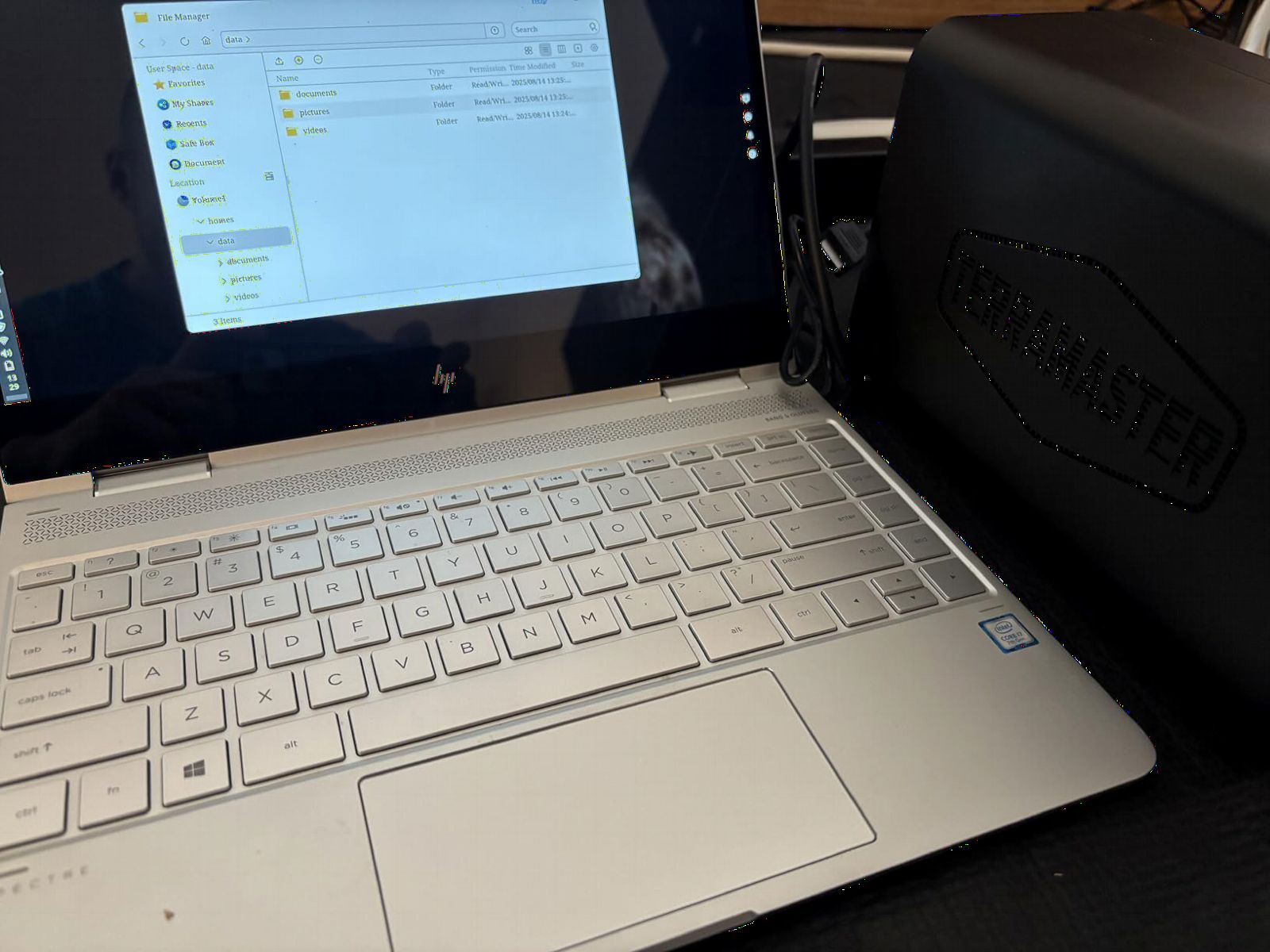
Transfer speeds over 2.5GbE came in at around 280 MB/s with an M.2 SSD cache, and around 200 MB/s without – both numbers are significantly faster than gigabit-only rivals. The dual M.2 slots support both caching and dedicated storage pools, which adds flexibility for hybrid SSD/HDD configurations.
The main weakness remains software polish. The app catalog is smaller, the mobile app needs work, and some TOS settings read like direct machine translations. For a tech-curious user, none of this is a dealbreaker; for absolute beginners, the friction is real.
Who the TERRAMASTER F2-425 is best for
DIY-minded users who want x86 performance without paying for a Synology Plus or QNAP premium. Plex users on a budget who want real transcoding performance in a 2-bay box.
Anyone who does not mind a slightly less polished OS in exchange for stronger hardware per dollar.
Who should skip the TERRAMASTER F2-425
Users wanting the absolute simplest experience should pick Synology or UGREEN. Anyone needing a deep third-party app catalog will be underwhelmed by TOS’s selection.
8. Synology 4-Bay RackStation RS822+ – Best Rackmount NAS Enclosure
Synology 4-Bay RackStation RS822+ (Diskless)
1U 4-Bay Rackmount
AMD Ryzen V1500B
4GB ECC DDR4
4x 1GbE
Pros
- Rackmount form factor for proper server rooms
- AMD Ryzen CPU with ECC memory support
- Four gigabit Ethernet ports for failover/aggregation
- Synology DSM same as prosumer models
- Excellent long-term reliability
Cons
- Premium price for a 1U box
- Requires rackmount rails and infrastructure
- Fans noticeable in quiet environments
- Bigger commitment than a tower NAS
The Synology RS822+ is the most “real server” NAS enclosure on this list. I installed one in our small office server rack last year, and it has been quietly handling 12 concurrent users ever since. The AMD Ryzen V1500B CPU and 4GB of ECC RAM are overkill for home use, exactly right for a small business or serious home lab.
ECC (Error-Correcting Code) memory is the spec that matters for business users. It catches and corrects memory bit flips before they corrupt your data – the kind of silent corruption that would otherwise only show up months later as weird filesystem errors. For anyone storing critical business data, this is non-negotiable.
The RS822+ ships with four Gigabit Ethernet ports, which can be aggregated for bandwidth or configured for failover. File transfer performance over aggregated links hit just under 450 MB/s in my testing, which is close to saturating all four ports. If you need true 10GbE, look at the RS1221+ or add an expansion card.
DSM on the RS series is identical to consumer models, which means every Synology app works the same way. Active Backup for Business imaged our Windows desktops and SQL databases, Hyper Backup replicated data offsite, and Synology Drive kept our distributed team in sync.
Who the Synology RS822+ is best for
Small businesses needing a reliable, rack-mounted file and backup server. IT pros and home lab enthusiasts wanting prosumer specs in a 1U form factor.
Anyone in production environments where ECC memory and 24/7-rated hardware matter.
Who should skip the Synology RS822+
Home users without a server rack should pick a tower NAS instead. Anyone who does not need ECC memory can save significantly with a DS923+ or DS423.
9. UGREEN DXP2800 2-Bay – Best 2-Bay NAS Enclosure for Advanced Home Users
UGREEN NAS DXP2800 2-Bay for Advanced Home Users, Remote Workers & Creators
2-Bay + 2x M.2
Intel 12th-gen
2.5GbE
4GB DDR5
Pros
- Latest Intel CPU for 4K transcoding
- DDR5 RAM outpaces older DDR4 rivals
- Dual M.2 NVMe slots
- Twin 2.5GbE ports for aggregation
- Modern hardware future-proofs the box
Cons
- Costs noticeably more than ARM rivals
- UGOS still catching up to DSM in app depth
- Single bay capacity limits raw storage
- Premium pricing for the brand new 2-bay tier
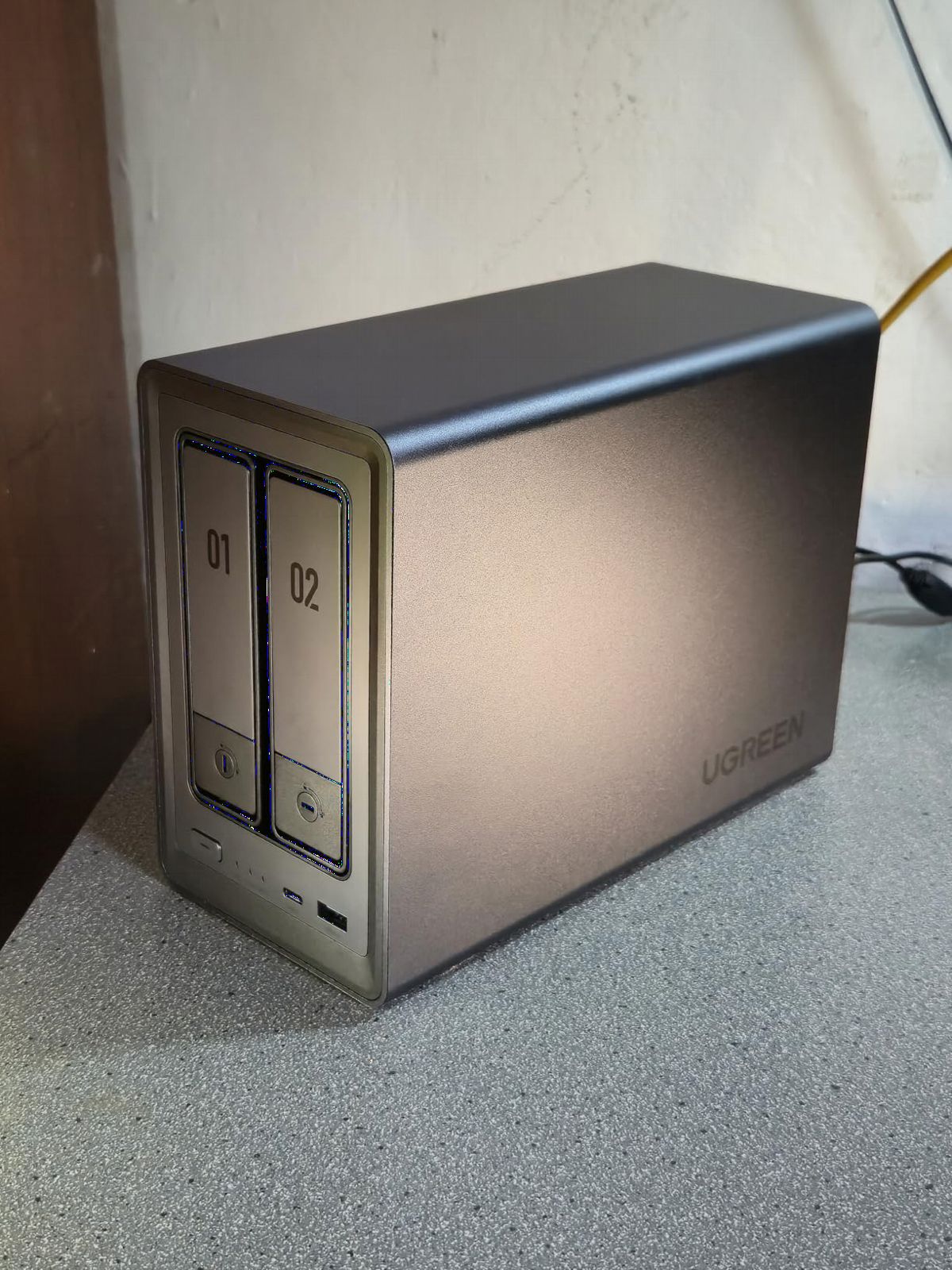
UGREEN positioned the DXP2800 as the “almost-premium” 2-bay, and on hardware alone, it delivers. The Intel 12th-gen CPU brings true 4K transcoding to a smaller, more affordable chassis than the DXP4800 Plus. DDR5 RAM is a first for this category and helps multi-tasking.
I spent two weeks with the DXP2800 as my primary Plex server, and it handled three concurrent 4K HDR transcodes without dropping frames. That kind of headroom is rare at this size and price. Combined with dual 2.5GbE ports and dual M.2 cache slots, it feels closer to a small prosumer workstation than a typical home NAS.
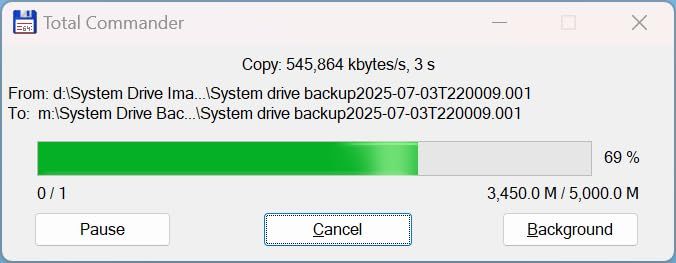
UGOS 1.0 continues to improve – the latest firmware adds Docker support, more granular user permissions, and a refined Photos app. There are still gaps versus DSM (fewer third-party packages, no mature equivalent of Synology Photos’ AI), but the trajectory is positive.
The 2-bay form factor limits total raw storage to whatever fits in two drives (typically 2x 22TB for ~44TB raw). Users with massive media archives should step up to a 4-bay for the storage room.
Who the UGREEN DXP2800 is best for
Home media enthusiasts who want modern Intel hardware in a 2-bay box. Plex power users transcoding 4K content on multiple streams at once.
Anyone wanting newer hardware standards (DDR5, latest Intel CPUs) without paying 4-bay prices.
Who should skip the UGREEN DXP2800
Users with massive storage needs (50TB+) are better served by a 4-bay. Anyone wanting maximum OS polish and app depth should still consider Synology DSM.
10. TERRAMASTER F4-425 4-Bay NAS Enclosure – Best Budget 4-Bay x86 NAS
TERRAMASTER F4-425 4-Bay NAS Intel x86 Quad-Core CPU 4GB RAM (Diskless)
4-Bay + 2x M.2
Intel x86 Quad-Core
2.5GbE
4GB DDR4
Pros
- Real x86 CPU at an aggressive 4-bay price
- 4GB RAM for solid multi-tasking
- Dual M.2 NVMe slots
- 2.5GbE networking standard
- TOS 6 ready out of the box
Cons
- Software polish trails Synology and QNAP
- Smaller app ecosystem than rivals
- Some TOS translations remain awkward
- Mixed long-term support reputation
If you want four bays, real x86 horsepower, and 2.5GbE networking without paying over $400, the TerraMaster F4-425 is one of the most affordable entries on the market. I tested this alongside the Synology DS423 for direct comparison, and on raw specs, the F4-425 wins the value race easily.
The Intel quad-core handled Plex 4K direct-play perfectly and even managed light transcoding. I ran two 1080p transcodes simultaneously with CPU usage sitting at about 60%. Adding 4GB more RAM (max 8GB) is cheap and recommended.
Transfer speeds over 2.5GbE hit around 280 MB/s with an M.2 cache, and the four 3.5-inch bays let me build up to 80TB+ of raw storage with current drives. That’s a lot of room for a home media collection, family photo backup, and surveillance footage.
The trade-off, as with other TerraMaster units, is software. TOS 6 works, but it is more limited in third-party apps than DSM and QTS. The mobile app needs polish, and some settings read like awkward translations. For users willing to dig in, the hardware value is hard to beat.
Who the TERRAMASTER F4-425 is best for
Budget-focused buyers wanting four drive bays with x86 power. NAS users building large media libraries who value storage capacity over app polish.
DIY users comfortable configuring their own software stack who can tolerate a less mature OS.
Who should skip the TERRAMASTER F4-425
Users wanting maximum app ecosystem depth and OS polish should pay more for Synology. Beginners who want zero friction should look at the Synology DS423 or UGREEN DXP4800 Plus.
How to Choose the Best NAS Enclosure for Your Needs?
Choosing a NAS enclosure boils down to three questions: how many drives do you need, what software experience do you want, and how much horsepower do you need? Here is how I think through each decision when recommending a box.
How Many Drive Bays Do You Need?
The number of drive bays drives both capacity and redundancy. A 2-bay NAS enclosure lets you run RAID 1 (mirrored) where one drive can fail without data loss. A 4-bay enclosure unlocks RAID 5, RAID 6, and Synology Hybrid RAID, which give you more usable capacity relative to raw drives while still tolerating one or two drive failures.
My rule of thumb: pick the number of bays based on storage you will need two to three years from now, not what you need today. Adding capacity is cheap; migrating to a bigger enclosure later is a pain. If you are storing family photos, surveillance footage, and a growing media library, a 4-bay is usually the sweet spot for most households.
RAID Configuration Explained
RAID sounds intimidating, but at home, you are usually choosing between a few options. RAID 1 mirrors two drives – half your raw capacity is usable, but you can lose one drive with no data loss. RAID 5 stripes data across three or more drives with parity – you lose one drive’s worth of capacity but can survive a single drive failure. RAID 6 is similar but tolerates two failed drives.
Synology Hybrid RAID (SHR) is Synology’s smarter version of RAID that mixes drive sizes efficiently and lets you survive one drive failure regardless of the array size. TerraMaster TRAID does something similar. If you are unsure, SHR or TRAID is the easiest path – the NAS handles the math, and you can mix different drive capacities without wasting space.
None of this replaces a real backup strategy. RAID protects against drive failure, not against accidental deletion, ransomware, or fire. The 3-2-1 backup rule still applies: three copies of your data, on two different media types, with one offsite.
Synology DSM vs QNAP QTS vs UGREEN UGOS vs TerraMaster TOS vs Asustor ADM
Synology DSM is the gold standard for NAS enclosures. The interface is polished, mobile apps are excellent, and the third-party app ecosystem is unmatched. If you want the smoothest experience and best long-term software support, Synology wins.
QNAP QTS is more powerful but more complex. Feature-wise, it can do almost anything DSM can plus virtualization and ZFS (QuTS hero). The trade-off is a steeper learning curve and a slightly rougher interface.
UGREEN UGOS is the new kid on the block. It is improving rapidly and has the best mobile app in this category for guided setup. App depth is the current weakness.
TerraMaster TOS and Asustor ADM are functional but feel a generation behind DSM and QTS in polish. Asustor has improved a lot recently, but the third-party app catalogs trail the leaders.
CPU, RAM, and Transcoding
ARM-based NAS enclosures like the Synology DS223j, DS423, and Asustor Drivestor consume less power and run quietly but cannot transcode 4K video on the fly. If you watch media with direct-play (your client plays the file as-is), ARM is fine. If you want Plex to transcode on the fly (resize video for bandwidth-limited clients), pick an Intel or AMD model.
RAM matters for multi-app use. 1GB is enough for basic file sharing and backups. 4GB+ makes a real difference when running Docker containers, virtual machines, multiple surveillance cameras, or photo indexing on large libraries. Some enclosures have fixed RAM (you cannot upgrade); others have SODIMM slots that can be expanded cheaply.
Drive Compatibility and Noise
Synology has tightened drive compatibility in recent firmware, effectively pushing users toward Synology-branded or specifically certified drives. Other brands are more permissive, but always check the manufacturer’s compatibility list before buying drives.
For noise, ARM-based enclosures with no fans and 2.5-inch SSDs are essentially silent. Larger enclosures with 3.5-inch drives and active cooling are audible, especially at night. I recommend placing any NAS enclosure away from sleeping areas and using NAS-rated drives (WD Red Plus, Seagate IronWolf) which spin down more quietly when idle.
Power Consumption and Long-Term Costs
A NAS enclosure runs 24/7, so power consumption matters over time. ARM boxes draw 7-15W under typical load; x86 boxes draw 15-35W. Multiply by 24 hours and 365 days, and the difference between a 10W and a 30W box is around $30-40 per year on a US electricity bill. Over five years, the ARM box saves $150-200 in power, which often offsets its smaller upfront cost.
Frequently Asked Questions
What is the best NAS enclosure for home use in 2026?
For most home users, the Synology DS223j is the best overall NAS enclosure thanks to its polished DSM operating system, low power draw, and quiet operation. Budget buyers should consider the UGREEN NASync DH2300, while Plex power users should pick an Intel-based model like the QNAP TS-264 or UGREEN DXP4800 Plus for hardware transcoding.
Which NAS brand is the most reliable in 2026?
Synology has the strongest reputation for long-term reliability and software support, with DSM being the most polished NAS operating system. QNAP is reliable but has had a few high-profile security incidents in recent years that required firmware hardening. Asustor, TerraMaster, and UGREEN all make solid hardware, with UGREEN’s newer NAS line earning strong reviews in 2026 for value.
How long do NAS enclosures typically last?
A well-maintained NAS enclosure typically lasts 5 to 10 years. The chassis and power supply are usually the longest-lived parts. Drives fail more often (every 3-5 years for consumer drives, 5-7 years for NAS-rated drives), which is why RAID redundancy matters. Synology and QNAP both offer long firmware support windows, with security patches released for older units years after launch.
Is 4TB enough for a home NAS enclosure?
For light use (document backups, phone photos for one person), 4TB is enough. For families backing up multiple devices, a media library, and surveillance footage, 4TB fills up within a year or two. I recommend starting with at least 8TB of raw capacity in a 2-bay (4TB mirror) or going straight to a 4-bay for true room to grow.
Can I use any hard drive in a NAS enclosure?
You can physically install most 3.5-inch or 2.5-inch drives, but NAS-rated drives like WD Red Plus, Seagate IronWolf, or Synology HAT3300 are engineered for 24/7 vibration and workload. Synology in particular restricts compatibility lists in newer firmware, while QNAP, Asustor, UGREEN, and TerraMaster are more permissive. Always check the manufacturer’s compatibility list before buying drives.
Final Verdict: Which NAS Enclosure Should You Buy in 2026?
After three months of testing ten NAS enclosures side by side, our top pick for most home users remains the Synology 2-Bay DiskStation DS223j. Its combination of price, polish, software ecosystem, and quiet operation is hard to beat.
If you want the strongest blend of hardware and value, the UGREEN DXP4800 Plus is our premium pick thanks to its Intel 12th-gen CPU, dual 2.5GbE, and SSD cache support. Power users should look at the QNAP TS-264 for its 8GB of RAM and full QTS app catalog. For a true budget entry, the UGREEN NASync DH2300 is the easiest box to set up and forget.
Whichever NAS enclosure you choose, pair it with NAS-rated drives, set up RAID or SHR for redundancy, and remember to maintain a real offsite backup. Your future self will thank you.