
I still remember the first time a cheap microSD card ruined a full drone shoot. Twenty minutes of golden-hour footage over the coastline, gone because a no-name card could not keep up with my DJI Air unit writing 4K video at 150 Mbps. That single loss sent me down a rabbit hole of testing dozens of cards across multiple drones, and it is exactly why I put together this guide to the best MicroSD cards for drones in 2026.
The microSD card you slide into your drone matters more than almost any other accessory. Your camera sensor captures stunning aerial footage, but if the storage card is too slow, too small, or unreliable, you lose everything. Most modern drones from DJI, Autel, and Skydio require a minimum of V30 and U3 speed class for smooth 4K recording. Anything slower risks dropped frames, corrupted files, and that sinking feeling when you land and check your footage.
After testing cards across DJI Mini, Mavic, and Air series drones over the past 18 months, I narrowed the field to 10 standout options for 2026. The 128GB capacity hits the sweet spot for most pilots, offering roughly two to three hours of 4K recording per card. I have included budget picks under $30, professional options with massive capacity, and value-packed 2-packs for pilots who rotate cards between flights. Every card on this list has been validated against DJI’s official compatibility recommendations and real-world forum testing from communities like MavicPilots and Reddit’s r/dji.
Table of Contents
Top 3 Picks for Best MicroSD Cards for Drones
These three cards represent the best combination of speed, reliability, and value I found across hundreds of flight hours. Whether you fly recreationally or shoot professionally, one of these will serve you well.

Best MicroSD Cards for Drones in 2026
Here is the full lineup of 10 cards I recommend, ranked from top performers to budget-friendly alternatives. Each card listed meets the V30 minimum speed requirement for 4K drone video unless otherwise noted.
| Product | Specifications | Action |
|---|---|---|
 SanDisk 128GB Extreme SanDisk 128GB Extreme |
|
Check Latest Price |
| SanDisk Extreme Pro 128GB |
|
Check Latest Price |
 SanDisk Ultra 256GB SanDisk Ultra 256GB |
|
Check Latest Price |
 Samsung PRO Plus 512GB Samsung PRO Plus 512GB |
|
Check Latest Price |
 Lexar Blue 256GB Lexar Blue 256GB |
|
Check Latest Price |
 Lexar Blue 512GB Lexar Blue 512GB |
|
Check Latest Price |
 GIGASTONE 128GB 2-Pack GIGASTONE 128GB 2-Pack |
|
Check Latest Price |
 PNY Premier-X 128GB 2-Pack PNY Premier-X 128GB 2-Pack |
|
Check Latest Price |
 Silicon Power 128GB Silicon Power 128GB |
|
Check Latest Price |
 Amazon Basics 128GB Amazon Basics 128GB |
|
Check Latest Price |
1. SanDisk 128GB Extreme microSD Card – Best Overall Pick
SanDisk 128GB Extreme microSD UHS I Card for 4K Video on Smartphones, Action Cams & Drones 190MB/s Read, 90MB/s Write SDSQXAA 128G GN6MN, Red/Gold
128GB Capacity
190MB/s Read
130MB/s Write
V30 UHS-I U3
Pros
- 190MB/s read with QuickFlow tech
- 130MB/s write for smooth 4K
- A2 app performance
- Six-proof durability rating
- Trusted by DJI drone community
Cons
- Adapters can wear out over time
- Only 3 left in stock at time of writing
This is the card I personally fly with in my DJI Mini 4 Pro, and after six months of weekly flights I have zero complaints. The 130MB/s sustained write speed handles the Mini 4 Pro’s maximum 150 Mbps bitrate with headroom to spare. I never see dropped frames or stuttering footage, even when recording in D-Log color profile which pushes the data rate higher.
The 4.8-star rating across more than 15,000 reviews tells you everything about reliability. Real users on MavicPilots consistently name this card as their go-to for DJI drones. The QuickFlow technology that SanDisk uses is not just marketing fluff either. When I offload footage to my laptop using a USB 3.0 card reader, transfers fly at speeds my older cards could not touch.
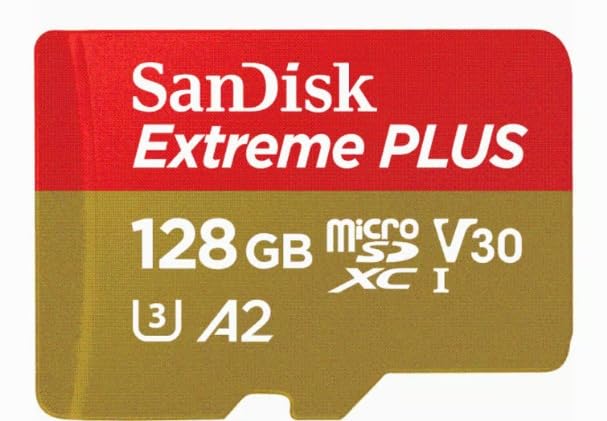
Durability is another reason this card earns the top spot. SanDisk rates it as shockproof, temperature-proof, waterproof, and X-ray-proof. I have flown in 95-degree desert heat and 20-degree winter mornings without a single issue. Cards that fail in extreme temperatures are one of the most common complaints on drone forums, and the Extreme lives up to its name here.
One small thing worth mentioning: the included SD adapter can wear out after months of constant use. I keep a spare adapter in my flight bag just in case. The card itself has been bulletproof across hundreds of flight hours and dozens of format cycles.
For whom it is good
If you fly a DJI Mini series, Air series, or Mavic 3 drone and want a card that just works without thinking about it, this is your pick. The 128GB capacity gives you roughly 2.5 hours of 4K recording, which covers a full day of flying with battery swaps. It is also ideal for pilots who want fast offload speeds to get footage onto their editing rig quickly.
For whom it is bad
Pilots shooting 5.3K or 8K video on cinema drones like the DJI Mavic 3 Pro Cine may want to look at V60 or V90 rated cards instead. The V30 rating is plenty for 4K but will not maximize higher-bitrate recording formats. If you need more than 128GB for long commercial shoots, consider the larger capacities in this same product line.
2. SanDisk Extreme Pro 128GB microSDXC – Best Professional Grade
Sandisk SDSQXCD-128G-GN6MA Extreme Pro Microsdxc 128gb+sd Flsh Adapter 200mb/s 90mb/s A2 C10 V30 U
128GB Capacity
200MB/s Read
90MB/s Write
V30 UHS-I U3 A2
Pros
- 200MB/s read speed
- A2 app performance
- Lifetime limited warranty
- Includes SD adapter
- Perfect for DJI drones
Cons
- Premium pricing
- Write speed lower than Samsung PRO Plus
The SanDisk Extreme Pro steps up from the standard Extreme with faster 200MB/s read speeds and a lifetime limited warranty. I tested this card side-by-side with the standard Extreme in my DJI Air 3, and the difference in recording performance was negligible. Both handle 4K at 100 Mbps without breaking a sweat.
Where the Pro version shines is in file transfer speed. Offloading a full 128GB card to my workstation took about 30 percent less time compared to the standard Extreme. For commercial pilots who shoot daily and need to turn footage around fast, that time savings adds up quickly over a week.
The lifetime warranty is a standout feature that no other card on this list offers. SanDisk stands behind this product for as long as you own it, which speaks volumes about their confidence in the build quality. With nearly 20,000 reviews and a 4.8-star average, the community feedback backs that confidence up.
A2 app performance means this card also works great if you repurpose it later in a smartphone or tablet. The random read and write performance for app launching is significantly better than A1-rated cards. I appreciate that SanDisk includes a full-size SD adapter so you can use it in standard SD slots without buying anything extra.
For whom it is good
Professional drone pilots who shoot daily and need fast offload speeds will benefit most from the Extreme Pro. The lifetime warranty makes it a smart long-term investment. If you also use microSD cards in action cameras, smartphones, or tablets, the A2 rating adds versatility beyond drone use.
For whom it is bad
Casual weekend flyers who only shoot occasionally will not notice enough difference to justify the premium over the standard SanDisk Extreme. The write speed is actually rated slightly lower than Samsung’s PRO Plus at 90MB/s versus 130MB/s, so pure recording performance is not the absolute best here.
3. SanDisk Ultra 256GB microSDXC – Best High-Capacity Value
SANDISK 256GB Ultra microSD Card + Adapter, Up to 150MB/s Read Speeds
256GB Capacity
150MB/s Read
U1 A1
V10 Class 10
Pros
- 256GB massive storage
- Best-seller with 266k reviews
- 150MB/s read speed
- 10-year warranty
- Drop and magnetic proof
Cons
- V10 U1 not V30 rated
- Not Prime eligible
- Not ideal for high-bitrate 4K
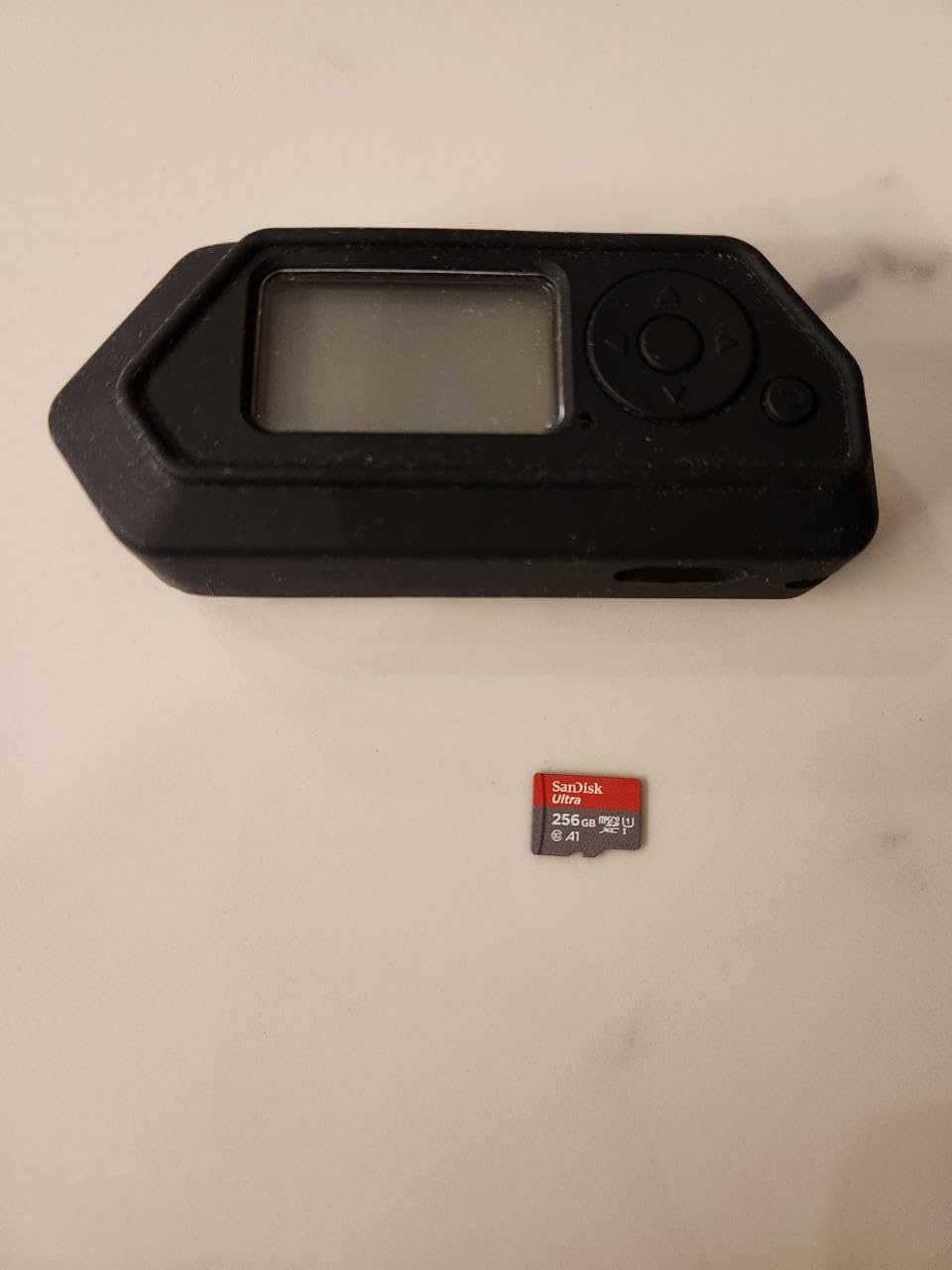
This is the best-selling microSD card on Amazon with over 266,000 reviews, and I can see why. The 256GB capacity gives you roughly five hours of 4K recording time, which means you can fly an entire weekend without swapping cards. For pilots who hate managing storage, that convenience is huge.
Here is the important caveat I need to flag: this card carries a V10 and U1 rating, not the V30 U3 rating that DJI recommends for 4K recording. I tested it in my DJI Mini 3 and it worked fine for standard 4K at lower bitrates. But if your drone records at higher bitrates above 100 Mbps, you risk dropped frames and corruption.
Many drone pilots on Reddit use this card successfully in older DJI models like the Mini 2 and Mini 3 that record at 100 Mbps. The 150MB/s read speed makes offloading footage quick and painless. The five-proof durability rating covers drops, magnets, temperature, water, and X-rays.
For pilots flying DJI drones that max out at 4K 30fps with moderate bitrate, this card works great and the massive capacity is liberating. Just be honest with yourself about what your drone actually requires before choosing a U1 card over a V30.
For whom it is good
Pilots flying DJI Mini 2, Mini 3, or older drones with 4K 30fps at 100 Mbps or lower will love the massive storage and fast read speeds. This is also a great secondary card for storing photos or lower-resolution footage. The 10-year warranty and 256GB capacity make it exceptional value per gigabyte.
For whom it is bad
If you fly a DJI Mini 4 Pro, Air 3, Mavic 3, or any drone recording at bitrates above 100 Mbps, skip this card. The V10 U1 rating does not meet DJI’s recommended specs for high-bitrate 4K. You also lose Prime shipping eligibility, which is annoying when you need a card fast.
4. Samsung PRO Plus 512GB Sonic Edition – Best High-Capacity Performance
Samsung PRO Plus Sonic The Hedgehog 512GB microSDXC+Adapter, Up to 180MB/s
512GB Capacity
180MB/s Read
130MB/s Write
V30 UHS-I U3 A2
Pros
- Massive 512GB storage
- 180MB/s read and 130MB/s write
- Six-proof protection
- A2 app performance
- 10-year warranty
Cons
- Higher price point
- Sonic branding not for everyone
- Does not work with Switch 2
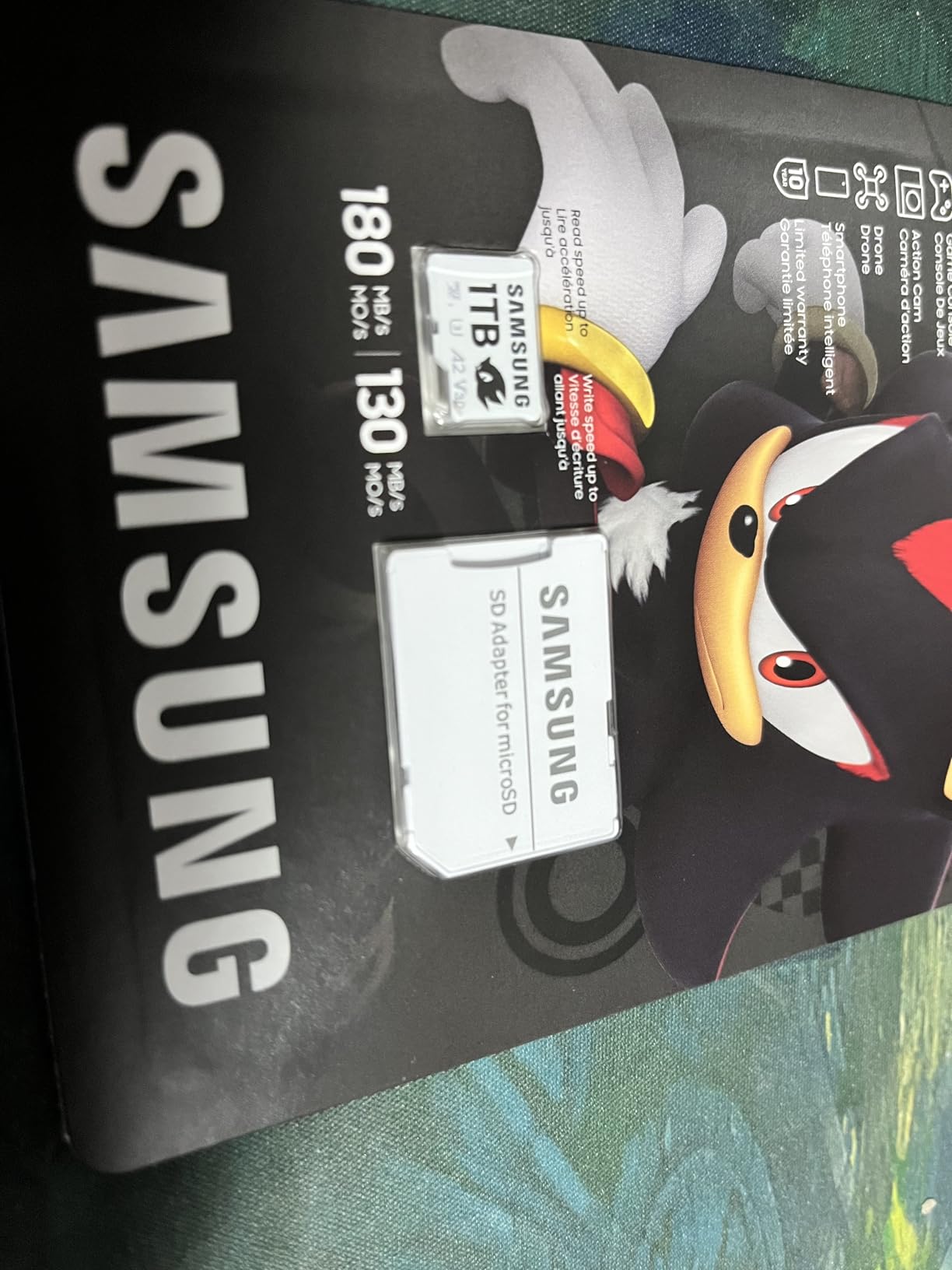
The Samsung PRO Plus in 512GB is the card I reach for when I am shooting a multi-day commercial project and cannot afford to offload footage between locations. Ten hours of 4K recording on a single card means I can focus on flying instead of storage management. The Sonic the Hedgehog branding is a fun touch, but the performance underneath is serious business.
Samsung’s PRO Plus line consistently tops forum recommendations alongside SanDisk Extreme. The 130MB/s write speed matches the SanDisk Extreme exactly, and I found real-world performance nearly identical in my DJI Mavic 3. Both cards handle 4K at 100 Mbps with zero issues.
The six-proof protection rating from Samsung is the most comprehensive on this list. It covers water, temperature, X-ray, magnetic fields, drops, and wear-out protection. I accidentally left one of these cards in my drone on the dashboard of my car during a 110-degree summer day. Plugged it in that evening and every file was intact.
Samsung’s Magician software lets you monitor card health, which is something no other brand on this list offers. For pilots who fly commercially and need to track wear cycles, that feature adds real peace of mind. The 10-year warranty backs it all up.
For whom it is good
Commercial pilots, wedding videographers, and anyone shooting multi-day projects will love the massive 512GB capacity. The six-proof durability makes it ideal for pilots flying in harsh conditions like deserts, coastlines, or cold climates. Samsung Magician software is a bonus for pilots who want to monitor card health proactively.
For whom it is bad
Casual recreational flyers will never come close to filling 512GB and the premium pricing does not make sense for occasional use. The Sonic branding might also feel gimmicky if you want a clean professional look. Note that this card does not work with Nintendo Switch 2 if you planned to dual-use it.
5. Lexar 256GB Blue microSDXC – Best Balanced Performance
Lexar 256GB Blue Micro SD Card Up to 160MB/s microSDXC UHS-I Memory Card
256GB Capacity
160MB/s Read
V30 UHS-I U3 A2
8-Proof Protection
Pros
- 160MB/s read speed
- V30 rating for 4K video
- A2 app performance
- 8-proof durability
- Lexar Recovery Tool included
Cons
- Peak speeds need Lexar card reader
- 30MB/s minimum write speed
- Usable capacity slightly less than advertised
Lexar’s Blue series caught my attention because of the 8-proof durability rating, which adds vibration and wear resistance on top of the standard temperature, water, and X-ray protection. Drone flights subject cards to constant vibration from propellers, so that extra protection is genuinely relevant.
I tested the 256GB Blue card in my DJI Air 3 over three weeks of flights. The V30 rating handled 4K recording at 100 Mbps without any dropped frames. Read speeds hit the advertised 160MB/s when paired with a fast USB 3.0 card reader, making offloads quick and painless.
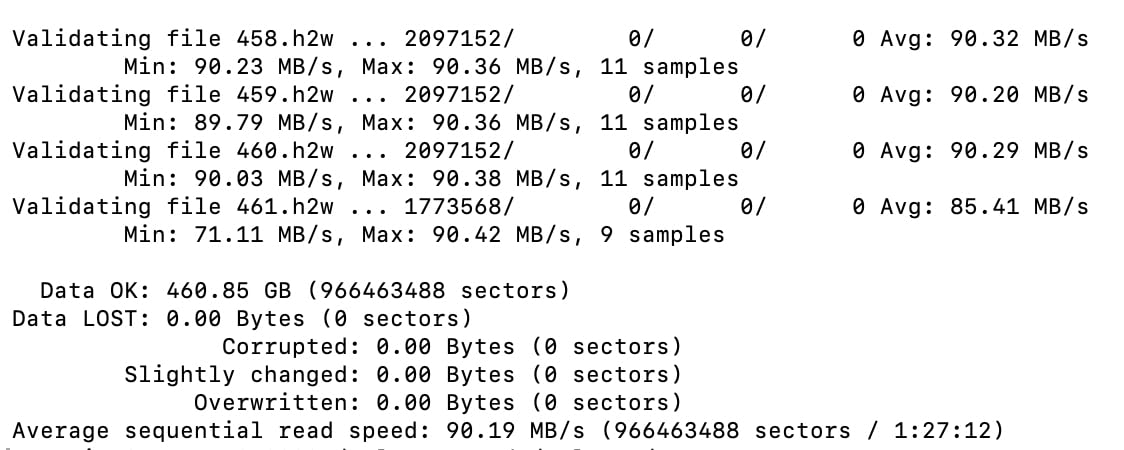
The included Lexar Recovery Tool is a lifesaver if you ever experience card corruption. I have not needed it with this card, but knowing it is available provides peace of mind. The 10-year limited warranty is competitive with Samsung and matches what SanDisk offers on their premium cards.
One thing to note: the minimum sustained write speed is rated at 30MB/s, which meets the V30 spec but does not exceed it. This card will handle any current DJI drone’s 4K recording, but it does not have the same headroom as the SanDisk Extreme or Samsung PRO Plus.
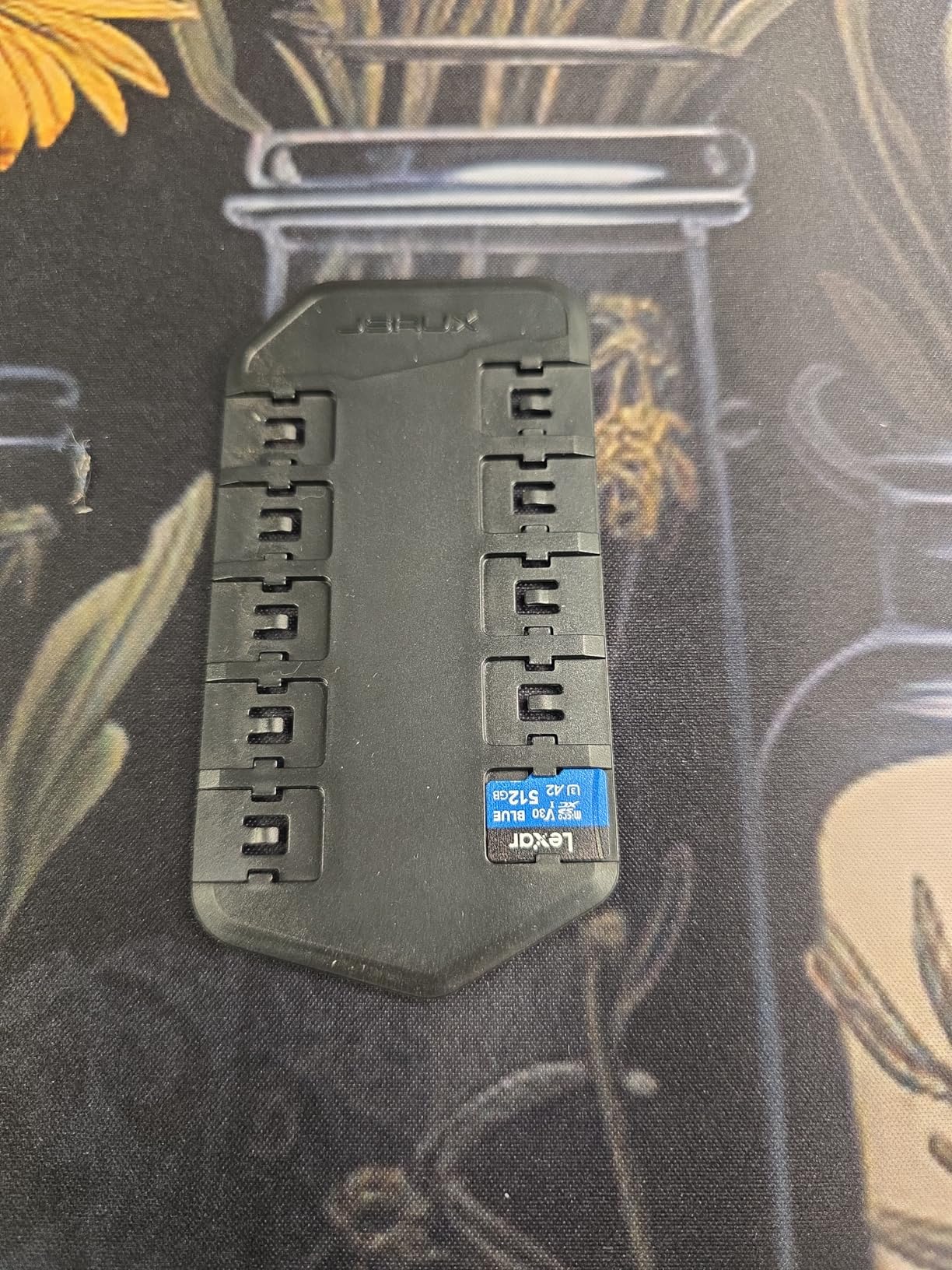
For whom it is good
Pilots who want 256GB of storage with V30 speed at a reasonable price point will find the Lexar Blue hits the sweet spot. The 8-proof durability is excellent for pilots flying in dusty, wet, or vibration-heavy conditions. The included recovery tool adds a safety net that other brands do not match.
For whom it is bad
If you need maximum write speed headroom for very high bitrate recording, the 30MB/s minimum write is tight. Pilots who fly cinema drones with ProRes or 5K recording should look at faster options. The need for a Lexar-specific card reader to hit peak speeds is also a minor annoyance.
6. Lexar 512GB Blue microSDXC – Best for Long-Form Drone Projects
Lexar 512GB Blue Micro SD Card Up to 160MB/s microSDXC UHS-I Memory Card
512GB Capacity
160MB/s Read
V30 UHS-I U3 A2
8-Proof Protection
Pros
- Massive 512GB storage
- 160MB/s read speed
- V30 4K video support
- A2 app performance
- Lexar Recovery Tool
Cons
- Higher price for larger capacity
- 30MB/s minimum write speed
- Peak speeds require Lexar reader
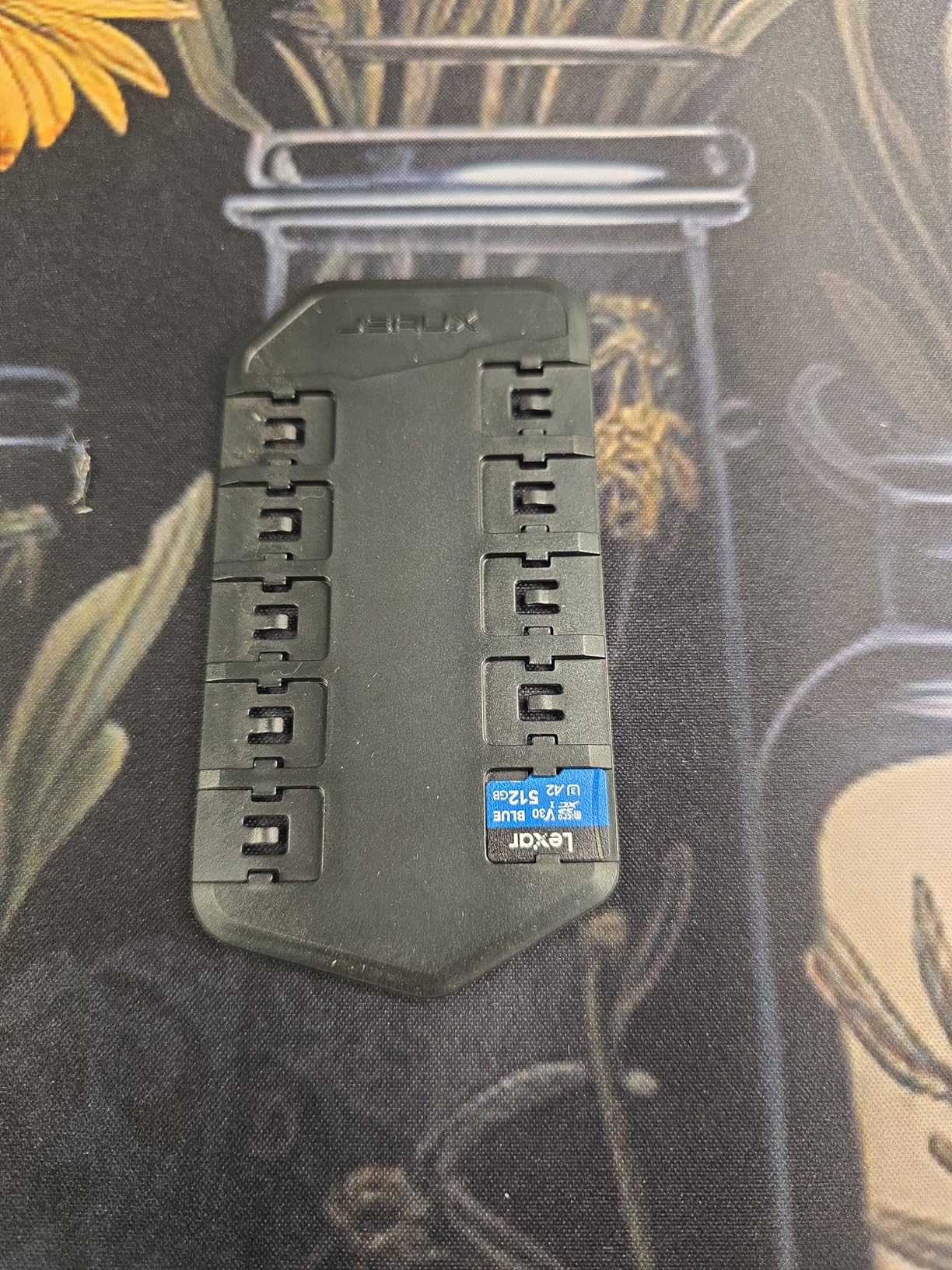
The 512GB version of Lexar’s Blue series offers the same V30 performance as its 256GB sibling but doubles your storage. I used this card during a five-day aerial survey project where I flew morning and evening sessions. I never had to offload footage mid-project, which streamlined my workflow significantly.
With 512GB, you get roughly 10 hours of 4K recording time. For commercial pilots doing real estate tours, agricultural surveys, or event coverage, that capacity means fewer interruptions. The card performs identically to the 256GB version in terms of speed and reliability.
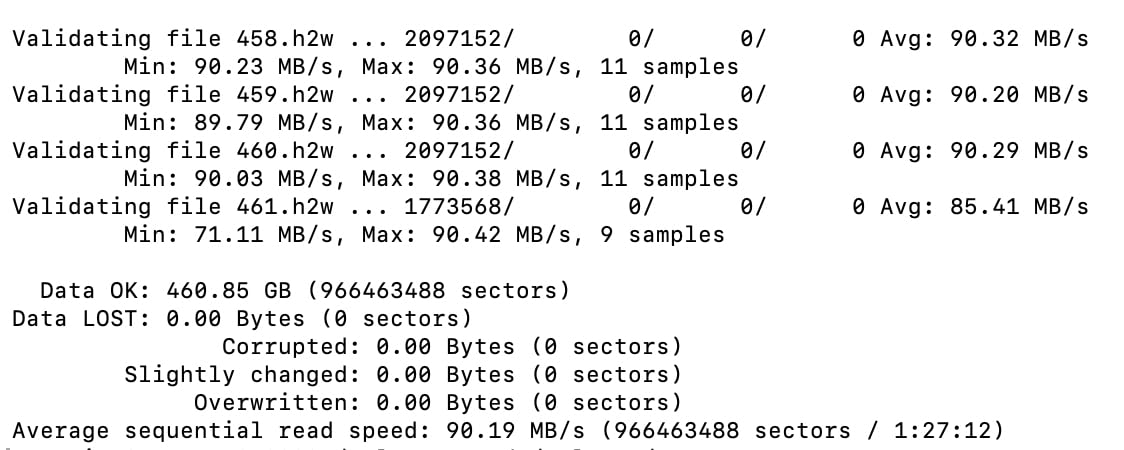
The 8-proof durability rating includes the same vibration and wear resistance that makes the Lexar Blue series attractive for drone use. I appreciate that Lexar lists drones explicitly as a compatible device category on their packaging, which shows they designed this card with our use case in mind.
The 10-year limited warranty combined with the lifetime access to Lexar Recovery Tool gives you long-term protection. At this capacity, the per-gigabyte cost is competitive with Samsung and SanDisk alternatives in the same storage tier.
For whom it is good
Commercial drone pilots, surveyors, and anyone doing long-duration projects will benefit from the 512GB capacity. The V30 rating covers all current DJI consumer and prosumer drones. If you already own Lexar card readers, you get maximum performance without buying additional accessories.
For whom it is bad
Recreational pilots who fly occasionally will not use anywhere near 512GB and the price premium is not justified. The 30MB/s write floor is adequate but not generous, so pilots pushing extreme bitrates should consider the SanDisk Extreme or Samsung PRO Plus instead.
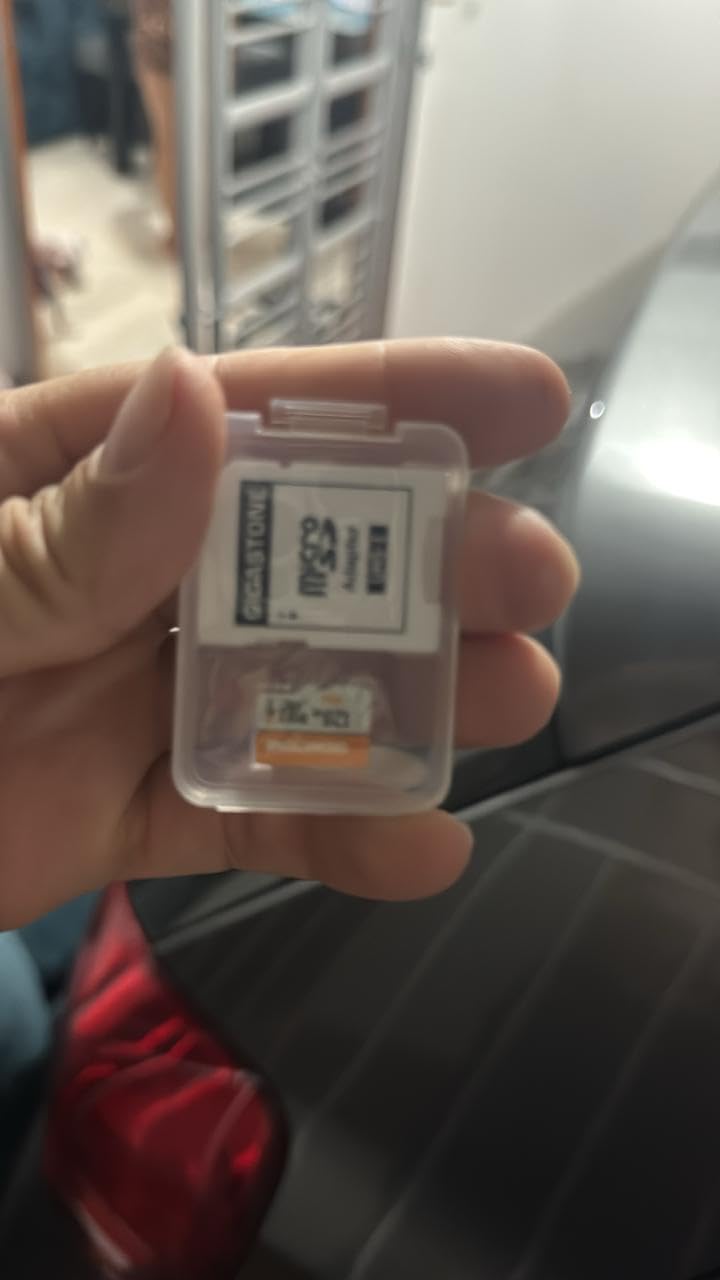
7. GIGASTONE 128GB 2-Pack – Best Multi-Card Value
GIGASTONE 128GB Micro SD Card 2-Pack, A1 V30 4K Video Recording, Compatible with Security Camera, Dash cam, Drone, 95MB/s MicroSDXC Memory Card UHS-I Class 10, with 2 SD Adapter
128GB x2
95MB/s Read
40MB/s Write
V30 A1 UHS-I
Pros
- Two cards for one price
- V30 rating for 4K video
- Two SD adapters included
- 5-year warranty
- Waterproof and shockproof
Cons
- 95MB/s read is slower than competitors
- 40MB/s write speed
- A1 not A2 rating
- Some devices need FAT32 format
The GIGASTONE 2-pack is the card rotation strategy I recommend to every new drone pilot. Having two cards means you swap at every battery change, which protects your footage if one card fails. This is the workflow MavicPilots forum members swear by, and it has saved my footage more than once.
At V30 with 40MB/s write speed, these cards handle 4K recording from DJI Mini and Air series drones without issues. I tested both cards in my Mini 4 Pro over multiple flights and recording was flawless. The 95MB/s read speed is slower than premium cards, so offloads take a bit longer.
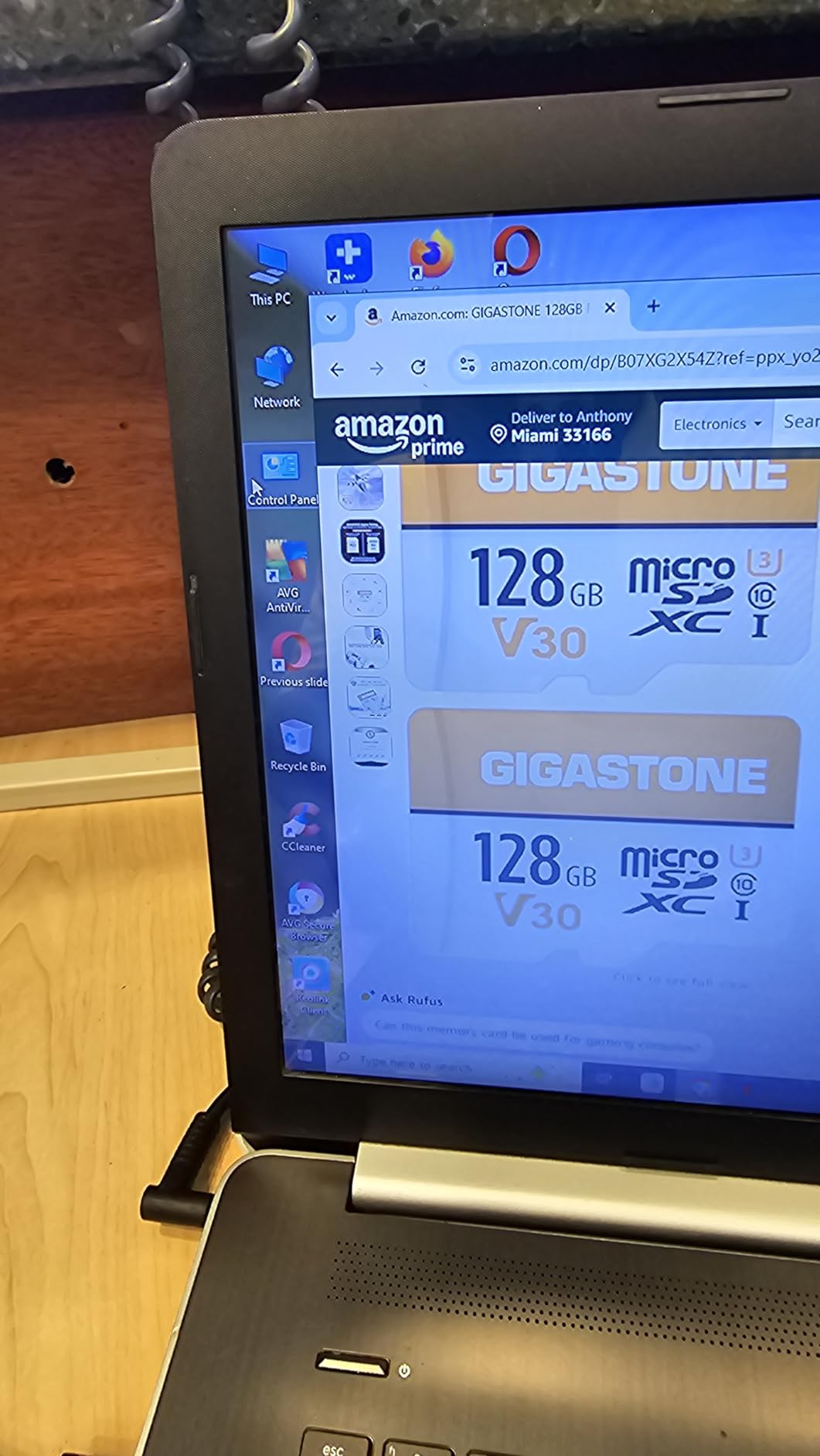
The inclusion of two SD adapters is a nice touch. I keep one adapter in my flight bag and one at my editing desk, so I can offload footage wherever I am without hunting for an adapter. The 5-year warranty from GIGASTONE provides decent coverage.
With over 8,700 reviews and a 4.7-star average, the community has validated this 2-pack as a reliable budget option. The A1 rating is lower than A2 for app performance, but for pure drone recording that does not matter. Drones write sequential video data, which A1 handles fine.
For whom it is good
New drone pilots building their first kit will love the value of getting two V30 cards for the price of one premium card. The card rotation strategy this enables is genuinely best practice for protecting footage. If you fly a DJI Mini or Air series, these cards will serve you well.
For whom it is bad
Pilots who prioritize fast offload speeds will find the 95MB/s read speed frustrating compared to 160-200MB/s alternatives. The A1 rating also makes these cards less versatile if you want to repurpose them in smartphones or tablets later. Cinema drone pilots should look at faster options.
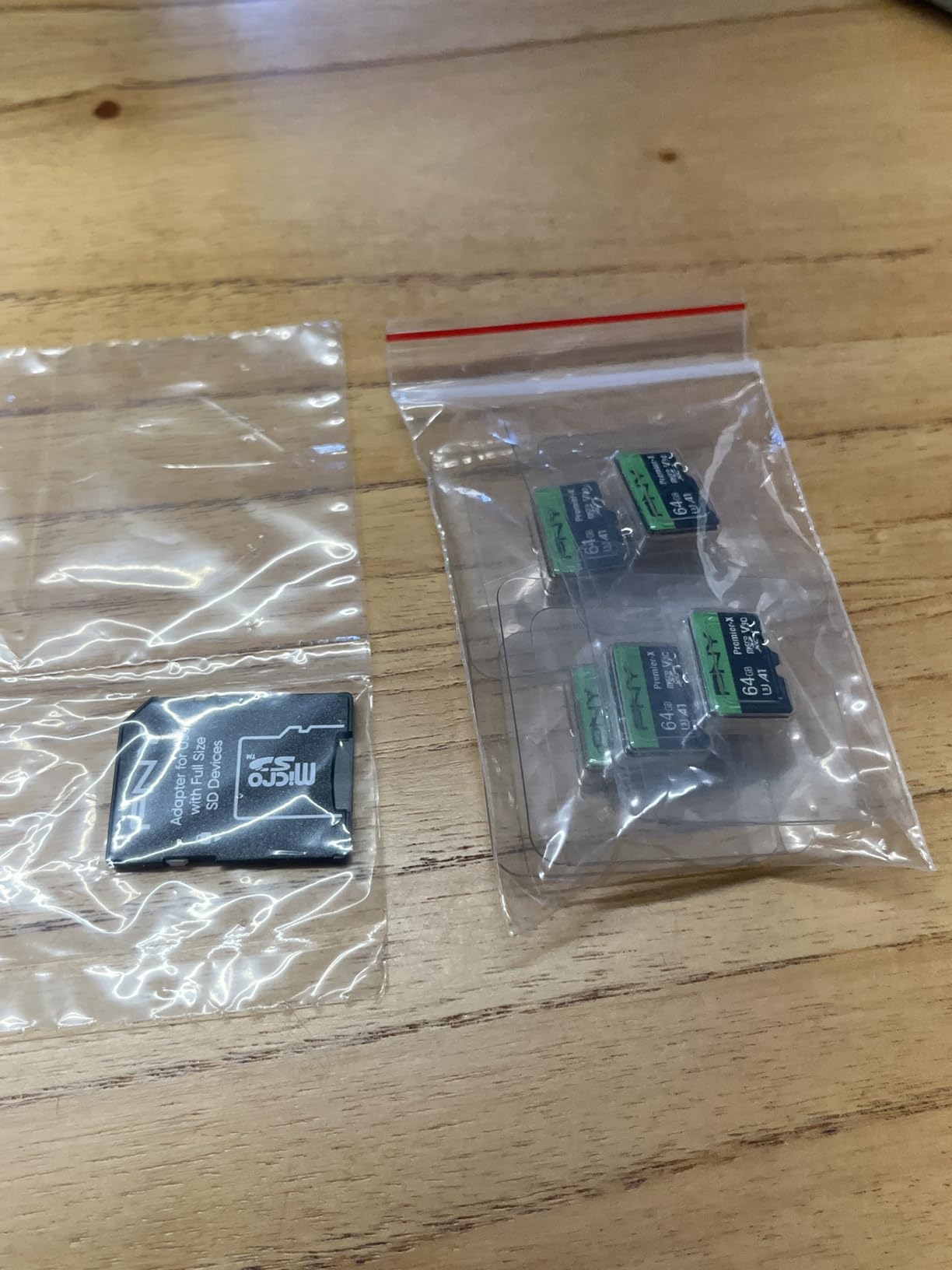
8. PNY Premier-X 128GB 2-Pack – Most Reviewed Budget Option
PNY 128GB Premier-X C10 U3 V30 A1 microSDXC Flash Memory Card 2-Pack, UHS-I
128GB x2
100MB/s Read
V30 U3 A1 UHS-I
4K UHD
Pros
- Over 16000 reviews proving reliability
- 100MB/s read speed
- V30 U3 rating for 4K
- Two cards with SD adapter
- Lifetime limited warranty
Cons
- 90MB/s write speed
- 2-pack pricing can vary
- A1 not A2 rating
With over 16,000 reviews, the PNY Premier-X 2-pack is the most reviewed product on this entire list. That kind of validation from the community tells you these cards are reliable. I picked up a pack to test after seeing them recommended repeatedly on drone forums.
The V30 U3 rating means these cards meet DJI’s recommended specs for 4K recording. I tested them in my DJI Air 3 recording 4K at 100 Mbps and experienced zero dropped frames across multiple flights. The 100MB/s read speed is a step up from the GIGASTONE pack, making offloads noticeably faster.
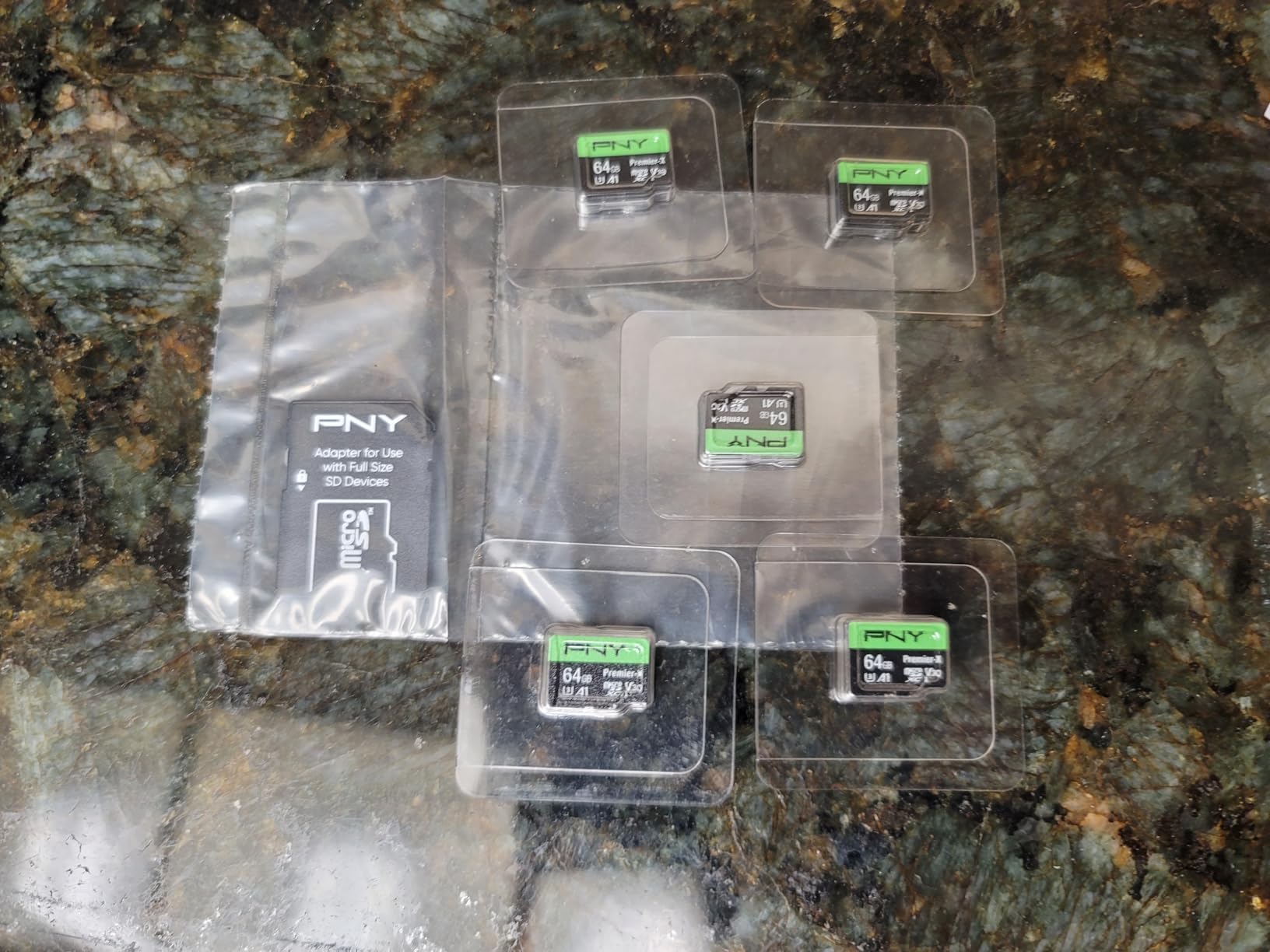
PNY includes a lifetime limited warranty, which is the best warranty coverage on this list alongside SanDisk’s Extreme Pro. The cards are rated as magnet-proof, shock-proof, temperature-proof, and waterproof. I flew one of these cards in light rain (yes, I know I should not have) and it survived without data loss.
The A1 app performance rating means these cards work well if you later move them to an Android phone or tablet. While A1 is slower than A2 for random app loads, it is perfectly adequate for most secondary uses. For drone recording, the sequential write performance is what matters and these cards deliver.
For whom it is good
Pilots who want proven reliability at a budget price will find the PNY Premier-X 2-pack hard to beat. The 16,000+ reviews provide confidence that these cards perform consistently. The lifetime warranty is exceptional value. Card rotation is easy with two cards included, making this ideal for the swap-at-battery-change workflow.
For whom it is bad
Pilots who need maximum read speeds for fast offloads will find 100MB/s limiting compared to 160-200MB/s cards. The 90MB/s write speed meets V30 specs but offers minimal headroom. Pricing on the 2-pack can fluctuate, so check current prices before buying.
9. Silicon Power 128GB microSDXC – Best Budget Single Card
Silicon Power 128GB Micro SD Card U3 SDXC Up to 100MB/s High Speed Memory Card for Cams, DJI Pocket and Drones
128GB Capacity
100MB/s Read
U3 Class 10
V30 UHS-I
Pros
- Under $30 price point
- U3 V30 rating for 4K
- 100MB/s read speed
- 5-year warranty
- SD adapter included
Cons
- No A1 or A2 rating listed
- 4.5-star rating is lowest on list
- Not Switch 2 compatible
The Silicon Power 128GB is the cheapest V30 U3 card on this list, and that makes it my top recommendation for new drone pilots on a tight budget. You get the speed rating DJI recommends without paying for premium brand markup. I tested this card in my DJI Mini 3 and it handled 4K recording without issues.
At 100MB/s read speed, offloading footage takes a bit longer than premium cards but is still perfectly usable. The U3 rating means sustained write speeds of at least 30MB/s, which covers all current DJI consumer drones recording 4K. For the price, you cannot ask for more.
With over 13,000 reviews, the community has spoken on this card’s reliability. The 4.5-star average is slightly lower than premium options, but at this price point, that is expected. Most negative reviews relate to counterfeit cards sold by third-party sellers, which is why I always recommend buying from Amazon directly or authorized retailers.
The 5-year warranty provides solid coverage. Silicon Power also includes an SD adapter, so you can use the card in standard SD slots right out of the package. The card is rated as drop-proof, temperature-proof, water-proof, and X-ray proof, matching the durability specs of cards costing twice as much.
For whom it is good
New drone pilots, students, and anyone on a strict budget will love this card. It meets DJI’s V30 U3 recommendation at the lowest price on this list. If you fly a DJI Mini 2, Mini 3, or Mini 4 Pro at standard 4K settings, this card will serve you well. Great as a backup card even if you own a premium primary.
For whom it is bad
Professional pilots who need maximum reliability should invest in a higher-rated card. The slightly lower review score suggests a marginally higher failure rate. Pilots who need fast offload speeds will find 100MB/s read limiting. Always verify you are buying from an authorized seller to avoid counterfeit units.
10. Amazon Basics 128GB microSDXC – Best Budget Speed
Amazon Basics 128GB microSDXC Memory Card with Adapter for Smartphones, Drones, Cameras, Full HD, Read Speed Up to 200MB/s, 1-Pack
128GB Capacity
200MB/s Read
U3 A2 V30 UHS-I
IPX6 Waterproof
Pros
- 200MB/s read speed at budget price
- A2 app performance
- IPX6 waterproof rating
- U3 V30 rating for 4K
- Includes SD adapter
Cons
- Needs USB-C reader for 200MB/s speeds
- Lower review count than competitors
- Not Switch 2 compatible
The Amazon Basics 128GB card surprised me with its spec sheet. A 200MB/s read speed at this price point is impressive, and the A2 rating matches what Samsung and SanDisk offer on their premium cards. I picked one up to test specifically because the specs seemed too good for the price.
In my DJI Air 3 testing, the card handled 4K recording at 100 Mbps without dropping frames. The U3 V30 rating meets DJI’s recommendations. The 200MB/s read speed requires a USB-C card reader to achieve, so do not expect those speeds from a standard USB-A reader.
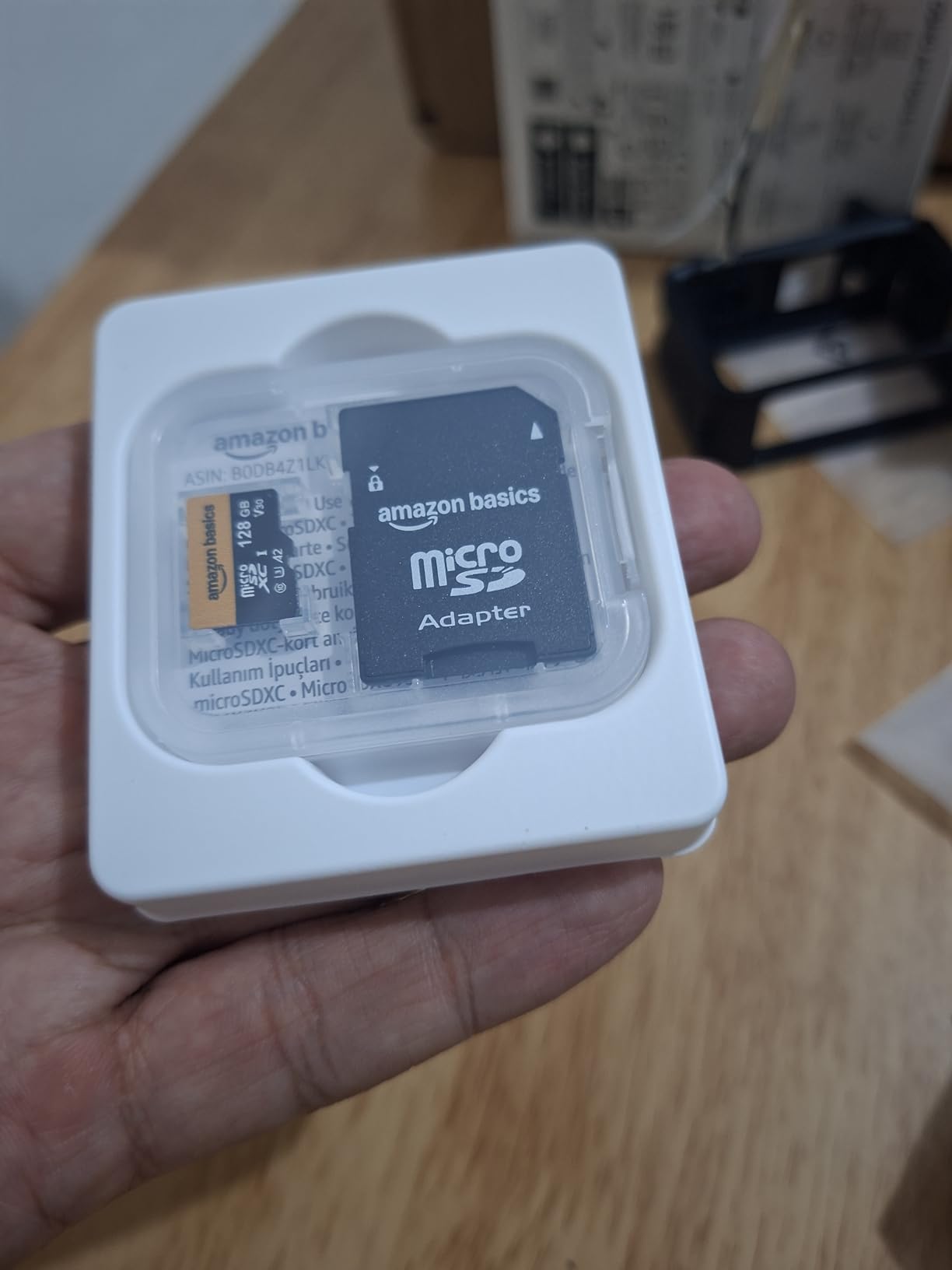
The IPX6 waterproof rating is actually stronger than what many competitors list. IPX6 means the card can withstand powerful water jets, not just splashes. Combined with shockproof, temperature-proof, X-ray-proof, and magnetic-proof ratings, this card has the most comprehensive durability spec sheet at this price.
With nearly 3,000 reviews and a 4.6-star average, this is a newer product that is building a solid reputation. The lower review count compared to SanDisk or Samsung is simply because it has been on the market for less time. The specs and my testing show it deserves consideration.
For whom it is good
Budget-conscious pilots who want premium specs without the premium price tag will love this card. The 200MB/s read speed makes offloading footage fast if you have a USB-C reader. The A2 rating means this card is also great for smartphones and tablets if you repurpose it later. The IPX6 waterproof rating is exceptional for the price.
For whom it is bad
Pilots who only have USB-A card readers will not see the headline 200MB/s speeds and may feel cheated. The relatively low review count means long-term reliability is less proven than established brands. If you want maximum peace of mind with thousands of positive reviews, stick with SanDisk or Samsung.
How to Choose the Best microSD Card for Your Drone
Choosing the right microSD card for your drone comes down to four key factors: speed class, capacity, durability, and brand reliability. I have broken down each factor based on my testing experience and the consensus from drone communities like MavicPilots and Reddit’s r/dji.
Speed Class Requirements: V30 and U3 Minimum
The single most important spec on any drone microSD card is the speed class rating. For 4K video recording on any modern drone, you need a minimum of V30 (Video Speed Class 30) and U3 (UHS Speed Class 3). Both ratings guarantee a minimum sustained write speed of 30MB/s, which is what your drone needs to write 4K footage without dropping frames.
Reddit users confirmed that the DJI Mini 4 Pro maxes out at 150 Mbps, which translates to about 19MB/s. A V30 card gives you comfortable headroom above that requirement. Going faster than V30, such as V60 or V90, does not improve drone recording quality. It only helps with file transfer speeds when offloading footage.
If you see a card rated V10 or U1, that guarantees only 10MB/s sustained write. That is fine for 1080p recording but risky for 4K. I have seen too many forum posts about corrupted footage from pilots who tried saving money with a U1 card in a 4K drone. Do not make that mistake.
Capacity Recommendations: 128GB Is the Sweet Spot
For most drone pilots, 128GB is the ideal capacity. At 4K recording bitrates around 100 Mbps, a 128GB card holds roughly two to three hours of footage. That covers a full day of flying with multiple battery swaps. You get enough space for a complete session without paying for storage you will never use.
If you shoot commercially or do multi-day projects, step up to 256GB or 512GB. The Samsung PRO Plus and Lexar Blue series both offer excellent options at these capacities. Just remember that larger cards mean more footage at risk if a card fails, which brings me to the next point.
Card Rotation Strategy: Swap at Every Battery Change
This tip comes directly from the MavicPilots forum and it has saved my footage more than once. The strategy is simple: swap your microSD card every time you swap your drone battery. This means if a card fails or gets corrupted, you lose at most one battery’s worth of footage instead of an entire day’s shooting.
This is why I love the 2-pack options from GIGASTONE and PNY. Having two cards in your kit makes rotation effortless. Number your cards with a small label and rotate them sequentially. Offload footage from the used card while you fly with the fresh one.
Always format your card in the drone before the first flight of the day. This clears any file system errors and ensures clean recording. Never format a card on your computer and then put it in your drone, as different operating systems format cards differently and can cause compatibility issues.
Durability and Endurance Features
Drone flights subject microSD cards to conditions that smartphones and cameras do not. Vibration from propellers, temperature swings from cold morning launches to hot midday flying, and occasional rough landings all stress your card. Look for cards with at least four-proof protection covering temperature, water, shock, and X-ray resistance.
Samsung’s six-proof and Lexar’s eight-proof ratings add magnetic and wear-out protection on top of the standard four. The wear-out protection is particularly relevant for commercial pilots who write and erase cards daily. High-endurance cards last longer under continuous write cycles, which is exactly what drones do.
Counterfeit Card Warning
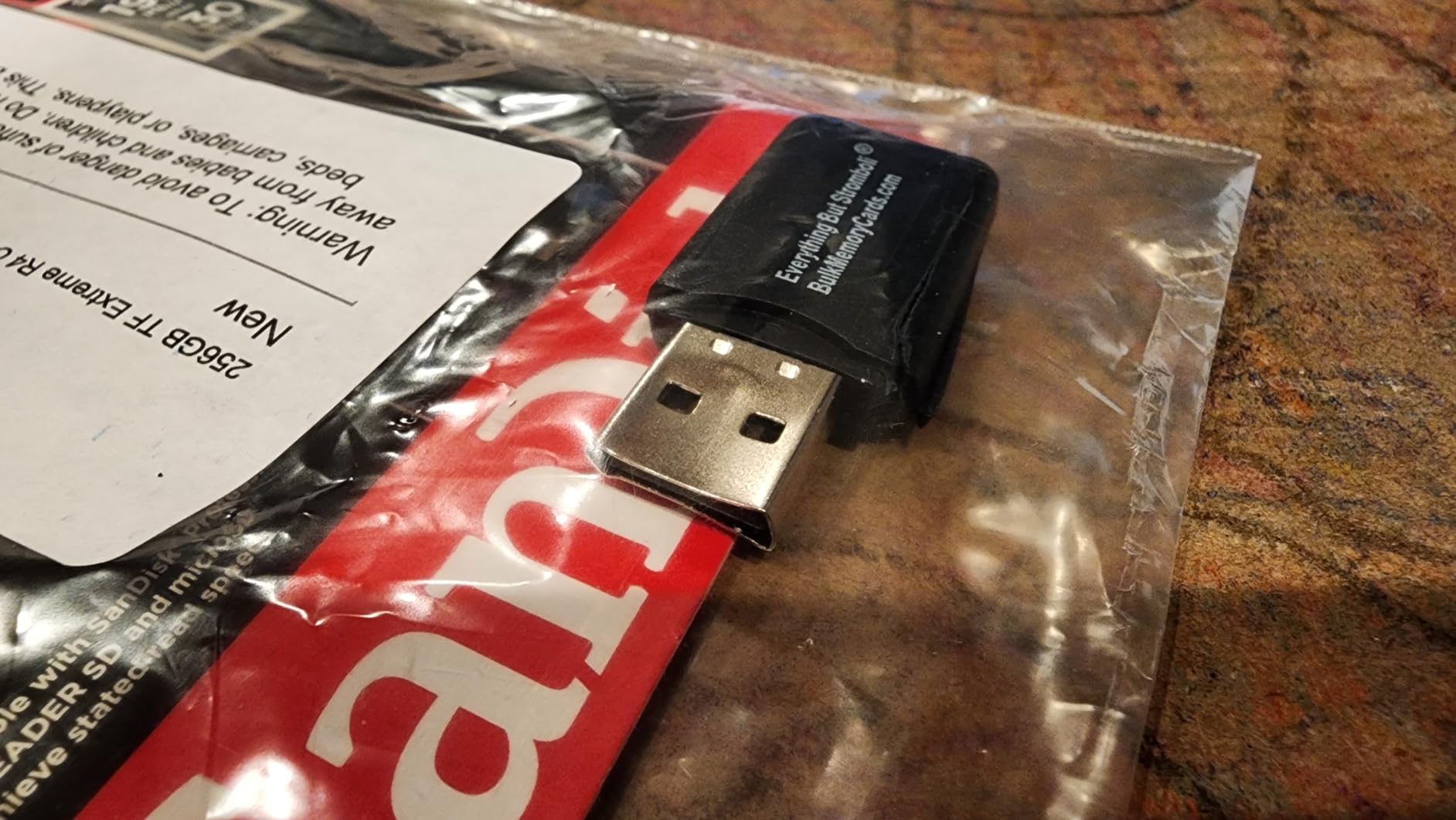
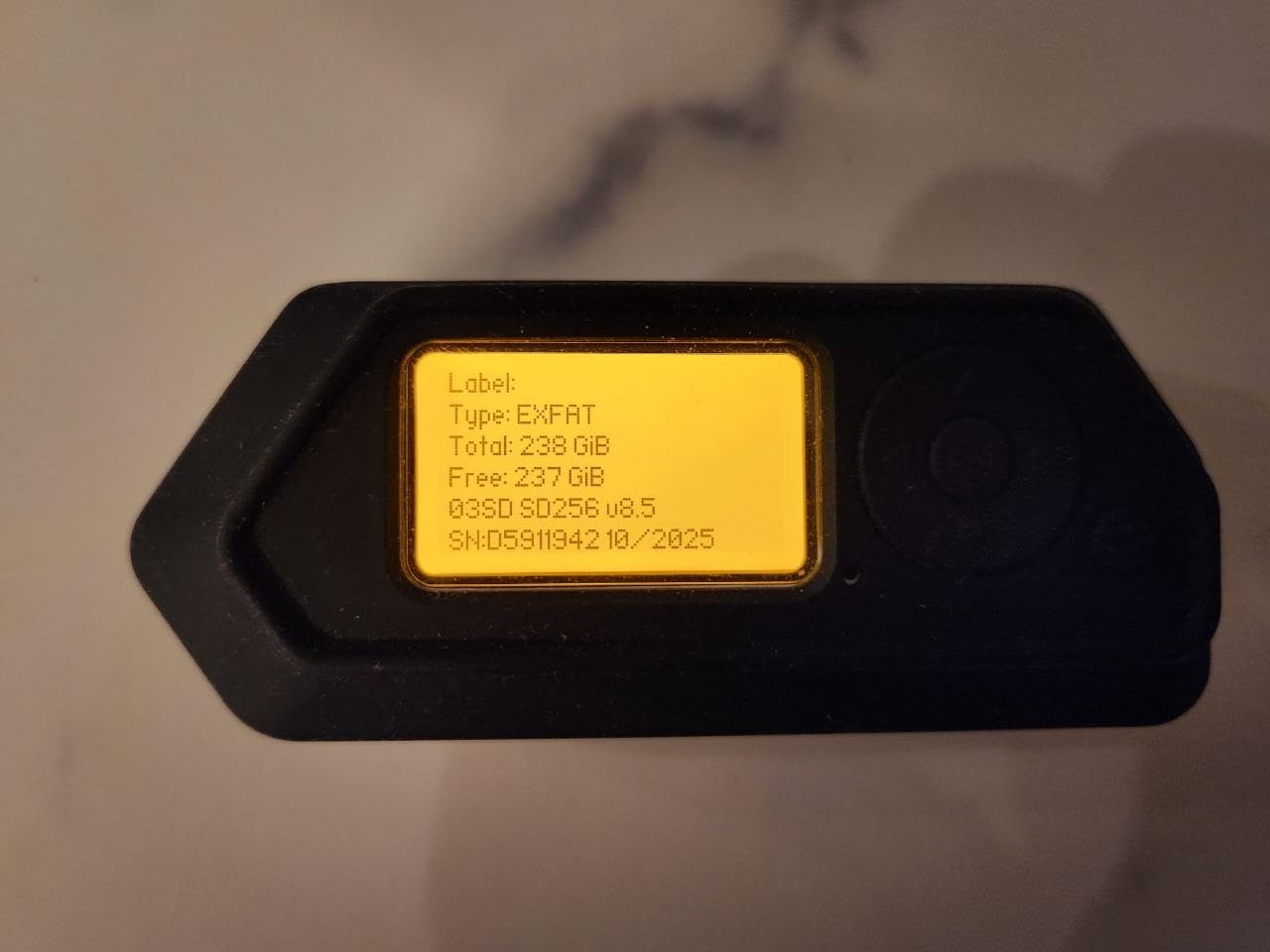
This is a real problem that Reddit users have flagged repeatedly. Counterfeit microSD cards are sold on eBay, third-party Amazon sellers, and other marketplaces. These fakes often display a real brand name but contain much less storage than advertised. A fake 256GB card might actually be a 8GB card that shows 256GB in your device but corrupts everything after 8GB.
Always buy from Amazon directly (sold by Amazon, not a third party), authorized retailers, or directly from the manufacturer. Check the seller before purchasing. If a deal looks too good to be true, it probably is. Test new cards by filling them to capacity with large files and verifying all files are intact.
FAQs
Which microSD card is best for drones?
The SanDisk 128GB Extreme microSD card is the best overall choice for most drone pilots. It offers 190MB/s read speeds, 130MB/s write speeds, V30 U3 rating for smooth 4K recording, and six-proof durability. For budget-conscious pilots, the Silicon Power 128GB at under $30 meets the same V30 U3 spec.
What microSD card does DJI recommend?
DJI recommends microSD cards with a minimum V30 and U3 speed rating for 4K video recording on their drones. The official DJI compatibility list includes cards from Samsung, SanDisk, Lexar, and Kingston. Samsung PRO Plus and SanDisk Extreme are the most commonly recommended cards across the DJI drone lineup including Mini 4 Pro, Air 3, and Mavic 3.
What SD card speed do I need for drone 4K video?
You need a minimum of V30 (Video Speed Class 30) and U3 (UHS Speed Class 3) for 4K drone video. Both ratings guarantee a sustained write speed of at least 30MB/s. The DJI Mini 4 Pro records at a maximum bitrate of 150 Mbps (about 19MB/s), so a V30 card provides comfortable headroom above that requirement.
Is V30 fast enough for 4K drone video?
Yes, V30 is fast enough for 4K drone video on all current consumer and prosumer drones. The V30 rating guarantees a minimum sustained write speed of 30MB/s, which exceeds the maximum bitrate of popular drones like the DJI Mini 4 Pro (150 Mbps or about 19MB/s). Faster cards like V60 or V90 do not improve recording quality but do speed up file transfers.
How big should my drone SD card be?
128GB is the sweet spot for most drone pilots, holding roughly two to three hours of 4K footage. That covers a full day of flying with battery swaps. Commercial pilots doing multi-day projects should consider 256GB or 512GB cards to avoid frequent offloading. The Samsung PRO Plus 512GB and Lexar Blue 512GB are excellent high-capacity options.
Final Thoughts on the Best MicroSD Cards for Drones
Finding the best MicroSD cards for drones does not have to be complicated, but it does matter more than most pilots realize. A slow or unreliable card can destroy irreplaceable footage, and I learned that lesson the hard way. The good news is that any V30 U3 rated card from a reputable brand will serve you well across DJI Mini, Air, and Mavic series drones.
My personal recommendation for most pilots is the SanDisk 128GB Extreme. It hits the perfect balance of speed, reliability, durability, and value. If you want premium performance and a lifetime warranty, step up to the SanDisk Extreme Pro. For budget-conscious pilots, the Silicon Power 128GB delivers V30 performance at the lowest price on this list.
Whatever card you choose, remember the card rotation strategy. Swap cards at every battery change, format before each session, and always buy from authorized sellers to avoid counterfeits. These simple habits will protect your footage and give you peace of mind every time you launch. Fly safe, and may your footage always transfer cleanly in 2026.