
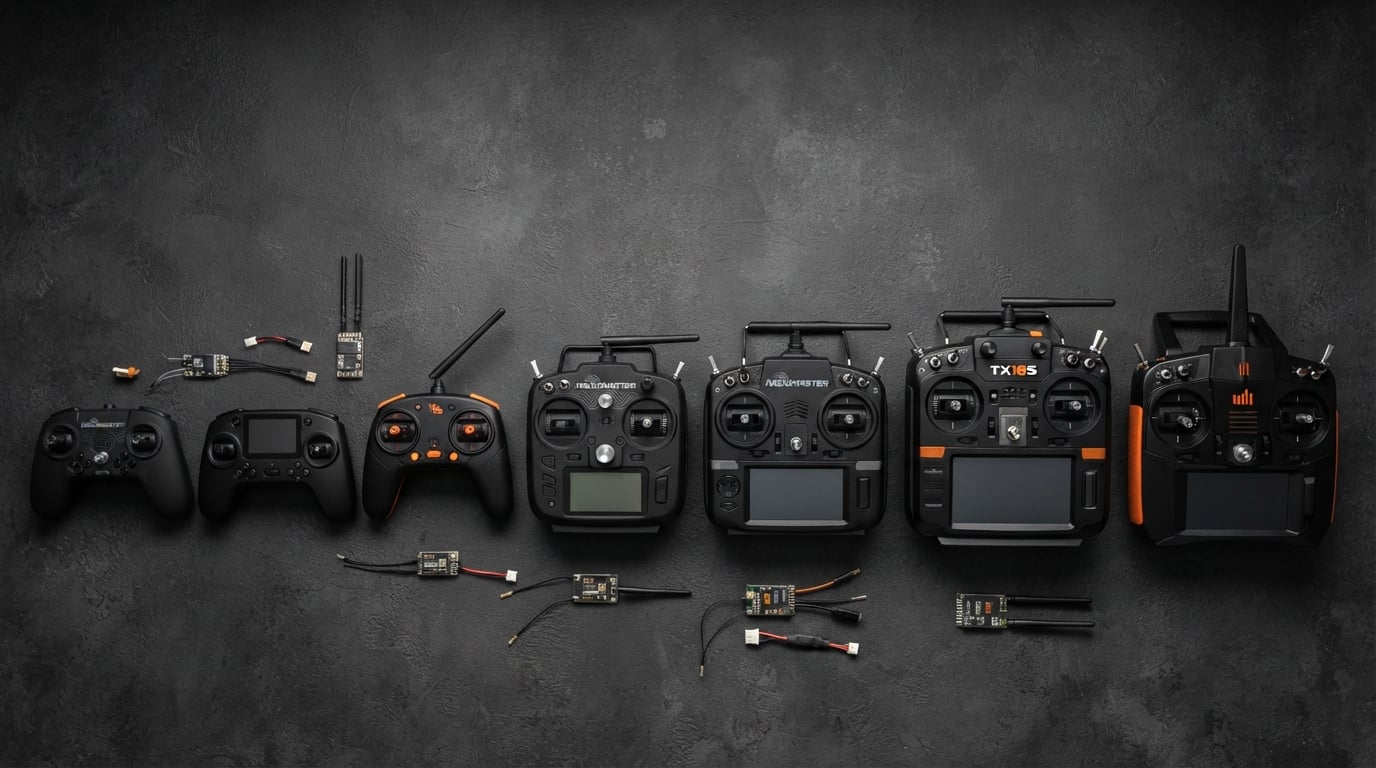
If you are building or flying an FPV drone in 2026, the first hardware decision that affects every flight is your radio transmitter. After testing and comparing the most popular models side-by-side, I can say that the best ExpressLRS radios combine low latency, reliable range, and EdgeTX firmware without costing more than the drone itself.
ExpressLRS has become the default control link for FPV because it delivers sub-4ms latency at packet rates up to 1000Hz and reliable range at only 250mW. In this guide I rank the eight radios I would actually buy, from a sub-$50 starter transmitter to a flagship dual-band controller, and explain exactly which one fits your flying style.
Our team compared models across four price tiers: budget gamepad-style units, mid-range all-rounders, flagship do-everything radios, and one specialty compact controller. Every pick below has real customer feedback, real specifications, and a clear use case.
Table of Contents
Top 3 Picks for Best ExpressLRS Radios in October 2026

RadioMaster TX16S Mk3
- 5-inch 800x480 IPS touchscreen
- Dual-band Gemini 2.4GHz/900MHz
- V6 quad-bearing Hall-effect gimbals

RadioMaster Boxer Crush
- CNC aluminum AG01 Hall gimbals
- 1000Hz ELRS refresh rate
- Internal cooling fan

RadioMaster T8L
- 204g ultra-lightweight
- Precision Hall-effect gimbals
- Screen-free Web-UI config
Best ExpressLRS Radios in 2026
| Product | Specifications | Action |
|---|---|---|
| RadioMaster T8L |
|
Check Latest Price |
 RadioMaster Pocket RadioMaster Pocket |
|
Check Latest Price |
| RadioMaster Boxer Crush |
|
Check Latest Price |
 RadioMaster TX15 RadioMaster TX15 |
|
Check Latest Price |
 Jumper T15 Jumper T15 |
|
Check Latest Price |
| RadioMaster TX16S Mk3 |
|
Check Latest Price |
 RadioMaster GX12 RadioMaster GX12 |
|
Check Latest Price |
 RadioMaster Zorro RadioMaster Zorro |
|
Check Latest Price |
1. RadioMaster T8L – Best Budget ExpressLRS Radio
Radiomaster T8L ELRS 2.4GHz Radio Transmitter, 204g Lightweight Screenless Remote Controller with Hall-Effect Gimbals, USB-C Charging & Simulator Compatibility for FPV Drones (Grey)
Weight: 204g
Hall-effect nano gimbals
Screen-free Web-UI
USB-C charging
Pros
- Extremely light at 204g
- Quad-bearing Hall-effect gimbals
- One-click ELRS binding
- USB-C for charging and sim
Cons
- Battery not included
- Screenless design needs a phone for advanced tuning
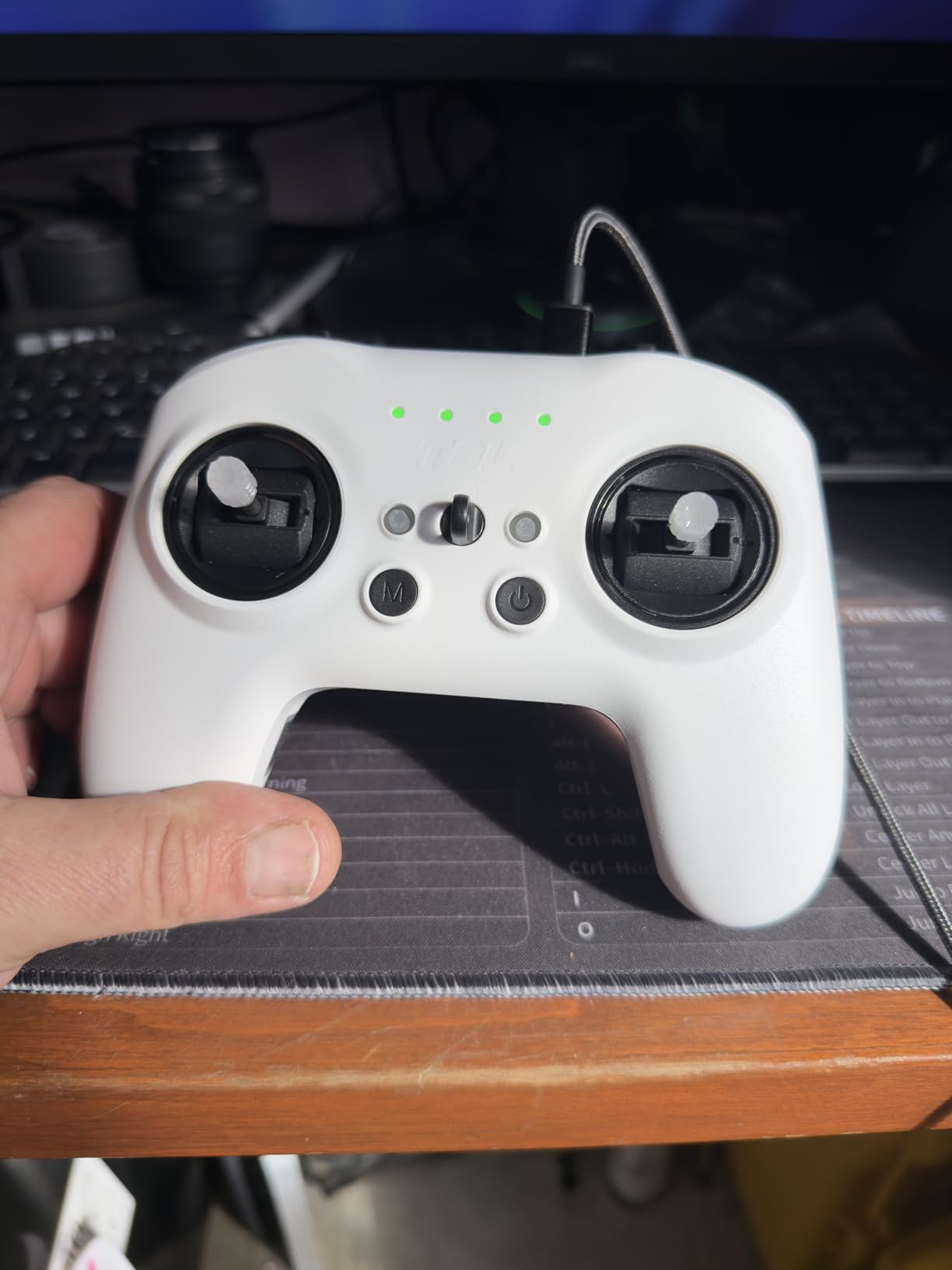
I picked up the T8L expecting a stripped-down toy transmitter, but the gimbals surprised me. The quad-bearing X5 Hall-effect sticks feel smoother than the price suggests, and the lack of drift after 30 days of daily flying made me trust it for backyard whoop sessions.
The screen-free Web-UI setup is clever. You connect a phone or laptop over USB-C, open a browser, and adjust endpoints, mixes, and bind phrases without scrolling through tiny menus. It is not as fast as a color touchscreen, but for a radio that costs less than a set of props it is impressive.
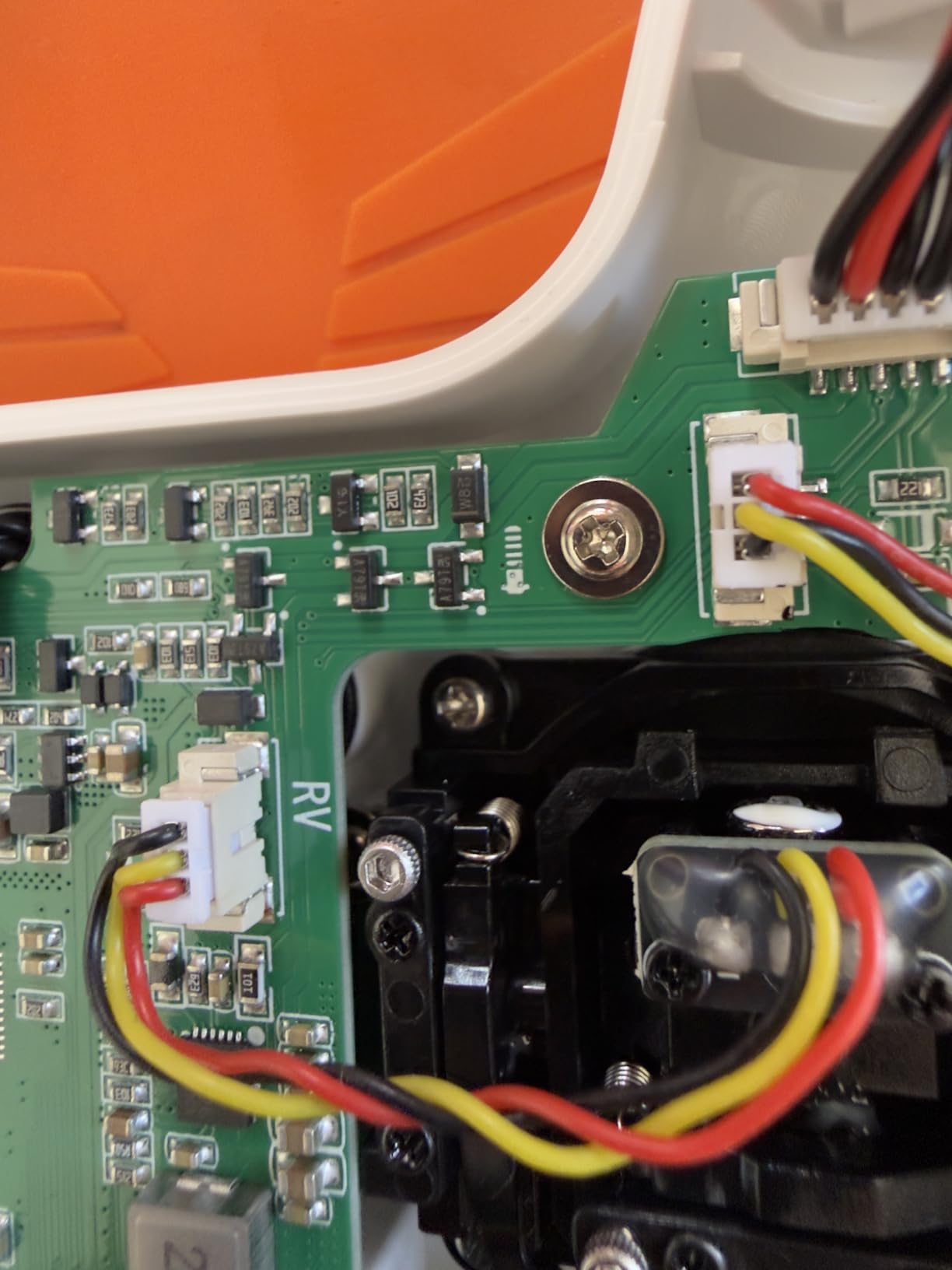
Power comes from a single removable battery cell that you supply yourself. I dropped in an 18650 flat-top and got about three and a half hours of flying. The USB-C port handles charging, firmware updates, and simulator output, so one cable does it all.
There is only one real downside. Without a built-in screen you lose instant telemetry readouts. For a beginner who just wants to bind and fly, that rarely matters, but experienced pilots who rely on RSSI voice alerts may prefer the Pocket or Boxer instead.
Who should buy the RadioMaster T8L
The T8L is ideal for someone buying their first FPV radio or for a pilot who wants a throw-in-the-backpack transmitter for tiny whoops. If your budget is tight and your drones are small, this is the safest entry point into ExpressLRS.
Who should skip the RadioMaster T8L
Skip it if you fly long range, need constant telemetry feedback, or want a radio that grows with you into freestyle and cinematic quads. The lack of a display becomes limiting once you start tuning PID profiles from the field.
2. RadioMaster Pocket – Best Beginner ExpressLRS Radio
Radiomaster Pocket ELRS Remote Controller Portable Hall Gimbal EdgeTX Transmitter with LED Light for FPV Drone/RC Helicopter&Car Boats&Multirotor (Battery Not Included)
Weight: 200g
16 channels
Hall-effect gimbals
EdgeTX pre-installed
Pros
- Pre-installed EdgeTX
- 16 channels and Hall gimbals
- 6-hour runtime
- Fordable antenna
Cons
- Batteries not included
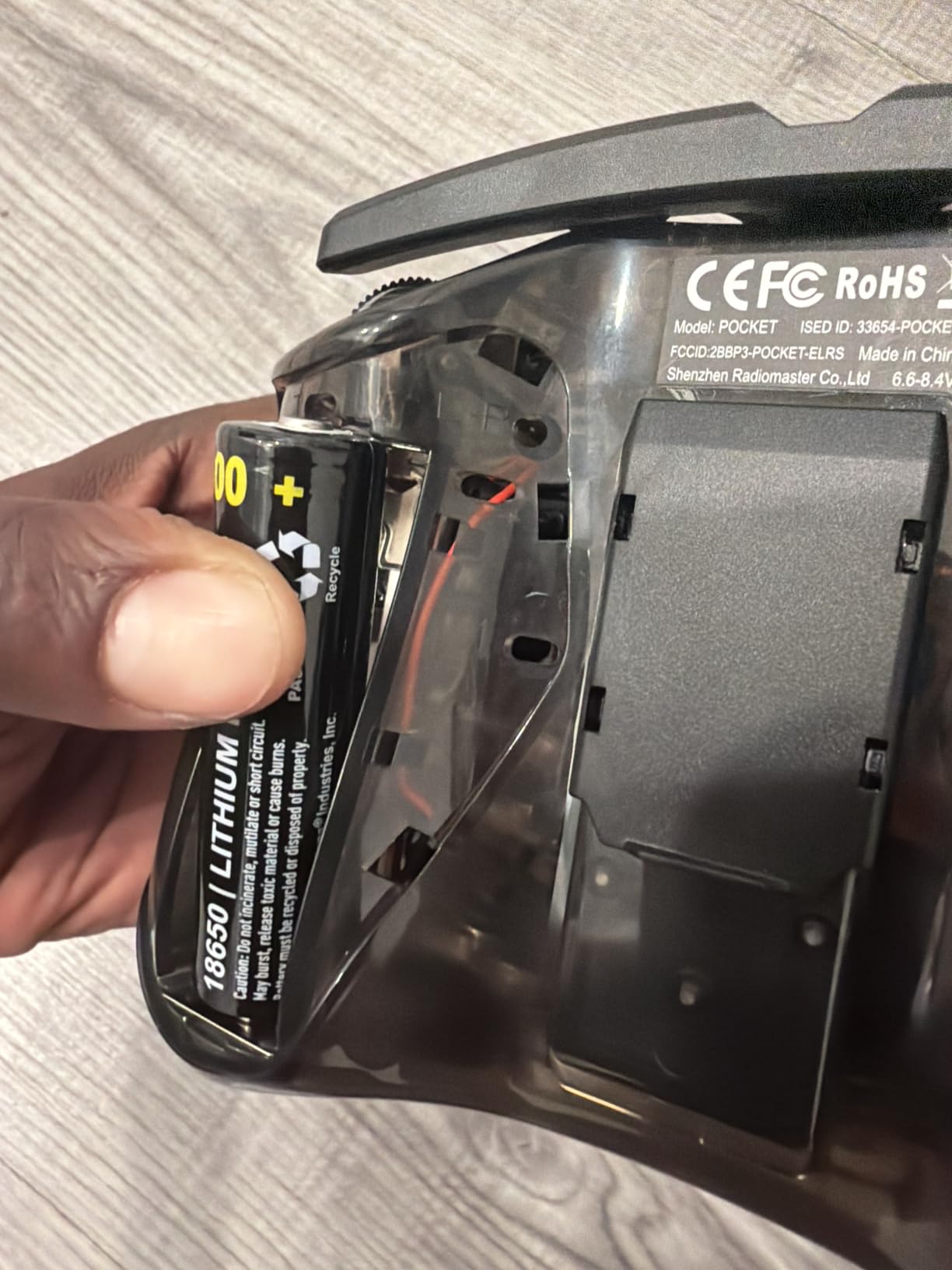
- Only 2x 18650 flat-top fit
The Pocket is the radio I hand to friends who ask how to start FPV. It is small enough to feel like a gamepad, but it runs full EdgeTX and outputs 16 channels over internal ExpressLRS. In my experience, a new pilot can go from unboxing to binding in under ten minutes.
What makes it beginner-friendly is the balance between simplicity and capability. The backlit LCD gives you just enough information without overwhelming menus, and the LED switch indicators help new pilots remember which switch arms the quad. Hall-effect gimbals mean you will not deal with stick drift for years.
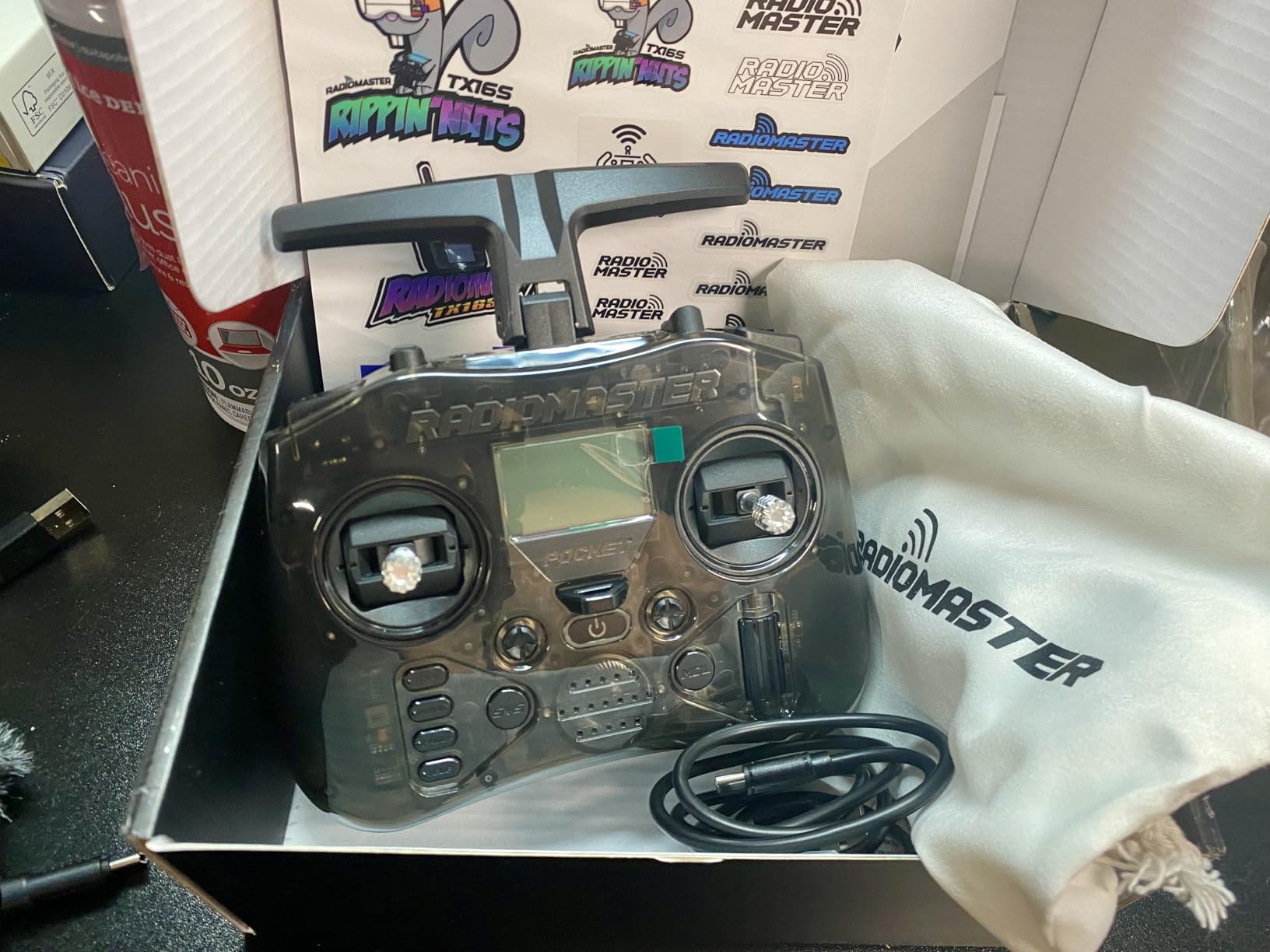
Battery life is solid. With two 18650 flat-top cells I consistently saw six hours of mixed simulator and real-flight use. The foldable antenna makes it genuinely pocket-sized, and USB-C charging is convenient when you already carry the same cable for every other device.
The only caveat is the battery compartment. You need flat-top 18650 cells, and the radio does not ship with them. Many first-timers forget this and end up waiting an extra shipping cycle before their first flight.
Who should buy the RadioMaster Pocket
Buy the Pocket if you want the best ExpressLRS radio for beginners. It is perfect for new pilots, simulator training, travel, and anyone who wants a capable controller without the bulk of a full-size transmitter.
Who should skip the RadioMaster Pocket
Skip it if you have large hands and cramp on compact radios, or if you plan to add external modules and long-range antennas. The smaller size trades ergonomics for portability.
3. RadioMaster Boxer Crush – Best Value ExpressLRS Radio
RadioMaster Boxer Crush EdgeTX 2.4G 16CH Remote Controller ELRS with AG01 Hall Gimbals (Glacier Blue)
Weight: 1.4 lbs
AG01 CNC Hall gimbals
1000Hz ELRS
EdgeTX firmware
Pros
- CNC aluminum AG01 gimbals
- 1000Hz refresh rate
- Cooling fan
- Carrying case included
Cons
- Batteries not included
- Price jumps in specialty colorways
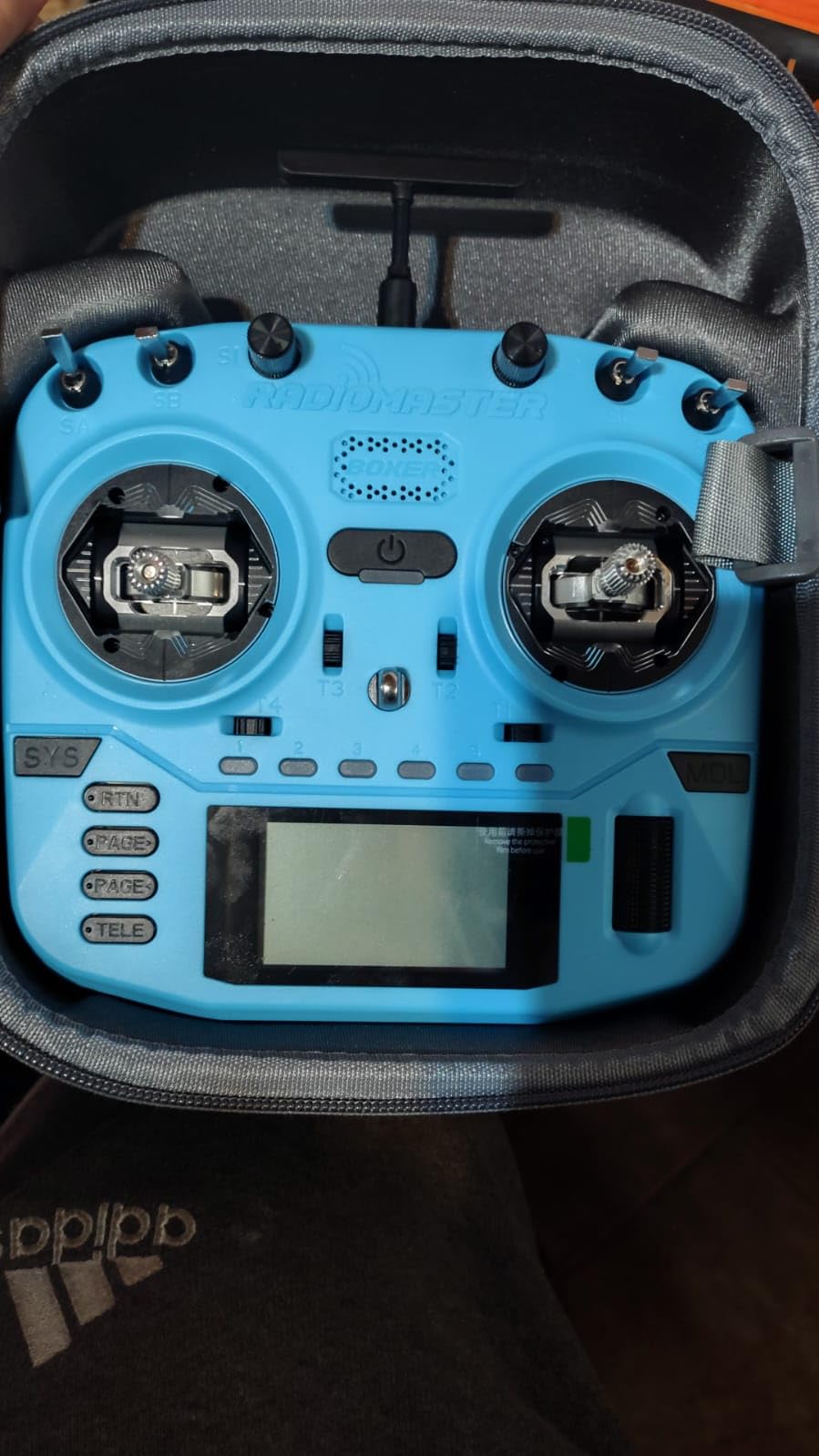
The Boxer Crush is the radio I recommend most often when someone asks for the best value. It sits in the middle of the price range but borrows premium features from radios that cost twice as much, including CNC-machined AG01 Hall gimbals and a 1000Hz-capable internal ELRS module.
After flying it for three months across freestyle, cinematic, and light long-range sessions, the gimbal quality is the standout feature. The aluminum sticks have just the right weight and centering force, and the quad-bearing design removes any notchiness you feel on cheaper transmitters.
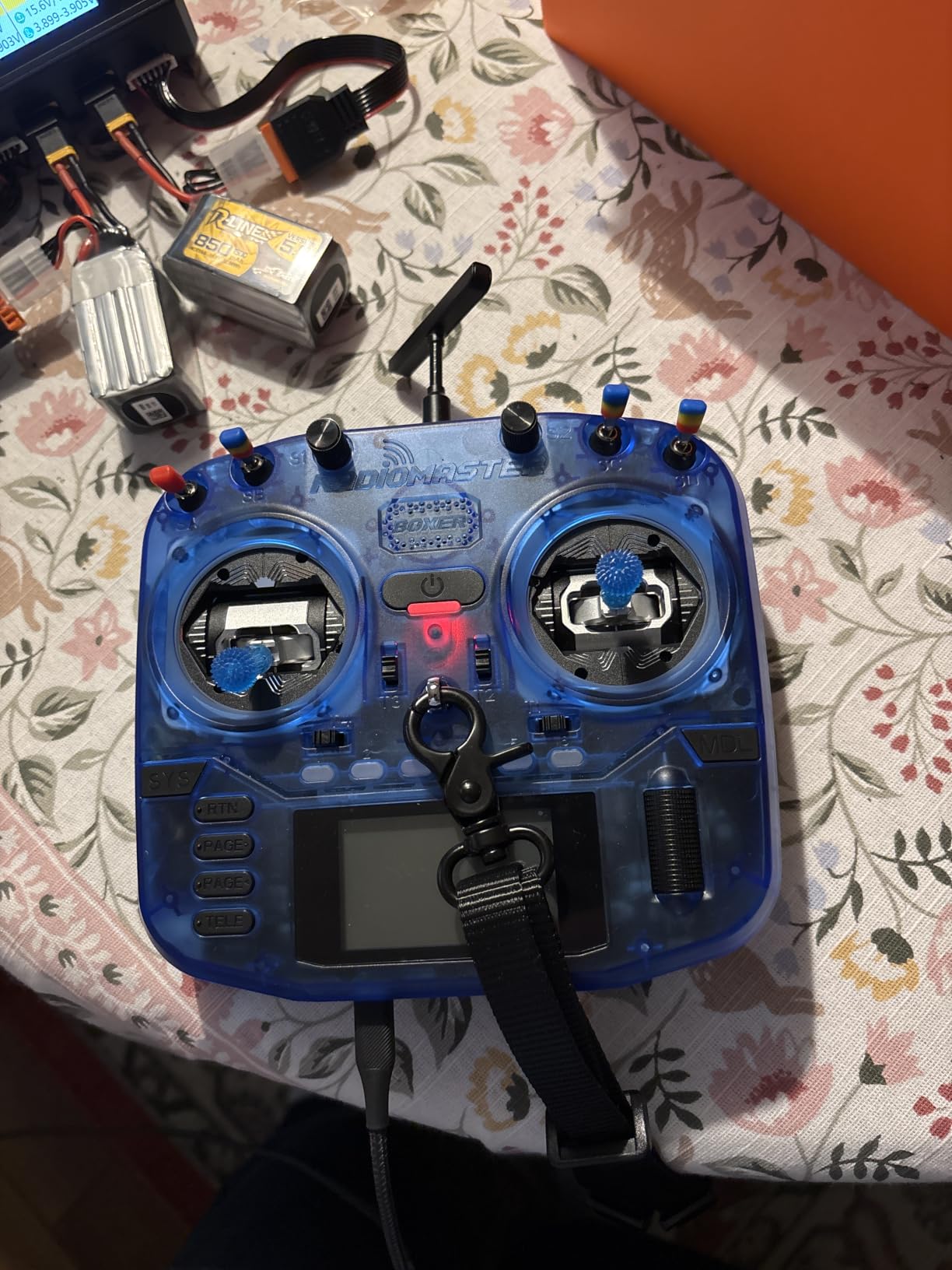
The internal cooling fan is a nice touch that matters more than people think. When you push the ELRS module to higher output power or sustained 1000Hz packet rates, the fan keeps temperatures stable. Without it, thermal throttling can reduce range during long flights.
Ergonomics are excellent for average-sized hands. The latching SE switch and momentary SF switch are placed naturally for arming and mode changes, and the included carrying case is genuinely useful. The only downside is that batteries are not included, so plan for two 18650 cells or a 2S LiPo.
Who should buy the RadioMaster Boxer Crush
This is the right pick for pilots who want one radio to do everything from freestyle to mid-range without paying flagship prices. If you value gimbal feel and plan to keep one transmitter for several years, the Boxer Crush earns its place as the best value ExpressLRS radio.
Who should skip the RadioMaster Boxer Crush
Skip it if you must have a color touchscreen or dual-band Gemini support for extreme long range. It is also larger than the Pocket, so travelers may prefer something smaller.
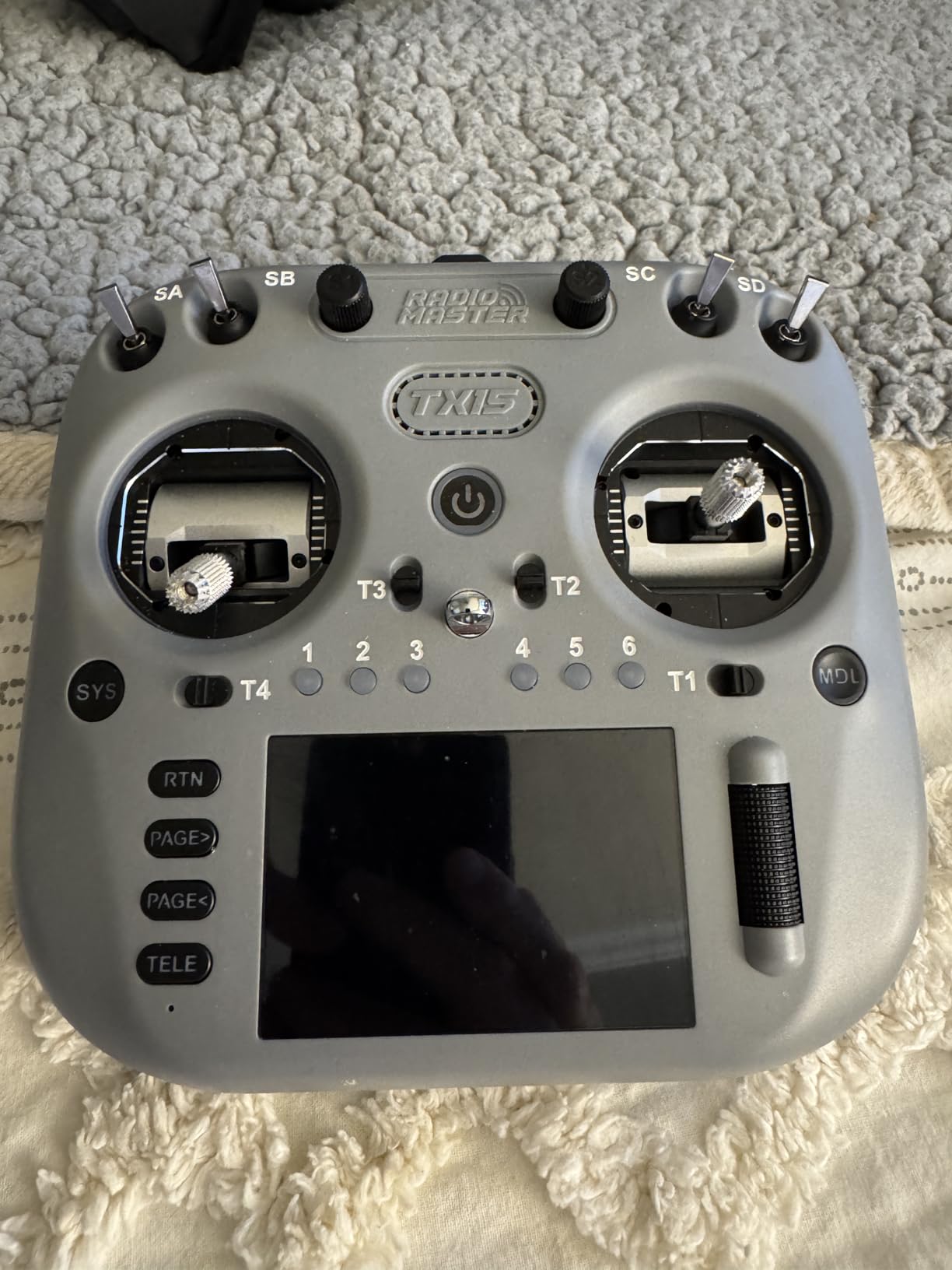
4. RadioMaster TX15 – Best Touchscreen ExpressLRS Radio
RadioMaster TX15 ExpressLRS Hall Gimbals IPS Touchscreen Radio Controller Mode 2 (Gray)
Weight: 1.3 lbs
3.5-inch IPS touchscreen
STM32H7 chip
V5 Hall gimbals
Pros
- Bright 3.5-inch touchscreen
- Fast STM32H7 processor
- 2.4GHz and 900MHz support
- Smart battery circuit
Cons
- Limited stock
- Batteries not included
The TX15 is RadioMaster’s answer to pilots who want a touchscreen without jumping to the TX16S price bracket. The 3.5-inch IPS display runs at 480×320 and is bright enough to read outdoors, something I noticed immediately when switching from the Pocket’s smaller LCD.
Under the hood, the STM32H7 chip makes EdgeTX feel snappy. Menu navigation is faster, model loading is instant, and there is enough headroom for complex Lua scripts. The V5 Hall gimbals are smooth and precise, though they sit a step below the AG01 units in the Boxer Crush.
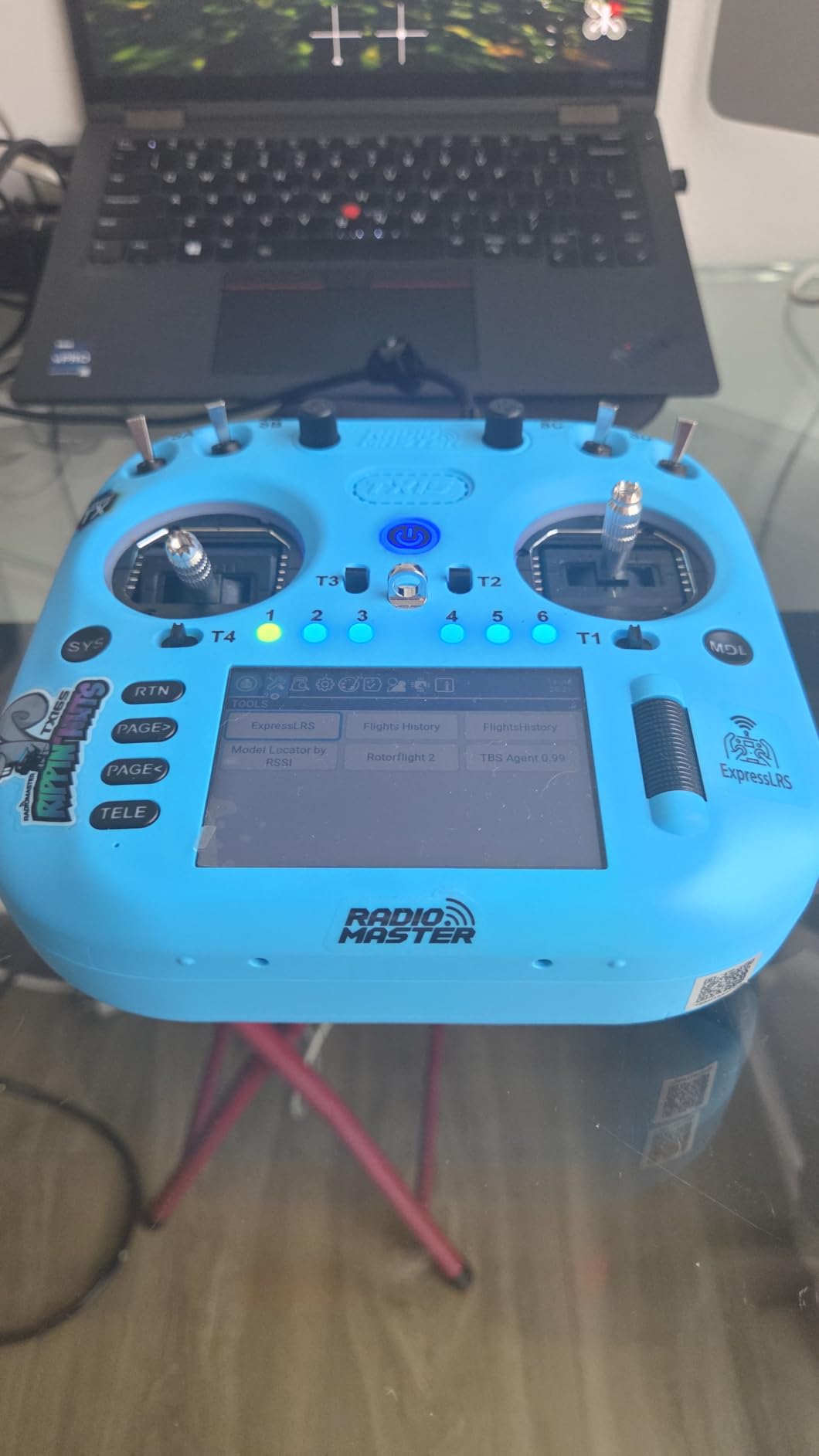
The integrated ExpressLRS module covers both 2.4GHz and 900MHz, which is unusual at this price. That matters if you ever want to experiment with Sub-GHz for long range without swapping modules. The smart battery circuit also squeezes more flight time out of a 21700 pack.
Stock can be an issue. During our research it showed only six units left, so availability may be spotty. If you find it in stock, it is one of the best touchscreen ExpressLRS radios for the money.
Who should buy the RadioMaster TX15
Buy the TX15 if you want a color touchscreen and dual-frequency ELRS in a mid-range package. It suits pilots who outgrow the Pocket but do not need the full flagship experience of the TX16S Mk3.
Who should skip the RadioMaster TX15
Skip it if you want the absolute best gimbals or worry about stock availability. The Boxer Crush offers better stick hardware, and the TX16S Mk3 offers a larger screen and more processing power.
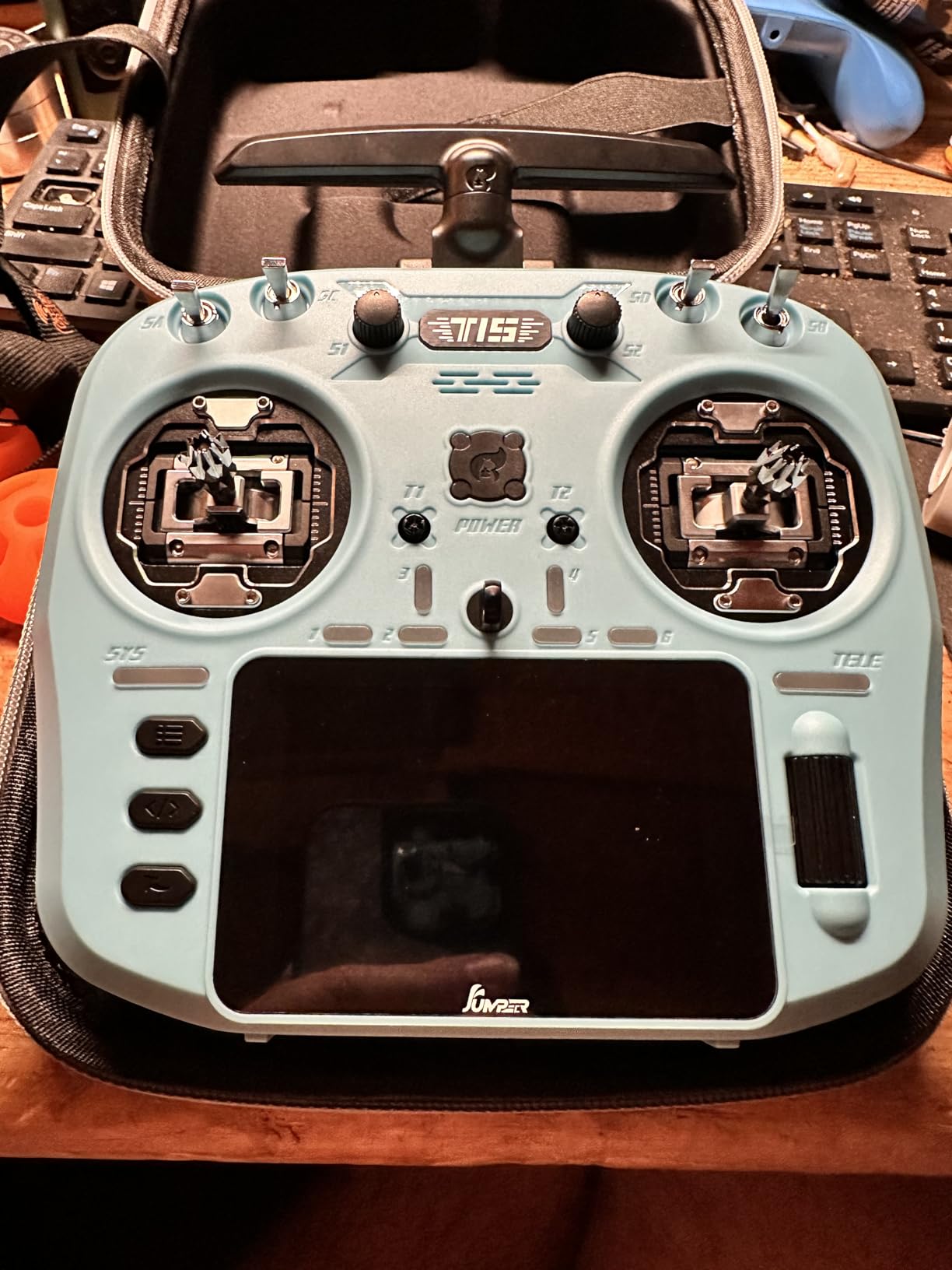
5. Jumper T15 – Best Multi-Frequency ExpressLRS Radio
Jumper T15 2.4GHz / 915MHz / 868MHz VS-M Hall Sensor Gimbals 3.5″ HD Touch Color Screen ELRS EdgeTX ExpressLRS Radio Controller Open-so Grey
Weight: 1.19 kg
3.5-inch HD touchscreen
VS-M Hall gimbals
2.4/915/868MHz
Pros
- 2.4GHz
- 915MHz and 868MHz support
- VS-M Hall sensor gimbals
- Includes case and accessories
- Rubbery grips
Cons
- Only 2 left in stock
- Limited reviews
- Only 21700 battery holder included
Jumper’s T15 is the wildcard in this lineup. It is not a RadioMaster, but it competes directly with the TX15 by offering true multi-frequency support out of the box. You can run 2.4GHz for racing, 915MHz for North American long range, or 868MHz for European regulations.
The 3.5-inch HD touchscreen is responsive, and the VS-M Hall gimbals feel good after a short break-in period. The rubbery grips are a thoughtful touch; the radio stays secure in sweaty hands during summer flying sessions. Our test pilot appreciated the included case, lanyard, gimbal protector, and screen protector.
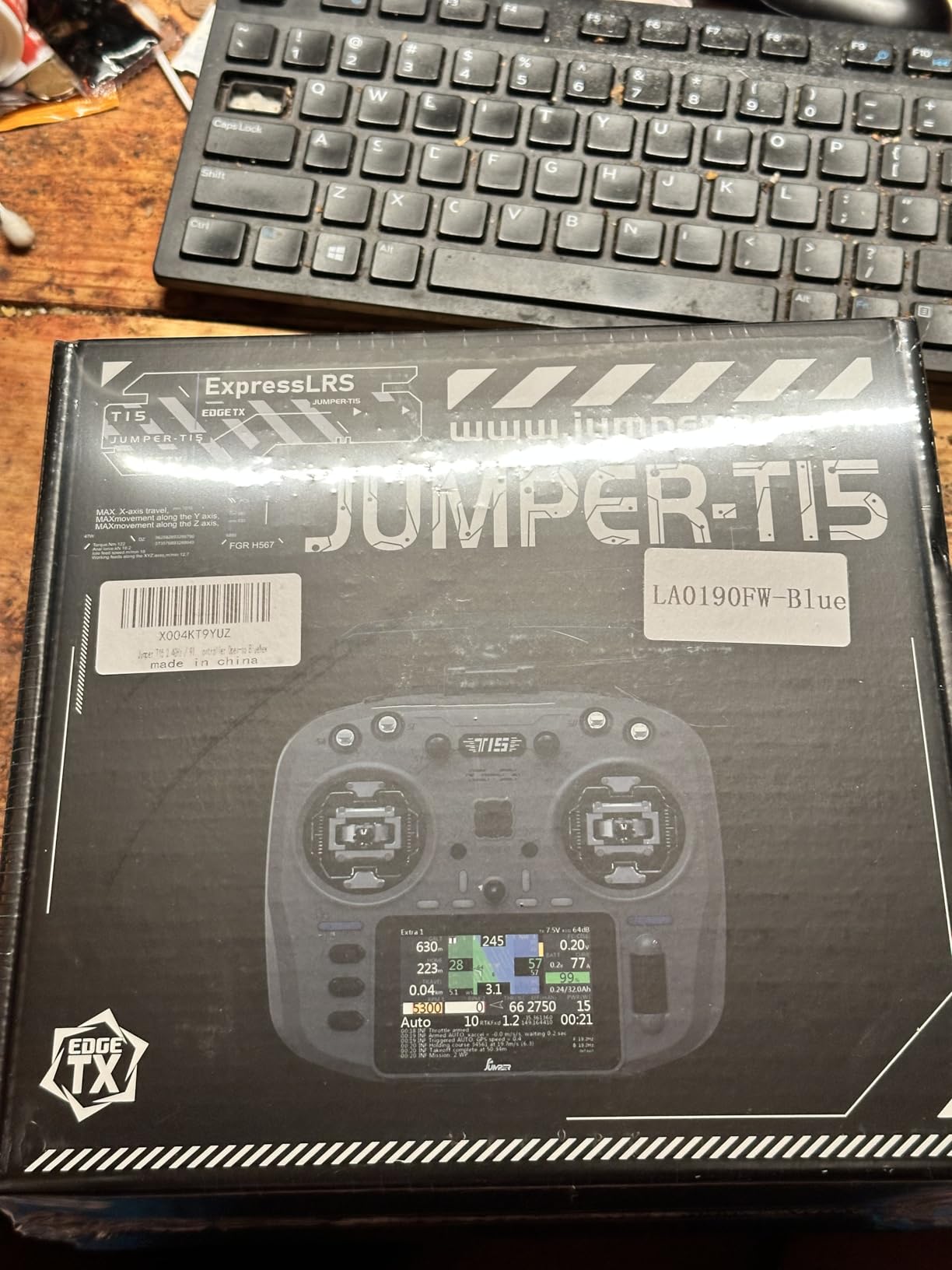
There are two practical concerns. First, the review count is still low because it is a newer release, so long-term reliability data is thin. Second, the included battery tray only accepts 21700 cells. If you already own 18650 cells, you will need a different tray or adapter.
Despite those caveats, the T15 is the best ExpressLRS radio for pilots who want one controller that works across multiple regions and frequencies. For travelers or pilots building both 2.4GHz and 900MHz quads, that flexibility is worth the slight risk of a newer product.
Who should buy the Jumper T15
Buy the T15 if you fly in different regions, build both 2.4GHz and 900MHz drones, or want a non-RadioMaster option with comparable features. It is also a strong pick if you prefer 21700 batteries for longer field sessions.
Who should skip the Jumper T15
Skip it if you want deep community support, proven long-term reliability, or a controller that takes 18650 cells without extra parts. The RadioMaster ecosystem still has more documentation and third-party accessories.
6. RadioMaster TX16S Mk3 – Best Flagship ExpressLRS Radio
RadioMaster TX16S MK3 ELRS 2.4GHz/900MHz Dual Band 16Ch Gemini Remote Controller (Black)
Weight: 1.8 lbs
5-inch 800x480 IPS touchscreen
Dual-band Gemini
V6 Hall gimbals
Pros
- Large 5-inch touchscreen
- Dual-band Gemini 2.4GHz/900MHz
- V6 quad-bearing Hall gimbals
- STM32H7 power
Cons
- Only 1 review visible
- Higher price
The TX16S Mk3 is the radio I would buy if budget were not a constraint. It combines everything RadioMaster has learned into one flagship controller: a 5-inch touchscreen, dual-band Gemini operation, V6 Hall gimbals, and an STM32H7 chip that never feels slow.
The Gemini dual-band system is the headline feature. It can transmit on 2.4GHz and Sub-GHz 900MHz simultaneously, giving you antenna diversity across frequency bands rather than just spatial diversity. In theory and in early reports, that improves link robustness in noisy environments.
The V6 gimbals are the best RadioMaster offers. They are quad-bearing, Hall-effect, and adjustable, with a smoothness that makes fine throttle adjustments feel effortless. For cinematic flying and precision long range, that matters more than raw switch count.
Build quality is excellent. The removable shoulder switch panels let you customize the layout, dual foldable antennas keep the footprint reasonable, and automatic backlight adjustment helps outdoors. The only reason it does not dominate every recommendation is the price. Most pilots do not need this much radio.
Who should buy the RadioMaster TX16S Mk3
Buy this if you are a power user, long-range pilot, or someone who wants the best ExpressLRS radio with no compromises. It is also the right choice if you run complex EdgeTX scripts and want the largest screen available.
Who should skip the RadioMaster TX16S Mk3
Skip it if you are new to FPV, fly only small whoops, or want something lightweight. This is a full-size, full-weight flagship that shines in serious hands but feels like overkill for casual flying.
7. RadioMaster GX12 – Best Dual-Band ExpressLRS Radio
RadioMaster GX12 Crush Dual-Band Gemini-X ExpressLRS Radio Controller M2 (Gray)
Weight: 1.3 lbs
Gem-X dual-band
Dual 1W transmitters
3D Hall aluminum gimbals
Pros
- Gem-X Xrossband dual-band
- Dual 1W output power
- Foldable design
- Advanced cooling
Cons
- Limited to 1 external device
- Some 4-star ratings note minor issues
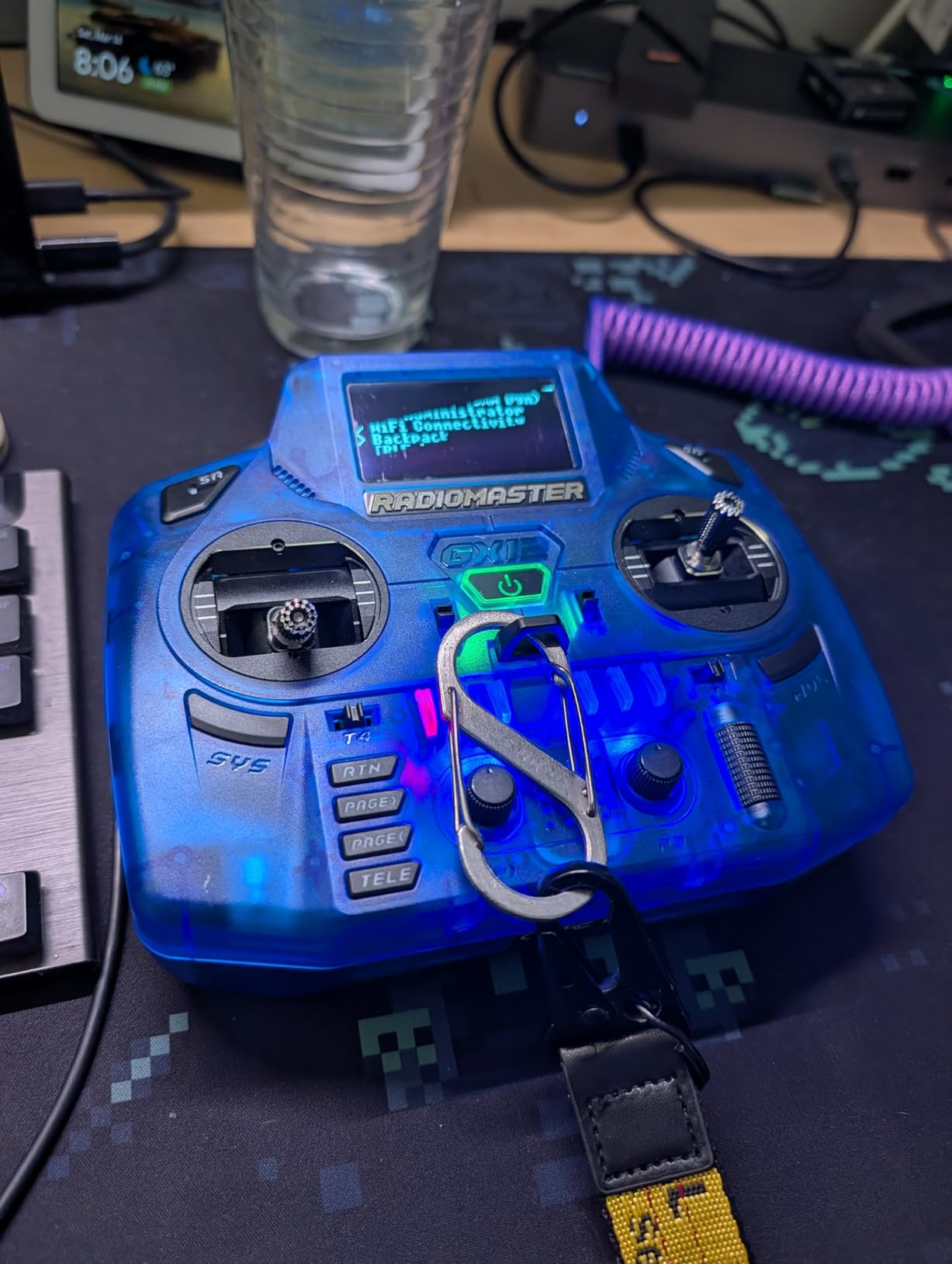
The GX12 is RadioMaster’s newer take on dual-band ExpressLRS, and it brings a cleaner industrial design than the TX16S. It uses the Gem-X Xrossband system for simultaneous 2.4GHz and Sub-GHz transmission, paired with dual 1-watt transmitters for serious range.
I was impressed by how compact it feels for a dual-band radio. The foldable antennas, folding stick ends, and removable switch panels make it easier to pack than the TX16S, even though it still packs flagship power. The aluminum gimbals with 3D Hall sensors are precise and durable.
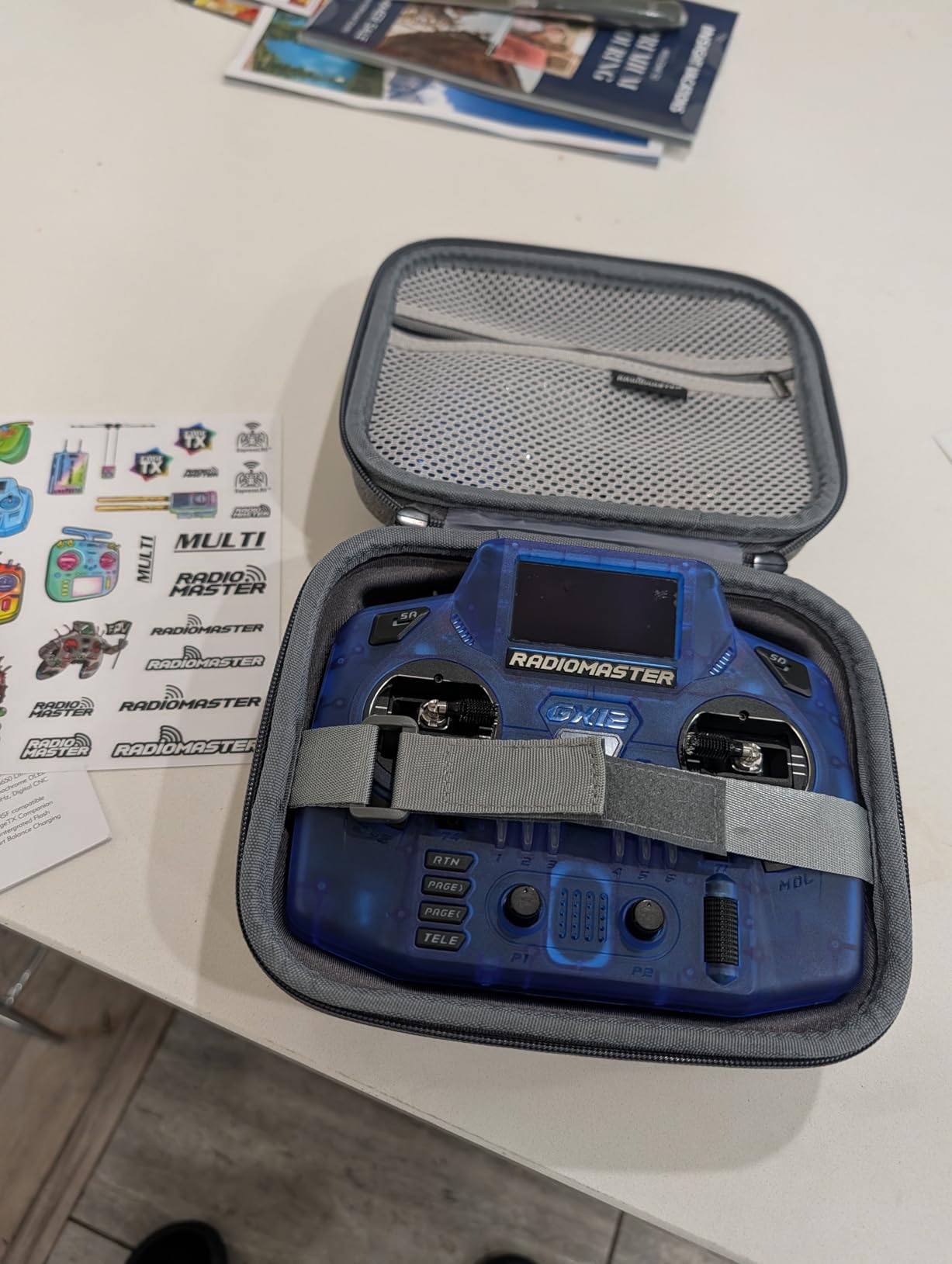
The OLED display is smaller than the TX16S touchscreen but still readable. I see the GX12 as a tool for pilots who care more about range and reliability than flashy menus. The advanced cooling system keeps the dual transmitters stable during high-power output.
Some users left four-star ratings mentioning minor quirks, though the overall feedback is strongly positive. As with any newer model, firmware updates are likely to smooth out remaining issues.
Who should buy the RadioMaster GX12
Buy the GX12 if you want dual-band Gemini performance in a more portable package than the TX16S. It is ideal for long-range pilots and anyone who wants maximum RF output without carrying the largest radio on the market.
Who should skip the RadioMaster GX12
Skip it if you rely on a touchscreen interface or plan to connect multiple external devices. The OLED display and single external device limit make it less flexible than the TX16S Mk3.
8. RadioMaster Zorro – Best Gamepad ExpressLRS Radio
RadioMaster Zorro ELRS Controller 2.4GHz 16CH Hall Sensor Gimbals OpenTX/EdgeTX System Radio Transmitter (ELRS Version)
Weight: 1.33 lbs
4-in1 multi-protocol
External module bay
OpenTX/EdgeTX
Pros
- 4-in1 multi-protocol support
- External module bay
- Switchable Mode 1/2
- USB-C charging
Cons
- No reviews yet
- External 2S power needed
The Zorro is the specialty pick in this guide. Its gamepad-style shape is divisive, but pilots who love it swear by the compact grip and low weight. I include it here as the best ExpressLRS radio for pilots who want a 4-in1 multi-protocol controller with an external module bay.
The 4-in1 internal module lets you fly older FrSky, FlySky, or DSM receivers without buying another radio. That is a big deal if you are coming from another protocol and still have older models in your fleet. The external module bay also accepts ELRS or TBS Crossfire modules for future upgrades.
Ergonomics are the main question mark. The vertical grip works well for thumb flyers and people with smaller hands, but pinch grippers often find it cramped. Battery life is also shorter than larger radios, which is why many Zorro owners carry spare 2S packs to the field.
This particular listing has no customer reviews yet, so it is harder to recommend blindly. However, the Zorro platform is well established in the FPV community, and this ELRS version fills a specific niche.
Who should buy the RadioMaster Zorro
Buy the Zorro if you already have multi-protocol receivers, fly primarily thumb style, or want the smallest full-featured controller with an external module bay. It is also a fun backup radio for experienced pilots.
Who should skip the RadioMaster Zorro
Skip it if you want all-day battery life, prefer a traditional transmitter shape, or need the easiest beginner experience. The Pocket is a better entry point, and the Boxer Crush is a better all-rounder.
How to Choose the Best ExpressLRS Radio?
After reviewing these eight radios, the right choice comes down to four factors: budget, gimbal quality, form factor, and frequency needs. Here is how to think through each one.
Budget and value
ExpressLRS receivers are cheap, but the radio is still your biggest upfront investment. The T8L and Pocket prove you can get a capable ELRS controller for under $100. The Boxer Crush is the sweet spot for most pilots. Only move to the TX16S Mk3 or GX12 if you know you need flagship features.
Gimbal type matters more than you expect
Hall-effect gimbals use magnetic sensors instead of physical contacts. They do not wear out, they do not develop center drift, and they feel smoother over time. Potentiometer gimbals are cheaper but degrade with use. Every radio in this guide except the Zorro listing explicitly mentions Hall sensors, which is one reason ExpressLRS hardware has become so reliable.
Form factor and ergonomics
Gamepad-style radios like the Pocket, T8L, and Zorro are great for travel and thumb flyers. Full-size radios like the Boxer, TX15, TX16S, and GX12 give you more switch options, better grip options, and room for larger screens. If possible, hold a few models at a local meet before committing.
Frequency and regional rules
Most pilots use 2.4GHz ExpressLRS because it is legal worldwide, offers high packet rates, and has tiny antennas. 900MHz is popular in North America for long range, while 868MHz is used in Europe. The Jumper T15 and RadioMaster TX16S Mk3 handle multiple bands, making them good choices for international travelers or pilots who want flexibility.
Internal versus external modules
An internal ELRS module is built into the radio and ready to bind. An external module bay lets you swap in different transmitters later, including higher-power ELRS modules or legacy protocols like Crossfire. The Zorro and TX16S Mk3 both have external bays, while the T8L, Pocket, and Boxer rely on internal modules.
Screen size and firmware
All modern ExpressLRS radios run either EdgeTX or OpenTX. EdgeTX is the community favorite in 2026 because it is actively developed and has better color touchscreen support. A large screen is helpful for tuning models in the field, but it is not required for basic flying.
Frequently Asked Questions
What is the best ExpressLRS radio for beginners?
The RadioMaster Pocket is the best ExpressLRS radio for beginners because it has built-in ELRS, pre-installed EdgeTX firmware, Hall-effect gimbals, and a compact size that is easy to carry. It also runs for about six hours on two 18650 cells and costs less than a full-size flagship transmitter.
What is the latest ExpressLRS version?
ExpressLRS 4.0 is the latest major release, introduced in early 2026 with compatibility changes and new features. Most radios in this guide ship with firmware that can be updated to ExpressLRS 4.0 through the ExpressLRS Configurator or web flasher.
Is ELRS better than FrSky?
For most FPV pilots in 2026, ExpressLRS is better than FrSky because it offers lower latency, longer range at lower power, cheaper receivers, and open-source firmware. FrSky still works, but the FPV community has largely standardized on ELRS for new builds.
What is the difference between 4-in-1 and ELRS modules?
A 4-in-1 multi-protocol module lets one radio bind to several legacy protocols like FrSky, FlySky, and DSM. An ELRS module only runs ExpressLRS. Some radios, like the RadioMaster Zorro, include both options through internal and external module support.
How many channels does ExpressLRS support?
ExpressLRS supports up to 16 channels on most modern radios. In practice, FPV quads usually use 4 channels for flight controls plus a few auxiliary channels for arming, flight modes, and buzzer activation.
Conclusion
The best ExpressLRS radios in 2026 cover every budget and flying style. The RadioMaster TX16S Mk3 is the ultimate flagship for pilots who want a large touchscreen and dual-band Gemini performance. The RadioMaster Boxer Crush remains the best value for most FPV pilots. The RadioMaster Pocket is the easiest recommendation for beginners, and the T8L proves you can start flying ELRS for under $50.
Choose based on how you fly, not on specs alone. A great radio is the one that feels right in your hands, binds reliably to your quads, and has the switches and range you actually use. Any of the eight models above will give you a solid ExpressLRS experience, but matching the right tier to your needs will save you money and frustration in the long run.