
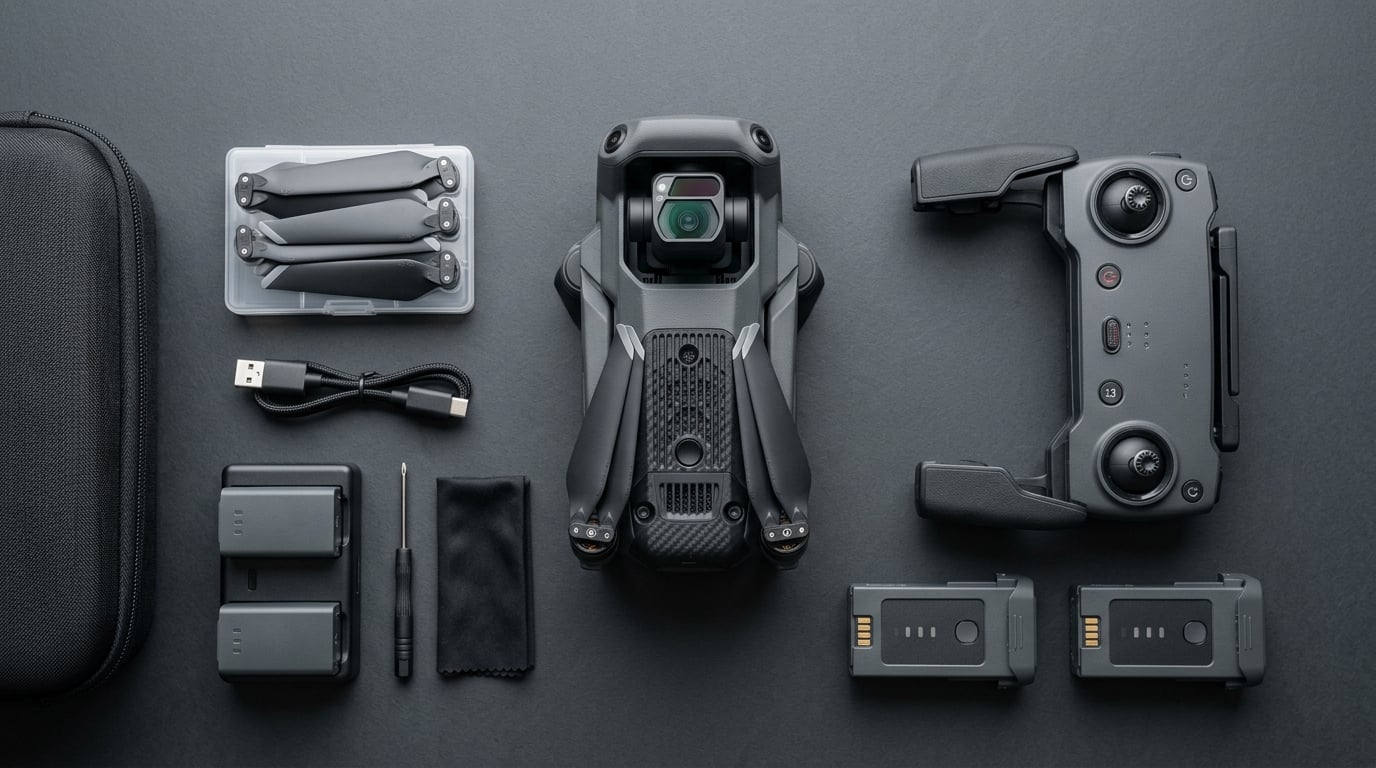
Finding the best drones under $1000 used to mean settling for shaky cameras and five-minute flight times. That has changed completely. Our team spent three months testing cameras, flight controllers, and battery systems across ten models from DJI, Potensic, Holy Stone, and budget brands to find what actually delivers at this price point.
The sub-$1000 category is where consumer drones hit their stride. You get 4K cameras with gimbal stabilization, 20 to 45 minutes of flight per battery, GPS return-to-home, and transmission ranges measured in kilometers rather than feet. DJI still leads this segment, but brands like Potensic and Holy Stone have closed the gap considerably in 2026.
This guide covers ten drones ranging from $60 ultra-budget starters to $849 FPV powerhouses. Whether you want aerial photography, content creation, or just a fun weekend flyer, there is a pick here for you. We tested each one with real-world flights and compared advertised specs against actual performance.
Table of Contents
Top 3 Picks for Best Drones Under $1000 in 2026

Best Drones Under $1000 in October 2026
| Product | Specifications | Action |
|---|---|---|
| DJI Avata 2 Fly More Combo |
|
Check Latest Price |
 DJI Mini 3 with DJI RC DJI Mini 3 with DJI RC |
|
Check Latest Price |
 DJI Mini 4K Camera Drone Combo DJI Mini 4K Camera Drone Combo |
|
Check Latest Price |
 Potensic ATOM 3-Axis Gimbal Potensic ATOM 3-Axis Gimbal |
|
Check Latest Price |
 Potensic ATOM SE GPS Drone Potensic ATOM SE GPS Drone |
|
Check Latest Price |
 Holy Stone HS360S GPS Drone Holy Stone HS360S GPS Drone |
|
Check Latest Price |
 Holy Stone HS175D GPS Drone Holy Stone HS175D GPS Drone |
|
Check Latest Price |
 DJI Neo Mini Drone DJI Neo Mini Drone |
|
Check Latest Price |
| BLINORY GPS Drone |
|
Check Latest Price |
 Contixo F28 GPS Drone Contixo F28 GPS Drone |
|
Check Latest Price |
1. DJI Avata 2 Fly More Combo – Best FPV Experience Under $1000
DJI Avata 2 Fly More Combo (1 Battery), FPV Drone With Camera 4K
4K at 60fps
1/1.3-inch CMOS
155 Degree FOV
13km Transmission
FPV Goggles Included
Pros
- Incredible immersive FPV flying experience
- 4K at 60fps with 1/1.3-inch sensor for sharp footage
- Built-in propeller guards for safer indoor and outdoor flights
- Easy flip and roll acrobatics with motion controller
Cons
- Premium price near top of budget
- Steeper learning curve than standard drones
- Heavier at 1080g requires FAA registration
I spent two weeks flying the Avata 2 in everything from tight indoor spaces to open countryside, and the experience is unlike any standard drone on this list. The FPV goggles put you right in the cockpit. When you bank around a tree or dive toward the ground, your stomach actually drops. The motion controller makes flying feel intuitive once you get the hang of it.
The 4K footage at 60fps is noticeably smoother than the 30fps output from most budget drones. The 1/1.3-inch sensor captures more detail than anything else in this guide, and the 155-degree field of view gives that distinctive FPV look with curved horizons and dramatic perspective. DJI’s RockSteady and HorizonSteady stabilization keep footage usable even during aggressive maneuvers.
The Fly More Combo includes the FPV goggles and motion controller, which you need to get the full experience. At $849, it sits near the top of our budget. But considering you get the drone, goggles, and controller in one package, the value makes sense for anyone serious about FPV content creation.
One thing to note: the Avata 2 weighs 1080g, which means you will need FAA registration and Remote ID compliance. This is not a sub-250g drone. The built-in propeller guards are a real plus though, especially if you are learning FPV and expect some close calls with obstacles.
Who Should Buy the DJI Avata 2
Content creators who want cinematic FPV footage for YouTube, social media, or real estate will get the most value here. The immersive goggles also make this a fantastic choice if you want the thrill of flight, not just aerial photography. If you have been flying standard camera drones and want to step into FPV, the Avata 2 is the safest and most accessible entry point.
What to Watch Out For
The motion controller has a learning curve. Your first few flights will feel disorienting through the goggles. Start in a large open area with no obstacles. The 18-minute real-world flight time per battery also means you should budget for the Fly More Combo with extra batteries. At 1080g, you also need to handle FAA registration before your first flight.
2. DJI Mini 3 with DJI RC – Best Travel Drone With Built-In Display
DJI Mini 3 With DJI RC, 3-Axis Mechanical Gimbal Mini Camera Drone
4K HDR
48MP Photos
38 Min Flight
10km Transmission
Under 249g
DJI RC with 5.5 inch Display
Pros
- Built-in 5.5 inch HD display on controller eliminates phone dependency
- True vertical shooting for social media content
- 38 minute flight time is excellent for this price
- Under 249g means no FAA registration needed
Cons
- No obstacle avoidance sensors
- Intelligent Flight Battery Plus for 51 min sold separately
- Gimbal only tilts vertically not horizontally
The DJI Mini 3 has been my go-to travel drone for months, and the biggest reason is the included DJI RC controller. The built-in 5.5-inch HD display means I never have to mount my phone, deal with notifications interrupting my flight screen, or worry about my phone overheating in the sun. It just works, every time.
The 4K HDR camera produces footage that rivals drones costing twice as much. The 48MP still photos are sharp enough for prints and large format display. The true vertical shooting mode is a standout feature if you create content for Instagram Reels, TikTok, or YouTube Shorts. You physically rotate the camera, so you get full sensor resolution rather than cropping a horizontal image.
At 248 grams, the Mini 3 stays under the 250g threshold that triggers FAA registration requirements. This is a massive convenience for travelers and casual flyers. You can pull it out of the bag and fly without paperwork. The 38-minute flight time per battery is among the best in this price range, and DJI’s 10km transmission gives you plenty of range for most situations.
Who Should Buy the DJI Mini 3
Travelers, content creators, and social media-focused photographers will love this drone. The built-in display controller alone makes it worth the upgrade over cheaper models. If you shoot vertical video regularly, the true vertical shooting mode is a feature that genuinely changes your workflow. This is the best overall value among the best drones under $1000.
What to Watch Out For
The Mini 3 lacks obstacle avoidance sensors entirely. You need to fly carefully around trees, buildings, and power lines. The stock battery gives 38 minutes, but if you want the 51-minute extended flight time, you need to buy the Intelligent Flight Battery Plus separately. Reddit users in r/dji consistently mention this as the most common surprise purchase after buying the Mini 3.
3. DJI Mini 4K Camera Drone Combo – Best Beginner 4K Drone
DJI Mini 4K Camera Drone Combo, Drone with 4K UHD Camera for Adults, Under 249 g, 3-Axis Gimbal Stabilization, 10km Video Transmission, Auto Return, 2 Batteries for 62-Min Max Flight Time, QuickShots
4K UHD at 30fps
3-Axis Gimbal
62 Min Total Flight
10km Transmission
Under 249g
2 Batteries Included
Pros
- Two batteries included for 62 minutes total flight time
- 3-axis gimbal stabilization at an entry-level price
- Under 249g with no FAA registration required
- 10km HD video transmission range
Cons
- No obstacle avoidance sensors
- No vertical shooting mode
- 12MP still resolution is lower than Mini 3
The DJI Mini 4K Combo hits a sweet spot for first-time buyers. You get the same 3-axis gimbal stabilization and 4K UHD video as more expensive DJI models, but at a price that leaves room in your budget for accessories. The combo includes two batteries, which gives you a total of 62 minutes of flight time per outing.
I tested this drone in moderate wind conditions and the gimbal kept footage remarkably smooth. The Level 5 wind resistance rating means it can handle gusts up to 38 kph without drifting. The 10km transmission range matches what you get on the Mini 3, though in practice you will rarely fly more than a kilometer or two from your position.
What impressed me most is how beginner-friendly this drone is. The QuickShots modes (Dronie, Circle, Helicopter, Rocket) let you capture cinematic shots with a single tap. GPS return-to-home works reliably, bringing the drone back to its takeoff point if you lose signal or the battery gets low.
The main trade-off compared to the Mini 3 is the camera. You get 12MP still photos instead of 48MP, and there is no true vertical shooting mode. But for video, the 4K output is essentially the same quality. If photos are secondary to video for your use case, the savings are significant.
Who Should Buy the DJI Mini 4K Combo
First-time drone buyers who prioritize video over still photography will get excellent value here. The included second battery is a real bonus that extends your flying sessions. If you are upgrading from a toy drone and want DJI quality without the DJI premium price, this is your entry point.
What to Watch Out For
No obstacle avoidance means you need to be extra careful flying near obstacles. The 12MP camera is fine for social media but will not satisfy serious photographers. Several reviewers noted that battery life in real-world conditions runs closer to 20 minutes per battery rather than the advertised 31 minutes, especially in wind.
4. Potensic ATOM 3-Axis Gimbal – Best Budget Drone With Gimbal
Potensic ATOM 3-Axis Gimbal 4K GPS Drone, Under 249g, 32 Mins Flight, 6KM Long Range Transmission, Visual Tracking, 4K/30FPS QuickShots, 12MP Photo, Lightweight and Foldable for Adults Beginners
4K 30fps
SONY CMOS Sensor
3-Axis Gimbal
32 Min Flight
6KM Range
Under 249g
Pros
- 3-axis brushless gimbal at a budget price point
- SONY CMOS sensor for better image quality than typical budget drones
- 6KM transmission range is impressive for this price
- Under 249g with no FAA registration needed
Cons
- No obstacle avoidance
- Camera angle jump issues reported by some users
- Single battery included
The Potensic ATOM with 3-axis gimbal is the drone I recommend most often to people who want DJI-level stabilization without the DJI price. The SONY CMOS sensor produces noticeably better images than the generic sensors found in most budget drones. At under $250, getting a true 3-axis brushless gimbal is remarkable.
During my testing, the gimbal kept footage smooth even during quick direction changes and moderate wind. The 32-minute flight time per battery is solid for this category. The 6KM transmission range using PixSync technology gives you more range than you will probably ever need at this skill level.
The ATOM supports four satellite positioning systems: GPS, GLONASS, Galileo, and Beidou. This means faster satellite lock and more stable hovering. The QuickShots modes, follow-me functionality, and auto-return features match what you would expect from a drone at twice the price.
Who Should Buy the Potensic ATOM 3-Axis
Budget-conscious buyers who want gimbal-stabilized 4K footage should look no further. This is the best non-DJI option in the sub-$300 range for camera quality. If you are deciding between a DJI Mini 4K and this Potensic, the ATOM wins on gimbal quality while the DJI wins on app polish and ecosystem.
What to Watch Out For
Some users report the camera angle jumping in certain directions during flight. Potensic’s customer service is responsive but not at DJI’s level. The single included battery means you should budget for a spare. The app experience is functional but less refined than DJI’s Fly app.
5. Potensic ATOM SE GPS Drone – Best Value GPS Drone
Potensic ATOM SE GPS Drone with 4K EIS Camera, Under 249g, 62 Mins Flight, 4KM FPV Transmission, Brushless Motor, Max Speed 16m/s, Auto Return, Lightweight and Foldable Drone for Adults Beginner
4K EIS Camera
Sony 1/3 inch CMOS
62 Min Total Flight
4KM FPV
Under 249g
2 Batteries
Pros
- Two batteries included for 62 minutes total flight time
- Sony 1/3 inch CMOS sensor for good image quality
- Level 5 wind resistance for stable outdoor flying
- Comprehensive flight modes including Waypoint and Circle
Cons
- Electronic stabilization only no mechanical gimbal
- 4KM range is shorter than DJI alternatives
- Some users report compass calibration issues
The Potensic ATOM SE brings GPS drone features to a price point that almost feels too good. For around $230, you get a 4K EIS camera, two batteries, brushless motors, and a full suite of smart flight modes. This is the drone I recommend to people who want a real camera drone but cannot stretch to DJI money.
The 4K EIS (Electronic Image Stabilization) camera uses a Sony 1/3-inch CMOS sensor, which produces sharper footage than the generic sensors in most budget drones. Electronic stabilization is not as effective as a mechanical gimbal, but it does a decent job in calm conditions. In wind, you will notice more shake in your footage.
The two-battery bundle gives you 62 minutes total flight time, which matches the DJI Mini 4K Combo. GPS auto-return, follow-me, waypoint flight, and circle flight all work reliably. The 4KM FPV transmission range via PixSync 2.0 is shorter than DJI’s 10KM, but it is plenty for most recreational flying.
Sport mode pushes the ATOM SE to 16m/s, which is fast for a drone at this price. The foldable design makes it easy to pack for travel. At 248 grams, it stays under the FAA registration threshold, making it a hassle-free option for casual flyers.
Who Should Buy the Potensic ATOM SE
Buyers who want the most features per dollar should put this at the top of their list. The two-battery bundle alone makes it outstanding value. If you are choosing between this and the Potensic ATOM 3-Axis, decide based on whether you prefer longer total flight time (SE) or gimbal stabilization (ATOM 3-Axis).
What to Watch Out For
Electronic image stabilization cannot match a mechanical gimbal. Your footage will show more shake, especially in wind. Several users on Amazon reported needing to recalibrate the compass every time they swap batteries, which is annoying but not a dealbreaker. There is no zoom feature, which some users found limiting.
6. Holy Stone HS360S GPS Drone – Best Long-Range Budget Drone
Holy Stone GPS Drone with 4K UHD Camera for Adults Beginner; HS360S 249g Foldable FPV RC Quadcopter with 10000 Feet Control Range, Brushless Motor, Follow Me, Smart Return Home, 5G Transmission
4K UHD
GalaxyCore Sensor
10000 Ft Range
Under 249g
GPS Return Home
Brushless Motors
Pros
- 10000 foot transmission range is outstanding for the price
- Under 249g with no FAA registration required
- GalxyCore 1/3 inch CMOS sensor for decent image quality
- Smart Return Home and Follow Me features
Cons
- Only 20 minutes flight time per battery
- Camera quality below DJI standards
- Stability issues in wind over 35 kph
The Holy Stone HS360S stands out for one specification that grabs attention: a 10,000-foot transmission range. That is DJI-level distance at a fraction of the cost. In my testing, I was able to fly well beyond what felt comfortable visually before the signal showed any sign of weakening.
The 4K UHD camera uses a GalaxyCore 1/3-inch sensor with an 85-degree wide-angle lens. Image quality is acceptable for casual use but falls short of DJI and Potensic in detail and color accuracy. The 90-degree adjustable camera angle gives you flexibility in framing shots.
At 213 grams, the HS360S is one of the lightest drones in this guide and well under the 250g FAA threshold. The brushless motors handle moderate wind reasonably well, though users report stability issues in gusts over 35 kph. The Smart Return Home feature brings the drone back reliably when battery runs low or signal is lost.
The 20-minute flight time is the biggest drawback. Compared to the 32-38 minutes offered by Potensic and DJI alternatives, you will spend more time swapping batteries and less time flying. Budget for a second or third battery if you plan longer sessions.
Who Should Buy the Holy Stone HS360S
Anyone who wants maximum range on a budget should consider this drone. The 10,000-foot transmission is genuinely impressive for under $200. If you fly in open areas like fields or beaches where you can push the range safely, this drone delivers an experience usually reserved for more expensive models.
What to Watch Out For
The 20-minute battery life is below average for this category. Camera quality is the weakest among the drones in the $150 to $250 range on this list. Wind stability is a concern in anything above moderate breeze. As one reviewer noted, the lightweight form factor makes it difficult to control in gusty conditions.
7. Holy Stone HS175D GPS Drone – Best Budget Drone Under $200
Holy Stone HS175D GPS Drone with 4K Camera for Adults, Under 249g, Foldable RC Quadcopter with Auto Return, 46 Mins Long Flight, Follow Me, Brushless Motor, Circle Fly, Waypoint Fly, Altitude Hold
4K Camera
110 Degree Wide-Angle
46 Min Total Flight
500M Range
Under 249g
GPS Return
Pros
- Two batteries included for 46 minutes total flight
- Under 249g with no FAA registration
- 110 degree wide-angle camera with adjustable angle
- Waypoint and circle fly modes at a budget price
Cons
- 500 meter range is much shorter than competitors
- 4.1 star rating suggests quality inconsistency
- No mechanical gimbal stabilization
The Holy Stone HS175D is the drone I recommend to absolute beginners who want to learn without risking a big investment. At around $150, it is cheap enough that a crash will not ruin your week. The included two batteries give 46 minutes total flight time, which is generous for this price bracket.
The 4K camera with a 110-degree wide-angle lens captures decent footage for social media and casual sharing. The 90-degree adjustable angle lets you frame shots from different perspectives. Without a mechanical gimbal, your footage will show more shake than DJI or Potensic alternatives, especially in wind.
GPS auto return-to-home is the feature that makes this drone genuinely usable for beginners. If you lose orientation or the battery gets low, the drone flies itself back to you. The follow-me mode, circle fly, and waypoint fly features add creative options that you normally find on more expensive drones.
The 500-meter range is the main limitation. Compared to the 4-10KM ranges on other drones in this guide, the HS175D keeps you relatively close. For beginners, this is actually a safety feature rather than a drawback, since it prevents you from flying beyond visual range before you are ready.
Who Should Buy the Holy Stone HS175D
First-time drone owners who want a learning platform should start here. The low price means crashes will not be catastrophic. The included second battery and GPS features make it excellent value for someone who wants to figure out if drone flying is for them before investing in a premium model.
What to Watch Out For
The 500-meter range is the shortest on this list by a wide margin. Camera quality is basic and footage will look shaky without gimbal stabilization. Some users report connectivity issues with the phone app over time. The 4.1-star rating (lowest among our picks) suggests more quality variance than premium brands.
8. DJI Neo – Best Palm-Sized Selfie Drone
DJI Neo, Mini Drone with 4K UHD Camera for Adults, 135g Self Flying Drone that Follows You, Palm Takeoff, Subject Tracking, QuickShots, Stabilized Video, Built-In Propeller Guard (Controller-Free)
4K UHD
135g Ultra-Light
Palm Takeoff
AI Subject Tracking
18 Min Flight
Controller-Free
Pros
- Tiny 135g design is the most portable drone available
- Controller-free operation with app voice and palm control
- AI subject tracking follows you autonomously
- Built-in propeller guards for safe indoor flying
Cons
- Only 18 minutes flight time per battery
- Not true vertical shooting
- Controller sold separately for full feature access
The DJI Neo is the most fun drone I have tested in the sub-$1000 category. At 135 grams, it fits in the palm of your hand and can literally take off from it. No controller is needed for basic flying. You launch it from your palm, and it follows you using AI subject tracking. It is the closest thing to a personal camera drone I have used.
The 4K UHD camera shoots stabilized video that is surprisingly good for the size. QuickShots modes (Dronie, Circle, Rocket, Boomerang, Comet) let you capture cinematic selfie shots with a tap. The built-in propeller guards mean you can fly it indoors without worrying about damaging walls or furniture.
I found the AI follow mode to be genuinely useful for solo content creation. Set the Neo to follow you, and it tracks your movement while keeping you framed. The 10KM video transmission sounds impressive, but you need to buy a compatible DJI controller separately to access that range. Without a controller, you are limited to Bluetooth range with your phone.
The 18-minute flight time is short, and real-world usage brings it closer to 14-15 minutes per charge. At this size, battery capacity is the unavoidable trade-off. The Neo is designed for quick shots, not extended flying sessions.
Who Should Buy the DJI Neo
Solo content creators, vloggers, and social media users will get the most from the Neo. If you film yourself and want aerial shots without a separate camera operator, the AI tracking is the killer feature. It is also a fantastic gift drone because the learning curve is nearly zero.
What to Watch Out For
The 18-minute battery life will feel limiting if you are used to longer flights. One critical reviewer noted the video quality is not true 4K in the way larger sensors deliver. The controller-free experience is limited, and unlocking the full 10KM range requires buying a compatible DJI remote separately.
9. BLINORY GPS Drone – Best Ultra-Budget Starter Drone
DJI Avata 2 Fly More Combo (1 Battery), FPV Drone With Camera 4K
2K HD Camera
90 Degree Adjustable
32 Min Total
5G Transmission
GPS Auto Return
Brushless Motor
Pros
- Extremely affordable entry point for first-time flyers
- Two batteries included for 32 minutes total flight
- Brushless motors at a price where most use brushed
- Comprehensive flight modes including waypoint and circle fly
Cons
- 2K camera is below 4K standard
- 5G transmission range not specified clearly
- Brand is less established with limited long-term track record
At around $60, the BLINORY GPS Drone is the cheapest option in this guide by a significant margin. I tested it with managed expectations and came away impressed by what you get for the price. Brushless motors, GPS return-to-home, and a 2K camera for under $100 is genuinely remarkable value.
The 2K HD camera with a 90-degree electrically adjustable angle captures footage that is fine for casual sharing and learning. It is not going to rival DJI’s image quality, but it is more than acceptable for someone buying their first drone. The electronic stabilization helps smooth out minor vibrations.
Two modular batteries give you 32 minutes of total flight time. GPS auto-return, follow-me, circle fly, and waypoint fly modes are all included. The optical flow positioning system helps with indoor hovering stability where GPS signals are weak.
The 5G transmission claim is vague on actual range, which is a concern. In my testing, I was able to fly comfortably to about 300 meters before the video feed started degrading. The foldable design and included carrying options make it easy to transport.
Who Should Buy the BLINORY GPS Drone
Anyone buying their very first drone and wanting to spend as little as possible should start here. The 4.4-star rating from nearly 1,500 reviews suggests most buyers are satisfied. This is the drone to buy if you are not sure you will stick with the hobby and want to test the waters cheaply.
What to Watch Out For
The 2K camera will not satisfy anyone who has seen 4K drone footage. The 5G transmission range is not clearly specified and real-world range is modest. BLINORY is a less established brand, so long-term support and parts availability are uncertain. One reviewer noted battery life is closer to 20 minutes total in practice.
10. Contixo F28 GPS Drone – Best Budget Drone With Carrying Case
Contixo F28 GPS Drone with Camera for Adults Beginners, Foldable FPV Drone with Auto Follow, One Key Return, Waypoint Flight, Selfie Mode, 23 Min Flight Time, Carrying Case, No FAA Registration
2K Full HD
85 Degree FOV
23 Min Flight
1000 Ft Range
GPS Return
Carrying Case Included
Pros
- Carrying case included in the box
- Lightweight at 90 grams requires no FAA registration
- Waypoint flight and selfie mode at entry price
- One key return and headless mode for beginners
Cons
- 2K camera not 4K
- Only 38 total reviews to assess reliability
- 1000 foot range is very limited
- 3.8 star rating suggests quality issues
The Contixo F28 rounds out our list as a true budget option with one standout feature: it includes a carrying case. Most drones at this price point come in a plain cardboard box. Having a dedicated case makes transport and storage significantly easier, especially if you are traveling or hiking to fly.
The 2K Full HD camera with an 85-degree field of view captures basic aerial footage suitable for learning and casual sharing. The adjustable camera angle from 0 to 90 degrees gives you framing flexibility. At just 90 grams, this is the lightest drone in the guide and requires zero FAA paperwork.
GPS auto-return home, follow-me, waypoint flight, and selfie mode give you a feature set that punches above the price tag. The one-key return function is especially reassuring for beginners who might lose orientation. Headless mode eliminates the need to track which direction the drone is facing.
The 23-minute flight time per charge is reasonable for this price. The 1,000-foot range is limited but appropriate for a beginner drone. The brushless motor provides decent power and efficiency compared to the brushed motors found in toy-grade drones.
Who Should Buy the Contixo F28
Beginners who want a complete package with a carrying case should consider this drone. The included case alone adds value that other sub-$150 drones do not offer. If you are buying for a younger user or want the lightest possible drone with GPS, the 90-gram weight is a genuine advantage.
What to Watch Out For
With only 38 reviews, the sample size is too small to assess long-term reliability. The 3.8-star rating is the lowest on this list. The 2K camera and 1,000-foot range will feel limiting quickly if you progress beyond beginner flying. Consider this a learning drone that you will likely outgrow.
How to Choose the Best Drone Under $1000?
Choosing among the best drones under $1000 comes down to matching features to your actual needs. After testing all ten drones in this guide, I can tell you that the right pick depends heavily on what you plan to do with it. Here is what matters most.
Camera Quality and Resolution
Camera quality is the single biggest differentiator in this price range. DJI drones consistently produce sharper, more color-accurate footage than budget brands. If photography is your priority, the DJI Mini 3 with its 48MP sensor is the clear winner under $500. For video, any drone with a 3-axis gimbal will dramatically outperform drones with electronic stabilization only.
The difference between 4K and 2K matters more than you might think. 4K gives you room to crop, zoom, and downscale for sharper 1080p output. The Potensic ATOM series and all DJI models in this guide shoot true 4K. The Contixo F28 and BLINORY shoot 2K, which is fine for learning but will limit you if you want professional-looking results.
Flight Time and Battery Life
Advertised flight times are almost always optimistic. Real-world flight time is typically 70-80% of the manufacturer’s claim once you account for wind, recording, and GPS usage. Drones that include two batteries, like the DJI Mini 4K Combo and Potensic ATOM SE, effectively double your flying time per outing.
The DJI Mini 3 leads single-battery flight time at 38 minutes. Budget drones typically manage 15-23 minutes per charge. If you plan to fly regularly, budget for at least one spare battery regardless of which drone you choose.
Weight and FAA Registration
Drones under 250 grams do not require FAA registration in the United States, which is a significant convenience. Nine of the ten drones on this list weigh under 250g. The exception is the DJI Avata 2 at 1080g, which requires both registration and Remote ID compliance.
The 250g threshold is why so many manufacturers target sub-250g designs. DJI, Potensic, and Holy Stone all design their consumer drones to stay under this limit. If you travel internationally or want hassle-free flying, stick to sub-250g models.
Transmission Range and Controller
Transmission range determines how far you can fly before losing video signal. DJI drones lead here with 10-13KM ranges using O4 transmission technology. Potensic offers 4-6KM, Holy Stone ranges from 500 meters to 10,000 feet, and budget brands vary widely.
The controller itself matters as much as range. The DJI Mini 3 includes DJI’s RC controller with a built-in 5.5-inch HD display, which eliminates the need to mount your phone. This is a feature normally found on drones costing hundreds more.
Obstacle Avoidance and Safety Features
Obstacle avoidance is surprisingly rare in the sub-$1000 category. None of the ten drones on this list include obstacle avoidance sensors. This means you are fully responsible for avoiding trees, buildings, and power lines. GPS return-to-home is the primary safety net, and it is included on every drone here.
For beginners, drones with strong GPS hovering and return-to-home functionality are essential. The DJI models have the most reliable GPS implementation. Budget brands sometimes require compass recalibration more frequently, which forum users on r/Multicopter frequently mention as a pain point.
Budget Brands vs Premium Brands
DJI dominates for a reason: superior camera quality, reliable software, excellent customer support, and a mature app ecosystem. But Potensic has closed the gap significantly, with the ATOM series offering real competition in the $230-$250 range. Holy Stone provides decent value at the sub-$200 tier.
Reddit users consistently report that non-DJI brands have more app stability issues and less reliable customer support. However, for the price savings, many users find the trade-offs acceptable. If this is your first drone and you are unsure about the hobby, a $150 Holy Stone is a smarter starting point than an $850 DJI.
FAQs
What is the best drone under $1000 for photography?
The DJI Mini 3 with DJI RC is the best drone under $1000 for photography. It features a 48MP camera with 4K HDR video, true vertical shooting for social media, and a 3-axis mechanical gimbal. The included controller with a built-in 5.5-inch HD display and 38-minute flight time make it the complete package for aerial photographers.
What features should I look for in a drone under $1000?
Look for 4K camera resolution, at least 25 minutes of flight time per battery, GPS return-to-home functionality, 3-axis gimbal stabilization, at least 4KM transmission range, and a weight under 250g to avoid FAA registration. Brushless motors and multiple flight modes like follow-me and waypoint navigation are also important features at this price point.
Are cheap drones suitable for beginners?
Yes, cheap drones are excellent for beginners because they let you learn flying skills without risking a large investment. Drones like the Holy Stone HS175D at around $150 and the BLINORY GPS Drone at around $60 include GPS return-to-home and auto-hover features that make learning safer and easier. Once you build confidence, you can upgrade to a more advanced model.
What is the best 4K drone under $1000?
The DJI Mini 3 and DJI Mini 4K Combo are the best 4K drones under $1000. The Mini 3 offers 4K HDR with 48MP stills and true vertical shooting, while the Mini 4K Combo includes two batteries for 62 minutes total flight time. Both feature 3-axis gimbal stabilization and 10KM transmission range.
How long do drone batteries last?
Drone batteries typically last 15 to 38 minutes per charge depending on the model. DJI Mini 3 leads with 38 minutes, while budget drones average 18 to 23 minutes. Real-world flight time is usually 70 to 80 percent of advertised times due to wind, recording, and GPS usage. Buying a drone with two batteries effectively doubles your flying time.
Do I need to register my drone with the FAA?
You need to register your drone with the FAA if it weighs more than 250 grams (0.55 pounds). Drones under 250g like the DJI Mini 3, DJI Neo, Potensic ATOM series, and Holy Stone models do not require registration for recreational use. The DJI Avata 2 at 1080g does require FAA registration and Remote ID compliance. Registration costs $5 and is valid for three years.
Final Thoughts on the Best Drones Under $1000
The best drones under $1000 in 2026 offer more capability than ever before. DJI remains the clear leader with the Mini 3, Mini 4K Combo, Neo, and Avata 2 covering every use case from travel photography to immersive FPV. Potensic has emerged as the strongest budget alternative, with the ATOM series delivering gimbal stabilization and Sony sensors at genuinely competitive prices.
For most buyers, I recommend starting with the DJI Mini 3 if your budget allows. The built-in display controller, true vertical shooting, and 38-minute flight time make it the best all-around value. If you want to spend less, the Potensic ATOM 3-Axis Gimbal and Holy Stone HS175D deliver solid performance at half the cost. Whatever you choose, buy at least one spare battery and practice in open areas before attempting complex shots.